

Submitted:
20 August 2026
Posted:
21 August 2026
You are already at the latest version
Abstract
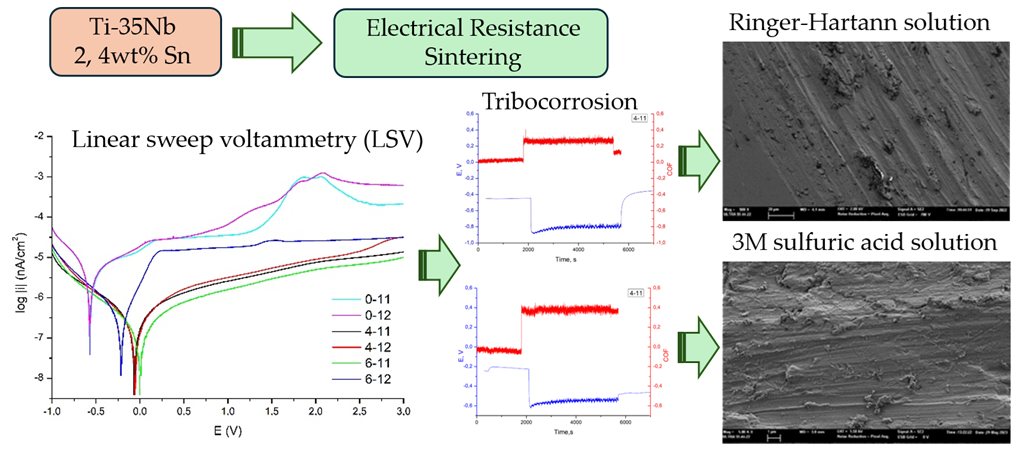
Ti35NbxSn alloys produced via Electrical Resistance Sintering were evaluated for their potential in biomedical applications, particularly dental implants. The study focused on the effects of Sn content and sintering current on electrochemical properties and tribocorrosion behaviour. Testing in Hartmann-Ringer solution and sulfuric acid showed that alloys with 6 wt.% Sn sintered at 11 kA offered the best performance, demonstrating superior corrosion resistance, minimal wear rates, and stable microhardness. Sn significantly enhanced the stability of passive oxide films, aiding in repassivation during slide. Ion release remained below acceptable levels, indicating biocompatibility.
Keywords:
electrical resistance sintering
; beta titanium alloys
; TiNbSn
; electrochemical studies
; tribocorrosion behaviour
; Hartmann-Ringer solution
; biomedical application
; dental implants
1. Introduction
Titanium-based alloys are widely used in biomedical applications, particularly in dental and orthopaedic implants, owing to their favourable combination of mechanical strength, corrosion resistance, and biocompatibility [1,2]. Commercially pure titanium (CP-Ti) and Ti6Al4V alloys are predominantly used in this application [3,4]. (CP-Ti) has an α phase structure, and Ti6Al4V is an α + β alloy. Both were developed for aircraft use and have high mechanical properties with corrosion resistance. However, these alloys have some disadvantages for biomedical applications including a high elastic modulus, which can lead to stress shielding, and the presence of potentially toxic alloying elements like aluminium and vanadium [5].
To overcome these limitations, different β-phase titanium alloys have gained significant attention in the research community owing to their lower elastic modulus, enhanced corrosion resistance, and improved biocompatibility. The β-stabilizing elements, such as niobium and tin, are incorporated to fabricate non-toxic new β-titanium alloy systems [6,7,8]. Niobium is well known for its excellent biocompatibility, corrosion resistance, and strong β-phase stabilizing effect [6,9,10,11]. Similarly, tin contributes to corrosion resistance and biocompatibility while lowering cytotoxicity [12,13,14]. These attributes make TiNbSn alloys promising candidates for next-generation biomedical implants.
One of the possible metallurgical techniques for obtaining new alloys is powder metallurgy. In particular, electrical resistance sintering (ERS) is a rapid and energy-efficient method for consolidating metallic powders with a controlled microstructure and porosity of the alloy [15,16]. To the best of our knowledge, TiNbSn alloys produced by ERS have not been thoroughly explored in the literature. For instance, the fabrication parameters of TiNbSn and their impact on the mechanical, microstructural, and electrochemical properties of the resulting materials were studied in [17,18].
In our previous work, the phase composition, density, microstructure, and hardness of Ti35Nb, Ti35Nb4Sn, and Ti35Nb6Sn β-alloys were produced from elemental powders using ERS at two current intensities [18]. The sintered alloys have predominantly β-phase structures with nanoscale grains and very low porosity, together with relatively low elastic moduli (77–86 GPa). Among the processing parameters, the applied current had the strongest influence on the final properties.
This study aimed to investigate the influence of tin content and sintering conditions of TiNbSn alloys obtained by ERS on the corrosion and tribocorrosion behaviour in simulated physiological conditions and ion release testing to verify biocompatibility. In addition, the tribocorrosion behaviour of sulfuric acid solutions was studied to determine the less reactive composition. The ultimate goal of this study was to determine the suitability of these materials for their use in dental implant applications.
2. Materials and Methods
Titanium-based alloys containing 35 wt. % niobium and varying tin contents (0, 4, and 6 wt. %) were synthesized using the ERS method. The detailed sintering process and microstructural and mechanical characterizations of the obtained alloys were explained in our previous work [18].
The samples were designed as follows: the first number indicates the tin content (0, 4, or 6 wt. %) and the second one ‒ the electrical current. Therefore, 4-11 means that the sample contained 4 wt.% tin and was sintered at 11kA.
Prior to testing, the samples underwent metallographic preparation via sequential wet grinding using silicon carbide papers with 220, 500, 1000, and 5000 grit. This was followed by ultrasonic cleaning in a 1:1 ethanol-acetone mixture for 10 min.
All experiments were conducted in triplicate to ensure the reproducibility and reliability of the results.
The electrochemical corrosion behaviour was assessed using an AUTOLAB PGSTAT204 potentiostat with a typical three-electrode cell configuration. This setup included an Ag/AgCl (3M KCl) reference electrode, a platinum wire as the counter electrode, and an alloy sample serving as the working electrode. The tribological performance was evaluated using MicroTest (MT/60/NI/CORR) equipment operated via proprietary software.
Two electrolyte solutions were used: 3M H₂SO₄, employed as an aggressive screening medium, and Hartmann-Ringer solution, composed of NaCl (5.97 g/L), KCl (0.37 g/L), CaCl₂ (0.22 g/L), and sodium lactate (3.25 g/L). The Hartmann-Ringer solution was tested at two pH values, 6.5 and 4.5, adjusted to simulate physiological and inflammatory/pathological conditions, respectively. The area exposed to the electrolyte was 0.785 cm2.
Electrochemical measurements were conducted at a constant temperature of 37 °C. The open-circuit potential (OCP) was recorded for 1800 s. Potentiodynamic polarization tests were performed by sweeping the potential from −1 to +3 V at a scan rate of 2 mV/s. The corrosion parameters were derived using the Tafel extrapolation method. The measurements were processed using NOVA 2.1.6 software (Metrohm Autolab B.V.).
The tribological performance was evaluated using a pin-on-disc tribometer MicroTest (MT/60/NI/CORR) operated using proprietary software. All experiments were conducted at room temperature under OCP conditions using a ball-on-flat contact configuration. A 3 mm Al₂O₃ ball was employed with a normal load of 1 N, sliding distance of 68 m, and total test duration of 60 min.
Microhardness was measured using a Shimadzu HMV-2 tester under a load of 981 mN for 10 s (HV0.1), with five measurements taken per alloy according to ASTM E384-17. The microstructure of the worn regions was examined using a Zeiss AURIGA Compact scanning electron microscope (SEM), while wear track profiles at 20x magnification were analyzed using a Filmetrics Profilm3D optical profiler.
Ion release studies were performed by immersing each alloy sample in Hartmann-Ringer solution at pH 6.5 and 4.5, maintained at 37 °C for 720 hours. The concentration of the released elements was quantified using a ThermoScientific ICAP-PRO optical emission spectrometer (ICP-OES), which was controlled using QTEGRA software. Ion concentrations were measured by ICP-OES as a mass concentration (µg/L), then normalised by the exposed metallic surface area (cm²) and immersion duration (h) to give a final ion release rate in µg·L⁻¹·cm⁻²·h⁻¹, enabling direct comparison across samples.
3. Results
3.1. Electrochemical Behavior in Simulated Physiological Conditions
The open-circuit potential was measured to evaluate the initial electrochemical behavior of each alloy in a corrosive environment. As shown in Figure 1, the samples sintered at 11 kA exhibited positive open-circuit values: 0.07 V for 4-11 and 0.01 V for 6-11, indicating noble behavior and a low tendency for corrosion. In contrast, the same compositions sintered at 12 kA exhibited negative open-circuit values: -0.08 V for 4-12 and -0.21 V for 6-12. Notably, sample 6-12 exhibited the lowest open-circuit potential among all the tin-containing alloys, indicating a higher electrochemical activity and a tendency to corrode. Tin-free alloys 0-11 and 0-12 exhibited negative open-circuit currents of -0.36 and -0.07 V, respectively. Thus, a higher current during the sintering process improves the corrosion resistance of the alloy in the absence of tin.
Potentiodynamic polarization tests were conducted to determine the corrosion potential (Ecorr), which is a critical parameter indicating the thermodynamic susceptibility of a material to corrosion.
The results presented in Figure 2 indicate that the tin-containing alloys sintered at 11 kA exhibited a more favorable corrosion potential. Specifically, the Ecorr values were -0.07 and -0.05 V for alloys 4-11 and 6-11, respectively, compared to -0.11 and -0.23 V for alloys 4-12 and 6-12 at 12 kA. Alloy 6-12 demonstrated the most negative Ecorr value, confirming its increased anodic nature and consequently lower corrosion resistance.
The corrosion current density (icorr), which is directly correlated with the corrosion rate, was determined using the Tafel extrapolation method from the polarization curves. The lowest icorr values were obtained for samples sintered at 11 kA: 0.050 μA/cm² for 4-11 and 0.045 μA/cm² for 6-11. Conversely, icorr increased for the samples sintered at 12 kA, particularly for 6-12, reaching 0.095 μA/cm². These data show that the corrosion rate in sample 6-12 is nearly double that of the best corrosion-resistant alloy (6-11), suggesting that a high sintering current increases the corrosion susceptibility, especially when combined with a high tin content (6 wt.%). These results confirm that sintering at 11 kA not only improves the electrochemical stability (as reflected in the OCP and Ecorr values) but also enhances the resistance to charge transfer during the corrosion of tin-containing alloys.
For tin-free alloys 0-11 and 0-12, Ecorr values of -0.65 V and -0.35 V were determined from the graphs, along with icorr values of 1.930 μA/cm² and 1.085 μA/cm², respectively. These icorr values were very high compared with those of the tin-containing samples. This confirms that the addition of Sn significantly improves the corrosion resistance [19,20]. However, the increasing corrosion resistance is controlled by the sintering current.
The addition of alloying elements, such as Sn and Nb, to pure titanium has been shown to significantly enhance its corrosion resistance [21]. Furthermore, the addition of tin did not negatively affect the corrosion potential and current densities observed in this study, unlike the TiNb alloys reported in the literature [22]. For example, in our study, the Ecorr value of the 6-11 alloy (–0.05 V) was more positive than that of the Ti35Nb alloys (–0.65 V), indicating a high degree of passivity and electrochemical stability.
The corrosion data summarized in Table 1 demonstrate that the tin-containing alloys sintered at 11 kA exhibited higher OCP and Ecorr values and significantly lower icorr values than those sintered at 12 kA. This confirmed that a lower sintering current promoted the formation of a more uniform and electrochemically stable microstructure, as shown in our previous work [18].
Notably, alloy 6-11 outperformed all the other alloys, including those with a lower Sn content, emphasizing the significant role of the sintering current in determining corrosion resistance. A lower corrosion resistance was observed for alloy 6-12. This is likely due to microstructural inhomogeneity caused by a higher sintering current. An increase in the current can result in uneven heating, which may promote the formation of microstructural defects that act as preferential sites for corrosion initiation and propagation.
While the addition of Sn is known to improve the corrosion resistance of Ti-based alloys [14,19], this study indicates that in the case of ERS, the sintering current has a greater influence than the tin content in the alloy composition. This is because the microstructure relies on the sintering conditions.
A comparison of samples with 4 wt. % and 6 wt.% of tin, both sintered under identical conditions, shows that the higher Sn content slightly improves corrosion resistance at 11 kA but degrades at 12 kA. This suggests a possible threshold beyond which Sn loses its positive effect on corrosion resistance, unless the alloys are processed under optimal conditions. The behavior of TiNbSn alloys produced by arc melting is similar; research shows that the alloy with 6 wt.% Sn provided the best corrosion resistance, but only when a balanced microstructure was achieved [14]. Although there are similar trends regarding the percentage of tin, the absolute values of the corrosion parameters reported Moraes et al. [14] are significantly higher than the data obtained in our work, confirming the strong influence of the sintering method on the properties of the alloy.
3.2. Tribocorrosion Study
Following the previous discussion on corrosion, this section focuses on tribocorrosion phenomena. Figure 3 illustrates the changes in the OCP and coefficient of friction (COF) over time in the Hartmann-Ringer solution.
All samples experienced a sharp drop in potential during the mechanical impact, indicating depassivation due to wear. The magnitude of the potential drop and the kinetics of post-sliding OCP recovery (repassivation) varied with the composition and sintering parameters. Samples without tin exhibited the most negative potentials during sliding and incomplete recovery, indicating unstable passive film formation. Samples with 4 and 6 wt.% tin showed moderate potential drops and complete OCP recovery, especially the alloy with 6 wt.% Sn sintering at 11kA (6-11). All tin-containing samples sintered at 12 kA demonstrated smoother potential curves and more electrochemically stable behavior. In general, the enhanced tin content consistently improved the resistance: alloys with 6 wt. % Sn (especially 6-11) demonstrated stable electrochemical profiles and rapid recovery. This improvement is associated with Sn-rich oxide layers (e.g., SnO₂), which promote passivity and reduce ion release, as mentioned in [23].
All the alloys exhibited passive characteristics and minimal variation in the Hartmann-Ringer solution. Consequently, to better reveal their response under harsh conditions, they were exposed to 3M sulfuric acid. Figure 4 illustrates the changes in OCP and COF over time in 3M sulfuric acid.
Sulfuric acid testing revealed pronounced potential drops during sliding, indicating active depassivation phenomena. In addition, repassivation was notably slower and less complete than that in Hartmann-Ringer solution. Higher and more erratic COF values indicated greater friction and damaged oxide films. The tendency of the OCP graphs shows the occurrence of chemical processes even before the start of friction, especially for the tin-free and 4 wt. % tin sample (4-12). The 6-11 alloy demonstrates consistently better behavior than the other alloys. This sample combined a low wear rate with high electrochemical stability, indicating the preservation of the protective passive layer under simultaneous mechanical and chemical stress, as reported in [21,24].
Tin-free alloys (0-11 and 0-12) exhibited the most severe depassivation and unstable friction, particularly under acidic conditions. Sintering at 12 kA also contributed to improved tribocorrosion performance, likely due to densification and reduced defect-assisted film failure; however, the Sn content remained the dominant factor in corrosion resistance.
3.3. Wear Tracks Investigation via SEM
The SEM images of the wear tracks of the 4-11 alloy exposed to tribocorrosion in the Hartmann-Ringer solution are presented in Figure 5. Due to the properties of the Hartmann-Ringer solution, there were no clear signs of corrosion damage; however, evidence of mechanical wear was observed. Generally, all the materials exhibited ductile behavior and plastic deformation, with parallel grooves visible along the sliding direction. The worn areas appeared smoother, with finer debris and fewer signs of surface detachment. Compacted debris agglomerates were formed from the detached material and adhered to the sample surface. These debris particles may act as a third body, which could explain the non-homogeneous areas resulting from the movement of debris from the center of the wear track to the edges of the wear track.
An observable oxide film may have formed, indicating the onset of passivation. The inclusion of 4 wt. % tin appears to enhance the corrosion resistance, likely by promoting the formation of a passive layer. This passive barrier reduces the interaction between wear and corrosion in physiological environments. Increasing the Sn content to 6 wt. % further improved the resistance of the alloy to tribocorrosion. The creation of a more stable passive layer likely plays a crucial role in minimizing both mechanical and chemical degradations. This enhancement is associated with the presence of Sn-rich oxide layers, such as SnO₂, which promote passivity and reduce ion release, as noted in [23].
During tribocorrosion in 3M sulfuric acid solution, the surfaces of the alloy experienced extensive degradation. SEM images of the 4-11 alloy exposed to tribocorrosion in 3M sulfuric solution are presented in Figure 6. The highly aggressive nature of sulfuric acid led to significant surface damage, characterized by the “loosening” of the surface and formation of pores. In addition, fewer debris particles were observed. The pronounced material loss indicates a strong relationship between corrosion and mechanical wear, highlighting the limited corrosion resistance of the alloy under these harsh conditions.
In contrast, while wear tracks were still visible, the surface damage was significantly less severe after tribocorrosion in the Hartmann-Ringer solution than in the sulfuric acid environment for all samples. Notably, the 0-11 and 0-12 samples exhibited the deepest potential drops and weakest recovery in both environments, although Hartmann-Ringer facilitated better repassivation. For the samples with 4 wt. % Sn, a moderate level of depassivation was observed, but they recovered well in Hartmann-Ringer solution, outpacing their counterparts in sulfuric acid. The 6-11 and 6-12 samples showed minimal potential shifts and maintained a stable COF ranging from 0.2 to 0.3, particularly in Hartmann-Ringer.
Exposure to sulfuric acid caused more severe surface damage than that observed in Hartmann-Ringer solution, with wear features including grooves, tracks, and signs of corrosion-assisted degradation. Sn-alloyed samples exhibited smoother surfaces and fewer defects, underscoring the protective role of stable oxide films. Overall, TiNbSn alloys in sulfuric acid experienced significantly higher material loss and wear compared to those in Hartmann-Ringer, which is consistent with the expected behaviour in a highly corrosive medium [21,24,25,26,27].
3.4. Material Loss Assessment
Wear loss results of TiNbSn alloys subjected to tribocorrosion in two different media are summarized in Table 2.
Volume loss after sulfuric acid exposure was consistently higher than in Hartmann-Ringer solution across all samples. Accordingly, wear rates followed the same trend, confirming the more aggressive nature of sulfuric acid compared to the physiological-like Hartmann-Ringer medium.
The results highlight the role of environment and alloy composition in shaping the tribocorrosion behavior of TiNbSn systems. In the Hartmann-Ringer solution, the passive oxide layer maintained better integrity, reflected in less negative sliding potentials, faster recovery to open-circuit conditions, and smoother COF traces indicative of reduced abrasive interaction and more effective tribofilm formation.
Increasing Sn content from 0% to 6% improved wear performance across both media, due to solid solution strengthening and the formation of more stable passive films, particularly involving Sn oxides, consistent with findings reported in [26]. Sintering current also influenced wear behavior for example, the tin-free alloy sintered at 11 kA exhibited higher wear than its 12 kA counterpart in Hartmann-Ringer solution, suggesting a role of microstructural densification at higher sintering energies, discussed in [17].
The Vickers microhardness (HV) values for the alloys were measured both for the initial materials and after tribocorrosion tests in Hartmann-Ringer solution and 3M H₂SO₄ (Table 3).
The initial hardness values are consistent with β-phase titanium alloys obtained by ERS [17]. The higher hardness of TiNb6Sn is attributed to solid solution strengthening from tin, which increases hardness without compromising ductility [28].
After tribocorrosion testing, hardness generally increased, particularly in Hartmann-Ringer solution (see Table 3). This effect is linked to tribocorrosion-induced surface hardening, associated with nanocrystalline or amorphous tribo-layer formation, plastic deformation, mechanical mixing, and local oxidation [21].
Tribocorrosion in sulfuric acid produced hardening only in tin-containing alloys. While tin-free alloys showed values close to their initial state (see Table 3). In general, the reduced hardening effect occurs due to the aggressive acidic environment, which causes surface degradation and material removal.
Among the compositions, TiNb6Sn exhibited the most stable behaviour: its hardness remained relatively high, indicating greater internal resistance to corrosive wear.
Overall, the results demonstrate that hardness evolution depends on both tin content and test medium. Hartmann-Ringer solution promotes surface hardening through tribo-oxidative mechanisms, while sulfuric acid predominantly accelerates material loss, limiting hardening effects.
3.5. Ion Release in Simulated Physiological Conditions
Ion release profiles were investigated under two pH conditions (6.5 and 4.5) across six sintered alloys varying in tin content (0, 4, and 6 wt.%) and sintering conditions 11 and 12 kA (Table 4). The corrosion behaviour was assessed in terms of µg/L·cm²·h ion release rates. At pH=6.5, ion release remained low across all samples (ranging from 0.052 to 0.155 µg/L·cm²·h), indicating strong passivation and minimal degradation.
Under acidic conditions (pH=4.5), ion release increased markedly, reaching values up to 0.73 µg/L·cm²·h for the sample 6-11, highlighting the pH-sensitive behavior of the alloys.
To evaluate the influence of sintering parameters and material composition, two separate two-way analyses of variance (ANOVA) were conducted. Regarding the effects of pH and sintering current (11 vs. 12 kA), pH had a significant effect on ion release (p = 0.0015), while sintering current had no significant effect (p = 0.33). The interaction between sintering and pH was not significant (p = 0.44).
Regarding the effects of tin content (0, 4, 6 wt.%) and pH, both tin content (p = 0.0168) and pH (p = 0.00016) significantly affected ion release. The interaction was marginally significant (p = 0.097), indicating a potential pH-dependent effect of tin concentration.
The results of ion release testing are summarized in Figure 7.
These data reveal a clear trend in the corrosion resistance of the sintered alloys, with corrosion rates increasing as pH decreases. Across all sintering conditions, the ion release values at physiological pH=6.5 remained well below 0.1 µg/L·cm²·h, suggesting exceptional biocompatibility and minimal risk of toxic ion accumulation in biological environments. At acidic pH=4.5, although ion release rates rose, they remained within acceptable safety level consistent with the risk-based evaluation framework of ISO 10993-15/17, affirming the alloys robustness even under acidic stress, which mimics inflammatory or pathological body conditions.
These results align with previous studies [27,29], highlighting the critical balance between densification and elemental diffusion during alloy sintering. The increased ion release in acidified environments can be attributed to enhanced dissolution of titanium and tin, elements known for their pH-sensitive passivation behaviour [25]. Despite this, the corrosion rates ‒ when translated into yearly degradation ‒ are very low (maximum 0.58 µm/year), indicating long-term stability for biomedical implantation or related applications.
4. Conclusions
The Ti35NbxSn alloys fabricated through Electrical resistance sintering (ERS) demonstrate promising properties for biomedical applications, particularly in dental implants. The performance of these alloys is significantly influenced by both their composition and the sintering parameters used. The conclusions can be formulated as follows:
- Alloys with 6 wt. % Sn that were sintered at 11 kA exhibited superior corrosion resistance, the lowest wear rates, and the highest microhardness stability. This is attributed to an optimal synergy between the microstructure and composition of the materials.
- The tribocorrosion behaviour, especially in simulated physiological environments, revealed that Sn plays a beneficial role in enhancing the stability of passive films and reducing surface degradation.
- Ion release rates were maintained well within acceptable limits under both neutral and acidic conditions, further supporting the biocompatibility of these materials.
These findings suggest that the 6-11 alloy is a promising candidate for long-term biomedical use. While this study primarily focused on electrochemical testing, the corrosion test results are likely influenced by underlying microstructural phenomena. The improved performance of samples sintered at lower currents may be due to a more uniform phase distribution, a finer grain structure, and reduced porosity, all of which are known to enhance corrosion resistance.
The combined mechanical and electrochemical results confirm that the addition of Sn significantly improves the tribocorrosion resistance of TiNbSn alloys by stabilizing oxide films that are better able to withstand mechanical disruption and recover after sliding.
Author Contributions
Conceptualization, Elizaveta Klyatskina and Vicente Amigó; methodology, Elizaveta Klyatskina; validation, Maria Vinogradova, Ángela Bermúdez. and Elizaveta Klyatskina; investigation, Maria Vinogradova; resources, Vicente Amigó; data curation, Maria Vinogradova and Francisco Segovia; writing—original draft preparation, Maria Vinogradova and Elizaveta Klyatskina; writing—review and editing, Francisco Segovia and Vicente Amigó; visualization, Maria Vinogradova and Elizaveta Klyatskina; supervision, Elizaveta Klyatskina and Francisco Segovia; project administration, Ángela Bermúdez and Elizaveta Klyatskina; funding acquisition, Vicente Amigó. All authors have read and agreed to the published version of the manuscript.
Funding
This work was supported by the Ministerio Español de Ciencia, Innovación y Universidades with Project RTI2018-097810-B-I00, and the EU trough FEDER.
Data Availability Statement
The data is available upon request to the author.
Acknowledgments
The authors gratefully acknowledge AMES Group (Spain) for the support to obtain the samples by ERS technique.
Conflicts of Interest
The authors declare no conflicts of interest. The funders had no role in the design of the study; in the collection, analyses, or interpretation of data; in the writing of the manuscript; or in the decision to publish the results.
References
- Geetha, M.; Singh, A. K.; Asokamani, R.; Gogia, A. K. Ti based biomaterials, the ultimate choice for orthopaedic implants - A review. Prog. Mater. Sci. 2009, 54(3), 397-425. [CrossRef]
- Prasad, S.; Ehrensberger, M.; Gibson, M.P.; Kim, H.; Monaco, E.A.. Biomaterial properties of titanium in dentistry. J. Oral Biosci. 2015, 57(4), 192-199. [CrossRef]
- Zhang, L.C.; Chen, L.Y. A Review on Biomedical Titanium Alloys: Recent Progress and Prospect. Advanced Engineering Materials 2019, 21(4), 1-29. [CrossRef]
- Quinn, J.; McFadden, R.; Chan, C.W.; Carson, L. Titanium for Orthopedic Applications: An Overview of Surface Modification to Improve Biocompatibility and Prevent Bacterial Biofilm Formation. iScience 2020, 23(11), 101745. [CrossRef]
- Biesiekierski, A.; Wang, J.; Abdel-Hady Gepreel, M.; Wen, C. A new look at biomedical Ti-based shape memory alloys. Acta Biomater. 2012, 8(5), 1661-1669. [CrossRef]
- Batibay, A.B.; Erci, F.; Kotan, H.; Karavelioglu, Z.; Cakir Koc, R.; Oral, I.; Evcin, A.. Investigation and production of non-cytotoxic TixNbxSn (x = 5,10,15,20) alloys by high-energy mechanical milling with antibacterial activity. Mater. Today Commun. 2023, 37. [CrossRef]
- Jawed, S.F.; Rabadia, C.D.; Khan, M.A.; Khan, S.J. Effect of Alloying Elements on the Compressive Mechanical Properties of Biomedical Titanium Alloys: A Systematic Review. ACS Omega 2022, 7(34), 29526-29542. [CrossRef]
- Li, Q.; Liu, T.; Li, J.; Cheng, C.; Niinomi, M.; Yamanaka, K.; Chiba, A.; Nakano, T. Microstructure, mechanical properties, and cytotoxicity of low Young’s modulus Ti–Nb–Fe–Sn alloys. J. Mater. Sci. 2022, 57(9), 5634-5644. [CrossRef]
- Karre, R.; Dey, S.R.. Progress in Development of Beta Titanium Alloys for Biomedical Applications. Encycl. Smart Mater. 2021, 5, 512-527. [CrossRef]
- Ou, K-L.; Weng, C-C.; Lin, Y-H.; Huang, M-S. A promising of alloying modified beta-type Titanium-Niobium implant for biomedical applications: Microstructural characteristics, in vitro biocompatibility and antibacterial performance. J. Alloys Compd. 2017, 697, 231-238. [CrossRef]
- Chen, Y.; Han, P.; Dehghan-Manshadi, A.; Kent, D.; Ehtemam-Haghighi, S.; Jowers, C.; Bermingham, M.; Li, T.; Cooper-White, J.; Dargusch, M.S. Sintering and biocompatibility of blended elemental Ti-xNb alloys. J. Mech. Behav. Biomed. Mater. 2020, 104, 103691. [CrossRef]
- Wang, X.; Kong, F.; Han, B.; Chen, Y. Electrochemical corrosion and bioactivity of Ti-Nb-Sn-hydroxyapatite composites fabricated by pulse current activated sintering. J. Mech. Behav. Biomed. Mater. 2017, 75, 222-227. [CrossRef]
- Gutiérrez-Moreno, J.J.; Guo, Y.; Georgarakis, K.; Yavari, A.R.; Evangelakis, G.A.; Lekka, C.E.. The role of Sn doping in the β-type Ti-25 at%Nb alloys: Experiment and ab initio calculations. J. Alloys Compd. 2015, 615(S1), S676-S679. [CrossRef]
- Moraes, P.E.L.; Contieri, R.J.; Lopes, E.S.N.; Robin, A.; Caram, R. Effects of Sn addition on the microstructure, mechanical properties and corrosion behavior of Ti-Nb-Sn alloys. Mater. Charact. 2014, 96, 273-281. [CrossRef]
- Gallardo, J.M.; Montes, J.M.; Schubert, T.; Cintas, J.; Torres, Y.; Cuevas, F.G.; Weissgaerber, T. Electrical resistance sintering (ERS) simulationtool. application to hardmetals. In World PM 2016 Congress and Exhibition 2016 (February 2017).
- Montes, J.M.; Rodríguez, J.A.; Cuevas, F.G.; Cintas, J. Consolidation by electrical resistance sintering of Ti powder. J. Mater. Sci. 2011, 46(15), 5197-5207. [CrossRef]
- Rossi, M. C.; Gouvêa, E.S.; Haro Rodríguez, M. V.; Saeki, M. J.; Vicente Escuder, A.; Amigó, V. Study of the current density of the electrical resistance sintering technique on microstructural and mechanical properties in a β Ti-Nb-Sn ternary alloy, Appl. Phys. A Mater. Sci. Process. 2021, 127(10), 1–19. [CrossRef]
- Vinogradova, M.; Klyatskina, E.; Amigó, V.; Segovia, F. Properties and prospects for biomedical application of new Ti-Nb-Sn alloys obtained by electrical resistance sintering. Mater. Lett. 2024, 370, 10-13. [CrossRef]
- Valverde, B.; Sancy, M.; Martínez, C.; Botello, E.; Pío, E. Aguilar, C. Effect of Sn content on the passivity of Ti-Ta-Sn alloys., Corros. Sci. 2023, 211, 110887. [CrossRef]
- Yılmaz, E.; Gökçe, A.; Findik, F.; Gulsoy, H.O.; İyibilgin, O. Mechanical properties and electrochemical behavior of porous Ti-Nb biomaterials. J. Mech. Behav. Biomed. Mater. 2018, 87, 59–67. [CrossRef]
- Neto, M.Q.; Rainforth, W.M. Effect of Potential and Microstructure on the Tribocorrosion Behaviour of Beta and Near Beta Ti Alloys I. Biotribol. 2020, 24, 100141. [CrossRef]
- Çaha, I.; Alves, A.C.; Kuroda, P.A.B.; Grandini, C.R.; Pinto, A.M.P.; Rocha, L.A.; Toptan, F. Degradation behavior of Ti-Nb alloys: Corrosion behavior through 21 days of immersion and tribocorrosion behavior against alumina. Corros. Sci. 2020, 167, 108488. [CrossRef]
- Correa-Rossi, M.; Romero-Resendiz, L.; Leal-Bayerlein, D.; Garcia-Alves, A.; Segovia-López, F.; Amigó-Borrás, V. echanical, Corrosion, and Ion Release Studies of Ti-34Nb-6Sn Alloy with Comparable to the Bone Elastic Modulus by Powder Metallurgy Method. Powders, 2022, 1(1). 3–17. [CrossRef]
- Çaha, I.; Alves, A.C.; Chirico, C.; Tsipas, S.A.; Rodrigues, I.R.; Pinto, A.M.O.; Grandini, C.R.; Rocha, L.A.; Gordo, E.; Toptan, F. Interactions between wear and corrosion on cast and sintered Ti-12Nb alloy in comparison with the commercial Ti-6Al-4V alloy. Corros. Sci., 2020, 176, 108925, 2020. [CrossRef]
- Seo, B.; Park, H.K.; Park, C.S.; Park, K. Effect of alloying elements on corrosion properties of high corrosion resistant titanium alloys in high concentrated sulfuric acid. Mater. Today Commun. 2023, 34, 105131. [CrossRef]
- Tsao, L.C. Effect of Sn addition on the corrosion behavior of Ti-7Cu-Sn cast alloys for biomedical applications. Mater. Sci. Eng. C, 2015, 46, 246–252. [CrossRef]
- Klyatskina, E.; Vinogradova, M.; Bermúdez, A.; Segovia, F.; Amigó, V. Corrosion behaviour of Ti-Nb-Ag powder metallurgical alloys and their potential application as biomaterials. J. Eng. Res. 2023, 3(4), 2-8. [CrossRef]
- Ye, X.X.; Chen, B.; Shen, J.H.; Umeda, J.; Kondoh, K. Microstructure and strengthening mechanism of ultrastrong and ductile Ti-xSn alloy processed by powder metallurgy. J. Alloys Compd., 2017, 709, 381–393. [CrossRef]
- Barrak, F.; Li, S.; Muntane, A.; Bhatia, M.; Crossthwaite, K.; Jones, J. Particle release from dental implants immediately after placement – An ex vivo comparison of different implant systems. Dent. Mater. 2022, 38(6), 1004-1014. [CrossRef]
Figure 1.
Open circuit potential of the samples.
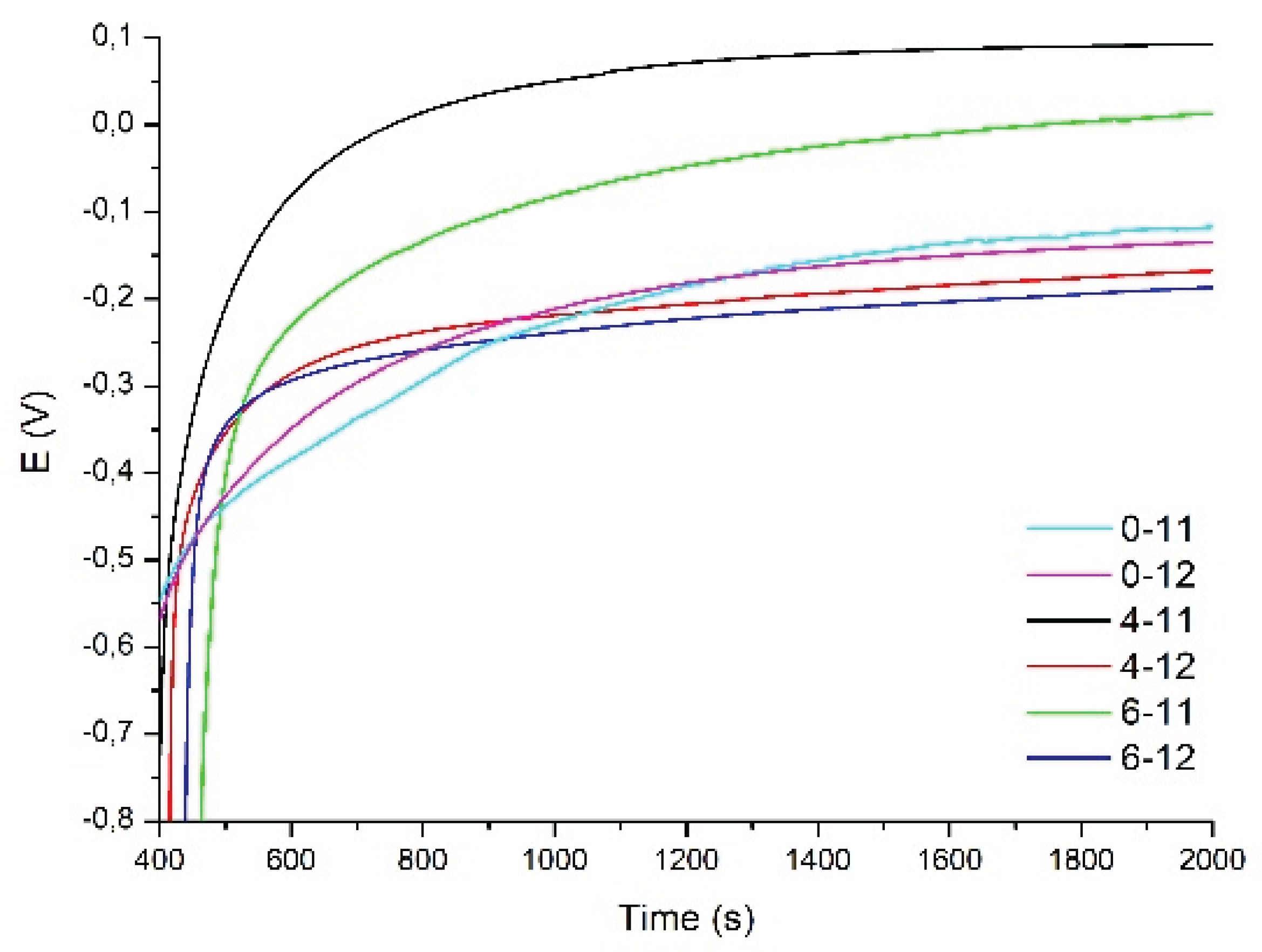
Figure 2.
Polarization curves of the samples.
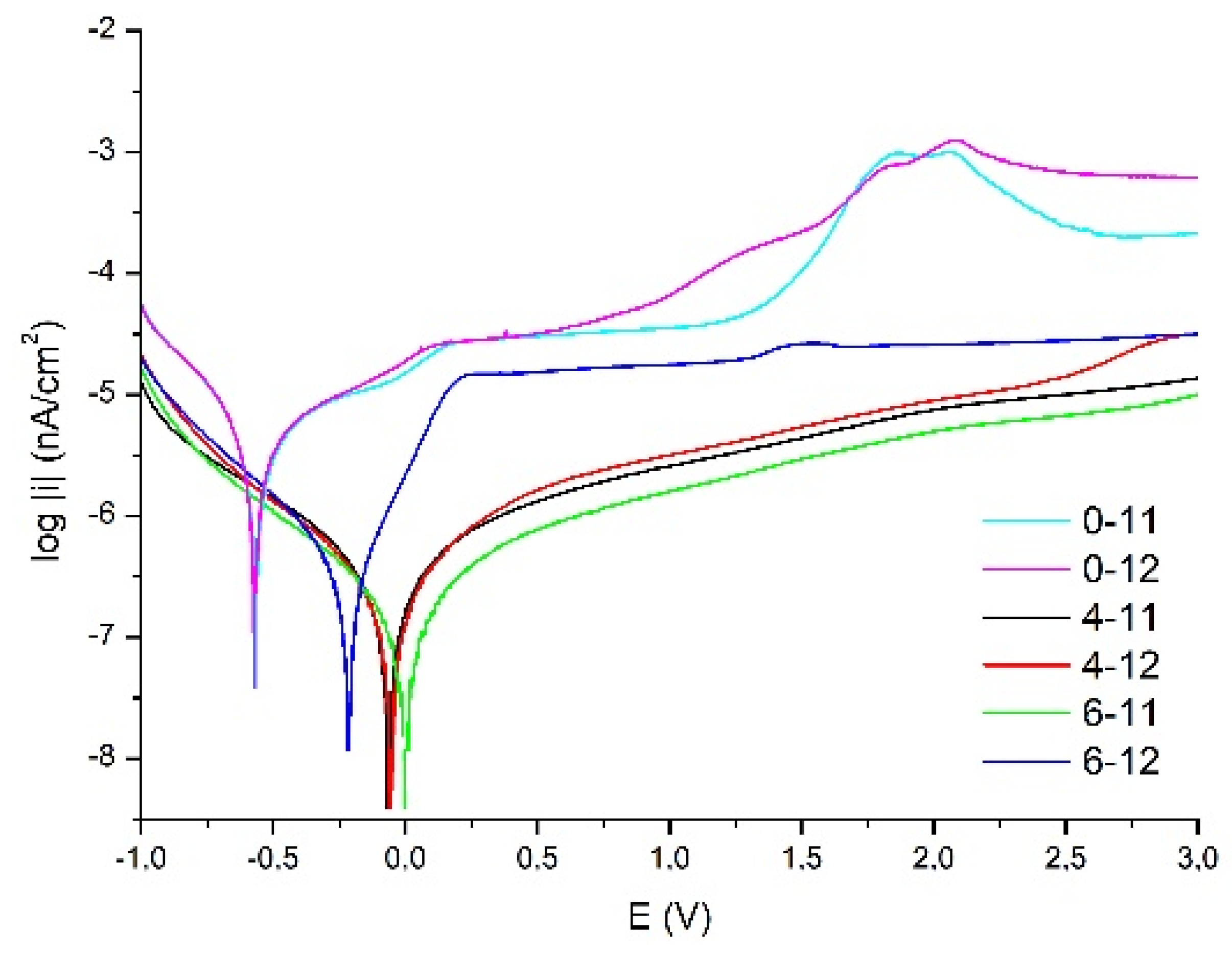
Figure 3.
Tribocorrosion response in Hartmann-Ringer.
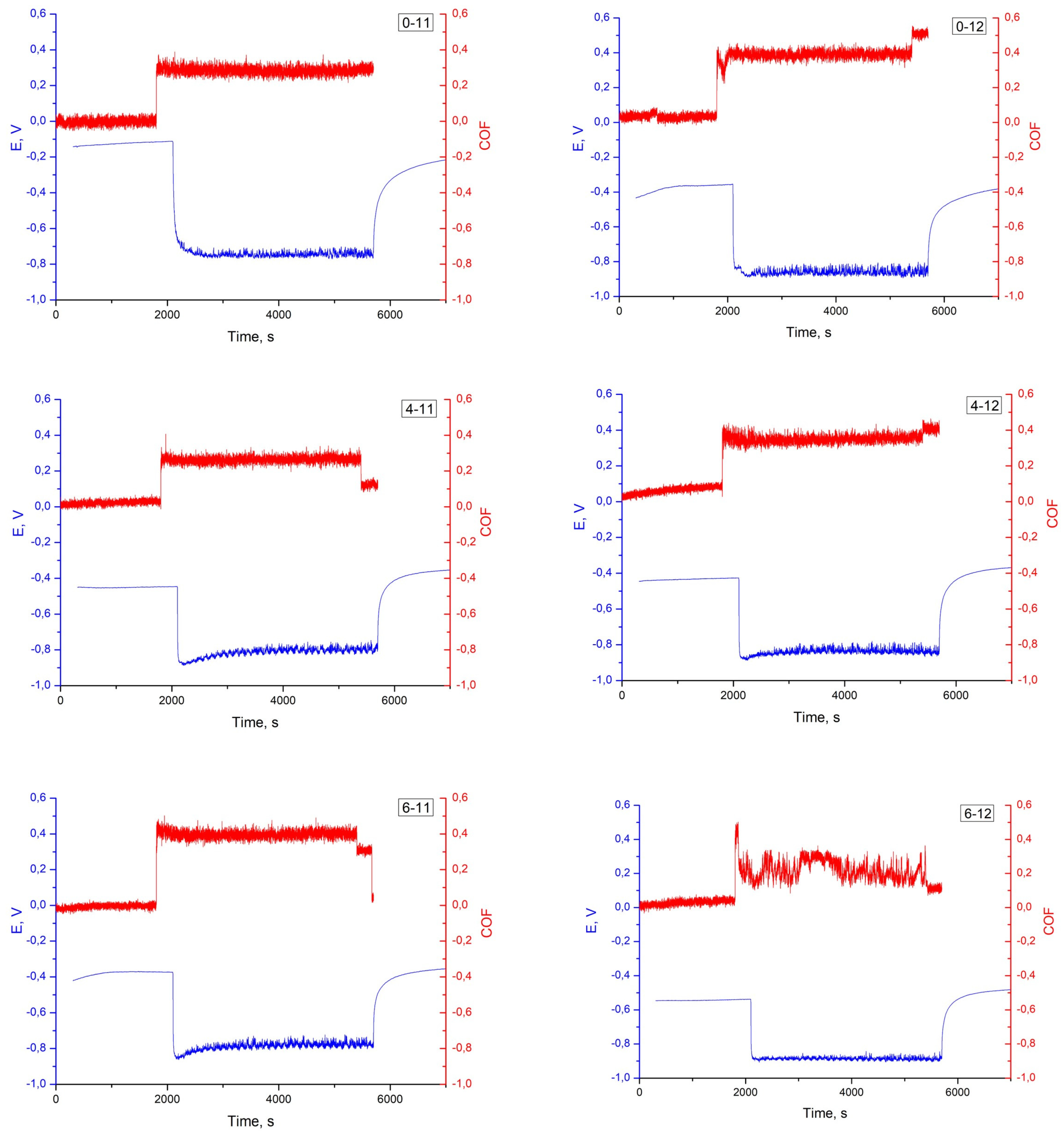
Figure 4.
Tribocorrosion response in 3M sulfuric acid.
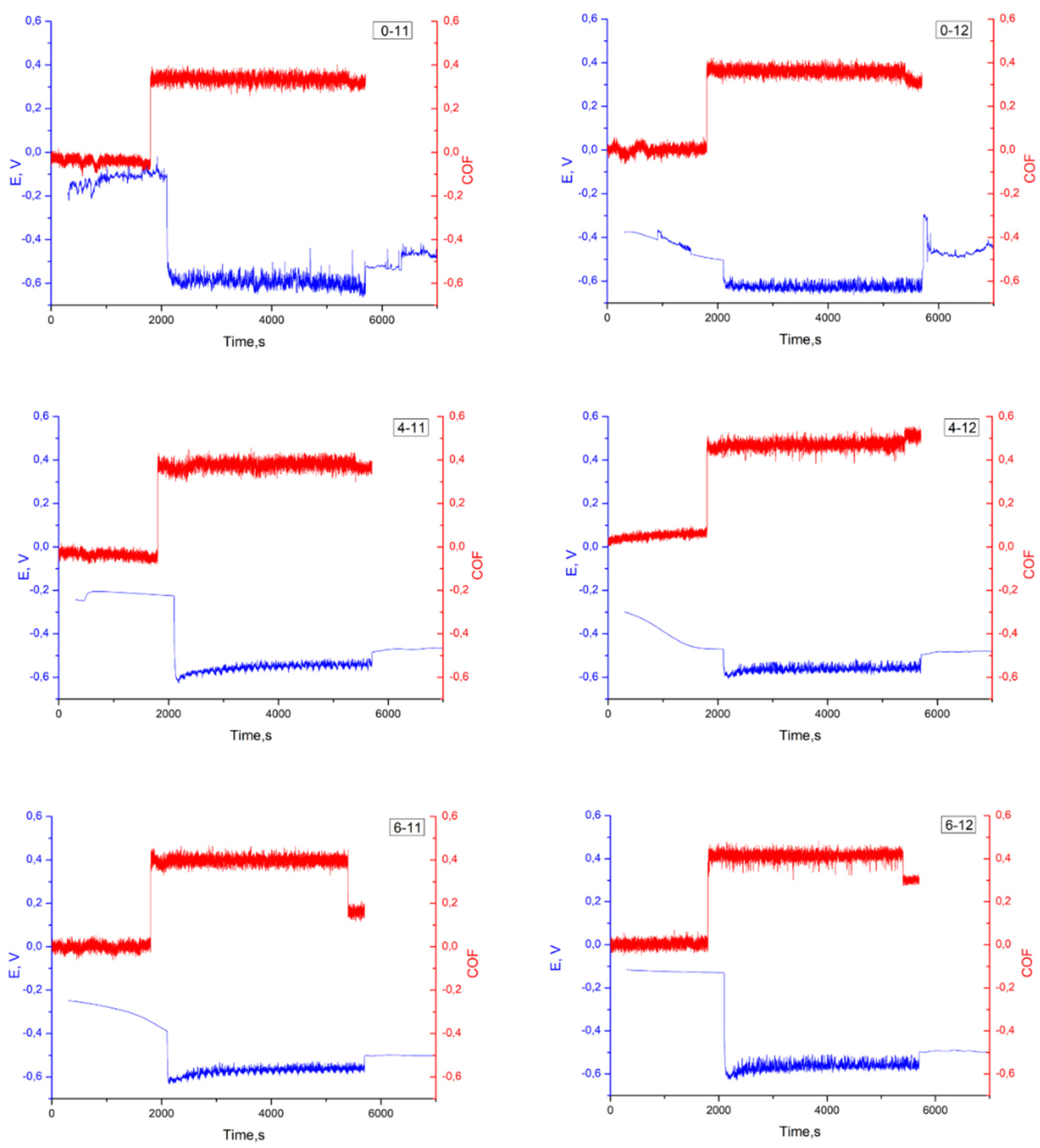
Figure 5.
SEM images at 500x magnification of 4-11 alloy exposed to tribocorrosion in Hartmann-Ringer solution. a) General appearance of the wear track. b) Plastic deformation in the wear track.
Figure 5.
SEM images at 500x magnification of 4-11 alloy exposed to tribocorrosion in Hartmann-Ringer solution. a) General appearance of the wear track. b) Plastic deformation in the wear track.
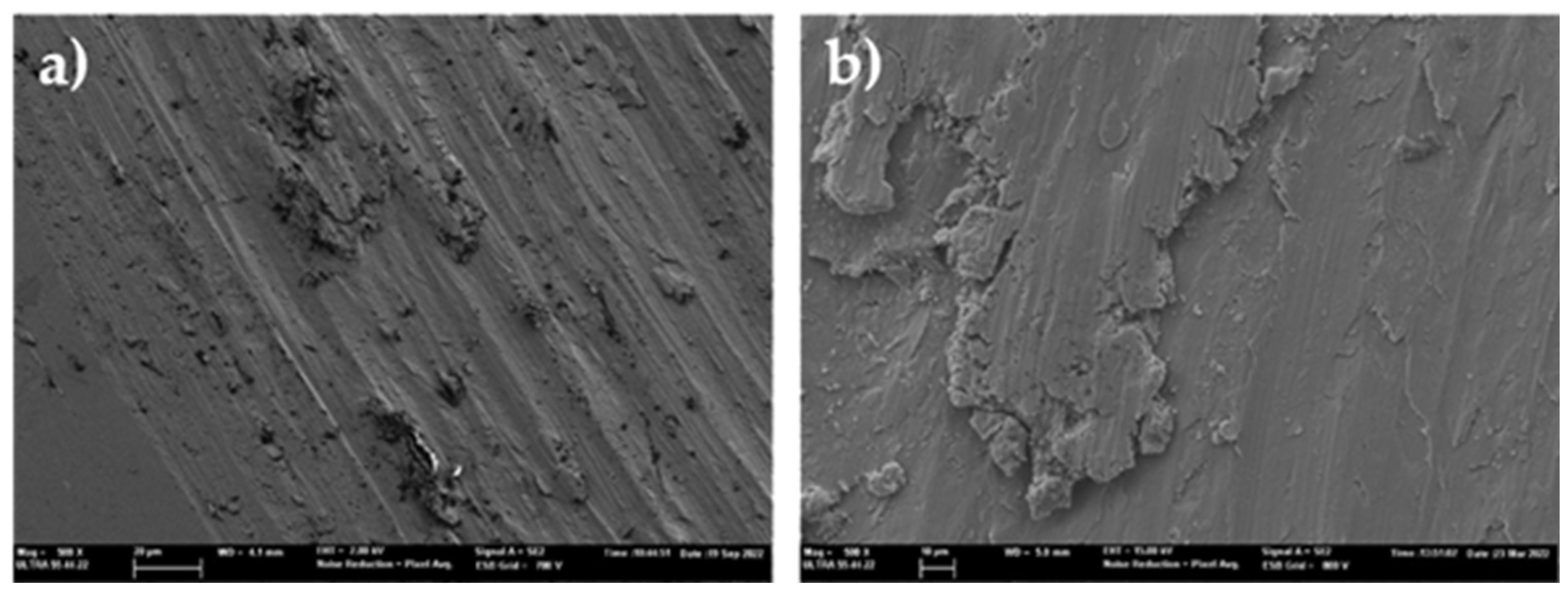
Figure 6.
SEM images at 5000x magnification of the 4-11 alloy exposed to tribocorrosion in 3M sulfuric acid solution. a) General appearance of the wear track. b) Plastic deformation in the wear track.
Figure 6.
SEM images at 5000x magnification of the 4-11 alloy exposed to tribocorrosion in 3M sulfuric acid solution. a) General appearance of the wear track. b) Plastic deformation in the wear track.
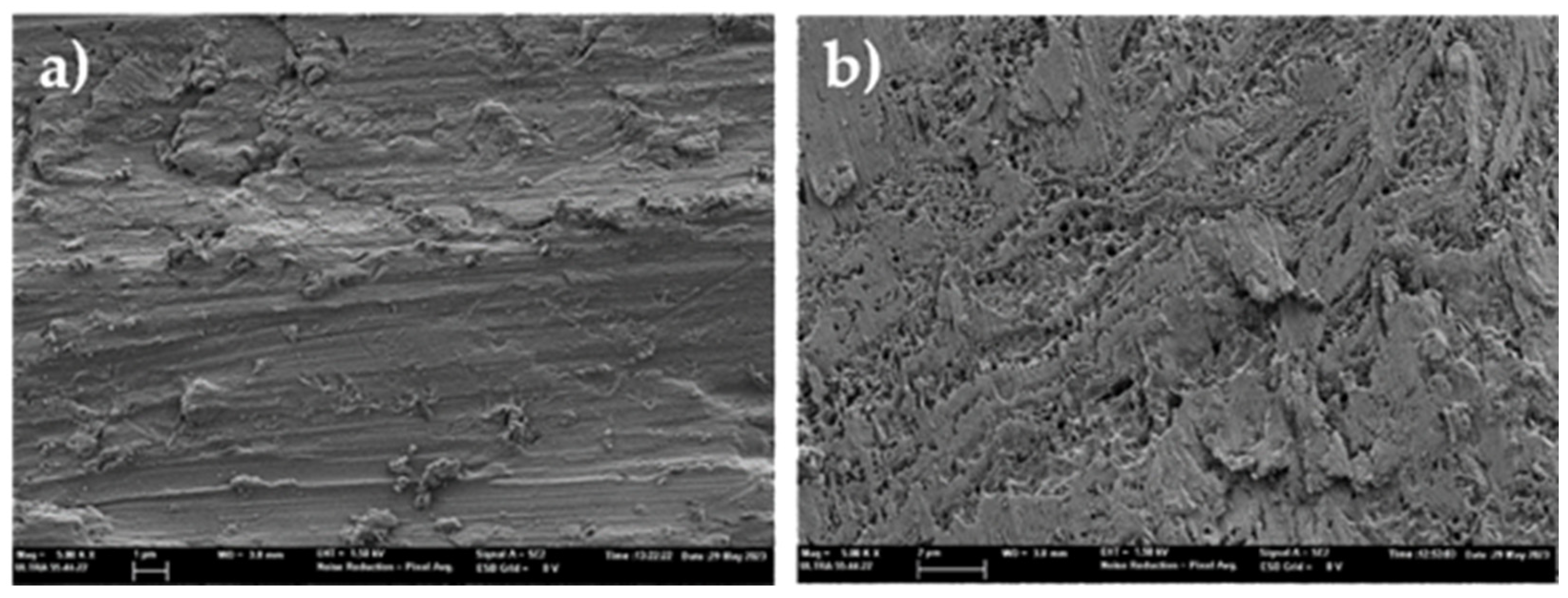
Figure 7.
The results of ion release test data summary.
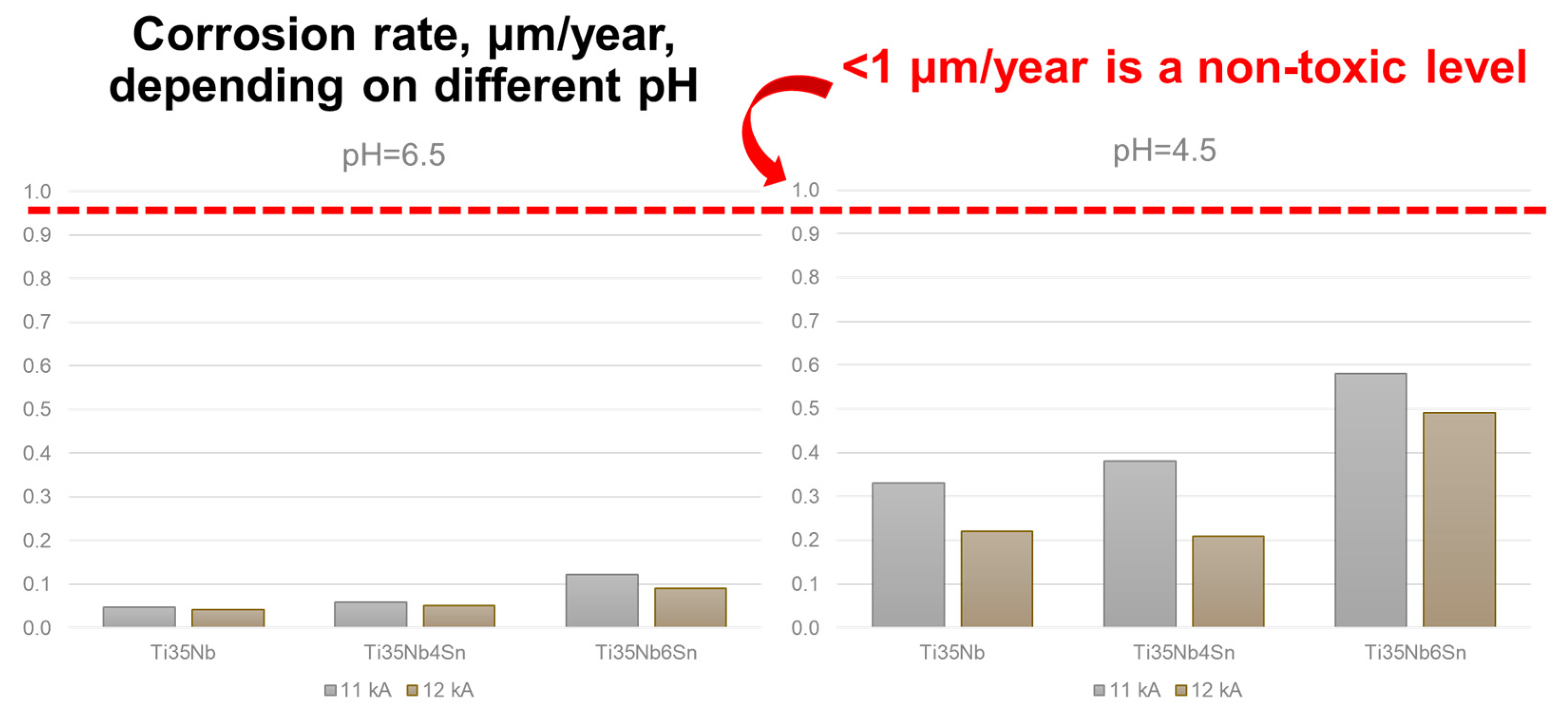

Table 1.
Corrosion test data summary.
| Sample | OCP (V) | Ecorr (V) | icorr (µA/cm²) | Rp (Ω·cm²) |
|---|---|---|---|---|
| 0-11 | -0.36 | -0.65 | 1.930 | 20 |
| 0-12 | -0.07 | -0.35 | 1.085 | 24 |
| 4-11 | 0.07 | -0.07 | 0.050 | 534 |
| 4-12 | -0.08 | -0.11 | 0.057 | 485 |
| 6-11 | 0.01 | -0.05 | 0.045 | 658 |
| 6-12 | -0.21 | -0.23 | 0.095 | 283 |
Table 2.
Tribocorrosion test data summary.
| Volume loss, mm3 | Wear rate, mm3/(N*m) | |||
|---|---|---|---|---|
| Sample | After sulfuric acid | After Hartmann-Ringer | After sulfuric acid | After Hartmann-Ringer |
| 0-11 | 0.080 | 0.053 | 0.0012 | 0.0008 |
| 0-12 | 0.073 | 0.060 | 0.0011 | 0.0009 |
| 4-11 | 0.048 | 0.044 | 0.0007 | 0.0006 |
| 4-12 | 0.050 | 0.042 | 0.0007 | 0.0006 |
| 6-11 | 0.042 | 0.042 | 0.0006 | 0.0006 |
| 6-12 | 0.048 | 0.043 | 0.0007 | 0.0006 |
Table 3.
Vickers microhardness values.
| Sample | As sintered | Hartmann-Ringer solution |
3M sulfuric acid |
|---|---|---|---|
| 0-11 | 282 | 324 | 296 |
| 0-12 | 296 | 484 | 292 |
| 4-11 | 245 | 428 | 391 |
| 4-12 | 290 | 468 | 393 |
| 6-11 | 343 | 444 | 413 |
| 6-12 | 325 | 441 | 399 |
Table 4.
Ion release at pH=6.5 and 4.5.
| Sample | Ion release rate,μg/L·cm²·h | |
| pH=6.5 | pH=4.5 | |
| 0-11 | 0.059 | 0.41 |
| 0-12 | 0.052 | 0.28 |
| 4-11 | 0.073 | 0.47 |
| 4-12 | 0.066 | 0.26 |
| 6-11 | 0.155 | 0.73 |
| 6-12 | 0.114 | 0.63 |
Disclaimer/Publisher’s Note: The statements, opinions and data contained in all publications are solely those of the individual author(s) and contributor(s) and not of MDPI and/or the editor(s). MDPI and/or the editor(s) disclaim responsibility for any injury to people or property resulting from any ideas, methods, instructions or products referred to in the content. |
© 2026 by the authors. Licensee MDPI, Basel, Switzerland. This article is an open access article distributed under the terms and conditions of the Creative Commons Attribution (CC BY) license.
Copyright: This open access article is published under a Creative Commons CC BY 4.0 license, which permit the free download, distribution, and reuse, provided that the author and preprint are cited in any reuse.