

Submitted:
20 August 2026
Posted:
21 August 2026
You are already at the latest version
Abstract
Herein, we disclose an efficient route to the synthesis of brominated 1,4-benzo[b]dithiine derivatives via ring expansion of aromatic 1,3-dithiole promoted by bromine (51% - 94%). The use of a methyl-substituent on aromatic ring lead to formation of an inseparable, equimolar mixture of regioisomers. Additionally, 4-methoxyacetophenone derivative yielded unprecedented dimeric products, which structure was confirmed by single crystal X-ray crystallography. We propose a reaction mechanism, rationalizing the formation of regioisomers originating.
Keywords:
heterocycles
; 1
; 3-dithiole
; dithioacetal
; 4-benzo[b]dithiine
; ring expansion
1. Introduction
Dithioacetals are a versatile group of organosulfur compounds, typically derived from aldehydes or ketones in presence of thiols. [1] Their most famous application in synthetic methodology is undoubtedly the Corey-Seebach reaction – the umpolung (polarity reversal) of carbonyl group, where they serve as a masked acyl anion equivalent. [2,3,4,5] Nonetheless, their use extends to biological applications [6,7,8,9,10] as well as key intermediates in ring-expansion reactions that enable synthesis of sulfur-heterocycles. [11,12] Among these, 1,4-dithiines constitute an important scaffold, [13] that can serve as antagonists of the human galanin hGAL-1 receptor, [14] or as anthelmintics, [15] while their tetroxide derivatives also show potent biological activity, [16] such as dimethipin, a commercial plant growth regulator. Synthetically, they can be deployed as a masked double bond, allowing for the preservation of the cis configuration of olefins via chemoselective desulfurization reactions. [17] Remarkably, they can serve as allylic alcohol anion equivalents [18] for construction of sugar cores, [19] or alternatively as an allyl cation equivalent to facilitate (3+2) cycloaddition reactions, [20] or as dienophiles in (4+2) cycloadditions [21], similar to their oxidized sulfone forms [22,23,24]. To date, many synthetic pathways to obtain this class of heterocycles have been developed, [25,26] however they primarily focus on 2,3-dihydro-1,4-dithiines. [27,28,29,30,31,32,33,34,35] Their benzene-fused analogues: 1,4-benzo[b]dithiines have not been explored as extensively. Examples of their synthesis include the reaction of 1,8-diketones with Lawesson’s reagent, [36] reactions with in situ generated benzdithiete, [37] transformations from pentathiepins, [38] the aromatization of cyclic ketones, [32] reactions from phenylene tetrasulfide in a presence of molybdenum catalyst, [39] the reaction of ethynylbenziodoxolone with thiols, [40] the Cu-catalyzed diarylthiolation of ynones, [41] and a very recent method by Schneider utilizing 2-iodoaryl alkynyl sulfides. [42] In our effort to expand the chemistry of 1,4-dithiines, we wondered if the ring expansion reaction of dithioacetals derived from aromatic 1,2-dithiols - analogous to the prevalent ethane-1,2-dithiol derived dithioacetals - could serve as a platform to obtain 1,4-benzo[b]dithiines.
2. Results and Discussion
2.1. Chemistry
We have started our investigation from dithioacetalization of aldehydes and acetophenone derivatives with 4-methylbenzene-1,2-dithiol, catalyzed by boron trifluoride etherate. [43,44] A series of dithioles 2 (a-j) were obtained in yields ranging from 79% to 100% (Scheme 1). It should be noted that, for aldehydes (a-b) and acetophenone derivatives (e-j) a new stereogenic center is formed and the resulting dithiole derivatives are obtained as racemic mixtures. Next we have carried out the ring expansion reaction, promoted by bromine – conditions previously described by Caputo et al. [28,45] – for obtaining derivatives of 1,4-dithiines for further broad utilization as intermediates in organic synthesis. We have isolated a series benzo[b][1,4]dithiine derivatives 3 (a-c; and e-i) as an equimolar mixture of regioisomers (2-bromo and 3-bromo). In cases where it was possible, based on 2D-NMR spectra analysis we were able to assign protons and carbon atoms to a respective regioisomer. Alkyl, heterocyclic or aryl groups, including those bearing electron donating or electron withdrawing substituents were well tolerated (51-94%). On the other hand, acetone derivative did not yield expected product, instead we have isolated a dibrominated product 3d (39%), presumably formed by substitution of one of hydrogen atoms of the methyl group by the bromine. Interestingly, the molar ratio of 3d regioisomers is 7:1 (estimated from NMR spectrum), in contrast to the previous results.
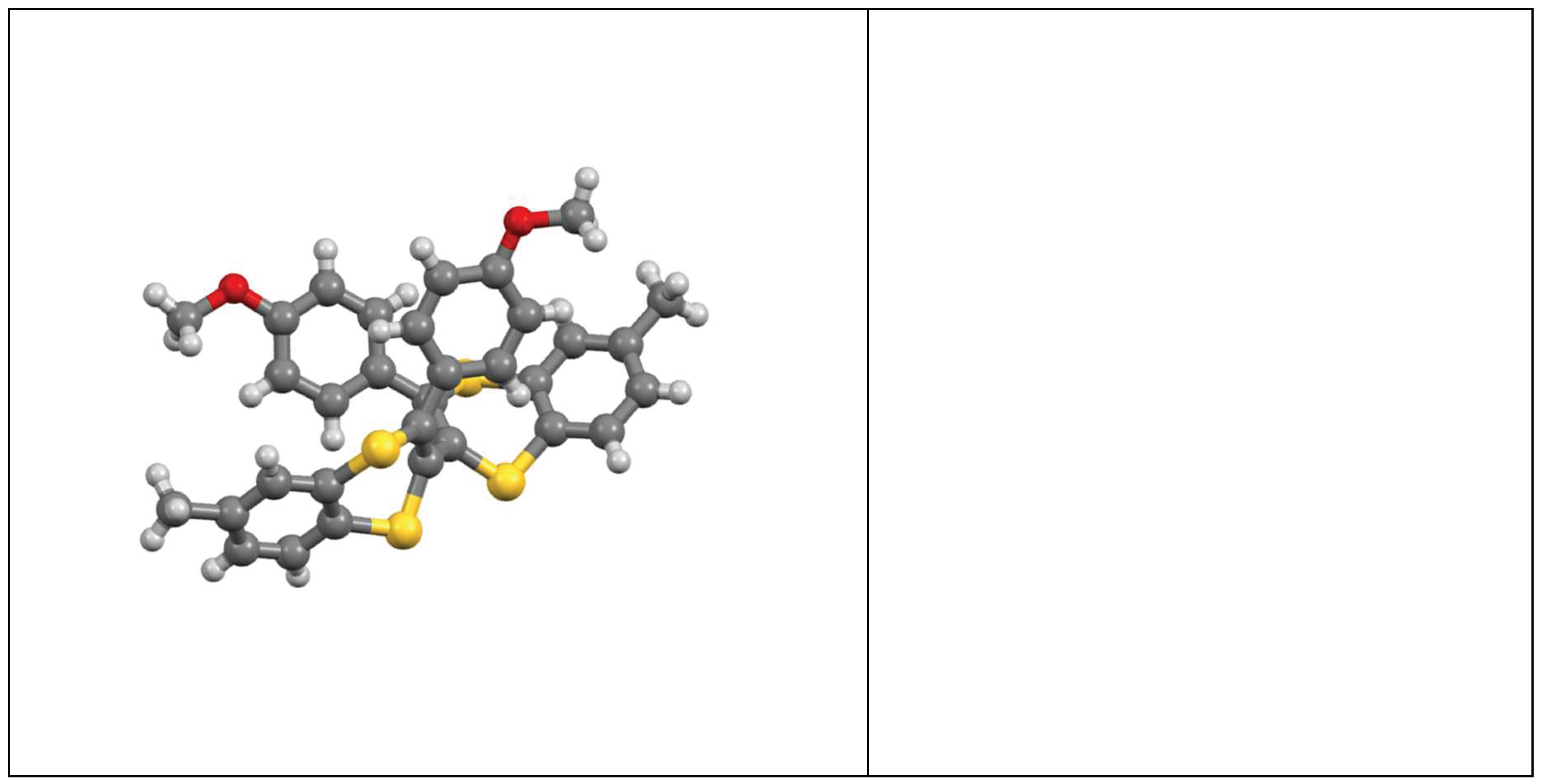
Unexpectedly, 4-methoxyacetophenone derivative 2j, upon ring expansion did not yield 3j, but instead two new products: dithiine 4 and dimeric product 5 (Scheme 1). The compounds 4:5 were obtained as a 1:2 molar mixture (per 2j mmol consumed), which we could separate by the means of column chromatography on silica gel. Expectedly 4 is a mixture of regioisomers in a 1:1 ratio. Additionally, we were able to grow a single crystal of compound 5 suitable for X-ray crystallography measurement which unambiguously confirmed its structure (Figure 1).
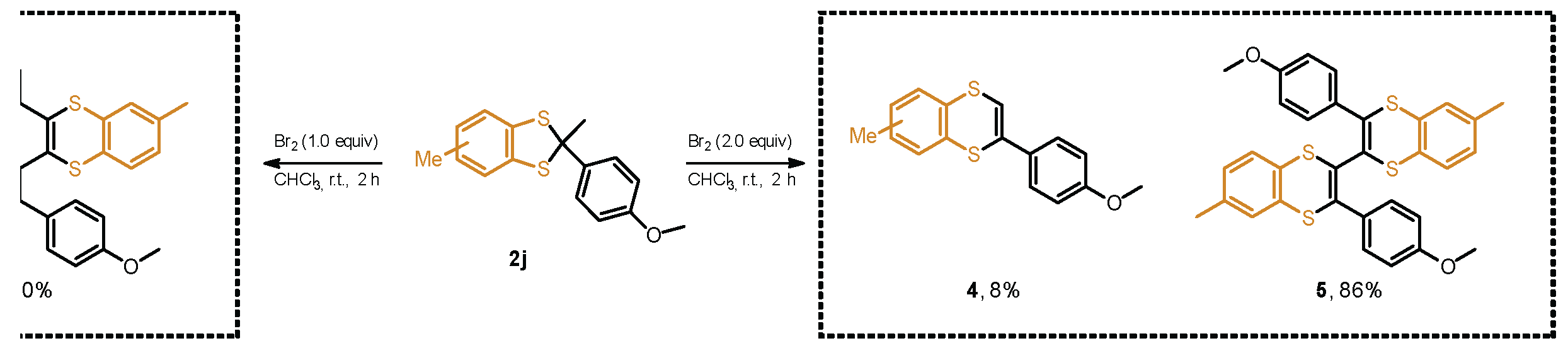
To gain more insight into the formation of products 4 and 5 we have conducted the ring expansion reaction with altering the amount of bromine (Scheme 2). When one equivalent of bromine was used, we have only obtained product 4 with yield of 65%, and we managed to recover 28% of 2j (estimated from a NMR spectrum). Once we have increased the loading of bromine to 2.2 equivalents, almost all the product 4 (8%), underwent dimerization to 5 in excellent 87% yield. Presumably brominated intermediate product 3j, that we observed in all the other cases studied, is too reactive and undergoes quick dimerization to 5 (for a reaction mechanistic proposal see SM Figure S12).
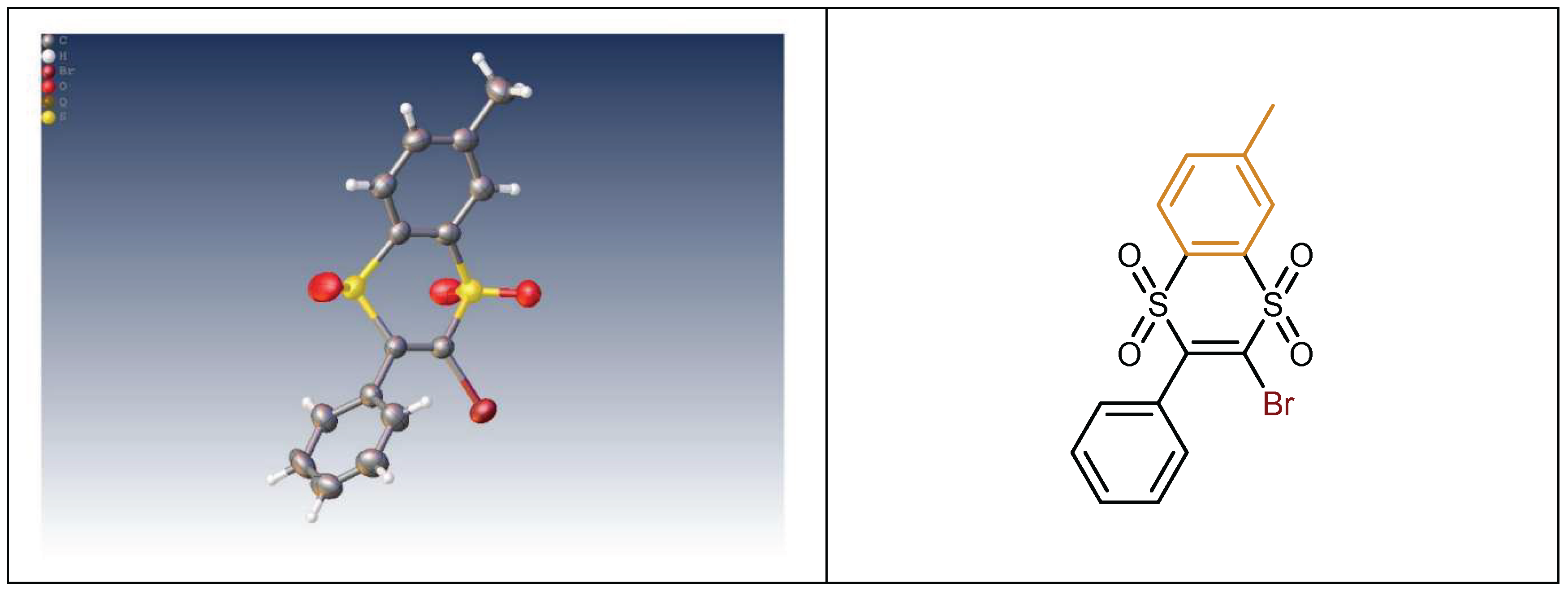
Chromatographic methods proved futile to separate obtained mixture of regioisomers. Thus we have attempted separation by fractional crystallization using product 3f (see SM for details). We have managed to enrich a single regioisomer of 3f up to 7:1 molar ratio, however we were unable to obtain a pure, single regioisomer. Next, we have attempted derivatization of dithiine 3e and 3g by exhaustive oxidation of sulfide groups to sulfone (Scheme 3). We have obtained 6 with yield 90% (R = Ph) and tetroxide derivative 7 with a yield of 74% (R = 3,4-(MeO)2C6H3-). For the first compound we have successfully grow a single crystal suitable for X-Ray analysis, even more luckily of a single regioisomer 3-bromo-, (Figure 2), while all the crystallization attempts for compound 7 were unsuccessful.
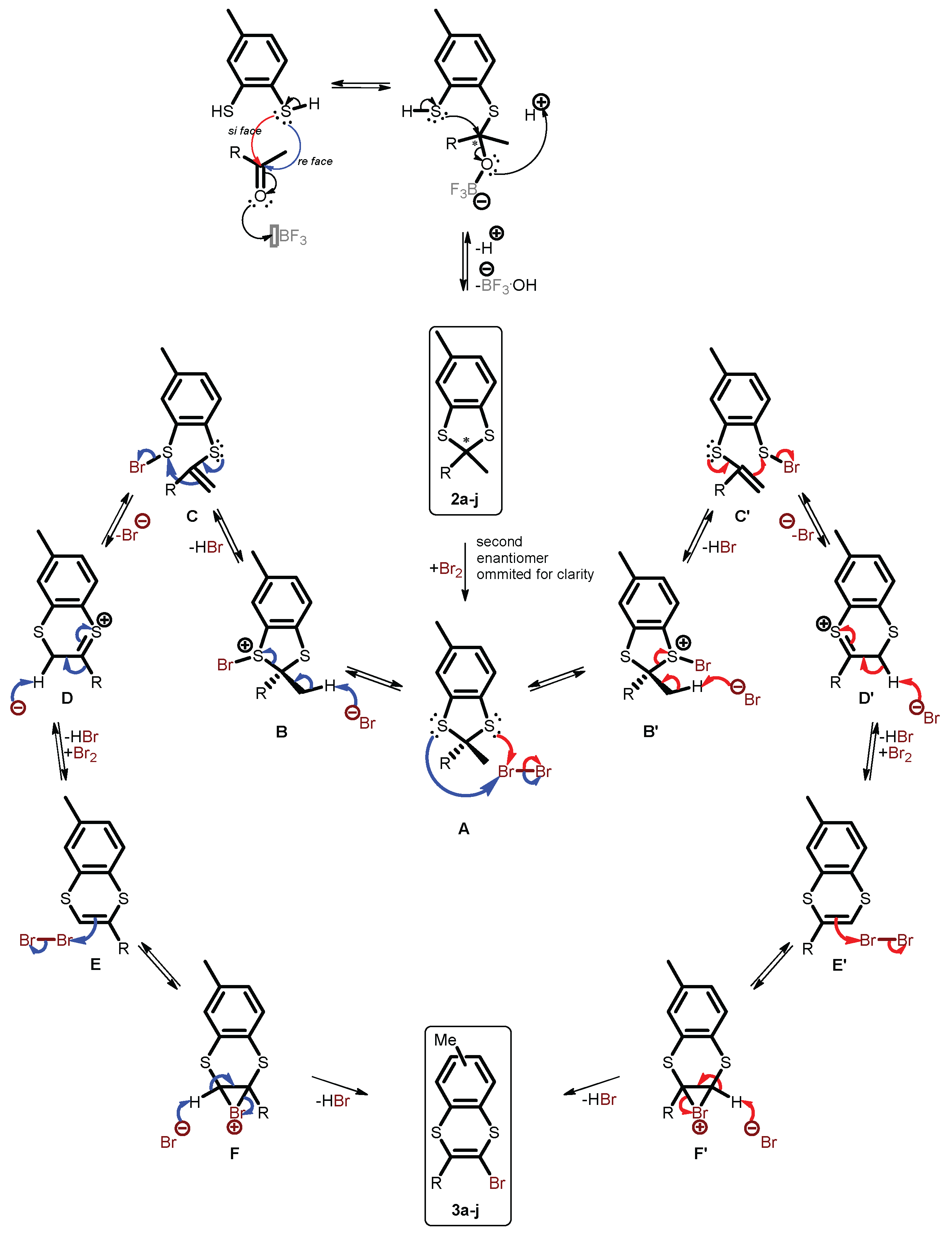
2.2. Mechanistic Considerations
The mechanism of expansion of 1,3-dithiolane/dithiole ring is well established in the literature[11,41]. It is worth noting that 4-methylbenzene-1,2-dithiol leads to formation of racemic dithioacetals from nonsymmetric ketones, as such two possible paths of activating the sulfur can be envisioned for thiolate A (Scheme 4). They diverge into twin intermediate B/B’ and while methyl group increases the electron density at the para position, in principle stabilizing intermediate B’, its effect is too weak to discriminate the other pathway, as such all the compounds (except the acetone derivative) were obtained as an equimolar mixture of regioisomers. Then by intermediates C/C’ and D/D’ a dithiine E and E’ are formed and we have managed to isolate one of such derivatives (4) when 2j was used as a substrate. Otherwise strongly acidic environment and oxidative nature of bromine prompts the formation of bromonium cations F and F’ that are subsequently attacked by bromide, resulting in formation of 3a-3i. We expect that 3j also forms, but under the reaction conditions it quickly dimerizes to 5.
Considering the reaction outliners, starting from the acetone derivative 3d, we presume that the expected monobrominated product is initially formed, but the acidic protons at the methyl group undergo subsequent abstraction by bromide (schematic description provided in SM, Figure S5). We cannot fully explain the predominance of one of the regioisomers (1:7 molar ratio, estimated from 1H-NMR spectrum). Likely the weak inductive effect of the methyl group in the para position of the aromatic fragment causes the divergence.
3. Conclusions
For the first time benzo[b][1,4]dithiine derivatives bearing substituent at the benzene ring were obtained via bromine promoted ring expansion of benzo[b][1,3]dithioles. The products are obtained as an equimolar and inseparable mixture of regioisomers. The use of 4-methoxyacetophenone derivative allowed us to isolate nonbrominated dithiine 4 and its dimer 5, which structure was confirmed by single crystal X-Ray crystallography. Attempts to separate regioisomers were partially successful via crystallization, while for tetroxide derivative 6 we have managed to obtain a crystal structure of a single regioisomer.
4. Experimental
General information on the substrates used (materials), analytical techniques used (methods) and the experimental procedures and characterization data for all obtained compounds are given in SM.
General Procedure for the Synthesis of Dithiine Derivatives,3a-3j
The reactions were performed on a 1-15 mmol scale, in room temperature. To a solution of starting dithioacetal in dry chloroform (10 mL per 1 mmol of substrate), under argon atmosphere, was added dropwise solution of bromine (1.7 equiv) in dry chloroform (5 mL per 1 mmol of bromine) with constant argon flow through reaction flask, to remove released HBr as a byproduct then neutralized. Reaction mixture was stirred for the next 45 min and quenched by addition of water solution of sodium thiosulfate (10%, 50 - 100 mL per 1 mmol of substrate) and solid sodium bicarbonate (5 g per 1 mmol of substrate, in case of no dissolution additional small amount of water was added). Aqueous phase was separated, extracted once with chloroform (same volume as water phase), organic layers were combined, washed with brine, dried over anhydrous sodium sulfate, filtered and concentrated under reduced pressure to obtain crude post reaction mixture. Product was isolated/purified by flash column chromatography (silica gel, eluent: AcOEt:n-hexane) to provide pure product.
Supplementary Materials
The following supporting information can be downloaded at the website of this paper posted on Preprints.org.
Author Contributions
Conceptualization, D.T.L.; methodology, G.G.; investigation, D.T.L. and W.J.D.; writing – original draft preparation, J.B.L. and A.B-B.; writing – review and editing, D.T.L. and W.J.D., J.B.L. and M.M.; formal analysis, M.M.; visualization of mechanism, D.T.L.; supervision, G.G. All authors have read and agreed to the published version of the manuscript.
Funding
This work was supported by the MINISTER of SCIENCE and HIGHER EDUCATION REPUBLIC of POLAND, within the program "Regional Excellence Initiative", grant number RID/SP/0032/2024/01.
Institutional Review Board Statement
Not applicable.
Informed Consent Statement
Not applicable.
Data Availability Statement
The data supporting this article have been included as part of the Supplementary Materials. CIF files for 5 and 6 have been deposited in CCDC, Nº 2571235 and 2571234, respectively.
Acknowledgments
X-ray diffraction studies were performed at the Laboratory of X-ray Structural Analysis of the Institute of Organic Chemistry of the Polish Academy of Sciences; NMR spectra were recorded in the Laboratory of Spectrometry, Faculty of Chemistry, Rzeszow University of Technology.
Conflicts of Interest
The authors declare no conflicts of interest.
References
- Greene, T. W.; Wuts, P. G. M. Protective Groups in Organic Synthesis, 1st ed.; Wiley, 1999. [Google Scholar] [CrossRef]
- Corey, E. J.; Seebach, D. Carbanionen Der 1,3-Dithiane, Reagentien Zur C–C-Verknüpfung Durch Nucleophile Substitution Oder Carbonyl-Addition. Angew. Chem. 1965, 77(24), 1134–1135. [Google Scholar] [CrossRef]
- Corey, E. J.; Seebach, D. Carbanions of 1,3-Dithianes. Reagents for C-C Bond Formation by Nucleophilic Displacement and Carbonyl Addition. Angew. Chem. Int. Ed. Engl. 1965, 4(12), 1075–1077. [Google Scholar] [CrossRef]
- Gröbel, B.-T.; Seebach, D. Umpolung of the Reactivity of Carbonyl Compounds Through Sulfur-Containing Reagents. Synthesis 1977, 1977(6), 357–402. [Google Scholar] [CrossRef]
- Yus, M.; Nájera, C.; Foubelo, F. The Role of 1,3-Dithianes in Natural Product Synthesis. Tetrahedron 2003, 59(33), 6147–6212. [Google Scholar] [CrossRef]
- Lhassani, M.; Chavignon, O.; Chezal, J.-M.; Teulade, J.-C.; Chapat, J.-P.; Snoeck, R.; Andrei, G.; Balzarini, J.; De Clercq, E.; Gueiffier, A. Synthesis and Antiviral Activity of Imidazo[1,2-a]Pyridines. Eur. J. Med. Chem. 1999, 34(3), 271–274. [Google Scholar] [CrossRef]
- Pandey, S.; Suryawanshi, S. N.; Gupta, S.; Srivastava, V. M. L. Chemotherapy of Leishmaniasis Part II: Synthesis and Bioevaluation of Substituted Arylketene Dithioacetals as Antileishmanial Agents. Eur. J. Med. Chem. 2005, 40(8), 751–756. [Google Scholar] [CrossRef] [PubMed]
- Koga, H.; Tsuji, Y.; Inoue, K.; Kanai, K.; Majima, T.; Kasai, T.; Uchida, K.; Yamaguchi, H. In Vitro Antifungal Activity of Luliconazole against Clinical Isolates from Patients with Dermatomycoses. J. Infect. Chemother. 2006, 12(3), 163–165. [Google Scholar] [CrossRef] [PubMed]
- Koga, H.; Nanjoh, Y.; Makimura, K.; Tsuboi, R. In Vitro Antifungal Activities of Luliconazole, a New Topical Imidazole. Med. Mycol. 2009, 47(6), 640–647. [Google Scholar] [CrossRef] [PubMed]
- Shao, J.; Bian, Y.; Wang, Q.; Mei, H.; Makarem, A.; Soloshonok, V. A.; Han, J. Synthesis of Dithioacetals via Nucleophilic Substitution and Their Antifungal Activity Evaluation. Org. Biomol. Chem. 2024, 22(42), 8418–8422. [Google Scholar] [CrossRef] [PubMed]
- Wood, W. W. “Trends in the Chemistry of 1,3- Dithioacetals”. In Organosulfur Chemistry, Synthetic Aspect;Czapter; Page, P., Ed.; Academic Press, London, 1995; Volume 4, pp. 133–224. [Google Scholar] [CrossRef]
- Abdel-Wahab, B. F.; Shaaban, S.; El-Hiti, G. A. Synthesis of Sulfur-Containing Heterocycles via Ring Enlargement. Mol. Divers 2018, 22(2), 517–542. [Google Scholar] [CrossRef] [PubMed]
- Guillaumet, G. 1,4-Dioxins, Oxathiins, Dithiins and Their Benzo Derivatives. In Comprehensive Heterocyclic Chemistry II; Elsevier, 1996; pp. 447–481. [Google Scholar] [CrossRef]
- Scott, M. K.; Ross, T. M.; Lee, D. H. S.; Wang, H.-Y.; Shank, R. P.; Wild, K. D.; Davis, C. B.; Crooke, J. J.; Potocki, A. C.; Reitz, A. B. 2,3-Dihydro-Dithiin and -Dithiepine-1,1,4,4-Tetroxides: Small Molecule Non-Peptide Antagonists of the Human Galanin hGAL-1 Receptor. Bioorganic Med. Chem. 2000, 8(6), 1383–1391. [Google Scholar] [CrossRef] [PubMed]
- Wilfried, D.; Korte, F. W. A. G. K. 1,4 Dithiin-2,3,5,6-Tetracarboximides and Process for Their Preparation. 16 January 1968. Available online: https://patents.google.com/patent/US3364229A/en (accessed on 2026-04-22).
- Chee, G.-L.; Bhattarai, B.; Nash, J. D.; Madec, K.; Hasinoff, B. B.; Brewer, A. D. Chemical Reactivity and Biological Activity of Dihydro-1,4-Dithiin Tetraoxides. Can. J. Chem. 2013, 91(8), 649–655. [Google Scholar] [CrossRef]
- Caputo, R.; Palumbo, G.; Pedatella, S. Diastereoselective Desulfurization of 5,6-Dihydro-1,4-Dithiins. Synthesis of Muscalure from Musca Domestica L. Tetrahedron 1994, 50(24), 7265–7268. [Google Scholar] [CrossRef]
- Caputo, R.; Guaragna, A.; Palumbo, G.; Pedatella, S. A New and Versatile Allylic Alcohol Anion and Acyl β-Anion Equivalent for Three-Carbon Homologations. J. Org. Chem. 1997, 62(26), 9369–9371. [Google Scholar] [CrossRef]
- D’Alonzo, D.; Palumbo, G.; Guaragna, A. Multistep Transformations of BIS-Thioenol Ether-Containing Chiral Building Blocks: New Avenues in Glycochemistry. In Domino and Intramolecular Rearrangement Reactions as Advanced Synthetic Methods in Glycoscience; Witczak, Z. J., Bielski, R., Eds.; Wiley, 2016; pp. 97–113. [Google Scholar] [CrossRef]
- Hullaert, J.; Winne, J. M. (5,6-Dihydro-1,4-Dithiin-2-Yl)Methanol as a Versatile Allyl-Cation Equivalent in (3+2) Cycloaddition Reactions. Angew. Chem. Int. Ed. 2016, 55(42), 13254–13258. [Google Scholar] [CrossRef] [PubMed]
- Gülten, Ş. The Synthesis and Characterization of Solvatochromic Maleimide-fused N -allyl- and N -alkyl-substituted 1,4-dithiines and Diels–Alder Reactions with Anthracene. J. Heterocycl. Chem. 2010, 47(1), 188–193. [Google Scholar] [CrossRef]
- Giacometti, A.; De Lucchi, O.; Dilillo, F.; Cossu, S.; Peters, K.; Peters, E.-M.; von Schnering, H.G. Synthetic Equivalents to Substituted Acetylenesin Cycloaddition Reactions. Deinophilic Reactivity of 2-Methyl-, 2-Phenyl- and 2,3-Trimethylene-1,4-Benzodithiins-1,4-Tetroxides. Tetrahedron 1994, 50(26), 7913–7922. [Google Scholar] [CrossRef]
- Cossu, S.; Battaggia, S.; De Lucchi, O. Barrelene, a New Convenient Synthesis. J. Org. Chem. 1997, 62(12), 4162–4163. [Google Scholar] [CrossRef]
- Cossu, S.; De Lucchi, O. 2-Chloro-1,4-benzodithiin 1,1,4,4-Tetraoxide - A Conjunctive Dienophile for the Preparation of Tetrasubstituted Polycyclic Olefins. Eur. J. Org. Chem. 1998, 12, 2775–2784. [Google Scholar] [CrossRef]
- Fjeldskaar, I. R.; Rongves, P.; Skattebol, L. A Convenient Method for the Preparation of Bicyclic Dihydro-1,4-Dioxins, Dihydro-1,4-Oxathiins, Dihydro-1,4-Dithiins and Related Compounds. Acta Chem. Scand. Ser. B. 1987, 41b, 477–486. [Google Scholar] [CrossRef]
- Zhang, X.; Zou, X.; Yan, H. Synthesis of Boron-Fused 1,4-Dithiin via Cobalt-Mediated Disulfuration of Alkyne at the o -Carborane-9,12-Dithiolate Unit. Organometallics 2014, 33(10), 2661–2666. [Google Scholar] [CrossRef]
- Larsen, L.; Garner, C. D.; Joule, J. A. Model Studies Related to the Cofactor of Oxomolybdoenzymes. Part 2. Quinoxalin-2-Yl-Ethane- and-Ethene-1,2-Dithiols. J. Chem. Soc. 1989, No. 12, 2311. [Google Scholar] [CrossRef]
- Caputo, R.; Ferreri, C.; Palumbo, G. Reactivity of Ethanediyl S,S -Acetals; 2. Synthesis of 2,3-Dihydro-1,4-Dithiins. Synthesis 1991, 1991(03), 223–224. [Google Scholar] [CrossRef]
- Firouzabadi, H.; Iranpoor, N.; Karimi, B. Tungsten Hexachloride (WCl6 ) in the Presence of Dimethylsulfoxide Promoted Facile and Efficient One-Pot Ring Expansion-Chlorination Reactions of 1,3-Dithiolanes and 1,3-Dithianes. Synlett 1999, 1999(4), 413–414. [Google Scholar] [CrossRef]
- Firouzabadi, H.; Iranpoor, N.; Garzan, A.; Shaterian, H. R.; Ebrahimzadeh, F. Facile Ring-Expansion Substitution Reactions of 1,3-Dithiolanes and 1,3-Dithianes Initiated by Electrophilic Reagents to Produce Monohalo-, -cyano-, -azido- and -thiocyanato-1,4-dithiins and -1,4-dithiepins. Eur. J. Org. Chem. 2005, 2005(2), 416–428. [Google Scholar] [CrossRef]
- Arote, N.; Telvekar, V.; Akamanchi, K. Rapid Method for the Ring Expansion of 1,3-Dithiolanes and 1,3-Dithianes with Tert -Butyl Hypochlorite. Synlett 2005, 2005(19), 2935–2938. [Google Scholar] [CrossRef]
- Murru, S.; Kavala, V.; Singh, C. B.; Patel, B. K. A One-Pot Synthesis of 1,4-Dithiins and 1,4-Benzodithiins from Ketones Using the Recyclable Reagent 1,1′-(Ethane-1,2-Diyl)Dipyridinium Bistribromide (EDPBT). Tetrahedron Lett. 2007, 48(6), 1007–1011. [Google Scholar] [CrossRef]
- Depa, W. J.; Buszta, N.; Guńka, P. A.; Zachara, J.; Bajek-Bil, A.; Groszek, G. Chirality Transfer in the Synthesis of 2,3-Dihydro-1,4-Dithiine Derivatives. Synth. Commun. 2020, 50(22), 3397–3403. [Google Scholar] [CrossRef]
- Leja, D. T.; Depa, W. J.; Guńka, P. A.; Zachara, J.; Lechowicz, J. B.; Groszek, G. New Heterocyclic Organosulfur Compounds Derived from Dithioacetals. Synlett 2024, 35(16), 1932–1936. [Google Scholar] [CrossRef]
- Leja, D. T.; Guńka, P.A.; Florjan, W.; Erdem, E.; Groszek, G. New Organosulfur Compounds Derived by Dithioketalization of Hydroxyacetone and Its Tosylate Derivative - Mechanistic Considerations. CT&B 2024, 76–87. [Google Scholar] [CrossRef]
- Ozturk, T. An Unusual Reaction of Lawesson’s Reagent with 1,8-Diketones: A Synthesis of Fused 1,4-Dithiins and Thiophenes. Tetrahedron Lett. 1996, 37(16), 2821–2824. [Google Scholar] [CrossRef]
- Kobayashi, K.; Koyama, E.; Goto, M.; Noda, C.; Furukawa, N. Dealkylation of a 1,2-Bis(Benzylthio)Benzene Derivative: Generation of Benzodithiete or Its Equivalent via a Dithia Dication. Chem. Commun. 2000, No. 17, 1667–1668. [Google Scholar] [CrossRef]
- Amelichev, S. A.; Konstantinova, L. S.; Obruchnikova, N. V.; Rakitin, O. A.; Rees, C. W. Synthesis of 1,4-Dithiins from Pentathiepins. Org. Lett. 2006, 8(20), 4529–4532. [Google Scholar] [CrossRef] [PubMed]
- Harrison, D. J.; Fekl, U. Catalytic Production of Sulfur Heterocycles (Dihydrobenzodithiins): A New Application of Ligand-Based Alkene Reactivity. Chem. Commun. 2009, No. 48, 7572. [Google Scholar] [CrossRef] [PubMed]
- Liu, B.; Alegre-Requena, J. V.; Paton, R. S.; Miyake, G. M. Unconventional Reactivity of Ethynylbenziodoxolone Reagents and Thiols: Scope and Mechanism. Chem. – A Eur. J. 2020, 26(11), 2386–2394. [Google Scholar] [CrossRef] [PubMed]
- Zhao, Y.-M.; Wang, X.; Guo, Z.-Y.; Li, H.; Zhang, J.-T.; Xie, M.-H. Cu-Catalyzed Diarylthiolation of Ynones with Aryl Iodides and Elemental Sulfur: An Access to Tetrasubstituted (Z)-1,2-Bis(Arylthio)Alkenes and Benzo[b][1,4]Dithiines. J. Org. Chem. 2022, 87(17), 11796–11804. [Google Scholar] [CrossRef] [PubMed]
- Paixao, D.B.; Kessler, A.B.; Rodembusch, F.S.; Stieler, R.; Rampon, D.S.; Schneider, P.H. Chemodivergent Synthesis of 1,4-Benzo[b]Dithiins and 1,4-Benzodithiafulvenes. Org. Lett. 2026, 28(5), 1803–1809. [Google Scholar] [CrossRef] [PubMed]
- Fieser, L. F. Preparation of Ethylenethioketals. J. Am. Chem. Soc. 1954, 76(7), 1945–1947. [Google Scholar] [CrossRef]
- Nakata, T.; Nagao, S.; Mori, S.; Oishi, T. Total synthesis of (+)-pederin. 1. Stereocontrolled synthesis of (+)-benzoylpedamide. Tetrahedron Lett. 1985, 26, 6461–6464. [Google Scholar] [CrossRef]
- Caputo, R.; Ferreri, C.; Palumbo, G.; Capozzi, G. The reaction of ethanediyl S,S-acetals with halogens. Tetrahedron 1986, 42, 2369-23-76. [Google Scholar] [CrossRef]
Scheme 1.
Substrate scope of the dithioacetalization reaction followed by a ring expansion reaction leading to benzo[b][1,4]dithiine derivatives.
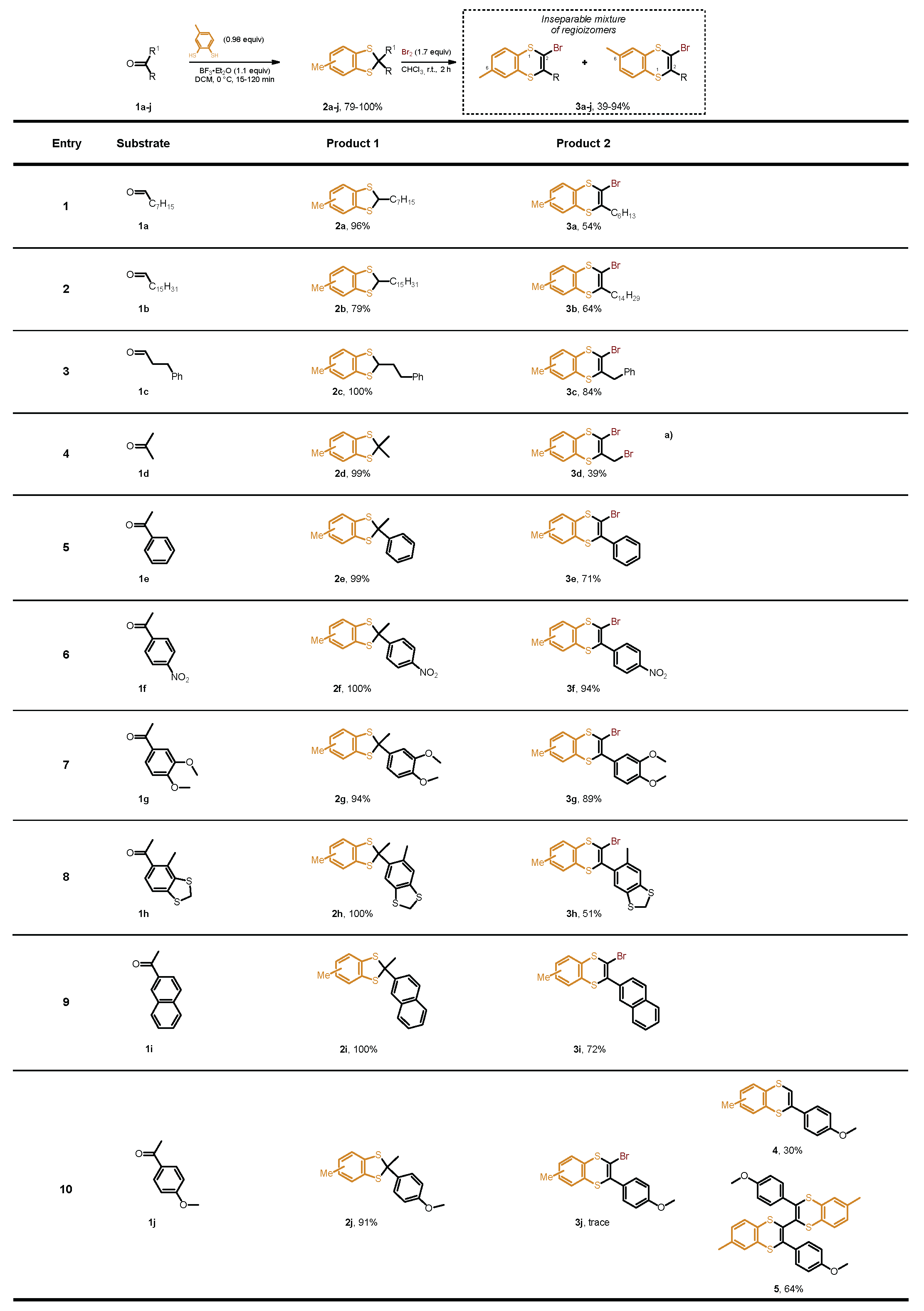
Figure 1.
Crystal Data of 5. CCDC 2571235 C32H26O2S4, Mr = 570.77, triclinic, P-1 (No. 2), a = 9.6769(11) Å, b = 11.1216(13) Å, c = 14.2025(17) Å, α = 104.035(10)°, β = 93.139(9)°, γ = 101.083(10)°, V = 1447.0(3) Å3, T = 293.15(10) K, Z = 2, Z' = 1, μ(Cu Kα) = 3.232, 4940 reflections measured, 3832 unique (Rint = 0.0182) which were used in all calculations. The final wR2 was 0.2184 (all data) and R1 was 0.0654 (I > 2(I)).
Figure 1.
Crystal Data of 5. CCDC 2571235 C32H26O2S4, Mr = 570.77, triclinic, P-1 (No. 2), a = 9.6769(11) Å, b = 11.1216(13) Å, c = 14.2025(17) Å, α = 104.035(10)°, β = 93.139(9)°, γ = 101.083(10)°, V = 1447.0(3) Å3, T = 293.15(10) K, Z = 2, Z' = 1, μ(Cu Kα) = 3.232, 4940 reflections measured, 3832 unique (Rint = 0.0182) which were used in all calculations. The final wR2 was 0.2184 (all data) and R1 was 0.0654 (I > 2(I)).
Scheme 2.
4-Methoxyacetophenone derivative ring expansion vs dimerization.
Scheme 3.
Exhaustive oxidation of dithiine 3e and 3g to respective tetroxides.
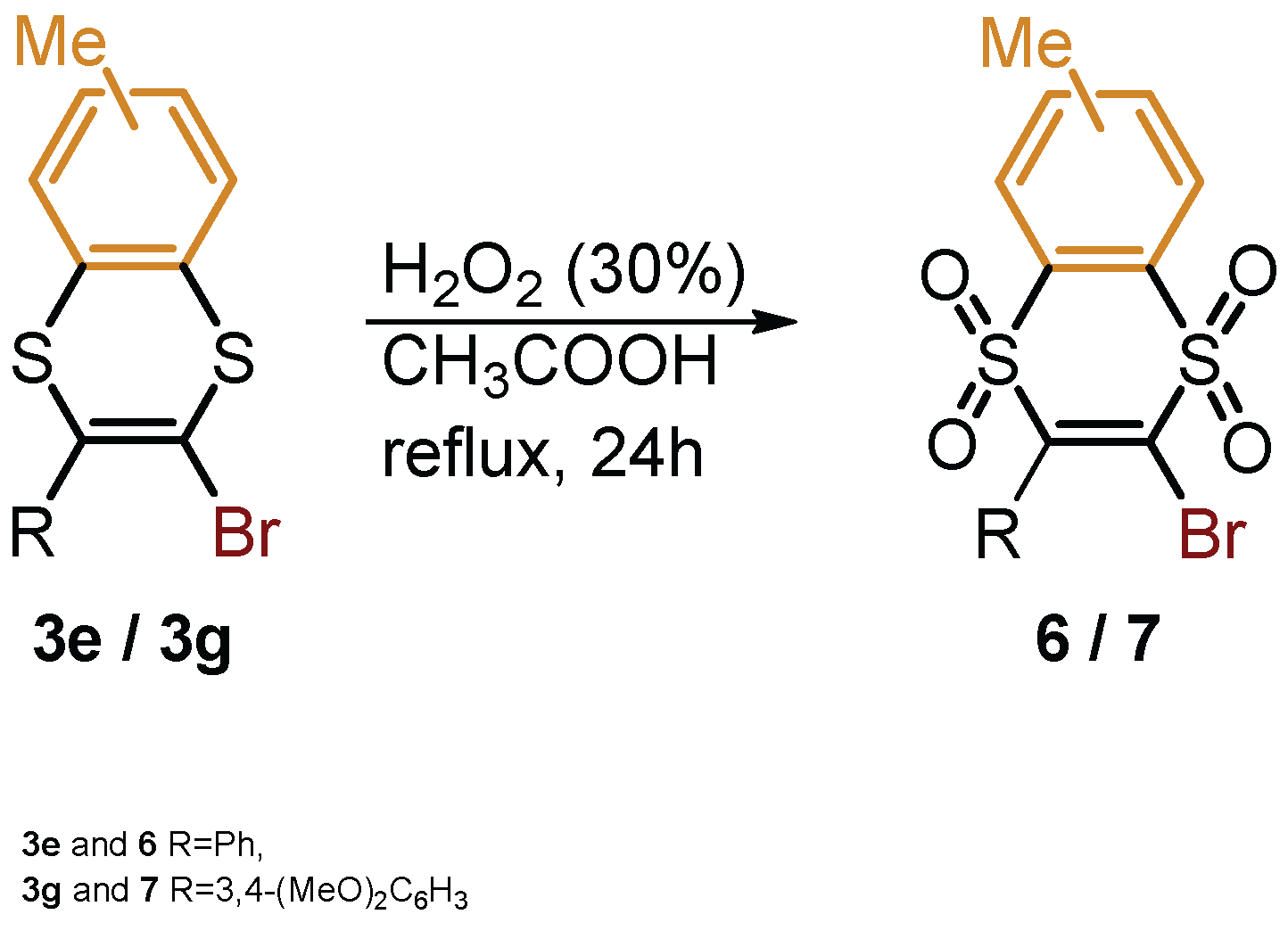
Figure 2.
Crystal Data of 6, CCDC 2571234 C15H11BrO4S2, Mr = 399.27, orthorhombic, Pca21 (No. 29), a = 7.41370(10) Å, b = 12.4876(2) Å, c = 16.3887(2) Å, α = β = γ = 90°, V = 1517.25(4) Å 3, T = 293.15(10) K, Z = 4, Z' = 1, μ(Cu Kα) = 6.409, 14034 reflections measured, 2537 unique (Rint = 0.0320) which were used in all calculations. The final wR2 was 0.0782 (all data) and R1 was 0.0288 (I > 2(I)).
Figure 2.
Crystal Data of 6, CCDC 2571234 C15H11BrO4S2, Mr = 399.27, orthorhombic, Pca21 (No. 29), a = 7.41370(10) Å, b = 12.4876(2) Å, c = 16.3887(2) Å, α = β = γ = 90°, V = 1517.25(4) Å 3, T = 293.15(10) K, Z = 4, Z' = 1, μ(Cu Kα) = 6.409, 14034 reflections measured, 2537 unique (Rint = 0.0320) which were used in all calculations. The final wR2 was 0.0782 (all data) and R1 was 0.0288 (I > 2(I)).
Disclaimer/Publisher’s Note: The statements, opinions and data contained in all publications are solely those of the individual author(s) and contributor(s) and not of MDPI and/or the editor(s). MDPI and/or the editor(s) disclaim responsibility for any injury to people or property resulting from any ideas, methods, instructions or products referred to in the content. |
© 2026 by the authors. Licensee MDPI, Basel, Switzerland. This article is an open access article distributed under the terms and conditions of the Creative Commons Attribution (CC BY) license (http://creativecommons.org/licenses/by/4.0/).
Copyright: This open access article is published under a Creative Commons CC BY 4.0 license, which permit the free download, distribution, and reuse, provided that the author and preprint are cited in any reuse.