

Submitted:
19 August 2026
Posted:
21 August 2026
You are already at the latest version
Abstract
Living substrates have emerged as promising functional elements in bioelectronic circuits, yet the mechanical fragility of biological containment systems has prevented deployment in wearable or impact-prone environments. Symbiotic cultures of bacteria and yeast (SCOBY) exhibit memristive behavior, but prior implementations lack robust packaging. We present a mechanically resilient bioreactor that houses a living SCOBY memristor within a glass vessel fitted with graphite electrodes and nutrient/oxygen ports, all encased in a protective aerogel-starch composite. Electronic characterization confirms characteristic I-V hysteresis and volatile memory operation with memristive accuracies of 93.2 +/- 3.5% at 6.67 kHz and 92.4 +/- 1% at 9.1 kHz. The system withstands repeated mechanical insults—including six concrete drops from 15 cm, ballistic impacts to a wearable helmet integration, six high-velocity aquatic deployments via combustion-driven potato cannon, and direct concrete impact—without catastrophic failure, mass loss, or measurable change in resistance. Casing designs and control software are released as open hardware. These findings establish that living memristive devices can be engineered for both computational functionality and mechanical durability, advancing the transition of biofilm electronics from laboratory proof-of-concept to deployable systems.
Keywords:
memristors
; bioelectronics
; wearables
; biofilms
; biocomputing
; bioreactors
1. Introduction
1.1. Overview
The convergence of synthetic biology and microelectronics has catalyzed growing interest in living substrates as functional circuit elements, yet the translation of bioelectronic devices from controlled laboratory settings to mechanically demanding operational environments remains a critical bottleneck. Among biological computing primitives, the memristor—whose resistance state depended on the history of applied voltage—emerged as a particularly compelling target for biofilm-based implementations, given the inherent ionic conductivity and adaptive electrochemical behavior of microbial communities (Chua, 1971; Mougkogiannis and Adamatzky, 2025; Mougkogiannis and Adamatzky, 2025a; Mougkogiannis and Adamatzky, 2025b; Mougkogiannis and Adamatzky, 2025c). Symbiotic cultures of bacteria and yeast (SCOBY) demonstrated memristive hysteresis and volatile memory behavior, but prior demonstrations relied on fragile containment systems that precluded deployment in wearable, portable, or impact-prone contexts. Here, we reported the design and validation of a mechanically robust bioreactor system that housed a living SCOBY memristor within a protective aerogel-starch composite casing, integrating graphite electrodes and controlled nutrient and oxygen delivery ports within a glass vessel. Through comprehensive electronic characterization, the device exhibited characteristic memristive I–V hysteresis and maintained volatile memory functionality across targeted operating frequencies. Furthermore, the bioreactor withstood repeated mechanical insults—including multi-drop concrete impacts, ballistic wearable integration trials, and high-velocity aquatic deployment via potato cannon—without catastrophic breach, mass loss, or degradation in electrical resistance. All three-dimensional-printable casing designs and control software were released as open hardware, establishing a reproducible platform for durable biofilm electronics. This work demonstrated that living memristive systems could be engineered for both computational functionality and mechanical resilience, bridging a persistent gap between biological computing theory and deployable device practice.
1.2. Background
1.2.1. Biomemristors
The relentless march of Moore’s Law is slowing, and the silicon age is confronting its thermodynamic and material limits (Zidan, Strachan and Lu, 2018). In this context, biomemristors—resistive memory devices fabricated from biological or bio-derived materials—have emerged as a paradigm-shifting class of electronic components that marry the computational elegance of neuromorphic engineering with the sustainability of the living world (Yuan et al., 2021). These devices exploit ionic migration, proton hopping, and redox switching within organic matrices to emulate the synaptic plasticity of biological neurons, offering non-volatile memory, ultra-low power operation, structural simplicity, and high storage density (Chua, 1971; Femi, 2024). Crucially, biomemristors are fabricated from materials that are biodegradable, biocompatible, lightweight, and mechanically compliant—properties that render them uniquely suited to next-generation wearable electronics, where rigid silicon chips are anathema to the soft, curvilinear topology of human skin (Li et al., 2017). The field has moved from abstract proof-of-concept to remarkable applied demonstrations (Ko et al., 2020). One study demonstrated that dehydrated and rehydrated mycelium of the shiitake mushroom (Lentinula edodes) functions as a bona fide memristor with switching frequencies reaching 5,850 Hz and data-read accuracies of 90% (±1%) (Cheng et al., 2015; LaRocco et al., 2025a). This extraordinary performance, combined with the mushroom’s inherent radiation resistance—a property that could prove invaluable for deep-space electronics—positions fungal biomemristors as a credible alternative to rare-earth-dependent semiconductor memories (Yang et al., 2025). The shiitake memristor is not merely an ecological curiosity; it is a functional electronic component that operates at frequencies rivalling some commercial organic memory devices, signalling that biological matter can perform computation, not merely store it (Yadav et al., 2016).
1.2.2. SCOBY Memristors
Beyond dried fungal tissue, an even more radical frontier has been opened by the use of living biological composites (Wang et al., 2023). SCOBY, a cellulose-rich biofilm produced during kombucha fermentation, has attracted attention as a substrate for biohybrid electronic devices (Sun et al., 2024). Recent peer-reviewed work has demonstrated that kombucha-derived bacterial cellulose can serve as a memristive medium, and—more provocatively—that living SCOBY mats exhibit electrical activity and learning-like behaviours when interfaced with electronic circuits (Joshi and Cook, 2018). One article characterized electrical and structural properties of living kombucha mats, showing them to support information processing analogous to neuromorphic computation (Mougkogiannis and Adamatzky, 2025; Mougkogiannis and Adamatzky, 2025a; Nikolaidou et al., 2024; Nikolaidou et al., 2026). The study demonstrated scale-dependent electrical activity across kombucha mats, revealing that the living biofilm possesses intrinsic resistive switching behaviour rooted in the ion-transport dynamics of its bacterial cellulose matrix and the metabolic activity of its embedded microorganisms (Wang et al., 2023; Wang et al., 2024). Furthermore, a following study (Mougkogiannis and Adamatzky, 2025) extended this work, reporting biohybrid computing architectures that couple proteinoids with algae, and performing scale-dependent analyses of structure and electrical activity in both kombucha mats and proteinoid–actin assemblies (Mougkogiannis and Adamatzky, 2025). This work established that living, metabolically active biofilms can function as memristive elements, blurring the boundary between electronics and biology in a manner that dried or inactivated materials cannot (Tan et al., 2025).
1.2.3. Bioreactor Integration Limitations
Despite these advances, the translation of biomemristive systems into practical wearable electronics confronts formidable obstacles, particularly concerning bioreactor design and operation (Mao et al., 2022). Bioreactors that sustain living microbial, fungal, or bacterial components within wearable form factors must contend with a constellation of interrelated constraints. Supply of dissolved oxygen to aerobic cultures remains a primary bottleneck, as oxygen transfer rates in miniature, flexible reactor geometries are orders of magnitude lower than in benchtop systems (Mao et al., 2022). Heat dissipation is equally problematic: metabolic reactions in dense microbial cultures generate heat that, in a compact wearable enclosure, can create thermal gradients that denature proteins and kill the very organisms the device depends upon. Mixing efficiency in small-scale reactors is inherently limited, leading to nutrient depletion zones and toxic metabolite accumulation that inhibit cell viability (Mao et al., 2022). Substrate and product inhibition further constrains long-term operation, as high local concentrations of metabolic by-products suppress microbial activity. Scale-up from laboratory to wearable dimensions introduces nonlinear fluid-dynamic effects that invalidate parameters optimised at larger volumes. pH control, which must be maintained within narrow ranges for most biological systems, is exceedingly difficult in a miniaturised, unpowered format. Microbial metabolic characteristics—including growth rates, sporulation cycles, and phase-dependent product synthesis—impose additional temporal constraints that are alien to conventional electronics. Finally, the mechanical mismatch between rigid reactor housings and soft biological tissue creates deformation-induced performance instability, a challenge that plagues all bio-electronic interfaces (Yin et al., 2025). These limitations collectively explain why no truly autonomous, long-lived wearable bioreactor-memristor system has yet reached commercial viability.
1.2.4. Protective Coatings
A promising route to overcoming the environmental vulnerability of bioreactor-integrated wearables lies in advanced protective materials (Lu et al., 2021). Aerogels, ultralight nanoporous solids with thermal conductivities as low as 0.013 W.m(-1).K(-1), offer exceptional thermal insulation, hydrophobicity, and mechanical resilience, making them ideal candidates for encapsulating temperature-sensitive biological components within wearable housings (IDTechEx, 2025). Their nanostructure provides a tortuous path for moisture and gas diffusion, protecting living cultures from desiccation while permitting controlled gas exchange. Shear-thickening fluids (STFs), which transition from liquid to solid under impact, complement aerogels by providing mechanical protection against physical trauma without sacrificing flexibility during normal motion (Liao et al., 2021). The synergy of aerogel insulation and STF impact resistance creates a multi-functional barrier that maintains bioreactor homeostasis under the mechanical rigours of daily wear. One work contributed to this domain by investigating aerogel-starch composite materials, demonstrating that biodegradable aerogel matrices reinforced with starch provide both structural integrity and environmental compatibility for electronic encapsulation (LaRocco et al., 2025). Such composites address the dual imperatives of protecting fragile biological electronics while ensuring that the entire device remains compostable at end-of-life--a non-negotiable requirement for truly sustainable wearables. The integration of these materials into bioreactor housings could, in principle, extend the operational lifetime of living memristive wearables from hours to months.
1.2.5. Potential Gaps
Synthesising the foregoing, the convergence of SCOBY-derived bacterial cellulose, living-memristor physics, and rugged bioreactor engineering heralds a new category of wearable bioelectronics: devices that are alive, learning, and self-sustaining (Campbell, Drake and Smith, 2016). A SCOBY-based wearable memristor, housed in a miniaturised bioreactor insulated by aerogel–starch composites and shielded by shear-thickening fluid layers, would exploit the intrinsic ionic conductivity and resistive switching of the bacterial cellulose matrix while the embedded yeast and bacteria maintain the biofilm’s metabolic integrity (Zhang et al., 2023). The device would not merely record physiological data—it would process it in situ, adapting its synaptic weights through biologically mediated plasticity, much as a shiitake memristor demonstrated but with the added dimension of continuous self-repair and regeneration impossible in dried systems (Adamatzky et al., 2022; LaRocco et al. 2025a). Such a platform could serve as a real-time health monitor that learns a wearer’s unique biosignatures, adjusting its sensitivity and predictive algorithms through living computation (Yang et al., 2023). The radiation tolerance demonstrated in fungal memristors suggests analogous resilience in bacterial systems, broadening deployment scenarios to extreme environments. The path forward demands interdisciplinary collaboration, materials scientists, synthetic biologists, and electronic engineers must co-design reactor architectures that balance oxygenation, thermal regulation, and mechanical compliance within a sub-gram wearable package (Li, Wu and Zan, 2014). If achieved, the result would be a merger of electronic application and sustainable design.
2. Methods
2.1. Overview
Electronic and mechanical evaluations were performed to characterize and optimize SCOBY based bioreactors for integration into wearable memristive systems. Electrical characterization comprised current-voltage (I-V) profiling succeeded by transient volatile memory assessments. Mechanical validation encompassed impact attenuation profiling within specialized wearable enclosures alongside high-acceleration ballistic stress testing to simulate extreme operational loads. Subsequent statistical analyses were executed in accordance with performance metrics specific to each testing modality.
2.2. Bioreactor Fabrication
The SCOBY bioelectronic reactors (adapted from standard glass jar-based “SCOBY hotel” architectures) were assembled under ambient indoor laboratory conditions with regulated relative humidity. Borosilicate glass cosmetic sample jars (V = 50 mL) served as the primary culture vessels and underwent sterilization via immersion in boiling deionized water for 20 minutes.
To establish electrical and gas-exchange interfaces, a trio of uniform apertures (Dia. = 2 mm) was punched into each container’s high-density polyethylene lid using a calibrated mechanical piercing tool. Dual high-purity conductive graphite rods (Dia. = 2 mm, length = 50 mm) were friction-fitted into two of the designated ports, advancing vertically until uniform physical contact was achieved with the base of the glass vessel.
Current collection was facilitated by wrapping the proximal (extruded) terminus of each graphite rod with a minimum of three tight revolutions of 24 AWG annealed copper wire to maximize interfacial contact area and minimize contact resistance. Mechanical stability and environmental insulation of the junctions were secured using chemical-resistant electrical tape, as opposed to other materials (Chua, 2022).
Based prior SCOBY tests, the growth medium was prepared using an aqueous solution of refined sucrose and a fermented black tea substrate, which was subsequently inoculated with an active consortium derived from a 0.4 L tea culture containing 20 g of sucrose (Mougkogiannis and Adamatzky, 2025; Mougkogiannis and Adamatzky, 2025a; Mougkogiannis and Adamatzky, 2025b; Mougkogiannis and Adamatzky, 2025c). A mature, 3 week old SCOBY pellicle was aseptically harvested and sectioned using sterilized stainless-steel cutting implements. An aliquot comprising >= 1 cm^2 of active biomass alongside 1 mL of mother liquor was introduced into each bioreactor vessel. Initial physicochemical parameters of the electrolyte solution were standardized at pH 3.0 +/- 0.1 and maintained at an ambient incubation temperature of 25.0 +/- 0.5 deg C.
Vessel sealing was accomplished by placing a double-layer membrane of medical-grade porous cellulose paper towels across the container brim, perforated locally to accommodate the protruding current collectors and electrode assemblies. The gas-permeable barriers were secured radially using elastomeric bands and polymer twist-ties. The threaded container caps were subsequently hand-tightened over the membrane to rigidly lock the vertical graphite rods into position. The unsealed third port functioned as a sterile, filtered micro-ventilation channel to sustain aerobic metabolic pathways while mitigating exogenous microbial contamination.
Following complete assembly, the gross mass of each populated bioelectronic reactor unit was recorded at 32 +/- 1 g. As shown in Figure 1, final integration into the measurement infrastructure was completed by interfacing the copper current collectors directly with the external electrochemical testing circuitry. Devices were used for separate purposes, as a evaluating bioreactor integration was the primary purpose for testing. Due to decomposition complications with a dead SCOBY, remaining samples were compared in different states, serving as their own experimental controls.
2.3. Electrical Tests
I-V Characterization
As shown in Figure 2 and Figure 3, electrical characterization followed established protocols (LaRocco et al., 2025a) using two duplicate samples, with two respective trials each. A signal generator supplied a 10 Hz sinusoidal input with a 1.5 V peak-to-peak amplitude (Vpp) to prevent electrolysis-induced degradation.
The device under test was placed in series with a 1 kOhm current-sense resistor. Current was derived by measuring the voltage drop across the 1 kOhm resistor, while the voltage across the biomemristor was simultaneously acquired using an Arduino Due microcontroller (Arduino LLC, Ivrea, Italy) running custom acquisition firmware.
2.4. Volatile Memory Testing
As shown in Figure 4 and Figure 5, volatile memory performance was assessed using a voltage divider topology adapted from prior work (LaRocco et al., 2025a) across two samples. Three trials per device were conducted, and the results were averaged together.
The circuit comprised two parallel-configured biomemristors interfaced with an Arduino Due, with code available (Javeharron, 2026). For two samples, testing utilized an initial 10 Hz, 1.5 Vpp sinusoidal input, followed by evaluation at two distinct write-read switching frequencies: 6.67 kHz and 9.1 kHz. Standard accuracy (Acc) was calculated as in Equation (1), depending on the correct samples C per total number of samples N.
Acc = (C/N) *100
From Equation (1), the standard error (SE) was calculated in Equation (2).
SE = ((Acc*(1-Acc))/N)^.5
The memristive accuracy (Acc_mem) is shown in Equation (3), a function of statistical distance d between curves for the standard error and the standard accuracy (Dixon et al., 1951; LaRocco et al., 2025a).
Acc_mem = (1-d) *100
2.5. Mechanical Tests
2.5.1. Overview
Mechanical durability was evaluated to validate the deployment potential of the bioreactor casings in wearable and extreme environments. Two samples were used for testing, across multiple trials per device.
2.5.2. Wearable Impact by Position
As shown in Figure 6, a bioreactor enclosed in a tensegrity-bound casing, padded with an aerogel-starch composite (LaRocco et al., 2025), was mounted to the rear of a hardhat via wire loops and an integrated neck cover. The 57 g wearable device featured a casing comprised of 3D-printed polylactic acid (PLA, 20% infill; Bambu Labs A1 Mini, Shenzhen, Guangdong, China) segments tensioned with nylon lines. A spring-loaded Nerf-brand Dog Tennis Ball Blaster (Hasbro, Pawtucket, RI, USA), positioned 10 cm from the device, propelled 58 g (m_projectile) tennis balls (6.7 cm diameter) at the front and rear across five trials per orientation. Projectile velocity and kinetic energy were derived from ballistic pendulum kinematics using a custom Python v.3.1 script (Python Software Foundation). The pendulum m_pendulum apparatus weighed 1501 g, suspended by a 40 cm string 150 cm above the ground. Data were recorded by a common cell phone camera on a tripod 1.5m away, mounted on a tripod 1 m above the ground. Electrical continuity was assessed pre- and post-impact using a binary metric (0 for failure, 1 for retained connection). Velocity data were subsequently evaluated via one-way analysis of variance (ANOVA). Since the projectile was a bouncy tennis ball, the ballistic pendulum equation was modeled as an elastic collision. The velocity v was calculated for a ballistic pendulum, as shown in Equation (4) below. Equation (4) was a function of mass, observed height h and gravity g.
v=((m_pendulum+m_projectile)/(2*m_projectile)) * (2*g*h)^.5
2.6. High Stress Impact
To evaluate survivability under high-stress conditions, encased bioreactor samples underwent standardized drop and cannon-launch testing (LaRocco et al., 2025). Samples were housed in a 77 g, sealed, buoyant shell containing an equivalent volume of aerogel composite padding. Drop tests consisted of six consecutive impacts onto concrete from a height of 15 cm. Subsequent high-velocity testing utilized a fixed-angle, combustion-driven potato cannon (Quarter Mile Cannons, Laredo, TX, USA) delivering a muzzle energy of 91.3 +/- 0.4 J directed into a swimming pool. Following six water-impact launches and one concrete-impact launch, the bioreactor was extracted, visually inspected, weighed, and electrically tested for structural and functional integrity using a binary continuity indicator (0 for failure, 1 for retained connection).
2.7. Experimental Hypothesis
It was hypothesized that the SCOBY-based devices would exhibit reproducible memristive hysteresis during current-voltage (I-V) characterization, consistent with prior literature (Mougkogiannis and Adamatzky, 2025). Furthermore, due to the inherent hydration of the growth medium, these memristors were expected to yield a higher false-positive rate and consequently lower accuracy compared to dry mycelial counterparts (<90%, based on LaRocco et al., 2025a). Finally, owing to manual variability in electrode positioning, device failure rates were projected to exceed 50% under wearable impact and high-stress mechanical testing conditions.
3. Results
3.1. Organization
The results were organized into experimental data and statistical analysis. Electrical tests were used to characterize the I–V behavior, followed by measurements of volatile memory. Mechanical tests were then conducted to quantify the statistical findings from both the wearable impact test and the high-stress impact tests. Finally, sources of error and failure modes were detailed.
3.2. Electrical Tests
I-V Characterization
Figure 7 details the normalized current and voltage measurements, after being normalized and denoised. The fit is not ideal, especially near zero voltage (V=0).
3.3. Volatile Memory Test
Figure 8 details the measured accuracy measured at each frequency. Accuracy was slightly higher at 6.67 kHz, at 93.2 +/- 3.5%. At 9.1 kHz, the accuracy dropped to 92.4 +/- 1%.
3.4. Mechanical Tests
Wearable Impact Testing
The ANOVA analysis for the velocity measurements by position is in Table 1.
The descriptive statistics are listed in Table 2. Average front velocity was higher, at 5.03 +/- 2.0. Average back velocity was 0.66 +/- 0.22.
The positional differences in velocity were significant (p = 0.0013, F=23.5261), as confirmed by post-hoc Tukey tests. The results are shown in Table 3.
For comparison, Welch’s t-test was performed with unequal variances assumed. The results indicated significant differences (t(8) = 4.850, p = 0.0013). The confidence interval for the mean difference excluded zero, consistent with the significant ANOVA result at a = 0.05.
3.5. High Stress Impact
The test types are shown in Figure 9. The tests included 6 15 cm drop tests onto concrete, 6 tests into a pool of water, and 1 test launch onto concrete. The samples were visually inspected afterwards, and no damage was found, as shown in Figure 9.
Figure 9.
Test types for high stress impacts.
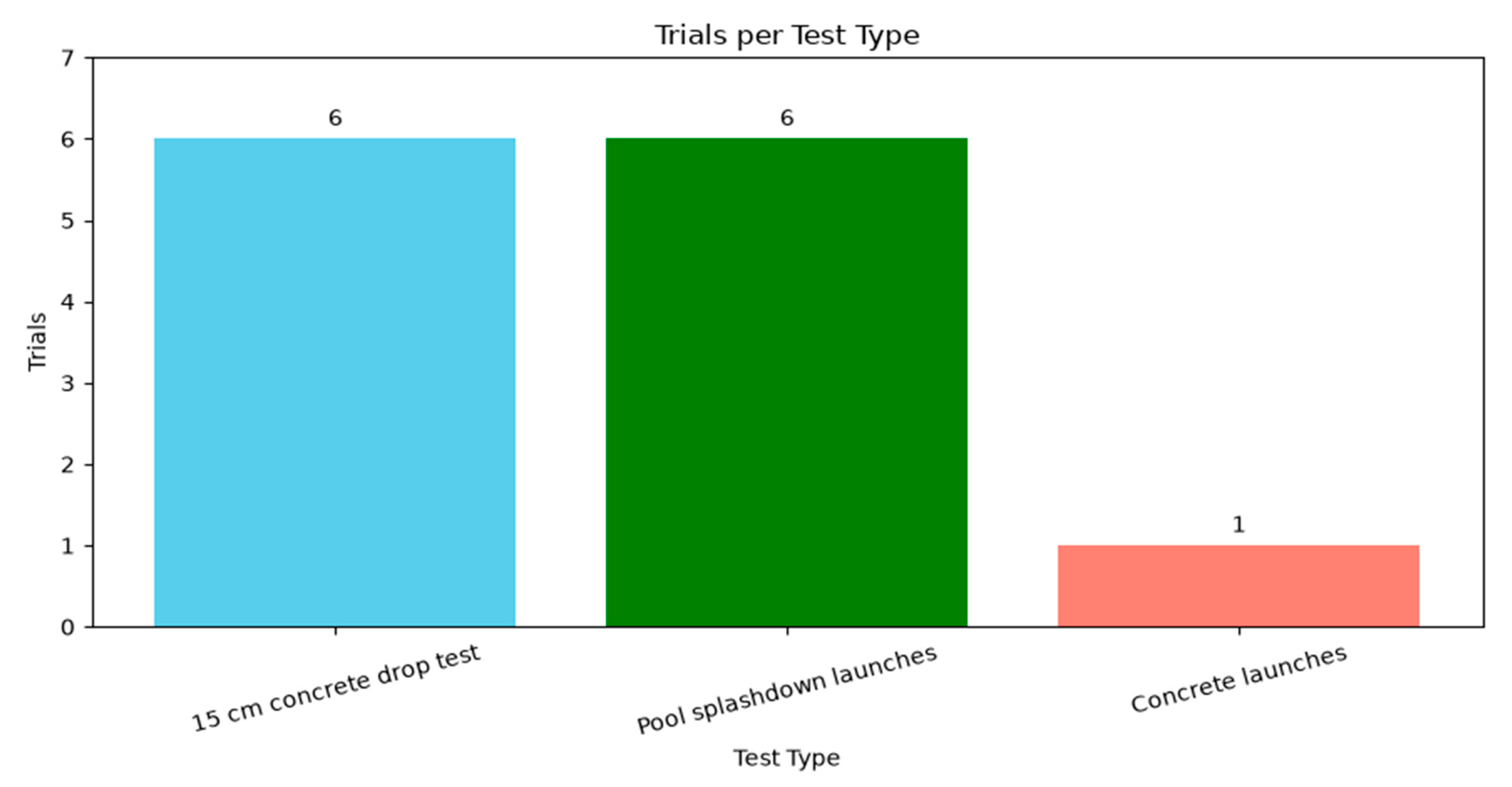
Figure 10.
Visual inspection after high-stress impact testing.
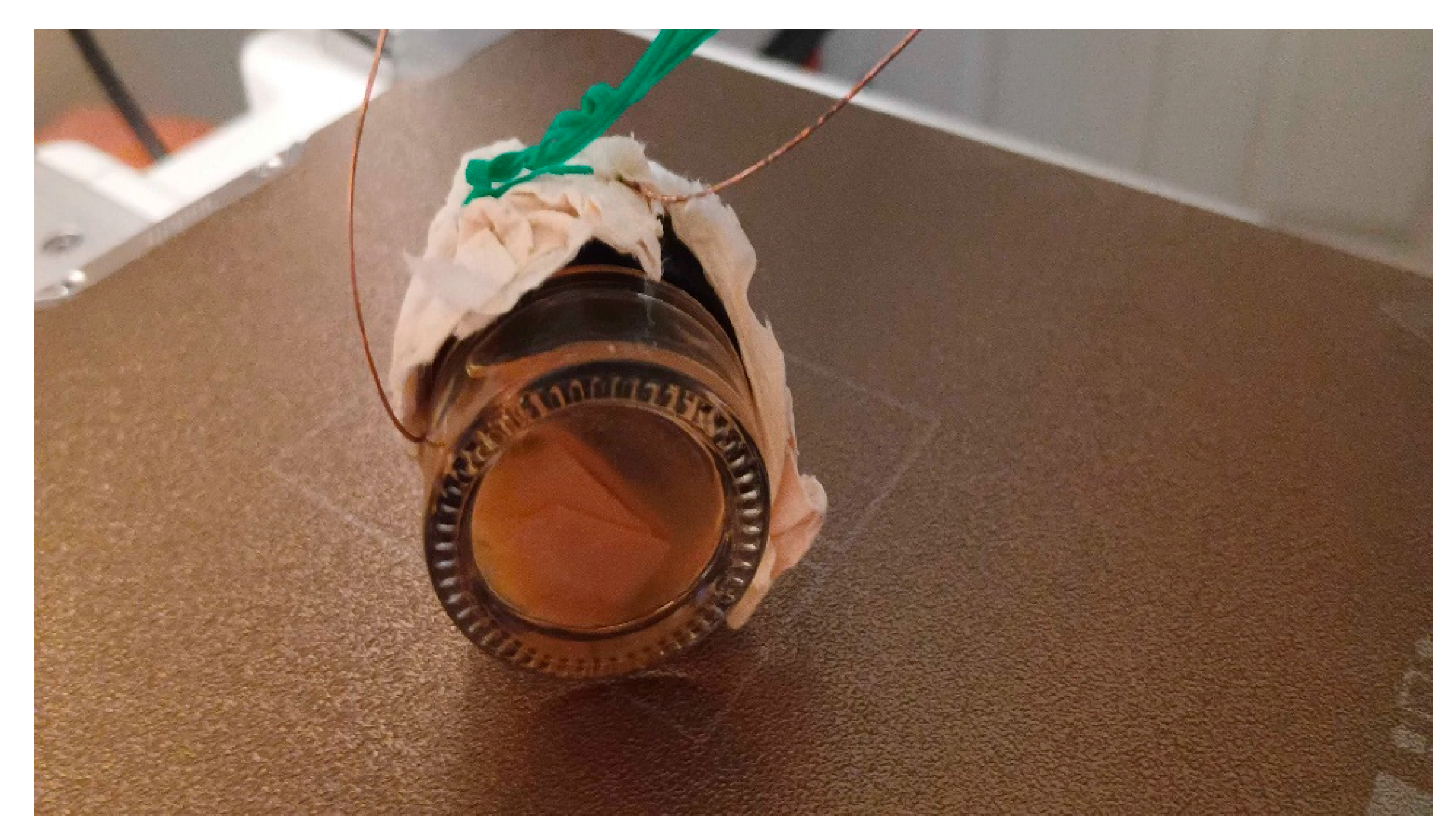
The electrical resistance values were measured before and after the tests.
As shown in Figure 11, the electrical resistance was measured before and after testing. The average resistance prior to testing was 4.2 +/- 0.8 ohms, and the measured average resistance after measuring was 3.8 +/- 1.2 ohms. The difference was not significant (p=0.1415, t=1.4925). This suggested survival of electrical connectivity in the devices.
3.6. Failure Modes
Several primary failure modes were identified during experimentation. Mechanical instability was the most prevalent, frequently manifested as electrode slippage from the SCOBY sample or wire displacement. Specifically, loose wiring compromised electrical contact with the graphite electrodes, necessitating manual reattachment. Furthermore, fluid dynamics within the liquid medium of the bioreactor introduced motion artifacts, increasing electrical noise in the recordings. Finally, the handmade nature of the devices introduced significant inter-sample variability, compounding uncertainty relative to standardized, mass-manufactured counterparts.
4. Discussions
4.1. Interpretation
Despite a limited sample size, the SCOBY bioreactor underwent rigorous electromechanical characterization. Current-voltage (I-V) curves revealed a pronounced, albeit noisier, memristive hysteresis loop consistent with prior bioelectronic benchmarks (Mougkogiannis and Adamatzky, 2025; Nikolaidou et al., 2026). Volatile memory performance demonstrated robust classification accuracies of 92.4% and 93.2% at operating frequencies of 6.67 kHz and 9.1 kHz, respectively—notably lower-frequency operational thresholds than previously documented in SCOBY (Mougkogiannis and Adamatzky, 2025; Nikolaidou et al., 2026). Furthermore, this memristive accuracy exceeded that reported for shiitake-based memristors (90% at 5.85 kHz). The device also surpassed hypothesized survival rates during mechanical testing. Wearable impact evaluations confirmed structural resilience under anterior and posterior mechanical shock, although asymmetric mass distribution within the helmet assembly introduced localized performance variance. Consistent with established materials literature, the 3D-printed PLA housing integrated with aerogel composite padding successfully mitigated impact energy during drop and ballistic testing (LaRocco et al., 2025). Post-impact electrical resistance measurements remained invariant, and macroscopic visual inspection revealed no structural degradation. Despite this overall mechanical robustness, specific operational anomalies persisted during testing.
4.2. Limitations
Electromechanical characterization exposed several operational bottlenecks. One was possible electrode polarization between graphite electrodes and the fermented tea solution. Another was the lack of a constant abiotic or dead SCOBY control, due to device availability and introducing complications. Signal integrity was primarily hindered by coupled electromechanical noise. Dynamic fluid displacement and interfacial micro-displacements of the electrodes directly induced baseline wander and motion artifacts. While stochastic noise was an inherent challenge in flexible and wearable bioelectronics, manual fabrication inconsistencies exacerbated signal degradation (Mao et al., 2022). Furthermore, instrumentation constraints—specifically the absence of dedicated signal generators and high-bandwidth oscilloscopes—restricted the dynamic range and resolution of I-V profiling and volatile memory characterization (Mougkogiannis and Adamatzky, 2025; Nikolaidou et al., 2026). Impact dynamics were similarly constrained by optical hardware limitations, relying on standard smartphone optics rather than high-speed videography. The absence of embedded, real-time telemetry further limited resolution during high-stress impact events, including drop and projectile testing. Finally, longitudinal viability was constrained to a one-week testing window, precluding comprehensive evaluation of long-term nutrient metabolism, metabolic stability, and biological degradation kinetics. These constraints outlined a direct roadmap for future optimization.
4.3. Future Work
Future development of living SCOBY-based bioreactors will focus on addressing current electromechanical and biological limitations. The most immediate technical upgrade involves transitioning to high-precision laboratory instrumentation, including high-speed optical systems and integrated onboard sensor arrays. Biological and structural enhancements to the bioreactor housing represent another critical direction. To maintain sterility while enabling continuous gas exchange, future iterations will integrate sterile, air-permeable hydrophobic filters standard in advanced fungal cultivation platforms (LaRocco et al., 2025a). Implementing rigid-fixation or mechanically adjustable electrode interfaces will eliminate motion-induced contact resistance spikes and slippage. Minimizing free fluid volume through high-density nutrient matrices or ionically conductive hydrogels can likewise mitigate fluid-sloshing noise. As universally emphasized in flexible bioelectronics, establishing stable, low-impedance electrode-biomaterial interfaces remains paramount (Mao et al., 2022; Nikolaidou et al., 2024; Sun et al., 2024). Ultimately, integrating active microfluidic perfusion loops for continuous nutrient delivery and metabolic waste removal could significantly enhance long-term tissue viability, albeit at the expense of system complexity and power consumption (Mao et al., 2022; Mougkogiannis and Adamatzky, 2025; Nikolaidou et al., 2026).
5. Conclusions
This study demonstrated the successful electromechanical integration and functional characterization of living SCOBY-based bioreactors for wearable bioelectronic applications. Rigorous testing revealed distinct memristive behavior alongside reliable volatile memory performance, achieving robust accuracies of 93.2 ± 3.5% at 6.67 kHz and 92.4 ± 1% at 9.1 kHz. Mechanical evaluations confirmed that the 3D-printed PLA casing and integrated aerogel composite padding effectively mitigated high-stress impact forces, ensuring structural resilience during drop and ballistic trials without compromising electrical continuity. Despite these promising findings, key challenges remained, notably coupled electromechanical noise induced by fluid displacement, manual fabrication variability, and instrumentation constraints. Overcoming these bottlenecks through high-precision telemetry, rigid electrode interfaces, and active microfluidic perfusion was recognized as critical for scaling performance. Ultimately, this work established the viability of living bio-hybrids as sustainable, adaptive components in wearable technology, paving the way for advanced self-healing and responsive bioelectronic systems.
Data Availability
Data, code, and supplemental information is at: https://github.com/javeharron/yeetRepo.
Author Contributions
J.L.: Conceptualization, Methodology, Software, Validation, Formal analysis, Investigation, Resources, Data Curation, Writing - Original Draft, Writing - Review & Editing, Visualization, Supervision, Project administration, Funding acquisition.
Funding
This research received no external funding.
Acknowledgments
The authors thank the Ronin Institute for assistance with conceptualization.
Conflicts of Interest
The author have no conflicts of interest to report.
References
- Adamatzky, A.; Ayres, P.; Beasley, A. E.; Roberts, N.; Wösten, H. A. ‘Logics in fungal mycelium networks’. Log. Universalis 2022, 16(4), 655–669. [Google Scholar] [CrossRef]
- Campbell, K.; Drake, K.; Smith, E. ‘Pulse shape and timing dependence on the spike-timing dependent plasticity response of ion-conducting memristors as synapses’. Front. Bioeng. Biotechnol. 2016, 4, 97. [Google Scholar] [CrossRef] [PubMed]
- Cheng, P.; Gao, S.; Zang, P.; et al. ‘Hierarchically porous carbon by activation of shiitake mushroom for capacitive energy storage’. Carbon 2015, 93, 315–324. [Google Scholar] [CrossRef]
- Chua, L. Memristor-the missing circuit element. IEEE Trans. Circuit Theory 1971, 18(5), 507–519. [Google Scholar] [CrossRef]
- Chua, H.J. A chalcogenide-based colorimetric sensor on paper for heavy metal ions detection . Doctoral dissertation, Nanyang Technological University, 2022. [Google Scholar]
- Dixon, W. J.; Massey, F. J., Jr. Introduction to statistical analysis; McGraw-Hill: New York, 1951. [Google Scholar]
- Femi, O. ‘Unveiling the fourth fundamental circuit element and its real-world applications’. In Memristors – The Fourth Fundamental Circuit Element – Theory, Device, and Applications; Chang, Y. F., Ed.; IntechOpen, 2024; pp. 3–12. [Google Scholar] [CrossRef]
- IDTechEx. Aerogels 2025–2035: Technology, Market, Forecasts; IDTechEx: Cambridge, 2025. [Google Scholar]
- Javeharron (2026) yeetRepo. Available online: https://github.com/javeharron/yeetRepo (accessed on 9 August 2026).
- Joshi, S.; Cook, E. ‘Bacterial nanobionics via 3D printing’. Nano Lett. 2018, 18(12), 7448–7456. [Google Scholar] [CrossRef] [PubMed]
- Ko, T.-J.; Li, H.; Mofid, S. A.; et al. ‘Two-dimensional near-atom-thickness materials for emerging neuromorphic devices and applications’. iScience 2020, 23(11), 101676. [Google Scholar] [CrossRef] [PubMed]
- LaRocco, J.; Eom, T.; Duggisani, T.; Zalcberg, I.; Xue, J.; Seth, E.; Zapata, N.; Anksapuram, D.; Muzumdar, N.; Zachariah, E. Ballistic testing of an aerogel/starch composite designed for use in wearable protective equipment. Technologies 2025, 13(5), 199. [Google Scholar] [CrossRef]
- LaRocco, J.; Tahmina, Q.; Petreaca, R.; Simonis, J.; Hill, J. ‘Sustainable memristors from shiitake mycelium for high-frequency bioelectronics’. PLoS ONE 2025a, 20(10), e0328965. [Google Scholar] [CrossRef] [PubMed]
- Li, C.; Han, L.; Jiang, H.; et al. ‘Three-dimensional crossbar arrays of self-rectifying Si/SiO2/Si memristors’. Nat. Commun. 2017, 8(1). [Google Scholar] [CrossRef] [PubMed]
- Li, J.; Wu, Q.; Zan, G. ‘Facile synthesis and high electrochemical performance of porous carbon composites for supercapacitors’. RSC Adv. 2014, 4(66), 35186. [Google Scholar] [CrossRef]
- Liao, K.; Lei, P.; Tu, M.; et al. ‘Memristor based on inorganic and organic two-dimensional materials: mechanisms, performance, and synaptic applications’. ACS Appl. Mater. Interfaces 2021, 13(28), 32606–32623. [Google Scholar] [CrossRef] [PubMed]
- Mao, S.; Sun, B.; Zhou, G.; Guo, T.; Wang, J.; Zhao, Y. ‘Applications of biomemristors in next generation wearable electronics’. Nanoscale Horiz. 2022, 7(8), 822–848. [Google Scholar] [CrossRef] [PubMed]
- Mougkogiannis, P.; Adamatzky, A. ‘Learning in Kombucha’. Next Mater. 2025, 10, 101281. [Google Scholar] [CrossRef]
- Mougkogiannis, P.; Adamatzky, A. ‘Biohybrid Computing with Proteinoids and Algae’. Adv. Sci. 2025a, 12(9), 2506155. [Google Scholar] [CrossRef] [PubMed]
- Mougkogiannis, P.; Adamatzky, A. ‘Scale-dependent analysis of structure and electrical activity in kombucha mats and proteinoid–actin assemblies’. Int. J. Biol. Macromol. 2025b, 305, 146385. [Google Scholar] [CrossRef] [PubMed]
- Mougkogiannis, P.; Adamatzky, A. ‘Myelin–Proteinoids Interactions in Neural Signaling’. Langmuir 2025c, 41(37), 21540–21551. [Google Scholar] [CrossRef] [PubMed]
- Nikolaidou, A.; Chiolerio, A.; Dehshibi, M.M.; Adamatzky, A. ‘Functionalizing the electrical properties of kombucha zoogleal mats for biosensing applications’. ACS Omega 2024, 9(28), 30308–30320. [Google Scholar] [CrossRef] [PubMed]
- Nikolaidou, A.; Mougkogiannis, P.; Adamatzky, A. ‘Living kombucha electronics with proteinoids’. ACS Omega 2026, 11(1), 78–91. [Google Scholar] [CrossRef] [PubMed]
- Sun, J.; Yang, R.; Li, Q.; et al. ‘Living synthelectronics: a new era for bioelectronics powered by synthetic biology’. Adv. Mater. 2024, 36(25), 2400110. [Google Scholar] [CrossRef] [PubMed]
- Tan, X.Y.; et al. ‘From grave to cradle: kombucha waste for sustainable electronics’. Adv. Sci. 2025, 12(15), 2514521. [Google Scholar] [CrossRef] [PubMed]
- Wang, H.; Tao, J.; Wu, Z.; et al. ‘Fabrication of living entangled network composites enabled by mycelium’. Adv. Sci. 2024, 11(24), 2309370. [Google Scholar] [CrossRef] [PubMed]
- Wang, Q.; Hu, Z.; Li, Z.; Liu, T.; Bian, G. ‘Exploring the application and prospects of synthetic biology in engineered living materials’. Adv. Mater. 2023, 37(31), 2305828. [Google Scholar] [CrossRef] [PubMed]
- Yadav, P.; Basu, A.; Suryawanshi, A.; Game, O.; Ogale, S. ‘Highly stable laser-scribed flexible planar microsupercapacitor using mushroom derived carbon electrodes’. Adv. Mater. Interfaces 2016, 3(11), 1600057. [Google Scholar] [CrossRef]
- Yang, C.; Sun, B.; Zhou, G.; et al. ‘Photoelectric memristor-based machine vision for artificial intelligence applications’. ACS Mater. Lett. 2023, 5(2), 504–526. [Google Scholar] [CrossRef]
- Yang, Y.; Zhu, B.; Yu, J.; Jing, S.; Kong, P.; Hou, D.; Wang, C.; Bai, J.; Xu, H.; Kou, L. ‘The influences of X-rays irradiation on sensory attributes and physicochemical properties of shiitake mushrooms during storage’. J. Stored Prod. Res. 2025, 111, 102500. [Google Scholar] [CrossRef]
- Yin, S. F.; Sun, Q. J.; Liu, L. F.; Liu, S. Z.; Jiang, Y. P.; Tang, X. G. ‘TiO2/Bi4Ti3O12 heterojunction optoelectronic synaptic devices for simulating associative memory and neuromorphic computation’. Appl. Surf. Sci. 2025, 11, 164049. [Google Scholar] [CrossRef]
- Yuan, L.; Liu, S.; Chen, W.; Fan, F.; Liu, G. ‘Organic memory and memristors: from mechanisms, materials to devices’. Adv. Electron. Mater. 2021, 7(11), 2100432. [Google Scholar] [CrossRef]
- Zhang, X.; Han, R.; Liu, Y.; Li, H.; Shi, W.; Yan, X.; Zhao, X.; Li, Y.; Liu, B. ‘Porous and graphitic structure optimization of biomass-based carbon materials from 0D to 3D for supercapacitors: A review’. Chem. Eng. J. 2023, 460, 141607. [Google Scholar] [CrossRef]
- Zidan, M. A.; Strachan, J. P.; Lu, W. D. ‘The future of electronics based on memristive systems’. Nat. Electron. 2018, 1, 22–29. [Google Scholar] [CrossRef]
Figure 1.
Assembled bioreactor with connecting wires.
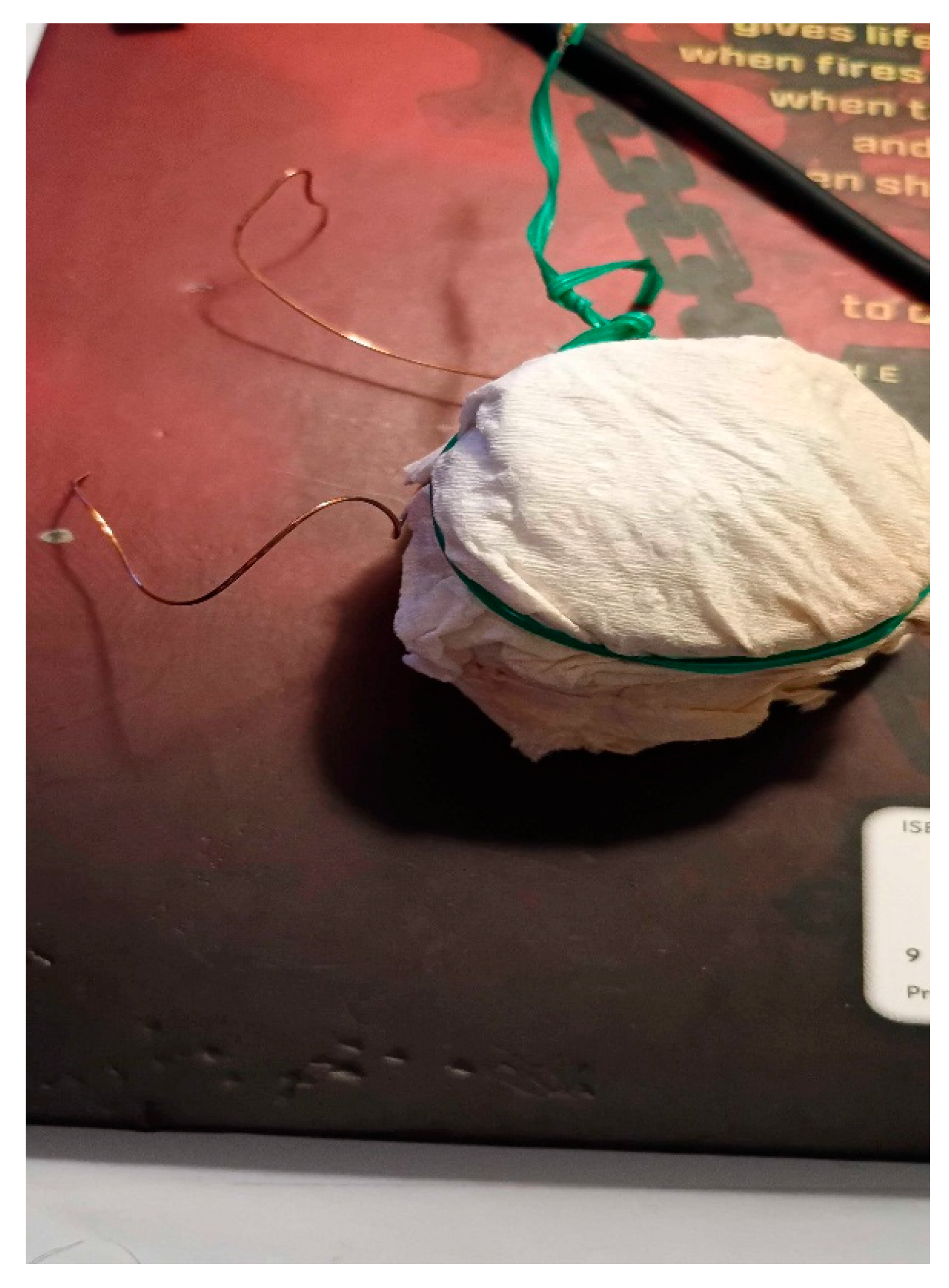
Figure 2.
Characterization circuit diagram for memristive bioreactors.
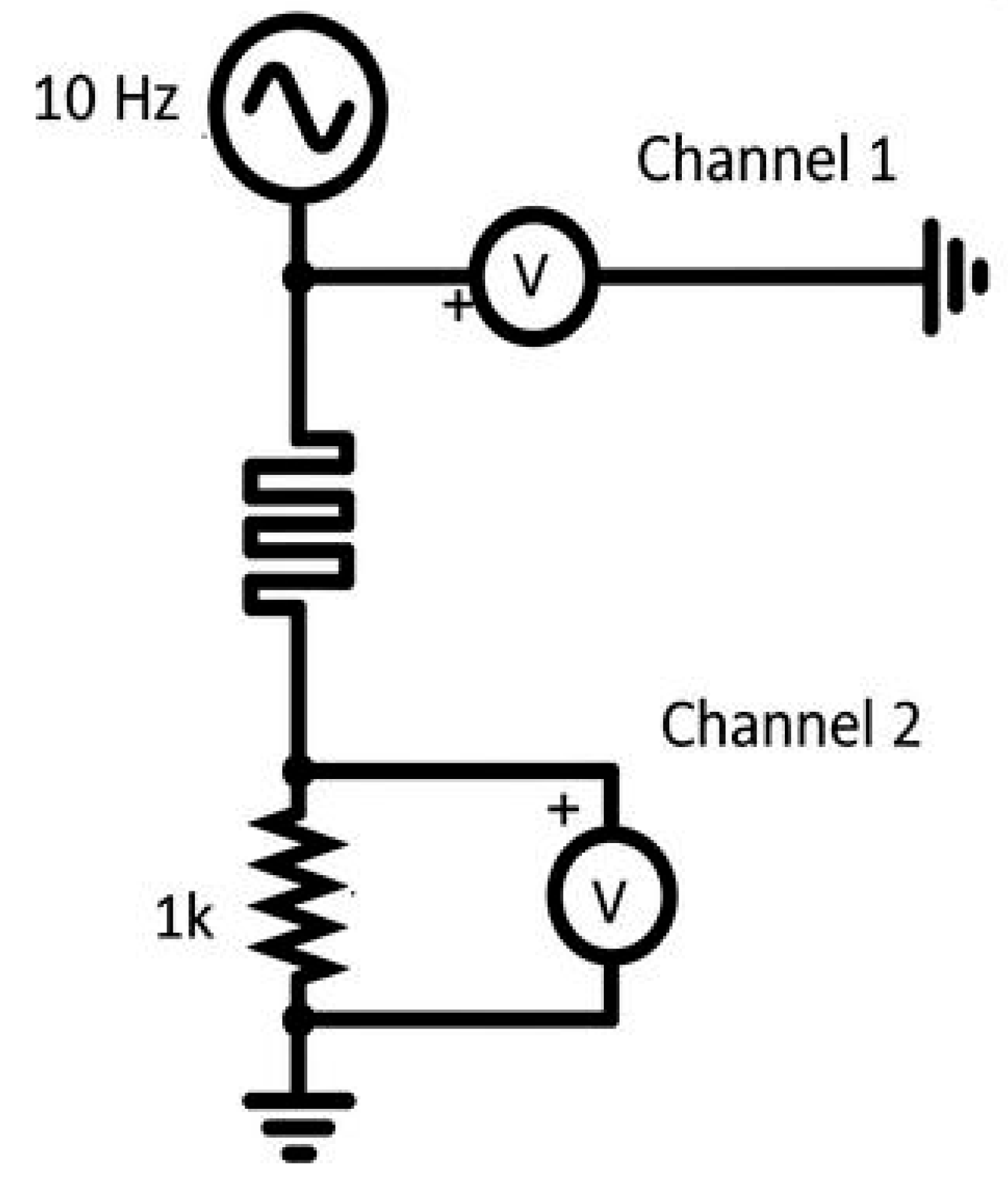
Figure 3.
Characterization setup for memristive bioreactors.
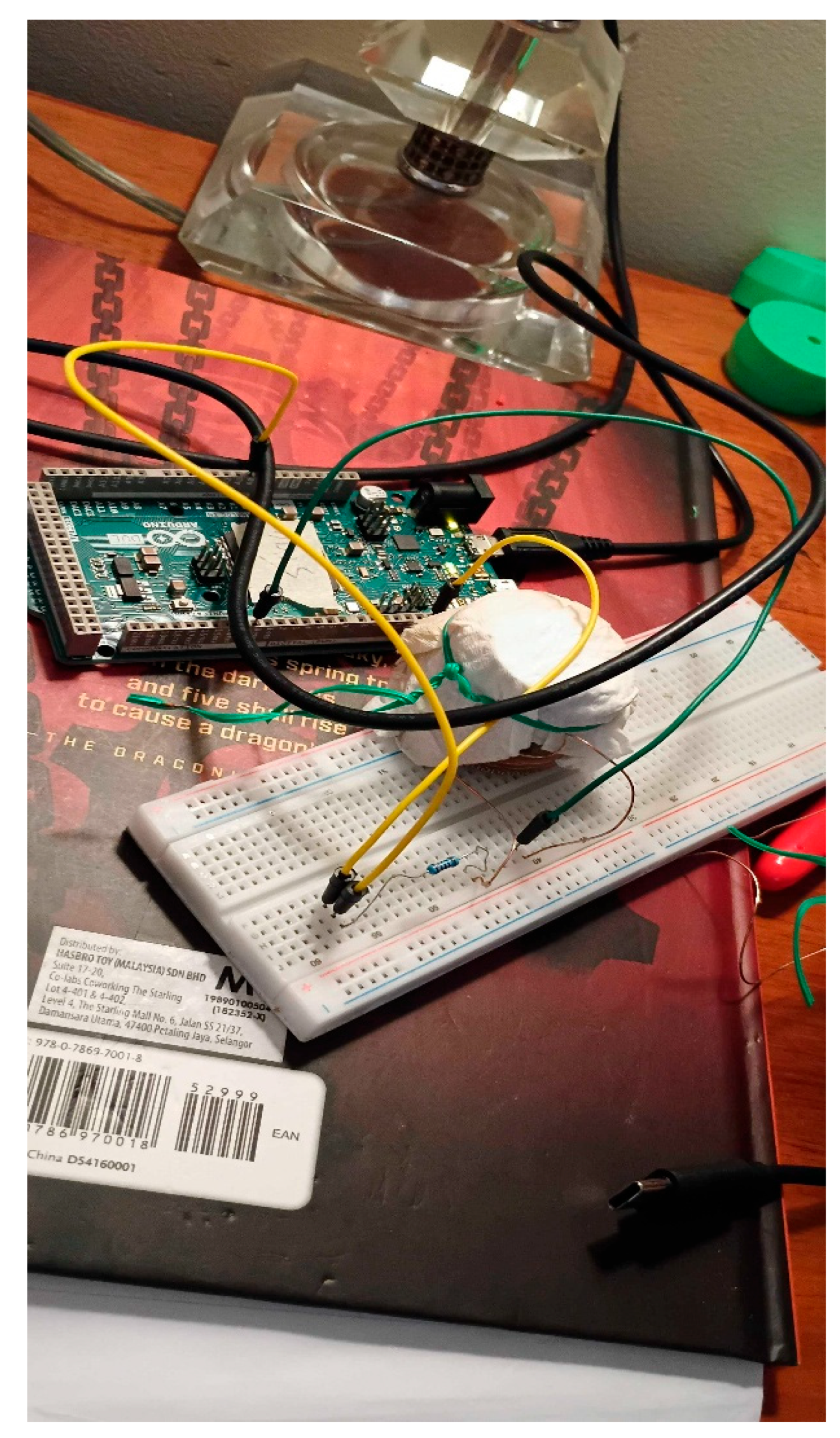
Figure 4.
Volatile memory circuit diagram for memristive bioreactors.
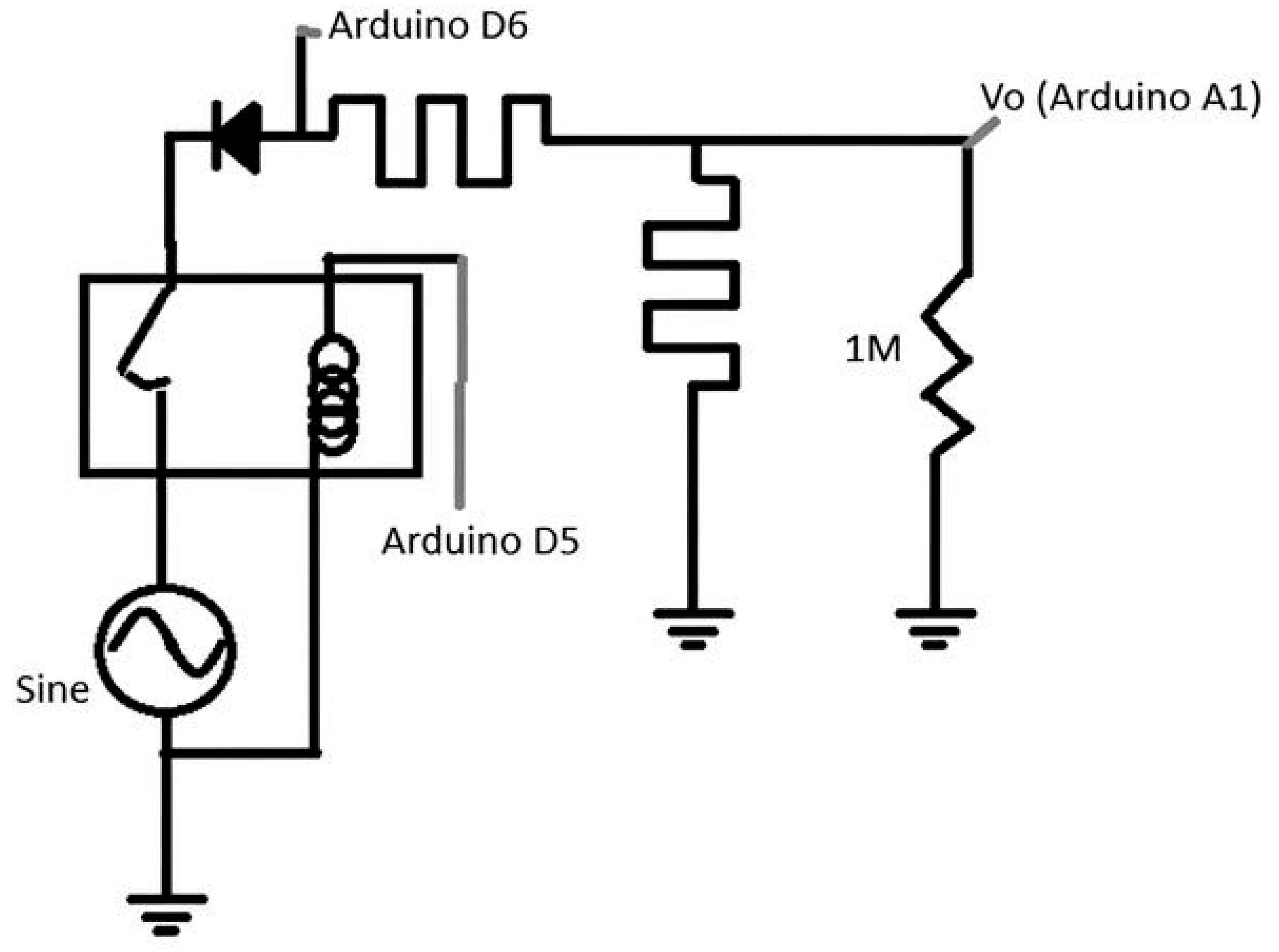
Figure 5.
Volatile memory test setup for memristive bioreactors.
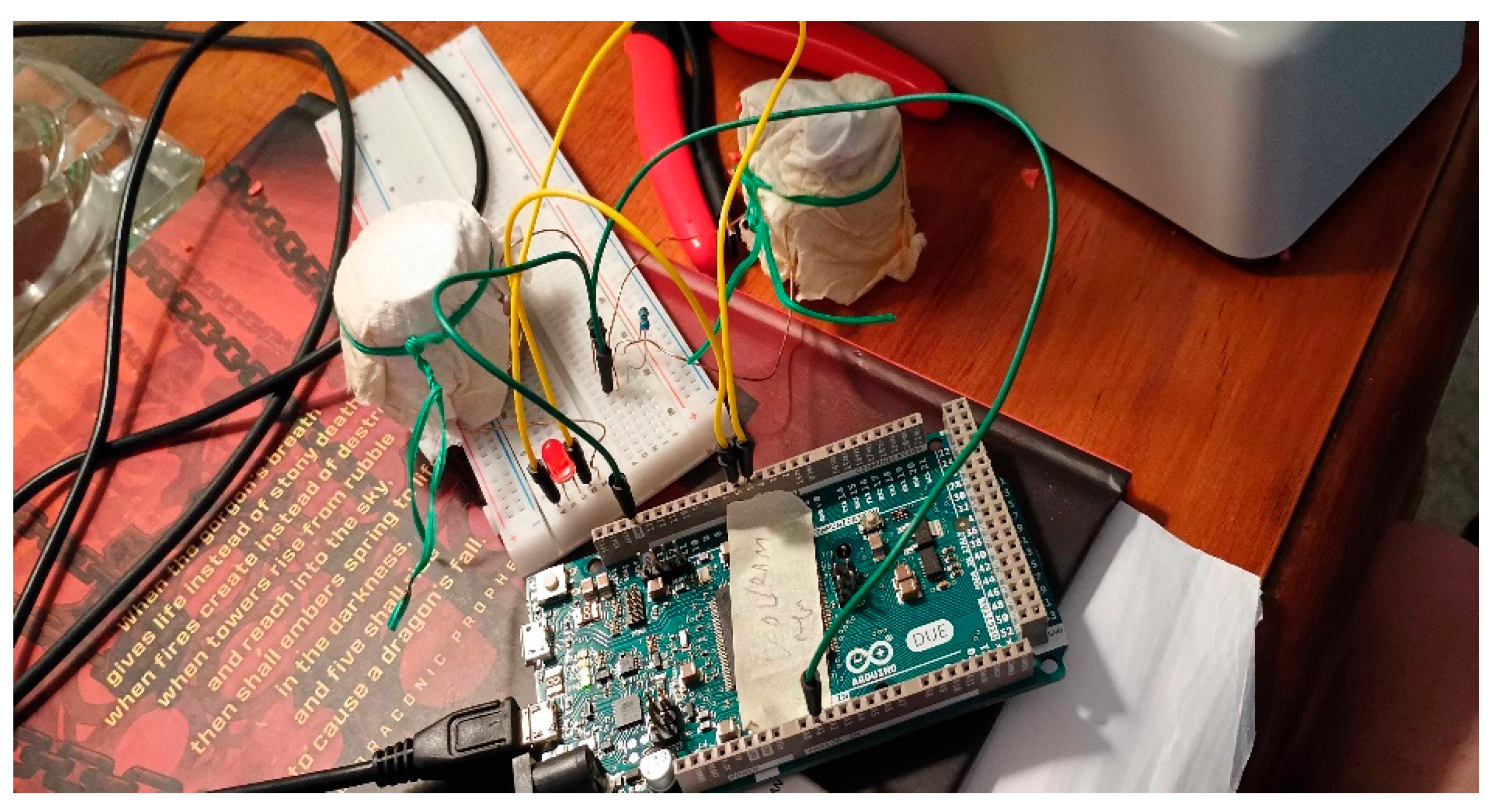
Figure 6.
Physical setup for wearable impact testing.
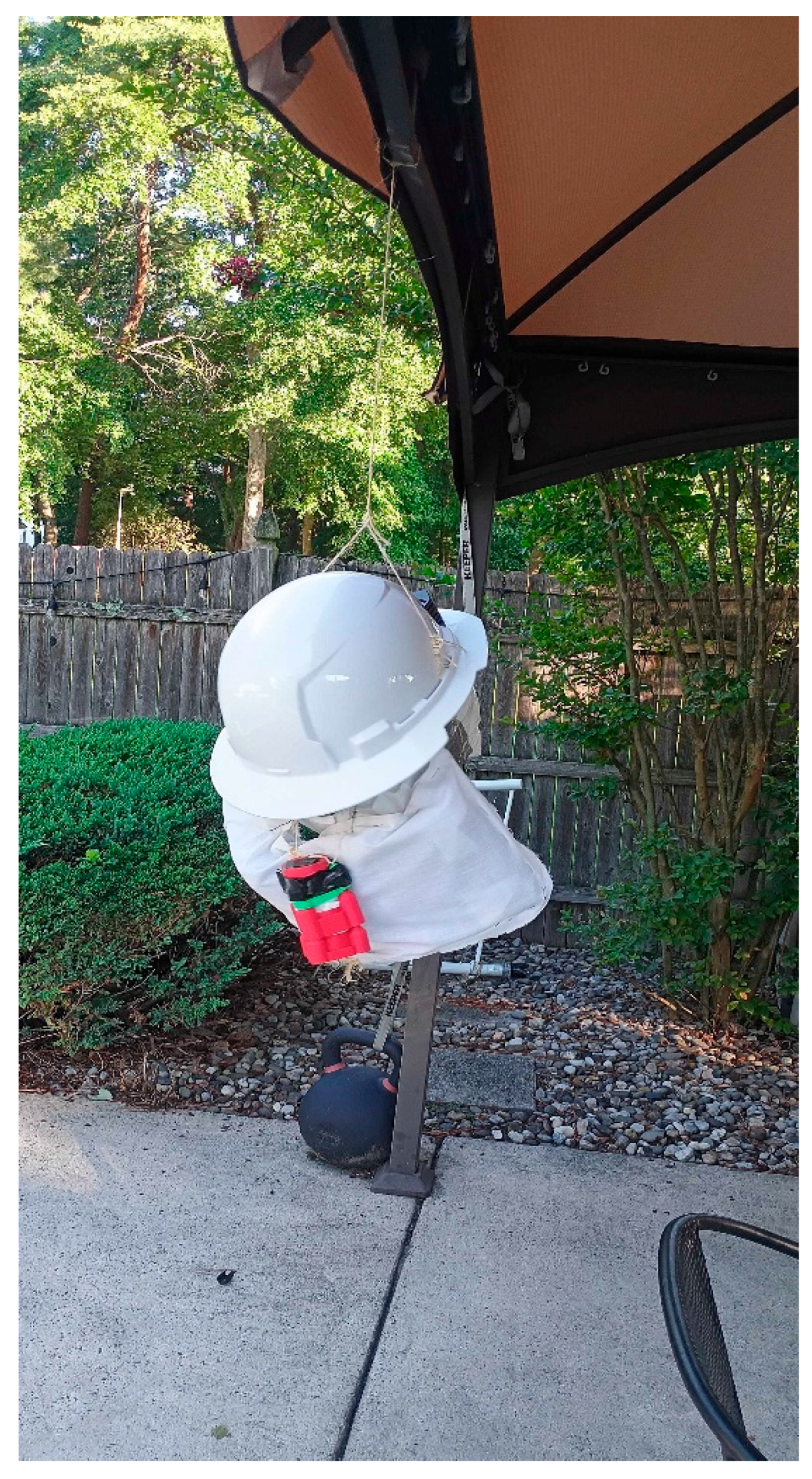
Figure 7.
I-V Characterization of the SCOBY Memristor.
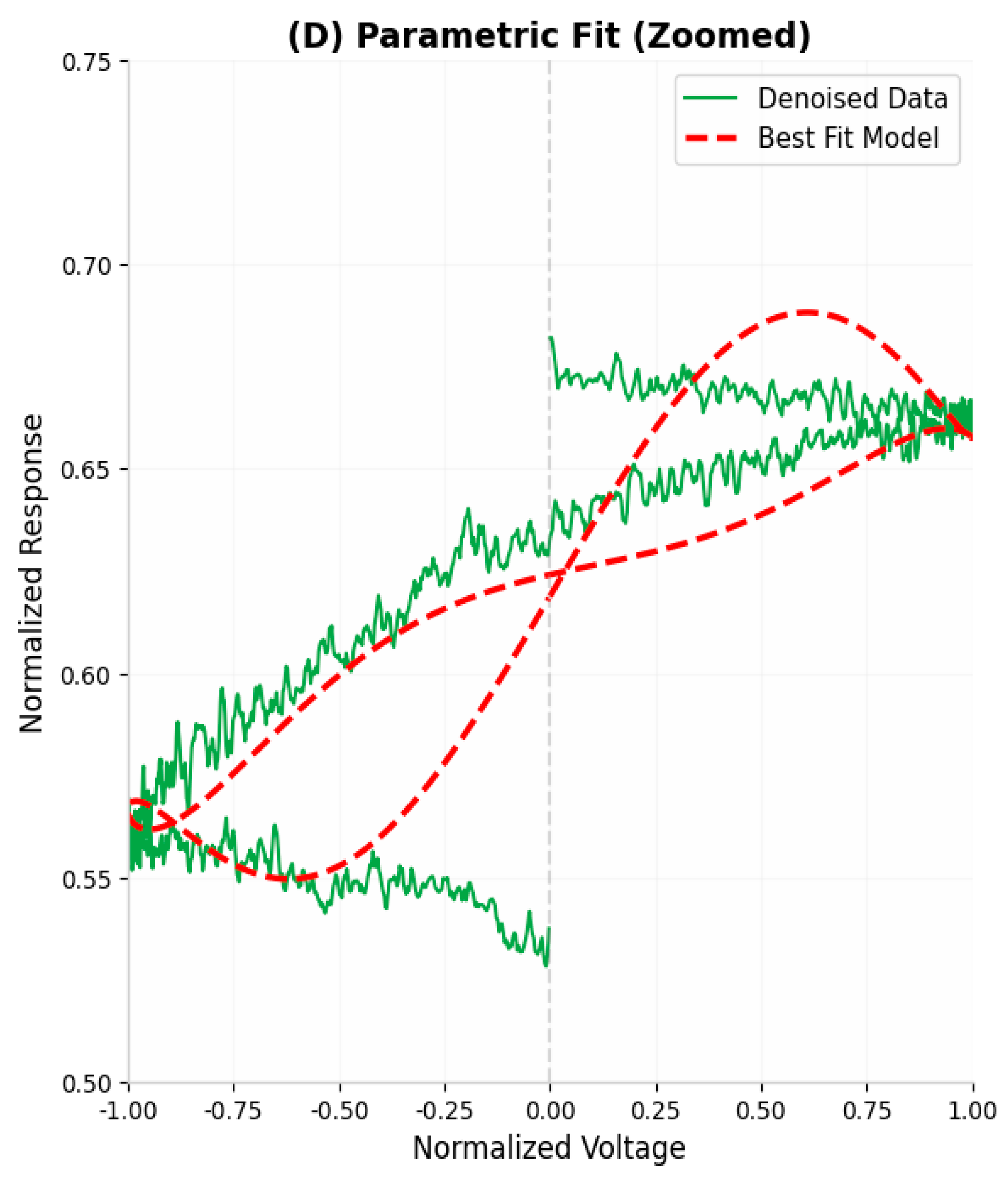
Figure 8.
Comparing memristive accuracies for 6.67 kHz and 9.1 kHz.
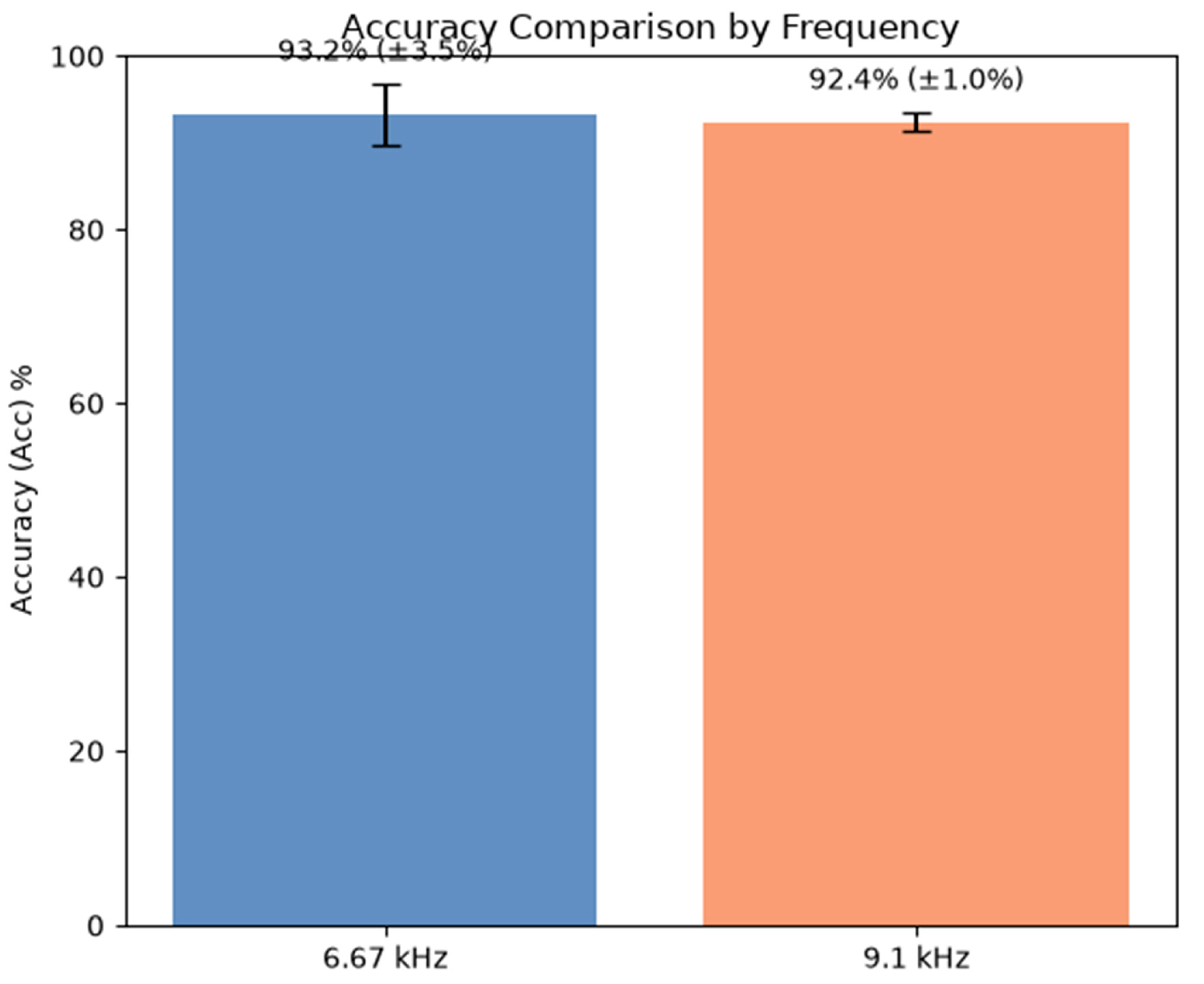
Figure 11.
Comparing pre-test and post-test electrical resistance.
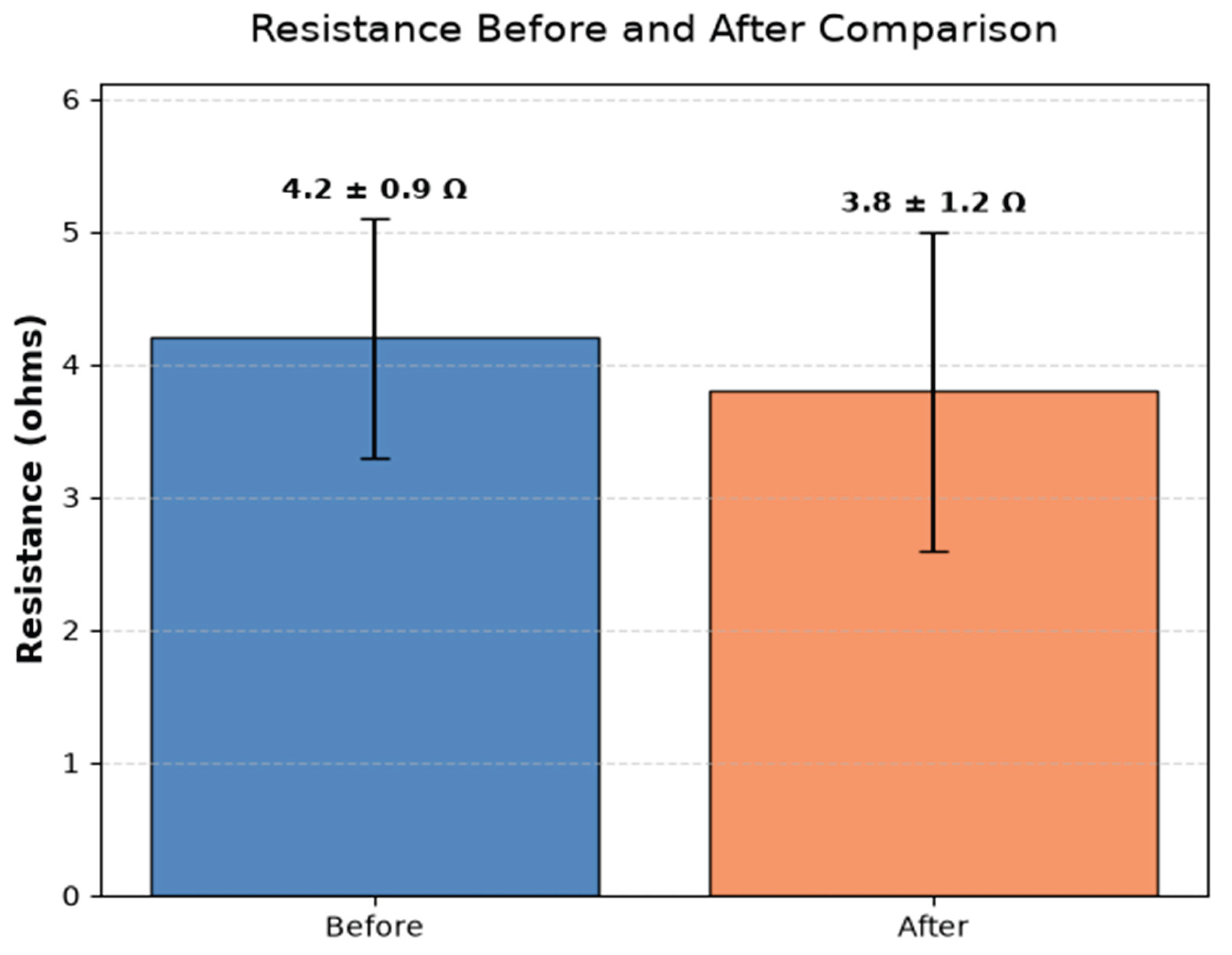

Table 1.
ANOVA for Measured Velocity by Position.
| Source | Sum of Squares | df | F | p-value |
|---|---|---|---|---|
| C(position) | 47.7554 | 1.0000 | 23.5261 | 0.0013 |
| Residual | 16.2391 | 8.0000 | — | — |
| Eta-squared (η²) | 0.7462 | — | — | — |
Table 2.
Descriptive Statistics by Position.
| Position | N | Mean | Std. Dev. | Std. Error | Min | Max |
|---|---|---|---|---|---|---|
| Back | 5 | 0.6620 | 0.2164 | 0.0968 | 0.3226 | 0.9098 |
| Front | 5 | 5.0326 | 2.0032 | 0.8959 | 1.8270 | 7.3824 |
Table 3.
Tukey Post-Hoc Comparison.
| Comparison | Mean Diff. | p-adj | 95% CI Lower | 95% CI Upper | Reject H₀ |
|---|---|---|---|---|---|
| Front vs. Back | 4.3706 | 0.0013 | 2.2927 | 6.4485 | Yes |
Disclaimer/Publisher’s Note: The statements, opinions and data contained in all publications are solely those of the individual author(s) and contributor(s) and not of MDPI and/or the editor(s). MDPI and/or the editor(s) disclaim responsibility for any injury to people or property resulting from any ideas, methods, instructions or products referred to in the content. |
© 2026 by the authors. Licensee MDPI, Basel, Switzerland. This article is an open access article distributed under the terms and conditions of the Creative Commons Attribution (CC BY) license (http://creativecommons.org/licenses/by/4.0/).
Copyright: This open access article is published under a Creative Commons CC BY 4.0 license, which permit the free download, distribution, and reuse, provided that the author and preprint are cited in any reuse.