
Submitted:
20 August 2026
Posted:
20 August 2026
You are already at the latest version
Abstract
Rice (Oryza sativa L.) is a staple food crop globally, and identifying genes governing grain yield is critical for food security. Although heat shock proteins (HSPs) are known for their roles in stress tolerance, the molecular mechanisms by which they regulate yield formation remain unclear. In this study, we generated knockout and overexpression lines for OsHSP20 (encoding a member of the Hsp20/alpha crystallin family, LOC_Os10g30162.1. It is also one of the four candidate genes discovered during our fine mapping of major QTLs for photosynthetic rate in rice.) and performed integrated analyses combining field phenotyping, multi-stress assays, and transcriptomics. Phenotypic analyses revealed that OsHSP20 deficiency resulted in compromised plant architecture, leaf morphology, tillering, and panicle development, leading to a significant reduction in grain setting rate; Conversely, OsHSP20 overexpression enhanced drought tolerance. Mechanistically, transcriptomic and functional analyses demonstrated that OsHSP20 maintains protein homeostasis under drought stress via its chaperone activity, this function orchestrates a coordinated regulatory network involving lipid barrier formation, antioxidant defense, and carbon allocation. Our findings establish OsHSP20 as a positive regulator of both yield and drought resilience, improving crop adaptability by balancing growth and stress responses; In addition, our previous research has shown that OsHSP20 is actually one of the important components of the main QTL for rice photosynthetic rate. Therefore, this study can provide new genetic resources and theoretical basis for cultivating rice varieties with high-yield, stress resistant, and high photosynthetic rate.
Keywords:
Oryza sativa
; OsHSP20
; gene function
; seed setting rate
; stress response
; high photosynthetic rate
1. Introduction
With the ongoing deterioration of global climate and environment coupled with anthropogenic disturbances, arable land area is progressively declining, thereby constraining food production and the sustainable development of human society. As one of the three most important staple crops worldwide, enhancing rice yield remains a paramount strategy for safeguarding food security and meeting the escalating demands of the global population [1].
The identification and utilization of novel gene resources intimately linked to yield formation represent a critical avenue for achieving continued increases in rice productivity [2]. Rice yield is collectively determined by four components: effective panicle number, filled grains per panicle, 1000-grain weight, and grain setting rate. Optimal yield is achieved only when these components reach a specific equilibrium [3]. Among these, 1000-grain weight is relatively stable, primarily attributable to its high heritability. In contrast, the remaining three components exhibit substantial variability influenced by both genetic and environmental factors. While effective panicle number and filled grains per panicle demonstrate compensatory effects on yield, grain setting rate exhibits relatively low heritability and is predominantly modulated by environmental factors such as soil conditions and light intensity. Its stability and magnitude correlate positively and significantly with yield stability [4]. Defined as the percentage of plump grains relative to total spikelets, grain setting rate constitutes a pivotal determinant of rice yield, second only to panicle number per plant. Enhancing grain setting rate directly augments the number of filled grains per panicle, thereby increasing overall yield. Currently, hybrid rice frequently exhibits a marked decline in grain setting rate compared to its parental lines; thus, low grain setting rate has emerged as a limiting factor or bottleneck impeding the further exploitation of heterosis for yield improvement. Consequently, elucidating the molecular genetic mechanisms governing grain setting and identifying novel favorable alleles controlling this trait hold profound significance for boosting rice productivity.
Heat shock proteins (HSPs) constitute a class of proteins abundantly expressed in response to environmental stressors. They play essential roles in maintaining protein homeostasis, facilitating the refolding of denatured proteins, and enhancing stress tolerance [5]. Existing evidence indicates that HSPs function as both essential "housekeeping" proteins and stress-defense proteins, exhibiting diverse biological functions including molecular chaperoning, stress defense, regulation of plant growth and development, modulation of signal transduction pathways, and cross-protection under various adverse conditions [6].
With the support of the National Natural Science Foundation of China, we discovered that the rice OsHSP20 gene is one of the four candidate genes for the major QTL-qPR10 affecting rice photosynthetic rate. These four candidate genes are: LOC_Os10g30156.1 encoding starch synthase II or chloroplast precursor, LOC_Os10g30162.1 encoding heat shock protein Hsp20 protein binding domain, LOC_Os10g30560.1 encoding UDP-glucuronosyl/UDP-glucosyltransferase protein family, and LOC_Os10g31320.1 with unknown function [7] (Supplementary Table S1, unpublished). With the support of the Natural Science Foundation of Jiangxi Province, China, we conducted a detailed study on the seed setting rate and stress resistance physiological functions of the OsHSP20 gene (LOC_Os10g30156.1) under adverse conditions such as drought and heat stress. So we characterized a T-DNA insertion mutant, oshsp20, which exhibits reduced expression of the OsHSP20 gene. Field observations revealed that oshsp20 mutants displayed a significant reduction in grain setting rate compared to the wild-type cultivar. Our aims are to elucidate the expression profiles of OsHSP20 across various rice tissues using molecular and cytological analyses, thereby establishing a foundation for deciphering its biological function and providing theoretical guidance for the stable, high-yield breeding of rice.
2. Results
2.1. OsHSP20 Exhibits Pleiotropic Effects on Plant Architecture
At the grain-filling stage, OsHSP20-KO lines exhibited increased tiller numbers but reduced plant height compared to the wild type (WT), while OsHSP20-OE lines showed further enhanced tillering and leaf expansion (Figure 1). However, the increase in ineffective tillers resulted in a stable panicle formation rate, indicating that OsHSP20 primarily regulates tiller quantity rather than quality. Unlike typical loss-of-function phenotypes, the heightened tillering in KO lines suggests involvement in a complex compensatory network (Figure 1B,C,D). Additionally, OsHSP20 is essential for stem elongation, as KO lines displayed pronounced dwarfism, whereas OE lines showed no additional height gain, implying a dosage saturation effect (Figure 1E). Leaf morphology analysis revealed that OsHSP20 promotes leaf expansion; OE lines exhibited significantly larger leaf areas, likely due to its role as a molecular chaperone in cell wall biosynthesis or division [8] (Figure 1F,G,H). The differential regulation of leaf length and width underscores the gene’s spatial specificity in growth control.
2.2. OsHSP20 Modulates Panicle Architecture and Yield Components
Knockout of OsHSP20 caused a comprehensive deterioration of panicle architecture, including shortened panicles and reduced primary and secondary branches, leading to a drastic decline in total and filled grains per panicle (Figure 2). While overexpression (OsHSP20-OE) partially restored primary branch number, it failed to fully rescue total grain number (Figure B,C). Intriguingly, OE lines exhibited a significantly higher grain setting rate than the wild type (WT), despite bearing fewer total spikelets. This trade-off—enhanced grain filling efficiency at the cost of reduced spikelet number—aligns with the altered panicle architecture and increased ineffective tillers observed previously. These results demonstrate that OsHSP20 exerts pleiotropic effects on yield components by balancing reproductive merit with resource allocation.
2.3. OsHSP20 Affects Grain Morphogenesis and Filling Capacity
OsHSP20 deficiency resulted in a specific reduction in grain width, thickness, and 1000-grain weight, while grain length remained unchanged (Figure 3). Overexpression partially rescued the 1000-grain weight but did not fully restore it to WT levels. This selective impairment of grain girth and filling capacity aligns with the panicle defects, confirming that OsHSP20 is crucial for establishing grain morphology and sink strength during seed development.
2.4. OsHSP20 Modulates Rice Germination Under Drought Stress
Under normal conditions, knockout of OsHSP20 severely impaired seed germination, while overexpression (OsHSP20-OE) partially rescued this defect (Figure 4). Under 150 mM mannitol-induced drought stress, OsHSP20-KO lines exhibited the lowest germination rate (31%) and shortest roots. Conversely, OsHSP20-OE lines maintained significantly longer roots than the wild type (WT), demonstrating a mitigation of drought-induced inhibition. These results indicate that OsHSP20 is crucial for maintaining root system architecture under drought stress during early seedling establishment.
2.5. OsHSP20 Modulates Post-Germination Growth in Rice Under Drought Stress
Hydroponic assays simulating drought stress (150 mM mannitol) revealed that OsHSP20 is critical for post-germinative growth (Figure 5). Under normal conditions, knockout (OsHSP20-KO) lines exhibited significantly impaired shoot and root elongation rates compared to the wild type (WT), while overexpression (OsHSP20-OE) lines showed partial restoration. Under drought stress, OsHSP20-KO lines displayed the most severe growth inhibition. Conversely, OsHSP20-OE lines effectively mitigated drought-induced repression; notably, the root growth rate in OsHSP20-OE lines (0.48 cm/day) was comparable to or slightly exceeded that of the WT (0.46 cm/day), whereas the OsHSP20-KO lines lagged significantly (0.34 cm/day).
These results demonstrate that OsHSP20 positively regulates seedling establishment. Its overexpression enhances drought resilience by maintaining root system architecture and growth rate, highlighting its protective role in early development under drought stress.
2.6. OsHSP20 Orchestrates Biomass Allocation and Water Homeostasis Under Drought Stress
Two-week-old seedlings were subjected to 20% PEG-induced drought stress for five days. Under stress, OsHSP20-KO lines exhibited stunted growth, while OsHSP20-OE lines displayed a significant reduction in plant height compared to the wild type (WT) (Figure 6). This growth suppression correlated with a notable increase in the root-shoot ratio specifically in the OE lines, suggesting a strategic shift in biomass allocation to prioritize root development and minimize transpiration. Furthermore, tissue water content analysis revealed that OE lines maintained lower stem and root moisture levels under stress compared to WT and KO lines. These results indicate that OsHSP20 modulates drought adaptation by fine-tuning growth patterns and tissue-specific water retention, thereby enhancing resource-use efficiency during seedling establishment.
2.7. OsHSP20 Maintains Photosynthetic Efficiency and Redox Homeostasis Under Drought Stress
Soil drought assays at the tillering stage revealed that OsHSP20 is critical for stress resilience (Figure 7). Under equivalent soil water deficits, OsHSP20-KO lines exhibited severe membrane damage, as evidenced by elevated malondialdehyde (MDA) and hydrogen peroxide (H₂O₂) accumulation. This was attributed to a dysfunctional antioxidant system, characterized by suppressed superoxide dismutase (SOD) and peroxidase (POD) activities. Conversely, OsHSP20-OE lines sustained higher SOD and POD activities, effectively scavenging reactive oxygen species (ROS) and minimizing oxidative injury. Consequently, OE lines maintained superior chlorophyll and nitrogen content compared to the wild type (WT) and KO lines. These findings demonstrate that OsHSP20 enhances drought tolerance by orchestrating antioxidant defense and preserving photosynthetic capacity. This also explains, at the molecular level, why the heat shock protein gene OsHSP20 can be one of the four candidate genes for the major QTL of photosynthetic rate in our previous study [7] (Supplementary Table S1).
2.8. OsHSP20 Enhances Thermotolerance by Modulating Antioxidant Defense and Photosynthetic Stability
Seedlings subjected to 42℃ heat stress revealed that OsHSP20 is pivotal for thermotolerance (Figure 8). Knockout (OsHSP20-KO) lines exhibited severe thermal sensitivity, characterized by a significant decline in chlorophyll and nitrogen content, excessive accumulation of hydrogen peroxide (H₂O₂), and a failure to upregulate catalase (CAT) and peroxidase (POD) activities. Conversely, overexpression (OsHSP20-OE) lines maintained superior photosynthetic performance and effectively activated CAT and POD activities. Although H₂O₂ levels increased in OE lines, the accumulation was attenuated compared to KO lines, correlating with enhanced cellular protection. These results demonstrate that OsHSP20 mitigates heat-induced oxidative damage and preserves photosynthetic integrity, thereby establishing its critical role in plant thermotolerance.
2.9. Transcriptomic Analysis of OsHSP20 Transgenic Lines
Transcriptomic analysis of panicle tissues identified 3,819 and 3,805 differentially expressed genes (DEGs) in OsHSP20-KO and OsHSP20-OE lines (Figure 9A,B), respectively. GO enrichment indicated that OsHSP20 primarily governs biological processes, particularly development, reproduction, and stimulus response. Molecularly, DEGs were enriched in protein folding chaperone activity and antioxidant function. KEGG analysis revealed that OsHSP20 modulates amino sugar/nucleotide sugar metabolism (supporting cell wall synthesis) and starch/sucrose metabolism (determining grain filling) (Figure 9C,D). Under drought stress, OsHSP20 reprograms metabolism towards ether lipid and cuticular wax biosynthesis, enhancing cuticular barriers to reduce water loss, and activates glutathione metabolism to maintain redox homeostasis (Figure 9E,F). Concurrently, ABC transporter pathways were regulated, linking carbon allocation to both stress defense and yield formation.
3. Discussion
Our results demonstrate that OsHSP20 is a critical determinant of rice yield, governing panicle architecture, grain filling, and plant stature. The knockout of OsHSP20 resulted in compromised plant height and increased tillering numbers, whereas overexpression (OE) further intensified tillering quantity and leaf expansion but restored plant height to wild-type (WT) levels [9]. This divergence suggests that OsHSP20 differentially regulates developmental programs based on gene dosage. These findings align with reports that HSPs function beyond stress tolerance, playing conserved roles in organogenesis and cell cycle progression [10]. The increased tiller number and reduced height in KO lines, contrary to simple loss-of-function expectations, likely reflect functional redundancy within the HSP family or feedback regulation [11,12].
At the reproductive stage, OsHSP20 deficiency led to severe defects in panicle architecture, including shortened panicles and reduced branch numbers, culminating in a significant decline in grain yield [13]. As molecular chaperones, HSPs ensure the correct folding of key regulatory proteins during the rapid cell division of panicle development [14]. The partial rescue of secondary branches but not primary branches in OE lines suggests a temporal sensitivity in branch meristem determination [15]. Furthermore, the OE-mediated enhancement of grain setting rate, despite a reduction in total grains per panicle, reveals a critical trade-off. This mirrors the increased ineffective tillers observed in OE lines and suggests that OsHSP20 balances resource allocation between vegetative growth and reproductive output. This trade-off is further evidenced by the reduced 1000-grain weight in OE lines, indicating that excessive chaperone activity may divert resources from storage processes [16].
OsHSP20 plays a dual role in modulating seedling vigor and drought resilience. KO lines exhibited severe germination defects even under normal conditions, confirming the gene's essential role in early development [17]. Under drought stress, OsHSP20 overexpression significantly enhanced root growth compared to WT. However, a nuanced phenotype was observed: while OE lines maintained better shoot growth under stress, they exhibited a more pronounced reduction in plant height compared to WT. This is not a defect but a strategic adaptation. By reducing aerial biomass, the plant minimizes transpirational surface area, thereby conserving water. This morphological adjustment correlates with a higher root-shoot ratio in OE lines, indicative of a prioritized investment in root systems for water acquisition [18].
Physiological analysis revealed that OsHSP20 fortifies cellular integrity against dehydration [19]. KO lines suffered from severe oxidative damage, characterized by high MDA and H₂O₂ accumulation coupled with suppressed antioxidant enzyme (SOD, POD, CAT) activities. In contrast, OE lines maintained robust antioxidant defenses and superior chlorophyll and nitrogen status. This protection extends to thermotolerance, where OsHSP20 prevented heat-induced chlorosis and ROS bursts by sustaining photosynthetic and antioxidant enzyme complexes; This dosage-dependent protection confirms OsHSP20 as a central hub in cellular protein quality control [20]. In addition, from our previous study on the discovery of candidate genes for the main effect QTL of photosynthetic rate in rice, we have found that OsHSP20 is one of the four candidate genes for the main effect QTL of photosynthetic rate. The chromosome fragment substitution lines created with it also showed high photosynthetic rate under drought stress, indicating that this gene has the function of maintaining high photosynthetic efficiency under adversity stress, thus enabling rice to have high resistance, high photosynthetic efficiency, and high yield under stress such as drought, heat, and light (Supplementary Figure S1).
To determine the subcellular localization of OsHSP20, we constructed an OsHSP20-GFP green fluorescent fusion vector. The results demonstrated that the fluorescent signal was primarily detected in the nucleus and chloroplasts (Supplementary Figure S2).
Transcriptomic profiling revealed that OsHSP20 orchestrates a complex network integrating development and stress responses. Under drought, OsHSP20 reprograms metabolism towards the biosynthesis of cuticular lipids (ether lipids, waxes). This strengthens the epidermal barrier to reduce non-stomatal water loss, explaining the superior water use efficiency in OE lines [21]. Concurrently, OsHSP20 maintains core metabolic functions, such as starch and sucrose metabolism, ensuring the supply of photoassimilates for grain filling [22].
Furthermore, OsHSP20 modulates phytohormone signaling and transcriptional regulation. The enrichment of differentially expressed genes in ABA and auxin pathways suggests that OsHSP20 stabilizes key signaling components, allowing the plant to fine-tune the growth-defense trade-off [23]. Integrating existing knowledge regarding the OsHSP20 family(Table 1) [13,24,25], this study establishes that OsHSP20, functioning as a master regulator orchestrating lipid barrier formation, antioxidant defense, and resource allocation, ultimately dictates the plant’s survival–reproduction strategy under adverse conditions.
4. Materials and Methods
4.1. Plant Growth Conditions and Agronomic Trait Investigation
The japonica rice cultivar Zhonghua 11 (ZH11) and its derived OsHSP20 knockout (KO) and overexpression (OE) lines were used in this study. Plants were cultivated in pots under natural field conditions at the Experimental Farm of the College of Bioscience and Bioengineering, Jiangxi Agricultural University, China. At the mature stage, ten plants per line were randomly selected to investigate agronomic traits, including plant height, tiller number, panicle architecture, and grain-related characteristics. All data were collected from ten biological replicates per genotype.
4.2. Drought and Heat Stress Treatments
Seed Germination Assay: Dehusked and sterilized seeds were germinated on Murashige and Skoog (MS) medium supplemented with or without 150 mM mannitol. Plates were incubated at 28℃ under a 14 h/10 h light/dark cycle.
Post-Germinative Drought Stress: Seedlings grown on 1/2 MS medium were transferred to hydroponic boxes containing 1/4 strength rice nutrient solution with or without 150 mM mannitol. Shoot and root lengths were measured daily.
Vegetative Stage Drought Stress: Four-leaf-stage seedlings were treated with 20% polyethylene glycol (PEG) 6000 in hydroponic solution for 5 days under controlled conditions (30℃, 75% humidity).
Soil Drought Stress: Potted tillering-stage plants were subjected to water withholding for 12 days. Leaf samples were collected for physiological analysis, and soil water content was determined. Three biological replicates were included per group.
High-Temperature Stress: Four-leaf-stage seedlings were exposed to 42℃ (treatment) or 30℃ (control) for 3 days. The third fully expanded leaf was harvested for biochemical measurements.
4.3. Physiological and Biochemical Measurements
Chlorophyll and nitrogen contents in rice leaves were measured using a chlorophyll meter (Model YT-YD, Shandong Yuntang Intelligent Technology Co., Ltd., China). For oxidative stress assessments, fresh leaf samples were collected, and the contents of hydrogen peroxide (H₂O₂) and malondialdehyde (MDA), as well as the activities of peroxidase (POD), catalase (CAT), and superoxide dismutase (SOD), were quantified using commercial assay kits (Suzhou Comin Biotechnology Co., Ltd., China) according to the manufacturer’s instructions. All measurements were performed with three biological replicates.
4.4. Transcriptome Sequencing and Bioinformatics Analysis
Young panicle tissues were collected and sent to Shanghai Lingen Biotech Co., Ltd. (Shanghai, China) for Illumina paired-end RNA sequencing. Raw sequencing data were processed and analyzed using the online cloud platform provided by the company (http://cloud.biomicroclass.com/CloudPlatform). Differential expression analysis and functional enrichment were performed according to the platform’s standard pipeline.
4.5. Statistical Analysis
All experimental data were analyzed using GraphPad Prism software. Values are expressed as the mean±standard deviation (SD) of three biological replicates. Statistical significance was evaluated using one-way or two-way analysis of variance (ANOVA), followed by Tukey’s honest significant difference test. Significant differences among groups are indicated by different lowercase letters above the bars (p< 0.05).
5. Conclusions
This study establishes OsHSP20 as a pivotal regulator coordinating rice growth, yield, and stress resilience. Using gene knockout and overexpression lines, we demonstrate that OsHSP20 exerts pleiotropic effects: its deficiency causes dwarfism, excessive tillering, and severe yield loss due to impaired panicle architecture, while its overexpression enhances grain setting rate. Crucially, OsHSP20 acts as a positive modulator of drought and heat tolerance. Loss of function leads to catastrophic oxidative damage and failed antioxidant activation, whereas overexpression fortifies cellular defense systems. Mechanistically, transcriptomic analysis reveals that OsHSP20 functions as a core molecular chaperone. It safeguards protein homeostasis to coordinate a network integrating lipid barrier formation, antioxidant defense, and carbon allocation. We propose that OsHSP20 optimizes crop fitness by balancing resource investment between growth and stress adaptation. This work identifies OsHSP20 as a valuable genetic resource for rice molecular breeding aimed at high-yield, stress-resilient and high photosynthetic rate. For example, the more than 20 chromosome fragment substitution lines obtained by backcrossing with Zhenshan 97B using molecular marker assisted selection are typical high-yield, high resistance, and high photosynthetic efficiency rice germplasm resources of this type.
Supplementary Materials
The following supporting information can be downloaded at the website of this paper posted on Preprints.org, Supplementary Figure S1. Significant difference analysis of PR between ZS97B and NIL-IRAT109. Notes: PR means photosynthetic rate. This figure shows the results of photosynthetic rate measurements of 9 individual plants carrying IRAT109 donor fragments and 9 maternal plants of Zhenshan 97B selected from the BC3F2 population after fully unfolding the sword leaves during the booting stage, with significant differences at the level of significance(0.0286). Supplementary Figure S2. Subcellular Localization of OsHSP20. (A) Fluorescent signal indicating nuclear localization;(B) Fluorescent signal indicating chloroplast localization.Scale bar=10μm. Supplementary Table S1. Annotation of 4 candidate genes for qPR10-main photosynthetic rate QTL of rice.
Author Contributions
Conceptualization, S.H., H.H.; formal analysis, Y.L., M.S., N.Z., Q.P., J.D., Q.W., S.L., B.C., Q.H., Y.N., L.Z., H.T., and Z.Z.; funding acquisition, S.H. and H.T.; investigation, M.S., N.Z., Q.P., J.D., Q.W., S.L., B.C., Q.H., Y.N., L.Z., H.T., and Z.Z.; project administration, S.H.; resources, Z.Z. and N.Z.; Validation, L.Z., S.H. and H.H.; writing—original draft, S.H. and Y.L.; writing—review and editing, S.H., L.Z., and H.H. All authors have read and agreed to the published version of the manuscript.
Funding
This research was supported by the Key Project of Natural Science Foundation of Jiangxi Province of China in 2024 (Grant No. 20242BAB26096) and the National Key Research and Development Program of China (Grant No. 2021YFD2200504).
Institutional Review Board Statement
Not applicable.
Informed Consent Statement
Not applicable.
Data Availability Statement
The original contributions presented in this study are included in the article/Supplementary Materials. Further inquiries can be directed to the corresponding author.
Acknowledgments
We would like to express our special thanks to Dr. Zhang Zhen's another work unit (She herself is a guest researcher invited by our research center), the Center of Agricultural Technology Promotion of Pudong New District of Shanghai, for their assistance in this study. We also appreciate the funding provided by the Natural Science Foundation of Jiangxi Province (Grant No. 20242BAB26096) and the Ministry of Science and Technology of China (Grant No. 2021YFD2200504).
Conflicts of Interest
The authors declare that they have no known competing financial interests or personal relationships that could have appeared to influence the work reported in this paper.
References
- Zeng, D.; Tian, Z.; Rao, Y.; Dong, G.; Yang, Y.; Huang, L.; Leng, Y.; Xu, J.; Sun, C.; Zhang, G.; Hu, J.; Zhu, L.; Gao, Z.; Hu, X.; Guo, L.; Qian, Q. Rational design of high-yield and superior-quality rice. Nat. Plan. 2017, 3(4), 17031. [Google Scholar] [CrossRef] [PubMed]
- Li, S.; Li, W.; Huang, B.; Cao, X.; Zhou, X.; Ye, S.; Li, C.; Gao, F.; Zou, T.; Xie, K.; Ren, Y.; Ai, P.; Tang, Y.; Li, X.; Deng, Q.; Wang, S.; Zheng, A.; Zhu, J.; Liu, H.; Wang, L.; Li, P. Natural variation in PTB1 regulates rice seed setting rate by controlling pollen tube growth. Nat. Commun.. 2013, 4(1), 2793. [Google Scholar] [CrossRef] [PubMed]
- Tian, F.; Li, D.J.; Fu, Q.; Zhu, Z.F.; Fu, Y.C.; Wang, X.K.; Sun, C.Q. Construction of introgression lines carrying wild rice (Oryza rufipogon Griff.) segments in cultivated rice (Oryza sativa L.) background and characterization of introgressed segments associated with yield-related traits. Theor. Appl. Genet. 2006, 112(3), 570–580. [Google Scholar] [CrossRef] [PubMed]
- Mohamed, A.E.Y.M.; Zhang, Y.; Wan, J.; Jiang, L.; Xu, J.; Liu, H.; Guo, T.; Zhou, C. Mapping of three QTLs for seed setting and analysis on the candidate gene for qSS-1in rice. J. Integr. Agric.. 2016, 15(4), 735–743. [Google Scholar] [CrossRef]
- Kim, H.J.; Hwang, R.N.; Lee, S.M.; Bae, J.M.; Choi, D. Heat shock responses for understanding diseases of protein denaturation. Mol. Cells. 2007, 23(2), 123–131. [Google Scholar] [CrossRef]
- Wang, X.; Zhang, H.; Shao, L.; Yan, X.; Peng, H.; Ouyang, J.; Li, S. Expression and function analysis of a rice OsHSP40 gene under salt stress. Genes Genom. 2019, 41(2), 175–182. [Google Scholar] [CrossRef] [PubMed]
- Pei, T.T. Fine mapping of qPR10-main photosynthetic rate QTL of rice (Oryza sativa L.) and its transcriptome analysis. Master's degree thesis, Jiangxi Agricultural University, Jiangxi, China, 2015. [Google Scholar]
- Christmann, H.; Inzé, D. The agony of choice: how plants balance growth and survival under water-limiting conditions. Plant Physiol. 2013, 162(4), 1768–1779. [Google Scholar] [CrossRef] [PubMed]
- Guo, M.; Liu, J.; Lu, J.; Zhai, Y.; Wang, H.; Gong, Z. Genome-wide analysis of the CaHsp20gene family in pepper: comprehensive sequence and expression profile analysis under heat stress. Front. Plant Sci.. 2015, 6, 806. [Google Scholar] [CrossRef] [PubMed]
- Helmbrecht, K.; Zeise, E.; Rensing, L. Chaperones in cell cycle regulation and mitogenic signal transduction: a review. Cell Prolif.. 2000, 33(6), 341–365. [Google Scholar] [CrossRef] [PubMed]
- Sangster, T.A.; Bahrami, A.; Wilczek, A.; Watanabe, E.; Schellenberg, K.; McLellan, C.; Kelley, A.; Kong, S.W.; Queitsch, C.; Lindquist, S. Phenotypic diversity and altered environmental plasticity in Arabidopsis thalianawith reduced Hsp90 levels. PLoS ONE 2007, 2(7), e648. [Google Scholar] [CrossRef] [PubMed]
- Pareek, A.; Mishra, D.; Sopory, S.K. The small heat shock proteins, chaperonin 10, in plants: an evolutionary view and emerging functional diversity. Environ. Exp. Bot.. 2021, 182, 104323. [Google Scholar] [CrossRef]
- Guo, L.; Liu, J.; Li, J.; He, J.; Liu, H.; Zhang, H. A class I cytosolic HSP20 of rice enhances heat and salt tolerance in different organisms. Sci. Rep.. 2020, 10(1), 1383. [Google Scholar] [CrossRef] [PubMed]
- Bercik, M.; Kováčik, L.; Škultéty, L.; Blehová, A.; Salaj, T. Regulation of heat shock proteins 70 and their role in plant immunity. J. Exp. Bot.. 2022, 73(7), 2123–2136. [Google Scholar] [CrossRef] [PubMed]
- Xiong, Y.; Song, X.; Li, Y.; Zhang, Y.; Wang, Y.; Chen, J.; Yu, J.; Li, S.; Wang, L.; He, S.Y. ABA-auxin cascade regulates crop root angle in response to drought. Curr. Biol.. 2025, 35(3), 542–553.e4. [Google Scholar] [CrossRef] [PubMed]
- Wang, Y.; Li, S.; Zhu, M.; Liu, H.; Li, X.; He, G. Genome-wide identification of heat shock proteins (Hsps) and Hsp interactors in rice: Hsp70s as a case study. BMC Genom. 2014, 15(1), 344. [Google Scholar] [CrossRef] [PubMed]
- Sun, X.; Sun, C.; Zhang, H.; Li, S.; An, Y.; Xia, Y.; Cao, M.; Shen, C.; He, R. AsHSP17, a creeping bentgrass small heat shock protein modulates plant photosynthesis and ABA-dependent and independent signalling to attenuate plant response to abiotic stress. Plant Cell Environ.. 2016, 39(6), 1320–1337. [Google Scholar] [CrossRef] [PubMed]
- Buyl, S.L.; Chung, M.S. Cuticular wax biosynthesis is up-regulated by the MYB94 transcription factor in Arabidopsis. Plant Cell Physiol.. 2015, 56(1), 48–60. [Google Scholar] [CrossRef] [PubMed]
- Li, Y.; Li, Y.; Yang, J.; Chen, J.; Zhang, H. The sHSP22 heat shock protein requires the ABI1 protein phosphatase to modulate polar auxin transport and downstream responses. Plant Physiol.. 2018, 176(3), 2406–2425. [Google Scholar] [CrossRef] [PubMed]
- Yan, H.; Zhang, A.; Chen, J.; He, X.; Xu, B.; Xie, G.; Miao, Z.; Zhang, X.; Huang, L. Genome-wide analysis of the PvHsp20 family in switchgrass: motif, genomic organization, and identification of stress or developmental-related Hsp20s. Front. Plant Sci.. 2017, 8, 1024. [Google Scholar] [CrossRef] [PubMed]
- Liu, L.; Bai, W.; Wang, Y.; Zhang, X.; Chen, X.; Ma, X.; Li, X.; Yang, C. ZxABCG11from the xerophyte Zygophyllum xanthoxylumenhances drought tolerance in Arabidopsis thalianathrough modulating cuticular wax accumulation. Environ. Exp. Bot.. 2021, 190, 104570. [Google Scholar]
- Slewinski, T.L. Non-structural carbohydrate partitioning in grass stems: a target to increase yield stability, stress tolerance, and biofuel production. J. Exp. Bot.. 2012, 63(13), 4647–4660. [Google Scholar] [CrossRef] [PubMed]
- Huot, B.; Yao, J.; Montgomery, B.L.; He, S.Y. Growth-defense tradeoffs in plants: a balancing act to optimize fitness. Mol. Plant. 2014, 7(8), 1267–1287. [Google Scholar] [CrossRef] [PubMed]
- Nyasulu, M.; Zhong, Q.; Wang, Z.J.; Cheng, Z.C.; Chen, Z.H.; Yang, J.; He, H.H.; Bian, J.M. Integrative transcriptomic and biochemical analysis reveals key HSP20/alpha-crystallin genes associated with heat tolerance in rice. Rice 2025, 18(1), 71. [Google Scholar] [CrossRef] [PubMed]
- Ouyang, Y.; Chen, J.; Xie, W.; Wang, L.; Zhang, Q. Comprehensive sequence and expression profile analysis of Hsp20 gene family in rice. Plant Mol. Biol. 2009, 70(3), 341–357. [Google Scholar] [CrossRef] [PubMed]
Figure 1.
Phenotypic investigation of OsHSP20 transgenic lines. (A) Transgenic line plants at the grain-filling stage, scale bar = 20 cm; (B) Total tiller number; (C) Effective tiller number; (D) Tiller number per plant; (E) Plant height; (F) Leaf length; (G) Leaf width; (H) Leaf area. (n=10).
Figure 1.
Phenotypic investigation of OsHSP20 transgenic lines. (A) Transgenic line plants at the grain-filling stage, scale bar = 20 cm; (B) Total tiller number; (C) Effective tiller number; (D) Tiller number per plant; (E) Plant height; (F) Leaf length; (G) Leaf width; (H) Leaf area. (n=10).
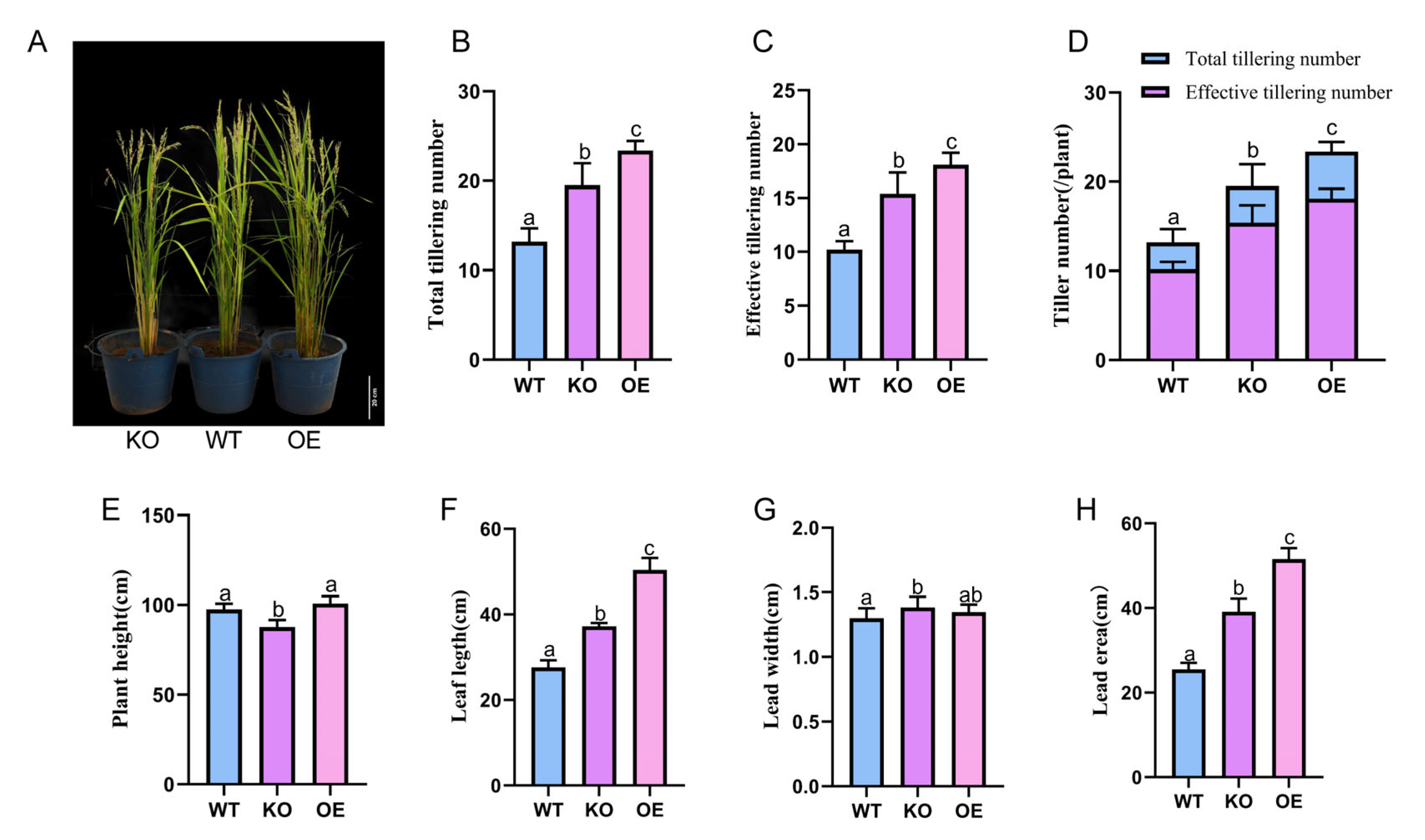
Figure 2.
Panicle Traits of OsHSP20 Transgenic Lines. (A) Main panicle, scale bar = 2 cm; (B) Main panicle length; (C) Number of primary branches; (D) Number of secondary branches; (E) Number of grains per panicle; (F) Seed setting rate; (G) Total grain number and filled grain number. (n=10).
Figure 2.
Panicle Traits of OsHSP20 Transgenic Lines. (A) Main panicle, scale bar = 2 cm; (B) Main panicle length; (C) Number of primary branches; (D) Number of secondary branches; (E) Number of grains per panicle; (F) Seed setting rate; (G) Total grain number and filled grain number. (n=10).
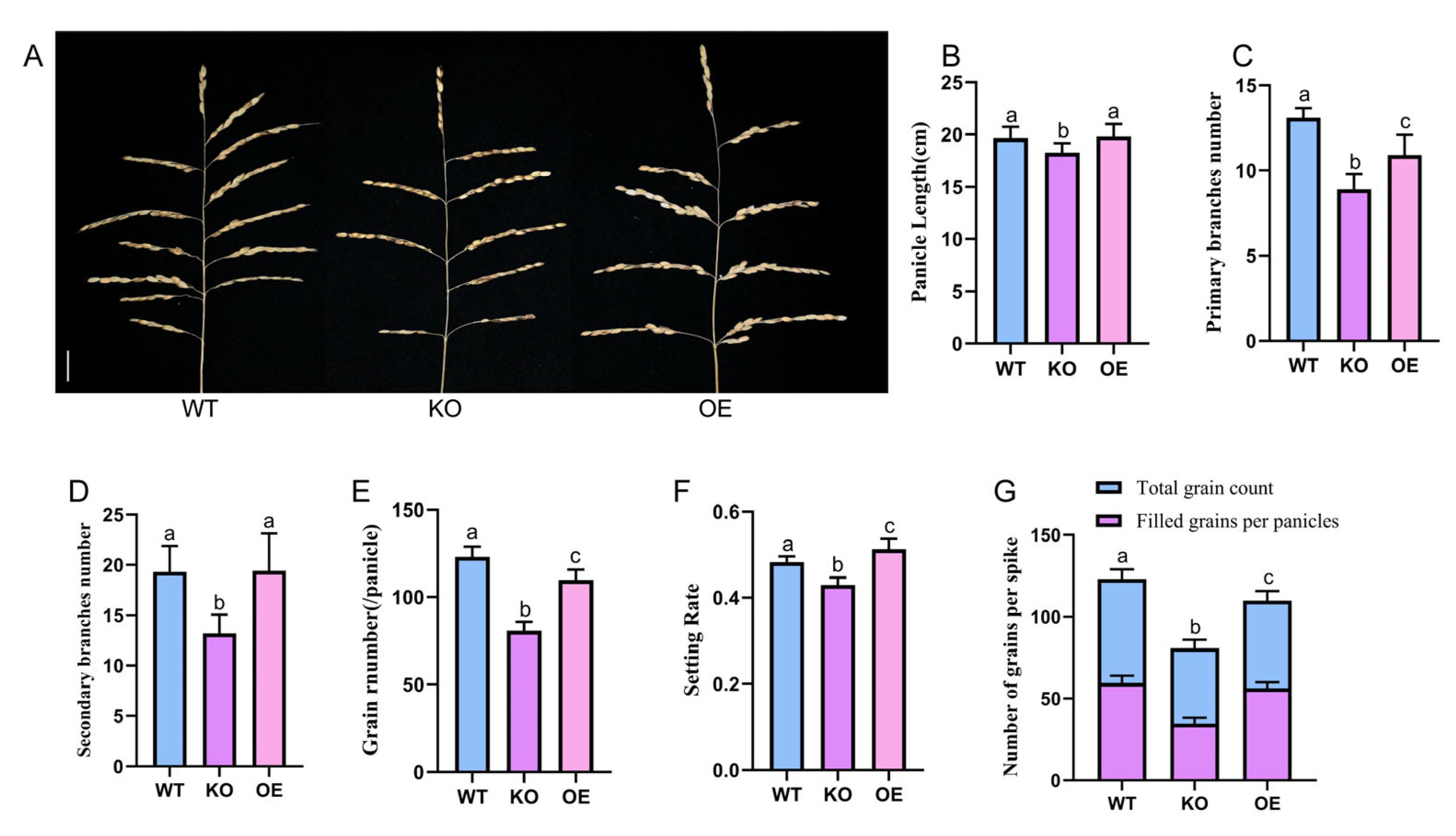
Figure 3.
Phenotypic investigation of OsHSP20 transgenic lines. (A) Grain, scale bar = 1 cm; (B) Thousand-grain weight; (C) Grain length; (D) Grain width; (E) Grain thickness. (n=10).
Figure 3.
Phenotypic investigation of OsHSP20 transgenic lines. (A) Grain, scale bar = 1 cm; (B) Thousand-grain weight; (C) Grain length; (D) Grain width; (E) Grain thickness. (n=10).
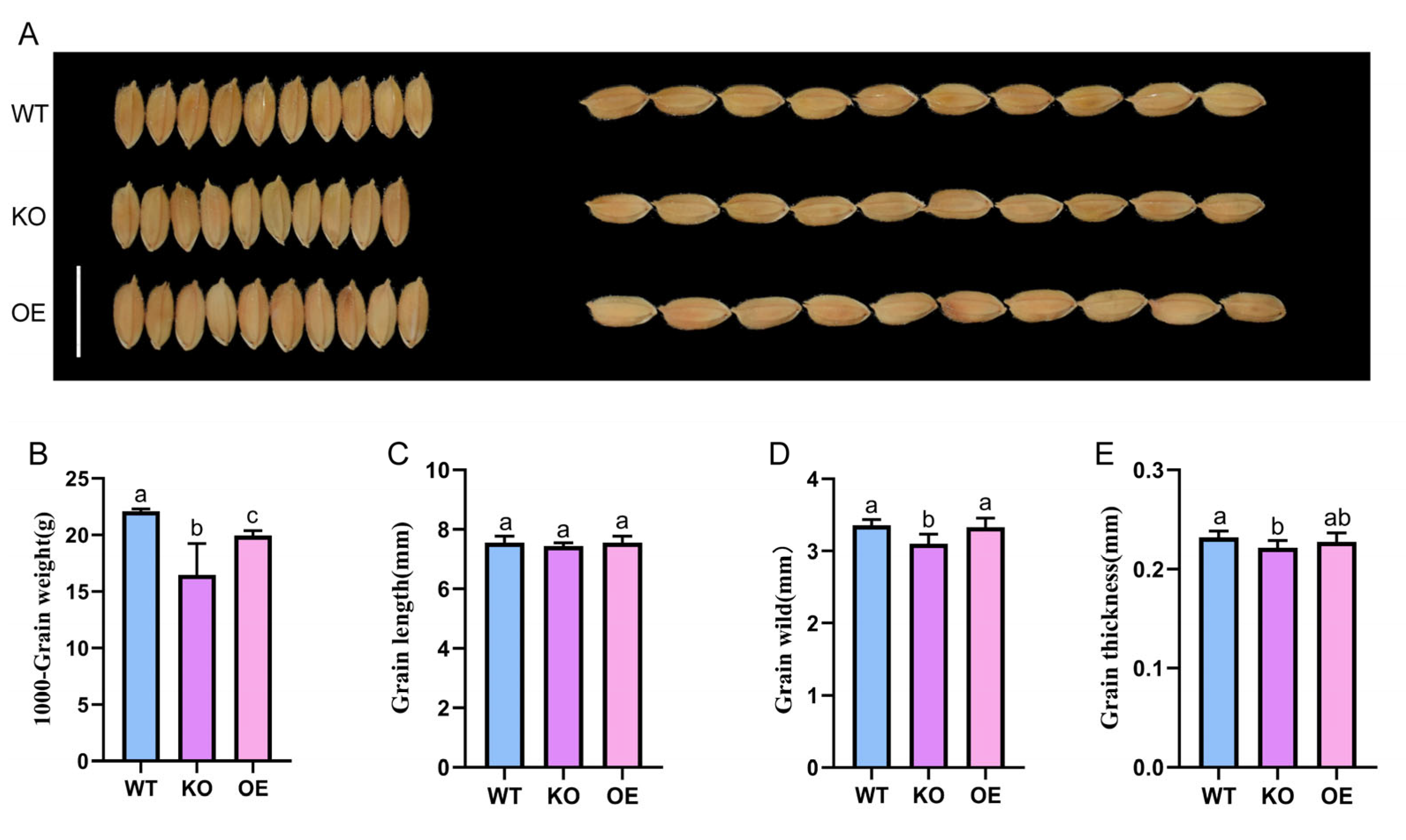
Figure 4.
Drought Germination Assay of OsHSP20 Transgenic Lines. (A) Growth performance of OsHSP20 transgenic lines after 3 days of germination, scale bar = 1 cm; (B) Seed germination rate; (C) Shoot length; (D) Root length. (n=10).
Figure 4.
Drought Germination Assay of OsHSP20 Transgenic Lines. (A) Growth performance of OsHSP20 transgenic lines after 3 days of germination, scale bar = 1 cm; (B) Seed germination rate; (C) Shoot length; (D) Root length. (n=10).
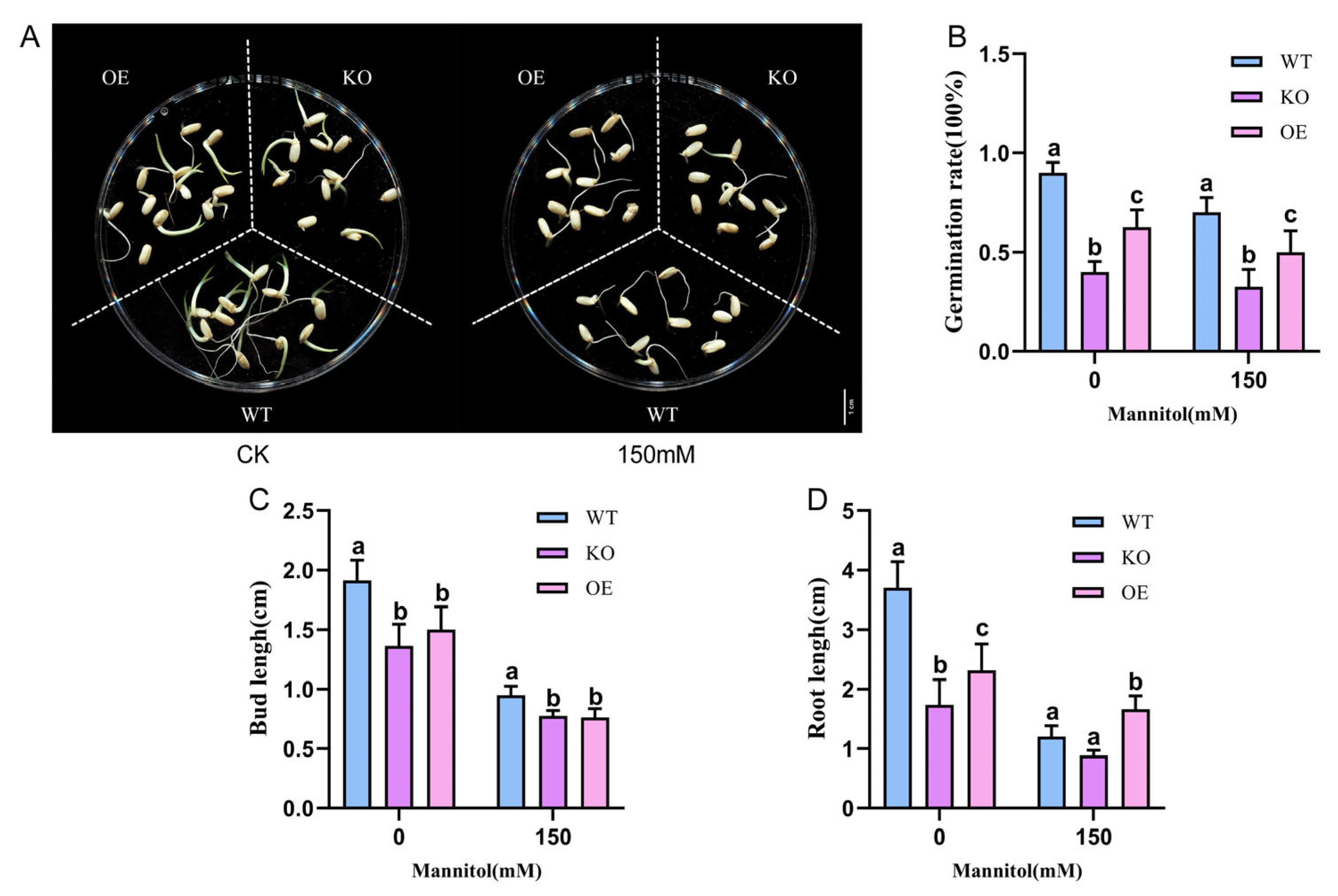
Figure 5.
Post-germination Drought Stress Experiment of OsHSP20 Transgenic Lines. (A) Growth performance of transgenic lines after 3 days of hydroponic culture, scale bar = 1 cm; (B) Shoot length statistics in the control group; (C) Shoot length statistics in the treatment group; (D) Root length statistics in the control group; (E) Root length statistics in the treatment group; (F) Average daily increase in shoot length; (G) Average daily increase in root length. (n=10).
Figure 5.
Post-germination Drought Stress Experiment of OsHSP20 Transgenic Lines. (A) Growth performance of transgenic lines after 3 days of hydroponic culture, scale bar = 1 cm; (B) Shoot length statistics in the control group; (C) Shoot length statistics in the treatment group; (D) Root length statistics in the control group; (E) Root length statistics in the treatment group; (F) Average daily increase in shoot length; (G) Average daily increase in root length. (n=10).
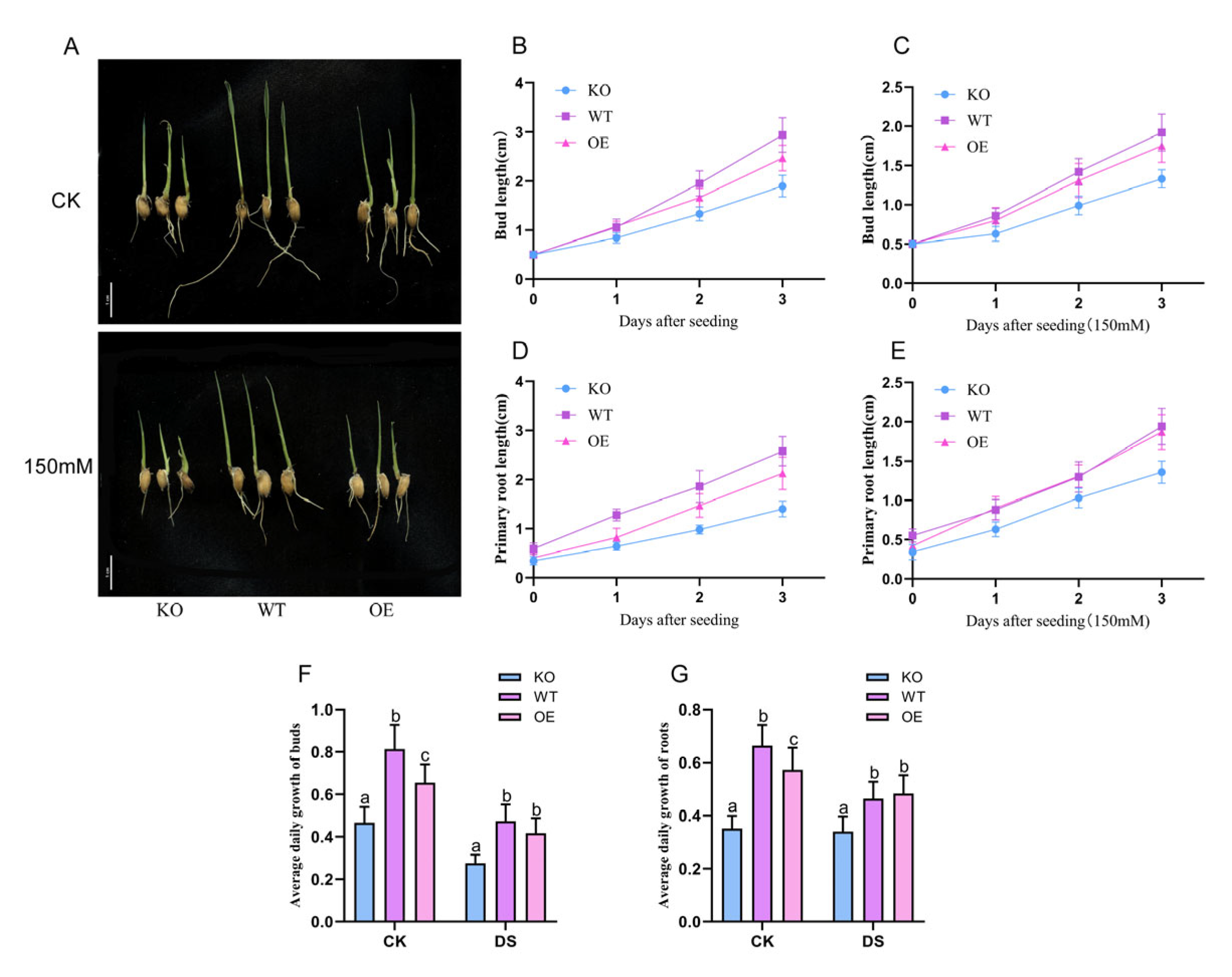
Figure 6.
Seedling Stage Drought Treatment of OsHSP20 Transgenic Lines. (A) Growth status of the control and treatment groups after 5 days, scale bar = 5 cm; (B) Plant height; (C) Root length; (D) Leaf water content; (E) Stem water content; (F) Root water content; (G) Root-to-shoot ratio. (n=10).
Figure 6.
Seedling Stage Drought Treatment of OsHSP20 Transgenic Lines. (A) Growth status of the control and treatment groups after 5 days, scale bar = 5 cm; (B) Plant height; (C) Root length; (D) Leaf water content; (E) Stem water content; (F) Root water content; (G) Root-to-shoot ratio. (n=10).
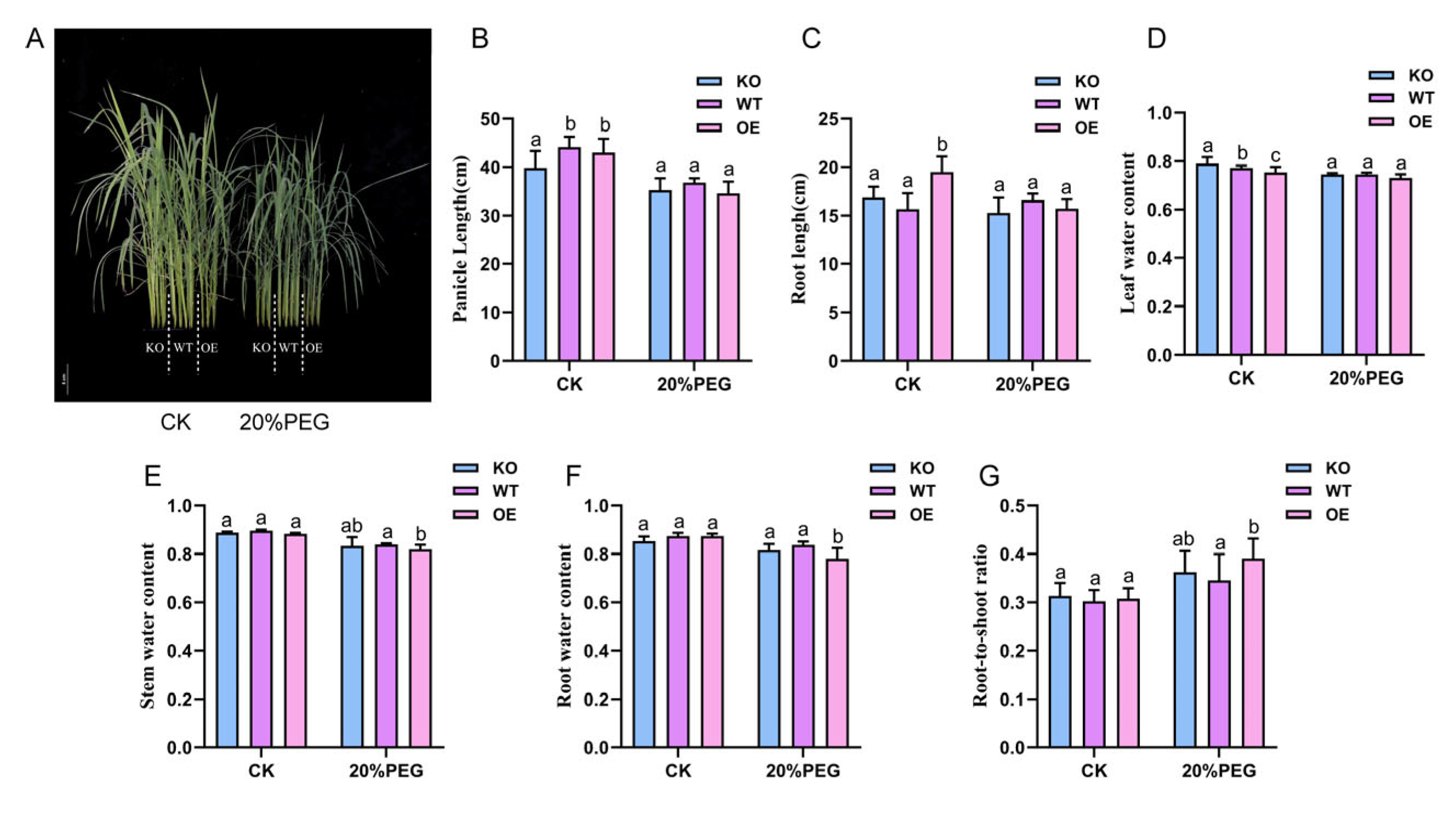
Figure 7.
Physiological and Biochemical Indicators of OsHSP20 Transgenic Lines under Soil Drought Treatment. (A) Soil water content; (B) Chlorophyll content; (C) Nitrogen content; (D) MDA content; (E) H₂O₂ content; (F) CAT activity; (G) POD activity; (H) SOD activity. (n=3).
Figure 7.
Physiological and Biochemical Indicators of OsHSP20 Transgenic Lines under Soil Drought Treatment. (A) Soil water content; (B) Chlorophyll content; (C) Nitrogen content; (D) MDA content; (E) H₂O₂ content; (F) CAT activity; (G) POD activity; (H) SOD activity. (n=3).
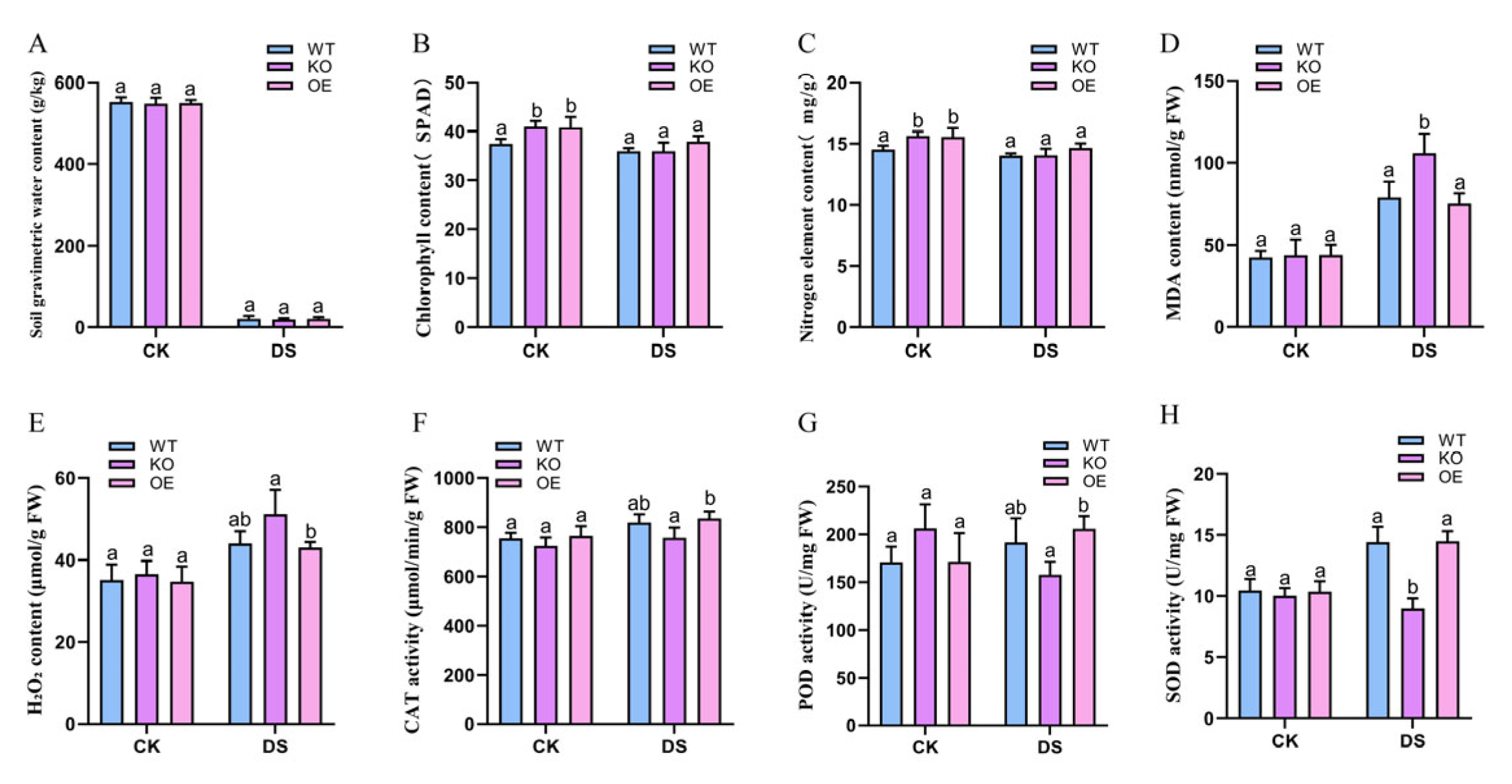
Figure 8.
Physiological and Biochemical Indicators of OsHSP20 Transgenic Lines under High Temperature Treatment. (A) Growth status of control and treatment groups after 3 days, scale bar = 5 cm; (B) Chlorophyll content; (C) Nitrogen content; (D) H2O2 content; (E) CAT activity; (F) POD activity; (G) SOD activity. (n=3).
Figure 8.
Physiological and Biochemical Indicators of OsHSP20 Transgenic Lines under High Temperature Treatment. (A) Growth status of control and treatment groups after 3 days, scale bar = 5 cm; (B) Chlorophyll content; (C) Nitrogen content; (D) H2O2 content; (E) CAT activity; (F) POD activity; (G) SOD activity. (n=3).
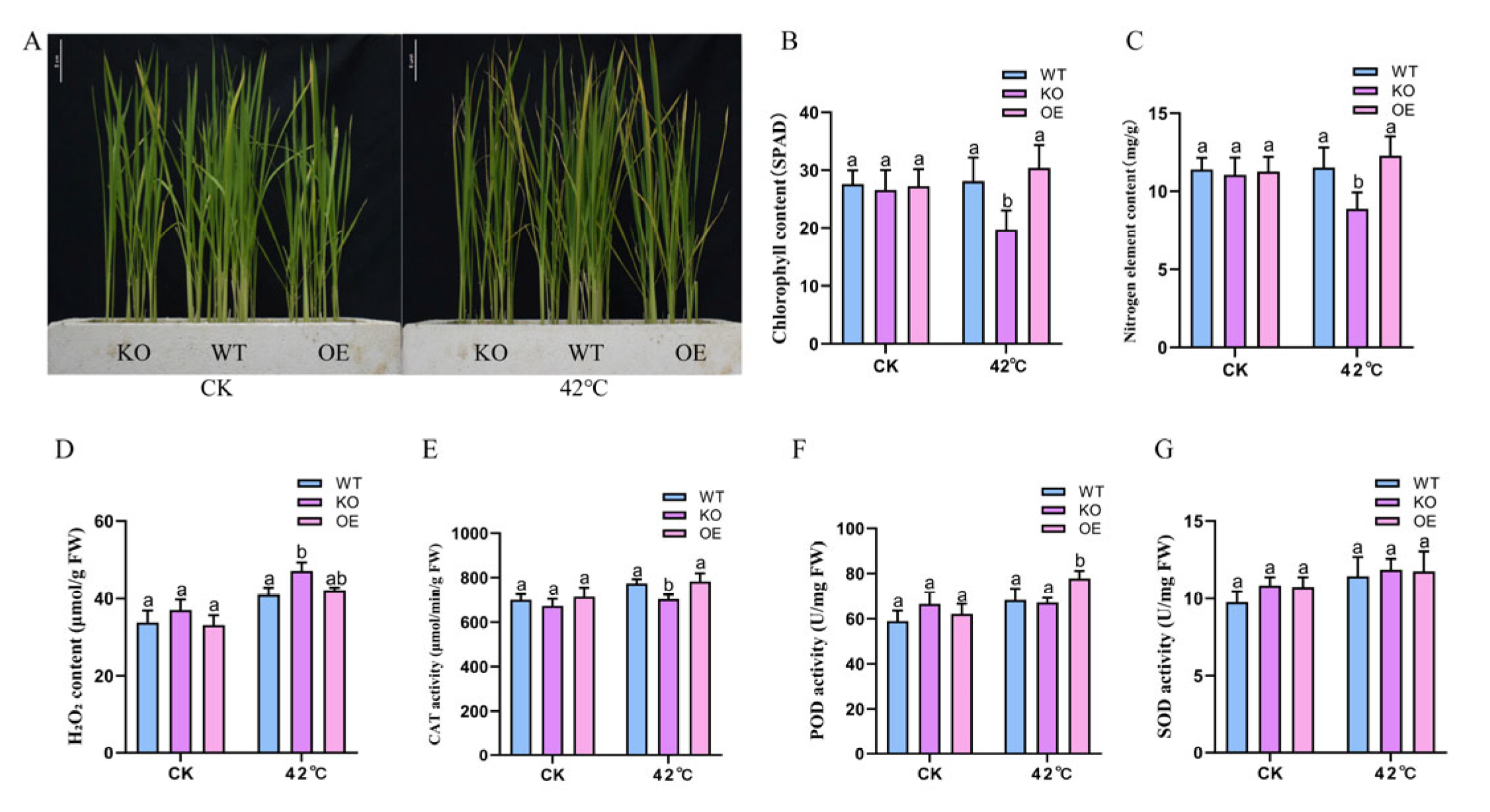
Figure 9.
Transcriptomic Analysis of OsHSP20 Transgenic Lines under Soil Drought Treatment. (A) Volcano plot of differentially expressed genes comparing knockout vs. wild-type. (B) Volcano plot of differentially expressed genes comparing overexpression vs. wild-type. (C) Gene Ontology (GO) enrichment bar plot for DEGs between transgenic lines under normal conditions. (D) Kyoto Encyclopedia of Genes and Genomes (KEGG) pathway enrichment bubble chart for DEGs between transgenic lines under normal conditions. (E) GO enrichment bar plot for DEGs between transgenic lines under drought stress. (F) KEGG pathway enrichment bubble chart for DEGs between transgenic lines under drought stress.
Figure 9.
Transcriptomic Analysis of OsHSP20 Transgenic Lines under Soil Drought Treatment. (A) Volcano plot of differentially expressed genes comparing knockout vs. wild-type. (B) Volcano plot of differentially expressed genes comparing overexpression vs. wild-type. (C) Gene Ontology (GO) enrichment bar plot for DEGs between transgenic lines under normal conditions. (D) Kyoto Encyclopedia of Genes and Genomes (KEGG) pathway enrichment bubble chart for DEGs between transgenic lines under normal conditions. (E) GO enrichment bar plot for DEGs between transgenic lines under drought stress. (F) KEGG pathway enrichment bubble chart for DEGs between transgenic lines under drought stress.
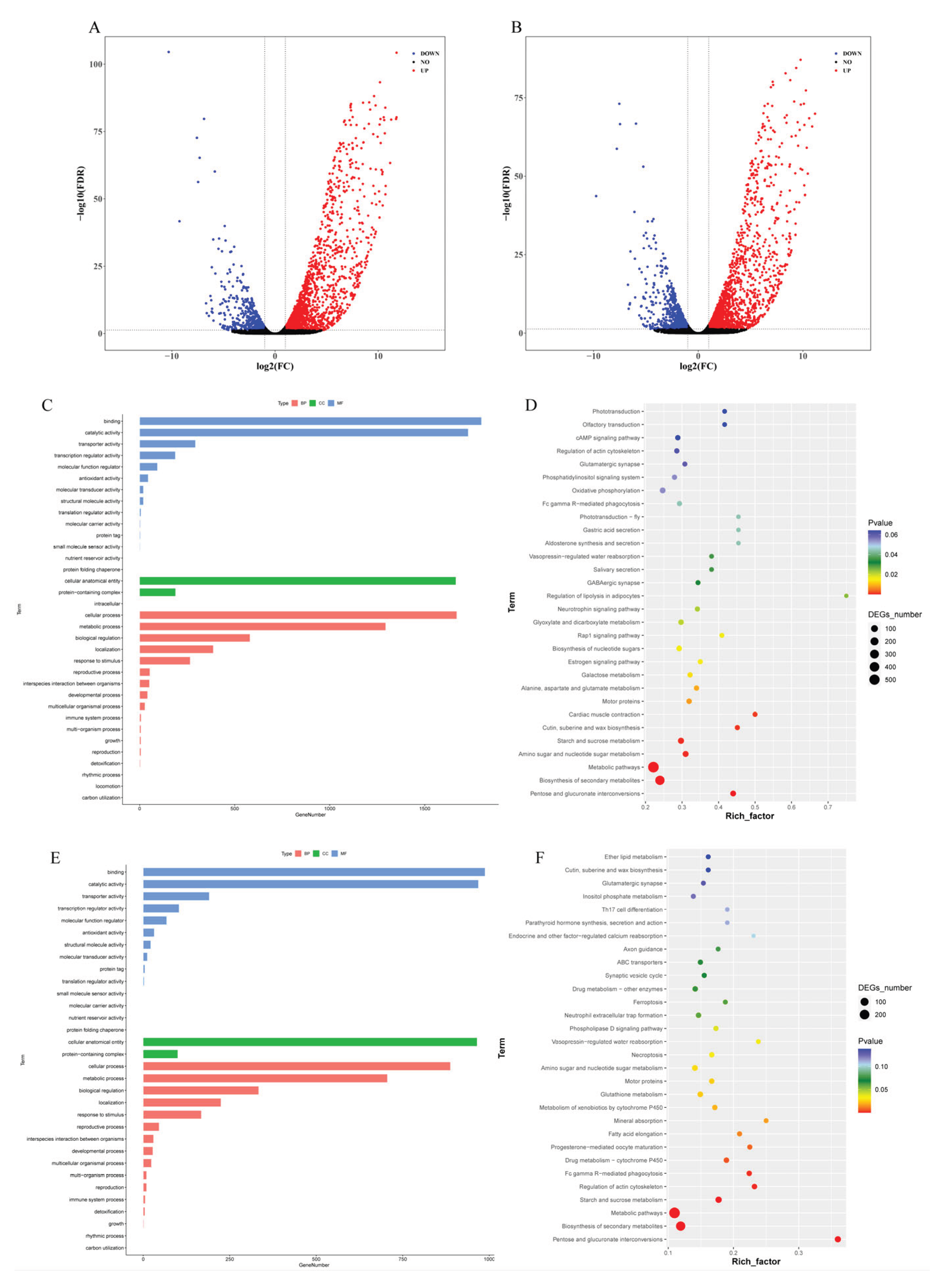

Table 1.
Functional Characteristics of OsHSP20 Family Members.
| Gene ID | Chromosome | Function and Subcellular Localization |
|---|---|---|
| Os01g0135800 | Chr 1 | Cytosolic localization; indirectly alleviates ER folding burden by restricting cytosolic protein aggregation, thereby maintaining protein homeostasis. |
| Os01g0136200 | Chr 1 | Cytosolic localization; responds to heat stress. |
| Os02g0782500 | Chr 2 | Cytosolic/nuclear localization; tightly co-clusters with OsHsp17.7/OsHsp17.3. |
| Os03g0245800 | Chr 3 | Cytosolic localization; responds to heat stress. |
| Os03g0266900 | Chr 3 | Cytosolic localization; responds to heat stress. |
| Os03g0267000 | Chr 3 | Cytosolic localization; molecular chaperone; inhibits heat-induced MDH aggregation, enhances thermotolerance; improves salt tolerance; non-responsive to drought/ABA. |
| Os03g0267200 | Chr 3 | Cytosolic localization; responds to heat stress. |
| Os04g0445100 | Chr 4 | Involved in protein stabilization and maintenance of proper folding under high temperatures, preventing aggregation of heat-denatured proteins. |
| Os11g0244200 | Chr 11 | Possesses protein chaperone activity; strongly upregulated under high temperatures to maintain protein stability and prevent aggregation. |
| Os12g0514500 | Chr 12 | Co-clusters with OsBiP3. |
Disclaimer/Publisher’s Note: The statements, opinions and data contained in all publications are solely those of the individual author(s) and contributor(s) and not of MDPI and/or the editor(s). MDPI and/or the editor(s) disclaim responsibility for any injury to people or property resulting from any ideas, methods, instructions or products referred to in the content. |
© 2026 by the authors. Licensee MDPI, Basel, Switzerland. This article is an open access article distributed under the terms and conditions of the Creative Commons Attribution (CC BY) license (http://creativecommons.org/licenses/by/4.0/).
Copyright: This open access article is published under a Creative Commons CC BY 4.0 license, which permit the free download, distribution, and reuse, provided that the author and preprint are cited in any reuse.