Preprint
Article

This version is not peer-reviewed.

Effect of Native Bacillus Strains Supplemented in Water on Growth Performance, Resistance to Vibrio parahaemolyticus (AHPND strain), and Gut Microbiota of White Shrimp (Penaeus vannamei)

Submitted:

17 August 2026

Posted:

17 August 2026

You are already at the latest version

Abstract

Probiotics, especially Bacillus species, have gained attention for their potential to improve growth and strengthen disease resistance in cultured shrimp. This study evaluated the effects of native Bacillus strains on growth performance, disease resistance and gut microbiota of Penaeus vannamei through the rearing water. The shrimp were reared in water supplemented with different treatments: (a) a negative control (no bacterial addition), (b) a commercial Bacillus spp.® product (positive control), (c) B. subtilis and (d) B. cereus, every 7 days over a period of 21 days. Shrimp reared with B. cereus showed significantly increased specific growth rate (SGR) and average daily gain (ADG) among treatments as compared to the control group (p < 0.05). There was no significant difference in final body weight and feed conversion ratio among groups (p > 0.05). After Vibrio parahaemolyticus challenge, the cumulative mortality was lowest in the B. cereus treated group, showing the highest disease resistance. Alpha diversity of gut microbiota was not significantly different among groups, but beta diversity analyses showed significant differences of gut microbial community structure and LEfSe identified the genus Bacillus as a significant biomarker of the B. cereus-treated group, confirming its colonization in shrimp gut. The results suggest that supplementation of water with a native B. cereus strain enhances growth efficiency and disease resistance and leads to a stable colonization of Bacillus in shrimp gut, offering a practical probiotic approach for intensive shrimp aquaculture.

Keywords: 
;  ;  ;  ;  ;  

1. Introduction

White shrimp (Penaeus vannamei) has become one of the most important aquaculture species in the world over the last decades [1]. Alongside the increase of shrimp production, disease outbreaks have been a continuous problem for shrimp farmers resulting in a significant economic loss to the industry [2]. Acute hepatopancreatic necrosis disease (AHPND) caused by toxin-producing strains of Vibrio parahaemolyticus (VPAHPND) is one of the most serious bacterial diseases [3,4]. Antibiotics have been used for a long time to control bacterial infections in shrimp farming. Nevertheless, the overuse of antibiotics can have negative impacts on the aquatic environment, contribute to antimicrobial resistance and a danger to food safety to consumers [5,6]. These limitations have resulted in the suggestion of probiotics as a more sustainable alternative for disease management in aquaculture. They are useful in the production of antimicrobial compounds, improvement of host immune responses, competitive exclusion of pathogens from the attachment sites and nutrient resources and enhancement of the quality of rearing water [7,8].
Bacillus spp. is among the most widely used probiotics in aquaculture, because they can form spores, which are resistant to many environmental stresses and can, therefore, survive and remain stable in rearing water and in the intestinal environment [9,10]. Bacillus secretes a wide range of extracellular enzymes and is therefore used as a bioremediation agent in shrimp farming water for water treatment, organic matter degradation, ammonia reduction by nitrification and denitrification, and waste conversion into bacterial biomass. Bacillus is important because it mineralizes organic matter effectively back to carbon dioxide and hence reduces the accumulation of both dissolved and particulate organic carbon [11,12]. In addition to improving the water quality, Bacillus also has a direct positive effect on the shrimp. Strains isolated from shrimp gut or from culture environment have been shown to improve growth, stimulate immune responses, and suppress Vibrio pathogens through competitive exclusion and the production of antimicrobial substances. Furthermore, Bacillus supplementation can modulate the microbial community (microbiome) of the water and shrimp intestine, which is an important determinant of host health, feed utilization and disease resistance [13,14,15,16].
Bacillus as a probiotic in shrimp has been widely studied, but the efficacy and properties are strain-specific, thus suitable strains from local aquaculture sources should be selected [17,18]. Indigenous strains are usually better and more specific as they have been co-adapted with the host and the environment. It has been reported that strains isolated from aquatic animals or their culture environment colonize faster and are more stable, robust and persistent. The host immune system tends to respond less vigorously against them because they are already part of the resident microbiota [9,19,20,21]. In an earlier study of our research group, Bacillus strains were isolated from the bottom sediment of shrimp culture ponds and B. subtilis and B. cereus were found to exhibit remarkable characteristics including rapid growth, high spore production and strong capacity to degrade total organic carbon (TOC) in shrimp rearing water (unpublished data). On the other hand, their efficacy has yet to be tested in a real shrimp culture system.
The aquatic microbial community is the main source of microorganisms entering the shrimp intestine, due to the constant contact with rearing water and ingestion of the water during feeding. Filter-feeding behavior facilitates acquisition of resident gut microbiota with waterborne bacteria, resulting in a constant microbial exchange between rearing water and digestive tract [22,23]. Thus, manipulation of the water microbiome represents a promising strategy for regulating gut microbial composition. Direct application of probiotics to rearing water may operate through two complementary mechanisms. Probiotic bacteria can contribute to organic matter degradation and improved pond water quality, and their continuous presence in the water can facilitate entry of beneficial microorganisms into the shrimp digestive tract, thereby supporting a favorable gut microbial community and stronger resistance to disease. [24,25]. Feed-based and water-based probiotic applications have both been investigated, though knowledge of water-based or immersion applications in relation to intestinal Bacillus abundance and disease resistance is comparatively limited relative to dietary supplementation. In response to the research gap, the present study evaluated the effects of adding isolated Bacillus subtilis and Bacillus cereus strains directly to rearing water on the growth performance, resistance to Vibrio parahaemolyticus (VPAHPND), and gut bacterial community composition of P. vannamei. Findings from the study may strengthen understanding of water-applied probiotics as a practical strategy for promoting shrimp health and supporting more sustainable shrimp production.

2. Materials and Methods

2.1. Ethical Statement

The following protocols were conducted in accordance with Burapha University Biosafety Committee (Approval No. IBC 049/2568). All animal procedures were performed in accordance with the Ethical Principles and Guidelines for the Use of Animals of the National Research Council of Thailand. The study protocol was approved by the Animal Ethics Committee of Burapha University (Approval No. IACUC 023/ 2568).

2.2. Source and Preparation of the Bacillus Strains

In a previous study of our research group, 13 isolates were obtained from bottom sediment of P. vannamei culture ponds. These isolates were identified based on molecular analysis of the 16S rRNA gene sequence. They were found to belong to eight species of genus Bacillus. Among these, Bacillus subtilis and Bacillus cereus exhibited good growth. B. subtilis reached a maximum cell density of 2.9×10¹¹ CFU/mL within 20 h and produced spores at up to 3.9×10⁷ CFU/mL at 42 h, whereas B. cereus grew rapidly during the early phase, reaching 4.0×10¹⁰ CFU/mL at 18 h with a maximum spore count of 3.2×10⁶ CFU/mL at 36 h of cultivation. In addition, in a test of total organic carbon (TOC) removal efficiency in shrimp rearing water, B. cereus and B. subtilis showed the two highest TOC removal efficiencies among all isolates, with B. cereus being the most effective (64.31 ± 11.59%), followed by B. subtilis (56.23 ± 11.11%) (unpublished data). These two strains were selected for further evaluation in the present study due to their rapid growth, high spore production and ability to degrade TOC in shrimp rearing water.
B. subtilis (BS) and B. cereus (BC) strains isolated from pond sediment and a commercial Bacillus spp.® product (positive control) were grown in Nutrient Broth in 4-L glass bottles for 24 h with constant filtered aeration. After 24 h, the optical density of the Bacillus spp.® product, B. subtilis and B. cereus cultures was measured in a spectrophotometer and the cultures were adjusted to a turbidity of 0.8–1.0 at 600 nm (OD600 = 0.8–1.0).

2.3. Preparation of Pathogenic V. parahaemolyticus (VPAHPND)

The shrimp pathogen V. parahaemolyticus (VPAHPND) was streaked on Tryptic Soy Agar (TSA) with 1.5% NaCl and incubated at 32 °C for 18 h. One colony grown on the medium was then sub-cultured in Tryptic Soy Broth (TSB) supplemented with 1.5% NaCl and incubated in a shaker incubator at 32 °C for 18 h. Optical density was measured by spectrophotometer and bacterial concentration was adjusted at 1×10⁹ CFU/ml.

2.4. Preparation of Shrimp, Rearing Management and Experimental Design

P. vannamei, with a weight of 9-10 g, were obtained from a shrimp farm in Na Yai Am District, Chanthaburi Province. The shrimp were transported in plastic tanks containing 15 ppt seawater with aeration provided throughout transport. Upon arrival at the hatchery of the Marine Technology Research Center, Burapha University, Chanthaburi Campus, the juveniles were acclimated in fiberglass tanks containing 6,000 L of 15 ppt seawater and fed a commercial pelleted feed (CPStarFeed, No. 3;) at 5% of body weight three times daily (06:00, 12:00, and 18:00) for 7 days. Water quality parameters (pH, dissolved oxygen, temperature, ammonia, nitrite, and alkalinity) were monitored during acclimation using commercial test kits. After 7 days of acclimation, shrimp were randomly sampled and tested for the presence of pathogens, namely white spot syndrome virus (WSSV), Enterocytozoon hepatopenaei (EHP) and V. parahaemolyticus (VPAHPND) by real-time PCR.
Specific pathogen-free shrimp were randomly stocked into 1,800-L fiberglass tanks containing 1,000 L of 15 ppt seawater equipped with a filtration system, at a stocking density of 50 shrimp per tank, with continuous aeration throughout the experiment. The experiment was arranged in a Completely Randomized Design (CRD), consisting of four treatments with three replicates each, as follows: Treatment 1: P. vannamei reared without any bacterial addition to the rearing tank (negative control); Treatment 2: P. vannamei reared with the addition of a commercial Bacillus spp.® product to the rearing tank at 1 L per application (positive control); Treatment 3: P. vannamei reared with the addition of B. subtilis to the rearing tank at 1 L per application; Treatment 4: P. vannamei reared with the addition of B. cereus to the rearing tank at 1 L per application.
Water quality was maintained within suitable ranges for shrimp culture throughout the trial, as follows: temperature 27–28 °C, pH 7.5–8.5, alkalinity not less than 150 mg/L, ammonia and nitrite not exceeding 0.5 mg-N/L, calcium not less than 80 mg/l, and magnesium not less than 700 mg/l. Sediment was siphoned every morning before feeding. Shrimp were fed three times daily (06:00, 12:00, and 18:00) at 5% of body weight per day. The experiment lasted continuously for 21 days. Water exchange of 50–80% was carried out when the ammonia concentration in the water was >0.5 mg-N/L. The overall experimental design is shown in Figure 1.

2.5. Addition of Bacillus spp. to the Shrimp Rearing Water

The commercial Bacillus spp. product, B. subtilis (BS) and B. cereus (BC) were added to the shrimp rearing water according to each treatment every 7 days (1 L per tank to give a bacterial final concentration of approximately 1 × 10⁵ CFU/mL in the rearing water) for a total of three applications on days 7, 14 and 21 of the rearing trial.

2.6. Growth Performance and Feed Utilization Efficiency

Growth performance was evaluated at the end of the 21 days experimental period. Ten shrimp were randomly sampled from each tank, and individually weighed to determine final body weight. For growth performance and feed conversion outcomes, tank-level mean values and feed records were used as the experimental units, resulting in n = 3 replicate tanks per treatment. The following parameters were calculated according to standard aquaculture growth equations [26]:
Weight gain (g) = Final weight (g) − Initial weight (g)
Specific growth rate (SGR, %/day) = [(ln Final weight − ln Initial weight)/ Experimental days] × 100
Average daily gain (ADG, g/day) = (Final weight − Initial weight)/ Experimental days
Feed conversion ratio (FCR) = Total feed intake (g)/Total weight gain (g)

2.7. Vibrio Parahaemolyticus (VPAHPND) Challenge

For Vibrio parahaemolyticus (VPAHPND), challenge experiment was used. On day 21, ten shrimps from each tank were transferred to individual tanks with 10 L of seawater at 15 ppt and three replicate tanks per treatment. Then, 10 mL of VPAHPND suspension (1 × 10⁹ CFU/mL) was added to each tank to obtain a final bacterial concentration of 1 × 10⁶ CFU/mL. After 6 h of immersion exposure, the water was completely exchanged. Each treatment group continued to feed the corresponding experimental diet during the challenge period. Shrimp mortality was recorded at 0, 3, 6, 12, 24, 36, 48, 60, 72, 84, 96, 108, 120, 132, and 144 h post-challenge. Cumulative mortality was calculated using the formula described by [27].

2.8. Statistical Analysis

For growth performance, feed conversion data and cumulative mortality are presented as the mean ±SD. The data were statistically analyzed for significance using a one-way ANOVA, and then the differences among the means at p < 0.05 were tested with Duncan’s multiple range test using Rstudio (4.6.1).

2.9. Gut microbiota Analysis by 16S rRNA Amplicon Sequencing

2.9.1. Sample Collection

At 24 h after the bacterial applications on days 7 and 21, the foregut and midgut of the shrimp gut were collected. Four shrimp from each tank were randomly sampled, and the gut of the four shrimp from each tank were pooled into a single sample (n=3 pools per treatment) for bacterial community analysis by 16S rRNA amplicon sequencing

2.9.2. DNA Extraction and 16S Amplicon Sequencing

Total DNA was extracted from each gut sample that were performed with a QIAamp PowerFecal Pro DNA Kits (Qiagen, Germantown, MD) according to the manufacture’ s instruction. After extraction, DNA quality was measured using a NanoDrop spectrophotometer (Thermo Fisher Scientific, USA) to ensure a concentration > 50 ng/µL and OD260/280 ratio (purity) of 1.8–2.2. For 16S ribosomal RNA (rRNA) amplicon sequencing, libraries were constructed using polymerase chain reactions (PCR) with universal primers that amplify the V3–V4 hypervariable regions of the 16S rRNA genes: 341F (5′-ACTCCTACGGGAGGCAGCA-3′) and 805R (5′-GGACTACHVGGGTWTCTAAT-3′). Indexed adapters were added to the ends of the 16S rRNA amplicons to generate indexed libraries ready for next generation sequencing. Qualified libraries were sequenced on an Illumina NovaSeq 6000 platform (Illumina, San Diego, CA, USA) to generate paired-end reads. Raw image data were processed by base calling to produce FASTQ files containing nucleotide sequences and their corresponding quality scores.

2.9.3. Bioinformatics Analysis and Statistical

Raw paired-end sequencing reads were processed using a standardized amplicon sequence variant (ASV)-based workflow (v4.1.0) (Team RC, 2021). Adapter sequences and low-quality bases were removed using Trimmomatic (v0.33), followed by PCR primer trimming using Cutadapt (v1.9.1) (Martin, 2011). Quality-filtered reads were subsequently processed using the DADA2 package in R (Callahan et al., 2016), including quality filtering, error-rate learning, dereplication, denoising, paired-end merging, and chimera removal to generate high-confidence non-chimeric ASVs. Taxonomic classification was performed using a combined BLAST- and Bayesian-based approach against the SILVA reference database (release 138.1) (Quast et al., 2013). Microbial community composition was characterized at the phylum and genus levels. Downstream microbial community analyses were conducted using the phyloseq package in R. Alpha diversity was assessed using the Shannon and Chao1 indices. Differences between Bacillus-treated and control groups were evaluated using Student’s t-tests, with n = 3 per group, with statistical significance set at p < 0.05. Beta diversity was calculated using Bray–Curtis dissimilarity and visualized by PCoA. Differences in microbial community composition among experimental groups were assessed using permutational multivariate analysis of variance (PERMANOVA)/ and Anosim Analysis. Differential analysis between groups was analyzed using LefSe (LDA effective size (Default threshold: >4) and P-value (Default threshold: <0.05). Analyzing complex microbiome data by using BugBase method, which provides biologically relevant microbiome phenotype predictions at organism level. A p <0.05 or p <0.01 was considered statistically significant in all analyses.

3. Results

3.1. Growth Performance and Feed Utilization Efficiency

The initial mean weight of shrimp was 9.36±0.72 to 10.10±0.37 g; no significant differences were observed among treatments (p > 0.05). The final weight after 21 days was higher in the B. cereus treated group (16.68±0.73 g) and lower in the B. subtilis treated group (15.01±1.15 g). Final weight was similar among groups (P > 0.05).
Clear differences were observed in growth parameters. The B. cereus-treated group showed the highest weight gain (7.32±0.59 g), specific growth rate (SGR, 2.07±0.20 %/day), and average daily gain (ADG, 0.21±0.02 g/day), which were significantly higher than those of the control (5.56±0.46 g; SGR 1.47±0.06 %/day; ADG 0.16±0.01 g/day) and the B. subtilis-treated group (4.91±1.22 g; SGR 1.41±0.31 %/day; ADG 0.14±0.03 g/day) (p < 0.05). The commercial Bacillus spp.® product group showed intermediate values that did not differ significantly from the other groups. The B. cereus-treated group also had the lowest feed conversion ratio (FCR, 1.36±0.02); however, FCR did not differ significantly among groups (p > 0.05) (Table 1).
In summary, the addition of B. cereus to the rearing water most effectively promoted the growth of P. vannamei, significantly increasing body weight gain, specific growth rate, and average daily gain under comparable feed intake. The commercial Bacillus spp.® product produced intermediate effects, whereas B. subtilis supplementation did not differ from the control in any of the measured parameters.

3.2. Cumulative Mortality of P. vannamei Challenged with V. Parahaemolyticus (VPAHPND)

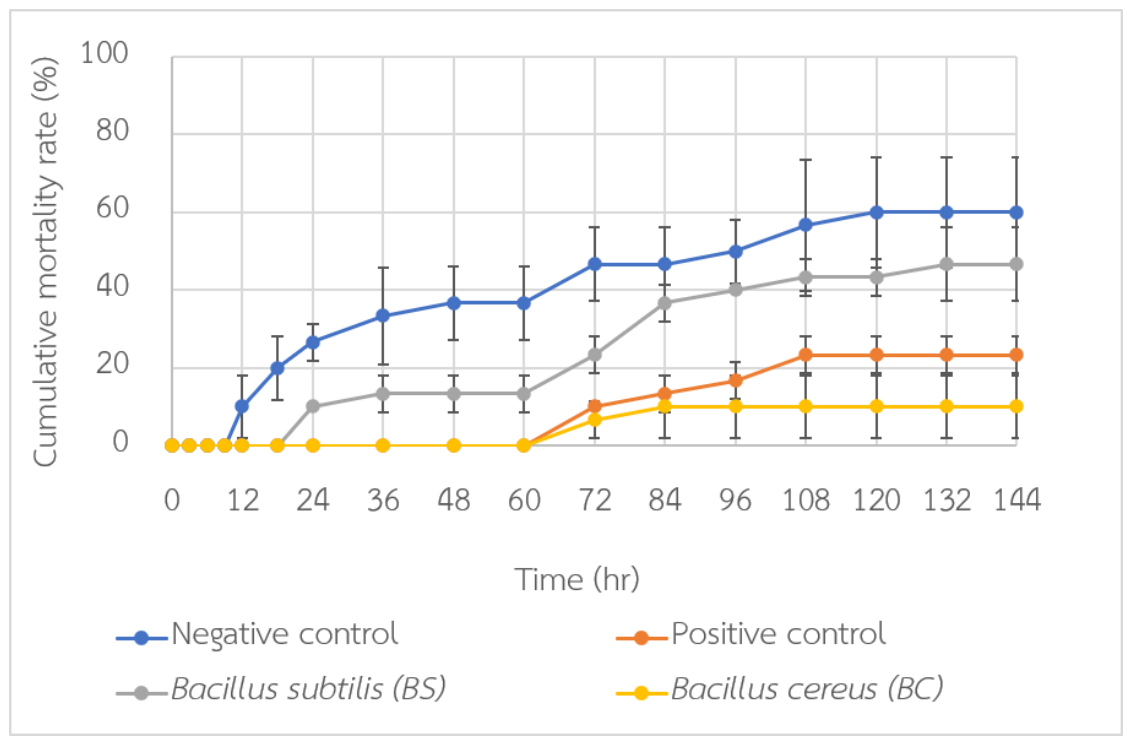
In the challenge test against the pathogenic bacterium VPAHPND, cumulative mortality was lowest among shrimp reared with the B. cereus suspension (10.0 ± 8.2%). This was followed by shrimp reared with the commercial Bacillus spp.® product (positive control; 23.3 ± 4.7%), the B. subtilis–treated group (46.7 ± 9.4%), and the group without bacterial addition (negative control; 60.0 ± 14.1%), respectively. Mortality in both the B. cereus–treated group and the commercial Bacillus spp.® product group was significantly lower than in the negative control (p < 0.05) (Figure 2).

3.3. Gut Microbial community Analysis

3.3.1. Next-Generation Sequencing Data and ASV Analysis

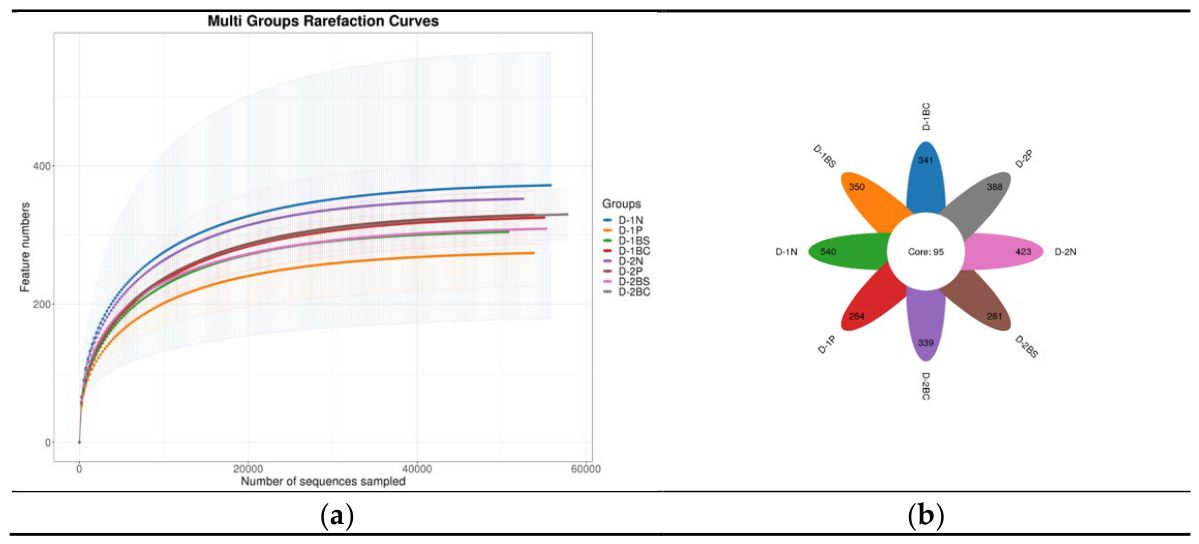
After DNA extraction and sequencing of the V3-V4 region of the 16S rRNA gene in all samples, the high-throughput sequencing data were statistically analyzed. After quality control, 1,620,837 reads and 4,110 ASVs were obtained, classified into 23 phyla, 46 classes, 122 orders, 242 families, and 506 genera. The rarefaction curves of all experimental groups approached a near-plateau at approximately 40,000 sequences (Figure 3a), indicating that the sequencing depth was sufficient to capture the microbial diversity of the shrimp gut in all groups.
The amplicon sequence variants (ASVs) of the gut microbial communities of P. vannamei following probiotic administration via water inoculation on day 7 (D-1) and day 21 (D-2) were visualized using a flower plot (Figure 3b). The number of cores ASVs shared among all groups (95 ASVs) was relatively small compared with the number of group-specific ASVs, indicating that a large proportion of ASVs were unique to individual groups. Among the groups, the negative control without bacterial inoculation showed the highest number of group-specific ASVs at both time points (D-1N and D-2N). It should be noted, however, that the number of unique ASVs reflects the presence of low-abundance and rare taxa and is therefore distinct from the overall alpha diversity indices (Chao1 and Shannon), which showed no significant differences among groups (see Section 3.3.2). As this comparison is descriptive and not based on statistical testing, these patterns should be interpreted with caution. Nevertheless, they may tentatively suggest that the addition of Bacillus was associated with a more structured community containing fewer group-specific taxa, in contrast to the more dispersed community observed in the control group.

3.3.2. Alpha and Beta Diversities

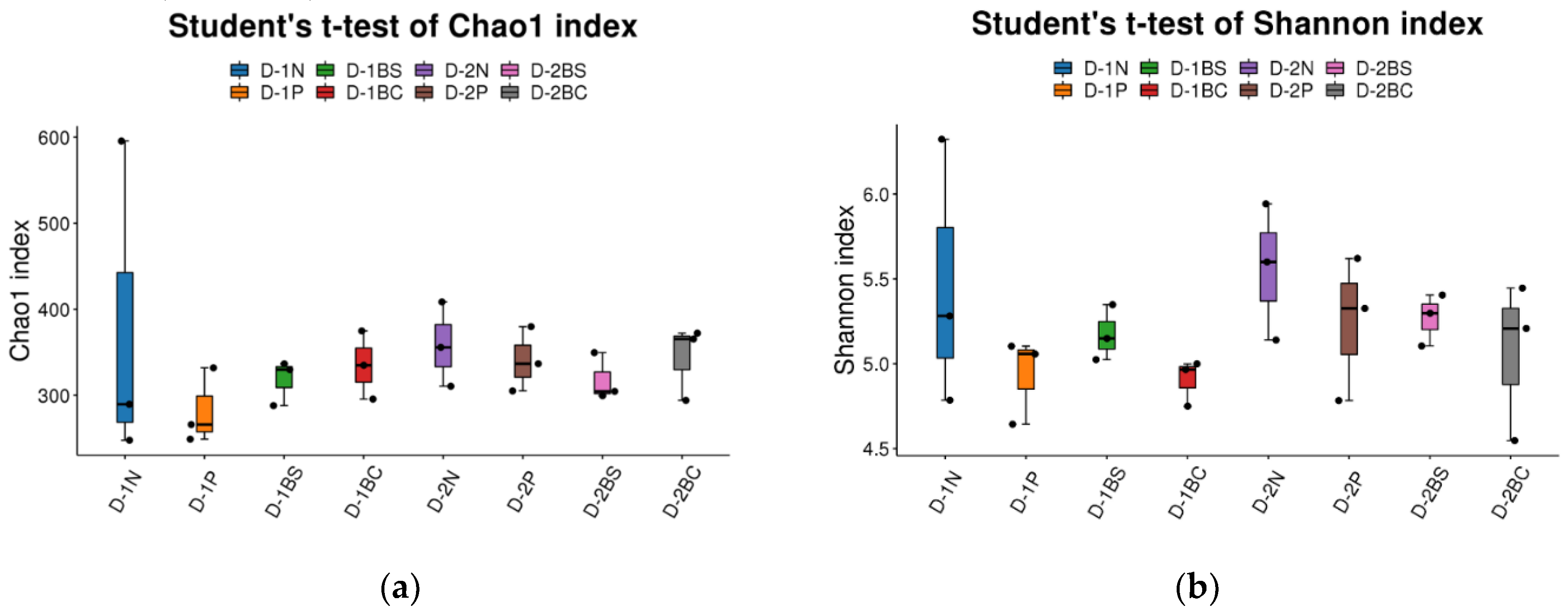
On day 7 (D-1) and day 21 (D-2) after bacteria were inoculated into the rearing water, the diversity of the gut microbial communities of P. vannamei was evaluated by the Chao1 index (species richness) (Figure 4a) and Shannon index (diversity, considering richness and evenness) (Figure 4b). In neither index were their significant differences in the experimental groups, neither within nor between time points (p > 0.05). These results suggested that probiotic inoculation into rearing water, types of added bacteria and duration of administration had no effect on the overall diversity of the shrimp gut microbial community in terms of both species richness (Chao1) and diversity including evenness (Shannon).
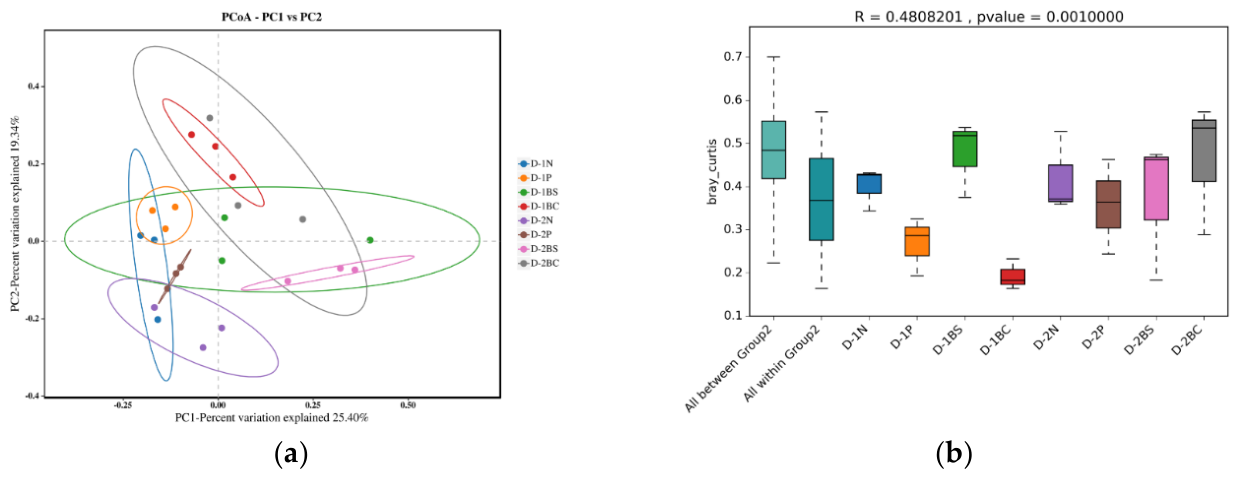
The gut microbial community structure of P. vannamei among the experimental groups on day 7 (D-1) and day 21 (D-2) was assessed by Principal Coordinates Analysis (PCoA) based on Bray-Curtis dissimilarity. The microbial communities of most experimental groups overlapped; however, the B. cereus-treated group on day 7 (D-1BC) and the B. subtilis-treated group on day 21 (D-2BS) tended to cluster separately from the other groups and showed high within-group similarity (Figure 5a). Analysis of Similarities (PERMANOVA/ANOSIM) confirmed that the gut microbial community structure differed significantly among the groups (R = 0.48, p = 0.001), with between-group dissimilarity being greater than within-group dissimilarity, consistent with the pattern observed in the PcoA (Figure 5b). In contrast to the alpha diversity results, which showed no significant differences among groups (p > 0.05), these findings indicate that probiotic inoculation into the rearing water did not alter the overall diversity of the gut microbial community but did affect its species composition and structure.

3.3.3. Bacterial Community Structure Between Treatments

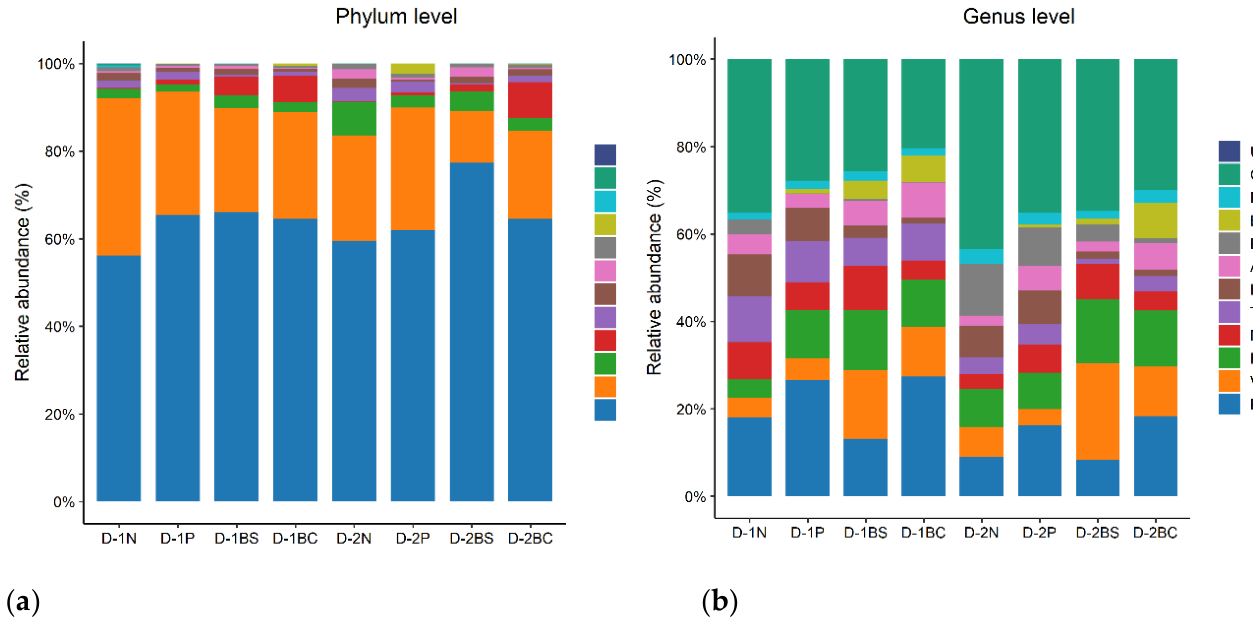
The bacterial community structure of all samples was visualized at the phylum and genus level (Figure 6). The bacterial composition at the phylum level was visualized in bar plots of the relative abundance (Figure 6a). The gut microbial communities of all experimental groups were predominantly composed of Proteobacteria (approximately 55–77%), followed by Bacteroidota, while other phyla, including Actinobacteriota, Firmicutes, Patescibacteria, Verrucomicrobiota, and Bdellovibrionota, were present in lower proportions. The B. subtilis-treated group on day 21 (D-2BS) showed the highest proportion of Proteobacteria (approximately 77%). Regarding the phylum Firmicutes, to which the genus Bacillus belongs, a slight increase in its proportion was observed in some of the inoculated groups, such as D-1BC. Overall, however, the phylum-level composition was similar among the groups.
The bacterial composition at the genus level was visualized in bar plots of the relative abundance of the top 10 taxa (Figure 6b). The gut microbial communities showed clearer differences among groups than at the phylum level. The predominant genera included Pseudoalteromonas, Vibrio, Ruegeria, Motilimonas, Tenacibaculum, Hanstruepera, and Bacillus. Pseudoalteromonas was present in high proportions in several groups, particularly in D-1P and D-1BC (approximately 27%). Vibrio was found in relatively high proportions in the groups sampled on day 7 (D-1P, D-1BS, and D-1BC) and tended to decrease in the groups sampled on day 21 (the D-2 groups).
The genus Bacillus was most notably represented in the B. cereus-treated group on day 7 (D-1BC), consistent with the bacterial inoculation into the rearing water, whereas the other groups showed relatively low proportions of Bacillus. In addition, the groups sampled on day 21 (D-2N, D-2P, D-2BS, and D-2BC) exhibited a higher proportion of the "Others" category (low-abundance genera not among the dominant taxa) than the groups sampled on day 7, indicating that the composition of minor genera became more diverse as the experimental period progressed.

3.4.4. Relative Abundance of Genus Bacillus Between Treatments

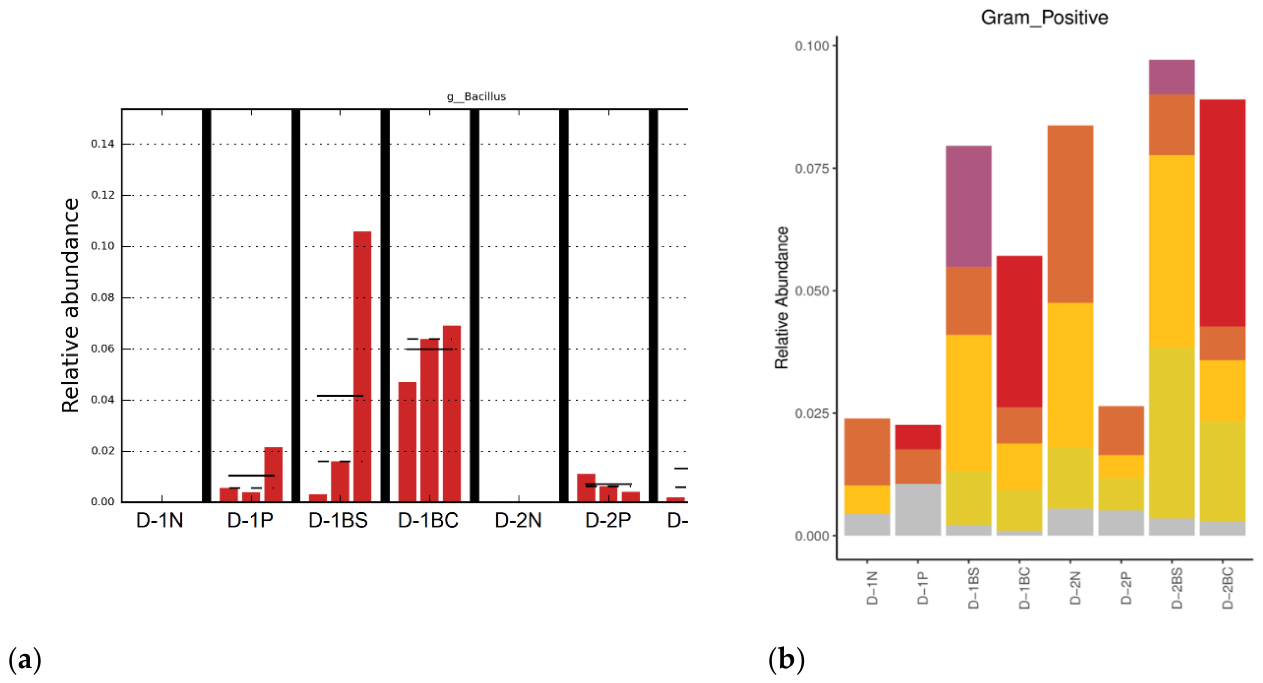
The relative abundance of the genus Bacillus in the gut of P. vannamei across the experimental groups, presented as a LEfSe marker intergroup abundance histogram, is shown in Figure 7a. The negative control groups without bacterial inoculation (D-1N and D-2N) showed very low, almost undetectable proportions of Bacillus, whereas the inoculated groups showed a clear increase in Bacillus abundance. The B. cereus-treated groups (D-1BC and D-2BC) had the highest and relatively consistent proportions of Bacillus at both time points (mean of approximately 0.06). In the B. subtilis-treated group, some samples on day 7 (D-1BS) showed relatively high proportions of Bacillus (up to approximately 0.10) but with high variation among samples, and the proportion decreased on day 21 (D-2BS). The groups treated with the commercial Bacillus spp.® product (D-1P and D-2P) showed a slight increase in Bacillus abundance, but lower than that of the B. cereus-treated groups.
Consistently, when considering only the Gram-positive taxa in each group (Figure 7b), Gram-positive bacteria accounted for a relatively small proportion of the total community (no more than approximately 10%). The family Bacillaceae and the genus Bacillus were predominant in the inoculated groups, particularly in D-1BS, D-1BC, D-2BS, and D-2BC, whereas the negative control groups (D-1N and D-2N) showed low proportions of Gram-positive bacteria and almost no Bacillaceae or Bacillus. Notably, the groups sampled on day 21 (D-2BS and D-2BC) exhibited the highest total proportion of Gram-positive bacteria, although part of this was composed of other genera such as Ilumatobacter and Mycobacterium.
The results showed that Bacillus addition to the rearing water increased the proportion of the genus Bacillus in the shrimp gut. The inoculation of B. cereus increased significantly and consistently the proportion of Bacillus at both time points, which suggested a better colonization and persistent ability in the shrimp gut than the other groups.

4. Discussion

The use of probiotics to promote shrimp health has become increasingly popular, as probiotics can improve water quality while enhancing growth and disease resistance. In aquaculture practice, probiotics are commonly applied in two ways: direct addition to the rearing water and dietary supplementation, both of which have been reported to benefit shrimp [28]. However, data on the water-based (immersion) application of probiotics in relation to intestinal bacterial abundance and disease resistance in shrimp remain more limited than those on dietary supplementation. The present study therefore contributes new knowledge and demonstrates the efficacy of applying probiotic bacteria in water on shrimp health.
Our previous study confirmed that B. subtilis and B. cereus, isolated from the sediment of shrimp culture ponds, exhibited the highest ability to degrade total organic matter in water (unpublished data). The present study therefore investigated the effects of B. subtilis, and B. cereus added to the rearing water on the growth, disease resistance, and gut microbial composition of white shrimp (P. vannamei). The results showed that shrimp reared with B. cereus added to the water had significantly higher specific growth rate (SGR) and average daily gain (ADG) compared with the control group (p < 0.05), although final body weight and FCR did not differ significantly. The lowest numerical FCR was observed in the B. cereus group, suggesting a tendency toward improved feed utilization. This improvement was likely attributable to enhanced nutrient absorption capacity in shrimp, along with increased activity of digestive enzymes (amylase, lipase, protease, esterase, β-galactosidase, and leucine-aminopeptidase) [27,29,30]. These findings are consistent with [13], who reported that the application of B. cereus combined with a biofloc culture system also enhanced shrimp growth, as well as with studies in juvenile coho salmon (Oncorhynchus kisutch) [31], and Pengze crucian carp (Carassius auratus var. Pengze) [32], which showed that B. cereus improved fish growth.
The shrimp reared in water supplemented with B. cereus showed the highest survival rate after the VPAHPND challenge in the present study. The better survival was associated with the better colonization ability of the strain suggesting that successful colonization in the shrimp host is an important part of probiotic protection. Similar results were obtained by [33], who demonstrated that the B. cereus sensu stricto strain P64 colonized the internal and external surfaces of white shrimp and protected animals from infection by V. parahaemolyticus. In addition, [34] demonstrated that shrimp fed with a mixture of B. cereus and B. subtilis had higher survival after infection with Vibrio spp. and the combination treatment gave the highest survival rate. Competitive exclusion is one possibility. Successful probiotic strains colonize well early and at a high enough level to compete with pathogenic bacteria for the available attachment sites in the intestine and for nutrients. Competition may also restrict Vibrio colonization and growth in the gut thus decreasing the chances of infection being established [35].
In addition to spatial exclusion, Bacillus directly inhibits pathogens through the production of various antimicrobial compounds, including bacteriocins, antimicrobial peptides, and lipopeptides [35]. For example, B. pumilus H2 has been reported to produce an anti-Vibrio substance structurally identical to amicoumacin A, which inhibits the growth of up to 29 Vibrio strains [36]. The continuous secretion of these compounds when Bacillus is well established in the gut directly suppresses pathogens, and it has been suggested that the improved survival of shrimp following V. parahaemolyticus challenge may result from antimicrobial peptides produced by the probiotics [37]. Furthermore, although immune parameters were not measured in the present study, previous studies have reported that Bacillus can stimulate the innate immune system of shrimp by enhancing phagocytic activity and the expression of prophenoloxidase (proPO) and lysozyme genes, which are key components in pathogen clearance [37,38]. Taken together, the combined action of these mechanisms colonization and spatial exclusion, antimicrobial production, and, as reported in other studies, immune stimulation may explain why the B. cereus-treated group, which colonized the gut most effectively, showed the highest survival rate in this study. However, as immune and antimicrobial activities were not directly assessed here, these mechanisms remain to be confirmed in future studies.
The intestinal microbiota of P. vannamei is essential in nutrient metabolism, immune modulation, and disease resistance, and its composition is strongly shaped by diet and culture environment [39,40]. In the present study, although the Shannon and Chao1 indices did not differ significantly among the groups treated with the commercial Bacillus spp.® product (positive control), B. subtilis, and B. cereus compared with the negative control, β-diversity analyses (PERMANOVA/ANOSIM) revealed significant differences in the gut microbial community structure among groups. This indicates that adding B. cereus to the rearing water every 7 days did not change the overall diversity of the gut microbiota but reshaped its community composition. A comparable pattern was reported by [13], who found that the addition of B. cereus in a biofloc system altered the gut microbial composition, whereas biofloc alone or biofloc containing B. cereus without continued probiotic input had no significant effect, suggesting that the effect of B. cereus on the gut microbiota may be frequency and context-dependent. Although the present study applied B. cereus at a single frequency (every 7 days) and therefore cannot directly assess frequency dependence, the observed community shift is consistent with the notion that periodic supplementation helps maintain probiotic populations and their associated metabolites within the gut and rearing environment through transient colonization dynamics [41,42].
Proteobacteria, Bacteroidota and Actinobacteriota were the dominant phyla in the intestinal microbiota of all treatment groups, which have been reported in the gut of white shrimp [13,26]. These phyla are the main groups normally found in the shrimp gut and have significant roles in the digestion of nutrients and the maintenance of the community balance. The similarity in phylum-level composition across all groups indicates that the core microbiota of the shrimp gut is under host-selective filtering, which leads to a relatively stable community structure even with the addition of different probiotics. The commercial Bacillus spp.® product and B. cereus added continuously on day 7 and day 21 resulted in the detection of the genus Bacillus in the shrimp gut that was, otherwise, nearly absent in the control group. This confirms that the probiotic bacteria added to the water could move into and colonize in the shrimp gut, supporting the water-to-gut transmission concept that since shrimp continuously contact and ingest the rearing water, the water microbiota serves as a primary inoculum for the gut microbiome [43].
This study also showed that B. cereus had a better and more consistent colonization and persistence ability in the shrimp gut than B. subtilis and a commercial Bacillus spp.® product. LEfSe analysis further confirmed that the genus Bacillus was a prominent biomarker of the B. cereus treated group. The higher colonization ability could be attributed to the fact that B. cereus was isolated from the culture environment itself (native) and could, therefore, adapt better to the intestinal and pond conditions than allochthonous or commercial strains [44,45], and the resistant spore-forming and intestinal germination characteristics of the genus Bacillus [46]. This is in agreement with the results of [47], who reported that B. cereus was able to colonize and persist in the intestine of post-larval shrimp and contribute to the secretion of antimicrobial substances and competitive exclusion of pathogens. The effective and continuous colonization offers a basis for the probiotic to effectively carry out its protective effects. This is in line with the result of the present study that shrimp reared in water supplemented with B. cereus showed the highest survival rate after the challenge with V. parahaemolyticus.
Although B. cereus showed beneficial effects in terms of efficacy in this study, a comprehensive safety assessment of the strain should be conducted before practical application at the farm level, to confirm that the strain used poses a low risk of toxin production and antimicrobial resistance gene transfer. The safety assessment of the strain therefore represents one limitation of this study and an important direction for future research.

5. Conclusions

This study evaluated two native Bacillus strains, B. subtilis and B. cereus isolated from shrimp pond sediment and applied through the rearing water on the growth, disease resistance, and gut microbiota of P. vannamei. Water-based supplementation with B. cereus every 7 days most effectively improved growth performance (SGR and ADG) and resistance to V. parahaemolyticus and established the most consistent Bacillus colonization in the shrimp gut, whereas B. subtilis and the commercial product showed weaker or less consistent effects. Although alpha diversity was unaffected, B. cereus significantly reshaped the gut community structure (beta diversity). These results indicate that direct addition of beneficial bacteria into rearing water can successfully colonize the shrimp gut, providing a viable alternative to dietary supplementation for microbiome modulation and water quality management. However, a complete safety assessment at strain level is needed prior to practical application.

Supplementary Materials

The following supporting information can be downloaded at the website of this paper posted on Preprints.org, Supplementary files: All Sample, Statistic analysis, Read-length distribution, and quality statistics for all sequencing samples, including sample metadata and summary metrics.

Author Contributions

Research design, and drafting of the manuscript, M.S.; development of analytical methods and experimental methodology, M.K.; collection and analysis of experimental data, analysis of results, T.T., K.S., K.K., C.C.; supervision of the experimental data, and interpretation of the final results, J.W. All authors have read and agreed to the published version of the manuscript.

Funding

This research was funded by Burapha University through the Science, Research and Innovation Promotion Fund (Fundamental Fund), Fiscal Year 2025 (Grant No. 1.4/2568).

Institutional Review Board Statement

The following protocols were conducted in accordance with Burapha University Biosafety Committee (Approval No. IBC 049/2568). All animal procedures were performed in accordance with the Ethical Principles and Guidelines for the Use of Animals of the National Research Council of Thailand. The study protocol was approved by the Animal Ethics Committee of Burapha University (Approval No. IACUC 023/ 2568).

Data Availability Statement

The original contributions presented in this study are included in the article. Further inquiries can be directed to the corresponding author.

Conflicts of Interest

The authors declare no conflicts of interest.

References

  1. FAO. The State of World Fisheries and Aquaculture; FAO: Rome, Italy, 2024. [Google Scholar]
  2. Yu, Y.-B.; Choi, J.-H.; Kang, J.-C.; Kim, H.J.; Kim, J.-H. Shrimp bacterial and parasitic disease listed in the OIE: A review. Microb. Pathog. 2022, 166, 105545. [Google Scholar] [CrossRef] [PubMed]
  3. Tran, L.; Nunan, L.; Redman, R. M.; Mohney, L. L.; Pantoja, C. R.; Fitzsimmons, K.; Lightner, D. V. Determination of the infectious nature of the agent of acute hepatopancreatic necrosis syndrome affecting penaeid shrimp. Dis. Aquat. Org. 2013, 105, 45–55. [Google Scholar] [CrossRef] [PubMed]
  4. Kumar, V.; Roy, S.; Behera, B.K.; Bossier, P.; Das, B.K. Acute Hepatopancreatic Necrosis Disease (AHPND): Virulence, Pathogenesis and Mitigation Strategies in Shrimp Aquaculture. Toxins 2021, 13, 524. [Google Scholar] [CrossRef] [PubMed]
  5. Milijasevic, M.; Veskovic-Moracanin, S.; Babic Milijasevic, J.; Petrovic, J.; Nastasijevic, I. Antimicrobial Resistance in Aquaculture: Risk Mitigation within the One Health Context. Foods 2024, 13, 2448. [Google Scholar] [CrossRef] [PubMed]
  6. Okocha, R.; Olatoye, O.; Adedeji, O. Food safety impacts of antimicrobial use and their residues in aquaculture. Public Health Rev. 2018, 39, 21. [Google Scholar] [CrossRef] [PubMed]
  7. Chauhan, A.; Singh, R. Probiotics in aquaculture: a promising emerging alternative approach. Symbiosis 2019, 77, 99–113. [Google Scholar] [CrossRef]
  8. Gadhiya, A.; Katariya, S.; Khapandi, K.; Chhatrodiya, D. Probiotics as a sustainable alternative to antibiotics in aquaculture: a review of the current state of knowledge. The Microbe 2025, 8, 100426. [Google Scholar] [CrossRef]
  9. Gatesoupe, F.J. The use of probiotics in aquaculture. Aquaculture 1999, 180, 147–165. [Google Scholar] [CrossRef]
  10. Soltani, M.; Ghosh, K.; Hoseinifar, S.H.; Kumar, V.; Lymbery, A.J.; Roy, S.; Ringø, E. Genus Bacillus, promising probiotics in aquaculture: aquatic animal origin, bio-active components, bioremediation and efficacy in fish and shellfish. Rev. Fish. Sci. Aquac. 2019, 27, 331–379. [Google Scholar] [CrossRef]
  11. Sukkasem, K.; Thiankham, S.; Srisomwong, K.; Kantha, P.; Kitikiew, S. Effects of probiotics Lacticaseibacillus paracasei and Bacillus amyloliquefaciens on water quality and inhibition of Vibrio vulnificus and Vibrio alginolyticus in white shrimp (Litopenaeus vannamei) culture. Int. J. Agric. Technol. 2025, 21, 1161–1176. [Google Scholar] [CrossRef]
  12. Esquén, B.D.A.; Ancajima, D.T.; Cadena, D.A.; Dominguez-Mendoza, L.; Leyva, S.; Somocurcio, Z.M.M.; Saldarriaga, Y.D.E.; Rampelotto, P.H.; Guzman, E.F.L.; Diringer, B.M. Bioaugmentation with native Bacillus strains enhance nitrate and nitrite removal and reshape microbiomes in low-salinity shrimp cultures: Elucidating genetic mechanisms. PLoS ONE 2026, 21, e0339620. [Google Scholar] [CrossRef]
  13. Ding, S.; Cai, W.; Xu, Y.; Jin, C.; Ma, X.; Rao, L.; Gao, Y.; Li, H.; Chu, Z. Impact of Bacillus cereus Supplementation in Feed and Biofloc Water on Growth Performance, Immune Responses, and Intestinal Microbiota of Pacific whiteleg shrimp (Litopenaeus vannamei). Fishes 2026, 11, 222. [Google Scholar] [CrossRef]
  14. Eissa, E.S.H.; Dowidar, H.A.; Al-Hoshani, N.; Baazaoui, N.; Alshammari, N.M.; Kari, Z.A.; Ibrahim, S.; Munir, M.B.; Farga, A.A.; Eissa, M.E.H.; El-Aziz, Y.M.A. Dietary supplementation with fermented prebiotics and probiotics can increase growth, immunity, and histological alterations in Pacific whiteleg shrimp (Litopenaeus vannamei) challenged with Vibrio parahaemolyticus. Aquacult. Int. 2025, 33, 62. [Google Scholar] [CrossRef]
  15. Lomelí-Álvarez, M.F.; Escamilla-Montes, R.; Diarte-Plata, G.; Guo, X.; Fierro-Coronado, J.A.; Rubio-Luque, A.M.; Vega-Carranza, A.S.; González, A.L. Dietary and water probiotics enhance immunity, modulate microbiota, and increase survival of Penaeus vannamei challenged with V. parahaemolyticus. Braz. J. Microbiol. 2026, 57, 1. [Google Scholar] [CrossRef] [PubMed]
  16. Zokaeifar, H.; Babaei, N.; Saad, C.R.; Kamarudin, M.S.; Sijam, K.; Balcazar, J.L. Administration of Bacillus subtilis strains in the rearing water enhances the water quality, growth performance, immune response, and resistance against Vibrio harveyi infection in juvenile white shrimp, Litopenaeus vannamei. Fish. Shellfish Immunol. 2014, 36, 68–74. [Google Scholar] [CrossRef] [PubMed]
  17. Nimrat, S.; Saksit, W.; Vuthiphandchai, V. Screening of bacteria isolated from black tiger shrimp (Penaeus monodon) intestine using as probiotics in aquaculture. RMUTP Sci. J. 2022, 16, 105–116. [Google Scholar]
  18. Torres-Maravilla, E.; Parra, M.; Maisey, K.; Vargas, R.A.; Cabezas-Cruz, A.; Gonzalez, A.; Tello, M.; Bermúdez-Humarán, L.G. Importance of Probiotics in Fish Aquaculture: Towards the Identification and Design of Novel Probiotics. Microorganisms 2024, 12, 626. [Google Scholar] [CrossRef] [PubMed]
  19. Kaushik, J.K.; Kumar, A.; Duary, R.K.; Mohanty, A.K.; Grover, S.; Batish, V.K. Functional and probiotic attributes of an indigenous isolate of Lactobacillus plantarum. PLoS ONE 2009, 4, e8099. [Google Scholar] [CrossRef] [PubMed]
  20. Mojgani, N.; Hussaini, F.; Vaseji, N. Characterization of indigenous Lactobacillus strains for probiotic properties. Jundishapur J. Microbiol. 2015, 8, e59798. [Google Scholar] [CrossRef] [PubMed]
  21. Mohammed, E.A.H.; Ahmed, A.E.M.; Kovács, B.; Pál, K. The significance of probiotics in aquaculture: A review of research trend and latest scientific findings. Antibiotics 2025, 14, 242. [Google Scholar] [CrossRef] [PubMed]
  22. Heyse, J.; Props, R.; Kongnuan, P.; De Schryver, P.; Rombaut, G.; Defoirdt, T.; Boon, N. Rearing water microbiomes in white leg shrimp (Litopenaeus vannamei) larviculture assemble stochastically and are influenced by the microbiomes of live feed products. Environ. Microbiol. 2021, 23, 281–298. [Google Scholar] [CrossRef] [PubMed]
  23. Md Zoqratt, M. Z. H.; Eng, W. W. H.; Thai, B. T.; Austin, C. M.; Gan, H. M. Microbiome analysis of Pacific white shrimp gut and rearing water from Malaysia and Vietnam: implications for aquaculture research and management. PeerJ. 2018, 6, e5826. [Google Scholar] [CrossRef] [PubMed]
  24. Vega-Carranza, A.S.; Escamilla-Montes, R.; Fierro-Coronado, J.A.; Diarte-Plata, G.; Guo, X.; García-Gutiérrez, C.; Luna-González, A. Investigating the effect of bacilli and lactic acid bacteria on water quality, growth, survival, immune response, and intestinal microbiota of cultured. Litopenaeus Vannamei Anim. 2014, 14, 2676. [Google Scholar]
  25. Noman, M.; Kazmi, S.S.U.H.; Saqib, H.S.A.; Fiaz, U.; Pastorino, P.; Barcelò, D.; Tayyab, M.; Liu, W.; Wang, Z.; Yaseen, Z.M. Harnessing probiotics and prebiotics as eco-friendly solution for cleaner shrimp aquaculture production: a state of the art scientific consensus. Sci. Total Environ. 2024, 915, 169921. [Google Scholar] [CrossRef] [PubMed]
  26. Tong, Y.; Zhang, M.; Li, Q.; Hu, X.; Wei, Y.; Zhao, W.; Yu, X.; Peng, M.; Yang, C.; Chen, X.; Hu, T.; Zhao, Y. Effectiveness evaluation of five probiotics on shrimp and water environment. Aquac. Rep. 2025, 45, 103110. [Google Scholar] [CrossRef]
  27. Li, H.; Fan, S.; Gao, Y.; Cai, Y.; Chu, Z.; Wang, L. Evaluation of modulatory properties of Bacillus cereus isolated from the gut of Litopenaeus vannamai on growth, intestinal morphology, digestive enzyme activities, immune responses and disease resistance of Litopenaeus vannamai. Aquac. Res. 2020, 52, 1299–1310. [Google Scholar] [CrossRef]
  28. Knipe, H.; Temperton, B.; Lange, A.; Bass, D.; Tyler, C.R. Probiotics and competitive exclusion of pathogens in shrimp aquaculture. Rev. Aquacult. 2021, 13, 324–352. [Google Scholar] [CrossRef]
  29. Rohani, M.F.; Islam, S.M.; Hossain, M.K.; Ferdous, Z.; Siddik, M.A.; Nuruzzaman, M.; Padeniya, U.; Brown, C.; Shahjahan, M. Probiotics, prebiotics and synbiotics improved the functionality of aquafeed: Upgrading growth, reproduction, immunity and disease resistance in fish. Fish. Shellfish Immunol. 2022, 120, 569–589. [Google Scholar] [CrossRef] [PubMed]
  30. Amenyogbe, E.; Droepenu, E.K.; Ayisi, C.L.; Boamah, G.A.; Duker, R.Q.; Abarike, E.D.; Huang, J. Impact of probiotics, prebiotics, and synbiotics on digestive enzymes, oxidative stress, and antioxidant defense in fish farming: current insights and future perspectives. Front. Mar. Sci. 2024, 11, 1368436. [Google Scholar] [CrossRef]
  31. Li, F.; Xie, Y.; Guo, M.; Liu, Y.; Tong, T.; Zhang, Q.; Kong, W. Effects of dietary Bacillus cereus supplementation on the growth performance, serum physiology and biochemistry, Nrf2, TLR/NF-κB signaling pathways, and intestinal health of juvenile coho salmon (Oncorhynchus kisutch). Aquac. Rep. 2024, 36, 102177. [Google Scholar] [CrossRef]
  32. Li, J.; Fang, P.; Yi, X.; Kumar, V.; Peng, M. Probiotics Bacillus cereus and B. subtilis reshape the intestinal microbiota of Pengze crucian carp (Carassius auratus var. Pengze) fed with high plant protein diets. Front. Nutr. 2022, 9, 1027641. [Google Scholar] [CrossRef] [PubMed]
  33. Ramirez, M.; Domínguez-Borbor, C.; Salazar, L.; Debut, A.; Vizuete, K.; Sonnenholzner, S.; Alexis, F.; Rodríguez, J. The probiotics Vibrio diabolicus (Ili), Vibrio hepatarius (P62), and Bacillus cereus sensu stricto (P64) colonize internal and external surfaces of Penaeus vannamei shrimp larvae and protect it against Vibrio parahaemolyticus. Aquaculture 2022, 549, 737826. [Google Scholar] [CrossRef]
  34. Wongpracha, P.; Kanthawong, P.; Arun, J.; Jeyaraj, G. P.; Jongput, B.; Srijad, S.; Kitikiew, S. Effects of Bacillus probiotics, Bacillus subtilis and Bacillus cereus dietary additional to controlling Vibriosis infection of white shrimp (Litopenaeus vannamei). Int. Int. J. Agric. Technol. 2024, 20, 427–440. [Google Scholar]
  35. Knipe, H.; Temperton, B.; Lange, A.; Bass, D.; Tyler, C.R. Probiotics and competitive exclusion of pathogens in shrimp aquaculture. Rev. Aquacult. 2021, 13, 324–352. [Google Scholar] [CrossRef]
  36. Gao, X.-Y.; Liu, Y.; Miao, L.-L.; Li, E. W.; Hou, T.-T.; Liu, Z.-P. Mechanism of Anti-Vibrio Activity of Marine Probiotic Strain Bacillus Pumilus H2, and Characterization of the Active Substance. AMB Express 2017, 7, 23. [Google Scholar] [CrossRef] [PubMed]
  37. Maurus, G.; Joe, J. T. X.; Phạm, Q. H.; Lin, S.-C.; Lu, M.-W. Commercial probiotics enhance growth and immunity of white shrimp (Litopenaeus vannamei) and resistence to infection by Vibrio parahaemolyticus. J. World Aquac. Soc. 2025, 56, e70036. [Google Scholar] [CrossRef]
  38. Kaewcharoen, W.; Srisapoome, P. Probiotic effects of Bacillus spp. from Pacific white shrimp (Litopenaeus vannamei) on water quality and shrimp growth, immune responses, and resistance to Vibrio parahaemolyticus (AHPND strains). Fish. Shellfish Immunol. 2019, 94, 175–189. [Google Scholar] [CrossRef] [PubMed]
  39. Corey, C.H.; Bass, D.; Stentiford, G.D.; van der Giezen, M. Understanding the role of the shrimp gut microbiome in health and disease. J. Invertebr. Pathol. 2021, 186, 107387. [Google Scholar] [CrossRef] [PubMed]
  40. Xiong, J.B.; Sha, H.N.; Chen, J. Updated roles of the gut microbiota in exploring shrimp etiology, polymicrobial pathogens, and disease incidence. Zool. Res. 2024, 45, 910–923. [Google Scholar] [CrossRef] [PubMed]
  41. Lee, S.; Meslier, V.; Bidkhori, G.; Garcia-Guevara, F.; Etienne-Mesmin, L.; Clasen, F.; Park, J.; Plaza Onate, F.; Cai, H.; Le Chatelier, E. Transient colonizing microbes promote gut dysbiosis and functional impairment. npj Biofilms Microbiomes 2024, 10, 80. [Google Scholar] [CrossRef] [PubMed]
  42. Shen, X.; Jin, H.; Zhao, F.; Kwok, L.-Y.; Zhao, Z.; Sun, Z. Short-term probiotic supplementation affects the diversity, genetics, growth, and interactions of the native gut microbiome. iMeta 2024, 3, e253. [Google Scholar] [CrossRef] [PubMed]
  43. De Schryver, P.; Vadstein, O. Ecological theory as a foundation to control pathogenic invasion in aquaculture. ISME J. 2024, 8, 2360–2368. [Google Scholar]
  44. Ringø, E.; Harikrishnan, R.; Soltani, M.; Ghosh, K. The Effect of Gut Microbiota and Probiotics on Metabolism in Fish and Shrimp. Animals 2022, 12, 3016. [Google Scholar] [CrossRef] [PubMed]
  45. Ringø, E.; Van Doan, H.; Lee, S.H.; Soltani, M.; Hoseinifar, S.H.; Harikrishnan, R.; Song, S.K. Probiotics, lactic acid bacteria and bacilli: interesting supplementation for aquaculture. J. Appl. Microbiol. 2020, 129, 116–136. [Google Scholar] [CrossRef] [PubMed]
  46. Setlow, P.; Wang, S.; Li, Y. Q. Germination of Spores of the Orders Bacillales and Clostridiales. Annu. Rev. Microbiol. 2017, 71, 459–477. [Google Scholar] [CrossRef] [PubMed]
  47. Vidal-Campello, J.; Pessôa, M.; Santos, F.; Mendes, P.; Mendes, M. Probiotics potential of Bacillus cereus against Vibrio spp. in post-larvae shrimps. Rev. Caatinga 2018, 31, 495–503. [Google Scholar] [CrossRef]
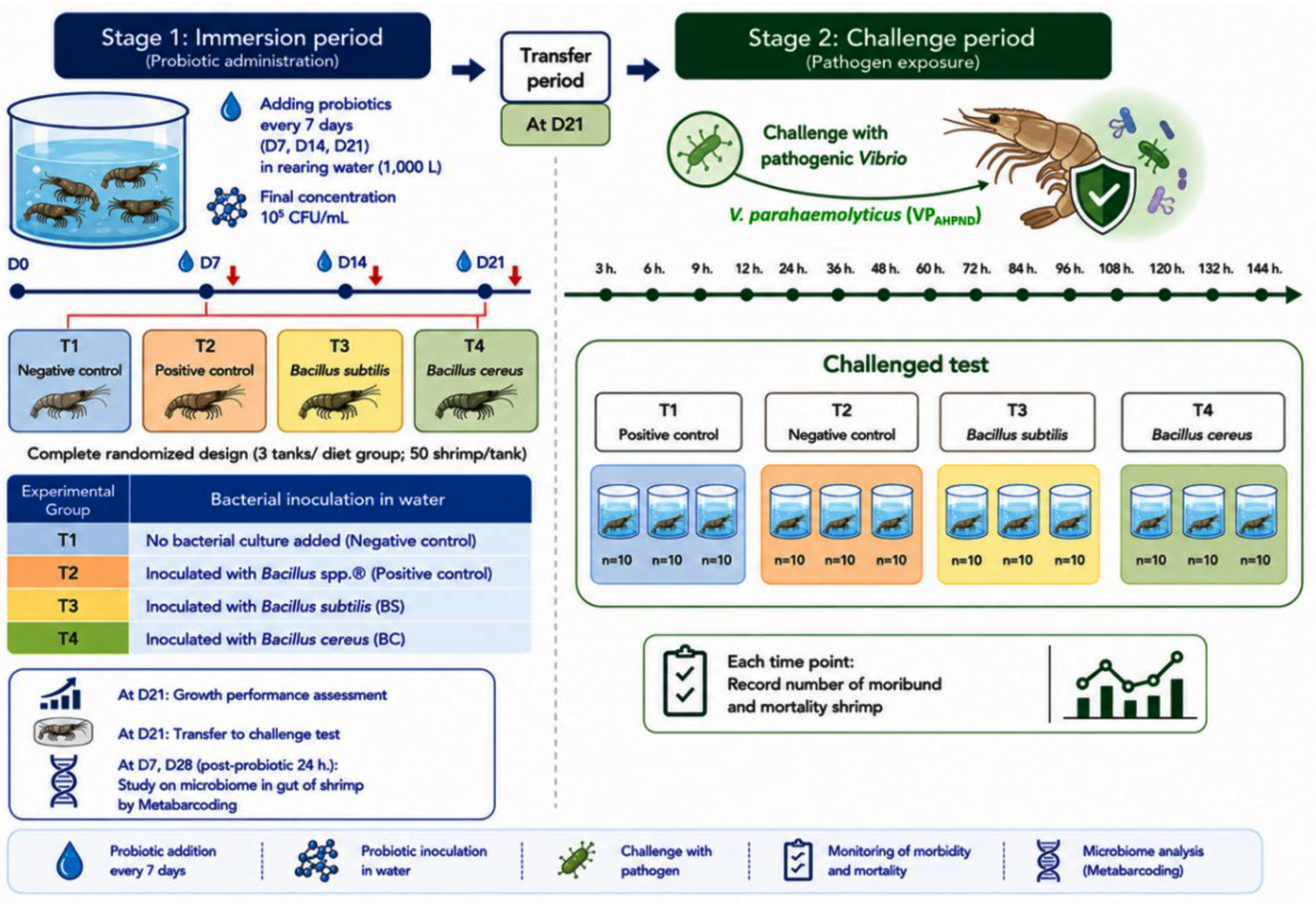
Figure 1. Overview of the experimental design.
Preprints 228692 g001
Figure 2. Cumulative mortality rate (%) of P. vannamei in each experimental group over 144 h following the challenge test with VPAHPND: negative control (no bacterial addition), commercial Bacillus spp.® product (positive control), Bacillus subtilis (BS), and Bacillus cereus (BC). Data are presented as mean ± SD.
Preprints 228692 g002
Figure 3. (a) Rarefaction curves showing the relationship between the number of sequences sampled and the number of features (ASVs) of the gut microbial communities of L. vannamei in each experimental group. Solid lines represent the mean values, and shaded areas indicate the range of variation within each group. (b) Flower plot showing the number of shared ASVs among all groups (core ASVs, central circle) and the number of group-specific ASVs (unique ASVs, petals) of the gut microbial communities of L. vannamei in each experimental group. D-1 and D-2 denote samples collected on day 7 and day 21 after the bacteria were inoculated into the shrimp rearing water, respectively (N = negative control, P = positive control [commercial Bacillus spp.® product], BS = B. subtilis, BC = B. cereus).
Preprints 228692 g003
Figure 4. Alpha diversity of the gut microbial communities of P. vannamei in each experimental group, shown as (a) the Chao1 index (species richness) and (b) the Shannon index (diversity accounting for both richness and evenness). D-1 and D-2 denote samples collected on day 7 and day 21 after the bacteria were inoculated into the shrimp rearing water, respectively (N = negative control, P = positive control [commercial Bacillus spp.® product], BS = B. subtilis, BC = B. cereus). The horizontal line within each box indicates the median, box edges represent the first and third quartiles, and dots represent individual samples.
Preprints 228692 g004
Figure 5. Beta diversity of the gut microbial communities of P. vannamei in each experimental group. (a) Principal Coordinates Analysis (PCoA) based on Bray-Curtis dissimilarity, with PC1 and PC2 explaining 25.40% and 19.34% of the total variation, respectively; each point represents an individual sample, and ellipses indicate the confidence intervals of each group. (b) Box plot of Bray-Curtis dissimilarity from the Analysis of Similarities (PERMANOVA/ANOSIM), comparing between-group and within-group dissimilarity (R = 0.48, p = 0.001). D-1 and D-2 denote samples collected on day 7 and day 21 after the bacteria were inoculated into the shrimp rearing water, respectively (N = negative control, P = positive control [commercial Bacillus spp.® product], BS = B. subtilis, BC = B. cereus).
Preprints 228692 g005
Figure 6. Taxonomic composition of the gut microbial communities of P. vannamei) in each experimental group, shown as stacked bar charts of relative abundance at (a) the phylum level and (b) the genus level. D-1 and D-2 denote samples collected on day 7 and day 21 after the bacteria were inoculated into the shrimp rearing water, respectively (N = negative control, P = positive control [commercial Bacillus spp.® product], BS = B. subtilis, BC = B. cereus).
Preprints 228692 g006
Figure 7. (a) Differential analysis between groups was analyzed using LefSe (LDA effective size (Default threshold: >4) and P-value (Default threshold: <0.05). Relative abundance of the genus Bacillus; each bar represents an individual sample (replicate), and the horizontal line indicates the group mean. (b) Analyzing complex microbiome data by using BugBase method, which provides biologically relevant microbiome phenotype predictions at organism level. A p <0.05 or p <0.01 was considered statistically significant in all analyses. D-1 and D-2 denote samples collected on day 7 and day 21 after the bacteria were inoculated into the shrimp rearing water, respectively (N = negative control, P = positive control [commercial Bacillus spp.® product], BS = B. subtilis, BC = B. cereus).
Preprints 228692 g007
Table 1. Growth performance of P. vannamei reared in water supplemented with different probiotics at the end of the 21-day trial: negative control (no bacterial addition), commercial Bacillus spp.® product (positive control), Bacillus subtilis (BS), and Bacillus cereus (BC).
Parameters Control (Negative control) Bacillusspp.®
(Positive control)
Bacillus subtilis
(BS)
Bacillus cereus
(BC)
Initial weight (g) 9.95±0.24a 10.10±0.37a 10.10±0.37a 9.36±0.72a
Final weight (g) 15.51±0.55a 16.50±0.2304a 15.01±1.15a 16.68±0.73a
Weight gain (g) 5.56±0.46b 6.40±0.14ab 4.91±1.22b 7.32±0.59a
SGR (%/day) 1.47±0.06b 1.76±0.08ab 1.41±0.31b 2.07±0.20a
ADG (g/day) 0.16±0.01b 0.18±0.00ab 0.14±0.03b 0.21±0.02a
FCR 1.58±0.05a 1.41±0.02 a 1.56±0.16a 1.36±0.02a
Note: Values are presented as mean ± SD. Different superscript letters (a, b) within the same row indicate significant differences (p < 0.05); SGR = specific growth rate, ADG = average daily gain, FCR = feed conversion ratio.
Disclaimer/Publisher’s Note: The statements, opinions and data contained in all publications are solely those of the individual author(s) and contributor(s) and not of MDPI and/or the editor(s). MDPI and/or the editor(s) disclaim responsibility for any injury to people or property resulting from any ideas, methods, instructions or products referred to in the content.
Copyright: This open access article is published under a Creative Commons CC BY 4.0 license, which permit the free download, distribution, and reuse, provided that the author and preprint are cited in any reuse.