

Submitted:
14 August 2026
Posted:
17 August 2026
You are already at the latest version
Abstract
In order to reduce teachers' correction burden and improve teaching efficiency, this paper first establishes a database of CLIL teaching translation assignments and analyzes the characteristics of their translation assignments in CLIL teaching environment. LDA category feature extraction based on TF-IDF is used to improve the quality of category features. Then, N-gram subword filtering method based on lexical information entropy is adopted in order to filter out the subwords with low contribution to category differentiation in N-gram subwords. Finally, the model of automatic correction of instructional translation using named entity information extracted from text and N-gram to represent documents is constructed. Through empirical analysis, the category 1 dataset varies between 85.59-92.14 and the category 2 dataset varies between 84.15-3.98, which can effectively capture the collocation relationship between words. And the students' satisfaction with the automatic correction model was generally high for the four translation datasets in the three classes. The satisfaction scores all reached 4-5, and the students believed that the auto-critique model was able to give quick feedback, which helped to identify and correct errors in time.
Keywords:
CLIL teaching translation
; LDA category feature extraction
; lexical information entropy
; N-gram subword filtering
; automatic correction model
1. Introduction
With the continuous development of internationalization of education, there is a growing demand for cross-language teaching and translation [1]. CLIL, as an innovative teaching method, promotes the development of students' linguistic competence through the teaching of content in non-language subjects, providing students with the opportunity to use language in authentic contexts [2,3]. In the actual teaching of CLIL, how to automate the correction of students' translation assignments and improve the quality and efficiency of education is a major difficulty facing the current educational field. The traditional way for teachers to correct assignments manually can no longer meet the needs of efficiency and accuracy. Therefore, it is particularly important to develop a model that can automatically correct CLIL teaching translation assignments. Using the current big data technology to innovate and optimize the teaching model of translation homework correction has certain research significance and value [4].
The N-gram model is based on the principles of statistical linguistics and estimates the probability distribution of a language sequence by calculating the frequency of co-occurrence of consecutive N words in a text. It has been widely used in several fields such as machine translation, speech recognition etc., and Post applied N-gram to quantitatively judge the grammatical rationality of learner translation texts [5]. for example, Nayel, H. A et al. in order to detect fake news fabricated in Urdu, a model was built using N-gram model combined with the use of stochastic gradient descent optimization algorithm using linear classifiers to develop a system [6]. Tien, D. N et al. proposed an N-gram based model to detect and correct some specific spelling errors in Vietnamese, combined with a pre-trained neural network as a basis to provide a clear definition of the types of errors that can be handled, error generating rules for the training set and evaluating the proposed model on a Vietnamese benchmark dataset at the word level [7]. Lamsaf, A et al. proposed an adaptive Arabic handwritten text recognition method for the N-gram model, which is divided into two parts, the first part is the automatic text recognition based on word recognition and the second part is integrating the language model as n-gram language to improve the recognition of the system [8]. Bhuyan, M. P et al. used N-gram model for clustering of Assamese words. This clustering is context based and preserves the contextual information of the words. The word clusters are designed using binary, ternary and quaternary models. Words appearing in a particular context are stored in the same cluster list. Assamese word clusters are designed using a corpus of about 600K words. The similarity score between two words is calculated and both are kept in the same cluster [9].
Paruchuri, V. L et al. employed a deep learning mechanism with a seven-layer convolutional neural network model with N-gram feature selection by utilizing the model in a four-stage structure in order to detect abusive words that cause cyber-bullying [10]. Pakoci, E Class-based N-gram language model for automatic speech recognition approach. Existing implementations of word-level grammars were re-examined to convert language models in ARPA format into corresponding weighted finite state converters that are decoded in the usual way [11]. Hamarashid, H. K provided a corpus of Kurdish to create N-gram models have been used for the prediction of the next word, the N-gram models were used to accurately cue the text in order to reduce the time of typing Kurdish [12]. Sharma, D design word N-gram development system with linguistic syntactic consistency rules. HaBit's Amharic corpus was used to reveal the relevance of sentence level tagging and lexical features for grammatical error detection and correction [13].
Abundant applications of the N-gram algorithm have emerged in natural language processing, as the model is capable of capturing lexical collocation and syntactic patterns to judge translation quality. Nevertheless, existing N-gram-based translation evaluation methods rarely match the contextualized, interdisciplinary characteristics of CLIL translation exercises, and seldom combine entropy statistics to filter invalid subword features [14,15]. Against this background, this paper constructs a hierarchical standardized CLIL translation assignment corpus aligned with large-scale assessment pipeline standards proposed by Jung et al. [16], and proposes an improved feature extraction framework coupling TF-IDF weighted LDA with lexical information entropy to filter low-distinction N-gram subwords. Named entity cues are further fused with weighted N-gram graph representation to quantify text similarity for automated translation scoring [17,18]. Empirical tests on classroom translation samples verify the stability and usability of the proposed method. The research outcomes can offer technical support for the intelligent upgrading of CLIL translation assessment and boost both teaching and learning efficiency [19].
2. Database Structure and Design in the CLIL Teaching Environment
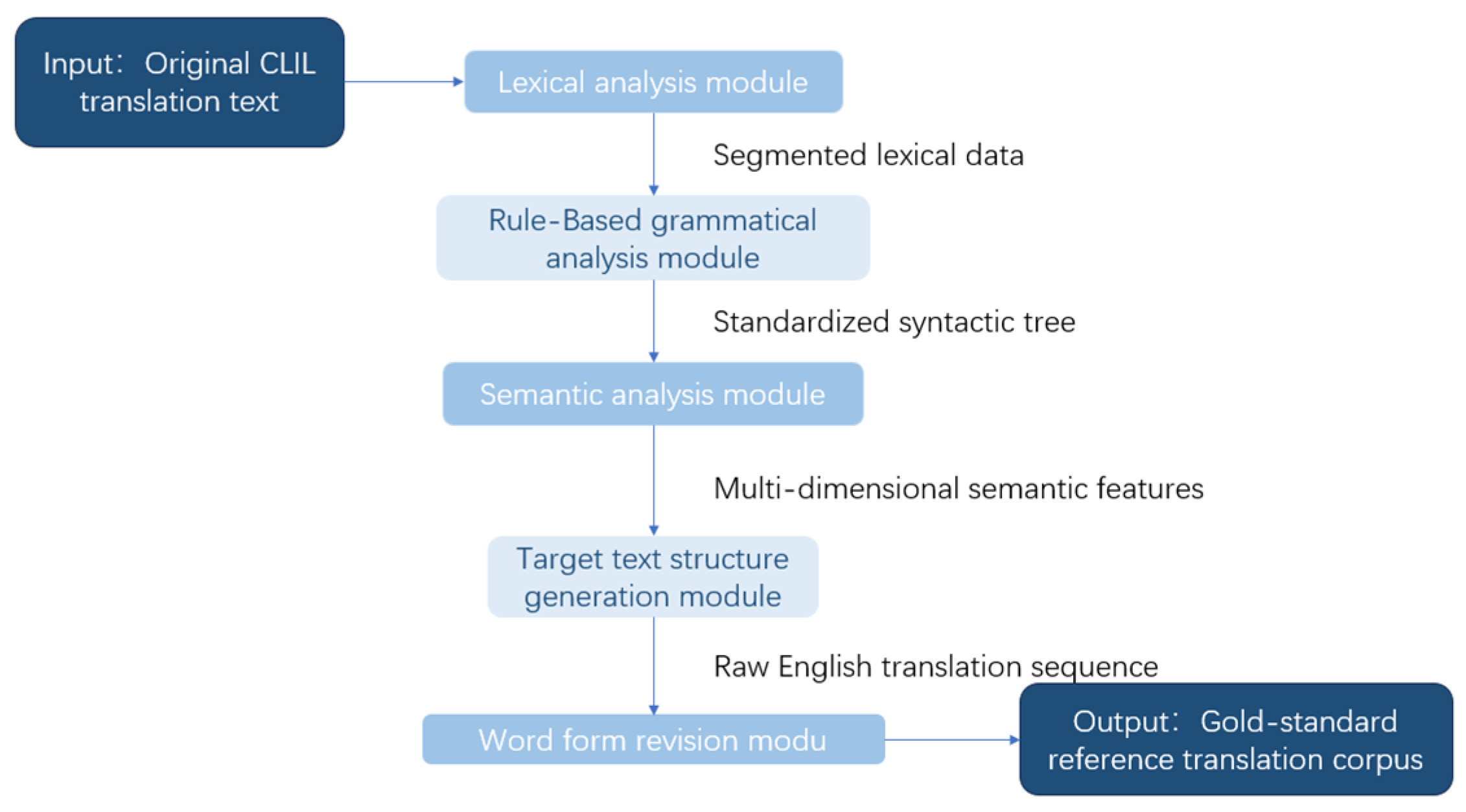
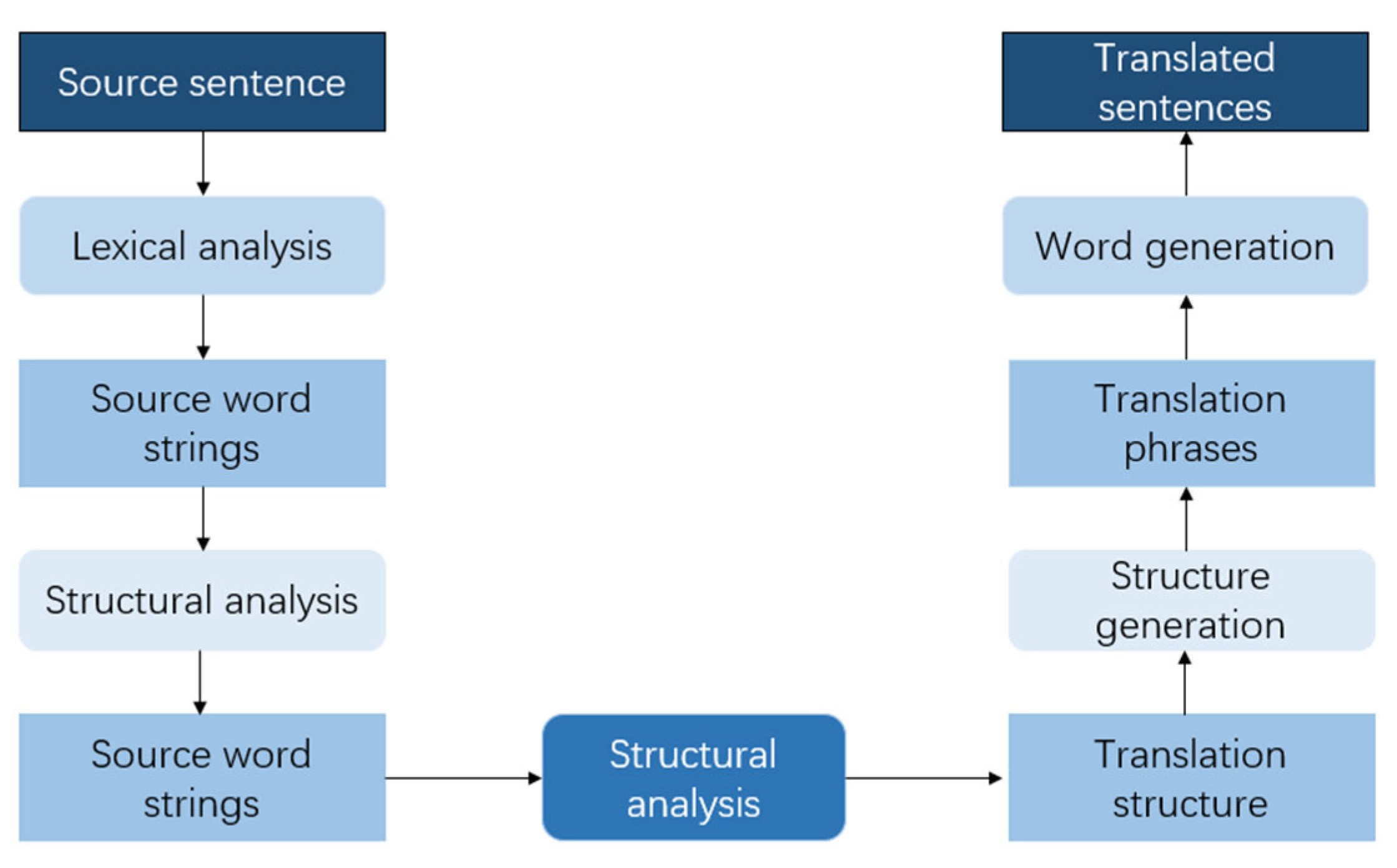
The CLIL teaching method emphasizes that CLIL translation tasks rely heavily on contextual information. To support subsequent N-gram feature extraction and automated marking, this study constructs a hierarchical translation assignment database. Its five-stage processing pipeline is illustrated in Fig. 1, The basic structure of the CLIL Teaching Translation Assignment Database is shown in Fig. 4, with module details elaborated below.
Figure 1.
Overall hierarchical processing architecture of the CLIL teaching translation assignment database.
Figure 1.
Overall hierarchical processing architecture of the CLIL teaching translation assignment database.
2.1. Lexical Analysis Module
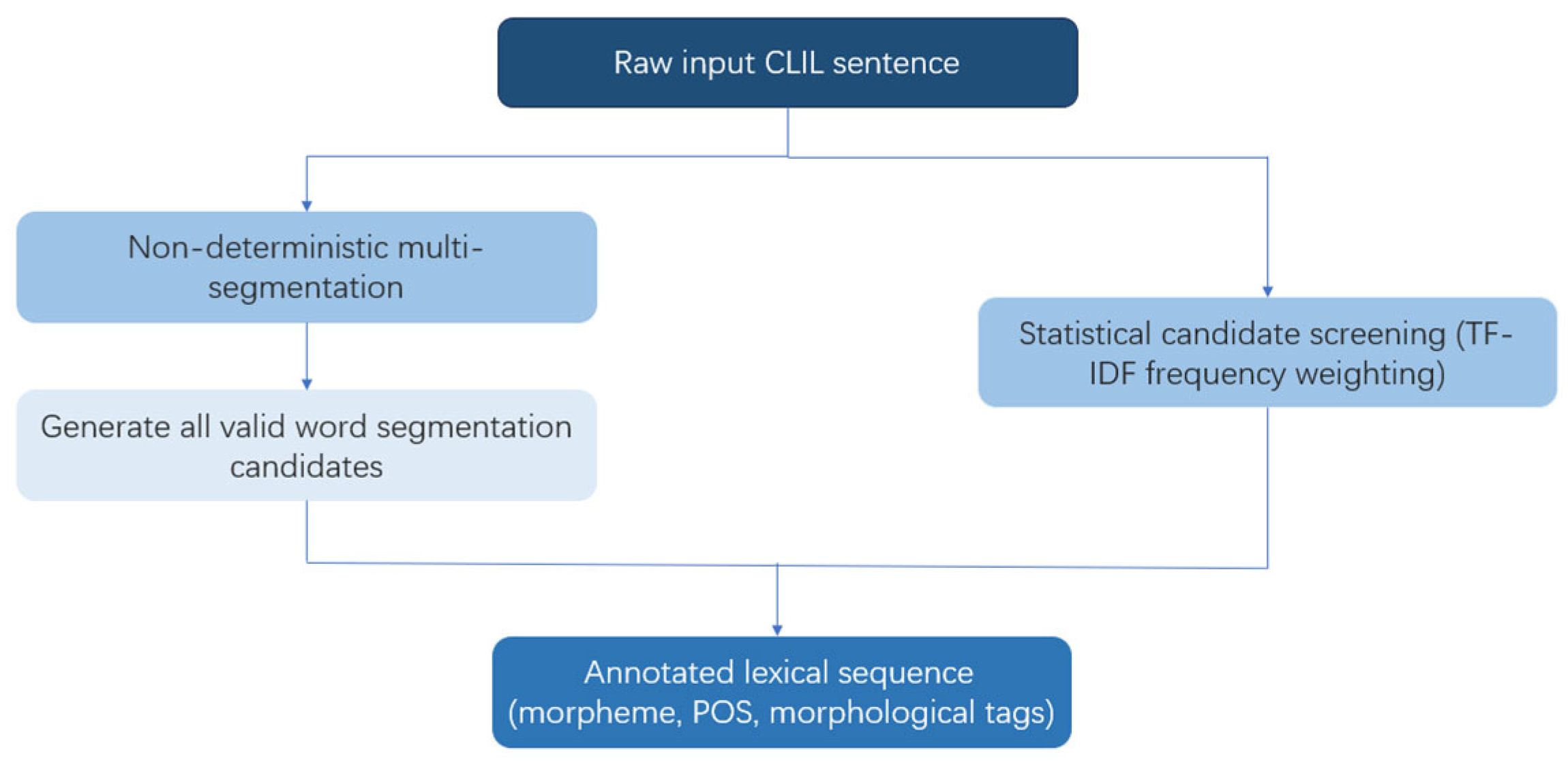
As the upstream preprocessing unit, lexical analysis completes token segmentation, morpheme decomposition and morphological annotation. Multi-candidate segmentation and statistical filtering are adopted to avoid parsing errors, and the internal workflow is shown in Fig. 2. The hierarchical data screening logic of decision tree-based lexical dataset analysis can effectively reduce noise in segmentation results [20].
Figure 2.
Internal processing workflow of the lexical analysis module.
2.2. Rule-Based Grammar Analysis Module
The grammar analysis module is built on Chomsky’s syntactic theory, which classifies formal grammars into four types. Among them, Type-2 grammar, namely context-free grammar, is widely applied in computational linguistics for grammatical analysis due to its concise structure and strong interpretability of natural language. Since natural languages basically conform to the characteristics of context-free grammar, supplementary contextual constraints are added to the basic rules to adapt to real linguistic scenarios. This module undertakes two major tasks: constructing syntactic trees to clarify the structural features of input texts, and standardizing scattered grammatical structures to lay a solid foundation for subsequent semantic analysis and translation generation.
2.3. Semantic Analysis Module
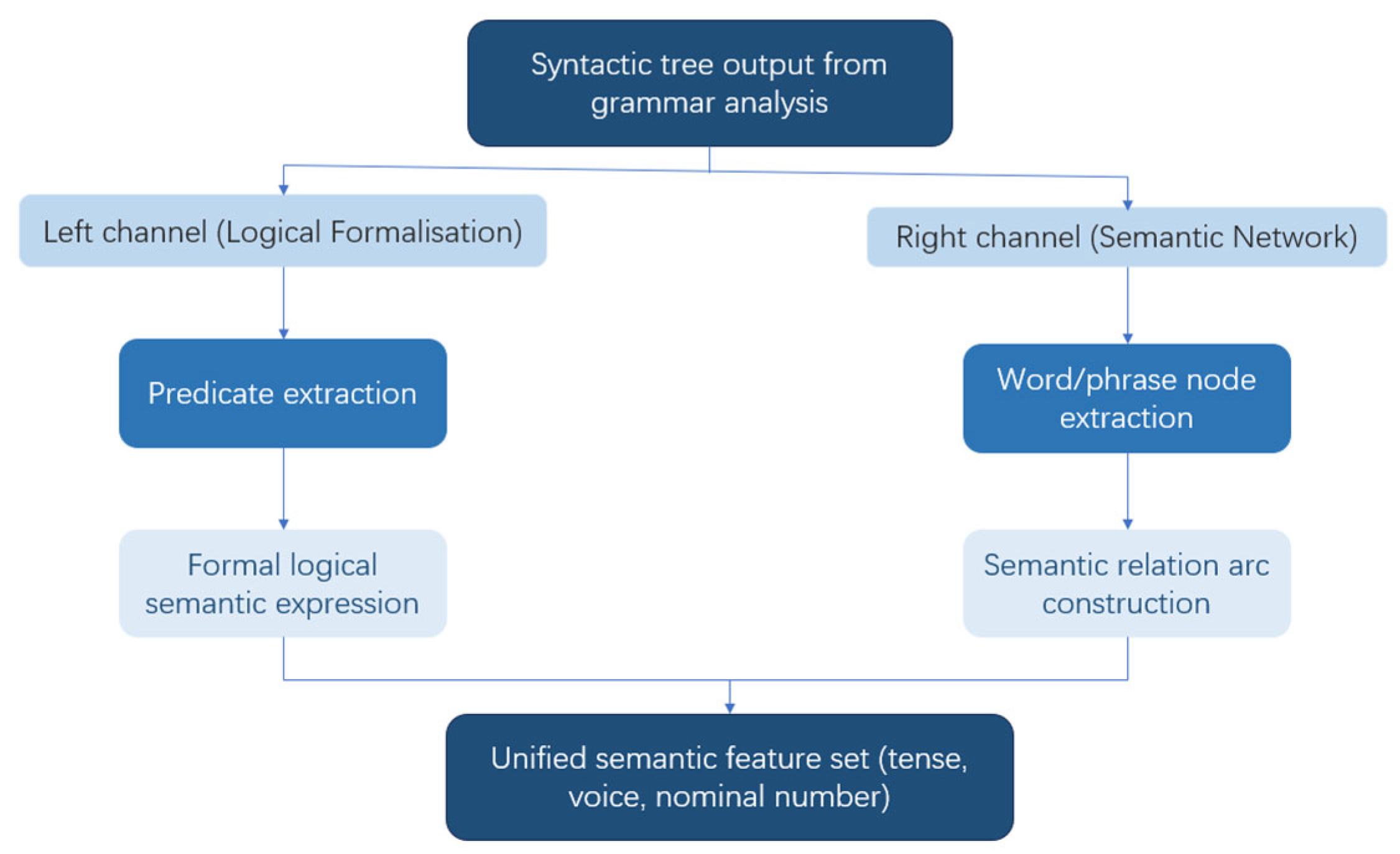
Two complementary semantic parsing strategies are integrated to extract semantic features for translation calibration. The structural differences between logical formalisation and semantic networks are compared in Fig. 3. The layered lexical semantic extraction paradigm of HistBERT provides support for the dual-branch semantic fusion design in this module [21].
Figure 3.
Two parallel semantic parsing branches adopted in the semantic analysis module.
2.4. Target Text Structure Generation Module
In accordance with the generation rules and linguistic features of the target language, this module converts the syntactic trees of source texts into word sequences of the target language and forms the initial framework of translations. Taking English as the target language, the system reconstructs English sentence structures based on converted syntactic trees and generates complete sentences following established rules. The word sequences produced in this module comply with English grammatical norms and achieve fluent expression, realizing the basic goals of translation and natural language generation.
2.5. Word Form Revision Module
Word form revision is the final step of translation output. Combined with the information of tense, morphology, voice and singular-plural forms obtained from semantic analysis, this module carries out fine adjustment and error correction on target word sequences. It follows the processing logic of structure generation and revises word forms strictly in line with relevant rules, so as to generate complete translations with standard grammar, accurate semantics and context-adaptive expressions.
Figure 4.
Basic structure of CLIL teaching translation assignment database.
3. N-Gram Text Feature Classification Methods
3.1. N-Gram Subword Filtering Method Based on Lexical Information Entropy
3.1.1. Low Category Distinctive Contribution Subword Filtering
TF-IDF is a widely adopted statistical metric for measuring lexical importance within a corpus. Assume the total quantity of short texts in the corpus is defined, the TF value of lexicon t in short text d and the global IDF value are calculated as Formula (1) and Formula (2):
The integrated TF-IDF score is calculated by multiplying the two indicators as shown in Formula (3):
Information entropy is used to describe the uncertainty of the output symbols of the source, i.e., the amount of information contained in the source [22]. Assuming that any probability piece occurs, the probability of generating mutually independent outcomes are , then the information entropy of event can be calculated according to equation (4):
The larger the value of information entropy is, and vice versa, the smaller is. Based on the concept of information entropy calculation, this paper proposes the concept of lexical information entropy, which is used to realize a comprehensive measure of the contribution of a lexical category to differentiation from both inter- and intra- lexical category perspectives [23]. The formula of lexical information entropy:
where IE(t) stands for the overall entropy of a certain lexicon, Hb(t) denotes inter-category information entropy, and Hb(t) denotes intra-category information entropy.
For inter-category entropy measurement, lexical items evenly distributed across all categories own lower discrimination weight, which means Hb(t) is negatively correlated with cross-category distribution uniformity [24].
N-gram subword filtering based on lexical information entropy is shown in Fig. 5. Lexical intra-category information entropy, which is mainly used to measure the size of lexical 's contribution to category differentiation from an intra-category perspective. When the probability distribution of vocabulary within the category is more uniform, it indicates that the vocabulary has a larger contribution to category differentiation, otherwise, the contribution is smaller [25].
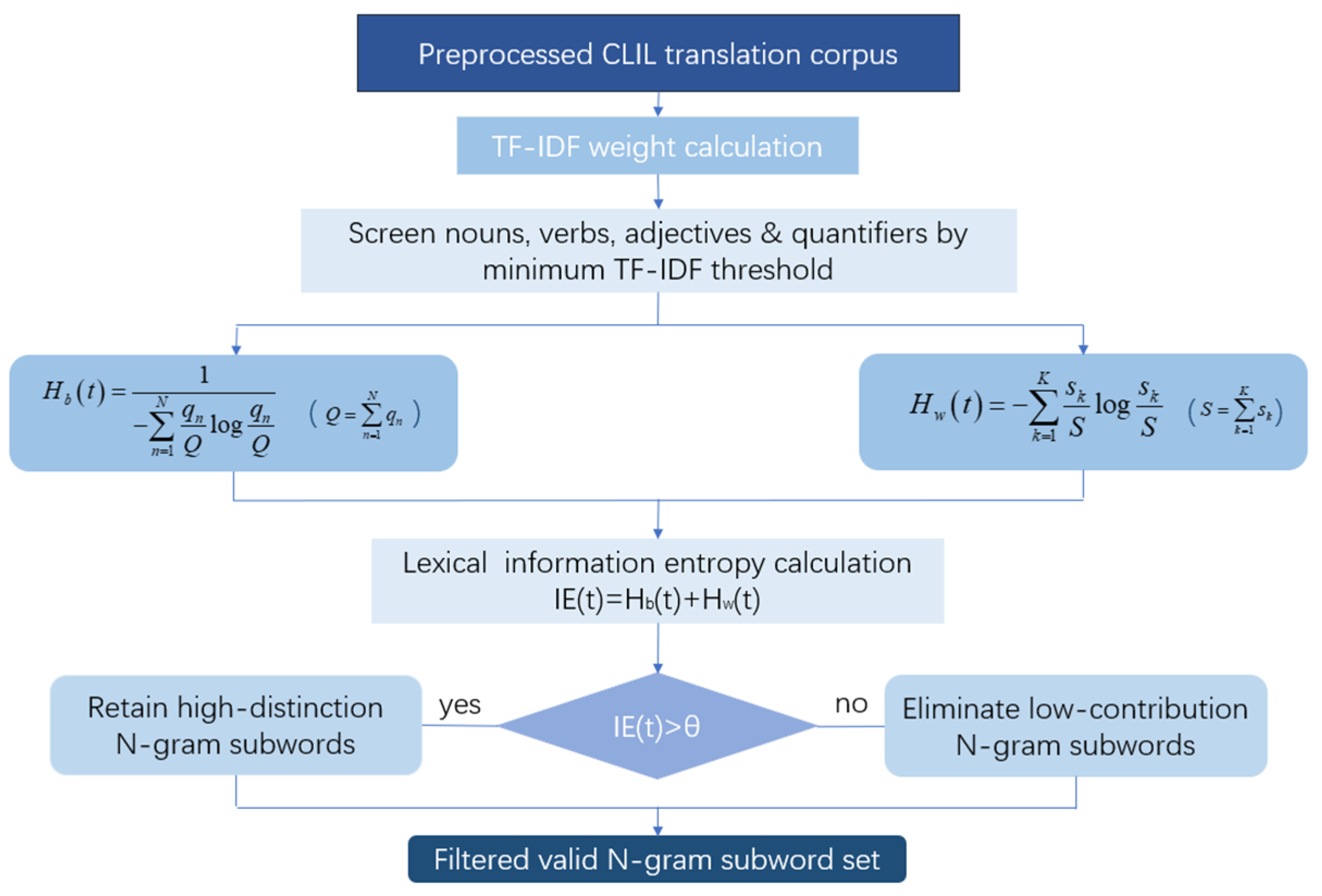
The definition of lexical information entropy and the design of its computational formula fit this paper's comprehensive consideration of the size of lexical contribution in category differentiation, which can be used to measure the size of the contribution of N-gram subwords to the category differentiation of short texts, and can be used to realize the filtering of subwords with low category differentiation contribution accordingly [26]. The integrated workflow of the calculation and filtering steps is presented in Fig. 6.
Figure 5.
N-gram subword filtering based on lexical information entropy.
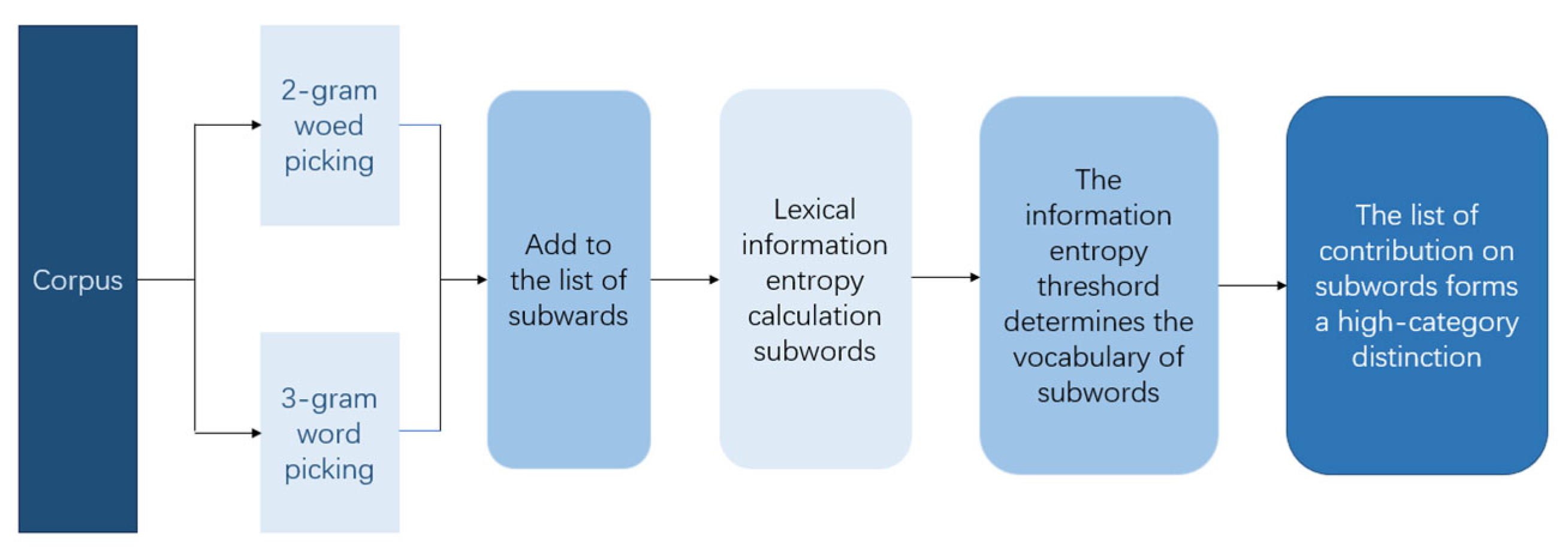
Figure 6.
End-to-end flow of N-gram subword filtering based on lexical information entropy.
3.1.2. Similarity Point Estimation Optimization
The corpus is divided into group according to the character length of the short texts in the corpus, and a certain proportion of short text corpus is randomly selected from each group to form sampling groups, and the corpus of the sampling groups is used as the validation set. Let there be short text corpus in sampling group , take the th short text corpus as an example, use the combination of jieba tool and manual tagging to count the length of the subword list formed after 2-gram and 3-gram word extraction of short text corpus . . i.e., the total number of words in the subword list and the number of subwords with low category differentiation contribution , where .
Calculate the mean subword list length for the short textbook corpus in sampling group :
Calculate the average of the number of subwords contributing to the low category distinction :
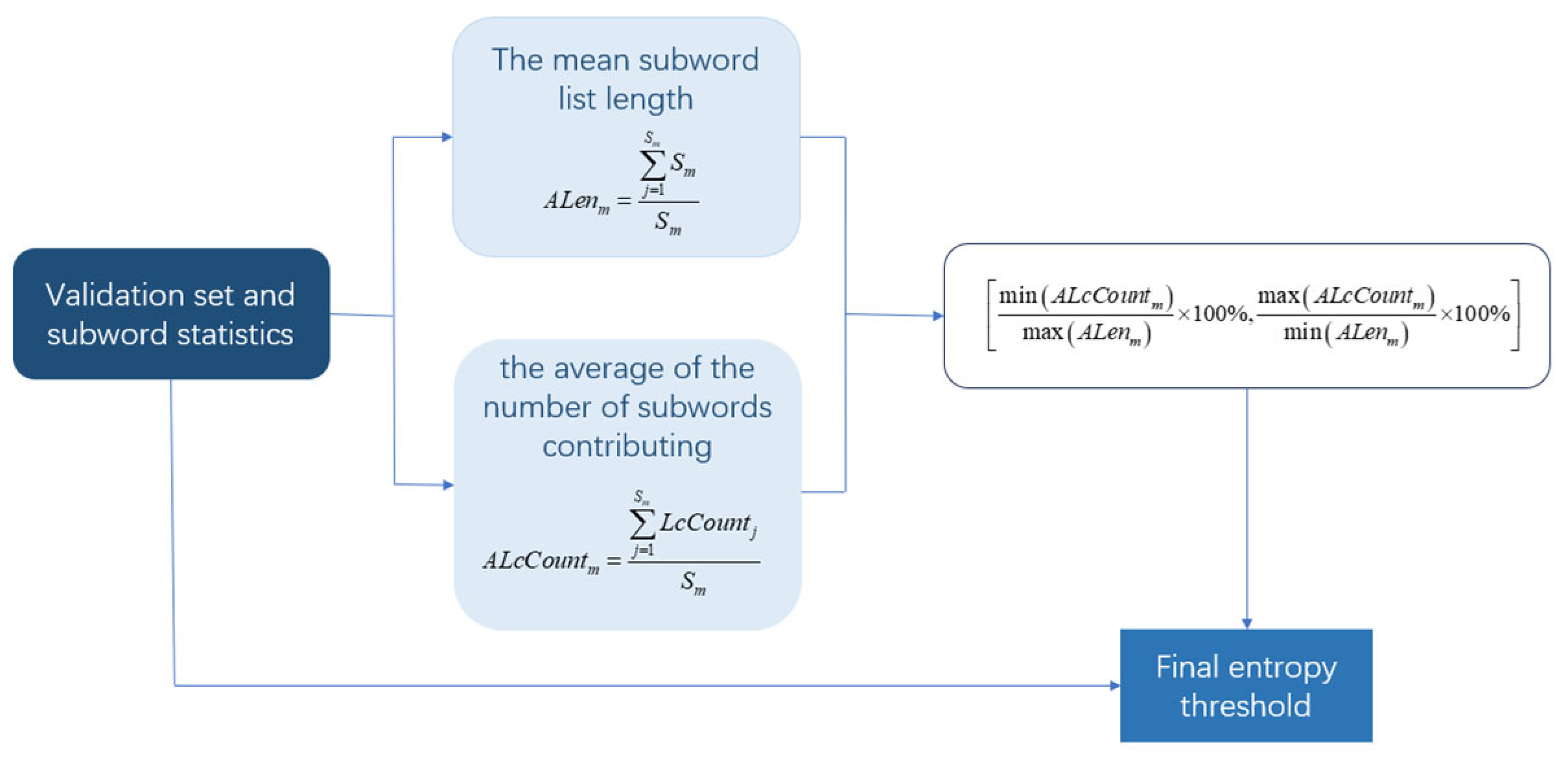
The average length of the list of subwords for each sampling group and the average number of subwords with low category-distinguishing contribution were obtained, and the interval of the proportion of subwords with low category-distinguishing contribution was determined according to equation (6) [27]. As follows:
The short texts in the validation set are subjected to 2-gram and 3-gram word fetching to generate a list of subwords, and the lexical information entropy of each subword is calculated. The obtained lexical information entropy is arranged in descending order to form a sequence. The lexical information entropy threshold interval is determined by mapping this interval onto the sorted lexical information entropy sequence according to the low category-distinguishing contribution subword proportion interval of Eq. (8). The lexical information entropy threshold is selected as a hyperparameter within the lexical information entropy threshold interval, and the final lexical information entropy threshold is finally determined. The procedural derivation of the formulas is shown in the fig. 7.
Figure 7.
Flowchart of Subword Proportion Interval Calculation Based on Stratified Sampling.
3.2. CLIL Teaching Translation Data Classification Model Construction
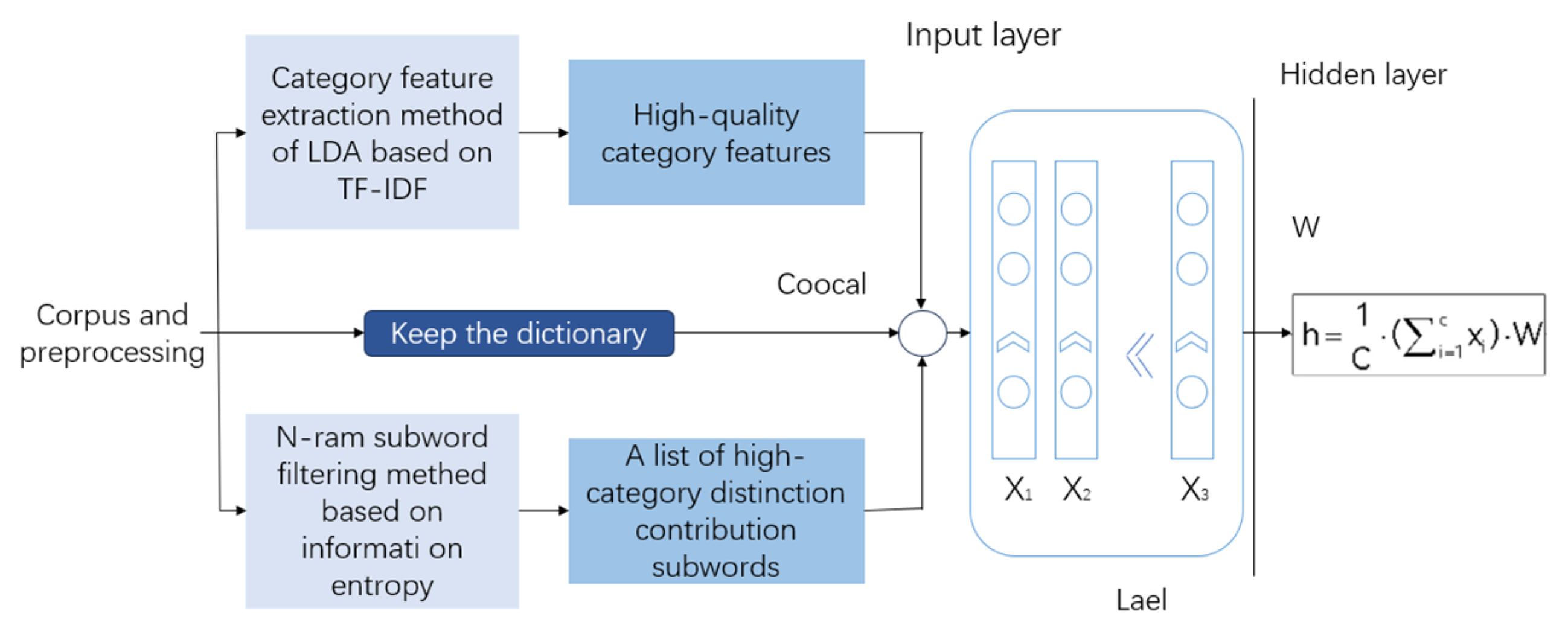
Fig. 8 shows the EF-fastTextCLIL teaching translation data categorization, using the fastText model as the baseline model, and introducing the TFHDF-based LDA category feature extraction method to extract high-quality category features from the corpus to be extended to the short text to alleviate the problem of sparse data in the short text. The N-gram subword filtering method based on lexical information entropy is introduced to comprehensively measure the size of the contribution of N-gram subwords to category differentiation, and accordingly realize the filtering of subwords with low category differentiation in the list of N-gram subwords, so as to reduce the interference of the low category differentiation subwords on the learning of semantic features with high category differentiation contribution by the model.
Figure 8.
Classification of EF-fastTextCLIL teaching translation data.
4. Text Similarity metric CLIL Teaching Translation Automatic Correction Design
Named entity recognition is an important technique in natural language processing, and translation data and text similarity metrics that utilize filtering of subwords with low category-distinctive contributions not only consider lexical continuity, but also focus on named entities in the text, which is particularly important in translation [28,29]. Bao et al. verified that embedding entity information can significantly improve the accuracy of translation quality scoring. In the teaching and learning environment, the automatic correction system needs to be able to provide fast and accurate feedback on the quality of students' translations. The N-gram method based on named entities can capture the critical errors in translation more accurately and provide more targeted feedback to students.
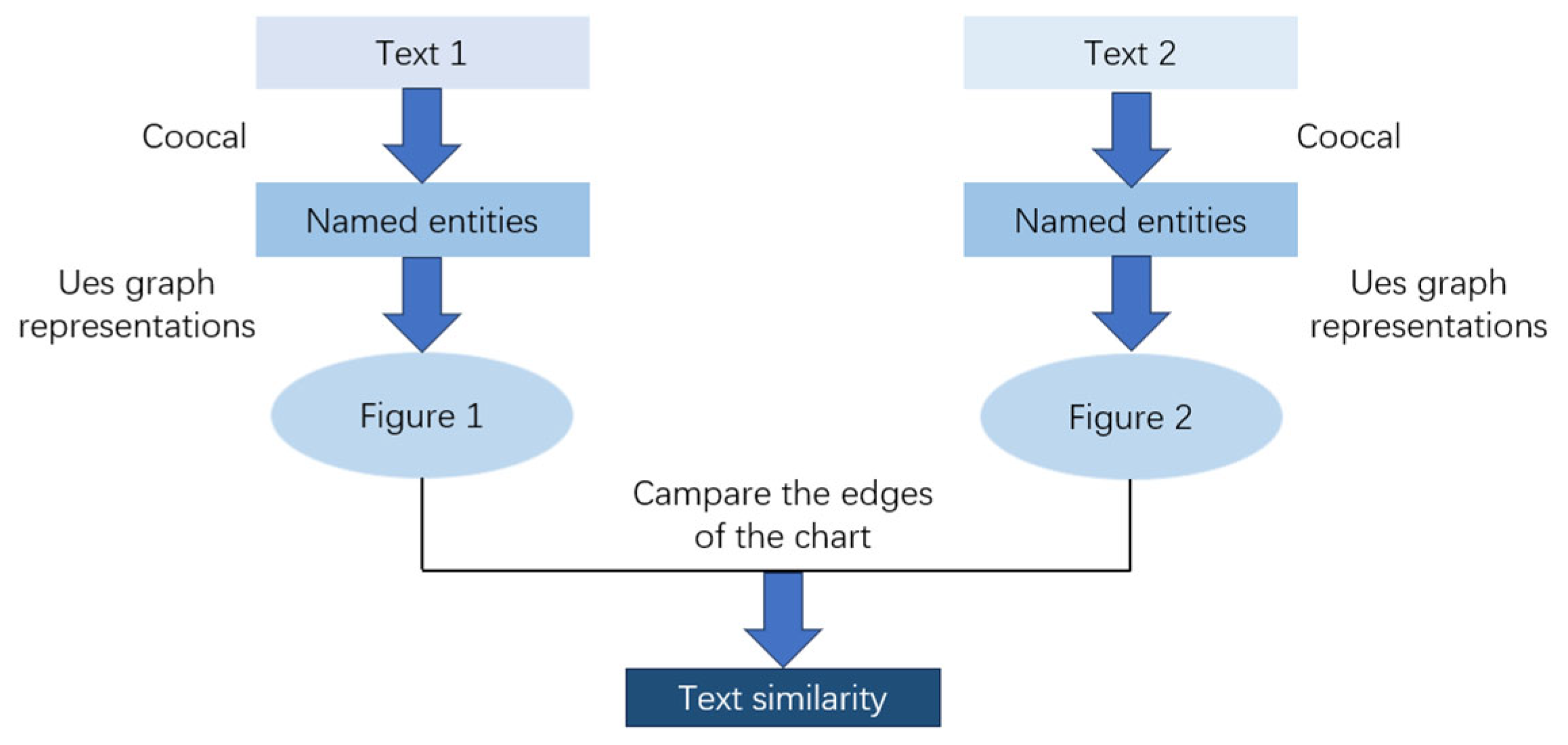
For each pair of input texts , the similarity function will output a score , where indicates the degree of similarity between the two texts. A value of close to 1 indicates that the texts are highly similar to each other. When is close to 0, the texts are not similar. The automatic batch flow is shown in Fig. 9, where two types of terms, named entities and terms with higher TF-IDF weights are extracted from the text, and the extraction of named entities is done using OpenCalaisAPI. Next comes the textual representation where all entities are replaced with a hash which allows multi-word entities to be displayed as a single word model in the word graph representation and the rest of the words are replaced with placeholders, in this study capital A was chosen as a placeholder. The use of a single placeholder allows all unimportant words to have only one node in the word graph, which significantly reduces the size of the N-gram and the complexity of the comparison operation [30]. Similarly, the mapping of named entities to hashes further reduces the memory footprint of the model, since in most cases, hashes take up less memory than full entity names.
Figure 9.
Automatic review process.
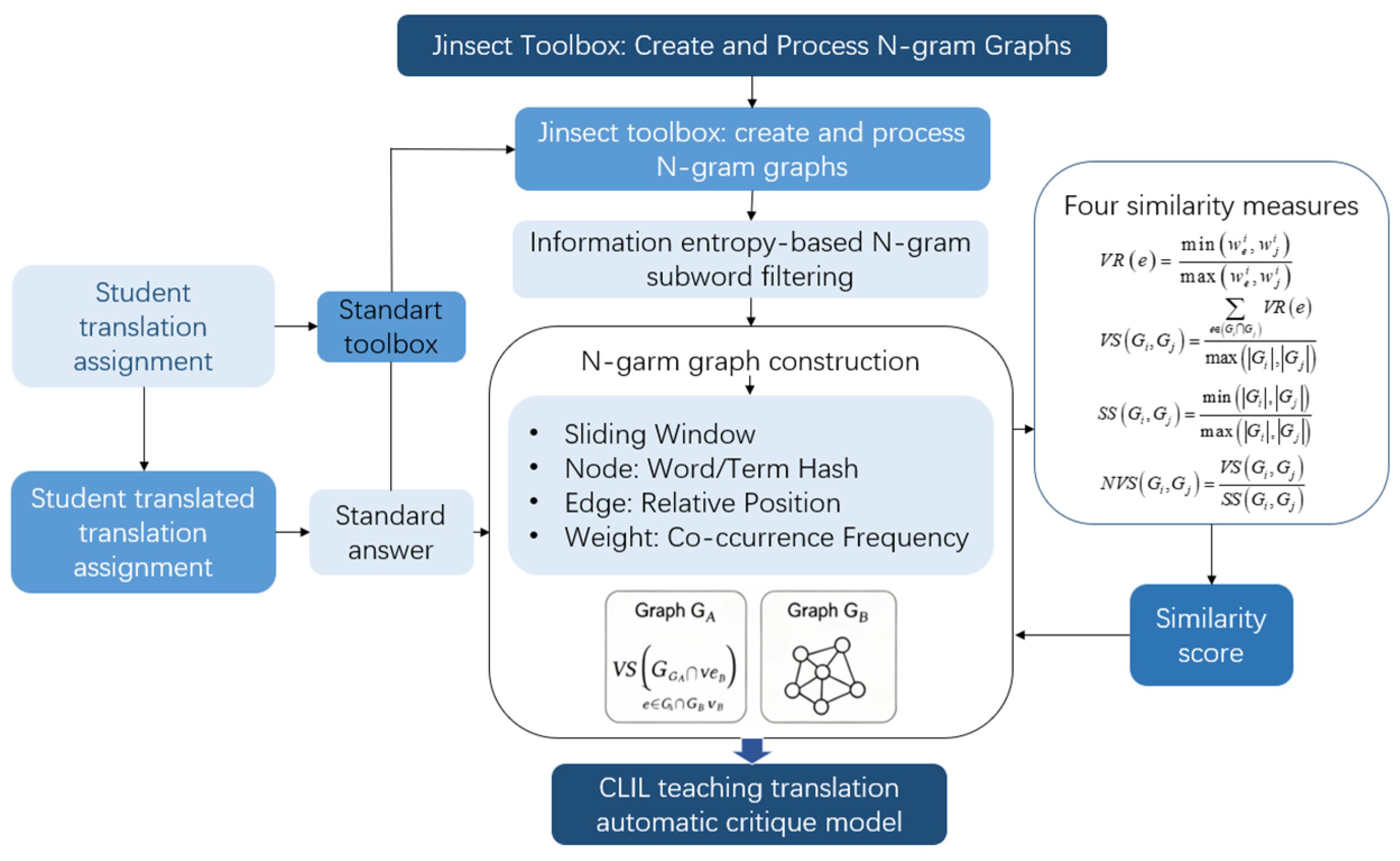
The JInsect toolbox was utilized to create and process N-gram plots and to give scores by comparing the similarity of the N-gram plots of the student answers to the standard answers, and the core graph construction logic follows the classic N-gram graph framework proposed by Giannakopoulos et al. [31]. Word N-gram plots were created for student submitted translation assignments and standard answers separately. The word N-gram graphs were created using a sliding window of size on the words, which represents the creation of a node for each word or term hash in the text. This way each word or term hash value corresponds to a node and the edges of the graph represent the relative positional relationship of these words in the text. The weights of the edges need to be set to reflect how often two words are near each other within the sliding window. The graph is weighted, and the weights indicate the number of times two words come close to each other within the distance of the sliding window. In order to compare the two graphs, referred to as and , four similarity measures are used: value similarity, size similarity, inclusion similarity, and normalized value similarity, with each of the four measures taking values in the range [0,1] [32]. The comparison of Figures and is depicted below:
(1) The value similarity indicates how many edges are present in . The weights of these edges are also considered. Let be the common edges of two graphs given their respective weights , defined:
So:
(2) Size similarity considers only the size of the graph:
Normalized value similarity is the ratio of value similarity to size similarity. The relative size of the graph is ignored in the comparison. In the special case, if the size similarity is 0, the normalized value similarity is also 0.
The final similarity score calculated from the four metrics quantifies the match between student translations and standard answers, serving as the core basis for the CLIL Teaching Translation Automatic Critique Model at the bottom of the flowchart. A comprehensive overview of modern translation evaluation metrics confirms that graph-based lexical matching methods remain a mainstream lightweight evaluation paradigm [15]. Relying on the Jinsect Toolbox’s functions of N-gram graph generation, entropy-based subword filtering and graph similarity calculation, we build an efficient automatic translation evaluation model for CLIL teaching. The complete pipeline integrating N-gram graph generation, subword filtering and graph similarity scoring based on the JInsect toolbox is illustrated in Fig. 10.
Figure 10.
Jinsect-Based N-garm Graph Construction and similarity Scoring.
5. Empirical Analysis of the Effectiveness of Automatic Critique of CLIL Teaching Translation
The experimental data came from the data of translation assignments in the CLIL teaching and learning environment at the Third Center in Dalian, Liaoning Province, including the original text of the students' translation assignments, the final exam questions and e-answer sheet translations, as well as the instructor's feedback on the corrections. A total of 350 answer sheets from the exams were selected, and the dataset was preprocessed, such as denoising and word-splitting, to ensure data quality. The text similarity metric tool based on Named Entity N-gram graph is installed, and the tool runs normally in Python environment. In order to verify the full range of this paper's model has school performance, N-gram text feature classification method experiments and teaching translation automatic correction method design experiments.
5.1. N-Gram Text Feature Classification
5.1.1. Feature Word Extraction Performance
Verify the effectiveness of the information entropy sub-word filtering method based on this paper in optimizing text feature classification. Calculate the information entropy of the vocabulary to determine the importance of each word. Use the information entropy lexicon information entropy to filter out unimportant N-gram subwords. And compare and analyze with N-gram filtering by chi-square test, N-gram filtering by mutual information, random forest filtering, LDA topic N-gram filtering, and SVM N-gram filtering methods. F1 values are utilized in order to measure the performance of the evaluated filtered feature set in text categorization tasks.
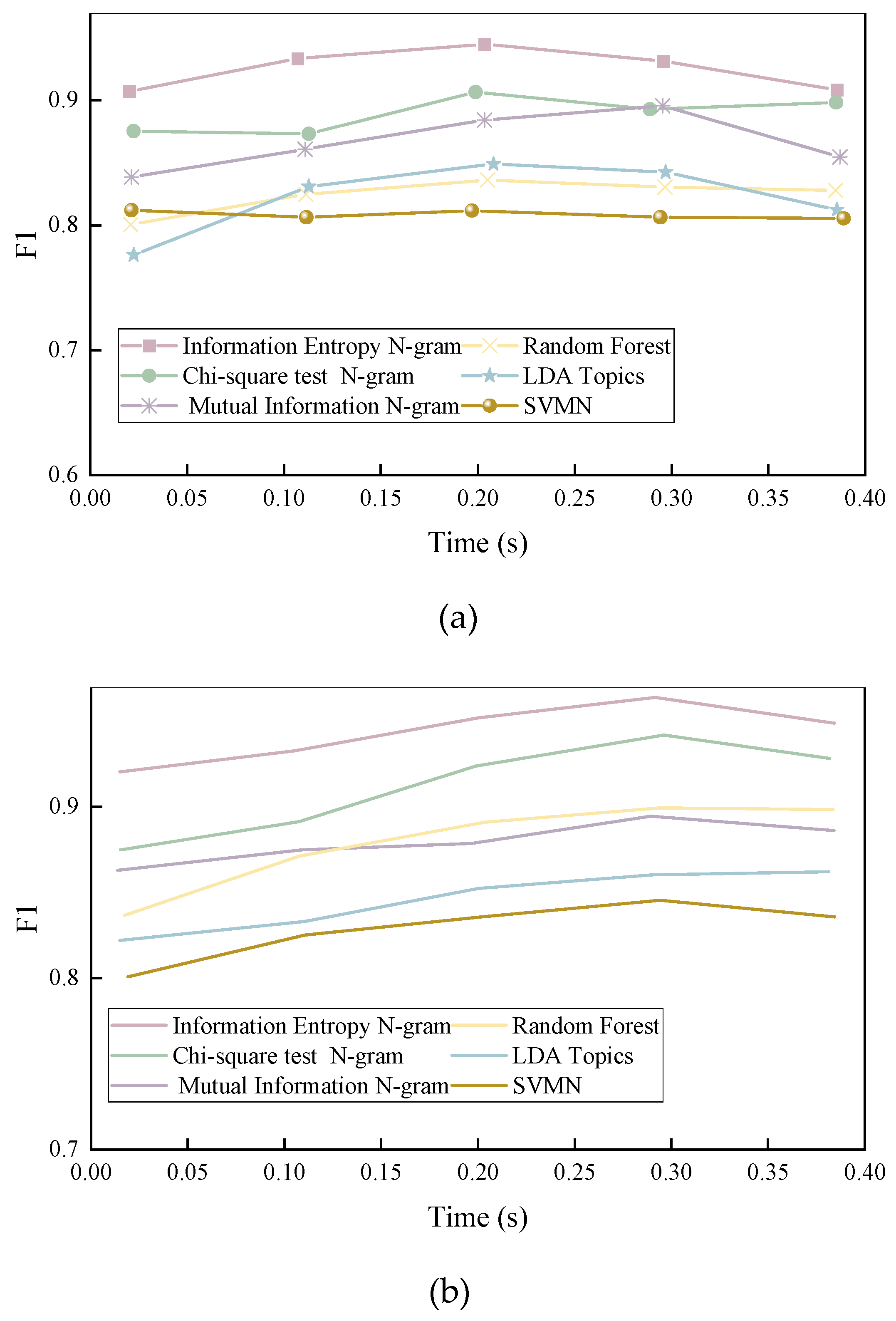
The results of feature word extraction performance comparison results are shown in Fig. 11. Fig. 11(a) shows the final exam translation dataset, and the method in this paper still maintains efficient filtering performance when dealing with a large amount of data, and the F1 value from 0.1 to 0.4 seconds stays between 0.91 and 0.94. The other methods have the problem of low accuracy in recognizing translation subwords, which leads to biased recognition results. Random forest filtering, LDA topic N-gram filtering, and SVMN-gram filtering methods are all below 0.81, which is the result of the fact that they may lack sufficient flexibility in responding to different translation needs to meet the requirements of specific scenarios. Mutual information N-gram filtering and chi-square test N-gram filtering have better F1 values in the range of 0.84-0.87 and 0.86-0.89, respectively, which is due to the fact that Li Mutual Information measures the correlation between N-grams and categories, which can capture key features. The chi-square test can be used to assess the significance of the difference between the actual frequency and the expected frequency. Overall, this paper's method still has the best performance in translation subword filtering, which can accurately identify and filter out the subwords that match the translated data to ensure the accuracy of the information. Figure 5(b) shows the translated data set of e-answer scripts, using this paper's method for subword filtering, which is still enough to significantly improve the accuracy of the translation. The F1 value from 0.1 to 0.4 seconds remains between 0.91 and 0.96. By accurately recognizing and filtering the subwords that do not fit the context or grammar, this reduces the error rate in the translated text. Compared with the traditional method, the F1 value of this paper's method is still optimal, and it can be fine-tuned according to different e-response translation data to accomplish the best filtering effect.
Figure 11.
Comparison results of feature word extraction performance: (a) Final Exam Translation Dataset; (b) Electronic answer sheet translation dataset.
Figure 11.
Comparison results of feature word extraction performance: (a) Final Exam Translation Dataset; (b) Electronic answer sheet translation dataset.
Compared with the traditional method, the F1 value of this paper's method is still optimal, and it can be fine-tuned according to different e-response translation data to accomplish the best filtering effect.
5.1.2. Accuracy of Translated Data
We observe the changing classification precision to test the internal reliability of the feature classification model.
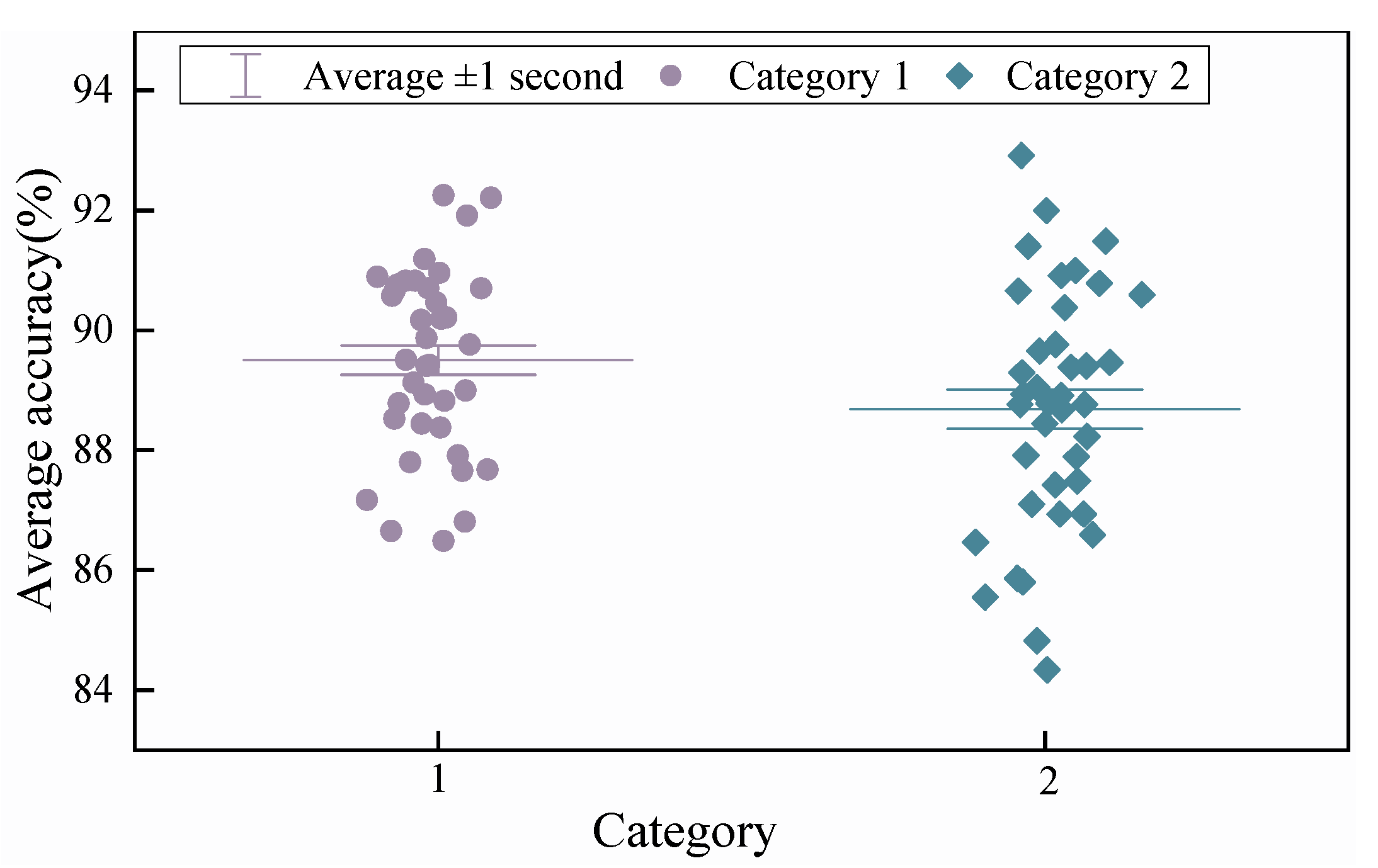
To increase the credibility of the model's classification results, Fig. 12 shows the accuracy rates for each category in the translated dataset, and the change in accuracy rates obtained for the 2 categories on the test set. As the number of iterations increases, the predictions of the 2 categories are not similar, varying between 85.59-92.14 for the category 1 dataset and 84.15-3.98 for the category 2 dataset, which is a positive sign of a relatively balanced performance in dealing with different categories.
The distinct precision ranges of two categories reflect acceptable discriminant validity, and slight precision fluctuation is caused by occasional misjudgment of low-distinction N-gram subwords.
Figure 12.
Precision of each category in the translation dataset.
5.2. Model Critique Practical Effects
5.2.1. Automated Approval Of Scores
Consistent with the large-scale manual-automatic scoring comparison paradigm proposed by Jung et al. [34], this study verifies the discriminant validity of the proposed model via cross-comparison between system outputs and teacher manual grades; scoring discrepancies mainly arise from insufficient semantic matching of cultural-specific entities.
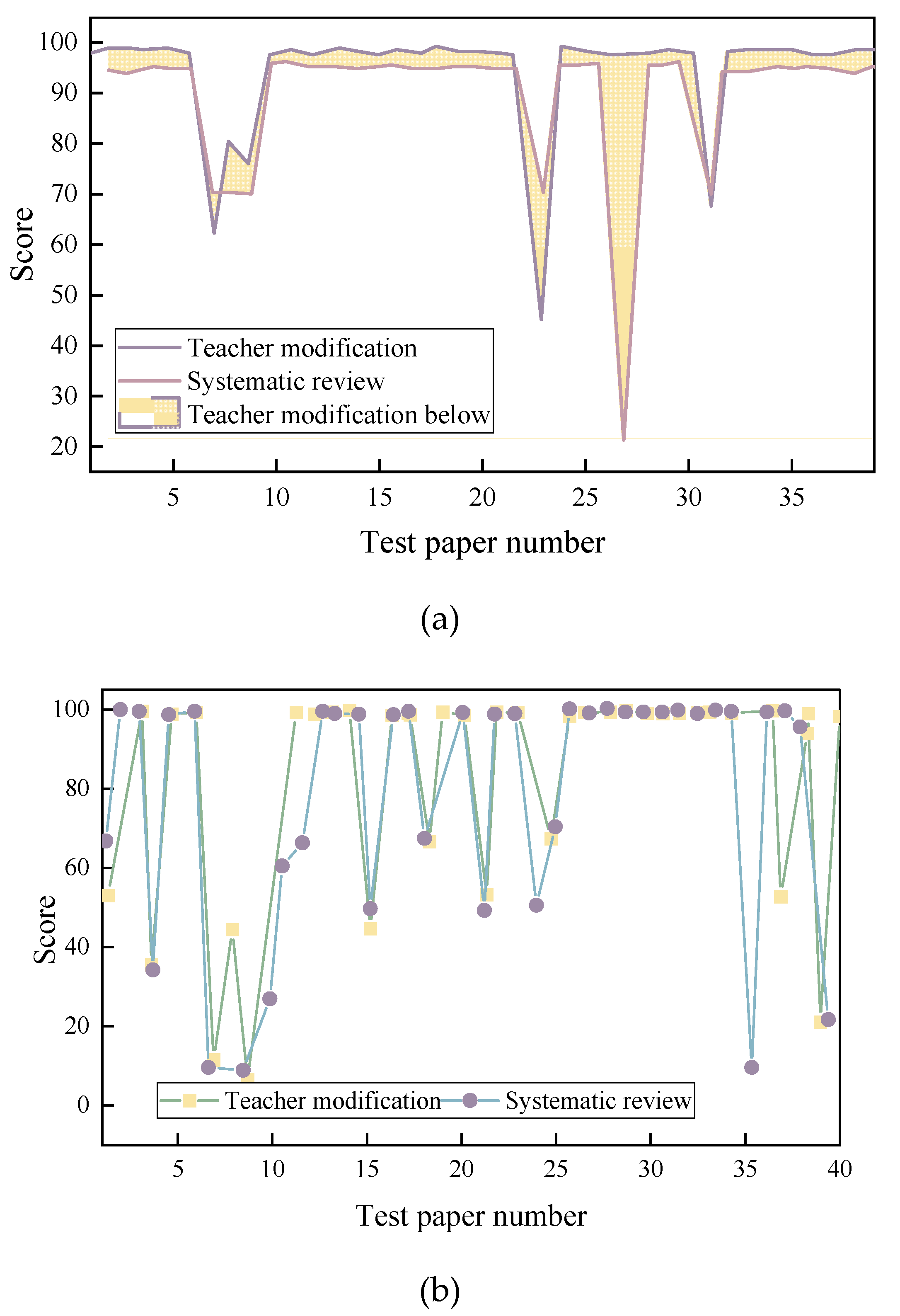
Translation assignments were selected as the experimental samples to ensure the diversity and representativeness of the samples. The samples were corrected using the automated correction model of this paper and the traditional manual correction method respectively, and the correction results and the lot numbers of the corrected papers were recorded. The answer scripts have been manually discriminated by the instructor and given the appropriate scores. The answer scripts are then assessed using the automatic marking system of this paper and the marks given by the system are compared with the marks given manually by the teacher. The scores of manual correction and the automatic correction of this paper are shown in Fig. 13. Fig. 13(a) shows the first translation test question, which is highly consistent overall, except for a little gap in the test paper batch number 9, which is consistent overall. Figure 13(b) shows the second translation test question, in addition to a little gap in the test paper batch number 14 and 28, the model of this paper also produces overall and manually corrected scores consistent with the scores especially in the 82-100 and 0-20 score bands, which have a high degree of similarity. For the points of discrepancy between system scoring and manual scoring, manual review can be introduced subsequently as a supplement to ensure the accuracy of scoring. Regularly monitor the scoring accuracy of the system and make necessary adjustments based on feedback.
Figure 13.
Manual correction and automatic correction scores of this article: (a) First translation question; (b) The second translation test.
Figure 13.
Manual correction and automatic correction scores of this article: (a) First translation question; (b) The second translation test.
5.2.2. Student Satisfaction with the Automated Critique Process
Three classes and four translation datasets were organized for each class, which are Basic Practice Translation Set: a dataset suitable for beginners to practice basic translation. The Advanced Challenge translation set contains more difficult translation content, suitable for students who have some basic translation challenges. The Cultural Characteristics translation set covers translation content with specific cultural background or regional characteristics, and the Specialized Terminology translation set focuses on the translation of specialized terminology in specific industries or fields. Table 1 shows the students' satisfaction with the automatic correction process, and most of the students in the three classes have satisfaction ratings of 4-5, indicating that the automatic correction of model translations in this paper has been recognized by the students to a certain extent. Among the 12 students, 8 of them gave the highest rating of 5, with a high degree of recognition of the critique system, especially in terms of critique speed and accuracy. In the class 1 culturally-specific translation collection, students responded that some translation suggestions were not relevant enough, but the overall efficiency of the corrections was good.The fact that the cultural characteristics of the translation set can be slightly difficult, and the subsequent need to explain grammatical errors and other aspects of improvement in summary, the system is still recognized by students in terms of accuracy and efficiency. It shows that the model in this paper has feasibility in practical application, but there is still room for improvement, especially in personalized service and detail processing.
Students’ subjective feedback provides supplementary criterion validity evidence, and complaints about inappropriate cultural translation suggestions are consistent with the feature and scoring misjudgments summarized above.
6. Conclusion
This research develops an automatic translation correction system based on N-gram text features, aiming to reduce teachers’ grading workload and improve the overall efficiency of CLIL translation teaching. In terms of model and algorithm design, the proposed method breaks the limitations of traditional single feature extraction methods. It combines TF-IDF with LDA to optimize category feature extraction and alleviate the problem of sparse features in short texts. Innovatively, lexical information entropy is introduced to create an N-gram subword filtering strategy. This strategy quantifies the contribution of each subword to category differentiation from both inter-category and intra-category perspectives, removing low-contribution subwords and mitigating the interference of invalid features on model training. Furthermore, named entity information is integrated with N-gram for text representation, constructing a complete framework for text similarity measurement and automatic correction tailored for CLIL teaching scenarios.
A series of empirical experiments have verified the practical performance of the proposed method. The F1 scores of the model reach 0.91–0.94 and 0.91–0.96 on two types of translation datasets respectively, and the classification accuracy maintains a balanced level across different data categories. The scores generated by the automatic model are highly consistent with manual grading results. In practical teaching, students show high satisfaction with the system and recognize its advantages in rapid feedback and error detection. This study provides feasible technical solutions and practical experience for the intelligent and automated transformation of CLIL translation teaching. Nevertheless, the model still has deficiencies in processing texts with complex grammatical rules and profound cultural connotations, and cannot fully replace manual correction. Future research will further optimize the algorithm structure and feature matching rules to enhance the model’s capability in recognizing contextual semantics and culture-related translation points, in line with the trend of multi-dimensional document-level translation evaluation proposed by Wei and Yang [33]. So as to expand its application scope in diverse CLIL teaching scenarios.
Author Contributions
Conceptualization, Siyu Li; methodology, Siyu Li and Shurui Lin; investigation, Siyu Li and Shurui Lin; data curation, Siyu Li and Shurui Lin; validation, Yule Qiu; writing original draft preparation, Siyu Li and Shurui Lin; writing review and editing, Yule Qiu and Zhixing Hou. visualization, Yule Qiu; supervision, Yu Zhang and Zhixing Hou; project administration, Yu Zhang; resources, Yu Zhang; funding acquisition, Zhixing Hou. All authors have read and agreed to the published version of the manuscript.
Funding
This research was financially supported by the Scientific Research Start-up Fund of Chuzhou University (Grant No.000006071522, Project ID: 2025qd22).
Data Availability Statement
Data are available at Utilizing data from a digital language laboratory at a university in Beijing.
Acknowledgments
The authors acknowledge the financial support from relevant funding agencies. Special thanks are given to our supervisors for their professional guidance and valuable suggestions during this research and manuscript preparation. We also thank our university for computational and experimental resources, along with colleagues for insightful academic discussions. In addition, the authors appreciate the support provided by their affiliated institution and all individuals who contributed to this research through academic discussions and technical assistance.
Conflicts of Interest
The authors declare no conflicts of interest.
References
- Wang, G. Formative assessment system of vr teaching in english translation class; OALib, 2022. [Google Scholar]
- Aboud, H. Combining written discourse analysis with the teaching of second language writing. 2020. [Google Scholar] [PubMed]
- Rao, L. Reflections on college english translation teaching mode based on network technology. J. Phys. Conf. Ser. 2021, 1915(2), 022076. [Google Scholar] [CrossRef]
- Deng, X. Research on translation teaching combining online news and online artificial intelligence translation. 2021 2nd International Conference on Information Science and Education (ICISE-IE), 2021; pp. 1695–1698. [Google Scholar]
- Post, M. Predicting Grammaticality on an Ordinal Scale [C]//ACL,2014. [CrossRef]
- Nayel, H. A.; Amer, G. A simple n-gram model for urdu fake news detection. 2021. [Google Scholar]
- Tien, D. N.; Minh, T. T. T.; Vu, L. L.; Minh, T. D. Vietnamese spelling error detection and correction using bert and n-gram language model. 2022. [Google Scholar] [CrossRef]
- Lamsaf, A.; Aitkerroum, M.; Boulaknadel, S.; Fakhri, Y. Recognition of arabic handwritten text by integrating n-gram model. 2021. [Google Scholar] [CrossRef]
- Bhuyan, M. P.; Sarma, S. K.; Sarma, P. Context-Based Clustering of Assamese Words using N-gram Model. 2021. [Google Scholar] [CrossRef]
- Paruchuri, V. L.; Rajesh, P. Cybernet: a hybrid deep cnn with n-gram feature selection for cyberbullying detection in online social networks. Evol. Intell. 2022, 1–15. [Google Scholar] [CrossRef]
- Pakoci, E.; Popovi, B. Methods for using class-based n-gram language models in the kaldi toolkit; Springer: Cham., 2021. [Google Scholar]
- Hamarashid, H. K.; Saeed, S. A.; Rashid, T. A. Next word prediction based on the N-gram model for Kurdish Sorani and Kurmanji. Neural Comput. Appl. 2021, 33(9), 4547–4566. [Google Scholar] [CrossRef]
- Sharma, D.; Mattu, G. S.; Sharma, S. N-Gram Based Amharic Grammar Checker. In Proceedings of the Future Technologies Conference, 2023; Springer: Cham. [Google Scholar]
- Liu, K. L.; Ye, R. G.; Liu, Z. Z.; et al. Entropy-based discrimination between translated Chinese and original Chinese using data mining techniques[J]. PLoS ONE 2022, 17(4), e0265633. [Google Scholar] [CrossRef] [PubMed]
- Kocmi, T.; Federmann, C. Recent advances in machine translation evaluation. Proc. EMNLP 2023, 2023, 1–14. [Google Scholar] [CrossRef]
- Jung, J. Y.; Tyack, L.; von Davier, M. Combining machine translation and automated scoring in international large-scale assessments[J]. Large-Scale Assess. Educ. 2024, 12(10). [Google Scholar] [CrossRef]
- Gusmita, R. H. Entity Linking Enhanced Graph Similarity for Domain Translation Assessment[J]. Data Knowl. Eng. 2026, 161, 102504. [Google Scholar]
- Aouragh, S. L.; Yousfi, A.; Laaroussi, S.; et al. A new estimate of the n-gram language model[J]. Procedia Comput. Sci. 2021, 189, 211–215. [Google Scholar] [CrossRef]
- Campos, M. AI-assisted feedback in CLIL courses as a self-regulated language learning mechanism: students’ perceptions and experiences[J]. Eur. Public Soc. Innov. Rev. 2025. [Google Scholar] [CrossRef]
- Du, Y. Research on lexical data set analysis based on decision tree model. In Highlights in Science, Engineering and Technology; 2023. [Google Scholar]
- Qiu, W.; Xu, Y. Histbert: A pre-trained language model for diachronic lexical semantic analysis. arXiv 2022, arXiv:2202.03612. [Google Scholar]
- Tseng, W. T.; Liou, H. J.; Chu, H. C. Vocabulary learning in virtual environments: Learner autonomy and collaboration. System 2020, 88, 102190. [Google Scholar] [CrossRef]
- Zu, M.; Bupathy, A.; Frenkel, D.; Sastry, S. Information density, structure and entropy in equilibrium and non-equilibrium systems. J. Stat. Mech. Theory Exp. 2020, 2020(2), 023204. [Google Scholar] [CrossRef]
- Wang, Z.; Cheung, A. K.; Liu, K. Entropy-based syntactic tree analysis for text classification: a novel approach to distinguishing between original and translated Chinese texts. Digit. Scholarsh. Humanit. 2024, fqae030. [Google Scholar]
- Gu, J.; Vo, N. D.; Jung, J. J. Contextual Word2Vec model for understanding chinese out of vocabularies on online social media. Int. J. Semant. Web Inf. Syst. (IJSWIS) 2022, 18(1), 1–14. [Google Scholar] [CrossRef]
- Sang, H. An English Diagnostic Intelligence Evaluation Model Based on Organizational Evolutionary Information Entropy. Discret. Dyn. Nat. Soc. 2022, 2022(1), 3648670. [Google Scholar] [CrossRef]
- Yilahun, H.; Hamdulla, A. (2023). Entity extraction based on the combination of information entropy and TF-IDF. International Journal of Reasoning-based Intelligent Systems, 15(1), 71-78.
- Tian, Y.; Li, W.; Wang, S.; Gu, Z. (2023). Semantic similarity measure of natural language text through machine learning and a keyword‐aware cross‐encoder‐ranking summarizer—A case study using UCGIS GIS &T body of knowledge. Transactions in GIS, 27(4), 1068-1089.
- Bao, Y., et al. (2024). Entity-aware machine translation evaluation with contrastive learning. Findings of the ACL, 2024, 691–702.
- Wang, H., He, J., Zhang, X., & Liu, S. (2020). A short text classification method based on N‐gram and CNN. Chinese Journal of Electronics, 29(2), 248-254.
- Giannakopoulos, G.; Karkaletsis, V.; Paliouras, G. (2008). N-gram graphs for multi-document summarization evaluation. Proceedings of the 2008 Conference on Empirical Methods in Natural Language Processing, 1023–1032.
- Aouragh, S. L.; Yousfi, A.; Laaroussi, S.; Gueddah, H.; Nejja, M. (2021). A new estimate of the n-gram language model. Procedia Computer Science, 189, 211-215.
- Wei, D.; Yang, H. (2025). Automatic evaluation metrics for document-level translation: Overview, challenges and trends. arXiv preprint arXiv:2504.14804.

Table 1.
Students’ satisfaction with the automatic marking process.
| Class | Dataset No. | Student | Satisfaction score (1-5) | Student satisfaction evaluation |
| 1 | Basic Practice Translation Collection | A | 4 | The correction results are relatively accurate, but some details need to be manually checked. |
| Advanced Challenge Translation Collection | B | 5 | The correction is fast and accurate, and provides good feedback. | |
| Cultural Features Translation Collection | C | 3 | Some translation suggestions are not appropriate enough, but the overall correction efficiency is good. | |
| Professional Terminology Translation Collection | D | 5 | The correction results are satisfactory, but more personalized correction suggestions are expected. | |
| 2 | Basic Practice Translation Collection | E | 5 | The automatic correction is very accurate, saving a lot of time. |
| Advanced Challenge Translation Collection | F | 5 | The correction is fast, which improves learning efficiency. | |
| Cultural Features Translation Collection | G | 4 | The overall experience is good, but detailed explanations of some grammatical errors are expected. | |
| Professional Terminology Translation Collection | H | 5 | The correction is fast, very satisfactory and provides good feedback | |
| 3 | Basic Practice Translation Collection | I | 5 | The correction results are relatively accurate, but some details need to be manually checked. |
| Advanced Challenge Translation Collection | J | 4 | The correction results are relatively accurate, but some details need to be manually checked. | |
| Cultural Features Translation Collection | K | 5 | The correction is fast and accurate, and provides good feedback. | |
| Professional Terminology Translation Collection | L | 5 | The overall correction efficiency is good. Using automatic correction makes learning easier |
Disclaimer/Publisher’s Note: The statements, opinions and data contained in all publications are solely those of the individual author(s) and contributor(s) and not of MDPI and/or the editor(s). MDPI and/or the editor(s) disclaim responsibility for any injury to people or property resulting from any ideas, methods, instructions or products referred to in the content. |
© 2026 by the authors. Licensee MDPI, Basel, Switzerland. This article is an open access article distributed under the terms and conditions of the Creative Commons Attribution (CC BY) license (http://creativecommons.org/licenses/by/4.0/).
Copyright: This open access article is published under a Creative Commons CC BY 4.0 license, which permit the free download, distribution, and reuse, provided that the author and preprint are cited in any reuse.