

Submitted:
13 August 2026
Posted:
14 August 2026
You are already at the latest version
Abstract
Matter, energy, and information, on the one hand, and the interplay between natural selection and self-organization, on the other, have given rise to modules, which constitute the fundamental units of interaction, organization, and function, as well as the primary targets of natural selection throughout chemical, biological, and cultural evolution. Based on the forms of structural information that enable their emergence, modules can be classified into huit types: (a) chemical modules (l) genetic and epigenetic modules, (c) cell, (d) neural, (f) mental modules, (g) moduloma (m) and affordance modules (n). Through interactions among modules and between modules and their environment, semantic (meaningful) modular information emerges. It is this semantic information that enables modules to acquire and maintain stability as both physical and abstract entities. The emergence and persistence of both material and immaterial (abstract) modules occur only at a specific point in time, when structural information is matched with the corresponding energy. This relationship is described by the law of modular stability. Modules acquire and preserve stability when the structural information responsible for establishing the relationships among the elements of their structure, considered as systems, corresponds to the energy required to maintain those relationships, while semantic modular information reaches its maximum value. One of the principal implications of this law is that the creative role of natural selection and modular stability is expressed primarily during the first stage of module formation, when the module is established as a replicator, rather than during the second stage, when it functions as an interactor and its fitness is determined.
Keywords:
information
; module
; self-organization
; structural and semantic information
; interactions
; perception–action coupling
; agent
; theory of truth
; information–energy relationship
; teleology
1. Introduction
Throughout chemical, biological, and cultural evolution, the universe—and our planet in particular—has given rise to atoms, living organisms, and the structures of human thought, respectively.
In several previous studies (1–6), atoms and living organisms, as physical entities, together with the structures of human thought as abstract entities, have been regarded as fundamental units of interaction, organization, and function, and have been collectively termed modules.
These studies further suggest that modules emerge through the interaction of three fundamental processes: information, self-organization, and natural selection. They also argue that Charles Darwin, while emphasizing the central role of natural selection, devoted equal attention to the preservation of species in the struggle for existence, as reflected in the complete title of his seminal work: On the Origin of Species by Means of Natural Selection; or, the Preservation of Favoured Races in the Struggle for Life (1859).
The present study seeks to demonstrate that there exists a fundamental law governing the existence of entities—a principle traditionally recognized in philosophy as the law of being or the law of existence.
To support this argument, I revisit the concept of interaction (structural) information (7), reconstruct its evolutionary development, and describe the interactions that arise from its successive forms.
It is worth recalling that several years ago the American Association for the Advancement of Science (8) identified five core biological concepts that every student should master: evolution, information, structure–function relationships, matter–energy transformations, and systems.
The concept of the module is inherently embedded in each of these five fundamental concepts, suggesting the need to reconsider earlier proposals advocating a transition from cell biology to modular biology (9). Our understanding of living systems is naturally organized around modular structures—for example, organs such as the heart, lungs, and hands in animals, or roots, stems, and leaves in plants.
Despite this intuitive biological organization, science has yet to fully establish modularity as a general organizing principle capable of integrating biological phenomena within a unified conceptual framework.
The search for a more comprehensive explanation of modules has increasingly challenged the traditional reductionist approach. As a result, concepts borrowed from semiotics and linguistics—including sign, code, and meaning—have been introduced into biological theory (10–13).
For example, the Italian biologist Marcello Barbieri has, since 1985, presented numerous arguments supporting the existence of biological codes and semantic biology. Although his contributions have significantly advanced this field, I do not share his view that natural conventions and biological codes obey the laws of nature without being determined by them.
In this paper, I argue that modules obey a fundamental law through which they acquire and maintain stability. The formulation of this law addresses three principal questions:
- During the evolution of both material and immaterial systems, self-organizing and selective processes occur in which the structural information responsible for organizing the components of these systems corresponds to the energy required to maintain the relationships among those components.
- At every point along the arrow of time, modules attain the maximum value of semantic information.
- Modules acquire and preserve stability only at the moment when semantic information reaches its maximum value.
Finally, on the basis of this law, several concepts related to biological and cultural evolution will be discussed.
1. The Evolutionary Tree of Information
The concept of matter, information, and energy as an inseparable unity (5) implies that matter constitutes the physical substrate of reality; however, without energy it remains inactive, and without information it cannot become organized (14).
This concept removes a major conceptual obstacle and points toward a paradigm shift. Just as the diversity of living organisms has been represented through the evolutionary tree of life, it is equally appropriate to construct an evolutionary tree of information that reflects the successive forms of information emerging throughout the evolution of the living world (Figure 1).
Current scientific thought recognizes four major inheritance systems: the genetic, epigenetic, behavioral, and cultural systems (15). Correspondingly, three principal forms of structural (interaction) information are generally acknowledged: genetic, epigenetic, and cultural information. In addition, semantic (functional or meaningful) information is widely recognized, although it is commonly considered to be exclusive to humans. In this study, however, it will be argued that semantic information is a universal property of living systems and plays a fundamental role in the acquisition and maintenance of modular stability.
As illustrated in Figure 1, structural information emerges progressively at different levels of biological organization.
A distinction is commonly made between physical (material) information and abstract (immaterial) information (16–27). From the perspective adopted here, the two most fundamental forms of information are those associated with the structure of systems and their function (7).
The central hypothesis proposed in this study is that each time evolution gives rise to an entity more complex than its predecessor, a new form of structural information also emerges. Thus, at the molecular and macromolecular levels, genetic and epigenetic information appear. At the cellular level, new forms arise, including gametic information, which governs the recognition and interaction of gametes, and somatic information, which regulates cell-to-cell communication. From these, neural information subsequently evolves.
Neural information itself may comprise several forms, including neuroendocrine information. However, the present discussion focuses primarily on perceptual information, from which percepts emerge. The process of categorization may have originated with these percepts in simple organisms such as sea anemones, which are capable of recognizing fish that threaten them. Similar recognition mechanisms are observed in Hydra. From perceptual information also emerges image information, giving rise to internal mental images.
The earliest concepts—presumably already present in higher animals—may result from interactions among multiple images. From these interactions arises the highest level of structural information: mental information (Figure 1).
With the emergence of concepts and mirror neurons (28), increasingly sophisticated forms of communication became possible. This evolutionary transition generated several forms of immaterial mental information, including word information, which enables object–word associations; sentence information, which enables relationships among words; cultural information; and, more recently, digital information (Figure 1).
Support for the progressive emergence of new forms of structural information may also be found in Assembly Theory (29). According to this theory, molecules and macromolecules possess an assembly index that reflects their structural complexity based on chemical bonding. As complexity increases through interactions, similar principles may also operate at higher levels of biological organization.
The relationships between the various forms of structural information and the interactions they generate are summarized in Table 1.
From these considerations, information may be defined as follows:
Information is a property of both physical and non-physical entities that enables interactions within and between these two domains, thereby giving rise to modules that behave as intelligent agents.
The first part of this definition emphasizes the role of information in enabling interactions, whereas the second highlights that interactions among modules—and between modules and their environment—generate semantic information, which constitutes the basis of modular function and stability.
2. The Emergence of Modules Through Self-Organizing Selective Processes
Accepting that interactions are generated by information, as summarized in Table 1, naturally brings to mind the classical example of the enzyme–substrate interaction. In this well-known case, it is generally accepted that enzyme–substrate recognition is enabled by steric (chemical) information, and that this interaction gives rise to a biological function, namely substrate catalysis.
In previous studies (1, 3, 5), it has been proposed that the simplest modules arise precisely from such information-based interactions (22), through which a specific function is performed.
Typical modules consist of three fundamental components. This organizational principle characterizes genetic, neural, and mental modules, which may be defined as follows:
Modules are organized assemblies of molecules, macromolecules, cells, or individuals belonging to the same or to different species, whose interactions give rise either to a novel function or to a structure capable of performing a function.
The emergence of function from such structures results from the combined action of information, self-organization, and natural selection (30). In other words, it reflects what Stuart Kauffman (1993) described as the marriage between self-organization and natural selection.
This immediately raises two fundamental questions: What is self-organization, and how does natural selection operate?
Self-organization may be understood as the interaction among the lower-level components of a system, through which a coherent global behavior emerges (31).
Similarly, mathematical formulations have suggested that self-organization and decision-making are fundamentally equivalent processes (32). According to this interpretation, physical and non-physical systems behave in ways analogous to intelligent agents. Such systems can exist in multiple possible states, and during self-organization they effectively “evaluate” alternative structural configurations until the most stable arrangement is reached.
A comparable process occurs during the formation of material modules. Self-organization evaluates the probabilities of different modular configurations and favors the one exhibiting the highest thermodynamic stability.
Consequently, both self-organization and decision-making depend on the structural information possessed by the components of a module and, simultaneously, represent products of selective processes.
For this reason, previous studies (3–5) proposed that natural selection acts on modules in two distinct stages.
During the first stage, natural selection operates on the structure of the module itself. At this stage, selection concerns the manner in which the constituent elements become organized, corresponding to the Darwinian concept of the replicator.
The second perspective considers modules through the classical structure–function relationship, where structure and function represent two inseparable aspects of the same biological entity (33).
From the functional perspective, it has been proposed that an agent is the entity that performs an action, while the manifestation of that action constitutes the module (34).
Similarly, the concept of the intelligent agent has become well established in cognitive science and artificial intelligence. An intelligent agent (A) perceives its environment, stores information about it, and, based on this information, constructs an effector (E) capable of producing an appropriate function (O) (35).
Several decades ago, Nobel laureate Roger Sperry (36) proposed that the perception–action relationship constitutes the fundamental logic of the nervous system.
Extending this principle, there appears to be no compelling reason to deny that perception–action coupling represents the fundamental logic of every module, regardless of its biological level.
Accordingly, Table 2 presents six categories of modules generated by the various forms of structural information.
The concept of the Kantian Whole, according to which the parts exist for and through the whole, becomes particularly meaningful within this framework. From this perspective, Roger Penrose’s observation (37)—that principles governing infinitely small entities may also apply to infinitely large ones—finds strong conceptual support.
Thus, principles that characterize a single genetic module, such as the lactase gene module, may also apply to higher-order organizations, including Modulomas, which integrate multiple forms of structural information at the level of the universe, biological species, societies, texts, and individuals.
In reality, modules emerge at every level of material organization.
This framework also justifies the role of affordances as agents. Since affordances represent properties of the environment (38), they make particular actions possible and therefore function as initiating agents within modular systems.
Photosynthesis provides an illustrative example. In one study, sunlight has been described as a form of information (39). Within the modular framework, however, sunlight represents a special case demonstrating the intimate relationship between information and energy.
Whereas chemical modules normally rely on structural information to establish stable chemical bonds, photosynthesis receives the required energy directly from sunlight, together with carbon dioxide, water, and chlorophyll. In this exceptional case, chlorophyll simultaneously fulfills informational and energetic roles.
It is equally important to recognize that new forms of structural information emerge whenever evolution generates new combinations within either the material or the immaterial world.
This principle is clearly reflected in the diversity of module types that have appeared throughout evolution, particularly in the remarkable expansion of mental information and the corresponding diversity of mental modules.
3. Codes and Modules
Attempts to overcome extreme reductionism have led to the emergence of code biology, together with concepts borrowed from semiotics and linguistics, such as sign, meaning, and natural convention (40–45, 13).
Today, an extensive body of literature exists on biological codes.
This raises a fundamental question:
What is a code?
A code may be defined as a set of rules that establishes a correspondence between two domains: the world of signs, consisting of encoded information, and the world of meaning, represented by the decoded message. A third component—the adapter—connects these two domains by assigning specific meanings to coded signs (46).
Within the language of coding theory, the three domains are therefore:
- the world of signs (s),
- the world of meanings (m),
- and the world of adapters (a).
Within the modular framework proposed here, these correspond respectively to:
- the agent (A),
- the function (O),
- and the effector (E).
This triadic organization has appeared repeatedly throughout the history of philosophy and science. It can be recognized in Plato’s distinction between ideas, objects, and names, in the semantic triangle of Ogden and Richards (47), consisting of objects, concepts, and words, in Charles Sanders Peirce’s triad of object, representamen, and interpretant (48), in Karl Popper’s three worlds, and in Mark Burgin’s existential triangle, comprising the physical world, the mental world, and abstract structures (49).
To illustrate the similarities and differences between these two conceptual frameworks, let us compare protein synthesis interpreted as a code and as a module (Figure 2).
Protein synthesis can be described in remarkably similar ways by both the coding framework and the modular framework (Figure 2a).
The similarity between the two approaches is reflected in the correspondence between their principal components:
- Agent (A) ↔ Sign (s)
- Effector (E) ↔ Adapter (a)
- Function (O) ↔ Meaning (m)
Despite these structural similarities, the mechanisms by which a code and a module generate function are fundamentally different. Recognizing this distinction becomes possible only through modular thinking.
From the functional perspective, the essential difference lies in the nature of their constituent elements.
Within the coding framework, the elements behave as arbitrary natural conventions.
Within the modular framework, by contrast, the components behave as intelligent agents.
In the coding model (Figure 2b), the relationship proceeds from sign to meaning (s → m).
In the modular model (Figure 2c), however, the causal direction is reversed.
The process begins with the object, that is, with the function to be achieved, which determines the characteristics of the agent as the informational component (O → A).
Consequently, within a module the agent represents an internal representation of external reality (50), because the information carried by the agent is determined by the object, the surrounding environment, or the function that must ultimately be performed.
This same organizational logic characterizes every module. Through self-organizing selective processes, those structural configurations exhibiting the greatest thermodynamic stability are preferentially preserved.
Interestingly, this interpretation is consistent with existentialist philosophy, according to which existence precedes essence rather than the reverse (51).
Within the modular framework, the essence of an object—for example, the design of a key—is represented by the information accumulated by the agent about the lock it must open.
If a craftsman could manufacture the correct key without first obtaining information about the lock, then essence would indeed precede existence, and the sign would determine the meaning.
In reality, however, this never occurs.
Instead, existence precedes essence, because the information embodied by the agent is acquired from the external object before the appropriate effector can be constructed.
This organizational principle was previously described as the fundamental logic of modular systems.
An intelligent agent first gathers information from its environment and then, based on that information, constructs the effector required to perform the intended function.
The same principle can be recognized throughout evolution—from atoms and molecules to genetic, neural, and mental modules.
This observation supports the view that modules acquire their intelligent character through the combined action of information, self-organization, and natural selection.
The next question naturally follows:
How did intelligent modules evolve from simple perception–action systems?
Perception–action modules originated as chemical reactions and therefore emerged from chemical information.
The enzyme–substrate interaction provides a representative example.
Recognition through steric complementarity constitutes a form of perception, while catalysis represents the corresponding action or function.
By analogy, perception–action coupling within genetic modules emerged at the macromolecular level through interactions among nucleotide and amino acid polymers.
The RNA world, composed of interacting molecular species, likely provided the evolutionary foundation for both DNA and transfer RNA.
Within this framework, DNA functions primarily as the informational agent, whereas transfer RNA operates as the effector, enabling protein synthesis.
Thus, the RNA world occupies a central position in the origin of life, a conclusion that is widely supported in contemporary evolutionary biology.
Just as matter gives rise to both information and energy, the RNA world may likewise be viewed as giving rise to DNA, representing information, and transfer RNA, representing the energetic or effective component required for biological function.
Subsequently, perception–action coupling emerged once again with the evolution of neural information at the cellular level.
The activation of homologous neural circuits in different individuals through mirror neurons demonstrates that the same organizational logic now operates between organisms rather than merely within them.
Finally, the emergence of mental modules, generated from mental information, enabled humans to become unique among living organisms by continuously accumulating, preserving, and transmitting knowledge across generations.
If information enables interactions among the elements of both material and immaterial systems, then self-organization generates multiple alternative modular configurations, while natural selection determines which of these alternatives persist.
During the first stage, selection acts upon modules as replicators.
During the second stage, selection acts upon modules as interactors.
In the present framework, the second stage resembles a hotel receptionist attempting to identify the correct room key after the room number has accidentally been removed. By systematically testing keys against locks, the receptionist eventually identifies the appropriate match.
Natural selection operates in a comparable manner through a continuous process of trial and error.
Such processes characterize both self-organization and modular evolution.
By contrast, they are absent from the traditional concept of biological codes.
For this reason, codes cannot behave as intelligent agents and therefore lack the fundamental organizational logic that characterizes modules.
This fundamental logic gives rise to semantic information, which emerges through interactions among modules and between modules and their environment.
Semantic information is therefore a universal property of all modules.
Consequently, the origin of species depends not only upon natural selection but equally upon the preservation of stable modular organization throughout the struggle for existence—a point that Charles Darwin himself emphasized in the full title of On the Origin of Species.
From this perspective, both physical objects and abstract entities—such as concepts, ideas, and knowledge—maintain their stability only under those conditions in which information and energy are appropriately matched.
4. On the Relationship Between Information and Energy
Before making a decision—for example, when choosing a life partner—human beings first gather information and evaluate its coherence. In modular terminology, this process marks the construction of the structure of a mental module, an immaterial entity whose internal organization is established through informational relationships, in much the same way that the structure of a material module is organized.
Thus, both material and immaterial modules consist of elements interconnected through the information they embody. This provides the basis for the conclusion that self-organization and decision-making are fundamentally equivalent processes (32). Consequently, the same organizational principles govern the formation of both physical and abstract modules.
However, information alone is not sufficient.
Just as information is indispensable for enabling interactions, energy is equally indispensable for maintaining the persistence and stability of those interactions.
Several years ago, Robin Dunbar (52) proposed that a human being can maintain stable social relationships with approximately 150 individuals.
Although a person may recognize many more individuals than this, only about 150 relationships can be actively maintained through the reciprocal obligations necessary for long-term social cohesion.
Such a social network exists within the human brain and may itself be regarded as the structure of a macromodule, composed of numerous interacting modules.
This example illustrates that relationships among human individuals are analogous to the chemical bonds linking atoms, molecules, macromolecules, and cells.
Dunbar’s number therefore represents an interaction occurring at one of the highest levels of matter organization—that of human society.
The care, commitment, and reciprocal obligations that maintain human relationships are functionally analogous to chemical bond energy.
Accordingly, just as chemical bonding gives rise to chemical potential energy, biological organisms and human societies likewise generate biological potential energy and human potential energy, respectively.
From another perspective, relationships established through recognition may also be interpreted as energetic relationships, since the interactions generated by information frequently provide the energy required to sustain those very interactions.
This suggests that information and energy share a common origin, namely the object (O) toward which the agent (A) responds.
When the available information (I) corresponds to the required energy (E), the effector successfully performs the intended function, because the intelligent agent constructs and activates the effector according to the information acquired from the object.
The concept of the ground state in atomic physics provides a useful analogy.
An atom reaches its ground state when all electrons occupy the lowest possible energy levels. This minimum-energy configuration represents the stable state of the atom as a module.
Similarly, the stability of the hydrogen molecule arises from the covalent bond joining two hydrogen atoms.
Steric information in enzyme–substrate recognition represents another remarkably simple yet fundamentally important example.
Although often taken for granted, its significance within the living world may be compared to that of fire in human evolution. The analogy is appropriate because, like fire, enzyme–substrate interactions occur at the interface between the living and non-living worlds and represent one of the earliest forms of organized functional interaction.
Genetic–enzymatic modules provide perhaps the clearest evidence of the intimate relationship between information and energy.
Genes store and transmit hereditary information from one generation to the next by directing the synthesis of enzymes.
At the same time, enzymes possess their own steric information, enabling the recognition of specific substrates.
This interaction has a dual character.
First, it constitutes molecular recognition, that is, information.
Second, it enables the production and utilization of the energy required to accelerate biochemical reactions.
From this perspective, it becomes important to reconsider the relationship between the ATP cycle and those biochemical reactions that consume or generate metabolic energy. It is conceivable that these interactions themselves constitute specialized modules.
Undoubtedly, these relationships are products of evolution through natural selection.
At the same time, however, they also reflect the capacity of modules to behave as intelligent agents, thereby ensuring their own stability.
For example, enzymes such as lactase not only perform the function specified by the LP gene, but also generate the energetic conditions necessary for lactose hydrolysis.
A related attempt to establish a unified energetic framework can be found in the Equal Fitness Paradigm (EFP) proposed by Brown and colleagues.
The proponents of the Equal Fitness Paradigm base their theory on three principal observations: the existence of life-history trade-offs between generation time and reproductive power; an average biomass energy content of approximately 22.4 kJ g⁻¹ dry mass across species; and the assumption that the fraction of parental biomass incorporated into surviving offspring remains approximately constant.
The proposition that all species possess equal fitness contrasts sharply with conventional Darwinian and neo-Darwinian evolutionary theory.
According to Darwinian theory, natural selection depends fundamentally upon variation, inheritance, and differences in fitness among individuals, populations, and species (53).
If energy is understood simply as the capacity to perform work, one might expect more evolutionarily advanced organisms to possess proportionally greater energetic capacity.
More than a century ago, Lapicque (54) demonstrated that excitation of the mollusk Aplysia requires approximately 703 erg, whereas excitation of the frog Rana requires only 508 erg.
Within the framework of the Universal Modular Evolution Model, this observation suggests that evolutionary advancement is accompanied by an increase in both the quantity and quality of information.
Information undoubtedly increases throughout evolution (55), and the acquisition and utilization of greater amounts of information are accompanied by corresponding increases in energetic efficiency (5).
Consequently, the assumption that all living organisms possess the same biomass energy density (22.4 kJ g⁻¹ dry mass) overlooks the functional relationship between information and energy within modular organization.
Finally, if the module is regarded as the fundamental unit upon which natural selection acts, then two distinct phases become apparent.
During the first phase, natural selection shapes the structural organization of modules, acting upon them as replicators.
During the second phase, selection operates through interactions between modules and their environment, where modules function as interactors (56).
This interpretation supports the view that fitness is not an intrinsic property, but rather reflects the interaction between living organisms and their environment (57).
By contrast, stability is an intrinsic property of the module itself, acquired during its formation as a replicator.
Ultimately, if modular stability can indeed be explained as the result of a correspondence between information and energy, then evolutionary theory no longer requires teleological explanations.
Instead, semantic information becomes a universal property of all biological modules rather than an exclusive characteristic of human cognition.
5. Some Evolutionary Concepts and the Law of Existence
The Law of Existence provides a theoretical framework for explaining several evolutionary phenomena and processes.
5.1. Evolutionary Consequences of the Law of Modular Stability
Based on the Universal Modular Evolution Model (UMEM) (5), there is always a point along the arrow of time at which information, energy, and time converge to enable the emergence of a new stable module.
Accordingly, point X in the Universal Modular Evolution Model (UMEM) represents an Adjacent Possible (58). The Adjacent Possible is defined as the set of possibilities available to an individual, a community, an institution, a living organism, a project, or any other evolving system at a given moment in time during its evolutionary trajectory [59].
This is the point at which the corresponding module reaches its maximum value of semantic information (Table 3).
It is generally accepted that life emerged approximately four billion years ago, with an initial information value of 1, rather than 0, as was mistakenly presented in the previous publication (5).
It was also recognized that evolutionary events should be interpreted in relation to the successive doubling of information. Specifically, after each twofold increase in information, geological time is reduced by half.
Accordingly, if the initial information value is taken as 1, the next evolutionary event occurs after the information has doubled, yielding an information value of i = 2.
At the same time, geological time decreases from 4 billion years to 2 billion years. Consequently, the ratio between the time preceding the event (t₀) and the time following its occurrence (t₁) is: t0/t1=4/2=2
or, when expressed in the normalized form used in the model, t=1.
This interval corresponds to the emergence of the first eukaryotic organisms, most likely as a consequence of the increase in cellular information associated with the endosymbiotic process.
Similarly, we proceed to the third major biological event, namely the emergence of the first multicellular organisms, approximately 1 billion years ago. At this stage, the ratio between the time preceding and following the event has a value of t = 3, whereas the information value is twice that of the previous event, that is, i = 4.
The fourth major event is the Cambrian Explosion, which occurred approximately 0.5 billion years ago. At this point, the ratio between the geological time before and after the event is t = 3.5/0.5 = 7, while the corresponding information value, obtained by doubling the previous value, is i = 8. Thus, the values of time and information are remarkably close.
On this basis, Table 3 was constructed. The sequence of evolutionary events presented in the table is consistent not only with the chronology recognized by paleontologists (5), but also with the major milestones of cultural evolution.
For example, the Yamnaya migration, associated with the expansion of human populations from the Pontic–Caspian steppes north of the Black Sea, occurred after the information value had doubled relative to the Neolithic Revolution, while approximately the same interval of time had elapsed since the Neolithic period.
These observations suggest that the Universal Modular Evolution Model (UMEM) establishes a close relationship between time and information. In this sense, time may be regarded as information, and information as time, implying that every natural object—as well as every abstract entity, such as knowledge—has a specific moment of origin.
Conversely, the well-defined timing of evolutionary events indicates the moment at which a particular object or process acquires stability.
The acquisition of stability, or equivalently of identity, by a natural or abstract object points to an even more fundamental relationship that may reasonably be regarded as a law of nature.
According to the relationship m=E/I, derived from the Universal Modular Evolution Model, a natural object with matter m reaches a stable state when information and energy correspond according to a specific quantitative relationship.
In other words, the stability of a module is achieved when the structural information that organizes the relationships among its constituent elements corresponds to the energy required to establish and maintain those relationships.
This formulation of the existence of both physical and abstract entities may therefore be referred to as the Law of Existence, the Law of Being, or, equivalently, the Law of Modular Stability.
This law provides an answer to one of the oldest philosophical questions: What do we mean by existence or being?
According to the framework proposed here, existence encompasses both a mind-independent reality, represented by physical objects, and a mind-dependent reality, represented by abstract entities such as ideas, concepts, and knowledge.
Support for this interpretation is provided by the existence of non-material information, as well as by the existence of non-material modules, namely abstract entities.
Furthermore, the fact that the two principal categories of modules—physical and abstract—are governed by the same fundamental law of existence constitutes additional evidence for the coexistence of both mind-independent and mind-dependent realities.
Finally, if the Law of Existence applies equally to physical and abstract entities, then it becomes reasonable to formulate a Modular Theory of Truth, since the essential condition for the existence of every module is the acquisition and preservation of stability.
5.2. A Modular Stability Model of Species
In a previous study (6), the species was regarded as a module. According to this model, the species module is formed when the population existing at a given moment in time acts as the agent (A), carrying information from the ancestral population (O) to generate the appropriate effectors (E), namely the individuals of the descendant population.
Within the modular framework, a species may be viewed as a chain, the links of which consist of three successive populations that collectively behave as an intelligent agent.
The chain metaphor is consistent with both the phylogenetic (lineage) concept of species and the Biological Species Concept (60). At the same time, the link metaphor facilitates understanding of the species module as an intelligent agent composed of three consecutive populations.
One of the principal advantages of this definition is that it can be applied not only to sexually reproducing organisms but also to asexually reproducing organisms, making it particularly useful for the proposed Model of Modular Stability of Species (Figure 4).
The principal feature highlighted by the Modular Stability Model of Species is the inseparable relationship between matter, information, and energy.
In Figure 4, the object (O) placed on the moving conveyor belt represents a species as a module whose existence depends on the successful performance of a set of essential biological functions.
The fulfillment of these functions—the prerequisite for the existence of species O—occurs when the vertical jump, representing energy (E), is synchronized with the horizontal movement of the conveyor belt, representing information (I). Under these conditions, after each jump the species lands approximately at the same position on the moving belt. This correspondence between the information available at a given moment and the energy required to sustain the system ensures the stability of the module.
According to this model, the matter constituting the species (O) may be understood not only as biomass, but also as the quantity and quality of the biological functions whose successful performance defines the existence of the species.
When the biomass exceeds the level that can be adequately sustained, the system encounters the problem of the vertical jump—that is, the challenge of providing sufficient energy. In such situations, evolution, viewed as a process of progressively energizing matter, has not yet reached the level required to maintain modular stability.
Conversely, an insufficient degree of energization reflects a deficiency of structural information, from which the organization of the module is constructed. In informational terms, this corresponds to an inadequate quantitative or qualitative fulfillment of biological functions.
From this perspective, one may also discuss the extinction of very large animals, such as the dinosaurs, as well as the remarkable evolutionary success of much smaller organisms, such as insects.
The necessity for correspondence between information and energy is further illustrated by another condition of the model. After every vertical movement generated by energy, the module must return to essentially the same position on the horizontally moving conveyor belt. In other words, energetic activity must remain synchronized with the informational organization of the system.
This interpretation is consistent with the theory of species diversity maintenance (61), according to which biodiversity is preserved when species become specialized within distinct ecological niches, where intraspecific competition exceeds interspecific competition.
The model also suggests that major evolutionary transitions occur during periods of environmental fluctuation, provided that populations possess the informational and energetic potential required for adaptation.
Regardless of the particular evolutionary event—whether occurring in living or non-living systems, material or immaterial—the existence of a module depends on whether its structure acquires persistent stability and is able to maintain that stability, even for a limited period of time.
Such stability is an intrinsic property of the module considered as a replicator, whereas fitness characterizes the module as an interactor, reflecting its interaction with the environment.
If the probability of performing a function is used to calculate the functional information of a module as an interactor, then, by analogy, the probability that the constituent elements correctly recognize and interact with one another within the structure of the module may be used to calculate the functional information of the module as a replicator.
Evidence supporting this interpretation can be found in the successive stages of modularization throughout evolution.
The earliest stage involved the emergence of genetic modules, accompanied by the appearance of biological energy. Later, the evolution of immaterial mental modules gave rise to human energy, associated with cognitive and cultural processes.
These forms of energy correspond to successive forms of interaction information, the most important of which include genetic information, from which genetic modules originated, and non-material mental information, from which diverse categories of modules have emerged, including word modules, sentence modules, human social modules, and, more recently, digital modules.
Just as it has long been accepted that chemical bond energy gives rise to chemical potential energy, there is no compelling reason to reject the proposition that genetic information and cultural information have likewise given rise to biological energy and human energy, respectively.
These considerations are relevant because they suggest that the value of 22.4 kJ g⁻¹, proposed as the universal biomass energy constant in the Equal Fitness Paradigm, cannot be adequately interpreted solely in terms of the chemical energy stored in carbohydrates, proteins, and lipids. Rather, it should be understood within the context of the modular organization of living systems.
When living organisms are considered as modules, attention must be given to the higher forms of energy that emerge during biological evolution, namely biological energy and human energy. Although these forms are analogous to chemical bond energy, they are fundamentally different from the gravitational or relativistic energy described by Einstein’s well-known equation, E=mc2.
One important distinction may be emphasized.
According to Einstein’s equation, a change in mass is directly equivalent to a proportional change in energy.
This relationship, however, does not apply to the modular equation E=M×I,E = M \times I,E=M×I, where energy depends not only on matter but also on the information embodied within that matter (3–5).
It is possible that the Equal Fitness Paradigm is implicitly based on the former interpretation, since the equation E = mc² describes the relationship between mass and energy without explicitly incorporating the informational organization of matter.
5.3. The Modular Hypothesis of Truth
Several theories have been proposed to explain the nature of truth. For the purposes of the present study, and because it is the most widely accepted account, we focus on the Correspondence Theory of Truth (62–64).
According to the Correspondence Theory of Truth, a statement or proposition is true if it corresponds to a fact.
The relationship between a proposition and a fact illustrates how the brain, as an internal world, is connected to the external world. In this sense, mental states constitute internal representations of external reality (50).
Accordingly, a proposition p is true if, and only if, it corresponds to a fact.
The Correspondence Theory of Truth places greater emphasis on the relationship between a proposition and a fact than on the procedures required to test or justify that relationship. Questions concerning verification and justification arise only at a subsequent stage, when the validity of the correspondence itself is examined.
It is also important to recall that knowledge determines how human beings perceive the world, think, reason, make decisions, and solve problems. Above all, it is worth recalling the view of the Chilean scientists Humberto Maturana and Francisco Varela (65), cited in the Introduction, who argued that to be alive is to know, because living is knowing.
From the modular perspective, knowledge modules begin to emerge with the formation of the zygote.
There is little doubt that the avoidance of an acidic environment by a Paramecium constitutes a biological module, just as communicating through a mobile phone by entering a PIN code constitutes a digital mental module. Although these examples differ profoundly in complexity, both operate according to the same modular principle: information is acquired, an appropriate effector is activated, and a function is successfully performed.
These observations suggest that the different forms of knowledge evolve progressively, beginning with biological knowledge, followed by sensory and cognitive knowledge, and continuing with linguistic, social, and cultural knowledge, ultimately leading to the knowledge embodied in digital modules.
According to classical epistemology, knowledge consists of three essential components: belief, justification, and truth. Within the modular framework proposed here, these three components correspond to the three fundamental domains of a module:
- the world of information (I), corresponding to belief;
- the world of effectors (E), corresponding to justification; and
- the world of successfully accomplished functions, corresponding to truth.
Figure 5 illustrates this relationship by showing knowledge as the region formed by the intersection of these three domains.
Knowledge, as a system of mental modules, is formed in the human brain in much the same way as physical objects are formed throughout the universe and on our planet. In this sense, mental modules may be regarded as abstract objects, analogous to the physical modules observed in nature.
Let us consider an example illustrating that a mental module is true, according to the Law of Being, only when it has acquired and maintained stability, or equivalently, autonomy.
A suitable example is the categorization represented by a word module in language. Such a module is simultaneously cognitive and nominal. As previously discussed, within a module the word functions as the effector, because it is generated by the agent, namely the underlying concept, on the basis of the corresponding object.
Like every effector, the word performs its function during communication, but only within a particular linguistic community. Consequently, the stability of a word module is ensured only within that community, and it is therefore true for that community insofar as it successfully fulfills its communicative function as a nominal module.
Once one speaker points to an object and successfully communicates it to another speaker, a cognitive module is established and acquires stability.
The association between nominal modules and cognitive modules is a fundamental process in language acquisition and in learning about natural objects and human-made artifacts. This association is directly related to the acquisition and preservation of modular stability.
According to the Law of Modular Stability, stability is achieved and maintained because the structural information organizing the elements of the mental module corresponds to the energy required to preserve that organization.
In a previous study (6), species were defined as biological modules. A species was described as a chain of organisms extending through time, whose links consist of three successive populations that collectively behave as an intelligent agent.
Is this definition true?
Within the present framework, the answer is affirmative if at least three successive populations form a stable module that preserves its identity over time. The existence of such stability implies that the module successfully performs its biological function, since it continuously generates functional effectors.
What are these effectors?
The answer follows directly from the modular concept. Since effectors are produced by agents, and agents inherit the information accumulated by their predecessors, the formation of functional effectors demonstrates that the ancestral, present, and descendant populations—the three populations constituting one link in the evolutionary chain—share the same essential information. Consequently, they belong to the same biological species.
Species likewise obey the Law of Modular Stability, because they constitute successive links within the continuous chain of life. The structural information defining the relationships among individuals, among species, and between species and their environment corresponds to the energy required to establish and preserve those relationships.
From the same perspective, it is also possible to formulate a definition of life.
Life may be regarded as a giant module, in which the information organizing the networks of species modules corresponds to the energy required to maintain those networks over time.
Such a definition may help explain why so many different concepts and interpretations of life have been proposed throughout history. It also provides a framework for understanding the origin and evolution of concepts, knowledge, and scientific ideas.
Just as every physical object—for example, a biological species or another taxon—appears at a particular moment in evolutionary history, so too do abstract objects, such as concepts and scientific theories, require appropriate conditions before they can acquire stability.
Historically, chemists once classified elements according to their external appearance, just as biologists initially classified bats as birds. Likewise, the modern definition of water became possible only after the development of molecular theory (Cleland and Chyba). These examples illustrate that conceptual modules also evolve toward increasing stability.
Returning to the central argument of this study, it may indeed be accepted that meaningful information increases negentropy. However, concepts such as code generation (codopoiesis) (25) or code biology (44) cannot be fully understood without first recognizing the genuine evolutionary processes operating through time—namely, the three fundamental categories of the universe, self-organization, and natural selection.
This is emphasized because biology, no less than physics and chemistry, should ultimately be grounded in fundamental laws of nature, rather than being explained exclusively in terms of signs, codes, meanings, or natural conventions.
Finally, it is unlikely that Charles Darwin assigned equal importance to the preservation of species and natural selection merely by chance. This balance is already evident in the full title of his seminal work, On the Origin of Species by Means of Natural Selection; or, the Preservation of Favoured Races in the Struggle for Life, and it constitutes one of the central themes of the present study.
5.4. Teleology
I do not think it is a coincidence that the three categories of the universe correspond to the three constituent parts of an intelligent agent.
The universe consists of modules that have been formed and modules that are expected to be formed. Just as the symbol O within the modules denotes the function performed, for example, the breakdown of lactose, in the same way, matter in the universe represents the modules already formed and those that are yet to be formed.
The concept of the universe as a system organized by information and activated by energy throughout evolutionary time reminds us of Reichenbach’s Principle of the Common Cause [66], the morphisms of Category Theory in mathematics, and above all, the perception–action co-activation principle of ideo-motor theory in psychology.
At this point, a question arises: how can the realization of such complex metabolic reactions be conceived if information is disregarded and, more specifically, the stereochemical recognition between enzyme and substrate, which is associated with energy?
These issues have been discussed above, and their explanation does not require the assumption of a predefined purpose. The so-called “purpose” observed in nature, in humans, and in human societies can be understood as the achievement and maintenance of stability and of semantic or functional information, both material and non-material.
From this perspective, the acquisition and preservation of stability represent the origin of functional or semantic information. Semantic information that ensures stability is formed not only in humans as non-material modules, but also in all material modules of the living world and in the units of interaction within the non-living world.
For this reason, the view that meaning is merely use, and that structure emerges from use, cannot be accepted [67]. An entity is used only when it performs a function, because the use of an entity is a consequence of its function rather than the cause of it. Likewise, structure does not arise from use, but from information that determines its organization and function [2].
Conclusions
In a recent study, the stability-driven assembly theory was formulated [68]. According to this theory, selection based on differentiated stability may influence the emergence of complexity and information, as well as the reduction of entropy without the need for Maxwell’s demon. This concept is contrary to our view, according to which stability is generated by information and not information by stability.
Likewise, according to this author, stability reduces entropy without the presence of Maxwell’s demon. However, it is now widely accepted that entropy reduction is always associated with information, as is Maxwell’s demon itself.
I consider both concepts to be incomplete because they are not based on information and energy as inseparable properties of matter itself. They also do not adequately explain the fact that natural selection acts together with self-organization, a relationship that S. Kauffman [58] describes metaphorically as a “marriage” between the two. Continuing this metaphor, this “marriage” produces intelligent behavior, or a fundamental logic that emerges from processes that are neither predetermined nor designed [70].
How does such a phenomenon occur?
This is the major problem that, in my view, is approaching a solution through ideas such as those proposed by S. Kauffman [71], cited below:
“Human hearts, very complex things, weighing 300 g and able to function to pump blood, exist in the universe.
How can that be possible? The fundamental answer for why hearts exist in the universe is that life, based on physics, arose, evolved, and adapted through evolution over time.
Living things have a special organization of non-equilibrium processes.
Living things are Kantian wholes.
We exist for and by means of our parts, such as the heart pumping blood and the kidney purifying the blood, then in the loops of Henle making and excreting urine.
The function of a part is that subset of its causal properties that sustain the whole.”
In this study, living things as modules are considered Kantian wholes, the universe itself is considered a Kantian whole, and evolution is understood as the formation of modules, that is, as the modularization of matter through time.
How is a module formed during evolution?
At any moment, the matter of the universe has the potential to form modules. Matter that is in the process of forming a module, for example a mammalian species, can be considered a population of variants, among which one, several, or none may achieve stability.
According to the law of existence, the acquisition of stability by a modular variant occurs when the information that organizes the structure of the module corresponds with the energy required to maintain that structure.
To explain this correspondence, we can refer to the perception–action relationship, which R. Sperry recognized as a fundamental logic of the nervous system. In such cases, every perception as information appears as an action or function, and this fact supports the idea that information and function are two of the main characteristics of the living world [72], or the proposition that there is no function without information [73].
In reality, this relationship represents a logic not only for living organisms possessing nervous systems but also for other interactions, such as the enzyme–substrate relationship.
From this fact, we must accept the idea that the interactions formed through molecular recognition are simultaneously chemical interactions that provide the energy required for the corresponding structure.
For example, stereochemical recognition between enzyme and substrate, as information, is accompanied by energy and results in the emergence of a chemical reaction. Similarly, it is not accidental that enzymes function both as catalysts of energy transformation and as agents of molecular recognition and information processing.
This same logic, or intelligent behavior, also appears in the mental modules of humans. Consider the example of a person who goes to a specialist to make a new key because the original key has been lost. Can the specialist make the new key without a copy of the old key or without knowing the pattern of the lock? Certainly not. The specialist, as an intelligent agent, collects the necessary information about the lock and, based on this information, creates the new key.
In the same way, we should consider how a genetic module is formed. Fundamentally, this process should be analogous to the formation of mental modules. An agent, namely a gene, as assumed in this study, should be able to produce, for example, the enzyme lactase, because throughout the long pathway of evolution it has acquired and fixed the relevant information as a result of the interaction between self-organization and natural selection.
Here arises the major problem: how can intelligent behavior emerge from non-designed processes?
To illustrate this, we can consider the example of a hotel receptionist who accidentally removed the card containing the room numbers from the corresponding keys.
Obviously, the receptionist receives keys without their associated numbers and tests them on all the locks. Through the well-known process of trial and error, the receptionist eventually matches the lock as information with the key as an effect or as an energetic outcome. This behavior is also generated by the interaction between self-organization and natural selection in all modules containing effectors.
Here it is — or voilà.
Several years ago, Nobel laureate L. Hartwell and his colleagues [74] predicted a transition from cellular biology to modular biology, meaning a shift from studying isolated molecules to studying them as systems.
This idea can be compared with Category Theory in mathematics, from which, as mathematicians say, one obtains the perspective of a bird looking at the Earth from the sky.
Such a perspective can be observed everywhere because everything that exists or has existed, whether as a physical or abstract object—from atoms to living organisms and ultimately to structures of human thought—is made possible by the stability of modules as a fundamental law of their existence.
References
- Bajrami, Z. The Modular Concept of Gene. J. Nat. Sci. Res. Google Scholar. 2013, 3, 125–130. [Google Scholar]
- Bajrami, Z.; Rrokaj, S. Modular Evolution: A Hypothesis for Language Acquisition. Int. J. Lang. Linguist. 2023, 10, 16–26. [Google Scholar]
- Bajrami, Z. Informacioni dhe evolucioni modular; Google Scholar; Akademia e Shkencave të Shqipërisë: Tiranë, 2024a; ISBN 9789928809193. [Google Scholar]
- Bajrami, Z. Information and Modular Evolution. Preprints 2024b, 2024061607. [Google Scholar] [CrossRef]
- Bajrami, Z. Information and modular universal evolution. IPI Lett. 2025, 3(4), 25–43. [Google Scholar] [CrossRef]
- Bajrami, A.; Bajrami, N.; Miri, F.; Bajrami, Z. Modular Concept of Species and Speciation. Preprints 2026, 2026041978. [Google Scholar] [CrossRef]
- Haken, H.; Portugali, J. Information and Self-Organization. Entropy 2017, 19, 18. [Google Scholar] [CrossRef]
- AAAS. American association of advanced studies; 2011. [Google Scholar]
- Hartwell, L.H.; Hopfield, J.J.; Leibler, S.; Murray, A.W. From Molecular to Modular Cell Biology. Nature 1999, 402, C47–52. [Google Scholar] [CrossRef] [PubMed]
- Barbieri, M. Biosemiotics: a new understanding of life. Naturwissenschaften 2008, 95(7), 577–599. [Google Scholar] [CrossRef] [PubMed]
- Barbieri, M. Overview of the fifth special issue in Code Biology. Biosystems 2026, 259, 105643. [Google Scholar] [CrossRef] [PubMed]
- Igamberdiev, A.U. The development of code systems during eukaryogenesis and the rise of multicellularity. Biosystems Epub. 2025, 255, 105546. [Google Scholar] [CrossRef] [PubMed]
- Prinz, R. The modularity codes. Biosystems 2022, Volume 219, 104735. [Google Scholar] [CrossRef] [PubMed]
- Barbieri, M. The Semantic Theory of Evolution; Harwood Academic Publishers: New York, 1985. [Google Scholar]
- Ottinger, H. Philosophical Approach to Quantum Field Theory; Cambridge University Press, 2017. [Google Scholar]
- Jablonka, E.; Lamb, M.J. Précis of Evolution in Four Dimensions. Behav. Brain Sci. 2007, 30(4), 353-65; discusssion 365-89. [Google Scholar] [CrossRef] [PubMed]
- Landauer, R. Irreversibility and Heat Generation in the Computing Process. IBM J. Res. Dev. 1961, 5, 183–191. [Google Scholar] [CrossRef]
- Spirkin, A.G. Dialectical Materialism; Progress Publishers: Moscow; Moscow, 1983. [Google Scholar]
- Stonier, T. Information and the Internal Structure of the Universe; Springer-Verlag, 1990. [Google Scholar]
- Stonier, T. Information as a Basic Property of the Universe. Biosystems 1996, 38, 135–140. [Google Scholar] [CrossRef] [PubMed]
- Gershenson, C.; Fernández, N. Complexity and Information: Measuring Emergence, Self-Organization, and Homeostasis at Multiple Scales. Complexity 2012, 18, 29–44. [Google Scholar] [CrossRef]
- Lehn, J.-M. Toward Complex Matter: Supramolecular Chemistry and Self-Organization. Proc. Natl. Acad. Sci. U. S. A. 2002, 99, 4763–4768. [Google Scholar] [CrossRef] [PubMed]
- Roederer, J.G. On the Concept of Information and Its Role in Nature. Entropy 2003, 5, 3–33. [Google Scholar] [CrossRef]
- Hidalgo, C. Why information grows: The evolution of order, from atoms to economies. Rev. Austrian Econ. 2015, 30(1). [Google Scholar] [CrossRef]
- Rovelli, C. Meaning= information+ evolution. arXiv 2016, arXiv:1611.02420. [Google Scholar]
- Krzanowski, R. What Is Physical Information? Philosophies 2020. [Google Scholar] [CrossRef]
- Zagrovic. Coding From Binding? Molecular Interactions at the Heart of Translation. Annu. Rev. Biophys. 2023, Vol. 52, 69–89. [Google Scholar] [CrossRef] [PubMed]
- Adami, 2024, Childism, Intersectionality and the Rights of the Child, The Myth of a Happy Childhood, eBook ISBN 9781032638614. [CrossRef]
- Rizzolatti. The mirror neuron system: A motor-based mechanism for action and intention understanding. 2009. [Google Scholar] [CrossRef]
- Cronin, Lee; Walker, Sara. Assembly theory explains and quantifies selection and evolution. In Nature; 2023. [Google Scholar] [CrossRef] [PubMed]
- Sugitta, et al. Inhibition of VEGF receptors induces pituitary apoplexy: An experimental study in mice. 2023. [Google Scholar] [CrossRef] [PubMed]
- Camazine, S.; Deneubourg, J.L.; Franks, N.R.; et al. Self-Organization in Biological Systems. In Princeton Studies in Complexity; Princeton Univ. Press: Princeton, Oxford, 2003. [Google Scholar]
- Yukalov, V.I.; Sornette, D. Self-Organization in Complex Systems as Decision Making. Adv. Complex Syst. 2014, 17, 1450016. [Google Scholar] [CrossRef]
- Schlosser, G.; Wagner, G. P. Modularity in Development and Evolution; University of Chicago Press: Chicago, IL, 2004. [Google Scholar] [CrossRef] [PubMed]
- Schlosser, M. Agency. In The Stanford Encyclopedia of Philosophy; Zalta, E. N., Ed.; 2019; Available online: https://plato.stanford.edu/archives/win2019/entries/agency/.
- Russell, Stuart; Norvig, Peter. , 4th editionArtificial Intelligence, Global Edition. A Modern Approach, 2021.
- R. W. Sperry (1952), NEUROLOGY AND THE MIND-BRAIN PROBLEM. In American Scientist; APRIL 1952; Vol. 40, No. 2, pp. 291–312.
- Penrose, R. Cycles of Time: An Extraordinary New View of the Universe; The Bodley Head: London, 2010; p. 304 pp. ISBN 978-0-224-08036-1. [Google Scholar]
- Gibson, E. J. “The concept of affordances in development: the renascence of functionalism,” in The Concept of Development. In The Minnesota Symposia on Child Psychology; Collins, W. A., Ed.; Lawrence Erlbaum Associates: Hillsdale, NJ, 1982; Vol. 15 ed. pp. 55–82. [Google Scholar] [CrossRef]
- Lherminier, P. La prédation informative : vers un nouveau concept d’espèce. C. R. Biol. 2018, 341, 209–218. [Google Scholar] [CrossRef] [PubMed]
- Barbieri, M. The Semantic Theory of Evolution; Reissued in 2020 in the Routledge Library Editions; Harwood Academic Publishers: London, 1985. [Google Scholar]
- Barbieri, M. The Organic Codes; Cambridge University Press: Cambridge, UK, 2003. [Google Scholar]
- Barbieri, M. Code Biology. A New Science of Life. In Springer; 2015. [Google Scholar]
- Barbieri, M. Codes and Evolution. The Origin of Absolute Novelties. In Springer; 2024. [Google Scholar]
- Barbieri. Overview of the fifth special issue in Code Biology, Code Biology 5: The study of all codes of life, January 2026. BioSystems 2026, Volume 259, 105643. [Google Scholar]
- Igamberdiev, A.U. Toward the Relational Formulation of Biological Thermodynamics. Entropy 2024, 26(1), 43. [Google Scholar] [CrossRef] [PubMed]
- Tavares, Eveline Q.P.; Buckeridge, Marcos S. Do plant cell walls have a code? Plant Sci. 2015, Volume 241, 286–294. [Google Scholar] [CrossRef] [PubMed]
- Ogden, C. K.; Richards, I. A. The Meaning of Meaning; Routledge & Kegan Paul: London, 1923. [Google Scholar]
- Peirce (1905), “Issues of Pragmaticism”. The Monist Reprinted Collected Papers of Charles Sanders Peirce, 5.438–463. Also important: Collected Papers of Charles Sanders Peirce, 5.497–525.. v. XV, n. 4, 481–499.
- Burgin, Marc. Information: Concept Clarification and Theoretical Representation, October 2011. tripleC Communication Capitalism & Critique Open Access Journal for a Global Sustainable Information Society 2011, 9(2), 347–357. [Google Scholar] [CrossRef]
- Craik, Kenneth J. W. The Nature of Explanation; Retrieved; Cambridge University Press: Cambridge, 1943; ISBN 978-0521094450. [Google Scholar]
- Sartre, J. P. The Humanism of Existentialism. From Existentialism and Human Emotion. In Existentialism Basic Writings, 2nd ed.; Guignon, C., Pereboom, D., Eds.; Frechtman, B., Translator; Hackett Publishing Company, Inc, 1946; pp. 290–308. [Google Scholar]
- Dunbar, R. I. M. Neocortex size as a constraint on group size in primates”. J. Hum. Evol. 1992, 22(6), 469–493, Bibcode:1992JHumE..22..469D. [Google Scholar] [CrossRef]
- Brown, James H.; Hall, Charles A. S.; Sibly, Richard M. Equal fitness paradigm explained by a trade-off between generation time and energy production rate. [CrossRef] [PubMed]
- Lewontine R.C., 1970, The Units of Selection. Annu. Rev. Ecol. Syst. 1970, Vol. 1, 1–18.
- Lapicque, L. Recherches quantitatives sur l’excitation electrique des nerfs traitee comme une polarization. J. De Physiol. Et. De Pathol. Gen. 1907, 9, 620–35. [Google Scholar]
- Frank. Natural selection. V. How to read the fundamental equations of evolutionary change in terms of information theory. 2012. [Google Scholar] [CrossRef] [PubMed]
- Hull, D. L. Individuality and selection. Annu. Rev. Ecol. Evol. Syst. 1980, 11, pages 311–332. [Google Scholar] [CrossRef]
- Sober, Elliott; Steel, Mike. “Time and Knowability in Evolutionary Processes”. In Philosophy of Science; University of Chicago Press, 2014; Volume 81, 4, pp. 558–579. [Google Scholar] [CrossRef]
- Kauffman, S.A. The Origins of Order: Self-Organization and Selection in Evolution, Google Scholar, 1st edition.; Oxford University Press: New York, 1993; ISBN 978-0-19-507951-7. [Google Scholar]
- Loreto, V. Unfolding the dynamics of creativity, novelties and innovation. White paper of the Kreyon project. 2015. Available online: http://www.kreyon.net/en/kreyon/white-paper-of-the-kreyon-project.
- Mayr Ernst, 1963, Animal Species and evolution; Belknap Press of Harvard University Press: Cambridge. [CrossRef]
- Chaisson, Eric J. Cosmic Evolution: The Rise of Complexity in Nature; Harvard University Press, 2001; ISBN 9780674003422. [Google Scholar]
- Russell. The Philosophy of Logical Atomism, Iterussell1986; Open Court, 1918; pp. 193–210. [Google Scholar]
- Wittgenstein, L. Tractatus Logico-Philosophicus; Routledge & Kegan Paul: London, 1922. [Google Scholar]
- Austin, J.L. (1950) et al., Truth. Aristot. Soc. Supp 1950, 24(1), 111--29. [Google Scholar]
- Maturana, H. R.; Varela, F. J. Autopoiesis and Cognition: The Realization of the Living; D. Reidel Publishing Company, 1980. [Google Scholar] [CrossRef]
- Reichenbach, Hans. The Direction of Time; University of California Press: Los Angeles, 1956. [Google Scholar]
- Tomasello, M. Constructing a Language: A Usage-Based Theory of Language Acquisition. In Winner of the Cognitive Development Society Book Award; Harvard University Press, 2003; ISBN 0-674-01764-1. [Google Scholar]
- Adler, D. Stab.-Driven Assem. Theory 2026. [CrossRef] [PubMed]
- Deutsch and Marletto; Constructor Theory of Information, 2015.
- Deutsch, David; Marletto, Chiara. Constructor theory of information”. Proc. R. Soc. A 2014, arXiv:1405.5563471(2174), 20140540. [Google Scholar] [CrossRef] [PubMed]
- Stuart, Kauffman. Autogen is a Kantian Whole in the Non-Entailed World. Biosemiotics 2021, 14(3), 569–572. [Google Scholar] [CrossRef]
- Emmeche, Claus. The chicken and the Orphean egg: On the function of meaning and the meaning of function. Σημιοτκή-Sign Syst. Stud. 2002, 1(1), 15–32. [Google Scholar] [CrossRef]
- Jonker, C.M.; Treur, J. Agent-Oriented Modeling of Dynamics of Biological Organism. 2006. [Google Scholar] [CrossRef]
- Hartwell, L.; Hopfield, J.; Leibler, S.; et al. From molecular to modular cell biology. Nature 1999, 402 (Suppl 6761), C47–C52. [Google Scholar] [CrossRef] [PubMed]
Figure 1.
The evolutionary tree of structural information in the living world.
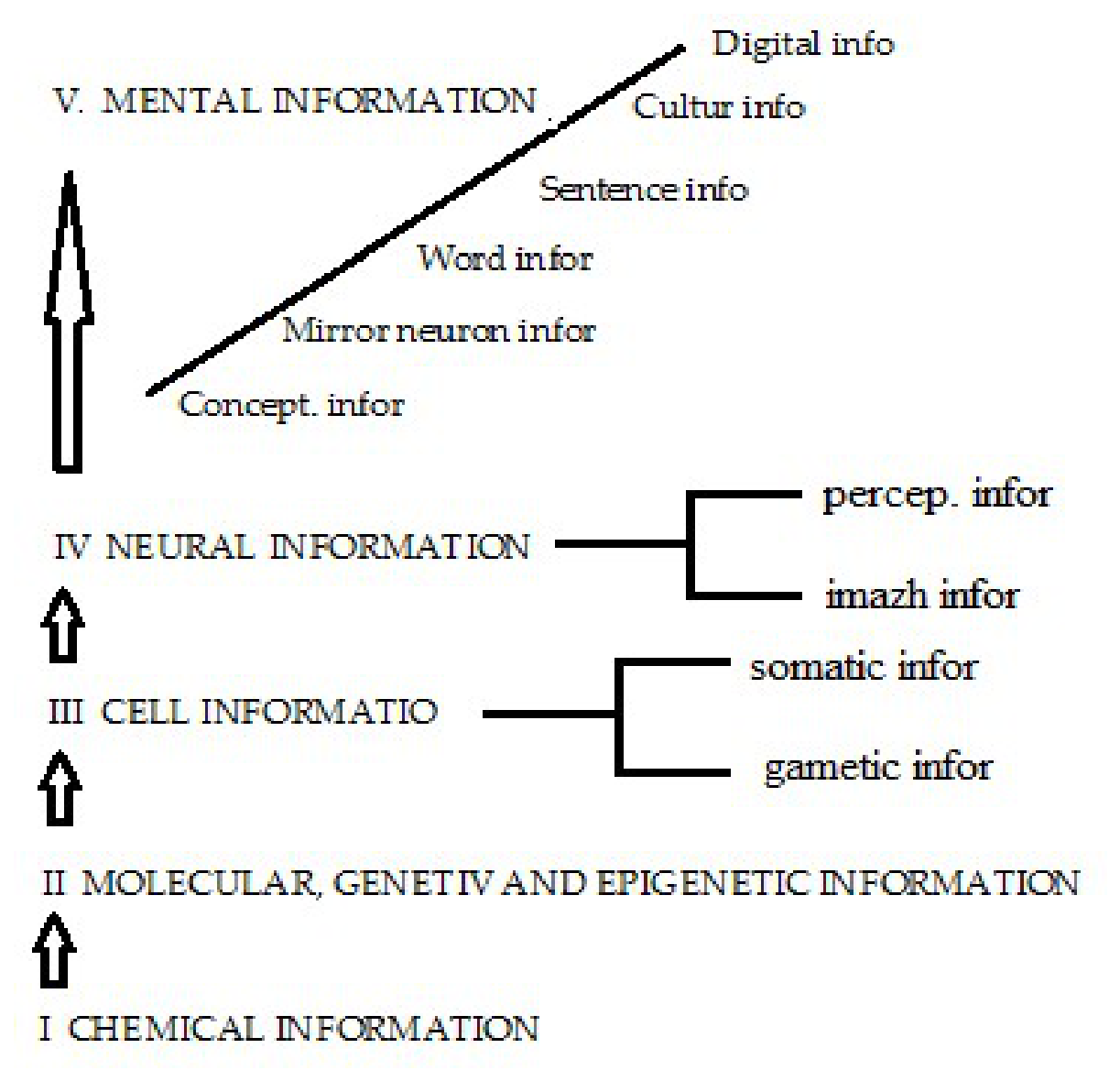
Figure 2.
Protein synthesis interpreted according to the concepts of the code and the module.
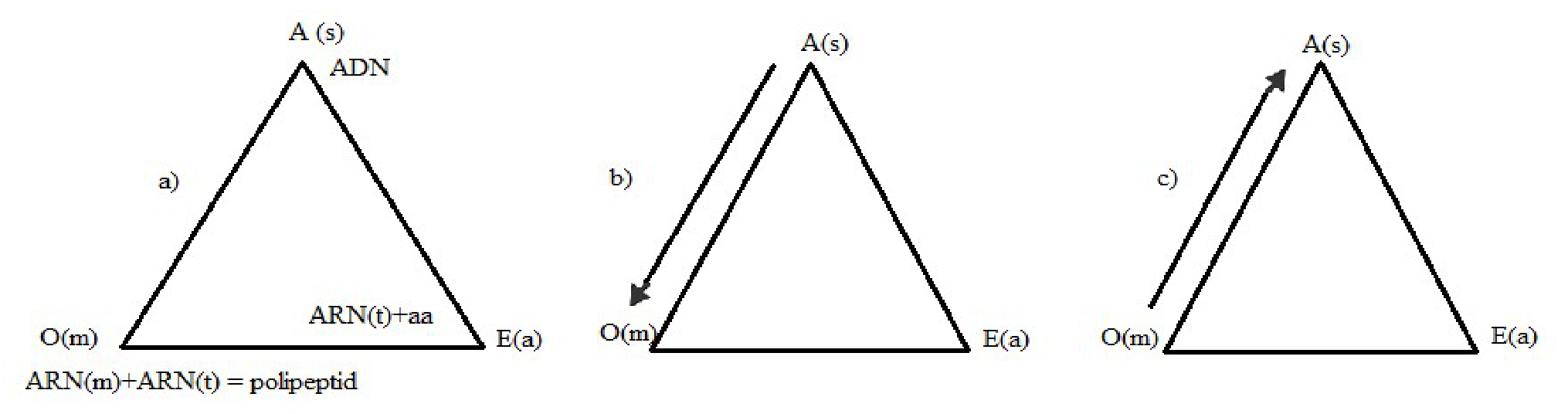
Figure 4.
A Modular Stability Model of Species.
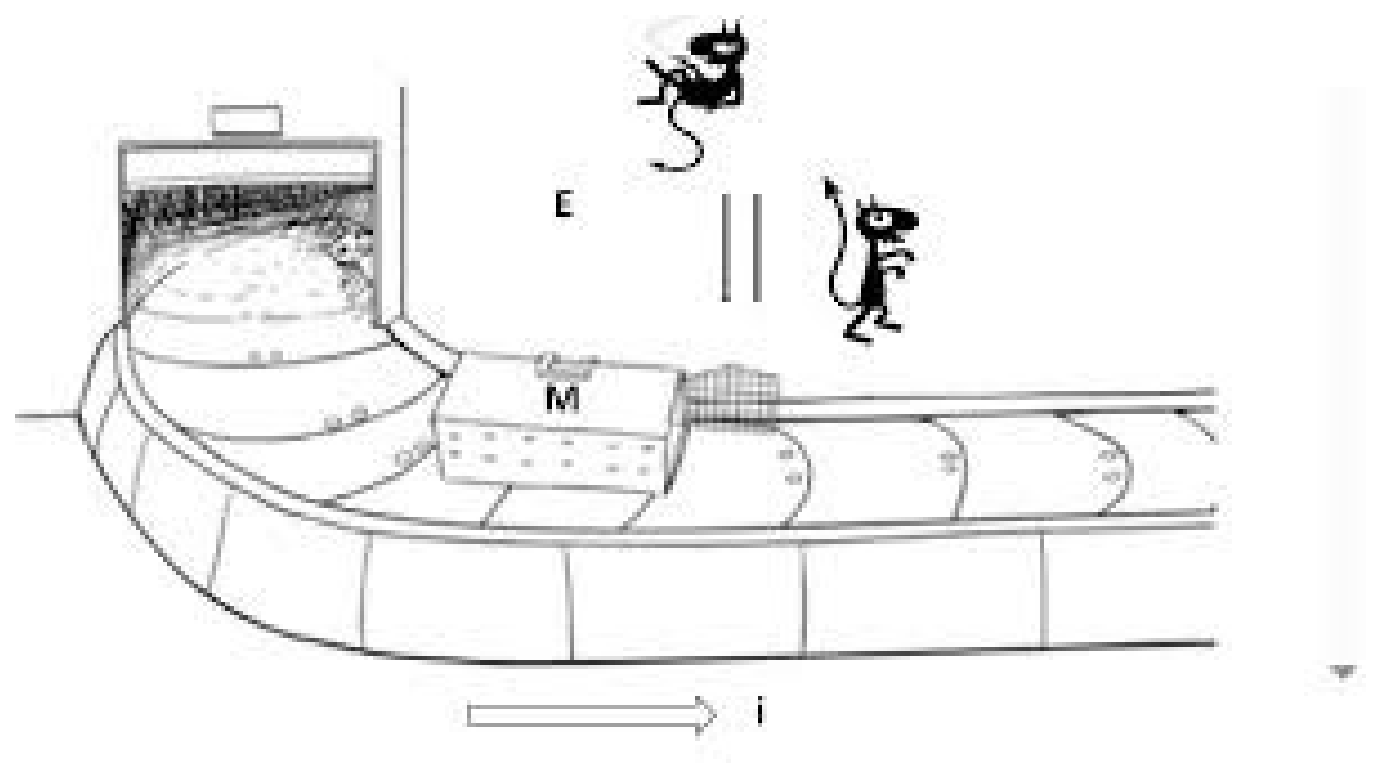
Figure 5.
Knowledge as the Intersection of Belief, Justification, and Truth (a) and as module (b).Figure 5. The region formed by the intersection of the three domains—belief, justification, and truth—represents knowledge (a). Within the modular framework, these three domains correspond respectively to the world of information, represented by the agent (A), the world of energy, represented by the effector (E), and the world of successfully accomplished functions, represented by the object (O).
Figure 5.
Knowledge as the Intersection of Belief, Justification, and Truth (a) and as module (b).Figure 5. The region formed by the intersection of the three domains—belief, justification, and truth—represents knowledge (a). Within the modular framework, these three domains correspond respectively to the world of information, represented by the agent (A), the world of energy, represented by the effector (E), and the world of successfully accomplished functions, represented by the object (O).
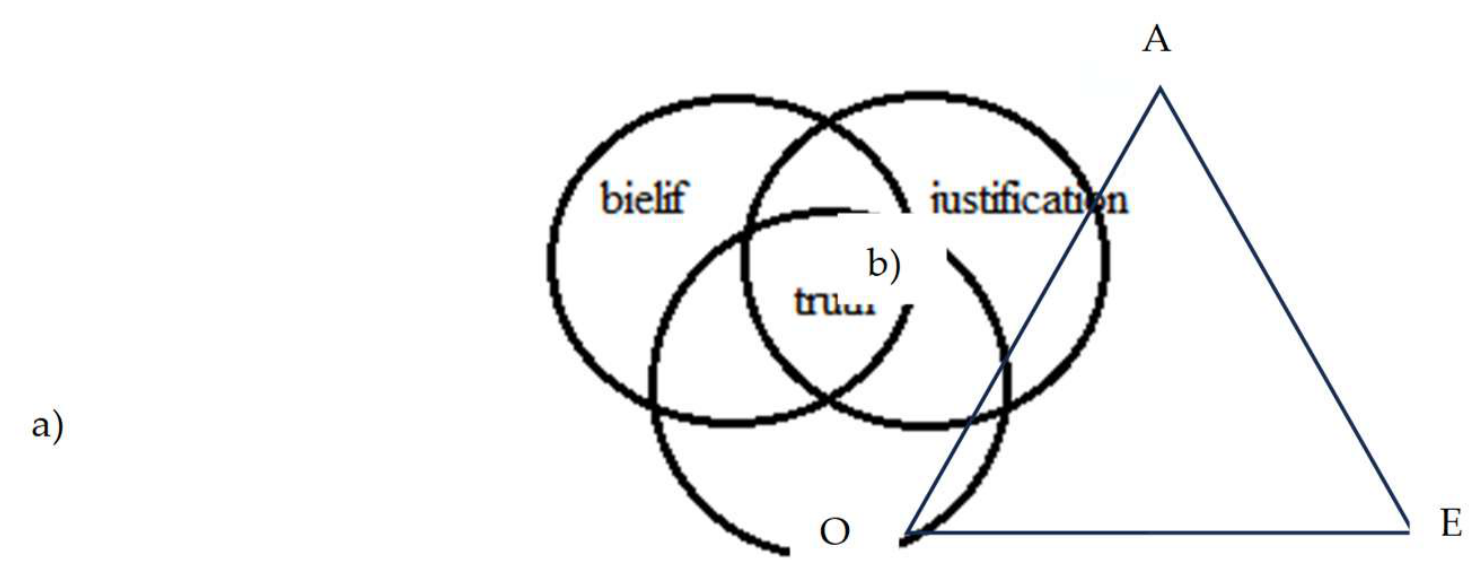

Table 1.
Forms of Structural Information and Their Associated Interactions.
| Nr | Form of information | Types of interactions |
| A | Physical information | |
| I | Chemical information | - Interaction of atoms and molecules |
| II | Genetic–epigenetic information | - Macromolecular interactions |
| III | Cell information - Gametic information | - Interaction of gametes |
| Somatic information | - Cell–cell interaction | |
| IV | Neural Information -percetual information | - Neuronal interactions |
| imazh information | - Interaction of perceptions | |
| B | Non-material information | |
| I | Informacioni mental | |
| I.1 | concept information | - Interaction of images |
| I.2 | mirror neuron information | - Interaction through gestures |
| I.3 | word linguistic information | - Human–object interaction |
| I.4 | sentence linguistic information | - Interaction of words |
| I.5 | social cultural information | - Human interactions |
| I.6 | digital information | - Human–machine interactions |
Table 2.
Six types of modules formed by the five corresponding forms of structural information.
| No. | Information | Module | Parts of the module | Types of module | |||
| Agent (A) | Effector (E) | Function (O) | |||||
| I | Physicochemical information | Atome module | affordance | - and + | atome H | Affordance | |
| Molecular module | Chimical information | Covalent bond | H and H | Chimical module | |||
| Enzyme–substrate module | Steric Information | en-sub | Breakdown | Chimical module | |||
| II | Infor, gjen-epigjen | LT Gene Module | gene | lactase | zëth I lactozës | Genetic module | |
| Transcription Factor Module | gene | trans. fact | transcription | Epi-genetic module | |||
| III | Cell Information | ||||||
| Gametic information | Sexual Reproduction Module | Cell information | gamet f+m | zigota | Cellular Module | ||
| Somatic information | Cell Communication Module | Cell information. | ligand + receptor prot | Communication | Cellular Module | ||
| IV | Neural Information | ||||||
| Perceptual info | Module of perception | Perception information | Neural Networks | perception | Neural module | ||
| Imagine info | Image Module | Image information | Perceptual Networks | image | Neural module | ||
| V | Mental information | Module of concepts | Concept information | Image Networks | concept | Neural module | |
| Module of gesture | Mirror neurone information | Neural networks | Mirror–Imitation | Mental module | |||
| module of words | concept | word | object | Mental module | |||
| module of sentence | agent | VERN | object | Mental module | |||
| Social-Cultural Modules | Moduloma | efektors | fuctions | Mental module | |||
| Digital Module | imm | pin | start | Mental module | |||
| Species Module | actual popullation | future population | past population | Moduloma | |||
| VI | Megainformation | Moduloma univers | information | energy | matter | Moduloma | |
| Moduloma living system | information | modules – efectors | living system | Moduloma | |||
| Moduloma society | culture | institutions | Society | Moduloma | |||
Table 3.
Evolutionary Events as a Function of Time and Information [5].
Table 3.
Evolutionary Events as a Function of Time and Information [5].
| No | Evolutionary events | Timeline | Value of i and t (paranthese) |
| 1 | The first fossils (Archaea) | 4 milliards | -- |
| 2 | Eukaryotic cells | 2 milliards | 2 (1) |
| 3 | Multicellular organisms (Holozoa) | 1 milliard | 4 (3) |
| 4 | Cambrian explosion (Vertebrata) | 500 million | 8 (7) |
| 5 | Mammalia | 250 million | 16 (15) |
| 6 | Flowering plants and placental mammals | 120 million | 32 (26) |
| 7 | Haplorrhini | 60 million | 64 (65) |
| 8 | Catarrhini | 30 million | 128 (132) |
| 9 | Hominidae | 15 million | 256 (265) |
| 10 | Bipedalism | 7.2 million | 512 (532) |
| 12 | ? | 4 million | 1024 (994) |
| 13 | Homo erectus | 2 million | 2048 (1996) |
| 14 | ? | 1 million | 4096 (3999) |
| 15 | ? | 500 000 | 8192 (7771) |
| 16 | Homo sapiens | 250 000 | 16384 (16041) |
| 17 | Language | 125 000 | 33768 (32007) |
| 18 | ? | 62 000 | 67536 (64505) |
| 19 | ? | 31 000 | 135072 (129030) |
| 20 | Mesolithic | 16 000 | 270144 (245061) |
| 21 | Neolithic Revolution | 8000 | 542288 (499991) |
| 22 | Yamnaya | 4000 | 1 084 576 (999991) |
| 23 | Christianity | 2000 | 2 169 152 (1999994) |
| 24 | ? | 1000 | 4 320 354 (3999991) |
| 25 | European Renaissance | 1500 | 8 640 708 (7999999) |
| 26 | Industrial Revolution | 250 | 17 281 416 (16 399 999) |
| 27 | Postmodern period | Nowadays | 34 562 832 |
Disclaimer/Publisher’s Note: The statements, opinions and data contained in all publications are solely those of the individual author(s) and contributor(s) and not of MDPI and/or the editor(s). MDPI and/or the editor(s) disclaim responsibility for any injury to people or property resulting from any ideas, methods, instructions or products referred to in the content. |
© 2026 by the author. Licensee MDPI, Basel, Switzerland. This article is an open access article distributed under the terms and conditions of the Creative Commons Attribution (CC BY) license.
Copyright: This open access article is published under a Creative Commons CC BY 4.0 license, which permit the free download, distribution, and reuse, provided that the author and preprint are cited in any reuse.