Preprint
Article

This version is not peer-reviewed.

Comparative Analysis of Postoperative Outcomes Between Transanal Total Mesorectal Excision (TaTME) and Robotic Total Mesorectal Excision with TTSS Anastomosis (RTME/TTSSTEO)

Submitted:

13 August 2026

Posted:

14 August 2026

You are already at the latest version

Abstract

Surgical treatment for rectal cancer has evolved to improve outcomes. To this end, we conducted a comparative study analyzing the postoperative, pathological, and oncological outcomes of two techniques for the treatment of mid- and lower rectal cancer: Transanal Total Mesorectal Excision (TaTME) and Robotic Total Mesorectal Excision with TTSS anastomosis using the TEOâ platform (RTME/TTSSTEO). A total of 146 patients who underwent surgery between 2012 and 2025 at a tertiary care center were included. Both groups were comparable in baseline characteristics and staging. The robotic technique was associated with longer operative time but a lower overall complication rate and a trend toward fewer clinical suture failures. The quality of the mesorectum and the rate of R0 resections were high in both approaches. At follow-up, local recurrence was lower in the robotic group, although the duration of follow-up was shorter. The results suggest that RTME-TTSSTEO is a safe alternative and potentially superior in terms of overall morbidity and mortality compared to TaTME.

Keywords: 
;  ;  ;  

1. Introduction

Colorectal cancer is the third most common cancer worldwide (1,9-2 million cases annually) and the second leading cause of death, with one-third of these cases affecting the rectum.(1,2) Treating rectal cancer requires a multidisciplinary approach, involving radiation therapy, chemotherapy, and surgery as key components. (3). Currently, many changes are happening in the overall management of rectal cancer at different levels: diagnosis, medical treatment, radiotherapy, preoperative and postoperative care, and combinations of these. All of these efforts aim to improve oncological and functional outcomes, thereby enhancing the quality of life for patients with this disease.(4) Total mesorectal excision (TME) has been the “gold standard” of surgical treatment since Professor Heald first described it. (5) Established in the 1980s, TME is essential for reducing local recurrence. (6-8) Total mesorectal excision (TME), initially described as an open surgical procedure, has evolved with surgical techniques. It was once a very aggressive and mutilating procedure that caused digestive problems due to the need for a permanent ostomy and urinary and sexual issues. To reduce trauma to patients, minimally invasive techniques have been developed, including laparoscopic surgery, transanal surgery, and, more recently, robotic surgery. Studies have shown the advantages of minimally invasive surgery for rectal cancer compared to open surgery.
Although the laparoscopic approach is common, it faces significant technical limitations in patients with narrow pelvises, male patients, obese patients, or tumors in the lower rectum, where visibility and maneuverability are challenging. To overcome these issues, two techniques have emerged: transanal TME (TaTME),(7-12) which employs a “bottom-up” approach to assist dissection of the distal rectum under direct visualization, and robotic surgery (RTME), which provides three-dimensional visualization and highly articulated instruments. With the increasing use of robotic surgery and its advantages—such as stability, clear visualization, precise robotic arms, and enhanced maneuverability—TME is increasingly performed using this method. Current studies support the effectiveness of robotic surgery in rectal procedures. (13-15)
The latest advancement in surgical techniques for rectal cancer is Dr. Spinelli’s contribution to performing rectal anastomosis. This technique involves transanal rectal transection and bowel reconstruction using a single-staple anastomosis (TTSS). It combines the benefits of the transanal view for accurate transection with a simplified anastomosis that avoids the multiple staple shots needed by the conventional method, which are linked to a higher risk of suture failure.(16-18)
To optimize the management of rectal lesions at our center and with various approaches for performing TME, we use transanal surgery with a rigid platform—Transanal Endoscopic Surgery (TEO)—and have extensive experience in treating benign and early-stage neoplastic rectal lesions.(19-21) This has allowed us to adapt our surgical methods for tumors in the mid-to-lower rectum to achieve optimal patient outcomes. Starting from open and laparoscopic surgery, we introduced TaTME (22) using the TEO platform. Since 2020, we have also performed the robotic approach (RTME) combined with the TTSS technique, as described by Spinelli, using the rigid TEO platform (RTME/TTSSTEO).
We aim to compare the outcomes of the two approaches—TaTME and (RTME/TTSSTEO)—in terms of postoperative morbidity and mortality, pathological findings, and postoperative recovery to identify which technique is best for our patients.

2. Materials and Methods

To this end, we conducted a single-center, retrospective study with prospective data collection that was observational and analytical, covering the period from 2012 to 2025. Our goal was to demonstrate that the RTME/TTSSTEO technique achieves postoperative morbidity and mortality rates that are at least not inferior to those of the TaTME technique, which was the method used at our center for treating tumors in the middle and lower third of the rectum. As secondary objectives, we also evaluated postoperative recovery, pathological findings, and oncological outcomes for both techniques.
All patients diagnosed with a rectal lesion via colonoscopy were eligible for the study. Each patient underwent a staging workup that included blood tests, thoracoabdominal computed tomography (CT), pelvic magnetic resonance imaging (MRI), and endorectal ultrasound (EER) with rigid rectoscopy. Cases were discussed with the Multidisciplinary Colorectal Cancer Committee at our hospital. Once deemed eligible for surgery, patients were evaluated by a coloproctology team member, signed informed consent forms, and underwent preoperative prehabilitation if needed.(23) The Enhanced Recovery After Surgery (ERAS) (24) protocol for colorectal surgery was applied throughout the process. TaTME (21) was first performed at our center in 2012. In 2020, it shifted to RTME/TTSSTEO following the acquisition of the robotic platform, and this technique is still in use today.
TaTME technique: This involves a laparoscopic abdominal approach to mobilize the splenic flexure, dissect the inferior mesenteric vessels, and prepare the proximal part of the anastomosis. A transanal approach is then employed to perform the TME and prepare the distal part of the anastomosis. Both procedures can be performed simultaneously by two surgical teams.
RTME/TTSSTEO: This approach uses a surgical robotic platform to perform all steps of the TaTME technique: mobilizing the splenic flexure, dissecting the inferior mesenteric vessels, and preparing the proximal part of the anastomosis, including the TME, up to the distal anastomosis. At this point, the robot is removed, and the TEO platform is introduced to complete the anastomosis, as described by Spinelli (TTSS). The two approaches cannot be done simultaneously because the robotic platform physically blocks them, requiring sequential procedures.
In both methods, the anastomosis can be performed mechanically, either with a circular mechanical suture or a manual coloanal suture, depending on the lesion’s location. The decision to perform a protective ileostomy is up to the surgical team in each case.
We included all patients diagnosed with rectal neoplasia or benign lesion who underwent surgery using either the TaTME or RTME/TTSSTEO approach with curative intent and without any procedure other than a protective ileostomy. Exclusion criteria included patients who had surgery with a different technique, those with palliative intent, or those who underwent a procedure other than a protective ileostomy.
The variables analyzed included demographic, tumor-related, preoperative, intraoperative, and immediate postoperative data, along with information from the most recent follow-up. Demographic variables encompassed age at surgery and sex. Preoperative data involved information collected during the patient's assessment, such as body mass index (BMI), American Society of Anesthesiologists (ASA) score, and medical history including hypertension, diabetes, dyslipidemia, and the presence of cardiovascular, respiratory, hepatic, or renal disease, as well as prior abdominal surgeries. Tumor-related data included tumor height, preoperative pathology, preoperative thoracoabdominal CT scan, pelvic MRI, EER, and rectoscopy, in addition to preoperative staging and whether neoadjuvant therapy was administered. Intraoperative data covered surgical time, approach type, anastomosis type, any anastomosis defects and respective repairs, and the creation of a protective stoma. Postoperative data recorded hospital stay, readmissions, reinterventions, and complications—medical, infectious, or surgical—classified according to ICD-10 (25) criteria, with severity assessed using the Clavien-Dindo (26,27) classification. Follow-up information included the date of the last visit, presence of local or distant recurrence, disease-free survival, and whether patients had died, specifying if death was related to the disease.
Statistical analyses were performed using STATA 16 and SPSS (version 30). Baseline characteristics of the study population were described with descriptive statistics. Continuous variables were presented as mean ± standard deviation or median with interquartile range, depending on their distribution, while categorical variables were expressed as absolute frequencies and percentages.
Between-group comparisons were conducted using appropriate inferential tests based on the type and distribution of each variable. For continuous variables, either Student’s t-test or the Mann–Whitney U test was applied, while for categorical variables, the chi-square test or Fisher’s exact test was used as suitable.
Overall survival and disease-free survival were assessed using the Kaplan–Meier method. Survival curves were compared with the log-rank test. A p-value < 0.05 was deemed statistically significant for all analyses.
The study follows the STROBE guidelines for observational research. It adheres to the latest version of the Declaration of Helsinki and complies with current data protection laws. Since this is a retrospective study, informed consent was not necessary from the patients. The study received approval from the Hospital Ethics Committee (CEIm Code: 2026.069-50). As a retrospective study we don´t need a informed consent of the patients.

3. Results

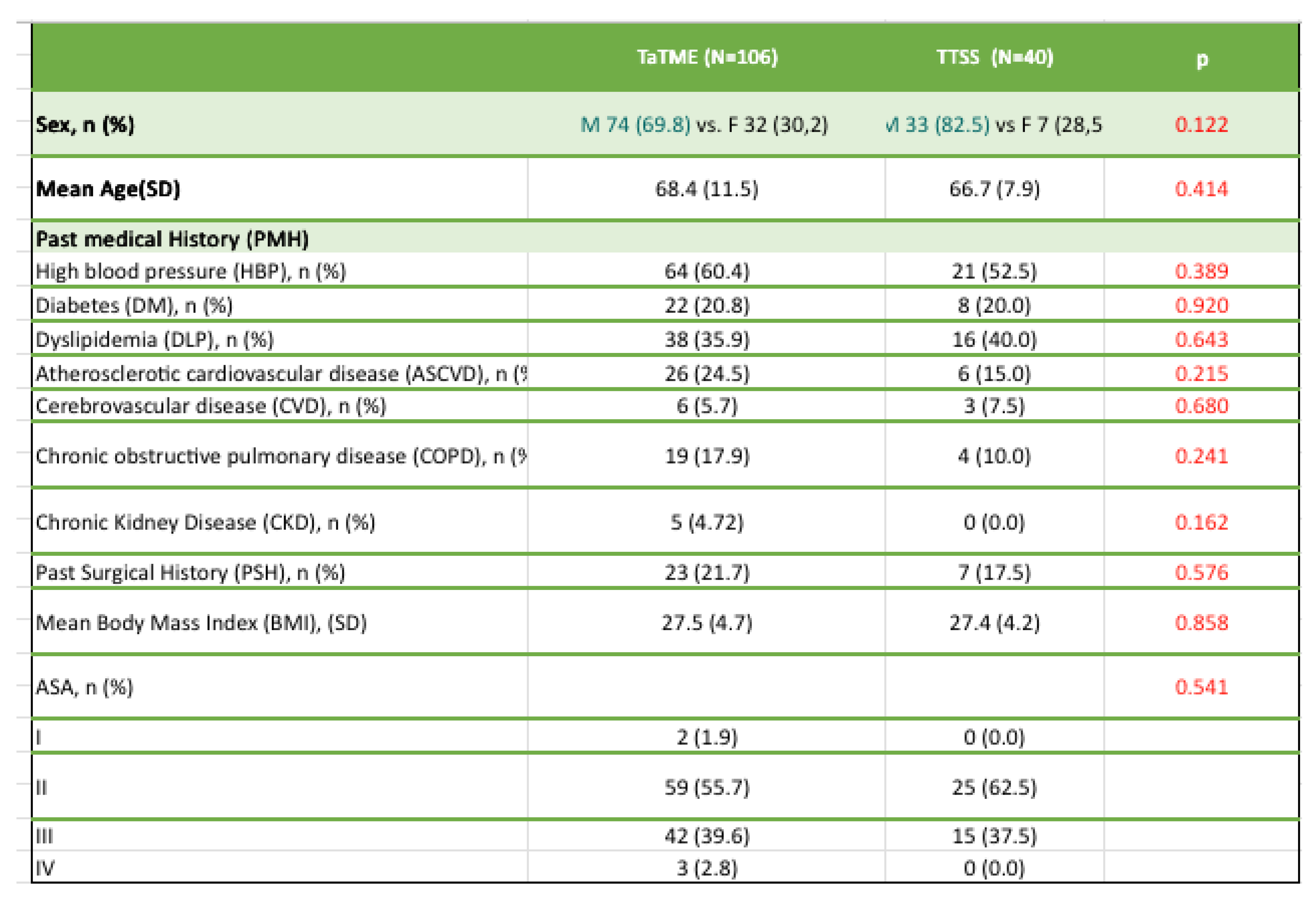
This is a single-center, retrospective study with prospective data collection conducted between 2012 and 2025. The hospital has 860 beds and serves a population of 407,000. The colorectal unit performed 407 major surgical procedures. The General Surgery Department, to which this unit is attached, is known for its detailed collection of adverse effects from admitted patients, according to the ICD10 classification and the Clavien-Dindo grading system since 2005.(28,29) The study included 146 patients (106 in the TaTME group and 40 in the RTME/TTSSTEO group). No significant differences were observed in age, sex, BMI, or ASA classification between the two groups (Table 1).
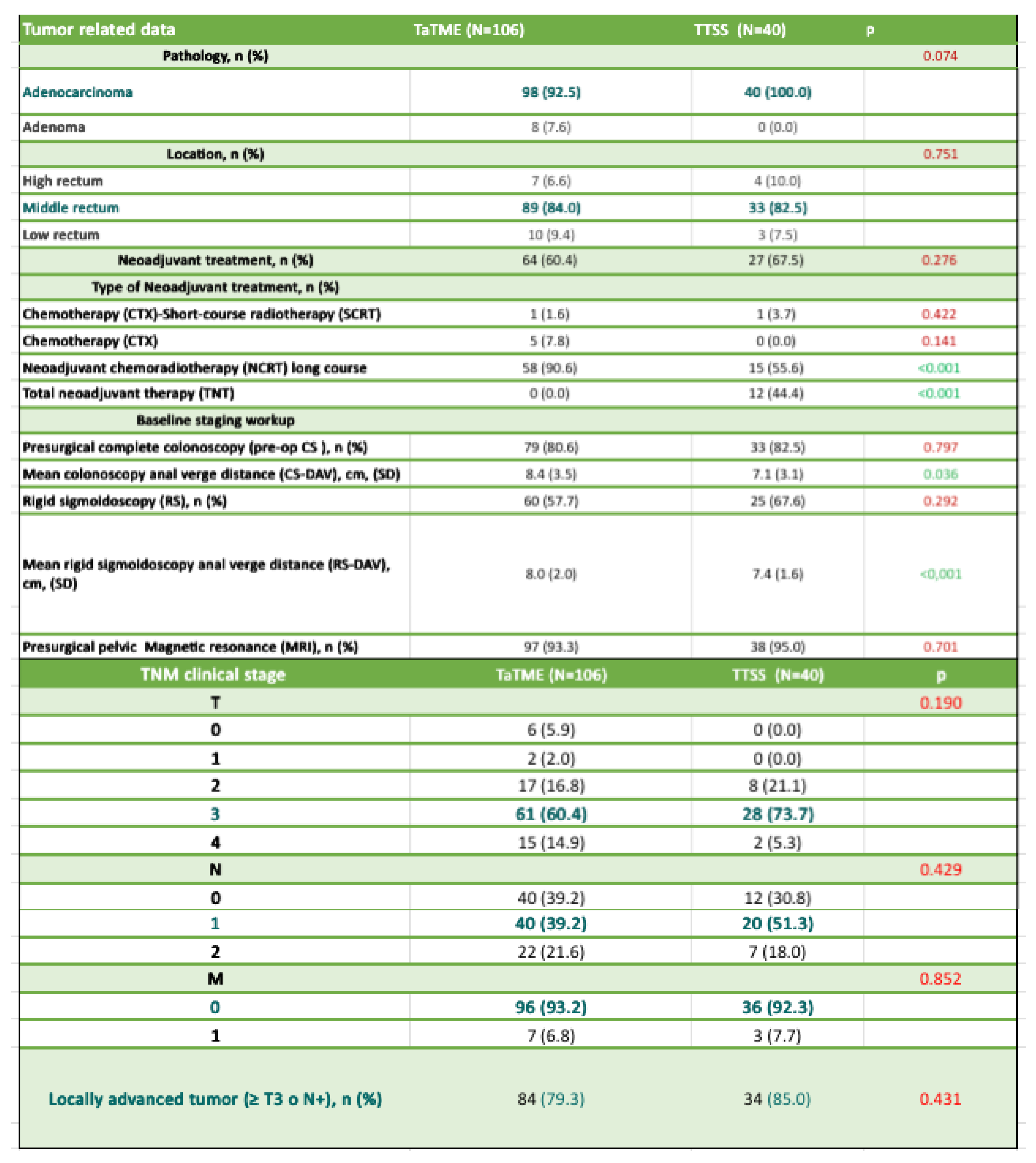
The characteristics of the rectal tumors treated in each group were as follows: most were adenocarcinomas located in the middle third, with a lower proportion of lesions in the RTME/TTSSTEO group. Most tumors underwent neoadjuvant therapy, with a significantly higher rate of Total Neoadjuvant Therapy (TNT) in the robotic group, as this treatment was implemented around the same time at our center. In terms of clinical staging, both groups were comparable. (Table 2).
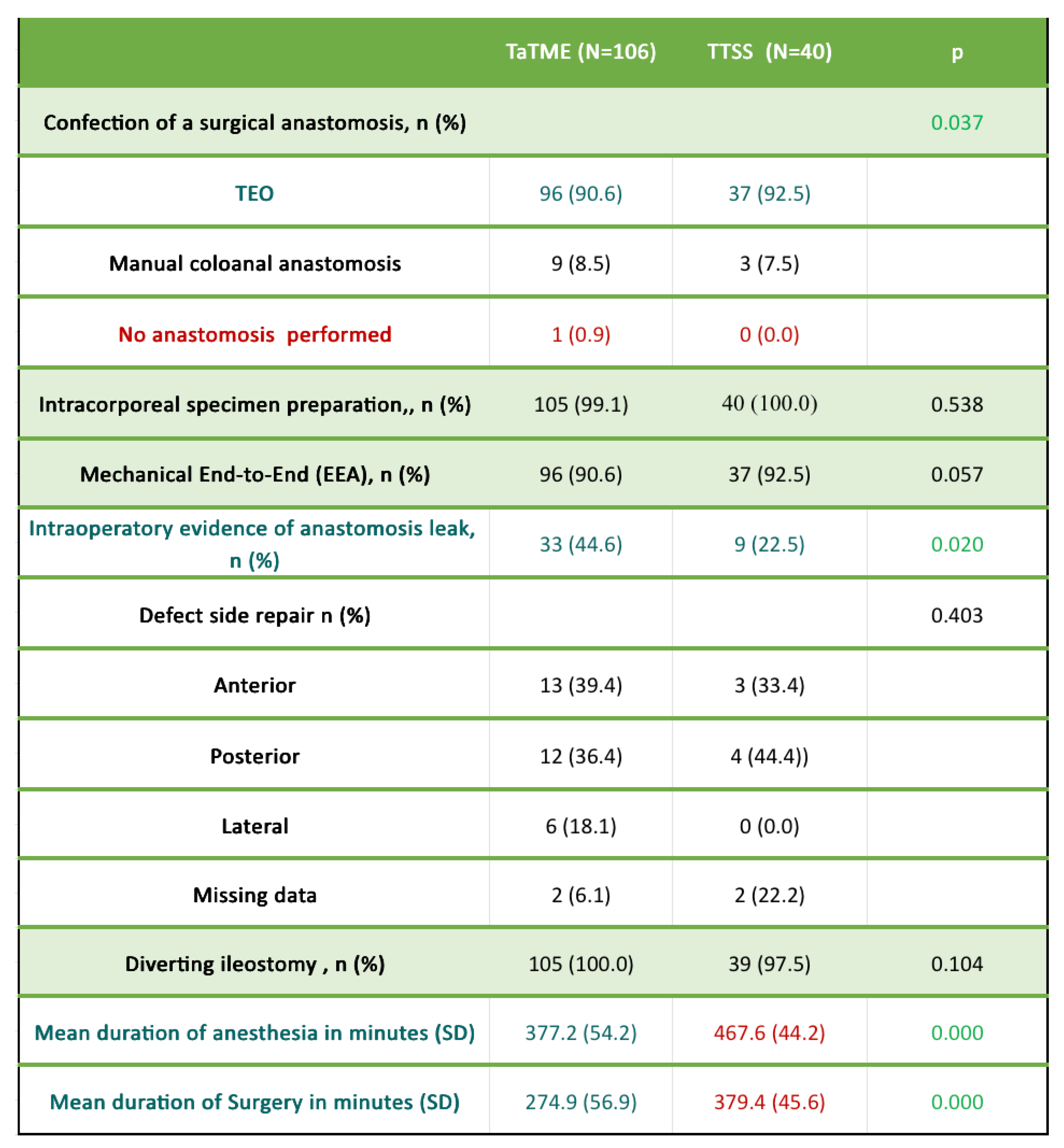
When examining the surgical outcomes, we observed a longer operative time in the RTME/TTSSTEO group (379.4 min vs. 274.9 min). This is due to the inability to operate on two surgical fields simultaneously. Anastomoses were performed mechanically using the TEO platform, which allows for post-stapling inspection and repair of any defects. More intraoperative anastomotic defects were seen in the TaTME group (44.6% vs. 22.5% in the RTME/TTSSTEO group), with a statistically significant difference between the groups. Most anastomotic defects were found in the anterior or posterior part of the same area and were repairable during surgery in all cases. Nearly all patients received a protective ileostomy. (Table 3).
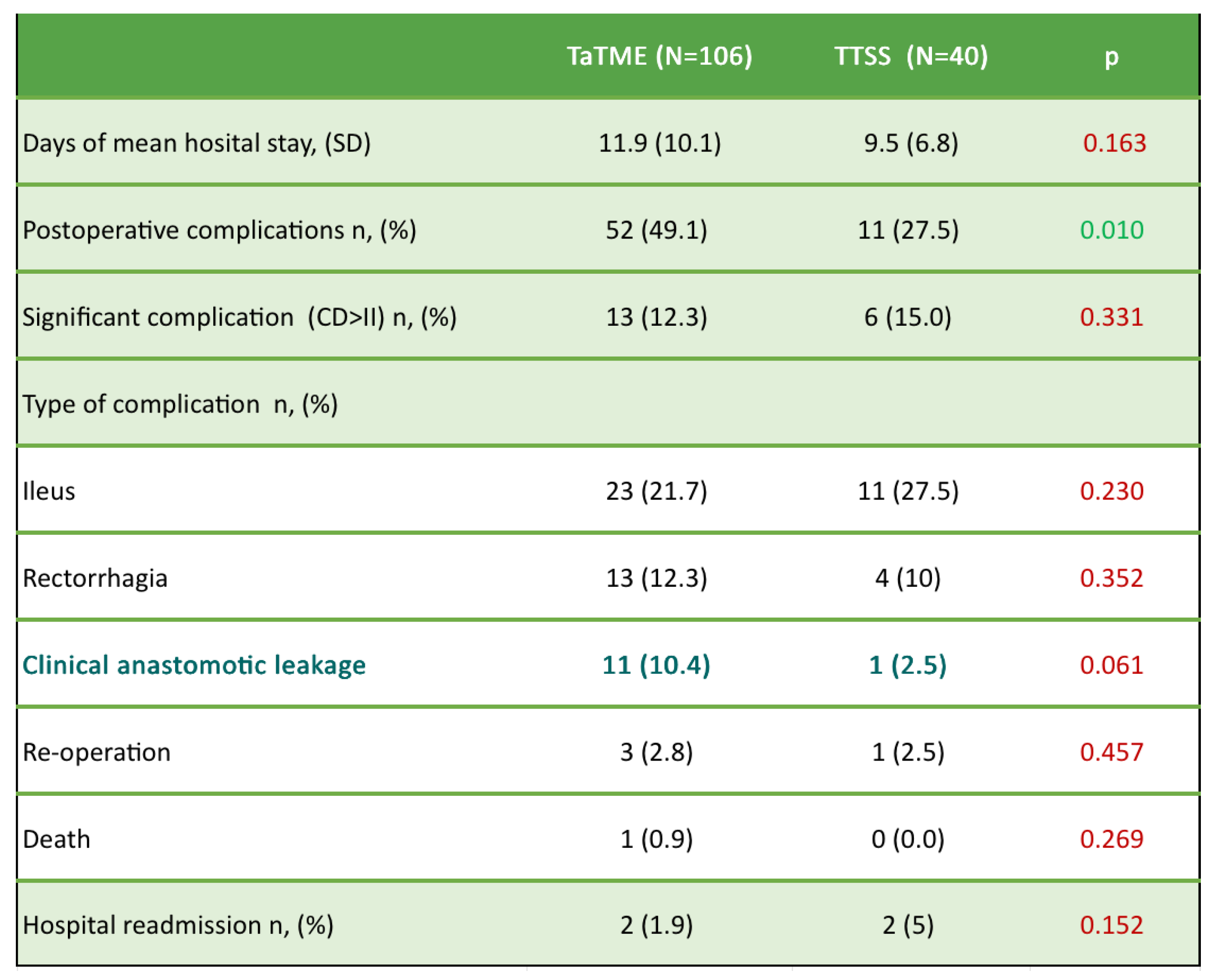
Morbidity and mortality rates were lower in the RTME/TTSSTEO group compared to the TaTME group, which experienced a higher incidence of general complications (49.1% vs. 22.5%). However, there was no difference between the two groups in Clavien-Dindo complications of grade 3 or higher. (Figure 1) Rates of paralytic ileus, rectal bleeding, reoperation, readmission, and death were also similar. The TaTME group showed a trend toward a higher rate of clinical suture failure (10.4% vs. 2.5%), although this difference was not statistically significant. The hospital stay was marginally shorter for the RTME/TTSSTEO group (9.5 days vs. 11.9 days), but this difference did not reach statistical significance.(Table 4).
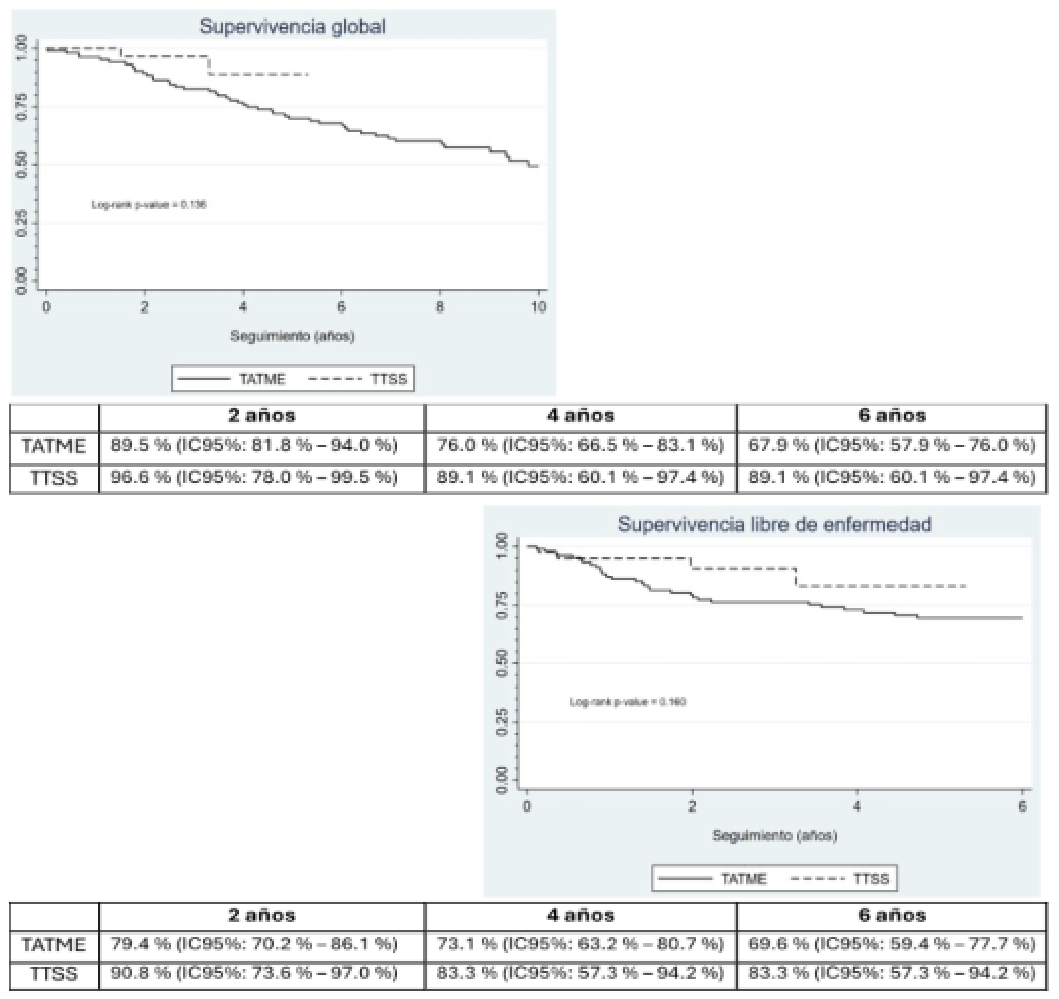
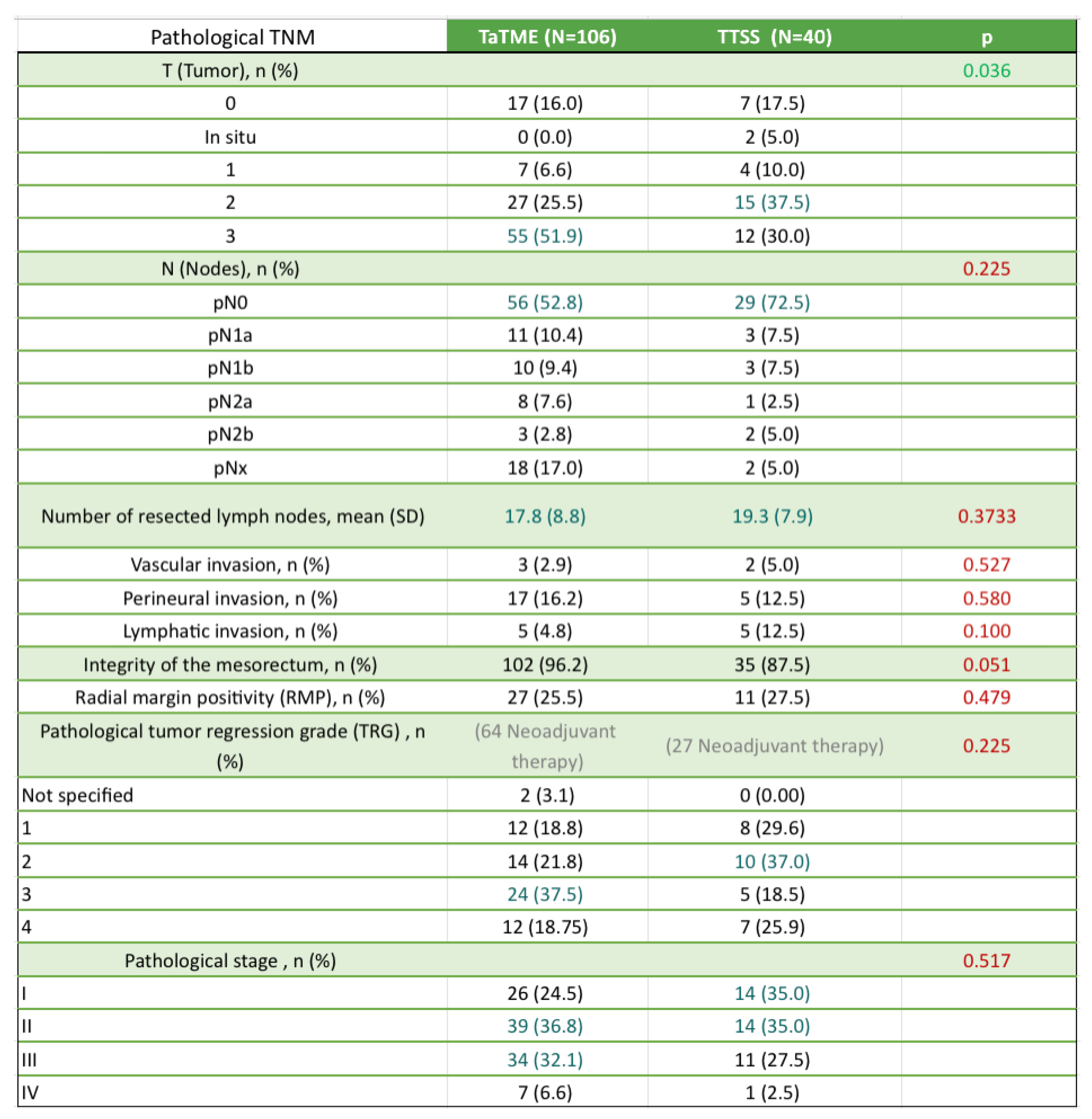
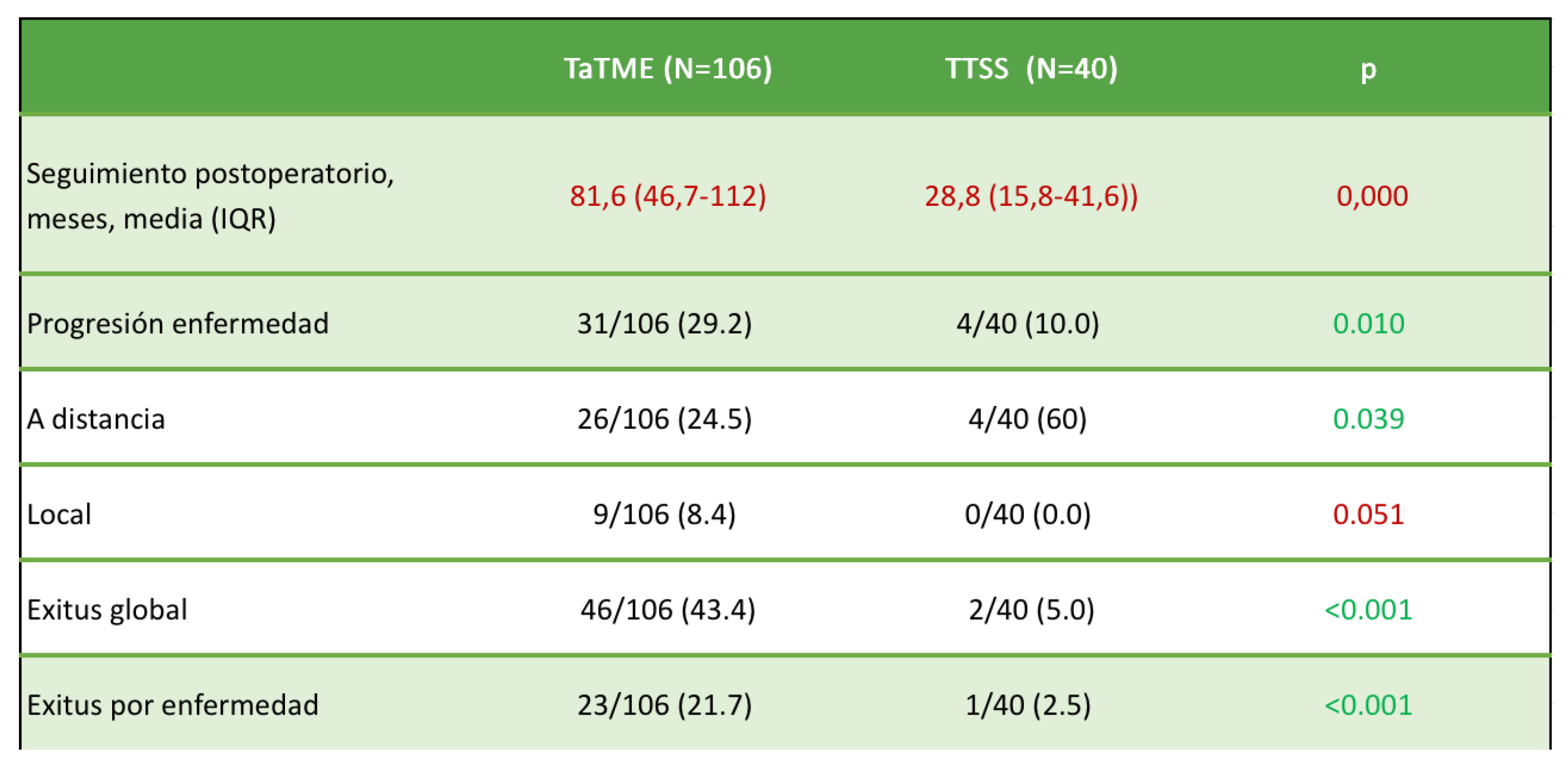
Both techniques achieved high-quality mesorectal dissection, and most were R0 resections. (Table 5) Regarding oncological follow-up, it is important to note that the robotic group had a significantly shorter follow-up period. (Table 6) With an average postoperative follow-up of 81.6 months compared to 28.8 months between the groups, disease progression was observed in 29.2% (31/106) of the TaTME group and in 10% (4/40) of the robotic surgery group. Local recurrence occurred in 8.4% (9/106) of the transanal surgery group and in 0% (0/40) of the robotic group. Overall/disease-related mortality was 43.4% (46/106) versus 23% (2/40) in the transanal and robotic groups, respectively (p< 0.001) ( Figure 2). Considering the change of neoadjuvant treatment in the robotic group to TNT as one factor as a cause of differences.
Figure 2. Survival curves.
Preprints 228147 g002
Table 5. Pathological Data.
Preprints 228147 i005
Table 6. Oncological data.
Preprints 228147 i006

4. Discussion

The evolution of rectal cancer treatment has shifted from mutilating procedures to a multidisciplinary, minimally invasive approach that emphasizes both oncological cure and functional preservation. For much of the 20th century, the Miles procedure (abdominoperineal resection) was the standard for low rectal tumors, resulting in permanent stomas and high rates of local recurrence. The paradigm shift occurred in 1982 when Bill Heald (2) described Total Mesorectal Excision (TME). This technique, based on sharp dissection through the "sacred plane" (visceral pelvic fascia), enabled removal of the rectum with its lymphovascular sheath intact, thereby drastically reducing local recurrence. Subsequently, in 1986, Quirke (30) validated the importance of the circumferential resection margin (CRM) as the main predictor of oncological success.
At the same time, management shifted to a multidisciplinary approach. The inclusion of specialists allowed for standardization of neoadjuvant chemoradiotherapy to shrink tumors and improve sphincter preservation rates. Currently, Total Neoadjuvant Therapy (TNT) has become a strategy to better control micrometastases. (31)
With technological advancements, laparoscopy was introduced to minimize surgical trauma. Studies emerged promoting the use of minimally invasive surgery for Total Mesorectal Excision (TME): the COLOR II (32) study is the largest randomized clinical trial comparing laparoscopic and traditional open surgery for rectal cancer. It evaluated 1,044 patients at European centers to demonstrate the safety and effectiveness of the minimally invasive technique. The COLOR II study concluded that laparoscopic surgery for rectal cancer is as safe and oncologically effective as open surgery, showing similar local recurrence rates, disease-free survival, and overall survival at 3 years. Besides oncological equivalence, the laparoscopic approach offered short-term benefits, including faster recovery, less bleeding, and similar late complications compared to open surgery. Following that, the COLOR III (33) study was published. This international clinical trial compared Transanal Total Mesorectal Excision (TaTME) with the conventional laparoscopic technique (laparoscopic TME) for mid- and low rectal cancer. Its main goal was to assess the quality of surgical resection and safety margins. The most notable finding in favor of TaTME was a significant reduction in the conversion rate to open surgery (1% in the TaTME group versus 17% in the LapTME group). It is true that critics of the transanal approach have appeared since then due to an increase in local recurrence among patients treated with TaTME. (34,35) The complications and risks linked to the TaTME technique are mitigated through strict regulatory oversight, revised surgical protocols, and careful patient selection. Scientific societies and international expert panels implement these solutions. (36-40) The ROLARR (41) and REAL (42) studies are major clinical trials comparing robotic-assisted and traditional laparoscopic surgery for rectal cancer. The ROLARR Trial compares robotic assisted versus conventional laparoscopic surgery, focusing on the rate of conversion to open laparotomy. With 471 patients across 29 global sites, an overall conversion rate of 10.1% was observed (8.1% in the robotic group versus 12.2% in the laparoscopic group), which was not statistically significant. The study concludes that short-term findings did not provide enough evidence to prove robotic surgery's superiority in reducing open conversion rates, and robotic procedures tend to be more costly. The REAL Trial investigates surgical quality, functional recovery, and long-term oncological outcomes (such as locoregional recurrence and disease-free survival), specifically for middle and low rectal cancer. This recent multi-center randomized trial shows that robotic surgery can lower 3-year locoregional recurrence rates (e.g., 1.6% vs. 4.0%) and improve disease-free survival compared to standard laparoscopy. In terms of functional recovery, robotic approaches also demonstrated benefits in post-operative urinary and sexual function recovery, because of better visualization and precision in tight pelvic spaces. Finally, the Transanal Transection and Single-Stapled anastomosis (TTSS) technique, introduced by Professor Antonino Spinelli in 2019, addresses the major mechanical and oncological limitations of traditional double-stapling methods in low rectal surgery. By integrating a transanal approach with single-stapling, the procedure offers several profound clinical, oncological, and functional benefits supported by emerging surgical data. Clinical studies show that the anastmotic leak rate drops dramatically with this approach; one comparative trial reported a 2% leak rate in the TTSS group compared to 17.5% in the traditional double-stapled group. Consequently, patients undergoing TTSS experience fewer overall 90-day complications and a markedly lower rate of surgical reintervention due to leaks (2% vs 12.6%). Trials tracking patient-reported outcomes indicate that patients who receive TTSS demonstrate a significantly lower median LARS score at 24 months post-op compared to those who undergo traditional double-stapling. (43,44)
In summary, the evolution of rectal cancer surgery toward minimally invasive approaches has aimed to overcome the limitations of traditional laparoscopy in narrow pelvises or for distal tumors. (3-5) This comparative study between TaTME and RTME/TTSSTEO provides important evidence regarding a technological innovation that combines the precision of robotic dissection with the safety of transanal reconstruction.
The comparative analysis shows that both procedures are oncologically feasible and safe, but with important differences. Concerning specimen quality, most studies indicate that both robotic and transanal surgery achieve similar margins, as demonstrated in our study. However, some meta-analyses suggest that RTME/TTSSTEO may be linked to a slightly higher rate of intact mesorectum. (23)
Our results show that the RTME/TTSSTEO group has a significantly lower overall complication rate (27.5% vs. 49.1%, p=0.010) compared to the TaTME group. This is notable, as the broader literature usually reports similar morbidity rates among advanced minimally invasive techniques. However, when examining major complications (Clavien-Dindo > II), no significant differences were found, consistent with previous meta-analyses that consider the safety of both procedures to be comparable. (23)
This does not mean that transanal surgery is completely obsolete. We believe this technique should be regarded as a surgical option that offers bottom-up access to rectal lesions or pathologies at the rectal or lower pelvic level that cannot be reached through abdominal approaches with a robotic method. (39)
A key point of discussion is the integrity of the anastomosis. The TTSS technique41, performed under direct visualization using platforms such as TEO, ensures a precise distal margin, simplifies mechanical reconstruction, and allows for subsequent inspection of the anastomosis, enabling repair if necessary. In our series, the robotic group using TTSS showed a trend toward lower clinical suture failure rates. This benefit aligns with the findings of Spinelli et al. and Foppa et al., who argue that avoiding multiple stapler firings—which are necessary in laparoscopic double stapling—reduces the risk of anastomotic leakage, one of the most persistent problems in lower rectal surgery. While the International TaTME Registry reports anastomotic failure rates of up to 15.7%, the TTSS technique, when performed by experts, can lessen these outcomes. The positive results regarding suture failure seen with robotic surgery associated with TTSS anastomosis suggest the potential to study avoiding protective ileostomies in patients with mid or lower rectal cancer undergoing this procedure, RTME/TTSSTEO. (41,42)
In terms of surgical efficiency, the RTME/TTSSTEO was associated with longer operative times. This increase is common in robotic surgery, caused by the need to dock the system and the inability to operate in two surgical fields simultaneously, unlike the TaTME approach, which uses two robotic systems in a coordinated way. However, the better maneuverability and stable 3D visualization of robotic surgery might offset this extra time by enabling more precise dissection in tight spaces. (15) As robotic platforms continue to improve, this situation could change; in fact, studies are already emerging that examine TaTME performance using robotic platforms. (45)
From an oncological perspective, RTME/TTSSTEO showed an excellent safety profile, with a local recurrence rate of 0% during the available follow-up period, compared to 8.4% in the TaTME group (p=0.051). Although this difference should be interpreted cautiously, due to the shorter follow-up in the robotic group, it reinforces concerns raised in countries like Norway about recurrence patterns following TaTME during the implementation phase. The robotic technique with TTSS enables leveraging the advantages of transanal visualization of the distal margin without the technical difficulties and risks of inadvertent tumor spread associated with the learning curve of “pure” TaTME.
The learning curve is another important factor. It is estimated that TaTME requires 40-71 cases to achieve mastery, with risks such as urethral injury or CO2 embolism. In contrast, robotic surgery offers a more standardized platform, allowing surgeons with prior laparoscopic experience to become proficient after about 15 to 43 cases. (25) Although the robotic surgery learning curve is shorter, the one for performing the coloanal anastomosis according to Spinelli must also be considered. Knowledge and training in this procedure are essential for the best outcomes. In our group, we utilize the experience gained over the years as a leading regional center for local rectal surgery, supported by numerous studies, and adapt the Spinelli technique for use with the TEO rigid platform. This modification enables a higher anastomosis, with direct visual control of the resection margin and the lesion, as well as subsequent verification and potential repair of the anastomosis.
Finally, although this study does not examine functional outcomes, the literature suggests that robotic surgery generally better preserves initial anorectal function by avoiding the prolonged anal dilation required by transanal approaches during mesorectal dissection. Conversely, the transanal approach (including TaTME and TTSS) is notable for its ability to preserve distal autonomic nerves due to direct visualization from the lower pelvis. (15,26) Our group has conducted studies showing that the use of the TEO for transanal surgery does not impair sphincter function or quality of life in patients.45,46,47 We should conduct a study to explore the functional outcomes of our technique, considering that we associate the transanal approach with the TEO for performing the TTSS anastomosis.
Limitations of this study include its single-center, retrospective design despite prospective data collection. Additionally, the study involves a small population and a short follow-up period in the robotic group. Its strengths are comprehensive data collection and a homogeneous surgical group.

5. Conclusions

In conclusion, robotic surgery combined with RTME/TTSSTEO reconstruction offers a safe and effective alternative to traditional TaTME, with positive results in reducing postoperative complications and ensuring anastomotic safety. This hybrid method leverages the precision of robotic pelvic dissection and the dependability of a single-stapling technique performed under direct transanal visualization. These complementary benefits may make this technically challenging procedure easier and enhance surgical and patient outcomes, although additional prospective studies are needed to confirm these results.

Author Contributions

For research articles with several authors, a short paragraph specifying their individual contributions must be provided. The following statements should be used “Conceptualization, LM, AP, AS and AG; methodology, Lm, AP, AS; software, AG; validation, AP, AS, MC., AG. and VA; formal analysis,VA; investigation, LM; resources, LM, AS.; data curation,VA.; writing—original draft preparation, LM.; writing—review and editing, LM and MC; visualization, CC and AN supervision, AS, AP and AG; project administration, LM. All authors have read and agreed to the published version of the manuscript.” Please turn to the CRediT taxonomy for the term explanation. Authorship must be limited to those who have contributed substantially to the work reported.

Funding

This research received no external funding

Institutional Review Board Statement

The study was conducted in accordance with the Declaration of Helsinki, and approved by the Institutional Review Board (or Ethics Committee) of Parc Tauli. Institut d´Investigacio i Innovacio I3PT (protocol code 2026.069.05 / 2026-May)

Conflicts of Interest

The authors declare no conflicts of interest. The funders had no role in the design of the study; in the collection, analyses, or interpretation of data; in the writing of the manuscript; or in the decision to publish the results.

Abbreviations

The following abbreviations are used in this manuscript:
ETM Total Mesorectal Excision
TaETM Transanana Total Mesorectal Excision
RTME Robotic Total Mesorectal Excision
TTSS Transanal Single Stapled Anastomosis
TEO Transanal Endoscopic Operation
RTME-TTSSTEO Robotic Total Mesorectal Excicsion with Transanal Single Stapled Anastomosis with TEO
CT Computed Tomography
RMI Magnetic Resonance Imaging
EER Endoscopic Ultrasound
ERAS Enhanced Recovery Surgery
BMI Bpdy Mass Index
ASA score American Society Anestehesiologist score
LARS Low Anterior Resection Syndrome

References

  1. Bray, F.; Laversanne, M.; Sung, H.; Ferlay, J.; Siegel, R.L.; Soerjomataram, I.; Jemal, A. Global cancer statistics 2022: GLOBOCAN estimates of incidence and mortality worldwide for 36 cancers in 185 countries. CA Cancer J. Clin. Epub. 2024, 74(3), 229–263. [Google Scholar] [CrossRef] [PubMed]
  2. Heald, R.J.; Husband, E.M.; Ryall, R.D. The mesorectum in rectal cancer surgery--the clue to pelvic recurrence? Br. J. Surg. 1982, 69(10), 613–6. [Google Scholar] [CrossRef] [PubMed]
  3. Rouanet, P.; Guerrieri, M.; Lemercier, P.; Balik, E.; Cotte, E.; Spinelli, A.; Gómez-Ruiz, M.; Wolthuis, A.; Bertani, E.; Dubois, A. RESET Study Group. A Prospective European Trial Comparing Laparotomy, Laparoscopy, Robotic-assisted, and Transanal Total Mesorectal Excision Procedures in High-risk Patients With Rectal Cancer: The RESET Trial. Ann. Surg. Epub. 2026, 283(4), 697–706. [Google Scholar] [CrossRef] [PubMed]
  4. Hou, S.; Jiang, S.; Yu, R.; Hou, H.; Liu, Z.; Li, L.; Zhou, T.; Zhou, H. Comparison of efficacy and safety between TaTME and LaTME for middle and low rectal cancer: A meta-analysis of propensity score matching studies. Curr. Probl. Surg. Epub. 2025, 69, 101792. [Google Scholar] [CrossRef] [PubMed]
  5. Buan, J.L.B.; So, W.Z.; Lim, X.C.; Chong, C.S. Outcomes of robotic low anterior resection versus transanal total mesorectal excision for rectal cancer. BJS Open 2021, 5(5), zrab079. [Google Scholar] [CrossRef] [PubMed]
  6. Liao, C.K.; Yu, Y.L.; Kuo, Y.T.; Hsu, Y.J.; Chern, Y.J.; Lin, Y.C.; Hsieh, P.S.; You, J.F.; Chiang, J.M. Transanal versus transabdominal total mesorectal excision for rectal cancer in minimally invasive surgery: meta-analysis. BJS Open 2025, 9(6), zraf111. [Google Scholar] [CrossRef] [PubMed]
  7. Sylla, P.; Willingham, F.F.; Sohn, D.K.; Gee, D.; Brugge, W.R.; Rattner, D.W. NOTES rectosigmoid resection using transanal endoscopic microsurgery (TEM) with transgastric endoscopic assistance: a pilot study in swine. J. Gastrointest. Surg. Epub. 2008, 12(10), 1717–23. [Google Scholar] [CrossRef] [PubMed]
  8. Emhoff, I.A.; Lee, G.C.; Sylla, P. Transanal colorectal resection using natural orifice translumenal endoscopic surgery (NOTES). Dig. Endosc. Epub. 2014, 26 Suppl 1, 29–42. [Google Scholar] [CrossRef] [PubMed]
  9. Sulehri, M.F.; Wang, M.; Yagufu, W.; Peng, Z.; Chen, Y. Comparing the Surgical Outcomes of Intersphincteric Resection (ISR) and Transanal Total Mesorectal Excision (TATME) in Rectal Cancer: A Meta-Analysis. Cureus 2025, 17(12), e99176. [Google Scholar] [CrossRef] [PubMed]
  10. Ando, M.; Matsuda, T.; Sawada, R.; Hasegawa, H.; Yamashita, K.; Harada, H.; Urakawa, N.; Goto, H.; Kanaji, S.; Oshikiri, T.; Kakeji, Y. Feasibility and safety of robotic surgery for low rectal cancer combined with transanal total mesorectal excision. Langenbecks Arch. Surg. 2023, 408(1), 129. [Google Scholar] [CrossRef] [PubMed]
  11. Vannijvel, M.; Wolthuis, A.M. Limitations and Concerns with Transanal Total Mesorectal Excision for Rectal Cancer. Clin. Colon Rectal Surg. 2022, 35(2), 141–145. [Google Scholar] [CrossRef] [PubMed]
  12. Jootun, R.; Cuk, P.; Ellebæk, M.; Andersen, P.V.; Salomon, S.; Baatrup, G.; Al-Najami, I.; Khan, J. Robotic vs. TaTME Rectal Surgery (ROTA STUDY) Matched Cohort Trial for Mid to Low Rectal Cancer Surgery Evaluation Trial in the Hands of an Experienced Surgeon. Int. J. Surg. Protoc. 2022, 26(1), 7–13. [Google Scholar] [CrossRef] [PubMed]
  13. Prete, F.P.; Pezzolla, A.; Prete, F.; Testini, M.; Marzaioli, R.; Patriti, A.; Jimenez-Rodriguez, R.M.; Gurrado, A.; Strippoli, G.F.M. Robotic Versus Laparoscopic Minimally Invasive Surgery for Rectal Cancer: A Systematic Review and Meta-analysis of Randomized Controlled Trials. Ann. Surg. 2018, 267(6), 1034–1046. [Google Scholar] [CrossRef] [PubMed]
  14. Jayne, D.; Pigazzi, A.; Marshall, H.; Croft, J.; Corrigan, N.; Copeland, J.; Quirke, P.; West, N.; Rautio, T.; Thomassen, N.; Tilney, H.; Gudgeon, M.; Bianchi, P.P.; Edlin, R.; Hulme, C.; Brown, J. Effect of Robotic-Assisted vs Conventional Laparoscopic Surgery on Risk of Conversion to Open Laparotomy Among Patients Undergoing Resection for Rectal Cancer: The ROLARR Randomized Clinical Trial. JAMA 2017, 318(16), 1569–1580. [Google Scholar] [CrossRef] [PubMed]
  15. Park, E.J.; Cho, M.S.; Baek, S.J.; Hur, H.; Min, B.S.; Baik, S.H.; Lee, K.Y.; Kim, N.K. Long-term oncologic outcomes of robotic low anterior resection for rectal cancer: a comparative study with laparoscopic surgery. Ann. Surg. 2015, 261(1), 129–37. [Google Scholar] [CrossRef] [PubMed]
  16. Spinelli, A.; Foppa, C.; Carvello, M.; Sacchi, M.; De Lucia, F.; Clerico, G.; Carrano, F.M.; Maroli, A.; Montorsi, M.; Heald, R.J. Transanal Transection and Single-Stapled Anastomosis (TTSS): A comparison of anastomotic leak rates with the double-stapled technique and with transanal total mesorectal excision (TaTME) for rectal cancer. Eur. J. Surg. Oncol. Epub. 2021, 47(12), 3123–3129. [Google Scholar] [CrossRef] [PubMed]
  17. Gálvez, A.; Foppa, C.; Spinelli, A.; Biondo, S. Low rectal cancer anastomosis: Techniques, indications and functional outcomes. Cir. Esp. (Engl Ed) Epub. 2025, 103(7), 800129. [Google Scholar] [CrossRef] [PubMed]
  18. Spinelli, A.; Carvello, M.; D'Hoore, A.; Foppa, C. Integration of transanal techniques for precise rectal transection and single-stapled anastomosis: a proof of concept study. Colorectal Dis. Epub. 2019, 21(7), 841–846. [Google Scholar] [CrossRef] [PubMed]
  19. Serra-Aracil, X.; Pericay, C.; Badia-Closa, J.; Golda, T.; Biondo, S.; Hernández, P.; Targarona, E.; Borda-Arrizabalaga, N.; Reina, A.; Delgado, S.; Vallribera, F.; Caro, A.; Gallego-Plazas, J.; Pascual, M.; Álvarez-Laso, C.; Guadalajara-Labajo, H.G.; Mora-Lopez, L. Short-term outcomes of chemoradiotherapy and local excision versus total mesorectal excision in T2-T3ab,N0,M0 rectal cancer: a multicentre randomised, controlled, phase III trial (the TAU-TEM study). Ann. Oncol. 2023, 34(1), 78–90. [Google Scholar] [CrossRef] [PubMed]
  20. Serra-Aracil, X.; Mora-Lopez, L.; Alcantara-Moral, M.; Caro-Tarrago, A.; Gomez-Diaz, C.J.; Navarro-Soto, S. Transanal endoscopic surgery in rectal cancer. World J. Gastroenterol. 2014, 20(33), 11538–45. [Google Scholar] [CrossRef] [PubMed]
  21. Serra-Aracil, X.; Mora-López, L.; Casalots, A.; Pericay, C.; Guerrero, R.; Navarro-Soto, S. Hybrid NOTES: TEO for transanal total mesorectal excision: intracorporeal resection and anastomosis. Surg. Endosc. 2016, 30(1), 346–54. [Google Scholar] [CrossRef] [PubMed]
  22. Serra-Aracil, X.; Zarate, A.; Bargalló, J.; Gonzalez, A.; Serracant, A.; Roura, J.; Delgado, S.; Mora-López, L. Ta-LaTME study Group. Transanal versus laparoscopic total mesorectal excision for mid and low rectal cancer (Ta-LaTME study): multicentre, randomized, open-label trial. Br. J. Surg. 2023, 110(2), 150–158. [Google Scholar] [CrossRef] [PubMed]
  23. Mora López, L.; Pallisera Llovera, A.; Serra-Aracil, X.; Serra Pla, S.; Lucas Guerrero, V.; Rebasa, P.; Tremps Domínguez, C.; Pujol Caballé, G.; Martínez Castela, R.; Subirana Giménez, L.; Martínez Cabañero, J.; Del Pino Zurita, C.; Agudo Arcos, C.; Carol Boeris, F.G.; Navarro Soto, S. A single-center prospective observational study on the effect of trimodal prehabilitation in colorectal surgery. Cir. Esp. (Engl Ed) Epub. 2020, 98(10), 605–611. [Google Scholar] [CrossRef] [PubMed]
  24. Gustafsson, U.O.; Scott, M.J.; Hubner, M.; Nygren, J.; Demartines, N.; Francis, N.; Rockall, T.A.; Young-Fadok, T.M.; Hill, A.G.; Soop, M.; de Boer, H.D.; Urman, R.D.; Chang, G.J.; Fichera, A.; Kessler, H.; Grass, F.; Whang, E.E.; Fawcett, W.J.; Carli, F.; Lobo, D.N.; Rollins, K.E.; Balfour, A.; Baldini, G.; Riedel, B.; Ljungqvist, O. Guidelines for Perioperative Care in Elective Colorectal Surgery: Enhanced Recovery After Surgery (ERAS®) Society Recommendations: 2018. World J. Surg. 2019, 43(3), 659–695. [Google Scholar] [CrossRef] [PubMed]
  25. Implementation of the International Statistical Classification of Diseases and Related Health Problems, Tenth Revision (ICD-10). Epidemiol. Bull. 1997, 18(1), 1–4. [PubMed]
  26. Dindo, D.; Demartines, N.; Clavien, P.A. Classification of surgical complications: a new proposal with evaluation in a cohort of 6336 patients and results of a survey. Ann. Surg. 2004, 240(2), 205–13. [Google Scholar] [CrossRef] [PubMed]
  27. Clavien, P.A.; Barkun, J.; de Oliveira, M.L.; Vauthey, J.N.; Dindo, D.; Schulick, R.D.; de Santibañes, E.; Pekolj, J.; Slankamenac, K.; Bassi, C.; Graf, R.; Vonlanthen, R.; Padbury, R.; Cameron, J.L.; Makuuchi, M. The Clavien-Dindo classification of surgical complications: five-year experience. Ann. Surg. 2009, 250(2), 187–96. [Google Scholar] [CrossRef] [PubMed]
  28. Rebasa, P.; Mora, L.; Vallverdú, H.; Luna, A.; Montmany, S.; Romaguera, A.; Navarro, S. Efectos adversos en cirugía general. Análisis prospectivo de 13.950 pacientes consecutivos [Adverse events in general surgery. A prospective analysis of 13,950 consecutive patients]. In Cir Esp.; Epub; Spanish, Nov 2011; Volume 89, 9, pp. 599–605. [Google Scholar] [CrossRef] [PubMed]
  29. Rebasa, P.; Mora, L.; Luna, A.; Montmany, S.; Vallverdú, H.; Navarro, S. Continuous monitoring of adverse events: influence on the quality of care and the incidence of errors in general surgery. World J. Surg. 2009, 33(2), 191–8. [Google Scholar] [CrossRef] [PubMed]
  30. Nagtegaal, I.D.; van de Velde, C.J.; van der Worp, E.; Kapiteijn, E.; Quirke, P.; van Krieken, J.H. Cooperative Clinical Investigators of the Dutch Colorectal Cancer Group. Macroscopic evaluation of rectal cancer resection specimen: clinical significance of the pathologist in quality control. J. Clin. Oncol. 2002, 20(7), 1729–34. [Google Scholar] [CrossRef] [PubMed]
  31. Kasi, A.; Abbasi, S.; Handa, S.; Al-Rajabi, R.; Saeed, A.; Baranda, J.; Sun, W. Total Neoadjuvant Therapy vs Standard Therapy in Locally Advanced Rectal Cancer: A Systematic Review and Meta-analysis. JAMA Netw. Open 2020, 3(12), e2030097. [Google Scholar] [CrossRef] [PubMed] [PubMed Central]
  32. van der Pas, M.H.; Haglind, E.; Cuesta, M.A.; Fürst, A.; Lacy, A.M.; Hop, W.C.; Bonjer, H.J. COlorectal cancer Laparoscopic or Open Resection II (COLOR II) Study Group. Laparoscopic versus open surgery for rectal cancer (COLOR II): short-term outcomes of a randomised, phase 3 trial. Lancet Oncol. Epub. 2013, 14(3), 210–8. [Google Scholar] [CrossRef] [PubMed]
  33. Tuynman, J.B.; Yao, H.; Moolenaar, L.R.; Sietses, C.; Hompes, R.; Aigner, F.; Caycedo-Marulanda, A.; Chen, C.C.; Deeb, M.; Doornebosch, P.G.; Feng, B.; Foo, C.C.; Fürst, A.; Ito, M.; de Lacy, F.B.; Leão, P.; Maykel, J.A.; Muratore, A.; van Oostendorp, S.E.; Park, S.C.; Pędziwiatr, M.; Ren, M.; Seitinger, G.; Stockmann, H.B.A.C.; Talsma, A.K.; Türler, A.; Tong, W.; Wang, Q.; Xu, Q.; Zhang, H.; van Waesberghe, J.T.M.; Ali, M.; Twisk, J.W.R.; Zhang, Z.; de Lacy, A.M.; Hanna, G.B.; Bonjer, H.J. COLOR III Study Group. Transanal total mesorectal excision versus laparoscopic total mesorectal excision for mid and low rectal cancer (COLOR III): short-term outcomes of an international, multicentre, phase 3, randomised, controlled, non-inferiority trial. Lancet Gastroenterol. Hepatol. Epub 2026 Mar 23. Erratum in: Lancet Gastroenterol Hepatol. 2026 Jul;11(7):e9. doi: 10.1016/S2468-1253(26)00160-3. 2026, 11(5), 355–366. [Google Scholar] [CrossRef] [PubMed]
  34. Wasmuth, H.H.; Faerden, A.E.; Myklebust, T.A.; et al. Transanal total mesorectal excision for rectal cancer has been suspended in Norway. Br. J. Surg. 2020, 107(1), 121–130. [Google Scholar] [CrossRef] [PubMed]
  35. Larsen, S.G.; Pfeffer, F.; Kørner, H.; Norwegian Colorectal Cancer Group. Norwegian moratorium on transanal total mesorectal excision. Br. J. Surg. 2019, 106(9), 1120–1121. [Google Scholar] [CrossRef] [PubMed]
  36. Adamina, M.; Buchs, N.C.; Penna, M.; Hompes, R. St.Gallen Colorectal Consensus Expert Group. St.Gallen consensus on safe implementation of transanal total mesorectal excision. Surg. Endosc. 2018, 32(3), 1091–1103. [Google Scholar] [CrossRef] [PubMed] [PubMed Central]
  37. Gang, D.Y.; Dong, L.; DeChun, Z.; Yichi, Z.; Ya, L. A systematic review and meta-analysis of minimally invasive total mesorectal excision versus transanal total mesorectal excision for mid and low rectal cancer. Front Oncol. 2023, 13, 1167200. [Google Scholar] [CrossRef] [PubMed]
  38. Ng, J.Y.; Chen, C.C. Transanal total mesorectal excision for rectal cancer: it's come a long way and here to stay. Ann. Coloproctol. 2022, 38(4), 283–289. [Google Scholar] [CrossRef] [PubMed] [PubMed Central]
  39. Planellas, P.; Cornejo, L.; Pigem, A.; Gómez-Romeu, N.; Julià-Bergkvist, D.; Ortega, N.; Rodríguez-Hermosa, J.I.; Farrés, R. Challenges and Learning Curves in Adopting TaTME and Robotic Surgery for Rectal Cancer: A Cusum Analysis. Cancers 2022, 14(20), 5089. [Google Scholar] [CrossRef] [PubMed]
  40. Kitaguchi, D.; Hasegawa, H.; Ando, K.; Ikeda, K.; Tsukada, Y.; Nishizawa, Y.; Ito, M. Transanal Total Mesorectal Excision for Rectal Cancer: Toward Standardization of the Surgical Technique. J. Anus Rectum Colon. 2023, 7(4), 225–231. [Google Scholar] [CrossRef] [PubMed]
  41. Jayne, D.; Pigazzi, A.; Marshall, H.; Croft, J.; Corrigan, N.; Copeland, J.; Quirke, P.; West, N.; Rautio, T.; Thomassen, N.; Tilney, H.; Gudgeon, M.; Bianchi, P.P.; Edlin, R.; Hulme, C.; Brown, J. Effect of Robotic-Assisted vs Conventional Laparoscopic Surgery on Risk of Conversion to Open Laparotomy Among Patients Undergoing Resection for Rectal Cancer: The ROLARR Randomized Clinical Trial. JAMA 2017, 318(16), 1569–1580. [Google Scholar] [CrossRef] [PubMed] [PubMed Central]
  42. Feng, Q.; Yuan, W.; Li, T.; Tang, B.; Jia, B.; Zhou, Y.; Zhang, W.; Zhao, R.; Zhang, C.; Cheng, L.; Zhang, X.; Wei, Y.; Liang, F.; He, G.; Xu, J. REAL Study Group. Robotic vs Laparoscopic Surgery for Middle and Low Rectal Cancer: The REAL Randomized Clinical Trial. JAMA 2025, 334(2), 136–148. [Google Scholar] [CrossRef] [PubMed] [PubMed Central]
  43. Spinelli, A.; Foppa, C.; Carvello, M.; Sacchi, M.; De Lucia, F.; Clerico, G.; Carrano, F.M.; Maroli, A.; Montorsi, M.; Heald, R.J. Transanal Transection and Single-Stapled Anastomosis (TTSS): A comparison of anastomotic leak rates with the double-stapled technique and with transanal total mesorectal excision (TaTME) for rectal cancer. Eur. J. Surg. Oncol. Epub. 2021, 47(12), 3123–3129. [Google Scholar] [CrossRef] [PubMed]
  44. Foppa, C.; Maroli, A.; Carvello, M.; La Raja, C.; Luberto, A.; Zangrandi, F.; Rocca, M.; Spinelli, A. Long-term functional outcomes after Transanal Transection and Single-Stapled (TTSS) anastomosis for rectal cancer measured by electronic Patients Reported Outcome Measures (ePROMs). Eur. J. Surg. Oncol. 2025, 51(7), 109759. [Google Scholar] [CrossRef] [PubMed]
  45. Keshk, N.O.; Perez-Pachon, M.E.; Gomaa, I.; Aboelmaaty, S.; Larson, D.W.; Rumer, K.K.; Shawki, S.F. Combined TaTME with SP Robot for Low Anterior Resection in Rectal Cancer: rSPa TaTME. Cancers 2025, 17(8), 1328. [Google Scholar] [CrossRef] [PubMed]
  46. Mora López, L.; Serra-Aracil, X.; Navarro Soto, S. Sphincter lesions observed on ultrasound after transanal endoscopic surgery. World J. Gastroenterol. 2015, 21(46), 13160–5. [Google Scholar] [CrossRef] [PubMed] [PubMed Central]
  47. Mora López, L.; Serra Aracil, X.; Hermoso Bosch, J.; Rebasa, P.; Navarro Soto, S. Study of anorectal function after transanal endoscopic surgery. Int. J. Surg. 2015, 13, 142–147. [Google Scholar] [CrossRef] [PubMed]
  48. Mora, L.; Zarate, A.; Serra-Aracil, X.; Pallisera, A.; Serra, S.; Navarro-Soto, S. Afectación funcional y calidad de vida tras cirugía de cáncer rectal [Functional impairment and quality of life after rectal cancer surgery]. In Cir Cir.; Spanish, 2018; Volume 86, 2, pp. 140–147. [Google Scholar] [CrossRef] [PubMed]
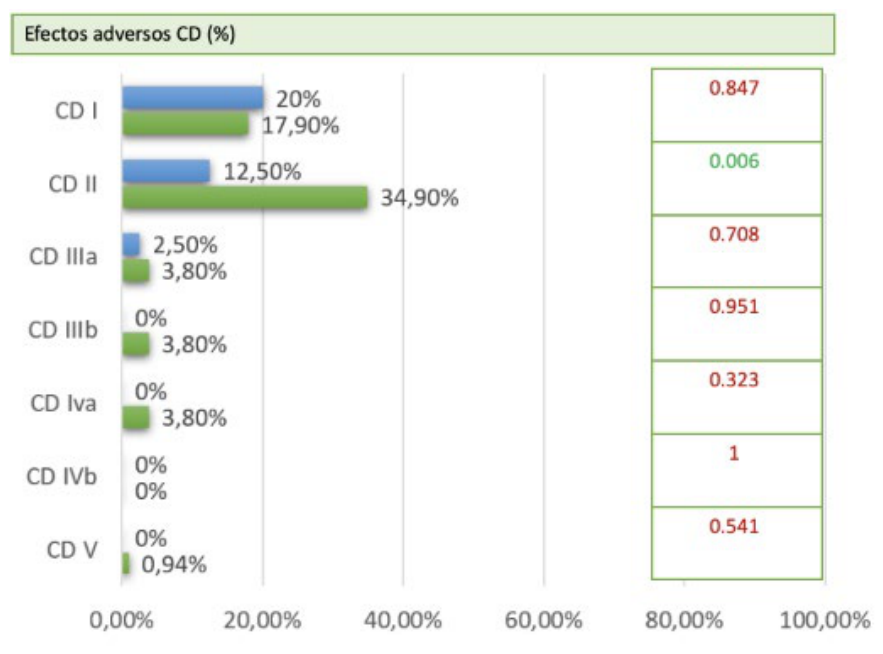
Figure 1. Postoperative data according to Clavien- Dindo classification.
Preprints 228147 g001
Table 1. Demographic results.
Preprints 228147 i001
Table 2. Preoperative tumor characteristics.
Preprints 228147 i002
Table 3. Intraoperativa data.
Preprints 228147 i003
Table 4. Postoperative Data.
Preprints 228147 i004
Disclaimer/Publisher’s Note: The statements, opinions and data contained in all publications are solely those of the individual author(s) and contributor(s) and not of MDPI and/or the editor(s). MDPI and/or the editor(s) disclaim responsibility for any injury to people or property resulting from any ideas, methods, instructions or products referred to in the content.
Copyright: This open access article is published under a Creative Commons CC BY 4.0 license, which permit the free download, distribution, and reuse, provided that the author and preprint are cited in any reuse.