
Submitted:
12 August 2026
Posted:
13 August 2026
You are already at the latest version
Abstract
Tea polyphenols largely determine tea quality, flavor, and health benefits. Reliable detection of these compounds is therefore critical for quality control and process optimization. This review categorizes current sensing strategies into four types: optical, electrochemical, spectroscopic/nondestructive, and intelligent sensor arrays. These platforms differ in transduction mechanisms, sensitivity, and practical utility. Optical and electrochemical methods respond rapidly but are vulnerable to matrix effects. Spectroscopic techniques allow non-destructive analysis; their limitation lies in model generalizability across different instruments and sample sets. Sensor arrays, particularly when paired with machine learning, show strong potential for distinguishing structurally similar catechins and tracing tea origin and authenticity. Finally, the future development trends and potential application scenarios of tea polyphenols detection are discussed.
Keywords:
tea polyphenols
; sensors
; optical sensing
; electrochemical sensing
; hyperspectral imaging
1. Introduction
Tea polyphenols(TPs) are a group of polyphenolic compounds naturally present in tea[1,2,3,4,5]. They consist primarily of catechins, flavonoids, anthocyanins, phenolic acids, and their derivatives. These compounds are major determinants of tea color, aroma, taste, and bioactivity. Catechins constitute the largest proportion of TPs and mainly include epigallocatechin (EGC), epicatechin (EC), epigallocatechin gallate (EGCG), and epicatechin gallate (ECG)[6,7,8,9]. Their catechol and pyrogallol moieties confer strong reducing power and radical-scavenging activity[10,11,12,13]. TPs possess multiple biological activities, including antioxidant, anti-inflammatory, anticancer, metabolic regulatory, and neuroprotective effects. These properties are primarily associated with the scavenging of reactive oxygen species, modulation of inflammatory signaling pathways, and regulation of apoptosis. TPs also contribute to the astringency and sweet aftertaste of tea infusion. During tea processing, they undergo oxidative polymerization to form pigments such as theaflavins and thearubigins, thereby directly affecting the liquor color and flavor characteristics of black and Oolong teas[14,15,16,17]. Differences in processing methods result in distinct retention levels and transformation pathways of TPs among tea categories[18,19,20]. Green tea is subjected to minimal enzymatic oxidation and therefore retains most of its original catechins, whereas the extensive oxidation occurring during black tea processing converts a large proportion of catechins into polymerized products[21,22,23,24]. Oolong tea exhibits an intermediate degree of oxidation. In addition, the increasing use of TPs as natural antioxidants in foods, health products, and cosmetics has created a growing demand for accurate detection.
Analytical methods for TPs have been developed from conventional chemical assays to modern sensing technologies. Early analyses relied on spectrophotometric methods, particularly the Folin–Ciocalteu assay, which estimates total phenolic content indirectly via absorbance of a blue complex. For quantification of individual compounds, chromatographic approaches—particularly high-performance liquid chromatography (HPLC) coupled with UV or mass spectrometric detectors—have become the gold standard for separating and quantifying TPs. Advances in sensing principles and functional materials have led to the development of new analytical approaches[25,26,27,28,29,30]. Colorimetric and fluorescent probes constructed from carbon quantum dots and nanozymes can generate measurable color or luminescence changes upon interaction with TPs. Electrochemical methods employing modified electrode materials can facilitate electron transfer and improve the analytical sensitivity and stability of TP detection[31,32,33,34]. Meanwhile, nondestructive techniques, including hyperspectral imaging, near-infrared spectroscopy, and ultrasonic sensing, have been combined with chemometric models to enable rapid prediction of TP content and, in some cases, their spatial distribution within tea samples.
This review summarizes recent advances in sensing technologies for TP detection, with particular emphasis on optical sensing, electrochemical sensing, spectroscopic and nondestructive techniques, intelligent sensor arrays, and related advanced analytical strategies.
2. Optical Sensing Strategies
Optical methods offer rapid identification and quantitative analysis of TPs by recording changes in color and fluorescence[35]. Optical sensing systems based on colorimetric, fluorescent, and multimodal approaches have been developed, resulting in improvements in analytical sensitivity, selectivity, and practical utility.
2.1. Colorimetric Sensing
Colorimetric sensing of TPs mainly relies on two reaction mechanisms: the formation of colored complexes between polyphenols and metal ions, and the nanozyme-catalyzed oxidation of chromogenic substrates such as 3,3′,5,5′-tetramethylbenzidine (TMB).
Tea polyphenols contain abundant adjacent phenolic hydroxyl groups and can readily coordinate with transition-metal ions, such as Fe³⁺ and Cu²⁺, to form stable colored complexes. Jeong et al. developed a microbead-based colorimetric sensor consisting of yellow beads loaded with Fe³⁺ [36]. Upon contact with polyphenol-containing samples, blackish metal–phenolic complexes were rapidly formed, causing the bead color to change from yellow to black. The entire detection process could be completed within 5 min. Photographs were captured using a smartphone, and the extracted RGB values were used to quantify the polyphenol content. The limit of detection for tannic acid was 0.0415 mM, which was lower than that of the conventional Folin–Ciocalteu assay. Jiang et al. developed a homemade color-sensitive sensor for the quantitative estimation of tea polyphenols in green tea. Color features were selected using ant colony optimization, and an extreme learning machine model was subsequently established, yielding a validation correlation coefficient of 0.8035 and an RMSEP of 1.6003% [37].
Owing to their high enzyme-mimicking activity, high stability, and suitability for large-scale production, nanozymes have become common components in colorimetric sensors. A commonly used sensing system uses TMB as the chromogenic substrate and achieves the selective recognition of TPs by exploiting their regulatory or inhibitory effects on nanozyme-catalyzed reactions. A synthetic Fe₃C/Fe-N-C catalyst was capable of catalyzing TMB oxidation in the absence of H₂O₂. In combination with pattern-recognition algorithms, this system enabled the detection and discrimination of four major catechins—EGCG, EGC, ECG, and EC [38].
Research on nanozyme-based polyphenol detection has investigated nanozymes with different catalytic properties, including Fe-N-C microflowers (Fe-N-C MFs), Au/Fe-N-C, Pt/Fe-N-C, Arac-Cu, bimetallic platinum–palladium nanoparticles (B-PtPdNPs), and BDC-Cu [39,40,41,42]. The immobilization of an Arac-Cu nanozyme within a hydrogel, together with a smartphone-based imaging device, enabled the rapid detection of TPs over a concentration range of 5–300 μM, with a limit of detection of 1.5 μM[39].
Yang et al. developed an enzyme/nanozyme hybrid strategy in which natural polyphenol oxidase (PPO) was combined with artificial nanozymes to construct a sensor array for identifying the six major categories of chinese tea[43]. They also developed a multimodal sensor array based on the BDC-Cu nanozyme. By introducing a photothermal signal for the first time, the system enabled the effective differentiation of white teas according to their storage years[44]. With advances in computational technologies and sensor arrays, TP analysis is gradually shifting from the determination of total polyphenol content toward multicomponent discrimination and tea-sample classification [38,44,45].
Fe³⁺-doped carbon dots (Fe-CDs) possess peroxidase-like activity, and TPs can act as their nanozyme cofactors. Based on this mechanism, a colorimetric sensor array was constructed and combined with PCA and HCA to achieve accurate discrimination of five classes of TPs and their mixtures, as well as authentication of different tea products [46]. Wu et al. constructed a visual and fluorescent dual-mode sensor array using nanoporphyrin and quantum dots. Through the selective combination of sensing units, the array enabled quantitative analysis of catechin enantiomers and accurately identified Xihu Longjing tea samples of different grades, storage times, and low-level adulteration from adjacent production regions [47].
With advances in computational technologies and sensor arrays. The introduction of novel recognition mechanisms further extends the discriminatory capability of colorimetric sensing. Hu et al. proposed a sensing strategy that integrates boronic acid-based sensors with pH indicators. Leveraging the reversible binding between boronic acid and the cis-diol structures of TPs and the resulting pH changes, this strategy enabled naked-eye colorimetric discrimination of six different TPs[48]. In addition, Duan et al. synthesized Rh-decorated Pd nanocubes via underpotential deposition-mediated synthesis, which exhibited enhanced peroxidase-like activity. The multichannel colorimetric sensor constructed on this basis enabled rapid discrimination of six TPs and nine real tea samples, demonstrating the potential of nanozyme morphology engineering in improving colorimetric sensing performance[49].
2.2. Fluorescent Sensing
Fluorescent sensing offers high sensitivity and temporal resolution, giving it potential for the detection of trace amounts of polyphenols. Carbon dots and carbon quantum dots (CDs) are among the most studied fluorescent probes in recent years. These nanomaterials can be prepared from natural biomass and combine environmental compatibility with useful optical and surface properties.
Thombre et al. used spent Oolong tea leaves as a precursor to prepare carbon quantum dots through a one-step microwave-assisted method[50]. The obtained CDs show strong and stable fluorescence which was quenched by TPs. Using these CDs as fluorescent probes, the EGCG concentrations in black tea and Oolong tea samples were determined to be 28.65 and 50.42 mg/L, respectively.
Wei et al. constructed a fluorescent sensing system based on competitive coordination and fluorescence recovery[51]. Initially, the fluorescence of CDs was quenched by Cu²⁺. After TPs were introduced, their phenolic hydroxyl groups preferentially coordinated with Cu²⁺, releasing the CDs and restoring their fluorescence. The method provided a linear response over the concentration range of 1–30 μg/mL, with a limit of detection of 0.31 μg/mL, and was suitable for determining total polyphenol content in different tea samples.
Rare-earth-metal complexes constitute another important class of fluorescent sensing materials. Gorai et al. developed a terbium-ion-based paper photoluminescent sensor for detecting gallate-derived polyphenols in green tea[52]. Tb³⁺ and a ligand capable of specifically recognizing gallate groups were incorporated into filter paper immobilized with a supramolecular gel, thereby forming a ternary Tb³⁺–ligand–polyphenol complex. The presence of target polyphenols induced a synergistic luminescence response. This sensing platform is inexpensive and requires only a small sample volume.A water-soluble phenylboronic-acid-functionalized perylene diimide probe can form dynamic boronate esters with the cis-diol groups of TPs. Because structural differences among catechins induce distinct degrees of probe self-assembly and fluorescence quenching, EC, ECG, EGC, and EGCG can be discriminated when the fluorescence responses are combined with linear discriminant analysis[53].
Tb³⁺ and Eu³⁺ co-doped Zr(IV) metal–organic frameworks have also been employed to construct fluorescent sensors for TP detection [54]. Taking advantage of the fluorescence derived from pyrene conjugated groups, a fluorescent test paper was prepared and exhibited a notable fluorescence enhancement response toward TP solutions, with a detection limit of 5 × 10⁻⁶ mg/mL [55]. Fluorescent sensing can also be coupled with other analytical techniques. Dopamine reacts rapidly with TPs containing resorcinol structures to generate fluorescent azamonardine products. When combined with chromatographic separation, this strategy enables the identification of structurally similar TPs [26]. Poly(p-phenyleneethynylene) (PPE) exhibits fluorescence that is modulated by metal-ion coordination and interchain π–π stacking. TPs could be detected via the fluorescence change of PPE induced by their binding [56]. Representative optical sensing strategies and their principal characteristics are summarized in Table 1.
3. Electrochemical Sensing Strategies
Electrochemical sensing technologies have attracted attention for the rapid detection of TPs because of their operational simplicity, rapid response, and ease of integration into portable devices.
3.1. Direct Electrochemical Oxidation
Direct electrochemical oxidation yields measurable Faradaic currents from TP redox reactions at the electrode surface. The multiple oxidizable phenolic hydroxyl groups on TPs donate electrons readily under applied potential. This reagent-free format allows simple, label-free detection.
Cyclic voltammetry (CV) and differential pulse voltammetry (DPV) are common techniques for direct electrochemical detection. They effectively discriminate among different tea samples [57]. Bare electrodes, such as glassy carbon electrodes (GCEs), are hindered by slow electron transfer and surface passivation from oxidation products. These drawbacks lead to poor signal reproducibility and limited sensitivity. To overcome these limitations, chemically modified electrodes are used for tea polyphenol detection. In situ growth of AuNPs on eggshell membrane (ESM) improved electrode conductivity and surface area. This enhancement led to higher oxidation peak currents for gallic acid (GA), caffeic acid (CA), and catechin hydrate (CH). [58]. Shi et al. prepared an electrochemical sensor for TPs by loading iron nanoparticles onto cassava fibers. The sensor exhibited a linear response over the concentration range of 3.5–31.5 µM, with a limit of detection of 0.1 µM [59]. Cheng et al. fabricated microelectrodes of different sizes using electrohydrodynamic printing technology. The 70-µm microelectrode showed the highest sensitivity toward low concentrations of TPs, with a limit of detection of 0.22 μmol/L and recoveries of 95.2–105.0% in green tea samples [60].
3.2. Enzyme-Mimetic Electrochemical Sensing
Beyond direct oxidation, enzyme-like catalytic materials have been employed to amplify electrochemical signals with enhanced selectivity. Materials with enzyme-like catalytic activity have been employed to amplify electrochemical signals from TP oxidation. Commonly used catalytic components include nanomaterials with peroxidase-like (POD-like) or oxidase-like (OXD-like) activity, as well as immobilized natural oxidases.
Datta et al. developed an eggshell-membrane-based biosensor by preparing AuNPs through an in situ reduction method. The AuNPs and tyrosinase (Tyr) were co-immobilized on the membrane, which was subsequently assembled onto the surface of a glassy carbon electrode. The limits of detection for gallic acid, caffeic acid, and catechin hydrate were 1.707, 0.752, and 0.714 μM, respectively. The sensor could also be reused without loss of sensitivity [58].
Perone et al. immobilized polyphenol oxidase (PPO) extracted from plant waste onto cellophane membranes and integrated the membranes with a Clark electrode for the determination of polyphenols in tea samples. The analytical results were consistent with those obtained using the conventional Folin–Denis method [60]. In addition, an electrochemical sensor for TPs was constructed by co-depositing graphene nanoribbons (GNRs), silver nanoparticles (AgNPs), and polyphenol oxidase (PPO) onto the surface of a graphite electrode[61]. Di Giulio et al. developed an electrochemical sensor for gallic acid (GA) using ultra-small pyramidal platinum nanoparticles (PtNPs, ≈4 nm) deposited onto a glassy carbon electrode by a simple drop-casting method [29]. The sensor required only 2.7 μg of PtNPs per electrode and employed multiple pulse amperometric detection to alleviate electrode fouling caused by GA oxidation products.
Alongside noble metals and carbon nanomaterials, layered double hydroxides (LDHs) have emerged as promising supports for enzyme-based electrochemical sensors, owing to their favorable biocompatibility and high specific surface area. Soussou et al. immobilized tyrosinase onto a CoAlSO₄ LDH film coated on a screen-printed gold electrode via cross-linking, and constructed an amperometric polyphenol biosensor that exhibited a linear response over the concentration range of 0–2.4 µM [62]. The introduction of redox mediators offers an alternative route to improve the selectivity and sensitivity of electrochemical detection. Sen et al. reported that a chloramine-T modified electrode enabled the detection of TPs with a limit of detection of 0.674 mg/L [63].
3.3. Flow Injection Analysis Coupled with Electrochemical Detection
Flow injection analysis (FIA) automates sample introduction by injecting discrete sample plugs into a flowing carrier stream for online mixing, reaction, and detection. Coupling FIA with electrochemical detectors can overcome some of the limitations of conventional batch methods, including high reagent consumption and long analysis times, and is therefore suitable for the rapid screening of large numbers of samples. In one study, a glassy carbon electrode modified with graphitized mesoporous carbon (GCE/GMC), combined with differential pulse voltammetry, was used for the simultaneous determination of three dihydroxybenzene (DHB) isomers—1,4-, 1,2-, and 1,3-DHB—with limits of detection of 0.91, 1.31, and 0.67 mM, respectively[57].
Liang et al. proposed a flow batch analysis system (FBAS) based on a diazotization–coupling (DC) reaction for the determination of TPs [64]. By integrating the automation advantages of FIA with the selectivity of chemical derivatization, the system reduced interference from nonphenolic substances. It achieved a limit of detection of 0.215 μg/mL and relative standard deviations (RSDs) of 0.326%–0.659%. The integration of specific chemical reactions with flow-based analytical systems represents an effective strategy for improving the selectivity of electrochemical detection.
3.4. Screen-Printed Electrodes
Screen-printed electrodes (SPEs) are fabricated by depositing conductive inks onto insulating substrates through a screen-printing process, thereby integrating the working, counter, and reference electrodes into a three-electrode system. Their advantages include low cost, suitability for mass production, portability, and disposability, rendering them suitable for rapid on-site analysis.
Marlin et al. modified a screen-printed carbon electrode (SPCE) by drop-casting an iron tetrasulfonated phthalocyanine (FeTsPc) solution onto its surface, thereby constructing an SPCE/FeTsPc sensor [65]. The oxidation potential of catechol at the modified electrode was lower than that observed at the unmodified SPCE, demonstrating the good electrocatalytic activity of FeTsPc. The limit of detection and limit of quantification were 0.6 and 2.0 µmol/L, respectively. They also reported the use of an FeTsPc-modified SPCE for the determination of polyphenols in yerba mate, confirming the reliability and reproducibility of this approach [65].
Through the optimization of electrode materials and the expansion of detection modes, electrochemical methods have gradually evolved from conventional oxidation-based detection toward rapid and portable analysis. Representative methods and their main characteristics are summarized in Table 2.
4. Spectroscopic and Nondestructive Sensing
Unlike optical sensing methods that rely on specific probes or chromogenic reactions, spectroscopic and nondestructive detection techniques primarily acquire the intrinsic reflection, absorption, and physical propagation signals of tea leaves or tea infusions. Chemometric or machine-learning models are subsequently used to establish relationships between these signals and TP content. Such methods generally require neither complex chemical reactions nor destructive sample preparation and are therefore suitable for fresh-leaf evaluation, finished-tea grading, and process monitoring.
4.1. Visible and Near-Infrared Spectroscopic Sensing
Visible and near-infrared spectroscopy reflects changes in chemical groups and tissue structures in tea, making it a common signal source for the nondestructive prediction of TPs. Research in this area has gradually shifted from low-cost spectral acquisition toward spectral-range fusion, feature selection, and dynamic process monitoring.
A fresh-tea-leaf constituent detection device based on multichannel spectral data in the range of 700–1000 nm and a random forest model was capable of providing multiple quality indicators in real time. However, the coefficient of determination for the TP prediction model was only 0.28[69]. By fusing visible/short-wave near-infrared and long-wave near-infrared spectra, information associated with chromophores, auxochromes, and hydrogen-containing functional groups could be simultaneously utilized. The resulting least-squares support vector regression (LS-SVR) model achieved a prediction correlation coefficient of 0.893 for TP content in fresh tea leaves, superior to models based on either spectral range alone[70]. An infrared fiber sensor developed for TP detection achieved a sensitivity of 1.52 a.u./(vol%)[71].Near-infrared spectroscopy has also been extended to the monitoring of tea-processing operations. During Pu-erh tea fermentation, standard normal variate (SNV) transformation was applied to reduce spectral noise, after which competitive adaptive reweighted sampling (CARS) was used to select 52 informative variables from the original spectra. A partial least-squares (PLS) model based on these variables enabled the nondestructive prediction of TP content in fermented tea liquor[72].
The recent development of near-infrared spectroscopy for TP detection has centered on the optimization of intelligent algorithms. Xu et al. combined three wavelength selection methods—competitive adaptive reweighted sampling (CARS), uninformative variable elimination (UVE), and successive projections algorithm (SPA)—with partial least squares regression and principal component regression to establish quantitative models for the ratio of polyphenols to free amino acids (TP/FAA) in Wuyi Rock Tea [73]. Yin et al. integrated four wavelength selection algorithms, namely CARS, BOSS, VCPA-GA, and VCPA-IRIV, and developed synchronous prediction models for TPs, amino acids, caffeine, and major catechin monomers (EGCG and ECG) based on 233 fresh leaf samples of different varieties and tenderness grades[74]. Qiu et al. acquired near-infrared spectra and determined the contents of theanine, TPs, water extracts, and soluble sugars, and established a quality component prediction model based on multiple spectral features, enabling rapid detection of quality components in green tea [75]. Ye et al. demonstrated that Fourier transform near-infrared (FT-NIR) spectroscopy combined with machine learning algorithms enables synchronous prediction of TP and EGCG contents in tea leaves [76].
4.2. Hyperspectral Imaging-Based Sensing
Hyperspectral imaging (HSI) integrates spatial distribution and image-texture information with continuous spectral data, allowing the internal chemical composition and external morphological characteristics of tea samples to be characterized simultaneously.
Ensemble modeling can reduce the dependence of an individual regression algorithm on specific sample characteristics. For the prediction of TPs in Tibetan tea, a stacking strategy was used to integrate multiple tree-based models. The resulting model achieved a coefficient of determination of 0.9625 for the prediction set, outperforming the individual regression models[77].
To address the limited texture differences observed at low image resolutions and the excessive feature dimensionality encountered at high resolutions, multiscale wavelet decomposition, gray-level co-occurrence matrix (GLCM) texture features, and wavelet texture features were integrated. A support vector regression (SVR) model based on the fused features was then established for predicting TP content in yellow tea. The model achieved an R² of 0.871 and an RMSE of 0.830 for the calibration set, together with an R² of 0.838 and an RMSE of 0.896 for the validation set. Its predictive accuracy was superior to that of models based on individual feature types and to that of the partial least-squares regression (PLSR) model[78].
For different categories of tea samples, the compatibility between feature-processing methods and model structures directly affects predictive performance. An improved Pied Kingfisher Optimization algorithm was used to optimize the parameters of an SVR model for detecting TP content in Fu brick tea. The resulting model achieved an R² of 0.9152 and an RPD of 3.4345 for the test set, outperforming K-nearest-neighbor regression, back-propagation neural networks, and other optimized SVR models[79]. For Tieguanyin tea, the combination of first-derivative preprocessing, CARS, and a random forest algorithm produced an R² of 0.938 and an RPD of 4.474 for the prediction set[80].
Figure 1.
The hyperspectral imaging system. Reprinted with permission from ref.[79]. Copyright 2024 MDPI.
Figure 1.
The hyperspectral imaging system. Reprinted with permission from ref.[79]. Copyright 2024 MDPI.
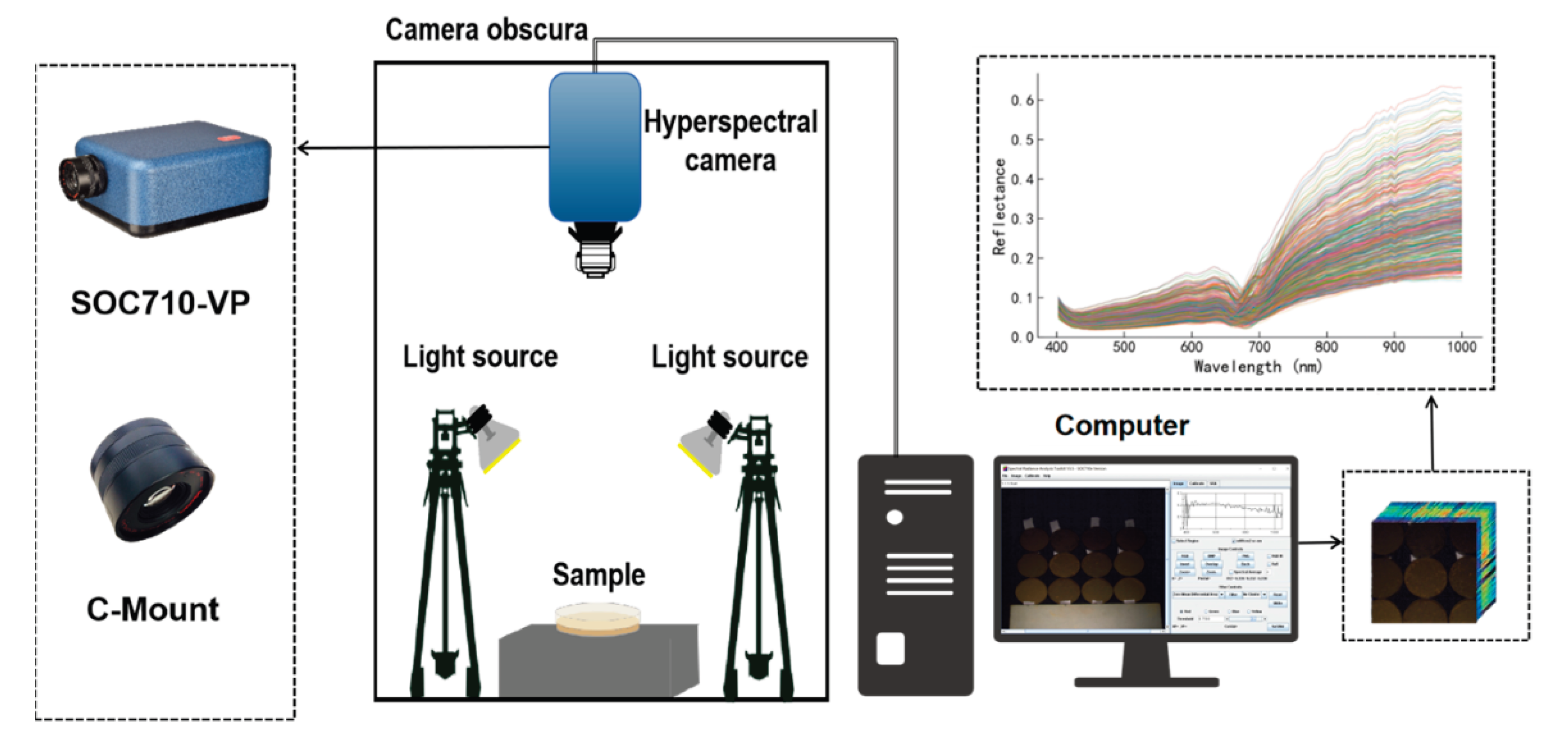
Feature wavelength extraction combined with model optimization has been shown to enhance both the accuracy and sensitivity of hyperspectral imaging-based sensing. Long et al. proposed a refined feature wavelength method named IBS-CARS-Fusing to extract effective wavelengths from visible-near-infrared (VNIR) and short-wave near-infrared (SWIR) hyperspectral images [81]. With this method and a kernel ridge regression (KRR) model, the predictive determination coefficient (R²ₚ) for TPs was improved by 15.5% [81]. Li et al. identified the two-band normalized difference spectral index based on 1673/1660 nm as a key spectral feature for TP detection, achieving a predictive R²ₚ of 0.785[82].
4.3. Ultrasonic Sensing
Ultrasonic sensing is based on the principle that changes in solution composition affect the propagation velocity of acoustic waves. By measuring the ultrasonic time of flight and incorporating temperature information, a quantitative relationship can be established between sound velocity and TP concentration.
A detection system based on capacitive micromachined ultrasonic transducers (CMUTs) integrated ultrasonic transmission, reception, and temperature monitoring into a single platform. Sound velocity was calculated and used to predict TP concentrations, with a maximum relative error of 3.7%[83]. This study marks the first use of CMUT devices in TP quantification. Ultrasonic methods are insensitive to infusion color and scattering, and require no chromogenic agents. Their limitation lies in the non-specificity of sound velocity—temperature, sugars, and other co-solutes all affect acoustic behavior. Hence, reliable detection depends on rigorous temperature correction and calibration against real sample matrices.
Overall, spectroscopic and nondestructive detection technologies predict TP content by acquiring the intrinsic optical and physical information of tea leaves or tea infusions and analyzing these signals using chemometric models. These approaches are promising for rapid quality assessment and tea-processing monitoring. Representative methods and their principal characteristics are summarized in Table 3.
5. Intelligent Sensor Arrays and Multisource Information Fusion Strategies
A single sensing signal can generally reflect changes in TP content but is often insufficient to distinguish structurally similar monomers, such as EGCG, EGC, ECG, and EC. It also has difficulty resolving overlapping responses caused by the coexistence of multiple constituents in tea samples. Rather than requiring each recognition element to exhibit absolute selectivity toward a particular TP, intelligent sensing strategies exploit cross-reactive responses generated by different materials, reaction channels, wavelengths, reaction times, or signal modalities. Chemometric and machine-learning methods are then used to extract characteristic fingerprints of TPs. This strategy has expanded TP detection from single-content determination to monomer discrimination, mixture analysis, and the identification of tea varieties, storage years, geographical origins, and adulteration.
5.1. Nanozyme and Enzyme–Nanozyme Sensor Arrays
Nanozyme-based sensor arrays exploit the differential effects of TPs on enzyme-mimicking catalytic processes, converting nonspecific color reactions into distinguishable response patterns. A paper-based array simultaneously utilized the polyphenol oxidase-like and peroxidase-like activities of nanozymes to generate distinct color responses to seven TPs. Combined with linear discriminant analysis (LDA) and hierarchical cluster analysis (HCA), the system enabled TP recognition, differentiation of Longjing tea according to production region, and adulteration identification[85]. Another array based on nanozymes with laccase-like and peroxidase-like activities employed a concentration-independent classification model to reduce interference caused by variations in sample concentration. The system was applied to discriminate White Peony teas with different storage years and identify adulterated samples[45].
Increasing the number of reaction channels can enhance the resolving power of sensor arrays. Fe₃C/Fe-N-C nanozymes catalyzed the oxidation of TMB, and cascade chromogenic channels amplified the response differences among EGCG, EGC, ECG, and EC, enabling the discrimination of these four catechins[38]. When Pt and Au were separately deposited onto Fe-N-C materials, the two noble metals differentially modulated nanozyme catalysis and the inhibitory effects of TPs, generating complementary responses. The resulting three-channel array could distinguish TP monomers and identify commercial green tea beverages[40].
To reduce the fabrication complexity associated with arrays composed of multiple sensing materials, researchers have increasingly employed a single material to generate multichannel signals. A bimetallic PtPd nanozyme catalyzed TMB oxidation without requiring an additional oxidant and produced multiple absorption peaks at 370, 450, and 650 nm. Different TPs exerted distinct effects on the signals at these wavelengths, allowing a single probe to generate multidimensional visual fingerprints. In combination with smartphone-based RGB analysis and LDA, the system enabled the classification of TPs, polyphenol mixtures, and green tea samples differing in type, freshness, and degree of adulteration[41]. In another strategy, five characteristic wavelengths were combined with three reaction times to create 15 sensing units. The incorporation of time-resolved responses increased the amount of information obtainable from a single nanozyme-catalyzed reaction. Combined with a support vector machine (SVM), this array recognized TPs at different concentrations and mixing ratios and classified green tea categories and adulterated samples, with a limit of detection of 5 μM[42].
The hybridization of natural enzymes with nanozymes expands the diversity of array responses. Natural polyphenol oxidase and nanozymes can catalyze the reaction between TPs and 4-aminoantipyrine, generating cross-reactive color responses because of their different catalytic characteristics. When combined with a machine-learning-based dual-output model, the system simultaneously predicted the class and concentration of TPs in unknown samples. It was also used for the hierarchical identification of the six major categories of chinese tea and more specific tea varieties[43].
Enhancing both the recognition dimensionality and anti-interference capability of nanozyme-based sensor arrays represents a key route to broadening their practical applicability. Li et al. developed a trimetallic nanozyme with switchable enzyme-mimetic reactions that exhibits substrate-dependent differential catalytic activities toward various phenolic substrates, thereby enabling interference-free discrimination of TPs [86]. Chen et al. employed MnOOH as the sole sensing element, which reduced the complexity of array fabrication. Taking advantage of the differences in reducing capacity among TPs, this system generated distinctive kinetic absorbance curves and achieved efficient discrimination of individual polyphenols at varying concentrations, distinct polyphenolic species, and their multi-component mixtures [87]. Phenylboronic acid functionality can boost both catechol-binding affinity and the catalytic efficiency of nanozymes. Bi et al. exploited this principle in a DBA-Cu nanozyme-based sensor array. The boronic acid groups on this array enabled highly efficient TPs detection [88]. Machine learning offers a powerful tool for signal processing. When applied to sensor arrays, it significantly improves recognition performance. [89]. Ren et al. combined a nanozyme sensor array with ML algorithms, achieving precise identification of five TPs [90].
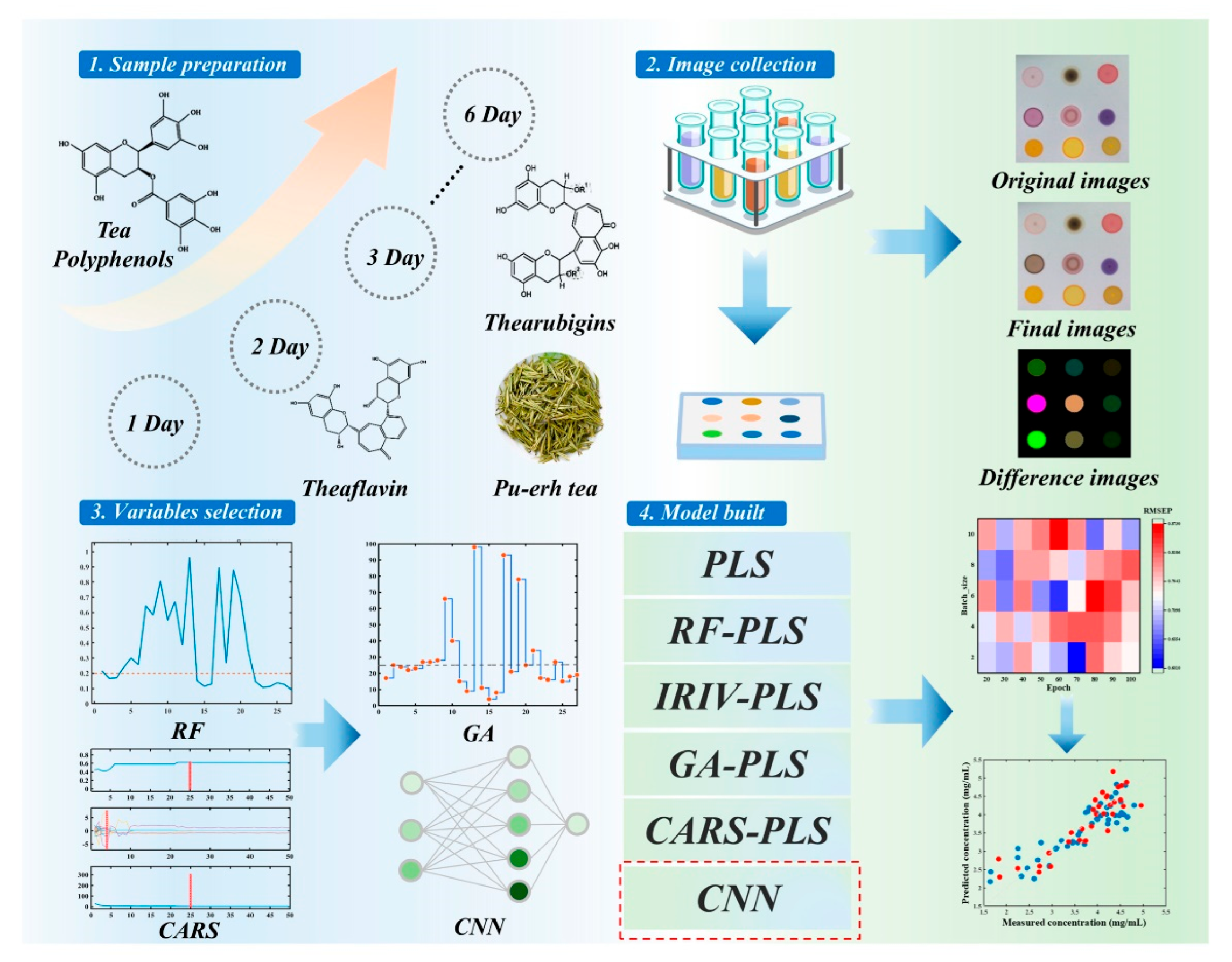
A nanozyme-based array simultaneously generated colorimetric, fluorescent, and photothermal signals. The colorimetric and fluorescent channels alone were insufficient for accurate discrimination, whereas the introduction of the photothermal signal enhanced the ability to identify TPs. Combined with a random forest model, the array could also distinguish white teas according to storage year[44]. This system advanced sensor-array design from increasing the number of similar color channels to integrating signals based on different physical mechanisms. Its improved performance arose from signal complementarity rather than the absolute selectivity of any individual channel. Liu et al. developed a printed colorimetric sensor array (CSA) composed of eight porphyrin dyes and one pH dye for predicting total polyphenol content in Pu-erh tea liquid during microbial fermentation [91]. Under optimized fermentation conditions (determined by Box–Behnken sampling and response surface methodology), the polyphenol degradation rate reached 66.146%. Among six chemometric approaches compared, convolutional neural network (CNN) achieved the best predictive performance for total polyphenol content, demonstrating that the CSA-CNN system can effectively predict the fermentation degree of microbial-fermented Pu-erh tea by measuring polyphenol degradation.
Figure 2.
Schematic overview of polyphenol detection using CSA and chemometrics. Reprinted with permission from ref.[91]. Copyright 2024 MDPI.
Figure 2.
Schematic overview of polyphenol detection using CSA and chemometrics. Reprinted with permission from ref.[91]. Copyright 2024 MDPI.
5.2. Molecular Recognition and Single-Molecule Sensing
Cross-reactive sensor arrays rely on multiple nonspecific signals to construct characteristic fingerprints, whereas molecular recognition strategies attempt to establish a direct relationship between TP structures and sensing responses. A water-soluble phenylboronic-acid-functionalized perylene diimide probe exploited differences in boronate ester formation and probe aggregation induced by different catechins. These interactions generated structure-dependent fluorescence-quenching responses, which were combined with LDA to distinguish EC, ECG, EGC, and EGCG[53]. By integrating molecular recognition with self-assembly-based signal amplification, this system converted subtle structural differences into classifiable ensemble fluorescence signals. However, its responses may be influenced by analyte concentration, aggregation state, and solution conditions.
Nanopore sensing has advanced TP recognition to the single-molecule level. A phenylboronic-acid-functionalized nanopore recorded ionic-current events generated when individual TP molecules translocated through or interacted with the nanopore. Differences in hydroxylation patterns, galloylation, and stereochemistry produced reproducible ionic-current fingerprints. With machine-learning-assisted classification, the platform achieved an identification accuracy of 96.9% for eight structurally similar catechins. It also enabled TP profiling in tea samples within 30 min and the monitoring of interactions between TPs and metal ions[92].
5.3. Chemometrics and Multisource Sensor Information Fusion
Intelligent sensing depends not only on novel sensing materials but also on the extraction of tea-polyphenol-related information from complex signals. Research in this field has progressed from feature selection within a single sensor to cross-sensor fusion involving spectral, image, aroma, and process-parameter information.
Effective dimensionality reduction of individual sensing signals can minimize irrelevant and redundant information. Features obtained using a color-sensitive sensor were selected using an ant colony optimization algorithm and subsequently combined with an extreme learning machine to establish a predictive relationship between green tea sensor responses and TP content[37]. This study extracted informative variables from indirect color responses, demonstrating that feature optimization can enable nonspecific sensing signals to be used for TP quantification. The prediction correlation coefficient was 0.8035, indicating that although indirect signals have potential for rapid detection, their model performance may be more susceptible to differences among samples than methods based on direct chemical or spectroscopic responses.
Hyperspectral data fusion simultaneously exploits spectral and spatial information. The integration of multiscale wavelet coefficients, gray-level co-occurrence matrix texture features, and wavelet texture features provided a more comprehensive characterization of yellow tea samples than any individual feature type. The SVR model established using the fused features outperformed both single-feature models and the PLSR model[78].
Cross-sensor fusion overcomes the limitations of relying on a single signal source. An electronic nose provides time- and frequency-domain features associated with volatile constituents, whereas hyperspectral imaging provides spectral and spatial information. Fusion of the two data sources enabled the establishment of a cross-category model for evaluating TPs in black, green, and yellow teas. Following feature-importance selection and XGBoost modeling, the fusion model achieved an R² of 0.998, outperforming models constructed from the features of either individual sensor[83].
Multisource fusion has also been applied to process monitoring. A nano-optical sensor combined with near-infrared spectroscopy simultaneously characterized changes in volatile components and TP consumption during fermentation and was used for the in situ evaluation of the fermentation degree of tea extracts subjected to ultrasound-assisted treatment[93]. Rather than selectively detecting a specific TP, this approach linked a quantitative TP model with aroma sensing and processing parameters, allowing the sensing results to reflect the fermentation state.
Because a single sensing signal is generally insufficient to distinguish structurally similar TPs and resolve multicomponent responses in complex tea samples, intelligent sensing strategies based on cross-reactivity, multisignal fusion, and molecular recognition have gradually emerged. TThese strategies offer new avenues for the precise identification of TPs. Representative methods and their characteristics are summarized in Table 4.
6. Conclusions and Future Perspectives
TPs are key bioactive components in tea, which determine the unique quality and flavor of tea. Accurate and portable analytical technology for TPs detection are therefore of considerable significance to the tea industry. This review covers four types of sensing strategies for TPs. The detection of TPs is transitioning from simple content quantification to rapid, portable, non-destructive, and intelligent analysis.
Optical probes are straightforward and fast, though their sensitivity can vary widely depending on the probe design. Electrochemical methods offer speed and reagent-free operation, but electrode fouling and poor reproducibility remain unresolved. Spectroscopic tools allow non-destructive measurement; their accuracy, however, is tied to model quality and transferability across instruments. Sensor arrays collect multi-channel data and, with the help of machine learning, enable rapid screening of large sample batches. The main difficulty lies in extracting reliable information from complex, overlapping signals. When machine learning and multisource fusion are combined, the efficiency of TP signal utilization improves substantially. This combination not only permits accurate identification of individual catechins but also extends the analytical scope—from simple content measurement to the discrimination of tea varieties, production years, geographical origins, and adulteration.
Future developments should go beyond mere compound identification and move toward application-driven scenarios: online and non-destructive quality assessment of tea leaves, discrimination of production years and geographical origins, and precise recognition of individual TPs. For quality evaluation and origin or vintage authentication of bulk tea samples, non-destructive spectroscopy—visible/near-infrared or hyperspectral imaging—can serve as a rapid first-line tool to acquire polyphenol content and related quality indicators, followed by chemometric or machine-learning algorithms for classification and traceability. In these applications, model generalizability across different datasets is a critical factor. During fermentation, brewing, or extraction, integrating spectral and ultrasonic signals into an online monitoring system allows real-time tracking of polyphenol content changes. The effective coordination of these multiple signals remains a key technical hurdle. For discriminating individual polyphenols and complex mixtures, functional probes and nanopores offer specific recognition capabilities that distinguish structurally similar compounds.
Author Contributions
Conceptualization, X. S., Y.W. and Z. L.; methodology, X. S.; validation, Z. L., Z. H. and Y. L.; formal analysis, Z. H.; investigation, S. Y.; resources, T. L.; data curation, S. Y.; writing—original draft preparation, T. L.; writing—review and editing, Z. H.; visualization, T. L.; supervision, S. L.; project administration, T. L.; funding acquisition, S. L and Z. H. All authors have read and agreed to the published version of the manuscript.
Funding
This research was funded by the Scientific Research Project of Hunan Provincial Education Department [24A0574], Hunan Province College Students Entrepreneurship Guidance Studio Platform Project [2025CKX021], Project of Science and Technology Commissioners Serving Rural Revitalisation [2024RC8220], the Natural Science Foundation of regional joint fund project of Hunan Province (2023JJ50338). and Natural Science Foundation of Hunan Province [2025JJ50168].
Institutional Review Board Statement
Not applicable.
Informed Consent Statement
Not applicable.
Data Availability Statement
Not applicable.
Conflicts of Interest
Not applicable.
References
- Ahmad, I.; Wang, B.; Zhang, M.; Zhu, Y.Y.; Chen, S.G.; Ye, X.Q. Fortification of yogurt with teas and tea compounds associated challenges and elucidations-a review. Appl. Food Res. 2026, 6, 16. [Google Scholar] [CrossRef]
- Li, C.Y.; Li, H.M.; He, J.; Wang, W.Q. Advances in the application of tea polyphenols in meat products: From functional properties to encapsulation-based stability enhancement. Food Bioprocess Technol. 2025, 18, 6869–6892. [Google Scholar] [CrossRef]
- Li, T.T.; Liu, Z.J.; Liu, S.Q.; Li, J.; Zheng, Y.J.; Liu, Z.H.; Ling, P.X. High-value utilization of tea forest resources: breeding Eurotium cristatum strains to enhance lovastatin yields in anhua dark tea. Forests 2023, 14, 13. [Google Scholar] [CrossRef]
- Xiao, H.; Qing, S. Tea polyphenol-based advanced composite materials: fabrication, structure and properties. Bull. Mat. Sci. 2025, 48, 14. [Google Scholar] [CrossRef]
- Yang, M.C.; Zhang, X.C.; Yang, C.S. Bioavailability of tea polyphenols: a key factor in understanding their mechanisms of action in vivo and health effects. J. Agric. Food Chem. 2025, 73, 3816–3825. [Google Scholar] [CrossRef] [PubMed]
- Andrade, E.D.S.; Santos, R.A.; Guillermo, L.V.C.; Miyoshi, N.; da Costa, D.C.F. Immunomodulatory effects of green tea catechins and their ring fission metabolites in a tumor microenvironment perspective. Molecules 2024, 29, 15. [Google Scholar] [CrossRef] [PubMed]
- Joseph, S.; Nallaswamy, D.; Rajeshkumar, S.; Dathan, P.; Ismail, S.; Jacob, J.; Rasheed, N. A glimpse through the origin, composition and biomedical applications of green tea and its polyphenols: A review. Plant Sci. Today 2024, 11, 330–341. [Google Scholar] [CrossRef]
- Raza, A.; Li, L.; Luo, L.; Asghar, M.A.; Shoaib, N.; Yin, C.Y. Rational application of combined fertilizers improved tea growth and quality components. J. Sci. Food Agric. 2025, 105, 3923–3930. [Google Scholar] [CrossRef] [PubMed]
- Zhao, X.; Yu, P.H.; Zhong, N.; Huang, H.; Zheng, H.F. Impact of storage temperature on green tea quality: insights from sensory analysis and chemical composition. Beverages 2024, 10, 22. [Google Scholar] [CrossRef]
- Hanh, V.T.; Huong, T.T.; Van Vien, N.; Viet, D.A.; Anh, N.D.; Mai, T.T. Effects of processing parameters on bioactive compounds and functional properties of guava (Psidium guajava L.) leaf tea bags. Acta Sci. Pol.-Technol. Aliment. 2025, 24, 12. [Google Scholar]
- Mamand, D.M.; Omer, R.A.; Kareem, R.O.; Barzani, H.A.H.; Azeez, Y.H.; Sulaiman, S.H. A review of selected phenolic compounds and metal complexes in tea, emphasizing their significance through the analysis of quantum chemical parameters. J. Mol. Eng. Mater. 2026, 18. [Google Scholar] [CrossRef]
- Shen, Y.M.; Liu, K.J.; Ye, S.; Cui, L.; Wang, F.; Abd El-Aty, A.M.; Tan, M.Q. Preparation and eye-protecting application of lutein pickering emulsions stabilized by tea polyphenol/cassia seeds. Food Chem. 2026, 523, 13. [Google Scholar] [CrossRef] [PubMed]
- Yongvongsoontorn, N.; Kihara, M.; Inada, M.; Chung, J.E.; Kurisawa, M. Suppressed autoxidation, enhanced antioxidant activity, and improved cytocompatibility of epigallocatechin gallate via alginate site-specific conjugation with tunable substitution degree. Int. J. Mol. Sci. 2025, 26, 20. [Google Scholar] [CrossRef] [PubMed]
- Hu, Z.Y.; Liu, S.Q.; Zhou, X.H.; Liu, Z.J.; Li, T.T.; Yu, S.L.; Zhang, X.Y.; Xu, Z.G. Morphological variation and expressed sequence tags-simple sequence repeats-based genetic diversity of Aspergillus cristatus in chinese dark tea. Front. Microbiol. 2024, 15, 14. [Google Scholar] [CrossRef] [PubMed]
- Li, Y.; Li, Y.L.; Xiao, T.; Jia, H.M.; Xiao, Y.; Liu, Z.H.; Wang, K.B.; Zhu, M.Z. Integration of non-targeted/targeted metabolomics and electronic sensor technology reveals the chemical and sensor variation in 12 representative yellow teas. Food Chem. X 2024, 21, 11. [Google Scholar] [CrossRef] [PubMed]
- Wang, S.S.; Wang, Z.Q.; Li, Z.G.; Zhang, X.C.; Chen, H.P. Recent advances in tea and other plant polyphenol biomaterials for antibacterial and disease treatment. Beverage Plant Res. 2025, 5, 10. [Google Scholar] [CrossRef]
- Guo, Y.; He, Z.Y.; Chen, Z.; Chen, F.L.; Wang, C.M.; Zhou, W.L.; Liu, J.; Liu, H.; Shi, R.Z. Inhibition of th17 cells by donepezil ameliorates experimental lung fibrosis and pulmonary hypertension. Theranostics 2023, 13, 1826–1842. [Google Scholar] [CrossRef] [PubMed]
- Hu, Z.Y.; Dong, M.; Zhang, J.T.; Kang, S.R.; Li, T.T.; Yu, S.L.; Wang, Y.H.; Xu, Z.G. Molecular mechanisms of circrnas in regulating reproductive differentiation and enzymatic activity of Eurotium cristatum. CyTA-J. Food 2026, 24, 17. [Google Scholar] [CrossRef]
- Liu, S.Q.; Li, T.T.; Yu, S.L.; Zhou, X.H.; Liu, Z.J.; Zhang, X.M.; Cai, H.M.; Hu, Z.Y. Analysis of bacterial community structure of fuzhuan tea with different processing techniques. Open Life Sci. 2023, 18, 10. [Google Scholar] [CrossRef] [PubMed]
- Wang, Z.K.; Han, Z.S.; Zhang, L. Advances and outlook of tea polyphenol chemistry: a review. J. Agric. Food Chem. 2025, 73, 22994–23002. [Google Scholar] [CrossRef] [PubMed]
- Chen, C.; Yang, C.Y.; Tzen, J.T.C. Effect of tea manufacturing processes and cultivars on tea infusion color. Sci. Rep. 2025, 15, 13. [Google Scholar] [CrossRef] [PubMed]
- Luo, Q.Q.; Zhang, D.; Zhou, J.T.; Qin, M.X.; Ntezimana, B.; Jiang, X.F.; Zhu, J.Y.; Yu, Z.; Chen, Y.Q.; Ni, D.J. Oxidation of tea polyphenols promotes chlorophyll degradation during black tea fermentation. Food Res. Int. 2024, 196, 12. [Google Scholar] [CrossRef] [PubMed]
- Matsushita, K.; Honda, C.; Nakamura, Y.; Kumazawa, S. Comparison of colorimetric methods for the analysis of total polyphenols in black tea extracts. Food Sci. Technol. Res. 2025, 31, 8. [Google Scholar] [CrossRef]
- Zhao, Y.X.; Liang, J.Y.M.; Cao, H.; Xiao, J.B. Theaflavins as characteristic polyphenols formed during black tea fermentation: Formation chemistry, functional properties, and future food applications. Food Chem. 2026, 518, 14. [Google Scholar] [CrossRef] [PubMed]
- Jakabová, S.; Arvay, J.; Snirc, M.; Lakatosová, J.; Ondejcíková, A.; Golian, J. HPLC-DAD method for simultaneous determination of gallic acid, catechins, and methylxanthines and its application in quantitative analysis and origin identification of green tea. Heliyon 2024, 10, 13. [Google Scholar] [CrossRef] [PubMed]
- Li, H.C.; Cheng, J.; Ge, H.B.; Sun, J.B.; Chen, Z.H.; Ren, J.L.; Du, Y.; Xu, D.; Yuan, Z.Q. Dopamine-supported HPLC post-column derivatization to fluorescence: simultaneous and sensitive detection of eight tea polyphenols. Food Chem. 2025, 464, 7. [Google Scholar] [CrossRef] [PubMed]
- Matsushita, K.; Honda, C.; Nakamura, Y.; Kumazawa, S. Comparison of colorimetric methods for the analysis of total polyphenols in green tea extracts. Biosci. Biotechnol. Biochem. 2024, 88, 798–803. [Google Scholar] [CrossRef] [PubMed]
- Muthulingam, P.; Popovich, D.G.; Punyasiri, P.A.N.; Nanayakkara, C.M.; Mesarich, C.H.; Rashidinejad, A. Development of a validated efficient HPLC-DAD analysis for assessing polyphenol transformation during black tea processing. J. Food Compos. Anal. 2025, 148, 11. [Google Scholar] [CrossRef]
- Di Giulio, T.; Ramírez-Morales, M.A.; Mastronardi, V.; Mele, G.; Brescia, R.; Pompa, P.P.; Malitesta, C.; De Benedetto, G.E.; Moglianetti, M.; Malvindi, M.A.; Mazzotta, E. Electrochemical determination of gallic acid in tea samples using pyramidal Pt nanoparticles. Adv. Electron. Mater. 2025, 11, 11. [Google Scholar] [CrossRef]
- Chen, Z.; Zhao, K.X.; He, Z.Y.; Luo, X.F.; Qin, Z.D.; Tan, Y.M.; Zheng, X.M.; Wu, Z.Z.; Deng, Y.; Chen, H.; Guo, Y.; Li, S. Development and evaluation of a thermostatic nucleic acid testing device based on magnesium pyrophosphate precipitation for detecting enterocytozoon hepatopenaei. Chin. Chem. Lett. 2022, 33, 4053–4056. [Google Scholar] [CrossRef]
- Sun, M.F.; Jiang, C.L.; Kong, Y.S.; Luo, J.L.; Yin, P.; Guo, G.Y. Recent advances in analytical methods for determination of polyphenols in tea: a comprehensive review. Foods 2022, 11, 28. [Google Scholar] [CrossRef] [PubMed]
- Chiriac, E.R.; Chitescu, C.L.; Geana, E.I.; Gird, C.E.; Socoteanu, R.P.; Boscencu, R. Advanced analytical approaches for the analysis of polyphenols in plants matrices-a review. Separations 2021, 8, 25. [Google Scholar] [CrossRef]
- Saikrithika, S.; Kumar, A.S. Electrochemical detections of tea polyphenols: a review. Electroanalysis 2020, 32, 2343–2360. [Google Scholar] [CrossRef]
- Ignat, I.; Volf, I.; Popa, V.I. A critical review of methods for characterisation of polyphenolic compounds in fruits and vegetables. Food Chem. 2011, 126, 1821–1835. [Google Scholar] [CrossRef] [PubMed]
- He, X.L.; Zeng, M.M.; Bai, W.T.; Tang, Z.Y.; Ding, J.H.; Chen, Z. Rapid on-site detection of pseudomonas aeruginosa via ecfx-targeted loop-mediated isothermal amplification. Biosensors-Basel 2025, 15, 12. [Google Scholar] [CrossRef] [PubMed]
- Jeong, S.; Kim, S.Y.; Myeong, H.; Lim, E.K.; An, S.M.; Liang, H.L.; Shrestha, K.K.; Uddin, M.S.; Kim, Y.; Yi, P.I.; An, B.S.; Seo, S. Microbead-based colorimetric and portable sensors for polyphenol detection. ACS Omega 2024, 9, 36531–36539. [Google Scholar] [CrossRef] [PubMed]
- Jiang, H.; Xu, W.D.; Chen, Q.S. Determination of tea polyphenols in green tea by homemade color sensitive sensor combined with multivariate analysis. Food Chem. 2020, 319, 6. [Google Scholar] [CrossRef] [PubMed]
- Wu, X.P.; Wang, Z.C.; Li, D.Y. Fabrication of Fe3C/Fe-N-C nanozymes-based cascade colorimetric sensor for detection and discrimination of tea polyphenols. Chin. J. Anal. Chem. 2023, 51, 8. [Google Scholar] [CrossRef]
- Li, J.; Bi, Z.C.; Ma, Y.; Zhen, L.X.; Huang, H.; Li, Y.X.; Xie, Y.F. The preparation of Arac-Cu nanozyme hydrogel with polyphenol oxidase-like activity for the rapid detection of tea polyphenol. J. Food Compos. Anal. 2025, 144, 10. [Google Scholar] [CrossRef]
- Zhou, H.Y.; Chen, Y.R.; Zhong, H.; Li, Y.X.; Zhou, J.S.; Liu, Y.L.; Li, D.Y. Pt/Au-decorated Fe-N-C nanozyme sensor array for discrimination of tea polyphenol monomers. Food Chem. 2026, 505, 12. [Google Scholar] [CrossRef] [PubMed]
- Zhao, M.Y.; Wang, Y.L.; Hou, J.Y.; Lin, X.D.; Zhai, K.R.; Shi, W.Y.; Wang, X.M.; Wang, Q.; Fang, Y. Tea in color: single-probe nanozyme array for multichannel visual fingerprinting and portable quality evaluation. J. Colloid Interface Sci. 2026, 703, 8. [Google Scholar] [CrossRef] [PubMed]
- Yang, X.Y.; Zou, B.; Zhang, X.J.; Yang, J.; Bi, Z.C.; Huang, H.; Li, Y.X. A sensor array based on a nanozyme with polyphenol oxidase activity for the identification of tea polyphenols and chinese green tea. Biosens. Bioelectron. 2024, 250, 8. [Google Scholar] [CrossRef] [PubMed]
- Yang, X.Y.; Bi, Z.C.; Yin, C.H.; Huang, H.; Li, Y.X. A novel hybrid sensor array based on the polyphenol oxidase and its nanozymes combined with the machine learning based dual output model to identify tea polyphenols and chinese teas. Talanta 2024, 272, 10. [Google Scholar] [CrossRef] [PubMed]
- Yang, X.Y.; Li, J.; Bi, Z.C.; Gu, Y.; Li, Y.X.; Huang, H. Colorimetric/fluorescent/photothermal multi-model sensor array based on the nanozyme for differentiating tea polyphenols and white tea vintages. Food Res. Int. 2025, 221, 9. [Google Scholar] [CrossRef] [PubMed]
- Jin, P.Z.; Zhen, L.X.; Zhang, X.Y.; Bi, Z.C.; Li, J.; Li, Y.X.; Huang, H. Machine learning assisted colorimetric sensor array for year and adulteration identification of white Peony tea. Microchem J. 2025, 214, 10. [Google Scholar] [CrossRef]
- Zheng, Y.Y.; Yan, W.J.; Li, N.S.; Nie, J.F.; Zhang, Y.; Niu, W.X.; Yuan, Y.L. Unveiling a novel nanozyme cofactor: a highly activated Fe-CDs-derived colorimetric sensor array for comprehensive authentication of diverse tea products. Biosens. Bioelectron. 2025, 282, 11. [Google Scholar] [CrossRef] [PubMed]
- Liu, Y.Q.; Cai, Z.L.; Fan, Y.; Wang, X.C.; Wu, M.X.; Fu, H.Y.; She, Y.B. Catechin-targeted nano-enhanced colorimetric sensor array based on quantum dots-nano porphyrin for precise analysis of Xihu Longjing from adjacent origins. Foods 2025, 14, 22. [Google Scholar] [CrossRef] [PubMed]
- Hu, Y.; Shao, L.X.; Fan, Y.; Lu, L.M.; Zhou, C.S.; Fu, H.Y.; She, Y.B. Colorimetric discrimination of tea polyphenols based on boronic acid sensor assembled with ph indicator. Dye. Pigment. 2022, 203, 8. [Google Scholar] [CrossRef]
- Duan, J.; Xia, S.Y.; Sang, X.Q.; Chen, Y.X.; Wei, H.L.; Nie, J.F.; Xu, G.B.; Yuan, Y.L.; Niu, W.X. A colorimetric sensor for rapid discrimination of tea polyphenols and tea authentication based on rh-decorated pd nanocubes with high peroxidase-like activity. Talanta 2024, 276, 9. [Google Scholar] [CrossRef] [PubMed]
- Thombre, K.; Chakravorty, A. Tea waste-derived carbon quantum dots for rapid detection of tea polyphenols. J. Food Process Eng. 2025, 48, 14. [Google Scholar] [CrossRef]
- Wei, Q.Y.; Liu, T.; Pu, H.B.; Sun, D.W. Development of a fluorescent microwave-assisted synthesized carbon dots/Cu2+ probe for rapid detection of tea polyphenols. J. Food Process Eng. 2020, 43, 11. [Google Scholar] [CrossRef]
- Gorai, T.; Sakthivel, S.; Maitra, U. An inexpensive paper-based photoluminescent sensor for gallate derived green tea polyphenols. Chem.-Asian J. 2020, 15, 4023–4027. [Google Scholar] [CrossRef] [PubMed]
- Yan, M.; Shen, X.; Zhong, S.N.; Diao, M.X.; Zhao, C.H.; Xu, Y.Y.; Zhang, T.H. Self-assembly system based on water-soluble perylene diimide for sensitive detection and discrimination of tea polyphenols. Dye. Pigment. 2021, 186, 7. [Google Scholar] [CrossRef]
- Chu, C.X.; Wang, X.F.; Deng, Y.Y.; Ma, Y.; Zou, C.Y.; Yang, M.; Luo, H.B.; Huo, D.Q.; Hou, C.J. Discrimination of chinese green tea according to tea polyphenols using metal-organic frameworks. Spectroc. Acta Pt. A-Molec. Biomolec. Spectr. 2023, 292, 10. [Google Scholar] [CrossRef] [PubMed]
- Yi, C.L.; Xu, C.Y.; Zhao, X.Y.; Wang, C.Y.; Xiang, H.X. Synthesis of the fluorescent polymer containing pyrene and its application in the detection of tea polyphenol. Polym. Eng. Sci. 2025, 65, 990–1002. [Google Scholar] [CrossRef]
- Liao, A.H.; Ke, Y.L.; Liu, D.P.; Tan, Y.; Xu, N.H.; Tan, C.Y. Coordination and π-π stacking-driven conjugated polymer sensor array for polyphenol fingerprinting and tea discrimination. Anal. Chem. 2026, 98, 17209–17216. [Google Scholar] [CrossRef] [PubMed]
- Thangaraj, R.; Manjula, N.; Kumar, A.S. Rapid simultaneous electrochemical sensing of tea polyphenols. Anal. Methods 2012, 4, 2922–2928. [Google Scholar] [CrossRef]
- Datta, S.; Kanjilal, B.; Sarkar, P. Electrochemical sensor for detection of polyphenols in tea and wine with differential pulse voltammetry and electrochemical impedance spectroscopy utilizing tyrosinase and gold nanoparticles decorated biomembrane. J. Electrochem. Soc. 2017, 164, B118–B126. [Google Scholar] [CrossRef]
- Shi, H.B.; Chen, F.; Zhao, S.C.; Ye, C.; Lin, C.T.; Zhu, J.W.; Fu, L. Preparation of cassava fiber-iron nanoparticles composite for electrochemical determination of tea polyphenol. J. Food Meas. Charact. 2021, 15, 4711–4717. [Google Scholar] [CrossRef]
- Cheng, Y.; Yu, J.F. Electrochemical sensor with electrohydrodynamic-printed microelectrodes for the detection of low concentration of tea polyphenols. Sens. Actuator A-Phys. 2024, 365, 11. [Google Scholar] [CrossRef]
- Sandeep, S.; Santhosh, A.S.; Swamy, N.K.; Suresh, G.S.; Melo, J.S.; Chamaraja, N.A. A biosensor based on a graphene nanoribbon/silver nanoparticle/polyphenol oxidase composite matrix on a graphite electrode: application in the analysis of catechol in green tea samples. New J. Chem. 2018, 42, 16620–16629. [Google Scholar] [CrossRef]
- Soussou, A.; Gammoud, I.; Moroté, F.; Mathelié-Guinlet, M.; Kalboussi, A.; Baccar, Z.M.; Cohen-Bouhacina, T.; Grauby-Heywang, C. Amperometric polyphenol biosensor based on tyrosinase immobilization on coal layered double hydroxide thins films. Proc. 30th Anniv. Eurosensors Conf. 2016, 168, P. 1131–1134. [Google Scholar] [CrossRef]
- Sen, S.; Chattopadhyay, S.; Sarkar, P. Electrochemical sensing of tea polyphenols by chloramine-T modified electrodes: A new approach. J. Electrochem. Soc. 2016, 163, B49–B55. [Google Scholar] [CrossRef]
- Liang, J.T.; Wei, Z.S.; Huang, Q.; Liang, J.L.; Zhao, X.C.; Zhou, Z.D.; Li, G.Y. A novel approach for tea polyphenol detection based on flow batch analysis system in conjunction with diazotization coupling reaction. Measurement 2025, 246, 12. [Google Scholar] [CrossRef]
- Marlin, C.S.; Maximino, M.D.; Pereira, M.S.; Alessio, P. Polyphenol detection in mate tea samples using iron tetrasulfonated phthalocyanine modified screen-printed electrode. IEEE Sens. J. 2019, 19, 10686–10692. [Google Scholar] [CrossRef]
- Fan, K.; Luo, X.; Ping, J.F.; Tang, W.Z.; Wu, J.; Ying, Y.B.; Zhou, Q.L. Sensitive determination of (-)-epigallocatechin gallate in tea infusion using a novel ionic liquid carbon paste electrode. J. Agric. Food Chem. 2012, 60, 6333–6340. [Google Scholar] [CrossRef] [PubMed]
- Thenrajan, T.; Selvasundarasekar, S.S.; Kundu, S.; Wilson, J. Novel electrochemical sensing of catechins in raw green tea extract via a trimetallic zeolitic imidazolate fibrous framework. ACS Omega 2022, 7, 19754–19763. [Google Scholar] [CrossRef] [PubMed]
- Perone, C.A.S.; Paixao, T. Development and performance evaluation of low-cost cellophane paper-based biosensors for polyphenol detection in teas: a cost-effective alternative to teflon membranes biosensors. Braz. J. Anal. Chem. 2024, 11, 171. [Google Scholar] [CrossRef]
- Wang, J.H.; Li, X.; Wang, W.C.; Wang, F.; Liu, Q.C.; Yan, L. Research on rapid and low-cost spectral device for the estimation of the quality attributes of tea tree leaves. Sensors 2023, 23, 17. [Google Scholar] [CrossRef] [PubMed]
- Xu, J.C.; Qu, F.F.; Shen, B.H.; Huang, Z.X.; Li, X.L.; Weng, H.Y.; Ye, D.P.; Wu, R.Y. Rapid detection of tea polyphenols in fresh tea leaves based on fusion of visible/short-wave and long-wave near infrared spectroscopy and its device development. Appl. Sci.-Basel 2023, 13, 14. [Google Scholar] [CrossRef]
- Cui, D.H.; Ling, Y.M.; Xu, Y.S.; Zhao, Y.K.; Xu, Y.T.; Guo, H.T.; Yang, M.H.; Zhang, X.H. Detection of tea polyphenols based on a taper-in-taper infrared fiber sensor. Opt. Laser Technol. 2026, 197, 8. [Google Scholar] [CrossRef]
- Liu, M.; Wang, R.X.; Shi, D.L.; Cao, R.Y. Non-destructive prediction of tea polyphenols during Pu-erh tea fermentation using nir coupled with chemometrics methods. J. Food Compos. Anal. 2024, 131, 11. [Google Scholar] [CrossRef]
- Xu, Z.Y.; Jiang, X.B.; Chen, Q.Q.; Cai, P.M. Detection of polyphenols-to-amino acids ratio in Wuyi Rock tea via CARS-PLSR processing of near infrared spectroscopy. RSC Adv. 2026, 16, 2213–2220. [Google Scholar] [CrossRef] [PubMed]
- Yin, X.; Xiao, Y.B.; Li, J.; Pei, Y.Q.; Shen, Y.Y.; Wang, X.Y. Optimized nirs-machine learning framework for rapid multi-trait quality assessment of fresh tea leaves. LWT-Food Sci. Technol. 2025, 237, 11. [Google Scholar] [CrossRef]
- Qiu, Y.J.; Tang, T.; Guo, J.C.; Zeng, Y.F.; Li, Z.H.; Zhou, Q.Y.; Liang, D.X.; Ling, C.J. Prediction of quality substance content of hakka stir-fried green tea based on multiple features of near-infrared spectroscopy. Foods 2026, 15, 19. [Google Scholar] [CrossRef] [PubMed]
- Ye, S.T.; Weng, H.Y.; Xiang, L.R.; Jia, L.Q.; Xu, J.C. Synchronously predicting tea polyphenol and epigallocatechin gallate in tea leaves using fourier transform-near-infrared spectroscopy and machine learning. Molecules 2023, 28, 13. [Google Scholar] [CrossRef] [PubMed]
- Luo, X.; Xu, L.J.; Huang, P.; Wang, Y.C.; Liu, J.; Hu, Y.; Wang, P.; Kang, Z.L. Nondestructive testing model of tea polyphenols based on hyperspectral technology combined with chemometric methods. Agriculture-Basel 2021, 11, 15. [Google Scholar] [CrossRef]
- Yang, B.H.; Zhu, Y.; Wang, M.X.; Ning, J.M. A model for yellow tea polyphenols content estimation based on multi-feature fusion. IEEE Access 2019, 7, 180054–180063. [Google Scholar] [CrossRef]
- Gong, J.Y.; Chen, G.; Deng, Y.Z.; Li, C.; Fang, K. Non-destructive detection of tea polyphenols in fu brick tea based on hyperspectral imaging and improved PKO-SVR method. Agriculture-Basel 2024, 14, 23. [Google Scholar] [CrossRef]
- Wang, T.; Chen, Y.K.; Huang, Y.Y.; Zheng, C.X.; Liao, S.L.; Xiao, L.D.; Zhao, J. Prediction of the quality of anxi tieguanyin based on hyperspectral detection technology. Foods 2024, 13, 17. [Google Scholar] [CrossRef] [PubMed]
- Long, T.; Tang, X.Y.; Liang, C.J.; Wu, B.F.; Huang, B.S.; Lan, Y.B.; Xu, H.T.; Liu, S.Q.; Long, Y.B. Detecting bioactive compound contents in Dancong tea using vnir-swir hyperspectral imaging and KRR model with a refined feature wavelength method. Food Chem. 2024, 460, 11. [Google Scholar] [CrossRef] [PubMed]
- Li, S.R.; Sun, R.; He, Y.; Li, X.; Li, Y.; Zhao, L.; Huang, X.Y.; Xu, Y.F. Extraction of sensitive spectral bands and construction of spectral indices for quality assessment of fresh tea leaves. Agriculture-Basel 2026, 16, 18. [Google Scholar] [CrossRef]
- Sun, J.L.; Chen, J.Q.; Wang, H.J.; Wang, Z.H.; Li, Z.D.; Zeng, X.C.; Zhang, W.D.; Zhang, G.J.; Wang, R.X. A novel CMUT-based ultrasonic sensing approach for tea polyphenol concentration measurement. IEEE Sens. J. 2025, 25, 31508–31518. [Google Scholar] [CrossRef]
- Wu, L.L.; Xu, Q.L.; Su, C.; Yin, X.G.; Huo, X.Y.; Zhao, X.H.; Zhou, Y.F.; Huang, J. Classification of quality grading of Anji white tea using hyperspectral imaging and data fusion techniques. J. Food Compos. Anal. 2025, 142, 10. [Google Scholar] [CrossRef]
- Yang, X.Y.; Bi, Z.C.; Li, J.; Wang, L.; Huang, H.; Li, Y.X. Paper-based colorimetric sensor array integrated with smartphone app for the identification of tea polyphenol and Longjing tea. Biosens. Bioelectron. 2025, 278, 9. [Google Scholar] [CrossRef] [PubMed]
- Li, J.; Zhen, L.X.; Bi, Z.C.; Ma, Y.; Huang, H.; Li, Y.X. Three-channel sensor array based on switchable nanozymatic reactions of a novel trimetallic nanozyme for anti-interference identification of tea adulteration. Chem. Eng. J. 2025, 512, 9. [Google Scholar] [CrossRef]
- Chen, X.Y.; Wu, Y.Y.; Zeng, Y.N.; Liu, J.J.; Niu, X.H. Single-nanozyme single-readout enabled efficient identification of polyphenols for chinese tea authentication and brewing evaluation. Food Chem. 2025, 467, 10. [Google Scholar] [CrossRef] [PubMed]
- Bi, Z.C.; Ma, Y.; Li, J.; Zhen, L.X.; Zhang, X.Y.; Jin, P.Z.; Li, Y.X.; Huang, H. A sensor array based on the boronic acid functional nanozyme for the enhanced sensing of tea polyphenols and raw Pu-erh. Talanta 2026, 297, 11. [Google Scholar] [CrossRef] [PubMed]
- Xiao, C.H.; Guo, Y.; Zhao, K.X.; Liu, S.; He, N.Y.; He, Y.; Guo, S.H.; Chen, Z. Prognostic value of machine learning in patients with acute myocardial infarction. J. Cardiovasc. Dev. Dis. 2022, 9, 12. [Google Scholar] [CrossRef] [PubMed]
- Ren, Z.M.; Deng, Q.X.; Wang, Y.; Yang, Y.J.; Wang, H.B.; Liu, F.F.; Jing, W.J. Machine learning assisted nanozyme sensor array for accurate identification and discrimination of flavonoids in healthy tea. Food Chem. 2025, 486, 12. [Google Scholar] [CrossRef] [PubMed]
- Liu, M.; Jiang, C.; Hassan, M.M.; Zhang, X.R.; Wang, R.X.; Cao, R.Y.; Sheng, W.; Li, H.H. Investigation of microbial fermentation degree of Pu-erh tea using deep learning coupled colorimetric sensor array via prediction of total polyphenols. Chemosensors 2024, 12, 16. [Google Scholar] [CrossRef]
- Li, R.J.; Zhang, Z.; Xu, C.H.; Cao, Q.Q.; Cao, J.J.; Zhong, D.; Wang, X.R.; Huang, S.; Wang, Y.Q. Single-molecule identification of tea polyphenols and their interactions with metal ions using an engineered nanopore. Nano Lett. 2026, 26, 6649–6658. [Google Scholar] [CrossRef] [PubMed]
- Kang, W.C.; Lin, H.; Jiang, R.Q.; Yan, Y.Q.; Ahmad, W.; Ouyang, Q.; Chen, Q.S. Emerging applications of nano-optical sensors combined with near-infrared spectroscopy for detecting tea extract fermentation aroma under ultrasound-assisted sonication. Ultrason. Sonochem. 2022, 88, 12. [Google Scholar] [CrossRef] [PubMed]
- Bi, Z.C.; Zhen, L.X.; Li, J.; Jin, P.Z.; Gu, Y.; Ma, Y.; Song, D.H.; Yang, X.Y.; Li, Y.X.; Huang, H. A novel sensor array with ability to respectively identify phenol and ketone for the precise discrimination of origins of raw Pu-erh and its counterfeiting. Food Res. Int. 2025, 199, 11. [Google Scholar] [CrossRef] [PubMed]
- Tan, Y.Y.; Luo, M.L.; Xu, C.; Wang, J.L.; Wang, X.L.; Jiang, L.L.; Yang, J. Deep learning-assisted multiplexed electrochemical fingerprinting for chinese tea identification. Anal. Chem. 2025, 97, 11016–11025. [Google Scholar] [CrossRef] [PubMed]
- Yang, B.H.; Qi, L.; Wang, M.X.; Hussain, S.; Wang, H.B.; Wang, B.; Ning, J.M. Cross-category tea polyphenols evaluation model based on feature fusion of electronic nose and hyperspectral imagery. Sensors 2020, 20, 18. [Google Scholar] [CrossRef] [PubMed]

Table 1.
Representative optical sensing technologies for TP detection.
| Technique | Representative sensing systems | Main characteristics | Ref. |
| Colorimetric sensing | Metal-ion complexation and nanozyme-catalyzed chromogenic reactions | Visual detection and simple operation | [36,37] |
| Fluorescent sensing | Carbon quantum dots, Tb³⁺ complexes, and fluorescent recognition probes | High sensitivity | [48,49,50,51,52] |
Table 2.
Representative electrochemical sensing technologies for TP detection.
| Technique | Representative sensing systems | Main characteristics | Ref. |
| Direct electrochemical oxidation | Bare or modified electrodes combined with CV or DPV | Simple and reagent-free detection; rapid response | [59,60,66,67] |
| Enzyme-mimetic electrochemical sensing | AuNPs/tyrosinase, cellophane/PPO, and GNRs/AgNPs/PPO composite electrodes | Enhanced catalytic activity, sensitivity, and selectivity | [29,61,68] |
| FIA coupled with electrochemical | GCE/GMC and DC-FBAS systems | Automated sample introduction and high analytical throughput | [57,64] |
Table 3.
Spectroscopic and nondestructive methods for TPs detection.
| Technique | Representative sensing systems | Main characteristics | Ref. |
| Visible/near-infrared spectroscopy | Vis/NIR spectral fusion and LS-SVR models | Rapid and nondestructive prediction | [69,70,71] |
| Hyperspectral imaging | HSI combined with machine-learning models | Integration of spectral and spatial information | [78,79,80,84] |
| Ultrasonic sensing | CMUT-based ultrasonic transducers | Unaffected by sample color and suitable for online monitoring | [83] |
Table 4.
Intelligent sensor array technologies for TP recognition.
| Technique | Representative systems | Main characteristics | Ref. |
| sensor arrays | Fe-N-C nanozymes, Pt/Au-modified nanozymes, and natural enzyme/nanozyme hybrid systems | TP recognition and tea-sample classification based on cross-reactive responses | [38,40,41,42,43,45,85,94] |
| single-molecule sensing | Phenylboronic-acid-functionalized probes and functionalized nanopores | Precise recognition based on differences in molecular structure | [53,92] |
| multisource sensor | Multimodal signal fusion and machine-learning classification models | Integration of multidimensional data to improve analytical performance | [41,42,43,44,95,96] |
Disclaimer/Publisher’s Note: The statements, opinions and data contained in all publications are solely those of the individual author(s) and contributor(s) and not of MDPI and/or the editor(s). MDPI and/or the editor(s) disclaim responsibility for any injury to people or property resulting from any ideas, methods, instructions or products referred to in the content. |
© 2026 by the authors. Licensee MDPI, Basel, Switzerland. This article is an open access article distributed under the terms and conditions of the Creative Commons Attribution (CC BY) license (http://creativecommons.org/licenses/by/4.0/).
Copyright: This open access article is published under a Creative Commons CC BY 4.0 license, which permit the free download, distribution, and reuse, provided that the author and preprint are cited in any reuse.