

Submitted:
11 August 2026
Posted:
12 August 2026
You are already at the latest version
Abstract
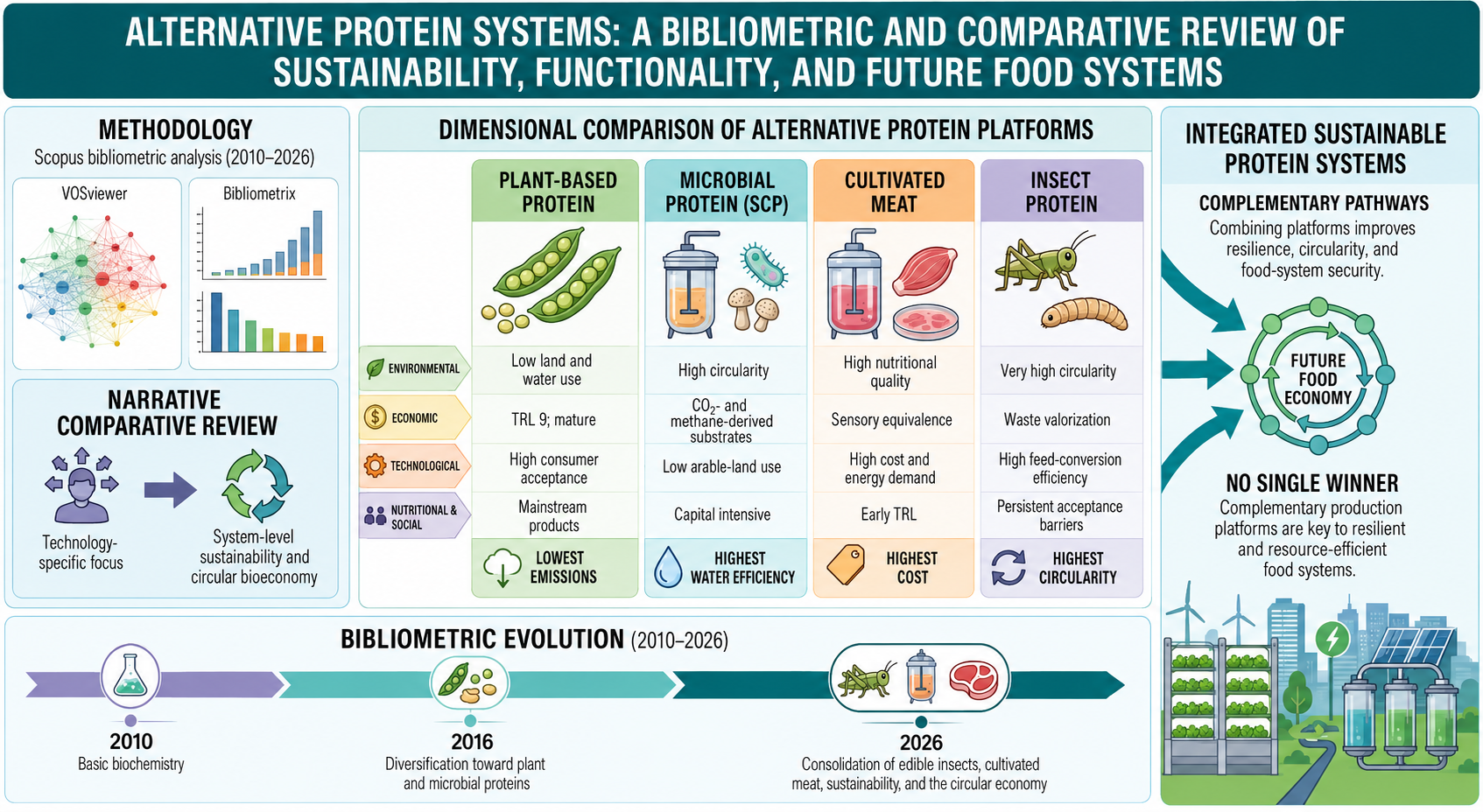
The growing demand for sustainable protein sources has accelerated the development of plant-based, microbial, cultivated, and insect proteins. This review combines a systematic analysis of Scopus-indexed publications with bibliometric mapping in Biblioshiny and VOSviewer and a comparative synthesis across environmental, economic, technological, nutritional, and social dimensions. The bibliometric results show a shift from technology-specific studies toward sustainability, circular bioeconomy, life-cycle assessment, consumer acceptance, and protein-transition research. No platform consistently outperforms the others across all dimensions. Plant-based proteins are currently the most technologically mature and economically competitive; microbial proteins offer high resource efficiency and circularity; cultivated meat most closely reproduces conventional meat but remains constrained by cost and energy demand; and insect proteins support nutrient recycling but face persistent acceptance and regulatory barriers. The evidence indicates that future sustainable protein systems will depend on complementary rather than competing production platforms. Integrating these technologies according to their distinct functional and sustainability advantages provides a promising pathway toward resilient and resource-efficient food systems and offers a basis for research priorities, technology development, investment, and policy strategies supporting the global protein transition.
Keywords:
alternative proteins
; plant-based protein
; microbial protein
; cultivated meat
; insect protein
; sustainability
; circular bioeconomy
; bibliometric analysis
; food systems
1. Introduction
In the context of global population growth, climate change, and increasing pressure on natural resources, identifying sustainable protein production systems has become one of the central challenges for future food security. According to the Food and Agriculture Organization (FAO), the global population is projected to reach approximately 9.3 billion by 2050, while demand for protein is expected to increase by more than 50% compared with 2020 levels [1]. At the same time, conventional livestock production is associated with substantial greenhouse gas emissions, extensive land occupation, and intensive water use [2]. For example, producing 100 g of protein from lamb and beef requires approximately 184.8 and 163.6 m² of agricultural land, respectively [2]. These challenges have intensified interest in alternative protein technologies capable of simultaneously improving resource efficiency, reducing environmental impacts, and strengthening food system resilience.
Alternative protein technologies, including plant-based proteins, microbial proteins, cultivated meat, and insect proteins, have emerged as promising components of the transition toward sustainable and circular agrifood systems. Unlike conventional livestock production, these technologies employ fundamentally different biological pathways and production models, ranging from crop processing and precision fermentation to cellular agriculture and insect bioconversion. Their diversity creates opportunities to reduce dependence on agricultural land, utilize renewable carbon sources and organic side streams, recover nutrients within circular bioeconomy systems, and diversify protein supply chains.
Although numerous review papers have examined individual alternative protein technologies, most focus on a single production platform or emphasize only selected aspects, such as environmental performance, nutritional quality, or consumer acceptance. Comparative studies integrating environmental, economic, technological, nutritional, and social dimensions across the major alternative protein systems remain relatively limited. Consequently, there is still a lack of holistic evidence that would allow a systematic comparison of the strengths, limitations, and future roles of different protein technologies within sustainable food systems.
To address this gap, the present review combines bibliometric analysis with a comprehensive comparative assessment of four major alternative protein platforms: plant-based proteins, microbial proteins, cultivated meat, and insect proteins. Bibliometric mapping is used to identify the evolution of research themes, scientific collaboration patterns, and emerging trends, while the narrative synthesis evaluates each technology across environmental, economic, technological, nutritional, and social dimensions. Based on this integrated approach, the review proposes a comparative sustainability framework that highlights the complementary roles of alternative protein systems within the future protein transition. Rather than identifying a single superior protein technology, this review aims to demonstrate how different alternative protein systems can contribute complementary functions within resilient and sustainable food systems.
2. Materials and Methods
2.1. Literature Search and Study Selection
This review was conducted using the Scopus database, selected for its comprehensive coverage of peer-reviewed literature in food science, biotechnology, environmental sciences, and agricultural research. The search focused on publications published between 2010 and 2026, reflecting the period during which research on alternative proteins expanded rapidly in response to sustainability and food security challenges.
The search strategy combined keywords related to major alternative protein technologies with terms describing sustainability and food system transformation. The search query included the following concepts: alternative proteins, plant-based meat, plant proteins, microbial proteins, single-cell proteins, mycoprotein, cultivated meat, cell-based meat, cultured meat, insect proteins, together with sustainability, protein transition, food systems, and circular bioeconomy. Only peer-reviewed journal articles and review papers published in English were considered.
After removing duplicate records, studies were screened based on titles, abstracts, and full texts. Publications were included when they provided evidence related to at least one of the following aspects of alternative protein systems: environmental performance, technological development, economic feasibility, nutritional characteristics, consumer acceptance, or regulatory frameworks. Editorials, conference abstracts, book chapters, and studies focused exclusively on conventional livestock production without relevance to alternative proteins were excluded.
2.2. Bibliometric Analysis
Bibliometric analysis was performed to identify the intellectual structure and thematic evolution of research on alternative proteins. The bibliographic dataset exported from Scopus was analyzed using Biblioshiny (Bibliometrix package for R) and VOSviewer.
Prior to analysis, keyword standardization was conducted by merging synonymous expressions (e.g., cultivated meat, cultured meat, and cell-based meat), correcting spelling inconsistencies, and removing generic indexing terms that did not contribute to thematic interpretation. Co-occurrence analysis of author keywords was subsequently applied to identify major research clusters and conceptual relationships within the scientific literature. The bibliometric analysis included publication trends, keyword frequency analysis, thematic evolution, and keyword co-occurrence mapping. These methods enabled the identification of dominant research directions, emerging topics, and relationships among different technological approaches to alternative protein production.
2.3. Comparative Analytical Framework
Following the bibliometric analysis, a qualitative comparative framework was developed to synthesize evidence across the four principal alternative protein categories: plant-based proteins, microbial proteins (single-cell proteins), cultivated meat, and insect proteins. Rather than comparing individual experimental results, the framework integrates findings reported across multiple review articles and primary studies.
To ensure consistency of comparison, technologies were evaluated using four sustainability dimensions comprising ten analytical indicators:
1) Environmental: land use, water use, greenhouse gas emissions, and circularity potential;
2) Economic: technology readiness level (TRL) and production cost;
3) Social: consumer acceptance and regulatory maturity;
4) Nutritional: protein quality and principal industrial applications.
These indicators were selected because they represent the most frequently assessed dimensions identified during the bibliometric analysis and repeatedly discussed throughout the reviewed literature. Together, they provide a multidimensional perspective on the sustainability and industrial potential of alternative protein technologies.
2.4. Data Synthesis
The collected evidence was synthesized using a narrative comparative approach. Instead of conducting a quantitative meta-analysis, which was not appropriate due to substantial methodological heterogeneity among life-cycle assessments, techno-economic analyses, consumer surveys, and nutritional studies, the review focused on identifying convergent findings, recurring patterns, and areas of scientific disagreement.
The comparative synthesis summarized the relative strengths and limitations of each protein technology across the selected sustainability dimensions and formed the basis for the integrated assessment presented in Table 9. Particular attention was given to the interactions between environmental performance, technological maturity, nutritional functionality, consumer acceptance, and circular bioeconomy potential, allowing a holistic evaluation of the role of alternative proteins in future sustainable food systems.
3. Results (Bibliometric Analysis)
3.1. Knowledge Structure and Thematic Evolution of Alternative Protein Research (Bibliometric Mapping and Thematic Structure of Alternative Protein Research)
3.1.1. Dataset Overview and Preprocessing
A total of 1,401 publications were indexed in the Scopus scientometric database in the field of sustainability-oriented alternative protein research between 2010 and 2026. The percentage growth rate was 30.8%, with a consolidated increase in publications starting in 2020. Over 90% of the studies were published specifically during this period, which is likely attributable to the intensifying global discourse on climate neutrality, the transformation of food systems, the development of a circular bioeconomy, and growing investments in the alternative protein sector. The average number of citations per document was 22.66, and the average co-authorship rate was 5.43 authors per article. The total number of indexed keywords (ID) reached 7,214, while the number of author keywords (DE) stood at 4,075. To ensure comparability across alternative protein categories, a controlled keyword harmonization procedure was applied. Synonymous terms were merged into four primary categories of alternative proteins: (1) plant-based protein, (2) microbial protein, including single-cell protein, (3) cultivated meat/cell-based meat, and (4) insect protein.
3.1.2. Global Research Distribution
The global distribution of sustainability-oriented alternative protein research demonstrates a strong concentration of scientific output in developed economies, particularly in the United States, Italy, Spain, China, and Germany (Figure 1). The United States occupies a central position in the knowledge network, showing strong associations with the keywords "sustainability", "alternative protein", and "plant-based protein", which may indicate a leading role in shaping the broader sustainability discourse around alternative proteins. European countries, specifically Italy, Spain, the Netherlands, and Belgium, demonstrate equally strong participation in research on the protein transition, consumer acceptance, and circular economy approaches, which may reflect the influence of the European Green Deal and the Farm to Fork policy agenda on scientific priorities. The keyword structure also reveals that sustainability remains the dominant conceptual core of the field, and alternative proteins are increasingly being investigated not as isolated food technologies, but as components of broader sustainability frameworks and food system transformations. At the same time, the emergence of keywords such as "consumer acceptance", "protein transition", and "circular economy" indicates a gradual shift in the field towards broader socio-economic perspectives. An analysis of the top 10 journals with the highest concentration of publications shows that the field is positioned at the intersection of food science, sustainability studies, and environmental research. Furthermore, the visible presence of journals such as the Journal of Insects as Food and Feed, Food Hydrocolloids, and Aquaculture reflects the growing specialization of research streams focused on specific protein technologies.
3.1.3. Thematic Evolution over Time
Figure 2 demonstrates a shift in the thematic structure of sustainability-oriented alternative protein research between 2010 and 2026, transitioning from fundamental biochemical studies to application- and implementation-oriented systemic food innovations.
In the earliest stage (2010–2015), the field is primarily characterized by a narrow focus on the basic nutritional and compositional properties of protein sources, reflecting an exploratory phase of knowledge development. In the subsequent period (2016–2020), the thematic landscape becomes noticeably more diversified. This stage is marked by the emergence of technological and processing-oriented directions, alongside a growing focus on novel protein sources and their functional and production characteristics. The coexistence of agricultural, feed, and food applications suggests a crucial transitional phase in which alternative proteins are being conceptualized within the broader framework of food systems and sustainability. In the most recent period (2021–2026), the thematic structure becomes more consolidated, with a stronger emphasis on edible insects, plant-based protein, cultivated meat, and meat substitutes. The prominence of cultivated meat and meat alternatives may reflect growing attention to solutions to mitigate the environmental impact of conventional animal agriculture.
3.1.4. Thematic Structure of the Field and Keyword Co-Occurrence Network (VOSviewer)
The keyword co-occurrence clustering revealed 5 clusters out of 4,075 keywords, based on a minimum occurrence threshold of 10, which yielded 1,386 links and distributed the aspects of the thematic structure of sustainability-oriented alternative protein research into corresponding groups (Figure 3, Table 1)
While co-occurrence clustering demonstrates the structural organization of research streams, the thematic map provides additional insight into their maturity and strategic positioning within the field (Figure 4).
Motor themes, represented by cultivated meat, the protein transition, and consumer acceptance, indicate highly developed and strategically positioned research directions that currently drive the scientific agenda and the integration of technological and behavioral perspectives. Niche themes, including plant-based protein and its associated functional and technological attributes, demonstrate strong internal development but a more specialized scope, reflecting mature yet relatively domain-specific research streams. Basic themes, such as sustainability, alternative protein, and insect protein, occupy a structurally fundamental position in this field, serving as broadly connected conceptual markers despite varying levels of thematic development. In contrast, microbial protein—in conjunction with the circular bioeconomy and biorefineries—emerges as a new or less consolidated theme, suggesting either early-stage scientific exploration or a more peripheral role in the current configuration of the research landscape.
4. Overview of Alternative Protein Production Systems and Sources
4.1. Plant-Based Protein
Plant-based protein is the most widespread alternative to traditional animal protein sources, utilized in the food industry as a plant-based meat substitute. These proteins can be derived from a diverse range of plant raw materials. The most common raw materials include legumes, cereals, oil crops, nuts, and seeds, which are processed into protein ingredients such as concentrates and isolates. Plant proteins serve as the primary structural components for creating plant-based meat analogues, given their ability to mimic the fibrous texture, flavor, and appearance of animal-derived products [3]. The market dominance of plant proteins is driven by a combination of the economic affordability of raw materials, technological maturity, and high consumer acceptance [4,5,6]. Compared to conventional animal agriculture, the production of these proteins is significantly more environmentally sustainable, requiring fewer land and water resources while generating lower greenhouse gas emissions [7]. From a health perspective, plant-based proteins offer advantages such as the absence of cholesterol and low levels of saturated fats [8].
Despite these significant advantages, the utilization of plant proteins presents certain limitations related to their nutritional value and organoleptic characteristics. Many plant sources possess an "incomplete" amino acid profile; for instance, legumes frequently lack sulfur-containing amino acids (methionine), while cereals are limited in lysine [9]. Furthermore, the presence of antinutrients can hinder mineral absorption, while specific undesirable off-flavors, such as grassy or "beany" notes, necessitate technological masking [4].
4.1.1. Sources of Plant Proteins
The selection of a specific protein source is based on its techno-functional properties, such as gelation, emulsification, and water- and fat-binding capacities, which are critical for mimicking the fibrous structure and juiciness of meat. In addition to traditional crops such as soy, pea, and wheat gluten [5], researchers are exploring the potential of novel and underutilized sources—such as mung bean, lupin [10], pumpkin seed, moringa, and hemp [11,12]—which facilitate the balancing of the amino acid profile and the overcoming of certain organoleptic limitations. Table 2 provides a consolidated comparative overview of the primary plant-based protein sources based on their protein content, functional properties, application areas, and key limitations.
4.1.2. Technologies for Processing and Structuring Plant-Based Proteins
The technological cycle of producing plant-based meat analogues is a multi-stage process aimed at overcoming the natural differences between the globular structure of plant proteins and the anisotropic architecture of animal muscle tissue. Overall, the technological process of forming plant-based meat substitutes can be categorized into two primary approaches:
Technological approaches to extraction and modification. This stage involves the extraction of proteins from the plant matrix to obtain concentrates (50–70% protein) or isolates (>90%), as well as their subsequent physical, chemical, or biological modification. These modifications are designed to improve techno-functional properties, such as solubility and gelation, and to eliminate off-flavors.
Technological approaches to extraction and modification. This stage focuses on the creation of textured structures. Ulhas et al. [9] classify this technology into two approaches: bottom-up and top-down approaches. The bottom-up approach involves the formation of individual structural elements at the nanoscale and their subsequent assembly into a cohesive product to replicate the hierarchical architecture of meat. The top-down approach involves mimicking the fibrous texture on a larger scale through thermal and mechanical processing of biopolymer mixtures to obtain anisotropic structures. Each of the structuring technologies provides a different level of replication of the fibrous meat structure and is characterized by specific advantages and limitations in terms of final product quality, production efficiency, and commercial readiness. A comparative characterization of the primary plant-based protein structuring technologies is presented in Table 3.
4.2. Microbial Protein
Microbial proteins are commonly discussed within the broader concept of single-cell protein (SCP), although contemporary microbial protein systems increasingly include more diverse biotechnological production pathways. The technology for producing microbial proteins involves the cultivation of microorganisms such as bacteria, filamentous fungi, yeasts, and microalgae. The basis for such cultivation is the use of various substrates. The first generation of microbial proteins involves the use of sugars as substrates [19], while the second generation is based on non-food raw materials, such as agricultural residues [20]. Additionally, the second generation of microbial proteins offers new solutions related to the genetic modification of microorganisms and the improvement of bioreactor configurations, which enhance protein biomass production [21]. Recent studies also propose technological solutions where carbon dioxide (CO₂) is used as a substrate through a gas fermentation process [22]. This technology has gained popularity due to its dual environmental benefits: on one hand, using waste gases as a substrate helps reduce CO₂ emissions, thereby mitigating the impact on climate change; on the other hand, the technology allows for the production of high-quality protein that contains sufficient amino acids and has high digestibility [23], making it suitable as an ingredient in animal feed and even in human food products. Microbial proteins are increasingly considered a promising strategy for addressing global food security challenges. Compared to traditional livestock farming, microbial biomass production has advantages such as significant resource savings due to minimal use of agricultural land and water, as well as the rapid growth rate of microorganisms (microbial biomass can be produced within weeks, whereas conventional livestock production typically requires substantially longer production cycles) [24]. Moreover, unlike traditional livestock farming, the production of such protein is not dependent on climate conditions, making it more resilient in this regard. However, it should be noted that the main criteria for optimizing the production process and economic efficiency of the technology are the choice of substrate and microbial platform for protein biomass production.
4.2.1. Selection of Substrates for Growing Microbial Protein
In general, Raziq [25] proposes classifying all potential substrates into the following groups: 1) energy-intensive waste, i.e., substrates based on chemical carbohydrates; 2) biofeedstock, substrates based on biocarbohydrates; 3) biowaste, substrates based on agricultural waste; 4) carbon dioxide, substrates based on CO₂. The choice of substrates for growing single-cell proteins depends on factors such as waste availability, logistical costs and transportation conditions, the need for pre-treatment and its cost, and the efficiency of the bioprocess, i.e., the protein content of the resulting biomass [26].
Current research increasingly emphasizes the use of low-cost and waste-derived substrates for microbial protein production within circular bioeconomy systems. Agro-industrial residues, municipal waste streams, and industrial by-products are considered particularly promising due to their wide availability and potential for resource recovery [27]. Among the most commonly investigated substrates are lignocellulosic biomass, food processing residues, grape pomace, municipal wastewater, whey from cheese production, raw glycerin from biodiesel production, and wastewater from the paper and pulp industry [24,27]. These substrates not only reduce environmental burdens associated with waste disposal but also provide nutrient-rich media for microbial growth and protein biomass production.
Special attention has recently been devoted to methane- and CO₂-based substrates due to their potential contribution to climate change mitigation. Methanotrophic bacteria capable of converting methane into protein biomass have demonstrated promising results, particularly in aquaculture applications where microbial proteins can partially replace fishmeal without negatively affecting fish growth or health [28]. At the same time, economically viable substrates increasingly include inexpensive agro-industrial by-products such as molasses and corn steep liquor, which supply essential nutrients for microbial growth while reducing overall production costs [29]. Overall, substrate selection plays a central role in determining the sustainability, economic feasibility, and scalability of microbial protein production systems.
4.2.2. Selection of Microbial Platforms for Microbial Protein Production
Beyond substrate selection, the efficiency and sustainability of microbial protein production are also strongly influenced by the choice of microbial platform [19]. Filamentous fungi, microalgae, and bacteria represent the most commonly used microbial platforms. Yeasts and mixed microbial cultures are also considered as potential platforms [24].
Filamentous fungi are among the most widely used microbial platforms for microbial protein production due to their high protein yield, favorable amino acid composition, and ability to utilize diverse low-cost substrates [30]. Their cultivation is considered technologically attractive because of relatively simple fermentation requirements and flexibility in substrate selection, including lignocellulosic biomass and agro-industrial residues. A prominent example is Fusarium venenatum, which has been commercially used for the production of the meat alternative Quorn™ since 1985 [31]. In addition to high protein content, fungal biomass contains vitamins, lipids, and bioactive compounds, making it suitable for food, aquaculture, poultry, and livestock applications. However, certain filamentous fungi may produce mycotoxins or trigger allergic reactions, creating challenges for large-scale commercialization and food safety management.
Among microbial platforms, microalgae have attracted increasing attention due to their rapid biomass accumulation and ability to utilize waste-derived substrates. The production of microbial proteins from microalgae can be carried out in two ways: in oxidation ponds, where agricultural wastewater is used as a substrate, or in photobioreactors, which, unlike ponds, are closed systems where both organic and chemical waste, such as CO₂, can be used as substrates. The disadvantage of the first option is the quality of the resulting protein, the presence of pollutants, and the difficulty of harvesting the algae. A common disadvantage for both open ponds and photobioreactors is the complexity and labor-intensive process of pretreatment to obtain the final product due to the presence of tough cell walls, which require drying and cell wall disruption to improve protein digestibility [32]. However, these disadvantages are offset by the rapid growth rates and low substrate costs, making microalgae a promising microbial base for microbial proteins in the global food security system.
Bacteria are another alternative for growing microbial proteins. Their short generation time and even faster growth rates compared to fungi and algae (bacterial growth rate ranges from 0.28 µm to 0.65 µm per hour, while algae and fungi grow at rates from 0.16 µm to 0.39 µm per hour [19] create significant economic advantages. The genus Methylotrophus is the most commonly used for commercial single-cell protein production. This type of bacterium uses methane as a substrate by assimilating nitrogen, which leads to protein production. Another type of bacterium is Rhodobacter capsulatus – a phototrophic bacterium that uses food waste as a substrate. However, the presence of toxins due to high levels of nucleic acids and low cell density, which complicates the harvesting process, creates limitations for its use. Overcoming these limitations could involve technological improvements in bioreactors, where the bacteria are fermented, as well as DNA editing to create microorganisms with the desired properties [33].
Yeasts are also widely used for microbial proteins production, mainly due to their high protein content in the final product (45-55% dry weight), the presence of B vitamins, and their versatility in substrate usage (whey waste, agricultural residues, cellulose hydrolysates, etc.). They easily adapt to acidic pH and are generally recognized as safe due to their long-standing use in traditional fermentation processes [34]. Yarrowia lipolytica is noted for its high lipid and protein content, while Candida utilis is rich in lysine and vitamins. The main limitations are the risk of pathogenicity of certain species (e.g.,C. krusei) and the need to monitor the process to prevent contamination.
4.2.3. Integration of Substrates, Microbial Platforms, and Fermentation Processes
The production of microbial proteins requires the integration of three interdependent components: substrate selection, microbial platform choice, and bioprocess configuration. The efficiency, sustainability, and economic feasibility of microbial protein production largely depend on the interactions among these elements. To systematize the reviewed approaches, Table 4 summarizes the comparative characteristics of major microbial platforms
Figure 5 summarizes the relationship between the four primary stages of microbial protein production: feedstock (substrate) selection, microbial platform choice, the type of bioprocesses (fermentation) applied, and the final stage of product downstream processing.
4.3. Cultivated Meat (Cell-Based Meat)
Cultivated meat (also known as cell-based meat or lab-grown meat) represents a paradigm shift in food production systems, transitioning from conventional livestock farming to a cellular biomanufacturing system [35]. In contrast to conventional livestock production, this technology relies on the controlled in vitro proliferation and differentiation of animal-derived cells within specialized bioreactors [36]. This approach allows the final product to be viewed not merely as a discrete "ingredient," but as a complex biological structure that aims to replicate the architecture of muscle, adipose, and connective tissues under laboratory conditions [37].
The technological cycle of cultivated meat production relies on two core blocks. The first is the selection of cell sources, which constitutes the biological foundation of the process and involves the isolation of high-quality stem cells or progenitors, such as muscle satellite cells, mesenchymal stem cells, or pluripotent lines, from livestock or aquaculture organisms [35,38]. The second block is tissue engineering, which drives the biofabrication transformation through cell mass expansion and its subsequent structuring using scaffolds, bioinks utilized in bioprinting approaches, or cell sheet technologies to form a functional and organoleptic equivalent of conventional meat [37].
The key distinction between cultivated meat and plant-based or microbial proteins lies in its biological nature and the end result. While plant-based analogues utilize botanical components to mimic meat, and microbial proteins are obtained through the fermentation of microorganisms, such as fungi, yeasts, or algae, cultivated meat consists of animal-derived cells that form tissue-like structures. This allows for the creation of a product that is comparable to conventional meat in terms of structure and nutritional profile, thereby overcoming the sensory limitations inherent to other alternative proteins [36].
4.3.1. Cell Sources for Cultivated Meat Production
The choice of cell source is a fundamental biological decision that determines the efficiency of the entire cultivated meat biomanufacturing system. The characteristics of the selected cell line directly influence the rate of tissue formation, industrial scalability, and final organoleptic properties of the product. Modern scientific literature distinguishes two primary categories, including adult stem cells, specifically muscle satellite cells (MuSCs) and mesenchymal stem cells (MSCs), as well as pluripotent cell platforms, namely embryonic stem cells (ESCs) and induced pluripotent stem cells (iPSCs) [36,39]. The primary technological trade-off lies in choosing between the high specialization and genomic stability of MuSCs, which possess a naturally limited division cycle, and the theoretically unlimited self-renewal capacity of ESCs and iPSCs. Although the latter provide the necessary foundation for mass production, they require more complex differentiation protocols and strict regulatory oversight due to ethical concerns and risks of genetic instability [40].
A detailed comparative characterization of the primary cell sources and their operational parameters is presented in Table 5. The selected cell sources represent the most widely discussed and functionally relevant platforms in cultivated meat research.
4.3.2. Integrated Cultivation Systems and Bioprocess Architecture
Cultivated meat production relies on an integrated bioprocessing pipeline that combines sequential and interdependent technological modules, ranging from cell expansion to final tissue structuring [38]. Rather than operating as isolated techniques, these components function as a coordinated system that replicates key aspects of animal tissue formation under controlled in vitro conditions. The process begins with the expansion of selected cell populations, followed by cultivation in bioreactor systems that regulate physicochemical parameters such as oxygen transfer, nutrient supply, and shear stress. Structural development is then guided through scaffold-based platforms and biofabrication strategies that enable three-dimensional tissue organization. Finally, process intensification approaches are employed to improve efficiency, reduce production costs, and enhance scalability [35]. This system-level perspective conceptualizes cultivated meat production as an integrated manufacturing pipeline rather than a collection of discrete biotechnological methods (Table 6). Bioreactor systems are the most technologically mature. Concurrently, process intensification systems significantly affect the economic feasibility of production, determining the potential to achieve price parity with conventional meat. Consequently, the primary challenge for the commercialization of cultivated meat is not an isolated technology, but rather the necessity for the harmonized development of all components within the production chain.
4.4. Insect Protein
Insects have emerged as a pivotal alternative protein source within modern circular bioeconomy frameworks [51]. Unlike traditional livestock, insect biomanufacturing systems offer a sustainable pathway for protein production by transforming low-value organic side-streams and bio-waste into high-quality biomass. This capacity for waste valorization, combined with exceptional resource efficiency, evidenced by significantly lower land, water, and energy requirements, positions insects as a critical solution for global food security [44]. Characterized by rapid growth rates and high feed-to-food conversion efficiencies, insects address the nutritional limitations often associated with plant-based proteins while offering environmental advantages superior to conventional animal agriculture. Within the broader landscape of alternative proteins, insects represent a unique animal-based system that aligns ecological preservation with the production of nutrient-dense food and feed.
4.4.1. Insect Species Used for Protein Production
Numerous insect species are currently under investigation as viable platforms for sustainable protein production. However, they differ considerably in protein content, production characteristics, industrial maturity, and end-use applications. Species selection is further influenced by regulatory approval, production scalability, substrate utilization, and food or feed safety requirements. These differences determine the suitability of individual species for specific market segments, including human food, animal feed (including aquaculture), pet food, and waste valorization. Table 7 summarizes the comparative characteristics of the principal insect species currently used for protein production.
4.4.2. Insect Protein Production Systems and Bioconversion Pathways
Beyond species-specific biological traits, the industrial viability of insect proteins is determined by integrated bioprocess architectures structured into distinct bioconversion pathways. These pathways are defined by substrate characteristics, rearing environments, and the intensity of downstream processing. Current research identifies three primary production models: (1) waste-derived bioconversion systems, which utilize manure and municipal organic waste to generate crude biomass and bio-fertilizers [52]; (2) agro-industrial by-product systems, leveraging residues like wheat bran and food processing waste for standardized food and feed-grade flours; and (3) controlled optimized rearing systems, which employ high-intensity technologies, such as enzymatic hydrolysis and ultrasound-assisted extraction, to produce high-value protein isolates and bioactive peptides [53]. These systems vary significantly in technological complexity and industrial scalability, targeting diverse applications ranging from bulk animal feed to specialized functional ingredients. A detailed framework of these system-level bioprocess architectures is provided in Table 8.

Table 8.
Insect-based protein production systems: substrate pathways, outputs, and scale-up constraints.
Table 8.
Insect-based protein production systems: substrate pathways, outputs, and scale-up constraints.
| Production system | Rearing substrate base | Output product streams | Key scale-up constraints | References |
|---|---|---|---|---|
| Waste-derived bioconversion systems | Animal manure (poultry, pig), catering waste, municipal organic waste, sewage sludge | Whole dried insect biomass; crude insect meal; organic fertilizer (frass) | Pathogen and heavy metal accumulation; high labor intensity without automation; safety control of waste-derived inputs | van Huis [44]; Pan et al. [45] |
| Agro-industrial by-product systems | Wheat bran, brewery by-products, distillery residues, coffee silverskin, fruit/vegetable processing waste | Defatted insect meal; protein concentrates; standardized insect flour | High energy demand in drying and fractionation; variability of substrate composition; cost of advanced extraction technologies | Queiroz et al. [53]; Pan et al. [45]; Morales-Ramos et al. [54] |
| Controlled optimized rearing systems (feed-grade / R&D systems) | Standardized reference diets; formulated plant-based feeds; nutrient-controlled substrates | Protein isolates; hydrolysates; bioactive peptides | High production cost; enzyme cost and process complexity; regulatory constraints (novel food approval); scalability limitations for high-value fractions | Matos et al. [52]; Ma et al. [55]; Morales-Ramos et al. [54] |
Table 9.
Comparative synthesis of alternative protein systems across sustainability, technological, nutritional and social dimensions.
Table 9.
Comparative synthesis of alternative protein systems across sustainability, technological, nutritional and social dimensions.
| Sustainability Dimension | Indicator | Plant-based Protein | Microbial protein (SCP) | Cultivated meat | Insect protein | Comparative interpretation | Key References |
|---|---|---|---|---|---|---|---|
| Environmental | Land use |
Low requires agricultural land but substantially less than livestock |
Very low decoupled from arable land; produced in bioreactors with vertical scalability |
Very low potential for up to 99% reduction in land use compared to conventional beef |
Low high-density vertical rearing systems minimize spatial footprint. |
Cell-based and microbial systems show the greatest land-use efficiency | Mazac et al. [56]; Ojha et al. [57]; Hawkey et al. [58]; Sinke et al. [59]; Wali et al. [60]; Rubio et al. [61] |
| Water use |
Low lower than livestock, although irrigation may be substantial for some crops |
Very low closed fermentation systems enable efficient water recycling |
Medium-Low culture media preparation increases water demand |
Low insects require little water due to poikilothermic metabolism |
Microbial systems demonstrate the highest water-use efficiency. | Mazac et al. [56]; Hawkey et al. [58]; Gundupalli et al. [62]; Bajić et al. [24] | |
| GHG emissions |
Low lowest among current commercial alternatives |
Low depends largely on energy source |
Medium-Low environmental advantage depends on low-carbon electricity |
Low substantially lower methane emissions than livestock |
Plant-based proteins currently exhibit the lowest carbon footprint, whereas cultivated meat remains energy-dependent. | Mazac et al. [56]; Sinke et al. [59]; Gundupalli et al. [62]; Lynch and Pierrehumbert [63] | |
| Circularity potential |
Medium utilizes agricultural by-products and oilseed cakes |
High capable of converting CO₂, methane, industrial gases and waste streams |
Low relies on high-purity culture media with limited recycling |
Very high Very high; converts food waste and manure into protein and fertilizer |
Insects and microbial proteins provide the strongest contribution to circular bioeconomy. | Gundupalli et al. [62]; Koukoumaki et al. [64]; Pereira et al. [27]; Bajić et al. [24] | |
| Economic | Technology readiness (TRL) |
TRL 9 fully commercialized |
TRL 7–9 fungal SCP is commercial, bacterial systems are emerging |
TRL 4–6 pilot-scale commercialization |
TRL 8–9 commercial in feed, expanding in food |
Plant-based proteins are the most mature technology, followed by insect and microbial proteins. | Hamlin et al. [65]; Akinmeye et al. [66]; Pereira et al. [27]; Sinke et al. [59] |
| Production cost |
Low benefits from existing agricultural and processing infrastructure |
Medium capital-intensive fermentation and downstream processing |
High expensive media, growth factors and bioreactors |
Medium-Low сosts associated with labor, drying, and energy; dropping with automation. |
Cultivated meat remains economically constrained, whereas plant proteins are currently the most cost-competitive. | Hamlin et al. [65]; Akinmeye et al. [66]; Pereira et al. [27]; Bajić et al. [24]; Sinke et al. [59] | |
| Social | Consumer acceptance |
High perceived as familiar and natural |
Medium generally acceptable but "microbial" origin may reduce willingness |
Low concerns regarding unnaturalness and biotechnology |
Low in Western countries; strongly affected by food neophobia |
Consumer perception remains the principal barrier for insect protein and cultivated meat | Giacalone and Jaeger [67]; Koukoumaki et al. [64]; Medeiros et al. [68]; Akinmeye et al. [66] |
| Regulatory maturity |
Established Standard food regulations apply; labeling is the primary point of debate. |
Mature Mature Novel Food framework and long history of fermentation products |
Early Emerging regulatory frameworks; approved only in a few countries |
Emerging Rapid authorization of specific species (e.g., T. molitor) in the EU. |
Plant-based proteins currently benefit from the most predictable regulatory environment | Gundupalli et al. [62]; Akinmeye et al. [66]; Grasso et al. [6]; Sinke et al. [59]; Mazac et al. [56] | |
| Nutritional | Protein quality |
Medium Good but sometimes limited by essential amino acid profile |
High High-quality protein with balanced amino acid composition |
Very high Equivalent to conventional animal protein |
High High biological value and rich in essential amino acids |
Cultivated meat, microbial proteins and insects generally provide more complete amino acid profiles than plant proteins | Bajić et al. [24]; Gundupalli et al. [62]; Pereira et al. [27]; Medeiros et al. [68]; Koukoumaki et al. [64] |
| Main industrial applications | Meat analogues, dairy alternatives, beverages, protein ingredients | Food ingredients, feed, protein concentrates, fermentation-derived products | Whole-cut meat analogues and premium meat products | Animal feed, protein flour, functional ingredients | Each protein category occupies a distinct technological and market niche rather than directly replacing the others. | Pereira et al. [27]; Sinke et al. [59]; Akinmeye et al. [66] |
5. Comparative Sustainability Assessment of Alternative Protein Production Systems
The transition toward a resilient global food system necessitates a radical rethinking of protein production to mitigate the environmental and ethical challenges associated with intensive livestock farming [67,69]. While the preceding sections provided a detailed examination of plant-based, microbial, cultivated, and insect-based systems as isolated technological modules, their viable integration into the human diet requires a rigorous multidimensional comparison. A systemic perspective is essential because sustainability cannot be reduced to a single metric; relying solely on GHG emissions, for instance, may mask critical trade-offs in water scarcity, land requirements, or nutritional bioaccessibility [56].
Table 9 synthesizes the evidence base across four primary sustainability dimensions: environmental, economic, social, and nutritional. Each category is evaluated through harmonized and comparable indicators, including land use, water use, GHG emissions, and circularity potential for ecological assessment. Economic and operational viability are represented by technology readiness levels (TRL) and production costs, reflecting the maturity of the manufacturing pipelines. Social sustainability is addressed through the lens of consumer acceptance, accounting for familiarity and food neophobia, and regulatory maturity, particularly within Novel Food frameworks. Finally, the nutritional functionality dimension compares protein quality and major industrial applications to determine how each system fulfills specific dietary roles. This integrated framework enables the identification of the principal strengths, limitations, and strategic roles of each alternative protein technology, providing the analytical foundation for the subsequent discussion on their complementary implementation in future food systems.
Plant-based proteins currently occupy the most favorable sustainability position within the alternative protein landscape due to their established market maturity and high resource efficiency. Their principal strengths lie in their high technology readiness (TRL 9) and the utilization of existing agricultural infrastructure, allowing for the most direct and cost-effective energy path from crop to plate. However, they face major limitations in replicating the complex, anisotropic fibrous structure of whole-muscle animal tissue, often resulting in formed or restructured products. The most promising future applications involve mainstream retail substitution for processed meat and dairy counterparts. Currently, the key bottlenecks preventing wider commercialization of high-fidelity analogs are sensory limitations regarding "tenderness and juiciness" and growing consumer skepticism toward the overprocessed nature of highly formulated plant-based products [5].
Microbial protein, or single-cell protein (SCP), represents a highly scalable and resilient production platform that offers superior land-use efficiency compared to both livestock and plant-based systems [22]. Its principal strengths are its rapid generation time and the unprecedented ability to utilize gaseous carbon sources, such as CO₂ and methane, to produce food "out of thin air" [62]. The major limitations include high nucleic acid content, which necessitates energy-intensive downstream processing for human consumption, and significant capital costs for fermentation infrastructure. Microbial platforms show the greatest promise in high-quality aquaculture feed and as functional food ingredients for regional food security in non-arable areas. The primary bottlenecks are consumer unfamiliarity with the microbial origin and the economic challenge of achieving cost-parity with established plant-based commodity proteins.
Cultivated meat holds a transformative sustainability position by promising to decouple animal protein from land-intensive livestock farming while maintaining biological tissue identity. Its principal strength is the potential to deliver a genuine sensory experience and nutritional profile identical to conventional meat. Major limitations include its extreme energy intensity and current reliance on expensive, food-grade culture media and growth factors. The technology is most promising for disrupting the premium whole-cut meat market where plant-based alternatives fail to achieve parity. However, significant technological bottlenecks in industrial-scale bioreactor engineering and societal concerns regarding the «unnaturalness» of lab-grown products remain the primary hurdles to mass-market entry [70].
Insect proteins represent one of the most promising solutions within the circular bioeconomy due to their unique capacity to recover nutrients from low-value organic side streams and convert them into high-quality protein biomass. Their principal strengths include exceptional feed conversion efficiency, efficient waste valorization, and the simultaneous production of valuable co-products such as organic fertilizers. However, large-scale implementation remains constrained by potential food and feed safety concerns associated with substrate-derived contaminants, including heavy metals, as well as by the biological variability inherent to waste-based rearing systems [57]. The most promising future applications are expected in industrial animal feed, aquaculture, and the production of high-value functional ingredients such as protein hydrolysates and bioactive peptides. Despite their strong environmental performance, commercialization for human consumption continues to be limited by low consumer acceptance, particularly in Western countries where food neophobia and feelings of disgust remain widespread [68]. These challenges are further reinforced by evolving regulatory frameworks governing the use of insects as farmed animals and novel food ingredients.
Overall, the comparative evidence indicates that no single alternative protein technology simultaneously maximizes environmental performance, economic feasibility, nutritional quality, technological maturity, and social acceptance. Rather than competing solutions, plant-based proteins, microbial proteins, cultivated meat, and insect proteins occupy complementary positions within the emerging protein transition. Plant-based proteins currently dominate commercial markets because of their technological maturity and consumer familiarity, whereas microbial proteins and insects offer exceptional resource efficiency and circularity advantages. Cultivated meat represents the most disruptive long-term innovation owing to its potential to replicate conventional meat while reducing reliance on livestock production, although substantial technological and economic challenges remain before large-scale commercialization becomes feasible.
6. Discussion
The comparative synthesis presented in Table 9 indicates that the sustainability performance of alternative protein systems is inherently multidimensional and cannot be assessed using a single criterion. None of the four protein categories demonstrates a consistent advantage across all evaluated dimensions. Instead, the reviewed literature highlights complementary strengths and limitations, suggesting that their relative performance depends on the specific environmental, technological, economic, nutritional, or social perspective considered. These differences largely reflect the fundamentally distinct production pathways underlying each protein category, together with variations in technological maturity, energy requirements, consumer acceptance, and regulatory development.
6.1. Environmental Impact and Circularity Potential
There is broad agreement across multiple studies that plant-based and insect-based systems offer the most immediate reductions in land and water use. Mazac et al. [56] reported that incorporating novel foods into meals can reduce global warming potential and land use by over 80%. However, a significant area of disagreement exists regarding the long-term climate impact of cultivated meat. While several life-cycle assessments report substantial environmental benefits of cultivated meat, Lynch and Pierrehumbert [63] cautioned that these advantages may not be fully realized under carbon-intensive energy systems. They argued that substituting short-lived methane emissions from livestock with persistent fossil-fuel-derived CO₂ emissions could lead to less favorable long-term climate outcomes than commonly assumed. In contrast, Sinke et al. [59] suggested that these conclusions are highly sensitive to assumptions regarding future energy systems. Their life-cycle assessment indicates that the environmental performance of cultivated meat improves substantially under scenarios involving the progressive decarbonization of electricity generation.
Several recent reviews identify substrate selection as one of the key determinants of the environmental performance of insect and microbial protein production systems. Smetana et al. [71] demonstrated that the sustainability advantages of insect protein depend strongly on the rearing substrate: insects cultivated on high-quality cereal feed exhibited considerably higher environmental impacts, whereas the utilization of manure or organic side-streams substantially improved overall environmental performance. Similar conclusions have been reported for microbial proteins. Gundupalli et al. [62] and Koukoumaki et al. [64] emphasized that single-cell proteins can utilize CO₂, methane, and other industrial waste gases as carbon sources, thereby reducing dependence on arable land and strengthening their role within circular bioeconomy systems. Together, these findings suggest that the sustainability of both insect and microbial proteins is determined not only by the biological characteristics of the production organism but also by the integration of these technologies into circular resource management systems.
6.2. Nutritional Functionality and Consumer Acceptance
While all four alternative protein systems provide nutritionally valuable protein, they fulfill different functional roles within the food system. Plant-based proteins are currently the most established ingredients for meat analogues, although Sha and Xiong [5] noted that they still struggle to reproduce the anisotropic fibrous structure of whole-muscle tissue, limiting their application mainly to restructured products. In contrast, cultivated meat is the only technology capable of reproducing the cellular architecture and nutritional profile of conventional meat. Insect and microbial proteins primarily function as high-quality protein ingredients rather than direct meat replacements, offering balanced amino acid profiles and broad applications in both human food and animal feed.
Despite these nutritional advantages, consumer acceptance remains highly uneven across alternative protein categories. Hamlin et al. [65] observed that cultivated meat frequently evokes perceptions of unnaturalness despite its potential environmental and ethical benefits. Similarly, Giacalone and Jaeger [67] described cultured meat as belonging to a group of food technologies that consumers adopt more slowly than innovations perceived as less disruptive. Consumer acceptance of insect protein is constrained by food neophobia and disgust, whereas microbial proteins benefit from the long history of fermentation-based foods, although the microbial origin itself may still reduce willingness to consume among some consumers.
6.3. Implications for Future Protein Systems
The findings of this review indicate that alternative protein technologies should be considered complementary components of resilient food systems rather than direct competitors. This interpretation is consistent with Sinke et al. [59], who argued that the greatest environmental benefits can be achieved through the partial substitution of high-impact animal proteins with a diversified portfolio of alternative protein sources. Within such a portfolio, plant-based proteins provide the most cost-effective and technologically mature solution, cultivated meat addresses demand for products with sensory characteristics similar to conventional meat, while microbial and insect proteins contribute primarily through resource efficiency, waste valorization, and circular bioeconomy applications. These complementary strengths suggest that future protein systems should capitalize on the comparative advantages of each technology instead of pursuing a single universal replacement.
It should also be acknowledged that direct comparisons across alternative protein systems remain challenging because the reviewed studies employ heterogeneous functional units, life-cycle assessment boundaries, technological assumptions, and economic scenarios. Consequently, differences reported in the literature should be interpreted as indicative trends rather than universally applicable performance rankings.
7. Conclusions
This review provides an integrated assessment of four major alternative protein platforms, plant-based proteins, microbial proteins, cultivated meat, and insect proteins, by combining bibliometric mapping with a comparative analysis of their environmental, economic, technological, nutritional, and social characteristics. The bibliometric evidence demonstrates an evolution of the research landscape from technology-oriented studies toward integrated sustainability frameworks, with increasing attention to circular bioeconomy, life-cycle assessment, consumer acceptance, and protein transition. This shift suggests that future research is progressively moving beyond the evaluation of individual protein sources toward understanding their role within interconnected and resilient food systems.
The qualitative synthesis highlights that each protein category follows a distinct technological trajectory and occupies a different position within the emerging protein landscape. Plant-based proteins currently represent the most technologically mature and commercially competitive solution, benefiting from established production systems and relatively high consumer acceptance. Microbial proteins offer exceptional resource efficiency and considerable opportunities for circular bioeconomy through the utilization of alternative carbon sources and industrial side streams. Cultivated meat provides the closest biological equivalent to conventional meat and has the potential to satisfy demand for products with authentic sensory characteristics, although large-scale commercialization remains constrained by technological complexity, high production costs, and energy requirements. Insect proteins demonstrate outstanding potential for nutrient recycling and waste valorization, but their broader adoption continues to be limited primarily by consumer acceptance and regulatory challenges.
The comparative analysis further demonstrates that sustainability performance cannot be evaluated using a single indicator. Environmental efficiency, economic feasibility, technological readiness, nutritional quality, and social acceptance frequently involve trade-offs, preventing any individual protein technology from outperforming the others across all dimensions. Instead, the reviewed evidence indicates that the comparative advantages of each system arise from their different production pathways, resource requirements, and intended market applications.
This review demonstrates that no single alternative protein technology simultaneously maximizes environmental, economic, nutritional, and social performance. Instead, the future protein transition is likely to evolve toward an integrated portfolio of complementary production systems, where plant-based proteins provide immediate large-scale substitution, microbial proteins enhance resource efficiency and circularity, insect proteins facilitate nutrient recycling, and cultivated meat addresses demand for conventional meat equivalents. Consequently, future food systems should be designed around technological complementarity rather than competition among alternative protein platforms.
Future research should increasingly move beyond isolated assessments of individual protein technologies toward integrated evaluations that combine life-cycle assessment, techno-economic analysis, nutritional functionality, consumer behavior, and regulatory readiness within harmonized methodological frameworks. Such multidisciplinary approaches will provide a more robust basis for supporting evidence-based policy decisions and guiding investments in sustainable protein systems.
Author Contributions
All authors contributed to the conceptualization, methodology, literature review, analysis, writing, reviewing, and editing of the manuscript. All authors have read and agreed to the published version of the manuscript.
Funding
This research was funded by the Ministry of Education and Science of Ukraine, grant number 012U000308 (project "Circular strategies and economic feasibility of implementing alternative protein technologies in the food security system")..
Institutional Review Board Statement
Not applicable.
Informed Consent Statement
Not applicable.
Data Availability Statement
The bibliometric data used in this study were retrieved from the Scopus database. The processed data supporting the findings are available from the corresponding author upon reasonable request.
Conflicts of Interest
The authors declare no conflicts of interest.
References
- FAO. Food Outlook: Biannual Report on Global Food Markets; FAO: Rome, Italy, 2024. [Google Scholar] [CrossRef]
- Poore, J.; Nemecek, T. Reducing food’s environmental impacts through producers and consumers. Science 2018, 360, 987–992. [Google Scholar] [CrossRef] [PubMed]
- Jang, J.; Lee, D.W. Advancements in plant based meat analogs enhancing sensory and nutritional attributes. npj Sci. Food 2024, 8, 50. [Google Scholar] [CrossRef] [PubMed]
- Nikbakht Nasrabadi, M.; Sedaghat Doost, A.; Mezzenga, R. Modification approaches of plant-based proteins to improve their techno-functionality and use in food products. Food Hydrocoll. 2021, 118, 106789. [Google Scholar] [CrossRef]
- Sha, L.; Xiong, Y.L. Plant protein-based alternatives of reconstructed meat: Science, technology, and challenges. Trends Food Sci. Technol. 2020, 102, 51–61. [Google Scholar] [CrossRef]
- Grasso, A.C.; Hung, Y.; Olthof, M.R.; Verbeke, W.; Brouwer, I.A. Older Consumers’ Readiness to Accept Alternative, More Sustainable Protein Sources in the European Union. Nutrients 2019, 11, 1904. [Google Scholar] [CrossRef] [PubMed]
- Fresán, U.; Mejia, M.A.; Craig, W.J.; Jaceldo-Siegl, K.; Sabaté, J. Meat Analogs from Different Protein Sources: A Comparison of Their Sustainability and Nutritional Content. Sustainability 2019, 11, 3231. [Google Scholar] [CrossRef]
- Joshi, A.; Kathuria, D.; Katsuyoshi, N.; Singh, N. Meat analogues: Role of plant protein functionality and processing strategies for quality enhancement. Food Human. 2025, 5, 100913. [Google Scholar] [CrossRef]
- Surya Ulhas, R.; Ravindran, R.; Malaviya, A.; Priyadarshini, A.; Tiwari, B.K.; Rajauria, G. A review of alternative proteins for vegan diets: Sources, physico-chemical properties, nutritional equivalency, and consumer acceptance. Food Res. Int. 2023, 173, 113479. [Google Scholar] [CrossRef] [PubMed]
- Zhang, T.; Yu, S.; Pan, Y.; Li, H.; Liu, X.; Cao, J. Properties of texturized protein and performance of different protein sources in the extrusion process: A review. Food Res. Int. 2023, 174, 113588. [Google Scholar] [CrossRef] [PubMed]
- Sher, A.S.; Padmanaban, V.S.; Sudhakar, S.; Kundanati, L. A comprehensive review of protein sources, functional additives, and technological advances in plant-based meat analogue formulations. Discov. Food 2026, 6, 148. [Google Scholar] [CrossRef]
- Anyiam, P.N.; Phongthai, S.; Grossmann, L.; Jung, Y.H.; Sai-Ut, S.; Onsaard, E.; Rawdkuen, S. Potential plant proteins for functional food ingredients: Composition, utilization and its challenges. NFS J. 2025, 38, 100216. [Google Scholar] [CrossRef]
- Anzani, C.; Boukid, F.; Drummond, L.; Mullen, A.M.; Álvarez, C. Optimising the use of proteins from rich meat co-products and non-meat alternatives: Nutritional, technological and allergenicity challenges. Food Res. Int. 2020, 137, 109575. [Google Scholar] [CrossRef] [PubMed]
- Ihsan, A.; Ahmad, Z.; Zheng, J.; Bilal, M.; Muhammad Rizwan Abid, H.; Hu, A. New trends in functionalities and extraction of plant proteins in designing plant-based meat analogues: A critical review. Food Biosci. 2024, 57, 103476. [Google Scholar] [CrossRef]
- Kyriakopoulou, K.; Dekkers, B.; van der Goot, A.J. Plant-Based Meat Analogues. In Sustainable Meat Production and Processing; Elsevier, 2019; pp. 103–126. [Google Scholar] [CrossRef]
- Siddiqui, S.A.; Wu, Y.S.; Vijeepallam, K.; Batumalaie, K.; Hatta, M.H.M.; Lutuf, H.; Castro-Muñoz, R.; Fernando, I.; Ibrahim, S.A. Alphitobius diaperinus larvae (lesser mealworm) as human food – An approval of the European Commission – A critical review. J. Insects Food Feed 2024, 11, 61–100. [Google Scholar] [CrossRef]
- Tziva, M.; Negro, S.O.; Kalfagianni, A.; Hekkert, M.P. Understanding the protein transition: The rise of plant-based meat substitutes. Environ. Innov. Soc. Transit. 2020, 35, 217–231. [Google Scholar] [CrossRef]
- Yuliarti, O.; Kiat Kovis, T.J.; Yi, N.J. Structuring the meat analogue by using plant-based derived composites. J. Food Eng. 2021, 288, 110138. [Google Scholar] [CrossRef]
- Onyeaka, H.; Anumudu, C.K.; Okpe, C.; Okafor, A.; Ihenetu, F.; Miri, T.; Odeyemi, O.A.; Anyogu, A. Single Cell Protein for Foods and Feeds: A Review of Trends. Open Microbiol. J. 2022, 16, e187428582206160. [Google Scholar] [CrossRef]
- Webb, C. Design Aspects of Solid State Fermentation as Applied to Microbial Bioprocessing. J. Appl. Biotechnol. Bioeng. 2017, 4. [Google Scholar] [CrossRef]
- Khoshnevisan, B.; Tsapekos, P.; Zhang, Y.; Valverde-Pérez, B.; Angelidaki, I. Urban biowaste valorization by coupling anaerobic digestion and single cell protein production. Bioresour. Technol. 2019, 290, 121743. [Google Scholar] [CrossRef] [PubMed]
- Wood, J.C.; Grové, J.; Marcellin, E.; Heffernan, J.K.; Hu, S.; Yuan, Z.; Virdis, B. Strategies to improve viability of a circular carbon bioeconomy-A techno-economic review of microbial electrosynthesis and gas fermentation. Water Res. 2021, 201, 117306. [Google Scholar] [CrossRef] [PubMed]
- Wild, K.J.; Steingaß, H.; Rodehutscord, M. Variability in nutrient composition and in vitro crude protein digestibility of 16 microalgae products. J. Anim. Physiol. Anim. Nutr. 2018, 102, 1306–1319. [Google Scholar] [CrossRef] [PubMed]
- Bajić, B.; Vučurović, D.; Vasić, U.I.; Jevtić-Mučibabić, R.; Dodić, S.A. Biotechnological Production of Sustainable Microbial Proteins from Agro-Industrial Residues and By-Products. Foods 2023, 12, 107. [Google Scholar] [CrossRef] [PubMed]
- Raziq, A. Single cell protein (SCP) production and potential substrates: A comprehensive review. Pure Appl. Biol. 2020, 9. [Google Scholar] [CrossRef]
- Spalvins, K.; Ivanovs, K.; Blumberga, D. Single cell protein production from waste biomass: Review of various agricultural by-products. Agron. Res. 2018, 16, 1493–1508. [Google Scholar] [CrossRef]
- Pereira, A.G.; Fraga-Corral, M.; Garcia-Oliveira, P.; Otero, P.; Soria-Lopez, A.; Cassani, L.; Cao, H.; Xiao, J.; Prieto, M.A.; Simal-Gandara, J. Single-Cell Proteins Obtained by Circular Economy Intended as a Feed Ingredient in Aquaculture. Foods 2022, 11, 2831. [Google Scholar] [CrossRef] [PubMed]
- Woolley, L.; Chaklader, M.R.; Pilmer, L.; Stephens, F.; Wingate, C.; Salini, M.; Partridge, G. Gas to protein: Microbial single cell protein is an alternative to fishmeal in aquaculture. Sci. Total Environ. 2023, 859, 160141. [Google Scholar] [CrossRef] [PubMed]
- Sheth, U.; Patel, S. Production, Economics, and Marketing of Yeast Single Cell Protein. In Food Microbiology Based Entrepreneurship; Springer Nature Singapore: Singapore, 2023; pp. 133–152. [Google Scholar] [CrossRef]
- Zinjarde, S.S. Food-related applications of Yarrowia lipolytica. Food Chem. 2014, 152, 1–10. [Google Scholar] [CrossRef] [PubMed]
- Voutilainen, E.; Pihlajaniemi, V.; Parviainen, T. Economic comparison of food protein production with single-cell organisms from lignocellulose side-streams. Bioresour. Technol. Rep. 2021, 14, 100683. [Google Scholar] [CrossRef]
- Hülsen, T.; Hsieh, K.; Lu, Y.; Tait, S.; Batstone, D.J. Simultaneous treatment and single cell protein production from agri-industrial wastewaters using purple phototrophic bacteria or microalgae – A comparison. Bioresour. Technol. 2018, 254, 214–223. [Google Scholar] [CrossRef] [PubMed]
- Sharif, M.; Zafar, M.H.; Aqib, A.I.; Saeed, M.; Farag, M.R.; Alagawany, M. Single cell protein: Sources, mechanism of production, nutritional value and its uses in aquaculture nutrition. Aquaculture 2021, 531, 735885. [Google Scholar] [CrossRef]
- Karim, A.; Gerliani, N.; Aïder, M. Kluyveromyces marxianus: An emerging yeast cell factory for applications in food and biotechnology. Int. J. Food Microbiol. 2020, 333, 108818. [Google Scholar] [CrossRef] [PubMed]
- Chen, L.; Guttieres, D.; Koenigsberg, A.; Barone, P.W.; Sinskey, A.J.; Springs, S.L. Large-scale cultured meat production: Trends, challenges and promising biomanufacturing technologies. Biomaterials 2022, 280, 121274. [Google Scholar] [CrossRef] [PubMed]
- Wang, Y.; Tong, X.; Niu, J.; Chen, X.; Zheng, W.; Ma, X. The key technologies and main challenges for the engineering production of animal cell meat cultured in bioreactors. Food Prod. Process. Nutr. 2025, 7, 57. [Google Scholar] [CrossRef]
- Levi, S.; Yen, F.C.; Baruch, L.; Machluf, M. Scaffolding technologies for the engineering of cultured meat: Towards a safe, sustainable, and scalable production. Trends Food Sci. Technol. 2022, 126, 13–25. [Google Scholar] [CrossRef]
- Takahashi, H.; Tanaka, R.I.; Yoshida, A.; Hara, T.; Shimizu, T. Cultivated meat fabrication: A review of the latest cell biology, bioprocess technology, and tissue engineering. Trends Food Sci. Technol. 2026, 168, 105505. [Google Scholar] [CrossRef]
- Ching, X.L.; Zainal, N.A.A.B.; Luang-In, V.; Ma, N.L. Lab-based meat the future food. Environ. Adv. 2022, 10, 100315. [Google Scholar] [CrossRef]
- Domagała, D.; Partyńska, A.; Data, K.; Chmielewski, P.P.; Niebora, J.; Kulus, M.; Kulus, J.; Bryja, A.; Bukowska, D.; Antosik, P.; Zabel, M.; Dziȩgiel, P.; Mozdziak, P.; Kempisty, B. Cell sources and engineering strategies for cultured meat production: a critical comparative review. Front. Nutr. 2026, 13, 1791530. [Google Scholar] [CrossRef] [PubMed]
- Garbin, V.P.; Ferreira, G.A.; Olegário, J.D.C.; Poniewas, L.; de Macedo, R.E.F. Animal-derived components in cultivated meat research and their alternatives. npj Sci. Food 2025, 10, 7. [Google Scholar] [CrossRef] [PubMed]
- David, S.; Tsukerman, A.; Safina, D.; Maor-Shoshani, A.; Lavon, N.; Levenberg, S. Co-culture approaches for cultivated meat production. Nat. Rev. Bioeng. 2023, 1, 817–831. [Google Scholar] [CrossRef]
- Rodríguez Escobar, M.I.; Cadena, E.; Nhu, T.T.; Cooreman-Algoed, M.; De Smet, S.; Dewulf, J. Analysis of the Cultured Meat Production System in Function of Its Environmental Footprint: Current Status, Gaps and Recommendations. Foods 2021, 10, 2941. [Google Scholar] [CrossRef] [PubMed]
- van Huis, A. Manure and flies: biodegradation and/or bioconversion? J. Insects Food Feed 2019, 5, 55–58. [Google Scholar] [CrossRef]
- Pan, J.; Xu, H.; Cheng, Y.; Mintah, B.; Dabbour, M.; Yang, F.; Chen, W.; Zhang, Z.; Dai, C.; He, R.; Ma, H. Recent Insight on Edible Insect Protein: Extraction, Functional Properties, Allergenicity, Bioactivity, and Applications. Foods 2022, 11, 2931. [Google Scholar] [CrossRef] [PubMed]
- Brai, A.; Pasqualini, C.; Poggialini, F.; Vagaggini, C.; Dreassi, E. Insects as Source of Nutraceuticals with Antioxidant, Antihypertensive, and Antidiabetic Properties: Focus on the Species Approved in Europe up to 2024. Foods 2025, 14, 1383. [Google Scholar] [CrossRef] [PubMed]
- Skotnicka, M.; Karwowska, K.; Kłobukowski, F.; Borkowska, A.; Pieszko, M. Possibilities of the Development of Edible Insect-Based Foods in Europe. Foods 2021, 10, 766. [Google Scholar] [CrossRef] [PubMed]
- Nachtigall, L.; Grune, T.; Weber, D. Proteins and Amino Acids from Edible Insects for the Human Diet—A Narrative Review Considering Environmental Sustainability and Regulatory Challenges. Nutrients 2025, 17, 1245. [Google Scholar] [CrossRef] [PubMed]
- Jankowski, W.M.; Przychodniak, D.; Gromek, W.; Majsiak, E.; Kurowski, M. Edible Insects as an Alternative Source of Nutrients: Benefits, Risks, and the Future of Entomophagy in Europe—A Narrative Review. Foods 2025, 14, 270. [Google Scholar] [CrossRef] [PubMed]
- Tang, C.; Yang, D.; Liao, H.; Sun, H.; Liu, C.; Wei, L.; Li, F. Edible insects as a food source: a review. Food Prod. Process. Nutr. 2019, 1, 8. [Google Scholar] [CrossRef]
- Lange, K.W.; Nakamura, Y. Edible insects as future food: chances and challenges. J. Future Foods 2021, 1, 38–46. [Google Scholar] [CrossRef]
- de Matos, F.M.; Rasera, G.B.; de Castro, R.J.S. Insects as a sustainable source of emerging proteins and their processing to obtain bioactive compounds: an updated review. Sustain. Food Technol. 2024, 2, 19–31. [Google Scholar] [CrossRef]
- Queiroz, L.S.; Nogueira Silva, N.F.; Jessen, F.; Mohammadifar, M.A.; Stephani, R.; Fernandes de Carvalho, A.; Perrone, Í.T.; Casanova, F. Edible insect as an alternative protein source: a review on the chemistry and functionalities of proteins under different processing methods. Heliyon 2023, 9, e14831. [Google Scholar] [CrossRef] [PubMed]
- Morales-Ramos, J.A.; Tomberlin, J.K.; Miranda, C.; Rojas, M.G. Rearing methods of four insect species intended as feed, food, and food ingredients: a review. J. Econ. Entomol. 2024, 117, 1210–1224. [Google Scholar] [CrossRef] [PubMed]
- Ma, Z.; Mondor, M.; Goycoolea Valencia, F.; Hernández-Álvarez, A.J. Current state of insect proteins: extraction technologies, bioactive peptides and allergenicity of edible insect proteins. Food Funct. 2023, 14, 8129–8156. [Google Scholar] [CrossRef] [PubMed]
- Mazac, R.; Järviö, N.; Tuomisto, H.L. Environmental and nutritional Life Cycle Assessment of novel foods in meals as transformative food for the future. Sci. Total Environ. 2023, 876, 162796. [Google Scholar] [CrossRef] [PubMed]
- Ojha, S.; Bußler, S.; Schlüter, O.K. Food waste valorisation and circular economy concepts in insect production and processing. Waste Manag. 2020, 118, 600–609. [Google Scholar] [CrossRef] [PubMed]
- Hawkey, K.J.; Lopez-Viso, C.; Brameld, J.M.; Parr, T.; Salter, A.M. Insects: A Potential Source of Protein and Other Nutrients for Feed and Food. Annu. Rev. Anim. Biosci. 2021, 9, 333–354. [Google Scholar] [CrossRef] [PubMed]
- Sinke, P.; Swartz, E.; Sanctorum, H.; van der Giesen, C.; Odegard, I. Ex-ante life cycle assessment of commercial-scale cultivated meat production in 2030. Int. J. Life Cycle Assess. 2023, 28, 234–254. [Google Scholar] [CrossRef]
- El Wali, M.; Rahimpour Golroudbary, S.; Kraslawski, A.; Tuomisto, H.L. Transition to cellular agriculture reduces agriculture land use and greenhouse gas emissions but increases demand for critical materials. Commun. Earth Environ. 2024, 5, 61. [Google Scholar] [CrossRef]
- Rubio, N.R.; Xiang, N.; Kaplan, D.L. Plant-based and cell-based approaches to meat production. Nat. Commun. 2020, 11, 6276. [Google Scholar] [CrossRef] [PubMed]
- Gundupalli, M.P.; Ansari, S.; Vital da Costa, J.P.; Qiu, F.; Anderson, J.; Luckert, M.; Bressler, D.C. Bacterial single cell protein (BSCP): A sustainable protein source from methylobacterium species. Trends Food Sci. Technol. 2024, 147, 104426. [Google Scholar] [CrossRef]
- Lynch, J.; Pierrehumbert, R. Climate Impacts of Cultured Meat and Beef Cattle. Front. Sustain. Food Syst. 2019, 3, 5. [Google Scholar] [CrossRef] [PubMed]
- Koukoumaki, D.I.; Tsouko, E.; Papanikolaou, S.; Ioannou, Z.; Diamantopoulou, P.; Sarris, D. Recent advances in the production of single cell protein from renewable resources and applications. Carbon Resour. Convers. 2024, 7, 100195. [Google Scholar] [CrossRef]
- Hamlin, R.P.; McNeill, L.S.; Sim, J. Food neophobia, food choice and the details of cultured meat acceptance. Meat Sci. 2022, 194, 108964. [Google Scholar] [CrossRef] [PubMed]
- Akinmeye, F.; Chriki, S.; Liu, C.; Zhao, J.; Ghnimi, S. What factors influence consumer attitudes towards alternative proteins? Food Human. 2024, 3, 100349. [Google Scholar] [CrossRef]
- Giacalone, D.; Jaeger, S.R. Consumer acceptance of novel sustainable food technologies: A multi-country survey. J. Clean. Prod. 2023, 408, 137119. [Google Scholar] [CrossRef]
- Medeiros, F.; Aleman, R.S.; Gabríny, L.; You, S.W.; Hoskin, R.T.; Moncada, M. Current Status and Economic Prospects of Alternative Protein Sources for the Food Industry. Appl. Sci. 2024, 14, 3733. [Google Scholar] [CrossRef]
- Vinci, G.; Prencipe, S.A.; Masiello, L.; Zaki, M.G. The Application of Life Cycle Assessment to Evaluate the Environmental Impacts of Edible Insects as a Protein Source. Earth 2022, 3, 925–938. [Google Scholar] [CrossRef]
- Bryant, C.; Barnett, J. Consumer acceptance of cultured meat: A systematic review. Meat Sci. 2018, 143, 8–17. [Google Scholar] [CrossRef] [PubMed]
- Smetana, S.; Palanisamy, M.; Mathys, A.; Heinz, V. Sustainability of insect use for feed and food: Life Cycle Assessment perspective. J. Clean. Prod. 2016, 137, 741–751. [Google Scholar] [CrossRef]
Figure 1.
Three-field plot of countries, author keywords, and publication sources in sustainability-oriented alternative protein research, Biblioshiny.
Figure 1.
Three-field plot of countries, author keywords, and publication sources in sustainability-oriented alternative protein research, Biblioshiny.
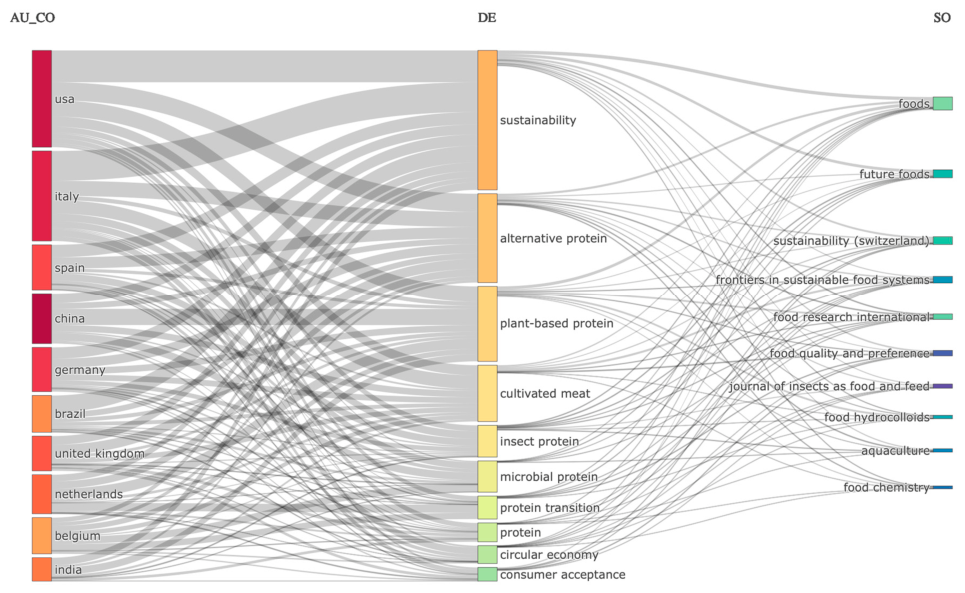
Figure 2.
Thematic evolution of alternative protein and sustainability research (2010-2026), Biblioshiny.
Figure 2.
Thematic evolution of alternative protein and sustainability research (2010-2026), Biblioshiny.
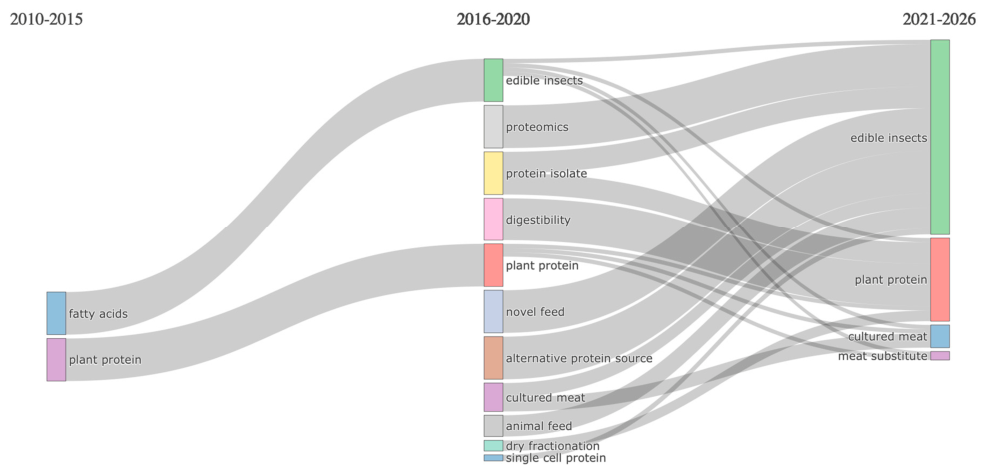
Figure 3.
Thematic map of sustainability-oriented alternative protein research, generated using VOSviewer.
Figure 3.
Thematic map of sustainability-oriented alternative protein research, generated using VOSviewer.
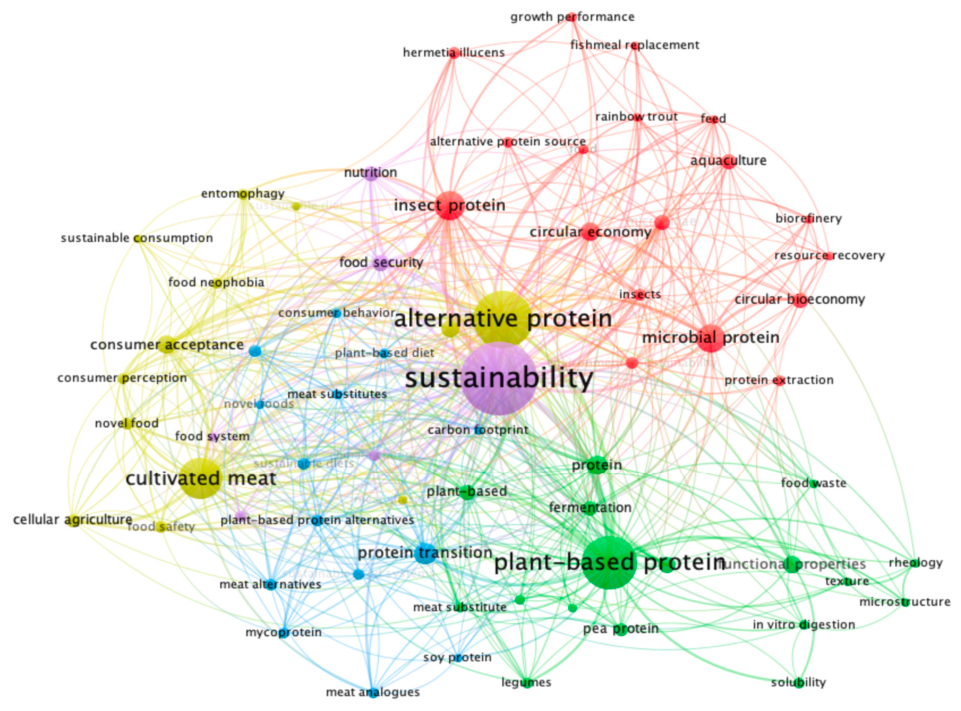
Figure 4.
Thematic map of sustainability-oriented alternative protein research, Biblioshiny.
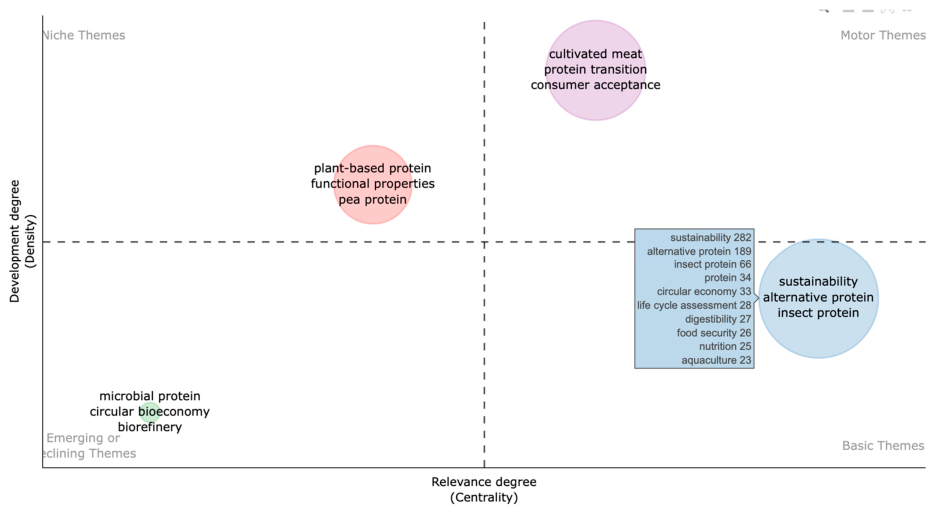
Figure 5.
Integrated framework of substrate utilization, microbial platforms, and fermentation processes for microbial protein production.
Figure 5.
Integrated framework of substrate utilization, microbial platforms, and fermentation processes for microbial protein production.
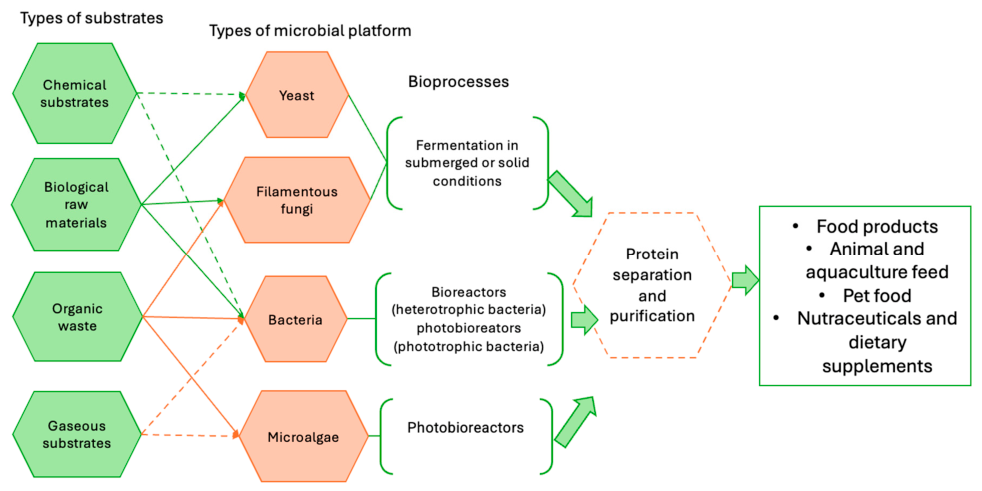
Table 1.
Keyword-based thematic clustering of sustainability-oriented alternative protein research: results from VOSviewer co-occurrence mapping.
Table 1.
Keyword-based thematic clustering of sustainability-oriented alternative protein research: results from VOSviewer co-occurrence mapping.
| Cluster | Keywords | Cluster Characteristics |
|---|---|---|
| Cluster 1 (red) insect protein+ microbial protein |
Circular economy, circular bioeconomy, environmental sustainability, recourse recovery, aquaculture, fishmeal replacement, feed | Cluster 1 reflects a production-oriented sustainability stream focused on integrating insect, microbial, and microalgae proteins into circular bioeconomy and aquaculture systems. The literature within this cluster predominantly addresses feed applications, fishmeal substitution, and resource recovery strategies aimed at improving environmental sustainability. |
| Cluster 2 (green) plant-based protein |
Fermentation, protein digestibility, functional properties, food waste, rheology, solubility, pea protein, legumes | Cluster 2 reflects a food technology and product development stream centered on plant-based proteins and their optimization for food applications. The literature within this cluster primarily focuses on fermentation processes, digestibility, rheological and functional properties, as well as the utilization of legumes and pea proteins to improve the quality and sustainability of alternative protein products. |
| Cluster 3 (blue) protein transition |
Carbon footprint, environmental impact, sustainable diets, consumer behaviour, meat alternatives (analogues, substitutes) | Cluster 3 reflects a sustainability transition and consumption-oriented research stream examining the environmental implications of shifting toward alternative protein consumption. The literature within this cluster predominantly addresses carbon footprint reduction, sustainable diets, consumer behaviour, and the role of meat alternatives and substitutes in facilitating dietary transition. |
| Cluster 4 (yellow) cultivated meat/cell-based meat |
Alternative protein, life cycle assessment, consumer acceptance, consumer perception, cellular agriculture, sustainable consumption, food neophobia | Cluster 4 reflects an emerging research stream focused on cultivated meat and cellular agriculture as innovative approaches to sustainable protein production. The literature within this cluster mainly explores life cycle assessment, consumer acceptance and perception, sustainable consumption, and psychological barriers such as food neophobia associated with novel food technologies. |
| Cluster 5 (purple) sustainability |
Food security, food system, nutrition, climate change | Cluster 5 reflects a broader systemic sustainability stream linking alternative proteins to global food security and sustainable food system transformation. The literature within this cluster primarily addresses the interconnections between nutrition, climate change mitigation, and the long-term sustainability of food systems. |
| Protein source | Protein(raw, g/100g) | Emulsification | Gelation / structuring | WHC / OHC | Foaming | Final products | Limitations |
| Legumes | |||||||
| Soy | 35–56 | High | High | High | High | Burgers, nuggets, sausages, mince, soy milk, tofu | Allergenicity, GMO concerns, beany flavor |
| Pea | 23–35 | High | Medium | High | Medium | Chicken and fish analogues, burgers, binders | Beany flavor, moderate gel strength |
| Chickpea | 12–31 | High | Medium | High | Medium | Nuggets, meat extenders, spreads | Antinutrients |
| Lentil | 24–30 | Medium | Medium | Medium | NR | Meat extenders, burgers, nuggets | Low sulfur amino acids |
| Faba Bean | 20–41 | High | High | High | Medium | Whole-cut analogues, stabilizers, protein enrichment | Starch interactions, antinutrients |
| Lupin | 30–46 | High | High | High | Medium | Steaks, high-protein bread additives, fish analogues | Alkaloids, allergenicity |
| Mung Bean | 14.6–32.8 | High | High | High | High | Egg substitutes, sausages, viscous foods (soups) | Antinutrients |
| Jack Bean | 23.8–40.7 | Medium | NR | Medium | NR | Plant-based chicken sausage, livestock feed | Antinutrients |
| Bambara Nut | 18.2–31.2 | High | NR | Medium | High | Noodles, bread, nutritional supplements | Processing difficulty |
| Oilseeds | |||||||
| Pumpkin Seed | 25–56 | Medium | Medium | High | Medium | Meat analogues | Low solubility (acidic pH) |
| Flaxseed | 20–30 | High | Medium | High | Medium | Meat emulsions, nutritional additives | Cyanogenic compounds |
| Chia | 18–30 | High | Medium | High | NR | High-moisture burgers | Fiber interference |
| Hemp | 20–26 | High | High | High | High | High-moisture analogues, snacks | Lower solubility |
| Peanut | 22–38 | High | Medium | Medium | High | Nuggets, spreads | Allergenicity |
| Nuts | |||||||
| Almond | 17–24 | High | NR | Medium | Medium | Plant-based dairy, meat extenders, snacks | Allergenicity |
| Hazelnut | 10.2–22.1 | Medium | NR | Medium | NR | Confectionery, protein-enriched snacks | Allergenicity |
| Walnut | 13.6–18.1 | Medium | NR | Medium | Medium | Meat extenders, nutritional supplements | High fat content, susceptible to oxidation |
| Cashew | 18–25 | High | Medium | Medium | NR | Spreads, meat analogues | Allergenicity |
| Cereals & pseudo-cereals | |||||||
| Wheat (Gluten) | 75–80 (concentrate) | NR | High | High | NR | Seitan | Gluten intolerance |
| Oat | 11–17 | Medium | NR | High | NR | Milk alternatives, snacks | Low protein quality |
| Rice | 7–16.4 | NR | NR | Medium | NR | Baby food, gluten-free pasta | Low functionality |
| Quinoa | 13–14 | Medium | Medium | Medium | NR | Nuggets, mortadella, burgers | Saponins |
| Barley | 9–12.5 | NR | Medium | High | NR | Weaning foods, meat-like dough | Low protein |
| Sorghum | 8–12 | NR | Medium | Medium | NR | Snacks | Low solubility |
| Tubers | |||||||
| Potato | 1–2 | Medium | NR | High | NR | Binders, sausages | Very low protein content |
Note: NR - Not reported.
Table 3.
Comparison of plant protein structuring technologies: microstructure outcomes, scalability, and challenges.
Table 3.
Comparison of plant protein structuring technologies: microstructure outcomes, scalability, and challenges.
| Structuring technology | Structuring approach | Microstructure outcome | Scalability | Challenges | References |
|---|---|---|---|---|---|
| Low-moisture extrusion | Top-down | Heterogeneous expanded fibrous matrix | High | Limited control of fine fibrillar structure | Sha & Xiong [5], Tziva et al. [17], Jang & Lee [3] |
| High-moisture extrusion | Top-down | Aligned fibrous, layered anisotropic structure | High | High energy demand; equipment cost and maintenance | Sha & Xiong [5], Tziva et al. [17], Siddiqui et al. [16] |
| Shear cell technology | Predominantly Top-down |
Well-defined anisotropic fibrous structure | Medium | Batch processing; limited throughput | Ulhas et al. [9], Kyriakopoulou et al. [15], Sher et al. [11] |
| 3D printing | Bottom-up | Spatially controlled structured matrices | Low | Slow production rate; formulation sensitivit | Ulhas et al. [9], Sha & Xiong [5], Jang & Lee [3] |
| Electrospinning | Bottom-up | Nanofibrous protein structures | Low | Solvent use; safety and residue concerns | Ulhas et al. [9], Kyriakopoulou et al. [15], Siddiqui et al. [16] |
| Freeze structuring | Predominantly Top-down |
Porous aligned fibrous networks via ice templating | Low | Time-consuming; ice-crystal damage control | Yuliarti et al. [18], Joshi et al. [8], Jang & Lee [3] |
| Wet spinning | Bottom-up | Continuous aligned protein fiber formation | Medium | High cost; complex coagulation chemistry | Ulhas et al. [9], Sher et al. [11], Kyriakopoulou et al. [15] |
Table 4.
Comparative characteristics of microbial platforms used for microbial protein production (compiled from [19,24,32,34]).
| Microbial platforms | Microalgae | Filamentous fungi | Bacteria | Yeasts |
|---|---|---|---|---|
| Characteristics for comparison | ||||
| Protein content | Up to 45%, high content of essential amino acids, omega-3 fatty acids. | Up to 54%, rich in amino acids, B vitamins | 50–80% of dry weight. | 45–55% of the dry weight, rich in B vitamins. |
| Substrate for cultivation | Wastewater, agricultural waste, CO₂, photosynthesis in open ponds or bioreactors. | Lignocellulosic materials, food waste, sugar, molasses | Methane, methanol, hydrocarbons, food waste, industrial wastewater. | Whey waste, cellulose hydrolysates, agricultural waste |
| Growing methods | Oxidation ponds, photobioreactors. | Immersion fermentation, solid-state fermentation. | Bioreactors, fermenters with additional post-harvest treatment. | Fermentation on cheap substrates. |
| Areas of application | Food additives, animal feed, medical supplements. | Alternatives to meat, feed, food additives. | Animal feed, food additives, biotechnological developments. | Food additives, traditional products, feed ingredients. |
| Economic feasibility | Low raw material cost, complex processing for food. | Moderate cost depending on the substrate, the risk of toxin formation increases costs. | Expensive nucleic acid removal processes, capital costs for fermenters and reactors. | Low production cost, high fermentation efficiency. |
Table 5.
Comparative characterization of cell sources for cultivated meat.
| Cell source / cell line | Biological origin | Meat tissue formation capacity | Main advantages | Main limitations | Scalability potential | Key references |
|---|---|---|---|---|---|---|
| Muscle satellite cells (MuSCs) | Adult skeletal muscle tissue | High specificity for skeletal muscle fiber formation | Natural muscle identity; genetic stability; physiologically relevant differentiation | Limited expansion capacity; invasive sourcing; adherent growth requirements | Low-Medium (requires microcarriers/support matrices) | Chen et al. [35], Domagała et al. [40], Wang et al. [36], Ching et al. [39], Garbin et al. [41]. |
| Mesenchymal stem cells (MSCs) | Bone marrow, adipose tissue, perinatal tissues | Dual contribution to muscle-like and adipose-like tissues | Accessible sources; dual tissue contribution; supportive paracrine activity | High donor-to-donor variability; reduced stability during long-term culture; limited phenotypic consistency during expansion | Medium (requires scaffold/adherent systems) | David et al. [42], Domagała et al. [40], Ching et al. [39] |
| Embryonic stem cells (ESCs) | Inner cell mass of blastocyst | High potential for multi-tissue meat constructs (muscle, fat, connective tissue) | Unlimited self-renewal; broad differentiation spectrum; no need for repeated harvesting | Ethical constraints; control of differentiation required; regulatory limitations | High (suspension-compatible under optimized conditions) | Escobar et al. [43], Chen et al. [35], Domagała et al. [40] |
| Induced pluripotent stem cells (iPSCs) | Reprogrammed somatic cells (e.g., fibroblasts) | High potential for multi-lineage tissue formation | Ethical advantage; scalable expansion; customizable cell lines | Genetic and epigenetic instability concerns; tumorigenicity risk; regulatory and consumer acceptance issues | High (adaptable to large-scale bioprocessing systems) | David et al. [42], Escobar et al. [43], |
Table 6.
Integrated bioprocessing pipeline for cultivated meat production.
| Technological component | Process stage | Representative technologies | Key scale-up constraint | Industrial readiness |
|---|---|---|---|---|
| Cell expansion systems | Upstream biomass generation | Adherent and suspension-based culture systems; microcarrier-assisted expansion | High cost of growth factors and media; finite proliferative capacity in primary cells; variability in expansion kinetics | Medium-High (pharma-adapted; food-grade optimization required) |
| Bioreactor systems | Controlled cultivation environment | Stirred-tank, perfusion, airlift, hollow-fiber bioreactors | Oxygen transfer limitations; shear stress sensitivity; heterogeneity in large-scale volumes | High (stirred-tank); Emerging (perfusion, hollow-fiber for dense tissues) |
| Scaffold-based structuring systems | 3D tissue organization | Edible plant-derived scaffolds (cellulose, soy protein), hydrogels, natural extracellular matrix analogues | Limited vascular mimicry; batch variability of natural materials; regulatory and allergen constraints | Medium-High (plant scaffolds advancing toward commercialization) |
| Biofabrication and assembly systems | Spatial tissue structuring | 3D bioprinting, cell sheet engineering, modular tissue assembly | Low throughput; diffusion limitations in thick tissues; need for automation and vascular-like integration | Low-Medium (pilot-scale, premium product applications) |
| Process intensification and control systems | Cost reduction and efficiency optimization | Serum-free media, growth factor replacement, media recycling, AI-driven monitoring, co-culture systems | System complexity; metabolic byproduct accumulation; regulatory uncertainty of novel inputs | Emerging (key R&D focus for cost parity) |
Table 7.
Comparative profile of major insect species used for protein production.
| Insect species (Scientific name) | Protein content (% dry matter) | Primary application domain | Main production advantages | Main limitations | Industrial Adoption Level | References |
|---|---|---|---|---|---|---|
| Hermetia illucens (Black soldier fly) | 35.0% – 65.0% | Animal feed; Pet food; Waste valorization |
Exceptional ability to upcycle organic waste (manure/catering waste); inactivates pathogens | Low water solubility; potential blackening of products upon grinding | Commercial (feed sector) | van Huis [44]; Pan et al. [45] |
| Tenebrio molitor (Yellow mealworm) | 46.0% – 63.7% | Human food; Animal feed; Pet food; Waste valorization |
Fast growth and reproduction rates; high efficiency in utilizing inorganic wastes | High fat content can limit processability; consumer neophobia in Western markets | Commercial (Authorized novel food) | Brai et al. [46]; Pan et al. [45] |
| Acheta domesticus (House cricket) | 53.9% – 70.8% | Human food; Animal feed; Pet food |
High fecundity and short lifespan; attractive nutritional profile for direct consumption | Potential for cross-reactive food allergies; concerns over pesticide residues from mass rearing | Commercial (Authorized novel food) | Skotnicka et al. [47]; Pan et al. [45]; Nachtigall et al. [48] |
| Alphitobius diaperinus (Lesser mealworm) | 45.0% – 65.0% | Human food; Animal feed; Pet food |
High protein quality; favorable techno-functional properties (e.g., gelling ability) | Least studied among primary species approved for human consumption | Commercial (Authorized novel food) | Skotnicka et al. [47]; Siddiqui et al. [16]; Jankowski et al. [49] |
| Locusta migratoria (Migratory locust) | 46.8% – 65.9% | Human food | Favorable sensory properties; rich mineral composition (Fe, Zn) | Concerns over residual pesticides from wild harvesting or large-scale rearing | Commercial (Authorized novel food) | Brai et al. [46]; Nachtigall et al. [48]; Tang et al. [50] |
| Musca domestica (Common housefly) | 54.0% – 71.6% | Animal feed; Waste valorization |
Highly effective tool for pig and poultry manure biodegradation | Substrate-dependent variability; post-harvest safety treatment required; low consumer acceptance | Commercial (Primarily feed) | van Huis [44]; Tang et al. [50] |
| Bombyx mori (Silkworm) | 48.7% – 61.2% | Human food (limited); Animal feed | Established circularity as a by-product of the silk industry; high historical use | Dependence on mulberry feed; limited substrate flexibility; low standardization for food-grade production | Commercial | Pan et al. [45]; Skotnicka et al. [47] |
Disclaimer/Publisher’s Note: The statements, opinions and data contained in all publications are solely those of the individual author(s) and contributor(s) and not of MDPI and/or the editor(s). MDPI and/or the editor(s) disclaim responsibility for any injury to people or property resulting from any ideas, methods, instructions or products referred to in the content. |
© 2026 by the authors. Licensee MDPI, Basel, Switzerland. This article is an open access article distributed under the terms and conditions of the Creative Commons Attribution (CC BY) license.
Copyright: This open access article is published under a Creative Commons CC BY 4.0 license, which permit the free download, distribution, and reuse, provided that the author and preprint are cited in any reuse.