
Submitted:
09 August 2026
Posted:
11 August 2026
You are already at the latest version
Abstract
Racial stigma reflects internalized beliefs about Black people that can shape identity development and psychological wellbeing. Research on the impact of daily racial dis-crimination on Black girls’ development of racial stigma beliefs is scarce. The current study examined Black girls (Mage = 14, N = 118) reports of racial discrimination experiences and the association on racial stigma beliefs (i.e., endorsing negative stereotypes about Black Americans). The protective role of racial socialization strategies was also examined. Using a hierarchical regression analysis, the findings revealed that higher levels of racial discrimination was associated with higher levels of racial stigma. Spiritual and religious coping and racial awareness teaching were associated with lower levels of racial stigma. The interaction effects indicated that Black girls who reported higher levels of daily racial discrimination and lower levels of cultural pride reinforcement were more likely to endorse negative stereotypes about Black people.
Keywords:
racial stigma
; black girls
; racial discrimination
; racial socialization
1. Introduction
Racial discrimination has been a well-documented stressor in the lives of Black youth. Extensive scholarship has highlighted its pervasive prevalence and the detrimental effects it has on their development. These effects include impaired psychological functioning and well-being [1,2,3], as well as decreased academic achievement, engagement, and persistence [4,5,6]. According to the AAKOMA Project’s 2022 report,[7] a significant portion of Black youth aged 13-25 reported experiencing racial trauma frequently or very often in their lifetime. English and colleagues[8] employed ecological momentary assessment and found that Black adolescents between the ages of 13-17 averaged over five daily experiences of racial discrimination, encompassing various forms such as online, offline, individual, vicarious, and teasing forms. Daily experiences of racial discrimination are associated with increased depressive symptoms and post-traumatic stress [9,10]. Noting the differences in gendered racial experiences of Black boys and Black girls, scholars have acknowledged the importance of exploring the impacts of racial discrimination separately by gender as Black boys and girls may experience, process, and adapt to racial discrimination differently [2,11,12,13,14]. For example, through semi-structured interviews and focus groups of Black adolescents, Seaton and Tyson[14] found that although most Black adolescents believed Black boys and girls have similar encounters, Black girls reported distinct experiences related to physical appearance such as scrutiny of their natural hair, inappropriate questions, and unwanted touching. Further, more recent scholarship has found that Black girls experience more racial discrimination from adults compared to Black boys, often at the intersection of race and gender [9]. Further, this literature emphasizes the need for a more comprehensive understanding of Black girls’ everyday experiences of racial discrimination as well as the existing supports that help Black girls navigate these experiences. In the current study, we build on previous literatures in examining the impact of daily racism experiences on racial stigma among Black adolescent girls. Also, we examine the potential protective role of racial socialization (i.e., spiritual & religious coping, extended family caring, cultural pride reinforcement, & racial awareness teaching) in this process.
Black Girls’ Everyday Experiences of Racism
Research on Black girls’ everyday experiences of racism reveals pervasive discrimination. Studies indicate that racism exposure occurs across various settings, with youth reporting more discrimination at school leading to negative emotional distress [15]. In educational settings specifically, Black girls report experiencing prejudice, discrimination, differential treatment, stereotypes, and lower teacher expectations from adults more frequently than Black boys [9,16]. These experiences occur at the intersection of race and gender, creating unique challenges including hair scrutiny and gender-specific discrimination [9]. Moreover, studies indicate that discrimination from teachers is associated with higher levels of depressive symptoms and suicidal ideation among Black girls [17]. Daily dairy studies found that everyday racism incidents-including verbal prejudice, poor service, staring, and interpersonal difficulties are common and emotionally impactful, frequently triggering anger responses [18].
In Loyd and colleagues[19] investigation, two-thirds of Black girls reported experiencing at least one microaggression within the last 6 months with more frequent reports of microaggressions related to assumptions of criminality. Similarly, in an investigation on the gendered racial microaggressions experienced by Black girls aged 14-17 three distinct themes emerged: 1) standards of beauty and objectification, 2) silenced and marginalized, and 3) projected stereotypes [20]. Research exploring the gendered racial experiences of Black girls underscores the ways in which negative stereotypes about Black girls (e.g., defiant, loud, aggressive, ghetto, not intelligent, promiscuous) held by others often act as precursors to the discrimination they face in social and academic settings [20,21,22,23,24]. Collectively, these studies represent a growing body of literature that emphasizes the need for a more comprehensive picture regarding the ways in which Black girls experience racial discrimination in their everyday lives.
Racial Socialization and Black Girls’ Meaning-Making of Racial Experiences
In the face of pervasive racial discrimination, racial socialization serves as a key protective process for Black youth. Parental racial socialization refers to the intentional ways caregivers provide guidance to help youth understand their racial identity and navigate experiences of discrimination [25]. A robust literature has identified four primary dimensions of racial socialization in African American families [26,27,28,29,30,31,32,33,34,35]: (1) cultural socialization, which emphasizes racial pride, cultural history, and heritage; (2) egalitarian messages that focus on individual character and deemphasize race; (3) promotion of mistrust, which cautions youth about cross-racial interactions; and (4) preparation for bias, which explicitly addresses systemic racism and equips youth with coping strategies.
In addition to parental influence, religious institutions—particularly the Black Church—serve as important agents of racial and religious socialization. Deeply rooted in African American history and culture, Black churches often provide youth with frameworks that integrate racial identity and spiritual belief [36,37]. Despite its central role, little empirical research has examined how religious socialization intersects with racial socialization processes. In one of the few studies on this topic, Martin et al.[38] explored the theological orientations of Black churches as distinct racial socialization messages. Their findings suggest that variations in theological emphasis may significantly shape how Black adolescents develop both religious and racial identity. Together, these findings underscore the importance of examining both familial and institutional sources of socialization to understand the complex processes shaping Black adolescents’ identity development.
While research on racial socialization has grown, relatively few studies have examined gender-based differences, and existing findings remain mixed [27,29,39,40,41]. Some studies suggest that Black boys more frequently receive messages addressing racial barriers and systemic oppression, while Black girls may receive messages that promote cultural pride and affirm heritage [42,43,44]. Other studies have found minimal or no significant gender differences in the frequency or content of racial socialization messages [29,45,46,47]. These inconsistencies highlight the need for further research that explicitly considers how gender may shape racial socialization processes and outcomes.
Guiding Frameworks
For the current study, we draw upon Murry et al.[48] Integrative Model for the Study of Stress in Black American Families. In this model, we posit that because of the race-related, social, and political histories (Path A) of Black girls’ unique racialized and gendered experiences, this leads to them facing sociocultural stressors such as racism (Path B). The impact of sociocultural stressors is associated with their social positioning which then leads to the types of racialized and gendered encounters in school or community settings that can serve as stress (Path C). Thus, because of the racialized and gendered experiences of Black girls and racism being a mundane, extreme stressor (Path D), it is imperative to understand the role of culturally strength-based coping assets (Path F), more specifically, the importance of racial socialization. In our study, we also draw upon the conceptualization of Stevenson[49] to explore the multifaceted dimensions of racial socialization beliefs among Black girls. By employing Stevenson’s framework, we gain insights into Black girls’ racial socialization strategies, encompassing areas such as spiritual and religious coping, extended family support, cultural pride reinforcement, and the cultivation of racism awareness. Therefore, in the present study, we aim to investigate Black girls’ accounts of daily racism experiences and the impact on how Black girls perceive their racial group membership (i.e., racial stigma) (Path G). Additionally, we explore the protective role of Black girls’ racial socialization strategies (see Figure 1).
The Current Study: Racial Stigma and the Developmental Context of Black Girlhood
According to Crocker and Major[50], stigma is associated with social categories in which others hold negative attitudes, stereotypes, and beliefs. This conceptualization aligns with broader definitions that characterize stigma as an attribute or label setting an individual apart, linking them to undesirable traits, and reflecting commonly understood societal knowledge, even by those targeted by such stigma [51]. This differentiation often results in the global devaluation of the individual, leading to tangible experiences of discrimination and social exclusion [52]. The World Health Organization (WHO) further elaborates on this, defining stigma as a “mark of share, disgrace, or disapproval that results in an individual being rejected, discriminated against and excluded from participating in a number of different areas of society” [53].
Racial stigma is defined as the perception of being socially devalued due to one’s racial identity created by hierarchical social structures and perpetuated through interpersonal processes [54,55]. Research demonstrates that racial stigma significantly impacts Black Americans across multiple domains of life. For instance, Loury[56] clearly distinguishes racial stigma from discrimination, emphasizing that stigma concerns how Black Americans are perceived rather than how they are treated. Stigmatic harm occurs when specific acts or policies convey that racial difference renders Black Americans as inferior to Whites, preventing full societal participation [57]. Other studies have documented how Black Americans often experience greater public and self-stigma compared to White Americans [42,58].
Racial stigma is deeply embedded in the ways society categorizes and evaluates individuals based on perceived group membership. Social cognition theory suggests that individuals continually process social information from daily interactions, shaping their self-perceptions and social identities over time [59,60,61]. For Black girls, this involves navigating complex and often harmful societal narratives surrounding both their race and gender daily. Black girls often encounter unique forms of stigma, such as hair exoticism, including intrusive questioning and unauthorized touching [20]. Despite reporting such incidents to school authorities, many Black girls describe having their concerns dismissed or invalidated [20,62].
The consequences of racial stigma are profound. As Black girls enter adolescence, they develop more complex understandings of race, gender, and identity as their cognitive and social capacities mature [63,64,65]. The intersecting forms of discrimination and stigma they experience can have a detrimental impact on adolescent health and well-being. These compounded vulnerabilities often result in greater risk of internal mental health issues, particularly affecting suicidal thoughts and behaviors among Black youth [66]. Additionally, racial discrimination from peers and teachers has been associated with suicidal ideation and depressive symptomatology among Black girls [5,67]. Racial socialization during this developmental period plays a crucial role in preparing Black girls to navigate systemic oppression, often emphasizing messages of strength, resilience, and survival [68,69]. These lived experiences of racial stigma, combined with parental and institutional racial socialization, shape Black girls. Therefore, based on previous literature, this study hypothesized that racial discrimination experiences will be associated with higher levels of racial stigma. It is also hypothesized that racial socialization strategies of Black girls will mitigate the negative impact of racial discrimination experiences on racial stigma (see Figure 2).
2. Materials and Methods
Methods
This study, conducted among 118 Black girls included from 18 Black churches in the Midwest, aimed to explore religious socialization practices. The participants, ranging in age from 12 to 19 years, with a mean age of 14, were part of a larger study. As an incentive for their participation, each girl received a $10 payment.
Procedure
Adolescent participants completed assessments facilitated by trained staff under the guidance of the principal investigator. The lead researcher coordinated with designated church representatives (e.g., Bible study facilitators) to obtain approval for data collection during regularly scheduled church activities, including Bible study and choir rehearsal. Before participating, trained staff provided study details and obtained written consent and assent from both the parent and child. The assessment took approximately 60 minutes, and participants received $10 compensation
Measures
Demographics
Adolescents were asked to provide a range of socio-demographic information. They reported factors such as their age and gender, with all participants identifying as either male or female. Parent’s education level was also included as a covariate.
Racism
The Daily Life Experiences (DLE) subscale of the Racism and Life Experiences (DLE).* Participants completed an 18-item subscale, created by RaLes; Seaton, Yip, and Sellers[70] (e.g., “Being ignored, overlooked, or not given service(in a restaurant, store, etc.”). Open-ended questions from their study were used to measure the frequency of racial discriminatory experiences in the past year by converting to a 6-point Likert scale, which ranged from (0) never to (5) once a week or more. The coefficient alpha for this DLE scale was 0.88.
Racial Socialization
The Scale for Racial Socialization for Adolescents (SORS-A)* scale measures how participants experienced racial socialization. Participants completed a 37-item scale created by Stevenson[49] with its 4 subcategories: Spiritual and Religious Coping (e.g., “Religion is an important part of a person’s life.”) with 7-items; Extended Family Caring (e.g., “Spending good time with relatives is as important for parents as for their children.”) with 11-items; Cultural Pride reinforcement (e.g., “Black parents should teach their children about.”) with 10-items; and Racism Awareness Teaching (e.g., “Our society is fair toward Black people.”) with 9-items. The coefficient alpha for this SORS-A scale was 0.60 to 0.68. Although these values fall slightly below conventional thresholds, prior research suggests that culturally grounded racial socialization measures may demonstrate moderate reliability due to their multidimensional and context-specific nature [49].
Racial Stigma
The Subjective Stigmatization Scale* measures the degree to which an individual internalizes such negative attitudes and stereotypes about her racial group. Created by Brega and Colemen[71]; participants completed a 40-item scale. Example items of this scale are: “One thing I like about being Black is the support and the sense of togetherness found in Black families” and “Black people are just as smart as everyone else.”. Responses were measured by converting the questions to a 5-point Likert scale that ranged from (1) very untrue to (5) very true. Higher scores represent being less likely to endorse negative racial stigma (e.g., higher racial destigmatization). The coefficient alpha for this Subjective Stigmatization scale was 0.77.
3. Results
Data Analyses Plan
SPSS 29.0 was used to analyze the data, and hierarchical regression analyses were conducted, in which racial stigma was regressed on demographic background variables: age and parent’s education. To test the primary study hypotheses, we examined how Black girls reports of racial discrimination was associated with racial stigma (e.g., endorsing negative stereotypes about African Americans). We were also interested in the moderational role of racial socialization strategies.
Results
Means and standard deviations for the primary study variables are presented in Table 1. On average, parents held an associate’s degree. On average, Black girls were 14 years of age (SD = 0.37) (see Table 1).
Correlations
There were statistically significant correlations between the independent, moderation, and outcome variables (see Table 1). Higher levels of racial discrimination were associated with higher levels of cultural pride reinforcement. Spiritual and religious coping, extended family caring, and racial awareness teaching was associated with higher levels of racial destigmatization (endorsing lower levels of racial stereotypes).
Racial Stigma
The outcome variable in the model was racial stigma (higher levels are associated with lower endorsement of racial stereotypes). In block 1, age and parent’s education were entered. In block 2, racial discrimination was entered. In block 3, racial socialization strategies were entered: spiritual and religious coping, extended family caring, cultural pride reinforcement, and racial awareness teaching, and the four three interaction terms were entered in block 4: racial discrimination x spiritual and religious coping, racial discrimination x extended family caring, and racial discrimination x cultural pride reinforcement, and racial discrimination x racial awareness teaching. The variables were centered before being entered into regression models, as advised by Aiken and West[72], when testing interaction effects. Significant interaction effects were examined by plotting the slope of racial stigma regressed on racial socialization strategies estimated at selected conditional values (M + 1 SD and M − 1 SD) racial discrimination experiences [73].
Overall, the results showed that the first model that contained the demographic variables explained a small but significant proportion of variance in racial stigma, R2 = 0.05, F(2,115) = 3.24, p= 0.043. Age was a significant positive predictor (β = 0.19, p = 0.035), indicating that older Black girls were less likely to endorse negative stereotypes about Black people. Parent’s educational attainment was not a significant predictor. In model 2, racial discrimination was added to the model, resulting in a significant increase in explained variance, (∆R2 =.04, ∆F(1,114) = 5.41, p =.022. Higher levels of racial discrimination were associated with lower racial stigma scores (β = -.21, p = 0.022), indicating that Black girls who reported more frequent encounters with racial discrimination were more likely to endorse negative racial stereotypes. In model 3, the racial socialization variables were entered, resulting in an increase in explained variance, R2 =.31, ∆F(4,110) = 14.60, p <.001. In this model, racial discrimination remained a significant negative predictor, (β = -.25, p = 0.001). Additionally, higher levels of spiritual and religious coping (β = 0.32, p = 0.001) and racial awareness teaching (β = 0.38, p = 0.001) were associated with higher racial destigmatization scores, reflecting lower endorsement of negative stereotypes. Extended family caring and cultural pride reinforcement were not significant predictors. In the final step, model 4, racial discrimination remained a significant negative predictor (β = -.27, p < 0.001). Spiritual and religious coping (β = 0.29, p = 0.003) and racial awareness teaching (β = 0.39, p = 0.001) continued to be positively associated with racial stigma scores. The racial discrimination x cultural pride reinforcement was statistically significant (β = 0.29, p = 0.006) (see Figure 3). The findings revealed that Black girls who endorsed higher levels of racial discrimination and who reported lower levels of cultural pride reinforcement were more likely to endorse negative racial stereotypes. Overall, the final model continued to predict racial stigma, increasing the explained variance, ∆R2 =.06, ∆F(4,106) = 2.87, p =.027. The full model accounted for 47% of the variance in racial stigma, R2 = 0.47, F(11,106) = 8.45, p <.001 (see Table 2).
4. Discussion
Overall, the current study examines how daily experiences of racial discrimination is associated with racial stigma among Black girls. Additionally, using Stevenson’s[49] conceptualization of racial socialization strategies, we examined the protective role of four racial socialization strategies that mitigated the negative impact of racial discrimination on racial stigma among Black girls. This work emphasizes the necessity of understanding the immediate effects of discriminatory encounters and the coping mechanisms Black girls employ, particularly through parental racial socialization, to foster positive identity development and academic engagement [21]. Such an approach is crucial for addressing the pervasive and severe experiences of racial discrimination faced by Black American adolescents, who often encounter the most frequent and intense forms of discrimination among their peers[74].
In the current study, our findings corroborate previous literatures in that racial discrimination is associated with negative mental health outcomes [75,76,77,78]. Religiosity and spirituality messaging has been shown to mitigate the detrimental effects of racial discrimination and enhance psychological well-being for Black girls [43]. In the current study we found that Black girls who reported more racial socialization messaging around spiritual and religious coping tended to endorse a healthier view of being Black, reporting higher levels of racial destigmatization. Additionally, racial awareness teaching was also associated with higher levels of racial destigmatization. This suggests that these specific socialization strategies may equip Black girls with robust frameworks for interpreting and navigating racial bias, thereby fostering a more positive self-perception despite external challenges [79]. In conditions where Black girls reported experiencing higher levels of racial discrimination and less frequent , cultural pride reinforcement messages, Black girls reported higher levels of racial stigma. This finding highlights the critical role of racial socialization teachings in fostering positive youth development and suggests that a lack thereof can exacerbate the negative impact on the view of one’s racial group. Therefore, reinforcing cultural pride is a crucial element in racial socialization practices aimed at buffering the effects of racial discrimination and promoting healthy racial identity development among Black girls [21].
Racial Discrimination and Stigmatization in Black Girlhood
Research on racism and racial discrimination among Black adolescent girls reveals pervasive experiences with significant developmental consequences. Black girls experience daily racial discrimination, often from adult perpetrators, and encounter incidents at the intersection of race and gender, including hair scrutiny and differential treatment compared to Black boys [9]. These experiences manifest in schools through prejudice, discrimination, stereotypes, and low teacher expectations [16,21,67]. Black adolescent girls face gendered racial microaggressions organized around three core themes: standards of beauty and objectification, being silenced and marginalized (including over disciplining), and projected stereotypes like the “angry Black girl” [80]. School-based discrimination negatively impacts academic engagement, with racial discrimination associated with lower curiosity and persistence [5,12]. These experiences also affect psychological adjustment, with discrimination linked to higher depressive symptoms [1,5] and increased health risk behaviors like smoking [81]. Teacher discrimination particularly impacts African American girls\’ school discipline outcomes [82]. In the current study, we found similar findings, in that, racial discrimination was associated with higher levels of racial stigma. These findings suggest that the more frequent these experiences are, Black girls endorse harmful stigmas about their racial group membership. Studies have found that internalized stigma among Black girls can result in the endorsement of stereotypes at increasing rates as they transition through adolescence [83].
Additionally, having a negative sense of self during adolescence is particularly likely if parental messages regarding preparation for bias are delivered without the simultaneous promotion of cultural pride or effective coping strategies [84]. Thus, in identifying protective mechanisms that reduce the negative impact of racial discrimination on racial stigma, the role of racial socialization messaging has been supported by research showing that Black girls who cultivate positive attitudes about their racial group are better equipped to reject negative external stereotypes [85]. For instance, racial socialization serves as a significant protective factor for African American youth against various adverse outcomes. Research demonstrates that racial socialization messages, particularly those emphasizing cultural pride and racial pride, buffer the negative effects of perceived racial discrimination on self-esteem [86]. Furthermore, religiosity and specific racial socialization patterns can reduce subjective stigmatization among African American youth [71]. While racial discrimination was associated with higher levels of racial stigma, this relationship does not occur in isolation from the racial socialization strategies available within families and communities. Spiritual and religious coping, racial awareness teaching, and cultural pride are important racial socialization strategies that protect against the internalization of racial stigma and foster healthier psychological well-being among Black girls.
Spiritual and Religious Coping in the Context of Racialized Stigma
The findings revealed that spiritual and religious coping socialization (e.g., religion is an important part of a person’s life) was associated with lower levels of racial stigma. These findings build on previous literatures in noting how spiritual and religious coping is important aspect of Black adolescent lives, [87] but also among Black girls specifically [43]. For instance, Butler-Barnes et al.[43] found that cultivating a personal relationship with God serves as a vital protective factor that buffers the link between racial stigma and psychological distress, promoting healthier well-being among African American adolescent girls. In the context of racial discrimination, spiritual and religious coping strategies provide Black girls with the protection in dealing with the daily experiences of racial discrimination and internalizing negative beliefs about their racial group membership. Previous research on spirituality and religiosity among Black adolescent girls reveal significant protective mental health benefits for instance, African American adolescent girls often use spiritual practices including prayer, scripture, and songs as coping mechanisms for stress, providing healing, guidance, protection, and connectedness [88]. Further, religious emotional support mediates the relationship between organized religious involvement and mental well-being outcomes like self-esteem, mastery, and life satisfaction among both African American and Caribbean Black girls [89]. Greater religiosity is associated with higher self-esteem and better psychological functioning in African American female adolescents [90]. Additionally, higher religiosity correlates with delayed sexual debut, increased condom use, and better sexual negotiation skills [91]. Broader research indicates that relational spirituality, particularly daily spiritual experiences and religious coping, is uniquely associated with reduced depressive symptoms in adolescent girls [92], while existential well-being predicts fewer depressive symptoms and risk behaviors [93].
In addition to the important role of spiritual and religious coping, this aspect of racial socialization is based on how Black girls are perceiving and internalizing racial socialization messages from their caregivers. The effectiveness of these messages may stem from their ability to bolster internal sources of resilience, such as self-efficacy and the capacity to make meaning of exclusionary experiences [94]. For instance, spiritual and religious coping messages centered around it being an important part of everyday life, belief in God in dealing with tough life struggles, and the importance of families going to church or a mosque, ultimately function as a coping mechanism that fosters healthier psychological well-being by acting as a buffer against the internalization of racial stigma. Furthermore, other studies have found that main effect of the association of spiritual and religious coping as a as a racial socialization messaging from Black parents has been associated with wellbeing outcomes such as a healthier racial identity [47].
Additionally, there has been research documenting the important role of spiritual and religious beliefs in the lives of Black girls [89]. Specific to the developmental context of mother-daughter dyads, qualitative analyses indicate that spiritual messages often co-occur with themes of self-determination and racial pride, forming a multifaceted socialization strategy that helps girls navigate the dual pressures of gendered racism [21]. Overall, the results suggest that having a relationship with God can serve as an essential coping mechanism for African American adolescent girls, promoting a healthier psychological well-being and shielding them from the negative effects of racial stigma [43]. This form of socialization often involves parents teaching their children to rely on the church community as a resource for processing racism, a practice that has been linked to improved behavioral management and more effective decision-making processes during adolescence [95]. Future research should continue to examine spiritual and religious coping as a protective racial socialization strategy.
Racial Awareness Teaching and Racialized Stigma
Research on racial awareness teaching and Black adolescents reveals complex relationships between racial socialization, identity development, and educational outcomes [49]. However, the direct impact of racial awareness messages on adolescent outcomes is often contingent on other contextual factors, such as the level of family communication [96]. In the current study, Black girls who reported perceiving higher levels of racial awareness teaching from their parents reported lower levels of internalized racial stigma, suggesting that these messages can serve as a buffer against negative racial perceptions. Specifically, these messages emphasize families talking about race and racism in America and preparation for bias. Thus, this proactive approach is advantageous for Black girls rejecting the negative stereotypes about being Black. This form of racial socialization equips Black girls with tools to understand the racialized context of the United States but also to know how to respond to it effectively, thereby fostering resilience against racialized stigma. Increasingly, researchers are finding that adolescents’ developing awareness of inequality increases as they get older due to racism [97,98]. For instance, Johnson et al.[99] found that racial barrier messages were associated with awareness of systemic racism. This awareness necessitates specific coping mechanisms, often developed through familial racial socialization practices that instill resistance to internalized stressors [100]. Conversely, the absence of explicit racial socialization can leave adolescents vulnerable to internalizing societal biases, highlighting the critical role of parental guidance in shaping healthy racial identity development [101]. Therefore, longitudinal studies are essential to delineate the nuanced pathways through which diverse racial socialization practices influence the evolving racial identity and mental health trajectories of Black youth over time [102]. Furthermore, parental initiation of conversations regarding racial bias is crucial for developing coping mechanisms against discrimination, underscoring the importance of examining its relationship with Black girls’ identity formation [96]. This is particularly relevant given that nearly half of all Black adolescent girls report severe experiences of racial discrimination, making parental messages about racial barriers and bias pivotal for their well-being during this critical developmental period [74,85]. Thus, engaging in conversations with Black girls about racism equips them with knowledge and strategies to navigate and resist harmful racial stigma. In moving forward, research should continue to explore how these protective socialization practices can be leveraged to promote positive youth development among Black adolescent girls.
When Cultural Pride Is Absent: Amplified Racial Stigma
The absence of cultural pride messaging within racial socialization frameworks is associated with lower levels of psychological wellbeing. Research consistently demonstrates that cultural pride messaging serves as a protective factor for Black adolescents’ psychological wellbeing. Cultural pride reinforcement messages from parents are associated with reduced anxiety symptoms in children and lower internalizing symptoms through enhanced ethnic identity affirmation [103,104]. These messages also moderate the negative effects of cultural racism on depression, with higher cultural pride messaging attenuating racism’s harmful impact [105]. For Black adolescent girls specifically, gendered racial pride and empowerment messages reduce associations between internalized oppression messages and mental health symptoms [106]. Cultural socialization emerges as the most consistent protective factor in racial socialization research, buffering against discrimination effects on mental health, academic achievement, and identity development [74]. Additionally, cultural pride messages positively relate to peer self-esteem among Black youth [107] and contribute to subjective wellbeing through enhanced self-efficacy [108]. In the current study, the findings revealed that lower levels of cultural pride reinforcement (e.g., “Black parents should talk about their roots to African culture to their children”) and reporting higher levels of racial discrimination was associated with higher levels of racial stigma. In other words, Black girls who feel less connected to their heritage are especially vulnerable to racial stigma when they encounter discriminatory experiences. Our findings corroborate previous studies suggesting that cultural pride reinforcement is associated with lower levels of depression and anxiety among Black adolescents [103]. Cultural pride reinforcement also moderates the negative effects of cultural racism on depression, with higher levels of these messages attenuating racism’s harmful impact [105]. Additionally, racial socialization messages that emphasize cultural pride reinforcement are also associated with higher levels of a healthier wellbeing [107,109]. In our study, Black girls who encountered higher levels of racial discrimination and who reported lower levels of cultural pride reinforcement increased their susceptibility to racial stigma. These findings suggest that interventions aimed at promoting cultural pride and addressing racial discrimination may help mitigate the negative effects of racial stigma on Black girls. It is crucial for future research to explore the intersectionality of race and gender in understanding the experiences of Black girls in a discriminatory society.
Limitations
Overall, the results revealed that spiritual and religious coping and racial awareness teaching were associated with lower levels of racial stigma. It was also found that endorsement of lower levels of cultural pride, in the presence of higher levels of racial discrimination, was associated with higher levels of racial stigma. These are certainly strengths of the study; however, there are some limitations of the study. First, this was a cross-sectional study, and the sample was from a Midwestern city, making these findings less generalizable to other populations. Second, the study relied on self-reported measures, which may introduce bias and limit the accuracy of the results. Furthermore, a comprehensive longitudinal survey can contribute to the identification of protective and risk factors influencing socioemotional development. However, caution should be exercised, as the current study’s sample comprises Black girls recruited from Black churches. Adolescents from diverse contextual settings (e.g., schools and communities) or those who may exhibit differing responses should be considered.
In addition, in-depth interviews would also provide additional knowledge about how Black girls perceive racial stigma, how it impacts their mental health, and what coping mechanisms they utilize. Taken together, the use of a mixed-methods study would allow for a more comprehensive understanding of the experiences of Black girls in relation to racial stigma and mental health. Another limitation of the current study was the low alpha of our scales that ranged from 0.60 to 0.68; the reliability is consistent with the Stevenson[49] validation of the scale ranging from 0.60 to 0.74. Despite this limitation, the findings still provide valuable insights into the relationship between racial stigma and mental health in Black girls. Future research could focus on improving the reliability of the scales used to measure these constructs to strengthen the validity of the results.
Conclusions
Overall, the current study contributes to the existing literature and emphasizes the crucial role of racial socialization strategies, such as spiritual and religious coping, racial awareness teaching, and the significance of cultural pride in Black adolescent girls. The study also contributes to the existing literature on the detrimental impact of racial discrimination on racial stigma. Furthermore, the absence of instances of cultural pride reinforcement is detrimental to Black girls’ identity, affecting their self-perceptions. This highlights the importance of incorporating cultural pride reinforcement in interventions aimed at promoting positive self-perception (reducing racial stigma) among Black adolescent girls. Future research should continue to explore the effectiveness of various racial socialization strategies in mitigating the negative effects of racial discrimination and racial stigma on this population. These findings underscore the importance of culturally responsive interventions that center Black girls’ experiences. Additionally, it is crucial to further this research and understanding of how these findings not only shape racial stigma but also impact other developmental competencies, such as educational or mental health outcomes. This knowledge will enable us to understand them better and identify the unique racial socialization strategies that are important for Black girls. It will also help us define preventative interventions that can expand these findings to after-school programming that centers Black girls and fosters their growth and well-being. Consequently, this study substantiates specific racial socialization strategies that emphasize fostering a sense of self-awareness and racial awareness teaching. For instance, this might be achieved through racial awareness education that equips Black girls with the necessary skills to navigate society effectively. Moreover, incorporating spiritual and religious coping mechanisms into these strategies proves highly beneficial for Black girls. Conversely, the absence of robust cultural pride reinforcement poses a risk factor for Black girls. Therefore, it is essential for caregivers and educators to prioritize instilling a strong sense of cultural pride in Black girls to support their overall well-being and resilience. By incorporating a combination of racial awareness education and spiritual coping mechanisms, Black girls can develop a strong sense of self and navigate societal challenges with confidence.
Author Contributions
Conceptualization, S.T.B.-B.; methodology, S.T.B.-B.; software, S.T.B.-B.; formal analysis, P.P.M; investigation, P.P.M.; data curation, S.T.B.-B.; writing—original draft preparation, S.T.B.-B., M.B., A.T.; writing—review and editing, S.T.B.-B., A.T., and M.B.; supervision, S.T.B.-B., P.P.M; project administration, P.P.M.; funding acquisition, P.P.M.
Funding
This research was funded by National Science Foundation, grant number 0109206.
Institutional Review Board Statement
The study was conducted in accordance with the Declaration of Helsinki and approved by the Institutional Review Board of University of Michigan. The original study was reviewed and approved by the Institutional Review Board at University of Michigan. The research was conducted in 2003, prior to the institution’s transition to an electronic IRB management system. Although the university’s IRB office was consulted, the original protocol number could not be recovered. All participants provided informed consent prior to participation.
Informed Consent Statement
Informed consent was obtained from all subjects involved in the study.
Data Availability Statement
The raw data supporting the conclusions of this article will be made available by the authors on request.
Acknowledgments
The authors would like to thank the families that participated in the study.
Conflicts of Interest
The authors declare no conflicts of interest.
References
- Cogburn, C.D.; Chavous, T.M.; Griffin, T.M. School-based racial and gender discrimination among African American adolescents: Exploring gender variation in frequency and implications for adjustment. Race Soc. Probl. 2011, 3(1), 25–37. [Google Scholar] [CrossRef]
- Cooper, S.M.; Brown, C.; Metzger, I.; Clinton, Y.; Guthrie, B. Racial discrimination and African American adolescents’ adjustment: Gender variation in family and community social support, promotive and protective factors. J. Child Fam. Stud. 2013, 22(1), 15–29. [Google Scholar] [CrossRef]
- English, D.; Lambert, S.F.; Ialongo, N.S. Longitudinal associations between experienced racial discrimination and depressive symptoms in African American adolescents. Dev. Psychol. 2014, 50(4), 1190. [Google Scholar] [CrossRef] [PubMed]
- Chavous, T.M.; Rivas-Drake, D.; Smalls, C.; Griffin, T.; Cogburn, C. Gender matters, too: the influences of school racial discrimination and racial identity on academic engagement outcomes among African American adolescents. Dev. Psychol. 2008, 44(3), 637. [Google Scholar] [CrossRef] [PubMed]
- Cooper, S.M.; Burnett, M.; Golden, A.; Butler-Barnes, S.; Inniss-Thompson, M. School discrimination, discipline inequities, and adjustment among Black adolescent girls and boys: An intersectionality-informed approach. J. Res. Adolesc. 2022, 32(1), 170–190. [Google Scholar] [PubMed]
- Neblett, E.W., Jr.; Philip, C.L.; Cogburn, C.D.; Sellers, R.M. African American adolescents’ discrimination experiences and academic achievement: Racial socialization as a cultural compensatory and protective factor. J. Black Psychol. 2006, 32(2), 199–218. [Google Scholar] [CrossRef]
- The AAKOMA Project. State of Mental Health for Youth of Color 2022. The AAKOMA Project. 2022. Available online: https://aakomaproject.org/SOMHYOC2022/.
- English, D.; Lambert, S.F.; Tynes, B.M.; Bowleg, L.; Zea, M.C.; Howard, L.C. Daily multidimensional racial discrimination among Black US American adolescents. J. Appl. Dev. Psychol. 2020, 66, 101068. [Google Scholar] [CrossRef] [PubMed]
- Seaton, E. 6.1 Black American youth’s lived experiences with racism. J. Am. Acad. Child Adolesc. Psychiatry 2021, 60(10), S132. [Google Scholar] [CrossRef]
- Wilson, T.; Riley, A.; Khetarpal, S.; Abernathy, P.; Booth, J.; Culyba, A. Exploring the impact of racism on Black youth: A multidimensional examination of discriminatory experiences across place and time. J. Adolesc. Health 2022, 72(2), 246–253. [Google Scholar] [CrossRef] [PubMed]
- Butler-Barnes, S.T.; Richardson, B.L.; Chavous, T.M.; Zhu, J. The importance of racial socialization: School-based racial discrimination and racial identity among African American adolescent boys and girls. J. Res. Adolesc. 2019, 29(2), 432–448. [Google Scholar] [PubMed]
- Leath, S.; Mathews, C.; Harrison, A.; Chavous, T. Racial identity, racial discrimination, and classroom engagement outcomes among Black girls and boys in predominantly Black and predominantly White school districts. Am. Educ. Res. J. 2019, 56(4), 1318–1352. [Google Scholar] [CrossRef]
- Seaton, E.K.; Caldwell, C.H.; Sellers, R.M.; Jackson, J.S. An intersectional approach for understanding perceived discrimination and psychological well-being among African American and Caribbean Black youth. Dev. Psychol. 2010, 46(5), 1372. [Google Scholar] [CrossRef] [PubMed]
- Seaton, E.K.; Tyson, K. The intersection of race and gender among Black American adolescents. Child Dev. 2019, 90(1), 62–70. [Google Scholar] [CrossRef] [PubMed]
- Ortega-Williams, A.; Booth, J.M.; Fussell-Ware, D.J.; et al. Using ecological momentary assessments to understand Black youths’ experiences of racism, stress, and safety. J. Res. Adolesc. 2022, 32(1), 270–289. [Google Scholar] [PubMed]
- Joseph, N.M.; Viesca, K.M.; Bianco, M. Black female adolescents and racism in schools: Experiences in a colorblind society. High Sch. Journal. 2016, 100(1), 4–25. [Google Scholar] [CrossRef]
- Butler-Barnes, S.T.; Leath, S.; Inniss-Thompson, M.N.; Allen, P.C.; D’Almeida, M.E.D.A.; Boyd, D.T. Racial and gender discrimination by teachers: Risks for Black girls’ depressive symptomatology and suicidal ideation. Cult. Divers Ethn. Minor Psychol. 2022, 28(4), 469–479. [Google Scholar] [CrossRef] [PubMed]
- Swim, J.K.; Hyers, L.L.; Cohen, L.L.; Fitzgerald, D.C.; Bylsma, W.H. African American college students’ experiences with everyday racism: Characteristics of and responses to these incidents. J. Black Psychol. 2003, 29(1), 38–67. [Google Scholar] [CrossRef]
- Loyd, A.B.; Kürüm, E.; Crooks, N.; Maya, A.; Emerson, E.; Donenberg, G.R. Investigating longitudinal associations between racial microaggressions, coping, racial/ethnic identity, and mental health in Black girls and women. J. Res. Adolesc. 2022, 32(1), 69–88. [Google Scholar]
- Gadson, C.A.; Lewis, J.A. Devalued, overdisciplined, and stereotyped: An exploration of gendered racial microaggressions among Black adolescent girls. J. Couns. Psychol. 2022, 69(1), 14. [Google Scholar] [CrossRef] [PubMed]
- Burnett, M.; McBride, M.; Green, M.N.; Cooper, S.M. “When I Think of Black Girls, I Think of Opportunities”: Black Girls’ Identity Development and the Protective Role of Parental Socialization in Educational Settings. Front. Psychol. 2022. [Google Scholar] [CrossRef] [PubMed]
- Carter Andrews, D.J.; Brown, T.; Castro, E.; Id-Deen, E. The impossibility of being “perfect and white”: Black girls’ racialized and gendered schooling experiences. Am. Educ. Res. J. 2019, 56(6), 2531–2572. [Google Scholar] [CrossRef]
- Morris, E.W. “Ladies” or “loudies”? Perceptions and experiences of Black girls in classrooms. Youth Soc. 2007, 38(4), 490–515. [Google Scholar] [CrossRef]
- Morris, E.W.; Perry, B.L. Girls behaving badly? Race, gender,and subjective evaluation in the discipline of African American girls. Sociol. Educ. 2017, 90(2), 127--148. [Google Scholar] [CrossRef]
- Seaton, et al. Reference details not included in the original manuscript’s reference list; please supply the full citation. 2012. [Google Scholar] [CrossRef]
- Anderson RE, Stevenson HC. RECASTing racial stress and trauma: Theorizing the healing potential of racial socialization in families. American Psychologist. 2019.
- Bowman, P.J.; Howard, C. Race-related socialization, motivation, and academic achievement: A study of Black youths in three-generation families. J. Am. Acad. Child Psychiatry 1985, 24(2), 134–141. [Google Scholar] [CrossRef] [PubMed]
- Davis, G.Y.; Stevenson, H.C. Racial socialization experiences and symptoms of depression among Black youth. J. Child Fam. Stud. 2006, 15(3), 293–307. [Google Scholar] [CrossRef]
- Hughes, D.; Chen, L. When and what parents tell children about race: An examination of race-related socialization among African American families. Appl. Dev. Sci. 1997, 1(4), 200–214. [Google Scholar] [CrossRef] [PubMed]
- Hughes, D.; Witherspoon, D.; Rivas-Drake, D.; West-Bey, N. Received ethnic-racial socialization messages and youths’ academic and behavioral outcomes: Examining the mediating role of ethnic identity and self-esteem. Cultur. Divers Ethn. Minor Psychol. 2009, 15(2), 112–124. [Google Scholar] [CrossRef] [PubMed]
- Lesane-Brown, C.L. A review of race socialization within Black families. Dev. Rev. 2006, 26(4), 400–426. [Google Scholar] [CrossRef]
- McHale, S.M.; Crouter, A.C.; Kim, J.Y.; et al. Mothers’ and fathers’ racial socialization in African American families: Implications for youth. Child Dev. 2006, 77(5), 1387–1402. [Google Scholar] [CrossRef] [PubMed]
- Neblett, E.W., Jr.; White, R.L.; Ford, K.R.; Philip, C.L.; Nguyen, H.X.; Sellers, R.M. Patterns of racial socialization and psychological adjustment: Can parental communications about race reduce the impact of racial discrimination? J. Res. Adolesc. 2008, 18(3), 477–515. [Google Scholar] [CrossRef]
- Neblett, E.W., Jr.; Smalls, C.P.; Ford, K.R.; Nguyên, H.X.; Sellers, R.M. Racial socialization and racial identity: African American parents’ messages about race as precursors to identity. J. Youth Adolesc. 2009, 38(2), 189–203. [Google Scholar] [CrossRef] [PubMed]
- Neblett, E.W., Jr. Racial, ethnic, and cultural resilience factors in African American youth mental health. Annu. Rev. Clin. Psychol. 2023, 19, 361–379. [Google Scholar] [CrossRef] [PubMed]
- Butler-Barnes, et al. Reference details not included in the original manuscript’s reference list; please supply the full citation. 2017. [Google Scholar] [CrossRef]
- Taggart, T.; Gottfredson, N.; Powell, W.; et al. The role of religious socialization and religiosity in African American and Caribbean black adolescents’ sexual initiation. J. Relig. Health 2018, 57(5), 1889–1904. [Google Scholar] [CrossRef] [PubMed]
- Martin, P.P.; Butler-Barnes, S.T.; Hope, M.O. Sitting in the pews: Theological beliefs and racial/ethnic identity among African American adolescents. Youth Soc. 2023, 55(2), 300–320. [Google Scholar] [CrossRef]
- Sanders Thompson, V.L. Socialization to race and its relationship to racial identification among African Americans. J. Black Psychol. 1994, 20(2), 175–188. [Google Scholar] [CrossRef]
- Stevenson, H.C., Jr.; Cameron, R.; Herrero-Taylor, T.; Davis, G.Y. Development of the teenager experience of racial socialization scale: Correlates of race-related socialization frequency from the perspective of Black youth. J. Black Psychol. 2002, 28(2), 84–106. [Google Scholar]
- Thomas, A.J.; Speight, S.L. Racial identity and racial socialization attitudes of African American parents. J. Black Psychol. 1999, 25(2), 152–170. [Google Scholar] [CrossRef]
- Brown, T.L.; Linver, M.R.; Evans, M. The role of gender in the racial and ethnic socialization of African American adolescents. Youth Soc. 2010, 41(3), 357–381. [Google Scholar] [CrossRef]
- Butler-Barnes, S.T.; Martin, P.P.; Hope, E.C.; Copeland-Linder, N.; Scott, M.L. Religiosity and Coping: Racial Stigma and Psychological Well-Being among African American Girls. J. Relig. Health 2018. [Google Scholar] [CrossRef] [PubMed]
- Cooper, S.M.; Burnett, M.; Johnson, M.S.; Brooks, J.; Shaheed, J.; McBride, M. ‘That is why we raise children’: African American fathers’ race-related concerns for their adolescents and parenting strategies. J. Adolesc. 2020, 82, 67–81. [Google Scholar] [CrossRef] [PubMed]
- Frabutt, J.M.; Walker, A.M.; MacKinnon-Lewis, C. Racial socialization messages and the quality of mother/child interactions in African American families. J. Early Adolesc. 2002, 22(2), 200–217. [Google Scholar] [CrossRef]
- Scott, 2003 [Reference details not included in the original manuscript’s reference list; please supply the full citation.].
- Stevenson, H.C.; Reed, J.; Bodison, P.; Bishop, A. Racism Stress Management: Racial Socialization Beliefs and the Experience of Depression and Anger in African American Youth: Racial Socialization Beliefs and the Experience of Depression and Anger in African American Youth. Youth Soc. 1997, 29(2), 197–222. [Google Scholar] [CrossRef]
- Murry, V.M.; Butler-Barnes, S.T.; Mayo-Gamble, T.L.; Inniss-Thompson, M.N. Excavating new constructs for family stress theories in the context of everyday life experiences of Black American families. J. Fam. Theory Rev. 2018, 10(2), 384–405. [Google Scholar] [CrossRef]
- Stevenson, H.C. Validation of the Scale of Racial Socialization for African American Adolescents: Steps toward Multidimensionality. J. Black Psychol. 1994. [Google Scholar] [CrossRef]
- Crocker, J.; Major, B. Social stigma and self-esteem: The self-protective properties of stigma. Psychol. Rev. 1989. [Google Scholar] [CrossRef]
- Valentine, J.A.; Delgado, L.F.; Haderxhanaj, L.T.; et al. Improving sexual health in U.S. rural communities: reducing the impact of stigma. AIDS Behav. 2022, 26 (suppl 1), 90–99. [Google Scholar] [CrossRef] [PubMed]
- Crocker, J.; Quinn, D.M. Psychological consequences of devalued identities. In Handbook of Self and Identity; Leary, M.R., Tangney, J.P., Eds.; Blackwell Publishing, 2003; pp. 238–257. [Google Scholar] [CrossRef]
- World Health Organization. Mental Health: New Understanding, New Hope; World Health Organization, 2001. [Google Scholar]
- Link, B.G.; Phelan, J.C. Conceptualizing stigma. Annu Rev. Sociol. 2001, 27, 363–385. [Google Scholar] [CrossRef]
- Goffman, E. Stigma: Notes on the Management of Spoiled Identity; Prentice-Hall, 1963. [Google Scholar]
- Loury, G.C. Racial stigma and its consequences. Focus 2005. [Google Scholar] [CrossRef] [PubMed]
- Lenhardt, R.A. Understanding the mark: Race, stigma, and equality in context. NYU Law. Rev. 2004, 79, 803–931. [Google Scholar]
- Misra, S.; Jackson, V.W.; Chong, J.; et al. Systematic review of cultural aspects of stigma and mental illness among racial and ethnic minority groups in the United States: Implications for interventions. Am. J. Community Psychol. 2021, 68(3-4), 486–512. [Google Scholar] [CrossRef] [PubMed]
- Augoustinos, M.; Donaghue, N.; Walker, I. Social Cognition: An Integrated Introduction, 2nd ed.; Sage Publications, 2014. [Google Scholar]
- Fiske, S.T.; Taylor, S.E. Social Cognition, 2nd ed.; McGraw-Hill Book Company, 1991. [Google Scholar]
- Tajfel, H.; Turner, J.C. The social identity theory of intergroup behavior. In Psychology of Intergroup Relations; Worchel, S., Austin, W.G., Eds.; Hall Publishers, 1986; pp. 7–24. [Google Scholar]
- Howard, J.A. Social psychology of identities. Annu Rev. Sociol. 2000, 26, 367–393. [Google Scholar] [CrossRef]
- Spears Brown, C.; Bigler, R.S. Children’s perceptions of discrimination: A developmental model. Child Dev. 2005, 76(3), 533–553. [Google Scholar] [CrossRef] [PubMed]
- Hughes, D.; Del Toro, J.; Harding, J.F.; Way, N.; Rarick, J.R. Trajectories of discrimination across adolescence: Associations with academic, psychological, and behavioral outcomes. Child Dev. 2016, 87(5), 1337–1351. [Google Scholar] [CrossRef] [PubMed]
- Anyiwo, N.; Stanton, A.G.; Avery, L.R.; Bernard, D.L.; Abrams, J.A.; Golden, A. Becoming strong: Sociocultural experiences, mental health, & Black girls’ strong Black woman schema endorsement. J. Res. Adolesc. 2022, 32(1), 89–98. [Google Scholar] [PubMed]
- Akouri-Shan, L.; Jay, S.Y.; DeLuca, J.S.; et al. Race moderates the relation between internalized stigma and suicidal thoughts and behaviors in youth with psychosis-risk syndromes and early psychosis. Stigma Health 2022, 7(4), 375. [Google Scholar] [CrossRef] [PubMed]
- Butler-Barnes, S.T.; Leath, S.; Inniss-Thompson, M.N.; Allen, P.C.; D’Almeida, M.E.D.A.; Boyd, D.T. Racial and gender discrimination by teachers: Risks for Black girls’ depressive symptomatology and suicidal ideation. Cult. Divers Ethn. Minor Psychol. 2022, 28(4), 469–479. [Google Scholar] [CrossRef] [PubMed]
- Stevenson, H.C. Validation of the Scale of Racial Socialization for African American Adolescents: Steps toward Multidimensionality. J. Black Psychol. 1994. [Google Scholar] [CrossRef]
- Anyiwo, N.; Ward, L.M.; Day Fletcher, K.; Rowley, S. Black adolescents’ television usage and endorsement of mainstream gender roles and the strong Black woman schema. J. Black Psychol. 2018, 44(4), 371–397. [Google Scholar] [CrossRef]
- Seaton, E.K.; Yip, T.; Sellers, R.M. A longitudinal examination of racial identity and racial discrimination among African American adolescents. Child Dev. 2009. [Google Scholar] [CrossRef] [PubMed]
- Brega, A.G.; Coleman, L.M. Effects of religiosity and racial socialization on subjective stigmatization in African-American adolescents. J. Adolesc. 1999, 22(2), 223–242. [Google Scholar] [CrossRef] [PubMed]
- Aiken, L.S.; West, S.G. Multiple Regression: Testing and Interpreting Interactions; Sage Publications, 1991. [Google Scholar]
- Cohen, J.; Cohen, P. Applied Multiple Regression/Correlation Analysis for the Behavioral Sciences, 2nd ed.; Lawrence Erlbaum Associates, 1983. [Google Scholar]
- Anderson, R.E.; Johnson, N.; Jones, S.C.T.; Patterson, A.; Anyiwo, N. Racial Socialization and Black Adolescent Mental Health and Developmental Outcomes: A Critical Review and Future Directions. J. Clin. Child Adolesc. Psychol. 2024. [Google Scholar] [CrossRef] [PubMed]
- Clifton, R.L.; Zapolski, T.C.B. Racial identity profiles among Black adolescents: impact on the relationship between daily racial microaggressions and health outcomes. Front. Adolesc. Med. 2023. [Google Scholar] [CrossRef]
- Karbeah, J.; Eadeh, H.; Areba, E.; Eisenberg, M.E. Discrimination and Mental Health in an Ethnically Diverse Sample of Black Youth. J. Racial Ethn. Health Disparities 2025. [Google Scholar] [CrossRef] [PubMed]
- Loyd, A.B.; Kürüm, E.; Crooks, N.; Maya, A.; Emerson, E.; Donenberg, G.R. Investigating longitudinal associations between racial microaggressions, coping, racial/ethnic identity, and mental health in Black girls and women. J. Res. Adolesc. 2022, 32(1), 69–88. [Google Scholar]
- Tynes, B.M.; Maxie-Moreman, A.; Hoang, T.-M.H.; Willis, H.A.; English, D. Online Racial Discrimination, Suicidal Ideation, and Traumatic Stress in a National Sample of Black Adolescents. JAMA Psychiatry 2024. [Google Scholar] [CrossRef] [PubMed]
- Seaton, E.K.; Upton, R.D.; Gilbert, A.N.; Volpe, V.V. A Moderated Mediation Model: Racial Discrimination, Coping Strategies, and Racial Identity Among Black Adolescents. Child Dev. 2013. [Google Scholar] [CrossRef] [PubMed]
- Gadson, C.A.; Lewis, J.A. Devalued, overdisciplined, and stereotyped: An exploration of gendered racial microaggressions among Black adolescent girls. J. Couns. Psychol. 2022, 69(1), 14. [Google Scholar] [CrossRef] [PubMed]
- Guthrie, B.J.; Young, A.M.; Williams, D.R.; Boyd, C.J.; Kintner, E.K. African American girls’ smoking habits and day-to-day experiences with racial discrimination. Nurs. Res. 2002, 51(3), 183–190. [Google Scholar] [CrossRef] [PubMed]
- Butler-Barnes, S.T.; Inniss-Thompson, M.N. “My teacher doesn’t like me”: perceptions of teacher discrimination and school discipline among African-American and Caribbean black adolescent girls. Educ. Sci. 2020, 10(2), 44. [Google Scholar] [CrossRef]
- Burnett, M.; Kurtz-Costes, B.; Vuletich, H.A.; Rowley, S.J. The development of academic and non-academic race stereotypes in African American adolescents. Dev. Psychol. 2020, 56(9), 1750–1759. [Google Scholar] [CrossRef] [PubMed]
- Davis, B.L.; Bynum, M.S.; Saleem, F.T.; Francois, T.S.; Lambert, S.F. Racial Socialization, Private Regard, and Behavior Problems in African American Youth: Global Self-Esteem as a Mediator. J. Child Fam. Stud. 2016. [Google Scholar] [CrossRef] [PubMed]
- Stokes, M.N.; Hope, E.C.; Cryer-Coupet, Q.R.; Elliot, E.R. Black Girl Blues: The Roles of Racial Socialization, Gendered Racial Socialization, and Racial Identity on Depressive Symptoms among Black Girls. J. Youth Adolesc. 2020. [Google Scholar] [CrossRef] [PubMed]
- Harris-Britt, A.; Valrie, C.R.; Kurtz-Costes, B.; Rowley, S.J. Perceived racial discrimination and self-esteem in African American youth: Racial socialization as a protective factor. J. Res. Adolesc. 2007, 17(4), 669–682. [Google Scholar] [CrossRef] [PubMed]
- Rose, T.; Hope, M.O.; Thurman, D.; Forrester, P.; Rose, R.A. Nonorganizational Religious Involvement and Psychosocial Well-Being Among African American and Caribbean Black Youth. J. Black Psychol. 2020. [Google Scholar] [CrossRef]
- Gyan, K.; Khanal, P.; Yackel, H.D.; Hamilton, J.B. “We just brush it off, God’s got us…”: African American adolescent girls’ expressions of spirituality in response to stressful experiences. J. Health Care Poor Underserved 2024, 35(4), 1039–1052. [Google Scholar] [CrossRef] [PubMed]
- Rose, T.; Hope, M.O.; Powell, T.W.; Chan, V. A very present help: The role of religious support for Black adolescent girls’ mental well-being. J. Community Psychol. 2021. [Google Scholar] [CrossRef] [PubMed]
- Ball, J.; Armistead, L.; Austin, B.J. The relationship between religiosity and adjustment among African-American, female, urban adolescents. J. Adolesc. 2003, 26(4), 431–446. [Google Scholar] [CrossRef] [PubMed]
- McCree, D.H.; Wingood, G.M.; DiClemente, R.; Davies, S.; Harrington, K.F. Religiosity and risky sexual behavior in African-American adolescent females. J. Adolesc. Health 2003, 33(1), 2–8. [Google Scholar] [CrossRef] [PubMed]
- Desrosiers, A.; Miller, L. Relational spirituality and depression in adolescent girls. J. Clin. Psychol. 2007, 63(10), 1021–1037. [Google Scholar] [CrossRef] [PubMed]
- Cotton, S.; Larkin, E.; Hoopes, A.; Cromer, B.A.; Rosenthal, S.L. The impact of adolescent spirituality on depressive symptoms and health risk behaviors. J. Adolesc. Health 2005, 36(6), 529. [Google Scholar] [CrossRef] [PubMed]
- Cheeks, B.L.; Chavous, T.M.; Sellers, R.M. A Daily Examination of African American Adolescents’ Racial Discrimination, Parental Racial Socialization, and Psychological Affect. Child Dev. 2020. [Google Scholar] [CrossRef] [PubMed]
- Rodriguez J, Cavaleri MA, Bannon WM, McKay MM. An Introduction to Parenting and Mental Health Services Utilization Among African American Families: The Role of Racial Socialization. Social Work in Mental Health. 2008. [CrossRef]
- Park, J.-Y. Black Racial-Ethnic Identity Development in Girls: An Evaluation of Socialization During Puberty. In Deep Blue (University of Michigan); 2025. [Google Scholar] [CrossRef] [PubMed]
- Seider, S.; Graves, D.; Diaz, B. The development of awareness of racism in adolescents of color over 4 years of high school. J. Community Psychol. 2022, 50(1), 64–89. [Google Scholar] [CrossRef] [PubMed]
- Wray-Lake, L.; Alvis, L.; Plummer, J.A.; Shubert, J.; Syvertsen, A.K. Adolescents’ developing awareness of inequality: Racial and ethnic differences in trajectories. Child Dev. 2023, 94(2), 439–457. [Google Scholar] [CrossRef] [PubMed]
- Johnson, N.C.; Rowley, S.J.; Kurtz-Costes, B. Directionality explored: Black Adolescents’ awareness of systemic racism and race-based experiences. J. Res. Adolesc. 2024, 34(2), 526–538. [Google Scholar] [PubMed]
- Graham, A. Womanist Preservation: An Analysis of Black Women ‘s Spiritual Coping. Int. J. Transpers. Stud. 2016. [Google Scholar] [CrossRef]
- Anderson, R.E.; Jones, S.C.T.; Saleem, F.T.; et al. Interrupting the Pathway From Discrimination to Black Adolescents’ Psychosocial Outcomes: The Contribution of Parental Racial Worries and Racial Socialization Competency. Child Dev. 2021. [Google Scholar] [CrossRef] [PubMed]
- Anderson, R.E.; Jones, S.C.T.; Anyiwo, N.; McKenny, M.; Gaylord-Harden, N.K. What’s Race Got to Do With It? Racial Socialization’s Contribution to Black Adolescent Coping. J. Res. Adolesc. 2018. [Google Scholar] [PubMed]
- Ahn, L.; Dunbar, A.; Coates, E.; Smith-Bynum, M. Cultural and Universal Parenting, Ethnic Identity, and Internalizing Symptoms Among African American Adolescents. J. Black Psychol. 2021, 47, 695–717. [Google Scholar] [CrossRef]
- Bannon, W.M., Jr.; McKay, M.M.; Chacko, A.; Rodriguez, J.A.; Cavaleri, M., Jr. Cultural pride reinforcement as a dimension of racial socialization protective of urban African American child anxiety. Fam. Soc. 2009, 90(1), 79–86. [Google Scholar] [CrossRef] [PubMed]
- Gibson, S.M.; Bouldin, B.M.; Stokes, M.N.; Lozada, F.T.; Hope, E.C. Cultural racism and depression in Black adolescents: Examining racial socialization and racial identity as moderators. J. Res. Adolesc. 2022, 32(1), 41–48. [Google Scholar] [PubMed]
- Winchester, L.B.; Jones, S.C.; Allen, K.; Hope, E.; Cryer-Coupet, Q.R. Let’s talk: The impact of gendered racial socialization on Black adolescent girls’ mental health. Cult. Divers. Ethn. Minor. Psychol. 2022, 28(2), 171. [Google Scholar] [CrossRef] [PubMed]
- Constantine, M.G.; Blackmon, S.M. Black Adolescents’ Racial Socialization Experiences: Their Relations to Home, School, and Peer Self-Esteem: Their Relations to Home, School, and Peer Self-Esteem. J. Black Stud. 2002, 32(3), 322–335. [Google Scholar] [CrossRef]
- Brown, D.L.; Langrehr, K.J.; Schmidt, C.K.; Blackmon, S.M.; Jones, N.E. The Relationship Between Black Women’s Gendered Racial Socialization, Self-Evaluation, and Subjective Well-Being. Couns. Psychol. 2025. [Google Scholar] [CrossRef]
- Quattlebaum, M.; Wilson, D.K.; Simmons, T.; Martin, P.P. Systematic review of family-based interventions integrating cultural and family resilience components to improve Black adolescent health outcomes. Ann. Behav. Med. 2025, 59(1). [Google Scholar] [CrossRef] [PubMed]
Figure 1.
Integrative Model for the Study of Stress in Black American Families.
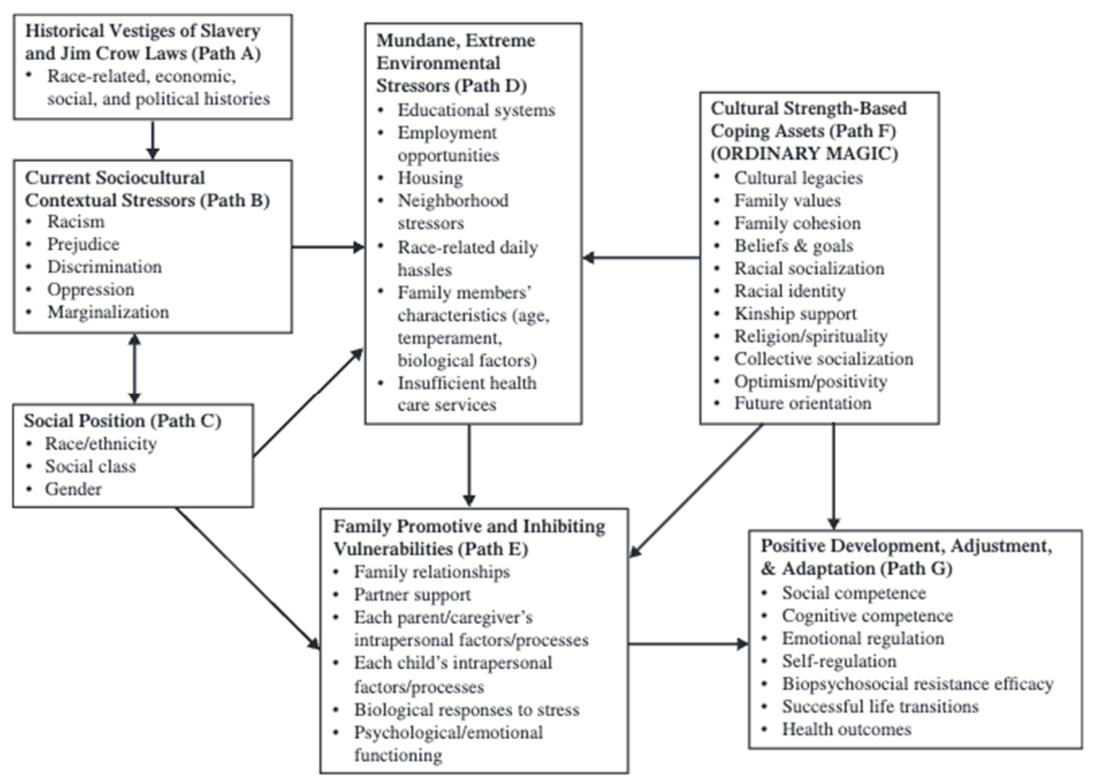
Figure 2.
Conceptual model.
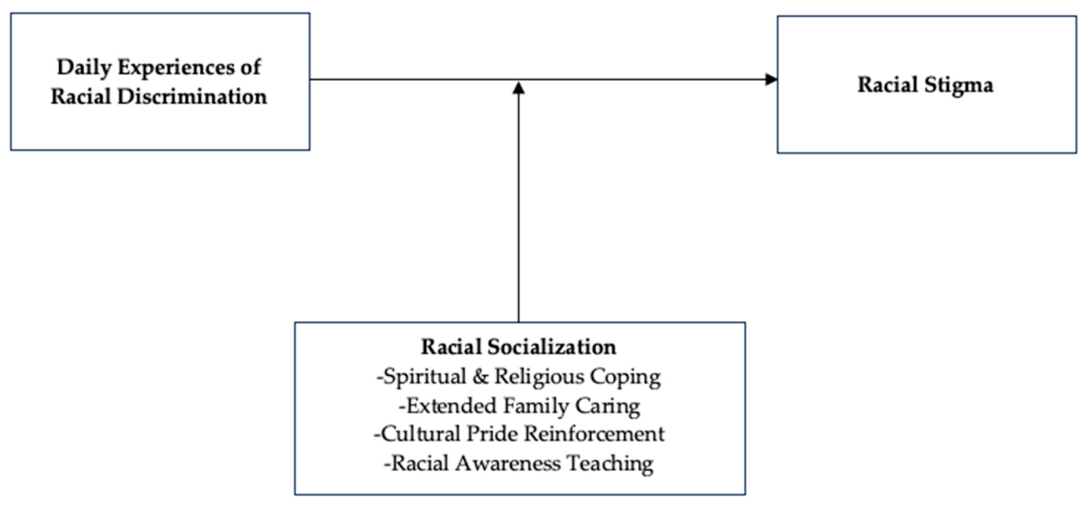
Figure 3.
Racial Discrimination x Cultural Pride Reinforcement.
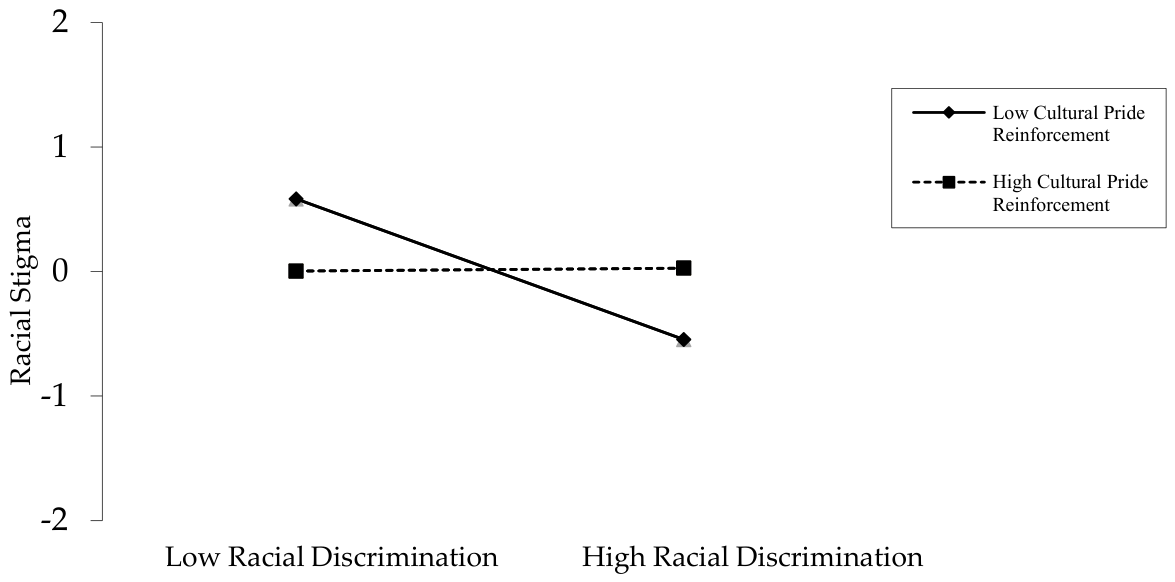

Table 1.
Primary Study Variables.
| Mean | SD | 1 | 2 | 3 | 4 | 5 | 6 | 7 | |
|---|---|---|---|---|---|---|---|---|---|
| 1. Age | 14 | 0.37 | |||||||
| 2. Parent’s Education | 16.25 | 1.95 | 0.21* | ||||||
| 3. Racial Stigma Beliefs | 3.76 | 0.37 | 0.22* | 0.12 | |||||
| 4. Racial Discrimination Experiences | 1.28 | 0.81 | 0.10 | 0.16 | -0.16 | ||||
| 5. Spiritual & Religious Coping | 4.35 | 0.48 | 0.16 | 0.03 | 0.42** | 0.07 | |||
| 6. Extended Family Caring | 4.09 | 0.49 | 0.13 | -0.01 | 0.31** | 0.10 | 0.59** | ||
| 7. Cultural Pride Reinforcement | 3.85 | 0.51 | 0.05 | 0.04 | 0.16 | 0.21* | 0.52** | 0.53** | |
| 8. Racial Awareness Teaching | 3.64 | 0.57 | 0.12 | 0.11 | 0.43** | 0.12 | 0.19* | 0.16 | 0.22* |
Note. Parent’s Education = associate’s degree. *p<0.05, **p<0.010.
Table 2.
Hierarchical Regression for Racial Discrimination, Racial Socialization, & Racial Stigma.
| B (SE) | β | p | ||
| Model 1 | ||||
| Age | .19(.09) | .19 | .035* | |
| Parent’s Education | .08(.09) | .08 | .381 | |
| Model 2 | ||||
| Age | .21(.09) | .21 | .021* | |
| Parent’s Education | .11(.09) | .11 | .220 | |
| Racial Discrimination Experiences | -.21(.09) | -.21 | .022* | |
| Model 3 | ||||
| Age | .10(.07) | .10 | .168 | |
| Parent’s Education | .09(.07) | .09 | .201 | |
| Racial Discrimination Experiences | -.25(.07) | -.25 | .001*** | |
| Spiritual & Religious Coping | .32(.09) | .32 | .001*** | |
| Extended Family Caring | .13(.09) | .13 | .168 | |
| Cultural Pride Reinforcement | -.12(.09) | -.12 | .199 | |
| Racial Awareness Teaching | .38(.07) | .38 | .001** | |
| Model 4 | ||||
| Age | .10(.07) | .10 | .173 | |
| Parent’s Education | .14(.07) | .14 | .064 | |
| Racial Discrimination Experiences | -.27(.08) | -.27 | .001*** | |
| Spiritual & Religious Coping | .29(.09) | .29 | .003** | |
| Extended Family Caring | .08(.09) | .08 | .382 | |
| Cultural Pride Reinforcement | -.01(.09) | -.01 | .983 | |
| Racial Awareness Teaching | .39(.07) | .40 | .001*** | |
| Racial Disc x Spiritual & Religious Coping | -.18(.10) | -.18 | .070 | |
| Racial Disc x Extended Family Caring | -.01(.10) | -.01 | .969 | |
| Racial Disc x Cultural Pride Reinforcement | .29(.10) | .29 | .006** | |
| Racial Disc x Racial Awareness Teaching | .07(.07) | .07 | .296 | |
| Note. *p<.05, **p<.010, *** p<.001 |
Disclaimer/Publisher’s Note: The statements, opinions and data contained in all publications are solely those of the individual author(s) and contributor(s) and not of MDPI and/or the editor(s). MDPI and/or the editor(s) disclaim responsibility for any injury to people or property resulting from any ideas, methods, instructions or products referred to in the content. |
© 2026 by the authors. Licensee MDPI, Basel, Switzerland. This article is an open access article distributed under the terms and conditions of the Creative Commons Attribution (CC BY) license (http://creativecommons.org/licenses/by/4.0/).
Copyright: This open access article is published under a Creative Commons CC BY 4.0 license, which permit the free download, distribution, and reuse, provided that the author and preprint are cited in any reuse.


