

Submitted:
07 August 2026
Posted:
11 August 2026
You are already at the latest version
Abstract
Artificial intelligence (AI) is rapidly transforming veterinary education and practice, increasing the need for AI literacy among future veterinary professionals. However, evidence regarding veterinary students’ knowledge, use, and perceptions of AI remains limited. This cross-sectional study evaluated AI awareness, usage patterns, attitudes, and educational expectations among undergraduate veterinary students at the University of Las Palmas de Gran Canaria (Spain). A semi-structured online questionnaire was completed by 189 students (43% of the target population), and data were analysed using descriptive statistics and Pearson’s chi-square tests. Most students reported frequent use of generative AI tools, particularly ChatGPT, mainly for information retrieval and academic support. Participants generally perceived AI as a valuable educational resource but expressed concerns regarding the reliability of AI-generated information, ethical issues, data privacy, and the potential impact on critical thinking. Despite widespread AI use, most respondents reported limited formal training and insufficient institutional guidance, while strongly supporting the integration of AI-related competencies into the veterinary curriculum. These findings highlight a gap between the rapid adoption of AI and the development of formal AI literacy in veterinary education. Veterinary curricula should promote not only technical proficiency but also critical evaluation, ethical awareness, and the responsible use of AI in professional practice.
Keywords:
artificial intelligence
; generative artificial intelligence
; artificial intelligence literacy
; cross-sectional survey
; higher education
; veterinary education
1. Introduction
Artificial intelligence (AI), particularly generative AI based on large language models, has rapidly changed higher education by transforming how students obtain information, create content, solve problems, and engage with learning activities. AI-powered tools, including ChatGPT, Gemini, and Copilot provide relevant opportunities for personalized learning, academic writing support, rapid information retrieval, and reinforced accessibility to learning opportunities. Simultaneously, their widespread adoption proposes important challenges related to academic integrity, assessment methods, digital literacy, and the responsible and ethical use of AI in higher education [1,2,3].
Further than education, AI is becoming increasingly integrated into human and veterinary medicine. Consequently, AI applications support diagnostic imaging, clinical decision-making, disease surveillance, precision medicine, epidemiological analysis, and biomedical research [4]. As these technologies become progressively incorporated into veterinary practice, future veterinarians will require not only technical familiarity with AI tools but also the ability to critically evaluate AI-generated information, recognize its limitations, and understand its ethical, legal, and professional implications [4,5,6,7]. Therefore, AI literacy has emerged as an essential competency for healthcare professionals. It extends beyond the ability to use AI applications and includes understanding fundamental AI concepts, critically evaluating AI-generated outputs, recognizing potential biases and limitations, addressing ethical and privacy issues, and integrating AI responsibly into professional decision-making. Accordingly, universities are increasingly encouraged to incorporate AI-related competencies into their curricula to prepare graduates for technology-driven professional environments [5,8,9].
Recent studies involving medical, dental, nursing, and allied health consistently describe positive attitudes towards AI and strong interest in formal AI education [1,2,3,9]. Nonetheless, these investigations also report significant differences in AI-related knowledge, practical competencies, and curricular exposure. Students generally identify the potential benefits of AI while expressing important concerns regarding reliability, academic integrity, algorithmic bias, data privacy, transparency, and possible effects on critical thinking and professional judgment [2,7].
Data within veterinary education remains comparatively limited despite the growing relevance of AI in veterinary practice. Recent studies indicate that veterinary students are generally familiar with AI tools and perceive them as valuable educational resources [4,7]. They support the integration of AI into veterinary curricula and identify potential applications in diagnosis, clinical decision support, veterinary management, and animal monitoring. However, these investigations also identify limited formal training and express concerns regarding reliability, ethical use, transparency, data privacy, and the potential impact of AI on critical thinking and professional judgment [7]. Despite the rapid expansion of AI technologies in veterinary education and clinical practice, evidence regarding veterinary students’ AI literacy, use patterns, perceptions, attitudes, and educational needs remains scarce. To date, published evidence in veterinary education remains limited and is largely restricted to a small number of institutions, making it difficult to determine whether the reported patterns of AI adoption, perceptions, and training needs are generalized across different veterinary colleges and educational contexts [7]. Hence, further studies are needed to generate context-specific evidence that can inform curriculum development and institutional policies regarding AI integration in veterinary education.
Accordingly, a better understanding of veterinary students’ knowledge, use, and perceptions of AI is pivotal for designing evidence-based educational strategies that promote responsible AI use, strengthen digital competencies, and facilitate the effective integration of AI into veterinary curricula and future professional practice. Therefore, the aim of this study was to evaluate the knowledge, awareness, use patterns, perceptions, attitudes, and perceived impact of artificial intelligence among undergraduate veterinary students at the University of Las Palmas de Gran Canaria. The findings are expected to contribute to the emerging evidence on AI in veterinary education and to support the development of curricula, institutional policies, and training initiatives that foster the responsible and effective use of AI by future veterinary professionals.
2. Materials and Methods
2.1. Study Design and Ethical Considerations
This cross-sectional study was conducted among veterinary students at the Faculty of Veterinary Medicine of the University of Las Palmas de Gran Canaria (Spain). Data collection took place between February and March 2026. Participation was voluntary and anonymous, and no personal identifying information was collected, thereby ensuring participant confidentiality. All data were collected and processed exclusively for research purposes. The reporting of this observational study followed the Strengthening the Reporting of Observational Studies in Epidemiology (STROBE) guidelines [10].
According to the institutional guidance provided by the Ethics Committee of the University of Las Palmas de Gran Canaria, formal ethical approval was not required for this study because it involved an anonymous, voluntary questionnaire that did not collect identifiable personal data or involve any intervention with participants. Consequently, written informed consent was not required.
2.2. Participants
This investigation evaluated the perceptions of students enrolled in the degree of Veterinary Medicine of the University of Las Palmas de Gran Canaria (ULPGC) during the 2025 to 2026 academic year. A convenience sampling strategy was used. The survey was disseminated through regular teaching activities, in which students received a brief oral explanation of the study objectives and procedures. The participants were provided with a Quick Response (QR) code to access the online questionnaire.
2.3. Inclusion and Exclusion Criteria
Eligible participants were students aged 18 years or older who were actively enrolled in the degree of Veterinary Medicine at the ULPGC and completed the survey during the data collection period. Participants who accessed the survey but did not answer any multiple-choice questions were excluded from the analysis. For analysis of individual questionnaire items, participants with missing responses for a given item were excluded only from the corresponding analyses.
2.4. Survey Instrument
A semi-structured online questionnaire was specifically designed for this study to evaluate veterinary students' knowledge, use, perceptions, and attitudes regarding AI in higher education. It was distributed in Spanish using Google Forms. The questionnaire was developed based on a review of the recent literature on AI use in higher education and digital competence, with particular consideration of issues relevant to medical and veterinary education [1,2,7,9,11,12,13,14].
The questionnaire comprised 29 items organized into eight sections: (1) demographic and academic information, (2) knowledge and awareness of AI, (3) AI usage patterns, (4) perceptions and attitudes, (5) impact on learning, (6) institutional and ethical context, (7) future expectations, and (8) additional comments. It required approximately 10–15 min to complete and consisted primarily of closed-ended questions with single- or multiple-response options, depending on the construct being assessed. Most items used categorical response scales, while selected questions allowed multiple responses to capture the diversity of AI tools and their educational applications. An optional open-ended question at the end of the survey enabled participants to provide additional comments or suggestions regarding the use of AI in veterinary education.
2.5. Data Management and Analysis
Questionnaire responses were exported from the online survey platform into Microsoft Excel (Microsoft Corporation, Redmond, WA, USA) for data coding and preliminary quality control. The dataset was reviewed to identify inconsistencies, verify completeness, and detect duplicate records before statistical analysis. Missing data were handled using pairwise deletion, whereby participants with missing responses for a specific questionnaire item were excluded only from the corresponding analysis. Percentages were calculated using the number of valid responses for each item as the denominator.
Statistical analyses were performed using IBM SPSS Statistics version 30.0 (IBM Corp., Armonk, NY, USA). Descriptive statistics were used to summarize participant characteristics and questionnaire responses. Categorical variables were expressed as frequencies and percentages. For multiple-response questions, each response option was analysed independently, and percentages were calculated using the number of respondents who answered the corresponding question as the denominator. Associations between categorical variables were assessed using Pearson's chi-square test of independence, as appropriate. Statistical significance was set at p < 0.05.
3. Results
3.1. Descriptive Characteristics of Veterinary Students
A total of 189 veterinary students completed the survey. Significant differences were observed in the distribution of age groups, gender, and academic year (Chi square test, p < 0.001 for all comparisons). Students aged 20 to 22 years represented the largest age group (48.2%), followed by those aged 17 to 19 years (25.4%), while participants older than 28 years accounted for only 2.6%. Female students predominated in the sample, representing 78.8% of respondents, compared with 21.2% males. Regarding academic year, first year (28.6%) and fourth year (27.5%) students were the most represented groups, whereas third year students constituted only 6.3% of the sample (Table 1). There is a non-uniform distribution of participants across the demographic and academic categories evaluated.
3.2. Knowledge and Awareness About AI
Most students reported a moderate level of familiarity with artificial intelligence, with 83.6% indicating that they understood its basic principles and 11.1% stating that they had advanced knowledge and could explain technical concepts. ChatGPT was recognized by all participants as an AI tool, followed by GitHub Copilot, Google Translate, and Grammarly. However, formal education on AI was limited, as 59.8% of students reported not having received any specific training, although about one quarter indicated that their university had provided general information about AI. Only a small proportion had received basic instruction during classes or attended dedicated workshops (Figure 1).
3.3. AI Usage Patterns
Most students reported using AI tools either regularly or occasionally (87.3%, n = 165) for their studies, with frequent use throughout the week, including several times per week or daily (71.5%, n = 133). ChatGPT was by far the most widely used tool (87.1%, n = 162), followed by Google Gemini (52.2%, n = 97). AI was primarily used to answer specific questions and resolve doubts (94.1%, n = 175), search and analyze information (61.3%, n = 114), prepare for exams (60.2%, n = 112), and generate ideas (50.5%, n = 94). It was also frequently used for individual assignments (87.1%, n = 162) and group projects (75.3%, n = 140), whereas its use in permitted online examinations was less common (19.9%, n = 37). Most students began using AI during their first year at university (38.7%, n = 72) or before entering higher education (32.8%, n = 61). Among the few students who had never used AI tools (N = 3), the main reasons were a lack of knowledge about how to use them (66.7%, n = 2) and concerns regarding academic integrity (33.3%, n = 1) (Figure 2).
3.4. Perceptions and Attitudes
Students generally had a positive perception of AI, with 90.5% either strongly agreeing or agreeing (90.5%, n = 171) that AI can improve learning. The most frequently reported benefits were significant time savings (91.4%, n = 170), improved understanding of complex concepts (79.0%, n = 147), and personalized learning support (62.9%, n = 117). More than half of the respondents also stated that AI improved the quality of their academic work (52.2%, n = 97). However, students expressed several concerns, particularly the risk of receiving inaccurate information (90.4%, n = 170), being accused of academic dishonesty (58.0%, n = 109), becoming dependent on AI tools (56.9%, n = 107), and reduced critical thinking skills (55.3%, n = 104). Regarding the potential impact on learning abilities, 40.2% (n = 76) were somewhat concerned that AI could negatively affect their learning, while 31.7% (n = 60) remained neutral (Figure 3).
3.5. Impact on Learning
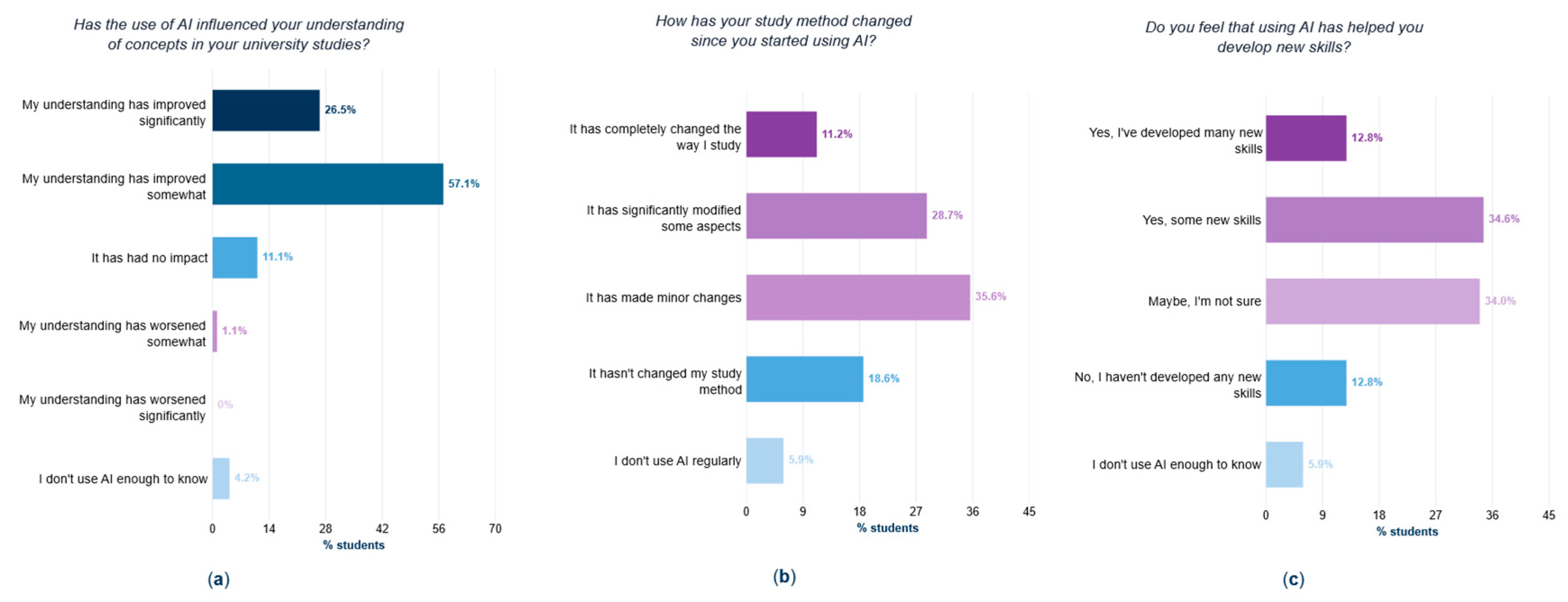
Most students perceived a positive impact of AI on their learning, with 83.6% (n = 158) reporting that AI had somewhat improved their understanding of course content or indicating a significant improvement. AI also influenced study habits, with 75.5% (n = 142) of respondents reporting at least minor changes in their study methods, of whom 11.2% (n = 21) stated that AI had completely transformed the way they study. Regarding skill development, 47.4% (n = 89) reported acquiring some or many new skills through AI use, although 34.0% (n = 64) were uncertain about its contribution (Table 5).
Figure 4.
Perceived impact of artificial intelligence on learning among veterinary students. (a) Students' perceptions of the influence of AI on their understanding of course content; (b) Students' views on whether AI has changed their study methods; (c) Students' perceptions of the extent to which AI has helped them develop new skills. Data are presented as percentages of respondents. Sample sizes vary slightly between panels because of missing responses.
Figure 4.
Perceived impact of artificial intelligence on learning among veterinary students. (a) Students' perceptions of the influence of AI on their understanding of course content; (b) Students' views on whether AI has changed their study methods; (c) Students' perceptions of the extent to which AI has helped them develop new skills. Data are presented as percentages of respondents. Sample sizes vary slightly between panels because of missing responses.
3.6. Institutional and Ethical Context
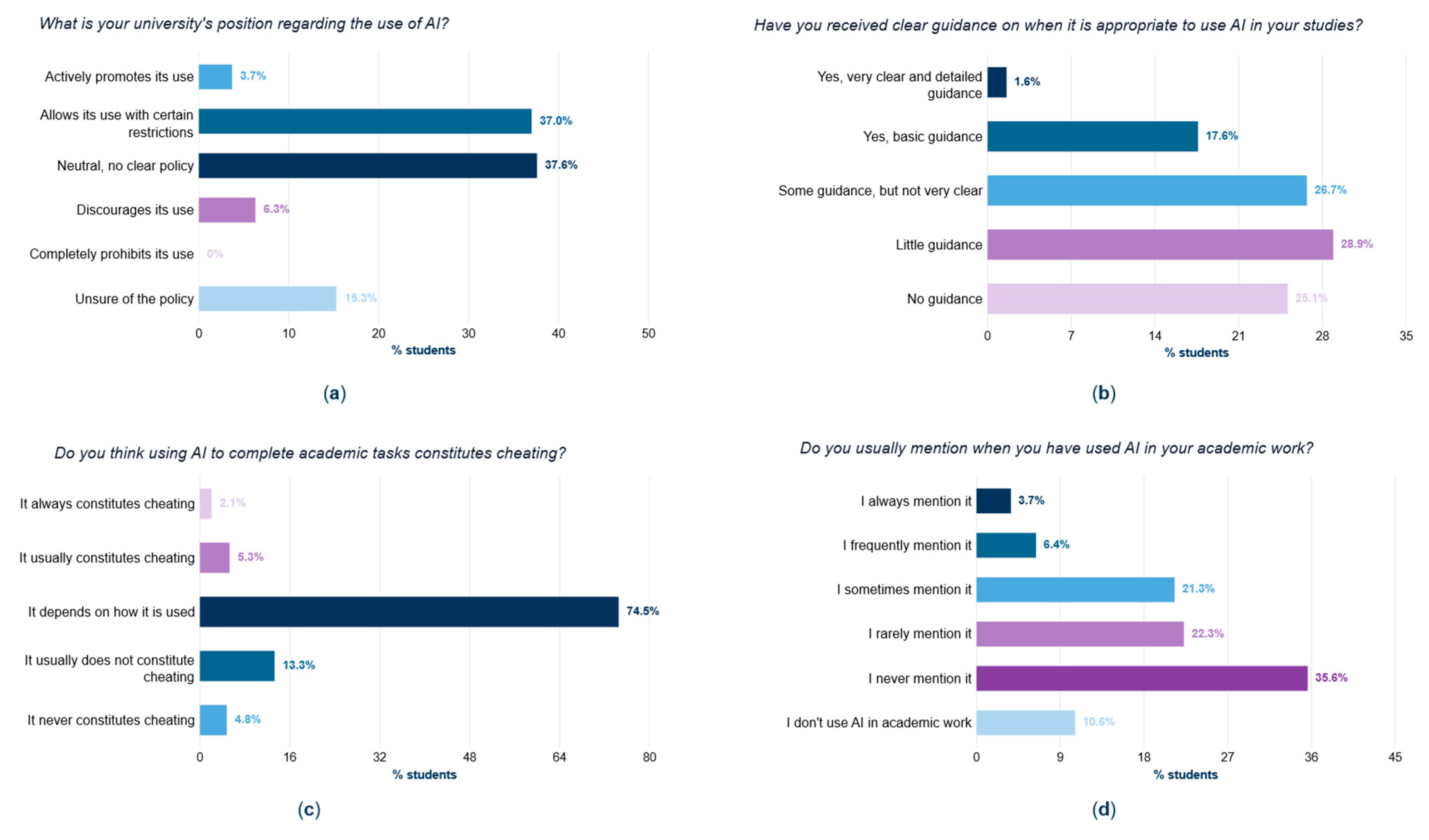
Students reported considerable uncertainty regarding institutional policies on AI use, with 37.6% (n = 71) perceiving that their university had no clearly defined policy and 37.0% (n = 70) believing that AI was permitted under certain restrictions. Guidance on the appropriate use of AI was generally limited, as 80.7% (n = 151) reported receiving little guidance, unclear guidance or no guidance at all. Most students (74.5%, n = 140) considered that whether AI use constitutes academic cheating depends on how the technology is used. In addition, transparency regarding AI use in academic assignments was relatively low, with 57.9% (n = 109) reporting that they never disclose its use or doing so only rarely (Table 6).
Figure 5.
Institutional guidance and ethical use of artificial intelligence among veterinary students. (a) Students' perceptions of their university's position regarding the use of AI for academic purposes; (b) Students' reports of receiving institutional guidance on when AI use is appropriate in their studies; (c) Students' opinions on whether using AI to complete academic tasks constitutes cheating; (d) Frequency with which students acknowledge the use of AI in their academic work. Data are presented as percentages of respondents. Sample sizes vary slightly between panels because of missing responses.
Figure 5.
Institutional guidance and ethical use of artificial intelligence among veterinary students. (a) Students' perceptions of their university's position regarding the use of AI for academic purposes; (b) Students' reports of receiving institutional guidance on when AI use is appropriate in their studies; (c) Students' opinions on whether using AI to complete academic tasks constitutes cheating; (d) Frequency with which students acknowledge the use of AI in their academic work. Data are presented as percentages of respondents. Sample sizes vary slightly between panels because of missing responses.
3.7. Future Expectations
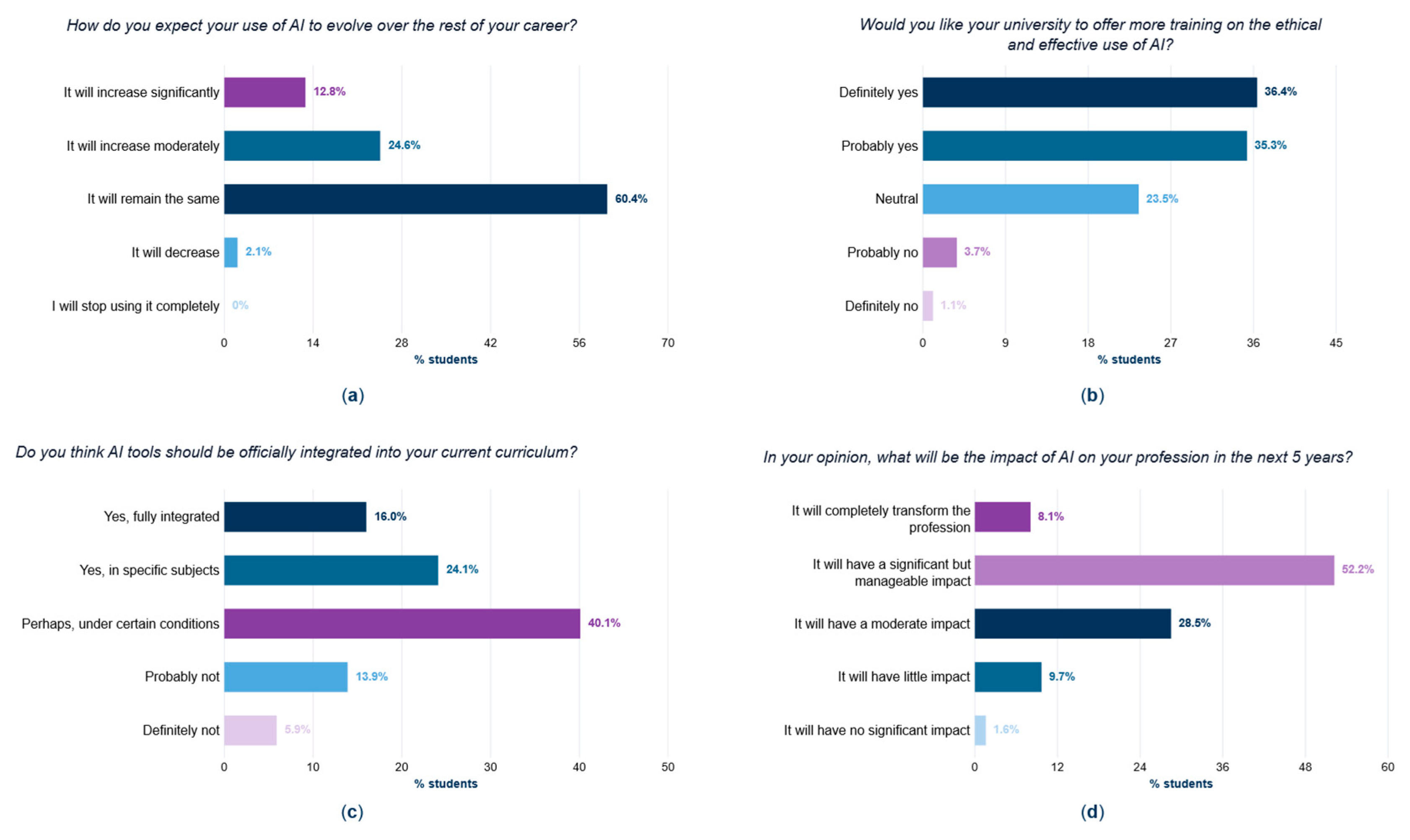
Most students expected their use of AI to remain stable during the rest of their studies (60.4%, n = 113), although 37.4% (n = 70) anticipated a moderate or substantial increase. There was also strong support for additional AI training, with 71.7% of respondents indicating that they would probably or definitely welcome further instruction on the ethical and effective use of AI. Students generally favored integrating AI into university curricula, particularly under specific conditions (40.1%, n = 75) or within selected courses (24.1%, n = 45), while only a minority opposed its inclusion. Furthermore, respondents anticipated a considerable impact of AI on their future profession, with 52.2% (n = 97) expecting a significant but manageable effect and 8.1% (n = 15) predicting that AI would completely transform their profession (Table 7).
Figure 6.
Future expectations regarding the role of artificial intelligence in veterinary education and professional practice. (a) Students' expectations about the evolution of AI use throughout their future careers; (b) Students' opinions on whether their university should provide additional training on the ethical and effective use of AI; (c) Students' views on the integration of AI tools into the veterinary curriculum; (d) Students' perceptions of the expected impact of AI on the veterinary profession over the coming years. Data are presented as percentages of respondents. Sample sizes vary slightly between panels because of missing responses.
Figure 6.
Future expectations regarding the role of artificial intelligence in veterinary education and professional practice. (a) Students' expectations about the evolution of AI use throughout their future careers; (b) Students' opinions on whether their university should provide additional training on the ethical and effective use of AI; (c) Students' views on the integration of AI tools into the veterinary curriculum; (d) Students' perceptions of the expected impact of AI on the veterinary profession over the coming years. Data are presented as percentages of respondents. Sample sizes vary slightly between panels because of missing responses.
4. Discussion
The findings of the present study indicate that generative artificial intelligence has become deeply integrated into the academic practices of veterinary students. Despite the limited availability of formal institutional training and policies, AI adoption was nearly universal among participants, suggesting that engagement with these technologies is driven primarily by students’ own initiative rather than by structured educational policies. As AI becomes increasingly relevant in veterinary education, understanding how students across different stages of the curriculum perceive and use these tools is essential for identifying educational needs and informing evidence-based strategies for their responsible integration. To our knowledge, this is the first study conducted in a public veterinary faculty to evaluate veterinary students’ knowledge, attitudes, and use of generative AI across different academic years.
4.1. Demographic and Academic Information
The study population was predominantly composed of female veterinary students aged between 20 and 22 years, showing the well-documented feminization of veterinary education and the veterinary profession reported internationally [15,16]. Similar demographic profile has also been reported among medical, dental, and life science students participating in AI-related surveys [1,2,6,9].
Students from all five years were represented, providing perspectives from different stages of academic training. Although participation was not evenly distributed across years, likely reflecting the convenience sampling strategy, the inclusion of 189 students (approximately 43% of the target population) provides a robust institutional overview of AI adoption and perceptions. Nevertheless, because the study was conducted at a single veterinary school using non-probabilistic sampling, caution is warranted when extrapolating these findings to other educational settings.
4.2. Knowledge and Awareness of AI
Our findings identified a clear mismatch between the widespread use of AI and the limited formal training available within the veterinary curriculum. Similar results have been described in other health-related disciplines, suggesting that students are adopting AI technologies more rapidly than universities are adapting their curricula [6,7,9,12,13].
Although most participants reported being familiar with the basic principles of AI, and correctly identified commonly used AI tools, nearly 60% had received no formal training. This discrepancy indicates that students' knowledge is largely acquired through independent exploration rather than structured educational programmes. Similar patterns have recently been described in veterinary education, where students report frequent AI use despite limited curricular exposure [7].
These findings reinforce the distinction between AI familiarity and AI literacy. While many students appear confident using AI applications, effective professional practice also requires the ability to critically evaluate AI-generated outputs, recognize their limitations, understand ethical and legal implications, and apply these technologies responsibly. Accordingly, veterinary curricula should move beyond introducing AI tools and instead prioritize the development of AI literacy as a core professional competency [17,18,19].
4.3. AI Usage Patterns
The predominance of ChatGPT over all other AI systems is also noteworthy. Although multiple AI platforms are currently available, ChatGPT was by far the preferred tool, whereas other large language models such as Claude, Perplexity, NotebookLM or DeepSeek showed very limited adoption. This finding likely reflects differences in accessibility, public visibility, and ease of use rather than objective differences in performance. Interestingly, Google's Gemini achieved moderate adoption, suggesting that students may increasingly diversify their AI ecosystem as competing models become integrated into commonly used educational platforms. In contrast, similar studies did not investigate which AI tools were preferred or used most frequently. Instead, they focused on the general use of AI technologies and reported that ChatGPT was among the most widely used tools [7,15].
Our students primarily reported the use of AI as a cognitive support tool rather than as an automatic content generator. The most frequent applications included answering questions, searching for information, exam preparation, and brainstorming ideas, whereas programming and highly technical tasks were uncommon. This usage profile aligns well with the educational needs of veterinary students, whose curriculum emphasizes large volumes of biomedical information, clinical reasoning, pathology, pharmacology, and diagnostic decision making rather than software development [4,7]. These findings suggest that students currently perceive AI as a learning assistant capable of facilitating knowledge acquisition rather than replacing disciplinary expertise.
4.4. Perceptions and Attitudes
The overwhelmingly positive perception of AI represents another important finding. More than 90% of respondents believed AI improves learning, while most students reported improvements in conceptual understanding and study efficiency. Time savings emerged as the most frequently perceived benefit, followed by improved comprehension of complex concepts and personalized learning support. These results are consistent with previous studies indicating that generative AI may reduce cognitive barriers during self-directed learning by providing immediate explanations and adaptive feedback [4,5,7,9,20,21].
Nevertheless, the cross-sectional nature of the present study does not allow conclusions regarding whether these perceived improvements translate into objectively better academic performance. Students' perceptions of learning gains should therefore be interpreted cautiously because subjective satisfaction does not necessarily correlate with measurable educational outcomes. Overall, the findings suggest that students generally perceive AI as having a positive influence on concept comprehension and study practices, although its role in fostering new skills appears to be more variable and less clearly established.
4.5. Institutional and Ethical Context
Our findings revealed substantial ambiguity regarding institutional AI policies and guidance, accompanied by diverse perceptions of academic integrity and limited disclosure practices among students. Similar uncertainty has been reported among students in medicine, dentistry, and other health professions, where rapid AI adoption has frequently outpaced the development of institutional policies and formal educational frameworks governing its use [22,23,24,25]. This misalignment may contribute to inconsistent practices, uncertainty regarding acceptable uses of AI, and difficulties in distinguishing between legitimate academic support and inappropriate reliance on generative tools. Universities are therefore increasingly encouraged to establish clear guidelines that define acceptable uses of AI, promote transparency, and support the development of responsible AI literacy among students [18,19].
An important aspect emerging from the survey is the coexistence of optimism and caution. Although students recognized numerous educational benefits, they also expressed substantial concerns regarding AI generated misinformation, excessive dependence, and reduced critical thinking. Receiving incorrect information was the most reported concern, affecting more than 90% of respondents. This result is encouraging because it indicates that students are aware of one of the principal limitations of current large language models, namely their potential to generate plausible but inaccurate information, often referred to as “hallucinations” in the literature [18,26,27]. Rather than demonstrating unquestioning trust in AI, these findings suggest that many students already recognize the necessity of critically evaluating AI generated responses before incorporating them into their learning processes. This awareness is particularly important in veterinary education, where inaccurate information may ultimately influence future professional decision-making and evidence-based clinical practice.
The ethical dimension deserves particular attention. Most respondents considered that the ethical acceptability of AI depends on how it is used rather than regarding it as inherently acceptable or unacceptable. Interestingly, this nuanced perspective is encouraging because it reflects an emerging understanding that AI is a tool whose ethical implications depend largely on transparency, attribution, and responsible use [18,26]. Similar attitudes have been reported among healthcare students, who frequently view AI as ethically acceptable when used to support learning, but problematic when it replaces independent intellectual effort or obscures authorship [22,23,24].
However, this interpretation contrasts with another important finding: more than one third of students reported never acknowledging AI use in their academic work, and only a small minority consistently disclosed its use. of AI use and the obligation to report such use. One possible explanation is the absence of clear institutional policies regarding disclosure requirements rather than deliberate attempts to conceal AI involvement. Previous studies have similarly highlighted uncertainty among students regarding when AI use should be acknowledged and how transparency should be implemented in academic contexts [19,23,25]. Consequently, universities should consider developing explicit policies that not only regulate AI use but also provide practical gui-dance on attribution, disclosure, and academic integrity. Such measures may help foster a culture of responsible AI use while re-ducing ambiguity and promoting consistent ethical standards across educational settings [18,19,26,28].
4.6. Future Expectations
The findings indicate that veterinary students expect AI to become an integral component of both their education and future professional practice. The strong support for additional AI training and the incorporation of AI-related competencies into veterinary curricula suggests that students recognize the growing importance of these technologies while acknowledging the need to use them effectively, critically, and responsibly. At the same time, participants reported limited institutional guidance and unclear policies regarding AI use, highlighting a gap between the rapid adoption of AI and the availability of structured educational support. Interestingly, the strong demand for additional training may itself reflect students’ recognition that frequent AI use does not necessarily equate to adequate AI literacy, reinforcing the central gap between AI adoption and AI literacy identified in this study.
These findings reinforce the importance of AI literacy as a core professional competency rather than simple technical proficiency. Beyond learning how to use AI tools, veterinary students should develop the ability to critically evaluate AI-generated information, recognize potential biases and limitations, understand ethical and regulatory implications, and apply AI responsibly in professional decision-making [17,18,19,28]. The growing demand for formal AI training observed in this study supports the integration of these competencies into future veterinary curricula.
The multidisciplinary nature of veterinary medicine may further increase the educational value of AI by facilitating information retrieval, literature synthesis, and evidence-based learning across diverse fields. However, because veterinary decisions directly affect animal health, public health, food safety, and client trust, AI-generated outputs must always be critically verified and interpreted within the context of professional expertise. The coexistence of positive attitudes towards AI and concerns about misinformation observed in this study reflects an emerging awareness of these responsibilities. Collectively, these findings suggest that veterinary schools should adopt a proactive approach to AI education, combining technical instruction with ethical, regulatory, and critical appraisal training to prepare graduates for an increasingly AI-enabled profession [18,26,27].
4.7. Study Limitations
The present study shows several limitations should be acknowledged. First, the cross-sectional design precludes any causal inference between AI use, perceived learning benefits, and educational outcomes. In addition, the study relied on self-reported perceptions rather than objective measures of AI literacy, academic performance, or clinical reasoning, and therefore reflects students’ subjective experiences rather than their actual competencies. Second, participation was voluntary and based on convenience sampling, which may have resulted in self-selection bias and an overrepresentation of students with a greater interest in AI technologies. Third, the study was conducted at one institution, and although participants from all years of the veterinary programme were represented, the distribution across academic years was uneven. Thus, the findings may not be fully generalizable to other veterinary colleges, educational systems, or cultural contexts. Finally, given the rapid pace of development and adoption of generative AI technologies, students’ perceptions, behaviours, and educational needs may evolve substantially over time. Longitudinal and multi-institutional studies will therefore be necessary to confirm the stability and broader applicability of the patterns reported here
5. Conclusions
Overall, our investigation demonstrates a clear mismatch between the widespread adoption of generative AI by the students and the limited institutional guidance and formal training currently available. Despite using AI extensively for learning activities, students remain aware of its potential risks, particularly misinformation, overreliance, and the impact on critical thinking, while simultaneously expressing strong support for structured educational initiatives and clearer institutional policies. These findings suggest that the challenge facing veterinary education is no longer whether students will use AI, but how universities can equip them to use it critically, ethically, and transparently. Integrating AI literacy into veterinary curricula may therefore represent an important step toward preparing future veterinarians for a professional environment in which AI-enabled tools are increasingly common. Future research should move beyond descriptive surveys toward longitudinal and experimental studies capable of evaluating the effects of AI training on critical appraisal skills, academic performance, clinical reasoning, and ethical decision-making. Multi-institutional and international studies would further clarify the extent to which these findings are generalizable across different veterinary education contexts.
Author Contributions
Conceptualization, A.S.R., M.A.Q-S. and J.R.J.; methodology, A.S.R., M.A.Q-S., M.M.C-F. and E.P-G.; validation, C.C., E.S. and J.R.J.; formal analysis, A.S.R., M.A.Q-S., M.M.C-F and J.R.J.; investigation, E.P-G., C.C. and E.S.; writing—original draft preparation, A.S.R., M.A.Q-S., M.M.C-F and J.R.J.; writing—review and editing, E.P-G., C.C. and E.S.; visualization, M.A.Q-S and M.M.C-F.; supervision, A.S.R., M.A.Q-S. and J.R.J. All authors have read and agreed to the published version of the manuscript.
Funding
This research received no external funding.
Institutional Review Board Statement
Not applicable.
Informed Consent Statement
According to the institutional guidance provided by the Ethics Committee of the University of Las Palmas de Gran Canaria, formal ethical approval was not required for this study because it involved an anonymous, voluntary questionnaire that did not collect identifiable personal data or involve any intervention with participants.
Data Availability Statement
The dataset supporting the conclusions of this study is available from the corresponding author upon reasonable requests.
Acknowledgments
During the preparation of this manuscript, the authors used ChatGPT [version 5.2; OpenAI] for the purposes of supporting resources. The authors have reviewed and edited the output and take full responsibility for the content of this publication.
Conflicts of Interest
The authors declare no conflicts of interest.
References
- Zawacki-Richter O, Marín VI, Bond M, Gouverneur F. Systematic review of research on artificial intelligence applications in higher education – where are the educators? Int. J. Educ. Technol. High. Educ. 2019, 16, 39.
- Ng JY, Shah AQ, Roni E, Asna M, Brar J, Kathirkamanathan S, Li W, Lokker C, Iorio A, Haynes RB, Moher D. Attitudes of Medical and Life Sciences University Students and Postdoctoral Fellows toward AI Chatbots in Education: An International Cross-Sectional Survey. Sci. Rep. 2026, 16, 9089. [CrossRef]
- Ng J, Maduranayagam S, Suthakar N, Li A, Lokker C, Iorio A, Haynes RB, Moher D. Attitudes and perceptions of medical researchers towards the use of artificial intelligence chatbots in the scientific process: an international cross-sectional survey. Lancet Digit. Health 2024, 7, e94–e102. [CrossRef]
- Pérez-García E, Ramírez AS, Quintana-Suárez MA, Conde-Felipe MM, Carrascosa C, Morales I, Corbera JA, SanJuan E, Jaber JR. Artificial Intelligence in Veterinary Education: Preparing the Workforce for Clinical Applications in Diagnostics and Animal Health. Vet. Sci. 2026, 13, 181. [CrossRef]
- Hasan HE, Jaber D, Tabbah S, Al, Lawand N, Habib HA, Farahat NM. Knowl edge, attitude and practice among pharmacy students and faculty members towards artificial intelligence in pharmacy practice: A multinational cross-sectional study. PLoS ONE. 2024, 19.
- Busch F, Hoffmann L, Truhn D, Ortiz-Prado E, Makowski MR, Bressem KK, Adams LC. COMFORT Consortium. Global Cross-Sectional Student Survey on AI in Medical, Dental, and Veterinary Education and Practice at 192 Faculties. BMC Med. Educ. 2024, 24, 1066. [CrossRef]
- de Brito, C.; Redondo, J.I.; Tadeo-Cervera, I.; Bataller, E.; García-Roselló, M.; Cuquerella Madoz, I.; Terrado, J. Integrating Artificial Intelligence into Veterinary Education: Student Perspectives. Front. Vet. Sci. 2025, 12, 1641685. [CrossRef]
- Mousavi Baigi SF, Sarbaz M, Ghaddaripouri K, Ghaddaripouri M, Mousavi AS, Kimiafar K. Attitudes, knowledge, and skills towards artificial intel ligence among healthcare students: A systematic review. Health Sci Rep. 2023, 6: e1138. [CrossRef]
- Ghanem OA, Hagag AM, Kormod ME, El-Refaay MA, Khedr AM, Abozaid, OM, Abdelmoaty KM, Hamed MS. Medical Students’ Knowledge, Attitudes, and Practices toward Generative Artificial Intelligence in Egypt 2024: A Cross-Sectional Study. BMC Med. Educ. 2025, 25, 790. [CrossRef]
- von Elm E, Altman DG, Egger M, Pocock SJ, Gøtzsche PC, Vandenbroucke JP. STROBE Initiative. The Strengthening the Reporting of Observational Studies in Epidemiology (STROBE) Statement: Guidelines for Reporting Observational Studies. J. Clin. Epidemiol. 2008, 61, 344–349. [CrossRef]
- Licorish SA, Owen HE, Daniel B, George JL. Students’ perception of Kahoot!’s influence on teaching and learning. Res. Pract. Technol. Enhanc. Learn. 2018, 13, 9. [CrossRef]
- Rani S, Kumari A, Ekka SC, Chakraborty R. Perception of medical students and faculty regarding the use of artificial intelligence (AI) in medical education: a cross-sectional study. Cureus 2025, 17. [CrossRef]
- Rhind S, Connelly L, Baillie S, Shaw DJ, Dickson J. Use of generative AI by veterinary students in two UK vet schools: a moment in time. J. Vet. Med. Educ. 2026, 53, e20250078. [CrossRef]
- Guirguis M, Fotsing S, Fevry J, Landry C, Bouchard-Lamothe D, Lacroix J, Jalali A. Artificial intelligence in health professions education: qualitative study of student experiences. J. Med. Internet Res. 2026, 28, e82432. [CrossRef]
- World Organisation for Animal Health (WOAH). The OIE Strategy on Gender Mainstreaming and Women's Empowerment; WOAH: Paris, France, 2021. Available online: https://www.woah.org (accessed on 28 July 2026).
- Federation of Veterinarians of Europe (FVE). Survey of the Veterinary Profession in Europe; FVE: Brussels, Belgium, Year. Available online: https://fve.org (accessed on 28 July 2026).
- Long D, Magerko B. What Is AI Literacy? Competencies and Design Considerations. Proc CHI Conf Hum Factors Comput Syst. 2020, 1-16. [CrossRef]
- UNESCO. Guidance for Generative AI in Education and Research. Paris: UNESCO; 2023. https://www.unesco.org (accessed on 28 July 2026).
- Chan CKY. A comprehensive AI policy education framework for university teaching and learning. Int J Educ Technol High Educ. 2023; 20:38. [CrossRef]
- Khater AS, Zaaqoq AA, Wahdan MM, Ashry S. Knowledge and attitude of Ain Shams university medical students towards artificial intelligence and its application in medical education and practice. Educational Res Innov J. 2023, 3, 29–42. [CrossRef]
- Elchaghaby M, Wahby R. Knowledge, attitudes, and perceptions of a group of Egyptian dental students toward artificial intelligence: a cross-sectional study. BMC Oral Health. 2025, 25, 1–7. [CrossRef]
- Al-Qerem W, Eberhardt J, Jarab A, Al Bawab AQ, Hammad A, Alasmari F, et al. Exploring knowledge, attitudes, and practices towards artificial intelligence among health professions’ students in Jordan. BMC Med Inf Decis Mak. 2023, 23:288. [CrossRef]
- Civaner MM, Uncu Y, Bulut F, Chalil EG, Tatli A. Artificial intelligence in medical education: a cross-sectional needs assessment. BMC Med Educ. 2022, 22: 772. [CrossRef]
- Mousavi Baigi SF, Sarbaz M, Ghaddaripouri K, Ghaddaripouri M, Mousavi AS, Kimiafar K. Attitudes, knowledge, and skills towards artificial intel ligence among healthcare students: A systematic review. Health Sci Rep. 2023, 6: e1138. [CrossRef]
- Worthing KA, Roberts M, Šlapeta J. Surveyed veterinary students in Australia find ChatGPT practical and relevant while expressing no concern about artificial intelligence replacing veterinarians. Vet Rec Open. 2024, 11: e280. [CrossRef]
- Masters K. Ethical use of artificial intelligence in health professions education: AMEE Guide No. 158. Med Teach. 2023, 45:574-584. [CrossRef]
- Bozkurt A, et al. Generative artificial intelligence and higher education: A global perspective on opportunities and challenges. Open Praxis. 2024, 16:1-18.
- Huang Y-T, Chu CP. Curriculum framework for artificial intelligence literacy in veterinary education. Front. Vet. Sci. 2026, 13:1801756. [CrossRef]
Figure 1.
Familiarity with artificial intelligence, recognition of AI tools, and previous university training among veterinary students. (a) shows students' self-reported familiarity with the concept of artificial intelligence; (b) presents the proportion of students who identified different applications as artificial intelligence tools, with multiple responses allowed; (c) summarizes students' previous exposure to formal or informal AI training received during their university studies. Data are expressed as the percentage of respondents. * As multiple responses were permitted, the sum of percentages may be greater than 100%.
Figure 1.
Familiarity with artificial intelligence, recognition of AI tools, and previous university training among veterinary students. (a) shows students' self-reported familiarity with the concept of artificial intelligence; (b) presents the proportion of students who identified different applications as artificial intelligence tools, with multiple responses allowed; (c) summarizes students' previous exposure to formal or informal AI training received during their university studies. Data are expressed as the percentage of respondents. * As multiple responses were permitted, the sum of percentages may be greater than 100%.
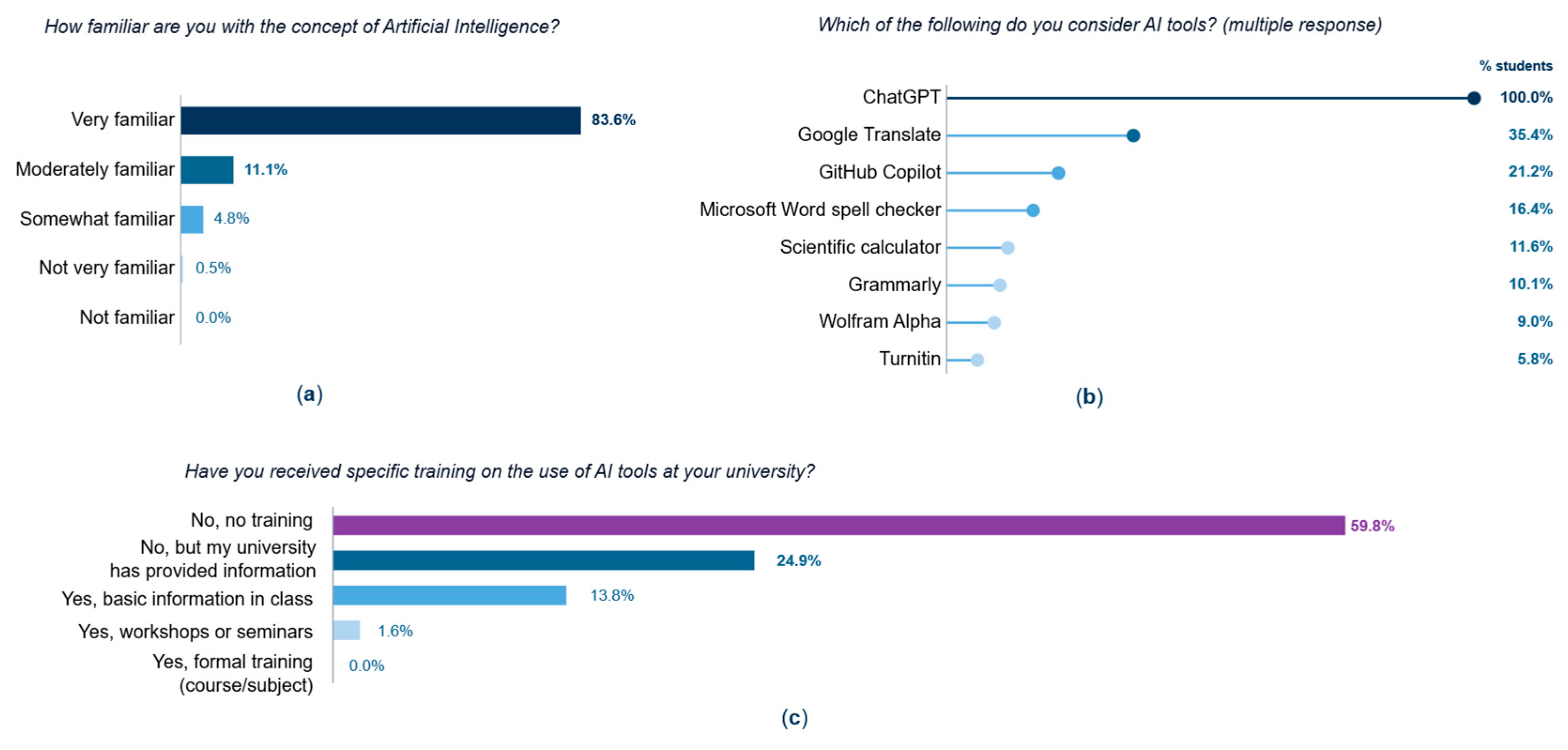
Figure 2.
Patterns of artificial intelligence use among veterinary students. (a) Use of AI tools for academic activities; (b) Frequency of AI tool use among students who reported using them; (c) AI tools used most frequently; (d) Main purposes for which students use AI in their studies; (e) Types of assessments in which students have used AI; (f) Stage at which students began using AI tools for academic purposes; (g) Main reasons for not using AI among students who reported never having used these tools. Sample sizes for each panel are indicated in the figure. Data are presented as percentages of respondents. *Panels (c), (d), and (e) correspond to multiple-response questions, and percentages may therefore exceed 100%. **Only for those who don't use AI.
Figure 2.
Patterns of artificial intelligence use among veterinary students. (a) Use of AI tools for academic activities; (b) Frequency of AI tool use among students who reported using them; (c) AI tools used most frequently; (d) Main purposes for which students use AI in their studies; (e) Types of assessments in which students have used AI; (f) Stage at which students began using AI tools for academic purposes; (g) Main reasons for not using AI among students who reported never having used these tools. Sample sizes for each panel are indicated in the figure. Data are presented as percentages of respondents. *Panels (c), (d), and (e) correspond to multiple-response questions, and percentages may therefore exceed 100%. **Only for those who don't use AI.
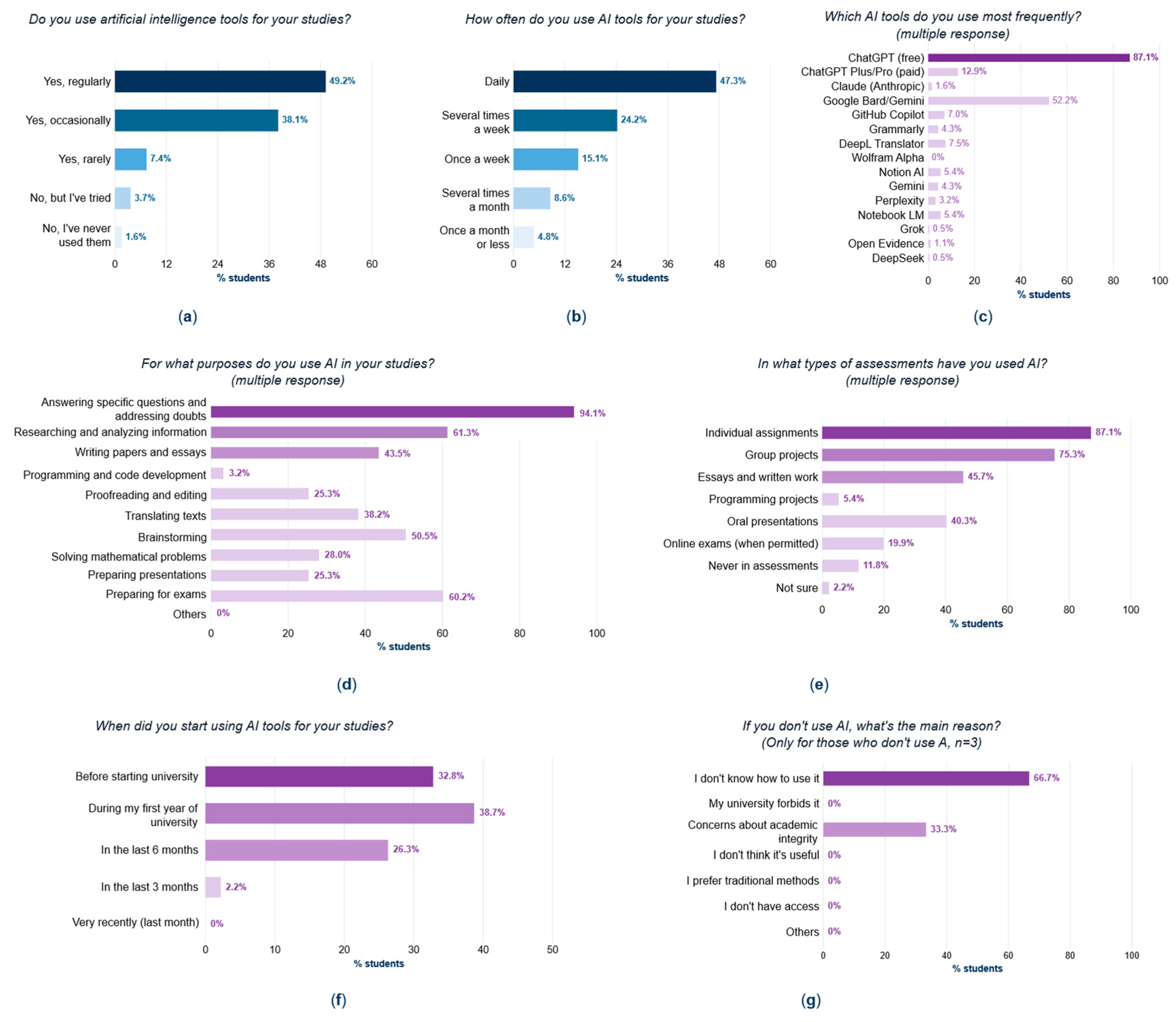
Figure 3.
Veterinary students' perceptions, perceived benefits, and concerns regarding the use of artificial intelligence in education. (a) Students' perceptions of the potential of AI to improve the learning experience; (b) Benefits reported by students who had used AI for academic purposes, including time savings, improved work quality, learning support, and enhanced creativity; (c) Main concerns associated with AI use, including academic cheating, misinformation, privacy risks, reduced critical thinking, and overreliance on AI; (d) Students' level of concern regarding the potential negative effects of AI on learning. Data are presented as percentages of respondents. *Panels (b) and (c) correspond to multiple response questions, and percentages may therefore exceed 100%.
Figure 3.
Veterinary students' perceptions, perceived benefits, and concerns regarding the use of artificial intelligence in education. (a) Students' perceptions of the potential of AI to improve the learning experience; (b) Benefits reported by students who had used AI for academic purposes, including time savings, improved work quality, learning support, and enhanced creativity; (c) Main concerns associated with AI use, including academic cheating, misinformation, privacy risks, reduced critical thinking, and overreliance on AI; (d) Students' level of concern regarding the potential negative effects of AI on learning. Data are presented as percentages of respondents. *Panels (b) and (c) correspond to multiple response questions, and percentages may therefore exceed 100%.
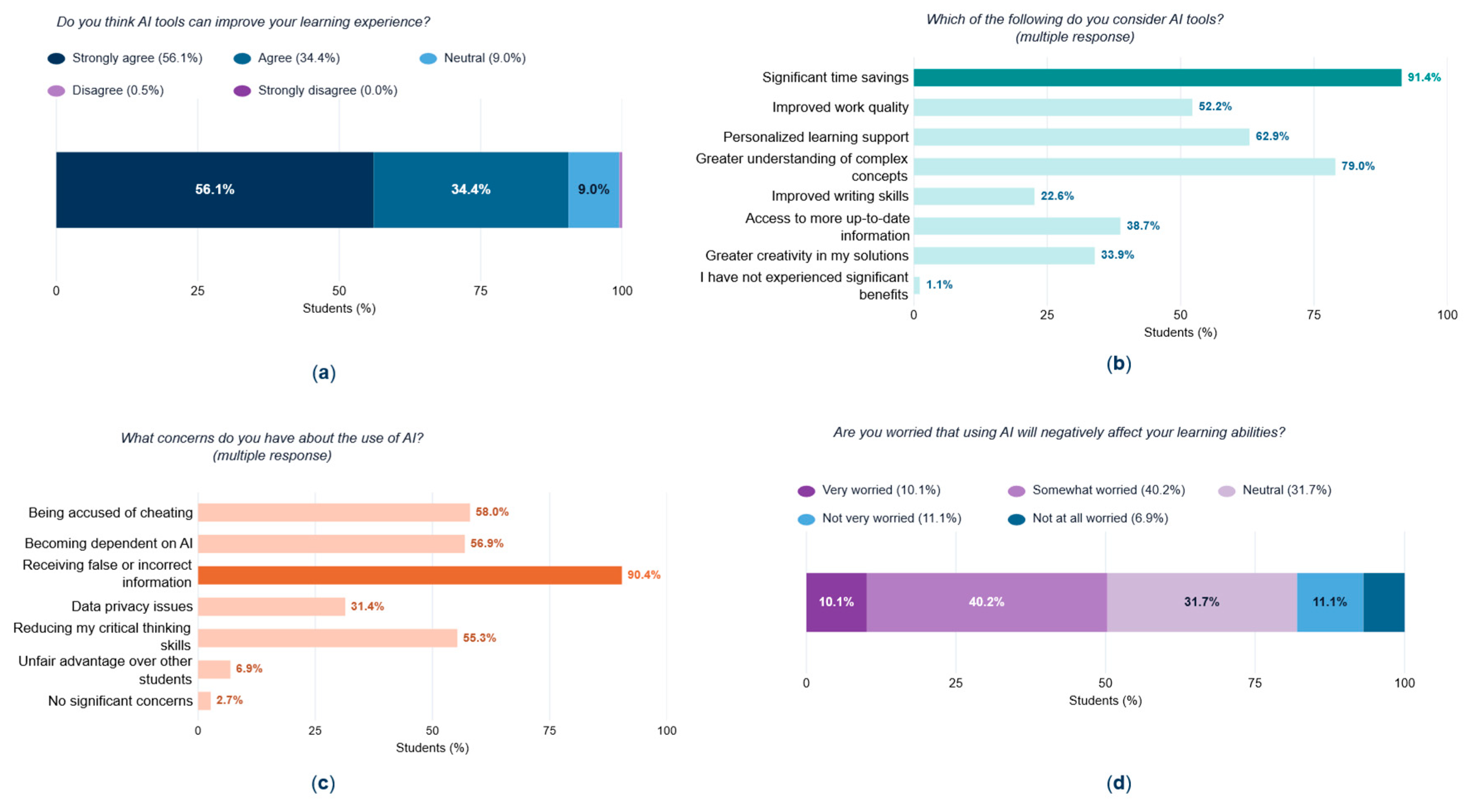

Table 1.
Demographic and academic information of undergraduate veterinary students.
| Variable | n | % | χ² | gl | p-value |
|---|---|---|---|---|---|
|
Age groups [years] [N=189] 17-19 years 20-22 years 23-25 years years >28 years |
48 91 35 10 5 |
25.4% 48.1% 18.5% 5.3% 2.6% |
126.7 | 4 | <0.001 |
|
Gender [N=189] Man Woman I prefer not to specify |
40 1490 |
21.2% 78.8% 0% |
62.9 | 1 | <0.001 |
|
Year of study [N=189] 1st year 2nd year 3rd year 4th year 5th year |
54 44 12 52 27 |
28,6% 23,3% 6,3% 27,5% 14,3% |
34.0 | 4 | <0.001 |
Disclaimer/Publisher’s Note: The statements, opinions and data contained in all publications are solely those of the individual author(s) and contributor(s) and not of MDPI and/or the editor(s). MDPI and/or the editor(s) disclaim responsibility for any injury to people or property resulting from any ideas, methods, instructions or products referred to in the content. |
© 2026 by the authors. Licensee MDPI, Basel, Switzerland. This article is an open access article distributed under the terms and conditions of the Creative Commons Attribution (CC BY) license (http://creativecommons.org/licenses/by/4.0/).
Copyright: This open access article is published under a Creative Commons CC BY 4.0 license, which permit the free download, distribution, and reuse, provided that the author and preprint are cited in any reuse.