

Submitted:
10 August 2026
Posted:
10 August 2026
You are already at the latest version
Abstract
Seedlessness, a key market trait in citrus, is governed by interdependent processes whose expression is strongly influenced by genotype and environment. In this study, we integrated complementary experiments conducted on six lemon cultivars to (i) quantify pollen viability and in vitro germination across temperatures; (ii) characterize pollen tube kinetics in vivo; (iii) evaluate fruit set, seed traits and fruit size, under field conditions; (iv) identify the S-genotypes. Pollen viability was generally high, but in vitro germination was temperature-sensitive, and these results were sustained under field conditions. In vivo, germination on the stigma increased over time, and pollen tubes generally reached the base of the style within 9 days, progressing faster after cross- vs. self-pollination. In field experiments, most cultivars were moderately self-compatible, ‘Fino 49’ was the most self-compatible and ‘Verna 51’ the least; parthenocarpy was consistently low except in ‘Lisbon’. Cross-pollination improved the fruit set in several combinations but did not systematically increase fruit size. The number of seeds per fruit in cross-pollination was similar to that in the self-pollination experiments, however, a substantial proportion of aborted seeds was observed, especially after self-pollination. Together, these results indicate that lemon cultivars are varyingly self-compatible and broadly cross-compatible, with parthenocarpy insufficient on its own to ensure stable seedless production. Breeding and orchard design should therefore consider parental compatibility, temperature windows at bloom, and the limited parthenocarpic capacity of many cultivars.
Keywords:
Citrus limon
; self/cross-compatibility
; parthenocarpy
; pollen germination
; pollen–pistil interaction
; seeds
1. Introduction
The genus Citrus encompasses several species of great economic interest, that are widely appreciated worldwide for fresh consumption thanks to the high content of nutraceutical compounds (e.g., flavonoids) and their organoleptic features. The main challenge in citrus breeding is the development of new genotypes combining high yield, fruit quality, seedlessness, and tolerance (or resistance) to biotic and abiotic stresses. Nevertheless, the generation of improved citrus cultivars is hampered by several biological and technical constraints: (1) the long juvenile phase; (2) the occurrence, in some genotypes, of morphological (or cytological) sterility and self-incompatibility; (3) the high heterozygosity resulting in a strong variability in the phenotypes; (4) the nucellar polyembryony [1].
Lemon (Citrus limon [L.] Osbeck) is a major citrus crop worldwide, ranking third after oranges and mandarins in global production and of strategic importance around the Mediterranean, including Spain, where it thrives under ideal edaphoclimatic conditions and is deeply integrated into cultural heritage and traditional diets. Lemons in the Mediterranean region are characterized by their superior quality, rich organoleptic properties, and high concentrations of bioactive compounds such as flavonoids, limonoids, and vitamin C [2].
Seedlessness is a premium trait in citrus fruit, strongly influencing consumer preference and industry value chain dynamics. In citrus, achieving stable seedless fruit involves managing multiple reproductive components, including self-incompatibility (SI), cross-compatibility, pollen performance, and parthenocarpy, modulated by environmental factors such as temperature during bloom and pollination [3,4].
Self-incompatibility (SI) in citrus is generally regarded as gametophytic (pollen grains germinate in the pistil and tubes are arrested within the style), although arrest sites can vary from stigma to ovule among taxa [5,6]. SI in citrus is associated with the S-RNase-based gametophytic mechanism in the pistil, a system that restricts self-fertilization and maintains genetic diversity but complicates agronomic seedlessness [7]. Recent genetic studies have identified at least 31 S-RNase alleles and a self-compatible mutant allele (Sm) that underlie transitions from SI to self-compatibility in citrus species [8]. This mechanism is further modulated by environmental factors, such as temperature stress and polyploidization, which can break the SI response [9]. Such temperature sensitivity extends to pistil processes, as observations in Citrus clementina show that SI responses are temperature-dependent, becoming less effective below 15 °C [10].
Parthenocarpy, fruit development without fertilization, can produce seedless fruit and in citrus it often acts in concert with SI or male sterility, but capacity differs markedly among citrus cultivars and species [11,12]. While some citrus species exhibit obligate parthenocarpy, lemon generally shows limited parthenocarpy ability, though notable exceptions exist, for instance in the cultivar ‘Xiangshui’, where pollen-tube arrest at the base of the stigma due to gametophytic SI prevents seed production without limiting fruit production, thus enabling parthenocarpy [13].
While numerous SI/parthenocarpy studies exist for mandarins and related taxa, lemon remains less characterized [14,15,16]. Despite these advances, knowledge gaps remain in characterizing the interaction between genotype, environment, and reproductive physiology in lemon, especially concerning temporal dynamics of pollen-pistil interactions, parthenocarpy potential among cultivars, and temperature influences on reproductive success.
In this study, for the first time, two complementary datasets on lemon reproductive biology have been carried out. First, we assessed pollen viability, in vitro germination across temperatures and pollen-pistil interactions in vivo after controlled self- and cross-pollinations in five cultivars (‘Fino 49’, ‘Verna 51’, ‘Fino 95’, ‘Eureka’, ‘Lisbon’). Second, we quantified field fruit set, fruit size, seed number, and seed abortion under field conditions following self/cross-pollination and parthenocarpy experiments in up to six cultivars (adding male-sterile ‘Messina’ for parthenocarpy). Third, we identified the S-genotypes in the six lemon cultivars. Our objective was to provide an integrated view of the biological determinants underlying seed formation and fruit set in lemon, with practical implications for breeding and orchard design.
2. Materials and Methods
2.1. Plant Material
Adult trees (>10 years old) of six lemon cultivars -‘Fino 49’ (F49), ‘Verna 51’ (V51), ‘Fino 95’ (F95), ‘Eureka’ (EUR), ‘Lisbon’ (LIS), and ‘Messina’ (MESS; male-sterile)- were grown under standard practices in IMIDA experimental plots (La Alberca, Murcia, Spain). Trees were healthy and maintained under uniform horticultural management.
2.2. Pollen Viability and Analysis of Temperature-Dependence in In Vitro Pollen Germination
To obtain fresh pollen, at least 50 flowers were collected from four trees of each cultivar (except from ‘Messina’ since it is male-sterile) during peak bloom, just before anthesis. Petals and pistils were removed, anthers were left to dehisce for 24 h at room temperature and fresh pollen was stored at −20 °C until use (Figure 1).
In order to evaluate viability, pollen grains were sprinkled on glass slides, using a paintbrush, and stained with 1% iodine-potassium iodide (KI-I2). Five slides were used for each cultivar, with two observations of 100 pollen grains each. Darkly-stained pollen grains were regarded as viable or living pollen, whereas those lightly stained or unstained were non-viable (Figure 2). The percentage of pollen viability was determined as the ratio of the number of viable grains to the total number of grains [17,18].
In vitro pollen germination was tested in Petri dishes on a solidified germination medium consisting of 100 g/l sucrose, 0.1 g/l H3BO3, 0.3 g/l Ca(NO3)2, 0.1 g/l KNO3, and 10 g/l agarose (Medium EEO, Pronadisa, Madrid, Spain). The culture medium was adjusted to a pH of 5.4 ± 0.1. Pollen from each cultivar was sprinkled on the surface of the culture medium using a paint brush (Figure 3). The Petri dishes were then placed at five temperatures (10, 15, 20, 25, or 30 °C) in the dark for 24 h. Pollen germination was arrested after 24 h by freezing at −20 °C. Pollen grain was classified as germinated when the length of the pollen tube exceeded the diameter of the grain (Figure 3). For each treatment, germination was recorded in two Petri dishes by counting three complete fields, each with at least 100 pollen grains, in each Petri dish (six replicates).
2.3. Temperature–Seed Relationship in the Field
To evaluate the effect of the temperature regime on the number of seeds in vivo, an experiment under field conditions was carried out. The study was conducted for the crossing ‘Verna 51’ x ‘Fino 49’. The maximum, minimum, and average temperatures through peak bloom were recorded, for three consecutive years, in the same plot. The number of seeds per fruit and the number of seedless fruits were recorded.
2.4. Pollen Tube Behaviour Following Self- and Cross-Pollination
For in vivo pollen tube studies in the laboratory, 60 flowers of each maternal cultivar were used. Flowers were emasculated and hand-pollinated (i) with their own pollen in self-pollination experiments (SP), or (ii) with pollen from one of the other five cultivars in cross-pollination experiments (CP); treated flowers were immediately bagged with cotton tissue. Twelve pistils per treatment were collected at 0, 3, 6, 9, and 12 days after pollination (DAP), fixed in FAA (5:5:90 formalin:acetic acid:70% ethanol) and stored at 4 °C for microscopic observation. All lemon cultivars were used for the self-compatibility trials, except ‘Messina’ since it is male-sterile, and the cross-compatibility tests were conducted based on the availability of material over time (F49 x EUR; F49 x F95; F49 x V51; F95 x F49; F95 x V51; V51 x F49; V51 x F95), where the first cultivar in the crossing corresponds to the maternal parent).
In order to carry out microscopic preparations, pollen tubes were monitored in squashed preparations. Pistils fixed in the FAA solution were washed three times with water (1 h per wash), and left in a 5% sodium sulphite solution overnight. Pistils were softened in the sodium sulphite solution in a microwave for 45 s. Before squashing, the ovary was cut from the stigma-style, and both parts were further cut longitudinally and split into two parts. Following the staining procedure and squashing with 0.1% aniline blue in 0.1 N K3PO4 (Figure 4), preparations were observed with a fluorescence microscope using an I3 excitation filter (450–490 nm) (DM 2500; Leica Microsystems, Wetzlar, Germany). A pollen grain in the stigma was considered germinated when the pollen tube length was larger than the pollen grain diameter. We quantified: (i) number of pollen grains germinated in the stigma; (ii) % flowers with tubes in upper, middle, and base style segments at each DAP; (iii) number of tubes reaching the ovary.
2.5. Evaluation of Fruit Set, Fruit Size and Seed Traits After Self/Cross-Pollination and Parthenocarpy
To characterize the self- or cross-compatibility and parthenocarpy performance in the field, 100 flowers from each of the six lemon cultivars were selected one day before the anthesis, and, similarly to the previous section, treated flowers were immediately bagged with cotton tissue. In parthenocarpy (PA) studies, to prevent pollination, emasculated flowers were bagged without pollination. Bags were removed about two weeks after pollination. Experiments were carried out in three consecutive years to evaluate reproducibility results derived from the effects of ambient temperature fluctuations. Six lemon cultivars (F49, V51, F95, EUR, LIS, and MESS) were used for the parthenocarpy experiments, and the same for self-compatibility trials, except ‘Messina’ since it is male-sterile. Cross-compatibility tests were conducted based on the availability of material over time (EU x F49; F49 x EUR; F49 x F95; F49 x V51; F95 x F49; F95 x V51; V51 x F49; V51 x F95).
Fruits were harvested from October to February, except for ‘Verna 51’, whose fruits were harvested in April, due to the fact that it is a late cultivar. Fruit set percentage(number of fruits/number of flowers), fruit diameter, number of seeds and percentage of aborted seeds produced per fruit were recorded.
2.6. Identification of S-Genotypes
In order to test if the cultivars of our study shared the same genotype previously observed by Bennici et al. [19] in the lemon cultivars ‘Eureka’ and ‘Femminello siracusano’, Sm/S2, genomic DNA, for each genotype, was extracted from young leaves using the DNeasy® Plant Mini Kit (QIAGEN®). For Sm and S2 amplification, we followed Bennici et al. [19] by using consensus degenerate primers for citrus S-RNases. Minor modifications of the last protocol were applied: reactions were set in 25 µl containing 1× DNA AmpliTools Green Master Mix (Biotools, B&M Labs, Madrid, Spain), 0.5 µM of each primer. PCR conditions were 94 °C for 2 min, 15 cycles of 94 °C for 1 min, 53 °C for 1 min and 2 min at 72 °C, then 30 cycles of 94 °C for 1 min, 52 °C for 1 min and 2 min at 72 °C, then 72 °C for 5 min. We used 10 ng of genomic DNA of the six lemon cultivars of our study. Bands were resolved in a 1.5% agarose gel in 0.5x TAE.
2.7. Statistics
Data were analysed with one-way ANOVA and LSD tests where applicable (SPSS v25). Graphics were generated with Sigmaplot® v. 14.5 software, and they show the mean value and the standard errors.
3. Results and Discussion
3.1. Pollen Viability, Analysis of Temperature-Dependence on In Vitro Pollen Germination and In Vivo Seed Production
Pollen viability assessment is critical in the study of many aspects, such as monitoring of pollen state during storage, genetics and pollen-stigma interactions, crop improvement and breeding programs, and incompatibility and fertility studies [17]. The statistical analysis of viable pollen grains percentage showed very significant differences (P < 0.001) among lemon cultivars. The viability ranged from 50% in V51 or F49, to more than 70% in F95 or EUR (Table 1). These results agreed with those of Demir et al. [18] in different lemon cultivars. However, Zhang et al. [13] and Kakade et al. [16] observed greater pollen viability percentages in lemon (80-90%).
One of the most important environmental factors that could affect pollen performance is temperature. Characterising pollen performance and its sensitivity to temperature is especially relevant for some economically important fruit crops, such as citrus [20,21,22]. Temperature affects pollen germination [23] and pollen tube kinetics in the style [24]. Despite their high pollen viability, germination was strongly temperature dependent in all lemon cultivars studied. We found different pollen germination percentages at several in vitro incubation temperatures and the results were similar for all cultivars. There was a progressive increase in germination from 10 °C to 25 °C and a sharp decrease when temperature reached 30 °C (Figure 5). This pattern aligns with temperature sensitivity reported for citrus pollen performance [4,10,20,21,22]. The germination percentage ranged from 2,68% in LIS 10ºC, to 27,40% in EU 25ºC (Figure 5). These percentages are very low in lemon since Zhang et al. [13] or Khan and Perveen [25] observed much higher pollen germination percentages in different lemon cultivars (50-70%), well above our results.
The in vitro results were also confirmed under field conditions. Over three blooming periods in the V51 × F49 crossing, cooler average bloom temperatures were associated with a higher percentage of seedless fruit and fewer seeds per fruit (Table 2), presumably due to reduced pollen germination and/or tube growth. Years with fewer days above 25 °C exhibited substantially higher percentage of seedless fruit and a lower mean number of seeds per fruit, corroborating the laboratory temperature response observed in vitro (Figure 5).
Similar results were observed in other subtropical and tropical species, such as Pistacia sp. [26] and Olea europaea [27], while lower temperatures (around 15-20 °C) were optimum for fruit trees in the temperate zone, such as apricot [28]. In citrus, García et al. [29] observed that lemon fruits from spring pollination had fewer seeds than those from summer pollination, when average temperatures were higher, in agreement with our results. These observations underscore the risk of low seed set or erratic fruiting in orchards experiencing temperature fluctuations during bloom.
3.2. Pollen–Pistil Interactions In Vivo
In several Citrus species, the incompatibility reaction has been reported to occur at different phases as pollen tubes grow through the gynoecium [5,30]. In some cases, pollen tubes are arrested very soon at the stigma level [31], whereas in others, they are arrested along the style [6] or at the base of the style, in the ovary or the ovules [32].
The processes of pollen grain germination on the stigma, and the subsequent entry of pollen tubes into the style are governed by several physiological, genetic and environmental factors [22,33]. In the five lemon cultivars studied, there was a significant difference in pollen grain germination aptitude with regard to the stigma and pollen genotypes (P < 0.001), although the pollen donor appeared to be the major determinant, and similar results were observed in mandarin [6]. Following controlled pollinations, the number of germinated grains on the stigma increased with time in all cultivars (Figure 6). In self-pollination, LIS was the cultivar with the highest number of germinated pollen grains in the stigma from 6 days after pollination (DAP) and F49 was the cultivar with the lowest one 12 DAP. In cross-pollination, the crossing F49 x V51 showed the highest number of germinated pollen grains in the stigma 12 DAP, and V51 x F49 the lowest (Figure 6).
100% of pollen tubes reached the upper part of the style three DAP in most of the self- and cross-pollination treatments (Figure 7 and Figure 8), and these results agreed with those of Distefano et al. [33,34] in mandarin. In addition, in cross-pollination treatments, growth of pollen tubes was observed in the middle part of the style 3 DAP in most of the flowers of F95 x F49 (90%) and F49 x V51 (50%) crossing (Figure 8) showing earlier progression into the middle style compared to others crossing or self-pollination.
Six DAP, most treatments had tubes in the middle style and above 70% of the pollen tubes reached the base of the style in self-pollination treatments (Figure 7), a number that increased to above 80% in cross-pollination, except in F49 x EUR (Figure 8). Nine DAP tubes reached the base of the style in nearly all combinations, with a significant delay in F95 self-pollination. Pollen tubes consistently grew faster and were more abundant in CP than SP, and genotype of both pollen and pistil influenced the performance, as was observed in mandarin [6,35] or lemon [13,16]. In compatible cross-pollinations of mandarin, pollen tubes were highly efficient, reaching the ovary in only 2 days after treatment [32].
The entry of pollen tubes into the ovary also showed significant differences (P<0.05 for SP; P<0.001 for CP) among the pollen parents, in agreement with the results of Distefano et al. [6] for mandarin. In both SP and CP, the number of pollen grains reaching the ovary increased with the DAP (Figure 9). The number of tubes entering the ovary in self-pollination was highest in LIS, where 11 tubes reached the ovary 11 DAP, while just 8 tubes were observed at 12 DAP in F49. Moreover, in cross-pollination treatments, F49 x EUR crossing showed the highest number of pollen tubes inside the ovary, 13 tubes, 12 DAP, and F49 x V51 the lowest, 7 tubes (Figure 9). Yamamoto et al. [14] observed that in self-compatible cultivars the number of pollen tubes reaching the ovary varied depending on the species. For instance, in pummelo, the range was 22-39 tubes, in mandarin 11-100 tubes, and in EUR lemon about 10 tubes, which agreed with our results.
In mandarin, even when thousands of pollen grains are deposited and germinate on the stigma, both in compatible and incompatible pollinations, only a very small fraction actually reach the ovary [32,33,34]. In lemon, just 1% of the pollen grains germinating in the stigma reached the ovary, which is consistent with other results in citrus. This behaviour could be due to physiological problems in the pollen tube growth through the style, such as swollen or burst tips, the secretion by pollen tubes of an inhibitor that acts on the slower-growing tubes and arrests their growth etc., which is different from incompatibility [30].
Distefano et al. [6] analysed the incompatibility of several mandarin cultivars and set a base for self- or cross-compatibility in other citrus cultivars. Self/Cross-incompatibility in mandarin was expressed as the arresting of pollen tube growth in the stigma or in the first half of the style, depending on the level of incompatibility. Nevertheless, in mandarin cross-compatibility experiments, pollen tubes reached the base of the style and even the ovary. In our study, several pollen tubes reached the ovary in both self- or cross-pollination treatments, thus the five lemon cultivars used in this study might be considered as self-compatible or cross-compatible, to varying degrees, although no observations were made about what happened when the pollen tube entered the ovary. In some incompatible Citrus species, pollen tubes are arrested at the base of the style, in the ovary or ovules [32,36]. In fact, the picture is far from clear, and conflicting reports in the literature, regarding different pollen tube arrest sites, may be related to the hybrid origin of most citrus varieties, as is the case with lemon.
3.3. Evaluation of Fruit Set After Self/Cross-Pollination and Parthenocarpy
In citrus, self-incompatibility is an important mechanism that can produce seedless fruits when coupled with parthenocarpy. A large number of Citrus species, except papeda, citron, and lime, are self-incompatible [14]. In the lemon self-pollination experiments, self-compatibility, based on fruit production, varied significantly among cultivars (P < 0.001). The lemon cultivar with the highest grade of self-compatibility was F49, followed by EUR, F95 and LIS (Table 3), with V51 being the cultivar with the lowest fruit set percentage, below 5%.
Fruit set in self-pollination experiments involves self-compatibility [37]. Therefore, it could be conceded that the lemon cultivars used in this study were self-compatible to a greater or smaller degree, depending on the genotype. F49 could be considered highly self-compatible, while V51 would be classified as poorly self-compatible. To date, there are only a few studies on lemon self-compatibility. Yamamoto et al. [14] observed self-compatibility in EUR, which agrees with our results, however, these authors did not observe fruit set or number of seeds. In another study, the self-compatibility measured by the fruit set in seven lemon genotypes was observed to be beyond 17% on average [38], which matches our results, except for V51. Furthermore, Zhang et al. [13] obtained a fruit set of 29-34% in self-experiments with two China lemon cultivars, which disagreed with most of our estimations, except in F49 self-pollination experiment.
A wide variability concerning parthenocarpic ability is reported among cultivars of different Citrus species. ‘Satsuma’ mandarin presented a high fruit set in the absence of pollination [11], whereas self-incompatible hybrids like ‘Nova’ [39], and most of the clementines [11] had a low parthenocarpic capacity. In lemon, emasculated, unpollinated flowers of ‘Xiangshui’ could develop into seedless fruits via parthenocarpy, but the fruit-setting frequency was significantly lower than in pollinated flowers [13]. The parthenocarpic capacity, based on the fruit set, was very low in most of the lemon cultivars of our study, and the fruit set was significantly affected by the cultivar (P < 0.001). The average fruit set was very low in MESS, V51, EUR, and F49, F95 rendered a middle fruit set, and the highest results were observed in LIS, with a fruit set of nearly 24% (Table 4).
In the present study, the fruit set in the parthenocarpy experiments decreased with regard to self-pollination, consistent with the results observed by Zhang et al. [13], except in LIS, where the fruit set increased by 30% (Table 3 and Table 4). In F49 parthenocarpy experiments, fruit set decreased by 85% with reference to self-pollination, in EUR by 73% and in F95 by 35%. In V51 similar results were observed in self-pollination and parthenocarpy. The parthenocarpy shown in these lemon cultivars would be autonomous facultative, as it does not depend on the stimulus of pollination to set fruits [40], although depending on the genotype. The limited autonomous parthenocarpy in most lemon cultivars indicates that this trait alone is insufficient to guarantee seedlessness [12]. In ‘Xiangshui’ lemon, the primary mechanism underlying the absence of seeds was gametophytic self-incompatibility, which blocked fertilization at the base of the stigma [13]. Parthenocarpy acted in a complementary manner by allowing the fruit to develop and mature successfully even though fertilization had been blocked.
In general, cross-pollination is promoted in nature [41]. In citrus, cross-pollination can significantly increase the fruit set or the fruit size, but also the number of seeds per fruit [42,43]. It is reported that self-incompatible mandarins, with parthenocarpic availability, produced seedless fruit in the absence of cross-pollination [42], however, under field conditions, a high percentage of seeded fruits are produced [44]. In the performed lemon cross-pollination experiments, the fruit set was affected by the cultivars (P < 0.001). The crossing with the highest fruit set, and thus the most compatible cultivars, based on fruit production, were EUR x F49, with a fruit set of about 30%. However, in the crossing F49 x EUR, fruit set dropped to a middle value (about 16%), showing a low compatibility of F49 pistils with EUR pollen (Table 5). This asymmetry (EUR × F49 vs F49 × EUR) points to maternal control and pistil genotype effects on tube progression and/or ovule fertilization, in line with prior work in citrus and other Rosaceae [14,45].
In the crossings between F95 x F49 and V51 x F49, fruit set was also high, about 26% and 28% respectively. Zhang et al. [13] obtained a fruit set of 30-33% in cross-experiments of two lemon cultivars from China, which disagreed with most of our estimations, except when F49 is used as a parent in a cross-pollination experiment. Nevertheless, in the crossing V51 x F95 or in its reciprocal approach, fruit set was very low, about 10% on average for both, which suggests that compatibility between these two cultivars is low (Table 5). Notably, V51 yielded more fruit with F49 or F95 pollen than with its own pollen (Table 3 and Table 5), consistent with partial SI alleviated by cross-pollination [42]. However, the results obtained in the cross-pollination F49 x EUR were lower than for F49 or EUR in self-pollination (Table 3 and Table 5).
3.4. Fruit Size and Seed Traits After Self/Cross-Pollination and Parthenocarpy
Seedless fruits, which are highly demanded by the market, are usually smaller in size and weight, and the price can be lower if fruit size is too small. However, seedy mandarins could be downgraded due to concerns for seeds and command a much lower price in the market [42]. Fruit size in self-pollination and parthenocarpy experiments was affected by the cultivar (P<0.001). The average diameter was similar in both experiments (Table 3 and Table 4), but a high variability was observed in parthenocarpy because of the low number of fruits. In self-pollination, the largest fruits were observed in F95 (diameter 61 mm on average), and the smallest fruits in V51 (diameter 50 mm on average) (Table 3). In parthenocarpy, again, V51 produced the smallest fruits, with 48 mm on average of diameter, and MESS and F95 produced the greatest, about 56-59 mm of diameter (Table 4). Cross-pollination also affected the fruit size very significantly (P<0.001). Fruit size was largest in F49 x V51 crossing (diameter 60,50 mm on average), and smallest in F49 x EU (diameter 53,33 mm on average) (Table 5), all within the commercial diameter. Crossings where V51 was used as a maternal cultivar resulted in greater fruits than V51 self-pollination or parthenocarpy fruits, possibly due to more efficient early sink establishment following more vigorous pollen tube growth and timely fertilization [42,46].
The number of seeds per fruit in lemon was significantly affected (P < 0.001) by the cultivar, in the self- or cross-pollination experiments (Table 3 and Table 5), fruits from parthenocarpy did not produce seeds (Table 4) [47]. Concerning self-pollination, the highest number of seeds per fruit was observed in F49, with more than six seeds per fruit. Meanwhile, in the rest of the studied lemon cultivars the number was about three seeds, on average (Table 3). In mandarin, Chao et al. [42] observed a higher number of seeds by fruit in cross-pollination experiments, however, in our cross-pollination experiments, the number of seeds per fruit was similar to those of the self-pollination experiments, with two to four seeds per fruit in most of the crossings (Table 5). Nevertheless, differences were observed by year (data not shown), probably depending on temperature conditions in the field during the blossom and pollination time, as it has been shown that temperature affects pollen germination [4,22] and pollen tube kinetics in the style [24].
These results contrast with those obtained in our previous pollen-pistil interactions in vivo study. F49, in the self-pollination experiment, was the cultivar with the highest number of seed per fruit but the lowest number of germinated pollen grains in the stigma and the lowest number of pollen tubes reaching the ovary (Figure 6 and Figure 9). In addition, LIS produced a very low number of seeds by fruit, but was the cultivar with the highest number of germinated pollen grains in the stigma and pollen tubes entering the ovary, and similar results were observed in the cross-pollination experiment. The inhibition site for the self-pollen tubes of ‘Kagzi Kalan’ lemon cultivar was in the middle of the style [16]. However, although the self-pollen tubes of ‘Wuzishatangju’ mandarin grew to the basal end of style, they became twisted and stopped growth once the tubes penetrated the ovary [48], which could explain the smaller number of seeds in most of lemon cultivars. The influence of temperature reported here on the pollen germination and the number of seeds could also explain part of this disagreement, and suggest a superimposed influence of temperature and the interaction between the male and female genotypes .
The aborted seed percentage was significantly affected (P < 0.001) by the cultivar in self-pollination experiments, but not in cross-pollination (Table 3 and Table 5). The aborted seed percentage was higher in self-pollination, reaching more than 20% on average in F49, F95 and LIS (Table 3), and was very low in V51, with values slightly higher than 10%. In cross-pollination, the aborted seed percentage was below 10% (Table 5), but differences by year were observed in most of the crossings (data not shown). The high proportion of aborted seeds in SP fruits suggests either partial post-zygotic failure or constrained embryo development, phenomena also described in other citrus [37,49].
3.5. S-Genotype Analysis of Six Lemon Genotypes
The SI system is controlled by a single genomic polymorphic region, the S-locus, that contains two tightly linked genes: the pollen and pistil determinants. Both are multi-allelic, and their interaction is responsible for the self and inter-compatibility or incompatibility within a species. Among the SI systems, the gametophytic SI (GSI), based on the S-RNase, is the most widespread and it is found in Citrus [50]. To date 31 S-RNase alleles and a self-compatible mutant allele (Sm), that underlie transitions from SI to self-compatibility, have been identified in citrus species [8]. In lemon, amplification with consensus degenerate primers for citrus S-RNases [19] revealed the presence of two bands in all the lemon cultivars assessed, corresponding to the expected sizes (300 bp for Sm and 270 bp for S2) (data not shown), confirming previous observations that all true lemons are Sm/S2 (Dr. G. Distefano, personal communication). Therefore, differences in self-compatibility observed among lemon varieties (Table 3) would not be due to their S-genotype, and other mechanisms would be involved.
4. Conclusions
Even though lemon pollen grains showed a high viability ranging from 50 to 70%, germination percentages were low and strongly influenced by temperature, with an optimum at 25ºC; cooler bloom temperatures reduced seed formation in the field. Following self- or cross-pollination, pollen germination on the stigma increased over time, and pollen tubes moved faster following cross-pollination than following self-pollination. Pollen performance in the ovary showed significant differences depending on the pollen donor genotype. The assessment of fruit sets in different lemon cultivars showed variable self-compatibility, to varying degrees depending on the genotype, with ‘Fino 49’ being consistently highly self-compatible and ‘Verna 51’ showing low self-compatibility, and a low parthenocarpic ability, except in the lemon cultivar ‘Lisbon’. Lemon cultivars used forcross-pollination were broadly cross-compatible, and the cultivars used in the crossing EU x F49 and V51 x F49, were the most compatible, revealing the lemon cultivar F49 as a broadly compatible pollen source. The number of seeds per fruit was similar in self and cross-pollination experiments, and a high percentage of aborted seeds was observed in self-pollination. Fruit size was similar across all the experiments, except when V51 was used as the maternal cultivar in cross-pollination experiments, because the fruits were larger than in self-pollination or parthenocarpy. Our integrated analysis confirms that lemon reproductive success is orchestrated by the converging influences of genotype, pollination system and temperature. The findings of this study can be useful for improving pollination efficiency in lemon orchards and adapting breeding programmes to the temperature forecasts during the pollination period.
Funding
This work was supported by the European Regional Development Fund (ERDF).
Data Availability Statement
Data will be made available on request.
Acknowledgments
I would like to express my sincere gratitude to Fernando Córdoba López, Nuria Navarro-García, Carmen M. Rodríguez and P. Bretó for their priceless contribution during fieldwork and laboratory activities.
Conflicts of Interest
Author declare no conflicts of interest.
References
- Caruso, M.; Smith, M.W.; Froelicher, Y.; Russo, G.; Gmitter, F.G. Traditional breeding. In The Genus Citrus; Talon, M., Caruso, M., Gmitter, F.G., Eds.; Woodhead Publishing: Sawston, UK, 2020. [CrossRef]
- Mukhametzyanov, R.R.; Brusenko, S.V.; Khezhev, A.M.; Kelemetov, E.M.; Kirillova, S.S. Changing the global production and trade of citrus fruits. In Sustainable Development of the Agrarian Economy Based on Digital Technologies and Smart Innovations; Popkova, E.G., Bogoviz, A.V., Sergi, B.S., Kaurova, O.V., Maloletko, A.N., Eds.; Springer, 2024. [CrossRef]
- Spiegel-Roy, P.; Goldschmidt, E.E. Biology of Citrus; Cambridge University Press: Cambridge, UK, 1996.
- Distefano, G.; Hedhly, A.; Las Casas, G.; La Malfa, S.; Herrero, M.; Gentile, A. Male-female interaction and temperature variation affect pollen performance in citrus. Sci. Hortic. 2012, 140, 1–7. [CrossRef]
- de Nettancourt, D. Incompatibility in angiosperms. Sex. Plant Reprod. 1997, 10, 185–199.
- Distefano, G.; Las Casas, G.; La Malfa, S.; Gentile, A.; Tribulato, E.; Herrero, M. Pollen tube behavior in mandarin hybrids. J. Am. Soc. Hortic. Sci. 2009, 134, 583–588.
- Honsho, C. Self-incompatibility related to seedless fruit production in citrus plants. Hortic. J. 2023, 92, 1–12. [CrossRef]
- Cai, G.; Song, D.; Peng, K.; Hu, J.; Chen, P.; Chen, C.; Chai, L. Identifying citrus self-incompatibility genotypes (S-genotypes) and discovering self-compatible mutants. Hortic. Adv. 2024, 2, 20. [CrossRef]
- Montalt, R.; Prósper, L.; Vives, M.C.; Navarro, L.; Ollitrault, P.; Aleza, P. Breakdown of self-incompatibility in citrus by temperature stress, bud pollination and polyploidization. Agriculture 2022, 12, 273. [CrossRef]
- Aloisi, I.; Distefano, G.; Antognoni, F.; Potente, G.; Parrotta, L.; Faleri, C.; Gentile, A.; Bennici, S.; Mareri, L.; Cai, G.; Del Duca, S. Temperature dependent compatible and incompatible pollen-style interactions in Citrus clementina Hort. ex Tan. show different transglutaminase features and polyamine pattern. Front. Plant Sci. 2020, 11, 1018. [CrossRef]
- Talón, M.; Zacarias, L.; Primo-Millo, E. Hormonal changes linked to parthenocarpy in mandarins. Physiol. Plant. 1990, 79, 400–406.
- Vardi, A.; Levin, I.; Carmi, N. Induction of seedlessness in citrus. J. Am. Soc. Hortic. Sci. 2008, 133, 117–126.
- Zhang, S.; Huang, G.; Ding, F.; He, X.; Pan, J.C. Mechanism of seedlessness in a new lemon cultivar ‘Xiangshui’ (Citrus limon (L.) Burm. f.). Sex. Plant Reprod. 2012, 25, 337–345. [CrossRef]
- Yamamoto, M.; Kubo, T.; Tominaga, S. Self- and cross-incompatibility of citrus accessions. J. Jpn. Soc. Hortic. Sci. 2006, 75, 372–378.
- Zhang, S.; Ding, F.; He, X.; Luo, C.; Huang, G.; Hu, Y. Characterization of the ‘Xiangshui’ lemon transcriptome by de novo assembly to discover genes associated with self-incompatibility. Mol. Genet. Genomics 2015, 290, 365–375. [CrossRef]
- Kakade, V.; Dubey, A.K.; Sharma, R.M.; Malik, S.K. Gametophytic self-incompatibility causes seedlessness in ‘Kagzi Kalan’ lemon (Citrus limon). J. Hortic. Sci. Biotechnol. 2017, 92, 303–312. [CrossRef]
- Dafni, A.; Firmage, D. Pollen viability and longevity: Practical, ecological and evolutionary implications. In Pollen and Pollination; Dafni, A., Hesse, M., Pacini, E., Eds.; Springer: Vienna, Austria, 2000; pp. 113–132.
- Demir, G.; Turgutoglu, E.; Kurt, S. Assessment of pollen viability and germination in lemon. Ekin J. Crop Breed. Genet. 2015, 1, 1.
- Bennici, S.; Poles, L.; Salonia, F.; Catalano, C.; Di Guardo, M.; Distefano, G.; Gentile, A.; La Malfa, S. S-genotyping and genome editing to investigate the genetic basis of self-incompatibility in Citrus. Acta Hortic. 2026, 1448, 249–256. [CrossRef]
- Distefano, G.; Gentile, A.; Hedhly, A.; La Malfa, S. Temperatures during flower bud development affect pollen germination, self-incompatibility reaction and early fruit development of clementine (Citrus clementina Hort. ex Tan.). Plant Biol. 2018, 20, 191–198. [CrossRef]
- Bennici, S.; Distefano, G.; Las Casas, G.; Di Guardo, M.; Lana, G.; Pacini, E.; Gentile, A. Temperature stress interferes with male reproductive system development in clementine (Citrus clementina Hort. ex Tan.). Ann. Appl. Biol. 2019, 175, 29–41. [CrossRef]
- Montalt, R.; Cuenca, J.; Vives, M.C.; Navarro, L.; Ollitrault, P.; Aleza, P. Influence of temperature on the progamic phase in Citrus. Environ. Exp. Bot. 2019, 166, 103806. [CrossRef]
- Shivanna, K.R.; Linskens, H.F.; Cresti, M. Pollen response to humidity and heat stress. Sex. Plant Reprod. 1991, 4, 104–109.
- Hedhly, A.; Hormaza, J.I.; Herrero, M. Temperature effects on peach pollen germination and tube growth. Plant Biol. 2005, 7, 476–483.
- Khan, S.A.; Perveen, A. In vitro pollen germination of citrus species. Pak. J. Bot. 2014, 46, 951–956.
- Acar, I.; Kakani, V.G. The effects of temperature on in vitro pollen germination and pollen tube growth of Pistacia spp. Sci. Hortic. 2010, 125, 569–572. [CrossRef]
- Koubouris, G.C.; Metzidakis, I.T.; Vasilakakis, M.D. Temperature impact on olive pollen performance. Environ. Exp. Bot. 2009, 67, 209–214.
- Egea, J.; Burgos, L.; Zoroa, N.; Egea, L. Temperature influence on apricot pollen germination. J. Hortic. Sci. 1992, 67, 247–250.
- García Lidón, A.; Sánchez Bañós, M.; Vidal Luna, J.J.; García Lidón, M.; Mateo Bernal, I.; Porras Castillo, I. Una selección precoz de limonero: Fino 95. Levante Agrícola 1999, 38, 346–352.
- Sedgley, M.; Griffin, A.R. Sexual Reproduction of Tree Crops; Academic Press: London, UK, 1989.
- Ton, L.D.; Krezdorn, A.H. Growth of pollen tubes in three incompatible citrus varieties. J. Am. Soc. Hortic. Sci. 1966, 89, 211–215.
- Gómez-Alvarado, N.L.; Avitia-García, E.; Castillo-González, A.M.; Corona-Torres, T.; Almaguer-Vargas, G. Pollen tube growth in mandarin. Rev. Fitotec. Mex. 2004, 27, 177–182.
- Distefano, G.; Gentile, A.; Herrero, M. Pollen-pistil interactions and early fruiting in parthenocarpic citrus. Ann. Bot. 2011, 108, 499–509. [CrossRef]
- Distefano, G.; Caruso, M.; La Malfa, S.; Gentile, A.; Tribulato, E. Histological and molecular analysis of pollen–pistil interaction in clementine. Plant Cell Rep. 2009, 28, 1439–1451. [CrossRef]
- Chacoff, N.P.; Aizen, M.A. Pollination requirements of pigmented grapefruit (Citrus paradisi Macf.) from Northwestern Argentina. Crop Sci. 2007, 47, 1143–1150. [CrossRef]
- Sage, T.L.; Bertin, R.I.; Williams, E.G. Ovarian and other late-acting self-incompatibility systems. In Genetic Control of Self-Incompatibility and Reproductive Development in Flowering Plants; Williams, E.G., Knox, R.B., Clarke, A.E., Eds.; Kluwer Academic Publishers: Dordrecht, The Netherlands, 1994; pp. 116–140.
- Honsho, C.; Kotsubo, M.; Fukuda, Y.; Hamabata, Y.; Kurogi, Y.; Nishiwaki, A.; Tetsumura, T. Reproductive characteristics for self-compatibility and seedlessness in ‘Nishiuchi Konatsu’, a bud mutation of Hyuganatsu (Citrus tamurana hort. ex Tanaka). HortScience 2009, 44, 1547–1551.
- Hossain, M.I.; Rabbani, M.G. Study on the cross compatibility of some lemon genotypes (Citrus limon L.). Bangladesh J. Agric. Res. 2011, 36, 241–246.
- Papadakis, I.E.; Protopapadakis, E.E.; Therios, I.N. Yield and fruit quality of ‘Nova’ hybrid and two clementine varieties as affected by self- and cross-pollination. Sci. Hortic. 2009, 121, 38–41. [CrossRef]
- Gambetta, G.; Gravina, A.; Fasiolo, C.; Fornero, C.; Galiger, S.; Inzaurralde, C.; Rey, F. Self-incompatibility, parthenocarpy and reduction of seed presence in ‘Afourer’ mandarin. Sci. Hortic. 2013, 164, 183–188. [CrossRef]
- Faegri, K.; Van der Pijl, L. A short history of the study of pollination ecology. In The Principles of Pollination Ecology; Pergamon Press: Oxford, UK, 1979; pp. 1–77.
- Chao, C. Pollination study of mandarins: Seediness and fruit size. HortScience 2005, 40, 362–365.
- Azevedo, F.A.D.; Borges, R.D.S.; Fávero, M.A.B.; Giorgi Neto, R.O.; Schinor, E.H.; Bastianel, M. A polinização cruzada determina a formação de sementes em frutos de clementina Nules. Pesq. Agropec. Trop. 2013, 43, 88–92.
- Agustí, M.; Martínez-Fuentes, A.; Reig, C.; Mesejo, C. Comportamiento agronómico del tangor ‘Afourer’. Levante Agrícola 2005, 375, 124–128.
- Hormaza, J.I.; Herrero, M. Pistil genotype effects on pollen performance in sweet cherry. Protoplasma 1999, 208, 129–135.
- Burger, D.W. Pollination effects on fruit production of Star Ruby grapefruit (Citrus paradisi). Sci. Hortic. 1985, 25, 71–76.
- Zhou, X.; Wakana, A.; Sakai, K.; Mizunoe, Y.; Dewi, P.S.; Kim, J.H. Early diagnosis of parthenocarpic seedlings within one year after pollination with grapefruit (Citrus paradisi Macf.). Sci. Hortic. 2018, 239, 282–288. [CrossRef]
- Ye, W.; Qin, Y.; Ye, Z.; da Silva, J.A.T.; Zhang, L.; Wu, X.; Hu, G. Seedless mechanism of a new mandarin cultivar ‘Wuzishatangju’ (Citrus reticulata Blanco). Plant Sci. 2009, 177, 19–27.
- Chai, L.; Ge, X.; Biswas, M.K.; Xu, Q.; Deng, X. Self-sterility in the mutant ‘Zigui Shatian’ pummelo (Citrus grandis Osbeck) is due to abnormal post-zygotic embryo development and not self-incompatibility. Plant Cell Tissue Organ Cult. 2011, 104, 1–11. [CrossRef]
- Bennici, S.; Poles, L.; Di Guardo, M.; Percival-Alwyn, L.; Caccamo, M.; Licciardello, C.; Gentile, A.; Distefano, G.; La Malfa, S. The origin and the genetic regulation of the self-compatibility mechanism in clementine (Citrus clementina Hort. ex Tan.). Front. Plant Sci. 2024, 15, 1360087. [CrossRef]
Figure 1.
Lemon flowers and their processing to obtain fresh pollen.
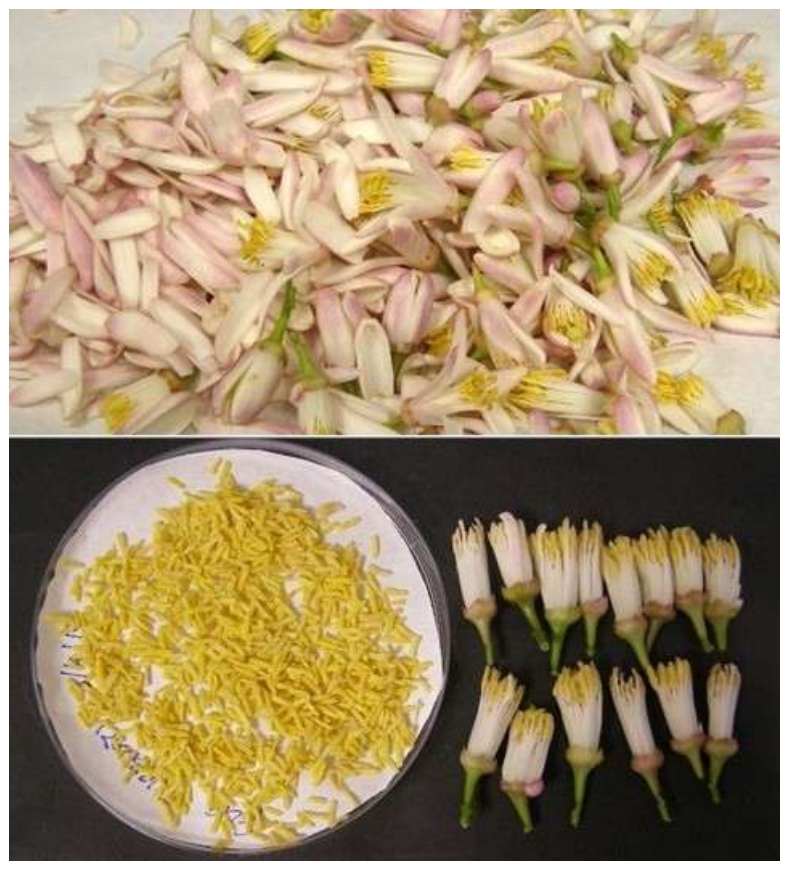
Figure 2.
Fresh lemon pollen stained with iodine-potassium iodide (KI-I2). V: viable pollen grain; NV: non-viable pollen grain.
Figure 2.
Fresh lemon pollen stained with iodine-potassium iodide (KI-I2). V: viable pollen grain; NV: non-viable pollen grain.
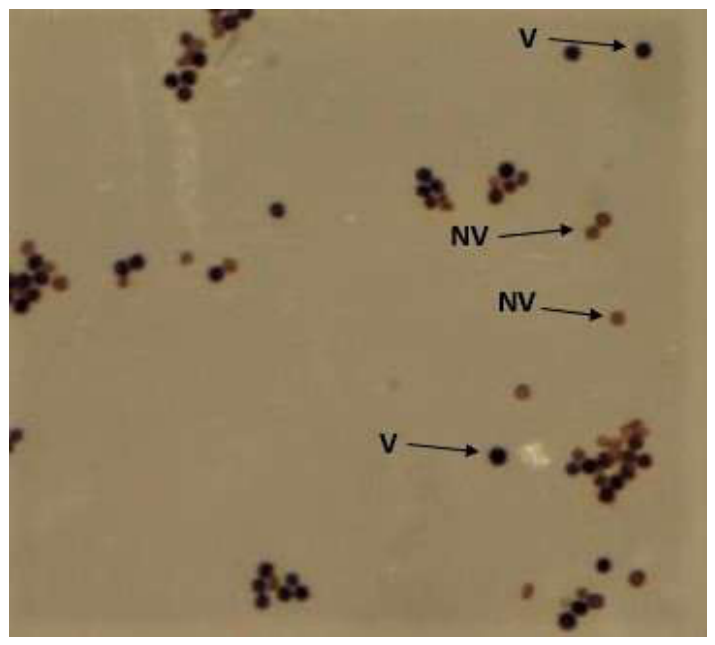
Figure 3.
Fresh lemon pollen sprinkled on the surface of the culture medium (left). Lemon pollen grain germinating in the culture medium (G) and non-germinating (NG) (right).
Figure 3.
Fresh lemon pollen sprinkled on the surface of the culture medium (left). Lemon pollen grain germinating in the culture medium (G) and non-germinating (NG) (right).
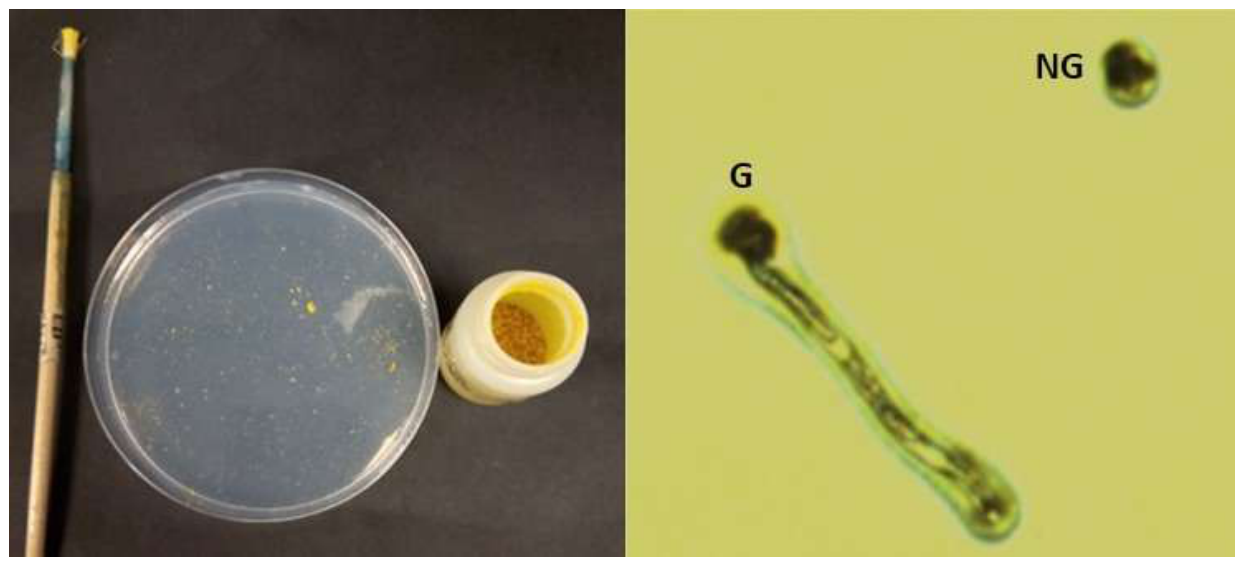
Figure 4.
Lemon pistil preparations for microscopic observations.
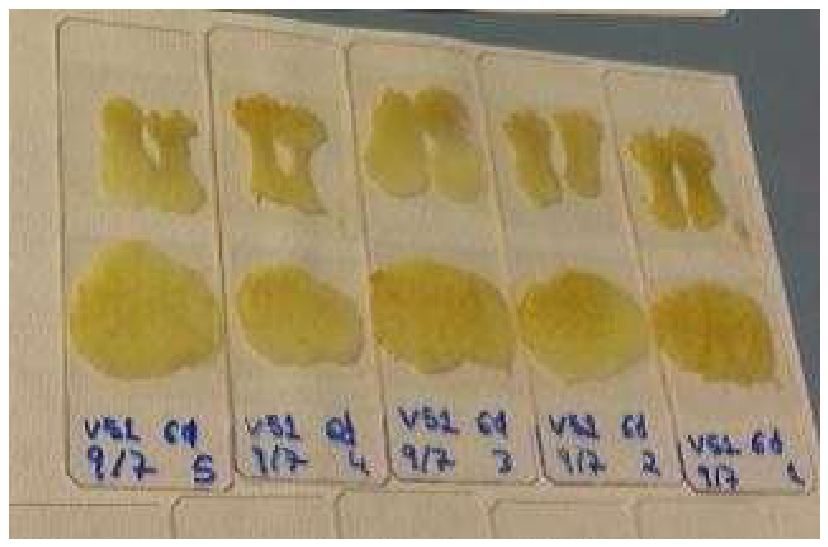
Figure 5.
Effect of temperature on in vitro pollen germination of five lemon cultivars (‘Eureka’, ‘Fino 49’, ‘Fino 95’, ‘Lisbon’, and ‘Verna 51’). Bars represent mean ± SE. Results for ‘Messina’ are not shown since is male-sterile.
Figure 5.
Effect of temperature on in vitro pollen germination of five lemon cultivars (‘Eureka’, ‘Fino 49’, ‘Fino 95’, ‘Lisbon’, and ‘Verna 51’). Bars represent mean ± SE. Results for ‘Messina’ are not shown since is male-sterile.
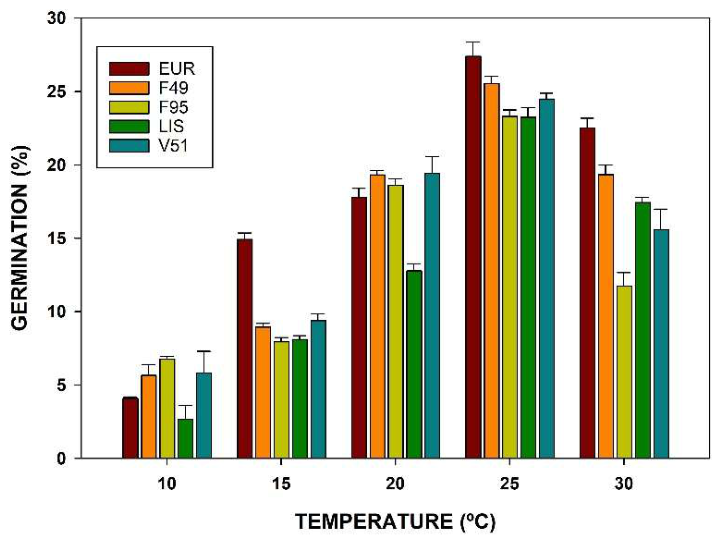
Figure 6.
Number of pollen grains germinated in the stigma 0-12 days after pollination in five lemon cultivars (self-pollination, left; cross-pollination, right). Values represent means ± SE.
Figure 6.
Number of pollen grains germinated in the stigma 0-12 days after pollination in five lemon cultivars (self-pollination, left; cross-pollination, right). Values represent means ± SE.
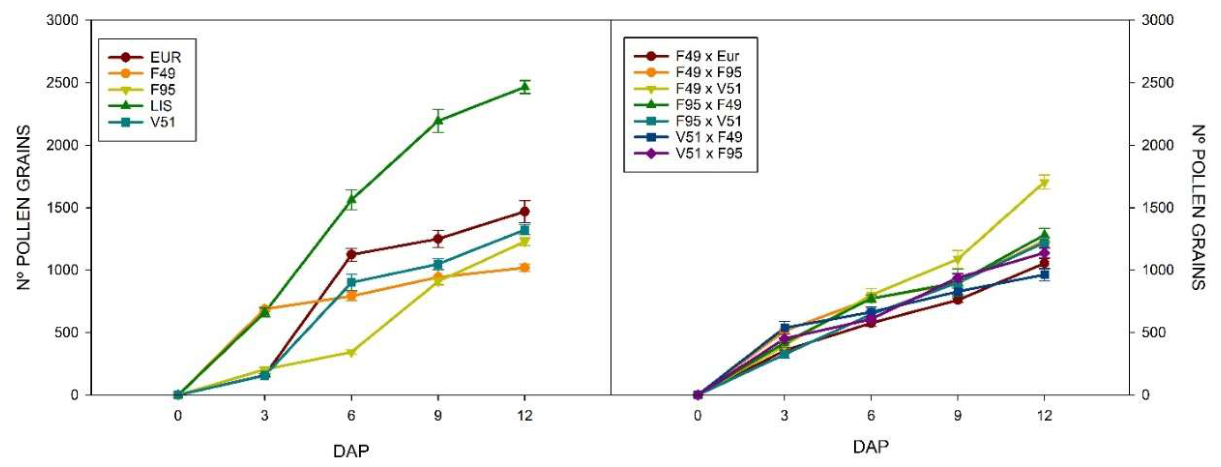
Figure 7.
Kinetics of pollen tube growth in the styles of self-pollinated flowers of five lemon cultivars. The results are presented as the percentage of flowers with pollen tubes in three style areas (upper, middle or base) on four dates after pollination (3, 6, 9 or 12 days).
Figure 7.
Kinetics of pollen tube growth in the styles of self-pollinated flowers of five lemon cultivars. The results are presented as the percentage of flowers with pollen tubes in three style areas (upper, middle or base) on four dates after pollination (3, 6, 9 or 12 days).
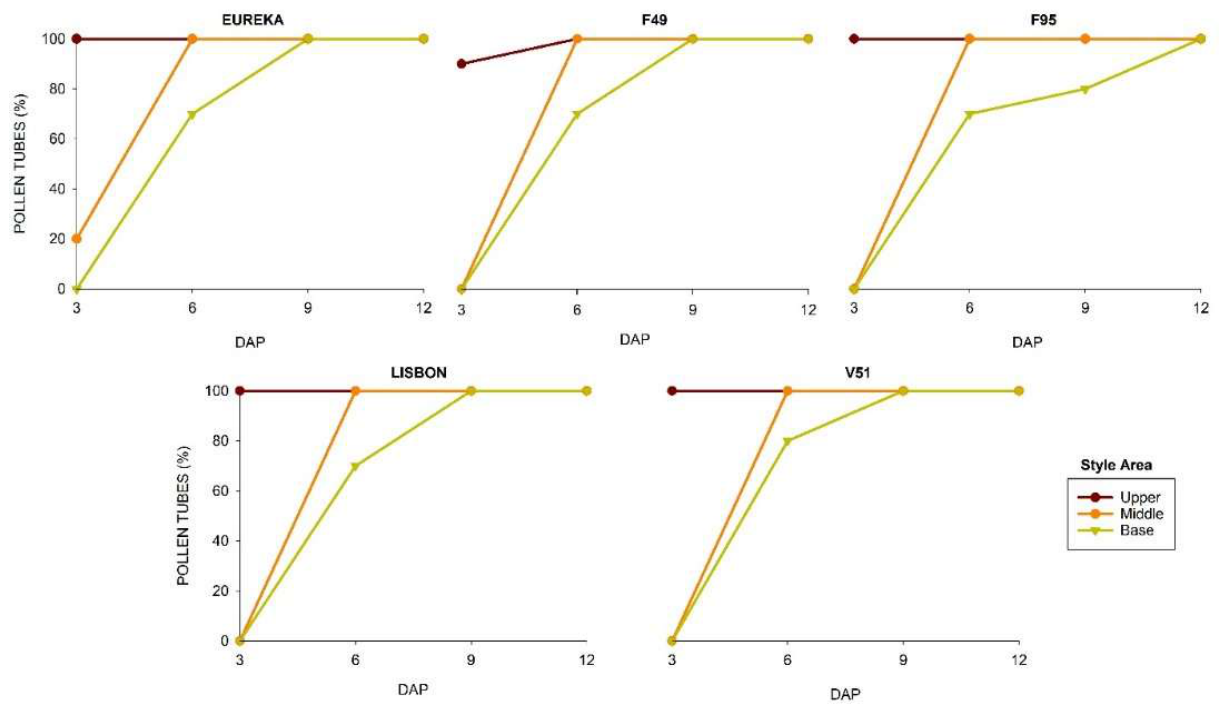
Figure 8.
Kinetics of pollen tube growth in the styles of cross-pollinated flowers of five lemon cultivars. The results are presented as the percentage of flowers with pollen tubes in three style areas (upper, middle or base) on four dates after pollination (DAP) (3, 6, 9 or 12 days).
Figure 8.
Kinetics of pollen tube growth in the styles of cross-pollinated flowers of five lemon cultivars. The results are presented as the percentage of flowers with pollen tubes in three style areas (upper, middle or base) on four dates after pollination (DAP) (3, 6, 9 or 12 days).
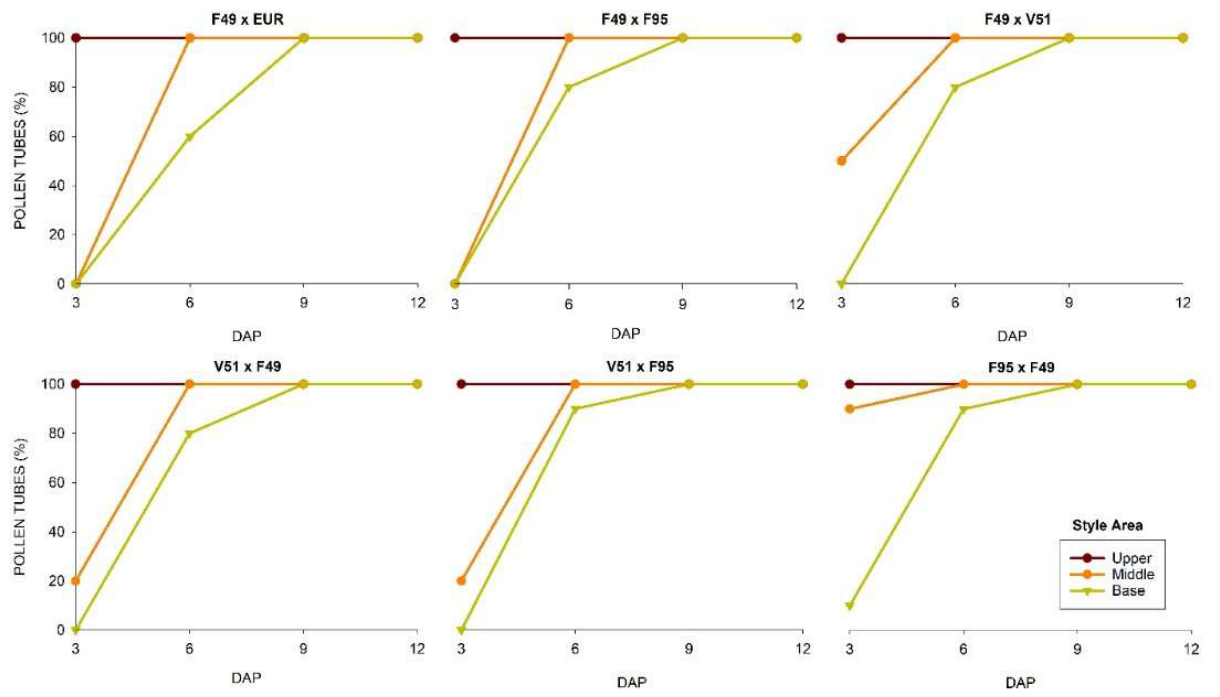
Figure 9.
Number of pollen grains reaching the ovary on four dates following pollination (3, 6, 9 and12 days) in five lemon cultivars (self-pollination, left; cross-pollination, right). Data represent means ± SE.
Figure 9.
Number of pollen grains reaching the ovary on four dates following pollination (3, 6, 9 and12 days) in five lemon cultivars (self-pollination, left; cross-pollination, right). Data represent means ± SE.
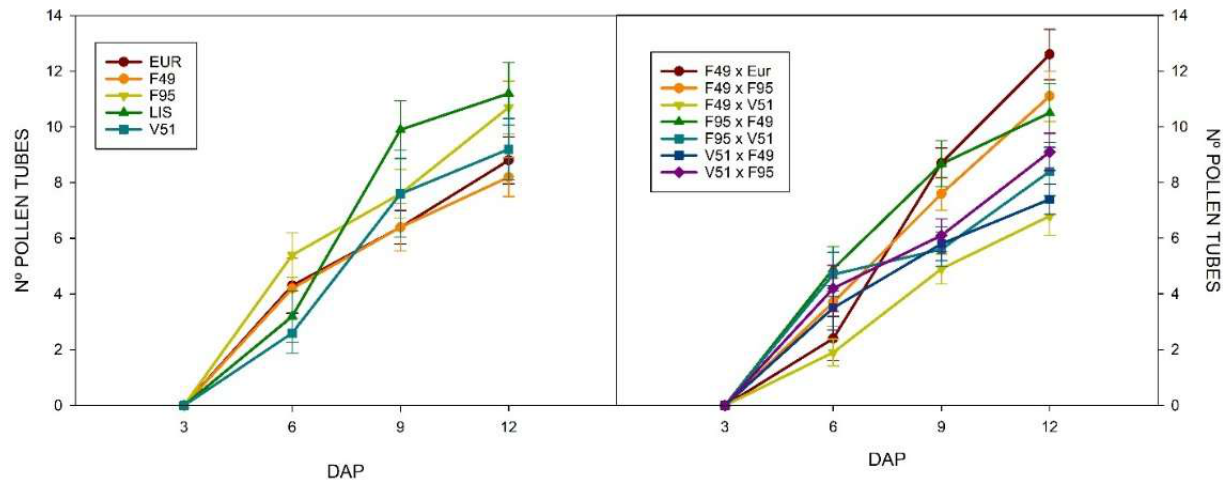

Table 1.
Pollen viability percentage of five lemon cultivars (‘Eureka’, ‘Fino 49’, ‘Fino 95’, ‘Lisbon’, and ‘Verna 51’).
Table 1.
Pollen viability percentage of five lemon cultivars (‘Eureka’, ‘Fino 49’, ‘Fino 95’, ‘Lisbon’, and ‘Verna 51’).
| Cultivar | Viability (%) |
|---|---|
| ‘Eureka’ | 72,77±01,77 a |
| ‘Fino 49’ | 52,26±03,65 c |
| ‘Fino 95’ | 72,47±01,51 a |
| ‘Lisbon’ | 65,79±02,51 b |
| ‘Verna 51’ | 49,97±01,35 c |
Values represent means ± SE. Different letters indicate a significant difference (P < 0.05) according to the LSD test. Results for ‘Messina’ are not shown since it is male-sterile.
Table 2.
Bloom temperatures along three flowering seasons, seedless fruit (%) and seeds per fruit in the crossing V51 × F49.
Table 2.
Bloom temperatures along three flowering seasons, seedless fruit (%) and seeds per fruit in the crossing V51 × F49.
| Year | Max (°C) | Min (°C) | Avg (°C) | Days > 25 °C | Seedless fruit (%) | Seeds per fruit (n) |
|---|---|---|---|---|---|---|
| 1 | 30.92 | 9.13 | 19.41 | 13 | 0.8 | 4.41 |
| 2 | 27.84 | 8.45 | 16.91 | 6 | 60.2 | 1.07 |
| 3 | 27.18 | 8.75 | 17.40 | 7 | 48.24 | 1.47 |
Table 3.
Fruit set percentage, number of seeds by fruit, aborted seeds percentage and fruit diameter resulting from self-pollination experiments, in five different lemon cultivars.
Table 3.
Fruit set percentage, number of seeds by fruit, aborted seeds percentage and fruit diameter resulting from self-pollination experiments, in five different lemon cultivars.
| Cultivar | Fruit set (%) | Seeds/fruit | Aborted seeds (%) | Diameter (mm) |
|---|---|---|---|---|
| EU | 22,60±03,62b | 03,60±00,40b | 16,80±02,83bc | 53,52±02,02b |
| F49 | 39,00±03,62a | 06,09±00,32a | 23,30±02,10a | 55,30±01,21b |
| F95 | 16,72±02,95c | 03,93±00,34b | 20,30±02,50ab | 61,23±01,47a |
| LIS | 16,49±02,54c | 03,82±00,52b | 20,99±03,88ab | 55,67±01,24b |
| V51 | 4,14±01,33d | 02,77±00,41b | 11,41±05,15c | 50,32±01,63c |
Values are means from three consecutive years. About 100 flowers, from each of the five lemon cultivars, were selected for each experiment and year. Values represent means ± SE. Different letters indicate a significant difference (P < 0.05) according to the LSD test. Results for ‘Messina’ are not shown since is male-sterile.
Table 4.
Fruit set (%), number of seeds by fruit, aborted seeds percentage and fruit diameter resulting from parthenocarpy experiments in six different lemon cultivars in two consecutive years.
Table 4.
Fruit set (%), number of seeds by fruit, aborted seeds percentage and fruit diameter resulting from parthenocarpy experiments in six different lemon cultivars in two consecutive years.
| Cultivar | Fruit set (%) | Seeds/fruit | Diameter (mm) |
|---|---|---|---|
| EU | 06,02±02,23c | 0 | 54,80±02,23b |
| F49 | 07,57±02,92c | 0 | 55,93±03,01ab |
| F95 | 10,97±02,98b | 0 | 59,48±01,68a |
| LIS | 23,60±04,43a | 0 | 52,10±01,46b |
| MESS | 03,09±01,78c | 0 | 56,17±04,48ab |
| V51 | 03,85±01,84c | 0 | 48,21±04,16c |
Values are means from three consecutive years. About 100 flowers, from each of the six lemon cultivars, were selected for each experiment and year. Values represent means ± SE. Different letters indicate a significant difference (P < 0.05) according to the LSD test.
Table 5.
Fruit set (%), number of seeds by fruit, aborted seeds percentage and fruit diameter resulting from cross-pollination experiments, in five different lemon cultivars, in two consecutive years.
Table 5.
Fruit set (%), number of seeds by fruit, aborted seeds percentage and fruit diameter resulting from cross-pollination experiments, in five different lemon cultivars, in two consecutive years.
| Cultivar | Fruit set (%) | Seeds/fruit | Aborted seeds (%) | Diameter (mm) |
|---|---|---|---|---|
| EU x F49 | 30,63±05,50a | 04,43±00,44a | 02,79±01,25 | 55,22±01,53cd |
| F49 x EU | 16,24±03,45b | 03,74±00,46a | 04,23±00,87 | 53,33±01,22d |
| F49 x F95 | 20,13±04,46b | 03,68±00,30a | 09,21±02,56 | 56,41±01,22bc |
| F49 x V51 | 10,02±02,96c | 03,11±00,25ab | 02,32±01,19 | 60,50±01,32a |
| F95 x F49 | 26,11±04,28a | 01,51±00,21c | 04,80±01,99 | 59,88±01,31a |
| F95 x V51 | 11,13±03,03c | 02,63±00,64b | 06,79±01,99 | 58,61±01,07ab |
| V51 x F49 | 28,39±04,53a | 01,93±00,24bc | 09,08±02,35 | 57,02±01,67bc |
| V51 x F95 | 10,15±02,91c | 01,60±00,32c | 03,76±01,50 | 59,77±02,93a |
Values are means±ES from three consecutive years. About 100 flowers, from each of the four lemon cultivars, were selected for each experiment and year.
Disclaimer/Publisher’s Note: The statements, opinions and data contained in all publications are solely those of the individual author(s) and contributor(s) and not of MDPI and/or the editor(s). MDPI and/or the editor(s) disclaim responsibility for any injury to people or property resulting from any ideas, methods, instructions or products referred to in the content. |
© 2026 by the authors. Licensee MDPI, Basel, Switzerland. This article is an open access article distributed under the terms and conditions of the Creative Commons Attribution (CC BY) license (http://creativecommons.org/licenses/by/4.0/).
Copyright: This open access article is published under a Creative Commons CC BY 4.0 license, which permit the free download, distribution, and reuse, provided that the author and preprint are cited in any reuse.