
Submitted:
07 August 2026
Posted:
10 August 2026
You are already at the latest version
Abstract
Background/Objectives: Prolonged working shifts may adversely affect healthcare workers’ health, wellbeing, cognitive performance, and patient safety. Nevertheless, 24-hour shifts remain widely used in Latvian healthcare. This study aimed to examine healthcare workers’ experiences of 24-hour shift work, their attitudes toward its revi-sion, and the main factors influencing their preferences. Methods: A nationwide cross-sectional survey was conducted in Latvia between October 2025 and February 2026. A structured 64-item questionnaire assessed sociodemographic and professional charac-teristics, workload, shift patterns, health and emotional wellbeing, patient-safety con-cerns, professional motivation, and attitudes toward alternative schedules. Of 1524 submitted questionnaires, 1318 were valid for analysis. Quantitative data were sum-marized using descriptive statistics, while open-ended responses were analyzed using inductive qualitative content analysis. Results: Most respondents regularly worked 24-hour shifts, and 40.5% worked at more than one institution. More than half reported health changes potentially related to 24-hour work, 61.1% experienced emotional ex-haustion, and 49.2% reported persistent fatigue. Fatigue had contributed to an error or perceived decline in care quality for 34.9% of respondents. Nevertheless, 59% opposed replacing 24-hour shifts at their workplace, and approximately half preferred retaining them. The main reasons were schedule convenience, consecutive days off, higher earn-ings, and the ability to combine workplaces. Open-ended responses supported a grad-ual transition toward flexible mixed schedules rather than immediate universal aboli-tion. Conclusions: Latvian healthcare workers perceive substantial health and safety risks associated with 24-hour shifts but also depend on their financial and practical benefits. Sustainable reform requires flexible scheduling, adequate staffing, financial neutrality, protected recovery time, and meaningful employee participation.
Keywords:
24-hour shifts
; healthcare workers
; nurses
; shift work
; occupational fatigue
; burnout
; patient safety
; work schedule
; workforce retention
; Latvia
1. Introduction
The organization of working time in healthcare is one of the most important factors affecting both the professional resilience and health of staff and patient safety and quality of care. In many countries, long working shifts, including 24-hour schedules, are considered incompatible with modern healthcare standards, as they create excessive strain and significantly increase the risk of error [1]. In Latvia, 24-hour shifts remain widespread, especially in emergency medicine, anesthesiology, and intensive care, and this practice is driven by a shortage of resources, tradition, and practical considerations such as commuting options or combining work at several medical institutions [2]. However, growing international experience and scientific research raise the question of how sustainable this approach is [3].
Some Latvian studies consistently emphasize the link between long shifts and staff fatigue, sleep disturbances, and professional burnout [4,5]. Research by Trinkoff and colleagues (2011) [6] confirmed that nurses working shifts longer than 12 hours more often experience health problems and care errors. Similar findings are reported by Griffiths et al. (2014) [7], who emphasize that shift length directly correlates with threats to patient safety. The burnout model developed by Maslach (Maslach & Leiter, 2016) [8] also indicates that chronic overload and insufficient rest significantly increase the risk of emotional exhaustion.
From the patient perspective, Aiken et al. (2012; 2014) [9,10], in international studies, demonstrated that poorer staff working conditions and overloaded schedules are associated with higher hospital mortality. This confirms that the question of shift length is not merely a matter of staff wellbeing but directly affects the quality and efficiency of the healthcare system.
In Latvia, the question of restricting 24-hour shifts has also become relevant at the level of the Ministry of Health [5], which has developed proposals for revising working time and transitioning to a three-shift system. The core of the problem is linked to an insufficient number of nurses and a high workload, which in the long term threaten the sustainability of the system. At the same time, nurses themselves often cite practical benefits of the 24-hour schedule — fewer commutes to work, more consecutive days off, and the opportunity to combine a second job, which is often necessary due to inadequate pay.
Given the aspects mentioned above, it is important not only theoretically but also empirically to examine the views of Latvian healthcare professionals on the abolition of 24-hour shifts. Such knowledge makes it possible to understand which arguments and factors are decisive for the workers themselves, and how to balance health, safety, and economic considerations.
For this reason, a study was conducted within Latvia in which 1,524 respondents took part, of whom 1,318 questionnaires were valid for analysis. The aim of the survey was to identify the main arguments for and against abolishing 24-hour shifts, as well as to identify the most significant themes related to health, patient safety, finances and family life, and the efficiency of work organization. The results provide a significant contribution to the discussion on work-schedule reforms in Latvian healthcare, while also serving as a basis for the further development of policy and practical solutions.
2. Materials and Methods
2.1. Description of the Survey
For this study, a structured questionnaire consisting of 64 questions was developed and distributed via the Google Forms platform, with the aim of identifying hospital staff experience and opinions regarding 24-hour shift work, its impact on health, professional wellbeing, patient safety and the efficiency of work organization, as well as identifying potential benefits and risks should Latvia revise its current 24-hour work practice. The survey was anonymous, took an average of 15–20 minutes to complete, and respondents could withdraw from participation at any time. The study was conducted between 03.10.2025 and 19.02.2026.
The questionnaire was structured into several thematic sections. The first part covered socio-demographic data and professional profile — age, gender, education, position (nurse, nursing assistant, physician assistant, midwife, radiology assistant, senior nurse, etc.), length of service in healthcare, current workplace and department, as well as workload at a single institution and overall. The second section gathered information on work schedules and experience with 24-hour shifts — the work regime (day work, shift/on-call work, night work), the frequency and intensity of such shifts, opportunities to rest or sleep during work, and reconciling the schedule with family life and other needs. The third section was devoted to health and wellbeing aspects, in particular fatigue and exhaustion after 24-hour shifts, physical complaints (for example, headaches, blood-pressure fluctuations), the impact on emotional wellbeing and stress, as well as sleep quality and recovery opportunities.
The next section focused on patient safety issues — the effect of fatigue on the risk of making errors and on the ability to make professional decisions after long shifts. This was followed by questions on respondents’ attitudes toward abolishing 24-hour shifts, both at their specific hospital and nationwide, including possible benefits and risks of moving to 8- or 12-hour shifts, as well as preferences regarding different shift lengths (8, 12, 16, or 24 hours). Information was also gathered on motivation to continue working in the profession and factors that reduce this motivation.
An important part of the questionnaire consisted of open-ended questions, in which respondents could freely express their opinion on the reasons why they support or oppose abolishing 24-hour shifts, as well as offer suggestions for improving the hospital’s work organization and reducing fatigue. This approach made it possible not only to quantitatively assess trends but also to gain qualitative insight into employees’ experience and reasoning.
The survey was designed to provide a broad view of healthcare staff experience across various departments and positions, while respecting participant anonymity and data security. Respondents’ answers were compiled only in summary form and used for research and work-organization improvement purposes.
2.2. Statistical Analysis
Quantitative data were analysed using IBM SPSS Statistics, version 29.0 (IBM Corp., Armonk, NY, USA). Continuous variables, including respondents’ age and length of professional experience, were summarized using means, standard deviations, and ranges. Categorical and ordinal variables were presented as absolute frequencies and percentages.
All statistical tests were two-sided, and a p-value of < 0.05 was considered statistically significant. Responses to open-ended questions were analysed using inductive qualitative content analysis.
2.3. Ethical Consideration
The study was conducted in accordance with the Declaration of Helsinki [11] and relevant Latvian regulations [12,13]. Ethical approval was obtained from the Ethics Committee of Riga Stradiņš University (Decision No. 2-PĒK-4/416/2023, 09 May 2023). Participation of nurses was voluntary, and all data were anonymised. No patient-identifiable data was collected.
3. Results
3.1. Characteristics of Respondents
The study included 1,524 respondents, of whom 1,318 questionnaires were valid for analysis. The average age of participants was 42.24 years (SD = 12.35; range from 19 to 73 years). The average length of service in healthcare reached 15.50 years (SD = 12.77; range from 0.3 to 52 years).
The gender distribution showed that the study sample consisted predominantly of women (95.1%, n = 1,254), while men accounted for only 4.3% (n = 57), and 0.5% (n = 7) chose not to disclose their gender. The most detailed socio-demographic information can be found in Supplementary file Table S1.
In terms of education, the largest share of respondents had obtained secondary vocational education (23.1%, n = 305) or second-level professional higher education/a bachelor’s degree (41.4%, n = 545). In addition, 21.7% (n = 286) had first-level professional higher education, 10.4% (n = 137) held a master’s degree, and only four respondents were doctoral-level graduates (0.3%).
The distribution by position showed that almost half (56.4%) were nurses (n = 744). Nursing assistants also formed a relatively large group (11.8%, n = 156). Representation in other positions was much smaller — physician assistants (9.6%), medical assistants (4.7%), midwives (3.3%), senior nurses (3.6%), and others with a very small share.
The distribution by department showed strong representation from surgical departments (n = 256) and intensive care units (ICU) (n = 202). Emergency medical service (EMS) staff were also significantly represented (n = 213). The remaining departments provided smaller numbers of participants but ensured broad coverage across various profiles.
3.2. Workload and Experience with Shifts of Different Lengths
Overview of respondents’ workload (Figure 1.), number of workplaces, work schedules, perceived workload, and experience with shifts of different lengths. The findings show that most healthcare workers were employed full-time, while a considerable proportion combined several workplaces or exceeded a total workload of 1.0 FTE. Shift work lasting 16–24 hours was the dominant work pattern, and 24-hour shifts were performed regularly by most respondents. In contrast, shorter 8–12-hour shifts were less common, while 16-hour shifts were rarely used.
3.3. Impact on Health and Emotional Wellbeing
Almost half of respondents (54.9%) reported having noticed changes in their health that could be linked to 24-hour shifts. Furthermore, 25.9% had even consulted a doctor due to health problems.
Emotional wellbeing ratings showed that approximately 51.7% agree or fully agree that 24-hour shifts negatively affect their emotional state, while 29.4% disagree with this statement. Almost half of respondents (61.1%) had experienced emotional exhaustion in the past six months, and 49.2% reported persistent fatigue.
34.9% admitted that fatigue had led them to make errors or notice a decline in care quality. Almost a third (32.3%) were unsure, while 32.8% stated they had never made an error. Most respondents believed that fatigue increases the risk of error at least slightly (28.1%).
And only 12% indicated that fatigue significantly threatens their ability to make safe decisions, while the majority (56.1%) did not consider this impact significant. However, 37.4% admitted that they sometimes feel unable to make correct professional decisions after 20+ hours of work.
3.4. Attitudes Toward 24-Hour Shifts and Their Future
Attitudes were divided. At their own workplace, abolishing 24-hour shifts was supported by only 28% (fully or rather in favor), while 59% were opposed. At the national level, support was similar — 32.4% in favor, and those opposed were a minority at 31.5% (Figure 2.).
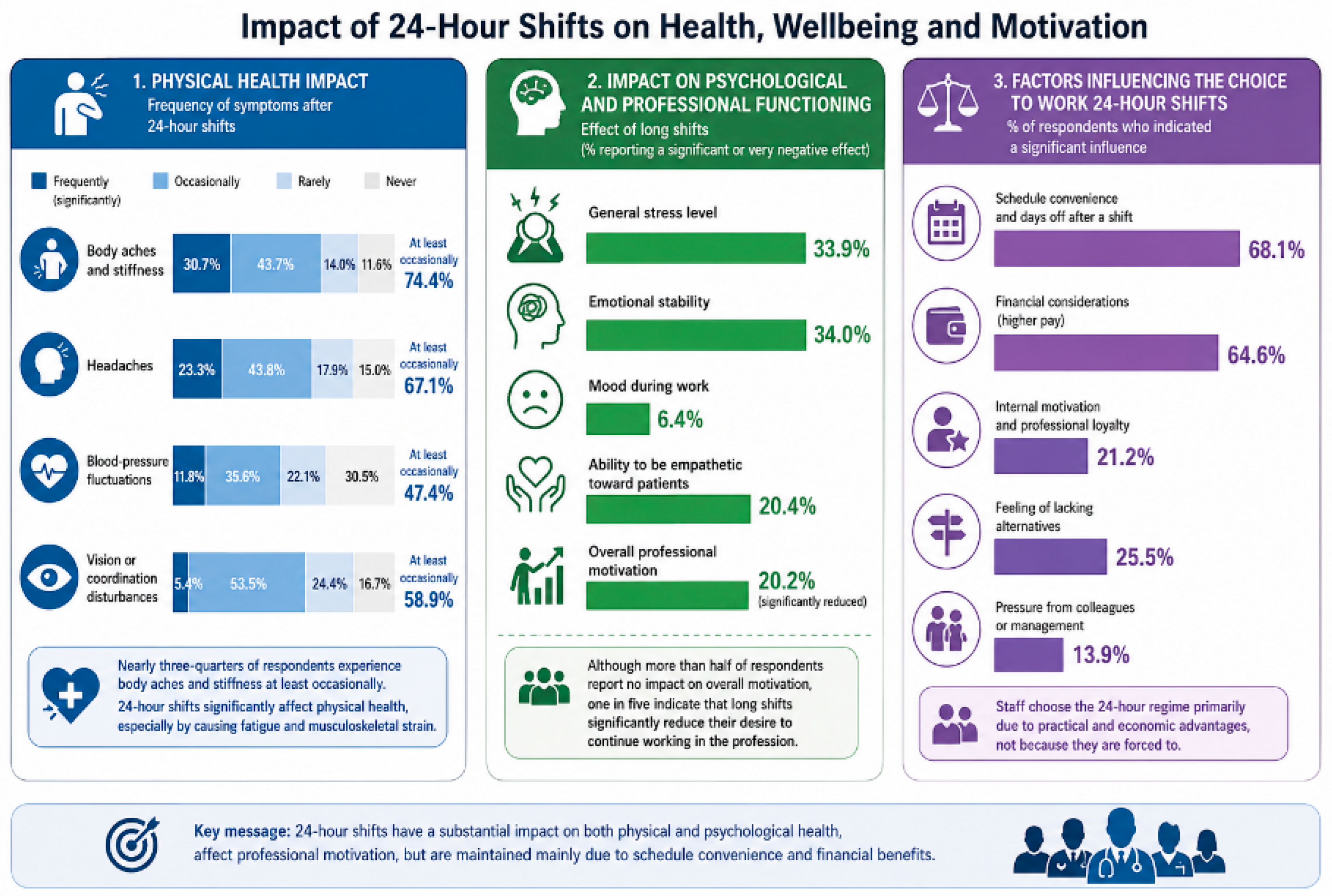
To further assess the impact of 24-hour shifts, respondents were asked to indicate how often they experience various symptoms after long on-call shifts, as well as to rate the impact of such work on emotional stability, empathy, mood, stress level, and professional motivation. In addition, the main factors determining the choice to agree to work 24-hour shifts were analyzed, including financial considerations, schedule convenience, and professional loyalty. The results of these questions are summarized in the following Table 2 and Table 3 and Table 4.
Summary of respondents (Figure 3.) reported physical, psychological, and professional effects of 24-hour shifts, as well as the main factors influencing their decision to continue working this schedule. The findings indicate that long shifts are associated with physical complaints, stress, reduced emotional stability, and lower professional motivation. At the same time, schedule convenience and financial considerations remain the strongest reasons for retaining 24-hour shifts.
3.5. Open-Ended Questions
The survey also included six open-ended questions to obtain a more detailed picture of hospital staff experience and opinions regarding 24-hour shift work. In these questions, respondents shared their arguments for or against retaining 24-hour shifts, identified the main benefits and risks, described their personal experience with fatigue, health problems and error risk, and offered suggestions for possible alternative approaches to work-schedule organization. These comments provide a much more nuanced understanding of staff perspectives, complementing the quantitative data.
3.5.1. Health Problems Observed After 24-Hour Shifts
In the first open-ended question, in which respondents were asked to describe what health problems they had observed following 24-hour shifts, 523 detailed responses were received. Their analysis (Figure 5.) makes it possible to identify several recurring themes that clearly illustrate the impact of prolonged work on staff physical and emotional condition.
3.5.2. Health Problems Observed After 24-Hour Shifts
The question “Why do you support or oppose revising 24-hour shifts?” (n = 719) revealed three broad positions: opposition to revision (i.e., in favor of keeping 24-hour shifts), support for revision (transition to shorter shifts), and a conditional/compromise approach (mixed model or freedom of choice). Coding the thematic units yields an approximate distribution as follows: ~55–60% are against revision, ~25–30% are in favor of revision, and ~10–15% favor choice or a mixed model (Figure 6.)
3.5.3. Anticipated Impact on Daily Work and Patient Care
For the question “Anticipated impact on daily work and patient care” (n = 811), the content of the open-ended answers shows that staff assessments of the consequences of revising 24-hour shifts fall into two broad directions — potential benefits for care quality and staff wellbeing, and practical risks to daily organization, private life, and staffing (Figure 7.).
3.5.4. Suggestions for Reducing Fatigue from 24-Hour Shifts
For the question on reducing fatigue from 24-hour shifts (n = 636), the set of open-ended responses outlines a clear direction: reducing the fatigue caused by 24-hour shifts and its consequences requires simultaneous action across the dimensions of staffing, pay, rest, and schedule management, as well as better daily work support (Figure 8.).
3.5.5. Suggestions for Improving the Work Schedule
Analysis of the summary of suggestions for improving the work schedule (n = 583) shows that, to improve health and efficiency, employees primarily want a more flexible, fairer, and resource-based schedule (Figure 9).
Respondents’ additional comments (Figure 10.) revealed six main themes, reflecting both the challenges of 24-hour shift work and the importance of staff being heard in decisions about future work-schedule changes.
4. Discussion
This study provides insight into Latvian healthcare workers’ experiences and attitudes toward 24-hour shifts. The main finding is a clear contradiction between the perceived health and safety consequences of prolonged working hours and employees’ willingness to retain this work pattern. Although most respondents reported substantial fatigue, impaired wellbeing, and prolonged recovery after 24-hour shifts, more than half opposed replacing these shifts with shorter schedules. These findings demonstrate that attitudes toward shift reform are influenced not only by occupational health considerations but also by financial, organizational, and personal factors.
The reported level of fatigue was considerable. More than half of respondents felt very tired or completely exhausted immediately after a 24-hour shift, and approximately half rated their post-shift fatigue as severe or complete exhaustion. In addition, 54.9% had noticed health changes potentially associated with 24-hour work, while 25.9% had consulted a physician because of related health problems. These findings are consistent with recent evidence demonstrating that extended working hours and insufficient recovery contribute to occupational fatigue, sleep disturbance, physical health problems, and reduced cognitive performance among nurses [14,15]. A recent critical review also concluded that even 12-hour shifts may increase fatigue and negatively affect nurses’ physical health, burnout, job satisfaction, and intention to leave [16].
The findings also indicate a considerable emotional burden. More than half of respondents agreed that 24-hour shifts negatively affected their emotional wellbeing, 61.1% reported emotional exhaustion, and 49.2% experienced persistent fatigue during the previous six months. These results support previous Latvian findings showing relationships between nursing workload, moral distress, burnout, and turnover intentions [4]. They are also consistent with a recent systematic review and meta-analysis involving 288,581 nurses, which found that nurse burnout was associated with poorer patient safety, more adverse events and medication errors, lower quality of care, and lower patient satisfaction [17].
Patient-safety findings were less uniform but remain clinically important. Approximately one-third of respondents reported that fatigue had contributed to an error or a perceived decline in care quality. Furthermore, 37.4% indicated that after more than 20 hours of work they sometimes felt unable to make correct professional decisions. At the same time, more than half did not perceive a significant effect of fatigue on their decision-making ability. This discrepancy may indicate adaptation to long working hours or normalization of fatigue-related risk within workplaces where 24-hour shifts have traditionally been accepted. However, subjective confidence does not necessarily exclude impaired attention or reduced cognitive performance. A recent scoping review found that fatigue was identified as a contributing factor in medication administration errors or near misses in 82% of the included studies [1].
The open-ended responses help explain this apparent contradiction. Respondents emphasized fewer commutes, longer periods of consecutive free time, higher earnings, and the opportunity to combine several workplaces. This is particularly relevant because 40.5% of respondents worked at more than one institution and approximately 15% reported an overall workload exceeding 1.6 full-time equivalents. Consequently, an immediate transition to shorter shifts without financial and organizational compensation could increase commuting costs, reduce income, complicate family life, and potentially encourage employees to leave their current workplace. Previous research similarly indicates that nurses’ shift preferences are strongly influenced by personal circumstances, work–life balance, perceived flexibility, and opportunities to participate in scheduling decisions [18,19].
The findings regarding professional retention are also important. More than one-third of respondents had considered leaving the profession during the previous year. Inadequate pay was the most frequently identified demotivating factor, followed by excessive workload, chronic stress, and limited career-development opportunities. This suggests that shift duration should not be addressed as an isolated problem. Evidence indicates that staffing, workload, overtime, organizational support, and working conditions jointly influence nurses’ job satisfaction and intention to leave [20,21]. Adequate registered-nurse staffing is also associated with improved patient outcomes and the prevention of avoidable deaths [22].
These findings have several implications for policy and hospital management. The results do not support an immediate universal abolition of 24-hour shifts without parallel changes in remuneration, staffing, and work organization. A gradual and differentiated approach may be more feasible. This could include introducing mixed 8-, 12-, 16-, and 24-hour models; prioritizing shorter shifts in intensive care, emergency, and other high-workload departments; limiting the frequency of consecutive long shifts; ensuring protected rest periods; and monitoring fatigue, errors, absenteeism, and staff turnover. Employees should be actively involved in the development of new schedules, as participation and schedule autonomy may improve acceptance of organizational changes [14,16,17].
Financial neutrality is likely to be a central condition for successful reform. Shorter shifts should not result in substantial income reduction, increased transport expenses, or a loss of recovery time. Salary reform, night-work compensation, travel support for employees living outside major cities, and adequate staffing should therefore accompany changes in shift duration. Without such measures, schedule reform could unintentionally increase staff shortages and reduce workforce retention.
This study has several strengths, including its large sample, the inclusion of different healthcare professions and clinical departments, and the combination of quantitative and open-ended responses. Nevertheless, the findings should be interpreted in light of several limitations. Participation was voluntary, and the sample cannot be considered fully representative of all Latvian healthcare workers. Nurses and women constituted the majority of respondents, potentially limiting the generalizability of the findings to other professional groups. The cross-sectional design does not allow causal relationships to be established, and health problems, fatigue, errors, and attitudes were self-reported rather than objectively measured. In addition, the study-specific questionnaire and qualitative coding of open-ended responses may be influenced by respondents’ subjective interpretation and researcher judgement.
Overall, the findings reveal a complex balance between occupational health and patient-safety risks and the practical advantages associated with 24-hour shifts. Long shifts were frequently associated with fatigue, emotional exhaustion, health complaints, and perceived risks to care quality. However, many employees continued to prefer this work pattern because of financial benefits, fewer commutes, longer periods of free time, and the possibility of combining several workplaces. Therefore, sustainable reform should focus not solely on abolishing 24-hour shifts but on developing safer, flexible, adequately funded, and employee-centred scheduling models.
5. Conclusions
This study on the opinions of Latvian healthcare workers regarding 24-hour shift work revealed a significant conflict between health and occupational-safety considerations, on one hand, and practical and financial advantages, on the other. The study’s data clearly show that prolonged work shifts create pronounced risks to employees’ physical and psychological health — the most frequently mentioned problems are sleep disturbances, chronic fatigue, headaches, blood-pressure fluctuations, as well as signs of emotional exhaustion and burnout. These factors not only threaten staff wellbeing but also increase the risk of errors in patient care.
At the same time, the survey clearly shows that a significant proportion of staff still wish to retain the 24-hour work regime. This is linked to practical and economic considerations: fewer commutes to work, the opportunity to rest more between on-call shifts, easier reconciliation of family life and other duties, as well as a more financially advantageous pay model. A particularly significant aspect is the logistics of regional staff and the ability to combine several workplaces, which is currently a necessity due to inadequate pay.
The study results indicate that healthcare professionals do not want reforms based solely on reducing shift length if this is not accompanied by an adequate increase in pay, social guarantees, and resource availability. The open-ended responses clearly indicated that any changes to work schedules must be implemented comprehensively — simultaneously addressing staff shortages, improving patient and employee safety, ensuring appropriate rest conditions, a fair distribution of workload, and management support.
Overall, the study allows the conclusion that a complete abolition of 24-hour shifts would currently meet with considerable staff resistance and would create additional risks to staff retention. However, the current system is not sustainable in the long term, as it creates health problems and burnout risks. The optimal future solution could be a gradual transition to a more flexible mixed model that would allow combining 24-, 16-, and 12-hour shifts, while ensuring adequate financial compensation and freedom of choice for employees. Such an approach would make it possible to protect employee health, maintain work motivation, and ensure a high quality of care for patients.
Supplementary Materials
The following supporting information can be downloaded at the website of this paper posted on Preprints.org, Table S1: Summary Table.
Author Contributions
Conceptualization, O.C.-B.; methodology, O.C.-B.; software O.C.-B.; validation, O.C.-B.; formal analysis, O.C.-B.; investigation, O.C.-B.; resources, O.C.-B.; data curation, O.C.-B.; writing—original draft preparation, O.C.-B.; writing—review and editing, O.C.-B.; visualization, O.C.-B.; supervision, O.C.-B.; project administration, O.C.-B.; funding acquisition, O.C.-B.; All authors have read and agreed to the published version of the manuscript.
Funding
The APC was funded by the Riga Stradiņš University Department of Nursing and Midwifery (Riga, Latvia).
Institutional Review Board Statement
This study was conducted in accordance with the Declaration of Helsinki and approved by the Ethics Committee of Riga Stradiņš University (protocol code 2-PĒK-4/416/2023, 9 May 2023).
Informed Consent Statement
Informed consent was obtained from all subjects involved in this study.
Data Availability Statement
The datasets produced and examined in this study can be obtained from the corresponding author upon a reasonable request. All data generated or analyzed during this study are provided, within the published article. The data utilized in this study are confidential.
Acknowledgments
During the preparation of this manuscript, the author used ChatGPT, version 5 for the purposes of figures creation. The authors have reviewed and edited the output and take full responsibility for the content of this publication.
Conflicts of Interest
The authors declare no conflicts of interest. The funders had no role in the design of the study; in the collection, analyses, or interpretation of data; in the writing of the manuscript; or in the decision to publish the results.
Abbreviations
The following abbreviations are used in this manuscript:
| IBM SPSS | Statistical Package for the Social Sciences |
| PĒK | Pētījuma Ētikas komitēja |
| n | Number of Participants |
| fig. | Figure |
| ICU | Intensive Care Unit |
| EMS | Emergency Medical Serviss |
| FTE | Full-Time Equivalent |
References
- Bell, T.; Sprajcer, M.; Flenady, T.; Sahay, A. Fatigue in nurses and medication administration errors: A scoping review. J. Clin. Nurs. 2023, 32, 5445–5460. [Google Scholar] [CrossRef] [PubMed]
- Cereļa-Boltunova, O.; Millere, I. A Six-Month Observational Study of Nursing Workload in 14 Latvian Intensive Care Units Using the Nursing Activities Score. Healthcare 2026, 14, 134. [Google Scholar] [CrossRef] [PubMed]
- Aiken, L.H.; Sermeus, W.; Van den Heede, K.; Sloane, D.M.; Busse, R.; McKee, M.; Bruyneel, L.; Rafferty, A.M.; Griffiths, P.; Moreno-Casbas, M.T.; Tishelman, C.; Scott, A.; Brzostek, T.; Kinnunen, J.; Schwendimann, R.; Heinen, M.; Zikos, D.; Sjetne, I.S.; Smith, H.L.; Kutney-Lee, A. Patient safety, satisfaction, and quality of hospital care: Cross sectional surveys of nurses and patients in 12 countries in Europe and the United States. BMJ 2012, 344, e1717. [Google Scholar] [CrossRef] [PubMed]
- Cereļa-Boltunova, O.; Millere, I. Exploring the Relation Between Nursing Workload and Moral Distress, Burnout, and Turnover in Latvian Intensive Care Units: An Ecological Analysis of Parallel Data. Int. J. Environ. Res. Public Health 2025, 22, 1442. [Google Scholar] [CrossRef] [PubMed]
- Cereļa-Boltunova, O.; Kļaviņa, K. Transition from 24-Hour Shifts to Safer Work Schedules for Nurses in Latvian Healthcare: Policy Analysis and Recommendations. Int. J. Environ. Res. Public Health 2025, 22, 1736. [Google Scholar] [CrossRef] [PubMed]
- Trinkoff, A.M.; Johantgen, M.; Storr, C.L.; Gurses, A.P.; Liang, Y.; Han, K. Nurses’ work schedule characteristics, nurse staffing, and patient mortality. Nurs. Res. 2011, 60, 1–8. [Google Scholar] [CrossRef] [PubMed]
- Griffiths, P.; Dall’Ora, C.; Simon, M.; Ball, J.; Lindqvist, R.; Rafferty, A.M.; Schoonhoven, L.; Tishelman, C.; Aiken, L.H. Nurses’ shift length and overtime working in 12 European countries: The association with perceived quality of care and patient safety. Med. Care 2014, 52, 975–981. [Google Scholar] [CrossRef] [PubMed]
- Maslach, C.; Leiter, M.P. Burnout: A multidimensional perspective. In Handbook of Stress Medicine and Health, 2nd ed.; Cooper, C.L., Dewe, P., Eds.; CRC Press: Boca Raton, 2016; pp. 155–172. [Google Scholar]
- Lake, E.T.; Sanders, J.; Duan, R.; Riman, K.A.; Schoenauer, K.M.; Chen, Y. A meta-analysis of the associations between insufficient nurse staffing and patient outcomes. Med. Care Res. Rev. 2022, 79, 469–489. [Google Scholar]
- Aiken, L.H.; Sloane, D.M.; Bruyneel, L.; Van den Heede, K.; Griffiths, P.; Busse, R.; Diomidous, M.; Kinnunen, J.; Kózka, M.; Lesaffre, E.; McHugh, M.D.; Moreno-Casbas, M.T.; Rafferty, A.M.; Schwendimann, R.; Scott, P.A.; Tishelman, C.; van Achterberg, T.; Sermeus, W. Nurse staffing and education and hospital mortality in nine European countries: A retrospective observational study. Lancet 2014, 383, 1824–1830. [Google Scholar] [CrossRef] [PubMed]
- Ministry of Health. Regulations Regarding Mandatory Requirements for Medical Treatment Institutions and Their Structural Units; Cabinet of Ministers Regulation No. 60; Likumi.lv: Riga, Latvia, 2009; Available online: https://likumi.lv/ta/id/187621 (accessed on 25 April 2026).
- World Medical Association. World Medical Association Declaration of Helsinki: Ethical Principles for Medical Research Involving Human Subjects. JAMA 2013, 310, 2191. [Google Scholar] [CrossRef] [PubMed]
- Labklājības Ministrija. Personas Datu Apstrāde. Ministry of Welfare 2024. Available online: https://www.lm.gov.lv/lv/personas-datu-apstrade (accessed on 25 June 2025).
- Scott-Marshall, H.K. Safe limits on work hours for the nursing profession: A rapid evidence review. Front. Glob. Women’s Health 2024, 5, 1455422. [Google Scholar] [CrossRef] [PubMed]
- Albakri, U.; Smeets, N.; Drotos, E.; Kant, I.J.; Gabrio, A.; Meertens, R. Sleep quality and the need for recovery among nurses working irregular shifts: A cross-sectional study. Work 2024, 79, 1477–1490. [Google Scholar] [CrossRef] [PubMed]
- Clari, M.; Albanesi, B.; Bova, C.; Conti, A.; Gonella, S.; Campagna, S.; Di Giulio, P.; Dall’Ora, C.; Dimonte, V. Impact of 12-hour shifts on nurse, patient, and organizational outcomes: A critical review. Assist. Inferm. E Ric. 2024, 43, 130–143. [Google Scholar] [CrossRef] [PubMed]
- Li, L.Z.; Yang, P.; Singer, S.J.; Pfeffer, J.; Mathur, M.B.; Shanafelt, T. Nurse burnout and patient safety, satisfaction, and quality of care: A systematic review and meta-analysis. JAMA Netw. Open 2024, 7, e2443059. [Google Scholar] [CrossRef] [PubMed]
- Emmanuel, T.; Dall’Ora, C.; Ewings, S.; Griffiths, P. The important factors nurses consider when choosing shift patterns: A cross-sectional study. J. Clin. Nurs. 2024, 33, 1220–1232. [Google Scholar] [CrossRef] [PubMed]
- O’Connell, M.; Barry, J.; Hartigan, I.; Cornally, N.; Saab, M.M. The impact of electronic and self-rostering systems on healthcare organisations and healthcare workers: A mixed-method systematic review. J. Clin. Nurs. 2024, 33, 2374–2387. [Google Scholar] [CrossRef] [PubMed]
- Pressley, C.; Garside, J. Safeguarding the retention of nurses: A systematic review on determinants of nurses’ intentions to stay. Nurs. Open 2023, 10, 2842–2858. [Google Scholar] [CrossRef] [PubMed]
- Cho, H.; Steege, L.M. Nurse fatigue and nurse, patient safety, and organizational outcomes: A systematic review. West. J. Nurs. Res. 2021, 43, 1157–1168. [Google Scholar] [CrossRef] [PubMed]
- Dall’Ora, C.; Saville, C.; Rubbo, B.; Turner, L.Y.; Jones, J.; Griffiths, P. Nurse staffing levels and patient outcomes: A systematic review of longitudinal studies. Int. J. Nurs. Stud. 2022, 134, 104311. [Google Scholar] [CrossRef] [PubMed]
Figure 1.
Workload and Experience with Shifts of Different Lengths.
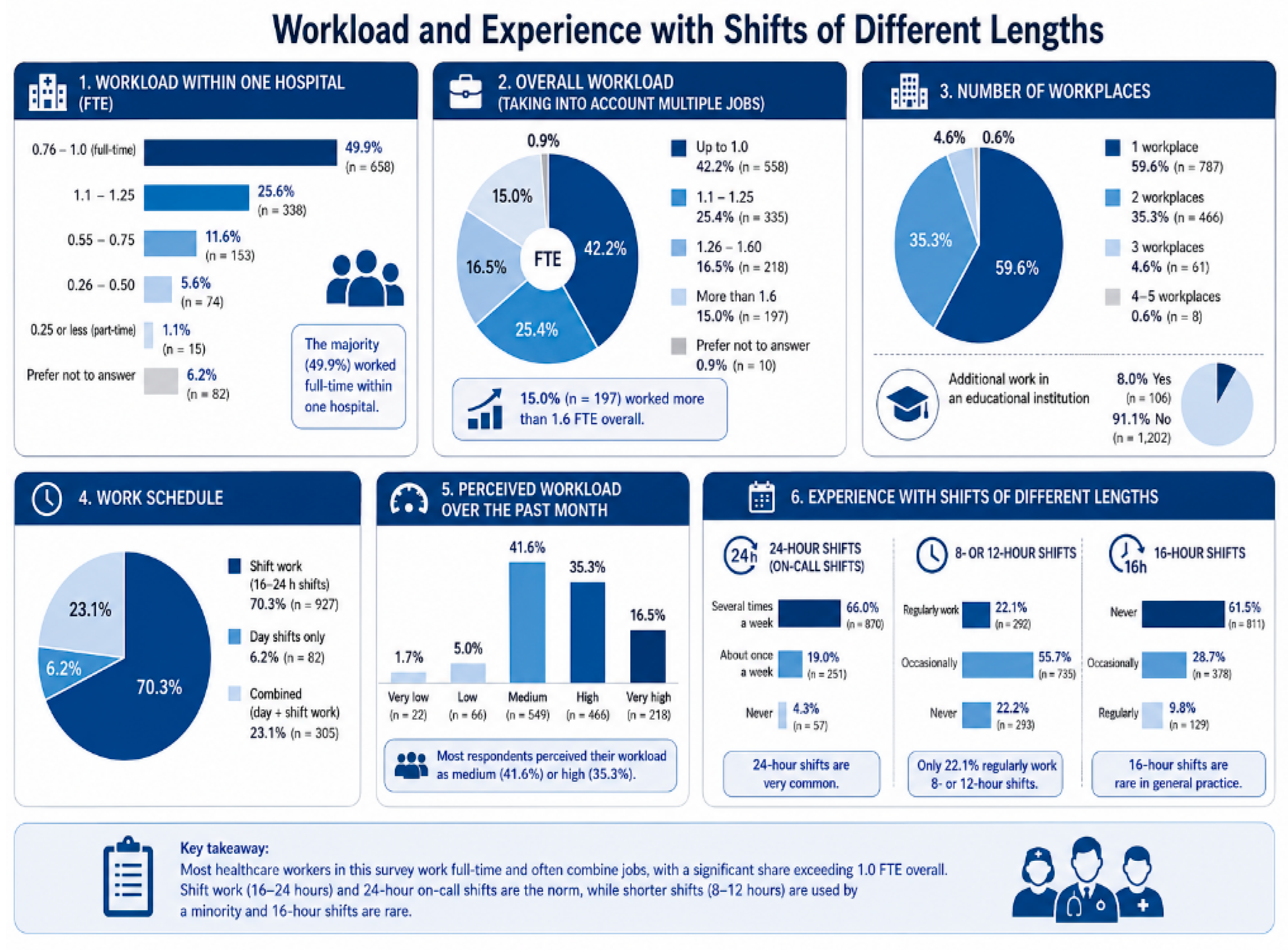
Figure 2.
Attitudes toward 24-Hour Shifts and Their Future.
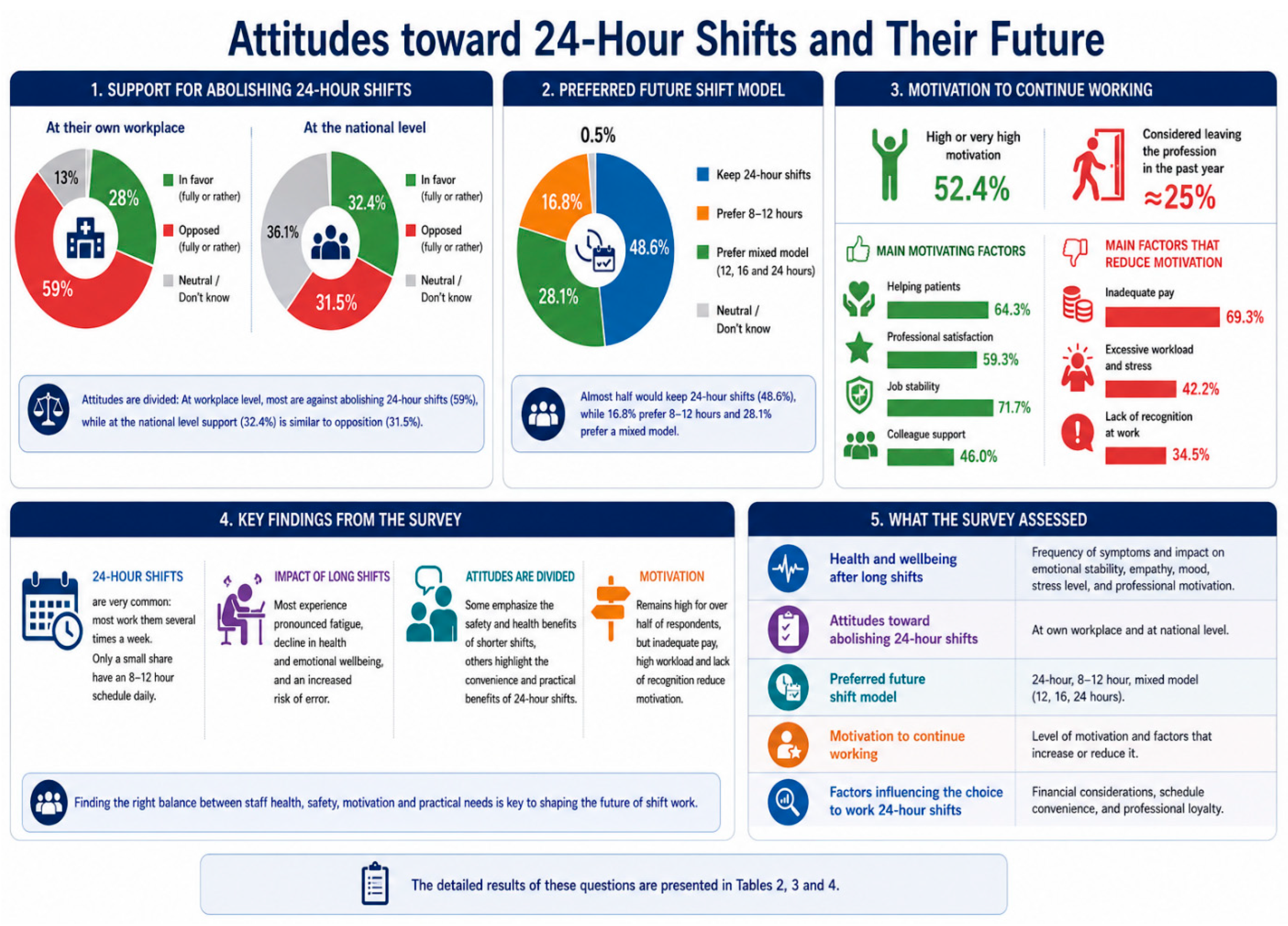
Figure 5.
Health Problems Observed After 24-Hour Shifts: Summary of Open-Ended Responses (n = 523).
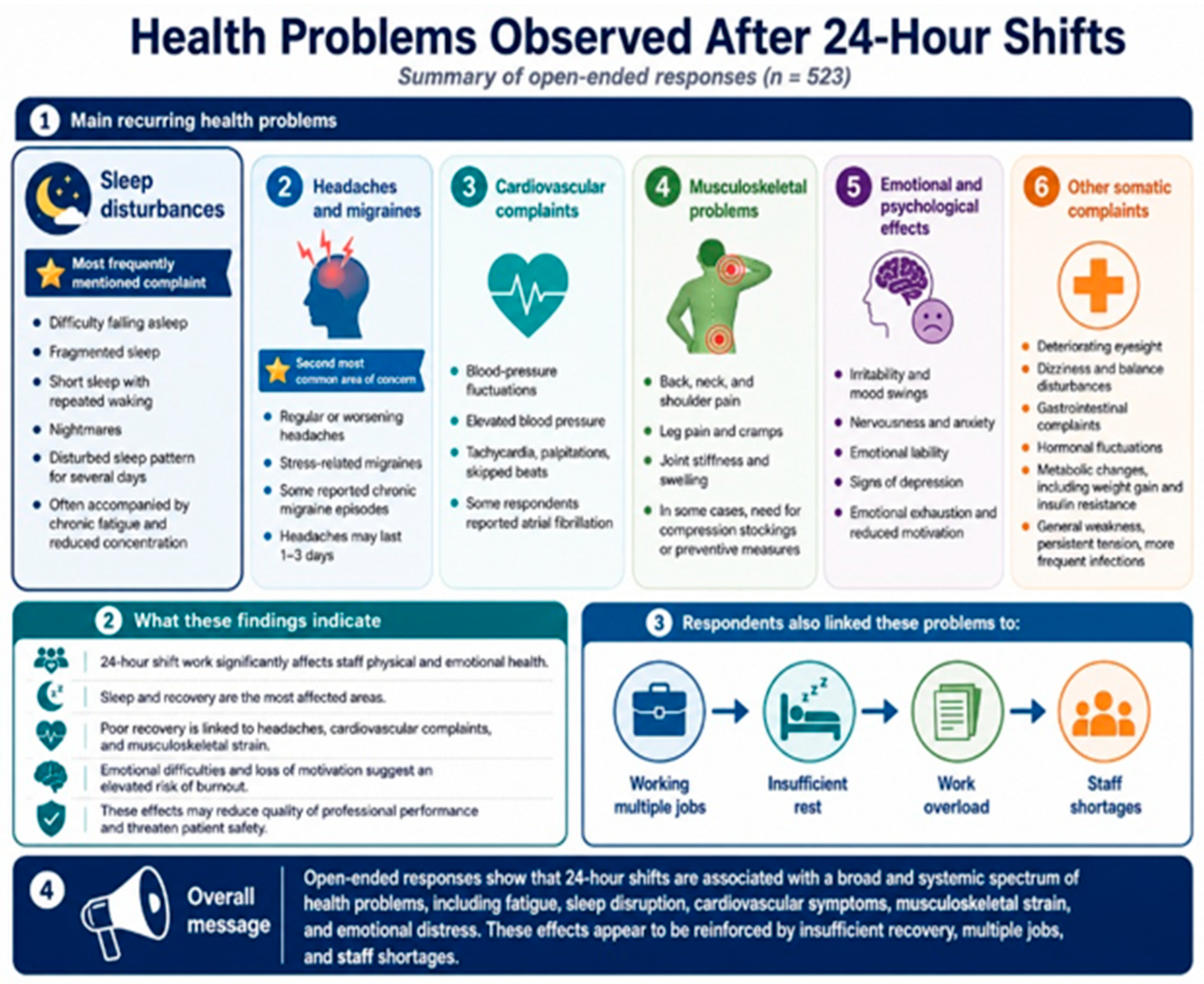
Figure 6.
Supporting and opposing reasons.
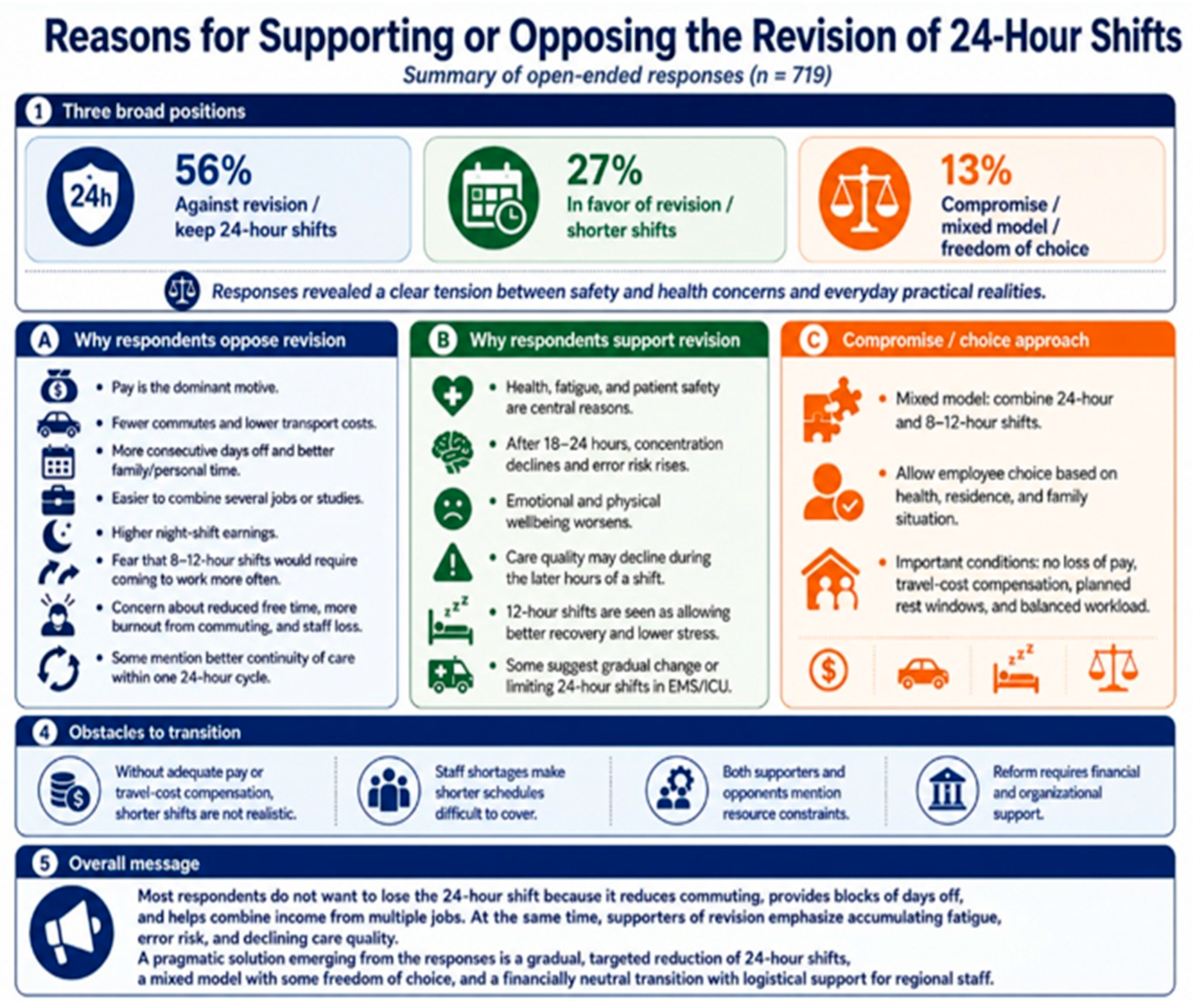
Figure 7.
Anticipated impact on daily work and patient care.
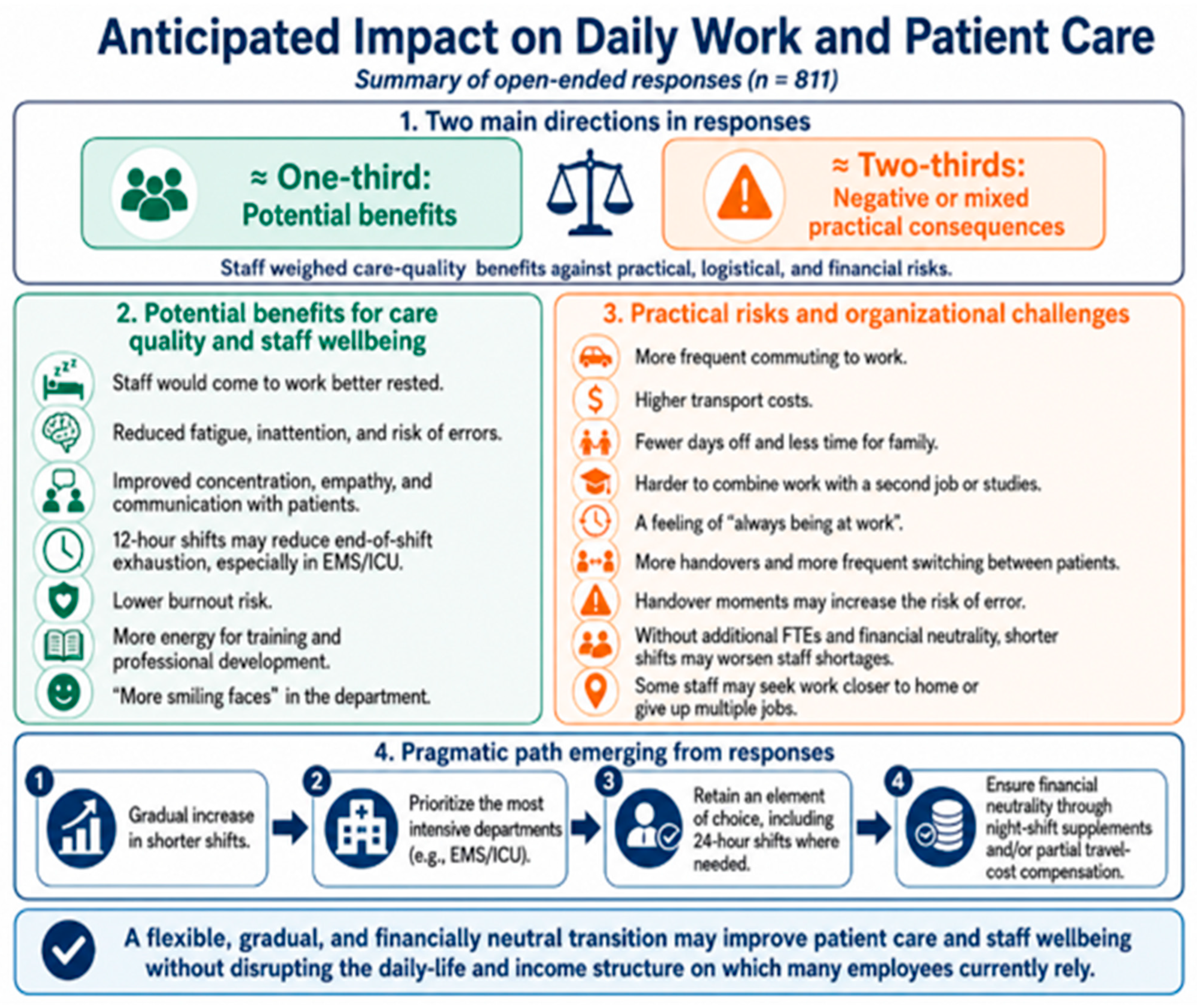
Figure 8.
Suggestions for reducing fatigue.
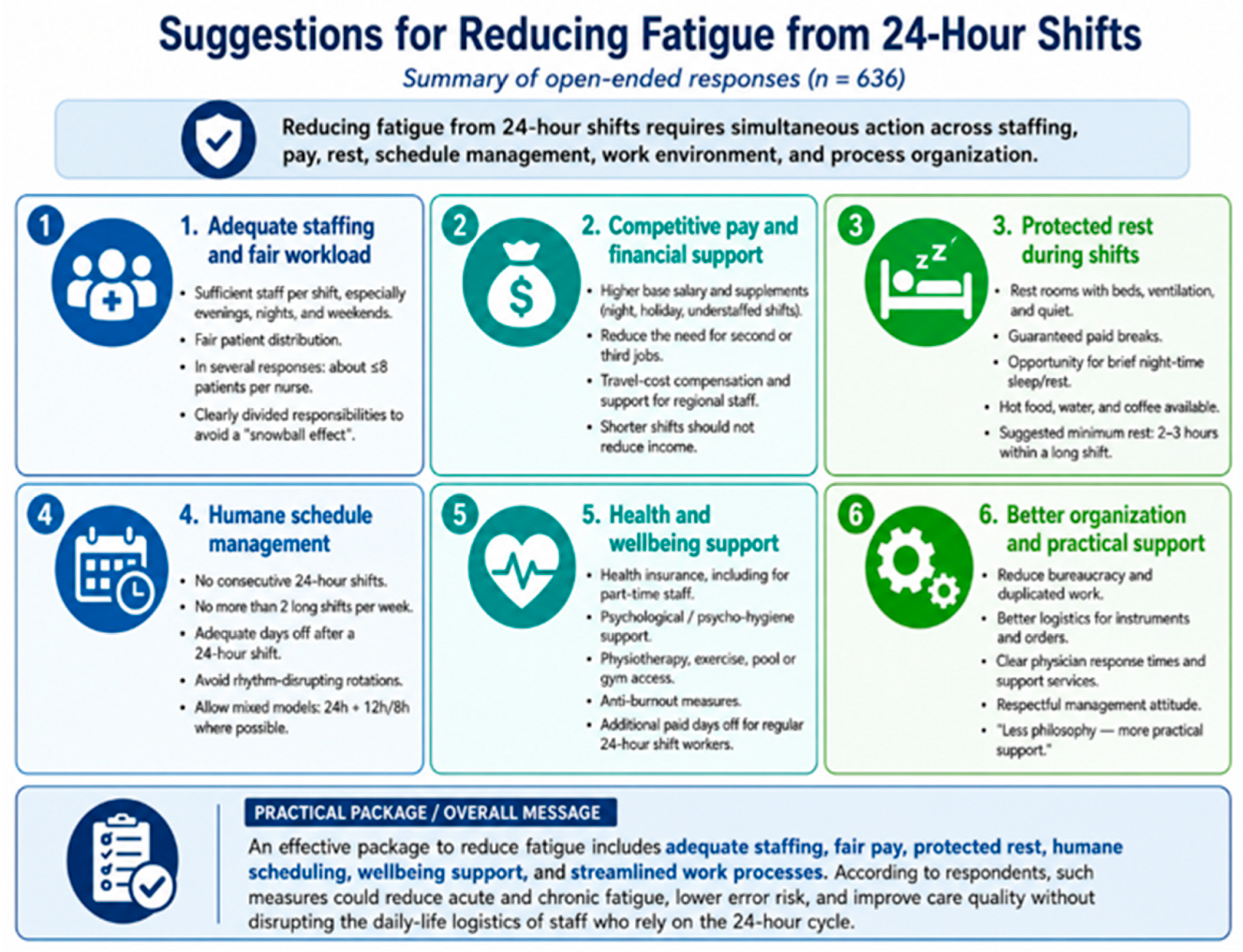
Figure 9.
Suggestions for improving the work schedule.
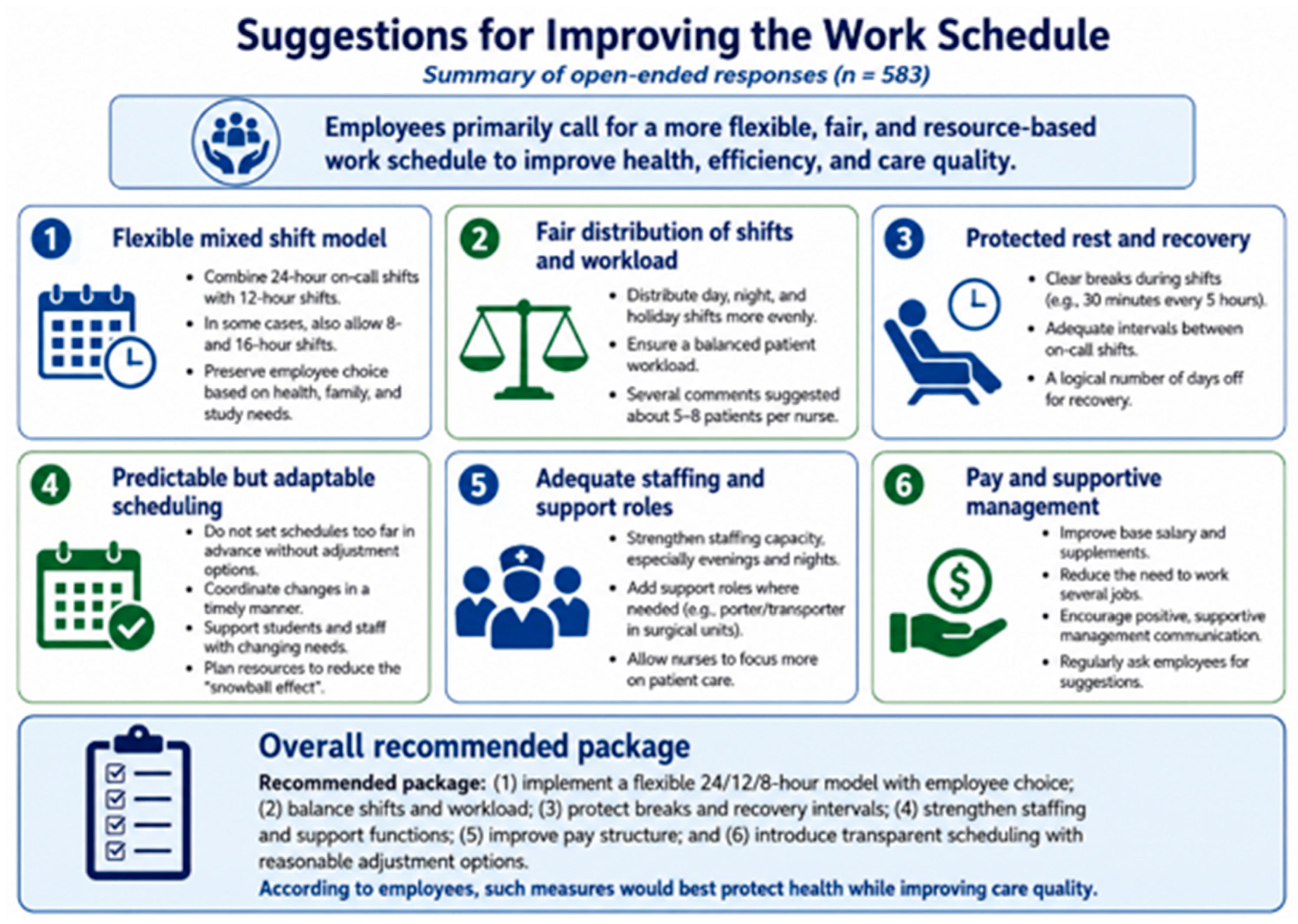
Figure 10.
Additional Comments on 24-Hour Shift Work: Thematic Summary.
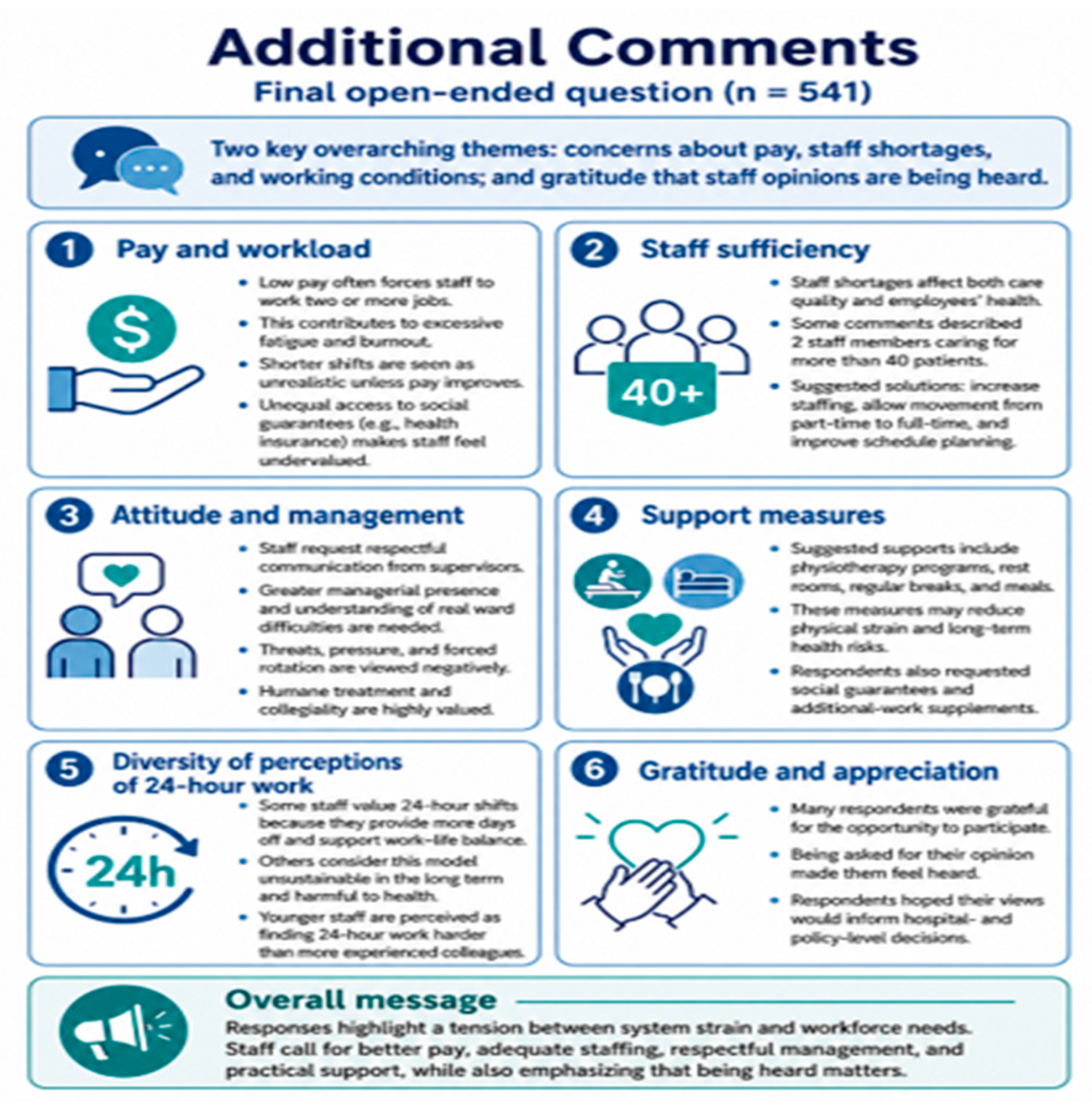

Table 2.
How often respondents experience the following symptoms after a 24-hour shift.
| Symptom | Never | Rarely | Often | Hard to say |
| Vision or coordination disturbances | 421 (31.9%) | 776 (58.9%) | 103 (7.8%) | 18 (1.4%) |
| Headaches | 649 (49.2%) | 353 (26.8%) | 307 (23.3%) | 9 (0.7%) |
| Blood-pressure fluctuations | 480 (36.4%) | 671 (50.9%) | 156 (11.8%) | 11 (0.8%) |
| Body aches or stiffness | 554 (42%) | 356 (27%) | 404 (30.7%) | 4 (0.3%) |
Table 3.
How long shift hours affect the following aspects?
| Aspect | No effect | Slight effect | Moderate effect | Significant effect | Very negative effect | Hard to say |
| Emotional stability | 284 (21.5%) | 350 (26.6%) | 229 (17.4%) | 279 (21.1%) | 170 (12.9%) | 6 (0.5%) |
| Ability to be empathetic toward patients | 521 (39.5%) | 295 (22.4%) | 228 (17.3%) | 189 (14.3%) | 80 (6.1%) | 5 (0.4%) |
| Mood during work | 394 (29.9%) | 329 (25%) | 262 (19.9%) | 242 (18.4%) | 84 (6.4%) | 7 (0.5%) |
| General stress level | 295 (22.4%) | 348 (26.4%) | 220 (16.7%) | 281 (21.3%) | 169 (12.8%) | 5 (0.4%) |
| Motivation to continue working in the profession | 550 (41.7%) | 226 (17.1%) | 190 (14.4%) | 206 (15.6%) | 141 (10.7%) | 5 (0.4%) |
Table 4.
Following factors affection to choice to work 24-hour shifts?
| Factor | No effect | Slight effect | Moderate effect | Significant effect | Very strong effect | Hard to say |
| Financial consideration | 113 (10.1%) | 132 (10%) | 186 (14.1%) | 719 (54.6%) | 132 (10%) | 16 (1.2%) |
| Schedule convenience / days off after a shift | 114 (8.6%) | 100 (7.6%) | 192 (14.6%) | 783 (59.4%) | 115 (8.7%) | 14 (1.1%) |
| Pressure from colleagues or management | 781 (59.3%) | 171 (13.0%) | 151 (11.5%) | 130 (9.9%) | 53 (4%) | 32 (2.4%) |
| Feeling that there are no other real options | 592 (44.9%) | 174 (13.2%) | 188 (14.3%) | 249 (18.2%) | 96 (7.3%) | 28 (2.1%) |
| Internal motivation and professional loyalty |
456 (34.6%) | 228 (17.3%) | 304 (23.1%) | 253 (19.2%) | 48 (3.6%) | 29 (2.2%) |
Disclaimer/Publisher’s Note: The statements, opinions and data contained in all publications are solely those of the individual author(s) and contributor(s) and not of MDPI and/or the editor(s). MDPI and/or the editor(s) disclaim responsibility for any injury to people or property resulting from any ideas, methods, instructions or products referred to in the content. |
© 2026 by the authors. Licensee MDPI, Basel, Switzerland. This article is an open access article distributed under the terms and conditions of the Creative Commons Attribution (CC BY) license (http://creativecommons.org/licenses/by/4.0/).
Copyright: This open access article is published under a Creative Commons CC BY 4.0 license, which permit the free download, distribution, and reuse, provided that the author and preprint are cited in any reuse.