

Submitted:
30 July 2026
Posted:
10 August 2026
You are already at the latest version
Abstract
As industries increasingly transition manufacturing and production systems toward enabled smart factories, governments and policymakers assume a critical role in establishing regulatory frameworks that enable emerging Industry 4.0 ecosystems to develop and remain competitive. While existing scholarship has devoted substantial attention to technological capabilities and innovation potential, comparatively limited emphasis has been placed on the policy, regulatory, and governance structures that shape organizational readiness and workforce transformation in this digital industrial era. This study examines how institutional arrangements—encompassing public policy, regulatory regimes, and governance mechanisms—influence organizations’ capacity to adopt Industry 4.0 technologies and to effectively transform their workforce. Grounded in institutional theory and sociotechnical perspectives, the research adopts a multilevel analytical approach to explore the interactions between macro-level policy and regulatory environments, meso-level organizational readiness, and micro-level workforce outcomes. The study used the systematic literature review SLR to investigate 80 scholarly studies on key dimensions of organizational readiness, including digital maturity, leadership commitment, IT–OT integration, and change management capabilities, and analyzes how these factors mediate the relationship between external governance frameworks and Industry 4.0 implementation. In parallel, the research examines workforce transformation processes, with particular attention to reskilling and upskilling initiatives, job redesign, human–machine collaboration, and employee acceptance of AI-driven systems. Drawing on a comprehensive review of existing literature, supplemented by insights from organizational leaders and technical professionals operating within Industry 4.0 environments, the study evaluates the impact of policy and regulatory oversight on organizational readiness. The findings highlight the importance and impact of the organizational framework as an essential ingredient to organizational readiness and workforce transformation in Industry 4.0, spanning policy to governance practices, regulatory compliance challenges, and the human-centered implications of automation. Additionally, the study addresses ethical, social, and labor-related considerations, including data governance, algorithmic accountability, and workforce inclusion. The analysis reveals a consistent emphasis on workforce reskilling across national Industry 4.0 strategies, although significant variation exists in policy implementation approaches. Overall, the findings demonstrate that organizational readiness for Industry 4.0 is strongly associated with organizations' internal architecture, with leadership commitment and workforce digital literacy, underscoring the central role of governance and human-centered capabilities in enabling sustainable digital industrial transformation.
Keywords:
artificial intelligence
; digitalization
; organizational readiness
; governance framework
; cyber-physical systems
; smart manufacturing
; regulation
; cloud computing
1. Introduction
Organizational readiness and maturity models are critical elements and a necessity for Industry 4.0. This sometimes involves a careful assessment and total overhaul of the existing enterprise network infrastructural architecture to accommodate and integrate new digital technologies. Organizational readiness and maturity in Industry 4.0 are determined by a holistic set of interdependent factors spanning strategy, leadership, culture, technology, data, people, governance, and ecosystems. Readiness ensures that foundational capabilities are in place to begin transformation, while maturity reflects the depth, integration, and sustainability of Industry 4.0 adoption. Organizations that systematically address these critical factors are better positioned to progress from fragmented digital initiatives to fully integrated, intelligent, and resilient Industry 4.0 enterprises. Organizational readiness and maturity in the Industry 4.0 era are determined by a complex interplay of strategic, technological, human, and institutional factors. Industry 4.0 is not merely a technological transition but a systemic transformation that reshapes how organizations create value, make decisions, and collaborate across digital ecosystems [13,21,22,23,24,25,26,27,28,29,30,31].
The critical factors discussed below collectively determine both readiness and progression across maturity levels. Various factors essentially ensure an organizational readiness and maturity model for a successful transition to Industry 4.0 include: Strategic Vision and Alignment, Leadership Commitment and Digital Leadership Capability, Organizational Culture and Change Readiness, Workforce skills and Learning,Competencies Capability, Technology Infrastructure and IT–OT Integration, Data Governance, Analytics, and Digital Intelligence, Process Integration and Operational Excellence, Governance Structure, and Decision-Making Models, Ecosystem and Supply Chain Integration, Sustainability and Circular Economy Orientation, Investment Capacity and Economic Viability, Measurement, Benchmarking, and Continuous Assessment [12,21].
1.1. Organizational Maturity in Industry 4.0
Maturity refers to the degree to which Industry 4.0 capabilities are embedded, optimized, and continuously improved across the organization. Unlike readiness, maturity is longitudinal and reflects evolutionary progress over time. Maturity emphasizes the following: Institutionalization of digital practices, Integration across value chains, advanced analytics and autonomous decision-making, and Continuous improvement and scalability [12]. Thus, in practice, while maturity answers “How advanced and sustainable is our transformation toward industry 4.0, Readiness answers “Are we prepared to begin?” The purpose and value of Readiness and Maturity Models in Industry 4.0 is that readiness and maturity models serve several strategic purposes, and they: provide a shared language for digital transformation, benchmark organizational capabilities against industry standards, support investment prioritization and roadmap development, enable risk mitigation by identifying capability gaps, and facilitate governance, accountability, and performance tracking [2]. These models are particularly valuable in complex industrial environments where transformation involves multiple stakeholders, legacy systems, and regulatory constraints. While Readiness reflects the organization’s preparedness to embark on this transformation, Maturity captures the depth, integration, and sustainability of Industry 4.0 capabilities overtime [5].Another increasingly critical determinant of readiness and maturity is the integration of sustainability and circular economy principles. Industry 4.0 technologies enable: Resource efficiency and waste reduction, Lifecycle tracking and closed loop production, Data-driven environmental performance management. Mature organizations align digital transformation with long-term environmental and social value creation, not solely operational efficiency [17,23].
1.2. Organizational Culture and Change Readiness
A fundamental factor that determines organizational readiness is Organizational Culture. Generally, culture is a fundamental core part of an organizations identity [2]. Culture strongly influences an organization’s ability to absorb and sustain digital transformation. Readiness is high when the organizational culture supports: Openness to change and innovation, tolerance for experimentation and controlled failure, Collaboration across functional and hierarchical boundaries [11]. A critical barrier to Industry 4.0 readiness is Legacy Culture. Change management must cultivate a culture characterized by: Data-driven decision-making, Openness to experimentation and failure, Collaboration across traditional functional silos. This cultural shift supports agility, innovation, and rapid adoption of digital tools, all of which are essential in digitally enabled industrial environments.
Also a culture that is responsive to employee digital literacy EDL is very important to successful transition and integration of industry 4.0 digital technologies. This provides the enabling environment that supports employee learning, continuous educational programme, and upskilling for successful adaptation to technological changes within the digital ecosystem. Another major part of organizational readiness depends on governance frameworks that support digital transformation without stifling innovation [37]. Critical governance factors include: Clear accountability for digital initiatives, Agile decision-making structures, and Cybersecurity and risk management mechanisms. As maturity increases, governance evolves toward distributed, data-enabled decision-making, supported by robust controls and transparency [5]. Organizational readiness and maturity in Industry 4.0 are determined by a holistic set of interdependent factors spanning strategy, leadership, culture, technology, data, people, governance, and ecosystems. Readiness ensures that foundational capabilities are in place to begin transformation, while maturity reflects the depth, integration, and sustainability of Industry 4.0 adoption. Organizations that systematically address these critical factors are better positioned to progress from fragmented digital initiatives to fully integrated, intelligent, and resilient Industry 4.0 enterprises [20,31,32,33,34,35,36,37].
Mature Industry 4.0 organizations exhibit a high learning-oriented cultures, where continuous improvement and digital adaptation are normalized rather than treated as exceptional initiatives. Finally, readiness and maturity depend on the organization’s ability to measure progress. Critical factors include: Use of Industry 4.0 readiness and maturity assessment tools. Alignment of digital KPIs with strategic objectives, Continuous reassessment and feedback mechanisms. Mature organizations treat readiness and maturity assessment as dynamic, iterative processes rather than one-time evaluations. Other argue that enterprise show delayed emotional and cultural readiness relative to structural and technological readiness level and that isolated approaches and siloed actions for change readiness have become increasingly inadequate in a dynamic digital economy [12,17].
Leadership is a decisive readiness enabler. Senior leaders must demonstrate visible commitment to Industry 4.0 by allocating resources, redefining governance structures, and championing cultural change. Digital leadership capability includes: Understanding the strategic implications of digital technologies, Supporting agile experimentation and learning, Balancing risk, innovation, and operational continuity [6]. As maturity increases, leadership shifts from directive oversight to orchestration, empowering teams and leveraging real-time data for decentralized decision-making. To effectively use readiness and maturity models, organizations should: Treat assessments as diagnostic tools rather than compliance checklists, Combine quantitative scoring with qualitative insights, Align maturity goals with strategic priorities and resource constraints, Reassess periodically to reflect technological and organizational evolution. When used appropriately, readiness and maturity models become dynamic instruments for guiding Industry 4.0 transformation rather than static evaluation mechanisms.[13,28].
1.3. Theoretical Framework
This literature review is grounded in an integrated socio-technical institutional framework that combines Sociotechnical Systems Theory, Dynamic Capabilities Theory, Human Capital Theory, Institutional Theory, and Responsible Innovation. This multi-theoretical approach enables a holistic examination of Industry 4.0 as a complex transformation encompassing organizational readiness, workforce evolution, and policy-driven governance structures. This study focused on Dynamic Capabilities Theory (DCT) as it offers a powerful and coherent theoretical lens for examining organizational readiness and workforce transformation in the Industry 4.0 era, particularly when these processes are embedded within evolving policy, regulatory, and governance environments. Unlike static resource-based perspectives, DCT emphasizes an enterprise’s capacity to continuously adapt, reconfigure, and renew competencies in response to rapid technological and institutional change—conditions that define Industry 4.0. Relevance of Dynamic Capabilities Theory to Industry 4.0 is characterized by technological convergence (AI, cyber–physical systems, IIoT), accelerated innovation cycles, and deep interdependencies between organizations, workers, and institutions. These dynamics create a high-velocity environment in which competitive advantage depends less on owning resources and more on the ability to orchestrate and transform them over time [15]. Dynamic Capabilities Theory directly addresses this challenge by explaining how organizations: Anticipate and interpret technological and institutional shifts, Mobilize resources to respond strategically, Reconfigure structures, processes, and skills to sustain performance. Thus, DCT aligns naturally with the central concerns of organizational readiness and workforce transformation in Industry 4.0.The Sensing dimension of DCT provides a critical lens for understanding organizational readiness in Industry 4.0. Sensing, involves the systematic identification of emerging opportunities and threats arising from technological innovation, labor market shifts, and regulatory developments [12,17].
In the context of Industry 4.0, Sensing capabilities include: Monitoring advancements in automation, AI, and data analytics, Recognizing skill obsolescence and emerging competency requirements, Interpreting policy signals related to digital regulation, labor standards, data governance, and AI ethics and engaging with industry consortia, standards bodies, and public–private initiatives. The Seizing dimension of DCT explains how organizations translate awareness into concrete strategic action. In Industry 4.0, seizing capabilities are reflected in deliberate investments in technology, organizational redesign, and workforce development. From a workforce transformation perspective, seizing involves: Allocating resources to reskilling and upskilling initiatives. Redesigning jobs to support human–machine collaboration, Adopting flexible work arrangements and digital work systems, Aligning training programs with national skills strategies and regulatory frameworks [11,15].
Policy and regulation play a critical enabling or constraining role at this stage. Dynamic Capabilities Theory allows the literature review to analyze how incentive structures (e.g., tax credits, training subsidies) shape organizational investment decisions, how Labor and education policies influence firms’ ability to seize digital opportunities, and Governance frameworks affect risk-taking and long-term workforce planning [14]. The Transforming (or reconfiguring) dimension of DCT is particularly relevant to sustained Industry 4.0 readiness. Transformation refers to the organization’s ability to continuously realign its assets, structures, and routines to remain viable under changing conditions. In Industry 4.0, transforming capabilities manifest as: Continuous job and task reconfiguration, Evolution of organizational culture toward learning and adaptability, Integration of digital leadership and change management practices, Institutionalization of lifelong learning and talent mobility pathways [1]. Dynamic Capabilities Theory provides a framework for understanding workforce transformation as an ongoing adaptive process, rather than a one-time response to automation. It also highlights the importance of governance mechanisms—such as skills certification systems, labor protections, and ethical AI guidelines—in shaping the sustainability of transformation. Linking Organizational Readiness and Workforce Transformation—One of DCT’s major strengths is its ability to bridge organizational readiness and workforce transformation [11,17].
Readiness is not defined solely by technological infrastructure, but by the organization’s capacity to effectively: Align strategy, structure, and skills, Manage change across hierarchical and functional boundaries, Embed adaptability into routines and decision-making processes. Dynamic capabilities integrate workforce considerations into strategic transformation, positioning employees not as passive recipients of technology, but as active enablers of organizational adaptability [28,31]. To embed Policy, Regulation, and Governance within DCT- Dynamic Capabilities Theory is particularly effective when extended to include institutional contexts, making it highly suitable for a literature review that explicitly addresses policy and governance. Within this lens: Policies shape opportunity structures that organizations must sense, Regulations influence the feasibility of strategic choices that organizations seize, Governance frameworks affect how transformation unfolds over time. DCT provides a nuanced analysis of how an organizations develop institutional dynamic capabilities—and the ability to navigate, influence, and adapt to regulatory and policy environments while pursuing Industry 4.0 transformation. Using Dynamic Capabilities Theory as the guiding lens allows the literature review to: Integrate fragmented research streams across technology, HRM, and policy studies, Move beyond deterministic views of automation, Highlight leadership, learning, and governance as central to Industry 4.0 success, Identify capability gaps that can inform future research and policy design [19].
In conclusion, Dynamic Capabilities Theory provides a clear, integrative, and future-oriented framework for analyzing Industry 4.0 organizational readiness and workforce transformation within policy, regulation, and governance contexts. By focusing on sensing, seizing, and transforming capabilities, the theory captures the dynamic interplay between technology, people, and institutions that defines Industry 4.0. As such, it offers both conceptual coherence for a literature review and practical relevance for organizations and policymakers navigating digital industrial transformation. [21].
1.4. RESEARCH QUESTION
The research questions that provided the theoretical lens for this study are as follow:
RQ1: What are the impact of policy, regulation and organizational framework for organizational readiness and workforce transformation towards industry 4.0 initaitive?
RQ2: What are the key fundamental parameters for organizational readiness with respect to policies, regulation and governance framework for workforce transformation in industry 4.0 digital era?
2. LITERATURE REVIEW
2.1. Organizational Readiness and Governance Framework
Organizational readiness thrive on a governance that provides an enabling environment with adequate policies and regulations that provides procedural guidance and ethical guardrails towards industry standard practices for effective implementation [2]. Industry 4.0 environments rely heavily on data sharing, algorithmic decision support, and interconnected systems. Digital leadership ensures readiness by: Establishing robust digital governance frameworks, Promoting transparency in AI- and data-driven decisions, Building trust in digital systems among employees and stakeholders. Empowered employees, supported by clear governance and ethical guardrails, are more likely to adopt and leverage advanced technologies effectively. Governance is a major fundamental factor towards creating a sustainable digital environment for implementing appropriate policies that supports effective implementation of sustainable digital framework that support and enhances successful transition to industry 4.0 [18,21,22,23,24,25,26,27,28]. Organizational readiness depends on governance frameworks that support digital transformation without stifling innovation. Critical governance factors include: Clear accountability for digital initiatives, agile decision-making structures, and Cybersecurity and risk management mechanisms. As maturity increases, governance evolves toward distributed, data-enabled decision-making, supported by robust controls and transparency [31]. This dimension captures structural and relational readiness, including: Agile organizational structures, Digital governance and cybersecurity frameworks, Integration with suppliers, partners, and customers. Higher maturity extends beyond the firm boundary into digital ecosystems and platform-based collaboration. The argument that developing effective industry 4.0 digital technology integration such as artificial intelligence demands constant, enterprise –level commitment that transcend purely technological expenditure Insisting that this is contingent upon readiness of human, procedural, and data-domains [20].
2.1.1. Workforce Transformation and Skills Development
Workforce transformation in Industry 4.0 is a systemic and ongoing process that reshapes skills, roles, and employment relationships due to adaptation—spanning organizational practices, labor regulations, education systems, and social protection mechanisms—and is essential to ensure that this transformation enhances productivity while preserving human dignity, equity, and well¬being. Implemented with workforce policies that provide a governance framework that serves as guardrails for ethical business process practices within and outside the e enterprise [12,39]. Organizations that proactively align workforce policies with Industry 4.0 imperatives are better positioned to achieve sustainable digital transformation, resilient labor markets, and enhance competitive edge with inclusive industrial growth [4]. Enactment and implementation of appropriate workforce policies that serve as guardrails, ethical guidelines and industry best practice standards for transformation of business process activities to industry 4.0 are enhanced through governance frameworks that have a clear understanding of the future of best practices within the digital ecosystem. The governance frameworks are strengthened by policies that support workforce adaptation, reskilling and upskilling incentives, Lifelong learning frameworks, Social protection during occupational transitions [14,28,29,30,31,32,33,34,35]. These policies mitigate resistance to digital transformation and enhance organizational readiness. Understanding the importance of Continuous Learning and Reskilling Models for successful transition and transformation to industry 4.0 requires that workforce readiness depends on policies that institutionalize lifelong learning, such as: Modular and micro-credential-based training, Work integrated learning and digital apprenticeships, Public–private partnerships for skills development. At the organizational level, learning becomes an ongoing operational process rather than a periodic intervention. [15] Acknowledge that by connecting machine, people, asset systems, enterprise establishes an intelligent network along its entire value change that can facilitate autonomous control of the entire production systems. This requires that organizations must adapt workforce policies to address issues such as; Strategic workforce planning aligned with digital roadmaps, internal talent mobility and job redesign, Data-driven skills mapping and gap analysis. Such policies ensure that workforce capabilities evolve in parallel with technological adoption [8,11].
Traditional performance metrics often fail to capture the dynamic nature of the digital work economy. Through performance management and incentives with updates policies that emphasize: Adequate Learning and innovation outcomes, Cross-functional collaboration, and Digital capability development. These and other incentive structures aligned with transformation goals accelerate workforce engagement and adoption. Enterprise are task with ensuring the implementation of appropriate safety measures to protect the integrity of the workplace environment. Adapting appropriate policies ensure safety in Smart and Automated Workplaces. Ultimately policy adaptation is required to manage new risks associated with industry 4.0 digital technologies frame work: Autonomous and semi-autonomous systems, Human–robot collaboration, and Algorithm-driven operational decisions. This includes safety frameworks constantly updated and integrated with real-time monitoring for predictive analysis and risk management [12,17,18,19,20,21,22,23,24,25,26].

Table 1.
0. Strategic National Digital i4.0 Policies and Regulations to Advance Workforce Transformation.
Table 1.
0. Strategic National Digital i4.0 Policies and Regulations to Advance Workforce Transformation.
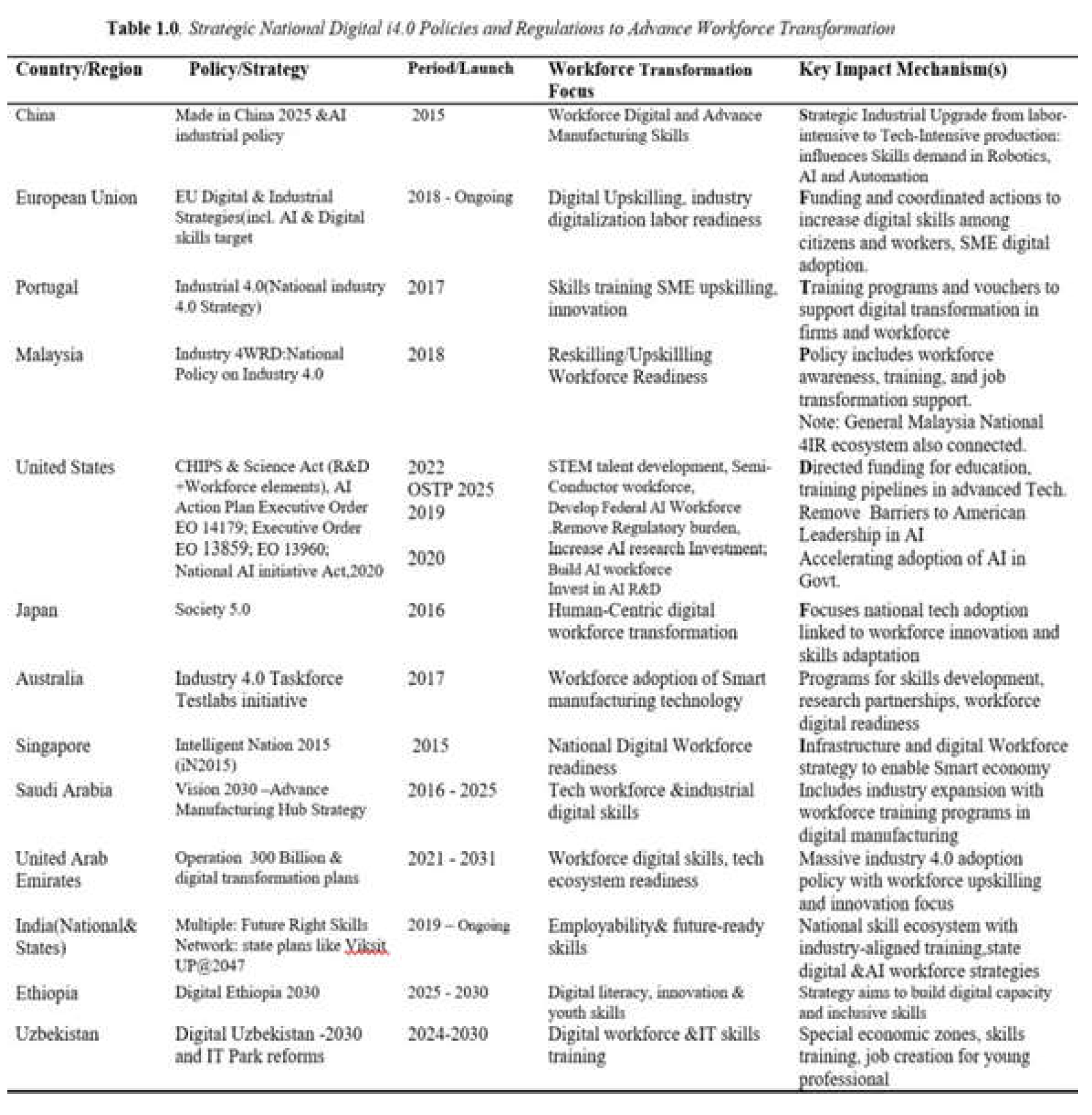 |
Most developed economies (EU, US, Japan, Australia, Singapore) emphasize and prioritize digital skills, research talent, and manufacturing competitiveness while emerging economies such as Malaysia, Saudi-Arabia, UAE, India, Ethiopia,Uzbekistan, use strategies to boost digital adoption and position workforce for future tech sector. The US polices on artificial intelligence, i4.0 digital technologies such as Executive Order EO 14179; EO 13859; EO 13960; National AI initiative Act, 2020 on AI are meant to enhance and reinforce its leadership role in the digital sector through an Increase AI research Investment (R&D), build AI workforce transformation and develop Federal AI Workforce, while removing regulatory burden that might tend to choke creative AI initiatives. These policies intersect around Workforce outcomes—Skills, Adaptability, employability, and inclusion-These shapes labor market to respond effectively to rapidly technological change. Nations formulate different strategic digital policies to help enhance the general workforce readiness and effective integration of their society into the industry 4.0 digital era [5,12].
2.2. National Strategic Digital Policies and Regulation for Workforce Transformation
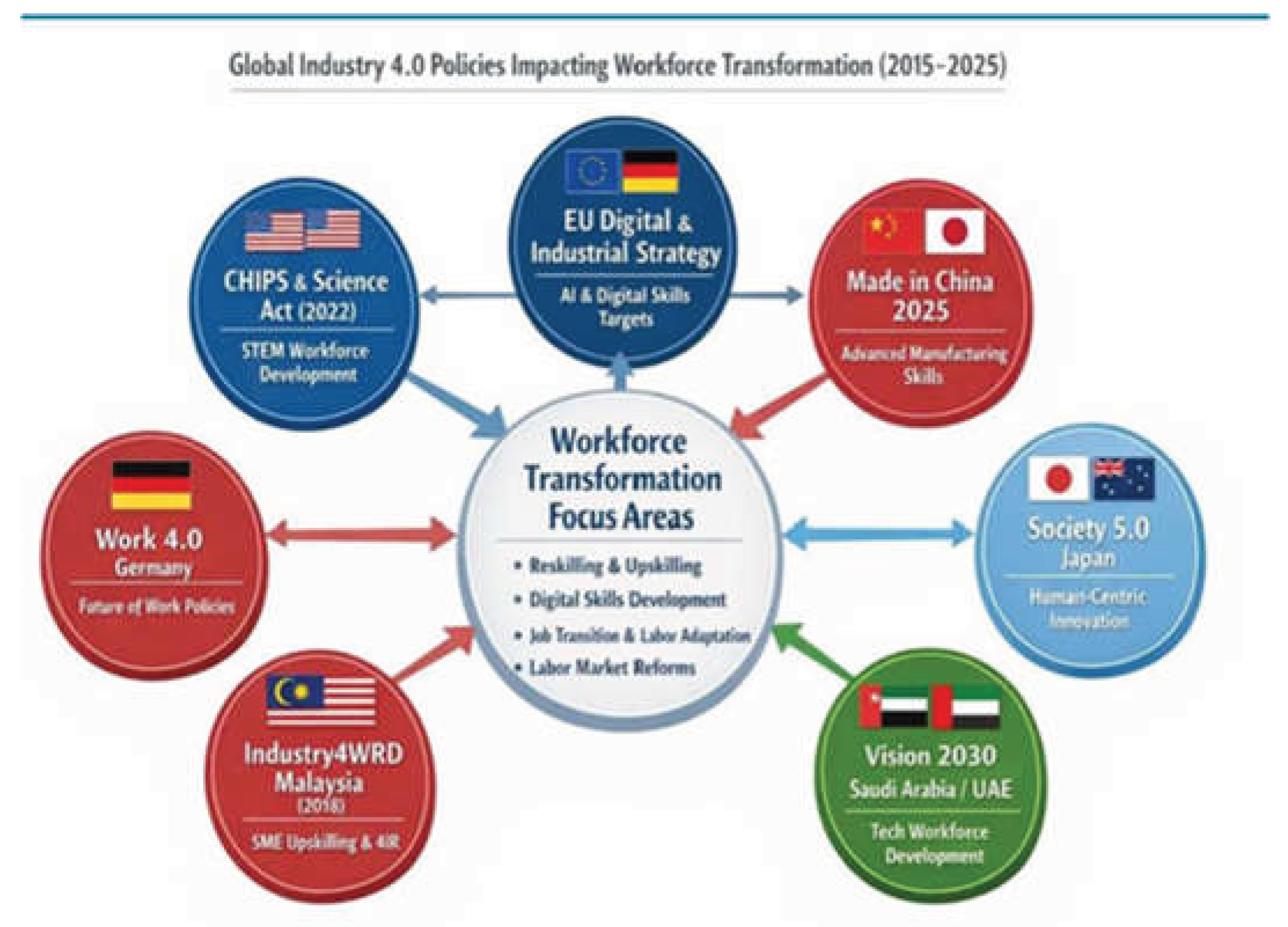
With industry 4.0-digital Policies, Nations around the globe are able to provide visionary digital framework for national digital readiness awareness initiatives for workforce transformation programs. Some of the policy and regulation are listed with key workforce focus. Such as: US, CHIPS & Science Act: Includes dedicated funding for STEM and semiconductor workforce development, The EU, Digital & Industrial Strategy: Covers EU-wide digital skills targets, AI readiness, and industry modernization affecting jobs. China, Made in China 2025: Strategic industrial upgrade that reshaped workforce needs toward automation, AI, robotics, and advanced manufacturing. Japan; Society 5.0: National vision blending digital tech with societal needs, emphasizing workforce adaptation to a tech-centric economy. Malaysia; Industry 4WRD: National Industry 4.0 policy with explicit focus on SME transformation, worker reskilling, and digital skills. Industry 4.0 Taskforce Testlabs (Australia): Government initiative to accelerate smart manufacturing and workforce tech adoption [5,18,19,20,21,22,23,24,25,26].
Figure 1.
Strategic National i4.0 Visionary Digital Policies on Workforce Transformation.
2.2.1. Visionary Digital Policies as Catalysts for Future-Ready Workforce Transformation
Over the past decade, nations across the globe have increasingly adopted visionary digital policies as strategic instruments to anticipate, shape, and respond to the evolving skills and labor demands generated by Industry 4.0 technologies [4,8]. These policies extend beyond conventional industrial or education reforms; they function as system-level governance frameworks that align technology adoption, workforce development, education systems, and labor market institutions within a coherent digital transformation agenda. At their core, these policies recognize that digital transformation is not solely a technological challenge, but a human and institutional one. As automation, artificial intelligence (AI), advanced robotics, data analytics, and cyber-physical systems become embedded in production and service ecosystems, nations are compelled to prepare their workforce for new forms of work, hybrid human–machine collaboration, and continuous skill [5,23].
2.2.2. Building Digital Awareness: Foundation for Workforce Readiness
A defining feature of these visionary policies is their emphasis on digital awareness initiatives. Governments increasingly acknowledge that effective workforce transformation must begin with broad-based digital literacy and awareness, not just elite technical training. As a result, national strategies such as Japan’s Society 5.0, the EU Digital Decade, Malaysia’s Industry4WRD, and Saudi Arabia’s Vision 2030 all prioritize: Raising societal awareness of digital technologies, their opportunities, and their implications for future work and employment and familiarizing workers, students, managers, and SMEs with Industry 4.0 concepts, such as smart manufacturing, AI-enabled decision-making, and data-driven operations, Also reducing resistance to technological change by framing digitalization as an enabler of productivity, inclusion, and job evolution, rather than job loss [13]. Digital awareness thus becomes the entry point into deeper workforce transformation, creating a shared understanding of why skills must evolve and how individuals can adapt [28,31].
2.2.3. Skills Development with Industry 4.0 Labor Demands
Visionary digital policies explicitly connect future labor market needs with national skills development systems. Rather than reacting to skills shortages after they emerge, these policies use foresight, labor market intelligence, and industry collaboration to anticipate future competencies required by Industry 4.0 ecosystems. Some of the key policy mechanisms include: (i) National digital skills cybersecurity, and human-machine interaction, (ii).Reskilling and upskilling pathways for mid-career and displaced workers, supported by public funding and employer incentives. (iii) Education–industry alignment, ensuring curricula in vocational, higher education, and lifelong learning systems reflect real-world digital production environments [16,18]. Through these mechanisms, governments aim to ensure that the workforce evolves in parallel with technological adoption, reducing structural skills mismatches and labor market disruption.
2.2.4. Transforming Labor Markets for Human–Technology Collaboration Beyond skills development, visionary digital policies increasingly address the structural transformation of labor markets. Industry 4.0 introduces new job roles while redefining existing ones, requiring policies that support job transitions, flexible career pathways, and new forms of work organization. Countries such as Germany (Work 4.0) and EU member states embed workforce transformation within broader discussions of: Job redesign and task augmentation rather than job elimination, Lifelong learning as a labor market norm, Social protection and employability in digitally mediated work environments. This approach ensures that workforce transformation is socially sustainable, balancing innovation with inclusion and worker protection [1,19]2.2.5. Ecosystem-Based Governance for Sustainable Workforce Transformation
Critically, visionary digital policies adopt an ecosystem governance approach. Workforce transformation is not treated as the responsibility of education ministries alone, but as a shared endeavor involving: Government agencies, Industry and employers, Education and training institutions, Labor organizations and civil society [18,27]. This collaborative governance model enables nations to coordinate technology adoption, workforce preparedness, and regulatory oversight, ensuring that Industry 4.0 ecosystems are not only technologically advanced but also human centered and resilient. In conclusion, nations leveraging visionary digital policies are proactively shaping the future of work, rather than reacting to it [33]. By embedding digital awareness initiatives, aligning skills development with emerging labor demands, and reforming labor market institutions, these policies enable workforce transformation that is adaptive, inclusive, and future ready. Such strategic foresight positions countries to harness the full potential of Industry 4.0 digital technologies, while ensuring that human capital remains a central pillar of sustainable economic transformation [20,30].
2.2.6. Visionary Digital Policies: Enablers of Organizational Readiness for Workforce Transformation
In the era of Industry 4.0, nations increasingly recognize that workforce transformation cannot occur without organizational readiness. Visionary digital policies therefore serve as strategic instruments that guide organizations—public and private—toward adopting digital technologies while simultaneously preparing their workforce for new skills, roles, and ways of working. These policies are not limited to technology deployment; rather, they shape organizational culture, leadership capacity, governance structures, and learning ecosystems needed to sustain digital transformation [36].
2.2.7. Digital Awareness Initiatives: A First Layer Of Organizational Readiness
A foundational element of visionary digital policies is the creation of national digital awareness initiatives targeted at organizations. Governments understand that before firms can successfully implement Industry 4.0 technologies—such as AI, automation, IoT, and cyber physical systems—organizations must first develop shared understanding and strategic awareness of what digital transformation entails. These initiatives typically: Promote executive and managerial awareness of Industry 4.0 opportunities, risks, and workforce implications, Help organizations understand future skills requirements, job redesign implications, and human–machine collaboration models, Reduce organizational resistance by framing digital transformation as a strategic and workforce-centric process, not merely a technical upgrade. Through awareness-building programs, nations enable organizations to move from technology curiosity to strategic readiness [29].
2.2.8. Aligning Organizational Strategy with Future Digital Workforce Needs
Visionary digital policies encourage organizations to align digital adoption strategies with workforce planning. Rather than treating technology and human capital as separate domains, national frameworks promote integrated planning that links Digital technology roadmaps to Workforce capability assessments and Skills forecasting and reskilling strategies. Policies such as Germany’s Work 4.0, the EU Digital Strategy, Japan’s Society 5.0, and Malaysia’sIndustry4WRD explicitly guide organizations to evaluate their internal readiness, including leadership commitment, digital maturity, and workforce adaptability [16,25]. This alignment ensures organizations are not only technologically equipped but also human-capital ready to absorb and leverage Industry 4.0 innovations [3].
2.3. Institutionalizing Reskilling and Upskilling within Organizations
A central mechanism through which nations support organizational readiness is by embedding reskilling and upskilling mandates and incentives within digital policies. Governments provide: Financial incentives (grants, tax credits, and training subsidies) for firms investing in workforce digital skills, National skills frameworks that organizations can adopt as benchmarks for workforce capability development, and public–private training ecosystems linking firms with universities, vocational institutions, and technology providers. These measures encourage organizations to internalize continuous learning cultures, shifting from one-time training models to lifelong workforce development aligned with evolving Industry 4.0 labor demands [18].
2.3.1. Transforming Organizational Structures and Work Practices
Visionary digital policies also address the organizational transformation required to support digital workforces. Industry 4.0 technologies alter how work is organized, managed, and evaluated. As a result, national policies increasingly promote: flexible work arrangements and digitally mediated collaboration; job redesign emphasizing augmentation rather than replacement; and Cross-Functional and interdisciplinary teams combining technical and domain expertise [1]. By signaling these shifts at the policy level, governments legitimize organizational experimentation and adaptation, enabling firms to redesign roles and workflows without undermining workforce stability [5,7].
2.3.2. Governance,Standards,and Trust as Readiness Enablers
Organizational readiness is further strengthened through regulatory clarity and governance frameworks embedded in visionary digital policies. Clear guidance on data governance, AI ethics, cybersecurity, and interoperability reduces uncertainty for organizations adopting Industry 4.0 technologies. This regulatory assurance helps to: Builds organizational trust in digital systems, Encourages responsible adoption of automation and AI, Ensures workforce protections and ethical considerations remain central, such governance frameworks help organizations balance innovation with accountability, reinforcing sustainable workforce transformation [2,4].
2.3.3. Ecosystem-Based Approach to Organizational Readiness
Critically, visionary digital policies position organizational readiness within a national digital ecosystem. Workforce transformation is coordinated across: Government agencies, Industry sectors and supply chains, Education and training institutions, Labor and professional bodies. This ecosystem approach ensures organizations—especially —are not isolated in their transformation journeys [24]. Instead, they gain access to shared knowledge, training infrastructure, and policy support that collectively enhance readiness for Industry 4.0 labor demands. In conclusion, nations leveraging visionary digital policies actively shape organizational readiness by embedding digital awareness initiatives that align technology adoption with workforce transformation. Through strategic awareness-building, integrated workforce planning, institutionalized reskilling, supportive governance, and ecosystem collaboration, these policies enable organizations to prepare their workforces for the skills, roles, and labor dynamics of the Industry 4.0 digital technologies ecosystem. This approach ensures that digital transformation is not only technologically successful but also organizationally resilient and human-centered [11,18].
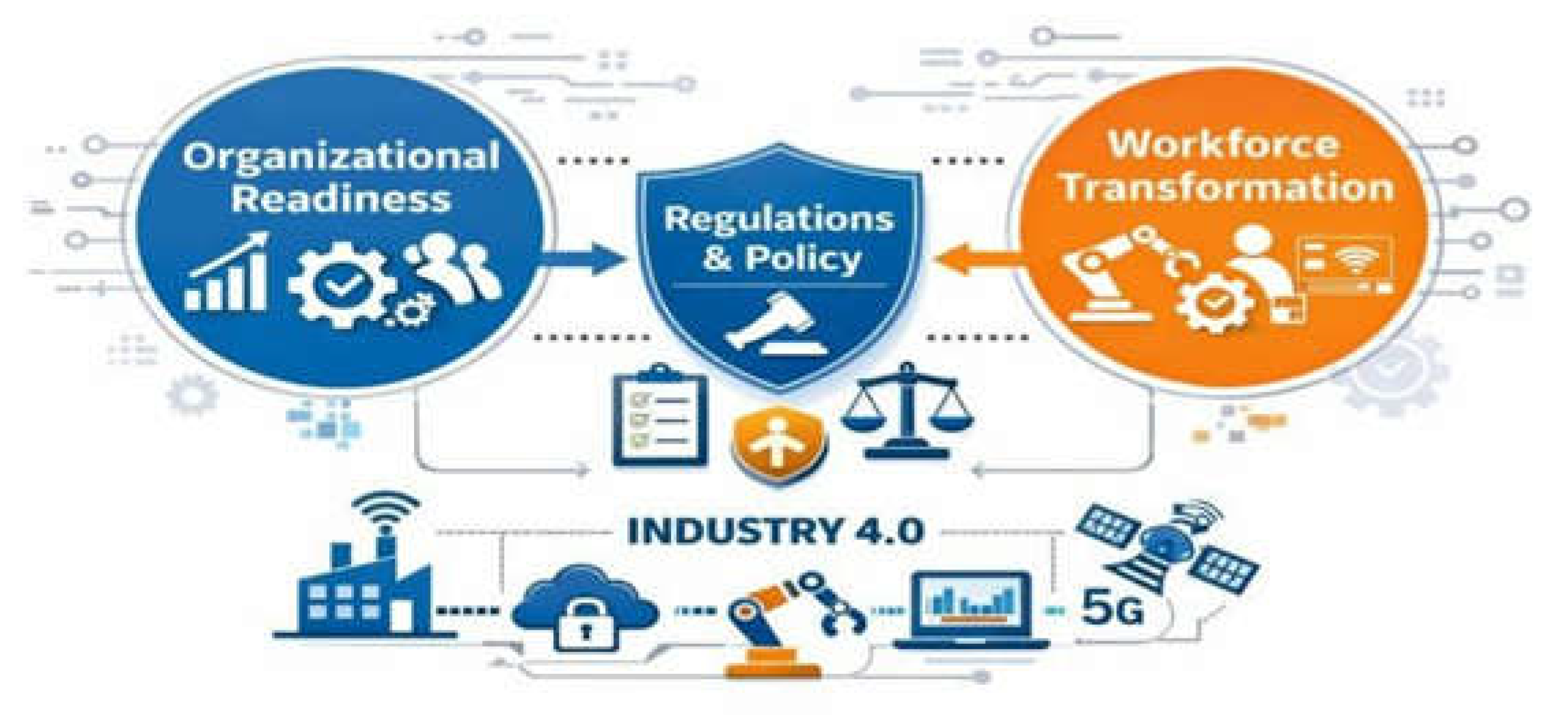
*Policy →Organizational readiness → Workforce transformation*
2.3.4. Environmental Compliance and Reporting
The Industry 4.0 governance framework integrates sustainability mandates that require organizations to continuously implement guidelines for industry-standard best practices, including emissions monitoring and reporting, Energy efficiency and resource optimization, and Lifecycle and supply chain transparency [1]. The digital technologies of Industry 4.0 enable compliance while supporting appropriate strategic sustainability goals. Another major part of environmental compliance is resource optimization through the Circular Economy and Resource Governance. This is ensured through policies promoting circular economy principles—such as extended producer responsibility and digital product passports—that enhance governance by: Enabling traceability across product lifecycles, supporting closed-loop manufacturing, and aligning Industry 4.0 with long-term environmental stewardship [13,22].
Figure 2.
Organizational Readiness, and Workforce transformation in relation to Regulations & Policy in industry 4.0.
Figure 2.
Organizational Readiness, and Workforce transformation in relation to Regulations & Policy in industry 4.0.
2.4. The Digital Ecosystem of Industry 4.0
A clear understanding of an enterprise industry ecosystem and the business process activities of all the stakeholders enhances interoperability and effective integration of the business process activities of all the stakeholders within the industry. Industry 4.0 maturity extends beyond organizational boundaries [24,29]. Readiness is influenced by the organization’s ability to collaborate digitally with suppliers, partners, and customers. There are various factors that determine and provide a conducive ecosystem and governance for change readiness. Determining factors include: Digital supply chain visibility and traceability, Platform-based collaboration models, and interoperability standards across the ecosystem. Higher maturity levels reflect networked value creation within digital industrial ecosystems [5,9].
2.4.1. Change management and digital leadership
Ensuring successful change management to industry 4.0 digital technologies requires a comprehensive overhaul of the entire organizations technology infrastructure [7]. The transition to Industry 4.0 represents a profound organizational transformation rather than a purely technological upgrade. It encompasses the convergence of cyber–physical systems, artificial intelligence, advanced analytics, industrial Internet of Things (IIoT), and platform-based business models [18]. Achieving organizational readiness in this context depends fundamentally on effective change management and digital leadership, which together align strategy, structure, culture, and capabilities to sustain continuous digital transformation [6,11].
2.4.2. Labor Market and Employment Policies
The policies provide the framework and guardrails to effective manage personnel employment and training. Labor market and employment policies constitute the institutional framework through which governments and organizations regulate work, employment relationships, and workforce transitions in response to economic, technological, and social change. In the contemporary digital and industrial context—particularly under the influence of automation, artificial intelligence, and Industry 4.0—these policies play a central role in balancing economic competitiveness with social protection, workforce adaptability, and inclusive growth. To manage workforce transitions, policy adaptation must be such that it encourages employee’s acceptance and adoption towards effective implement such as: Active labor market policies for displaced workers, Social protection and transition support mechanisms, Recognition of non-traditional and digital work arrangements. These measures reduce social risk and resistance to technological change (14, 21].
2.5. Business Model Innovation
Business Model Innovation (BMI) in the context of Industry 4.0 represents a fundamental rethinking of how organizations create, deliver, and capture value in digitally enabled industrial environments. Unlike incremental process improvements, Industry 4.0–driven BMI reshapes value propositions, revenue mechanisms, organizational boundaries, and ecosystem relationships by leveraging cyber–physical systems, artificial intelligence (AI), industrial Internet of Things (IIoT), advanced analytics, and platform technologies [21]. A business model defines the logic through which an organization creates value for customers and converts that value into economic returns. Industry 4.0 expands this logic by embedding digital intelligence, connectivity, and automation into physical products and industrial services. Business Model Innovation in Industry 4.0 involves the empowering and positioning of an enterprise with the following: Redefining value propositions through Smart connected products, Reconfiguring value creation processes via digitalized operations, Transforming value capture mechanisms through new pricing and revenue models, Extending value networks into digital ecosystems and platforms [9,29]. Industry 4.0 digital technologies acts as a driver of business model transformation and an as enablers and accelerators of BMI by reducing information asymmetry, enabling real-time decision-making, and facilitating scalable customization. Industry 4.0 technologies act as enablers and accelerators of BMI by reducing information asymmetry, enabling real-time decision-making, and facilitating scalable customization. Key technological drivers within i4.0 include: IIoT-enabled connectivity and data generation, -driven analytics and autonomous decision-making, Digital twins and simulation-based optimization, Cloud and edge computing for scalable service delivery, Platform architectures enabling ecosystem collaboration. These capabilities allow firms to shift from asset-centric to data- and service centric business models [4,18].
Transformation of Value Propositions –Industry 4.0 enables the evolution of value propositions from static products to smart, adaptive, and outcome-oriented offerings [8]. Examples include: Smart products with embedded sensors and analytics, Predictive and prescriptive maintenance services, Mass customization at near–mass production costs, Enhanced transparency, traceability, and sustainability performance, Value propositions increasingly emphasize outcomes, reliability, and lifecycle performance rather than product ownership alone [23,27]. Industry 4.0 reconfigures internal value creation by: Integrating cyber–physical systems into production, enabling real-time process optimization, supporting decentralized and autonomous operations.
Digitalized operations reduce costs while increasing flexibility and responsiveness. Firms increasingly operate within digital industrial ecosystems, where value is co-created with partners, suppliers, and customers’ platforms facilitate the following within the digital ecosystem: Data sharing and interoperability, Third-party innovation and modular service development, Network effects that enhance scalability [28]. industrial revolution, industry 4.0 has its challenges and risk mostly associated with digitalization, despite the immense opportunities and benefits inherent with transitioning to it. Unlike other industrial revolution, industry 4.0 represent a significant paradigm shift with enterprise business process activities and production systems through the integration of cyber–physical systems, artificial intelligence (AI),Industrial Internet of Things (IIoT), advanced robotics, and data-driven decision-making. While these technologies promise significant gains in productivity, flexibility, and innovation, their adoption is accompanied by substantial risks and challenges that organizations must strategically address. These risks are multidimensional, encompassing technological, organizational, economic, social, ethical, and regulatory domains [21].
A comprehensive understanding of these challenges is essential to ensure that Industry 4.0 adoption is resilient, responsible, and sustainable. Industry 4.0–driven business model innovation, BMI presents challenges such as: Technological and infrastructure risk, High initial investment and uncertain returns, Data ownership, Privacy and Cybersecurity and Data protection risks, employee digital literacy, Organizational resistance and capability, Data Quality and Reliability Challenges, Workforce disruption and Skills gaps, Ethical and Legal Risks, Supply Chain and Ecosystem and Dependencies, Regulatory and Compliance Challenges, Strategic and Governance Risks, Sustainability and Environmental Trade-offs, Economic and Financial challenges, Regulatory and interoperability constraints [15,21]. This risk can be mitigated through effective governance and change management are essential to mitigate these risks. While industry-4.0 provides enterprise with various benefits through digital technologies, a comprehensive and strategic approach towards mitigating this challenges should include—integrating robust governance, proactive risk management, workforce development, and ethical oversight—is essential to mitigate these challenges. Organizations that recognize and systematically address the risks of Industry 4.0 are better positioned to realize its benefits while ensuring resilience, trust, and long-term sustainability [2,21].
2.5.1. Cost–Benefit and ROI analysis
Cost–benefit and ROI analysis are indispensable tools for managing Industry 4.0 investments. Given the scale, complexity, and uncertainty of digital transformation, traditional financial metrics alone are insufficient. A comprehensive and strategic approach—incorporating total cost of ownership, tangible and intangible benefits, risk mitigation, and long-term value creation—is essential. Organizations that rigorously apply cost–benefit and ROI analysis are better positioned to prioritize investments, manage transformation risks, and realize sustainable competitive advantage in the Industry 4.0 era. The adoption of Industry 4.0 technologies— artificial intelligence (AI), industrial Internet of Things (IIoT), cyber–physical systems, advanced robotics, digital twins, and data analytics—requires substantial organizational commitment and investment. Given the scale, complexity, and uncertainty associated with digital transformation, cost–benefit and return on investment (ROI) analysis is not merely a financial exercise but a strategic governance mechanism. It enables organizations to justify investments, prioritize initiatives, manage risk, and ensure that Industry 4.0 adoption delivers sustainable business value [3,15,16,17,18,19,20,21,22,23,24,25,26,27].
Equation: Integrated ROI Core Equation

Where:
- T = Evaluation horizon
- BtTotal = Total benefits in period t
- CtTotal = Total costs in period t
Operational and Financial Benefit Equations Productivity and Efficiency Gains:
Bproductivit= (Qaft—Qbefore) x Cunit
Downtime Reduction:
Bdowntime = (Dbefo—Dafter) x Cdowntown/ℎour
Quality and Waste Reduction
Bquality = (Wbefore—Wafter) X Cwaste
2.5.1.1. Predictive Maintenance and Predictive Analytics
Predictive Analytics: Total Cost of Ownership (TCO)
TCO= Ccap + Cintegration + Cdata + Ctalent + Coperations
Where:
- C capex = Sensors, IIoT devices, servers, cloud/edge infrastructure
- Cintegration= IT–OT integration, system customization, cybersecurity
- C data = Data acquisition, storage, cleansing, labeling
- C talent = Data scientists, engineers, training, change management
- C operations = Licensing, model retraining, maintenance, monitoring
2.5.1.2. Downtime Reduction (Predictive Maintenance)
Bdowntime = (Dbaseline − Dpredictive) × Cdowntime
Where:
- D = Annual downtime hours
- C downtime = Cost per hour of downtime
Maintenance Cost Savings
Bmaintenance = Creactive − Cpredictive
Energy Optimization Savings
Benergy = (E baseline − E optimized ) X E energy
2.5.2. Strategic Cost Benefit and ROI Analysis
Industry 4.0 initiatives often cut across organizational boundaries and deliver benefits that are indirect, long-term, or intangible. Without structured cost–benefit and ROI analysis, organizations risk: Overinvesting in technology without clear value realization, Misaligning digital initiatives with strategic objectives, Underestimating organizational and operational costs [1,8]. A comprehensive analysis ensures that enterprise investments in Industry 4.0 are evaluated in terms of strategic impact, operational performance, and long-term competitiveness, not only short-term financial returns. Capital and Technology Cost—Industry 4.0 requires significant upfront capital expenditures, including: Smart machinery, sensors, and robotics, IT–OT integration infrastructure, Cloud, edge computing, and data platforms, Cybersecurity, and system resilience investments [9].
These costs are often compounded by the need to retrofit legacy systems. Implementation and Integration Costs-Beyond hardware and software, organizations incur costs related to: Systems integration and customization, Process redesign and digitalization, Pilot projects and iterative testing, Vendor management and interoperability alignment [27]. These costs are frequently underestimated but are critical determinants of ROI.
2.5.2.1. Organizational and Human Capital Costs
Industry 4.0 transformation involves substantial human-related costs, including: Workforce training, reskilling, and upskilling, Change management and communication initiatives, new roles in data science, AI, and cybersecurity. Failure to account for these costs can distort ROI projection. Ongoing Operational Costs—Post implementation costs include: System maintenance and upgrades, Data storage, processing, and energy consumption, Cybersecurity monitoring and compliance, Licensing and subscription fees. A comprehensive analysis must consider the total cost of ownership (TCO) over the system lifecycle. Operational Efficiency and Productivity Gains—Industry 4.0 delivers measurable benefits through various operational efficiencies such as: Reduced downtime via predictive maintenance, improved asset utilization and throughput, Lower defect rates and rework costs, and energy and resource efficiency improvements. These benefits often form the core of quantifiable ROI calculation [15,21].
2.5.2.2. Cost Reduction and Waste Minimization
Digital monitoring and analytics enable: Reduced material waste and scrap, Lower inventory and logistics costs, Optimized labor deployment. These cost savings directly contribute to financial returns.
2.5.2.3. Revenue Growth and Business Model Innovation
Industry 4.0 enables new revenue streams through: Servitization and outcome-based offerings, Data-driven services and analytics, Mass customization and faster time-to-market. Although harder to quantify, revenue-related benefits significantly enhance long-term ROI [18.22].
2.5.2.4. Intangible and Strategic Benefits
Many Industry 4.0 benefits are intangible but strategically critical, including: Enhanced decision-making quality through real-time data, improved customer satisfaction and trust, Greater organizational agility and adaptability, Strengthened innovation capability and learning culture. Ignoring these benefits can lead to systematic undervaluation of Industry 4.0 investments.
2.5.2.5. Challenges in ROI Measurement for Industry 4.0
ROI analysis in Industry 4.0 faces several methodological challenges: Benefits accrue over long time horizons, Interdependencies among digital initiatives complicate attribution, Value creation often spans organizational and ecosystem boundaries, and Cultural and capability improvements are difficult to monetize [5,16]. These challenges require more sophisticated and flexible evaluation frameworks. Approaches to Cost–Benefit and ROI Analysis- To address these challenges, organizations increasingly adopt measures such as:
2.5.2.6. Multi-criteria decision analysis (MCDA)
to incorporate financial and non-financial benefits, Real options analysis to value flexibility and learning, Stage-gated investment models to manage uncertainty, Scenario-based ROI analysis to account for technological and market volatility. These approaches often reflect the dynamic nature of Industry 4.0 transformation [21,32].
2.6. Human-Centered Industry 4.0
Human-Centered Industry 4.0 is grounded in the principle that technology should serve human needs and societal goals, not merely operational efficiency. It integrates insights from human–computer interaction, sociotechnical systems theory, ergonomics, organizational psychology, and ethics [2,7]. Human-Centered Industry 4.0 (HC-I4.0) represents a critical evolution of the Industry 4.0 paradigm, shifting the focus from technology-driven optimization to human centric value creation [7]. While early Industry 4.0 narratives emphasized automation, efficiency, and autonomy, experience has demonstrated that sustainable digital transformation depends on the meaningful integration of human capabilities, values, and well-being into digitally enabled industrial systems. A human-centered approach ensures that Industry 4.0 enhances human agency, dignity, and resilience rather than marginalizing the workforce [13].
At its core, HC-I4.0 emphasizes: Human agency and decision authority, Augmentation rather than substitution of human labor, Inclusion, accessibility, and diversity, Trust, transparency, and ethical accountability. This approach reframes Industry 4.0 as a socio-technical transformation, not a purely technological one [1,5,6,7,8,9,10,11,12]. While Technology-Centric industry 4.0 is focused on digital technologies. Its implementations often prioritize automation, Workforce alienation and resistance; Skills obsolescence and job polarization, Overreliance on opaque algorithmic systems, reduced situational awareness in autonomous operations. These limitations highlight the necessity of embedding human-centered principles into Industry 4.0 governance, design, and implementation [8]. Human-Centered Industry 4.0 is not an alternative to digital transformation but its necessary evolution. By placing humans at the core of design, governance, and value creation, organizations can harness the full potential of Industry 4.0 while mitigating its social, ethical, and operational risks [1]. A human-centered approach ensures that advanced industrial technologies augment human capabilities, foster trust, and contribute to sustainable economic and social development.
Safety and Well-Being—Safety and well-being is at the core of Human-centered industry 4.0.And Human-centered Industry 4.0 prioritizes worker well-being the following: Designing safe human robot collaboration environments, Using predictive analytics to prevent accidents and injuries, Reducing cognitive overload through ergonomic system design. Quality of work becomes a core performance metric alongside productivity.
Responsible AI –Ethics and Trust—Also the Human-Centered industry 4.0 integrates ethical governance into system design and operation for responsible digital technology practice and human-machine interaction. This includes: Transparency and explainability of AI decisions, Accountability frameworks for automated systems, Bias detection and mitigation mechanisms, Protection of worker privacy and autonomy. Ethical AI practices strengthen trust, legitimacy, and long-term sustainability of Industry 4.0 initiatives [11].
Culture tends to provide a sense of physiological safety net for employees during transition which enhances employee digital literacy.HC-I4.0 requires organizational cultures that value: Learning, experimentation, and adaptability. A significant key insight is that when employees feel respected and supported, they are more likely to adopt and effectively use Industry 4.0 technologies. The psychological safety provides a significant support systems that encourages employees in interacting with intelligent systems, enhances trust in data-driven tools without fear of surveillance or punitive use. Organizational culture provides a It emphasizes that Industry 4.0 is ultimately a human-centered transformation, where technology augments human judgment, creativity, and decision-making [9].
Workforce, Skills and reskilling systems- is a fundamental layer of value creation and a measure of change readiness and transformation to industry 4.0 as workforce role evolve [16]. Reskilling intensity closely tracks digital skill maturity, confirming that learning capacity is a prerequisite for sustainable Industry 4.0 transformation. Digital leaders that prioritize reskilling integrated into organizational culture emphasize lifelong learning, micro-credentials and just-in-time-skills delivery for competitive edge in a dynamic digital economy [8]. Workforce skill and reskilling systems supports learning and innovative culture and a fundamental core structure for change readiness and transformation, mature organizations tends to exhibit continuous, reskilling as a structural core of agile team structure, and strong human-machine collaboration. Workforce Evolution—Human roles have evolved to providing oversight and supervisory decisionmaking.as against disappear, allowing routine business process activities to be automated. Routine roles declined but augmented or redefined roles emerged—from data analysts to AI governance stewards. Hybrid digital–human roles have become strategic differentiators [17].
2.6.1. Human-Centered Benefit Integration
Labor Productivity and Augmentation:
Blabor = Hsaved X Clabor/ℎour
Skill Capital Accumulation:

Workforce Retention and Engagement:
Bretenti = ∆R X Cturnover
Strategic and Intangible Benefit Valuable
Bstrategic = αB
2.6.2. Human–Machine interaction-HMI
A defining feature of Human-Centered Industry 4.0 is the emphasis on collaborative intelligence, where humans and intelligent systems complement each other’s strengths. Key elements include using AI as decision support rather than decision replacement. Cobots are designed for safe and intuitive interaction, with adaptive interfaces that respond to human cognitive load. Real-time feedback loops that enhance human judgment, such collaboration improves performance, safety, and user acceptance while preserving human oversight in critical processes [7,15,16,17,18,19,20,21].
Industry 4.0 emphasizes Human-Machine Collaboration, where humans provide oversight to all machine operational activities rather than full substitution, the emphasis is on collaborative intelligence, where humans provide complementary feedback to all machinery actions complementing each other through industry best standard practices and policies (Ngoc et al., 2021). These standard practices and policies must support safe and effective human-robot interaction, redefining responsibility and accountability, thereby enhancing trust in opaque algorithmic decision-support system.[2,8].
2.6.2.1. Workforce Transformation—Reskilling and Upskilling
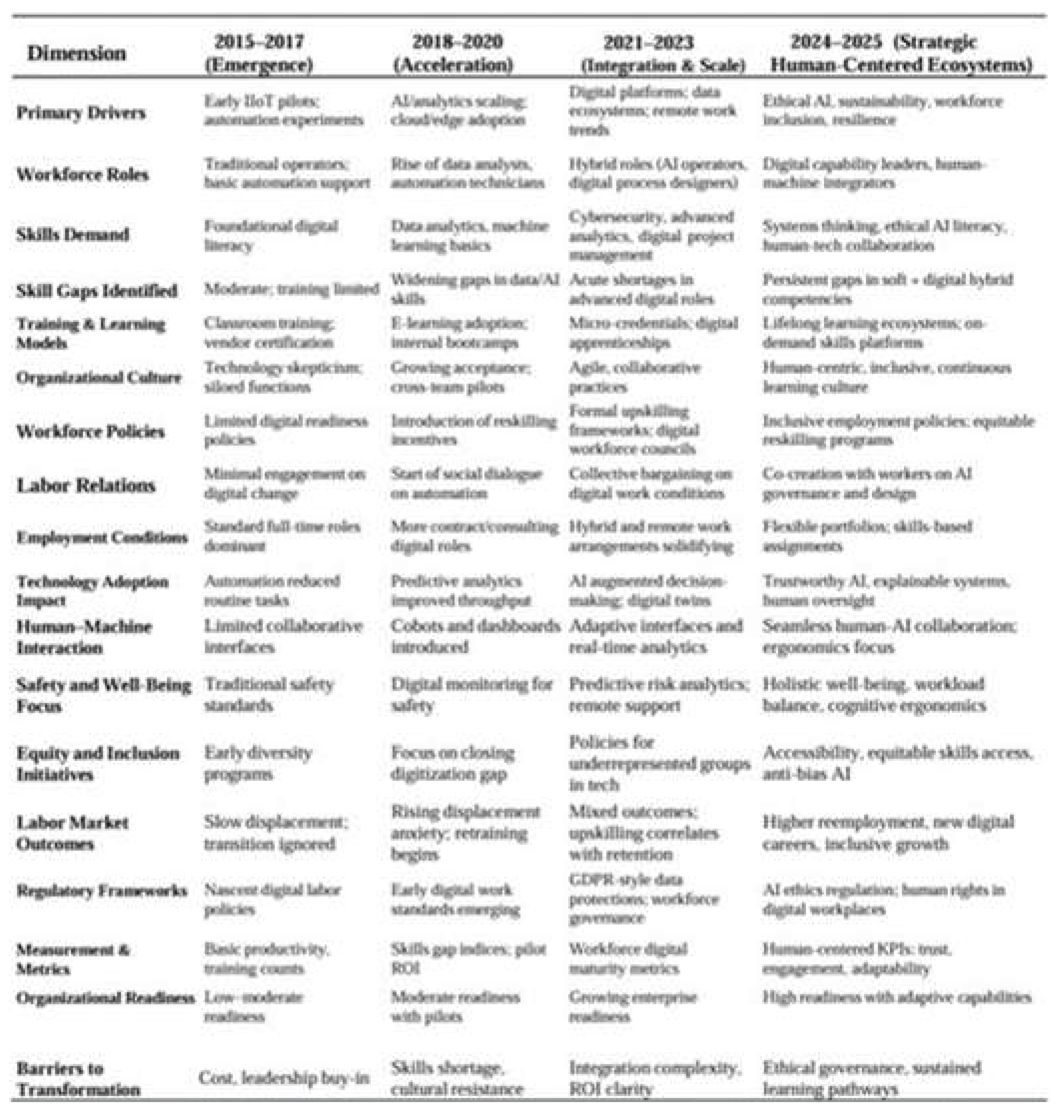
Workforce transformation encompasses different forms of skill Transformation-measures an enterprise embark upon to enhance employee digital literacy with IT-OT in industry 4.0.Workforce reskilling and upskilling are a significant part of change readiness and adaptation and Industry 4.0 demands a shift from narrow technical skills to multi-dimensional competencies, including: Employee Digital and data literacy, Systems thinking and problem-solving, AI, automation, and cybersecurity knowledge, Soft skills such as collaboration, adaptability, and ethical judgment. Change readiness with workforce transition requires various transformational process that encompasses areas such as skills competency, upskilling and reskilling, talent acquisition and management, performance management. Workforce transformation and readiness can be measured through various forms of indicators and key performance metrics. Enterprise and policymakers use different form of metrics as indicators to provide information on Skill readiness and digital literacy indices, training participation and completion rates, job transition and redeployment outcomes, workforce engagement and well-being. Iterative continuous measurement at different stages enables adaptive policy refinement and sustained workforce readiness [31,33].
Table 2.
Workforce Transformation in Industry 4.0 (2015—2025).
 |
Skills Transformation and Competency Development—Emerging Skill Requirements: Industry 4.0 demands a shift from narrow technical skills to multi-dimensional competencies, including: Digital and data literacy, Systems thinking and problem-solving, AI, automation, and cybersecurity knowledge, Soft skills such as collaboration, adaptability, and ethical judgment Continuous Learning and Reskilling Models-Workforce readiness depends on policies that institutionalize lifelong learning, such as: Modular and micro-credential-based training, Work integrated learning and digital apprenticeships, Public–private partnerships for skills development. At the organizational level, learning becomes an ongoing operational process rather than a periodic intervention [27].
Talent Management and Workforce Planning—Organizations must adapt workforce policies to address upskilling strategies of enterprise digital software and applications: Strategic workforce planning aligned with digital roadmaps, internal talent mobility and job redesign, Data-driven skills mapping and gap analysis [24]. Such policies ensure that workforce capabilities evolve in parallel with technological adoption Performance Management and Incentives—Traditional performance metrics often fail to capture digital work dynamics. Updated policies emphasize: Learning and innovation outcomes, Cross functional collaboration, Digital capability development. Incentive structures aligned with transformation goals accelerate workforce engagement and adoption [31].
Flexible Work and Digital Labor Policies—enables remote monitoring, virtual collaboration, and flexible work arrangements. Workforce policies increasingly address: Hybrid and remote work models, Digital work-life balance, Occupational health in digitally intensive environments. Safety in Smart and Automated Workplaces—Policy adaptation is required to manage new risks associated with: Autonomous and semi-autonomous systems, Human–robot collaboration, Algorithm-driven operational decisions. Updated safety frameworks integrate real-time monitoring and predictive risk management.
Figure 3.
Graphical representation of workforce transformation in industry 4.0 from 2015 -2025.
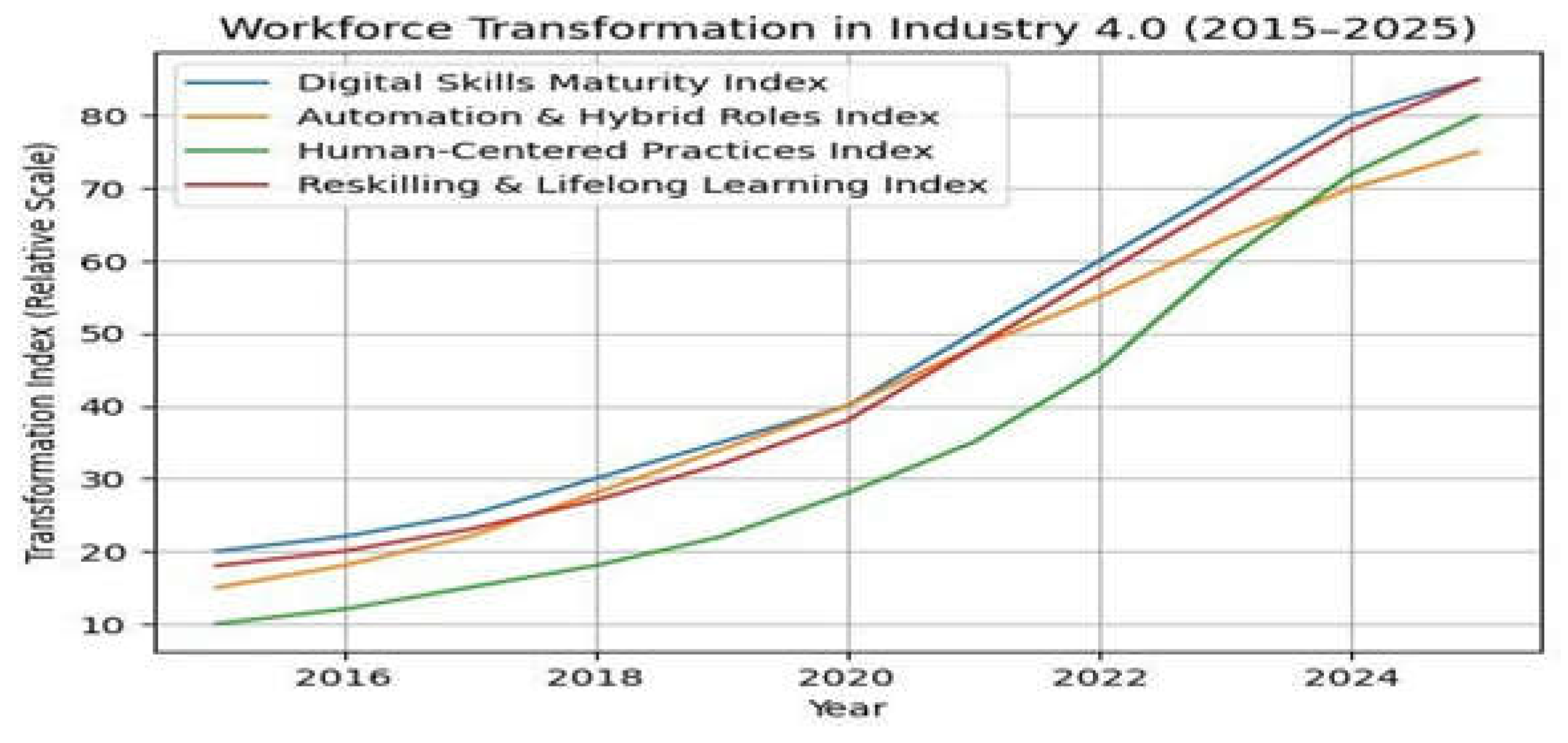
D igital Skills Maturity Index—The DSMI curve reflects the progressive shift from basic digital literacy between (2015–2017) to advanced competencies such as data analytics, AI interaction, cybersecurity, and systems thinking (2021–2025). A key insight of the DSMI is that it reflects organizational maturation over the years, digital skills maturation accelerates significantly after 2020, reflecting enterprise-wide scaling of Industry 4.0 technologies and the institutionalization of digital literacy [9,12,13,14,15,16]
Reskilling and Lifelong Index—Provides a clear insight into organizational investment into its human workforce towards enhancing employee digital literacy over the years in a dynamic digital economy. The curve reflects organizational investment in areas of: Continuous reskilling, Micro-credentials, Digital apprenticeships, learning platforms integrated with work and a significant insight is that reskilling intensity closely tracks digital skill maturity, confirming that learning capacity is a prerequisite for sustainable Industry 4.0 transformation [12].
Human-Centered Practices Index—The HCPI provides a significant insight into the rate of enterprise adoption and integration of digital technologies, reflecting the collaboration of human machine interaction over the years .This line represents adoption of: Human–machine collaboration principles, Ergonomic and cognitive design, Ethical AI governance, Workers wellbeing and inclusion initiatives. A key significant insight is that human-centered practices lag early technological adoption but rise sharply after 2021, indicating a strategic correction from technology-centric to human-centered Industry 4.0.[12].
Automation & Hybrid Role Index –provides insights on the various operational activities, and trends, automation plays in an enterprise business process activities and how enterprise have transitioned their business processes over the years to automation. This trend captures the evolution from traditional operational roles toward hybrid human–machine roles (e.g., AI-assisted operators, automation supervisors, digital process engineers). A key insight is rather than workforce displacement, the curve demonstrates role transformation, with humans increasingly embedded in supervisory, interpretive, and decision-support capacities [1,5].
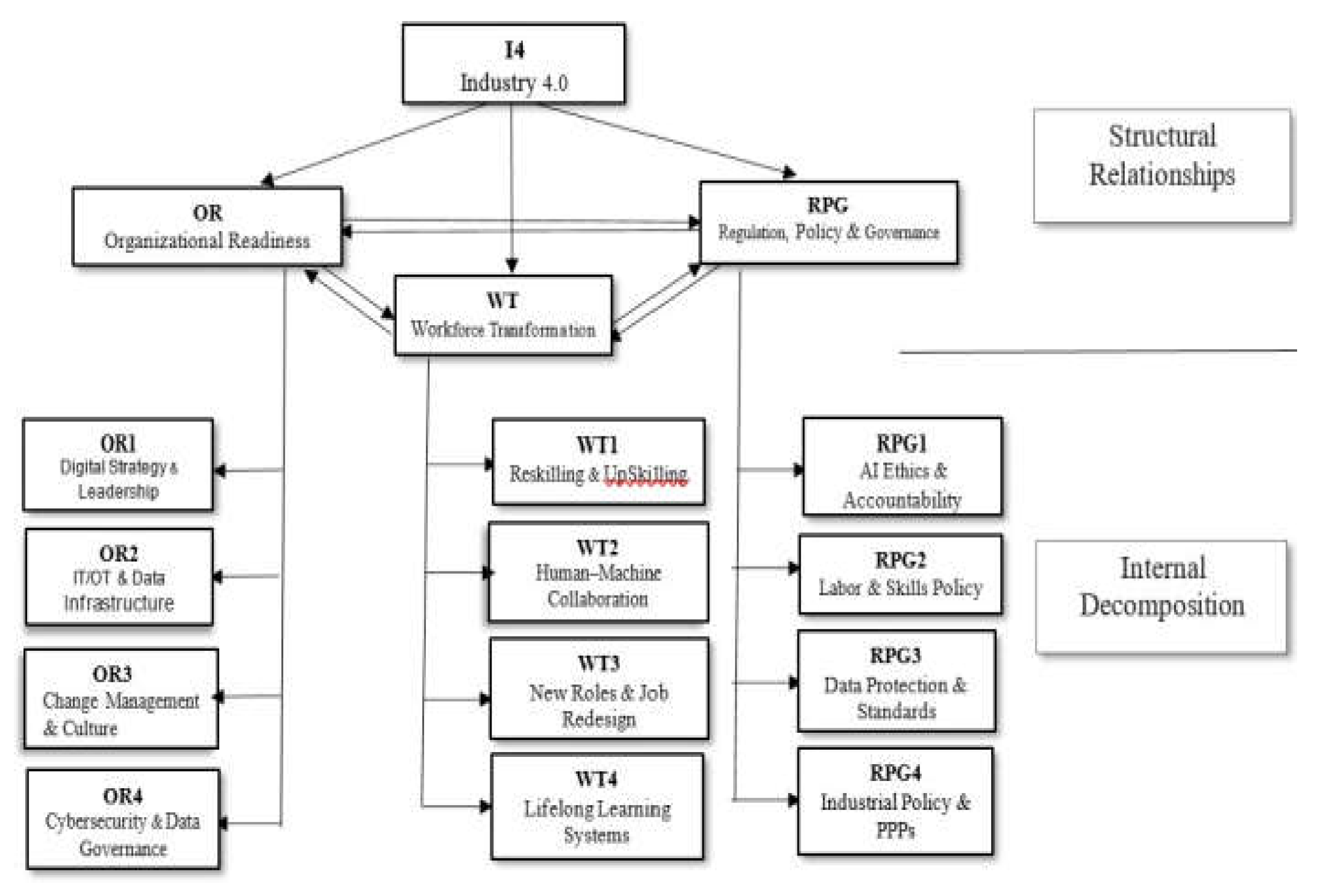
Figure 4.
Schematic diagram of the relationship between Organizational Readiness, Workforce Transformation, Regulation, Policy & Governance Framework.
Figure 4.
Schematic diagram of the relationship between Organizational Readiness, Workforce Transformation, Regulation, Policy & Governance Framework.
2.6.3. Cognitive Workload and Ergonomics
The integration of advanced digital technologies in Industry 4.0—such as artificial intelligence, cyber–physical systems, autonomous machines, digital twins, and real-time analytics—has fundamentally transformed the nature of industrial work. While these technologies promise efficiency, accuracy, and autonomy, they also introduce new cognitive demands and ergonomic challenges. Consequently, cognitive workload management and ergonomics have emerged as critical determinants of human performance, safety, and system reliability in modern industrial environments [21,28]. A failure to address these dimensions undermines the very productivity gains Industry 4.0 seeks to achieve.
Cognitive workload refers to the mental effort required to perform a task, including perception, memory, decision-making, and problem-solving. Ergonomics, particularly cognitive and organizational ergonomics, concerns the design of systems that align with human physical and mental capabilities and limitations [4]. In Industry 4.0, cognitive workload and ergonomics are no longer peripheral concerns; they are integral components of socio-technical system design, influencing how humans interact with intelligent machines and data-intensive environments. Cognitive workload considerations are central to organizational readiness and change management in Industry 4.0. New digital systems often fail not due to technical deficiencies but because they: Exceed human cognitive capacity, Are misaligned with work practices, Ignore learning curves and adaptation needs. Integrating ergonomic assessment into change management improves technology adoption and reduces resistance.
2.6.3.1. Job redesign and task automation
Industry 4.0 fundamentally changes how work is analyzed and organized. Traditional job based models assume static roles with fixed responsibilities. However, most jobs consist of heterogeneous task bundles, only a subset of which are automatable. Task-level analysis enables organizations to: Identify repetitive, rule-based, or hazardous tasks suitable for automation, Preserve and elevate tasks requiring judgment, creativity, and contextual awareness. Reconfigure roles around value creation rather than activity volume. Job redesign ensures that remaining human tasks form coherent, meaningful, and accountable roles rather than fragmented residual work.[12,18].
Job redesign and task automation –constitute a central and fundamental mechanism through which organizations realize the economic, operational, and human value of Industry 4.0. Rather than representing a zero-sum trade-off between technology and labor, effective automation requires the deliberate recomposition of work, where tasks are redistributed between humans and intelligent systems according to comparative advantage [12]. Organizations that treat automation as a purely technical intervention frequently encounter resistance, underutilization, and unintended risk. In contrast, those that integrate automation with systematic job redesign achieve sustainable productivity, workforce engagement, and strategic agility.
Strategic Rationale for Task Automation are as follow: Productivity and efficiency, Quality improvement, Safety enhancement, Scalability and responsiveness. Technologies such as robotics, AI-driven analytics, RPA, and cyber-physical systems excel at tasks that are structured, data-intensive, and time-sensitive.
In conclusion, job redesign and task automation are inseparable components of successful Industry 4.0 transformation. Automation delivers efficiency and scalability, while job redesign preserves human agency, accountability, and development. Organizations that intentionally redesign work around human–machine complementarity achieve superior performance, ethical integrity, and long-term competitiveness. In Industry 4.0, value is created not by replacing humans with machines, but by restructuring work so that each performs what it does best.
2.6.4. Employee acceptance of AI systems
Employee acceptance of AI systems is a decisive factor in realizing the promised value of Industry 4.0 and AI-driven transformation. Regardless of technical sophistication, AI systems fail to deliver organizational benefits if employees do not trust, understand, and meaningfully engage with them. Acceptance is therefore not a peripheral human-resources concern but a core strategic,operational, and governance issue that directly influences performance, safety, ethics, and return on investment.
Artificial intelligence AI systems operate within socio-technical environments where human judgment, organizational norms, and technology interact continuously. Regardless of an enterprise business process, acceptance determines whether AI is: Used as intended rather than bypassed or resisted, appropriately trusted rather than blindly followed or ignored, Integrated into daily workflows of business process activities rather than remaining an unused artifact [2,9]. Without acceptance, AI becomes a symbolic or superficial investment rather than a productive capability for an enterprise. Generally, employees are more likely to accept AI systems when there are clearly improve task performance, optimization of decision-making process. Acceptance increases when AI perform fundamental organizational business process task autonomously: Reducing cognitive or physical workload, Improves accuracy, consistency, or speed, Supports better decision-making in complex situations. and demonstrates visible, reliable value in everyday business process work. It is important to also note that if benefits are abstract or accrue only at the managerial levels, acceptance declines sharply [12,21].
2.7. Institutional Policies and Regulatory Perspectives
Institutional policies and regulatory perspectives provide the governance framework that serve as ethical guardrails ensuring that best business process practices effectively executed. Institutional policies and regulatory perspectives are central to the success, legitimacy, and sustainability of Industry 4.0 digital technology deployment, providing ethical guardrails and best practice standards for successful implementation. While technological innovation drives productivity and competitiveness, it is institutions—governments, standards bodies, regulators, labor organizations, and industry associations—that define the rules, norms, and enforcement mechanisms shaping how Industry 4.0 technologies are developed, deployed, and governed. Without coherent institutional and regulatory frameworks, Industry 4.0 risks fragmented adoption, social backlash, legal uncertainty, and erosion of public trust [23].
2.7.1. Regulatory Balance: Innovation Enablement vs. Risk Control—Industry 4.0 introduces novel risks related to AI autonomy, data flows, cybersecurity, and human–machine interaction. Regulatory frameworks must strike a balance between: Enabling innovation by avoiding excessive rigidity, protecting societal interests through safeguards and accountability. Adaptive, principle-based regulation is increasingly favored over prescriptive rules, allowing regulation to evolve alongside technology [3].
2.7.2. Governance, Ethics, and Risk Management –Task automation introduces risks related to accountability, bias, and overreliance on algorithms. Job redesign mitigates these risks by: Clarifying human-in-the-loop and human-on-the-loop roles, Defining responsibility for automated decisions, Ensuring transparency and explain ability in workflows, maintaining human oversight in safety- and ethics-critical processes, Effective governance depends on clearly designed human roles [25,29].
2.7.3. Influence of Institutional Policy on Regulation—Institutional policies and regulatory frameworks play a decisive role in shaping the trajectory, pace, and societal outcomes of Industry 4.0. While advanced digital technologies such as artificial intelligence, cyber–physical systems, and industrial data platforms enable unprecedented productivity and innovation, their effective and legitimate deployment depends fundamentally on the institutional environment within which organizations operate. Industry 4.0 is therefore not only a technological transformation but also an institutionally mediated process governed by policies, regulations, and norms that structure behavior, manage risk, and align innovation with public interest. The current fourth Industrial Revolution I4R operates within complex institutional systems comprising governments, regulatory agencies, labor organizations, standards bodies, and international institutions [1,5].
These regulatory policies help establish the “rules of the game” that shape: Organizational incentives and constraints, Workforce protections and obligations, Data ownership and governance structures, Ethical boundaries of automation and AI. Institutional policies determine whether Industry 4.0 evolves as an inclusive, sustainable transformation or as a fragmented and socially disruptive process. One of the fundamental core benefits of the regulations in industry 4.0 are to remove and reduce uncertainty characterized by the rapid technological change, provide operational standards within which best practices thrive, investment increase. Provide clear regulatory frameworks that provide organizations with:
Legal certainty for long-term digital investments, Predictable compliance requirements, Guidance on acceptable uses of automation and AI. Without regulatory clarity, firms may delay adoption, underinvest in workforce development, or engage in risk-averse behavior that limits innovation.
Data Governance –Data is at the core of industry 4.0 and regulatory policies help protect usage, privacy, data integrity. Since Industry 4.0 is data-intensive, data governance policies are extremely important for ethical practices, and data integrity. Data governance is a central regulatory concern that provides institutional perspectives to address: Data ownership and usage rights, Cross-border data flows, Industrial data sharing and interoperability, Protection of commercially sensitive and personal data. Effective data regulation balances innovation with trust, enabling organizations to leverage data-driven technologies while maintaining legitimacy and compliance [2,19].
Labor Policies—Automation and digitalization challenge traditional employment structures, necessitating adaptive labor policies. Regulatory perspectives in Industry 4.0 adaptive labor policies increasingly focus on: Employment protection during technological transition.
Recognition of new digital and hybrid job roles, Support for lifelong learning and reskilling, Social protection for non-standard forms of work. Institutional policies mediate the balance between flexibility and security, shaping how workforce transformation unfolds and how equitably its benefits are distributed.
2.7.4. AI Governance in Manufacturing—AI governance in manufacturing is a foundational requirement for realizing the full potential of Industry 4.0, while ensuring safety, accountability, workforce trust, and regulatory compliance. As manufacturing systems increasingly rely on AI driven automation, predictive analytics, and autonomous decision-making, governance becomes the mechanism that aligns technological capability with organizational values, legal obligations, and societal expectations. In the Industry 4.0 era, AI governance is not an administrative afterthought; it is a strategic policy instrument that determines legitimacy, scalability, and sustainability.[1,3,4,5,6,7,8].
2.7.4.1. AI Governance as a Pillar of Industry 4.0 Policy -Industry 4.0 policies emphasize digitalization, interoperability, and intelligent automation. However, without governance, AI systems introduce risks related to opacity, bias, safety, and accountability. AI governance provides the policy backbone that: Ensures AI systems operate within defined ethical, legal, and operational boundaries, Aligns AI deployment with national and organizational Industry 4.0 strategies, enables responsible scaling from pilot projects to enterprise-wide adoption. Governance thus transforms AI from a technical capability into a regulated industrial asset [12,21].
2.7.4.2. Legal Certainty and Investment Confidence—This removes unnecessary ambiguity and provides investors with the right knowledge about actual clarity of investment opportunity. Regulatory clarity is essential for long-term investment in Industry 4.0. Clear rules regarding: Data ownership and cross-border data flows, Liability for AI-driven decisions, Compliance obligations for digital manufacturing systems, Intellectual property protection in digital environments reduce legal ambiguity and encourage firms to scale digital investments responsibly [27,31].
2.7.4.3. Manufacturing-Specific Risks Necessitating AI Governance—Manufacturing environments are safety critical, capital-intensive, and highly regulated. AI governance is essential to address risks such as: Autonomous decision errors affecting physical systems and human safety, Algorithmic bias in workforce management, quality inspection, or scheduling, Cyber-physical vulnerabilities in connected production systems, Overreliance on opaque AI recommendations in critical operations. Industry 4.0 policy frameworks increasingly recognize that unmanaged AI risk can undermine productivity, safety, and public trust.
2.7.4.4. Alignment with Industry 4.0 Policy Objectives –AI governance directly supports core Industry 4.0 policy goals, including: Operational resilience through controlled and auditable AI systems. Human-centered manufacturing by preserving human oversight and agency. Sustainable competitiveness through trustworthy and scalable AI adoption. Innovation enablement by providing regulatory clarity and risk mitigation. Governance ensures that AI innovation proceeds responsibly rather than being constrained by uncertainty or public backlash. Transparency—Industry 4.0 policies increasingly require transparency in digital systems. AI governance mandates: Explainable AI for operational and workforce-facing applications, Documentation of model logic, data sources, and assumptions, Traceability of AI-driven decisions affecting production or personnel, Periodic audits to detect drift, bias, or unintended behavior. Transparency enhances trust among operators, regulators, and other stakeholder.
2.7.5. Compliance with international standards
Compliance with international standards is a foundational requirement for the successful, scalable, and trustworthy implementation of Industry 4.0. As industrial systems become increasingly digital, interconnected, and autonomous, adherence to globally recognized standards is no longer a matter of regulatory formality; it is a strategic enabler of interoperability, governance, risk management, and competitive legitimacy. In an environment characterized by cross-border data flows, global value chains, and shared digital platforms, international standards provide the common language and assurance mechanisms necessary for sustainable digital transformation [39].Governance framework helps to ensure industry standards and best practices to ensure compliance with international and local standards. Cognitive workload and ergonomics impact with the following: Occupational health and safety regulations, Ethical AI and human oversight requirements, Labor standards related to work intensity and surveillance. Governance frameworks must ensure that digital monitoring technologies enhance safety and ergonomics rather than becoming sources of excessive cognitive pressure or intrusive oversight [21,24]. Compliance help ensure the following; Standards as backbone of industry 4.0 Interoperability, Scalability, Risk management and Operational resilience, Cyber security and imperative data protection, Safety and Human-Machine interaction, Trust, ethics and responsible use of digital technology, organizational readiness and governance maturity, regulatory alignment and global market access, economic and competitive advantage, continuous improvement and innovation enablement, Strategic empowerment of leadership, policies, and Strategies [13]. Contrary to popular beliefs that Compliance inhibits innovation, rather it facilitates innovation by reducing unnecessary ambiguity, reduces uncertainty and duplication of efforts while easily facilitating knowledge transfer and best practice dissemination. Compliance with international standards on best practices is not a constraint on Industry 4.0 innovation; rather, it is a precondition for sustainable, secure, and human-centered digital transformation. Standards for best practices provide the governance scaffolding that enables interoperability, safety, trust, risk management measures and global scalability. Organizations that proactively align their Industry 4.0 initiatives with international best practice standards position themselves for resilience, legitimacy, and long-term competitive advantage in an increasingly interconnected industrial landscape [2,5,6,7,8,9,10,11].
2.8. Ethical implications of automation
Automation is a defining pillar of Industry 4.0, enabling unprecedented levels of efficiency, precision, and scalability through artificial intelligence, robotics, and cyber–physical systems.
However, the ethical implications of automation extend far beyond technical performance or economic gain. In the Industry 4.0 era, automation fundamentally reshapes work, decision-making, power relations, and human agency [26]. A comprehensive ethical analysis must therefore address automation as a socio-technical phenomenon, not merely a technological advancement. One of the most significant ethical concerns in Industry 4.0 automation is the potential erosion of human agency. As decision-making becomes increasingly automated—particularly through AI-driven systems—humans risk being relegated to passive supervisors of opaque processes. Ethically responsible automation must: Preserve meaningful human oversight in critical decisions, Enable human intervention and contestability, Avoid “automation bias,” where human judgment is deferred unquestioningly to machines, Industry 4.0 systems should augment, not replace, human reasoning and responsibility.[10,16].
2.8.1. Fairness, Bias, and Algorithmic Decision-Making—Automated systems increasingly influence hiring, task allocation, performance evaluation, and safety decisions. If underlying data or models reflect historical biases, automation can institutionalize discrimination at scale. Ethical risks include: Biased predictive models reinforcing inequality, Discriminatory outcomes hidden behind technical complexity, Lack of accountability for algorithmic decisions, Industry 4.0 automation must therefore incorporate fairness audits, explain ability, and transparent governance frameworks [23,28,29,30,31,32,33,34,35].
2.8.2. Human–Robot Interaction -As humans and autonomous systems collaborate more closely, ethical questions arise regarding safety, liability, and accountability. Some of the challenges faced include: determining responsibility in automated systems failures, ensuring safe human robot collaboration during operational interactions, and preventing overreliance on autonomous systems in high-risk contexts.
2.8.3. Transparency and Explainability—Transparency is extremely essential for maintaining legitimacy and trust in an automated systems. Many Industry 4.0 systems operate as “black boxes,” particularly in advanced AI applications. The lack of transparency undermines trust and limits meaningful human oversight. Ethical imperatives that build trust with human-machine interaction include: Explainable AI for operational and employment-related decisions, Documentation of decision logic and system limitations, Communication of uncertainty and risk to human operators [9,11].
2.8.4 . Ethical Governance and Responsible Automation –Ethics must be institutionalized, not treated as an afterthought in the digital ecosystem [1].Enterprise use ethical governance to provide transparency to best industry standard and optimize best practices that enhance compliance in every business process activities. Addressing the ethical implications of automation requires formal governance mechanisms, which include: Ethical AI principles embedded in system design, Multidisciplinary oversight committees, and Continuous ethical impact assessment, Alignment with labor laws, human rights, and international standards. In conclusion, the ethical implications of automation in Industry 4.0 are profound and multidimensional. Automation is not ethically neutral; its impacts are shaped by design choices, governance structures, and leadership priorities [13]. A responsible Industry 4.0 approach recognizes that technological efficiency alone is insufficient. Ethical automation must preserve human agency, promote fairness and inclusion, protect dignity and privacy, and align industrial innovation with societal values. Ultimately, the legitimacy and sustainability of Industry 4.0 depend on embedding ethics at the core of automation strategies, ensuring that technological progress serves both economic performance and human well-being [13,14,15,16,17,18,19,20,21].
2.8.5. Public–private partnerships (PPPs) in Industry 4.0—Public–private partnerships PPP have emerged as a strategic governance alliance and implementation mechanism for advancing Industry 4.0 at scale. The complexity, capital intensity, and systemic nature of Industry 4.0—encompassing advanced manufacturing, artificial intelligence, digital infrastructure, cybersecurity, and workforce transformation—exceed the capacity of any single actor. PPPs therefore play a critical role in aligning public policy objectives with private-sector innovation and execution capability, enabling inclusive, resilient, and sustainable digital industrial transformation [10]. The rationale for Public–Private Partnerships in Industry 4.0 is that since industry 4.0 represents a large enterprise-wide systematic transformation, and not a discrete technological upgrade, It sometimes requires enterprise to embark on: Large-scale digital infrastructure investments, Coordinated standards and interoperability frameworks, Workforce reskilling and employee education reform, Regulatory adaptation and ethical governance [2,7]. Since public institutions possess policy authority, convening power, and long-term societal mandates, while private firms contribute technological expertise, capital efficiency, and market responsiveness. PPPs combine these complementary strengths to address coordination failures and accelerate Industry 4.0 adoption within every industry. Usually public-private-partnership is a strategic alliance supported, enabled and coordinated between the government and private enterprises to enhance diffusion of innovative technologies within every industry [5,9,10,11,12,13,14,15,16].
2.8.6. Accelerating Innovation and Technology Diffusion -Public–private partnerships is a strategic alliance that allows enterprises to share innovative ideas, accelerating innovations and technology diffusion through open sources while also sharing risks within the industry. PPPs act as catalysts for innovation ecosystems by: Establishing innovation hubs, living labs, and testbeds, Facilitating collaboration between industry, academia, and government, Supporting technology transfer and commercialization, Promoting open standards and interoperability. PPPs also support the development and harmonization of technical standards, allowing shared data governance frameworks, Forster ethical and inclusive innovations, Increase Cybersecurity and resilience coordination, and provide adequate Cross-border regulatory alignment of industry standards. Public involvement ensures legitimacy and public trust, while private participation ensures practicality and technological relevance [1,14]. Such ecosystems reduce innovation silos and ensure that Industry 4.0 technologies diffuse beyond large enterprises to SMEs and supply chains. Public–private partnerships are not optional instruments in the Industry 4.0 era; they are strategic enablers of systemic digital industrial transformation. By aligning public policy goals with private-sector capabilities, PPPs address market failures, accelerate innovation, and ensure that Industry 4.0 contributes to inclusive growth, workforce resilience, and societal well-being. Their success depends on transparent governance, shared accountability, and a human-centered vision of digital industrial progress [24,29].
2.8.7. Data Sovereignty and Industrial Data Spaces –Data is at the core heart of industry 4.0 digital technologies and Data sovereignty and industrial data spaces have become foundational pillars of Industry 4.0, as data increasingly constitutes a strategic production factor alongside labor and capital. In a digitally interconnected industrial ecosystems, the ability to control, share, and govern data securely and equitably is critical for competitiveness, trust, and innovation. Without robust data sovereignty frameworks and trusted industrial data spaces, Industry 4.0 risks fragmentation, power asymmetries, and loss of strategic autonomy.[12,14].
Data Sovereignty—Data sovereignty refers to the capacity of data owners or data generators—whether firms, individuals, or public institutions—to retain authority over how their data is accessed, shared, processed, and reused, in accordance with legal, ethical, and contractual rules. In Industry 4.0, data sovereignty is not about restricting data flows, but about enabling controlled, transparent, and trust-based data sharing that preserves autonomy and competitive fairness. Industrial data spaces are federated, standards-based environments that allow multiple actors to exchange data while maintaining sovereignty over their data assets. Key characteristics include: Decentralized architectures (data remains with the owner), Usage control and policy enforcement, Interoperability through shared standards, Secure identity and access management, Trust frameworks and certification mechanisms, Industrial data spaces provide the technical and governance infrastructure necessary for sovereign data exchange in Industry 4.0 ecosystems.
2.9. National Industry 4.0 Strategies
National Industry 4.0 strategies represent coordinated, long-term policy frameworks through which governments guide and accelerate a vision of digital industrial transformation. As Industry 4.0 reshapes production systems, labor markets, and global value chains, national strategies have become essential instruments for sustaining competitiveness, resilience, and inclusive growth. Unlike firm-level digital initiatives, national Industry 4.0 strategies address systemic coordination challenges that individual organizations cannot resolve independently [2,7]. Strategic Rationale for National Industry 4.0 Strategies—Industry 4.0 entails profound structural change in digital technologies, including automation, data-driven decision-making, and platform based industrial ecosystems. Strategic National industry 4.0 provides a strategic push that greatly expands innovative diffusion of the i4.0 technologies across all sectors and industries especially amongst small and medium scale enterprises [4,9]. Left solely to market forces, adoption tends to be uneven, favoring large firms, advanced regions, and high-skill workers. National strategies provide: Strategic direction and long-term policy certainty, Coordination across industrial, digital, labor, and education policies, Alignment between public investment and private innovation, Mechanisms to mitigate social and regional disparities.[2,12]
National strategies therefore ensure that Industry 4.0 contributes to broad-based economic development, not isolated technological enclaves. National strategies helps to prioritize strategic digital modernization of manufacturing and critical infrastructure within the polity, enhances mass adoption of advanced technologies across supply chains within critical sectors, increase inclusive support for SMEs and industrial clusters and optimizes integration into global value chains through digital standards. Countries without coherent Industry 4.0 strategies risk erosion of industrial capacity and loss of strategic economic autonomy. National Industry 4.0 strategies are essential instruments for navigating the technological, economic, and social transformations of the digital industrial era [8,15]. National industry 4.0 strategies create a sense of nationalism and inclusiveness for all stakeholder participation towards digital transformation. By aligning innovation, workforce development, regulation, and inclusion within a coherent policy framework, such strategies enable countries to harness Industry 4.0 for sustainable competitiveness and social well-being. Nations that articulate and execute comprehensive Industry 4.0 strategies are better positioned to proactively shape technological change rather than reactively, ensuring that digital industrialization serves both economic performance and societal progress [9,21].
3. RESEARCH METHODOLOGY
This study adopts a Systematic Literature Review (SLR) as its primary research method to rigorously identify, evaluate, and synthesize 80 existing scholarly studies related to the research topic. The SRL approach ensures transparency, reproducibility, and methodological rigor, minimizing bias while enabling a comprehensive understanding of trends, gaps, and theoretical developments in the field. The review follows established guidelines such as PRISMA (Preferred Reporting Items for Systematic Reviews and Meta-Analyses). The systematic review is guided by clearly defined objectives and research questions, which determine the scope and direction of the review.
A sample size of 80 scholarly studies were synthesized and analyzed on organization readiness and workforce transformation for industry 4.0, analyzing and ranking the impact of Policy, regulation and organizational framework towards organizational readiness and workforce transformation in industry 4.0 era. The Search scope selected from a sample of 80 scholarly studies from the following database; Scopus, Web of Science, Science Direct, and Springer using Keywords: Industry 4.0 readiness, workforce transformation, policy, regulation, governance, organizational framework from Period of 2015–2025 for final inclusion of 80 peer-reviewed studies. Using Analytical method Hybrid content analysis plus frequency weighting and thematic clustering to categorize the studies aligned with TOE (Technology–Organization–Environment) + governance lens.
Using the Systemic Literature Review SLR, These questions typically focus on: Key concepts, frameworks, or models in the literature Policy, regulatory, or governance mechanisms shaping the field Organizational, technological, or workforce implications. The literature search was conducted across major academic databases, including: Scopus, Web of Science, IEEE Xplore, Science Direct, Springer Link, and Google Scholar. Search strings were constructed using Boolean operators, truncations, and synonyms. Such as: (“Industry 4.0” OR “Digital Transformation” OR “Smart Manufacturing”) AND (“Workforce Transformation” OR “Skills Development” OR “Human Capital”) AND, (“Policy” OR “Governance” OR “Regulation” OR “Organizational Readiness”).
Across the 80 scholarly studies, governance variables were coded into three analytical constructs.
4. DATA ANALYSIS
Table 1.
0. Coding Structure for Systemic Literature Review.
| Code | Construct | Definition | |
| P1 | Policy | National/Industrial digital strategies, incentives, skills policy |
|
| R1 | Regulation | Legal frameworks(data protection, labor laws, AI governance) |
|
| 01 | Organizational Framework |
Internal governance structures, transformation models, change architectures |
Where: Sample size n= 80).
Table 2.
0. Result of Frequency of scholarly studies and Impact Score.
| Construct | Frequency studies | % Coverage | Avg. Impact Score |
|
Organizational Framework (O1) |
68 | 85% | 4.6/5 |
| Policy (P1) | 52 | 65% | 4.1/5 |
| Regulation (R1) | 39 | 49% | 3.7/5 |
Table 3.
0. Thematic Analysis and Impact Level on Organizational Readiness.
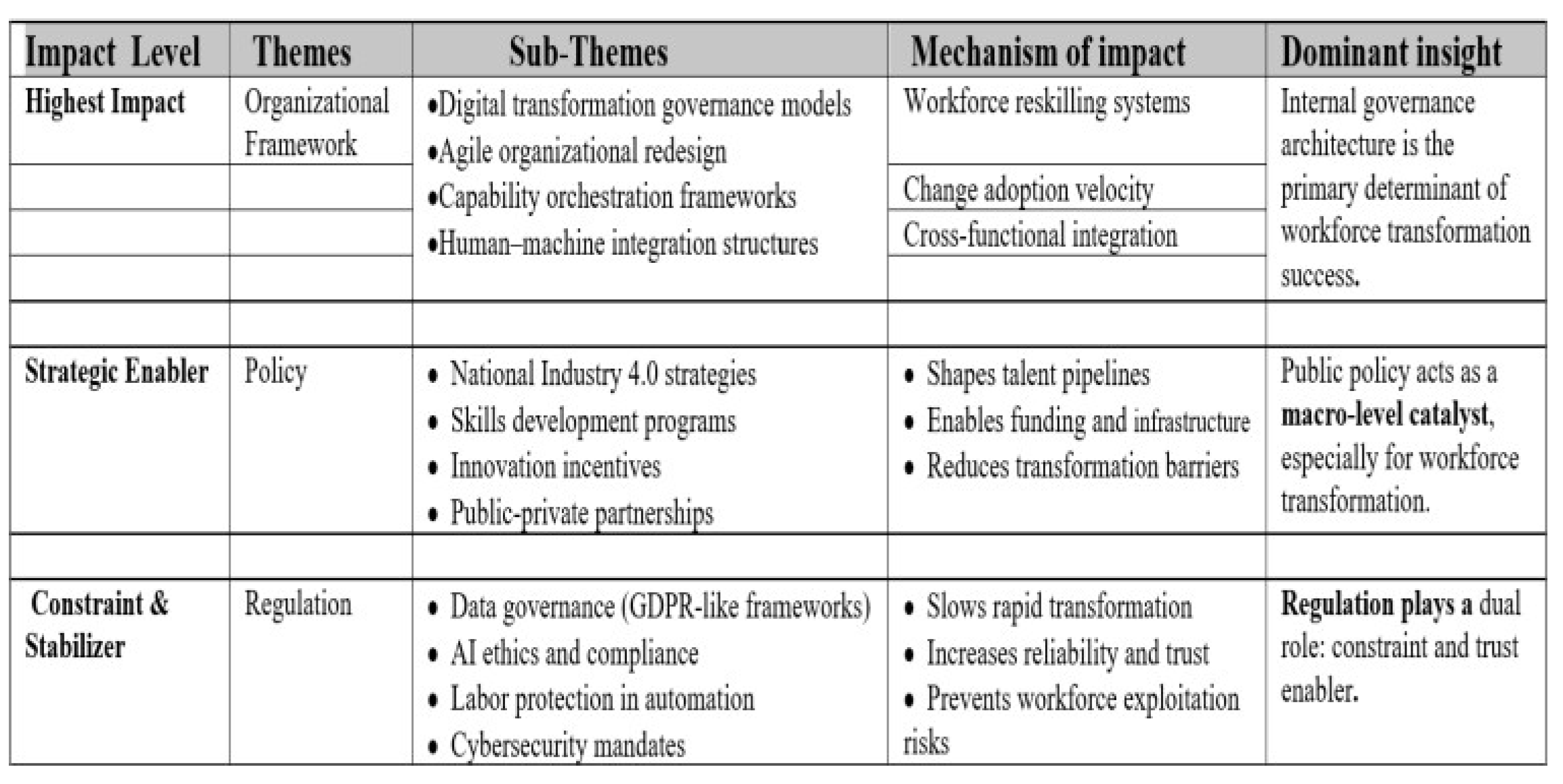 |
The result indicates a strong emphasis on organizational capabilities in industry 4.0.
The relationship amongst Policy, organizational framework, regulation and workforce transformation is not linear –rather it is Hierarchical and interdependent one:
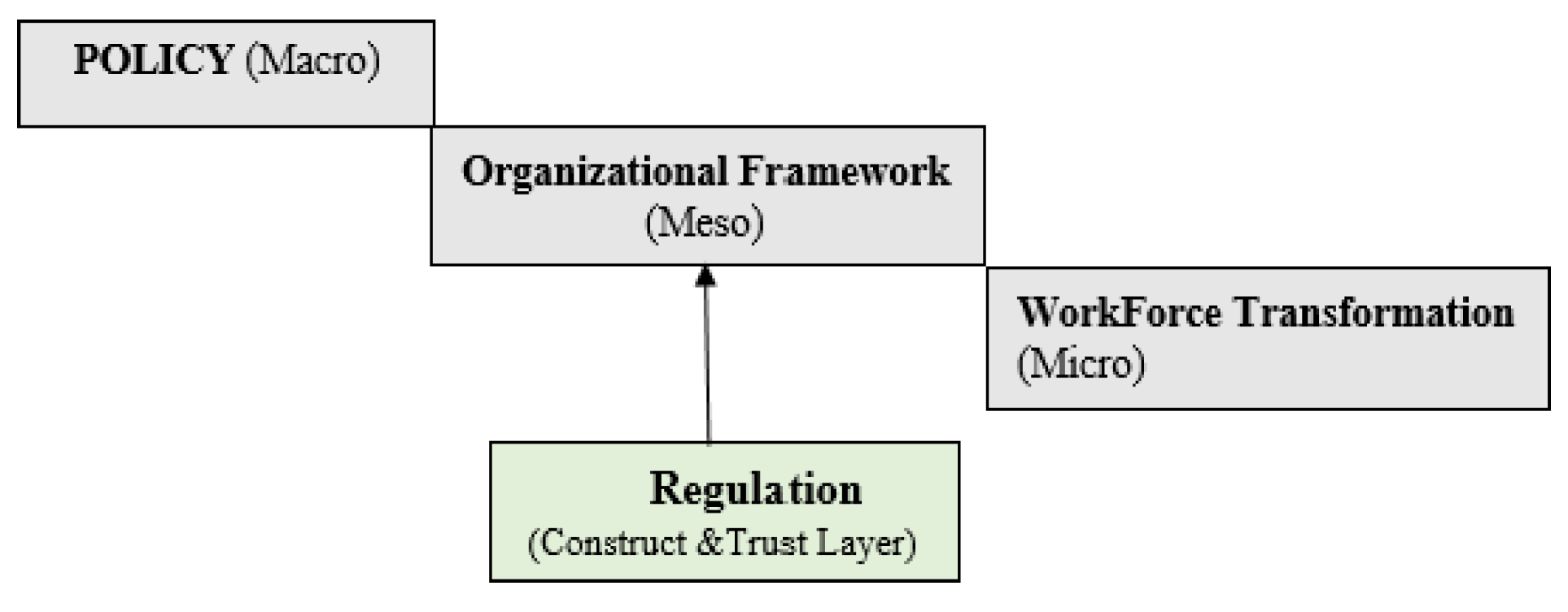
FigureF5. The Hierarchical relationship amongst policy, organizational framework Workforce transformation, and regulation.

ORGANIZATIONAL FRAMEWORK --. HIGHEST IMPACT
Dominant Insight: Internal governance is the primary determinant of workforce transformation success.
Key sub-themes include:
(i) Digital transformation governance models (ii) Agile organizational redesign (iii) Capability orchestration frameworks, (iv) Human–machine integration structures
Evidence Synthesis:
*. Organizational readiness models emphasize people–process–leadership alignment as central transformation drivers
*. Organizational-level factors dominate implementation success more than external forces.
The means of impact within an enterprise are: (i) Workforce reskilling systems (ii) Change adoption velocity (iii) cross-functional integration.
This implies that organizational frameworks act as the execution layer—translating policy and regulation into operational reality.
Governance-Led Transformation Pattern—The following pattern is associated with governance –led workforce transformation of an enterprise.
- Phase 1: Policy stimulation
- Phase 2: Organizational restructuring
- Phase 3: Workforce reskilling
- Phase 4: Regulatory stabilization
POLICY. -. STRATEGIC ENABLER
As a strategic enabler, polices provide a macro level overview of the vision oversight, serving as catalyst steering organizations internal architectural structure towards the overall goal. With various nations enacting visionary policies on industry 4.0and 5.0 such as Japan Society 5.0,Saudi Arabia’s vision 2030,and Germanys ‘Work 4.0, these strategic visionary policies serves as strategic enablers steering and propelling the nation’s industries towards future shared digital goals. This shows Industry 4.0 originated as a state-driven industrial strategy and Policy influences adoption, timing, investment levels, and workforce preparedness
Policy—The reason policy is secondary with rather mild influence on organizational readiness and workforce transformation is because its influence is indirect and broader and does not directly impact or influence individual organizational readiness.
Regulation- Ranks the lowest with minimal influence on organizational readiness and workforce transformation, often constraining innovation or lagging innovation and more reactive than proactive.
This research study is able to provide a more clearer structured insights on governance-impact hierarchy to organizational readiness and workforce transformation which is absent in most existing literatures. Giving industry practitioners and leadership a practical approach and area of concentration for organizational readiness and workforce transformation towards industry 4.0
GOVERNANCE—AS AN INDIRECT ENABLER -
Across all statistical tests, governance variables—particularly policy and regulation—demonstrated limited direct statistical influence. However, this should not be interpreted as lack of importance. Rather, it reflects their role as enabling conditions rather than immediate drivers. Policy shapes macro-level readiness (e.g., funding, skills pipelines), Regulation establishes trust, compliance, and operational boundaries, and lastly, Organizational frameworks help translate these into actionable processes.
REGULATION—CONSTRAINT AND ENABLER
A significant key and dominant insight is that regulation play dual role as a constraint and trust enabler. Providing the necessary oversight for compliance, standards, performance and ethics. Its key subthemes are: Data Governance (GDPR), AI ethics and compliance, Labor protection in automation, Cybersecurity.
Evidence Synthesis: -
A key synthesis evidence is that Regulatory concerns helps to provide assurance on privacy, trust and security, which can sometimes slow adoption but increase long-term sustainability. Also AI and CPS integration challenges, emphasize governance and compliance gaps.
Impact Mechanism: Moderating effect
While regulation has a moderating effect on the overall pace of organizational readiness and workforce transformation, slowing rapid transformation, it significantly helps to increase reliability and trust in the long-term
Implications for Industry 4.0
A key implication of this study is that organizational frameworks showcasing an enterprise internal architecture mediates 70-80% of policy impact, without internal transformation architecture, policy investment yield limited workforce transformation outcome. The findings of this study challenge the dominant assumption that governance mechanisms such as visionary policies and regulatory oversights directly drive workforce transformation and organizational readiness. Instead, they suggest the following: Governance operates as a structural backbone, not a direct lever of workforce transformation. Workforce transformation is capability-mediated and Finally, Linear models are insufficient for capturing Industry 4.0 complexity
FUTURE RESEARCH
Most existing readiness models are static and maturity- based, offering limited insight into how organizations adapt over time under regulatory, technological, and labor market uncertainty. Areas of future directions that can provide high impact on organizational readiness with Industry 4.0 should include the development of dynamic, longitudinal readiness models that capture learning, resilience, and adaptation. And also the investigation of feedback loops between policy interventions and organizational readiness progression. Also, future research models can be focused on empirical validation of readiness trajectories across different regulatory regimes and industrial sectors adopting and transitioning to Industry 4.0. The digital industry is a highly dynamic, evolving industry, and enterprise leadership evolves with different regulatory regimes, business models, and strategies to help combat the dynamic nature of the digital landscape in order to remain competitive.
Future research can also be focused on the impact of regulatory regimes on workforce transformation since limited empirical research exists on 1h5ow workforce transformation strategies respond to rapidly changing labor, data protection, and AI regulations. Future research directions can be based on comparative analysis of workforce transformation outcomes under different national and regional regulatory frameworks [8]. Impact of AI governance regulations on job design, skill demand, and task allocation, And Interaction effects between compliance requirements and workforce innovation capacity. Areas of future research could also focus on how manufacturers in small and medium-scale enterprises are supporting and leading their people in the context of digital transformation, as well as identifying opportunities for new directions and support for companies in Industry 4.0, both within and beyond the digital ecosystem. Future studies should capture leadership perspectives on the social and technical challenges, enablers, and barriers to human-technology interaction, adoption of newer technologies, and strategies for nurturing a human-centric manufacturing culture.
In an era where reskilling is often treated as an organizational responsibility, with insufficient attention to policy-enabled ecosystems. Future research direction can be focused on the impact of the effectiveness of public-private partnerships in large-scale industry 4.9 reskilling initiatives. And the role of government incentives, tax credits, rebates, and micro-credential frameworks in accelerating workforce readiness.
Adaptive Governance—Industry 4.0 visionary digital policies and regulations also provides adaptive governance measures that empower enterprises to provide resilience and crisis readiness initiatives. Resilience and Crisis readiness are measures of how an enterprise adapts to the impact of the changes from work transformation within the digital ecosystem. Future Research Directions can be focused on how workforce readiness and digital maturity interact during crises (e.g., pandemics, supply chain disruptions). Policy and governance mechanisms that enhance adaptive capacity and rapid workforce reconfiguration. And the longitudinal studies on post-crisis learning and governance evolution [2,9].
4. FINDINGS
The study demonstrates that while Industry 4.0 transformation is often framed as technology-driven, rather, governance structures—particularly organizational frameworks—are the dominant determinants of workforce transformation outcomes. While most developed nations have significantly embarked upon the enactment of various strategic visionary i4.0-policies to help position their countries towards the new digital era. Policy only serves as a macro-enabler, whereas regulation plays a stabilizing but constraining role. The study’s findings suggest that successful Industry 4.0 adoption depends less on external directives and more on internal organizational capability to translate those directives into actionable transformation architectures.
Practical Implications
For Industry practitioners the study provide clear insight that:
Investing in policy alignment without organizational restructuring will yield limited results and Regulatory compliance alone does not enhance workforce readiness, Rather, Priority should be placed on the following:
*. Internal governance design and architecture with organizational structure.
*. Workforce capability systems and business process infrastructure
capabilities systems.
*. Change management maturity.
5. CONCLUSION
Findings from the study shows that organizational framework has the most impact and is the most important element for organizational readiness and workforce transformation. This would enable enterprise to align their internal organizational architecture and structure to tap into the immense benefits of industry 4.0 digital era. While several nations have gone ahead to promulgate several policies to help serve as stimulant and energize organizations towards industry
4.0 but the responsibility inherently lies on the enterprise internal architecture and structure to tap into the immense benefits of the visionary policies to position the organizations towards readiness and workforce transformation.
The key implications of the findings from this study is that organizational framework mediates 70-80% of policy impact within an enterprise, this implies that without internal transformation architecture, policy investment yields limited workforce outcomes.
While Organizational readiness and maturity in Industry 4.0 are determined by a holistic set of interdependent factors spanning strategy, and leadership, culture, technology, data, people, governance, and ecosystems, organizational framework plays the most strategic impact towards industry 4.0. The ability to integrate all these factors together successfully to transform organizational business process with industry 4.0 digital technologies ensure organizational change management readiness. Readiness ensures that foundational capabilities are in place to begin transformation, while maturity reflects the depth, integration, and sustainability of Industry 4.0 adoption. Organizations that systematically address these critical factors are better positioned to progress from fragmented digital initiatives to fully integrated, intelligent, and resilient Industry 4.0 enterprises.
Investment costs and cost-benefits of digital assets of industry 4.0 are a necessary pre-requisite and integral part of successful digital outcome. Cost–benefit and ROI analysis are indispensable tools for managing Industry 4.0 investments, since they provide a clear insight into the business process activities and investment/production outcomes. Given the scale, complexity, and uncertainty of digital transformation, traditional financial metrics alone are insufficient. In terms of cost of ownership. A comprehensive and strategic approach—incorporating total cost of ownership, tangible and intangible benefits, risk mitigation, and long-term value creation—is essential.
Organizations that rigorously apply cost–benefit and ROI analysis are better positioned to prioritize investments, manage transformation risks, and realize sustainable competitive advantage in the Industry 4.0 era. Cognitive workload and ergonomics are foundational to the success of Industry 4.0. As work becomes increasingly digital, data-driven, and automated, human cognitive capacity becomes a critical system constraint. A comprehensive ergonomic approach—integrating cognitive workload management into system design, governance, and organizational culture—ensures that Industry 4.0 technologies enhance human performance rather than overwhelm it. Ultimately, sustainable digital transformation depends not on how intelligent machines become, but on how effectively they are designed to work with human cognition. It has become increasingly clear that future organizational readiness for digital workforce transformation in the industry 4.0 digital era are highly dependent on visionary digital policies serving as strategic instrument to create, shape and build digital awareness initiatives for enterprise both public and private adopt to prepare their workforce through reskilling and upskilling to help meet the labor demand of the digital ecosystem.
Industry 4.0 era represents a profound structural transformation of production systems, organizational architectures, and labor markets, driven by the convergence of digital, physical, and biological technologies. This transformation extends well beyond technological adoption; it fundamentally reshapes how organizations prepare for change, how work is organized and performed, and how governance systems evolve to ensure economic, social, and ethical sustainability. Organizational readiness and workforce transformation therefore emerge as inseparable and mutually reinforcing pillars of successful Industry 4.0 implementation that are built and shaped by visionary digital policies. At the organizational level, readiness is no longer defined by technological infrastructure alone but by the capacity to sense emerging digital opportunities and risks, seize them through strategic investment and leadership commitment, and continuously transform structures, processes, and cultures. Industry 4.0 demands adaptive organizations capable of managing persistent uncertainty, accelerating innovation cycles, and integrating human and machine capabilities. Firms that fail to develop these dynamic capabilities risk superficial digitalization, misalignment between technology and people, and erosion of long-term competitiveness.
Workforce Transformation—is central to this readiness. Rather than signaling the obsolescence of human labor, Industry 4.0 reconfigures work around new skill combinations, hybrid roles, and human–machine collaboration. Sustainable transformation requires systematic investment in reskilling, lifelong learning, and inclusive talent development strategies that enable workers to adapt alongside technology. When workforce development is treated as a strategic asset rather than a cost, organizations are better positioned to realize productivity gains, innovation, and employee resilience.
Policy, regulation, and governance frameworks play a decisive enabling role in shaping both organizational readiness and workforce outcomes. National Industry 4.0 strategies, labor market policies, education systems, and digital governance mechanisms establish the institutional conditions under which organizations and workers operate. Effective governance frameworks reduce uncertainty, promote trust, and align technological progress with societal values. Conversely, fragmented or reactive regulation can hinder adoption, exacerbate skills mismatches, and amplify social risks such as job polarization and inequality.
Critically, governance in Industry 4.0 must evolve from compliance-oriented regulation toward adaptive, participatory, and forward-looking models. Policies that support skills development, ethical automation, data sovereignty, and public–private collaboration strengthen the capacity of organizations and workers to co-evolve with technological change. In this sense, governance is not external to Industry 4.0 transformation but embedded within it, influencing how readiness and workforce transformation unfold over time.
Taken together, organizational readiness, workforce transformation, and policy–governance alignment form an integrated ecosystem rather than independent domains. Their interaction determines whether Industry 4.0 becomes a source of sustainable industrial renewal or a driver of disruption and exclusion. A human-centered, capability-based, and institutionally supported approach enables organizations to harness digital technologies while safeguarding social legitimacy and long-term resilience. In conclusion, Industry
4.0 success depends on recognizing that technological advancement, organizational adaptability, workforce empowerment, and effective governance are co-dependent processes. Organizations that align strategic readiness with continuous workforce transformation, supported by coherent policy and regulatory frameworks, are best positioned to navigate the complexities of Industry 4.0 and to translate digital innovation into inclusive, ethical, and enduring value creation.
Author Contributions
Evans Achara [PhD]: Conceptualization, Resources, Data cu- ration, Methodology, Formal Analysis, Investigation, Investigation, Project administration, Software, Supervision, Validation, Visualization, Writing—original draft, Writing—review & editing.
Funding
“This work is not supported by any external funding”.
Data Availability Statement
The data supporting the outcome of this research work has been reported in this manuscript.
Conflicts of Interest
“The author declare no conflicts of interest.”.
References
- Agarwal, V.; Mathiyazhagan, K.; Malhotra, S.; Malhotra, S.; Saikouk, T. Analysis of challenges in sustainable human resource management due to disruptions by Industry 4.0: An emerging economy perspective. Int. J. ofManpower 43(2), 513–541. [CrossRef]
- Agolla, J.E. Human Capital in the Smart Manufacturing and Industry4.0Revolution; Interchopen.com., 2023; Volume Chpt.3, pp. 41–52. [Google Scholar] [CrossRef]
- Alam, S.; Dhamija, P. Human resource development 4.0 (HRD 4.0) in the apparel Industry of Bangladesh: A Theoretical framework and future research directions. Int. J. Manpow. 2022, 43(2), 263–285. [Google Scholar] [CrossRef]
- Arunachalam, H. Chapter2 Organ. Change Manag. Age AI-Driven Bus. Anal. 2025, 20–39. [CrossRef]
- BABL. AI | The Current State of AI Governance. BABL AI Inc.& The Algorithmic Bias Lab. 2023, v1.(0), 1–36. Available online: https://ethics.nd.edu/assets/606131/current_state_of_ai_governance.pdf.
- Birkel, H.S.; Veile, J.W.; Muller, J.M.; Hartmann, E.; Voigt, K.I. Development of a Risk Framework for Industry 4.0 in the Context of Sustainability for Established Manufacturers. Sustainability 2019, 11(2), 384. [Google Scholar] [CrossRef]
- Beaux, H.; Karimi, P.; Pop, O.; Clark, R. Guiding Empowerment Model: Liberating Neurodiversity in Online Higher Educating. In 2024 IEEE Frontiers in Education (FIE); 2024; pp. 1–9. [Google Scholar] [CrossRef]
- Beauchamp, C.; Thomas, L. Understanding teacher identity: An overview of issues in the literature and implications for teacher education. Camb. J. Educ. 2009, 39(2), 175–189. [Google Scholar] [CrossRef]
- Black, J.; Straker, K. Managing disability disclosure: Grey areas and hard decisions. J. Manag. Organ. 2010, 16(5), 738–754. [Google Scholar]
- Bleady, A.; Hafiez-Ali, A.; Ibrahim, S.B. Dynamic Capabilities Theory: Pinning Down a Shifting Concept. Acad. Account. Financ. Stud. J. 2018, 22(2), 1–16. Available online: https://www.hbs.edu/ris/Publication%20Files/16-036_3be51325-1fb0-. [CrossRef]
- Bezobrazov, S.; Anfilets, S.; Dolny, R.; Yakimovich, D. Predictive Analytics For Industry 4.0. Int. Sci. J. 2019, 6(IV), 273–276. Available online: https://stumejournals.com/journals/i4/2019/6/273.full.pdf.
- DaSilva, B.P.; Soltovski, R.; Pontes, J.; Treinta, F.T.; P. L eitão, P.; Mosconi, E.; de- Resende, L.M.M.R.T.; Yoshino, R.T. Human resources management 4.0: Literature review and trends. ComputerandIndustrialEngineering 2022. [Google Scholar] [CrossRef]
- Dhanpat, N.; Buthelezi, Z.P.; Joe, J.R. Industry 4.0: The Role of Human Resources Professionals,S.A Journal of Human Resource Management. (Online) 2071-078X,1683-7584. [CrossRef]
- Eger, L.; ŽIŽKA, M. Industry 4.0,digital transformation and human resource Management:Emerging themes and research trends in the context of the Visegrad countries. Oecon. Copernic. 2024, 3, 1021–1065. [Google Scholar] [CrossRef]
- Flores, E.; Xu, X.; Lu, Y. Human Capital 4.0: A Workforce competence typology for Industry 4.0. J. Manuf. Technol. 2020, 31(4), 687–703. [Google Scholar] [CrossRef]
- Fredberg, T.; Pregmark, J.E. Organizational transformation: Handling the double- Edged sword of urgency. Long. Range Plan. 2022, 55 102091, 1–19. [Google Scholar] [CrossRef]
- Gomide, P.; Patricio, R.; Gancho, S. Human-Centered Design Approaches to Industry 4.0 Challenges: Directions for Future Research. Int. J. Des. Manag. Prof. Pract. 2023, 19(1), 1–34. [Google Scholar] [CrossRef]
- Gröger, C.; Bosch, R. GmbH; Bosch-Platz, R. Building an Industry 4.0 Analytics Platform. Practical Challenges, Approaches and Future Research Directions. Datenbank-Spektrum 2018, 18(1), 5–14. [Google Scholar] [CrossRef]
- Ghai, A.; Reddy, V.Y.; Manohar, S. Assistive Technology Research and Disability Studies in the Global South:The Nerd for Synergy. 2020. [Google Scholar] [CrossRef]
- Gröger, Christoph. Building an Industry 4.0 Analytics Platform. Practical Challenges, Approaches and Future Research Directions. Datenbank-Spektrum 2018, 18(1), 5–14. [Google Scholar] [CrossRef]
- Grzybowska, K.; Łupicka, A. Key competencies for Industry 4.0. In Economics&Management Innovations (ICEMI); 2022; pp. 250–253. Available online: www.researchgate.net.
- Huttenlocher, D.; Ozdagler, A.; Goldston, D. A Framework for U.S. AI Governance: Creating:A Safe and Thriving AI Sector. In Adhoc Committee on AI regulation. Policy Brief.; 2023; pp. 1–10. [Google Scholar]
- Ida, H.; Rukmani, P. Predictive Maintenance in Industry 4.0: A survey of Planning Models and Machine Learning Techniques. Peer J. Comput. Sci. 2024, 10. [Google Scholar] [CrossRef] [PubMed]
- Kadir, B. A.; Broberg, O. Human-centered design of work systems in the transition to Industry 4.0. Appl. Ergon. 2021, 92. [Google Scholar] [CrossRef] [PubMed]
- A comparative Policy analysis among Chine, Germany and the USA. GlobalTransition 2019, 1, 3–14. [CrossRef]
- Kucinska-, L.; Wojtowicz, A. Organizational Maturity Models-Review and Classification. Int. Conf. Innov. Sci. Educ. 2019, 20(029), 1–7. [Google Scholar] [CrossRef]
- Lin, K.C.; Shyu, J.Z.; Ding, K. A Cross-Strait Comparison of Innovation Policy under Industry 4.0 and Sustainability Development Transition. Sustainability 2017, 9(786), 1–17. [Google Scholar] [CrossRef]
- Markatos; Nikolaos, G.; Mousavi, A. Manufacturing Quality Assessment in the industry 4.0 era: A review. In Total Quality Management & Business Excellence; Taylor & FrancisGroup, 2023; pp. 1–28. [Google Scholar] [CrossRef]
- Michelotto, F.; Jola, L.A. Organizational-Digital Transformation Readiness:An Exploratory Investigation. J. Theor. Appl.Electron.Commer.Res. 2024, 19(4), 3283–3304. [Google Scholar] [CrossRef]
- Ngoc, N.H. Human-Centered design in industry 4.0: case study review and opportunities for Future research. J. Intell. Manuf. 2021, 1–42. [Google Scholar] [CrossRef] [PubMed]
- Owen, B. The Influence of Digital Leadership on Organizational Change; ResearchGate, 2025; pp. 1–7. [Google Scholar]
- Ozkan-Ozen, Y.D.; Kazancoglu, Y. Analysing Workforce development Challenges in the Industry 4.0. Int. J. Manpow. 2020, 43(2), 310–333. [Google Scholar] [CrossRef]
- Pisano, G.P. A Normative Theory of Dynamic Capabilities: Connecting Strategy, Know-How, and Competition. In WorkingPaper16- 036; HarvardBusiness School, 2015; pp. 1–42. Available online: https://www.hbs.edu.
- Rahmadani, P.; Fiteriani, A. Navigating Digital Disruption: The Role of Digital Leaders in Managing Change and Innovation. FacultyofEconomicandBusiness 2025, 1–16. [Google Scholar] [CrossRef]
- Reischauer, G. Industry 4.0 as Policy-driven discourse to institutionalize-innovation-Systems-in-Manufacturing. 2018, 132, 26–33. [Google Scholar] [CrossRef]
- Rhodes, D.; Jeffers, J. Human-Centric Manufacturing Culture. Digital Manufacturing Instirtude DMI Research Study; 2023; pp. 1–3. Available online: https://myiaae.org.
- Silva, R.P.; Saraiva, C.; Mamede, H.S. Assessment-of organizational readiness for digital Transformation in SMEs. Int. Conf. Ind. Sci. Comput. Sci. Innov. Procedia Comput. 2022, 24(22), 362–369. [Google Scholar] [CrossRef]
- Tasleem, N.; Gulati, D.; Sharma, S. Organizational Readiness for Change: A Multi-Dimensional Framework. Iconic Res. Eng. J. 2025, 6(10), 1095–1108. [Google Scholar] [CrossRef]
- Weyer, S.; Schmitt, M.; Ohmer, M.; Goerecky, D. Towards Industry 4.0—Standardization as the crucial challenge for highly modular, multi-vendor production systems. In Science Direct; International Federation of Automatic Control, 2015; Volume 48-3, pp. 579–584. [Google Scholar] [CrossRef]
Disclaimer/Publisher’s Note: The statements, opinions and data contained in all publications are solely those of the individual author(s) and contributor(s) and not of MDPI and/or the editor(s). MDPI and/or the editor(s) disclaim responsibility for any injury to people or property resulting from any ideas, methods, instructions or products referred to in the content. |
© 2026 by the authors. Licensee MDPI, Basel, Switzerland. This article is an open access article distributed under the terms and conditions of the Creative Commons Attribution (CC BY) license (http://creativecommons.org/licenses/by/4.0/).
Copyright: This open access article is published under a Creative Commons CC BY 4.0 license, which permit the free download, distribution, and reuse, provided that the author and preprint are cited in any reuse.


