
Submitted:
05 August 2026
Posted:
07 August 2026
You are already at the latest version
Abstract
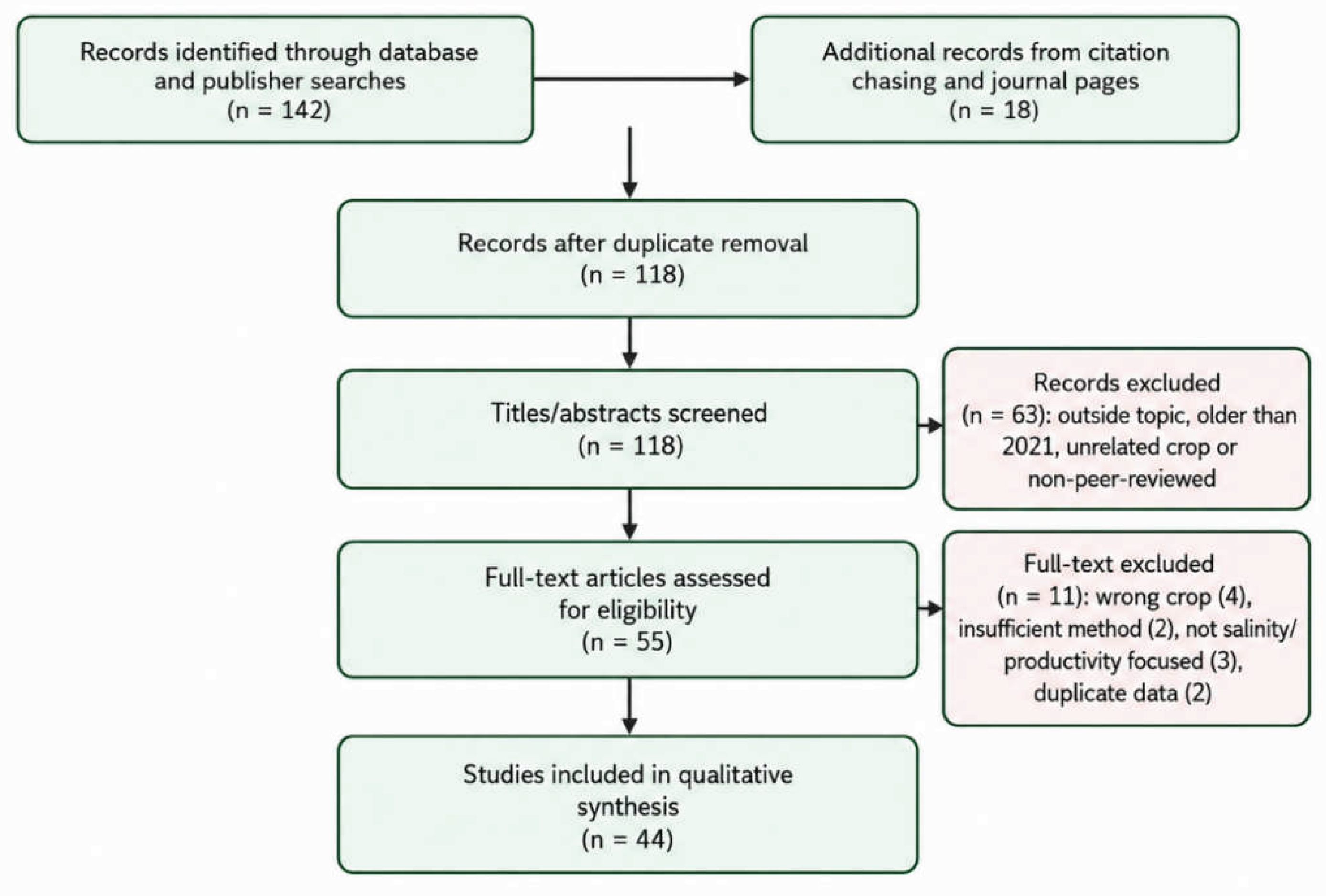
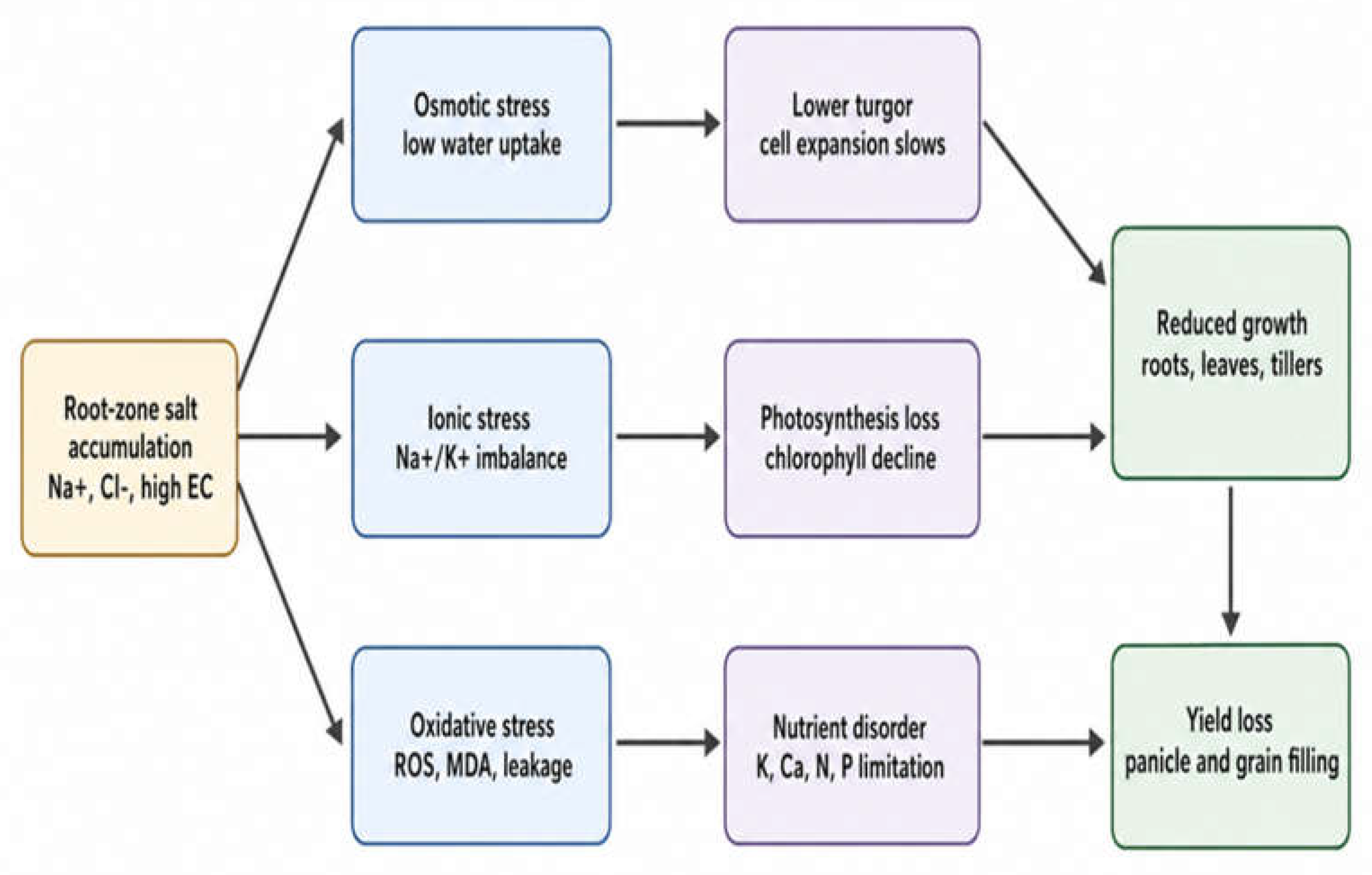
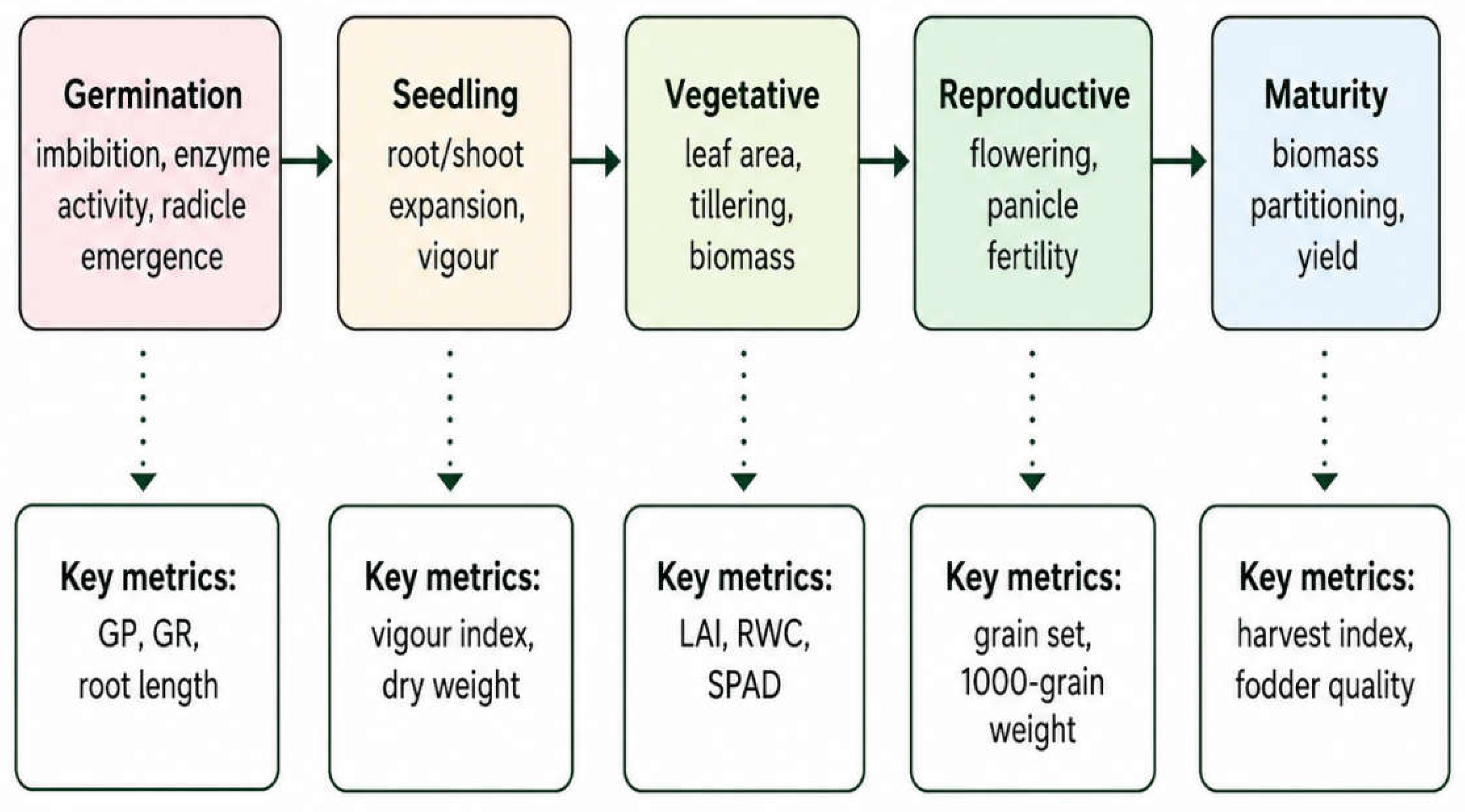
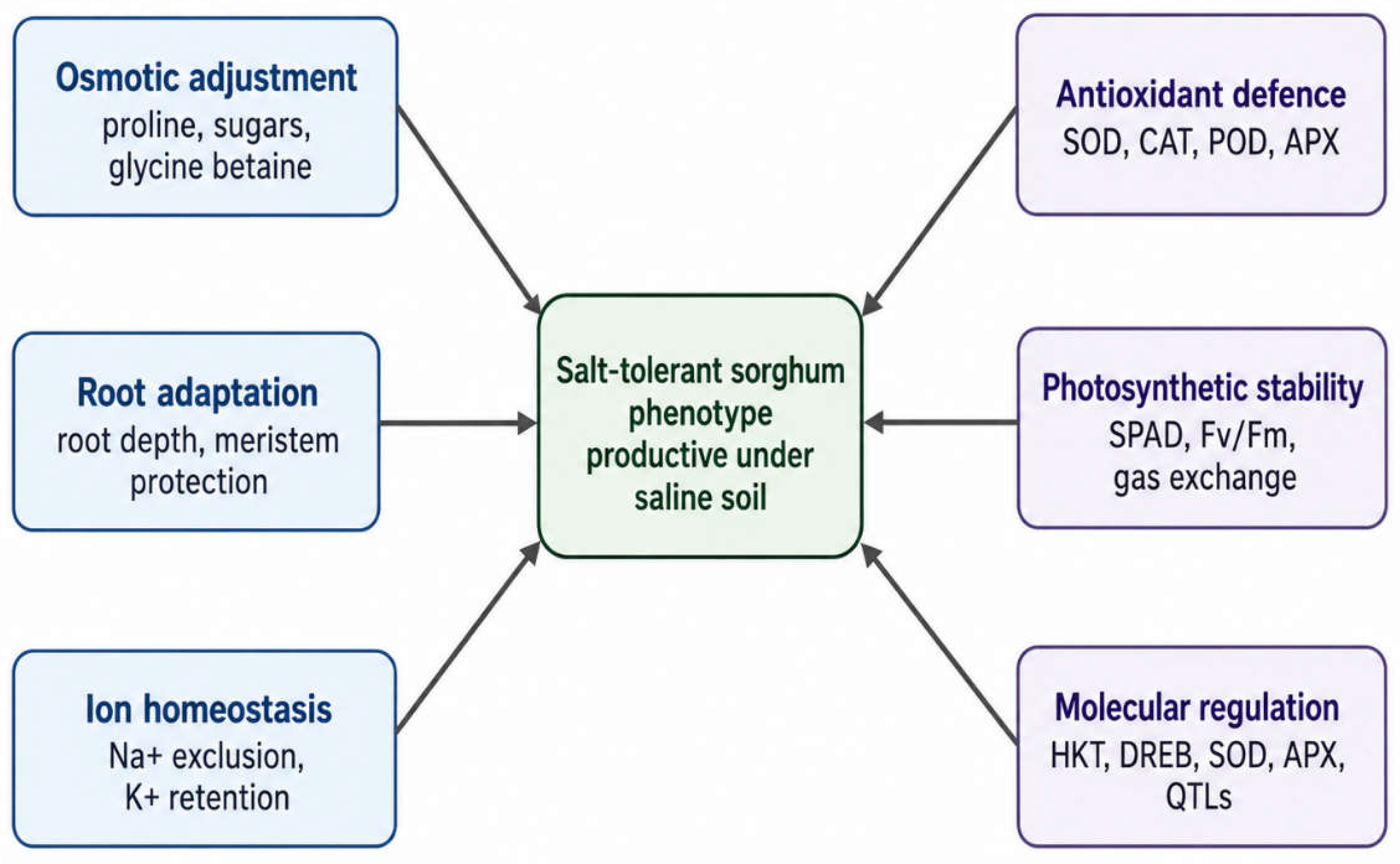
Salinity is a growing problem for cereal cultivation because it causes multiple stresses, such as osmotic, ionic, nutritional, and oxidative, on the crop. Sorghum (Sorghum bicolor L. Moench) is considered a climate-smart C4 cereal to grow for food, feed, fodder, forage, and bioenergy, but recent studies have indicated that salinity continues to hinder establishment, biomass, reproductive growth, and yield. This review compiles the latest literature on the impacts of salinity on sorghum from 2021 to 2026 with a focus on germination, vegetative growth, physiological and biochemical responses, ion homeostasis, genetic control, productivity, mitigation, and future breeding priorities. The 160 records found in the structured search were screened, with 44 recent sources included. Salt stress has been shown to lower germination rate, rate of root and shoot elongation, expansion of leaves, stability of chlorophyll, gas exchange, dry matter accumulation, panicle fertility, and grain filling. Tolerant genotypes have a higher K: Na ratio, greater antioxidant potential, greater osmotic adjustment, more stable photosynthetic systems, and stronger root systems. Recent omics and genome-wide association studies suggest that tolerance to salinity in sorghum is polygenic and consists of genes involved in ion transport, stress signalling, antioxidant regulation, osmolyte metabolism and growth maintenance. The review suggests a shift from descriptive trait lists to full-cycle field validation, as well as the use of multi-trait selection indices and a convergence of breeding with seed priming, soil-water management, amendments, and beneficial microorganisms. Sorghum shows great potential in salt-affected systems; however, sustainable productivity will require the matching of tolerant varieties with agronomic packages that have been locally tested.
Keywords:
1. Introduction
2. Review Methodology and Search Counts
3. Soil Salinity and Sorghum Relevance in Salt-Affected Agriculture
4. Evidence from Germination and Seedling Establishment
5. Phenotypic, Physiological, and Biochemical Responses
6. Molecular, and Omics Evidence
7. Biomass Reproductive Development, and Yield Productivity
8. Agronomic and Biological Management Strategies
9. Breeding and Screening Implications
10. Research Gaps and Future Directions
11. Conclusions
Author Contributions
Funding
Data Availability Statement
References
- FAO. Global Status of Salt-Affected Soils; Food and Agriculture Organization of the United Nations: Rome, Italy, 2024.
- Acharya, B.R.; Kandel, P.; Khanal, S.; Paudel, B. Strategies for combating plant salinity stress: the potential of plant hormones and signalling networks. Frontiers in Plant Science 2024, 15, 1406913. [CrossRef]
- Maryum, Z.; Luqman, T.; Nadeem, S.; Khan, S.; Wang, B.; Ditta, A.; Khan, M.K.R. An overview of salinity stress, mechanism and management in crop plants. Frontiers in Plant Science 2022, 13, 907937. [CrossRef]
- Atta, K.; Mondal, S.; Gorai, S.; Singh, A. P.; Kumari, A.; Ghosh, T.; Roy, A.; Hembram, S.; Gaikwad, D. J.; Mondal, S. Impacts of salinity stress on crop plants: improving salt tolerance through genetic and molecular dissection. Frontiers in Plant Science 2023, 14, 1241736. [CrossRef]
- Zhang, H.; Yu, C.; Zhang, Q.; Qiu, Z.; Zhang, X.; Hou, Y.; Zang, J. Salinity survival: molecular mechanisms and adaptive strategies in plants. Frontiers in Plant Science 2025, 16, 1527952. [CrossRef]
- ICRISAT. Sorghum Overview; International Crops Research Institute for the Semi-Arid Tropics, 2024.
- Fontanet-Manzaneque, J. B.; Hernández, D. M.; Giordano, A.; Caño-Delgado, A. I. Sorghum as a monocot model for drought research. Frontiers in Plant Science 2025, 16, 1665967. [CrossRef]
- Alkan, Ç.; Devlet, A. Evaluation of Salinity Tolerance and Alleviation Potential in Sweet Sorghum (Sorghum bicolor L.) and Switchgrass (Panicum virgatum L.). Sustainability 2026, 18, 12, 6272. [CrossRef]
- Rajabi Dehnavi, A.; Zahedi, M.; Piernik, A. Understanding salinity stress responses in sorghum: exploring genotype variability and salt tolerance mechanisms. Frontiers in Plant Science 2024, 14, 1296286. [CrossRef]
- Dewi, E. S.; Abdulai, I.; Bracho-Mujica, G.; Appiah, M.; Rötter, R. P., Agronomic and physiological traits response of three tropical sorghum (Sorghum bicolor L.) cultivars to drought and salinity. Agronomy 2023, 13, 11, 2788. [CrossRef]
- Punia, H.; Tokas, J.; Mor, V. S.; Bhuker, A.; Malik, A.; Singh, N.; Alsahli, A. A.; Hefft, D. I. Deciphering reserve mobilization, antioxidant potential, and expression analysis of starch synthesis in sorghum seedlings under salt stress. Plants 2021, 10, 11, 2463. [CrossRef]
- Sagar, A.; Haque, S.; Hossain, A.; Uddin, N.; Tajkia, J. E.; Mia, A.; Shabi, T. H.; Fakir, S. A.; Kader, A.; Soufan, W. Genotypic divergence, photosynthetic efficiency, sodium extrusion, and osmoprotectant regulation conferred salt tolerance in sorghum. Phyton (Buenos Aires) 2023, 92, 8, 2349-2368. [CrossRef]
- Amombo, E.; Gbibar, M.; Ashilenje, D.S.; Hirich, A.; Kouisni, L.; Oukarroum, A.; Ghoulam, C.; El Gharous, M.; Nilahyane, A. Screening for genetic variability in photosynthetic regulation provides insights into salt performance traits in forage sorghum under salt stress. BMC Plant Biology 2024, 24, 690. [CrossRef]
- Jeon, D.; Kim, J.-B.; Kang, B.-C.; Kim, C. Deciphering the genetic mechanisms of salt tolerance in Sorghum bicolor L.: Key Genes and SNP associations from comparative transcriptomic analyses. Plants 2023, 12, 14, 2639. [CrossRef]
- Kang, J.; Wang, X.-L.; Yan, S.-J.; Guo, H.; Cui, Y.-N. Comparative physiological and gene expression analyses provide insights into ion transports and osmotic adjustment of sweet sorghum under salt stress. Agronomy 2024, 14 8, 1849. [CrossRef]
- Wang, L.; Xing, Z.; Zhou, J.; Jiang, M.; Fan, Q.; Yang, G.; Li, L.; Wang, Y.; Habyarimana, E.; Wang, Y. Genome-wide association study of salt tolerance in sorghum during germination. Frontiers in Plant Science 2025, 16, 1682270. [CrossRef]
- Chigbu, U.E.; Atiku, S.O.; Du Plessis, C.C. The science of literature reviews: searching, identifying, selecting, and synthesising. Publications 2023, 11, 2.
- Sukhera, J. Narrative reviews: flexible, rigorous, and practical. Journal of Graduate Medical Education 2022, 14, 414-417. [CrossRef]
- Page, M. J.; McKenzie, J. E.; Bossuyt, P. M.; Boutron, I.; Hoffmann, T. C.; Mulrow, C. D.; Shamseer, L.; Tetzlaff, J. M.; Akl, E. A.; Brennan, S. E. The PRISMA 2020 statement: an updated guideline for reporting systematic reviews. bmj 2021, 372 . [CrossRef]
- Hao, S.; Wang, Y.; Yan, Y.; Liu, Y.; Wang, J.; Chen, S. A review on plant responses to salt stress and their mechanisms of salt resistance. Horticulturae 2021, 7, 6, 132. [CrossRef]
- Ahmed, A. M.; Wais, A. H.; Ditta, A.; Islam, M. R.; Chowdhury, M. K.; Pramanik, M. H.; Ismaan, H. N.; Soufan, W.; El Sabagh, A.; Islam, M. S. Seed germination and early seedling growth of sorghum (Sorghum bicolor L. Moench) genotypes under salinity stress. Polish Journal of Environmental Studies 2024, 33, 3, 3019-3032. [CrossRef]
- Peduzzi, A.; Piacentini, D.; Brasili, E.; Della Rovere, F.; Patriarca, A.; D’Angeli, S.; Altamura, M.M.; Falasca, G. Salt stress alters root meristem definition, vascular differentiation and metabolome in Sorghum bicolor (L.) genotypes. Environmental and Experimental Botany 2024, 226, 105876. [CrossRef]
- Alzahrani, Y.; Abdulbaki, A.S.; Alsamadany, H. Genotypic variability in stress responses of Sorghum bicolor under drought and salinity conditions. Frontiers in Genetics 2025, 15, 1502900. [CrossRef]
- Guo, X.; Zhi, W.; Feng, Y.; Zhou, G.; Zhu, G. Seed priming improved salt-stressed sorghum growth by enhancing antioxidative defense. PLOS ONE 2022, 17, e0263036. [CrossRef]
- Umair Hassan, M.; Chattha, M. U.; Khan, I.; Khan, T. A.; Nawaz, M.; Tang, H.; Noor, M. A.; Asseri, T. A.; Hashem, M.; Guoqin, H. Zinc seed priming alleviates salinity stress and enhances sorghum growth by regulating antioxidant activities, nutrient homeostasis, and osmolyte synthesis. Agronomy 2024, 14, 8, 1815. [CrossRef]
- Sachdev, S.; Ansari, S.A.; Ansari, M.I.; Fujita, M.; Hasanuzzaman, M. Abiotic stress and reactive oxygen species: generation, signalling, and defense mechanisms. Antioxidants 2021, 10, 277. [CrossRef]
- Punia, H.; Tokas, J.; Malik, A.; Bajguz, A.; El-Sheikh, M. A.; Ahmad, P. Ascorbate–glutathione oxidant scavengers, metabolome analysis and adaptation mechanisms of ion exclusion in sorghum under salt stress. International Journal of Molecular Sciences 2021, 22, 24, 13249. [CrossRef]
- Mulaudzi, T.; Nkuna, M.; Sias, G.; Doumbia, I. Z.; Njomo, N.; Iwuoha, E. Antioxidant capacity of chitosan on sorghum plants under salinity stress. Agriculture 2022, 12, 10, 1544. [CrossRef]
- Ikebudu, V.C.; Nkuna, M.; Ndou, N.; Ajayi, R.F.; Chivasa, S.; Cornish, K.; Mulaudzi, T. Carbon monoxide alleviates salt-induced oxidative damage in Sorghum bicolor by inducing the expression of proline biosynthesis and antioxidant genes. Plants 2024, 13, 782. [CrossRef]
- Sun, W.; He, Z.; Liu, B.; Ma, D.; Si, R.; Li, R.; Wang, S.; Malekian, A. Changes in photosynthetic efficiency, biomass, and sugar content of sweet sorghum under different water and salt conditions in arid region of Northwest China. Agriculture 2024, 14, 12, 2321. [CrossRef]
- Singh, M.; Nara, U.; Kumar, A.; Choudhary, A.; Singh, H.; Thapa, S. Salinity tolerance mechanisms and their breeding implications. Journal of Genetic Engineering and Biotechnology 2021, 19, 173. [CrossRef]
- Xu, Y.; Bu, W.; Xu, Y.; Fei, H.; Zhu, Y.; Ahmad, I.; Nimir, N. E. A.; Zhou, G.; Zhu, G. Effects of salt stress on physiological and agronomic traits of rice genotypes with contrasting salt tolerance. Plants 2024, 13, 8, 1157. [CrossRef]
- Haque, M.E.; Abdullah, M.R.; Sarwar, A.K.M.G.; Alam, M.A.; Talukder, M.A.H.; Saha, B.K.; Hossain, A.K.M.Z. Morpho-physiological and biochemical responses of sorghum germplasm to salinity stress under pot culture. Plant Physiology and Soil Chemistry 2025, 5, 105-111.
- Alkharabsheh, H. M.; Seleiman, M. F.; Hewedy, O. A.; Battaglia, M. L.; Jalal, R. S.; Alhammad, B. A.; Schillaci, C.; Ali, N.; Al-Doss, A. Field crop responses and management strategies to mitigate soil salinity in modern agriculture: A review. Agronomy 2021, 11, 11, 2299. [CrossRef]
- Yang, J.; Zhang, W.; Wang, T.; Xu, J.; Wang, J.; Huang, J.; Sun, Y.; Ni, Y.; Guo, Y. Enhancing sweet sorghum emergence and stress resilience in saline-alkaline soils through ABA seed priming: insights into hormonal and metabolic reprogramming. BMC genomics 2025, 26, 1, 241. [CrossRef]
- Gao, Z.-W.; Ding, J.; Ali, B.; Nawaz, M.; Hassan, M. U.; Ali, A.; Rasheed, A.; Khan, M. N.; Ozdemir, F. A.; Iqbal, R. Putting biochar in action: a black gold for efficient mitigation of salinity stress in plants. Review and future directions. ACS omega 2024, 9, 29, 31237-31253. [CrossRef]
- Rathinapriya, P.; Maharajan, T.; Jothi, R.; Prabakaran, M.; Lee, I.-B.; Yi, P.-H.; Jeong, S. T. Unlocking biochar impacts on abiotic stress dynamics: a systematic review of soil quality and crop improvement. Frontiers in Plant Science 2025, 15, 1479925. [CrossRef]
- Zubairu, A. M.; Ocansey, C. M.; Gangwar, R. K.; Szegi, T. A.; Boros, N.; Sebők, A.; Dálnoki, B. A.; Takács, A.; Gulyás, M. Overview of biochar role in remediating soil salinity stress in crops. Discover Sustainability 2025, 6, 1, 1185. [CrossRef]
- Daba, A. W. Rehabilitation of soil salinity and sodicity using diverse amendments and plants: a critical review. Discover Environment 2025, 3, 1, 53. [CrossRef]
- Al-Turki, A.; Murali, M.; Omar, A. F.; Rehan, M.; Sayyed, R. Recent advances in PGPR-mediated resilience toward interactive effects of drought and salt stress in plants. Frontiers in microbiology 2023, 14, 1214845. [CrossRef]
- Kumawat, K.C.; Sharma, B.; Nagpal, S.; Kumar, A.; Tiwari, S.; Nair, R.M. Plant growth-promoting rhizobacteria: salt stress alleviators to improve crop productivity for sustainable agriculture development. Frontiers in Plant Science 2023, 13, 1101862. [CrossRef]
- Nguyen, T.T.M.; Ha-Tran, D.M.; Huang, C.-C. Plant-growth-promoting rhizobacteria for mitigating salinity stress in rice farming: a review of the Vietnamese Mekong Delta. Frontiers in Plant Science 2025, 16, 1635193. [CrossRef]
- Wang, Z.; Wang, J.; Cheng, M.; Du, Y.; Godwin, I.; Wang, L.; Lv, P.; Liu, G. Biotechnological and genetic innovations to enhance sorghum adaptation under climate change. Frontiers in Plant Science 2026, 17, 1757792. [CrossRef]
- Vasanth, P.; Kannappan, M. Saline and sodic soil reclamation: Recent advances and agronomic implications. JOSTA: Journal of Sustainable Technology in Agriculture 2026, 2, 1. [CrossRef]

| Study | Type of evidence | Key contribution to this review |
|---|---|---|
| [21] | Sorghum germination experiment | NaCl reduced germination, root/shoot length, and biomass; variety differences supported early-stage screening. |
| [9] | Sorghum genotype comparison | Ten genotypes exposed to 60 and 120 mM NaCl showed divergent biomass, physiological, and biochemical responses. |
| [13] | Forage sorghum photosynthesis study | Photosynthetic regulation and PIABS helped identify salt-performance traits linked to forage yield. |
| [22] | Root anatomy/metabolome | Salt stress altered root meristem definition, vascular differentiation, and metabolome. |
| [12] | Morpho-physiological genotype screen | Photosynthetic efficiency, sodium extrusion, and osmoprotectants explained tolerance in hybrid sorghum. |
| [14] | Comparative transcriptomics | Candidate salt-tolerance genes and SNPs were identified in a mutant sorghum line. |
| [16] | GWAS | 245 mini-core accessions produced 35 loci and 39 candidate genes for germination-stage salt tolerance. |
| [23] | Combined drought-salinity study | Physiology, antioxidants, and stress-gene expression varied across genotypes under individual and combined stresses. |
| [24] | Seed priming experiment | Priming improved salt-stressed sorghum growth through antioxidative defence. |
| [25] | Zinc seed priming experiment | Zinc priming improved sorghum germination, growth, and biochemical functioning under salinity. |
| Tolerance mechanism | Representative markers | Breeding/management implication |
| Osmotic adjustment | Proline, soluble sugars, glycine betaine, leaf water status | Supports water balance; interpret with growth and yield to avoid mistaking injury response for tolerance. |
| Ion homeostasis | Na+, K+, K+/Na+, Ca2+, tissue ion partitioning | Key for selection: tolerant lines preserve K+ and restrict toxic Na+ in young leaves. |
| Antioxidant defence | SOD, CAT, POD, APX, MDA, electrolyte leakage | Lower injury and higher detoxification indicate cellular protection. |
| Root adaptation | Root length, root dry weight, meristem integrity, root-to-shoot ratio | Improves water/nutrient acquisition and early establishment. |
| Molecular regulation | HKT, DREB, SOD/APX/CAT genes, GWAS loci, SNP markers | Requires functional validation and field phenotyping before breeding deployment. |
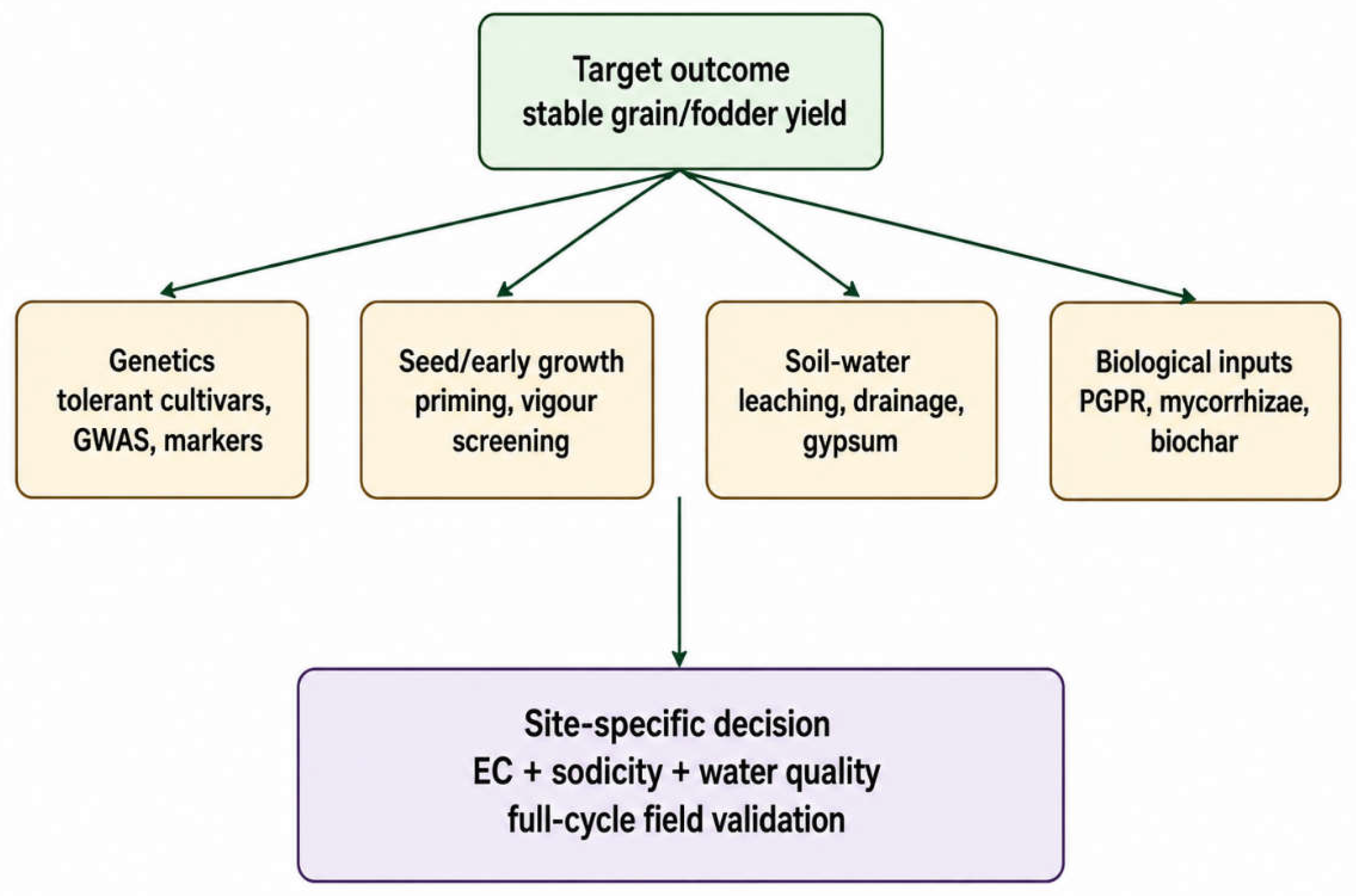
| Strategy | Evidence strength in recent literature | Likely benefit | Caution for recommendation |
| Salt-tolerant cultivars | High | Improves establishment, biomass, and yield stability | Must be validated across soil EC, climate, and product target. |
| Seed priming | Moderate to high | Improves early vigour and antioxidative defence | Agent and dose are genotype- and site-dependent. |
| Biochar/organic amendments | Moderate | Improves soil structure, nutrient status, and stress buffering | Material quality and application rate influence outcomes. |
| Gypsum in sodic soils | Moderate | Improves aggregation, infiltration, and leaching | Only appropriate where sodicity is diagnosed. |
| PGPR/mycorrhizae | Moderate | Improves root growth, nutrient uptake, and stress signalling | Field consistency depends on strain, soil, and climate. |
| Irrigation and drainage | High conceptually | Reduces root-zone salt accumulation | Requires water availability, infrastructure, and farmer resources. |
Disclaimer/Publisher’s Note: The statements, opinions and data contained in all publications are solely those of the individual author(s) and contributor(s) and not of MDPI and/or the editor(s). MDPI and/or the editor(s) disclaim responsibility for any injury to people or property resulting from any ideas, methods, instructions or products referred to in the content. |
© 2026 by the authors. Licensee MDPI, Basel, Switzerland. This article is an open access article distributed under the terms and conditions of the Creative Commons Attribution (CC BY) license.