
Submitted:
04 August 2026
Posted:
05 August 2026
You are already at the latest version
Abstract
Typhoid fever, caused by Salmonella enterica serovars Typhi and Paratyphi, remains a major public health threat across Africa and Asia, causing substantial annual morbidity. Transmission persists in low- and middle-income countries (LMICs), where access to safe water and sanitation is limited. While improvements in water, sanitation, and hygiene (WASH) are essential, slow implementation makes vaccination the most practical preventive strategy. Current licensed vaccines have limitations, including suboptimal immune coverage in infants, limited duration of protection, and cold-chain requirements. This review examines bacteriophage-based vaccine platforms as emerging preclinical strategies for typhoid prevention. Phage technologies, including phage display, phage DNA, and hybrid models, offer potential advantages such as multivalent antigen display, projected thermostability, and cost-efficient production using bacterial manufacturing systems. Based on animal immunogenicity and proof-of-concept studies, these systems could theoretically induce durable immunity and broaden age-group protection, although their clinical feasibility and scalability remain unproven. We evaluate key technical hurdles, including endotoxin contamination, host strain engineering, and payload expression constraints. We also discuss how these potentially low-cost platforms may contribute to global antimicrobial resistance (AMR) mitigation efforts. Although phage-based vaccines remain in the preclinical stage, they represent promising research platforms for advancing vaccine equity and infectious disease resilience, provided regulatory and technical challenges are overcome. However, significant translational gaps must still be bridged before clinical application can be realized.
Keywords:
typhoid fever
; Salmonella Typhi
; bacteriophage vaccines
; phage display
; DNA vaccines
; typhoid conjugate vaccine
; antimicrobial resistance
; vaccine development
; vaccine platforms
; global health
1. Introduction
Typhoid fever, a systemic infection caused by Salmonella enterica serovars Typhi (S. Typhi) and Paratyphi (S. Paratyphi), remains a major global health challenge, particularly in low and middle-income countries (LMICs) where morbidity and mortality rates are highest [1]. Globally, an estimated 12–21 million infections and up to 161,000 deaths occur annually, with the greatest burden in South Asia, Sub-Saharan Africa, and parts of Middle East and Latin America [2,3]. Transmission occurs primarily via the faecal–oral route through contaminated food and water, conditions exacerbated by poverty, inadequate sanitation, and limited access to clean water infrastructure [4].
Historically, the treatment of typhoid fever has relied on antibiotics such as chloramphenicol, ampicillin, and fluoroquinolones. However, the rise of multidrug-resistant (MDR) and extensively drug-resistant (XDR) S. Typhi strains have drastically reduced the effectiveness of these therapies [5,6]. This growing resistance increases treatment costs, prolongs illness, and elevates mortality, particularly among children in resource-limited settings. With few new antibiotics in development, the narrowing therapeutic window underscores the urgent need for preventive strategies rather than reliance on treatment alone [7].
Vaccination offers the most practical, cost-effective, and equitable approach to reducing typhoid burden while mitigating antimicrobial resistance (AMR). Unlike antibiotics, vaccines prevent infection before it occurs, lowering both disease incidence and the community reservoir of resistant strains. By decreasing antibiotic consumption, vaccination directly slows the evolution and spread of resistance. Although current vaccines have contributed substantially to disease control, they face critical limitations, particularly short-lived immunity, reduced efficacy in children under two years, and logistical challenges in LMICs. These gaps highlight the need for next-generation vaccine platforms capable of providing durable, broad, and affordable protection.
This review explores bacteriophage-based vaccine systems as an emerging preclinical solution to these challenges. By leveraging the unique biological properties of phages for antigen display and delivery, such platforms could eventually complement existing vaccines and strengthen global strategies to control typhoid fever and combat AMR. At present, no bacteriophage-based vaccines have been evaluated specifically for typhoid fever in humans, and evidence discussed here is derived from preclinical models and related enteric or systemic pathogens.
2. Typhoid Fever Burden and Unmet Public Health Needs
2.1. Epidemiology and Population Vulnerability
Typhoid fever remains a major global health problem, but its burden is disproportionately high in LMICs, where social, infrastructural, and economic vulnerabilities amplify both transmission and mortality [8]. Children and adolescents represent the most affected groups, while fragile health systems and financial constraints further entrench the disease cycle.
Although typhoid fever affects all age groups, school-aged children, particularly those under 15 years bear the greatest burden. Studies consistently report higher incidence and mortality in this group due to frequent exposure to unsafe food and untreated water sources [9,10]. Children in informal settlements or rural areas are more likely to consume street-vended foods and contaminated water, whereas adults may develop partial immunity through repeated exposure. Younger children under five years face more severe consequences, including higher hospitalization and complication rates [11]. However, they remain inadequately protected because current vaccines provide limited or no immune coverage below two years of age.
Adolescents and adults, though less frequently affected, sustain transmission as asymptomatic carriers or mild cases. Gender and socioeconomic factors also influence exposure risk, girls and women in resource-limited households often handle food and water, while children in poor families experience recurrent infections and extended illness [12,13]. These disparities highlight the importance of targeted vaccination for children and community-wide coverage to interrupt transmission.
2.2. Health System Barriers
Weak health systems across many LMICs significantly exacerbate typhoid burden. One of the greatest limitations is diagnostic capacity. Blood culture, the gold standard for diagnosis, is rarely available in rural or resource-limited areas, forcing reliance on nonspecific clinical diagnosis that overlaps with other febrile diseases such as malaria [14,15]. This leads to misdiagnosis, underreporting, and delayed treatment. Fragmented national surveillance systems and inconsistent reporting further hinder outbreak control and policy planning.
Access to healthcare also remains uneven. Many rural and peri-urban populations face long distances, high transport costs, and poorly equipped facilities [16]. Care-seeking delays are common, resulting in higher complication and mortality rates. When antibiotics are available, they are often sold over the counter (OTC) without laboratory confirmation, fuelling AMR. Counterfeit or substandard drugs worsen outcomes and erode public trust [17].
2.3. Economic Burden
Financial constraints intensify the typhoid crisis at both household and national levels. The direct costs of diagnosis, prolonged treatment, and hospitalization can exceed 10–15% of a family’s annual income [20]. The rise of MDR and XDR strains has forced reliance on expensive second-line antibiotics such as azithromycin and carbapenems. In some regions, treatment for MDR infections is 71–103% more expensive than for drug-sensitive cases [21]. Indirect costs, lost income, missed schooling, and long-term health complications further deepen economic strain.
At the national level, constrained health budgets limit investment in WASH infrastructure and large-scale vaccine procurement [22]. Although support from partners like Gavi, the Vaccine Alliance has improved vaccine rollout in some LMICs, many middle-income countries remain excluded from subsidy programs [23]. The higher upfront cost of typhoid conjugate vaccines (TCVs) compared to older formulations (e.g., Vi polysaccharide and Ty21a) has slowed their widespread adoption [24,25]. These gaps reinforce inequity, as those at highest risk are often least able to afford or access preventive and therapeutic measures.
2.4. Synthesis
The convergence of demographic vulnerability, weak health systems, and financial barriers perpetuates the typhoid cycle. These structural challenges also underscore the limitations of relying solely on antibiotics or incremental improvements to current vaccines. The urgent need is for innovative, durable, and affordable vaccine platforms that can overcome these systemic weaknesses while directly addressing the intertwined issues of typhoid control and antimicrobial resistance.
3. Current Vaccine Strategies
Vaccination remains the most practical and effective approach for preventing typhoid fever, particularly in LMICs where improvements in WASH are limited. Multiple vaccines have been developed over recent decades, but their efficacy, duration of protection, and scalability vary. Understanding the strengths and weaknesses of existing vaccines is essential to identify where novel platforms, such as bacteriophage-based technologies, could play a transformative role.
3.1. Conventional Vaccines
The earliest licensed vaccines for typhoid include the oral Ty21a and injectable Vi polysaccharide (ViPS) vaccines. Ty21a, a live-attenuated oral vaccine, provides moderate protective efficacy particularly in school-aged children and adults in endemic regions [26]. However, its deployment is hindered by practical challenges: it requires multiple doses, has limited effectiveness in children under five years, and is unsuitable for immunocompromised individuals [27,28].
3.2. Typhoid Conjugate Vaccines (TCVs)
To overcome these limitations, typhoid conjugate vaccines (TCVs) were developed by linking the Vi polysaccharide antigen to a carrier protein, eliciting T-cell-dependent immunity and extended protection. TCVs are effective in children as young as nine months and are now recommended by the World Health Organization for routine immunization in endemic countries [31,32]. Clinical trials have demonstrated high efficacy, and modelling studies predict significant reductions in disease burden and antibiotic use [33,34].
Despite their promise, TCV rollout remains uneven. High upfront costs and reliance on cold-chain systems have slowed adoption, particularly in middle-income countries not eligible for Gavi subsidies [35]. In addition, community hesitancy and limited awareness have affected uptake [36]. None of the existing vaccines provide sterilizing immunity, and breakthrough infections can occur, particularly in high-exposure environments.
4. Limitations and Implications
Overall, Ty21a, ViPS, and TCVs have substantially reduced typhoid incidence and mortality but still face critical limitations:
- Short-lived immunity and reduced effectiveness in young children;
- Dependence on cold-chain infrastructure;
- Incomplete protection against transmission;
- Cost and access barriers in LMICs.
These gaps underscore the need for next-generation vaccine platforms that are durable, broadly protective, and feasible to produce and distribute globally.

Table 1.
Summary of clinical trials evaluating licensed typhoid vaccines by country, formulation, and immunogenicity outcomes.
Table 1.
Summary of clinical trials evaluating licensed typhoid vaccines by country, formulation, and immunogenicity outcomes.
| Vaccine | Country | Trial Phase | Route | Mean Age (Years) | Doses | Outcome (Efficacy vs Effectiveness) | Reported Side Effects | References |
| Ty21a | UK | II | Oral | 39 | 3¹ | 35.0%² | Headache, malaise, abdominal pain | [37] |
| Ty21a | Chile | II | Oral | 12.5 | 3 | 62.0%³ | NR | [38] |
| Ty21a | Indonesia | II | Oral | 23.5 | 3 | 42.2%³ | Nausea, headache, diarrhoea | [39] |
| TCV | Nepal | III | Intramuscular | 8.4 | 1 | 79.0%³ | Headache, fatigue | [40] |
| TCV | Malawi | III | Intramuscular | 6.4 | 1 | 78.3%³ | No serious adverse effects | [34] |
| ViPS | UK | II | Intramuscular | 39 | 1 | 54.6%² | Low-grade fever | [41] |
| Vi-rEPA | Vietnam | I & II | Intramuscular | 3.5 | 2 | 91.5%³ | Low-grade fever, local swelling | [42] |
¹ Standardized as number of doses; regimens typically administered on days 1, 3, and 5. ² Measured as vaccine efficacy via human challenge model. ³ Measured as vaccine effectiveness in field trials.
5. Phage-Based Platforms
Bacteriophages (phages) are viruses that specifically target and replicate within bacteria, without infecting or multiplying in mammalian cells [43], and have emerged as versatile tools in biomedical innovation, including diagnostics, antimicrobial therapy, and vaccine development. Their structural stability, scalability, and safety profile make them particularly attractive for next-generation vaccine design. Unlike conventional vaccine carriers, phages can be genetically or chemically modified to present target antigens on their surface or deliver nucleic acid sequences encoding these antigens to host cells. Such systems offer the potential for strong, long-lasting immunity that is projected to be both cost-effective, based on bacterial manufacturing paradigms, and thermostable due to engineering-driven resilience, making them especially valuable in low-resource settings. While these models do not replicate enteric infection dynamics, they establish platform-level feasibility relevant to antigen display, scalability, and immunostimulation.
5.1. Phage Display Vaccines
Phage display vaccines exploit the ability of filamentous or lytic phages to present foreign antigens on their coat proteins, enabling direct stimulation of the immune system. Antigens displayed on the surface of M13, T4, or λ phages can effectively mimic native protein structures, eliciting robust humoral and cellular immune responses [44,45].
Unlike conjugate vaccines, which chemically link polysaccharide and protein components, phage display allows precise, multivalent presentation of epitopes at controlled densities. This structural uniformity improves antigen recognition and facilitates cross-reactive immune protection [46]. Additionally, phage particles are inherently adjuvantic, their bacterial DNA and capsid proteins contain motifs that activate pattern-recognition receptors such as TLR9, enhancing innate immune activation without the need for external adjuvants [47].
However, limitations exist. Surface-exposed peptides may sometimes alter phage stability or folding, and repetitive antigen presentation can induce tolerance if not optimally designed. Overcoming these requires rational antigen engineering and appropriate dosing strategies.
Figure 1.
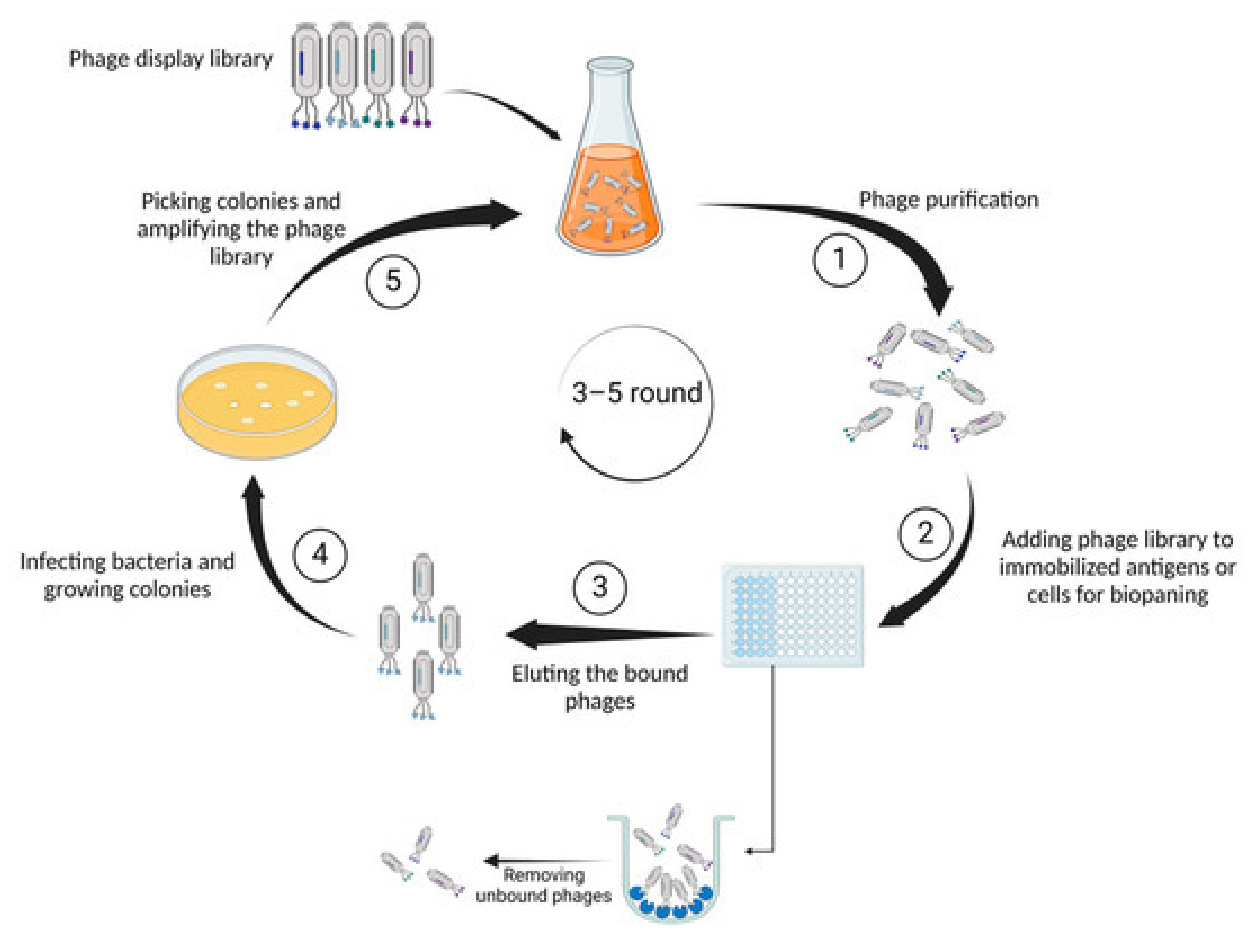
Overview of the phage display biopanning and selection process. This figure illustrates epitope discovery, not vaccine deployment. Adapted and conceptually redrawn from [48]. Phage display technology enables the identification of peptides or proteins with high affinity for specific antigens through iterative selection and amplification cycles. In this discovery workflow, (1) a phage library containing diverse surface-displayed peptides is purified and prepared for screening. (2) The library is exposed to immobilized antigens or target cells, allowing only phages displaying binding peptides to adhere. (3) Unbound phages are removed through washing, and bound phages are eluted for recovery. (4) The recovered phages infect bacterial hosts, enabling intracellular replication and amplification. (5) Enriched phage clones are isolated and expanded to regenerate a refined library for subsequent selection rounds. Typically, three to five iterative cycles are performed to enhance binding specificity and affinity to identify candidate epitopes for further preclinical evaluation.
Figure 1.
Overview of the phage display biopanning and selection process. This figure illustrates epitope discovery, not vaccine deployment. Adapted and conceptually redrawn from [48]. Phage display technology enables the identification of peptides or proteins with high affinity for specific antigens through iterative selection and amplification cycles. In this discovery workflow, (1) a phage library containing diverse surface-displayed peptides is purified and prepared for screening. (2) The library is exposed to immobilized antigens or target cells, allowing only phages displaying binding peptides to adhere. (3) Unbound phages are removed through washing, and bound phages are eluted for recovery. (4) The recovered phages infect bacterial hosts, enabling intracellular replication and amplification. (5) Enriched phage clones are isolated and expanded to regenerate a refined library for subsequent selection rounds. Typically, three to five iterative cycles are performed to enhance binding specificity and affinity to identify candidate epitopes for further preclinical evaluation.
5.2. Phage DNA Vaccines
Phage DNA vaccines use engineered phages to deliver expression cassettes encoding target antigens directly into host cells, where the encoded proteins are synthesized endogenously to trigger immune responses [49]. This system combines the genetic flexibility of DNA vaccines with the stability and safety of phage particles.
Unlike conventional plasmid DNA vaccines, which often require electroporation or nanoparticles for efficient delivery, phage-based DNA vaccines benefit from natural bacterial packaging and protection of the DNA cargo, increasing transfection stability and reducing degradation [50]. They also minimize biosafety concerns associated with viral vectors because phages cannot replicate in human or animal cells.
For typhoid fever, this platform is particularly attractive because it allows for the delivery of conserved antigens across S. Typhi and S. Paratyphi, potentially generating cross-protective immunity against multiple serovars. Genes encoding critical antigens such as OMPs, flagellin, or conserved Salmonella virulence proteins could be inserted into phage genomes for delivery. In regions where both Typhi and Paratyphi circulate, such broad coverage would represent a major improvement over existing vaccines.
Evidence from results of other pathogens supports feasibility. Phage-based DNA vaccines have been explored for anthrax [51], plague (Yersinia pestis) [52], and HIV [53,54], demonstrating strong antigen-specific responses in animal models. Importantly, several studies have shown that phage DNA vaccines require fewer or no adjuvants than traditional DNA vaccine [55,56], owing to the inherent immunostimulatory properties of phage DNA, which contains unmethylated CpG motifs that trigger innate immune pathways [57].
5.3. Hybrid Phage Vaccines
Hybrid phage vaccines integrate both display and DNA delivery mechanisms to combine structural antigen exposure and genetic antigen expression within a single platform [58]. These dual-action systems have demonstrated enhanced immune potency, balancing humoral and cellular responses.
In this model, surface antigens provide immediate B-cell activation, while encoded antigens enable prolonged antigen presentation through endogenous expression. For pathogens like S. Typhi, where multi-epitope immunity is critical, hybrid phages could generate both systemic and mucosal protection. Their projected thermostability and shelf stability, derived from engineering-driven resilience, further support potential deployment in regions lacking robust cold-chain systems.
Potential antigen targets for typhoid infection could include displaying the surface epitopes of the Vi capsule while also encoding DNA for intracellular expression of OMPs or flagellin fragments. Such a construct could maximize immune coverage, targeting multiple antigenic determinants and eliciting durable protection across age groups. Importantly, the hybrid model also allows for the inclusion of multivalent designs [59], potentially combining antigens from S. Typhi, S. Paratyphi, and other enteric pathogens. This is particularly relevant for LMICs, where populations face overlapping disease burdens and integrated vaccines are more cost-effective.
Hybrid phage platforms have been tested in experimental vaccines against Candida albicans [60], and influenza [61], showing enhanced immune responses compared to single-modality approaches. These findings suggest strong potential for adaptation to typhoid.
Challenges remain, including optimizing vector size, expression efficiency, and antigen density. Future work should explore standardized design frameworks to ensure reproducibility and regulatory acceptance.
6. Key Technical and Translational Limitations of Phage-Based Vaccine Platforms
Despite their promising prophylactic and therapeutic potentials in animal models, several technical and translational hurdles must be addressed before phage-based vaccines can transition to clinical use.
Payload and Expression Constraints: For DNA and hybrid platforms, efficient nuclear entry and sustained antigen expression in human cells remain significant challenges. The choice of eukaryotic promoters and the persistence of genetic cargo within host cells can vary, often leading to lower-than-expected protein synthesis compared to animal models.
Manufacturing Liabilities: Phages are produced in bacterial hosts such as E. coli, making endotoxin (LPS) contamination a primary concern during manufacturing. Achieving the high purity required for human vaccines necessitates rigorous purification processes that may impact scalability. Additionally, batch-to-batch variability and host strain engineering present industrial-scale liabilities.
Regulatory Friction: Genetically modified phages, particularly those carrying eukaryotic expression cassettes, are subject to stringent GMO regulatory frameworks. These require unique safety profiles and extensive environmental impact assessments that differ from traditional protein-based vaccines.
Platform Failure Modes: Each platform faces specific risks; phage display models may fail if complex antigens interfere with capsid assembly, while the low transfection efficiency of phage DNA vaccines in humans remains a historical barrier for this modality.
Figure 2.
Schematic illustration of bacteriophage-based vaccine strategies. All phage-based approaches shown remain preclinical at present. Adapted from [59].
Figure 2.
Schematic illustration of bacteriophage-based vaccine strategies. All phage-based approaches shown remain preclinical at present. Adapted from [59].
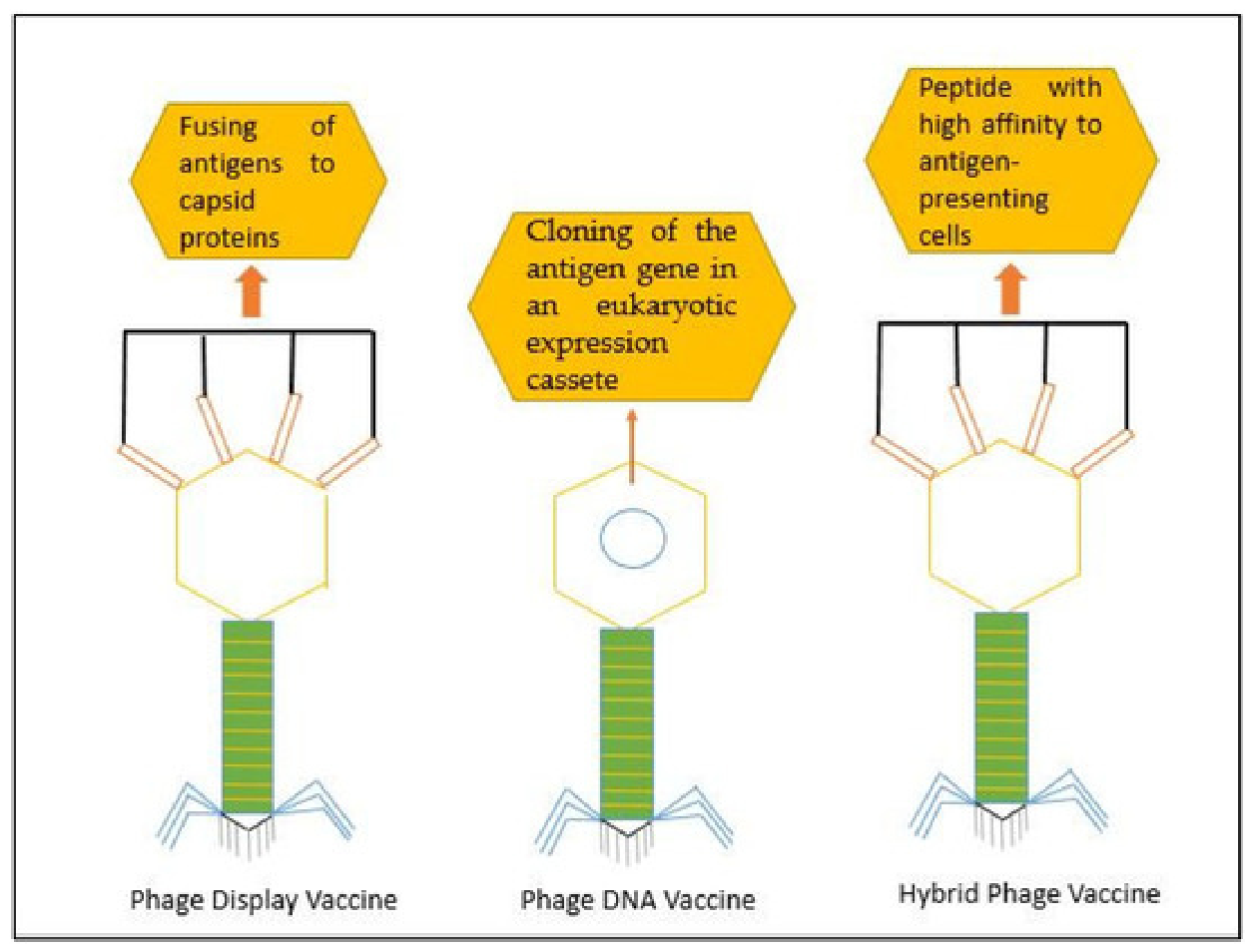
Phage display, phage DNA, and hybrid phage vaccine models employ distinct mechanisms for antigen presentation and delivery. In phage display vaccines (left), target antigens are fused to capsid proteins, allowing repetitive, multivalent display on the phage surface to elicit strong humoral immune responses. Phage DNA vaccines (middle) incorporate antigen-encoding genes within a eukaryotic expression cassette packaged inside the phage particle, designed to promote intracellular expression and activation of cellular immunity. Hybrid phage vaccines (right) integrate both strategies, combining surface antigen exposure with DNA delivery to achieve balanced humoral and cellular responses. Together, these approaches demonstrate the versatility of phage platforms as potential research avenues for generating engineering-driven, thermostable vaccines with projected low-cost production based on bacterial manufacturing paradigms. While these models provide a proof-of-concept for broad protection, they are currently preclinical enabling platforms and require extensive clinical validation before they can be considered for deployment in LMICs. Together, these approaches demonstrate the versatility of phage platforms as potential research avenues for generating engineering-driven, thermostable vaccines with projected low-cost production based on bacterial manufacturing paradigms.
7. Translational Outlook: Biosafety and Regulatory Considerations
The translational advancement of phage-based vaccines requires careful consideration of biosafety, regulatory approval, and public perception. Phages have long safety records from therapeutic and food applications, and they are classified as biosafety level 1 (BSL-1) agents in most regulatory frameworks [62]. However, vaccines derived from genetically modified phages may fall under GMO regulations, requiring detailed environmental and safety assessments.
Manufacturing under Good Manufacturing Practice (GMP) conditions is achievable because phage propagation uses bacterial hosts that can be standardized for purity and endotoxin control. The main regulatory challenges lie in novel mechanism classification, stability testing, and comparability to existing vaccines. Coordinated guidance from WHO and national agencies will be essential for harmonized approval processes.
From a global health perspective, phage-based vaccines offer promising engineering-driven advantages:
- Projected low-cost and scalable production based on bacterial manufacturing paradigms.
- Projected thermostability, reducing dependence on cold-chain infrastructure.
- Modular design, enabling rapid adaptation for emerging pathogens within a preclinical framework.
These attributes align closely with goals of vaccine equity, AMR mitigation, and sustainable biomanufacturing, making phage platforms a strategic innovation for infectious disease control in LMICs.
Bacteriophage-based vaccine platforms represent a compelling frontier in the fight against typhoid fever and other enteric infections. By combining projected scalability, grounded in bacterial manufacturing paradigms, with engineering-driven thermostability and multivalent antigen presentation, phage systems have the potential to overcome the logistical and immunological barriers that limit conventional vaccine strategies. Their modular design allows rapid adaptation to evolving pathogens and facilitates production using cost-efficient bacterial hosts, features particularly suited to the needs of LMICs.
Despite these advantages, significant research gaps remain. Comprehensive immunogenicity and efficacy studies are needed to validate the protective potential of phage vaccines in human populations. Safety profiling and biosafety standardization must be established through controlled pre-clinical and clinical evaluations to support regulatory approval. Moreover, clear regulatory and manufacturing frameworks, including GMP guidelines specific to phage-based products, are required to translate laboratory innovation into globally deployable vaccines. Collaborative research networks that link academic, industrial, and public-health partners will be critical for accelerating this process.
In the broader context of AMR and vaccine equity, phage-based platforms offer a strategic pathway toward more accessible and sustainable immunization. Their adaptability, projected low-cost production based on bacterial manufacturing paradigms, and engineering-driven thermostability could democratize vaccine access for regions historically marginalized in global health innovation.. Advancing this technology from concept to clinical reality will not only expand the frontiers of vaccinology but also contribute meaningfully to a more equitable and resilient global health landscape.
Table 2.
Comparison of conventional and emerging typhoid vaccine platforms by immunological characteristics, protection duration, and accessibility.
Table 2.
Comparison of conventional and emerging typhoid vaccine platforms by immunological characteristics, protection duration, and accessibility.
| Vaccine Type | Development Stage | Delivery Method | Age Indication | Immune Response Type | Duration of Protection | Cost & Accessibility | References |
| ViPS | Licensed | Single IM injection | ≥ 2 years | T-cell independent; weak booster | 2–3 years | Relatively low cost; widely available | [63,64,65] |
| TCV | Licensed | Single IM injection | ≥ 6 months | T-cell dependent; strong booster | 4–6 years | Higher upfront cost; limited rollout | [66,67,68] |
| Ty21a | Licensed | 3–4 oral doses (capsules) | ≥ 5 years | Induces mucosal and systemic immunity | ~5 years (variable) | Moderate cost; cold-chain dependent | [69,70,71] |
| Phage-based‡ | Preclinical | Oral or parenteral (adaptable) | N/A (Preclinical only) | Strong innate and adaptive response¹ | Not yet established | Projected low-cost and thermostable² | [72,73,74] |
Abbreviations: ViPS- Vi Polysaccharides; TCV- Typhoid Conjugate Vaccine. ‡ Denotes platforms currently in the discovery or preclinical stage of development. ¹ Based on animal immunogenicity and proof-of-concept data; clinical performance in humans is not yet established. ² Projected cost based on the scalability of bacterial culture systems and independence from cold-chain infrastructure.
8. Conclusions and Future Directions
While bacteriophage-based platforms present a versatile and projected engineering-driven thermostable alternative to conventional typhoid vaccines, the field currently stands at a critical translational crossroads. To move beyond the proof-of-concept stage, research must shift from demonstrating animal immunogenicity to addressing the rigorous technical and regulatory demands of human clinical application. It is no longer sufficient to showcase high antibody titers in murine models; instead, the focus must move toward establishing the industrial and clinical feasibility of these systems.
The primary gap in current phage vaccine research remains the total absence of human clinical data. While various animal models have demonstrated robust humoral and cellular responses, a significant translational gap exists where high-density antigen display or DNA delivery may fail to replicate these results in human subjects. Furthermore, there is a critical lack of comparative data regarding the long-term stability of these platforms under real-world conditions in low and middle-income countries, such as fluctuating temperatures outside of a controlled laboratory setting. Additionally, the impact of pre-existing anti-phage immunity in human populations remains a significant unknown variable, as it could potentially neutralize the vaccine vector before it can elicit the desired protective response.
Future research must prioritize host strain and manufacturing engineering to bridge the gap between preclinical promise and clinical viability. This includes focusing on engineering endotoxin-free production strains to simplify purification and reduce manufacturing liabilities, as standardizing batch-to-batch consistency is essential for satisfying future Good Manufacturing Practice requirements. Simultaneously, researchers must interrogate the failure modes of phage DNA and hybrid platforms by optimizing eukaryotic promoter selection and investigating the use of specific ligands to improve the efficiency of phage-mediated gene delivery to human dendritic cells.
As phages are genetically modified organisms, establishing a specialized regulatory pathway is a strategic priority. Future work should include comprehensive environmental impact assessments and safety profiling to navigate the regulatory friction that often stalls the clinical transition of viral-vector platforms. In summary, phage-based vaccines should no longer be viewed merely as a laboratory curiosity, but as a serious preclinical enabling technology. If the field can successfully navigate the transition from epitope discovery to standardized manufacturing and safety testing, these platforms could provide a scalable solution to typhoid endemicity and the rising threat of antimicrobial resistance. The next decade of research must, therefore, prioritize clinical safety and industrial feasibility over further iterative animal studies.
Author Contributions
Conceptualization, N.E.N. and R.A.S.; writing—original draft preparation, T.D.T.; writing—review and editing, T.D.T, N.E.N and R.A.S.; visualization, T.D.T.; supervision, R.A.S. and N.E.N. All authors have read and agreed to the published version of the manuscript.
Funding
This research received no external funding.
Institutional Review Board Statement
Not applicable.
Informed Consent Statement
Not applicable.
Data Availability Statement
All the data required to support the conclusions are presented in this paper.
Conflicts of Interest
The authors declare no conflict of interest.
References
- Baker, S.; Blohmke, C.J.; Maes, M.; Johnston, P.I.; Darton, T.C. The current status of enteric fever diagnostics and implications for disease control. Clin. Infect. Dis. 2020, 71, S64–S70. [Google Scholar] [CrossRef] [PubMed]
- Obaro, S.K.; Iroh Tam, P.Y.; Mintz, E.D. The unrecognized burden of typhoid fever. Expert Rev. Vaccines 2017, 16, 249–260. [Google Scholar] [CrossRef] [PubMed]
- Syed, K.A.; Saluja, T.; Cho, H.; Hsiao, A.; Shaikh, H.; Wartel, T.A.; Mogasale, V.; Lynch, J.; Kim, J.H.; Excler, J.L.; Sahastrabuddhe, S. Review on the recent advances on typhoid vaccine development and challenges ahead. Clin. Infect. Dis. 2020, 71, S141–S150. [Google Scholar] [CrossRef] [PubMed]
- Manesh, A.; Meltzer, E.; Jin, C.; Britto, C.; Deodhar, D.; Radha, S.; Schwartz, E.; Rupali, P. Typhoid and paratyphoid fever: a clinical seminar. J. Travel Med. 2021, 28, taab012. [Google Scholar] [CrossRef] [PubMed]
- Ahmad, S.; Sharif, S.; Ahmad, N.; Ali, B. Antibiotic resistance: targeting extensively drug resistant (XDR) Salmonella typhi. Natl. J. Life Health Sci. 2024, 3, 55–64. [Google Scholar] [CrossRef]
- Britto, C.D.; Wong, V.K.; Dougan, G.; Pollard, A.J. A systematic review of antimicrobial resistance in Salmonella enterica serovar Typhi, the etiological agent of typhoid. PLoS Neglected Trop. Dis. 2018, 12, e0006779. [Google Scholar] [CrossRef] [PubMed]
- Beyer, P.; Paulin, S. The antibacterial research and development pipeline needs urgent solutions. ACS Infect. Dis. 2020, 6, 1289–1291. [Google Scholar] [CrossRef]
- Chen, J.; Long, J.E.; Vannice, K.; Shewchuk, T.; Kumar, S.; Duncan Steele, A.; Zaidi, A.K. Taking on typhoid: eliminating typhoid fever as a global health problem. InOpen Forum Infect. Dis. 2023, 10, S74–S81. [Google Scholar] [CrossRef] [PubMed]
- Usang, U.E.; Inyang, A.W.; Nwachukwku, I.E.; Emehute, J.D. Typhoid perforation in children: an unrelenting plague in developing countries. J. Infect. Dev. Ctries. 2017, 11, 747–752. [Google Scholar] [CrossRef] [PubMed]
- Wang, H.; Zhang, P.; Zhao, Q.; Ma, W. Global burden, trends and inequalities for typhoid and paratyphoid fever among children younger than 15 years over the past 30 years. J. Travel Med. 2024, 8, taae140. [Google Scholar] [CrossRef] [PubMed]
- Kim, C.L.; Cruz Espinoza, L.M.; Vannice, K.S.; Tadesse, B.T.; Owusu-Dabo, E.; Rakotozandrindrainy, R.; Jani, I.V.; Teferi, M.; Bassiahi Soura, A.; Lunguya, O.; Steele, A.D. The burden of typhoid fever in sub-Saharan Africa: a perspective. Res. Rep. Trop. Med. 2022, 14, 1–9. [Google Scholar] [CrossRef] [PubMed]
- Rahman, A.M.; Ahmad, M.; Begum, R.S.; Hossain, M.Z.; Hoque, S.A.; Matin, A.; Yeasmin, L.; Manum, M.G. Prevalence of typhoid fever among the children in a semi urban area of Bangladesh. J. Dhaka Med. Coll. 2011, 20, 36–43. [Google Scholar] [CrossRef]
- World Health Organization; UNICEF. Women and girls bear brunt of water and sanitation crisis – new UNICEF-WHO report. Available online: https://www.who.int/news/item/06-07-2023-women-and-girls-bear-brunt-of-water-and-sanitation-crisis---new-unicef-who-report (accessed on 24 August 2025).
- Sapkota, J.; Roberts, T.; Basnyat, B.; Baker, S.; Hampton, L.M.; Dittrich, S. Diagnostics for typhoid fever: current perspectives and future outlooks for product development and access. InOpen Forum Infect. Dis. 2023, 10, S17–S20. [Google Scholar] [CrossRef] [PubMed]
- Aremu, S.O.; Oruye, M.L.; Adamu, E.I.; Vuetkung, N.M.; Jonathan, D.A.; Janjaro, A.G.; Matthew, G.; Adepoju, E.O.; Jiji, P.J.; Gimba, P.L.; Kwarakwasa, G. Application of diagnostic network optimization [DNOs] to tackle antimicrobial resistance in Sub-Saharan Africa. Discov. Public Health 2025, 22, 285. [Google Scholar] [CrossRef]
- Mogasale, V.; Maskery, B.; Ochiai, R.L.; Lee, J.S.; Mogasale, V.V.; Ramani, E.; Kim, Y.E.; Park, J.K.; Wierzba, T.F. Burden of typhoid fever in low-income and middle-income countries: A systematic, literature-based update with risk-factor adjustment. Lancet Glob. Health 2014, 2, e570–e580. [Google Scholar] [CrossRef] [PubMed]
- Olagunju, O.J.; Ben, E.; Olagunju, O.; Majolagbe, O.G.; Osanyinlusi, O.O.; Adewoye, T.; Atoyebi, O.F.; Ojo, I.O.; Dawha, S.D. Poorly Regulated Antibiotic Use in Nigeria: A Critical Public Health Concern and Its Impact on Medical Practice. Cureus 2025, 17, e85212. [Google Scholar] [CrossRef] [PubMed]
- Ashok, A.; Brison, M.; LeTallec, Y. Improving cold chain systems: Challenges and solutions. Vaccine 2017, 35, 2217–2223. [Google Scholar] [CrossRef] [PubMed]
- Kim, C.; Goucher, G.R.; Tadesse, B.T.; Lee, W.; Abbas, K.; Kim, J.-H. Associations of water, sanitation, and hygiene with typhoid fever in case–control studies: A systematic review and meta-analysis. BMC Infect. Dis. 2023, 23, 562. [Google Scholar] [CrossRef] [PubMed]
- Debellut, F. Typhoid is costly for families and health systems. Available online: https://www.coalitionagainsttyphoid.org/typhoid-is-costly-for-families-and-health-systems/ (accessed on 22 July 2026).
- Kim, C.; Frost, I.; Naylor, N.R.; Au, H.; Kim, Y.; Lee, Y.; Bzymek, A.; Majgier, K.; Moldoveanu, A.L.; Salman, O.M.; et al. Length of hospital stay and associated treatment costs for patients with susceptible and antibiotic-resistant Salmonella infections: A systematic review and meta-analysis. BMJ Open 2025, 15, e092494. [Google Scholar] [CrossRef] [PubMed]
- DeRoeck, D.; Clemens, J.D.; Nyamete, A.; Mahoney, R.T. Policymakers’ views regarding the introduction of new-generation vaccines against typhoid fever, shigellosis and cholera in Asia. Vaccine 2005, 23, 2762–2774. [Google Scholar] [CrossRef] [PubMed]
- Ozawa, S.; Grewal, S.; Portnoy, A.; Sinha, A.; Arilotta, R.; Stack, M.L.; Brenzel, L. Funding gap for immunization across 94 low- and middle-income countries. Vaccine 2016, 34, 6408–6416. [Google Scholar] [CrossRef] [PubMed]
- Im, J.; Islam, M.T.; Ahmmed, F.; Kim, D.R.; Islam Khan, A.; Zaman, K.; Ali, M.; Marks, F.; Qadri, F.; Kim, J.; et al. Can Existing Improvements of Water, Sanitation, and Hygiene (WASH) in Urban Slums Reduce the Burden of Typhoid Fever in These Settings? Clin. Infect. Dis. 2021, 72, e720–e726. [Google Scholar] [CrossRef] [PubMed]
- Khan, M.I.; Franco-Paredes, C.; Sahastrabuddhe, S.; Ochiai, R.L.; Mogasale, V.; Gessner, B.D. Barriers to typhoid fever vaccine access in endemic countries. Res. Rep. Trop. Med. 2017, 8, 37–44. [Google Scholar] [CrossRef] [PubMed]
- Martin, L.B. Vaccines for typhoid fever and other salmonelloses. Curr. Opin. Infect. Dis. 2012, 25, 489. [Google Scholar] [CrossRef] [PubMed]
- Amicizia, D.; Arata, L.; Zangrillo, F.; Panatto, D.; Gasparini, R. Overview of the impact of Typhoid and Paratyphoid fever. Utility of Ty21a vaccine (Vivotif®). J. Prev. Med. Hyg. 2017, 58, E1–E8. [Google Scholar] [CrossRef]
- Würfel, L.M.; Potthoff, A.; Skaletz-Rorowski, A.; Nambiar, S.; Abu Rached, N. Optimizing Immunization Strategies for Individuals Living with HIV: A Review of Essential Vaccines, Vaccine Coverage, and Adherence Factors. Vaccines 2025, 13, 798. [Google Scholar] [CrossRef] [PubMed]
- An, S.J.; Yoon, Y.K.; Kothari, S.; Kim, D.R.; Kim, J.A.; Kothari, N.; Lee, E.; Park, T.H.; Carbis, R. Immune suppression induced by Vi capsular polysaccharide is overcome by Vi-DT conjugate vaccine. Vaccine 2012, 30, 1023–1028. [Google Scholar] [CrossRef] [PubMed]
- Dhoubhadel, B.G.; Sawada, I.; Shrestha, D.; Fukuya, Y.; Raya, G.B.; Nébié, E.I.; Hayashi, Y.; Pasakhala, R.; Suzuki, M.; Morimoto, K.; et al. A description of a pre-emptive typhoid Vi capsular polysaccharide vaccination campaign after the 2015 earthquake in Nepal and vaccine effectiveness evaluation. Trop. Med. Health 2024, 52, 14. [Google Scholar] [CrossRef] [PubMed]
- Agarwal, N.; Gupta, N.; Nishant; Hs, S.; Dutta, T.; Mahajan, M. Typhoid Conjugate Vaccine: A Boon for Endemic Regions. Cureus 2024, 16, e56454. [Google Scholar] [CrossRef] [PubMed]
- Nampota-Nkomba, N.; Nyirenda, O.M.; Khonde, L.; Mapemba, V.; Mbewe, M.; Ndaferankhande, J.M.; Msuku, H.; Masesa, C.; Misiri, T.; Mwakiseghile, F.; et al. Safety and immunogenicity of a typhoid conjugate vaccine among children aged 9 months to 12 years in Malawi: A nested substudy of a double-blind, randomised controlled trial. Lancet Glob. Health 2022, 10, e1326–e1335. [Google Scholar] [CrossRef] [PubMed]
- Burrows, H.; Antillón, M.; Gauld, J.S.; Kim, J.-H.; Mogasale, V.; Ryckman, T.; Andrews, J.R.; Lo, N.C.; Pitzer, V.E. Comparison of model predictions of typhoid conjugate vaccine public health impact and cost-effectiveness. Vaccine 2023, 41, 965–975. [Google Scholar] [CrossRef] [PubMed]
- Patel, P.D.; Liang, Y.; Meiring, J.E.; Chasweka, N.; Patel, P.; Misiri, T.; Mwakiseghile, F.; Wachepa, R.; Banda, H.C.; Shumba, F.; et al. Efficacy of typhoid conjugate vaccine: Final analysis of a 4-year, phase 3, randomised controlled trial in Malawian children. Lancet 2024, 403, 459–468. [Google Scholar] [CrossRef] [PubMed]
- Jo, Y.; Dowdy, D.W. The economic case for typhoid conjugate vaccines in countries with medium and high incidence of infection. Lancet Infect. Dis. 2019, 19, 675–676. [Google Scholar] [CrossRef] [PubMed]
- Russell, A.L.; Hampton, L.M.; Sinha, A.; Luquero, F.J.; Abdelwahab, J. Progress in the Typhoid Conjugate Vaccine Program Rollout Supported by Gavi During the COVID-19 Pandemic and the Path Forward. Open Forum Infect. Dis. 2023, 10, S13–S16. [Google Scholar] [CrossRef] [PubMed]
- Darton, T.C.; Jones, C.; Blohmke, C.J.; Waddington, C.S.; Zhou, L.; Peters, A.; Haworth, K.; Sie, R.; Green, C.A.; Jeppesen, C.A.; et al. Using a Human Challenge Model of Infection to Measure Vaccine Efficacy: A Randomised, Controlled Trial Comparing the Typhoid Vaccines M01ZH09 with Placebo and Ty21a. PLoS Neglected Trop. Dis. 2016, 10, e0004926. [Google Scholar] [CrossRef] [PubMed]
- Levine, M.M.; Ferreccio, C.; Abrego, P.; Martin, O.S.; Ortiz, E.; Cryz, S. Duration of efficacy of Ty21a, attenuated Salmonella typhi live oral vaccine. Vaccine 1999, 17, S22–S27. [Google Scholar] [CrossRef] [PubMed]
- Simanjuntak, C.H.; Totosudirjo, H.; Haryanto, P.; Suprijanto, E.; Paleologo, F.P.; Punjabi, N.H.; Witham, N.D.; Darmowigoto, R.; Soeprawoto; Hoffman, S.L. Oral immunisation against typhoid fever in Indonesia with Ty21a vaccine. Lancet 1991, 338, 1055–1059. [Google Scholar] [CrossRef] [PubMed]
- Shakya, M.; Voysey, M.; Theiss-Nyland, K.; Colin-Jones, R.; Pant, D.; Adhikari, A.; Tonks, S.; Mujadidi, Y.F.; O’Reilly, P.; Mazur, O.; et al. Efficacy of typhoid conjugate vaccine in Nepal: Final results of a phase 3, randomised, controlled trial. Lancet Glob. Health 2021, 9, e1561–e1568. [Google Scholar] [CrossRef] [PubMed]
- Jin, C.; Gibani, M.M.; Moore, M.; Juel, H.B.; Jones, E.; Meiring, J.; Harris, V.; Gardner, J.; Nebykova, A.; Kerridge, S.A.; et al. Efficacy and immunogenicity of a Vi-tetanus toxoid conjugate vaccine in the prevention of typhoid fever using a controlled human infection model of Salmonella Typhi: A randomised controlled, phase 2b trial. The Lancet 2017, 390, 2472–2480. [Google Scholar] [CrossRef] [PubMed]
- Lin, F.Y.C.; Ho, V.A.; Khiem, H.B.; Trach, D.D.; Bay, P.V.; Thanh, T.C.; Kossaczka, Z.; Bryla, D.A.; Shiloach, J.; Robbins, J.B.; et al. The Efficacy of a Salmonella typhi Vi Conjugate Vaccine in Two-to-Five-Year-Old Children. N. Engl. J. Med. 2001, 344, 1263–1269. [Google Scholar] [CrossRef] [PubMed]
- Wang, H.; Yang, Y.; Xu, Y.; Chen, Y.; Zhang, W.; Liu, T.; Chen, G.; Wang, K. Phage-based delivery systems: Engineering, applications, and challenges in nanomedicines. J. Nanobiotechnology 2024, 22, 365. [Google Scholar] [CrossRef] [PubMed]
- Hess, K.L.; Jewell, C.M. Phage display as a tool for vaccine and immunotherapy development. Bioeng. Transl. Med. 2020, 5, e10142. [Google Scholar] [CrossRef] [PubMed]
- Palma, M. Aspects of Phage-Based Vaccines for Protein and Epitope Immunization. Vaccines 2023, 11, 436. [Google Scholar] [CrossRef] [PubMed]
- Bastings, M.M.; Helms, B.A.; van Baal, I.; Hackeng, T.M.; Merkx, M.; Meijer, E.W. From phage display to dendrimer display: insights into multivalent binding. J. Am. Chem. Soc. 2011, 133, 6636–6641. [Google Scholar] [CrossRef] [PubMed]
- Islam, M.S.; Fan, J.; Pan, F. The power of phages: revolutionizing cancer treatment. Front. Oncol. 2023, 13, 1290296. [Google Scholar] [CrossRef] [PubMed]
- Sadraeian, M.; Maleki, R.; Moraghebi, M.; Bahrami, A. Phage display technology in biomarker identification with emphasis on non-cancerous diseases. Molecules 2024, 29, 3002. [Google Scholar] [CrossRef] [PubMed]
- Ragothaman, M.; Yoo, S.Y. Engineered phage-based cancer vaccines: current advances and future directions. Vaccines 2023, 11, 919. [Google Scholar] [CrossRef] [PubMed]
- Loh, B.; Gondil, V.S.; Manohar, P.; Khan, F.M.; Yang, H.; Leptihn, S. Encapsulation and delivery of therapeutic phages. Appl. Environ. Microbiol. 2021, 87, e01979-20. [Google Scholar] [CrossRef] [PubMed]
- Tao, P.; Li, Q.; Shivachandra, S.B.; Rao, V.B. Bacteriophage T4 as a Nanoparticle Platform to Display and Deliver Pathogen Antigens: Construction of an Effective Anthrax Vaccine. In Recombinant Virus Vaccines: Methods and Protocols; Ferran, M.C., Skuse, G.R., Eds.; Springer: New York, NY, USA, 2017; pp. 255–267. [Google Scholar] [CrossRef] [PubMed]
- Tao, P.; Mahalingam, M.; Kirtley, M.L.; van Lier, C.J.; Sha, J.; Yeager, L.A.; Chopra, A.K.; Rao, V.B. Mutated and Bacteriophage T4 Nanoparticle Arrayed F1-V Immunogens from Yersinia pestis as Next Generation Plague Vaccines. PLoS Pathog. 2013, 9, e1003495. [Google Scholar] [CrossRef] [PubMed]
- De Berardinis, P.; Sartorius, R.; Fanutti, C.; Perham, R.N.; Del Pozzo, G.; Guardiola, J. Phage display of peptide epitopes from HIV-1 elicits strong cytolytic responses. Nat. Biotechnol. 2000, 18, 873–876. [Google Scholar] [CrossRef] [PubMed]
- Peabody, D.S.; Manifold-Wheeler, B.; Medford, A.; Jordan, S.K.; do Carmo Caldeira, J.; Chackerian, B. Immunogenic Display of Diverse Peptides on Virus-like Particles of RNA Phage MS2. J. Mol. Biol. 2008, 380, 252–263. [Google Scholar] [CrossRef] [PubMed]
- Tao, P.; Mahalingam, M.; Zhu, J.; Moayeri, M.; Sha, J.; Lawrence, W.S.; Leppla, S.H.; Chopra, A.K.; Rao, V.B. A Bacteriophage T4 Nanoparticle-Based Dual Vaccine against Anthrax and Plague. mBio 2018, 9, e01926-18. [Google Scholar] [CrossRef] [PubMed]
- Xu, H.; Li, L.; Li, R.; Guo, Z.; Lin, M.; Lu, Y.; Hou, J.; Govinden, R.; Deng, B.; Chenia, H.Y. Evaluation of dendritic cell-targeting T7 phages as a vehicle to deliver avian influenza virus H5 DNA vaccine in SPF chickens. Front. Immunol. 2022, 13, 997637. [Google Scholar] [CrossRef] [PubMed]
- Kharrat, L.; Garcia-Botero, C.A.; Ingersoll, W.; Luong, T.; Reyes, A.; Roach, D.R. Large-Scale Genomic Analysis of CpG-Mediated Immunogenicity in Bacteriophages and a Novel Predictive Risk Index. bioRxiv 2025, 2025.05.15.652987. [Google Scholar] [CrossRef] [PubMed]
- Dong, X.; Pan, P.; Ye, J.-J.; Zhang, Q.-L.; Zhang, X.-Z. Hybrid M13 bacteriophage-based vaccine platform for personalized cancer immunotherapy. Biomaterials 2022, 289, 121763. [Google Scholar] [CrossRef] [PubMed]
- Ul Haq, I.; Krukiewicz, K.; Yahya, G.; Haq, M.U.; Maryam, S.; Mosbah, R.A.; Saber, S.; Alrouji, M. The Breadth of Bacteriophages Contributing to the Development of the Phage-Based Vaccines for COVID-19: An Ideal Platform to Design the Multiplex Vaccine. Int. J. Mol. Sci. 2023, 24, 1536. [Google Scholar] [CrossRef] [PubMed]
- Wang, Y.; Su, Q.; Dong, S.; Shi, H.; Gao, X.; Wang, L. Hybrid phage displaying SLAQVKYTSASSI induces protection against Candida albicans challenge in BALB/c mice. Hum. Vaccines Immunother. 2014, 10, 1057–1063. [Google Scholar] [CrossRef] [PubMed]
- Lotfi, Z.; Golchin, M.; Khalili-Yazdi, A.; Khalili, M. Immunological properties of the SLLTEVET epitope of Influenza A virus in multiple displays on filamentous M13 phage. Comp. Immunol. Microbiol. Infect. Dis. 2019, 65, 76–80. [Google Scholar] [CrossRef] [PubMed]
- Verheust, C.; Pauwels, K.; Mahillon, J.; Helinski, D.R.; Herman, P. Contained use of bacteriophages: risk assessment and biosafety recommendations. Appl. Biosaf. 2010, 15, 32–44. [Google Scholar] [CrossRef]
- Hessel, L.; Debois, H.; Fletcher, M.; Dumas, R. Experience With Salmonella typhi Vi Capsular Polysaccharide Vaccine. Eur. J. Clin. Microbiol. Infect. Dis. 1999, 18, 609–620. [Google Scholar] [CrossRef] [PubMed]
- Ni, Y.; Springer, M.J.; Guo, J.; Finger-Baker, I.; Wilson, J.P.; Cobb, R.R.; Turner, D.; Tizard, I. Development of a synthetic Vi polysaccharide vaccine for typhoid fever. Vaccine 2017, 35, 7121–7126. [Google Scholar] [CrossRef] [PubMed]
- Ochiai, R.L.; Khan, M.I.; Soofi, S.B.; Sur, D.; Kanungo, S.; You, Y.A.; Habib, M.A.; Sahito, S.M.; Manna, B.; Dutta, S.; et al. Immune Responses to Vi Capsular Polysaccharide Typhoid Vaccine in Children 2 to 16 Years Old in Karachi, Pakistan, and Kolkata, India. Clin. Vaccine Immunol. 2014, 21, 661. [Google Scholar] [CrossRef] [PubMed]
- Sirima, S.B.; Ouedraogo, A.; Barry, N.; Siribie, M.; Tiono, A.; Nébié, I.; Konaté, A.; Berges, G.D.; Diarra, A.; Ouedraogo, M.; et al. Safety and immunogenicity of Vi-typhoid conjugate vaccine co-administration with routine 9-month vaccination in Burkina Faso: A randomized controlled phase 2 trial. Int. J. Infect. Dis. 2021, 108, 465–472. [Google Scholar] [CrossRef] [PubMed]
- Steele, A.D.; Carey, M.E.; Kumar, S.; MacLennan, C.A.; Ma, L.-F.; Diaz, Z.; Zaidi, A.K.M. Typhoid Conjugate Vaccines and Enteric Fever Control: Where to Next? Clin. Infect. Dis. 2020, 71, S185–S190. [Google Scholar] [CrossRef] [PubMed]
- Thuluva, S.; Paradkar, V.; Matur, R.; Turaga, K.; GV, S.R. A multicenter, single-blind, randomized, phase-2/3 study to evaluate immunogenicity and safety of a single intramuscular dose of biological E’s Vi-capsular polysaccharide-CRM197 conjugate typhoid vaccine (TyphiBEV™) in healthy infants, children, and adults in comparison with a licensed comparator. Hum. Vaccines Immunother. 2022, 18, 2043103. [Google Scholar] [CrossRef] [PubMed]
- Ferreccio, C.; Levine, M.M.; Rodriguez, H.; Contreras, R.; Chilean Typhoid Committee. Comparative Efficacy of Two, Three, or Four Doses of TY21a Live Oral Typhoid Vaccine in Enteric-Coated Capsules: A Field Trial in an Endemic Area. J. Infect. Dis. 1989, 159, 766–769. [Google Scholar] [CrossRef] [PubMed]
- Immunization for Children; Paras Medical Publisher: Hyderabad, India, 2006.
- Levine, M.; Black, R.; Ferreccio, C.; Germanier, R. Large-scale field trial of Ty21a live oral typhoid vaccine in enteric-coated capsule formulation. The Lancet 1987, 329, 1049–1052. [Google Scholar] [CrossRef] [PubMed]
- Bartolacci, C.; Andreani, C.; Curcio, C.; Occhipinti, S.; Massaccesi, L.; Giovarelli, M.; Galeazzi, R.; Iezzi, M.; Tilio, M.; Gambini, V.; et al. Phage-Based Anti-HER2 Vaccination Can Circumvent Immune Tolerance against Breast Cancer. Cancer Immunol. Res. 2018, 6, 1486–1498. [Google Scholar] [CrossRef] [PubMed]
- Ghafouri, E.; Fadaie, M.; Amirkhani, Z.; Esmaeilifallah, M.; Rahimmanesh, I.; Hosseini, N.; Hejazi, H.; Khanahmad, H. Evaluation of humoral and cellular immune responses against Vibrio cholerae using oral immunization by multi-epitope-phage-based vaccine. Int. Immunopharmacol. 2024, 134, 112160. [Google Scholar] [CrossRef] [PubMed]
- Zhai, L.; Yadav, R.; Kunda, N.K.; Anderson, D.; Bruckner, E.; Miller, E.K.; Basu, R.; Muttil, P.; Tumban, E. Oral immunization with bacteriophage MS2-L2 VLPs protects against oral and genital infection with multiple HPV types associated with head & neck cancers and cervical cancer. Antivir. Res. 2019, 166, 56–65. [Google Scholar] [CrossRef] [PubMed]
Disclaimer/Publisher’s Note: The statements, opinions and data contained in all publications are solely those of the individual author(s) and contributor(s) and not of MDPI and/or the editor(s). MDPI and/or the editor(s) disclaim responsibility for any injury to people or property resulting from any ideas, methods, instructions or products referred to in the content. |
© 2026 by the authors. Licensee MDPI, Basel, Switzerland. This article is an open access article distributed under the terms and conditions of the Creative Commons Attribution (CC BY) license (http://creativecommons.org/licenses/by/4.0/).
Copyright: This open access article is published under a Creative Commons CC BY 4.0 license, which permit the free download, distribution, and reuse, provided that the author and preprint are cited in any reuse.


