

Submitted:
03 August 2026
Posted:
05 August 2026
You are already at the latest version
Abstract
Garlic (Allium sativum L.) is a major horticultural crop valued for its distinctive flavor, nutritional quality, and health-promoting properties, including antioxidant and antimicrobial activities. The characteristic aroma and health benefits of garlic are primarily attributed to its organosulfur compounds. This study evaluated the effects of zinc oxide nanoparticles (ZnO NPs) on sulfur metabolism and organosulfur compound accumulation in garlic using integrated liquid chromatography-tandem mass spectrometry (LC–MS/MS) and gas chromatography (GC)–MS analyses. Compared with the untreated soil (negative control) and conventional ZnSO₄ (positive control), ZnO NP treatments significantly increased the concentrations of alliin, allicin, diallyl sulfide (DAS), diallyl disulfide (DADS), and diallyl trisulfide (DATS), but decreased ajoene, indicating selective redistribution of metabolic flux. The ZnO NP–50 treatment consistently produced the highest metabolites, demonstrating a strong dose-dependent response. The coordinated increase in precursor and downstream sulfur metabolites suggests that ZnO NPs enhanced sulfur assimilation, alliinase-mediated conversion, and allicin-derived secondary transformations. Mechanistically, the response is consistent with improved Zn bioavailability, enhanced enzymatic activity, redox regulation, and reactive oxygen species (ROS)-mediated signaling that stimulates sulfur metabolic pathways. Overall, nano-enabled Zn fertilization effectively improved the phytochemical quality of garlic and represents a promising agronomic strategy for enhancing the functional value of horticultural crops.
Keywords:
biofortification
; garlic
; metabolomics approach
; organosulfur compounds
; sulfur metabolic pathways
; ZnO nanoparticles
1. Introduction
Garlic (Allium sativum L.) is one of the oldest cultivated horticultural crops and has been extensively utilized worldwide as both a culinary ingredient and a medicinal plant. It is highly valued for its distinctive flavor, nutritional quality, and diverse pharmacological properties, including antimicrobial, antioxidant, anti-inflammatory, anticancer, cardioprotective, antidiabetic, and antiviral activities [1,2,3,4,5,6]. These biological activities are largely attributed to a complex mixture of organosulfur compounds (OSCs), including alliin (S-allyl-L-cysteine sulfoxide), allicin (diallyl thiosulfinate), ajoenes, diallyl sulfides, vinyldithiins, and related sulfur metabolites [7,8,9,10]. In addition to lipid-soluble sulfur compounds, garlic also contains water-soluble metabolites such as S-allylcysteine (SAC) and S-allylmercaptocysteine, which contribute significantly to its therapeutic value [1]. Among these metabolites, allicin is considered the principal bioactive compound responsible for garlic's characteristic aroma, defense mechanisms, and many of its health-promoting effects [9,11]. Allicin is absent in intact tissues and is rapidly generated following tissue disruption when the enzyme alliinase converts alliin into allylsulfenic acid, which subsequently condenses to form allicin [12,13,14]. The compartmentalization of alliin and alliinase within garlic cells allows rapid activation of this defense system upon mechanical injury [11]. Owing to its high reactivity toward thiol-containing proteins and cellular antioxidants, allicin modulates redox signaling, suppresses oxidative stress and inflammation, inhibits microbial growth, disrupts biofilm formation and quorum sensing, and contributes to the anticancer and cardioprotective properties of garlic [15,16,17,18].
Despite its biological importance, allicin is highly unstable and rapidly degrades into secondary sulfur-containing compounds, including diallyl sulfide, diallyl disulfide, diallyl trisulfide, ajoenes, vinyldithiins, and polysulfides, many of which also exhibit important biological activities [1,16,19,20]. The stability of allicin is strongly influenced by temperature, pH, storage conditions, and processing methods, resulting in substantial losses during postharvest handling and food processing [21,22]. Consequently, allicin bioavailability and practical utilization in food, pharmaceutical, and nutraceutical applications remain significant challenges. Furthermore, increasing evidence suggests that garlic bioactivity arises from the collective action of multiple sulfur-containing metabolites and phytochemicals rather than allicin alone [1,23].
The biosynthesis and accumulation of garlic OSCs are closely linked to sulfur assimilation and amino acid metabolism. Sulfur serves as an essential macronutrient involved in the synthesis of cysteine, methionine, glutathione, coenzymes, and numerous sulfur-containing phytochemicals [24]. Sulfur-containing amino acids function as direct precursors for alliin and related OSCs, making sulfur metabolism a central determinant of garlic phytochemical composition [25]. The accumulation of alliin, allicin, and other sulfur metabolites is influenced by complex interactions among genotype, developmental stage, geographical origin, nutrient availability, environmental conditions, and postharvest factors [26,27,28,29,30,31,32]. Environmental variables such as photoperiod, temperature, irrigation, and abiotic stresses can significantly alter sulfur metabolism and overall phytochemical composition [33,34,35,36]. Recent transcriptomic and molecular studies have further revealed the involvement of transcription factors, microRNAs, and sulfur-assimilation pathways in regulating alliin and allicin biosynthesis, providing new opportunities for metabolic engineering and cultivar improvement [10,37,38,39,40].
Mineral nutrition is among the most important agronomic factors influencing sulfur metabolism and organosulfur compound biosynthesis in garlic. Balanced nutrient management can improve both crop productivity and the accumulation of bioactive metabolites [41]. Among essential micronutrients, zinc (Zn) plays critical roles in plant growth, enzymatic activity, photosynthesis, nucleic acid metabolism, protein synthesis, antioxidant defense, and stress responses [42]. Zinc-dependent enzymes participate in metabolic regulation, membrane stabilization, and sulfur-containing enzyme systems, suggesting a close relationship between zinc nutrition and organosulfur metabolite biosynthesis [43]. Consequently, zinc deficiency may adversely affect bulb development, sulfur assimilation, and phytochemical quality in garlic.
Conventional zinc fertilizers often exhibit limited efficiency due to nutrient fixation, leaching, and low uptake efficiency [44]. To overcome these limitations, nanotechnology has emerged as a promising strategy for improving nutrient delivery and utilization in crop production. Nanofertilizers are nanoscale nutrient formulations designed to enhance nutrient availability, controlled release, absorption efficiency, and plant uptake compared with conventional fertilizers [45]. Among various nanomaterials, zinc oxide nanoparticles (ZnO-NPs) have attracted considerable attention because of their stability, cost-effectiveness, and multifunctional roles in promoting plant growth and stress tolerance [46]. Previous studies have demonstrated that ZnO-NPs can enhance seed germination, root development, chlorophyll synthesis, photosynthetic efficiency, nutrient uptake, and crop productivity [47]. Furthermore, emerging evidence suggests that nanoparticle-mediated signaling can modulate secondary metabolism by influencing reactive oxygen species (ROS) homeostasis, enzymatic activities, nutrient assimilation, and stress-responsive pathways [48].
Although several studies have explored the effects of zinc nutrition and nanoparticles on plant growth and productivity, there remains a substantial research gap regarding their influence on organosulfur metabolism in garlic. Specifically, limited data are available concerning the modulation of allicin biosynthesis [17] and associated sulfur metabolites following ZnO-NPs application. Understanding these biochemical responses is important for optimizing nanofertilizer applications aimed at improving both crop yield and nutraceutical quality. Moreover, the development of sustainable nanotechnology-based fertilization strategies may reduce excessive fertilizer usage and environmental pollution while enhancing crop performance. Accordingly, this study investigated the effects of zinc oxide nanofertilizers on allicin and other organosulfur metabolites in garlic using a metabolomics-based approach. Specifically, it evaluated treatment-induced alterations in metabolite profiles and identified key sulfur-containing compounds associated with ZnO-NPs exposure. The findings are expected to advance current understanding of nanoparticle-mediated metabolic regulation in medicinal crops and to provide a basis for improving garlic phytochemical quality through precision nutrient management.
2. Materials and Methods
2.1. Plant Material and Greenhouse Conditions
Uniform cloves of garlic were selected from healthy seed stock and surface-sterilized with 0.5% sodium hypochlorite followed by repeated rinsing in sterile distilled water. Plants were grown in pots containing sterilized, homogenized soil under controlled greenhouse conditions (25 ± 2 °C, 60–65% relative humidity, 16 h light/8 h dark). Irrigation was maintained near field capacity using deionized water, and all agronomic practices other than Zn treatment were standardized across treatments.
2.2. Experimental Design and Zinc Treatments
The experiment was arranged in a completely randomized design with four treatments in ten replicates. Treatments comprised (i) control (no Zn), (ii) ZnSO₄, (iii) ZnO NPs at 25 g kg⁻¹ soil (referred as ZnO NP–25), and (iv) ZnO NPs at 50 g kg⁻¹ soil (ZnO NP–50). The ZnO NPs (10 nm size) were obtained from Skyspring Nanomaterials, Inc. (Houston, USA) and detailed characterization has been reported in our previous study [49]. Zinc sources were applied uniformly into the soil before planting to ensure homogeneous exposure. The selected concentration of nanoparticles were used to assess dose-dependent responses in sulfur metabolism and organosulfur compound accumulation. Experimental design and analytical workflow are summarized in Figure 1.
2.3. Metabolite Extraction and LC–MS/MS Analysis
The quantification of the principal water-soluble organosulfur metabolites, alliin (S-allyl-L-cysteine sulfoxide) and allicin (diallyl thiosulfinate), was performed using a validated targeted ultra-high-performance liquid chromatography–tandem mass spectrometry (UHPLC–ESI–MS/MS) method [50]. Because allicin is chemically unstable and rapidly degrades following tissue disruption, all sample preparation procedures were conducted under chilled conditions (4°C) with minimal exposure to light. Fresh garlic cloves were harvested, immediately frozen in liquid nitrogen, and stored at −80°C until analysis. Frozen tissue (0.50 ± 0.01 g) was pulverized under liquid nitrogen using a pre-chilled mortar and pestle and extracted with 5.0 mL of ice-cold 80% methanol containing 0.1% (v/v) formic acid and 10 μg mL⁻¹ S-propyl-L-cysteine (SPC) as the internal standard. The homogenate was vortex-mixed for 2 min, sonicated in an ice-water bath for 15 min, and centrifuged at 15,000 × g for 15 min at 4°C. The supernatant was collected, filtered through a 0.22-μm PTFE membrane filter, and transferred into amber LC autosampler vials. Extracts were maintained at 4°C within the autosampler and analyzed within 4 h of extraction to minimize analyte degradation.
Chromatographic separation was performed using an ultra-high-performance liquid chromatography system (Shimadzu Nexera X2 UHPLC, Shimadzu, Kyoto, Japan) coupled to a triple quadrupole mass spectrometer (LCMS-8060, Shimadzu) equipped with an electrospray ionization (ESI) source. Separation was achieved on a reverse-phase Shim-pack Velox C18 column (150 × 4.6 mm, 5 μm particle size) maintained at 30°C. The mobile phase consisted of solvent A (water containing 0.1% formic acid) and solvent B (acetonitrile containing 0.1% formic acid). A linear gradient was employed as follows: 0–2 min, 5% B; 2–10 min, 5–40% B; 10–13 min, 40–90% B; 13–15 min, 90% B; followed by re-equilibration at 5% B for 5 min. The flow rate was maintained at 0.30 mL min⁻¹, the injection volume was 5 μL, and the total chromatographic run time was 20 min. Mass spectrometric detection was performed in positive electrospray ionization mode using multiple reaction monitoring (MRM). Source parameters were optimized by direct infusion of analytical standards and consisted of a capillary voltage of 4.0 kV, interface temperature of 300°C, desolvation line temperature of 250°C, heat block temperature of 400°C, nebulizing gas flow of 3.0 L min⁻¹, drying gas flow of 10.0 L min⁻¹, and heating gas flow of 10.0 L min⁻¹. Argon was used as the collision gas at 230 kPa. MRM transitions were optimized individually using authentic standards (>98% purity). Quantification was performed using the most abundant transition, whereas a second transition served as a qualifier ion for confirmation of analyte identity. Typical analytical parameters are summarized in Table X.
Chromatographic peaks were automatically integrated using LabSolutions LCMS software (Shimadzu) and manually inspected to ensure accurate baseline assignment. Quantitative analysis was based on integrated peak area ratios (analyte/internal standard) because peak area provides greater analytical robustness than peak height. For each chromatographic peak, the following parameters were recorded: retention time (RT), precursor and product ion transitions (m/z), integrated peak area (counts·s), peak height (counts), peak width at half-height (min), signal-to-noise ratio (S/N), peak symmetry (tailing factor), chromatographic resolution (Rs), and calculated analyte concentration (μg g⁻¹ fresh weight). External calibration curves were generated from certified analytical standards of alliin and allicin (≥98% purity; Sigma-Aldrich, St. Louis, MO, USA) prepared at eight concentration levels (0.05–100 μg mL⁻¹). The limit of detection (LOD) and limit of quantification (LOQ) were determined using signal-to-noise ratios of 3 and 10, respectively. LODs were 0.012 μg mL⁻¹ for alliin and 0.015 μg mL⁻¹ for allicin, whereas LOQs were 0.040 μg mL⁻¹ and 0.050 μg mL⁻¹, respectively. Accuracy was evaluated by recovery experiments using garlic extracts spiked at three concentration levels (0.5, 5, and 50 μg mL⁻¹), yielding recoveries of 98.6 ± 2.1% for alliin and 96.9 ± 2.8% for allicin. Precision was assessed using six replicate analyses, resulting in intra-day relative standard deviations (RSD) below 3.0% and inter-day RSD values below 4.0%, demonstrating excellent analytical repeatability and reproducibility. Quality assurance was maintained throughout the analytical sequence by analyzing solvent blanks, extraction blanks, pooled quality-control (QC) samples, and calibration verification standards after every ten injections. Absolute concentrations of alliin and allicin were calculated from the external calibration curves and expressed as μg g⁻¹ fresh weight (FW). To evaluate treatment-induced metabolic changes, normalized peak area ratios were transformed into log₂ fold change (log₂FC) values. Positive log₂FC values indicated increased metabolite accumulation, whereas negative values indicated reduced abundance relative to untreated plants.
2.4. Metabolite Extraction and GC-MS Analysis of Volatile Organosulfur Compounds
Volatile organosulfur compounds, including diallyl sulfide (DAS), diallyl disulfide (DADS), diallyl trisulfide (DATS), and ajoene, were quantified using gas chromatography–mass spectrometry (GC–MS). Fresh garlic tissue (2.0 g) was homogenized under chilled conditions and extracted with 10 mL of n-hexane containing dibutyl sulfide (10 μg mL⁻¹) as the internal standard [50,51]. The extract was vortexed for 2 min, sonicated for 15 min, centrifuged at 10,000 × g for 10 min at 4°C, dried over anhydrous sodium sulfate, filtered through a 0.22-μm PTFE membrane, and transferred to amber GC vials. Chromatographic separation was performed using a GCMS-QP2020 (Shimadzu, Kyoto, Japan) equipped with an HP-5MS capillary column (30 m × 0.25 mm i.d., 0.25 μm film thickness). Helium (99.999%) was used as the carrier gas at a constant flow rate of 1.0 mL min⁻¹. Samples (1 μL) were injected in split mode (10:1) with an injector temperature of 250°C. The oven temperature was programmed from 40°C (2 min), increased to 180°C at 5°C min⁻¹, then to 280°C at 10°C min⁻¹ with a final hold of 10 min [51]. Mass spectrometric detection was performed under electron ionization (EI, 70 eV) with an ion source temperature of 230°C, interface temperature of 280°C, and quadrupole temperature of 150°C. Data were acquired over a mass range of m/z 35–500.
Compound identification was based on retention times, characteristic fragment ions, comparison with authenticated analytical standards (≥98% purity), and spectral matching against the NIST Mass Spectral Library, using a similarity index ≥90%. Quantification was performed using external calibration curves (0.05–100 μg mL⁻¹) and normalized to the internal standard (dibutyl sulfide). Chromatographic parameters including retention time (RT), molecular and fragment ions (m/z), peak area, peak height, peak width at half-height, signal-to-noise ratio (S/N), tailing factor, chromatographic resolution (Rs), and concentration (μg g⁻¹ fresh weight) were recorded for each analyte. Method validation demonstrated excellent linearity (R² ≥ 0.998), LOD of 0.018–0.025 μg mL⁻¹, LOQ of 0.060–0.083 μg mL⁻¹, recoveries of 95.8–98.4%, and intra- and inter-day RSD values below 5%. Relative metabolite abundance was expressed as log₂ fold change (log₂FC) relative to untreated controls using normalized peak area ratios. This validated GC–MS method enabled accurate and reproducible quantification of volatile garlic organosulfur metabolites [50].
2.5. Data Processing and Statistical Analysis
Raw chromatographic data were processed using standard metabolomics workflows based on retention time alignment, peak detection, and metabolite annotation against authentic standards and reference databases. Concentrations were expressed as mg g⁻¹ fresh weight (FW). Data were analyzed by one-way ANOVA followed by Tukey's test at p < 0.05 using R software. Quality control samples were included throughout the analytical sequence, and only features showing acceptable reproducibility were retained for interpretation.
3. Results and Discussion
3.1. Overall Effects of Zinc Treatments on Garlic Sulfur Metabolism
Zinc fertilization significantly affected all evaluated sulfur metabolites (p < 0.05), with consistently stronger responses under ZnO NP treatments than under ZnSO₄. Among the metabolites, the greatest increases were observed for alliin and allicin, while downstream OSCs showed treatment-specific variations in accumulation patterns Overall, ZnO NP–50 produced the highest concentrations of most compounds, demonstrating that nanoparticle-mediated Zn delivery markedly improved sulfur-metabolic output relative to both the untreated control and the conventional Zn source.
3.2. Alliin and Allicin Accumulation
Alliin increased from an average of 6.95 mg g⁻¹ FW in the negative control to 9.39 mg g⁻¹ FW with ZnSO₄ (+35.1%), 14.60 mg g⁻¹ FW with ZnO NP–25 (+110.1%), and 22.60 mg g⁻¹ FW with ZnO NP–50 (+225.3%) (Figure 2A). Allicin showed a parallel response, increasing from 5.92 mg g⁻¹ FW in the control to 8.78 mg g⁻¹ FW with ZnSO₄ (+48.3%), 15.53 mg g⁻¹ FW with ZnO NP–25 (+162.3%), and 24.25 mg g⁻¹ FW with ZnO NP–50 (+309.6%) (Figure 2B). All treatments differed significantly (p < 0.05), confirming a pronounced stimulatory effect of ZnO NPs on organosulfur metabolite accumulation.
The concurrent increase of alliin and allicin indicates coordinated regulation of sulfur metabolism at both precursor and product levels. Alliin, the primary non-protein sulfur amino acid, serves as the direct precursor of allicin through alliinase-mediated hydrolysis [8,40]. The substantial elevation of alliin under ZnO NP treatments suggests enhanced sulfur assimilation and increased upstream metabolic flux, consistent with the known sensitivity of garlic sulfur metabolism to nutrient availability and oxidative signaling [2]. This response is likely driven by transcriptional activation of key biosynthetic pathways, including genes involved in cysteine and sulfur metabolism and enzymes such as γ-glutamyl transpeptidases and flavin-containing monooxygenases [37,40].
Simultaneously, increased allicin accumulation reflects improved enzymatic conversion efficiency, likely mediated by enhanced alliinase activity and favorable intracellular conditions. Zinc plays a critical role as a cofactor in protein synthesis and redox regulation, supporting enzymes involved in sulfur metabolism [3,42]. The superior efficacy of ZnO NPs compared with ZnSO₄ can be attributed to higher bioavailability and cellular uptake, which promote zinc-dependent metabolic processes and stabilize cellular redox homeostasis, thereby optimizing enzyme functionality [52].
Generally, ZnO NP treatments simultaneously enhance precursor availability (alliin) and its enzymatic conversion to allicin, demonstrating integrated stimulation of sulfur assimilation and downstream secondary metabolism. This coordinated metabolic response not only increases OSC levels but may also improve biochemical functionality, given the well-established antimicrobial and antioxidant properties of allicin and its derivatives [8,53,54].
3.3. Ajoene Reduction
In contrast to allicin and alliin, ajoene concentration decreased significantly with increasing Zn treatments (Figure 3A). Garlic plants grown on untreated soil exhibited the highest ajoene concentration (15.24 mg g⁻¹ FW), while ZnSO₄ treatment reduced the concentration to approximately 12.85 mg g⁻¹ FW, corresponding to a 15.7% decrease relative to the negative control. ZnO NPs-25 further reduced ajoene concentration to approximately 10.87 mg g⁻¹ FW, representing a 28.7% reduction relative to the control and a 15.4% reduction relative to ZnSO₄ treatment. The lowest concentration was recorded under ZnO NPs-50 treatment (4.99 mg g⁻¹ FW), which corresponded to a 67.3% decrease relative to the control and a 61.2% decrease relative to ZnSO₄ treatment. ANOVA confirmed significant treatment effects on ajoene concentration (p < 0.05).
Ajoene, a downstream transformation product of allicin, exhibited a contrasting response to ZnO NP treatments compared with alliin and allicin. The inverse relationship between allicin and ajoene accumulation suggests that ZnO NPs alter sulfur-metabolite conversion pathways by promoting allicin retention while limiting its transformation into ajoene. Because ajoene is formed through secondary chemical transformations of allicin, reduced ajoene accumulation may indicate enhanced stabilization of allicin or suppression of downstream conversion reactions under nanoparticle treatments [55]. The conversion of sulfur intermediates into ajoene and related compounds is strongly influenced by environmental and biochemical factors, including pH, redox status, and the cellular metabolic environment [11,50,54]. Consequently, ZnO NPs may selectively regulate sulfur-metabolite flux, favoring the accumulation of primary bioactive sulfur compounds such as allicin and sulfide derivatives rather than their conversion into secondary products.
The lower ajoene accumulation observed under higher ZnO NP treatments, despite elevated allicin concentrations, further supports the hypothesis that nanoparticle-mediated zinc nutrition stabilizes allicin and modifies sulfur-metabolite partitioning. Nanoparticles can influence membrane integrity, intracellular redox balance, and metabolite interactions, thereby affecting the equilibrium between sulfur compounds and their degradation products [2]. Zhou et al. [50] also demonstrated that allicin degradation products, including ajoene, are highly dependent on matrix composition and endogenous biochemical conditions. Therefore, the reduced ajoene levels observed in ZnO NP-treated plants likely reflect shifts in the intracellular chemical environment rather than reduced sulfur metabolism. From a biological perspective, ajoene contributes to the pharmacological properties of garlic; however, its formation also signifies ongoing allicin decomposition [56]. Thus, the combination of increased allicin and decreased ajoene under ZnO NP treatments suggests enhanced preservation of bioactive sulfur compounds and a favorable shift in sulfur-metabolite equilibrium toward the retention of the primary active metabolite.
3.4. Diallyl Sulfide, Diallyl Disulfide and Diallyl Trisulfide Accumulation
Diallyl sulfide (DAS), diallyl disulfide (DADS), and diallyl trisulfide (DATS) accumulation increased progressively with zinc supplementation, with markedly stronger effects under ZnO NP treatments than ZnSO₄ (Figure 3B, C and D). DAS rose from 5.78 mg g⁻¹ FW in the negative control to 8.53 mg g⁻¹ FW with ZnSO₄ (+47.6%) and further to 11.88 and 18.47 mg g⁻¹ FW under ZnO NPs-25 and NPs-50 (+105.5% and +219.5%, respectively), indicating enhanced volatile sulfur metabolism. Similarly, DADS increased from 7.00 mg g⁻¹ FW (control) to 9.14 mg g⁻¹ FW with ZnSO₄ (+30.6%) and to 15.22 and 23.22 mg g⁻¹ FW under ZnO NPs (+117.4% and +231.7%; p < 0.05). DATS exhibited the strongest response, rising from 16.94 mg g⁻¹ FW in the control to 18.94 mg g⁻¹ FW with ZnSO₄ (+11.8%) and sharply to 35.84 and 42.29 mg g⁻¹ FW under ZnO NPs (+111.6% and +149.7%).
The coordinated increase of DAS, DADS, and DATS under zinc treatments indicates enhanced metabolic flux through secondary sulfur-metabolite pathways derived from allicin degradation and sulfur rearrangement reactions [5]. The greater effectiveness of ZnO NPs compared with ZnSO₄ suggests that nanoparticle-mediated zinc delivery improves nutrient bioavailability, cellular uptake, and metabolic activation, thereby promoting both enzymatic sulfur assimilation and non-enzymatic sulfur transformations. In addition, ZnO NPs may stimulate reactive oxygen species (ROS)-mediated signaling pathways that regulate secondary metabolism and defense-related metabolite production [57].
GC–MS analysis supported these findings by revealing higher abundances of DAS, DADS, and DATS in Zn-treated garlic plants. Since these volatile organosulfur compounds originate from allicin decomposition during tissue disruption and post-harvest transformations, their accumulation reflects increased precursor availability and enhanced conversion into stable sulfur derivatives [11]. The concurrent increase in alliin and allicin further indicates greater pathway flux, supplying substrates for downstream polysulfide formation. Notably, DATS exhibited the strongest response to ZnO NP treatments, suggesting enhanced sulfur transfer and coupling reactions involved in polysulfide biosynthesis. The preferential accumulation of DADS and DATS over DAS agrees with their greater stability as end products of allicin breakdown [11,50].
The formation of these metabolites is strongly influenced by redox conditions and biochemical factors that govern allicin stability and breakdown [50]. Previous studies have shown that amino acid interactions and cellular redox environments can direct allicin degradation toward disulfide and trisulfide production, supporting the observed increases in DADS and DATS [50]. Functionally, enrichment of these metabolites is important because they contribute to garlic aroma, flavor, and bioactivity, including antioxidant, antimicrobial, and anticancer activities [3,54,58].
3.5. Integrated Interpretation and Mechanistic Basis
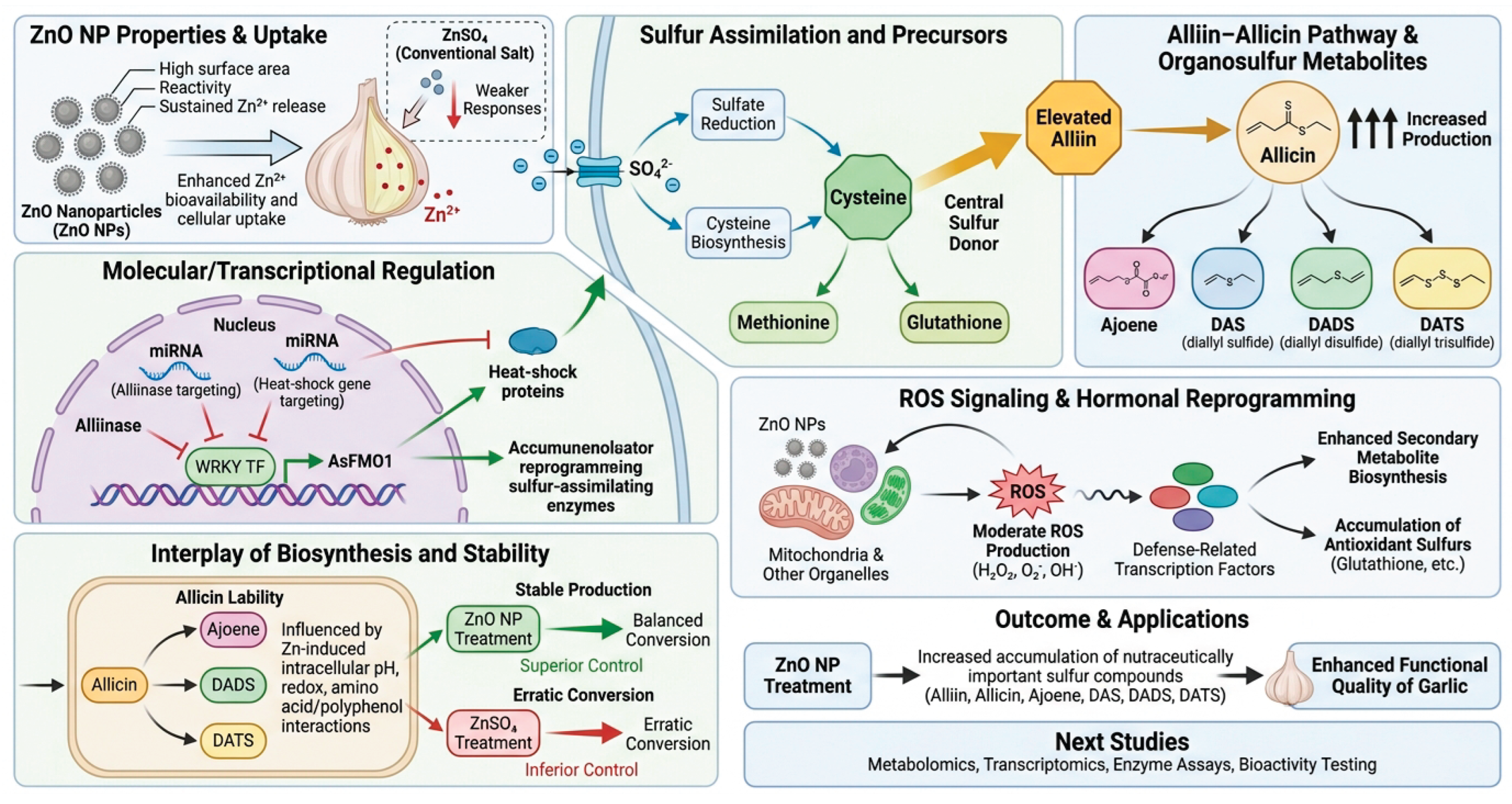
Proposed mechanistic model of ZnO nanoparticle–mediated enhancement of garlic sulfur metabolism is provided in Figure 4. Taken together, the metabolite profile supports a model in which ZnO NP fertilization enhances garlic sulfur metabolism at multiple levels. First, nanoscale Zn delivery likely sustained Zn²⁺ availability and improved Zn uptake because ZnO NPs have high surface area, strong reactivity, and favorable release characteristics [42,47]. Second, increased Zn availability may have stimulated sulfur assimilation by promoting enzyme activity and precursor formation, as reflected by the marked rise in alliin [42,59]. Third, ZnO NPs appear to influence transcriptional and signaling networks linked to sulfur metabolism. Garlic sulfur pathways are under transcriptional control involving alliinase-related genes, heat-shock-associated regulators, and the WRKY–AsFMO1 module implicated in alliin biosynthesis [39,40]. Moderate ROS generated during nanoparticle exposure may further act as signaling molecules that activate defense-related transcription factors and stimulate secondary metabolism rather than causing severe damage [47,57]. The accumulation of allicin and polysulfides, which possesses strong antioxidant activity, is therefore consistent with an adaptive response that reinforces redox homeostasis and bulb defense. Finally, because allicin is highly labile, Zn-induced changes probably affected not only biosynthesis but also the stability and conversion kinetics of downstream metabolites such as ajoene, DADS, and DATS [50]. From a horticultural perspective, these responses indicate that ZnO NPs can enhance the functional and nutraceutical quality of garlic bulbs beyond the effects of conventional Zn fertilization.
3.6.. Implications for Garlic Quality and Functional Value
The enrichment of alliin, allicin, DAS, DADS, and DATS under ZnO NP treatments has important implications for garlic quality and functional value. Alliin and allicin are major determinants of garlic pungency and nutraceutical properties, while DAS, DADS and DATS contribute to flavor development and a broad range of biological activities [11,40]. The concurrent increase in these metabolites indicates that ZnO NP-induced modulation of sulfur metabolism enhances not only sulfur accumulation but also the functional quality of garlic.
ZnO NPs consistently outperformed ZnSO₄, with the highest OSC containing metabolite concentrations observed at 50 mg L⁻¹, suggesting a dose-dependent improvement in sulfur-metabolite biosynthesis. This enhanced response is likely associated with the greater bioavailability, surface reactivity, and cellular uptake efficiency of nanoparticle-based fertilizers, which promote metabolic activity and sulfur assimilation. In contrast, the reduction in ajoene accumulation indicates selective regulation of downstream sulfur-conversion pathways, favoring retention of biologically active precursor compounds. Because the conversion of alliin and allicin is highly sensitive to post-harvest handling and storage conditions, agronomic strategies that increase precursor pools should be integrated with optimized processing practices to maximize bioactive sulfur compounds [1150].
From an agricultural and pharmaceutical perspective, the enhanced accumulation of key organosulfur metabolites is particularly significant because these compounds are associated with antioxidant, antimicrobial, cardioprotective, and anticancer activities [3,53]. Together, the results demonstrate that ZnO NP fertilization is a promising approach for improving the nutritional, medicinal, and commercial value of garlic through targeted enhancement of sulfur metabolism.
5. Conclusions
Zinc fertilization, particularly in nanoparticle form, markedly enhanced sulfur metabolism and the accumulation of bioactive organosulfur compounds in garlic. ZnO NP treatments significantly increased alliin, allicin, DAS, DADS, and DATS concentrations, whereas ajoene declined, indicating selective redistribution of sulfur-metabolic flux. The results support an integrated mechanism involving improved Zn bioavailability, enhanced sulfur assimilation, stimulation of key enzymatic steps, and ROS-mediated signaling that collectively increased flux through the alliin–allicin pathway and favored the accumulation of stable, bioactive sulfur derivatives. The strongest response at the higher nanoparticle dose highlights the agronomic potential of nano-enabled Zn delivery for improving garlic bulb quality. In general, ZnO NP fertilization emerges as a promising strategy for enhancing the nutritional and functional value of garlic. Future studies integrating metabolomics, transcriptomics, and enzyme assays, together with postharvest optimization, will be valuable for defining dose thresholds, clarifying regulatory mechanisms, and maximizing retention of bioactive sulfur compounds under commercial production conditions.
Author Contributions
AG: Writing – review & editing, Data curation, Writing – original draft, Validation, Methodology, Formal analysis. EP: Investigation, Methodology, Writing – review & editing. AS: Investigation, Writing – review & editing, Methodology, Validation. XM: Funding acquisition, Methodology, Data curation, Writing – review & editing. LC: Funding acquisition, Supervision, Resources, Writing – review & editing, Data curation, Project administration, Conceptualization, Validation.
Funding
The author(s) declare that financial support was received for the research and/or publication of this article. This research was funded by the United States Department of Agriculture, National Institute of Food and Agriculture (USDA-NIFA) Capacity Building Grant, Project #2023-38821-39982.
Institutional Review Board Statement
Not applicable.
Data Availability Statement
Any data supporting the findings of this article will be made available by the authors without undue reservation.
Acknowledgments
The authors appreciate CAFNR Research, College of Agriculture, Food, and Natural Resources, Prairie View A&M University, Texas, for providing space and facility support.
Conflicts of Interest
The authors declare that they have no conflict of interest and they have no known competing financial interests or personal relationships that could have appeared to influence the work reported in this paper.
References
- Amagase, H. Clarifying the real bioactive constituents of garlic. J. Nutr. 2006, 136, 716S–725S. [Google Scholar] [CrossRef] [PubMed]
- Martins, N.; Petropoulos, S.; Ferreira, I. C. F. R. Chemical composition and bioactive compounds of garlic (Allium sativum L.) as affected by pre- and post-harvest conditions: A review. Food Chem. 2016, 211, 41–50. [Google Scholar] [CrossRef] [PubMed]
- Batiha, G. E.-S.; Beshbishy, A. M.; Wasef, L. G.; Elewa, Y. H. A.; Al-Sagan, A. A.; Abd El-Hack, M. E.; Taha, A. E.; Abd-Elhakim, Y. M.; Devkota, H. P. Chemical constituents and pharmacological activities of garlic (Allium sativum L.): A review. Nutrients 2020, 12(3), 872. [Google Scholar] [CrossRef] [PubMed]
- Sudhakar, K.; Mishra, V.; Hemani, V.; Verma, A.; Jain, A.; Jain, S.; Charyulu, R. N. Reverse pharmacology of phytoconstituents of food and plant in the management of diabetes: Current status and perspectives. Trends Food Sci. Technol. 2021, 110, 594–610. [Google Scholar] [CrossRef]
- El-Saadony, M.T.; Saad, A.M.; Korma, S.A.; Salem, H.M.; Abd El-Mageed, T.A.; Alkafaas, S.S.; Elsalahaty, M.I.; Elkafas, S.S.; Mosa, W.F.A.; Ahmed, A.E.; Mathew, B.T.; Albastaki, N.A.; Alkuwaiti, A.A.; El-Tarabily, M.K.; AbuQamar, S.F.; El-Tarabily, K.A.; Ibrahim, S.A. 2024 Garlic bioactive substances and their therapeutic applications for improving human health: a comprehensive review. Front. Immunol. 2024, 15, 1277074. [Google Scholar] [CrossRef] [PubMed]
- Ren, L.; Pan, X.; Deng, Y.; Ge, Z.; Li, S.; Su, D.; Zhao, G.; Tang, H.; Wang, X. Combined transcriptomic and metabolomic analyses of sulfur and nitrogen interaction in garlic. Horticulturae 2024, 10, 1203. [Google Scholar] [CrossRef]
- Amagase, H.; Petesch, B. L.; Matsuura, H.; Kasuga, S.; Itakura, Y. Intake of garlic and its bioactive components. J. Nutr. 2001, 131, 955S–962S. [Google Scholar] [CrossRef] [PubMed]
- Borlinghaus, J.; Albrecht, F.; Gruhlke, M. C. H.; Nwachukwu, I. D.; Slusarenko, A. J. Allicin: Chemistry and biological properties. Molecules 2014, 19(8), 12591–12618. [Google Scholar] [CrossRef] [PubMed]
- Deng, Y.; Ho, C.-T.; Lan, Y.; Xiao, J.; Lu, M. Bioavailability, health benefits, and delivery systems of allicin: A review. J. Agric. Food Chem. 2023, 71(49), 19207–19220. [Google Scholar] [CrossRef] [PubMed]
- Xu, C.; Wan, W.; Wang, W.; Zhang, Z.; Tian, C.; Su, Y.; Wu, J.; Li, J.; Li, M.; Zeng, L.; Xu, T.; Yang, X. A basic leucine zipper transcription factor, AsbZIP26, positively regulates the synthesis of alliin in garlic (Allium sativum L.). Sci. Hortic. 2025, 339, 113840. [Google Scholar] [CrossRef]
- Borlinghaus, J.; Foerster, J.; Kappler, U.; Antelmann, H.; Noll, U.; Gruhlke, M. C. H.; Slusarenko, A. J. Allicin, the odor of freshly crushed garlic: A review of recent progress in understanding allicin’s effects on cells. Molecules 2021, 26(6), 1505. [Google Scholar] [CrossRef] [PubMed]
- Block, E. Garlic and Other Alliums: The Lore and the Science; Royal Society of Chemistry: Cambridge, UK, 2010; pp. 1–454. [Google Scholar]
- Yamaguchi, Y.; Kumagai, H. Characteristics, biosynthesis, decomposition, metabolism and functions of the garlic odour precursor, S-allyl-L-cysteine sulfoxide. Exp. Ther. Med. 2020, 19(2), 1528–1535. [Google Scholar] [CrossRef] [PubMed]
- Mengers, H. G.; Schier, C.; Zimmermann, M.; Gruhlke, M. C. H.; Block, E.; Blank, L. M.; Slusarenko, A. J. Seeing the smell of garlic: Detection of gas phase volatiles from crushed garlic (Allium sativum), onion (Allium cepa), ramsons (Allium ursinum) and human garlic breath using SESI-Orbitrap MS. Food Chem. 2022, 397, 133804. [Google Scholar] [CrossRef] [PubMed]
- Gruhlke, M. C. H.; Nicco, C.; Batteux, F.; Slusarenko, A. J. The effects of allicin, a reactive sulfur species from garlic, on a selection of mammalian cell lines. Antioxidants 2017, 6(1), 1. [Google Scholar] [CrossRef] [PubMed]
- Bhattacharya, S.; Sen, D.; Bhattacharjee, C. Strategic development to stabilize bioactive diallyl thiosulfinate by pH responsive non ionic micelle carrier system. Process Biochem. 2022, 120, 64–73. [Google Scholar] [CrossRef]
- Xu, Y.; Tao, M.; Xu, W.; Xu, L.; Yue, L.; Cao, X.; Chen, F.; Wang, Z. Nano-CeO₂ activates physical and chemical defenses of garlic (Allium sativum L.) for reducing antibiotic resistance genes in plant endosphere. Ecotoxicol. Environ. Saf. 2024, 276, 116289. [Google Scholar] [CrossRef] [PubMed]
- Hirata, Y.; Nagase, H.; Satoh, K.; Takemori, H.; Furuta, K.; Kamatari, Y. O. Antiferroptotic properties of allicin and related organosulfur compounds—diallyl disulfide and diallyl trisulfide—from garlic. FoodChem. Toxicol. 2025, 195, 115124. [Google Scholar] [CrossRef] [PubMed]
- Fujisawa, H.; Suma, K.; Origuchi, K.; Seki, T.; Ariga, T. Thermostability of allicin determined by chemical and biological assays. Biosci. Biotechnol. Biochem. 2008, 72(11), 2877–2883. [Google Scholar] [CrossRef] [PubMed]
- Abe, K.; Hori, Y.; Myoda, T. Characterization of key aroma compounds in aged garlic extract. Food Chem. 2020, 312, 126081. [Google Scholar] [CrossRef] [PubMed]
- Huang, Z.; Zhou, Q.; Wu, W.-L.; Wan, J.; Jiang, A.-M. Thermal kinetics of enzyme inactivation, color changes, and allicin degradation of garlic under blanching treatments. J. Food Process Eng. 2019, 42, e12991. [Google Scholar] [CrossRef]
- Nguyen, B. T.; Harper, S. M.; O’Hare, T. J.; Menzies, N. W.; Wehr, B. Sulfur nutrition affects garlic bulb yield and allicin concentration. Plants 2022, 11(19), 2571. [Google Scholar] [CrossRef] [PubMed]
- Itakura, Y.; Ichikawa, M.; Mori, Y.; Okino, R.; Udayama, M.; Morita, T. How to distinguish garlic from the other Allium vegetables. J. Nutr. 2001, 131(3), 963S–967S. [Google Scholar] [CrossRef] [PubMed]
- Kopriva, S.; Rennenberg, H. Control of sulphate assimilation and glutathione synthesis: Interaction with N and C metabolism. J. Exp. Bot. 2004, 55(404), 1831–1842. [Google Scholar] [CrossRef] [PubMed]
- Lancaster, J.E.; Shaw, M.L. Gamma-glutamyl peptides in the biosynthesis of S-alk(en)yl-L-cysteine sulfoxides (flavour precursors) in Allium. Phytochemistry 1989, 28, 455–460. [Google Scholar] [CrossRef]
- Kamenetsky, R.; Rabinowitch, H. D.; Kik, C. Diversity in garlic. Acta Hortic. 2005, 688, 123–130. [Google Scholar]
- Baghalian, K.; Naghavi, M.R.; Ziai, S.A.; Naghdi Badi, H. Post-planting evaluation of morphological characters and allicin content in Iranian garlic (Allium sativum L.) ecotypes. Sci. Hortic. 2006, 107, 405–410. [Google Scholar] [CrossRef]
- Hayat, S.; Cheng, Z.; Ahmad, H.; Ali, M.; Chen, X.; Wang, M. Garlic, from remedy to stimulant: Evaluation of antifungal potential reveals diversity in phytoalexin allicin content among garlic cultivars; allicin containing aqueous garlic extracts trigger antioxidants in cucumber. Front. Plant Sci. 2016, 7, 1235. [Google Scholar] [CrossRef] [PubMed]
- Kacjan Maršić, N.; Nečemer, M.; Veberič, R.; Poklar Ulrih, N.; Škrt, M. Effect of cultivar and fertilization on garlic yield and allicin content in bulbs at harvest and during storage. Turk. Agric. For. 2019, 43(4), 414–429. [Google Scholar] [CrossRef]
- Liu, P.; Weng, R.; Xu, Y.; Feng, Y.; He, L.; Qian, Y.; Qiu, J. Metabolic changes in different tissues of garlic plant during growth. J. Agric. Food Chem. 2020, 68(44), 12467–12475. [Google Scholar] [CrossRef] [PubMed]
- Abdelrahman, M.; Hirata, S.; Mukae, T.; Yamada, T.; Sawada, Y.; El-Syaed, M.; Yamada, Y.; Sato, M.; Yokota Hirai, M.; Shigyo, M. Comprehensive metabolite profiling in genetic resources of garlic (Allium sativum L.) collected from different geographical regions. Molecules 2021, 26(5), 1415. [Google Scholar] [CrossRef] [PubMed]
- Leite, V. dos S. A.; Ikehara, B. R. M.; Almeida, N. R.; Silva, G. H.; Macedo, W. R.; Pinto, F. G. Metabolomics based on GC–MS combined with chemometrics for geographical discrimination of garlic (Allium sativum L.). Food Control 2025, 169, 110976. [Google Scholar] [CrossRef]
- Ruíz-Torres, C.; Feriche-Linares, R.; Rodríguez-Ruíz, M.; Palma, J. M.; Corpas, F. J. Arsenic-induced stress activates sulfur metabolism in different organs of garlic (Allium sativum L.) plants accompanied by a general decline of the NADPH-generating systems in roots. J. Plant Physiol. 2017, 211, 27–35. [Google Scholar] [CrossRef] [PubMed]
- Atif, M. J.; Amin, B.; Ghani, M. I.; Ali, M.; Liu, X.; Zhang, Y.; Cheng, Z. Allium sativum L. (garlic) bulb enlargement as influenced by differential combinations of photoperiod and temperature. Food Chem. 2021, 338, 127991. [Google Scholar] [CrossRef] [PubMed]
- Atif, M. J.; Amin, B.; Ghani, M. I.; Ali, M.; Zhang, S.; Cheng, Z. Effect of photoperiod and temperature on garlic (Allium sativum L.) bulbing and selected endogenous chemical factors. Environ. Exp. Bot. 2020, 180, 104250. [Google Scholar] [CrossRef]
- Woo, U. J.; Moon, Y. H.; Sim, H. S.; Lee, T. Y.; Shin, H. R.; Jo, J. S.; Ku, K.-M.; Kim, S. K. Changes in biochemical metabolites and growth of garlic by evapotranspiration-based irrigation regime. Ann.Agric. Sci. 2024, 69(2), 100378. [Google Scholar] [CrossRef]
- Yang, X.; Su, Y.; Wu, J.; Wan, W.; Chen, H.; Cao, X.; Wang, J.; Zhang, Z.; Wang, Y.; Ma, D.; Loake, G. J.; Jiang, J. rallel analysis of global garlic gene expression and alliin content following leaf wounding. BMC Plant Biol. 2021, 21, 174. [Google Scholar] [CrossRef] [PubMed]
- Ai, P.; Xue, J.; Zhu, Y.; Tan, W.; Wu, Y.; Wang, Y.; Li, Z.; Shi, Z.; Kang, D.; Zhang, H.; Jiang, L.; Wang, Z. Comparative analysis of two kinds of garlic seedings: Qualities and transcriptional landscape. BMC Genom. 2023, 24(1), 87. [Google Scholar] [CrossRef] [PubMed]
- Asadi, M.; Nazarian-Firouzabadi, F.; Naghavi, M. R.; Ismaili, A. Identifying miRNAs and target genes associated with allicin synthesis in Allium species. J. Plant Biochem. Biotechnol. 2024, 33(2), 168–177. [Google Scholar] [CrossRef]
- Wu, J.; Li, M.; Wang, W.; Su, Y.; Li, J.; Gong, J.; Meng, X.; Lin, C.; Zhang, Q.; Yang, Y.; Xu, C.; Zeng, L.; Jiang, J.; Yang, X. Identification and functional characterization of AsWRKY9, a WRKY transcription factor modulating alliin biosynthesis in garlic (Allium sativum L.). BMC Biol. 2025, 23, 14. [Google Scholar] [CrossRef] [PubMed]
- Diriba-Shiferaw, G.; Nigussie-Dechassa, R.; Kebede, W.; Getachew, T.; Sharma, J. J. Growth and nutrients content of garlic influenced by nitrogen and phosphorus fertilization. Agri. Sci. 2014, 5, 803–813. [Google Scholar]
- Broadley, M.R.; White, P.J.; Hammond, J.P.; Zelko, I.; Lux, A. Zinc in plants. New Phytol. 2007, 173, 677–702. [Google Scholar] [CrossRef] [PubMed]
- Cakmak, I. Possible roles of zinc in protecting plant cells from oxidative damage. New Phytol. 2000, 146, 185–205. [Google Scholar] [CrossRef] [PubMed]
- Prasad, R.; Bhattacharyya, A.; Nguyen, Q. D. Nanotechnology in sustainable agriculture. Front. Microbiol. 8, 1014. [CrossRef] [PubMed]
- Naderi, M. R.; Danesh-Shahraki, A. Nanofertilizers and their roles in sustainable agriculture. Intl. J.Agri. Crop Sci. 2013, 5, 2229–2232. [Google Scholar]
- Dimkpa, C. O.; Singh, U.; Bindraban, P. S.; Elmer, W. H.; Gardea-Torresdey, J. L.; White, J. C. Zinc oxide nanoparticles alleviate drought-induced alterations in sorghum performance. Environ. Sci. Nano 2020, 7, 841–856. [Google Scholar]
- Rastogi, A.; Zivcak, M.; Sytar, O.; Kalaji, H. M.; He, X.; Mbarki, S.; Brestic, M. Impact of metal and metal oxide nanoparticles on plant physiology. Front. Chem. 2017, 5, 78. [Google Scholar] [CrossRef] [PubMed]
- Singh, R.; Choudhary, P.; Kumar, S.; Daima, H. K. Mechanistic approaches for crosstalk between nanomaterials and plants: Plant immunomodulation, defense mechanisms, stress resilience, toxicity, and perspectives. Environ. Sci. Nano 2024, 11, 2324–2351. [Google Scholar] [CrossRef]
- Geremew, A.; Stovall, L.; Woldesenbet, S.; Ma, X.; Carson, L. Nanopriming with zinc oxide: A novel approach to enhance germination and antioxidant systems in amaranth. Front. Plant Sci. 2025, 16, 1599192. [Google Scholar] [CrossRef] [PubMed]
- Zhou, S.; Yan, X.; Qiao, X.; Qiu, Z.; Zhu, W.; Lu, X.; Zheng, Z.; Zhang, B. Evaluate the stability of synthesized allicin and its reactivity with endogenous compounds in garlic. npj Sci. Food 2025, 9, 18. [Google Scholar] [CrossRef] [PubMed]
- Martín-Lagos, A. R.; Olea Serrano, M. F.; Ruiz López, M. D. Determination of organic sulphur compounds in garlic extracts by gas chromatography and mass spectrometry. Food Chem. 1995, 53(1), 91–93. [Google Scholar] [CrossRef]
- Janská, P.; Knejzlík, Z.; Perumal, A. S.; Jurok, R.; Tokárová, V.; Nicolau, D. V.; Sˇtěpanek, F.; Kaspar, O. Effect of physicochemical parameters on the stability and activity of garlic alliinase and its use for in-situ allicin synthesis. PLoS ONE 2021, 16(3), e0248878. [Google Scholar] [CrossRef] [PubMed]
- Lawson, L. D.; Wang, Z. J. Allicin and allicin-derived garlic compounds increase breath acetone through allyl methyl sulfide: Use in measuring allicin bioavailability. J. Agric. Food Chem. 2005, 53, 1974–1983. [Google Scholar] [CrossRef] [PubMed]
- Shang, A.; Cao, S. Y.; Xu, X. Y.; Gan, R. Y.; Tang, G. Y.; Corke, H.; Mavumengwana, V.; Li, H. B. Bioactive compounds and biological functions of garlic (Allium sativum L.). Foods 2019, 8, 246. [Google Scholar] [CrossRef] [PubMed]
- Subramanian, M. S.; Nandagopal, G.; Nordin, S. A.; Thilakavathy, K.; Joseph, N. Prevailing knowledge on the bioavailability and biological activities of sulphur compounds from Alliums: A potential drug candidate. Molecules 2020, 25, 4111. [Google Scholar] [CrossRef] [PubMed]
- Verma, T.; Aggarwal, A.; Dey, P.; Chauhan, A. K.; Rashid, S.; Chen, K.-T.; Sharma, R. Medicinal and therapeutic properties of garlic, garlic essential oil, and garlic-based snack food: An updated review. Front. Nutr. 2023, 10, 1120377. [Google Scholar] [CrossRef] [PubMed]
- Mirakhorli, T.; Ardebili, Z. O.; Ladan-Moghadam, A. Bulk and nanoparticles of zinc oxide exert beneficial effects in soybean. PLoS ONE 2021, 16(9), e0256905. [Google Scholar] [CrossRef] [PubMed]
- Ansary, J.; Forbes-Hernández, T. Y.; Gil, E.; Cianciosi, D.; Zhang, J.; Elexpuru-Zabaleta, M.; Simal-Gandara, J.; Giampieri, F.; Battino, M. Potential health benefit of garlic based on human intervention studies: A brief overview. Antioxidants 2020, 9, 619. [Google Scholar] [CrossRef] [PubMed]
- Astolfi, S.; Cesco, S.; Zuchi, S.; Neumann, G.; Roemheld, V.; Pinton, R. Sulfur starvation reduces phytosiderophore release by iron-deficient barley plants. Soil Sci. Plant Nutr. 2004, 50, 1189–1195. [Google Scholar] [CrossRef]
Figure 1.
Experimental design and analytical workflow used to evaluate the effects of conventional ZnSO₄ and ZnO nanoparticle (ZnO NP) treatments on sulfur metabolism in garlic.
Figure 1.
Experimental design and analytical workflow used to evaluate the effects of conventional ZnSO₄ and ZnO nanoparticle (ZnO NP) treatments on sulfur metabolism in garlic.
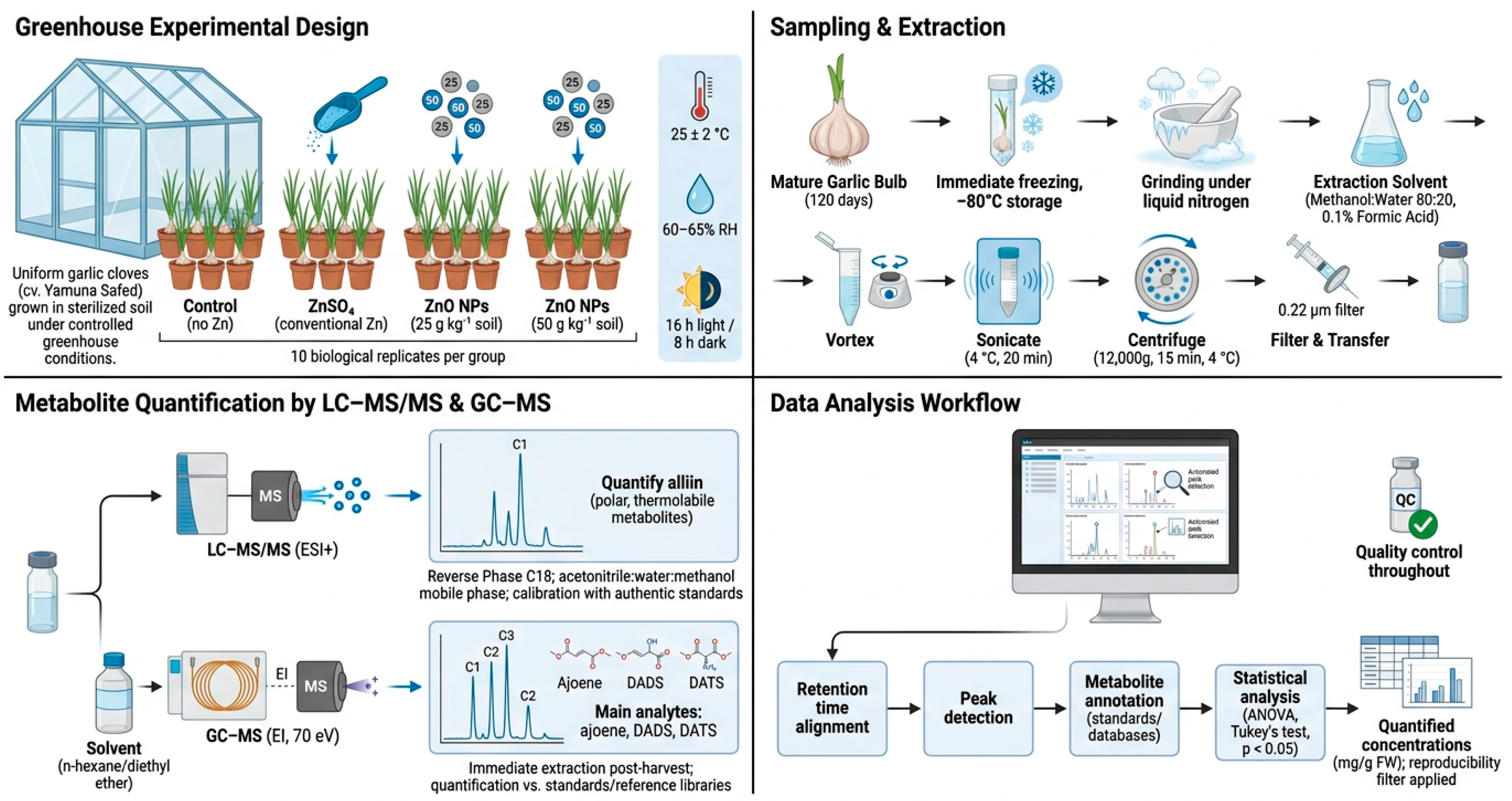
Figure 2.
Accumulation of alliin (A) and allicin (B)in garlic bulbs under control, ZnSO₄, ZnO NP–25, and ZnO NP–50 treatments. Values are expressed as mg g⁻¹ fresh weight (FW). Different letters indicate significant differences among treatments according to Tukey's test at p < 0.05.
Figure 2.
Accumulation of alliin (A) and allicin (B)in garlic bulbs under control, ZnSO₄, ZnO NP–25, and ZnO NP–50 treatments. Values are expressed as mg g⁻¹ fresh weight (FW). Different letters indicate significant differences among treatments according to Tukey's test at p < 0.05.
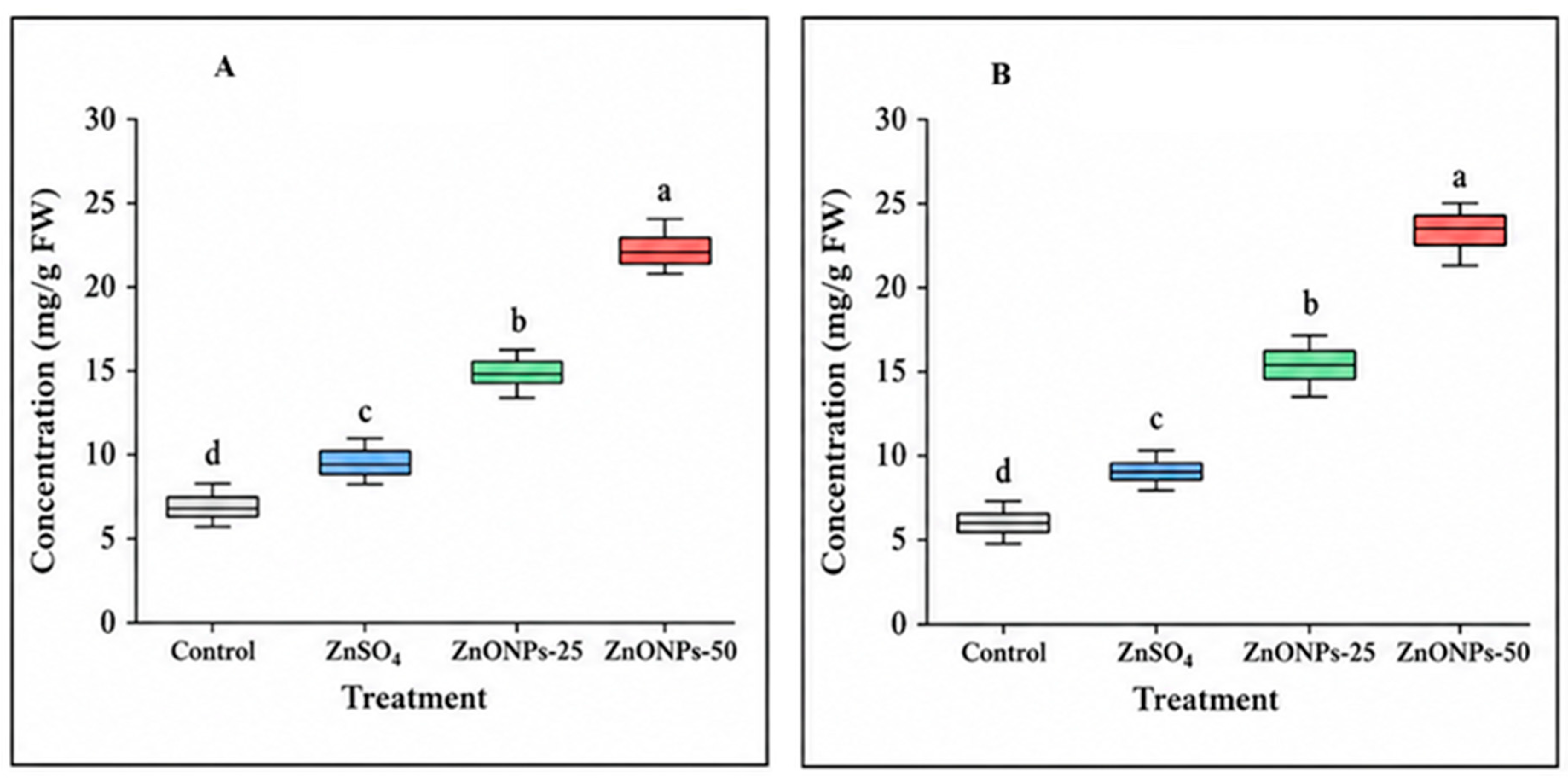
Figure 3.
Changes in ajoene (A), diallyl sulfide (B), diallyl disulfide (C), and diallyl trisulfide (D) concentrations in garlic bulbs under different zinc treatments. Values are expressed as mg g⁻¹ fresh weight (FW). Different lowercase letters indicate significant differences among treatments according to Tukey's test at p < 0.05. .
Figure 3.
Changes in ajoene (A), diallyl sulfide (B), diallyl disulfide (C), and diallyl trisulfide (D) concentrations in garlic bulbs under different zinc treatments. Values are expressed as mg g⁻¹ fresh weight (FW). Different lowercase letters indicate significant differences among treatments according to Tukey's test at p < 0.05. .
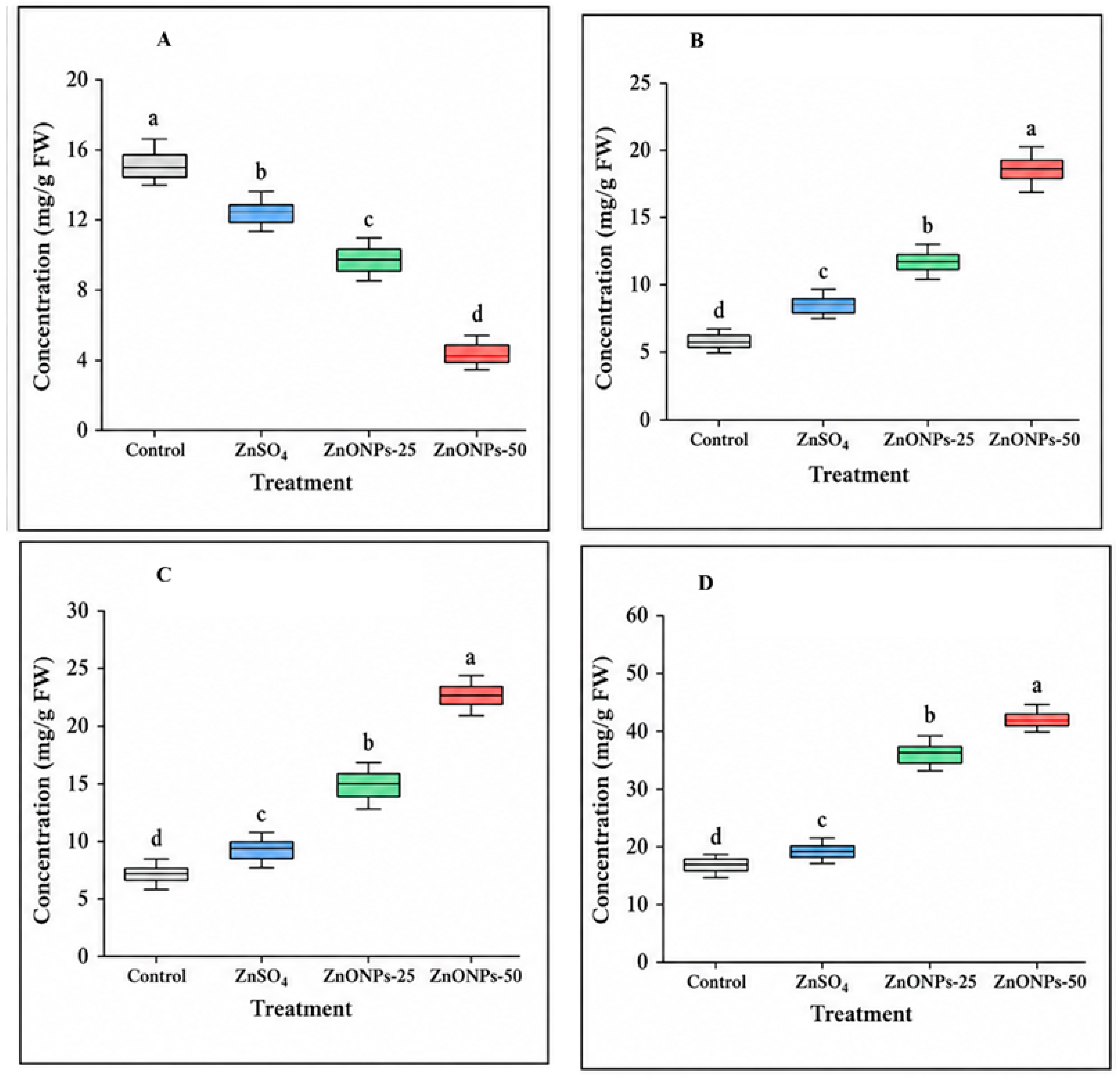
Figure 4.
Proposed mechanistic model of ZnO nanoparticle–mediated enhancement of garlic sulfur metabolism. Improved Zn availability and cellular uptake are hypothesized to stimulate sulfur assimilation, alliin biosynthesis, alliinase-mediated allicin formation, ROS signaling, and downstream conversion to stable sulfur metabolites, thereby enhancing bulb functional quality.
Figure 4.
Proposed mechanistic model of ZnO nanoparticle–mediated enhancement of garlic sulfur metabolism. Improved Zn availability and cellular uptake are hypothesized to stimulate sulfur assimilation, alliin biosynthesis, alliinase-mediated allicin formation, ROS signaling, and downstream conversion to stable sulfur metabolites, thereby enhancing bulb functional quality.
Disclaimer/Publisher’s Note: The statements, opinions and data contained in all publications are solely those of the individual author(s) and contributor(s) and not of MDPI and/or the editor(s). MDPI and/or the editor(s) disclaim responsibility for any injury to people or property resulting from any ideas, methods, instructions or products referred to in the content. |
© 2026 by the authors. Licensee MDPI, Basel, Switzerland. This article is an open access article distributed under the terms and conditions of the Creative Commons Attribution (CC BY) license (http://creativecommons.org/licenses/by/4.0/).
Copyright: This open access article is published under a Creative Commons CC BY 4.0 license, which permit the free download, distribution, and reuse, provided that the author and preprint are cited in any reuse.