

Submitted:
03 August 2026
Posted:
05 August 2026
You are already at the latest version
Abstract
The development of carbon-neutral construction materials has stimulated interest in alkali-activated systems for the valorization of industrial non-hazardous waste. This study proposes an original quantitative approach to assess the reactivity of several wastes, including black and white fly ash, bottom ash, fine glass dust, and float glass polishing sludge, through their use as partial replacements for metakaolin (MK). For-mulations containing 5-50 wt% of fine waste powders (< 45 μm) were prepared and mechanically compared with a reference MK-based geopolymer. Formulations con-taining waste additions to the reference geopolymeric paste were also evaluated to in-vestigate their role as aggregates. Mechanical testing identified black fly ash as the most reactive precursor, achieving a compressive strength of 30 MPa at 50% substitu-tion, compared with 18 MPa for the reference material. Float glass polishing sludge and white fly ash reached approximately 22 MPa at 25% replacement. Conversely, bottom ash and fine glass dust at substitution levels above 5% reduced mechanical performance owing to their high crystallinity and unfavorable Si/Al molar ratios. Mi-crostructural characterization by XRD, FT-IR, density measurements, and SEM was correlated with reactivity. The results provide a basis for performance-based design criteria aimed at the sustainable valorization of locally available industrial by-products in alkali-activated materials.
Keywords:
alkali activation
; industrial waste
; compressive strength
; reactivity degree
; chemical stability
1. Introduction
The development of sustainable urban infrastructure has made the search for alternatives to Ordinary Portland Cement (OPC) a global priority [1]. While geopolymers have emerged as a promising cement-free alternative with a significantly lower carbon footprint, their viability for structural applications is primarily determined by their compressive strength [2]. Achieving high-strength geopolymeric binders requires the optimization of several complex variables, ranging from the mineralogical composition of the precursors to the chemical parameters of the activating solutions [3,4].
A critical factor in controlling strength development is the SiO2/Al2O3 molar ratio within the geopolymeric matrix [5] . Research indicates that compressive strength typically increases with this ratio until reaching an optimal peak, often around 3.5, before declining due to the saturation of the bulk solution which can hinder precursor dissolution [1]. Furthermore, the source of these oxides is vital; studies have shown that soluble silica supplied externally via sodium silicate (Na2SiO3) more effectively promotes a densely packed, high-strength network than relying solely on the silica present in raw materials like metakaolin or bottom ash [6].
The chemical activation process also plays a decisive role in the final strength results. Increasing the NaOH molarity generally accelerates geopolymerization and enhances the extraction of reactive alumina and silica species, leading to higher compressive strength [7]. However, exceeding an ideal limit (often around 14–16 M) can lead to a decrease in strength due to the premature precipitation of gel phases [4]. Beyond chemical additives, physical processing such as mechanochemical activation—the co-grinding of precursors with solid activators—has been shown to increase compressive strength by as much as 60–80% by producing smaller, more reactive agglomerates and intensifying the interconnectivity of the structure [8].
This preliminary study focuses on the evaluation of the compressive strength of geopolymer formulations incorporating five different inorganic industrial waste streams, including fly ash, bottom ash, and glass-derived residues. As an initial screening approach, the finest fraction of each waste material (particle size < 45 μm) was selected by simple sieving of the as-received industrial by-products. These fractions were then used either as partial replacements for or additions to metakaolin (MK) in a reference formulation previously optimized and validated in earlier studies [9,10,11].
Geopolymer samples were prepared and cured at room temperature in order to minimize energy consumption and maintain a low-energy processing route. By investigating the interactions between waste-derived particles, metakaolin, and the alkaline activating solution, this study aims to identify mix designs capable of achieving improved mechanical performance while providing a simple, rapid, and cost-effective methodology for assessing the reactivity of aluminosilicate waste sources.
In addition, the mechanisms governing strength development were investigated through an integrated experimental approach combining compressive strength measurements, FT-IR spectroscopy, SEM-EDS analysis, and chemical stability tests, enabling the correlation of mechanical performance with the microstructural and chemical features of the resulting alkali-activated binders [3].
2. Materials and Methods
2.1. Raw Materials and Wastes
In the present study, the mix design was based on a metakaolin (MK)-based geopolymer formulation previously developed and optimized in our earlier investigations [9,10,11]. The metakaolin employed was a commercial product (ARGICAL™ M − 1000, Imerys, France) with the following chemical composition (wt%): SiO2 = 55.0, Al2O3 = 40.0, Fe2O3 = 1.4, TiO2 = 1.5, Na2O + K2O = 0.8, CaO + MgO = 0.3, and loss on ignition (LOI) = 1.0. This metakaolin is widely used as a reference precursor in geopolymer research due to its well-defined chemical composition, high purity, and excellent mineralogical and microstructural stability [12]. From a mineralogical perspective, the material is mainly composed of a highly reactive amorphous aluminosilicate phase, which constitutes the metakaolin structural network, together with minor amounts of crystalline impurities, including quartz, anatase, and traces of muscovite [13]. The predominance of the amorphous aluminosilicate phase provides high reactivity under alkaline activation conditions, making this material particularly suitable as a benchmark precursor for the evaluation of alternative aluminosilicate sources and industrial waste-derived feedstocks [14].
The alkaline activating solution was prepared by combining a commercial sodium silicate solution (Ingessil, Verona, Italy) with an 8 M sodium hydroxide (NaOH) solution prepared from laboratory-grade NaOH granules (96 wt%, Sigma-Aldrich, Italy). The sodium silicate solution was characterized by a SiO2/Na2O molar ratio of 3.0, a pH of 11.7, and a density of 1.368 g cm−3 at 20 °C. The 8 M NaOH solution was prepared by gradually dissolving the NaOH granules in distilled water under continuous stirring. The alkali was added slowly to control the heat released by the highly exothermic dissolution process and to minimize water evaporation. Upon completion of the dissolution step, the container was sealed and allowed to cool to room temperature. After cooling, the sodium silicate solution was added at a sodium silicate-to-sodium hydroxide mass ratio of 1.05, corresponding approximately to a 50:50 volumetric ratios. The resulting activating solution was homogenized in a rotary mixer for 24 h prior to its use in the preparation of the geopolymer formulations.
To assess the reactivity of the investigated waste-derived powders, a reference geopolymer formulation containing a conventional inert aggregate was also prepared. Standardized sand was added to the fresh geopolymer paste, and the resulting mechanical properties were compared with those obtained using the fine waste fractions. The standardized sand employed in this study was a commercial product supplied by SNL (France).
Five different non-hazardous inorganic waste streams characterized by varying amounts of Si- and Al-bearing phases were selected for this study. The investigated non-hazardous industrial by-products included float glass polishing sludge, fine glass dust, black and white fly ash, and bottom ash. In addition to differences in chemical composition, the wastes exhibited significant variability in their degree of crystallinity and in the content of secondary oxide components, particularly CaO, which is known to strongly influence alkali activation processes. All waste materials were classified according to the European List of Waste (LoW) and identified by their corresponding European Waste Catalogue (EWC/EER) codes [15]:
- Float glass polishing sludge (EER 10 11 12). Waste generated during the manufacture of float glass. Specifically, this material originates from the filter-press treatment of polishing wastewater and is classified as non-hazardous.
- Fine glass dust (EER 19 12 05). Glass-rich residue derived from the mechanical treatment of separately collected municipal glass waste, including sorting, crushing, compaction, and related processing operations.
- Black and white fly ash (EER 10 01 03). Fly ash generated from the combustion of biomass fuels, including peat and untreated wood, for energy production.
- Bottom ash (EER 19 01 12). Non-hazardous bottom ash and slag originating from waste incineration processes.
The selected waste streams were intentionally chosen to represent a broad range of chemical compositions, mineralogical assemblages, and amorphous phase contents, enabling a systematic assessment of their potential reactivity in alkali-activated systems.
The first stage of alkali-activated binder preparation involved the pre-treatment of the as-received industrial wastes. In order to minimize both processing costs and energy consumption, a simple drying-and-sieving approach was adopted. All waste materials were first homogenized and oven-dried at 110 °C for 24 h to remove residual moisture. Subsequently, the dried materials were sieved to a particle size below 45 μm, following the recommendations of ASTM C430-25 standard [16]. The selection of the finest particle fraction was intended to maximize the potential reactivity of the waste materials and to enable a meaningful comparison among different waste streams under identical alkaline activation conditions. Furthermore, the use of a simple sieving procedure allowed the investigation of waste reactivity without the need for additional energy-intensive treatments such as grinding or milling, thereby preserving the low-cost and sustainable nature of the proposed approach.
The resulting fine powders obtained from the five waste materials were subsequently characterized according to the procedures described in Section 2.3.
2.2. Alkali Activation and Sample Preparation
A reference geopolymer formulation (GP0) was prepared according to a mix design previously optimized and validated in earlier studies [9,10,11].
In the present work, the effect of replacing metakaolin (MK) with different industrial waste materials was systematically investigated. For each waste stream, the maximum replacement level was determined on the basis of the workability of the fresh paste while maintaining the same liquid-to-solid ratio adopted for the reference formulation. According to this criterion, metakaolin substitution levels of 5, 10, 25, 50, and 100 wt% (with respect to the dry MK mass) were selected for experimental evaluation (Table 1).
In addition to the replacement approach, a second series of formulations was designed to investigate the behavior of the waste materials when acting as fillers or aggregate-like components. In this case, each waste was added directly to the fresh GP0 paste, and the maximum addition level was again established according to workability requirements. The resulting addition levels were 5, 10, and 15 wt% relative to the mass of the fresh GP0 paste (Table 2).
To provide a benchmark for the effect of an inert particulate addition, standardized sand was incorporated into the GP0 formulation at the same addition levels. This comparison enabled the distinction between the contribution arising from the potential chemical reactivity of the waste materials and the effect associated with the incorporation of a conventional inert aggregate on the mechanical performance of the resulting alkali-activated binders.
The resulting mixtures were singularly homogenized in a planetary mixer (AUCMA 1400W, AUCMA Co., Ltd., Qingdao, China) for 3 min. The fresh paste was then cast into cylindrical plastic molds, sealed for 24 hours to prevent moisture loss, then demolded and cured at room temperature for 28 and 51 days.
Three specimens were prepared for each formulation in order to evaluate the variability and reproducibility of the experimental results.
2.3. Sample Characterization
2.3.1. Industrial Wastes Characterization
The five waste materials were characterized in terms of chemical composition by wavelength-dispersive X-ray fluorescence (WD-XRF) using a Zetium XRF spectrometer (Malvern Panalytical, Malvern, Worcestershire, UK) equipped with the “Omnian” software package. This software provides a standardless, semi-quantitative elemental analysis and is particularly suitable for the analysis of pressed powder specimens. The method delivers reliable results, with a typical relative accuracy ranging from 5% to 10% for most matrices.
Regarding mineralogical characterization, the crystalline phases present in the samples were investigated by X-ray diffraction (XRD) using Cu Kα radiation (λ = 1.5406 Å) generated at 40 kV and 40 mA. Diffraction patterns were collected over a 2θ range of 5-90° with a step size of 0.013° under continuous scanning conditions. Measurements were performed at ambient temperature using a fixed divergence slit of 0.25° and a receiving slit of 0.10 mm. No sample spinning or incident-beam monochromator was employed during data acquisition.
2.3.2. Alkali Activated Binders’ Characterization
All consolidated products were initially evaluated for their chemical stability prior to further characterization. Chemical resistance was assessed through a dissolution test previously reported in the literature [17]. A specimen of the consolidated geopolymeric binder was immersed in distilled water at a solid-to-liquid ratio of 1:100 for 24 h. After immersion, the specimen was removed from the solution and mechanically tested by applying pressure with pliers to evaluate its structural integrity. Formulations that retained their mechanical rigidity and showed no evidence of dissolution or degradation were considered adequately consolidated and selected for subsequent characterization.
The chemical stability of the alkali-activated materials was further assessed by measuring the pH and ionic conductivity of the eluate obtained after immersing a geopolymer specimen in distilled water at a solid-to-liquid ratio of 1:10 for 24 h. The pH of the leachate was measured using a Hamilton Liq-Glass SL pH electrode, while ionic conductivity was determined using an OAKTON Eutech Instruments COND6/TDS 6 conductivity meter. These parameters provide indirect information on the concentration of hydroxyl ions (pH) and dissolved ionic species (ionic conductivity) released into the solution as a result of unreacted or weakly bound compounds remaining in the alkali-activated matrix [18]. Consequently, pH and conductivity measurements can be considered indirect indicators of the extent of geopolymerization and polycondensation reactions.
Similarly to the waste materials, all alkali-activated binders were characterized by X-ray diffraction (XRD) to identify the crystalline phases present in the consolidated products. The analytical procedure described in Section 2.3.1 was therefore repeated for all geopolymer specimens.
The morphology analysis of the alkali activated binders after 51 days of curing were examined by scanning electron microscopy (SEM) using an ESEM Quanta 200 microscope (FEI, Hillsboro, OR, USA) using a back scattered electron detector. Elemental analyses were performed using an Oxford Instruments EDS system controlled by INCA software (Oxford Instruments NanoAnalysis, UK) coupled to the SEM. Freshly fractured surfaces were sputter-coated with a thin gold layer before imaging.
All consolidated binders that successfully passed the integrity test were subsequently evaluated for their compressive mechanical performance using three replicate specimens per formulation.
Fourier-transform infrared (FT-IR) spectroscopy was employed to evaluate variations in the degree of geopolymerization between the reference formulation (GP0) and the formulations containing waste materials as either additives or partial metakaolin substitutes. Spectra were collected using a Prestige-21 Shimadzu spectrophotometer (Shimadzu Italia S.r.l., Milan, Italy) equipped with a Golden Gate® Diamond ATR accessory (Specac, Orpington, UK) over the wavenumber range of 4000-500 cm−1. The obtained spectra were subsequently analysed using Spectragryph 1.2 software to identify structural modifications associated with the geopolymerization process and to correlate them with the incorporation of the investigated waste materials.
Compressive strength tests were performed on cylindrical specimens measuring 37 mm in diameter and 60 mm in height using an Instron 5567 Universal Testing Machine (Norwood, MA, USA). The load was applied incrementally at a crosshead rate corresponding to 2400 N min−1 up to a maximum load of 37.7 kN. Prior to testing, all specimens were ground to obtain flat and parallel loading surfaces, thereby minimizing stress concentrations and ensuring a uniform load distribution during compression.
3. Results
3.1. Characterization of the Five Wastes
Chemical compositions of the five wastes is reported in Table 3 as far as the major oxides are concerned. Trace elements, in ppm concentrations, are reported in Table S1 of the Supplementary Materials. It should be remembered that the as-received wastes were simply dried and sieved below 45 μm, thus this fine fraction is not entirely representative of the chemical composition of each waste stream.
It can be observed that the SiO2 content is higher for MO waste (first row of the Table 3) and for fine glass dust (PA) because both these wastes come directly from the glass production. The lowest silica content is recorded for FAB. MO chemical composition is in line with that of float glass as reported in literature [19].
A second element varies uniformly from the first row to the last one, it is CaO. In this case, the content of calcium oxide is increasing from MO down to FAB.
From this observation we can expect that the alkali activation will lead to Na2O-Al2O3-SiO2-H2O (N-A-S-H) geopolymer phase for the first wastes in the Table 3, while for the wastes in the 3 bottom lines, the presence of high CaO contents might lead to the formation of CaO-SiO2-H2O (C-S-H) gel phase mixed with N-A-S-H. Such a mixed gel is very efficient in consolidating the alkali activate structure of the final consolidated materials [20,21,22,23].
The content of aluminum does not present the same regularity as Si and Ca. It is high for FAN and BA, but whilst for BA it is expected, for the FAN is particularly unusual but in line with data reported by Li et al. in a very recent work [24]. As commented above, the investigated fraction is not representative of the whole sample, but only of the finest portion.
Alkaline elements are present as Na in glass wastes (MO and PA) due to the presence in the glass formulation for lowering the melting temperature and K in those wastes derived from biomasses (FAN and FAB), as reported by Li et al., who found a K content of 8.43% [24]. Only in the second case we expect to find easily leachable cations, while we do expect lower release as a consequence of the higher chemical stability of glass – derived waste streams. It is confirmed by the following XRD where potassium contained in glass waste is inside the glass network, while for biomass ash it is present as salts (sulphates and chlorides).
The amount of Fe is particularly high in incinerator bottom ash with respect to data from literature corresponding to 4-6%, while for this waste the presence of P2O5 is less encountered [23,25].
Phosphates are present also in the two fly ashes due to its presence in the vegetable species [26,27].
Sulfur is particularly high in FAB, presumably derived from the biomass, as phosphates and potassium [27].
The mineralogical and microstructural characterization of the wastes provides essential information for understanding their reactivity (Figure 1).
Regarding the crystalline phases, a general trend can be observed: wastes originating from high-temperature processes (FAN, FAB, and BA) exhibit a higher degree of crystallinity than those derived from the mechanical processing of glass products (MO and PA). Low-quartz (SiO2) and calcite (CaCO3) are the most commonly identified crystalline phases across the investigated wastes (Figure 1). In particular, FAB shows a more complex mineralogical composition, with the presence of calcite, sylvite (KCl), and syngenite (K2Ca(SO4)2·H2O). These phases are consistent with the high concentrations of K and S, which, together with Ca, are among the most abundant elements detected in this waste. For metakaolin XRD pattern, please see Figure S1 in the Supplementary materials. The three crystalline phases were quartz, anatase and muscovite, as expected from literature and producer data.
From the microstructural point of view (Figure 1, SEM images), it is interesting observing how the finesse of the sieved powders differs from waste to the other, being the MO the finest, followed by FAB, FAN, BA, PA. Having passed the waste in only one sieve, the finest particles are present in all the five waste, also in PA, assuring a minimum of reactivity. Obviously a grinding operation could have produced higher fractions of very fine powders, and it represents an opportunity for further investigations.
Another relevant aspect common to all the powders is their homogeneity. Chemically speaking, since the SEM photos were collected using a back scattered electron detector, the grey scale of the image corresponds to the increasing atomic weight of the element contained in the particle, from dark to light grey. BA presents brighter grains which appear Fe-rich at the EDS chemical analysis. Similar observation, but at a smaller extent, can be done for FAN, again supported by EDS analyses not reported here, fully supporting the XRF results for iron content.
3.2. Characterization of the Alkali Activated Binders
3.2.1. Chemical and Mechanical Stability
The consolidated alkali activated binders have been visually evaluated after demolding. Those which did not present any defects were further characterized (Table 4).
In order to assess a good development of the geopolymer network in the alkali activated binders, all the samples were tested for their stability in water. As observed in Section 3.1, the high presence of CaO (especially in the cases of FAN, BA, and FAB) will create a synergetic effect to consolidation forming a C-S-H gel combined with N-A-S-H geopolymer gel, so a good chemical performance is expected.
The first results presented in this section report the resistance to water immersion of the consolidated binders. The presence of a well consolidated aluminosilicate network with or without the C-S-H phase will avoid sample degradation after 24 hours of immersion in distilled water. All the samples that did not show any defects (Table 4) survived successfully the integrity test: clear water and mechanical resistance of the solid indicate a good chemical stability of the alkali activated binder (see Figure S2 in the Supplementary materials).
A more quantitative results of such an efficient geopolymerization, or reticulation of the N-A-S-H/C-S-H structure comes for the ionic conductivity and the pH measurements on the eluate (water after the immersion of the solid for 24 hours). With exception of two formulations, all the sample testes present an ionic conductivity of the eluate below 30 mS/cm. This value does not indicate the aluminosilicate network disruption, when compared to literature data [18].
The value of the pH of the eluate is above 12 for two formulations, indicating that all the others do not have large excess of unreacted alkaline solution. Most of the formulations present a value of pH which is below 11, which indicate the absence of an excess of unreacted alkaline solution [28].
The consolidated alkali activated binders listed in Figure 2 and presenting optimal chemical stability were also tested for compression resistance with the aim of proposing a faster evaluation test to individuate the performance of the addition or substitution of a certain waste in a geopolymer matrix.
It should be reminded that the percentage of addition of MO could not exceed 10% otherwise, the workability would be penalized. This is the reason why formulation R3_MO15 is not presented in Table 4 where the results of the compressive strength are reported together with the apparent density and the comments on defects.
The reference geopolymer (GP0), composed of 100% metakaolin, serves as the mechanical baseline with a compressive strength of 18.41 MPa. As a general trend, we observed that the substitution can lead to stronger materials than addition, having higher amount of alkaline solution available.
Among the substituted mixes, black fly ash (FAN) exhibited the highest performance, reaching a mechanical peak of 30.38 MPa at a 50% substitution level. White fly ash (FAB) and float glass polishing sludge (MO) also showed mechanical improvements over the baseline, with maximum strengths of 22.12 MPa and 22.34 MPa, respectively, both recorded at 25% substitution.
Fine glass dust (PA) provided an initial increase in strength at a 5% substitution level (20.07 MPa), but further additions led to a significant decline, dropping to 10.08 MPa at 50% replacement. Bottom ash (BA) substitutions failed to meet the performance of the pure metakaolin reference at all tested levels, showing a slight peak at 5% (15.66 MPa) before falling to 8.79 MPa at 10% substitution.
Apparent density values do not vary so much, ranging from 1.2 to 1.4 g/cm3, and do not follow the rule of higher density, the higher is the strength. We can assume that some pores might affect single values of density as of strength, even though the trends are still evident.
The curing time was also tested in the case of the substituted formulations, only. We considered these formulations of greater interest with respect to those with addition, since we expected to evaluate the reactivity of the waste powder in alkaline environment, not their role as mere aggregates. In Figure 3, the strength developed at 28 of curing is compared to the strength at 51 days of curing. The curing time of 51 days brings benefits in terms of higher compressive strength to all the wastes with exception of MO.
3.2.2. Reactivity Degree (FT-IR) and Microstructural Characterization
Further investigation on the reactivity of those formulation per each waste which showed the highest mechanical performance are reported in this section.
In Figure 4, XRD patterns highlighted the presence of several crystalline phases within the alkali activated binder’s matrix, specifically calcite, quartz, and silicon oxides. These phases were the same identified in the different wastes (Figure 1) and no new crystalline phase was evidenced. The only phases which disappeared are those in BA materials, i.e., sylvite and syngenite.
SEM images showed particularly dense matrices were the grains of the original wastes are visible mainly for PA, FAN and FAB containing formulations. The high strength values well agree with these dense matrices where the glass particles are partially covered by the geopolymer gel with the typical irregular structure evidenced in the image of GP0.
Figure 5 shows the FT-IR spectra collected on the samples with higher mechanical resistance. The typical Si-O-Si/Al peak around 100 cm-1 of the metakaolin has been shifted to lower wavelength numbers after the geopolymerization, indicative of the formation of the geopolymer gel. This peak remains almost unaltered by the substitution of the waste for metakaolin and even in case of addition.
These results underline again the stability of the geopolymer network and the good level of 3D reticulation.
4. Discussion
In this research, we found that substituting metakaolin with specific industrial waste significantly altered this mechanical baseline, particularly in the case of Fine glass dust (PA) and Bottom ash (BA). Black fly ash (FAN) reached a mechanical peak of 30.38 MPa at 50% substitution. This result represents a nearly twofold increase in matrix strength compared to the pure metakaolin reference. Float glass polishing sludge (MO) and white fly ash (FAB) acted as stable substitutes, as both materials consistently outperformed the 18.41 MPa benchmark at 25% substitution levels. These findings highlight the high binding efficiency of fly ash and polishing sludge as chemical binders [29]. Our results suggest that these materials do not act simply as inert aggregates. Unfortunately, many practices still conceive aggregates only as filler materials, which slows down their valorization [30,31]. The presence of calcite and quartz phases identified in our XRD analysis contributed to microstructural densification. Calcium-rich phases can coexist with geopolymer gels, and this synergy creates a more robust and mature 3D network. In contrast, fine glass dust (PA) showed an activation threshold limited to 5% substitution. Beyond 10%, the compressive strength experienced a sharp decline. Such failures are due to an excessive silica-to-alumina ratio [32]. Higher silica content can create linear, rubbery structures rather than rigid 3D networks [1]. Bottom ash (BA) consistently failed to meet the performance of the pure metakaolin reference due to its highly crystalline nature, which restricted the availability of reactive aluminosilicates during activation [1]. Our study fills a critical gap identified in the work of [33], whose parametrization models often focus on high-purity precursors. We extended this approach by resolving the impact of heterogeneous mechanical substitutions. Similarly, the primary data we provide for metakaolin-based systems addresses the “fly ash-centric” bias found in meta-analyses [34]. The chemical variability of industrial by-products remains an unresolved challenge. However, this variability can also be seen as an opportunity, particularly in the context of urban mining [35]. Our data helps categorize diverse waste streams into specific reactivity classes. This methodology has been proposed to move toward chemistry-based standardization [36]. We have established a solid baseline for the sustainable valorization of local industrial residues, and this foundational case study contributes to the development of future performance-based design standards.
5. Conclusions
This study demonstrates that substituting metakaolin with specific industrial wastes can significantly enhance the mechanical performance of geopolymer binders. Black fly ash (FAN) emerged as the most effective precursor, nearly doubling the baseline compressive strength to 30.38 MPa at 50% substitution. White fly ash and float glass polishing sludge also proved to be stable, high-efficiency binders. Conversely, the use of bottom ash and high concentrations of fine glass dust led to mechanical declines due to high crystallinity and unfavorable silica-to-alumina ratios. Microstructural analysis confirms that the synergy between geopolymer gels and crystalline phases like calcite and quartz facilitates matrix densification. Ultimately, these findings establish a baseline for the sustainable valorization of local industrial residues, contributing to the development of chemistry-based standardization for future green infrastructure.
Supplementary Materials
The following supporting information can be downloaded at: Preprints.org.
Author Contributions
Conceptualization, C.L., I.L. and M.G.; methodology, C.L., V.A. and M.G.; investigation, V.A., C.L., F.G and M.G; data curation, C.L.; writing—original draft preparation, V.A., M.G. and F.G.; writing—review and editing, C.L., I.L. and M.G.; supervision, C.L. and I.L.; project administration, C.L. and I.L.; funding acquisition, C.L. All authors have read and agreed to the published version of the manuscript.
Funding
The authors acknowledge the financial support provided by the PNRR DM 629/2024 (“Transizioni digitali e ambientali,” Missione 4, Componente 1, Investimento 3.4) (CUP: E93C24001290006) for the PhD grant awarded to Victorien Bienvenu Abanda Well.
Institutional Review Board Statement
Not applicable.
Informed Consent Statement
Not applicable.
Data Availability Statement
The original contributions presented in this study are included in the article. Further inquiries can be directed to the corresponding author.
Acknowledgments
The authors would like to thank Dr. Nora Maria Andreola, Department of Engineering “Enzo Ferrari”, University of Modena and Reggio Emilia, Italy, for the assistance during laboratory testing. The authors are also grateful to Armand de Livois (Product Manager, Refractory, Abrasives and Construction, Imerys, France) and Paola Morsiani (Area Sales Manager, Performance Minerals EMEA/Ceramics, Italy) for supplying metakaolin ARGICAL 1000. Gratefulness expression goes also to Mirko Braga and Elisa Pizzini from Ingessil s.r.l.., Montorio (Verona), Italy, for supplying the alkaline solution.
Conflicts of Interest
The authors declare no conflicts of interest.
References
- Castillo, H.; Collado, H.; Droguett, T.; Sánchez, S.; Vesely, M.; Garrido, P.; Palma, S. Factors Affecting the Compressive Strength of Geopolymers: A Review. Minerals 2021, 11, 1317. [Google Scholar] [CrossRef]
- Ullah, A.; Kassim, A.; Rashid, A.S.A.; Huang, Y.; Mohd Yunus, N.Z.; Zhu, C.; Khan, I.; Apandi, N.M. Strength Development of Bottom Ash Based Geopolymer and Their Application in Columns to Improve Soft Soil underneath Embankment: Achieving Sustainability in Ground Improvement. Transp. Geotech. 2025, 50, 101463. [Google Scholar] [CrossRef]
- Abdeen, H.; Mohsen, A.; Soltan, A.; Kohail, M. Effect of Mineralogical Composition on the Compressive Strength and Microstructure of Metakaolin Geopolymer. Sci. Rep. 2026, 16, 14148. [Google Scholar] [CrossRef] [PubMed]
- Qaidi, S.; Najm, H.M.; Abed, S.M.; Ahmed, H.U.; Al Dughaishi, H.; Al Lawati, J.; Sabri, M.M.; Alkhatib, F.; Milad, A. Fly Ash-Based Geopolymer Composites: A Review of the Compressive Strength and Microstructure Analysis. Materials 2022, 15, 7098. [Google Scholar] [CrossRef] [PubMed]
- Zhang, B.; Yu, T.; Guo, H.; Chen, J.; Liu, Y.; Yuan, P. Effect of the SiO2 /Al2 O3 Molar Ratio on the Microstructure and Properties of Clay-Based Geopolymers: A Comparative Study of Kaolinite-Based and Halloysite-Based Geopolymers. Clays Clay miner. 2022, 70, 882–902. [Google Scholar] [CrossRef]
- Statkauskas, M.; Vaičiukynienė, D.; Grinys, A.; Bajare, D. Effect of Sodium Silicate and Sodium Hydroxide Ratios on Compressive Strength of Ceramic Brick and Metakaolin Waste-Based Geopolymer Binder. Materials 2025, 18, 4947. [Google Scholar] [CrossRef] [PubMed]
- Parashar, A.K.; Kumar, V.; Gupta, N.; Mittal, A.; Patnaik, B. Sustainable Development through Fly Ash-Based Geopolymer Concrete: A Review of Materials, Properties, and Environmental Impact. Interactions 2026, 247, 228. [Google Scholar] [CrossRef]
- Hosseini, S.; Brake, N.A.; Nikookar, M.; Günaydın-Şen, Ö.; Snyder, H.A. Mechanochemically Activated Bottom Ash-Fly Ash Geopolymer. Cem. Concr. Compos. 2021, 118, 103976. [Google Scholar] [CrossRef]
- 9 Dal Poggetto, G.; Altimari, F.; Leonelli, C.; Barbieri, L. Investigation on the Effect of Inorganic Acid Attack on Composite Prepared with MK-Based Geopolymer and Waste Cork Dust. Ceram. Int. 2024, 50, 12828–12839. [Google Scholar] [CrossRef]
- Kamseu, E.; Cannio, M.; Obonyo, E.A.; Melo, U.C.; Leonelli, C.; Sglavo, V.M. Metakaolin-Based Inorganic Polymer Composite: Effects of Fine Aggregate Composition and Structure on Porosity Evolution, Microstructure and Mechanical Properties. Cem. Concr. Compos. 2014, 53, 258–269. [Google Scholar] [CrossRef]
- Kamseu, E.; Djangang, C.N.; Veronesi, P.; Melo, U.C.; Leonelli, C.; Sglavo, V.M. Transformation of the Geopolymer Gels to Crystalline Bonds in Cold-Setting Refractory Concretes: Pore Evolution, Mechanical Strength and Microstructure. Mater. Des. 2015, 88, 336–344. [Google Scholar] [CrossRef]
- Finocchiaro, C.; Occhipinti, R.; Barone, G.; Mazzoleni, P.; Andreola, F.; Romagnoli, M.; Leonelli, C. Effects of the Addition of Slaked Lime to Alkali-Activated Pastes Based on Volcanic Ashes from Mt. Etna Volcano (Italy). Ceram. Int. 2024, 50, 23209–23220. [Google Scholar] [CrossRef]
- Geraldes, C.F.M.; Lima, A.M.; Delgado-Rodrigues, J.; Faria, P.; Ferreira, T.M.; Jorge, M.P.; Fernandez, F.; Costa, D. Geopolymers as Potential Repair Material in Tiles Conservation. Appl. Phys. A 2016, 122, 197. [Google Scholar] [CrossRef]
- Fugazzotto, M.; Cultrone, G.; Mazzoleni, P.; Barone, G. Suitability of Ceramic Industrial Waste Recycling by Alkaline Activation for Use as Construction and Restoration Materials. Ceram. Int. 2023, 49, 9465–9478. [Google Scholar] [CrossRef]
- Commission Decision 2000/532/EC Establishing a List of Waste Pursuant to Directive 2008/98/EC of the European Parliament and of the Council. Available online: https://eur-lex.europa.eu/eli/dec/2000/532/2015-06-01/eng (accessed on 31 July 2026).
- ASTM C430-25; Standard Test Method for Fineness of Hydraulic Cement by the 45-μm (No. 325) Sieve. Available online: https://store.astm.org/c0430-25.html (accessed on 31 July 2026).
- Lancellotti, I.; Piccolo, F.; Nguyen, H.; Mastali, M.; Alzeer, M.; Illikainen, M.; Leonelli, C. The Effect of Fibrous Reinforcement on the Polycondensation Degree of Slag-Based Alkali Activated Composites. Polymers 2021, 13, 2664. [Google Scholar] [CrossRef] [PubMed]
- Genua, F.; Giovini, M.; Santoni, E.; Berrettoni, M.; Lancellotti, I.; Leonelli, C. Factors Affecting Consolidation in Geopolymers for Stabilization of Galvanic Sludge. Materials 2025, 18, 3015. [Google Scholar] [CrossRef] [PubMed]
- Dairi, O.; Hamidouche, M.; Habia, M.I.; Hamidouche, Z.M.; Bali, T.; Loghrab, M.; Zegadi, A.; Bella, M.L. Physico-Mechanical Degradation of Float Glass under Humid Conditions: Role of Indentation Defects in Fracture Statistics. Mater. Chem. Phys. Sustain. Energy 2026, 8, 100073. [Google Scholar] [CrossRef]
- Provis, J.L.; Fernandez-Jimenez, A.; Kamseu, E.; Leonelli, C.; Palomo, A. Binder chemistry – Low-calcium alkali-activated materials. Rilem State Art. Rep. 2014, 13. [Google Scholar]
- Li, C.; Zhang, N.; Zhang, J.; Song, S.; Zhang, Y. C-A-S-H Gel and Pore Structure Characteristics of Alkali-Activated Red Mud–Iron Tailings Cementitious Mortar. Materials 2022, 15, 112. [Google Scholar] [CrossRef] [PubMed]
- Asim, N.; Badiei, M.; Ghoreishi, K. Alkali-Activated and Geopolymer Systems Through the Lens of Resource Efficiency. Resources 2026, 15, 66. [Google Scholar] [CrossRef]
- Lancellotti, I.; Cannio, M.; Bollino, F.; Catauro, M.; Barbieri, L.; Leonelli, C. Geopolymers: An Option for the Valorization of Incinerator Bottom Ash Derived “End of Waste”. Ceram. Int. 2015, 41, 2116–2123. [Google Scholar] [CrossRef]
- Li, F.; Zhao, Y.; Tao, H.; Ma, L.; Yu, H. Biomass Fly Ash as an Activation-Promoting Component in High-Volume Biomass Bottom Ash-Cement Blends: Hydration and Mechanical Performance. Biomass Bioenergy 2027. [Google Scholar] [CrossRef]
- Zhang, Y.; Li, Y.; Jia, F.; Zon, Z. Study of Municipal Solid Waste Incinerator Bottom Ash (MSWIBA) and Coal Fly Ash (CFA) Applied to Concrete Pavement Bricks: Mechanical Properties, Microstructure, Durability. Case Stud. Constr. Mater. 2025, 23, e05057. [Google Scholar] [CrossRef]
- Girón, R.P.; Ruiz, B.; Fuente, E.; Gil, R.R.; Suárez-Ruiz, I. Properties of Fly Ash from Forest Biomass Combustion. Fuel 2013, 114, 71–77. [Google Scholar] [CrossRef]
- Maj, I.; Niesporek, K.; Płaza, P.; Maier, J.; Łój, P. Biomass Ash: A Review of Chemical Compositions and Management Trends. Sustainability 2025, 17, 4925. [Google Scholar] [CrossRef]
- N’Cho, W.C.; Ouamara, L.; Jamet, G.; Cheikh, I.; Gharzouni, A.; Rossignol, S. Resistance of Different Geopolymer Formulations in Several Environments: Evaluation Based on Zeta Potential. Constr. Build. Mater. 2026, 518, 145741. [Google Scholar] [CrossRef]
- Jrad, Z.; Genua, F.; Lancellotti, I.; Leonelli, C.; Mahmoudi, S. Potential Use of Clays from Zemlet El Beidha (Southern Tunisia) as Aluminosilicate Precursors for Geopolymer Synthesis. Clay miner. 2026, 61, 177–192. [Google Scholar] [CrossRef]
- Luhar, I.; Luhar, S.; Abdullah, M.M.A.B.; Nabiałek, M.; Sandu, A.V.; Szmidla, J.; Jurczyńska, A.; Razak, R.A.; Aziz, I.H.A.; Jamil, N.H.; et al. Assessment of the Suitability of Ceramic Waste in Geopolymer Composites: An Appraisal. Materials 2021, 14, 3279. [Google Scholar] [CrossRef] [PubMed]
- Solouki, A.; Viscomi, G.; Lamperti, R.; Tataranni, P. Quarry Waste as Precursors in Geopolymers for Civil Engineering Applications: A Decade in Review. Materials 2020, 13, 3146. [Google Scholar] [CrossRef] [PubMed]
- Siddika, A.; Hajimohammadi, A.; Ferdous, W.; Sahajwalla, V. Roles of Waste Glass and the Effect of Process Parameters on the Properties of Sustainable Cement and Geopolymer Concrete—A State-of-the-Art Review. Polymers 2021, 13, 3935. [Google Scholar] [CrossRef] [PubMed]
- Taborda-Barraza, M.; Tambara, L.U.D.; Vieira, C.M.; De Azevedo, A.R.G.; Gleize, P.J.P. Parametrization of Geopolymer Compressive Strength Obtained from Metakaolin Properties. Minerals 2024, 14, 974. [Google Scholar] [CrossRef]
- Mohammed, A.A.; Ahmed, H.U.; Mosavi, A. Survey of Mechanical Properties of Geopolymer Concrete: A Comprehensive Review and Data Analysis. Materials 2021, 14, 4690. [Google Scholar] [CrossRef] [PubMed]
- Korniejenko, K.; Mikuła, J.; Brudny, K.; Aruova, L.; Zhakanov, A.; Jexembayeva, A.; Zhaksylykova, L. A Review of Industrial By-Product Utilization and Future Pathways of Circular Economy: Geopolymers as Modern Materials for Sustainable Building. Sustainability 2025, 17, 4536. [Google Scholar] [CrossRef]
- Mira, Ștefan; Schiopu, A.-G.; Oproescu, M.; Modan, E.M. Comparative Assessment of Functionalized Geopolymers. Appl. Sci. 2026, 16, 1513. [Google Scholar] [CrossRef]
Figure 1.
XRD patterns and SEM images of the five wastes: a) Float glass polishing sludge (MO), b) Fine glass dust (PA), c) Fly ash (black) (FAN), d) Bottom ash (BA), e) Fly ash (White) (FAB).
Figure 1.
XRD patterns and SEM images of the five wastes: a) Float glass polishing sludge (MO), b) Fine glass dust (PA), c) Fly ash (black) (FAN), d) Bottom ash (BA), e) Fly ash (White) (FAB).
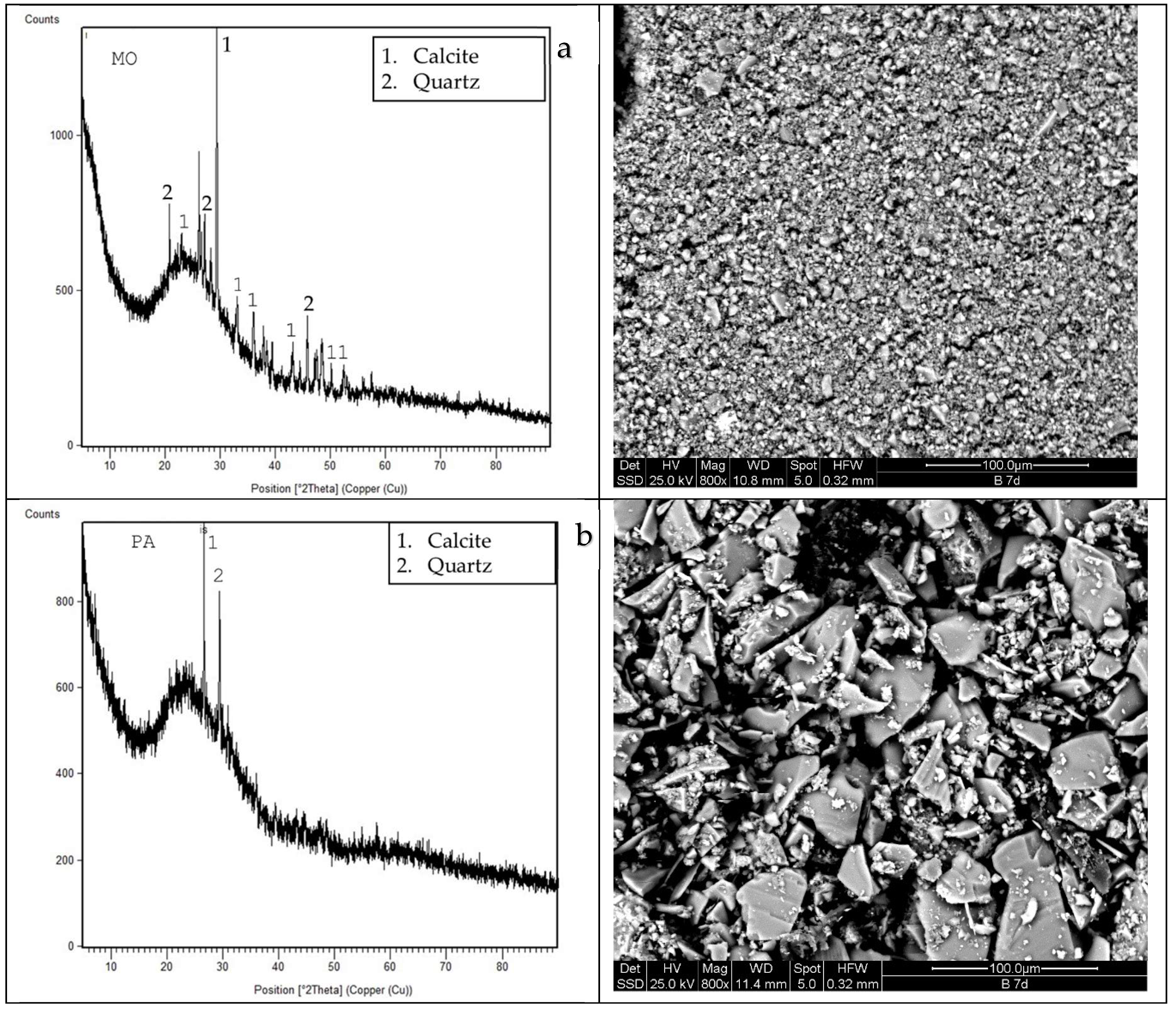
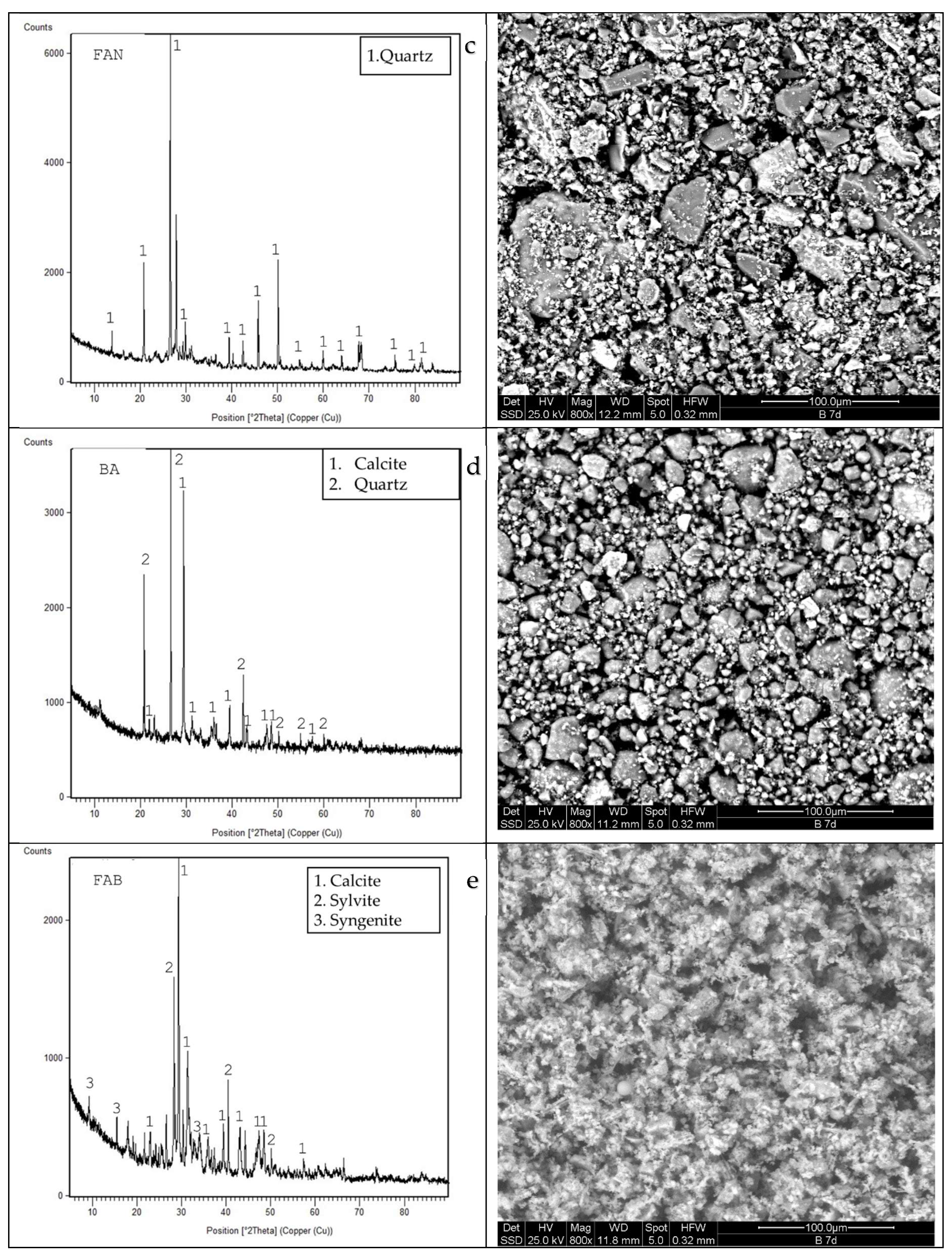
Figure 2.
Results of: a) Conductivity and b) pH collected on the eluate after immersion of the solid piece of each different composition.
Figure 2.
Results of: a) Conductivity and b) pH collected on the eluate after immersion of the solid piece of each different composition.
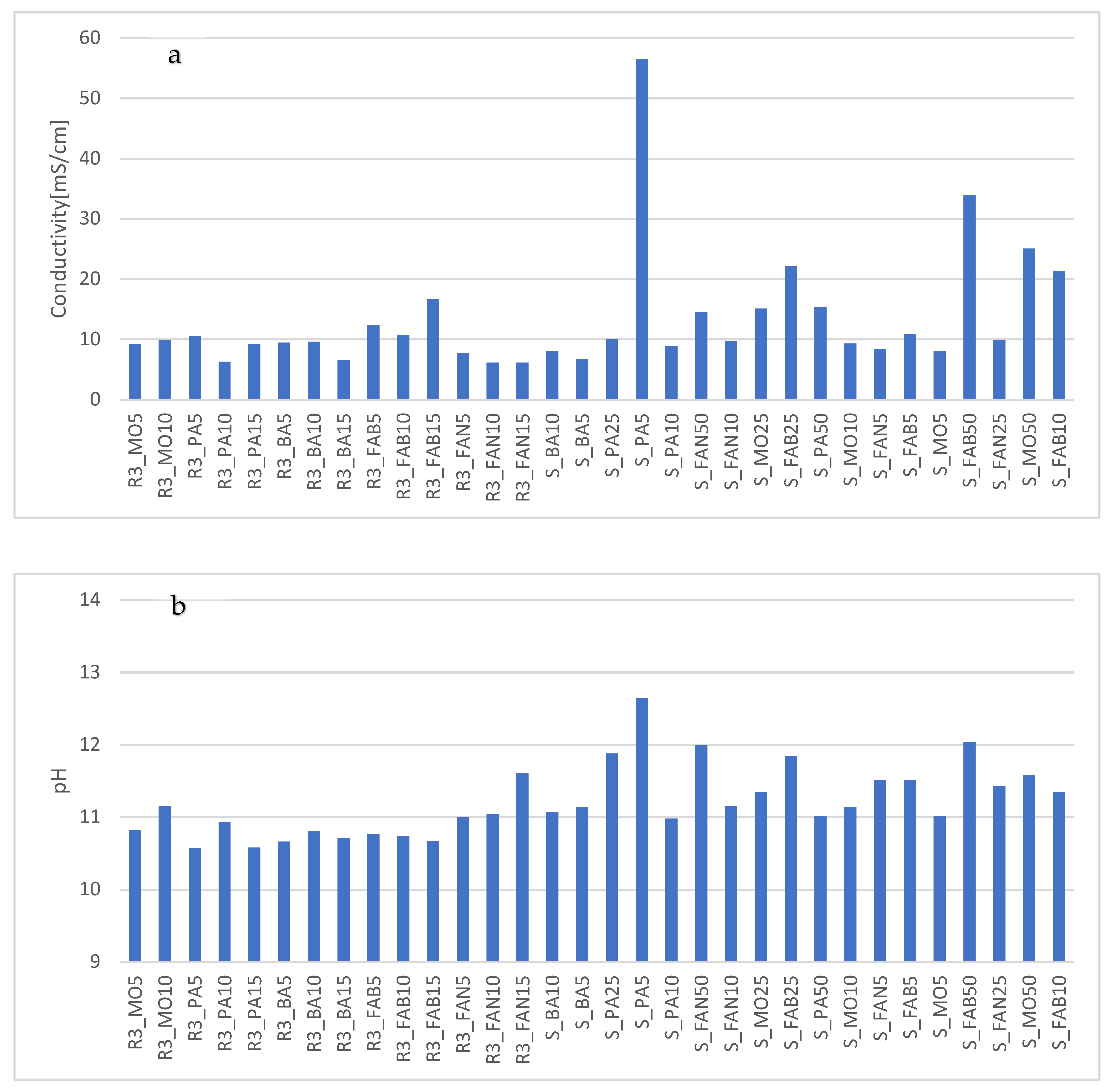
Figure 3.
Compressive strength results on samples with wastes substituted for MK after 28 and 51 days of curing.
Figure 3.
Compressive strength results on samples with wastes substituted for MK after 28 and 51 days of curing.
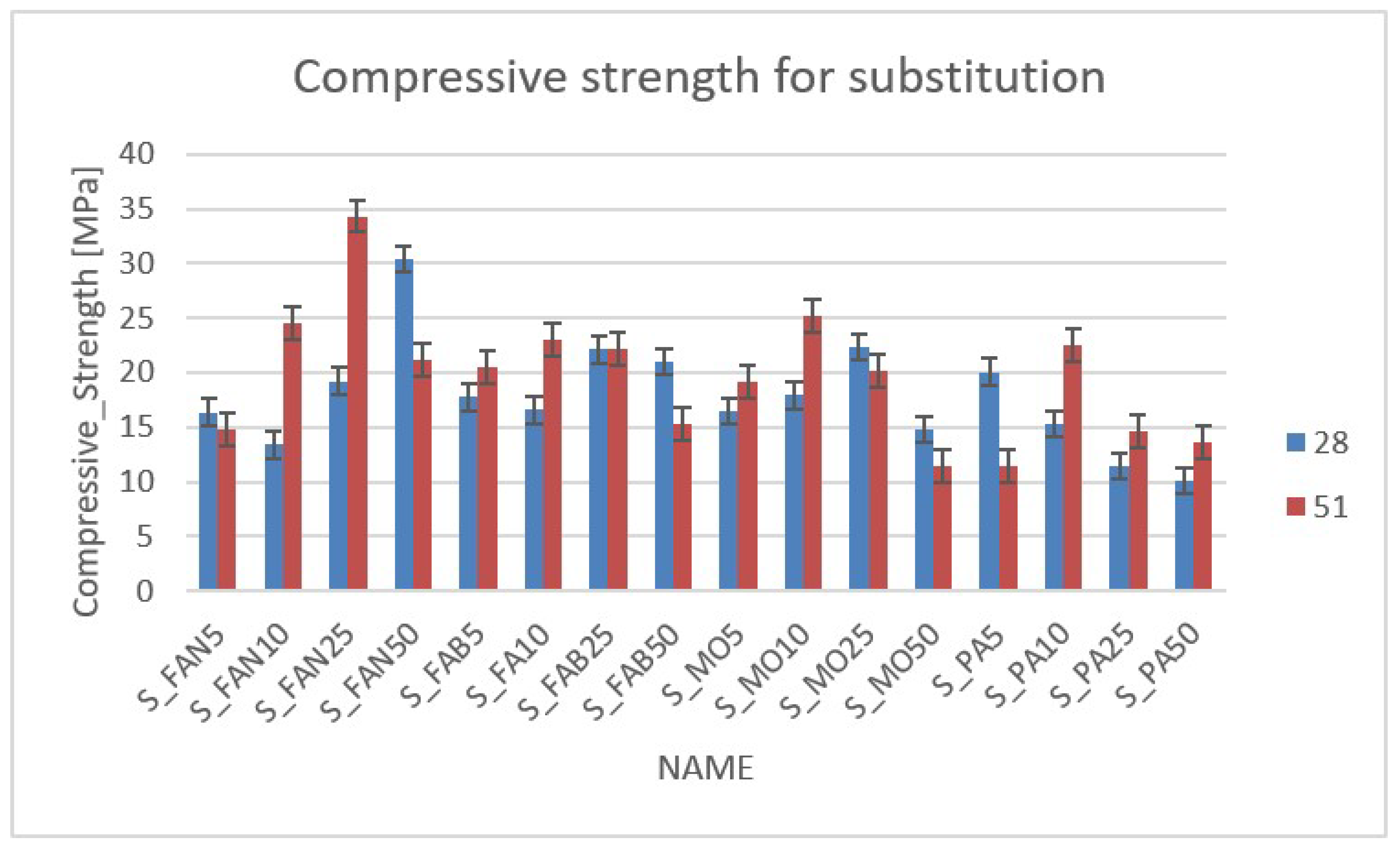
Figure 4.
XRD patterns and SEM images of the alkali activated binders with the highest mechanical strength and the reference formulation: a) GP0, b) R3_MO10, c) S_MO25, d) R3_PA10, e) S_PA50, f) R3_FAN15, g) S_FAN50, h) R3_BA10, i) R3_FAB10, l) S_FAB5.
Figure 4.
XRD patterns and SEM images of the alkali activated binders with the highest mechanical strength and the reference formulation: a) GP0, b) R3_MO10, c) S_MO25, d) R3_PA10, e) S_PA50, f) R3_FAN15, g) S_FAN50, h) R3_BA10, i) R3_FAB10, l) S_FAB5.
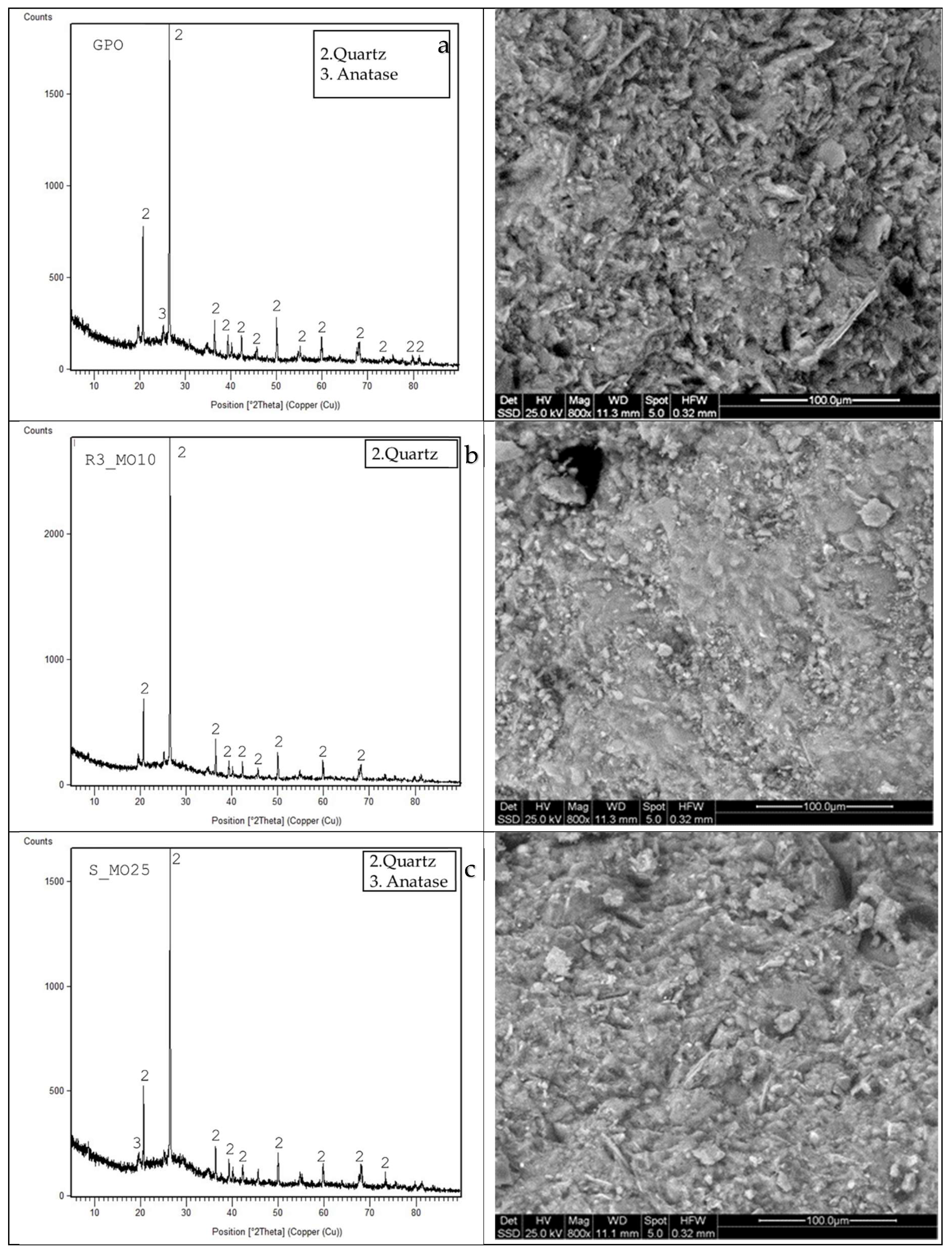
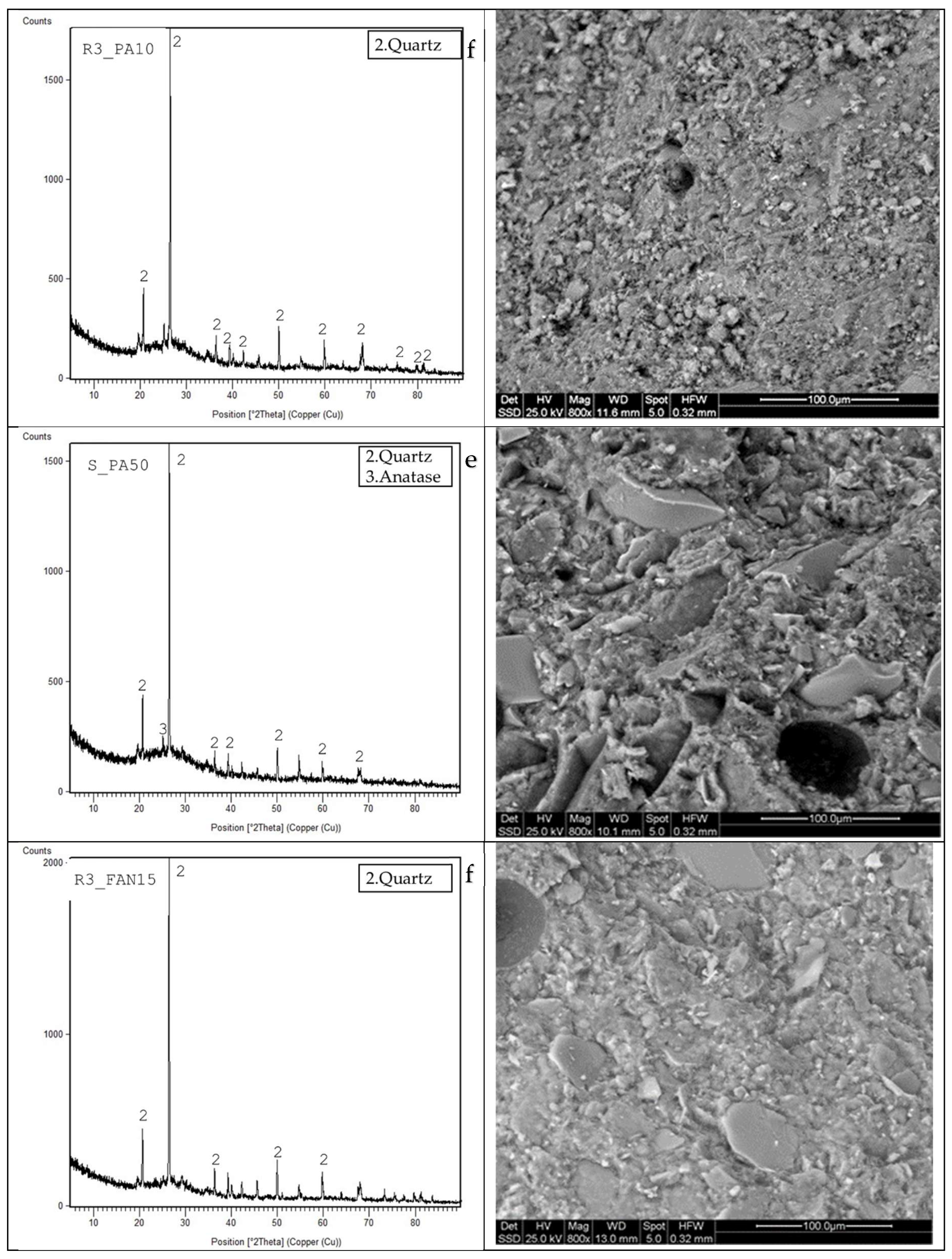
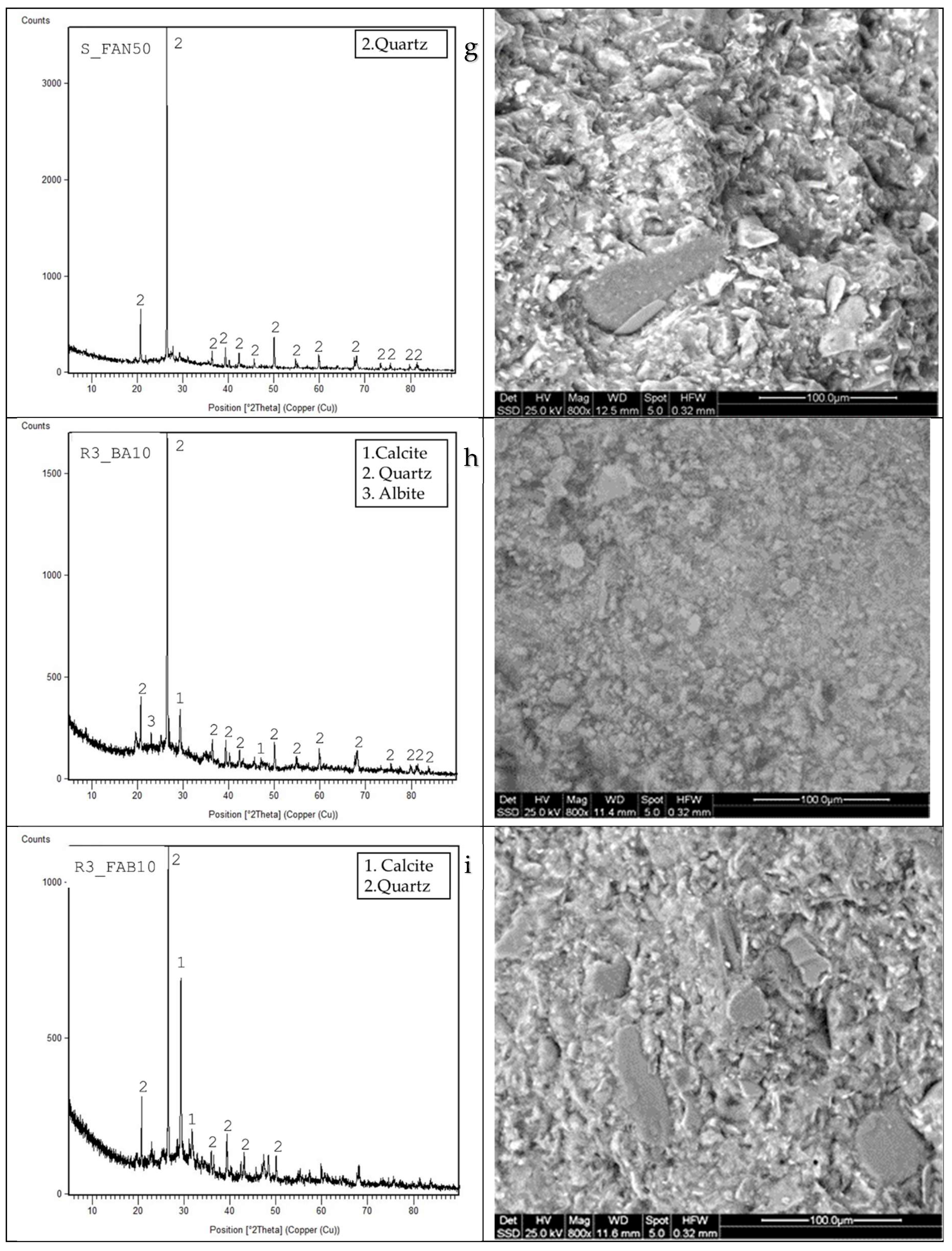
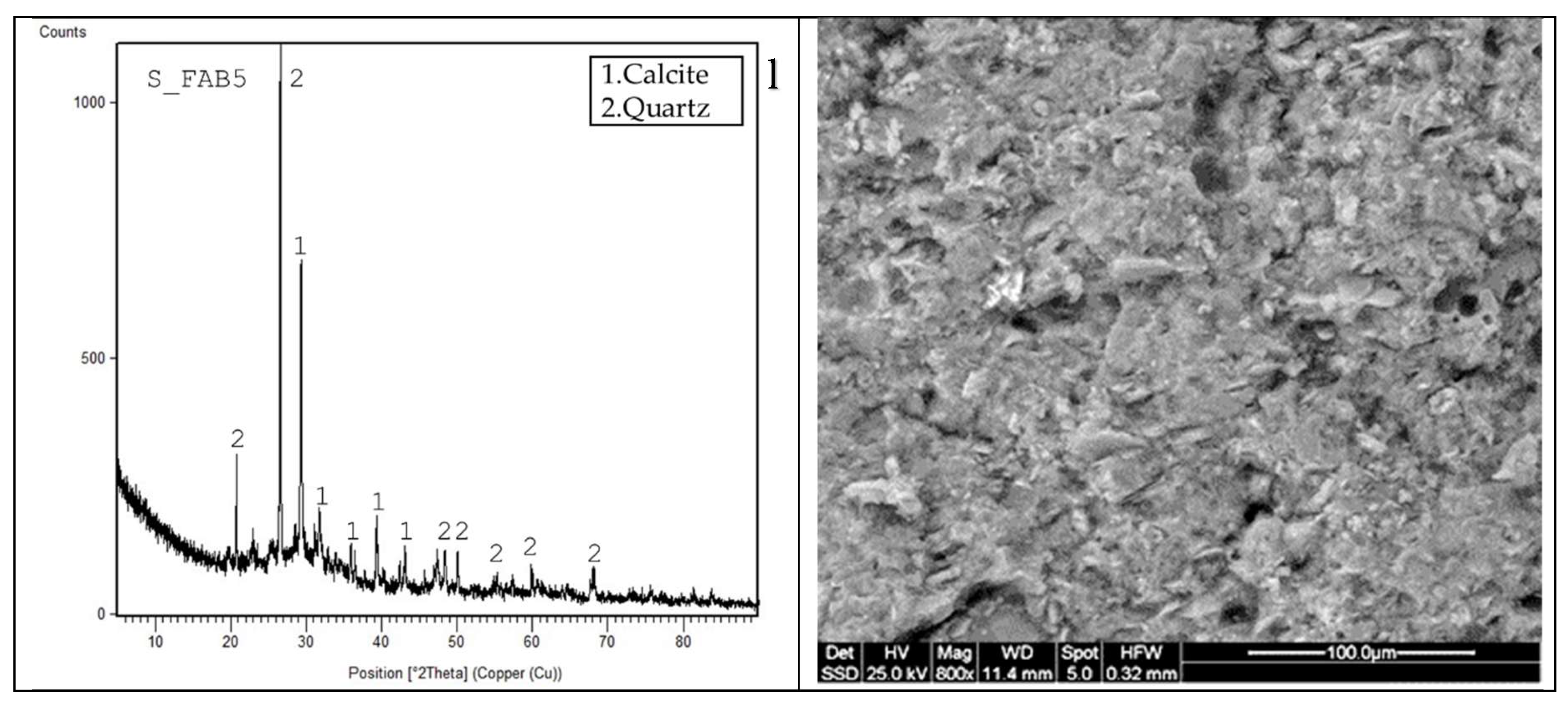
Figure 5.
FT-IR patterns of the alkali activated binders with respect to the reference formulation GP0, b) R3_MO10, c) S_MO25, d) R3_PA10, e) S_PA50, f) R3_FAN15, g) S_FAN50, h) R3_BA10, i) R3_FAB10, l) S_FAB5.
Figure 5.
FT-IR patterns of the alkali activated binders with respect to the reference formulation GP0, b) R3_MO10, c) S_MO25, d) R3_PA10, e) S_PA50, f) R3_FAN15, g) S_FAN50, h) R3_BA10, i) R3_FAB10, l) S_FAB5.
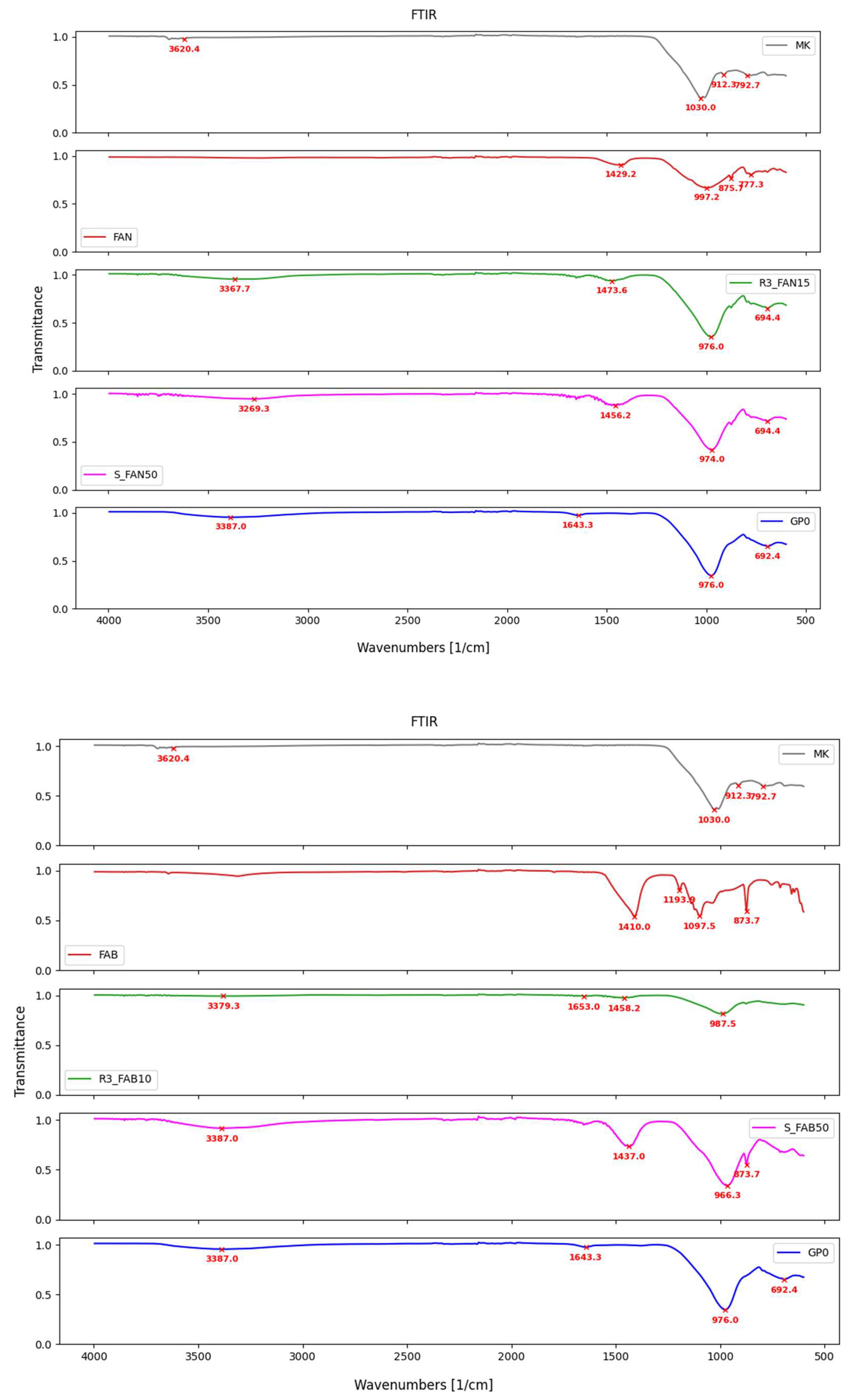
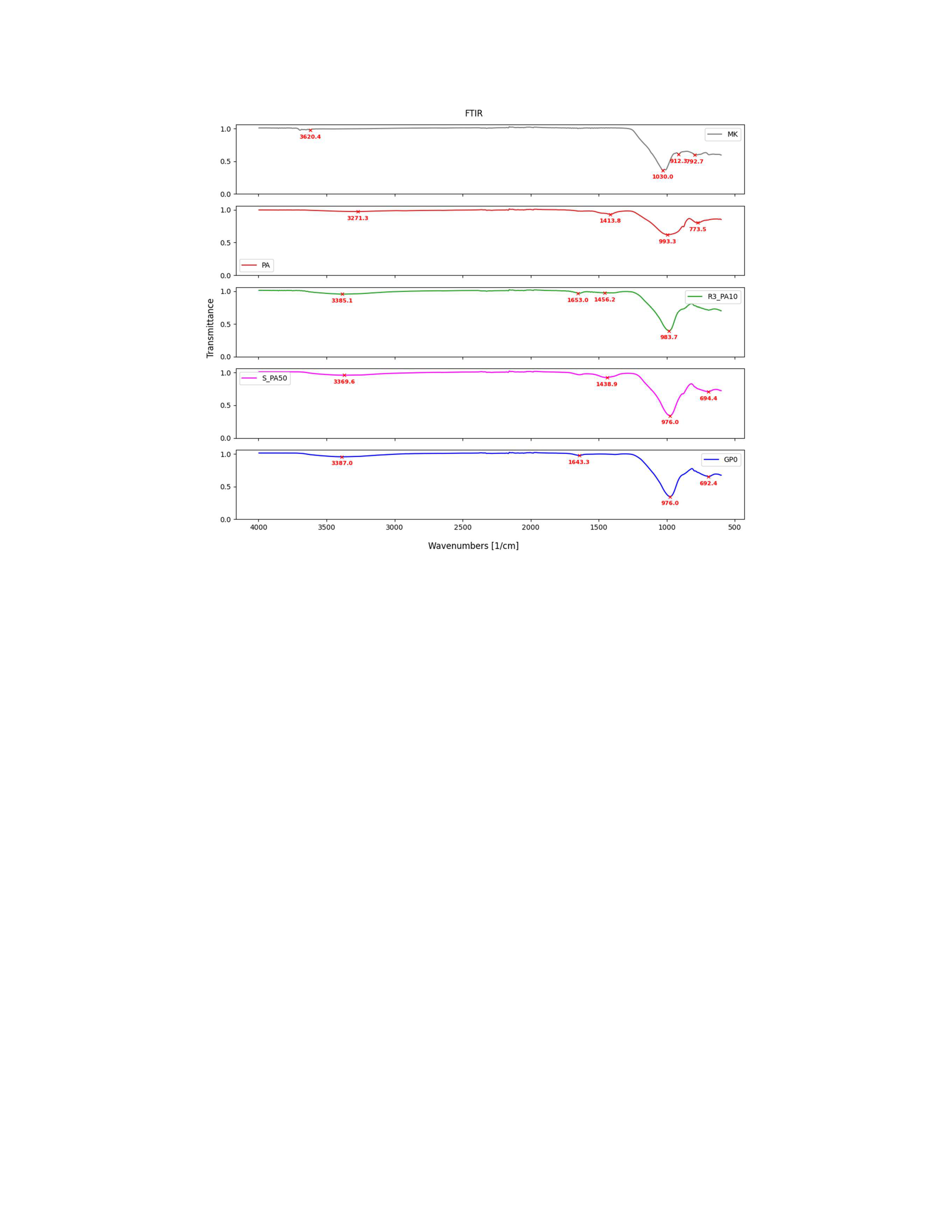

Table 1.
Mix design of geopolymer formulations prepared by partial replacement of metakaolin (MK) with individual waste materials. The reference formulation (GP0) corresponds to 0 wt% MK replacement.
Table 1.
Mix design of geopolymer formulations prepared by partial replacement of metakaolin (MK) with individual waste materials. The reference formulation (GP0) corresponds to 0 wt% MK replacement.
| Percentage of substitution | Metakaolin (wt%) | Waste (wt%) | Activator (wt%) |
|---|---|---|---|
|
0% 5% |
56.18 53.37 |
- 2.81 |
43.82 43.82 |
| 10% | 50.56 | 5.62 | 43.82 |
| 25% | 42.14 | 14.04 | 43.82 |
| 50% | 28.09 | 28.09 | 43.82 |
Table 2.
Mix design of geopolymer formulations prepared by the addition of individual waste materials or standardized sand to the fresh paste of the reference formulation GP0.
Table 2.
Mix design of geopolymer formulations prepared by the addition of individual waste materials or standardized sand to the fresh paste of the reference formulation GP0.
| Percentage of addition |
Metakaolin (wt%) | Waste or sand (wt%) | Activator (wt%) |
|---|---|---|---|
|
5% 10% |
53.52 51.07 |
4.76 9.09 |
41.72 39.84 |
| 15% | 56.32 | 13.04 | 30.64 |
Table 3.
Major chemical composition of the five waste materials, as determined by XRF and expressed as oxide content (wt%). Elements grouped under Others include Mn, La, Zn, Cu, Fe, Ce, Cl, and Ti. Loss on ignition (LOI) was determined after heating the powder at 1100 °C for 2 h. (See also Table S1 in Supplementary Materials).
Table 3.
Major chemical composition of the five waste materials, as determined by XRF and expressed as oxide content (wt%). Elements grouped under Others include Mn, La, Zn, Cu, Fe, Ce, Cl, and Ti. Loss on ignition (LOI) was determined after heating the powder at 1100 °C for 2 h. (See also Table S1 in Supplementary Materials).
| Oxides (wt%) | SiO2 | Al2O3 | CaO | Fe2O3 | MgO | Na2O | K2O | P2O5 | SO3 | Others | LOI |
|---|---|---|---|---|---|---|---|---|---|---|---|
| Float glass polishing sludge (MO) | 63.46 | 1.37 | 7.88 | - | 3.84 | 7.93 | - | - | - | 0.32 | 15.2 |
| Fine glass dust (PA) | 61.47 | 2.86 | 10.55 | 1.37 | 2.98 | 10.36 | - | - | - | 2.06 | 8.35 |
| Fly ash (black) (FAN) | 46.98 | 10.13 | 18.47 | 4.11 | 0.14 | 1.65 | 8.12 | 1.98 | 1.45 | 3.46 | 2.74 |
| Bottom ash (BA) | 23.07 | 8.33 | 28.36 | 14.74 | 2.40 | 2.31 | 1.05 | 2.04 | 2.62 | 1.72 | 10.93 |
| Fly ash (white) (FAB) | 6.19 | 2.39 | 34.06 | 1.66 | 4.76 | 1.82 | 11.48 | 3.32 | 12.01 | 3.32 | 18.33 |
Table 4.
Compressive strength results completed with density and comments on defects. Test were done on samples cured 51 days.
Table 4.
Compressive strength results completed with density and comments on defects. Test were done on samples cured 51 days.
| Name | Strength (MPa) | Apparent Density (g/cm3) | Defects |
|---|---|---|---|
| GP0 | 18.41 | 1.40 | none |
| S_PA5 | 20.07 | 1.38 | none |
| S_PA10 | 15.3 | 1.42 | none |
| S_PA25 | 11.46 | 1.32 | none |
| S_PA50 S-PA100 |
10.08 - |
1.26 - |
Limited efflorescence Deformation |
| S_BA5 | 15.66 | 1.24 | Slight porosity increase |
| S_BA10 | 8.79 | 1.30 | Slight porosity increase |
| S_BA25 | - | - | Swelling |
| S_BA50 S_BA100 S_FAN5 |
- - 16.37 |
- - 1.36 |
Swelling Efflorescence and swelling none |
| S_FAN10 | 13.40 | 1.37 | none |
| S_FAN25 | 19.23 | 1.40 | none |
| S_FAN50 S_FAN100 |
30.38 - |
1.48 - |
none cracking |
| S_FAB5 | 17.75 | 1.38 | none |
| S_FAB10 | 16.58 | 1.43 | none |
| S_FAB25 | 22.12 | 1.40 | none |
| S_FAB50 | 21.03 | 1.49 | none |
| S_MO5 | 16.51 | 1.34 | none |
| S_MO10 | 17.90 | 1.40 | none |
| S_MO25 | 22.34 | 1.40 | none |
| S_MO50 S_MO100 R3_PA5 R3_PA10 R3_PA15 R3_FAB5 R3_FAB10 R3_FAB15 R3_MO5 R3_MO10 R3_BA5 R3_BA10 R3_BA15 R3_FAN5 R3_FAN10 R3_FAN15 |
14.82 - 15.44 18.97 18.24 19.37 17.47 14.74 20.34 25.97 14.32 22.84 19.45 20.51 16.30 19.65 |
1.51 - 1.41 1.42 1.04 1.34 1.43 1.43 1.24 1.37 1.25 1.30 1.36 1.48 |
none Cracks and efflorescence none none none none none none none none none none none none |
Disclaimer/Publisher’s Note: The statements, opinions and data contained in all publications are solely those of the individual author(s) and contributor(s) and not of MDPI and/or the editor(s). MDPI and/or the editor(s) disclaim responsibility for any injury to people or property resulting from any ideas, methods, instructions or products referred to in the content. |
© 2026 by the authors. Licensee MDPI, Basel, Switzerland. This article is an open access article distributed under the terms and conditions of the Creative Commons Attribution (CC BY) license (http://creativecommons.org/licenses/by/4.0/).
Copyright: This open access article is published under a Creative Commons CC BY 4.0 license, which permit the free download, distribution, and reuse, provided that the author and preprint are cited in any reuse.