
Submitted:
03 August 2026
Posted:
04 August 2026
You are already at the latest version
Abstract
Objective: This study aimed to evaluate how using personal health records (PHR; Health2Sync®) impact long-term glycemic management and body weight in people with type 2 diabetes (T2DM) and to identify factors associated with glycated hemoglobin (HbA1c) changes. Methods: This single-center, retrospective observational study included 154 patients with T2DM (76 PHR users and 78 non-users [control]; mean age: 57.9 and 65.0 years, respectively) between April 2022 and June 2024. Clinical parameters (HbA1c, body weight; BW), nutritional support, and antidiabetic medications were collected at the index date and at 3, 6, and 12 months. The between-group difference in HbA1c change (ΔHbA1c) from the index date to 12 months was the primary outcome, and that in BW change (ΔBW) was the secondary outcome. Factors associated with ΔHbA1c were explored using multivariate analysis in PHR group. Results: The PHR group showed a significantly greater reduction in HbA1c than the control group over 12 months (−0.6 ± 1.2 % vs. −0.1 ± 0.6 %; p = 0.005). Similarly, body weight was significantly reduced in the PHR group (−2.8 ± 3.8 kg vs. −0.5 ± 3.3 kg; p < 0.001). Moreover, multivariate regression analysis revealed an independent association between nutritional support and HbA1c improvement. Conclusions: PHR use was associated with improved glycemic control and weight reduction in people with T2DM, and together with nutritional support, it may further enhance self-management and clinical outcomes.
Keywords:
PHR
; type 2 diabetes
; HbA1c
; weight
; nutritional support
1. Introduction
Type 2 diabetes mellitus (T2DM) is one of the representative noncommunicable diseases and is recognized as a major public health issue [1,2]. In T2DM management, individualized treatment plans, including lifestyle interventions that consider dietary intake and physical activity, as well as adherence to pharmacological therapy, are essential. Lifestyle modifications focusing on diet and exercise are widely reported to be effective in improving glycemic control [3,4], with face-to-face lifestyle and nutritional interventions by healthcare professionals commonly implemented in clinical practice. However, the coronavirus disease 2019 (COVID-19) pandemic has accelerated the need for remote lifestyle and nutritional support; consequently, personal health records (PHR) utilizing Internet of Things technologies have been widely adopted.
PHR-based lifestyle interventions may contribute to improving clinical outcomes in obesity and T2DM cases [5,6,7]. Currently, healthcare systems incorporating such digital transformation approaches are increasingly being developed. PHRs allow individuals to record and manage their own lifelong medical information and daily self-monitored health data, including vital signs [8,9,10]. This feature enables healthcare providers to obtain a more accurate understanding of patients’ conditions compared with conventional history-taking based on patient recall, thereby facilitating individualized therapeutic support. In addition, the use of PHRs contributes to improving lifestyle behaviors and reducing HbA1c in patients with T2DM [11,12,13,14,15].
Background factors such as age, educational level, diabetes duration, and self-efficacy may influence the effectiveness of PHR-based glycemic management [11,16]. However, the additive influence of certain factors, such as dietary intake, physical activity, and app usage patterns, on glycemic control outcomes among PHR users remains unclear. Therefore, this study aimed to evaluate the impact of PHR use on long-term glycemic control and body weight (BW) in patients with T2DM and to identify factors associated with glycated hemoglobin (HbA1c) change.
2. Materials and Methods
2.1. Study Design and Outcomes
In this single-center retrospective observational study, the between-group difference in HbA1c change (ΔHbA1c) from the index date to 12 months was the primary outcome, whereas that in body weight change (ΔBW) was the secondary outcome. Factors associated with ΔHbA1c were explored using multivariate analysis in PHR users.
2.2. Participants and Survey Period
This study included people with T2DM who attended a diabetes outpatient clinic between April 1, 2022, and June 30, 2024 (n = 160). Eligible participants were classified into two groups: consistent PHR users (PHR group) and non-PHR users (control group). The PHR group included people with T2DM who initiated PHR use within the study period and had documented use at least once per month for over 6 months after registration (n = 80) (Figure 1). The control group comprised people with T2DM who visited our hospital during the same period and did not use PHR (n = 80) (Figure 1).
After excluding participants with missing data, this study included 76 patients in the PHR group and 78 patients in the control group (Figure 1).
2.3. Date Extraction Period
In the PHR group, patients used the smartphone application SyncHealth® (SyncHealth Ltd., Tokyo, Japan). The date of PHR initiation served as the index date for the PHR group.
For the control group, the index date was determined via birthdate stratification to minimize the potential impact of unmeasured confounding resulting from temporal discrepancies between the two groups. Specifically, patients whose birthdate digits summed to an odd number were assigned to Period A (April 1, 2022–September 30, 2022) or Period B (October 1, 2022–March 31, 2023), whereas those whose sum was an even number were assigned to Period C (April 1, 2023–September 30, 2023) or Period D (October 1, 2023–March 31, 2024). When multiple data points were available within each period, we selected the value closest to the patient’s birthday as the index date.
Data for each variable were extracted from medical records at 6–12 months before the index date, at the index date, and at 3, 6, and 12 months after the index date. A time window of ±3 months was allowed for data extraction from each scheduled time point.
2.4. Survey Items
In this study, the variables were clinical characteristics (age, sex, diabetes duration, and diabetic complication development), anthropometric measurements (height and BW), laboratory parameters (blood glucose [BG], HbA1c, and estimated glomerular filtration rate [eGFR]), nutritional support intervention frequency (individualized nutritional support was provided by registered dietitians during outpatient visits as part of routine diabetes care), and antidiabetic medication types. All were obtained from the electronic medical records. Household size during evaluation, educational background, and self-efficacy were also assessed using the questionnaire Problem Areas in Diabetes Scale-5 (PAID-5).
PHR usage data, including the number of application uses per month and the number of BW entries per month, were obtained from SyncHealth Ltd.
2.5. Statistical Analysis
This study presents continuous variables as mean ± standard deviation or median (interquartile range [IQR]), as appropriate, and categorical variables as number (percentage). To calculate ΔHbA1c or ΔBW, we subtracted the value at 12 months with the value at the index date.
A mixed model for repeated measures (MMRM) was employed to compare the PHR and control groups in terms of ΔHbA1c or ΔBW over time after the index date, assuming a compound symmetry covariance structure. Fixed effects included group, time point, and age. When an interaction in the MMRM was significant, we conducted post hoc multiple comparisons using the Bonferroni method. Additionally, between-group differences in ΔHbA1c at 12 months were assessed using the t-test. Moreover, factors associated with ΔHbA1c were explored through correlation analyses using Spearman’s rank correlation coefficient and multiple regression analysis (forced entry method).
All statistical data were analyzed using IBM SPSS Statistics version 28 (IBM Corp., Armonk, NY, USA). A two-sided p-value below 0.05 was considered statistically significant.
3. Results
3.1. Participant Characteristics
Table 1 shows the participants’ baseline clinical characteristics. The PHR group was significantly younger (57.9 ± 10.4 years vs. 65.0 ± 11.5 years, p < 0.001) and had a significantly shorter diabetes duration (7.8 ± 8.2 years vs. 9.6 ± 8.7 years, p = 0.038) than the control group.
Factors such as sex distribution, body mass index (BMI) at the index date, glycemic parameters including HbA1c and BG, eGFR, diabetic complications prevalence, and PAID-5 scores showed no significant differences between the two groups.
Furthermore, the PHR group had a significantly larger household size and higher educational attainment than the control group (household size: 2.6 ± 1.2 vs. 2.1 ± 1.0 persons, p = 0.044; education level: 2.9 ± 2.1 vs. 2.3 ± 0.7, p < 0.001). In the subsequent multivariate analyses, age was included as the only adjustment factor because of its potential association with diabetes duration and educational level and the limited sample size of this study, which may increase the risk of overadjustment when including multiple covariates.
Among the antidiabetic medications used at the index date, metformin was the most frequently prescribed in the PHR group, followed by sodium-glucose cotransporter 2 inhibitors (SGLT2i) and dipeptidyl peptidase-4 inhibitors (DPP-4i) (Figure 2). Conversely, DPP-4i and metformin were used at similar frequencies in the control group, followed by SGLT2i. At 12 months, the distribution of these three drug classes remained largely unchanged in both groups.
At the index date, insulin use was more common in the control group than in the PHR group; however, it decreased in both groups over the 12-month follow-up period. While the use of incretin receptor agonists (including GLP-1 and dual GIP/GLP-1 agonists) was slightly more frequent in the PHR group at the index date, it showed an increasing trend in both groups at 12 months.
Overall, changes in antidiabetic medication patterns over the 12-month period were broadly similar between such groups, demonstrating no clear between-group differences.
3.2. Primary Endpoint
In the PHR group, ΔHbA1c from the index date showed a significant reduction as early as 3 months, and this decrease was sustained at 6 and 12 months (all, p < 0.001; Figure 3-a). According to the age-adjusted MMRM analysis, the longitudinal change pattern significantly differed between the two groups (p < 0.001; Figure 3-a). Regarding between-group comparisons, ΔHbA1c showed a statistically significant difference over 12 months between the PHR and control groups (−0.6% ± 1.2% vs. −0.1% ± 0.6%; p = 0.005; Figure 3-b).
3.3. Secondary Endpoint
In the PHR group, ΔBW from the index date showed a significant reduction as early as 3 months, and this decrease was sustained at 6 and 12 months (all, p < 0.001; Figure 4-a), and the age-adjusted MMRM analysis revealed that the longitudinal change pattern significantly differed between the two groups (p < 0.001; Figure 4-a). Regarding group comparisons, ΔBW showed a statistically significant difference over 12 months between the PHR and control groups (−2.8 ± 3.8 kg vs. −0.5 ± 3.3 kg; p < 0.001; Figure 4-b).
3.4. Factors Associated with Changes in HbA1c in PHR Group
In the PHR group, factors significantly associated with ΔHbA1c were BMI (r = −0.217, p = 0.007) and nutritional support intervention frequency (r = −0.301, p = 0.008; Table 2). Conversely, diabetes duration, household size, educational level, PAID-5 score, PHR use frequency, and weight entry frequency in the PHR showed no significant associations with ΔHbA1c (Table 2). In the multivariable regression analysis with ΔHbA1c as the dependent variable, nutritional support intervention frequency was identified as a significant independent factor (β = −0.261, p = 0.028; Table 3). In contrast, sex, age, and BMI were not significantly associated with ΔHbA1c. The model was statistically significant (p = 0.011), with an overall model fit of R = 0.407 and R2 = 0.119. Variance inflation factor values were low for all variables, indicating no multicollinearity.
4. Discussion
This study evaluated the impact of PHR use on long-term glycemic control and BW in patients with T2DM and identified factors associated with HbA1c change.
Results showed that HbA1c was significantly reduced in the PHR group over 12 months compared with that in the control group. Similarly, BW reduction was more pronounced in the PHR group. Therefore, consistent PHR use may have beneficial effects on glycemic and BW management over a relatively long-term period. Previous studies have also reported that PHR use in people with T2DM is beneficial for glycemic control and BW management [11,12,13,14,15,17,18,19]. Studies conducted in individuals with diabetes, including those with type 1 diabetes, across various regions worldwide (e.g., Northern Europe, North America, Europe, Asia, Africa, Latin America, and Oceania) have reported that users of diabetes management apps exhibit higher rates of self-care behaviors (e.g., blood glucose monitoring, diet, and exercise) than non-users [20]. In a prospective, randomized, open-label, parallel-group trial with a 1:1 allocation ratio involving individuals at high risk of type 2 diabetes, PHR and isCGM users (intervention group) were compared with non-users (control group). After 12 weeks of intervention, improvements in glycemic control indices and reductions in BW were observed in the intervention group. Carbohydrate intake was also significantly lower in the intervention group than in the control group [11]. Furthermore, a randomized controlled trial of a health app reported not only weight reduction but also improvements in food literacy (i.e., knowledge and decision-making related to diet) in individuals with obesity [21]. Therefore, digital health interventions, including diabetes management apps such as PHR, may improve lifestyle behaviors and glycemic control by promoting self-care behaviors while enhancing health literacy. In the present study, we did not assess the effects of PHR use on self-care behaviors or dietary intake; therefore, the specific mechanisms underlying glycemic control and BW improvements could not be elucidated. Nevertheless, the introduction of PHR may have facilitated these behavioral changes.
Next, we examined factors associated with ΔHbA1c in the PHR group. The frequency of nutritional support was identified as a significant independent factor in both correlation analysis and multivariable analysis. Previous studies have also reported that nutritional support provided by registered dietitians is beneficial for glycemic and BW management [22,23,24,25,26]. However, the insight into whether the combined use of nutritional support and PHR provides additional benefits for glycemic control and BW remains unclear. Our findings suggest that integrating nutritional support with PHR use further enhances the positive effects of this application on glycemic management. Furthermore, the effects of PHR use on glycemic control may be influenced by factors such as age, educational level, duration of diabetes, and self-efficacy [11,16]. In our study, although age and educational level were not significant factors associated with ΔHbA1c in the correlation analysis within the PHR group, these variables significantly differed between the PHR and control groups.
These findings suggest that background factors such as age and educational level can still influence the adoption and continued use of PHR. Therefore, aside from PHR use, nutritional support provided by registered dietitians may help improve glycemic control.
Nevertheless, this research was an observational study conducted in a real-world clinical setting, and changes in medications during the follow-up period may have influenced the observed improvements in glycemic control and BW. As shown in Figure 2, metformin was the most frequently used medication at the index date in the PHR group, whereas DPP-4 inhibitors and metformin were used at similarly high frequencies in the control group.
Additionally, although not statistically significant, insulin use tended to be higher in the control group. Conversely, the use of BW-reducing antidiabetic medications, such as SGLT2i and incretin receptor agonists (GLP-1 and dual GIP/GLP-1 agonists), did not differ substantially between the two groups [27,28]. Therefore, the impact of changes in antidiabetic medications on glycemic control and BW may be limited. Nonetheless, the combined use of PHR and BW-reducing antidiabetic medications may provide additional benefits for glycemic control and BW management.
Finally, this study is meaningful in that it suggests that PHR-based interventions demonstrate clinical relevance in diabetes management. However, several limitations should be acknowledged. First, the sample size was relatively small. Although propensity score matching was considered, it was not applied because statistical power might decrease as a result of further sample size reduction after matching. Therefore, we adopted an age-adjusted MMRM. Studies with larger sample sizes are needed to enable analyses using propensity score matching. Second, this research was a single-center retrospective observational study, thereby limiting the generalizability of the findings. Hence, such findings should be interpreted with caution. In addition, selection bias cannot be excluded. Patients who initiated and continuously used PHR may have had greater motivation for diabetes self-management and higher digital literacy than non-PHR users. Therefore, the observed improvements may partly reflect differences in baseline motivation and behavioral characteristics rather than the effects of PHR use alone. Multicenter prospective studies are warranted to validate causal relationships. Third, the content and frequency of PHR use, as well as the criteria for providing nutritional support, were not standardized; nutritional support also varied. These may have influenced the results. Future studies should incorporate stratified analyses by age group and prospective designs with standardized nutritional support to further clarify the effectiveness of PHR-based interventions.
5. Conclusions
In people with T2DM, PHR use was associated with improved glycemic control and BW reduction, and when integrated with nutritional support, it may further enhance self-management and clinical outcomes.
Author Contributions
Hanamura contributed to the study conception, design, data collection, data analysis, and interpretation of the results. Abiru contributed to the study conception, design, participant recruitment, data collection, and interpretation of the results. Moriuchi and Sakamoto contributed to participant recruitment. Sera contributed to the interpretation of the results. All authors contributed to drafting the manuscript and approved the final version.
Funding
This research received no external funding.
Institutional Review Board Statement
The Ethics Committee of Nagasaki Prefectural University (approval number: r6024; approval date: August 21, 2025).
Informed Consent Statement
Informed consent was obtained from all subjects involved in the study.
Data Availability Statement
The data supporting the findings of this study are available from the corresponding author upon reasonable request.
Acknowledgments
We would like to express our sincere gratitude to all members of SyncHealth Ltd. for their assistance in providing and extracting the PHR data for this study.
Conflicts of Interest
The authors declare no conflicts of interest.
References
- Genitsaridi, I.; Salpea, P.; Salim, A.; Sajjadi, S.F.; Tomic, D.; James, S.; Thirunavukkarasu, S.; Issaka, A.; Chen, L.; Basit, A.; Luk, A.O.Y.; Ma, R.C.W.; Mbanya, J.C.; Ramachandran, A.; Wild, S.H.; Duncan, B.B.; Boyko, E.J.; Magliano, D.J. 11th edition of the IDF Diabetes Atlas: global, regional, and national diabetes prevalence estimates for 2024 and projections for 2050. Lancet Diabetes Endocrinol. 2026, 14, 149–156. [Google Scholar] [CrossRef] [PubMed]
- GBD 2021 Diabetes Collaborators. Global, regional, and national burden of diabetes from 1990 to 2021, with projections of prevalence to 2050: a systematic analysis for the Global Burden of Disease Study 2021. Lancet 2023, 402, 203–234. [Google Scholar] [CrossRef] [PubMed]
- Zhang, Y.; Pan, X.F.; Chen, J.; Xia, L.; Cao, A.; Zhang, Y.; Wang, J.; Li, H.; Yang, K.; Guo, K.; He, M.; Pan, A. Combined lifestyle factors and risk of incident type 2 diabetes and prognosis among individuals with type 2 diabetes: a systematic review and meta-analysis of prospective cohort studies. Diabetologia 2020, 63, 21–33. [Google Scholar] [CrossRef] [PubMed]
- Gong, Q.; Zhang, P.; Wang, J.; Ma, J.; An, Y.; Chen, Y.; Zhang, B.; Feng, X.; Li, H.; Chen, X.; Cheng, Y.J.; Gregg, E.W.; Hu, Y.; Bennett, P.H.; Li, G. Da Qing Diabetes Prevention Study Group. Morbidity and mortality after lifestyle intervention for people with impaired glucose tolerance: 30-year results of the Da Qing Diabetes Prevention Outcome Study. Lancet Diabetes Endocrinol. 2019, 7, 452–461. [Google Scholar] [CrossRef] [PubMed]
- Fleming, G.A.; Petrie, J.R.; Bergenstal, R.M.; Holl, R.W.; Peters, A.L.; Heinemann, L. Diabetes digital app technology: benefits, challenges, and recommendations. A consensus report by the European Association for the Study of Diabetes (EASD) and the American Diabetes Association (ADA) Diabetes Technology Working Group. Diabetologia 2020, 63, 229–241. [Google Scholar] [CrossRef] [PubMed]
- Klonoff, A.N.; Andy Lee, W.A.; Xu, N.Y.; Nguyen, K.T.; DuBord, A.; Kerr, D. Six Digital Health Technologies That Will Transform Diabetes. J. Diabetes Sci. Technol. 2023, 17, 239–249. [Google Scholar] [CrossRef] [PubMed]
- Tomonaga, O.; Tomonaga, K.; Hayashida, K.; Mori, M.; Ushikubo, E.; Uematsu, Y.; Nagata, M.; Mizunuma, A.; Numata, Y.; Kubota, M.; Suzuki, S.; Kanazawa, Y.; Miyashita, E. Effect of Personal Health Record (PHR) Application Use for Glycemic Control in Patients With Diabetes Mellitus Using Insulin. J. Jpn. Diab. Soc. 2023, 66, 513–520. [Google Scholar]
- Ministry of Economy; Trade and Industry. About PHR (Personal Health Record) [Internet]; METI: Tokyo, 31 Mar 2026; Available online: https://www.meti.go.jp/policy/mono_info_service/healthcare/about_PHR.html.
- Tang, P.C.; Ash, J.S.; Bates, D.W.; Overhage, J.M.; Sands, D.Z. Personal health records: definitions, benefits, and strategies for overcoming barriers to adoption. J. Am. Med. Inf. Assoc. 2006, 13, 121–6. [Google Scholar] [CrossRef] [PubMed]
- Archer, N.; Fevrier-Thomas, U.; Lokker, C.; McKibbon, K.A.; Straus, S.E. Personal health records: a scoping review. J. Am. Med. Inf. Assoc. 2011, 18, 515–22. [Google Scholar] [CrossRef] [PubMed]
- Kitazawa, M.; Takeda, Y.; Hatta, M.; Horikawa, C.; Sato, T.; Osawa, T.; Ishizawa, M.; Suzuki, H.; Matsubayashi, Y.; Fujihara, K.; Yamada, T.; Sone, H. Lifestyle Intervention With Smartphone App and isCGM for People at High Risk of Type 2 Diabetes: Randomized Trial. J. Clin. Endocrinol. Metab. 2024, 109, 1060–1070. [Google Scholar] [CrossRef] [PubMed]
- Chang, Y.T.; Tu, Y.Z.; Chiou, H.Y.; Lai, K.; Yu, N.C. Real-world Benefits of Diabetes Management App Use and Self-monitoring of Blood Glucose on Glycemic Control: Retrospective Analyses. JMIR Mhealth Uhealth 2022, 10, e31764. [Google Scholar] [CrossRef] [PubMed]
- OsamuTomonaga; Tomonaga, Kohei; Hayashida, Kanako; Mori, Miyuki; Ushikubo, Eriko; Uematsu, Yuko; Nagata, Mayumi; Mizunuma, Aki; Numata, Yumi; Kubota, Mami; Suzuki, Sayaka; Kanazawa, Yoko; Miyashita, Etsuko. Effect of Personal Health Record (PHR) Application Use for Glycemic Control in Patients With Diabetes Mellitus Using Insulin. J. Jpn. Diab. Soc. (in Japanese). 2023, 66, 513–520. [Google Scholar]
- Lim, S.L.; Ong, K.W.; Johal, J.; Han, C.Y.; Yap, Q.V.; Chan, Y.H.; Chooi, Y.C.; Zhang, Z.P.; Chandra, C.C.; Thiagarajah, A.G.; Khoo, C.M. Effect of a Smartphone App on Weight Change and Metabolic Outcomes in Asian Adults With Type 2 Diabetes: A Randomized Clinical Trial. JAMA Netw. Open 2021, 4, e2112417. [Google Scholar] [CrossRef] [PubMed]
- Lee, E.Y.; Cha, S.A.; Yun, J.S.; Lim, S.Y.; Lee, J.H.; Ahn, Y.B.; Yoon, K.H.; Hyun, M.K.; Ko, S.H. Efficacy of Personalized Diabetes Self-care Using an Electronic Medical Record-Integrated Mobile App in Patients With Type 2 Diabetes: 6-Month Randomized Controlled Trial. J. Med. Internet Res. 2022, 24, e37430. [Google Scholar] [CrossRef] [PubMed]
- Desveaux, L.; Shaw, J.; Saragosa, M.; Soobiah, C.; Marani, H.; Hensel, J.; Agarwal, P.; Onabajo, N.; Bhatia, R.S.; Jeffs, L. A Mobile App to Improve Self-Management of Individuals With Type 2 Diabetes: Qualitative Realist Evaluation. J. Med. Internet Res. 2018, 20, e81. [Google Scholar] [CrossRef] [PubMed]
- Austin, P.C. Optimal caliper widths for propensity-score matching when estimating differences in means and differences in proportions in observational studies. Pharm. Stat. 2011, 10, 150–61. [Google Scholar] [CrossRef] [PubMed]
- Rosenbaum, P.R.; Rubin, D.B. Reducing bias in observational studies using subclassification on the propensity score. J. Am. Stat. Assoc. 1984, 79, 516–524. [Google Scholar] [CrossRef]
- Ono, Y.; Okada, H.; Kitagawa, N.; Majima, S.; Okamura, T.; Senmaru, T.; Ushigome, E.; Nakanishi, N.; Hamaguchi, M.; Fukui, M. Impact of Personal Health Records on Diabetes Management: A Propensity Score Matching Study. Diabetology Doi. 2024, 5, 640–655. [Google Scholar] [CrossRef]
- Kebede, M.M.; Pischke, C.R. Popular Diabetes Apps and the Impact of Diabetes App Use on Self-Care Behaviour: A Survey Among the Digital Community of Persons With Diabetes on Social Media. Front Endocrinol. 2019, 10, 135. [Google Scholar] [CrossRef] [PubMed]
- Lautenbach, A.; Blüher, M.; Mijuskovic, A.; Jones, L.; Schirmann, F. Efficacy of a digital health application for weight management in people with obesity: 6-months results from a randomized controlled trial. Int. J. Obes. (Lond) 2026, 50, 466–473. [Google Scholar] [CrossRef] [PubMed]
- Kawabata, N.; Okada, K.; Ando, A.; Kurashina, T.; Takahashi, M.; Wakabayashi, T.; Nagata, D.; Arakawa, Y.; Haga, A.; Kogure, A.; Chiba, M.; Mogi, S.; Ishikawa, S.; Ishibashi, S. Dietitian-supported dietary intervention leads to favorable dietary changes in patients with type 2 diabetes: A randomized controlled trial. J. Diabetes Investig. 2022, 13, 1963–1970. [Google Scholar] [CrossRef] [PubMed]
- Mottalib, A.; Salsberg, V.; Mohd-Yusof, B.N.; Mohamed, W.; Carolan, P.; Pober, D.M.; Mitri, J.; Hamdy, O. Effects of nutrition therapy on HbA1c and cardiovascular disease risk factors in overweight and obese patients with type 2 diabetes. Nutr. J. 2018, 17, 42. [Google Scholar] [CrossRef] [PubMed]
- X. Evert, A.B.; Dennison, M.; Gardner, C.D.; Garvey, W.T.; Lau, K.H.K.; MacLeod, J.; Mitri, J.; Pereira, R.F.; Rawlings, K.; Robinson, S.; Saslow, L.; Uelmen, S.; Urbanski, P.B.; Yancy, W.S., Jr. Nutrition Therapy for Adults With Diabetes or Prediabetes: A Consensus Report. Diabetes Care Epub. 2019, 42, 731–754. [Google Scholar] [CrossRef] [PubMed]
- Franz, M.J.; MacLeod, J.; Evert, A.; Brown, C.; Gradwell, E.; Handu, D.; Reppert, A.; Robinson, M. Academy of Nutrition and Dietetics Nutrition Practice Guideline for Type 1 and Type 2 Diabetes in Adults: Systematic Review of Evidence for Medical Nutrition Therapy Effectiveness and Recommendations for Integration into the Nutrition Care Process. J. Acad. Nutr. Diet. 2017, 117, 1659–1679. [Google Scholar] [CrossRef] [PubMed]
- Møller, G.; Andersen, H.K.; Snorgaard, O. A systematic review and meta-analysis of nutrition therapy compared with dietary advice in patients with type 2 diabetes. Am. J. Clin. Nutr. 2017, 106, 1394–1400. [Google Scholar] [CrossRef] [PubMed]
- Zinman, B.; Wanner, C.; Lachin, J.M.; Fitchett, D.; Bluhmki, E.; Hantel, S.; Mattheus, M.; Devins, T.; Johansen, O.E.; Woerle, H.J.; Broedl, U.C.; Inzucchi, S.E.; EMPA-REG OUTCOME Investigators. Empagliflozin, Cardiovascular Outcomes, and Mortality in Type 2 Diabetes. N Engl. J. Med. 2015, 373, 2117–28. [Google Scholar] [CrossRef] [PubMed]
- Jastreboff, A.M.; Aronne, L.J.; Ahmad, N.N.; Wharton, S.; Connery, L.; Alves, B.; Kiyosue, A.; Zhang, S.; Liu, B.; Bunck, M.C.; Stefanski, A. SURMOUNT-1 Investigators. Tirzepatide Once Weekly for the Treatment of Obesity. N Engl. J. Med. 2022, 387, 205–216. [Google Scholar] [CrossRef] [PubMed]
Figure 1.
Analysis subjects and breakdown of exclusions.
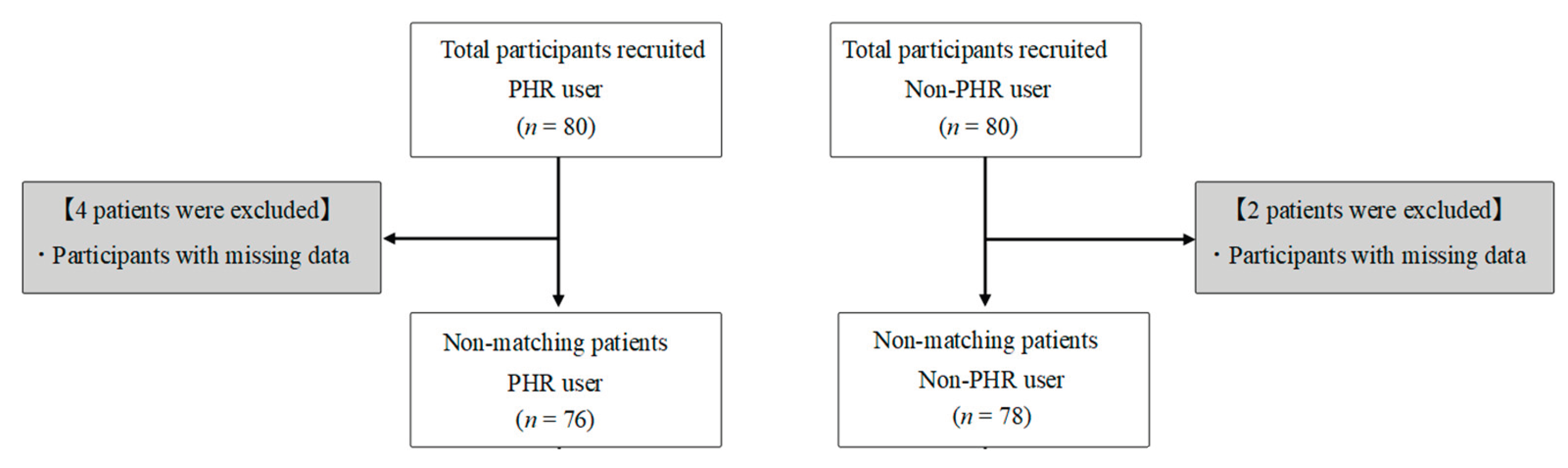
Figure 2.
Changes in types of antidiabetic medications between the index date and 12 months.
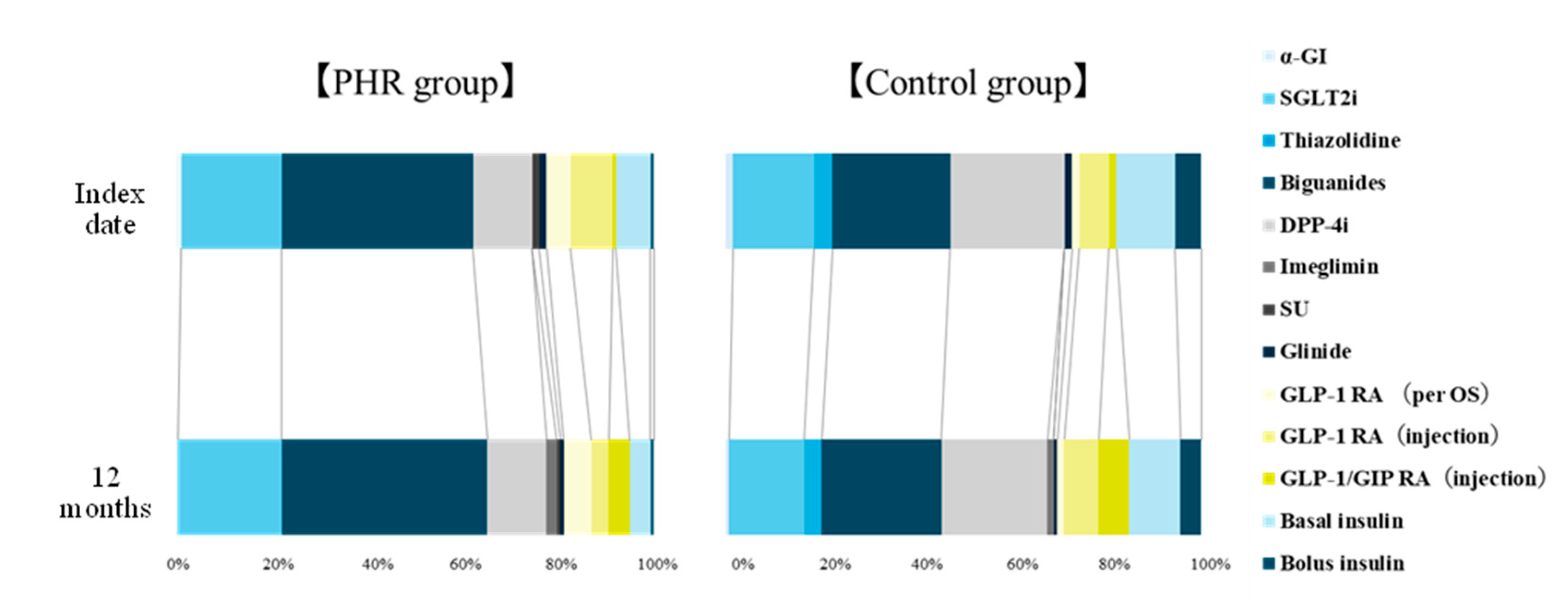
Figure 3.
Changes in ΔHbA1c over 12 months and between-group differences at 12 months in the PHR and control groups. ID: Index date. a: Between-group comparison: Mixed Model for Repeated Measures (MMRM), adjected age. Within-group comparison: Bonferroni. Different superscripts indicate significant differences. b: Primary endpoint: t-test. **p < 0.01.
Figure 3.
Changes in ΔHbA1c over 12 months and between-group differences at 12 months in the PHR and control groups. ID: Index date. a: Between-group comparison: Mixed Model for Repeated Measures (MMRM), adjected age. Within-group comparison: Bonferroni. Different superscripts indicate significant differences. b: Primary endpoint: t-test. **p < 0.01.
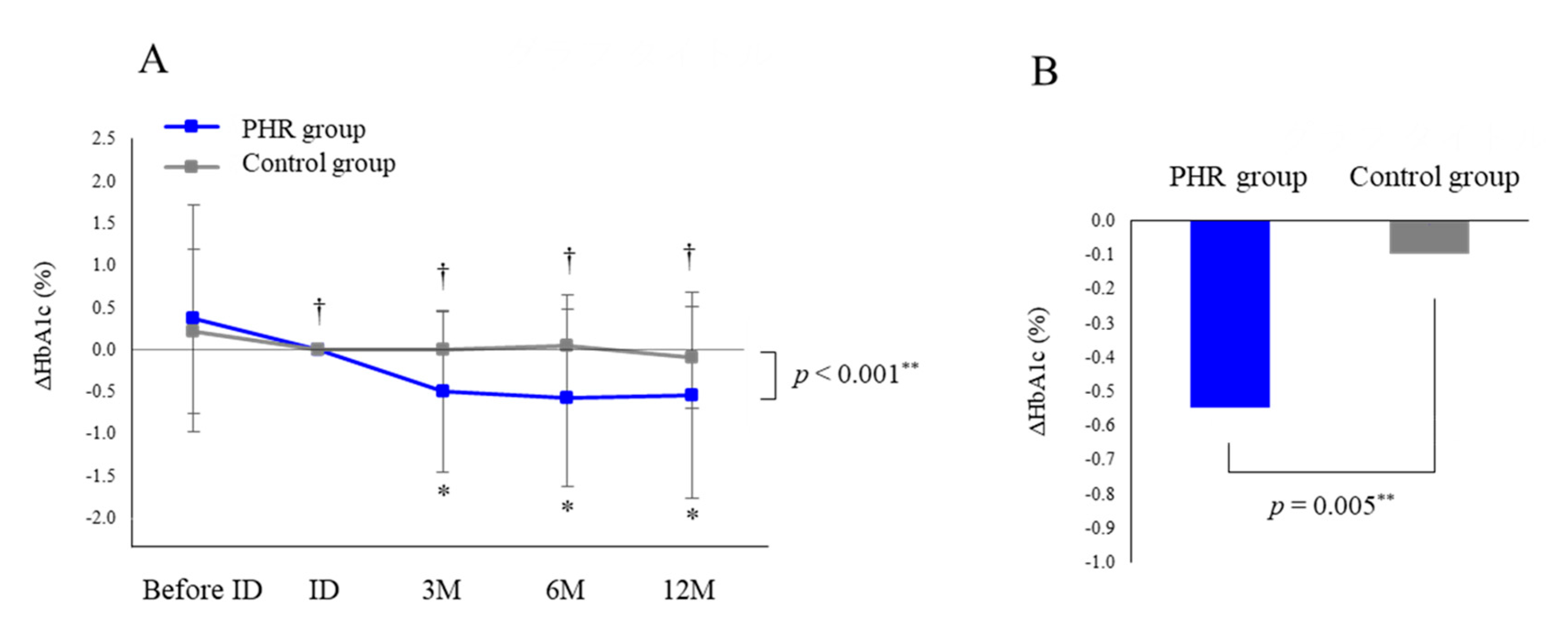
Figure 4.
Changes in ΔBW over 12 months and between-group differences at 12 months in the PHR and control groups. ID: Index date. a: Between-group comparison: Mixed Model for Repeated Measures (MMRM), adjected age. Within-group comparison: Bonferroni. Different superscripts indicate significant differences. b: Secondary endpoint: t-test. **p < 0.01.
Figure 4.
Changes in ΔBW over 12 months and between-group differences at 12 months in the PHR and control groups. ID: Index date. a: Between-group comparison: Mixed Model for Repeated Measures (MMRM), adjected age. Within-group comparison: Bonferroni. Different superscripts indicate significant differences. b: Secondary endpoint: t-test. **p < 0.01.
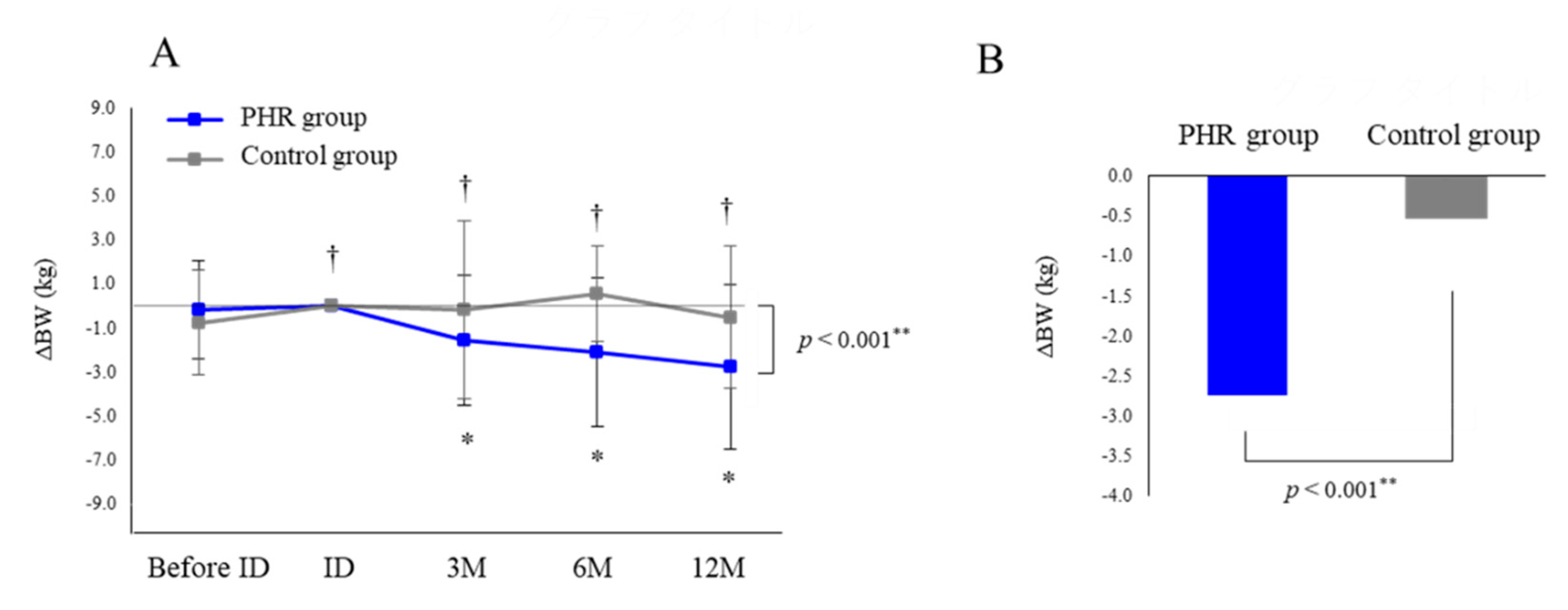

Table 1.
Characteristics of the participants at the index date.
|
PHR group (n = 76) |
Control group (n = 78) |
p-value | |
| Age (yrs) | 57.9 ± 10.4 | 65.0 ± 11.5 | < 0.001** |
| Male n (%) | 43 | 47 | 0.159 |
| Duration of diabetes (yrs) | 7.8 ± 8.2 | 9.6 ± 8.7 | 0.038* |
| BMI (kg/m2) | 27.0 ± 4.4 | 26.0 ± 4.1 | 0.052 |
| HbA1c (%) | 7.1 ± 0.9 | 7.1 ± 0.9 | 0.518 |
| BG (mg/dL) | 137 ± 38 | 150 ± 55 | 0.127 |
| eGFR (mg/min/1.72m2) | 70.0 ± 15.1 | 68.2 ± 22.7 | 0.407 |
| Neuropathy– yes, n (%) | 4 | 6 | 0.594 |
| Retinopathy– yes, n (%) | 4 | 7 | 0.649 |
| Nephropathy– yes, n (%) | 15 | 16 | 0.645 |
| CVD- yes, n (%) | 8 | 9 | 0.802 |
| Hypertension- yes, n (%) | 46 | 42 | 0.642 |
| Dyslipidemia- yes, n (%) | 47 | 47 | 0.840 |
| Number of household members, n | 2.6 ± 1.2 | 2.1 ± 1.0 | 0.044* |
| Education level | 2.9 ± 0.9 | 2.3 ± 0.7 | < 0.001** |
| PAID scale | 2.8 ± 2.1 | 2.9 ± 2.8 | 0.867 |
*p < 0.05, ** p < 0.01.
Table 2.
Correlation analysis of factors associated with ΔHbA1c in PHR group.
| r | p-value | |
| Duration of diabetes (yrs) | 0.130 | 0.107 |
| BMI (kg/m2) | -0.217 | 0.007** |
| Number of household members n (%) | 0.001 | 0.993 |
| Education level | 0.082 | 0.479 |
| PAID scale | 1.020 | 0.382 |
| PHR uses (n) | -0.159 | 0.171 |
| Average weight record (n/month) | -0.125 | 0.281 |
| Number of nutritional support (n/3month) | -0.301 | 0.008** |
**p < 0.01.
Table 3.
Multivariate analysis of factors associated with ΔHbA1c in PHR group.
| B | β | p-value | VIF | |
| Male | -0.141 | -0.056 | 0.615 | 1.05 |
| Age (years) | 0.018 | 0.163 | 0.159 | 1.12 |
| BMI (kg/m2) | -0.038 | -0.138 | 0247 | 1.19 |
| Number of nutritional support (n/3month) | -0.258 | -0.261 | 0.028* | 1.13 |
R = 0.407, R2= 0.119, p = 0.011.
Disclaimer/Publisher’s Note: The statements, opinions and data contained in all publications are solely those of the individual author(s) and contributor(s) and not of MDPI and/or the editor(s). MDPI and/or the editor(s) disclaim responsibility for any injury to people or property resulting from any ideas, methods, instructions or products referred to in the content. |
© 2026 by the authors. Licensee MDPI, Basel, Switzerland. This article is an open access article distributed under the terms and conditions of the Creative Commons Attribution (CC BY) license (http://creativecommons.org/licenses/by/4.0/).
Copyright: This open access article is published under a Creative Commons CC BY 4.0 license, which permit the free download, distribution, and reuse, provided that the author and preprint are cited in any reuse.


