

Submitted:
29 July 2026
Posted:
30 July 2026
You are already at the latest version
Abstract
The high-speed steel (HSS) substrate was coated with CrC, NbC, TiC, and VC layers using the thermo-reactive diffusion (TRD) process at 900 and 1100 °C for 2 and 4 hours. The experimental design was implemented according to the Taguchi L8 orthogonal array. The coating morphology was examined by scanning electron microscopy (SEM) coupled with energy-dispersive spectroscopy (EDS), while the phase composition was identified by X-ray diffraction (XRD). The effects of coating type, temperature, and time on coating thickness, microhardness, coefficient of friction, and specific wear rate were evaluated using analysis of variance (ANOVA). SEM and EDS analyses showed that coatings produced at lower temperatures and shorter times exhibited non-uniform layer thickness, localized porosity, and irregular carbide formation, whereas coatings applied at higher temperatures and longer times resulted in uniform layers, homogeneous elemental distribution, and improved surface morphology. XRD analyses confirmed that the coatings consisted of high-intensity carbide phases and that the chemical composition of the substrate influenced the resulting coating phases. Phase composition analysis revealed the presence of residual phases such as Cr7C3 and Cr23C6 in the coatings. Coating thickness and hardness increased with increasing temperature and time. Analysis of variance revealed that coating type (45.13%) and temperature (42.34%) were the dominant factors affecting coating thickness, whereas temperature (39.92%) and coating type (37.77%) had the greatest contributions to hardness. The friction coefficient was predominantly influenced by coating type (87.98%), whereas the specific wear rate was mainly affected by temperature (34.99%) and coating type (33.37%). NbC coatings exhibited the lowest performance among the investigated coatings across all evaluated properties.
Keywords:
CrC
; hardness
; HSS
; microstructure
; NbC
; TiC
; TRD coating
; VC
; wear
1. Introduction
High-speed steels (HSS) are alloyed tool steels characterized by their ability to maintain hardness at elevated temperatures and by their resistance to wear, while also possessing adequate toughness. These materials, alloyed with elements such as tungsten, molybdenum, chromium, vanadium, and cobalt, are widely used particularly in comminution industry equipment (hammers, jaws, and rotor components) [1,2,3] and in machining processes [4,5]. The long service life and high performance of HSS depend not only on the intrinsic properties of the core material but also on the enhancement of surface characteristics. Factors such as hardness and microstructure play a decisive role in wear resistance [2].
Surface modification is of critical importance for enhancing the tribological performance and extending the service life of HSS steels. In this context, Physical Vapor Deposition (PVD) and Chemical Vapor Deposition (CVD) methods are frequently employed. Coatings such as TiN [6], TiN/AlTiN [7], and CrAlN/CrN [8] have been applied using PVD, whereas TiAlN [9], TiC [10], and TiN [11] coatings have been deposited via CVD. While these methods provide high hardness and wear resistance, they are limited by high equipment and operational costs, complex process control requirements, and the necessity of a vacuum environment [12,13]. Alternatively, the Thermo-Reactive Diffusion (TRD) method stands out due to its applicability under atmospheric conditions, low equipment costs, and its ability to form thick, dense coating layers [14,15,16,17]. TRD promotes the formation of metallurgically bonded hard phases by enabling carbide-forming elements (Cr, V, Nb, Ti) to diffuse into the steel surface at high temperatures [18,19]. Coating performance depends on parameters such as the coating type, processing temperature, processing time, and substrate properties. The optimization of these parameters directly influences the coating's microstructural characteristics, thickness, hardness, and tribological behavior.
Kurt et al. [20] characterized the microstructure and evaluated the tribological properties of TiBC coatings applied on AISI D6 steel under different temperature and time parameters. They reported that increasing the processing temperature and time led to higher coating thickness and hardness, while reducing the wear rate. Amaya Avila et al. [21] investigated the growth behavior of VC coatings applied to gray cast iron surfaces and reported that the resulting coatings were compact, continuous, and homogeneous. Çelik et al. [22] reported that NbC–B coatings on Hardox 400 steel increased the hardness by up to 320.80% and improved the tribological properties. Kılıç [23] reported that CrC coatings on manganese steel, and Kilic [24] that TiC coatings on alloy steel, resulted in a more metallurgically homogeneous structure at the coating and interface under high processing temperatures.
The existing literature indicates that carbide coatings applied via the TRD method provide materials with superior surface durability under harsh conditions such as high temperature and corrosion [25,26], enhanced tribological properties including high hardness and low coefficient of friction [27,28], and improved thermal and chemical resistance due to their high melting temperature [29,30].
In the literature, studies on the TRD method have generally focused on steels and cast irons with high carbon content. However, the potential of the HSS steels has not been sufficiently investigated. This study aims to apply CrC, NbC, TiC, and VC coatings onto HSS using the TRD method and to investigate the microstructural and tribological properties of these coatings. Coating processes were carried out under different processing temperatures and times, and key performance indicators such as coating thickness, surface hardness, and wear resistance were evaluated. The effects of the parameters were analyzed using the Taguchi experimental design.
2. Materials and Methods
2.1. Procurement and Preparation of Materials
In this study, high-speed steel (HSS) was used as the substrate material for the coatings. The commercially available HSS steel was supplied in the form of bars with dimensions of 12.7 mm × 4 mm × 160 mm. The HSS steel is tungsten-based, and its chemical composition and mechanical properties are given in Table 1.
Prior to coating, the HSS samples were cut to dimensions of 12.7 mm × 12.7 mm × 4 mm using a CNC vertical machining center, in accordance with the experimental configuration. Mechanical surface preparation was performed using 400, 600, 800, and 1200 grit SiC papers to improve surface quality. The samples were then ultrasonically cleaned in ethanol for 5 minutes and dried with air, making them ready for the coating process.
2.2. Thermo-Reactive Diffusion (TRD) Method
The coating processes were carried out using the thermo-reactive diffusion (TRD) method. The TRD process is a surface modification technique based on the diffusion of carbide-forming active elements into the steel surface at high temperatures. In this study, reactive powder mixtures containing chromium, niobium, titanium, and vanadium were used to obtain CrC, NbC, TiC, and VC coatings, respectively.
The reactive medium was prepared from powders containing the main alloying elements (ferro-chromium, ferro-niobium, ferro-titanium, and ferro-vanadium), an inert material (Al2O3), and an activator (NH4Cl). The powder components were weighed on an analytical balance to contain 45% main alloying elements, 45% inert material, and 10% activator. The powders were mixed in a mechanical mixing unit for 4 hours to obtain a homogeneous mixture.
After mixing, the powders were placed in a crucible, and the samples were embedded into this mixture. The top of the crucible was covered with Al2O3 powder to provide thermal insulation. The crucibles were placed in the furnace, and the coating was carried out according to the specified temperature and time parameters. After the process, the crucibles were removed from the furnace and cooled under water, then opened to retrieve the samples. To remove residual powder from the sample surfaces, cleaning was performed using compressed air.
2.3. Coating Parameters
In TRD coating processes, three main process parameters, namely coating type, coating temperature, and coating time, were determined. The literature indicates that, in coatings produced by the TRD method, the temperature and time parameters have a significant effect on coating thickness, microstructure, and mechanical properties, particularly hardness [20,22,23,24]. Accordingly, for each carbide coating, two different coating temperatures (low and high) and two different coating times were selected, considering the thermal and chemical properties of the substrate material. Since the total number of experiments resulting from all parameter combinations would be high in terms of time and resources, the L8 orthogonal array of the Taguchi experimental design was chosen. This design includes the variables coating type (4 levels), temperature (2 levels), and time (2 levels). The coating parameters and their levels used in the experimental design are presented in Table 2, while the coating type, temperature, and time for each sample according to the L8 experimental plan are given in Table 3.
2.4. Characterization of the Coatings
The surfaces of the coated samples were prepared for metallographic examination. The samples, mounted in bakelite, were successively ground using 400, 800, 1000, and 1200 mesh abrasive papers and then polished with a 3 µm diamond paste.
A ZEISS Sigma 300 scanning electron microscope (SEM) and energy-dispersive spectroscopy (EDS) systems were used for coating thickness and microstructural characterization. X-ray diffraction (XRD) analysis was performed to identify the crystal structures of the phases formed within the coating layer.
Hardness measurements were performed using a Durascan 20 (Struers) microhardness tester under a 50 g load with a dwell time of 8 s. For each sample, measurements were taken at seven different points, and the average hardness values were calculated.
Wear tests were conducted using a Turkyus Pin-on-Disk device. A 6 mm diameter stainless steel ball was used as the abrasive. A normal load of 15 N was applied to each sample via the ball, and the sample moved on the disk at a sliding speed of 0.4 m/s. The tests were conducted over a total sliding time of 800 s, resulting in wear tracks of approximately 10 mm in diameter on the sample surfaces. Each test was performed in duplicate, and average values were obtained for each sample. During the experiments, the coefficient of friction was continuously recorded at a frequency of 0.82 Hz via the device sensors, and these data were used to generate time-dependent friction coefficient curves. A schematic illustration of the wear test setup is shown in Figure 1.
After completion of the wear tests, the wear track geometry was measured, and the wear volume was calculated. The track diameter was measured using an optical profilometer. Wear volume (V) was calculated using the formula given in Equation 1, and the specific wear rate (Ws) was determined using the formula presented in Equation 2.
Here, V represents the wear volume, R the wear track radius, r the pin tip radius, w the wear track width, F the applied normal load, and S the sliding distance.
3. Results and Discussion
The data obtained from coating thickness, microhardness, and wear tests were analyzed within the framework of the L8 orthogonal experimental design presented in Table 3. The effects of coating type, coating time, and coating temperature on coating thickness, hardness, coefficient of friction, and specific wear rate were evaluated using comparative graphs and the ANOVA method.
The hardness (950 HV), coefficient of friction (0.595), and specific wear rate (26.621 ×10⁻⁶ mm3/Nm) of the substrate material were used as reference values in order to quantitatively express the performance changes observed in the coated samples. Accordingly, all Δ values were defined such that improvement corresponds to a positive value, and the calculations were carried out using a consistent sign convention based on this definition. Therefore, Δ was defined as (Coated − Substrate) for hardness, and as (Substrate − Coated) for the coefficient of friction and specific wear rate. The values obtained directly from the experiments as well as those calculated based on these definitions are given in Table 4.
Taguchi main effect analyses and analyses of variance were performed based on Δ hardness, Δ coefficient of friction, and Δ specific wear rate values. This section presents only the data processing steps and the analysis methods employed, while interpretations regarding the effects of the parameters on performance are detailed in the subsequent subsections.
3.1. Microstructure and Phase Composition Analysis
SEM and EDS analyses were performed on the surfaces of all samples in order to investigate the effects of coating temperature, coating time, and coating type on the microstructure. To highlight significant microstructural features, SEM and EDS analyses of the CrC-coated sample deposited at 900 °C for 2 h and at 1100 °C for 4 h are presented in Figure 2. In addition, surface analyses of NbC-, TiC-, and VC-coated samples deposited at different temperatures and times are shown in Figure 3.
SEM analyses clearly demonstrated that coating temperature and coating time play a decisive role in governing the coating morphology. In samples produced under low-temperature and short-time conditions, the coating layer was found to be non-uniform across the cross-section, with pronounced local fluctuations in layer thickness and the presence of discontinuous regions. In addition, a protrusion–depression surface character, localized porosity, and island-type carbide formations were observed. These morphological features indicate that the reaction did not proceed homogeneously and that carbide growth remained limited due to low diffusion kinetics. Najari et al. [31] reported that carbide formation at low temperatures may be thermodynamically insufficient and can lead to the development of irregular morphologies in the coating layer; the results obtained in this study are consistent with the proposed mechanism.
In contrast, in samples subjected to high temperature (1100 °C) and long processing time (4 h), the morphology of the coating layer improved markedly. The layer thickness became more uniform, the surface topography was smoother, and continuity at the coating–substrate interface increased. This behavior can be explained by the acceleration of the diffusion and reaction kinetics required for carbide formation with increasing temperature and time. “Zong et al. [32] also reported that extending the processing time contributes to the improvement of coating morphology.
EDS analyses confirmed the distribution of the elements forming the carbide phases within the coating layers; at high temperatures and long processing times, the weight percentages of the relevant elements increased, whereas at low temperatures the distribution remained more heterogeneous. This trend is directly consistent with a diffusion-controlled coating mechanism [31].
Evaluation of the coating thicknesses revealed that CrC-, TiC-, and VC-coated samples exhibited a pronounced increase in thickness with increasing temperature and processing time, whereas this increase remained limited in NbC coatings. This difference indicates that, in TRD coatings, the layer thickness depends not only on the processing parameters but also on the carbon content of the substrate material and its thermodynamic tendency toward carbide formation [33]. The literature reports that a minimum carbon content in the steels is required for the formation of an effective carbide layer by TRD [34,35], and that in materials with higher carbon content the carbide layer develops more rapidly and reaches greater thickness [36]. These findings explain that the limited thickness increase observed in NbC coatings originates from the reduced substrate–coating interaction.
Following the microstructural and elemental distribution analyses, XRD analyses were performed to examine the phase composition and determine the crystal structures of the coatings. In Figure 4, the XRD patterns corresponding to the different coating types are presented together, visually illustrating the characteristic phases of the coatings.
When the XRD patterns presented in Figure 4 are examined, it is observed that all coatings contain carbide phases with high intensity. Therefore, the coating temperature and coating time played a decisive role in the formation and growth of the carbide phases by governing the diffusion rate. In the patterns obtained for the CrC coating, the CrFe, Cr3 Cr7C3 and Cr23C6 phases were identified as exhibiting the highest-intensity peaks. These phases indicate that carburization intensified as a result of accelerated carbon diffusion with increasing temperature and holding time. In particular, the presence of the CrFe phase indicates the formation of a metallurgical transition layer between the coating and the substrate. This transition region acts as an interlayer that enhances adhesion between the coating and the substrate in CrC coatings and contributes to toughness by preventing abrupt hardness transitions [31]. The literature also reports the identification of similar phases in CrC coating studies conducted on different substrates [37,38]. For the NbC coating, the highest-intensity peaks corresponded to NbC, Cr3C2, and CrFe phases, whereas γ-Fe exhibited the lowest-intensity peak. Similar coatings were also observed in studies conducted by Yakut [39]. The XRD patterns of the TiC coatings showed that Cr7C3 and Cr23C6 phases were dominant, while low-intensity TiC and Fe3C phases were also detected. Similar studies in the literature have reported the formation of these phases in TiC coatings as well [40,41]. In VC coatings, the highest-intensity peak corresponded to the Fe3C phase, while V2C3, V4C3, and CrFe phases were detected at varying intensities. The low peak intensity of the VC phase is attributed to the low diffusion coefficient of vanadium in the iron matrix [42], indicating a limited tendency of vanadium to form carbides at the surface. Similar phase formations have also been reported in previous studies [32].
In general, all coatings were found to contain certain amounts of secondary phases in addition to the main carbide phases. In particular, the formation of CrC-dominated phases in all samples can be attributed to the high chromium content of the substrate. Indeed, Taktak and Ulu [43] reported that in coatings produced on the surface of 440C steel with high chromium content, Cr7C3 and Cr23C6 carbide phases, as well as Ti6C3.75 and VC0.88 phases, were similarly formed. This finding is consistent with the results of the present study and clearly demonstrates that the chemical composition of the substrate plays a decisive role in coating phase formation.
3.2. Coating Thickness Analysis
The coating thickness was evaluated in terms of coating type and processing parameters; the visual representation of the effects is shown in Figure 5, while the statistical evaluation is presented in Table 5.
The actual experimental measurements (Table 4) show that the highest coating thickness was obtained for the CrC coating under the 1100 °C–4 h condition, whereas NbC remained at the lowest level under all conditions. Although the TiC and VC coatings were processed for only 2 h at 1100 °C, they produced intermediate thicknesses, positioned between those of CrC and NbC. Overall, the experimental data clearly confirm that coating thickness increases with rising coating temperature and coating time.
In the Taguchi main effect analysis shown in Figure 5, the determination of TiC as the optimum level for the coating type factor does not contradict the experimental maximum values. The Taguchi method evaluates the average effect of each coating type across the two processing levels rather than directly identifying the highest thickness. TiC produced relatively high and balanced thicknesses at both processing levels, whereas CrC was significantly weak under the low-temperature–short coating time combination, resulting in a lower average effect. VC coating produced lower thickness compared to CrC, resulting in a limited average effect. NbC, on the other hand, exhibited the lowest thickness at both processing levels and was therefore identified in the Taguchi analysis as the coating type with the weakest average effect. Findings in the literature indicate that coating thickness is not solely a result of coating temperature and coating time. It is also significantly influenced by the intrinsic formation characteristics of the coating type and the carbon potential of the substrate material. Aghaie-Khafri and Fazlalipour [44] reported that in VC coatings, thickness increased to 2.3–23.2 µm with rising temperature and coating time. Najari et al. [31] reported values in the range of 5.14–18.06 µm for CrC coatings, while Zhang et al. [35] obtained a thickness of approximately 7.5 µm in TiC coatings processed at 900 °C for 3 h. Mariani et al. [36] reported NbC layer thicknesses in ductile cast iron in the range of 17.8–23.1 µm, while Amaya et al. [45] showed that NbC coatings on gray cast iron ranged from 3.47 to 13.81 µm.
The analysis of variance results in Table 5 indicate that the coating type contributed the most to coating thickness, accounting for 45.13%. This effect is thought to originate from the coating type’s characteristics, such as its chemical composition and tendency to form carbides. Coating temperature ranks second, contributing 42.34%. An increase in temperature enhances the probability of carbide-forming elements diffusing into the substrate and thus plays an important role in increasing coating thickness [44]. The contribution of coating time is 1.28%, which is considered low primarily due to the low thickness obtained for NbC coatings at 2 h and 4 h. While the model’s R2 value of 88.75% indicates a good fit, the R2adj value was obtained as 60.62% due to the limited effect of the coatings at short processing times.
3.3. Hardness Analysis
The effects of coating type and application parameters on coating hardness were examined; the differences between coating and substrate hardness (Δ microhardness) were calculated, with a visual representation shown in Figure 7 and the results of the statistical analysis presented in Table 7.
Figure 6.
Δ Microhardness variation with coating type and application parameters.
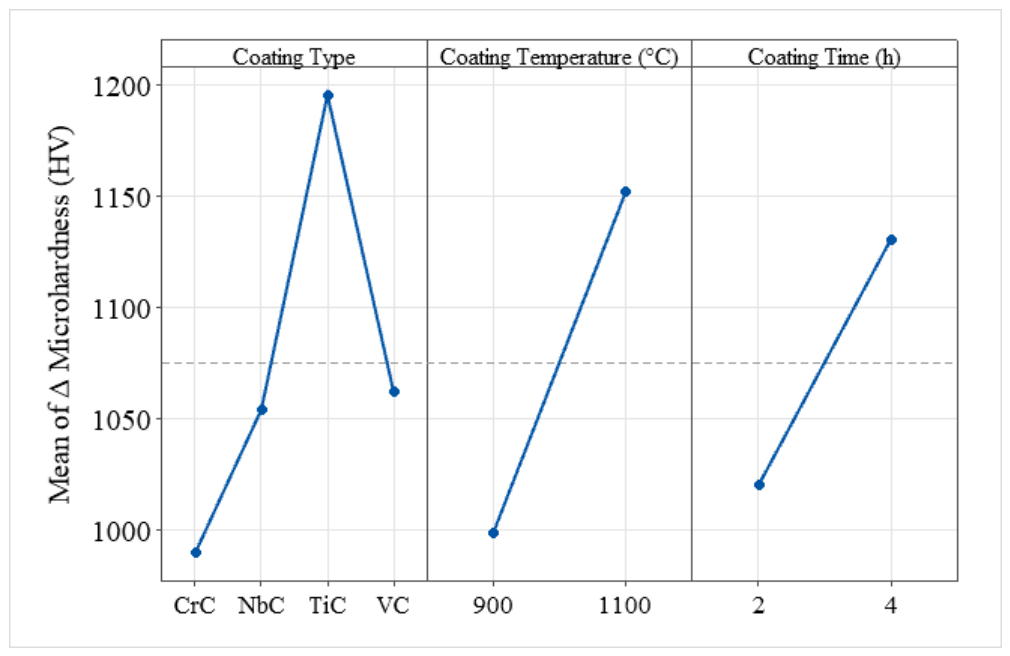
Figure 7.
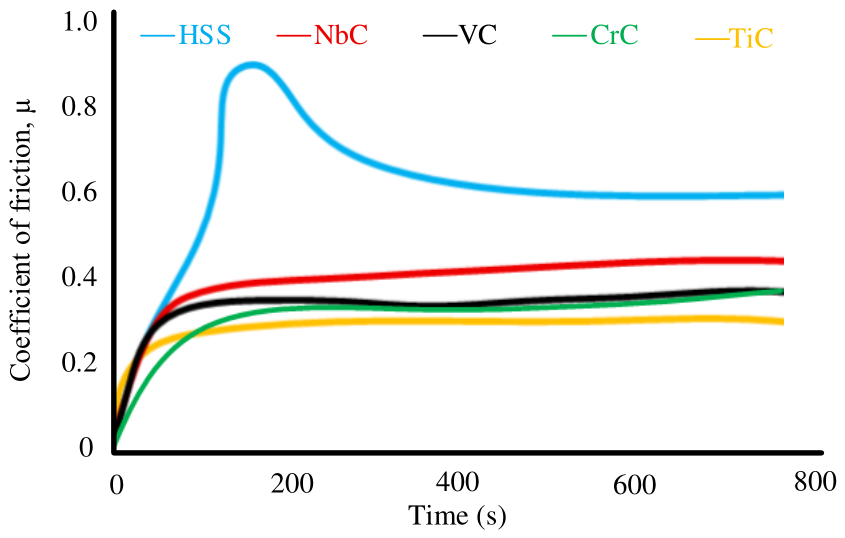
Graph of coefficient of friction variation recorded during the wear test.
Coating type, coating temperature, and coating time directly affect the surface hardness of the material and the underlying phase structure. Changes in hardness primarily depend on the type, density, and distribution of the hard phases formed. However, the diffusion characteristics and grain size of the substrate–coating interface are also important. The literature reports that very hard carbide phases such as VC [44,45,46], NbC [42], and CrC [47] increase surface hardness.
The Taguchi main effect analysis in Figure 6 shows that TiC is the coating type contributing most significantly to substrate hardness, followed by VC and NbC coatings, respectively. Increasing the coating temperature and coating time led to a marked rise in substrate hardness. These findings are consistent with results reported in the literature. Günen et al. [48] reported that increases in coating temperature and coating time accelerate diffusion, thereby significantly enhancing coating hardness. Mariani et al. [36], in their study on unalloyed and alloyed cast iron surfaces, showed that VC coatings provide higher hardness values compared to NbC coatings. Aghaie-Khafri and Fazlalipour [44] reported that VC coatings applied on DIN 1.2367 steel at 950–1150 °C for 1–5 h exhibited hardness approximately four times higher than that of the uncoated steel. Reihani et al. [42] noted that complex carbide layers obtained through combined vanadization–niobization produced higher hardness compared to single VC or NbC layers. Similarly, Elhelaly et al. [46] reported high microhardness values with homogeneous VC layers, and Günen et al. [40] achieved high microhardness using smooth TiC coatings.

Table 6.
Analysis of variance results for factors affecting Δ microhardness.
| Source | DF | Seq SS | Adj SS | Adj MS | F | P | % Contribution |
|---|---|---|---|---|---|---|---|
| Coating Type | 3 | 44880 | 44880 | 14960 | 14.40 | 0.066 | 37.77 |
| Coating Temperature (°C) | 1 | 47432 | 47432 | 47432 | 45.64 | 0.021 | 39.92 |
| Coating Time (h) | 1 | 24420 | 24420 | 24420 | 23.50 | 0.040 | 20.56 |
| Residual Error | 2 | 2078 | 2078 | 1039 | 1.75 | ||
| Total | 7 | 118811 | 100 | ||||
| S = 32.2374 R2 = 98.25% R2adj = 93.88% | |||||||
Table 7.
Analysis of variance results for factors affecting the Δ coefficient of friction.
| Source | DF | Seq SS | Adj SS | Adj MS | F | P | % Contribution |
|---|---|---|---|---|---|---|---|
| Coating Type | 3 | 0.02977 | 0.02977 | 0.00992 | 13.01 | 0.072 | 87.98 |
| Coating Temperature (°C) | 1 | 0.00221 | 0.00221 | 0.00221 | 2.90 | 0.231 | 6.53 |
| Coating Time (h) | 1 | 0.00033 | 0.00033 | 0.00033 | 0.43 | 0.581 | 0.97 |
| Residual Error | 2 | 0.00153 | 0.00153 | 0.00076 | 4.52 | ||
| Total | 7 | 0.03383 | 100 | ||||
| S = 0.0276 R2 = 95.49% R2adj = 84.22% | |||||||
According to the ANOVA results for Δ microhardness presented in Table 6, the most influential parameter on hardness is the coating temperature, accounting for 39.92%. Coating temperature plays a decisive role in hardness, particularly in diffusion-based carbide coatings. Because it directly controls phase formation and coating growth kinetics [44]. Moreover, the coating growth rate constant varies as an exponential function of temperature [47], and temperature can also affect the morphology of the resulting phases [46].
The second highest contribution to hardness, accounting for 37.11%, is attributed to the coating type. The phases formed in different coating types and their intrinsic hardness are important factors determining the coating hardness [49]. The contribution of coating time was determined to be 20.56%, with its primary effect being to enhance coating thickness by controlling the diffusion rate, thereby reducing the influence of the soft substrate and increasing surface hardness and wear resistance [44,45]. The model exhibited an R2 of 98.25% and an R2adj of 93.88%, demonstrating a strong fit with the experimental data.
3.4. Wear Analysis
During the wear tests, the coefficients of friction were continuously monitored by the device, and their dependence on coating temperature and time was analyzed. Experimental data indicated that the time-dependent variations of the coefficient of friction were very similar. Therefore, only the friction coefficient variations for the samples coated at 1100 °C and the substrate material are presented in Figure 7. The data were smoothed to prevent overlapping of the curves and to enhance visual clarity.
The time-dependent coefficients of friction during the wear tests for the HSS substrate and samples with various surface coatings are given in Figure 7. For the substrate material, the coefficient of friction initially increased, then decreased, stabilizing at a steady-state value around 400 s. In the coated samples, the coefficient of friction rose during the early stages of the test, with the length of this increase showing minor differences depending on the coating type. After the initial increase, the coefficients remained linearly stable, and this trend continued until the end of the test.
For the NbC-coated sample, a minor increase in the coefficient of friction was observed during the test; however, the values remained lower than those of the substrate. TiC-coated samples exhibited the lowest coefficients of friction. Despite the comparable hardness of the CrC and VC coatings, they showed the second lowest friction values, following TiC.
Figure 8 illustrates the variation of the Δ coefficient of friction, obtained by subtracting the average friction coefficient of the coatings from that of the HSS substrate, with respect to coating thickness and processing parameters. Statistical analysis results are provided in Table 7.
Figure 8 shows that, based on the difference between the friction coefficients of the substrate and the coatings, NbC exhibits a coefficient closest to that of the substrate, while TiC shows the largest difference, corresponding to the lowest friction coefficient. The rise in coating temperature and time facilitated diffusion and increased the density of carbide phases, leading to a general decrease in the coefficient of friction. As a result, the difference in friction coefficient between the coatings and the substrate (Δμ) increased with higher temperature and longer time.
The coatings’ lower coefficients of friction relative to the substrate are associated with the high hardness and carbon content of the phases within the coating layer [31]. Particularly, carbide forms such as Ti6C3.75 and VC0.88 effectively contribute to lower friction compared to the substrate at low temperatures [43]. The low coefficient of friction of the NbC coating is attributed to the hard NbC phase and the fine microstructural morphology that limits the contact area [40].
Raising the TRD temperature facilitates the development of thicker and harder carbide layers, thereby enhancing friction performance and lowering the average coefficient of friction. Likewise, longer coating times increase the layer thickness, producing a decrease in the coefficient of friction [31].
According to the ANOVA results presented in Table 7, the most influential parameter on the coefficient of friction was identified as the coating type, with a contribution of 87.98%. The influence of coating temperature and especially coating time was minimal, with temperature accounting for 6.53% and time contributing merely 0.97%. This indicates that friction behavior primarily depends on the type of carbide-forming element used in the coating. Coating type directly affects the coefficient of friction through its control over the hardness of the carbide phases, the bonding structure, and the surface energy. Coating temperature acts as a kinetically controlling parameter and constitutes a secondary factor that dictates the thickness and density of the carbide layer for each type of coating. The limited effect of coating time can be explained by the diffusion mechanism. As the duration increases, the thickness of the carbide layer grows; however, with increasing layer thickness, the diffusion path lengthens, making it more difficult for carbon atoms to reach the reaction front. Consequently, at longer coating times, the growth rate decreases, and its effect on the coefficient of friction remains limited [31].
Figure 9 reveals notable differences in the specific wear rates among the coatings. The NbC-coated samples show values most similar to the substrate, while the other coatings exhibit relatively comparable wear rates. The minimum specific wear rate was recorded for the sample coated with CrC at 1100 °C for 4 hours. This trend is further corroborated by the morphological analysis of the worn surfaces, with SEM images provided in Figure 10.
Upon examination of the wear tracks shown in Figure 10, it is observed that the CrC coating exhibits narrower and shallower tracks compared to the other coatings. Similar wear track profile was also observed in the VC-coated sample. However, since the experiments were conducted according to the Taguchi design of experiments, the coating time for the VC-coated sample was limited to 2 hours. For the TiC-coated sample, the 2-hour coating duration resulted in a moderate increase in wear track width, whereas regions containing surface oxide and carbide phases exhibited more restricted wear. For the NbC-coated sample, distinct wear tracks were observed, revealing substantial degradation of the coating. Furthermore, wear was more pronounced in experiments performed at a coating temperature of 900 °C. Accordingly, analysis of the average Δ specific wear rates in Figure 9, calculated based on the two levels of coating temperature and time, indicates that while the values for CrC, TiC, and VC coatings are relatively similar, the lowest average rates were observed for the VC and TiC coatings, with CrC following.
The average thickness of the NbC coating under 900 °C and 2-hour processing conditions was measured at 0.539 µm. Such a thin layer is susceptible to early wear or localized spalling, which can expose the substrate under the test conditions, accounting for the high wear volume and specific wear rate observed in the NbC-coated samples.
Raising the coating temperature and extending the coating time decreased the specific wear rate by increasing the density and hardness of the carbide phases. Nevertheless, as the substrate demonstrated the highest wear rate, the Δ specific wear rate between the substrate and the coatings increased with higher temperature and longer time.
The coating type, coating temperature, and coating time directly affect wear resistance through modifications in the hardness and thickness of the carbide layer. Literature reports indicate that, by optimizing coating parameters, wear resistance can be enhanced by a factor of 5 to 35 relative to uncoated substrates [31,36]. According to Mariani et al. [36], NbC and VC coatings demonstrate comparable wear behavior, and both offer markedly higher wear resistance than the substrate material.
Thick and hard coating layers restrict the penetration of the abrasive pin, thereby reducing material loss and improving overall wear resistance. These observations align with the findings of the present study, demonstrating that appropriate selection of TRD parameters directly determines coating performance.
According to the ANOVA results for Δ specific wear rate presented in Table 8, the most influential parameter was coating temperature, with a contribution of 34.99%. This was followed by coating type (33.37%) and coating time (17.67%). The primary factors governing the specific wear rate are coating thickness and, particularly, coating hardness. Therefore, the contribution ratios obtained from the Δ specific wear rate closely correspond to those from the hardness variance analysis.
Although NbC coatings provide low friction coefficients and high hardness, their relatively low thickness resulted in specific wear rates closest to the substrate in the wear tests. This is also reflected in the model’s R2 and R2adj values. While the model achieved a good fit with an R2 of 86.03%, the limited influence of the coating led to an R2adj of 51.10%.
4. Conclusion
The HSS substrate material was coated using the TRD method with different carbide-forming elements. The results obtained from the experimental studies conducted as a function of coating temperature, coating type, and coating time are summarized below.
Low-temperature and short-time coating processes resulted in non-uniform coating layers across the cross-section, characterized by locally fluctuating thicknesses and discontinuities. In addition, surface protrusions and depressions, localized porosity, and island-type carbide formations were observed. In contrast, high-temperature and long-time processes improved the coating morphology, rendered the layer thickness more uniform, smoothed the surface topography, and enhanced continuity at the coating–substrate interface.
EDS analyses confirmed the distribution of carbide-forming elements within the coating layers. At high temperatures and long coating times, the elemental distribution became more homogeneous and denser, whereas at low temperatures and short coating times, the distribution remained heterogeneous.
XRD analyses showed that the coatings consisted of high-density carbide phases (Cr7C3, Cr23C6, NbC, TiC, VC, and Fe3C) and that the chemical composition of the substrate influenced the resulting coating phases.
The coating type, coating temperature, and coating time had significant effects on the coating thickness, hardness, coefficient of friction, and specific wear rate. As the coating temperature and coating time increased, both the coating thickness and hardness increased. The increase in hardness contributed to a reduction in the coefficient of friction and the specific wear rate.
Although the contribution ratios of coating type and coating temperature to coating thickness were comparable, coating type was identified as the most influential factor. The effect of coating time remained quite limited. Based on the mean effects of the coating parameters, TiC was the most effective coating type in increasing the coating thickness, followed by CrC and VC coatings. The lowest coating thickness was obtained for the NbC coating.
Although the contribution ratios of coating type and coating temperature to microhardness were comparable, coating temperature was identified as the most influential factor governing hardness, unlike coating thickness. Although the effect of coating time on microhardness was relatively low, its contribution was sufficiently significant and cannot be neglected. Based on the mean effects of the coating parameters, TiC was the most effective coating type in increasing the hardness of the substrate material. VC was the second most influential coating type in terms of hardness, followed by NbC and CrC coatings.
Coating type was the most influential factor affecting the coefficient of friction. The coefficient of friction exhibited a decreasing trend with increasing material hardness. However, despite their significant influence on hardness, coating temperature and coating time had only a limited effect on the coefficient of friction.
In terms of specific wear rates, the contributions of coating temperature and coating type were found to be comparable. However, coating temperature was identified as the most influential parameter, followed by coating type, with coating time exhibiting the least effect.
Author Contributions
Conceptualization: Y. Y and M. K; Methodology: Y. Y, M. K and Y. H. Ç; Validation: M. K and Y. H. Ç; Formal analysis: Y. Y; Resources: O. A and Y. H. Ç; Data curation: Y. Y and M. K; Writing—original draft preparation: Y. Y; Writing—review and editing: Y. H. Ç; Visualization: O.A and M. K; All authors have read and agreed to the published version of the manuscript.
Funding
This research received no external funding.
Institutional Review Board Statement
Not applicable.
Informed Consent Statement
Not applicable.
Data Availability Statement
Data will be made available by the corresponding author upon reasonable request.
Acknowledgments
During the preparation of this article, AI-assisted tools (such as ChatGPT) were used to improve the language and clarity of the text. The authors reviewed and verified all generated content to ensure accuracy and integrity.
Conflicts of Interest
The authors declare no conflict of interest.
Abbreviations
The following abbreviations are used in this manuscript:
| CFRP | Carbon Fiber-Reinforced Polymer |
| CVD | Chemical Vapor Deposition |
| SEM | Scanning Electron Microscopy |
| EDS | Energy-dispersive X-ray Spectroscopy |
| PVD | Physical Vapor Deposition |
| XRD | X-ray Diffraction |
| GFRP | Glass-Fiber-Reinforced Plastic |
| HV | Vickers Hardness |
| HSS | High-Speed Steel |
| TRD | Thermo-Reactive Diffusion |
References
- Wei, S.; Zhu, J.; Xu, L.; Ru, L. Effects of carbon on microstructures and properties of high vanadium high-speed steel. Mater. Des. 2006, 27, 58–63.
- Wei, S.; Zhu, J.; Xu, L. Research on wear resistance of high-speed steel with high vanadium content. Mater. Sci. Eng. A 2005, 404, 138–145.
- Manivannan, R.; Sundararaj, S.; Dheenasagar, R.; Giridharan, K.; Sivaraman, P. R.; Udhayarani, V. Influence of Al₂O₃, SiC and B₄C covalent multilayer PVD coating on surface properties of HSS rod. Mater. Today Proc. 2021, 39, 700–707.
- Khan, S. U.; Jamshed, W. Finite element analysis and wear rate analysis of nano-coated high-speed steel tools for industrial application. Babylonian J. Mech. Eng. 2023, 13–19.
- Yardimeden, A.; Kilickap, E.; Celik, Y. H. Effects of cutting parameters and point angle on thrust force and delamination in drilling of CFRP. Mater. Test. 2014, 56, 1042–1048.
- Gerth, J.; Wiklund, U. The influence of metallic interlayers on the adhesion of PVD TiN coatings on high-speed steel. Wear 2008, 264, 885–892.
- Czarniak, P.; Szymanowski, K.; Jarosiewicz, D.; Panjan, P.; Gloeh, M.; Furmańczyk, K. The influence of physical vapor deposition (PVD) coating on the microgeometry of high-speed steel (HSS) cutting tools during the machining of wood-based composites. Wood Mater. Sci. Eng. 2024, 20, 1–10.
- Czarniak, P.; Kucharska, B.; Szymanowski, K.; Nouveau, C.; Panjan, P.; Kulikowski, K.; Roguska, A.; Gloeh, M.; Sobiecki, J. R. Coatings deposited by physical vapor deposition (PVD) on high-speed steel used in the processing of wood materials. Wood Mater. Sci. Eng. 2024, 19, 833–842.
- Das, S.; Sharma, A.; Swain, B. P. Comparison in tool life of CVD deposited TiAlN-coated HSS tool and uncoated HSS cutting tool through turning operation. In AIP Conference Proceedings; Kılıçkap, E., Ed.; AIP Publishing: Melville, NY, USA, 2020; 2273, 1.
- Smith, A. B.; Williams, R. Examination and assessment of CVD-coated PM high-speed steel cutting tools. Powder Metall. 1988, 31, 127–134.
- Schintlmeister, W.; Wallgram, W.; Kanz, J.; Gigl, K. Cutting tool materials coated by chemical vapour deposition. Wear 1984, 100, 153–169.
- Kumar, N.; Choubey, V. K. Recent trends in coating processes on various AISI steel substrates: A review. J. Mater. Sci. 2024, 59, 395–422.
- Biesuz, M.; Sglavo, V. M. Chromium and vanadium carbide and nitride coatings obtained by TRD techniques on UNI 42CrMoS4 (AISI 4140) steel. Surf. Coat. Technol. 2016, 286, 319–326.
- Castillejo, F. E.; Marulanda, D. M.; Olaya, J. J.; Alfonso, J. E. Wear and corrosion resistance of niobium–chromium carbide coatings on AISI D2 produced through TRD. Surf. Coat. Technol. 2014, 254, 104–111.
- Su, X.; Zhao, S.; Hou, J.; Yu, G.; Chen, Y.; Sun, H.; Zhang, P.; Xie, L. Formation of chromium carbide coatings on HT250 steel by thermal diffusion processes in fluoride molten salt bath. Vacuum 2018, 155, 219–223.
- Günen, A.; Kalkandelen, M.; Gök, M. S.; Kanca, E.; Kurt, B.; Karakaş, M. S.; Karahan, İ. H.; Çetin, M. Characteristics and high-temperature wear behavior of chrome vanadium carbide composite coatings produced by thermo-reactive diffusion. Surf. Coat. Technol. 2020, 402, 126402.
- Sun, C.; Xue, Q.; Zhang, J.; Wan, S.; Tieu, A. K.; Tran, B. H. Growth behavior and mechanical properties of Cr–V composite surface layer on AISI D3 steel by thermal reactive deposition. Vacuum 2018, 148, 158–167.
- Strahin, B. L.; Shreeram, D. D.; Doll, G. L. Properties and tribological performance of vanadium carbide coatings on AISI 52100 steel deposited by thermoreactive diffusion. JOM 2017, 69, 1160–1164.
- Ghadi, A.; Ebrahimnezhad-Khaljiri, H.; Gholizadeh, R. A comprehensive review on the carbide-based coatings produced by thermo-reactive diffusion: Microstructure and properties viewpoints. J. Alloys Compd. 2023, 967, 171839.
- Kurt, B.; Özdoğan, L.; Güney, B.; Bölükbaşı, Ö. S.; Günen, A. Characterization and wear behavior of TiBC coatings formed by thermo-reactive diffusion technique on AISI D6 steel. Surf. Coat. Technol. 2020, 385, 125332.
- Amaya Avila, A. A.; Piamba Tulcan, O. E.; Olaya Florez, J. J. Vanadium carbide coatings produced on gray cast iron using the thermo-reactive deposition/diffusion technique. Ing. Mec. Tecnol. Desarro. 2015, 5, 333–338.
- Çelik, Y. H.; Ertem, M.; Gür, A. K.; Kurt, B.; Caligulu, U.; Özay, Ç.; Yildiz, T. Investigation of microstructure properties of NbC–B coated HARDOX 400 steel by TRD method and evaluation of wear behavior by Taguchi method. Surf. Rev. Lett. 2021, 28, 2150115.
- Kılıç, M. The effect of thin film CrC coating on microstructure and microhardness properties of manganese steel surface. Eur. J. Tech. 2024, 14, 160–163.
- Kilic, M. TiC coatings on an alloyed steel produced by thermal diffusion. Mater. Test. 2020, 62, 909–912.
- Singh, V.; Bansal, A.; Singla, A. K.; Kumar, V. Corrosion behavior of as-sprayed VC–CuNiCr-based coatings developed by high-velocity oxygen fuel process. J. Cent. South Univ. 2024, 31, 1385–1397.
- Günen, A.; Altınay, Y.; Sabun, Ş.; Alkan, S. Effect of incorporating refractory NbC precipitates in intermetallic iron-aluminide coatings on corrosion and high-temperature oxidation behavior. Surf. Coat. Technol. 2024, 483, 130774.
- Buytoz, S.; Kilic, M.; Carboga, C. Microstructure and wear behaviour of Ni-based/TiC composite coating. Int. J. Surf. Sci. Eng. 2022, 16, 71–90.
- Kılıç, M. Microstructural characterization of Ni-based B4C reinforced composite coating produced by tungsten inert gas method. Arch. Metall. Mater. 2021, 66, 917–924.
- Moghaddam, P. V.; Prakash, B.; Vuorinen, E.; Fallqvist, M.; Andersson, J. M.; Hardell, J. High-temperature tribology of TiAlN PVD coating sliding against 316L stainless steel and carbide-free bainitic steel. Tribol. Int. 2021, 159, 106847.
- Purushotham, N.; Parthasarathi, N. L.; Suresh Babu, P.; Sivakumar, G.; Rajasekaran, B. High-temperature sliding wear behavior of detonation-sprayed Ni–5 wt% Al coating. Wear 2023, 530, 205030.
- Najari, M. R.; Sajjadi, S. A.; Ganji, O. Microstructural evolution and wear properties of chromium carbide coating formed by thermo-reactive diffusion (TRD) process on a cold-work tool steel. Results Surf. Interfaces 2022, 8, 100059.
- Zong, X.; Gao, F.; Sun, L. Investigation of microstructure and properties of vanadium carbide coatings deposited on AISI 52100 (ShKh15) steel by thermo-reactive diffusion. Met. Sci. Heat Treat. 2020, 61, 738–742.
- Fan, X. S.; Yang, Z. G.; Zhang, C.; Zhang, Y. D. Thermo-reactive deposition processed vanadium carbide coating: Growth kinetics model and diffusion mechanism. Surf. Coat. Technol. 2012, 208, 80–86.
- Pazarlıoğlu, S. S.; Kon, Ö.; Şen, Ş. Niobium boride coating on the surface of AISI 1010 by a duplex treatment. Usak Univ. J. Mater. Sci. 2012, 1, 199–204.
- Zhang, J.; Li, S.; Lu, C.; Sun, C.; Pu, S.; Xue, Q.; Lin, Y.; Huang, M. Anti-wear titanium carbide coating on low-carbon steel by thermo-reactive diffusion. Surf. Coat. Technol. 2019, 364, 265–272.
- Mariani, F. E.; Lombardi, A. N.; Casteletti, L. C. Tribological evaluation of NbC and VC layers produced by thermo-reactive diffusion treatment in ductile cast irons with varying composition. J. Mater. Eng. Perform. 2023, 32, 5421–5434.
- Zhao, D.; Jiang, X.; Wang, Y.; Duan, W.; Wang, L. Microstructure evolution, wear and corrosion resistance of CrC nanocomposite coatings in seawater. Appl. Surf. Sci. 2018, 457, 914–924.
- Zhong, X.; Jiang, W.; Fan, Z. Evaluation of chromium carbide coatings on AISI 52100 steel obtained by thermo-reactive diffusion technique. Mater. Sci. 2019, 25, 36–41.
- Yakut, R. The effect of niobium carbide coating on wear behavior of grey cast iron via thermo-reactive diffusion process. Eur. Mech. Sci. 2024, 8, 115–124.
- Günen, A.; Soylu, B.; Karakaş, Ö. Titanium carbide coating to improve surface characteristics, wear and corrosion resistance of spheroidal graphite cast irons. Surf. Coat. Technol. 2022, 437, 128280.
- Muvvala, G.; Karmakar, D. P.; Nath, A. K. Online assessment of TiC decomposition in laser cladding of metal matrix composite coating. Mater. Des. 2017, 121, 310–320.
- Reihani, Y.; Semnani, F.; Ghasemi, H.; Sohi, M. H. Comparative tribological studies of ductile iron before and after vanadizing, niobizing, and combined vanadizing–niobizing. J. Mater. Res. Technol. 2025, 36, 1160–1172.
- Taktak, S.; Ulu, S. Wear behaviour of TRD carbide coatings at elevated temperatures. Ind. Lubr. Tribol. 2010, 62, 37–45.
- Aghaie-Khafri, M.; Fazlalipour, F. Vanadium carbide coatings on die steel deposited by the thermo-reactive diffusion technique. J. Phys. Chem. Solids 2008, 69, 2465–2470.
- Amaya, A.; Piamba, O.; Olaya, J. Improvement of corrosion resistance for gray cast iron in palm biodiesel application using thermoreactive diffusion niobium carbide (NbC) coating. Coatings 2018, 8, 216.
- Elhelaly, M. A.; El-Zomor, M. A.; Youssef, A. O.; Attia, M. S. Characterization of VC coatings on cold-work tool steel produced by TRD. Manuf. Technol. 2021, 21, 600–605.
- Wei, C. Y.; Chen, F. S. Thermoreactive deposition/diffusion coating of chromium carbide by contact-free method. Mater. Chem. Phys. 2005, 91, 192–199.
- Günen, A.; Açikgöz, H. H.; Çavdar, F.; Karahan, I. H. A response surface study on the growth behavior and some mechanical properties of niobium carbide coatings. Surf. Rev. Lett. 2023, 30, 2350058.
- Orihel, P.; Drienovský, M.; Gabalcová, Z.; Jurči, P.; Keddam, M. Characterization and boron diffusion kinetics on the surface-hardened layers of Royalloy steel. Coatings 2023, 13, 113.
Figure 1.
Schematic representation of the wear test.
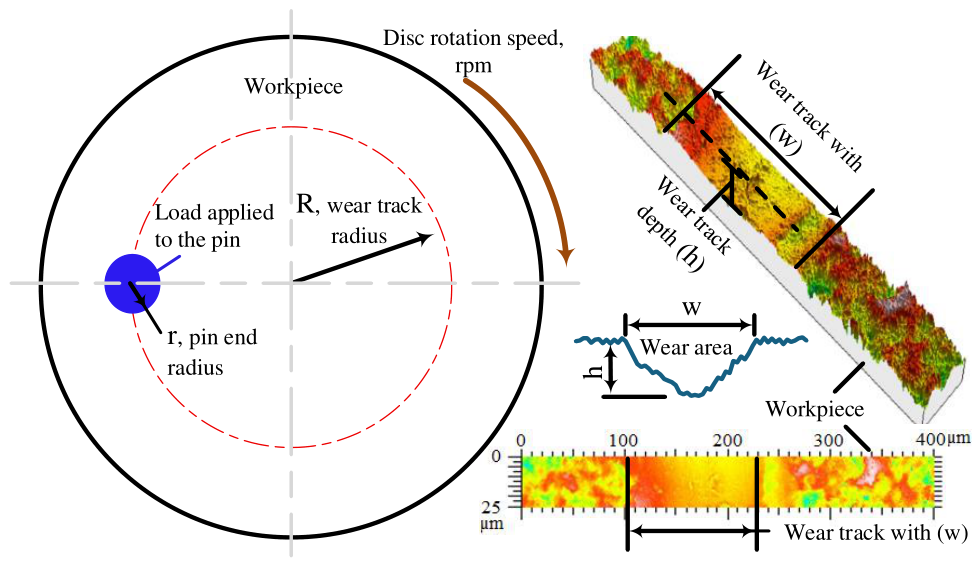
Figure 2.
SEM and EDS analysis of CrC-coated samples.
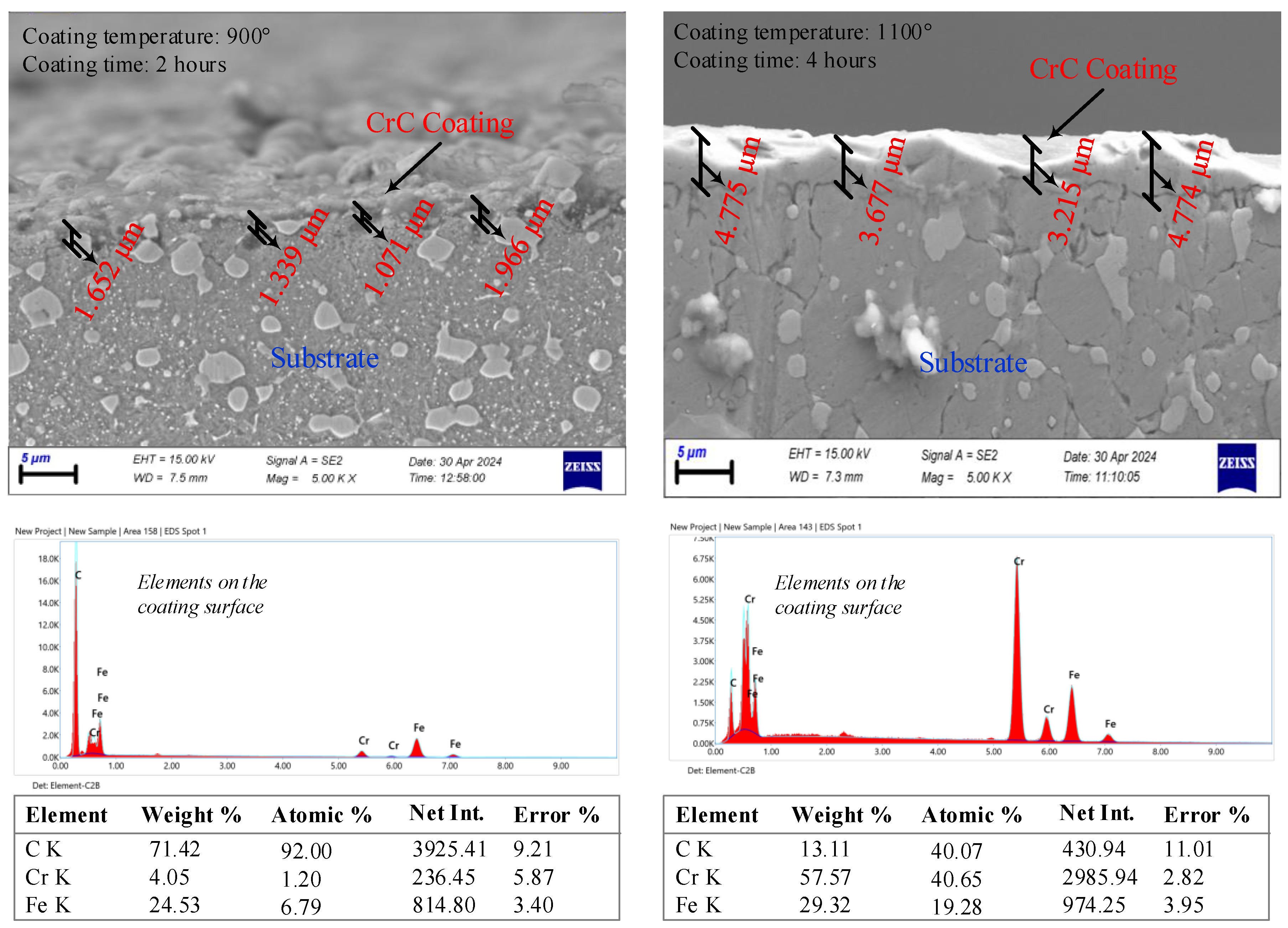
Figure 3.
SEM and EDS analyses of NbC-, TiC-, and VC-coated samples, respectively.
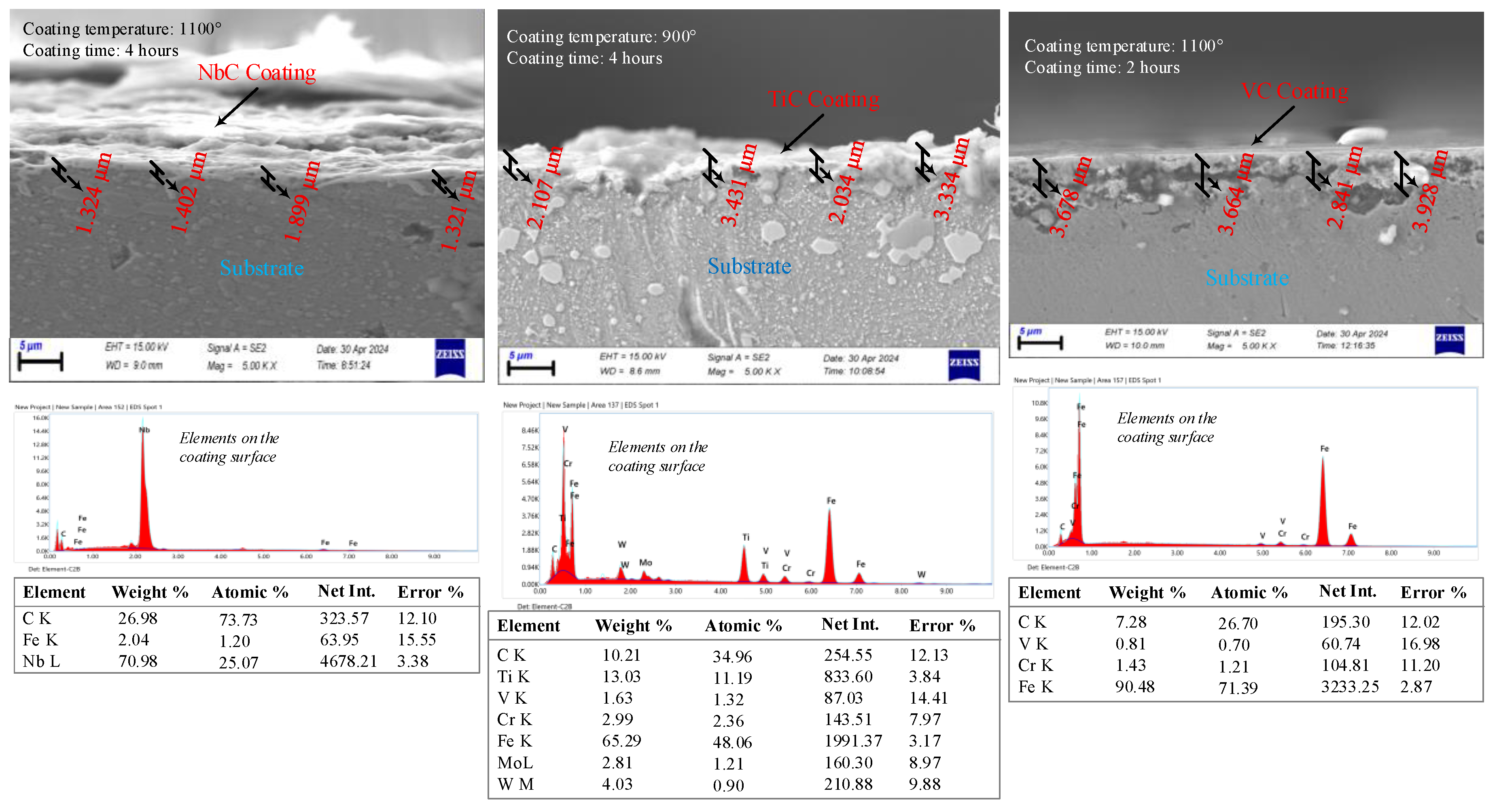
Figure 4.
XRD patterns of the coatings.
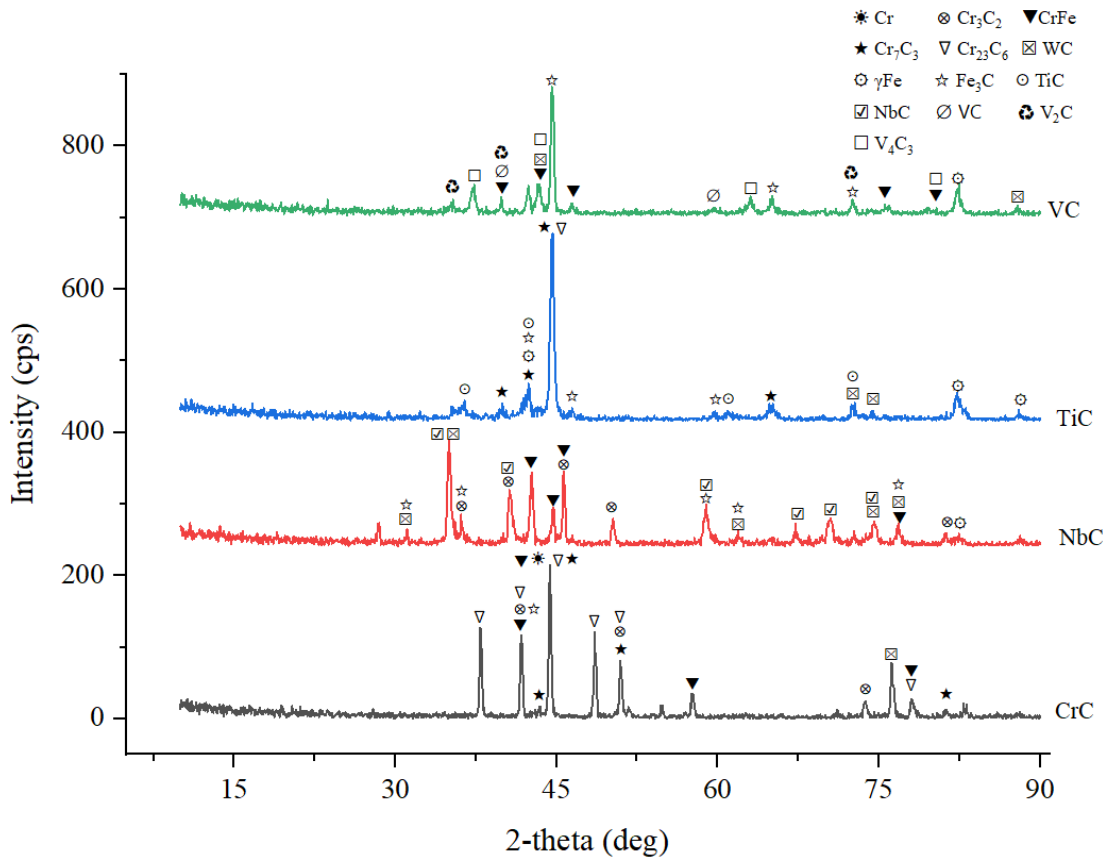
Figure 5.
Variation of coating thickness with coating type and application parameters.
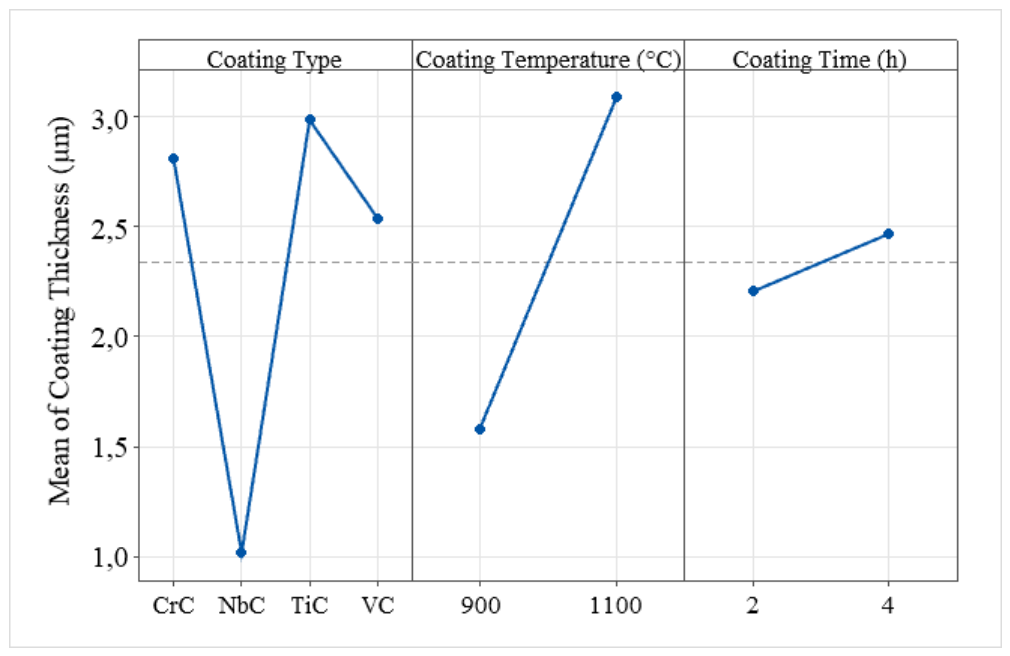
Figure 8.
Δ Coefficient of friction variation with coating type and application parameters.
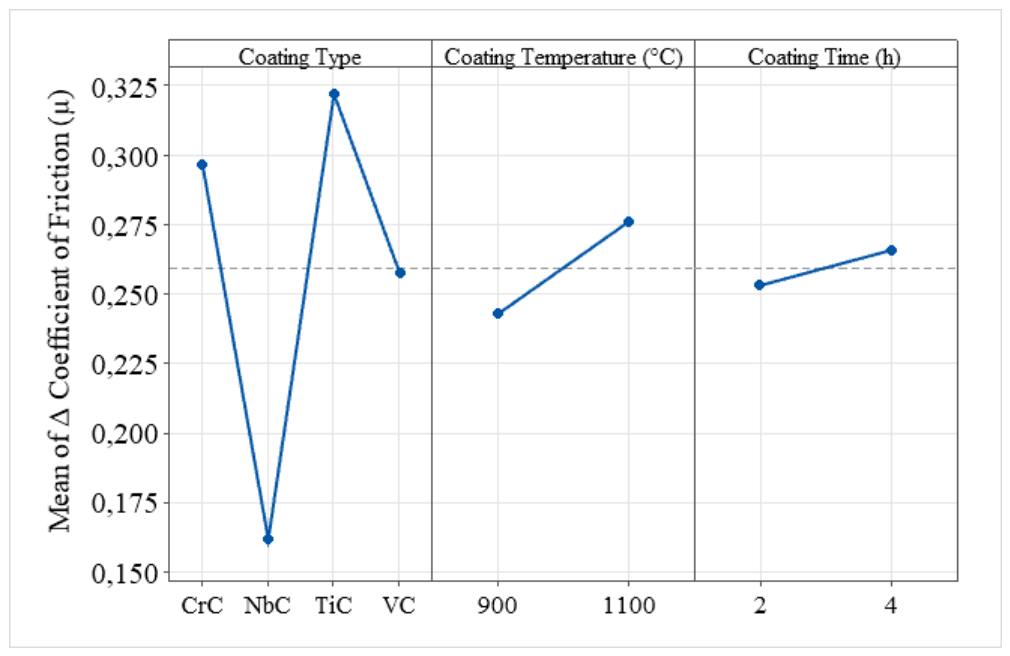
Figure 9.
Δ Specific wear rate variation with coating type and application parameters.
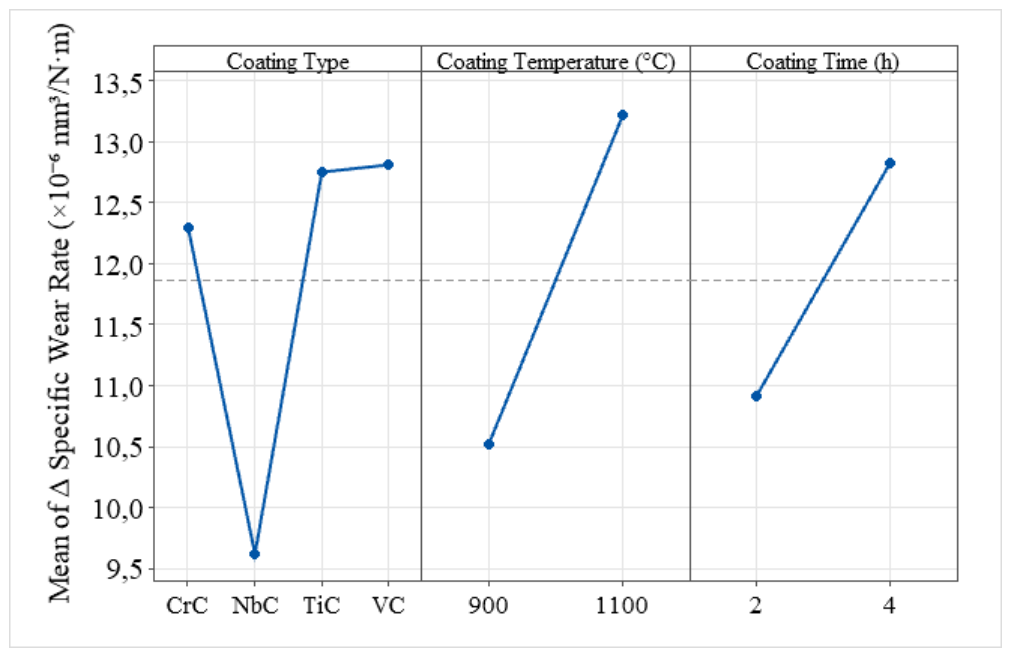
Figure 10.
SEM images of the worn surfaces of the coated samples.
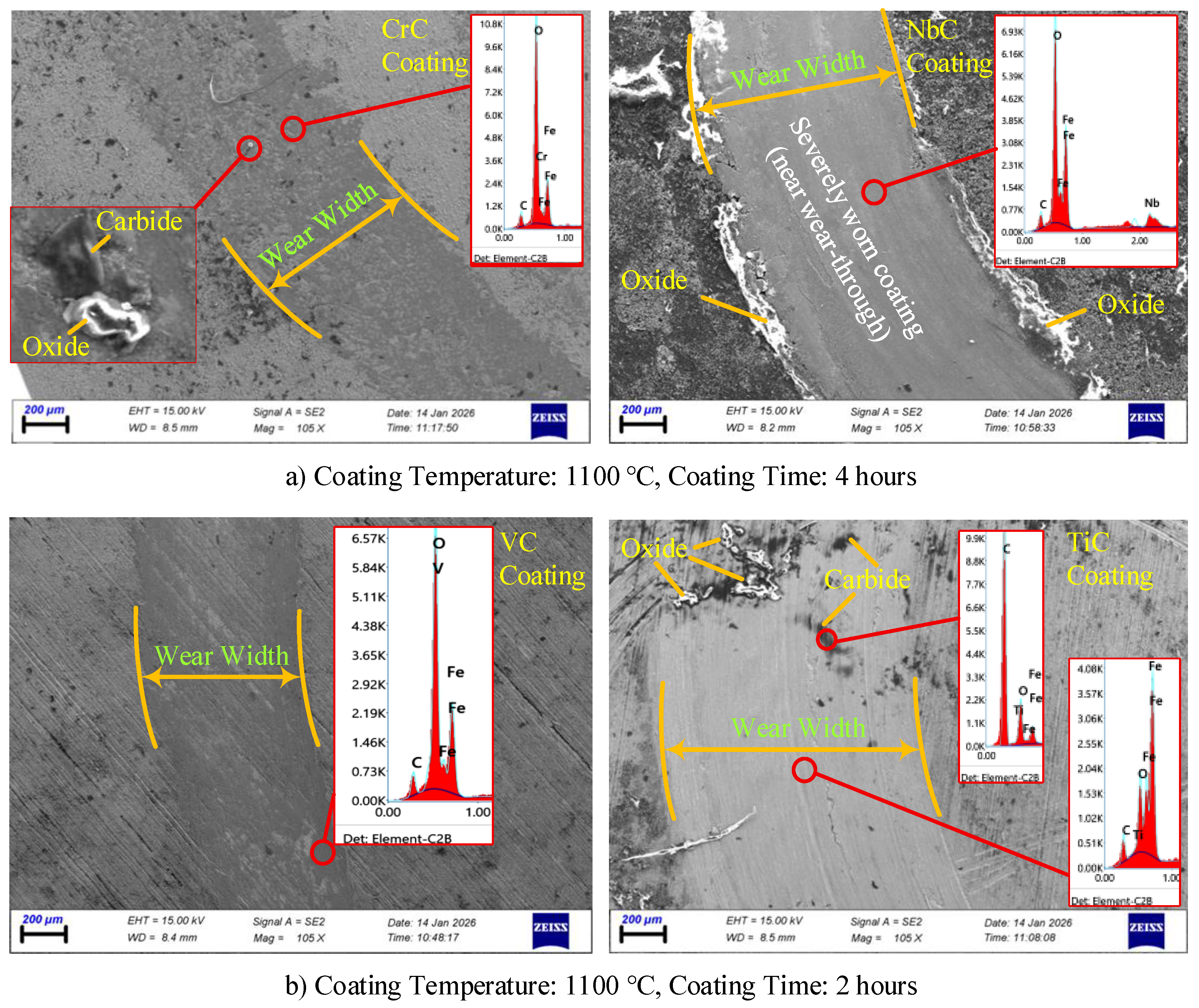
Table 1.
Nominal chemical composition and typical mechanical properties of HSS Steel.
| Properties | Unit | Nominal Value |
|---|---|---|
| C | Weight % | 0.7 – 1.2 |
| Cr | Weight % | 3 – 5 |
| Mo | Weight % | 4 – 10 |
| V | Weight % | 1 – 5 |
| W | Weight % | 6 – 18 |
| Mg | Weight % | 0.2 – 0.5 |
| Si | Weight % | 0.2 – 0.5 |
| Fe | Weight % | Balance |
| Hardness (HRC) | HRC | 60 – 67 |
| Yield Strength | MPa | 2000 – 3000 |
| Tensile Strength | MPa | 3000 – 4000 |
| Elongation | % | 4 – 10 |
Table 2.
Experimental parameters and levels for the Taguchi L8 orthogonal array.
| Factor | Level 1 | Level 2 | Level 3 | Level 4 |
|---|---|---|---|---|
| Coating Type | CrC | NbC | TiC | VC |
| Coating Temperature | 900 °C | 1100 °C | - | - |
| Coating Time | 2 hours | 4 hours | - | - |
Table 3.
Experimental plan according to the L8 orthogonal array.
| Exp. No. | Coating Type | Coating Temperature (°C) | Coating Time (hour) |
|---|---|---|---|
| 1 | CrC | 900 | 2 |
| 2 | CrC | 1100 | 4 |
| 3 | NbC | 900 | 2 |
| 4 | NbC | 1100 | 4 |
| 5 | TiC | 900 | 4 |
| 6 | TiC | 1100 | 2 |
| 7 | VC | 900 | 4 |
| 8 | VC | 1100 | 2 |
Table 4.
Data obtained from coating- and substrate-referenced experimental results.
| Coating Type | Coating Temperature (°C) | Coating Time (h) | Coating Thickness (µm) | Δ Microhardness (HV) | Δ Coefficient of Friction (µm) | Δ Specific Wear Rate (×10-6 mm3/Nm) |
|---|---|---|---|---|---|---|
| CrC | 900 | 2 | 1.507 | 836 | 0.292 | 11.187 |
| CrC | 1100 | 4 | 4.110 | 1143 | 0.301 | 13.401 |
| NbC | 900 | 2 | 0.539 | 943 | 0.120 | 6.115 |
| NbC | 1100 | 4 | 1.487 | 1165 | 0.203 | 13.116 |
| TiC | 900 | 4 | 2.727 | 1182 | 0.318 | 12.233 |
| TiC | 1100 | 2 | 3.248 | 1209 | 0.326 | 13.267 |
| VC | 900 | 4 | 1.549 | 1032 | 0.241 | 12.547 |
| VC | 1100 | 2 | 3.528 | 1092 | 0.274 | 13.072 |
Table 5.
Analysis of variance results for factors affecting coating thickness.
| Source | DF | Seq SS | Adj SS | Adj MS | F | P | % Contribution |
|---|---|---|---|---|---|---|---|
| Coating Type | 3 | 4.8781 | 4,8781 | 1,6260 | 2.67 | 0.284 | 45.13 |
| Coating Temperature (°C) | 1 | 4.5768 | 4.5768 | 4.5768 | 7.53 | 0.111 | 42.34 |
| Coating Time (h) | 1 | 0.1381 | 0.1381 | 0.1381 | 0.23 | 0.681 | 1.28 |
| Residual Error | 2 | 1.2162 | 1.2162 | 0.6081 | 11.25 | ||
| Total | 7 | 10.8092 | 100 | ||||
| S = 0.7798 R2 = 88.75% R2adj = 60.62% | |||||||
Table 8.
Analysis of variance results for factors affecting Δ specific wear rate.
| Source | DF | Seq SS | Adj SS | Adj MS | F | P | % Contribution |
|---|---|---|---|---|---|---|---|
| Coating Type | 3 | 13.839 | 13.839 | 4.613 | 1.59 | 0.408 | 33.37 |
| Coating Temperature (°C) | 1 | 14.510 | 14.510 | 14.510 | 5.01 | 0.155 | 34.99 |
| Coating Time (h) | 1 | 7.327 | 7.327 | 7.327 | 2.53 | 0.253 | 17.67 |
| Residual Error | 2 | 5.794 | 5.794 | 2.897 | 13.97 | ||
| Total | 7 | 41.469 | 100 | ||||
| S = 1.7020 R2 = 86.03% R2adj = 51.10% | |||||||
Disclaimer/Publisher’s Note: The statements, opinions and data contained in all publications are solely those of the individual author(s) and contributor(s) and not of MDPI and/or the editor(s). MDPI and/or the editor(s) disclaim responsibility for any injury to people or property resulting from any ideas, methods, instructions or products referred to in the content. |
© 2026 by the authors. Licensee MDPI, Basel, Switzerland. This article is an open access article distributed under the terms and conditions of the Creative Commons Attribution (CC BY) license (http://creativecommons.org/licenses/by/4.0/).
Copyright: This open access article is published under a Creative Commons CC BY 4.0 license, which permit the free download, distribution, and reuse, provided that the author and preprint are cited in any reuse.