

Submitted:
29 July 2026
Posted:
30 July 2026
You are already at the latest version
Abstract
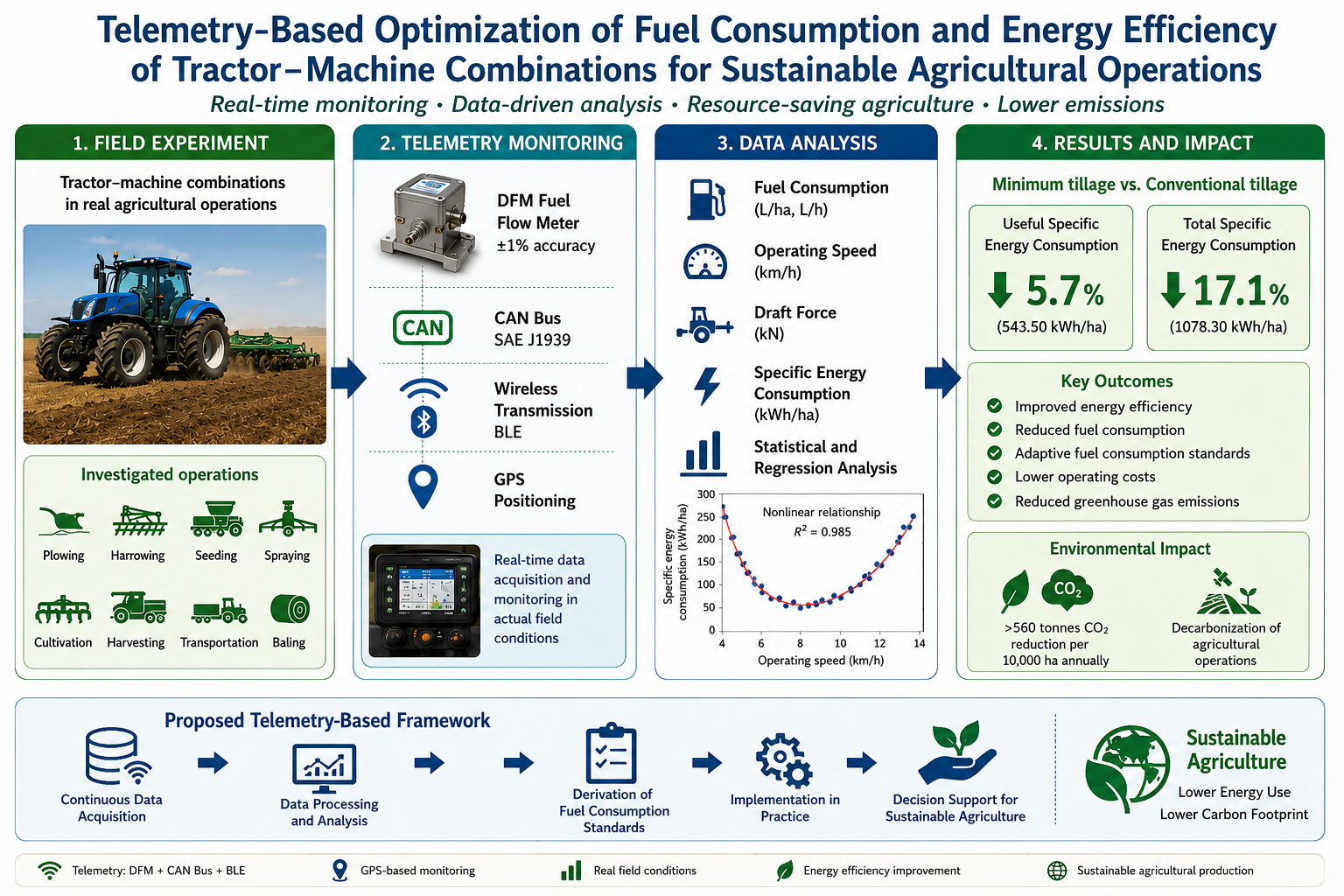
The use of outdated fuel consumption standards reduces the economic efficiency and environmental sustainability of modern agricultural production. This study aimed to refine fuel consumption standards and evaluate the energy performance of tractor–machine combinations during major agricultural operations using telemetry-based monitoring. Field experiments were conducted under real production conditions using DFM electronic fuel flow meters integrated with the CAN bus and BLE wireless data transmission. Comparative analyses of conventional and minimum tillage systems were performed using real-time telemetry data collected during plowing, harrowing, seeding, spraying, cultivation, harvesting, and transportation operations. Statistical and regression analyses revealed significant relationships between operating speed, fuel consumption, and specific energy consumption. Minimum tillage reduced useful specific energy consumption by 5.7% (543.5 kWh/ha) and total specific energy consumption by 17.1% (1078.3 kWh/ha) compared with conventional tillage. A strong non-linear relationship R2 = 0.985 was identified between operating speed and process energy consumption. The proposed telemetry-based methodology improves the accuracy of fuel consumption assessment and provides a practical basis for developing adaptive fuel consumption standards under actual operating conditions. Furthermore, the transition to minimum tillage and telemetry-based monitoring enables significant carbon footprint reduction, mitigating CO2 emissions by over 560 tonnes per 10,000 ha annually, thereby supporting the decarbonization of mechanized agricultural operations.
Keywords:
CAN bus
; carbon footprint reduction
; decarbonization
; digital agriculture
; fuel consumption standards
; precision agriculture
; resource-saving technologies
; specific energy consumption
; sustainable machinery management
; telemetry monitoring
; tractor–machine combinations
; tractive efficiency
1. Introduction
Agricultural production is one of the most energy-intensive sectors of the agro-industrial economy, and its efficiency largely depends on the rational use of fuel and energy resources. Fuel and lubricant costs account for up to 30–40% of total agricultural production expenses, making fuel consumption standardization a key objective of modern agricultural engineering [1].
The continuous increase in energy prices, the modernization of the agricultural machinery fleet, and the widespread adoption of resource-saving technologies have highlighted the need to improve fuel consumption standards for tractor–machine combinations. Existing standards are primarily based on average calculated values and standardized operating conditions and therefore do not adequately account for variations in engine load, machine condition, soil properties, operating speed, and field operating conditions [2].
Another major challenge is the substantial variability of soil and climatic conditions, particularly in the arid regions of Kazakhstan. Variations in soil density, moisture content, and field conditions directly influence the traction resistance of tractor–machine combinations (TMCs), resulting in discrepancies between actual and standardized fuel consumption. Consequently, the use of outdated fuel consumption standards leads to excessive fuel and energy consumption, increased operating costs, and reduced efficiency of agricultural production [3].
Another important driver for improving fuel consumption standards is the global transition toward the decarbonization of agricultural production. Diesel-powered tractor–machine combinations (TMCs) are a significant source of greenhouse gas emissions, particularly carbon dioxide (CO₂) and nitrogen oxides (NOₓ). The use of generalized fuel consumption standards not only results in direct economic losses but also reduces the accuracy of carbon footprint assessments for mechanized agricultural operations. In the context of increasingly stringent environmental regulations and the widespread adoption of Environmental, Social, and Governance (ESG) principles, accurate fuel consumption monitoring has become an essential element of sustainable agricultural production. Optimizing tractor fuel consumption aligns directly with the United Nations Sustainable Development Goals (SDGs), specifically SDG 7 (Affordable and Clean Energy), SDG 12 (Responsible Consumption and Production), and SDG 13 (Climate Action).
This issue is particularly relevant to Kazakhstan because of the country's wide diversity of soil and climatic conditions, ranging from humid foothill regions to arid steppe zones. Regional differences in soil density, moisture content, and soil mechanical resistance limit the applicability of uniform fuel consumption standards. Consequently, there is a need to develop adaptive fuel consumption standards based on objective telemetry data collected under actual field operating conditions. Such an approach improves the reliability of fuel consumption assessment and enables more accurate planning of agricultural field operations under diverse environmental conditions.
Numerous studies have investigated fuel consumption and energy performance of tractor–machine combinations (TMCs) under different operating conditions. Previous research has demonstrated that fuel consumption is influenced by engine power, tractor mass, transmission type, tillage depth, operating speed, and the physical and mechanical properties of the soil [4,5,6]. Mathematical modeling, telemetry systems, and digital monitoring technologies have been widely applied to predict fuel consumption and evaluate the specific energy consumption of agricultural operations [7,8,9,10,11,12,13,14,15,16]. These approaches have significantly improved the accuracy of operational performance assessment and fuel consumption analysis. In addition, previous studies have shown that primary tillage is among the most energy-intensive agricultural operations and largely determines the overall energy demand of crop production [5].
The rapid development of digital technologies and telemetry-based monitoring has created new opportunities for improving fuel consumption standardization. The integration of electronic fuel flow meters, CAN bus interfaces, and wireless data transmission technologies enables continuous real-time acquisition of reliable information on fuel consumption, engine operating parameters, and field performance during agricultural operations [9]. Unlike conventional measurement methods, telemetry-based approaches provide continuous data acquisition while accounting for dynamically changing operating conditions [10].
Despite the substantial body of research on fuel consumption and energy performance, methods for refining fuel consumption standards using continuous telemetry data remain insufficiently developed. Most existing approaches rely on average reference values and do not adequately account for dynamic changes in the operating parameters of tractor–machine combinations (TMCs) under real production conditions. Furthermore, the influence of resource-saving tillage technologies on fuel consumption standards and specific energy consumption has not yet been sufficiently investigated.
Therefore, the aim of this study was to refine fuel consumption standards and evaluate the energy performance of tractor–machine combinations (TMCs) during agricultural operations using telemetry-based monitoring.
To achieve this aim, the following objectives were established:
- to measure fuel consumption under actual production conditions using electronic fuel flow meters;
- to evaluate the energy performance of TMCs during major agricultural operations;
- to compare specific energy consumption under conventional and minimum tillage systems;
- to determine the relationships between operating speed, specific energy consumption, and fuel consumption;
- to refine fuel consumption standards based on telemetry data.
This article is based on research conducted under Project BR24892784, “Develop a system of machines, standards for their fuel requirements and consumption for performing mechanized work, and a seeder for sugar beet sowing.”
The novelty of this study lies in the integration of continuous telemetry monitoring, CAN bus communication, and adaptive fuel consumption standardization into a unified engineering framework for improving the energy efficiency and environmental sustainability of tractor–machine combinations under real agricultural operating conditions.
2. Materials and Methods
2.1. Equipment for Remote Fuel Consumption Measurement and Telemetry
Field experiments were conducted under actual production conditions using an automated telemetry system to measure fuel consumption and operating performance of tractor–machine combinations (TMCs) during major agricultural operations. The primary measuring devices were DFM-series electronic fuel flow meters (models DFM 50AK and DFM S7), which were used for continuous monitoring of fuel consumption and engine operating parameters.
The DFM-series flow meter is designed to directly measure fuel consumption in both the supply and return fuel lines of a tractor diesel engine. The device incorporates a reed-switch pulse sensor that records instantaneous fuel flow rate, cumulative fuel consumption, and engine operating time under different operating conditions, including idling, normal load, and overload (Figure 1). The DFM 50AK and DFM S7 sensors were selected because they provide continuous high-accuracy fuel consumption measurements and support integration with modern telemetry systems via CAN and BLE communication protocols.
The DFM 50AK and DFM S7 flow meters have a measurement accuracy of ±1%, support continuous operation under field conditions, and are designed for integration with diesel fuel systems of agricultural machinery. The selected sensors were calibrated according to the manufacturer's specifications before field experiments.
Telemetry data were transmitted wirelessly using Bluetooth Low Energy (BLE) communication. The DFM flow meters were integrated into the tractor fuel supply system and continuously transmitted operating data in BLE advertising mode. The transmitted information could be received by any BLE-compatible device within the communication range. Android-based mobile devices (version 5.0 or later) running the Fuel Consumption Monitor application, as well as Bitrek telematics terminals equipped with a CAN interface, were used to receive and transmit data via the SAE J1939 CAN protocol to the farm's central telematics platform (Figure 2). The telemetry platform enabled continuous acquisition, storage, and subsequent analysis of fuel consumption and engine operating data under actual field conditions
2.2. Mathematical Model of TMC Productivity and Traction-Energy Balance
The theoretical framework for evaluating the energy performance of tractor–machine combinations (TMCs) was based on the analysis of operational productivity, tractor traction balance, and engine power utilization. One of the key parameters governing the energy efficiency of a TMC is the draft force (traction resistance) of the agricultural implement. This parameter depends on the soil's physical and mechanical properties, working depth, operating speed, and the design characteristics of the implement.
Based on these assumptions, the average draft force of the implement, Ra (kN), was calculated using the following equation:
where k0 — specific resistance of the treated medium (soil, plant mass), kN/m; b — design working width of the unit, m.
The calculated draft force was subsequently used to estimate the tractor traction power and overall energy demand.
The required traction power NT(kW) at the actual operating speed υp(km/h) was calculated using Equation (2):
The relationship between the engine effective power Ne and the required traction power was expressed through the tractor traction efficiency coefficient ƞT:
Based on the traction–energy balance, the shift productivity Wsh (ha/shift), was calculated considering the following correction coefficients:
where:
β — is the working width utilization coefficient bp/b;
τ — is the shift time utilization coefficient Tp /T;
T — is the standard shift duration (h).
To evaluate the extent to which the potential of the TMC was utilized, an operating efficiency coefficient (σ) was applied, defined as the ratio of actual operational productivity (Wactual) to theoretical productivity (WT). This parameter was modeled as a multifactorial function of tractive efficiency, work process organization, and operator proficiency:
where is the tractive efficiency, is the shift time utilization coefficient, and is the working width utilization coefficient.
2.3. Fuel Consumption Modeling and Comprehensive Assessment of Energy Intensity
The actual fuel consumption per unit area, (Θ, kg/ha), was calculated based on the engine operating time balance, taking into account different engine operating modes, as described by Equation (6):
where:
— are the hourly fuel consumption rates during active field operation, idle movement, and stationary stops with the engine running, respectively, (kg/h);
are the operating durations for active work, idling, and stationary stops during a shift, respectively (h);
is the total area processed during the shift (ha)
The nominal hourly fuel consumption (kg/h), was used as the reference baseline for estimating fuel consumption under various operating modes. It was calculated from the rated engine effective power Ne (kW) and the nominal specific fuel consumption (g/kW·h) using Equation (7):
Fuel consumption under non-productive engine operating modes was estimated using empirical coefficients. At maximum engine speed during idling, fuel consumption was approximately 27–30% of the nominal hourly fuel consumption (), whereas during stationary engine operation at minimum speed, it ranged from 12% to 15% of the nominal value. These empirical coefficients were adopted from established engineering practice and were used to improve the accuracy of fuel consumption estimation under actual field operating conditions.
To comprehensively evaluate the energy performance of different tillage systems (conventional and minimum tillage), two key indicators of specific energy consumption were calculated. Useful specific energy consumption (A, kWh/ha) reflects the energy expended directly on executing the technological process:
Total specific energy consumption (AT, kWh/ha) — characterizes the overall energy input of the unit, including transmission losses and wheel slip:
where:
Nep is the engine power developed under working load (kW);
is the mechanical efficiency of the tractor transmission;
is the tractive efficiency;
Wh is the hourly productivity, (ha/h)
The optimization of the TMC operating speed modes and technological processes was based on the energy efficiency coefficient (Kavg):
where:
Ei,opt — is the optimal value of specific process energy consumption (MJ/ha), ensuring maximum tractive efficiency under given agricultural conditions;
Ei,act — is the actual specific process energy consumption, varying depending on the unit’s operating speed.
2.4. Characteristics of Experimental Conditions and Data Filtering Algorithms
The assessment of draft force and energy intensity is closely related to the physical and mechanical properties of the soil. Field experiments were conducted on two soil types typical of southeastern Kazakhstan: light chestnut and sierozem soils. Before field operations commenced, soil samples were collected along diagonal transects across each experimental field to determine the principal soil properties, including gravimetric soil moisture content (according to the relevant GOST standard) and soil penetration resistance measured using an electronic penetrometer. The average soil penetration resistance within the 0–30 cm soil layer ranged from 1.2 to 1.8 MPa, while soil moisture content varied between 14% and 18%, representing optimal field conditions for tillage operations. The experimental plots were characterized by nearly flat terrain with micro-slopes not exceeding 2–3°, thereby minimizing the influence of terrain-induced gravitational forces on the draft force of the tractor–machine combinations (TMCs). These soil conditions remained relatively stable throughout the experimental period, ensuring comparable operating conditions for all field experiments.
Particular attention was paid to the quality of the raw telemetry data. Telemetry information was transmitted via the CAN bus and Bluetooth Low Energy (BLE) communication protocol at a sampling frequency of 1 Hz. The raw data were susceptible to high-frequency noise caused by vehicle vibrations, transient wheel slip, and hydraulic pressure fluctuations in the fuel supply system. To improve data reliability, the telemetry records were digitally filtered on a cloud-based processing server using a moving average algorithm with a 10 s averaging window. This procedure effectively eliminated short-term fuel consumption spikes while preserving the overall dynamics of engine operation during transitions between working, idling, and turning modes. The filtered dataset was subsequently used for calculating the mean values, standard deviations, and other statistical parameters required for further analysis.
To improve the reliability and reproducibility of the experimental results, field measurements were repeated under different operating conditions of the tractor–machine combinations. Statistical analysis of the experimental data included the calculation of the mean, standard deviation, and coefficient of variation, followed by analysis of variance (ANOVA) to evaluate differences among the investigated operating conditions.
3. Results
3.1. Energy Performance of TMCs Under Conventional Tillage
To evaluate the actual energy performance of tractor–machine combinations (TMCs) under conventional tillage, field telemetry measurements were conducted under actual production conditions. The investigated agricultural operations included plowing, harrowing, seeding, spraying, cultivation, harvesting, baling, and transportation. Based on the acquired telemetry data, average values of shift productivity, fuel consumption per unit area, nominal hourly fuel consumption, and useful and total specific energy consumption were calculated (Table 1). The obtained results revealed substantial differences in fuel consumption and energy intensity among the investigated agricultural operations, reflecting variations in draft load and engine utilization.
The results presented in Table 1 indicate that plowing and harvesting were the most energy-intensive operations under conventional tillage, with fuel consumption values of 31.47 and 25.98 kg/ha, respectively. These operations also exhibited the highest values of useful and total specific energy consumption, reflecting the substantial draft loads and engine power requirements associated with primary tillage and harvesting. Based on the experimental data, graphical relationships were constructed to illustrate the variation in specific energy consumption, shift productivity, and fuel consumption across the investigated agricultural operations (Figure 3). Among all investigated operations, spraying demonstrated the lowest fuel consumption and energy demand, confirming that low draft loads substantially reduce engine power requirements and overall energy expenditure.
As shown in Figure 3, fuel consumption increased with increasing specific energy consumption and operating speed. A strong nonlinear relationship was observed between these parameters, indicating that operations with higher energy requirements also exhibited greater fuel consumption.
3.2. Energy Performance of Tractor–Machine Combinations Under Minimum Tillage
A similar series of field telemetry measurements was conducted under minimum tillage conditions, including deep loosening, fertilizer-assisted seeding, spraying, harvesting, and transportation. The corresponding energy performance indicators are presented in Table 2.
Figure 4 illustrates the variation in shift productivity and specific fuel consumption among different tractor–machine combinations operating under minimum tillage.
In addition to reducing energy consumption, the adoption of minimum tillage and the optimization of tractor operating conditions provide important environmental benefits by decreasing greenhouse gas emissions associated with agricultural operations. Based on the measured fuel consumption data, the potential reduction in carbon dioxide (CO₂) emissions was estimated.
The combustion of 1 kg of diesel fuel produces approximately 3.14 kg of CO2. Under conventional tillage, with a fuel consumption of 31.47 kg/ha the corresponding CO2 emissions reach approximately 98.8 kg/ha. Although deep loosening under minimum tillage requires slightly higher fuel consumption for the primary tillage operation 36.70 kg/ha, the elimination of several subsequent field operations substantially reduces the total fuel consumption over the complete crop production cycle. Based on the experimentally determined 17.1% reduction in total specific energy consumption, a hypothetical farm with a cultivated area of 10,000 ha could reduce CO2 emissions by more than 560 t during a single growing season. These findings demonstrate that telemetry-based optimization can contribute to Climate-Smart Agriculture by simultaneously improving energy efficiency and reducing greenhouse gas emissions.
3.3. Comparative Analysis and Optimization of Equipment Operating Modes
A comparative analysis of conventional and minimum tillage systems revealed a substantial reduction in total energy consumption. Under conventional tillage, the cumulative useful specific energy consumption reached A = 576.55 kWh/ha, while the total specific energy consumption was AT = 1300.36 kWh/ha. The transition to minimum tillage technology reduced the useful specific energy consumption to A = 543.50 kWh/ha (a 5.7% decrease) and the total specific energy consumption to AT = 1078.30 kWh/ha (a 17.1% decrease). This energy-saving effect is attributed to a reduced number of field passes, lower draft resistance, and optimized engine load distribution under minimum tillage practices.
To extend the practical applicability of the telemetry data, the influence of operating speed υp on process energy consumption Ei was evaluated. Field telemetry measurements and theoretical calculations provided probabilistic estimates of energy consumption for primary tillage and seeding operations under the soil-climatic conditions of the Almaty Region (Table 3)
Statistical analysis demonstrated that variations in the operating speed of the tractor–machine combinations TMCs significantly affected the mean specific energy consumption Ēi, the standard deviation σEi, and the coefficient of variation vEi. The relationship between operating speed and specific energy consumption is illustrated in Figure 5.
To quantify the relationship between operating speed , m/s) and specific energy consumption Ei, MJ/ha, regression analysis was performed using the experimental data. The results revealed a strong nonlinear relationship, which was accurately described by the following second-order polynomial regression equation:
The coefficient of determination R² = 0.985 indicates that 98.5% of the variability in specific energy consumption is explained by changes in the operating speed of the TMCs, demonstrating the high predictive capability of the developed regression model
Considering the agrotechnical quality requirements, the optimal operating parameters of the combined tillage–seeding unit were determined across the entire operating range. The optimal specific energy consumption ensuring high-quality field performance was Ei,opt = 8738.2 MJ/ha. This optimum was achieved at an operating productivity of 0.70 ha/h, corresponding to a tractor tractive efficiency coefficient of ηT = 0.52, compared with the theoretical maximum value of ηT = 0.65 for wheeled tractors of this class.
4. Discussion
The optimization of energy consumption in mechanized agriculture requires a transition from conventional reference fuel consumption standards to dynamic, telemetry-driven monitoring systems. The results of the present study demonstrate that automated telemetry systems incorporating DFM electronic fuel flow meters, CAN bus communication, and wireless data transmission enable continuous and reliable measurement of actual fuel consumption under field operating conditions. Unlike conventional fuel consumption standards based on average reference values, the proposed telemetry-based approach accounts for dynamic variations in draft load, operating speed, engine operating modes, soil properties, and field conditions. Consequently, this methodology improves the accuracy of fuel consumption assessment and provides a practical basis for refining operational fuel consumption standards. These findings are consistent with previous studies on automated machinery monitoring [9], which demonstrated that real-time operational data can improve machinery management and optimize operating modes.
A comparative evaluation of conventional and minimum tillage systems demonstrated the considerable resource-saving potential of reduced tillage practices. The transition to minimum tillage reduced useful specific energy consumption by 5.7% (to 543.50 kWh/ha) and total specific energy consumption by 17.1% (to 1078.30 kWh/ha). These improvements were primarily achieved through the elimination of moldboard plowing, which is the most energy-intensive tillage operation, together with a reduction in the total number of field passes. Although deep loosening required slightly higher fuel consumption than conventional plowing during the primary tillage operation, the elimination of several subsequent field operations substantially reduced the overall energy demand throughout the crop production cycle. These findings corroborate previous studies highlighting the dominant contribution of primary tillage to the overall agricultural energy balance [5]. Furthermore, the observed fuel savings are consistent with international studies reporting fuel reductions of 5–15% through optimized field operations and digital monitoring technologies [10]. Unlike many previous investigations that relied primarily on laboratory experiments or theoretical fuel consumption models, the present study utilized continuous telemetry data collected directly during field operations, capturing dynamic variations in draft load, operating speed, and engine operating modes under actual production conditions. The obtained results are also consistent with recent advances in digital agriculture and intelligent machinery management [17,18,19], further supporting the effectiveness of telemetry-based monitoring for improving fuel efficiency.
A key scientific contribution of this study is the empirical identification of a strong nonlinear relationship between the operating speed of tractor–machine combinations TMCs and specific energy consumption. Regression analysis demonstrated that a second-order polynomial model accurately describes this relationship R² = 0.985, indicating that operating speed is one of the dominant factors governing energy consumption during agricultural operations. The developed regression model enables the prediction of specific energy consumption under different operating conditions and therefore provides a practical tool for optimizing tractor operating modes in agricultural production. These findings are consistent with previous investigations identifying travel speed as a critical factor influencing draft resistance, traction efficiency, and fuel consumption [6,7,8].
The optimization analysis established that the optimal specific energy consumption ensuring the required agrotechnical quality of field operations was Ei,opt = 8738.2 MJ/ha. This optimum was achieved at an operating productivity of 0.70 ha/h and a tractor tractive efficiency coefficient of ηT = 0.52, compared with the theoretical maximum value of 0.65 for wheeled tractors of this class. The proposed energy efficiency coefficient (Kavg) enables the selection of tractor–machine combinations based on their actual tractive performance under specific soil and operating conditions rather than solely on rated engine power. Consequently, the proposed approach complements existing predictive models [7,8] by integrating engineering calculations with continuous telemetry measurements collected under real field conditions.
Beyond improving operational efficiency, telemetry-based monitoring also contributes to the environmental and technological sustainability of mechanized agriculture. Continuous measurements of fuel consumption provide a more reliable basis for estimating greenhouse gas emissions and evaluating the effectiveness of resource-saving technologies. Moreover, the accumulated telemetry database may support the future development of machine-learning models for predicting fuel consumption, draft resistance, and tractor operating performance under changing field conditions. The integration of artificial intelligence with telemetry data therefore represents a promising direction for future research aimed at improving decision-support systems for precision agriculture and adaptive machinery management.
The present study has several limitations. Field experiments were conducted under the soil and climatic conditions of southeastern Kazakhstan using representative tractor–machine combinations employed in regional agricultural practice. Therefore, further validation under different soil types, climatic regions, and machinery configurations is required before universally applicable adaptive fuel consumption standards can be established. Future studies should also investigate the integration of telemetry data with decision-support systems, predictive analytics, and intelligent control algorithms to further improve operational planning and energy management in precision agriculture.
Overall, the proposed telemetry-based methodology provides a practical framework for improving fuel consumption standardization, enhancing energy efficiency, and supporting the digital transformation of modern agricultural machinery management.
5. Conclusions
This study demonstrated the effectiveness of a telemetry-based approach for refining fuel consumption standards and evaluating the energy performance of tractor–machine combinations (TMCs) under actual agricultural operating conditions. The integration of DFM electronic fuel flow meters with CAN bus communication and wireless data transmission enabled continuous and accurate monitoring of fuel consumption, providing a reliable basis for adaptive fuel consumption standardization and improving the accuracy of operational energy assessment compared with conventional reference standards.
A comparative analysis of conventional and minimum tillage systems confirmed the considerable energy-saving potential of resource-efficient tillage practices. The transition to minimum tillage reduced useful specific energy consumption by 5.7% (from 576.55 to 543.50 kWh/ha) and total specific energy consumption by 17.1% (from 1300.36 to 1078.30 kWh/ha). These improvements were primarily achieved by eliminating moldboard plowing and reducing the total number of field passes, thereby decreasing the overall energy demand throughout the crop production cycle.
Regression analysis established a strong nonlinear relationship between the operating speed of TMCs and specific energy consumption R² = 0.985, confirming that operating speed is one of the principal factors governing energy performance during agricultural operations. The developed regression model provides a practical tool for predicting energy consumption and selecting energy-efficient operating modes under varying field conditions.
The optimization procedure identified the optimal operating parameters for the combined tillage–seeding unit under the soil and climatic conditions of southeastern Kazakhstan. The optimal specific energy consumption was Ei,opt = 8738.2 MJ/ha, achieved at an operating productivity of 0.70 ha/h and a tractor tractive efficiency coefficient of ηT = 0.52. These results demonstrate that maximum energy efficiency is achieved through the balanced utilization of tractor power while maintaining the required agrotechnical quality of field operations.
Overall, the proposed telemetry-based framework provides a scientifically sound and practical basis for developing adaptive regional fuel consumption standards, improving the energy efficiency of agricultural machinery, optimizing tractor–machine fleet management, and supporting the decarbonization of Climate-Smart Agriculture. By achieving a 17.1% reduction in total specific energy consumption and mitigating CO₂ emissions by over 560 tonnes per 10,000 ha annually, this research directly contributes to regional environmental sustainability and UN SDGs 7, 12, and 13. Future research should validate the proposed methodology under a wider range of soil types, climatic conditions, and machinery configurations and investigate the integration of telemetry data with decision-support systems and predictive analytics to further improve energy management in precision agriculture.
Author Contributions
Conceptualization, M.A. and N.O.; methodology, N.O. and M.A.; software, N.O.; validation, M.A., N.O. and A.R.; formal analysis, N.O.; investigation, N.O., A.R. and J.U.; resources, M.A.; data curation, N.O.; writing—original draft preparation, N.O.; writing—review and editing, M.A. and N.O.; visualization, N.O.; supervision, M.A.; project administration, M.A.; funding acquisition, M.A. All authors have read and agreed to the published version of the manuscript.
Funding
This research was funded by the Science Committee of the Ministry of Science and Higher Education of the Republic of Kazakhstan under the Program-Targeted Funding Program BR24892784, “Development of a System of Agricultural Machinery, Standards for Their Requirements and Fuel Consumption for Mechanized Operations, and a Precision Seeder for Sugar Beet Sowing.” The APC was funded under the same Program-Targeted Funding Program.
Institutional Review Board Statement
Not applicable.
Data Availability Statement
The data presented in this study are available from the corresponding author upon reasonable request. The data are not publicly available because they are part of an ongoing research program.
Conflicts of Interest
The authors declare no conflicts of interest. The funders had no role in the design of the study; in the collection, analysis, or interpretation of data; in the writing of the manuscript; or in the decision to publish the results.
Acknowledgments
Not applicable.
References
- Sharma, A.; Devadas, V.S.; Hemant, S.; Bhagya, D.; Kartha, H.; Pandey, G.S.; Supriya, S.; Nirupa, K. Advancement of agricultural technology in farming in India. Bhartiya Krishi Anusandhan Patrika 2022, 36, 313–319. [Google Scholar] [CrossRef]
- Mamala, J.; Graba, M.; Mitrovic, J.; Prażnowski, K.; Stasiak, P. Analysis of speed limit and energy consumption in electric vehicles. Combust. Engines 2023, 195, 83–89. [Google Scholar] [CrossRef]
- Jelti, F.; Allouhi, A.; Tabet Aoul, K.A. Transition Paths towards a Sustainable Transportation System: A Literature Review. Sustainability 2023, 15, 15457. [Google Scholar] [CrossRef]
- Singh, J.; Kumar, S.; Singh, S.; Kumar, P. Study on fuel consumption and emission characteristics of diesel and biodiesel blend in a tractor engine. J. Renew. Sustain. Energy 2021, 14, 013101. [Google Scholar] [CrossRef]
- D’Alessandro, B.; Lopes, A.; Pereira, G.; Soares, F. Factors affecting the fuel consumption of agricultural tractors: A literature review. J. Agric. En.-Gineering 2019, 50, 157–167. [Google Scholar] [CrossRef]
- Kocher, M.F.; Smith, B.J.; Hoy, R.M.; Woldstad, J.C.; Pitla, S. Fuel Consump-tion Models for Tractor Test Reports. Biol. Syst. Eng. Pap. Pub-Lications 2017, 490. Available online: http://digitalcommons.unl.edu/biosysengfacpub/490.
- Rima, L.; Zekari, M.; Rym, T.H.; Sabrina, T.; Shinde, G.U.; Amine, F.M. Di-mensional Analysis-Based Prediction Model for Fuel Consumption in the Deutz Agro-trac Tractor. Agric. Sci. Dig. 2024. [Google Scholar] [CrossRef]
- Grisso, R.D.; Kocher, M.F.; Vaughan, D.H. Predicting Tractor Fuel Con-sumption. Biol. Syst. Eng. Pap. Publ. 2004, 164. Available online: https://digitalcommons.unl.edu/biosysengfacpub/164.
- Ruban, D.; Kraynyk, L.; Ruban, H.; Shevchuk, V.; Artyukh, O.; Mahats, M.; Sukach, O.; Khotunov, V. Estimation of fuel consumption in standard driving cycles and in real bus operation. Technol. Audit Prod. Reserv. 2025, 2, 50–56. [Google Scholar] [CrossRef]
- Trösken, L.; Meiners, A.; Frerichs, L.; Böttinger, S. Model-based Calculation of Fuel Consumption within Agricultural Process Chains. LANDTECHNIK 2020, 75, 278–299. [Google Scholar] [CrossRef]
- Savickas, D.; Juostas, A.; Jotautienė, E.; Grigas, A. Crop Harvesting Perfor-mance Analysis via Telemetry: Fuel and Environmental Insights. Sustainability 2025, 17, 5377. [Google Scholar] [CrossRef]
- Herranz-Matey, I. Analyzing Tractor Productivity and Efficiency Evolu-tion: A Methodological and Parametric Assessment of the Impact of Variations in Propulsion System Design. Agriculture 2025, 15, 1577. [Google Scholar] [CrossRef]
- Çıtıl, Ergün; Çarman, Kazım; Furkan Atalay, Muhammet; Ungure-anu, Nicoleta; Vlăduț, Nicolae-Valentin. Machine Learning-Based Modeling of Tractor Fuel and Energy Efficiency Parameters under Different Tillage Conditions. *Sustainability* 2026, vol. 18(no. 8), 855. [Google Scholar] [CrossRef]
- Fan, Shilong; Yan, Xianghai; Ge, Shuaishuai; Zhang, Junjiang; Liu, Mengnan. Research on Energy Saving for Hybrid Tractors Based on an Adaptive Energy Man-agement Strategy. World Electr. Veh. J. 2025, 16, 490. [Google Scholar] [CrossRef]
- Min, Yi-Seo; Do, Young-Woo; Yun, Youngtae; Lee, Sang-Hee; Kwon, Seung-Gwi; Kim, Wan-Soo. Simulation of Engine Power Requirement and Fuel Con-sumption for Agricultural Tractors Using Field Data. Actuators 2025, 15, 8. [Google Scholar] [CrossRef]
- Varlese, C.; Konrad, J.; Volf, T.; Brunner, D.; Hametner, C.; Hofmann, P. Pre-dictive Power Demand for Energy Management of Hybrid Electric Tractors. Smart Ag.-Ricultural Technol. 2025, 11, 101026. [Google Scholar] [CrossRef]
- Kivekäs, K.; Komonen, A.; Vainio, M. Energy Efficiency and Carbon Dioxide Emissions of Agricultural Tractors Using Different Powertrains. Agriculture 2025, 15, 2033. [Google Scholar] [CrossRef]
- Yin, B.; Yun, L.; Xie, X.; Huang, Y. Optimized Fuzzy Control Energy Man-agement Strategy for Hybrid Tractors Considering Working Conditions Adaptation. J. Mech. Sci. Technol. 2025. [Google Scholar] [CrossRef]
- Bolotokov, A.L.; Gubzhokov, H.L.; Ashabokov, K.; Sabitov, L.S. Improving the Fuel Efficiency of an Agricultural Tractor Diesel Engine. 2023. [Google Scholar] [CrossRef]
Figure 1.
General view of the DFM 50AK and DFM S7 measuring sensors.
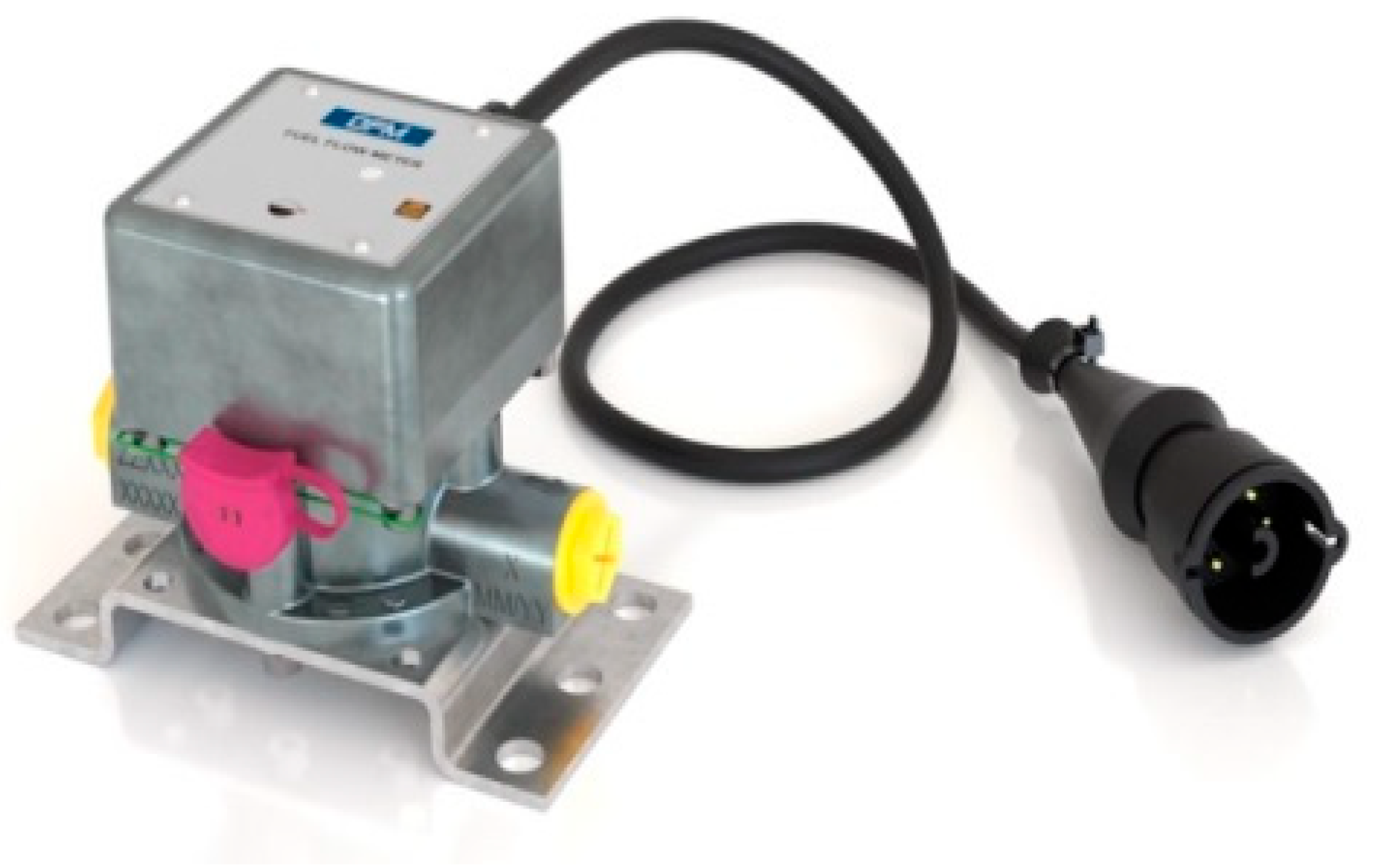
Figure 2.
General diagram of the remote measurement and telemetric data transmission system.
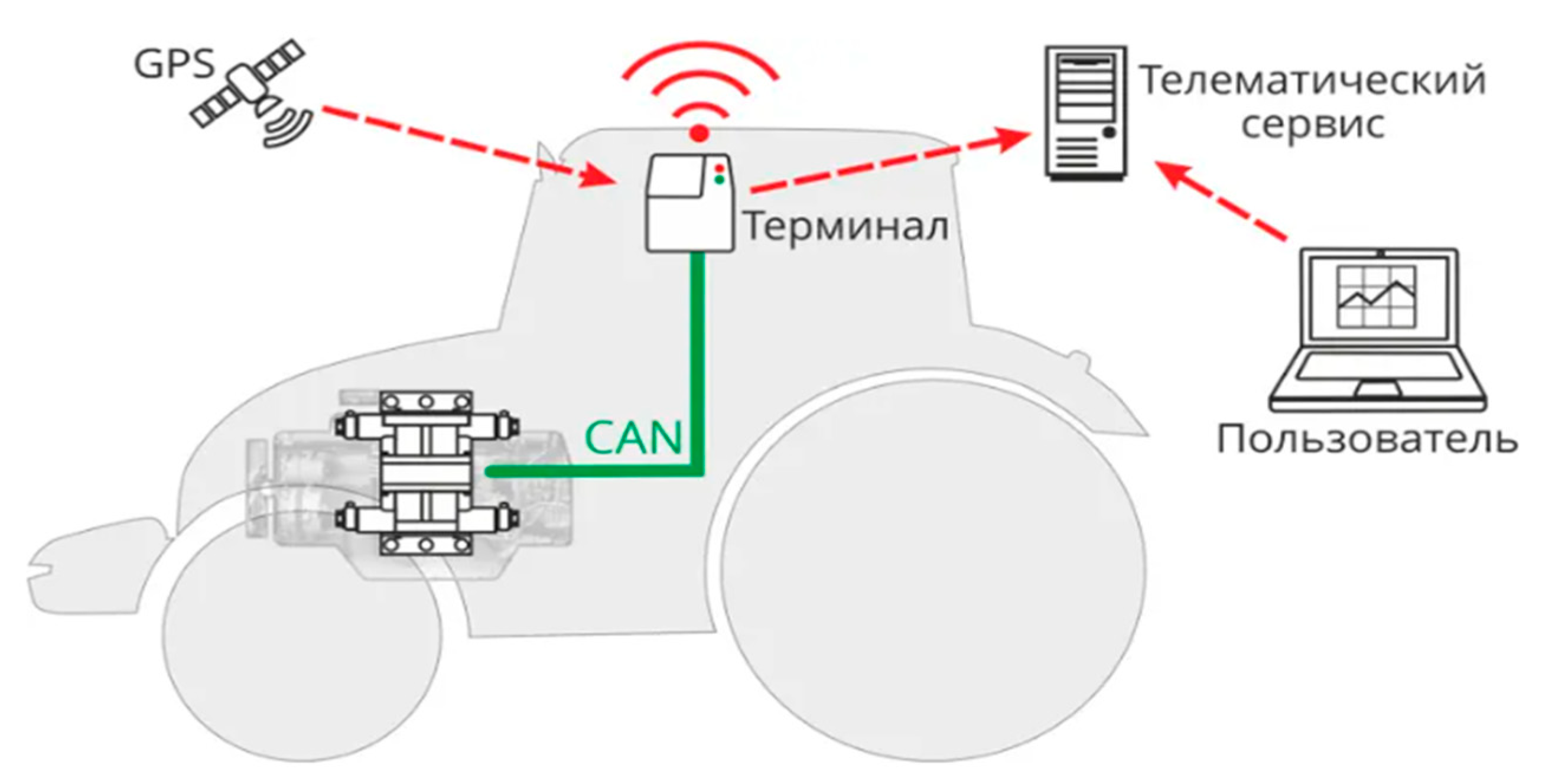
Figure 3.
Energy performance indicators of agricultural operations under conventional tillage.
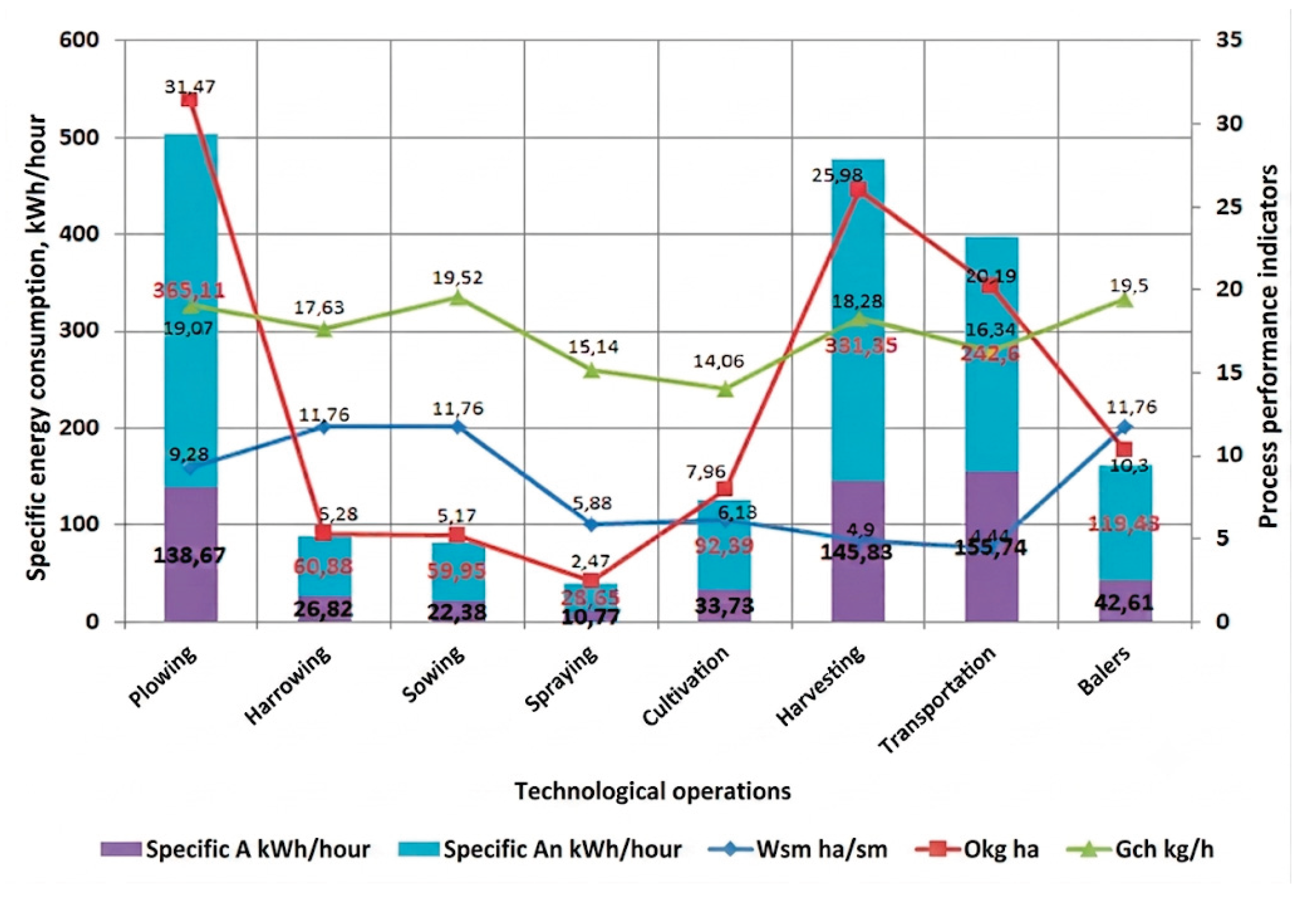
Figure 4.
Energy performance indicators of agricultural operations under minimum tillage.
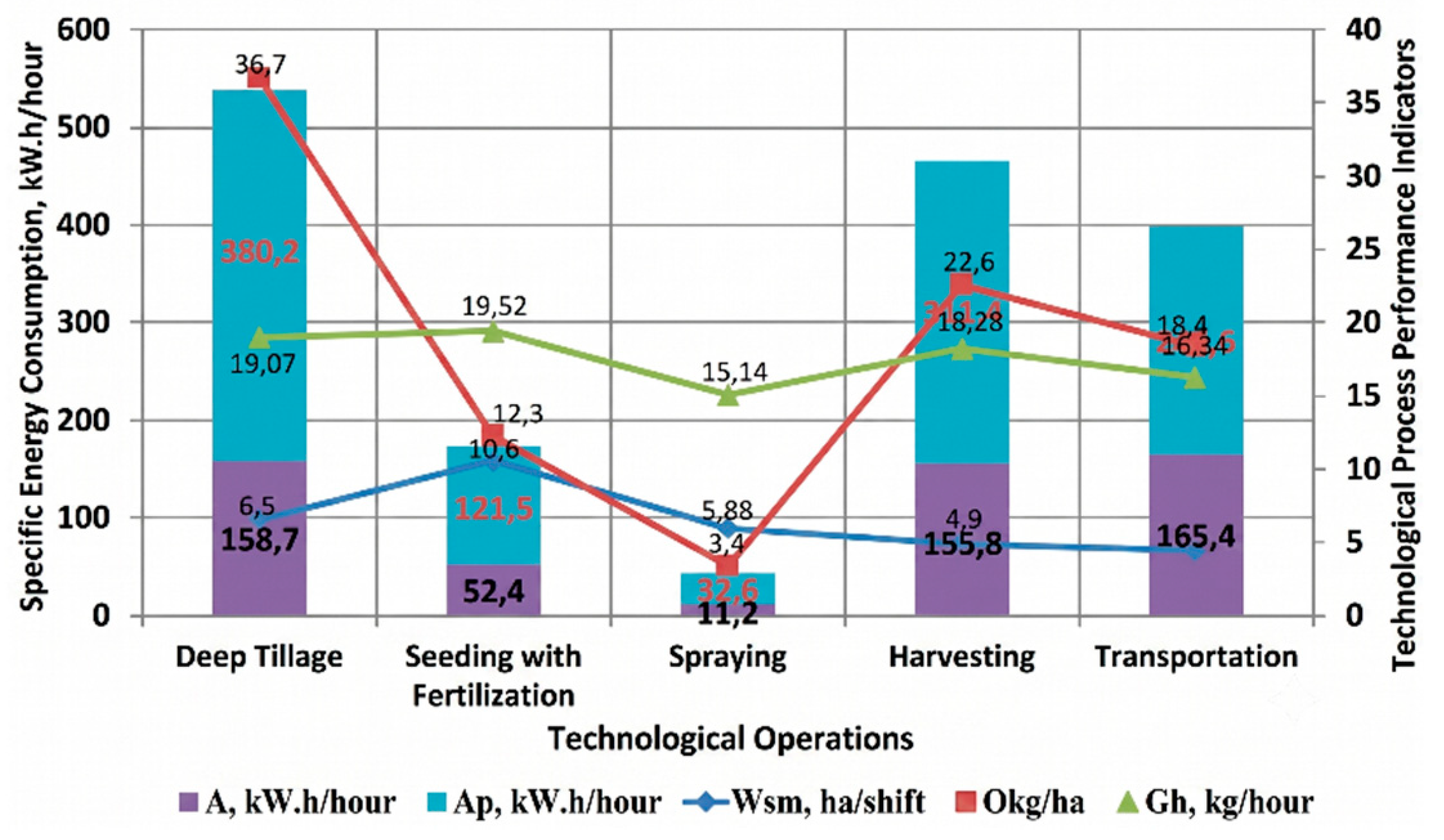
Figure 5.
Effect of operating speed on the specific energy consumption of tractor–machine combinations.
Figure 5.
Effect of operating speed on the specific energy consumption of tractor–machine combinations.
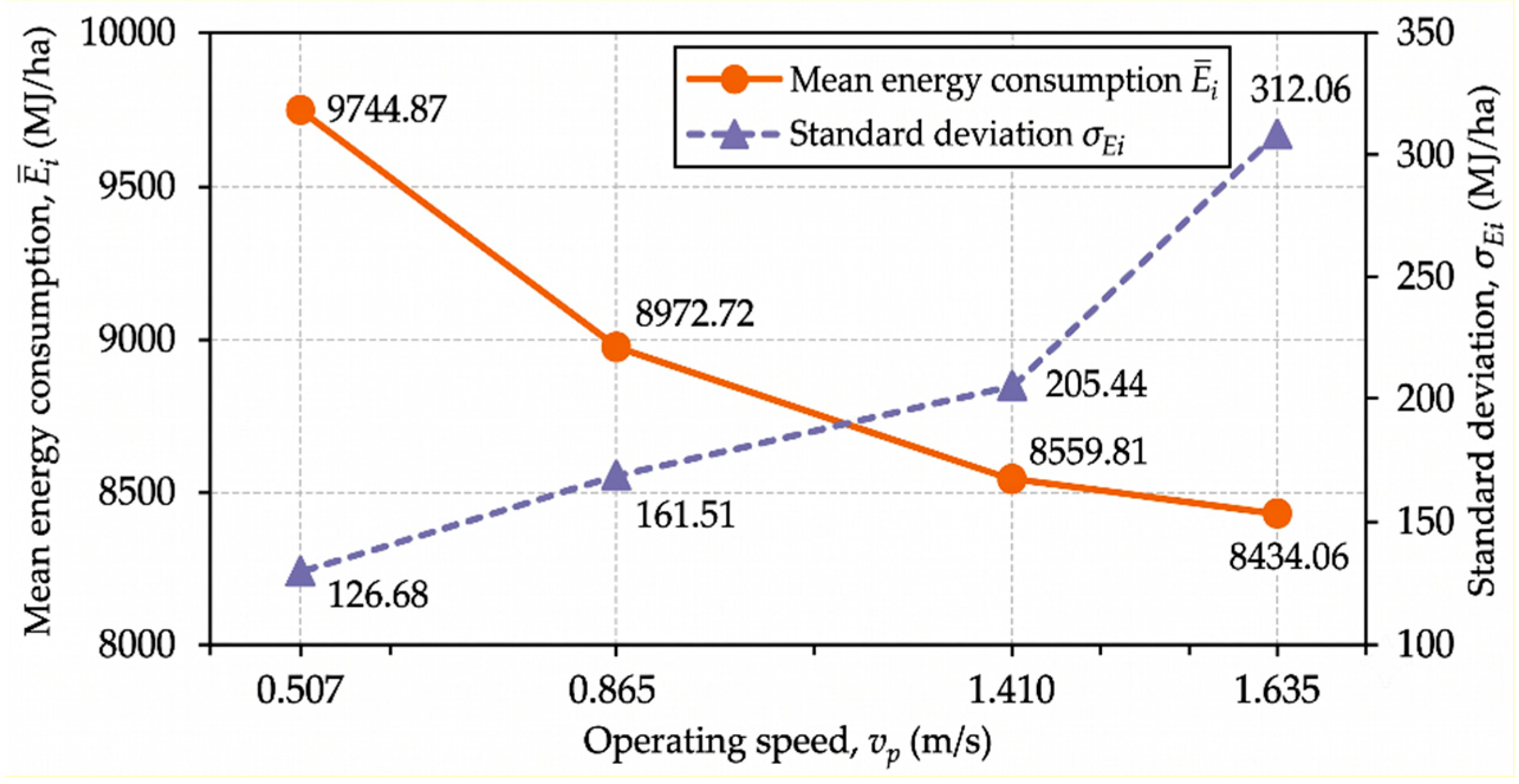

Table 1.
Energy performance indicators for agricultural operations under conventional tillage.
| Agricultural Operation | Shift Productivity Wsh (ha/shift) | Fuel Consumption per Unit Area Θ (kg/ha) | Nominal Hourly Fuel Consumption Gt.n (kg/h) | Useful Specific Energy Consumption A (kWh/ha) | Total Specific Energy Consumption AT (kWh/ha) | Tractive Efficiency ηT |
| Plowing | 9.28 | 31.47 | 19.07 | 138.67 | 365.11 | 0.39 |
| Harrowing | 11.76 | 5.28 | 17.63 | 26.82 | 60.88 | 0.50 |
| Seeding | 11.76 | 5.17 | 19.52 | 22.38 | 59.95 | 0.38 |
| Spraying | 5.88 | 2.47 | 15.14 | 10.77 | 28.65 | 0.28 |
| Cultivation | 6.13 | 7.96 | 14.06 | 33.73 | 92.39 | 0.28 |
| Harvesting | 4.90 | 25.98 | 18.28 | 145.83 | 331.35 | 0.32 |
| Transportation | 4.44 | 20.19 | 16.34 | 155.74 | 242.60 | 0.29 |
| Baling | 11.76 | 10.30 | 19.50 | 42.61 | 119.43 | 0.36 |
Table 2.
Energy performance indicators of agricultural operations under minimum tillage.
| Agricultural Operation | Shift Productivity Wsh (ha/shift) | Fuel Consumption per Unit Area Θ (kg/ha) | Nominal Hourly Fuel Consumption Gt.n (kg/h) | Useful Specific Energy Consumption A (kWh/ha) | Total Specific Energy Consumption AT (kWh/ha) | Tractive Efficiency ηT |
| Deep loosening | 6.50 | 36.70 | 19.07 | 158.70 | 380.20 | 0.45 |
| Seeding with fertilization | 10.60 | 12.30 | 19.52 | 52.40 | 121.50 | 0.54 |
| Spraying | 5.88 | 3.40 | 15.14 | 11.20 | 32.60 | 0.30 |
| Harvesting | 4.90 | 22.60 | 18.28 | 155.80 | 311.40 | 0.35 |
| Transportation | 4.44 | 18.40 | 16.34 | 165.40 | 232.60 | 0.32 |
Table 3.
Probabilistic estimation of process energy consumption at various operating speeds.
| , m/s | Ēi, MJ/ha | σĒi, MJ/ha | vEi |
| 0.507 | 9744.87 | 126.68 | 0.013 |
| 0.865 | 8972.72 | 161.51 | 0.018 |
| 1.410 | 8559.81 | 205.44 | 0.024 |
| 1.635 | 8434.06 | 312.06 | 0.037 |
Disclaimer/Publisher’s Note: The statements, opinions and data contained in all publications are solely those of the individual author(s) and contributor(s) and not of MDPI and/or the editor(s). MDPI and/or the editor(s) disclaim responsibility for any injury to people or property resulting from any ideas, methods, instructions or products referred to in the content. |
© 2026 by the authors. Licensee MDPI, Basel, Switzerland. This article is an open access article distributed under the terms and conditions of the Creative Commons Attribution (CC BY) license (http://creativecommons.org/licenses/by/4.0/).
Copyright: This open access article is published under a Creative Commons CC BY 4.0 license, which permit the free download, distribution, and reuse, provided that the author and preprint are cited in any reuse.