

Submitted:
29 July 2026
Posted:
29 July 2026
You are already at the latest version
Abstract
The brine of the Aral Sea is considered a complex source of lithium because it contains large amounts of magnesium, potassium, sulfate, and chloride, which prevent the direct preparation of Li2CO3. This work describes a technique based on selective precipitation and crystallization of impurities, followed by the isolation of high-purity Li2CO3. Initially, magnesium and potassium were precipitated together with Na2HPO4 as MgKPO4, and sulfate was precipitated as CaSO4·2H2O using CaCl2. Such pretreatment made it possible to remove up to 97.1%, 96.3% and 93.4% of magnesium, potassium and sulfate, respectively. Analysis by XRD and EDAX showed that the obtained precipitates consisted of gypsum and phosphate, which can be used as mineral or fertilizer by-products. Then the purified solution was treated with Na2CO3 in a stirred crystallizer at 50 °C. Focused Beam Reflectance Measurement (FBRM) analysis showed that increasing the stirring speed from 400 to 600 rpm resulted in smaller Li2CO3 particles. The influence of Na2CO3 feed rate was less, but the aggregation of crystals increased at higher concentrations of Na2CO3. The proposed technology made it possible to obtain 99.5% pure Li2CO3 (for the production of lithium-ion batteries). It was shown that the separation of impurities allows controlling the formation and growth of Li2CO3 from natural brine. The developed method provides the opportunity to prepare lithium carbonate suitable for batteries from Aral Sea brine with separation of useful by-products containing magnesium, potassium, calcium, phosphorus and sulfur.
Keywords:
Aral Sea brine
; lithium carbonate recovery
; reactive crystallization
; macro-ion removal
; magnesium phosphate precipitation
; gypsum by-product
; brine purification
1. Introduction
Lithium carbonate is one of the key materials used in lithium-ion battery fabrication. However, there are several conditions governing lithium extraction besides lithium concentration from the brine. Naturally, a wide range of ions that should be efficiently separated from lithium, including the following characteristics occurring in brines: magnesium, calcium, potassium, sodium, chloride, and sulfate [1,2]. At the same time, the process should avoid the use of excessive amounts of chemicals and the generation of waste. In addition, it should not influence the quality of the product. It is especially difficult in the case of low concentrations of lithium and higher concentrations of the ions mentioned above that can have an impact on the consumption of carbonates, crystal formation, and filterability [3,4].
The Aral Sea brine is an example of an interesting lithium source. It is characterized by high salinity and complex ionic composition: 0.11 g/L lithium, 54.92 g/L sodium, 3.67 g/L potassium, 0.80 g/L calcium, 10.25 g/L magnesium, 70.90 g/L chloride, and 22.11 g/L sulfate, resulting in 130.9 g/L total dissolved solids. These ions include lithium as well as all interfering elements needed for obtaining the lithium carbonate [5,6,7].
Earlier research dealing with the problem of lithium extraction usually considered purification and Li2CO3 crystallization as two separate procedures. While purification aims at removing magnesium, calcium, and sulfate, crystallization uses synthetic solutions for analysis of effects of mixing and concentration [8]. While the approach can provide an understanding of the mechanism involved, it does not cover all aspects of working with natural brine. Techniques useful in synthetic solutions cannot be applicable in the case of natural brine due to the presence of magnesium, calcium, and sulfate, which can result in precipitate formation, changes in concentration, agglomeration of particles and lowering of the product purity [9,10].
Recent research in this area shows that pre-removal of magnesium, potassium and sulfates makes Aral Sea brine suitable as a feedstock for Li2CO3 crystallization, while simultaneously producing useful phosphate and sulfate products [7]. An analysis of the studies presented shows that the use of chemicals such as Na2HPO4, CaCl2 or Na2CO3 makes it possible to obtain lithium carbonate with a purity of 99.5%, using the stages of purification of the salt brine followed by crystallization [7,11,12,13].
To achieve the goal of obtaining lithium carbonate for use in lithium-ion batteries, the following extraction criteria are required:
(i) To achieve the objective of selective co-precipitation of magnesium potassium phosphate and sulfate followed by crystallization of Li2CO3; (ii) To investigate the effects of dosing, pH, residence time, mixing, and feeding rate of Na2CO3 on process efficiency; (iii) To assess the physical and chemical properties of byproducts and lithium carbonate; and (iv) To identify problems to be solved before scaling up the process.
2. Materials and Methods
2.1. The Concept of Using Brine as a Raw Material and Technological Process
Aral Sea brine was used as the feedstock for the initial stage of purification; its chemical composition is given in Table 1.
The solution contained 0.11 g/L lithium, 54.92 g/L sodium, 3.67 g/L potassium, 10.25 g/L magnesium, 70.90 g/L chloride, and 22.11 g/L sulfate, where the majority of the components were either chlorides or sodium sulfate. For the separation of Mg2+, K+ and SO42- ions from the brine, precipitation was performed using a stirred reactor. The main chemicals used for this process included sodium hydrogen phosphate, calcium chloride, and sodium hydroxide. The best results were obtained when the stirring speed was kept constant at 100 rpm and pH = 10.
2.2. Selective Removal of Mg2+, K+ and SO42-
The 100 mL of the Aral Sea brine underwent treatment in the stirred reactor. Precipitation of Mg2+ and K+ as KMgPO4 type of phosphate compounds was carried out using sodium phosphate (Na2HPO4), adjustment of the pH to about 10 was done using sodium hydroxide (NaOH) and the removal of sulfate as calcium sulfate dihydrate (CaSO4∙2H2O) was achieved using calcium chloride (CaCl2). The mixing was done at 100 rpm, and times for the precipitation reactions ranged from 10 to 30 minutes.
The general reaction involved is as follows: MgCl2 + KCl + LiCl + Na2HPO4 + NaOH → KMgPO4 ↓ + 3NaCl + LiCl + H2O; and Na2SO4 + CaCl2 + 2H2O → CaSO4∙2H2O ↓ + 2NaCl. These are process-level reactions and not complete chemical speciation, where the ion activities, hydration and other competing equilibria will affect the phase distribution.
The precipitates obtained were dried at 100 ℃ to constant mass. XRF determined the concentration of cations, whereas that of chloride, sulfate and phosphate ions was determined spectrophotometrically. Phase analysis of the solid products was done using X-ray diffraction and EDX/EDAX.
2.3. Lithium Carbonate Precipitation from Purified Brine
The purified brine, which contained 0.200 wt.% LiCl, was then subjected to Na2CO3 addition in a stirred semi-batch crystallizer. The brine charge was kept at 300 g at a constant temperature of 50 ℃. The addition of sodium carbonate was carried out at mixing speeds of 400, 500 and 600 rpm. The temperature was selected in the range of 25-50 ℃. Due to the lower solubility of Li2CO3 at 50 ℃ than at 25 ℃, 50 ℃ was selected as the optimal temperature.
In-line nucleation and growth measurements were conducted using FBRM. The pH and conductivity were measured along with the FBRM data. The characterization of the Li2CO3 phase was done using X-ray Diffraction (XRD), while the product morphology was characterized through Scanning Electron Microscopy (SEM), and lithium recovery was determined through the mass of the precipitate.
3. Results and Discussion
3.1. Chemical Composition of Raw Aral Sea brine
From the analysis of the raw brine, it is clear that the lithium is present in a matrix composed of NaCl, MgCl2, and Na2SO4. In addition, the significantly higher amount of magnesium as compared to lithium causes problems since the magnesium consumes alkalinity and carbonate, leading to the creation of unwanted components and reducing selectivity in the precipitation of Li2CO3. Sulfate causes additional problems through influencing the precipitation of calcium and magnesium and raising the salinity of the solution. Therefore, purification becomes necessary before the crystallization of Li2CO3 can be achieved.
3.2. Phosphate Precipitation Removes Mg2+ and K+ While Producing a Recoverable by-Product
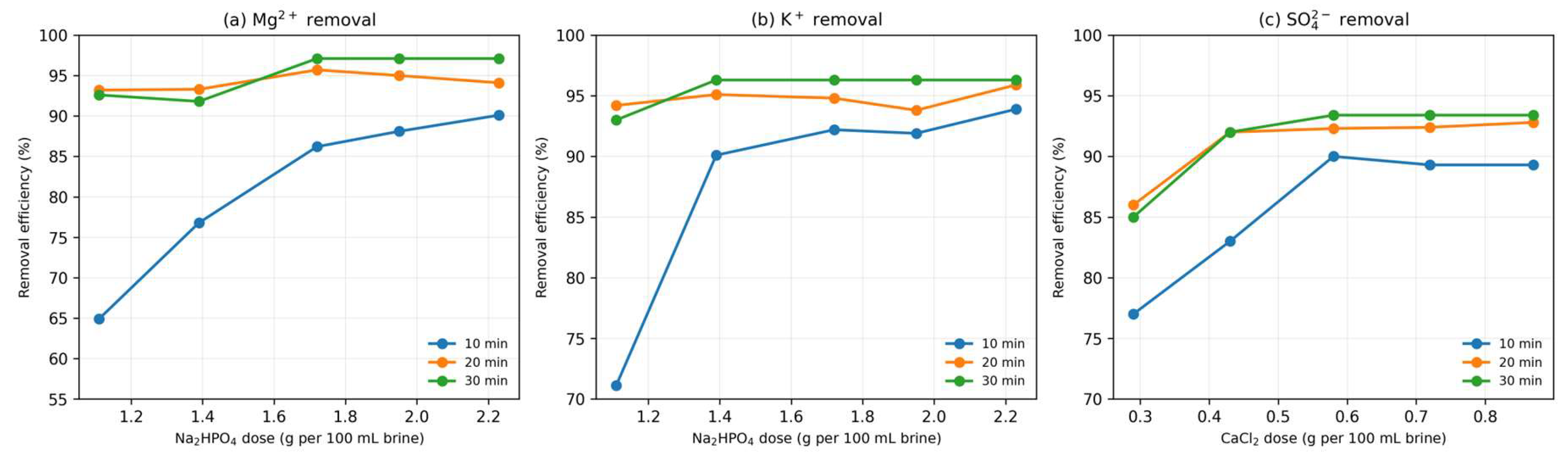
The effectiveness of the removal of magnesium and potassium was estimated according to the amount of Na2HPO4 used and the time taken to effect removal. Magnesium was removed effectively to 97.1%, while potassium was effectively removed to 96.3%, using 1.72 g of Na2HPO4 in a time period of 30 minutes. The combined removal of the two ions caused the production of a solid that resembles KMgPO4 instead of the individual solids. It is worth noting that these solids have uses as fertilizer minerals rather than being classified as waste.
Figure 1.
Integrated process concept for Aral Sea brine purification, evaporation/concentration and Li2CO3 precipitation. L and S denote liquid and solid streams, respectively.
Figure 1.
Integrated process concept for Aral Sea brine purification, evaporation/concentration and Li2CO3 precipitation. L and S denote liquid and solid streams, respectively.
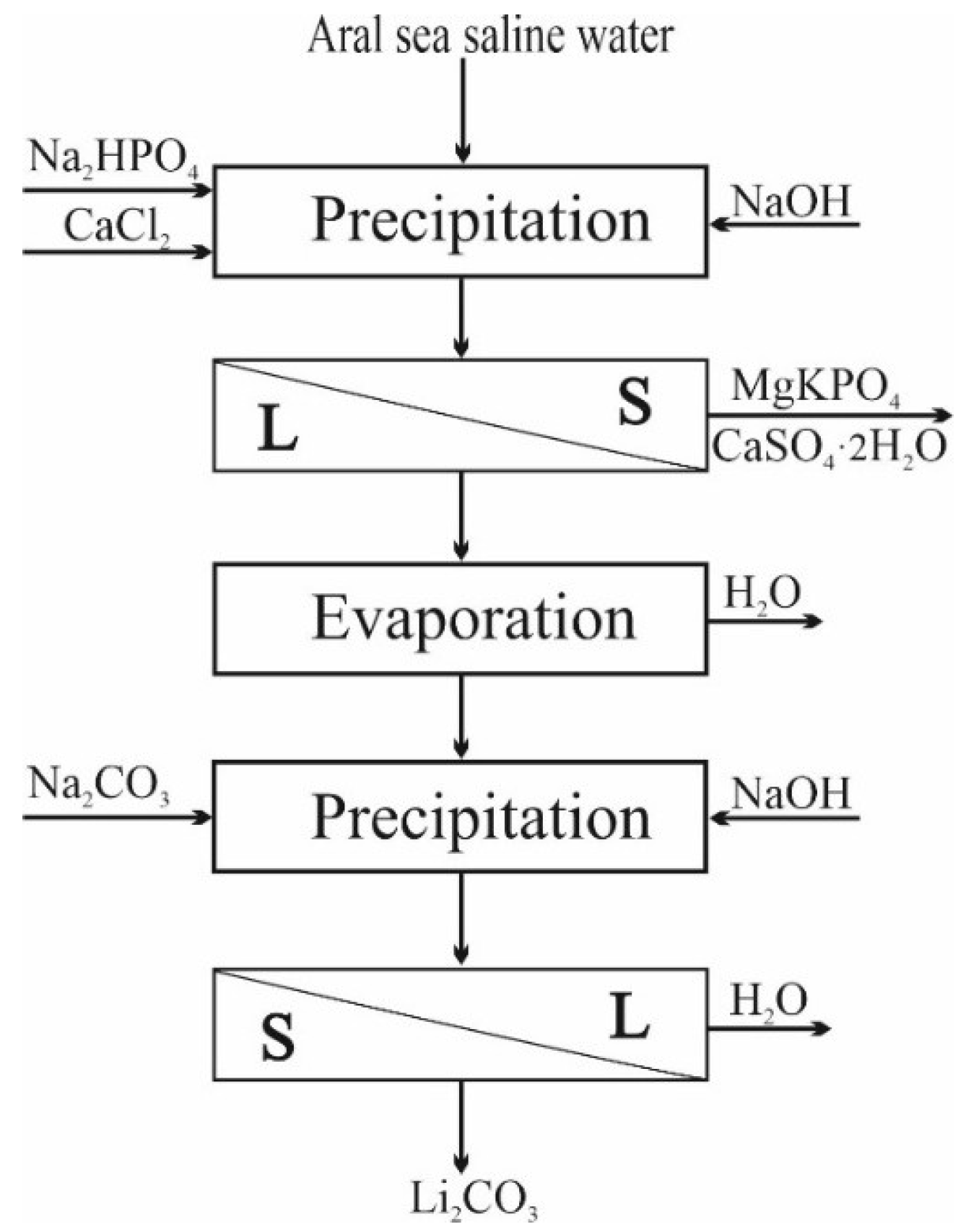
A pH of about 10 is chemically reasonable, as phosphate speciation and magnesium hydrolysis favour precipitation in the alkaline region.
However, excessive hydroxide addition can introduce complications. It may compete with phosphate, promote the formation of magnesium hydroxide, increase sodium contamination, and complicate control over by-product composition.
Figure 2.
Effects of reagent dose and residence time on removal of (a) Mg2+, (b) K+ and (c) SO42- from Aral Sea brine. The data identify 1.72 g Na2HPO4 and 0.58 g CaCl2 as effective operating points at 30 min.
Figure 2.
Effects of reagent dose and residence time on removal of (a) Mg2+, (b) K+ and (c) SO42- from Aral Sea brine. The data identify 1.72 g Na2HPO4 and 0.58 g CaCl2 as effective operating points at 30 min.
3.3. Sulfate Removal as Gypsum Complements Phosphate Purification
Adding CaCl2 helps in removing the sulfate through the formation of calcium sulfate dihydrate (CaSO4·2H2O). The maximum sulfate removal efficiency recorded was 93.4% in the presence of CaCl2 due to the precipitation of the sulfate as CaSO4·2H2O. Optimal sulfate removal of 93.4% was achieved by using a CaCl2 concentration of 0.58 g with a mixing time of 30 minutes. Gypsum crystals were formed as per the X-ray diffraction analysis. This process is followed by phosphate precipitation, in which phosphate reacts with magnesium and potassium while CaCl2 reacts with sulfate.
Without following the order of reactions, there will be reactions between calcium and phosphate, as well as sulfate/phosphate, which will affect the further carbonate precipitation process. Therefore, careful reagent addition order and filtration are required. The removal product consists of a complex fertilizer that has a crystal fraction of CaSO4·2H2O and an amorphous phosphate fraction.
3.4. Elemental Composition of Impurity-Removal Solids
EDAX showed that the co-treated precipitate contained PO43-, Mg2+, SO42-, Ca2+ and K+, with significant amounts of Ca and sulfate when CaCl2 was added (Figure 3).
These results support the proposed removal pathway and lead to the simultaneous precipitation of the double salts MgKPO4 and CaSO4·2H2O.
3.5. Purified Brine Enables Controlled Homogeneous Li2CO3 Crystallization
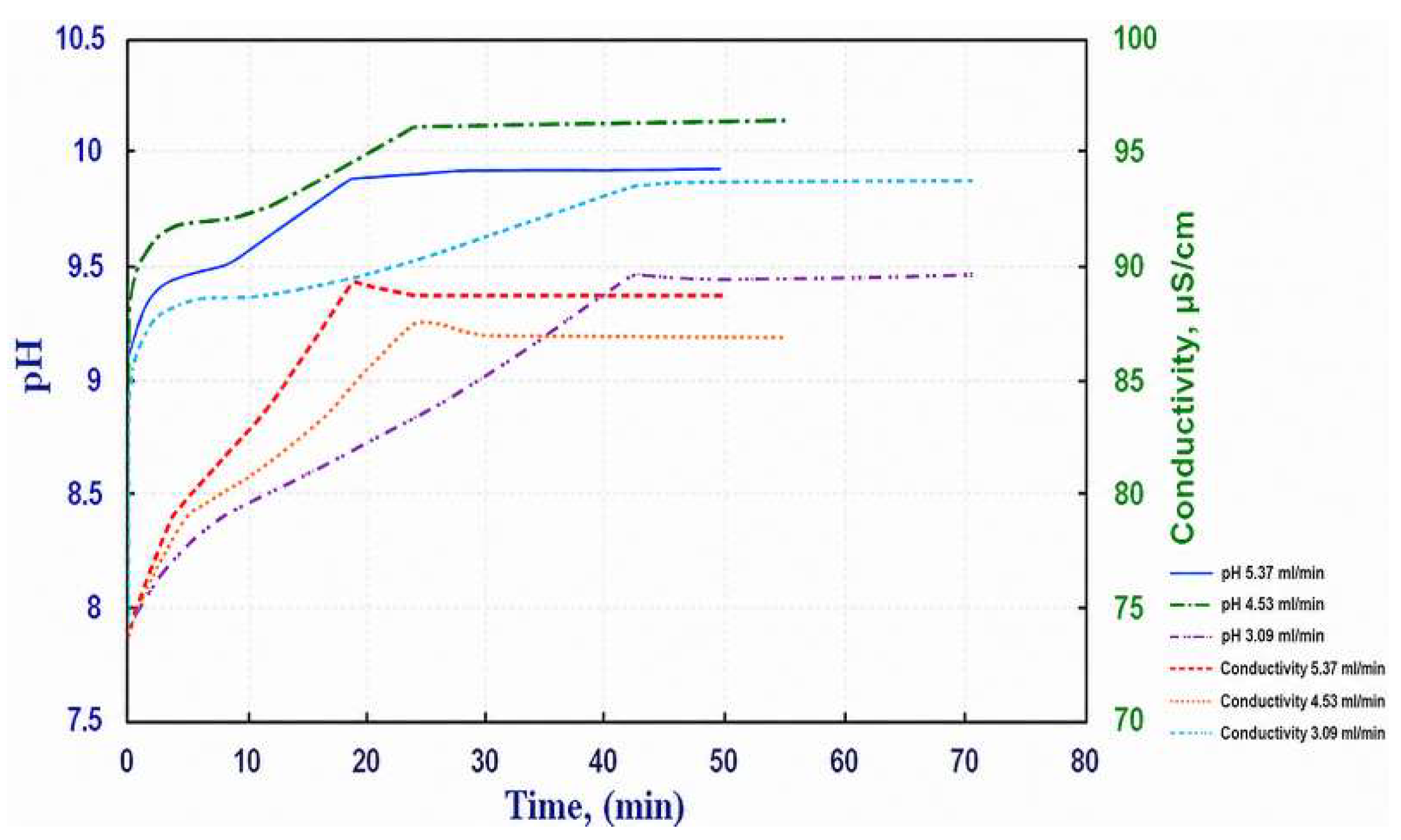
The addition of Na2CO3 to the system, after the preliminary removal of significant interfering ions, heralded the formation of Li2CO3 via controlled crystallization. The pH displayed an immediate jump and then proceeded to increase more slowly as carbonate interacted with lithium. Conductivity showed an increase due to sodium and chloride concentration accumulation, and thereafter stabilized after the majority of the reaction. The events during minutes 19, 24, and 42 point out three different stages corresponding to carbonate addition, growth of the crystals, and reaching equilibrium.
Figure 4.
Time evolution of pH and conductivity during Na2CO3-based homogeneous precipitation of Li2CO3 from purified Aral Sea brine at 400-600 rpm.
Figure 4.
Time evolution of pH and conductivity during Na2CO3-based homogeneous precipitation of Li2CO3 from purified Aral Sea brine at 400-600 rpm.
One essential outcome of the experiments was that the stirring speed seemed to exert a more substantial influence on the size distribution of Li2CO3 particles than the Na2CO3 feed rate. More specifically, the increase in stirring speed from 400 to 600 revolutions per minute was reflected in the shift of the size distribution properties of Li2CO3 particles toward smaller particles.
High mixing intensity increases the overall homogeneity of the solution, reduces concentration gradients, limits uncontrolled aggregation, and increases the collision of crystals that break up weak clusters. The Na2CO3 feed rate has a small net effect, since a higher feed rate leads to larger aggregates. It can be seen from Figure 5 that the size of the particles precipitated at 500 rpm is larger than that of the particles precipitated at 600 rpm. The crystals obtained as a result of uniform precipitation were studied by X-ray fluorescence analysis. According to the results of the analysis, it was determined that Li2CO3 precipitated in the precipitate. Figure 6 shows a micrograph of lithium carbonate and its elemental composition.
The results of elemental analysis show that lithium carbonate contains 18.4% lithium, 65.15% oxygen, and 16.0% carbon, which is consistent with the composition of the compound Li2CO3.
3.6. Phase Purity and Morphology of Li2CO3
The fact that Li2CO3 is the primary crystalline phase was verified by XRD analysis, which correlates with the information on ICDD card 00-022-1141. SEM imaging (Figure 7) indicated the formation of clusters made of thin and ellipsoidal layers – a sign of prior crystallization and agglomeration of the resulting particles. The best parameters were discovered to be 600 rpm and 50 ℃ using 4.53 ml/min of Na2CO3, resulting in 99.5% purity of the product.
As a result of the reaction carried out at 25°C and 50°C, the precipitated Li2CO3 crystals appear in the form of ellipsoidal and sheet-like clusters, as shown in SEM images.
To determine the physical and chemical properties of the obtained lithium carbonate, its X-ray diffraction pattern and IR spectra were also fully studied.
As a result of the studies, it was found that in the X-ray diffraction pattern of lithium carbonate (Figure 8), diffraction maxima such as 4.16, 2.91, and 2.80 Å represent Li2CO3, while in the IR spectrum, absorption bands belonging to the carbonate group (Figure 9) are found to be 1437.03 cm-1 and 869.93 cm-1.
3.7. Integrated Mechanism
The method functions by gradually decreasing chemical interference. The source brine has high amounts of magnesium, potassium, and sulfate, which cause carbonate to precipitate and affect the purity of Li2CO3. The process of using Na2HPO4 helps in separating magnesium and potassium from the brine as a solid phosphate precipitate, thus reducing the level of ions which utilize carbonate. The other part of the procedure employing CaCl2 helps in sulfur precipitation as gypsum, which reduces the sulfur content as well and gives a solid by-product. Afterwards, the lithium-rich liquid is treated with carbonate in a controlled manner, while stirring at 600 rpm prevents clogging and allows obtaining smaller salt crystals. In this way, purification and crystallization are dependent on one another, as the purification process determines the chemical conditions while mixing influences the shape of the crystals.
3.8. Practical Implications and Scale-Up Constraints
There exist several advantages of the technique mentioned in the previous section. It utilizes readily available chemicals, works at moderate temperatures, enables obtaining Li2CO3 of high purity, and allows converting some impurities into useful minerals. Moreover, it does not depend solely on long-term solar evaporation for brine concentration.
4. Conclusions
The two-step approach has been developed in this study to convert brine from the Aral Sea, which has high contents of magnesium, potassium and sulfate, to produce lithium carbonate suitable for battery production. With the help of Na2HPO4 and CaCl2, 97.1% of magnesium, 96.3% of potassium, and 93.4% of sulfate were removed, which are the major ions hindering the production of lithium carbonate. Solid residues contain gypsum and phosphate, which can potentially serve as minerals or fertilizers. The next stage featured a significant role of stirring speed compared to the rate of feeding Na2CO3 for controlling the particle size of Li2CO3, as the run with the stirring speed of 600 rpm led to obtaining particles of a smaller size. An increase in the rate of feeding Na2CO3 resulted in aggregation of crystals due to a local increase in concentration. The proposed method allows recovery of lithium carbonate with a purity of 99.5%, typical for rechargeable batteries, at a precipitation temperature of 50 ℃. Therefore, the purification stage and crystallization stage of the process are directly connected and mutually influence each other.
Author Contributions
Conceptualization, B.A., and M.S.; methodology, B.A., and Sh.U.; software, Kh.B., and E.R.; validation, B.A., M.S.; formal analysis, B.A., M.Z., G.Kh., and A.U.; investigation, M.S.; resources, M.S.; data curation, B.A.; writing—original draft preparation, B.A.; writing—review and editing, M.S.; visualization, B.A.; supervision, M.S.; project administration, M.S.; funding acquisition, B.A. All authors have read and agreed to the published version of the manuscript.
Funding
This research received no external funding.
Data Availability Statement
The information is provided in the article and in the supplementary materials.
Conflicts of Interest
The authors declare no conflicts of interest.
Acknowledgments
The authors express their gratitude to Karshi State Technical University for the administrative and technical support.
References
- Alghamdi, M.; Altmann, T.; Das, R. Direct Lithium Extraction from Seawater Brine: An Assessment of Technology and Existing Commercial Systems. Minerals 2025, 15(5), 512. [Google Scholar] [CrossRef]
- Wu, H.; Dong, T.; Zhang, Z.; Cheng, Y. Extraction Technologies for Lithium Resources from Salt Lake Brines: Research Progress, Challenges and Future Prospects. Metals 2025, 15(12), 1327. [Google Scholar] [CrossRef]
- Wu, H.; Dong, T.; Zhang, Z.; Cheng, Y. Extraction Technologies for Lithium Resources from Salt Lake Brines: Research Progress, Challenges and Future Prospects. Metals 2025, 15(12), 1327. [Google Scholar] [CrossRef]
- Wu, F.; Shivakumar, K. R.; Konhauser, K. O.; Alessi, D. S. Lithium resources and novel strategies for their extraction and purification. npj Mater. Sustain. 2025, 3(1), 30. [Google Scholar] [CrossRef] [PubMed]
- Bochevskaya, Y.; Sargelova, E.; Sharipova, A.; Kilibayeva, S.; Yakhiyayeva, Z. Sorption Extraction of Lithium from the Brines of the Pre-Aral Region Using Ion-Exchangers Under Static Conditions. Appl. Sci. 2025, 15(17), 9248. [Google Scholar] [CrossRef]
- Oh, I. H.; Park, G.; Pak, S. J.; Heo, C. H.; Lee, B. H. Preliminary Assessment of Salt Lake Brines for Lithium Potential in the Aral Sea Region, Kazakhstan. Econ. Environ. Geol. 2025, 58(5), 491–500. [Google Scholar] [CrossRef]
- Abdullayev, B.; Egamberdiyev, Kh.; Makhmayorov, J.; Khudaykulov, A.; Tuxliyev, M.; Turdiqulova, L.; Rakhmatullayev, F.; Rakhimov, M.; Nigmadjonov, S.; Sheralieva, O.; Botirov, Kh.; Gulboyeva, D.; Skakarov, T.; Pulatov, Kh.; Abdurashidov, D.; Samadiy, M. Sedimentation based process development for Li2CO3 and Mg–K–Ca–PO4–SO4 fertilizer recovery from Aral Sea brine. Appl. Chem. Eng. 2026, 9(2), ACE–5918. [Google Scholar]
- Liu, H.; Azimi, G. Process analysis and study of factors affecting the lithium carbonate crystallization from sulfate media during lithium extraction. Hydrometallurgy 2021, 199, 105532. [Google Scholar] [CrossRef]
- Battaglia, G.; Berkemeyer, L.; Cipollina, A.; Cortina, J. L.; Fernandez de Labastida, M.; Lopez Rodriguez, J.; Winter, D. Recovery of lithium carbonate from dilute Li-rich brine via homogenous and heterogeneous precipitation. Ind. Eng. Chem. Res. 2022, 61(36), 13589–13602. [Google Scholar] [CrossRef] [PubMed]
- Kumar, A.; Naidu, G.; Fukuda, H.; Du, F.; Vigneswaran, S.; Drioli, E.; Lienhard, J. H. Metals recovery from seawater desalination brines: technologies, opportunities, and challenges. ACS Sustain. Chem. Eng. 2021, 9(23), 7704–7712. [Google Scholar] [CrossRef]
- Mazur, A.; Sandra, A. P.; Wedin, S.; Lindström, R. W.; Penha, F. M. Recovery of lithium and metal oxalates: A simultaneous precipitation-based approach for circular battery recycling. Sep. Purif. Technol. 2026, 403, 138716. [Google Scholar] [CrossRef]
- An, J. W.; Kang, D. J.; Tran, K. T.; Kim, M. J.; Lim, T.; Tran, T. Recovery of lithium from Uyuni salar brine. Hydrometallurgy 2012, 117, 64–70. [Google Scholar] [CrossRef]
- Cooper, N. J.; Lee, B.; Patel, S. K.; Wang, L.; Westerhoff, P.; Elimelech, M. Viability assessment of lithium recovery from unconventional saline water sources. Desalination 2025, 614, 119156. [Google Scholar] [CrossRef]
Figure 3.
Characterization of impurity-removal solids: (a) XRD pattern of CaSO4·2H2O, (b) XRD pattern of phosphate-bearing Mg-K product and (c) ion distribution in dry precipitates obtained under different reagent combinations.
Figure 3.
Characterization of impurity-removal solids: (a) XRD pattern of CaSO4·2H2O, (b) XRD pattern of phosphate-bearing Mg-K product and (c) ion distribution in dry precipitates obtained under different reagent combinations.
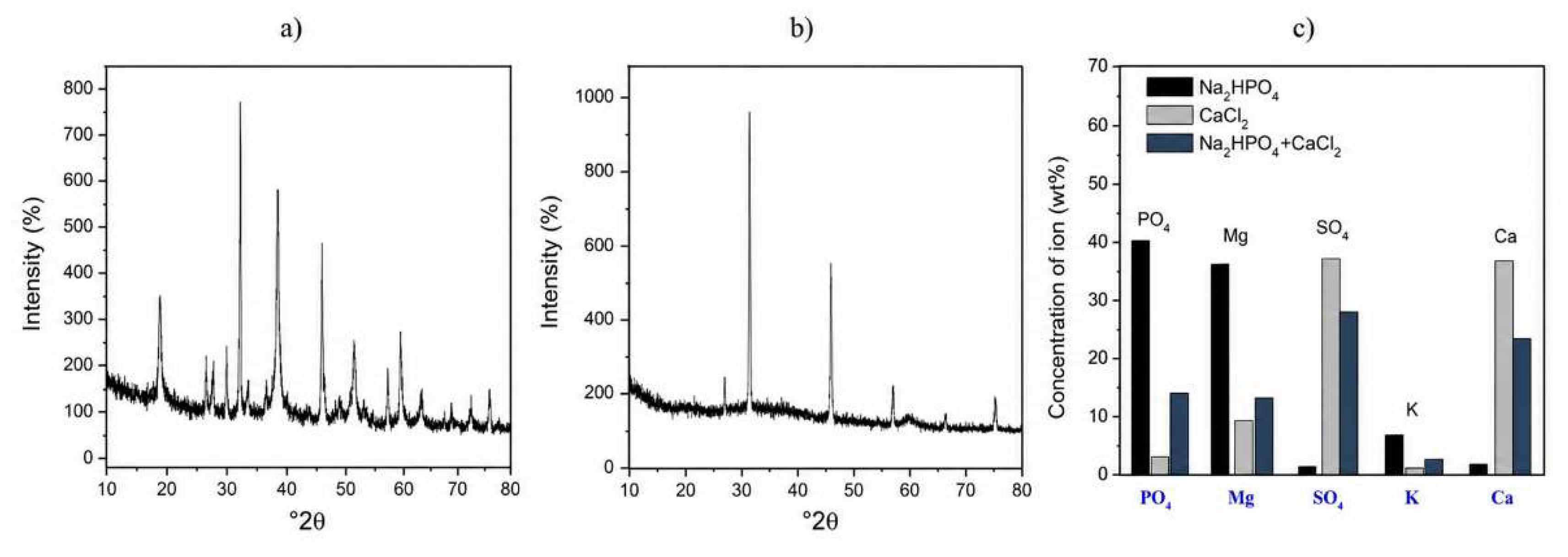
Figure 5.
Particle-size distribution of Li2CO3 obtained under different stirring-speed and Na2CO3 feed-rate conditions during homogeneous reactive crystallization.
Figure 5.
Particle-size distribution of Li2CO3 obtained under different stirring-speed and Na2CO3 feed-rate conditions during homogeneous reactive crystallization.
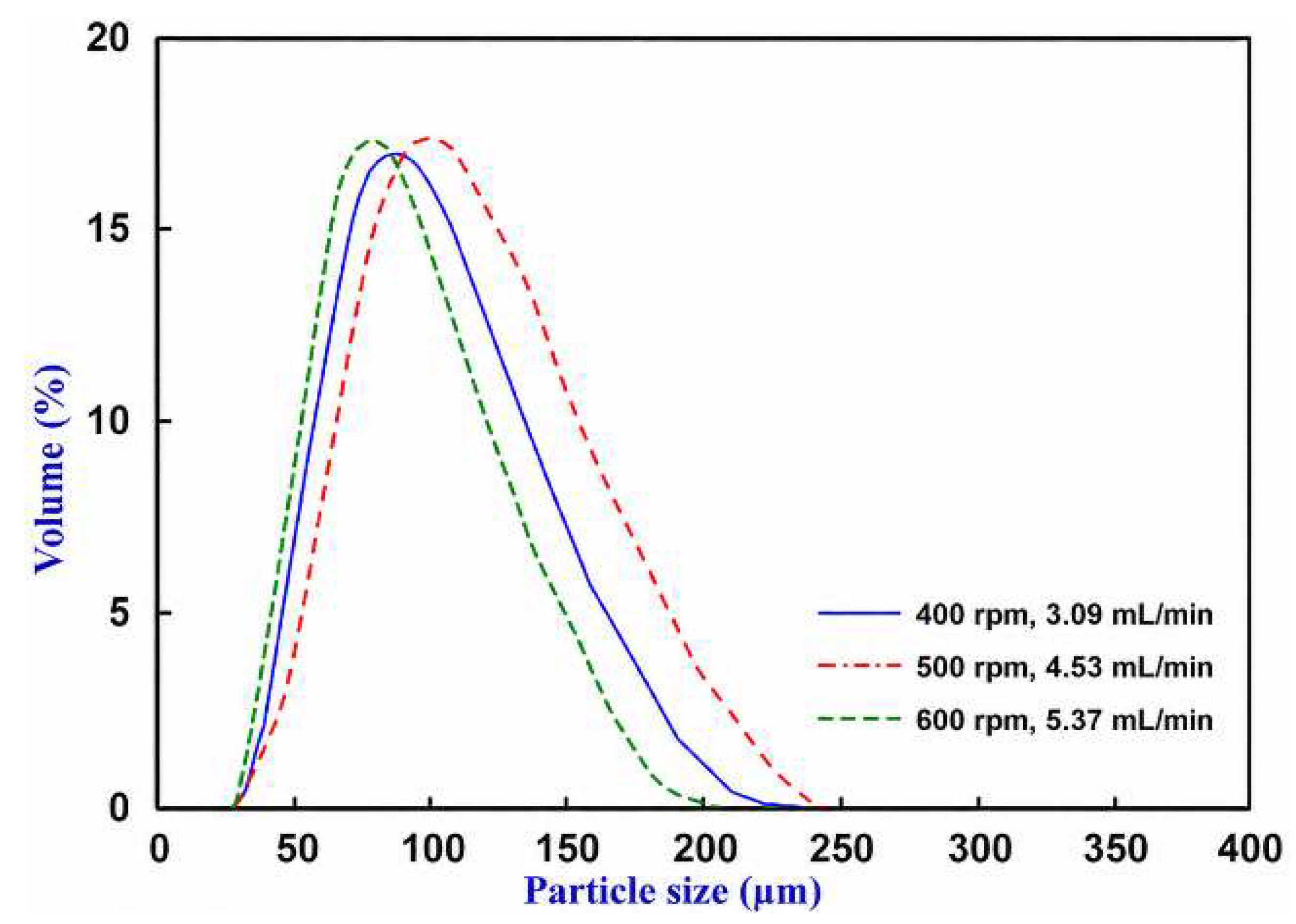
Figure 6.
Elemental analysis of lithium carbonate.
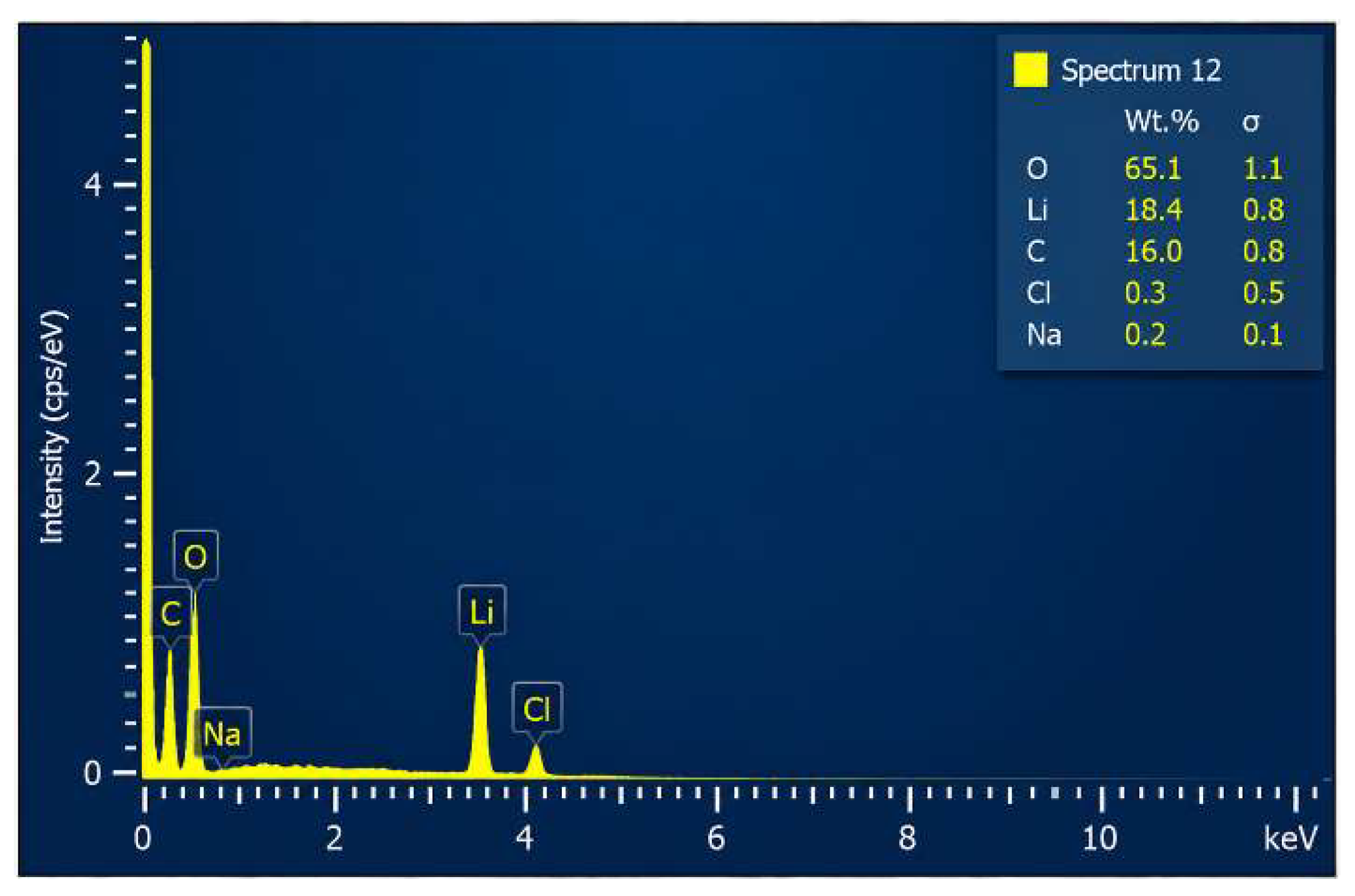
Figure 7.
SEM images of Li2CO3 precipitates obtained at (a) 25 ℃ and (b) 50 ℃, showing sheet-like ellipsoidal agglomerates typical of primary crystal growth followed by aggregation.
Figure 7.
SEM images of Li2CO3 precipitates obtained at (a) 25 ℃ and (b) 50 ℃, showing sheet-like ellipsoidal agglomerates typical of primary crystal growth followed by aggregation.
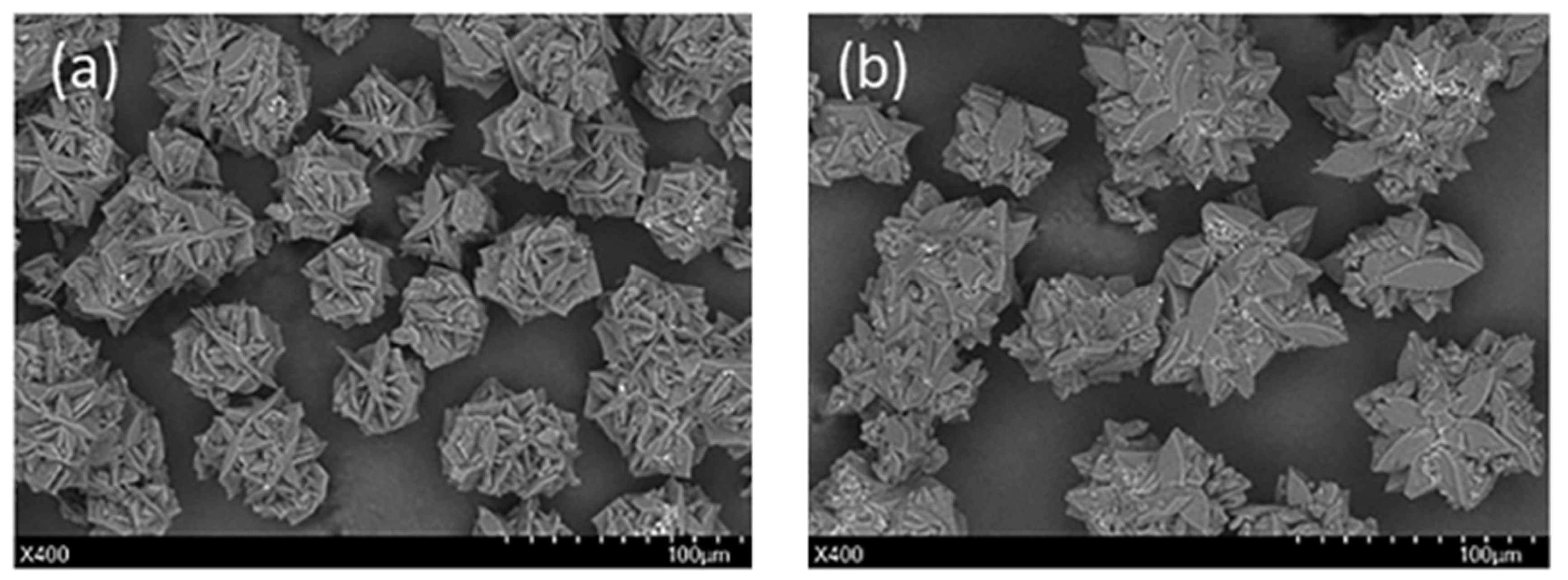
Figure 8.
X-ray diffraction pattern of Li2CO3.
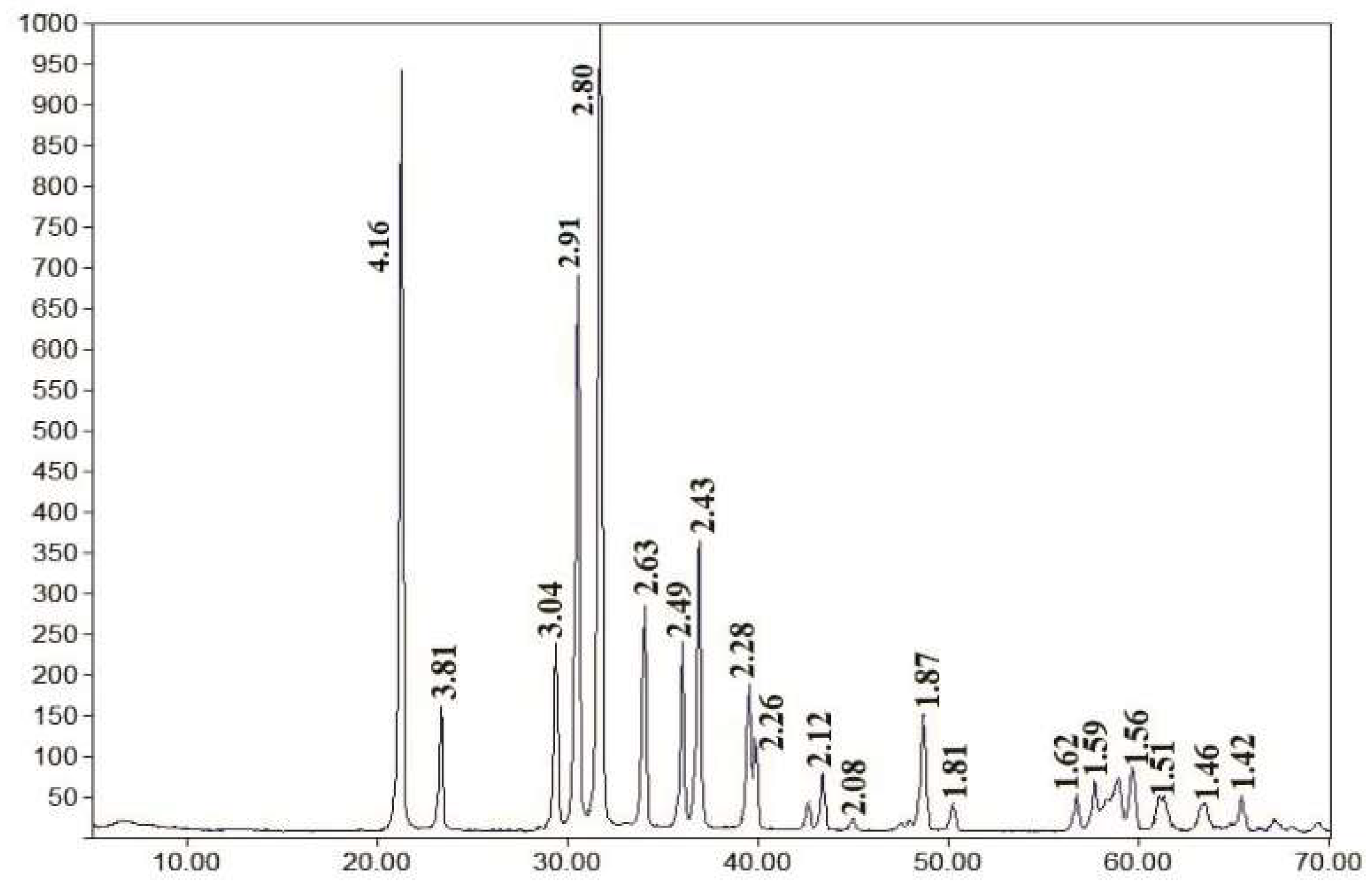
Figure 9.
IR spectrum of Li2CO3.
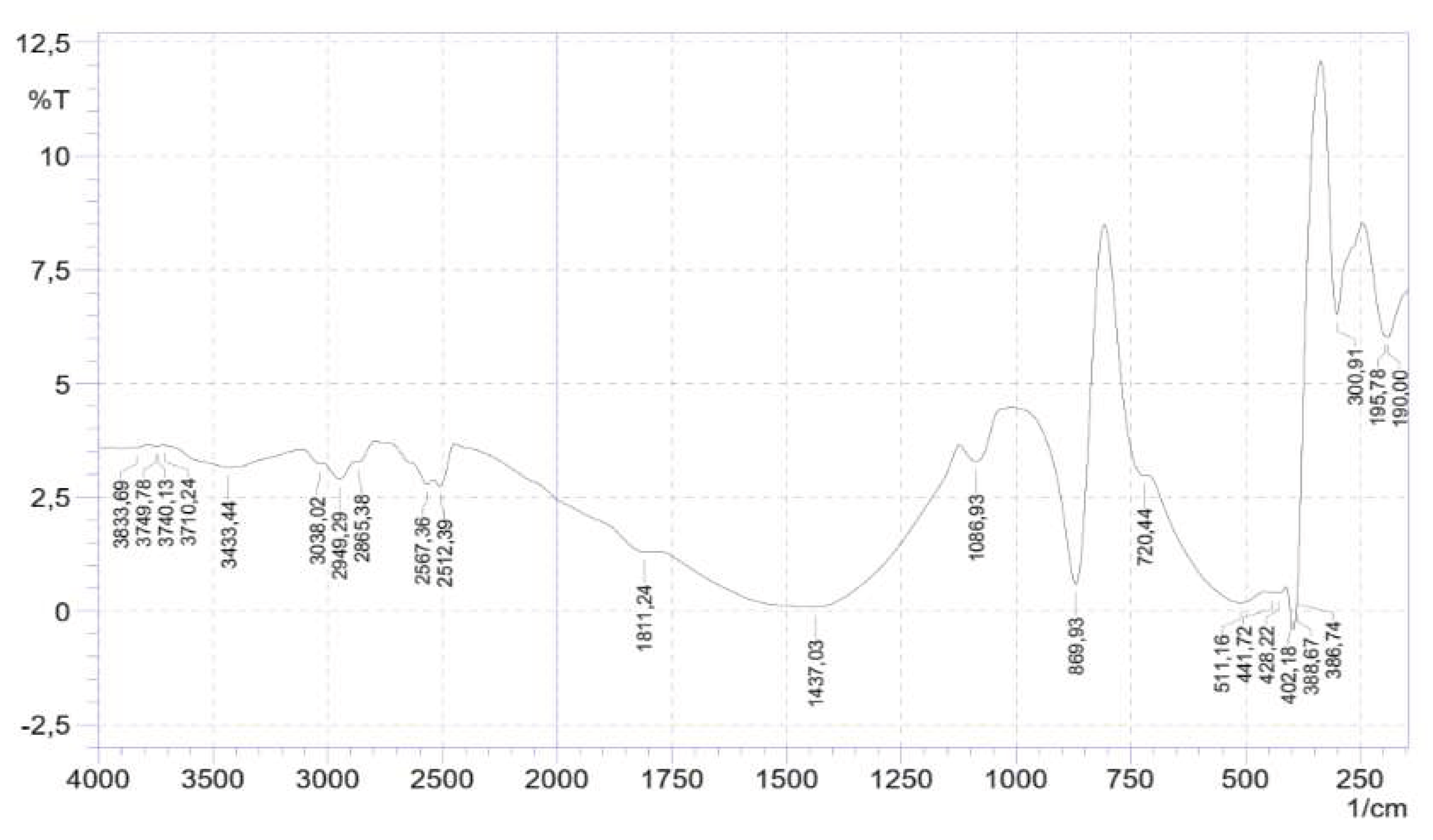

Table 1.
Chemical (ion and salt) composition of the Aral Sea brine.
|
Aral Sea water |
TDS(g/l) | pH | Ionic composition (g/L) | |||||||
| Li+ | Na+ | K+ | Ca2+ | Mg2+ | B2O3 | Cl- | SO42- | |||
| 130.9 | 8.0 | 0.11 | 54.92 | 3.67 | 0.80 | 10.25 | 0.03 | 70.90 | 22.11 | |
|
TDS (g/l) |
pH | Salt composition (g/L) | ||||||||
| LiCl | NaCl | KCl | CaCl2 | MgCl2 | Na2SO4 | |||||
| 130.9 | 8.0 | 0.66 | 126.20 | 7.01 | 2.22 | 40.57 | 32.70 | |||
Disclaimer/Publisher’s Note: The statements, opinions and data contained in all publications are solely those of the individual author(s) and contributor(s) and not of MDPI and/or the editor(s). MDPI and/or the editor(s) disclaim responsibility for any injury to people or property resulting from any ideas, methods, instructions or products referred to in the content. |
© 2026 by the authors. Licensee MDPI, Basel, Switzerland. This article is an open access article distributed under the terms and conditions of the Creative Commons Attribution (CC BY) license (http://creativecommons.org/licenses/by/4.0/).
Copyright: This open access article is published under a Creative Commons CC BY 4.0 license, which permit the free download, distribution, and reuse, provided that the author and preprint are cited in any reuse.