

Submitted:
28 July 2026
Posted:
29 July 2026
You are already at the latest version
Abstract
Breastfeeding education in pre-professional healthcare programs, including dietetics, is often limited and inconsistent. To address this gap, an advanced breastfeeding education and lactation management curriculum was developed that combined evidence-based content with active-learning strategies to support the translation of knowledge into practice. Graduate dietetics students attended four instructional modules, two with hands-on learning activities, and completed pre-post surveys measuring breastfeeding knowledge, attitudes, and counseling self-efficacy. Open-ended questions allowed students to qualitatively evaluate the program. Learning gains were evaluated using 11 post-survey items, and thematic analysis of open-ended responses was conducted to identify recurring patterns and areas requiring additional instructional emphasis. Eighty-seven students (mean age = 24.67 ± 4.67 years; 94.3% female) from six cohorts completed the curriculum and evaluation. The gain items demonstrated high internal consistency (Cronbach’s α = .92). Across all 11 items, at least 48% of students reported good to great learning gains (Likert scores of 4 or 5). Qualitative findings indicated increased breastfeeding knowledge, greater appreciation of the complexity of lactation science, and enhanced awareness of challenges faced by breastfeeding mothers. The active-learning curriculum improved student learning and confidence in applying lactation education and counseling skills, providing a promising model for strengthening breastfeeding training in dietetics education and practice.
Keywords:
dietetics education
; breastfeeding
; active learning
; education and training
; health education
1. Introduction
Breast milk, also known as human milk, provides affordable, superior nutrition for infants and vast intergenerational health benefits, and therefore, is widely endorsed by global health organizations [1,2,3,4,5].1–5 As the first food or nourishment, breastfeeding education and promotion frequently falls under the scope of healthcare providers [6];6 though efficacy may be hampered by limited knowledge[7,8]. In fact, professional national organizations, including the American College of Obstetrics and Gynecology and American Academy of Family Physicians, endorse breastfeeding [3,4]; and educational interventions enhance knowledge, self-efficacy, and practices in breastfeeding management[9,10,11,12,13]. However, breastfeeding curriculum and training in medical programs vary and are often limited [14,15]. Similarly, the Academy of Nutrition and Dietetics, the world’s largest organization of food and nutrition experts, supports breastfeeding, as most Registered Dietitian Nutritionists (RDNs) are employed by the health care industry to focus on nutrition-related prevention or medical management [16]. However, competency standards for preparatory education programs for RDNs are broad; thus, limiting curricula's focus on explicit breastfeeding educational knowledge and active-learning skills. As a result, educational exposure for dietetics pre-professionals lacks standardization and is frequently limited [17,18].
Active learning is an engaging, pedagogical strategy that allows students to become involved in the learning experience [19,20], rather than passively receive it. This strategy is frequently paired with more traditional learning approaches, such as the lecture-style classroom, to enhance learner understanding and increase critical thinking [21,22]. Development of critical thinking skills, such as clinical reasoning and evidence-based decision-making, supports effective care and is necessary for future healthcare providers, including RDNs, who wish to transition to higher levels of professional practice [6,23,24]. As such, this approach has been successfully incorporated into several academic medicine or health professions educational programs through internships, clinical, and in-facility student work [9,11,12,25,26,27]. An educational intervention consisting of three didactic lectures followed by a simulation center workshop addressing breastfeeding skills such as hand expression and latch assistance demonstrated gains in knowledge and self-efficacy among obstetrics and gynecology residents [9]. Within the undergraduate nutrition curriculum, active learning has similarly yielded positive outcomes, including enhanced student achievement and learner engagement [28,29,30]; however, its’ application in breastfeeding education interventions for dietetics pre-professional students is limited.
Therefore, RDNs developed an advanced breastfeeding education and lactation management curriculum featuring active learning activities to be integrated into graduate nutrition coursework and evaluated the development of active-learning skills and student engagement.
2. Material and Methods
2.1. Participants
Graduate-level dietetic students enrolled at three universities located in the Southern United States were invited to participate. The present analysis includes students enrolled from June 2022 through January 2025. Site locations reflect university employment of the RDN researchers or curriculum development team. Complete details on the program participants and measures have been previously reported [18].
2.2. Ethical Considerations
The UTMB Institutional Review Board approved this study protocol (#22-0115) on June 16, 2022, and determined it to be exempt. The educational curriculum was delivered as part of regular classroom activities in the graduate nutrition program, but students were able to opt out of the evaluation research. All study data were de-identified prior to analysis.
2.3. Educational Setting
The research team (CCD and SPC) developed the curriculum using current and evidence-based resources including The Texas Ten Step Program [31], a training guide for Baby-Friendly Hospital Initiative designation [32], and previously reported enhanced student knowledge, attitudes, and counseling self-efficacy post-intervention [33]. Here, we describe the lesson plans, including learning objectives, and related equipment and tools that students interacted with during the active-learning components of the intervention, acquisition of new active-learning skills, and student reflections in the post-intervention survey. One question, with 11 sub-statements (α = .92), asked students to report gains in ability, confidence, or comfort from the active learning activities (i.e., correct positioning of the bottle when bottle-feeding an infant with human milk). These were scored on a 5-point Likert scale with higher scores indicating higher agreement. Additionally, five write-in questions, including reflection on personal experiences from the active-learning activities and suggestions for improving the modules, served to evaluate the educational processes.
The theory of planned behavior (TPB) posits that behavior is influenced by intentions, which are shaped by 3 constructs: attitude, subjective norm, and perceived behavioral control [34]. Using the TPB, the researchers designed a curriculum intended to increase knowledge and participation, understanding that observing modeled behavior and peer support within the classroom would likely influence participant attitudes, social norms, and self-efficacy regarding breastfeeding promotion and counseling. The TPB has been frequently used in breastfeeding promotion and linked with breastfeeding success [35,36]. Additionally, it has been used to examine the perceived role and intentions of RDNs in breastfeeding practices [37]. The curriculum was embedded into required graduate didactic courses and delivered through hybrid delivery to students enrolled at (blinded) between June 2022 and January 2025. Students were required to complete the four educational modules as part of the course content but were able to opt out of the evaluation research. The modules and overall learning objectives are described below[18]:
Module 1: The Importance of Breastfeeding
Recognizes the unique quality of human milk, identifies the benefits of breastfeeding for mothers and infants, and discusses current breastfeeding recommendations and trends in the United States.
Module 2: Recommendations for Successful Breastfeeding
Identifies common barriers to breastfeeding, discusses the importance of breastfeeding policy, and high-risk breastfeeding behaviors.
Module 3: The Science of Breastfeeding
Demonstrates and practices common breastfeeding positions, illustrates infant latch and the changing composition of human milk, describes the number of feeds, and the nutritional needs of a breastfeeding mother.
Module 4: Assessment of Breastfeeding Progress
Explains how to identify infant weight change using growth charts, assess drug and vaccine safety for breastfeeding mothers, delineate contraindications to breastfeeding, and identify the need for lactation services referrals.
2.4. Active Learning Strategy
The active learning component of the educational curriculum was present in two of the four modules and provided through face-to-face instruction. Each module contained two specific active-learning lesson plans developed to translate knowledge into practical skills. Using the DESIGN procedure [38], we employed the four E’s, a lesson-planning tool that includes excite, explain, expand, and exit. For example, each lesson began with an “excite” question related to the active learning topic, designed to capture student attention. The explanation portion of the lesson plan was designed to educate participants on the importance of the topic using traditional lecture-based teaching strategies. The expanded portion of the DESIGN procedure was used to create skills through active-learning activities with education tools that could influence future use. The exit strategy, or the last component of the four E’s, was used to summarize the content for future application [20]. A sample detailed lesson plan of student learning objectives, necessary education tools, and active-learning activities is provided in Table 1.
Education Tools
Visual teaching tools were introduced into active-learning activities at pre-arranged times to support learner knowledge, enhance understanding, and increase skills training. For example, belly beads, representing the size of a newborn stomach, were introduced in Module #1 for learners to grasp the size of an infant stomach before moving on to discuss human milk nutritional composition or frequency of infant feeds over time. In Module #3, learners were instructed on breastfeeding positions and were encouraged to use the dolls and breastfeeding trainer to practice the holds. Visual teaching tools were only available in Modules #1 and #3 (face-to-face delivery). Images of education tools are found in Figure 1.
2.5. Data Analysis
Descriptive statistics, such as frequencies, means, and standard deviations, were calculated for student characteristics and responses to active-learning activity skills. Gains reported for practical skills development from active learning activities were scored so that higher scores reflected greater ability, confidence, or comfort. Data analyses were completed using the IBM Statistical Package for the Social Sciences (SPSS v.28).
Student engagement and evaluation of the active-learning activities were further assessed through four open-ended questions that inquired about insights gained from the educational program, areas that required further practice, comfort with applying skills beyond the classroom, and what (if anything) they enjoyed about the program. Team members (CCD and SPC) conducted a qualitative thematic analysis following Braun and Clarke’s methodology as described by Ahmed, S. et al. (2025) [39]. First, each team member independently reviewed student feedback several times to become familiar with the dataset. Then, using this flexible thematic analysis method, the team members applied codes to the reflective feedback using both inductive codes and deductive codes. Together, the team members reviewed the codes and created groupings to establish broad recurring themes and patterns, followed by a discussion of the significance of each to the objectives of the educational intervention.
3. Results
A total of 87 graduate nutrition students, with a mean age of 24.67 (SD = 4.67) years, of whom 94.3% were female; 69% white, 8% Latinx, 4.5% Asian Indian, 3.4% Black, and 3.4% bi-racial, from six different cohorts participated in the project between June 2022 and January 2025. Evaluation tools consisted of pre- and post-intervention surveys containing 40 items, including demographic, attitude, knowledge, and self-efficacy items, and were used to demonstrate the success of this intervention [33,40].
Participants were asked to rate the influence of the active learning strategies on their ability to perform future lactation education and counseling. The gain scores are presented in Table 2. The set of counseling skill items showed internal consistency (11 items; α = .92). Nearly 50% of participants reported good or great gains (scores of 4 or 5 on the Likert scale) for all 11 skill statements. For example, the ability to demonstrate infant stomach size (67%), understand types of infant stools (60%), and correctly pour and store breastmilk (60%) were reported as the components with the highest gains. Lower scores (scores of 1 and 2 on the Likert scale) were reported for activities including the ability to distinguish between a good and bad infant latch (20.6%), the ability to work breast pumps (19%), and the ability to size nipple shields (18%).
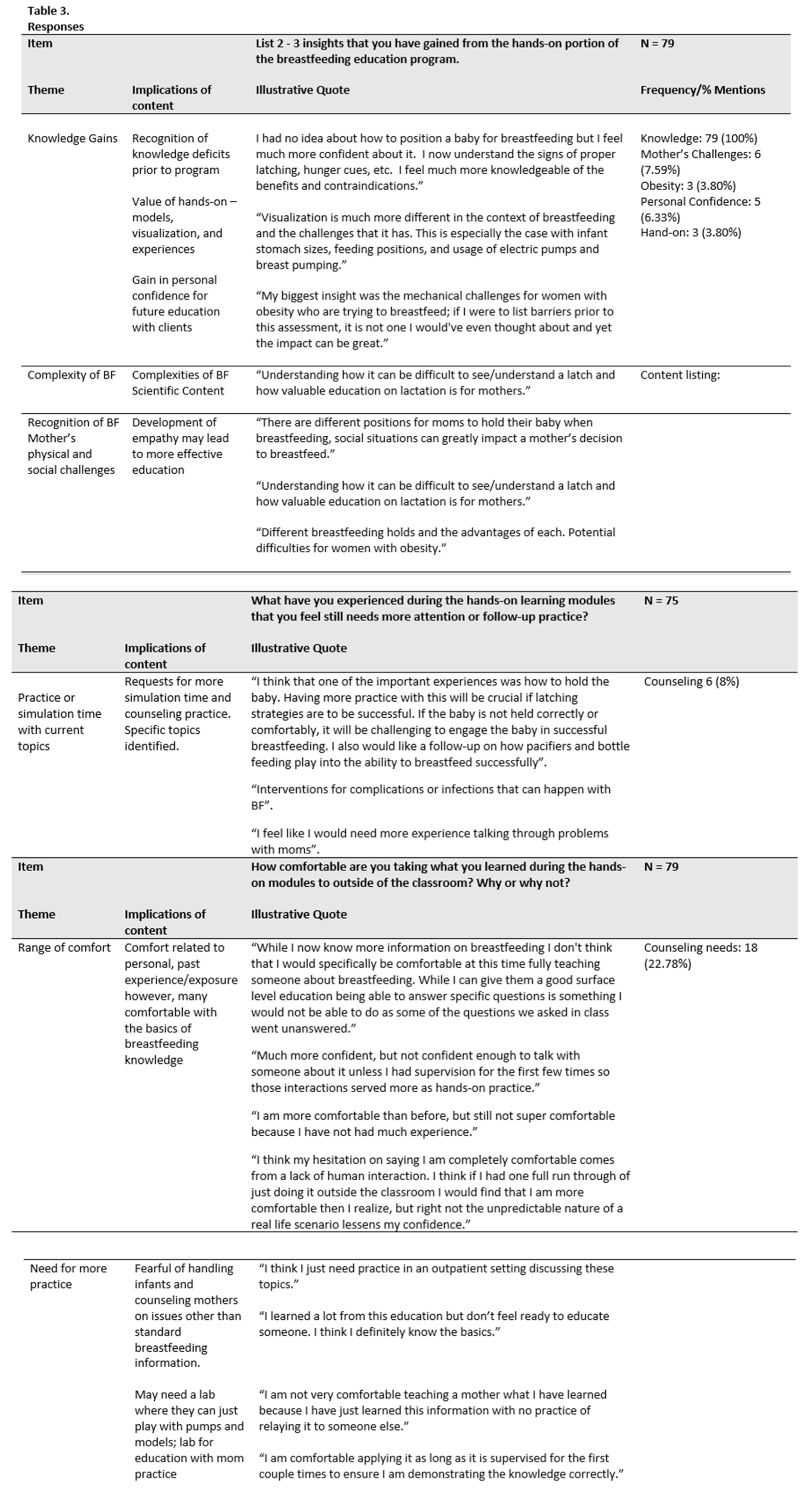
A thematic analysis of the student responses to the open-ended post-survey items was performed by the researchers, followed by an appraisal of the responses content. The survey inquired about insights gained from the educational program, areas that require further practice, comfort translating skills beyond the classroom, and what students found enjoyable about the program. The first question asked students to reflect on the active-learning activities by listing two to three insights they had gained regarding breastfeeding from this portion of the program. Overall, the responses were very positive. There were three broad recurring themes including an overall gain in knowledge, the complexity of breastfeeding, and the recognition of the breastfeeding mother’s physical and social challenges. For example, one participant stated,
“I really enjoyed all hands-on portions of the program, as it really brought everything I learned in the PowerPoint to a full circle. It helped me realize the many problems that breastfeeding women can go through such as mastitis.”
Another mentioned,
“I liked the variety of materials used for the hands-on experiences. The visual and kinesthetic elements made this material more memorable and allowed for practice in life-like settings.”
Additionally, the active learning component appeared to assist participants with translating the knowledge gained to its application. One participant stated,
“I liked this because I am a hands-on learner. I want to be able to take the things I learned and use them in my practice and future personal life. I never got to do anything like this in my undergrad program.”
One hundred percent of the 79 responses included a recognition of knowledge gains with 6.33% noting related improvement in personal confidence related to future practice. Approximately 11% discussed insight gained into the mother’s challenges with breastfeeding including those related to obesity.
In response to the second open-ended question, which asked which topics needed more attention during the education or which activities needed follow–up practice, most students offered knowledge-based suggestions. Six (8%) identified items related to speaking with or educating breastfeeding mothers. Perhaps the didactic foundation was not yet satisfied sufficiently to have students begin to consider issues related to counseling, as they were not asked to practice counseling. They did describe wanting real-life demonstrations of breastfeeding and counseling opportunities. For example, one participant stated,
“I think it would be interesting to see an animated or real demonstration video of breastfeeding from start to finish. Providing the pretend doll and pretend breast were helpful, but in real life we will need to have seen what it should look like to be helpful practitioners.”
The third open-ended question asked how comfortable the students felt using their new knowledge outside the classroom. A range of comfort levels was described, with 22.78% specifically identifying a need to increase confidence in counseling clients or patients. This broad recurring theme was further qualified by describing that the level of personal experience was associated with the degree of additional practice needed, and a fear of handling infants was noted. Not yet feeling fully comfortable with the content seemed to affect their confidence in their ability to translate it into practice. This was reflected in this participant response,
“Practice consult sessions - one person pretends they are the dietitian, the other pretends they are the breastfeeding mother, to help with practicing communicating the information and with visual representation.”
Additional student responses to the open-ended questions can be found in Table 3.
Finally, the participants were asked to reflect on what they specifically enjoyed about the active-learning activities. The recurring themes centered on realistic props, infants, and visuals, which helped develop comfort in translating the knowledge gained into the application of breastfeeding education through simulation. The activities seemed to positively influence the attitudes toward the material learned.
4. Discussion
The development and delivery of this educational intervention, comprising advanced breastfeeding and lactation modules accompanied by active learning strategies, to pre-professional nutrition students enhanced learning and prepared the participants for translation into practice settings. Reported student learning gains following a focused, active-learning breastfeeding and lactation management intervention, along with previously reported increases in breastfeeding knowledge, attitudes, and self-efficacy [18], support the introduction of advanced breastfeeding and lactation management education that includes active learning components within the graduate nutrition curriculum. The researchers were guided by the belief that all future nutrition professionals should have a deeper working knowledge of the complexities of breastfeeding and the ability to assist clients or patients with challenges to influence breastfeeding cessation rates. This educational program was novel in its depth of content coverage and enhanced simulation activities; however, requests from student feedback confirmed the researchers’ assessment of the need to include additional practice simulations, interviewing, and educating clients/patients.
Acknowledging the complexity of the material presented and identifying the gains in knowledge related to the program appeared to stimulate additional interest in learning more content. Recognizing the challenges mothers face may assist with the development of empathy, ultimately improving the effectiveness of the student’s future performance when counseling clients or patients. Reported student learning gains following this intervention along with previously reported increases in breastfeeding knowledge, attitudes, and self-efficacy, endorse the introduction of advanced breastfeeding and lactation management education containing active learning components within the nutrition curriculum. Education strategies guided by the TPB have previously demonstrated efficacy in predicting professional behaviors among health care providers [41]; thus, we were not surprised by the learning gains. Limitations in gains may be related to exposure to the material at the undergraduate level, the need for improvement in teaching materials, or inadequate time devoted to those topic areas.
Student engagement was high throughout the intervention, as evidenced by thoughtful reflections. Overall, students reported positive gains in foundational knowledge, recognizing the complexity of breastfeeding science and the multiple physical and social factors influencing mothers’ choices to breastfeed. Simulations during the active learning periods may have assisted with this recognition, which could lead to the development of empathy. The students identified the need for more practice discussing breastfeeding with patients/clients. This is significant, as these pre-professionals will need to be comfortable disseminating this information to clients and the public at large when advocating for breastfeeding support. Additional practice in counseling and education may also help normalize discussions about breastfeeding increasing comfort with these activities.
6. Limitations
The researchers acknowledge that the measurement of counseling skill improvements associated with the delivery of the active learning modules represent acute changes experienced by the participants and may not reflect longer-term translation into future professional practice. Additionally, the write-in questions on the post-intervention survey, including reflection on hands-on activities and suggestions for improving future modules, require increased participant time and mental effort, potentially limiting responses. Qualitative data analysis can introduce researcher subjectivity and bias, and results may not be generalizable. Finally, as previously reported, other factors such as breastfeeding exposure and level of didactic content as undergraduate students may affect the practice enhancement in graduate level participants.18
5. Conclusions
The researchers are encouraged by the findings and believe that learning modules could be expanded to include additional counseling and content on infant feeding challenges. Supplementary critical-thinking activities could improve the development of self-efficacy in future practice. While AND endorses breastfeeding-informed RDNs, the accrediting body for nutrition programs does not specify breastfeeding education curricula; therefore, breastfeeding education within nutrition programs is varied, and some students are likely underprepared for entry-level positions. Future and current practitioners who elect to specialize in maternal and child health may require additional training after employment; however, with this education embedded in the nutrition curriculum, future RDNs will be able to provide breastfeeding support to pregnant women or new mothers who are unable to meet with a lactation specialist/consultant. This curriculum may support programs that wish to enhance training in this area of dietetics or professionals who desire to enrich or diversify their skills.
References
- Meek, J.Y.; Noble, L. Section on Breastfeeding. Policy Statement: Breastfeeding and the Use of Human Milk. Pediatrics 2022, 150(1), e2022057988. [Google Scholar] [CrossRef] [PubMed]
- Breastfeeding. Available online: https://www.who.int/health-topics/breastfeeding (accessed on 1 June 2026).
- ACOG Committee Opinion No. 756: Optimizing Support for Breastfeeding as Part of Obstetric Practice. Obstet. Gynecol. 2018, 132(4), e187–e196. [CrossRef] [PubMed]
- Breastfeeding, Family Physicians Supporting (Position Paper). AAFP. Available online: https://www.aafp.org/about/policies/breastfeeding-position-paper (accessed on 1 June 2026).
- CDC. Breastfeeding Recommendations and Guidance. Breastfeeding. 27 April 2026. Available online: https://www.cdc.gov/breastfeeding/php/guidelines-recommendations/index.html (accessed on 1 June 2026).
- Scott, I.A.; Hubbard, R.E.; Crock, C.; Campbell, T.; Perera, M. Developing critical thinking skills for delivering optimal care. Intern Med. J. 2021, 51(4), 488–493. [Google Scholar] [CrossRef] [PubMed]
- Sigman-Grant, M.; Kim, Y. Breastfeeding Knowledge and Attitudes of Nevada Health Care Professionals Remain Virtually Unchanged over 10 Years. J. Hum. Lact Off. J. Int. Lact Consult Assoc. 2016, 32(2), 350–354. [Google Scholar] [CrossRef] [PubMed]
- McGuinness, D.; Ni Mhurchu, S.; Frazer, K.; et al. A co-designed evaluation study to identify Breastfeeding Knowledge of General Practitioners’ and Practice Nurses’. Health Promot Int. 2024, 39(2), daae021. [Google Scholar] [CrossRef] [PubMed]
- Radoff, K.; Forman, R. Lactation Education for Resident Obstetricians: Promoting Breastfeeding Advocates for the Future. J. Midwifery Womens Health 2019, 64(6), 754–762. [Google Scholar] [CrossRef] [PubMed]
- Shen, Y.; Rudesill, R. Impact of an Educational Intervention on Breastfeeding Counseling Behavior of OB/GYN Residents. Breastfeed. Med. Off. J. Acad. Breastfeed. Med. 2016, 11(6), 286–292. [Google Scholar] [CrossRef] [PubMed]
- Ogburn, T.; Espey, E.; Leeman, L.; Alvarez, K. A Breastfeeding Curriculum for Residents and Medical Students: A Multidisciplinary Approach. J. Hum. Lact Off. J. Int. Lact Consult Assoc. 2005, 21, 458–464. [Google Scholar] [CrossRef] [PubMed]
- Feldman-Winter, L.; Barone, L.; Milcarek, B.; et al. Residency curriculum improves breastfeeding care. Pediatrics 2010, 126(2), 289–297. [Google Scholar] [CrossRef] [PubMed]
- López-Bassols I, Cameron J, Biazus-Dalcin C, McFadden A. In-Depth Breastfeeding Training for Healthcare Professionals: A Systematic Review. J Hum Lact Off J Int Lact Consult Assoc. Published online June 23, 2026:8903344261446138. doi:10.1177/08903344261446138. [CrossRef] [PubMed]
- Chuisano, S.A.; Anderson, O.S. Assessing Application-Based Breastfeeding Education for Physicians and Nurses: A Scoping Review. J. Hum. Lact Off. J. Int. Lact Consult Assoc. 2020, 36(4), 699–709. [Google Scholar] [CrossRef] [PubMed]
- Gary, A.J.; Birmingham, E.E.; Jones, L.B. Improving breastfeeding medicine in undergraduate medical education: A student survey and extensive curriculum review with suggestions for improvement. Educ. Health 2017, 30(2), 163–168. [Google Scholar] [CrossRef] [PubMed]
- Dosedel, E. Compensation and Benefits Survey 2021. J. Acad. Nutr. Diet. 2021, 121(11), 2314–2331. [Google Scholar] [CrossRef]
- Theurich, M.A.; McCool, M.E. Moving National Breastfeeding Policies into Practice: A Plea to Integrate Lactation Education and Training into Nutrition and Dietetics Programs in the United States. J. Hum. Lact Off. J. Int. Lact Consult Assoc. 2016, 32(3), 563–567. [Google Scholar] [CrossRef] [PubMed]
- Douglas, C.; Camel, S. Integrated Advanced Education Supports Future Registered Dietitian Nutritionists’ Breastfeeding Self-Efficacy in Practice. J. Diet. Educ. 2025, 3(2). [Google Scholar] [CrossRef]
- Bonwell, C.C.; Eison, J.A. Active Learning: Creating Excitement in the Classroom. 1991 ASHE-ERIC Higher Education Reports. ERIC Clearinghouse on Higher Education, The George Washington University, One Dupont Circle, Suite 630, Washington, DC 20036-1183 ($17. 1991. Available online: https://eric.ed.gov/?id=ED336049 (accessed on 23 April 2025).
- Brame, C.J. Chapter 4 - Active Learning: The Student Work That Builds Understanding. In Science Teaching Essentials; Brame, C.J., Ed.; Academic Press, 2019; pp. 61–72. [Google Scholar] [CrossRef]
- Styers, M.L.; Van Zandt, P.A.; Hayden, K.L. Active Learning in Flipped Life Science Courses Promotes Development of Critical Thinking Skills. CBE—Life Sci. Educ. 2018, 17(3), ar39. [Google Scholar] [CrossRef] [PubMed]
- Walker, S.E. Active Learning Strategies to Promote Critical Thinking. J. Athl. Train. 2003, 38(3), 263–267. [Google Scholar] [PubMed]
- Charney, P.; Peterson, S.J. Practice Paper of the Academy of Nutrition and Dietetics Abstract: Critical Thinking Skills in Nutrition Assessment and Diagnosis. J. Acad. Nutr. Diet. 2013, 113(11), 1545. [Google Scholar] [CrossRef]
- Mancin, S.; Reggiani, F.; Calatroni, M.; Morenghi, E.; Andreoli, D.; Mazzoleni, B. Enhancing clinical nutrition education for healthcare professionals: Engagement through active learning methodologies. Clin. Nutr. Open Sci. 2023, 52, 49–57. [Google Scholar] [CrossRef]
- Coakley, K.E.; Pribis, P. Dietetics students’ perceptions of classroom-based learning activities. Educ. Health Abingdon Engl. 2021, 34(2), 73–76. [Google Scholar] [CrossRef] [PubMed]
- Sadovnikova, A.; Chuisano, S.A.; Ma, K.; et al. Development and evaluation of a high-fidelity lactation simulation model for health professional breastfeeding education. Int. Breastfeed. J. 2020, 15, 8. [Google Scholar] [CrossRef] [PubMed]
- Wood, N.I.; Gleit, R.D.; Levine, D.L. Culinary nutrition course equips future physicians to educate patients on a healthy diet: an interventional pilot study. BMC Med. Educ. 2021, 21(1), 280. [Google Scholar] [CrossRef] [PubMed]
- Szeto, A.; Haines, J.; Buchholz, A.C. Impact of an Optional Experiential Learning Opportunity on Student Engagement and Performance in Undergraduate Nutrition Courses. Can J Diet Pract Res Publ Dietit Can Rev Can Prat Rech En Diet Une Publ Diet Can. 2016, 77(2), 84–88. [Google Scholar] [CrossRef] [PubMed]
- Burkhart, S.J.; Taylor, J.A.; Kynn, M.; Craven, D.L.; Swanepoel, L.C. Undergraduate Students Experience of Nutrition Education Using the Flipped Classroom Approach: A Descriptive Cohort Study. J. Nutr. Educ. Behav. 2020, 52(4), 394–400. [Google Scholar] [CrossRef] [PubMed]
- Cárdenas, V. From the Blackboard to the Museum: Experiences with a Mixed Methodology in the Teaching of Anatomy for Nutrition Students. J. Health Care Educ. Pract. (Journal of Health Care Education in Practice VOL. 7/2). 2025, 7, 169–179. [Google Scholar]
- Texas Ten Step | TexasTenStep.org. Available online: https://texastenstep.org/ (accessed on 29 April 2025).
- Ten steps to successful breastfeeding. Available online: https://www.who.int/teams/nutrition-and-food-safety/food-and-nutrition-actions-in-health-systems/ten-steps-to-successful-breastfeeding (accessed on 4 December 2023).
- Camel, S.P.; Heathman, L.; Douglas, C.C. A Comparison of Breastfeeding Exposure, Attitude, and Knowledge Between Collegiate African American and White Males with no Biological Children. Matern Child Health J. 2020, 24(7), 875–884. [Google Scholar] [CrossRef] [PubMed]
- Ajzen, I. The theory of planned behaviour: Reactions and reflections. Psychol. Health 2011, 26(9), 1113–1127. [Google Scholar] [CrossRef] [PubMed]
- Brockway, M.; Benzies, K.; Hayden, K.A. Interventions to Improve Breastfeeding Self-Efficacy and Resultant Breastfeeding Rates: A Systematic Review and Meta-Analysis. J. Hum. Lact Off. J. Int. Lact Consult Assoc. 2017, 33(3), 486–499. [Google Scholar] [CrossRef] [PubMed]
- Grano, C.; Fernandes, M.; Conner, M. Predicting intention and maintenance of breastfeeding up to 2-years after birth in primiparous and multiparous women. Psychol. Health 2023, 38(11), 1536–1552. [Google Scholar] [CrossRef] [PubMed]
- Dinour, L.M.; Shefchik, M.; Uguna, A. Correlates of Professional Breastfeeding Perceived Role, Perceived Influence, and Confidence in Providing Lactation Support Among Registered Dietitians and Registered Nurses. Dietetics 2024, 3(4), 4. [Google Scholar] [CrossRef]
- Contento, I.R. Nutrition Education: Linking Research, Theory, and Practice; Jones & Bartlett Publishers, 2016. [Google Scholar]
- Ahmed, S.K.; Mohammed, R.A.; Nashwan, A.J.; et al. Using thematic analysis in qualitative research. J. Med. Surg. Public Health 2025, 6, 100198. [Google Scholar] [CrossRef]
- Heathman, L.; Douglas, C.C.; Camel, S.P. Relationship among Breastfeeding Exposure, Knowledge, and Attitudes in Collegiate Males Residing in East Texas. J. Hum. Lact Off. J. Int. Lact Consult Assoc. 2019, 35(4), 782–789. [Google Scholar] [CrossRef] [PubMed]
- Rich, A.; Medisauskaite, A.; Potts, H.W.W.; Griffin, A. A theory-based study of doctors’ intentions to engage in professional behaviours. BMC Med. Educ. 2020, 20(1), 44. [Google Scholar] [CrossRef] [PubMed]
Figure 1.
Educational Materials Used in Learning Activities. Note. From left to right, clockwise: belly beads, Dirty Details diapers, anatomical breast model, breastfeeding trainer, nipple and mastitis. Note. From left to right: belly beads, Dirty Details diapers, anatomical breast model.
Figure 1.
Educational Materials Used in Learning Activities. Note. From left to right, clockwise: belly beads, Dirty Details diapers, anatomical breast model, breastfeeding trainer, nipple and mastitis. Note. From left to right: belly beads, Dirty Details diapers, anatomical breast model.
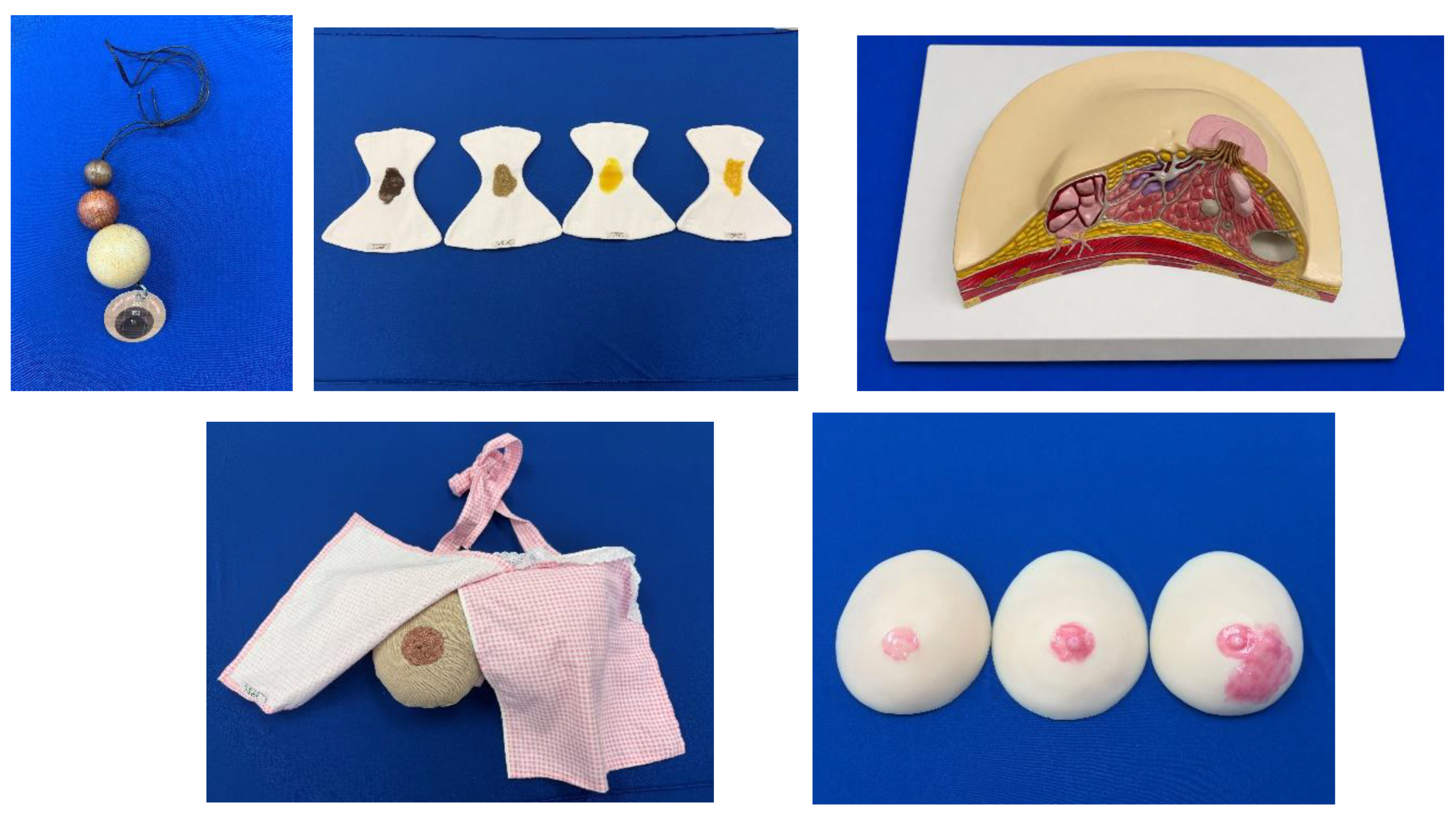

Table 1.
A Sample of the Breastfeeding Educational Program Learning Objectives, Required Educational Materials, and Learning Activities.
Table 1.
A Sample of the Breastfeeding Educational Program Learning Objectives, Required Educational Materials, and Learning Activities.
| Lesson # | Learning Objectives | Education Materials | Education Process and Hands-on Activity |
| 1 | Describe and present different feeding positions for breastfed infants. | MOM breast feeding trainer Breastfeeding dolls Dirty Details diapers |
Discuss breastfeeding positions. Discuss LATCH Demonstrate the MOM breastfeeding trainer with breastfeeding dolls. Allow participants to practice positions with the trainer and breastfeeding dolls. |
| 2 | Develop strategies to trouble shoot conditions that could decrease length of breastfeeding. | Common breast conditions models |
Discuss the four types of models (inverted nipple, flat nipple, mastitis, and lactating breast) and provide demonstration to achieve latch. Allow participants to repeat demonstrations with models. |
| 3 | Identify and describe stomach volume by days and weeks following the birth of an infant. |
Newborn belly beads Baby stomach flip chart |
Discuss the size difference of babies’ stomach during the first few weeks of growth. Allow participants to touch and see belly beads and stomach flip chart. |
| 4 | Identify a good flange fit. |
Flanges Breast models |
Discuss the purpose of the flange and need for correct fitting. Show video for proper flange sizing. Allow participants to measure flange sizes for breast models. |
Table 2.
Counseling skills enhancement associated with active learning activities (N=87).
| Counseling Skill | No gain (1) |
A little gain (2) |
Moderate gain (3) |
Good Gain (4) |
Great gain (5) |
||
| n | M (SD) | n (%) | n (%) | n (%) | n (%) | n (%) | |
| Remaining professional when seeing an individual’s breast | 81 | 3.98 (1.19) | 4 (4.6) | (8.0) | 13 (14.9) | 20 (23.0) | 37 (42.5) |
| Ability to hold an infant | 81 | 3.85 (1.30) | 7 (8.0) | 7 (8.0) | 11(12.6) | 22 (25.3) | 34 (39.1) |
| Ability to size proper nipple shield size for nipple sizes | 81 | 3.69 (1.27) | 4 (4.6) | 14 (16.1) | 15 (17.2) | 18 (20.7) | 30 (34.5) |
| Ability to work an electric pump | 81 | 3.69 (1.34) | 8 (9.2) | 11(12.6) | 7 (8.0) | 27(31.0) | 28 (32.2) |
| Ability to work a breast pump (manual) | 80 | 3.73 (1.32) | 6 (6.9) | 13 (14.9) | 8 (9.2) | 23 (26.4) | 30(34.5) |
| Ability to hold or show an infant in different nursing positions | 80 | 4.00 (1.02) | 2 (2.3) | 5 (5.7) | 14 (16.1) | 29 (33.3) | 30 (34.5) |
| Ability to acknowledge a good latch versus a bad latch | 81 | 3.64 (1.21) | 3 (3.4) | 15 (17.2) | 15 (17.2) | 23 (26.43) | 25 (24.49) |
| Understanding of types of infant stool | 81 | 4.01 (1.04) | 2 (2.3) | 6 (6.9) | 13 (14.9) | 28 (32.2) | 32 (36.8) |
| Ability to pour and store breastmilk correctly | 81 | 3.93 (1.08) | 3 (3.4) | 7 (8.0) | 11 (12.6) | 32 (36.8) | 28 (32.2) |
| Correct positioning of the bottle when bottle feeding an infant with breastmilk | 80 | 4.03 (1.04) | 3 (3.4) | 3 (3.4) | 15 (17.2) | 27 (31.0) | 32 (36.8) |
| Ability to demonstrate infant stomach size | 81 | 4.21 (0.90) | 2 (2.3) | 1 (1.1) | 11 (12.6) | 31 (35.6) | 36 (41.4) |
Disclaimer/Publisher’s Note: The statements, opinions and data contained in all publications are solely those of the individual author(s) and contributor(s) and not of MDPI and/or the editor(s). MDPI and/or the editor(s) disclaim responsibility for any injury to people or property resulting from any ideas, methods, instructions or products referred to in the content. |
© 2026 by the authors. Licensee MDPI, Basel, Switzerland. This article is an open access article distributed under the terms and conditions of the Creative Commons Attribution (CC BY) license (http://creativecommons.org/licenses/by/4.0/).
Copyright: This open access article is published under a Creative Commons CC BY 4.0 license, which permit the free download, distribution, and reuse, provided that the author and preprint are cited in any reuse.


