
Submitted:
27 July 2026
Posted:
29 July 2026
You are already at the latest version
Abstract
Under the context of “Emerging Engineering Education” construction, promoting the reform of practical teaching for mechanical majors is a key task for cultivating high-level mechanical professionals with sustainable development capabilities and the ability to adapt to the needs of new quality productive forces. This study addresses several issues existing in the practical courses of mechanical majors, including the disconnect between industrial demands and teaching content, the fragmentation of practical teaching links, insufficient innovation ability training, weak alignment between professional practice and industrial needs, and imperfect industry-education integration mechanisms. A “five-in-one, four-stage progressive” mechanical innovation practice course teaching model is proposed, centered on “demand traction, classroom foundation building, scientific innovation strengthening, competition verification, and graduation project application.” Measures such as “demand introduction, process integration, achievement transformation, and mechanism guarantee” ensure the smooth implementation of the teaching model. Practice has shown that this model possesses strong applicability and effectiveness in cultivating talents adaptable to the sustainable development of the mechanical industry, providing an effective reference for practical teaching reform in mechanical engineering institutions in the new era.
Keywords:
Emerging Engineering Education
; mechanical majors
; innovative practice courses
; demand traction
; four-stage progression
1. Introduction
The construction of Emerging Engineering Education has emerged against the backdrop of a global industrial revolution characterized by new technologies, new business forms, and new models, aiming to achieve China's industrial sustainable development. Its goal is to cultivate innovative talents capable of addressing the complex socio-environmental challenges proposed by the United Nations Sustainable Development Goals (SDGs) [1,2]. A key task in advancing Emerging Engineering Education construction is to strengthen professional practical education to cultivate innovative talents adapted to the development of the new era [3,4,5,6]. Mechanical majors include various specializations such as Mechanical Design, Manufacturing and Automation, Material Forming and Control Engineering, Mechanical and Electronic Engineering, Industrial Design, Process Equipment and Control Engineering, Vehicle Engineering, Intelligent Manufacturing Engineering, and Intelligent Vehicle Engineering. The mission of these majors is closely related to sustainable development goals. Practical courses constitute a vital component of the curriculum system for mechanical majors and serve as crucial courses for assessing the achievement of professional training objectives. Therefore, to meet the needs of industrial development, reforming practical course teaching is a critical task in the practical teaching reform of mechanical majors.
To strengthen the sustainable development of education, researchers have implemented numerous reform measures for practical courses across various disciplines. In the area of experimental courses, the robotics experimental course integrates multidisciplinary content including mechanical, electronic, control, and materials science, adopting a “structure-drive-system” progressive, full-process practical teaching approach [7]. The comprehensive experimental course for metal material heat treatment reconstructs the fragmented verification experiments scattered across multiple courses into a comprehensive experimental course covering the entire process [8]. Electrochemistry experimental courses introduce cutting-edge electrochemical projects into undergraduate laboratories [9]. In the area of course design, surveying engineering course design proposes a capability-oriented and digitally-intelligent empowered bidirectionally-driven course design, where capability orientation highlights job demand traction and cultivation of students' core competencies, while digital intelligence drive emphasizes the upgrading and updating of course content systems through advanced professional technologies and the iteration of teaching methods based on new-generation information technologies like big data, artificial intelligence, and cloud computing [10]. The Chemical Engineering Principles Course Design integrates ideological and political education and research case studies into its teaching reform, reconstructing teaching content, innovating teaching models, and optimizing evaluation systems to provide a reference for solving problems in traditional teaching [11]. The Mechanical Design Course Design incorporates engineering case teaching methods, achieving favorable teaching outcomes [12]. In the area of metalworking internships, the “Cloud Metalworking Internship” adopts a new teaching model featuring project-based learning throughout, real-time live streaming, and online-offline integration [13]. The metalworking internship for mechanical majors combines online theoretical teaching, virtual simulation, offline practical operation, and project-driven methods, achieving an organic integration of theory and practice, and utilizing machine vision technology to enhance internship safety [14]. In the area of production internships, the production internship for packaging engineering majors adopts an outcome-based education (OBE) model [15]. The production internship for mechanical majors improves the quality of engineering education by refining internship models and optimizing assessment methods [16]. In the area of graduation internships, the graduation internship for Polymer Materials and Engineering majors adopts an industry-education integration talent cultivation model [17]. The graduation internship for Safety Engineering majors proposes an integrated theory-practice education model [18]. The Environmental Design major implements a reform model characterized by the integration of internship, design, and thesis [19]. In the area of graduation design (thesis), the graduation design (thesis) for Light Chemical Engineering majors adopts a project-based teaching model characterized by “real problems, authentic practice, dual-mentor co-education, and three-real training,” embodying deep industry-education integration [20]. The graduation design for mechanical majors is deeply integrated with industry, achieving collaborative education between schools and enterprises [21,22]. The above practical teaching reforms have played significant roles in cultivating professional talents and have made important contributions to sustainable development.
The above components—experimental courses, curriculum design, metalworking practice, production internship, graduation internship, and graduation project (thesis)—together constitute a relatively comprehensive practical course system for mechanical engineering majors. However, when confronted with the current needs of industrial transformation and upgrading as well as the cultivation of innovative talents, this system still exhibits certain deficiencies, which are mainly manifested in the following four aspects. First, at the level of teaching content, practical course content tends to be rigid and lags behind in updates. Existing curriculum designs are predominantly based on verification-oriented and inheritance-type projects, lacking the introduction of cutting-edge technologies and real-world engineering problems. This makes it difficult to stimulate students' innovative thinking and active exploratory awareness. Second, at the level of teaching organization, practical components emphasize individual completion while lacking sufficient training in teamwork. Actual engineering projects often involve multi-factor coupling and complex task division, requiring students to possess strong collaborative skills. However, current curriculum designs mostly rely on individual assignments and lack systematic team-based project training, which is not conducive to cultivating students' cooperative awareness and project management capabilities. Third, at the level of faculty orientation, the pressure of research performance evaluation leads teachers to prioritize fundamental research, thereby weakening their capacity for engineering practice guidance. Teachers rarely translate real-world enterprise problems into teaching cases, resulting in a disconnect between curriculum design, graduation projects, and actual industrial demands. Consequently, students find it difficult to develop problem-awareness and problem-solving capabilities oriented toward engineering practice during their academic studies, which in turn affects their employment competitiveness. Fourth, at the level of systemic design, existing reforms tend to focus on individual practical components, lacking an overall plan that is integrated and progressive across the entire chain. There is insufficient cohesive articulation among foundational theories, practical training, innovation projects, and comprehensive applications. As a result, a stepwise training trajectory that proceeds "from basics to advanced levels and from learning to application" has not been established, constraining the systematic cultivation of versatile and innovative talents. In response to the above issues, this study proposes a five-dimensional, four-stage progressive teaching model for mechanical innovation practice courses, characterized by "demand - driven, classroom - foundation - building, research - innovation - strengthening, competition-verifying, and graduation - project - applying," so as to remedy the shortcomings of the existing practical course system. In this model, enterprises put forward industrial demands; classroom teaching cultivates students' foundational professional knowledge; university-level science and technology innovation projects reinforce students' professional fundamentals and foster innovative practical abilities; disciplinary competitions test what students have learned; and graduation projects train students to integrate and apply their knowledge in response to industrial needs. Ultimately, this approach achieves the goal of professional practical training.
2. Problems: Current Issues in Innovative Practical Teaching
After years of development, the practical education for mechanical majors at our university has achieved certain results in terms of training models and educational quality [23,24,25,26,27,28,29]. However, under the higher demands of rapid industrial development in the new era for talent cultivation, the following problems persist:
2.1. Disconnect Between Industrial Demands and Teaching Content, Practical Platforms Lagging Behind Industry Development
Currently, the content of practical courses for mechanical majors is updated slowly. The process methods and means students are exposed to are often verification or demonstration projects, which significantly lag behind emerging technologies actually applied in the high-end equipment manufacturing industry, such as digital design, intelligent processing, and precision inspection. Real engineering problems from enterprises are difficult to effectively transform into teaching cases. Although students may grasp textbook professional knowledge, they have a vague perception of industrial pain points, lacking problem awareness that originates from and addresses industrial needs. Therefore, it is necessary to establish a practical teaching traction mechanism oriented towards real industrial demands, break down barriers between university and enterprise resources, and introduce cutting-edge industry processes into curriculum practical sessions, ensuring that what students learn is applicable in the industry.
2.2. Fragmentation of Practical Teaching Links, Lack of a Progressive Capability Development Thread
Traditional practical teaching mainly consists of independent modules such as course experiments, course design, metalworking internships, and production internships. The logical connections between these links are weak, and the difficulty gradient is not apparent, leading to a “flat” rather than “stepped” cultivation of student abilities. The proportion of basic verification experiments is excessively high, while comprehensive design and research innovation projects are relatively scarce. There is a lack of a clear thread from knowledge input to capability output. Students find it difficult to achieve the cognitive leap of “knowledge internalization - thinking expansion - comprehensive application” through fragmented practical teaching. Consequently, they often exhibit weak systematic thinking and inadequate capability to handle complex problems when they enter comprehensive professional practice stages like graduation design or the workplace.
2.3. Insufficient Training in Innovation Ability, Weak Capability to Solve Practical Engineering Problems
Existing practical links often adopt a “teacher sets the problem, students follow steps” model, placing students in a passive execution state, lacking opportunities for training in autonomously identifying, analyzing, and solving complex engineering problems. The coverage of innovative practical projects is limited, and the proportion of benefiting students is low, making it difficult to foster an atmosphere of universal participation and progressive innovation. When faced with real engineering situations involving multiple coupled factors, uncertainty, and multiple constraints, students exhibit prominent issues such as inadequate scheme justification, unclear technical routes, and unscientific experimental design, failing to meet the quality requirements for innovative talents in the high-end equipment manufacturing industry.
2.4. Weak Alignment of Professional Practice Like Graduation Design with Industrial Demands, Unsatisfactory Effectiveness of Comprehensive Application Training
Graduation design, as the most important comprehensive practical link in the undergraduate stage, has long suffered from topics heavily biased towards theoretical simulation or virtual analysis, with a low proportion originating from real enterprise R&D needs. The coverage of “authentic practice on real problems” is insufficient. Students often struggle to systematically integrate the knowledge acquired over four years and apply it to solve actual industrial problems. The connection with preceding practical links is also insufficiently tight, failing to fully leverage its function as the “last mile” for capability integration and verification.
2.5. Imperfect Industry-Education Integration Mechanisms, Lack of Effective Pathways for Multi-Stakeholder Collaborative Education
The depth and sustainability of enterprise participation in talent cultivation are insufficient. University-enterprise cooperation often remains at superficial levels such as visits, internships, and expert lectures, lacking systematic mechanisms to transform industrial needs into teaching projects, research topics, competition themes, and graduation design subjects. The frequency and depth of participation by enterprise engineers in practical teaching guidance are limited. Students struggle to gain continuous feedback and engineering culture immersion from the industry front line during their studies. Industry-education integration remains superficial, making it difficult to form a synergistic educational force.
3. Method: Construction and Implementation of the Mechanical Innovation Practice Course Teaching Model
To address the problems identified above (Section 2), this section designs and constructs a “five-in-one, four-stage progressive” mechanical innovation practice course teaching model centered on “demand traction, classroom foundation building, scientific innovation strengthening, competition verification, and graduation project application.” The model is implemented through measures including “demand introduction, process integration, achievement transformation, and mechanism guarantee,” detailed in the following subsections (Section 3.1, Section 3.2, Section 3.3 and Section 3.4).
3.1. Demand Introduction: Constructing a “Industry Poses Problems, Teaching Solves Them” Topic Generation Mechanism
To address the disconnect between industrial demands and teaching content, this model establishes multi-dimensional channels for topic sourcing, transforming real industrial demands into teaching resources:
3.1.1. Diversified Topic Sources
Topics for professional practice stages such as scientific innovation projects, competition projects, and graduation design originate from various channels including teachers' scientific research, enterprise technical requirements, common industrial challenges, and social development needs. The 30 topics listed in Table 1 all directly originate from real enterprise production needs, with some topics simultaneously representing industry technological frontiers and social emergency needs.
3.1.2. Joint Topic Selection by “Teachers-Enterprise Engineers-Students”
When determining scientific innovation topics, teachers and enterprise engineers collaborate, considering student interests and urgent industrial needs, to jointly identify topics with both engineering value and research feasibility, ensuring topics are both “industry-sourced” and “suitable for teaching.” For professional practice stages like graduation design, students are encouraged to deepen their practical work based on prior scientific innovation or competition achievements, addressing actual enterprise pain points, thus achieving a closed loop “from industry, back to industry.”
3.1.3. Graded Difficulty in Demands
Match topic difficulty appropriately based on the knowledge reserves of students at different grade levels. Lower-grade students can participate in less difficult enterprise process improvement topics, while upper-grade students undertake comprehensive topics involving system design and prototype fabrication. This forms a training sequence for industrial problems progressing from simple to complex.
3.2. Process Integration: Creating a “Classroom - Scientific Innovation - Competition - Graduation Project” Four-Stage Progressive Industry-Education Integration Chain
To address the fragmentation of practical teaching links and the lack of a progressive thread, this model uses industrial demands as a link to connect the four stages into an organic whole:
3.2.1. Classroom Foundation Building - Integrating Industry Cases to Solidify Engineering Knowledge Foundation
Incorporate real enterprise product cases and typical process schemes into the teaching of professional basic and specialized courses. This allows students to establish an understanding of engineering scenarios while learning theory. Additionally, introduce modules for literature retrieval and research methodology training to cultivate students' ability to acquire industrial information and cutting-edge technologies.
3.2.2. Scientific Innovation Strengthening - Conducting Realistic Project Training Oriented Towards Industrial Demands
Starting from the second semester of sophomore year, organize students into teams of 3-4 to undertake scientific innovation projects centered on enterprise technical requirements or common industrial challenges. Students engage in the complete process of literature review, scheme design, patent application, etc., gaining early exposure to industrial technological bottlenecks and cultivating innovative practical abilities for solving real-world problems.
3.2.3. Competition Verification - Testing Innovation Levels in Practice Against Industry Frontiers
The themes of discipline competitions typically originate from social and industrial development needs, such as the theme “Nature · Harmony” of the National College Students Mechanical Innovation Design Competition. The student participation process itself is an innovation practice driven by industrial demands. Leveraging knowledge and practical experience accumulated from freshman to junior years, students independently or collaboratively complete the full process of drafting designs, prototyping, presentation, and defense. In this process, they proactively connect with market pain points, rendering their competition works potentially valuable for industrialization.
3.2.4. Graduation Project Application - Focusing on Real Industry Topics to Develop Systematic Comprehensive Abilities
Graduation design topics are preferentially selected from extensions of ongoing scientific innovation projects or from “authentic practice on real problems” topics commissioned by enterprises. The duration of 14 weeks or more provides ample time for students to systematically apply their four years of learning to solve specific industrial problems. Practical teaching experience shows that students participating in this model demonstrate stronger autonomy and higher completion quality in their graduation projects, with some results directly receiving praise from enterprises and having conditions for promotion and application.
3.3. Achievement Transformation: Establishing a Multi-Dimensional Output Mechanism for “Works-Patents-Papers-Applications”
To address the issues of insufficient innovation ability training and weak transformation of achievements, this model constructs an output-oriented incentive mechanism for industry-education integration:
3.3.1. Patenting and Academic Publishing of Project Outcomes
Require students to draft patents or academic papers based on the innovative design schemes from their scientific innovation projects and graduation designs, cultivating awareness of intellectual property protection and engineering writing skills.
3.3.2. Competition Outcomes Feeding Back into Teaching and Enterprises
The design ideas and technical solutions from outstanding competition works can serve as teaching cases for junior students on one hand, and can be recommended for transfer to relevant enterprises on the other, forming a virtuous cycle of “teaching-innovation-application-feedback.”
3.3.3. University-Enterprise Joint Guidance Throughout the Process
In the scientific innovation, competition, and graduation project stages, enterprise engineers participate as adjunct mentors in scheme evaluation, technical guidance, and outcome assessment. This ensures that students' innovative outcomes are closer to engineering reality. Some outstanding outcomes are directly transformed into enterprise products and promoted for application in agricultural production.
3.4. Mechanism Guarantee: Building a Long-Term Operational Mechanism for “Industry-Academia-Research-Application” Collaborative Education
To address the imperfect industry-education integration mechanisms and the lack of effective pathways for multi-stakeholder collaboration, this model constructs a support system at the institutional level:
3.4.1. School-Enterprise Collaborative Topic Flow Mechanism
Establish a platform connecting enterprise technical requirement databases with teacher research project databases. Regularly collect technical challenges from enterprise production lines. After evaluation by the teaching team, these are transformed into actionable scientific innovation or graduation project topics, forming a normalized operational process of “enterprises posing problems - teachers transforming them - students solving them.”
3.4.2. Dual-Mentor System and Joint Evaluation Mechanism
Implement a “dual-guidance” system involving both on-campus academic advisors and enterprise mentors for professional practice stages like scientific innovation projects and graduation design. On-campus advisors are responsible for academic norms and methodological guidance, while enterprise mentors focus on engineering feasibility and practicality. Outcome evaluation emphasizes not only drawing quality and theoretical analysis but also incorporates industrial indicators such as economic viability, reliability, and process feasibility into the scoring system.
3.4.3. Collaborative Sharing Mechanism of Practical Resources
Leveraging the university-enterprise cooperation platform, enterprises provide students with practical resources such as internship sites, processing equipment, and process data. Universities, in turn, provide technical consultation and talent pools for enterprises, achieving mutual benefit.
4. Results: Evaluation of Practical Education Effectiveness
To comprehensively and objectively evaluate the effectiveness of the practical teaching, this study assesses the outcomes of practical education from three perspectives: student ability cultivation, student learning outcomes, and enterprise feedback. The evaluation subjects were 30 students who participated in this practical teaching model.
4.1. Assessment Results of Student Ability Cultivation
Table 2 presents the assessment results of student ability cultivation in the innovative practice courses for mechanical majors. The results show that 100% of the students were satisfied with their cultivation in: traditional manufacturing processes and operational skills; modern design and advanced manufacturing technology capabilities; engineering literacy, professional ethics, and awareness of sustainable development; and autonomous learning and adaptability to change. Regarding the ability to analyze and solve complex engineering problems, the satisfaction rate was 97%. Further investigation revealed that the one dissatisfied student lacked an in-depth understanding of crop agronomy, which led to unsatisfactory performance of the designed machinery in actual operation. While basically satisfied with their work, this student believed they could achieve better results.
4.2. Assessment Results of Student Learning Outcomes
Table 3 displays the evaluation results of student learning outcomes by the university and enterprises. The results indicate that students' learning outcomes in areas such as professional foundational knowledge, literature retrieval and investigation, scheme design, detailed design, prototyping and testing, and patent/paper/report writing were all rated at a "Good" level or above. Notably, students performed exceptionally well in patent, paper, and report writing, which is corroborated by the number of patent grants achieved. Student performance in competitions or graduation defenses was also rated at "Good" or above, significantly outperforming students who did not participate in this teaching model.
5. Outcomes: Teaching Practice Effectiveness
5.1. Deep Participation of Industry Professionals in Course Development and Teaching
This teaching model establishes a normalized mechanism for university-enterprise collaboration in teaching, with industry professionals deeply integrated into the entire talent cultivation process in various forms. At the course development level, enterprise engineers and on-campus teachers jointly participate in topic selection and scheme evaluation for scientific innovation projects, collaboratively identifying research topics with engineering practical value and teaching feasibility, ensuring that practical teaching content is synchronously updated with industrial technology development. At the classroom teaching level, enterprise experts are invited to give lectures and technical sharing sessions using real industry cases as materials, helping students establish an intuitive understanding of cutting-edge industry technologies and engineering practice. At the practical guidance level, enterprise engineers participate as adjunct mentors in the full-process guidance of scientific innovation projects and graduation designs, providing professional feedback from industrial perspectives such as scheme feasibility, process rationality, and economic viability. This breaks the limitation of single on-campus advisor guidance, enabling students to gain exposure to engineering experience and professional standards from the industry frontline during their study phase. In professional innovation practice, topics originate from various sources including “teachers' research projects, enterprise technical requirements, social development needs, and industrial demands.” Students can directly engage with technological frontiers and social/industrial/enterprise needs in teams, facilitating deep integration with society and fully reflecting the deep participation of the dual subjects (university and enterprise) in collaborative education.
5.2. Teachers' Excellent Outcomes in University-Enterprise Cooperation Feeding Back into Education and Teaching
Through deep participation in industry-academia-research cooperation projects, teachers have accumulated rich engineering practice experience and technical outcomes. These outcomes are systematically transformed into teaching resources, forming a virtuous cycle of “research feeding back into teaching, industry empowering talent cultivation.” New processes, methods, and technologies developed through university-enterprise collaborative R&D are integrated into classroom teaching content, allowing students to access cutting-edge industry technological dynamics and engineering challenges during their studies. Concurrently, teachers' horizontal research projects and enterprise-commissioned projects directly become sources of topics for scientific innovation projects and graduation designs. The 30 projects listed in Table 1 originated from real needs in society, industry, enterprises, and research. Students participating in these projects confront actual industrial problems and apply their knowledge to specific engineering scenarios, achieving the teaching objective of “learning while serving the industry, serving the industry while learning.” The engineering cases and solutions accumulated by teachers through university-enterprise cooperation further enrich classroom teaching content, making theoretical teaching more engineering-relevant and practically oriented, significantly narrowing the gap between classroom teaching and industrial reality.
5.3. Development of Rich Teaching Resources Directly Sourced from Industries and Enterprises
Through years of continuous accumulation and systematic development, this teaching model has established a rich, authentically sourced, and continuously updated teaching resource system for industry-education integration. In terms of teaching cases, typical engineering technical challenges and real enterprise product R&D cases accumulated from teacher's university-enterprise cooperation projects are transformed into classroom teaching cases, covering multiple mechanical engineering sub-fields such as digital design, intelligent manufacturing processes, and automated equipment integration. This allows students to develop an industry-oriented engineering thinking approach through case analysis. In terms of technical materials, primary sources such as enterprise production process documents, product technical standards, and quality management specifications are compiled and serve as important reference materials for course design and scientific innovation projects, enabling students to familiarize themselves with industry-standard technical norms and engineering standards during their studies. In terms of outcome resources, outstanding scientific innovation project reports, competition work technical schemes, graduation design drawings, and calculation specifications from previous students are systematically archived, forming reusable demonstrative teaching resources for reference by subsequent students.
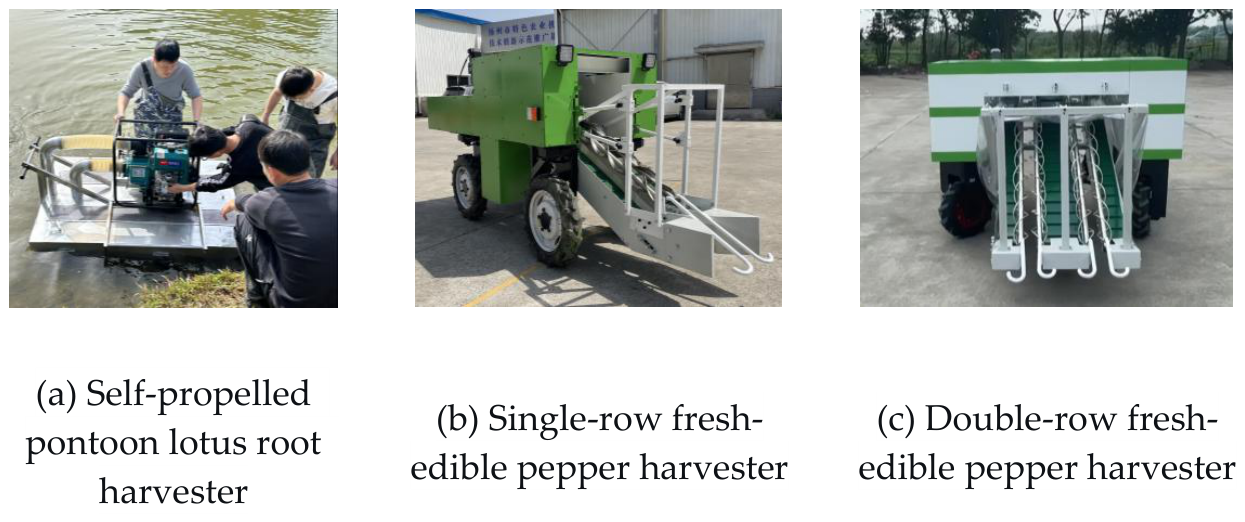
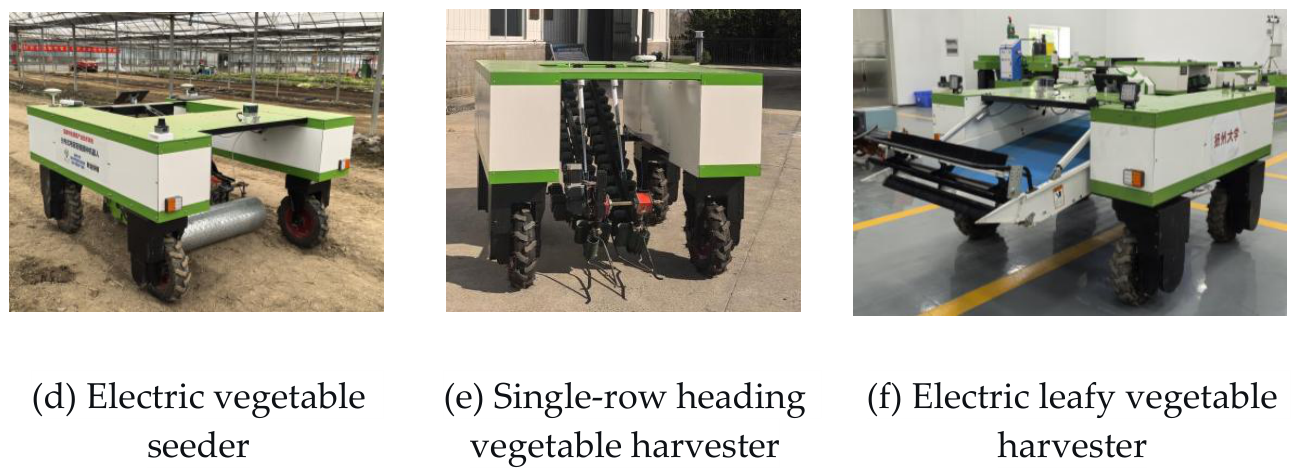
Figure 1.
Some equipment designed and developed with student participation.
5.4. Significant Improvement in Students' Engineering Abilities, Professional Qualities, and Innovation Capabilities
Through the four-stage progressive training of “classroom foundation building - scientific innovation strengthening - competition verification - graduation project application,” students' comprehensive abilities have been systematically enhanced with remarkable results. In terms of engineering abilities, students participating in this model performed significantly better than non-participants in problem identification, problem analysis, scheme design, detailed design, prototyping, patent and paper writing. Students have completed a cumulative total of 60 innovation projects, filed 50 patent applications (all patents can be queried at China Patent Network http://epub.cnipa.gov.cn/), been granted 36 patents (including 18 invention patents), and published 5 papers, and won 20 awards in discipline competitions. In terms of professional qualities, students gained ample experience in task division, schedule management, and communication and coordination through teamwork on scientific innovation projects and competition works. Concurrently, participation in projects related to social, industrial, enterprise, and research needs enabled students to accumulate project experience in problem-solving, which has significant enlightening and influential effects on their entrepreneurship, employment, and further studies. In terms of innovation capability, from topic investigation and scheme proposal to detailed design and prototyping, students undergo a complete innovative practice process, developing innovative thinking oriented towards practical problems and independent research capabilities. Participating students demonstrate high approval of the teaching model, expressing willingness to engage in scientific innovation projects, participate in discipline competitions, and undertake graduation design/thesis work, and even pursue graduate studies. Graduates exhibit obvious competitive advantages in employment, entrepreneurship, and further studies.

Table 4.
Selected granted patents authored by students.
| No. | Patent Title | Type | Patent Number |
|---|---|---|---|
| 1 | Automatic Assembly Device for Electrical Switch Accessories | Invention | ZL202010122469.8 |
| 2 | Turnover Mechanism for Electrical Switch Accessory Assembly Device | Invention | ZL202010122462.6 |
| 3 | Automatic Silkworm Rearing Machine | Invention | ZL202010427864.7 |
| 4 | Self-Powered Outdoor Smart Clothes Hanger | Invention | ZL202110760714.2 |
| 5 | Plate Loading and Transfer Mechanism | Invention | ZL202011431944 |
| 6 | V-Shaped Seat Feeding Mechanism for Electrical Switch Assembly | Invention | ZL202010786559.7 |
| 7 | Special Device for Electrical Switch Assembly | Invention | ZL202010786694.1 |
| 8 | Fruit Sorting Machine | Invention | ZL202011170902.1 |
| 9 | Compact Electromagnetic Eddy Current Gap Adjustment Braking Device | Invention | ZL202011153313.2 |
| 10 | Compact Electromagnetic Eddy Current Braking Device | Invention | ZL202010741170.0 |
| 11 | Leaf-Type Picking Device | Invention | ZL202011201820.9 |
| 12 | Automatic Gap Adjustment Device for Eddy Current Brakes | Invention | ZL202011153464.8 |
| 13 | Intelligent Hydraulic Damping Electromagnetic Energy Storage Device | Invention | ZL202110332364.X |
| 14 | Self-Propelled Variable Ground Clearance Solanaceous Vegetable Picker | Invention | ZL202110810048.9 |
| 15 | Self-Disinfecting Intelligent Epidemic Prevention Robot | Invention | ZL202011170569.4 |
| 16 | Thermal Insulation and Shock Absorption Device for Micro-Spectrometer | Invention | ZL201911028497.7 |
| 17 | Electromagnetic Eddy Current Braking Device | Invention | ZL201910679679.4 |
| 18 | Large Load-Bearing Joint Component | Invention | ZL202110322929.6 |
| 19 | Digging-Type Ginger Harvesting Device | Invention | ZL202110353078.1 |
| 20 | Fruit Sorting Machine | Utility Model | ZL202022431921.7 |
| 21 | Leaf-Type Picking Device | Utility Model | ZL202022488365.7 |
| 22 | Ginkgo Leaf Picking Experimental Platform | Utility Model | ZL202022488378.4 |
| 23 | Self-Disinfecting Intelligent Epidemic Prevention Robot | Utility Model | ZL202022434692.4 |
| 24 | Lotus Root Harvesting Experimental Platform | Utility Model | ZL202122311229.5 |
| 25 | Portable Ginkgo Leaf Picking Machine | Utility Model | ZL202220216747.0 |
| 26 | Anti-Collision Buffer Device Utilizing Multi-Stage Energy Absorption | Utility Model | ZL202222195037.7 |
| 27 | Multifunctional Ecological Restoration Tree Planting Machine | Utility Model | ZL202222277123.2 |
| 28 | Pontoon-Type Lotus Root Harvester | Utility Model | ZL202220069853.0 |
| 29 | Greenhouse Trellis Melon Harvesting Equipment | Utility Model | ZL202321315195.X |
| 30 | Cleaning-Peeling-Cutting Device for Stone Fruits | Utility Model | ZL202321032145.0 |
| 31 | Center of Gravity and Propulsion Adjustment Device for Lotus Root Harvesting Platform | Utility Model | ZL202321687717.9 |
| 32 | Gantry-Type Lotus Root Picking Device | Utility Model | ZL202322868617.2 |
| 33 | Lotus Root Scouring Force Testing Device | Utility Model | ZL202322967737.8 |
| 34 | Industrialized Lotus Root Harvesting Device | Utility Model | ZL2023230667254 |
| 35 | Adjustable Pepper Picking Device | Utility Model | ZL 202421297957.2 |
| 36 | Large Load-Bearing Joint Component | Utility Model | ZL202120611366.8 |
6. Promotion: Application Effects
6.1. Significant Improvement in Education and Teaching Level and Talent Cultivation Quality
Throughout the entire process of scheme design, research validation, and teaching practice, this teaching outcome received high attention and sustained support from the implementing institution. The university and college specifically established special funds for university student scientific innovation projects and discipline competitions, providing robust financial support for the teaching model reform. Concurrently, relevant incentive policies were introduced, linking student participation in scientific innovation with scholarship evaluation and postgraduate recommendation, effectively stimulating the enthusiasm of both teachers and students. This teaching reform project received the First Prize of the 2022 Yangzhou University Excellent Teaching Award, a 2022 Yangzhou University Quality Undergraduate Textbook Grant, and the “Excellent Advisor” award in the 2022 Jiangsu Province College Students Intelligent Robot Creative Competition, as well as the “Excellent Advisor” award in the 10th Jiangsu Province College Students Mechanical Innovation Design Competition in 2024.
This teaching outcome has undergone systematic practical testing over five consecutive years from 2021 to 2025, covering multiple cohorts of undergraduate students in mechanical majors, generating complete closed-loop validation data. During the implementation period, students completed a cumulative total of 60 innovation projects, filed 50 patent applications, were granted 36 patents (including 19 invention patents), published 5 papers, and won 20 awards in discipline competitions. Some projects were transformed into promotable products, such as ginkgo leaf pickers, cabbage harvesters, onion harvesters, pepper harvesters, lotus root harvesters, electric harvesters for stem/leaf crops, and vegetable seeders, producing an average of 1-2 physical prototypes per year. These results indicate that students have a solid professional foundation and significantly improved innovative practical abilities. Students demonstrate good engineering practice skills and innovative qualities in the job market. Employer feedback indicates that graduates are “quick to start, strong in comprehension, and highly adaptable,” reflecting a significant improvement in talent cultivation quality.
6.2. Wide Promotion Coverage on and Off Campus, Large Beneficiary Base, Long Benefit Duration
On campus, this teaching outcome has been fully implemented across all mechanical majors at the College of Mechanical Engineering, Yangzhou University, covering undergraduate students at all grade levels, forming a coherent cultivation system from freshman to senior year. The classroom foundation learning stage covers all students. Scientific innovation project training is continuously promoted with an organization of “3-4 groups/year, 3-4 students/group.” Discipline competitions are open for registration across the entire major. The graduation design comprehensive application stage achieves full coverage. This forms a pattern of “universal participation, progressive advancement” in practical education. Off campus, the teaching philosophy, implementation pathways, and operational mechanisms of this outcome have been widely disseminated through academic papers, teaching seminars, and inter-institutional exchanges, providing a referenceable reform scheme for peer institutions and attracting attention and interest from mechanical majors in many similar domestic universities. Regarding benefit duration, students cultivated under this model continue to benefit from the engineering thinking, innovative abilities, and project experience formed during their studies, exerting a long-term positive impact on their career development.
6.3. High Recognition from Students, Peers, Regulatory Authorities, Industry Enterprises, and Society
This teaching outcome has received positive feedback and high recognition from diverse evaluation stakeholders. From the student perspective, participating students show high approval of the teaching model. Questionnaire surveys indicate generally high student satisfaction. The average teaching evaluation score from 567 students over the past four years is 98. Students are willing to engage in scientific innovation projects, participate in discipline competitions, undertake graduation design/thesis, and pursue graduate studies. The number of applicants for scientific innovation projects has increased year by year, significantly enhancing students' initiative to participate in practical teaching. From the peer perspective, this teaching outcome has been shared as a exemplary experience at various teaching seminars, receiving affirmation and reference from peer experts. From the regulatory perspective, projects directly related to this teaching outcome have received funding from the Department of Higher Education of the Ministry of Education and the Jiangsu Provincial Department of Education, reflecting authoritative recognition from regulatory bodies of this teaching reform achievement. From the industry and enterprise perspective, enterprises directly involved in project cooperation have given positive feedback on students' design schemes, acknowledging that students' innovative outcomes have conditions for promotion and application. Enterprise feedback indicates that students cultivated through this model possess strong engineering awareness and adapt quickly to job requirements, shortening the growth cycle from graduate to qualified engineer. From the societal perspective, some student outcomes have direct prospects for industrialization, reflecting the practical contribution of this teaching outcome in serving society and industry.
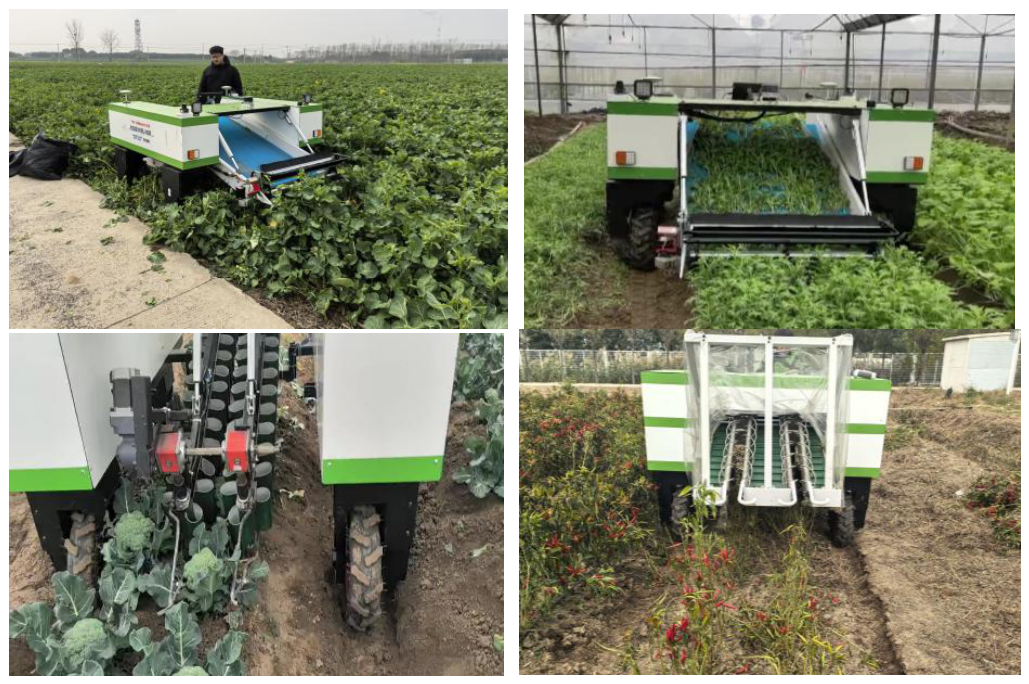
Figure 2.
Promotion and application of some machinery in field settings.
6.4. High Promotion Value, Good Application Prospects, Leading and Demonstrative
This teaching outcome possesses outstanding promotion value and broad application prospects, demonstrating leading and demonstrative characteristics at three levels: philosophy, model, and mechanism. In terms of philosophical leadership, the “demand traction, four-stage progressive” practical teaching philosophy takes industrial demands as the logical starting point for talent cultivation, breaking away from the traditional linear thinking of “learning first, using later, separating learning from application,” and providing a new theoretical perspective for practical teaching reform in mechanical majors under the New Engineering context. In terms of model demonstration, the four-stage progressive cultivation system of “classroom foundation building - scientific innovation strengthening - competition verification - graduation project application” constructs a complete and actionable pathway for ability enhancement, offering a replicable systematic solution for peer institutions to address the fragmentation of practical teaching links and the lack of a progressive thread. In terms of mechanism promotion, this teaching outcome does not alter the existing curriculum system but optimizes practical teaching organization through an “embedded” approach, featuring strong universality and low implementation cost, suitable for promotion and application in mechanical majors across different types and levels of universities. In terms of demand alignment, this teaching outcome addresses the urgent industry demand for innovative talents, aligning highly with industrial development trends. Its promotion and application hold significant contemporary importance and practical value for cultivating high-level mechanical professionals capable of adapting to the needs of new quality productive forces, with broad application prospects.
7. Conclusions
The reform of practical course teaching in mechanical majors is crucial for improving teaching quality and cultivating innovative talents. This study addressed several issues in mechanical major practical courses, including the disconnect between industrial demands and teaching content, fragmentation of practical teaching links, insufficient innovation ability training, weak alignment between professional practice and industrial needs, and imperfect industry-education integration mechanisms. A “five-in-one, four-stage progressive” mechanical innovation practice course teaching model was proposed, centered on “demand traction, classroom foundation building, scientific innovation strengthening, competition verification, and graduation project application.” Measures such as “demand introduction, process integration, achievement transformation, and mechanism guarantee” ensured the smooth implementation of the teaching model. Practical teaching was conducted with students majoring in Mechanical Design, Manufacturing and Automation at our college from the classes of 2021-2025. Teaching practice demonstrated that the rapid development of industry and its demand for innovative talents are the primary driving forces for this teaching reform. The model exhibits strong applicability and effectiveness in cultivating talents adaptable to the sustainable development of the mechanical industry, providing an effective reference for practical teaching reform in mechanical engineering institutions in the new era. The teaching reform outcomes have been widely promoted and have received high recognition from students, peers, regulatory authorities, industry enterprises, and society.
Currently, the teaching model faces issues such as students' lack of practical professional experience and variations in topic difficulty. In the future, teachers and enterprise mentors need to strengthen the teaching and guidance of professional practical experience, striving to involve students in learning through actual production as much as possible. It is necessary to reasonably grasp topic difficulty, maintain awareness of students' learning and practical capabilities, and control topic difficulty within a range acceptable to students, thereby fully mobilizing their initiative. Through continuous improvement of the teaching model, better teaching outcomes can be achieved. This study demonstrates that the proposed teaching model positively impacts the enhancement of students' learning outcomes and abilities, contributing to the sustainable development of the industry.
Author Contributions
Conceptualization, Liu J., Zhang S.; methodology, Liu J., Zhang S.; software, Liu J., Zhang S.; validation, Liu J., Zhang S.; formal analysis, Liu J.; investigation, Liu J.; resources, Liu J., Zhang; data curation, Zhang S.; writing—original draft preparation,Liu J.; writing—review and editing, Zhang S.; visualization, Liu J.; supervision, Liu J.; project administration, Liu J., Zhang S. All authors have read and agreed to the published version of the manuscript.
Funding
This research was funded by Ministry of Education of the People's Republic of China, Department of Higher Education, Industry-Academia Cooperation Collaborative Education Program (202102363026, 230903844281653).
Ethics Approval and Consent to Participate
The study was conducted in accordance with the Declaration of Helsinki, and the protocol was approved by the Ethics Committee of Yangzhou University (202102363026, 230903844281653) on 1 January 2021.
Informed Consent Statement
Informed consent was obtained from all subjects involved in the study prior to data collection. Participation was voluntary, and respondents were informed about the objectives of the study and the confidential treatment of the information provided.
Consent for Publication
The author approved the final manuscript and the submission to this journal.
Competing Interests
The author certify that she have no affiliations with or involvement in any organization or entity with any financial interest or non-financial interests in the subject matter or materials discussed in this manuscript.
Acknowledgement
Special thanks are extended to the interview participant, whose anonymity is protected in accordance with ethical guidelines.The depth of this analysis relies fundamentally on the candor and expertise shared by the interviewer during the data collection phase.
Conflicts of Interest
The authors declare no conflicts of interest.
References
- Wei, L.; Zhang, W. Strategic Initiatives for New Engineering Education in China. Int. J. Eng. Educ. 2025, 41, 476–491. [Google Scholar]
- Yan, Q.; Li, L.; Chen, M.; Gu, X. Research on the Sustainable Improvement Mechanism of the Chemical Engineering and Technology Major Based on the Concepts of Outcome-Based Education--Plan-Do-Check-Act (OBE--PDCA) in Engineering Education. Sustainability 2025, 17, 4051. [Google Scholar] [CrossRef]
- Ye, X.; Chen, G.; Cheng, X.; et al. Reform and Practice of Practical Teaching Base for Energy and Power Majors under the “Emerging Engineering Education” Background. Res. High. Educ. Eng. 2023, (S1), 53–56. [Google Scholar]
- Lei, T.; Guo, X.; Lian, S.; Bi, Y. Construction and Practice of the Practical Education System for Agricultural Hydraulic Engineering in the Context of Emerging Engineering Education. Sustainability 2026, 18, 696. [Google Scholar] [CrossRef]
- Torrijo, F.J.; Garzón-Roca, J.; Cobos, G.; Eguibar, M. Combining Project-Based Learning and Cooperative Learning Strategies in a Geotechnical Engineering Course. Educ. Sci. 2021, 11, 467. [Google Scholar] [CrossRef]
- Rajan, K.P.; Gopanna, A.; Thomas, S.P. A Project-Based Learning (PBL) Approach Involving PET Recycling in Chemical Engineering Education. Recycling 2019, 4, 10. [Google Scholar] [CrossRef]
- Yuan, X.; Wang, Q.; Mai, J.; et al. Course Construction of “Robotics Experiment” under Emerging Engineering Education: Interdisciplinary Integrated Full-Process Practical Teaching. Res. Explor. Lab. 2026, 45, 178–183. [Google Scholar]
- Wang, S.; Wang, Y.; Qin, C. Construction and Practice of Comprehensive Experiment Course for Metal Heat Treatment under Emerging Engineering Education. Heat Treat. Met. 2026, 51, 384–389. [Google Scholar]
- Wang, Y.; Zhang, Y.; Wu, K. Exploration on the Teaching Reform of Electrochemical Experiment Courses in Universities under the Background of Emerging Engineering Education. J. Contemp. Educ. Res. 2026, 10, 146–152. [Google Scholar] [CrossRef]
- Chen, L.; Li, K.; Su, M.; et al. Research on Course Design for Surveying Engineering Majors Driven Bidirectionally by “Capability Orientation + Digital-Intelligent Empowerment”. Bull. Surv. Mapp. 2026, (S1), 251–254. [Google Scholar]
- Zhu, Y.; Zhang, Y.; Deng, Z.; et al. Practical Exploration of Integrating Ideological-Political Education and Scientific Research Case Outcomes into the “Chemical Engineering Principles Course Design” Teaching. China Plast. Ind. 2026, 54, 197. [Google Scholar]
- Liu, C. Application of Engineering Case Teaching Method in Mechanical Design Course Design and Teaching Reform Effect. Front. Educ. Res. 2025, 8. [Google Scholar] [CrossRef]
- Zhang, H.; He, L.; Li, W.; et al. Exploration of Live Broadcast Teaching Model for Large-Scale Online Student Practice: Taking “Cloud Metalworking Internship” as an Example. Res. Explor. Lab. 2023, 42, 225–230. [Google Scholar]
- Li, H.; Ma, Y.; Heng, T.; et al. Innovation in Metalworking Internship Teaching Based on Blended Learning and Project-Driven Approach. Front. Educ. Res. 2025, 8. [Google Scholar] [CrossRef]
- Huang, J.; Liao, H.; Tan, J.; et al. Exploration of Production Internship Reform for Packaging Engineering Majors Based on OBE Model. Packag. Eng. 2024, 45(S2), 171–175. [Google Scholar] [CrossRef]
- Bin, D.; Jun, W.; Tao, W.; et al. Teaching reform and practice of 'Production Internship' course for biotechnology specialty from the perspective of training application-oriented talents. Chin. J. Biotechnol. 2023, 39, 755–768. [Google Scholar] [CrossRef] [PubMed]
- Lou, Y.; Zhang, X.; Zhao, P.; et al. Teaching Reform and Practical Exploration of Graduation Internship Course based on Industry-Education Integration Talent Cultivation Model. Polym. Bull. 2024, 37, 1821–1827. [Google Scholar]
- Tang, M.; Qiu, J.; Zhou, L.; et al. Exploration and Practice of “Theory-Practice Integration” Education Model in Local Universities under “Double First-Class” Construction: Taking Safety Engineering Major as an Example. Saf. Environ. Eng. 2025, 32, 135–143. [Google Scholar]
- Li, H.; Li, B.; Pan, C.; et al. Triple integration reform of graduation internship, design, and thesis for undergraduates under industry-education integration in the digital intelligence era. World J. Educ. Stud. 2026, 4. [Google Scholar] [CrossRef]
- Mo, W.; Liu, B.; Yao, S.; et al. Teaching Reform and Exploration of Graduation Design (Thesis) for Light Chemical Engineering Major with “Real Problems, Authentic Practice, Dual-Mentor Co-Education, and Three-Real Training”. China Pulp Pap. 2026, 45, 221–224. [Google Scholar]
- Wang, G.; Liu, J.; Yan, F.; et al. Research and Practice on Application-Oriented Undergraduate Talent Cultivation Model Based on Industry-Education Integration: Taking Mechanical Major Categories as an Example. J. Mech. Des. 2026, 43, 207–212. [Google Scholar]
- Wang, X.; Pu, J. Exploration on the Integration of Engineering Training and Graduation Design in Practical Teaching Reform under the Background of Emerging Engineering Education. High. Educ. Pract. 2025, 2. [Google Scholar] [CrossRef]
- Gao, J.; Li, D.; Jin, H. Teaching Exploration of Nickel Electroplating under Engineering Education Professional Accreditation. Plat. Finish. 2023, 45, 110–114. [Google Scholar]
- Ge, Z.; Zhu, Y.; Song, A.; et al. Application and Teaching Exploration of Self-Made Experimental Equipment in Cultivating College Students' Innovative Practical Ability. Res. Explor. Lab. 2022, 41, 188–192+206. [Google Scholar]
- Gao, J.; Pei, Q.; Zhu, S.; et al. Design and Application of Friction Stir Welding Experimental Teaching Platform. Res. Explor. Lab. 2023, 42, 53–57. [Google Scholar]
- Wu, C.; Cui, H.; Zhang, S. Analysis of the Practical Path of Ideological and Political Education in Engineering Majors under “Emerging Engineering Education”: Taking the “Mechanical Manufacturing Technology” Course as an Example. China Plast. Ind. 2023, 51, 171–172. [Google Scholar]
- Liu, J.; Zhang, S. Exploring the Reform Path of Mechanical Manufacturing Technology Teaching from the Perspective of Curriculum Ideological and Political Education. PR World 2023, (24), 49–51. [Google Scholar]
- Zhang, S.; Song, A.; Zhou, J.; et al. Teaching Practice and Discussion on Improving the Quality of Graduation Design for Mechanical Majors. Contemp. Educ. Pract. Teach. Res. 2019, (24), 156–157. [Google Scholar]
- Zhang, S.; Li, Y.; Wang, X.; et al. Teaching Exploration and Practice on Cultivating Scientific Innovation Ability of Mechanical Major Students. J. High. Educ. 2019, (20), 38–40. [Google Scholar]
Table 1.
Partial list of innovative practice projects completed by students between 2021-2025.
| Year | No. | Topic Title |
|---|---|---|
| 2021 | 1 | Design of a Continuous-Flow Ginkgo Leaf Picking Machine |
| 2 | Design of an Intermittent Ginkgo Leaf Picking Machine | |
| 3 | Design of a Comb-Type Pepper Picking Machine | |
| 4 | Design of a Integrated Clipping-Cutting Pepper Picking Machine | |
| 5 | Design of a Pontoon-Type Lotus Root Harvester | |
| 6 | Design of a Mechanical Lotus Root Harvester | |
| 2022 | 7 | Design of a Shallow-Water Water Dropwort Harvester |
| 8 | Design of a Paper Mulberry Harvester | |
| 9 | Design of a Boat-Type Lotus Root Fertilizer Applicator | |
| 10 | Design of a Melon Harvester | |
| 11 | Design of a Dried Pepper Harvester | |
| 12 | Design of a Melon Grafting Machine | |
| 2023 | 13 | Design of a Leafy Vegetable Harvester |
| 14 | Design of a Sweet Potato Harvester | |
| 15 | Design of a Boat-Type Lotus Root Harvester | |
| 16 | Design of a Pepper Harvesting Test Device | |
| 17 | Design of a Leafy Vegetable Harvesting Test Device | |
| 18 | Design of a Root/Tuber Crop Harvesting Test Device | |
| 2024 | 19 | Design of a Facility Vegetable Seeder |
| 20 | Design of an Onion Harvester | |
| 21 | Design of a Watermelon Harvesting Device | |
| 22 | Design of an Electric Harvester for Stem/Leaf Crops | |
| 23 | Design of an Electric Cabbage Harvester | |
| 24 | Design of a Cabbage Transplanting Device | |
| 2025 | 25 | Design of a Wheeled Electric Multifunctional Seeder for Facility Vegetables |
| 26 | Design of a Wheeled Electric Garlic Harvester | |
| 27 | Design of an Electric Harvester and Transporter for Heading Vegetables | |
| 28 | Design of a Performance Testing Platform for Root/Tuber Crop Harvesting Devices | |
| 29 | Design of an Electric Harvester and Transporter for Fresh-Edible Peppers | |
| 30 | Design of a Cluster Pepper Harvester |
Table 2.
Student Ability Cultivation.
| No. | Professional Practice Abilities Targeted for Cultivation | Very Dissatisfied | Somewhat Dissatisfied |
Basically Satisfied |
Relatively Satisfied |
Very Satisfied |
|---|---|---|---|---|---|---|
| 1 | Traditional manufacturing processes and operational skills | 0 | 0 | 0 | 26 | 4 |
| 2 | Modern design and advanced manufacturing technology capabilities | 0 | 0 | 0 | 27 | 3 |
| 3 | Ability to analyze and solve complex engineering problems | 0 | 0 | 1 | 28 | 1 |
| 4 | Engineering literacy, professional ethics, and awareness of sustainable development | 0 | 0 | 0 | 29 | 1 |
| 5 | Autonomous learning and adaptability to change | 0 | 0 | 0 | 28 | 2 |
Table 3.
The evaluation results of student learning outcomes by the university and enterprises.
| No. | Student Learning Outcomes | Fail | Pass | Medium | Good | Excellent |
| 1 | Professional foundational knowledge | 0 | 0 | 2 | 25 | 3 |
| 2 | Literature retrieval and investigation | 0 | 0 | 1 | 25 | 4 |
| 3 | Scheme design | 0 | 0 | 2 | 27 | 1 |
| 4 | Detailed design | 0 | 0 | 2 | 25 | 3 |
| 5 | Prototyping and testing | 0 | 0 | 2 | 26 | 2 |
| 6 | Patent, paper, and report writing | 0 | 0 | 1 | 24 | 5 |
Disclaimer/Publisher’s Note: The statements, opinions and data contained in all publications are solely those of the individual author(s) and contributor(s) and not of MDPI and/or the editor(s). MDPI and/or the editor(s) disclaim responsibility for any injury to people or property resulting from any ideas, methods, instructions or products referred to in the content. |
© 2026 by the authors. Licensee MDPI, Basel, Switzerland. This article is an open access article distributed under the terms and conditions of the Creative Commons Attribution (CC BY) license (http://creativecommons.org/licenses/by/4.0/).
Copyright: This open access article is published under a Creative Commons CC BY 4.0 license, which permit the free download, distribution, and reuse, provided that the author and preprint are cited in any reuse.