

Submitted:
27 July 2026
Posted:
28 July 2026
You are already at the latest version
Abstract
Powder mixing is a critical step in pharmaceutical manufacturing, as the uniform distribution of an active pharmaceutical ingredient (API) affects the quality of the final dosage form. This study investigated the relationship between powder mixing performance and tablet quality attributes using sodium naproxen as a model API with limited flowability. Powder mixtures were prepared in a V-type blender, and the mixing index evolution was evaluated at different rotational speeds. Tablets were subsequently produced either by direct compression or by pan granulation followed by compression, and their critical quality attributes, including tablet mass, thickness, crushing strength, abrasiveness, and API content variability, were evaluated. The mixing index rapidly increased during blending and reached high values for all investigated conditions; however, similar mixing efficiency did not result in equivalent tablet properties. Directly compressed tablets exhibited higher crushing strength, lower abrasiveness, and lower API content variability compared with tablets obtained after pan granulation. The results demonstrated that the powder processing route had a stronger influence on final tablet performance than differences in mixing speed within the investigated range. The combination of mixing index evaluation with tablet quality assessment provides a comprehensive approach for understanding the influence of powder processing conditions on pharmaceutical tablet performance.
Keywords:
powder blending
; mixing index
; powder flowability
; pharmaceutical manufacturing
; tablet compression
; granulation
; sodium naproxen
1. Introduction
Powder mixing is a critical unit operation in pharmaceutical manufacturing because the homogeneity of powder blends directly affects the quality, safety, and performance of final solid dosage forms. Inadequate mixing of the active pharmaceutical ingredient (API) with excipients may lead to variability in drug content, affecting dose accuracy and therapeutic efficacy. Therefore, reliable evaluation of mixing efficiency and identification of appropriate mixing endpoints remain important challenges during pharmaceutical formulation development and process optimization [1,2,3].
Various approaches have been proposed to assess powder mixing quality depending on the process stage, powder characteristics, and analytical method. The relative standard deviation (RSD) of API content obtained from multiple blend samples is one of the most commonly applied parameters because it directly reflects blend uniformity and is closely related to pharmacopeial requirements for content uniformity [4,5,6,7]. Other approaches include segregation indices, flowability-based parameters, and spectroscopic methods such as near-infrared (NIR) and Raman spectroscopy, which enable evaluation of spatial variability and real-time monitoring of powder blends [2,8,9,10].
However, no universal mixing index has been established for pharmaceutical powders. Different indices describe different aspects of powder behavior, including concentration uniformity, segregation tendency, particle distribution, or flow properties, making direct comparison between studies difficult [1,3,9]. Therefore, the selection of an appropriate mixing parameter should be based on the specific process objective and the potential failure mechanisms, such as API nonuniformity, segregation, poor flowability, or insufficient powder packing during compression [3,9,11,12].
The influence of mixing efficiency is particularly important because powder characteristics established during blending may affect subsequent manufacturing operations and final tablet properties. Variations in blend homogeneity can influence die filling, compaction behavior, tablet mechanical strength, friability, and drug content uniformity [2,8]. Previous studies have shown that factors such as particle size distribution, density differences, and flowability significantly affect mixing behavior and may determine the robustness of pharmaceutical powder processing [7]. Furthermore, spatial evaluation of powder blends has demonstrated that apparently homogeneous mixtures may still contain local variations within industrial-scale mixers, emphasizing the importance of appropriate mixing assessment [8,13].
Powder flowability is another critical factor affecting pharmaceutical processing, particularly during blending, transfer, and tablet compression. Poorly flowing powders may contribute to segregation, inconsistent die filling, and variability in tablet weight and mechanical properties [14,15,16]. Therefore, model APIs exhibiting unfavorable flow characteristics are valuable tools for investigating the relationship between powder behavior, mixing efficiency, and final product quality.
Naproxen sodium is an appropriate model compound for such investigations because, despite its widespread pharmaceutical application, it exhibits challenging technological properties related to powder processing [17]. Its limited flowability and unfavorable handling characteristics may reduce mixing efficiency and increase the risk of segregation, particularly when combined with excipients differing in particle size and density [18]. Consequently, naproxen sodium provides a relevant model system for evaluating whether optimization of mixing conditions can improve blend uniformity and affect the critical quality attributes of tablets.
Recent studies have investigated advanced approaches for pharmaceutical blend evaluation, including process analytical technologies and spectroscopic methods. NIR and Raman spectroscopy have enabled real-time monitoring of blend uniformity and improved understanding of mixing dynamics during manufacturing [8,10]. However, these techniques often require specialized equipment, extensive calibration, and advanced data analysis. Therefore, experimentally determined mixing indices based on blend uniformity remain highly relevant for routine formulation development, process optimization, and quality assessment of pharmaceutical powders [1,9].
Although the influence of mixing parameters on powder homogeneity has been widely investigated, the relationship between the initial blend quality and the performance of tablets produced using different manufacturing routes remains insufficiently understood. In particular, it is unclear whether variations in mixing efficiency are preserved after subsequent processing steps, such as granulation, or whether additional processing can compensate for initial blend variability. Therefore, the present study aimed to evaluate the impact of mixing conditions on the mixing index of naproxen sodium powder blends and to determine whether differences in blend quality are reflected in the critical quality attributes of tablets prepared by two different manufacturing approaches: direct compression and granulation. Six mixing speeds were investigated using identical formulation compositions, allowing the influence of mixing conditions to be separated from the effects of the subsequent tableting process. The obtained tablets were characterized in terms of mass variation, thickness, crushing strength, friability, and API content. This approach provides new insight into the relationship between powder mixing efficiency, processing history, and final tablet quality, contributing to a better understanding of process–product interactions in pharmaceutical solid dosage form manufacturing.
2. Materials and Methods
A schematic overview of the experimental design is presented in Figure 1. The study was divided into three main stages: preparation and evaluation of API–excipient powder blends, processing of the blends using two different tableting methods, and characterization of the obtained tablets. Initially, sodium naproxen was blended with the selected filler using a V-type mixer under different mixing conditions, and the mixing efficiency was evaluated based on the calculated mixing index. The prepared powder blends were subsequently processed either by direct compression or by wet granulation followed by compression. The influence of powder preparation method and mixing efficiency on the critical quality attributes of the final tablets was then evaluated. The blending process was investigated at rotational speeds of 8, 10, 12, 15, 20, and 25 rpm, with the resulting powder mixtures subsequently used for direct compression and pan granulation followed by compression.
2.1. Determination of Mixing Index
The degree of mixing is a quantitative measure of powder blend homogeneity and is commonly used to evaluate the effectiveness of mixing processes. It allows assessment of the influence of processing parameters, such as mixing time or mixing intensity, on the improvement of blend uniformity.
In the present study, the mixing index was determined based on the variation in concentration of the active pharmaceutical ingredient (API) within powder samples collected from the blend. The average concentration of the investigated component was initially calculated according to Equation (1):
where: c is the mean concentration of the analyzed component, ci represents the concentration measured in an individual sample, and n is the number of collected samples.
Subsequently, the standard deviation σ of the concentration distribution was calculated:
The relative standard deviation σw of the mixture was then determined:
where σ0 represents the relative standard deviation of the initial unmixed powder system.
The mixing index (M) was calculated according to the following relationship:
The value of the mixing index approaches unity for highly homogeneous mixtures, whereas lower values indicate increased variability and insufficient mixing efficiency.
2.2. Preparation of Powder Blends for Tableting
Powder blends containing sodium naproxen and the selected filler were prepared using a laboratory-scale V-type tumble blender (CDK, Gliwice, Poland) with a total working volume of 750 cm³. The blending process was performed at six different rotational speeds to evaluate their influence on mixing efficiency.
The blender filling ratio was maintained at 40% of the total volume. Samples were collected after the mixing process and used for determination of the mixing index. The obtained API–excipient blends were subsequently used for preparation of tablets using two different processing routes: direct compression and wet granulation followed by compression.
2.3. Preparation of Granules by Wet Granulation
Wet granulation was performed using a laboratory-scale pan granulator designed for pharmaceutical powder processing. The granulation unit consisted of a rotating pan with an internal diameter of 400 mm and a depth of 100 mm, enabling controlled movement of powder particles and efficient binder distribution.
The powder mixture was continuously supplied to the rotating pan through a vibratory feeding system. The binder solution was introduced using a top-spray nozzle connected to an external pumping system, while atomization was achieved using compressed air.
The rotation of the granulation pan was controlled using an electric motor (AR304, ERWEKA GmbH, Langen, Germany). The process parameters, including pan rotational speed, inclination angle, powder feed rate, and binder flow rate, were selected based on preliminary experiments aimed at obtaining granules with suitable flowability and compaction properties.
The granulator was equipped with a vibrating feed hopper and interchangeable binder reservoirs to ensure stable powder feeding and reproducible liquid addition. Process parameters were controlled using a centralized control system (CE255, G.U.N.T. Gerätebau GmbH, Norderstedt, Germany). All structural elements of the equipment were manufactured from stainless steel in accordance with pharmaceutical processing requirements.
All granulation experiments were conducted under identical process conditions: a pan inclination angle of 40°, a rotational speed of 40 rpm, a powder feed rate of 100 g/min, and a binder solution flow rate of 20 g/min. After granulation, the material was dried at 50 °C and subsequently sieved to obtain a particle size fraction of 0.5–2.0 mm. This fraction was used for tablet compression to ensure comparable particle size ranges between the investigated samples.
2.4. Preparation of Tablets
To compare the influence of powder preparation method on tablet quality, tablets were produced using two processing approaches:
direct compression of powder blends after addition of tableting excipients,
compression of granules obtained by wet granulation followed by addition of external excipients.
All tablet batches were compressed under identical conditions using a single-punch tablet press (TDP 0, LFA Machines Oxford LTD, Oxfordshire, UK).
Tablets were produced using a 6 mm diameter die equipped with a spherical punch. The compression force was maintained at 3.5 kN for all formulations to ensure comparable mechanical conditions and enable evaluation of the influence of powder processing history on tablet properties.
2.5. Evaluation of Tablet Properties
The quality of prepared tablets was evaluated based on selected critical quality attributes, including tablet mass, thickness, crushing strength, friability, and API content.
Tablet mass was measured using an analytical balance (Pioneer PX224, Ohaus, Greifensee, Switzerland). Tablet thickness was determined using a precision caliper with an accuracy of 0.01 mm. Measurements were performed on 20 tablets from each batch.
Tablet abrasiveness was evaluated using a laboratory drum device (CE 245, G.U.N.T. Gerätebau GmbH, Barsbüttel, Germany). Approximately 50 g of tablets were placed into a 1.15 dm³ drum chamber rotating at 200 rpm for 5 min. After testing, the material was sieved using a 500 µm sieve. Friability was expressed as the percentage ratio of the mass retained on the sieve to the initial tablet mass. All measurements were performed in quadruplicate. Crushing strength was determined using a C9B load cell force transducer (HBM, Hottinger Baldwin Messtechnik GmbH, Darmstadt, Germany) with a maximum measuring capacity of 200 N. Measurements were performed on 10 tablets from each batch.
The API content was determined using a refractometric method. Individual tablets were dissolved in 50 mL volumetric flasks and continuously agitated for 24 h to ensure complete dissolution. The obtained solutions were filtered through syringe filters with a pore size of 2 µm, and the refractive index was measured using a laboratory refractometer (RL-1, PZO Warsaw, Poland). The concentration of sodium naproxen was calculated based on a previously established calibration curve. Measurements were performed on 10 tablets from each batch.
2.6. Materials
The first powder mixture consisted of 100 g of sodium naproxen and 100 g of calcium carbonate. The second mixture was prepared using 40 g of the first mixture, supplemented with 20 g of microcrystalline cellulose (MCC), 2 g of magnesium stearate, 5 g of polyvinylpyrrolidone (PVP), 0.5 g of Aerosil® 200, and 132.5 g of calcium carbonate. Sodium naproxen and calcium carbonate were selected as model powder components with limited flowability, providing a challenging system for evaluating the efficiency of powder mixing and its subsequent influence on tablet quality.
The formulation components included sodium naproxen (Divi’s Laboratories, Hyderabad, India), calcium carbonate (Chempur, Piekary Śląskie, Poland), microcrystalline cellulose (Avicel® PH102, FMC BioPolymer, Philadelphia, PA, USA), polyvinylpyrrolidone (PVP; Sigma-Aldrich, St. Louis, MO, USA), magnesium stearate, and Aerosil® 200 (Evonik, Essen, Germany). The final dry formulation consisted of 10.00 wt.% sodium naproxen, 76.25 wt.% calcium carbonate as the main diluent, 10.00 wt.% microcrystalline cellulose as a filler and disintegrant, 1.00 wt.% magnesium stearate as a lubricant, 2.50 wt.% PVP as a binder, and 0.25 wt.% Aerosil® 200 as a glidant and anti-caking agent. For direct compression, PVP was incorporated into the powder blend in dry form. For pan granulation, PVP was used as a 5% aqueous solution and introduced during the granulation process as the binder liquid. The amount of PVP in the final dry formulation was maintained at 2.50 wt.% for both processing routes.
The particle size distribution and flow properties of the raw materials used in this study were characterized in my previous work [14]. The same raw materials and suppliers were used in the present study; therefore, the previously reported material characteristics are referenced here rather than repeated.
3. Results
Influence of rotational speed on the mixing kinetics of sodium naproxen and filler was evaluated using the mixing index as a quantitative measure of blend homogeneity. The changes in the mixing index during blending at different rotational speeds are presented in Figure 2. The maximum mixing index values and corresponding mixing times are summarized in Table 1.
For all investigated rotational speeds, the mixing index increased rapidly during the initial stage of the process, followed by a stabilization period in which only minor fluctuations were observed. The maximum mixing index values ranged from 0.977 to 0.999, indicating that a high degree of blend homogeneity was achieved for all investigated conditions.
At the lowest rotational speed (8 rpm), the maximum mixing index reached 0.997 after 424 s. Increasing the rotational speed to 10 rpm resulted in a slightly higher maximum value of 0.999, obtained after 421 s. Similar maximum values were observed for 15, 20, and 25 rpm, reaching 0.997, 0.999, and 0.997, respectively. The shortest time required to reach the maximum mixing index was observed at 25 rpm (300 s).
The lowest maximum mixing index was obtained for 12 rpm (0.977), with the maximum value reached after 1200 s. Despite this difference, the mixing index after 20 min remained within a narrow range of 0.960–0.986 for all investigated rotational speeds.
After 20 min of mixing, the highest mixing index was obtained for 8 rpm (0.986), while the lowest value was observed for 25 rpm (0.960).
Increasing rotational speed accelerated the initial mixing stage; however, excessive mechanical action did not continuously improve blend uniformity and promoted fluctuations of the mixing index after reaching the optimum value.
The influence of mixing speed on the properties of tablets prepared by direct compression (DC) and by pan granulation followed by compression (PG) was evaluated. The investigated tablet quality attributes included tablet mass, thickness, crushing strength, sodium naproxen content, and abrasiveness. All measurements are presented as mean values with standard deviations.
The effect of mixing speed on tablet mass is presented in Figure 3. For tablets prepared by direct compression, an increase in mixing speed from 8 to 15 rpm resulted in an increase in the average tablet mass from 0.407 g to 0.459 g. Further increase in rotational speed caused a slight decrease in tablet mass, reaching 0.440 g at 25 rpm. The standard deviation of tablet mass remained within the range of 0.013–0.024 g for all investigated conditions. For tablets obtained after pan granulation, the average tablet mass was lower compared with direct compression, ranging from 0.308 to 0.327 g. In contrast to direct compression, no clear increasing trend with mixing speed was observed. The standard deviation values were comparable for all investigated rotational speeds (0.015–0.023 g).
The influence of mixing speed on tablet thickness is shown in Figure 4. Directly compressed tablets exhibited thickness values ranging from 4.18 to 5.06 mm. The highest thickness was obtained at 15 rpm (5.06 mm), while the lowest value was observed at 12 rpm (4.18 mm). No consistent monotonic relationship between mixing speed and tablet thickness was observed. For pan-granulated tablets, thickness values were lower and varied from 3.60 to 4.04 mm. The highest thickness was recorded at 10 rpm (4.04 mm), whereas the lowest value was obtained for tablets prepared at 8 rpm (3.60 mm). The variability of thickness measurements was relatively low, with standard deviations below 0.16 mm for all investigated samples.
The effect of mixing speed on tablet mechanical strength is presented in Figure 5. For direct compression tablets, increasing the mixing speed resulted in an increase in crushing strength from 0.122 kN at 8 rpm to 0.146 kN at 20 rpm. At the highest investigated speed (25 rpm), a slightly lower value of 0.143 kN was obtained. A similar trend was observed for pan-granulated tablets; however, the obtained crushing strength values were considerably lower. The crushing strength increased from 0.029 kN at 8 rpm to 0.053 kN at 20 rpm, followed by a slight decrease to 0.051 kN at 25 rpm.
The sodium naproxen content determined in tablets prepared by both processing routes is presented in Figure 6. For direct compression, the measured API content ranged from 0.0399 to 0.0469 g per tablet. The highest value was observed at 8 rpm, whereas the lowest value was obtained at 20 rpm. For tablets prepared after pan granulation, API content was lower and ranged from 0.0242 to 0.0342 g per tablet. The highest value was obtained at 20 rpm, while the lowest value was recorded at 10 rpm. The standard deviations were comparable between both processing routes and ranged from approximately 0.004 to 0.007 g.
The influence of mixing speed on sodium naproxen content variability in tablets prepared by direct compression (DC) and pan granulation followed by compression (PG) is presented in Figure 7. The variability of API content was expressed as the coefficient of variation (CV), calculated from the mean sodium naproxen content and standard deviation obtained for each formulation series (Equation 5).
For directly compressed tablets, the API content variability ranged from 8.64 to 17.01% depending on the applied mixing speed. The lowest variability was observed at 8 rpm (CV = 8.64%), while the highest value was obtained at 10 rpm (CV = 17.01%). Increasing the mixing speed from 10 to 20 rpm resulted in a gradual decrease in API variability, reaching 10.56% at 20 rpm. A further increase in mixing speed to 25 rpm caused a slight increase in variability to 11.63%.
For tablets obtained after pan granulation, higher API content variability was observed compared with direct compression for all investigated mixing speeds. The CV values ranged from 13.70 to 21.20%. The highest variability was obtained at 10 rpm (CV = 21.20%), whereas the lowest value was observed at 20 rpm (CV = 13.70%). Similar to direct compression, increasing the mixing speed above 20 rpm did not further reduce API content variability, with a slight increase to 15.45% at 25 rpm.
Overall, the applied mixing speed affected the variability of sodium naproxen content, with the lowest API variability for both processing routes observed at 20 rpm. The obtained results indicate that the effect of mixing conditions on API uniformity depended on the subsequent powder processing route.
The abrasiveness results are shown in Figure 7. Direct compression tablets exhibited abrasiveness values between 0.33 and 0.76%. The highest abrasiveness was observed for tablets prepared at 10 rpm, while the lowest value was obtained at 15 rpm. For pan-granulated tablets, higher abrasiveness values were observed for all investigated mixing speeds compared with direct compression. The abrasiveness ranged from 0.88 to 1.95%, with the highest value obtained at 10 rpm and the lowest value at 20 rpm. The standard deviations ranged from 0.12 to 0.21% for direct compression and from 0.25 to 0.42% for pan granulation.
Figure 7.
Influence of mixing speed during powder blending on tablet abrasiveness.
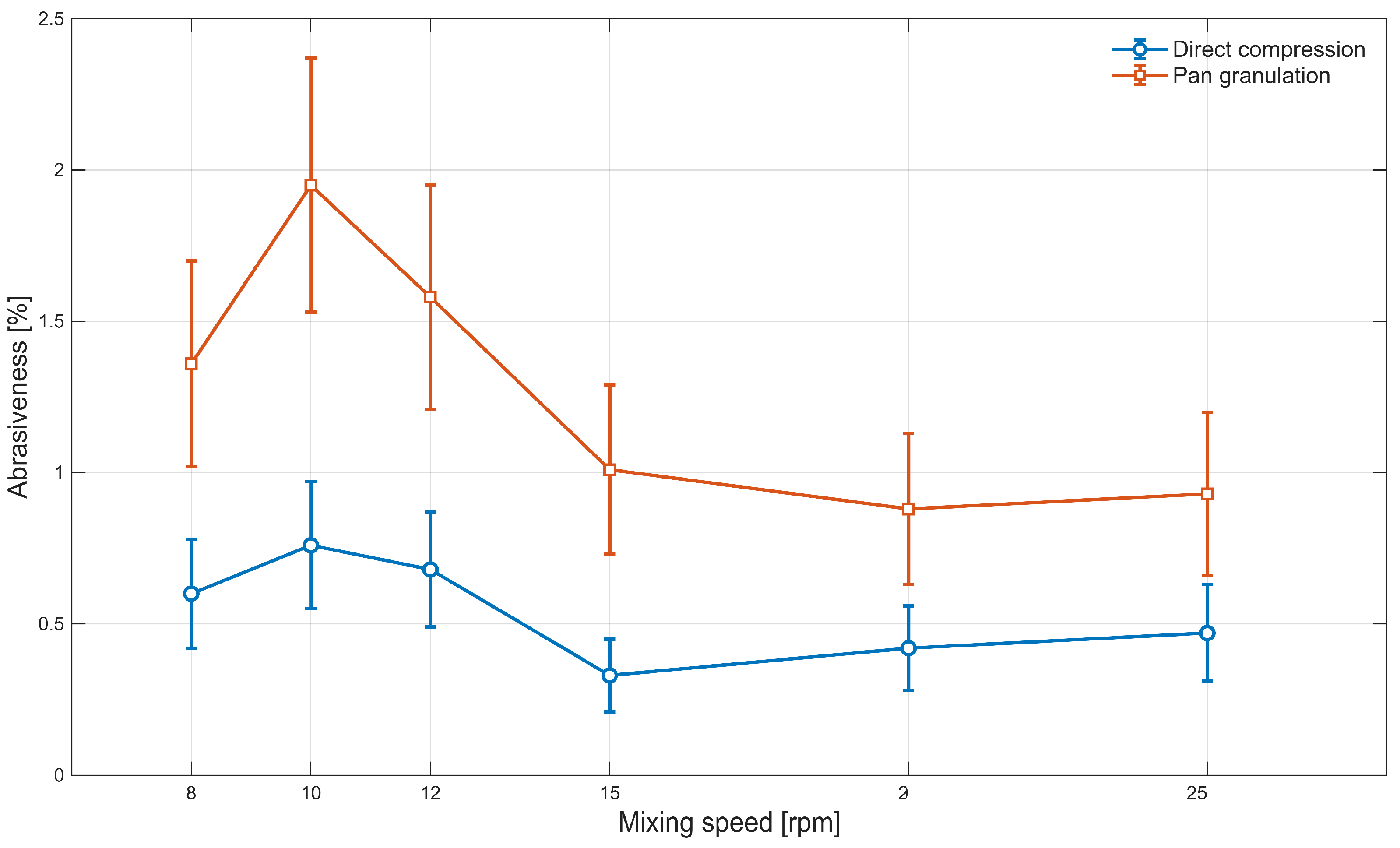
Overall, the applied powder preparation method had a pronounced influence on the measured tablet properties. Direct compression resulted in tablets with higher crushing strength and lower abrasiveness compared with tablets obtained after pan granulation. The effect of mixing speed was most evident for crushing strength, whereas tablet thickness and mass showed no consistent monotonic dependence on rotational speed. The obtained results indicate that both the mixing conditions and the subsequent powder processing route affected the final tablet quality attributes.
The influence of powder processing technology on tablet quality attributes is summarized in Table 2. Direct compression resulted in higher tablet mass, thickness, crushing strength, and sodium naproxen content compared with tablets obtained after pan granulation. The most pronounced difference was observed for crushing strength, which was approximately 2.8-fold higher for direct compression tablets. In contrast, pan-granulated tablets exhibited higher abrasiveness values, indicating lower mechanical resistance.
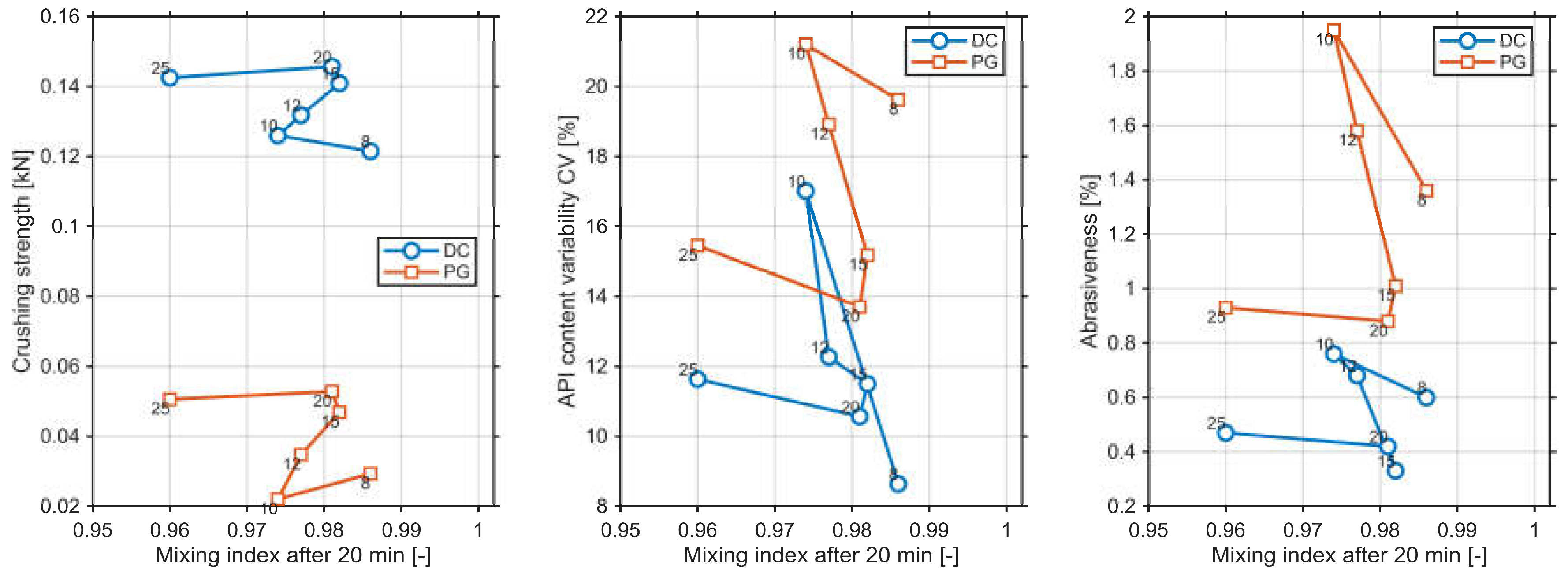
The relationship between the mixing index obtained after 20 min of blending and selected tablet quality attributes was evaluated to assess whether blend homogeneity could be directly related to final tablet performance (Figure 8). The analysis included crushing strength, variability of sodium naproxen content expressed as coefficient of variation (CV), and abrasiveness. Although the mixing index values were high for all investigated conditions (0.960–0.999), differences in tablet properties were observed depending on the applied powder processing route. The correlation analysis was therefore performed separately for directly compressed tablets and tablets obtained after pan granulation.
Figure 8.
Influence of mixing speed during powder blending on tablet abrasiveness.
4. Discussion
Powder mixing is one of the critical unit operations in pharmaceutical manufacturing because the spatial distribution of the active pharmaceutical ingredient (API) directly affects the uniformity of the final dosage form. The efficiency of blending depends not only on mixer operating parameters but also on powder characteristics, including particle size, density, cohesiveness, and flowability [2,9,19]. In pharmaceutical systems, the mixing endpoint is commonly evaluated using statistical indicators based on concentration variability, such as relative standard deviation or mixing indices, which describe the degree of homogenization achieved during processing [9].
In the present study, the mixing index increased rapidly during the initial stage of blending and reached values close to unity for all investigated rotational speeds. Similar behavior has been reported for pharmaceutical powder mixtures, where the initial convective mixing stage is followed by slower homogenization mechanisms associated with particle rearrangement and diffusion [8,19]. The obtained results indicate that increasing rotational speed accelerated the approach toward the maximum mixing index; however, the highest rotational speed did not provide the highest final mixing quality after 20 min.
An important factor that may contribute to the observed mixing behaviour is the pronounced difference in particle size between the main components of the binary mixture. The particle size distribution and flow properties of the raw materials used in this study were characterized in my previous work, where the same raw materials and suppliers were employed [14]. Sodium naproxen exhibited a median particle size (d50) of 154 µm, whereas calcium carbonate had a substantially lower d50 of 6 µm [14]. Thus, the approximately 25-fold difference in median particle size represents a substantial material-related heterogeneity of the powder system. Such differences in particle size may affect particle mobility, interparticle interactions, and segregation tendencies during blending, and may therefore contribute to the observed changes in mixing efficiency with increasing mixing time and rotational speed.
This behavior suggests that excessive mixing intensity may not always improve blend uniformity. Once a sufficiently homogeneous state is achieved, further mixing may promote particle segregation phenomena, particularly in cohesive binary mixtures with differences in particle size and density. Previous studies have demonstrated that pharmaceutical powder mixtures may exhibit dynamic equilibrium between mixing and demixing processes, resulting in fluctuations of measured mixing indices after reaching the maximum value [3,9].
The sodium naproxen–calcium carbonate system investigated in this study represents a challenging pharmaceutical powder mixture due to the poor flowability and cohesive behavior typically associated with fine API particles. Cohesive powders are known to exhibit increased interparticle forces, which may limit particle rearrangement and negatively influence blend uniformity and subsequent processing steps [2,14,20].
Although the mixing index values after 20 min were relatively high for all experimental conditions (0.960–0.999), differences in API content variability were still observed. This indicates that a high global mixing index does not necessarily guarantee identical dose uniformity after compression. Similar observations have been reported for pharmaceutical blending processes, where local powder composition variations and sampling position can influence the measured blend quality despite high overall mixing indices [3,8].
In the present work, the lowest API variability was obtained at intermediate mixing conditions, whereas further increases in rotational speed did not provide additional improvement. This finding confirms that the optimal mixing conditions should not be selected solely based on the shortest mixing time or highest rotational velocity, but rather by considering the balance between homogenization and segregation tendency.
The applied powder processing route had a substantially stronger effect on tablet properties than the differences in mixing speed. Direct compression produced tablets with considerably higher crushing strength and lower abrasiveness compared with tablets obtained after pan granulation. This indicates that the structural characteristics of the starting material strongly influenced compaction behavior.
Granulation is commonly applied to improve powder flowability and handling characteristics by transforming fine powders into larger agglomerates.[17,21,22] However, granulation may also modify particle packing, porosity, and deformation behavior during compression, which directly affects tabletability [23]. Previous studies have demonstrated that granulation-induced changes in particle structure can either improve or reduce tablet mechanical strength depending on material properties and granulation conditions [24,25].
In the present study, pan-granulated tablets exhibited lower crushing strength despite the expected improvement in powder processability after granulation. This behavior may be related to differences in granule structure, internal porosity, and bonding ability during compression. Highly porous granules may require higher compression forces to achieve mechanical properties comparable with directly compressed powders [26,27,28].
An important finding of this study is that similar mixing indices resulted in substantially different tablet properties depending on the applied processing pathway. While the mixing index describes the distribution of components within the powder mixture, it does not fully account for changes occurring during granulation and compression.
The obtained results demonstrate that tablet quality is determined by a combination of factors, including blend uniformity, powder flow behavior, particle structure, and compaction characteristics. Therefore, mixing performance should be considered as one element of the complete powder-to-tablet manufacturing chain rather than an independent predictor of final product quality.
This observation is consistent with modern pharmaceutical process development approaches, where critical material attributes and critical process parameters are evaluated together to understand their influence on critical quality attributes of tablets [14,25]. The combination of mixing analysis with direct evaluation of tablet properties provides a more comprehensive assessment of powder processing efficiency.
The results obtained in this study highlight the importance of evaluating powder mixing together with downstream processing operations. Although optimization of blending conditions can improve API distribution, the final tablet performance depends strongly on the selected manufacturing route.
For cohesive API-containing formulations such as sodium naproxen blends, achieving a high mixing index should therefore not be considered the final process objective. Instead, the optimum operating conditions should provide sufficient homogeneity while maintaining favorable powder and compaction properties. The presented approach combining mixing index analysis with tablet quality evaluation may support more reliable selection of processing conditions during formulation development.
5. Conclusions
The present study demonstrated the relationship between powder mixing performance and the quality attributes of sodium naproxen tablets prepared using two different processing routes: direct compression and pan granulation followed by compression.
The mixing index increased rapidly during the initial stage of blending and reached high values for all investigated rotational speeds. However, a high mixing index did not directly translate into identical tablet properties, indicating that blend homogeneity alone is not sufficient to predict final tablet performance.
The applied powder processing route had a significant influence on tablet quality attributes. Direct compression resulted in tablets with higher crushing strength, lower abrasiveness, and lower API content variability compared with tablets obtained after pan granulation. The differences observed between both processing pathways confirmed that granulation-induced changes in powder structure strongly affected the compaction behavior of the formulation.
The analysis of API content variability showed that increasing mixing speed improved blend uniformity only up to a certain level, while excessive mixing intensity did not provide additional benefits. The optimum mixing conditions should therefore consider both homogenization efficiency and the risk of segregation or deterioration of powder properties.
The combination of mixing index evaluation with tablet quality assessment provides a more comprehensive approach for understanding powder processing behavior. Further studies should include additional characterization methods, such as in-line process analytical technologies (PAT), segregation analysis, or particle-level modeling, to better describe the mechanisms governing the transition from powder mixing to final tablet quality.
Author Contributions
Conceptualization, M.P.; methodology, M.P.; software, M.P.; validation, M.P.; formal analysis, M.P.; investigation, M.P.; resources, M.P.; data curation, M.P.; writing—original draft preparation, M.P.; writing—review and editing, M.P.; visualization, M.P.; supervision, M.P.; project administration, M.P. All authors have read and agreed to the published version of the manuscript.
Funding
Financed by the Minister of Science and Higher Education Republic of Poland within the program “Regional Excellence Initiative”, agreement no. RID/SP/0032/2024/01.
Institutional Review Board Statement
Not applicable.
Informed Consent Statement
Not applicable.
Data Availability Statement
Data presented in this study is contained within the article and supplementary material. Further inquiries can be directed to the corresponding author.
Conflicts of Interest
The authors declare no conflicts of interest.
Acknowledgments
During the preparation of this manuscript, the authors used GitHub Copilot (GitHub, Microsoft Corporation), ChatGPT (OpenAI), and Consensus for the purposes of code development support, literature exploration, and interpretation of research findings. The authors reviewed and edited all generated outputs and take full responsibility for the content of this publication.
References
- Bhalode, P.; Ierapetritou, M. A Review of Existing Mixing Indices in Solid-Based Continuous Blending Operations. Powder Technol. 2020, 373, 195–209. [Google Scholar] [CrossRef]
- Asachi, M.; Nourafkan, E.; Hassanpour, A. A Review of Current Techniques for the Evaluation of Powder Mixing. Adv. Powder Technol. 2018, 29, 1525–1549. [Google Scholar] [CrossRef]
- Jakubowska, E.; Ciepluch, N. Blend Segregation in Tablets Manufacturing and Its Effect on Drug Content Uniformity—A Review. Pharmaceutics 2021, 13, 1909. [Google Scholar] [CrossRef] [PubMed]
- Behjani, M.A.; Motlagh, Y.G.; Bayly, A.E.; Hassanpour, A. Assessment of Blending Performance of Pharmaceutical Powder Mixtures in a Continuous Mixer Using Discrete Element Method (DEM). Powder Technol. 2020, 366, 73–81. [Google Scholar] [CrossRef]
- Alyami, H.; Dahmash, E.; Bowen, J.; Mohammed, A.R. An Investigation into the Effects of Excipient Particle Size, Blending Techniques and Processing Parameters on the Homogeneity and Content Uniformity of a Blend Containing Low-Dose Model Drug. PLoS ONE 2017, 12, e0178772. [Google Scholar] [CrossRef] [PubMed]
- Jaspers, M.; Roelofs, T.P.; Lohrmann, A.; Tegel, F.; Maqsood, M.K.; Song, Y.L.; Meir, B.; Elkes, R.; Dickhoff, B.H.J. Process Intensification Using a Semi-Continuous Mini-Blender to Support Continuous Direct Compression Processing. Powder Technol. 2023, 428, 118844. [Google Scholar] [CrossRef]
- Jaspers, M.; Kulkarni, S.S.; Tegel, F.; Roelofs, T.P.; De Wit, M.T.W.; Janssen, P.H.M.; Meir, B.; Weinekötter, R.; Dickhoff, B.H.J. Batch versus Continuous Blending of Binary and Ternary Pharmaceutical Powder Mixtures. Int. J. Pharm. X 2022, 4, 100111. [Google Scholar] [CrossRef] [PubMed]
- Scheibelhofer, O.; Balak, N.; Wahl, P.R.; Koller, D.M.; Glasser, B.J.; Khinast, Johannes.G. Monitoring Blending of Pharmaceutical Powders with Multipoint NIR Spectroscopy. AAPS PharmSciTech 2013, 14, 234–244. [Google Scholar] [CrossRef] [PubMed]
- Crouter, A.; Briens, L. Methods to Assess Mixing of Pharmaceutical Powders. AAPS PharmSciTech 2019, 20, 84. [Google Scholar] [CrossRef] [PubMed]
- Makraduli, L.; Makreski, P.; Makraduli, F.; Slaveska-Spirevska, I.; Bakovska-Stoimenova, T.; Lazarevska-Todevska, E.; Piponski, M.; Anevska, M.; Glavas-Dodov, M.; Simonoska-Crcarevska, M.; et al. Design of Experiments (DoE)-Based Approach for Improvement of Dry Mixing Processes in the Production of Low-Dose Alprazolam Tablets Using Raman Spectroscopy for Content Uniformity Monitoring. Arh. Za Farm. 2023, 73, 35–61. [Google Scholar] [CrossRef]
- Przywara, M.; Lech-Przywara, R.; Rupar, P.; Zapała, W. Effect of Mixing Technology on Homogeneity and Quality of Sodium Naproxen Tablets: Technological and Analytical Evaluation Using HPLC Method. Molecules 2025, 30, 3119. [Google Scholar] [CrossRef] [PubMed]
- Przywara, M.; Jękot, K.; Jednacz, W. Evaluation of Vibratory Ball Mill Mixing as an Alternative to Wet Granulation in the Manufacturing of Sodium Naproxen Tablets with Dolomite-Based Formulations. Appl. Sci. 2025, 15, 6966. [Google Scholar] [CrossRef]
- Benque, B.; Orefice, L.; Forgber, T.; Habeler, M.; Schmid, B.; Remmelgas, J.; Khinast, J. Improvement of a Pharmaceutical Powder Mixing Process in a Tote Blender via DEM Simulations. Int. J. Pharm. 2024, 658, 124224. [Google Scholar] [CrossRef] [PubMed]
- Przywara, M.; Leszczak, P. Quality by Design Approach to the Optimization of Cohesive Powder Blending in Direct Compression. Pharmaceutics 2026, 18, 823. [Google Scholar] [CrossRef] [PubMed]
- Capece, M.; Silva, K.R.; Sunkara, D.; Strong, J.; Gao, P. On the Relationship of Inter-Particle Cohesiveness and Bulk Powder Behavior: Flowability of Pharmaceutical Powders. Int. J. Pharm. 2016, 511, 178–189. [Google Scholar] [CrossRef] [PubMed]
- Garg, V.; Mallick, S.S.; Garcia-Trinanes, P.; Berry, R.J. An Investigation into the Flowability of Fine Powders Used in Pharmaceutical Industries. Powder Technol. 2018, 336, 375–382. [Google Scholar] [CrossRef]
- Przywara, M.; Leszczak, P. Quality by Design Strategies in Fluidized Bed Granulation: A Focus on Granules for Tablet Manufacturing. Adv. Sci. Technol. Res. J. 2024, 19, 429–444. [Google Scholar] [CrossRef] [PubMed]
- Al-Zoubi, N.; Odeh, F.; Partheniadis, I.; Gharaibeh, S.; Nikolakakis, I. Spray Drying of Naproxen and Naproxen Sodium for Improved Tableting and Dissolution – Physicochemical Characterization and Compression Performance. Pharm. Dev. Technol. 2021, 26, 193–208. [Google Scholar] [CrossRef] [PubMed]
- Bhalode, P.; Ierapetritou, M. A Review of Existing Mixing Indices in Solid-Based Continuous Blending Operations. Powder Technol. 2020, 373, 195–209. [Google Scholar] [CrossRef]
- Opaliński, I.; Chutkowski, M.; Stasiak, M.; Leś, K.; Olechowski, M.; Przywara, M. Studies on Moisture Effects on Powder Flow and Mechanochemical Improvement of Powder Flowability. Adv. Sci. Technol. Res. J. 2021, 15(2), 228–246. [Google Scholar] [CrossRef]
- Otto, E.; Dürr, R.; Przywara, M.; Antos, D.; Kienle, A. Population Balance Modelling of Pan Granulation Processes. In Computer Aided Chemical Engineering; Elsevier, 2021; Vol. 50, pp. 965–970. ISBN 978-0-323-88506-5. [Google Scholar] [CrossRef]
- Dürr, R.; Przywara, M.; Otto, E.; Antos, D.; Kienle, A. Modeling of Particle Formation in Pan Granulators with Sieve-Mill Recycle. In Computer Aided Chemical Engineering; Elsevier, 2023; Vol. 52, pp. 1027–1032. ISBN 978-0-443-15274-0. [Google Scholar] [CrossRef]
- Dan, A.; Paul, S.; Vaswani, H.; Grząbka-Zasadzińska, A.; Thakkelapally, A.; Li, J.; Sen, K.; Deanne, R.; Tseng, Y.-C.; Ramachandran, R. Quantitative Analysis of the Effects of Multi-Component Formulation Parameters on Granule and Tablet Properties via a Combined Population Balance and Statistical Predictive Model. Powder Technol. 2024, 435, 119391. [Google Scholar] [CrossRef]
- Arndt, O.-R.; Baggio, R.; Adam, A.K.; Harting, J.; Franceschinis, E.; Kleinebudde, P. Impact of Different Dry and Wet Granulation Techniques on Granule and Tablet Properties: A Comparative Study. J. Pharm. Sci. 2018, 107, 3143–3152. [Google Scholar] [CrossRef] [PubMed]
- Wang, Y.; Cao, J.; Zhao, X.; Liang, Z.; Qiao, Y.; Luo, G.; Xu, B. Using a Material Library to Understand the Change of Tabletability by High Shear Wet Granulation. Pharmaceutics 2022, 14, 2631. [Google Scholar] [CrossRef] [PubMed]
- Nordström, J.; Alderborn, G. The Granule Porosity Controls the Loss of Compactibility for Both Dry- and Wet-Processed Cellulose Granules but at Different Rate. J. Pharm. Sci. 2015, 104, 2029–2039. [Google Scholar] [CrossRef] [PubMed]
- Khorsheed, B.; Gabbott, I.; Reynolds, G.K.; Taylor, S.C.; Roberts, R.J.; Salman, A.D. Twin-Screw Granulation: Understanding the Mechanical Properties from Powder to Tablets. Powder Technol. 2019, 341, 104–115. [Google Scholar] [CrossRef]
- Macho, O.; Gabrišová, Ľ.; Guštafík, A.; Jezso, K.; Juriga, M.; Kabát, J.; Blaško, J. The Influence of Wet Granulation Parameters on the Compaction Behavior and Tablet Strength of a Hydralazine Powder Mixture. Pharmaceutics 2023, 15, 2148. [Google Scholar] [CrossRef] [PubMed]
Figure 1.
Experimental workflow and processing scheme used in the study.
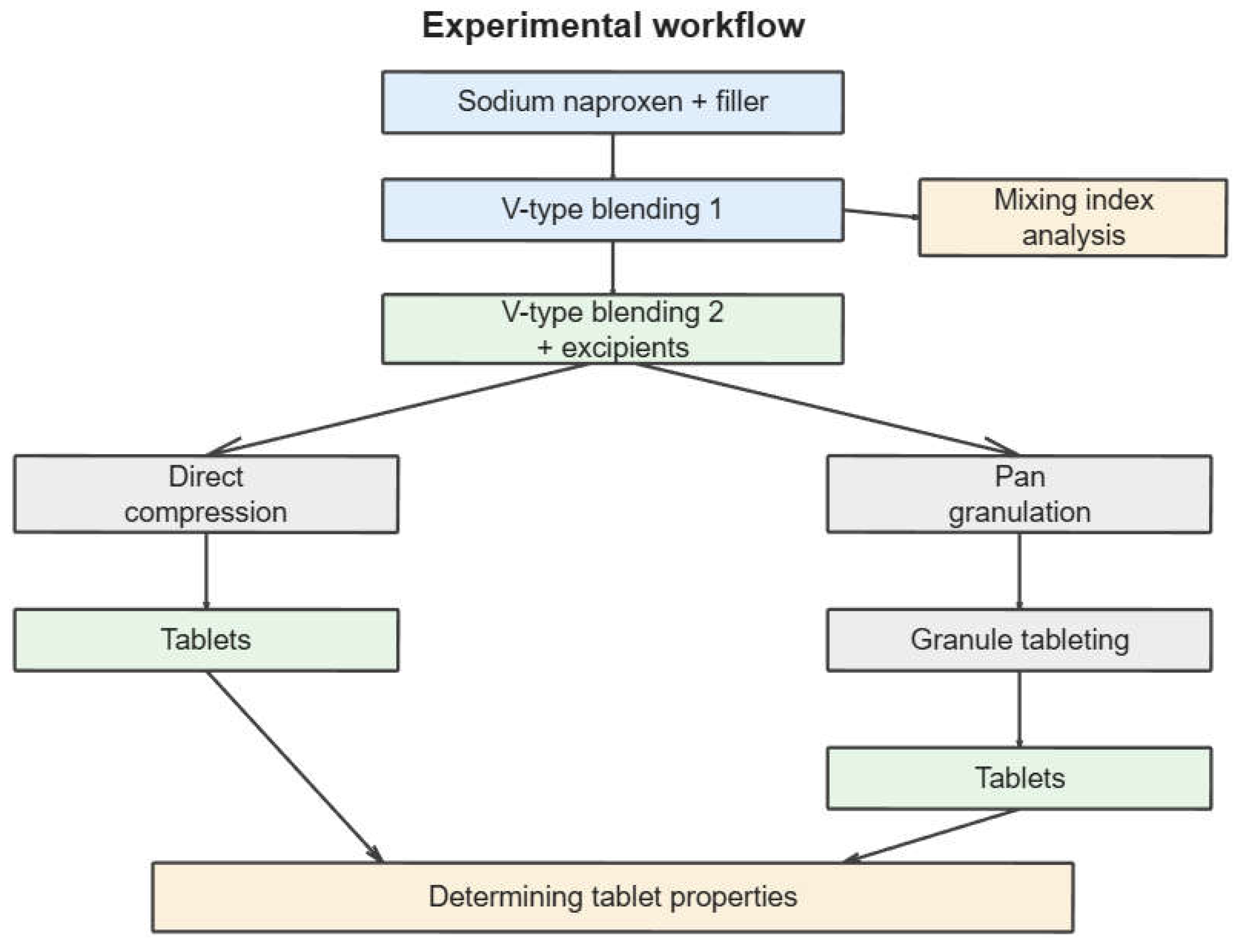
Figure 2.
Mixing kinetics of powder mixtures during mixing in a V-type mixer at various rotational speeds. The inset shows the initial stage of mixing, during which differences in mixing rates are most pronounced. The vertical lines indicate the maximum mixing index achieved under each set of conditions.
Figure 2.
Mixing kinetics of powder mixtures during mixing in a V-type mixer at various rotational speeds. The inset shows the initial stage of mixing, during which differences in mixing rates are most pronounced. The vertical lines indicate the maximum mixing index achieved under each set of conditions.
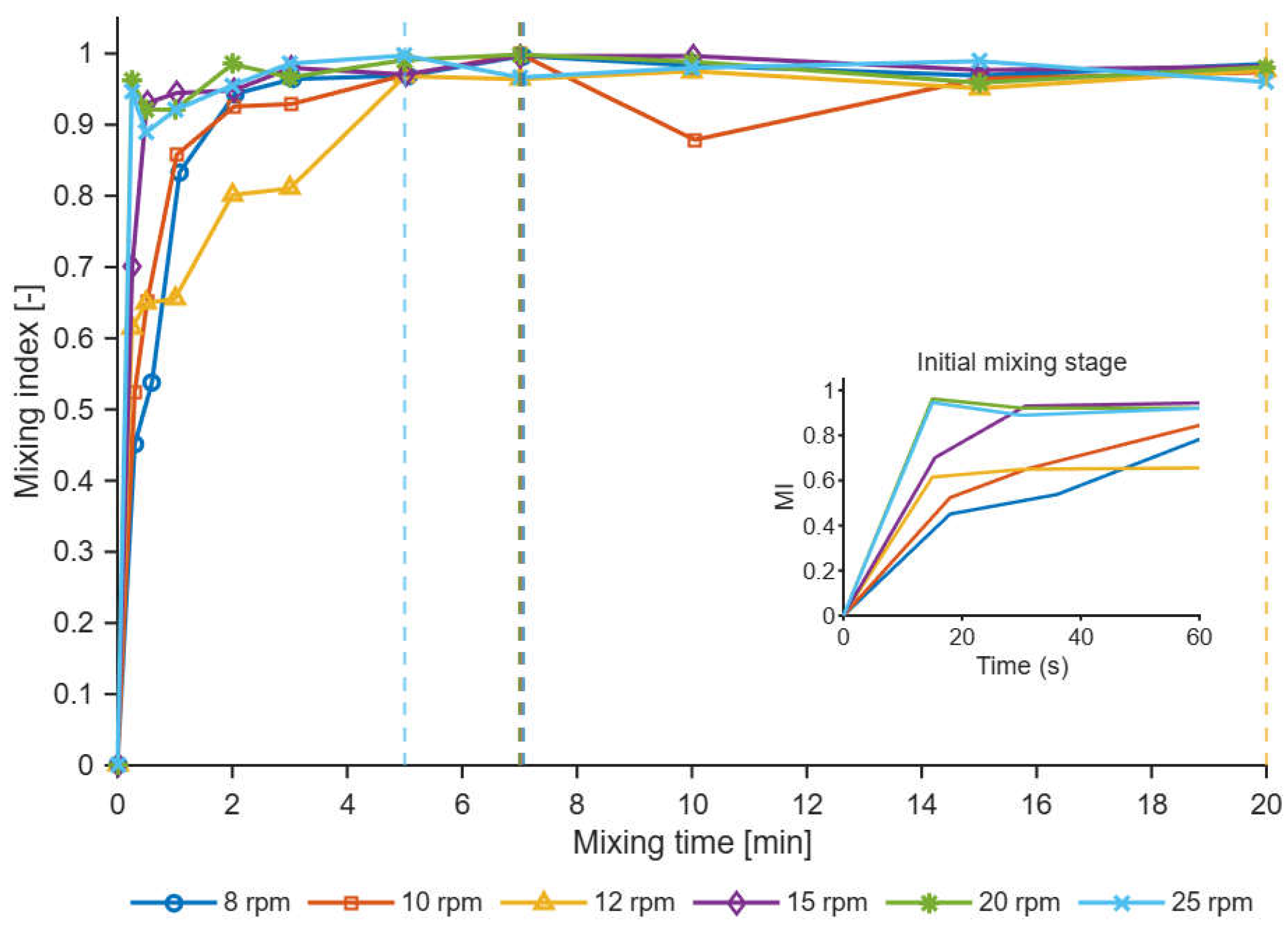
Figure 3.
Influence of mixing speed during powder blending on tablet mass.
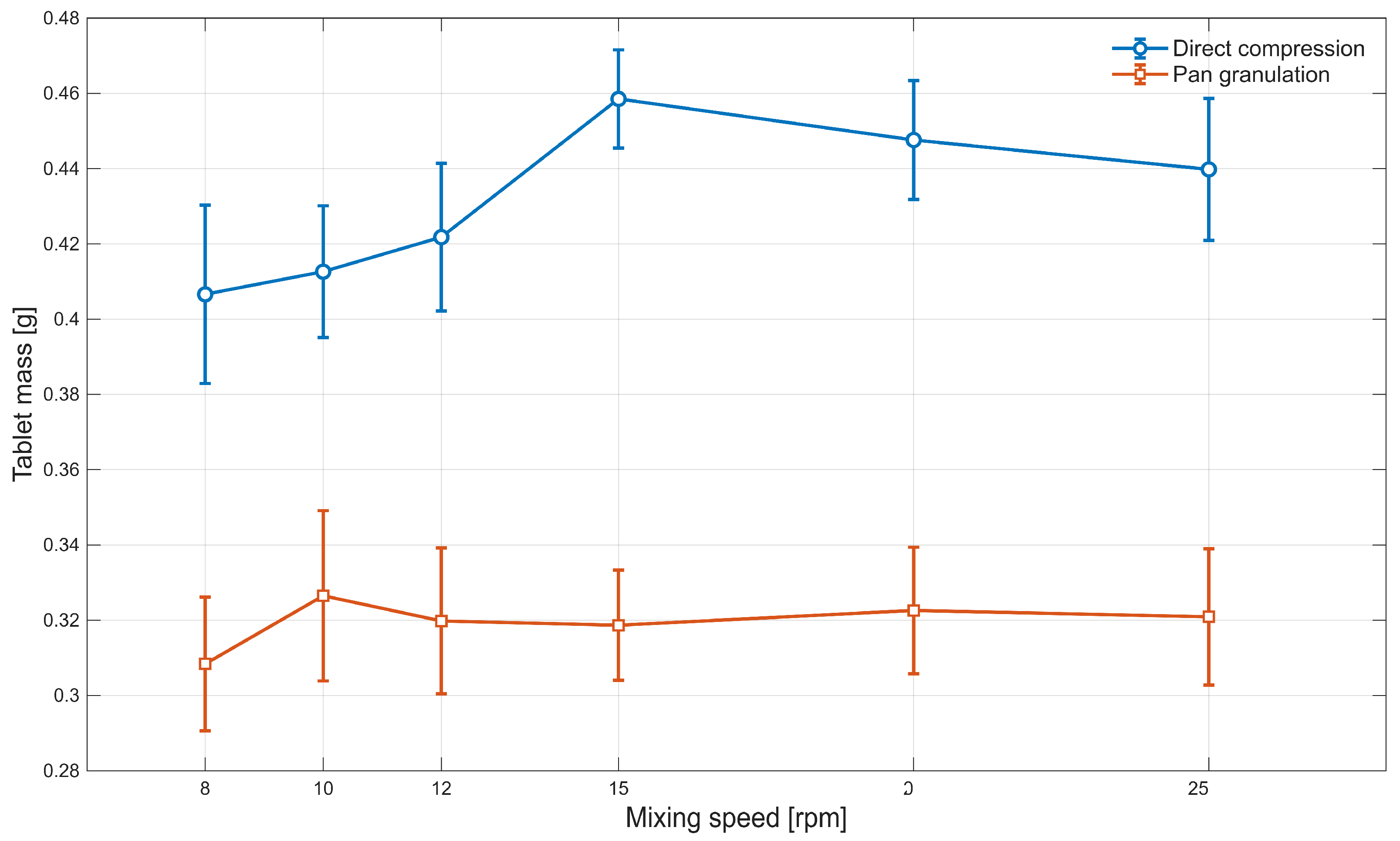
Figure 4.
Influence of mixing speed during powder blending on tablet thickness.
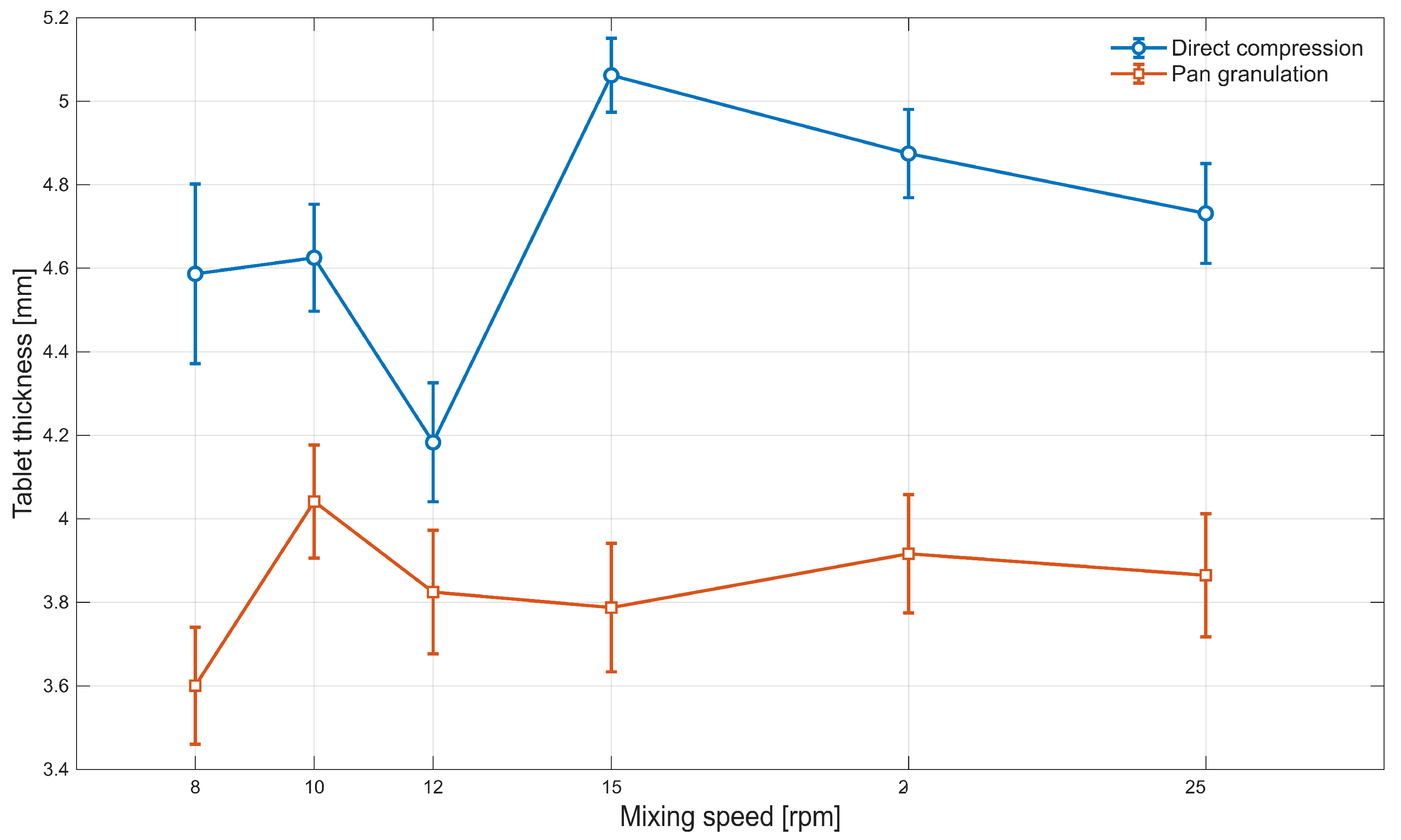
Figure 5.
Influence of mixing speed during powder blending on tablet crushing strength.
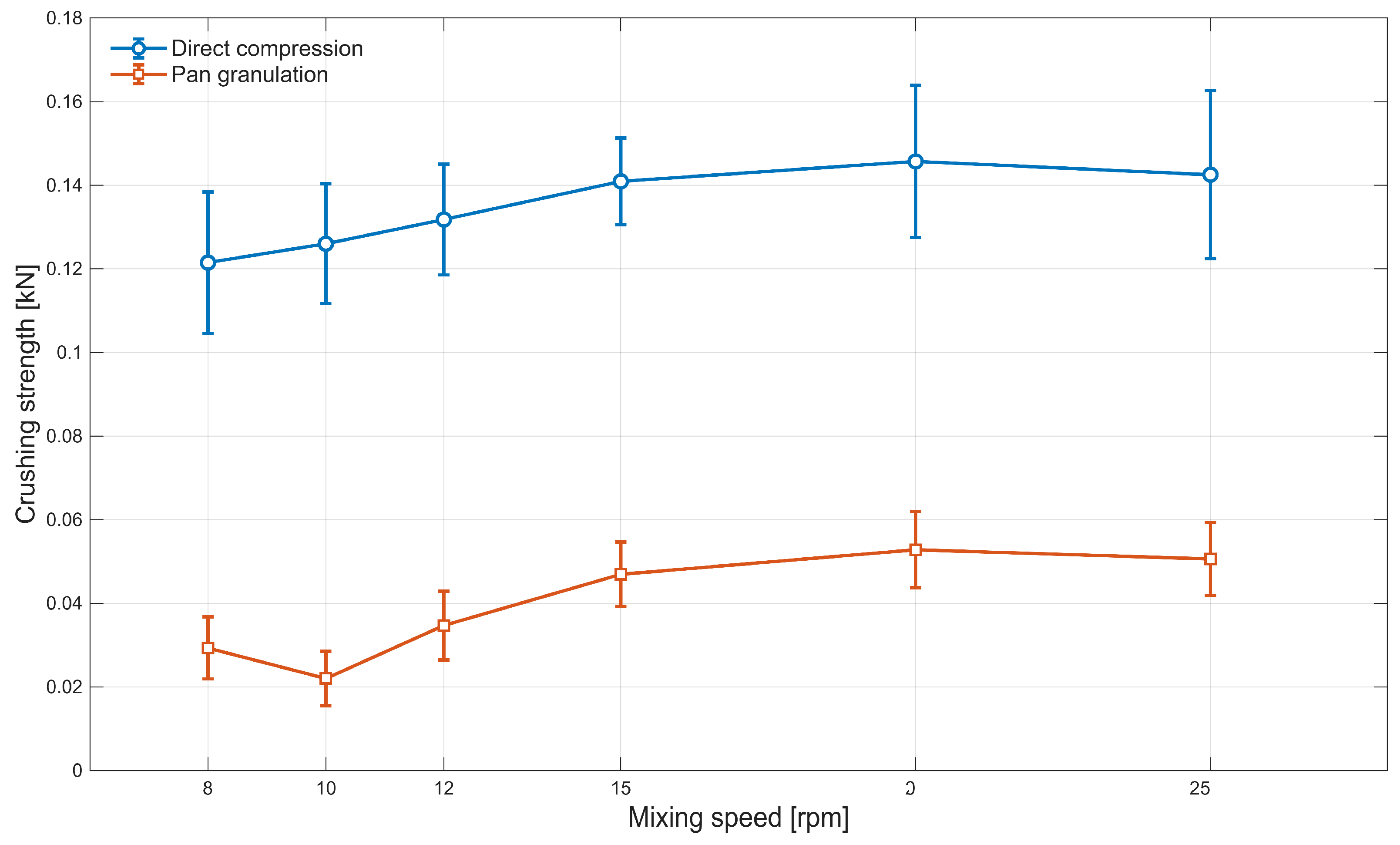
Figure 6.
Influence of mixing speed during powder blending on sodium naproxen content.
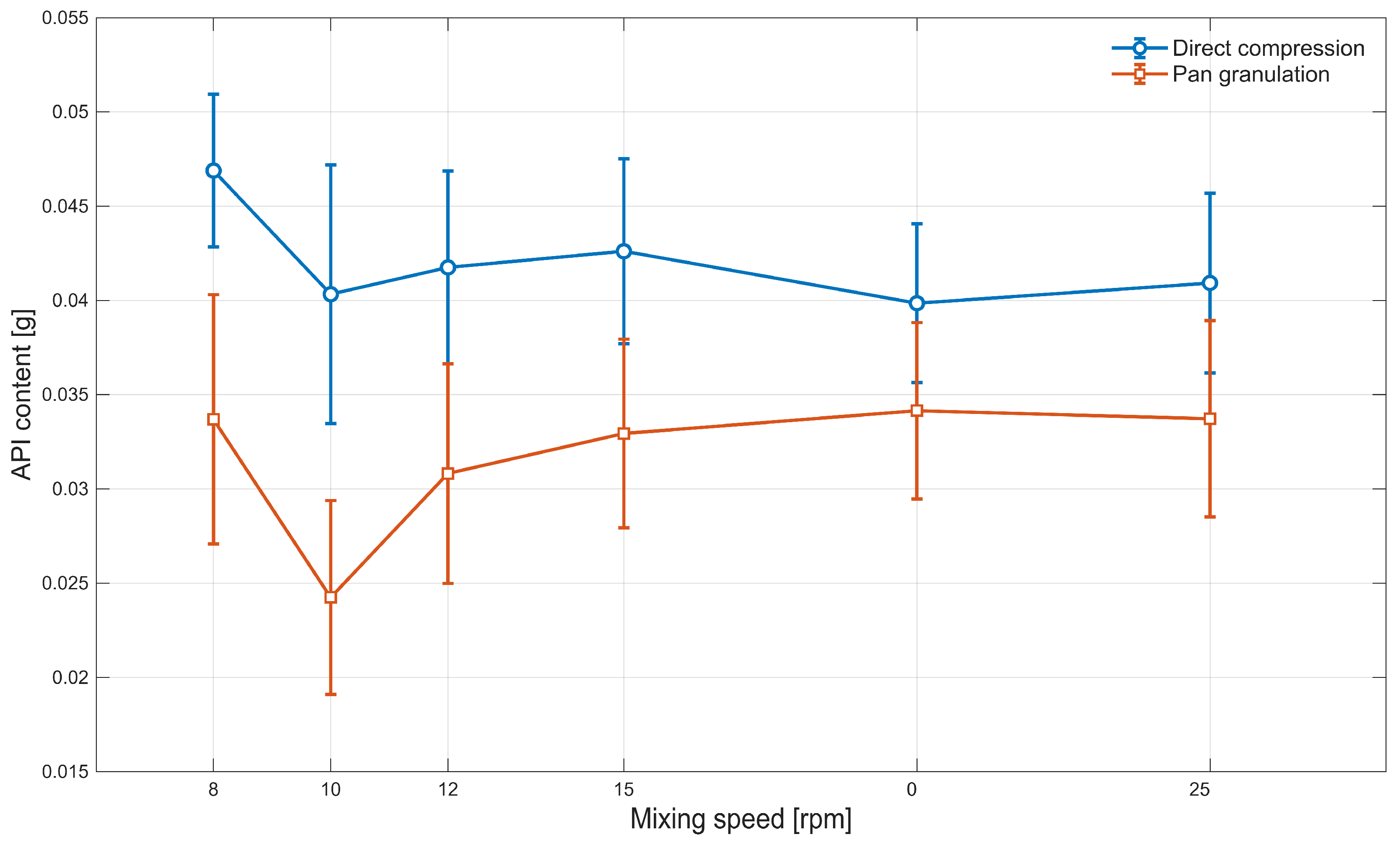
Figure 7.
Influence of mixing speed during powder blending on API content variability.
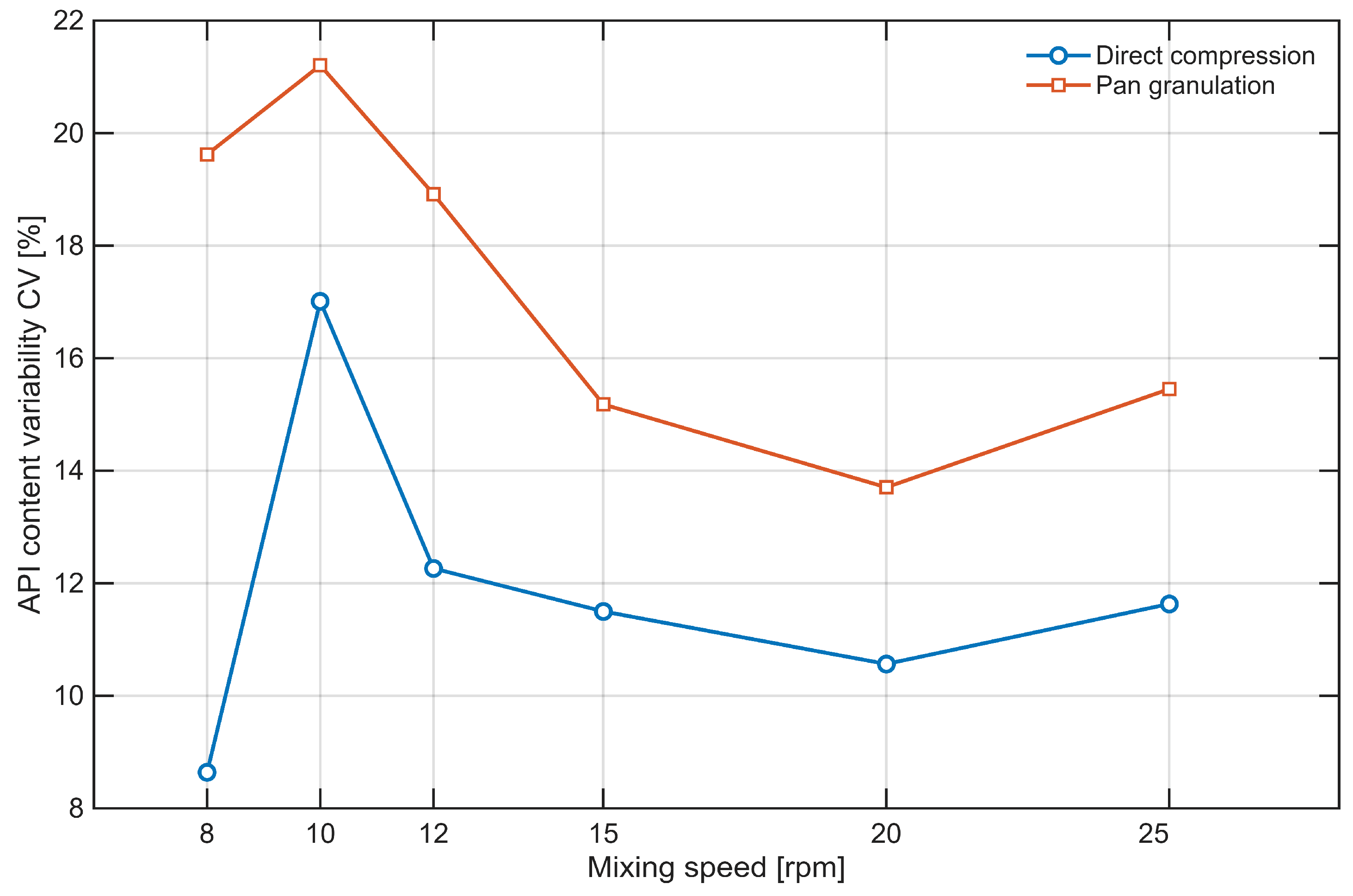

Table 1.
Mixing index values after 20 minutes and the maximum mixing index.
| Speed [rpm] |
Maximum mixing index [-] |
Time to maximum [s] |
Mixing index after 20 minutes [-] |
| 8 | 0.997 | 424 | 0.986 |
| 10 | 0.999 | 421 | 0.974 |
| 12 | 0.977 | 1200 | 0.977 |
| 15 | 0.997 | 420 | 0.982 |
| 20 | 0.999 | 420 | 0.981 |
| 25 | 0.997 | 300 | 0.960 |
Table 2.
Effect of powder processing route on tablet quality attributes expressed as relative difference between direct compression and pan granulation.
Table 2.
Effect of powder processing route on tablet quality attributes expressed as relative difference between direct compression and pan granulation.
| Quality attribute | Range of DC values | Range of PG values | Relative difference DC vs PG [%] | Main observation |
| Tablet mass [g] | 0.4066–0.4585 | 0.3084–0.3265 | +26.4 to +43.9 (avg. +35.0) | Higher tablet mass obtained for DC |
| Tablet thickness [mm] | 4.183–5.062 | 3.601–4.042 | +9.4 to +33.7 (avg. +21.9) | DC tablets exhibited higher thickness |
| Crushing strength [kN] | 0.1215–0.1457 | 0.0220–0.0528 | +175.9 to +472.7 (avg. +271) | DC tablets showed considerably higher mechanical strength |
| Sodium naproxen content [g/tablet] | 0.0399–0.0469 | 0.0242–0.0342 | +16.7 to +66.4 (avg. +34.8) | Higher API content measured in DC tablets |
| Abrasiveness [%] | 0.33–0.76 | 0.88–1.95 | −49.5 to −67.3 (avg. −57.9) | PG tablets exhibited higher abrasiveness |
Disclaimer/Publisher’s Note: The statements, opinions and data contained in all publications are solely those of the individual author(s) and contributor(s) and not of MDPI and/or the editor(s). MDPI and/or the editor(s) disclaim responsibility for any injury to people or property resulting from any ideas, methods, instructions or products referred to in the content. |
© 2026 by the authors. Licensee MDPI, Basel, Switzerland. This article is an open access article distributed under the terms and conditions of the Creative Commons Attribution (CC BY) license (http://creativecommons.org/licenses/by/4.0/).
Copyright: This open access article is published under a Creative Commons CC BY 4.0 license, which permit the free download, distribution, and reuse, provided that the author and preprint are cited in any reuse.