
Submitted:
26 July 2026
Posted:
28 July 2026
You are already at the latest version
Abstract
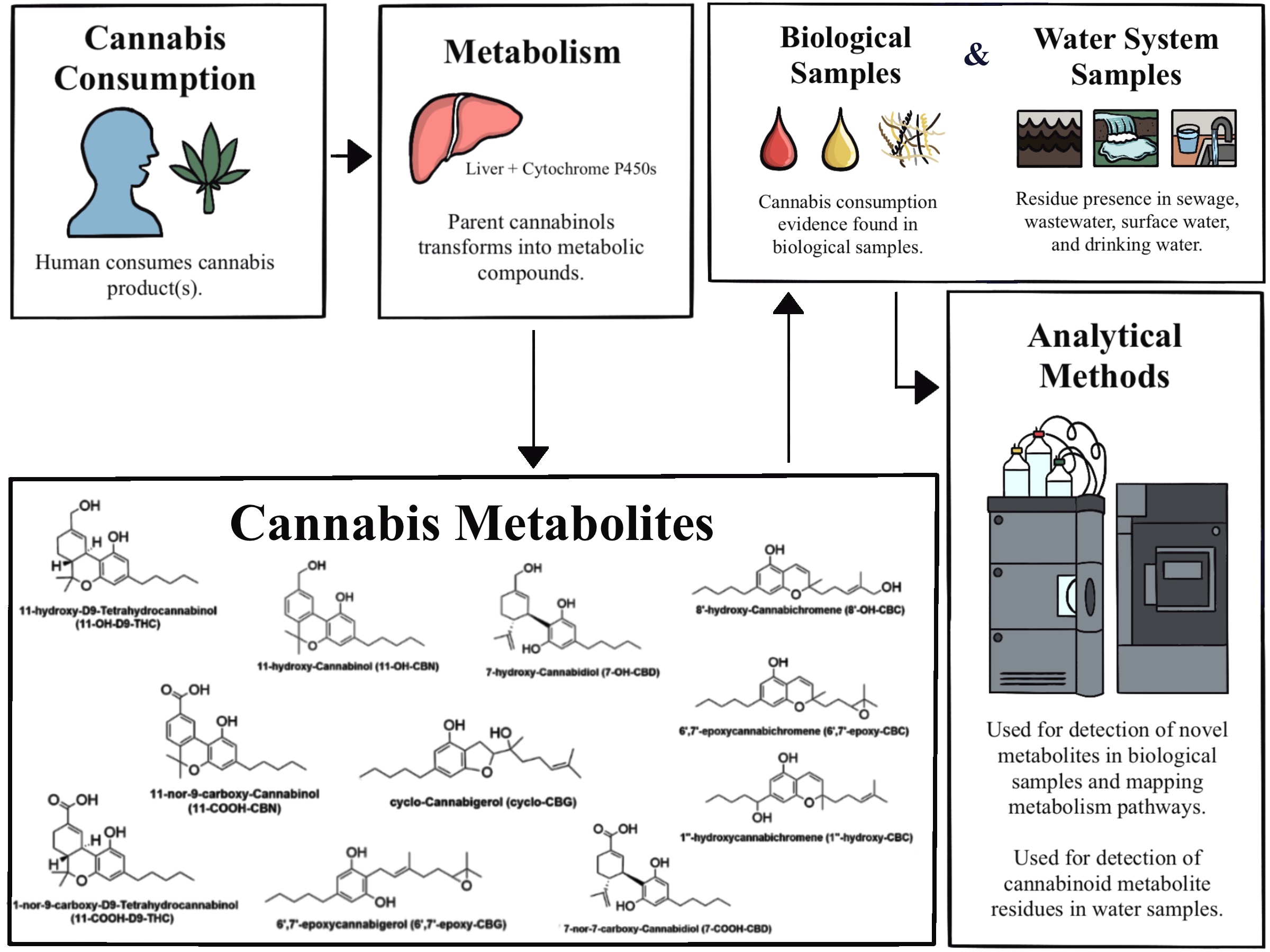
As cannabis usage persists within communities following its legalization across regions globally, the aftermath of consumption raises concerns for environmental and public health as cannabinoids and their metabolites are introduced into water systems. The exploration of novel metabolites has expanded knowledge on cannabis metabolism, but the impact of these metabolites when released through bodily excretions into the wastewater system remain limited. Cannabinoids within the human body can already pose adverse effects upon consumption; these impacts are further complicated with the successful detection of metabolite residues in both surface and tap waters. Cannabis has been used recreationally and pharmaceutically for their psychoactive properties, and the rate of usage and release is expected to increase as extension of legalization make cannabis more readily accessible. Cannabis metabolites within the water system are detected using liquid chromatography paired with mass spectrometry (LC-MS) due to its reliability and specificity. Cannabinoid analysis using LC-MS is cost effective and reduces risk of heat degradation from alternatives like gas chromatography-mass spectrometry (GC-MS). The detection of cannabinoids and their metabolites utilizing primarily LC-MS methodology for monitoring consumption trends and health impacts is crucial to understanding residues from cannabinoids tetrahydrocannabinol (THC), cannabinol (CBN), cannabidiol (CBD), cannabigerol (CBG), and cannabichromene (CBC).
Keywords:
cannabinoids
; cannabinoid metabolites
; cytochrome metabolism
; water epidemiology
; liquid chromatography mass spectrometry (LC-MS)
; analytical techniques
Copyright: This open access article is published under a Creative Commons CC BY 4.0 license, which permit the free download, distribution, and reuse, provided that the author and preprint are cited in any reuse.


