Submitted:
26 July 2026
Posted:
28 July 2026
You are already at the latest version
Abstract
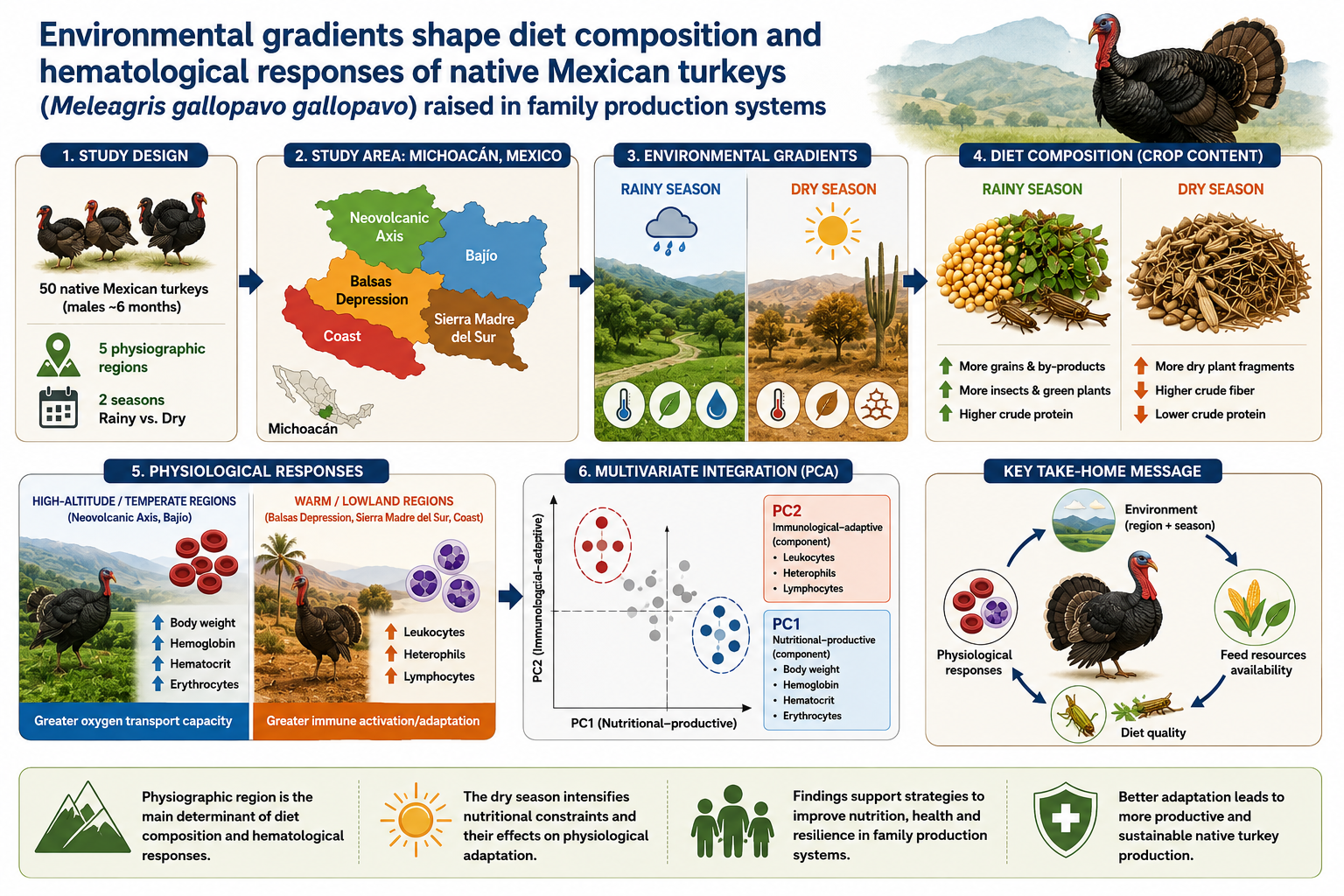
Native Mexican turkeys (Meleagris gallopavo gallopavo) are an important genetic resource in family-based production systems exposed to marked regional and seasonal environmental variation. This study evaluated the effects of environmental gradients shape diet composition and hematological responses of native Mexican turkeys raised in family production systems. Fifty approximately six-month-old males were evaluated in a 5 × 2 factorial design including five physiographic regions and two seasons (rainy and dry). Crop content composition, estimated dietary nutrient composition, body weight, and hematological profile were analyzed using multivariate analysis of variance, principal component analysis (PCA), and multiple regression. Grains and energy-rich by-products predominated in the diet (58.2–76.2%), whereas the dry season increased dry plant fragments and crude fiber while reducing crude protein from 17.5 to 14.3% (p < 0.001). Body weight was greatest in the Neovolcanic Axis (5.20 kg) and lowest on the Coast (4.35 kg) (p < 0.001). Erythrocyte-related variables were higher in temperate, high-altitude regions, whereas leukocyte-related variables predominated in warmer regions (p < 0.05). PCA explained 71.3% of the total variation, identifying nutritional–productive and immunological–adaptive components. Physiographic region was the main determinant of diet composition and hematological responses, whereas the dry season intensified nutritional constraints and their effects on physiological adaptation.