
Submitted:
25 July 2026
Posted:
27 July 2026
You are already at the latest version
Abstract
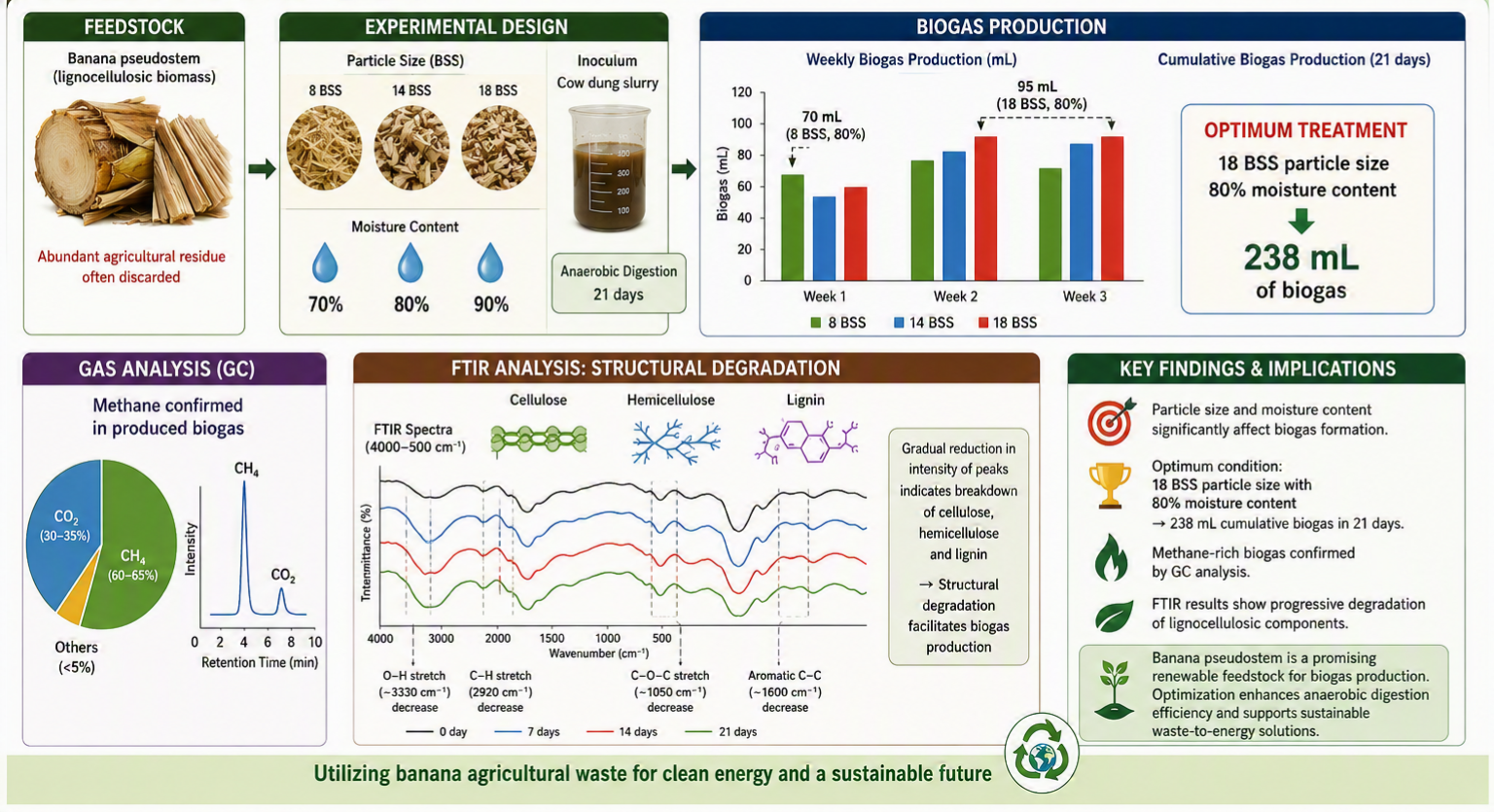
The banana pseudostem is a plentiful lignocellulosic biomass residue that results from banana cultivation and which is typically thrown away without proper usage. The effect of particle sizes and moisture content on biogas formation from banana pseudostem under anaerobic digestion conditions has been studied in this experiment with FTIR used to assess structural degradation of the lignocellulosic biomass. Three different sizes (8, 14, and 18 BSS) of banana pseudostems have been taken and their moisture contents varied into three percentages, namely 70%, 80%, and 90%. Anaerobic digestion studies have been performed for 21 days with cow dung slurry as the inoculum. It was clearly evident from the findings that both particle sizes and water contents had a profound effect on biogas formation. In week one, the maximum amount of biogas (70 mL) formed by any treatment was that of 8 BSS with 80% water content. However, in weeks two and three, the maximum amount of biogas (95 mL) was formed by the 18 BSS treatment having 80% water content. The cumulative analysis of biogas formations found the treatment combination of 18 BSS particle size with 80% water content to be the optimum treatment producing 238 mL of biogas. The gas analysis by gas chromatography confirmed the presence of methane gas in the produced biogas. Further, it was observed through FTIR analysis that there were gradual changes in the functional groups of cellulose, hemicellulose, and lignin components. This research demonstrates that banana pseduostem is a potential renewable feedstock for biogas production, and an optimized particle size and moisture content have significant effects on improving anaerobic digestion efficiency. These results contribute to the utilization of agricultural waste from bananas as renewable energy sources.
Keywords:
anaerobic digestion
; banana pseudostem
; biogas production
; FTIR
; lignocellulosic biomass
; moisture content
; particle size
; renewable energy
1. Introduction
Increased energy demands across the world, coupled with industrialization, urbanization, and population growth, have heightened the need for the use of traditional fuels. Despite continued dominance of coal, petroleum, and natural gas in the energy industry, extensive usage of these energy sources has caused serious environmental issues such as green house gases emission, climate changes, air pollution, and non-renewable energy exhaustion (Jain & Sawle, 2021). As a result, the invention of sustainable and renewable energy sources has become one of the major priorities globally.
In addition to other available renewable energy sources, biomass has shown great promise as an alternative source of energy. In large amounts around the world, biomass is produced by agriculture industries in the form of residues. Most of these residues are disposed by burning or rotting which causes pollution and wastes valuable resources. The utilization of biomass in producing bio-energy may lead to a sustainable system of waste management and bio-economy creation (Gupta, et al., 2023 & Ungureanu, et al., 2025).
Anaerobic digestion is among the most commonly used biological processes that use biodegradable organic materials to produce renewable energy in the form of biogas. Anaerobic digestion process involves the breakdown of organic substrate under anoxic conditions via four primary phases which include hydrolysis, acidogenesis, acetogenesis, and methanogenesis (Sawyerr et al., 2019). Biogas produced from this process mainly contains methane (CH₄) and carbon dioxide (CO₂), whereby methane is the chief combustible component that provides the energy source. Apart from producing renewable energy, anaerobic digestion helps to reduce greenhouse gas emissions and improve waste management while providing nutrient-rich organic material (Mignogna, et al., 2023).
Banana (Musa spp.) is among the commonly grown fruits crops in tropical and subtropical climatic conditions. There is the production of various agricultural wastes during banana farming which include leaves, peels, peduncles, rhizomes, and pseudostems. Of the various agricultural wastes, banana pseudostem accounts for a large fraction and is usually disposed off after harvest despite being rich in organic matter. Open decomposition or burning of banana pseudostem leads to environmental pollution and greenhouse gas emissions, thus requiring effective strategies to valorize this agricultural waste stream (Haq, et al., 2021& Sewsynker-Sukai, et al., 2025).
The potential for using banana pseudostem in anaerobic digestion processes for biogas production is immense considering the amount of cellulose, hemicellulose, and biodegradable organic materials present in the banana pseudostem. The above can be used as carbon sources in anaerobic digestion for biogas production. The problem is that the lignocellulosic nature of the banana pseudostem makes it difficult to decompose efficiently. This is because lignin serves as a protective cover to cellulose and hemicellulose, thus making microbial degradation less effective, especially since hydrolysis is regarded as the rate-limiting process during anaerobic digestion of lignocellulosic materials.
Some of the research conducted shows biogas production potential from banana-based biomass. Biogas production from banana pseudostem was successfully accomplished and observed potential in the use of banana stem and peduncle for biogas production from the material. In this case, biogas production from lignocellulosic substrates depends on physical and operational factors that affect biodegradability and accessibility (Divyabharathi, et al., 2017 & Oyaro, et al., 2021).
Particle size is one such significant physical property that influences the efficiency of anaerobic digestion processes. It is well-known that reduction in the size of substrate particles increases the surface area that can be utilized by microorganisms for enzymatic hydrolysis. However, if the particle size is reduced too much, there can be compaction of substrates and reduction in pore volume, which restricts the movement of gases, thus resulting in low biogas generation (Kaur, 2022).
Moisture content also plays an important role in anaerobic digestion process efficiency. Moisture helps the growth of microorganisms, nutrient transportation, wetting of substrate, and enzyme activity. Less moisture can inhibit microorganisms metabolism and hydrolysis process, while too much moisture can lead to flooding of substrate and reduce porosity and biogas production. It is thus essential to establish optimum moisture content for maximum biogas production (Conrad, 2020 & Nielsen, 2009).
Other than biogas production analysis, characterization of structural transformations taking place during anaerobic digestion is key to studying the degradation mechanism of the biomass. FTIR, which stands for Fourier Transform Infrared Spectroscopy, is a highly sophisticated technique applied to analyze functional groups and monitor chemical transformation of lignocellulosic biomass. Analysis by FTIR is useful for studying degradation of cellulose, hemicellulose, and lignin during anaerobic digestion as well as establishing the relation between structural transformation and biogas generation efficiency (Patrizi, et al., 2019 & Karthikeyan, et al., 2026).
Several studies on biogas production from different types of banana residue have been carried out but very few studies have systematically investigated the biogas production from banana pseudostem depending on particle size and moisture content. Even fewer studies have combined both biogas production analysis and FTIR analysis on banana pseudostem. This research aimed at investigating the production of biogas from banana pseudostem under varying conditions of particle size and moisture content.
2. Materials and Methods
2.1. Collection of Banana Pseudostem
Fresh pseudostem of banana was obtained from a commercial farm of bananas situated at Nerle, Walwa Taluka, Sangli District, Maharashtra, India. Healthy and fully grown banana plants were chosen to maintain uniformity in quality of the substrate. The collected biomass was then brought to the laboratory in clean condition and subjected to experimentation.
2.2. Preparation of Banana Pseudostem Substrate
The obtained bananas’ pseudostem was prepared to be used as a substrate before undergoing anaerobic digestion. At first, the pseudostem’s outer parts that were damaged, dry and unwanted were physically removed from the pseudostem to ensure getting fresh material for anaerobic digestion process. Then, the pseudostem was thoroughly washed under running tap water to remove soil and other contamination residues from its surface. After washing, the pseudostem was chopped into smaller pieces by means of a sterile knife to allow proper drying and moisturizing of the biomass.
2.3. Drying and Moisture Content Adjustment of Banana Pseudostem (Nielsen, 2009)
Banana pseudostem substrate preparation was followed by drying of the prepared substrate in an oven operating at a temperature of 90℃ in order to decrease the moisture level present in the substrate to create a substrate condition favorable for moisture optimization. Moisture content in substrate was optimized using different drying times to obtain substrate moisture contents of 70%, 80%, and 90%. Moisture content in the substrates was crucial since it affects microbial activity, nutrient transport, biodegradability of the substrate, and efficiency of biogas production.
The moisture content was calculated using the following formula:
Moisture Content (%) = [(Initial weight – Dry weight) / Initial weight] × 100

Table 1.
Moisture content adjustment of banana pseudostem substrate.
| Target Moisture Content (%) | Drying Time (Hours) | Initial Weight (g) | Final Dry Weight (g) | Calculated Moisture Content (%) |
| 70 | 10-12 | 105 | 70 | |
| 80 | 14-16 | 350 | 70 | 80 |
| 90 | 18-20 | 35 | 90 |
Moisture content levels were adjusted by controlled drying of banana pseudostem at 90 °C. Final substrate weights correspond to the calculated moisture levels used for anaerobic digestion experiments.
2.4. Particle Size Standardization by Sieving (Kaur, 2022)
Post-moisture correction, the banana pseudostem-based substrate was standardized using particle size through the use of the British Standard Sieve (BSS). This involved passing the prepared substrate into various sieve sizes to produce a uniform fraction of particles equivalent to 8 BSS, 14 BSS, and 18 BSS. The purpose of particle size standardization was to determine how substrate surface area and structure would affect the process of anaerobic digestion. Smaller particle size means higher surface area that can increase biodegradation through better microbial attachment and hydrolysis. On the other hand, smaller particles could result in compacted substrate and low mass transfer during anaerobic digestion.
2.5. Sterilization of Digestion Substrate
The digestion mixture was sterilized using the autoclave technique in order to remove all undesired contaminants from the system. The autoclaving procedure took place for 15 minutes at 121 °C and under 15 psi pressure. Following sterilization, the digestion mixture was cooled down to room temperature before inoculation. This made sure that only the introduced methanogenic bacterial inoculum would take charge of the anaerobic digestion process.
2.6. Preparation of Cow Dung Inoculum (Akintokun, Et Al., 2017)
Fresh cow dung was collected and utilized for inoculum preparation in the anaerobic biogas fermentation because cow dung contains high microbial populations of naturally available methanogens. The fresh cow dung was dissolved in distilled water for slurry preparation that would be later used for inoculation. Cow dung slurry was prepared uniformly. A quantity of 5 g/56 mL working volume of banana psudostem biomass in cow dung slurry was added to each digestion bottle after substrate sterilization and cooling. The inoculated cow dung would provide microbial populations needed for biogas fermentation of banana psudostem substrate.
2.7. Experimental Design and Anaerobic Digestion Setup
The anaerobic digestion experiment was performed in batch system through the use of digestion bottles that were completely airtight. The experimental treatments were prepared by creating various combinations of three sizes of the feedstock particles (8 BSS, 14 BSS, and 18 BSS), which were used together with three levels of moisture (70%, 80%, and 90%).
Once the inoculum was added, mixing of the bottles was done to provide an even distribution of microorganisms.
2.8. Incubation Conditions
The anaerobic digestion samples were incubated under laboratory conditions in order to conduct analysis of biogas generation. The closed anaerobic digestion samples were kept at laboratory room temperature for a total duration of three weeks (21 days). Measurements were taken weekly throughout this period in order to observe the progress of biodegradation processes and biogas generation. This incubation period was chosen in order to give enough time for microbial processes to take place.
2.9. Gas Production Measurement and Biogas Analysis
Biogas production during anaerobic digestion was observed through-out the entire incubation period, for assessing biogas production potential from banana pseudostem through anaerobic digestion under various experimental conditions. The amount of gas that accumulated within the digesters was determined using the syringe displacement technique weekly through-out the three-weeks experimental duration and was reported in milliliters (mL).
For the confirmation of biogas production as well as biogas composition, certain samples of gas produced were analyzed through Gas Chromatography (GC). Analysis of gas chromatography was done for detecting the presence of methane in the biogas generated. Comparative evaluation of experimental treatments consisting of varying moisture contents (70%, 80%, and 90%) and varying particle size fractions (8 BSS, 14 BSS, and 18 BSS) with incubation time (week1, week2, week3) were made for gas production and biogas composition.
2.10. Fourier Transform Infrared Spectroscopy (FTIR) Analysis
In order to study any structural modifications in the banana pseudostem biomass before and after anaerobic digestion, Fourier Transform Infrared Spectroscopy (FTIR) studies were conducted. Biomass samples were collected before anaerobic digestion as well as after completing the anaerobic digestion process experimentally in order to make comparisons. The collected biomass samples were dried and powdered for further analysis by FTIR.
The spectral studies were conducted at Krishna Institute of Pharmacy, Krishna Vishwa Vidyapeeth (Deemed to be University), Karad, Maharashtra, India, in a BRUKER FTIR spectrophotometer using OPUS 8.2.28 software. The spectra were taken in the wavenumber region of 4000 to 400 cm⁻¹.
This analysis was done to determine any changes in the structures of cellulose, hemicellulose, and lignin components of the banana pseudostem both before and after anaerobic digestion. Change in specific chemical functional groups like O-H stretching, C-H stretching, C=O stretching, and aromatics associated with lignin structures was determined in order to relate substrate biodegradation to biogas yield performance.
3. Results and Discussion
3.1. Effect of Particle Size and Moisture Content on Biogas Production
The production of biogas from pseudostems of bananas was carried out weekly for 21 days through batch anaerobic digestion. This study showed that the particle size and moisture content played significant roles in the production of biogas at the early stages of digestion.
Table 2.
Weekly biogas production during Week 1 under different particle size and moisture conditions.
Table 2.
Weekly biogas production during Week 1 under different particle size and moisture conditions.
| Moisture Content (%) | 8 BSS (mL) | 14 BSS (mL) | 18 BSS (mL) |
| 70 | 42.0 | 19.0 | 35.0 |
| 80 | 70.0 | 34.0 | 45.0 |
| 90 | 1.5 | 36.0 | 32.2 |
All the treatment combinations yielded biogas formation during the first week of anaerobic digestion experiments, which indicates that anaerobic digestion successfully commenced. Biogas yield from the various treatment combinations showed that maximum biogas yield of 70 ml occurred in the treatment combination 8 BSS with 80% moisture, while second highest biogas yield of 45 ml occurred in treatment 18 BSS with 80% moisture, followed by third highest biogas yield of 42 ml for treatment 8 BSS with 70% moisture. The lowest biogas yield of 1.5 ml occurred in treatment 8 BSS with 90% moisture.
The higher biogas yield in 80% moisture suggests that relatively higher moisture favored microbial adaptation, substrate hydration, and diffusion of nutrients into microbes. Excessive moisture such as 90% moisture might have inhibited substrate porosity, thus impeding effective mass transfer.
The better performance of 8 BSS treatments in Week 1 can be explained due to an increased surface area of fine particles for attachment of microorganisms and hydrolysis enzymes. This is because the first week signifies only the phase of hydrolysis and acclimation of microorganisms in anaerobic digestion. Increased availability of the substrate would have aided in the decomposition of the easily degradable fraction in banana pseudostem.
However, fine particle size advantages noted in Week 1 were not reflected in the following weeks, thereby implying that hydrolysis efficiency in itself cannot guarantee better biogas yield. Biogas generation might be influenced by other factors such as porosity, microbial penetration capacity, and mass transfer of substrate among others.
Table 3.
Weekly biogas production during Week 2 under different particle size and moisture conditions.
Table 3.
Weekly biogas production during Week 2 under different particle size and moisture conditions.
| Moisture Content (%) | 8 BSS (mL) | 14 BSS (mL) | 18 BSS (mL) |
| 70 | 24.0 | 28.0 | 30.0 |
| 80 | 5.0 | 20.0 | 95.0 |
| 90 | 3.0 | 39.0 | 39.0 |
There was a great variation on the amount of biogas produced by different combinations in the second week of anaerobic digestion. The maximum amount of biogas was observed in the combination of 18 BSS particle size with 80% moisture (95 mL), a significant increase from Week 1 biogas volume (45 mL) in the same combination. This shows a high level of adaptation by the microorganisms, with effective transformation of the biodegradable organic matter to biogas.
Moderate biogas production was recorded for the 14 BSS particle size with 90% moisture content (39 mL) and the 18 BSS particle size with 70% moisture (30 mL). On the other hand, the 8 BSS combinations produced less biogas, especially with 80% (5 mL) and 90% (3 mL) moisture content.
The enhanced biogas generation under the 18 BSS and 80% moisture combination further demonstrates that the larger particle size creates an optimal substrate condition for microbial colonization and transfer processes. In contrast to fine particle size, large particle sizes maintain adequate porosity for easier diffusion and gas escape. It is thus reasonable to assume that fine particle sizes were more effective in providing better conditions for initial hydrolysis in Week 1.
However, based on the increased amount of biogas generated from 45 mL in Week 1 to 95 mL in Week 2 under the optimized condition, we may conclude that the creation of anaerobic microbial environment occurred successfully, resulting in the rapid degradation of lignocellulosic biomass. In other words, while fine particle sizes contributed to faster initial biogas generation, large particle sizes appeared to be better in generating biogas in subsequent digestion stages.
Table 4.
Weekly biogas production during Week 3 under different particle size and moisture conditions.
Table 4.
Weekly biogas production during Week 3 under different particle size and moisture conditions.
| Moisture Content (%) | 8 BSS (mL) | 14 BSS (mL) | 18 BSS (mL) |
| 70 | 15.0 | 50.0 | 70.0 |
| 80 | 43.0 | 43.0 | 98.0 |
| 90 | 80.0 | 60.0 | 70.0 |
The third week of the anaerobic digestion process was characterized by the highest levels of biogas production in some treatment combinations, signifying effective substrate decomposition and efficient microbial action. The highest level of biogas production recorded during the entire experimental duration was achieved in the 18 BSS treatment at a moisture level of 80%, generating 98 mL of biogas. This value was the highest amount of biogas produced per week during the experiment, demonstrating that the selected treatment combination was the best.
A relatively high level of biogas production was also recorded in the 8 BSS treatment at a moisture level of 90% (80 mL) and the 18 BSS treatments at a moisture level of 70% and 90% (70 mL each). Moderately high levels of biogas were also observed in the 14 BSS treatments (43 mL to 60 mL).
As opposed to Week 2 results, there was an improvement of only three milliliters of biogas yield (95 mL to 98 mL) in Week 3 due to optimization (18 BSS + 80% moisture), indicating active microbial presence and ongoing degradation of lignocellulosic biomass. Active generation of gases by the end of Week 3 suggests utilization of cellulose and hemicellulose fractions by the microbial consortium under anaerobic conditions.
On the other hand, some treatments demonstrated lower rates of biogas yield compared to those produced in earlier weeks, which might be explained by exhaustion of easily decomposable fractions and gradual approach to complete digestion. The stable dominance of the 18 BSS treatment in both Weeks 2 and 3 could be interpreted as advantageous conditions for microbial life and active biogas yield.
On the whole, the findings obtained during week three indicate that an optimal moisture content (80%), coupled with large particle size (18 BSS), helped in maintaining the anaerobic digestion process and produced the maximum amount of biogas.
3.2. Comparative Cumulative Biogas Production
The cumulative biogas production offers a full picture of how anaerobic digestion has performed since it takes into account the production of gases over the whole digestion period. There was a large variation across different treatments, which indicated the effects of particle size and moisture level on biodegradability of banana pseudostem.
The highest amount of cumulative biogas production (238 mL) was produced from the treatment of 18 BSS particles at 80% moisture. The amount was considerably larger compared to the other treatments and about 2.9 times larger than the lowest amount of biogas (produced by 8 BSS particles at 70% moisture, 81 mL). It can be seen that the high amounts of biogas production have occurred in Week 2 and 3 for this treatment.
Cumulative biogas production was highest in 18 BSS treatment at 90% moisture content (141.2 mL), while 18 BSS treatment at 70% moisture and 14 BSS treatment at 90% moisture both gave cumulative biogas production of 135 mL. However, the 8 BSS treatments gave comparatively lower cumulative biogas yield despite producing higher volumes of gas during the earlier phase of digestion. Thus, it appears that smaller particle size increases initial gas production but is unable to sustain production during the course of digestion.
The better performance in terms of gas yield for 18 BSS treatment could be due to good substrate structure and porosity that allowed easier microbial colonization and nutrient as well as gas transfer. Though smaller particles increase surface area available, too much particle size decrease may lead to packing of substrate resulting in inefficient mass transfer. This trend has also been observed in studies on lignocellulosic biomass systems where maintenance of good substrate porosity is critical for biogas generation.
The effect of moisture content was equally significant in defining digestion performance. For all the moisture levels examined, the optimal moisture content was 80%, which showed that this moisture content offered the best compromise between hydration and structure of the substrate. A lower moisture content could be limiting microbial action since there would be inadequate hydration, while a higher moisture content could limit the pore space of the substrate, making gas transfer inefficient.
In summary, based on cumulative biogas production, 18 BSS particle size and 80% moisture content were found to be the optimum conditions for the anaerobic digestion of banana pseudostem. The study proves that proper optimization of substrate physical properties plays a vital role in maximizing biogas production from lignocellulosic wastes.
Table 5.
Comparative cumulative biogas production under different treatment combinations.
| Particle Size | 70% Moisture (mL) | 80% Moisture (mL) | 90% Moisture (mL) |
| 8 BSS (Fine) | 81.0 | 118.0 | 84.5 |
| 14 BSS (Medium) | 97.0 | 97.0 | 135.0 |
| 18 BSS (Coarse) | 135.0 | 238.0 | 141.2 |
3.3. Optimization of Experimental Conditions for Biogas Production
3.3.1. Effect of Particle Size
Impact of Particle Size on Biogas Production
In order to determine the impact of particle size on biogas production, three different fractions of particle size were used; the treatments included 8 BSS (Fine), 14 BSS (Medium), and 18 BSS (Coarse). The results indicated that particle size is an important variable when it comes to anaerobic digestibility of the substrate.
Among all the above-mentioned particle sizes, the 18 BSS treatment consistently showed high biogas yield irrespective of the moisture content. For instance, 18 BSS treatment showed biogas yields of 135 mL, 238 mL, and 141.2 mL for 70%, 80%, and 90% moisture contents, respectively. On the other hand, 14 BSS showed moderate biogas production between 97 and 135 mL, while 8 BSS showed comparatively low biogas production between 81 and 118 mL.
The high efficiency of 18 BSS indicates that larger sized particles offered the best compromise between substrate availability and porosity. Smaller particle size made more surface area available for hydrolysis; however, the reduction of particle size beyond a certain limit would make substrate compaction easier and hinder substrate transfer and gas diffusion. This highlights the importance of ensuring good substrate structure for consistent biogas production from lignocellulosic substrates.
3.3.2. Effect of Moisture Content
The effect of moisture content was significantly observed throughout the period of biogas formation. From the three moisture contents considered, the highest amount of cumulative gas output was obtained from 80% moisture content when coupled with the 18 BSS treatment, producing the maximum cumulative biogas output (238 mL).
Moderate biogas output was achieved by 90% moisture content, especially when associated with the 14 BSS and 18 BSS treatments, while minimum biogas output was obtained using 70% moisture content. This implies that 80% moisture content provided optimum conditions for microbial growth, nutrient diffusion, and biodegradability.
The low moisture conditions might have inhibited the microbial activity owing to lack of adequate hydration in the substrate, while high moisture content might have reduced the substrate porosity, thus hampering the mass transfer processes. Based on this, the moisture content of 80% was found optimal for biogas generation from the pseudostem of bananas.
3.4. Gas Chromatographic Confirmation of Methane Presence
Analysis of the biogas using gas chromatography (GC) was done to confirm the nature of the gases formed during anaerobic digestion of the banana pseudostem. Some selected samples of gases obtained from the digestion bottles were subjected to GC analysis at Agharkar Research Institute, Pune, Maharashtra, India.
From the chromatogram obtained after analysis of the samples, it is evident that there was presence of methane in the generated biogas, showing that the process of anaerobic digestion and biomethanation was successfully achieved by the digestion of banana pseudostem.
This study evaluated the efficiency of the process through the determination of the weekly and cumulative biogas output. The findings obtained through GC analysis show that methane was indeed in the generated biogas, which makes banana pseudostem suitable for anaerobic digestion to produce biogas.
Table 6.
Gas composition of biogas produced under optimized digestion conditions.
| Gas Component | Composition (%) |
| Methane (CH₄) | 69 |
| Nitrogen (N₂) | 18 |
| Carbon dioxide (CO₂) | 7 |
3.5. Ftir Analysis of Structural Changes During Anaerobic Digestion
FTIR analysis of untreated banana pseudostem was performed to characterize the structural composition of the lignocellulosic biomass prior to anaerobic digestion. The spectrum exhibited several characteristic absorption peaks corresponding to cellulose, hemicellulose, and lignin fractions. Major absorption bands were observed at 3335.22, 1636.22, 1420.67, 1369.35, 1318.54, 1247.93, 1150.64, and 1036.39 cm⁻¹, indicating the presence of hydroxyl groups, cellulose skeletal vibrations, glycosidic linkages, and lignin-associated structures.
Figure 1.
FTIR spectrum of untreated banana pseudostem (0 h control).
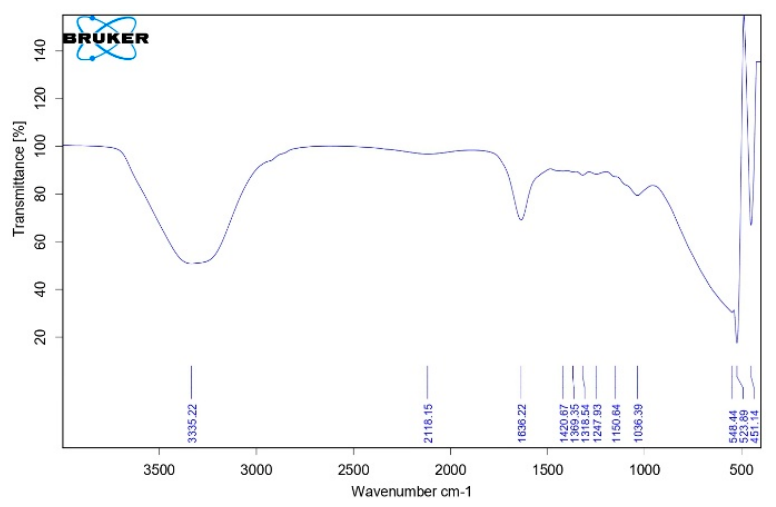
Table 7.
Major FTIR peaks and corresponding functional groups in untreated banana pseudostem.
| FTIR Peak (cm⁻¹) | Functional Group | Interpretation |
| 3335.22 | O–H stretching | Cellulose, hemicellulose and hydroxyl groups |
| 1636.22 | H–O–H bending | Bound water and lignocellulosic structure |
| 1420.67 | CH₂ bending | Cellulose and lignin structure |
| 1369.35 | C–H deformation | Cellulosic carbohydrate structure |
| 1318.54 | Cellulose skeletal vibration | Ordered cellulose structure |
| 1247.93 | C–O stretching | Hemicellulose and lignin acetyl groups |
| 1150.64 | C–O–C glycosidic bond | Polysaccharide linkage |
| 1036.39 | C–O stretching | Carbohydrate-rich structure |
The results obtained from the untreated sample showed characteristic lignocellulosic spectra, which showed that banana pseudostem was suitable for use as an energy source for anaerobic digestion due to its abundance in carbon compounds. The presence of sharp peaks of cellulose and hemicellulose shows that there is potential for use of carbon substrates by the anaerobic microorganisms during biogas formation.
Figure 2.
FTIR spectrum of optimized treatment after Week 1 digestion.
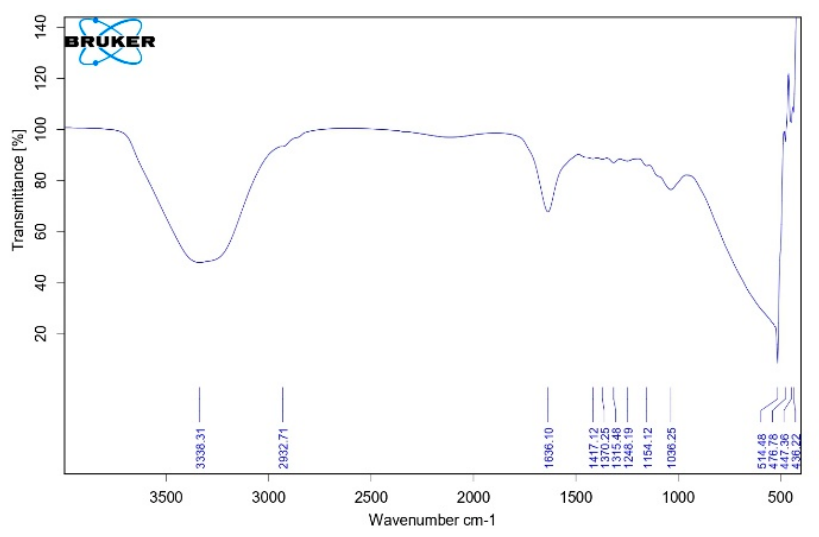
During Week 1, only minor modifications in FTIR peak positions and intensities were observed. The O-H stretching peak remained prominent at 3338.31 cm⁻¹, indicating that most cellulose and hemicellulose structures remained largely intact during the initial hydrolysis stage. Peaks corresponding to glycosidic bonds and carbohydrate structures also persisted, suggesting that microbial degradation had only recently begun. These observations correspond with the moderate biogas production (45 mL) recorded during the first week under the optimized treatment (18 BSS + 80% moisture).
Figure 3.
FTIR spectrum of optimized treatment after Week 2 digestion.
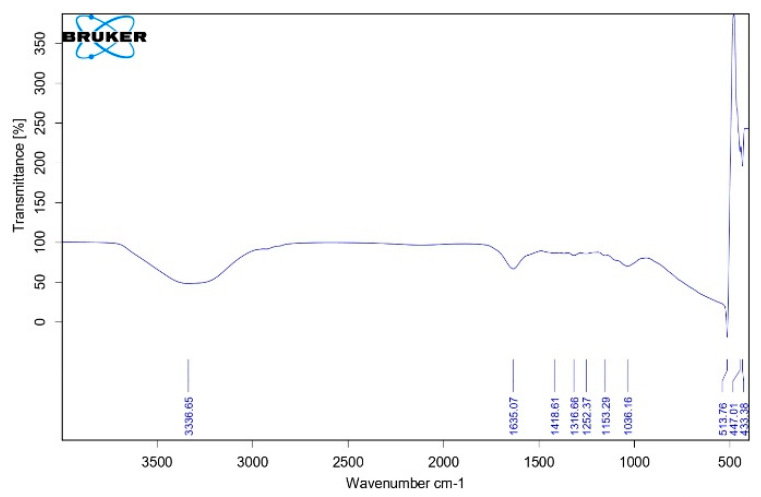
Structural modifications were seen after two weeks of digestion. From the decreased O-H band intensity and cellulose peaks, it can be concluded that hydrolysis reactions took place on the lignocellulosic compounds. Modification of glycosidic bond peak (1153.29 cm⁻¹) and carbohydrate peak (1036.16 cm⁻¹) suggests that the polysaccharide molecules were gradually being broken down into smaller units. This process was concurrent with an increased level of biogas formation (95 mL) because the cellulose/hemicellulose-derived products were utilized by microbes.
Figure 4.
FTIR spectrum of optimized treatment after Week 3 digestion.
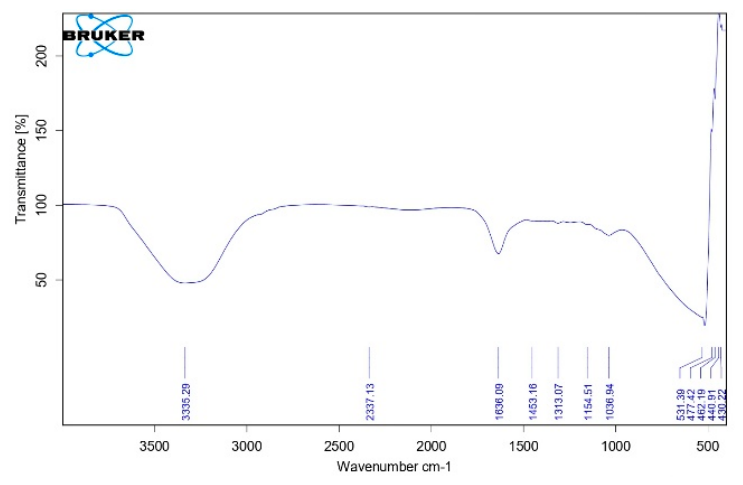
Maximum structural degradation was seen after three weeks of treatment. Reduction in the intensity of skeletal vibrations and functional groups of cellulose-lignocellulosic complex proved that biodegradation of banana psuedostem had taken place to a large extent. Weakening of peaks corresponding to carbohydrate showed that cellulose and hemicellulose were degraded effectively to produce intermediates for producing biogas. These FTIR results match perfectly with maximum biogas production observed in this experiment (98 mL).
3.6. Comparative Ftir Peak Analysis
The comparison of FTIR results shows that changes occur in cellulose, hemicellulose, and lignin functional groups gradually during anaerobic digestion. The gradual loss or reduction of some prominent peaks demonstrates the destruction of the lignocellulosic matrix, making it easy for microbes to access carbon-rich substances.
In particular, the loss of CH₂ bending vibrations and C-O peaks related to hemicellulose is seen from Week 3 onwards, indicating degradation of lignocellulosic materials. This finding suggests that the matrix of the banana pseudostem becomes more susceptible to breakdown, hence facilitating microbial access to biodegradable compounds. The appearance of these peaks and their corresponding changes indicate structural biomass degradation, which is consistent with biogas production trends.
Table 8.
Comparative FTIR peak shifts before and after anaerobic digestion under optimized treatment (18 BSS + 80% moisture).
Table 8.
Comparative FTIR peak shifts before and after anaerobic digestion under optimized treatment (18 BSS + 80% moisture).
| Functional Group | Control | Week 1 | Week 2 | Week 3 |
| O-H stretching | 3335.22 | 3338.31 | 3336.65 | 3335.29 |
| H-O-H vibration | 1636.22 | 1636.10 | 1635.07 | 1636.09 |
| CH₂ bending | 1420.67 | 1417.12 | 1418.61 | - |
| Cellulose skeletal vibration | 1318.54 | 1315.48 | 1316.66 | 1313.07 |
| Hemicellulose C-O | 1247.93 | 1248.19 | 1252.37 | - |
| Glycosidic bond | 1150.64 | 1154.12 | 1153.29 | 1154.51 |
| C-O stretching | 1036.39 | 1036.25 | 1036.16 | 1036.94 |
3.7. Correlation Between Structural Degradation and Biogas Production
In order to investigate the correlation between structural breakdown and biogas generation, FTIR spectral shifts were correlated with the rate of biogas generation during optimization. In Week 1, there was a lack of structural changes, but there was significant biogas generation (45 mL), which means that microbial adaptation and hydrolysis dominated this period of digestion.
Changes in the peaks related to cellulose and hemicellulose were seen in Week 2 with the highest amount of biogas formation (95 mL). The maximum biogas formation (98 mL) was observed in Week 3 where there was also the greatest change in the FTIR peaks indicating maximum biodegradation of banana pseudostem biomass.
The positive correlation between structural destruction and biogas production implies that disruption of the cellulose and hemicellulose matrix increased microbial access to enhance efficiency of biogas production. The optimum conditions (18 BSS and 80% moisture) demonstrated maximum biogas yield (238 mL) along with maximum destruction in structure, thus signifying the importance of optimizing physical parameters in anaerobic digestion processes.
3.8. Comparison with Previous Studies
From comparison with other researches, it can be concluded that the biomass derived from banana has significant potential for renewable production of biogas. While making comparisons on biogas yield from various studies is difficult considering different factors such as reactor design, biomass feed rates, retention periods, composition of inoculums, and units used to represent yield levels, it is clear that optimum particle size and moisture content have a major impact on biogas production.
While previous investigations have mainly concentrated on evaluating the biogas yield, the current investigation involves both the assessment of the biogas yield and structural changes in the lignocellulose material using the FTIR spectroscopy technique. The integration of both techniques gives insight into the processes occurring in the process of biodegradation, leading to the formation of biogas.
Table 9.
Comparison of present study with previous biogas production studies.
| Study | Substrate | Biogas Yield | Key Observation |
| Divyabharathi, et al., 2017) | Banana peel + cow dung | 3.85 L biogas | High biodegradability |
| Oyaro, et al., 2021 | Banana stem | 0.125 m³ CH₄ kg⁻¹ oDM | Good biogas potential |
| Oyaro, et al., 2021 | Banana peduncle | 0.132 m³ CH₄ kg⁻¹ oDM | Highest yield among banana residues |
| Karthikeyan, et al., 2025 | Pretreated biomass | 348 NmL g⁻¹ VS | Pretreatment improved biogas yield |
| Present Study | Banana pseudostem | 238 mL cumulative biogas (56 mL feedstock; headspace method) | Optimization of particle size and moisture enhanced biogas production |
4. Conclusion
The current study examined the effect of particle sizes and moisture content in relation to biogas production from pseudostem of bananas during batch anaerobic digestion. From the findings obtained, it was observed that the two parameters had considerable effect on the performance of anaerobic digestion and the biogas production efficiency. From all combinations of particle sizes and moisture contents examined, the combination of particle sizes 18 BSS together with 80% moisture content yielded the maximum amount of biogas (238 mL).
The weekly analysis of biogas production showed gradual increase in gas production from Week 1 through Week 3, indicative of the successful adaptation of microbes along with continuous breakdown of the lignocellulosic biomass. The optimized system showed its best performance all through the process of digestion, thereby highlighting the significance of proper substrates and moisture control.
Gas chromatography proved the existence of methane in the obtained biogas, which indicated the success in digesting the banana pseudostem using the anaerobic method. Additionally, Fourier transform infrared spectroscopy results clearly indicated changes in the structure of cellulose, hemicellulose, and lignin functional groups after anaerobic digestion. The gradual change in the peak absorptions had a direct relationship with increased biogas generation.
Overall, the findings confirm that banana pseudostem is a promising renewable feedstock for biogas production through anaerobic digestion. Optimization of particle size and moisture content significantly improved digestion performance, while FTIR characterization provided valuable mechanistic insights into biomass biodegradation. The study highlights the potential of banana pseudostem valorization as a sustainable strategy for renewable energy generation and agricultural waste management.
Future investigations should focus on process scale-up, biochemical methane potential (BMP) assessment, co-digestion strategies, pretreatment technologies, and long-term reactor performance to further improve biogas yield and commercial applicability.
Acknowledgments
The authors express their sincere gratitude to Krishna Vishwa Vidyapeeth (Deemed to be University), Karad, Maharashtra, India, for providing the necessary laboratory facilities and research support for conducting this study. The authors are thankful to the Krishna Institute of Science and Technology for their continuous encouragement and technical assistance throughout the research work. The authors also acknowledge Agharkar Research Institute, Pune, Maharashtra, India, for providing Gas Chromatography (GC) analysis facilities and Krishna Institute of Pharmacy, Krishna Vishwa Vidyapeeth (Deemed to be University), Karad, for facilitating FTIR analysis. The authors are grateful to all faculty members, laboratory staff, and colleagues whose support contributed to the successful completion of this work.
References
- Akintokun, A. K.; Abibu, W. A.; Oyatogun, M. O. Microbial dynamics and biogas production during single and co-digestion of cow dung and rice husk. Applied Environmental Research 2017, 39(2), 67–76. [Google Scholar] [CrossRef]
- Alavudeen, A.; Rajini, N.; Karthikeyan, S.; Thiruchitrambalam, M.; Venkateshwaren, N. Mechanical properties of banana/kenaf fiber-reinforced hybrid polyester composites: Effect of woven fabric and random orientation. Materials & Design 66 2015, 246–257. [Google Scholar] [CrossRef]
- Conrad, R. Biogas production in soil environments—Anaerobic biogeochemistry and microbial life between flooding and desiccation. Microorganisms 2020, 8(6), 881. [Google Scholar] [CrossRef] [PubMed]
- Divyabharathi, R.; Angeeswaran, R.; Jagadeeshkumar, K.; Pugalendhi, S. Characterization and batch anaerobic digestion study of banana wastes. International Journal of Current Microbiology and Applied Sciences 2017, 6(7), 2307–2315. [Google Scholar] [CrossRef]
- Dowbysz, A.; Samsonowicz, M.; Kukfisz, B. Recent advances in bio-based additive flame retardants for thermosetting resins. International Journal of Environmental Research and Public Health 2022, 19(8), 4828. [Google Scholar] [CrossRef] [PubMed]
- Feng, R. Z.; Zaidi, A. A.; Zhang, K.; Shi, Y. Optimisation of microwave pretreatment for biogas enhancement through anaerobic digestion of microalgal biomass. Periodica Polytechnica Chemical Engineering 2019, 63(1), 65–72. [Google Scholar] [CrossRef]
- Gupta, A. P.; Upadhyay, P.; Sen, T.; Dutta, J. Agricultural waste as a resource: The lesser travelled road to sustainability. Agriculture Waste Management and Bioresource: The Circular Economy Perspective 2023, 1–20. [Google Scholar]
- Haq, I. U.; Qaisar, K.; Nawaz, A.; Akram, F.; Mukhtar, H.; Zhou, X.; Xu, Y.; Mumtaz, M. W.; Rashid, U.; Ghani, W. A. W. A. K.; Choong, T. S. Y. Advances in valorization of lignocellulosic biomass towards energy generation. Catalysts 2021, 11(3), 309. [Google Scholar] [CrossRef]
- Jain, S.; Sawle, Y. Optimization and comparative economic analysis of standalone and grid-connected hybrid renewable energy system for remote location. Frontiers in Energy Research 9 2021, 724162. [Google Scholar] [CrossRef]
- Karthikeyan, P. K.; Iza, F.; Bandulasena, H. C. H.; Radu, T. Enhanced biogas production from lignocellulosic biomass via integrated Fenton and plasma treatment. Biomass and Bioenergy 208 2026, 108812. [Google Scholar] [CrossRef]
- Kaur, M. Effect of particle size on enhancement of biogas production from crop residue. Materials Today: Proceedings 57 2022, 1950–1954. [Google Scholar] [CrossRef]
- Mignogna, D.; Ceci, P.; Cafaro, C.; Corazzi, G.; Avino, P. Production of biogas and biobiogas as renewable energy sources: A review. Applied Sciences 2023, 13(18), 10219. [Google Scholar] [CrossRef]
- Nielsen, S. S. Determination of moisture content. In Food Analysis Laboratory Manual; Springer: Boston, MA, 2009; pp. 17–27. [Google Scholar]
- Oyaro, D. K.; Oonge, Z. I.; Odira, P. M. Kinetic modelling of biogas production from anaerobic digestion of banana wastes. International Journal of Engineering Research & Technology 2021, 10(3), 104–109. [Google Scholar]
- Patrizi, B.; Siciliani de Cumis, M.; Viciani, S.; D’Amato, F. Dioxin and related compound detection: Perspectives for optical monitoring. International Journal of Molecular Sciences 2019, 20(11), 2671. [Google Scholar] [CrossRef] [PubMed]
- Pillai, G. S.; Morya, S.; Khalid, W.; Khalid, M. Z.; Almalki, R. S.; Siddeeg, A. Banana pseudostem: An undiscovered fiber enriched sustainable functional food. Journal of Natural Fibers 2024, 21(1), 2304004. [Google Scholar] [CrossRef]
- Sawyerr, N.; Trois, C.; Workneh, T.; Okudoh, V. An overview of biogas production: Fundamentals, applications and future research. International Journal of Energy Economics and Policy 2019, 9(2), 105–116. [Google Scholar] [CrossRef]
- Sewsynker-Sukai, Y.; Laltha, M.; David, A. N.; Meyer, E. L.; Gueguim Kana, E. B. Advancing a circular bioeconomy: Unlocking the potential of banana pseudostem for microbially-derived value-added products. Industrial Crops and Products 237 2025, 122120. [Google Scholar] [CrossRef]
- Ungureanu, N.; Vlăduț, N. V.; Biriș, S. Ș.; Gheorghiță, N. E.; Ionescu, M. Biomass pyrolysis pathways for renewable energy and sustainable resource recovery: A critical review of processes, parameters, and product valorization. Sustainability 2025, 17(17), 7806. [Google Scholar] [CrossRef]
Disclaimer/Publisher’s Note: The statements, opinions and data contained in all publications are solely those of the individual author(s) and contributor(s) and not of MDPI and/or the editor(s). MDPI and/or the editor(s) disclaim responsibility for any injury to people or property resulting from any ideas, methods, instructions or products referred to in the content. |
© 2026 by the authors. Licensee MDPI, Basel, Switzerland. This article is an open access article distributed under the terms and conditions of the Creative Commons Attribution (CC BY) license (http://creativecommons.org/licenses/by/4.0/).
Copyright: This open access article is published under a Creative Commons CC BY 4.0 license, which permit the free download, distribution, and reuse, provided that the author and preprint are cited in any reuse.