

Submitted:
24 July 2026
Posted:
27 July 2026
You are already at the latest version
Abstract
The transition from open pit to underground mining is becoming increasingly important as near-surface ore is depleted and operations seek to extend mine life. However, its environmental effects are still often discussed in separate technical areas rather than as one connected planning problem. This review examines the environmental impacts reported during the transition stage and proposes an integrated framework to support mine planning. Following a PRISMA-guided approach, peer-reviewed studies published between 2010 and 2026 were screened, and 68 studies were included in the final review. The findings show that the transition does not simply reduce environmental impacts; instead, it redistributes them across water, ground stability, air quality, energy use, land disturbance, and nearby communities. The main reported concerns include groundwater rebound and inflow, slope instability and subsidence, underground dust exposure, and higher ventilation-related energy demand, while some surface impacts, such as land clearing, dust, and blasting noise, may decline as open pit activity decreases. Overall, the transition should be treated as a distinct planning stage, and the proposed framework helps mine planners address these impacts together rather than separately.
Keywords:
open pit to underground transition
; mine planning
; environmental impacts
; groundwater management
; slope stability
; subsidence
; ventilation
; sustainable mining
1. Introduction
Mining remains essential to modern society because it supplies the raw materials needed for infrastructure, energy systems, manufacturing, and technological development. At the same time, mining can create substantial environmental pressures, including land disturbance, changes in groundwater systems, air-quality impacts, high energy demand, and effects on nearby communities [1]. As near-surface ore bodies become depleted, many operations move from open pit to underground mining to continue production, improve resource recovery, and extend mine life [2,3]. In many cases, this shift is not immediate. Instead, it occurs through a transition stage in which open pit activities are gradually reduced while underground development and early production begin [2,4]. During this overlap period, mines may need to manage both systems at once, including dewatering, haulage, ventilation, slope control, energy supply, and environmental monitoring.
Although transition from open pit to underground mining has received increasing attention, much of the literature has focused on technical and economic issues such as scheduling, crown pillar design, mine layout, and production optimization [2,3,4,5,6,7]. Environmental issues are often discussed more narrowly, with separate studies addressing water-related hazards, groundwater inflow, slope failure, land disturbance, air quality, or energy use [5,8,9,10,11,12] . As a result, the environmental consequences of the transition stage are still commonly presented in a fragmented way. This is an important gap because the overlap period can create environmental conditions that differ from those of either open pit or underground mining alone. For example, reduced pit dewatering combined with advancing underground workings can change groundwater flow paths, increase inflow risk, alter pore-pressure conditions behind pit walls, and affect both slope stability and water quality at the same time [9,10,13]. In a similar way, underground development may reduce some surface impacts over time while increasing underground dust exposure, ventilation demand, and localized impacts near portals, shafts, and new access routes [12,14].
These patterns show that the transition should not be treated simply as a continuation of either mining method. Instead, it should be considered a distinct planning stage in which environmental pressures are redistributed across connected systems. Some impacts may decline as open pit operations wind down, particularly surface land clearing, blasting noise, and dispersed dust. At the same time, other concerns may emerge or intensify, including groundwater rebound and inflow, slope instability and subsidence, underground particulate exposure, and higher ventilation-related energy demand [8,9,11]. The main challenge is therefore not only whether impacts increase or decrease, but also how they shift, interact, and become concentrated in new locations or pathways during the transition.
This review addresses that gap by examining the environmental impacts reported specifically during the transition from open pit to underground mining and organizing them in a form that is useful for mine planning. In this study, the transition refers to the overlap stage in which open pit operations are reduced while underground development and early extraction begin. This may include final pushbacks, changing dewatering conditions, reconfigured haul routes, underground heading development, ventilation setup, and new or reassigned support infrastructure. Rather than discussing open pit and underground mining separately, the review focuses on how environmental conditions change during this intermediate stage across the main domains of water, land disturbance, slope stability, air quality, energy use, and community-related effects.
Following a PRISMA-guided approach, peer-reviewed studies published between 2010 and 2026 were screened, and 68 studies were included in the final review. The review identifies the main environmental risks reported during transition, examines the mitigation and monitoring measures most often associated with better outcomes, and develops an integrated framework to support more coordinated transition planning. Across the reviewed literature, better outcomes were commonly linked to staged dewatering, crown or safety pillars, backfilling, drainage separation, and early monitoring [4,8,11,15]. Overall, the evidence shows that the transition from open pit to underground mining does not simply reduce environmental impacts; instead, it redistributes them across connected systems and should be treated as a distinct planning stage.
The remainder of this paper is organized as follows. Section 2 describes the search strategy, screening process, and review method. Section 3 examines the main environmental impact domains reported during transition. Section 4 presents selected case studies. Section 5 proposes an integrated framework for more sustainable transition planning. Section 6 concludes with the main findings, practical implications, and future research needs.
2. Methodology
This review followed a PRISMA-guided study-identification and selection process to review evidence on the transition from open pit to underground (OP–UG) mining as a distinct planning and impact-management stage. Five bibliographic databases were searched: Scopus, Web of Science, ScienceDirect, Taylor & Francis Online, and PAIS Index. The search covered English-language, peer-reviewed journal publications issued between 2010 and 2026. Reference lists of key papers retrieved during screening were also checked to identify additional eligible studies. Search strings were built from two concept groups. The first group captured the transition itself and included terms such as:
- Mining transition terms (OP-UG): “open pit to underground”, “underground to open pit”, “transition mining”, “combined open pit and underground”, “hybrid mining”.;
The second group captured impact domains and included terms such as:
- Environmental domain terms: “environmental impact*”, sustainab*, ecological, groundwater, dewatering, subsidence, “slope stability”, “air quality”, emission*, “carbon footprint”, “energy use”, “community impact*”, “social impact”.;
Database-specific syntax was adjusted using field tags, truncation, Boolean operators, and proximity operators where supported.
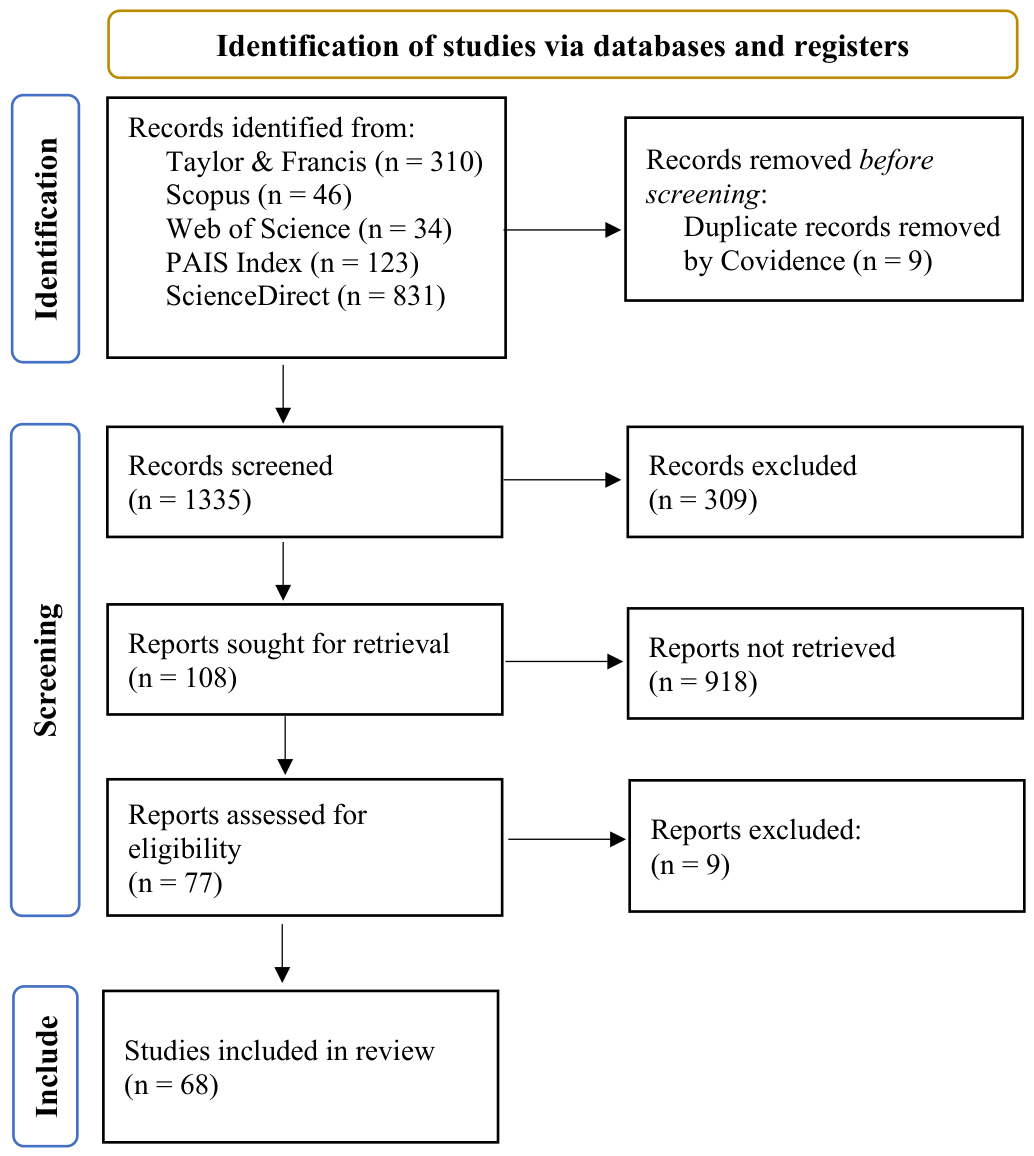
Studies were included if they: (i) addressed OP–UG transition, interaction, or overlap-stage mining conditions; (ii) were published in English in a peer-reviewed source within the stated search period; and (iii) reported at least one transition-relevant environmental, hydrogeological, geotechnical, air-quality, energy, land-disturbance, or community-related outcome. Studies were excluded if they: (i) focused only on open-pit mining or only on underground mining without a transition component; (ii) addressed optimization, scheduling, or mine design without reporting transition-relevant impact outcomes; (iii) were non-English or non-peer-reviewed; or (iv) did not provide extractable evidence relevant to transition-stage impacts. Screening was conducted sequentially by title/abstract review followed by full-text eligibility assessment using COVIDENCE. The PRISMA counts reported in the earlier draft require correction because they are arithmetically inconsistent. If the retained totals are 1,344 identified records, 9 duplicates removed, 108 full-text reports assessed, 77 studies entering qualitative review, and 68 studies retained after final data extraction, then the internally consistent PRISMA flow is as follows: 1,344 records identified; 9 duplicates removed; 1,335 records screened by title and abstract; 1,227 records excluded at title/abstract stage; 108 full texts assessed for eligibility; 31 full texts excluded with reasons; 77 studies included in qualitative review; and 68 studies retained in the final review dataset after a final data-extraction consistency check. Reasons for full-text exclusion should be reported explicitly in the figure or figure note and should include, where applicable, absence of a transition-stage focus, absence of extractable impact outcomes, duplicate publication, or insufficient primary evidence.
The final review dataset therefore comprises 68 studies that provide extractable evidence on transition-stage impacts relevant to integrated mine planning.
2.1. Search Strings
We constructed database-specific Boolean queries from a common term set and adapted them to each platform’s operators (field tags, truncation, proximity). Final strings for Scopus, Web of Science, Taylor & Francis Online, PAIS index, and ScienceDirect (coverage: 2010–2026; English) are enumerated in Appendix A.
2.2. PRISMA Flow Diagram
Identification - Records identified (n = 1344). Duplicates removed (n =9).
Screening - Records screened (title/abstract) (n = 1049); Records excluded (n = 33).
Eligibility - Full-text articles assessed (n = 108); Full-text articles excluded (n = 908).
Included - Studies included in qualitative analysis (n = 77). Of these, nine records were but were excluded from the final review dataset because they did not report primary environmental outcomes.
Studies included in review (n = 68); primary transition studies providing extractable environmental outcomes after the final data-extraction consistency check.
A total of 1,344 records were identified through database searching. Search results were imported into Covidence systematic review software (Veritas Health Innovation, Melbourne, Australia), which was used to manage duplicate removal, title and abstract screening, full-text eligibility assessment, and documentation of exclusion decisions. After removal of 318 duplicates, 1026 records remained for title and abstract screening. Of these, 1,227 were excluded because they did not meet the topic, language, publication type, or impact-outcome eligibility criteria. One hundred and eight full-text articles were then assessed for eligibility, and 31 were excluded after full-text review, primarily because they did not examine the OP–UG transition stage or did not report extractable transition-relevant impact outcomes. Seventy-seven studies were retained for qualitative review. Following a final data-extraction consistency check, nine additional records were excluded because they did not provide primary outcomes usable in the final review dataset, leaving 68 studies in the final review.
Figure 1.
PRISMA flow diagram.
2.3. Publication Year Distribution
For each included record, the publication year was taken from using the “online-first” year where applicable. When both an online-first year and a later issue year were available, the earlier public year was used. Preprints were assigned to the posted year only when that version was the citable source used during screening; otherwise, the year of the peer-reviewed article was recorded. The final count reflects de-duplicated studies that met the full-text eligibility criteria.
The publication-year distribution shows very limited output before 2018, followed by a noticeable increase from 2019 onward. The number of studies remains relatively strong through 2022–2025, with the highest output in 2024 (15 papers; 22.1% of the total). Both 2022 and 2025 also show comparatively high counts (8 papers each), which suggests that the recent rise in publications is not limited to a single peak year. Overall, the pattern indicates a clear growth in research interest over time, particularly after 2018.
Figure 2.
Articles grouped by year.
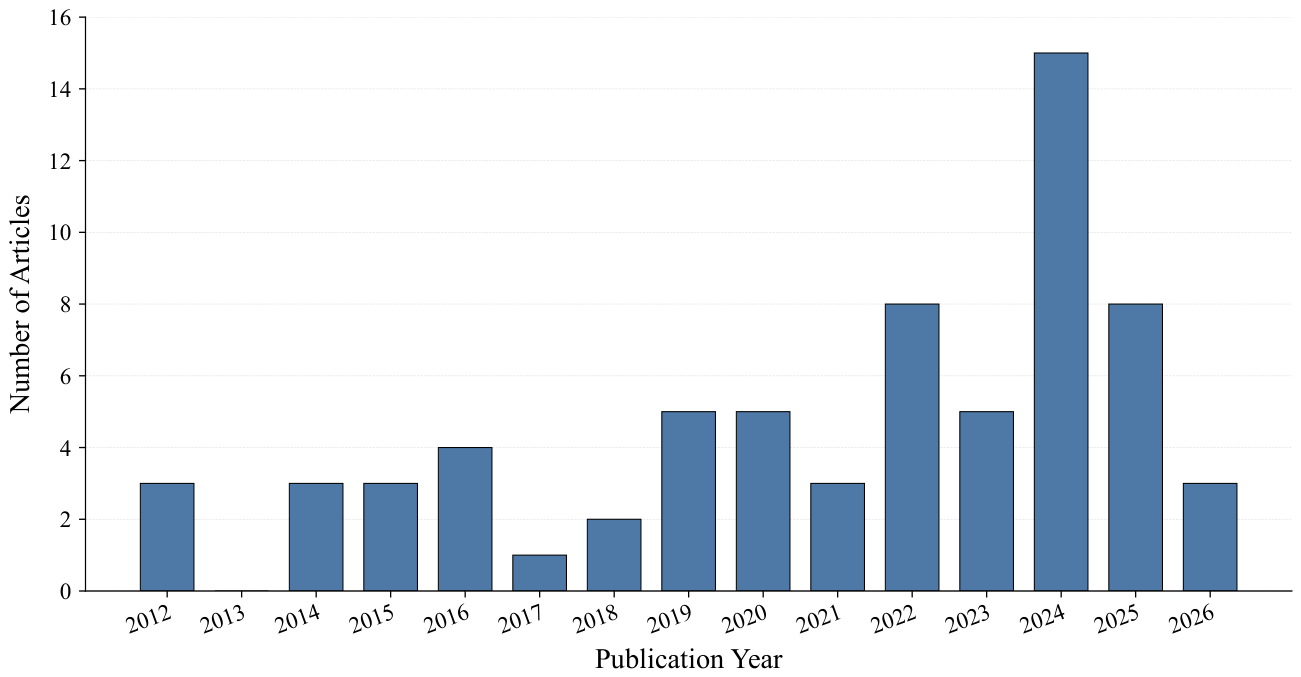
The increase after around 2018 appears to align with several developments in the literature. These include the growing of OP-UG integration models, particularly for simultaneous open-pit and underground scheduling; the stronger attention to environmental performance during the transition phase, especially in relation to waste, land disturbance, and groundwater impacts. The marked rise in 2024 likely reflects the combined effect of these research, with several case-based studies from countries such as China, Iran, and Vietnam.
2.4. Geographic Coverage
Our aim is to make the spatial provenance of the evidence explicit so readers can judge where OP-UG transition impacts have been studied and how far those findings may transfer to other regulatory, climatic, and operational contexts. The available evidence is geographically uneven, with strong concentration in a limited number of countries and case-study regions, especially China, and much smaller contributions from countries such as Iran, Ukraine, Mongolia, Vietnam, and the United States. This imbalance matters because OP–UG transition impacts are shaped by local hydrogeology, pit geometry, orebody depth, ventilation strategy, waste-management practice, regulatory requirements, and the degree of site-data disclosure. As a result, findings derived from a small number of intensively studied mines should not be generalized uncritically across commodities and jurisdictions. The observed distribution likely reflects a combination of active transition projects, unequal publication visibility, English-language selection effects, and limited access to site-specific technical data outside a few well-documented operations. For the present paper, the limited U.S. representation is itself an evidence gap and justifies inclusion of a short U.S. perspective subsection, but it does not support broad claims about U.S. transition practice as a whole.
For the geographic analysis, each included study was assigned a country label using a simple hierarchy applied to the full text and front matter of the PDFs:
- 1.
- Primary study area (case site, monitored mine, or modeled deposit explicitly located in a country).;
- 2.
- If no single primary site was declared and the paper explicitly analyzed OP to UG using named real mines in a country, we coded to that country.;
- 3.
- If the paper covered multiple countries without a dominant site, or presented a global/multi-site, we coded it as “Others (multi-country/global)”.
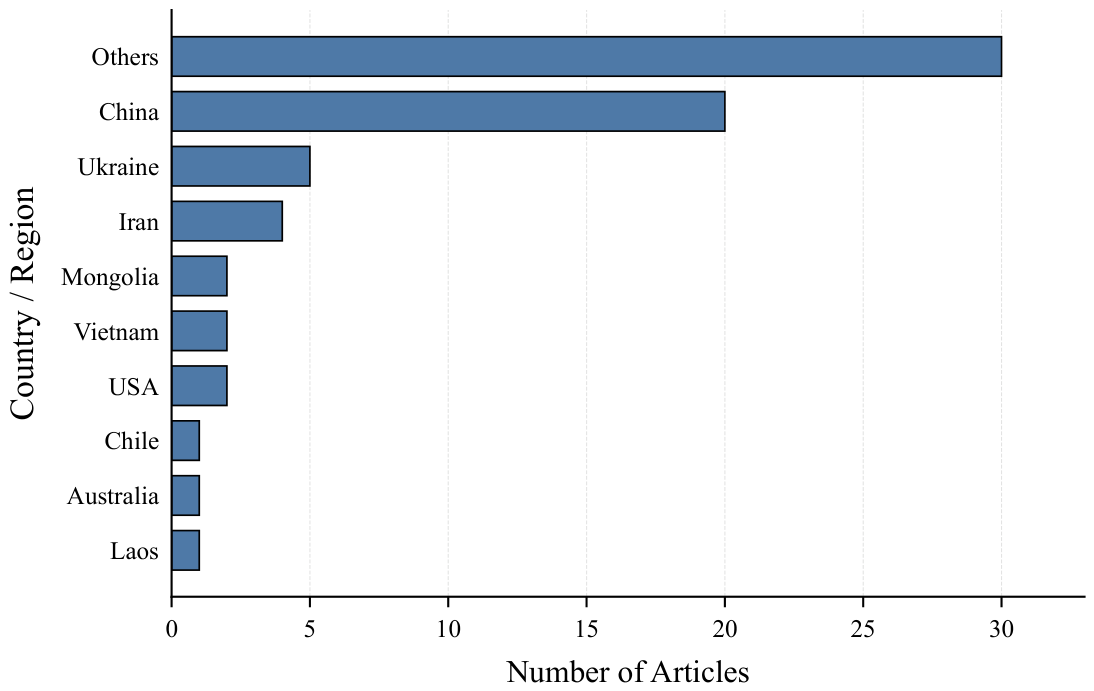
Figure 3 shows that the literature is concentrated in a limited number of countries. China remains the dominant source of case-based evidence, followed by a smaller group of studies from Ukraine and Iran, while Mongolia, Vietnam, and the USA contribute only a few papers each. At the same time, the large “Others” category indicates that a substantial part of the dataset is not tied to one single country, but instead reflects multi-country studies, broader review papers, or method-oriented work without one clearly defined primary site. There are two papers which discuss OP-UG interactions using named U.S. transition sites, such as Bingham Canyon and Morenci, as clear benchmark examples during their analysis. Overall, this pattern suggests that the current evidence base is geographically uneven, with strong representation from a few well-documented mining sites. This uneven distribution likely reflects several factors, including where OP-UG transitions are active and reported, differences in publication visibility and language accessibility, and the availability of site-specific information from company or state sources. It also means that the findings should be interpreted with some caution when considering regions. For example, groundwater responses, subsidence behavior, ventilation challenges, or land-disturbance patterns observed in one geological and climatic setting may not directly apply to another. Regulatory conditions can further shape these outcomes, particularly where emission standards, land management requirements, or community engagement expectations differ.
Figure 3.
Articles grouped by country
Direct U.S. case studies that map exactly onto a currently operating OP–UG transition are limited in the accessible public literature. For that reason, a U.S. perspective is better framed around transition-related porphyry copper operations that illuminate the same planning interfaces between deep excavation, underground development, water control, geotechnical risk, and community impact. The Resolution Copper project in Arizona is one such benchmark. Although it is not a classical conversion from an active open pit to an active underground mine, archived project documentation indicates that development in the former Magma Mine district adopted block-cave mining, required dewatering of the existing No. 9 shaft and historical Magma workings, and incorporated a dedicated water-treatment system capable of releasing treated water for external use. These features are directly relevant to transition-stage mine planning because they show how legacy infrastructure, underground expansion, hydrogeological control, and surface–subsurface interactions must be managed together rather than as separate engineering tasks.
Resolution Copper also illustrates that U.S. transition-related planning cannot be reduced to a technical design problem alone. Recent reporting on the project has emphasized expected surface subsidence above the block cave together with intense social conflict related to Oak Flat, a site of cultural and religious significance to Apache communities. In practical terms, this means that geotechnical forecasting, water management, infrastructure sequencing, and social license are interdependent constraints within the same planning problem.
A second U.S. benchmark is Bingham Canyon, Utah. Bingham is not a narrow contemporary OP–UG overlap case; however, the district evolved from historical underground mining to a very deep open pit, and public summaries compiled from National Park Service and EPA-linked sources document the coupled risk profile that is highly relevant to OP–UG transition thinking: major pit-slope instability, long-lived hydro-environmental legacies, and prolonged groundwater remediation in the Kennecott South Zone/Bingham area. The 2013 Bingham pit-wall landslide and the long-term downgradient groundwater contamination problem demonstrate that geotechnical and hydro-environmental effects remain tightly linked in large porphyry systems and cannot be compartmentalized during late-stage deepening or future underground planning.
Taken together, these U.S. examples add three planning lessons to the predominantly international evidence base. First, dewatering strategy, legacy-void management, slope/subsidence analysis, and underground sequencing should be integrated early in transition design. Second, transition-related risk in mature porphyry districts is strongly conditioned by prior mining history, not only by the formal moment at which the mining method changes. Third, in the U.S. context, regulatory and community constraints can be as decisive as ore geometry in determining whether a technically feasible transition is operationally viable. These examples therefore complement, rather than replace, the stronger case-based literature reported from China, Iran, and other regions.
2.5. Commodity/Sector Coding and Distribution
To allow a consistent comparison across the included studies, the commodity and sector labels reported in each paper were divided into broader categories. Closely related terms were grouped under a single label. Less frequent categories were included where they were still distinct and meaningful for interpretation. This included fluorite, phosphate, iron–titanium (Fe–Ti), base metals (general), and multi-commodity studies. Papers that were primarily methodological, optimization-based, or not centered on one clearly dominant commodity were grouped under general (method/optimization). This approach made it possible to preserve the main sectoral patterns in the dataset while also keeping the classification scheme concise and comparable across studies.
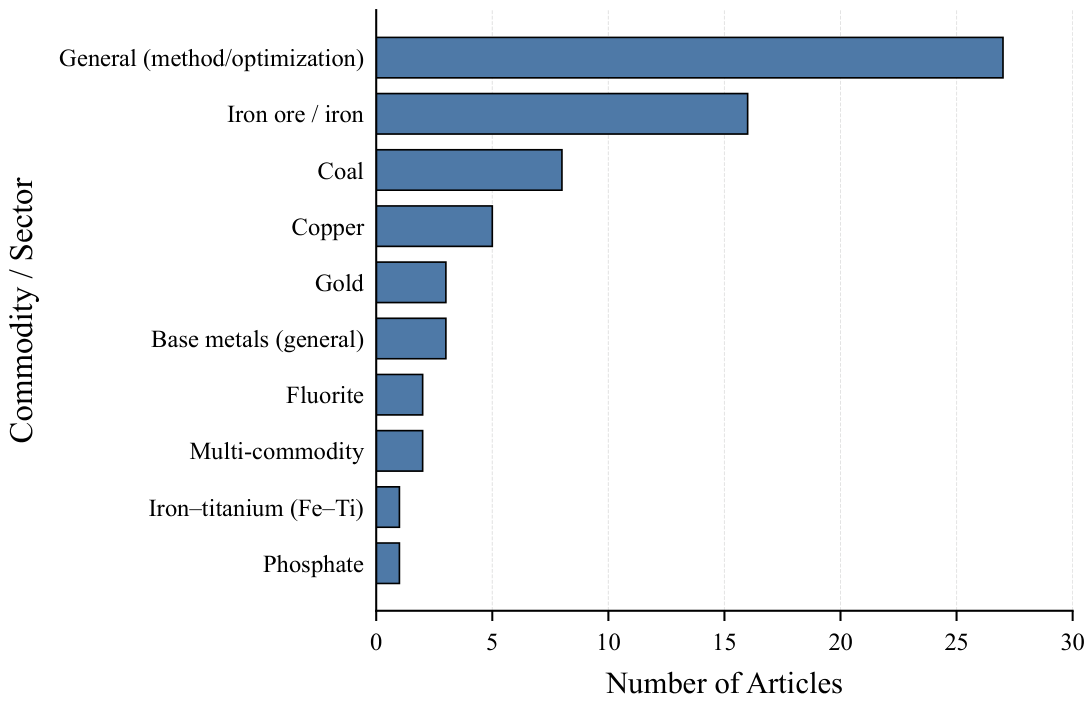
Figure 4 shows that the dataset is dominated by general (method/optimization) studies, followed by iron ore / iron case work. This indicates that, alongside commodity-specific case studies, the study includes a stronger methodological component. Coal and copper form the next most represented groups and continue to contribute important case-based evidence, particularly in relation to subsidence, slope stability, scheduling, and transition-depth optimization. Smaller groups such as gold, fluorite, phosphate, Fe–Ti, base metals (general), and multi-commodity studies add breadth to the dataset, but they do not change the overall pattern. Taken together, the figure suggests that the literature is shaped by two parallel streams: one focused on commodity-specific transition cases, especially in iron, coal, and copper systems, and another increasingly focused on broader methods, modeling, and optimization frameworks.
Figure 4.
Articles grouped by commodity
3. Environmental Impacts
Numerous researchers have highlighted that the shift from open pit to underground mining is not only a technical and economic necessity but also an opportunity to reduce certain ecological impacts if guided by integrated management strategies. For example, Li et al. [16] note that transitioning to underground methods can improve resource utilization and environmental performance [17,18,19,20]. On the other hand, the changeover introduces new risks that require careful planning [20,21,22,23]. Table 3 illustrates, in summary form, the major environmental risks and opportunities that arise during the transition phase. As shown, some environmental pressures are alleviated when moving operations underground (e.g., reduced dust dispersal and land clearing), even as other concerns become more pronounced (e.g., subsidence and groundwater hazards) [24,25,26]. Two case studies, in particular, highlight these practical lessons. At the Shilu Iron Mine, improved contact-water management, including drainage separation and active treatment, along with pre-grouting and bulkheads before intersecting water-bearing zones, helped reduce turbidity and metal loading during the production ramp-up stage [27]. Early regrading and revegetation of inactive pit also helped reduce erosion [28]. In addition, slope monitoring supported localized drainage control, which helped limit deformation as underground mining advanced [29]. At the Xinqiao Mine, safety or crown pillars and staged backfilling helped reduce surface subsidence [29]. Ventilation upgrades were introduced in step with underground development, which helped reduce exposure and avoid sharp increases in power demand [30]. The use of tailings as backfill also reduced surface waste storage and supported faster land rehabilitation.
Taken together, these case studies show a common pattern across the reviewed studies. Water management and slope stability are closely linked during the transition from open pit to underground mining [31,32,33]. When pit dewatering is reduced or stopped, groundwater rebound can increase pore-water pressure behind pit walls, which lowers effective stress and shear strength and increases the risk of bench-scale instability [13,34,35] . Underground inflow control can either reduce or worsen this effect, depending on hydraulic connectivity [32,34,36]. Studies that address water control and slope stability together generally report fewer inrush events and fewer slope-related disruptions [32,33,35,36,37]. Backfilling is another important part of the transition [33,38,39]. Where it supports crown pillar stability and reduces surface tailings storage, it provides both stability and land-recovery benefits [15,40]. Monitoring is equally important. Tracking water level, water quality, displacement, and air conditions allows earlier action, such as adjusting pumping, ventilation, or local support before conditions worsen [41,42]. Community impacts can also be lowered when traffic routes and portal locations are planned early. Speed limits, road watering, noise barriers, and schedule control can help reduce dust and noise in areas affected by changing access and haulage routes during the transition [14,37]. In the following sections, we examine these impact domains in detail focusing specifically on the transition period and discuss real-world observations from those case studies, which offer lessons on both the challenges and mitigation strategies for environmentally responsible mine transitions.

Table 1.
Comparison of key environmental risk increases and potential environmental benefits during the transition from open-pit to underground mining.
Table 1.
Comparison of key environmental risk increases and potential environmental benefits during the transition from open-pit to underground mining.
| Aspect | Transition-Phase Risk Factors (Heightened Impacts) | Transition-Phase Opportunities (Mitigated Impacts) |
|---|---|---|
| Hydrogeology & Water | New fractures, subsidence, and changing groundwater levels may increase inflow risk and create contamination pathways [43,44] | Reduced pit dewatering may allow partial groundwater recovery, while underground drainage systems may improve water collection and treatment [44,45]. |
| Land Disturbance | Subsidence, wall instability, and new underground support facilities may disturb land, soil, vegetation, and infrastructure. | As pit expansion stops, new land clearing may decline. Backfilling may also support earlier reclamation and land restoration (e.g., Xinqiao Mine) [46,47]. |
| Slope Stability | Excavation below or near pit walls may increase deformation, slope failure, and surface subsidence. | Safety pillars, backfilling, and monitoring may reduce instability and help protect surface ground conditions [39,47,48]. |
| Air Quality | Underground dust and inadequate ventilation may increase exposure risk. During the overlap period, surface and underground emissions may occur at the same time [30,49]. | As open-pit activity declines, surface dust and blasting noise may decrease. Underground emissions may be better controlled through ventilation and filtration systems [50,51]. |
| Energy & Emissions | Ventilation, cooling, pumping, and hoisting may increase energy demand and raise short-term emissions during the overlap period [52]. | Shorter haul distances, conveyors, hoisting systems, and cleaner equipment may improve energy efficiency and reduce diesel use over time [53]. |
| Community & Socio-Economic | Subsidence concerns, water-related uncertainty, and changes in jobs or workforce needs may affect nearby communities [54,55]. | Lower surface dust, noise, and visual disturbance may improve local conditions, while reclaimed pit areas may create future ecological or community-use opportunities [50,56]. |
This table summarizes the main environmental trade-offs reported during the transition from open pit to underground mining.
3.1. Hydrogeological Impacts and Water Management
The transition from open pit to underground mining changes groundwater behavior in ways that can increase environmental risk. The main concerns include sudden groundwater inflow, changes in aquifer pressure, and declining water quality, including acid mine drainage (AMD) in some settings [9,57]. In contrast, during mature open pit or underground operations, inflow conditions and piezometric levels are usually more stable and are managed through established dewatering or drainage systems [9,10]. During the overlap period, excavations expand and hydraulic boundaries shift quickly, so water controls designed for one mining stage may no longer work well for the other [58]. As underground drifts and stopes are developed beneath areas that were previously dewatered, new hydraulic gradients can form between pressurized water-bearing units and newly opened voids [9,59]. At the same time, blasting and stress redistribution can reopen fractures or weaken aquitards, which increases permeability and creates new pathways for water to move into underground workings [9,57]. If pit pumping is reduced or stopped, groundwater rebound can further increase pressure along these pathways and raise the risk of inflow [50,60,61]. Field observations and modeling studies from transition sites show that fractured zones can become major flow paths if they are not identified and treated early [9,57]. These risks are usually assessed during planning using coupled hydro-mechanical models that combine stress change, fracture development, and groundwater flow. These models help identify areas that are more likely to experience inrush and help guide grouting, bulkhead placement, and pillar design [62]. In practice, they are supported by field monitoring, including piezometers, flow meters, extensometers, inclinometers, and, where available, microseismic systems. Early installation of these monitoring tools makes it easier to track changing conditions and adjust excavation, and drainage plans before major problems develop.
The case studies also show how these controls are applied in practice. At the Shilu Iron Mine in Hainan, the main concerns were water inflow through steep joint systems and transmissive layers, along with possible effects on slope stability. The control measures included pre-grouting and bulkheads ahead of high-risk headings [58], contact-water separation and active treatment to reduce turbidity and metal loading during production ramp-up [63], and monitoring-based sequencing using piezometers, flow meters, and microseismic triggers to guide development rates [9]. Together, these measures helped reduce both unexpected inflows and downstream treatment demand. At the Xinqiao Iron Mine in Anhui, earlier open pit dewatering followed by groundwater rebound during backfilling created strong hydraulic contrasts. Engineers first used existing open pit drains during the early underground stage and later installed permanent underground pump stations to maintain water control after backfilling [64]. An isolation pillar of about 24 m between the pit floor and upper workings helped limit both stress transfer and water movement, while staged backfilling reduced pathway connectivity [65,66]. Monitoring data from piezometers and discharge telemetry helped operators decide when to reduce pumping and when to continue underground advance, which lowered the risk of water inrush.
Water quality is another major issue during transition. Underground conditions can worsen water-quality problems because water may remain in contact with rock or reactive materials for longer periods, oxygen conditions can change during development, and some backfill materials may add further chemical risk [67,68]. AMD is especially important where sulfide-bearing rock, reactive tailings, or other acid-generating materials are present. In those settings, oxidation can produce acidity and release metals into the water. In contrast, AMD is usually not a major concern in non-sulfidic or oxide-dominated settings [67]. Laboratory weathering studies also show that poorly sealed sulfide-bearing tailings can increase sulfate and metal leaching under changing hydrochemical conditions [67]. Common control measures during transition include sealed or alkali-amended backfill to reduce oxygen entry, lined and separated drainage systems to keep contaminated water away from clean water circuits, and treatment systems such as lime dosing, oxidation ponds, or constructed wetlands sized for transition-stage loads [67]. In the case studies reviewed here, active treatment and careful drainage separation helped water quality recover faster, while backfill sequencing and controlled pumping reduced mixing and contaminant pulses.
Overall, the main hydrogeological change during the transition is a shift from mainly centralized pit dewatering to a more distributed and actively managed water-control system. A strong transition plan should therefore include baseline hydrogeologic characterization, predictive modeling, a minimum monitoring network, grouting and bulkhead design, separated drainage systems, and threshold-based decision rules for excavation and pumping. Where these measures are applied, as in Shilu and Xinqiao, they help reduce both the risk and the impact of major inflow events and groundwater contamination, while also lowering long-term remediation needs.
3.2. Land Disturbance, Land Cover, and Landscape Changes
During the transition from open pit to underground mining, surface disturbance may begin to decrease as pit pushbacks slow down and haulage activity is reduced. This can be environmentally beneficial because less new land is disturbed, habitat loss may slow, and some inactive areas can be stabilized and reclaimed earlier [69,70]. Inactive benches and waste-dump areas can also be regraded and vegetated, which helps reduce erosion and sediment runoff to nearby catchments [71].
However, surface impacts do not disappear during the transition. New portals, ventilation raises, laydown areas, and backfill can create fresh disturbance at the surface [72]. Changes in haul roads and stockpile locations can also shift erosion, dust, and runoff problems to different parts of the mine site [30]. At the same time, reducing pit dewatering can alter local drainage patterns [73]. Subsidence above underground workings may further disturb the land surface by changing drainage paths, cracking soils, and affecting roads, pipelines, conveyors, and other infrastructure [74,75]. In vegetated areas, these changes can delay recovery and affect plant cover, especially where subsidence causes either waterlogging or drying [76]. In fractured settings, surface cracks may also create new flow paths into underground workings, which can add both water-management and stability problems [77].
The reviewed studies point to three practical areas of control. First, early stabilization and erosion control are important. Regrading steep or highly erodible inactive slopes, adding drainage breaks, and protecting runoff channels can reduce sediment movement [30,72,78]. Progressive topsoiling and seeding can also help establish cover before heavy rainfall periods, while stockpiles can be moved away from wind-exposed areas and managed with watering or enclosures to reduce dust [28,71]. The Shilu case, for example, showed that staged regrading and early revegetation of inactive pit areas helped reduce erosion during the transition period [79].
Second, subsidence should be managed early rather than after damage appears. Conservative crown or safety pillar design, together with staged backfilling or paste fill, can reduce settlement and limit surface deformation, especially beneath sensitive infrastructure [74]. Where some movement is expected, roads, pipelines, and conveyors can be designed with more flexible support or joints to reduce damage [80]. At Xinqiao, safety pillars and staged backfilling helped reduce surface subsidence while also allowing tailings to be reused underground.
Third, monitoring should be linked to action. Satellite-based ground movement detection, InSAR, can help track small surface movement over large areas, while GNSS (satellite-based positioning), drone-based mapping, and photogrammetry can be used to monitor benches, landform change, and erosion features in more detail [77]. Vegetation recovery can also be checked using remote-sensing indicators such as NDVI or EVI, which help identify areas where reclamation is lagging [81]. These data are most useful when they are tied to clear responses, such as adjusting backfill schedules, improving drainage [82].
Overall, land disturbance during the transition should not be treated as a side effect of mining. It should be planned and managed as part of the transition design itself. Decisions about portal location, ventilation raises, drainage works and backfill strategy all affect how much new land is disturbed and how quickly inactive areas can recover [83,84]. When tailings can be used as engineered backfill, surface waste storage may also be reduced, which can support both land recovery and long-term site closure. For this reason, land, water, and stability planning should be closely coordinated during the transition from open pit to underground mining.
Based on the reviewed studies, several practical measures appear consistently useful during transition. Surface clearing should stop early in areas that are no longer needed, and reclamation should begin as soon as possible through regrading, topsoiling, and seeding [71]. Areas vulnerable to subsidence, especially beneath roads, pipelines, and community-facing infrastructure, should be identified early so that backfill sequencing and pillar design can be adjusted accordingly [72]. Ongoing monitoring should also be tied to clear response thresholds so that drainage, local support, or traffic routes can be adjusted when conditions change [77]. In addition, drainage systems should be updated to reflect post-dewatering conditions and shifting runoff paths, with check structures or sediment basins added where needed [73]. Where feasible, tailings can be used as backfill to reduce surface waste storage and support faster land recovery [84]. Recovery should then be followed over time using field observations or remote-sensing data to identify areas that are progressing well and areas that need further work [58].
3.3. Slope Stability and Geomechanical Effects
Slope stability is one of the most important geotechnical and environmental concerns during the transition from open pit to underground mining. When underground workings are developed beneath or close to an existing pit, the stress field in the rock mass changes. This can weaken the pit walls and increase the risk of deformation, rockfall, bench failure, or broader subsidence if the transition is not properly managed [85,86]. These failures can also damage land, increase sediment runoff, disturb drainage paths, and affect nearby habitats and infrastructure [85,86,87].
One main reason for this instability is stress redistribution [86,87]. Underground excavation removes support from below and shifts loads to the remaining rock bridges, pillars, and pit walls [88]. As stress becomes concentrated in some areas, existing joints may open further, new fractures may develop, and the overall shear strength of the slope may decrease. In simple terms, the rock mass becomes less able to hold its position safely, especially where the slope was already damaged by earlier open pit excavation or blasting.
The risk can become greater when caving-type underground methods are used beneath pit walls. For example, sublevel caving allows the hanging wall to collapse as ore is extracted. If this is done without enough separation or support between the underground void and the pit floor, the caving zone may move upward and weaken the remaining rock beneath the slope [6,88]. This can lead to bench failure, large-scale wall movement, or subsidence at the surface.
Water conditions are also closely linked to slope behavior during transition. When pit dewatering is reduced or stopped, groundwater may rise again and increase pore-water pressure behind pit walls. This reduces effective stress and shear strength and makes instability more likely [37,79]. Heavy rainfall can make this worse by increasing infiltration through joints and blast-damaged zones. In practice, these changes may lead to debris shedding, local wall movement, or larger failures that send large amounts of sediment into drains and nearby receiving waters [86,89,90]. Because large slope failures can release much more material than normal erosion, they can become one of the main causes of short-term turbidity and sediment problems during transition [41,86].
The Shilu Iron Mine in China is a useful example of these problems as shown in Figure 5. During the shift from open pit to underground mining, and particularly under sublevel caving without a crown pillar, the pit experienced major instability. Numerical studies showed strong stress concentration around underground stopes, and this matched the observed deformation pattern in the pit area [91]. As mining continued, the collapse zone expanded, and the eastern highwall experienced major landslides and rockfalls. This caused large ground disturbance and showed how closely underground excavation and pit-wall stability can be linked during transition [41,85,92].
The Palabora Mine in South Africa provides another important example. There, block cave mining began below a deep open pit, and after a few years major north-wall failures developed. Earlier work showed that the failure was linked to cave breakthrough and structural weakness, which allowed instability to progress over time [93]. Although the site setting was different from Shilu, the main lesson was similar: underground extraction can create slope responses that are larger and more complex than those predicted by conventional pit-slope design alone [94].
These cases show why slope stability during transition should be managed as part of a combined geotechnical and environmental strategy. Practical measures reported in the literature include keeping a crown or safety pillar between the pit floor and underground workings, sequencing underground development carefully, using backfill where appropriate, and monitoring wall movement continuously with radar, prisms, or similar systems [95,96]. Water control is also important. Pit-wall depressurization, drainage wells, toe pumping, and properly sized stormwater systems can all help reduce instability while also limiting sediment movement and water-quality impacts [97].
More broadly, the environmental effects of slope instability go beyond the mine wall itself. Deformation and failure can damage vegetation, disturb wildlife, affect nearby roads or pipelines, and alter natural drainage paths. In some cases, emergency earthworks, cleanup, and rerouting can add further land disturbance, dust, and noise around the site [98]. For this reason, slope stability during the transition from open pit to underground mining should be treated not only as a ground-control issue, but also as an environmental management issue.
Overall, the reviewed studies show that slope stability risks increase when underground mining changes the stress and water conditions beneath an existing pit. Early planning, combined monitoring, and timely support measures are therefore critical. Where crown pillars, controlled sequencing, drainage management, and real-time monitoring are used together, the transition can be managed more safely and with less environmental damage.
3.4. Air Quality and Atmospheric Emissions
Air-quality impacts also change during the transition from open pit to underground mining. As open pit blasting, haulage, and pushbacks begin to decline, some surface dust and noise may decrease. At the same time, underground development increases the importance of dust, diesel exhaust, blasting fumes, and ventilation demand in confined working areas [12]. Because of this, the transition does not remove air-related impacts; rather, it shifts them from broad surface sources to more concentrated underground and portal-related sources.
This change matters for both workers and the surrounding environment. Fine dust can affect vegetation, soil surfaces, and nearby water bodies, especially when particles settle on plant leaves or are later washed into streams and drains. For workers, respirable dust and diesel particulate matter are major concerns because they are linked to respiratory health risks, especially in confined headings and poorly ventilated work areas [99,100]. During transition, these risks can become more noticeable because underground activity increases before the full long-term ventilation system is fully established.
Underground dust is often more difficult to manage than surface dust because it builds up in enclosed spaces and has less natural dispersion. It may also include more diesel particulate matter and fine drilling or cutting dust, including respirable silica in some settings [12]. For this reason, ventilation quality and dust control at the source become especially important during the early underground stage.
The reviewed studies show several measures that are repeatedly used to reduce these impacts. Wet drilling, water sprays, misting systems, scrubbers, and dust collectors can help reduce dust generation in headings, ore passes, and crushing points [52,101]. Good housekeeping and enclosed transfer points can also help limit particle buildup. On the surface, watering, surfactants, and speed control on re-routed haul roads can help reduce dust in areas where traffic patterns change during the transition [88].
Ventilation planning is equally important. Auxiliary fans, ducting, and airflow control need to be installed early enough to match the pace of underground development. Ventilation-on-demand systems can also improve efficiency by directing airflow where workers and equipment are active instead of running all fans at full capacity all the time [102]. This can help reduce both exposure and unnecessary energy use. In the longer term, battery-electric equipment offers an additional benefit because it can reduce diesel emissions at the source and may lower ventilation demand.
Gas management can also be important in some mines, especially where methane or other hazardous gases are present. In such cases, planning should include more than just increasing airflow. The literature points to a layered approach that may include sealing abandoned workings, isolating gas pathways, pre-drainage, vacuum drainage systems, gas monitoring, and ventilation controls linked to gas concentrations [12,61,103]. These measures are particularly important where gas risk affects both worker safety and mine emissions.
Another issue during transition is the shift in surface exposure. Although some impacts from the open pit may decline, new portal areas, shafts, and ventilation outlets can create local dust, exhaust, and noise problems near access roads or nearby communities. This means that air-quality planning should include not only underground work areas but also the surface areas where emissions may newly concentrate. Measures such as outlet siting, stack design, local filtration where needed, traffic control, and buffer zones can help reduce these local impacts [97].
Overall, the reviewed studies show that air-quality impacts during the transition are best managed when underground dust control, ventilation planning, and surface traffic management are considered together. The main issue is not simply that emissions increase or decrease, but that their location and exposure pattern change. A well-managed transition therefore requires early monitoring, source control, appropriate ventilation design, and attention to new surface impact points such as portals and access corridors.
3.5. Socio-Environmental and Community Effects
The transition from open pit to underground mining affects not only the mine site, but also the nearby communities. Surface dust, blasting noise, and heavy truck traffic often decrease, which can make nearby areas more livable [104,105]. However, these benefits do not mean that community impacts disappear. In many cases, they shift to new locations, especially around portals, shafts, ventilation raises, and access roads, where traffic, noise, and exhaust may become more concentrated.
One of the main community concerns during transition is land stability. Ground subsidence, surface cracking, or unexpected collapse can raise concern about possible damage to homes, roads, utilities, and other infrastructure [105,106]. Even when the actual risk is limited, uncertainty can still affect public confidence, especially in places where underground mining has a history of causing visible ground movement. For this reason, community communication during transition is important. People are more likely to trust mine planning when they are given clear information about monitoring results, expected risks, and the measures being used to reduce them.
Water is another major issue for nearby communities. Many local residents depend on groundwater or surface water that may be affected by pit dewatering, underground inflow, or contamination during transition. Concerns may include declining well-water availability, poorer water quality, or uncertainty about future pit-lake conditions if the open pit is no longer actively dewatered [105,107]. These concerns can become more serious where water resources are already limited or where communities depend directly on local wells and streams.
The transition can also affect local employment and the wider community economy. Open pit and underground mining often require different equipment, work practices, and skill sets. As a result, some workers may need retraining, while others may face fewer opportunities if the underground operation uses a smaller or more specialized workforce [105,108]. At the same time, underground mining can extend mine life, which may help preserve jobs and economic activity for a longer period [105,108]. The social outcome therefore depends not only on the mining method itself, but also on how the transition is planned and how workers and communities are supported during the change.
Health impacts may also change during the transition. Reduced surface dust and noise may improve local living conditions, but underground operations can introduce new safety and occupational-health concerns, especially if ventilation, gas control, or emergency planning are not well managed [107]. For nearby communities, the main issue is often not only direct health exposure, but also uncertainty about risk. This is why clear communication and community involvement remain important even when technical controls are in place.
Across the reviewed studies, a consistent message is that community outcomes during transition improve when engagement is early, regular, and transparent. Public meetings, accessible reporting of environmental data, clear complaint pathways, and visible response measures can all help reduce tension and build trust [109]. In the same way, planning for traffic control, noise reduction, dust management, and water protection around new portal or access areas can help prevent the transition from simply shifting the burden from one place to another [110].
4. Insights from Case Studies
To improve comparability across sites, the case narratives are presented using a consistent template: (i) site context, (ii) dominant environmental risks during overlap, (iii) controls implemented, (iv) observed outcomes, and (v) lessons learned.
4.1. Songun Copper Mine
The Songun Copper Mine in Iran was chosen as a sample case study to provide a detailed quantitative analysis of the environmental implications related to the shift from open pit to underground mining. Badakhshan [111] performed a thorough semi-quantitative evaluation utilizing stringent analytical techniques, including multi-criteria decision-making procedures like the Analytical Hierarchy Process (AHP) and the Technique for Order Preference by Similarity to Ideal Solution (TOPSIS). Their work systematically identified and evaluated essential environmental sustainability criteria, facilitating the calculation of comparative impacts [111].
Table 2 distinctly illustrates the relative significance of each environmental sustainability criterion, based on their published evaluation results. The greatest impact is linked to the "post-mining land use type" (18.84%), underscoring the importance of land reclamation and ecological restoration following mining activities. Significant impacts encompass "Reduction of pollution and environmental degradation" (16.57%), "Ground surface subsidence" (14.30%), and "Management of waste pollutants" (11.73%), underscoring essential focal points for sustainable mining methods [111].
4.2. Sijiaying Iron Mine
The transition of the Sijiaying Iron Mine in China from open pit to underground mining presents a multifaceted case study for understanding the environmental impacts of such mining transformations, especially in sensitive ecological zones like the Luanhe River Basin. This basin contains critical water resources and vulnerable populations, which increases the consequence of transition-stage water-management decisions. Comprehensive assessments indicate that mining transitions can entail significant threats, including Acid Mine Drainage (AMD), groundwater contamination, and aquifer depletion, which pose substantial risks to ecosystems and local communities [8]. In this case, AMD is highlighted as a dominant, long-term risk because acid-generating materials can remain reactive over multi-year time scales once exposed and hydraulically connected, making the hazard persistent even after production configurations stabilize.
In the context of the Sijiaying Iron Mine, existing frameworks for environmental management have been inadequate in addressing the varied and often dynamic risks associated with the ecological impacts of mining. Climate change factors further exacerbate these issues, as highlighted by the Sijiaying site’s vulnerability to regional droughts and floods, which influence water table stability and complicate the dynamics of mining operations. The detrimental impacts of climate change underscore the need for integrated, spatiotemporal models that consider not just immediate operational efficiencies but also long-term water security. Such an approach is essential for balancing resource extraction with the sustainability of vulnerable aquatic ecosystems and ensuring that downstream communities are not irreparably harmed by mining activities.
As shown in Figure 6, water-related risks dominate the environmental impacts of transitioning mining. AMD, heavy metal leaching, and aquifer depletion represent the most severe threats, particularly in hydrologically sensitive areas such as the Luanhe River Basin. These hazards can contaminate groundwater, degrade surface water quality, and destabilize regional water tables.
In examining the environmental impacts associated with the Sijiaying Iron Mine transition, it is crucial to highlight those static evaluations of water quality, while important, fall short in the face of climate-induced extremes that challenge regional water systems. Specifically, seasonal climate changes exacerbated by greenhouse gas emissions further complicate the situation by intensifying risks such as sedimentation and aquifer depletion, both of which have immediate and long-standing implications for water safety and availability. Therefore, mining operations must adapt to not only changing climatic conditions but also emerging regulatory landscapes that demand more holistic and participatory governance structures.
As shown in Figure 7, the hybrid spatiotemporal model highlights the evolving nature of water-related hazards during the transition from open pit to underground mining. Waste and Acid Mine Drainage (AMD) exerted the highest influence, with long-term (dynamic) weights exceeding short-term (static) values by 18%. Here, ‘dynamic weight’ reflects time-dependent importance under lagged and compounding drivers (e.g., climate-linked hydrologic change and delayed contaminant mobilization), whereas ‘static weight’ represents near-term influence under current conditions. This pattern underscores the persistent and cumulative risks of AMD, including groundwater contamination and aquatic toxicity in the Luanhe River Basin.
Water parameters such as groundwater quality and table fluctuations also demonstrated high sensitivity to seasonal climate extremes, including droughts and floods in Hebei’s semi-arid region. Climate Change was prioritized as the most critical dynamic driver (36.3%), amplifying aquifer depletion, sedimentation, and water scarcity risks.
As shown in Figure 8, severity analysis reveals that waste hazards (AMD) and water scarcity dominate environmental risks in mining transitions.
These results highlight the need for an integrated framework that emphasizes water-related indicators, ensuring mining transitions remain within planetary limits while supporting fair resource access in line with SDGs 6 (Clean Water) and 13 (Climate Action) [8]. In summary, the Sijiaying Iron Mine represents a pivotal case for analyzing the environmental impacts during the transition from open pit to underground mining.
4.3. Xinqiao Mine
The transition at Xinqiao Mine illustrates how environmental risks and mitigation strategies intersect during the transition. The mine implemented post-closure backfilling of the pit floor to the -106 m level, reducing seepage and stabilizing slopes. A safety isolation layer (24 m thick) was maintained to buffer interactions between surface and underground workings, minimizing subsidence hazards.
Continuous slope stability monitoring ensured early detection of stress redistribution impacts from underground activities, helping prevent landslides and collapses. Likewise, a comprehensive drainage system was established to manage water inflows, redirecting open pit water through existing infrastructure into a permanent underground pumping station, thus reducing risks of flooding and aquifer contamination.
Ecological restoration was advanced by using tailings from the Dongguashan Copper Mine to backfill the exhausted open pit (Figure 9) simultaneously eliminating a waste hazard and accelerating land rehabilitation.
Together, these measures highlight that during transition, environmental management must prioritize slope stability, water control, and waste reuse to mitigate hazards while promoting ecological restoration.
5. Integrated Framework for Sustainable OP–UG Transition Planning
The reviewed studies show that the transition from open pit to underground mining should be planned as an integrated process rather than as separate technical steps. During this period, changes in water management, slope stability, land disturbance, ventilation, energy use, and community exposure often occur together and can affect one another. As a result, transition planning should consider both operational and environmental performance from the beginning. Table 3 summarizes the main parts of an integrated framework for more sustainable transition planning.
This framework highlights that effective transition planning depends on early coordination across design, monitoring, and environmental management. The reviewed studies also suggest that environmental factors should be included earlier in decisions about sequencing, dewatering, backfilling, ventilation, and surface layout, rather than being addressed only after the main mining plan is set [4]. More consistent reporting of inflow, deformation, disturbed area, air quality, and energy indicators would also improve future comparison across sites and strengthen the evidence base for transition planning [11,113]. Overall, the main lesson is that the transition period is most manageable when water, ground control, air quality, land recovery, and operational decisions are treated as connected parts of the same system.
Table 3.
Integrated framework for sustainable open-pit-to-underground transition planning.
| Domain | Framework |
|---|---|
| Transition design & sequencing | Transition planning should evaluate open-pit and underground mining together rather than as separate stages. Scheduling, crown pillar design, backfilling, and the timing of underground ramp-up should be assessed not only for production value, but also for their effects on land disturbance, water control, and ground stability [3,4]. |
| Hydrogeology & water management | Water-related risks should be identified early, especially where dewatering changes, groundwater rebound, or hydraulic connections may affect underground workings or pit-wall stability. Planning should combine predictive modeling, field monitoring, and phased controls such as pumping, drainage, grouting, and water treatment [8]. |
| Land disturbance & waste management | Transition plans should compare how different layouts and mining sequences affect surface disturbance, waste storage, and land recovery. Where feasible, internal dumping and tailings backfilling may reduce surface waste accumulation and support earlier reclamation [3,113]. |
| Air quality, energy, & ventilation | As underground mining expands, attention should shift toward ventilation demand, underground dust, diesel emissions, and energy use. Measures such as staged ventilation upgrades, ventilation-on-demand, and cleaner underground equipment may help reduce both exposure and energy demand during transition [4]. |
| Monitoring & digital integration | Transition management should combine field observations, monitoring systems, and predictive models within one decision process. Tools such as slope monitoring, piezometers, microseismic systems, and surface mapping may help detect change early and support more timely operational response as conditions evolve [11,114,115]. |
| Governance & implementation | A successful transition also requires regular coordination across technical and environmental teams. Periodic review of key indicators, documented changes from the plan, and clear communication of mitigation actions may improve accountability and support more adaptive transition management [8]. |
This framework summarizes the main planning components needed to manage environmental risks more effectively during the transition from open pit to underground mining.
6. Discussion
This review shows that the OP–UG transition is not simply a handover from one mining method to another. It is a high-coupling planning interval in which declining open pit activity overlaps with underground development, changing dewatering conditions, evolving stress redistribution, modified haulage and ventilation systems, and reconfigured surface infrastructure. Across the reviewed literature, the dominant pattern is a redistribution of impacts rather than a uniform reduction in impact intensity. Surface disturbance, blasting, and some dust sources may decline as pit activity contracts, but hydrogeological, geotechnical, underground air-quality, ventilation-energy, and localized community risks commonly intensify or become more spatially concentrated.
A practical implication is that transition planning should be organized around linked risk pathways rather than around traditional disciplinary silos. Water management affects pore pressure, slope stability, and subsidence; underground layout and extraction sequence affect crown-pillar performance and ventilation demand; and portal, shaft, access-road, and waste-management decisions affect both localized environmental burdens and nearby communities. The evidence therefore supports integrated transition design in which hydrogeological modelling, slope and subsidence assessment, underground ventilation planning, backfill strategy, and phased monitoring are developed as parts of a single decision framework. The limited U.S. evidence reinforces this interpretation. In Arizona, Resolution Copper illustrates how underground expansion in a legacy mining district requires simultaneous attention to dewatering, historical workings, block-cave subsidence, and social license. In Utah, Bingham Canyon demonstrates that large porphyry systems can carry long-lived, tightly connected geotechnical and hydro-environmental legacies, including major slope instability and downgradient groundwater remediation. Although neither case should be treated as a perfect substitute for the stronger international OP–UG transition literature, both are useful for showing how U.S. planning contexts intensify the importance of integrated geotechnical, hydrogeological, and community-risk management.
6.1. Limitations
Several evidence gaps remain. First, the literature is geographically uneven, which limits global transferability. Second, many studies focus on one domain, commonly groundwater, slope stability, or ventilation, without evaluating cross-domain interactions quantitatively. Third, community, occupational, and post-transition land-use outcomes remain less consistently documented than technical geotechnical or hydrogeological outcomes. Fourth, many published transition studies are method- or case-specific, which makes cross-site comparison difficult.
Also, the evidence base was restricted to English-language, peer-reviewed literature over the defined search period, which may underrepresent technically relevant transition experience reported in local languages, company documents, or regulatory archives. These limitations do not undermine the main review, but they do mean that the proposed framework should be interpreted as an evidence-based integrative model rather than as a universal prescription.
6.2. Future Research
Future work should prioritize multi-domain case studies in which dewatering, stress redistribution, ventilation-energy demand, backfill performance, and community exposure are evaluated in the same transition sequence. More comparative studies from North America, South America, and Africa would improve transferability, and stronger integration of monitoring data with predictive geotechnical and hydrogeological models would help move the literature from descriptive post hoc interpretation toward genuinely anticipatory transition planning.
7. Conclusions
The main contribution of this review is to show that OP–UG transition should be planned as a distinct, integrated stage of mine development. During this interval, impacts are redistributed across hydrogeological, geotechnical, atmospheric, energy, and community systems rather than simply reduced. Accordingly, the most effective transition strategies are those that evaluate dewatering, slope and subsidence control, underground ventilation and energy demand, backfilling and crown-pillar performance, surface disturbance, and community exposure within one planning framework. The integrated framework proposed here is intended to support that shift from fragmented domain-by-domain mitigation to coordinated transition-stage risk management. Used in this way, OP–UG transition becomes not only an operational challenge, but also an opportunity to improve environmental challenges across the broader life of the mine.
Author Contributions
Conceptualization, M.S.I., I.M. and A.M.; methodology, M.S.I. and A.M..; formal analysis, M.S.I. and P.R.; investigation, M.S.I. and I.M.; resources, Z.A., P.R. and S.S.; data curation, M.S.I. and I.M.; supervision, Z.A., P.R. and S.S.; validation, Z.A., P.R. and S.S.; visualization, M.S.I.; writing—original draft preparation, M.S.I.; writing—review and editing, I.M., Z.A., P.R., S.S. and A.M.; project administration, A.M.; funding acquisition, A.M. All authors have read and agreed to the published version of the manuscript.
Funding
This work was partially funded by the National Institute for Occupational Safety and Health (NIOSH) under Contract No.: 75D30124C20213. The funding agency had no role in the study design, data collection, analysis, interpretation of results, manuscript preparation, or the decision to submit the work for publication.
Institutional Review Board Statement
Not applicable.
Data Availability Statement
No new datasets were generated in this study. The data supporting the findings of this article are derived from published studies cited in the manuscript.
Acknowledgments
During the preparation of this manuscript, the authors used ChatGPT (OpenAI) for language refinement, editing support, and drafting assistance. The authors reviewed and edited the output and take full responsibility for the content of this publication.
Conflicts of Interest
The authors declare no conflicts of interest.
Abbreviations
The following abbreviations are used in this manuscript:
| AMD | Acid Mine Drainage |
| AHP | Analytic Hierarchy Process |
| GNSS | Global Navigation Satellite System |
| HSEC | Health, Safety, Environment, and Community |
| InSAR | Interferometric Synthetic Aperture Radar |
| NDVI | Normalized Difference Vegetation Index |
| OP | Open Pit |
| UG | Underground |
| PRISMA | Preferred Reporting Items for Systematic Reviews and Meta-Analyses |
| SDGs | Sustainable Development Goals |
| TOPSIS | Technique for Order Preference by Similarity to Ideal Solution |
Appendix A. Search Strings
The full database-specific search strings used in this review are provided in Table A1.
Table A1.
Database-specific search strings used in this review.
| Database | Search String | Filters |
|---|---|---|
| Scopus | TITLE-ABS-KEY ((“open pit mining” OR “surface mining”) AND (“underground mining” OR “subsurface mining”) AND (transition OR conversion OR “mixed operation*” OR “hybrid mine*” OR “combined mining”) AND (environment* OR sustainab* OR water OR land OR slope OR “air quality” OR emission* OR energy OR carbon OR social)) AND PUBYEAR > 2009 AND (LIMIT-TO (DOCTYPE, “ar”) OR LIMIT-TO (DOCTYPE, “re”)) AND LIMIT-TO (LANGUAGE, “English”) | Document types: Article/Review; timespan: after 2009; language: English. |
| Web of Science | TS = ((“open pit to underground” OR “op to ug” OR “ug to op” OR “transition mining” OR “combined open pit and underground” OR “hybrid mining”) AND (“environmental impact*” OR sustainab* OR ecological OR groundwater OR subsidence OR “slope stability” OR “air quality” OR emission* OR “carbon footprint” OR “energy use” OR “community impact*” OR “social impact*”)) | Document types: Article/Review; timespan: 2010–2026; language: English. |
| Taylor & Francis Online | (“open pit to underground” OR “op to ug” OR “ug to op” OR “transition mining” OR “combined open pit and underground” OR “hybrid mining”) AND (“environmental impact*” OR sustainab* OR ecological OR groundwater OR subsidence OR “slope stability” OR “air quality” OR emission* OR “carbon footprint” OR “energy use” OR “community impact*” OR “social impact*”) | T&F does not support fielded TS searches. Exact phrases and AND/OR operators were used. Filters: 2010–2026; Research Article/Review; English. |
| PAIS Index | SU (“open pit mining” OR “surface mining”) AND SU (“underground mining” OR “subsurface mining”) AND (transition OR conversion OR “mixed operation” OR “hybrid mine” OR “combined mining”) AND (environment* OR sustainab* OR water OR land OR slope OR “air quality” OR emission* OR energy OR carbon OR social) | Scholarly journals; 2010–2026; English. |
| ScienceDirect | TITLE-ABSTR-KEY (“open pit” W/3 underground AND (transition OR conversion) AND (“groundwater inflow” OR “acid mine drainage”)) | Document types: Article/Review; timespan: 2010–2026; language: English. |
References
- Bennett, K. Abandoned mines — environmental, social and economic challenges. In Proceedings of the Mine Closure 2016: Proceedings of the 11th International Conference on Mine Closure; Fourie, A.; Tibbett, M., Eds. Australian Centre for Geomechanics, 2016, pp. 241–252. [CrossRef]
- Niedbalski, Z.; Nguyen, P.M.V.; Widzyk-Capehart, E. Geomechanical Assessments of Simultaneous Operation in the Case of Transition from Open Pit to Underground Mine in Vietnam. In Proceedings of the E3S Web of Conferences. EDP Sciences, 3 2018, Vol. 35. [CrossRef]
- Ren, S.T.; Liu, Y.; Yang, X.Y.; Tong, D.G.; Ren, G.F. Extended Ultimate-Pit-Limit Methodology for Optimizing Surface-to-Underground Mining Transition in Metal Mines. Advances in Civil Engineering 2022. [CrossRef]
- Chung, J.; Asad, M.W.A.; Topal, E. Timing of transition from open-pit to underground mining: A simultaneous optimisation model for open-pit and underground mine production schedules. Resources Policy 2022, 77. [CrossRef]
- Pysmennyi, S.; Chukharev, S.; Kyelgyenbai, K.; Mutambo, V.; Matsui, A. Iron ore underground mining under the internal overburden dump at the PJSC “Northern GZK”. IOP Conference Series: Earth and Environmental Science 2022, 1049, 012008. [CrossRef]
- Diddle, B.; Agioutantis, Z.; Moradi, A.; Roghanchi, P.; Schafrik, S. Transitioning from Open Pit to Underground Mining: A Literature Review on Crown Pillar Stability. In Proceedings of the Proceedings of the 59th U.S. Rock Mechanics/Geomechanics Symposium, American Rock Mechanics Association, Santa Fe, New Mexico, June 2025. Paper No. ARMA-2025-0291, . [CrossRef]
- Hamman, E.; Cowan, M.; Venter, J.; de Souza, J. Considerations for open pit to underground transition interaction. In Proceedings of the 2020 International Symposium on Slope Stability in Open Pit Mining and Civil Engineering. Australian Centre for Geomechanics, Perth, 2020, pp. 1123–1138. [CrossRef]
- Siddique, A.; Tan, Z.; Rashid, W.; Ahmad, H. Sustainable Water-Related Hazards Assessment in Open Pit-to-Underground Mining Transitions: An IDRR and MCDM Approach at Sijiaying Iron Mine, China. Water (Switzerland) 2025, 17. [CrossRef]
- Shao, J.; Zhang, W.; Wu, X.; Lei, Y.; Wu, X. Rock Damage Model Coupled Stress–Seepage and Its Application in Water Inrush from Faults in Coal Mines. ACS Omega 2022, 7, 13604–13614. [CrossRef]
- Ghadirianniari, S.; McDougall, S.; Eberhardt, E.; Varian, J.; Llewelyn, K.; Campbell, R.; Moss, A. Wet inrush susceptibility assessment at the Deep Ore Zone mine using a random forest machine learning model. Mining Technology: Transactions of the Institutions of Mining and Metallurgy 2024, 133, 276–288. [CrossRef]
- Yuan, K.; Ma, C.; Guo, G.; Wang, P. Slope Failure of Shilu Metal Mine Transition from Open-Pit to Underground Mining under Excavation Disturbance. Applied Sciences (Switzerland) 2024, 14. [CrossRef]
- Beigoli, S.; Amin, F.; Rad, H.K.; Rezaee, R.; Boskabady, M.H. Occupational Respiratory Disorders in Iran: A Review of Prevalence and Inducers. Frontiers in Medicine 2024. [CrossRef]
- Feng, F.; Zhang, J.; Yan, Z.; Wu, Y.; Song, Y.; Xie, Z.; Cheng, X. Safe and Efficient Recovery Technique of Horizontal Isolated Pillar under Loose Tailings Backfill; A Case Study in a Zinc-Lead Mine. Minerals 2022, 12, 1066. [CrossRef]
- Liu, P.; Li, H.; Wang, L.; Yin, S. Impacts of Surface Deformation Induced by Underground Mining of Metal Mines on Above-Ground Structures: A Case Study. Minerals 2023, 13, 1510. [CrossRef]
- Shiels, A.; Sainsbury, D. Crown pillar extraction with paste underhand stoping. In Proceedings of the The Second International Conference on Underground Mining Technology. Australian Centre for Geomechanics, Perth, 2020, pp. 217–230. [CrossRef]
- Li, C.; Yao, B.; Ma, Q. Numerical Simulation Study of Variable-Mass Permeation of the Broken Rock Mass Under Different Cementation Degrees. Advances in Civil Engineering 2018. [CrossRef]
- Svobodová, K.; Everingham, J.; Mackenzie, S.; Witt, K. Designing Community Participation for Mine Closure and Social Transition. Sustainable Development 2025, 34, 197–209. [CrossRef]
- Latham, C.L.; D’Alterio, M.A.; Eason, D.; Breton, M. So, You Think You’re Ready? An Overview of Rio Tinto’s Closure Readiness Approach. In Proceedings of the Mine Closure 2023: Proceedings of the 16th International Conference on Mine Closure; Abbasi, B.; Parshley, J.; Fourie, A.B.; Tibbett, M., Eds., Perth, Australia, 2023. [CrossRef]
- Laurencont, T.; Garrood, T.; Vidler, P.; Fawcett, M. Social Provisioning for Mine Closure. In Proceedings of the Mine Closure 2019: Proceedings of the 13th International Conference on Mine Closure; Fourie, A.B.; Tibbett, M., Eds., Perth, Australia, 2019. [CrossRef]
- Edwards, J.; Bester, V.; Maritz, A. A Framework for Developing Social Mine Closure Criteria. In Proceedings of the Mine Closure 2022: Proceedings of the 15th International Conference on Mine Closure; Fourie, A.B.; Tibbett, M.; Boggs, G., Eds., Perth, Australia, 2022; pp. 813–828. [CrossRef]
- Connelly, S.; Halseth, G.; Matanzima, J.; Mateus, M.; Markey, S.; Measham, T.; Reeves, J.; Rifkin, W.; Ryser, L.; Sefa-Nyarko, C. Temporality and justice in mining impacted regions. Environmental Research Energy 2025, 2, 015009. [CrossRef]
- Dowd, P.; Slight, M. The Business Case for Effective Mine Closure. In Proceedings of the Mine Closure 2006: Proceedings of the First International Seminar on Mine Closure; Fourie, A.B.; Tibbett, M., Eds., Perth, Australia, 2006; pp. 3–11. [CrossRef]
- Laberge, S.L.; Kolstad, D.C.; Dehler, W.G.; Kalmes, A.R. Evolution of Closure Planning for an Inactive Tailings Facility. In Proceedings of the Mine Closure 2023: Proceedings of the 16th International Conference on Mine Closure; Abbasi, B.; Parshley, J.; Fourie, A.B.; Tibbett, M., Eds., Perth, Australia, 2023. [CrossRef]
- Streit, S.; Tost, M.; Gugerell, K. Perspectives on Closure and Revitalisation of Extraction Sites and Sustainability: A Q-Methodology Study. Resources 2023, 12, 23. [CrossRef]
- Edwards, J.; Maritz, A. Social Aspects of Mine Closure: The Elephant in the Room. In Proceedings of the Mine Closure 2019: Proceedings of the 13th International Conference on Mine Closure; Fourie, A.B.; Tibbett, M., Eds., Perth, Australia, 2019; pp. 305–316. [CrossRef]
- Huang, L.; Erskine, P.; Parry, D.; Roddy, B. Transforming Engineering into Ecological Engineering for Developing Resilient Ecosystems on Mined Landscapes. In Proceedings of the Mine Closure 2022: Proceedings of the 15th International Conference on Mine Closure; Fourie, A.B.; Tibbett, M.; Boggs, G., Eds., Perth, Australia, 2022; pp. 29–48. [CrossRef]
- Liu, H.; Fan, Y.; Ma, Y.; He, C.; Li, J.; Gong, F.; Zhu, Z.; Zhou, P. Hydro-Chemical Characteristics, Genesis Analysis and Risk Assessment of Fuyuan Laochang Ore Concentration Area in Yunnan, China. Polish Journal of Environmental Studies 2024, 33, 727–739. [CrossRef]
- Zhou, Y.; Li, Y.; Chen, Y. Remote Real-Time Monitoring System for Mine Slope Based on Cloud Computing. Water 2022. [CrossRef]
- Xia, C.; Lu, G.; Zhu, Z.Q.; Wu, L.; Zhang, L.; Luo, S.; Dong, J. Deformation and Stability Characteristics of Layered Rock Slope Affected by Rainfall Based on Anisotropy of Strength and Hydraulic Conductivity. Water 2020. [CrossRef]
- Li, M.; Zhang, J.; Sun, K.; Wu, Z.; Zhou, N. Reducing Surface Subsidence Risk Using Solid Waste Backfill Technique: A Case Study Under Buildings. Polish Journal of Environmental Studies 2019. [CrossRef]
- Nel, E.; Marais, L.; Mqotyana, Z. The Regional Implications of Just Transition in the World’s Most Coal-Dependent Economy: The Case of Mpumalanga, South Africa. Frontiers in Sustainable Cities 2023, 4, 1059312. [CrossRef]
- Smith, L. Hydrogeology and Mineral Resource Development; The Groundwater Project: Guelph, Ontario, Canada, 2021. [CrossRef]
- Zhao, L.; You, G. Brown Coal in Victoria, Australia and Maddingley Brown Coal Open Cut Mine Batter Stability. Journal of Civil Engineering and Construction 2020, 9, 109–118. [CrossRef]
- Rougier, M.; Castro, L.M.; Birchall, D. A Case Study on Actual Water Pressure Measurements at an Open Pit Excavated in Strong, Tight Rock and the Implications for Slope Design. In Proceedings of the Slope Stability 2013: Proceedings of the 2013 International Symposium on Slope Stability in Open Pit Mining and Civil Engineering; Dight, P.M., Ed., Perth, Australia, 2013; pp. 445–453. [CrossRef]
- Garzonio, C.; Affuso, A. Hydrogeological problems for the rehabilitation and re-utilisation of the water resources of the mining area of Gavorrano (Italy). Environmental Geology 2004, 46. [CrossRef]
- Wang, H. The Influence of a Loose Layer Water Cut-off Curtain on the Slope Stability of Open-pit Coal Mines. Mine Water and the Environment 2024, 43, 529–539. [CrossRef]
- Li, S.; Su, W.; Yin, T.; Dan, Z.; Peng, K. Research Progress and Typical Case of Open-Pit to Underground Mining in China. Applied Sciences (Switzerland) 2025, 15. [CrossRef]
- Mijin, J.; Grubert, E. Managing the decline of coal: pathways to public ownership of the Powder River Basin, Wyoming. Environ. Res.: Energy 2025, 2, 015017. [CrossRef]
- Levenick, J.; Chorley, D.; Dourado, C.; Jain, K.; Valerio, M.; Ross, S. Integrated hydrogeological and geotechnical studies at the Diavik Diamond Mine in support of pit slope design optimization. In Proceedings of the SSIM 2023: Third International Slope Stability in Mining Conference; Dight, P., Ed. Australian Centre for Geomechanics, 2023, pp. 81–96. [CrossRef]
- Brook, D. Reclamation of Abandoned Underground Mines in the United Kingdom. Journal American Society of Mining and Reclamation 1994, 1994, 163–171. [CrossRef]
- Jiang, X.; Zheng, G.; Sui, W.; Chen, J.; Zhang, J. Anisotropic Propagation of Chemical Grouting in Fracture Network With Flowing Water. Acs Omega 2021. [CrossRef]
- Zhang, X.; Lin, J.; Liu, J.; Li, F.; Pang, Z. Investigation of Hydraulic-Mechanical Properties of Paste Backfill Containing Coal Gangue-Fly Ash and Its Application in an Underground Coal Mine. Energies 2017, 10, 1309. [CrossRef]
- Xiao, W.; Deng, X.; He, T.; Chen, W. Mapping annual land disturbance and reclamation in a surface coal mining region using google earth engine and the landtrendr algorithm: A case study of the shengli coalfield in Inner Mongolia, China. Remote Sensing 2020, 12. [CrossRef]
- Mudroch, A.; Stottmeister, U.; Kennedy, C.; Klapper, H., Eds. Remediation of Abandoned Surface Coal Mining Sites; Springer: Berlin, Heidelberg, 2002. [CrossRef]
- Wang, S.; Bai, Z.; Lv, Y.; Zhou, W. Monitoring Extractive Activity-Induced Surface Subsidence in Highland and Alpine Opencast Coal Mining Areas with Multi-Source Data. Remote Sensing 2022, 14, 3442. [CrossRef]
- Hao, B.; Li-xun, K. Mine Land Reclamation and Eco-Reconstruction in Shanxi Province I: Mine Land Reclamation Model. The Scientific World Journal 2014, 2014, 1–9. [CrossRef]
- Fu, J.; Wang, R.; Chen, Y. Study on the Comprehensive Consolidation and Ecological Reclamation of Coal Mining Areas in Jiaozuo. Advanced Materials Research 2013, 671-674, 2683–2686. [CrossRef]
- Chen, Y.; Zhang, Y.; Li, W.; Wang, S.; Tian, D.; Zhang, L. Influencing Factors, Deformation Mechanism and Failure Process Prediction for Reservoir Rock Landslides: Tanjiahe Landslide, Three Gorges Reservoir Area. Frontiers in Earth Science 2022. [CrossRef]
- Li, X.; Zhang, X.; Zhang, F.; Huang, J.; Tang, S.; Liu, Z. A Case Study for Stability Analysis of a Toppling Bank Slope With Fault Fracture Zones Developed Under the Action of Bridge Loads and Reservoir Water. Water 2024. [CrossRef]
- Mittelstädt, P.; Pollmann, N.; Karimzadeh, L.; Kories, H.; Klinger, C. Wastes in Underground Coal Mines and Their Behavior during Mine Water Level Rebound—A Review. Minerals 2023, 13, 1496. [CrossRef]
- Suh, J.; Kim, S.; Yi, H.; Choi, Y. An Overview of GIS-Based Modeling and Assessment of Mining-Induced Hazards: Soil, Water, and Forest. International Journal of Environmental Research and Public Health 2017, 14, 1463. [CrossRef]
- Zhou, H.; Sarkar, R. MP-GNN: Graph Neural Networks to Identify Moonlighting Proteins. bioRxiv 2024, [https://www.biorxiv.org/content/early/2024/08/12/2023.11.13.566879.full.pdf]. [CrossRef]
- Sun, S.G.; Yang, H.; Li, C.S.; Zhang, B.L.; Miao, A.W.; Wang, M.Z. The Study on Key Issues of Slope Instability during Turning Open-Pit into Underground Mining. In Proceedings of the Advances in Industrial and Civil Engineering. Trans Tech Publications Ltd, 12 2012, Vol. 594, Advanced Materials Research, pp. 70–75. [CrossRef]
- Kim, S.; Choi, Y. SIMPL: A Simplified Model-Based Program for the Analysis and Visualization of Groundwater Rebound in Abandoned Mines to Prevent Contamination of Water and Soils by Acid Mine Drainage. International Journal of Environmental Research and Public Health 2018, 15, 951. [CrossRef]
- Liu, H.; Wu, Q.; Chen, J.; Wang, M.; Zhao, D.; Cheng, D. Environmental Impacts Related to Closed Mines in Inner Mongolia. Sustainability 2021, 13, 13473. [CrossRef]
- Sakellari, C.; Roumpos, C.; Louloudis, G.; Vasileiou, E. A Review about the Sustainability of Pit Lakes as a Rehabilitation Factor after Mine Closure. Materials Proceedings 2021, 5. [CrossRef]
- Sühring, R.; Diamond, M.L.; Bernstein, S.; Adams, J.K.; Schuster, J.K.; Fernie, K.; Elliott, K.; Stern, G.; Jantunen, L.M. Organophosphate Esters in the Canadian Arctic Ocean. Environmental Science & Technology 2021, 55, 304–312. [CrossRef]
- Fangpeng, C.; Qiang, W.; Shuai, Z.; Ningan, W.; Yuan, J. Damage Characteristics and Mechanism of a Strong Water Inrush Disaster at the Wangjialing Coal Mine, Shanxi Province, China. Geofluids 2018, 2018, 1–11. [CrossRef]
- Ma, D.; Cai, X.; Li, Q.; Duan, H. In-Situ and Numerical Investigation of Groundwater Inrush Hazard From Grouted Karst Collapse Pillar in Longwall Mining. Water 2018. [CrossRef]
- Dong, S.; Wang, H.; Zhou, W. Approaches of Applying Non-Darcian Flow Equations to Predicting Groundwater Rebound in Response to Coal Mine Closure. International Journal of Mining Science 2020, 6. [CrossRef]
- Zhai, H.; Wang, J.; Lu, Y.; Rao, Z.; He, K.; Hao, S.; Huo, A.; Ahmed, A. Prediction of the Mine Water Inflow of Coal-Bearing Rock Series Based on Well Group Pumping. Water 2023. [CrossRef]
- Steinbruch, F. Geology and geomorphology of the Urema Graben with emphasis on the evolution of Lake Urema. Journal of African Earth Sciences 2010, 58, 272–284. [CrossRef]
- Bozan, C.; Wallis, I.; Cook, P.; Dogramaci, S. Groundwater-level recovery following closure of open-pit mines. Hydrogeology Journal 2022, 30, 1819–1832. [CrossRef]
- Zhao, X.; Yu, W.; Zhao, Y.; Fu, S. Numerical Estimation of Shaft Stability and Surface Deformation Induced by Underground Mining Transferred from Open-Pit Mining in Jinfeng Gold Mine. Minerals 2023, 13. [CrossRef]
- Bahrami, S.; Ardejani, F.; Baafi, E. Application of artificial neural network coupled with genetic algorithm and simulated annealing to solve groundwater inflow problem to an advancing open pit mine. Journal of Hydrology 2016, 536, 471–484. [CrossRef]
- Tuheteru, E.; Gautama, R.; Kusuma, G.; Kuntoro, A.; Pranoto, K.; Palinggi, Y. Water Balance of Pit Lake Development in the Equatorial Region. Water 2021, 13, 3106. [CrossRef]
- Różkowski, K.; Zdechlik, R.; Chudzik, W. Open-Pit Mine Dewatering Based on Water Recirculation—Case Study with Numerical Modelling. Energies 2021, 14, 4576. [CrossRef]
- Kim, S.; Choi, Y. SIMPL: A Simplified Model-Based Program for the Analysis and Visualization of Groundwater Rebound in Abandoned Mines to Prevent Contamination of Water and Soils by Acid Mine Drainage. International Journal of Environmental Research and Public Health 2018, 15, 951. [CrossRef]
- Song, Z.; Fang, J.; Zhang, J.; Liu, G.; Sun, L.; Gong, C.; Wang, Y. Spatiotemporal change characteristics of vegetation coverage in Shangwan Mine of China’s Shendong Mining Area. Plos One 2024, 19, e0302278. [CrossRef]
- Xiao, W.; Deng, X.; He, T.; Chen, W. Mapping Annual Land Disturbance and Reclamation in a Surface Coal Mining Region Using Google Earth Engine and the LandTrendr Algorithm: A Case Study of the Shengli Coalfield in Inner Mongolia, China. Remote Sensing 2020, 12, 1612. [CrossRef]
- Xu, Z.; Zhang, Y.; Yang, J.; Liu, F.; Bi, R.; Zhu, H.; Lv, C.; Yu, J. Effect of Underground Coal Mining on the Regional Soil Organic Carbon Pool in Farmland in a Mining Subsidence Area. Sustainability 2019, 11, 4961. [CrossRef]
- Blachowski, J.; Dynowski, A.; Buczyńska, A.; Ellefmo, S.; Walerysiak, N. Integrated Spatiotemporal Analysis of Vegetation Condition in a Complex Post-Mining Area: Lignite Mine Case Study. Remote Sensing 2023, 15, 3067. [CrossRef]
- Zheng, Y.; Peng, J.; Chen, X.; Huang, C.; Chen, P.; Li, S.; Su, Y. Spatial and Temporal Evolution of Ground Subsidence in the Beijing Plain Area Using Long Time Series Interferometry. Ieee Journal of Selected Topics in Applied Earth Observations and Remote Sensing 2023. [CrossRef]
- Jin, X.; Jin, H.; Yang, X.; Wang, W.; Huang, S.; Zhang, S.; Yang, S.; Li, X.; Wang, H.; He, R.; et al. Shrubification Along Pipeline Corridors in Permafrost Regions. Forests 2022. [CrossRef]
- Kong, X.; Wang, G.; Shu, R.; Liang, Y.; Liu, M.; Zhang, Y. Utilization of Fly Ash and Red Mud in Soil-Based Controlled Low Strength Materials. Coatings 2023. [CrossRef]
- Jiang, K.; Yang, K.; Gao, M.; Chen, X.; Peng, L.; Gu, X. Automatic Detection for Cropland Destruction and Reclamation in Coal-Grain Composite Region Using Long-Term Landsat Imagery. Land Degradation and Development 2025, 36, 3439–3453. [CrossRef]
- Yang, C.; Zhang, D.; Zhao, C.; Han, B.; Sun, R.; Du, J.; Chen, L. Ground Deformation Revealed by Sentinel-1 MSBAS-InSAR Time-Series Over Karamay Oilfield, China. Remote Sensing 2019. [CrossRef]
- Zenkov, I.; Kiryushina, E.; Vokin, V.; Maglinets, Y. Review of global trends in meeting the ecological challenges of the mining industry. Part I: International research. Eurasian Mining 2022, pp. 90–94. [CrossRef]
- Xiao, L.; Bi, Y.; Wang, D. Mycorrhizal Fungi Reclamation Promotes Stoichiometric Homeostasis of Re-Vegetation Types and Affects Soil Bacterial Function in Mining Subsidence of Northern Loess Plateau. Forests 2023, 14, 1720. [CrossRef]
- Du, Y.; Liu, W.; Meng, X.; Pang, L.; Han, M. Effect of Crack Propagation on Mining-Induced Delayer Water Inrush Hazard of Hidden Fault. Geofluids 2021, 2021, 1–12. [CrossRef]
- Zhang, H.; Li, B.; Karimi, M.; Saydam, S.; Hassan, M. Recent Advancements in IoT Implementation for Environmental, Safety, and Production Monitoring in Underground Mines. IEEE Internet of Things Journal 2023, 10, 14507–14526. [CrossRef]
- Deng, X.; Yuan, Z.; Lan, L.; de Wit, B.; Zhang, J. Roof Movement and Failure Behavior When Mining Extra-Thick Coal Seams Using Upward Slicing Longwall-Roadway Cemented Backfill Technology. Advances in Materials Science and Engineering 2020. [CrossRef]
- Meng, Z.; Dong, Y.; Zhang, X.; Jiao, F.; Fan, Y.; Thammavongsa, C. Short-Wall Paste Continuous Mining and Continuous Backfilling for Controlling Industrial Square Surface Subsidence. Frontiers in Earth Science 2023. [CrossRef]
- Li, J.; Deng, C.C.C.; Xu, J.; Ma, Z.; Shuai, P.; Zhang, L. Safety Risk Assessment and Management of Panzhihua Open Pit (OP)-Underground (UG) Iron Mine Based on AHP-FCE, Sichuan Province, China. Sustainability 2023, 15, 4497. [CrossRef]
- Connor, J.J. Summary of the Geology, Mineral Resources, Landscape Geochemistry, and Engineering Geologic Characteristics of the Northern Powder River Coal Region, Montana: Landscape Geochemistry. Open-File Report 77-292-B, U.S. Geological Survey, 1977. [CrossRef]
- Mhlongo, S.; Amponsah-Dacosta, F.; Kadyamatimba, A. Appraisal of Strategies for Dealing with the Physical Hazards of Abandoned Surface Mine Excavations: A Case Study of Frankie and Nyala Mines in South Africa. Minerals 2020, 10, 145. [CrossRef]
- Oubah, R.; Ouadif, L.; Zerradi, Y.; Soufi, A.; Driouch, A. Strip mining in thick overburden context: A review. Mining Technology 2024, 133, 291–304. [CrossRef]
- Dintwe, T.K.; Sasaoka, T.; Shimada, H.; Hamanaka, A.; Moses, D.N.; Peng, M.; Fanfei, M.; Liu, S.; Ssebadduka, R.; Onyango, J.A. Numerical Simulation of Crown Pillar Behaviour in Transition from Open Pit to Underground Mining. Geotechnical and Geological Engineering 2022, 40, 2213–2229. [CrossRef]
- Thoeni, K.; Lambert, C.; Giacomini, A.; Sloan, S.W.; Carter, J.P. An Integrated Approach for Rockfall Analysis with Drapery Systems. In Proceedings of the Slope Stability 2013: Proceedings of the 2013 International Symposium on Slope Stability in Open Pit Mining and Civil Engineering; Dight, P.M., Ed., Perth, Australia, 2013; pp. 1149–1162. [CrossRef]
- Osterwald, F.W. Summary of the Geology, Mineral Resources, Landscape Geochemistry, and Engineering Geologic Characteristics of the Northern Powder River Coal Region, Montana: Engineering Geologic Characteristics. Open-File Report 77-292-C, U.S. Geological Survey, 1977. [CrossRef]
- Yang, X.; Lei, S.; Shi, Y.; Wang, W. Effects of Ground Subsidence on Vegetation Chlorophyll Content in Semi-Arid Mining Area: From Leaf Scale to Canopy Scale. International Journal of Environmental Research and Public Health 2022, 20, 493. [CrossRef]
- Dixon, R.A.; Singh, U.; McArthur, C. Interaction between a Propagating Cave and an Active Pit at Telfer Mine—Part II: Monitoring Interaction. In Proceedings of the Caving 2010: Proceedings of the Second International Symposium on Block and Sublevel Caving; Potvin, Y., Ed., Perth, Australia, 2010; pp. 321–332. [CrossRef]
- Wang, Z.; Wang, J.; Zhao, M.; Guo, Q.; Zeng, X.; Xin, F.; Zhou, H. Truck Dispatching Optimization Model and Algorithm Based on 0-1 Decision Variables. Mathematical Problems in Engineering 2022, 2022, 1–9. [CrossRef]
- Li, C.; Gui, H.; Guo, Y.; Chen, J.; Li, J.; Xu, J.; Yu, H. Study on the Influence of Mining Activities on the Quality of Deep Karst Groundwater Based on Multivariate Statistical Analysis and Hydrochemical Analysis. International Journal of Environmental Research and Public Health 2022. [CrossRef]
- Cao, H.; Ma, G.; Liu, P.; Qin, X.; Wu, C.; Lu, J. Multi-Factor Analysis on the Stability of High Slopes in Open-Pit Mines. Applied Sciences 2023, 13, 5940. [CrossRef]
- Wang, J.; Lu, C.; Sun, Q.; Xiao, W.; Cao, G.; Li, H.; Yan, L.; Zhang, B. Simulating the hydrologic cycle in coal mining subsidence areas with a distributed hydrologic model. Scientific Reports 2017, 7, 39983. [CrossRef]
- Zhang, Q.; Zhang, B.; Chen, Q.; Wang, D.; Gao, X. Safety analysis of synergetic operation of backfilling the open pit using tailings and excavating the ore deposit underground. Minerals 2021, 11. [CrossRef]
- Harifuddin, H.; Haris, S.; Anriani, H.B.; Azuz, F.; Apriningsih, A. Land conversion to cement factory and mining: Effect of environmental change to disaster and farmer livelihoods. Journal of Degraded and Mining Lands Management 2024, 11, 5485–5494. [CrossRef]
- Xiong, S.; Shi, W.; Wang, Y.; Zhu, C.; Yu, X. Deformation and Failure Process of Slope Caused by Underground Mining: A Case Study of Pusa Collapse in Nayong County, Guizhou Province, China. Geofluids 2022, 2022, 1–19. [CrossRef]
- Owen, M. Workforce exposure to rockfalls in underground mines. In Proceedings of the SRDM 2009: Proceedings of the First International Seminar on Safe and Rapid Development Mining; Dight, P., Ed. Australian Centre for Geomechanics, 2009, pp. 33–46. [CrossRef]
- Zhou, Z.; Hu, P.; Qi, C.; Niu, T.; Li, M.; Tian, L. The Influence of Ventilation Arrangement on the Mechanism of Dust Distribution in Woxi Pithead. Shock and Vibration 2018. [CrossRef]
- Li, X.; Yang, S.; Wang, Y.; Nie, W.; Liu, Z. Macro-Micro Response Characteristics of Surrounding Rock and Overlying Strata towards the Transition from Open-Pit to Underground Mining. Geofluids 2021, 2021, 1–18. [CrossRef]
- Nguyen, P.M.V. Impact of longwall mining on slope stability – A case study. Studia Geotechnica et Mechanica 2022, 44, 282–295. [CrossRef]
- Kafu-Quvane, B.; Mlaba, S. Assessing the Impact of Quarrying as an Environmental Ethic Crisis: A Case Study of Limestone Mining in a Rural Community. International Journal of Environmental Research and Public Health 2024, 21, 458. [CrossRef]
- Opondo, E.; Ajayi, D.; Makindi, S. Impacts of quarrying activities on the environment and livelihood of people in Border II sub-location, Nyando sub-county, Kisumu County, Kenya. Environmental Quality Management 2022, 32, 147–160. [CrossRef]
- Bridges, M. An extensional mechanism of instability and failure in the walls of open pit mines. In Proceedings of the Slope Stability 2013: Proceedings of the 2013 International Symposium on Slope Stability in Open Pit Mining and Civil Engineering; Dight, P., Ed. Australian Centre for Geomechanics, 2013, pp. 137–150. [CrossRef]
- Langer, W.H. Potential Environmental Impacts of Quarrying Stone in Karst—A Literature Review. Open-File Report 2001-484, U.S. Geological Survey, 2001. [CrossRef]
- Kaku, D.; Cao, Y.; Al-Masnay, Y.; Nizeyimana, J. An Integrated Approach to Assess the Environmental Impacts of Large-Scale Gold Mining: The Nzema-Gold Mines in the Ellembelle District of Ghana as a Case Study. International Journal of Environmental Research and Public Health 2021, 18, 7044. [CrossRef]
- Ang, L.; Yin, X. Offsite Ecological Impacts in the Anthropocene: Definition, Mechanisms, and Challenges. Global Change Biology 2025, 31. [CrossRef]
- Rashid, A.; Jolly, S.; Schorr, D.; Ruxandra, M.; Frison, C.; Valentina, D.; Sevelka, T.; Hossain, K.; Kopitsa, E.; Ngozi, F.; et al. Untitled. Journal of Environmental Law & Policy 2022, 02. [CrossRef]
- Badakhshan, N.; Shahriar, K.; Afraei, S.; Bakhtavar, E. Evaluating the impacts of the transition from open-pit to underground mining on sustainable development indexes. Journal of Sustainable Mining 2023, 22, 155–168. [CrossRef]
- Li, S.; Su, W.; Yin, T.; Dan, Z.; Peng, K. Research Progress and Typical Case of Open-Pit to Underground Mining in China. Applied Sciences 2025, 15. [CrossRef]
- Stupnik, M.; Kalinichenko, V.; Kalinichenko, O.; Shepel, O.; Pochtarev, A. Improvement of the transitional technology from open pit to underground mining of magnetite quartzite. In Proceedings of the E3S Web of Conferences. EDP Sciences, 5 2024, Vol. 526. [CrossRef]
- Shrivastava, A. Unmanned aerial vehicles (UAV) in mining sector: Enhancing productivity and safety. Proceedings of the Institution of Mechanical Engineers Part G Journal of Aerospace Engineering 2025, 239, 2219–2235. [CrossRef]
- Shahmoradi, J.; Talebi, E.; Roghanchi, P.; Hassanalian, M. A Comprehensive Review of Applications of Drone Technology in the Mining Industry. Drones 2020, 4, 34. [CrossRef]
Figure 5.
Transition-related instability at the Shilu Iron Mine, showing collapse in the eastern Beiyi mining area during the shift from open pit to underground mining. (Reproduced from [11])
Figure 5.
Transition-related instability at the Shilu Iron Mine, showing collapse in the eastern Beiyi mining area during the shift from open pit to underground mining. (Reproduced from [11])
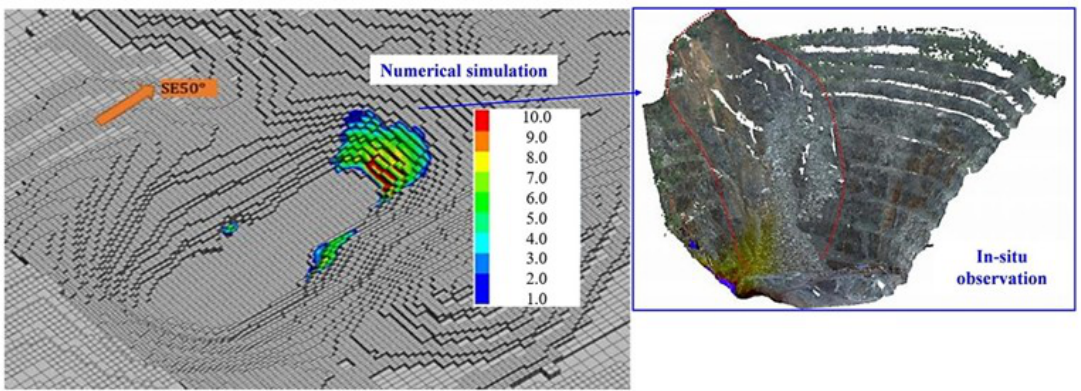
Figure 6.
Severity of impact of transition from open pit to underground mining on sustainability (Adapted from [8])
Figure 6.
Severity of impact of transition from open pit to underground mining on sustainability (Adapted from [8])
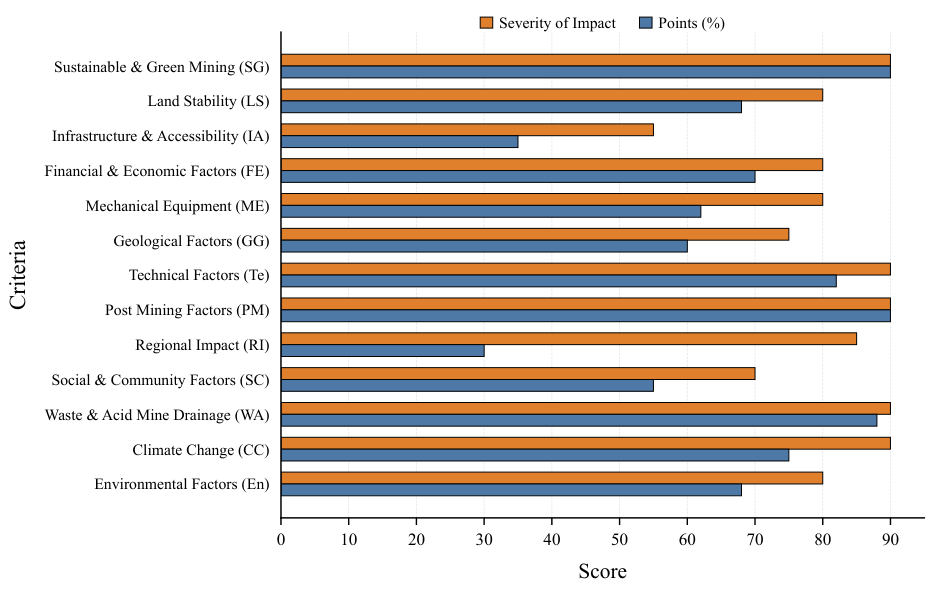
Figure 7.
Environmental impact category weights (%) (Adapted from [8])
Figure 7.
Environmental impact category weights (%) (Adapted from [8])
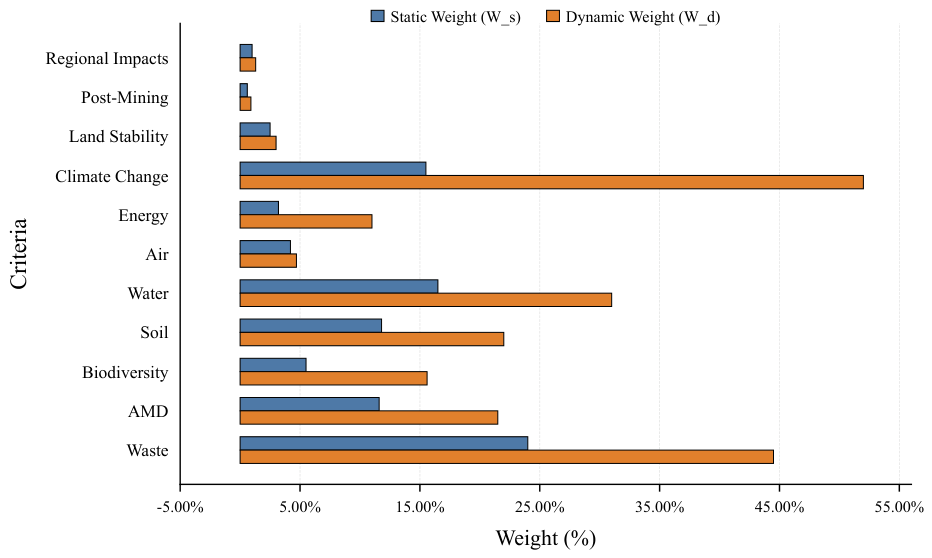
Figure 8.
Severity analysis of multi-dimensional risk factors (Adapted from [8])
Figure 8.
Severity analysis of multi-dimensional risk factors (Adapted from [8])
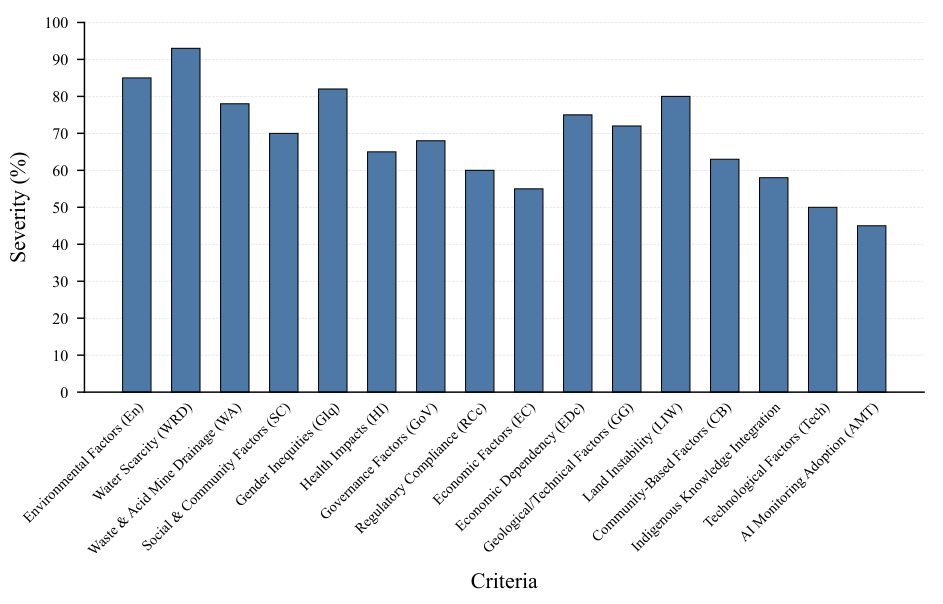
Figure 9.
Tailings backfill and ecological restoration measures reported for Dongguashan Copper Mine, including conceptual representation of (a) the backfill system, (b) tailings transport pathway, and (c) open-pit restoration layout. (Reproduced from [112])
Figure 9.
Tailings backfill and ecological restoration measures reported for Dongguashan Copper Mine, including conceptual representation of (a) the backfill system, (b) tailings transport pathway, and (c) open-pit restoration layout. (Reproduced from [112])
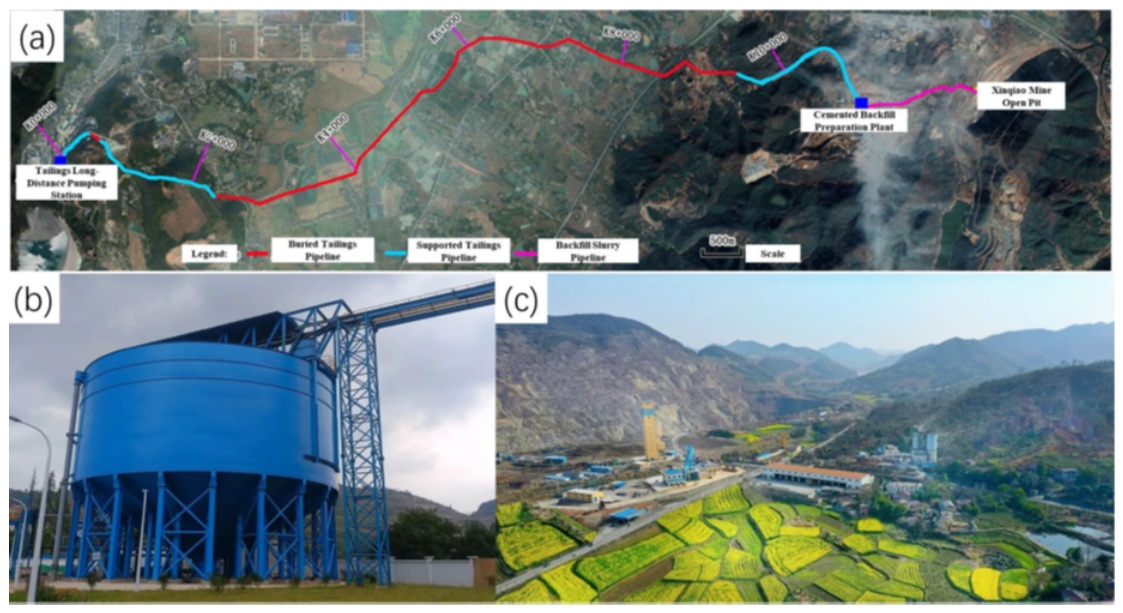
Table 2.
Quantitative breakdown of environmental impacts of transitioning from open pit to underground mining on sustainable development criteria.
Table 2.
Quantitative breakdown of environmental impacts of transitioning from open pit to underground mining on sustainable development criteria.
| Environmental Criterion | Score | Percentage (%) |
|---|---|---|
| Post-mining land use type | 78.65 | 18.84% |
| Reduce pollution and environmental degradation | 69.19 | 16.57% |
| Ground surface subsidence | 59.70 | 14.30% |
| Management of waste pollutants | 48.95 | 11.73% |
| Principle of respect for mining site | 39.43 | 9.45% |
| Green mining (resource and energy protection) | 37.85 | 9.07% |
| Mine effluent management | 26.99 | 6.47% |
| Use green space to help protect the environment | 19.26 | 4.61% |
| Bed coordination (ecosystem area) | 18.79 | 4.50% |
| HSEC management system | 18.63 | 4.46% |
Adapted from Badakhshan et al. [111]
Disclaimer/Publisher’s Note: The statements, opinions and data contained in all publications are solely those of the individual author(s) and contributor(s) and not of MDPI and/or the editor(s). MDPI and/or the editor(s) disclaim responsibility for any injury to people or property resulting from any ideas, methods, instructions or products referred to in the content. |
© 2026 by the authors. Licensee MDPI, Basel, Switzerland. This article is an open access article distributed under the terms and conditions of the Creative Commons Attribution (CC BY) license (http://creativecommons.org/licenses/by/4.0/).
Copyright: This open access article is published under a Creative Commons CC BY 4.0 license, which permit the free download, distribution, and reuse, provided that the author and preprint are cited in any reuse.