
Submitted:
24 July 2026
Posted:
27 July 2026
You are already at the latest version
Abstract
Background: Acute brain injury, including traumatic brain injury (TBI), stroke and subarachnoid hemorrhage, and secondary neurological injury such as sepsis-associated encephalopathy (SAE) and delirium, is a major cause of morbidity in the intensive care unit (ICU), and few treatments alter its course once it is established. Critical illness, and brain injury in particular, rapidly disrupts the gut microbiota (GM) and the production of its metabolites. This dysbiosis matters most in neurologically injured patients, because microbial metabolites and a leaky intestinal barrier feed neuroinflammation through the gut-brain axis. Feeding timing and fasting affect circadian biology, the daily rhythm of the GM, and host metabolic pathways such as ketogenesis, insulin signaling and autophagy, which is why time-restricted or fasting-mimicking strategies might preserve these functions and reduce neuroimmune dysregulation after brain injury. Methods: We searched the literature for randomized trials, crossover pilot studies, mechanistic human research, and guideline statements comparing continuous, cyclic, and intermittent enteral strategies, and evaluated translational pathways for GM‑targeted feeding interventions. Results: Available studies showed no consistent difference in mortality between continuous and intermittent gastric feeding in ICU adults on mechanical ventilation. While intermittent/cyclic regimens were not associated with an improvement of patient-centred outcomes, pilot studies demonstrated that short macronutrient interruptions (e.g., 12 hours) reliably induced a metabolic fasting response in prolonged ICU length of stay. One RCT had GM end-points and reported feasible modulation of gut taxa and 58 differentially abundant serum metabolites with sequential feeding. Notably, none of these trials were performed specifically in brain-injured patients, and GM and neuroinflammatory outcomes remain largely unmeasured. Conclusions: Time-restricted, microbiome-protecting approaches are biologically plausible and deserve a phased translational program to test them in clinical trials. Future trials should focus on brain-injured and other neurologically relevant ICU patients, in whom the gut-brain axis is most engaged, and should pair mechanistic endpoints with clinical safety and proper control for confounders.
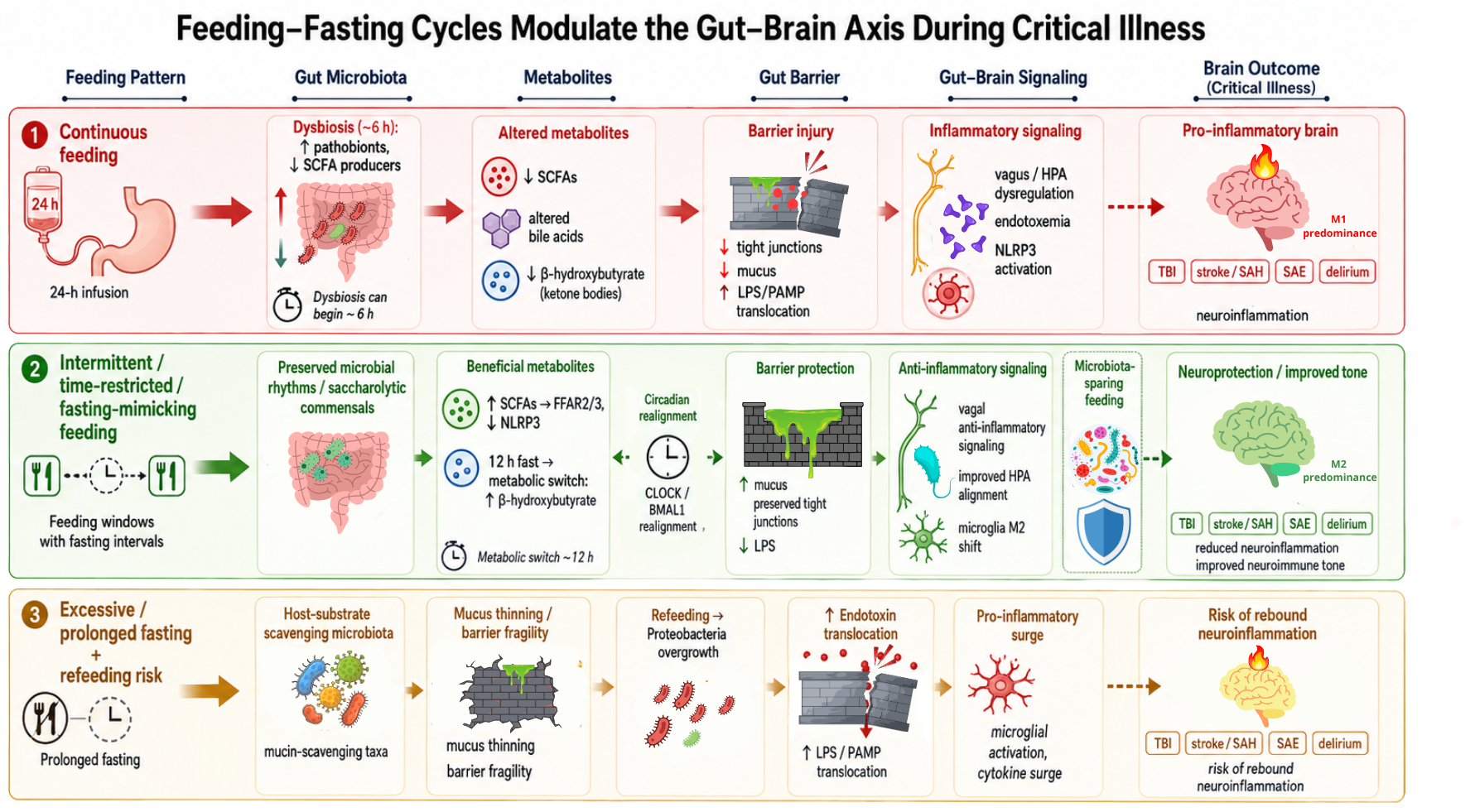
Keywords:
intermittent fasting
; gastrointestinal microbiome
; brain-gut axis
; dysbiosis
; neuroinflammatory diseases
; sepsis-associated encephalopathy
; brain injuries
; traumatic
; enteral nutrition
; critical illness
1. Introduction
Acute brain injury is common and severe in critical care. It may be primary, as in traumatic brain injury (TBI), aneurysmal subarachnoid hemorrhage, intracerebral hemorrhage and ischemic stroke, or secondary, as in sepsis-associated encephalopathy (SAE) and intensive care unit (ICU) delirium [1]. These patients often need prolonged mechanical ventilation and long ICU and hospital stays, and many are left with cognitive, functional or psychiatric impairment that lasts well beyond discharge [2]. Beyond acute survival, many of these patients develop the post-intensive care syndrome (PICS): new or worsening impairments in physical, cognitive or mental health that persist after critical illness and beyond hospital discharge [3]. These long-term sequelae lower survivors' quality of life and raise health-care costs through prolonged rehabilitation and repeated hospital readmission [4,5]. Brain-injured survivors are among the most affected, so systemic factors that can be modified to limit neuroinflammation and aid recovery are worth targeting. Their course is frequently complicated by secondary insults such as systemic inflammation, nosocomial infection, dysglycemia and organ dysfunction, which aggravate the primary lesion and worsen the outcome [6]. The presence of neuroinflammation has been linked to adverse neurological outcomes, including the development of delirium [7] and SAE, as well as secondary injury following major trauma [8,9]. This connection is thought to be partly mediated by the microbiota-gut-brain axis, a network of immune, neural, endocrine, and metabolic pathways through which intestinal disturbances directly influence central nervous system (CNS) function. Feeding and nutrition significantly influence these pathways, as nutrients, microbial metabolites, and gut-derived immune signals interact with systemic and neural circuits that regulate inflammation and neuro-immune responses [10]. Critical illness itself is a primary driver of CNS dysfunction as it induces gut dysbiosis, a condition in which beneficial commensals are lost, and opportunistic pathogens proliferate. This affects the intestinal barrier function, the production of local metabolites, and triggers systemic inflammation, immune dysregulation, and metabolic dysfunction, affecting distant organs, including the brain [11]. The gut microbiome (GM) and its associated genes configure the gut as both a biomarker and a mediator of pathophysiology in the ICU, leading to immune dysregulation, metabolic disruption, and secondary organ dysfunction [12].
Once injury is established few treatments change its course, so attention has turned to systemic factors that can be modified and that shape neuroinflammation and recovery; nutrition and the GM are two candidate modifiable factors, whose therapeutic potential still requires confirmation in dedicated clinical investigations [13].
2. Dysbiosis
As soon as the patient is admitted into the ICU, the GM undergoes a profound and rapid disruption of its “steady state” i.e. eubiosis, shifting from a microbiota to a “pathobiota”, the so called dysbiosis, which can happen in as little as 6 hours and is increasingly recognized as a key factor in the progression of organ failure and poor outcomes [11].
Specific alterations in the GM have been described as a reduced microbial richness and diversity, marked by increased opportunistic and nosocomial pathogens, such as Enterococcus and Klebsiella, and a depletion of beneficial commensal bacteria, including Lachnospiraceae and Ruminococcaceae [14]. This microbial rearrangement is driven by various agents that typically occur in the ICU, including broad-spectrum antibiotics, especially those that do not spare anaerobic populations, proton pump inhibitors, and different approaches to enteral nutrition (EN) itself [11].
The impairment of this microbial “symphony” [15] probably has significant consequences that extend beyond the gut. Dysbiosis also impairs several metabolic pathways, including primary bile acid synthesis, which in turn exacerbates intestinal barrier dysfunction [16]. Ultimately, the breakdown of the gut barrier worsens the critical illness and sets the premises for a multi-organ dysfunction syndrome (MODS) to take place and develop abruptly [17]. Clinically, this breakdown translates into common ICU complications. For instance, enteral nutrition-related diarrhea (END) is strongly associated with severe dysbiosis, marked by significantly lower bacterial diversity and the overgrowth of specific pathogens [14]. On the contrary, the ability to tolerate enteral feeding appears to be linked to distinct microbiota profiles and SCFA levels early in the course of nutrition therapy [18], which paves the way for research into microbial markers that could predict intolerance [19].
3. Neuroinflammation
In critically ill and brain-injured patients, neuroinflammation usually appears as acute brain dysfunction, from mild delirium to sepsis-associated encephalopathy (SAE), and it adds to the cognitive impairment that many survivors carry for months after discharge [20]. The more severe and prolonged this dysfunction is, the longer patients stay in the ICU and the higher their mortality [21]. There is still no specific diagnostic test, but blood and cerebrospinal markers of glial and neuronal injury such as glial fibrillary acidic protein (GFAP), neurofilament light chain (NfL) and S100B, together with pro-inflammatory cytokines, rise as the encephalopathy worsens and predict a poorer neurological outcome [22,23]. These clinical changes reflect the activation of the resident immune cells of the central nervous system, mainly microglia.
Microglial cells in their homeostatic state act as sentinels, eliminating superfluous synapses and supporting neuronal survival. When activated, they polarize into a pro-inflammatory M1 phenotype, releasing cytokines, reactive oxygen species (ROS), and nitric oxide (NO) that drive neuroinflammation, or into an anti-inflammatory M2 phenotype, promoting repair and neuroprotection through interleukin-10 (IL-10), transforming growth factor-beta (TGF-β), and trophic factors. Beyond this M1/M2 dichotomy, disease-, age-, and context-specific phenotypes have emerged, reflecting neuroplasticity [24].
4. Potential Links Between Dysbiosis and Neuroinflammation
The gut-brain axis is a bidirectional communication system that comprises the gut, the central nervous system (CNS), the sympathetic and parasympathetic nervous systems, and the hypothalamic-pituitary-adrenal (HPA) axis [25].
Through this axis, the GM connects to neuroinflammation by immune, metabolic, endocrine and neural routes.
The link between GM composition and neurological outcomes in critical illness have been reported predominantly in cohorts with primary brain injury and in patients with sepsis, rather than in undifferentiated ICU populations. Observational clinical studies of acute neurological injury (TBI, intracerebral hemorrhage and stroke) and of neurologic ICU populations show disease-specific gut signatures (for example, enrichment of Enterobacteriaceae in some TBI cohorts and altered GM composition after intracerebral hemorrhage) and link dysbiosis to worse neuro-inflammation or delayed recovery in exploratory studies [26,27,28]. However, antibiotic exposure, which is highly prevalent in these cohorts and a dominant driver of dysbiosis, is variably reported (class, timing, and cumulative days are often missing or inconsistent), limiting causal inference in human datasets [29]. Translational and animal models point to a causal role for the GM in post-injury neuroinflammation and recovery: antibiotic-induced dysbiosis before or after experimental TBI altered lesion size, microglial activation, and behavioral outcomes, indicating that perturbations of the GM can both worsen and (in some protocols) improve neuroinflammatory injury, depending on timing and method of manipulation [30,31].
4.1. Microbiota–Gut–Brain Signalling Routes
Schematically, the role of dysbiosis in the modulation of neuroinflammation via the gut-brain axis can be exerted via several mechanisms:
SCFA: During critical illness, the production of SCFA by GM is decreased as reflected by low fecal concentrations. SCFA (butyrate, acetate, propionate) produced by saccharolytic commensals from dietary fibres influence neuroimmune processes, ranging from the regulation of microglia to the maintenance of the blood-brain barrier (BBB) integrity and neuroimmune homeostasis [32]. SCFA are involved in the regulation of intestinal motility, immunity, and energy balance, and have receptors in various systems throughout the body, including the central and peripheral nervous systems [18,33,34]. Hence, SCFA can be considered as central mediators linking feeding patterns to brain immune status via energy metabolism, mucus production, tight-junction integrity, and reprogramming the immune system [35], which in turn affects the dynamic spectrum of microglial phenotypes and neurotrophic signaling. More specifically, SCFAs such as butyrate target different host cells by binding to G-protein-coupled receptors (e.g., FFAR2/FFAR3), inhibiting histone deacetylases with related epigenetic effects, interacting with monocarboxylate transporters, which in turn suppress nuclear factor kappa B (NF-κB)and inflammasome signaling in endothelial and myeloid cells, and finally stabilizing BBB function [36] and the production of central cytokines [37].
SCFA supplementation in an experimental model has been shown to improve cognitive outcomes, including spatial learning, following injury [34]. This suggests a potential path from gut dysbiosis to brain dysfunction in sepsis and other ICU syndromes.
Inflammasome activation: dysbiosis-derived danger signals activate the NOD-, LRR- and pyrin domain-containing protein 3 (NLRP3) inflammasome and promote IL-1β and IL-18 release, contributing to neuroinflammation and pyroptosis. GM-derived indole-3-propionic acid can inhibit this pathway, linking microbial composition to neuroimmune modulation [38,39]. More specifically this pathway has been associated with multiple sclerosis, Alzheimer’s disease, Parkinson’s disease, neuropsychiatric diseases, and sepsis [11].
Bile acids and FXR/TGR5 signalling: gut bacteria convert primary bile acids into secondary bile acids that act on the farnesoid X receptor (FXR) and Takeda G-protein receptor 5 (TGR5) and help regulate systemic and central immune responses; when dysbiosis depletes these bacteria the signal is lost, which can worsen neuroinflammation [40].
Tryptophan–indole–kynurenine metabolism: bacterial indoles and kynurenine-pathway metabolites bind the aryl hydrocarbon receptor and influence how reactive microglia become and whether the mediators they produce protect or harm neurons [40].
Vagal (cholinergic) anti-inflammatory reflex: microbial signals act on vagal afferents and the cholinergic anti-inflammatory pathway, a direct neural route through which the gut can dampen or amplify brain inflammation [40].
Gut barrier integrity and endotoxin translocation: increased intestinal permeability allows the translocation of endotoxins such as lipopolysaccharide (LPS), which then enter the systemic circulation and reach the brain, where they activate microglia and the cerebral endothelium mainly through Toll-like receptor 4 (TLR4); in this way gut-derived LPS becomes a direct trigger of blood–brain barrier breakdown and central inflammation [41].
HPA axis and systemic stress response: GM-derived signals also modulate the hypothalamic–pituitary–adrenal (HPA) axis and systemic stress responses, contributing to neuroimmune homeostasis [24,42].
Through these mechanisms, the GM shapes the core features of neuroinflammation: it regulates microglial activation, driving microglia towards a pro- or an anti-inflammatory phenotype, and it changes cerebral gene expression in key regions such as the hippocampus and prefrontal cortex.
The downstream consequences of ICU-associated dysbiosis on gut barrier integrity, systemic inflammation, and the gut-brain axis are illustrated in Figure 1.
4.2. Feeding–Fasting Cycles: Mechanistic Links
The timing of feeding and the composition of nutrients regulate a complex network connecting the GM metabolites, immune system, and neural pathways between the gut and the brain. These factors impact microbial metabolism (including the synthesis of SCFAs, indoles, bile acids, and ketones), gut barrier integrity, systemic inflammation, and neurological function.
Ultimately, it appears that feeding fasting cycles are one of the key factors that can significantly influence SCFAs production, as the timing and composition of the feeding are crucial [16]. This is because it feeds the GM the substrates for fermentation and regulates diurnal microbial activity. In fact, a daytime feeding cycle or intermittent feeding cycle preserves the fermentation rhythm and SCFAs production. On the contrary, a continuous feeding cycle or a total lack of fermentable substrates halts this production and disrupts the beneficial flow of mediators to the host [16,43]. The shift is even more evident, as a brief 12-hour nutrient interruption [44] triggers an immediate immunometabolic fasting signal: the body increases ketones and bilirubin, while lowering insulin and IGF-1; the combined effect results in an enhanced cellular repair program. Harnessing this balance between preserving SCFA production and safely controlling fasting harmful mediators could therefore reduce systemic and CNS inflammation [45].
Brief macronutrient interruption triggers ketogenesis within hours; the resulting rise in β-hydroxybutyrate (BHB) acts as a metabolic switch that simultaneously blunts early catabolism and activates cellular repair programs [46,47], and as a signalling metabolite it also inhibits NLRP3 inflammasome activation, improves redox balance and helps protect neurons and glia. This is in contrast to what would happen with continuous nutrition, which sustains insulin and IGF-1 signalling, suppressing ketone utilization and potentially delaying adaptive stress responses [48]. However, its implementation in standard ICU practice requires careful evaluation of risks (such as underfeeding, glycemic variability, and tolerance) against potential benefits of autophagy and immunometabolic reprogramming [44].
This feeding-fasting cycle has a “double-edged sword” effect on the gut-brain axis and neuroinflammation. Short-term, regulated fasting can increase microbial diversity, promote autophagy, and reduce systemic inflammation [49]. During fasting, the scarcity of nutrients favors bacteria that use substrates directly from the host, such as mucin and epithelial glycans, resulting in a thinning of the mucus layer, diminished barrier function, and reduced colonization resistance [50]. As soon as feeding is reestablished, this abrupt influx of new substrate can facilitate the proliferation of opportunistic proteobacteria and enterobacteria, with the release of LPS and other pro-inflammatory mediators. These mediators can translocate into the systemic circulation, triggering the immune system, even within the nervous system, as microglial activity is upregulated and cytokine release in the brain is increased [51]. Consequently, although moderate fasting may temporarily enhance neuroimmune equilibrium, excessive or prolonged fasting, particularly in metabolically vulnerable or critically ill patients, may disrupt the gut ecosystem and exacerbate neuroinflammatory processes due to this rebound “risk”.
5. Ways to Interfere with the Gut–Brain Axis
From the pathways described above, the concept “microbiota-sparing feeding” could characterize feeding patterns and substrates that preserve saccharolytic commensals and their SCFA output. SCFAs come from the fermentation of dietary fibres and are the main fuel for colonocytes; they also influence microglial tone and the production of neuroactive metabolites and neurotransmitters such as serotonin and GABA-related mediators that signal to the brain [25,55].
5.1. Changing the diet: Fibre And Ketogenic Strategies
Diet composition, even before feeding timing, can shape the GM and its metabolic output. Fermentable fibres and prebiotic substrates give saccharolytic commensals more substrate and raise luminal SCFA production, which supports colonocyte metabolism, the mucosal barrier and a more regulatory immune tone [8,55]. However, fibre enrichment is not uniformly beneficial in the critically ill: a recent pilot randomised trial in critically ill trauma patients found that enteral supplementation with fermentable fibre (short-chain fructo-oligosaccharides) accelerated the loss of beneficial Bifidobacterium and Firmicutes and favoured the expansion of pathogenic Enterobacteriaceae, with the microbial response shifting from beneficial to detrimental according to prior exposure to anaerobic antibiotics, underscoring that composition-based interventions are context-dependent [56]. Ketogenic diets work differently: they shift energy provision toward fat and sustain ketogenesis, reproducing some anti-inflammatory effects of fasting, including β-hydroxybutyrate-mediated inhibition of the NLRP3 inflammasome [48,57]. Both act through nutrient composition rather than timing, and are covered only briefly here because this review focuses on the temporal pattern of feeding (Section 5.2).
5.2. Non-Continuous, Time-Patterned Enteral Feeding
In the ICU, “fasting” is not a single intervention but a spectrum of intentional feeding modifications, from standard 24-hour continuous EN to scheduled intermittent feeding pathways, to a complete halt of all nutrition support for a defined period; each carries distinct metabolic and microbiological implications, and operational definitions are summarized in Table 2. The default gold standard has been, and remains, continuous feeding, where a 24-hour infusion is maintained via a pump with no fasting interval [53]. The logic is simple, as it keeps the fuel coming.
Important boundaries and limitations that define the scope include exclusion criteria used in randomized controlled trials (RCTs) (e.g., those studies not including total parenteral nutrition, recent GI surgery, or severe motility disorders), variation in fasting duration and position, some intermittent regimens having greater glycemic variability, and existing trials being underpowered for patient-centered outcomes [58].
Continuous EN is frequently interrupted in routine ICU care for procedures, airway management, medication administration, and gastrointestinal events, resulting in measurable caloric deficits (median three interruption episodes per patient; median interruption 5.5 h; interruptions accounted for ≈19% of designated EN time) [59]. Meal timing is a significant non-photic zeitgeber (a time cue that sets the body’s internal clock through eating patterns rather than light) for peripheral circadian clocks and directly influences metabolism and inflammation. Continuous 24-hour enteral feeding in the ICU disrupts the body’s natural daytime-feeding/nighttime-fasting rhythm [60,61]. By contrast, intermittent or daytime-restricted feeding better mimics normal eating patterns and may preserve circadian alignment, hormonal rhythms, and metabolic functions that support recovery [62].
In addition to circadian effects, intermittent feeding activates fasting-type metabolic pathways -- ketogenesis, reduced insulin/insulin-like growth factor-1 (IGF-1), and autophagy induction -- that can reshape the gut ecosystem and its metabolome [16,44]. Importantly, during short nutrient interruptions, the brain can rapidly use ketone bodies and lactate as alternative substrates to glucose, underscoring the importance of cerebral substrate safety when designing fasting schedules [63].
5.3. Other Approaches to Microbiota Modulation
Beyond the timing of nutrient delivery, several other strategies can modulate the GM in critically ill and brain-injured patients. Probiotics and synbiotics aim to reintroduce beneficial commensals and have been associated with fewer episodes of ventilator-associated pneumonia and infection in a recent meta-analysis, although individual trials vary [71]. Prebiotic fibers and postbiotics, especially SCFAs, aim to restore microbial metabolites directly rather than the bacteria that make them [55]. Fecal microbiota transplantation works in refractory Clostridioides difficile infection and is being tested in ICU dysbiosis, but concerns about safety and standardization still limit its routine use [72]. Antibiotic stewardship and avoiding unnecessary microbiota-disrupting drugs are simpler, lower-risk measures [73]. All of these act on microbiota composition and complement feeding-pattern interventions rather than replace them; feeding pattern is the focus of this review.
6. Knowledge Gaps and Unanswered Questions
While these gut-brain interactions operate across all critically ill patients, their neurological consequences are most directly measurable and clinically significant in patients with primary or secondary brain injury. Nonetheless, evidence on how feeding timing affects the GM and host metabolic pathways derives predominantly from general ICU populations on mechanical ventilation, because trials enriched for neurological phenotypes do not yet exist. The following mechanistic and clinical evidence should therefore be read as the biological foundation upon which a dedicated, neurologically focused trial can be built.
Several questions remain unresolved. It is unclear whether the GM changes seen after brain injury cause neuroinflammation or merely follow it, and how much they reflect confounders such as antibiotic exposure [29], sedation and impaired gut motility rather than the injury itself [74]. The best mode, timing and duration of feeding to protect the microbiota in these patients are undefined, and no randomized trial has yet used microbiota-related or neurological endpoints as primary outcomes in brain-injured patients. Whether changing feeding pattern actually improves outcomes such as infection, delirium or neurological recovery is still unknown.
6.1. Aim of this Review
This review brings together two strands of evidence that are usually kept apart: how the timing and pattern of EN affect the GM and host metabolism, studied almost entirely in general, mechanically ventilated ICU patients; and how the microbiota shapes neuroinflammation and recovery, studied mainly in observational and preclinical models of brain injury. No trial has yet tested feeding timing against microbiota or neurological endpoints in brain-injured patients, and closing that gap is the central aim. The general-ICU feeding evidence is therefore used as the biological foundation, read through the lens of the gut-brain axis, to build a prioritized research agenda for the neurologically relevant ICU phenotypes in which a measurable benefit is most plausible.
7. Methods
7.1. Literature Search
A comprehensive search was performed in PubMed, Scopus, and Web of Science up to September 2025. The search combined free text terms and Medical Subject Headings (MeSH). Keywords included: intermittent feeding, intermittent fasting, time-restricted feeding, cyclic enteral nutrition, continuous enteral nutrition, GM, gut microbiome, dysbiosis, neuroinflammation, gut-brain axis, critical illness, intensive care unit, mechanical ventilation, ketogenic diet, ketogenesis, circadian rhythm, sepsis-associated encephalopathy, traumatic brain injury, delirium, and short-chain fatty acids. Boolean operators AND and OR were used to combine terms across domains. Reference lists of relevant articles were also screened to identify additional studies.
7.2. Study Selection
After duplicate removal, titles and abstracts were screened for relevance. Full texts were evaluated when necessary. Eligible articles included peer reviewed studies written in English that investigated intermittent feeding strategies or fasting related mechanisms involving the GM or neuroinflammatory pathways. Both preclinical and clinical studies were considered. Conference abstracts, editorials, and non peer reviewed material were excluded.
7.3. Data extraction and Synthesis
Key information from selected studies included study design, population, experimental model, microbiota related findings, and reported neuroinflammatory mechanisms. Evidence was summarized narratively and organized according to mechanistic pathways linking feeding patterns, microbiota composition, and neuroinflammation. Preclinical evidence is reported before the clinical studies.
7.4. Quality Assessment
Because this work is a narrative review, no formal risk of bias assessment or meta-analysis was conducted. Studies were selected for their conceptual and mechanistic relevance to the topic. As a narrative review, the literature search was not prospectively registered in PROSPERO or equivalent databases.
8. Results
8.1. Study Selection and included Studies
Figure 3 summarises how studies were identified and selected. After screening and full-text assessment, the review drew on five preclinical or translational studies (Table 3) and twelve clinical studies (Table 4), along with supporting pooled analyses. These covered continuous, intermittent, cyclic, bolus, sequential and fasting-mimicking enteral strategies as well as ketogenic and microbiota-targeted interventions. The preclinical evidence is presented first (Section 8.2), then the clinical evidence (Section 8.3).
8.2. Preclinical Evidence
Preclinical experimental work in clinically relevant animal models supports several mechanistic pathways by which non-continuous feeding can alter host pathophysiology relevant to critical illness, including metabolic switching, autophagy induction, enhanced anabolic signaling, and microbiota-mediated organ protection. Key preclinical evidence is summarized in Table 3.
8.3. Clinical Evidence
Ketogenic diets (KD) represent a composition-based, rather than timing-based, strategy to sustain endogenous ketogenesis by delivering the majority of calories as fat with minimal carbohydrate intake. In ICU patients with sepsis, a recent open-label RCT (n=40) demonstrated that KD reliably induced stable ketosis, eliminated insulin requirements after Day 4 in all treated patients (vs 35-60% in controls), and was associated with significantly more ventilation-free, vasopressor-free, and ICU-free days, without major metabolic complications [57]. Immunological analyses revealed reduced immune dysregulation with decreased T-cell activation gene expression, consistent with the known anti-inflammatory properties of β-hydroxybutyrate, including NLRP3 inflammasome inhibition [48]. No survival benefit was demonstrated at 30 days. While KD shares the key metabolic effectors of intermittent fasting - ketogenesis, reduced insulin/IGF-1, and NLRP3 inhibition - it operates through sustained metabolic reprogramming rather than cyclic fasting signals, raising distinct concerns about protein catabolism and electrolyte balance in prolonged critical illness. Clinical data in the ICU remain limited to small trials, and no study has yet integrated GM composition or neuroinflammatory endpoints as primary outcomes.
The clinical trials available to date were conducted in general, mechanically ventilated ICU populations rather than in brain-injured cohorts; the findings below should therefore be read as the general-ICU foundation on which a neurologically focused study would build. On the clinical side, intermittent and cyclic feeding reliably induces fasting metabolic signals -- rising β-hydroxybutyrate, declining insulin and IGF-1, and a flatter urea:creatinine ratio trajectory -- without compromising safety, as demonstrated by the ICU-FM-1 pilot crossover [44] and the sequential-feeding RCT [16]. However, these metabolic benefits have not translated into consistent patient-centered improvements. The most recent and largest RCT (n~294) found that intermittent feeding accelerated time to energy targets but increased diarrhea rates (11% vs. 4.7%) and had no effect on mortality, ventilator-associated pneumonia (VAP), or protein delivery [65], consistent with an earlier trial showing no benefit in muscle mass preservation despite higher protein delivery [43]. A pooled analysis of eight RCTs (n~993) confirmed no significant difference in hospital mortality (pooled RR 0.97, 95% CI 0.72-1.32) [82]. Notably, only one RCT to date incorporated GM end-points [16]; it found genus-level shifts and modest improvements in albumin and lymphocyte counts, but no change in alpha-diversity or 90-day survival. These genus-level shifts align with translational data linking dysbiosis and Proteobacteria overgrowth to enteral intolerance and systemic inflammatory signaling [54]. GM and neuroinflammation outcomes remain unmeasured in virtually all existing trials. Full details of individual studies are presented in Table 4.
Consistent with these findings, a systematic review and meta-analysis of nine RCTs comparing bolus versus continuous enteral feeding (n=863) found no statistically significant differences in gastrointestinal outcomes, hospital mortality, or length of stay, further supporting the absence of a consistent benefit from non-continuous feeding strategies in heterogeneous critically ill populations [83].
Despite extensive investigation, no definitive conclusion could be drawn to favour one feeding mode over the other in the general ICU population [84]. This persistent lack of signal in heterogeneous cohorts points to the need to restrict future investigations to biologically informed subgroups, such as patients with neurological injury.
9. Discussion
9.1. Summary of Findings
The clinical and preclinical evidence reviewed here suggests that the timing and pattern of EN can influence the GM, its metabolites and host metabolic signaling in critically ill patients. Clinical studies show that intermittent and cyclic feeding induce a fasting-type metabolic response and reach caloric targets at least as well as continuous feeding, with no consistent effect on mortality; the one trial that included microbiome endpoints found measurable shifts in gut taxa and in the serum metabolome. Preclinical models point in the same direction, connecting feeding-fasting cycles to SCFA production, barrier integrity, immune tone and neuroinflammation. Almost all of this evidence, however, comes from general ICU populations rather than from patients selected for brain injury.
9.2. Promising Preclinical Evidence but Heterogeneous Clinical Results
Direct clinical evidence that feeding timing improves neurological outcomes does not yet exist; the case for targeting brain-injured patients is, for now, mechanistic and observational. ICU populations are heterogeneous, and existing RCTs are underpowered, in part because they do not preselect for neurological phenotypes most likely to respond to GM-targeted interventions [58]. Phenotype-guided enrichment increases signal-to-noise for mechanistic biomarkers and may substantially reduce required sample sizes. The ICU phenotypes with the strongest mechanistic rationale for gut-brain-feeding interactions are summarized in Table 5. The strength of direct clinical evidence linking enteral feeding timing → microbiota/metabolome → objective neuroinflammation or improved neurological outcomes is uneven across these phenotypes, so each phenotype should be treated as a prespecified subgroup or mechanistic substudy in future RCTs rather than assumed to respond identically.
9.3. Strengths
The main strength of this review is that it brings together mechanistic, preclinical and clinical evidence from the nutrition, microbiome and neurocritical care literatures, which are rarely read side by side. Treating feeding pattern as a modifiable determinant of the gut-brain axis gives a target that is biologically plausible and clinically actionable. The operational definitions in Table 2, the evidence tables and the implementation framework are meant to make the idea usable at the bedside and to help design future trials.
9.4. Limitations
This review also has limitations. Being a narrative review, it did not use a prospectively registered search protocol and is therefore open to selection bias. The clinical evidence is heterogeneous in interventions, populations and endpoints, mostly comes from small and underpowered studies, and, most relevant here, was generated in general ICU rather than brain-injured cohorts, so any conclusion about brain-injured patients is at present an extrapolation and remains hypothesis-generating. Antibiotic exposure, a major driver of dysbiosis, is reported inconsistently and limits causal inference. Finally, only one trial so far has included microbiome endpoints, which limits any firm conclusion about microbiota-mediated effects of feeding pattern.
9.5. Perspectives
9.5.1. Microbiota-Sparing Feeding Concepts
“Starving the bad bugs” may be an approach. Still another would be not to starve them at all and feed them from the moment the patient is admitted to the ICU, remembering that among those bugs are also key GM players that provide a formidable, beneficial output for the host.
That’s why a microbiota-maintenance microfed (continuous, ultra-low caloric “prebiotic drip”) could be an interesting concept, an isotonic, very low volume infusion (eg, comparable to trophic EN rates or lower) containing fermentable soluble fibre/oligofructose/inulin and low osmolality to provide substrate for SCFA producers without materially increasing systemic caloric load. The EDEN RCT in 2013 [96] already demonstrated that trophic, hypocaloric enteral feeding can maintain gastrointestinal tolerance and safety in early critical illness, using standard polymeric formulas at minimal rates to protect the gut without delivering significant calories. In contrast, the concept we suggest evolves this approach from a purely metabolic strategy to a microbiota-maintenance strategy. Rather than providing inert calories at low rates, a microfed “prebiotic drip” would supply a minimal, isotonic infusion designed not to feed the host, but to sustain commensal SCFA-producing microbes. The final goal is therefore to preserve commensal fermenters during periods when full EN is unsafe, for instance, during hemodynamic instability when there is a high risk of bowel necrosis and gut ischemia due to compromised splanchnic perfusion [97,98]. This could slow down the otherwise swift transition from GM to Gut “Pathobiota” [11].
A variant of this strategy would be to administer time restricted prebiotic meals, i.e. short small boluses of fermentable glycans (oligosaccharides/resistant starch blends) only during daytime windows to sync the GM’s clock and SCFA’S output steady without altering much the caloric target and especially without “calling “ too much blood into the gut in a moment in which the blood is needed somewhere else.
Beyond prebiotics, postbiotics themselves could be used to replace host-interrupted SCFAs signaling during the fasting phase: a small amount of butyrate/acetate could be delivered enterally or rectally in selected patients to provide energy to the enterocytes, preserve barrier integrity, and modulate immune signals [99].
Enteral strategies (even minimal) should not be used during active gut hypoperfusion or when escalating vasopressor requirements are present without preclinical/early-phase safety data. Evidence linking early full feeding with harm in unstable patients motivated this recommendation [64]. Furthermore, fermentable substrates can induce osmotic diarrhea if osmolality or delivery rate is poorly matched to absorptive capacity [100], so gradual dose escalation and pump control are essential. The prebiotic microfed concept described above is therefore proposed only for the stabilizing or post-acute phase, once vasopressor requirements are decreasing and splanchnic perfusion is being restored — not as a strategy during active hemodynamic compromise.
9.5.2. A proposed Phased Clinical Trial
Based on the mechanistic and clinical evidence reviewed above, a phased RCT is here outlined as a future research priority to test whether daytime timed intermittent or cyclic enteral feeding, compared with standard continuous feeding, modulates GM, its metabolites, and neuroinflammatory responses in neurologically relevant ICU patients.
The optimal window to assess whether intermittent or cyclic enteral feeding modifies pathogenic mechanisms is after the early, unstable “acute” phase, i.e., in the post-acute/stabilization and early rehabilitation periods, rather than immediately at ICU admission. The optimal mechanistic sampling window is Days 5-14” [16] (commonly Day 7–10) to collect microbiome (stool/rectal swab), metabolomics (serum/urine for ketones, SCFAs, bile acids), insulin/IGF-1, inflammatory cytokines and biomarkers analyses (NfL, GFAP, S100B) [101,102], and markers of autophagy. A baseline (early 4-24h status) would also be pivotal. The samples should be frozen at −80 °C within strict timeframes and should then be analyzed centrally to minimize batch effects.
Assessing effects in the post-acute [103] (days 7–14), at ICU discharge, and during early post-ICU rehabilitation (30–90 days) will capture mechanistic and clinically meaningful outcomes (muscle mass, delirium/neurologic recovery, infection, ventilator-free days, and functional recovery).
The study would enroll adults requiring mechanical ventilation and EN, excluding those with major gastrointestinal diseases or diabetes. Randomization would be stratified by antibiotic exposure and admission category to control key confounders.
Safety monitoring would focus on glycemic control and feeding intolerance [104]. Mechanistic end-points would be linked to clinical outcomes, such as ventilator-free days or ΔSOFA, using mixed-effects and mediation models. A pilot phase would assess feasibility and refine power estimates, paving the way for a larger, fully powered trial integrating multi-omics and clinical data.
9.5.3. Practical Implementation and Safety
Implementing time-restricted or fasting-mimicking feeding strategies in the ICU requires careful patient selection and ongoing physiological assessment. These interventions should be initiated only after metabolic and hemodynamic stability has been achieved and should always be individualized according to the patient’s trajectory, ongoing therapies, and gastrointestinal tolerance; the readiness criteria are detailed in Table 6 and the clinical pathway is illustrated in Figure 4. These criteria align with current American Society for Parenteral and Enteral Nutrition (ASPEN) [105] and European Society of Intensive Care Medicine (ESICM) [106] recommendations for nutritional reintroduction following circulatory instability and ensure that fasting intervals are initiated in a safe and reproducible manner.
Examples of daytime feeding protocols include 10-hour daytime cycles or 07–09, 11–13, and 17–19 h feeding windows, while maintaining the same total 24-h caloric and protein dose. Caloric and protein guidance should follow contemporary ICU nutrition practice: trials and protocols testing cyclic/diurnal strategies commonly used targets near 20 kcal/kg/day and ~0.8 g protein/kg/day in the acute phase [66], but consensus guidance [64,107] support a pragmatic kcal range during the first week of approximately 12.5–25 kcal/kg/day tailored to clinical context and a higher protein prescription (up to ≈1.2–1.5 g/kg/day in some populations such as trauma) when tolerated and indicated.
Additionally, it would be advisable to deliver feeds via pump-controlled, slower infusions rather than rapid gravity/bolus pushes to reduce intolerance and aspiration risk where possible [108].
Intermittent feeding requires careful monitoring to prevent key complications. Diarrhea is a common issue [65] and should be managed with routine stool tracking, review of osmotic medications or antibiotics, and gradual introduction of soluble fiber once the patient is stable. Glycemic variability and hypoglycemia [44] must be prevented through protocolized glucose checks and insulin adjustments during fasting windows. Isotonic formulas should be preferred initially, with fiber [109] added only after tolerance is established, while minimizing drugs or antibiotics that impair motility or disrupt the GM. Aspiration risk remains variable across studies [68], so standard preventive measures, such as head elevation and the use of prokinetics, must be maintained at all times. A structured bedside monitoring plan is summarized in Table 7, outlining key surveillance domains and practical actions for early detection and management.
10. Conclusions
Intermittent or circadian-aligned feeding may open a new frontier in critical care nutrition. By restoring physiological fasting–feeding rhythms, it offers a biologically coherent way to influence metabolism, GM, and brain–immune communication. The concept that short, time-gated nutrient restriction could “starve the bugs” (redirect a dysbiotic microbiota toward a healthier state) and “save the host” (limit neuroinflammation and organ dysfunction) is bold but mechanistically possible. Evidence so far confirms the feasibility and safety of this approach, yet clinical benefits remain unproven because existing trials are small and not designed to capture microbiome or neuroimmune changes. The field is ready to evolve: the next generation of trials should couple metabolic and microbiome end-points with patient-centered outcomes to test whether time-patterned nutrition can truly reshape recovery in critical illness.
List of Abbreviations
| AhR | aryl hydrocarbon receptor |
| AMPK | AMP-activated protein kinase |
| APP | abdominal perfusion pressure |
| ASPEN | American Society for Parenteral and Enteral Nutrition |
| BBB | blood-brain barrier |
| BHB | β-hydroxybutyrate |
| CAM-ICU | Confusion Assessment Method for the ICU |
| CNS | central nervous system |
| CRP | C-reactive protein |
| EN | enteral nutrition |
| END | enteral nutrition-related diarrhea |
| ESICM | European Society of Intensive Care Medicine |
| FFAR | free fatty acid receptor |
| FMD | fasting-mimicking diet |
| FXR | farnesoid X receptor |
| GFAP | glial fibrillary acidic protein |
| GM | gut microbiota |
| GRV | gastric residual volume |
| HPA | hypothalamic-pituitary-adrenal axis |
| ICU | intensive care unit |
| IGF-1 | insulin-like growth factor-1 |
| IL | interleukin |
| LPS | lipopolysaccharide |
| MAP | mean arterial pressure |
| MODS | multi-organ dysfunction syndrome |
| mRS | modified Rankin Scale |
| mTOR | mechanistic target of rapamycin |
| NF-κB | nuclear factor kappa B |
| NfL | neurofilament light chain |
| NLRP3 | NOD-, LRR- and pyrin domain-containing protein 3 |
| NO | nitric oxide |
| PAMPs | pathogen-associated molecular patterns |
| RCT | randomized controlled trial |
| ROS | reactive oxygen species |
| SAE | sepsis-associated encephalopathy |
| SAH | subarachnoid hemorrhage |
| SCFAs | short-chain fatty acids |
| SOFA | Sequential Organ Failure Assessment |
| TBI | traumatic brain injury |
| TGF-β | transforming growth factor-beta |
| TGR5 | Takeda G-protein receptor 5 |
| TLR4 | Toll-like receptor 4 |
| TMAO | trimethylamine N-oxide |
| TRF | time-restricted feeding |
| VAP | ventilator-associated pneumonia |
Author Contributions
Conceptualization, A.C. methodology, A.C., R.S. and M.G.; software, not applicable; validation, A.C., R.S., M.G., F.S.T., F.P. and J.-C.P.; formal analysis, not applicable; investigation, A.C., R.S. and M.G.; resources, A.C., R.S. and M.G.; data curation, not applicable; writing—original draft preparation, A.C., R.S. and M.G.; writing—review and editing, A.C., R.S., M.G., F.S.T., F.P. and J.-C.P.; visualization, A.C. and R.S.; supervision, F.P. and J.-C.P.; project administration, A.C. and R.S.; funding acquisition, F.P. and J.-C.P. All authors have read and agreed to the published version of the manuscript.
Funding
This research received no external funding.
Conflicts of Interest
The authors declare no conflicts of interest.
References
- Robba, C.; McCredie, V.; Chesnut, R.M.; Citerio, G.; Gauss, T.; Hawryluk, G.W.J.; Helbok, R.; Meyfroidt, G.; Newcombe, V.; Sarwal, A.; et al. Traumatic Brain Injury Management in the Intensive Care Unit: Standard of Care and Knowledge Gaps. Intensive Care Med. 2025, 51, 1112–1127. [Google Scholar] [CrossRef]
- Pandharipande, P.P.; Girard, T.D.; Jackson, J.C.; Morandi, A.; Thompson, J.L.; Pun, B.T.; Brummel, N.E.; Hughes, C.G.; Vasilevskis, E.E.; Shintani, A.K.; et al. Long-Term Cognitive Impairment after Critical Illness. N. Engl. J. Med. 2013, 369, 1306–1316. [Google Scholar] [CrossRef] [PubMed]
- Needham, D.M.; Davidson, J.; Cohen, H.; Hopkins, R.O.; Weinert, C.; Wunsch, H.; Zawistowski, C.; Bemis-Dougherty, A.; Berney, S.C.; Bienvenu, O.J.; et al. Improving Long-Term Outcomes after Discharge from Intensive Care Unit: Report from a Stakeholders’ Conference. Crit. Care Med. 2012, 40, 502–509. [Google Scholar] [CrossRef] [PubMed]
- Gravante, F.; Trotta, F.; Latina, S.; Simeone, S.; Alvaro, R.; Vellone, E.; Pucciarelli, G. Quality of Life in ICU Survivors and Their Relatives with Post-Intensive Care Syndrome: A Systematic Review. Nurs. Crit. Care 2024, 29, 807–823. [Google Scholar] [CrossRef] [PubMed]
- Rousseau, A.-F.; Prescott, H.C.; Brett, S.J.; Weiss, B.; Azoulay, E.; Creteur, J.; Latronico, N.; Hough, C.L.; Weber-Carstens, S.; Vincent, J.-L.; et al. Long-Term Outcomes after Critical Illness: Recent Insights. Crit. Care 2021, 25, 108. [Google Scholar] [CrossRef] [PubMed]
- Simon, D.W.; McGeachy, M.J.; Bayır, H.; Clark, R.S.B.; Loane, D.J.; Kochanek, P.M. The Far-Reaching Scope of Neuroinflammation after Traumatic Brain Injury. Nat. Rev. Neurol. 2017, 13, 171–191. [Google Scholar] [CrossRef] [PubMed]
- Garcez, F.B.; Garcia de Alencar, J.C.; Fernandez, S.S.M.; Avelino-Silva, V.I.; Sabino, E.C.; Martins, R.C.R.; Franco, L.A.M.; Lima Ribeiro, S.M.; Possolo de Souza, H.; Avelino-Silva, T.J. Association Between Gut Microbiota and Delirium in Acutely Ill Older Adults. J. Gerontol. A. Biol. Sci. Med. Sci. 2023, 78, 1320–1327. [Google Scholar] [CrossRef] [PubMed]
- Xu, R.; Miao, L.; Yang, C.; Zhu, B. Key Role of Gut Microbiota in Neuroinflammation of Septic Patients. Crit. Care Med. 2022, 50, e500. [Google Scholar] [CrossRef] [PubMed]
- Wang, X.; Wen, X.; Yuan, S.; Zhang, J. Gut-Brain Axis in the Pathogenesis of Sepsis-Associated Encephalopathy. Neurobiol. Dis. 2024, 195, 106499. [Google Scholar] [CrossRef] [PubMed]
- Puthucheary, Z.; Gunst, J. Are Periods of Feeding and Fasting Protective during Critical Illness? Curr. Opin. Clin. Nutr. Metab. Care 2021, 24, 183–188. [Google Scholar] [CrossRef] [PubMed]
- Corriero, A.; Gadaleta, R.M.; Puntillo, F.; Inchingolo, F.; Moschetta, A.; Brienza, N. The Central Role of the Gut in Intensive Care. Crit. Care 2022, 26, 379. [Google Scholar] [CrossRef] [PubMed]
- Lynch, S.V.; Pedersen, O. The Human Intestinal Microbiome in Health and Disease. N. Engl. J. Med. 2016, 375, 2369–2379. [Google Scholar] [CrossRef] [PubMed]
- El Baassiri, M.G.; Raouf, Z.; Badin, S.; Escobosa, A.; Sodhi, C.P.; Nasr, I.W. Dysregulated Brain-Gut Axis in the Setting of Traumatic Brain Injury: Review of Mechanisms and Anti-Inflammatory Pharmacotherapies. J. Neuroinflammation 2024, 21, 124. [Google Scholar] [CrossRef] [PubMed]
- Ni, W.; Jiao, X.; Zou, H.; Jing, M.; Xia, M.; Zhu, S.; Li, L. Gut Microbiome Alterations in ICU Patients with Enteral Nutrition-Related Diarrhea. Front. Microbiol. 2022, 13. [Google Scholar] [CrossRef] [PubMed]
- Corriero, A.; Giglio, M.; Soloperto, R.; Inchingolo, F.; Varrassi, G.; Puntillo, F. Microbial Symphony: Exploring the Role of the Gut in Osteoarthritis-Related Pain. A Narrative Review. Pain Ther. 2024, 13, 409–433. [Google Scholar] [CrossRef] [PubMed]
- Yao, B.; Liu, J.; Liu, Y.; Song, X.; Wang, S.; Liu, N.; Dong, Z.; Yuan, Z.; Han, X.; Xing, J. Sequential versus Continuous Feeding and Its Effect on the Gut Microbiota in Critically Ill Patients: A Randomized Controlled Trial. Clin. Nutr. ESPEN 2025, 66, 245–254. [Google Scholar] [CrossRef] [PubMed]
- Mittal, R.; Coopersmith, C.M. Redefining the Gut as the Motor of Critical Illness. Trends Mol. Med. 2014, 20, 214–223. [Google Scholar] [CrossRef] [PubMed]
- Xu, W.; Zhong, M.; Pan, T.; Qu, H.; Chen, E. Gut Microbiota and Enteral Nutrition Tolerance in Non-Abdominal Infection Septic ICU Patients: An Observational Study. Nutrients 2022, 14, 5342. [Google Scholar] [CrossRef] [PubMed]
- Guo, Y.; Xu, M.; Shi, G.; Zhang, J. A New Strategy of Enteral Nutrition Intervention for ICU Patients Targeting Intestinal Flora. Medicine 2021, 100, e27763. [Google Scholar] [CrossRef] [PubMed]
- Hong, Y.; Chen, P.; Gao, J.; Lin, Y.; Chen, L.; Shang, X. Sepsis-Associated Encephalopathy: From Pathophysiology to Clinical Management. Int. Immunopharmacol. 2023, 124, 110800. [Google Scholar] [CrossRef] [PubMed]
- Li, J.; Jia, Q.; Yang, L.; Wu, Y.; Peng, Y.; Du, L.; Fang, Z.; Zhang, X. Sepsis-Associated Encephalopathy: Mechanisms, Diagnosis, and Treatments Update. Int. J. Biol. Sci. 2025, 21, 3214–3228. [Google Scholar] [CrossRef] [PubMed]
- Esen, F.; Orhun, G.; Özcan, P.E.; Brenes Bastos, A.R.; Tüzün, E. Diagnosing Acute Brain Dysfunction Due to Sepsis. Neurol. Sci. Off. J. Ital. Neurol. Soc. Ital. Soc. Clin. Neurophysiol. 2020, 41, 25–33. [Google Scholar] [CrossRef] [PubMed]
- Guedes, V.A.; Mithani, S.; Williams, C.; Sass, D.; Smith, E.G.; Vorn, R.; Wagner, C.; Lai, C.; Gill, J.; Hinson, H.E. Extracellular Vesicle Levels of Nervous System Injury Biomarkers in Critically Ill Trauma Patients with and without Traumatic Brain Injury. Neurotrauma Rep. 2022, 3, 545–553. [Google Scholar] [CrossRef] [PubMed]
- Cao, Q.; Shen, M.; Li, R.; Liu, Y.; Zeng, Z.; Zhou, J.; Niu, D.; Zhang, Q.; Wang, R.; Yao, J.; et al. Elucidating the Specific Mechanisms of the Gut-Brain Axis: The Short-Chain Fatty Acids-Microglia Pathway. J. Neuroinflammation 2025, 22, 133. [Google Scholar] [CrossRef] [PubMed]
- Rusch, J.A.; Layden, B.T.; Dugas, L.R. Signalling Cognition: The Gut Microbiota and Hypothalamic-Pituitary-Adrenal Axis. Front. Endocrinol. 2023, 14. [Google Scholar] [CrossRef] [PubMed]
- Wang, Y.; Bing, H.; Jiang, C.; Wang, J.; Wang, X.; Xia, Z.; Chu, Q. Gut Microbiota Dysbiosis and Neurological Function Recovery after Intracerebral Hemorrhage: An Analysis of Clinical Samples. Microbiol. Spectr. 2024, 12, e01178-24. [Google Scholar] [CrossRef] [PubMed]
- Xiong, Z.; Peng, K.; Song, S.; Zhu, Y.; Gu, J.; Huang, C.; Li, X. Cerebral Intraparenchymal Hemorrhage Changes Patients’ Gut Bacteria Composition and Function. Front. Cell. Infect. Microbiol. 2022, 12, 829491. [Google Scholar] [CrossRef] [PubMed]
- Zhu, C.; Grandhi, R.; Patterson, T.; Nicholson, S. A Review of Traumatic Brain Injury and the Gut Microbiome: Insights into Novel Mechanisms of Secondary Brain Injury and Promising Targets for Neuroprotection. Brain Sci. 2018, 8, 113. [Google Scholar] [CrossRef] [PubMed]
- Neuman, H.; Forsythe, P.; Uzan, A.; Avni, O.; Koren, O. Antibiotics in Early Life: Dysbiosis and the Damage Done. FEMS Microbiol. Rev. 2018, 42, 489–499. [Google Scholar] [CrossRef] [PubMed]
- Simon, D.W.; Rogers, M.B.; Gao, Y.; Vincent, G.; Firek, B.A.; Janesko-Feldman, K.; Vagni, V.; Kochanek, P.M.; Ozolek, J.A.; Mollen, K.P.; et al. Depletion of Gut Microbiota Is Associated with Improved Neurologic Outcome Following Traumatic Brain Injury. Brain Res. 2020, 1747, 147056. [Google Scholar] [CrossRef] [PubMed]
- Celorrio, M.; Abellanas, M.A.; Rhodes, J.; Goodwin, V.; Moritz, J.; Vadivelu, S.; Wang, L.; Rodgers, R.; Xiao, S.; Anabayan, I.; et al. Gut Microbial Dysbiosis after Traumatic Brain Injury Modulates the Immune Response and Impairs Neurogenesis. Acta Neuropathol. Commun. 2021, 9, 40. [Google Scholar] [CrossRef] [PubMed]
- Charitos, I.A.; Inchingolo, A.M.; Ferrante, L.; Inchingolo, F.; Inchingolo, A.D.; Castellaneta, F.; Cotoia, A.; Palermo, A.; Scacco, S.; Dipalma, G. The Gut Microbiota’s Role in Neurological, Psychiatric, and Neurodevelopmental Disorders. Nutrients 2024, 16, 4404. [Google Scholar] [CrossRef] [PubMed]
- Corriero, A.; Giglio, M.; Inchingolo, F.; Moschetta, A.; Varrassi, G.; Puntillo, F. Gut Microbiota Modulation and Its Implications on Neuropathic Pain: A Comprehensive Literature Review. Pain Ther. 2024, 13, 33–51. [Google Scholar] [CrossRef] [PubMed]
- Opeyemi, O.M.; Rogers, M.B.; Firek, B.A.; Janesko-Feldman, K.; Vagni, V.; Mullett, S.J.; Wendell, S.G.; Nelson, B.P.; New, L.A.; Mariño, E.; et al. Sustained Dysbiosis and Decreased Fecal Short-Chain Fatty Acids after Traumatic Brain Injury and Impact on Neurologic Outcome. J. Neurotrauma 2021, 38, 2610–2621. [Google Scholar] [CrossRef] [PubMed]
- Caetano-Silva, M.E.; Rund, L.; Hutchinson, N.T.; Woods, J.A.; Steelman, A.J.; Johnson, R.W. Inhibition of Inflammatory Microglia by Dietary Fiber and Short-Chain Fatty Acids. Sci. Rep. 2023, 13, 2819. [Google Scholar] [CrossRef] [PubMed]
- Fock, E.; Parnova, R. Mechanisms of Blood–Brain Barrier Protection by Microbiota-Derived Short-Chain Fatty Acids. Cells 2023, 12, 657. [Google Scholar] [CrossRef] [PubMed]
- Zhang, D.; Jian, Y.-P.; Zhang, Y.-N.; Li, Y.; Gu, L.-T.; Sun, H.-H.; Liu, M.-D.; Zhou, H.-L.; Wang, Y.-S.; Xu, Z.-X. Short-Chain Fatty Acids in Diseases. Cell Commun. Signal. 2023, 21, 212. [Google Scholar] [CrossRef] [PubMed]
- Wong, M.-L.; Inserra, A.; Lewis, M.D.; Mastronardi, C.A.; Leong, L.; Choo, J.; Kentish, S.; Xie, P.; Morrison, M.; Wesselingh, S.L.; et al. Inflammasome Signaling Affects Anxiety- and Depressive-like Behavior and Gut Microbiome Composition. Mol. Psychiatry 2016, 21, 797–805. [Google Scholar] [CrossRef] [PubMed]
- Fang, H.; Wang, Y.; Deng, J.; Zhang, H.; Wu, Q.; He, L.; Xu, J.; Shao, X.; Ouyang, X.; He, Z.; et al. Sepsis-Induced Gut Dysbiosis Mediates the Susceptibility to Sepsis-Associated Encephalopathy in Mice. mSystems 2022, 7, e01399-21. [Google Scholar] [CrossRef] [PubMed]
- Cai, X.; Cai, X.; Xie, Q.; Xiao, X.; Li, T.; Zhou, T.; Sun, H. NLRP3 Inflammasome and Gut Microbiota-Brain Axis: A New Perspective on White Matter Injury after Intracerebral Hemorrhage. Neural Regen. Res. 2026, 21, 62–80. [Google Scholar] [CrossRef] [PubMed]
- Gao, Q.; Hernandes, M.S. Sepsis-Associated Encephalopathy and Blood-Brain Barrier Dysfunction. Inflammation 2021, 44, 2143–2150. [Google Scholar] [CrossRef] [PubMed]
- D’Alessandro, G.; Marrocco, F.; Limatola, C. Microglial Cells: Sensors for Neuronal Activity and Microbiota-Derived Molecules. Front. Immunol. 2022, 13. [Google Scholar] [CrossRef] [PubMed]
- McNelly, A.S.; Bear, D.E.; Connolly, B.A.; Arbane, G.; Allum, L.; Tarbhai, A.; Cooper, J.A.; Hopkins, P.A.; Wise, M.P.; Brealey, D.; et al. Effect of Intermittent or Continuous Feed on Muscle Wasting in Critical Illness. Chest 2020, 158, 183–194. [Google Scholar] [CrossRef] [PubMed]
- Van Dyck, L.; Vanhorebeek, I.; Wilmer, A.; Schrijvers, A.; Derese, I.; Mebis, L.; Wouters, P.J.; Van Den Berghe, G.; Gunst, J.; Casaer, M.P. Towards a Fasting-Mimicking Diet for Critically Ill Patients: The Pilot Randomized Crossover ICU-FM-1 Study. Crit. Care 2020, 24, 249. [Google Scholar] [CrossRef] [PubMed]
- Miri, S.; Yeo, J.; Abubaker, S.; Hammami, R. Neuromicrobiology, an Emerging Neurometabolic Facet of the Gut Microbiome? Front. Microbiol. 2023, 14, 1098412. [Google Scholar] [CrossRef] [PubMed]
- Brandhorst, S.; Choi, I.Y.; Wei, M.; Cheng, C.W.; Sedrakyan, S.; Navarrete, G.; Dubeau, L.; Yap, L.P.; Park, R.; Vinciguerra, M.; et al. A Periodic Diet That Mimics Fasting Promotes Multi-System Regeneration, Enhanced Cognitive Performance, and Healthspan. Cell Metab. 2015, 22, 86–99. [Google Scholar] [CrossRef] [PubMed]
- Flower, L.; Mbbs, R.W.H.; McNelly, A.; Bear, D.E.; Koelfat, K.; Damink, S.O.; Hart, N.; Montgomery, H.; Prowle, J.R.; Puthucheary, Z. The Effect of Intermittent or Continuous Feeding and Amino Acid Concentration on Urea-to-Creatinine Ratio in Critical Illness. [CrossRef] [PubMed]
- Gunst, J.; Casaer, M.P.; Langouche, L.; Van den Berghe, G. Role of Ketones, Ketogenic Diets and Intermittent Fasting in ICU. Curr. Opin. Crit. Care 2021, 27, 385–389. [Google Scholar] [CrossRef] [PubMed]
- Khan, M.N.; Khan, S.I.; Rana, M.I.; Ayyaz, A.; Khan, M.Y.; Imran, M. Intermittent Fasting Positively Modulates Human Gut Microbial Diversity and Ameliorates Blood Lipid Profile. Front. Microbiol. 2022, 13, 922727. [Google Scholar] [CrossRef] [PubMed]
- Serbanescu, M.A.; Da Silva, M.; Zaky, A. Impact of Intensive Care Unit Nutrition on the Microbiome and Patient Outcomes. Anesthesiol. Clin. 2023, 41, 263–281. [Google Scholar] [CrossRef] [PubMed]
- Ducarmon, Q.R.; Grundler, F.; Maho, Y.L.; de Toledo, F.W.; Zeller, G.; Habold, C.; Mesnage, R. Remodelling of the Intestinal Ecosystem during Caloric Restriction and Fasting. Trends Microbiol. 2023, 31, 832–844. [Google Scholar] [CrossRef]
- Lin, P.; Li, D.; Shi, Y.; Li, Q.; Guo, X.; Dong, K.; Chen, Q.; Lou, X.; Li, Z.; Li, P.; et al. Dysbiosis of the Gut Microbiota and Kynurenine (Kyn) Pathway Activity as Potential Biomarkers in Patients with Major Depressive Disorder. Nutrients 2023, 15, 1752. [Google Scholar] [CrossRef] [PubMed]
- Chiu, Y.-H.; Sharma, A.; Dashti, H.S. Circadian Rhythms, Metabolism, and Nutrition Support in Critically Ill Adult Patients: A Narrative Review. Curr. Opin. Clin. Nutr. Metab. Care 2025, 28, 134–139. [Google Scholar] [CrossRef] [PubMed]
- Longo, V.D.; Panda, S. Fasting, Circadian Rhythms, and Time Restricted Feeding in Healthy Lifespan. Cell Metab. 2016, 23, 1048–1059. [Google Scholar] [CrossRef] [PubMed]
- Dalile, B.; Van Oudenhove, L.; Vervliet, B.; Verbeke, K. The Role of Short-Chain Fatty Acids in Microbiota-Gut-Brain Communication. Nat. Rev. Gastroenterol. Hepatol. 2019, 16, 461–478. [Google Scholar] [CrossRef] [PubMed]
- Serbanescu, M.A.; Wright, M.C.; Elebasy, M.; Shi, P.; Arnold, J.W.; Haines, K.L.; White, J.R.; Surana, N.K.; Wischmeyer, P.E. Impact of Fiber-Containing Enteral Nutrition on Microbial Community Dynamics in Critically Ill Trauma Patients: A Pilot-Randomized Trial. BMC Med. 2025, 23, 706. [Google Scholar] [CrossRef] [PubMed]
- Rahmel, T.; Effinger, D.; Bracht, T.; Griep, L.; Koos, B.; Sitek, B.; Hübner, M.; Hirschberger, S.; Basten, J.; Timmesfeld, N.; et al. An Open-Label, Randomized Controlled Trial to Assess a Ketogenic Diet in Critically Ill Patients with Sepsis. Sci. Transl. Med. 2024, 16, eadn9285. [Google Scholar] [CrossRef] [PubMed]
- Panwar, R.; Kumar, N.; Parikh, H.; Dash, S.; Rai, S. Standard Continuous Feeding versus Intermittent Feeding among Mechanically Ventilated Patients in Intensive Care: A Systematic Review and Meta-Analysis of Randomized Controlled Trials. Clin. Nutr. 2025, 51, 40–49. [Google Scholar] [CrossRef] [PubMed]
- Uozumi, M.; Sanui, M.; Komuro, T.; Iizuka, Y.; Kamio, T.; Koyama, H.; Mouri, H.; Masuyama, T.; Ono, K.; Lefor, A.K. Interruption of Enteral Nutrition in the Intensive Care Unit: A Single-Center Survey. J. Intensive Care 2017, 5, 52. [Google Scholar] [CrossRef] [PubMed]
- Oyama, Y.; Iwasaka, H.; Koga, H.; Shingu, C.; Matsumoto, S.; Noguchi, T. Uncoupling of Peripheral and Master Clock Gene Rhythms by Reversed Feeding Leads to an Exacerbated Inflammatory Response after Polymicrobial Sepsis in Mice. Shock Augusta Ga. 2014, 41, 214–221. [Google Scholar] [CrossRef] [PubMed]
- Wehrens, S.M.T.; Christou, S.; Isherwood, C.; Middleton, B.; Gibbs, M.A.; Archer, S.N.; Skene, D.J.; Johnston, J.D. Meal Timing Regulates the Human Circadian System. Curr. Biol. CB 2017, 27, 1768–1775.e3. [Google Scholar] [CrossRef] [PubMed]
- Johnston, J.D.; Ordovás, J.M.; Scheer, F.A.; Turek, F.W. Circadian Rhythms, Metabolism, and Chrononutrition in Rodents and Humans123. Adv. Nutr. 2016, 7, 399–406. [Google Scholar] [CrossRef] [PubMed]
- Brocchi, A.; Rebelos, E.; Dardano, A.; Mantuano, M.; Daniele, G. Effects of Intermittent Fasting on Brain Metabolism. Nutrients 2022, 14, 1275. [Google Scholar] [CrossRef] [PubMed]
- Singer, P.; Blaser, A.R.; Berger, M.M.; Calder, P.C.; Casaer, M.; Hiesmayr, M.; Mayer, K.; Montejo-Gonzalez, J.C.; Pichard, C.; Preiser, J.-C.; et al. ESPEN Practical and Partially Revised Guideline: Clinical Nutrition in the Intensive Care Unit. Clin. Nutr. 2023, 42, 1671–1689. [Google Scholar] [CrossRef] [PubMed]
- Hrdy, O.; Vrbica, K.; Duba, J.; Slezak, M.; Strazevska, E.; Agalarev, V.; Duba, M.; Stepanova, R.; Svobodnik, A.; Gal, R. Intermittent Enteral Nutrition Shortens the Time to Achieve Nutritional Goals in Critically Ill Patients. Sci. Rep. 2025, 15, 2242. [Google Scholar] [CrossRef] [PubMed]
- Callahan, J.-C.; Parot-Schinkel, E.; Asfar, P.; Ehrmann, S.; Tirot, P.; Guitton, C. Impact of Daily Cyclic Enteral Nutrition versus Standard Continuous Enteral Nutrition in Critically Ill Patients: A Study Protocol for a Randomised Controlled Trial in Three Intensive Care Units in France (DC-SCENIC). BMJ Open 2024, 14, e080003. [Google Scholar] [CrossRef] [PubMed]
- Panwar, R.; Poulter, A.-L.; Nourse, M.; Rai, S.; Van Haren, F.M.P.; Ellem, K.; Tummala, S.; Hore, C.; Sunkara, K. A Multicenter Randomized Controlled Trial Comparing Three-Times-a-Day Intermittent Enteral Postural Feeding to Continuous Enteral Feeding among Mechanically Ventilated Patients in Intensive Care. Clin. Nutr. 2024, 43, 2149–2155. [Google Scholar] [CrossRef] [PubMed]
- Chen, Y.-C.; Chou, S.-S.; Lin, L.-H.; Wu, L.-F. The Effect of Intermittent Nasogastric Feeding on Preventing Aspiration Pneumonia in Ventilated Critically Ill Patients. J. Nurs. Res. JNR 2006, 14, 167–180. [Google Scholar] [CrossRef] [PubMed]
- Ren, C.-J.; Yao, B.; Tuo, M.; Lin, H.; Wan, X.-Y.; Pang, X.-F. Comparison of Sequential Feeding and Continuous Feeding on the Blood Glucose of Critically Ill Patients: A Non-Inferiority Randomized Controlled Trial. Chin. Med. J. (Engl.) 2021, 134, 1695–1700. [Google Scholar] [CrossRef] [PubMed]
- Cardozo Júnior, L.C.M.; Besen, B.A.M.P.; Dos Santos, Y.D.A.P.; Mendes, P.V.; Park, M. Association of Fasting in the First 72 h of Intensive Care Unit Stay with Outcomes of Critically Ill Patients. J. Parenter. Enter. Nutr. 2023, 47, 92–100. [Google Scholar] [CrossRef] [PubMed]
- Lou, J.; Cui, S.; Huang, N.; Jin, G.; Chen, C.; Fan, Y.; Zhang, C.; Li, J. Efficacy of Probiotics or Synbiotics in Critically Ill Patients: A Systematic Review and Meta-Analysis. Clin. Nutr. ESPEN 2024, 59, 48–62. [Google Scholar] [CrossRef] [PubMed]
- Cibulková, I.; Řehořová, V.; Hajer, J.; Duška, F. Fecal Microbial Transplantation in Critically Ill Patients—Structured Review and Perspectives. Biomolecules 2021, 11, 1459. [Google Scholar] [CrossRef] [PubMed]
- Gibson, G.A.; Owen, E.J. Non-Antibiotic Approaches to Infection That Preserve the Microbiome in Critically Ill Patients. Surg. Infect. 2023, 24, 284–291. [Google Scholar] [CrossRef] [PubMed]
- Peh, A.; O’Donnell, J.A.; Broughton, B.R.S.; Marques, F.Z. Gut Microbiota and Their Metabolites in Stroke: A Double-Edged Sword. Stroke 2022, 53, 1788–1801. [Google Scholar] [CrossRef] [PubMed]
- Sun, W.; Cui, Y.; Zhang, X.; Wang, Y.; Zhang, Z.; Ding, X.; Liang, H.; Wang, D.; Sun, Y.; Liu, S.; et al. Effects of Gabexate Mesylate on the Gut Microbiota and Metabolomics in Rats with Sepsis. J. Inflamm. Res. 2022, 15, 6581–6594. [Google Scholar] [CrossRef] [PubMed]
- El-Kadi, S.W.; Boutry, C.; Suryawan, A.; Gazzaneo, M.C.; Orellana, R.A.; Srivastava, N.; Nguyen, H.V.; Kimball, S.R.; Fiorotto, M.L.; Davis, T.A. Intermittent Bolus Feeding Promotes Greater Lean Growth than Continuous Feeding in a Neonatal Piglet Model. Am. J. Clin. Nutr. 2018, 108, 830–841. [Google Scholar] [CrossRef] [PubMed]
- Gazzaneo, M.C.; Suryawan, A.; Orellana, R.A.; Torrazza, R.M.; El-Kadi, S.W.; Wilson, F.A.; Kimball, S.R.; Srivastava, N.; Nguyen, H.V.; Fiorotto, M.L.; et al. Intermittent Bolus Feeding Has a Greater Stimulatory Effect on Protein Synthesis in Skeletal Muscle than Continuous Feeding in Neonatal Pigs. J. Nutr. 2011, 141, 2152–2158. [Google Scholar] [CrossRef] [PubMed]
- Johnson, J.B.; John, S.; Laub, D.R. Pretreatment with Alternate Day Modified Fast Will Permit Higher Dose and Frequency of Cancer Chemotherapy and Better Cure Rates. Med. Hypotheses 2009, 72, 381–382. [Google Scholar] [CrossRef] [PubMed]
- Zhang, J.; Deng, Y.; Khoo, B.L. Fasting to Enhance Cancer Treatment in Models: The next Steps. J. Biomed. Sci. 2020, 27, 58. [Google Scholar] [CrossRef] [PubMed]
- Pietrocola, F.; Demont, Y.; Castoldi, F.; Enot, D.; Durand, S.; Semeraro, M.; Baracco, E.E.; Pol, J.; Bravo-San Pedro, J.M.; Bordenave, C.; et al. Metabolic Effects of Fasting on Human and Mouse Blood in Vivo. Autophagy 2017, 13, 567–578. [Google Scholar] [CrossRef] [PubMed]
- Mizushima, N.; Yamamoto, A.; Matsui, M.; Yoshimori, T.; Ohsumi, Y. In Vivo Analysis of Autophagy in Response to Nutrient Starvation Using Transgenic Mice Expressing a Fluorescent Autophagosome Marker. Mol. Biol. Cell 2004, 15, 1101–1111. [Google Scholar] [CrossRef] [PubMed]
- Bear, D.E.; Hart, N.; Puthucheary, Z. Continuous or Intermittent Feeding: Pros and Cons. Curr. Opin. Crit. Care 2018, 24, 256–261. [Google Scholar] [CrossRef] [PubMed]
- Abdelbaky, A.M.; Elmasry, W.G.; Awad, A.H. Bolus Versus Continuous Enteral Feeding for Critically Ill Patients: A Systematic Review and Meta-Analysis. Cureus 2024, 16, e54136. [Google Scholar] [CrossRef] [PubMed]
- Pletschette, Z.; Preiser, J.-C. Continuous versus Intermittent Feeding of the Critically Ill: Have We Made Progress? Curr. Opin. Crit. Care 2020, 26, 341–345. [Google Scholar] [CrossRef] [PubMed]
- Kadamani, I.; Itani, M.; Zahran, E.; Taha, N. Incidence of Aspiration and Gastrointestinal Complications in Critically Ill Patients Using Continuous versus Bolus Infusion of Enteral Nutrition: A Pseudo-Randomised Controlled Trial. Aust. Crit. Care Off. J. Confed. Aust. Crit. Care Nurses 2014, 27, 188–193. [Google Scholar] [CrossRef] [PubMed]
- MacLeod, J.B.A.; Lefton, J.; Houghton, D.; Roland, C.; Doherty, J.; Cohn, S.M.; Barquist, E.S. Prospective Randomized Control Trial of Intermittent versus Continuous Gastric Feeds for Critically Ill Trauma Patients. J. Trauma 2007, 63, 57–61. [Google Scholar] [CrossRef] [PubMed]
- He, C.; Shi, H.; Yu, Z.; Ma, C.; Jiao, Z.; Li, J.; Yang, F. The Progress of the Microbe-Gut-Brain Axis in Sepsis-Associated Encephalopathy. Front. Cell. Infect. Microbiol. 2025, 15, 1587463. [Google Scholar] [CrossRef] [PubMed]
- Cotoia, A.; Charitos, I.A.; Corriero, A.; Tamburrano, S.; Cinnella, G. The Role of Macronutrients and Gut Microbiota in Neuroinflammation Post-Traumatic Brain Injury: A Narrative Review. Nutrients 2024, 16, 4359. [Google Scholar] [CrossRef] [PubMed]
- Zhang, P.; Liu, Y.; Xu, M.; Zhang, J.; Xia, J.; Shi, Y.; Wang, J.; Han, B.; Feng, G. Gut Microbiota Characteristics and Prognostic Value in Patients with Aneurysmal Subarachnoid Hemorrhage: A Clinical Study. J. Clin. Neurosci. 2025, 136, 111200. [Google Scholar] [CrossRef] [PubMed]
- Guo, H.; Tang, X.; He, X.; Weng, Y.; Zhang, Q.; Fang, Q.; Zhang, L. A Comprehensive Review of the Role of the Microbiota–Gut–Brain Axis via Neuroinflammation: Advances and Therapeutic Implications for Ischemic Stroke. Biomolecules 2025, 15, 920. [Google Scholar] [CrossRef] [PubMed]
- Annoni, F.; Gouvea Bogossian, E.; Peluso, L.; Su, F.; Moreau, A.; Nobile, L.; Casu, S.G.; Sterchele, E.D.; Calabro, L.; Salvagno, M.; et al. Ketone Bodies after Cardiac Arrest: A Narrative Review and the Rationale for Use. Cells 2024, 13, 784. [Google Scholar] [CrossRef] [PubMed]
- Grochowska, M.; Laskus, T.; Paciorek, M.; Pollak, A.; Lechowicz, U.; Makowiecki, M.; Horban, A.; Radkowski, M.; Perlejewski, K. Patients with Infections of The Central Nervous System Have Lowered Gut Microbiota Alpha Diversity. Curr. Issues Mol. Biol. 2022, 44, 2903–2914. [Google Scholar] [CrossRef] [PubMed]
- Yang, Y.; Xu, Z.; Guo, J.; Xiong, Z.; Hu, B. Exploring the Gut Microbiome-Postoperative Cognitive Dysfunction Connection: Mechanisms, Clinical Implications, and Future Directions. Brain Behav. Immun.-Health 2024, 38, 100763. [Google Scholar] [CrossRef] [PubMed]
- Luca, M.; Chattipakorn, S.C.; Sriwichaiin, S.; Luca, A. Cognitive-Behavioural Correlates of Dysbiosis: A Review. Int. J. Mol. Sci. 2020, 21, 4834. [Google Scholar] [CrossRef] [PubMed]
- Nakanishi, N. Intensive Care Unit-Acquired Muscle Atrophy and Weakness in Critical Illness: A Review of Long-Term Recovery Strategies. Acute Crit. Care 2025, 40, 361–372. [Google Scholar] [CrossRef] [PubMed]
- Initial Trophic vs Full Enteral Feeding in Patients With Acute Lung Injury. JAMA J. Am. Med. Assoc. 2012, 307, 795–803. [CrossRef] [PubMed]
- Wang, L.; Zhong, X.; Yang, H.; Yang, J.; Zhang, Y.; Zou, X.; Wang, L.; Zhang, Z.; Jin, X.; Kang, Y.; et al. When Can We Start Early Enteral Nutrition Safely in Patients with Shock on Vasopressors? Clin. Nutr. ESPEN 2024, 61, 28–36. [Google Scholar] [CrossRef] [PubMed]
- McClave, S.A.; Chang, W.-K. Feeding the Hypotensive Patient: Does Enteral Feeding Precipitate or Protect Against Ischemic Bowel? Nutr. Clin. Pract. 2003, 18, 279–284. [Google Scholar] [CrossRef] [PubMed]
- Ragavan, M.L.; Hemalatha, S. The Functional Roles of Short Chain Fatty Acids as Postbiotics in Human Gut: Future Perspectives. Food Sci. Biotechnol. 2023, 33, 275–285. [Google Scholar] [CrossRef] [PubMed]
- Bae, E.; Kim, J.; Jang, J.; Kim, J.; Kim, S.; Chang, Y.; KIM, M.Y.; Jeon, M.; Kang, S.; Lee, J.K.; et al. Effects of a Low-FODMAP Enteral Formula on Diarrhea on Patients in the Intensive Care Unit. Nutr. Res. Pract. 2021, 15, 703–714. [Google Scholar] [CrossRef] [PubMed]
- Page, V.J.; Watne, L.O.; Heslegrave, A.; Clark, A.; McAuley, D.F.; Sanders, R.D.; Zetterberg, H. Plasma Neurofilament Light Chain Protein as a Predictor of Days in Delirium and Deep Sedation, Mortality and Length of Stay in Critically Ill Patients. eBioMedicine 2022, 80, 104043. [Google Scholar] [CrossRef] [PubMed]
- Sahin, B.E.; Celikbilek, A.; Kocak, Y.; Saltoglu, G.T.; Konar, N.M.; Hizmali, L. Plasma Biomarkers of Brain Injury in COVID-19 Patients with Neurological Symptoms. J. Neurol. Sci. 2022, 439, 120324. [Google Scholar] [CrossRef] [PubMed]
- Oshima, T.; Hatakeyama, J. Nutritional Therapy for the Prevention of Post-Intensive Care Syndrome. J. Intensive Care 2024, 12, 29. [Google Scholar] [CrossRef] [PubMed]
- Mirzayi, C.; Renson, A.; Zohra, F.; Elsafoury, S.; Geistlinger, L.; Kasselman, L.J.; Eckenrode, K.; van de Wijgert, J.; Loughman, A.; Marques, F.Z.; et al. Reporting Guidelines for Human Microbiome Research: The STORMS Checklist. Nat. Med. 2021, 27, 1885–1892. [Google Scholar] [CrossRef] [PubMed]
- McClave, S.A.; Taylor, B.E.; Martindale, R.G.; Warren, M.M.; Johnson, D.R.; Braunschweig, C.; McCarthy, M.S.; Davanos, E.; Rice, T.W.; Cresci, G.A.; et al. Guidelines for the Provision and Assessment of Nutrition Support Therapy in the Adult Critically Ill Patient: Society of Critical Care Medicine (SCCM) and American Society for Parenteral and Enteral Nutrition (A.S.P.E.N.). JPEN J. Parenter. Enter. Nutr. 2016, 40, 159–211. [Google Scholar] [CrossRef] [PubMed]
- ESICM Working Group on Gastrointestinal Function; Blaser, Reintam; Starkopf, A.; Alhazzani, J.; Berger, W.; Casaer, M.M.; Deane, M.P.; Fruhwald, A.M.; Hiesmayr, S.; Ichai, M.C.; et al. Early Enteral Nutrition in Critically Ill Patients: ESICM Clinical Practice Guidelines. Intensive Care Med. 2017, 43, 380–398. [Google Scholar] [CrossRef] [PubMed]
- Compher, C.; Bingham, A.L.; McCall, M.; Patel, J.; Rice, T.W.; Braunschweig, C.; McKeever, L. Guidelines for the Provision of Nutrition Support Therapy in the Adult Critically Ill Patient: The American Society for Parenteral and Enteral Nutrition. JPEN J. Parenter. Enter. Nutr. 2022, 46, 12–41. [Google Scholar] [CrossRef] [PubMed]
- Bolgeo, T.; Di Matteo, R.; Gallione, C.; Gatti, D.; Bertolotti, M.; Betti, M.; Roveta, A.; Maconi, A. Intragastric Prepyloric Enteral Nutrition, Bolus vs Continuous in the Adult Patient: A Systematic Review and Meta-Analysis. Nutr. Clin. Pract. Off. Publ. Am. Soc. Parenter. Enter. Nutr. 2022, 37, 762–772. [Google Scholar] [CrossRef] [PubMed]
- dos Reis, A.M.; Fruchtenicht, A.V.; Loss, S.H.; Moreira, L.F. Use of Dietary Fibers in Enteral Nutrition of Critically Ill Patients: A Systematic Review. Rev. Bras. Ter. Intensiv. 2018, 30, 358–365. [Google Scholar] [CrossRef] [PubMed]
Figure 1.
Schematic representation of ICU-associated gut dysbiosis and downstream effects on metabolism, barrier integrity, systemic inflammation, and the gut–brain axis. ICU, intensive care unit; SCFAs, short-chain fatty acids; BBB, blood–brain barrier; HPA axis, hypothalamic–pituitary–adrenal axis; PAMPs, pathogenassociated molecular patterns; DAMPs, damage-associated molecular patterns; NLRP3, NOD-, LRR- and pyrin domain-containing protein 3; IL, interleukin; MODS, multiple organ dysfunction syndrome.
Figure 1.
Schematic representation of ICU-associated gut dysbiosis and downstream effects on metabolism, barrier integrity, systemic inflammation, and the gut–brain axis. ICU, intensive care unit; SCFAs, short-chain fatty acids; BBB, blood–brain barrier; HPA axis, hypothalamic–pituitary–adrenal axis; PAMPs, pathogenassociated molecular patterns; DAMPs, damage-associated molecular patterns; NLRP3, NOD-, LRR- and pyrin domain-containing protein 3; IL, interleukin; MODS, multiple organ dysfunction syndrome.
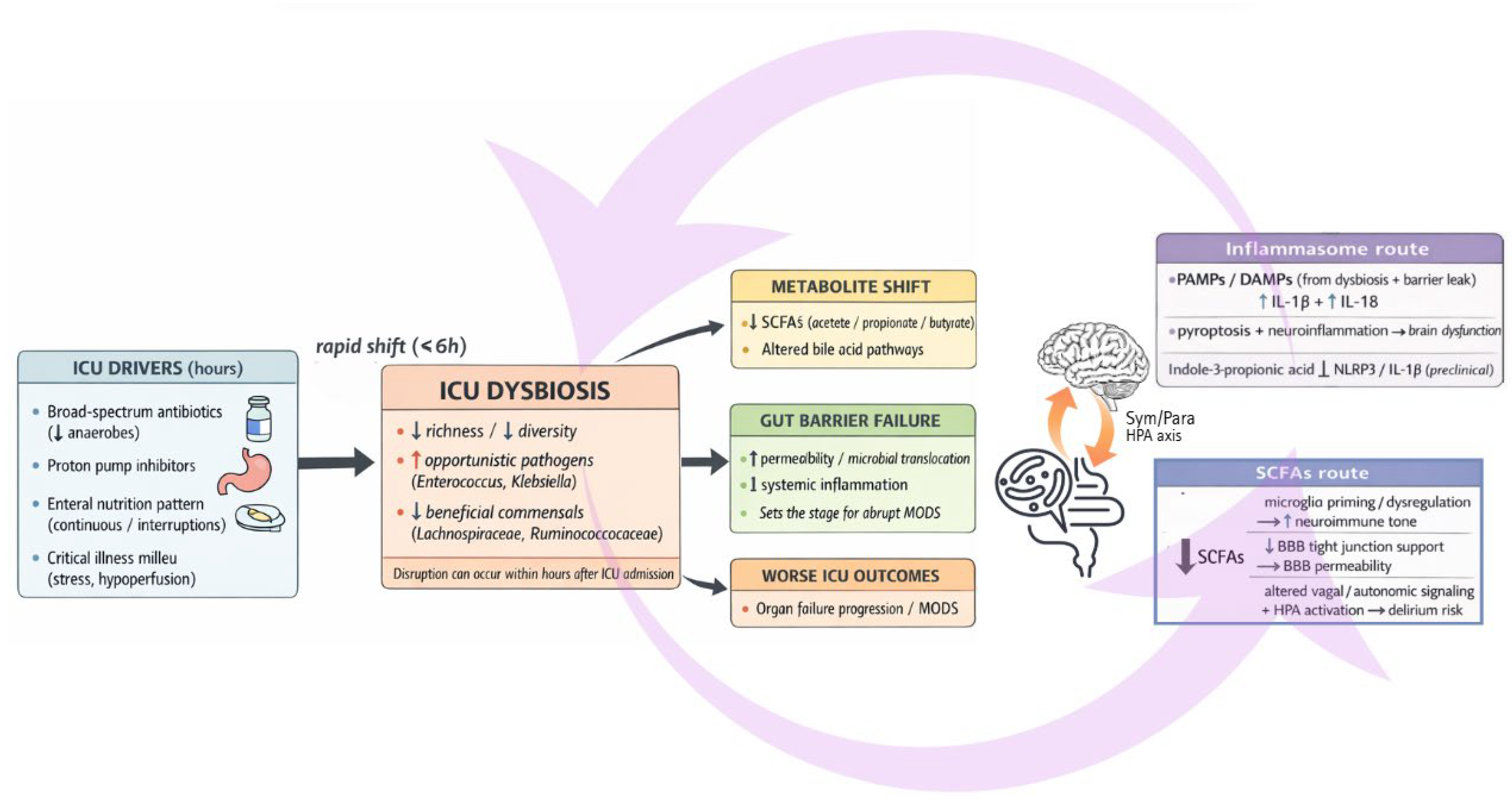
Figure 2.
Mechanistic links between feeding–fasting cycles, gut microbial metabolism, host signaling, and brain inflammation. Time-restricted feeding supports SCFA production, barrier integrity, immune tone, and circadian alignment. Excess fasting and refeeding can disrupt mucus, favor LPS/PAMP translocation, and promote neuroinflammation. Abbreviations: SCFAs, short-chain fatty acids; LPS, lipopolysaccharide; PAMPs, pathogen-associated molecular patterns; BBB, blood–brain barrier.
Figure 2.
Mechanistic links between feeding–fasting cycles, gut microbial metabolism, host signaling, and brain inflammation. Time-restricted feeding supports SCFA production, barrier integrity, immune tone, and circadian alignment. Excess fasting and refeeding can disrupt mucus, favor LPS/PAMP translocation, and promote neuroinflammation. Abbreviations: SCFAs, short-chain fatty acids; LPS, lipopolysaccharide; PAMPs, pathogen-associated molecular patterns; BBB, blood–brain barrier.
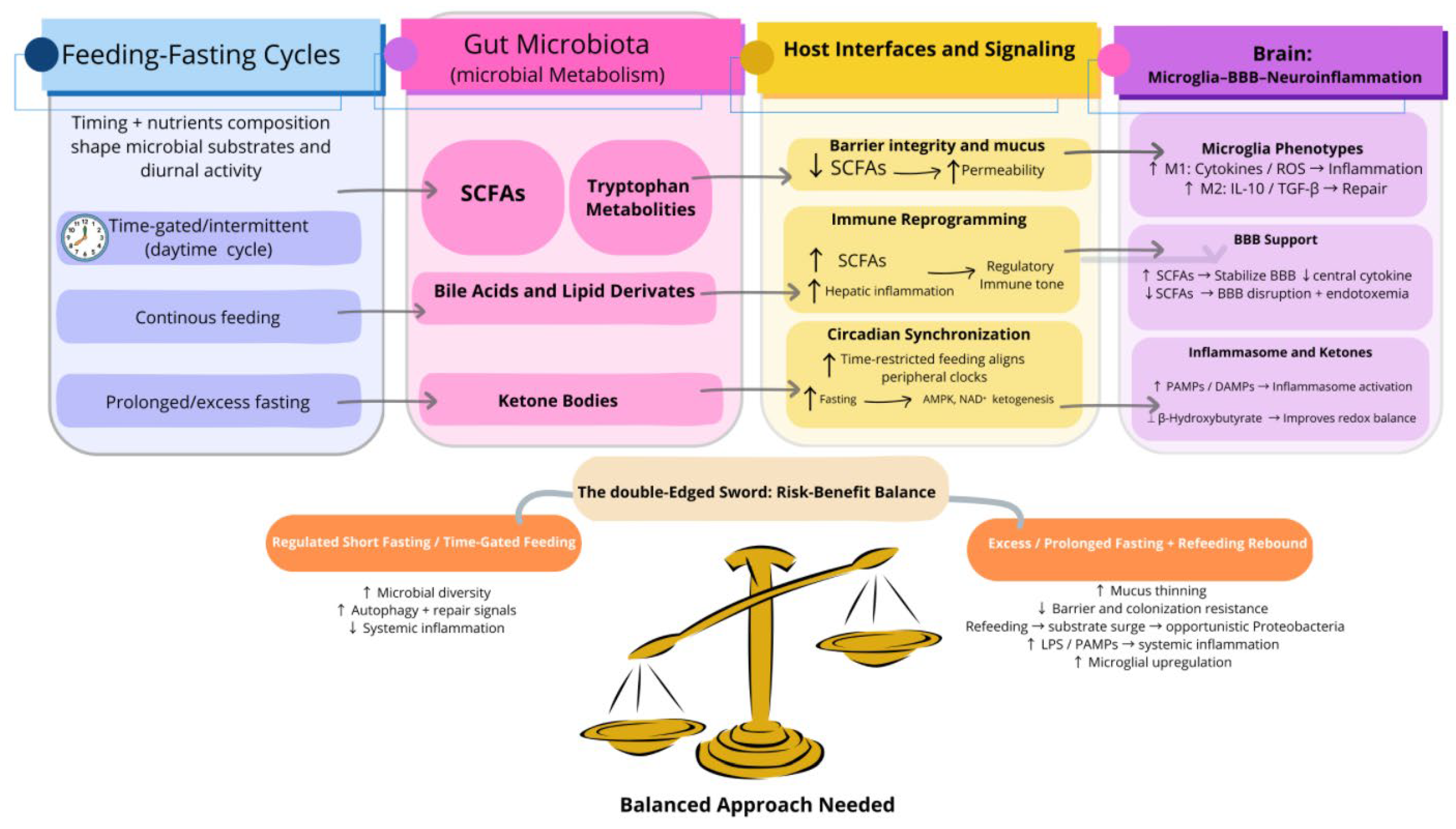
Figure 3.
Flow chart of study identification, screening and inclusion in the narrative review, classified by study type (preclinical versus clinical) and by intervention category. As this is a narrative review, counts are shown at inclusion; the search was not prospectively logged, so the diagram is not PRISMA-compliant.
Figure 3.
Flow chart of study identification, screening and inclusion in the narrative review, classified by study type (preclinical versus clinical) and by intervention category. As this is a narrative review, counts are shown at inclusion; the search was not prospectively logged, so the diagram is not PRISMA-compliant.
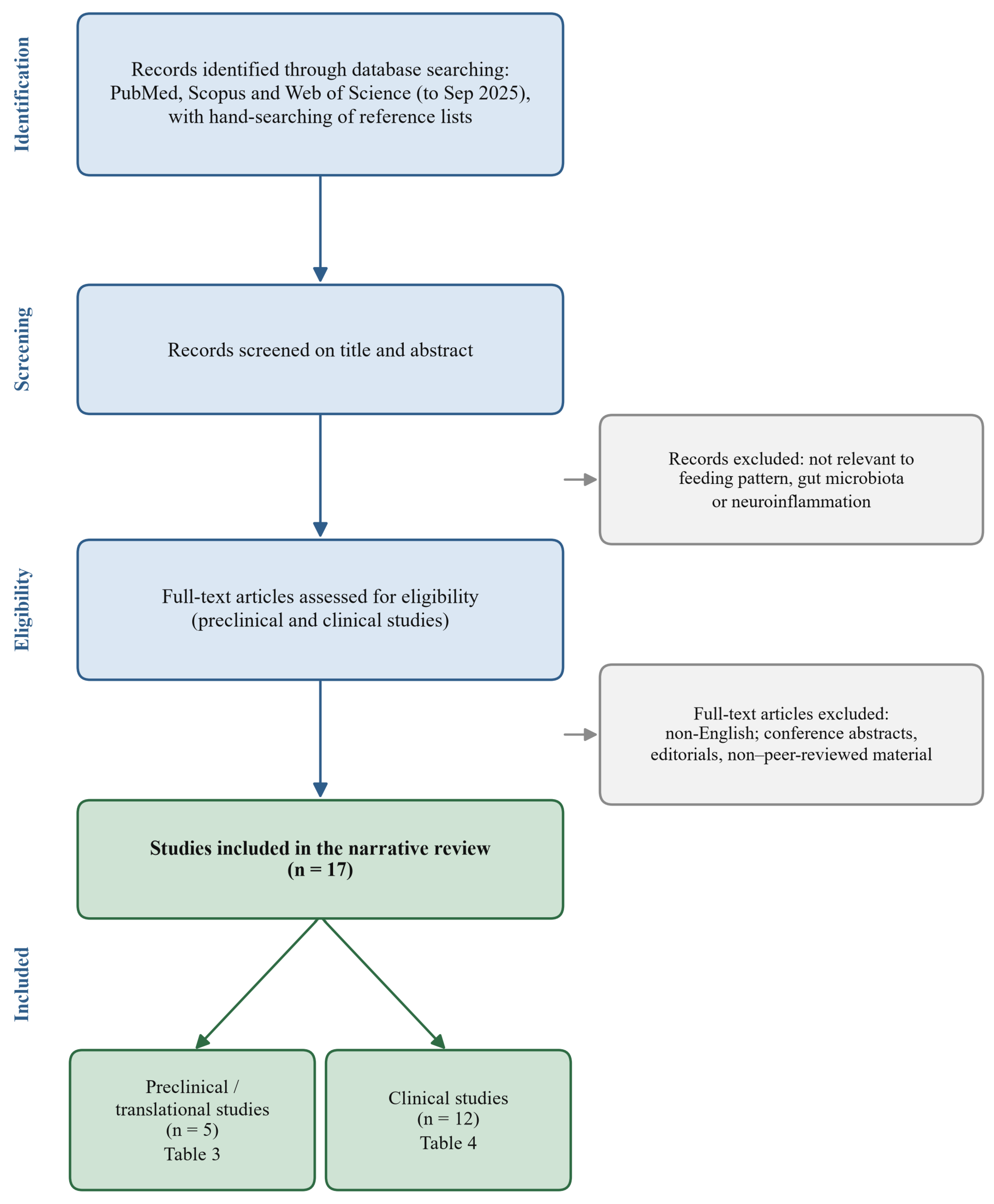
Figure 4.
Practical framework for transitioning from continuous to cyclic or intermittent enteral nutrition in critically ill patients. The figure outlines a stepwise approach: (1) assessment of readiness for cycling with predefined safety criteria (hemodynamic stability, lactate trends, tolerance, and glucose control); (2) selection of feeding pattern (daytime cyclic or intermittent/time-restricted enteral nutrition) while maintaining the same 24-h energy and protein targets; (3) pragmatic prescription of dose targets, formula, and delivery method; and (4) early bedside monitoring with prompt adjustment based on tolerance. A feedback loop links tolerance assessment to feeding strategy refinement, emphasizing safety-driven, individualized implementation.
Figure 4.
Practical framework for transitioning from continuous to cyclic or intermittent enteral nutrition in critically ill patients. The figure outlines a stepwise approach: (1) assessment of readiness for cycling with predefined safety criteria (hemodynamic stability, lactate trends, tolerance, and glucose control); (2) selection of feeding pattern (daytime cyclic or intermittent/time-restricted enteral nutrition) while maintaining the same 24-h energy and protein targets; (3) pragmatic prescription of dose targets, formula, and delivery method; and (4) early bedside monitoring with prompt adjustment based on tolerance. A feedback loop links tolerance assessment to feeding strategy refinement, emphasizing safety-driven, individualized implementation.
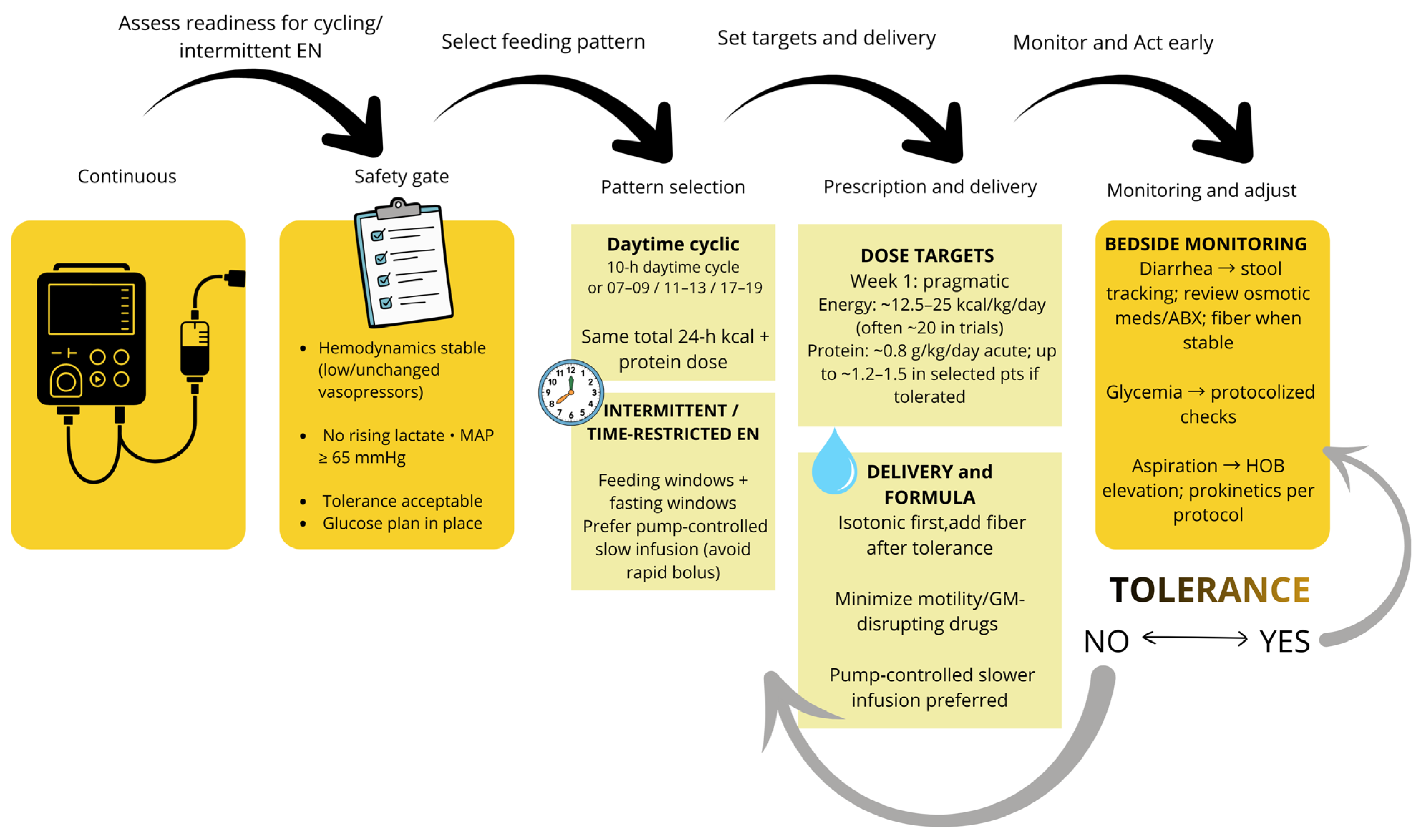

Table 1.
Key mechanistic pathways linking feeding-fasting cycles to gut-brain signaling.
| Pathway | Key Mediators | Fasting/TRF Effect | Excess Fasting Risk |
|---|---|---|---|
| Tryptophan-indole-kynurenine [52] | Indoles, kynurenines, AhR ligands | Preserved Treg/Th17 balance; neuroactive mediator production; barrier protection | Kynurenine shift may favor neurotoxic metabolites under prolonged deprivation |
| Bile acids and lipid metabolites [16,36] | Secondary bile acids, TMAO, FXR/TGR5 ligands | Restored microbial bile acid biotransformation; reduced hepatic inflammation and TMAO | Bile acid pool depletion with prolonged fast may impair FXR signaling |
| Barrier integrity and mucus [36,45] | Tight junction proteins, mucin, PAMPs | Restored SCFA-driven mucin synthesis; reduced LPS translocation and endotoxemia | Mucin degradation by host-substrate-scavenging taxa during nutrient scarcity |
| Circadian synchronization [53,54] | CLOCK, BMAL1, PER/CRY, AMPK, mTOR | Re-entrainment of peripheral clocks; ketogenesis; anti-inflammatory gene programs | Circadian misalignment if feeding window is poorly timed relative to light cycle |
| Vagal/autonomic anti-inflammatory reflex [37] | GM metabolites, vagal afferents, monoaminergic/GABAergic circuits | Preserved vagal tone; systemic and CNS anti-inflammatory reflex | Loss of vagal modulation with gut barrier disruption |
Abbreviations: AhR, aryl hydrocarbon receptor; AMPK, AMP-activated protein kinase; BMAL1, brain and muscle ARNT-like 1; CLOCK, circadian locomotor output cycles kaput; CNS, central nervous system; FXR, farnesoid X receptor; mTOR, mechanistic target of rapamycin; PAMPs, pathogen-associated molecular patterns; PER/CRY, Period and Cryptochrome clock genes; TGR5, Takeda G-protein receptor 5; Th17, T-helper 17 cells; TMAO, trimethylamine N-oxide; TRF, time-restricted feeding.
Table 2.
Operational definitions of feeding strategies used in studies investigating intermittent or time restricted nutrition in critical care and experimental models. Definitions are based on terminology reported in the cited literature.
Table 2.
Operational definitions of feeding strategies used in studies investigating intermittent or time restricted nutrition in critical care and experimental models. Definitions are based on terminology reported in the cited literature.
| Term | Operational definition | Clinical rationale | GM / Metabolic effect | Key evidence |
|---|---|---|---|---|
| Continuous feeding [64] | 24-hour pump infusion with no scheduled fasting interval | Standard of care; ensures consistent caloric and protein delivery; minimises underfeeding risk in the acute phase. | Disrupts diurnal feeding/fasting cycle, attenuating circadian SCFA oscillation; sustains insulin/IGF-1 signalling, suppressing ketone utilization. | [53,64] |
| Intermittent feeding [47] | Multiple discrete feeds per 24 h (eg 4–6 or six feeds) creating fasting windows between boluses | Creates periodic fasting intervals between feeds; shortens time to energy target compared with continuous feeding. | Associated with flatter urea:creatinine ratio trajectory, suggesting reduced catabolism; no consistent GM diversity benefit across trials; increased diarrhea in largest RCT (11% vs 4.7%); no muscle mass difference. | [10,43,58,65] |
| Cyclic / daily time-restricted feeding [66] | Nutrition delivered within a fixed daily window (eg 10 h feeding / 14 h fast or 12 h / 12 h) to create nightly fast | Delivers nutrition within a fixed daytime window to re-entrain peripheral circadian clocks and restore nocturnal fast. | Preserves diurnal microbial oscillation and circadian clock gene alignment (CLOCK, BMAL1); clinical GM data pending (DC-SCENIC results not yet published). | [53,54,66] |
| Bolus / postural intermittent feeding [67] | Large short-duration feeds delivered 3×/day often with right lateral tilt; creates long fasting intervals between feeds | Reduces aspiration risk via right lateral tilt; creates prolonged inter-meal fasting intervals. | Prolonged fasting intervals may activate mucin-scavenging taxa during nutrient scarcity; reduced aspiration indices vs continuous in one RCT (14.3% vs 61%); no significant GI intolerance difference in multicenter RCT. | [67,68] |
| Fasting-mimicking (12-h interruption) [44] | Complete macronutrient cessation for 12 h, shown to induce ketogenesis and hormonal changes in ICU pilots (β hydroxybutyrate ↑, after 4h - bilirubin ↑ and insulin/IGF-1↓after 12h) | Induces a metabolic fasting state to activate immunometabolic reprogramming; demonstrated safe and feasible in prolonged critical illness. | 12h interruption confirmed: increased β-hydroxybutyrate, bilirubin; decreased insulin requirements and IGF-1; BHB inhibits NLRP3 inflammasome signalling; no detectable change in blood autophagy markers in pilot. | [44,48] |
| Sequential feeding [16] | Start continuous, transition to intermittent once caloric targets (e.g. 80%) met, then oral feeding | Balances early caloric adequacy (continuous phase) with later metabolic cycling (intermittent phase); progressive weaning toward oral intake. | Genus-level GM shifts (increased Erysipelotrichaceae_UCG-003, Howardella); improved albumin and lymphocyte counts; no change in Shannon alpha-diversity at Day 7; no 90-day survival difference. | [16,69] |
| Early 72-h fasting [70] (observational definition) | No enteral/parenteral/oral nutrition for first 72 h after ICU admission (IV glucose possible) | Observational practice; not recommended for routine use by current guidelines; studied only in highly selected, severely ill patients. | Prolonged nutrient deprivation risks mucin-layer thinning and intestinal barrier dysfunction; refeeding after prolonged fast may trigger proteobacteria overgrowth; no mortality difference in propensity-matched cohort. | [64,70] |
Abbreviations: ICU, intensive care unit; IGF-1, insulin like growth factor 1; IV, intravenous.
Table 3.
Key preclinical and translational evidence supporting the biological rationale for intermittent or fasting-mimicking nutrition strategies in critical illness.
Table 3.
Key preclinical and translational evidence supporting the biological rationale for intermittent or fasting-mimicking nutrition strategies in critical illness.
| Model / Context | Intervention | Key Mechanistic Pathway | Main Findings / Interpretation |
|---|---|---|---|
| Mouse (general preclinical FMD/fasting studies) [46] | Short fasts or fasting-mimicking diets (FMD) | Ketogenesis / metabolic switch; autophagy induction; anti-inflammatory signaling; organ protection | Fasting in mice, or FMD, produced a metabolic switch (ketogenesis), induced tissue autophagy with organ-specific timing, improved metabolic profiles, and demonstrated organ-protective effects in several models. These findings support the rationale for the ICU fasting trial. |
| Rat (rodent sepsis models) [75] | Microbiota modulation / taxa enrichment | Microbiota → host immunity / organ protection | Enrichment of certain taxa (e.g., Erysipelotrichaceae UCG-003) attenuated sepsis-induced lung injury in rat models, providing causal microbiota-mediated organ protection |
| Newborn pig (neonatal protein metabolism models) [76,77] | Intermittent/bolus protein vs continuous infusion | Anabolic signaling (insulin + AA peaks); reduced protein catabolism; autophagy down-regulation | Bolus or intermittent protein delivery produced insulin/amino acid signaling peaks that enhanced muscle protein synthesis and lean mass compared to continuous infusion; intermittent feeding also reduced protein catabolism in pig models. |
| Murine tumour models (cancer) [78,79] | Fasting / FMD before or around chemotherapy | Differential stress resistance; metabolic reprogramming (glycolysis → ketones) | Several mouse studies have shown that fasting or FMD increases chemosensitivity and reduces tumor growth in some models, although the results were heterogeneous and sometimes neutral or harmful. |
| Mouse (organ-specific autophagy kinetics) [80,81] | Short fasting intervals | Tissue-specific autophagy induction timing | In mice, starvation-induced autophagy showed organ-dependent kinetics (e.g., early induction in muscle), indicating that blood markers may not accurately reflect tissue autophagy. |
Abbreviations: FMD, fasting-mimicking diet; AA, amino acids; ICU, intensive care unit; FM, fasting-mimicking protocol; SCFA, short-chain fatty acids.
Table 4.
Summary of randomized and non-randomized clinical studies in critically ill adults comparing intermittent/cyclic/fasting-mimicking enteral feeding versus continuous 24-hour feeding, reporting clinical, metabolic, and microbiome end-points. It is worth noting that, to date, only one study [16] has integrated microbiome end-points. Heterogeneous interventions, small sample sizes, and variable end-points limit pooled inference; pooled analyses reported increased diarrhea and modestly longer ICU stay with intermittent schedules in some RCTs, pilots demonstrate rapid metabolic fasting signals (↑β-hydroxybutyrate, ↓insulin), and secondary analyses suggest a flatter urea-to-creatinine catabolism trajectory with intermittent feeding, underscoring both potential benefit and risk and the need for adequately powered RCTs with integrated microbiome and patient-centred outcomes.
Table 4.
Summary of randomized and non-randomized clinical studies in critically ill adults comparing intermittent/cyclic/fasting-mimicking enteral feeding versus continuous 24-hour feeding, reporting clinical, metabolic, and microbiome end-points. It is worth noting that, to date, only one study [16] has integrated microbiome end-points. Heterogeneous interventions, small sample sizes, and variable end-points limit pooled inference; pooled analyses reported increased diarrhea and modestly longer ICU stay with intermittent schedules in some RCTs, pilots demonstrate rapid metabolic fasting signals (↑β-hydroxybutyrate, ↓insulin), and secondary analyses suggest a flatter urea-to-creatinine catabolism trajectory with intermittent feeding, underscoring both potential benefit and risk and the need for adequately powered RCTs with integrated microbiome and patient-centred outcomes.
| Study | Population | Intervention (comparison) | Primary endpoint(s) | Key results |
|---|---|---|---|---|
| Hrdy et al., 2025 — prospective randomized single-center trial [65] | Critically ill adults at high nutritional risk; randomized N≈294 (INT 146 vs CONT 148) | Intermittent EN (tolerance-driven) vs Continuous EN (18 h/day protocol) | Time to reach ≥80% energy target | Intermittent shortened time (p = 0.009); no protein-target difference (p = 0.129). No statistically significant difference in mortality (p = 0.18) |
| Sequential vs Continuous feeding RCT (Qingdao Univ) — microbiome trial - 2025 [16] | Critically ill ICU patients expected to need prolonged enteral feeding (>10 days); mixed diagnoses (brain disease, sepsis predominance); ITT/analyzed N = 134 | Sequential/intermittent feeding (three daily feeding windows after initial CF) vs continuous feeding | Primary: gut microbiota α-diversity (Shannon index) at day 7; secondary: taxonomic composition, metabolites, clinical markers | No difference in Shannon α-diversity at day 7. Sequential feeding altered genus-level composition (↑ Erysipelotrichaceae_UCG-003, Howardella), improved albumin/cholesterol and lymphocyte increases; safety and glycemic events similar. No significant difference on KM 90-day survival |
| DC-SCENIC — trial protocol -2024 NCT05627167 (completed Feb 2025) Final results not yet published [66] | Ventilated ICU adults initiated on invasive MV ≤24 h and expected MV ≥72 h (planned N=318) | Daily cyclic daytime enteral feeding (10-h window) vs continuous 24-h feeding | Primary: ΔSOFA at day 7; secondary: delivery/tolerance/metabolic and respiratory outcomes, 28-day mortality | Protocolized trial designed to test whether daytime cyclic (fasting-mimicking) feeding reduces organ failure; results pending |
| Panwar et al. — multicentre RCT (three-times-day postural feeding) 2024 [67] |
Mechanically ventilated adult ICU patients (N=120) |
Intermittent postural feeding 3×/day (right lateral tilt) vs standard continuous gastric feeding | GI intolerance incidence (vomiting/diarrhea/constipation); secondary: mortality, LOS, ventilator outcomes | No significant difference in GI intolerance; numerically lower but non-significant hospital mortality in intermittent group; study underpowered for mortality and other patient-centred end-points |
| Cardozo Júnior et al. — retrospective cohort (first 72 h fasting) - 2023 [70] | Medical ICU adults with ICU LOS ≥5 days (propensity matched cohorts n=93 vs 93) | No nutrition support for first 72 h vs any early nutrition (oral/EN/PN) in first 72 h | Hospital mortality; secondary: ICU mortality, LOS, duration MV, infections | After propensity matching, no difference in hospital or ICU mortality, 90-day survival, or other major secondary outcomes; suggests withholding nutrition for first 72 h may be safe in very severe patients but limited by observational design |
| Puthucheary — secondary analysis (UCR catabolism) [47] 2022 | Subset of UK ICU patients from multicenter trial (n≈121) with high illness severity | Intermittent feeding vs continuous feeding (same trial arms) | Urea:creatinine ratio (UCR) trajectory as marker of catabolism | Intermittent feeding associated with a significantly flatter UCR trajectory (coefficient −0.245, p=0.002), suggesting mitigation of catabolism; baseline imbalance and exploratory design limit causal inference |
| Ren et al. Single-center RCT – 2021 [69] | Critically ill ICU patients; N = 62 (SF 32 vs CF 30) | Sequential Feeding (early CF → intermittent circadian) vs Continuous Feeding | Mean blood glucose over 7 days (non-inferiority) | SF median 8.8 mmol/L vs CF 10.7 mmol/L (Z = −2.079; P = 0.019) |
| ICU-FM-1 pilot randomized crossover (fasting-mimicking) - 2020 [44] | Prolonged critically ill patients (n=70) screened around ICU day 6–8; requiring ongoing organ support | 12-hour feeding interval vs 12-hour nutrient interruption (crossover) | Metabolic fasting signals (bilirubin, insulin requirement, β-hydroxybutyrate), autophagy markers, short-term safety | 12-h nutrient interruption induced a metabolic fasting response: ↑ serum bilirubin, ↓ insulin requirement, ↑ BHB, ↓ IGF-1. Blood autophagy markers unchanged. Feasible; limited by crossover design and pilot size. Mortality at 7 days comparable between the 2groups. 90 daymortality was higher in the feeding-fasting group than in the fasting-feeding group (p = 0.003) |
| Mcnelly et al. — RCT 2020[43] | Mechanically ventilated ICU adults with multi-organ failure; expected prolonged ICU stay; N = 121 |
Intermittent bolus enteral feeding (6×/24 h) vs continuous 24-h pump feeding | Primary trial: rectus femoris muscle CSA change over 10 days; safety and nutrition delivery | No difference in muscle mass loss at 10 days. IF achieved higher protein/energy delivery (≥80%) but increased glucose variability; overall feasible and safe without functional benefit in early critical illness. No statistically significant difference in mortality. |
| Kadamani et al., 2014 — pseudo-randomised trial (Australian Crit Care) [85] | Mechanically ventilated ICU patients; N = 30 (CEN 15 vs BEN 15) | Continuous EN (CEN) vs Bolus EN (BEN) | Aspiration and GI complications (3 days) | No aspiration in either group; Constipation ↑ CEN 66.7% vs BEN 20% (P = 0.025) |
| MacLeod et al., 2007 — prospective RCT (trauma ICU) [86] | Critically ill trauma patients; N = 164 (INT 79 vs CONT 81) | Intermittent bolus q4h (30–60 min) vs Continuous drip | Time to reach goal volume & days at 100% goal (10 days) | Faster goal achievement (KM p = 0.01); Days 100% goal 4 vs 3 (p < 0.05). No statistically significant difference in mortality |
| Chen et al., 2006 — RCT [68] | Ventilated critically ill patients; N = 107 (INT 56 vs CONT 51) | Intermittent NG (4–6 boluses/day) vs Continuous NG feeding | Aspiration indices & gastric emptiness (Day 7); extubation (Day 21) | Aspiration on CXR: INT 14.3% vs CONT 61.0% (p = .000); Sputum glucose 23.2% vs 49.0% (p = .005); Extubation 60.7 vs 31.4% (p = .002) Higher intake with INT (p = .000); |
Abbreviations: BEN, bolus enteral nutrition; BHB, β-hydroxybutyrate; CF, continuous feeding; CEN, continuous enteral nutrition; CONT, continuous group; CSA, cross-sectional area; CXR, chest X-ray; ΔSOFA, change in Sequential Organ Failure Assessment score; EN, enteral nutrition; GI, gastrointestinal; ICU, intensive care unit; IGF-1, insulin-like growth factor 1; INT, intermittent feeding group; ITT, intention to treat; KM, Kaplan–Meier; LOS, length of stay; MV, mechanical ventilation; NG, nasogastric; NCT, National Clinical Trial identifier; PN, parenteral nutrition; RCT, randomized controlled trial; SF, sequential feeding; SOFA, Sequential Organ Failure Assessment; UCR, urea-to-creatinine ratio; N≈, approximate sample size;.
Table 5.
Neurorelevant ICU phenotypes as targets for feeding-timing and microbiome interventions.
| Phenotype | Key GM/Metabolic Link | Strength of Current Evidence | Priority End-points |
|---|---|---|---|
| Sepsis-associated encephalopathy | Dysbiosis and microbial metabolites mechanistically implicated in BBB disruption, cytokine release, and brain dysfunction [87] | Moderate (observational + mechanistic) | Delirium-free days, ΔSOFA, SCFA/LPS levels |
| Traumatic brain injury | Rapid post-TBI gut dysbiosis with bidirectional neuroimmune signaling; antibiotic confounding prominent [88] | Moderate (preclinical strong; clinical exploratory) | Neuroinflammation biomarkers (NfL, GFAP), GM diversity |
| Acute ischemic stroke / SAH | GM shifts influence secondary brain injury and edema; nutrition timing potentially relevant [89,90] | Low-moderate (exploratory) | Functional outcome (mRS), inflammatory markers |
| Post-cardiac arrest brain injury | Global cerebral ischemia; ketogenesis and gut permeability may modulate secondary injury [91] | Low (mechanistic rationale only) | Ketone levels, neurological recovery scores |
| Intracranial infection / encephalitis | Central infections activate systemic and CNS immune responses likely modified by gut barrier integrity and GM-derived immune signals; microbiome/metabolome markers may be valuable [92] | Low (hypothesis-generating) | GM diversity, barrier markers, cytokine panel |
| Acute delirium / encephalopathy of mixed etiology | Common neuroinflammatory ICU phenotype sensitive to circadian feeding patterns, SCFA/ketone shifts, and gut-brain immune modulation [93] | Low-moderate (observational) | Delirium-free days, CAM-ICU, circadian biomarkers |
| Prolonged disorders of consciousness / post-ICU cognitive impairment | Ongoing gut-brain dysregulation during ICU may link to long-term cognitive deficits [94] | Low (hypothesis-generating) | 90-day cognitive outcomes, GM/metabolome follow-up |
| ICU-acquired muscle atrophy / critical illness myopathy | Metabolic/inflammatory status shaped by feeding timing; feeding pattern affects protein anabolism [95] | Low-moderate (preclinical strong) | Muscle mass (ultrasound CSA), nitrogen balance |
Abbreviations: BBB, blood-brain barrier; CAM ICU, Confusion Assessment Method for the Intensive Care Unit; CNS, central nervous system; CSA, cross sectional area; GFAP, glial fibrillary acidic protein; GM, gut microbiota; ICU, intensive care unit; LPS, lipopolysaccharide; mRS, modified Rankin Scale; NfL, neurofilament light chain; SAH, subarachnoid hemorrhage; SCFA, short chain fatty acids; SOFA, Sequential Organ Failure Assessment;.
Table 6.
Checklist to implement intermittent nutrition. Note: The checklist synthesizes practical thresholds and should be interpreted within the overall clinical context and reassessed before each progression of fasting duration.
Table 6.
Checklist to implement intermittent nutrition. Note: The checklist synthesizes practical thresholds and should be interpreted within the overall clinical context and reassessed before each progression of fasting duration.
| Domain | Criterion | Operational Threshold | Rationale |
|---|---|---|---|
| Hemodynamic | Vasopressor support | Stable or decreasing for ≥12–24 h; norepinephrine ≤ 0.05 µg/kg/min without recent escalation | Indicates restored macrocirculatory flow and oxygen delivery |
| Serum lactate | ≤ 2 mmol/L or consistently trending downward | Reflects resolution of tissue hypoxia and adequate perfusion | |
| Mean arterial pressure (MAP) | ≥ 65 mmHg (with stable APP ≥ 60 mmHg if available) | Surrogate of splanchnic perfusion and intestinal viability | |
| Urine output | ≥ 0.5 mL/kg/h for ≥6 h | Reflects renal perfusion and overall circulatory stability | |
| Absence of signs of hypoperfusion | Warm extremities, normal capillary refill, decreasing vasopressor index | Clinical indicators of restored tissue flow | |
| Gastrointestinal | Enteric sounds | Present in ≥2 quadrants | Suggests preserved motility and vagal activation |
| Gastric residual volume (GRV) | ≤ 500 mL / 6 h when monitored; no vomiting or distension | Acceptable tolerance threshold per ESICM/ASPEN guidelines [105,106] | |
| Bolus or intermittent trial | 50–100 mL bolus tolerated without regurgitation or discomfort | Confirms readiness for cyclic/bolus administration | |
| Abdominal perfusion pressure (APP) | ≥ 60 mmHg (if monitored) | Ensures gut mucosal perfusion before fasting intervals | |
| Absence of bowel ischemia or ileus | No new distension, pain, or high residuals | Prevents enteral intolerance during fasting windows | |
| Metabolic | Glycemic control | 100–160 mg/dL (5.5–8.8 mmol/L) without severe hypoglycemia in prior 12 h | Ensures metabolic flexibility before fasting initiation |
| Acid–base status | pH ≥ 7.35, base deficit improving or ≤ 4 mmol/L | Excludes ongoing anaerobic metabolism | |
| β-hydroxybutyrate | < 2 mmol/L unless intentional in fasting-mimicking regimen | Avoids uncontrolled ketosis or substrate deficit | |
| Electrolytes (K⁺, Mg²⁺, P ) | Within normal range and stable for ≥ 12 h | Prevents arrhythmias or refeeding-like instability | |
| Inflammatory and nutritional trend | CRP decreasing; nitrogen balance ≥ –5 g/day if available | Reflects systemic recovery and tolerance potential |
Abbreviations: APP, abdominal perfusion pressure; CRP, C-reactive protein; GRV, gastric residual volume; MAP, mean arterial pressure.
Table 7.
Clinical monitoring checklist for intermittent or fasting-mimicking feeding in the ICU. This table summarizes the key domains for bedside monitoring once intermittent feeding is initiated.
Table 7.
Clinical monitoring checklist for intermittent or fasting-mimicking feeding in the ICU. This table summarizes the key domains for bedside monitoring once intermittent feeding is initiated.
| Domain | Key checks | Practical notes |
|---|---|---|
| Diarrhea |
|
Replace hyperosmolar formulas; consider soluble fiber or peptide-based formulas; evaluate need for slow-infusion restart after fasting windows. |
| Glycemia |
|
Re-evaluate insulin requirements after each cycle; monitor for rebound hyperglycemia upon refeeding. |
| General tolerance |
|
Any deterioration should prompt return to continuous feeding and reassessment of stability criteria. |
Disclaimer/Publisher’s Note: The statements, opinions and data contained in all publications are solely those of the individual author(s) and contributor(s) and not of MDPI and/or the editor(s). MDPI and/or the editor(s) disclaim responsibility for any injury to people or property resulting from any ideas, methods, instructions or products referred to in the content. |
© 2026 by the authors. Licensee MDPI, Basel, Switzerland. This article is an open access article distributed under the terms and conditions of the Creative Commons Attribution (CC BY) license (http://creativecommons.org/licenses/by/4.0/).
Copyright: This open access article is published under a Creative Commons CC BY 4.0 license, which permit the free download, distribution, and reuse, provided that the author and preprint are cited in any reuse.


