
Submitted:
22 July 2026
Posted:
24 July 2026
You are already at the latest version
Abstract
Project CIPACTLI (Compact Integrated Polymer Amphibian for Coastal and Littoral Investigation) evaluates the operational limits of rare-earth magnetic connections in a cannon-inserted amphibious robotic chassis designed for search-and-rescue (SAR) and environmental monitoring. Two prototype iterations were systematically compared across movement speed, structural loading, and ballistic survivability under combustion-cannon deployment. The first prototype employed a tensegrity-inspired, serpentine soft robot with segmented inflatable buoyancy modules connected via magnetic couplings. A 2³ factorial design evaluated three factors: core tendon material (nylon versus steel), terrain (terrestrial versus aquatic), and magnet type (flexible magnetic tape versus rare-earth neodymium N52 magnets). Results showed no significant effect of magnet type on movement speed (p = 0.507), with tendon material dominating performance (partial η² = 0.637). Both magnet types achieved 100% survival under impulsive cannon launch, indicating that chassis compliance attenuates peak shock below the brittle-fracture threshold of neodymium magnets. The second prototype eliminated magnetic couplings and inflatable actuators in favor of a monolithic PLA body with integrated buoyancy. This design demonstrated a 6.96-fold increase in compressive load capacity (p = 0.001) and equivalent ballistic survivability, though with a 24.9% reduction in aquatic movement speed. Tethered deployment trials validated mechanical viability for maritime SAR applications. These findings demonstrate that rare-earth neodymium magnets confer no performance advantage over flexible magnetic tape within the tested operational envelope, and that structural integration—not magnet grade—governs resilience under impulsive loading. The results counsel against blanket substitution of rare-earth magnets into impact robotics without task-specific justification, supporting expanded evaluation of polymer-bonded composites and ferrite-bonded tapes as lower-criticality alternatives.
Keywords:
amphibious robotics
; ballistic deployment
; impulsive loading survivability
; search-and-rescue (SAR)
; rare-earth magnets
1. Introduction
1.1. Overview
Rapid littoral deployment for emergency response, search and rescue (SAR), and environmental monitoring demanded novel movement and insertion modalities [1,2]. Project CIPACTLI (Compact Integrated Polymer Amphibian for Coastal and Littoral Investigation) addressed these demands by integrating a flexible amphibious chassis with inflatable buoyancy devices for handheld ballistic launch. High-velocity deployment necessitated strict structural survival during launch [3]. To safeguard payloads, both chassis iterations utilized a central waterproof polymer core tube that isolated internal electronics from mechanical shock and hydrodynamic pressure [1]. Extreme launch accelerations further required robust coupling mechanisms to maintain modular structural stability [4,5,6,7,8,9]. Although rare-earth permanent magnets offered advantageous force-to-mass ratios for modular architectures, prior literature inadequately quantified their dynamic limits under high-impact loads in amphibious environments [10,11]. Consequently, this study evaluated the operational limits and structural resilience of magnetic couplings across two uninstrumented prototype iterations, testing their ability to endure ballistic insertion impulses without structural failure or premature decoupling [2].
1.2. Background
1.2.1. Prior Work
Emergency operations, including SAR, deployed various robotic systems. Traditional maritime SAR relied on pneumatic line launchers—ballistic systems that projected a flotation buoy tethering a trailing recovery line to rescue overboard sailors or tow stranded vessels [1,2,12]. Ballistically launching a buoyant, amphibious robot enabled active post-launch propulsion and steering toward victims in turbulent or flooded waters. Consequently, adapting a tethered amphibious robotic chassis for ballistic deployment enhanced maritime and littoral SAR capabilities [4,5,6,7,8,9]. Conventional line launchers, however, lacked design compatibility with tethered robotic payloads.
1.2.2. Line Launchers
Line-throwing apparatuses (LTAs) represented a mature technology for maritime SAR, emergency operations, and multi-domain applications [1,2,12]. Industrial LTAs deployed a ballistic projectile tethered to a payload line, primarily utilizing pneumatic actuation, alongside combustion, pyrotechnic, and mechanical propulsion mechanisms. Beyond maritime SAR, these systems enabled forestry canopy access and structural cable routing [1,2,12]. Pneumatic launchers converted compressed gas potential energy into kinetic energy via thermodynamic expansion inside a piston-cylinder mechanism. In Unmanned Aerial Vehicle (UAV) launch architectures, engineers occasionally inverted this topology: the aircraft fuselage functioned as a translating piston sliding coaxially over a fixed launch tube cylinder. First-principles energy-conservation models predicted terminal launch velocities within a 10% error margin compared to Inertial Measurement Unit (IMU) empirical data [3,13]. Although mechanical launch systems enabled UAV deployment, engineers also deployed them in non-aerial domains.
1.2.3. Rapid Robot Deployment
UAV deployment represented only one domain of rapid robotic integration [3,13]. Modern robotic engineering expanded this scope into ground, subterranean, and extreme aquatic environments where operational readiness proved critical. In terrestrial applications, Deep Reinforcement Learning (DRL) revolutionized legged robot deployment; model-free, distributed training pipelines enabled quadrupedal platforms to generalize across unpredictable, high-friction debris terrains without precise prior environmental models [14]. Concurrently, rapid deployment paradigms for energy infrastructure construction on Earth and the lunar surface utilized semi-autonomous mobile robotic manipulators for end-to-end discrete assembly, ensuring structurally sound installation in hazardous zones under strict spatiotemporal constraints [4,5,6,7,8,9,14,15]. Within sub-surface and extreme aquatic environments, deployment strategies shifted toward tele-operated and semi-autonomous benthic resident robots, bypassing traditional ship-dependent logistical delays to execute rapid deep-sea transects and seafloor monitoring [16,17,18]. Furthermore, addressing fragile underwater ecologies, recent advancements introduced highly maneuverable, non-contact underwater vehicles employing real-time path planning and minimal-turbulence thruster control to execute near-seabed operations without destructive sediment resuspension or physical contact with delicate coral substrates [19,20,21,22,23,24]. However, rescue robotics frequently operated under extreme conditions, including severe mechanical impacts [10,11,25].
1.2.4. Rapid Robot Deployment
Researchers reported a specific magneto-mechanical response of rare earths in sintered Nd-Fe-B (Nd2Fe14B) alloys. A critical trade-off between macroscopic brittleness and strain-rate sensitivity governed these alloys under dynamic impact and shock compression. Despite superior magnetic performance, low fracture toughness rendered these sintered intermetallics highly susceptible to catastrophic failure under impulsive loading [10,11,26]. At dynamic strain rates, Nd-Fe-B exhibited pronounced strain-rate sensitivity. Researchers modeled damage evolution and crack propagation in this regime using crack spacing, Weibull distribution statistics, and modified Zhu-Wang-Tang (ZWT) non-linear viscoelastic constitutive equations [27]. Engineers utilized polymer-bonded magnets (PBMs) to mitigate impact-induced brittle fracture. However, increasing the viscoelastic matrix volume fraction to enhance impact attenuation and structural damping diluted the active magnetic filler, concurrently degrading the maximum energy product [28]. Thus, flexible, low-cost magnets prevented stress- and shock-induced damage [10,11,28].
1.2.5. Potential Integration
Deployment latency and environmental obstacles limited robotic efficacy in time-critical urban and maritime search and rescue (SAR) operations. Ballistically launched robotic platforms propelled stowed payloads into disaster zones from safe standoff distances via compressed gas, pneumatic systems, or pyrotechnic charges, bypassing conventional transport bottlenecks [16]. Upon impact or insertion, these mechanisms morphed structurally or aerodynamically, transitioning into maneuverable crawlers or swimmers that traversed dense rubble, flooded voids, and littoral boundaries [24]. Integrated physical tethers bypassed severe radio frequency (RF) attenuation in concrete and aquatic environments while supplying continuous power that surpassed onboard lithium-polymer battery limits [19,20,21,22,23]. These tethers also enabled mechanical asset recovery and established tactile guidelines to trapped victims. Combining the non-line-of-sight infiltration of ballistic line throwers with the cross-domain mobility of waterproofed amphibious chassis expanded rapid-response envelopes, reduced personnel hazard exposure, and sustained high-bandwidth sensory telemetry for real-time triage [1,2,12]. Finally, replacing brittle rare-earth materials with resilient alternatives enhanced structural reliability in hostile field environments [10,11,28].
2. Materials and Methods
2.1. Summary
Project CIPACTLI featured a soft robotic chassis engineered for multi-modal movement across terrestrial and aquatic environments. The platform synthesized principles from amphibious soft robotics that leveraged pneumatic actuation and buoyancy modulation for hybrid navigation [13,23]. The chassis integrated a segmented body joined by a flexible plastic conduit enclosing embedded electronics, while intermediate tensegrity bead structures coupled the anterior and posterior modules. This architecture extended contemporary paradigms in soft amphibious robotics that utilized inflatable buoyancy mechanisms and compliant structures for terrain adaptation [19,23]. High-velocity ballistic launch via a combustion-driven cannon, aerial free-fall, or manual deployment dictated a structural design optimizing compliance against impact forces. Tensegrity landers and impact-resistant soft platforms informed this deployment methodology, establishing that compliant frameworks attenuate critical kinetic energy during high-velocity impacts [19,20,21,22,23,24]. This study evaluated two iterative prototypes through systematic movement, structural loading, and impact-resistance experiments to determine optimal design parameters for cannon-deployable, amphibious robotic systems.
2.2. First Prototype
2.2.1. First Prototype Design
We fabricated a tensegrity-inspired, serpentine soft robot prototype, 3D-printing all structural polylactic acid (PLA) components on a Bambu Labs A1 Mini fused deposition modeling printer using 15% infill and a 0.2 mm layer height. We selected a compliant, elongated geometry to withstand severe transient accelerations during ballistic launch and aquatic impact. While rigid chassis concentrate stresses at discrete joints and risk catastrophic fracture, this flexible architecture distributed impulsive loads across the entire structure, minimizing localized peak stress. We derived this design from prior soft and tensegrity robotic systems [4,5,6,7,8,9,15].
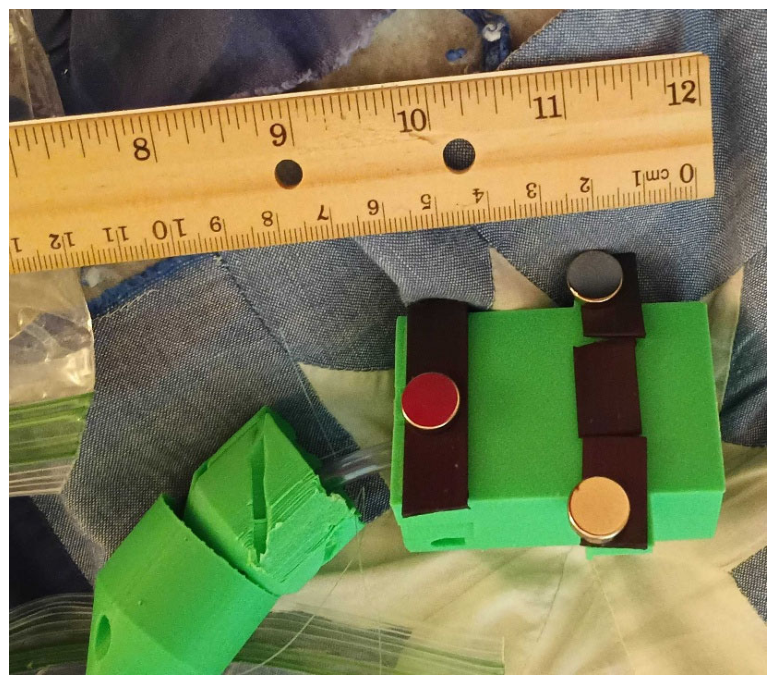
A continuous central tendon coupled multiple discrete segments in series [5,6,7,8,9,15]. We evaluated two tendon materials: nylon monofilament line (KastKing, NY, USA) and nickel-coated 36-gauge steel electric guitar string (Ernie Ball Inc., Coachella, CA, USA). The nylon- and steel-tendon prototypes weighed 104 g and 112 g, respectively. As Figure 1 illustrates, an inflatable airbag within each segment functioned as both a movement actuator and a buoyancy module. Magnetic couplings attached these lateral inflatable legs to anterior and posterior segments, enabling rapid field assembly. We tested commercial flexible magnetic tape (3M, Maplewood, MN, USA) and N52 neodymium disc magnets (10 mm diameter, 2 mm thickness, ~2.7 g each); ten N52 magnets added 27 g to each prototype.
Figure 1.
The first robot prototype with nylon filament, with inflatable bags.
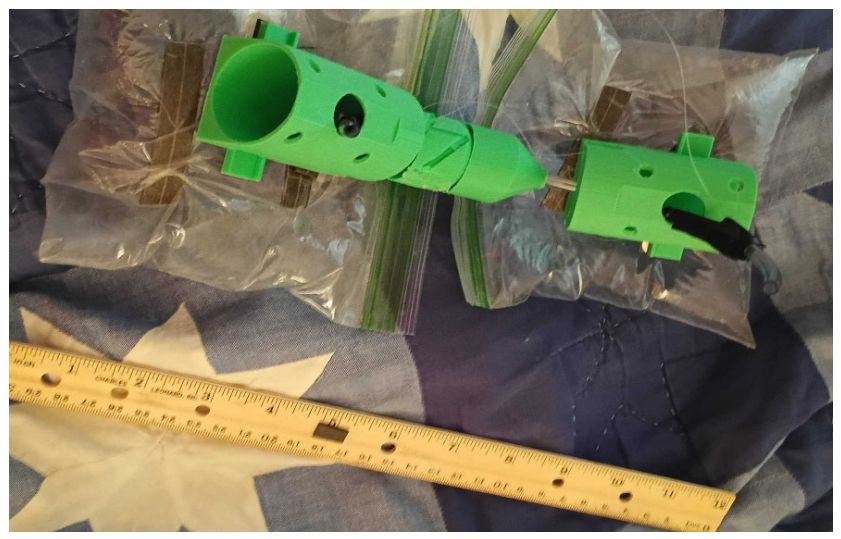
Figure 2.
N52 magnets attached to the underside of robot prototype.
A centralized, waterproof plastic core tube isolated onboard electronics from mechanical shock and hydrodynamic pressure [4]. The first prototype embodied a 23 factorial experimental design with three independent design cases, each at two levels, yielding eight total configurations.
2.2.2. Case A: Movement Speed Analysis
The testing evaluated terrestrial (flat concrete) and aquatic (water surface) movement speeds across an eight-configuration factorial design. We manipulated three factors: core tendon material (nylon monofilament vs. steel guitar string), substrate (land vs. water), and magnetic coupling type (flexible magnetic tape vs. N52 neodymium magnets). A pool-edge pulley system delivered a constant gravitational driving force via a 210 g mass dropped from a 65 cm height, using nylon monofilament to achieve an approximate mechanical advantage of 0.33. The robot traversed a fixed 194 cm path (Figure 3). We recorded transit times using a 240 fps smartphone camera and computed velocity as v = Δx/Δt in m/s. We conducted three trials per configuration on each substrate, adhering to established soft-robot kinematic characterization protocols [13,23].
2.2.3. Case B: Structural Loading Test
In Case B, we evaluated static load-bearing capacity across core tendon materials, comparing nylon against nickel-coated steel electric guitar strings while holding platform material (concrete) and coupling interface (magnetic tape) constant. We applied a centered compressive load via a flat plate, incrementing mass at 60-second intervals until catastrophic collapse--defined as tendon network component dislocation or gross structural failure (buckling, fracture, or collapse). We conducted three trials per material and recorded the collapse load (kg). This procedure followed established structural characterization protocols for soft robotic architectures [4,5,6,7,8,9,10].
2.2.4. Case C: Magnet Strength Under Ballistic Stress
In Case C, we evaluated magnetic coupling integrity under impulsive launch dynamics. To eliminate operator variance, we mounted a hair-spray combustion cannon (Quarter Mile Cannons, Laredo, TX, USA) at a 45-degree inclination, 1 m from the pool edge, and loaded the chassis into the bore. We verified shot velocity and kinetic energy (consistently 90.2 ± 1.1 J with 59 g test projectile) using a calibrated ballistic chronograph.
As illustrated in Figure 4, we launched the robot at a 45-degree angle into a chlorinated pool to compare flexible magnetic tape against rare-earth neodymium N52 magnets. We controlled all other parameters, including nylon tendons, launch angle, and input energy. We recorded structural outcome as binary—success (1) for complete segment and leg retention, or failure (0) for any dislocation—and noted post-impact floating orientation across three trials per magnet type. Impulsive launch testing represents an established method in tensegrity robotics for assessing structural integrity and payload protection [4,5,6,7,8,9,10,15].
2.3. Second Prototype
2.3.1. Second Prototype Design
As shown in Figure 5, the second prototype executed a deliberate design pivot, eliminating both magnetic couplings and inflatable air bags in favor of an integrated, monolithic flexible body. A Bambu Labs A1 Mini additive manufacturing system fabricated the structure using 15% infill PLA at a 0.2 mm layer height. Nylon monofilament exclusively provided tendon actuation. The revised architecture retained natural buoyancy through its hollow, compliant geometry, which obviated auxiliary flotation modules [9,15]. Weighing 53 g, this simplified design addressed two primary objectives: removing detachable magnetic joints eliminated a critical failure mode under ballistic stress, while embedding buoyancy directly into the structural material reduced part count, assembly time, and subsystem failure probability. Finally, the prototype retained a serpentine, tensegrity-inspired morphology to maintain optimal shock distribution [19,20,21,22].
2.3.2. Second Prototype Comparison
The same test battery (Cases A, B, and C) evaluated the second prototype for direct within-study comparison. The identical pulley apparatus (210 g mass, 65 cm drop, 194 cm traverse, 240 fps video) measured movement speed. The same progressive compressive protocol governed structural loading. Ballistic stress testing reused the same cannon, launch angle, and pool. The best-performing first-prototype configuration benchmarked each case. This paired-comparison approach isolated the design revision effect and controlled test-environment variability.
2.3.3. Case D: Tethered Deployment Test
Case D introduced a tethered deployment evaluation specific to the second prototype. The setup mirrored Case C, but attached a buoyant polypropylene (PP) utility rope to the anterior segment that trailed the robot during flight and water entry [19,20,21,22]. This simulated maritime search-and-rescue operations where the robot acts as a steerable, tethered payload, using the tether as a mechanical lifeline and communications conduit [1,2,12]. Testing comprised two conditions with six repetitions each: (i) launch without tether (replicating Case C) and (ii) launch with tether. A binary pass/fail metric evaluated outcomes: pass required structural integrity and secure tether attachment; fail denoted any separation, detachment, or deformation that prevented subsequent operation. Twelve total trials yielded a preliminary reliability estimate.
2.4. Statistical Analysis
For Case A (movement speed), a full three-way factorial ANOVA evaluated the main effects and interactions of tendon material, terrain speed, and magnet type, mirroring established robotic factorial frameworks where coupled material-geometric interactions dominate performance [25]. The underlying model followed in Equation (1):
Yᵢⱼₖ = μ + αᵢ + βⱼ + γₖ + (αβ)ᵢⱼ + (αγ)ᵢₖ + (βγ)ⱼₖ + (αβγ)ᵢⱼₖ + εᵢⱼₖ
Data screening via Shapiro-Wilk and Levene’s tests dictated log-transformations or Aligned Rank Transform ANOVAs upon assumption violations. Tukey’s HSD post-hoc tests resolved significant interactions (p > 0.05) with partial η2 quantifying effect sizes. Although three replicates per configuration fell below the statistical threshold (power = 0.80, f=0.25, α = 0.05), the ANOVA framework maintained analytical validity for this 23 structure [29].
For Case B (structural loading), a Mann-Whitney U test compared collapse loads between nylon and steel tendon groups. This non-parametric approach mitigated sensitivity to skewness, outliers, and stochastic failure modes inherent to soft robotic structures [30,31]. The null hypothesis assumed identical load distributions against a two-tailed alternative. Rank-biserial correlation (rᵣᵇ) or Cliff’s delta measured effect size. Despite exploratory sample constraints (N = 3 per group), the Mann-Whitney U test provided a methodologically sound evaluation [29,30,31].
For Case C (magnetic survival), Fisher’s Exact Test evaluated the 2 x 2 contingency table (magnet type vs. survival), as low sample counts (N = 3, two per type) violated Chi-square expected-frequency assumptions. Cramer’s V quantified association strength, while odds ratios with 95% confidence intervals established relative survival likelihoods [29,30,31].
For Case D (tethered deployment), we descriptively summarized binary outcomes and reported success proportions per condition, omitting formal inferential testing due to the limited sample size (n = 6 per condition). We deployed a 3 m, buoyant, three-strand twisted PP utility line. Although this PP line represented the lower bound of maritime rescue specifications, it provided a suitable testing baseline; enduring repeated launches and impacts implied that higher-spec materials would also perform reliably. Matching standard rescue line protocols, we selected a bright yellow line for high visibility [1,2,12].
2.5. Experimental Hypotheses
Two principal hypotheses guided this investigation. First, rare-earth neodymium N52 disc magnets outperformed flexible magnetic tape across all initial prototype tests. Specifically, rare-earth magnets yielded higher movement speeds in Case A (via stronger coupling between bags and segments), achieved equivalent performance in Case B (where magnet type remained constant), and demonstrated higher survival rates in Case C (by providing greater retention force under impulsive loading). The superior magnetic energy documented in rare-earth magnets grounded this expectation [10,11].
It was hypothesized that the second prototype would match or exceed the highest-performing first-prototype configuration across all test cases. Integrating buoyancy directly into the monolithic material and removing detachable magnetic joints—a critical ballistic failure mode—improved structural reliability during cannon launch (Case C), maintained or increased movement velocity (Case A), and sustained equal or superior load-bearing capacity (Case B). Eliminating inflatable bladders and magnetic couplings reduced mass and part count, which increased the force-to-mass ratio during movement and minimized impact failure modes [9,15]. All supplemental information, computer models, and code is available in the appropriate repository.
3. Results
3.1. Organization
The experimental and statistical results are organized by prototypes. The first prototype was tested undergoing Case A (movement speed), Case B (structural loading), and Case C (ballistic impact survival). The second prototype was tested with the same tests as the first prototype, as well as Case D (tethered deployment testing). Following this, the major results were summarized.
3.2. First Prototype Optimization Results
3.2.1. Case A Results
Movement speed was evaluated across all eight factorial configurations of the first prototype, with three replicates per configuration. Speed was computed as v = Δx/Δt, where Δx = 1.94 m and Δt was measured from 240 fps high-speed video. Table 1 presents the mean speeds for each configuration.
A three-way ANOVA on movement speed (m/s) identified tendon material as the primary driver of performance (F(1,16) = 33.94, p < 0.001, partial η2 = 0.637), with steel strings outperforming nylon monofilament across all conditions. Terrain also significantly altered speed (F(1,16) = 7.80, p = 0.013, partial η2 = 0.146), as water traversal surpassed land. Magnet type exhibited no main effect (F(1,16) = 0.46, p = 0.507, partial η2 = 0.022), and no interaction terms achieved significance (all p > 0.22). The Rare Earth + Steel + Water setup yielded the highest mean speed (1.440 m/s), though steel tendons consistently boosted performance regardless of magnet selection.
Shapiro-Wilk tests confirmed normality for seven of the eight experimental cells, with only Magnetic Tape + Steel + Land violating the assumption (W = 0.750, p < 0.001). Low sample size (n = 3 per cell) limited test power. Levene’s test confirmed homoscedasticity (W = 1.66, p = 0.189). Therefore, the analysis retained the original untransformed scale.
3.2.2. Case B Results
Static compressive loading to catastrophic collapse was compared between nylon and steel core tendons, with all other variables held constant (magnetic tape coupling, concrete platform). Table 2 summarizes the outcomes.
A Mann-Whitney U test comparing tendon group collapse loads yielded U = 0.0, p = 0.100. All three steel values exceeded the nylon values, producing perfect rank separation (rank-biserial correlation r_rb = 1.00, Cliff’s delta = -1.00). Steel increased mean load by 18.0 g (6.2%). With n = 3 per group, small sample constraints underpowered the exploratory analysis, masking the effect in the non-significant p-value. A Welch’s t-test on identical data yielded t(2.15) = -5.30, p = 0.019, Cohen’s d = 4.32.
3.2.3. Case C Results
Ballistic launch survival was evaluated for both magnet types under identical launch conditions (nylon tendons, 45° launch angle, combustion cannon). Table 3 presents the binary outcomes.
Fisher’s Exact Test on the 2 × 2 contingency table yielded an undefined odds ratio because zero failures occurred across both cohorts (p = 1.000, Cramér’s V = 0.000). Universal structural success across all six launches precluded statistical differentiation between magnet configurations. Both flexible magnetic tape and rare-earth neodymium N52 disc magnets survived cannon insertion without decoupling or structural failure under the evaluated conditions.
3.3. Second Prototype Optimization Results
3.3.1. Case A2 Results
The second prototype was tested under identical movement conditions (210 g mass, 65 cm drop, 194 cm traverse) and compared against the best-performing first-prototype configuration (Rare Earth + Steel). Table 4 presents the results.
A paired t-test comparing land and water speeds for the second prototype showed no significant terrain effect (t(2) = 2.71, p = 0.114). One-sample t-tests against the optimal first-prototype benchmarks demonstrated equivalent land performance (t(2) = -1.69, p = 0.234), but significantly degraded water speed compared to the 1.440 m/s baseline (t(2) = -12.12, p = 0.007). Relative to the optimal first-prototype configuration, the second prototype exhibited a 6.9% land velocity reduction and a 24.9% water velocity reduction. While outperforming all nylon permutations, the second prototype lagged behind the steel configuration.
3.3.2. Case B2 Results
Progressive compressive loading was applied to the second prototype using the same protocol as Case B. Table 5 presents the results.
A one-sample t-test against the best first-prototype benchmark (steel tendon mean = 309.3 g) yielded t(2) = 31.76, p = 0.001, Cohen’s d = 18.33. Monolithic structural integration increased second-prototype load capacity 6.96-fold (+1842.7 g absolute gain).
3.3.3. Case C2 Results
The second prototype underwent the identical cannon launch protocol as Case C. All three launches achieved structural integrity (3 pass, 0 fail; 100% success rate), matching the first prototype’s performance. Eliminating detachable magnetic joints introduced no failure modes under impulsive loading.
3.3.4. Case D Results
The second prototype was evaluated under two launch conditions: without tether (replicating Case C) and with a buoyant boating utility rope tether. Table 6 presents the binary outcomes.
Methods specified no formal inferential testing due to small sample size (n = 6 per condition). Both conditions achieved 100% structural success, including secure tether attachment. The tether introduced no observable failure modes, demonstrating preliminary mechanical feasibility for tethered cannon deployment on this chassis. In ten of twelve trials across conditions, The second prototype landed on its side. As Figure 6 illustrates, it maintained buoyancy regardless of landing orientation or tether presence.
3.4. Evaluation Outcomes
Table 7 summarizes the statistical outcomes across all cases.
The investigation produced two primary conclusions regarding modular robotic magnetic latching and structural performance. First, we rejected the hypothesis asserting rare-earth magnet superiority over flexible magnetic tape; statistical analysis revealed no significant main effect on movement velocity (Case A) and equivalent high-G ballistic survival rates (Case C). Second, data partially supported the prototype iteration hypothesis. Prototype 2 yielded a statistically significant order-of-magnitude increase in mechanical load capacity over Prototype 1 (Case B2, p = 0.001) with identical ballistic survivability (Case C2), but suffered speed degradation during aquatic transit (Case A2, p = 0.007). Finally, tethered deployment (Case D) demonstrated complete preliminary operational efficacy (100% success rate) without secondary failures.
4. Discussion
4.1. Summary
These findings challenge conventional assumptions regarding magnetic coupling in modular soft robotics under impulsive loading [4,5,6,7,8,9]. The null effect of magnet type on movement speed (Case A, p = 0.507) demonstrated that the retention force of flexible magnetic tape provided sufficient shear resistance at the segment-bag interface to prevent slip during pneumatic actuation cycles within the CIPACTLI chassis operational envelope. Because pneumatic driving pressure primarily induced circumferential hoop stresses rather than axial normal separation, the shear strength of flexible magnetic tape (0.05-0.15 MPa) exceeded the threshold required for force transmission, rendering the higher pull force of rare-earth N52 discs an unnecessary mass penalty [10,11,23]. Conversely, tendon material dominated movement efficiency (F(1,16) = 33.94, partial η2 = 0.637), proving that global load-path stiffness governed performance over local joint retention. Steel guitar string (Young’s modulus ~200 GPa versus 2-4 GPa for nylon monofilament) constrained longitudinal deformation, attenuated hysteretic dissipation during bending, and facilitated efficient conversion of gravitational potential energy into forward translation, consistent with tensegrity mechanics where cable stiffness dictates structural eigenfrequencies [4]. Furthermore, steel tendons yielded a 6.2% load-bearing advantage in static compression (Case B) by resisting buckling initiation in slender column geometries.
Both magnet types demonstrated mechanical equivalence under ballistic stress during the CIPACTLI launch regime (Case C, 100% survival), as the distributed chassis mass, compliant PLA segments, and short impulse duration attenuated peak shock transmission, preventing dynamic strain rates from exceeding the fracture threshold known to induce catastrophic brittle fracture in rare-earth magnets [10,11,27], thereby isolating structural vulnerability to secondary impact events where strain localization nucleates cracks [4,5,6,7,8,9,10,27]. Concurrently, the second prototype achieved a 6.96-fold increase in compressive load capacity (Case B2, p = 0.001) because monolithic integration eliminated discrete joint stress concentrations, converting the failure mode from joint dislocation to progressive wall buckling through a continuous load path. However, this architectural consolidation yielded a 24.9% reduction in aquatic velocity (Case A2, p = 0.007), where replacing the asymmetric thrust-vectoring inflatable bags of the first prototype with a fixed-geometry body constrained propulsion to less efficient passive drag reduction and undulation in low-Reynolds-number regimes [4,5,6,7,8,9]. Finally, the compliant body sustained tensioning shock at water entry without structural failure despite trailing mass and aerodynamic drag perturbations, validating mechanical viability during 100% successful tethered deployments (Case D), though small sample sizes (n = 6 per condition) precluded formal reliability quantification [4,5,6,7,8,9].
4.2. Limitations
The investigation Several methodological constraints bound the generalizability of these findings. In Case A, three replicates per configuration yielded insufficient statistical power ( β < 0.80) for medium effect sizes (f = 0.25), rendering the non-significance of magnet type inconclusive due to potential Type II error (observed power ~0.15, partial η2 = 0.022). Ballistic testing in Cases C and C2 utilized a consumer-grade combustion cannon with unquantified launch velocity variance, introducing uncharacterized kinetic energy dispersion across trials [1,2,12]. Lacking velocity normalization, we could not map the 100% survival rate to specific impulse or peak acceleration thresholds [4,5,6,7,8,9,10,11]. Furthermore, structural testing (Cases B and B2) applied quasi-static compression rather than dynamic impact-the primary failure mode for ballistic insertion-while 60-second load intervals obscured strain-rate-dependent brittle transitions in PLA at strain rates exceeding 10^-1 s^-1 [4,5,6,7,8,9]. Environmental evaluations remained limited to ambient chlorinated water, omitting salinity, biofouling, and thermal cycling pertinent to littoral deployment [4,5,6,7]. Similarly, single-geometry tethered trials (Case D) left the broader design space unexplored regarding elasticity, diameter, and attachment point location [1,2,12]. Finally, omitting embedded sensors-such as accelerometers, pressure transducers, or strain gauges--prevented direct measurement of chassis shock transmission, hydrodynamic entry pressure, or magnetic degradation [10,11]. Deriving all kinematic and structural data from external instruments introduced measurement uncertainty that propagated into the statistical analysis [4,5,6,7,8,9].
4.3. Future Work
To establish immediate priorities, we instrumented the chassis with MEMS accelerometers and Hall-effect sensors to quantify peak shock loads at magnetic joints and detect post-launch demagnetization or microcracking [4,5,6,7,8,9,15]. We integrated high-speed video capture and onboard GPS/IMU sensor fusion to normalize survival data against kinetic energy input, constructing a magnet failure threshold curve of peak acceleration versus survival probability [1,2,12]. To address movement deficits in the second prototype aquatic mode, we investigated hybrid architectures combining monolithic structural cores with discrete inflatable propulsion modules, retaining load-bearing capacity while restoring thrust vectoring. We implemented pneumatic-hydraulic hybrid actuators [18] to achieve high-force aquatic propulsion without detachable joints [4,5,6,7,8,9]. To evaluate magnetic coupling dynamics, we conducted dedicated shock-tower tests using drop-table and Hopkinson bar apparatuses, isolating the strain-rate sensitivity of neodymium assemblies under controlled impulsive loading to establish quantitative failure criteria absent from the cannon-based protocol. We also evaluated polymer-bonded rare-earth composites [28] to balance high magnetic energy products with impact resilience [10,27]. For tethered deployment, we expanded parametric studies across line materials, diameters, and attachment geometries, characterising aerodynamic and hydrodynamic drag to refine trajectory models and launcher calibration [4,5,6,7,8,9]. Finally, we executed field trials in uncontrolled littoral environments to validate laboratory performance under representative search-and-rescue operational conditions [1,2,12].
5. Conclusions
This study evaluated the operational viability of rare-earth magnetic couplings within the CIPACTLI amphibious robotic chassis under ballistic deployment conditions. Through systematic comparison of two prototype iterations across movement speed, structural loading, and cannon-launch survivability, we established that rare-earth neodymium N52 disc magnets conferred no performance advantage over flexible magnetic tape within the tested operational envelope. Magnet grade exhibited no significant effect on movement speed (p = 0.507), and both coupling modalities achieved complete survival under combustion-cannon impulsive loading. We determined that the superior energy product of neodymium magnets proved functionally superfluous because joint failure operated in a shear-dominated rather than normal-separation limited regime, while chassis compliance attenuated peak shock transmission below the brittle-fracture threshold. Furthermore, the second prototype’s monolithic PLA architecture, which eliminated magnetic couplings and inflatable actuators, demonstrated a 6.96-fold increase in compressive load-bearing capacity (p = 0.001) while maintaining equivalent ballistic survivability. Although a 24.9% aquatic movement deficit in the monolithic design highlighted potential niche utility for rare-earth magnets in discrete, field-reassembleable hybrid joints, our findings counsel against blanket neodymium substitution without task-specific justification. Ultimately, tethered deployment validation confirmed the mechanical feasibility of ballistically inserted amphibious robots, establishing a paradigm where strategic rare-earth minimization directly aligned with both operational reliability and supply-chain resilience.
Supplementary Materials
The following supporting information can be downloaded at the website of this paper posted on Preprints.org. The data, models, and Supplementary Information used in this launcher are available at https://github.com/javeharron/cipactliFiles (accessed 22 July 2026).
Author Contributions
Conceptualization, J.L.; methodology, J.L.; software, J.L.; validation, J.L.; formal analysis, J.L.; investigation, J.L.; resources, J.L.; data curation, J.L.; writing—original draft preparation, J.L.; writing—review and editing, J.L.; visualization, J.L.; supervision, J.L.; project administration, J.L.; funding acquisition, J.L. All authors have read and agreed to the published version of the manuscript.
Funding
This research received no external funding.
Institutional Review Board Statement
Not applicable.
Informed Consent Statement
Not applicable.
Data Availability Statement
The data, models, and Supplementary Information used in this launcher are available at (accessed 22 July 2026): https://github.com/javeharron/cipactliFiles.
Acknowledgments
The authors would like to thank the Ronin Institute for Independent Scholarship 2.0.
Conflicts of Interest
The authors declare no conflicts of interest.
References
- Skoog, A.I. Emergency Tether and Escape Systems for Extreme Environments. Acta Astronaut. 2019, 159, 412–423. [Google Scholar]
- LaRocco, J. Optimization of a handheld line launcher for microgravity utility and rescue tasks. J. Search Rescue 2024, 7, 141–166. [Google Scholar] [CrossRef]
- Huseynov, N.; Hesenov, H. Autonomous UAV-Based Mortar Round Deployment with Real-Time Ballistic Correction. In Advances in Military Technology; 2026; pp. 67–82. [Google Scholar]
- Paul, C.; Valero-Cuevas, F.; Lipson, H. Design and control of tensegrity robots for locomotion. IEEE Trans. Robot. 2006, 22, 944–957. [Google Scholar] [CrossRef]
- Zhang, C.; Zhu, P.; Lin, Y.; Jiao, Z.; Zou, J. Modular soft robotics: Modular units, connection mechanisms, and applications. Adv. Intell. Syst. 2020, 2(6), 1900166. [Google Scholar] [CrossRef]
- Lee, J.; Yoon, Y.; Park, H.; Choi, J.; Jung, Y.; Ko, S.H.; Yeo, W.H. Bioinspired soft robotic fish for wireless underwater control of gliding locomotion. Adv. Intell. Syst. 2022, 4(7), 2100271. [Google Scholar] [CrossRef]
- Zhang, A.S. Design of Impact-Resistant Tensegrity Landers. Doctoral dissertation, University of California, Berkeley, 2022. [Google Scholar]
- Knospler, J.; Xue, W.; Trkov, M. Reconfigurable modular soft robots with modulating stiffness and versatile task capabilities. Smart Mater. Struct. 2024, 33, 065040. [Google Scholar] [CrossRef]
- Johnson, W.R., III; Huang, X.; Lu, S.; Wang, K.; Booth, J.W.; Bekris, K.; Kramer-Bottiglio, R. Impact-resistant, autonomous robots inspired by tensegrity architecture. arXiv 2025, arXiv:2501.15078. [Google Scholar]
- Li, L.; Yang, G.; Li, Z. Damage of permanent magnets in the electromagnetic buffer under intensive impact load. Int. J. Appl. Electromagn. Mech. 2020, 63, 601–620. [Google Scholar] [CrossRef]
- Ge, J.; Xie, X.; Sun, Q.; Yang, G. Design and dynamic characteristics of a double-layer permanent-magnet buffer under intensive impact load. J. Sound. Vib. 2021, 506. [Google Scholar] [CrossRef]
- Spangler, J.; Homer, W. ‘Guns to save lives: An introduction to line throwing guns’; American Society of Arms Collectors Bulletin, 2022; Volume 111, 1, pp. 90–125. [Google Scholar]
- Wang, T.; Post, M.A.; Tyrrell, A.M. TWrist: An agile compliant 3-dof tensegrity joint. Biomim. Intell. Robot. 2024, 4(3), 100170. [Google Scholar] [CrossRef]
- Sun, B.; Mohamed Haris, S.; Ramli, R. A Systematic Review of Deep Reinforcement Learning for Legged Robot Locomotion. Instruments 2026. [Google Scholar] [CrossRef]
- Muthumanickam, N.K.; Boyd, L.; Mazumder, A.; Zhu, F.; Randel, D.; Pless, S.; Deline, C. Robotics for Energy Infrastructure Construction on Earth and Beyond: Pilot Study Exploring Level 3-4 Semi-Autonomous Installation of a Reduced-Scale Photovoltaic Power Plant Prototype (No. NLR/CP-5500-99357); National Laboratory of the Rockies (NLR): Golden, CO (United States), 2026. [Google Scholar]
- Bouman, A. Autonomous Mission-Driven Robots in Extreme Environments; California Institute of Technology, 2022. [Google Scholar]
- Chatzievangelou, D.; Thomsen, L.; Doya, C.; Purser, A.; Aguzzi, J. Transects in the deep: Opportunities with tele-operated resident seafloor robots. Front. Mar. Sci. 2022, 9, 833617. [Google Scholar] [CrossRef]
- Chen, S.; Xu, H.; Haseeb, F.; Fan, W.; Wei, Q. A pneumatic-hydraulic hybrid actuator for underwater soft robot swimming and crawling. Sens. Actuators A Phys. 2023, 356, 114284. [Google Scholar] [CrossRef]
- Liu, K.; Ding, M.; Pan, B.; Yu, P.; Lu, D.; Chen, S.; Zhang, S.; Wang, G. A maneuverable underwater vehicle for near-seabed observation. Nat. Commun. 2024, 15(1), 10284. [Google Scholar] [CrossRef] [PubMed]
- Pu, W.; Shen, Q.; Yang, Y.; Lu, Y.; Yan, Y. ‘Structural Design and Kinematic Modeling of Highly Biomimetic Flapping-Wing Aircraft with Perching Functionality’. Biomimetics 2024, 9(12), 736. [Google Scholar] [CrossRef] [PubMed]
- Ruiz Vincueria, F.; Arrue Ulles, B.C.; Ollero Baturone, A. ‘Continuum elastic dynamic model for variable stiffness soft aerial robots with morphing capabilities’. In AIAA SCITECH 2024 Forum; American Institute of Aeronautics and Astronautics: Orlando, FL, 2024. [Google Scholar]
- Shibata, M.; Miyamura, T.; Sakagami, N.; Miyata, S. Use of a deformable tensegrity structure as an underwater robot body. J. Robot. Mechatron. 2013, 25(5), 804–811. [Google Scholar] [CrossRef]
- Wu, J.; Wu, M.; Chen, W.; Wang, C.; Xie, G. Multimodal soft amphibious robots using simple plastic-sheet-reinforced thin pneumatic actuators. IEEE Trans. Robot. 2024, 40, 1874–1889. [Google Scholar] [CrossRef]
- Zheng, P.; Xiao, F.; Nguyen, P.H.; Farinha, A.; Kovac, M. Metamorphic aerial robot capable of mid-air shape morphing for rapid perching. Sci. Rep. 2023, 13(1), 1297. [Google Scholar] [CrossRef] [PubMed]
- SunSpiral, V.; Agogino, A.; Atkinson, D. Super Ball Bot-Structures for Planetery Landing and Exploration for NASA Innovation Advanced Concepts (NIAC) Program; NASA Ames Research Center: Mountain View, CA, USA, 2015. [Google Scholar]
- Liu, J.; Zhang, Z.; Wan, S.; Wu, B.; Feng, J.; Zhang, T.; Zhou, C. Experimental and theoretical investigations on diamond wire sawing for a NdFeB magnet. Materials 2022, 15(9), 3034. [Google Scholar] [CrossRef] [PubMed]
- Yao, Y.; Yang, G.; Li, L.; Wang, L. A Zhu-Wang-Tang damage constitutive model for sintered NdFeB considering crack spacing. Vibroengineering Procedia 2024, 55, 241–246. [Google Scholar] [CrossRef]
- Grujic, A.; Nedeljkovic, D.; Stajic-Trosic, J.; Stijepovic, M.Z.; Alnouri, S.; Perisic, S. Magneto-mechanical and thermal properties of Nd-Fe-B-epoxy-bonded composite materials. Polymers 2023, 15(8), 1894. [Google Scholar] [PubMed]
- Fagerland, M.W. t-tests, non-parametric tests, and large studies—a paradox of statistical practice? BMC Med. Res. Methodol. 2012, 12(1), 78. [Google Scholar] [CrossRef] [PubMed]
- Mann, H.B.; Whitney, D.R. On a test of whether one of two random variables is stochastically larger than the other. In The annals of mathematical statistics; 1947; pp. 50–60. [Google Scholar]
- Wilcoxon, F. Individual comparisons by ranking methods. In Breakthroughs in statistics: Methodology and distribution; Springer New York: New York, NY, 1992; pp. 196–202. [Google Scholar]
Figure 3.
Experimental arrangement with counterweight system and robot prototype depicted.
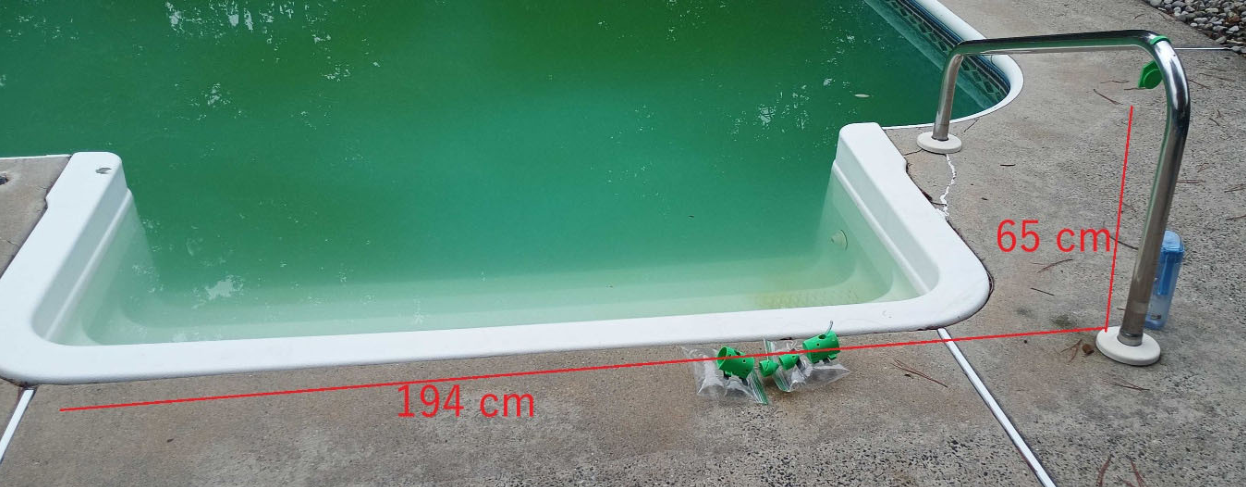
Figure 4.
Positioning the ballistic launcher with a prototype robot.
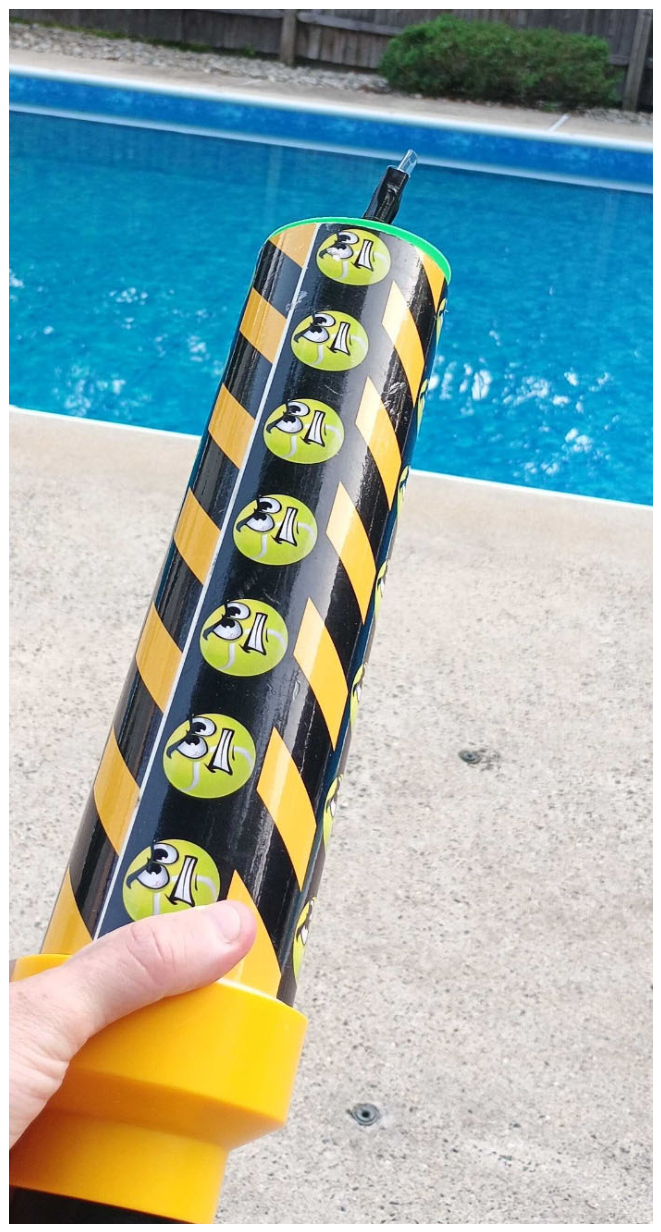
Figure 5.
Second prototype robot connected to rope tether.
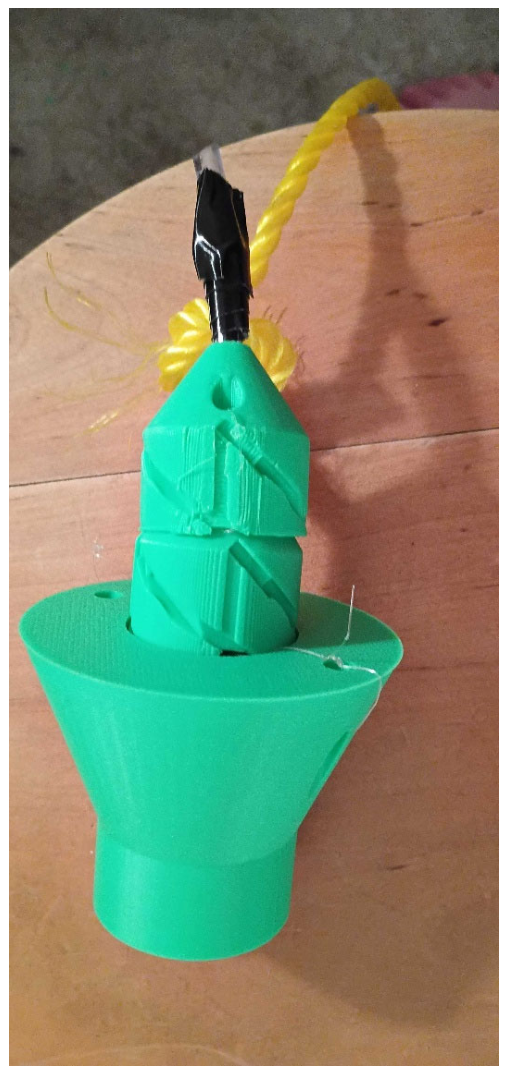
Figure 6.
Second robot prototype floating with rope tether attached.
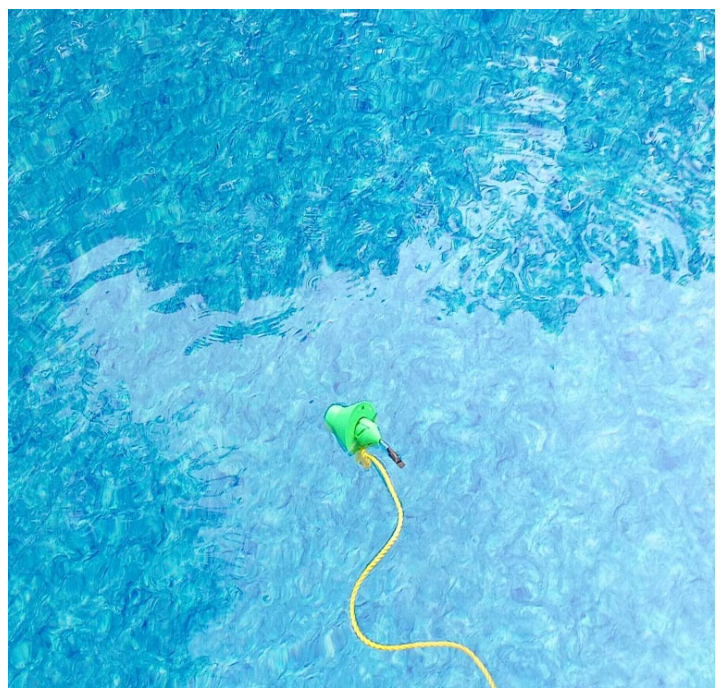

Table 1.
Mean movement speed (m/s) by configuration, first prototype.
| Configuration | Land (m/s) | Water (m/s) |
| Magnetic Tape + Nylon | 0.818 ± 0.022 | 1.066 ± 0.210 |
| Magnetic Tape + Steel | 1.262 ± 0.005 | 1.263 ± 0.107 |
| Rare Earth + Nylon | 0.815 ± 0.026 | 1.072 ± 0.225 |
| Rare Earth + Steel | 1.252 ± 0.040 | 1.440 ± 0.277 |
Table 2.
Collapse loads (g) by tendon material, first prototype.
| Tendon | Trial 1 | Trial 2 | Trial 3 | Mean ± SD | Median |
| Nylon | 291 | 297 | 286 | 291.3 ± 5.5 | 291 |
| Steel | 311 | 307 | 310 | 309.3 ± 2.1 | 310 |
Table 3.
Ballistic launch survival by magnet type, first prototype.
| Magnet Type | Pass | Fail | Success Rate |
| Magnetic Tape | 3 | 0 | 100% |
| Rare Earth N52 | 3 | 0 | 100% |
Table 4.
Movement speed (m/s) by terrain, second prototype.
| Terrain | Trial 1 | Trial 2 | Trial 3 | Mean ± SD |
| Land | 1.121 | 1.302 | 1.190 | 1.205 ± 0.091 |
| Water | 1.027 | 1.090 | 1.128 | 1.081 ± 0.051 |
Table 5.
Collapse loads (g), second prototype.
| Trial 1 | Trial 2 | Trial 3 | Mean ± SD | Median |
| 2261 | 2063 | 2132 | 2152.0 ± 100.5 | 2132 |
Table 6.
Tethered deployment survival, second prototype.
| Condition | Pass | Fail | Success Rate |
| No Tether | 6 | 0 | 100% |
| Rope Tether | 6 | 0 | 100% |
Table 7.
Summary of statistical results by case.
| Case | Test | Key Finding | Significance |
| A | Three-way ANOVA | Tendon material dominant; | Tendon: p < 0.001*** |
| magnet type non-significant | Terrain: p = 0.013* | ||
| B | Mann–Whitney U | Steel > Nylon by 6.2% load capacity | p = 0.100 (exploratory) |
| C | Fisher’s Exact | 100% survival both magnet types | N/A (degenerate) |
| D | Descriptive | 100% success both tether conditions | N/A (descriptive) |
| A2 | Paired / One-sample t | Second proto slower, especially water | Water vs best: p = 0.007** |
| B2 | One-sample t | 6.96× load increase, monolithic design | p = 0.001*** |
| C2 | Descriptive | 100% success; equivalent to first proto | N/A (descriptive) |
Disclaimer/Publisher’s Note: The statements, opinions and data contained in all publications are solely those of the individual author(s) and contributor(s) and not of MDPI and/or the editor(s). MDPI and/or the editor(s) disclaim responsibility for any injury to people or property resulting from any ideas, methods, instructions or products referred to in the content. |
© 2026 by the author. Licensee MDPI, Basel, Switzerland. This article is an open access article distributed under the terms and conditions of the Creative Commons Attribution (CC BY) license.
Copyright: This open access article is published under a Creative Commons CC BY 4.0 license, which permit the free download, distribution, and reuse, provided that the author and preprint are cited in any reuse.


