

Submitted:
09 July 2026
Posted:
23 July 2026
You are already at the latest version
Abstract
Dissolved iron and low pH are widespread stressors in streams draining iron-rich soils, wetlands and former lignite-mining areas. The biological effects of ferrous iron are difficult to assess from iron concentration alone, because toxicity depends on pH, exposure duration, chemical form and species sensitivity. This study examined the combined effects of dissolved ferrous iron (Fe²⁺) and pH on the survival of brown trout (Salmo trutta), common dace (Leuciscus leuciscus) and European eel (Anguilla anguilla) exposed in flow-through cages in Danish lowland streams.Groups of five fish were exposed under field conditions, and survival was recorded after approximately one week and one month. Mean Fe²⁺ concentration and mean pH during each exposure period were related to survival using observed Fe²⁺–pH distributions and binomial generalised linear models. The final dataset comprised 128 one-week and 102 one-month observations for brown trout, and 21 observations for each exposure period for common dace and European eel.Brown trout showed the clearest response. Survival decreased consistently with increasing Fe²⁺ concentration and decreasing pH after both one week and one month. Common dace showed a more variable response, with weaker statistical support, especially after one month. European eel was the most tolerant species, with high survival across much of the observed Fe²⁺–pH range, although mortality occurred under some low-pH and high-iron conditions.The results show that no single Fe²⁺ concentration can be used as a universal survival threshold. Assessment of iron-rich streams should consider Fe²⁺ concentration together with pH, exposure duration, species and life stage.
Keywords:
ferrous iron
; pH
; ochre
; stream pollution
; brown trout
; common dace
; European eel
; field cages
; survival
; lowland streams
1. Introduction
Iron-rich drainage water and ochre formation have long been recognised as important environmental problems in Danish lowland streams. The problem is especially common in western and central Jutland, where sandy and leached soils, wetlands, drainage systems and local lignite deposits create conditions under which reduced iron compounds may be mobilised and transported to streams. Under oxygenated conditions, dissolved ferrous iron may oxidise and precipitate as ferric hydroxides, producing ochre deposits on the stream bed and on biological surfaces.
The chemistry and biological effects of iron-rich water are closely linked to pH. At low pH, iron may remain in more soluble forms for longer periods, and acidity itself may also contribute to biological stress. At higher pH, ferrous iron is more rapidly oxidised and precipitated, changing both the chemical form of iron and its mode of action in streams. Consequently, fixed iron thresholds are difficult to apply without considering pH and exposure conditions.
Fish mortality associated with acidic and iron-rich drainage water has been reported from Danish streams for many decades. Early Danish observations described severe fish kills in streams affected by acidic drainage and ochre formation (Otterstrøm, 1938; Larsen & Olesen, 1948). Later studies related the transformation of iron and sulphur compounds in soils to problems in inland fisheries (Dahl, 1963), and Danish investigations of ochre pollution documented effects on brown trout reproduction, stream fish and macroinvertebrate fauna (Geertz-Hansen & Mortensen, 1983; Geertz-Hansen et al., 1984; Geertz-Hansen & Rasmussen, 1986, 1994). Comparable effects of iron-rich suspensions and mining-related pollution have also been reported from other freshwater systems (Smith et al., 1978; Scullion & Edwards, 1980).
The biological effects of iron-rich water may involve several processes. Dissolved ferrous iron may be directly harmful under some chemical conditions, while oxidation and precipitation of iron may affect fish through deposits on gills, eggs, stream substrates or food organisms. Low pH may increase physiological stress and may also influence the occurrence and toxicity of other dissolved inorganic components. In field situations, these factors often covary, making it difficult to separate the effect of Fe²⁺ from the broader chemical environment. Field experiments are therefore important because they describe survival under realistic stream conditions, but they should not be interpreted as isolated laboratory toxicity tests for one chemical variable alone.
Brown trout (Salmo trutta), common dace (Leuciscus leuciscus) and European eel (Anguilla anguilla) are relevant species for assessing effects of iron-rich water in Danish streams. Brown trout is ecologically and fisheries-biologically important and is often used as an indicator of good stream quality. Common dace is a cyprinid species occurring in lowland streams and may differ from trout in tolerance and habitat use. European eel is physiologically and ecologically distinct from both trout and dace and may be expected to tolerate poor water quality better than many other stream fishes. A comparison among these species can therefore help to clarify whether iron-rich, acidic water affects all stream fishes similarly or whether species-specific responses are important.
The aim of the present study was to analyse survival of brown trout, common dace and European eel exposed in field cages in streams with different combinations of dissolved Fe²⁺ concentration and pH. Specifically, the study aimed to: (1) describe observed Fe²⁺–pH conditions associated with high and low survival; (2) model survival as a function of Fe²⁺ and pH after one week and one month of exposure; (3) compare responses among the three species; and (4) assess whether simple Fe²⁺ thresholds are adequate for evaluating biological risk in iron-rich streams.
2. Materials and Methods
2.1. Study Area and Experimental Sites
The field experiments were carried out in Danish lowland streams affected to different degrees by iron-rich drainage water. Most sites were located in western and central Jutland, where sandy and leached soils, drainage of wetland areas and former lignite-mining activities have contributed to the mobilisation of iron-rich and, in some cases, acidic water. The experimental sites included streams in the Skjern Å, Von Å, Karstofte Å, Storå and Karup Å systems.
The sites covered a broad range of field conditions, from strongly iron-affected reaches with poor or absent fish fauna to less affected reaches with resident fish populations. Some streams were channelled or regularly maintained, whereas others included less regulated reaches with sand, gravel or mixed substrates. The principal characteristics of the experimental sites are summarised in Table 1a and Table 1b. Table 1a gives stream and station names, river systems and principal sources of iron loading, whereas Table 1b summarises site characteristics and available information on resident fish fauna.
observations and does not imply universal survival limits outside the measured range.
2.2. Water Chemistry
Water chemistry was measured during the exposure periods and summarised as mean values for each experimental block and exposure period. pH was measured in situ at ambient stream temperature using a Radiometer PHM 80 pH meter.
Dissolved ferrous iron (Fe²⁺) was determined in the field by the bipyridyl method using a Corning 252 field colorimeter. Water samples were filtered before analysis through a 145-µm Millipore filter. Total iron was determined after acidification with 0.5% HCl and subsequent laboratory analysis. In supplementary checks, the difference between total iron and Fe²⁺ was used as an approximate measure of non-ferrous iron forms, but total iron was not treated as an independent predictor in the main survival models because total iron includes Fe²⁺.
2.3. Experimental Cages and Fish Exposure
Fish were exposed in flow-through cages placed directly in the streams. Each cage unit consisted of five PVC tubes, each 30 cm long and 55 mm in diameter, mounted in a metal frame. The ends of the tubes were covered with mesh to allow water flow while retaining the fish. The upstream end was partly screened to reduce direct mechanical exposure to drifting material. One fish was placed in each tube, giving five fish per experimental block.
Brown trout were one-year-old fish approximately 10–12 cm in length. Common dace were approximately 8–11 cm and European eel approximately 17–25 cm in length. Brown trout were obtained from Hårkær Fish Farm in the Skjern Å catchment. Common dace and European eel were obtained by electrofishing.
Brown trout exposures were carried out during several periods in 1983 and 1984. Common dace and European eel were exposed during selected periods in 1983. The timing of exposures reflected both the field programme and the availability of suitable fish.
2.4. Exposure Periods and Survival Observations
Survival was recorded after approximately one week and one month of exposure. Each observation consisted of the number of surviving fish out of five initially exposed individuals. For each exposure period, mean pH and mean Fe²⁺ concentration were calculated from the water-chemical measurements corresponding to the relevant exposure interval.
The final analysed dataset comprised 128 one-week observations and 102 one-month observations for brown trout. For common dace and European eel, the final dataset comprised 21 observations after one week and 21 observations after one month for each species.
2.5. Descriptive Analysis of Fe²⁺–pH survival Patterns
Observed survival was first described graphically in relation to mean Fe²⁺ concentration and mean pH. Because Fe²⁺ concentrations varied over more than one order of magnitude, Fe²⁺ was plotted on a logarithmic scale. For clarity, the descriptive figures focused on the main survival classes: complete survival, defined as 5 of 5 fish surviving; high but incomplete survival, defined as 4 of 5 fish surviving; and complete mortality, defined as 0 of 5 fish surviving. Observations with 1–3 survivors were retained in all statistical analyses but were not always shown as separate groups in the descriptive polygon figures.
Polygons were used to outline the observed distribution of selected survival groups in Fe²⁺–pH space. These polygons were descriptive only and were not interpreted as confidence limits, modelled thresholds or mechanistic boundaries.
2.6. Statistical Modelling
Survival was analysed using binomial generalised linear models with a logit link. For each species and exposure period, the number of surviving fish and the number of dead fish in each experimental block were used as the binomial response. Mean pH and log₁₀-transformed mean dissolved Fe²⁺ concentration were used as explanatory variables:
logit(p) = β₀ + β₁pH + β₂log₁₀(Fe²⁺),
where p is the probability of survival of an individual fish during the exposure period. Separate models were fitted for brown trout, common dace and European eel after one week and one month.
The fitted models were used to construct response surfaces for each species and exposure period. Predictions were restricted to the observed pH–Fe²⁺ domain for each species and exposure period to avoid unsupported extrapolation. The observed domain was defined in pH–log₁₀(Fe²⁺) space. Areas outside the observed domain were left blank in the response-surface figures.
Flexible models were explored during analysis, but the final presentation was based on the simpler binomial GLM because this model gave a more transparent and biologically interpretable description of the main Fe²⁺–pH relationships. This was especially important for common dace and European eel, where the number of observations was limited.
2.7. Species Comparison
For comparison among species, modelled Fe²⁺ limits associated with high survival were derived from the fitted GLMs. High survival was defined as a modelled survival probability of at least 80%. These limits were interpreted only within the observed environmental domain for each species and exposure period. Where survival remained at or above 80% across the observed Fe²⁺ range, the upper observed Fe²⁺ boundary was shown rather than an extrapolated threshold.
Observed complete survival was assessed separately as the Fe²⁺–pH domain in which 5 of 5 fish survived. These complete-survival relationships were descriptive and were not interpreted as model predictions of 100% survival.
3. Results
3.1. Environmental Range and Survival Observations
The field exposures covered a broad range of Fe²⁺–pH combinations. Across all species and exposure periods, mean pH values ranged from strongly acidic to near-neutral conditions, and mean dissolved Fe²⁺ concentrations varied over more than one order of magnitude. This produced a field dataset suitable for describing survival across realistic combinations of acidity and dissolved ferrous iron.
The number of observations differed among species. Brown trout had the largest dataset, with 128 observations after one week and 102 observations after one month. Common dace and European eel each had 21 observations after one week and 21 observations after one month. The larger brown trout dataset provided the strongest basis for statistical modelling, whereas the common dace and European eel models were interpreted more cautiously because of the smaller number of observations.
3.2. Brown Trout
Brown trout showed the clearest and most consistent survival response to the combined Fe²⁺–pH gradient. After both one week and one month, high survival was mainly associated with higher pH and lower Fe²⁺ concentrations, whereas low survival and complete mortality occurred primarily under more acidic and iron-rich conditions.
After one week, 63 observations had complete survival, 14 had four survivors, and 28 had complete mortality. After one month, 51 observations had complete survival, 14 had four survivors, and 10 had complete mortality. The descriptive Fe²⁺–pH distributions therefore showed a clear separation between the main high-survival and low-survival regions, although some overlap occurred because the field conditions represented natural combinations of pH and iron rather than controlled laboratory gradients (Figure 1).
The binomial GLM response surfaces confirmed this pattern. Survival increased with increasing pH and decreased with increasing log₁₀(Fe²⁺) after both exposure periods. The predicted high-survival region was largest at near-neutral pH and low Fe²⁺ concentration and became progressively smaller as pH decreased and Fe²⁺ increased. The one-month surface showed that prolonged exposure shifted the high-survival region towards more favourable chemical conditions, consistent with increasing cumulative stress over time (Figure 2).
3.3. Common Dace
Common dace showed a more variable response than brown trout. After one week, complete survival was observed in 13 of the 21 observations, two observations had four survivors, and one observation had complete mortality. After one month, complete survival was observed in nine observations, three observations had four survivors, and four observations had complete mortality.
The observed Fe²⁺–pH distribution indicated that common dace could survive under some conditions that were unfavourable for brown trout, but the pattern was less sharply defined. Some high-survival observations occurred at relatively low pH or elevated Fe²⁺ concentration, while mortality also occurred within parts of the observed domain where survival was otherwise variable (Figure 3).
The fitted response surfaces reflected this uncertainty. Survival tended to be higher at higher pH, but the Fe²⁺ relationship was weaker and less consistent than in brown trout. In particular, the one-month common dace model did not show a clear negative Fe²⁺ effect. This should not be interpreted as evidence that Fe²⁺ was beneficial, but rather as a consequence of the limited number of observations and the distribution of survival outcomes in the field dataset (Figure 4).
3.4. European Eel
European eel showed the highest overall survival among the three species. After one week, complete survival was observed in 18 of the 21 observations, two observations had four survivors, and no observation had complete mortality. After one month, complete survival was observed in 17 observations, two observations had four survivors, and two observations had complete mortality.
The descriptive distribution showed that European eel survived across a large part of the observed Fe²⁺–pH range. High survival occurred even under conditions where brown trout survival was reduced. Nevertheless, mortality after one month demonstrated that European eel was not unaffected by the most adverse field conditions (Figure 5).
The response surfaces for European eel should be interpreted cautiously because mortality was rare and concentrated in few observations. The one-week model indicated high survival across most of the observed domain, with lower predicted survival mainly at low pH and high Fe²⁺. The one-month surface showed a steep transition between high and low survival, reflecting the strong separation of outcomes within the small dataset rather than a precisely estimated toxic boundary (Figure 6).
3.5. Comparison Among Species
The species comparison showed marked differences in apparent tolerance to the Fe²⁺–pH gradient. Brown trout was the most consistently sensitive species, with survival declining clearly as pH decreased and Fe²⁺ increased. Common dace showed an intermediate and more variable response. European eel was the most tolerant species, maintaining high survival across much of the observed environmental range.
The comparative high-survival boundaries emphasised that Fe²⁺ limits cannot be interpreted independently of pH. At higher pH, higher Fe²⁺ concentrations were compatible with high survival, whereas at lower pH, the Fe²⁺ range associated with high survival was narrower. This pattern was strongest for brown trout. For common dace and European eel, the smaller datasets and weaker or separated response patterns made the estimated boundaries less precise (Figure 7A,B).
Observed complete survival showed a similar general pattern but should be interpreted descriptively. The complete-survival boundaries identify regions of the observed Fe²⁺–pH domain where all five fish survived in the field cages, but they do not represent modelled probabilities of 100% survival. In particular, the absence of mortality in parts of the observed domain for European eel reflects both high tolerance and the limited number of observations (Figure 7C,D).
3.6. Total iron and Non-Ferrous Iron Fraction
Total iron was examined as supplementary information but was not used as an independent main predictor of survival. Because total iron includes Fe²⁺, the two variables are not independent measures of exposure. The difference between total iron and Fe²⁺ was therefore considered as an approximate indicator of non-ferrous iron forms.
This supplementary examination did not provide clear evidence that the non-ferrous iron fraction explained survival patterns beyond the combined effects of Fe²⁺ and pH. The main interpretation was therefore based on dissolved Fe²⁺ and pH, which were directly relevant to the field exposure gradient and consistently available across the analysed observations.
3.7. Summary of Main Results
Overall, the results showed that survival in iron-rich streams depended on the combination of dissolved Fe²⁺ concentration, pH, exposure duration and species. Brown trout showed the clearest decline in survival under low-pH and high-Fe²⁺ conditions. Common dace showed a weaker and more variable response. European eel showed the highest survival, but mortality under some adverse conditions indicated that tolerance was not unlimited.
These findings do not support a single universal Fe²⁺ threshold for fish survival. Instead, the biological significance of Fe²⁺ depends strongly on pH and on the species and exposure period considered.
4. Discussion
4.1. General Pattern
The present field-cage experiments showed that fish survival in iron-rich streams was not determined by Fe²⁺ concentration alone. Survival depended on the combined Fe²⁺–pH conditions, exposure duration and species. Brown trout showed the clearest and most consistent decline in survival at low pH and high Fe²⁺ concentrations. Common dace showed a weaker and more variable response, whereas European eel maintained high survival across much of the observed environmental range.
This pattern supports the view that simple iron concentration thresholds are insufficient for assessing biological risk in iron-rich streams. A given Fe²⁺ concentration may be associated with very different survival outcomes depending on pH and exposure duration. The field data therefore point to Fe²⁺ and pH as interacting indicators of risk, rather than to Fe²⁺ as an isolated explanatory variable.
4.2. Combined Influence of Fe²⁺ and pH
The clearest result was the strong combined influence of Fe²⁺ and pH on brown trout survival. Survival was highest at relatively high pH and low Fe²⁺ concentration and declined as pH decreased and Fe²⁺ increased. This pattern was present after both one week and one month, indicating that the relationship was not a short-term artefact but reflected a consistent field response.
The role of pH is important because it affects both fish physiology and iron chemistry. Under acidic conditions, dissolved iron may remain in solution for longer periods, and acidity itself may impose additional stress on fish. As pH increases, Fe²⁺ is more rapidly oxidised and precipitated, changing the chemical form and potential biological effects of iron. The present results therefore fit the broader understanding that the biological effect of iron-rich water depends on both concentration and chemical conditions.
4.3. Brown Trout as the Most Consistently Sensitive Species
Brown trout was the species with the strongest statistical and biological response. This was partly because the brown trout dataset was much larger than those for common dace and European eel, but the response was also more coherent. Both the descriptive Fe²⁺–pH distributions and the modelled response surfaces showed reduced survival under more acidic and iron-rich conditions.
The sensitivity of brown trout is consistent with its ecological status as a stream fish associated with relatively good water quality, including suitable oxygen conditions, clean substrates and stable stream habitats. However, the present study should not be interpreted as identifying a single protective Fe²⁺ limit for brown trout. The Fe²⁺ level compatible with high survival depended strongly on pH and on exposure duration. The one-month results indicate that longer exposure reduced the range of conditions associated with high survival.
4.4. Variable Response of Common Dace
Common dace showed an intermediate and less clearly defined response. Survival was generally higher under more favourable pH conditions, but the relationship with Fe²⁺ was weaker than for brown trout. In particular, the one-month model did not show a conventional negative Fe²⁺ effect. This should not be interpreted as evidence that Fe²⁺ improves survival. It more likely reflects the small dataset, the natural covariation of field conditions and the distribution of survival outcomes.
The common dace results are still useful because they show that species responses cannot simply be transferred from brown trout to other stream fishes. Common dace survived under some conditions where brown trout survival was reduced, but mortality also occurred under adverse field conditions. The species therefore appears less consistently sensitive than brown trout in this dataset, but the precision of any threshold estimate is limited.
4.5. High Apparent Tolerance of European Eel
European eel showed the highest overall survival. Complete survival was common after both exposure periods, and no complete mortality occurred after one week. This indicates that European eel tolerated a broader part of the observed Fe²⁺–pH domain than brown trout and common dace.
The apparent tolerance of European eel should nevertheless not be overstated. Mortality did occur after one month under some adverse conditions, and the one-month response surface was strongly influenced by few mortality observations. The steep modelled transition should therefore be interpreted as a statistical consequence of separated outcomes in a small dataset, not as a precisely estimated toxic boundary.
The present study did not investigate the physiological mechanisms underlying the higher survival of European eel. It is therefore sufficient to conclude that European eel was the most tolerant of the three tested species under these field-cage conditions, without attributing this tolerance to a specific mechanism.
4.6. Exposure Duration
Exposure duration clearly mattered. Brown trout showed reduced survival over the longer exposure period, and the high-survival domain was more restricted after one month than after one week. This suggests that conditions tolerated for a short period may become harmful when exposure continues.
This is important for stream assessment because iron-rich drainage may occur as repeated or prolonged episodes rather than as short isolated events. A Fe²⁺–pH combination that does not cause immediate mortality may still reduce survival during longer exposure. For management purposes, both concentration and duration should therefore be considered.
4.7. Dissolved Fe²⁺, Total Iron and Other Iron Forms
The main analyses focused on dissolved Fe²⁺ because this was the most relevant measured form for describing the field exposure gradient. Total iron was not used as an independent main predictor because total iron includes Fe²⁺. Including both variables as separate predictors would therefore risk treating overlapping measurements as independent explanatory factors.
The difference between total iron and Fe²⁺ was examined as an approximate indicator of non-ferrous iron forms, but it did not provide clear additional explanation of survival beyond Fe²⁺ and pH. This does not mean that precipitated or oxidised iron forms are biologically unimportant. Ochre deposits may affect stream habitats, substrates, eggs, invertebrates and fish surfaces. However, the present survival models were based on the measured Fe²⁺–pH exposure gradient, and the data did not support a separate quantitative interpretation of non-ferrous iron effects.
4.8. No Universal Fe²⁺ Threshold
The results do not support the use of one universal Fe²⁺ threshold for fish survival. Brown trout, common dace and European eel differed in apparent tolerance, and the Fe²⁺ concentration associated with high survival varied with pH and exposure duration.
This has practical implications. A fixed Fe²⁺ concentration may be overly conservative under some higher-pH conditions but insufficiently protective under low-pH conditions. The comparative results therefore support an assessment approach in which Fe²⁺ is interpreted together with pH, species sensitivity and the likely duration of exposure.
The observed complete-survival boundaries should also be interpreted carefully. They identify combinations of Fe²⁺ and pH where all five fish survived in the field cages, but they do not prove that survival would always be complete under those conditions. They are descriptive field observations, not universal biological limits.
4.9. Strengths and Limitations of the field Approach
The field-cage design provided direct information on fish survival under realistic stream conditions, including natural covariation between pH, Fe²⁺ and other water-chemical factors. This is an important strength of the study, but it also means that the observed survival responses should not be interpreted as isolated laboratory toxicity thresholds for Fe²⁺ alone.
A further limitation is that aluminium was not measured in the present experiments. The Danish report underlying the field programme noted, on the basis of field measurements and laboratory aquarium experiments, that dissolved inorganic aluminium in streams with pH at or below 6 may have toxic effects at concentrations above approximately 0.1–0.2 mg L⁻¹ (Geertz-Hansen et al., 1984). Thus, at low pH, part of the observed survival response may have reflected combined effects of acidity, Fe²⁺ and other dissolved inorganic components, including aluminium. This reinforces the interpretation of the present results as field-based Fe²⁺–pH survival relationships rather than isolated Fe²⁺ toxicity thresholds.
Because continuous water-temperature data were not available for all exposure periods, temperature could not be included directly in the survival models. As an approximate check, the brown trout data were divided into a winter period (1 November–30 April) and a summer period (1 May–31 October), using season as a proxy for water temperature. This supplementary analysis did not provide clear evidence that season explained survival independently of Fe²⁺ and pH. The main interpretation was therefore retained as a Fe²⁺–pH survival relationship under field conditions.
The experimental fish also represented defined size ranges rather than all life stages of the species. Brown trout were one-year-old fish approximately 10–12 cm in length, common dace were approximately 8–11 cm, and European eel approximately 17–25 cm. The present results therefore apply directly to fish of these size classes under field-cage conditions. Smaller fish, newly emerged juveniles, larvae or eggs may differ in sensitivity to low pH and iron-rich water, and the present data should not be used alone to define protective thresholds for earlier life stages. For brown trout, effects of ochre and acidification on egg survival and hatching have been examined separately by Geertz-Hansen & Rasmussen (1994), whereas the present study focuses on survival of free-swimming juvenile fish exposed in stream cages.
4.10. Ecological and Management Implications
The results have direct relevance for the assessment of iron-rich lowland streams. Brown trout survival was strongly reduced under combined low-pH and high-Fe²⁺ conditions, indicating that such streams may be unsuitable for sensitive salmonid populations even when iron concentration alone does not fully describe the risk. Common dace and European eel showed greater or more variable tolerance, but neither species provides a basis for ignoring iron-rich, acidic conditions.
For management, the main implication is that Fe²⁺ should not be assessed separately from pH. Field evaluation of ochre-affected streams should include simultaneous measurements of Fe²⁺ and pH and should consider exposure duration and the species or life stages that are to be protected. Where pH is low, additional dissolved inorganic components, including aluminium, may also be relevant.
The present study therefore supports a field-based, species-sensitive interpretation of iron pollution. Rather than defining a single Fe²⁺ limit, the results show how survival changes across realistic Fe²⁺–pH combinations and how this response differs among brown trout, common dace and European eel.
5. Summary and Conclusions
The present study shows that fish survival in iron-rich streams cannot be assessed from dissolved Fe²⁺ concentration alone. Survival depended strongly on the combination of Fe²⁺ concentration, pH, exposure duration and species.
Brown trout showed the clearest and most consistent response. Survival declined when pH decreased and Fe²⁺ concentration increased, and this pattern was evident after both one week and one month of exposure. Common dace showed a more variable response, with weaker statistical support, especially after one month. European eel showed the highest overall survival and tolerated a broader part of the observed Fe²⁺–pH range, although mortality occurred under some adverse conditions.
The results do not support a single universal Fe²⁺ threshold for fish survival. Instead, Fe²⁺ should be interpreted together with pH and exposure duration. At higher pH, relatively higher Fe²⁺ concentrations may be compatible with high survival, whereas at lower pH, the range of Fe²⁺ concentrations associated with high survival becomes narrower.
The field-cage design provided realistic information on survival under natural stream conditions, but the results should not be interpreted as isolated laboratory toxicity thresholds for Fe²⁺ alone. Other chemical factors may have contributed under low-pH conditions, and the results apply directly to the fish sizes used in the experiments. Earlier life stages may differ in sensitivity.
For management of ochre-affected streams, simultaneous measurement of Fe²⁺ and pH is therefore more informative than total iron concentration alone. Protection of fish populations should consider species sensitivity, life stage and exposure duration rather than relying on a fixed iron limit.
Funding
This research received external funding from the Danish Ministry of Environmental Protection.
Data Availability Statement
The data exploited can be obtained from the author concerned.
Acknowledgments
Thanks to Cand. scient. Peter Geertz-Hansen and Cand. scient. Gudmund Nielsen for their long-lasting participation in the project and thanks to Jes Dolby for his long-lasting contribution to the field work.
During: the preparation of this manuscript, the author used GPT-5.5 for the purposes of increasing the English text quality, and some statistics and figures in Matplotlib.
Conflicts of Interest
The author certify that he has no affiliations with or involvement in any organization or entity with any financial interest (such as honoraria; educational grants; participation in speakers’ bureaus; membership, employment, consultancies, stock ownership, or other equity interest; and expert testimony or patent-licensing arrangements), or non-financial interest (such as personal or professional relationships, affiliations, knowledge, or beliefs) in the subject matter or materials discussed in this manuscript.
Ethical: approval was not required for this study, in accordance with the regulations of the Danish Technical University concerning animal experimentation.
References
- Alabaster, J. S. & Lloyd, R. (1980). Water Quality Criteria for Freshwater Fish. Butterworths, London. [CrossRef]
- Dahl, J. (1963). Transformation of iron and sulphur compounds in soil and its relation to Danish inland fisheries. Transactions of the American Fisheries Society, 92, 260–264.
- Geertz-Hansen, P. & Mortensen, E. (1983). Effects of iron ochre on the reproduction of brown trout (Salmo trutta). Vatten, 39, 55–62.
- Geertz-Hansen, P., Nielsen, G. & Rasmussen, G. (1984). Bilag 8: Fiskeribiologiske okkerundersøgelser [Appendix 8: fisheries-biological investigations of ochre]. Danmarks Fiskeri- og Havundersøgelser, Ferskvandsfiskerilaboratoriet. Miljøministeriet, Miljøstyrelsen, Strandgade 29, 1401 København. (In Danish).
- Geertz-Hansen, P. & Rasmussen, G. (1986). Okkers indflydelse på vandløbenes fauna [Effects of ochre on the fauna of streams]. Vand & Miljø, 4/1986, 155–159. (In Danish).
- Geertz-Hansen, P. & Rasmussen, G. (1994). Influence of ochre and acidification on the survival and hatching of brown trout eggs (Salmo trutta). In: R. Müller & R. Lloyd (eds), Sublethal and Chronic Effects of Pollutants on Freshwater Fish, Chapter 18, pp. 196–210. Published by arrangement with the Food and Agriculture Organization of the United Nations by Fishing News Books.
- Larsen, K. L. & Olesen, S. (1948). Okkerkvælning af fisk i Tim Å [Ochre suffocation of fish in the Tim Stream]. Beretning fra den Danske Biologiske Station, 1947, 3–25. (In Danish).
- Miljøstyrelsens Ferskvandslaboratorium (1981). Notat vedr. bestemmelse af jern [Note concerning the determination of iron]. (In Danish).
- Otterstrøm, C. V. (1938). Svovlsyreforgiftning af vandløb fra udgrøftet eng. Katastrofen i ørreddambruget ved Lysbro [Sulphuric acid poisoning of streams caused by drainage of meadows. The catastrophe at the trout farm at Lysbro]. Ferskvandsfiskeribladet, 36, 2–14. (In Danish).
- Scullion, J. & Edwards, R. W. (1980). The effects of pollutants from the coal industry on the fish fauna of a small river in the South Wales coalfield. Environmental Pollution Series A, 14, 141–153. [CrossRef]
- Smith, E. J., Sykora, J. L. & Shapiro, M. A. (1978). Effects of lime-neutralized iron hydroxide suspensions on survival, growth and reproduction of the fathead minnow (Pimephales promelas). Journal of the Fisheries Research Board of Canada, 30, 1147–1153. [CrossRef]
Figure 1.
Brown trout (Salmo trutta): observed Fe²⁺–pH combinations and survival after one week and one month. Each point represents one experimental block, plotted as mean dissolved ferrous iron concentration (Fe²⁺, mg L⁻¹) and mean pH during the relevant exposure period. Symbols indicate the number of surviving fish out of five initially exposed individuals: 5 fish, 4 fish and 0 fish. Fe²⁺ is shown on a logarithmic scale. Coloured polygons outline the observed distribution of each survival group where sufficient observations were available; they are descriptive only and do not represent confidence limits or modelled survival boundaries.
Figure 1.
Brown trout (Salmo trutta): observed Fe²⁺–pH combinations and survival after one week and one month. Each point represents one experimental block, plotted as mean dissolved ferrous iron concentration (Fe²⁺, mg L⁻¹) and mean pH during the relevant exposure period. Symbols indicate the number of surviving fish out of five initially exposed individuals: 5 fish, 4 fish and 0 fish. Fe²⁺ is shown on a logarithmic scale. Coloured polygons outline the observed distribution of each survival group where sufficient observations were available; they are descriptive only and do not represent confidence limits or modelled survival boundaries.
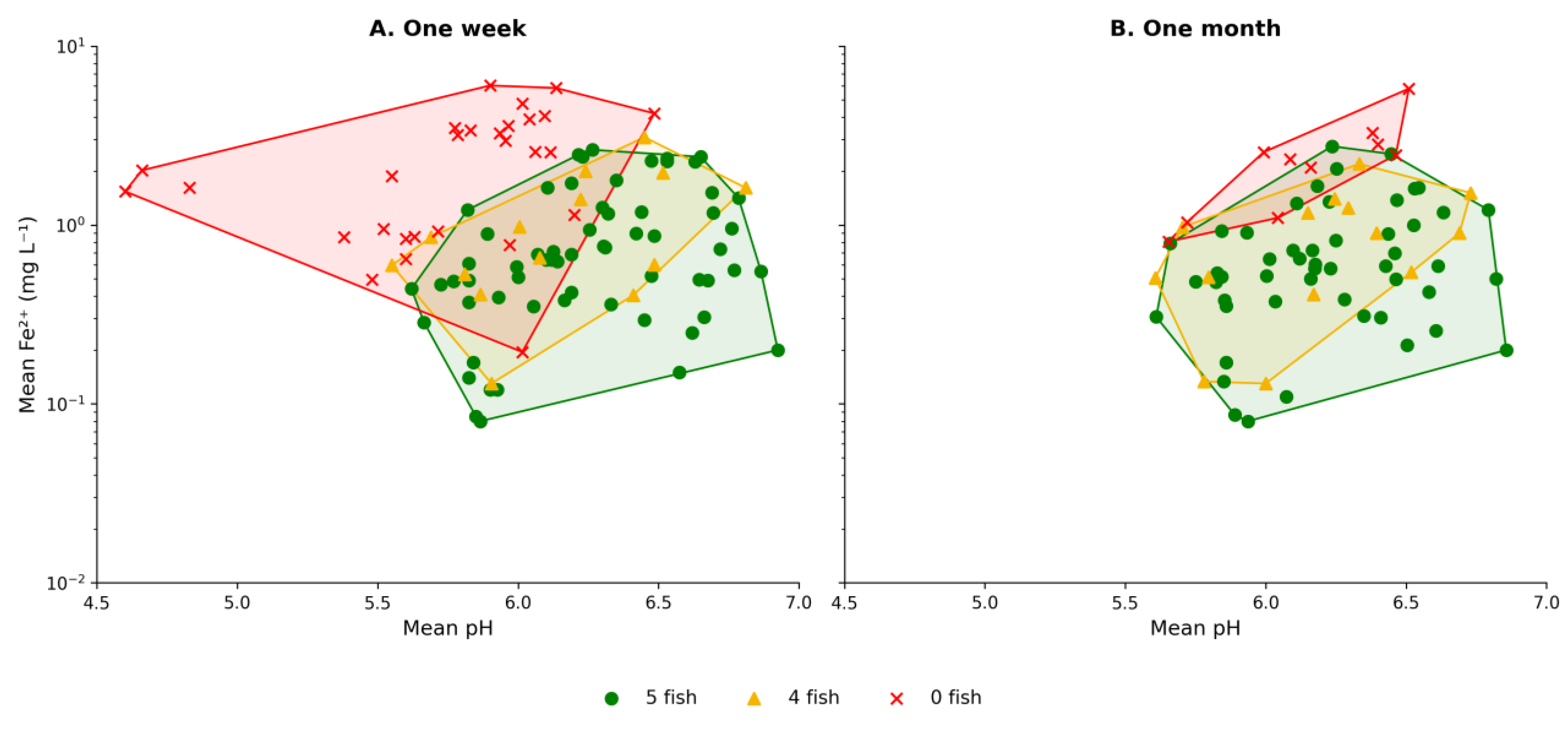
Figure 2.
Brown trout (Salmo trutta): modelled survival response to dissolved Fe²⁺ and pH. Panels show predicted survival after one week (A) and one month (B) based on binomial generalised linear models with mean pH and log₁₀(Fe²⁺) as predictors. Colours indicate predicted survival percentage from 0 to 100%, and black contour lines indicate selected survival probabilities. White circles show observed experimental blocks. Predictions are shown only within the observed pH–Fe²⁺ domain for each exposure period.
Figure 2.
Brown trout (Salmo trutta): modelled survival response to dissolved Fe²⁺ and pH. Panels show predicted survival after one week (A) and one month (B) based on binomial generalised linear models with mean pH and log₁₀(Fe²⁺) as predictors. Colours indicate predicted survival percentage from 0 to 100%, and black contour lines indicate selected survival probabilities. White circles show observed experimental blocks. Predictions are shown only within the observed pH–Fe²⁺ domain for each exposure period.
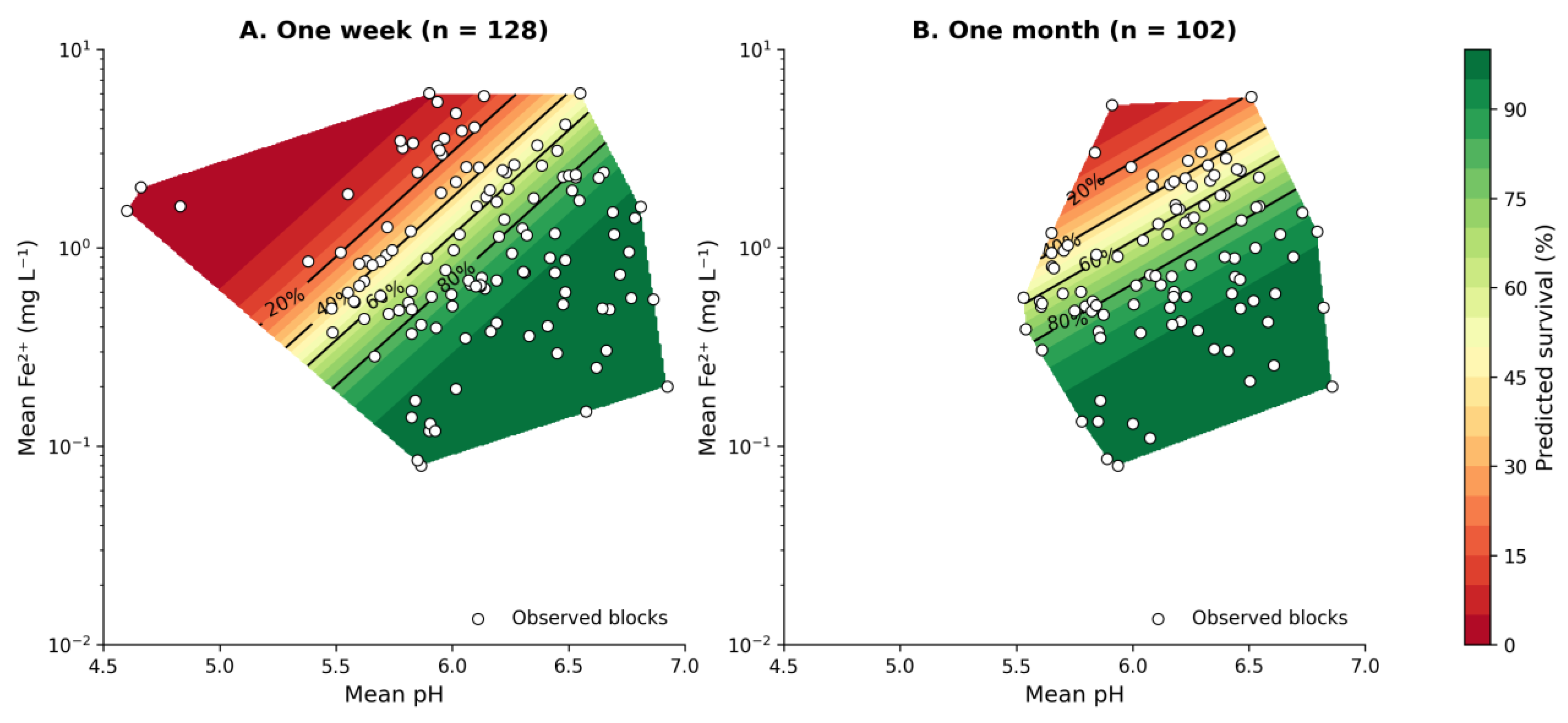
Figure 3.
Common dace (Leuciscus leuciscus): observed Fe²⁺–pH combinations and survival after one week and one month. Each point represents one experimental block, plotted as mean dissolved Fe²⁺ concentration and mean pH. Symbols indicate survival of 5, 4 or 0 fish out of five initially exposed individuals. Coloured polygons are descriptive outlines of the observed survival groups and were not used for statistical inference. The additional verified common dace observation is included in both exposure-period datasets.
Figure 3.
Common dace (Leuciscus leuciscus): observed Fe²⁺–pH combinations and survival after one week and one month. Each point represents one experimental block, plotted as mean dissolved Fe²⁺ concentration and mean pH. Symbols indicate survival of 5, 4 or 0 fish out of five initially exposed individuals. Coloured polygons are descriptive outlines of the observed survival groups and were not used for statistical inference. The additional verified common dace observation is included in both exposure-period datasets.
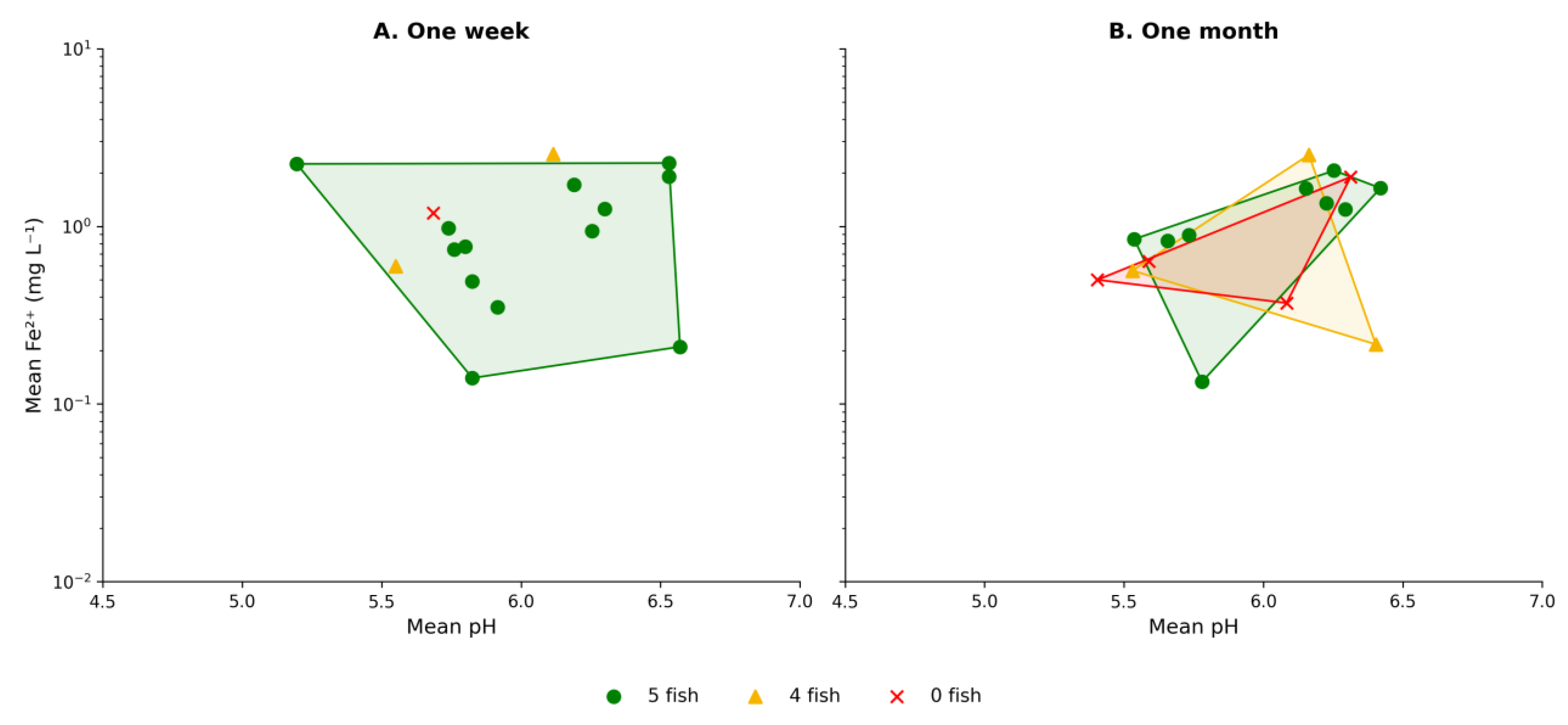
Figure 4.
Common dace (Leuciscus leuciscus): modelled survival response to dissolved Fe²⁺ and pH. Predicted survival after one week (A) and one month (B) was estimated using binomial generalised linear models. Colours show predicted survival percentage and black contour lines indicate selected survival probabilities. White circles show observed experimental blocks. Predictions are restricted to the observed pH–Fe²⁺ domain. The one-month surface should be interpreted cautiously because the fitted Fe²⁺ effect was weak and did not show a biologically conventional negative relationship with survival.
Figure 4.
Common dace (Leuciscus leuciscus): modelled survival response to dissolved Fe²⁺ and pH. Predicted survival after one week (A) and one month (B) was estimated using binomial generalised linear models. Colours show predicted survival percentage and black contour lines indicate selected survival probabilities. White circles show observed experimental blocks. Predictions are restricted to the observed pH–Fe²⁺ domain. The one-month surface should be interpreted cautiously because the fitted Fe²⁺ effect was weak and did not show a biologically conventional negative relationship with survival.
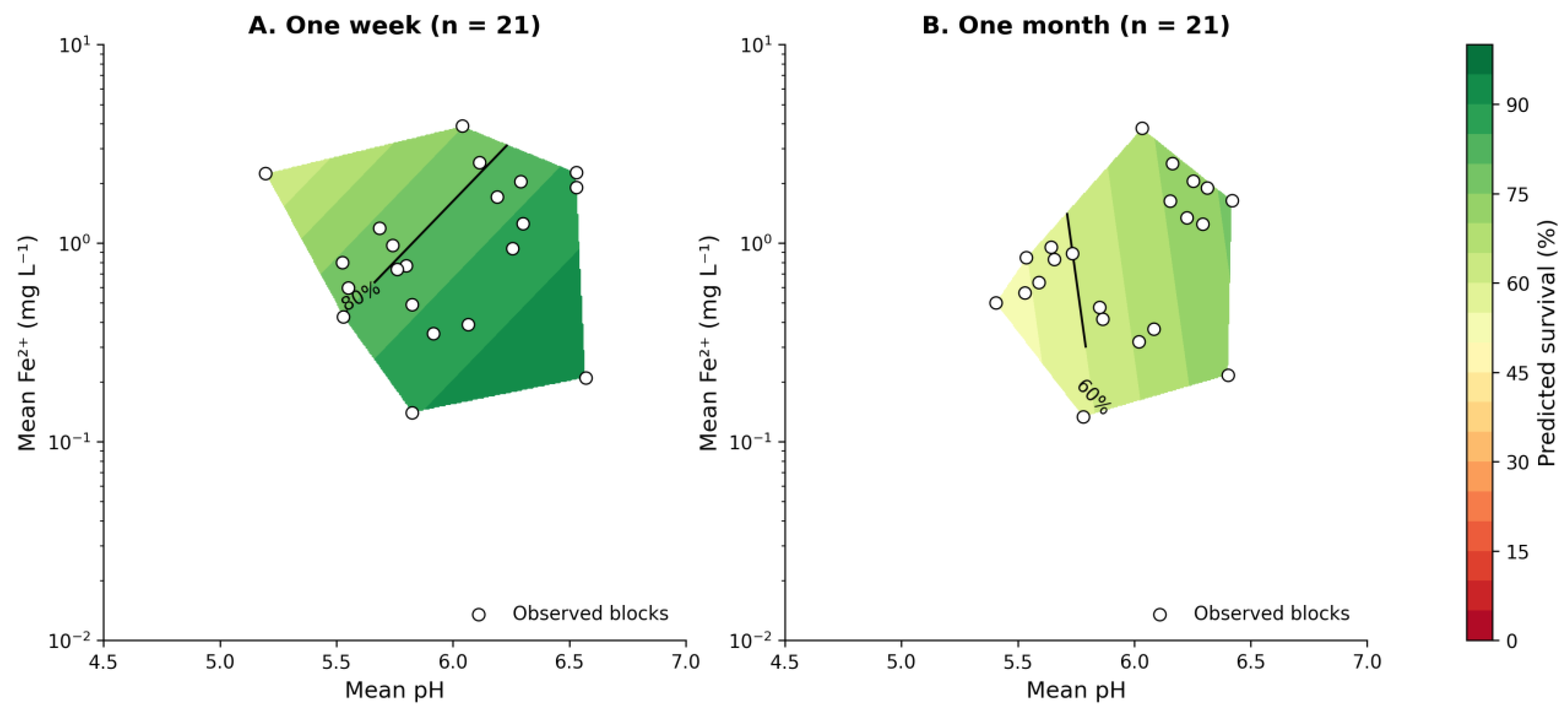
Figure 5.
European eel (Anguilla anguilla): observed Fe²⁺–pH combinations and survival after one week and one month. Observed survival is shown in relation to mean dissolved Fe²⁺ concentration and mean pH. Symbols indicate 5, 4 or 0 survivors out of five initially exposed fish. European eel showed high survival across most of the observed Fe²⁺–pH domain, particularly after one week. Polygons are descriptive outlines of the observed survival groups and do not represent modelled thresholds.
Figure 5.
European eel (Anguilla anguilla): observed Fe²⁺–pH combinations and survival after one week and one month. Observed survival is shown in relation to mean dissolved Fe²⁺ concentration and mean pH. Symbols indicate 5, 4 or 0 survivors out of five initially exposed fish. European eel showed high survival across most of the observed Fe²⁺–pH domain, particularly after one week. Polygons are descriptive outlines of the observed survival groups and do not represent modelled thresholds.
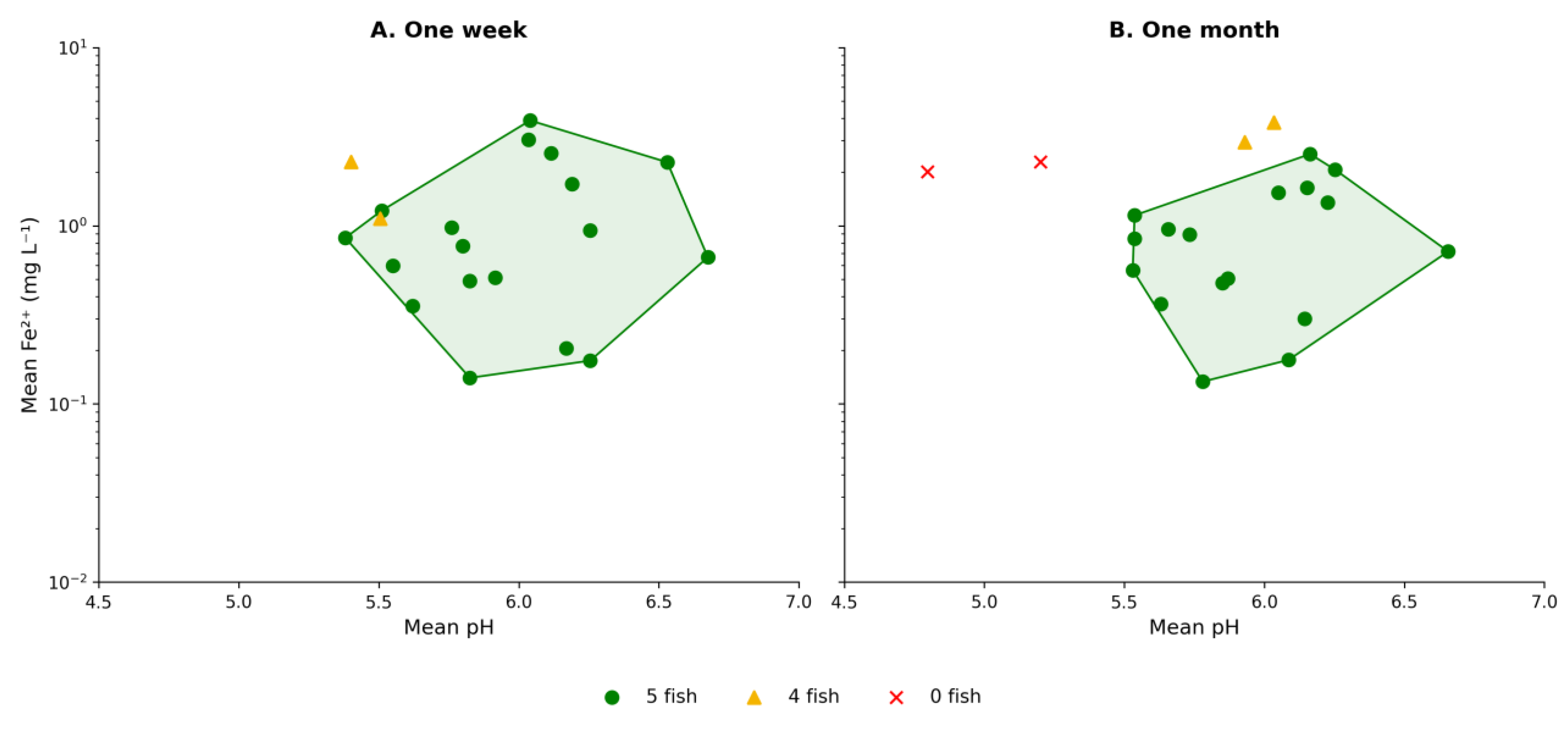
Figure 6.
European eel (Anguilla anguilla): modelled survival response to dissolved Fe²⁺ and pH. Response surfaces show predicted survival after one week (A) and one month (B) from binomial generalised linear models. Colours indicate predicted survival percentage, black contour lines indicate selected survival probabilities, and white circles show observed experimental blocks. Predictions are shown only within the observed environmental domain. The steep transition in the one-month model reflects strong separation of observed survival outcomes and should be interpreted cautiously.
Figure 6.
European eel (Anguilla anguilla): modelled survival response to dissolved Fe²⁺ and pH. Response surfaces show predicted survival after one week (A) and one month (B) from binomial generalised linear models. Colours indicate predicted survival percentage, black contour lines indicate selected survival probabilities, and white circles show observed experimental blocks. Predictions are shown only within the observed environmental domain. The steep transition in the one-month model reflects strong separation of observed survival outcomes and should be interpreted cautiously.
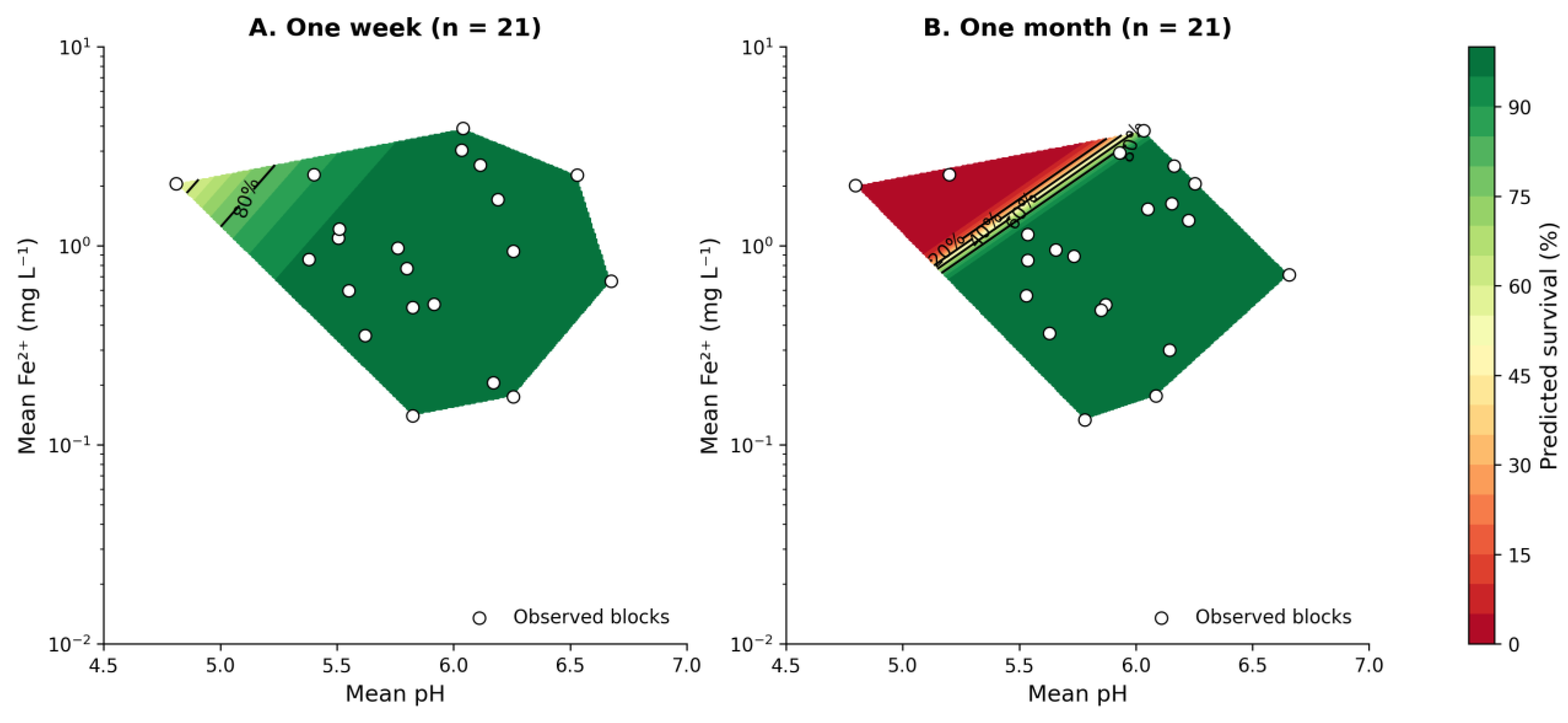
Figure 7.
Species comparison of Fe²⁺–pH conditions associated with high and complete survival. Panels A and B show model-derived Fe²⁺ limits associated with ≥80% survival after one week and one month, respectively. Panels C and D show descriptive relationships for observed complete survival, defined as 5 of 5 fish surviving. Lines are shown only within the relevant observed pH–Fe²⁺ range for each species and exposure period. Where ≥80% survival occurred throughout the observed Fe²⁺ range, the upper observed Fe²⁺ boundary is shown rather than an extrapolated model threshold. The figure therefore compares species within the domain supported by the field.
Figure 7.
Species comparison of Fe²⁺–pH conditions associated with high and complete survival. Panels A and B show model-derived Fe²⁺ limits associated with ≥80% survival after one week and one month, respectively. Panels C and D show descriptive relationships for observed complete survival, defined as 5 of 5 fish surviving. Lines are shown only within the relevant observed pH–Fe²⁺ range for each species and exposure period. Where ≥80% survival occurred throughout the observed Fe²⁺ range, the upper observed Fe²⁺ boundary is shown rather than an extrapolated model threshold. The figure therefore compares species within the domain supported by the field.
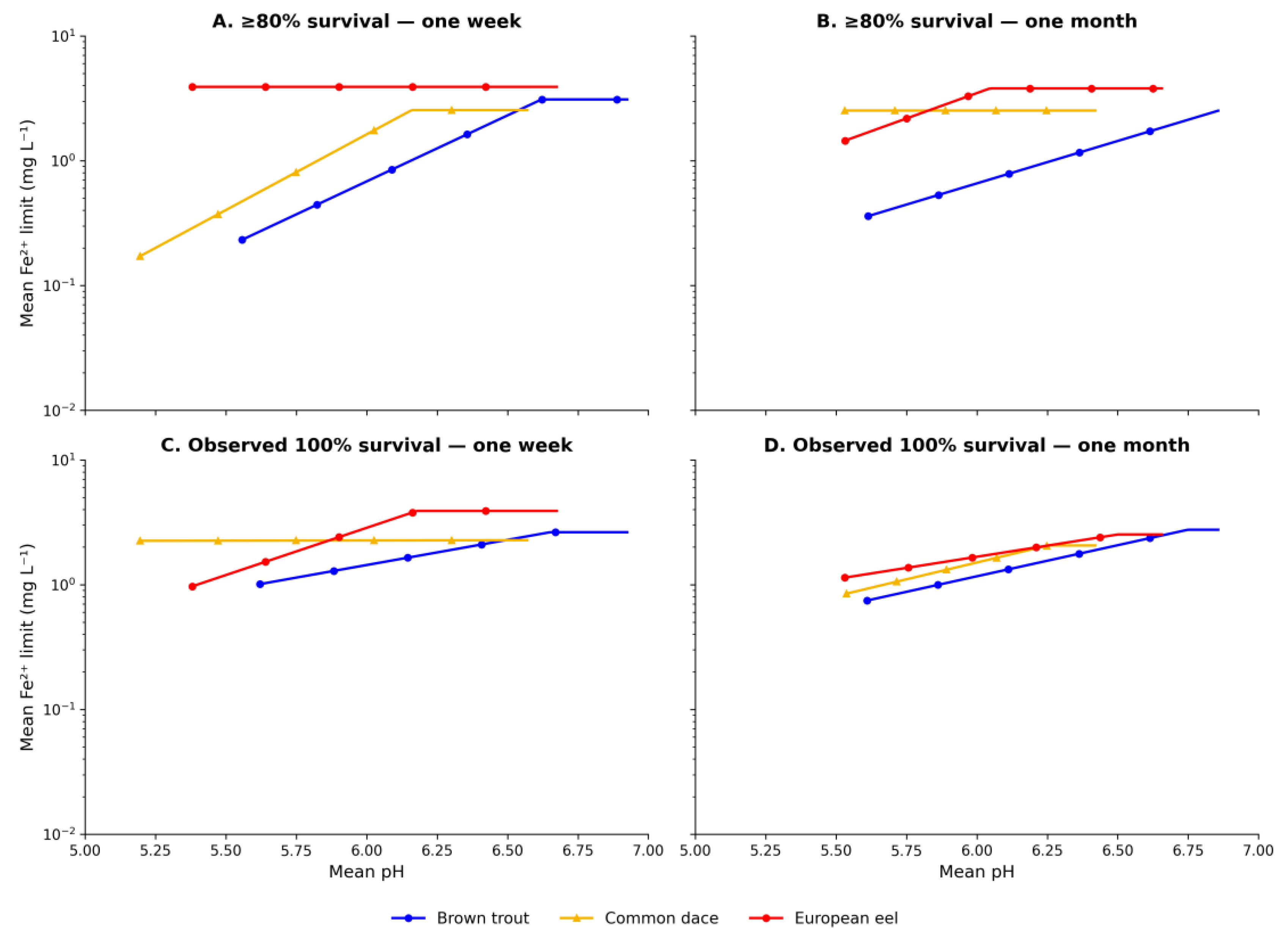

Table 1a.
Experimental stream sites, river systems and principal sources of iron loading. Site numbers refer to the original field survey.
Table 1a.
Experimental stream sites, river systems and principal sources of iron loading. Site numbers refer to the original field survey.
| Stream / station | River system | Principal iron source |
| Sædbæk, 0A–0B | Skjern Å | Drainage channels; iron-rich drainage water |
| Goldbæk, 1A–1C | Skjern Å | Drainage channels and iron-rich groundwater |
| Risbjerg Bæk, 2A–2C | Skjern Å | Iron-rich drainage from bog areas |
| Sigbæk, 3 | Skjern Å | Drainage and former lignite mining areas |
| Birkholt Bæk / Engmose Bæk / Hårkær Bæk, 4A–4C | Skjern Å | Iron-rich drainage water |
| Blindbæk, 5 | Von Å / Skjern Å | Former lignite mining areas; acid and iron-rich water |
| Følpøt Bæk, 6A–6B | Von Å / Skjern Å | Acid and iron-rich drainage channels |
| Tarp Bæk, 9A–9B | Karstofte Å / Skjern Å | Iron-rich effluent / drainage |
| Brogård Bæk, 11B | Karstofte Å / Skjern Å | Low iron loading |
| Røgen Bæk, 15 | Storå | Field drainage; strong iron gradient |
| Bredvig Bæk, 16 | Storå | Field drainage; strong iron gradient |
| Hallund Bæk, 17 | Storå | Field drainage; seasonal iron variation |
| Sunds Møllebæk, 18 | Storå | Several iron-rich drains |
| Ginderskov Bæk, 20A–20C | Karup Å | Acid and iron-rich drainage in upper section |
Table 1b.
Principal physical characteristics of the experimental sites and available information on resident fish fauna.
Table 1b.
Principal physical characteristics of the experimental sites and available information on resident fish fauna.
| Stream / station | Site characteristics | Resident fish fauna / remarks |
| Sædbæk, 0A–0B | Small lowland stream, partly culverted and regulated | Sparse brown trout population |
| Goldbæk, 1A–1C | Channelled stream with sand and gravel bed | Eel, minnow and occasional trout |
| Risbjerg Bæk, 2A–2C | Mostly channelled; sand and gravel bed | Rainbow trout, pike, eel, sculpin |
| Sigbæk, 3 | Channelled stream receiving iron-rich water | Occasional trout, eel and common dace |
| Birkholt Bæk / Engmose Bæk / Hårkær Bæk, 4A–4C | Small streams with sand and gravel bed | Sparse trout, pike, eel, brook lamprey |
| Blindbæk, 5 | Iron-affected stream | No fish recorded |
| Følpøt Bæk, 6A–6B | Upper section strongly affected; lower section less regulated | Self-reproducing trout in less affected section |
| Tarp Bæk, 9A–9B | Partly channelled stream | Trout and brook trout |
| Brogård Bæk, 11B | Channelled stream | Trout, eel, three-spined stickleback, brook lamprey |
| Røgen Bæk, 15 | Regulated upper and lower reaches; unregulated middle section | No natural fish population at station |
| Bredvig Bæk, 16 | Channelled stream | No fish recorded |
| Hallund Bæk, 17 | Channelled and frequently maintained | No fish recorded |
| Sunds Møllebæk, 18 | Channelled stream with seasonal water-flow and iron variation | Eel, common dace, gudgeon |
| Ginderskov Bæk, 20A–20C | Strong gradient from heavily affected to less affected sections | Upper station without fish; lower sections with trout and pike |
Disclaimer/Publisher’s Note: The statements, opinions and data contained in all publications are solely those of the individual author(s) and contributor(s) and not of MDPI and/or the editor(s). MDPI and/or the editor(s) disclaim responsibility for any injury to people or property resulting from any ideas, methods, instructions or products referred to in the content. |
© 2026 by the authors. Licensee MDPI, Basel, Switzerland. This article is an open access article distributed under the terms and conditions of the Creative Commons Attribution (CC BY) license (http://creativecommons.org/licenses/by/4.0/).
Copyright: This open access article is published under a Creative Commons CC BY 4.0 license, which permit the free download, distribution, and reuse, provided that the author and preprint are cited in any reuse.


