
Submitted:
23 July 2026
Posted:
23 July 2026
You are already at the latest version
Abstract
Iron–air batteries (IABs) represent a novel energy storage system based on the iron redox reaction. They offer several advantages such as high energy density (≈ 200 Wh kg−1), environmental friendliness, and low cost, with broad application prospects in large-scale long-duration energy storage, peak-valley power regulation, and emergency power supply. However, hydrogen evolution side reactions easily occur during IAB charging, reducing Coulombic efficiency. Additionally, passivation of the iron anode limits reaction kinetics and cycle life. Thermal imbalance in air batteries also reduces stability. Existing research has addressed these issues by focusing on optimizing electrolyte compositions, additives, structural stability of the iron anode, and material design. We systematically review the progress and application of IABs as energy storage devices in the steel industry, with a systematic outlook on future research directions and applications.
Keywords:
iron-air battery
; hydrogen evolution reaction
; iron anode passivation
; large-scale energy storage
1. Introduction
Presently, effective control of carbon emissions is a core issue of sustainable development in various countries. China proposed the dual carbon (carbon peaking and carbon neutrality) strategic goal to promote the transformation of its energy structure and achieve a low-carbon transition in industry. In 2024, global carbon dioxide (CO2) emissions reached a record high of ≈ 41.6 Gt, and the industrial sector accounted for > 35%. The steel industry, the pillar of modern industry, accounts for approximately 7%–9% of total annual global emissions. It is the second-largest direct carbon emission source and a key area for emission reduction[1]. China has been the world’s largest producer and consumer of steel for 28 years. In 2024, crude steel production accounted for 53.3% of the total global production. At present, the mainstream iron production relies on carbon-based blast furnaces, which emit ≈ 1.8 t of CO2 for every ton of produced molten iron (Fe). Moreover, the dependence on coke results in resource constraints and increases cost. Therefore, a clean energy source is in demand to support the low-carbon development of the steel industry[2].
In recent years, the rapid development of renewable wind, solar, and other green energy sources has enabled the possibility of replacing traditional fossil fuels[3]. In 2024, the installed renewable energy capacity of China reached 1.45 TW (> 42% of the total installed capacity in the country), exceeding the installed thermal energy capacity. Nevertheless, there exists significant room for development in the future, particularly considering the volatility, intermittency, and regional challenges of sustainable energy generation. Therefore, an efficient integration of renewable energy with industrial activities has become a core problem in achieving energy transformation and industrial decarbonization[4]. The current pressure on China’s large-scale steel industry is demanding technological innovation. The growth rate of domestic demand is decreasing, and environmental regulations are becoming increasingly stringent. Alternatively, European Union’s carbon border adjustment mechanisms have intensified export competition[5,6,7]. Against this background, the development of low-carbon, green energy–based iron production technologies in metallurgy has become a crucial direction for future development.
Iron–air batteries (IABs), a potential large-scale energy storage technology, are based on the reversible redox reaction of Fe, with the dual functions of energy storage and iron metal energy utilization. Figure 1 presents a schematic diagram of the internal structure of IABs. This technology can form a closed-loop green energy–driven steelmaking (electric steelmaking) process. Green electricity is used for steel production. The Fe-based product is used as the anode material of IABs to store electrical energy, forming a cycle: green electricity → air battery → electrical energy → electric steelmaking. This cycle provides a high-density storage medium for fluctuating green electricity and alleviates the resource pressure on steel industry through the recycling of Fe-based components, which aligns with the strategic requirements of energy structure transformation and green industrial transition under China’s dual carbon goals [8].
The urgent need for low-carbon breakthrough and green energy consumption in steel industry, IAB technology, with its mechanism of using metal energy, is expected to serve as an innovative link between renewable energy and industrial zero carbonization. Thus, IABs provide a new concept to develop an integrated system of green electricity–metallurgy–energy storage[9]. Figure 2 shows the Challenges and possible solutions for IABs. Presently, companies such as Form Energy in the United States of America and Ore Energy in the Netherlands have developed IABs with a discharge time of > 100 h. The subsequent step is to achieve large-scale commercial application of IABs. Herein, we systematically review the principles, development history, research progress, and challenges of IABs. IAB applications in the steel industry are designed to alleviate the pressure caused by the intermittency of green electricity and fluctuations in the steel market, enabling the integration of renewable energy and steel production.
2. Types of Iron-Based Batteries
In recent years, battery technology has shown a diversified developing trend with the advancement of global energy transition and the dual carbon goal. Low-cost lithium (Li)-ion batteries are being developed continuously to achieve high energy density and safety, with solid-state batteries and Li-sulfur (S) batteries emerging as research hotspots[10]. Considering resource availability, environmental friendliness, and application economy, alternative technologies such as sodium-ion batteries and flow batteries have also received widespread attention[11,12]. Thus, Fe-based batteries, which were marginalized, have regained focus for scientific research, owing to their unique resource advantages and technical characteristics.
The early practice of Fe-based batteries started in the early 20th century. In 1901, Thomas Edison invented the nickel-iron (Ni–Fe) battery, considered as the prototype of Fe-based batteries[13]. Ni–Fe batteries were used in early electric vehicles manufactured by Detroit Electric Company, and their durability was suitable for short urban trips. However, following the emergence and development of the internal combustion engine. The low energy density and charging efficiency of Ni–Fe batteries were ineffective for use in automobiles. Their application as a power source was also unsuccessful. Thus, Ni–Fe batteries were withdrawn from mainstream applications and were used in minor applications in the mid-20th century such as railway signals and miner lamps[14]. In the 21st century, supply shortages and price fluctuations of key battery metal resources such as Li, cobalt, and Ni, have become increasingly prominent, particularly for major battery-producing and -consuming countries, increasing the pressure of resource security. In contrast, Fe is extremely abundant in the Earth’s crust and is relatively inexpensive and environmentally benign, making Fe-based battery systems again a focus of research.
The technological boundaries of novel Fe-based battery systems are expanding. Modern Fe-based batteries include Li-iron phosphate, high-speed Fe, all-iron flow, IABs, and Ni–Fe batteries. These new systems exhibit distinct advantages in energy density, power characteristics, and cost, laying the foundation for the future development of Fe-based batteries. Table 1 presents a systematic comparison of the advantages and disadvantages of the aforementioned Fe-based batteries.
3. Working Principle and Development History of IABs
3.1. Working Principle
Although Li-ion batteries are widely used, their energy density (400 Wh kg−1) is insufficient to meet the high energy requirements of the next generation[21,22,23]. Therefore, new battery systems with high theoretical energy density such as metal–air batteries (MABs) have become a research focus. The high energy density, low cost, and environmental friendliness of these batteries make them particularly suitable for large-scale energy storage, renewable energy regulation, and electric vehicles. Unlike traditional closed Li-ion batteries, MABs adopt an open structure. Oxygen, the active material for the cathode, is obtained directly from the air, which significantly reduces the weight of the battery and increases its energy density[24,25]. The core components of an MAB include the electrolyte, bifunctional air cathode, and metal anode, which generally comprises Fe, zinc, aluminum, etc. The working mechanism is based on the oxygen reduction reaction (ORR) and oxygen evolution reaction (OER). During discharge, oxygen is reduced, while the metal anode is oxidized to generate recyclable metal oxides[26].
IABs, an electrochemical energy storage system with a high theoretical energy density and low cost, essentially operate based on the reversible redox reaction between Fe and oxygen. Electrical energy is stored and released via the periodic dissolution and deposition of metallic Fe in alkaline solution (Figure 3) [27].
The electrochemical behavior of Fe in alkaline medium involves two processes: passivation and dissolution, corresponding respectively to the two principal discharge and charge stages.
Fe + 2OH−⇌Fe(OH)2 + 2e− E°=−0.87 V vs. standard hydrogen electrode (SHE)
3Fe(OH)2+ 2OH−⇌Fe3O4+4H2O+2e− E°=−0.76 V vs. SHE
During discharge [Eq. (1)], metallic Fe is first oxidized to ferrous ions (Fe2+), followed by the formation of ferrous hydroxide [Fe(OH)2]. A few Fe(OH)2 proportions can be further oxidized to ferric hydroxide [Fe(OH)3], which eventually transforms into Fe3O4 (magnetite). The high kinetic redox reaction [Eq. (1)] is conducive to promoting the formation of Fe3O4 [Eq. (2)]. Therefore, under normal discharge conditions, Fe(OH)2 is the main product, while the formation of Fe3O4 requires a high anode overpotential[19,28]. Surface-adsorbed intermediates [Fe(OH)]ad are involved in the Fe electrode reaction mechanism, and their reduction product HFeO2− can react with hydroxyl ions (OH−), ultimately depositing Fe(OH)2 at the electrode interface [Eqs. (3) and (4)] [29].
[Fe(OH)]ad+ 2OH−⇌HFeO2−+H2O+e−
HFeO2−+H2O⇌Fe(OH)2+ 2OH−
During charging, Fe(OH)2 is reduced to metallic Fe, corresponding to the reverse of Eq. (1). During the charging and discharging processes, Fe undergoes a three-electron transfer reaction, exhibiting a theoretical specific capacity higher than that of the single-electron storage mechanism, demonstrating significant technical advantages and application prospects[30,31].
However, in an alkaline environment, the standard electrode potential (E°) of the hydrogen evolution reaction (HER) is expressed as Eq. (5).
2H2O+2e−⇌H2+2OH− E°=−0.827 V vs. SHE
This potential is 50 mV higher than that of the Fe electrode. Therefore, even in the open-circuit state, hydrogen evolution might occur on the Fe electrode surface. During charging, the target Fe deposition reaction competes with the HER [Eq. (5)]. Hence, a portion of the current is used for the HER rather than the target iron deposition reaction, which significantly reduces charging efficiency, induces the active material loss, and deteriorates the electrode structure, ultimately restricting the cycle life of the Fe electrode[32]. Water is a necessary reactant for the HER. Hence, methods such as hydrophobic interface modification or regulating the water activity on the electrode surface to limit water contact can improve the overall IAB performance by effectively suppressing hydrogen generation[33].
The performance indicators of zinc, aluminum, and IABs are presented in Table 2. Li–air batteries exhibit the highest theoretical energy density, but their limited cycle stability and safety issues remain major challenges limiting practical commercialization, while magnesium (Mg)–air batteries exhibit a high specific energy (≈ 700 Wh kg−1) and low flammability risk. Zinc–air batteries, with an ultrahigh energy density of 1080 Wh kg−1 and cycle life, and easily available raw materials, have become the preferred solution for grid energy storage. Compared with these metal–air batteries, IABs exhibit a moderate practical specific energy density (50–75 Wh kg−1), but their material cost can be low [<$100 (kWh)⁻¹], with significant economic advantages[34]. Nevertheless, in order to achieve large-scale commercial application of IABs, further improvements in energy conversion efficiency and cycle stability are needed. Therefore, future research should focus on optimizing electrode reaction kinetics and enhancing interface stability, unlocking the potential of IABs in steel-based systems integrated with renewable energy[19].
3.2. Development History
As a crucial branch of MABs, IABs, with their abundant iron resources, low cost, and environmental friendliness, have gradually developed into a key candidate technology in the field of long-duration energy storage (LDES) after more than 50 years of technological iteration. Figure 4 illustrates the main development history of IABs. The oil crisis spurred the demand for alternative energy storage. In 1968, the National Aeronautics and Space Administration developed a prototype iron–air battery with an energy density of 132–154 Wh kg−1. However, its cycle life was limited to less than 200 cycles due to hydrogen evolution, self-discharge, and electrolyte degradation[19]. In 1978, the Swedish National Development Corporation pioneered the development of a 30 kWh iron–air traction battery with an energy density of 80 Wh kg−1[34]. In the same year, Westinghouse Electric Corporation (WEC) achieved a module energy density of 80 Wh kg−1 using sintered iron electrode technology and projected that the cost could be reduced to $30 kg−1, laying the foundation for large-scale application.
From 1970 to 1990, many institutions worldwide focused on optimizing the iron-based battery system. American Eagle Pitcher Industries improved the fabrication process of iron electrodes, while WEC regulated the electrode reaction kinetics using additives. Experiments confirmed that iron electrodes could achieve a cycle life of 3,000 cycles. However, the industrialization process remained hindered owing to the insufficient energy conversion efficiency (approximately 50%) and difficulty in controlling side reactions[35,36,37,38].
Between 2000 and 2015, with the development of nanotechnology and the emergence of high-performance catalyst materials, IABs once again gained attention owing to their high specific capacity and potential low cost. During this period, research primarily focused on improving the energy density and cycle stability of batteries using nanostructured electrodes and high specific surface area (SSA) iron materials[39]. Representative projects included the rechargeable battery research at the University of Southern California and the European FP7 funded project, NECOBAUT, which aimed to promote the practical application of IABs in electric vehicles and energy storage systems[40].
More recently, research on IABs has entered a stage of commercial exploration led by enterprises. Based on the reversible redox mechanism of IABs, the US company Form Energy developed energy storage systems with discharge durations exceeding 100 h and cost only one-tenth that of lithium-ion batteries [<$20 (kWh)−1]. The company has raised a total of 1.2 billion US dollars in funding and signed 2.3 GWh of power purchase agreements with multiple utility companies. Ore Energy in the Netherlands completed the world’s first grid-connected system in 2025, verifying the grid compatibility of 100-hour energy storage. Meanwhile, a German research team is dedicated to developing low-temperature batteries that can operate at −40 °C, further expanding the extreme environment application scenarios of IABs[34,41].
Following more than five decades of development, IABs have gradually moved from laboratory research to engineering applications, providing a feasible technical path for the large-scale integration of renewable energy into the power grid.
4. Research Progress of IABs
The transformation of the global energy from non-renewal to renewable energy sources is imminent. The large-scale use of fossil energy has continuously degraded the ecological environment, making the development and utilization of clean and renewable energy an international concern. Although renewable energy sources such as wind and solar energy have great potential, their intermittent characteristics increase the difficulty of grid integration. Moreover, the immature existing energy storage technologies further exacerbate this challenge[42,43,44]. Therefore, developing efficient and stable energy storage systems is the key to replacing traditional energy with renewable energy, promoting the fabrication of grid-level smart energy storage systems (i.e., large-scale intelligent energy storage systems for power grids) [45].
Recently, significant progress has been made in the material design and system integration of IABs. We systematically review the latest research progress based on four aspects: electrolytes, functional additives, Fe anode material modification, and air cathode catalysis[46].
4.1. Electrolyte Systems
Electrolytes are crucial for IAB performance. Existing research primarily focuses on alkaline, acidic, and neutral electrolytes (Table 3).
IABs generally use alkaline electrolytes [such as potassium hydroxide (KOH)] owing to their low corrosiveness to Fe electrodes and high conductivity. In an alkaline environment, the slow dissolution of products such as Fe(OH)2 can suppress dendrite formation, but it induces electrode passivation and carbonate deposition[47]. An NanoFe@CN electrode prepared by Fang et al. suppressed passivation through a nitrogen-doped carbon layer in 6 mol L−1 KOH, but its cycle stability was limited[48]. A methylimidazolium-modified ferrocene electrolyte for cathodes developed by Liu et al. achieved 95% capacity retention after 2000 cycles in an alkaline medium[49].
An acidic electrolyte can improve cycle stability by effectively inhibiting CO2 dissolution and avoiding carbonate formation, but it accelerates the corrosion of Fe electrodes. Chen et al. used FeSO4-sulfuric acid (H2SO4) electrolytes to reduce the dissolved oxygen concentration through the proton/O2 competition mechanism. They achieved the IAB assembly in air for the first time with a specific capacity of 192 mAh g−1, which was cycled 1300 cycles without significant decay[50].
The research focus has gradually shifted to neutral electrolytes [such as potassium sulfate (K2SO4)] to overcome the limitations of alkaline and acidic systems. Neutral electrolytes can alleviate the corrosion of Fe electrodes and reduce the dissolution rate of CO2 while maintaining high ionic conductivity. Fang et al. used a NanoFe@CN electrode in a 0.5 mol L−1 K2SO4 solution where the voltage efficiency remained stable after 180 cycles. The passivation suppression effect was better than that of alkaline systems[48].
Neutral electrolytes exhibit distinct advantages in suppressing the HER and hindering electrode degradation, indicating broad application prospects for the development of long-life, high-safety IABs.
4.2. Electrolyte Additives
Fe electrodes in IABs face two major kinetic bottlenecks in large-scale LDES: (i) the HER on the Fe electrode surface decreases charging efficiency. This side reaction consumes water molecules in the electrolyte, wasting electrical energy and decreasing Coulombic efficiency (CE), and (ii) the formation of an insulating Fe(OH)2 passivation layer during discharge results in poor rate performance by hindering charge transport. This results in significant voltage loss during high current discharge[28,51]. Existing research has aimed to address these problems based on two main approaches (Figure 5): (i) introducing functional electrolyte additives to regulate the electrode interface, suppress the HER, and promote charge transport; and (ii) engineering nanocomposite porous Fe electrodes or incorporating functional additives into the Fe electrode to enhance battery conductivity and overall electrochemical performance[52,53].
The ideal additive should (i) suppress the HER without affecting the Fe deposition/dissolution reaction and (ii) be resistant to strong oxidation environments on the air electrode side. An additive should not hinder the ORR and OER, owing to its own decomposition or adsorption[20,54]. Bismuth (Bi)-based compounds [such as bismuth sulfide (Bi2S3) and bismuth oxide (Bi2O3)] and transition metal sulfides (such as FeS and Na2S) are commonly used additives, which can form a FeS protective layer in situ at the electrode interface, inhibiting passivation and increasing the HER overpotential. S-containing additives (such as Bi2S3) can significantly improve the discharge specific capacity by forming stable Fe–S bonds and optimizing interfacial electron transport. Bi plays a synergistic role in catalyzing the directional deposition of sulfides[51,55]. Figure 6 shows the charging efficiency and relative HER of the Fe electrode measured by Aswin K et al. with and without the Bi2S3 additive. The charging efficiency of the Fe electrode significantly increases, and the relative HER significantly decreases after Bi2S3 addition, indicating that Bi2S3 significantly inhibits the HER[40].
Multiple studies have confirmed the effectiveness of sulfide additives. Deyab et al. reported that ionic liquid additives (1-ethyl-3-methylimidazolium L-(+)-lactate) inhibited the HER by adsorbing on the Fe surface and forming reversible complexes with Fe2+, thereby alleviating passivation[56]. Tian et al. demonstrated that S-based additives could induce the formation of porous FeOx/Fe(OH)x composite layers, significantly increasing the electrochemically active surface area and effectively inhibiting the shedding of active materials from the Fe electrode surface[57]. Malkhandi et al. found that alkanethiol-based electrolyte additives formed self-assembled monolayers on the electrode surface, effectively reducing the interfacial area involved in parasitic reactions[33]. Yang et al. confirmed that trace organic S additives reduced the HER rate by 90%, which reconstructed the electrode surface state through a depassivation effect, effectively blocking the active sites and inhibiting the HER[53].
Sulfur-containing additives can effectively improve CE and energy density while suppressing water consumption. However, their application faces challenges such as concentration sensitivity and insufficient long-term stability[58], which have been addressed by developing nanoporous Fe electrodes to reduce dependence on electrolyte additives.
4.3. Iron Anode and Materials
The discharge capacity and cycle stability of the electrodes are key evaluation indicators in the fabrication of IABs. Modifying the Fe electrode with nanostructures, the cycle durability and overall electrochemical performance of the battery can be effectively enhanced[59,60]. However, Fe-based nanoparticles suffer from recrystallization and agglomeration during repeated charge–discharge cycles, resulting in significant capacity decay. To overcome this challenge, Fe nanocomposite electrodes were fabricated by embedding Fe or iron oxide into highly conductive matrices such as carbon materials (Figure 7) [61,62,63].
Numerous studies have been carried out to verify the above viewpoints. For example, the α-Fe2O3–acetylene black composite electrode prepared by Tuan et al. exhibited a longer cycle life and higher specific capacity than the commercial Fe2O3 electrode[64]. The NanoFe@CN electrode synthesized by Fang et al. encapsulated Fe particles through a carbon–nitrogen shell, effectively suppressing agglomeration and passivation[48]. The Fe3O4–reduced graphene oxide (rGO) composite developed by Tan et al. enhanced electron migration and cycle stability through structural synergy, significantly improving the electrochemical performance and cycle stability of IABs in alkaline electrolytes[59]. Ito et al. loaded nano Fe3O4 on tubular carbon nanofibers (TCNFs) using a three-dimensional conductive network to improve the conductivity and reactivity of the composite. Experimental data indicated that the prepared Fe3O4–TCNF electrode was significantly superior to the original Fe electrode in suppressing side reactions, improving the overall performance of the battery[60].
Nanoporous Fe electrodes are fabricated by combining Fe powder with carbon-based nanomaterials [such as graphene and carbon nanotubes (CNTs)] to form a conductive network with high porosity and a SSA[65], which is conducive to ion transport. Active materials inhibit passivation, dendrite growth, and the dependence on additives[66]. High porosity can increase the SSA of the electrode, but it can also increase the internal resistance of the electrode, resulting in capacity decay. Although the carbon–Fe composite anode can initially maintain a high charging capacity, hydrogen generated during charging will remove the active material from the current collector, degrading battery performance[67]. Therefore, effectively suppressing side reactions while improving battery cycle performance remains a critical challenge for future research.
In addition to structural optimization, introducing functional additives is also an effective strategy to enhance the performance of Fe electrodes[68]. Introducing S-containing compounds (Bi2S3, MoS2, FeS, etc.) [69,70,71] can significantly improve electrode kinetics based on three aspects: (i) sulfides adsorbed on the electrode interface induce Fe(OH)2 lattice distortion, increasing the defect concentration in the passivation layer, proton conduction ability, and ionic conductivity of the passivation layer[72,73], (ii) they improve the bulk conductivity and anode current density by reducing the activation energy of the Fe/Fe(OH)2 reaction, improving the rate performance of the battery by 2–3 times[74,75], and (iii) sulfides can promote the dissolution of discharge products such as iron hydroxides, avoiding the rapid formation and thickening of the nonconductive passivation layer, thereby increasing the electrode capacity and long-cycle performance[76,77].
Hang et al. reported that FeS and potassium sulfide (K2S), two Fe electrode additives, promoted the dissolution and transformation of active materials, effectively suppressing the HER of the Fe/C composite electrode and enhancing the conductivity and cycle performance of the electrode[78]. Aswin K et al. demonstrated that modifying the Fe anode with FeS and Bi2O3 composite additives retained excellent cycling stability, showing no significant capacity decay after 1200 charge–discharge cycles[32]. Mitra et al. systematically compared the performance of several electrode additives such as FeS, FeS2, Cu2S, and ZnS. They reported that the ZnS-modified electrode exhibited the best overall performance, achieving a faradaic efficiency of 95% at a C/2 rate, with no capacity decay after 750 cycles[68].
Although sulfide additives have shown significant potential in enhancing the performance of Fe electrodes, they suffer from notable limitations in practical applications. Sulfide additives in IABs might generate inactive byproducts during charge–discharge, which are deposited on the electrode surface and block pores, increasing interfacial resistance and capacity decay[48]. Moreover, excessive sulfides can result in a loose electrode structure, reducing the packing density of active materials and affecting the volumetric energy density of the battery. Finally, several high-efficiency additives involve precious metals or complex preparation processes, which significantly increase the manufacturing cost of Fe electrodes of IABs[79,80,81]. Therefore, developing low-cost, high-efficiency, and environmentally benign electrode additives and exploring their stability and failure mechanisms during long-term battery cycling is a key research direction for promoting the practical application of IABs.
4.4. Air Cathode and Catalyst
Studies on the air cathode of IABs are relatively limited. Therefore, we have reviewed the related problems of the air cathode from the overall MAB perspective.
In MABs, the ORR and OER occur at the air cathode during discharging and charging[82,83]. Both these heterogeneous reactions exhibit relatively slow intrinsic kinetics under ambient conditions, resulting in high overpotentials that limit the energy efficiency and cycling stability of the battery[84,85]. Widely used precious metal catalysts [such as platinum (Pt)-based materials and ruthenium (Ru)/iridium (Ir) oxides] exhibit high activity. However, their scarcity, high costs, and single functionality restrict their large-scale application[86,87]. Therefore, developing non-precious metal bifunctional catalysts that combine high activity, good stability, and low cost is crucial for advancing MABs (Figure 8).
The design of high-performance bifunctional catalysts should adhere to the mentioned requirements: (i) high intrinsic catalytic activity[88]; (ii) an enlarged SSA through nanostructure regulation to facilitate mass transport and active site exposure, while mitigating material agglomeration via doping or defect engineering[89,90,91]; (iii) excellent electronic conductivity to ensure efficient electrochemical performance[84]. Several representative bifunctional electrocatalytic systems are reviewed in the following sections (Figure 9).
4.4.1. Metal-Free Carbon Materials
Carbon-based materials constitute an important research direction in the field of metal-free catalysts owing to their excellent catalytic performance and stability, and low cost[92]. Their catalytic performances can be significantly enhanced via the doping of heteroatoms (N, S, P, B, etc.) or structural regulation[93,94]. In an alkaline environment, the ORR can proceed via a four-electron or two-electron pathway. The latter generates peroxide intermediates (HO2− or H2O2), which reduce efficiency and cause catalyst corrosion. The four-electron pathway directly generates H2O/OH−, which improves battery life and efficiency[95]. Heteroatom doping optimizes the electronic structure of carbon materials and promotes a four-electron transfer pathway, significantly enhancing the ORR activity[96]. While carbon materials generally exhibit poor intrinsic OER performance, a rational doping design can effectively enhance their catalytic activity toward the OER. N-doped carbon materials are the most studied bifunctional catalysts. The defect-rich N-doped porous carbon material prepared by Zhang et al. exhibited excellent electrochemical catalytic performance[97]. Graphitic carbon nitrides (g-C3N4), with a high theoretical N content and tunable structure, are another promising class of non-metallic bifunctional catalysts[98].
The electronic structure of carbon atoms can be tuned by introducing vacancies, impurities, or interstitial defects, further enhancing catalytic activity[99,100]. The edge-defect porous flexible graphene electrode prepared by Wang et al. performed well in the ORR and OER[101]. Dai et al. designed a quantum dot structure supported on graphene nanoribbons to increase the SSA while exposing additional edge and defect sites, significantly improving electrocatalytic performance[102]. Although a gap exists between carbon-based catalysts and commercial precious metal materials, the combination of heteroatom doping and defect regulation synergistically enhances the potential for developing efficient and low-cost metal-free catalysts.
4.4.2. Transition Metal–Based Materials
Transition metals (such as Fe, Co, and Ni) and their oxides have shown great potential for application as nonprecious metal bifunctional catalysts owing to their abundant resources, low cost, and multivalence characteristics. Combining them with carbon materials can effectively improve conductivity and prevent metal particle oxidation and agglomeration, improving the stability and catalytic activity[103]. Park et al. developed an iron–carbon composite catalyst and applied it to wearable zinc–air batteries, which significantly improved the output power density[104]. Li et al. prepared Co–N codoped CNTs that exhibited a high specific capacity and power density in zinc–air batteries, with excellent cycle durability[105].
Transition metal oxides have become a research hotspot owing to their simple synthesis and low cost. They promote the ORR by catalyzing the disproportionation of hydrogen peroxide to HO2−[106,107]. Perovskite and pyrochlore oxides have attracted considerable attention owing to their distinct electronic structures; however, they generally suffer from poor conductivity and easy particle agglomeration. Combining with carbon-based materials can effectively alleviate these problems. A highly graphitized carbon matrix enhances the conductivity of metal oxides, while carbon coating suppresses particle agglomeration[108]. Liu et al. developed a nanocomposite bifunctional electrocatalyst containing CoO–NiO–NiCo supported on N-doped multiwall CNTs (NCNT/CoO–NiO–NiCo), which demonstrated an excellent ORR/OER bifunctional performance in zinc–air batteries, with an OER overpotential substantially lower than that of IrO2[109]. Wei et al. achieved precise control of the composition, size, and crystallinity by anchoring amorphous bimetallic oxide nanoparticles on N-doped (rGO). The assembled air battery showed a significantly reduced OER overpotential and an increased ORR limiting current density[110].
4.4.3. Metal–Organic Framework (MOF)-Derived Material
MOFs have attracted significant attention in the design of electrocatalytic materials owing to their high SSA, tunable pore structure, and abundant functional groups. MOFs can be used as precursors to derive composite materials containing active metal sites and N-doped carbon, exhibiting high activity and stability[111]. Zhu et al. prepared Ni–Fe alloy@N-doped graphene by pyrolyzing MOF precursors, which exhibited excellent performance in the ORR and OER. The zinc–air battery assembled with this material outperformed commercial Pt-based catalysts in [112]. Similarly, MnO@Co–N/C nanomaterials prepared by Chen et al. using manganese oxide (MnO2) nanowires as templates demonstrated outstanding bifunctional catalytic performance. Under the same testing conditions, its stability and durability were significantly superior to those of traditional Pt/C catalysts[113].
The improvement in the performance of oxygen electrodes in rechargeable MABs hinges on developing composite bifunctional catalysts with synergistic enhancement. While significant progress has been made in enhancing catalytic activity, studies on the long-term durability of catalysts and their performance degradation mechanisms under continuous operating conditions remain insufficient. Future studies should focus on the structural stability and degradation behavior of the catalysts to promote the practical application of high-performance energy storage systems.
5. Applications of IABs in Energy Storage and Steel Industries
Energy, as a core element of global economic activity, constitutes the lifeline of modern civilization. Total energy consumption has continued to increase with global population growth and economic development[17]. However, overexploitation and consumption of fossil fuels have increased CO2 emissions and exacerbated global climate change. Concurrently, the traditional nonrenewable fossil fuels highlight the dilemma of resource sustainability.
The Paris Agreement in 2015 established a framework for the transition of the global energy system toward a clean and low-carbon model, requiring the large-scale substitution of traditional energy sources with renewable sources for climate security and sustainable development goals[114]. Among various renewable energy sources, solar and wind energy sources are regarded as key alternatives to traditional fossil fuels owing to their widely distributed, clean, abundant reserves[115]. Renewable energy can fulfill ≈ 86% of the global electricity demand by 2050. Phasing out coal-fired power generation is the core measure to reduce carbon emissions. Supportive policies and technological progress collaboratively expand the installed renewable energy capacity[116]. Over the past decade, wind power capacity has increased from 349 GW (2014) to 1133 GW (2024) (Figure 10a). During the same period, the installed solar photovoltaic capacity has increased from 176 GW to 1865 GW (Figure 10b). The resulting economy and industrial chain maturation have reduced costs, making solar and wind energy increasingly cost competitive.
Solar and wind energy are inherently intermittent. Consequently, power systems with a high share of renewable energy are highly susceptible to external disturbances, often resulting in wind and solar curtailment and grid disconnection. This mismatch between fluctuating generation and continuous demand undermines the reliability of renewable energy as a stable power source[117]. Renewable energy resources and consumption regions exhibit spatial and temporal mismatches. In China, renewable energy resources are concentrated in the northwestern regions, whereas the main consumption centers are in the southeastern regions such as the Yangtze River and Pearl River Deltas. The abundant renewable energy in the northwest is transmitted to the consumption areas via high-voltage power grids, with a transmission distance of several thousands of kilometers, consuming a large amount of electricity during transmission[118]. Thus, large-scale energy storage technology is a key path to address this challenge. Energy storage systems can store excess energy during peak generation periods and release it during off-peak periods, addressing power output fluctuations and enhancing grid resilience. Large-scale energy storage can reduce power transmission losses by improving power supply reliability and promoting a green, highly flexible, and sustainable modern energy system[119]. Currently, the global stationary energy storage market is dominated by mature Li-ion batteries; however, owing to factors such as resource shortages and safety risks, they cannot effectively fulfill the demand for LDES[120]. Figure 11 presents a comparison of the current renewable energy−ultrahigh voltage grid−industrial application process with the renewable energy−MABs−industrial application process proposed herein. The current process faces challenges such as the fluctuation and intermittency of renewable energy, as well as grid losses. In contrast, if a breakthrough can be achieved in MAB technologies, the innovative process can effectively mitigate renewable energy fluctuations and grid losses.
China’s steel industry faces the challenge of green transformation. Blast furnace steelmaking emits 1.8 t of carbon per ton of steel, while electric arc furnace (EAF) steelmaking can reduce carbon emissions by 60%. However, it consumes an extremely high amount of electricity per ton of steel. If the proportion of EAF steel in the country increases to 25%, the reliance on thermal power will increase costs and carbon emissions. A stable green power + EAF steelmaking model is needed, which relies on grid electricity[121]. However, the cost remains high, which is a key factor restricting its development (Figure 12). Therefore, new battery systems have been developed, with high theoretical energy density and low safety risks such as fuel cells and MABs. IABs have become the key solution owing to their high theoretical energy density, low cost, and LDES. It holds dual strategic value for the steel industry. High-purity Fe required for the battery can absorb highly and increase the added value of products. Fe and steel enterprises can transform from material suppliers to comprehensive solution providers by establishing the steel-energy storage industrial chain, forming a synergistic development path of promoting transformation through energy storage and supporting energy storage with steel[122]. Following long-term technological updates, IABs are expected to achieve the goal of LDES for hundreds of hours, enabling their successful application to the market in the future, thereby providing strong support for renewable energy storage and improving grid resilience.
Driven by climate change concerns and stringent carbon emission requirements worldwide, new steel production technologies have developed rapidly. Hydrogen metallurgy technology is maturing, and electrometallurgical technology based on the direct reduction of oxides is being explored and developed. High-temperature electrolytic iron production, represented by molten oxide and molten salt electrolysis, is transitioning from the laboratory to industrial applications, and the pilot production of electrolytic iron in acidic and alkaline environments based on aqueous solutions has been achieved[123]. Figure 12 illustrates the electrometallurgy process based on green energy, with near-zero carbon emissions. Its products are highly pure because impurities are not introduced in the carbon-based metallurgy process. The products can be used directly to prepare IABs. Therefore, the use of IABs is expected to build a stable and clean energy system for electrometallurgy.
6. Applications of IABs
We conducted systematic experiments and mechanistic analysis focusing on core areas such as Fe-based anode optimization and electrolyte system regulation.
6.1. Materials and Methods
6.1.1. Preparation of Spherical Fe Powder
The properties of spherical Fe powder have a significant impact on the performance of IABs. Therefore, we used gas atomization to prepare Fe powder. The core principle of this method involves using a high-speed gas flow (usually an inert gas) to impact a stream of high-temperature molten Fe, breaking it into micron-sized droplets, which rapidly spheroidize and solidify under surface tension. This process includes the mentioned key steps: (i) high-purity Fe raw materials were melted into a liquid state using a vacuum induction furnace. As the molten Fe moved out through a specially designed nozzle, it encountered the high-speed gas flow, resulting in a violent momentum exchange that caused the molten Fe to split into fine droplets. Finally, spherical Fe powder with the desired particle size range was obtained by regulating the gas flow and cooling rates. During the specific experiments, four Fe powder samples with different particle sizes were prepared: 0–15, 15–30, 30–45, and 45–60 µm. Their scanning electron microscope (SEM) images are presented in Figure 13a–d. The Fe powder used was industrial pure Fe with 99.95% purity, and its chemical composition was as mentioned: C ≤ 0.0030, Si ≤ 0.0050, Mn ≤ 0.0050, P ≤ 0.0030, S ≤ 0.0030, Cu ≤ 0.0050, Ni ≤ 0.0050, Cr ≤ 0.0050, N ≤ 0.0030, O ≤ 0.0050, H ≤ 0.0001, and other inevitable impurities.
X-ray diffraction (XRD) analysis of the Fe powder was performed on four particle sizes (0–15, 15–30, 30–45, and 45–60 µm; Figure 13e). The diffraction patterns of the 0–15 µm, 15–30 µm, and 30–45 µm are completely consistent, with all diffraction peak positions and intensities perfectly matching the standard Fe PDF card (PDF#87-0722), further verifying the high purity of the Fe powder. Notably, an abnormal phenomenon appears in the diffraction pattern of the 45–60 µm where the characteristic diffraction peaks systematically shift toward lower angles.
6.1.2. Fabrication and Assembly of IAB Components
- Preparation of Fe electrode
The as-prepared spherical Fe powder, acetylene black, and the polyvinylidene fluoride binder were weighed with a mass ratio of 8:1:1 and placed in a planetary ball mill. An appropriate amount of organic solvent N-methylpyrrolidone was added dropwise, and the mixture was thoroughly mixed and ball milled for 6 h to obtain a uniform slurry. The obtained slurry was then uniformly coated onto the surface of conductive Ni foam using doctor-blade coating, and subsequently oven dried at 60 °C for 12 h to finally obtain the Fe electrode.
- 2.
- Electrolyte preparation
Neutral electrolyte: K2SO4 [analytical grade (AR); 8.71 g] was weighed and dissolved in 100 mL ultrapure water. The solution was stirred continuously until K2SO4 was completely dissolved to obtain a 0.50 mol L−1 K2SO4 neutral electrolyte, which was stored for later use.
Acidic electrolyte: 21.40 g NH4Cl (AR) and 7.46 g KCl (AR) were weighed and dissolved in 100 mL ultrapure water. The solution was stirred continuously to completely dissolve the solutes to obtain an acidic electrolyte of 4 mol L−1 NH4Cl and 1 mol L−1 KCl, which was stored for later use.
Alkaline electrolyte: Initially, 5.61 g KOH (AR) was weighed and dissolved in 100 mL ultrapure water. The solution was stirred continuously until the added solutes completely dissolved to obtain a 1 mol L−1 KOH alkaline electrolyte, which was then stored for later use.
- 3.
- Assembly of IABs
The IAB prototype and test components are shown in Figure 14a,b. During assembly, the components were placed in a mold in the mentioned order: anode end plate, iron powder anode, anode gasket, electrolyte chamber, cathode gasket, air cathode, and cathode end plate. After the assembly, the battery was fastened with bolts to ensure good sealing and prevent electrolyte leakage, which could affect subsequent performance testing. Finally, the prepared electrolyte was injected into the battery to complete the IAB assembly, which was used to investigate the effects of Fe anode materials, electrolyte systems, and the HER on the battery performance.
6.1.3. Testing Process and Methods
During the experiment, the morphology and structure of Fe powder with different particle sizes were observed using a Thermo Fisher Scientific Apreo 2 scanning electron microscope.
Electrochemical performance tests were conducted using the assembled air battery (Figure 15), with the prepared K2SO4 electrolyte. Following battery assembly, the battery was left to stand for 1 h to ensure complete electrolyte wetting. Subsequently, galvanostatic charge–discharge (GCD) tests were performed using a Shenzhen Kejing Zhida Land CT5002AK battery testing system, at a current density of 0.50 mA cm−2.
Cyclic voltammetry (CV) tests of IABs standing for 1 h were performed using a Shanghai Chenhua CHI660E electrochemical workstation. At a scan rate of 50 mV s−1, different voltage ranges were set for different electrolytes: 0.5 mol L−1 K2SO4 (−1.80–0.90 V), 1 mol L−1 KOH (−2.00–0.48 V), 4 mol L−1 NH4Cl + 1 mol L−1 KCl electrolyte (−1.43–1.10 V). The redox peak characteristics of the CV curves were analyzed to systematically evaluate the reaction kinetics of the Fe electrode and the redox mechanism of IABs in different electrolytes.
6.2. Influence of the Electrolyte System on Battery Performance
Industrially pure Fe spherical powder, prepared via the atomization process, was analyzed via CV in a 0.5 mol L−1 K2SO4 neutral electrolyte for IAB application (Figure 15a–d). The four particle sizes of Fe powder exhibit distinct electrochemical redox characteristics. Two pairs of redox peaks appear in the CV curves: the first pair of peaks (Ep,c1 = −0.66 V; Ep,a1 = −0.16 V) corresponds to the Fe0/FeII redox couple reaction, and the second pair of peaks (Ep,c2 = −0.86 V; Ep,a2 ≈ 0.07 V) corresponds to the FeII/FeIII redox couple reaction. Analysis of the peak shape and position indicates that the redox reaction involving Fe2+ [Fe0↔FeII] dominates the entire reaction process, which is closely related to the actual charge–discharge process of IABs. A significant HER peak appears at approximately −0.90 V, and this side reaction persists throughout charging. Quantitative analysis reveals that a small particle size indicates a high current density of the HER peak, indicating a highly significant side reaction because small-sized Fe powder (e.g., 0–15 μm) exhibits a large SSA, providing excess electrochemical reaction active sites and a strong electrochemical response. From an application perspective, precise control of particle size is crucial for optimizing electrode performance.
Large Fe powder particles exhibit good structural stability and fewer side reactions, which is conducive to improving the cycle life of the battery[124,125]. Experimental results show that 30–45 µm Fe powder exhibits the best balance between electrochemical performance and structural stability.
The CV curves (Figure 15e–l) of Fe powder in alkaline (1 mol L−1 KOH; pH 14) and weak acidic (4 mol L−1 NH4Cl + 1 mol L−1 KCl; pH 3.91) electrolytes were further tested. Fe powder exhibits similar electrochemical behavior in both electrolytes, indicating that electrolytes do not significantly affect its redox behavior. Fe powder exhibits the highest HER current density in the alkaline electrolyte, a phenomenon that differs from a few reported results, requiring further mechanistic investigation to elucidate its cause.
GCD tests were conducted on the battery using the 30–45 µm spherical Fe powder. Figure 16a shows that compared with the neutral electrolyte (0.5 mol L−1 K2SO4), the battery in the weak acidic electrolyte exhibits poor charge–discharge cycle stability. At a current density of 0.5 mA cm−2, the battery charge–discharge voltage remains relatively stable within the first 60 h, with a voltage difference of only 0.21 V. However, as time increases, the charge–discharge voltage difference increases sharply to 0.66 V, and fluctuations are significant. In contrast, the battery in the neutral electrolyte can operate stably for > 300 h, with the charge–discharge voltage consistently maintained at 0.60 V (Figure 16b), demonstrating significantly better stability. This is primarily attributed to the highly severe HER and corrosion problems of the Fe electrode under acidic conditions. Although IABs exhibit obvious performance advantages in neutral electrolytes, the Fe anode faces challenges such as corrosion, surface passivation, and the HER during cycling (Figure 16c). Therefore, there is an urgent need to develop efficient and simple material and surface modification strategies to enhance the structural stability and reaction reversibility of IABs and reveal the degradation mechanisms of anode materials during cycling.
6.3. Inhibitory Effect of Na2S Additives on the HER in Batteries
Aqueous electrolytes require high ionic conductivity and functional additives to synergistically suppress the HER for fulfilling the requirements for stable battery operation. A small amount (0.1 mol L−1) of Na2S was added as an inhibitor to the neutral K2SO4 electrolyte (the particle size of Fe powder = 30–45 µm) to inhibit the HER at the Fe electrode. Figure 17a,b shows the battery with a blank K2SO4 electrolyte, which exhibits an initial charge–discharge voltage of 0.57 V at a current density of 0.50 mA cm−2, but the voltage decays to 0.20 V after ≈ 70 h of cycling, demonstrating significant instability. In contrast, the battery with the Na2S electrolyte can cycle stably at 0.58 V for > 100 h, confirming the positive role of Na2S as an electrolyte additive in improving the long-cycle performance of the battery.
To further elucidate the HER inhibition mechanism of Na2S, CV tests were conducted on Fe electrodes in two electrolytes: with and without Na2S (Figure 17c). Comparative analysis reveals that the HER current on the electrode surface is significantly reduced, following Na2S addition. Within the tested potential range, the current density of the HER decreases by approximately 60%–70%, indicating direct electrochemical evidence for the HER inhibition by Na2S. The CV curves also show that the redox peaks of the Fe electrode are highly symmetrical and the peak separation is reduced, following Na2S addition, indicating improved reversibility of the electrode reaction. Simultaneously, the onset potential of the HER shifts significantly to the negative direction during the cathode scan, indicating suppressed HER kinetics.
6.4. IAB Pack
Based on the aforementioned optimization experiment results, a battery pack comprising five single cells was assembled for performance testing (Figure 18). Notably, research on air battery packs is in its early stages. Consequently, a relatively low current density was adopted during the test, and the voltage performance was not sufficiently stable. Despite efforts, there are several problems, and extensive research is needed in the future. Every single cell included an anode end plate, iron powder anode, anode electrode gasket, electrolyte chamber, a cathode electrode gasket, an air cathode, and a cathode end plate, which were fastened using four screws. The cathode end plate had an opening area of 10 cm−1, which enabled air to freely diffuse to the surface of the air electrode without requiring an external air circulation device. Moreover, the electrolyte chamber exhibited a volume of ≈ 8 mL.
Following the addition of 0.5 mol L−1 K2SO4 electrolyte (≈ 8 mL per cell) to the assembled battery, the battery chamber becomes yellow and turbid, indicating that the Fe electrode reacts promptly upon contact with the electrolyte (Fe + 2OH− ⇌Fe(OH)2 + 2e−), followed by 3Fe(OH)2 + 2OH− ⇌Fe3O4 + 4H2O +2e−.
The open-circuit voltage (OCV) of the batteries was tested using a multimeter (Figure 19). The total OCV of the battery pack is 2.80 V, while the OCV of each individual cell is between 0.47 and 0.60 V. The deviation in the OCV of each cell might be related to differences in the Fe electrode fabrication process and the loading of active materials. Additionally, the OCV of the batteries fluctuates relatively during the test, but remains at 2.40 V (Figure 19a–f).
The discharge polarization curve of the battery pack was acquired using an electrochemical workstation (Figure 19g,h). The initial discharge current of the battery pack is 27 mA (equivalent to a current density of 6 mA cm−2), and the maximum output power is 10 mW (equivalent to a power density of 2.20 mW cm−2), which is sufficient to power a light-emitting diode lamp (Figure 19i).
7. Summary and Outlook
IABs, an electrochemical energy storage technology with a high theoretical energy density, abundant resources, environmental friendliness, and low cost, have shown significant potential in the field of large-scale LDES. We reviewed their working principle, key materials, and performance optimization strategies by focusing on three core advancements: (i) electrolyte additives (such as sulfides) to suppress hydrogen evolution and passivation of the anode; (ii) nanoporous composite electrodes to enhance conductivity and stability; and (iii) non-precious metal bifunctional catalysts to improve the reaction kinetics of the air cathode.
However, IABs still face challenges such as insufficient energy conversion efficiency, cycle life, and long-term stability of the electrolyte, making it difficult to fulfill the requirements of grid-scale energy storage. Notably, IABs have significant synergistic potential in the steel industry. Steel byproducts and waste can be used to reduce battery costs. A closed-loop green electricity–energy storage–steel model can provide stable power for low-carbon metallurgical processes such as EAF steelmaking, addressing the problems of green power consumption and peak shaving.
Future research should focus on developing novel electrolyte systems and interface modification, nanostructured composite electrodes, and highly durable bifunctional catalysts. The coupling of battery systems with renewable energy and the steel industry should be promoted by devising relevant policies and standards systems. These efforts will accelerate the application of IABs in large-scale LDES and industrial low-carbon applications.
Author Contributions
T.L. and X.N.Z. contributed equally to this work and are co-first authors. T.L. (Tengshi Liu) wrote the original draft, curated the data, and produced the figures and tables; X.N.Z. (Xuening Zhao) performed the methodology, investigation, and formal analysis; M.X.L. (Mengxiao Li) contributed to validation, resources, and writing—review and editing; S.L. (Sa Liu) provided conceptual input, software, and writing—review and editing; Y.Z.Z. (Yuzhang Zhao) carried out investigation, data validation, and writing—review and editing; X.S.Z. (Xinsheng Zhao) conducted formal analysis, visualization, and writing—review and editing; J.M.L. (Jianming Lai) conceptualized and supervised the study, acquired funding, and reviewed and edited the manuscript; H.D. (Han Dong) conceptualized, designed the structure of the review, collected the relevant papers, performed language polishing, and supervised the work. All authors have read and agreed to the published version of the manuscript.
Funding
This research received no external funding.
Data Availability Statement
The data and materials used to support the findings of this study are available from the corresponding author upon reasonable request.
Conflicts of Interest
The authors declare no conflicts of interest.
Abbreviations
IABs, iron–air batteries; MABs, metal–air batteries; LDES, long-duration energy storage; ORR, oxygen reduction reaction; OER, oxygen evolution reaction; HER, hydrogen evolution reaction; NA, data not available or not applicable; WEC, Westinghouse Electric Corporation; SSA, specific surface area; CE, Coulombic efficiency; rGO, graphene oxide; TCNFs, tubular carbon nanofibers; CNTs, carbon nanotubes; MOF, metal–organic framework; EAF, electric arc furnace; XRD, x-ray diffraction; SEM, scanning electron microscope; GCD, galvanostatic charge–discharge; CV, cyclic voltammetry; OCV, open-circuit voltage.
References
- Rehman, S.; Al-Hadhrami, L.M.; Alam, M.M. Pumped Hydro Energy Storage System: A Technological Review. Renew. Sustain. Energy Rev. 2015, 44, 586–598. [Google Scholar] [CrossRef]
- Aneke, M.; Wang, M. Energy Storage Technologies and Real Life Applications–A State of the Art Review. Appl. Energy 2016, 179, 350–377. [Google Scholar] [CrossRef]
- Fuhrlaender, D.; Vermeulen, B.; Schnuelle, C. Green Hydrogen Transformation of the Iron and Steel Production System: An Integrated Operating Concept for System-Internal Balance, Lower Emissions, and Support for Power System Stability. Appl. Energy 2024, 381, 125104. [Google Scholar] [CrossRef]
- Chen, R.; et al. Design, Mechanisms, and Applications of Iron-Based Metal-Organic Frameworks Derived Electrocatalysts for Zinc–Air Batteries. J. Energy Storage 2025, 142, 119482. [Google Scholar]
- Singha, P.; et al. Pre-Reduction of Iron Ore with Ammonia and Its Utilization to Reduce Coke Rate and CO2 Emission in the Blast Furnace. Metall. Mater. Trans. B 2025. 57, 576–595. [Google Scholar] [CrossRef]
- Hu, M.; et al. Hydrogen Reduction-Electric Furnace Melting Separation Process and Dephosphorization Mechanism of Basic Oxidized Pellets Prepared from High-Phosphorus Oolitic Magnetite Concentrate. Metall. Mater. Trans. B 2025. 57, 664–679. [Google Scholar] [CrossRef]
- Zhang, J.; et al. Robust rGO-Supported α-FeOOH/Fe2O3 Nanorods Catalyst: Unveiling the Role of χ-Fe5C2 Phase and rGO for Exceptional Stability in Fischer–Tropsch Synthesis. J. Catal. 2025. 453, 116584. [Google Scholar]
- Gui, S.; et al. Iron Complex with Multiple Negative Charges Ligand for Ultrahigh Stability and High Energy Density Alkaline All-iron Flow Battery. J. Power Sources 2024, 628, 235947. [Google Scholar] [CrossRef]
- Zhou, J.; Groves, D.I. Introduction: Special Issue on Critical Metals for Clean Energy Transition. Geosystems Geoenvironment 2025, 4(2), 100382. [Google Scholar] [CrossRef]
- Manthiram, A. An Outlook on Lithium Ion Battery Technology. ACS Cent. Sci. 2017, 3(10), 1063–1069. [Google Scholar] [CrossRef] [PubMed]
- Hwang, J.-Y.; Myung, S.-T.; Sun, Y.-K. Sodium-Ion Batteries: Present and Future. Chem. Soc. Rev. 2017, 46(12), 3529–3614. [Google Scholar] [CrossRef] [PubMed]
- Kamat, P.V.; Schanze, K.S.; Buriak, J.M. Redox Flow Batteries. ACS Energy Lett. 2017, 2(6), 1368–1369. [Google Scholar] [CrossRef]
- Yadav, J.K.; et al. Rechargeable Iron-Ion (Fe-Ion) Batteries: Recent Progress, Challenges, and Perspectives. Energy Adv. 2024, 3(5), 927–944. [Google Scholar] [CrossRef]
- Abarro, J.M.E.; et al. A Tale of Nickel-Iron Batteries: Its Resurgence in the Age of Modern Batteries. Batteries 2023, 9(7), 383. [Google Scholar] [CrossRef]
- Zeng, Y.; et al. Recent Advances and Future Perspectives in Ni–Fe Batteries: Overcoming Challenges and Exploring New Opportunities. Energy Fuels 2024, 38(18), 17309–17325. [Google Scholar] [CrossRef]
- Abdalla, A.H.; et al. Rechargeable Nickel–Iron Batteries for Large-scale Energy Storage. IET Renew. Power Gener. 2016, 10(10), 1529–1534. [Google Scholar] [CrossRef]
- Dinesh, A.; et al. Iron-Based Flow Batteries to Store Renewable Energies. Environ. Chem. Lett. 2018, 16(3), 683–694. [Google Scholar] [CrossRef]
- Lei, T.; et al. Recent Advances in All-Iron Flow Batteries (AIFBs). Curr. Opin. Electrochem. 2025, 52, 101702. [Google Scholar] [CrossRef]
- McKerracher, R.D.; et al. A Review of the Iron–Air Secondary Battery for Energy Storage. ChemPlusChem 2014, 80(2), 323–335. [Google Scholar] [CrossRef]
- Ikeuba, A.I.; et al. Advances on Lithium, Magnesium, Zinc, and Iron–Air Batteries as Energy Delivery Devices—A Critical Review. J. Solid State Electrochem. 2024, 28, 2999–3025. [Google Scholar] [CrossRef]
- Zhu, W.; et al. Ultrafast Non-Equilibrium Synthesis of Cathode Materials for Li-Ion Batteries. Adv. Mater. 2022, 25(2), 2208974. [Google Scholar]
- Yu, G.; et al. A Review on Recent Progress of Non-Stoichiometric SiOx Anodes Based on Lithium Ion Batteries. Prog. Nat. Sci. Mater. Int. 2023, 33(1), 47–54. [Google Scholar] [CrossRef]
- Lee, J.S.; et al. Metal–Air Batteries with High Energy Density: Li–Air versus Zn–Air. Adv. Energy Mater. 2010, 1(1), 34–50. [Google Scholar] [CrossRef]
- Li, T.; et al. Metal–Air Batteries: A Review on Current Status and Future Applications. Prog. Nat. Sci. Mater. Int. 2023, 33(2), 151–171. [Google Scholar] [CrossRef]
- Chen, Y.; et al. Metal–Air Batteries: Progress and Perspective. Sci. Bull. 2022, 67(23), 2449–2486. [Google Scholar] [CrossRef]
- Olabi, A.G.; et al. Metal–Air Batteries—A Review. Energies 2021, 14(21), 7373. [Google Scholar] [CrossRef]
- Barman, M.; et al. A Comprehensive Review of Metal–Air Batteries: Mechanistic Aspects, Advantages and Challenges. Catal. Today 2025, 451(1), 115229. [Google Scholar] [CrossRef]
- Aremu, E.O.; Ryu, K.-S. Performance and Degradation Behavior of Carbonyl Fe–MoS2 Composite as Anode Material in Fe–Air Batteries. Electrochimica Acta 2019, 313(1), 468–477. [Google Scholar] [CrossRef]
- Hang, B.T.; et al. The Effect of Additives on the Electrochemical Properties of Fe/C Composite for Fe/air Battery Anode. J. Power Sources 2006, 155(2), 461–469. [Google Scholar] [CrossRef]
- Licht, S.; et al. Enhanced Fe(VI) Cathode Conductance and Charge Transfer: Effects on the Super-Iron Battery. Electrochem. Commun. 2000, 2(7), 535–540. [Google Scholar] [CrossRef]
- Yu, Y.; et al. Dual Strategies of Mild C–F Scissoring Fluorination and Local High-Concentration Electrolyte to Enable Reversible Li–Fe–F Conversion Batteries. Mater. Horiz. 2024, 11, 2169–2179. [Google Scholar] [CrossRef] [PubMed]
- Manohar, A.K.; Yang, C.; Narayanan, S.R. The Role of Sulfide Additives in Achieving Long Cycle Life Rechargeable Iron Electrodes in Alkaline Batteries. J. Electrochem. Soc. 2015, 169(9), A1864. [Google Scholar] [CrossRef]
- Malkhandi, S.; et al. Self-Assembled Monolayers Ofn-Alkanethiols Suppress Hydrogen Evolution and Increase the Efficiency of Rechargeable Iron Battery Electrodes. J. Am. Chem. Soc. 2012, 135(1), 347–353. [Google Scholar] [CrossRef] [PubMed]
- Öjefors, L.; Carlsson, L. An Iron–Air Vehicle Battery. J. Power Sources 1978, 2(3), 287–296. [Google Scholar] [CrossRef]
- Bryant, W.A. The Importance of Physical Structure to the Capacity of Porous Iron Electrodes. J. Electrochem. Soc. 1979, 126(11), 1899. [Google Scholar] [CrossRef]
- Vassie, P.R.; Tseung, A.C.C. High Performance, Rechargeable Sintered Iron Electrodes—I: The Effect of Preparative Methods and Additives on the Structure and Performance of Sintered Iron Electrodes. Electrochimica Acta 1976, 21(4), 299302. [Google Scholar] [CrossRef]
- Balasubramanian, T.S.; Vijayamohanan, K.; Shukla, A.K. Mechanisms of the Discharge of Porous-Iron Electrodes in Alkaline Medium. J. Appl. Electrochem. 1993, 23(9), 947–950. [Google Scholar] [CrossRef]
- Salkind, A.J.; Venuto, C.J.; Falk, S.U. The Reaction at the Iron Alkaline Electrode. J. Electrochem. Soc. 1964, 111(5), 493. [Google Scholar] [CrossRef]
- Wang, J.; et al. High-Density Iron Nanoparticles Encapsulated within Nitrogen-Doped Carbon Nanoshell as Efficient Oxygen Electrocatalyst for Zinc–Air Battery. Nano Energy 2015, 13, 387–396. [Google Scholar] [CrossRef]
- Manohar, A.K.; et al. A High-Performance Rechargeable Iron Electrode for Large-Scale Battery-Based Energy Storage. J. Electrochem. Soc. 2012, 159(8), A1209. [Google Scholar] [CrossRef]
- Vijayamohanan, K.; Balasubramanian, T.S.; Shukla, A.K. Rechargeable Alkaline Iron Electrodes. J. Power Sources 1991, 34(3), 269–285. [Google Scholar] [CrossRef]
- Sun, J.; et al. Capacity Planning for Large-Scale Wind-Photovoltaic-Pumped Hydro Storage Energy Bases Based on Ultra-High Voltage Direct Current Power Transmission. Energy 2025, 320, 135224. [Google Scholar] [CrossRef]
- Chowdhury, J.I.; et al. Techno-Environmental Analysis of Battery Storage for Grid Level Energy Services. Renew. Sustain. Energy Rev. 2020, 131, 110018. [Google Scholar] [CrossRef]
- Zheng, D.; et al. Strategies for Climate-Resilient Global Wind and Solar Power Systems. Nature 2025, 643, 1263–1270. [Google Scholar] [CrossRef] [PubMed]
- Ikram, M.K.; et al. A Two-Stage Fuzzy-Informed Optimization Framework for Reduced Peak Load and Hierarchical EV Management in Smart Grids. J. Energy Storage 2025, 136, 118308. [Google Scholar] [CrossRef]
- Egan, D.R.; et al. Developments in Electrode Materials and Electrolytes for Aluminium–Air Batteries. J. Power Sources 2013, 236, 293–310. [Google Scholar] [CrossRef]
- Zhang, S.; et al. Quasi-Solid-State Electrolyte for Rechargeable High-Temperature Molten Salt Iron–Air Battery. Energy Storage Mater. 2021, 35, 142–147. [Google Scholar] [CrossRef]
- Fang, C.; et al. Performance of Iron–Air Battery with Iron Nanoparticle-Encapsulated C-N Composite Electrode. Front. Energy 2023, 18, 42–53. [Google Scholar] [CrossRef]
- Liu, B.; et al. Air-Stable Ferrocene-Based Catholytes for Improved Performance in pH-Neutral Aqueous Organic Redox Flow Batteries. J. Am. Chem. Soc. 2025, 147(34), 30737–30746. [Google Scholar] [CrossRef] [PubMed]
- Chen, Z.; et al. An. Air-Oper. High-Perform. Fe-Ion. Second. Battery Using Acidic Electrolyte. 2025, 37(18), 2502526.
- Manohar, A.K.; et al. Enhancing the Performance of the Rechargeable Iron Electrode in Alkaline Batteries with Bismuth Oxide and Iron Sulfide Additives. J. Electrochem. Soc. 2013, 160(11), A2078. [Google Scholar] [CrossRef]
- McKerracher, R.D.; et al. Improving the Stability and Discharge Capacity of Nanostructured Fe2O3/C Anodes for Iron–Air Batteries and Investigation of 1-Octhanethiol as An Electrolyte Additive. Electrochimica Acta 2019, 318, 625–634. [Google Scholar] [CrossRef]
- Yang, B.; et al. Organo-Sulfur Molecules Enable Iron-Based Battery Electrodes to Meet the Challenges of Large-Scale Electrical Energy Storage†. Energy Environ. Sci. 2014, 7, 2753–2763. [Google Scholar] [CrossRef]
- Qiao, X.; et al. Electrode/Solution Interface Adjustment through Adding Acetamide into the Solution for Inhibiting Hydrogen Evolution During Iron Electrodeposition. J. Solid State Electrochem. 2024, 28, 2763–2776. [Google Scholar] [CrossRef]
- Xiaojing, X.U.; et al. Preparation of Anode Materials and Study on Their Additives for Nickel Iron Secondary Batteries. Chin. J. Power Sources 2025, 49(4), 852–858. [Google Scholar]
- Deyab, M.A.; Mohsen, Q. Improved Battery Capacity and Cycle Life in Iron–air Batteries with Ionic Liquid. Renew. Sustain. Energy Rev. 2021, 139, 110729. [Google Scholar] [CrossRef]
- Tian, B.; et al. The Effect of Na2S Additive in Alkaline Electrolyte on Improved Performances of Fe-Based Air Batteries. Electrochimica Acta 2018, 259, 196–203. [Google Scholar] [CrossRef]
- Li, Y.; et al. Hydrogen Evolution Inhibition via Dual Functional Electrolyte Additive to Achieve Highly Stable Aqueous Fe Ion Battery. Adv. Funct. Mater. 2025, 35(37), 2424582. [Google Scholar] [CrossRef]
- Tan, W.K.; et al. Fe3O4-Embedded rGO Composites as Anode for Rechargeable FeOx–Air Batteries. Mater. Today Commun. 2020, 25, 101540. [Google Scholar] [CrossRef]
- Ito, A.; et al. Synthesis of Nano-Fe3O4-Loaded Tubular Carbon Nanofibers and Their Application as Negative Electrodes for Fe/Air Batteries. J. Power Sources 2011, 196(19), 8154–8159. [Google Scholar] [CrossRef]
- Kumar, R.; et al. Graphene-Wrapped and Cobalt Oxide-Intercalated Hybrid for Extremely Durable Super-Capacitor with Ultrahigh Energy and Power Densities. Carbon 2014, 79, 192–202. [Google Scholar] [CrossRef]
- Li, L.; et al. Sandwich Structured Graphene-Wrapped FeS-Graphene Nanoribbons with Improved Cycling Stability for Lithium Ion Batteries. Nano Res. 2016, 9, 2904–2911. [Google Scholar] [CrossRef]
- Kim, T.; et al. Fe Nanoparticle Entrained in Tubular Carbon Nanofiber as An Effective Electrode Material for Metal–Air Batteries: A Fundamental Reason. Carbon 2014, 80, 698–707. [Google Scholar] [CrossRef]
- Trinh, T.A.; Bui, T.H. α-Fe2O3 Urchins Synthesized by A Facile Hydrothermal Route as An Anode for An Fe–Air Battery. J. Mater. Eng. Perform. 2020, 29, 1245–1252. [Google Scholar] [CrossRef]
- Park, J.; et al. Direct Hybridization of Fe-MOF and Polymer to Fabricate Iron Oxide/Carbon Nanorod Microsphere Anodes for Lithium-Ion Batteries. Appl. Surf. Sci. 2025. 682, 161756. [Google Scholar] [CrossRef]
- Coaty, C.; et al. A Scalable Synthesis Pathway to Nanoporous Metal Structures. ACS Nano 2018, 12(1), 432–440. [Google Scholar] [CrossRef] [PubMed]
- Figueredo-Rodríguez, H.A.; et al. A Rechargeable, Aqueous Iron Air Battery with Nanostructured Electrodes Capable of High Energy Density Operation. J. Electrochem. Soc. 2017, 164(6), A1148. [Google Scholar] [CrossRef]
- Mitra, D.; et al. High Performance Iron Electrodes with Metal Sulfide Additives. J. Electrochem. Soc. 2021, 168(3), 030518. [Google Scholar] [CrossRef]
- Gil Posada, J.O.; Hall, P.J. Post-Hoc Comparisons among Iron Electrode Formulations Based on Bismuth, Bismuth Sulphide, Iron Sulphide, and Potassium Sulphide under Strong Alkaline Conditions. J. Power Sources 2014, 268, 810–815. [Google Scholar] [CrossRef]
- Balasubramanian, T.S.; Shukla, A.K. Effect of Metal-Sulfide Additives on Charge/Discharge Reactions of the Alkaline Iron Electrode. J. Power Sources 1993, 41(1), 99–105. [Google Scholar] [CrossRef]
- Jayalakshmi, M.; et al. Role of Activation on the Performance of the Iron Negative Electrode in Nickel/Iron Cells. J. Power Sources 1992, 39(1), 113–119. [Google Scholar] [CrossRef]
- Vijayamohanan, K.; Shukia, A.K.; Sathyanarayana, S. Role of Sulphide Additives on the Performance of Alkaline Iron Electrodes. J. Electroanal. Chem. Interfacial Electrochem. 1990, 289(1), 55–68. [Google Scholar] [CrossRef]
- Hampson, N.A.; et al. Some Aspects of the Electrochemical Behaviour of the Iron Electrode in Alkaline Solutions. Electrochimica Acta 1974, 19(7), 397–401. [Google Scholar] [CrossRef]
- Caldas, C.A.; Lopes, M.C.; Carlos, I.A. The Role of FeS and (NH4)2CO3 Additives on the Pressed Type Fe Electrode. J. Power Sources 1998, 74(1), 108–112. [Google Scholar] [CrossRef]
- Vijayamohanan, K.; Shukla, A.K.; Sathyanarayana, S. Formation Mechanism of Porous Alkaline Iron Electrodes. J. Power Sources 1990, 32(4), 329–339. [Google Scholar] [CrossRef]
- Kalaignan, G.P.; Muralidharan, V.S.; Vasu, K.I. Triangular Potential Sweep Voltammetric Study of Porous Iron Electrodes in Alkali Solutions. J. Appl. Electrochem. 1987, 17(5), 1083–1092. [Google Scholar] [CrossRef]
- Periasamy, P.; Babu, B. Ramesh; Iyer, S. Venkatakrishna. Electrochemical Behaviour of Teflon-Bonded Iron Oxide Electrodes in Alkaline Solutions. J. Power Sources 1996, 63(1), 79–85. [Google Scholar] [CrossRef]
- Hang, B.T.; Thang, D.H. Effect of Additives on the Electrochemical Properties of Fe2O3/C Nanocomposite for Fe/Air Battery Anode. J. Electroanal. Chem. 2016, 762, 59–65. [Google Scholar] [CrossRef]
- Yano, M.; et al. Effect of Additives in Zinc Alloy Powder on Suppressing Hydrogen Evolution. J. Power Sources 1998, 74(1), 129–134. [Google Scholar] [CrossRef]
- Nazir, G.; et al. A Review of Rechargeable Zinc–Air Batteries: Recent Progress and Future Perspectives. Nano-Micro Lett. 2024, 16(1), 138. [Google Scholar] [CrossRef]
- Vijayamohanan, K.; Shukla, A.K.; Sathyanarayana, S. Kinetics of Electrode Reactions Occurring on Porous Iron Electrodes in Alkaline Media. J. Electroanal. Chem. Interfacial Electrochem. 1990, 295(1), 59–70. [Google Scholar] [CrossRef]
- Ibraheem, S.; et al. Three-Dimensional Fe,N-Decorated Carbon-Supported NiFeP Nanoparticles as An Efficient Bifunctional Catalyst for Rechargeable Zinc–O2 Batteries. ACS Appl. Mater. Interfaces 2019, 11(1), 699–705. [Google Scholar] [CrossRef] [PubMed]
- Kim, S.W.; et al. Highly Active Bifunctional Electrocatalysts for Oxygen Evolution and Reduction in Zn–Air Batteries. ChemSusChem 2018, 11(24), 4203–4208. [Google Scholar] [CrossRef] [PubMed]
- Tang, W.; et al. Advanced Noble-Metal-Free Bifunctional Electrocatalysts for Metal–Air Batteries. J. Mater. 2022, 8(2), 454–474. [Google Scholar] [CrossRef]
- Xu, N.; et al. Efficient Quantum Dots Anchored Nanocomposite for Highly Active ORR/OER Electrocatalyst of Advanced Metal–Air Batteries. Nano Energy 2019, 57, 176–185. [Google Scholar] [CrossRef]
- Wu, M.; et al. Ternary Doped Porous Carbon Nanofibers with Excellent ORR and OER Performance for Zinc–Air Batteries†. J. Mater. Chem. A 2018, 6(23), 10918–10925. [Google Scholar] [CrossRef]
- Nie, Y.; Li, L.; Wei, Z. Recent Advancements in Pt and Pt-Free Catalysts for Oxygen Reduction Reaction. Chem. Soc. Rev. 2015, 44(8), 2168–2201. [Google Scholar] [CrossRef] [PubMed]
- Amiinu, I.S.; et al. Multifunctional Mo–N/C@MoS2 Electrocatalysts for HER, OER, ORR, and Zn–Air Batteries. Adv. Funct. Mater. 2017, 27(44), 1702300. [Google Scholar] [CrossRef]
- Wang, H.F.; Tang, C.; Zhang, Q. A Review of Precious-Metal-Free Bifunctional Oxygen Electrocatalysts: Rational Design and Applications in Zn–Air Batteries. Adv. Funct. Mater. 2018, 28(46), 1803329. [Google Scholar] [CrossRef]
- Wang, W.; et al. NiFe LDH Nanodots Anchored on 3D Macro/Mesoporous Carbon as A High-Performance ORR/OER Bifunctional Electrocatalyst†. J. Mater. Chem. A 2018, 6(29), 14299–14306. [Google Scholar] [CrossRef]
- Huang, X.; et al. Efficient Oxygen Reduction Catalysts of Porous Carbon Nanostructures Decorated with Transition Metal Species. Adv. Energy Mater. 2019, 10(11), 1900375. [Google Scholar] [CrossRef]
- Zhao, S.N.; et al. Electronically and Geometrically Modified Single-Atom Fe Sites by Adjacent Fe Nanoparticles for Enhanced Oxygen Reduction. Adv. Mater. 2021, 34(5), 2107291. [Google Scholar] [CrossRef]
- Lee, S.-Y.; et al. Resolving Potential-Dependent Degradation of Electrodeposited Ni(OH)2 Catalysts in Alkaline Oxygen Evolution Reaction (OER): In Situ XANES Studies. Appl. Catal. B Environ. 2021, 284, 119729. [Google Scholar] [CrossRef]
- Qin, J.; et al. Optimizing the Electronic Structure of Cobalt via Synergized Oxygen Vacancy and Co-N-C to Boost Reversible Oxygen Electrocatalysis for Rechargeable Zn–Air Batteries. Appl. Catal. B Environ. 2020, 278, 119300. [Google Scholar] [CrossRef]
- Wang, J.; et al. Regulating the Catalytically Active Sites in Low-Cost and Earth-Abundant 3D Transition-Metal-Based Electrode Materials for High-Performance Zinc–Air Batteries. Energy Fuels 2021, 35(8), 6483–6503. [Google Scholar] [CrossRef]
- Li, Y.; et al. An Electrochemically Neutralized Energy-Assisted Low-Cost Acid-Alkaline Electrolyzer for Energy-Saving Electrolysis Hydrogen Generation†. J. Mater. Chem. A 2018, 6(12), 4948–4954. [Google Scholar] [CrossRef]
- Tang, C.; et al. Topological Defects in Metal-Free Nanocarbon for Oxygen Electrocatalysis. Adv. Mater. 2016, 28(32), 6845–6851. [Google Scholar] [CrossRef] [PubMed]
- Niu, W.; et al. Surface-Modified Porous Carbon Nitride Composites as Highly Efficient Electrocatalyst for Zn–Air Batteries. Adv. Energy Mater. 2018, 8(1), 1701642. [Google Scholar] [CrossRef]
- Wu, Q.; et al. Carbon Defect-Induced Reversible Carbon–Oxygen Interfaces for Efficient Oxygen Reduction. ACS Appl. Mater. Interfaces 2018, 10(46), 39735–39744. [Google Scholar] [CrossRef] [PubMed]
- Yan, D.; et al. Defect Chemistry of Nonprecious-Metal Electrocatalysts for Oxygen Reactions. Adv. Mater. 2017, 29(48), 1606459. [Google Scholar] [CrossRef]
- Wang, H.-F.; et al. Defect-Rich Carbon Fiber Electrocatalysts with Porous Graphene Skin for Flexible Solid-State Zinc–Air Batteries. Energy Storage Mater. 2018, 15, 124–130. [Google Scholar] [CrossRef]
- Jin, H.; et al. Graphene Quantum Dots Supported by Graphene Nanoribbons with Ultrahigh Electrocatalytic Performance for Oxygen Reduction. J. Am. Chem. Soc. 2015, 137(24), 7588–7591. [Google Scholar] [CrossRef] [PubMed]
- Jin, W.; et al. Oxygen Vacancy-Rich In-Doped CoO/CoP Heterostructure as An Effective Air Cathode for Rechargeable Zn–Air Batteries. Small 2019, 15(46), 1904210. [Google Scholar] [CrossRef]
- Park, J.; et al. All-Solid-State Cable-Type Flexible Zinc–Air Battery. Adv. Mater. 2014, 27(8), 1396–1401. [Google Scholar] [CrossRef] [PubMed]
- Li, Y.; et al. Hierarchical 3D Macrosheets Composed of Interconnected in Situ Cobalt Catalyzed Nitrogen Doped Carbon Nanotubes as Superior Bifunctional Oxygen Electrocatalysts for Rechargeable Zn–Air Batteries†. J. Mater. Chem. A 2018, 6(32), 15523–15529. [Google Scholar] [CrossRef]
- Cho, K.H.; et al. Uniform, Assembled 4 nm Mn3O4 Nanoparticles as Efficient Water Oxidation Electrocatalysts at Neutral pH. Adv. Funct. Mater. 2020, 30(10), 1910424. [Google Scholar] [CrossRef]
- Stoerzinger, K.A.; et al. Recent Insights into Manganese Oxides in Catalyzing Oxygen Reduction Kinetics. ACS Catal. 2015, 5(10), 6021–6031. [Google Scholar] [CrossRef]
- Park, J.; et al. Single Crystalline Pyrochlore Nanoparticles with Metallic Conduction as Efficient Bi-Functional Oxygen Electrocatalysts for Zn–Air Batteries†. Energy Environ. Sci. 2016, 10(1), 129–136. [Google Scholar]
- Liu, X.; et al. Integrating NiCo Alloys with Their Oxides as Efficient Bifunctional Cathode Catalysts for Rechargeable Zinc–Air Batteries. Angew. Chem. Int. Ed. 2015, 54(33), 9654–9658. [Google Scholar] [CrossRef]
- Wei, L.; et al. Amorphous Bimetallic Oxide–Graphene Hybrids as Bifunctional Oxygen Electrocatalysts for Rechargeable Zn–Air Batteries. Adv. Mater. 2017, 29(38), 1701410. [Google Scholar] [CrossRef]
- Duan, X.; et al. MOF-Derived Fe,Co@N–C Bifunctional Oxygen Electrocatalysts for Zn–Air Batteries. J. Mater. Chem. A 2020, 8(18), 9355–9363. [Google Scholar] [CrossRef]
- Zhu, J.; et al. Metal–Organic Framework-Induced Synthesis of Ultrasmall Encased NiFe Nanoparticles Coupling with Graphene as An Efficient Oxygen Electrode for A Rechargeable Zn–Air Battery. ACS Catal. 2016, 6(10), 6335–6342. [Google Scholar] [CrossRef]
- Chen, Y.-N.; et al. Bifunctional Electrocatalysts of MOF-Derived Co–N/C on Bamboo-Like MnO Nanowires for High-Performance Liquid-and Solid-State Zn–Air Batteries†. J. Mater. Chem. A 2018, 6(20), 9716–9722. [Google Scholar] [CrossRef]
- Wang, Y.; et al. Global Spatiotemporal Optimization of Photovoltaic and Wind Power to Achieve the Paris Agreement Targets. Nat. Commun. 2025, 2127. [Google Scholar] [PubMed]
- Javed, M.S.; et al. Solar and Wind Power Generation Systems with Pumped Hydro Storage: Review and Future Perspectives. Renew. Energy 2020, 148, 176–192. [Google Scholar] [CrossRef]
- Hussain, A.; Arif, S.M.; Aslam, M. Emerging Renewable and Sustainable Energy Technologies: State of the Art. In Renewable and Sustainable Energy Reviews; 2017; Volume 71, pp. 12–28. [Google Scholar]
- Mirza, Z.; Jain, H. From Challenges to Solutions: Review and Analysis of Grid-Supportive Technologies in Sustainable Power Systems. Appl. Energy 2026, 127111. [Google Scholar] [CrossRef]
- Cai, Q.; et al. Incremental Techno-Economic Benefits of Interregional Generation-Grid-Load-Storage Coordination in China's Power System Decarbonization: A Long-Term Evolutionary and Provincial Heterogeneity Analysis. Energy Policy 2026, 209, 114995. [Google Scholar] [CrossRef]
- Cheng, J.; et al. Ultralow-Carbon Ironmaking Based on Green Power. Renew. Sustain. Energy Rev. 2023, 183, 113487. [Google Scholar] [CrossRef]
- Tarascon, J.M.; Armand, M. Issues and Challenges Facing Rechargeable Lithium Batteries. Nature 2001, 414(6861), 359–367. [Google Scholar] [CrossRef] [PubMed]
- Song, X.; et al. Carbon Emissions in China's Steel Industry from A Life Cycle Perspective: Carbon Footprint Insights. J. Environ. Sci. 2025, 148, 650–664. [Google Scholar] [CrossRef]
- Allwood, J.M.; Cullen, J.M.; Milford, R.L. Options for Achieving A 50% Cut in Industrial Carbon Emissions by 2050. Environ. Sci. Technol. 2010, 44(6), 1888–1894. [Google Scholar] [CrossRef] [PubMed]
- Allanore, A.; Yin, L.; Sadoway, D.R. A New Anode Material for Oxygen Evolution in Molten Oxide Electrolysis. Nature 2013, 497(7449), 353–356. [Google Scholar] [CrossRef] [PubMed]
- Hang, B.T.; Thang, D.H. Electrochemical Properties of Fe2O3 Microparticles and Their Application in Fe/Air Battery Anodes. J. Alloys Compd. 2016, 655, 44–49. [Google Scholar] [CrossRef]
- Tuan Anh, T.; Hang, B. Thi. Electrochemical Performance of Fe2O3/AB-Based Composite Electrode. VNU J. Sci. Math.-Phys. 2019, Vol 35 No 3 35(3), 4348. [Google Scholar]
Figure 1.
Schematic diagram of the internal structure of IABs.
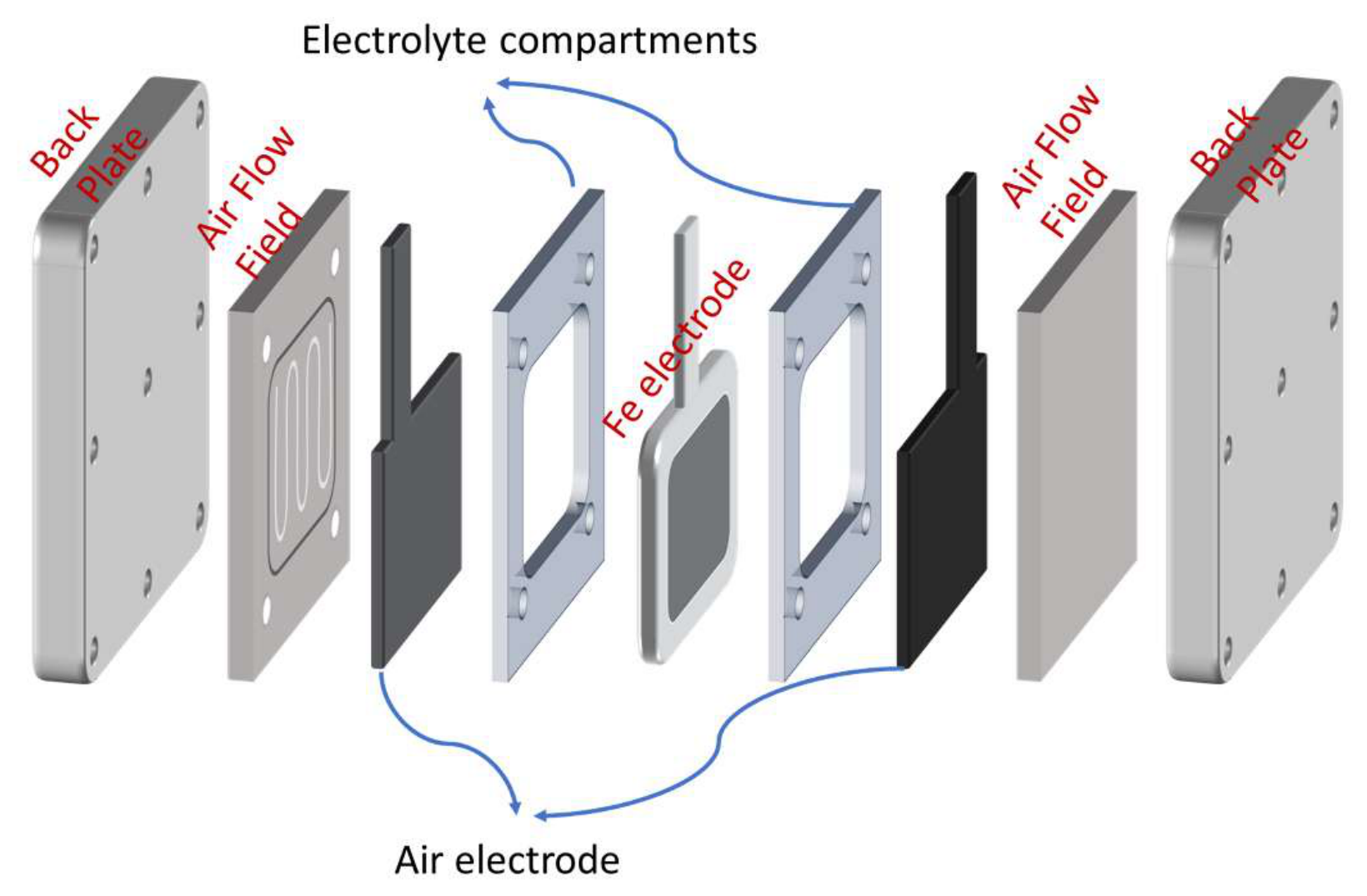
Figure 2.
Challenges and possible solutions for IABs.
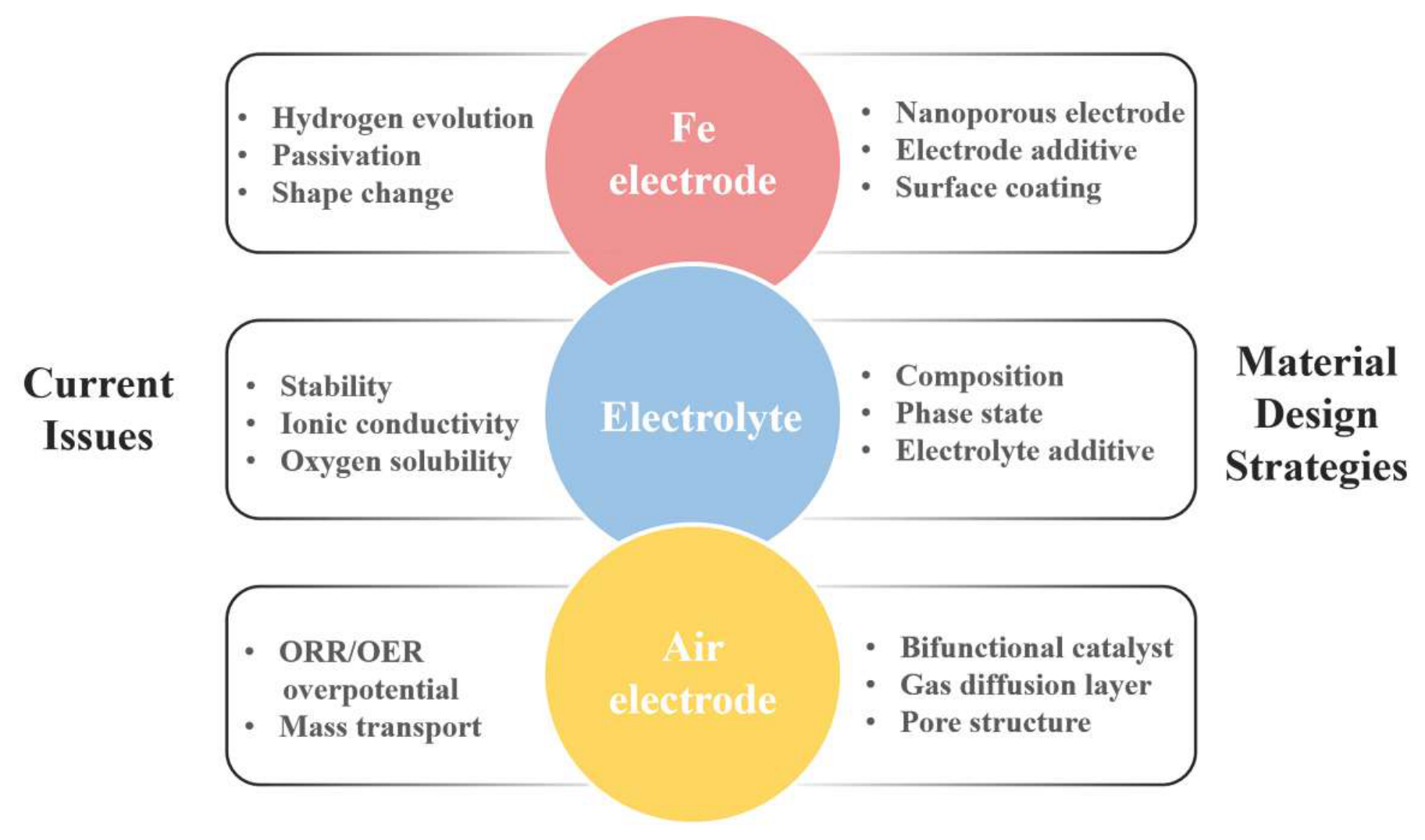
Figure 3.
Schematic diagram of the working principle of IABs.
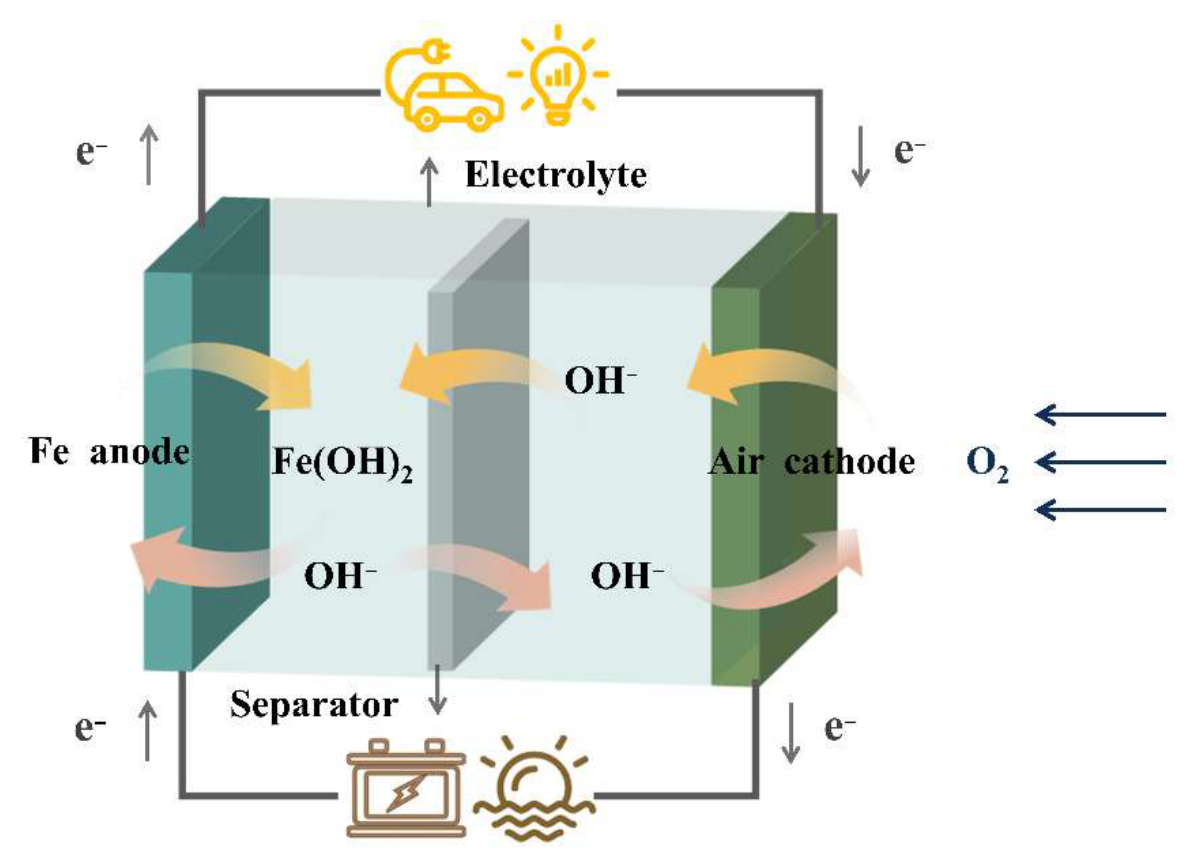
Figure 4.
Development history of IABs.
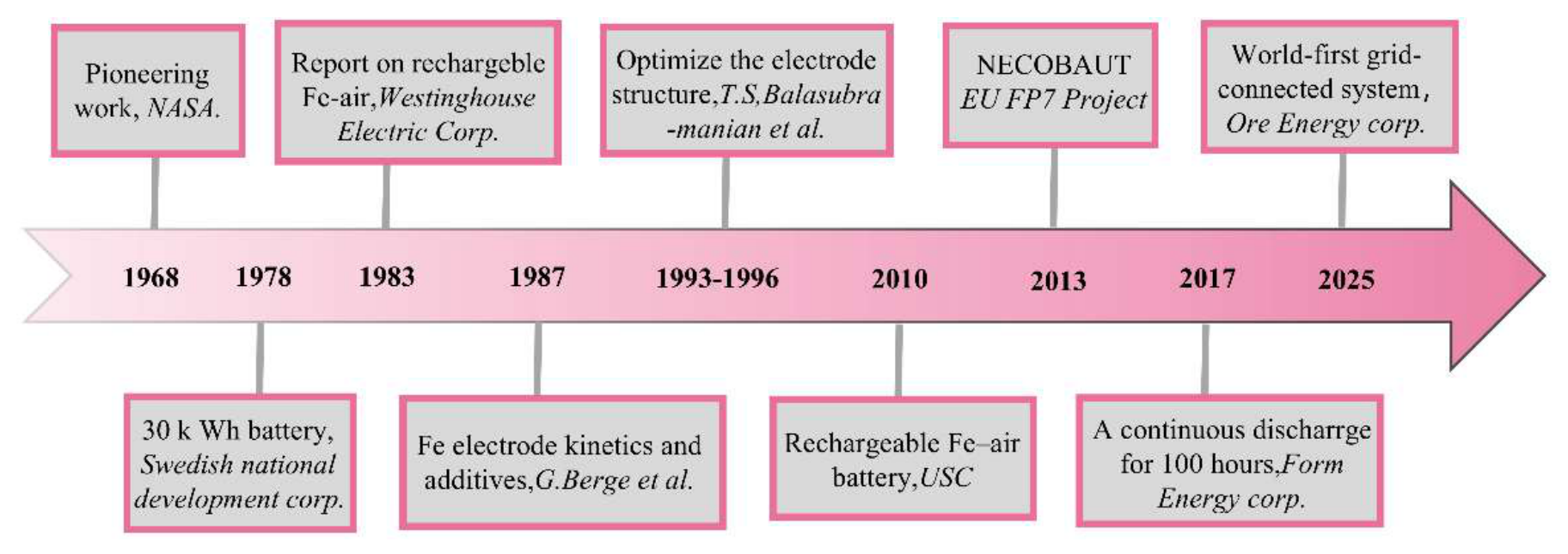
Figure 5.
Schematic diagram of the working mechanism of electrolyte additives.
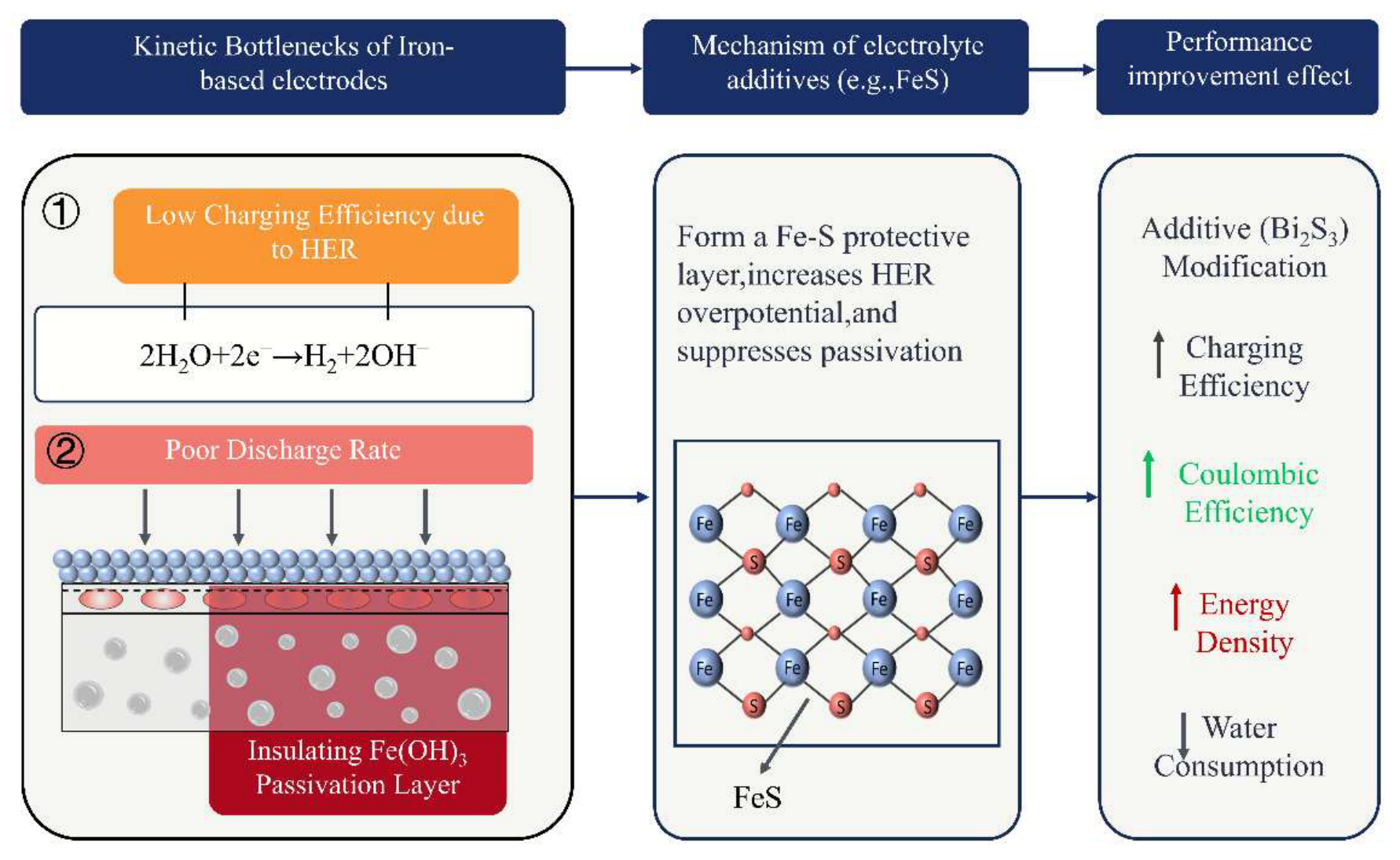
Figure 6.
Comparison of (a) charging efficiency and (b) relative hydrogen evolution rate of the iron electrode with and without Bi2S3 electrolyte additive.
Figure 6.
Comparison of (a) charging efficiency and (b) relative hydrogen evolution rate of the iron electrode with and without Bi2S3 electrolyte additive.
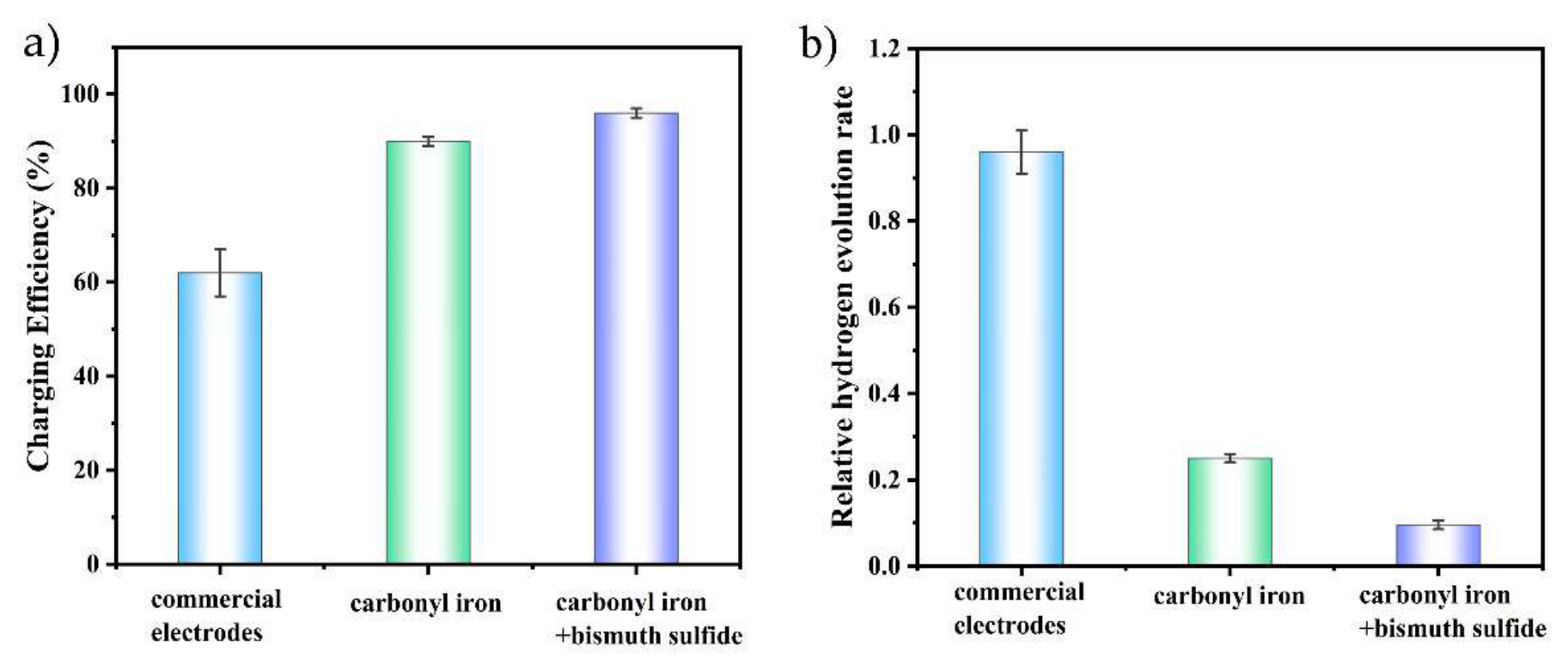
Figure 7.
Key optimization strategies for IABs anodes: nanostructure engineering and sulfide interface modification.
Figure 7.
Key optimization strategies for IABs anodes: nanostructure engineering and sulfide interface modification.
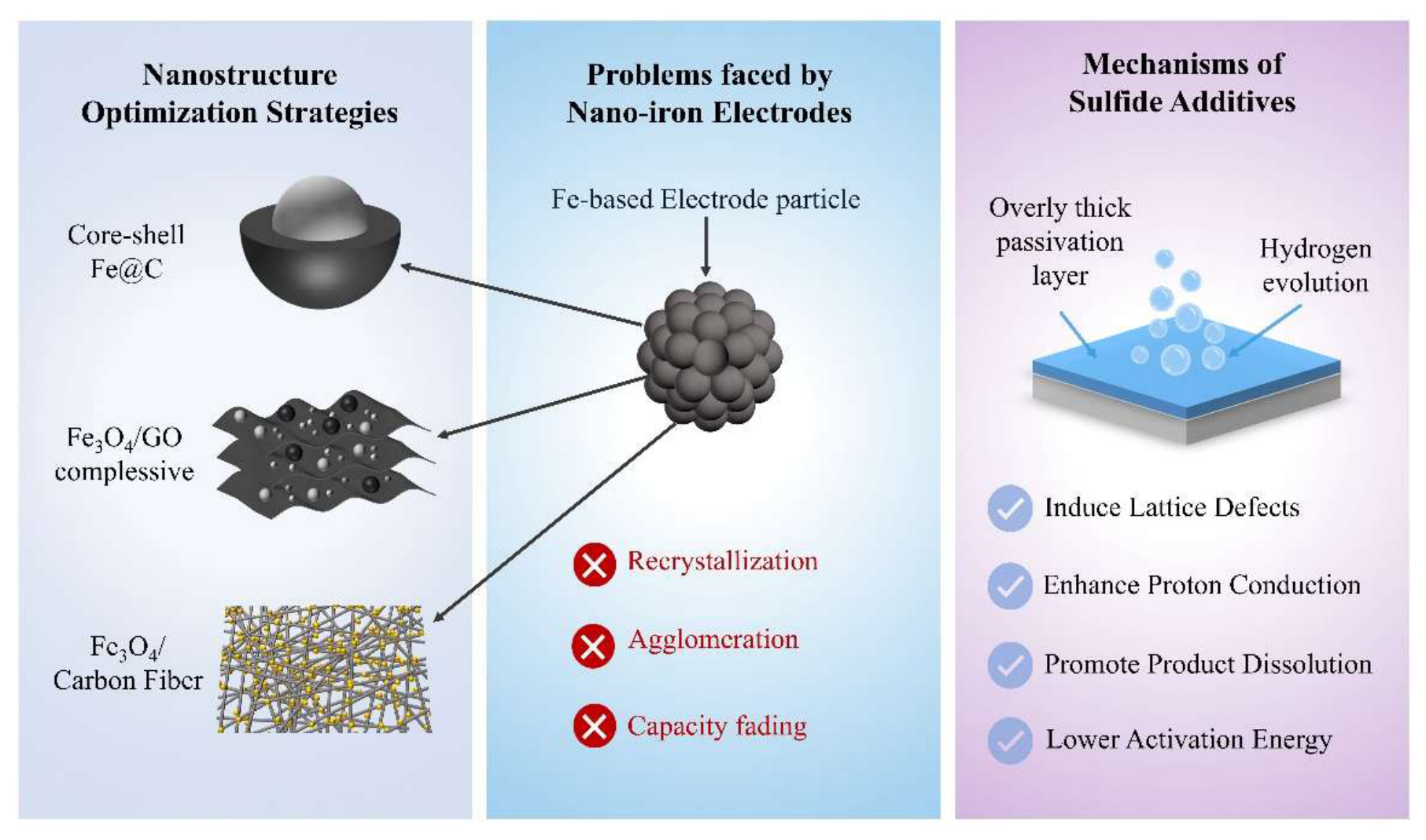
Figure 8.
Design principles and material system of bifunctional catalysts for MABs cathodes.
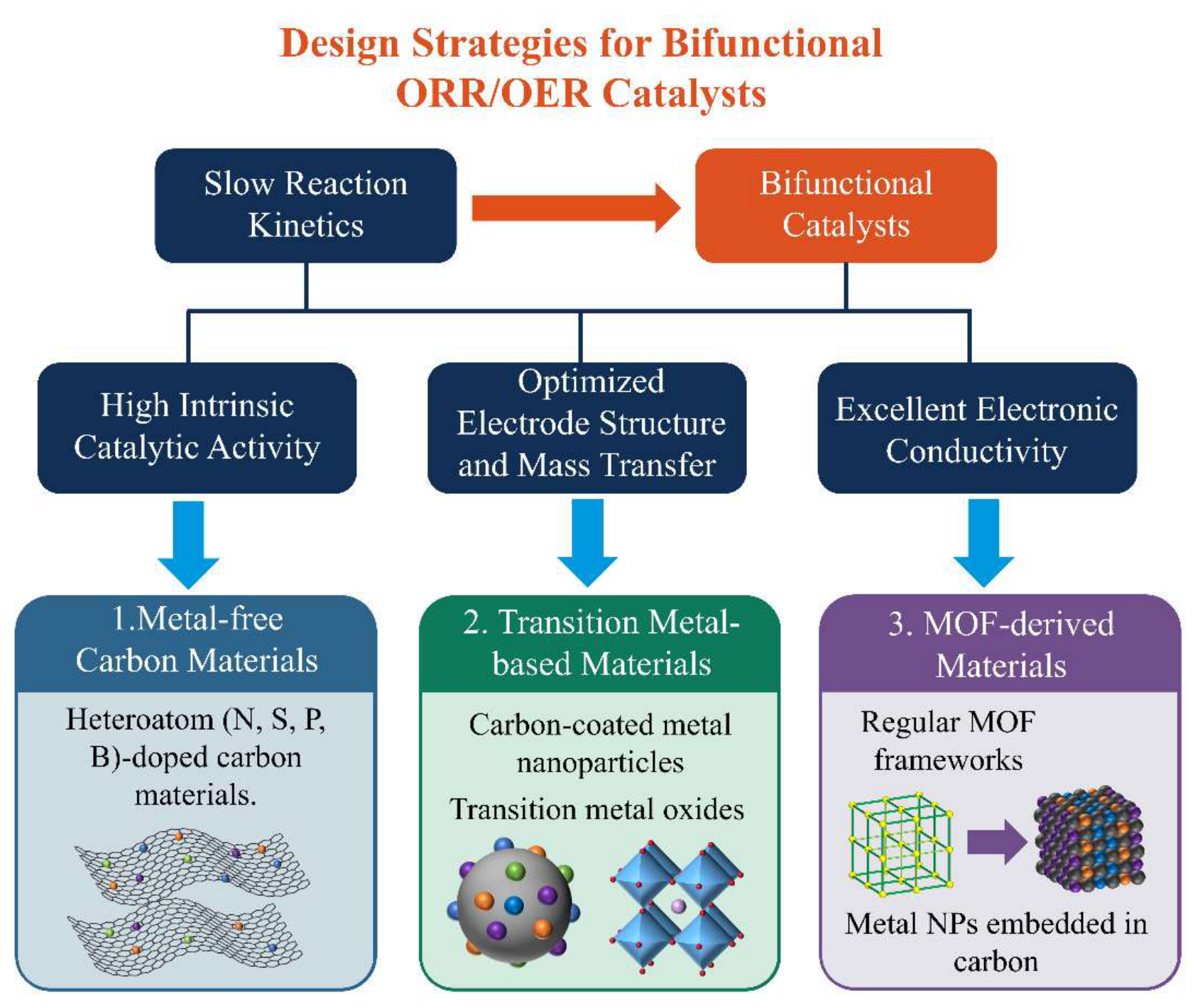
Figure 9.
Bifunctional catalyst candidates for the air cathode in MABs.
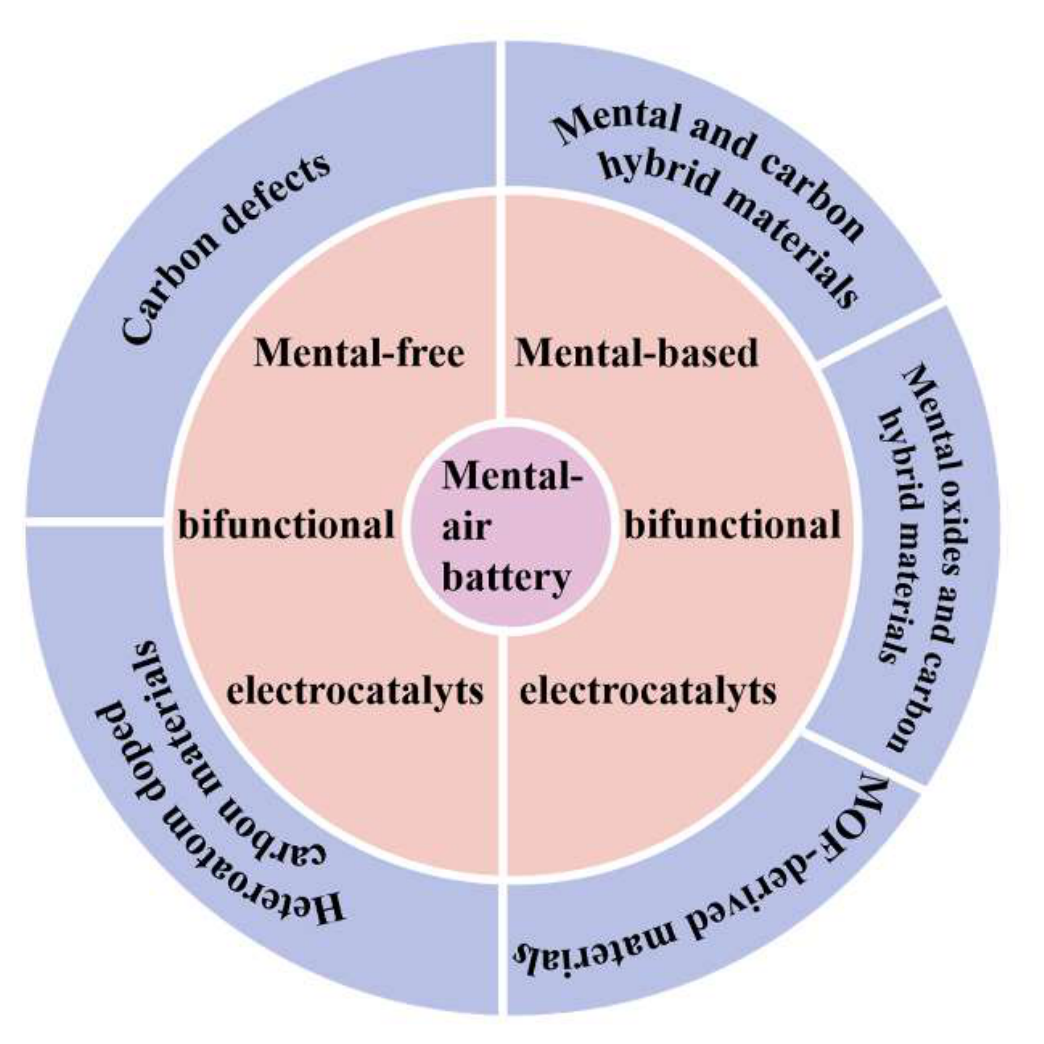
Figure 10.
(a) Changes in installed capacity of wind and solar power from 2014 to 2024. (b) China's installed power generation capacity mix by energy source, 2025. (The data are sourced from the official website of the International Renewable Energy Agency and National Energy Administration).
Figure 10.
(a) Changes in installed capacity of wind and solar power from 2014 to 2024. (b) China's installed power generation capacity mix by energy source, 2025. (The data are sourced from the official website of the International Renewable Energy Agency and National Energy Administration).
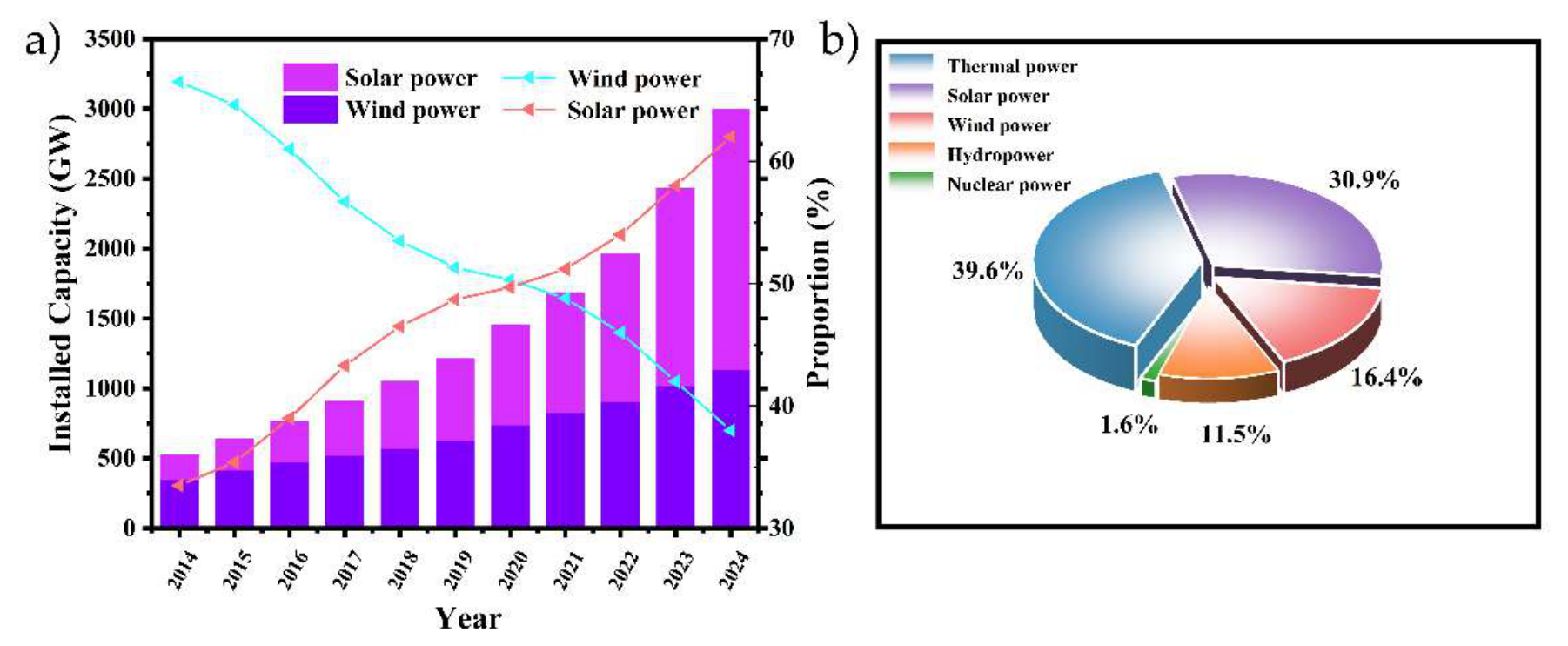
Figure 11.
Schematic diagram of the cycle of renewable energy storage and application via air batteries.
Figure 11.
Schematic diagram of the cycle of renewable energy storage and application via air batteries.
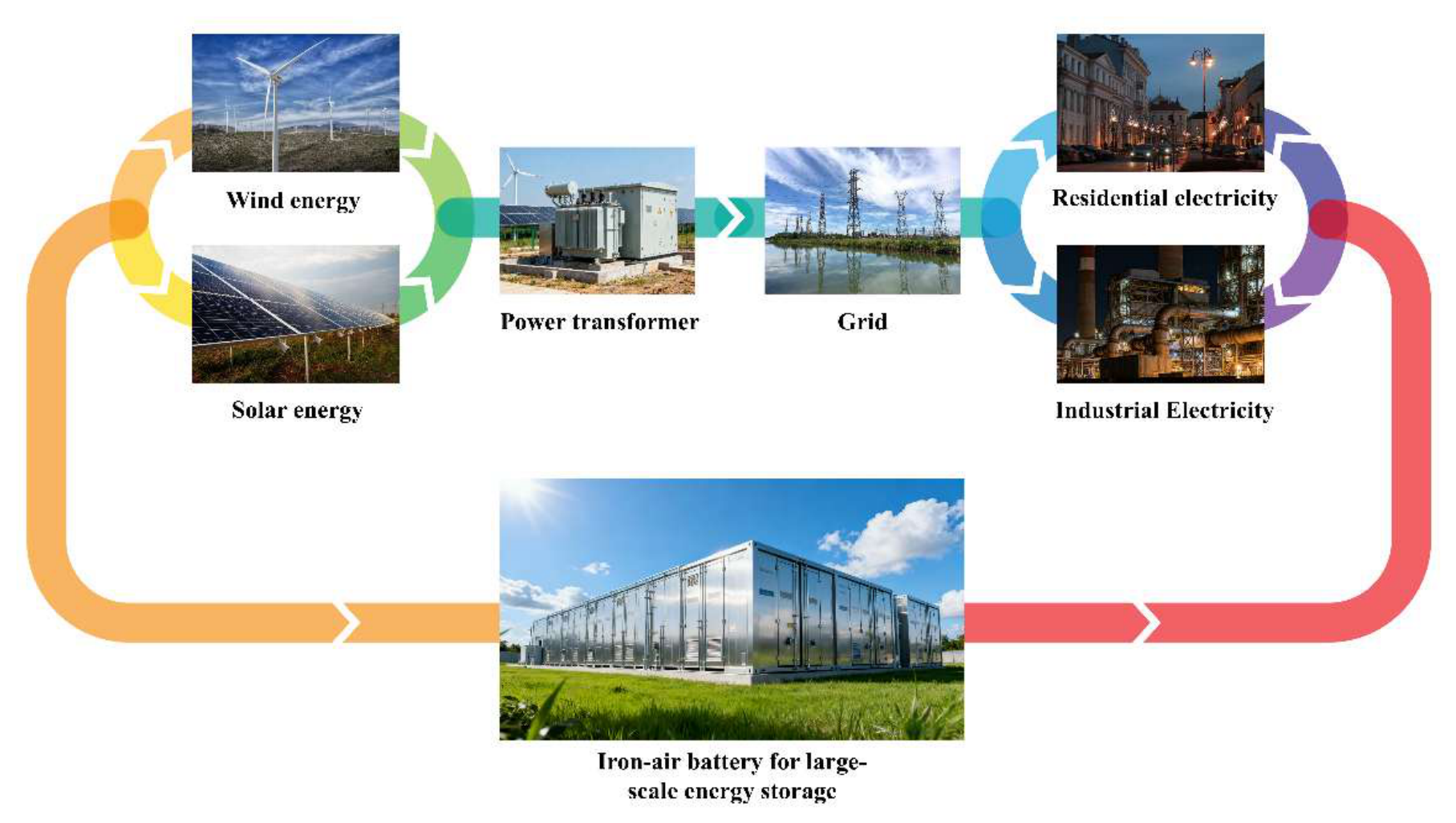
Figure 12.
Demonstration flowchart of "green power + EAF steelmaking".
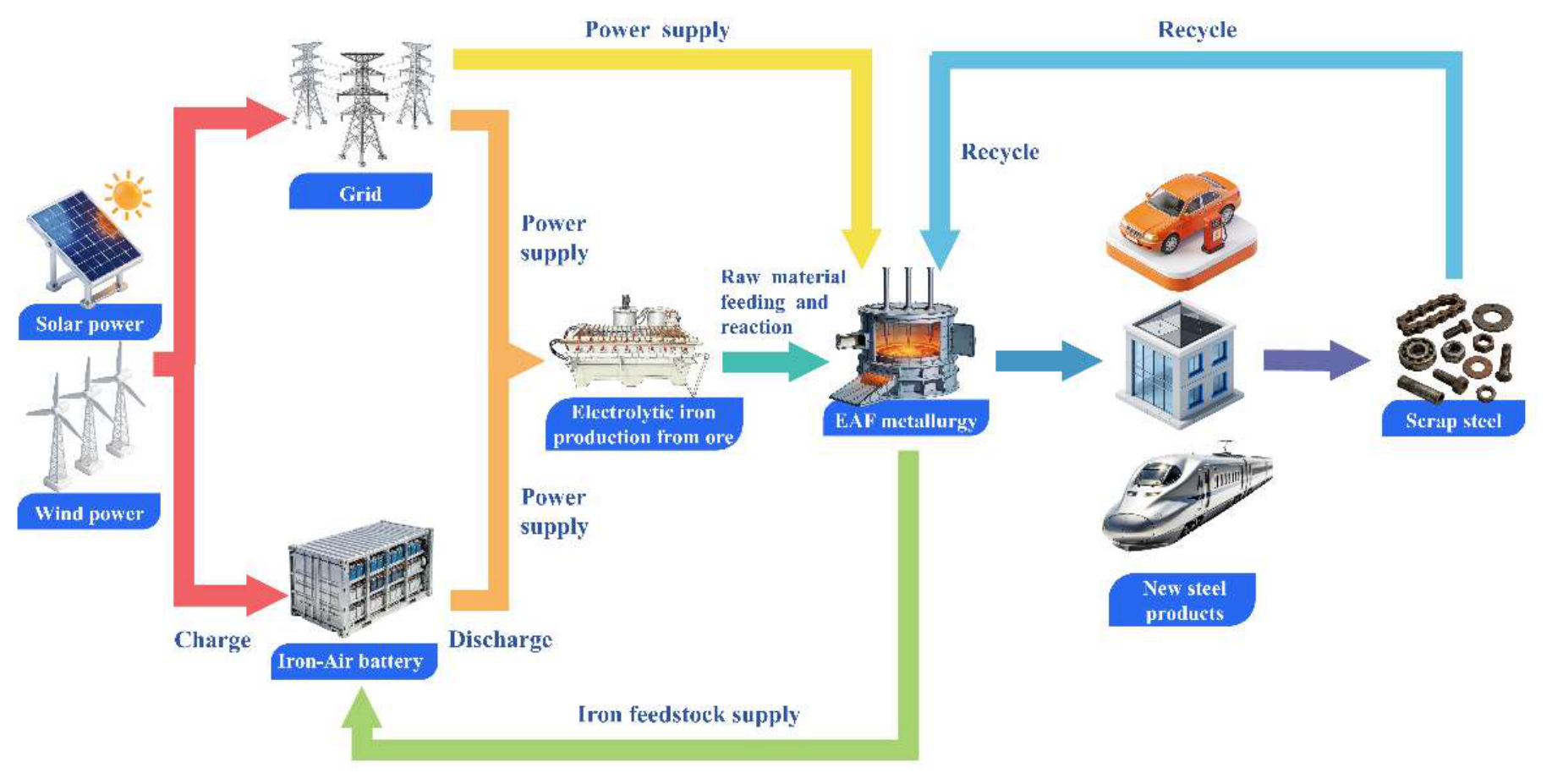
Figure 13.
SEM images of iron powders with different particle sizes: (a) 0–15 µm. (b) 15–30 µm. (c) 30–45 µm. (d) 45–60 µm. (e) XRD patterns of iron powders with different particle sizes.
Figure 13.
SEM images of iron powders with different particle sizes: (a) 0–15 µm. (b) 15–30 µm. (c) 30–45 µm. (d) 45–60 µm. (e) XRD patterns of iron powders with different particle sizes.
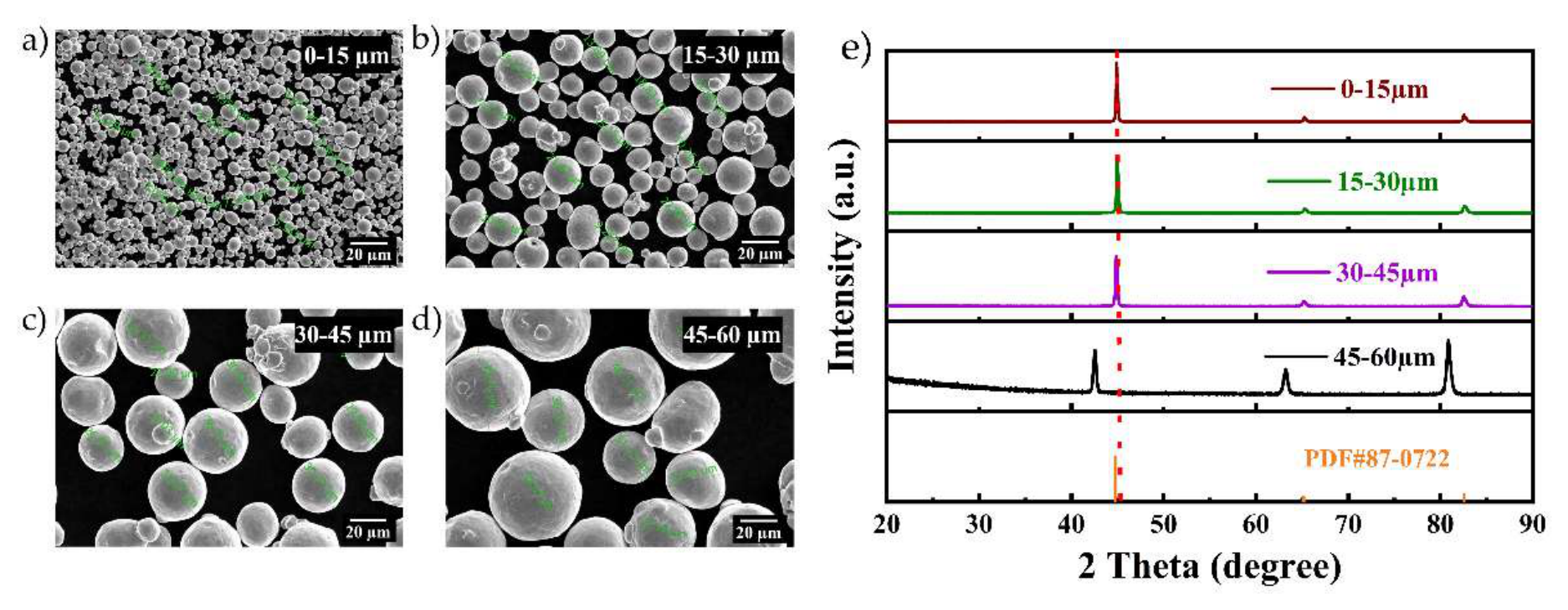
Figure 14.
(a) IAB prototype and (b) test components.
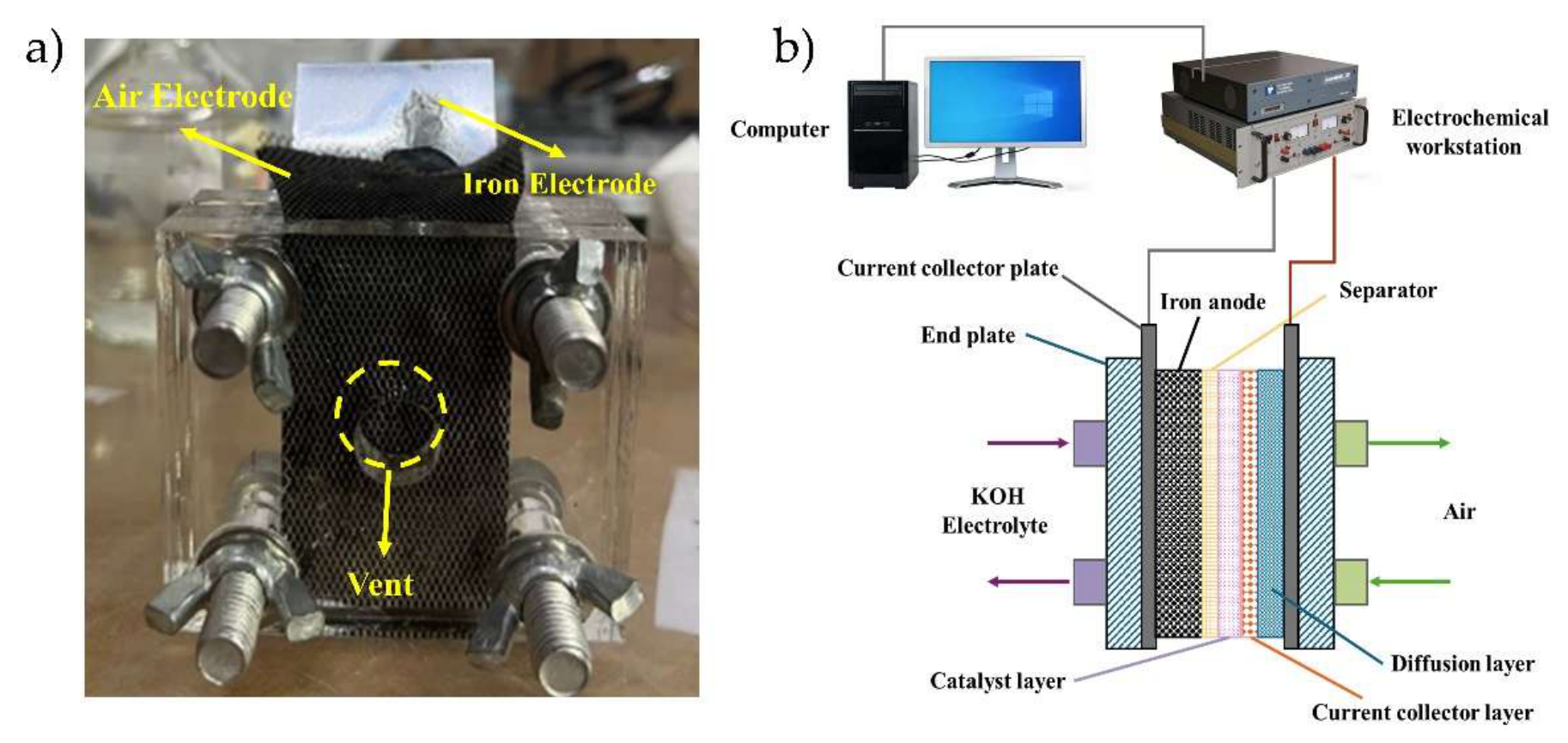
Figure 15.
(a–l) CV curves of iron powder with different particle sizes in different electrolytes.
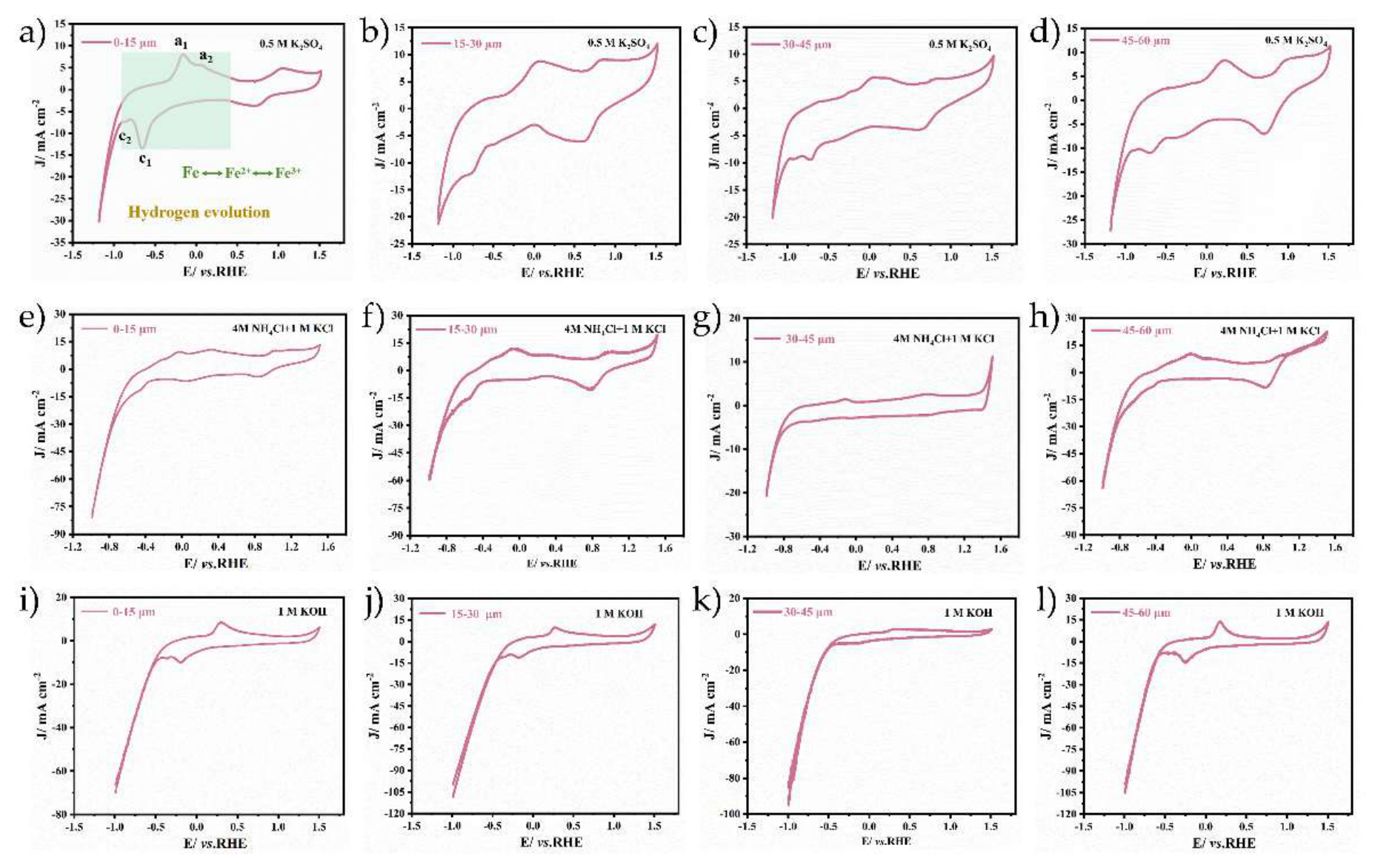
Figure 16.
(a,b) Time-voltage curves of iron powder (30–45 μm) in different electrolytes. (c) Main problems encountered during the cycle process of iron anode.
Figure 16.
(a,b) Time-voltage curves of iron powder (30–45 μm) in different electrolytes. (c) Main problems encountered during the cycle process of iron anode.
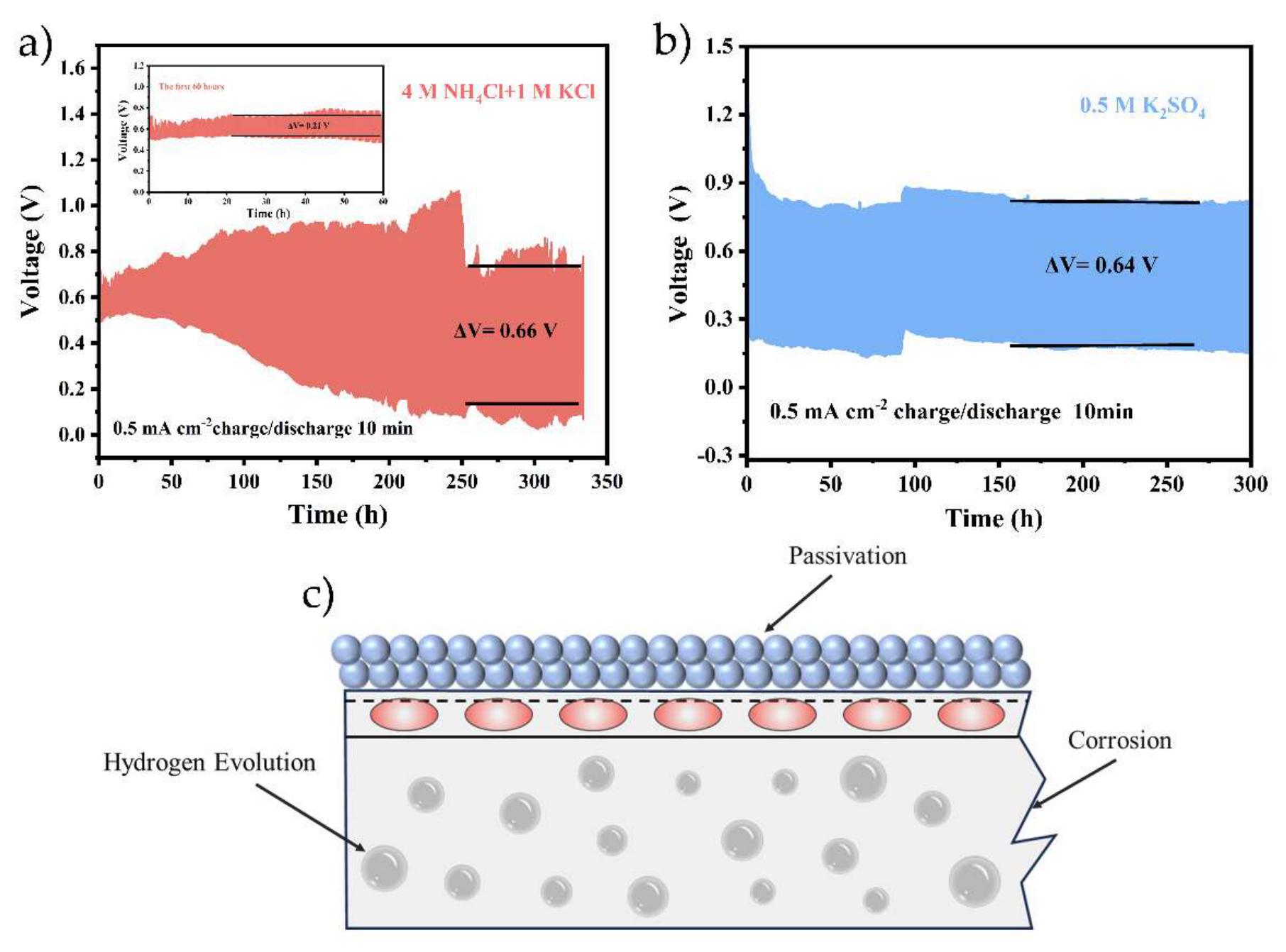
Figure 17.
Comparison of electrochemical performance of iron powder in electrolytes with and without Na2S addition: (a,b) Time-voltage curves. (c) CV curves (50 mV s−1).
Figure 17.
Comparison of electrochemical performance of iron powder in electrolytes with and without Na2S addition: (a,b) Time-voltage curves. (c) CV curves (50 mV s−1).
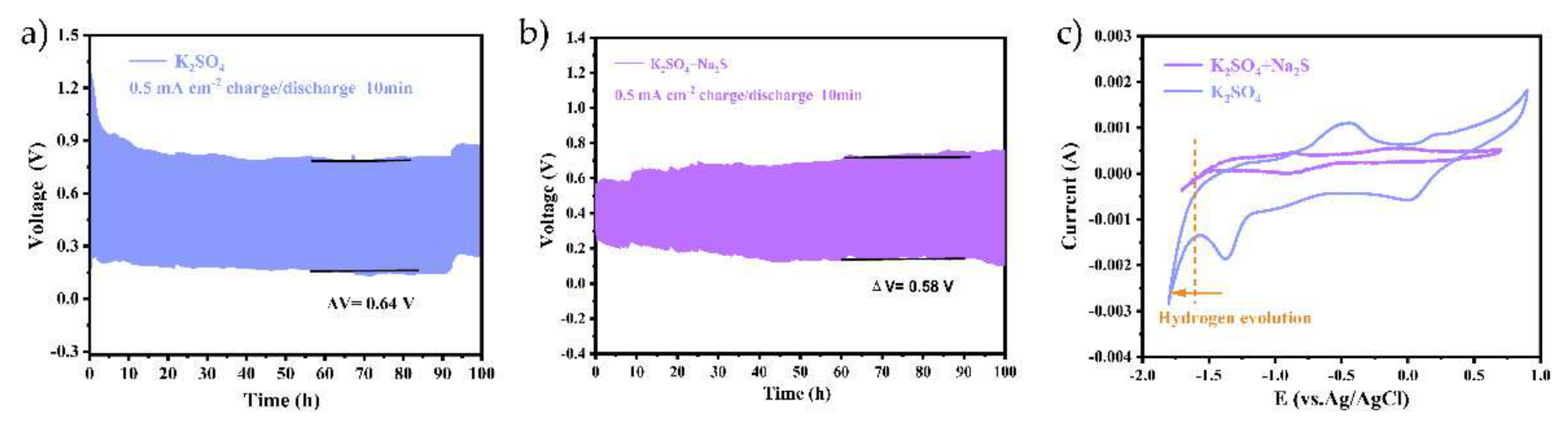
Figure 18.
Schematic diagram of a five-cell series connection structure.
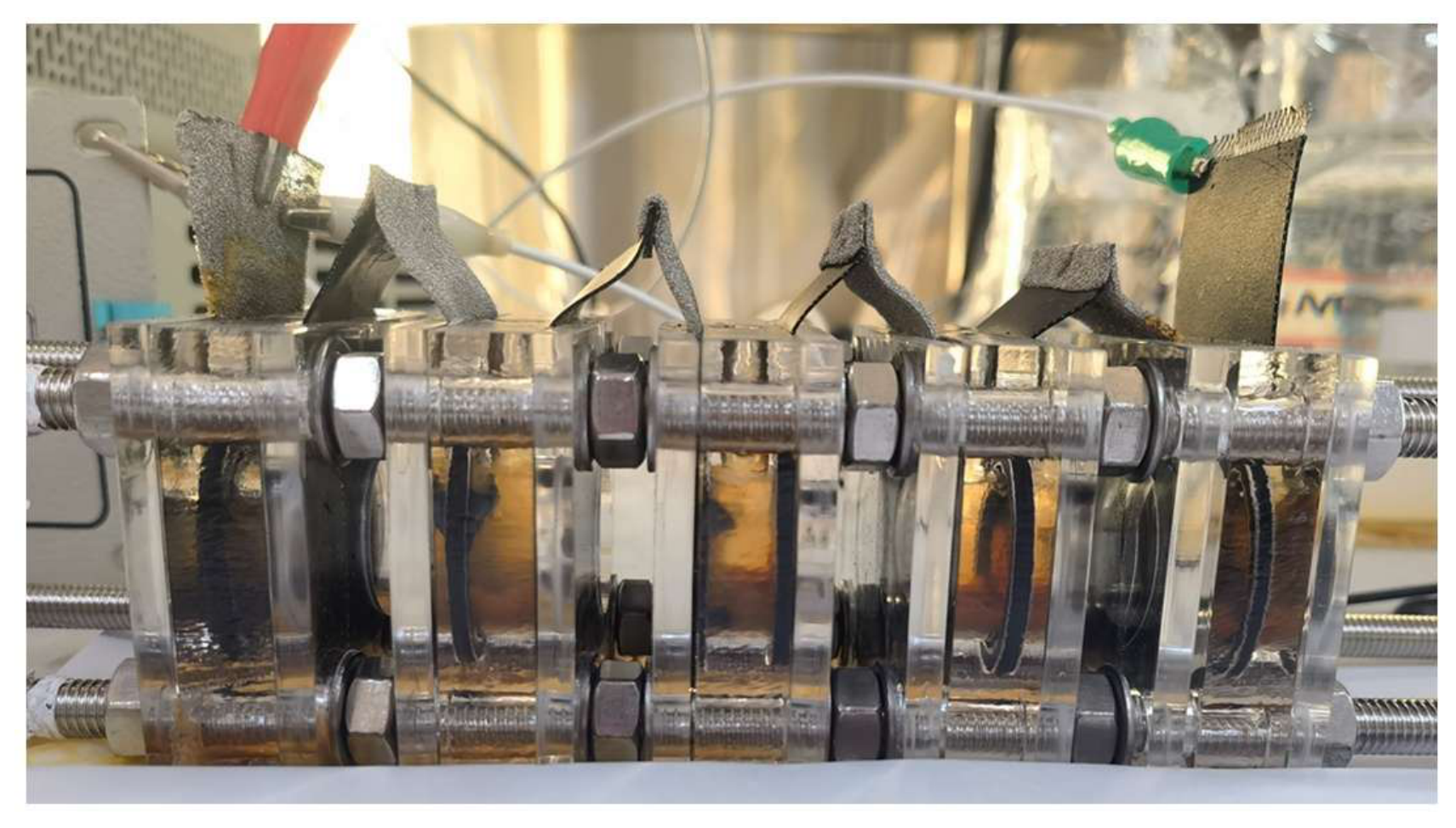
Figure 19.
(a−f) OCV of the battery pack and individual cells. (g) Discharge polarization curve and (h) power curve of an IAB. (i) Schematic diagram of an IAB pack powering an LED light.
Figure 19.
(a−f) OCV of the battery pack and individual cells. (g) Discharge polarization curve and (h) power curve of an IAB. (i) Schematic diagram of an IAB pack powering an LED light.
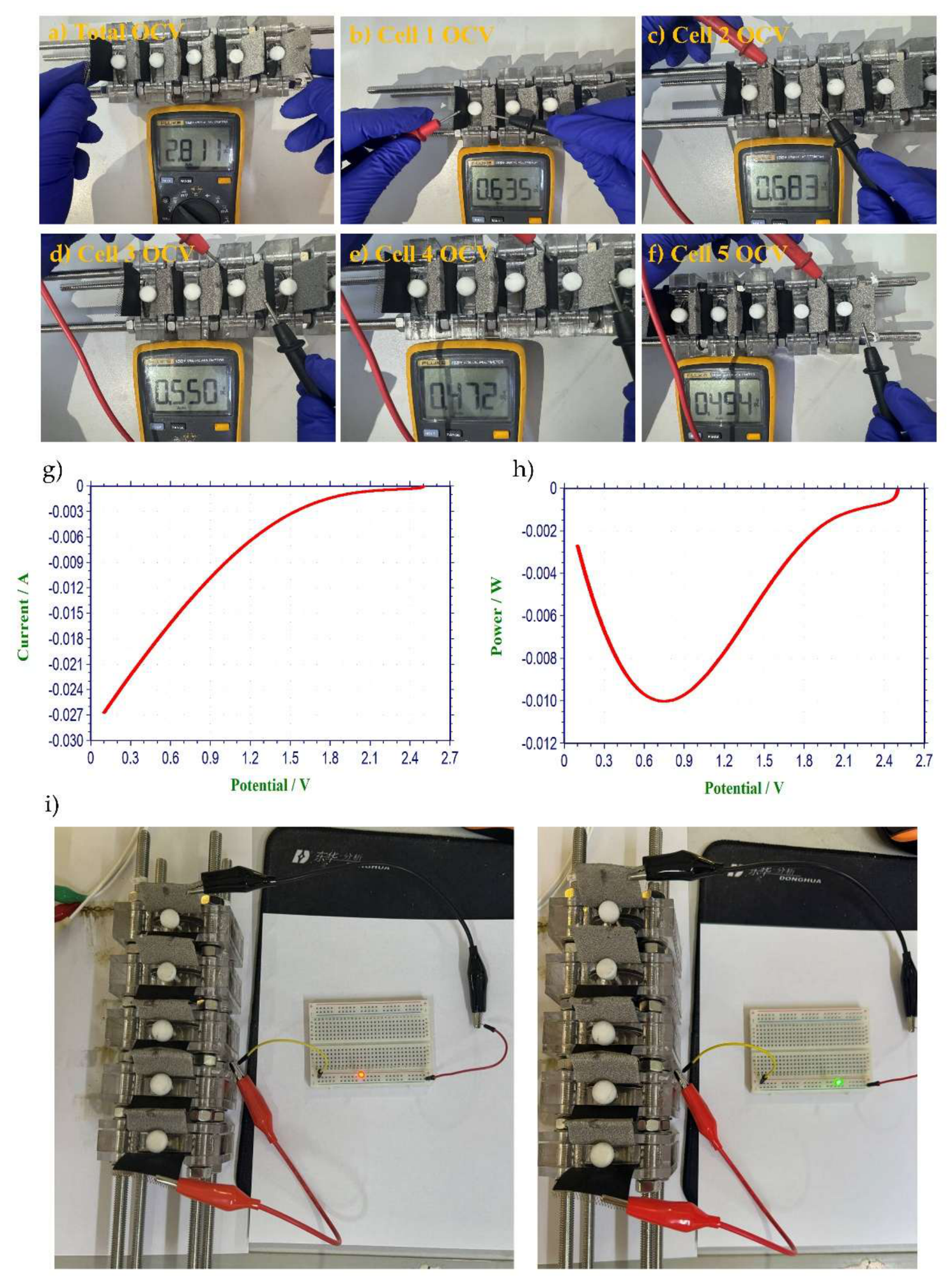

Table 1.
Performance comparison of several types of iron-based batteries.
| Battery | Ni–Fe Battery | All-Iron Flow Battery | IAB |
|---|---|---|---|
| Working Principle | Reversible reaction between Ni(OH)2 cathode and Fe anode in alkaline electrolyte | Aqueous flow battery cycling based on the Fe2+/Fe3+(cathode) and Fe2+/Fe0(anode) | Reversible redox reaction of Fe anode with oxygen in alkaline or neutral electrolyte |
| Core Advantage | Long cycle life; High safety; Low cost and environmental friendliness | Suitable for large-scale energy storage; High safety; Low cost | LDES; High safety; Low cost and environmental friendliness |
| Main Limitations | Low energy density and power density; Low charging efficiency and high self-discharge rate | Low energy density; Hydrogen evolution; Dendrite growth; Fe3+ hydrolysis/precipitation | Low energy conversion efficiency; Low energy density and power density; Hydrogen evolution; Passivation |
| References | [15,16] | [17,18] | [19,20] |
1 IAB: iron-air battery. 2 LDES: long-duration energy storage.
Table 2.
Performance comparison of different types of MABs.
| Battery | Theoretical cell voltage (vs. SHE) [V] |
Theoretical energy density [Wh kg−1] |
Practical specific energy density [Wh kg−1] |
Number of cycles | Cost [US$ (kWh)−1] |
|---|---|---|---|---|---|
| Fe–air | 1.28 | 764 | 50–75 | 2000 (expected) |
<100 |
| Zn–air | 1.65 | 1080 | 200 | NA | 100–200 |
| Li–air | 3.10 | 13300 | 2000 | NA | 300–600 |
| Mg–air | 3.09 | 6800 | 700 | NA | 200–400 |
| Al–air | 2.71 | 8100 | 400 | NA | NA |
1 NA: data not available or not applicable.
Table 3.
Performance comparison of IABs in different electrolyte systems.
| System | Key Characteristics | Main Challenges |
|---|---|---|
| Alkaline electrolyte (e.g., KOH) |
Low iron corrosion High ionic conductivity |
Electrodes prone to passivation Severe carbonate deposition |
| Acidic electrolyte (e.g., H2SO4) |
Avoids carbonate issues High cycling stability |
Severe iron corrosion Lack of efficient acid-resistant catalysts |
| Neutral electrolyte (e.g.,K2SO4) | Low corrosion Fewer side reactions |
Holds broad application potential |
Disclaimer/Publisher’s Note: The statements, opinions and data contained in all publications are solely those of the individual author(s) and contributor(s) and not of MDPI and/or the editor(s). MDPI and/or the editor(s) disclaim responsibility for any injury to people or property resulting from any ideas, methods, instructions or products referred to in the content. |
© 2026 by the authors. Licensee MDPI, Basel, Switzerland. This article is an open access article distributed under the terms and conditions of the Creative Commons Attribution (CC BY) license (http://creativecommons.org/licenses/by/4.0/).
Copyright: This open access article is published under a Creative Commons CC BY 4.0 license, which permit the free download, distribution, and reuse, provided that the author and preprint are cited in any reuse.