

Submitted:
22 July 2026
Posted:
23 July 2026
You are already at the latest version
Abstract
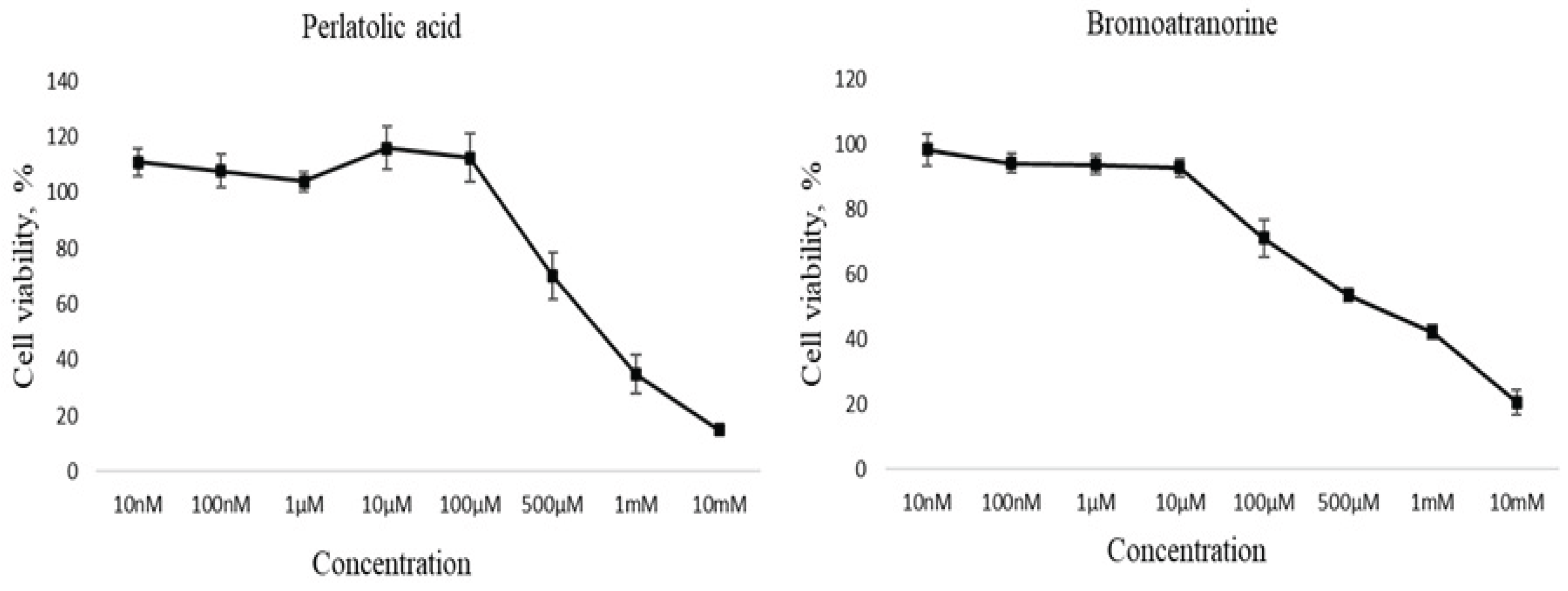
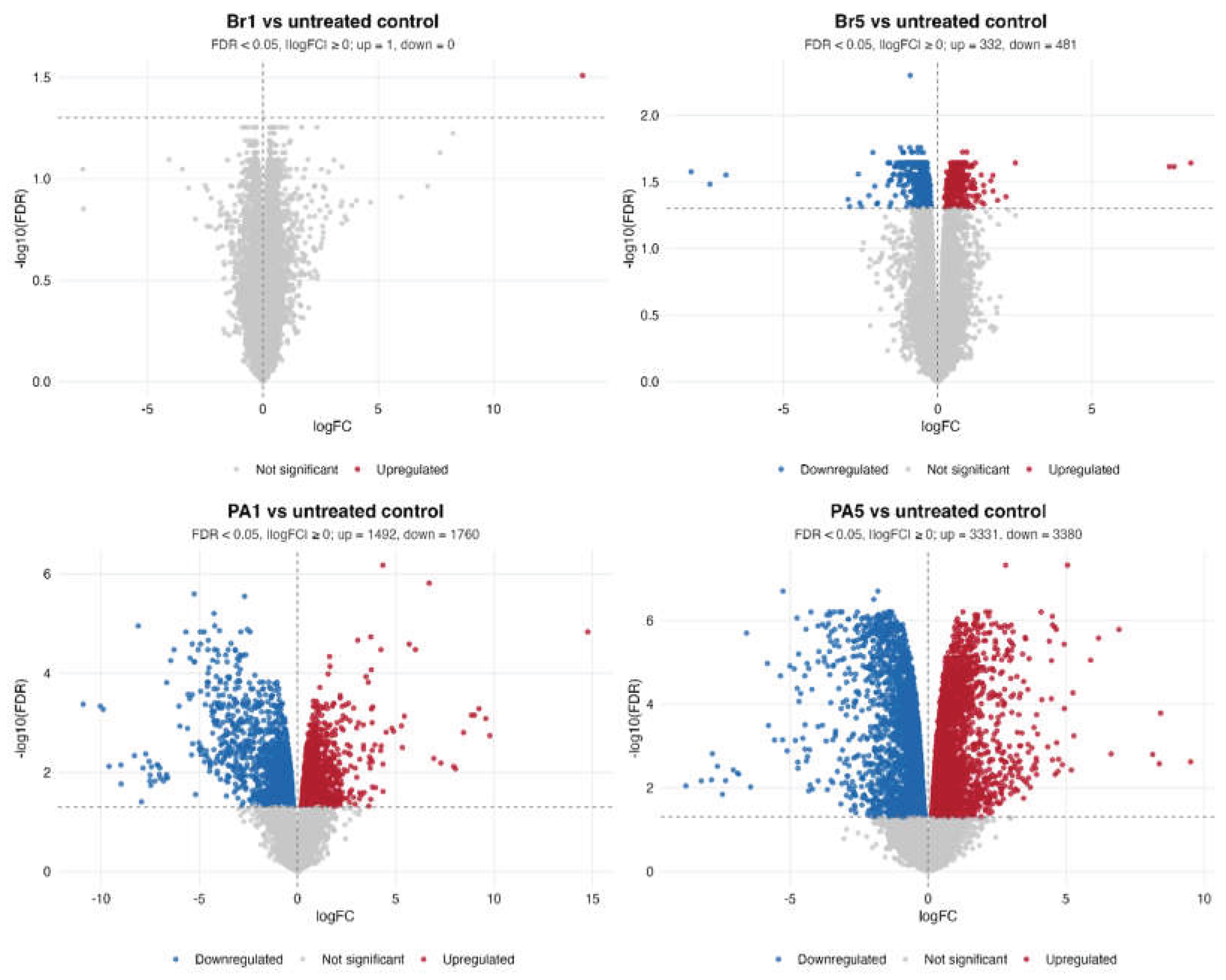
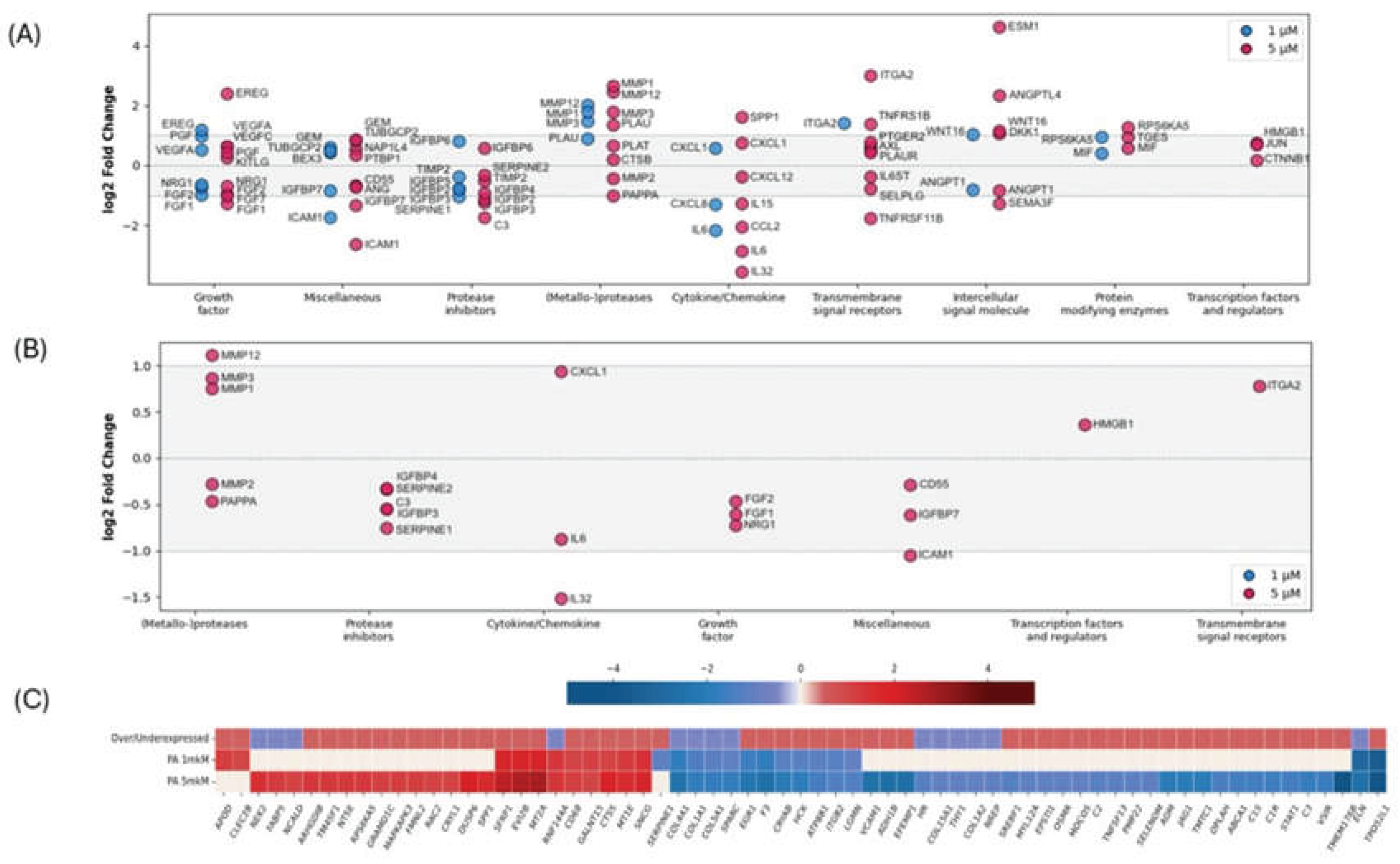
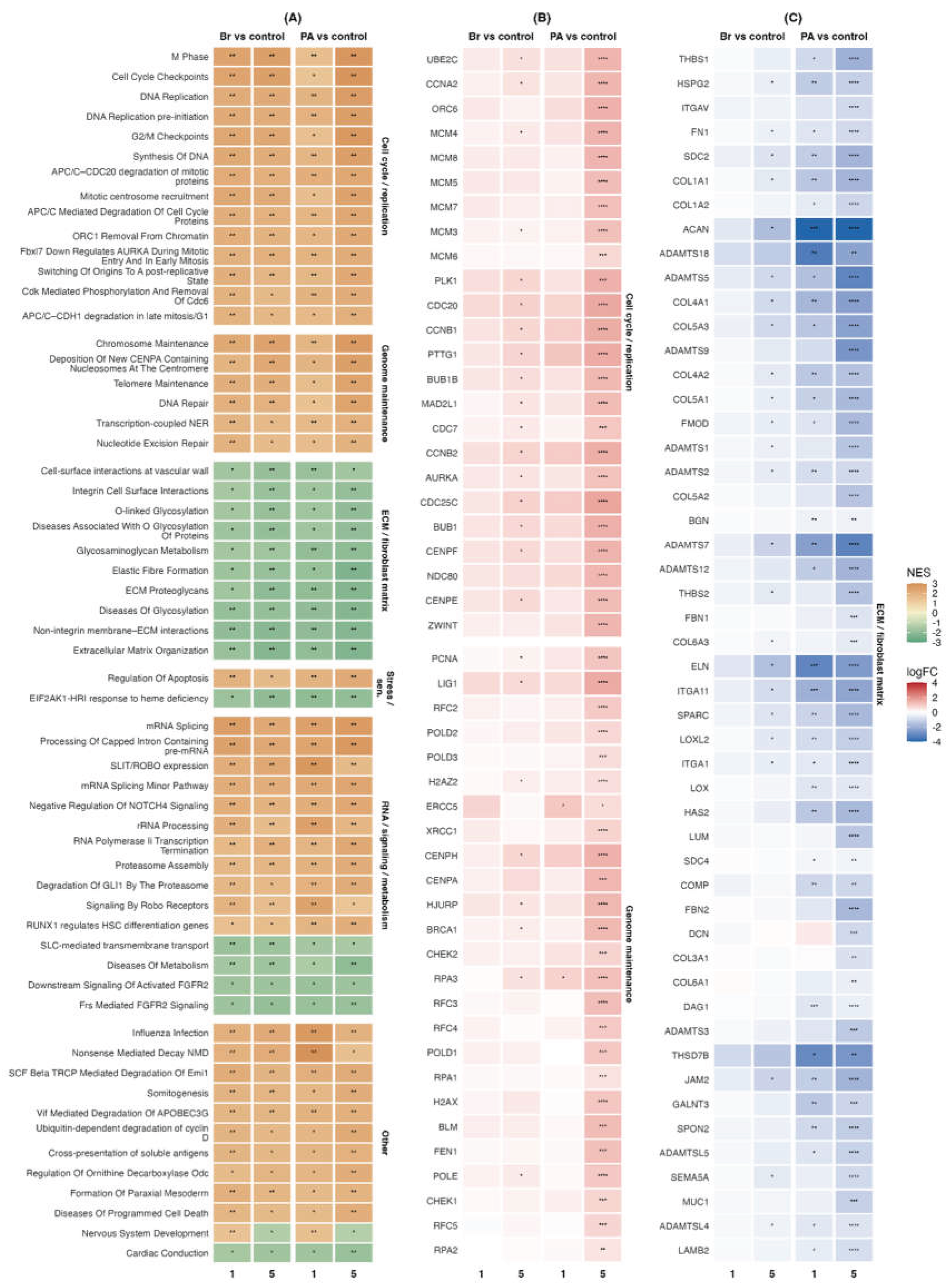
Background: Secondary metabolites of lichens have a wide range of biological activity, including geroprotective activity, but their complex effect on the human transcriptome remains poorly understood. The aim of the study was to evaluate the effects of perlatolic acid (PA) and bromoatranorine (Br) on the transcriptomic profile of primary human dermal fibroblasts (HDFs) to identify key target genes and signaling pathways. Methods and Results: HDFs were treated with PA and Br at concentrations of 1µM and 5µM, followed by analysis by high-throughput RNA sequencing (RNA-seq). Using the SenMayo panel, the GeneAge and MatrisomeDB databases, it was shown that PA leads to a significant decrease in the expression of key SASP factors: IL6, CXCL8, CCL2, IL32, and IGFBP family genes. Both compounds led to upregulation of matrix metalloproteinase genes (MMP1, MMP3, MMP12), which, in the case of PA, was accompanied by a predominant suppression of the expression of structural genes of the core matrisome. Based on the Gene Set Enrichment Analysis (GSEA), we identified pathways, such as Cell cycle/replication, genome maintenance, ECM/fibroblast matrix, and RNA/signaling/metabolism, which were significantly modulated by exposure to PA and, to a lesser extent, Br. Conclusions: The study describes for the first time the full-transcriptomic landscape of the response of fibroblasts to lichen depsides. PA acts as an active modulator of genetic networks, stimulating proliferative cascades and remodeling of the matrix. The identified targets open up prospects for the use of PA in regenerative biomedicine, while Br has a limited effect on the transcriptome.
Keywords:
1. Introduction
2. Results
2.1. The Effect of PA and Br on the Viability of Primary Human Fibroblasts
2.2. Identification of Differentially Expressed Genes (DEGs)
2.3. GSEA-Based Pathway Enrichment Analysis
3. Discussion
4. Materials and Methods
4.1. Cell Culture
4.2. Cell Viability Assay (MTT Assay)
4.3. RNA Isolation and Sequencing
4.4. Bioinformatic Analysis
Supplementary Materials
Author Contributions
Funding
Informed Consent Statement
Data Availability Statement
Acknowledgments
Conflicts of Interest
Abbreviations
| PA | Perlatolic acid |
| Br | Bromoatranorine |
| HDFs | Primary human dermal fibroblasts |
| RNA-seq | RNA sequencing |
| SASP | Senescence-Associated Secretory Phenotype |
| GSEA | Gene Set Enrichment Analysis |
| MTT | 3-(4,5-dimethylthiazol-2-yl)-2,5-diphenyltetrazolium bromide |
| DEGs | differentially expressed genes |
| lnc RNAs | long non-coding RNAs |
References
- FRANCESCHI, C.; BONAFÈ, M.; VALENSIN, S.; OLIVIERI, F.; DE LUCA, M.; OTTAVIANI, E.; DE BENEDICTIS, G. Inflamm-aging: An Evolutionary Perspective on Immunosenescence. Ann. N. Y. Acad. Sci. 2000, 908, 244–254. [Google Scholar] [CrossRef]
- López-Otín, C.; Blasco, M.A.; Partridge, L.; Serrano, M.; Kroemer, G. Hallmarks of Aging: An Expanding Universe. Cell 2023, 186, 243–278. [Google Scholar] [CrossRef]
- Moskalev, A.; Chernyagina, E.; de Magalhães, J.P.; Barardo, D.; Thoppil, H.; Shaposhnikov, M.; Budovsky, A.; Fraifeld, V.E.; Garazha, A.; Tsvetkov, V.; et al. Geroprotectors.Org: A New, Structured and Curated Database of Current Therapeutic Interventions in Aging and Age-Related Disease. Aging 2015, 7, 616–628. [Google Scholar] [CrossRef] [PubMed]
- Moskalev, A.; Guvatova, Z.; Lopes, I.D.A.; Beckett, C.W.; Kennedy, B.K.; De Magalhaes, J.P.; Makarov, A.A. Targeting Aging Mechanisms: Pharmacological Perspectives. Trends Endocrinol. Metab. 2022, 33, 266–280. [Google Scholar] [CrossRef] [PubMed]
- Moskalev, A.; Chernyagina, E.; Tsvetkov, V.; Fedintsev, A.; Shaposhnikov, M.; Krut’ko, V.; Zhavoronkov, A.; Kennedy, B.K. Developing Criteria for Evaluation of Geroprotectors as a Key Stage toward Translation to the Clinic. Aging Cell 2016, 15, 407–415. [Google Scholar] [CrossRef] [PubMed]
- Ren, M.; Jiang, S.; Wang, Y.; Pan, X.; Pan, F.; Wei, X. Discovery and Excavation of Lichen Bioactive Natural Products. Front. Microbiol. 2023, 14. [Google Scholar] [CrossRef] [PubMed]
- Carlos, I.Z.; Quilles, M.B.; Carli, C.B.A.; Maia, D.C.G.; Benzatti, F.P.; Lopes, T.I.B.; Gianini, A.S.; Brum, R.L.; Vilegas, W.; dos Santos, L.C.; et al. Lichen Metabolites Modulate Hydrogen Peroxide and Nitric Oxide in Mouse Macrophages. Z. Für Naturforschung C 2009, 64, 664–672. [Google Scholar] [CrossRef] [PubMed]
- Khurana, P.; Jachak, S.M. Chemistry and Biology of Microsomal Prostaglandin E 2 Synthase-1 (MPGES-1) Inhibitors as Novel Anti-Inflammatory Agents: Recent Developments and Current Status. RSC Adv. 2016, 6, 28343–28369. [Google Scholar] [CrossRef]
- Oettl, S.K.; Gerstmeier, J.; Khan, S.Y.; Wiechmann, K.; Bauer, J.; Atanasov, A.G.; Malainer, C.; Awad, E.M.; Uhrin, P.; Heiss, E.H.; et al. Imbricaric Acid and Perlatolic Acid: Multi-Targeting Anti-Inflammatory Depsides from Cetrelia Monachorum. PLoS ONE 2013, 8, e76929. [Google Scholar] [CrossRef] [PubMed]
- Gaikwad, S.; Verma, N.; Sharma, B.O.; Behera, B.C. Growth Promoting Effects of Some Lichen Metabolites on Probiotic Bacteria. J. Food Sci. Technol. 2014, 51, 2624–2631. [Google Scholar] [CrossRef] [PubMed]
- Wang, H.; Lin, X.; Huang, G.; Zhou, R.; Lei, S.; Ren, J.; Zhang, K.; Feng, C.; Wu, Y.; Tang, W. Atranorin Inhibits NLRP3 Inflammasome Activation by Targeting ASC and Protects NLRP3 Inflammasome-Driven Diseases. Acta Pharmacol. Sin. 2023, 44, 1687–1700. [Google Scholar] [CrossRef] [PubMed]
- Duong, T.-H.; Paramita Devi, A.; Tran, N.-M.-A.; Phan, H.-V.-T.; Huynh, N.-V.; Sichaem, J.; Tran, H.-D.; Alam, M.; Nguyen, T.-P.; Nguyen, H.-H.; et al. Synthesis, α-Glucosidase Inhibition, and Molecular Docking Studies of Novel N-Substituted Hydrazide Derivatives of Atranorin as Antidiabetic Agents. Bioorg. Med. Chem. Lett. 2020, 30, 127359. [Google Scholar] [CrossRef] [PubMed]
- Desmarets, L.; Millot, M.; Chollet-Krugler, M.; Boustie, J.; Camuzet, C.; François, N.; Rouillé, Y.; Belouzard, S.; Tomasi, S.; Mambu, L.; et al. Lichen or Associated Micro-Organism Compounds Are Active against Human Coronaviruses. Viruses 2023, 15, 1859. [Google Scholar] [CrossRef] [PubMed]
- Saul, D.; Kosinsky, R.L.; Atkinson, E.J.; Doolittle, M.L.; Zhang, X.; LeBrasseur, N.K.; Pignolo, R.J.; Robbins, P.D.; Niedernhofer, L.J.; Ikeno, Y.; et al. A New Gene Set Identifies Senescent Cells and Predicts Senescence-Associated Pathways across Tissues. Nat. Commun. 2022, 13, 4827. [Google Scholar] [CrossRef] [PubMed]
- Su, H.; Lin, X.; Paredong, A.; Yao, C.; Zhang, Y.; Geng, M.; Guan, Y.; Gong, L.; Jiang, F.; Lv, Q.; et al. IL-6/GATA2/SERPINE1 Pathway Is Implicated in Regulating Cellular Senescence after Acute Kidney Injury. Front. Mol. Biosci. 2025, 12. [Google Scholar] [CrossRef] [PubMed]
- de Magalhães, J.P.; Abidi, Z.; dos Santos, G.A.; Avelar, R.A.; Barardo, D.; Chatsirisupachai, K.; Clark, P.; De-Souza, E.A.; Johnson, E.J.; Lopes, I.; et al. Human Ageing Genomic Resources: Updates on Key Databases in Ageing Research. Nucleic Acids Res. 2024, 52, D900–D908. [Google Scholar] [CrossRef] [PubMed]
- Kalra, R.; Conlan, X.A.; Goel, M. Recent Advances in Research for Potential Utilization of Unexplored Lichen Metabolites. Biotechnol. Adv. 2023, 62, 108072. [Google Scholar] [CrossRef] [PubMed]
- Wang, B.; Han, J.; Elisseeff, J.H.; Demaria, M. The Senescence-Associated Secretory Phenotype and Its Physiological and Pathological Implications. Nat. Rev. Mol. Cell Biol. 2024, 25, 958–978. [Google Scholar] [CrossRef] [PubMed]
- Ajoolabady, A.; Pratico, D.; Tang, D.; Zhou, S.; Franceschi, C.; Ren, J. Immunosenescence and Inflammaging: Mechanisms and Role in Diseases. Ageing Res. Rev. 2024, 101, 102540. [Google Scholar] [CrossRef] [PubMed]
- Stricker, T.P.; Dumin, J.A.; Dickeson, S.K.; Chung, L.; Nagase, H.; Parks, W.C.; Santoro, S.A. Structural Analysis of the A2 Integrin I Domain/Procollagenase-1 (Matrix Metalloproteinase-1) Interaction. J. Biol. Chem. 2001, 276, 29375–29381. [Google Scholar] [CrossRef] [PubMed]
- Giannandrea, M.; Parks, W.C. Diverse Functions of Matrix Metalloproteinases during Fibrosis. Dis. Model. Mech. 2014, 7, 193–203. [Google Scholar] [CrossRef] [PubMed]
- Zigrino, P.; Drescher, C.; Mauch, C. Collagen-Induced ProMMP-2 Activation by MT1-MMP in Human Dermal Fibroblasts and the Possible Role of A2β1 Integrins. Eur. J. Cell Biol. 2001, 80, 68–77. [Google Scholar] [CrossRef] [PubMed]
- Stricker, T.P.; Dumin, J.A.; Dickeson, S.K.; Chung, L.; Nagase, H.; Parks, W.C.; Santoro, S.A. Structural Analysis of the A2 Integrin I Domain/Procollagenase-1 (Matrix Metalloproteinase-1) Interaction. J. Biol. Chem. 2001, 276, 29375–29381. [Google Scholar] [CrossRef] [PubMed]
- Laurentino, T. de S.; Soares, R. da S.; Marie, S.K.N.; Oba-Shinjo, S.M. LOXL3 Function Beyond Amino Oxidase and Role in Pathologies, Including Cancer. Int. J. Mol. Sci. 2019, 20, 3587. [Google Scholar] [CrossRef] [PubMed]
- Santamaría, P.G.; Floristán, A.; Fontanals-Cirera, B.; Vázquez-Naharro, A.; Santos, V.; Morales, S.; Yuste, L.; Peinado, H.; García-Gómez, A.; Portillo, F.; et al. Lysyl Oxidase-like 3 Is Required for Melanoma Cell Survival by Maintaining Genomic Stability. Cell Death Differ. 2018, 25, 935–950. [Google Scholar] [CrossRef] [PubMed]
- Jeong, C.; Kim, Y. LOXL3-Sv2, a Novel Variant of Human Lysyl Oxidase-like 3 (LOXL3), Functions as an Amine Oxidase. Int. J. Mol. Med. 2017, 39, 719–724. [Google Scholar] [CrossRef] [PubMed]
- Hui, T.; A., P.; Zhao, Y.; Yang, J.; Ye, L.; Wang, C. EZH2 Regulates Dental Pulp Inflammation by Direct Effect on Inflammatory Factors. Arch. Oral Biol. 2018, 85, 16–22. [Google Scholar] [CrossRef] [PubMed]
- Sengstack, J.; Zheng, J.; Aghayev, T.; Bieri, G.; Mobaraki, M.; Lin, J.; Deng, C.; Villeda, S.A.; Li, H. Systematic Identification of Single Transcription Factor Perturbations That Drive Cellular and Tissue Rejuvenation. Proc. Natl. Acad. Sci. 2026, 123. [Google Scholar] [CrossRef] [PubMed]
- Andresini, O.; Rossi, M.N.; Matteini, F.; Petrai, S.; Santini, T.; Maione, R. The Long Non-Coding RNA Kcnq1ot1 Controls Maternal P57 Expression in Muscle Cells by Promoting H3K27me3 Accumulation to an Intragenic MyoD-Binding Region. Epigenet. Chromatin 2019, 12, 8. [Google Scholar] [CrossRef] [PubMed]
- Xia, F.; Wang, Y.; Xue, M.; Zhu, L.; Jia, D.; Shi, Y.; Gao, Y.; Li, L.; Li, Y.; Chen, S.; et al. LncRNA KCNQ1OT1: Molecular Mechanisms and Pathogenic Roles in Human Diseases. Genes Dis. 2022, 9, 1556–1565. [Google Scholar] [CrossRef] [PubMed]
- Pandey, R.R.; Mondal, T.; Mohammad, F.; Enroth, S.; Redrup, L.; Komorowski, J.; Nagano, T.; Mancini-DiNardo, D.; Kanduri, C. Kcnq1ot1 Antisense Noncoding RNA Mediates Lineage-Specific Transcriptional Silencing through Chromatin-Level Regulation. Mol. Cell 2008, 32, 232–246. [Google Scholar] [CrossRef] [PubMed]
- Kanduri, C. Kcnq1ot1: A Chromatin Regulatory RNA. Semin. Cell Dev. Biol. 2011, 22, 343–350. [Google Scholar] [CrossRef] [PubMed]
- Jie, R.; Zhu, P.; Zhong, J.; Zhang, Y.; Wu, H. LncRNA KCNQ1OT1 Affects Cell Proliferation, Apoptosis and Fibrosis through Regulating MiR-18b-5p/SORBS2 Axis and NF-ĸB Pathway in Diabetic Nephropathy. Diabetol. Metab. Syndr. 2020, 12, 77. [Google Scholar] [CrossRef] [PubMed]
- Feng, L.; Li, J.; Li, F.; Li, H.; Bei, S.; Zhang, X.; Yang, Z. Long Noncoding RNA VCAN-AS1 Contributes to the Progression of Gastric Cancer via Regulating P53 Expression. J. Cell. Physiol. 2020, 235, 4388–4398. [Google Scholar] [CrossRef] [PubMed]
- Yang, C.; Croteau, S.; Hardy, P. Histone Deacetylase (HDAC) 9: Versatile Biological Functions and Emerging Roles in Human Cancer. Cell. Oncol. 2021, 44, 997–1017. [Google Scholar] [CrossRef] [PubMed]
- Yang, Y.; Bae, M.; Park, Y.-K.; Lee, Y.; Pham, T.X.; Rudraiah, S.; Manautou, J.; Koo, S.I.; Lee, J.-Y. Histone Deacetylase 9 Plays a Role in the Antifibrogenic Effect of Astaxanthin in Hepatic Stellate Cells. J. Nutr. Biochem. 2017, 40, 172–177. [Google Scholar] [CrossRef] [PubMed]
- Vigetti, D.; Deleonibus, S.; Moretto, P.; Bowen, T.; Fischer, J.W.; Grandoch, M.; Oberhuber, A.; Love, D.C.; Hanover, J.A.; Cinquetti, R.; et al. Natural Antisense Transcript for Hyaluronan Synthase 2 (HAS2-AS1) Induces Transcription of HAS2 via Protein O-GlcNAcylation. J. Biol. Chem. 2014, 289, 28816–28826. [Google Scholar] [CrossRef] [PubMed]
- Zhang, Z.; Tian, X.; Lu, J.Y.; Boit, K.; Ablaeva, J.; Zakusilo, F.T.; Emmrich, S.; Firsanov, D.; Rydkina, E.; Biashad, S.A.; et al. Increased Hyaluronan by Naked Mole-Rat Has2 Improves Healthspan in Mice. Nature 2023, 621, 196–205. [Google Scholar] [CrossRef] [PubMed]
- Bao, X.; Xu, Z.; Wang, X.; Zhang, T.; Ye, H.; Yang, H. Three-Dimensional Culture of Orbital Fibroblasts From Thyroid Eye Disease Induce In Vivo-Like Tissue Remodeling and Fibrosis. Invest. Ophthalmol. Vis. Sci. 2025, 66, 67. [Google Scholar] [CrossRef] [PubMed]
- Hughes, B.K.; Davis, A.; Milligan, D.; Wallis, R.; Mossa, F.; Philpott, M.P.; Wainwright, L.J.; Gunn, D.A.; Bishop, C.L. SenPred: A Single-Cell RNA Sequencing-Based Machine Learning Pipeline to Classify Deeply Senescent Dermal Fibroblast Cells for the Detection of an in Vivo Senescent Cell Burden. Genome Med. 2025, 17, 2. [Google Scholar] [CrossRef] [PubMed]
- Shyam, R.; Reddy, L.V.K.; Palaniappan, A. Fabrication and Characterization Techniques of In Vitro 3D Tissue Models. Int. J. Mol. Sci. 2023, 24, 1912. [Google Scholar] [CrossRef] [PubMed]
- Guvatova, Z.G.; Kudasheva, E.R.; Efremov, Y.M.; Timashev, P.S.; Fedorova, M.S.; Pudova, E.A.; Snezhkina, A. V.; Kudryavtseva, A. V.; Kobelyatskaya, A.A.; Moskalev, A.A. Changes in Gene Expression Patterns in Young and Senescent Fibroblasts in Glycated Three-Dimensional Collagen Matrices. Int. J. Mol. Sci. 2025, 26, 4769. [Google Scholar] [CrossRef] [PubMed]
- Dobin, A.; Davis, C.A.; Schlesinger, F.; Drenkow, J.; Zaleski, C.; Jha, S.; Batut, P.; Chaisson, M.; Gingeras, T.R. STAR: Ultrafast Universal RNA-Seq Aligner. Bioinformatics 2013, 29, 15–21. [Google Scholar] [CrossRef] [PubMed]
- Patro, R.; Duggal, G.; Love, M.I.; Irizarry, R.A.; Kingsford, C. Salmon Provides Fast and Bias-Aware Quantification of Transcript Expression. Nat. Methods 2017, 14, 417–419. [Google Scholar] [CrossRef] [PubMed]
- Robinson, M.D.; McCarthy, D.J.; Smyth, G.K. edgeR : A Bioconductor Package for Differential Expression Analysis of Digital Gene Expression Data. Bioinformatics 2010, 26, 139–140. [Google Scholar] [CrossRef] [PubMed]
- Yu, G.; Wang, L.-G.; Han, Y.; He, Q.-Y. ClusterProfiler: An R Package for Comparing Biological Themes Among Gene Clusters. OMICS 2012, 16, 284–287. [Google Scholar] [CrossRef] [PubMed]
- Milacic, M.; Beavers, D.; Conley, P.; Gong, C.; Gillespie, M.; Griss, J.; Haw, R.; Jassal, B.; Matthews, L.; May, B.; et al. The Reactome Pathway Knowledgebase 2024. Nucleic Acids Res. 2024, 52, D672–D678. [Google Scholar] [CrossRef] [PubMed]
- Li, J.-H.; Liu, S.; Zhou, H.; Qu, L.-H.; Yang, J.-H. StarBase v2.0: Decoding MiRNA-CeRNA, MiRNA-NcRNA and Protein–RNA Interaction Networks from Large-Scale CLIP-Seq Data. Nucleic Acids Res. 2014, 42, D92–D97. [Google Scholar] [CrossRef] [PubMed]
- Kang, J.; Tang, Q.; He, J.; Li, L.; Yang, N.; Yu, S.; Wang, M.; Zhang, Y.; Lin, J.; Cui, T.; et al. RNAInter v4.0: RNA Interactome Repository with Redefined Confidence Scoring System and Improved Accessibility. Nucleic Acids Res. 2022, 50, D326–D332. [Google Scholar] [CrossRef] [PubMed]
- Zheng, Y.; Luo, H.; Teng, X.; Hao, X.; Yan, X.; Tang, Y.; Zhang, W.; Wang, Y.; Zhang, P.; Li, Y.; et al. NPInter v5.0: NcRNA Interaction Database in a New Era. Nucleic Acids Res. 2023, 51, D232–D239. [Google Scholar] [CrossRef] [PubMed]
Disclaimer/Publisher’s Note: The statements, opinions and data contained in all publications are solely those of the individual author(s) and contributor(s) and not of MDPI and/or the editor(s). MDPI and/or the editor(s) disclaim responsibility for any injury to people or property resulting from any ideas, methods, instructions or products referred to in the content. |
© 2026 by the authors. Licensee MDPI, Basel, Switzerland. This article is an open access article distributed under the terms and conditions of the Creative Commons Attribution (CC BY) license (http://creativecommons.org/licenses/by/4.0/).