

Submitted:
21 July 2026
Posted:
22 July 2026
You are already at the latest version
Abstract
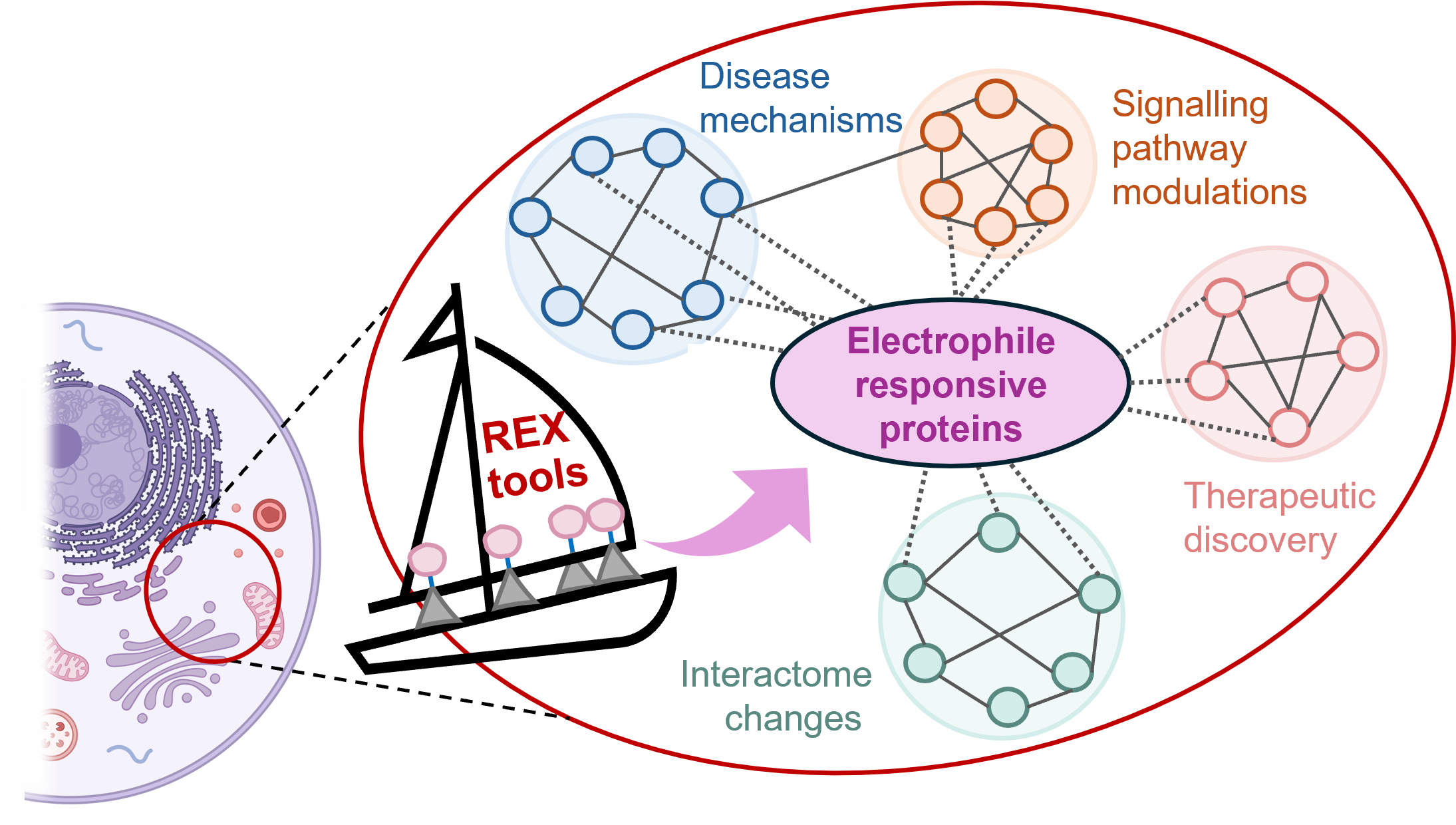
Huge strides have been made in our ability to assign protein location or molecules that modify proteins (function). These improvements have been borne out of novel methodologies that are each compatible with proteomics analytical methods. Unfortunately, our ability to assign function and location simultaneously has not progressed. This is mainly traceable to significant, and apparently irreconcilable differences in the way spatial and functional omics methods are performed. Filling these gaps is a significant problem, but could open ways to novel small molecule interventions. We discuss why uniting spatial and functional paradigms has proven difficult in terms of the chemistry behind the processes used. Based on these discussions, we introduce a new concept “spatiofunctional omics”. This approach is designed to deliver both spatial and functional intelligence in a single experiment. Several recent publications from our laboratory testify to the utility of spatiofunctional omics as a paradigm. We further discuss methods to inherently correct for potential low spatial resolution by combining spatiofunctional approaches with traditional proximity profiling data. We proceed to discuss how developing new techniques that can be blended with existing, complementary strategies, offers improved reliability. We finally extend this logic to the notion that no technique will cover all the multidimensional space required to assay the downstream effects of protein-specific “functionalization”. It is thus inherently important that spatiofunctional profiling methods be compatible with a wide range of protocols. REX technologies offer such possibilities.
Keywords:
proteomics
; spatiofunctional profiling
; electrophile signaling
; reactive metabolites
; non-enzyme-assisted posttranslational modifications
; covalent drug design
Copyright: This open access article is published under a Creative Commons CC BY 4.0 license, which permit the free download, distribution, and reuse, provided that the author and preprint are cited in any reuse.


