

Submitted:
19 July 2026
Posted:
21 July 2026
You are already at the latest version
Abstract
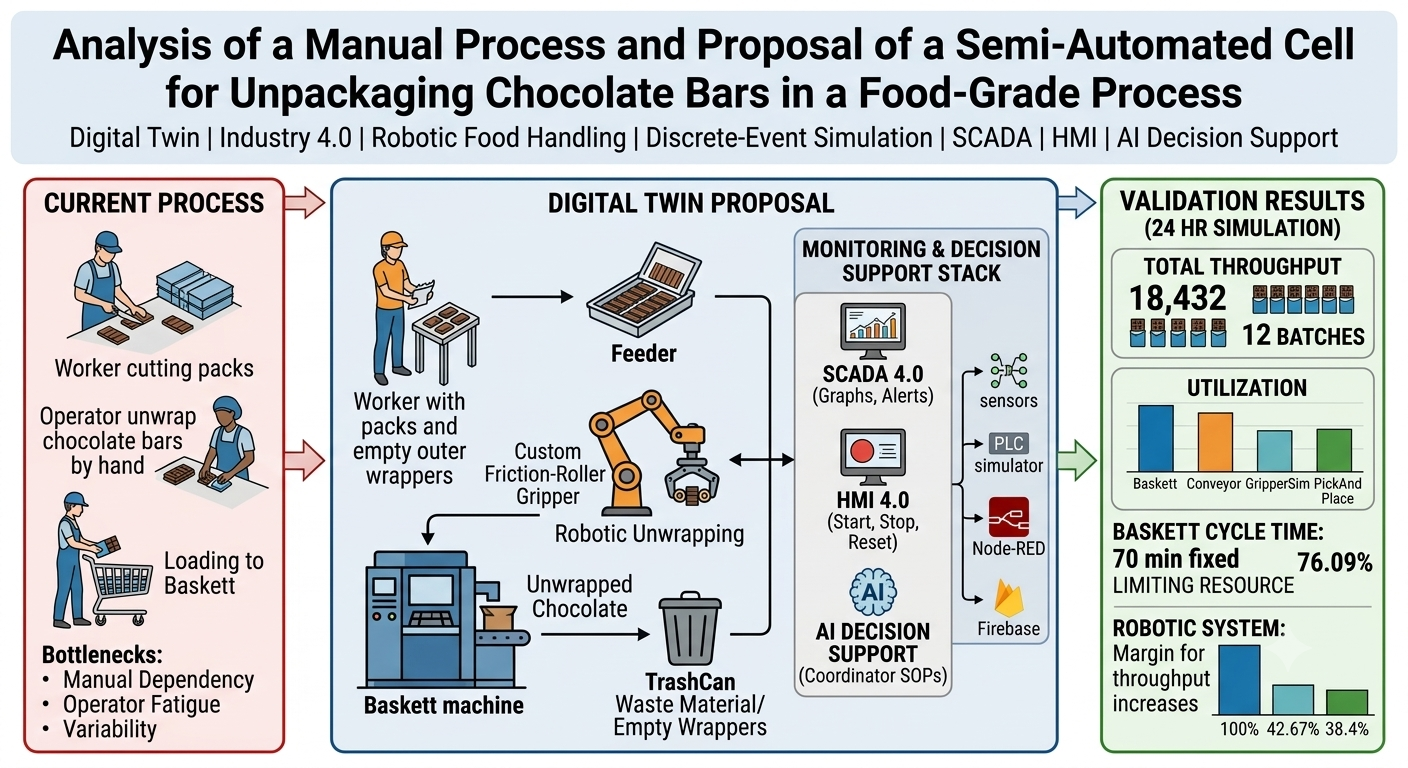
Chocolate-handling process currently relies on manual labor: operators open cardboard boxes, cut packaging, unwrap each chocolate bar by hand, and load the unwrapped product into a Baskett tempering machine. This manual dependency introduces process variability, operator fatigue, and a throughput ceiling imposed by the Baskett’s fixed 70-minute batch cycle. This paper presents the design and Digital Twin simulation of a semi-automated workstation that integrates a feeder, a collaborative robotic arm with a custom friction-roller gripper, a waste-handling subsystem, and an Industry 4.0 monitoring stack (SCADA, HMI, and an AI-based decision-support layer) to remove the manual unwrapping bottleneck. The material flow was modeled in Siemens Plant Simulation, and the robotic operation was validated in Process Simulate, while a Node-RED/Firebase/React architecture emulated the supervisory control layer. Over a simulated 24-hour period, the workstation processed 18,432 individual chocolate bars across 12 production batches while sustaining synchronization with the Baskett cycle. The Baskett remained the limiting resource, occupied 76.09% of the time, while the robotic subsystem operated well under capacity (conveyor utilization 100%, gripper utilization 42.67%, pick-and-place utilization 38.4%), indicating margin for future throughput increases. The results confirm that the proposed cell eliminates the manual unwrapping task while remaining compatible with existing downstream equipment, and they identify the Baskett cycle time as the priority target for further improvement.
Keywords:
digital twin
; Industry 4.0
; robotic food handling
; discrete-event simulation
; SCADA
; human–machine interface
; AI-based decision support
1. Introduction
Current chocolate-handling process evaluated depends entirely on manual labor. Operators are responsible for opening cardboard boxes, cutting packages, removing the wrapper from each chocolate bar, disposing of the waste material, and loading the unwrapped chocolate into the Baskett machine. This workflow introduces process variability, operator fatigue, and a throughput ceiling that is difficult to raise without redesigning the process, a pattern that is well documented in the broader literature on manual food-handling operations [1].
The project responds to the need to improve efficiency, consistency, and system performance in the chocolate preparation process. The Baskett machine operates in 70-minute cycles and can only start once a full batch (75 kg of chocolate bars) has been unwrapped and loaded, which produces downtime that limits the overall system capacity. To address these challenges, this paper proposes the design, development, and Digital Twin simulation of a semi-automated workstation that integrates a robotic arm, a custom gripper, an optimized layout, and an operator-friendly HMI monitoring system.
The main objective of this project is to analyze the current process, eliminate its bottlenecks, and develop a Digital Twin of a workstation capable of opening individually wrapped chocolate bars, transferring the unwrapped chocolate into the Baskett machine, and disposing of the wrapping in a waste bin. The proposed solution integrates a feeder, a robotic arm, a waste bin, HMI monitoring, real-time monitoring, and AI-based analysis to improve process flow and support operator decision-making.
The scope of the project covers the conceptual design of the automated workstation, the simulation of material flow in Plant Simulation, the validation of robotic operation in Process Simulate, and the integration of SCADA 4.0 technologies. The primary focus is on opening chocolate bars, handling the wrappers as waste material, and transferring the unwrapped bars into the Baskett. The physical manufacturing and installation of the workstation, as well as any modification of the Baskett machine’s internal operation, are outside the scope of this work.
2. System Description
The 48 g chocolate bars are packaged in bags of six bars each, which are stored in cardboard boxes in groups of 32 bags, making each box approximately 9.21 kg; each production batch consumes the contents of 8 boxes (73.7 kg) to remain below the Baskett’s 75 kg limit. The current process begins with an operator transporting the boxes to a table, opening them, cutting the packs, removing the chocolate bars, unwrapping each one by hand, and depositing the unwrapped chocolate into large plastic bags. Once a bag is filled, it is carried to the Baskett machine and loaded as a batch. After loading, the Baskett starts its cycle and does not accept additional material until the cycle is complete, which creates the process bottleneck.
The proposed system converts this workflow into a semi-automated process. Operators are responsible only for opening the boxes and emptying the individually wrapped bars from the six-bar packs into the feeder. From that point, the process is fully automated: the feeder organizes and aligns the wrapped chocolate bars, the conveyor transfers them to the pick position, and the robotic arm picks each bar and performs the unwrapping operation with a custom gripper built around a friction-roller mechanism, an approach consistent with recent designs for robotic separation of sealed flexible packaging [3]. The unwrapped chocolate is transferred to the Baskett machine, while the empty wrapper is separated and directed to a waste bin located behind the robot.
Given the limited information available on some parts of the original process, several assumptions were adopted during system development. The boxes and bags containing the bars are assumed to already be open before entering the automated workstation. The process is assumed to take place in a controlled, indoor, food-grade environment at a constant temperature that does not affect the consistency of the chocolate bar. Design guidelines were also followed to ensure the product maintains its integrity during handling and is not damaged, contaminated, or lost during the process, consistent with the fragility and hygiene constraints reported for robotic food-handling applications [1].
The main constraints relate to product fragility, workstation footprint, Baskett capacity, and cycle limitations. Chocolate bars can deform, melt, or become contaminated, so the equipment must be built from hygienic, food-safe materials and must apply controlled gripping force to avoid damaging the product. The system must also remain synchronized with the Baskett cycle, since the Baskett is the dominant bottleneck in the production flow.
3. Methodology
The Digital Twin development began with an analysis of the current manual process, followed by the design, simulation, and validation of the proposed solution. The Digital Twin concept, understood as a virtual representation that mirrors the behavior of a physical system through real or simulated data exchange [4], provided the conceptual framework for this approach [5]. The first step was to identify the main inefficiencies and bottlenecks of the operation, including manual dependency, low throughput, operator fatigue, and downtime caused by the Baskett machine.
Digital Twin was developed using a combination of software tools. Plant Simulation was used to represent the material flow of the process, modeling the material lifecycle, timestamps, sources, dismantle stations, conveyors, buffers, storage elements, worker resources, and drain objects. Process Simulate was used to validate the workstation layout, robot movements, gripper operation, operator path, chocolate movement, and the motion of the process. CAD models were built to represent the custom gripper, the robot, and the feeder. An HMI was also included to visualize alarms, cycle counts, utilization, downtime, and production status.
3.1. Plant Simulation Development
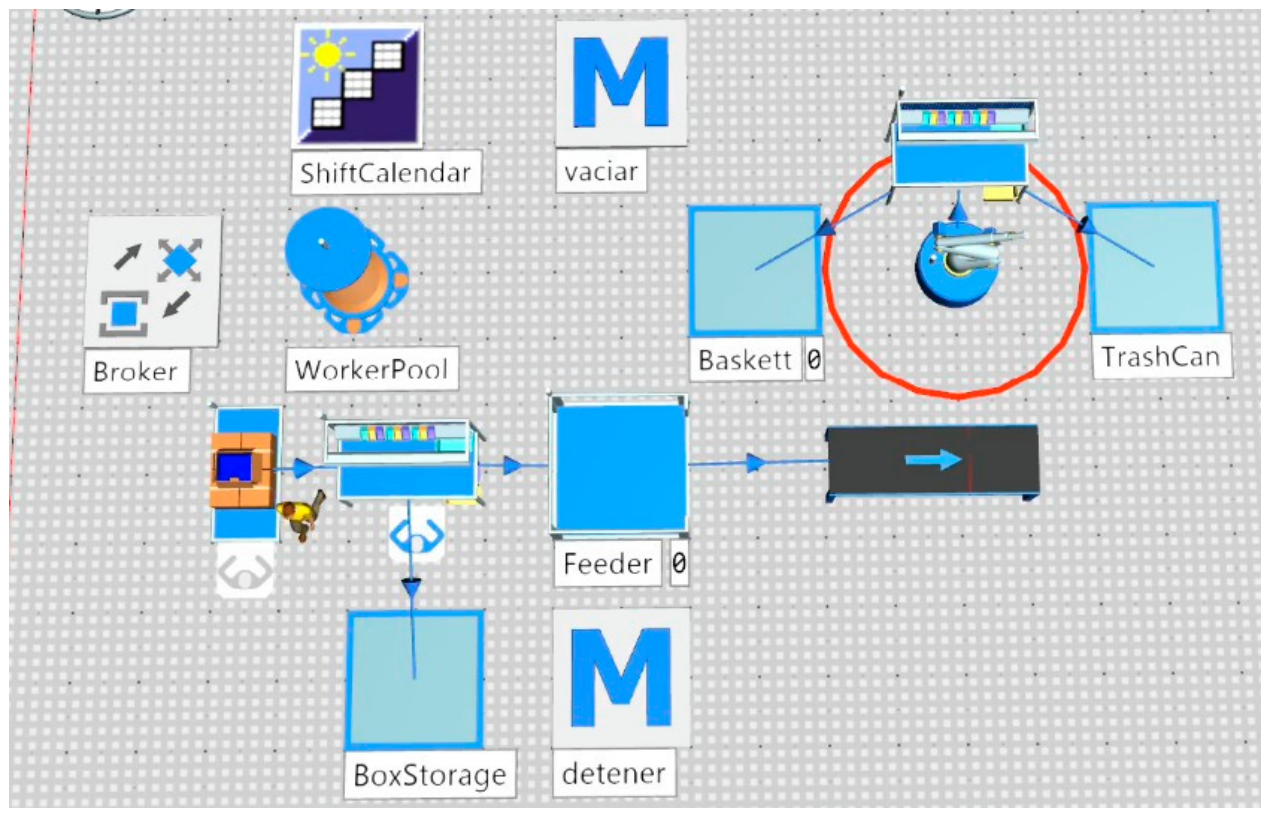
The Plant Simulation model represents the material-flow cycle of the chocolate unpacking and unwrapping process. The process begins with a source that generates one chocolate six-pack at a time, where each package represents a group of six individually wrapped chocolates. A worker moves these packages from the source to a dismantle station, which represents the opening of the package: the incoming package is separated into six wrapped chocolate bars and an empty outer wrapper. The chocolates are placed into a vibration feeder, and the wrapper is sent to a store that represents the waste bin.
After separation, the wrapped chocolate bars are transported by a conveyor toward the robotic handling stage through a pick-and-place operation. Once the wrapped chocolate reaches this stage, a second dismantle station represents the gripper’s unwrapping action: each wrapped chocolate is separated into two output flows, the unwrapped chocolate bar and the empty wrapper. Storage elements are used for the separated materials; the unwrapped chocolate continues toward the Baskett machine, while the empty wrapper goes to the waste bin. The WorkerPool, Workplace, and Broker objects represent the availability and assignment of the required operators, and a calendar-shift element was introduced to configure and test different schedule configurations for breaks and shifts.
Two “Method” objects were used in the model. The first (“vaciar”) defines and waits for the time the Baskett needs to melt and remove the chocolate, using a deleteMovables command on all Store objects to begin the next process cycle 70 minutes in total, split into 66 minutes of processing and 4 minutes of emptying. The second (“detener”) locks the material source once enough chocolate bars have been placed into the feeder to fill the Baskett (1,536 chocolate bars, equivalent to the contents of 8 cardboard boxes), stopping the worker so that a more accurate working time could be obtained in the statistics reports.
The process flows follow this sequence: package generation, package opening, wrapped-bar transportation, robotic unwrapping, chocolate separation, wrapper disposal, and product output. The main resources are the source, the dismantle stations, the conveyor, the storage elements, the method objects, the worker pool, the workplace, and the broker. The KPIs analyzed in the model include throughput, bottlenecks, utilization, cycle times, waiting times, and material-flow efficiency. Throughput measures how many chocolate bars can be processed within a given period. Bottlenecks are analyzed to identify where the process slows down, utilization measures how much of the time the main resources are active versus idle, and cycle time measures how long each chocolate bar takes to move through the process.
3.2. Process Simulate Development
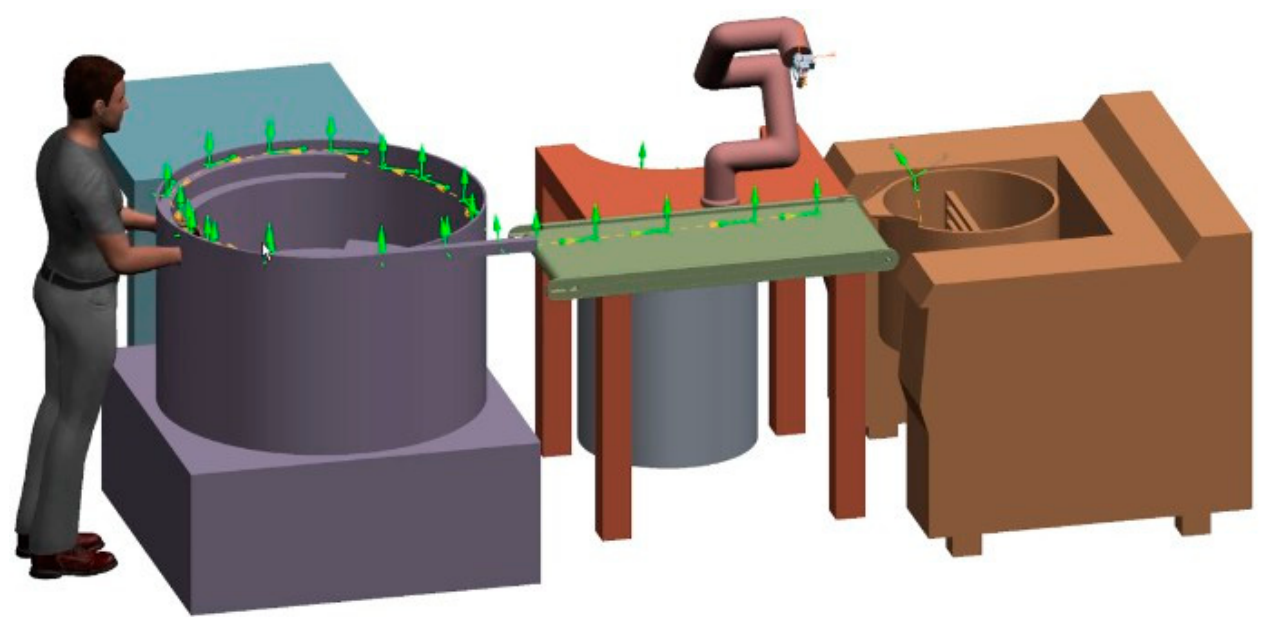
Process Simulate was used to validate and visualize the workstation layout and the feasibility of the proposed robotic operation. The station layout includes the feeder, conveyor, robotic arm, custom gripper with friction roller, Baskett machine, operator, and waste bin. The layout was designed to minimize transport distance, maintain continuous material flow, and cleanly separate the chocolate bar from its wrapper. In total, the layout occupies 3.59 m × 2.43 m, within the stipulated 3.71 m × 3.41 m limit.
The robotic arm selected for the solution is a FANUC CRX-3i-A collaborative robot, capable of fast, controlled, and precise movements with a load capacity sufficient for this application; collaborative robots of this class are increasingly adopted in food-handling operations for their combination of force limiting and precision manipulation [7]. The robot picks each wrapped chocolate bar, positions it against the friction roller, performs the unwrapping movement, releases the chocolate into the Baskett machine, and carries the wrapper to the waste bin. The custom gripper uses a scissor mechanism that maintains collinear movement with respect to the tool center point, simplifying the kinematic calculations required to grasp the chocolate bar without damaging it. The gripper requires force control and includes a rolling mechanism that works together with the friction roller to separate the wrapper from the chocolate; the roller applies the mechanical shear force required to open the wrapper, an approach consistent with roller-based strategies recently proposed for separating thin, sealed flexible packaging [3].
Figure 1.
Plant Simulation layout of the chocolate unpacking and unwrapping process.
CAD and kinematic models were created for the gripper (a four-bar linkage with four additional links and three joints for the gripping mechanism, plus two links and one joint for the rolling mechanism), the robot (a single mechanism of four links and four joints), and all other resources and parts except the conveyor, since no pre-made models of the required equipment were available online. The gripper involves closed-loop kinematics that could not be defined through traditional means; only the minimum mechanisms required were modeled, and the movement itself was animated through pose definitions within the robotic operations.
The operations were segmented into three groups:
- Human operations, covering any movement and positioning performed by the operator, from picking up a six-pack and opening it to depositing its contents into the vibration feeder and placing the wrapper in the trash can.
- Material-flow operations, i.e., the movement of the chocolate within the feeder and along the conveyor.
- Robot operations, including picking the wrapped chocolate, pressing the wrapper against the friction roller, rolling the wrapper back, separating the chocolate from the packaging, releasing the unwrapped chocolate, and directing the empty wrapper to the waste bin.
Figure 2.
Process Simulate layout of the robotic workstation.
3.3. SCADA
The SCADA 4.0 dashboard was developed to monitor the chocolate-handling process in real time through graphical visualization, status cards, and alert mechanisms. Its main purpose is to transform raw process data into actionable information that supports operator decision-making. The dashboard receives process signals from the PLC simulator through Node-RED, a widely used integration platform for connecting industrial signals to cloud services in Industry 4.0 deployments [6], where internal coils simulate sensors and machine states. These signals are processed and stored in Firebase, allowing the dashboard to display both real-time and historical data.
The dashboard is organized into three functional sections. In “The Watchman,” the system provides anomaly detection and safety supervision through a scatterplot of the chocolate’s orientation angle, along with status cards for collaborator presence, room temperature, and feeder status; when an abnormal event occurs, such as a feeder blockage, the dashboard issues an alert to notify the operator and improve response time. In “The Mechanic,” the dashboard displays gripper torque over time to help detect abnormal closing behavior, mechanical stress, or unreliable grasping conditions. In “The Optimizer,” the dashboard presents rotor velocity and rotor temperature graphs that support decisions related to process stability, machine efficiency, and operating conditions.
These graphical elements make the SCADA 4.0 dashboard a decision-support tool rather than only a visualization interface. By combining charts, status indicators, and alerts, the operator can quickly identify unsafe conditions, abnormal trends, or opportunities for optimization, which improves process supervision, facilitates faster reactions to anomalies, and enhances overall understanding of machine behavior during operation.
3.4. HMI 4.0
The HMI 4.0 was developed as the main human-machine interaction interface for controlling and supervising the chocolate-handling process. The interface was implemented in React and connected to the Schneider Machine Expert Basic PLC simulator through Node-RED. In the PLC simulator, internal coils represent process conditions and simulated sensor states, such as feeder stuck, collaborator presence, gripper opened, gripper grasped, and motor activation. These coils allow the process to be controlled and monitored without physical sensors, creating a fully digital test environment.
Figure 3.
Watchman section of the SCADA 4.0 dashboard.
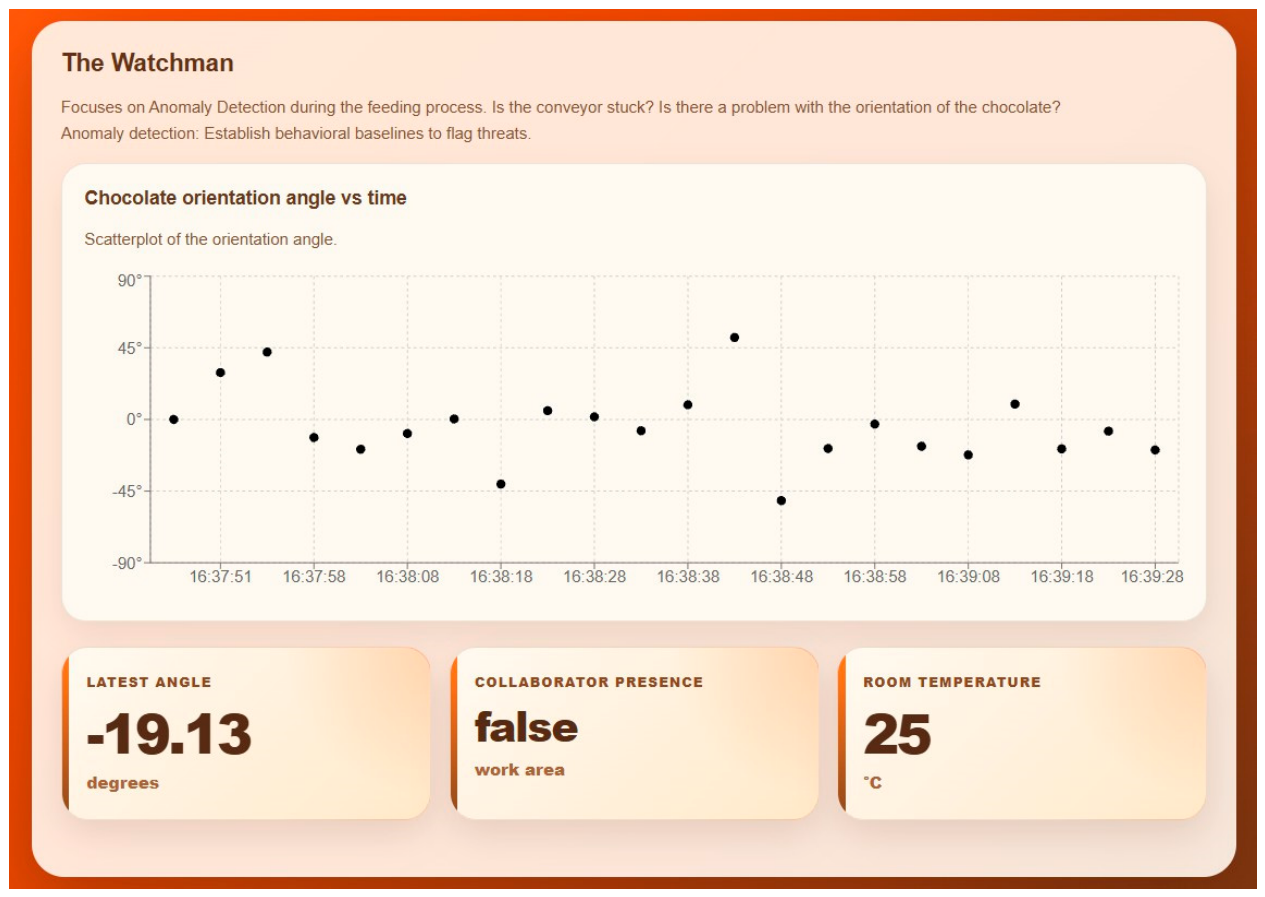
Figure 4.
Home section of the HMI 4.0 dashboard, used to control the process through Start, Stop, and Reset commands.
Figure 4.
Home section of the HMI 4.0 dashboard, used to control the process through Start, Stop, and Reset commands.
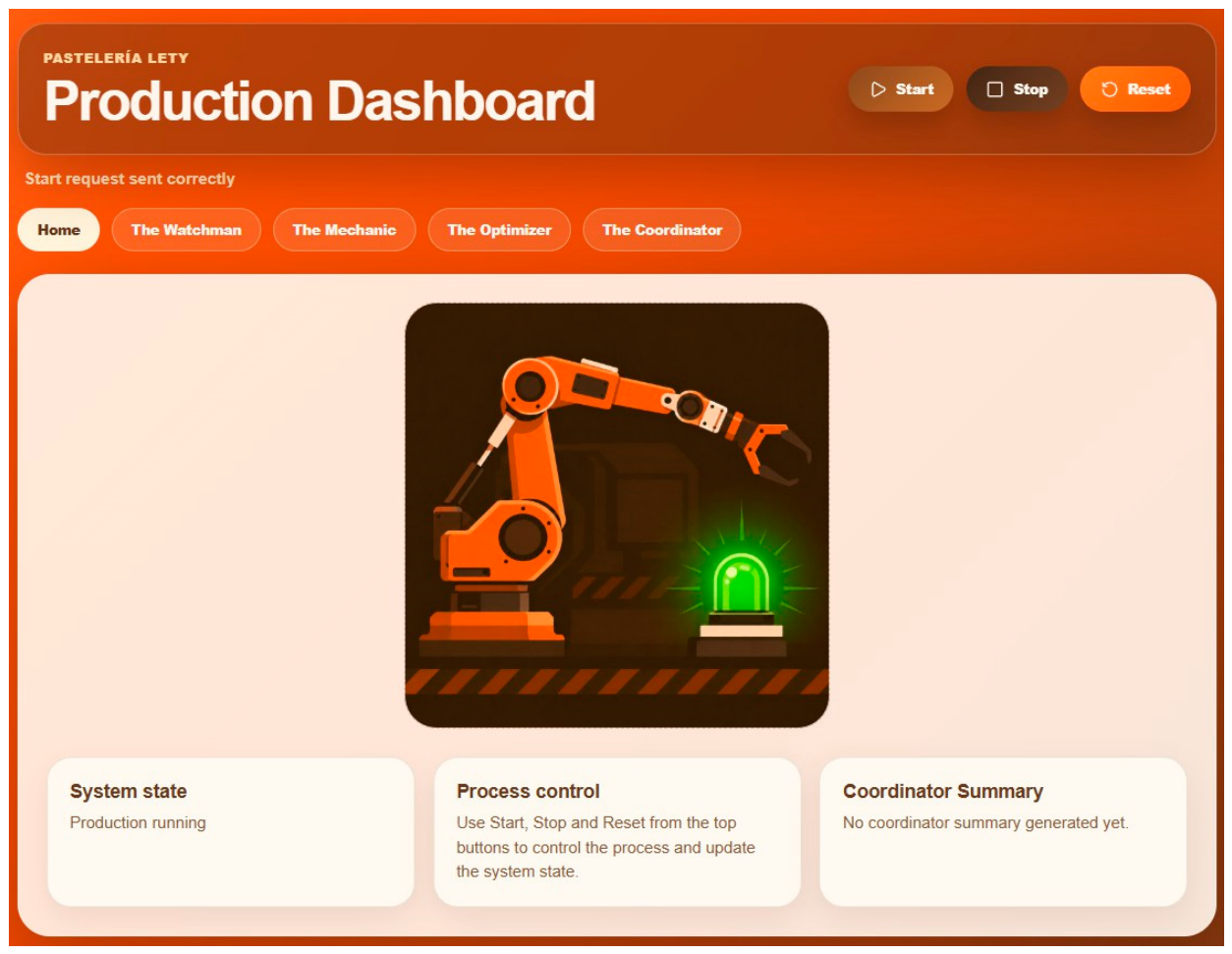
The HMI communicates with Node-RED through HTTP API requests. The operator uses the Start, Stop, and Reset buttons on the Home tab to control the process state. When a command is triggered, Node-RED updates the internal process logic and determines whether process data should continue to be acquired and sent to Firebase. In this way, the HMI acts as the control layer of the system, while Node-RED manages communication between the front end, the PLC simulator, and the database.
Figure 5.
Schneider Machine Expert Basic PLC simulator showing the internal coils used to emulate process sensors and machine states.
Figure 5.
Schneider Machine Expert Basic PLC simulator showing the internal coils used to emulate process sensors and machine states.
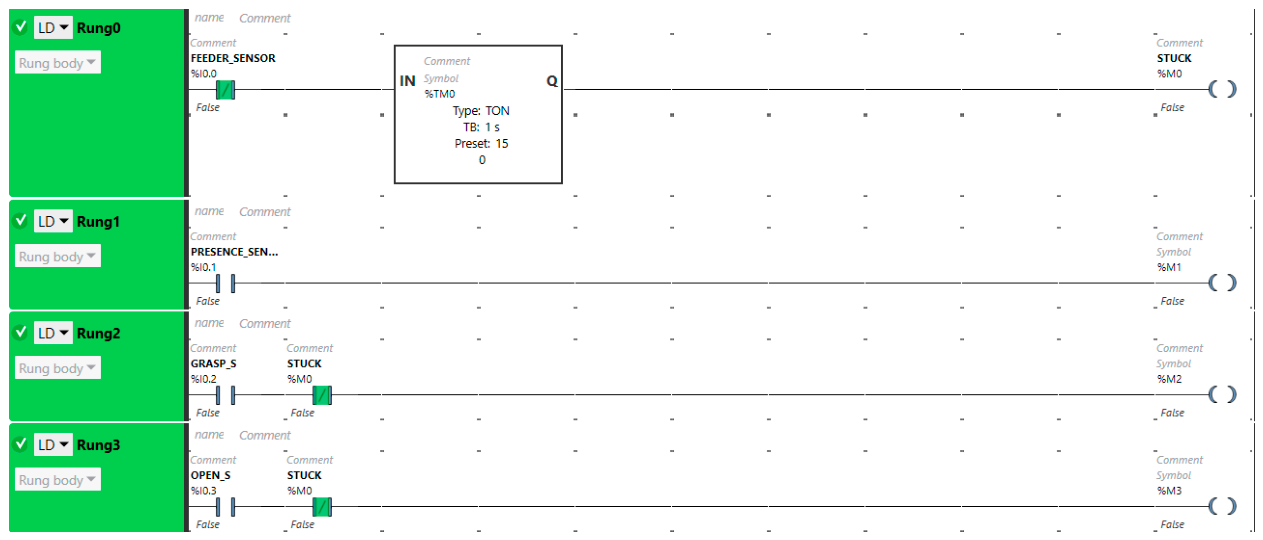
This integration demonstrates that the HMI 4.0 can be used not only to visualize machine information but also to actively control the operation of the process. Through a single interface, the operator can start or stop the simulated production cycle, reset the system state, and immediately observe the effect of these actions on the monitored data, providing a practical and intuitive control environment aligned with Industry 4.0 principles.
3.5. AI-Based Decision Support
Artificial intelligence was integrated into the system as a decision-support layer for the SCADA/HMI 4.0 dashboard. The AI module analyzes information from the monitored process areas and generates Standard Operating Procedures (SOPs) that help the operator interpret the current state of the system, an application consistent with the growing use of large language models as natural-language decision-support agents layered on top of industrial automation and digital twin systems [8]. Process data is first collected from the PLC simulator through Node-RED and stored in Firebase; this includes variables such as feeder status, collaborator presence, chocolate orientation, gripper state, gripper torque, rotor velocity, and rotor temperature.
The AI functionality is implemented through the Coordinator section of the dashboard. When the operator requests an analysis, the front end sends a request to Node-RED endpoints, which in turn communicate with the Gemini API to generate recommendations. The system produces individual SOPs for The Watchman, The Mechanic, and The Optimizer: The Watchman analysis focuses on safety and anomaly detection, the Mechanic analysis focuses on gripper and torque behavior, and the Optimizer analysis focuses on process-performance variables such as rotor velocity and temperature.
Figure 6.
AI-based decision-support interface showing generated Standard Operating Procedures.
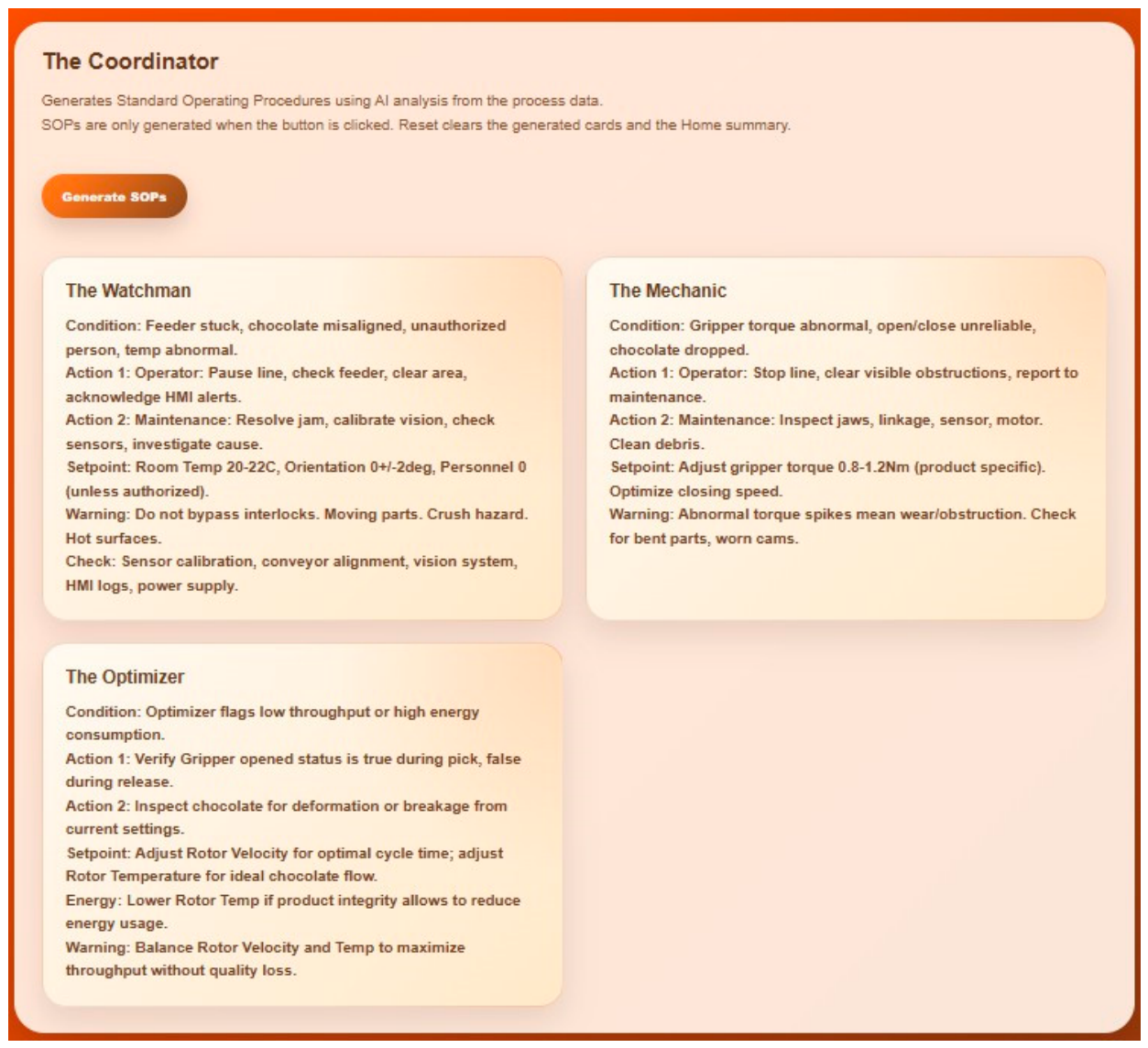
After the three individual analyses are generated, a general Coordinator Summary is created and displayed on the Home tab to give the operator a quick overview of the overall process condition and the main operational priorities. In this way, the AI module supports decision-making by transforming process data into practical recommendations that help the operator identify what to inspect, adjust, or prioritize during operation.
3.6. Technology Integration
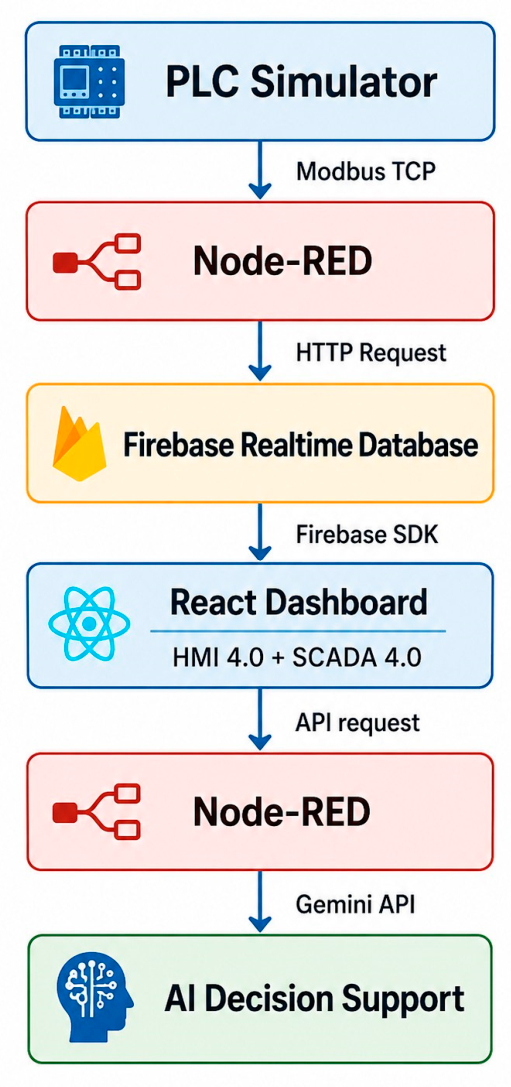
The final system integrates the PLC simulator, Node-RED, Firebase, the React-based HMI/SCADA dashboard, and the AI decision-support tools into a single Industry 4.0 architecture [5]. The Schneider Machine Expert Basic PLC simulator represents the machine logic, using internal coils as simulated sensors and process states for conditions such as feeder status, collaborator presence, gripper opened, gripper grasped, and motor activation.
Node-RED acts as the central communication and processing layer of the system [6]. It reads the simulated PLC signals through Modbus TCP, processes the values, generates additional simulated variables such as chocolate orientation, gripper torque, rotor velocity, and rotor temperature, and sends the information to the Firebase Realtime Database. Node-RED also exposes HTTP endpoints that allow the HMI to control the process through Start, Stop, and Reset commands, making it the main bridge between the PLC simulator, the cloud database, the front-end dashboard, and the AI module.
Firebase acts as the real-time data storage layer: the values generated and processed by Node-RED are stored with timestamps, allowing the React dashboard to visualize both current and historical process behavior. The HMI 4.0 provides process control through the Home tab, while the SCADA 4.0 sections display graphs, alerts, and status cards for monitoring and decision-making. Finally, the AI module uses the Gemini API through Node-RED to generate SOPs and a general Coordinator Summary. This integration demonstrates how PLC simulation, data processing, cloud storage, visualization, control, and artificial intelligence can work together to create a complete Industry 4.0 process-monitoring and decision-support platform.
Figure 7.
Integrated Industry 4.0 system architecture combining PLC simulation, Node-RED communication, Firebase data storage, React HMI/SCADA visualization, and Gemini-based AI decision support.
Figure 7.
Integrated Industry 4.0 system architecture combining PLC simulation, Node-RED communication, Firebase data storage, React HMI/SCADA visualization, and Gemini-based AI decision support.
4. Results and Analysis
The proposed semi-automated chocolate-handling workstation was validated through simulations in Plant Simulation and Process Simulate. The objective was to determine the system throughput, identify bottlenecks, evaluate resource utilization, and analyze cycle times.
The Plant Simulation model processed a total of 18,432 individual chocolate bars over a 24-hour period. Since each Baskett batch contains 1,536 chocolate bars (approximately 73.7 kg of chocolate), the system completed 12 production batches during the simulation period. This confirms that the automated workstation is capable of continuously supplying material while maintaining synchronization with the Baskett production cycle.
Figure 8.
Plant Simulation statistics report screen of material-flow properties.
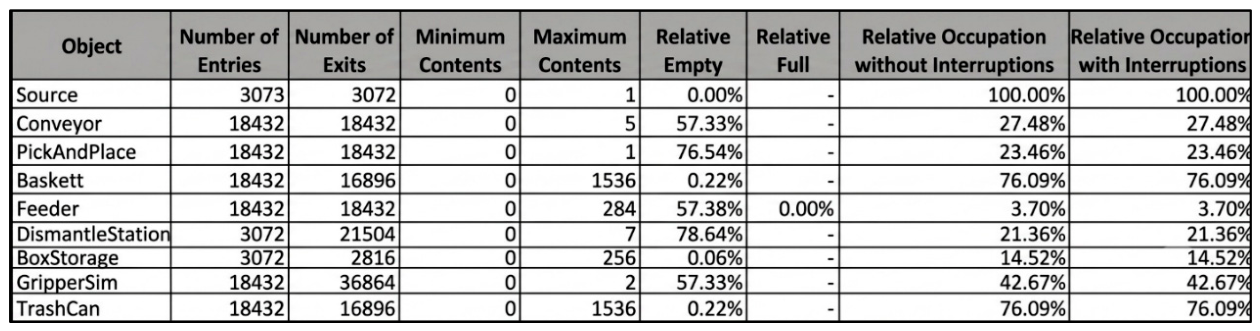
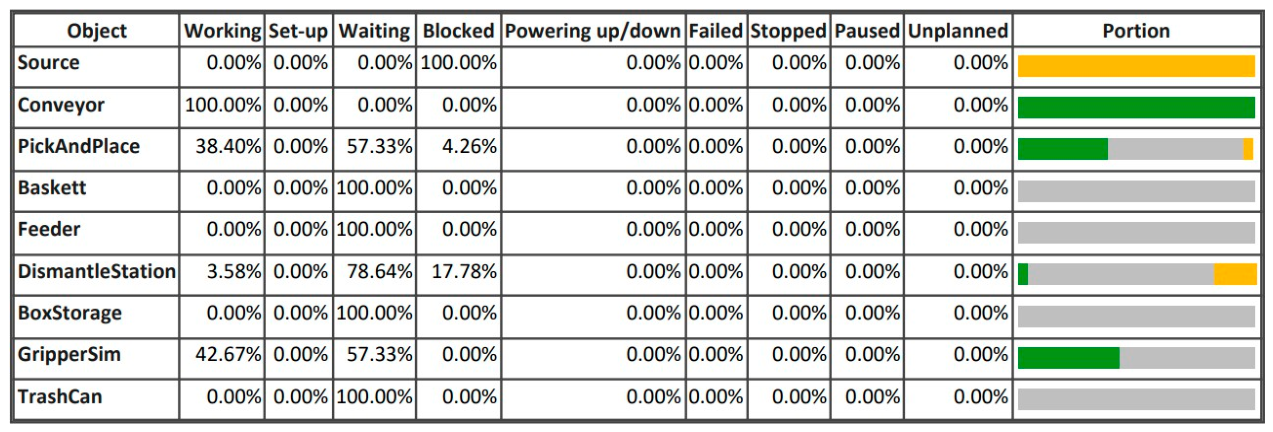
The main bottleneck identified in the system is the Baskett machine. The Baskett operates in fixed 70-minute cycles and cannot accept additional material while processing a batch, so upstream resources remain in waiting periods until capacity becomes available. The simulation statistics show that the Baskett remained occupied 76.09% of the time, while resources such as the pick-and-place system and the gripper experienced more than 57% waiting time. This confirms that the workstation can process chocolate bars faster than the Baskett can consume them, making the Baskett the limiting factor of the system’s throughput.
Resource-utilization analysis indicates that the robotic unwrapping stage operates below its maximum capacity:
- Conveyor utilization: 100%
- Gripper utilization: 42.67%
- Pick-and-place utilization: 38.4%
The relatively low utilization of robotic resources indicates that the automated workstation has available capacity for future production increases.
Figure 9.
Plant Simulation statistics report screen of resource-state proportions.
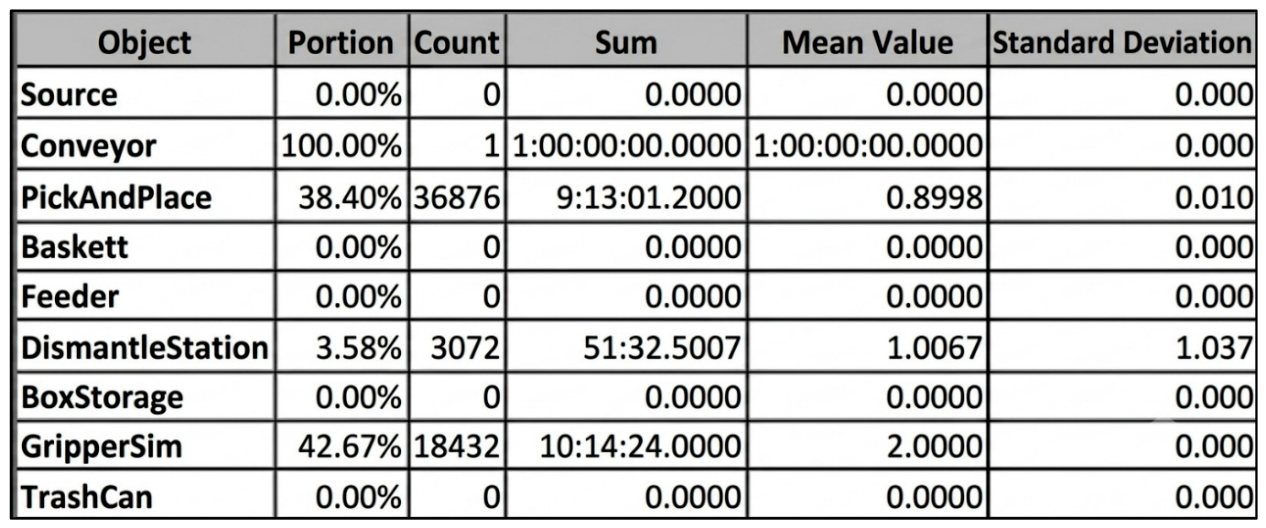
The average processing times obtained from the simulation were:
- Pick-and-place operation: 0.9 s per movement
- Gripper unwrapping: 2 s per chocolate bar
These values demonstrate that the workstation can unwrap chocolate bars efficiently and consistently. The robotic unwrapping operation represents the longest individual process step but remains faster than the overall Baskett cycle time.
Overall, the results show that the proposed automated workstation successfully eliminates the manual chocolate-unwrapping operation while maintaining continuous flow. The robotic system can process chocolate bars faster than required by the Baskett machine, providing sufficient capacity for future production increases.
Figure 10.
Plant Simulation statistics report screen of working time.
5. Improvement Proposals
One of the main bottlenecks identified was the Baskett cycle time. Little can be done while the chocolate is being melted or processed within the machine, or while the Baskett is being cleaned, which occurs roughly once every two cycles; expanding the operation with an additional Baskett unit should therefore be considered if production demand increases.
Operating with two workers alternating 12-hour shifts can strain the staff supervising the station, increasing the risk of mistakes or reduced performance; given the upcoming 40-hour weekly shift regulation in Mexico, this arrangement could also become economically unsustainable or outright non-compliant. Transitioning to an 8-hour daily rotation with three workers is therefore recommended as a more sustainable long-term staffing model.
Regarding the SCADA system, if the design is implemented, it is recommended that the company investigate a locally hosted, custom-trained AI model supported by dedicated server infrastructure. This would remove the token limits imposed by third-party services such as the Gemini API and reduce the risk of sensitive data leaving the organization’s systems [8]. Such a locally hosted AI model could also be extended to other processes within the company by connecting to ERP or MES systems and analyzing a broader data set to provide more informed insights.
6. Conclusions
This project presents the successful development of a Digital Twin for the chocolate-handling process through the integration of Plant Simulation, Process Simulate, SCADA/HMI 4.0 technologies, and AI-based decision support. The proposed semi-automated workstation eliminates the most repetitive manual tasks associated with chocolate unwrapping while improving consistency, reducing operator workload, and increasing efficiency.
The simulation results confirm that the robotic workstation can process chocolate bars efficiently while maintaining a continuous flow of material. Resource-utilization analysis showed that the robotic system has additional available capacity, while the Baskett machine remains the main limitation of the process because of its fixed processing cycle. The system is therefore feasible and capable of supporting the desired production volume.
Furthermore, the integration of real-time monitoring, cloud-based data management, and artificial intelligence demonstrates how Industry 4.0 technologies can be applied to manufacturing processes of this kind [5]. The final solution provides automation and enhanced decision-making capabilities through data visualization, anomaly detection, and automated AI recommendations. Overall, the project achieved its objective of designing and validating an automated chocolate-handling workstation while producing a digital representation of the process suitable for further refinement before physical implementation.
Data Availability Statement
The CAD models, Plant Simulation and Process Simulate project files, and the Node-RED/HMI source code developed for this project are available from the corresponding author upon reasonable request.
Acknowledgments
The authors thank the course faculty of Automation of Manufacturing Systems at Tecnológico de Monterrey, Campus Monterrey: Alejandra Molina-Leal, Antonio Carlos Bento, José Abraham Valdivia-Puga, Oliverio Hernández-Argumedo, Raquel Tejeda-Alejandre, Rubén Febronio García-Martínez - for their guidance throughout the project.
References
- Wang, Z.; Hirai, S.; Kawamura, S. Challenges and opportunities in robotic food handling: A review. Front. Robot. AI 2022, 8, 789107. [Google Scholar] [CrossRef] [PubMed]
- Cano-García, et al. Design and implementation of a robotic arm prototype for a streamlined small chocolate packaging process. Eng. Proc. 2023, 47(no. 1, art. 1), 1. [Google Scholar] [CrossRef]
- Foix, S.; Oriol, J.; Torras, C.; Borràs, J. A gripper for flap separation and opening of sealed bags. arXiv 2026, arXiv:2603.10890. [Google Scholar]
- Kritzinger, W.; Karner, M.; Traar, G.; Henjes, J.; Sihn, W. Digital twin in manufacturing: A categorical literature review and classification. IFAC-PapersOnLine 2018, vol. 51(no. 11), 1016–1022. [Google Scholar] [CrossRef]
- Leng, J.; Wang, D.; Shen, W.; Li, X.; Liu, Q.; Chen, X. Digital twins-based smart manufacturing system design in Industry 4.0: A review. J. Manuf. Syst. 2021, vol. 60, 119–137. [Google Scholar] [CrossRef]
- Covrig, T.; Ciobotaru, A.; Bejan, P.-A.; Farmathy-Pop, L.; Oltean, S.; Dumitru, C.-D.; Miclea, L.-C. System for the acquisition and monitoring of energy consumption in the context of Industry 4.0. Sensors 2024, 24, 6302. [Google Scholar] [CrossRef] [PubMed]
- O’Bryan, C. A.; Muraleetharan, K.; Hettiarachchy, N. S.; Crandall, P. G. Integrating worker and food safety in poultry processing through human–robot collaboration: A comprehensive review. Foods 2026, 15, 294. [Google Scholar] [CrossRef] [PubMed]
- Xia, Y.; Jazdi, N.; Zhang, J.; Shah, C.; Weyrich, M. Control industrial automation system with large language model agents. arXiv 2024, arXiv:2409.18009. [Google Scholar]
- “PU conveyor belt – rice pattern top – for beef steak production,” Uyangbelt.com, 2024. Available online: https://www.uyangbelt.com/product/pu-conveyor-belt-rice-pattern-top-for-beef-steak-production-uyang-belting/ (accessed on 17 April 2026).
Disclaimer/Publisher’s Note: The statements, opinions and data contained in all publications are solely those of the individual author(s) and contributor(s) and not of MDPI and/or the editor(s). MDPI and/or the editor(s) disclaim responsibility for any injury to people or property resulting from any ideas, methods, instructions or products referred to in the content. |
© 2026 by the authors. Licensee MDPI, Basel, Switzerland. This article is an open access article distributed under the terms and conditions of the Creative Commons Attribution (CC BY) license (http://creativecommons.org/licenses/by/4.0/).
Copyright: This open access article is published under a Creative Commons CC BY 4.0 license, which permit the free download, distribution, and reuse, provided that the author and preprint are cited in any reuse.