
Submitted:
16 July 2026
Posted:
20 July 2026
You are already at the latest version
Abstract
The catalytic hydrogenation of furfural is a key reaction to valorize lignocellulosic biomass into value-added chemicals. In this work, the influence of different hydrogen donors on furfural hydrogenation under continuous-flow conditions was evaluated using a 10% Pd/C catalyst in a Phoenix Flow Reactor. Molecular hydrogen (H2), 2-propanol (transfer hydrogenation), and sodium borohydride (NaBH4) were tested under identical conditions (150 °C, 20 bar, 0.1 mL·min1). Each hydrogen source led to distinct reaction pathways and product distributions. H2 promoted selective formation of furfuryl alcohol (FA) via a Langmuir–Hinshelwood mechanism, with transient formation of tetrahydrofurfuryl alcohol (THFA). 2-propanol favored carbonyl reduction while enabling gradual formation of 2-methylfuran (2-MF) at longer reaction times. NaBH4 yielded FA exclusively through direct hydride transfer but showed operational limitations due to precipitation under flow conditions. Catalyst deactivation was observed in all systems, mainly associated with carbonaceous deposition. While H2 and 2-propanol showed comparable catalytic efficiency, NaBH4 exhibited lower efficiency and limited scalability. These results highlight the critical role of hydrogen donor selection in controlling reaction pathways, selectivity, and process feasibility in continuous-flow biomass valorization.
Keywords:
continuous-flow hydrogenation
; furfural
; Pd/C catalyst
; hydrogen donor variability
; catalytic transfer hydrogenation
; furfuryl alcohol
1. Introduction
The valorization of lignocellulosic biomass-derived platform molecules has gained increasing attention as part of global efforts toward sustainable chemical production [1,2]. However, furfural has emerged as a key intermediate due to its availability from hemicellulose-rich biomass, agricultural residues, and industrial by-products. Its chemical versatility enables conversion into a range of value-added products, including furfuryl alcohol (FA), tetrahydrofurfuryl alcohol (THFA), and other oxygenated derivatives used in resin manufacturing, polymer synthesis, and fine chemical industries [3,4,5]. Among these pathways, the hydrogenation of furfural to FA is one of the most industrially relevant transformations. Traditionally, this reaction is performed in batch reactors using molecular hydrogen under pressurized conditions [6,7].
Although the efficiency of batch processes often faces limitations related to heat and mass transfer, safety risks associated with hydrogen handling, and limited scalability. In this context, continuous flow technologies have emerged as a promising alternative, offering improved heat and mass transfer, precise control of reaction parameters, shorter reaction times, and enhanced operational safety, particularly when handling flammable gases or reactive reducing agents [8]. The small reaction volumes in flow systems reduce risks associated with exothermic hydrogenation while enabling rapid optimization and reproducibility. In addition, continuous flow platforms facilitate process intensification and scale-up, bridging laboratory research and industrial application. This approach aligns with green chemistry principles by reducing solvent use, improving energy efficiency, and ensuring consistent product quality [9,10,11,12].
Beyond reactor design, the hydrogen source plays a critical role in determining efficiency, selectivity, and sustainability. In addition to molecular hydrogen, alternative donors such as alcohols (e.g., 2-propanol) via catalytic transfer hydrogenation (CTH) and hydride reagents such as sodium borohydride (NaBH4) have been widely studied. These systems present distinct advantages and trade-offs in atom economy, safety, cost, and scalability [13,14]. However, direct comparisons under continuous flow conditions remain limited, despite their importance for process optimization and industrial application. Integrating different hydrogen donors within a continuous flow framework provides a robust platform to evaluate catalytic performance, reaction pathways, and product selectivity under controlled and scalable conditions [15]. Such comparative studies are particularly relevant for developing modular and decentralized biorefineries, where flexibility, safety, and sustainability are key design parameters [16,17,18].
This study investigates the continuous flow hydrogenation of furfural using three hydrogen sources: molecular hydrogen (H2), CTH with 2-propanol and sodium borohydride. By directly comparing these approaches, it aims to elucidate differences in catalytic efficiency, product selectivity, and operational feasibility under continuous flow conditions. The results are expected to support the development of safer, more efficient, and scalable hydrogenation processes for biomass valorization, positioning continuous flow technology as a competitive and sustainable alternative to conventional batch systems for producing renewable chemicals such as FA.
2. Materials and Methods
2.1. Reagents
Furfural (≥99%, Merck), Methanol (≥89%, Merck) 2-Propanol (≥99.5%, Merck), Hydrogen Gas (>99%, Linde), NaBH4 (99%, Sigma-Aldrich), and 10% Pd/C catalyst (CatCarts) were used as purchased without any further purification.
2.2. Furfural Hydrogenation
The hydrogenation reactions were conducted as described in a previous work [19], using a Phoenix Flow Reactor (ThalesNano), a high performance system designed for elevated temperature and pressure operations. The reactor operates up to 450 °C and 200 bar, equipped with a back pressure regulator for precise pressure control. The setup includes a JASCO PU-2085 HPLC pumps, a JASCO BP-2080 backpressure regulator, a Gas Module Plus and a preheater integrated with the Phoenix Flow Reactor™ for stable and controlled operation. A 30 mm CatCart packed with 10% Pd/C was employed to ensure uniform catalytic performance.
Furfural solutions were prepared at a concentration of 0.1 M by dissolving 0.318 mL of furfural in 100 mL of 2-propanol. The hydrogenation of furfural was evaluated using three H-donor systems (H2, 2-propanol, NaBH4) under equivalent conditions to allow comparative analysis of efficiency and catalytic behavior. Two solutions were prepared: solution A (0.1 M furfural in 2-propanol) and solution B (0.1 M furfural in methanol and 1/100 g·mL−1 NaBH4), the solutions were fed independently into the reactor at 0.1 mL·min-1 using HPLC pumps, and all reactions were performed at 150 °C and 20 bar.
2.3. Experimental Analysis
Real time sampling was performed at regular intervals (30, 60, 90, 120, 180, 240, and 300 minutes) to monitor reaction progress and catalyst deactivation. Samples were analyzed using a Varian 3800 gas chromatograph equipped with a flame ionization detector (FID) and an RTX-5 capillary column (30 m × 0.32 mm × 0.25 μm). The injector and detector temperatures were set at 280 °C and 300 °C, respectively. The oven temperature program began at 70 °C (held for 2 minutes), ramped at 7 °C·min-1 to 190 °C, and was held for 5 minutes. Product identification was further confirmed by gas chromatography-mass spectrometry (GC-MS). Quantification of conversion and yield was performed using gas chromatography, with calibration curves generated from known standards. A strong linear correlation was observed between peak area and concentration (R2 = 0.998). The equations used to calculate residence time, conversion, yield, and selectivity are summarized in Table 1.
All experiments were conducted in triplicate to ensure reproducibility, with results reported as mean values accompanied by standard deviations. Baseline corrections were applied to all chromatograms, and peak integrations were manually verified for consistency. Across replicates, variations in conversion and yield remained within ±5%, confirming the reliability of the continuous flow system. The system’s robust performance under different residence times, temperatures, and pressures highlights its precision and scalability. These findings provide a strong basis for optimizing hydrogenation processes in continuous flow systems.
3. Results and Discussion
The hydrogen donors evaluated for the continuous-flow hydrogenation of furfural exhibited good conversion levels; however, each system displayed distinct reactivity patterns and product distributions, underscoring the critical role of the hydrogen source in governing catalytic behavior. These differences are closely associated with the reaction mechanism, nature of the active species and interaction with the catalytic surface. The general reaction pathways and their mechanistic distinctions are summarized in Figure 1.
3.1. Hydrogenation Using Molecular Hydrogen
Under gaseous hydrogen, the system initially exhibited high catalytic activity, reaching ~70% conversion within the first 15 min (Figure 2). However, activity progressively declined, with conversion decreasing to ~14% after 6 h, indicating significant catalyst deactivation under the conditions studied. Concurrently, product distribution evolved over time. FA rapidly became the dominant product, reaching nearly 100% selectivity between 60 and 180 min on stream. In contrast, at early reaction times (15–45 min), a substantial fraction of THFA was detected, reaching ~40% selectivity before gradually disappearing. Interestingly, THFA reappeared at longer reaction times (~11% at 360 min), coinciding with a marked decrease in overall conversion. This behavior suggests that only a limited fraction of highly active catalytic sites remained available to promote deeper hydrogenation after deactivation progressed. Throughout the experiment, 2-methylfuran (2-MF) was not detected, indicating negligible C–O bond hydrogenolysis under the applied conditions.
The observed catalytic behavior is consistent with a Langmuir-Hinshelwood type mechanism for Pd-catalyzed hydrogenation (Figure 3), in which both molecular hydrogen and furfural adsorb on the catalyst surface [20,21]. Hydrogen undergoes dissociative chemisorption on Pd, generating reactive Pd-H species that transfer to the carbonyl group of adsorbed furfural, forming an alkoxy intermediate that rapidly converts into FA, which then desorbs. Under high hydrogen surface coverage and freshly reduced Pd sites, the initially formed FA can re-adsorb and undergo further hydrogenation of the furan ring through sequential addition of surface hydrogen atoms, leading to THFA formation.
Overall, molecular hydrogen under continuous-flow conditions favors selective formation of furfuryl alcohol, with minor THFA formation under highly active regimes. The absence of 2-MF indicates that direct C-O bond hydrogenolysis is not favored on Pd/C without acidic promoters. This observation agrees with previous reports describing two competing Pd-catalyzed pathways: one involving sequential hydrogenation to FA and THFA, and another requiring acid-mediated transformations via acetal intermediates [20,21,22]. Since no acid was introduced in this system, neither acetal species nor furfuryl ethers were detected.
3.2. Catalytic Transfer Hydrogenation (CTH) Using 2-Propanol
The reaction showed distinct behavior when 2-propanol was used as the hydrogen donor as compared to that using molecular hydrogen. The system initially exhibited high activity, reaching ~89% conversion after stabilization, followed by a gradual decline to ~52% after 360 min (Figure 4). Despite this decrease, FA remained as main product, with selectivity between 95% and 70%. In contrast to the use of hydrogen, 2-MF was progressively formed, increasing from ~3% to 25% selectivity over time. No THFA was detected at any stage, indicating a different reaction pathway.
The observed product distribution is consistent with a Pd/C-mediated catalytic transfer hydrogenation pathway in which 2-propanol serves as the hydrogen source. In this proposed route, 2-propanol interacts with metallic sites and undergoes dehydrogenation, generating acetone and reactive surface hydrogen species, which subsequently reduce the carbonyl group of adsorbed furfural to form furfuryl alcohol (Figure 5). The formation of acetone during furfural conversion in 2-propanol-containing catalytic systems has been previously associated with alcohol dehydrogenation and transfer hydrogenation pathways, while Pd-supported carbon catalysts have been reported as active materials for the catalytic transfer hydrogenation of furfural to furfuryl alcohol using alcohols as hydrogen donors [23,24,25]. The absence of detectable tetrahydrofurfuryl alcohol in the present experiment suggests that further hydrogenation of the furan ring was strongly limited under these conditions, possibly because the availability of reactive surface hydrogen species was insufficient to promote ring saturation to a measurable extent. Nevertheless, because acetone formation and surface intermediates were not independently quantified in this study, the proposed pathway should be regarded as a mechanistically plausible interpretation of the observed product distribution rather than as a directly demonstrated reaction sequence.
The absence of THFA indicates that hydrogenation of the furan ring is suppressed, unlike in the hydrogen system. This can be attributed to the lower availability of surface hydrogen species and the nature of the intermediates formed during transfer hydrogenation, which favor selective carbonyl reduction without further saturation of the aromatic ring. The progressive formation of 2-MF suggests that a secondary hydrodeoxygenation (HDO) pathway becomes accessible at longer reaction times. A plausible route involves dehydration of furfuryl alcohol, forming an unsaturated intermediate that is subsequently hydrogenated to 2-MF [26]. Weak acidity from the carbon support or solvent autoprotolysis may facilitate this transformation. The increase in 2-MF selectivity likely reflects time-dependent changes in the catalytic surface and reaction environment, enabling parallel pathways under extended reaction conditions.
3.3. Hydrogenation Using Sodium Borohydrate (NaBH4)
Furfural hydrogenation proceeded significantly faster when sodium NaBH4 was employed as hydrogen source with respect to the use of molecular hydrogen and 2-propanol. Conversion increased rapidly from 50% at the beginning of the experiment to approximately 90% within 60 min (Figure 6), indicating highly efficient reduction under continuous-flow conditions. In contrast to the other hydrogen donors, only furfuryl alcohol was detected, with selectivity ranging from 40% to 71%, while neither 2-MF nor THFA were observed.
This behavior is consistent with the reactivity of borohydrides as strong hydride donors (Figure 7). In the proposed mechanism, furfural adsorbs onto the Pd/C surface via the carbonyl group, increasing its electrophilicity. A hydride from BH4- is then directly transferred to the carbonyl carbon, forming a surface-bound alkoxide intermediate. Simultaneously, the borohydride is converted into boron-containing species such as BH₃ or alkoxyboranes (e.g., BH₃OMe) in the methanolic medium. The alkoxide intermediate is protonated by the solvent to yield FA, which desorbs from the catalyst surface, regenerating active sites.
Unlike systems based on H2 or transfer hydrogenation, this pathway proceeds via direct nucleophilic hydride transfer rather than surface-mediated hydrogen activation. As a result, the reaction is highly selective for C=O reduction and does not promote furan ring hydrogenation or C–O bond cleavage [27]. In addition, since NaBH4 acts as a stoichiometric hydride donor, the reaction is limited by hydride availability, and no further transformation occurs once the reagent is consumed. This explains the absence of deeper hydrogenation products such as THFA and hydrodeoxygenation products such as 2-MF.
However, after a few minutes, NaBH4 began to precipitate in the reactor lines and within the pump used for its circulation, leading to overpressure and eventual pump clogging. From a mechanistic perspective, the reaction follows classical hydride transfer chemistry, where NaBH4 in protic solvents selectively reduces aldehydes under mild conditions. In this system, the Pd/C catalyst likely plays a secondary role by facilitating substrate adsorption and improving mass transfer under flow conditions rather than being essential for hydride transfer. This contrasts with the catalytic mechanisms observed for H2 and 2-propanol, where the metal surface is central to hydrogen activation and transfer.
3.4. Comparative Analysis: Role of Hydrogen Source and Reaction Pathways
The catalytic performance of Pd/C strongly depended on the hydrogen donor, which governed the reaction mechanism, product distribution, and operational behavior under continuous-flow conditions. Although all systems achieved significant furfural conversion, their reactivity patterns differed due to variations in active hydrogen species and their interaction with the catalytic surface. Under molecular hydrogen, the reaction followed a Langmuir–Hinshelwood mechanism, where both H2 and furfural adsorb on the Pd surface and hydrogen undergoes dissociative activation to form Pd–H species. These species enable efficient carbonyl reduction, yielding high selectivity toward FA. Under high hydrogen surface coverage and highly active Pd sites, further hydrogenation of the furan ring occurred, leading to transient formation of THFA. The disappearance of THFA over time, followed by its reappearance at low conversion, indicates that ring hydrogenation is highly sensitive to catalyst state and hydrogen availability and is progressively suppressed as deactivation advances.
When 2-propanol was employed, the reaction proceeded through catalytic transfer hydrogenation, in which the alcohol is dehydrogenated on Pd sites to generate acetone and reactive surface hydrogen species. These species preferentially promoted reduction of the furfural carbonyl group to FA, while the absence of THFA indicates that subsequent hydrogenation of the furan ring was strongly limited under these conditions. At longer reaction times, the gradual formation of 2-MF suggests the contribution of a secondary deoxygenation pathway involving FA as an intermediate. However, the specific steps responsible for 2-MF formation cannot be conclusively established from the present product-distribution data alone.
With NaBH4, the reaction followed a different pathway based on direct hydride transfer. Furfural reduction proceeded via nucleophilic hydride attack on the carbonyl carbon, producing furfuryl alcohol as the only product. The absence of THFA and 2-MF confirms that neither ring hydrogenation nor hydrodeoxygenation occurs under these conditions. However, despite high intrinsic reactivity, this system showed operational limitations. Precipitation of NaBH4 in the reactor and pumping system caused overpressure and clogging, indicating that solubility and mass transport constraints limit its applicability under continuous-flow conditions.
A quantitative comparison highlights these differences. While H2 and 2-propanol systems exhibited comparable catalytic turnover numbers (TON ≈ 20–30), indicating efficient Pd utilization, the NaBH4 system showed lower TON values (≈5), reflecting its stoichiometric nature. These results show that, although NaBH4 provides high chemoselectivity, catalytic systems based on molecular hydrogen or transfer hydrogenation offer greater efficiency and scalability. Overall, the hydrogen donor determines not only reaction mechanism and selectivity but also process feasibility under continuous-flow operation.
3.5. Catalyst Stability and Deactivation
A progressive decline in catalytic activity was observed in all systems, indicating that deactivation is a key factor affecting long-term performance under continuous-flow conditions. This effect was most pronounced in the molecular hydrogen system, where conversion decreased significantly over time. The disappearance of THFA formation suggests the loss of highly active hydrogenation sites required for deeper furan ring hydrogenation. This behavior is consistent with the formation of carbonaceous deposits (coke) on the Pd surface, originating from polymerization and condensation of reactive furan intermediates. These deposits block pores and cover active sites, reducing hydrogen activation and catalytic activity. Structural changes such as Pd nanoparticle sintering or modifications of Pd–hydride species may also contribute by altering adsorption properties and reaction kinetics [28,29].
In the 2-propanol system, deactivation was less severe, but changes in product distribution indicate gradual surface evolution. The increase in 2-MF at longer reaction times suggests that surface modifications promote alternative pathways such as hydrodeoxygenation. This indicates that deactivation involves not only activity loss but also selectivity changes driven by evolving surface chemistry. In contrast, the NaBH4 system did not exhibit classical catalytic deactivation, as the reaction is governed by stoichiometric hydride consumption rather than surface catalysis. However, severe operational instability occurred due to NaBH4 precipitation, leading to clogging and pressure buildup. This highlights that, beyond catalyst deactivation, process limitations related to reagent handling and transport can critically affect continuous-flow performance. To improve catalyst stability and process robustness, several strategies can be considered. These include operating at lower furfural concentrations to limit coke formation, optimizing temperature to reduce side reactions, and implementing periodic catalyst regeneration. The use of more resistant supports or modified Pd-based materials may also enhance resistance to fouling. From a process perspective, selecting appropriate hydrogen donors and solvent systems is essential to avoid precipitation and mass transfer limitations.
4. Conclusions
This work demonstrates that the nature of the hydrogen donor plays a decisive role in controlling reaction pathways, product selectivity, and operational feasibility in the continuous-flow hydrogenation of furfural over Pd/C catalysts. Although all systems achieved significant conversion, each hydrogen source induced distinct catalytic behaviors governed by differences in hydrogen activation mechanisms and surface interactions. Molecular hydrogen promoted a Langmuir-Hinshelwood pathway, leading predominantly to FA with transient formation of THFA under highly active conditions. However, catalyst deactivation reduced hydrogen surface coverage over time and suppressed deeper hydrogenation, highlighting the sensitivity of ring hydrogenation to catalyst state. In contrast, 2-propanol enabled CTH via a MPV type mechanism, favoring selective carbonyl reduction while suppressing ring hydrogenation. Under prolonged operation, the formation of 2-MF) indicated activation of secondary hydrodeoxygenation pathways, reflecting dynamic evolution of the catalytic surface.
The use of NaBH4 exhibited fundamentally different behavior, proceeding via direct hydride transfer and producing furfuryl alcohol as the only product with high reaction rates. Despite its high chemoselectivity, this approach is limited by its stoichiometric nature and by operational challenges associated with reagent precipitation under continuous-flow conditions, which caused flow instability and reactor clogging. These results show that high intrinsic reactivity does not necessarily translate into process feasibility. From a catalytic perspective, H2 and 2-propanol systems showed comparable turnover numbers, indicating efficient use of Pd active sites, whereas NaBH4 displayed lower efficiency due to its non-catalytic mechanism. Catalyst deactivation occurred in all systems, mainly due to carbonaceous deposition and surface changes, which reduced activity and influenced selectivity by altering available reaction pathways over time.
References
- Blasi, A., Verardi, A., Lopresto, C. G., Siciliano, S., & Sangiorgio, P. (2023). Lignocellulosic Agricultural Waste Valorization to Obtain Valuable Products: An Overview. Recycling, 8(4), 61. https://www.mdpi.com/2313-4321/8/4/61.
- Mujtaba, M., Fernandes Fraceto, L., Fazeli, M., Mukherjee, S., Savassa, S. M., Araujo de Medeiros, G., do Espírito Santo Pereira, A., Mancini, S. D., Lipponen, J., & Vilaplana, F. (2023). Lignocellulosic biomass from agricultural waste to the circular economy: a review with focus on biofuels, biocomposites and bioplastics. J. Cleaner Prod., 402, 136815. [CrossRef]
- Contreras-Zarazúa, G., Martin-Martin, M., Sánchez-Ramirez, E., & Segovia-Hernández, J. G. (2022). Furfural production from agricultural residues using different intensified separation and pretreatment alternatives. Economic and environmental assessment. Chemical Engineering and Processing - Process Intensification, 171, 108569. [CrossRef]
- Cousin, E., Namhaed, K., Pérès, Y., Cognet, P., Delmas, M., Hermansyah, H., Gozan, M., Alaba, P. A., & Aroua, M. K. (2022). Towards efficient and greener processes for furfural production from biomass: A review of the recent trends. Sci. Total Environ., 847, 157599. [CrossRef]
- Pundir, A., Singh Thakur, M., Prakash, S., Kumari, N., Sharma, N., He, Z., Nam, S., Dhumal, S., Sharma, K., Saxena, S., Kumar, S., Deshmukh, S. V., & Kumar, M. (2024). Furfural as a low-volume, high-value asset from agricultural residues: A review on production, agricultural applications and environmental sustainability. Heliyon, 10(15), e35077. [CrossRef]
- Bardestani, R., Biriaei, R., & Kaliaguine, S. (2020). Hydrogenation of Furfural to Furfuryl Alcohol over Ru Particles Supported on Mildly Oxidized Biochar. Catalysts, 10(8), 934. https://www.mdpi.com/2073-4344/10/8/934.
- Wang, Y., Gao, T., Lu, Y., Wang, Y., Cao, Q., & Fang, W. (2022). Efficient hydrogenation of furfural to furfuryl alcohol by magnetically recoverable RuCo bimetallic catalyst. Green Energy Environ., 7(2), 275-287. [CrossRef]
- Guidi, M., Seeberger, P. H., & Gilmore, K. (2020). How to approach flow chemistry [10.1039/C9CS00832B]. Chem. Soc. Rev., 49(24), 8910-8932. [CrossRef]
- Gambacorta, G., Sharley, J. S., & Baxendale, I. R. (2021). A comprehensive review of flow chemistry techniques tailored to the flavours and fragrances industries. Beilstein J. Org. Chem., 17, 1181-1312. [CrossRef]
- Illg, T., Löb, P., Hessel, V. (2010). Flow chemistry using milli- and microstructured reactors—From conventional to novel process windows. Bioorg. Med. Chem., 18(11), 3707-3719. [CrossRef]
- Sudarsanam, P.; Zhong, R.; Van den Bosch, S.; Coman, S. M.; Parvulescu, V. I.; Sels, B. F. (2018) Functionalised heterogeneous catalysts for sustainable biomass valorisation. Chem. Soc. Rev., 47, 8349–8402. [CrossRef]
- Martina, K., Moran, M. J., Manzoli, M., Trukhan, M. V., Kuhn, S., Van Gerven, T., & Cravotto, G. (2024). Copper-Catalyzed Continuous-Flow Transfer Hydrogenation of Nitroarenes to Anilines: A Scalable and Reliable Protocol. Org. Process Res. Dev., 28(5), 1515-1528. [CrossRef]
- Ceyhan, A. A., Edebali, S., & Fangaj, E. (2020). A study on hydrogen generation from NaBH4 solution using Co-loaded resin catalysts. Int. J. Hydrogen Energy, 45(60), 34761-34772. [CrossRef]
- Zhang, Y., Huang, S., Lu, Z., Sun, S., Chen, J., Wu, Y., & Wu, S. (2024). Investigations on the interaction mechanisms of hydrogen donor and non-hydrogen donor on hydrogenation behaviors of asphaltene. J. Anal. Appl. Pyrolysis, 183, 106715. [CrossRef]
- Moreno-Marrodan, C., Liguori, F., & Barbaro, P. (2017). Continuous-flow processes for the catalytic partial hydrogenation reaction of alkynes. Beilstein J. Org. Chem., 13, 734-754. [CrossRef]
- Audemar M., Wang, Y., Zhao, D., Royer, S., Jérôme, F., Len, C., & De Oliveira Vigier, K. (2020). Synthesis of Furfuryl Alcohol from Furfural: A Comparison between Batch and Continuous Flow Reactors. Energies, 13(4), 1002. https://www.mdpi.com/1996-1073/13/4/1002.
- Bukhtiyarova, M. V., Nuzhdin, A. L., & Bukhtiyarova, G. A. (2023). Comparative Study of Batch and Continuous Flow Reactors in Selective Hydrogenation of Functional Groups in Organic Compounds: What Is More Effective? Int J Mol Sci, 24(18). [CrossRef]
- Taleb, B., Jahjah, R., Cornu, D., Bechelany, M., Al Ajami, M., Kataya, G., Hijazi, A., & El-Dakdouki, M. H. (2023). Exploring Hydrogen Sources in Catalytic Transfer Hydrogenation: A Review of Unsaturated Compound Reduction. Molecules, 28(22), 7541. https://www.mdpi.com/1420-3049/28/22/7541.
- Sanoja-López, K. A., Luque, R. (2024). Continuous flow versatile conversion of furfural to valuable end products catalyzed by commercial Pd/C. Inorganic Chem. Commun., 170, 113277. [CrossRef]
- Pirmoradi, M., & Kastner, J. R. (2021). A kinetic model of multi-step furfural hydrogenation over a Pd-TiO2 supported activated carbon catalyst. Chem. Eng. J., 414, 128693. [CrossRef]
- Yu, I. K. M., Deng, F., Chen, X., Cheng, G., Liu, Y., Zhang, W., & Lercher, J. A. (2022). Impact of hydronium ions on the Pd-catalyzed furfural hydrogenation. Nature Commun., 13(1), 7154. [CrossRef]
- Mironenko, R. M., Belskaya, O. B., Talsi, V. P., & Likholobov, V. A. (2020). Mechanism of Pd/C-catalyzed hydrogenation of furfural under hydrothermal conditions. J. Catal., 389, 721-734. [CrossRef]
- Jaatinen, S., & Karinen, R. (2017). Furfural Hydrotreatment Applying Isopropanol as a Solvent: The Case of Acetone Formation. Topics Catal., 60(17), 1473-1481. [CrossRef]
- Puthiaraj, P., Kim, K., & Ahn, W.-S. (2019). Catalytic transfer hydrogenation of bio-based furfural by palladium supported on nitrogen-doped porous carbon. Catal. Today, 324, 49-58. [CrossRef]
- Xia, X., Gao, Y., Li, P., Fu, M., Zhu, L., Li, C., & Li, F. (2023). Direct and transfer hydrogenation of furfural over MOF-derived Pd-Cu@C catalysts. Canadian J. Chem. Eng., 101(11), 6482-6493. [CrossRef]
- Li, B., Li, L., Sun, H., & Zhao, C. (2018). Selective Deoxygenation of Aqueous Furfural to 2-Methylfuran over Cu0/Cu2O·SiO2 Sites via a Copper Phyllosilicate Precursor without Extraneous Gas. ACS Sust. Chem. Eng. 6(9), 12096-12103. [CrossRef]
- Baoketsi, T., Makuve, N., & Nareetsile, F. (2026). Catalyst Design–Performance Relationships for the Selective Catalytic Hydrogenation of Furfural to Furfuryl Alcohol. J. Chem., 2026(1), 1425745. [CrossRef]
- Dai, C., Liu, F., Zhang, W., Li, Y., Ning, C., Wang, X., & Zhang, C. (2017). Deactivation study of Pd/Al2O3 catalyst for hydrogenation of benzonitrile in fixed-bed reactor. Appl. Catal. A: General, 538, 199-206. [CrossRef]
- Ezzhelenko, D. I., Nikolaev, S. A., Chistyakov, A. V., Chistyakova, P. A., & Tsodikov, M. V. (2021). Deactivation Mechanism of Palladium Catalysts for Ethanol Conversion to Butanol. Petroleum Chemistry, 61(4), 504-515. [CrossRef]
Figure 1.
Proposed reaction sequence for furfural hydrogenation.
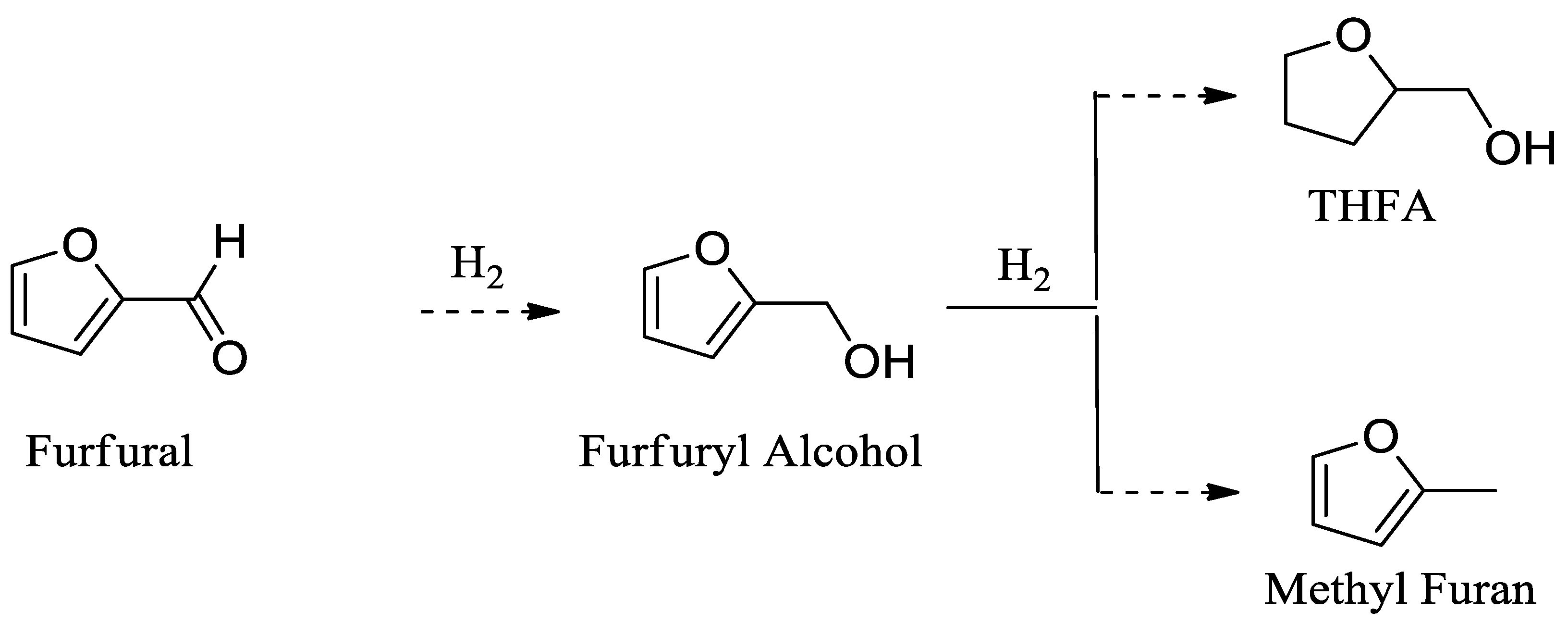
Figure 2.
Yields obtained during the tandem reaction of furfural with hydrogen gas under continuous-flow conditions using a 10% Pd/C catalyst. Reaction conditions: 0.1 M furfural, 150 °C, 20 bar (back-pressure regulator), 0.1 mL·min-1 liquid flow rate, 1 N mL·min-1 hydrogen flow, 6 h reaction.
Figure 2.
Yields obtained during the tandem reaction of furfural with hydrogen gas under continuous-flow conditions using a 10% Pd/C catalyst. Reaction conditions: 0.1 M furfural, 150 °C, 20 bar (back-pressure regulator), 0.1 mL·min-1 liquid flow rate, 1 N mL·min-1 hydrogen flow, 6 h reaction.
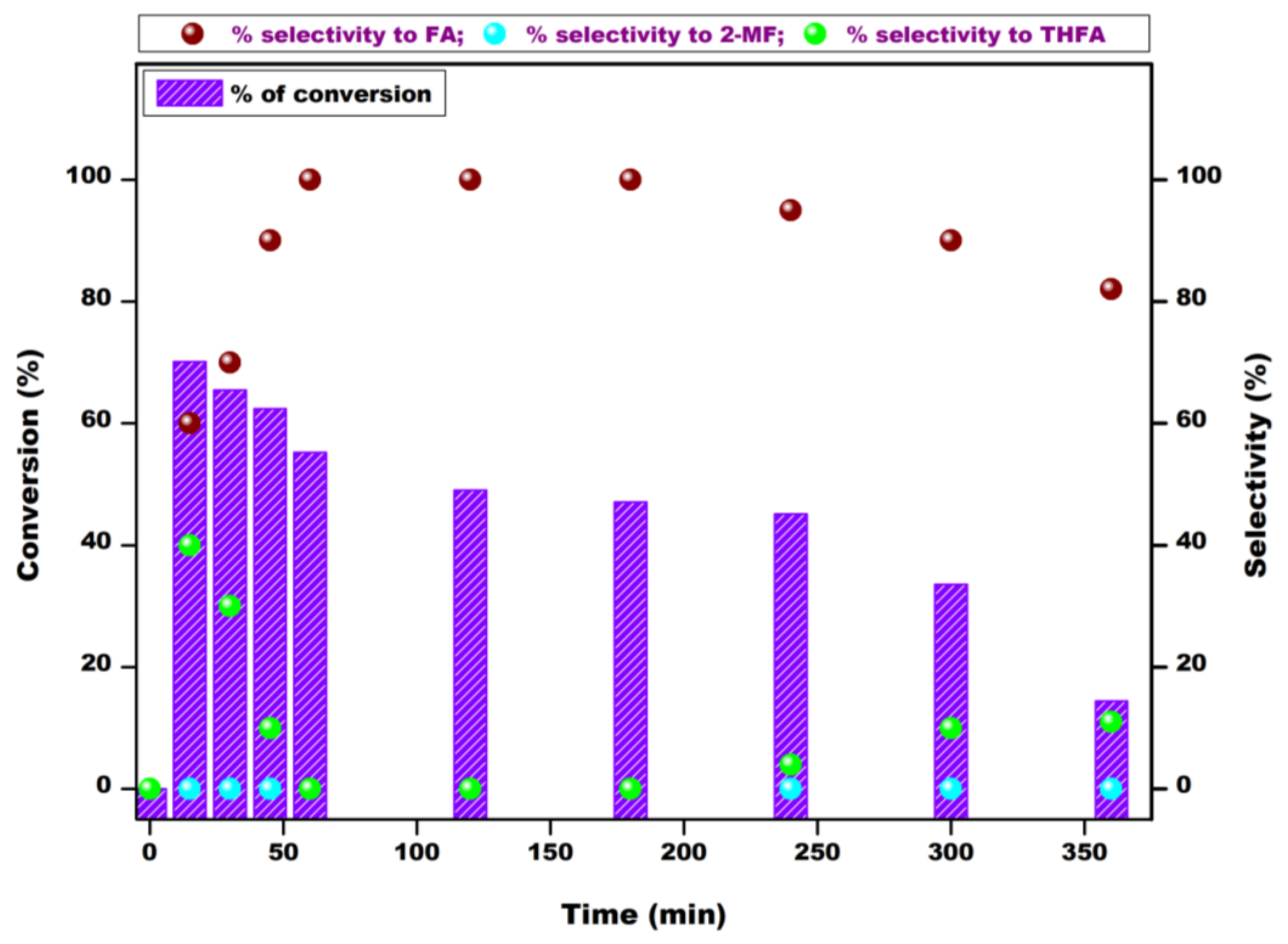
Figure 3.
Proposed mechanism for the hydrogenation of furfural using hydrogen as a donor medium.
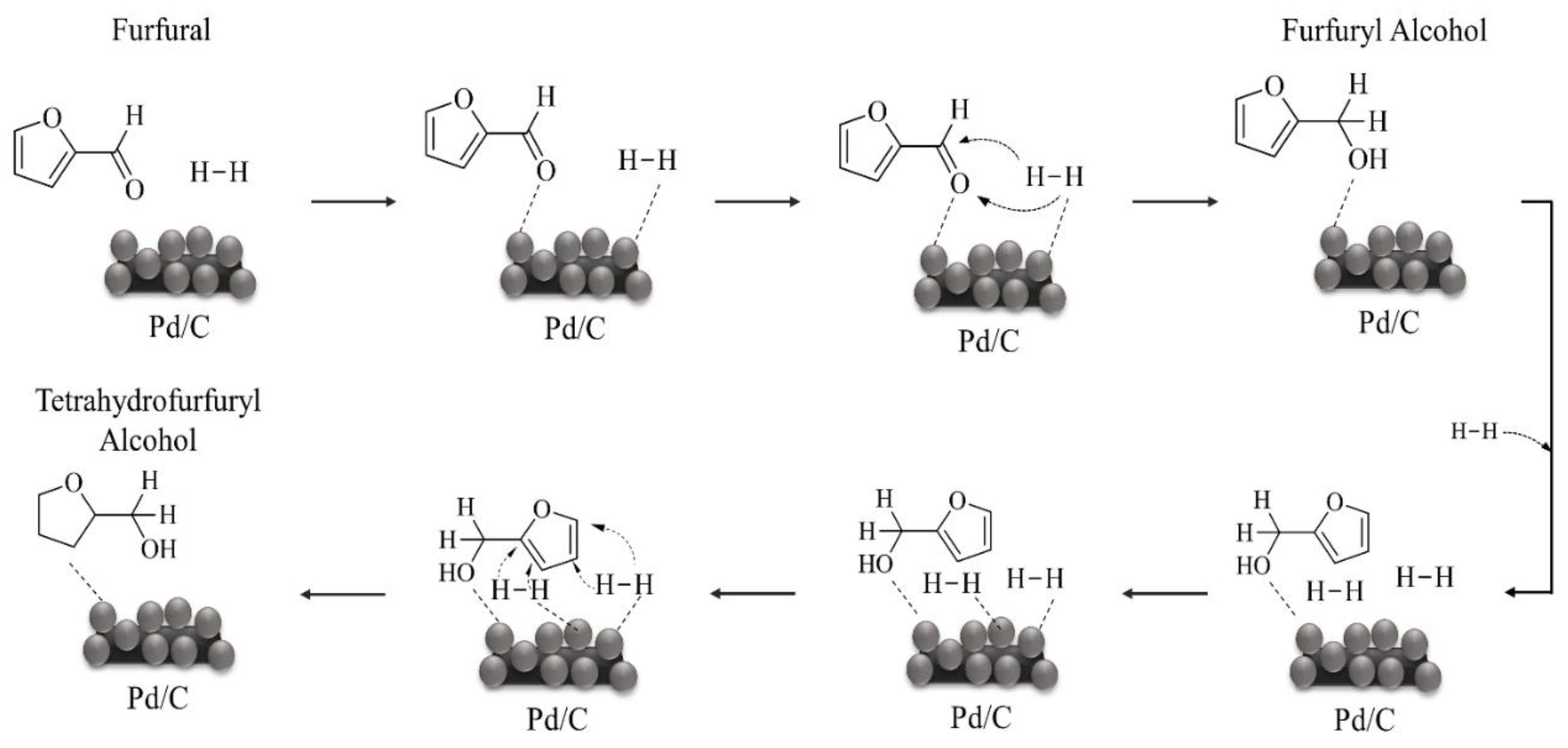
Figure 4.
Yields obtained during the tandem reaction of furfural with 2-propanol under continuous-flow conditions using a 10% Pd/C catalyst. Reaction conditions: 0.1 M furfural, 150 °C, 20 bar (back-pressure regulator), 0.1 mL·min-1 flow rate, 6 h reaction.
Figure 4.
Yields obtained during the tandem reaction of furfural with 2-propanol under continuous-flow conditions using a 10% Pd/C catalyst. Reaction conditions: 0.1 M furfural, 150 °C, 20 bar (back-pressure regulator), 0.1 mL·min-1 flow rate, 6 h reaction.
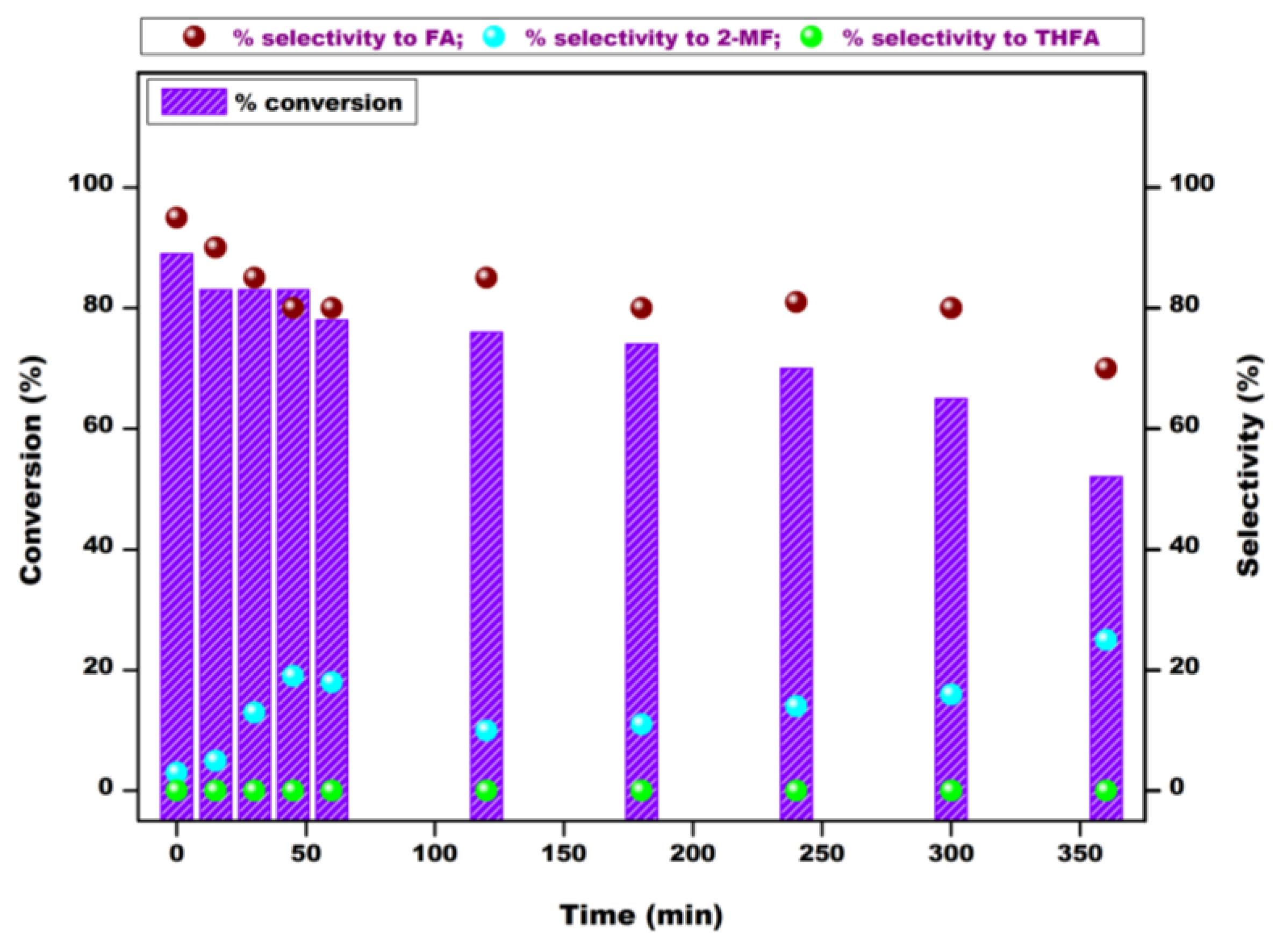
Figure 5.
Proposed mechanism for the hydrogenation of furfural using 2-propanol as a donor medium.
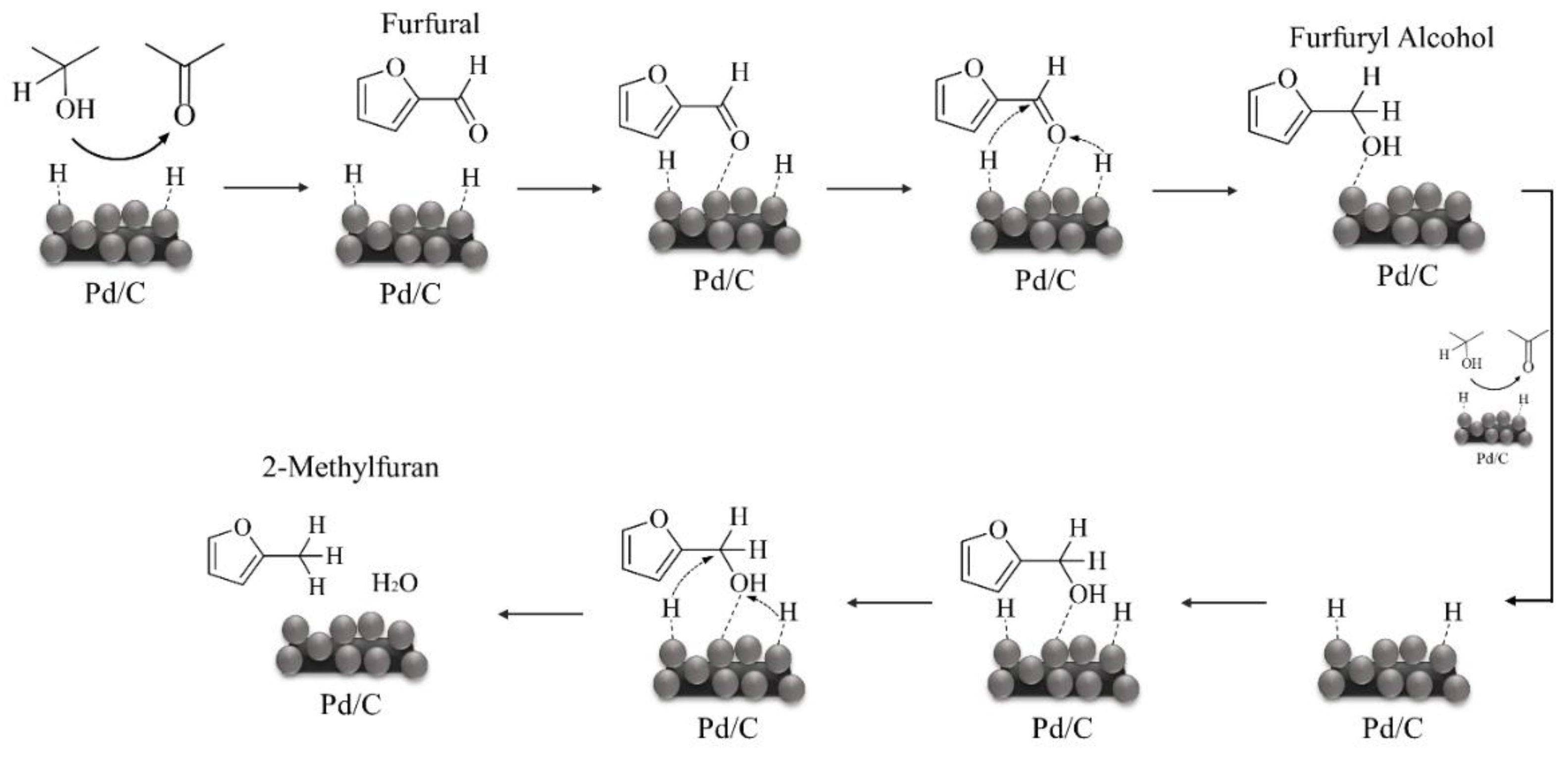
Figure 6.
Yields obtained during the tandem reaction of furfural with NaBH4 under continuous-flow conditions using a 10% Pd/C catalyst. Reaction conditions: 0.1 M furfural, 150 °C, 20 bar (back-pressure regulator), 0.1 mL·min-1 flow rate, 1 h reaction.
Figure 6.
Yields obtained during the tandem reaction of furfural with NaBH4 under continuous-flow conditions using a 10% Pd/C catalyst. Reaction conditions: 0.1 M furfural, 150 °C, 20 bar (back-pressure regulator), 0.1 mL·min-1 flow rate, 1 h reaction.
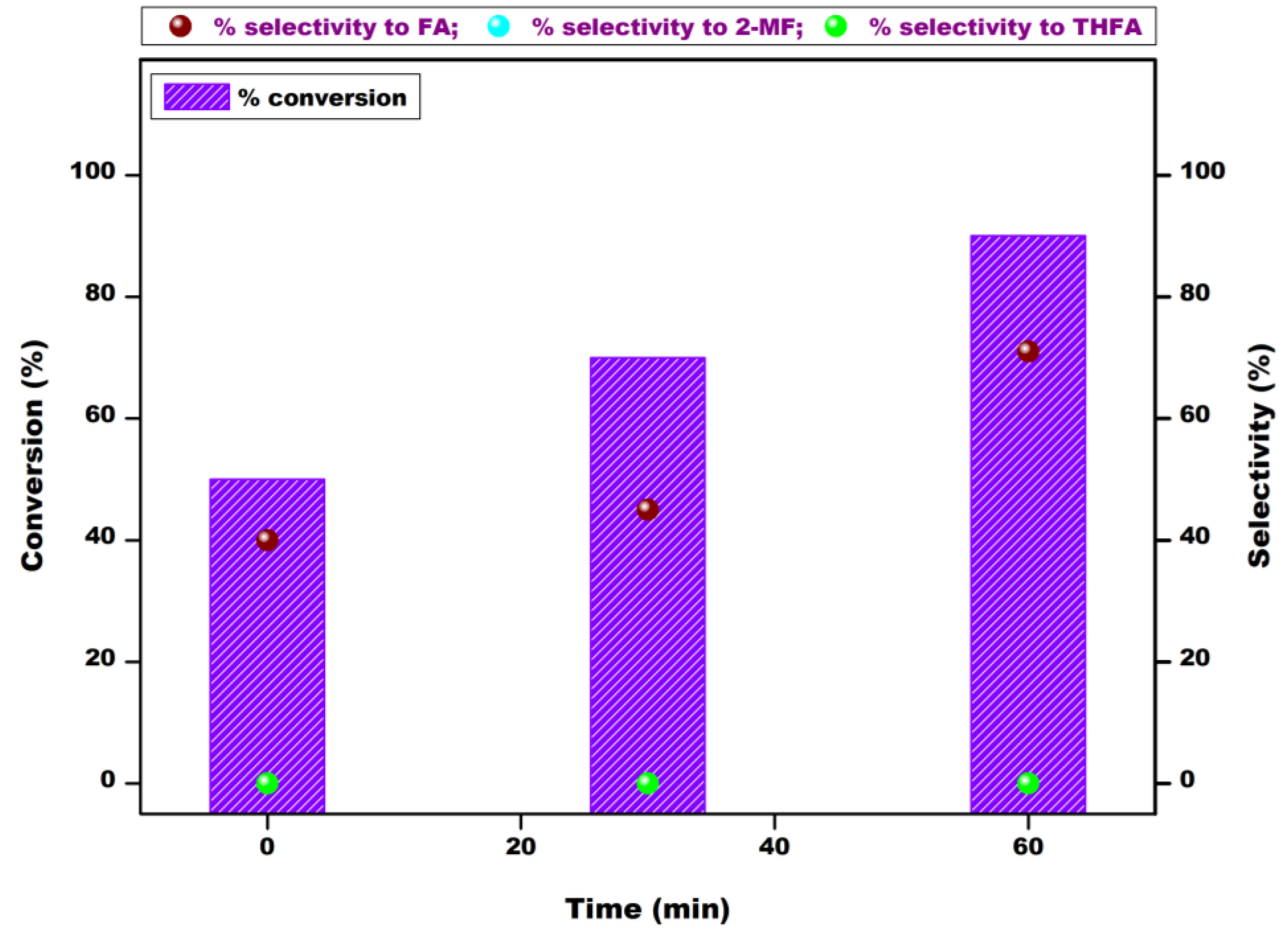
Figure 7.
Proposed mechanism for the hydrogenation of furfural using NaBH4 as a donor medium.
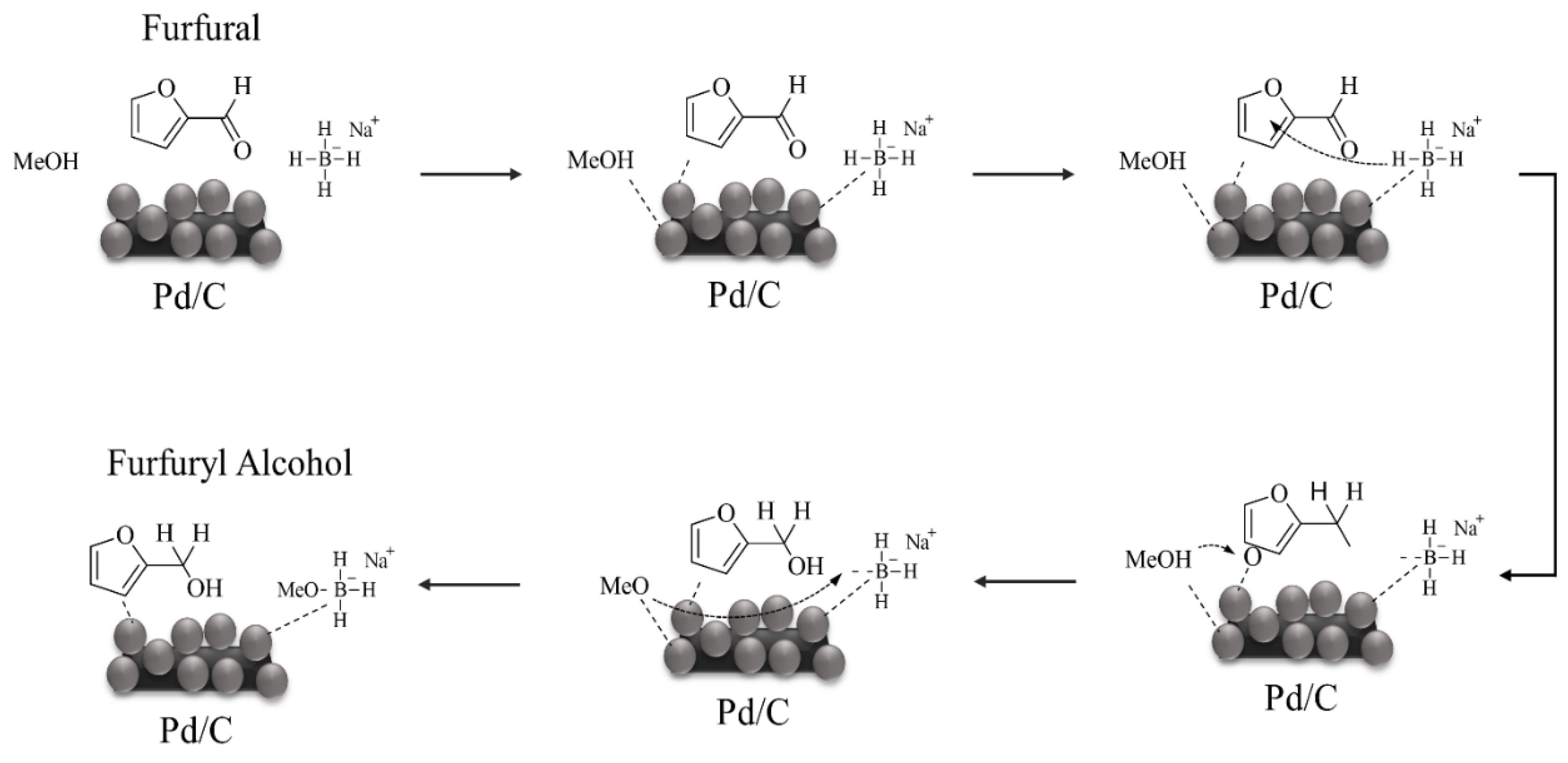

Table 1.
Key Parameters and Equations for Reaction and Performance Analysis.
| No | Parameter | Equation |
| 1 | Residence Time | |
| 2 | Conversion | |
| 3 | Yield | |
| 4 | Selectivity |
Disclaimer/Publisher’s Note: The statements, opinions and data contained in all publications are solely those of the individual author(s) and contributor(s) and not of MDPI and/or the editor(s). MDPI and/or the editor(s) disclaim responsibility for any injury to people or property resulting from any ideas, methods, instructions or products referred to in the content. |
© 2026 by the authors. Licensee MDPI, Basel, Switzerland. This article is an open access article distributed under the terms and conditions of the Creative Commons Attribution (CC BY) license (http://creativecommons.org/licenses/by/4.0/).
Copyright: This open access article is published under a Creative Commons CC BY 4.0 license, which permit the free download, distribution, and reuse, provided that the author and preprint are cited in any reuse.


