
Submitted:
15 July 2026
Posted:
20 July 2026
You are already at the latest version
Abstract
Background: Coronary artery calcification complicates percutaneous coronary intervention (PCI) by promoting stent underexpansion and increasing rates of stent thrombosis, restenosis, and major adverse cardiovascular events (MACE). Four principal lesion preparation strategies are available: conventional balloon angioplasty, modified balloons (cutting/scoring), atherectomy (rotational/orbital), and intravascular lithotripsy (IVL). Prior evidence derives largely from pairwise trials; no study has simultaneously compared all four modalities. Methods: A systematic review and frequentist random-effects network meta-analysis (NMA) was conducted per Cochrane and PRISMA guidelines. Eight studies were included: ROTAXUS, ECLIPSE, BALI, PREPARE-CALC, ROTA-SHOCK, ROLLING STONE, COPS, and ROLLER COASTER-EPIC22. Treatment nodes comprised plain balloon angioplasty, modified balloon (cutting/scoring), atherectomy, and IVL. Procedural, angiographic, and follow-up clinical outcomes were analyzed using odds ratios (ORs) or mean differences (MDs) with 95% confidence intervals. Treatment hierarchy was estimated via P-scores/SUCRA. Prespecified sensitivity and node-splitting analyses assessed robustness and consistency. Results: Across 8 studies and 4 lesion preparation strategies, IVL ranked highest for procedural success (P-score 47.9%) and procedure-related MACE (31.5%), while modified balloon ranked best for minimizing periprocedural MI (P-score 46.2%). Atherectomy was the only strategy associated with a statistically significant increase in coronary perforation risk compared to plain balloon angioplasty (OR 2.02; 95% CI 1.08–3.77; p=0.028), with plain balloon ranking most favorably for dissection risk. Procedure-related mortality was comparable across all strategies, with no statistically significant pairwise differences. At follow-up, IVL demonstrated the most favorable profile for all-cause mortality (P-score 89.4%), MI (50.6%), and target lesion revascularization (57.7%), while modified balloon ranked highest for follow-up MACE (58.4%). Sensitivity and node-splitting analyses confirmed robustness and consistency of findings across all endpoints. Conclusion: In this NMA simultaneously comparing all four calcified lesion preparation strategies, IVL and modified balloon techniques demonstrated consistently favorable profiles across procedural efficacy and follow-up ischemic outcomes, while atherectomy was associated with a significantly higher perforation risk. These findings, to be interpreted in the context of moderate certainty evidence and largely non-significant pairwise comparisons, provide a comprehensive comparative framework to guide operator decision-making for heavily calcified coronary lesions.
Keywords:
lesion preparation strategies
; rotational atherectomy
; orbital atherectomy
; IVL
1. Introduction
Coronary artery calcification (CAC) is prevalent among patients undergoing percutaneous coronary intervention (PCI) and is associated with stent underexpansion, inadequate stent apposition, and higher rates of stent thrombosis, restenosis, and major adverse cardiovascular events (MACE) [1,2]. Adequate lesion preparation is therefore fundamental to optimizing procedural and long-term outcomes in this population [3].
Four principal plaque modification strategies are available: conventional balloon based techniques (non-compliant and ultra high pressure balloons), modified balloons (cutting and scoring balloons), atherectomy (rotational atherectomy [RA] and orbital atherectomy [OA]), and intravascular lithotripsy (IVL). Each addresses the mechanical challenge of calcified plaque through distinctive mechanisms, yet until recently their comparative effectiveness had not been evaluated within a unified framework.
Existing evidence derives largely from pairwise trials. The ROTAXUS trial demonstrated higher procedural success with RA over conventional balloon preparation, though late lumen loss and 9-month MACE were similar [4]. PREPARE-CALC showed a significantly higher procedural success rate with RA compared to modified balloons [5]. The ECLIPSE trial found that OA did not improve minimal stent area or target vessel failure at one year compared to conventional balloon angioplasty [6]. At the level of modified balloon versus conventional therapy, the COPS trial demonstrated that cutting balloon predilation achieved a larger final stent area over non compliant balloon preparation in calcified lesions [7].
The emergence of IVL has generated a new body of comparative evidence. The ROTA shock trial demonstrated that IVL was non-inferior to RA in minimal stent area by optical coherence tomography (OCT) [8]. The ROLLER COASTER EPIC22 trial provided the first three arm randomized comparison of RA, IVL and excimer laser coronary angioplasty (ELCA), confirming non-inferiority of IVL versus RA in stent expansion [9]. The BALI trial randomized patients to IVL or conventional preparation and found that IVL reduced the composite of procedural failure or target vessel failure at one year [10]. The ROLLING STONE registry demonstrated similar procedural success between IVL and atherectomy, with a lower 12-month MACE rate in the IVL group after propensity-score matching [11].
Despite this accumulating evidence, no study has synthesized the comparative effectiveness of all four major plaque modification strategies including conventional balloons, modified balloons, atherectomy, and IVL simultaneously. Network meta-analysis (NMA) enables comparison across multiple interventions by integrating direct and indirect evidence from interconnected trials, even where head-to-head data are absent [12,13]. To our knowledge, this is the first NMA to include all four modalities, incorporating data from eight studies ROTAXUS, ECLIPSE, BALI, PREPARE-CALC, ROTA.shock, ROLLING STONE, COPS, and ROLLER COASTER-EPIC22to generate a comprehensive comparative ranking for the management of calcified coronary lesions.
2. Methodology
2.1. Study Design, Registration, and Reporting Standards
This systematic review and network meta-analysis (NMA) was conducted following the Cochrane Handbook for Systematic Reviews of Interventions (Chapter 11: Undertaking network meta-analyses) [14] and adhered to the PRISMA guidelines [15]. The study protocol was prospectively registered with the PROSPERO international prospective register of systematic reviews (Registration ID:420261396811). The ethical approval and institutional review board were waived because the investigators relied on the data from published articles.
2.2. Data Sources and Search Strategy
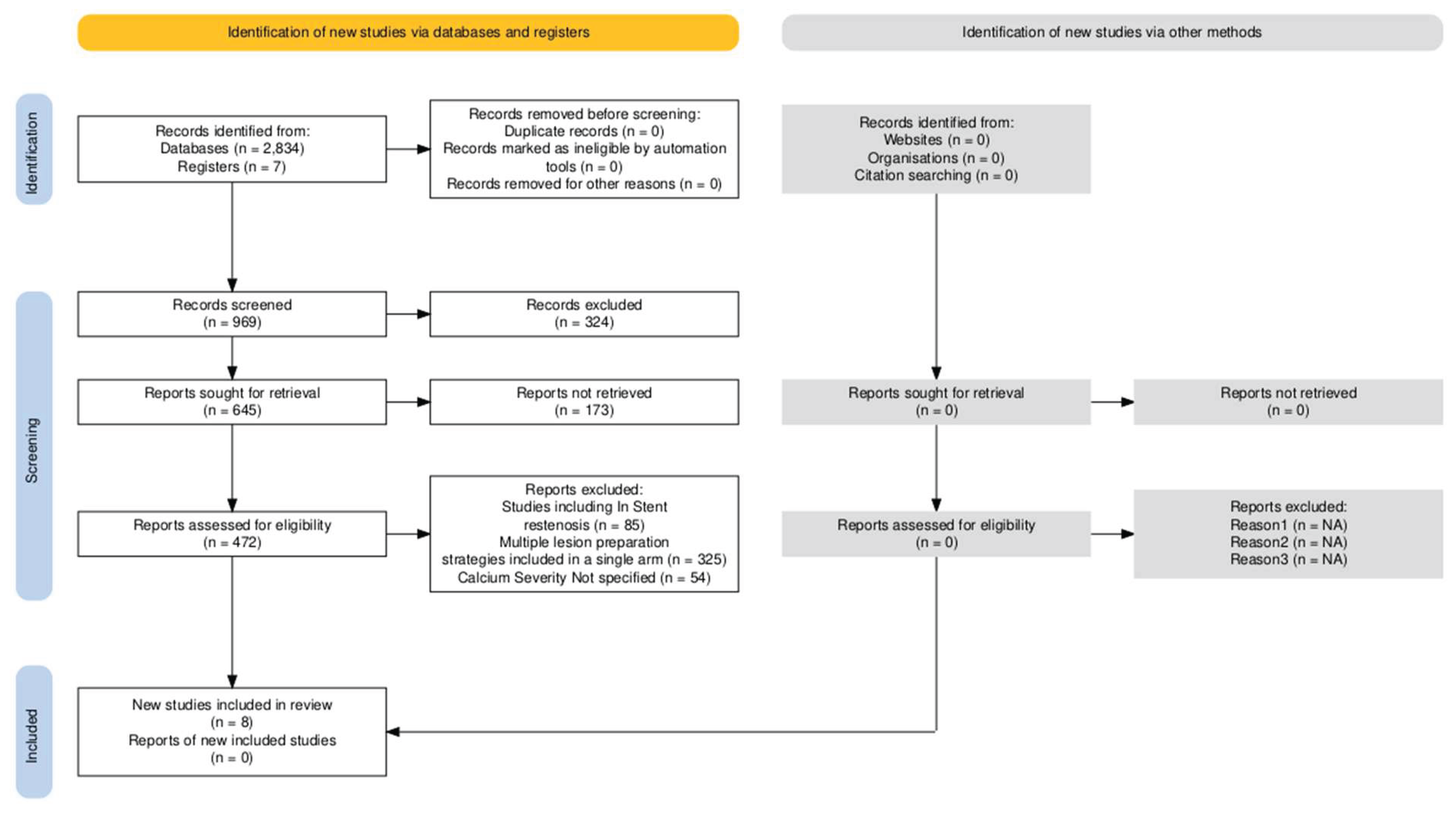
A comprehensive literature search was performed . We searched PubMed/MEDLINE, Embase, Cochrane Central Register of Controlled Trials (CENTRAL), and MEDLINE from database inception through April of 2026 . Search strategies incorporated controlled vocabulary and free-text terms related to lesion preparation strategies for moderate to severely calcified lesions, with specific search terms related to plain/con compliant balloon strategies, modified (cutting/scoring balloons), atherectomy, IVL, ELCA and super high pressure balloons. Studies published in the English language were used as a restriction. Reference lists of included studies and relevant reviews were manually screened to identify additional eligible studies that were missed from the primary search. The full search strategies for each database are provided in the Supplementary Appendix [S.1]. The PRISMA flow chart and checklist are summarized in the figure [Citation:Haddaway, N. R., Page, M. J., Pritchard, C. C., & McGuinness, L. A. (2022). PRISMA2020: An R package and Shiny app for producing PRISMA 2020-compliant flow diagrams, with interactivity for optimised digital transparency and Open Synthesis Campbell Systematic Reviews, 18, e1230. https://doi.org/10.1002/cl2.1230].
2.3. Eligibility Criteria
Studies were eligible for inclusion if they met the following criteria: (1) Only Randomized control trials and prospective registry studies were included. (2) Studies with populations involving In stent restenosis were avoided to hold the transitivity assumption. (3) Only studies involving lesions with moderate to severe calcification were included to hold the transitivity assumption. (4) Involved adult patients over 18 years of age.
2.4. Study Selection and Data Extraction
Two reviewers (VJV) and (NK) independently screened titles and abstracts, followed by full-text review for eligibility. Manual screening was done. Discrepancies were resolved by consensus. Data were extracted at the arm level, including study design, baseline characteristics, intervention type, number of randomized and analyzed patients, and outcomes. When raw event counts were unavailable, reported odds ratios or hazard ratios were extracted and transformed as appropriate using standard statistical methods.
2.5. Risk of Bias Assessment
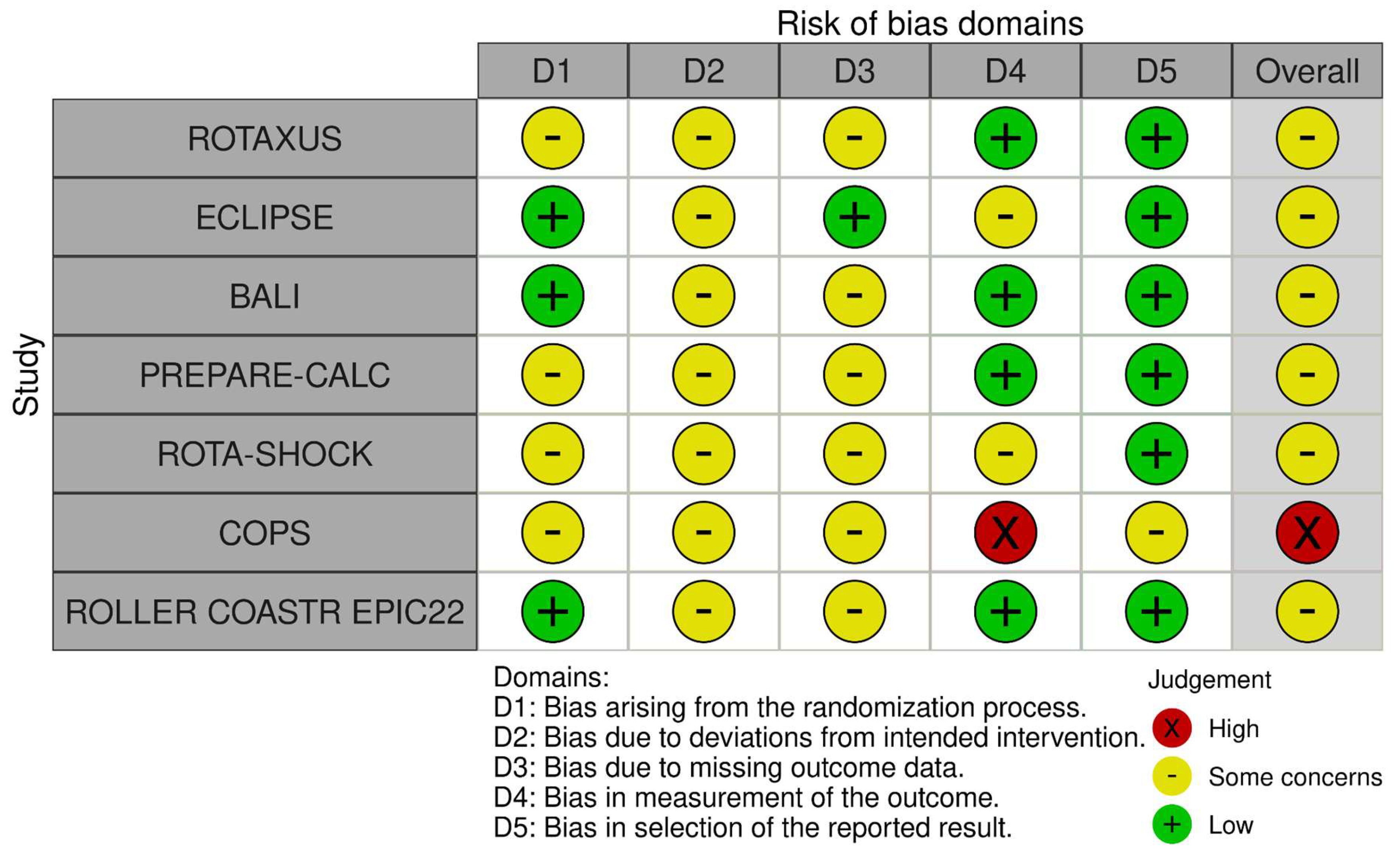
Risk of bias was independently assessed by two reviewers (VJV and NK). RCTs were evaluated using the Cochrane Risk of Bias 2.0 tool[16] , and observational studies were assessed using the ROBINS-I tool [17]. The RoB 2 tool evaluates bias arising from the randomization process, deviations from intended interventions, missing outcome data, measurement of the outcome, and selection of the reported result.Results of the risk of bias assessment are available in Supplementary materials [S3]. Studies were classified as having low or moderate risk of bias. Sensitivity analysis was done with studies with higher risk of bias as part of sensitivity analysis.
2.6. Network Geometry and Treatment Nodes
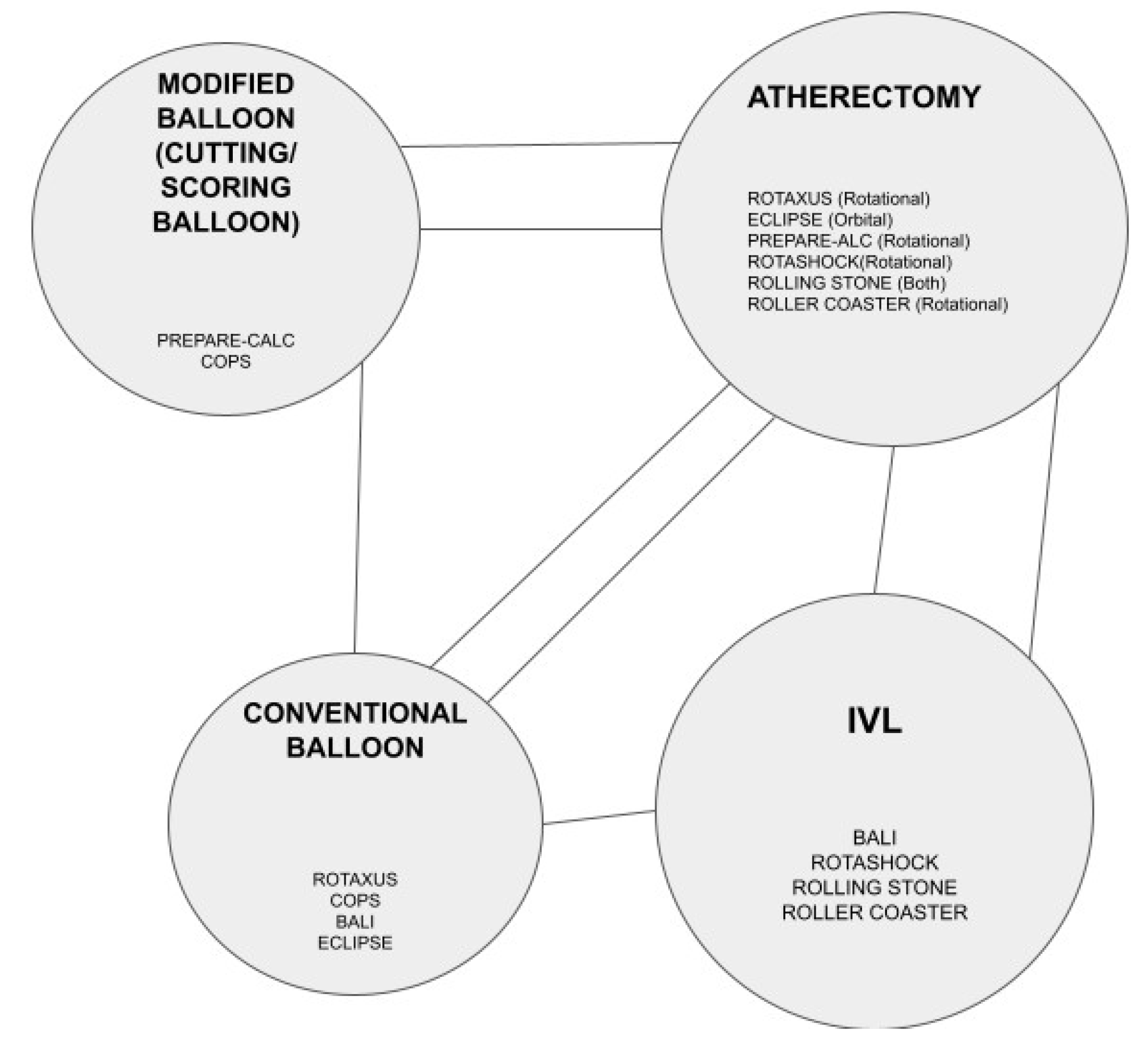
Treatment nodes were designed based on existing lesion preparation strategies for calcified lesions before stent deployment.
- Plain/ semi compliant/ non compliant balloon strategies: studies comparing these strategies were pooled as a single node.
- Modified ( Cutting /Scoring Balloon): studies comparing both cutting and scoring balloons were grouped as a single node for modified balloon strategies.
- Atherectomy: Studies looking at Rotational and Orbital Atherectomy were grouped as a single node.
- Intravascular Lithotripsy + Conventional strategies: studies comparing IVL with conventional techniques were grouped as a single node.
The ELCA node of the ROLLER COASTR trial was not used in the final node structure as the arm size was disproportionately small compared to other nodes, hence tend to introduce errors in assessment. The ISAR-CALC trial comparing super high pressure balloons was also not included in the final network for the same reason. BMC2 registry and TRINEXT registry studies were excluded because of TRINEXT included ISR patients and BMC2 registry did not specify whether ISR patients had been included, and both the studies did not specify/ quantify the calcium severity
2.7. End Point Definitions
Procedural success was defined according to individual study definitions and generally consisted of successful delivery and deployment of the intended coronary device with achievement of residual stenosis <30% and restoration of final Thrombolysis in Myocardial Infarction (TIMI) grade 3 flow without occurrence of major intraprocedural complications.
Periprocedural myocardial infarction (MI) was defined according to study-level definitions, typically incorporating biomarker elevation following percutaneous coronary intervention in conjunction with clinical, electrocardiographic, angiographic, or imaging evidence of myocardial ischemia, consistent with contemporary universal MI definitions.
Procedure-related perforation was defined as angiographically evident coronary vessel perforation occurring during or immediately following lesion preparation or stent implantation. Coronary dissection was defined as angiographically identified disruption of the coronary arterial wall associated with contrast staining, luminal separation, or impaired coronary flow following lesion preparation or intervention.
Procedure-related major adverse cardiovascular events (MACE) were defined according to individual study definitions and generally consisted of a composite of death, myocardial infarction, urgent repeat revascularization, or other major ischemic complications occurring during the index hospitalization or procedural period. Procedure-related mortality referred to all-cause death occurring during the index hospitalization or procedural follow-up interval as defined within each study.
Binary restenosis during follow-up was defined as angiographic restenosis meeting the threshold specified within each study, most commonly ≥50% diameter stenosis at follow-up angiography within the treated coronary segment or adjacent stent margins. Minimum stent luminal diameter was defined as the minimal residual luminal diameter within the treated coronary segment measured by quantitative coronary angiography at follow-up.
Follow-up all-cause mortality was defined as death from any cause occurring during the reported clinical follow-up interval. Follow-up myocardial infarction referred to recurrent spontaneous or procedure-related MI occurring after index hospitalization according to study-level definitions. Target lesion revascularization (TLR) was defined as repeat percutaneous or surgical revascularization involving the originally treated coronary lesion or stented segment. Follow-up MACE was defined according to individual study definitions and generally consisted of a composite of death, myocardial infarction, TLR/TVR, or other major ischemic cardiovascular events occurring during longitudinal follow-up.
2.8. Statistical Analysis
A frequentist random-effects network meta-analysis was performed to compare the relative efficacy and safety of different coronary lesion preparation strategies for heavily calcified coronary artery disease, including Plain Balloon angioplasty, Modified Balloon angioplasty (cutting/scoring balloon [CB/SB]), Atherectomy, and Intravascular Lithotripsy (IVL). Analyses were conducted using the network and mvmeta packages in Stata version 17.0.For binary outcomes, treatment effects were estimated using odds ratios (ORs) with corresponding 95% confidence intervals (CIs). Continuous angiographic outcomes were analyzed using mean differences (MDs) with 95% CIs. Random-effects consistency models were prespecified for all analyses to account for anticipated clinical and methodological heterogeneity across included studies. Network geometry was established using study-level arm-based datasets containing treatment nodes, event counts, and total analyzed sample sizes. For continuous angiographic outcomes, reported means, standard deviations, and analyzed sample sizes were incorporated into the network model.
Procedural endpoints included procedural success, periprocedural myocardial infarction (MI), procedure-related perforation, procedure-related dissection, procedural major adverse cardiovascular events (MACE), and procedure-related death. Angiographic endpoints included binary restenosis following stent implantation and post-procedural minimum luminal diameter. Follow-up clinical endpoints included all-cause mortality, myocardial infarction, target lesion revascularization (TLR), target vessel revascularization (TVR), and follow-up MACE.
Treatment hierarchy was estimated using probability-based ranking metrics derived from frequentist network models, including P-scores/SUCRA-derived ranking probabilities. For beneficial outcomes such as procedural success and minimum luminal diameter, higher rankings reflected greater efficacy, whereas for adverse outcomes including MI, perforation, restenosis, mortality, and MACE, higher rankings reflected lower event probability.Between-study heterogeneity was assessed using the estimated between-study variance (τ²). Consistency between direct and indirect evidence was evaluated qualitatively using node-splitting and comparison of directional treatment estimates across the connected evidence networks. Concordance in the directionality of direct and indirect treatment effects was considered supportive of the transitivity assumption underlying the network meta-analysis framework.
Prespecified sensitivity analyses were performed by excluding the ECLIPSE trial evaluating orbital atherectomy and the ROLLING STONE study evaluating combined rotational and orbital atherectomy, which additionally represented the only nonrandomized study within the evidence network. Sensitivity analyses were repeated using identical random-effects network meta-analysis methodology to assess robustness of treatment effects, consistency signals, and treatment ranking hierarchies. Alignment between primary and sensitivity SUCRA/P-score rankings was evaluated qualitatively across procedural, angiographic, and follow-up endpoints.Exploratory study-level meta-regression analyses were additionally performed to evaluate the association between lesion- and procedure-level characteristics and clinical outcomes. Covariates included lesion length, stent length, percentage of moderate-to-severely calcified lesions, bifurcation lesion percentage, follow-up duration, age, sex, prior myocardial infarction, and prior percutaneous coronary intervention. Logistic generalized linear models with binomial distributions and robust variance estimation were used for binary outcomes, whereas linear regression with robust variance estimation was utilized for continuous angiographic outcomes. Given the aggregate-level nature of the available data and limited study numbers for several outcomes, these analyses were considered exploratory and hypothesis-generating.
2.9. Assessment of Transitivity
The assumption of transitivity was assessed by evaluating the distribution of key clinical and methodological effect modifiers across treatment comparisons. These included mean age,calcification severity, reference vessel diameter for target lesions, lesion and stent length, type of vessel and bifurcation lesions. Statistical assessment of transitivity was done through meta regression, to find any significant effect modifiers.
2.10. Assessment of Consistency
Statistical assessment of inconsistency using formal node-splitting methods were done. Node splitting was done excluding Non Randomized studies, and splitting of the Atherectomy node to Orbital and rotational atherectomy. Signal alignment and P score derived SUCRA rankings were compared between the original NMA and node splitting analysis. Alignment of the direct and indirect evidences were also tested to assess consistency.
2.11. Certainty of Evidence
Two authors (VJV and NK) applied the Grading of Recommendations Assessment, Development, and Evaluation (GRADE) to determine the extent of certainty in the findings [13].
3. Results
3.1. Procedural Endpoints
3.1.1. Procedural Success
A frequentist random-effects network meta-analysis including 8 studies and 4 lesion preparation strategies was performed to compare procedural success. Compared with plain balloon angioplasty, IVL (OR 1.91, 95% CI 0.52–6.97) and Atherectomy (OR 1.81, 95% CI 0.50–6.48) demonstrated numerically higher procedural success, whereas Modified Balloon (CB/SB) demonstrated numerically lower procedural success (OR 0.62, 95% CI 0.10–3.82); however, no pairwise comparison achieved statistical significance. P-score/SUCRA-style ranking demonstrated IVL as the highest-ranked strategy for procedural success (47.9% probability of being best), followed by Atherectomy (40.0%), Plain Balloon (8.6%), and Modified Balloon (3.5%). Moderate between-study heterogeneity was observed (τ≈0.81), suggesting meaningful inter-study variability in lesion and procedural characteristics. The evidence network was connected, and no major qualitative inconsistency between direct and indirect estimates was apparent across treatment comparisons.

Table.
LEAGUE TABLE FOR PROCEDURAL SUCCESS.
| Plain Balloon | Modified Balloon (CB/SB) | Atherectomy | IVL | |
|---|---|---|---|---|
| Plain Balloon | — | 1.61 (0.26–9.90) |
0.55 (0.15–1.98) | 0.52 (0.14–1.91) |
| Modified Balloon (CB/SB) | 0.62 (0.10–3.82) |
— | 0.34 (0.04–2.73) | 0.33 (0.04–2.56) |
| Atherectomy | 1.81 (0.50–6.48) |
2.91 (0.37–22.9) |
— | 0.95 (0.18–5.13) |
| IVL | 1.91 (0.52–6.97) |
3.07 (0.39–24.0) |
1.06 (0.19–5.62) | — |
TABLE.
P SCORE / SUCRA RANKING TABLE: PROCEDURAL SUCCESS.
| Rank | Lesion Preparation Strategy | Probability of Being Best (%) | Overall Interpretation |
|---|---|---|---|
| 1 | IVL | 47.9 | Highest probability of procedural success |
| 2 | Atherectomy | 40.0 | Favorable procedural success profile |
| 3 | Plain Balloon | 8.6 | Intermediate procedural performance |
| 4 | Modified Balloon (CB/SB) | 3.5 | Lowest probability of procedural success |
3.1.2. PERIPROCEDURAL MYOCARDIAL INFARCTION
A frequentist random-effects network meta-analysis including 8 studies and 4 lesion preparation strategies demonstrated numerically lower odds of periprocedural myocardial infarction with Modified Balloon (CB/SB) (OR 0.32, 95% CI 0.07–1.36), IVL (OR 0.33, 95% CI 0.07–1.53), and Atherectomy (OR 0.38, 95% CI 0.09–1.55) compared with Plain Balloon angioplasty; however, no pairwise comparison achieved statistical significance. P-score/SUCRA-style ranking demonstrated Modified Balloon (46.2% probability of being best) and IVL (44.2%) as the highest-ranked strategies for minimizing periprocedural MI. Between-study heterogeneity was negligible (τ≈0), and no major qualitative inconsistency between direct and indirect estimates was apparent across the connected evidence network
TABLE.
LEAGUE TABLE: PERIPROCEDURAL MI.
| Plain Balloon | Modified Balloon (CB/SB) | Atherectomy | IVL | |
|---|---|---|---|---|
| Plain Balloon | — | 3.14 (0.74–13.42) |
2.61 (0.64–10.55) | 3.02 (0.65–13.99) |
| Modified Balloon (CB/SB) | 0.32 (0.07–1.36) |
— | 0.83 (0.17–4.06) |
0.96 (0.17–5.22) |
| Atherectomy | 0.38 (0.09–1.55) |
1.20 (0.25–5.76) |
— | 1.04 (0.21–5.05) |
| IVL | 0.33 (0.07–1.53) |
1.04 (0.19–5.77) |
0.96 (0.20–4.76) |
— |
TABLE.
P-SCORE RANKING FOR PERIPROCEDURAL MI.
| Rank | Lesion Preparation Strategy | Probability of Being Best (%) | Overall Interpretation |
|---|---|---|---|
| 1 | Modified Balloon (CB/SB) | 46.2 | Highest probability of minimizing periprocedural MI |
| 2 | IVL | 44.2 | Favorable MI profile |
| 3 | Atherectomy | 6.9 | Intermediate MI profile |
| 4 | Plain Balloon | 2.7 | Lowest probability of minimizing periprocedural MI |
3.1.3. Procedure Related Perforation
A frequentist random-effects network meta-analysis including 8 studies compared Plain Balloon angioplasty, Modified Balloon (CB/SB), Atherectomy, and IVL for the outcome of procedure-related perforation. Overall model fit was favorable, with negligible between-study heterogeneity (τ≈0), indicating highly stable treatment effect estimates across the network. Atherectomy was associated with significantly higher odds of perforation compared with Plain Balloon angioplasty (OR 2.02; 95% CI 1.08–3.77; p=0.028), whereas Modified Balloon (CB/SB) and IVL did not demonstrate statistically significant differences relative to Plain Balloon angioplasty. Probability-based treatment ranking demonstrated Plain Balloon angioplasty as the highest-ranked strategy for minimizing perforation risk, followed by Modified Balloon, IVL, and Atherectomy. Importantly, node-splitting analyses demonstrated strong concordance between direct and indirect evidence across all pairwise comparisons, with no statistically significant inconsistency identified within the network (all p>0.25), supporting the internal coherence, transitivity assumptions, and overall robustness of the network model.
TABLE.
LEAGUE TABLE: PROCEDURE RELATED PERFORATION.
| Plain Balloon | Modified Balloon (CB/SB) | Atherectomy | IVL | |
|---|---|---|---|---|
| Plain Balloon | — | 0.68 (0.14–3.29) | 0.50 (0.27–0.93), p=0.028 | 0.49 (0.20–1.19) |
| Modified Balloon (CB/SB) | 1.47 (0.30–7.07) | — | 0.73 (0.15–3.55) | 0.72 (0.12–4.20) |
| Atherectomy | 2.02 (1.08–3.77), p=0.028 | 1.37 (0.28–6.73) | — | 0.99 (0.41–2.39) |
| IVL | 2.04 (0.84–4.98) | 1.39 (0.24–8.28) | 1.01 (0.42–2.43) | — |
TABLE.
P-SCORE RANKING FOR PROCEDURE RELATED PERFORATION.
| Rank | Lesion Preparation Strategy | Probability of Being Best (%) | Overall Interpretation |
|---|---|---|---|
| 1 | Plain Balloon | 85.5 | Highest probability of minimizing perforation risk |
| 2 | Modified Balloon (CB/SB) | 13.0 | Favorable perforation profile |
| 3 | IVL | 1.5 | Intermediate perforation profile |
| 4 | Atherectomy | 0.0 | Highest numerical perforation risk |
3.1.4. Procedure Related Dissection
A frequentist random-effects network meta-analysis including 8 studies and 4 lesion preparation strategies demonstrated no statistically significant differences in coronary dissection risk across treatment modalities. Plain Balloon angioplasty demonstrated the highest probability of minimizing dissection risk (57.1% probability of being best), followed by IVL (23.4%), Modified Balloon (14.7%), and Atherectomy (4.8%). Pairwise comparisons demonstrated similar dissection risk across all lesion preparation strategies, with wide overlapping confidence intervals and no statistically significant treatment effects. Between-study heterogeneity was negligible (τ≈0), and no major qualitative inconsistency between direct and indirect estimates was apparent across the connected evidence network.
TABLE.
LEAGUE TABLE: PROCEDURE RELATED DISSECTION.
| Plain Balloon | Modified Balloon (CB/SB) | Atherectomy | IVL | |
|---|---|---|---|---|
| Plain Balloon | — | 0.77 (0.28–2.13) |
0.74 (0.28–1.94) |
0.85 (0.33–2.23) |
| Modified Balloon (CB/SB) | 1.30 (0.47–3.59) | — | 0.96 (0.30–3.05) |
1.11 (0.35–3.50) |
| Atherectomy | 1.35 (0.52–3.56) | 1.04 (0.33–3.32) |
— | 1.15 (0.38–3.53) |
| IVL | 1.17 (0.45–3.08) |
0.90 (0.29–2.88) |
0.87 (0.28–2.66) |
— |
TABLE.
P-SCORE RANKING FOR PROCEDURE RELATED DISSECTION.
| Rank | Lesion Preparation Strategy | Probability of Being Best (%) | Overall Interpretation |
|---|---|---|---|
| 1 | Plain Balloon | 57.1 | Highest probability of minimizing dissection risk |
| 2 | IVL | 23.4 | Favorable dissection profile |
| 3 | Modified Balloon (CB/SB) | 14.7 | Intermediate dissection profile |
| 4 | Atherectomy | 4.8 | Lowest probability of minimizing dissection risk |
3.1.5. Procedure Related Mace
A frequentist random-effects network meta-analysis including 8 studies and 4 lesion preparation strategies demonstrated no statistically significant differences in procedure-related major adverse cardiovascular events (MACE) across treatment modalities. Modified Balloon (CB/SB) demonstrated numerically lower odds of MACE compared with Plain Balloon angioplasty (OR 0.70, 95% CI 0.26–1.87), while IVL also demonstrated a numerically favorable MACE profile relative to Plain Balloon angioplasty (OR 0.71, 95% CI 0.29–1.71). Atherectomy demonstrated numerically higher MACE risk compared with IVL (OR 1.47, 95% CI 0.55–3.90), although no pairwise comparison achieved statistical significance and all confidence intervals crossed unity. Probability-based ranking demonstrated IVL as the highest-ranked strategy for minimizing procedural MACE (31.5% probability of being best), followed by Atherectomy (29.2%), Modified Balloon (23.8%), and Plain Balloon angioplasty (15.5%). Between-study heterogeneity was negligible (τ≈0), indicating excellent overall model stability and minimal inter-study variability. In addition, direct and indirect treatment estimates appeared qualitatively concordant across the connected evidence network without major inconsistency signals, supporting overall coherence and internal validity of the network meta-analysis model.
TABLE.
LEAGUE TABLE: PROCEDURE RELATED MACE.
| Plain Balloon | Modified Balloon (CB/SB) | Atherectomy | IVL | |
|---|---|---|---|---|
| Plain Balloon | — | 1.42 (0.53–3.79) |
0.96 (0.40–2.32) | 1.41 (0.58–3.40) |
| Modified Balloon (CB/SB) | 0.70 (0.26–1.87) |
— | 0.68 (0.23–1.99) | 0.99 (0.33–2.98) |
| Atherectomy | 1.04 (0.43–2.52) |
1.47 (0.50–4.37) |
— | 1.47 (0.55–3.90) |
| IVL | 0.71 (0.29–1.71) |
1.01 (0.34–3.03) |
0.68 (0.26–1.83) | — |
TABLE.
P-SCORE RANKING FOR PROCEDURE RELATED MACE.
| Rank | Lesion Preparation Strategy | Probability of Being Best (%) | Overall Interpretation |
|---|---|---|---|
| 1 | IVL | 31.5 | Highest probability of minimizing MACE |
| 2 | Atherectomy | 29.2 | Favorable MACE profile |
| 3 | Modified Balloon (CB/SB) | 23.8 | Intermediate MACE profile |
| 4 | Plain Balloon | 15.5 | Lowest probability of minimizing MACE |
3.1.6. PROCEDURE RELATED DEATH
A frequentist random-effects network meta-analysis including 8 studies and 4 lesion preparation strategies demonstrated no statistically significant differences in all-cause mortality across treatment modalities. Modified Balloon (CB/SB) demonstrated the highest probability of minimizing mortality (35.0% probability of being best), followed closely by IVL (33.3%) and Plain Balloon angioplasty (31.1%), whereas Atherectomy demonstrated the least favorable mortality profile (0.6%). Pairwise treatment comparisons demonstrated extremely wide confidence intervals reflecting sparse mortality events and limited statistical precision. Between-study heterogeneity was negligible (τ≈0), and no major qualitative inconsistency between direct and indirect estimates was apparent across the connected evidence network. Due to the extremely wide confidence intervals and sparse event counts, results related to procedure related death were considered hypothesis generating only.
OVERALL SUCRA RANKINGS FOR PROCEDURE RELATED OUTCOMES.
| RANKING | PROCEDURAL SUCCESS |
PERIPROCEDURAL MI |
PROCEDURE RELATED PERFORATION |
PROCEDURE RELATED DISSECTION |
PROCEDURE RELATED MACE |
|---|---|---|---|---|---|
| 1. | IVL | Modified Balloon (CB/SB) | Plain Balloon | Plain Balloon | IVL |
| 2. | Atherectomy | IVL | Modified Balloon (CB/SB) | IVL | Atherectomy |
| 3. | Plain Balloon | Atherectomy | IVL | Modified Balloon (CB/SB) | Modified Balloon (CB/SB) |
| 4. | Modified Balloon (CB/SB) | Plain Balloon | Atherectomy | Atherectomy | Plain Balloon |
3.2. Angiographic DatA (Follow - Up)
3.2.1. Binary Stent Restenosis During Follow Up
A frequentist random-effects network meta-analysis including 8 studies and 4 lesion preparation strategies demonstrated no statistically significant differences in binary restenosis following stent implantation across treatment modalities. Pairwise treatment comparisons demonstrated odds ratios near unity with broad overlapping confidence intervals, suggesting comparable restenosis risk among lesion preparation strategies. P-score/SUCRA-style ranking demonstrated Modified Balloon (CB/SB) as the highest-ranked strategy for minimizing restenosis (30.2% probability of being best), followed by Plain Balloon angioplasty (27.2%), IVL (21.7%), and Atherectomy (20.9%). Moderate between-study heterogeneity was observed (τ≈0.63), and no major qualitative inconsistency between direct and indirect estimates was apparent across the connected evidence network.
TABLE.
LEAGUE TABLE: BINARY STENT RESTENOSIS.
| Plain Balloon | Modified Balloon (CB/SB) | Atherectomy | IVL | |
|---|---|---|---|---|
| Plain Balloon | — | 0.97 (0.20–4.57) |
0.99 (0.32–3.07) |
0.94 (0.30–2.93) |
| Modified Balloon (CB/SB) | 1.04 (0.22–4.90) |
— | 1.02 (0.27–3.82) |
0.97 (0.25–3.70) |
| Atherectomy | 1.01 (0.33–3.15) |
0.98 (0.26–3.73) |
— | 0.95 (0.31–2.90) |
| IVL | 1.07 (0.34–3.34) |
1.03 (0.27–4.00) |
1.05 (0.35–3.24) |
— |
TABLE.
P-SCORE RANKING FOR BINARY STENT RESTENOSIS.
| Rank | Lesion Preparation Strategy | Probability of Being Best (%) | Overall Interpretation |
|---|---|---|---|
| 1 | Modified Balloon (CB/SB) | 30.2 | Highest probability of minimizing restenosis |
| 2 | Plain Balloon | 27.2 | Favorable restenosis profile |
| 3 | IVL | 21.7 | Intermediate restenosis profile |
| 4 | Atherectomy | 20.9 | Similar restenosis profile |
3.2.2. Minimal Stent Luminal Diameter (mm) During Follow Up
A frequentist random-effects network meta-analysis including 7 studies and 4 lesion preparation strategies demonstrated no statistically significant differences in post-stenting minimum luminal diameter across treatment modalities. Mean differences between treatment strategies were minimal and centered near zero with broad overlapping confidence intervals, suggesting comparable angiographic luminal expansion across lesion preparation techniques. P-score/SUCRA-style ranking demonstrated IVL as the highest-ranked strategy for achieving larger minimum luminal diameter (39.8% probability of being best), followed by Modified Balloon (26.5%), Plain Balloon angioplasty (19.0%), and Atherectomy (14.7%). Between-study heterogeneity was low-to-moderate (τ≈0.052), and no major qualitative inconsistency between direct and indirect estimates was apparent across the connected evidence network.
TABLE.
LEAGUE TABLE: MINIMAL STENT LUMINAL DIAMETER.
| Plain Balloon | Modified Balloon (CB/SB) | Atherectomy | IVL | |
|---|---|---|---|---|
| Plain Balloon | — | -0.009 (-0.149 - 0.131) |
0.000 (-0.128 - 0.128) |
-0.021 (-0.176 - 0.135) |
| Modified Balloon (CB/SB) | 0.009 (-0.131 - 0.149) |
— | 0.009 (-0.115 - 0.133) |
-0.012 (-0.165 - 0.141) |
| Atherectomy | 0.000 (-0.128 -0.128) |
-0.009 (-0.133 - 0.115) |
— | -0.021 (-0.164 - 0.123) |
| IVL | 0.021 (-0.135 -0.176) |
0.012 (-0.141 - 0.165) |
0.021 (-0.123 -0.164) |
— |
TABLE.
P-SCORE RANKING FOR MINIMAL STENT LUMINAL DIAMETER.
| Rank | Lesion Preparation Strategy | Probability of Being Best (%) | Overall Interpretation |
|---|---|---|---|
| 1 | IVL | 39.8 | Highest probability of achieving larger minimum luminal diameter |
| 2 | Modified Balloon (CB/SB) | 26.5 | Favorable luminal expansion profile |
| 3 | Plain Balloon | 19.0 | Intermediate luminal expansion profile |
| 4 | Atherectomy | 14.7 | Lowest probability of achieving larger minimum luminal diameter |
TABLE.
OVERALL SUCRA RANKINGS FOR ANGIOGRAPHIC ENDPOINTS.
| RANKING | BINARY RESTENOSIS | MINIMAL STENT LUMINAL DIAMETER |
|---|---|---|
| 1. | Modified Balloon (CB/SB) | IVL |
| 2. | Plain Balloon | Modified Balloon (CB/SB) |
| 3. | IVL | Plain Balloon |
| 4. | Atherectomy | Atherectomy |
3.3. Follow Up Events
3.3.1. All- Cause Mortality During Follow Up
A frequentist random-effects network meta-analysis including 8 studies and 4 lesion preparation strategies demonstrated numerically lower follow-up all-cause mortality with IVL compared with Plain Balloon angioplasty (OR 0.36, 95% CI 0.11–1.15; p=0.085), although no pairwise comparison achieved statistical significance. P-score/SUCRA-style ranking demonstrated IVL as the highest-ranked strategy for minimizing mortality (89.4% probability of being best), followed by Modified Balloon (5.9%), Plain Balloon angioplasty (4.4%), and Atherectomy (0.3%). Between-study heterogeneity was negligible (τ≈0.00002), and no major qualitative inconsistency between direct and indirect estimates was apparent across the connected evidence network.
TABLE.
LEAGUE TABLE: ALL-CAUSE MORTALITY DURING FOLLOW-UP.
| Plain Balloon | Modified Balloon (CB/SB) | Atherectomy | IVL | |
|---|---|---|---|---|
| Plain Balloon | — | 1.47 (0.53–4.09) |
1.28 (0.48–3.39) |
2.76 (0.87–8.76) |
| Modified Balloon (CB/SB) | 0.68 (0.24–1.88) |
— | 0.87 (0.29–2.62) |
1.88 (0.56–6.27) |
| Atherectomy | 0.78 (0.29–2.07) |
1.15 (0.38–3.45) |
— | 2.16 (0.67–6.94) |
| IVL | 0.36 (0.11–1.15) |
0.53 (0.16–1.79) |
0.46 (0.14–1.50) |
— |
TABLE.
P-SCORE RANKING FOR ALL- CAUSE MORTALITY DURING FOLLOW-UP.
| Rank | Lesion Preparation Strategy | Probability of Being Best (%) | Overall Interpretation |
|---|---|---|---|
| 1 | IVL | 89.4 | Highest probability of minimizing mortality |
| 2 | Modified Balloon (CB/SB) | 5.9 | Intermediate mortality profile |
| 3 | Plain Balloon | 4.4 | Intermediate mortality profile |
| 4 | Atherectomy | 0.3 | Lowest probability of minimizing mortality |
3.3.2. Mace During Follow Up
A frequentist random-effects network meta-analysis including 8 studies and 4 lesion preparation strategies demonstrated no statistically significant differences in follow-up major adverse cardiovascular events across treatment modalities. Modified Balloon (CB/SB) demonstrated numerically lower odds of follow-up MACE compared with Plain Balloon angioplasty (OR 0.74, 95% CI 0.34–1.64), whereas Atherectomy and IVL demonstrated comparable MACE risk profiles. P-score/SUCRA-style ranking demonstrated Modified Balloon (58.4% probability of being best) and IVL (25.2%) as the highest-ranked strategies for minimizing follow-up MACE. Between-study heterogeneity was low-to-moderate (τ≈0.25), and no major qualitative inconsistency between direct and indirect estimates was apparent across the connected evidence network.
TABLE.
LEAGUE TABLE: MACE DURING FOLLOW-UP.
| Plain Balloon | Modified Balloon (CB/SB) | Atherectomy | IVL | |
|---|---|---|---|---|
| Plain Balloon | — | 1.34 (0.61–2.95) |
1.04 (0.58–1.89) |
1.12 (0.58–2.17) |
| Modified Balloon (CB/SB) | 0.74 (0.34–1.64) |
— | 0.78 (0.33–1.83) |
0.84 (0.35–2.01) |
| Atherectomy | 0.96 (0.53–1.73) |
1.28 (0.55–3.00) |
— | 1.07 (0.53–2.17) |
| IVL | 0.89 (0.46–1.72) |
1.19 (0.50–2.86) |
0.94 (0.46–1.89) | — |
TABLE.
P-SCORE RANKING FOR MACE DURING FOLLOW-UP.
| Rank | Lesion Preparation Strategy | Probability of Being Best (%) | Overall Interpretation |
|---|---|---|---|
| 1 | Modified Balloon (CB/SB) | 58.4 | Highest probability of minimizing follow-up MACE |
| 2 | IVL | 25.2 | Favorable follow-up MACE profile |
| 3 | Plain Balloon | 11.7 | Intermediate follow-up MACE profile |
| 4 | Atherectomy | 4.7 | Lowest probability of minimizing follow-up MACE |
3.3.3. Myocardial Infarction During Follow Up
A frequentist random-effects network meta-analysis including 8 studies and 4 lesion preparation strategies demonstrated no statistically significant differences in follow-up myocardial infarction across treatment modalities. IVL demonstrated numerically lower odds of follow-up MI compared with Plain Balloon angioplasty (OR 0.67, 95% CI 0.25–1.76), whereas Modified Balloon (CB/SB) also demonstrated a relatively favorable MI profile (OR 0.72, 95% CI 0.29–1.82). P-score/SUCRA-style ranking demonstrated IVL as the highest-ranked strategy for minimizing follow-up MI (50.6% probability of being best), followed by Modified Balloon (28.2%), Plain Balloon angioplasty (11.6%), and Atherectomy (9.6%). Between-study heterogeneity was negligible (τ≈0.000002), and no major qualitative inconsistency between direct and indirect estimates was apparent across the connected evidence network.
TABLE.
LEAGUE TABLE: MYOCARDIAL INFARCTION DURING FOLLOW-UP.
| Plain Balloon | Modified Balloon (CB/SB) | Atherectomy | IVL | |
|---|---|---|---|---|
| Plain Balloon | — | 1.39 (0.55–3.49) |
1.30 (0.55–3.12) |
1.50 (0.57–3.95) |
| Modified Balloon (CB/SB) | 0.72 (0.29–1.82) | — | 0.94 (0.35–2.54) |
1.08 (0.37–3.15) |
| Atherectomy | 0.77 (0.32–1.83) | 1.06 (0.39–2.87) |
— | 1.16 (0.41–3.30) |
| IVL | 0.67 (0.25–1.76) | 0.93 (0.32–2.69) |
0.86 (0.30–2.45) |
— |
TABLE.
P-SCORE RANKING FOR MYOCARDIAL INFARCTION DURING FOLLOW-UP.
| Rank | Lesion Preparation Strategy | Probability of Being Best (%) | Overall Interpretation |
|---|---|---|---|
| 1 | IVL | 50.6 | Highest probability of minimizing follow-up MI |
| 2 | Modified Balloon (CB/SB) | 28.2 | Favorable follow-up MI profile |
| 3 | Plain Balloon | 11.6 | Intermediate follow-up MI profile |
| 4 | Atherectomy | 9.6 | Lowest probability of minimizing follow-up MI |
3.3.4. Target Lesion Revascularization During Follow Up
A frequentist random-effects network meta-analysis including 7 studies and 4 lesion preparation strategies demonstrated no statistically significant differences in follow-up target lesion revascularization across treatment modalities. IVL demonstrated numerically lower odds of TLR compared with Plain Balloon angioplasty (OR 0.48, 95% CI 0.14–1.62) and ranked highest for minimizing TLR (57.7% probability of being best), followed by Atherectomy (29.0%), Modified Balloon (11.0%), and Plain Balloon angioplasty (2.3%). Low-to-moderate between-study heterogeneity was observed (τ≈0.36), and no major qualitative inconsistency between direct and indirect estimates was apparent across the connected evidence network.
Table.
LEAGUE TABLE: TARGET LESION REVASCULARIZATION DURING FOLLOW-UP.
| Plain Balloon | Modified Balloon (CB/SB) | Atherectomy | IVL | |
|---|---|---|---|---|
| Plain Balloon | — | 1.26 (0.41–3.88) |
1.57 (0.52–4.77) |
2.08 (0.62–6.97) |
| Modified Balloon (CB/SB) | 0.79 (0.26–2.44) | — | 1.25 (0.39–4.00) | 1.65 (0.47–5.82) |
| Atherectomy | 0.64 (0.21–1.92) | 0.80 (0.25–2.57) | — | 1.33 (0.39–4.53) |
| IVL | 0.48 (0.14–1.62) | 0.61 (0.17–2.12) |
0.75 (0.22–2.56) | — |
Table.
P-SCORE RANKING FOR TARGET LESION REVASCULARIZATION DURING FOLLOW-UP.
| Rank | Lesion Preparation Strategy | Probability of Being Best (%) | Overall Interpretation |
|---|---|---|---|
| 1 | IVL | 57.7 | Highest probability of minimizing TLR |
| 2 | Atherectomy | 29.0 | Favorable TLR profile |
| 3 | Modified Balloon (CB/SB) | 11.0 | Intermediate TLR profile |
| 4 | Plain Balloon | 2.3 | Lowest probability of minimizing TLR |
OVERALL SUCRA RANKINGS FOR FOLLOW UP END-POINTS.
| Rank | ALL-CAUSE MORTALITY | MACE | MYOCARDIAL INFARCTION |
TARGET LESION REVASCULARIZATION |
|---|---|---|---|---|
| 1 | IVL | Modified Balloon (CB/SB) | IVL | IVL |
| 2 | Modified Balloon (CB/SB) | IVL | Modified Balloon (CB/SB) | Atherectomy |
| 3 | Plain Balloon | Plain Balloon | Plain Balloon | Modified Balloon (CB/SB) |
| 4 | Atherectomy | Atherectomy | Atherectomy | Plain Balloon |
3.4. Sensitivity Analysis
3.4.1. Node Splitting Between Rotational And Orbital Atherectomy, Exclusion Of Non Randomized Study
ECLIPSE trial comparing orbital atherectomy to plain balloon, and ROLLING STONE study that looked at rotational and orbital atherectomy as a single arm were excluded in the sensitivity analysis. ROLLING STONE was also the only non randomized trial included in the analysis. In the plain balloon arm of the ECLIPSE trial, few 20% patients received modified balloon, and this limitation is bypassed by excluding the study in the sensitivity analysis.
-PROCEDURE RELATED OUTCOMES
Following exclusion of the ECLIPSE trial evaluating orbital atherectomy and the ROLLING STONE study evaluating combined rotational and orbital atherectomy which additionally represented the only nonrandomized study within the evidence network, a sensitivity frequentist random-effects network meta-analysis was performed for procedural outcomes. After removal of these studies, no pairwise comparison between lesion preparation strategies demonstrated statistically significant differences in procedural success, with all odds ratios remaining associated with wide confidence intervals crossing unity, directionally consistent with the original analysis. Between-study heterogeneity remained negligible, and no major qualitative inconsistency between direct and indirect evidence was observed, supporting overall stability and internal coherence of the sensitivity network model.
Comparing the P score derived SUCRA ranking, all outcomes except procedure related dissection remained fully aligned with the original analysis. For procedure related dissection, first two ranks aligned, with node splitting giving atherectomy ( rotational atherectomy in the sensitivity analysis) p score ranking above modified cutting/scoring balloons.
| Outcome | Primary NMA ranking | Node Splitting Ranking | Alignment |
| Procedural Success | IVL > Atherectomy > Plain > Modified Balloon | IVL > Atherectomy > Plain > Modified Balloon | Fully aligned |
| Periprocedural MI | Modified Balloon > IVL > Atherectomy > Plain | Modified Balloon > IVL > Atherectomy > Plain | Fully aligned |
| Procedure-Related Perforation | Plain > Modified Balloon > IVL > Atherectomy | Plain > Modified Balloon > IVL > Atherectomy | Fully aligned |
| Procedure-Related Dissection | Plain > IVL > Modified Balloon > Atherectomy | Plain> IVL > Atherectomy > Modified Balloon | Mild mismatch |
| Procedure-Related MACE | IVL > Atherectomy > Modified Balloon > Plain | IVL > Atherectomy > Modified Balloon > Plain | Fully aligned |
-ANGIOGRAPHIC OUTCOMES
No pairwise comparison between lesion preparation strategies demonstrated statistically significant differences in angiographic success, with all odds ratios remaining associated with wide confidence intervals crossing unity, directionally consistent with the original analysis. Between-study heterogeneity remained negligible, and no major qualitative inconsistency between direct and indirect evidence was observed, supporting overall stability and internal coherence of the sensitivity network model.
Binary restenosis rankings demonstrated greater instability following sensitivity exclusions, with Modified Balloon (CB/SB) shifting from the highest-ranked strategy in the primary analysis to the lowest-ranked strategy in the sensitivity analysis, while Atherectomy shifted from lowest-ranked to highest-ranked. However, this apparent reversal in SUCRA ranking should be interpreted cautiously. First, no statistically significant odds ratios were identified in either analysis, and all confidence intervals broadly overlapped unity, indicating substantial statistical uncertainty. Second, the sensitivity network included fewer studies and sparse restenosis events, resulting in reduced precision and greater susceptibility of probabilistic ranking metrics to small fluctuations in effect estimates. Because SUCRA and P-score methodologies rely on cumulative ranking probabilities rather than statistical significance alone, even minor nonsignificant changes in relative effect estimates can substantially alter ranking hierarchies in underpowered networks. Thus, the observed reversal in binary restenosis rankings most likely reflects probabilistic instability related to sparse data and reduced network size rather than a true reversal in comparative treatment efficacy. P score derived SUCRArankings remained fully aligned for minimal stent luminal diameter.
| Outcome | Primary NMA Ranking | Sensitivity Analysis Ranking | Alignment |
| Binary Restenosis | Modified Balloon (CB/SB) > Plain Balloon > IVL > Atherectomy | Atherectomy > Plain Balloon > IVL > Modified Balloon (CB/SB) | Major mismatch |
| Minimal Stent Luminal Diameter | IVL > Modified Balloon (CB/SB) > Plain Balloon > Atherectomy | IVL > Modified Balloon (CB/SB) > Plain Balloon > Atherectomy | Fully aligned |
-FOLLOW UP OUTCOMES
Sensitivity analyses restricted to the follow-up sensitivity network demonstrated no statistically significant differences between lesion preparation strategies for all-cause mortality, myocardial infarction, target lesion revascularization, or MACE, with all pairwise odds ratios associated with wide confidence intervals crossing unity. Importantly, the overall directionality of treatment effects and probability-based ranking patterns remained broadly consistent with the primary network meta-analysis, with IVL and Modified Balloon strategies continuing to demonstrate the most favorable ischemic and follow-up profiles across multiple endpoints. Between-study heterogeneity remained negligible or low across analyses, and no major qualitative inconsistency between direct and indirect evidence was observed within the connected evidence networks. Collectively, these findings support the overall robustness and internal coherence of the primary network meta-analysis. SUCRA derived p scores remained fully aligned between primary NMA ranking and sensitivity analysis ranking supporting the overall robustness and internal coherence of the primary network meta-analysis.
| Outcome | Primary NMA Ranking | Sensitivity Analysis Ranking | Alignment |
| All-Cause Mortality | IVL > Modified Balloon (CB/SB) > Plain Balloon > Atherectomy | IVL > Modified Balloon (CB/SB) > Plain Balloon > Atherectomy | Fully aligned |
| MACE | IVL > Atherectomy > Modified Balloon (CB/SB) > Plain Balloon | IVL > Atherectomy > Modified Balloon (CB/SB) > Plain Balloon | Fully aligned |
| Myocardial Infarction | IVL > Modified Balloon (CB/SB) > Plain Balloon > Atherectomy | IVL > Modified Balloon (CB/SB) > Plain Balloon > Atherectomy | Fully aligned |
| Target Lesion Revascularization | IVL > Atherectomy > Modified Balloon (CB/SB) > Plain Balloon | IVL > Atherectomy > Modified Balloon (CB/SB) > Plain Balloon | Fully aligned |
3.4.2. Node Splitting For Local Inconsistency Assessment
Direct and indirect evidence for all comparisons showed no differences in the direction of signals in all outcomes , proving consistency of the findings. This is regarded as a statistical reflection of the assumption of transitivity.
3.4.3. Exclusion Of High Risk Studies
Exclusion of studies with high risk of bias ( ROLLING STONE and COPS) in node-splitting sensitivity analyses did not materially alter the overall findings of the primary frequentist random-effects network meta-analysis, with treatment effect directionality, overall model fit, and SUCRA rankings remaining preserved across procedural, angiographic, and follow-up outcomes. Across all outcomes, no statistically significant inconsistency between direct and indirect evidence was observed (all node-splitting p>0.20), supporting maintenance of network coherence and transitivity after exclusion of high-risk studies. Procedural success rankings remained consistent, with IVL maintaining the highest probability of being the best-performing strategy, followed by Atherectomy, Plain Balloon angioplasty, and Modified Balloon (CB/SB). For periprocedural MI, Modified Balloon (CB/SB) continued to rank highest, while no statistically significant pairwise differences were identified. For perforation and dissection, Plain Balloon angioplasty remained among the highest-ranked strategies, whereas Atherectomy ranked less favorably; Atherectomy demonstrated a borderline increase in perforation risk compared with Plain Balloon angioplasty (OR 1.90; 95% CI 1.00–3.60; p=0.050). Procedure-related MACE rankings remained stable, with Plain Balloon angioplasty and IVL continuing to demonstrate the most favorable SUCRA profiles, while no significant treatment differences were observed. Procedural mortality analyses remained nonsignificant across all treatment comparisons because of low event rates and wide confidence intervals.
For binary restenosis, Modified Balloon (CB/SB) angioplasty remained the highest-ranked strategy, followed by plain balloon, IVL and Atherectomy, reversing the major mismatch seen after excluding ECLIPSE and ROLLING STONE study. For minimal stent luminal diameter, no statistically significant differences in mean luminal diameter were observed between treatment strategies. Probability rankings again favored IVL, followed by modified balloon Plain Balloon angioplasty and atherectomy. Similarly, no statistically significant differences were identified for follow-up clinical outcomes. For all-cause mortality, IVL remained the highest-ranked strategy and demonstrated a numerical reduction in mortality risk compared with Plain Balloon angioplasty (OR 0.57; 95% CI 0.13–2.60; p=0.471), while Modified Balloon and Atherectomy remained nonsignificant. For myocardial infarction, IVL again demonstrated the most favorable numerical profile (OR 0.62; 95% CI 0.19–2.07; p=0.437), with SUCRA rankings continuing to favor IVL, followed by Modified Balloon, Plain Balloon angioplasty and Atherectomy. For target lesion revascularization, IVL maintained the highest probability ranking and demonstrated a numerical reduction in TLR risk (OR 0.49; 95% CI 0.18–1.39; p=0.182). Finally, for follow-up MACE, no statistically significant differences were observed between lesion preparation strategies, with IVL demonstrating the most favorable SUCRA ranking, followed by Atherectomy, modified balloon and plain balloon angioplasty.
Collectively, these findings demonstrate that exclusion of high-risk studies did not significantly impact comparative treatment estimates or probability-based treatment rankings, supporting the robustness and internal validity of the primary network meta-analysis findings.
3.4.4. META REGRESSION ANALYSIS
In study-level regression analyses, several lesion- and procedure-level characteristics were associated with procedural and follow-up outcomes. Longer lesion length was associated with lower procedural success and higher periprocedural and follow-up myocardial infarction. Longer stent length was associated with lower procedural success and higher binary restenosis. These findings should be interpreted cautiously given the study-level nature of the analysis, small number of observations, and potential ecological confounding. Follow up duration, percentage of bifurcation lesions, percentage of moderate to severely calcified lesions, prior MI, prior PCI, age or sex had no significant associations with any of the outcomes. Significant results are summarized in the table below.
| Outcome | Significant Predictor | Effect Estimate | P Value |
| Procedural success | Lesion length, per 1 mm | OR 0.83 (95% CI 0.70–0.98) |
0.025 |
| Procedural success | Stent length, per 1 mm | OR 0.94 (95% CI 0.89–0.99) |
0.014 |
| Periprocedural MI | Lesion length, per 1 mm | OR 1.12 (95% CI 1.05–1.19) |
0.001 |
| Binary restenosis | Stent length, per 1 mm | OR 1.19 (95% CI 1.04–1.36) |
0.011 |
| Follow-up MI | Lesion length, per 1 mm | OR 1.09 (95% CI 1.03–1.16) |
0.005 |
| Follow-up MI | Stent length, per 1 mm | OR 0.96 (95% CI 0.93–0.99) |
0.011 |
3.5. Risk of Bias Assessment
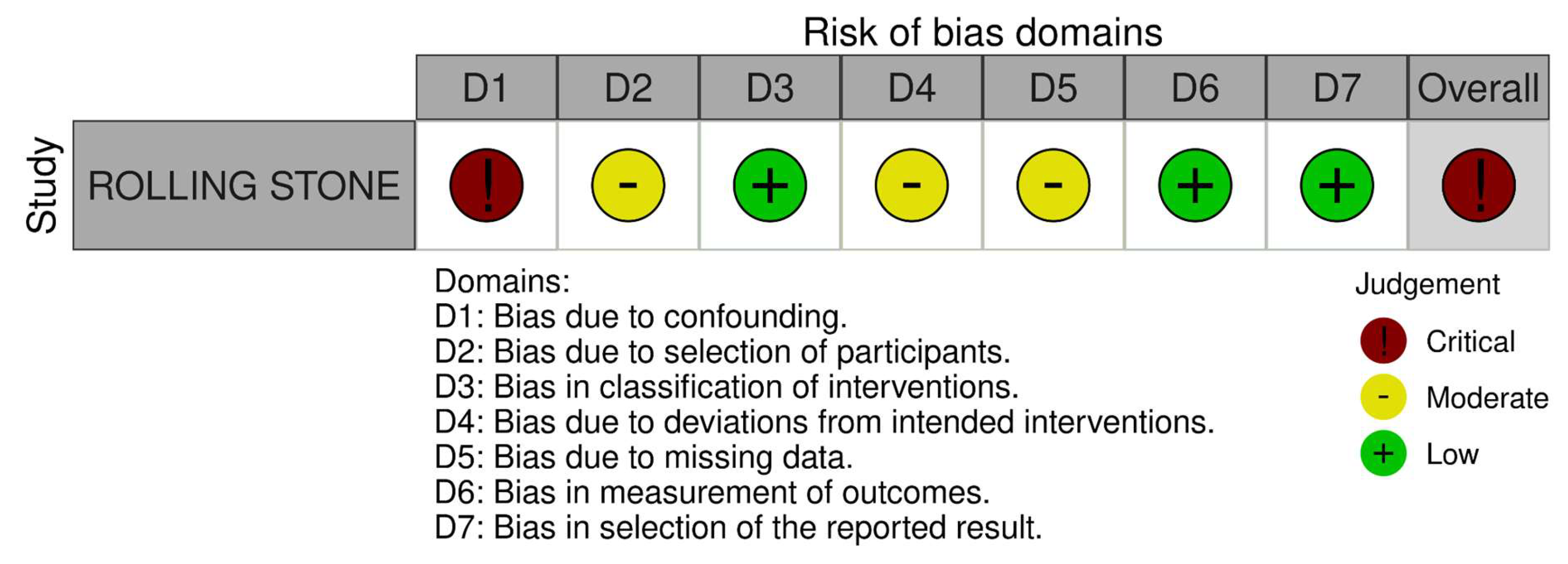
Risk of bias was assessed using the Cochrane Risk of Bias 2 (RoB 2) tool for randomized controlled trials and the Risk of Bias in Non-Randomized Studies of Interventions (ROBINS-I) tool for non-randomized studies. Among the seven RCTs, all received an overall judgment of "some concerns," with the exception of COPS, which was rated as "high risk" overall. The predominant source of bias across trials was the open-label design inherent to device-based interventions, which precluded blinding of participants and personnel and raised concerns regarding deviations from intended interventions (Domain 2) in all seven RCTs. Bias due to missing outcome data (Domain 3) was rated as "some concerns" in five trials (ROTAXUS, BALI, PREPARE-CALC, ROTA-SHOCK, and ROLLER COASTR EPIC22) owing to incomplete follow-up or limited reporting of loss-to-follow-up patterns. Bias in measurement of the outcome (Domain 4) was rated as "some concerns" in ECLIPSE and ROTA-SHOCK, reflecting the use of unblinded outcome assessment in open-label trials, while COPS was rated as "high risk" in this domain due to the absence of independent clinical event adjudication. Notably, three trials (ECLIPSE, BALI, and ROLLER COASTR EPIC22) demonstrated low risk of bias in the randomization process (Domain 1), reflecting adequate sequence generation and allocation concealment, whereas ROTAXUS, PREPARE-CALC, ROTA-SHOCK, and COPS raised some concerns in this domain. Bias in selection of the reported result (Domain 5) was rated as low risk in five trials and some concerns in COPS and ROTA-SHOCK. The sole non-randomized study, ROLLING STONE, was assessed using ROBINS-I and received an overall judgment of "critical" risk of bias, driven primarily by critical risk of confounding (Domain 1) due to the absence of randomization and the use of propensity score matching — which cannot account for unmeasured confounders — along with moderate risk of bias in selection of participants (Domain 2), deviations from intended interventions (Domain 4), and missing data (Domain 5). Given the critical risk of bias in ROLLING STONE, a prespecified sensitivity analysis was conducted excluding this study to evaluate the robustness of the network meta-analysis results.
3.6. Certainity of Evidence
Certainty of evidence was assessed using the GRADE framework adapted for network meta-analysis through the CINeMA platform. Evidence certainty was downgraded based on within-study bias, indirectness, imprecision, heterogeneity, publication bias, and incoherence.
| Outcome | Likely Certainty |
| Procedural success | Moderate |
| Periprocedural MI | Moderate |
| Procedure related Perforation |
Moderate |
| Procedure related Dissection |
Moderate |
| Procedure related MACE | Moderate |
| Binary Restenosis | Moderate |
| Follow up minimal luminal diameter | Low |
| Follow-up all - cause mortality | Moderate |
| Follow up MACE | Moderate |
| Follow up MI | Low |
| TLR | Low |
4. Discussion
In this comprehensive network meta-analysis of eight randomized controlled studies including and 4 lesion preparation strategies for moderate to severely calcified coronary lesions, we found that no single strategy demonstrated consistent statistically significant superiority across procedural, angiographic, or follow-up endpoints. However, several clinically meaningful patterns emerged. Atherectomy was associated with a significantly higher odds of procedure-related perforation compared with plain balloon angionplasty (OR 2.02, 95% CI 1.08–3.77, p=0.028), the only pairwise comparison in the entire network to reach statistical significance. IVL consistently ranked among the most favorable strategies across procedural success, periprocedural MI, follow-up mortality, follow-up MI, and TLR, while plain balloon angioplasty consistently ranked least favorably for ischemic and follow-up outcomes despite ranking best for perforation and dissection avoidance. These findings, taken together with consistent sensitivity and node-splitting analyses, suggest a risk-benefit gradient across lesion preparation strategies rather than a single clearly superior approach, a conclusion broadly aligned with the neutral or modestly positive findings of the underlying pairwise trials, while providing the first simultaneous four-arm comparison integrating both direct and indirect evidence.
The elevated perforation risk with atherectomy is biologically plausible and consistent with prior pairwise literature describing burr-related arterial injury as a recognized complication of rotational and orbital atherectomy [4,7,11]. At the individual trial level, ROTAXUS [4] demonstrated higher procedural success with RA over conventional balloon preparation but found similar 9-month late lumen loss and MACE, suggesting that while atherectomy facilitates stent delivery, it does not translate this mechanical advantage into uniformly superior long-term outcomes a pattern replicated in our network-level findings. Similarly, the ECLIPSE trial [6] found that orbital atherectomy did not improve minimal stent area or target vessel failure compared with conventional balloon angioplasty, lending further support to the absence of decisive atherectomy superiority we observed. The perforation signal in our analysis has direct procedural relevance: while atherectomy ranked favorably for procedural success and follow-up MACE, the perforation signal suggests that operators should weigh device selection against lesion-specific perforation risk factors such as vessel tortuosity, calcium distribution, and reference vessel diameter, particularly given that perforation carries disproportionate downstream morbidity relative to its relatively low absolute incidence.
The favorable ranking of IVL across multiple ischemic and follow-up endpoints is notable but should be interpreted with caution. None of the individual pairwise comparisons involving IVL achieved statistical significance, and confidence intervals were uniformly wide, reflecting the comparatively limited number of IVL-containing trials [8,9,10,11] and modest event counts within this evidence base. These findings are directionally consistent with results from the ROTA.shock trial [8], which demonstrated that IVL was non-inferior to RA in minimal stent area by OCT, and the BALI trial [10], which found that adding IVL to conventional lesion preparation significantly reduced the composite of procedural failure or target vessel failure at one year, the first trial to demonstrate a statistically significant clinical benefit for IVL over a balloon-based comparator.
The consistency of IVL’s favorable SUCRA/P-score ranking across procedural success, periprocedural MI, mortality, MI, and TLR is more likely to reflect a coherent directional signal than chance alone, but the absence of statistical significance in any single comparison means these rankings should be regarded as hypothesis-generating rather than confirmatory.
Modified balloon angioplasty (cutting/scoring balloon) demonstrated a more outcome-specific pattern, ranking highest for periprocedural MI avoidance and follow-up MACE, yet ranking lowest for procedural success. This divergence is broadly consistent with PREPARE-CALC [5], which showed a significantly higher procedural success rate with RA compared with modified balloon angioplasty, confirming that modified balloons may be insufficient for the most severely calcified lesions when procedural success is the primary objective. At the same time, the COPS trial [7] found that cutting balloon predilation achieved a larger minimal stent area than non-compliant balloon angioplasty in calcified lesions, suggesting that within the modified balloon category, technique and device selection matter. The lower-pressure, lower-trauma profile of modified balloons may thus reduce acute ischemic complications when successful consistent with our periprocedural MI ranking while the mechanistic limitation of controlled plaque incision being insufficient for circumferential or severe calcification explains the procedural success disadvantage we observed.
The instability of the binary restenosis ranking following exclusion of ECLIPSE [6] and ROLLING STONE [11] in sensitivity analysis warrants specific comment. Modified balloon shifted from highest- to lowest-ranked, while atherectomy showed the inverse pattern. Because no restenosis comparison reached statistical significance in either the primary or sensitivity network, and because the sensitivity network was built on a smaller, sparser evidence base, this reversal most likely reflects the known instability of SUCRA/P-score rankings under low event counts rather than a genuine treatment effect [18]. This finding illustrates a broader limitation of probability-based ranking metrics in NMA: rankings can shift substantially without corresponding changes in statistical significance, and should not be over-interpreted in isolation from the underlying effect estimates and their precision.
Meta-regression findings, while exploratory, offer plausible mechanistic context. Longer lesion length was associated with lower procedural success and higher periprocedural and follow-up MI, and longer stent length was associated with lower procedural success and higher binary restenosis. These associations are consistent with the established relationship between lesion complexity and stent underexpansion, and support the transitivity assumption underlying this network to the extent that lesion and stent length did not differ systematically across treatment comparisons. However, the study-level (ecological) nature of this regression limits causal inference, and these associations should not be used to guide individual patient-level decision-making.
Several methodological considerations merit emphasis. First, atherectomy was modeled as a single node combining rotational and orbital atherectomy, given their shared mechanistic goal of debulking calcified plaque; node-splitting sensitivity analysis largely supported this simplification, with rankings remaining aligned across all outcomes except procedure-related dissection, where a mild reordering was observed. Second, the exclusion of ELCA and super high-pressure balloon arms, while necessary to preserve network connectivity and avoid sparse-node instability, means these findings cannot be extrapolated to those modalities. Third, the inclusion of ROLLING STONE [11], a non-randomized registry study with propensity-score matching, introduces residual confounding risk that ROBINS-I assessment rated as critical; however, prespecified sensitivity analysis excluding this study did not materially change treatment rankings across procedural, angiographic, or follow-up endpoints, supporting the robustness of the primary findings to this inclusion decision. Fourth, certainty of evidence by GRADE/CINeMA [18] was moderate for most procedural and follow-up MACE-related endpoints but low for follow-up minimal luminal diameter, MI, and TLR, reflecting imprecision from sparse events and the modest number of contributing trials; these ratings should temper the strength of any clinical inference drawn from this analysis.
5. Limitations of Study
This NMA has additional limitations inherent to the underlying evidence base. With only eight studies and four treatment nodes, several pairwise comparisons were informed predominantly by indirect rather than direct evidence, widening confidence intervals and limiting statistical power to detect moderate treatment effects. Outcome definitions, particularly for procedural success and MACE, varied across trials despite efforts at harmonization, introducing a degree of clinical heterogeneity that random-effects modeling can only partially address. Follow-up duration also varied across included trials, which may affect the comparability of late clinical outcomes. Finally, as with any aggregate data NMA, individual patient-level effect modifiers, such as calcium arc, thickness, and length on intravascular imaging, could not be incorporated, limiting the granularity of personalized treatment guidance that can be derived from these findings.
6. Conclusion
In conclusion, this network meta-analysis found no single calcified coronary lesion preparation strategy to be uniformly superior across procedural, angiographic, and follow-up outcomes. Atherectomy carries a significantly elevated perforation risk relative to plain balloon angioplasty, while IVL demonstrated a consistent, though not individually statistically significant, favorable signal across multiple ischemic and follow-up endpoints. These findings support an individualized, lesion-specific approach to calcium modification strategy selection, balancing procedural efficacy against device-specific complication profiles, pending confirmatory head-to-head randomized trials directly comparing IVL, atherectomy, and modified balloon strategies with adequate power for clinical and safety endpoints.
References
- Généreux P, Madhavan MV, Mintz GS, Maehara A, Palmerini T, LaSalle L, Xu K, McAndrew T, Kirtane A, Lansky AJ, Brener SJ, Mehran R, Stone GW. Ischemic outcomes after coronary intervention of calcified vessels in acute coronary syndromes: pooled analysis from the HORIZONS-AMI and ACUITY trials. J Am Coll Cardiol. 2014;63(18):1845–1854.
- Madhavan MV, Tarigopula M, Mintz GS, Maehara A, Stone GW, Généreux P. Coronary artery calcification: pathogenesis and prognostic implications. J Am Coll Cardiol. 2014;63(17):1703–1714.
- Guedeney P, Claessen BE, Mehran R, Mintz GS, Liu M, Sorrentino S, et al. Coronary calcification and long-term outcomes according to drug-eluting stent generation. JACC Cardiovasc Interv. 2020;13(15):1745–1754.
- Abdel-Wahab M, Richardt G, Büttner HJ, Toelg R, Geist V, Meinertz T, Schofer J, King L, Neumann FJ, Khattab AA. High-speed rotational atherectomy before paclitaxel-eluting stent implantation in complex calcified coronary lesions: the randomized ROTAXUS trial. JACC Cardiovasc Interv. 2013;6(1):10–19.
- Abdel-Wahab M, Toelg R, Byrne RA, Geist V, El-Mawardy M, Allali A, Rheude T, Robinson DR, Abdelghani M, Sulimov DS, Kastrati A, Richardt G. High-Speed Rotational Atherectomy Versus Modified Balloons Prior to Drug-Eluting Stent Implantation in Severely Calcified Coronary Lesions (PREPARE-CALC). Circ Cardiovasc Interv. 2018;11(10):e007415.
- Kirtane AJ, Généreux P, Lewis B, et al. Orbital atherectomy versus balloon angioplasty before drug-eluting stent implantation in severely calcified lesions eligible for both treatment strategies (ECLIPSE): a multicentre, open-label, randomised trial. Lancet. 2025 Mar 30. [CrossRef]
- Mangieri A, Nerla R, Castriota F, Reimers B, Regazzoli D, Leone PP, Gasparini GL, Khokhar AA, Laricchia A, Giannini F, Casale F, Bezzeccheri A, Briguori C, Colombo A. Cutting balloon to optimize predilation for stent implantation: the COPS randomized trial. Catheter Cardiovasc Interv. 2023;101(4):798–805.
- Blachutzik F, Achenbach S, Tröbs M, et al. Coronary intravascular lithotripsy and rotational atherectomy for severely calcified stenosis: results from the ROTA.shock trial. Catheter Cardiovasc Interv. 2023. [CrossRef]
- Jurado-Román A, Gómez-Menchero A, Rivero-Santana B, Amat-Santos IJ, Jiménez-Valero S, Caballero-Borrego J, Ojeda S, Miñana G, Gonzálvez-García A, Tébar-Márquez D, et al. Rotational Atherectomy, Lithotripsy, or Laser for Calcified Coronary Stenosis: One-Year Outcomes From the ROLLER COASTER-EPIC22 Trial. Catheter Cardiovasc Interv. 2025;106(4):702–710.
- Kristensen AT, Christiansen EH, Holm NR, Kelbæk H, Engstrøm T, Veien K, Raungaard B, Kleveland O, Bennett J, Laanmets P, Jakobsen L, Havndrup O, Lønborg JT, Ahlehoff O, Iversen A, Vatwani AK, Støttrup NB, Jensen LO, Christensen MK, Haahr-Pedersen SA, Charlot MG, Gabriel EE, Olsen NT. Balloon Lithotripsy Added to Conventional Preparation Before Stent Implantation in Severely Calcified Coronary Lesions (BALI). J Am Coll Cardiol. 2026; Epub ahead of print.
- Cerrato E, Pavani M, Zecchino S, Leoncini M, Zanda G, Abdirashid M, Cordone S, Nicolino A, Franzè A, Bernardi A, Lio V, Boi A, Marengo G, Presutti DG, Vadalà P, Secco GG, Conrotto F, Vergallo R, Menozzi A, Berchialla P, Tomassini F, Patti G, Musumeci G, Chinaglia A, Varbella F. Intravascular Lithotripsy or Mechanical Debulking in Complex Calcified Coronary Arteries: Multicenter, Prospective ROLLING STONE Study. JACC Cardiovasc Interv. 2026 Jan 24. [CrossRef]
- Salanti G. Indirect and mixed-treatment comparison, network, or multiple-treatments meta-analysis: many names, many benefits, many concerns for the next generation evidence synthesis tool. Res Synth Methods. 2012;3(2):80–97.
- Caldwell DM, Ades AE, Higgins JPT. Simultaneous comparison of multiple treatments: combining direct and indirect evidence. BMJ. 2005;331(7521):897–900.
- Higgins JPT, Thomas J, Chandler J, Cumpston M, Li T, Page MJ, Welch VA (editors). Cochrane Handbook for Systematic Reviews of Interventions version 6.3 (updated February 2022). Cochrane, 2022. Available from www.training.cochrane.org/handbook.
- Page MJ, McKenzie JE, Bossuyt PM, et al. The PRISMA 2020 statement: an updated guideline for reporting systematic reviews. BMJ. 2021;372:n71.
- Sterne JAC, Savčič M, Berkman ND, et al. RoB 2: a revised tool for assessing risk of bias in randomised trials. BMJ. 2019;366:l4898.
- Sterne JA, Hernán MA, Reeves BC, et al. ROBINS-I: a tool for assessing risk of bias in non-randomised studies of interventions. BMJ. 2016;355:i4919.
- Nikolakopoulou A, Higgins JPT, Papakonstantinou T, Chaimani A, Del Giovane C, Egger M, Salanti G. CINeMA: An approach for assessing confidence in the results of a network meta-analysis. PLOS Medicine. 2020;17(4):e1003082.
Disclaimer/Publisher’s Note: The statements, opinions and data contained in all publications are solely those of the individual author(s) and contributor(s) and not of MDPI and/or the editor(s). MDPI and/or the editor(s) disclaim responsibility for any injury to people or property resulting from any ideas, methods, instructions or products referred to in the content. |
© 2026 by the authors. Licensee MDPI, Basel, Switzerland. This article is an open access article distributed under the terms and conditions of the Creative Commons Attribution (CC BY) license (http://creativecommons.org/licenses/by/4.0/).
Copyright: This open access article is published under a Creative Commons CC BY 4.0 license, which permit the free download, distribution, and reuse, provided that the author and preprint are cited in any reuse.


