

Submitted:
16 July 2026
Posted:
17 July 2026
You are already at the latest version
Abstract
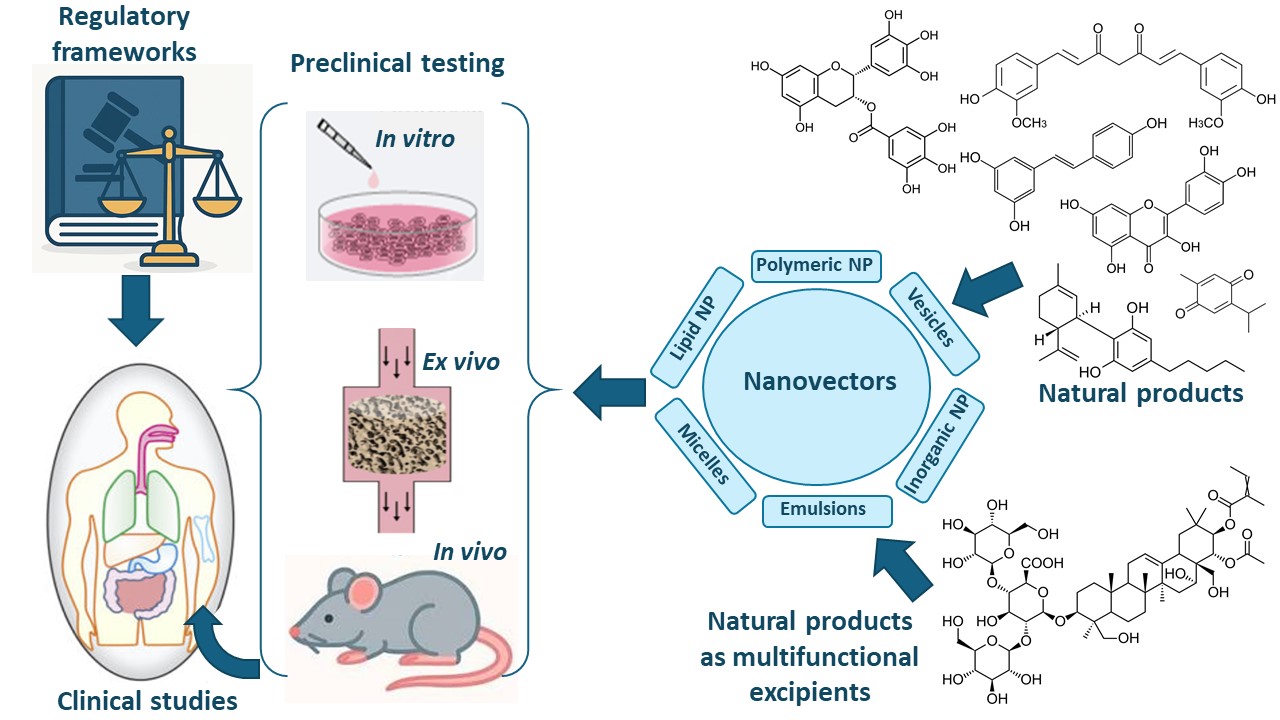
This review reports on the huge potential of natural products (NPs) as drugs due to their pleiotropic activities and discusses the recent research and development of nanoscale drug delivery systems loaded with NPs. Indeed, the number of publications is dramatically increased in the last years and excellent biopharmaceutical properties of nanosized vectors loaded with NPs have been reported, however on the market the number of products based on nanoscale drug delivery systems are limited essentially to food supplements and cosmetics. The difficulties of NPs loaded nanovectors to reach the market as medicine is mainly due to the lack of dedicated regulatory frameworks, a specialized "nano" legal context. Instead, nanovectors are evaluated on a case-by-case basis under existing broad pharmaceutical regulations under traditional benefit/risk frameworks. This manuscript would be a comprehensive collection of the reviews on nanovectors loaded with some paradigmatic NPs, namely curcumin, quercetin, resveratrol, epigallocatechin-3-gallate, thymoquinone, cannabidiol, and silybin, all developed to overcome their biopharmaceutical restrictions, mainly solubility and stability. The study highlights the challenges and limitations of the reported studies, evidencing in many cases the lack of complete knowledge of the mechanistic of nano–bio interactions, the lack of some basic requirements as the encapsulation efficiency and drug loading efficiency, as well as the very limited number of the clinical studies. Finally, NPs are presented as multifunctional excipients of nanovectors to improve nanocarrier structure, function and drug biopharmaceutical properties, mainly represented by ginseng and quillaja saponins, escin and glycyrrhizin to form micelles or vesicles such as escinosomes.
Keywords:
natural products
; pleiotropic activities
; biopharmaceutical limitations
; nanovectors
; regulatory aspects
; in vitro/in vivo studies
; clinical studies
; saponins as multifunctional excipients
1. Introduction
Natural products (NPs) represent a significant source of potential drugs due to their huge structural and chemical variety in many therapeutic areas, principally anti-infective and cancer treatment, as confirmed by the number of approved drugs from natural origin in the last forty-year period. The interest in NPs is mainly due to their unique biological properties, which allows them to bind to specific target proteins or other biomolecules, and/or their pleiotropic nature enabling them to affect simultaneously different molecular mechanisms of action or multiple targets, representing a realistic approach to many diseases, especially those with emerging resistance to monofunctional agents, and multifactorial and complex diseases [1].
The renewed scientific interest in NPs is also strongly related to the better comprehension of illnesses and their fundamental mechanisms, improvements in screening assays and analytical instruments, and enhanced technological approaches to obtain smart formulations. Indeed, NPs can have several drawbacks for successful use in therapy because their effectiveness is recurrently inadequate because of low hydrophilicity, poor permeability, and instability. Consequently, high promising molecules after in vitro screening fail to be effective in the in vivo studies because of the scarce bioavailability and the need for high doses and frequent administrations [2,3,4,5,6,7].
Nanotechnologies applied to drugs have represented a Copernican revolution resulting in successful therapeutic strategies, as reflected by the around eighty nanomedicine products approved by the Food and Drug Administration (FDA) and the European Medicines Agency (EMA) over the last 20 years. These nanomedicines have been put on the market to replace conventional formulations, aiming to increase effectiveness and decrease adverse reactions. Primarily anticancer and anti-infective nanomedicines but also autoimmune disorders, metabolic syndromes, ophthalmic conditions, neurological, and haematological diseases are currently used in clinics with numerous healthcare system benefits [8]. In the last twenty-five years, a vibrant trend in driving formulations to nanoscale drug delivery systems occurred, as evidenced by the increasing number of publications indexed by Web of Science (Clarivate) based on the query “nanomedicine”, as reported in Figure 1. Indeed, in total, about 19,500 publications have been reported, about 9,600 represented by review articles. In 2005 only 53 articles were published, while in 2025, the number of publications was increased to 3,651.
The available literature has evidenced how these nanosystems can improve the biopharmaceutical characteristics, giving a controlled release of the drug, an increased stability and how physicochemical and pharmacokinetic/pharmacodynamic properties are enhanced when compared with the original formulations resulting in optimised efficacy and safety profiles [8,9]. Consequently, the global nanomedicine market is growing rapidly, driven by advances in nanotechnology-based drug delivery and personalized medicine. Its market size was valued at USD 263.68 billion in 2025 and is projected to grow from USD 289.02 billion in 2026 to USD 759.09 billion by 2034 [10].
A similar trend is reported for the research on nanocarriers loaded with NPs, which has surged exponentially from 2006 to 2026, shifting from initial phytochemical investigation to technology-driven nanodrug delivery systems to overcome the low solubility and stability, and poor bioavailability. The enhancement of the absorption rate (often by several folds), improved stability and protection against enzymatic degradation in the physiological media, as well as targeted delivery of nanosystems for controlled and/or site-specific release, and crossing properties of the nanocarriers represents the main goals of the developed nanovectors loaded with NPs [11,12].
An evolution of the approaches of the development of nanocarriers in the field of NPs is clear, with early studies (from 2006 to 2015) mainly focused on evidencing that nanocarriers (principally liposomes and polymeric nanoparticles) can enhance solubility, stability and possibly bioavailability, shifting research (from 2015 to 2021) toward controlling release properties and decorating the surfaces of nanocarriers for active targeting, up to biomimetic innovations (since 2022) including advanced systems like plant-derived extracellular vesicles, self-assembled nanoarchitectures, and multifunctional composites moving to sustainable, nature-inspired nanosystems [11,13].
A recent review has highlighted the exponential growth of publications after 2018, evidencing as in the last decade more than five-fold the number of publications appeared on the literature, indicating accelerating research interest. This study also demonstrated a strong Asian research leadership with China and India as principal nations, and a notable impact of European countries such as Italy. The study confirmed that NP research is progressively aligned with the technological priorities of modern drug delivery systems as eco-friendly, biocompatible, and multifunctional health platforms [14].
Aim of the present review is to summarize the most significant reviews on nanovectors loaded with some potential NPs as drugs due to their pleiotropic activities overcoming their biopharmaceutical limitations. The review wishes to discuss the achievements and limitations of the studies also giving a synopsis of the regulatory frameworks of the nanovectors because the gigantic number of publications developed in the last years does not reflect the scarcity of nanoformulations on the market based on NPs.
2. Regulatory Frameworks
Currently, the US-Food and Drug Administration (US-FDA), the European Medicines Agency (EMA), and other regulatory agencies evaluate new medicines based on nanoparticles using a case-by-case approach under the traditional benefit/risk analysis framework [15].
In 2006, the US-FDA created the Nanotechnology Task Force to determine regulatory approaches that would enable the continued development of innovative, safe, and effective FDA-regulated products that use nanoscale materials [16]. The Nanotechnology Task Force published the first report in July 2007. Among other arguments, the report presented recommendations to the Commissioner for actions the agency can take to further its mission to protect and promote public health [17]. In 2014 the US-FDA published a Guidance for Industry defining nanotechnology as the material having at least one external dimension, or an internal or surface structure, in the nanoscale range (approximately 1 nm–100 nm) and materials with physical or chemical properties or biological effects, that are attributable to its dimension(s), even if these dimensions fall outside the nanoscale range, up to 1000 nm [18].
Two guidance documents “Drug Products, Including Biological Products, that Contain Nanomaterials Guidance for Industry” and “Liposome Drug Products Chemistry, Manufacturing, and Controls; Human Pharmacokinetics and Bioavailability; and Labelling Documentation Guidance for Industry” were produced in 2017 and in 2018 respectively [19].
In Europe some “Recommendations” and “Reflection papers” have been developed in the last two decades concerning nanosized drug delivery systems. In 2011 the European Commission defined for the first time the term “nanomaterial” [20], which was updated in 2022 as “natural, incidental or manufactured material consisting of solid particles that are present, either on their own or as identifiable constituent particles in aggregates or agglomerates, and where 50% or more of these particles in the number-based size distribution fulfil at least one of the following conditions: (a) one or more external dimensions of the particle are in the size range 1 nm–100 nm; (b) the particle has an elongated shape, such as a rod, fiber or tube, where two external dimensions are smaller than 1 nm and the other dimension is larger than 100 nm; (c) the particle has a plate like shape, where one external dimension is smaller than 1 nm and the other dimensions are larger than 100 nm. However, a material with a specific surface area by volume of <6 m2/cm3 shall not be considered a nanomaterial” [21].
The EMA published the first regulatory reflection paper on nanotechnology-based medicinal products for human use in 2006 to assist the pharmaceutical industry in submitting the required documentation for the market authorization for nanomedicines and to clarify certain scientific doubts [22]. In 2009, EMA established the European Nanomedicines Expert Group, composed of high-profile academics and regulatory science specialists [23]. The expert groups have interacted with regulatory scientists from the US-FDA, the Japanese Pharmaceuticals and Medical Devices Agency and other regulatory agencies to discuss the expectations on the quality, non-clinical and clinical data to be submitted in support of a marketing authorization application of specific classes of nanomedicines. Up to now, EMA has released four reflection papers related to block copolymer micelle products [24] and to the coating of nanomedicine products [25], as well as to intravenous liposomal products [26], and iron-based products [27] developed concerning innovator products.
Finally, in 2019, the EU signed mutual recognition agreements (MRAs) with third-country authorities (including the US) concerning the conformity assessment of regulated products. Such agreements contain a sectoral annex on the mutual recognition of good manufacturing practice (GMP) inspections and batch certification of human and veterinary medicines [28].
3. Natural Products from Plants: Pleiotropic Molecules Influencing Main Signaling Pathways and Biological Processes
The interest in NPs from plants, called also phytochemicals, has been increased in the last decades for their therapeutic potential. It is estimated that more than 10,000 different phytochemicals have been identified up to now, with specific and in some cases unique structures derived from the primary or secondary metabolism [31]. A recent review has shown the utilization of NPs and/or semisynthetic derivatives and synthetic analogues, have had a pivotal role in the last forty years in the discovering and developing of medicines, particularly in the areas of anticancer and anti-infective drugs [32].
Their critical roles in therapy and drug development are mainly related to their pleiotropic interactions with crucial signaling pathways and biological processes. NPs primarily exert their effects by critical cell signaling pathways, pivotal to regulate cellular processes which are linked to various disorders, influencing the activity of key proteins and enzymes correlated with a wide range of health conditions [33].
Their strong modulation of multiple metabolic pathways through a variety of molecular targets has been attributed to the phenomenon of xenohormesis, acquired through evolution. Indeed the prefix “xeno” from the Greek meaning stranger or foreigner, xenohormesis describes the phenomenon of a “foreign” organism's stress response producing metabolites that impart benefits to another organism [34].
Some reviews have recently evidenced how NPs can produce cascade effects through distributed and synergistic routes like cell signaling, redox dynamics, and energy metabolism and for this reason they are frequently recognized to act as "polypharmacological" agents [35]. Bioactive NPs encompass a vast array of specialized metabolites which include alkaloids, flavonoids, terpenoids, lignans, and others are globally investigated for their biological and pharmacological properties, exhibiting antimicrobial, neuroprotective, anti-inflammatory, anticancer, and antidiabetic activities, supporting their translation into therapeutics as new strategies for treating multifaceted diseases and complex chronic health disorders. Moving beyond traditional, single-target reductionism, network pharmacology and multi-omics map these multi-target interactions to develop holistic, systems-level therapeutics for complex diseases like cancer, inflammation, and metabolic syndrome.
Conventional drug development heavily relies on a "one-drug, one-target" paradigm. However, complex, multifactorial diseases (e.g., Alzheimer’s, diabetes, cardiovascular disease) often feature robust compensatory mechanisms, rendering single-target therapies susceptible to resistance and reduced efficacy. Rather than acting as a "magic bullet," a single NP can hit a constellation of enzymes, receptors, or signaling proteins at once, making them ideal for systems-level intervention [40]. Nowadays researchers construct drug-target networks to analyse how various metabolites modulate intricate signalling pathways. For example, studies reveal that certain phytochemicals can simultaneously target hormonal signalling and antioxidant pathways, bypassing resistance mechanisms often seen in cancer [41,42]. The recent multi-omics technologies such as genomics, transcriptomics, metabolomics, and proteomics are integrated to map how natural compounds influence biological processes globally [43] together to the in silico prediction approaches such as advanced computational modelling and molecular docking, help researchers quickly filter and prioritize plant-derived compounds based on "drug-likeness" and multi-target engagement [36,44].
Briefly in Figure 2 the potential effects of flavonoids on the different tissues/organs are reported [4].
Key therapeutic frontiers are represented by oncology; indeed, some natural antitumor molecules can interfere with multiple pathways simultaneously, providing promising alternative or adjuvant treatments. Indeed, curcumin and resveratrol can modulate cancer and disease cell survival by triggering mitochondrion-mediated apoptosis, directly acting on the caspase cascade, and targeting MAPK, PI3K/Akt, and Wnt pathways [45]. Some plant-derived products extremely limit oxidative stress (via the TXNIP-thioredoxin axis) while boosting incretin responsiveness (GLP-1 signaling), tackling the Metabolic Syndrome at its systemic roots [46]. Many polyphenols and terpenoids act as strong antioxidants by upregulating the Nrf2 pathway, which turns on endogenous antioxidant defenses, while simultaneously inhibiting inflammatory cascades like NF-kB as well as impeding altered cellular metabolism (often seen in tumor cells) by modulating oncogenes (e.g., HIF-1alpha, MYC) or by triggering AMPK, which regulates aerobic glycolysis and oxidative phosphorylation. NPs can also have a notable role in neurodegenerative diseases, i.e. resveratrol and curcumin have been evaluated for their capacity to collectively hinder amyloid processing and neuroinflammatory cascades. Many NPs can act simultaneously clear misfolded proteins, promote mitochondrial health, and regulate multiple brain-signaling networks [35,53,54,55]. Recently, prenylated flavonoids daphnegiravone D or icaritin have emerged as promising chemotherapeutics that selectively inhibit hepatocellular carcinoma without harming healthy liver cells. They specifically target cancer progression through the different mechanisms, namely G0/G1 cell cycle arrest. These prenylated flavonoids downregulate cell cycle promoters like cyclin E1, CDK2, and CDK4, halting cancer cell proliferation; induce apoptosis by activating caspase-3 and cleaving poly(ADP-ribose) polymerase (PARP, that maintain the integrity of a cell’s genetic material), and the modulation of mitogen-activated protein kinase (MAPK) pathway by interacting with the p38 and JNK branches. Preclinical assays (e.g., nude mouse xenograft models) confirmed the significant tumor growth reduction with no observable overt toxicity [56,57]. To conclude, NPs offer transformative possibilities for drug discovery, leading to translational hurdles. However, challenges such as poor drug solubility, metabolic instability or degradation in the presence of biological fluids, low bioavailability, are the major limits for clinical translation which cannot be solved using conventional drug delivery systems.
4. Natural Products Formulated in Nanodrug Delivery Systems
NPs formulated in nanodrug delivery systems represent a revolutionary frontier in future medicine, overcoming limitations including poor water solubility and scarce bioavailability, chemical instability and rapid metabolic degradation, letting targeted therapies for chronic diseases. A wide range of materials, including natural or synthetic polymers and lipids, hybrid platforms, inorganic particles, as well as materials responsive to external stimuli, have been developed to load, protect and deliver NPs [58]. These nanodrug delivery systems have been developed using different preparation methods with peculiar release behaviors to extend circulation time and tissue/cell selectivity and more generally improve pharmacokinetics and pharmacodynamics outcomes. Both passive and active targeting strategies have been also developed to selectively accumulate in cells/tissues of diseases [59,60]. Based on the number of studies, most promising NPs as therapeutic leads are represented by curcumin, quercetin, resveratrol, epigallocatechin-3-gallate (Figure 3), thymoquinone, cannabidiol, and silybin (Figure 4), all characterized low solubility and/or poor absorption into the bloodstream after oral administration, scarce stability in the physiological media and rapid metabolic degradation. The numerous nanotechnological approaches can solve these major pharmacokinetic challenges by improving bioavailability, enhancing stability, providing controlled release, and allowing targeted deliver. A revision of the most recent reviews reported in the literature is reported for these main and characteristic NPs.
4.1. Curcumin: The Yellow Gold from Dye to Medicine
Curcumin, a brilliant yellow diphenylmethane derivative (1,7-bis(4-hydroxy-3-methoxyphenyl)-1,6-heptadiene-3,5-dione, Figure 3), represents the main and characteristic constituent of Curcuma species, in particular tumeric (C. longa L.) and zedoary (Curcuma zedoaria (Christm.) Roscoe). Generally, the commercial curcumin also contains traces of two natural derivatives, demethoxycurcumin (1-(4-hydroxy-3-methoxyphenyl)-7-(4-hydroxyphenyl)-1,6-heptadiene-3,5-dione) and bisdemethoxycurcumin (1,7-bis(4-hydroxyphenyl)-1,6-heptdiene-3,5-dione). Curcumin has a poor solubility in water (less than 1 µg/ml) and after oral administration curcumin has a limited capacity to be absorbed, distributed, metabolized, and excreted within the body. The permeability across intestinal cells is poor (< 3.0 × 10⁻⁶ cm/s), with a consequent low oral bioavailability. It is classified according to Biopharmaceutics Classification System (BCS) as Class IV drug. Curcumin is characterized by excellent stability in the acidic stomach but rapid degradation in the neutral-to-alkaline environment of the intestines occurs. In addition, it is not stable under typical biological environments due to solvolysis and photodegradation [61].
A revision of the literature of curcumin nanoformulations of the last ten years has evidenced a total sixty-three reviews evidencing how curcumin represents the most investigated NPs. Twenty reviews [62,63,64,65,66,67,68,69,70,71,72,73,74,75,76,77,78,79,80,81] have reported the different nanoformulations, their effects on various diseases evidencing how nanovectors can enhance solubility, stability and bioavailability. A long list of reviews related to the antitumor properties of curcumin nanoformulations are also reported [63,82,83,84,85,86,87,88,89,90,91,92,93,94,95,96] but the majority of the studies are only in vitro evidencing how curcumin can influence key pathways in cancer cells, proving the need of carry out well-designed and large-scale clinical trials to assess the anticancer potential and safety, as well as to better explore the nanoformulations characterised by curcumin co-delivery with other anti-cancer agents and discover possible additive or synergistic effects. In continuing the analysis of the reviews dedicated to curcumin nanoformulations for specific diseases, a few [97,98,99,100] are related to neurodegenarative diseases and psychiatric disorders. Of particular interest the recent review [97] concerning nose to brain delivery of curcumin nanoformulations to treat neurodegenerative diseases, emphasizing how nanoformulations are essential to improve curcumin targeting to the brain, evidencing also increased safety and efficacy profiles, evidencing promising results but at the same time the urgent need to expand the studies to clinic and endorse these treatments for neurodegenerative diseases.
Some reviews are related to the helpful wound-healing effects of curcumin nanovectors [101,102,103,104,105,106]. Wound healing impact of many nanoformulations especially some nanofibers, nanofilms, nanocomposites, nanovectors in gel and hydrogels showed the optimised curcumin nanosystems showing sustained release. Curcumin nanofiber extended the release time up to 10 days (reaching 80%), guaranteeing the release of curcumin during the entire healing period. Furthermore, porous structures such as sponges, gels and scaffolds can mimic the native extracellular matrix suggesting promising efficacy. Nanoformulations can also powerfully penetrate bacterial cell walls, disrupting them and leading to cell death. Additionally, break down effects on microbial biofilms can overcome antibiotic resistance. Major efficacy has been reported for gram-positive bacteria (Staphylococcus aureus and Bacillus subtilis), gram-negative bacteria (Escherichia coli and Pseudomonas aeruginosa) [101,102,103,104,105,106].
Analgesic, antiinflammatory and antiallergic effects of curcumin nanoformulations are also reported in several dedicated reviews [107,108,109,110,111,112]. Particularly, Hajimirzaei and coworkers [108] reported a meta-analysis of 59 studies, including 29 animal studies and 30 clinical trials. In preclinical studies, nanoformulations had a strong effect in reducing pain both after intraperitoneal and oral administration, while no effects were found after subcutaneous injection. From the clinical trials nanoformulations were very effective on pain reduction compared to placebo (p = 0.002), probably related to an increased bioavailability of curcumin (p < 0.001), confirming the need of further studies to confirm the therapeutic effects.
Furthermore, some reviews are related to the possible impact of curcumin nanoformulations in myocardial infarction therapy [113,114,115]. If preclinical data can strongly support these effects, however, there is a serious need to carry out robust clinical trials not only to investigate efficacy and safety profiles but to evaluate the long-term and/or potential off-target effects.
Other very recent reviews are related to the effects of nanoformulations of curcumin for kidney disease or damage [116,117] and for diabetes [118], however studies are mainly preclinicals and clinical evidence is still very limited.
Furthermore, reviews are regarding the effectiveness of curcumin nanoformulations in skin disorders [119], in the treatment of ulcerative colitis [120], to combat aging-related diseases [121], and as a supplementation in women with lifestyle-related diseases [122]. All these reviews pointed out as nanoformulations based on curcumin can have great potentials with broad prospects for clinical applications, but their efficacy and safety should be assessed by further, well designed clinical studies.
A very interesting review is that by Hassanizadeh and coworkers, dealing on the clinical studies reported in the literature [123]. This paper is a comprehensive review on the therapeutic effects of nano-curcumin on various diseases based on clinical studies. The paper analyses the results of randomized clinical trials, highlighting both the benefits and limitations of the formulations compared to traditional ones. The review covers infectious, neurological, chronic, oncological, oral diseases, metabolic syndrome, osteoarthritis, and other conditions, with particular attention to safety, tolerability, and mechanisms of action. Nanoformulations reported in the study are different, i.e. nanoparticles, often based on biocompatible polymers such as chitosan, synthetic polymers, or composite materials, which improve water solubility, intestinal absorption, and tissue penetration (doses between 80 mg/day and 240 mg/day, up to 3 g/day), nanomicelles, which increase its stability and solubility, nanosized emulsions and vesicles. Key points of the paper are related to the improved bioavailability using nanofomulations, with an increased absorption up to 9-fold, improving tissue penetration and permanence in the body. Another important issue is represented by elevated safety of the nanoformulations, with few mild side effects (itching, nausea, mild liver changes). However, rare cases of iron deficiency anemia and possible liver damage have been reported, so caution is recommended in susceptible individuals. Clinical efficacy is reported for different diseases, named neurological disorders (including migraines, schizophrenia, multiple sclerosis, depression, anxiety), chronic diseases (type 2 diabetes, NAFLD, cardiovascular disease) and cancer (mainly radioprotective effects), even if some studies are conflicting and depend on the duration and dosage. Clinical efficacy has been also reported for oral diseases (lichen planus, aphthae, stomatitis, gingivitis), metabolic syndrome, and osteoarthritis [123].
Finally, two reviews by Hassanizahed and coworkers [124] and Shojaei and coworkers [125] assessed that curcumin nanoformulations, mainly represented by nanomicelles, were effective in COVID-19 viral infection with a reduction of the duration and severity of symptoms, hospitalization time, and the use of oxygen. No major adverse effects were reported, evidencing a positive effect in patients with disease manifestations and complications. The review by Hassanizahed and coworkers evidenced limitations and recommendations mainly due to the limited number of studies, small sample sizes, and variability in protocols. Further long-term clinical studies on larger populations are needed to confirm the observed benefits of curcumin nanoformulations.
4.2. Quercetin: The Most Widely Distributed Flavonoid
Quercetin is one of the most abundant, widely distributed, and largely investigated flavonoids of the plant kingdom. Quercetin (2-(3,4-dihydroxyphenyl)-3,5,7-trihydroxy-4H-chromen-4-one, Figure 3) is a flavonol, present in many vegetables and fruits including capers, tea, tomatoes, garlic, spinach, grapes, apples, berries, pears, and cherries, as well as in many well-known medicinal plants such as Hypericum perforatum (St. John’s wort) [126]. Quercetin, like curcumin, is classified as a BCS class IV drug based on its poor solubility (about 2 µg/mL) in aqueous media and limited permeability through the gastrointestinal epithelium. Quercetin is unstable undergoing to photolytic degradation, it is rapidly metabolized and oral bioavailability is influenced significantly by food and in particular fat intake, as well as the gastrointestinal tract pH, limiting the bioavailability and therapeutic efficacy of quercetin, as reported in some reviews. These reviews have reported in vitro and preclinical studies related to nanoformulations and hybrid nanomaterials focusing on their biocompatibility, cost, biodegradability, and targeting precision and evidencing quercetin potentialities due to the antioxidant, anti-inflammatory, and anticancer properties [127,128,129].
A recent review has focused on nanovectors loaded with quercetin to enhance the oral bioavailability [130]. The study outlined how mostly of clinical trials reported in the literature have employed free quercetin exhibiting modest therapeutic acitivities, besides serious solubility and bioavailability limitations. Consequently the nanovectors loaded with quercetin could provide a remarkable improvement of the clinical efficacy, suggesting more research into quercetin nanovectors. Mostly of the reviews dealing the development of nanoplatforms based on quercetin are dedicated to the possible use of nanoplatforms based on quercetin for cancer therapy, with special emphasis to in vitro tests, pre-clinical studies [131,132] and clinical applications [133,134]. Nanoplatforms developed for skin cancer using preclinical models are also reported in two reviews [135,136]. A review has evaluated the possible impact of quercetin nanodelivery systems to treat prostate cancer therapy [137], while another one evidenced the potential use of nanodrug delivery systems against brain tumors evidencing some interesting new perspectives for pediatric therapies [138].
A review of quercetin nanovectors have been reported their potential in neurodegenerative diseases [139] and on is dedicated to quercetin nanovectors can successfully be used to treat Alzheimer’s Disease [140].
The possible application of nanoformulations based on quercetin as effective treatments of rheumatism is also reported in a review by Guan and co-workers [141].
4.3. Resveratrol: From Phytoalexin to Potent Anti-Inflammatory Polyphenol
In continuing the overview on the potentialities of NPs loaded in nanovectors, resveratrol represent a further interesting constituent. It is a characteristic stilbenoid polyphenol (3,5,4′-trihydroxy-trans-stilbene, Figure 3), mainly found in grapes, wine, nuts, and berries, which represents a defensive compound produced by plants to fight off pathogens, well recognised for its antioxidant, anti-inflammatory, neuroprotective, and cardioprotective properties. However, it presents many limitations for a clinical use because the scarce water solubility (about 50 g/ml), rapid metabolism, and low stability. It is classified as a BCS class II compound and it occurs in two geometric isomers: trans and cis forms where the trans isomer form predominates with a significantly higher biological activity. Alakline environment, UV light and high temperature give isomerisation to the cis form and it is more stable in acidic conditions. Both photochemical and photocatalytic degradation can also occur. Finally a strong metabolism occurr in liver and intestine [144].
Three reviews have been reported a general overview of the nanovectors based on resveratrol as oral nanodelivery systems as possible solution to some of the drawbacks associated with their use in food supplements, healthy products and to alleviate a range of diseases [145,146,147]. A very interesting recent review is concerning the evaluation of nose-to-brain targeting of resveratrol nanoformulations via the intranasal route, a straightforward and noninvasive route for transport into the neural tissues. The review critically summarizes the benefits of this administration route evidencing from the in vivo studies the increased resveratrol brain bioavailability and stability and improved therapeutic efficacy in animal models of neurodegenerative diseases. In addition, the studies evidenced a less toxic and cost-effective therapy when compared with the conventional routes. The need of clinical studies to translate these promising findings into therapeutic strategies is also outlined [148].
Three reviews reported the evaluation of nanoformulations loaded with resveratrol for their improved pharmacokinetic characteristics, as well as the enhancement of bioavailability and targetability in the cancer environment after oral administration, and increasing retention and penetration of topical formulation many folds [149,150,151].
A review mainly focuses to an industrial perspective, evidencing how the limited patient sample sizes in the clinical trials evidence a scarcity of human data and the urgent need for additional studies on safety and effectiveness of resveratrol loaded in nanovectors [152]. Interestingly, a review provided a comprehensive discussion on resveratrol nanovectors as promising strategies to enhance efficacy in triple negative breast cancer because of the improved resveratrol bioavailability, internalization into the tumor cells, and ligand-specific targeted delivery to tumor site [153] .
A very interesting review has evaluated the role of resveratrol nanovectors in the treatment of inflammatory bowel disease, emphasizing the need for more human clinical trials and advanced nano-formulation research, even if the examined studies have shown an improved water solubility, an enhanced resveratrol absorption, colon-specific targeting of calcium-pectinate beads, and superior anti-inflammatory effects [154].
Finally, a review has evaluated the possible applications of resveratrol nanovectors for topical and transdermal delivery to treat different skin diseases. These nanoformulations enhanced absorption, reduced toxicity, and simultaneously ensuring the targeted transport of resveratrol, however, a systematic analysis of the possible clinical outcomes is scarce and incomplete because the majority of the studies are performed in vitro. According to the authors, more in vivo studies, especially clinical trials with large numbers of patients, are needed to confirm the effectiveness of resveratrol nanoformulations in the management of skin diseases [155].
4.4. Epigallocatechin-3-Gallate: From Green Tea to Medication
Epigallocatechin-3-gallate ((2R,3R)-3′,4′,5,5′,7-pentahydroxyflavan-3-yl gallate, EGCG, Figure 3) is a further common flavonoid of the class flavan-3-ols with both antioxidant and prooxidant activity depending on concentrations or doses, mainly present in the leaves of the tea plant (Camellia sinensis L.), but also distributed across various other plant species, including cranberries and blackberries, kiwis, avocados, and certain nuts (like pecans and hazelnuts) [156].
Stability and bioavailability limitations of this NP have been addressed through nano-formulations. EGCG is classified as a BCS class III drug, with a solubility of about 5mg/ml and low permeability around 1.35 × 10⁻⁶ cm s⁻¹, combined with rapid degradation and efflux, limits its intestinal absorption and overall oral bioavailability, limiting its therapeutic efficacy. Indeed the metabolism starts in the mouth due to the salivary esterase followed by extensive biotrasformation in the liver (glucuronidation, sulfation and methylation) as well as the metabolism by the gut microbiota [157,158,159,160].
A recent review has reported a comprehensive overview of the latest findings on the potential therapeutic effects of nano-encapsulated EGCG in hyperlipidemia, diabetes, and gastrointestinal cancers. The review highlighted how mostly of the studies are preclinical findings and only a few clinical trials have evidenced that encapsulated EGCG is a beneficial supplement for the chemoprevention of metachronous colorectal adenomas and in preventing hepatocellular carcinoma in high-risk patients with underlying liver disease or other risk factors. The need of further research to translate these preclinical findings into effective clinical applications is emphasized [161].
The clinical potential in cancer therapy of EGCG nanoformulations has been highlighted in two reviews due to the peculiar activity of EPGCG, namely apoptosis induction, metastasis suppression, and chemoresistance reversal. These nanovectors were evaluated as special platforms to co-encapsulate conventional chemotherapeutics to obtain additive or synergistic activities [162,163]. Qutub and coworkers evidenced as the nanovectors can circumvent EGCG biopharmaceutical limitations, but how scaling up and regulatory approval still remain the main obstacles in translating EGCG nanovectors to the clinic [162]. Sun and coworkers reported the studies of both organic and inorganic/metallic nanovectors evidencing as comprehensive assessments of their toxicity after chronic administration, as well as pharmacokinetic studies are lacking [163].
4.5. Thymoquinone: From an Aroma to Drug
Moving to widely investigated terpenoids as ingredients of nanovectors, thymoquinone (2-isopropyl-5-methyl-1,4-benzoquinone, Figure 4), is a monoterpene derivative representing a main constituent of the volatile oil of black cumin seeds (Nigella sativa L.). This constituent is also present in selected medicinal plants of the Lamiaceae family (bee balm, wild bergamot, winter savory, and thymes), Asteraceae and Cupressaceae [164]. This constituent drives a broad spectrum of pharmacological actions through multiple cellular pathways inducing apoptosis, halting the cell cycle, and inhibiting cancer cell migration, acting as a power antioxidant and as a pro-oxidant in certain cancer cells, modulating major inflammatory mediators (like NF-κB and COX-2), and exhibiting significant inhibitory activity against various human pathogens, including bacteria, fungi, and parasites. Thymoquinone is a BCS Class II drug, having solubility is around 0.5 mg/mL and moderate permeability (>8 × 10⁻⁷ cm s⁻¹) [165,166].
An interesting review has pointed out why nanocarriers (lipid-based, polymeric and nanosized emulsion systems) are essential for thymoquinone to improve solubility, enhance bioavailability (up to about 3.5-fold increases compared to neat suspensions), controlled release, and targeted delivery [167].
A review has analyzed studies of nanoencapsulated thymoquinone in micelles, chitosan nanoparticles, and liposomes to enhance oral bioavailability, after oral route, and to protect thymoquinone from photodegradation [168].
A further review has evidenced the potentialities of thymoquinone nanovectors in neurodegenerative diseases both via cell lines tests and in pre-clinical studies yielding promising outcomes both for the neuroprotective properties and brain's uptake of thymoquinone in nanovectors [169].
Nanovectors (nanoemulsions, liposomes, ethosomes, and nanostructured lipid carriers) of thymoquinone improve skin penetration increasing accumulation in affected tissues and ensuring sustained release directly into psoriatic lesions. Numerous are preclinical models showing significant reductions in inflammation, erythema, scaling, epidermal thickness, and psoriatic cytokine levels [170].
An additional review has focused on the use of nanovectors (liposomes and polymeric nanoparticles) loaded with thymoquinone as a promising strategy for managing osteoporosis. This approach promotes bone formation protecting against the inflammatory markers (IL-1 and TNF-α) and oxidative processes (ROS) that cause bone loss. In addition, thymoquinone is an anabolic agent, promoting osteoblast proliferation while downregulating osteoclasts cells (enhances bone-specific alkaline phosphatase levels and boosts essential bone matrix proteins (osteocalcin, collagen 1) [171].
Finally a review reports on the potent antiviral activity of thymoquinone loaded in nanocarriers. In particular the antiviral activity against SARS-CoV-2 is achieved by the modulation of the production of NO and ROS and reduction of cytokine storm [172].
4.6. Cannabidiol: Therapeutic Purposes from a Recreational Plant
Cannabidiol (2-[(1R,6R)-3-methyl-6-(1-methylethenyl)-2-cyclohexen-1-yl]-5-pentyl-1,3-benzenediol, Figure 4) is a naturally occurring non psychoactive phytocannabinoid found predominantly in Cannabis sativa [173]. Cannabidiol has negligible water solubility, less than 13 μg/mL, classified as a BCS Class II drug with high membrane permeability (> 8.0 × 10⁻⁶ cm/s). It is considered a multifunctional drug able to inhibit the NF-κ B and IFN-β signalling pathways, regulating the neuronal excitability by interacting with the endocannabinoid system and ion channels, it can bind to TRPV1 receptors and blocks T-type calcium channels, providing an anticonvulsant effect. It also enhances inhibitory GABAergic transmission and modulates excitatory glutamate transmission, with a potent antioxidant and regenerative role [174].
Two reviews have recently examined the nanovector development to optimise the biopharmaceutical properties of cannabidiol for possible therapeutic approaches [175,176], evidencing how polymeric and lipid-based nanoparticles, as well as hybrid and inorganic nanosystems have been developed in the last ten years and how these approaches can in particular facilitate the blood-brain barrier crossing, and in general optimized delivery allows for highly effective transdermal, oral, or targeted-tissue therapies.
Jain and coworkers examined the potentiality of cannabidiol for managing chemotherapy-induced pain, evidencing how nano-delivery systems can be very promising to release cannabidiol directly to specific sites of action in the central nervous system, outlining the mechanisms of actions and effectiveness and challenges faced by patients with cancer-associated pain after using cannabidiol with various case studies [177].
Finally, Ahmed and coworkers pointed out how nanoformulations (principally lipidic ones) loaded with cannabidiol can significantly represent a dermatological promise in treating conditions like acne, eczema, and psoriasis. This review is a Grading of Recommendations Assessment, Development and Evaluation (GRADE) study including preclinical and clinical trial data, highlighting how nanoformulations can enhance localized delivery, reducing adverse effects, and improving efficacy with improved tolerability [178].
4.7. Silybin: From Traditional Hepatoprotectant to Multifaceted Effects
The last but not the least example is silybin (3,5,7-trihydroxy-2-[3-(4-hydroxy-3-methoxyphenyl)-2-(hydroxymethyl)-2,3-dihydro-1,4-benzodioxin-6-yl]-2,3-dihydrochromen-4-one, Figure 4), the main flavonlignan, representing between 50% and 70% of silymarin, a refined natural extract from the fruits of the milk thistle (Silybum marianum), well-known for its potent antioxidant, anti-inflammatory, and liver-protective properties. The extract is characterised by flavolignans including silybin, silydianin, and silychristine, with silybin the main compound. Silybin acts as direct scavenger of ROS, activates the Nrf2 signaling pathway, which upregulates the production of cytoprotective and endogenous antioxidant enzymes like SOD and glutathione, acts on the MAPK pathway, impairs the activation and DNA binding of NF-κB, enhances the activity of RNA polymerase I, increases protein synthesis, helping damaged liver tissue repair and regenerate itself. Silybin is BCS Class II compound, characterized by both low aqueous solubility (<40μg/mL) and moderate intestinal permeability (about 8 × 10⁻⁶ cm/s), with active efflux pumps and extensive first-pass metabolism [179].
Reviews are dedicated to nanotechnology-based drug delivery systems of silybin to efficiently boost bioavailability, enhance liver targeting, and improve therapeutic efficacy principally against cancer and liver diseases. The study by Ashrafizadeh and coworkers is a comprehensive review of preclinical, and in vitro experiments evidencing how nanoscale formulations (polymeric micelles, solid lipid nanoparticles, and liposomes) can encapsulate the silybin, boosting systemic exposure, enabling targeted delivery, and reducing required daily dosages. In particular lipid-based carriers leverage natural intestinal absorption pathways to facilitate lymphatic transport and partially bypass first-pass liver metabolism [180].
The study by Takke and Shende is a review on silybin nano-formulations (principally liposomes and polymeric carriers), which can dramatically improve biopharmaceutical limits of silybin. However, the authors evidence that there is an urgent need to give insights principally about safety profiles. Interesting evidences have arisen possible synergistic effects with other NPs (curcumin) and medications (metformin, paclitaxel, cisplatin, doxorubicin, ingefitinib and sorafenib) [181].
A further review analyses how lipid and polymeric nanosystems as well as inorganic (gold nanoparticles) and hybrid nanoplatforms have been reported to overcome silybin biopharmaceutical limits, increasing blood circulation time and concentration, accumulation in tumour tissues, helping bypass multidrug resistance mechanisms in cancer cells [182].
5. Natural Products as Multifunctional Excipients of Nanovectors to Improve Nanocarrier Structure, Function and Drug Biopharmaceutical Properties
In recent years natural multifunctional excipients have been used in nanovectors, mainly represented by saponins, a class of constituents occurring in many plant species. Saponins have soap-like foaming characteristics due to the amphiphilic properties for the presence of a lipophilic aglycone of triterpenoid or steroid nature, and an hydrophilic moiety represented by a saccharide moiety which is generally linked to an hydroxyl or/and a carboxyl moiety by a glycosidic bound. Saponins are distributed across over 90 plant families, triterpenoid saponins are mostly found in dicotyledons (e.g., Fabaceae, Caryophyllaceae), while steroidal saponins are concentrated in monocotyledons (e.g., Asparagaceae, Dioscoreaceae). Sugar chains can contain one to several monosaccharide groups and are generally linked to the C-3 and C-28 positions of the triterpene aglycon or C-3 and /or C-26 positions of steroidal saponins [183].
Most investigated saponins as multifunctional excipients are mixtures such as ginsenosides (from Panax ginseng) and quillaja saponins (from Quillaja saponaria), or single constituents including glycyrrhizin (from Glycyrrhiza glabra) and escin (from Aesculus hippocastanum), reported in Figure 5 and Figure 6 respectively. The variance in sugar moieties, aglycon structure, sugar chain composition and connection mode and position determine the multiplicity and complexity of the properties as well as the application of saponins in nanovectors.
For example, quillaja saponins have a disaccharide chain constituting a hydrophilic-hydrophobic-hydrophilic triblock structure, easy to self-assembly spontaneous to form micelles nanostructures in water (Figure 7), capable of solubilizing hydrophobic drugs in the inner core from 10 to 40 times compared to water solutions.
Indeed micelles containing saponins represent the most archetypal nanovectors to improve oral absorption of lipophilic drugs (natural or synthetic) classified by Biopharmaceutical Classification Systems (BCS) class II and IV drugs (low solubility and/or permeability). In addition to solubilization, saponins can modulate membrane permeability (increasing permeability and promoting drug passage for curcumin, paclitaxel, resveratrol, silymarin, docetaxel, quercetin, coenzyme Q10, berberine), inhibit efflux pumps (ginsenosides which increase the absorption of drugs subject to intestinal efflux), thanks to their sugary crown, penetrate intestinal mucus better than other nanocarriers, and having pharmacological activities (anti-inflammatory, immunomodulatory) they can contribute to the activity. It is well recognised that the length and branching of sugar chains influence micelle stability, Critical Micelle Concentration (CMC), drug loading capacity, and safety. Advantages over other excipients and in particular synthetic surfactants is the high biodegradability, stabilization against precipitation preventing post-dissolution precipitation of drugs, regulatory acceptance (Generally Recognized As Safe (GRAS) status) even if limitations can be related to the compositional variability between batches, risk of haemolysis at high doses (in particular steroidal ones), the necessity of green sustainable extraction techniques and need for clinical validation. Finally the authors suggest the formulation of hybrid nanosystems by the integration with other lipid carriers to maximize the nanovector performance [184,185]
Indeed, recently some studies have emerged that hybrid saponin-based nanovectors, could be considered comprehensive, innovative and flexible nanodelivery platforms. Three studies developed nanoemulsions using quillaja saponins to prepare stable nanoemulsions able to solubilise thymol and enhance its antibacterial activity [186], to enhance vitamin D3 oral bioavailability [187] and vitamin E stability [188]
In the literature is also reported the stabilization of solid lipid nanoparticles with glycyrrhizin [189], the stabilization of fish oil rich in omega-3 in nanostructured lipid capsules with quillaja saponins [190] and the development of thermally stable nanostructured lipid capsules using quillaja saponins [191].
In recent years some remarkable studies have investigated drugs loaded in special nanovesicles made of phosphatidylcholine and escin for topical, subcutaneous and intra-articular injection (Figure 7). Berberine (Figure 8), a natural quaternary isoquinoline alkaloid from different Berberis plants, which has various biological effects, able to act in diverse skin diseases. A study has reported that escinosomes, vesicles made of phosphatidylcholine escin, enhance berberine penetration into the skin, maintaining escin activity [192].
Successively the escinosomes were jelled with hydroxypropyl methylcellulose to obtain a new nanocarrier-loaded hydrogel formulation. The combination of the nanocarrier and the hydrogel was a smart approach to obtain stable and efficient skin nanosized delivery systems. Thus, the new nanoformulation combines the benefits of a controlled drug release and improved transdermal permeability (escinosome components) with a higher residence time upon administration (polysaccharide matrix network), suitable for skin application. Finally, the developed nanoformulations had an ideal safety profile, strong skin biocompatibility, and extraordinary stability [193].
Escinosomes have also been investigated as nanocarriers of the natural diterpene lactone andrographolide (Figure 8), the main constituent of Andrographis paniculata, a pleiotropic molecule with trivial aqueous solubility and limited bioavailability. To evaluate the pain-relieving effectiveness in a rat model of oxaliplatin-induced neuropathy, andrographolide-loaded escinosomes were subcutaneously administered. The in vivo data proved that anti-hyperalgesic effect was meaningfully improved and protracted by using the escinosomes. The success of the andrographolide-loaded escinosomes is principally due to the extraordinary biocompatibility, great loading capability, and controlled release properties of the nanocarriers [194].
In addition, escinosomes were loaded with a carbonic anhydrase inhibitor bearing a carbon monoxide releasing moiety (CAI-CORM, Figure 8), a new potent pain-relieving agent, and formulated in a thermosensitive gel. The efficacy of a single intra-articular injection of this nanoformulation was evaluated in a rat model of Complete Freund's Adjuvant (CFA)-induced rheumatoid arthritis. The escinosome thermosensitive gel counteracted mechanical hyperalgesia, spontaneous pain, and motor impairments, revealing that the new nanoformulation could be a valid approach for managing rheumatoid arthritis [195].
Finally, some studies have been reported using as a bilayer-forming component a semisynthetic tenside, ascorbyl alkanoates, to produce special nanovesicles, ascosomes. Ascosomes were loaded with khellin (Figure 8), a natural furanochromone of Ammi visnaga having anti-inflammatory properties but characterised by low stability and poor solubility. Two studies have reported the development of khellin-ascosomes for dermatological application. Ascorbyl alkanoates produced remarkably different bilayer organizations and different capabilities to accommodate khellin in the hydrophobic pocket of the vesicles by displacing the amount of water molecules strongly bound to the polar head groups. Moreover, the loading of khellin did not induce any significant hydration change in the unilamellar vesicular systems. The study concluded that these nanostructures suitable for dermatological use and other routes of administrations, preserving the biological properties of ascorbic acid [196]. The studies continued with the development of hydrogels loaded with the ascosomes, which were successfully tested in vivo in rats for skin irritation and corrosion tests. Liver and dermal histological analyses demonstrated that the nanoformulation has no toxic effects. The nanoformulation succesfully combined the advantages of a suitable viscosity for dermal use (hydrogel matrix) and an increased transdermal absorption (ascosome components) [197].
Finally a study investigated the performance of khellin loaded in ascosomes in a rat model of osteoarthritis induced by monosodium iodoacetate (MIA) treatment. Khellin loaded in the ascosomes was stable in simulated synovial fluid and significantly responded to MIA-induced hypersensitivity to mechanical injurious (paw pressure test) and non-injurious stimuli (von Frey test) after a single intra-articular (i.a.) injection. Ascosomes loaded with khellin significantly decreased the postural disturb associated with spontaneous pain (incapacitance test) and the motor variations (beam balance test) 7 and 14 days after the i.a. injection. In conclusion, the nanovectors decreased the articular pain, evaluated as induced or spontaneous pain and motor injuries, and protected the joints [198].
In conclusions many preclinical studies have successfully demonstrate the effectiveness and safety profile of saponin-based nanocarriers, in particular the hybrid nanosystems integrating saponins with lipid-based nanovectors. However, there is an urgent need of a clinical validation for the therapeutical translation, while major regulation challenges can arise from the structural complexity and variability of some of them and the need to select green extraction techniques for their sustainability.
6. Conclusions and Future Perspectives
Global scientific research of NPs loaded in nanovectors has grown exponentially over the last decade at an unprecedented rate. Nanovectors loaded with NPs have progressed into advanced nanosized drug delivery systems with surprising potential due to the diversity of materials, surface properties, and targeting. Indeed, NPs represent a unique chest of pleiotropic active molecules to promote health or treat pathologies, especially complex diseases with multifactorial etiology. Conversely, the main limitations to the successful clinical use of NPs are their low water solubility, chemical and metabolic instability, and poor biopharmaceutical characteristics, which can be overcome by different nanotechnological approaches. The reviews have revealed how these nanoplatforms are characterized by multifunctional, sustainable, and biologically integrated nanosystems able to enhance their biopharmaceutical properties according to their chemical diversity demonstrating a key driver of innovation in advanced nanodrug delivery systems, aligned with the technological priorities of modern approaches of drug delivery platforms.
The number of approved nanosized drug delivery systems on the market has increased in the last twenty years but those based on nanovectors are very limited, with few success stories as drugs, and certainly, nanovectors based on NPs represent an emergent multidisciplinary segment of formulations for other sectors, principally cosmetics and food supplements [199,200].
The numerous in vivo studies have demonstrated the importance of the nanocarriers to increase NP bioavailability and efficacy, giving worthy safety profiles, evidencing how these nanosized drug delivery systems could represent wonderful future therapeutic treatments. In addition, NPs have been demonstrated also to assist the architecture of nanocarriers and substantially contribute to the biopharmaceutical properties of other loaded NPs or synthetic drugs.
Possibly, the limited development of nanosized drug delivery systems based on NPs is represented by several gaps principally in translating the nanocarriers into clinically viable drug delivery systems. Probably, the rigorous demanding of quality, safety, and efficacy by regulatory agencies, utilizing established principles of benefit/risk analysis, rather than solely based on the technology per se, and consequently preferring other market chains such as cosmetics, and food supplements. Furthermore, in many cases the complete knowledge of the mechanistic of nano–bio interactions, represented by cellular uptake, biodistribution, and long-term safety, remains not sufficient. Furthermore, some basic requirements as the encapsulation efficiency and drug loading have not been quantified in these studies, representing a major limitation of these works.
Finally, mostly of the studies are in vitro or preclinical, only a few are early-phase clinical studies and overall, satisfactory to emphasize their broad potential in inflammation, metabolic/hepatic diseases, regenerative practices and neurodegenerative disorders, but not sufficient to give an overall of detailed pharmacokinetic profiles and toxicological investigations. Clearly, the major gap to be addressed is represented by the development of large, robust, ethical, with scientific validity, and data integrity clinical trials as required by regulatory frameworks. Additionally the increased costs to develop nanovectors compared with traditional formulations should be also another limit of the industrial development.
Regulatory agencies should encourage an interaction with the industries early in the nanovector development process to facilitate a mutual understanding of specific scientific and regulatory issues, and in general there is an urgent need to revise and update specific regulatory guidelines related to nanovectors in coherence with the global legislation to make the regulatory approval process more effective.
In the future green extraction process should be developed to set sustainable techniques to obtain high-quality pharmaceutical NPs and studies should be more focused on optimizing these nanoformulations by improving their physico-chemical characteristics, including size, surface modifications, encapsulation efficiency, stability, and targeting. Moreover, comprehensive studies of pharmacokinetic drawbacks and expanded therapeutic windows as well as toxicity are essential, alongside the establishment of scalable manufacturing processes using advanced manufacturing methods like microfluidics for reproducibility.
Finally, artificial intelligence and machine learning models will have a central role in the design and optimization of nanovectors based of NPs, which can be combined with molecular dynamics simulations and high-throughput microfluidic devices for the fast design and optimization of clinically relevant nanovectors..
Author Contributions
Conceptualization, A.R.B; methodology, L.G. and G.V.; software, L.G. and G.V.; data curation, E.-M.T. and R.B.; writing—original draft preparation, A.R.B., E.-M.T. and R.B.; writing—review and editing, A.R.B., L.G.; G.V.; project administration, L.G. and G.V.; funding acquisition, A.R.B. All authors have read and agreed to the published version of the manuscript.
Funding
This research received no external funding
Acknowledgments
The authors thank MIUR-Italy (“Progetto Dipartimenti di Eccellenza 2023–2027” allocated to the Department of Chemistry “Ugo Schiff”, University of Florence, Italy).”
Conflicts of Interest
The authors declare no conflicts of interest.
References
- Dj, N.; Gm, C. Natural Products as Sources of New Drugs over the Nearly Four Decades from 01/1981 to 09/2019. J. Nat. Prod. 2020, 83. [Google Scholar] [CrossRef] [PubMed]
- Bilia, A.R.; Piazzini, V.; Guccione, C.; Risaliti, L.; Asprea, M.; Capecchi, G.; Bergonzi, M.C. Improving on Nature: The Role of Nanomedicine in the Development of Clinical Natural Drugs. Planta Med. 2017, 83, 366–381. [Google Scholar] [CrossRef] [PubMed]
- Casamonti, M.; Risaliti, L.; Vanti, G.; Piazzini, V.; Bergonzi, M.C.; Bilia, A.R. Andrographolide Loaded in Micro- and Nano-Formulations: Improved Bioavailability, Target-Tissue Distribution, and Efficacy of the “King of Bitters.”. Engineering 2019, 5, 69–75. [Google Scholar] [CrossRef]
- Bilia, A.R.; Isacchi, B.; Righeschi, C.; Guccione, C.; Bergonzi, M.C. Flavonoids Loaded in Nanocarriers: An Opportunity to Increase Oral Bioavailability and Bioefficacy. Food Nutr. Sci. 2014, 5, 1212–1327. [Google Scholar] [CrossRef]
- Vanti, G. Recent Strategies in Nanodelivery Systems for Natural Products: A Review. Env. Chem. Lett. 2021, 19, 4311–4326. [Google Scholar] [CrossRef]
- Bilia, A.R.; Bergonzi, M.C.; Boulos, J.C.; Efferth, T. Nanocarriers to Enhance Solubility, Bioavailability, and Efficacy of Artemisinins. World J. Tradit. Chin. Med. 2020, 6, 26. [Google Scholar] [CrossRef] [PubMed]
- Bilia, A.R.; Piazzini, V.; Risaliti, L.; Vanti, G.; Casamonti, M.; Wang, M.; Bergonzi, M.C. Nanocarriers: A Successful Tool to Increase Solubility, Stability and Optimise Bioefficacy of Natural Constituents. Curr. Med. Chem. 2019, 26, 4631–4656. [Google Scholar] [CrossRef] [PubMed]
- Halwani, A.A. Development of Pharmaceutical Nanomedicines: From the Bench to the Market. Pharmaceutics 2022, 14, 106. [Google Scholar] [CrossRef] [PubMed]
- Guo, R.; Zhang, Z.; Zhang, S.; Gai, T.; Yu, H.; Su, L.; Yin, H.; Wang, X.; Zhang, Y. Innovative nanocarriers: Synthetic and biomimetic strategies for enhanced drug delivery. Mater. Today Bio 2025, 34, 102180. [Google Scholar] [CrossRef] [PubMed]
- Nanomedicine Market Size, Share & Trends | Growth [2034]. Available online: https://www.fortunebusinessinsights.com/nanomedicine-market-110983 (accessed on 01 May 2026).
- Parvin, N.; Aslam, M.; Joo, S.W.; Mandal, T.K. Nano-Phytomedicine: Harnessing Plant-Derived Phytochemicals in Nanocarriers for Targeted Human Health Applications. Molecules 2025, 30, 3177. [Google Scholar] [CrossRef] [PubMed]
- Segneanu, A.-E.; Mogoşanu, G.D.; Bejenaru, C.; Kostici, R.; Bejenaru, L.E. Plant-Derived Nanocarriers for Drug Delivery: A Unified Framework Integrating Extracellular Vesicles, Engineered Phytocarriers, Hybrid Platforms, and Bioinspired Systems. Plants 2026, 15, 908. [Google Scholar] [CrossRef] [PubMed]
- Segneanu, A.-E.; Mogoşanu, G.D.; Bejenaru, C.; Kostici, R.; Bejenaru, L.E. Plant-Derived Nanocarriers for Drug Delivery: A Unified Framework Integrating Extracellular Vesicles, Engineered Phytocarriers, Hybrid Platforms, and Bioinspired Systems. Plants 2026, 15, 908. [Google Scholar] [CrossRef] [PubMed]
- Aleid, M.S.; Alamer, A.A.; Younis, J.S.K.; Albokhadaim, I.; Elkhair, N.M.; Manap, A.S.A. Natural Products and Phytopharmacology in Advanced Drug Delivery Systems: A WoS–Scopus Bibliometric and Thematic Evolution Study. IJDDT 2026, 16. [Google Scholar] [CrossRef]
- Commissioner, O. of the Nanotechnology Fact Sheet. FDA 2018. Available online: https://www.fda.gov/science-research/nanotechnology-programs-fda/nanotechnology-fact-sheet (accessed on 29 April 2026).
- Commissioner, O. of the Nanotechnology Task Force. FDA 2006. Available online: http://www.health.am/ab/more/fda-nanotechnology-task-force/ (accessed on 29 April 2026).
- Commissioner, O. of the Nanotechnology Task Force Report 2007. FDA 2007. Available online: https://www.fda.gov/science-research/nanotechnology-programs-fda/nanotechnology-task-force-report-2007 (accessed on 29 April 2026).
- Commissioner, O. of the Considering Whether an FDA-Regulated Product Involves the Application of Nanotechnology. Available online: https://www.fda.gov/regulatory-information/search-fda-guidance-documents/considering-whether-fda-regulated-product-involves-application-nanotechnology (accessed on 29 April 2026).
- Research, C. for D.E. and Liposome Drug Products: Chemistry, Manufacturing, and Controls; Human Pharmacokinetics and Bioavailability; and Labeling Documentation. Available online: https://www.fda.gov/regulatory-information/search-fda-guidance-documents/liposome-drug-products-chemistry-manufacturing-and-controls-human-pharmacokinetics-and (accessed on 29 April 2026).
- Chemicals - Environment - European Commission. Available online: https://environment.ec.europa.eu/topics/chemicals_en (accessed on 29 April 2026).
- Commission Recommendation of 10 June 2022 on the Definition of Nanomaterial (Text with EEA Relevance) 2022/C 229/01; 2022.
- Reflection Paper on Nanotechnology-Based Medicinal Products for Human Use. 2006.
- Ad Hoc CHMP Expert Group Meeting on “Nanomedicines” | European Medicines Agency (EMA). Available online: https://www.ema.europa.eu/en/events/ad-hoc-chmp-expert-group-meeting-nanomedicines (accessed on 29 April 2026).
- Development of Block-Copolymer-Micelle Medicinal Products - Scientific Guideline | European Medicines Agency (EMA). Available online: https://www.ema.europa.eu/en/development-block-copolymer-micelle-medicinal-products-scientific-guideline (accessed on 29 April 2026).
- Reflection Paper on Surface Coatings: General Issues for Consideration Regarding Parenteral Administration of Coated Nanomedicine Products
- Data Requirements for Intravenous Liposomal Products Developed with Reference to an Innovator Liposomal Product - Scientific Guideline | European Medicines Agency (EMA). Available online: https://www.ema.europa.eu/en/data-requirements-intravenous-liposomal-products-developed-reference-innovator-liposomal-product-scientific-guideline (accessed on 29 April 2026).
- Data Requirements for Intravenous Iron-Based Nano-Colloidal Products Developed with Reference to an Innovator Medicinal Product - Scientific Guideline | European Medicines Agency (EMA). Available online: https://www.ema.europa.eu/en/data-requirements-intravenous-iron-based-nano-colloidal-products-developed-reference-innovator-medicinal-product-scientific-guideline (accessed on 29 April 2026).
- Mutual Recognition Agreements (MRA) | European Medicines Agency (EMA). Available online: https://www.ema.europa.eu/en/human-regulatory-overview/research-development/compliance-research-development/good-manufacturing-practice/mutual-recognition-agreements-mra (accessed on 29 April 2026).
- Ali, F.; Neha, K.; Parveen, S. Current Regulatory Landscape of Nanomaterials and Nanomedicines: A Global Perspective. J. Drug Deliv. Sci. Technol. 2023, 80, 104118. [Google Scholar] [CrossRef]
- Musazzi, U.M.; Franzè, S.; Condorelli, F.; Minghetti, P.; Caliceti, P. Feeding Next-Generation Nanomedicines to Europe: Regulatory and Quality Challenges. Adv. Healthc. Mater. 2023, 12, e2301956. [Google Scholar] [CrossRef] [PubMed]
- Park, K. The Role of Dietary Phytochemicals: Evidence from Epidemiological Studies. Nutrients 2023, 15, 1371. [Google Scholar] [CrossRef] [PubMed]
- Newman, D.J.; Cragg, G.M. Natural Products as Sources of New Drugs over the Nearly Four Decades from 01/1981 to 09/2019. J. Nat. Prod. 2020, 83, 770–803. [Google Scholar] [CrossRef] [PubMed]
- From the American Association of Neurological Surgeons (AANS); American Society of Neuroradiology (ASNR); Cardiovascular and Interventional Radiology Society of Europe (CIRSE); Canadian Interventional Radiology Association (CIRA); Congress of Neurological Surgeons (CNS); European Society of Minimally Invasive Neurological Therapy (ESMINT); European Society of Neuroradiology (ESNR); European Stroke Organization (ESO); Society for Cardiovascular Angiography and Interventions (SCAI); Society of Interventional Radiology (SIR); Society of NeuroInterventional Surgery (SNIS); and World Stroke Organization (WSO); Sacks, D.; Baxter, B.; Campbell, B.C.V.; Carpenter, J.S.; Cognard, C.; Dippel, D.; Eesa, M.; Fischer, U.; Hausegger, K.; et al. Multisociety Consensus Quality Improvement Revised Consensus Statement for Endovascular Therapy of Acute Ischemic Stroke. Int. J. Stroke 2018, 13, 612–632. [Google Scholar] [CrossRef] [PubMed]
- Hooper, P.L.; Hooper, P.L.; Tytell, M.; Vígh, L. Xenohormesis: Health Benefits from an Eon of Plant Stress Response Evolution. Cell Stress Chaperones 2010, 15, 761–770. [Google Scholar] [CrossRef] [PubMed]
- Ghosh, S.; Debnath, I.; Bhunia, S.; Nandi, S.; Ashique, S.; Nayak, A.; Mallick, S.; Basak, S. Decoding Natural Products for Neuroprotection: Pathway Networks and Structural Insights for Drug Development. Chin. Herb. Med. 2025, 17, 643–672. [Google Scholar] [CrossRef] [PubMed]
- Tomar, M. AI-Assisted Drug Discovery from Phytoconstituents: Predicting Drug–Target Interactions. Prem. J. Sci. 2026, 25. [Google Scholar] [CrossRef]
- Ping, T.B.; Alia, M.; Bagustari, B.A.; Alshehade, S.A. NeXus: An Automated Platform for Network Pharmacology and Multi-Method Enrichment Analysis. Int. J. Mol. Sci. 2025, 26, 11147. [Google Scholar] [CrossRef] [PubMed]
- Bi, X.; Wang, Y.; Wang, J.; Liu, C. Machine Learning for Multi-Target Drug Discovery: Challenges and Opportunities in Systems Pharmacology. Pharmaceutics 2025, 17, 1186. [Google Scholar] [CrossRef] [PubMed]
- Shaaban, A.E.; Ali, A.R.; Ayyad, S.N.; Badria, F.A. Multi-Target Directed Ligands Inspired Natural Products as an Effective Approach for the Treatment of Complex Chronic Health Disorders. Bioorg Chem. 2025, 154, 108075. [Google Scholar] [CrossRef] [PubMed]
- Sah, A.K.; Patel, S.; Kumar, R.; Mishra, P.S.; Mishra, R.; Umarovich, A.I.; Elshaikh, R.H.; Agarwal, S.; Bhardwaj, A.; Choudhary, R.K.; et al. Therapeutic Applications of Natural Products in Biomedicine and Pharmacotherapy. Life 2026, 16, 873. [Google Scholar] [CrossRef] [PubMed]
- Agu, P.C.; Yudas, A.F.; Lu, J. Dual-Target Insight into Drug Discovery from Natural Products as Modulators of GLP-1 and the TXNIP-Thioredoxin Antioxidant System in Metabolic Syndrome. Antioxidants 2025, 14, 1364. [Google Scholar] [CrossRef] [PubMed]
- Ugwu, O.P.-C.; Ugwu, M.N.; Ogenyi, F.C.; Alum, E.U.; Eze, V.H.U.; Basajja, M.; Ugwu, J.N.; Okon, M.B.; Ugwu, C.N.; Anyanwu, C.N.; et al. Synergistic Phytochemicals in Multi-Target Drug Discovery for Complex Diseases: A Narrative Review. Phytomed. Plus 2026, 6, 100995. [Google Scholar] [CrossRef]
- Wang, B.; Liu, Q.; Zhao, W.; Zhang, T.; Zhang, D.; Sutcharitchan, C.; Li, S. Revolutionizing Drug Discovery from Natural Products: The Roles of Artificial Intelligence and Multi-Omics in Accelerating Innovation. Acta Pharm. Sin. B 2025, S221138352500838X. [Google Scholar] [CrossRef] [PubMed]
- New Avenues in Drug Discovery and Bioactive Natural Products. In Bentham Science; 2023; p. 2. [CrossRef]
- Muhammad, N.; Usmani, D.; Tarique, M.; Naz, H.; Ashraf, M.; Raliya, R.; Tabrez, S.; Zughaibi, T.A.; Alsaieedi, A.; Hakeem, I.J.; et al. The Role of Natural Products and Their Multitargeted Approach to Treat Solid Cancer. Cells 2022, 11, 2209. [Google Scholar] [CrossRef] [PubMed]
- Agu, P.C.; Yudas, A.F.; Lu, J. Dual-Target Insight into Drug Discovery from Natural Products as Modulators of GLP-1 and the TXNIP–Thioredoxin Antioxidant System in Metabolic Syndrome. Antioxidants 2025, 14, 1364. [Google Scholar] [CrossRef] [PubMed]
- Nair, B.; Menon, A.; Rithwik Kalidas, M.; Nath, L.R.; Calina, D.; Sharifi-Rad, J. Modulating the JAK/STAT Pathway with Natural Products: Potential and Challenges in Cancer Therapy. Discov. Onc 2025, 16, 595. [Google Scholar] [CrossRef] [PubMed]
- Shi, A.; Liu, L.; Li, S.; Qi, B. Natural Products Targeting the MAPK-Signaling Pathway in Cancer: Overview. J. Cancer Res. Clin. Oncol. 2024, 150, 6. [Google Scholar] [CrossRef] [PubMed]
- Chen, Q.; Ruan, D.; Shi, J.; Du, D.; Bian, C. The Multifaceted Roles of Natural Products in Mitochondrial Dysfunction. Front. Pharmacol. 2023, 14. [Google Scholar] [CrossRef] [PubMed]
- Reshi, Z.A.; Ahmad, W.; Lukatkin, A.S.; Javed, S.B. From Nature to Lab: A Review of Secondary Metabolite Biosynthetic Pathways, Environmental Influences, and In Vitro Approaches. Metabolites 2023, 13, 895. [Google Scholar] [CrossRef] [PubMed]
- Moratilla-Rivera, I.; Sánchez, M.; Valdés-González, J.A.; Gómez-Serranillos, M.P. Natural Products as Modulators of Nrf2 Signaling Pathway in Neuroprotection. Int. J. Mol. Sci. 2023, 24, 3748. [Google Scholar] [CrossRef] [PubMed]
- Talib, W.H.; Baban, M.M.; Bulbul, M.F.; Al-Zaidaneen, E.; Allan, A.; Al-Rousan, E.W.; Ahmad, R.H.Y.; Alshaeri, H.K.; Alasmari, M.M.; Law, D. Natural Products and Altered Metabolism in Cancer: Therapeutic Targets and Mechanisms of Action. Int. J. Mol. Sci. 2024, 25, 9593. [Google Scholar] [CrossRef] [PubMed]
- Mohd Sairazi, N.S.; Sirajudeen, K.N.S. Natural Products and Their Bioactive Compounds: Neuroprotective Potentials against Neurodegenerative Diseases. Evid.-Based Complement. Altern. Med. 2020, 2020, 6565396. [Google Scholar] [CrossRef] [PubMed]
- Sarkar, F.H.; Li, Y.; Wang, Z.; Kong, D. Cellular Signaling Perturbation by Natural Products. Cell. Signal. 2009, 21, 1541–1547. [Google Scholar] [CrossRef] [PubMed]
- Habtemariam, S. Natural Products as a Pipeline for Next-Generation Neurodegenerative Drugs: From Single-Target Failure to Multi-Target Opportunity in Alzheimer’s and Parkinson’s Disease. Molecules 2026, 31, 1489. [Google Scholar] [CrossRef] [PubMed]
- Bailly, C. Molecular and Cellular Basis of the Anticancer Activity of the Prenylated Flavonoid Icaritin in Hepatocellular Carcinoma. Chem.-Biol. Interact. 2020, 325, 109124. [Google Scholar] [CrossRef] [PubMed]
- Wang, D.; Sun, Q.; Wu, J.; Wang, W.; Yao, G.; Li, T.; Li, X.; Li, L.; Zhang, Y.; Cui, W.; et al. A New Prenylated Flavonoid Induces G0/G1 Arrest and Apoptosis through P38/JNK MAPK Pathways in Human Hepatocellular Carcinoma Cells. Sci. Rep. 2017, 7, 5736. [Google Scholar] [CrossRef] [PubMed]
- Ugwu, O.P.-C.; Ugwu, M.N.; Ogenyi, F.C.; Eze, V.H.U.; Basajja, M.; Ugwu, J.N.; Okon, M.B.; Ugwu, C.N.; Bulhan, S.; Echegu, D.A.; et al. Nano-Enhanced Phytomedicine: A Review of Nanocarrier Systems for Targeted Delivery of Plant-Derived Bioactives in Chronic Disease Therapy. Phytomed. Plus 2026, 6, 100984. [Google Scholar] [CrossRef]
- Antonelli, A.; Palma, F. Nanocarrier-Based Delivery Systems for Natural Compounds Across Research Stages. Materials 2025, 18, 4960. [Google Scholar] [CrossRef] [PubMed]
- Parvin, N.; Aslam, M.; Joo, S.W.; Mandal, T.K. Nano-Phytomedicine: Harnessing Plant-Derived Phytochemicals in Nanocarriers for Targeted Human Health Applications. Molecules 2025, 30, 3177. [Google Scholar] [CrossRef] [PubMed]
- Dictionary of Natural Products; Chapman & Hall: London ; New York, 1994; ISBN 978-0-412-46620-5.
- Slika, L.; Patra, D. A Short Review on Chemical Properties, Stability and Nano-Technological Advances for Curcumin Delivery. Expert Opin. Drug Deliv. 2020, 17, 61–75. [Google Scholar] [CrossRef] [PubMed]
- Liu, Q.; Wang, C.; Guo, X.; Du, Q.; Keshavarzi, M. Curcumin and Its Nano-formulations Combined with Exercise: From Molecular Mechanisms to Clinic. Cell Biochem. Amp Funct. 2024, 42, e4061. [Google Scholar] [CrossRef] [PubMed]
- Hassanizadeh, S.; Shojaei, M.; Bagherniya, M.; Orekhov, A.N.; Sahebkar, A. Effect of Nano-curcumin on Various Diseases: A Comprehensive Review of Clinical Trials. BioFactors 2023, 49, 512–533. [Google Scholar] [CrossRef] [PubMed]
- Chen, Y.; Lu, Y.; Lee, R.J.; Xiang, G. Nano Encapsulated Curcumin: And Its Potential for Biomedical Applications. IJN 2020, Volume 15, 3099–3120. [Google Scholar] [CrossRef] [PubMed]
- Rashwan, A.K.; Karim, N.; Xu, Y.; Hanafy, N.A.N.; Li, B.; Mehanni, A.-H.E.; Taha, E.M.; Chen, W. An Updated and Comprehensive Review on the Potential Health Effects of Curcumin-Encapsulated Micro/Nanoparticles. Crit. Rev. Food Sci. Nutr. 2023, 63, 9731–9751. [Google Scholar] [CrossRef] [PubMed]
- Hani, U.; Shivakumar, H.G. Solubility Enhancement and Delivery Systems of Curcumin a Herbal Medicine: A Review. CDD 2014, 11, 792–804. [Google Scholar] [CrossRef] [PubMed]
- Stohs, S.J.; Chen, O.; Ray, S.D.; Ji, J.; Bucci, L.R.; Preuss, H.G. Highly Bioavailable Forms of Curcumin and Promising Avenues for Curcumin-Based Research and Application: A Review. Molecules 2020, 25, 1397. [Google Scholar] [CrossRef] [PubMed]
- Liu, Y.; Yin, R.; Tian, Y.; Xu, S.; Meng, X. Curcumin Nanopreparations: Recent Advance in Preparation and Application. Biomed. Mater. 2024, 19, 052009. [Google Scholar] [CrossRef] [PubMed]
- Verma, K.; Tarafdar, A.; Kumar, D.; Sari, T.P.; Badgujar, P.C.; Pareek, S.; Assadpour, E.; Jafari, S.M. Microfluidization Based Nano/Sub-Micron Curcumin Formulations for Food and Nutraceuticals: Physico-Functional Characteristics and Safety Aspects. Food Chem. 2025, 485, 144402. [Google Scholar] [CrossRef] [PubMed]
- Zhang, Y.; Rauf Khan, A.; Fu, M.; Zhai, Y.; Ji, J.; Bobrovskaya, L.; Zhai, G. Advances in Curcumin-Loaded Nanopreparations: Improving Bioavailability and Overcoming Inherent Drawbacks. J. Drug Target. 2019, 27, 917–931. [Google Scholar] [CrossRef] [PubMed]
- Moballegh Nasery, M.; Abadi, B.; Poormoghadam, D.; Zarrabi, A.; Keyhanvar, P.; Khanbabaei, H.; Ashrafizadeh, M.; Mohammadinejad, R.; Tavakol, S.; Sethi, G. Curcumin Delivery Mediated by Bio-Based Nanoparticles: A Review. Molecules 2020, 25, 689. [Google Scholar] [CrossRef] [PubMed]
- Witika, B.A.; Makoni, P.A.; Matafwali, S.K.; Mweetwa, L.L.; Shandele, G.C.; Walker, R.B. Enhancement of Biological and Pharmacological Properties of an Encapsulated Polyphenol: Curcumin. Molecules 2021, 26, 4244. [Google Scholar] [CrossRef] [PubMed]
- Nayak, P.A.; Mills, T.; Norton, I. Lipid Based Nanosystems for Curcumin: Past, Present and Future. CPD 2016, 22, 4247–4256. [Google Scholar] [CrossRef] [PubMed]
- Pardeshi, S.; Mohite, P.; Rajput, T.; Puri, A. The Nanotech Potential of Curcumin in Pharmaceuticals: An Overview. CDDT 2024, 21, e260723219113. [Google Scholar] [CrossRef] [PubMed]
- Ipar, V.S.; Dsouza, A.; Devarajan, P.V. Enhancing Curcumin Oral Bioavailability Through Nanoformulations. Eur. J. Drug Metab. Pharmacokinet. 2019, 44, 459–480. [Google Scholar] [CrossRef] [PubMed]
- Alshammari, E.M. Curcumin-Based Biocompatible Nanocarriers: A Contemporary Perspective in Functional Foods and Biomedical Applications. Discov. Nano 2025, 20, 226. [Google Scholar] [CrossRef] [PubMed]
- Li, Z.; Shi, M.; Li, N.; Xu, R. Application of Functional Biocompatible Nanomaterials to Improve Curcumin Bioavailability. Front. Chem. 2020, 8, 589957. [Google Scholar] [CrossRef] [PubMed]
- Jacob, S.; Kather, F.; Morsy, M.; Boddu, S.; Attimarad, M.; Shah, J.; Shinu, P.; Nair, A. Advances in Nanocarrier Systems for Overcoming Formulation Challenges of Curcumin: Current Insights. Nanomaterials 2024, 14, 672. [Google Scholar] [CrossRef] [PubMed]
- Gera, M.; Sharma, N.; Ghosh, M.; Huynh, D.L.; Lee, S.J.; Min, T.; Kwon, T.; Jeong, D.K. Nanoformulations of Curcumin: An Emerging Paradigm for Improved Remedial Application. Oncotarget 2017, 8, 66680–66698. [Google Scholar] [CrossRef] [PubMed]
- Rahimi, H.R.; Nedaeinia, R.; Sepehri Shamloo, A.; Nikdoust, S.; Kazemi Oskuee, R. Novel Delivery System for Natural Products: Nano-Curcumin Formulations. Avicenna J. Phytomed 2016, 6, 383–398. [Google Scholar] [PubMed]
- Ratan, C.; Arian, A.M.; Rajendran, R.; Jayakumar, R.; Masson, M.; Mangalathillam, S. Nano-Based Formulations of Curcumin: Elucidating the Potential Benefits and Future Prospects in Skin Cancer. Biomed. Mater. 2023, 18, 052008. [Google Scholar] [CrossRef] [PubMed]
- Zhou, Y.; Gong, J.; Deng, X.; Shen, L.; Wu, S.; Fan, H.; Liu, L. Curcumin and Nanodelivery Systems: New Directions for Targeted Therapy and Diagnosis of Breast Cancer. Biomed. Pharmacother. 2024, 180, 117404. [Google Scholar] [CrossRef] [PubMed]
- Rathod, N.V.; Mishra, S. Nano-Curcumin for Cancer Therapy: A Strategic Approach to Improve Bioavailability and Modulate Tumor Resistance. Chem. Amp Biodivers. 2025, 22, e02012. [Google Scholar] [CrossRef] [PubMed]
- Naksuriya, O.; Okonogi, S.; Schiffelers, R.M.; Hennink, W.E. Curcumin Nanoformulations: A Review of Pharmaceutical Properties and Preclinical Studies and Clinical Data Related to Cancer Treatment. Biomaterials 2014, 35, 3365–3383. [Google Scholar] [CrossRef] [PubMed]
- Ahmad, I.; Ahmad, S.; Ahmad, A.; Zughaibi, T.A.; Alhosin, M.; Tabrez, S. Curcumin, Its Derivatives, and Their Nanoformulations: Revolutionizing Cancer Treatment. Cell Biochem. Amp Funct. 2024, 42, e3911. [Google Scholar] [CrossRef] [PubMed]
- Shakori Poshteh, S.; Alipour, S.; Varamini, P. Harnessing Curcumin and Nanotechnology for Enhanced Treatment of Breast Cancer Bone Metastasis. Discov. Nano 2024, 19, 177. [Google Scholar] [CrossRef] [PubMed]
- Batra, H.; Pawar, S.; Bahl, D. Curcumin in Combination with Anti-Cancer Drugs: A Nanomedicine Review. Pharmacol. Res. 2019, 139, 91–105. [Google Scholar] [CrossRef] [PubMed]
- Janjua, K.A.; Shehzad, A.; Shahzad, R.; Islam, S.U.; Islam, M.U. Nanocurcumin: A Double-Edged Sword for Microcancers. CPD 2020, 26, 5783–5792. [Google Scholar] [CrossRef] [PubMed]
- Akter, K.; Gul, K.; Mumtaz, S. Revisiting Curcumin in Cancer Therapy: Recent Insights into Molecular Mechanisms, Nanoformulations, and Synergistic Combinations. CIMB 2025, 47, 716. [Google Scholar] [CrossRef] [PubMed]
- Hafez Ghoran, S.; Calcaterra, A.; Abbasi, M.; Taktaz, F.; Nieselt, K.; Babaei, E. Curcumin-Based Nanoformulations: A Promising Adjuvant towards Cancer Treatment. Molecules 2022, 27, 5236. [Google Scholar] [CrossRef] [PubMed]
- Farhoudi, L.; Kesharwani, P.; Majeed, M.; Johnston, T.P.; Sahebkar, A. Polymeric Nanomicelles of Curcumin: Potential Applications in Cancer. Int. J. Pharm. 2022, 617, 121622. [Google Scholar] [CrossRef] [PubMed]
- Lee, W.-H.; Loo, C.-Y.; Young, P.M.; Traini, D.; Mason, R.S.; Rohanizadeh, R. Recent Advances in Curcumin Nanoformulation for Cancer Therapy. Expert Opin. Drug Deliv. 2014, 11, 1183–1201. [Google Scholar] [CrossRef] [PubMed]
- Yakubu, J.; Tagit, O.; Pandey, A.V. Clinical Hurdles for Curcumin and Piperine Nanoparticles in Prostate Cancer Treatment: A Bridge Too Far or a Path to Clinical Reality? Expert Opin. Drug Deliv. 2026, 23, 781–796. [Google Scholar] [CrossRef] [PubMed]
- Venkatas, J.; Daniels, A.; Singh, M. The Potential of Curcumin-Capped Nanoparticle Synthesis in Cancer Therapy: A Green Synthesis Approach. Nanomaterials 2022, 12, 3201. [Google Scholar] [CrossRef] [PubMed]
- Raeisi, E.; Heidari-Soureshjani, S.; Mt Sherwin, C.; Lemoigne, Y.; -Nafchi, H.M. Advances in Radiation Therapy Enhancement and Radio-Protection By Nano-Curcumins: A Systematic Review. CCDT 2025, 25. [Google Scholar] [CrossRef] [PubMed]
- Kalita, R.; Sarma, A.; Baruah, H.; Zaman, A.; Goswami, D. Nose to Brain Delivery of Curcumin Loaded Therapeutic Nanostructures for Neurodegenerative Diseases. Biopharm. Drug Disp. 2026, 47, 12–36. [Google Scholar] [CrossRef] [PubMed]
- Mohammadzadeh, R.; Fathi, M.; Pourseif, M.M.; Omidi, Y.; Farhang, S.; Barzegar Jalali, M.; Valizadeh, H.; Nakhlband, A.; Adibkia, K. Curcumin and Nano-curcumin Applications in Psychiatric Disorders. Phyther. Res. 2024, 38, 4240–4260. [Google Scholar] [CrossRef] [PubMed]
- Yavarpour-Bali, H.; Ghasemi-Kasman, M.; Pirzadeh, M. Curcumin-Loaded Nanoparticles: A Novel Therapeutic Strategy in Treatment of Central Nervous System Disorders. IJN 2019, Volume 14, 4449–4460. [Google Scholar] [CrossRef] [PubMed]
- Bulnes, S.; Picó-Gallardo, M.; Bengoetxea, H.; Lafuente, J.V. Effects of Curcumin Nanodelivery on Schizophrenia and Glioblastoma. In International Review of Neurobiology; Elsevier, 2023; Vol. 171, pp. 163–203. ISBN 978-0-323-99777-5. [Google Scholar]
- Kumari, A.; Raina, N.; Wahi, A.; Goh, K.W.; Sharma, P.; Nagpal, R.; Jain, A.; Ming, L.C.; Gupta, M. Wound-Healing Effects of Curcumin and Its Nanoformulations: A Comprehensive Review. Pharmaceutics 2022, 14, 2288. [Google Scholar] [CrossRef] [PubMed]
- Ansari, L.; Mashayekhi-Sardoo, H.; Baradaran Rahimi, V.; Yahyazadeh, R.; Ghayour-Mobarhan, M.; Askari, V.R. Curcumin-based Nanoformulations Alleviate Wounds and Related Disorders: A Comprehensive Review. BioFactors 2023, 49, 736–781. [Google Scholar] [CrossRef] [PubMed]
- Alavi, Mehran; Zorab, Musa Moetasam; Ashengroph, Morahem; Aljelehawy, Qassim Hassan Aubais; Kahrizi, Danial. Antibacterial and Wound Healing Applications of Curcumin in Micro and Nano-Scaffolds Based on Chitosan, Cellulose, and Collagen. Cell Mol. Biol. (Noisy-le-grand) 2022, 68, 9–14. [Google Scholar] [CrossRef] [PubMed]
- Rai, M.; Feitosa, C.M.; Ingle, A.P.; Golinska, P. Harnessing Bioactive Nanocurcumin and Curcumin Nanocomposites to Combat Microbial Pathogens: A Comprehensive Review. Crit. Rev. Biotechnol. 2025, 45, 1306–1328. [Google Scholar] [CrossRef] [PubMed]
- Sharifi, S.; Fathi, N.; Memar, M.Y.; Hosseiniyan Khatibi, S.M.; Khalilov, R.; Negahdari, R.; Zununi Vahed, S.; Maleki Dizaj, S. Anti-microbial Activity of Curcumin Nanoformulations: New Trends and Future Perspectives. Phyther. Res. 2020, 34, 1926–1946. [Google Scholar] [CrossRef] [PubMed]
- Rai, M.; Ingle, A.P.; Pandit, R.; Paralikar, P.; Anasane, N.; Santos, C.A.D. Curcumin and Curcumin-Loaded Nanoparticles: Antipathogenic and Antiparasitic Activities. Expert Rev. Anti-Infect. Ther. 2020, 18, 367–379. [Google Scholar] [CrossRef] [PubMed]
- Zhong, F.; Zhang, J.; Teng, L.; Liu, D.; Xiao, Y.; Zhong, G. Curcumin Nano-Formulations with Enhanced Bioavailability and Therapeutic Efficacy for Osteoarthritis Treatment. Tohoku J. Exp. Med. 2026, 268, 261–270. [Google Scholar] [CrossRef] [PubMed]
- Hajimirzaei, P.; Eyni, H.; Razmgir, M.; Abolfazli, S.; Pirzadeh, S.; Ahmadi Tabatabaei, F.S.; Vasigh, A.; Yazdanian, N.; Ramezani, F.; Janzadeh, A.; et al. The Analgesic Effect of Curcumin and Nano-Curcumin in Clinical and Preclinical Studies: A Systematic Review and Meta-Analysis. Naunyn-Schmiedeberg’s Arch. Pharmacol. 2025, 398, 393–416. [Google Scholar] [CrossRef] [PubMed]
- Quispe, C.; Cruz-Martins, N.; Manca, M.L.; Manconi, M.; Sytar, O.; Hudz, N.; Shanaida, M.; Kumar, M.; Taheri, Y.; Martorell, M.; et al. Nano-Derived Therapeutic Formulations with Curcumin in Inflammation-Related Diseases. Oxidative Med. Cell. Longev. 2021, 2021, 3149223. [Google Scholar] [CrossRef] [PubMed]
- Luo, W.; Bai, L.; Zhang, J.; Li, Z.; Liu, Y.; Tang, X.; Xia, P.; Xu, M.; Shi, A.; Liu, X.; et al. Polysaccharides-Based Nanocarriers Enhance the Anti-Inflammatory Effect of Curcumin. Carbohydr. Polym. 2023, 311, 120718. [Google Scholar] [CrossRef] [PubMed]
- Laurindo, L.F.; De Carvalho, G.M.; De Oliveira Zanuso, B.; Figueira, M.E.; Direito, R.; De Alvares Goulart, R.; Buglio, D.S.; Barbalho, S.M. Curcumin-Based Nanomedicines in the Treatment of Inflammatory and Immunomodulated Diseases: An Evidence-Based Comprehensive Review. Pharmaceutics 2023, 15, 229. [Google Scholar] [CrossRef] [PubMed]
- Marouzi, S.; Anbiaee, G.; Ansari, B.; Hashemi, M. Curcumin and Its Nanoformulations: Emerging Strategies for the Prevention andManagement of Allergic Diseases. CPD 2026, 32. [Google Scholar] [CrossRef] [PubMed]
- Ashtary-Larky, D.; Rezaei Kelishadi, M.; Bagheri, R.; Moosavian, S.P.; Wong, A.; Davoodi, S.H.; Khalili, P.; Dutheil, F.; Suzuki, K.; Asbaghi, O. The Effects of Nano-Curcumin Supplementation on Risk Factors for Cardiovascular Disease: A GRADE-Assessed Systematic Review and Meta-Analysis of Clinical Trials. Antioxidants 2021, 10, 1015. [Google Scholar] [CrossRef] [PubMed]
- Moutabian, H.; Ghahramani-Asl, R.; Mortezazadeh, T.; Laripour, R.; Narmani, A.; Zamani, H.; Ataei, G.; Bagheri, H.; Farhood, B.; Sathyapalan, T.; et al. The Cardioprotective Effects of Nano-curcumin against Doxorubicin-induced Cardiotoxicity: A Systematic Review. BioFactors 2022, 48, 597–610. [Google Scholar] [CrossRef] [PubMed]
- Lv, M.; Sun, Q.; Yu, Y.; Bao, J. Nanocurcumin in Myocardial Infarction Therapy: Emerging Trends and Future Directions. Front. Bioeng. Biotechnol. 2025, 12, 1511331. [Google Scholar] [CrossRef] [PubMed]
- Sharma, R.; Mali, Y.; Agrawal, Yogeeta.O.; Agnihotri, V.V.; Goyal, S.N. Repurposing Nano Curcumin: Unveiling Its Therapeutic Potential in Diabetic Nephropathy. CDT 2025, 26, 298–319. [Google Scholar] [CrossRef] [PubMed]
- Beigi, F.; Jouneghani, A.S.; Heidari-Soureshjani, S.; Sherwin, C.M.; Mohajeri, S. The Biological Effects of Nano-Curcumins against Drugs and Chemicals-Induced Nephrotoxicity: A Systematic Review. CPB 2025, 26. [Google Scholar] [CrossRef] [PubMed]
- Sivamaruthi, B.S.; Chaiyasut, C.; Illakiya, K.; Kesika, P. Nano-Curcumin for the Treatment and Management of Diabetes Mellitus. CDR 2026, 22, e15733998400703. [Google Scholar] [CrossRef] [PubMed]
- Waghule, T.; Gorantla, S.; Rapalli, V.K.; Shah, P.; Dubey, S.K.; Saha, R.N.; Singhvi, G. Emerging Trends in Topical Delivery of Curcumin Through Lipid Nanocarriers: Effectiveness in Skin Disorders. AAPS PharmSciTech 2020, 21, 284. [Google Scholar] [CrossRef] [PubMed]
- Ning, H.; Huang, X.; Lin, X.; Sun, Q.; Zheng, Y.; Deng, N.; Xu, Y. The Construction Strategy of Curcumin Nanomedicine Delivery System and Its Application in the Treatment of Ulcerative Colitis. IJN 2025, Volume 20, 15135–15166. [Google Scholar] [CrossRef] [PubMed]
- Mahjoob, M.; Stochaj, U. Curcumin Nanoformulations to Combat Aging-Related Diseases. Ageing Res. Rev. 2021, 69, 101364. [Google Scholar] [CrossRef] [PubMed]
- Cherappurath, N.; Navaf, M.; Ceylan, H.İ.; Elayaraja, M.; Sunooj, K.V.; Satheesan, S.T.; Thoompenthodi, M.A.; Perumbalath, S.; Bayrakdaroğlu, S.; Muntean, R.I.; et al. Synergistic Effects of Exercise and Nano-Curcumin Supplementation in Women with Lifestyle-Related Diseases: A Scoping Review. Nutrients 2025, 17, 3334. [Google Scholar] [CrossRef] [PubMed]
- Hassanizadeh, S.; Shojaei, M.; Bagherniya, M.; Orekhov, A.N.; Sahebkar, A. Effect of Nano-Curcumin on Various Diseases: A Comprehensive Review of Clinical Trials. BioFactors 2023, 49, 512–533. [Google Scholar] [CrossRef] [PubMed]
- Hassanizadeh, S.; Shojaei, M.; Bagherniya, M.; Orekhov, A.N.; Sahebkar, A. Effect of Nano-curcumin on Various Diseases: A Comprehensive Review of Clinical Trials. BioFactors 2023, 49, 512–533. [Google Scholar] [CrossRef] [PubMed]
- Shojaei, M.; Foshati, S.; Abdi, M.; Askari, G.; Sukhorukov, V.N.; Bagherniya, M.; Sahebkar, A. The Effectiveness of Nano-Curcumin on Patients with COVID-19: A Systematic Review of Clinical Trials. Phyther. Res. 2023, 37, 1663–1677. [Google Scholar] [CrossRef] [PubMed]
- Carrillo-Martinez, E.J.; Flores-Hernández, F.Y.; Salazar-Montes, A.M.; Nario-Chaidez, H.F.; Hernández-Ortega, L.D. Quercetin, a Flavonoid with Great Pharmacological Capacity. Molecules 2024, 29, 1000. [Google Scholar] [CrossRef] [PubMed]
- Parhi, B.; Bharatiya, D.; Swain, S.K. Application of Quercetin Flavonoid Based Hybrid Nanocomposites: A Review. Saudi Pharm. J. 2020, 28, 1719–1732. [Google Scholar] [CrossRef] [PubMed]
- Wang, H.; Di, W.; Gao, X.; Guo, Y.; Tang, T.; Bai, X.; Cao, H. Materials, Syntheses and Biomedical Applications of Nano-Quercetin Formulations: A Comprehensive Literature Review. IJN 2025, Volume 20, 8729–8764. [Google Scholar] [CrossRef] [PubMed]
- Beena, M.; Udduttula, A.; Palaniappan, A. Quercetin-Based Advanced Delivery Systems – From Multimodal Nano-Theranostics to Microneedles: A Recent Update on Their Preclinical Studies. IJN 2026, Volume 21, 1–20. [Google Scholar] [CrossRef] [PubMed]
- Attar, E.S.; Chaudhari, V.H.; Deokar, C.G.; Dyawanapelly, S.; Devarajan, P.V. Nano Drug Delivery Strategies for an Oral Bioenhanced Quercetin Formulation. Eur. J. Drug Metab. Pharmacokinet. 2023, 48, 495–514. [Google Scholar] [CrossRef] [PubMed]
- Homayoonfal, M.; Aminianfar, A.; Asemi, Z.; Yousefi, B. Application of Nanoparticles for Efficient Delivery of Quercetin inCancer Cells. CMC 2024, 31, 1107–1141. [Google Scholar] [CrossRef] [PubMed]
- Joshi, H.; Gupta, D.S.; Kaur, G.; Singh, T.; Ramniwas, S.; Sak, K.; Aggarwal, D.; Chhabra, R.S.; Gupta, M.; Saini, A.K.; et al. Nanoformulations of Quercetin for Controlled Delivery: A Review of Preclinical Anticancer Studies. Naunyn-Schmiedeberg’s Arch. Pharmacol. 2023, 396, 3443–3458. [Google Scholar] [CrossRef] [PubMed]
- Ghanbari-Movahed, M.; Mondal, A.; Farzaei, M.H.; Bishayee, A. Quercetin- and Rutin-Based Nano-Formulations for Cancer Treatment: A Systematic Review of Improved Efficacy and Molecular Mechanisms. Phytomedicine 2022, 97, 153909. [Google Scholar] [CrossRef] [PubMed]
- Li, X.-R.; Qi, L.; Zhang, X.-W.; Wei, C.; Yu, B.; Pei, T.-L. Quercetin and Nano-Derivatives: Potential and Challenges in Cancer Therapy. IJN 2025, Volume 20, 6701–6720. [Google Scholar] [CrossRef] [PubMed]
- Kapare, H.; Kanadje, S.; Bhole, R. Quercetin Nano-Formulations as a Potential Approach for Skin Cancer. PNT 2025, 13, 827–838. [Google Scholar] [CrossRef] [PubMed]
- Khanyabzadeh, M.; Emamifar, A.; Emtiazi, N.; Nazari, A.; Shekarriz, M.; Karami, A.; Mahallati, F.H.B.; Lafmejani, R.N.; Dariush, A.; Rohani, S.M.M.; et al. Quercetin and Its Nano-Based Formulations Against Skin Cancer: A Narrative Review. Health Sci. Rep. 2026, 9, e71920. [Google Scholar] [CrossRef] [PubMed]
- Hussain, Y.; Mirzaei, S.; Ashrafizadeh, M.; Zarrabi, A.; Hushmandi, K.; Khan, H.; Daglia, M. Quercetin and Its Nano-Scale Delivery Systems in Prostate Cancer Therapy: Paving the Way for Cancer Elimination and Reversing Chemoresistance. Cancers 2021, 13, 1602. [Google Scholar] [CrossRef] [PubMed]
- Shala, A.L.; Arduino, I.; Salihu, M.B.; Denora, N. Quercetin and Its Nano-Formulations for Brain Tumor Therapy—Current Developments and Future Perspectives for Paediatric Studies. Pharmaceutics 2023, 15, 963. [Google Scholar] [CrossRef] [PubMed]
- Goyal, R.; Mittal, G.; Khurana, S.; Malik, N.; Kumar, V.; Soni, A.; Chopra, H.; Kamal, M.A. Insights on Quercetin Therapeutic Potential for NeurodegenerativeDiseases and Its Nano-Technological Perspectives. CPB 2024, 25, 1132–1141. [Google Scholar] [CrossRef] [PubMed]
- Kaur, K.; Kulkarni, Y.A.; Wairkar, S. Exploring the Potential of Quercetin in Alzheimer’s Disease: Pharmacodynamics, Pharmacokinetics, and Nanodelivery Systems. Brain Res. 2024, 1834, 148905. [Google Scholar] [CrossRef] [PubMed]
- Guan, F.; Wang, Q.; Bao, Y.; Chao, Y. Anti-Rheumatic Effect of Quercetin and Recent Developments in Nano Formulation. RSC Adv. 2021, 11, 7280–7293. [Google Scholar] [CrossRef] [PubMed]
- Bhuvaneshwari, V.; Amsaveni, R. Exploring Quercetin Based Nano Formulation in Combating Human Metapneumovirus Infections. Int. Immunopharmacol. 2025, 153, 114510. [Google Scholar] [CrossRef] [PubMed]
- Raghav, A.; Giri, R.; Agarwal, S.; Kala, S.; Jeong, G.-B. - Protective Role of Engineered Extracellular Vesicles Loaded Quercetin Nanoparticles as Anti-Viral Therapy against SARS-CoV-2 Infection: A Prospective Review. Front. Immunol. 2022, 13, 1040027. [Google Scholar] [CrossRef] [PubMed]
- Wang, Y.; Li, Y.; He, C.; Gou, B.; Song, M. Mitochondrial Regulation of Cardiac Aging. Biochim. Et. Biophys. Acta (BBA) -Mol. Basis Dis. 2019, 1865, 1853–1864. [Google Scholar] [CrossRef] [PubMed]
- Silva, P.M.; Gonçalves, C.; Pastrana, L.M.; Coimbra, M.A.; Vicente, A.A.; Cerqueira, M.A. Recent Advances in Oral Delivery Systems of Resveratrol: Foreseeing Their Use in Functional Foods. Food Funct. 2023, 14, 10286–10313. [Google Scholar] [CrossRef] [PubMed]
- Bohara, R.A.; Tabassum, N.; Singh, M.P.; Gigli, G.; Ragusa, A.; Leporatti, S. Recent Overview of Resveratrol’s Beneficial Effects and Its Nano-Delivery Systems. Molecules 2022, 27, 5154. [Google Scholar] [CrossRef] [PubMed]
- Augustin, M.A.; Sanguansri, L.; Lockett, T. Nano- and Micro-encapsulated Systems for Enhancing the Delivery of Resveratrol. Ann. N. Y. Acad. Sci. 2013, 1290, 107–112. [Google Scholar] [CrossRef] [PubMed]
- Bavafa, A.; Sahab-Negah, S.; Forouzanfar, F. Nose-to-Brain Targeting of Resveratrol Nanoformulations. CVP 2025, 23, 324–338. [Google Scholar] [CrossRef] [PubMed]
- Kumar, A.; Kurmi, B.D.; Singh, A.; Singh, D. Potential Role of Resveratrol and Its Nano-Formulation as Anti-Cancer Agent. Explor. Target. Anti-Tumor Ther. 2022, 643–658. [Google Scholar] [CrossRef] [PubMed]
- Annaji, M.; Poudel, I.; Boddu, S.H.S.; Arnold, R.D.; Tiwari, A.K.; Babu, R.J. Resveratrol-loaded Nanomedicines for Cancer Applications. Cancer Rep. 2021, 4, e1353. [Google Scholar] [CrossRef] [PubMed]
- Ul Islam, Salman; Ahmed, M.B.; Ul-Islam, Mazhar; Shehzad, A.; Lee, Y.S. Switching from Conventional to Nano-Natural Phytochemicals to Prevent and Treat Cancers: Special Emphasis on Resveratrol. CPD 2019, 25, 3620–3632. [Google Scholar] [CrossRef] [PubMed]
- Sarfraz, M.; Arafat, M.; Zaidi, S.H.H.; Eltaib, L.; Siddique, M.I.; Kamal, M.; Ali, A.; Asdaq, S.M.B.; Khan, A.; Aaghaz, S.; et al. Resveratrol-Laden Nano-Systems in the Cancer Environment: Views and Reviews. Cancers 2023, 15, 4499. [Google Scholar] [CrossRef] [PubMed]
- Ahmad, J.; Ahamad, J.; Algahtani, M.S.; Garg, A.; Shahzad, N.; Ahmad, M.Z.; Imam, S.S. Nanotechnology-Mediated Delivery of Resveratrol as Promising Strategy to Improve Therapeutic Efficacy in Triple Negative Breast Cancer (TNBC): Progress and Promises. Expert Opin. Drug Deliv. 2024, 21, 229–244. [Google Scholar] [CrossRef] [PubMed]
- Gowd, V.; Kanika; Jori, C.; Chaudhary, A.A.; Rudayni, H.A.; Rashid, S.; Khan, R. Resveratrol and Resveratrol Nano-Delivery Systems in the Treatment of Inflammatory Bowel Disease. J. Nutr. Biochem. 2022, 109, 109101. [Google Scholar] [CrossRef] [PubMed]
- Szulc-Musioł, B.; Sarecka-Hujar, B. The Use of Micro- and Nanocarriers for Resveratrol Delivery into and across the Skin in Different Skin Diseases—A Literature Review. Pharmaceutics 2021, 13, 451. [Google Scholar] [CrossRef] [PubMed]
- Ahammed, G.J.; Wu, Y.; Wang, Y.; Guo, T.; Shamsy, R.; Li, X. Epigallocatechin-3-Gallate (EGCG): A Unique Secondary Metabolite with Diverse Roles in Plant-Environment Interaction. Environ. Exp. Bot. 2023, 209, 105299. [Google Scholar] [CrossRef]
- Khan, A.U.R.; Khan, M.Z.; Ahmad, A.; Li, J.; Song, L. Unlocking the Biomedical Potential of Epigallocatechin-3-Gallate: A Review on Bioactive Properties, Stability Limitations, and Nano-Delivery Innovations. Nat. Product. Res. 2025, 1–23. [Google Scholar] [CrossRef] [PubMed]
- Niu, L.; Li, Z.; Fan, W.; Zhong, X.; Peng, M.; Liu, Z. Nano-Strategies for Enhancing the Bioavailability of Tea Polyphenols: Preparation, Applications, and Challenges. Foods 2022, 11, 387. [Google Scholar] [CrossRef] [PubMed]
- Sabaghi, M.; Hoseyni, S.Z.; Tavasoli, S.; Mozafari, M.R.; Katouzian, I. Strategies of Confining Green Tea Catechin Compounds in Nano-Biopolymeric Matrices: A Review. Colloids Surf. B Biointerfaces 2021, 204, 111781. [Google Scholar] [CrossRef] [PubMed]
- Ye, J.-H.; Augustin, M.A. Nano- and Micro-Particles for Delivery of Catechins: Physical and Biological Performance. Crit. Rev. Food Sci. Nutr. 2019, 59, 1563–1579. [Google Scholar] [CrossRef] [PubMed]
- Esmaeili, Z.; Shavali Gilani, P.; Khosravani, M.; Motamedi, M.; Maleknejad, S.; Adabi, M.; Sadighara, P. Nanotechnology-Driven EGCG: Bridging Antioxidant and Therapeutic Roles in Metabolic and Cancer Pathways. Nanomedicine 2025, 20, 621–636. [Google Scholar] [CrossRef] [PubMed]
- Qutub, M.; Hussain, U.M.; Tatode, A.; Premchandani, T.; Khan, R.; Umekar, M.; Taksande, J.; Singanwad, P. Nano-Engineered Epigallocatechin Gallate (EGCG) Delivery Systems: Overcoming Bioavailability Barriers to Unlock Clinical Potential in Cancer Therapy. AAPS PharmSciTech 2025, 26, 137. [Google Scholar] [CrossRef] [PubMed]
- Sun, W.; Yang, Y.; Wang, C.; Liu, M.; Wang, J.; Qiao, S.; Jiang, P.; Sun, C.; Jiang, S. Epigallocatechin-3-Gallate at the Nanoscale: A New Strategy for Cancer Treatment. Pharm. Biol. 2024, 62, 676–690. [Google Scholar] [CrossRef] [PubMed]
- Amin, B.; Hosseinzadeh, H. Black Cumin (Nigella Sativa) and Its Active Constituent, Thymoquinone: An Overview on the Analgesic and Anti-Inflammatory Effects. Planta Med. 2015, 82, 8–16. [Google Scholar] [CrossRef] [PubMed]
- Ravi, Y.; Vethamoni, P.I.; Saxena, S.N.; Kaviyapriya, M.; Santhanakrishnan, V.P.; Raveendran, M.; Ashoka, N.N.; Choudhary, S.; Verma, A.K.; Harisha, C.B.; et al. Anticancer Potential of Thymoquinone from Nigella Sativa L.: An in-Silico and Cytotoxicity Study. PLoS ONE 2025, 20, e0323804. [Google Scholar] [CrossRef] [PubMed]
- Liu, Y.; Huang, L.; Kim, M.-Y.; Cho, J.Y. The Role of Thymoquinone in Inflammatory Response in Chronic Diseases. IJMS 2022, 23, 10246. [Google Scholar] [CrossRef] [PubMed]
- Rathore, C.; Rathbone, M.J.; Chellappan, D.K.; Tambuwala, M.M.; Pinto, T.D.J.A.; Dureja, H.; Hemrajani, C.; Gupta, G.; Dua, K.; Negi, P. Nanocarriers: More than Tour de Force for Thymoquinone. Expert Opin. Drug Deliv. 2020, 17, 479–494. [Google Scholar] [CrossRef] [PubMed]
- El-Far, A.H.; Al Jaouni, S.K.; Li, W.; Mousa, S.A. Protective Roles of Thymoquinone Nanoformulations: Potential Nanonutraceuticals in Human Diseases. Nutrients 2018, 10, 1369. [Google Scholar] [CrossRef] [PubMed]
- Gawas, C.G.; Mathur, S.; Wani, M.; Tabassum, H. Nigella Sativa and Its Nano-mediated Approach toward Management of Neurodegenerative Disorders: A Review. Ibrain 2023, 9, 111–123. [Google Scholar] [CrossRef] [PubMed]
- Modarresi Chahardehi, A.; Ojaghi, H.R.; Motedayyen, H.; Arefnezhad, R. Nano-Based Formulations of Thymoquinone Are New Approaches for Psoriasis Treatment: A Literature Review. Front. Immunol. 2024, 15, 1416842. [Google Scholar] [CrossRef] [PubMed]
- Ahmad, J.; Albarqi, H.A.; Ahmad, M.Z.; Orabi, M.A.A.; Md, S.; Bandopadhyay, R.; Ahmed, F.; Khan, M.A.; Ahamad, J.; Mishra, A. Utilization of Nanotechnology to Improve Bone Health in Osteoporosis Exploiting Nigella Sativa and Its Active Constituent Thymoquinone. Bioengineering 2022, 9, 631. [Google Scholar] [CrossRef] [PubMed]
- Shoaib, A.; Javed, S.; Wahab, S.; Azmi, L.; Tabish, M.; Sultan, M.H.; Abdelsalam, K.; Alqahtani, S.S.; Ahmad, M.F. Cellular, Molecular, Pharmacological, and Nano-Formulation Aspects of Thymoquinone—A Potent Natural Antiviral Agent. Molecules 2023, 28, 5435. [Google Scholar] [CrossRef] [PubMed]
- Radwan, M.M.; Chandra, S.; Gul, S.; ElSohly, M.A. Cannabinoids, Phenolics, Terpenes and Alkaloids of Cannabis. Molecules 2021, 26, 2774. [Google Scholar] [CrossRef] [PubMed]
- Martinez Naya, N.; Kelly, J.; Corna, G.; Golino, M.; Polizio, A.H.; Abbate, A.; Toldo, S.; Mezzaroma, E. An Overview of Cannabidiol as a Multifunctional Drug: Pharmacokinetics and Cellular Effects. Molecules 2024, 29, 473. [Google Scholar] [CrossRef] [PubMed]
- Reddy, T.S.; Zomer, R.; Mantri, N. Nanoformulations as a Strategy to Overcome the Delivery Limitations of Cannabinoids. Phyther. Res. 2023, 37, 1526–1538. [Google Scholar] [CrossRef] [PubMed]
- Grifoni, L.; Vanti, G.; Donato, R.; Sacco, C.; Bilia, A.R. Promising Nanocarriers to Enhance Solubility and Bioavailability of Cannabidiol for a Plethora of Therapeutic Opportunities. Molecules 2022, 27. [Google Scholar] [CrossRef] [PubMed]
- Jain, A.; Qureshi, S.; Rafiya, K.; Ali, I.; Shahrukh, Mohd.; Hasan, N.; Ahmad, F.J. Cannabidiol from Conventional to Advanced Nanomedicines for the Management of Cancer-Associated Pain. CNSNDDT 2025, 24, 610–635. [Google Scholar] [CrossRef] [PubMed]
- Ahmed, B.; Kaur, S.; Naryal, S.; Devi, A.; Kathpalia, M.; Shah, R.M.; Kaur, I.P. Nanoformulated Cannabidiol for Skin Disorders: A GRADE-Based Systematic Review of Therapeutic Evidence and Efficacy. Eur. J. Pharm. Biopharm. 2025, 214, 114784. [Google Scholar] [CrossRef] [PubMed]
- Vargas-Mendoza, N. Hepatoprotective Effect of Silymarin. WJH 2014, 6, 144. [Google Scholar] [CrossRef] [PubMed]
- Wang, Y.; Zhang, L.; Wang, Q.; Zhang, D. Recent Advances in the Nanotechnology-Based Drug Delivery of Silybin. J. Biomed. Nanotechnol. 2014, 10, 543–558. [Google Scholar] [CrossRef] [PubMed]
- Ashrafizadeh, M.; Ahmadi, Z.; Mohammadinejad, R.; Farkhondeh, T.; Samarghandian, S. Nano-Soldiers Ameliorate Silibinin Delivery: A Review Study. CDD 2020, 17, 15–22. [Google Scholar] [CrossRef] [PubMed]
- Zhang, Z.; Li, X.; Sang, S.; McClements, D.J.; Chen, L.; Long, J.; Jiao, A.; Wang, J.; Jin, Z.; Qiu, C. A Review of Nanostructured Delivery Systems for the Encapsulation, Protection, and Delivery of Silymarin: An Emerging Nutraceutical. Food Res. Int. 2022, 156, 111314. [Google Scholar] [CrossRef] [PubMed]
- Vincken, J.-P.; Heng, L.; De Groot, A.; Gruppen, H. Saponins, Classification and Occurrence in the Plant Kingdom. Phytochemistry 2007, 68, 275–297. [Google Scholar] [CrossRef] [PubMed]
- Kumar, A.; Rathore, G.; Verma, A.; Singh, R.P. Multifunctional Saponin-Based Nanocarriers for Targeting Oral Delivery of Hydrophobic Drugs: Linking Molecular Architecture with Bioavailability Enhancement. Int. J. Pharm. 2026, 700, 127035. [Google Scholar] [CrossRef] [PubMed]
- Liao, Y.; Li, Z.; Zhou, Q.; Sheng, M.; Qu, Q.; Shi, Y.; Yang, J.; Lv, L.; Dai, X.; Shi, X. Saponin Surfactants Used in Drug Delivery Systems: A New Application for Natural Medicine Components. Int. J. Pharm. 2021, 603, 120709. [Google Scholar] [CrossRef] [PubMed]
- Kumari, S.; Kumaraswamy, R.V.; Choudhary, R.C.; Sharma, S.S.; Pal, A.; Raliya, R.; Biswas, P.; Saharan, V. Thymol Nanoemulsion Exhibits Potential Antibacterial Activity against Bacterial Pustule Disease and Growth Promotory Effect on Soybean. Sci. Rep. 2018, 8, 6650. [Google Scholar] [CrossRef] [PubMed]
- Schreiner, T.B.; Dias, M.M.; Barreiro, M.F.; Pinho, S.P. Saponins as Natural Emulsifiers for Nanoemulsions. J. Agric. Food Chem. 2022, 70, 6573–6590. [Google Scholar] [CrossRef] [PubMed]
- Díaz-Cruces, E.; Tom, T.; Gómez-López, V.M.; Negrete-Bolagay, D.; Hermoso-Gil, J.; Miró-Colmenárez, P.J.; Troconis, J.; Toro-Mendoza, J.; Narváez-Muñoz, C.; Zamora-Ledezma, E.; et al. Saponins as Natural Emulsifiers: Challenges, Regulatory Landscape, and Future in Biomedical and Cosmetic Fields. Ind. Eng. Chem. Res. 2025, acs.iecr.4c04714. [Google Scholar] [CrossRef]
- Salminen, H.; Kasapoğlu, K.N.; Özçelik, B.; Weiss, J. Stabilization of Solid Lipid Nanoparticles with Glycyrrhizin. Eur. Food Res. Technol. 2023, 249, 787–798. [Google Scholar] [CrossRef]
- Sreedhar, R.; Kumar, V.S.; Bhaskaran Pillai, A.K.; Mangalathillam, S. Omega-3 Fatty Acid Based Nanolipid Formulation of Atorvastatin for Treating Hyperlipidemia. Adv. Pharm. Bull. 2019, 9, 271–280. [Google Scholar] [CrossRef] [PubMed]
- Teixé-Roig, J.; Oms-Oliu, G.; Odriozola-Serrano, I.; Martín-Belloso, O. Emulsion-Based Delivery Systems to Enhance the Functionality of Bioactive Compounds: Towards the Use of Ingredients from Natural, Sustainable Sources. Foods 2023, 12, 1502. [Google Scholar] [CrossRef] [PubMed]
- Vanti, G.; Bani, D.; Salvatici, M.C.; Bergonzi, M.C.; Bilia, A.R. Development and Percutaneous Permeation Study of Escinosomes, Escin-Based Nanovesicles Loaded with Berberine Chloride. Pharmaceutics 2019, 11, 682. [Google Scholar] [CrossRef] [PubMed]
- Vanti, G.; Wang, M.; Bergonzi, M.C.; Zhidong, L.; Bilia, A.R. Hydroxypropyl Methylcellulose Hydrogel of Berberine Chloride-Loaded Escinosomes: Dermal Absorption and Biocompatibility. Int. J. Biol. Macromol. 2020, 164, 232–241. [Google Scholar] [CrossRef] [PubMed]
- Vanti, G.; Capizzi, M.; Di Cesare Mannelli, L.; Lucarini, E.; Bergonzi, M.; Ghelardini, C.; Bilia, A. Escinosomes: Safe and Successful Nanovesicles to Deliver Andrographolide by a Subcutaneous Route in a Mice Model of Oxaliplatin-Induced Neuropathy. Pharmaceutics 2022, 14, 493. [Google Scholar] [CrossRef] [PubMed]
- Vanti, G.; Micheli, L.; Berrino, E.; Di Cesare Mannelli, L.; Bogani, I.; Carta, F.; Bergonzi, M.C.; Supuran, C.T.; Ghelardini, C.; Bilia, A.R. Escinosome Thermosensitive Gel Optimizes Efficacy of CAI-CORM in a Rat Model of Rheumatoid Arthritis. J. Control. Release 2023, 358, 171–189. [Google Scholar] [CrossRef] [PubMed]
- Risaliti, L.; Ambrosi, M.; Calamante, M.; Bergonzi, M.C.; Lo Nostro, P.; Bilia, A.R. Preparation and Characterization of Ascosome Vesicles Loaded with Khellin. J. Pharm. Sci. 2020, 109, 3114–3124. [Google Scholar] [CrossRef] [PubMed]
- Risaliti, L.; Yu, X.; Vanti, G.; Bergonzi, M.C.; Wang, M.; Bilia, A.R. Hydroxyethyl Cellulose Hydrogel for Skin Delivery of Khellin Loaded in Ascosomes: Characterization, in Vitro/in Vivo Performance and Acute Toxicity. Int. J. Biol. Macromol. 2021, 179, 217–229. [Google Scholar] [CrossRef] [PubMed]
- Vanti, G.; Di Cesare Mannelli, L.; Micheli, L.; Cinci, L.; Grifoni, L.; Bergonzi, M.C.; Ghelardini, C.; Bilia, A.R. The Anti-Arthritic Efficacy of Khellin Loaded in Ascorbyl Decanoate Nanovesicles after an Intra-Articular Administration. Pharmaceutics 2021, 13, 1275. [Google Scholar] [CrossRef] [PubMed]
- Lacatusu, I.; Istrati, D.; Bordei, N.; Popescu, M.; Seciu, A.M.; Panteli, L.M.; Badea, N. Synergism of Plant Extract and Vegetable Oils-Based Lipid Nanocarriers: Emerging Trends in Development of Advanced Cosmetic Prototype Products. Mater. Sci. Eng. C 2020, 108, 110412. [Google Scholar] [CrossRef] [PubMed]
- Helal, N.A.; Eassa, H.A.; Amer, A.M.; Eltokhy, M.A.; Edafiogho, I.; Nounou, M.I. Nutraceuticals’ Novel Formulations: The Good, the Bad, the Unknown and Patents Involved. DDF 2019, 13, 105–156. [Google Scholar] [CrossRef] [PubMed]
Figure 1.
Publications (from 2000 to 2026) on “nanomedicines” indexed by the Web of Science (Clarivate).
Figure 1.
Publications (from 2000 to 2026) on “nanomedicines” indexed by the Web of Science (Clarivate).
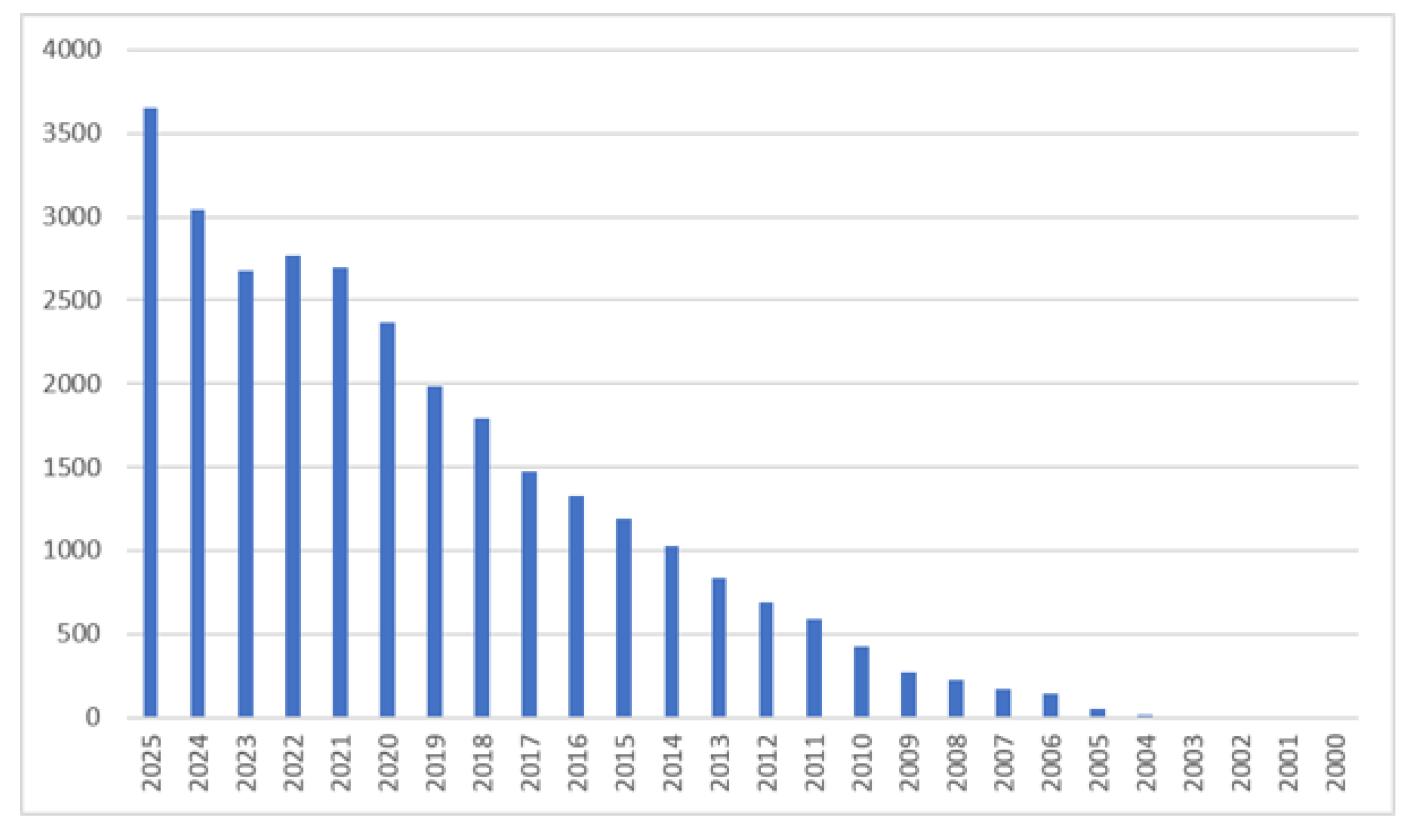
Figure 2.
Potential effects of flavonoids on the different tissues/organs.
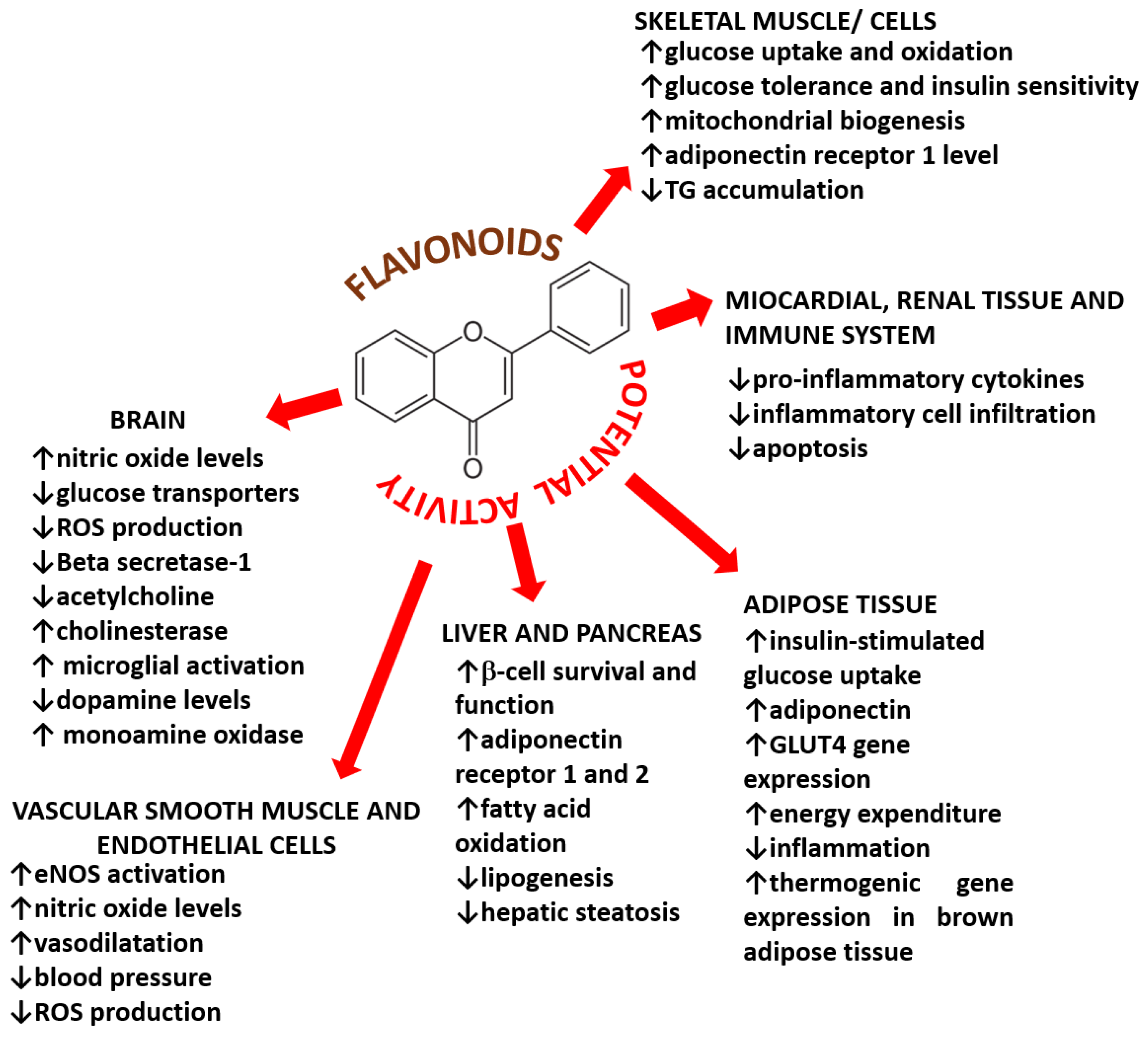
Figure 3.
Chemical structure of curcumin, quercetin, resveratrol and epigallocatechin-3-gallate.
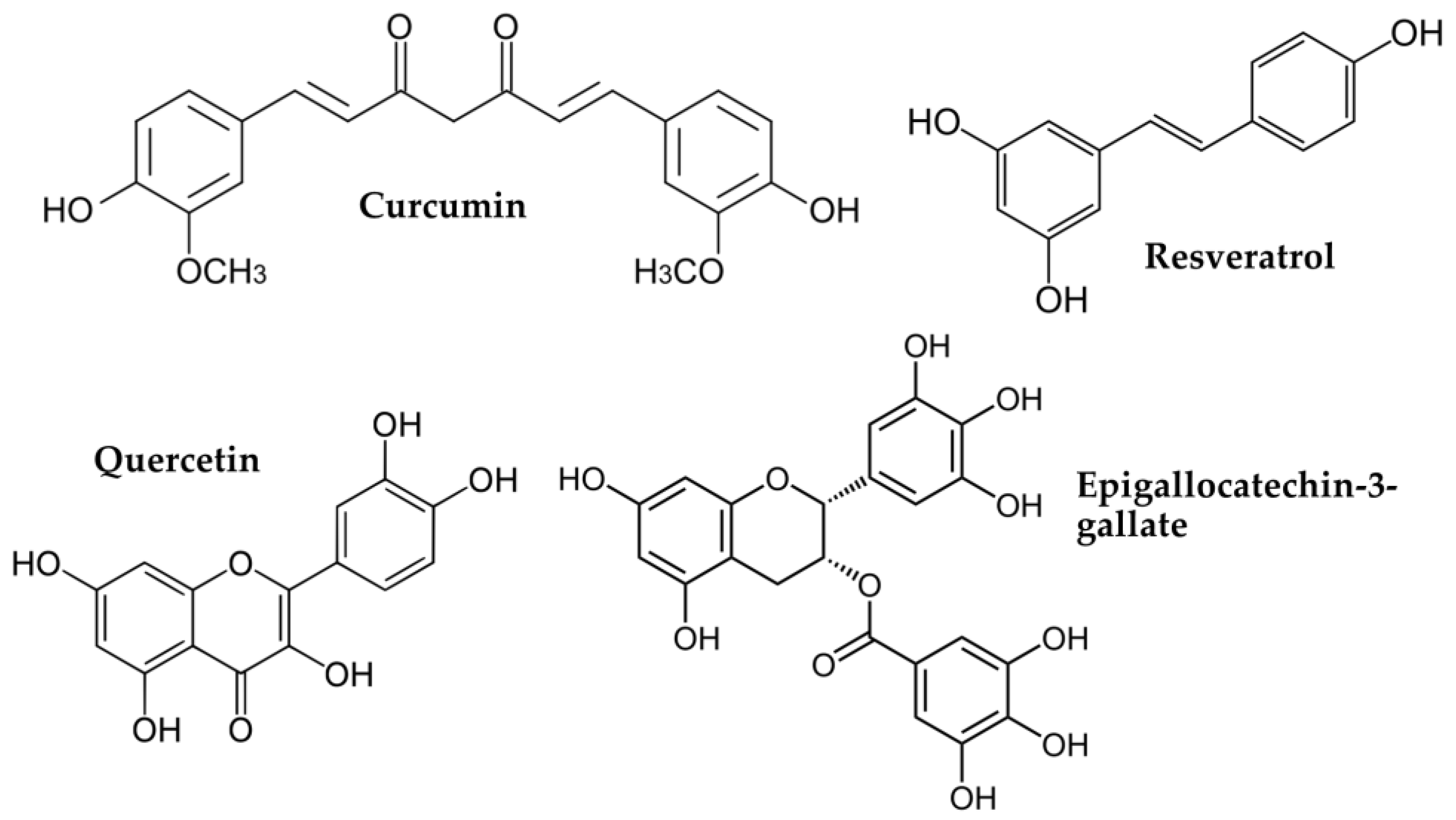
Figure 4.
Chemical structure of thymoquinone, cananbidiol and silybin.
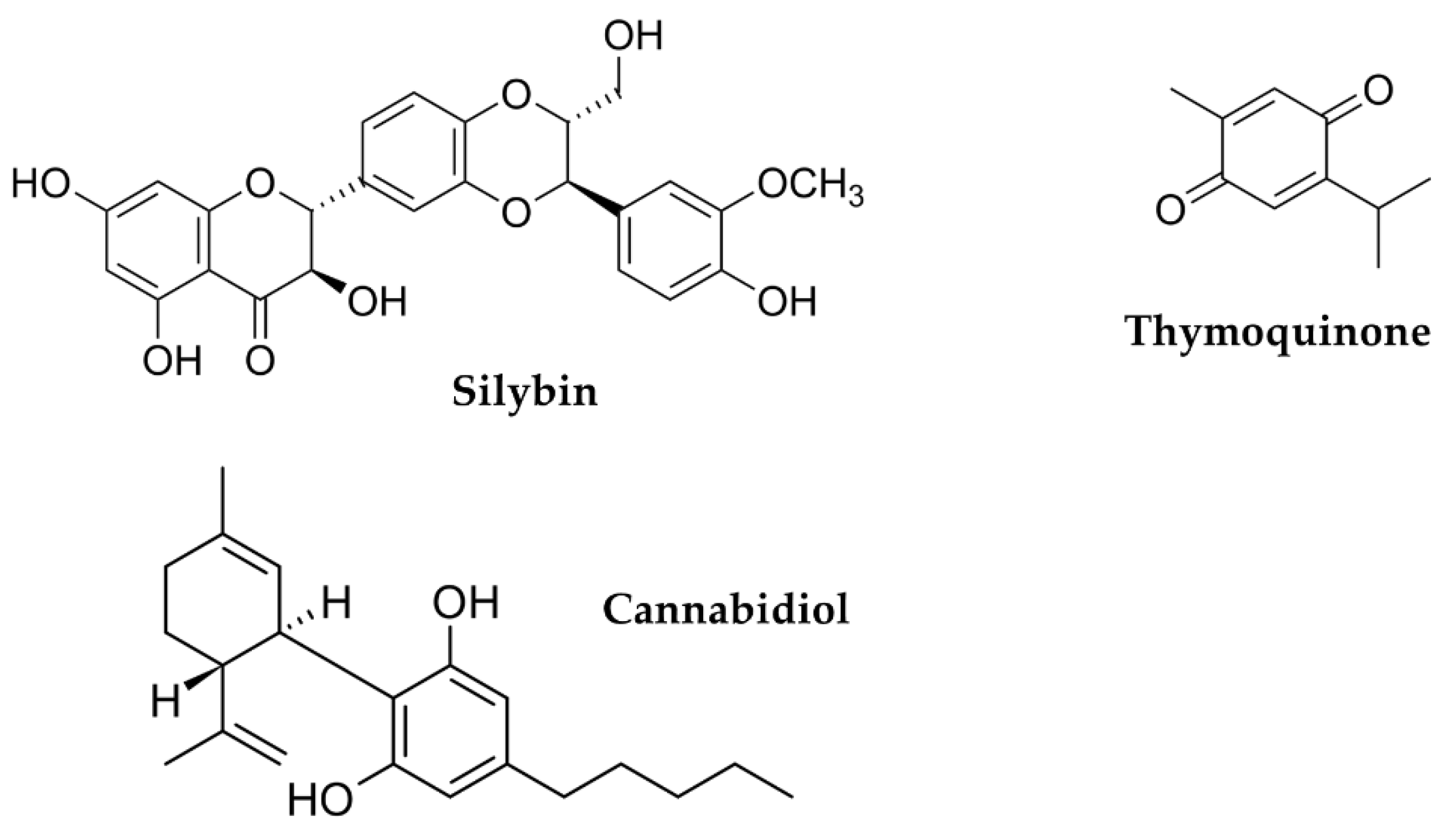
Figure 5.
Structures of ginsenosides and quillaja saponins investigated as multifunctional excipients.
Figure 5.
Structures of ginsenosides and quillaja saponins investigated as multifunctional excipients.
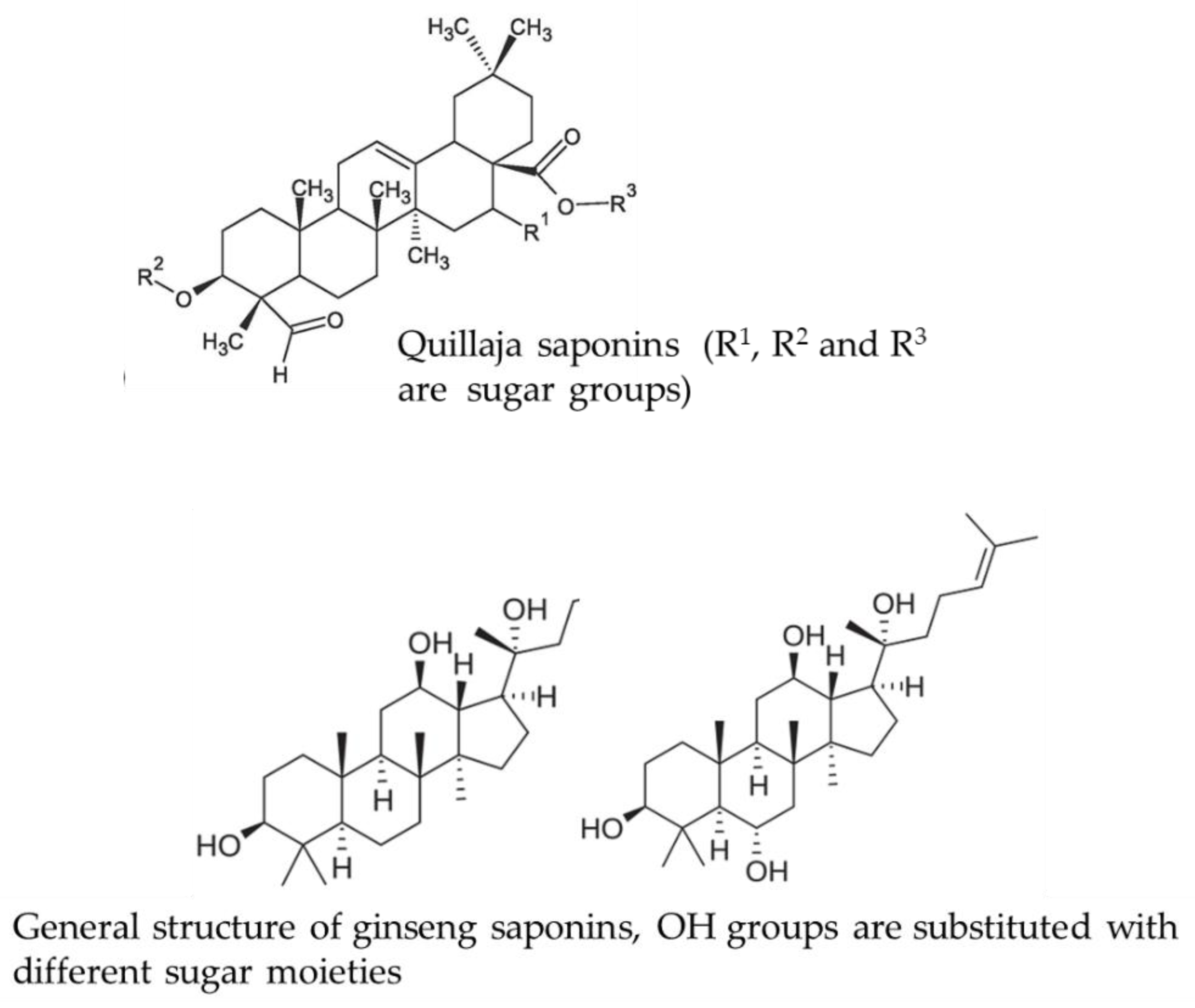
Figure 6.
Structures of escin and glycyrrhizin investigated as multifunctional excipients.
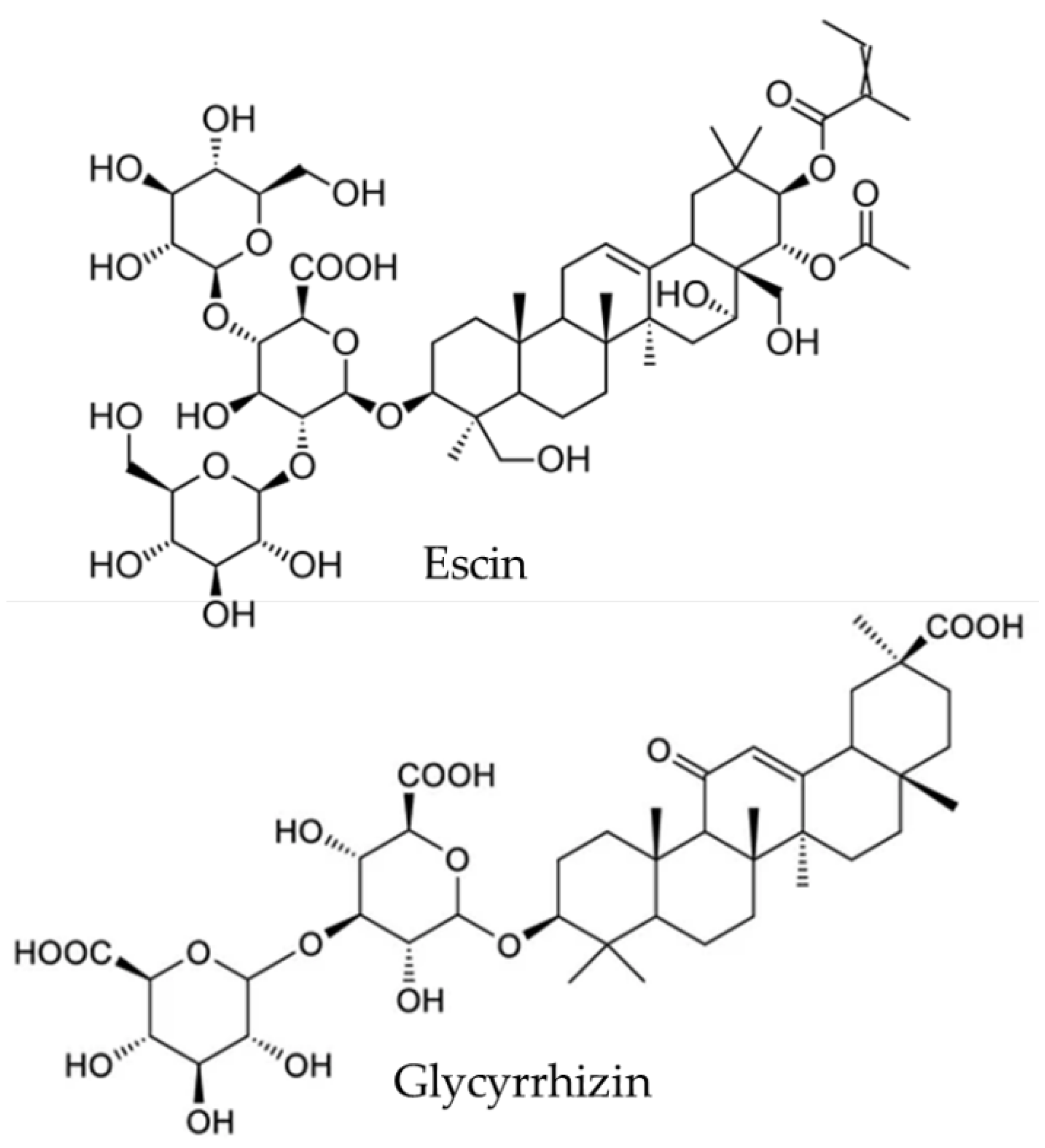
Figure 7.
Micelles and vesicles made of saponins.
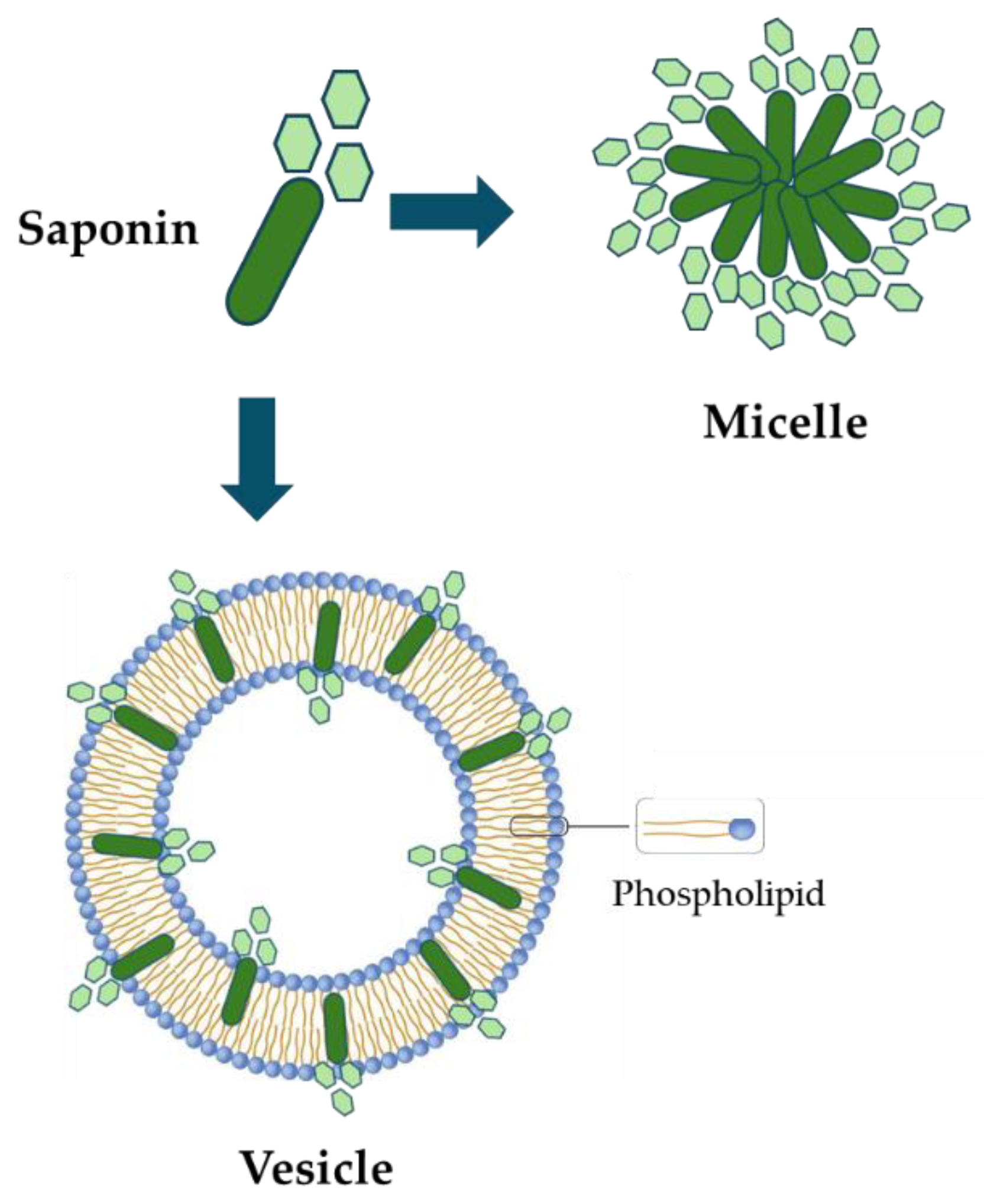
Figure 8.
Chemical structures of berberine, khellin, andrographolide and CAI-CORM.
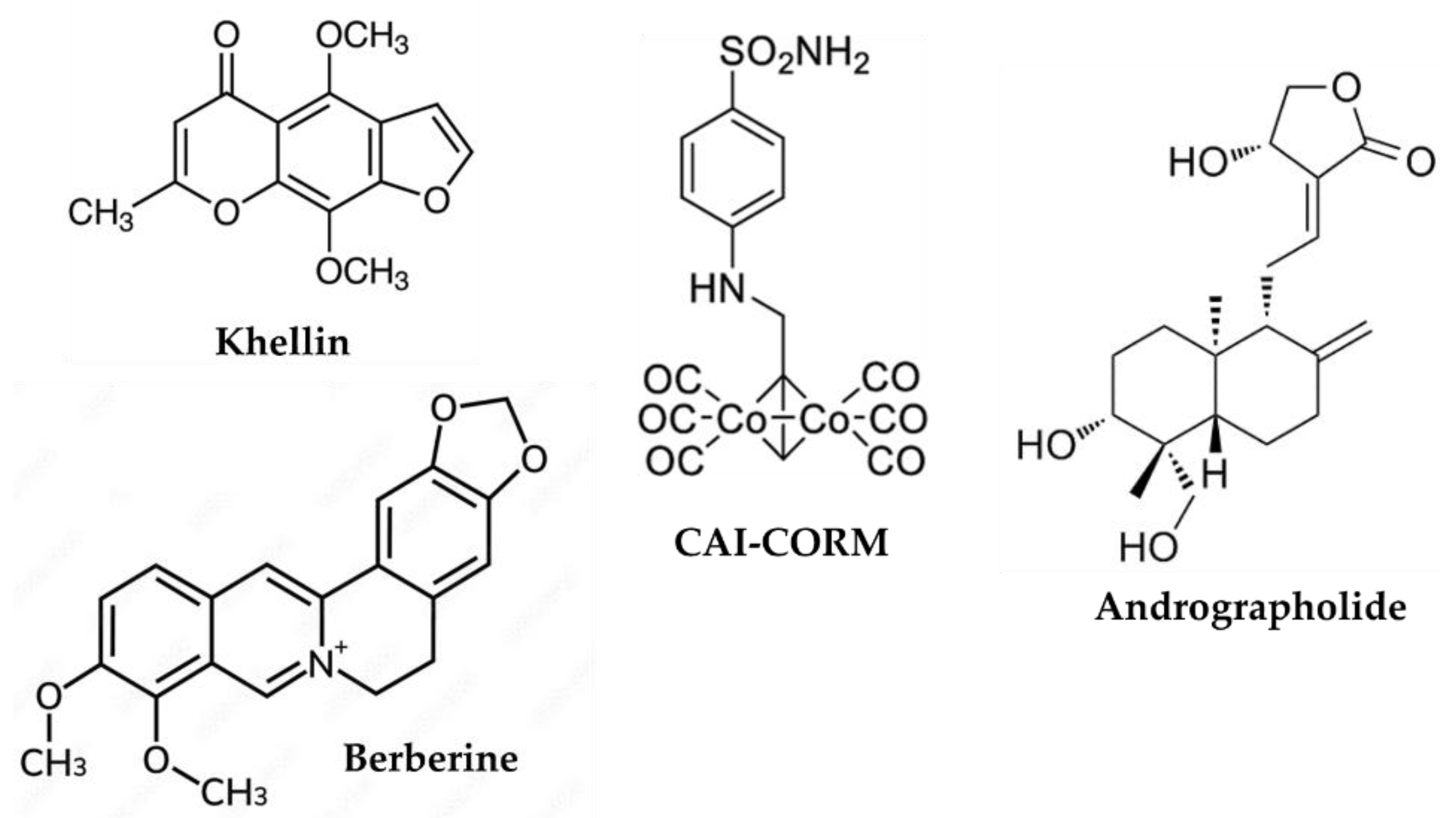
Disclaimer/Publisher’s Note: The statements, opinions and data contained in all publications are solely those of the individual author(s) and contributor(s) and not of MDPI and/or the editor(s). MDPI and/or the editor(s) disclaim responsibility for any injury to people or property resulting from any ideas, methods, instructions or products referred to in the content. |
© 2026 by the authors. Licensee MDPI, Basel, Switzerland. This article is an open access article distributed under the terms and conditions of the Creative Commons Attribution (CC BY) license (http://creativecommons.org/licenses/by/4.0/).
Copyright: This open access article is published under a Creative Commons CC BY 4.0 license, which permit the free download, distribution, and reuse, provided that the author and preprint are cited in any reuse.