

Submitted:
16 July 2026
Posted:
17 July 2026
You are already at the latest version
Abstract
(1) Background: Stroke remains a leading cause of long-term disability, with 80–90% of survivors experiencing gait disturbances. Functional electrical stimulation (FES) is widely used to improve motor recovery and gait; however, its effectiveness remains uncertain because outcomes vary across studies. This systematic review evaluated the effectiveness of FES, alone or combined with rehabilitation strategies, for gait recovery in individuals with chronic stroke. (2) Methods: A systematic search of the Cochrane Library, PubMed, EMBASE, MEDLINE, and Web of Science identified randomized controlled trials published between 2016 and 2026. Adults with chronic stroke receiving lower-limb FES, alone or combined with conventional rehabilitation, were included. Outcomes included gait performance, balance, motor function, and activities of daily living. Methodological quality was assessed using the Cochrane Risk of Bias 2 tool. (3) Results: Eleven studies involving 328 participants were included. FES improved gait speed, balance, lower-limb motor function, and functional independence, particularly when combined with task-specific rehabilitation. Improvements in coordination, neuromuscular activation, propulsion, reactive balance, and corticospinal excitability also supported its role in motor recovery. (4) Conclusions: FES is a relevant adjunctive intervention for post-stroke rehabilitation. Although methodological heterogeneity remains, current evidence supports its potential to improve gait and functional outcomes.
Keywords:
functional electrical stimulation
; stroke
; gait
; rehabilitation
; neuroplasticity
1. Introduction
Stroke is one of the leading causes of disability worldwide, and its impact has grown over recent decades. In 2019, an estimated 12.2 million new cases occurred, with 101 million people living with its consequences and 6.55 million deaths associated with the disease. Between 1990 and 2019, incidence rose by about 70%, while mortality increased by 43% [1]. These trends reflect population aging and the increasing prevalence of vascular risk factors, including hypertension, obesity, and metabolic disorders [1,2,3]. Notably, most stroke-related deaths, around 86%, occur in low- and middle-income countries [4].
From a functional perspective, most individuals who experience a stroke develop some degree of motor impairment, including deficits in coordination, muscle strength, and motor control [5,6]. Gait dysfunction is one of the most common and disabling consequences of stroke, often associated with chronic hemiparesis and reduced mobility [5,6]. These deficits are associated with low independence, poorer quality of life, and a substantial burden on patients, their families, and healthcare systems. [5,6,7,8]. Although intensive rehabilitation can promote meaningful improvements in the early stages, many patients continue to experience considerable motor deficits in the chronic phase (around six months after the event) [6,9]. At this stage, therapeutic options are more limited, and exercise-based conventional rehabilitation remains the main approach, often resulting in limited long-term functional gains [6]. As a result, individuals continue to experience persistent difficulties with activities of daily living (ADLs), underscoring the need for further research on new or adapted interventions during this phase.
Functional electrical stimulation (FES) is one of the approaches currently used in the rehabilitation of individuals during the chronic phase after a stroke. This technique uses electrical stimulation to induce muscle contractions, thus improving motor function [6]. Several studies have demonstrated that FES can improve muscle strength, promote neuroplasticity, and enhance gait performance after a stroke [10]. However, some studies have shown modest or non-significant improvements when FES is used just in post-stroke rehabilitation or alone [11,12,13]. This review synthesizes evidence from randomized controlled trials evaluating the impact of functional electrical stimulation (FES) on lower-limb function in patients with chronic stroke. Studies published between 2016 and 2026 were identified using predefined inclusion and exclusion criteria. The analyzed outcomes encompass gait speed, balance, overall motor function, and execution of activities of daily living (ADLs). These findings offer further insights into the potential role of FES in chronic stroke rehabilitation, providing updated information to consider in clinical practice.
2. Methods
2.1. Study Design
To ensure transparency and methodological rigor, the protocol of this systematic review was prospectively registered in PROSPERO (International Prospective Register of Systematic Reviews) under the registration number CRD420261345060. The objective of this study was to examine and compare the effects of functional electrical stimulation (FES) or FES combined with other techniques in the treatment of post-stroke gait in the chronic phase (from 6 months onward), based on the PRISMA (Preferred Reporting Items for Systematic Reviews and Meta-Analyses) guidelines.
2.2. Inclusion and Exclusion Criteria
2.2.1. Inclusion Criteria
Studies including adult participants (age ≥ 18 years) with a diagnosis of stroke in the chronic phase, defined as a time since onset greater than six months, were included. Regarding the intervention, participants received treatment with functional electrical stimulation (FES) associated with conventional rehabilitation treatment. In the control groups, participants received conventional treatment alone or sham FES, characterized by stimulation of minimal intensity, without inducing muscle contraction.
The main outcome indicators were as follows: Activities of daily living (ADL), assessed by the Barthel Index for activities of daily living (ADL) and the Modified Barthel Index (MBI): evaluation of independence in activities of daily living, with scores ranging from 0 to 100; change in functional mobility, assessed using the Rivermead Mobility Index (RMI); motor capacity and functional independence; other motor outcomes were as follows: walking test (WT): measurement of walking endurance based on the total distance covered during a period of time; timed walking test: assessment of gait speed over a standardized distance; maximum independent walking distance. The included studies were randomized controlled trials (RCTs).
2.2.2. Exclusion Criteria
Studies were excluded if they: (1) included participants younger than 18 years of age or individuals in the acute or subacute phase of stroke (≤ 6 months after stroke onset); (2) evaluated interventions other than functional electrical stimulation (FES) combined with conventional rehabilitation, or did not include an appropriate comparison group (conventional rehabilitation alone or sham FES); (3) did not report at least one of the predefined outcomes related to activities of daily living, functional mobility, gait performance, motor capacity, or functional independence; (4) were not randomized controlled trials (RCTs); (5) were conference abstracts, case reports, case series, study protocols, reviews, editorials, letters, dissertations, or animal studies; (6) had duplicate publications, with only the most complete or recent report being retained; (7) had unavailable full text or insufficient original data after reasonable attempts to obtain them; or (8) presented evident methodological or statistical inconsistencies that compromised data reliability.
2.3. Search Strategy
A systematic search was conducted in the following electronic databases: PubMed, MEDLINE, ClinicalTrials.gov, Cochrane Central Register of Controlled Trials (Cochrane Central), EMBASE, and the Physiotherapy Evidence Database (PEDro). The search strategy was developed using a combination of controlled vocabulary (e.g., MeSH and Emtree terms, when applicable) and free-text terms related to stroke, functional electrical stimulation, and the lower limb.
Terms and Boolean operators were used to combine the descriptors, as presented below:
#1 (Stroke* OR CVA* OR (Cerebrovascular NEXT Accident*) OR (Brain NEXT Stroke*) OR (Cerebral NEXT Stroke*) OR (Cerebral NEXT Infarction*) OR (Brain NEXT Infarction*) OR (Cerebral NEXT Ischemia*) OR (Transient NEXT Ischemic NEXT Attack*))
#2 ((Functional NEXT Electrical NEXT Stimulation*) OR FES OR (FES NEXT Therapy) OR (FES NEXT Training) OR (Functional NEXT Electrotherapy) OR (Functional NEXT Neuromuscular NEXT Stimulation*) OR (Functional NEXT NMES) OR (Neuromuscular NEXT FES) OR (Functional NEXT Electric NEXT Stimulation*) OR (Functional NEXT Electrical NEXT Stimulation NEXT Therapy) OR (Therapy NEXT Functional NEXT Electrical NEXT Stimulation) OR (Functional NEXT Stimulation NEXT Electrical) OR (Electrical NEXT Functional NEXT Stimulation) OR (Functional NEXT Electrical NEXT Stimulation NEXT Training) OR (Training NEXT Functional NEXT Electrical NEXT Stimulation) OR (Functional NEXT Electrical NEXT Stimulation NEXT Program) OR (Program NEXT Functional NEXT Electrical NEXT Stimulation))
#3 ((randomized NEXT controlled NEXT trial*) OR (controlled NEXT clinical NEXT trial*) OR (random NEXT allocation) OR (double NEXT blind NEXT method) OR (single NEXT blind NEXT method) OR (clinical NEXT trial*) OR ((singl* OR doubl* OR trebl* OR tripl*) AND (mask* OR blind*)) OR (latin NEXT square) OR placebo* OR random* OR (research NEXT design) OR (comparative NEXT study) OR (evaluation NEXT studies) OR (follow-up NEXT studies) OR (prospective NEXT studies) OR (crossover NEXT studies) OR control* OR prospectiv* OR volunteer*) NOT (animal NOT human)
#4 ((Lower NEXT Extremity*) OR (Extremity* NEXT Lower) OR (Lower NEXT Limb*) OR (Limb* NEXT Lower) OR (Inferior NEXT Limb*) OR (Pelvic NEXT Limb*) OR Leg* OR Crus OR Crura OR Thigh* OR Femur OR Femoral OR Knee* OR Tibia OR Fibula OR Shank OR Calf OR Calves OR Ankle* OR Foot OR Feet OR Pes OR Pedal OR Toe*)
The final search strategy was defined by the combination #1 AND #2 AND #3 AND #4.
The search period included studies published up to 2016. In addition, a manual search method using cross-references (snowball method) was used in order to identify additional studies from the reference lists of the selected articles.
2.4. Study Selection and Quality Assessment
2.4.1. Literature Screening
The screening of studies was performed independently by two researchers, according to the previously defined search strategy. Initially, the titles and abstracts of the identified studies were analyzed, considering the type of study, research objectives, and characteristics of the interventions. When an article met the inclusion criteria, the full text was obtained for detailed evaluation. After independent screening, the results were compared between the researchers, and any disagreements were discussed. If differences still remained after discussion, the corresponding author of this article resolved the disagreements.
2.4.2. Data Extraction
Data extraction was performed independently by two researchers, using a standardized data extraction form developed for this study. Information on the general characteristics of the included studies, sample size, participant characteristics, applied interventions, control groups, intervention frequency and intensity, and evaluated outcomes was collected. After extraction, the data were compared by the researchers to ensure the consistency and accuracy of the collected information.
2.4.3. Quality Assessment of the Literature
The methodological quality of the included studies was assessed independently by two researchers using the Cochrane Risk of Bias 2 (RoB 2) tool for randomized controlled trials, as recommended by the Cochrane Handbook for Systematic Reviews of Interventions. The five domains defined by RoB 2 were analyzed: bias arising from the randomization process; bias due to deviations from intended interventions; bias due to missing outcome data; bias in the measurement of the outcome; and bias in the selection of the reported result.
Based on these domains, each study was classified according to the judgments established by the tool: low risk of bias when all domains were considered adequate; some concerns when there was uncertainty in at least one domain; and high risk of bias when one or more domains presented critical issues. Only studies classified as low risk of bias or with some concerns were included in the analysis. The assessments performed by the researchers were compared, and in cases of disagreement, the final decision was made by the corresponding author.
3. Results
3.1. Search Results
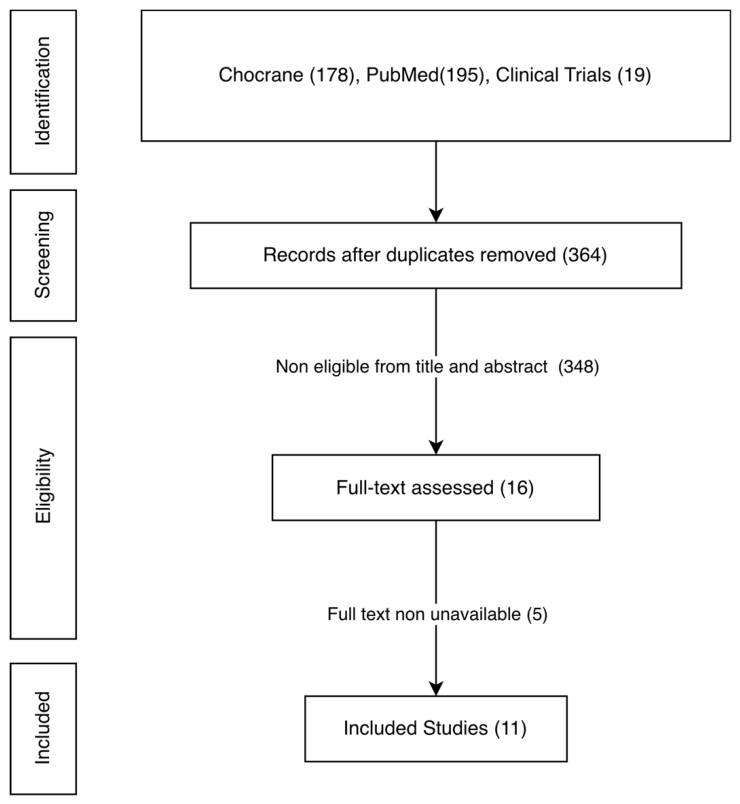
A total of 363 related studies were identified in the preliminary search, and 11 studies, including 328 patients, were finally included. A flow chart detailing the article screening process is shown in Figure 1.
All included studies were in English, published between 2016 and 2026, and conducted in United State of America (USA), Italy, Brazil, China, Argentina, Japan, Montenegro, and South Korea. The basic characteristics of the studies are shown in Table 1.

Table 1.
Characteristics of included studies investigating functional electrical stimulation (FES) in post-stroke gait rehabilitation.
Table 1.
Characteristics of included studies investigating functional electrical stimulation (FES) in post-stroke gait rehabilitation.
| Study (Author/Year) | Country | Participants | Intervention measures | Measurement (Outcomes) | Study design |
| Piatti et al., 2025 | Italy | 28 patients with chronic stroke and foot drop | Gait training with Functional Electrical Stimulation (FES) combined with conventional rehabilitation vs. conventional rehabilitation alone | Rivermead Mobility Index (RMI), Modified Barthel Index (MBI), Two-Minute Walk Test (2MWT), Timed 25-Foot Walk Test (T25FW) | Randomized controlled trial |
| Purohit et al., 2024 | USA | 12 ambulatory individuals with hemiparetic stroke | Quadriceps FES applied during unexpected slip perturbations during gait | Fall incidence, reactive balance responses, step initiation time, compensatory step length | Experimental randomized condition study |
| Ray et al., 2021 | USA | Post-stroke individuals with gait impairment | User-driven treadmill control combined with ankle FES | Walking speed, propulsion biomechanics, trailing limb angle | Experimental laboratory study |
| Choe et al., 2024 | USA | Community-dwelling individuals with chronic stroke | FES-based propulsion neuroprosthesis to enhance paretic limb propulsion during walking | Walking speed, paretic limb propulsion, gait mechanics | Experimental intervention study |
| Huang et al., 2022 | China | 70 patients with within 6 months post-stroke | Contralaterally controlled FES vs. neuromuscular electrical stimulation (NMES) applied to ankle dorsiflexors | Fugl-Meyer Assessment Lower Extremity (FMA-LE), Barthel Index (BI), Functional Ambulation Category (FAC), ankle AROM, 10-meter walk test, sEMG | Randomized controlled trial |
| Dantas et al., 2023 | Brazil | 28 people with stroke | Treadmill training with FES (TT-FES) vs. treadmill training alone | Mobility tests, balance, endurance, coordination, sensorimotor function | Randomized crossover study |
| Dujović et al., 2017 | Montenegro | 16 stroke patients | Multi-pad FES combined with conventional rehabilitation vs. conventional therapy | 10-Meter Walk Test (10MWT), Fugl-Meyer Assessment (FMA), Berg Balance Scale (BBS), Modified Barthel Index (MBI) | Single-blind randomized study |
| Biswas et al., 2024 | USA | 66 patients with chronic stroke | Brain-computer interface controlled FES (BCI-FES) combined with physical therapy vs. conventional therapy | Gait velocity (10-meter walk test), secondary functional outcomes | Randomized controlled clinical trial (Phase II) |
| Lee & Kim, 2022 | South Korea | 34 stroke patients | Gait training with portable FES vs. placebo FES with gait training | Fugl-Meyer Assessment (FMA), Performance-Oriented Mobility Assessment (POMA), OptoGait parameters | Single-blind randomized controlled trial |
| Ueda et al., 2022 | Japan | 20 post-stroke patients with spastic hemiplegia | Robotic stepping therapy using dynamic tilt table combined with FES vs. stepping therapy alone | Walking speed, cadence, number of steps (10MWT), Modified Ashworth Scale (MAS), Fugl-Meyer Assessment (FMA), ROM | Randomized crossover controlled trial |
| Parikh et al., 2024 | USA | 12 individuals with chronic stroke (>6 months) | Randomized crossover design where all participants received both interventions: FAST (Fast treadmill gait training) FAST–FES: FAST combined with phase-specific Functional Electrical Stimulation |
Primary outcomes (neurophysiological): Corticospinal excitability. Secondary outcomes (functional): Fast overground walking speed Clinical baseline measures (characterization): Fugl-Meyer Lower Extremity; Berg Balance Scale; Timed Up and Go |
Randomized crossover trial with repeated measures |
*Abbreviations: FES = functional electrical stimulation; NMES = neuromuscular electrical stimulation; EMG = electromyography; BCI = brain–computer interface; RMI = Rivermead Mobility Index; MBI = Modified Barthel Index; 2MWT = Two-Minute Walk Test; T25FW = Timed 25-Foot Walk Test; FMA = Fugl-Meyer Assessment; FMA-LE = Fugl-Meyer Assessment Lower Extremity; FAC = Functional Ambulation Category; BI = Barthel Index; BBS = Berg Balance Scale; MAS = Modified Ashworth Scale; POMA = Performance-Oriented Mobility Assessment; ROM = range of motion; TUG = Timed Up and Go.
Table 2.
Qualitative evidence synthesis matrix summarizing the direction and consistency of effects of functional electrical stimulation (FES)-based interventions on post-stroke gait outcomes.
Table 2.
Qualitative evidence synthesis matrix summarizing the direction and consistency of effects of functional electrical stimulation (FES)-based interventions on post-stroke gait outcomes.
| ADL | Function Capacity | Biomechanical Parameters | |
| FES + Conventional Rehabilitation (n=4) | ↔ | ↑ | ↑ |
| FES + Gait Training (n=3) | ? | ↑↑ | ↑↑ |
| FES Alone (n=2) | ? | ↑ | ↑ |
| FES + Advanced (n=4) | ? | ↑ | ↑↑ |
* Legend: Darker shades indicate stronger and more consistent evidence across studies. Strong consistent improvement (↑↑), moderate improvement (↑), no consistent effect (↔), and Limited, heterogeneous or insufficient evidence (?).
3.2. Results from Included Studies
3.2.1. Impact of Functional Electrical Stimulation on Activities of Daily Living in Stroke Patients
Two articles [14,15] included in this study used functional electrical stimulation (FES), alone or combined with conventional rehabilitation, to evaluate the impact on activities of daily living (ADL) in post-stroke patients. In [14], sixteen stroke patients were randomly allocated to the FES group (FES therapy combined with a conventional rehabilitation program) (n = 8) and the control group (conventional rehabilitation program only) (n = 8). FES was applied for 30 minutes during gait training to induce ankle plantarflexion and dorsiflexion. The results showed that the FES group demonstrated improvement in functional independence in activities of daily living, motor recovery, and gait performance compared with the control group. These findings suggest that the addition of FES to conventional rehabilitation may be more effective in improving daily living activities and functional outcomes than conventional rehabilitation alone.
In the randomized clinical trial [15], the objective was to investigate the effects of FES combined with conventional rehabilitation on gait and activities of daily living in stroke patients presenting with foot drop. Twenty-eight participants were randomized into two groups: an experimental group that received gait training with FES associated with conventional rehabilitation and a control group that received conventional rehabilitation only. The results indicated improvements in overall functional performance in both groups; however, the between-group analysis did not demonstrate statistically significant differences between the FES intervention combined with physiotherapy and conventional treatment alone.
3.2.2. Effects of Functional Electrical Stimulation on Functional Motor Capacity in Stroke Patients
Six articles [14,16,17,18,19] included in this study used functional electrical stimulation (FES), alone or combined with other rehabilitation strategies, to evaluate its impact on functional motor capacity in post-stroke patients. Although the studies used different stimulation protocols and outcome measures, they consistently assessed motor performance related to gait, balance, lower-limb function, and, more recently, neurophysiological adaptations associated with motor recovery.
In the study [14], sixteen stroke patients were randomly allocated to an intervention group receiving FES combined with a conventional rehabilitation program and a control group receiving only conventional rehabilitation. FES was delivered for 30 minutes during gait training to induce ankle plantarflexion and dorsiflexion. The results showed a significant increase in gait speed in the FES group (p < 0.001), exceeding the minimal detectable change. These findings suggest that FES combined with conventional rehabilitation can improve walking speed and lower-extremity mobility more effectively than conventional rehabilitation alone.
[16] compared the efficacy of contralaterally controlled functional electrical stimulation (CCFES) with conventional neuromuscular electrical stimulation (NMES) for lower-extremity motor recovery in patients with subacute stroke. Seventy patients within six months post-stroke were randomly assigned to either the CCFES group (n = 35) or the NMES group (n = 35). Both groups received routine rehabilitation combined with 20 minutes of electrical stimulation targeting ankle dorsiflexion muscles, five days per week for three weeks. Improvements were observed in both groups in the Fugl-Meyer Assessment of the lower extremity (FMA-LE), Barthel Index (BI), active range of motion (AROM) of ankle dorsiflexion, and Functional Ambulation Category (FAC) (p < 0.05). However, the CCFES group demonstrated significantly greater improvements in FMA-LE scores and sEMG responses of the tibialis anterior (p < 0.05), indicating superior motor recovery compared with conventional NMES.
[17] examined the effects of gait training combined with portable FES on motor function, balance, and gait ability in stroke patients. In this single-blind randomized controlled trial, 34 participants were allocated to either an FES plus gait training group or a placebo FES plus gait training group. Both groups received interventions for 30 minutes, five days per week, for four weeks. The results demonstrated that the FES group showed significantly greater improvements in motor function, balance, and gait ability compared with the placebo group, suggesting that integrating FES into task-specific gait training enhances functional motor recovery.
[18] investigated whether FES could improve reactive balance control in individuals with post-stroke hemiparesis during unexpected gait perturbations. Twelve ambulatory participants with moderate-to-severe motor impairment were included. The results demonstrated that FES significantly reduced the incidence of laboratory-induced falls and improved reactive stability and vertical limb support (p < 0.05). The authors suggested that stimulation of the quadriceps may rapidly enhance the paretic limb’s capacity to support body weight during balance disturbances, thereby reducing fall risk.
[19] explored the neurophysiological effects of combining high-intensity gait training with FES (FAST-FES) in a repeated-measures crossover study involving 11 individuals in the chronic post-stroke phase. Participants underwent both FAST-FES and high-intensity gait training alone. Corticospinal tract (CST) excitability was assessed using motor evoked potentials (MEPs) recorded from the tibialis anterior and soleus muscles. The results showed that FAST-FES induced significantly greater increases in MEP amplitude compared with gait training alone (p = 0.01), specifically in the paretic limb, without affecting the nonparetic side. These findings suggest that FES combined with high-intensity, task-specific training may preferentially promote neuroplasticity within the lesioned corticospinal pathways. Overall, these studies indicate that FES-based interventions can positively influence functional motor capacity in stroke patients, particularly in gait performance, balance, and lower-limb motor recovery.
3.2.3. Effects of Functional Electrical Stimulation on Motor and Biomechanical Parameters
Ten studies [14,15,16,17,18,20,21,22,23,24] included in this review evaluated the effects of functional electrical stimulation (FES), alone or combined with other rehabilitation strategies, on motor and biomechanical parameters in individuals after stroke. The studies assessed a range of outcomes related to lower-limb motor function, gait performance, balance control, and biomechanical characteristics of locomotion. [16] compared the effects of contralaterally controlled functional electrical stimulation (CCFES) with neuromuscular electrical stimulation (NMES) for lower-limb motor recovery in patients with chronic stroke. After a three-week intervention, both groups showed improvements in Fugl-Meyer Assessment for the lower extremity (FMA-LE), Barthel Index (BI), ankle dorsiflexion active range of motion (AROM), and Functional Ambulation Category (FAC) (p < 0.05). However, the CCFES group demonstrated significantly greater improvements in FMA-LE scores and in the surface electromyography (sEMG) response of the tibialis anterior muscle (p < 0.05), suggesting enhanced neuromuscular activation and motor recovery with the contralateral control strategy.
Similarly, [14] evaluated the use of a multi-pad FES system combined with conventional rehabilitation in stroke patients. Sixteen participants were randomly assigned to either FES plus rehabilitation or rehabilitation alone. The intervention involved 30 minutes of FES during gait training to induce ankle plantarflexion and dorsiflexion. The results demonstrated a significant increase in gait speed in the FES group (p < 0.001), exceeding the minimal detectable change. Improvements were also observed in motor recovery, balance performance, and functional mobility. [20] investigated treadmill training combined with FES (TT-FES) compared with treadmill training alone in individuals after stroke. The results showed improvements in mobility, balance, endurance, and coordination of the non-paretic limb in the group that started with TT-FES. Sensorimotor function improved regardless of the training sequence; however, coordination of the paretic limb improved only after exposure to TT-FES. Although the study did not include direct biomechanical measurements, the findings suggest that combining FES with locomotor training may enhance functional motor outcomes.
[17] examined the effects of gait training combined with portable FES on motor function, balance, and gait ability in stroke patients. In this randomized controlled trial, 34 participants were allocated to either an FES plus gait training group or a placebo FES plus gait training group. After four weeks of intervention, both groups showed improvements in motor function and gait performance; however, the FES group demonstrated significantly greater improvements in motor function, balance, and gait ability, indicating the potential of FES to enhance locomotor rehabilitation outcomes. [21] evaluated the combination of robotic stepping therapy and FES using a dynamic tilt table in post-stroke patients with spastic hemiplegia. The results showed that the combined intervention significantly improved walking speed, number of steps during the 10-meter walking test, and ankle inversion range of motion compared with robotic stepping alone. These findings suggest that integrating FES with robotic-assisted therapy may enhance locomotor recovery and joint mobility.
[18] investigated the effects of functional electrical stimulation (FES) synchronized with unexpected gait perturbations in 12 ambulatory stroke survivors with moderate-to-severe motor impairment. Participants experienced unpredicted gait slips with and without FES applied to the paretic quadriceps, and biomechanical outcomes related to reactive balance were compared between conditions. The FES intervention significantly reduced laboratory falls while increasing reactive stability and vertical limb support, in addition to promoting a longer compensatory step and shorter step initiation time. These findings suggest that FES can positively influence key biomechanical parameters involved in balance recovery by enhancing knee extensor torque, improving weight-bearing capacity, and facilitating more efficient compensatory stepping during gait perturbations.
[15] conducted a randomized clinical trial investigating the effects of FES combined with conventional rehabilitation in stroke patients with foot drop. Although both the intervention and control groups demonstrated significant improvements in mobility and gait-related outcomes after four weeks, no statistically significant differences were observed between groups. The authors suggested that the small sample size and short intervention period may have limited the detection of significant differences in functional outcomes. [22] investigated the combination of user-driven treadmill control and FES on gait velocity in post-stroke individuals. The results showed that the condition combining active treadmill control with FES increased self-selected walking speed by approximately 0.13 m/s compared with conventional treadmill walking. However, no significant differences were observed in biomechanical propulsion parameters, suggesting that improvements in gait speed may be associated with behavioral adaptations rather than changes in propulsive biomechanics.
Additional studies exploring advanced FES technologies also demonstrated promising biomechanical effects. [23] investigated an overground propulsion neuroprosthesis that adaptively coordinated dorsiflexor and plantarflexor stimulation during gait. Individualized FES timing resulted in a significant 10% increase in paretic propulsion and an 8% increase in plantarflexor power during assisted walking. Moreover, after a single intervention session, participants demonstrated a 9% increase in walking speed, a 28% increase in paretic propulsion, and a 12% improvement in propulsion symmetry during unassisted walking. These findings indicate that adaptive coordination of muscle stimulation through FES can enhance gait propulsion and optimize key biomechanical parameters associated with locomotor performance after stroke. Finally, [24] described a clinical trial protocol evaluating a brain-computer interface-controlled FES (BCI-FES) system for gait rehabilitation in individuals with chronic stroke. The trial aims to assess whether coupling neural intention signals with electrical stimulation can improve gait velocity and functional motor outcomes. This approach is based on Hebbian principles of neuroplasticity and represents a promising direction for future neurorehabilitation strategies. Overall, the evidence suggests that FES-based interventions can positively influence motor recovery and several biomechanical aspects of gait in individuals after stroke. Improvements were reported in parameters such as gait speed, coordination, balance control, neuromuscular activation, and propulsive force generation.
4. Discussion
The findings of this review suggest that functional electrical stimulation (FES) is a promising therapeutic strategy for post-stroke rehabilitation, with beneficial effects observed across activities of daily living, functional motor capacity, and motor and biomechanical outcomes. Collectively, the evidence indicates that FES may contribute to improvements in gait performance, balance, lower-limb motor recovery, functional independence, neuromuscular activation, and locomotor function, supporting its role as an important adjunct to conventional rehabilitation interventions.
Regarding activities of daily living, the available evidence suggests that FES may facilitate improvements in functional independence and overall recovery, particularly when combined with conventional rehabilitation. [14] demonstrated improvements in daily living activities, motor recovery, and gait performance when FES was integrated into a rehabilitation program. In contrast, [15] observed functional improvements in both intervention and control groups but did not identify statistically significant differences between treatments. This finding suggests that while FES may represent a safe and potentially useful therapeutic resource for facilitating neuromotor gait recovery, particularly in individuals with foot drop, its additional benefits over conventional rehabilitation may be more difficult to detect under certain clinical conditions. The authors proposed that the relatively small sample size and short intervention period may have limited the ability to detect clinically meaningful between-group differences. Therefore, the absence of statistical significance should not necessarily be interpreted as a lack of therapeutic effect, but rather as an indication that further investigations involving larger samples and longer intervention periods are needed to better establish the clinical impact of FES on functional recovery and activities of daily living.
Similarly, the evidence related to functional motor capacity suggests that FES can positively influence gait performance, balance, and lower-limb motor recovery after stroke. Improvements in walking speed, motor function, ambulation capacity, and balance were consistently reported across several studies. Importantly, emerging evidence indicates that these functional gains may be supported by underlying neurophysiological mechanisms, including increased corticospinal excitability and task-specific neuroplasticity. These findings support the hypothesis that FES may not only improve motor performance but also facilitate neural reorganization processes that contribute to motor recovery. Nevertheless, substantial variability was observed among studies regarding stimulation protocols, intervention duration, and outcome measures, making it difficult to determine the magnitude and consistency of these effects across different patient populations and clinical settings.
The biomechanical findings further reinforce the therapeutic potential of FES. Improvements were reported in gait speed, coordination, balance control, neuromuscular activation, joint mobility, and propulsive force generation. In addition, advanced stimulation approaches, including propulsion neuroprostheses, synergy-based stimulation systems, and brain-computer interface-controlled FES technologies, demonstrated promising effects on locomotor biomechanics and motor coordination. These findings suggest that FES may influence not only clinical measures of motor function but also the underlying biomechanical mechanisms involved in gait recovery. However, the interpretation of these results should be approached with caution due to the considerable heterogeneity observed among studies regarding experimental design, patient characteristics, stimulation protocols, intervention duration, and outcome assessments. Such variability limits direct comparisons and reduces the generalizability of the available evidence.
Another important limitation identified in this review concerns the relatively small sample sizes included in several studies. Small cohorts may reduce statistical power and increase the likelihood of type II errors, potentially masking clinically relevant treatment effects. This limitation may partially explain why some investigations, including [15], failed to identify significant between-group differences despite observing improvements in functional outcomes. Consequently, future studies should prioritize larger and more homogeneous populations to improve the robustness and reliability of clinical findings.
Beyond methodological limitations, the current literature also highlights important technological challenges associated with conventional FES systems. Although FES has demonstrated clinically relevant benefits, several studies reported only modest or non-significant improvements when the technology was applied as a standalone intervention. One possible explanation is that most commercially available FES systems rely on fixed stimulation patterns and predefined parameters that remain unchanged throughout treatment. Such static approaches fail to account for the dynamic, nonlinear, and highly individualized neuromuscular adaptations that occur during the rehabilitation process. As motor function, muscle responsiveness, fatigue, and neural excitability evolve over time, stimulation parameters that were initially appropriate may become progressively suboptimal, potentially limiting therapeutic effectiveness and reducing the capacity to maximize functional recovery and neuroplastic adaptations.
In this context, adaptive FES systems represent a promising direction for future neurorehabilitation. By continuously adjusting stimulation parameters according to physiological, biomechanical, or behavioral feedback, adaptive systems may better accommodate both inter-individual and intra-individual variability throughout recovery. The integration of closed-loop control systems, wearable sensors, electromyographic monitoring, and artificial intelligence-based algorithms may enable more personalized stimulation delivery, optimize neuromuscular recruitment, and facilitate activity-dependent neuroplasticity. Consequently, adaptive FES approaches may overcome several limitations associated with conventional stimulation paradigms and contribute to superior functional outcomes.
Overall, the current evidence supports the feasibility and therapeutic potential of FES in post-stroke rehabilitation. Nevertheless, the heterogeneity of study methodologies, variability in stimulation protocols, limited sample sizes, and the widespread use of static stimulation paradigms highlight important gaps in the literature. Future research should prioritize large-scale multicenter randomized controlled trials, greater standardization of stimulation protocols and outcome measures, and the development of adaptive and intelligent stimulation systems capable of continuously responding to patients’ physiological and functional needs. Such advances may be essential for maximizing the clinical effectiveness of FES and optimizing long-term recovery following stroke.
5. Conclusions
This review demonstrated that functional electrical stimulation (FES) is a promising therapeutic intervention for post-stroke rehabilitation, with evidence supporting improvements in activities of daily living, functional motor capacity, and motor and biomechanical aspects of gait. The findings indicate that FES may contribute to enhanced gait performance, balance, lower-limb motor recovery, neuromuscular activation, and functional independence, particularly when combined with task-specific rehabilitation strategies. Emerging evidence further suggests that the benefits of FES may extend beyond functional improvements, involving neurophysiological mechanisms such as increased corticospinal excitability and activity-dependent neuroplasticity. These findings reinforce the role of FES not only as a compensatory tool for motor impairments but also as a potential facilitator of neural recovery processes following stroke.
Despite these promising outcomes, the current body of evidence presents important limitations, including substantial heterogeneity in stimulation protocols, intervention duration, outcome measures, and patient characteristics. In addition, several studies were conducted with relatively small sample sizes, limiting statistical power and reducing the generalizability of findings. Furthermore, the widespread use of conventional FES systems based on fixed stimulation parameters may restrict therapeutic effectiveness, as such approaches do not account for the dynamic and individualized neuromuscular adaptations that occur throughout rehabilitation.
Taken together, these findings highlight the need for future research focused on larger and more standardized clinical trials, as well as the development of adaptive and personalized FES technologies. Systems capable of continuously adjusting stimulation parameters according to physiological and functional responses may better address patient-specific needs, optimize neuromuscular activation, and enhance neuroplasticity. Consequently, adaptive and intelligent FES approaches represent a promising avenue for improving rehabilitation outcomes and maximizing long-term functional recovery following stroke. In conclusion, current evidence supports the clinical feasibility and therapeutic potential of FES in post-stroke rehabilitation. However, advancing toward adaptive, closed-loop, and patient-centered stimulation paradigms may be essential to fully realize the benefits of this technology and to achieve more effective, personalized, and sustainable recovery outcomes for individuals affected by stroke.
Acknowledgments
The authors thank Kalynda Gomes for her assistance with the graphical review and visual refinement of the manuscript. The authors also used ChatGPT (OpenAI, GPT-5.5) to assist with language editing and improving the clarity of the manuscript. All AI-generated content was critically reviewed and edited by the authors, who take full responsibility for the accuracy and integrity of the final manuscript.
Conflicts of Interest
Maria Eduarda Franklin da Costa de Paula is a co-founder and managing partner of Orby Desenvolvimento de Sistemas LTDA, the company that develops the electrical stimulation technology evaluated in this study. Aldrén Martins de Queiroz Júnior serves as Chief Product Officer of the same company. Both authors participated in conducting the study according to the predefined research protocol and methodology. The study design, methodology, data collection procedures, analysis plan, and interpretation of the results followed the established protocol, and the authors’ commercial roles did not influence the scientific conduct of the study or the decision to publish the results.
References
- GBD 2019 Stroke Collaborators. Global, regional, and national burden of stroke and its risk factors, 1990–2019: A systematic analysis for the Global Burden of Disease Study 2019. Lancet Neurol. 2021, 20, 795–820. [CrossRef] [PubMed]
- O’Donnell, M.J.; Chin, S.L.; Rangarajan, S.; et al. Global and regional effects of potentially modifiable risk factors associated with acute stroke in 32 countries (INTERSTROKE): A case-control study. Lancet 2016, 388, 761–775. [Google Scholar] [CrossRef] [PubMed]
- Feigin, V.; Owolabi, M.; Feigin, V.; et al. Pragmatic solutions to reduce the global burden of stroke: A World Stroke Organization–Lancet Neurology Commission. Lancet Neurol. 2023, 22, 1160–1206. [Google Scholar] [CrossRef] [PubMed]
- Li, X.; He, Y.; Wang, D.; Rezaei, M.J. Stroke rehabilitation: From diagnosis to therapy. Front. Neurol. 2024, 15, 1402729. [Google Scholar] [CrossRef] [PubMed]
- Langhorne, P.; Bernhardt, J.; Kwakkel, G. Stroke rehabilitation. Lancet 2011, 377, 1693–1702. [Google Scholar] [CrossRef] [PubMed]
- Winstein, C.J.; Stein, J.; Arena, R.; Bates, B.; Cherney, L.R.; Cramer, S.C.; Deruyter, F.; Eng, J.J.; Fisher, B.; Harvey, R.L.; et al. Guidelines for adult stroke rehabilitation and recovery: A guideline for healthcare professionals from the American Heart Association/American Stroke Association. Stroke 2016, 47, e98–e169. [Google Scholar] [CrossRef] [PubMed]
- Mountain, A.; Patrice Lindsay, M.; Teasell, R.; Salbach, N.M.; de Jong, A.; Foley, N.; Bhogal, S.; Bagg, S.; Bayley, M.; Dowlatshahi, D.; et al. Canadian stroke best practice recommendations: Rehabilitation, recovery, and community participation following stroke. Part two: Transitions and community participation following stroke. Int. J. Stroke 2020, 15, 789–806. [Google Scholar] [CrossRef] [PubMed]
- Dong, H.; Wang, H.; Zhang, X.; Li, Y.; Liu, J.; Wang, Q. An adaptive reflexive control strategy for walking assistance system based on functional electrical stimulation. Front. Neurosci. 2022, 16, 944291. [Google Scholar] [CrossRef] [PubMed]
- Kwakkel, G.; Kollen, B.J.; Twisk, J.W. Impact of time on improvement of outcome after stroke. Stroke 2006, 37, 2348–2353. [Google Scholar] [CrossRef] [PubMed]
- Lee, Y.; Kim, K. The influence of gait training combined with portable functional electrical stimulation on motor function, balance and gait ability in stroke patients. J. Back. Musculoskelet. Rehabil. 2022, 35, 1171–1178. [Google Scholar] [CrossRef] [PubMed]
- Alashram, A.R.; Mercuri, N.B.; Annino, G. Functional electrical stimulation cycling for balance rehabilitation in stroke survivors: A systematic review and meta-analysis. Artif. Organs 2026. [Google Scholar] [CrossRef] [PubMed]
- İbişoğlu, Z.Ş.; Kılınç, S. Comparison of functional electrical stimulation cycle versus conservative rehabilitation on functional status and muscle features in stroke patients. NeuroRehabilitation 2025, 56(2). [Google Scholar] [CrossRef] [PubMed]
- Eraifej, J.; Clark, W.; France, B.; Desando, S.; Moore, D. Effectiveness of upper limb functional electrical stimulation after stroke for the improvement of activities of daily living and motor function: A systematic review and meta-analysis. Syst. Rev. 2017, 6, 40. [Google Scholar] [CrossRef] [PubMed]
- Dujović, S.D.; Malešević, J.; Malešević, N.; Vidaković, A.S.; Bijelić, G.; Keller, T.; Konstantinović, L. Novel Multi-Pad Functional Electrical Stimulation in Stroke Patients: A Single-Blind Randomized Study. NeuroRehabilitation 2017, 41, 791–800. [Google Scholar] [CrossRef] [PubMed]
- Piatti, D.; Morone, G.; Mercuro, A.; Paolucci, S.; Tramontano, M.; Grasso, M.G. The Role of Functional Electrical Stimulation in Stroke Rehabilitation: A Preliminary Study. Physiother. Res. Int. 2025, 30, e70103. [Google Scholar] [CrossRef] [PubMed]
- Huang, S.; Zhang, Y.; Liu, P.; Chen, Y.; Gao, B.; Chen, C.; Bai, Y. Effectiveness of Contralaterally Controlled Functional Electrical Stimulation vs. Neuromuscular Electrical Stimulation for Recovery of Lower Extremity Function in Patients with Subacute Stroke: A Randomized Controlled Trial. Front. Neurol. 2022, 13, 1010975. [Google Scholar] [CrossRef] [PubMed]
- Lee, Y.; Kim, K. The Influence of Gait Training Combined with Portable Functional Electrical Stimulation on Motor Function, Balance and Gait Ability in Stroke Patients. J. Back. Musculoskelet. Rehabil. 2022, 35, 1171–1178. [Google Scholar] [CrossRef] [PubMed]
- Purohit, R.; Varas-Diaz, G.; Bhatt, T. Functional Electrical Stimulation to Enhance Reactive Balance among People with Hemiparetic Stroke. Exp. Brain Res. 2024, 242, 559–570. [Google Scholar] [CrossRef] [PubMed]
- Parikh, V.; Sivaramakrishnan, A.; Liu, J.; Xu, J.; Mason, C.F.; Kesar, T.M. High-Intensity Gait Training with Functional Electrical Stimulation Enhances Corticospinal Excitability of Paretic Ankle Muscles in Individuals Post-Stroke. Neural Plast. 2025, 2025, 5529427. [Google Scholar] [CrossRef] [PubMed]
- Dantas, M.T.A.P.; Fernani, D.C.G.L.; Silva, T.D.; Assis, I.S.A.; Carvalho, A.C.; Silva, S.B.; Monteiro, C.B.M. Gait training with functional electrical stimulation improves mobility in people post-stroke. Int. J. Environ. Res. Public Health 2023, 20, 5728. [Google Scholar] [CrossRef] [PubMed]
- Ueda, K.; Umemoto, Y.; Kamijo, Y.I.; Sakurai, Y.; Araki, S.; Ise, M.; Tajima, F. Effects of combination of functional electric stimulation and robotic leg movement using dynamic tilt table on walking characteristics in post-stroke patients with spastic hemiplegia: A randomized crossover-controlled trial. J. Clin. Med. 2022, 11, 6911. [Google Scholar] [CrossRef] [PubMed]
- Ray, N.T.; Reisman, D.S.; Higginson, J.S. Combined user-driven treadmill control and functional electrical stimulation increases walking speeds poststroke. J. Biomech. 2021, 124, 110480. [Google Scholar] [CrossRef] [PubMed]
- Choe, D.K.; et al. A propulsion neuroprosthesis improves overground walking in community-dwelling individuals after stroke. IEEE Open J. Eng. Med. Biol. 2024, 5, 563–572. [Google Scholar] [CrossRef] [PubMed]
- Biswas, P.; Dodakian, L.; Wang, P.T.; Johnson, C.A.; See, J.; Chan, V.; Nenadic, Z. A single-center, assessor-blinded, randomized controlled clinical trial to test the safety and efficacy of a novel brain-computer interface controlled functional electrical stimulation (BCI-FES) intervention for gait rehabilitation in the chronic stroke population. BMC Neurol. 2024, 24, 200. [Google Scholar] [CrossRef] [PubMed]
Figure 1.
PRISMA flow diagram. Overview of the study selection process, including identification, screening, eligibility, and inclusion stages.
Figure 1.
PRISMA flow diagram. Overview of the study selection process, including identification, screening, eligibility, and inclusion stages.
Disclaimer/Publisher’s Note: The statements, opinions and data contained in all publications are solely those of the individual author(s) and contributor(s) and not of MDPI and/or the editor(s). MDPI and/or the editor(s) disclaim responsibility for any injury to people or property resulting from any ideas, methods, instructions or products referred to in the content. |
© 2026 by the authors. Licensee MDPI, Basel, Switzerland. This article is an open access article distributed under the terms and conditions of the Creative Commons Attribution (CC BY) license.
Copyright: This open access article is published under a Creative Commons CC BY 4.0 license, which permit the free download, distribution, and reuse, provided that the author and preprint are cited in any reuse.


