

Submitted:
16 July 2026
Posted:
17 July 2026
You are already at the latest version
Abstract
Alpacas have gained increasing popularity in Poland; however, no official national standards for their husbandry have yet been established. This study aimed to evaluate alpaca husbandry practices on Polish farms using an anonymous questionnaire. A total of 44 farms were included in the analysis, all of which kept alpacas, while only 9.1% also maintained llamas. A high level of adherence to preventive healthcare practices was observed, with regular deworming implemented on 90.9% of farms and vaccination reported by all respondents. Dietary supplementation was also widely practiced, with vitamin D being the most frequently administered supplement (90.9%). However, the assessment of biosecurity measures revealed important deficiencies in epidemiological risk management, as only 59.3% of owners quarantined newly introduced animals before integrating them into the herd. These findings provide the first comprehensive overview of alpaca husbandry practices in Poland and may serve as a basis for future research and the development of official husbandry standards for alpacas.
Keywords:
alpaca
; survey
; keeping conditions
; health issues
1. Introduction
The alpaca (Vicugna pacos) is a domesticated South American camelid originating from the Andean regions of present-day Peru and Chile [1]. Alpacas have historically been valued as sources of fibre used in the production of high-quality textiles, characterised by exceptional fineness and thermal insulation properties [2,3].
Archaeological and genetic evidence suggests that alpaca domestication began approximately 6,000–5,500 years before present [2,3]. Although alpacas have a long-established presence in South America, their introduction to Europe occurred only in the late 20th and early 21st centuries. In Poland, the first alpacas were imported at the beginning of XXI century, marking the beginning of the species’ presence in the country. Organised breeding activities developed relatively recently, with the establishment of the Polish Alpaca Breeders’ Association in 2012 [4], followed by the formation of the Association of Alpaca and Llama Breeders in 2018 [5].
In Poland, the population of alpacas is still growing, numbering about 8,000 animals in May 2026 [6]. Alpacas are kept to harvest their wool but also they are used as recreational and therapeutic animals [7]. Formal recognition of camelids, including alpacas, as farm animals was introduced only recently; in 2021 they were granted official livestock status [8]. However, within this legal act, the only provisions specifically referring to alpacas concern the requirement to maintain herds book, while no statutory standard for their husbandry, management, or welfare were established. Consequently, despite obtaining livestock status, alpaca husbandry in Poland continues to operate without comprehensive legal regulations defining minimum standards of care and management. Subsequent national regulations introduced mandatory identification and registration requirements [9]. Therefore, while administrative oversight of alpaca populations has increased, statutory provisions governing the practical conditions of alpaca husbandry and welfare remain largely absent. The absence of comprehensive statutory husbandry standards underscores the need for systematic evaluation of current alpaca husbandry practices in Poland. Such evidence is essential for assessing compliance with species-specific welfare requirements and may provide a scientific basis for the future development of husbandry standards and legislative regulations.
A different regulatory framework is in force, for example, in Germany, where the Federal Ministry of Food and Agriculture (BMEL) financed a project aimed at developing guidelines for the housing conditions of alpacas and llamas (MuD Tierschutz-Projekt Neuweltkameliden) [10]. One of the most comprehensive studies on alpaca management and conservation practices was conducted in Germany in 2021. Additional comparative studies, conducted on a smaller scale, included analyses from Hungary, Austria, and the United Kingdom [11,12,13,14,15]. These investigations assessed, among other variables, paddock and pasture size, herd size and composition, as well as aspects of veterinary management and preventive healthcare.
The aim of this study was to investigate alpaca farming and management practices in Poland based on the animal owners’ survey with regard to housing conditions, nutrition, care management and health issues.
2. Materials and Methods
2.1. Study Design and Data Collection
The questionnaire was developed based on similar studies conducted in Germany, United Kingdom, Switzerland, and Hungary [11,14,15,16] and conducted among alpaca owners in Poland between January and May 2026. The questionnaire consisted of 51 single- or multiple-choice questions and open-ended questions. It covers topics such as 1. General farm information, 2. Housing conditions, 3. Alpaca nutrition, 4. Care management, and 5. Health issues. The questionnaire was distributed to breeders by sharing the survey in Facebook groups for alpaca owners, with no additional formal distribution channels used. It was created as an online survey using Google Forms. Participation was voluntary, and responses were completely anonymous; the questionnaire contained no questions that would allow for the identification of the farm.
Breeders were asked to answer the following questions:
General farm information
- 1.
- In which province is your farm located? (single choice)
- 2.
- Which species of South American camelids are kept on your farm? (multiple choice)
- 3.
- Which alpaca breed do you keep? (multiple choice)
- 4.
- How many alpacas do you keep, and in which age and sex groups? (multiple choice)
- 5.
- Do you keep any other livestock? If so, which ones? (Multiple choice)
- 6.
- Since when (year) have you kept South American camelids (alpacas/llamas)? (Open-ended question)
- 7.
- For what purpose do you keep South American camelids (alpacas/llamas)? (Multiple choice)
- 8.
- Are alpacas your main source of income? (Single choice)
- 9.
- How many people are involved in the care and handling of the alpacas? (Single choice)
- 10.
- How do you obtain information on keeping camelids? (Multiple choice)
Housing conditions
- 11.
- Do you keep your alpacas in several groups? (Single choice)
- 12.
- What is the average number of animals in a single group? (if "yes" in Q. 11) (Single choice)
- 13.
- Are your alpacas kept together with another animal species (e.g., shared stall/pasture)? (Single choice)
- 14.
- With which animal species are alpacas kept? (if "yes" in Q. 13) (Multiple choice)
- 15.
- How do you keep your herd? (Single choice)
- 16.
- What is the approximate size of the building [m²]? (Open-ended question)
- 17.
- What type of flooring/bedding is used in the building? (Multiple choice)
- 18.
- What is the approximate area of the pasture/paddock [m²]? (Open-ended question)
- 19.
- How many pastures/paddocks do your alpacas have? (Single choice)
- 20.
- Do you rotate your alpacas between pastures? (Single choice)
Alpaca nutrition
- 21.
- What is the primary roughage in summer? (Multiple choice)
- 22.
- What is the primary roughage in winter? (Multiple choice)
- 23.
- How much of the primary roughage do you feed the animals? (Single choice)
- 24.
- Do you add feed additives to the main diet? (Multiple choice)
Care management
- 25.
- Do you regularly introduce new animals (other than your own offspring)? (Single choice)
- 26.
- Where do the new animals come from? (Multiple choice)
- 27.
- Are new animals quarantined? (Single choice)
- 28.
- How long does the quarantine last? (Single choice)
- 29.
- Do you have documents regarding their origin (pedigree)? (Single choice)
- 30.
- How do you mark your alpacas? (Single choice)
- 31.
- How often do you shear the alpacas? (Single choice)
- 32.
- Who shears the animals? (Multiple choice)
- 33.
- How are the animals restrained during shearing? (Multiple choice)
- 34.
- Do you trim the animals' nails? (Single choice)
- 35.
- Who performs the nail trimming? (Multiple choice)
- 36.
- How often do you trim the nails? (Single choice)
- 37.
- Do you shorten the fighting teeth of males (canines and the third pair of upper incisors)? (Single choice)
- 38.
- Who performs this procedure? (Multiple choice)
- 39.
- Do you vaccinate your alpacas? (Single choice)
- 40.
- What are they vaccinated against? (Multiple choice)
- 41.
- How often are they vaccinated? (Single choice)
- 42.
- Do you deworm your alpacas? (Single choice)
- 43.
- How are they dewormed? (Multiple choice)
- 44.
- How often are they dewormed? (Single choice)
- 45.
- Do you monitor the effectiveness of deworming? (Single choice)
- 46.
- Which products are administered? (Multiple choice)
Health issues
- 47.
- Indicate whether the listed conditions occur in your herd and, if so, how frequently (gastrointestinal parasites, diarrhoea, colic, dental problems, other issues with digestive system, abscesses, fungal infections, injuries from dominance fights, other skin issues, miscarriages, stillbirths, difficult births, poor cria growth, congenital disabilities, lack of milk, fertility issues, pneumonia, heart disease, anaemia, fractures, lameness, open wounds, limb deformities, emaciation, recumbency, neurological disorders, eye diseases). (Single choice)
- 48.
- Are there any other diseases you consider important? (Open-ended question)
- 49.
- How often does the veterinarian visit the farm? (Single choice)
- 50.
- Rate the statement: "Veterinarians generally have sufficient knowledge to treat South American camelids." (Single choice)
- 51.
- How do you rate your knowledge regarding the main diseases affecting camelids? (Single choice)
2.2. Statistical Analysis
Data analysis was performed using Microsoft Excel Online (Microsoft 365). Statistical tests were conducted using Statistica 13.1 software (StatSoft, Poland). Results are presented as the mean (x) with standard deviation (SD). Statistical analyses to examine associations between variables were performed using Pearson's chi-square test. A value of p<0.05 was considered statistically significant.
3. Results
3.1. General Farm Information
Forty-four respondents completed the survey. Among all the assessed farms, the largest numbers were located in the provinces: dolnośląskie (18.2%), wielkopolskie (13.6%), and małopolskie (11.4%) (Figure 1). All survey respondents kept alpacas (100%), four farms also kept llamas (9.1%), and one camels (2.3%). The vast majority (97.7%) of farms kept Huacaya alpacas, with 27.2% also keeping the Suri. Only 2.3% of survey respondents kept Suri alpacas exclusively.
The sudden increase in newly established farms coincides with the years of alpacas' greatest popularity, the global COVID-19 pandemic, and the post-pandemic period (Figure 2).
For 22.7% of respondents, keeping alpacas is their main occupation and source of income, while for 54.5% it is only a supplementary source of income. This is partially reflected in the purpose for keeping alpacas, with surveyed owners reporting that they keep alpacas primarily for hobby and recreation, as well as for breeding. Only 9.09% of farms did not keep alpacas for breeding purposes. None of the farms keeps alpacas for sheep guarding, landscape conservation, or meat production (Figure 3).
In addition to alpacas, most farms keep poultry (43.2%), goats (38.6%), sheep (34.1%), and equines (29.5%). 36.4% of the farms do not keep any other farm animals. However, only 27.3% of respondents reported keeping their alpacas in direct contact with other farm animal species (goats, sheep, equines). Almost all owners (97.7%) used more than one source of information about the keeping of South American camelids. These sources were most often other alpaca and llama breeders (88.6%). More than three-quarters of respondents (79.5%) searched for information online, and 75% attended courses.
The majority of herds on the surveyed farms consisted of females and intact males. Overall, the majority of animals aged 4-10 years (86 individuals). Most respondents kept alpacas divided into groups (75%). On farms with several groups, the majority (86.37%) of owners managed herds with fewer than 10 individuals per group.
3.2. Alpaca Husbandry
Most alpaca owners (48%) keep their herds in small buildings with less than 50 m2 (Figure 4), but the dimensions of the pastures are medium-sized (3002 m2 to 10 001 m2) (Figure 5). Almost all owners kept their animals in a building with access to pasture (81.8%), some of them kept alpacas in a pasture with a shelter (9.1%). Three survey participants kept their animals in a building with a run (6.8%). 75% of the owners used pasture rotation, but most did so only for certain animals. The most popular bedding type was straw (72,1%); 25,6% of participants used hay for this purpose.
3.3. Alpaca Nutrition
During the summer period, the diet of most herds was based on pasture grass (88.6%) and hay (90.9%). Other roughage was used very rarely, with the most common being unmolassed beet pulp (13.6%) and concentrate feed (13.6%). In winter, however, hay constituted the largest percentage of feed (100%), with unmolassed beet pulp (15.9%) and concentrate feed (13.6%) also being fed. Most farms feed alpacas with feed additives, most often declared using mineral feed (61.4%) and vegetables and fruit (27.3%).
3.4. Herd Management
Most surveyed farms do not regularly introduce new animals to their herds other than their own offspring (65.9%). About half of the surveyed owners quarantine new animals (59.3%). The quarantine period was most often two weeks (47.1%). Most owners have origin documents for their animals (52.3%) or only have them for some animals (25%). A large proportion of respondents (90.9%) tag their alpacas with transponders (microchips).
Shearing on the surveyed farms was mostly performed by a professional shearer (79.5%), mostly using the lying-down restraint method (93.2%). 6.81% of farms used a shearing table, and one farm sheared their alpacas standing up (2.3%). Shortening of males' fighting teeth was performed on 81.8% of farms. On farms where this procedure is performed, it is primarily performed by a veterinarian (38.8%) or by the shearer (30.5%).
All farms participating in the study vaccinated their herd (100%), and the owners vaccinated their alpacas against Clostridium spp. (93.2%). Most of the owners dewormed their alpacas (90.9%). The frequency of deworming in most farms depended on the results of regular faecal tests from individual samples from each alpaca in the herd (75%) or a collective faecal test (15%). In 52.5% of the farms, effectiveness checks were carried out after deworming. The majority administered vitamin D to their alpacas (90.9%), and the animals were also frequently given vitamin E (40.9%) and selenium (34.1%) (Table 1).
3.5. Care and Health Issues
Diseases at work were divided into organ systems (gastrointestinal, skin, reproductive, cardiovascular, musculoskeletal, and other symptoms) (analogously to Neubert et al. [17]). The most common digestive health problem on surveyed farms was parasite infestation (75%). Fifty per cent of owners reported that their herds were infested with digestive parasites less than once a year, while 22.7% reported infestation once or twice a year. Farms also reported diarrhoea quite frequently (36.4%). Colic and dental problems occurred much less frequently in the surveyed herds (Table 2).
Other issues affecting the skin were most frequently reported by owners in the surveyed herds (86.3%). Injuries from hierarchy fights occurred less frequently than skin problems, but still often. Abscesses and fungal infections were rare on farms (Table 3).
The frequency of reproductive disorders was reported to be relatively low on most farms. The most common problem occurring on the farms was difficult births (Table 4). As for disorders affecting the cardiovascular system, they were observed very rarely by the owners; only 18,6% of the surveyed owners reported pneumonia in their herd less than once a year, and 7% of farms observed anaemia less frequently than once a year. Cardiac disease occurred on only 4.5% of the surveyed farms. Symptoms and diseases affecting the musculoskeletal system were not reported on the majority of surveyed farms. Only 8 farms observed open wounds in their herds (18.2%). Eight owners reported lameness in their animals (18.2%); two reported limb deformities, and one reported a broken bone. Among other diseases and symptoms observed in the surveyed farms, eye disease was the most frequently reported (18.2%). Emaciation occurred in less than 1 case per farm (20.5%), and neurological disorders and recumbency were observed very rarely (Figure 5).

Table 5.
Frequency of other diseases or symptoms observed by alpaca owners.
| Frequency | Emaciation | Recumbency | Neurological disorders |
Eye disorders |
|---|---|---|---|---|
| Never | 32 | 40 | 37 | 30 |
| Less than once a year | 9 | 4 | 6 | 8 |
| Once or twice a year | 3 | 0 | 0 | 4 |
| Up to 10 times a year | 0 | 0 | 0 | 2 |
| >10 times a year | 0 | 0 | 0 | 0 |
| No information | 0 | 0 | 1 | 0 |
A statistically significant relation was found between a higher frequency of veterinary visits to the farm and the occurrence of fungal infections (p=0.009, Chi2=23.584). Respondents who identified themselves as breeders reported statistically more cases of diarrhoea (p=0.038, Chi2=8.421, abortions p=0.008, Chi2=9.734, difficult births (p=0.001, Chi2=13.639), weak cria growth (p=0.045, Chi2=6,218, as well as pneumonia (p=0.020, Chi2=7.833) in their herds.
All surveyed farms were under veterinary care. The most common frequency of veterinary visits was reported to be four times a year (36.4%). A proportion of respondents (20.45%) stated that veterinary visits occurred on an as-needed basis. The majority of owners were not fully satisfied with the level of veterinary expertise regarding the care of South American camelids provided by their herd veterinarian, with only 27.3% describing it as satisfying or partially satisfying. In comparison, most owners self-assessed their own knowledge of major camelid diseases as good (54.5%) or very good (20.5%).
4. Discussion
When comparing the present findings with studies conducted in Germany, Hungary, and Austria [11,12,14], several similarities and differences can be identified in alpaca husbandry practices across Europe. The vast majority of owners in Poland kept alpacas, much more frequently than llamas or other camelids. Alpacas are popular throughout the country, and the sex structure in the studied herds is quite similar to those abroad, with a clear predominance of females of breeding age. Castrated males were the least numerous, consisting mostly of older individuals, which could indicate that alpacas are primarily kept for breeding purposes in Poland. Interestingly, a significant portion of Polish owners keep alpacas as their main source of income (22.7%), while the rest earn a partial income, and only a minority report no income. These findings differ from those reported in previous European studies [11,14] and suggest that commercial activity may play a more important role among Polish alpaca owners.
The greatest similarity among the surveyed countries was observed in feeding strategies, particularly in the predominant use of forage-based diets. In Poland, alpaca nutrition is primarily based on roughage, consisting of pasture grass during the grazing season and hay during winter, whereas concentrates are used mainly as supplementary feeds. Green fodder and hay were the most frequently reported feed sources in Poland (88.6% and 90.9% of respondents, respectively), closely corresponding with findings from Germany, where 98% of respondents reported feeding green fodder and 94.1% provided hay [14]. Similarly, a study conducted in Austria confirmed that forage constitutes the basis of alpaca nutrition. However, Austrian husbandry practices showed greater diversification in supplementary feeding, with a higher proportion of respondents reporting the use of concentrates (37.3%) and commercial feed products (39.8%) [12].
Differences between countries were more apparent with respect to mineral supplementation. Because Polish soils are generally deficient in several essential trace elements, including selenium, mineral supplementation is widely recommended. Nevertheless, only approximately 60% of Polish respondents reported providing mineral supplements, compared with more than 80% of respondents in Germany. These differences may reflect variation in herd management practices, the availability of specialized feed products, or differing production objectives. The discrepancy becomes even more evident when considering specific micronutrients. Selenium supplementation largely depends on local soil conditions, whereas vitamin E requirements are influenced by forage quality and feeding management, and because Poland is recognized as a selenium-deficient region [18], supplementation with these nutrients is considered justified under local husbandry conditions [19,20]. Despite this, fewer than half of the surveyed Polish owners reported providing selenium and vitamin E supplements to their animals. In contrast, vitamin D supplementation was reported by more than 90% of respondents. This result is comparable to the declarations of alpaca owners from the UK (91.4%), where slightly more than half of them administer vitamin D by injection [15]. This practice is consistent with current recommendations, as alpacas are particularly susceptible to vitamin D deficiency under European conditions. Owing to their evolutionary adaptation to the high-altitude, high-UV environment of the Andes, alpacas have a limited capacity for endogenous vitamin D synthesis at the lower ultraviolet radiation levels typical of Europe, especially during the winter months [21,22,23].
Considerable differences were observed regarding the main purposes of alpaca keeping. In Poland, alpacas were primarily maintained for hobby purposes (68.2%), followed by recreational activities (63.6%) and breeding (61.4%). A comparable pattern was reported in Germany, where hobby keeping was the most frequently indicated purpose (64.3%), although production-related objectives such as wool production (55.7%) and breeding (55.7%) were also highly represented [14]. In contrast, breeding was the predominant purpose in Austria (67%), followed closely by wool production (65%) and hobby-related activities (43%) [12]. Additional differences were observed in less common uses. None of the Polish respondents indicated using alpacas for landscape conservation, meat production, or the protection of other livestock species. Conversely, 19.6% of German herds were utilised for landscape conservation [14], pointing to a broader integration into multifunctional agricultural systems. Therapeutic uses also varied; while present in Poland (22.7%) and reported in 25.9% of German herds, no respondents in Austria indicated maintaining alpacas for therapy [12,14].
Preventive health management and veterinary care protocols also highlight country differences. In Poland, vaccinations were reported by all of the respondents, and regular deworming was reported by 90.1% of owners. By comparison, 85.6% of German herds were vaccinated and 89.4% underwent annual deworming, whereas in Austria, deworming was highly prevalent (96.4%) but vaccination rates were much lower (39.8%). In the UK 95.7% respondents vaccinated the herd against clostridial disease [12,14,15]. These discrepancies may stem from variations in veterinary awareness, the availability of specialized services, and established national husbandry guidelines.
Regarding specific herd health challenges, endoparasites constituted the largest percentage of digestive system diseases in the Polish population, with an index of over 75%. These findings are consistent with previous studies conducted in Poland that noticed parasite presence in over 70% of studied individuals [24]. Moreover, earlier studies also underlined the prevalence of parasitic problems on alpaca farms in Poland [25,26]. However, unlike in Germany, where parasitic infections frequently resulted in clinical signs such as emaciation and anaemia [27,28], parasitic infections in Poland were generally asymptomatic and only rarely presented with anaemia or weight loss. Other digestive disorders were reported infrequently in Poland, with over 50% of respondents never observing them. This observation is consistent with reports indicating that colic is uncommon in alpacas and usually represents a clinical manifestation of underlying gastrointestinal disorders [29].
Dermatological disorders appear to represent a more pressing health concern under Polish management conditions. Skin problems were reported in a high proportion of surveyed Polish herds (86.3%), with only about 16% of owners observing no issues at all. Some farms recorded frequencies up to 10 times a year. These findings are consistent with previous reports indicating that dermatological disorders represent an important health concern in alpacas and that ectoparasitic diseases, particularly mange caused by mites, are important causes of skin lesions [30]. Conversely, the frequency of reproductive system diseases indicates overall good health in the studied population. The most frequent issues occurred during the perinatal period, particularly difficult births, which affected over 22% of farms once or twice a year. Conditions such as difficult births, miscarriages, and poor cria weight gain correlated strongly with the purpose of the herd; breeders reported these conditions significantly more often than recreational owners, which is expected, given the greater reproductive activity in breeding herds.
Finally, when interpreting these differences, the historical development of the sector must be considered. The oldest alpaca breeding operation in Poland was established at the beginning of XXI century, whereas Germany has a longer history of alpaca husbandry, with its oldest reported herd dating back to 1986 [14], in the UK probably even earlier [31]. Alpacas gained wider popularity in Poland after 2016, with a rapid expansion and a noticeable increase in new breeding operations between 2020 and 2023. This increase coincided with the COVID-19 pandemic; however, the present study does not allow the reasons for this trend to be determined. It may have been influenced by increased interest in alternative livestock farming and rural recreational activities during isolation. In Germany, the peaks in alpaca popularity occurred earlier, in 2011 and during 2018–2019, reflecting a more gradual and sustained development of the sector compared to the recent, rapid expansion in Poland [14].
Overall, the present findings demonstrate that alpaca husbandry in Poland shares many similarities with other European countries, particularly regarding feeding practices and herd management. At the same time, differences in production objectives, preventive healthcare, and the stage of sector development highlight the need for further research and the establishment of evidence-based husbandry guidelines adapted to Polish conditions.
5. Limitations
Several limitations should be considered when interpreting the findings of the present study. First, the sample included 44 respondents, which was smaller than those reported in comparable studies conducted in Germany, Austria, and Hungary. Although these differences should be interpreted in relation to the varying alpaca population sizes and numbers of potential alpaca owners in each country, they may still influence the representativeness and comparability of the results. Second, participation in the survey was voluntary, and therefore the representativeness of the respondents with respect to the overall population of alpaca owners in Poland cannot be fully determined. Moreover, the study relied on self-reported data, and the responses may have been influenced by participants' subjective interpretation of the questionnaire items.
6. Conclusions
Our study provides the first representative description of alpaca farms in Poland, regarding their housing conditions, nutrition, care management and health issues. Since gaining popularity, the alpaca population in Poland has grown rapidly, a trend that became particularly pronounced during the global COVID-19 pandemic. However, these animals are rarely kept for their original production purposes; keeping them for hobby and recreational purposes is far more prevalent. Despite limited informational resources and a lack of specific legislation regulating camelid husbandry, owners generally succeed in providing high-quality living conditions. Furthermore, they demonstrate substantial awareness of preventive healthcare, which is especially evident in consistent vaccination and deworming practices. Conversely, biosecurity measures remain underdeveloped; for instance, the low proportion of owners who quarantine new herd members indicates that this area requires significant improvement. Notably, the majority of respondents perceived the specialized knowledge of local veterinarians as only partially satisfactory or entirely insufficient, a deficit likely attributable to the small scale of the domestic alpaca sector and the relative novelty of the species in the country. The findings of this study can be useful for discussing current challenges in alpacas’ husbandry practices among animal owners, researchers and veterinarians as well as they can serve as a basis for the preparation of official standards on the keeping of alpacas in Poland.
Supplementary Materials
The following supporting information can be downloaded at the website of this paper posted on Preprints.org.
Author Contributions
Conceptualization, N.B. and J.K.; methodology, J.K.; software, I.W.; validation, J.K. and M.B.; formal analysis, J.K.; investigation, N.B.; resources, N.B.; data curation, I.W.; writing—original draft preparation, N.B and I.W.; writing—review and editing, J.K and M.B.; visualization, J.K.; supervision, M.B.; project administration, I.W.; funding acquisition, M.B. All authors have read and agreed to the published version of the manuscript.
Funding
This research received no external funding.
Institutional Review Board Statement
Not applicable.
Informed Consent Statement
Informed consent was obtained from all subjects involved in the study.
Data Availability Statement
The data presented in this study are available in Supplementary Material. The additional data other than that are available on request from the corresponding author.
Acknowledgments
Special thanks to the respondents of the survey for their participation in this study.
Conflicts of Interest
The authors declare no conflicts of interest.
References
- Fan, R.; Gu, Z.; Guang, X.; Marín, J.C.; Varas, V.; González, B.A.; Wheeler, J.C.; Hu, Y.; Li, E.; Sun, X.; et al. Genomic Analysis of the Domestication and Post-Spanish Conquest Evolution of the Llama and Alpaca. Genome Biol. 2020, 21. [CrossRef]
- Kadwell, M.; Fernandez, M.; Stanley, H.F.; Baldi, R.; Wheeler, J.C.; Rosadio, R.; Bruford, M.W. Genetic Analysis Reveals the Wild Ancestors of the Llama and the Alpaca. Proceedings of the Royal Society B: Biological Sciences 2001, 268, 2575–2584. [CrossRef]
- Wheeler, J.C. Evolution and Present Situation of the South American Camelidae. Biological Journal of the Linnean Society 1995, 54, 271–295. [CrossRef]
- Polish Alpaca Breeders Association Polski Związek Hodowców Alpak.
- Krajewska- Wędzina, M.; Raczyńska, A.; Najbar, J.; Turcewicz, P. Alpaki – Nowy Gatunek Hodowlany w Polsce.Część I. Ogólna Charakterystyka Gatunku. Życie Weterynaryjne 2020, 95, 422–426.
- ARiMR Agencja Restrukturyzacji i Modernizacji Rolnictwa. 2026.
- Kapustka, J.; Budzyńska, M. Behavioural Reactivity of Alpacas during Care Procedures and Training (Reaktywność Behawioralna Alpak Podczas Zabiegów Pielęgnacyjnych i Szkolenia) (in Polish). Med. Weter. 2020, 76, 107–110. [CrossRef]
- Dz. U. 2021 poz. 36 Ustawa z Dnia 10 Grudnia 2020 r. O Organizacji Hodowli i Rozrodzie Zwierząt Gospodarskich; 2020;
- Dz. U. 2022 poz. 2727 Ustawa z Dnia 4 Listopada 2022 r. O Systemie Identyfikacji i Rejestracji Zwierząt; 2022;
- Wagner, H.; Ulrich, L.; Hümmelchen, H.; Bartl, E.-M. Tiergesundheitsmanagementplan Erstellt Im Rahmen Des MuD Tierschutz-Projektes “Erarbeitung Und Etablierung Eines Mehrstufigen Tier-Gesundheitsmanagements Für Betriebe Mit Neuweltkameliden” MuD Tierschutz-Projekt Neuweltkameliden; 2025;
- Láng, V.; Adorján, A.; Jurkovich, V. Alpaca Keeping in Hungary: The First Nationwide Survey. Animals 2026, 16. [CrossRef]
- Bauerstatter, S.; Lambacher, B.; Stanitznig, A.; Franz, S.; Wittek, T. Neuweltkamele in Österreich-Untersuchungen Zur Population, Haltung, Herdenmanagement Und Gesundheitsprophylaxe; 2018; Vol. 105;
- D’Alterio, G.L.; Knowles, T.G.; Eknaes, E.I.; Loevland, I.E.; Foster, A.P. Postal Survey of the Population of South American Camelids in the United Kingdom in 2000/01. Veterinary Record 2006, 86–90, doi:doi:10.1136/vr.158.3.86.
- Neubert, S.; Von Altrock, A.; Wendt, M.; Wagener, M.G. Llama and Alpaca Management in Germany-Results of an Online Survey among Owners on Farm Structure, Health Problems and Self-Reflection. 2021. [CrossRef]
- Middleton, A.; Blackie, N.; Crilly, J.P.; Reilly, B. Survey of Current UK Alpaca Husbandry Practices: Vaccination, Treatment and Supplementation. Veterinary Record 2024, 194, no. [CrossRef]
- Rüfli, I.; Gurtner, C.; Basso, W.U.; Vidondo, B.; Hirsbrunner, G.; Zanolari, P. Article Causes of Abortions in South American Camelids in Switzerland—Cases and Questionnaire. Animals 2021, 11, 1–12. [CrossRef]
- Neubert, S.; von Altrock, A.; Wendt, M.; Wagener, M.G. Llama and Alpaca Management in Germany—Results of an Online Survey among Owners on Farm Structure, Health Problems and Self-Reflection. Animals 2021, 11, 1–19. [CrossRef]
- Mirowski, A. Stopień Zaopatrzenia w Selen Wolno Żyjących Zwierząt z Terytorium Polski. Życie Weterynaryjne 2016, 166–168.
- Husakova, T.; Pavlata, L.; Pechova, A.; Hauptmanova, K.; Tichy, L. Assessment of Selenium Status in Alpaca. Small Ruminant Research 2014, 117, 176–182. [CrossRef]
- El-Sayed, A.; Ebissy, E.; Mohamed, R.; Ateya, A. Effects of Antioxidant Vitamins (A, D, E) and Trace Elements (Cu, Mn, Se, Zn) Administration on Gene Expression, Metabolic, Antioxidants and Immunological Profiles during Transition Period in Dromedary Camels. BMC Vet. Res. 2024, 20. [CrossRef]
- Uhl, E.W. The Pathology of Vitamin D Deficiency in Domesticated Animals: An Evolutionary and Comparative Overview. Int. J. Paleopathol. 2018, 23, 100–109.
- Dittmer, K.E.; Thompson, K.G. Vitamin d Metabolism and Rickets in Domestic Animals: A Review. Vet. Pathol. 2011, 48, 389–407.
- Van Saun, R. Feeding and Nutrition. In Medicine and Surgery of Camelids; Niehaus, A., Ed.; Wiley Blackwell: Hoboken, NJ, 2022; pp. 55–101.
- Pilarczyk, B.; Pilarczyk, R.; Juszczak-Czasnojć, M.; Bąkowska, M.; Tomza-Marciniak, A.; Seremak, B.; Matusevičius, P.; Mišeikienė, R. The Influence of Region, Sex, and Age on the Prevalence of Gastrointestinal Parasites in Alpacas (Vicugna Pacos) in Poland. Animals 2025, 15. [CrossRef]
- Nosal, P.; Kowal, J.; Wyrobisz-Papiewska, A.; Murawski, M. INVESTIGATION OF THE SUBCLINICAL PARASITIC INFECTION OF ALPACAS IN POLISH HERDS. Roczniki Naukowe Zootechniki 2023, 50, 299–309. [CrossRef]
- Szopieray, K.; Templin, J.; Osten-Sacken, N.; Jaśkowski, J.M.; Żbikowska, E. Gut Parasites of Alpacas (Vicugna Pacos) Raised in Poland. J. Helminthol. 2024, 98. [CrossRef]
- Kultscher, L.; Hinney, B.; Schmäschke, R.; Joachim, A.; Wittek, T. Current Anthelmintic Treatment Is Not Always Effective at Controlling Strongylid Infections in German Alpaca Herds. Parasit. Vectors 2019, 12. [CrossRef]
- Neubert, S.; Puff, C.; Kleinschmidt, S.; Kammeyer, P.; von Altrock, A.; Wendt, M.; Wagener, M.G. Pathological Findings in South American Camelids Presented at a Farm Animal Clinic in Northern Germany (2005–2021). Vet. Res. Commun. 2024, 48, 2121–2134. [CrossRef]
- Cebra, C.K. Disorders of the Digestive System. In Llama and Alpaca Care: Medicine, Surgery, Reproduction, Nutrition, and Herd Health; Cebra, C., Anderson, D.E., Tibary, A., Van Saun, R.J., Johnson, L.W., Eds.; Saunders, 2014; pp. 477–536.
- Whitehead, C.E. Fundamentals of Camelid Skin Problems. In Proceedings of the Proceedings of the 2nd European South-American Camelid Congress Vol. 2: Short & poster presentations. British Veterinary Camelid Society; Cambridge, 2025; pp. 12–14.
- Davis, R.; Keeble, E.; Wright, K.L.; Morgan, K.L. South American Camelids in the United Kingdom: Population Statistics, Mortality Rates and Causes of Death. Vet. Rec. 1998, 162–166.
Figure 1.
Geographical spread of alpaca herds in Polish provinces (source: author).
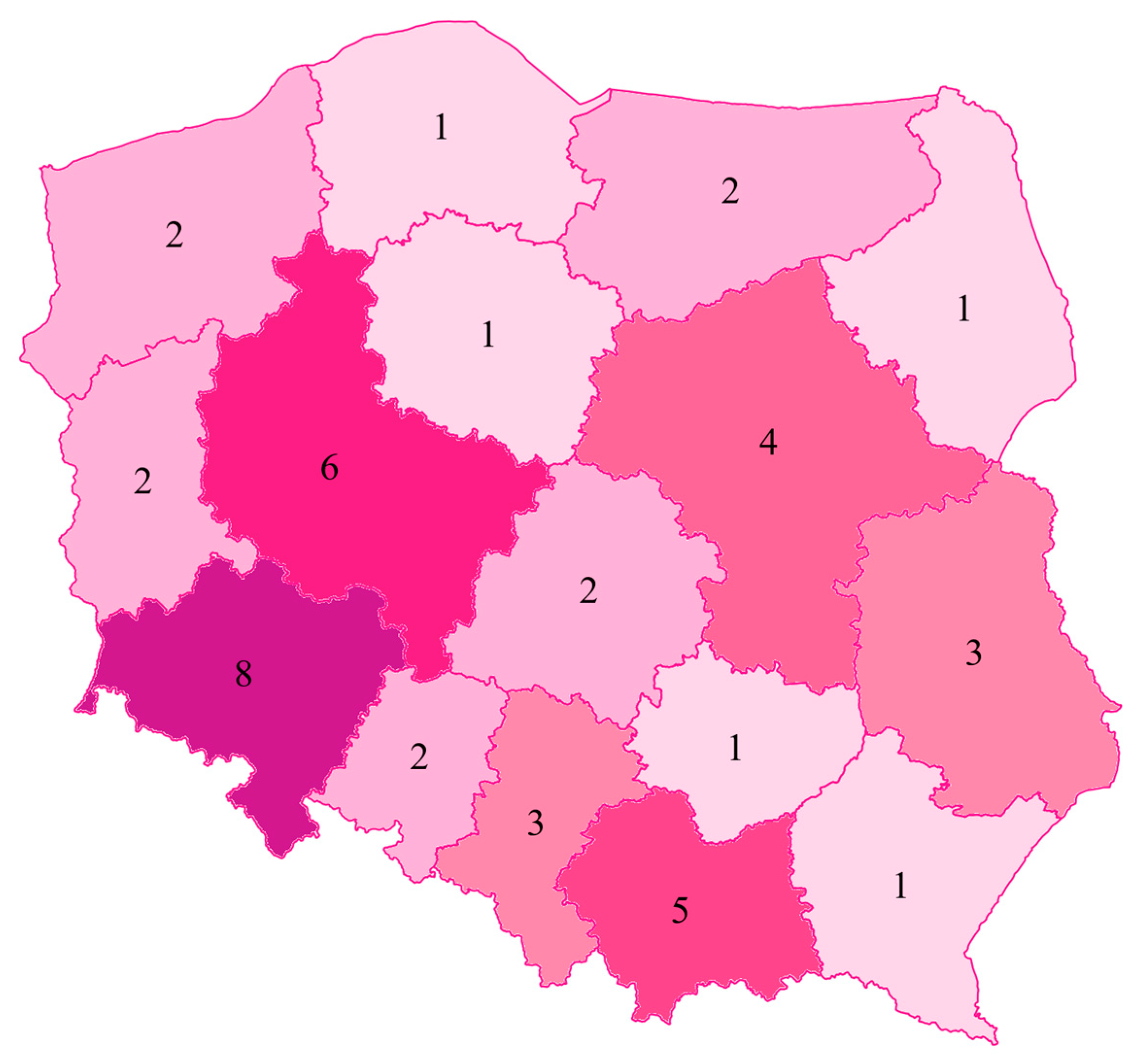
Figure 2.
Number of farms established in the respective year.
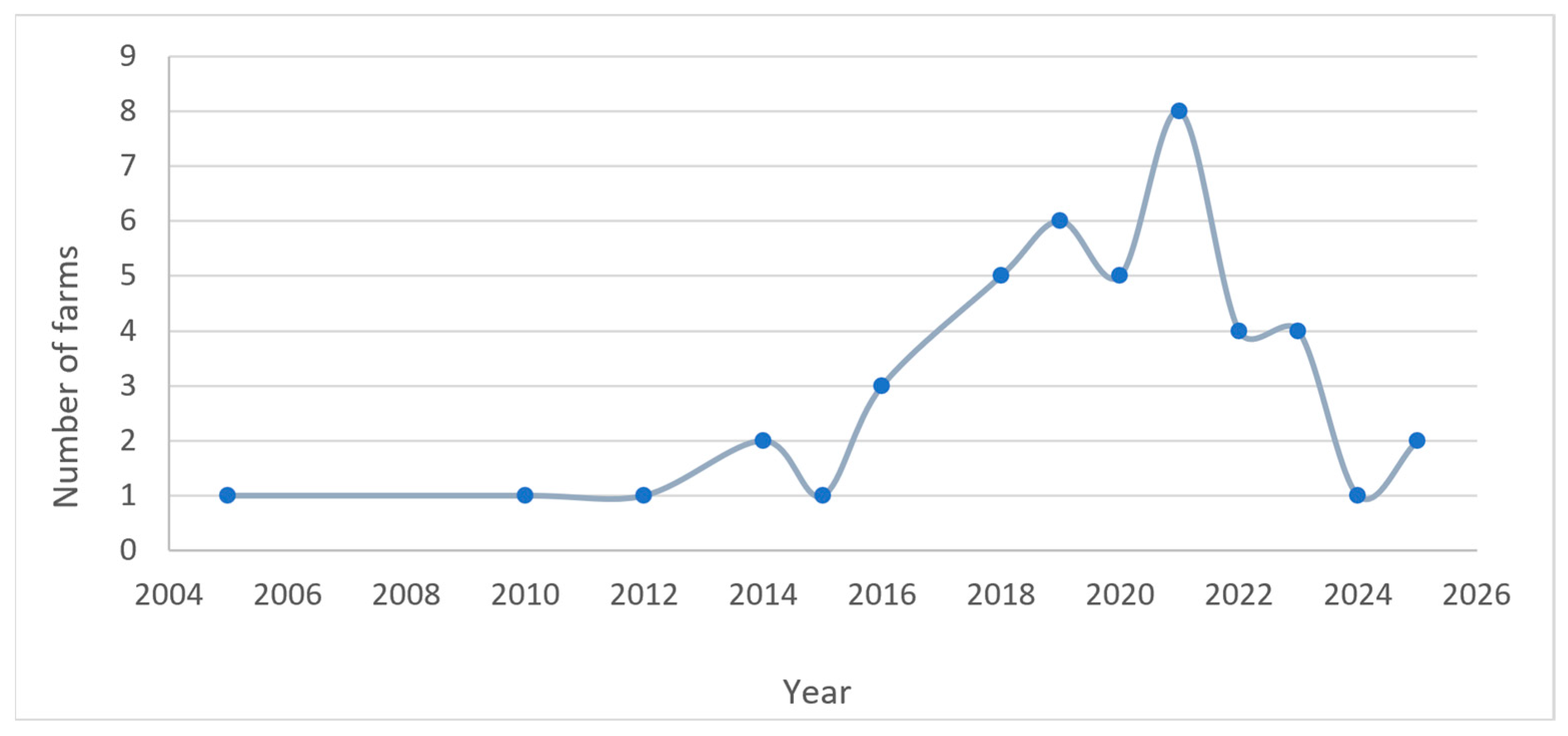
Figure 3.
Purposes of keeping alpacas in surveyed farms.
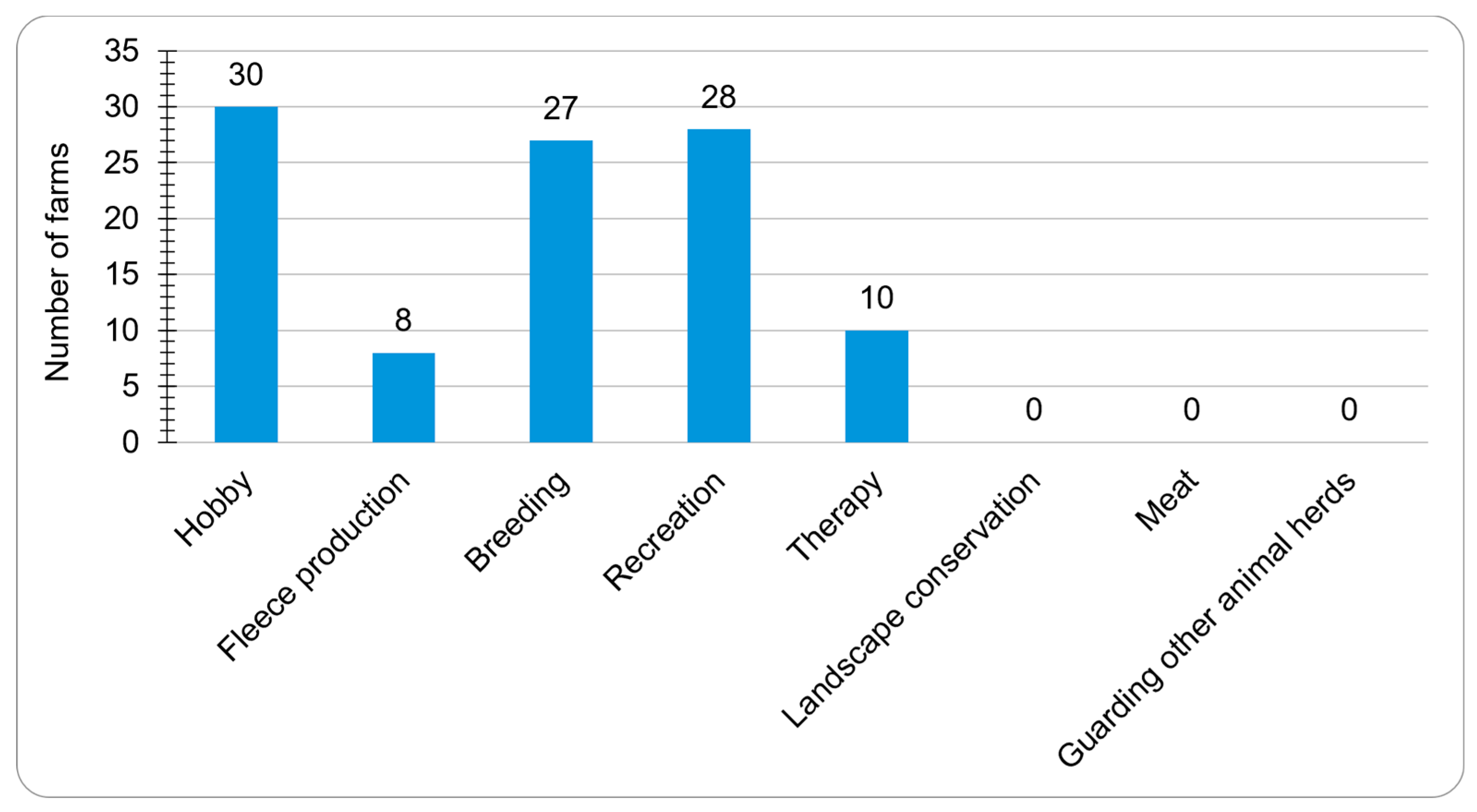
Figure 4.
Average dimensions of animal buildings on farms.
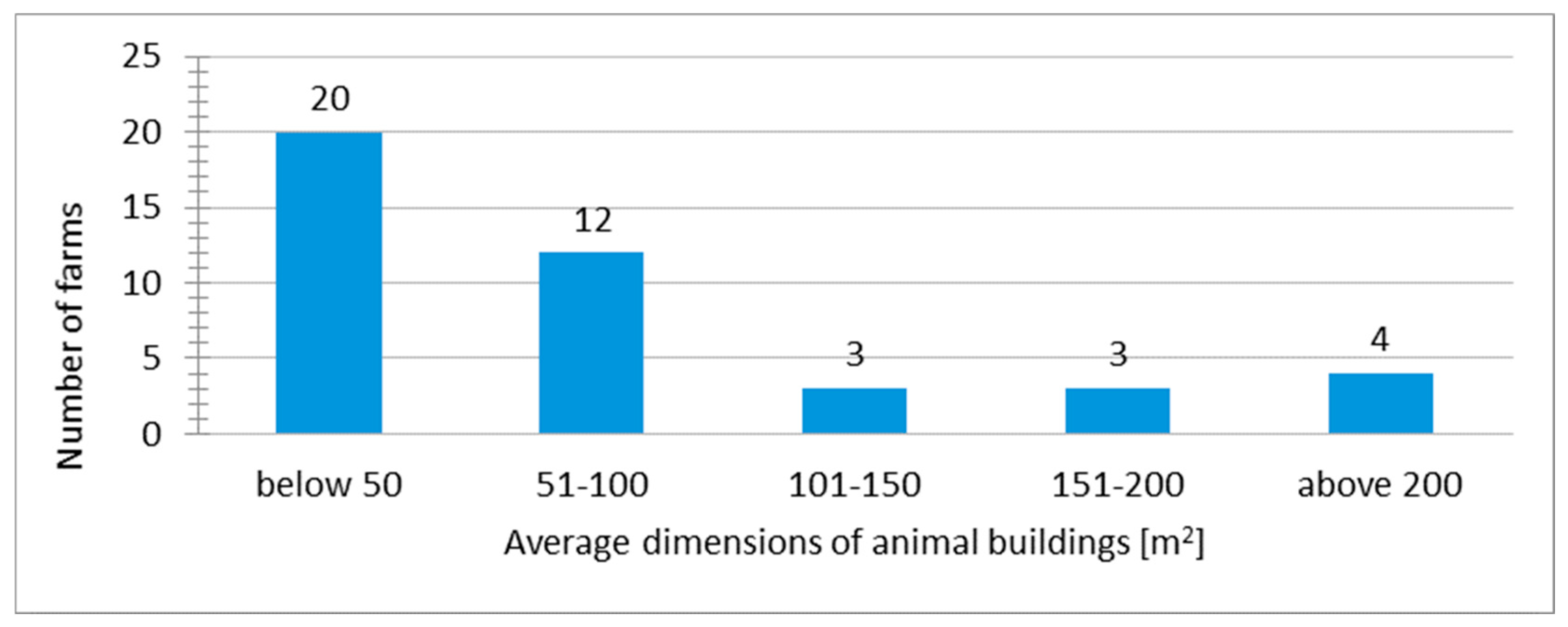
Figure 5.
Average dimensions of pastures on farms.
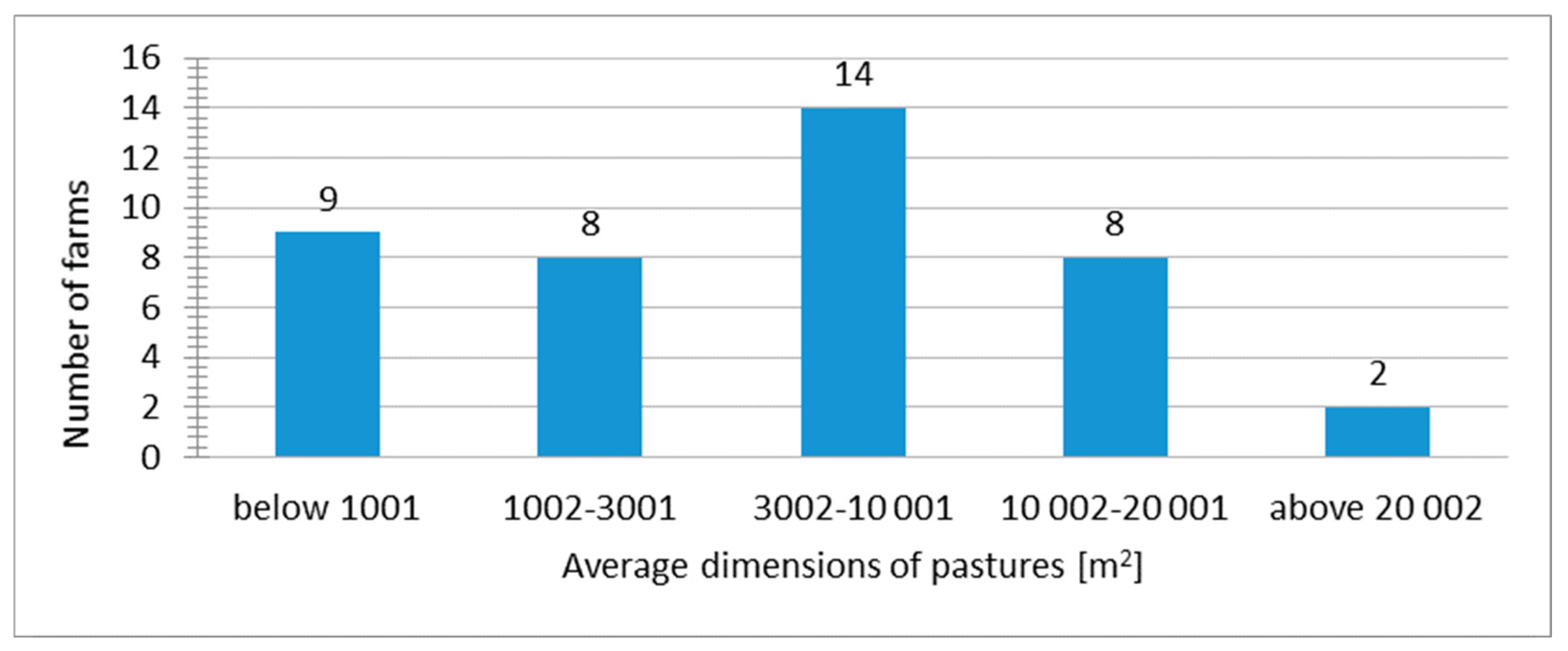
Table 1.
Farm management practices on surveyed farms.
| Management practices | Type | Number of farms |
|---|---|---|
| Vaccinations | Clostridium spp. (e.g. Covexin 10) |
41 (93,2%) |
| Tetanus | 3 (6,8%) | |
| Chlamydia | 1 (2,3%) | |
| Rabies | 1 (2,3%) | |
| Recommended by a veterinarian | 2 (2,3%) | |
| Deworming | Once a year | 1 (2,5%) |
| Twice a year | 5 (12,5%) | |
| Based on regular faecal examinations (individual samples - from each alpaca separately) |
30 (75%) | |
| Based on regular faecal examinations (group samples - the entire herd) |
6 (15%) | |
| Administering additional supplements | Vitamin E | 18 (40,9%) |
| Vitamin D | 40 (90,9%) | |
| Selenium | 15 (34,1%) | |
| Not administered | 4 (9,1%) |
Table 2.
Frequency of diseases or symptoms affecting the digestive system observed by alpaca owners.
Table 2.
Frequency of diseases or symptoms affecting the digestive system observed by alpaca owners.
| Frequency | Gastrointestinal parasites |
Diarrhoea | Colic | Dental problems | Other issues with the digestive system |
|---|---|---|---|---|---|
| Never Less than once a year Once or twice a year |
11 | 28 | 37 | 33 | 0 |
| 22 | 11 | 6 | 7 | 0 | |
| 10 | 4 | 0 | 2 | 0 | |
| Up to 10 times a year >10 times a year |
1 | 1 | 0 | 1 | 1 |
| 0 | 0 | 0 | 0 | 0 | |
| No information | 0 | 0 | 1 | 1 | 0 |
Table 3.
Frequency of diseases or symptoms affecting the skin observed by alpaca owners.
| Frequency | Abscesses | Fungal infections | Injuries due to dominance fights | Other skin issues |
|---|---|---|---|---|
| Never Less than once a year Once or twice a year |
35 | 38 | 27 | 7 |
| 7 | 5 | 11 | 24 | |
| 1 | 1 | 4 | 12 | |
| Up to 10 times a year >10 times a year |
1 | 0 | 1 | 2 |
| 0 | 0 | 1 | 0 | |
| No information | 0 | 0 | 0 | 0 |
Table 4.
Frequency of diseases or symptoms affecting the reproductive system observed by alpaca owners.
Table 4.
Frequency of diseases or symptoms affecting the reproductive system observed by alpaca owners.
| Frequency | Miscarriages | Stillbirths | Difficult births | Weak cria growth |
Congenital disabilities | Lack of milk | Fertility issues |
|---|---|---|---|---|---|---|---|
| Never | 30 | 32 | 22 | 30 | 35 | 29 | 30 |
| Less than once a year | 12 | 12 | 12 | 12 | 9 | 12 | 11 |
| Once or twice a year | 2 | 0 | 10 | 2 | 0 | 3 | 2 |
| Up to 10 times a year | 0 | 0 | 0 | 0 | 0 | 0 | 0 |
| >10 times a year | 0 | 0 | 0 | 0 | 0 | 0 | 0 |
| No information | 0 | 0 | 0 | 0 | 0 | 0 | 1 |
Disclaimer/Publisher’s Note: The statements, opinions and data contained in all publications are solely those of the individual author(s) and contributor(s) and not of MDPI and/or the editor(s). MDPI and/or the editor(s) disclaim responsibility for any injury to people or property resulting from any ideas, methods, instructions or products referred to in the content. |
© 2026 by the authors. Licensee MDPI, Basel, Switzerland. This article is an open access article distributed under the terms and conditions of the Creative Commons Attribution (CC BY) license.
Copyright: This open access article is published under a Creative Commons CC BY 4.0 license, which permit the free download, distribution, and reuse, provided that the author and preprint are cited in any reuse.


