
Submitted:
14 July 2026
Posted:
16 July 2026
You are already at the latest version
Abstract
Background and Objectives: Consolidation durvalumab after chemoradiotherapy (CRT) is the standard of care for unresectable stage III non-small cell lung cancer (NSCLC). However, a substantial proportion of patients do not receive this treatment in real-world practice due to various clinical and logistical reasons. The optimal management of these patients at the time of disease progression remains unclear. This study aimed to evaluate the efficacy of post-progression immune checkpoint inhibitor (ICI) therapy in patients with stage III NSCLC who did not receive durvalumab consolidation after definitive CRT and subsequently developed disease progression. Materials and Methods: This multicenter retrospective study included 403 patients with stage III NSCLC who received definitive CRT without durvalumab consolidation between January 2010 and December 2025. Patients were divided into two groups based on post-progression treatment: ICI group (n=61) and non-ICI group (n=338). The primary endpoint was overall survival (OS), analyzed using Kaplan-Meier and multivariate Cox regression methods. Early progression was defined as recurrence within 6 months after CRT completion. Results: The median OS was significantly longer in the ICI group compared to the non-ICI group (47.97 months [95% CI: 35.68–60.26] vs. 19.29 months [95% CI: 17.88–20.69]; p<0.001), representing a 2.5-fold survival advantage. Patients with early progression had a significantly worse prognosis compared to those with late progression (median OS: 7.06 vs. 20.01 months; p<0.001). In the ICI group, PD-L1-positive patients had numerically longer median OS than PD-L1-negative patients (54.05 vs. 46.03 months). In the non-ICI group, PD-L1-positive patients had a median OS of only 12.19 months. Multivariate analysis identified post-progression ICI use (HR: 0.37, 95% CI: 0.25–0.54; p<0.001) and early progression (HR: 2.61, 95% CI: 1.91–3.57; p<0.001) as independent prognostic factors. T-stage (p=0.134) and N-stage (p=0.693) were not significant prognostic factors. Conclusions: Post-progression immunotherapy provides a significant survival benefit in patients with stage III NSCLC who did not receive durvalumab consolidation, with a median OS approaching 48 months. Early progression within 6 months after CRT is the strongest negative prognostic factor. These findings suggest that immunotherapy should be strongly considered in this frequently encountered patient population, provided performance status is adequate.
Keywords:
stage III non-small cell lung cancer
; durvalumab
; immunotherapy
; post-progression treatment
; overall survival
1. Introduction
Non-small cell lung cancer (NSCLC) remains the leading cause of cancer-related mortality worldwide. Approximately one-third of all NSCLC cases present with stage III disease, which exhibits a highly heterogeneous clinical spectrum [1,2]. For many years, platinum-based concurrent chemoradiotherapy [CRT] was the standard treatment for unresectable stage III NSCLC. However, even with this approach, median progression-free survival (PFS) was approximately 8 months, and 5-year overall survival (OS) rates remained as low as 15–30% [3,4].
The PACIFIC trial represented a paradigm shift in this field. It demonstrated that consolidation durvalumab after definitive CRT significantly improved median PFS from 5.6 months to 16.9 months and median OS from 29.1 months to 47.5 months compared to placebo [5,6]. Consequently, 12 months of durvalumab consolidation therapy after CRT became the standard of care for unresectable stage III NSCLC.
In subsequent years, the findings of the PACIFIC trial have been corroborated by numerous real-world studies [7,8,9]. Similarly, the Brazilian LACOG 0120 study reported a median OS of 34.9 months, confirming the reproducibility of PACIFIC results in real-world settings [8]. However, real-world studies have also revealed that durvalumab utilization rates remain below expectations. A US-based study reported that only 61.5% of eligible patients received durvalumab consolidation after CRT, while 38.5% were managed with observation alone [10].
Even among patients receiving durvalumab consolidation, progression during or after treatment remains a significant challenge. Approximately 50% of patients in the PACIFIC trial progressed within 12–18 months after initiating durvalumab [5,6]. Post-progression treatment strategies have become an increasingly prominent focus in the literature. In a 23-center Italian study, platinum-based chemotherapy (43.0%) was the most commonly used treatment after durvalumab progression; however, the best survival outcomes were observed in patients receiving immunotherapy rechallenge. In this subgroup, the median second-line PFS was 12.0 months, and durvalumab treatment duration was identified as an independent factor influencing subsequent treatment selection [11].
A notable gap exists in the literature regarding patients who do not receive durvalumab consolidation. This patient population comprises individuals who, for various reasons (early progression, deterioration in performance status, comorbidities, access issues, physician preference, etc.), did not receive the current standard of care and were followed with observation alone after CRT. Whether these patients benefit from immunotherapy (nivolumab, pembrolizumab, etc.) when they progress during follow-up remains insufficiently investigated.
In this study, we aimed to evaluate the efficacy of immunotherapy administered upon progression in patients with unresectable stage III NSCLC who did not receive durvalumab consolidation after definitive CRT. In this multicenter retrospective study involving 403 patients, the primary objective was to investigate the impact of post-progression immunotherapy on overall survival and progression-free survival. Secondary objectives included the analysis of factors influencing immunotherapy response (T and N status, pre-CRT chemotherapy, timing of progression, prior treatment lines, etc.). We anticipate that our findings will contribute to the determination of optimal post-progression treatment strategies in this patient population.
2. Materials and Methods
Study Design and Patients
This study is a multicenter, retrospective cohort study evaluating the efficacy of post-progression immune checkpoint inhibitor (ICI) therapy in patients with unresectable stage III non-small cell lung cancer (NSCLC) who received definitive chemoradiotherapy (CRT) without subsequent durvalumab consolidation. A total of 403 patients who presented to oncology clinics between January 2010 and December 2025 were included. Patients were divided into two groups based on post-progression treatment: ICI recipients (n=61) and non-ICI recipients (n=338).
Inclusion criteria: Histopathologically confirmed stage III NSCLC, receipt of definitive CRT, no durvalumab consolidation after CRT, and radiological progression during follow-up.
Exclusion criteria: Stage IV disease, presence of driver mutations (EGFR, ALK, ROS1, etc.), active autoimmune disease, or absolute contraindications to immunotherapy.
Post-progression immunotherapy agents were nivolumab or pembrolizumab, administered at standard doses (nivolumab 240 mg every 2 weeks or 480 mg every 4 weeks; pembrolizumab 200 mg every 3 weeks). Treatment responses were evaluated according to RECIST 1.1 criteria. Progression was defined as radiologically confirmed disease progression from the date of CRT completion. Early progression was defined as progression occurring within the first 6 months after CRT.
Statistical Analysis
Statistical analyses were performed using SPSS version 20.0 (IBM Corp., Armonk, NY, USA). Categorical variables were summarized as frequencies and percentages, while continuous variables were presented as mean ± standard deviation or median (IQR). Group comparisons were performed using the Chi-square or Fisher's exact test for categorical variables and the Student's t-test or Mann-Whitney U test for continuous variables.
Survival analyses were conducted using the Kaplan-Meier method, with group comparisons performed using the log-rank test. Overall survival (OS) was defined as the time from CRT completion to death or last follow-up. Progression-free survival (PFS) was defined as the time from CRT completion to progression.
Variables found to be significant in univariate analysis were included in multivariate Cox regression analysis. All statistical tests were two-sided, with p<0.05 considered statistically significant.
3. Results
Patient Demographics and Clinical Characteristics
A total of 403 patients were included in the study. All patients (n=403, 100%) did not receive durvalumab consolidation after CRT and developed progression during follow-up. Post-progression 61 patients (15.1%) received immunotherapy (ICI), while 338 patients (83.9%) did not. There was no significant difference in mean age between the two groups (ICI group: median 65.18 years, non-ICI group: median 65.27 years). Demographic and clinical characteristics of the patients are summarized in Table 1.
Overall Survival (OS) Analyses
Effect of Post-Progression ICI Use on OS
Patients who received post-progression ICI had a median OS of 47.967 months (95% CI: 35.678–60.256), compared to 19.285 months (95% CI: 17.883–20.687) in the non-ICI group (p<0.001, log-rank test). The survival benefit in the ICI group was 2.5-fold (Figure 1).
Effect of Early Progression on OS
Patients who progressed within the first 6 months after CRT had a median OS of 7.064 months, compared to 20.008 months for patients who progressed after 6 months (p<0.001) (Figure 2). Early progression emerged as a strong negative prognostic factor.
PD-L1 Status and OS
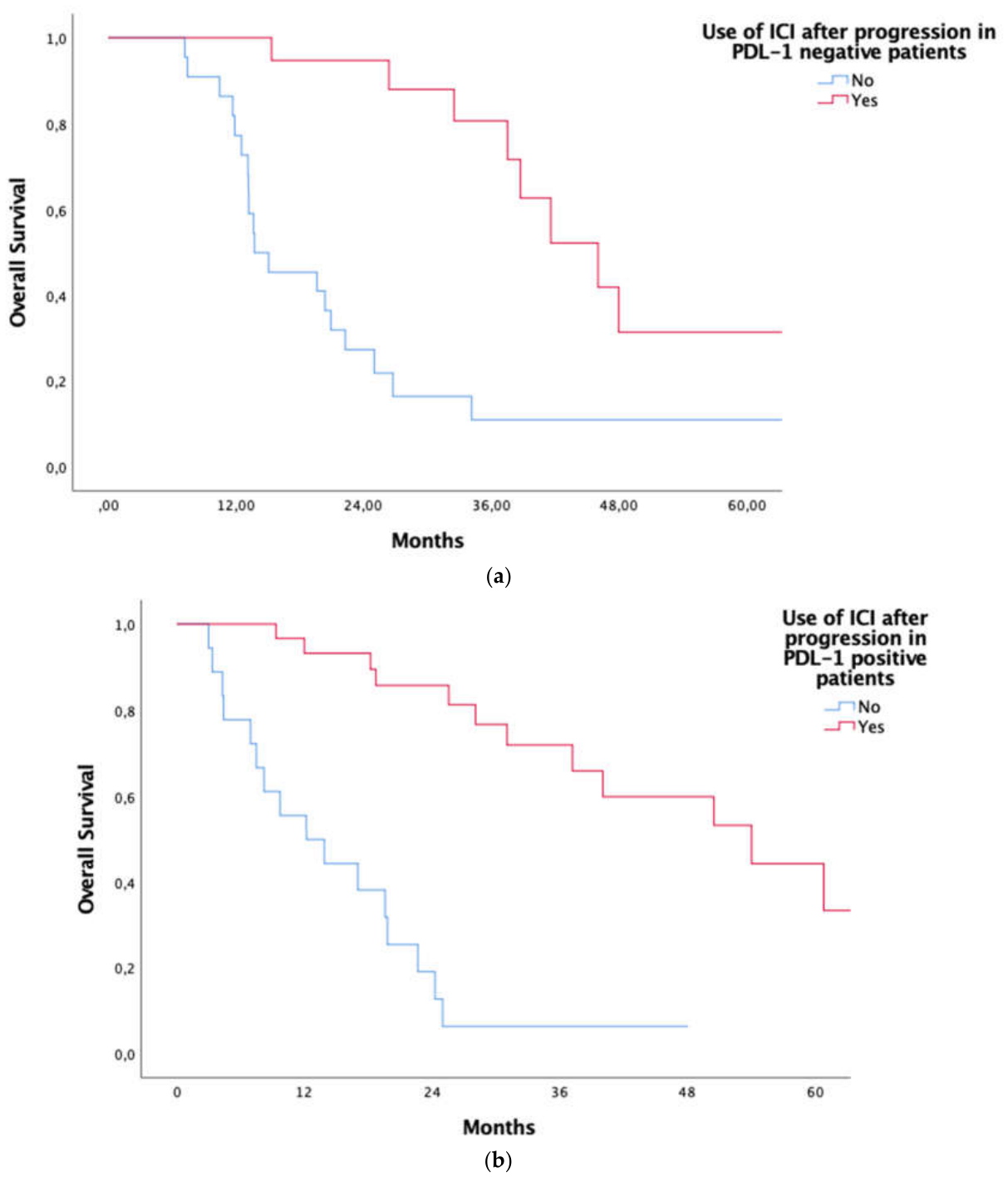
Among patients who received post-progression ICI, PD-L1 positive patients had a median OS of 54.045 months (95% CI: 31.849–76.241), while PD-L1 negative patients had a median OS of 46.029 months (95% CI: 35.678–56.380).
In the non-ICI group, PD-L1 positive patients had an OS of 12.189 months, and PD-L1 negative patients had 13.733 months, with no statistically significant difference (p=0.802). However, in the ICI group, PD-L1 positivity was numerically associated with longer survival (A and 3B). Patients with PD-L1 expression >50% had an OS of 28.090 months, but this difference did not reach statistical significance (p=0.966).
Figure 3.
A. Kaplan-Meier curves for overall survival (OS) in PD-L1 negative patients according to post-progression immunotherapy (ICI) use. Among PD-L1 negative patients (n=41), those who received ICI after progression (n=19) had a median OS of 46.029 months (95% CI: 35.678–56.380), while those who did not receive ICI (n=22) had a median OS of 13.733 months (95% CI: 6.371–21.095). Censored patients are indicated by tick marks. ICI: immune checkpoint inhibitor; OS: overall survival; CI: confidence interval. B. Kaplan-Meier curves for overall survival (OS) in PD-L1 positive patients according to post-progression immunotherapy (ICI) use. Among PD-L1 positive patients (n=50), those who received ICI after progression (n=31) had a median OS of 54.045 months (95% CI: 31.849–76.241), while those who did not receive ICI (n=19) had a median OS of 12.189 months (95% CI: 3.583–20.795). Censored patients are indicated by tick marks. ICI: immune checkpoint inhibitor; OS: overall survival; CI: confidence interval.
Figure 3.
A. Kaplan-Meier curves for overall survival (OS) in PD-L1 negative patients according to post-progression immunotherapy (ICI) use. Among PD-L1 negative patients (n=41), those who received ICI after progression (n=19) had a median OS of 46.029 months (95% CI: 35.678–56.380), while those who did not receive ICI (n=22) had a median OS of 13.733 months (95% CI: 6.371–21.095). Censored patients are indicated by tick marks. ICI: immune checkpoint inhibitor; OS: overall survival; CI: confidence interval. B. Kaplan-Meier curves for overall survival (OS) in PD-L1 positive patients according to post-progression immunotherapy (ICI) use. Among PD-L1 positive patients (n=50), those who received ICI after progression (n=31) had a median OS of 54.045 months (95% CI: 31.849–76.241), while those who did not receive ICI (n=19) had a median OS of 12.189 months (95% CI: 3.583–20.795). Censored patients are indicated by tick marks. ICI: immune checkpoint inhibitor; OS: overall survival; CI: confidence interval.
Histological Subtype and OS
Patients with non-squamous histology had a median OS of 23.852 months, while those with squamous histology had 20.008 months (p=0.041) (Figure 4). The non-squamous subtype was associated with longer survival.
Effect of T and N Stage on OS
According to T-stage: T1: 18.825 months, T2: 24.345 months, T3: 19.285 months, T4: 20.665 months (p=0.134). According to N-stage: N0: 19.515 months, N1: 20.797 months, N2: 20.797 months, N3: 18.366 months (p=0.693). Neither T-stage nor N-stage was statistically significant as a prognostic factor.
Univariate and Multivariate Analyses
Univariate analysis (Table 2) identified post-progression ICI use (HR: 0.40, 95% CI: 0.29–0.55, p<0.001), early progression (HR: 2.84, 95% CI: 2.12–3.81, p<0.001), and non-squamous histology (HR: 0.74, 95% CI: 0.55–0.99, p=0.041) as significant prognostic factors.
Multivariate analysis (Table 3) confirmed post-progression ICI use as an independent prognostic factor (p<0.001). Early progression was also identified as an independent negative prognostic factor. PD-L1 status and histological subtype lost their independent significance in multivariate analysis.
4. Discussion
This multicenter, large-cohort retrospective study is one of the most comprehensive evaluations to date of post-progression immunotherapy (ICI) efficacy in patients with unresectable stage III NSCLC who did not receive durvalumab consolidation after definitive chemoradiotherapy (CRT) and subsequently progressed during follow-up. The three main findings of our study are: (1)Patients who received post-progression ICI had a median overall survival (OS) of 47.967 monthscompared to 19.285 months in those who did not (p<0.001), representing a 2.5-fold survival advantage. (2) Patients who progressed within the first 6 months after CRT (early progression) had a very poor prognosis (median OS 7.064 months), and this was identified as an independent risk factor. (3) In the ICI group, PD-L1-positive patients had numerically longer survival than PD-L1-negative patients (54.045 vs. 46.029 months), but PD-L1 status conferred no advantage in the non-ICI group. These findings demonstrate that post-progression ICI is an effective treatment optionfor patients with stage III NSCLC who did not receive durvalumab consolidation, with greater benefit observed in patients without early progression.
Prior to the PACIFIC era, several studies demonstrated the efficacy of immunotherapy in the post-CRT progression setting. For instance, the CheckMate 153 and CheckMate 063 trials reported median OS of 9–12 months with nivolumab in previously treated advanced NSCLC patients [12,13]. However, most of these studies involved metastatic (stage IV) patients, and data specific to stage III populations remain limited. Moreover, these studies predate the current era in which durvalumab consolidation has become standard practice.
The approximately 48-month median OS observed in our post-progression ICI group is noteworthy. This figure compares favorably with the median OS of 47.5 months reported in the durvalumab consolidation arm of the PACIFIC trial [5,6]. In other words, patients who did not receive durvalumab consolidation but received post-progression ICI achieved similar overall survival to PACIFIC durvalumab recipients (47.967 vs. 47.5 months). This finding suggests that this patient population, having experienced a "missed opportunity," can achieve comparable success with post-progression immunotherapy.
The closest data in the literature comes from the Italian multicenter study [11], which reported a second-line PFS of 12.0 months in patients receiving immunotherapy rechallenge after durvalumab progression. Our study is the first large-cohort study to demonstrate the efficacy of post-progression immunotherapy in patients who did not receive durvalumab consolidation.
Early progression within 6 months after CRT emerged as the strongest negative prognostic factorin our study (HR: 2.61, p<0.001), with a median OS of only 7 months. This finding is consistent with the literature, where early progression after CRT is generally associated with primary refractory disease, aggressive tumor biology, or inadequate local control [14].
No standard treatment recommendation exists for this patient subgroup. In our study, only 31.1% of patients with early progression received post-progression ICI (likely due to rapid deterioration in performance status). For these patients, combination strategies (ICI + chemotherapy, ICI + anti-angiogenic agents, etc.) or referral to clinical trials may be more appropriate. Our results suggest that patients with early progression derive relatively less benefit from immunotherapy, although a numerical advantage was observed in the ICI group (19 patients) compared to the non-ICI group (182 patients). Larger prospective studies are needed to address this question.
The role of PD-L1 expression in predicting immunotherapy response is well established in advanced NSCLC [15]. In our study, PD-L1-positive patients in the post-progression ICI group had a median OS of 54 months, compared to 46 months in PD-L1-negative patients. Although this difference did not reach statistical significance in multivariate analysis, the numerical 8-month difference is clinically noteworthy.
More strikingly, in the non-ICI group, PD-L1-positive patients had shorter OS (12.189 months) than PD-L1-negative patients (13.733 months). This phenomenon is frequently observed in the immunotherapy era: PD-L1-high tumors may respond less favorably to conventional chemotherapy in the absence of immunotherapy. This finding underscores that avoiding immunotherapy in PD-L1-positive patients may be a mistake, as these patients have a worse prognosis with conventional treatments.
The number of patients with PD-L1 expression >50% was limited (n=21), and OS in this group was 28.090 months, with no significant difference. This may be attributable to insufficient sample size or non-uniform PD-L1 assessment in this retrospective study.
Univariate analysis identified non-squamous histology as being associated with longer survival (23.852 vs. 20.008 months, p=0.041). However, this association lost its independent significance in multivariate analysis (p=0.208), suggesting that the apparent prognostic advantage of non-squamous histology may be confounded by PD-L1 status or ICI use. The literature remains inconclusive regarding whether non-squamous histology confers greater benefit from immunotherapy [16].
T-stage (p=0.134) and N-stage (p=0.693) showed no significant association with OS in our study. Several possible explanations exist for this unexpected finding: (1) all patients received definitive CRT, which may have "standardized" the local stage; (2) the most important determinant of post-progression survival is systemic therapy (ICI use), which may overshadow the prognostic impact of local stage; and (3) N2 disease was predominant in our cohort (61.5%), with a narrow distribution. This finding suggests that T and N stages should not be the sole determinants of post-progression treatment decisions; progression timing and PD-L1 status are more important dynamic factors.
Our study has several notable strengths: large sample size (n=403) one of the largest cohorts in this patient population; multicenter design, enhancing generalizability; being one of the first studies to focus specifically on patients who did not receive durvalumab consolidation, addressing a common clinical scenario; and the clear definition of early progression (within 6 months) and demonstration of its prognostic value.
Our study also has several limitations: Retrospective design with inherent selection and recall biases; incomplete PD-L1 data, only 91 of 403 patients (22.6%) had documented PD-L1 status, which is a common limitation of retrospective studies and limits the power of our PD-L1-related analyses; heterogeneity of treatment protocols—the agents used in the ICI group (nivolumab and pembrolizumab) and treatment durations were not standardized, and treatments in the non-ICI group (platinum-based chemotherapy, docetaxel, best supportive care, etc.) were also heterogeneous.
Despite these limitations, our findings are supported by robust statistical analyses and address an important gap in the literature.
Our results have the following clinical implications: In patients with stage III NSCLC who did not receive durvalumab consolidation, post-progression immunotherapy (nivolumab/pembrolizumab) is a strong treatment option that can provide a 2.5-fold increase in OS.
Patients with early progression (within 6 months after CRT) have a very poor prognosis. More aggressive combination regimens or clinical trial enrollment should be considered for these patients. Immunotherapy alone may not be sufficient.
PD-L1-positive patients have a very poor prognosis with conventional chemotherapy if they do not receive immunotherapy (only 12 months in this cohort). Therefore, post-progression immunotherapy should definitely be considered in patients with PD-L1 positivity (especially >1%).
T and N stage should not be the sole determinants of post-progression treatment decisions. Progression timing and PD-L1 status are more important factors.
5. Conclusions
This multicenter retrospective study demonstrates that post-progression immunotherapy is highly effective in patients with stage III NSCLC who did not receive durvalumab consolidation, achieving a median OS approaching 48 months. Early progression (within 6 months after CRT) is the strongest negative prognostic factor. PD-L1 positivity is associated with numerically longer survival, particularly in patients receiving immunotherapy. These findings indicate that immunotherapy should be strongly considered in patients who progress after CRT without prior durvalumab consolidation, provided performance status is adequate. This patient population is frequently encountered in oncological practice and currently lacks a standard approach; our study provides important evidence to guide clinical decision-making.
Supplementary Materials
The following supporting information can be downloaded at the website of this paper posted on Preprints.org, Table S1: Demographic and Clinical Characteristics of Patients (corresponds to Table 1 in the main text). Table S2: Comparison of Overall Survival According to Post-Progression Treatment (corresponds to Table 2 in the main text). Table S3: Multivariate Cox Regression Analysis for Overall Survival (corresponds to Table 3 in the main text). Figure S1: Kaplan-Meier curves for overall survival (OS) according to post-progression immunotherapy (ICI) use (corresponds to Figure 1 in the main text). Figure S2: Kaplan-Meier curves for overall survival (OS) according to timing of progression after chemoradiotherapy (CRT) (corresponds to Figure 2 in the main text). A: Kaplan-Meier curves for overall survival (OS) in PD-L1 negative patients according to post-progression immunotherapy (ICI) use (corresponds to Figure 3A in the main text). B: Kaplan-Meier curves for overall survival (OS) in PD-L1 positive patients according to post-progression immunotherapy (ICI) use (corresponds to Figure 3B in the main text). Figure S4: Kaplan-Meier curves for overall survival (OS) according to histological subtype (corresponds to Figure 4 in the main text).
Author Contributions
Conceptualization, [B.B] and [S.Y]; methodology, [B.B] and [S.Y]; software, [S.Y]; validation, [B.B], [S.Y] and [O.Ö.E]; formal analysis, [S.Y]; investigation, [B.B] and [S.Y]; resources, [B.B, O.Ö.E, B.U, C.C, İ.T.Y, M.E, S.Y, H.B, B.E.K, M.A, H.A, A.P.E]; data curation, [B.B, B.E.K, H.A, H.B, B.U]; writing—original draft preparation, [B.B]; writing—review and editing, [B.B, O.Ö.E, B.U, C.C, İ.T.Y, M.E, S.Y, H.B, B.E.K, M.A, H.A, A.P.E]; visualization, [B.B]; supervision, [S.Y]; project administration, [B.B]; funding acquisition, Not applicable. All authors have read and agreed to the published version of the manuscript.
Funding
This research received no external funding.
Institutional Review Board Statement
The study was conducted in accordance with the Declaration of Helsinki, and approved by the Institutional Review Board (or Ethics Committee) of Selçuk University, protocole code:E-70632468-050.01-1181902 and date of approval 27.01.2026.
Informed Consent Statement
Patient consent was waived due to the retrospective nature of the study, which involved no direct patient contact or intervention, and all data were analyzed anonymously.
Data Availability Statement
The data supporting the findings of this study are available from the corresponding author upon reasonable request. Due to ethical restrictions and patient privacy, the data are not publicly available. De-identified data will be shared with researchers who provide a methodologically sound proposal, subject to approval by the institutional ethics committee and a signed data access agreement.
Acknowledgments
The authors would like to thank all participating centers and their staff for their contributions to patient data collection. During the preparation of this manuscript, the authors used ChatGPT (OpenAI, GPT-4) for language editing and grammatical refinement purposes only. The authors have reviewed and edited the output and take full responsibility for the content of this publication.
Conflicts of Interest
The authors declare no conflicts of interest. The funders had no role in the design of the study; in the collection, analyses, or interpretation of data; in the writing of the manuscript; or in the decision to publish the results.
Abbreviations
| NSCLC | Non-small cell lung cancer |
| CRT | Chemoradiotherapy |
| ICI | Immune checkpoint inhibitor |
| OS | Overall survival |
| PFS | Progression-free survival |
| HR | Hazard ratio |
| CI | Confidence interval |
| PD-L1 | Programmed death-ligand 1 |
| RECIST | Response Evaluation Criteria in Solid Tumors |
| SPSS | Statistical Package for the Social Sciences |
| MDPI | Multidisciplinary Digital Publishing Institute |
References
- Sung, H.; Ferlay, J.; Siegel, R.L.; et al. Global Cancer Statistics 2020: GLOBOCAN Estimates of Incidence and Mortality Worldwide for 36 Cancers in 185 Countries. CA Cancer J. Clin. 2021, 71, 209–249. [Google Scholar] [CrossRef] [PubMed]
- Provencio, M.; Carcereny, E.; Rodriguez-Abreu, D.; et al. Real-World Outcomes of Chemoradiotherapy in Patients with Stage II/III Non-Small-Cell Lung Cancer in the Durvalumab Era: An Observational Study. 2025.
- Antonia, S.J.; Villegas, A.; Daniel, D.; et al. Durvalumab after Chemoradiotherapy in Stage III Non-Small-Cell Lung Cancer. N Engl. J. Med. 2017, 377, 1919–1929. [Google Scholar] [CrossRef] [PubMed]
- Bradley, J.D.; Paulus, R.; Komaki, R.; et al. Long-term survival of patients with stage III non-small cell lung cancer (NSCLC) treated with chemoradiotherapy: A secondary analysis of RTOG 9410. Int. J. Radiat. Oncol. Biol. Phys. 2015, 93, E383. [Google Scholar] [CrossRef]
- Antonia, S.J.; Villegas, A.; Daniel, D.; et al. Overall Survival with Durvalumab after Chemoradiotherapy in Stage III NSCLC. N Engl. J. Med. 2018, 379, 2342–2350. [Google Scholar] [CrossRef] [PubMed]
- Spigel, D.R.; Faivre-Finn, C.; Gray, J.E.; et al. Five-Year Survival Outcomes With Durvalumab After Chemoradiotherapy in Unresectable Stage III NSCLC: An Update From the PACIFIC Trial. J. Thorac. Oncol. 2021, 16, S16–S17. [Google Scholar] [CrossRef]
- Markman, B.; et al. Durvalumab consolidation after chemoradiotherapy in unresectable stage III non-small cell lung cancer: A real-world experience from the Australian subset of PACIFIC-R. Cancer Treat. Res. Commun. 2025. [Google Scholar] [CrossRef] [PubMed]
- LACOG 0120 Study Group. Durvalumab as consolidation therapy in patients who received chemoradiotherapy for unresectable stage III NSCLC: Real-world data from an expanded access program in Brazil. J. Bras. Pneumol. 2024, 50, e20240228. [Google Scholar] [CrossRef]
- Real-world outcomes of subsequent treatment strategies after durvalumab consolidation in stage III unresectable non-small cell lung cancer. Lung Cancer 2025, 204, 108576. [CrossRef] [PubMed]
- Kareff, S.A.; Han, S.; Haaland, B.; et al. International cost-effectiveness analysis of durvalumab in stage III non-small cell lung cancer. JAMA Netw. Open. 2024, 7, e2413938. [Google Scholar] [CrossRef] [PubMed]
- Crespi, V.; Delcuratolo, M.D.; Minuti, G.; et al. Real-world outcomes of subsequent treatment strategies after durvalumab consolidation in stage III unresectable non-small cell lung cancer. Lung Cancer 2025, 204, 108576. [Google Scholar] [CrossRef] [PubMed]
- Borghaei, H.; et al. Nivolumab versus Docetaxel in Advanced Nonsquamous Non-Small-Cell Lung Cancer. N Engl. J. Med. 2015, 373, 1627–1639. [Google Scholar] [CrossRef] [PubMed]
- Rizvi, N.A.; et al. Nivolumab in Previously Treated Non-Small-Cell Lung Cancer. J. Clin. Oncol. 2015, 33, 2004–2012. [Google Scholar] [CrossRef]
- Ahn, J.S.; et al. Early progression after chemoradiotherapy in stage III NSCLC. Lung Cancer 2019, 136, 45–51. [Google Scholar]
- Reck, M.; et al. Pembrolizumab versus Chemotherapy for PD-L1-Positive Non-Small-Cell Lung Cancer. N Engl. J. Med. 2016, 375, 1823–1833. [Google Scholar] [CrossRef] [PubMed]
- Gainor, J.F.; et al. Histology and immunotherapy in NSCLC. J. Thorac. Oncol. 2019, 14, 1365–1375. [Google Scholar] [CrossRef]
Figure 1.
Kaplan-Meier curves for overall survival (OS) according to post-progression immunotherapy (ICI) use. Patients who received ICI after progression (n=61) had significantly longer median OS compared to those who did not receive ICI (n=338) (47.967 months [95% CI: 35.678–60.256] vs. 19.285 months [95% CI: 17.883–20.687]; log-rank p<0.001). Censored patients are indicated by tick marks on the curves. ICI: immune checkpoint inhibitor; OS: overall survival; CI: confidence interval.
Figure 1.
Kaplan-Meier curves for overall survival (OS) according to post-progression immunotherapy (ICI) use. Patients who received ICI after progression (n=61) had significantly longer median OS compared to those who did not receive ICI (n=338) (47.967 months [95% CI: 35.678–60.256] vs. 19.285 months [95% CI: 17.883–20.687]; log-rank p<0.001). Censored patients are indicated by tick marks on the curves. ICI: immune checkpoint inhibitor; OS: overall survival; CI: confidence interval.
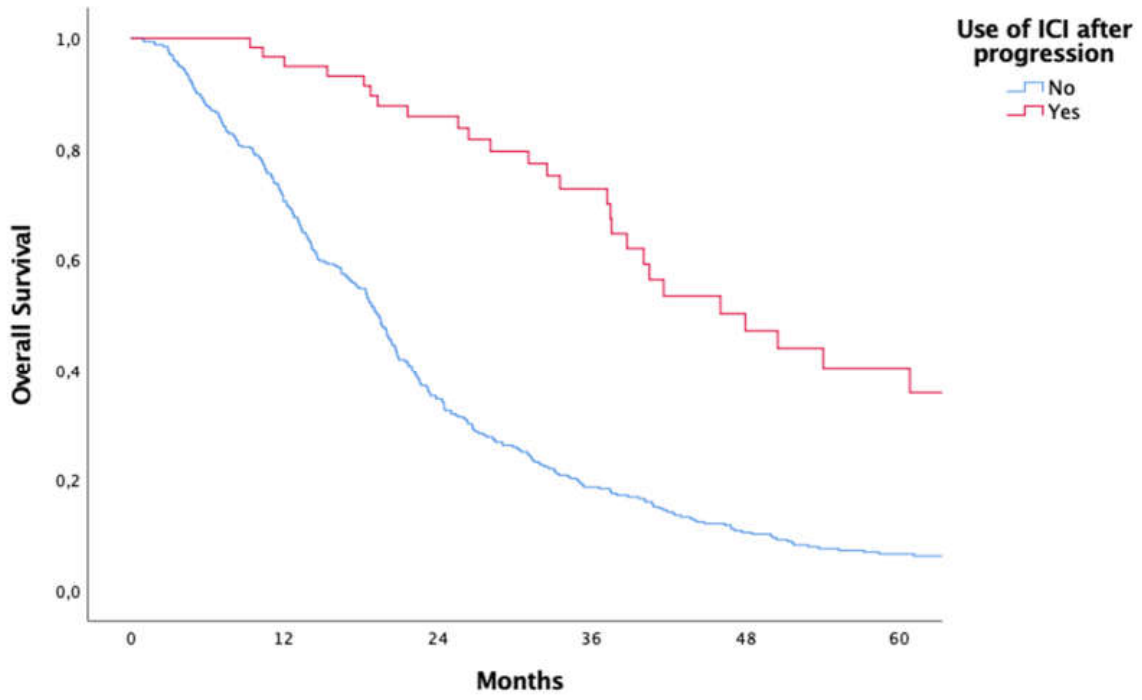
Figure 2.
Kaplan-Meier curves for overall survival (OS) according to timing of progression after chemoradiotherapy (CRT). Patients who progressed within the first 6 months after CRT (early progression, n=201) had a significantly shorter median OS compared to those who progressed after 6 months (late progression, n=197): 7.064 months (95% CI: 5.805–8.323) vs. 20.008 months (95% CI: 17.510–22.506); log-rank p<0.001. Censored patients are indicated by tick marks on the curves. Early progression was identified as a strong negative prognostic factor. OS: overall survival; CI: confidence interval; CRT: chemoradiotherapy.
Figure 2.
Kaplan-Meier curves for overall survival (OS) according to timing of progression after chemoradiotherapy (CRT). Patients who progressed within the first 6 months after CRT (early progression, n=201) had a significantly shorter median OS compared to those who progressed after 6 months (late progression, n=197): 7.064 months (95% CI: 5.805–8.323) vs. 20.008 months (95% CI: 17.510–22.506); log-rank p<0.001. Censored patients are indicated by tick marks on the curves. Early progression was identified as a strong negative prognostic factor. OS: overall survival; CI: confidence interval; CRT: chemoradiotherapy.
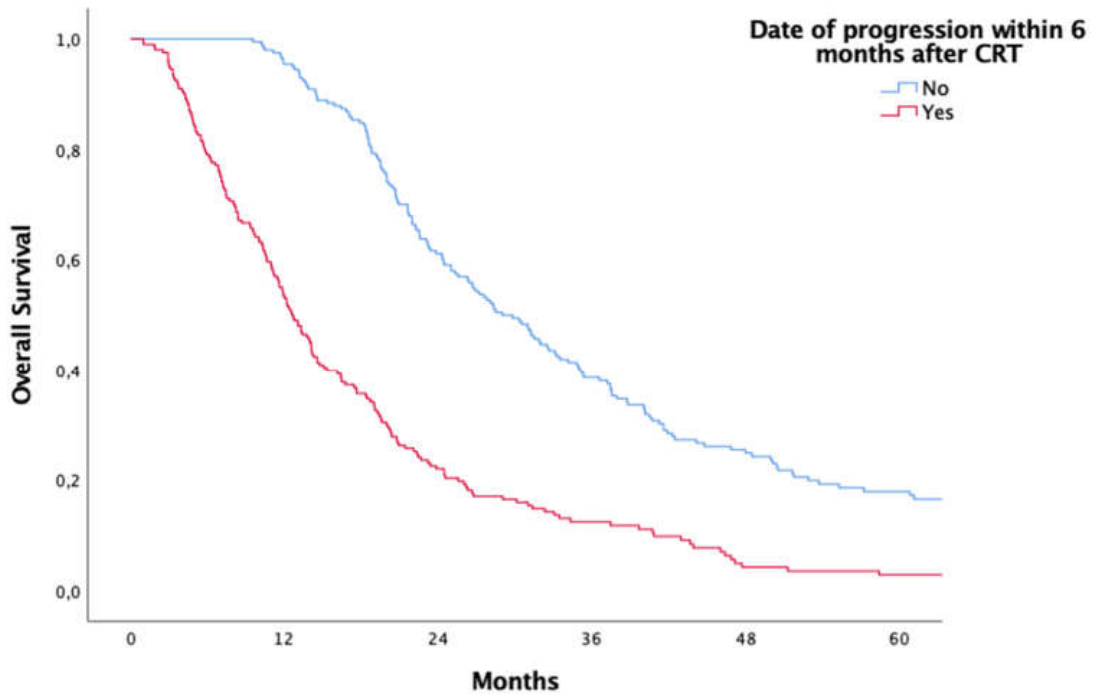
Figure 4.
Kaplan-Meier curves for overall survival (OS) according to histological subtype. Patients with non-squamous histology (n=94) had a significantly longer median OS compared to those with squamous histology (n=305) (23.852 months [95% CI: 17.530–30.174] vs. 20.008 months [95% CI: 17.883–22.133]; log-rank p=0.041). Censored patients are indicated by tick marks on the curves. OS: overall survival; CI: confidence interval.
Figure 4.
Kaplan-Meier curves for overall survival (OS) according to histological subtype. Patients with non-squamous histology (n=94) had a significantly longer median OS compared to those with squamous histology (n=305) (23.852 months [95% CI: 17.530–30.174] vs. 20.008 months [95% CI: 17.883–22.133]; log-rank p=0.041). Censored patients are indicated by tick marks on the curves. OS: overall survival; CI: confidence interval.
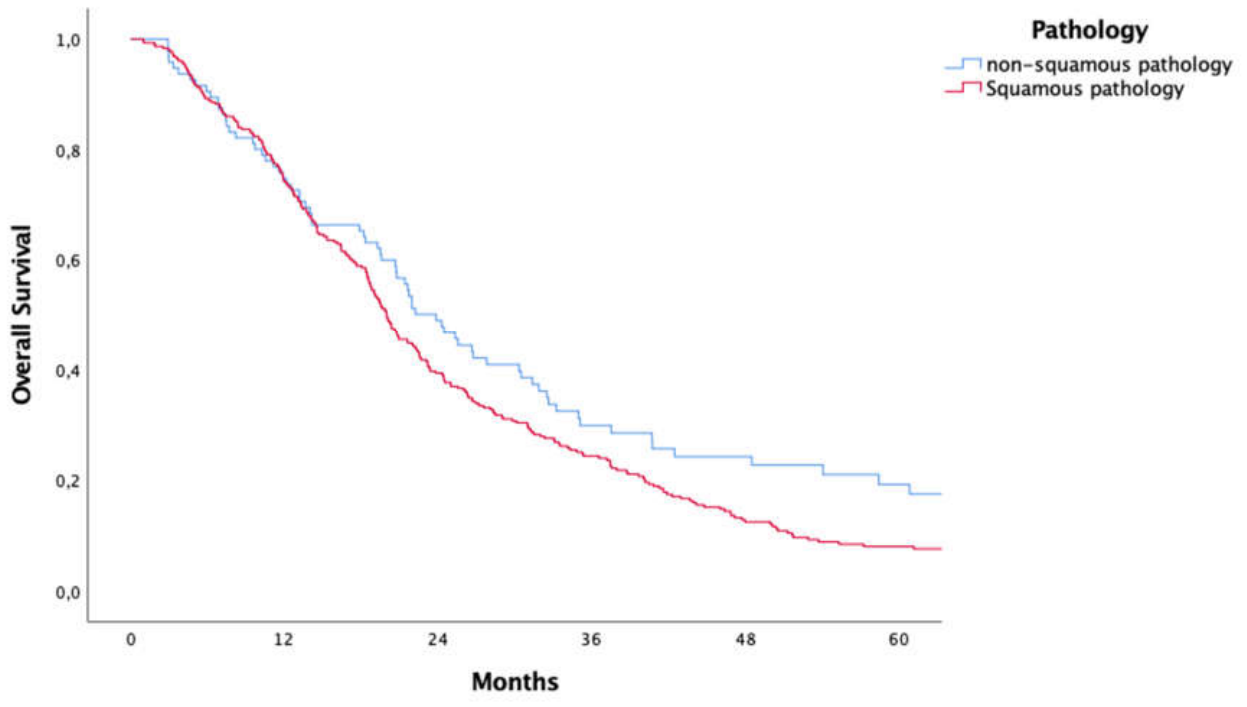

Table 1.
Demographic and Clinical Characteristics of Patients.
| Characteristic | ICI Group (n=61) | Non-ICI Group (n=338) | Total (n=403) |
|---|---|---|---|
| Sex, n (%) | |||
| Male | 59 (96.7) | 322 (95.3) | 381 (94.5) |
| Female | 2 (3.3) | 16 (4.7) | 18 (4.5) |
| Histology, n (%) | |||
| Squamous | 40 (65.6) | 265 (78.4) | 305 (75.7) |
| Non-squamous | 21 (34.4) | 73 (21.6) | 94 (23.3) |
| PD-L1 status, n (%) | |||
| Negative | 19 (31.1) | 22 (6.5) | 41 (10.2) |
| Positive | 31 (50.8) | 19 (5.6) | 50 (12.4) |
| Not available | 11 (18.0) | 297 (87.9) | 312 (77.4) |
| PD-L1 categorical, n (%) | |||
| Negative | 19 (31.1) | 22 (6.5) | 41 (10.2) |
| 1–50% | 20 (32.8) | 9 (2.7) | 29 (7.2) |
| >50% | 11 (18.0) | 10 (3.0) | 21 (5.2) |
| Not available | 11 (18.0) | 297 (87.9) | 312 (77.4) |
| T-stage, n (%) | |||
| T1 | 1 (1.6) | 27 (8.0) | 28 (6.9) |
| T2 | 22 (36.1) | 118 (34.9) | 140 (34.7) |
| T3 | 17 (27.9) | 118 (34.9) | 135 (33.5) |
| T4 | 21 (34.4) | 74 (21.9) | 95 (23.6) |
| N-stage, n (%) | |||
| N0 | 5 (8.2) | 43 (12.7) | 48 (11.9) |
| N1 | 5 (8.2) | 38 (11.2) | 43 (10.7) |
| N2 | 43 (70.5) | 205 (60.7) | 248 (61.5) |
| N3 | 8 (13.1) | 50 (14.8) | 58 (14.4) |
| Early progression (≤6 months), n (%) | |||
| Yes | 19 (31.1) | 182 (53.8) | 201 (49.9) |
| No | 41 (67.2) | 156 (46.2) | 197 (48.9) |
Table 2.
Comparison of Overall Survival According to Post-Progression Treatment.
| Group | Median OS (months) | 95% CI | p-value* |
|---|---|---|---|
| Total patient population (n=403) | 26.743 | 18.892–34.594 | – |
| Post-progression ICI | <0.001 | ||
| ICI users (n=61) | 47.967 | 35.678–60.256 | |
| Non-ICI users (n=338) | 19.285 | 17.883–20.687 | |
| Early progression (≤6 months) | <0.001 | ||
| Yes (n=201) | 7.064 | 5.805–8.323 | |
| No (n=197) | 20.008 | 17.510–22.506 | |
| PD-L1 status (ICI group) | 0.802 | ||
| Positive (n=31) | 54.045 | 31.849–76.241 | |
| Negative (n=19) | 46.029 | 35.678–56.380 | |
| PD-L1 status (non-ICI group) | 0.802 | ||
| Positive (n=19) | 12.189 | 3.583–20.795 | |
| Negative (n=22) | 13.733 | 6.371–21.095 | |
| Histological subtype | 0.041 | ||
| Non-squamous (n=94) | 23.852 | 17.530–30.174 | |
| Squamous (n=305) | 20.008 | 17.883–22.133 | |
| T-stage | 0.134 | ||
| T1 (n=28) | 18.825 | 11.898–25.752 | |
| T2 (n=140) | 24.345 | 19.849–28.841 | |
| T3 (n=135) | 19.285 | 16.260–22.310 | |
| T4 (n=95) | 20.665 | 15.471–25.859 | |
| N-stage | 0.693 | ||
| N0 (n=48) | 19.515 | 13.242–25.788 | |
| N1 (n=43) | 20.797 | 14.154–27.440 | |
| N2 (n=248) | 20.797 | 17.964–23.630 | |
| N3 (n=58) | 18.366 | 11.456–25.276 |
*Log-rank test. OS: Overall survival; CI: Confidence interval; ICI: Immune checkpoint inhibitor.
Table 3.
Multivariate Cox Regression Analysis for Overall Survival.
| Variable | Comparison | HR | 95% CI | p-value |
|---|---|---|---|---|
| Post-progression ICI use | Yes vs. No | 0.37 | 0.25–0.54 | <0.001 |
| Early progression (≤6 months) | Yes vs. No | 2.61 | 1.91–3.57 | <0.001 |
| Histology | Non-squamous vs. Squamous | 0.82 | 0.60–1.12 | 0.208 |
| PD-L1 status | Positive vs. Negative | 0.91 | 0.65–1.27 | 0.578 |
*HR: Hazard ratio; CI: Confidence interval; ICI: Immune checkpoint inhibitor.
Disclaimer/Publisher’s Note: The statements, opinions and data contained in all publications are solely those of the individual author(s) and contributor(s) and not of MDPI and/or the editor(s). MDPI and/or the editor(s) disclaim responsibility for any injury to people or property resulting from any ideas, methods, instructions or products referred to in the content. |
© 2026 by the authors. Licensee MDPI, Basel, Switzerland. This article is an open access article distributed under the terms and conditions of the Creative Commons Attribution (CC BY) license (http://creativecommons.org/licenses/by/4.0/).
Copyright: This open access article is published under a Creative Commons CC BY 4.0 license, which permit the free download, distribution, and reuse, provided that the author and preprint are cited in any reuse.


