

Submitted:
15 July 2026
Posted:
16 July 2026
You are already at the latest version
Abstract
Aim/objective: To evaluate undergraduate nursing students’ perceptions of the educational design, debriefing quality, satisfaction, and self-confidence associated with a leadership-focused high-fidelity simulation scenario involving the management of a sharps-injury event.
Background: High-fidelity simulation provides structured opportunities for undergraduate nursing students to support learning of communication, prioritization, decision-making, teamwork, and leadership-related behaviors.
Design: Cross-sectional exploratory study.
Methods: Fourth-year undergraduate nursing students participated in a leadership-focused high-fidelity simulation scenario involving a sharps-injury event. After the simulation, participants completed validated instruments assessing simulation design, satisfaction and self-confidence in learning, educational practices, and debriefing. Descriptive statistics and exploratory Pearson correlation analyses were performed using complete data from all participants.
Results: Fifty-six students participated in the simulation. Overall, participants reported favorable perceptions of the simulation design, satisfaction with learning, self-confidence, educational practices, and debriefing. Exploratory analyses showed positive correlations between satisfaction and active learning, high expectations, and debriefing quality, as well as between self-confidence and active learning, debriefing, and high expectations.
Conclusions: Undergraduate nursing students perceived the leadership-focused high-fidelity simulation scenario as realistic, reflective, and educationally valuable. The scenario may represent a useful pedagogical strategy for introducing leadership-related behaviors in undergraduate nursing education. However, because the findings were based on self-reported perceptions collected after a single simulation activity, they should not be interpreted as evidence of objective leadership-related behaviors or transfer of learning to clinical practice.
Keywords:
high-fidelity simulation
; leadership
; nursing education
; debriefing
; student perceptions
; simulation-based learning
1. Introduction
Healthcare simulation is a standards-based educational strategy that recreates clinical situations for learning, reflection, assessment, and improvement. Its educational quality depends on intentional design, clear objectives, facilitation, prebriefing, debriefing, and adherence to best-practice standards [1,2,3,4,5].
Simulation-based education is widely used to support clinical reasoning, decision-making, and the integration of theoretical knowledge with practice in nursing education [6,7,8]. Beyond technical skills, simulation can foster communication, teamwork, prioritization, problem-solving, emotional support, and leadership-related behaviors that are essential for care coordination, interprofessional collaboration, and patient safety [9,10,11]. Because simulation allows learners to respond to evolving clinical situations and reflect on their actions during debriefing, it has been recognized as a valuable strategy for leadership-focused education in healthcare education [10,12].
Despite growing interest in leadership-focused simulation, evidence describing undergraduate nursing students’ educational experiences with leadership-focused simulation remains limited [13]. In this context, perception-based outcomes may provide useful information about how learners experience simulation design, realism, feedback, debriefing, and educational practices, all of which have been associated with satisfaction and self-confidence in simulation-based learning [14].
Although simulation has been increasingly used in nursing education, less is known about how undergraduate students perceive leadership-oriented simulation scenarios that address nontechnical competencies such as communication, prioritization, decision-making, emotional support, and team coordination. In particular, sharps-injury management represents a clinically relevant situation in which leadership-related behaviors may be introduced in a safe educational environment. Therefore, this study aimed to evaluate undergraduate nursing students’ perceptions of the educational design, debriefing quality, satisfaction, and self-confidence associated with a leadership-focused high-fidelity simulation scenario involving the management of a sharps-injury event. The study also explored associations among simulation design, educational practices, satisfaction, self-confidence, and debriefing domains.
2. Materials and Methods
2.1. Study Design, Reporting Standards, and Setting
This quantitative single-group educational intervention study evaluated undergraduate nursing students’ perceptions following participation in a leadership-focused high-fidelity simulation. The study employed a post-intervention assessment using validated learner-reported outcome measures. Because the educational intervention was implemented as part of a regular undergraduate course, no comparison group was included. The manuscript was prepared according to the TREND Statement and the Reporting Guidelines for Healthcare Simulation Research [15,16]. The simulation activity was designed in accordance with the Healthcare Simulation Standards of Best Practice® [1,2,3,4,5,17].
2.2. Participants, Recruitment, Eligibility, and Analytic Sample
The study used a convenience sample of fourth-year undergraduate nursing students enrolled in a leadership-related course at a public university in southeastern Brazil. All students enrolled in the course during the study period were invited to participate. Recruitment took place during regular course activities, and no additional advertising or external recruitment strategies were used. Participation in the educational intervention formed part of the curriculum, whereas participation in the research component, including completion and use of the post-intervention questionnaires, was entirely voluntary.
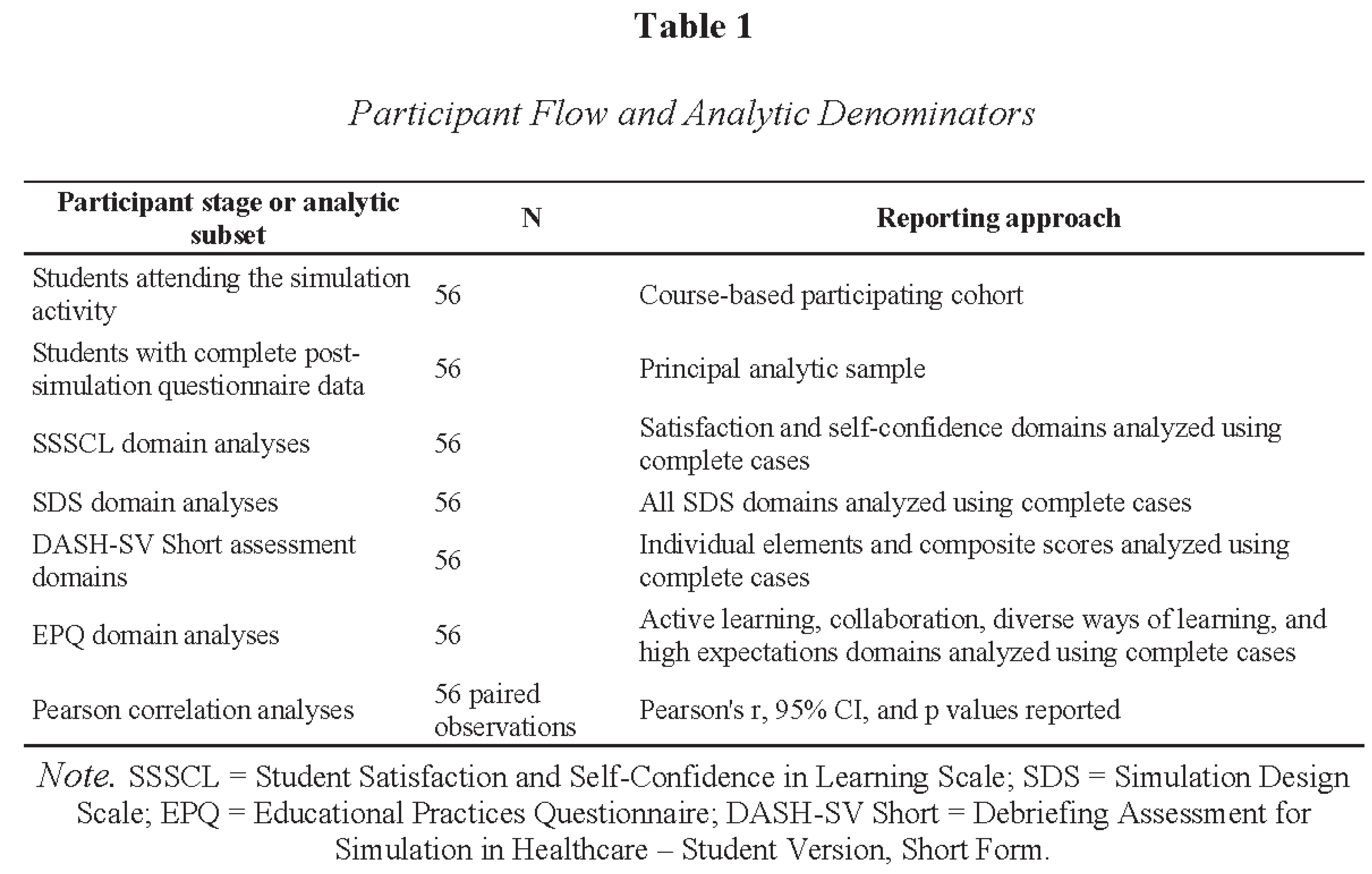
Eligible participants attended the simulation activity, participated in the structured debriefing session, and provided written informed consent before completing the study instruments. Complete questionnaire data were obtained from all 56 participants; therefore, the final analytic sample included the entire cohort, with no exclusions or missing data. Because the study was exploratory and embedded within a regular course activity, no a priori sample size calculation was performed.
Descriptive analyses, domain-level scores, and exploratory Pearson correlation analyses were conducted using complete-case data from all participants. Participant flow and analytic denominators are summarized in Table 1, where sample sizes, confidence intervals, and statistical results are also presented.
Table 1.
2.3. Simulation Scenario and Educational Intervention
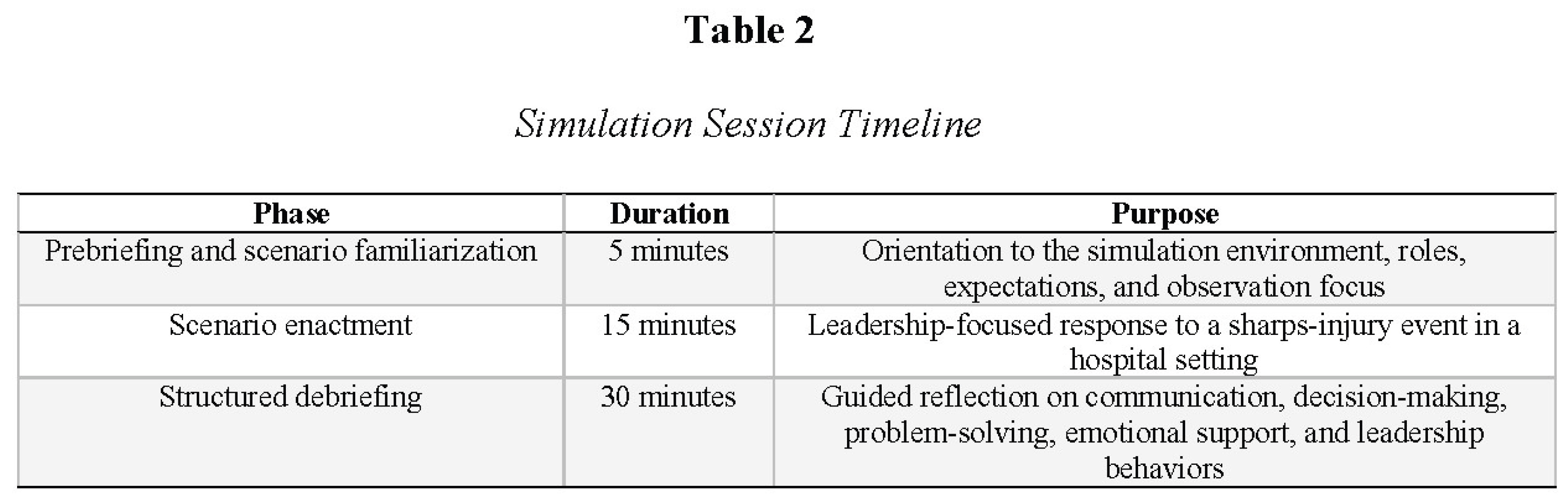
Data were collected following a leadership-focused high-fidelity simulation scenario entitled “Accident With a Sharp Object,” which was designed to promote communication, prioritization, decision-making, teamwork, emotional support, and leadership-related behaviors. The scenario was developed using principles of the Jeffries Simulation Framework and collaborative leadership concepts [18,19]. A high-fidelity adult patient simulator (HAL S3201, Gaumard Scientific, Miami, FL, USA) and trained actors were used. The scenario underwent faculty review and pilot testing before implementation.
The educational intervention was standardized for all participants. All simulation sessions followed the same learning objectives, prebriefing process, scenario script, facilitator guidance, and structured debriefing format. Faculty members involved in the simulation had previous experience in simulation-based education and followed the institutional protocol for high-fidelity simulation.
2.4. Session Structure and Simulation Procedures
Each session included prebriefing, scenario enactment, and structured debriefing. Students either participated directly in the scenario or served as observers using a structured observation guide. Following the debriefing session, participants completed the study instruments (Table 2).
Table 2.
2.5. Instruments
Students completed four validated self-report instruments: the Simulation Design Scale (SDS), the Student Satisfaction and Self-Confidence in Learning Scale (SSSCL), the Educational Practices Questionnaire (EPQ), and the Debriefing Assessment for Simulation in Healthcare – Student Version, Short Form (DASH-SV Short). Portuguese-language versions of these instruments have been translated, culturally adapted, and validated for use in simulation-based education contexts [20,21,22,23]. Higher scores indicated more favorable perceptions of simulation design, educational practices, satisfaction, self-confidence, and debriefing quality.
2.6. Data Collection Procedures
Data were collected immediately after completion of the simulation and debriefing activities. Participation was voluntary, and questionnaire responses were completed anonymously. Data were analyzed using IBM SPSS Statistics version 25.0 [24]. Complete data were available for all participants; therefore, no missing-data procedures were required.
2.7. Statistical Analysis
Descriptive statistics were calculated for each instrument item and domain, including the number of valid responses, missing values, means, standard deviations, minimum and maximum values, quartiles, medians, and 95% confidence intervals where appropriate. Because the primary aim was exploratory, descriptive results were used to characterize students’ perceptions of simulation design, satisfaction, self-confidence, educational practices, and debriefing.
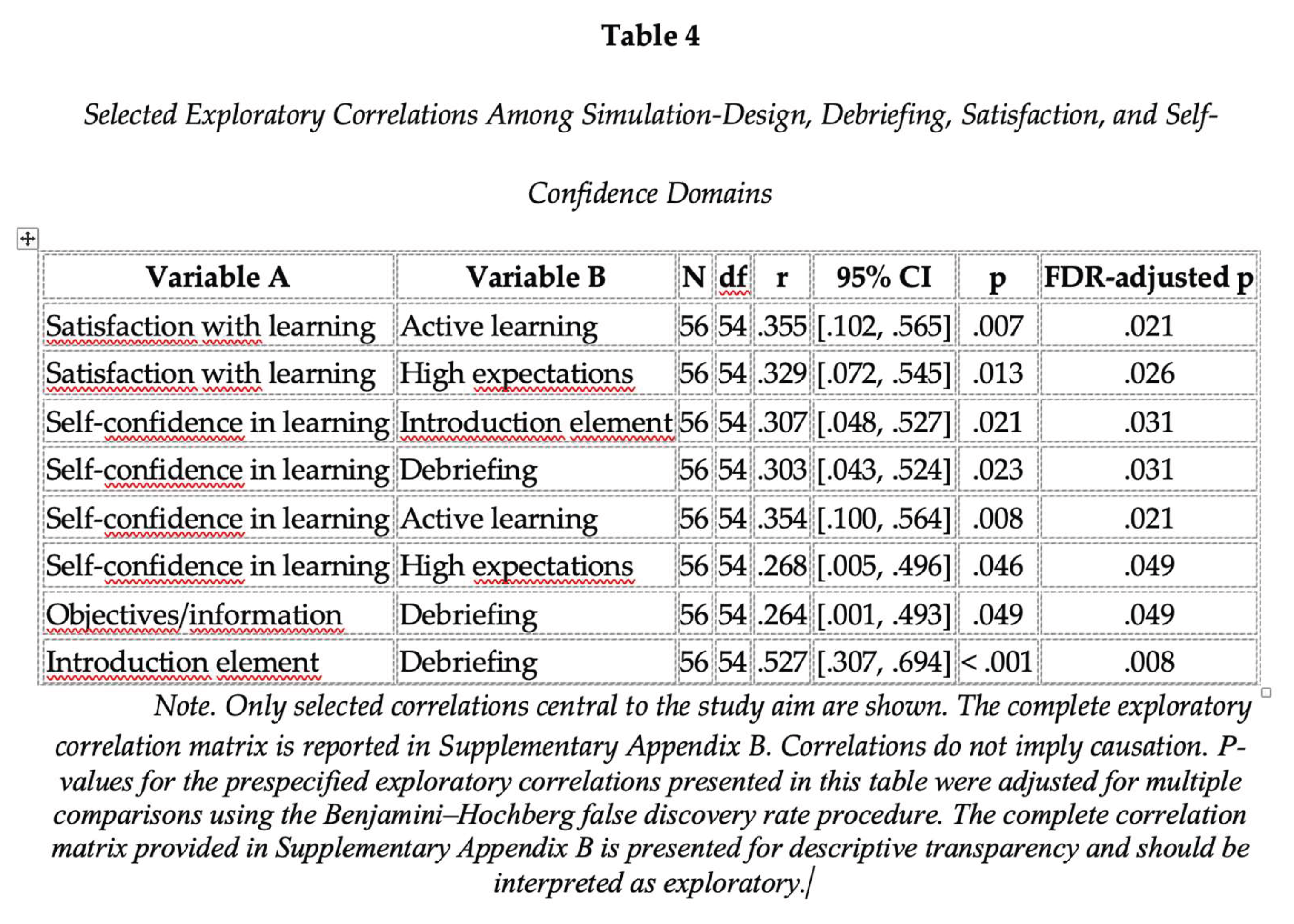
Prior to correlation analyses, distributions were inspected descriptively. Pearson correlations were selected because domain scores were treated as approximately continuous composite measures and sample size was considered adequate for exploratory correlation analyses. Because the correlation analyses were exploratory and involved multiple pairwise comparisons, p-values for the prespecified correlations reported in the main results (Table 4) were adjusted using the Benjamini–Hochberg false discovery rate procedure. The complete correlation matrix is provided in Supplementary Appendix B for transparency and descriptive purposes and was not used for confirmatory inference.
Correlation magnitudes were interpreted using Cohen’s conventional benchmarks: approximately r = .10 as small, r = .30 as medium, and r ≥ .50 as large [25]. However, very large correlations were not overinterpreted because they may reflect overlapping constructs, ceiling effects, common-method variance, or measurement dependencies among closely related domains.
2.8. Ethical Considerations
The study followed institutional ethical requirements and was approved by the Research Ethics Committee of [blinded for review] under CAAE no. 85072824.8.0000.5392, technical opinion no. 7.455.186, approved in March 2025. Students received information about the study aims, procedures, voluntary nature of participation, anonymous questionnaire completion, and absence of academic penalty for refusal or nonparticipation. Questionnaires were completed anonymously, and faculty responsible for course grading had no access to individual responses until after completion of academic evaluation. Participation or nonparticipation in the study had no influence on course grades or academic assessment. Students attended the simulation as part of the regular undergraduate curriculum. Participation in the research component was voluntary and referred exclusively to completion and use of anonymous questionnaire data for research purposes. Students were informed that refusal to participate in the study would not affect their course participation, academic assessment, or grades.
3. Results
3.1. Participant Flow and Analytic Sample
All fourth-year undergraduate nursing students enrolled in the leadership course during the study period were invited to participate in the educational intervention. Fifty-six students attended the simulation activity, participated in the structured debriefing session, and were subsequently invited to complete the post-intervention questionnaires. All students who consented to participate completed the four study instruments, resulting in complete data for all 56 participants. Consequently, no participants were excluded from the analyses, no questionnaires contained missing data, and complete-case analysis was performed. Participants had a mean age of 22.71 years (SD = 1.16). Detailed descriptive statistics and the complete exploratory correlation matrix are presented in Supplementary Appendices A and B.
3.2. Descriptive Results
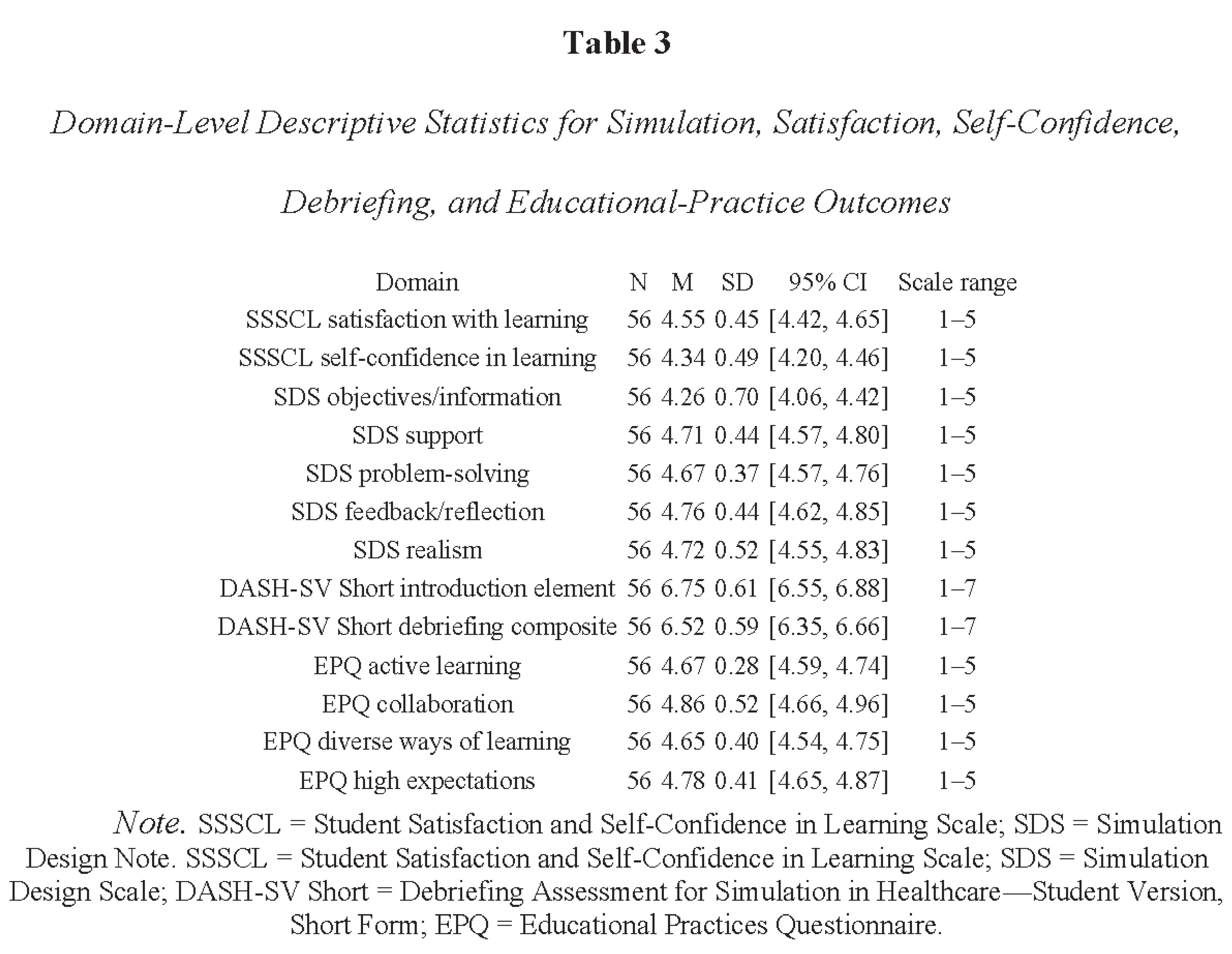
Students reported generally favorable perceptions across all study domains (Table 3). Among the SDS domains, feedback/reflection, realism, and support received the highest ratings, whereas objectives/information received the comparatively lowest rating. Debriefing evaluations were highly positive, with high scores observed for both the introduction element and the overall debriefing composite.
Table 3.
3.3. Exploratory Correlation Analysis
Exploratory Pearson correlations identified several positive associations. Statistical significance for the prespecified correlations reported in Table 4 was evaluated using Benjamini–Hochberg false discovery rate-adjusted p-values (Table 4). Satisfaction with learning was positively associated with active learning (r = .355, p = .007) and high expectations (r = .329, p = .013). Self-confidence in learning showed positive associations with the debriefing introduction element (r = .307, p = .021), overall debriefing quality (r = .303, p = .023), active learning (r = .354, p = .008), and high expectations (r = .268, p = .046).
Among simulation-design and debriefing variables, objectives/information demonstrated a positive association with debriefing quality (r = .264, p = .049). A moderate positive association was also observed between the debriefing introduction element and overall debriefing quality (r = .527, p < .001). The complete exploratory correlation matrix is presented in Supplementary Appendix B.
Table 4.
4. Discussion
This exploratory study examined undergraduate nursing students’ perceptions of the educational experience following a leadership-focused high-fidelity simulation. Students reported favorable perceptions across all evaluated domains, particularly debriefing, realism, active learning, diverse learning opportunities, and self-confidence in learning. These findings suggest that participants perceived the simulation was perceived by students as educationally valuable, although the results should be interpreted as perceptions of the learning experience rather than evidence of objective leadership-related behaviors or transfer to clinical practice [10,15,16]. Positive ratings for prebriefing, objectives, realism, and debriefing are consistent with contemporary healthcare simulation standards [1,3].
A relevant contribution of this study is the use of a sharps-injury scenario as a context for introducing leadership-related behaviors in undergraduate nursing education. Rather than focusing only on technical management of the incident, the scenario required students to consider communication, prioritization, emotional support, team coordination, and decision-making. This framing may help educators integrate leadership learning into realistic clinical situations that undergraduate students are likely to encounter in practice.
The positive associations involving prebriefing, objectives, and debriefing suggest that students may engage more effectively in reflective learning when expectations, roles, and learning goals are clearly established. This relationship is pedagogically plausible because effective prebriefing promotes psychological safety and learner readiness, whereas debriefing supports reflection on communication, prioritization, teamwork, and decision-making [3].
The findings support the inclusion of leadership-focused education during undergraduate nursing education. Nursing leadership extends beyond formal managerial roles and includes communication, prioritization, delegation, care coordination, situational awareness, and decision-making in complex clinical environments [9,11,13]. These competencies are associated with patient safety, quality of care, and team performance.
Simulation is particularly suited to leadership-focused education because it allows students to apply these competencies in realistic situations requiring communication, coordination, and decision-making under pressure. This interpretation is consistent with current simulation literature and previous reviews identifying simulation as a valuable strategy for developing leadership, teamwork, communication, delegation, and problem-solving skills among nursing students [10,12].
The favorable ratings for realism and problem-solving suggest that students perceived the sharps-injury scenario as authentic and educationally challenging. However, these perceptions should not be interpreted as evidence that leadership-related behaviors were objectively acquired or demonstrated.
The exploratory correlations should be interpreted as descriptive indicators of how students perceived different components of the simulation experience rather than as evidence of causal relationships. Because all variables were measured through self-report instruments at a single time point, the observed associations may partly reflect overlapping constructs, common-method variance, or generally favorable learner evaluations of the activity.
Although statistical significance was evaluated after controlling the false discovery rate for the prespecified correlations, these associations remain exploratory and should not be interpreted as evidence of causal relationships.
These findings are consistent with previous research showing positive associations among simulation design, educational practices, satisfaction, and self-confidence, reinforcing the importance of high-quality simulation experiences rather than exposure to simulation alone [14].
Although support received the lowest SDS score, ratings remained favorable. Leadership-focused scenarios may encourage learner autonomy and decision-making under uncertainty, which can reduce perceptions of facilitator support despite appropriate instructional design. Future studies should further explore this balance between autonomy and guidance.
Debriefing emerged as one of the strongest components of the learning experience and showed a positive association with self-confidence in learning. This finding aligns with simulation standards and the Debriefing for Meaningful Learning framework, which identify debriefing as a central mechanism for reflection, clinical reasoning, and knowledge integration [1,26].
In leadership-focused simulation, debriefing allows learners to critically examine communication, delegation, prioritization, emotional responses, and team interactions that may not be fully recognized during scenario enactment. The favorable DASH-SV ratings reinforce the role of structured debriefing as a key contributor to meaningful learning and professional development [1,27,28].
The favorable ratings observed across all DASH-SV Short elements further reinforce the importance of debriefing as a core component of simulation-based learning. These findings support contemporary simulation standards that position debriefing as one of the most influential mechanisms through which learning is consolidated, meaning is constructed, and professional development is promoted [1,27,28]. (Collectively, the results suggest that leadership-focused high-fidelity simulation, when supported by structured preparation and high-quality debriefing, may provide an educational environment that students perceive as realistic, reflective, engaging, and conducive to learning.
4.1. Implications for Nursing Education and Simulation Design
The findings have several practical implications for simulation educators. First, leadership-focused simulation objectives should be written in observable behavioral terms rather than as broad conceptual aims. Instead of stating only that the goal is leadership-focused education, objectives should specify behaviors such as identifying priorities, initiating communication, delegating tasks, supporting an affected team member, escalating concerns, documenting actions, and reflecting on team performance. This approach aligns with the outcomes-and-objectives standard, which emphasizes that simulation-based experiences should be linked to measurable learning outcomes [17].
Second, prebriefing should be treated as a substantive educational phase rather than as a brief procedural introduction. Although support received comparatively lower ratings than the other simulation-design domains, scores remained favorable overall. Future iterations of the scenario should strengthen orientation to learning objectives, participant roles, observer responsibilities, confidentiality, psychological safety, and the leadership focus of the scenario [3,5].
Third, debriefing should be protected as a core instructional component. The associations between debriefing, satisfaction, and self-confidence suggest that reducing debriefing time may compromise the educational value of leadership-focused simulation. Facilitators should be trained to guide reflection not only on clinical actions but also on communication, prioritization, emotional responses, team coordination, and decision-making [1,26].
Fourth, leadership-focused simulation should be embedded longitudinally across the undergraduate curriculum. A single simulation session may introduce students to leadership-related learning experiences, but competence development requires repeated exposure to progressively complex situations. Costa et al.[13] emphasized that leadership-focused education in undergraduate nursing should be structured, continuous, and integrated across curricula. A progressive simulation sequence could begin with communication and recognition of risk, then advance to delegation, interprofessional conflict, competing priorities, and crisis coordination. This approach would allow students to revisit leadership behaviors over time and receive repeated feedback.
4.2. Strengths and Limitations
The study was conducted in a single educational setting and involved participants from a single undergraduate nursing program, which may limit the generalizability of the findings to other institutions and educational contexts. Nevertheless, it addresses leadership learning, an important but still relatively underexplored area in undergraduate simulation-based nursing education. A further strength is the inclusion of the entire cohort of students participating in the educational activity, resulting in a complete analytic sample of 56 participants with no missing questionnaire data.
The study also examined multiple process-oriented domains rather than relying solely on satisfaction or self-confidence outcomes. By simultaneously assessing simulation design, educational practices, debriefing quality, satisfaction, and self-confidence, the study provides a broader understanding of how students perceived the educational structure of the simulation experience. In addition, the scenario was clinically meaningful and explicitly focused on leadership-related competencies, and the interpretation of the findings was grounded in contemporary healthcare simulation standards and best-practice recommendations.
Several limitations should be considered. First, the intervention was implemented as part of a regular undergraduate curricular activity; therefore, no comparison group was included. Although the study provides valuable information regarding students’ perceptions of the educational intervention, it does not permit causal inference regarding its effectiveness or allow attribution of the observed outcomes solely to the intervention. Furthermore, the study relied exclusively on self-reported perceptions collected immediately after the simulation activity. Accordingly, the findings reflect students’ subjective evaluations of the educational experience rather than objective evidence of leadership-related behaviors, knowledge acquisition, or transfer of learning to clinical practice. The absence of a pre-intervention assessment, longitudinal follow-up, and objective performance measures further limits conclusions regarding the educational outcomes. Finally, although the sample included the entire cohort of students enrolled in the course, it was drawn from a single institution and a single academic cohort, which may further limit the generalizability of the findings.
4.3. Future Research
Future studies should build on these findings using stronger designs and more diverse samples. Multi-site studies would improve generalizability and precision. Longitudinal studies would help determine whether repeated leadership-focused simulations influence students’ self-confidence, observable leadership behaviors, and transfer to clinical placements over time. Mixed-methods studies would also be valuable because interviews, focus groups, or analysis of debriefing transcripts could clarify how students interpret leadership, what they find difficult about exercising it, and which elements of simulation design they perceive as most supportive.
Future research should also move beyond self-report outcomes. Satisfaction and self-confidence are useful learner-reported indicators, but they are insufficient as stand-alone evidence of leadership-related behaviors. Subsequent studies should incorporate structured observer checklists, faculty-rated leadership rubrics, peer assessment, standardized behavioral indicators, or video-assisted analysis of communication, delegation, and decision-making. Such approaches would align leadership-focused simulation research with calls for stronger evidence of performance and transfer in healthcare simulation [10,15,17].
5. Conclusions
This exploratory study found that undergraduate nursing students perceived a leadership-focused high-fidelity simulation scenario as realistic, reflective, and was perceived by students as educationally valuable. The findings suggest that a high-fidelity simulation scenario based on sharps-injury management may provide a useful educational context for introducing leadership-related behaviors, including communication, prioritization, emotional support, team coordination, and decision-making. However, because the study relied on self-reported perceptions collected after a single simulation activity, the results should not be interpreted as evidence of objective leadership-related behaviors, behavioral performance, or transfer of learning to clinical practice. Future studies should incorporate objective performance measures, longitudinal follow-up, and multi-site designs to further examine the contribution of leadership-focused simulation to undergraduate nursing education.
Supplementary Materials
The following supporting information can be downloaded at the website of this paper posted on Preprints.org, Supplementary Appendix A contains full item-level descriptive statistics. Supplementary Appendix B contains the complete pairwise correlation matrix. Supplementary Appendix C contains the completed TREND checklistcros. Supplementary Appendix D contains the simulation scenario script and observer checklist. Supplementary Appendix E contains instrument/scoring documentation and permission notes.
Author Contributions
Conceptualization, C.D.A.R. and N.P.; methodology, C.D.A.R., N.P., R.A., and I.M.P.; formal analysis, C.D.A.R., A.L.O.S., T.S.S., and V.D.N.G.; investigation, C.D.A.R., A.L.O.S., T.S.S., and V.D.N.G.; data curation, C.D.A.R., A.L.O.S., T.S.S., and V.D.N.G.; validation, C.D.A.R., N.P., R.A., and I.M.P.; supervision, C.D.A.R., N.P., R.A., and I.M.P.; writing—original draft preparation, C.D.A.R., A.L.O.S., T.S.S., and V.D.N.G.; writing—review and editing, C.D.A.R., N.P., R.A., and I.M.P. All authors have read and agreed to the published version of the manuscript.
Funding
This work was supported by the School of Nursing, University of São Paulo, through the Unified Program (PUB).
Institutional Review Board Statement
This study was conducted in accordance with the Declaration of Helsinki and approved by the Research Ethics Committee of the School of Nursing, University of São Paulo (CEP/EEUSP), Brazil (CAAE 85072824.8.0000.5392; Approval No. 7.455.186; approved on 21 March 2025).
Informed Consent Statement
Informed consent was obtained from all subjects involved in the study.
Data Availability Statement
The data supporting the findings of this study are summarized in the manuscript and supplementary materials. Additional deidentified data may be made available by the corresponding author upon reasonable request, subject to institutional and ethical restrictions.
Public Involvement Statement
No public involvement in any aspect of this research.
Guidelines and Standards Statement
This manuscript was prepared in accordance with the Transparent Reporting of Evaluations with Nonrandomized Designs (TREND) Statement for reporting nonrandomized educational intervention studies and the Reporting Guidelines for Healthcare Simulation Research, as applicable.
Use of Artificial Intelligence
Artificial intelligence (ChatGPT, OpenAI) was used solely to assist with language editing, grammar refinement, and improvement of manuscript readability. All scientific content, interpretation of the findings, and final editorial decisions were made by the authors, who take full responsibility for the manuscript.
Conflicts of Interest
The authors declare no conflict of interest.
References
- Decker, S.; Sapp, A.; Bibin, L.; Chidume, T.; Crawford, S. B.; Fayyaz, J.; Johnson, B. K.; Szydlowski, J. Healthcare Simulation Standards of Best Practice®: The debriefing process. Clin. Simul. Nurs. 2025, 105, Article 101775. [Google Scholar] [CrossRef]
- DiGregorio, H.; Todd, A.; Blackwell, B.; Brennan, B. A.; Repsha, C.; Shelton, C. M.; Vaughn, J.; Wands, L.; Wruble, E.; Yeager, C. Healthcare Simulation Standards of Best Practice®: Facilitation. Clin. Simul. Nurs. 2025, 105, Article 101776. [Google Scholar] [CrossRef]
- Persico, L.; Ramakrishnan, S.; Wilson-Keates, B.; Catena, R.; Charnetski, M.; Fogg, N.; Jones, M. C.; Ludlow, J.; MacLean, H.; Simmons, V. C.; Smeltzer, S.; Wilk, A. Healthcare Simulation Standard of Best Practice®: Prebriefing preparation and briefing. Clin. Simul. Nurs. 2025, 105, Article 101777. [Google Scholar] [CrossRef]
- Watts, P. I.; McDermott, D. S.; Alinier, G.; Charnetski, M.; Ludlow, J.; Horsley, E.; Meakim, C.; Nawathe, P. Healthcare Simulation Standards of Best Practice®: Simulation design. Clin. Simul. Nurs. 2021, 58, 14–21. [Google Scholar] [CrossRef]
- Xavier, N.; Quinn, J.; Amidon, B.; Barnes, R.; Bronson, S.; Dunning, L. Healthcare Simulation Standards of Best Practice®: Professional integrity. Clin. Simul. Nurs. 2025, 105, 101778. [Google Scholar] [CrossRef]
- Alonso-Peña, M.; Álvarez-Álvarez, C. Clinical simulation in health education: A systematic review. Investig. Y Educ. En. Enfermería 2023, 41(2), e08. [Google Scholar] [CrossRef] [PubMed]
- Görücü, S.; Türk, G.; Karaçam, Z. The effect of simulation-based learning on nursing students’ clinical decision-making skills: Systematic review and meta-analysis. Nurse Educ. Today 2024, 140, 106270. [Google Scholar] [CrossRef] [PubMed]
- Koukourikos, K.; Tsaloglidou, A.; Kourkouta, L.; Papathanasiou, I. V.; Iliadis, C.; Fratzana, A.; Panagiotou, A. Simulation in clinical nursing education. Acta Inform. Medica 2021, 29(1), 15–20. [Google Scholar] [CrossRef] [PubMed]
- Al-Rjoub, S.; Alsharawneh, A.; Alhawajreh, M. J.; Othman, E. H. Exploring the impact of transformational and transactional style of leadership on nursing care performance and patient outcomes. J. Healthc. Leadersh. 2024, 16, 557–568. [Google Scholar] [CrossRef] [PubMed]
- Diaz-Navarro, C.; Armstrong, R.; Charnetski, M.; Freeman, K. J.; Koh, S.; Reedy, G.; Smitten, J.; Ingrassia, P. L.; Maio Matos, F.; Issenberg, B. Global consensus statement on simulation-based practice in healthcare. Adv. Simul. 2024, 9, Article 19. [Google Scholar] [CrossRef] [PubMed]
- Lee, S. E.; Lee, H.; Sang, S. Nurse managers’ leadership, patient safety, and quality of care: A systematic review. West. J. Nurs. Res. 2023, 45(2), 176–185. [Google Scholar] [CrossRef] [PubMed]
- Labrague, L. J. Use of simulation in teaching nursing leadership and management course: An integrative review. Sultan Qaboos Univ. Med. J. 2021, 21(3), 344–353. [Google Scholar] [CrossRef] [PubMed]
- Costa, P.; Sousa, J. P.; Nascimento, T.; Cruchinho, P.; Nunes, E.; Gaspar, F.; Lucas, P. Leadership development in undergraduate nursing students: A scoping review. Nurs. Rep. 2025, 15(5), Article 160. [Google Scholar] [CrossRef] [PubMed]
- Bdiri Gabbouj, S.; Zedini, C.; Naija, W. Nursing students’ satisfaction and self-confidence with simulation-based learning and its associations with simulation design characteristics and educational practices. Adv. Med. Educ. Pract. 2024, 15, 1093–1102. [Google Scholar] [CrossRef] [PubMed]
- Cheng, A.; Kessler, D.; Mackinnon, R.; Chang, T. P.; Nadkarni, V. M.; Hunt, E. A.; Duval-Arnould, J.; Lin, Y.; Cook, D. A.; Pusic, M.; Hui, J.; Moher, D.; Egger, M.; Auerbach, M. Reporting guidelines for health care simulation research: Extensions to the CONSORT and STROBE statements. Simul. Healthc. 2016, 11(4), 238–248. [Google Scholar] [CrossRef] [PubMed]
- Des Jarlais, D. C.; Lyles, C.; Crepaz, N.; the TREND Group. Improving the reporting quality of nonrandomized evaluations of behavioral and public health interventions: The TREND Statement. Am. J. Public Health 2004, 94(3), 361–366. [Google Scholar] [CrossRef] [PubMed]
- Miller, C.; Deckers, C.; Jones, M.; Wells-Beede, E.; McGee, E. Healthcare Simulation Standards of Best Practice®: Outcomes and objectives. Clin. Simul. Nurs. 2021, 58, 40–44. [Google Scholar] [CrossRef]
- Jeffries, P. R. Simulation in nursing education: From conceptualization to evaluation, 2nd ed.; National League for Nursing, 2012. [Google Scholar]
- Stucky, C. H.; Wymer, J. A.; House, S. Nurse leaders: Transforming interprofessional relationships to bridge healthcare quality and safety. Nurse Lead. 2022, 20(4), 375–380. [Google Scholar] [CrossRef]
- Almeida, R. G. S. Simulação clínica: validação de instrumentos de ensino-aprendizagem para a língua portuguesa. Doctoral dissertation, Universidade de São Paulo, Biblioteca Digital de Teses e Dissertações da USP, 2016. [Google Scholar]
- Almeida, R. G. S.; Mazzo, A.; Martins, J. C. A.; Baptista, R. C. N.; Girão, F. B.; Mendes, I. A. C. Validation to Portuguese of the Scale of Student Satisfaction and Self-Confidence in Learning. Rev. Lat.-Am. De Enferm. 2015. [Google Scholar] [CrossRef]
- Almeida, R. G. S.; Mazzo, A.; Martins, J. C. A.; Pedersoli, C. E.; Fumincelli, L.; Mendes, I. A. C. Validation for the Portuguese language of the Simulation Design Scale. In Texto & Contexto - Enfermagem; 2015. [Google Scholar]
- Couto, T. B.; Matos, F. M.; Rodovalho, P. D. T.; Fey, M.; Simon, R.; Muller-Botti, S. Translation of the Debriefing Assessment for Simulation in Healthcare in Portuguese and cross-cultural adaptation for Portugal and Brazil. Adv. Simul. 2021, 6, Article 25. [Google Scholar] [CrossRef] [PubMed]
- IBM Corp. IBM SPSS Statistics for Windows, Version 25.0 [Computer software; IBM Corp, 2017; Available online: https://www.ibm.com/products/spss-statistics.
- Cohen, J. Statistical power analysis for the behavioral sciences, 2nd ed.; Lawrence Erlbaum Associates, 1988. [Google Scholar]
- Dreifuerst, K. T. Using debriefing for meaningful learning to foster development of clinical reasoning in simulation. J. Nurs. Educ. 2012, 51(6), 326–333. [Google Scholar] [CrossRef] [PubMed]
- Brett-Fleegler, M.; Rudolph, J.; Eppich, W.; Monuteaux, M.; Fleegler, E.; Cheng, A.; Simon, R. Debriefing Assessment for Simulation in Healthcare: Development and psychometric properties. Simul. Healthc. 2012, 7(5), 288–294. [Google Scholar] [CrossRef] [PubMed]
- Center for Medical Simulation. Debriefing Assessment for Simulation in Healthcare (DASH)©: Student Version, Short Form; Center for Medical Simulation, 2010. [Google Scholar]
- Rached, C. D. A.; da Cruz, E. A. A.; da Mota, M. H. C.; Paulo, C. da S. F.; Amaral, G. M. P.; Nakajima, D. L. Nursing students’ perception: Escape room use in teaching leadership skills. Rev. Bras. De Enferm. 2024, 77(2), e20230414. [Google Scholar] [CrossRef] [PubMed]
Disclaimer/Publisher’s Note: The statements, opinions and data contained in all publications are solely those of the individual author(s) and contributor(s) and not of MDPI and/or the editor(s). MDPI and/or the editor(s) disclaim responsibility for any injury to people or property resulting from any ideas, methods, instructions or products referred to in the content. |
© 2026 by the authors. Licensee MDPI, Basel, Switzerland. This article is an open access article distributed under the terms and conditions of the Creative Commons Attribution (CC BY) license (http://creativecommons.org/licenses/by/4.0/).
Copyright: This open access article is published under a Creative Commons CC BY 4.0 license, which permit the free download, distribution, and reuse, provided that the author and preprint are cited in any reuse.