

Submitted:
13 July 2026
Posted:
15 July 2026
You are already at the latest version
Abstract
Chronic diseases represent one of the major challenges to global public health due to their high prevalence, morbidity, mortality, and socioeconomic impact. Growing evidence indicates that environmental exposures, in addition to genetic and behavioral factors, play a significant role in their onset and progression. This review addresses the mechanisms linking environmental pollutants, endocrine disruption, epigenetic alterations, and developmental biological programming to the emergence of chronic diseases, as well as the potential of nanotechnology for their diagnosis, monitoring, and treatment. The literature analyzed demonstrates that environmental contaminants can induce oxidative stress, chronic inflammation, mitochondrial dysfunction, and epigenetic reprogramming. During critical periods of development, these alterations may influence future susceptibility to cardiovascular, metabolic, respiratory, neurodegenerative, and neoplastic diseases, as described by the Developmental Origins of Health and Disease (DoHaD) theory. Furthermore, nanomaterials and nanostructured systems present promising applications in precision medicine, biomarker detection, targeted drug delivery, and environmental remediation. Collectively, these findings highlight the importance of integrated strategies that combine nanotechnology, environmental health, sustainability, and the One Health concept to reduce environmental risks and promote human, animal, and environmental health.
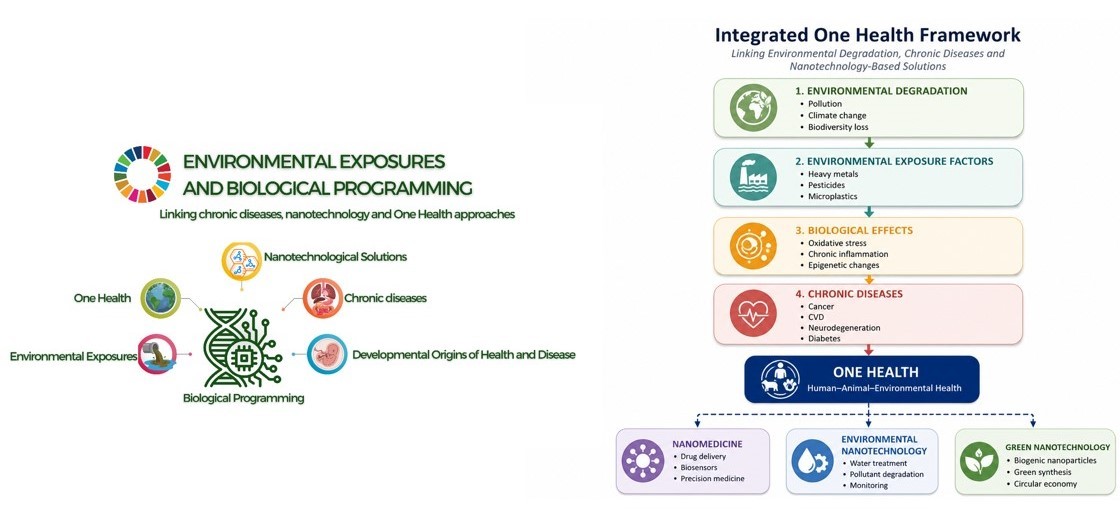
Keywords:
environmental exposures
; endocrine disruptors
; epigenetics
; developmental origins of health and disease (DoHaD)
; chronic diseases
; nanomedicine
; green nanotechnology
; one health
1. Introduction
Non-communicable chronic diseases (NCDs) are currently among the leading causes of mortality worldwide, accounting for a significant proportion of global healthcare expenditures and a reduction in the population’s quality of life. NCDs represent a growing public health concern, particularly in developing countries undergoing rapid urbanization and industrialization [1,2].
Traditionally, the etiology of chronic diseases has been associated with genetic predisposition and lifestyle-related factors, such as unhealthy diet, smoking, excessive alcohol consumption, physical inactivity, and stress. However, growing scientific evidence demonstrates that environmental exposures play a central role in the pathogenesis and progression of these diseases. Prolonged exposure to air pollutants, heavy metals, pesticides, microplastics, and endocrine-disrupting compounds (EDCs) can alter cellular homeostasis and metabolic pathways [3,4,5].
Human exposure to endocrine-disrupting compounds (EDCs) is closely associated with anthropogenic activities that release chemical contaminants into the environment. Global monitoring studies of methane (CH₄) emissions reveal the spatial distribution of activities such as intensive agriculture, livestock farming, and waste management, which are widely recognized as major sources of environmental impact. Although CH₄ does not act directly as an endocrine disruptor, its emission patterns may help identify regions under intense anthropogenic influence, where multiple environmental contaminants potentially associated with endocrine-disrupting effects may coexist [6,7,8].
Recent studies demonstrate that many of the biological effects resulting from environmental exposures are mediated by epigenetic mechanisms and alterations in endocrine signalling. These modifications may occur during critical periods of development, influencing the biological programming of the organism and increasing susceptibility to chronic diseases throughout life, as proposed by the Developmental Origins of Health and Disease (DoHaD) theory [9,10,11,12]. The increasing complexity of environmental health challenges requires innovative scientific approaches capable of preventing and integrating diagnosis, monitoring, and therapy. In this context, nanotechnology emerges as a transformative field with applications in medicine, toxicology, biotechnology, and environmental sciences. Nanostructured materials exhibit unique physicochemical properties, including high surface area, enhanced reactivity, and tunable biological interactions, thereby enabling the development of advanced therapeutic and diagnostic systems [13,14,15].
Nanotechnology-based strategies include targeted drug delivery systems, nanoencapsulation of bioactive compounds, nanosensors for biomarker detection, and nanomaterials for environmental remediation. These technologies are promising for improving therapeutic efficacy and reducing adverse effects, as well as for enabling early disease detection. Furthermore, they may contribute to the prevention of chronic diseases, as they are potential tools for environmental pollution monitoring [16,17,18].
Green nanotechnology has emerged as an innovative and sustainable approach focused on developing nanomaterials and nanosystems through environmentally safe methods, employing biogenic synthesis with plant extracts, microorganisms, and bee products to produce nanoparticles. Unlike conventional methods, which are often associated with the use of toxic solvents and high energy consumption, green nanotechnology seeks to minimize environmental impacts and promote cleaner and more sustainable processes. In this context, its applications have demonstrated great potential for monitoring and treating chronic diseases, particularly through the development of highly sensitive biosensors, controlled drug delivery systems, and targeted therapies that reduce adverse effects and enhance therapeutic efficacy. Furthermore, green nanomaterials have been employed to remediate environmental pollutants, thereby reducing human exposure to contaminants associated with disease development [23,26,27,28,29,30,31,32].
This perspective is directly aligned with the United Nations Sustainable Development Goals (SDGs), particularly those related to Good Health and Well-Being (SDG 3), Clean Water and Sanitation (SDG 6), Responsible Consumption and Production (SDG 12), and Climate Action (SDG 13) [19,20,21,22,23,24]. Furthermore, the integration of green nanotechnology with the One Health concept reinforces the understanding that human health depends on the balance among the environment, animals, and ecosystems. The rising incidence of chronic diseases linked to environmental pollution, climate change, and the degradation of natural resources underscores the need for interdisciplinary strategies that integrate scientific innovation, sustainability, and public health prevention. Thus, green nanotechnology represents an important scientific frontier for developing more ethical, sustainable, and integrated therapeutic and environmental solutions that address contemporary global demands [25,33].
Thus, this review aims to discuss the relationship between environmental exposures and chronic diseases, emphasizing the mechanisms of endocrine disruption, epigenetic alterations, and developmental programming, and argues that these processes play a significant role in the origin of chronic diseases, highlighting nanotechnology as a promising tool for diagnosis, therapeutic intervention, and environmental remediation within a One Health perspective.
2. Environmental Exposures and the Development of Non-Communicable Chronic Diseases (NCDs)
Environmental contaminants have increasingly been associated with the onset and progression of chronic diseases. Rapid industrial expansion, urbanization, intensive agriculture, and inadequate waste management have intensified human exposure to toxic compounds capable of affecting biological systems over prolonged periods. Among the major environmental pollutants, atmospheric particulate matter (PM2.5 and PM10) is strongly associated with respiratory and cardiovascular diseases. These particles can penetrate deeply into pulmonary tissues and reach the systemic circulation, inducing oxidative stress, endothelial dysfunction, and inflammatory responses. Prolonged exposure has been associated with hypertension, atherosclerosis, asthma, chronic obstructive pulmonary disease (COPD), and an increased risk of stroke [3,34,35].
Heavy metals such as lead, cadmium, mercury, and arsenic also represent major toxicological concerns. These substances accumulate in tissues and organs, interfering with enzymatic activity, mitochondrial function, and DNA repair mechanisms [36,37]. Exposure to these metals may contribute to neurological disorders, renal dysfunction, endocrine imbalance, and carcinogenesis. Studies on contamination by these metals demonstrate direct links to the development of chronic diseases [38].
Pesticides and endocrine-disrupting compounds (EDCs), including bisphenol A (BPA), phthalates, and dioxins, have received considerable attention due to their ability to interfere with hormonal signalling pathways. These compounds are associated with reproductive disorders, obesity, diabetes mellitus, thyroid dysfunction, and developmental abnormalities. Furthermore, many environmental contaminants exhibit bioaccumulative and persistent characteristics, thereby amplifying their long-term ecological and health impacts [39,40,41].
Another emerging concern involves microplastics and nanoplastics, which have been detected in water, food, air, and even human tissues. Their small size facilitates cellular uptake and interaction with biological membranes, potentially triggering inflammatory processes, oxidative damage, and immunological alterations [5,42].
In addition to direct cellular damage, various environmental contaminants can interfere with regulatory mechanisms that modify gene expression and metabolic homeostasis. Among these mechanisms, endocrine and epigenetic alterations have received increasing attention due to their involvement in the development of chronic diseases [43,44,45].
3. Endocrine-Disrupting Compounds (EDCs): Environmental Exposures Associated with Epigenetic Reprogramming and Non-Communicable Chronic Diseases (NCDs)
Potentially harmful chemical substances present in environmental pollutants, pesticides, everyday consumer products, and food can directly influence human metabolism. Endocrine-disrupting compounds (EDCs) are substances that interfere with the normal function of the endocrine system by altering hormone synthesis, secretion, transport, and metabolism [11,46]. These harmful compounds may act by mimicking, blocking, or modifying hormonal signals, triggering alterations in cellular signalling pathways and gene expression, thereby compromising the metabolic and physiological homeostasis of the organism [47].
EDCs have been associated with an increased risk of several non-communicable chronic diseases, including obesity, type 2 diabetes mellitus, thyroid disorders, cardiovascular diseases, reproductive health disorders, various types of cancer [48], as well as neurodevelopmental disorders [49]. Human exposure to these compounds occurs primarily through dietary intake, dermal contact, and inhalation, making them a growing concern for global public health [48].
Exposure to EDCs during pregnancy deserves special attention, as this period represents a window of heightened biological sensitivity for fetal development. Many EDCs can induce epigenetic alterations, including changes in DNA methylation patterns, histone modifications, and the expression of non-coding RNAs [50].
Epigenetic alterations have been associated with the development of various diseases, including neurodegenerative diseases, cancers, metabolic diseases, and neurodevelopmental disorders [51]. Furthermore, evidence suggests that certain epigenetic modifications may be transmitted to subsequent generations, characterizing phenomena of transgenerational epigenetic inheritance [52,53].
The ability of EDCs to modify epigenetic patterns has been considered one of the main biological mechanisms linking environmental exposures to the development of non-communicable chronic diseases. These alterations may persist even after exposure ends, influencing metabolic, inflammatory, endocrine, and neurobiological processes associated with the pathophysiology of various diseases [54].
Omics sciences enable the integrated analysis of genes, proteins, metabolites, and epigenetic modifications, providing a comprehensive view of the biological mechanisms that regulate cellular function. In this context, high-throughput approaches, such as transcriptomics, epigenomics, proteomics, and metabolomics, have significantly expanded the understanding of the effects of toxic agents on biological systems, enabling the identification of molecular alterations that disrupt cellular pathways, compromise tissue homeostasis, and contribute to the development and progression of diseases [55].
The convergence of omics sciences and nanotechnology has driven the development of nanostructured platforms with theranostic potential, capable of integrating biomarker identification, monitoring molecular alterations, and targeted therapeutic intervention in biological pathways associated with environmental exposures and non-communicable chronic diseases [56].
4. Developmental Origins of Health and Disease (DoHaD)
Pregnancy is a period of intense metabolic demand, during which an adequate nutrient supply is essential for fetal development and maternal health. In this context, the mother’s nutritional status and dietary habits play a determining role in the developmental programming of the offspring, influencing their health through metabolic and epigenetic mechanisms [57]. Pregnant women subjected to malnutrition, compounded by exposure to environmental contaminants, are more likely to have offspring whose cellular programming is directed toward the development of diseases [58].
During these critical developmental windows, the coordinated regulation of gene expression that drives the formation and maturation of tissues and organs occurs. The Developmental Origins of Health and Disease (DoHaD) theory proposes that environmental exposures during critical periods of development, such as pregnancy and early childhood, can influence health throughout life [59]. This process is largely mediated by epigenetic mechanisms that modulate gene expression in response to factors such as nutrition, environmental pollutants, pesticides, heavy metals, and physiological stress [12]. Consequently, persistent alterations in the structure and function of organs and systems may increase susceptibility to non-communicable chronic diseases, including metabolic, cardiovascular, inflammatory, and neurodegenerative disorders [60].
Persistent organic pollutants (POPs) are a class of environmental contaminants that persist for long periods in ecosystems and biological tissues. Exposure may occur as early as the preconception period, affecting gametes, and continue during intrauterine life through the maternal–fetal transfer of compounds accumulated in the body. During pregnancy, the mobilization of maternal lipid stores facilitates the placental transfer of these contaminants, potentially altering endocrine signalling and epigenetic mechanisms involved in fetal programming, with potential repercussions for the development and health of the offspring throughout life [61].
Various environmental contaminants have been associated with molecular alterations that can interfere with developmental programming. Among them, exposure to PM2.5 promotes activation of pathways related to amino acid transport, cellular respiration, and cell adhesion, while reducing the activity of genes involved in vascular development and organogenesis [62]. Similarly, residues of pesticides, chemical fertilizers, and heavy metals accumulated in foods of animal origin represent important routes of human exposure to environmental contaminants. These contaminants can bioaccumulate throughout the food chain and reach the human body through the consumption of contaminated foods. Evidence indicates that chronic exposure to these compounds is associated with metabolic, inflammatory, and epigenetic alterations that can impair normal physiological development and increase the risk of chronic diseases throughout life, with potential transgenerational effects when germ cells are affected [63].
The Mediterranean diet has been considered a promising nutritional strategy within the context of DoHaD, as it promotes the consumption of foods rich in dietary fiber, bioactive compounds, and unsaturated fats. This dietary pattern modulates the gut microbiota by stimulating microorganisms that produce short-chain fatty acids, metabolites associated with maintaining metabolic and immune homeostasis. During pregnancy, maternal diet may influence the composition of the offspring’s microbiome and affect the intrauterine environment. Evidence suggests that these effects are mediated, in part, by epigenetic mechanisms, particularly alterations in fetal DNA methylation, which can modify gene regulation and influence susceptibility to disease throughout life [64].
These biological alterations may persist for long periods before the clinical manifestation of disease, making their early identification more difficult and limiting opportunities for preventive intervention. Furthermore, many biomarkers associated with environmental exposures and epigenetic programming exhibit high molecular complexity and interindividual variability, posing challenges for conventional diagnostic methods. In this context, there is a need for technologies capable of detecting these alterations with greater sensitivity and specificity.
5. Nanotechnology in Diagnosis and Monitoring
In light of these challenges, nanotechnology has emerged as a promising platform for developing diagnostic systems capable of detecting molecular biomarkers at extremely low concentrations. The physicochemical properties of nanomaterials enhance analytical sensitivity and facilitate the early monitoring of alterations associated with environmental exposures and chronic diseases. Nanomaterials such as inorganic nanoparticles, quantum dots, graphene, magnetic nanoparticles, and carbon nanotubes exhibit unique optical, electrical, and magnetic properties that enhance the performance of nanosensors [65,66,67].
Nanobiosensors can detect biomarkers at extremely low concentrations, enabling early diagnosis of chronic diseases before the onset of severe clinical symptoms. In oncology, nanosensors can identify tumor biomarkers, circulating tumor cells, and genetic mutations with greater sensitivity than conventional methods [66,68,69]. Similarly, in cardiovascular diseases, nanotechnology-based platforms enable detection of inflammatory mediators, cardiac enzymes, and oxidative stress biomarkers [67,70,71,72,73].
Wearable nanosensors also represent a growing field in personalized medicine. These devices can continuously monitor physiological parameters such as glucose levels, blood pressure, sweat composition, and inflammatory biomarkers in real time, contributing to preventive strategies and individualized therapeutic monitoring [70,74,75].
In environmental health, nanotechnology supports the development of portable systems for detecting pollutants and toxic compounds. Nanosensors capable of detecting heavy metals, pesticides, pathogenic microorganisms, and volatile organic compounds provide important tools for environmental surveillance and risk assessment [76,77,78,79,80].
The synergistic integration of nanotechnology with artificial intelligence and digital health platforms represents a major advancement in biomedical sciences, enabling innovative strategies for predictive diagnostics, epidemiological surveillance, and precision medicine. This multidisciplinary approach enables the integrated analysis of complex data, contributing to more accurate, individualized, and efficient clinical decision-making [20,78,81,82].
6. Nanotechnologies Applied to Non-Communicable Chronic Diseases (NCDs)
In addition to enabling the early detection of biomarkers associated with environmental exposures and epigenetic alterations, nanotechnology has expanded the therapeutic possibilities for chronic diseases. Given that processes such as persistent inflammation, oxidative stress, mitochondrial dysfunction, and epigenetic dysregulation play central roles in the pathophysiology of these diseases, nanostructured systems have been developed to deliver therapeutic compounds to specific targets, thereby enhancing treatment efficacy and reducing adverse effects. One of the most promising applications of nanotechnology lies in targeted drug delivery systems. Conventional drugs often exhibit low bioavailability, rapid degradation, dose-dependent systemic toxicity or require prolonged administration and nonspecific distribution. Nanocarriers overcome many of these limitations by enabling the controlled and localized release of therapeutic agents [83,84,85].
Liposomes, polymeric nanoparticles, dendrimers, nanocapsules, and metallic nanoparticles are among the nanosystems most extensively investigated for biomedical applications. The development and functionalization of these systems are strongly based on the principles of supramolecular chemistry, particularly non-covalent interactions such as hydrogen bonding, electrostatic interactions, van der Waals forces, and hydrophobic interactions, which govern self-assembly and molecular recognition. These characteristics enable the encapsulation and controlled release of therapeutic agents, protecting them from chemical and enzymatic degradation while improving their pharmacokinetic and pharmacodynamic profiles, thereby enhancing therapeutic efficacy and reducing adverse effects [86,87,88].
In cancer therapy, various nanoparticulate systems, including PEGylated liposomes, PLGA polymeric nanoparticles, dendrimers, gold nanoparticles, and mesoporous silica nanoparticles, enable the selective accumulation of therapeutic agents in tumor tissues through passive and active targeting mechanisms, thereby reducing adverse effects on healthy cells. The surface functionalization of these nanoparticles with specific ligands, such as antibodies, peptides, and aptamers, enables recognition of receptors overexpressed in cancer cells, thereby increasing therapeutic precision and improving the efficacy of antineoplastic treatment [89,90,91,92,93].
Nanotechnology has also emerged as a promising strategy for the controlled delivery of antioxidants, anti-inflammatory compounds, nucleic acids, and various naturally derived bioactive substances. The incorporation of these compounds into nanostructured systems, such as liposomes, polymeric nanoparticles, nanoemulsions, and lipid nanoparticles, protects them from chemical and enzymatic degradation, enhances their solubility, prolongs their circulation time, and optimizes their bioavailability and tissue distribution. In this context, the nanoencapsulation of phytochemicals, such as curcumin, resveratrol, quercetin, and phenolic compounds derived from propolis, has shown promising results by enhancing their antioxidant, anti-inflammatory, and cytoprotective properties [94,95,96,97].
Furthermore, the functionalization of nanocarriers can promote targeted delivery to specific tissues or target cells, thereby enhancing therapeutic efficacy and reducing adverse effects. Thus, the application of nanotechnology-based systems significantly expands the clinical potential of these bioactive compounds, offering an innovative approach to the prevention and treatment of diseases associated with oxidative stress and chronic inflammation, including cancer, cardiovascular diseases, neurodegenerative diseases, and metabolic disorders. Nanotechnology has also emerged as a promising strategy for the controlled delivery of antioxidants, anti-inflammatory compounds, nucleic acids, and various naturally derived bioactive substances. The incorporation of these compounds into nanostructured systems, such as liposomes, polymeric nanoparticles, nanoemulsions, and lipid nanoparticles, protects them from chemical and enzymatic degradation, enhances their solubility, prolongs their circulation time, and optimizes their bioavailability and tissue distribution [98,99].
In this context, the nanoencapsulation of phytochemicals, such as curcumin, resveratrol, quercetin, and phenolic compounds derived from propolis, has demonstrated promising results by enhancing their antioxidant, anti-inflammatory, and cytoprotective properties. Furthermore, the functionalization of nanocarriers can promote targeted delivery to specific tissues or target cells, thereby enhancing therapeutic efficacy and reducing adverse effects. Thus, the application of nanotechnological systems significantly expands the clinical potential of these bioactive compounds, representing an innovative approach for the prevention and treatment of diseases associated with oxidative stress and chronic inflammation, including cancer, cardiovascular diseases, neurodegenerative diseases, and metabolic disorders [83,89,94].
Additionally, many of these nanostructured systems are based on the principles of supramolecular chemistry, in which non-covalent interactions, such as hydrogen bonding, hydrophobic interactions, and electrostatic forces, play a fundamental role in the encapsulation, stabilization, and controlled release of bioactive compounds. Furthermore, nanomedicine plays an important role in regenerative medicine and tissue engineering. Nanostructured scaffolds mimic the architecture of the extracellular matrix, promoting cell adhesion, proliferation, and tissue regeneration [100,101].
**Table 1** provides an overview of the main nanotechnologies employed in the diagnosis and treatment of chronic diseases, highlighting the diversity of nanomaterials and their multiple biomedical applications. Different nanostructured systems, including liposomes, polymeric nanoparticles, metallic nanoparticles, nanogels, and nanoemulsions, have been developed to overcome limitations associated with conventional therapies, such as low bioavailability, nonspecific distribution, and a high incidence of adverse effects [102,103]. In addition to enabling the controlled and targeted delivery of therapeutic agents, these platforms can be used for early biomarker detection, bioimaging, and monitoring disease progression. The versatility of these systems allows their application in various chronic diseases, including cancer, cardiovascular diseases, neurodegenerative diseases, diabetes mellitus, and inflammatory diseases, contributing to the development of more effective, safer, and personalized therapeutic strategies. Thus, nanotechnology emerges as a fundamental tool for advancing precision medicine, expanding the prospects for diagnosing, preventing, and treating chronic diseases of major clinical and socioeconomic relevance [104].
Despite these advances, concerns related to nanotoxicology remain essential. The interaction between nanoparticles and biological systems depends on factors such as size, morphology, surface charge, concentration, and duration of exposure. Therefore, rigorous safety assessments and regulatory frameworks are necessary to ensure the responsible and sustainable application of nanotechnology [105].
7. Nanotechnologies Applied to Environmental Remediation
Beyond biomedical applications, nanotechnology has emerged as a strategic tool for environmental remediation, offering innovative solutions to reduce exposure to pollutants and mitigate contamination impacts in terrestrial and aquatic ecosystems. Owing to their unique physicochemical properties, such as high surface area, high reactivity, functionalization capability, and distinctive catalytic properties, nanomaterials exhibit great potential to adsorb, degrade, transform, or neutralize a wide range of contaminants present in water, soil, and air [13,26,27,136].
Various nanostructured systems have been developed for environmental applications, including nanostructured adsorbents, photocatalytic nanoparticles, magnetic nanocomposites, nanofunctionalized membranes, and hybrid nanomaterials. These systems have demonstrated high efficiency in the removal of heavy metals, such as lead (Pb), cadmium (Cd), mercury (Hg), and arsenic (As), as well as synthetic dyes, pharmaceutical residues, pesticides, polycyclic aromatic hydrocarbons, and pathogenic microorganisms present in contaminated environments [137,138,139,140].
Among the most extensively investigated nanomaterials are titanium dioxide (TiO₂) nanoparticles, which are widely employed in heterogeneous photocatalytic processes. Under ultraviolet or visible radiation, these materials are capable of generating reactive oxygen species, such as hydroxyl radicals (•OH) and superoxide anions (O₂•−), thereby promoting the degradation of persistent organic compounds and the mineralization of various pollutants. Similarly, zinc oxide (ZnO) nanoparticles and TiO₂-based nanocomposites have been developed to enhance photocatalytic efficiency and improve the stability of decontamination processes [141,142,143].
Graphene-based materials, including graphene oxide (GO) and reduced graphene oxide (rGO), have also attracted considerable attention owing to their high specific surface area, abundance of functional groups, and remarkable adsorption capacity. These materials exhibit high affinity for metal ions, pesticides, dyes, and emerging contaminants, making them promising candidates for water purification systems and industrial wastewater treatment [27,144].
Iron oxide (Fe₃O₄) magnetic nanoparticles constitute another class of materials of great environmental interest. In addition to exhibiting a high capacity for contaminant adsorption, these nanomaterials can be readily recovered from the environment using external magnetic fields, enabling the reuse of adsorbents and reducing the operational costs of remediation processes. This characteristic makes magnetic nanocomposites particularly attractive for large-scale applications [145,146].
In recent years, particular attention has been directed toward the removal of emerging contaminants, including residues of antibiotics, hormones, pharmaceuticals, microplastics, and per- and polyfluoroalkyl substances (PFAS), commonly referred to as “forever chemicals.” The high environmental persistence of these compounds and their potential ecotoxicological and human health effects have driven the development of multifunctional nanomaterials capable of simultaneously promoting adsorption, catalytic degradation, and environmental monitoring [147,148].
Concurrently, nanotechnology has contributed to the development of highly sensitive and selective environmental nanosensors capable of detecting contaminants at extremely low concentrations. Biosensors based on metallic nanoparticles, quantum dots, and carbon-based materials enable real-time monitoring of water, soil, and air quality, facilitating the detection of contaminants even before an environmental disaster occurs [77].
The integration of nanotechnology, sustainability, and environmental remediation is directly aligned with the United Nations Sustainable Development Goals (SDGs), particularly SDG 3 (Good Health and Well-Being), SDG 6 (Clean Water and Sanitation), SDG 11 (Sustainable Cities and Communities), SDG 12 (Responsible Consumption and Production), SDG 13 (Climate Action), SDG 14 (Life Below Water), and SDG 15 (Life on Land). Thus, nanotechnologies for environmental applications constitute an important tool for addressing global challenges related to pollution, water scarcity, and ecosystem preservation, contributing to the development of more sustainable and resilient models of development [19,22].

Table 2.
Major applications of nanotechnology in environmental remediation and their relationship with the Sustainable Development Goals (SDGs).
Table 2.
Major applications of nanotechnology in environmental remediation and their relationship with the Sustainable Development Goals (SDGs).
| Nanomaterial/Nanotechnology | Mechanism of Action | Major Contaminants Removed | Environmental Applications | Related SDGs |
|---|---|---|---|---|
| Titanium dioxide nanoparticles (TiO₂) | Photocatalysis and oxidative degradation | Dyes, pesticides, pharmaceuticals, and persistent organic pollutants | Wastewater treatment and industrial effluent decontamination [149] | SDG 6, SDG 12, SDG 13 |
| Graphene-based materials (graphene oxide and reduced graphene oxide) | Adsorption due to high surface area and π-π interactions | Heavy metals, dyes, pesticides, and pharmaceuticals | Water purification and removal of emerging contaminants [150] | SDG 6, SDG 11, SDG 12 |
| Magnetic nanoparticles (Fe₃O₄) | Adsorption and magnetic separation | Arsenic, lead, cadmium, chromium, and organic compounds | Water treatment and contaminant recovery [151] | SDG 6, SDG 12 |
| Carbon nanotubes | Adsorption and filtration | Organic compounds, heavy metals, and hydrocarbons | Water purification and contaminated soil remediation [152] | SDG 6, SDG 11 |
| Magnetic nanocomposites | Adsorption, catalytic degradation, and magnetic separation | Pesticides, dyes, and pharmaceutical residues | Industrial wastewater treatment [153] | SDG 6, SDG 12 |
| Nanozeolites | Ion exchange and adsorption | Metal ions, ammonia, and nitrogen-containing compounds | Wastewater treatment and soil remediation [154] | SDG 6, SDG 15 |
| Silver nanoparticles (AgNPs) | Antimicrobial activity | Bacteria, fungi, viruses, and other pathogens | Water disinfection and decontamination of polluted surfaces [155] | SDG 3, SDG 6 |
| Zinc oxide nanoparticles (ZnO) | Photocatalysis and antimicrobial activity | Dyes, pesticides, and microorganisms | Effluent treatment and environmental disinfection [156] | SDG 3, SDG 6, SDG 12 |
| Cerium oxide nanoparticles (CeO₂) | Catalytic activity and antioxidant properties | Reactive species and organic contaminants | Environmental decontamination and protection against oxidative stress [157] | SDG 3, SDG 13 |
| Biogenic nanoparticles (green synthesis) | Adsorption, catalysis, and antimicrobial activity | Heavy metals, pesticides, and pathogens | Sustainable environmental remediation and water treatment [158] | SDG 3, SDG 6, SDG 12, SDG 13 |
Abbreviations: SDG 3, Good Health and Well-Being; SDG 6, Clean Water and Sanitation; SDG 11, Sustainable Cities and Communities; SDG 12, Responsible Consumption and Production; SDG 13, Climate Action; SDG 15, Life on Land.
In this context, green nanotechnology has emerged as an innovative and sustainable approach based on environmentally friendly synthesis methods that employ biological systems, such as plants, fungi, algae, yeasts, and bacteria, as reducing and stabilizing agents. The biogenic synthesis of nanoparticles significantly reduces the use of toxic solvents, hazardous reagents, and high energy demands, thereby promoting safer, more economically viable processes aligned with the principles of Green Chemistry and the Circular Economy [26,31].
In addition to minimizing the environmental impacts associated with the production of nanomaterials, biogenic nanoparticles often exhibit greater biocompatibility, lower toxicity, and additional functional properties, expanding their potential applications in environmental decontamination and remediation processes.
8. Nanotechnology, Environmental Health, and the One Health Concept: Toward an Integrated Paradigm of Health and Sustainability
The increasing incidence of non-communicable chronic diseases has been increasingly associated with environmental degradation and prolonged exposure to risk factors arising from anthropogenic activities. Environmental exposures associated with chronic diseases represent a challenge that transcends the boundaries of traditional medicine, simultaneously encompassing issues related to environmental quality, food production, biodiversity conservation, animal health, and sustainable development [38,45].
In this context, the One Health concept emerges as an integrative scientific paradigm, recognizing that human health is inseparable from animal health and the integrity of ecosystems. This approach proposes that contemporary health challenges should be addressed through interdisciplinary and transdisciplinary collaboration among the biomedical, environmental, veterinary, biotechnological, and social sciences, as well as public policy. The increasing frequency of extreme events associated with climate change, the expansion of urban areas, the degradation of natural habitats, and the intensification of natural resource exploitation have significantly altered ecosystem dynamics, contributing not only to the emergence of infectious diseases but also to the exacerbation of environmentally related chronic diseases [24,25,159].
From this perspective, nanotechnology plays a strategic role by providing tools that can simultaneously address different components of the One Health system. In the context of human health, nanostructured systems have enabled advances in early diagnosis, precision medicine, controlled drug delivery, targeted therapies, and the delivery of bioactive compounds with antioxidant and anti-inflammatory properties. At the environmental interface, nanomaterials have been employed in the remediation of water, soil, and air, in the removal of emerging contaminants, and in the development of nanosensors for real-time environmental monitoring. Additionally, green nanotechnology contributes to the development of more sustainable production processes aligned with the principles of Green Chemistry and the Circular Economy.
The convergence of nanotechnology, environmental health, and sustainability enables the development of preventive strategies that reduce environmental risk factors associated with chronic diseases. In this context, prevention is no longer focused exclusively on the individual but also incorporates ecosystem quality, food safety, access to clean water, pollution reduction, and biodiversity conservation as fundamental components in promoting public health.
However, despite the enormous potential of these technologies, their large-scale implementation requires careful evaluation of the potential ecotoxicological impacts and risks associated with chronic exposure to nanomaterials. Issues related to nanotoxicology, bioaccumulation, environmental persistence, and effects on non-target organisms still require further investigation. In addition, ethical, regulatory, and socioeconomic aspects, including equitable access to technological innovations and the fair distribution of their benefits, must be considered to ensure the responsible and sustainable application of nanotechnology [160,161,162].
Thus, the integration of the One Health principles, nanotechnology, and the Sustainable Development Goals (SDGs) represents a new scientific paradigm for the twenty-first century, in which the promotion of human health depends directly on environmental preservation and the development of innovative, safe, and sustainable technologies. This integrated approach transcends the traditional disease-treatment model by proposing a systemic perspective grounded in prevention, the reduction of exposure to risk factors, and the development of more resilient and healthier ecosystems for present and future generations [163].
9. Conclusion
This review article underscores that chronic diseases should be recognized as multifactorial conditions resulting from the complex interplay between genetic susceptibility, environmental exposures, and biological programming throughout the life course. Environmental pollutants, endocrine-disrupting chemicals, and other anthropogenic contaminants contribute to oxidative stress, chronic inflammation, mitochondrial dysfunction, and epigenetic modifications that can alter developmental trajectories and increase the risk of cardiovascular, metabolic, respiratory, neurodegenerative, and neoplastic diseases. These findings reinforce the Developmental Origins of Health and Disease (DoHaD) paradigm, underscoring that exposure to harmful environmental factors during critical developmental windows may have persistent, and even transgenerational, consequences. Therefore, reducing the global burden of chronic diseases requires preventive strategies that extend beyond individual behavioral interventions and incorporate environmental protection, pollution reduction, sustainable public health policies, and integrated risk assessment.
Simultaneously, nanotechnology represents a transformative interdisciplinary platform with the potential to reshape the prevention, diagnosis, monitoring, and treatment of environmentally associated chronic diseases. Nanostructured materials and nanoscale delivery systems offer innovative opportunities for highly sensitive biomarker detection, precision drug delivery, improved therapeutic efficacy, and environmental remediation technologies that reduce human exposure to hazardous contaminants. However, realizing these benefits requires careful evaluation of the long-term safety, biocompatibility, environmental fate, and ethical implications of nanomaterials to ensure their responsible implementation. Future research should prioritize interdisciplinary collaborations that integrate nanomedicine, environmental sciences, toxicology, molecular biology, epidemiology, and public health under the One Health framework. Such an integrated approach will be essential for developing regenerative solutions that simultaneously protect ecosystems, minimize environmental health risks, reduce the global burden of chronic diseases, and promote health equity for current and future generations.
Funding
This research received no external funding of FAPERJ.
Data Availability Statement
No new data were created or analyzed in this study. Data sharing is not applicable to this article.
Acknowledgments
The authors acknowledge the Conselho Nacional de Desenvolvimento Científico e Tecnológico (CNPq, Brazil) for its support through the Scientific Initiation scholarship (CNPq-Af) and Fundação de Amparo à Pesquisa do Estado do Rio de Janeiro (FAPERJ) awarded during the development of this study. During the preparation of this manuscript, the authors used ChatGPT Go (OpenAI) for grammatical revision, scientific writing refinement, and text organization. The authors reviewed and edited all AI-generated content and assumed full responsibility for the content of this publication.
Conflicts of Interest
The authors declare no conflicts of interest.
References
- Hacker, K. The Burden of Chronic Disease. Mayo Clin. Proc. Innov. Qual. Outcomes 2024, 8, 112–119. [Google Scholar] [CrossRef] [PubMed]
- Cockerham, W.C.; Hamby, B.W.; Oates, G.R. The Social Determinants of Chronic Disease. Am. J. Prev. Med. 2017, 52, S5–S12. [Google Scholar] [CrossRef] [PubMed]
- Environment and Public Health: Air Pollution and Chronic Diseases. Available online: https://www.mdpi.com/2673-4931/26/1/118 (accessed on 27 May 2026).
- Current and Historic Patterns of Chronic Disease Burden Are Associated with Physical Activity and Sedentary Behavior in Older Adults: An Observational Study | BMC Public Health | Springer Nature Link. Available online: https://link.springer.com/article/10.1186/s12889-025-22264-8 (accessed on 27 May 2026).
- Singh, M.; Gupta, S.; Pal, J.K.; Sharma, N.K. Beyond Classic Carcinogens: Micro- and Nanoplastics (MNPs) as Pervasive Factors in Cancer Risk. Int. J. Environ. Med. 2026, 1, 8. [Google Scholar] [CrossRef]
- Gao, D.; Gao, W.; Ma, Z.; Zhu, L.; Tian, J.; Liu, S.; Yu, Y.; Zhang, G.; Gao, Q. Trends and Characteristics of Global CH4 Emissions: Insights from UNFCCC Greenhouse Gas Inventories. Atmos. Ocean. Sci. Lett. 2025, 18, 100637. [Google Scholar] [CrossRef]
- US EPA. Methane Emissions. Available online: https://www.epa.gov/ghgemissions/methane-emissions (accessed on 30 June 2026).
- Yuniarto, A.; Hadibarata, T. Sources, Fate, Distribution, Impact, and Treatment of Endocrine Disrupting Compounds (EDCs) in Drinking Water. Environ. Qual. Mgmt 2024, 34, e22244. [Google Scholar] [CrossRef]
- Barouki, R.; Gluckman, P.D.; Grandjean, P.; Hanson, M.; Heindel, J.J. Developmental Origins of Non-Communicable Disease: Implications for Research and Public Health. Env. Health 2012, 11, 42. [Google Scholar] [CrossRef] [PubMed]
- Heindel, J.J.; Skalla, L.A.; Joubert, B.R.; Dilworth, C.H.; Gray, K.A. Review of Developmental Origins of Health and Disease Publications in Environmental Epidemiology. Reprod. Toxicol. 2017, 68, 34–48. [Google Scholar] [CrossRef] [PubMed]
- Rani, B.U.; Vasantharekha, R.; Santosh, W.; Swarnalingam, T.; Barathi, S. Endocrine-Disrupting Chemicals and the Effects of Distorted Epigenetics on Preeclampsia: A Systematic Review. Cells 2025, 14, 493. [Google Scholar] [CrossRef] [PubMed]
- Harmancıoğlu, B.; Kabaran, S. Maternal High Fat Diets: Impacts on Offspring Obesity and Epigenetic Hypothalamic Programming. Front Genet 2023, 14, 1158089. [Google Scholar] [CrossRef] [PubMed]
- Backx, B.P. Nanoscale Diagnosis and Therapy: Nanotheranostics as an Advance in Nanotechnology. J. Nanotechnol. Nanomater. 2025, Volume 6, 28–42. [Google Scholar] [CrossRef]
- Cui, M.; Zhu, M.; Tang, D.; Cao, Z.; Xiao, H.; Shang, K. Nanotheranostics with Radionuclides for Cancer Diagnosis and Therapy. Adv. Funct. Mater. 2025, 35, 2423445. [Google Scholar] [CrossRef]
- Chronic Respiratory Diseases: Use of Quantum Particles as Nanotheranostic Agents—Neelam—2025—WIREs Nanomedicine and Nanobiotechnology—Wiley Online Library. Available online: https://wires.onlinelibrary.wiley.com/doi/full/10.1002/wnan.70036?casa_token=U9tHcFg7CxMAAAAA%3A-Lb_u0e-7YNsizmWrzDUf-q6ZJ98nuS_wTpeKX1Soqa4X_8tvHPEA5rtSVtE2_6roZ_CALcjVMilNfk (accessed on 27 May 2026).
- Hasan, Z.; Fatima, A.; Shahzad, T.; Abbas, S.; Ghazal, T.M.; Al-Sakhnini, M.M.; Khan, M.A.; Ahmed, A. Nanomedicine: Treatment of Chronic Disease Using Gold Nano Thermo Robot (GNTR) Empowered With Nanotechnology Approaches. IEEE Access 2024, 12, 8552–8584. [Google Scholar] [CrossRef]
- Applications of Nanotechnology in Chronic Diseases and Tissue Regeneration. In Nanotechnology and Regenerative Medicine; Academic Press, 2023; pp. 507–527.
- Wearable Biomolecular Sensing Nanotechnologies in Chronic Disease Management | Nature Nanotechnology. Available online: https://www.nature.com/articles/s41565-025-02010-2 (accessed on 27 May 2026).
- Nano Revolution: “Tiny Tech, Big Impact: How Nanotechnology Is Driving SDGs Progress”: Heliyon. Available online: https://www.cell.com/heliyon/fulltext/S2405-8440(24)07424-3 (accessed on 27 May 2026).
- Integrating Green Nanotechnology with Sustainable Development Goals: A Pathway to Sustainable Innovation | Discover Sustainability | Springer Nature Link. Available online: https://link.springer.com/article/10.1007/s43621-024-00610-x (accessed on 27 May 2026).
- Aithal, S.; Aithal, P.S. Green Nanotechnology Innovations to Realize UN Sustainable Development Goals 2030 2021. [CrossRef] [PubMed]
- Nanotechnology Solutions For Advancing Sustainable Development Goals (SDGs): Integrating Nanomaterials For Global Sustainability | BioNanoScience | Springer Nature Link. Available online: https://link.springer.com/article/10.1007/s12668-025-02214-9 (accessed on 27 May 2026).
- Antunes Filho, S.; Pizzorno Backx, B.; Foguel, D. Green Nanotechnology in Phytosynthesis and Its Efficiency in Inhibiting Bacterial Biofilm Formation: Implications for Medicine. Biofouling 2024, 40, 645–659. [Google Scholar] [CrossRef] [PubMed]
- Desai, A.; Ghosh, S.; Sankaranarayanan, S.; Bhatia, D.; K. Yadav, A. A One Health Nanotechnology Approach to Address Antimicrobial Resistance: State-of-the-Art and Strategic Outlook. Mater. Adv. 2025, 6, 6612–6647. [Google Scholar] [CrossRef]
- Seaweed-Derived Nanomaterials: A Green Nanotechnology Approach toward One Health–Oriented Medical Solutions—ScienceDirect. Available online: https://www.sciencedirect.com/science/article/pii/S221192642600113X?casa_token=rLB3OSvmXW4AAAAA:Z4EmXKZ5uEwcZ3ipzvKb67b-9eq8kU1EWft07Da6Qjq7rMQrhp5d_egR4snr_7FRkq9c10WqkJw (accessed on 27 May 2026).
- Antunes Filho, S.; Almeida, C.M.; Romanos, M.T.V.; Pizzorno Backx, B.; Regina Bonelli, R. Green Synthesis of Silver Nanoparticles for Functional Cotton Fabrics: Antimicrobial Efficacy against Multidrug-Resistant Bacteria and Cytotoxicity Evaluation. Artif. Cells Nanomed. Biotechnol. 2025, 53, 153–165. [Google Scholar] [CrossRef] [PubMed]
- Ghulam, A.N.; dos Santos, O.A.L.; Hazeem, L.; Pizzorno Backx, B.; Bououdina, M.; Bellucci, S. Graphene Oxide (GO) Materials—Applications and Toxicity on Living Organisms and Environment. J. Funct. Biomater. 2022, 13, 77. [Google Scholar] [CrossRef] [PubMed]
- Potential Role of Nanotechnology in the Treatment of Influenza and Hepatitis Viruses. In Nanotechnological Applications in Virology; Academic Press, 2022; pp. 195–218.
- Environmental Implications Associated with the Development of Nanotechnology: From Synthesis to Disposal. Available online: https://www.mdpi.com/2079-4991/12/23/4319 (accessed on 27 May 2026).
- Targeted Therapy in Chronic Diseases Using Nanomaterial-Based Drug Delivery Vehicles | Signal Transduction and Targeted Therapy. Available online: https://www.nature.com/articles/s41392-019-0068-3 (accessed on 27 May 2026).
- Green Nanotechnology for the Management of Chronic Obstructive Pulmonary Disease: Concept, Principle, Prospectives and Challenges. In Nanotechnology-Based Innovations in Chronic Obstructive Pulmonary Disease (COPD) Treatment and Management; Academic Press, 2026; pp. 411–441.
- Role of Medicinal Plant-Derived Nanoparticles Against Chronic Diseases | Springer Nature Link. Available online: https://link.springer.com/chapter/10.1007/978-3-032-03604-9_16 (accessed on 27 May 2026).
- A One Health Nanotechnology Approach to Address Antimicrobial Resistance: State-of-the-Art and Strategic Outlook—Materials Advances (RSC Publishing) DOI:10.1039/D5MA00487J. Available online: https://pubs.rsc.org/en/content/articlehtml/2025/ma/d5ma00487j (accessed on 16 June 2026).
- Zheng, S.; Yang, Y.; Wen, C.; Liu, W.; Cao, L.; Feng, X.; Chen, J.; Wang, H.; Tang, Y.; Tian, L.; et al. Effects of Environmental Contaminants in Water Resources on Nonalcoholic Fatty Liver Disease. Environ. Int. 2021, 154, 106555. [Google Scholar] [CrossRef] [PubMed]
- Zhang, Y.; Gao, Y.; Liu, Q.S.; Zhou, Q.; Jiang, G. Chemical Contaminants in Blood and Their Implications in Chronic Diseases. J. Hazard. Mater. 2024, 466, 133511. [Google Scholar] [CrossRef] [PubMed]
- Mishra, M.; Nichols, L.; Dave, A.A.; Pittman, E.H.; Cheek, J.P.; Caroland, A.J.V.; Lotwala, P.; Drummond, J.; Bridges, C.C. Molecular Mechanisms of Cellular Injury and Role of Toxic Heavy Metals in Chronic Kidney Disease. Int. J. Mol. Sci. 2022, 23, 11105. [Google Scholar] [CrossRef] [PubMed]
- Associations among Heavy Metals and Proteinuria and Chronic Kidney Disease. Available online: https://www.mdpi.com/2075-4418/11/2/282 (accessed on 16 June 2026).
- Yu, S.; Wang, X.; Zhang, R.; Chen, R.; Ma, L. A Review on the Potential Risks and Mechanisms of Heavy Metal Exposure to Chronic Obstructive Pulmonary Disease. Biochem. Biophys. Res. Commun. 2023, 684, 149124. [Google Scholar] [CrossRef] [PubMed]
- Rodrigues, D.S.; Coelho, T.S.; da Cunha, C.R.P.; Freitas, A.S.; Seidler, F.; Maslinkiewicz, A.; dos Santos, E.V.B.; Santos, M.H.; Costa, V.L.S.; Santos, G.J.A.; et al. A INFLUÊNCIA DA EXPOSIÇÃO A POLUENTES NA SAÚDE REPRODUTIVA FEMININA. ARACÊ 2025, 7, 5023–5036. [Google Scholar] [CrossRef]
- Does Bisphenol A (BPA) Exposure Cause Human Diseases? Available online: https://www.mdpi.com/2227-9059/12/12/2678 (accessed on 16 June 2026).
- Pesticides as Endocrine Disruptors: Programming for Obesity and Diabetes | Endocrine | Springer Nature Link. Available online: https://link.springer.com/article/10.1007/s12020-022-03229-y (accessed on 16 June 2026).
- Aimo, A.; Panichella, G.; Tommasi, E.; Revuelta-López, E.; Berastegui, E.; Bayes-Genis, A. The Effects of Microplastics and Nanoplastics on Cardiovascular Disease: Mechanisms and Perspectives. Nat. Rev. Cardiol. 2026, 1–13. [Google Scholar] [CrossRef] [PubMed]
- Molecular Mechanisms of Environmental Exposures and Human Disease | Nature Reviews Genetics. Available online: https://www.nature.com/articles/s41576-022-00569-3 (accessed on 16 June 2026).
- Cheng, X.; Li, Y.; Chen, L.; Jiang, C.; Peng, S.; Yao, P.; Tang, Y. Excess Iron Accumulation Mediated Senescence in Diabetic Kidney Injury. J. Biochem. Mol. Toxicol. 2024, 38, e23683. [Google Scholar] [CrossRef] [PubMed]
- Cheng, R.Z. From Mutation to Metabolism: Environmental and Dietary Toxins as Upstream Drivers of Mitochondrial Dysfunction and Chronic Disease 2025. [CrossRef] [PubMed]
- Singh, D.D. Epigenetic Mechanisms of Endocrine-Disrupting Chemicals in Breast Cancer and Their Impact on Dietary Intake. JoX 2024, 15, 1. [Google Scholar] [CrossRef] [PubMed]
- Potiris, A.; Daponte, N.; Moustakli, E.; Zikopoulos, A.; Kokkosi, E.; Arkouli, N.; Anagnostaki, I.; Vogiatzoglou, A.L.; Tzeli, M.; Sarella, A.; et al. Prenatal Dietary Exposure to Endocrine Disruptors and Its Lasting Impact on Offspring Health. Toxics 2025, 13, 864. [Google Scholar] [CrossRef] [PubMed]
- Kumar, M.; Sarma, D.K.; Shubham, S.; Kumawat, M.; Verma, V.; Prakash, A.; Tiwari, R. Environmental Endocrine-Disrupting Chemical Exposure: Role in Non-Communicable Diseases. Front Public Health 2020, 8, 553850. [Google Scholar] [CrossRef] [PubMed]
- Sánchez, R.M.; Bermeo Losada, J.F.; Marín Martínez, J.A. The Research Landscape Concerning Environmental Factors in Neurodevelopmental Disorders: Endocrine Disrupters and Pesticides—A Review. Front. Neuroendocrinol. 2024, 73, 101132. [Google Scholar] [CrossRef] [PubMed]
- Akanbi, C.A.; Rotimi, D.E.; Ojo, A.B.; Ojo, O.A. Endocrine-Disrupting Chemicals (EDCs) and Epigenetic Regulation in Embryonic Development: Mechanisms, Impacts, and Emerging Trends. Toxicol. Rep. 2024, 14, 101885. [Google Scholar] [CrossRef] [PubMed]
- Barlow, B.K.; Cory-Slechta, D.A.; Richfield, E.K.; Thiruchelvam, M. The Gestational Environment and Parkinson’s Disease: Evidence for Neurodevelopmental Origins of a Neurodegenerative Disorder. Reprod. Toxicol. 2007, 23, 457–470. [Google Scholar] [CrossRef] [PubMed]
- Heard, E.; Martienssen, R.A. Transgenerational Epigenetic Inheritance: Myths and Mechanisms. Cell 2014, 157, 95–109. [Google Scholar] [CrossRef] [PubMed]
- Graceli, J.B.; Nian, M. Editorial: Transgenerational Effects of Endocrine Disrupting Chemicals: Unraveling Hormonal and Health Impacts across Generations. Front Endocrinol. 17, 1878580. [CrossRef] [PubMed]
- Kochmanski, J.; Marchlewicz, E.H.; Savidge, M.; Montrose, L.; Faulk, C.; Dolinoy, D.C. Longitudinal Effects of Developmental Bisphenol A and Variable Diet Exposures on Epigenetic Drift in Mice. Reprod. Toxicol. 2017, 68, 154–163. [Google Scholar] [CrossRef] [PubMed]
- Kumar, R.; Fu, T.; Kuntala, P.K.; Miao, B.; Fu, S.; Li, D.; Bartolomei, M.S.; Walker, C.; Wang, T.; Zhang, B.A. ToxiTaRGET: A Multi-Omics Resource for Toxicant-Responsive Molecular Targets. bioRxiv 2025, 2025.07.28.667228. [Google Scholar] [CrossRef] [PubMed]
- Hoseini, Z.S.; Rezaee, Z.; Derakhshani, A.; Zhang, S.; Sh Tehrani, S.; Taleb, M.; Ghanbari, H. Nanoparticles and Their Impact on Epigenetic Mechanisms: Insights and Implications. Adv. Ther. 2025, 8, 2500006. [Google Scholar] [CrossRef]
- Scarpato, E.; Nucci, D.; Veronese, N.; Volpe, M.; Maggi, S.; Onder, G.; Silano, M.; Zanetti, M.; Lisso, F.; Maiorino, M.I.; et al. Efficacy of Mediterranean Diet in Pregnancy: A Systematic Review and Meta-Analysis Featured in the Italian National Guidelines “La Dieta Mediterranea.”. Nutrition 2026, 148, 113129. [Google Scholar] [CrossRef] [PubMed]
- Alum, E.U.; Aloh, H.E.; Obasi, D.C.; Okoroh, P.N.; Aniokete, U.C.; Emeruwa, A.P. Maternal Nutrition, Toxicants, and Epigenetic Programming of Obesity Across Generations. Diabetes Metab. Syndr. Obes. 2025, 18, 4873–4911. [Google Scholar] [CrossRef] [PubMed]
- Rattan, S.; Flaws, J.A. The Epigenetic Impacts of Endocrine Disruptors on Female Reproduction across Generations†. Biol. Reprod. 2019, 101, 635–644. [Google Scholar] [CrossRef] [PubMed]
- Tohi, M.; Bay, J.L.; Tu’akoi, S.; Vickers, M.H. The Developmental Origins of Health and Disease: Adolescence as a Critical Lifecourse Period to Break the Transgenerational Cycle of NCDs—A Narrative Review. IJERPH 2022, 19, 6024. [Google Scholar] [CrossRef] [PubMed]
- Gross, R.S.; Ghassabian, A.; Vandyousefi, S.; Messito, M.J.; Gao, C.; Kannan, K.; Trasande, L. Persistent Organic Pollutants Exposure in Newborn Dried Blood Spots and Infant Weight Status: A Case-Control Study of Low-Income Hispanic Mother-Infant Pairs. Env. Pollut. 2020, 267, 115427. [Google Scholar] [CrossRef] [PubMed]
- Lapehn, S.; Paquette, A.G. The Placental Epigenome as a Molecular Link Between Prenatal Exposures and Fetal Health Outcomes Through the DOHaD Hypothesis. Curr. Envir Health Rpt 2022, 9, 490–501. [Google Scholar] [CrossRef] [PubMed]
- Grados, L.; Pérot, M.; Barbezier, N.; Delayre-Orthez, C.; Bach, V.; Fumery, M.; Anton, P.M.; Gay-Quéheillard, J. How Advanced Are We on the Consequences of Oral Exposure to Food Contaminants on the Occurrence of Chronic Non Communicable Diseases? Chemosphere 2022, 303, 135260. [Google Scholar] [CrossRef] [PubMed]
- Sasaki, T.; Kawamura, M.; Okuno, C.; Lau, K.; Riel, J.; Lee, M.-J.; Miller, C. Impact of Maternal Mediterranean-Type Diet Adherence on Microbiota Composition and Epigenetic Programming of Offspring. Nutrients 2023, 16, 47. [Google Scholar] [CrossRef] [PubMed]
- Khazaei, M.; Hosseini, M.S.; Haghighi, A.M.; Misaghi, M. Nanosensors and Their Applications in Early Diagnosis of Cancer. Sens. Bio-Sens. Res. 2023, 41, 100569. [Google Scholar] [CrossRef]
- Nanosensors in Leukemia Management: Pioneering Real-Time Biomarker Detection for Precision Oncology—Soleimani Samarkhazan—2025—Nano Select—Wiley Online Library. Available online: https://onlinelibrary.wiley.com/doi/full/10.1002/nano.70039 (accessed on 16 June 2026).
- Ghorbian, M.; Ghobaei-Arani, M.; Babaei, M.R.; Ghorbian, S. Nanotechnology and Nanosensors in Personalized Healthcare: A Comprehensive Review. Sens. Bio-Sens. Res. 2025, 47, 100740. [Google Scholar] [CrossRef]
- Gupta, B.; Malviya, R.; Srivastava, S.; Ahmad, I.; Rab, S.O.; Singh, D.P. 3D Printed Nanosensors for Cancer Diagnosis: Advances and Future Perspective. Curr. Pharm. Des. 2024, 30, 2993–3008. [Google Scholar] [CrossRef] [PubMed]
- Sucrose-Powered Liposome Nanosensors for Urinary Glucometer-Based Monitoring of Cancer—Zhou—2024—Angewandte Chemie International Edition—Wiley Online Library. Available online: https://onlinelibrary.wiley.com/doi/full/10.1002/anie.202404493?casa_token=0em8YiAjmZYAAAAA%3AZnQLeDUaK2JvXMntCohw8j-4_KrJqLXhQ7oUgMbM23Mz_YySOXtPmrpSX_ofljSIewh6f7jsPcW23qY (accessed on 16 June 2026).
- Smart Wearable and Implantable Biosensors for Continuous Health Monitoring: Materials, Biocompatibility, and AI Integration | Npj Flexible Electronics. Available online: https://www.nature.com/articles/s41528-026-00560-6 (accessed on 16 June 2026).
- Advancements in Nanomaterials for Nanosensors: A Comprehensive Review—Nanoscale Advances (RSC Publishing) DOI:10.1039/D4NA00214H. Available online: https://pubs.rsc.org/en/content/articlehtml/2024/na/d4na00214h (accessed on 16 June 2026).
- Tang, X.; Zhu, Y.; Guan, W.; Zhou, W.; Wei, P. Advances in Nanosensors for Cardiovascular Disease Detection. Life Sci. 2022, 305, 120733. [Google Scholar] [CrossRef] [PubMed]
- Chowdhury, S.R.; Ghosh, S.; Rahaman, M.; Dutta, S. Advancing Precision Medicine with Nanosensor: Emerging Technologies for Early Diagnosis of Heart Disease. Curr. Nanomed. 2025, 15, 546–560. [Google Scholar] [CrossRef]
- Sharma, A.; Badea, M.; Tiwari, S.; Marty, J.L. Wearable Biosensors: An Alternative and Practical Approach in Healthcare and Disease Monitoring. Molecules 2021, 26, 748. [Google Scholar] [CrossRef] [PubMed]
- Biossensores Vestíveis Baseados Em Transistores de Efeito de Campo Para Monitoramento Da Saúde | Journal of Nanobiotechnology | Springer Nature Link. Available online: https://link.springer.com/article/10.1186/s12951-023-02153-1 (accessed on 16 June 2026).
- Çimen, D.; Bereli, N.; Denizli, A. Advanced Plasmonic Nanosensors for Monitoring of Environmental Pollutants. Curr. Anal. Chem. 2023, 19, 2–17. [Google Scholar] [CrossRef]
- A. Darwish, M.; Abd-Elaziem, W.; Elsheikh, A.; A. Zayed, A. Advancements in Nanomaterials for Nanosensors: A Comprehensive Review. Nanoscale Adv. 2024, 6, 4015–4046. [Google Scholar] [CrossRef] [PubMed]
- Inobeme, A.; Adetunji, C.O.; Ajai, A.I.; Inobeme, J.; Mathew, J.T.; Obar, A.; Maliki, M.; Nwakife, N.; Eziukwu, C. Chemical Nanosensors for Monitoring Environmental Pollution. In Advanced Application of Nanotechnology to Industrial Wastewater; Shah, M.P., Ed.; Springer Nature: Singapore, 2023; pp. 93–103. ISBN 978-981-99-3292-4. [Google Scholar]
- Full Article: Plasmonic Nanosensors for Environmental Pollutants Sensing: Recent Advances and Perspectives. Available online: https://www.tandfonline.com/doi/full/10.1080/28378083.2024.2386522 (accessed on 16 June 2026).
- Palaniyandi, T.; B, K.; Prabhakaran, P.; Viswanathan, S.; Rahaman Abdul Wahab, M.; Natarajan, S.; Kumar Kaliya Moorthy, S.; Kumarasamy, S. Nanosensors for the Diagnosis and Therapy of Neurodegenerative Disorders and Inflammatory Bowel Disease. Acta Histochem. 2023, 125, 151997. [Google Scholar] [CrossRef] [PubMed]
- Hassan, S.A.-D.H.; Almaliki, M.N.S.; Hussein, Z.A.; Albehadili, H.M.; Rabeea Banoon, S.; Abboodi, A.; Al-Saady, M. Development of Nanotechnology by Artificial Intelligence: A Comprehensive Review. J. Nanostructures 2023, 13, 915–932. [Google Scholar] [CrossRef]
- Shukla, S.; Patil, S.D.; Pravin, G.; Shukla, S.K.; Khetrapal, R. Nano Precision Agriculture Integrating Nanotechnology, Smart Sensors, and AI for Sustainable and Efficient Farming. Plant Nano Biol. 2026, 16, 100283. [Google Scholar] [CrossRef]
- Nanocarrier-Based Drug Delivery Systems: A Way to Effective Diabetes Management | BioNanoScience | Springer Nature Link. Available online: https://link.springer.com/article/10.1007/s12668-025-01818-5 (accessed on 16 June 2026).
- Nanotechnology and Nanocarrier-Based Approaches on Treatment of Degenerative Diseases | International Nano Letters | Springer Nature Link. Available online: https://link.springer.com/article/10.1007/s40089-017-0208-0 (accessed on 16 June 2026).
- Liu, X.; Chen, R.; Wu, F.; Yu, B.; Zhou, G.; Hu, S.; Zhang, H.; Wang, P.; Xu, B.; Zhuang, L. Advanced Sensing and Delivery Technologies for Nose-to-Brain Administration: From Nanocarriers to Sensor-Integrated Organ-on-Chips. Sensors 2026, 26, 2523. [Google Scholar] [CrossRef] [PubMed]
- Supramolecular Strategy for the Design of Nanocarriers for Drugs and Natural Bioactives: Current State of the Art (A Review) | Russian Journal of General Chemistry | Springer Nature Link. Available online: https://link.springer.com/article/10.1134/S1070363223070253?utm_source=chatgpt.com (accessed on 16 June 2026).
- Cheng, X.; Yan, H.; Pang, S.; Ya, M.; Qiu, F.; Qin, P.; Zeng, C.; Lu, Y. Liposomes as Multifunctional Nano-Carriers for Medicinal Natural Products. Front. Chem. 2022, 10. [Google Scholar] [CrossRef] [PubMed]
- Al-Jamal, W.T.; Kostarelos, K. Liposomes: From a Clinically Established Drug Delivery System to a Nanoparticle Platform for Theranostic Nanomedicine. Acc. Chem. Res. 2011, 44, 1094–1104. [Google Scholar] [CrossRef] [PubMed]
- Nanocarriers as an Emerging Platform for Cancer Therapy | Nature Nanotechnology. Available online: https://www.nature.com/articles/nnano.2007.387 (accessed on 16 June 2026).
- Farokhzad, O.C.; Langer, R. Impact of Nanotechnology on Drug Delivery. ACS Nano 2009, 3, 16–20. [Google Scholar] [CrossRef] [PubMed]
- Application of Green Gold Nanoparticles in Cancer Therapy and Diagnosis. Available online: https://www.mdpi.com/2079-4991/12/7/1102 (accessed on 16 June 2026).
- Nanoparticle-Mediated Drug Delivery Systems for Precision Targeting in Oncology. Available online: https://www.mdpi.com/1424-8247/17/6/677 (accessed on 16 June 2026).
- Nanoparticles for Cancer Therapy: Current Progress and Challenges | Discover Nano | Springer Nature Link. Available online: https://link.springer.com/article/10.1186/s11671-021-03628-6 (accessed on 16 June 2026).
- Curcumin-Loaded Lipid Nanocarriers: A Targeted Approach for Combating Oxidative Stress in Skin Applications. Available online: https://www.mdpi.com/1999-4923/17/2/144 (accessed on 16 June 2026).
- Abdel-Mageed, H.M.; AbuelEzz, N.Z.; Ali, A.A.; Abdelaziz, A.E.; Nada, D.; Abdelraouf, S.M.; Fouad, S.A.; Bishr, A.; Radwan, R.A. Newly Designed Curcumin-Loaded Hybrid Nanoparticles: A Multifunctional Strategy for Combating Oxidative Stress, Inflammation, and Infections to Accelerate Wound Healing and Tissue Regeneration. BMC Biotechnol. 2025, 25, 49. [Google Scholar] [CrossRef] [PubMed]
- Propolis Extract Nanoparticles Alleviate Diabetes-Induced Reproductive Dysfunction in Male Rats: Antidiabetic, Antioxidant, and Steroidogenesis Modulatory Role | Scientific Reports. Available online: https://www.nature.com/articles/s41598-024-81949-z (accessed on 16 June 2026).
- Frontiers | Propolis Supplementation on Inflammatory and Oxidative Stress Biomarkers in Adults: A Systematic Review and Meta-Analysis of Randomized Controlled Trials. Available online: https://www.frontiersin.org/journals/nutrition/articles/10.3389/fnut.2025.1542184/full (accessed on 16 June 2026).
- Hristova-Panusheva, K.; Xenodochidis, C.; Georgieva, M.; Krasteva, N. Nanoparticle-Mediated Drug Delivery Systems for Precision Targeting in Oncology. Pharmaceuticals 2024, 17, 677. [Google Scholar] [CrossRef] [PubMed]
- Liu, R.; Luo, C.; Pang, Z.; Zhang, J.; Ruan, S.; Wu, M.; Wang, L.; Sun, T.; Li, N.; Han, L.; et al. Advances of Nanoparticles as Drug Delivery Systems for Disease Diagnosis and Treatment. Chin. Chem. Lett. 2023, 34, 107518. [Google Scholar] [CrossRef]
- The Creation of DNA Origami-Based Supramolecular Nanostructures for Cancer Therapy—Zhang—2023—Advanced Healthcare Materials—Wiley Online Library. Available online: https://advanced.onlinelibrary.wiley.com/doi/full/10.1002/adhm.202301066?casa_token=M_FlqUQwy7gAAAAA%3AFnLgN6EeMprmWkFM8DkC7xhLazzR4NeBRCj1T9QZ6lScui7MfJcI8lHeYlMWVQZXXcVo_1HTgAQ6KBQ (accessed on 16 June 2026).
- Sun, W.; Gregory, D.A.; Zhao, X. Designed Peptide Amphiphiles as Scaffolds for Tissue Engineering. Adv. Colloid Interface Sci. 2023, 314, 102866. [Google Scholar] [CrossRef] [PubMed]
- Nanoemulsion and Nanogel Containing Cuminum Cyminum L Essential Oil: Antioxidant, Anticancer, Antibacterial, and Antilarval Properties—Ranjbar—2023—Journal of Tropical Medicine—. Wiley Online Library. Available online: https://onlinelibrary.wiley.com/doi/full/10.1155/2023/5075581 (accessed on 16 June 2026).
- Natesan, V.; Kim, S.-J. The Trend of Organic Based Nanoparticles in the Treatment of Diabetes and Its Perspectives. Biomol. Ther. 2023, 31, 16–26. [Google Scholar] [CrossRef] [PubMed]
- Alghamdi, M.A.; Fallica, A.N.; Virzì, N.; Kesharwani, P.; Pittalà, V.; Greish, K. The Promise of Nanotechnology in Personalized Medicine. J. Pers. Med. 2022, 12, 673. [Google Scholar] [CrossRef] [PubMed]
- Precision Nanotoxicology in Drug Development: Current Trends and Challenges in Safety and Toxicity Implications of Customized Multifunctional Nanocarriers for Drug-Delivery Applications. Available online: https://www.mdpi.com/1999-4923/14/11/2463 (accessed on 16 June 2026).
- Gabizon, A.A.; Gabizon-Peretz, S.; Modaresahmadi, S.; La-Beck, N.M. Thirty Years from FDA Approval of Pegylated Liposomal Doxorubicin (Doxil/Caelyx): An Updated Analysis and Future Perspective. BMJ Oncol. 2025, 4, e000573. [Google Scholar] [CrossRef] [PubMed]
- Zemánková, A.; Iemtsev, A.; Dinh, M.; Zumaya, A.L.V.; Pavlíčková, V.S.; Rimpelová, S.; Vokatá, B.; Hassouna, F.; Fulem, M. Design of Paclitaxel-Loaded PLGA Nanoparticles Assisted by Compatibility Modeling. Int. J. Pharm. 2025, 682, 125985. [Google Scholar] [CrossRef] [PubMed]
- Redefining Cancer Photodynamic Therapy with Gold Nanoparticles—Lockwood—2025—Photochemistry and Photobiology—Wiley Online Library. Available online: https://onlinelibrary.wiley.com/doi/full/10.1111/php.14099 (accessed on 16 June 2026).
- Doxorubicin-Loaded Graphene Oxide Nanocomposites in Cancer Medicine: Stimuli-Responsive Carriers, Co-Delivery and Suppressing Resistance: Expert Opinion on Drug Delivery. No 4. Vol 19. Available online: https://www.tandfonline.com/doi/abs/10.1080/17425247.2022.2041598 (accessed on 16 June 2026).
- Superparamagnetic Iron Oxide Nanoparticles (SPIONs) in Targeting Brain Tumors: Advances and Challenges | Medical Oncology | Springer Nature Link. Available online: https://link.springer.com/article/10.1007/s12032-025-02913-z (accessed on 16 June 2026).
- Segers, F.M.E.; Ruder, A.V.; Westra, M.M.; Lammers, T.; Dadfar, S.M.; Roemhild, K.; Lam, T.S.; Kooi, M.E.; Cleutjens, K.B.J.M.; Verheyen, F.K.; et al. Magnetic Resonance Imaging Contrast-Enhancement with Superparamagnetic Iron Oxide Nanoparticles Amplifies Macrophage Foam Cell Apoptosis in Human and Murine Atherosclerosis. Cardiovasc Res. 2022, 118, 3346–3359. [Google Scholar] [CrossRef] [PubMed]
- Multifunctional Nanocarriers for Prednisolone Delivery: A New Frontier in Cancer and Inflammation Therapy | BioNanoScience | Springer Nature Link. Available online: https://link.springer.com/article/10.1007/s12668-025-02265-y (accessed on 16 June 2026).
- Sharma, N.; Chauhan, V.; Singh, S.; Kumar, P.; Verma, S.; Gupta, S.; Kishore, L.; Wani, S.N. A Spotlight on PLGA-Based Nanoparticles: Pioneering a New Era in the Therapeutics of Cardiovascular Disorders. Curr. Pharm. Des. 2025, 31, 3267–3284. [Google Scholar] [CrossRef] [PubMed]
- Cardiac Troponin I Biosensors: Innovations in Real-Time Diagnosis of Cardiovascular Diseases—Ebrahimi—2025—Analytical Science Advances—Wiley Online Library. Available online: https://chemistry-europe.onlinelibrary.wiley.com/doi/full/10.1002/ansa.70009 (accessed on 16 June 2026).
- Development of a New Micellar Formulation of Carvedilol and Curcumin to Enhance Blood Pressure Reduction in a Spontaneously Hypertensive Rat Model | Naunyn-Schmiedeberg’s Archives of Pharmacology | Springer Nature Link. Available online: https://link.springer.com/article/10.1007/s00210-024-03537-2 (accessed on 16 June 2026).
- ApoE3 Anchored Liposomal Delivery of Rivastigmine for Brain Delivery: Formulation, Characterization, and In Vivo Pharmacokinetic Evaluation | AAPS PharmSciTech | Springer Nature Link. Available online: https://link.springer.com/article/10.1208/s12249-023-02684-8 (accessed on 16 June 2026).
- Igartúa, D.E.; González-Lizárraga, F.; Martinez, C.S.; Alonso, S. del V.; Ávila, C.L.; Chehín, R.; Chiaramoni, N.S.; Prieto, M.J. PAMAM Dendrimers of Generation 4.5 Loaded with Curcumin Interfere with α-Synuclein Aggregation. OpenNano 2023, 11, 100140. [Google Scholar] [CrossRef]
- Functionalized Magnetic Nanoparticles: Can They Revolutionize the Treatment of Neurodegenerative Disorders? Available online: https://www.mdpi.com/1996-1944/18/18/4302 (accessed on 16 June 2026).
- Hasan, Ikram; Guo, Bing; Zhang, Jian; Chang, Chunqi. Advances in Antioxidant Nanomedicines for Imaging and Therapy of Alzheimer’s Disease. 2024. Available online: https://journals.sagepub.com/doi/abs/10.1089/ars.2022.0107 (accessed on 16 June 2026).
- Formulation and Characterization of Chitosan Nanoparticles Loaded with Neuroprotective Flavonoid from Phyllanthus Niruri Linn | Macromolecular Research | Springer Nature Link. Available online: https://link.springer.com/article/10.1007/s13233-023-00114-z (accessed on 16 June 2026).
- Recent Advances in Glucose-Responsive Insulin Delivery Systems: Novel Hydrogels and Future Applications | Regenerative Biomaterials | Oxford Academic. Available online: https://academic.oup.com/rb/article/doi/10.1093/rb/rbac056/6673923?guestAccessKey= (accessed on 16 June 2026).
- Alfatama, M.; Choukaife, H.; Alkhatib, H.; Rahal, O.A.; Zin, N.Z.M. A Comprehensive Review of Oral Chitosan Drug Delivery Systems: Applications for Oral Insulin Delivery. Nanotechnol. Rev. 2024, 13. [Google Scholar] [CrossRef]
- Recent Progress on Nanomaterial-Based Electrochemical Sensors for Glucose Detection in Human Body Fluids | Microchimica Acta | Springer Nature Link. Available online: https://link.springer.com/article/10.1007/s00604-025-06972-x (accessed on 16 June 2026).
- Foudah, A.I.; Ayman Salkini, M.; Alqarni, M.H.; Alam, A. Preparation and Evaluation of Antidiabetic Activity of Mangiferin-Loaded Solid Lipid Nanoparticles. Saudi J. Biol. Sci. 2024, 31, 103946. [Google Scholar] [CrossRef] [PubMed]
- Recent Advances in Curcumin-Based Nanoformulations in Diabetes: Journal of Drug Targeting. No 7 Vol 31. Available online: https://www.tandfonline.com/doi/abs/10.1080/1061186X.2023.2229961 (accessed on 16 June 2026).
- Fu, C.; Hu, T.; Zhao, X.; Zhang, M.; Pan, T.; Huang, Y.; Zhang, J.; Zhu, L.; Chen, G. Kidney Targeting Liposomes Loaded with the Antioxidant Pinocembrin for Treatment of Acute Kidney Injury. ACS Appl. Mater. Interfaces 2026, 18, 3527–3538. [Google Scholar] [CrossRef] [PubMed]
- Palacio, J.; Monsalve, Y.; Villa-Pulgarin, J.A.; Contreras Ramirez, K.V.; Chica, C.E.N.; Sierra, L.; López, B.L. Preparation and Evaluation of PLGA-PEG/Gusperimus Nanoparticles as a Controlled Delivery Anti-Inflammatory Drug. J. Drug Deliv. Sci. Technol. 2022, 77, 103889. [Google Scholar] [CrossRef]
- Renal Inflammation: Targeted Iron Oxide Nanoparticles for Molecular MR Imaging in Mice | Radiology. Available online: https://pubs.rsna.org/doi/abs/10.1148/radiol.09091134 (accessed on 16 June 2026).
- Saputra, E.; B, M.R.; Wardana, F.S.; Syahriani, S.; Hidayat, T. Gold Nanoparticles-Based Sensors for Colorimetric Detection of Creatinine: A Critical Review. Anal. Bioanal. Chem. Res. 2026, 13, 315–330. [Google Scholar] [CrossRef]
- Ceria-Based Therapeutic Antioxidants for Biomedical Applications—Kim—2024—Advanced Materials—Wiley Online Library. Available online: https://advanced.onlinelibrary.wiley.com/doi/full/10.1002/adma.202210819?casa_token=HwC7sNALvDIAAAAA%3AAAp76WU6aJVMCkgBWVtHFwrhqxkY0X0dEskYQItv1N2BRKe-f34RKJq9mWH7bgTtHP0MUiNP1u-WdIw (accessed on 16 June 2026).
- Ozbakir, B.; Crielaard, B.J.; Metselaar, J.M.; Storm, G.; Lammers, T. Liposomal Corticosteroids for the Treatment of Inflammatory Disorders and Cancer. J. Control. Release 2014, 190, 624–636. [Google Scholar] [CrossRef] [PubMed]
- Palacio, J.; Monsalve, Y.; Villa-Pulgarin, J.A.; Contreras Ramirez, K.V.; Chica, C.E.N.; Sierra, L.; López, B.L. Preparation and Evaluation of PLGA-PEG/Gusperimus Nanoparticles as a Controlled Delivery Anti-Inflammatory Drug. J. Drug Deliv. Sci. Technol. 2022, 77, 103889. [Google Scholar] [CrossRef]
- Nanotechnology-Enabled Delivery of Phytochemicals: From Formulation Strategies to Therapeutic Translation. Available online: https://www.mdpi.com/3042-9250/1/1/4 (accessed on 16 June 2026).
- Herneisey, M.; Mejia, G.; Pradhan, G.; Dussor, G.; Price, T.; Janjic, J. Resveratrol Nanoemulsions Target Inflammatory Macrophages to Prevent. J. Pain 2018, 19, S75–S76. [Google Scholar] [CrossRef]
- Nanoceria as Next-Generation Immunotherapeutics: Applications in Chronic Inflammation, Cancer, and Tissue Repair. Available online: https://www.mdpi.com/2624-845x/6/4/28 (accessed on 16 June 2026).
- Pereira, B.M.P.; Backx, B.P. Nanotechnology in Water Treatment: An Optimistic Perspective for the Near Future. J. Nanotechnol. Nanomater. 2021, Volume 2, 51–56. [Google Scholar] [CrossRef]
- Recent Advances in Nanotechnology for Remediation of Heavy Metals | Environmental Monitoring and Assessment | Springer Nature Link. Available online: https://link.springer.com/article/10.1007/s10661-022-10614-7 (accessed on 16 June 2026).
- Nanotechnology: A Novel and Sustainable Approach towards Heavy Metal Stress Alleviation in Plants | Nanotechnology for Environmental Engineering | Springer Nature Link. Available online: https://link.springer.com/article/10.1007/s41204-022-00230-8 (accessed on 16 June 2026).
- Environmental Application of Nanotechnology: Air, Soil, and Water | Environmental Science and Pollution Research | Springer Nature Link. Available online: https://link.springer.com/article/10.1007/s11356-016-6457-z (accessed on 16 June 2026).
- Trends in Nanotechnology Techniques for Detecting Heavy Metals in Food and Contaminated Water: A Review | International Journal of Environmental Science and Technology | Springer Nature Link. Available online: https://link.springer.com/article/10.1007/s13762-022-04487-z (accessed on 16 June 2026).
- Shah, M.P. Microbial Degradation and Detoxification of Pollutants; Walter de Gruyter GmbH & Co KG, 2023; ISBN 978-3-11-074362-3. [Google Scholar]
- Singh, T.; Srivastava, N.; Mishra, P.K.; Bhatiya, A.K.; Singh, N.L. Application of TiO2 Nanoparticle in Photocatalytic Degradation of Organic Pollutants. Mater. Sci. Forum 2016, 855, 20–32. [Google Scholar] [CrossRef]
- Ahmed, S.; Ara, G.; Susan, M.A.B.H. Green Nanomaterials for Photocatalytic Degradation of Toxic Organic Compounds. Curr. Pharm. Biotechnol. 2023, 24, 118–144. [Google Scholar] [CrossRef] [PubMed]
- Graphene-Based TiO2 Composites for Photocatalysis & Environmental Remediation: Synthesis and Progress | Environmental Science and Pollution Research | Springer Nature Link. Available online: https://link.springer.com/article/10.1007/S11356-022-18983-9 (accessed on 16 June 2026).
- Silva, J.M.P.; Neto, N.F.A.; Lima, A.B.; Correa, M.; Bomio, M.R.D.; Motta, F.V. Investigating Adsorption/Photocatalysis of Organic Contaminants by Fe3O4–GO, Fe3O4–C3N4, and Fe3O4–GO-C3N4 Heterojunctions. Chem. Inorg. Mater. 2023, 1, 100014. [Google Scholar] [CrossRef]
- Efficient Removal of Heavy Metals, Dyes, and Contaminants from Industrial Wastewater Using Chitosan-Coated Fe3O4 Nanocomposites: Biosynthesis, Characterizations, and Performance Evaluation | Biomass Conversion and Biorefinery | Springer Nature Link. Available online: https://link.springer.com/article/10.1007/s13399-024-05526-0 (accessed on 16 June 2026).
- Calvillo Solís, J.J.; Yin, S.; Galicia, M.; Ersan, M.S.; Westerhoff, P.; Villagrán, D. “Forever Chemicals” Detection: A Selective Nano-Enabled Electrochemical Sensing Approach for Perfluorooctanoic Acid (PFOA). Chem. Eng. J. 2024, 491, 151821. [Google Scholar] [CrossRef]
- Oluwaniyi, O.I.; Omowami, O.A. Occupational Exposures to Physical and Chemical Hazards: Implications for Worker Health and Safety. Commun. Phys. Sci. 2026, 13, 599–613. [Google Scholar] [CrossRef]
- Hernández-Zanoletty, A.; Cabezuelo, O.; París-Reche, A.; Oller, I.; Polo-López, M.I.; Agüera, A.; Plaza, P.; Marín, M.L.; Boscá, F.; Malato, S. Assessment of New Immobilized Photocatalysts Based on TiO2 for Wastewater Decontamination. J. Environ. Chem. Eng. 2023, 11, 111291. [Google Scholar] [CrossRef]
- Enhanced Removal of Emerging Contaminants from Tap Water by Developing Graphene Oxide and Nanoplatelet Hybrid Aerogels—RSC Advances (RSC Publishing) DOI:10.1039/D4RA05658B. Available online: https://pubs.rsc.org/en/content/articlehtml/2024/ra/d4ra05658b (accessed on 16 June 2026).
- He, T.; Sun, J.; Deng, L.; Ming, J.; Hu, C. Recycling Fe and Improving Organic Pollutant Removal via in Situ Forming Magnetic Core-Shell Fe3O4@CaFe-LDH in Fe(II)-Catalyzed Oxidative Wastewater Treatment. J. Environ. Sci. 2025, 147, 523–537. [Google Scholar] [CrossRef] [PubMed]
- Properties, Assembly and Characterization of Carbon Nanotubes: Their Application in Water Purification, Environmental Pollution Control and Biomedicines—a Comprehensive Review | Carbon Letters | Springer Nature Link. Available online: https://link.springer.com/article/10.1007/s42823-022-00432-9 (accessed on 16 June 2026).
- Recent Trends in the Application of Magnetic Nanocomposites for Heavy Metals Removal from Water: A Review. Sep. Sci. Technol. Vol 59, No 2. Available online: https://www.tandfonline.com/doi/abs/10.1080/01496395.2024.2315626 (accessed on 16 June 2026).
- Applications of Nano-Zeolite in Wastewater Treatment: An Overview. Available online: https://www.mdpi.com/2073-4441/14/2/137 (accessed on 16 June 2026).
- New Approach for Drinking Water Disinfection and Purification Using Silver Nano Particles/Activated Carbon Composite | Applied Water Science | Springer Nature Link. Available online: https://link.springer.com/article/10.1007/s13201-026-02798-x (accessed on 16 June 2026).
- Tatagar, A.M.; Moodi, J.I.; Abbar, J.C.; Phaniband, M.A. Photocatalytic Activity and Anti-Microbial Application of Synthesized Zinc Oxide Nanoparticles (ZnO Nps) towards Remediation of Hospital Waste Water (HWW). Mater. Today Proc. 2022, 49, 699–702. [Google Scholar] [CrossRef]
- Cerium Oxide Nanoparticles as Antioxidant or Pro-Oxidant Agents | ACS Applied Nano Materials. Available online: https://pubs.acs.org/doi/abs/10.1021/acsanm.1c04518?casa_token=aGXtXjw_e60AAAAA:HWunCL_D5clE-JOOa1m3jgxSYk7jsElPZIqWXmWAI0o5PSaNLJnzDbBAzBWgAJf2uubmiJMamW2Fu6qt (accessed on 16 June 2026).
- Rathod, S.; Preetam, S.; Pandey, C.; Bera, S.P. Exploring Synthesis and Applications of Green Nanoparticles and the Role of Nanotechnology in Wastewater Treatment. Biotechnol. Rep. 2024, 41, e00830. [Google Scholar] [CrossRef] [PubMed]
- Micro- and Nanoplastics Exposure Across the Lifespan: One Health Implications for Aging and Longevity. Available online: https://www.mdpi.com/2039-4713/16/2/52 (accessed on 16 June 2026).
- Miteu, G.D.; Emmanuel, A.A.; Addeh, I.; Ojeokun, O.; Olayinka, T.; Godwin, J.S.; Adeyemo, O.I.; Benneth, E.O. Nanoscience and Technology as a Pivot for Sustainable Agriculture and Its One Health Approach Awareness. Sci. One Health 2023, 2, 100020. [Google Scholar] [CrossRef] [PubMed]
- Nanotechnology in Healthcare, and Its Safety and Environmental Risks | Journal of Nanobiotechnology | Springer Nature Link. Available online: https://link.springer.com/article/10.1186/s12951-024-02901-x (accessed on 16 June 2026).
- Abderrahmani, A.; Boukherroub, R.; Purnama, I. Nanotechnology for Sustainable Agriculture, Environment, and Human Wellbeing. E3S Web Conf. 2025, 678, 08002. [Google Scholar] [CrossRef]
- Nanotechnology Solutions For Advancing Sustainable Development Goals (SDGs): Integrating Nanomaterials For Global Sustainability | BioNanoScience | Springer Nature Link. Available online: https://link.springer.com/article/10.1007/s12668-025-02214-9 (accessed on 16 June 2026).
Table 1.
Examples of nanotechnologies employed for the diagnosis and treatment of chronic diseases.
| Chronic disease | Nanotechnology | Main application | Representative examples |
|---|---|---|---|
| Cancer | Liposomes | Targeted chemotherapy | Doxil® (liposomal doxorubicin) [106] |
| Polymeric nanoparticles (PLGA) | Controlled drug delivery | Paclitaxel-loaded PLGA nanoparticles [107] | |
| Gold nanoparticles (AuNPs) | Photothermal therapy and imaging | PEGylated AuNPs [108] | |
| Mesoporous silica nanoparticles (MSNs) | Drug and gene delivery | Doxorubicin-loaded MSNs [109] | |
| Magnetic nanoparticles (Fe3O4) | MRI contrast and magnetic targeting | Superparamagnetic iron oxide nanoparticles [110] | |
| Cardiovascular diseases | Magnetic nanoparticles | Imaging of atherosclerotic plaques | Ferumoxytol nanoparticles [111] |
| Liposomes | Targeted delivery of anti-inflammatory agents | Prednisolone liposomes [112] | |
| Polymeric nanoparticles | Delivery of statins and antioxidants | PLGA nanoparticles [113] | |
| Gold nanoparticles | Biosensors for cardiac biomarkers | AuNP-based troponin sensors [114] | |
| Self-assembling micelles | Delivery of hydrophobic drugs | Polymeric micelles containing curcumin [115] | |
| Neurodegenerative diseases | Liposomes | Crossing the blood–brain barrier | Rivastigmine liposomes [116] |
| Dendrimers | Targeted neuroprotection | PAMAM dendrimers [117] | |
| Magnetic nanoparticles | Neuroimaging and neuromodulation | Iron oxide nanoparticles [118] | |
| Gold nanoparticles | Anti-amyloid and antioxidant therapy | Functionalized AuNPs [119] | |
| Polymeric nanoparticles | Controlled release of neuroprotective compounds | Chitosan nanoparticles [120] | |
| Diabetes mellitus | Nanogels | Glucose-responsive insulin delivery | pH-sensitive nanogels [121] |
| Polymeric nanoparticles | Oral insulin delivery | Chitosan nanoparticles [122] | |
| Gold nanoparticles | Glucose biosensors | AuNP-based biosensors [123] | |
| Lipid nanoparticles | Delivery of antidiabetic compounds | Solid lipid nanoparticles [124] | |
| Nanoemulsions | Delivery of natural antioxidants | Curcumin nanoemulsions [125] | |
| Chronic kidney disease | Liposomes | Renal-targeted drug delivery | Antioxidant-loaded liposomes [126] |
| Polymeric nanoparticles | Delivery of anti-inflammatory agents | PLGA nanoparticles [127] | |
| Magnetic nanoparticles | Renal imaging | Iron oxide nanoparticles [128] | |
| Gold nanoparticles | Biosensors for renal biomarkers | AuNP-based sensors [129] | |
| Cerium oxide nanoparticles | Antioxidant therapy | Nanoceria [130] | |
| Chronic inflammatory diseases | Liposomes | Delivery of corticosteroids | PEGylated liposomes [131] |
| Polymeric nanoparticles | Delivery of anti-inflammatory drugs | PLGA nanoparticles [132] | |
| Solid lipid nanoparticles | Controlled release of phytochemicals | Curcumin SLNs [133] | |
| Nanoemulsions | Delivery of bioactive compounds | Resveratrol nanoemulsions [134] | |
| Nanoceria | Reactive oxygen species scavenging | Cerium oxide nanoparticles [135] |
Disclaimer/Publisher’s Note: The statements, opinions and data contained in all publications are solely those of the individual author(s) and contributor(s) and not of MDPI and/or the editor(s). MDPI and/or the editor(s) disclaim responsibility for any injury to people or property resulting from any ideas, methods, instructions or products referred to in the content. |
© 2026 by the authors. Licensee MDPI, Basel, Switzerland. This article is an open access article distributed under the terms and conditions of the Creative Commons Attribution (CC BY) license (http://creativecommons.org/licenses/by/4.0/).
Copyright: This open access article is published under a Creative Commons CC BY 4.0 license, which permit the free download, distribution, and reuse, provided that the author and preprint are cited in any reuse.


