

Submitted:
14 July 2026
Posted:
15 July 2026
You are already at the latest version
Abstract
The black carrot (Daucus carota L.) is a source of anthocyanins (AT), especially acylated forms, valued for their color and antioxidant properties, which are linked to the prevention of diseases caused by oxidative stress. However, their low stability to pH and temperature limits their application. This work aimed to evaluate the effect of spray-drying microencapsulation of black carrot juice (BCJ) on the stability and bioaccessibility of AT. Spray-drying (SD) was used as an encapsulation technique with conventional (two-nozzle) and three-nozzle, and maltodextrin (MD) was used as the encapsulating agent; sodium alginate (SA) was used as the outer layer. The SD optimal conditions were 150 °C and a BCJ:MD ratio of 1:2. Two systems were obtained: BCJ-MD and (BCJ-MD)-SA, both with encapsulation efficiencies above ~90%. During storage for 198 days at 60 °C, both systems significantly reduced the degradation constant compared to free juice, following pseudo-first-order kinetics. However, a critical finding was that in vitro bioaccessibility was significantly higher in the conventional BCJ-MD (~88%) compared to the BCJ-MD-SA system (~44%). These results suggest that maltodextrin alone is a more effective strategy for maximizing the in vitro bioaccessibility of black carrot anthocyanins, thereby providing a stable, highly bioaccessible healthy ingredient for the food industry.

Keywords:
anthocyanins
; black carrot
; microencapsulation
; bioaccesibility
; in vitro digestion
1. Introduction
Consumers’ changing habits have led to a notable rise in demand for functional meals, which are seen as wholesome. This has also increased interest in replacing synthetic dyes with natural colorants, mainly because synthetic colorants have been restricted by official regulations in the EU and the USA due to their potential adverse effects on human health [1,2].
In this regard, the black carrot (Daucus carota L.) is a potential source of natural colors. It is also a good source of minerals, vitamins, and polyphenols, such as anthocyanins. Its composition includes approximately 88% water, 1% protein, 8% carbohydrate, 0.14% fat, and 2.5% fiber [3,4,5]. The black carrot stands out for its attractive bluish-purple color and high levels of anthocyanins [6,7]. These compounds produce a bright red color under acidic conditions. Black carrots are used as a nutraceutical ingredient in various food matrices, including fruit juices, soft drinks, yogurt, jellies, and confectionery [6,8,9]. Consequently, the use of black carrot extract as a natural colorant may also provide health benefits and enhance the oxidative stability of foods [6,8]. The main anthocyanins are cyanidin derivatives; among them, 64- 77% are acylated anthocyanins. A significant property of cyanidins is their antioxidant activity, which plays an important role in the prevention of neuronal and cardiovascular diseases, cancer, and diabetes, among others [3,4,6,10,11,12,13,14,15,16].
Black carrots are reported to contain up to 350 mg of anthocyanins per 100 g of fresh weight. For comparison, total anthocyanin concentrations are approximately 113 mg/100 g in blueberries and 48 mg/100 g in raspberries [12]. The structure of anthocyanins is affected by pH, temperature, water activity, exposure to light and oxygen, enzymatic activity, the presence of co-pigments, self-association, metallic ions, ascorbic acid, sugar, and their degradation products [4,15,16,17,18,19]. Stability is an important consideration when using anthocyanins as antioxidants. Foods containing anthocyanins are thermally processed before consumption, and this processing can significantly influence the anthocyanin content of the final product [4,18,19].
The first challenge for anthocyanin (cyanidin)-based ingredients is protecting the actives from environmental conditions. The second challenge is preserving antioxidant capacity and bioaccessibility until they are ingested by consumers. These aspects can be addressed using microencapsulation to protect cyanidins [2,20,21,22] and/or to control cyanidin release at a specific site or time [23]. Encapsulation by spray-drying has been described as a technique in which an active compound is introduced into or entrapped within a polymeric wall to protect it from environmental conditions, interactions with other food components, and exposure to the gastrointestinal tract, or to control the specific conditions (time and/or site) of active compound release [21].
Spray-drying is a process that converts a feed solution into a dry powder in a single, continuous step. The feed solution is atomized into fine droplets within a hot drying medium. Upon contact with the drying medium, water evaporates rapidly, producing a powder almost instantly [24]. SD equipment commonly uses a conventional two-way nozzle, which allows the spray-drying of a single feed solution and is therefore limited to feed solutions containing compatible materials (conventional SD) [24]. By contrast, using a different nozzle, such as a three-way nozzle, during SD may be a suitable strategy for forming an outer layer coating microparticles, since the solution sprayed by the external peripheral nozzle covers the solution sprayed by the central nozzle during the atomization process, generating an outer layer [25,26,27,28].
Various encapsulating agents have been used to encapsulate black carrot anthocyanins by spray drying (maltodextrins, proteins, and others). Among the biopolymers available, maltodextrins with different dextrose equivalents (DE) are widely used as encapsulating agents in spray-drying because they have high water solubility and low viscosity, allowing an infeed solution with high solid content; in addition, they have a bland flavor and produce colorless solutions [20]. For outer layers, sodium alginate has been reported as the most used polymer [26,27]. SA is a controlled-release polymer used as an intestinal trigger. It is an anionic biopolymer that imparts high viscosity and low solids content to infeed solutions. Moreover, it is important to determine how digestion affects polyphenols, as this will influence their bioaccessibility [4,13,29]. Accordingly, the potential health-promoting effects of black carrot anthocyanins depend on their processing, stability during storage, and gastrointestinal tract absorption [4,29]. Some research has shown that microencapsulation can increase the bioaccessibility of anthocyanins by up to 20% compared with free extracts or juices. However, the specific impact of multilayer systems formed with a three-fluid nozzle on the stability of black carrot anthocyanins remains to be thoroughly evaluated [2,15,16,29].
Therefore, the aim of this study was to develop and optimize spray-dried microencapsulation systems for black carrot juice anthocyanins and to compare the effects of conventional and three-nozzle spray-drying on encapsulation efficiency, storage stability, and in vitro bioaccessibility.
2. Materials and Methods
2.1. Raw Material
Black carrot (Daucus carota L.) was cultivated at the Agricultural Research Institute of Chile (INIA) in Los Tilos, Santiago, Chile. A random sample of black carrots was selected from the field, in accordance with the experimental design.
Encapsulating agents: maltodextrin (Prinal, Santiago, Chile) and sodium alginate (Alginatos Chile S.A., Paine, Chile).
2.2. Black Carrot Juice
2.2.1. Preparation of BCJ
A pool of black carrots was washed with a cold-water spray and ground in a blender (Thermomix, Vorwek, Germany) to obtain a juice according to Vergara et al. [2]. Briefly, the pH was adjusted to 3 with a citric acid solution to inactivate oxidation, and black carrot juice was then extracted by pressing. The juice was centrifuged, and the supernatant was concentrated in a rotary evaporator R-100 (Büchi, Flawil, Switzerland) at 50 °C until reaching 65 °Brix. BCJ was then stored at -20 °C until analysis.
2.2.2. Characterization of Black Carrot and BCJ
The black carrot (raw material) and BCJ were characterized by moisture, measured with an infrared moisture analyzer (PMB202, ADAM, Maidstone Road, UK), and soluble solids (°Brix), measured with a refractometer (HI 96801, Hanna Instruments, Rhode Island, USA).
AT content: Total anthocyanins were determined by the pH-differential method [30], as described by Lee et al., using spectrophotometry. This method includes measurements at pH 1 and 4.5, with absorbance at 510 and 700 nm. Anthocyanin content was quantified by mixing 200 µL of the sample with 800 µL of buffer at pH 1 or pH 4.5. The mixture was filtered through a 0.45 µm syringe filter, and measurements were taken.
AT Profile: The anthocyanin profile and quantification were performed by HPLC-DAD [31], using HPLC equipment with a photodiode-array detector (Jasco interface LC-NetII/ADC 7059-J012A with a diode array detector MD-4010, quaternary pump PU-4180-LPG, column oven CO-4060, and an autosampler AS-4050 with cooling system TC-4000-1 (Jasco, Tokyo, Japan)) and a C18 column (PerkinElmer Universal LC 250 x 4.6mm, particle size 5 µm). The samples (20 μL) were injected. The mobile phases, A (0.2% v/v TFA in water), B (0.2% v/v TFA in acetonitrile), and C (0.2% v/v TFA in methanol), were used under the following conditions: initial, 7% B and C; linear change to 40 min to 13% B and 13% C. The column oven temperature was 40°C. Cyanidins were detected at 520 nm. Quantification was carried out using cyanidin-3-O-glucoside as the standard. All analyses were carried out in triplicate.
Antioxidant activity: Determined using the FRAP method, as described by Benzie and Strain [32]. All analyses were carried out in triplicate.
2.3. Microencapsulation of BCJ by Spray-Drying
2.3.1. Conventional Spray-Drying
Statistical design: Encapsulation of BCJ with MD (BCJ-MD) was performed using a mini-spray dryer B-290 (Büchi, Flawil, Switzerland) with a conventional two-fluid nozzle. The experimental conditions were set according to a Central Composite design (12 runs) with a BCJ/MD ratio (1:0.5–1:2) and an inlet air temperature (120-180°C). The drying conditions were airflow of 600 L/h, atomization pressure of 20 psi, and feeding rates of 0.12 mL/min and 1.2 mL/min for the inner and outer infeeds, respectively. The response variable was encapsulation efficiency (EE) of AT, calculated according to Equation (1). Response surface methodology (RSM) was applied to optimize EE, aiming to maximize it. Data were fitted to a second-order regression model that included linear, quadratic, and cross-product terms for inlet air temperature and the BCJ/MD ratio.
2.3.2. Three-Fluid Nozzle Spray-Drying
The encapsulation of BCJ with MD was optimized using an experimental design with a two-fluid nozzle (conventional spray drying). Then, microparticles of BCJ-MD-SA were prepared under optimized BCJ-MD conditions using a three-fluid nozzle, following the method of Cáceres et al. [26]. The preparation of the inner and outer infeed and the spray-drying conditions were as follows.
Inner infeed: MD was dissolved in distilled water, then mixed with the AT and homogenized at 20,000 rpm for 2 min using a Polytron PT-2100 (Kinematica AG, Luzern, Switzerland).
Outer infeed: SA was dispersed in distilled water under magnetic stirring for 2 h. The inner: outer infeed ratio was 1:10 to prepare the outer layer, following Cáceres et al. [27].
Spray-drying: To prepare microparticles with an outer layer of BCJ-MD-SA, the inner and outer infeeds were delivered via a mini-spray using a three-fluid nozzle. Drying conditions were airflow of 600 L/h, atomization pressure of 20 psi, feeding rates of 0.12 mL/min and 1.2 mL/min for the inner and outer infeeds, respectively, and an inlet air temperature of 150 °C. Microparticles were stored at –20 °C until analysis.
2.3.3. Characterization of BCJ-MD and BCJ-MD-SA Microparticles
2.3.3.1. Encapsulation Efficiency of AT
Experimental total anthocyanin determination: Microparticles (200 mg) were dispersed in 2 mL of methanol: acetic acid: water (50:8:42 v/v/v) and vortexed for 1 min. They were then ultrasonicated twice for 10 min and finally centrifuged at 112,000 g for 5 min. The anthocyanin content was determined by the pH-differential method and HPLC-DAD.
Superficial anthocyanin determination: Microparticles (100 mg) were dispersed in 2 mL of ethanol: methanol (1:1), vortexed for 1 min, then centrifuged at 112,000 g for 5 min. Anthocyanin content was determined by the pH-differential method and by HPLC-DAD.
2.3.3.2. Moisture Content, Water Activity, and Morphology
The moisture content was measured with an infrared moisture analyzer (PMC50, Radwag, USA). Water activity (aw) was measured using the dewpoint method (Hygrolab 2, Rotronic, USA; 20 ± 0.3 °C).
2.3.3.3. Morphology
The outer structures of the microparticles were examined by scanning electron microscopy (SEM). The powder was coated with gold/palladium using a Varian PS 10E vacuum evaporator and then analyzed with a LEO 1420VP SEM (LEO Electron Microscopy Ltd., Cambridge, UK) operating at 20 kV. The images were then collected digitally using EDS 7424 software (Oxford Instruments, Oxford, UK).
2.4. The Storage Stability of BCJ Microparticles
The BCJ microparticles obtained under optimal conditions by spray-drying BCJ-MD and BCJ-MD-SA (100 mg) were transferred to clear glass vials (16 × 100 mm) and stored at 60 ± 1 °C in a forced-air oven (UFE 500, Memmert, Schwabach, Germany) with controlled temperature and in the absence of light (in triplicate). The progression of AT degradation was monitored by collecting seven samples at specific time intervals. Anthocyanin contents were quantified by HPLC-DAD, and the anthocyanin degradation rate constant was determined. To determine the kinetic degradation of anthocyanin, the study was conducted over a 6-month period.
Kinetic analysis. The data were best fit by a first-order kinetic model according to Equation (2):
where C0 is the initial concentration of anthocyanin (mg/g), C is the anthocyanin concentration at time t, k is the anthocyanins degradation rate constant, and t is the storage time. The degradation rate constants (k) and correlation coefficient were obtained from the slope of a plot of the natural log of the percentage retention of anthocyanin versus time for first-order kinetics at each studied temperature (60 °C).
LnC= LnC0−kt
2.5. In Vitro Gastrointestinal Digestion
An in vitro method was performed as described by Aravena et al. [33], with minor modifications. First, for oral digestion, artificial saliva (9 mL) was added to each flask containing a sample (about 0.5 g of microparticles). The artificial saliva contained 14.4 mM sodium bicarbonate, 21.1 mM potassium chloride, 1.59 mM calcium chloride, and 0.2 mM magnesium chloride. The pH was adjusted to 7 with 1 M HCl. On the day of analysis, 60 α-amylase units per milliliter of buffer were added. Samples were incubated at 37 °C at 185 rpm in a thermostatic bath (Zhicheng ZHWY-110X30).
For gastric digestion, after the oral stage, the pH of the samples was adjusted to 2.0 with 1 M HCl, and 36 mL of a pepsin solution (25 mg/mL in 0.02 M HCl) was added. Samples were incubated for 2 h at 37 °C with stirring at 130 rpm.
Finally, the gut digestion stage was performed by first adjusting the samples’ pH to 6.0 with NaHCO3 (1 M), then adding 0.25 mL of an artificial gut solution per mL of sample, containing pancreatin (2 g/L) and bile salts (12 g/L) dissolved in NaHCO3 (0.1 M). The samples were incubated for 2 h at 37 °C with shaking at 45 rpm. Each digestion product was transferred to 50 mL Falcon tubes, and the pH was adjusted to 3 [33]. The tubes were then centrifuged for 10 min at 5000 rpm to recover the liquid fraction. Next, the liquid digestion product was centrifuged at 12,000 g before anthocyanin analysis. Anthocyanin bioaccessibility was calculated according to equation (3):
where is the anthocyanin in the liquid phase after digestion, representing the fraction released from the microparticle matrix; VT is the final volume after digestion; is the anthocyanin in the microparticles before digestion; and G is the amount of sample analyzed.
2.6. Statistical Analysis.
Differences among particle systems for each parameter were analyzed using ANOVA and Tukey’s test. Linear regression (95% confidence limits) was used to determine reaction order and the cyanidin release constant in studies of particle stability during storage and under simulated digestion. To determine statistical differences in release rates across temperature and release medium, ANOVA was performed. All statistical analyses were conducted using Statgraphics Plus 7.0.
3. Results
3.1. Characterization of Black Carrot and BCJ
The physical and chemical characteristics of black carrot (raw material) and BCJ are presented in Table 1, which also lists the concentrations of individual anthocyanins. Figure 1 shows the chromatogram of black carrot.
The HPLC profile of AT from black carrot showed cyanidin derivatives, including non-acylated and acylated forms with hydroxycinnamic acids (sinapic, ferulic, and coumaric acid) [34,35,36]. The main peak identified by HPLC corresponds to Cyanidin-3-xylosyl(feruloylglucosyl)galactoside, accounting for approximately 83% of the total AT, as was reported by other authors [36,37]. Cyanidin-3-xylosyl-glucosyl-galactoside and cyanidin-3-xylosylgalactoside correspond to peaks 1 and 2, respectively (non-acylated cyanidin derivatives), and acylated anthocyanins correspond to peaks 3, 4, and 5. The non-acylated anthocyanins are 5.2%, while the acylated anthocyanins are 94.8% in raw black carrot (see Table 1 and Figure 1).
3.2. Optimization of Microencapsulation of BCJ
Table 2 shows the experimental runs and their response variable (EE of AT) for the SD microencapsulation of BCJ using MD as encapsulating agent. The EE of AT ranged from 50% to 98%. According to the ANOVA, EE was significantly affected by the linear and quadratic effects of both inlet air temperature and the BCJ:MD ratio (p < 0.05).
The equation describing the effect of the independent variables on the EE of AT is the following:
EE (%) = -235,714 + 50,8446*X2 + 3,57029*X1 - 9,04638*X2^2 - 0,0255556*X1*X2 - 0,0114596*X1^2
The Response Surface Methodology plot is shown in Figure 2. When the BCJ:MD ratio increases, and when the temperature is intermediate within the studied range, the EE of AT increases (red zone in the plot). This quadratic model explained over 98% of the variability (R2 = 98.6% and R2ajustado = 97.3%).
The optimal SD conditions were 150 °C (inlet air temperature) with a BCJ:MD ratio of 1:2. These conditions were used to produce microparticles under optimal conditions for conventional SD (BCJ-MD) and three-nozzle SD (BCJ-MD-SA).
3.3. Characterization of the BJC-MD and BJC-MD-SA Systems Obtained Under Optimal Conditions
Table 3 shows the physical and chemical characteristics of the BCJ-MD and BCJ-MD-SA systems obtained under optimal conditions. It is possible to indicate that the micro-particles obtained under optimal conditions are comparable since there are no significant differences in their water activity or in AT content.
Figure 3 (a and b) shows SEM images of BCJ-MD and BCJ-MD-SA microparticles produced under optimal conditions by spray-drying conventional and using a three-fluid nozzle, respectively.
3.4. Stability of BCJ, BCJ-MD, and BCJ-MD-SA Microparticles During Storage at 60°C
Figure 4 (a) shows the evolution of AT retention over time (hours). To evaluate the effects of storage temperature, the initial total AT content of encapsulated black carrot anthocyanins at 0 h was set to 100%. The stability and retention of encapsulated black carrot anthocyanins were monitored for 4,750 hours (198 days) using AT non-encapsulated (BCJ), conventional SD (BCJ-MD), and three-fluid nozzle SD (BCJ-MD-SA).
Figure 4(b) shows the fit to first-order kinetics (kobs and r2) for BCJ (non-encapsulated), BCJ-MD, and BCJ-MD-SA microparticles, respectively. The AT retention data were best fit by a first-order kinetic model (Equation 2). The degradation rate constants (kobs) and correlation coefficient (r2) were obtained from the slope of a plot of the natural log of the percentage retention of anthocyanin versus time at 60 °C.
All systems follow first-order kinetics that depend on the concentration of the anthocyanin compound. The AT degradation rate constant (kobs) was 26.7×10^3 h^-1 (r2 96.9 %) for free AT (non-encapsulated) BCJ, and 2.0×10^4 h^-1 (r2 96.7 %) and 1.0×10^4 h^-1 (r2 94.8 %) for BCJ-MD and BCJ-MD-SA microparticles, respectively.
3.5. In Vitro Bioaccessibility of Anthocyanins from BCJ, BCJ-MD, and BCJ-MD-SA Microparticles
Table 5 presents the final bioaccessibility (BA) (%) of AT after in vitro digestion of BCJ (non-encapsulated) and of BCJ-MD and BCJ-MD-SA microparticles. Table 5 shows BA for the total AT (calculated by the pH-differential method) and BA for individual AT, determined by HPLC-DAD. The BCJ-MD microparticles reach the highest final BA of AT, and for individual ATs, a BA greater than 100% is observed, which is related to the deacetylation of AT.
4. Discussions
4.1. Characterization of Black Carrot and BCJ
Moisture levels, soluble solids, antioxidant activity, and AT content are comparable with the reported ranges for black carrots [8,34,35] (see Table 1). The AT content in black carrot is consistent with the literature, ranging from 1000 to 1750 mg/kg fresh weight [15,34,35]. The BCJ reached 65 °Brix, and its AT content and antioxidant activity were significantly higher than those of raw black carrot due to the juice-concentration process. These parameters fall within the typical range for a concentrated juice produced by evaporating a water extract.
The HPLC profile of anthocyanins from black carrots shows a predominance of acylated forms (94.8%), with the Cyanidin-3-xylosyl(feruloylglucosyl)galactoside being the majority component (~83%). Similar results have already been reported [10,34,36,37]. According to the literature, acylated anthocyanins from black carrot are up to six times more stable and resistant to hydration and pH changes than non-acylated anthocyanins [6].
4.2. Microencapsulation of BCJ
This study employed a composite central design, optimized using RSM), to identify the optimal conditions for microencapsulating BCJ with MD via spray-drying (SD). The independent variables for EE of AT were the inlet air temperature (a process variable) and the BCJ:MD ratio (a formulation variable). RSM was applied to maximize the response variable, that is, to obtain EE values for carrot and blackberry anthocyanins close to 100%.
The EE of AT ranged from 50% to 98%. The ANOVA for the EE of anthocyanins showed that the EE of ATs was significantly affected by the linear and quadratic forms of the inlet air temperature and the BCJ:MD ratio (p<0.05). This model explained over 98% of the variability (R2 = 98.6% and R2 adjusted = 97.3%), with residuals below 4.0. The lack-of-fit was not significant, indicating that the mathematical model fits the experimental data well.
For the BCJ:MD ratio, the EE of AT rose with increasing MD content, likely due to rapid dry-crust formation on droplet surfaces. In contrast, inlet air temperature exerted only a minor effect on the EE of AT [2,38].
The optimal spray-drying conditions were 150 °C with a BCJ:MD ratio of 1:2 for both conventional SD processes.
The same spray-drying conditions were applied to the three-nozzle SD processes, applying SA to the outer layer.
4.3. Characterization of the BJC-MD and BJC-MD-SA Systems Obtained Under Optimal Conditions
The moisture, aw, and AT content were within the range reported for polyphenols or anthocyanin microparticles obtained by spray-drying with MD [22,25,29,30].
The EE of a microparticle depends on achieving high retention of the core material within the encapsulation wall material and minimizing its presence on the microcapsule surface. The EE of microcaparticles produced with MD and MD–SA is shown in Table 3. The EE for all treatments exceeds 90%, indicating that the black carrot anthocyanin encapsulation process was successful. The EE in both systems (BCJ-MD and BCJ-MD-SA) is higher than previously reported values for purple potato juice (86%) [2] and blueberries (74–85%) using maltodextrin (MD) [39]. This high performance suggests strong hydrogen-bonding interactions between the hydroxyl groups of the AT and the MD matrix [2,22,24,39]. However, recent studies indicate that EE can be further optimized through polymer synergy. Thus, combining MD with sericin proteins [15] or soy isolates has been shown to improve not only EE but also the total recovery of AT after drying by forming a denser protective crust that limits diffusion of the core to the surface. In this study, adding SA via a three-fluid nozzle maintained a high EE (> 93%), comparable to the complex systems of gum Arabic and inulin (97.8%) used in myrtle berries [40].
The external morphology observed by SEM images of BCJ-MD and BCJ-MD-SA was produced under optimal conditions; the particles are spherical, with irregular surfaces that tend to agglomerate. The indentations observed on particles during spray-drying result from particle shrinkage, which can occur at both high and low inlet air temperatures. At higher temperatures, rapid water evaporation and increased internal pressure cause shrinkage, whereas at lower temperatures, slower water diffusion leads to longer shrinkage times [41]. Similar external morphologies have been observed in particles of anthocyanin pigment encapsulated by conventional SD with MD, including those from black carrot [15,41], maqui juice [39], and purple potato juice [2].
4.4. Stability of BCJ Microparticles During Storage
All systems follow first-order kinetics that depend on the concentration of the anthocyanin compound, driven by oxidation, cleavage, or heating-induced oxidation [43]. In both graphs, the protective effect of microencapsulation is evident. Both microparticle systems significantly reduced the AT degradation rate constant (26.7×10^3 h^-1) compared with BCJ (26.7×10^3 h^-1). No significant differences in the degradation rate constants of anthocyanins were observed between systems with and without an outer layer, suggesting that MD is the primary stabilizing factor via hydrogen-bond interactions. The same order has been reported for AT degradation in microparticle systems from black carrot extract [41], maqui juice [39], and purple potato juice [2], where microencapsulation techniques significantly improved the stability of AT and phenolic compounds. Encapsulation enhanced AT stability through MD–AT interactions, minimizing damage to active AT caused by adverse storage conditions and thereby prolonging shelf life while maintaining AT retention and color
4.5. In Vitro Bioaccessibility of Anthocyanins
Bioaccessibility is the amount of a compound released from the matrix following simulated in vitro digestion (oral, gastric, and intestinal phases) [42]. Microencapsulation of black carrot anthocyanins with MD effectively protected them against simulated gastric conditions, minimizing chemical degradation in the gut environment (see Table 5). The final BA of total AT was higher for BCJ-MD (~88%) than for BCJ-MD-SA (~44%) and for BCJ (non-encapsulated) (~57%). On the other hand, encapsulation appears to protect the AT during digestion against environmental conditions (especially pH) when MD is used as the encapsulating agent. The final BA of the BCJ and BCJ-MD systems was higher than that reported by Vergara et al. (2020) [2] for free and encapsulated purple potato juice and by Fredes et al. (2018) [39] for free and encapsulated maqui juice.
A critical finding was the marked difference in final BA: 88.4% for BCJ-MD compared with a drastic 44.1% for BCJ-MD-SA. While MD alone enabled efficient, protected release in the intestine, the external alginate layer appeared to overly restrict release or fail to protect the core during the transition from gastric to intestinal pH. In contrast, systems that incorporate proteins along with MD have shown AT bioaccessibility from black carrot exceeding 91% [15], suggesting that proteins may be more effective carriers than alginate for gastrointestinal delivery of AT.
When examining the achieved BA of individual anthocyanins, it is evident that for non-encapsulated BCJ and BCJ-MD microparticles, the final BA of individual non-acylated forms can reach 100%. This is explained by deacetylation during ingestion and intestinal transit of acetylated anthocyanins, which converts them into their non-acylated forms (see Table 5, Cyanidin-3-xylosyl-glucosyl-galactoside and Cyanidin-3-xylosyl-galactoside). This aligns with observations by Carrillo et al. [16], who report that intestinal conditions can cause the cleavage of Cyanidin-3-xylosyl(feruloylglucosyl)galactoside (the main anthocyanin of black carrot) to Cyanidin-3-xylosyl-glucosyl-galactoside. Additionally, HPLC data confirmed deacetylation during intestinal digestion; the complex acylated forms of black carrot degraded into simpler non-acylated cyanidins due to neutral pH and enzymatic activity. This phenomenon is crucial because, although the BA of the complex forms decreases, the availability of simpler forms may influence subsequent colonic absorption. The determining factor was pH and its impact on bioaccessibility. While anthocyanins are stable under acidic conditions, a shift to a neutral pH in the intestine promotes their transformation or degradation.
5. Conclusion
Microencapsulation by spray-drying with maltodextrin as the encapsulating agent is a highly effective technique for stabilizing anthocyanins from black carrot. Adding an outer sodium alginate layer via a three-fluid nozzle did not confer additional thermal stability and drastically reduced the bioaccessibility of the active compounds. The in vitro digestion study showed that MD has the potential to improve microcapsule stability during passage through simulated oral, gastric, and intestinal conditions, thereby leading to high bioaccessibility. Therefore, a better strategy is to use MD alone to impart stability to the AT for formulating healthy ingredients based on black carrots.
Author Contributions
Conceptualization, C.V. and J.P.; methodology, O.Z. and M.J.F.; formal analysis, C.V., O.Z., and M.J.F.; investigation, C.V., M.T.P., P.R., and J.P.; resources, C.V.; data curation, C.V., J.P., and O.Z.; writing—original draft preparation, C.V., M.T.P., J.P., P.G., and M.J.F.; writing—review and editing, C.V. and J.P.; project administration, C.V.; funding acquisition, C.V. All authors have read and agreed to the published version of the manuscript.
Funding
This article was supported by the National Research and Development Agency (ANID) of Chile, FONDECYT project 11181019. And for the project PYT-2017-0488 “Polo territorial para el desarrollo de colorantes y antioxidantes de alto valor para la industria de alimentos a partir de materias primas altamente dedicadas y producidas en la zona centro sur de Chile” of the Fundación para la Innovación Agraria (FIA) and the Fondo de Inversión Estratégica (FIE).
Institutional Review Board Statement
Not applicable.
Informed Consent Statement
Not applicable.
Data Availability Statement
The original contributions presented in this study are included in the article. Further inquiries can be directed to the corresponding author.
Conflicts of Interest
The authors declare no conflicts of interest.
References
- Stoica, F., Rațu, R. N., Motrescu, I., Cara, I.G., Filip, M., Țopa, D., Jităreanu, G. Application of Pomace Powder of Black Carrot as a Natural Food Ingredient in Yoghurt. Foods. 2024; 13,1130. [CrossRef]
- Vergara, C., Pino, M. T., Zamora, O., Parada, J., Pérez, R., Uribe, M., Kalazich, J. Microencapsulation of Anthocyanin Extracted from Purple Flesh Cultivated Potatoes by Spray Drying and Its Effects on In Vitro Gastrointestinal Digestion. Molecules. 2020; 25(3):722. [CrossRef]
- Akhtar, S., Rauf, A., Imran, M., Qamar, M., Riaz, M., & Mubarak, M. S. Black carrot (Daucus carota L.), dietary and health promoting perspectives of its polyphenols: A review. Trends in Food Science & Technology. 2017; 66, 36-47. [CrossRef]
- Kamiloglu, S., Van Camp, J. and Capanoglu, E. Black carrot polyphenols: Effect of processing, storage and digestion—An overview. Phytochemistry Reviews. 2018; 1-17. [CrossRef]
- Netzel, M., Netzel, G., Kammerer, D. R., Schieber, A. Cancer cell antiproliferation activity and metabolism of black carrot anthocyanins. Innovative Food Science & Emerging Technologies. 2007; 8:365–372. [CrossRef]
- Saini, A., Shams, R., Dash, K. K., Shaikh, A. M., & Kovács, B. Anthocyanin extraction from black carrot: Health promoting properties and potential applications. Journal of Agriculture and Food Research. 2025; 19, 101533. [CrossRef]
- Montilla, E. C., Arzaba, M. R., Hillebrand, S., & Winterhalter, P. Anthocyanin composition of black carrot (Daucus carota ssp. sativus var. atrorubens Alef.) cultivars Antonina, Beta Sweet, Deep Purple, and Purple Haze. Journal of agricultural and food chemistry. 2011; 59(7), 3385–3390. [CrossRef]
- Khandare, V., Walia, S., Singh, M. and Kaur, C. Black carrot (Daucus carota ssp. sativus) juice: Processing effects on antioxidant composition and color. Food and Bioproducts Processing. 2011, 89(4), 482-486. [CrossRef]
- Murali, S., Kar, A., Mohapatra, D., and Kalia, P. Encapsulation of black carrot juice using spray and freeze drying. Food Science and Technology International. 2015, 21(8), 604-612. [CrossRef]
- Gizir, A. M., Turker, N., and Artuvan, E. Pressurized acidified water extraction of black carrot [Daucus carota ssp. sativus var. atrorubens Alef.] anthocyanins. European Food Research and Technology. 2008, 226(3), 363–370. [CrossRef]
- Konczak, I. and Zhang, W. Anthocyanins-more than nature’s colours. Journal of Biomedicine and Biotechnology. 2004, (5), 239e240. [CrossRef]
- Arscott, S. A. and Tanumihardjo, S.A. Carrots of many colors provide basic nutrition and bioavailable phytochemicals acting as a functional food. Comprehensive Reviews in Food Science and Food Safety. 2010, 9:223–239. [CrossRef]
- Kamiloglu, S., Pasli, A. A., Ozcelik, B., Van Camp, J. and Capanoglu, E. Colour retention, anthocyanin stability and antioxidant capacity in black carrot (Daucus carota) jams and marmalades: Effect of processing, storage conditions and in vitro gastrointestinal digestion. Journal of Functional Foods. 2015, 13, 1-10. [CrossRef]
- Esatbeyoglu, T., Rodríguez-Werner, M., Schlösser, A., Liehr, M., Ipharraguerre, I., Winterhalter, P., & Rimbach, G. Fractionation of plant bioactives from black carrots (Daucus carota subspecies sativus varietas atrorubens Alef.) by adsorptive membrane chromatography and analysis of their potential anti-diabetic activity. Journal of agricultural and food chemistry. 2016; 64(29), 5901-5908. [CrossRef]
- Raj, R., Sheikh, S. A., Singh, S. A., & Shetty, N. P. Improvement of storage stability and bioaccessibility of microencapsulated black carrot (Daucus Carota ssp. sativus) anthocyanins using maltodextrin and sericin protein combinations as wall material. Food Bioscience. 2024; 61, 104666. [CrossRef]
- Carrillo, C., Kamiloglu, S., Grootaert, C., Van Camp, J., & Hendrickx, M. Co-ingestion of black carrot and strawberry. Effects on anthocyanin stability, bioaccessibility and uptake. Foods. 2020; 9(11), 1595. [CrossRef]
- Kırca, A., Özkan, M., and Cemeroglu, B. Stability of black carrot anthocyanins in various fruit juices and nectars. Food Chemistry. 2006, 97(4), 598-605. [CrossRef]
- Kırca, A., Özkan, M., and Cemeroğlu, B. Effects of temperature, solid content and pH on the stability of black carrot anthocyanins. Food chemistry. 2007, 101(1), 212-218. [CrossRef]
- Patras, A., Brunton, N. P., O’Donnell, C., & Tiwari, B. K. Effect of thermal processing on anthocyanin stability in foods; mechanisms and kinetics of degradation. Trends in Food Science & Technology. 2010, 21(1), 3-11. [CrossRef]
- Gibbs, B., Kermasha, S., Alli, I. and Mulligan, C. Encapsulation in the food industry: A review. International Journal of Food Sciences and Nutrition. 1999, 50, 213-224. [CrossRef]
- Desai, H. and Park, H. Recent developments in microencapsulation of food ingredients. Drying Technology. 2005, 23, 1361-1394. [CrossRef]
- Fang, Z., and Bhandari, B. Encapsulation of polyphenols–a review. Trends in Food Science & Technology. 2010, 21(10), 510-523. [CrossRef]
- Pothakamury, U. R. and Barbosa-Canovas, G. V. Fundamental aspect of controlled release in foods. Trends in Food Science & Technology. 1995, 6: 397– 406. [CrossRef]
- Robert, P.; García, P.; Fredes, C. Drying and Preservation of Polyphenols. In Advances in Technologies for Producing Food-Relevant Polyphenols; Cuevas, J.; Vergara, J.R.; Pérez-Correa, J.R., Eds.; CRC Press/Taylor & Francis Group: Boca Raton, FL, USA, 2017; Chapter 9.
- Cai, J., Lee, Y. Controlling sodium release using maltodextrin and octenyl-succinic-anhydride-modified starch with two types of spray-dryer nozzles. Journal of Food Process Engineering. 2020, 43 (5), e13238. [CrossRef]
- Alvarez, R., Robert, P., Quintriqueo, A., Oyarzún-Ampuero, F., Mackie, A., & Torcello-Gómez, A. Characterization and in vitro bioaccessibility of optimized chia oil-Capsul-sodium alginate microparticles obtained by 3-nozzle spray-drying. Food and Bioproducts Processing. 2024; 148, 240-246. [CrossRef]
- Cáceres, D., Giménez, B., Márquez-Ruiz, G., Holgado, F., Vergara, C., Romero-Hasler, P., ... & Robert, P. Incorporation of hydroxytyrosol alkyl esters of different chain length as antioxidant strategy in walnut oil spray-dried microparticles with a sodium alginate outer layer. Food chemistry. 2022, 395, 133595. [CrossRef]
- Cáceres, D., Giménez, B., Márquez-Ruiz, G., Holgado, F., Vergara, C., Romero-Hasler, P., ... & Robert, P. Influence of the location of ascorbic acid in walnut oil spray-dried microparticles with outer layer on the physical characteristics and oxidative stability. Antioxidants. 2020, 9(12), 1272. [CrossRef]
- Kamiloglu, S., Pasli, A. A., Ozcelik, B., Van Camp, J. and Capanoglu, E. Influence of different processing and storage conditions on in vitro bioaccessibility of polyphenols in black carrot jams and marmalades. Food chemistry, 2015, 186, 74-82. [CrossRef]
- Lee, J.; Durst, R.W.; Wrolstad, R.E. Determination of total monomeric anthocyanin pigment content of fruit juices, beverages, natural colorants, and wines by the pH differential method: Collaborative study. J. AOAC Int. 2005, 88, 1269–1278. [CrossRef]
- Bilek, S. E., Yılmaz, F. M., & Özkan, G. The effects of industrial production on black carrot concentrate quality and encapsulation of anthocyanins in whey protein hydrogels. Food and Bioproducts Processing, 2017, 102, 72-80. [CrossRef]
- Benzie, I. F., & Strain, J. J. The ferric reducing ability of plasma (FRAP) as a measure of “antioxidant power”: The FRAP assay. Analytical biochemistry, 1996, 239(1), 70-76. [CrossRef]
- Aravena, G., García, O., Muñoz, O., Pérez-Correa, J. R., & Parada, J. The impact of cooking and delivery modes of thymol and carvacrol on retention and bioaccessibility in starchy foods. Food Chemistry. 2016, 196, 848-852. [CrossRef]
- Kammerer, D., Carle, R., & Schieber, A. Quantification of anthocyanins in black carrot extracts (Daucus carota ssp. sativus var. atrorubens Alef.) and evaluation of their color properties. European Food Research and Technology, 2004, 219, 479–486. [CrossRef]
- Türkyılmaz, M., Yemis ¸, O., & Ozkan, M. Clarification and pasteurisation effects on monomeric anthocyanins and percent polymeric colour of black carrot (Daucus carota L.) juice. Food Chemistry, 2012, 134(2), 1052–1058. [CrossRef]
- Turker, N. and Erdogdu, F. Effects of pH and temperature of extraction medium on effective diffusion coefficient of anthocynanin pigments of black carrot (Daucus carota var. L.). J Food Eng. 2006,76:579–583. [CrossRef]
- Kamiloglu, S.; Capanoglu, E.; Bilen, F. D.; Gonzales, G. B.; Grootaert, C.; Van de Wiele, T.; Van Camp, J. Bioaccessibility of polyphenols from plant-processing byproducts of black carrot (Daucus carota L.). J. Agric. Food Chem. 2016, 64, 2450−2458.
- Gharsallaoui, A., Roudaut, G., Chambin, O., Voilley, A., & Saurel, R. Applications of spray-drying in microencapsulation of food ingredients: An overview. Food research international, 2007, 40(9), 1107-1121. [CrossRef]
- Fredes, C., Osorio, M. J., Parada, J., & Robert, P. Stability and bioaccessibility of anthocyanins from maqui (Aristotelia chilensis [Mol.] Stuntz) juice microparticles. LWT, 2018, 91, 549-556. [CrossRef]
- Shafie, A., Safaei-Ghomi, J., & Mehran, M. Microencapsulation of myrtle berry anthocyanins: Spray-dried maltodextrin-gum Arabic microcapsules with enhanced antioxidant stability and controlled release. LWT, 2026, 119497. [CrossRef]
- Ersus, S., & Yurdagel, U. (2007). Microencapsulation of anthocyanin pigments of black carrot (Daucus carota L.) by spray drier. Journal of food engineering, 80(3), 805-812. [CrossRef]
- Lila, M. A., Ribnicky, D. M., Rojo, L. E., Rojas-Silva, P., Oren, A., Havenaar, R., ... & Grace, M. H. Complementary approaches to gauge the bioavailability and distribution of ingested berry polyphenolics. Journal of agricultural and food chemistry, 2020. 60(23), 5763-5771. [CrossRef]
Figure 1.
HPLC chromatogram of the anthocyanins from black carrot (520 nm). Peak 1: Cyanidin-3-xylosyl-glucosyl-galactoside; peak 2: Cyanidin-3-xylosyl-galactoside; peak 3: Cyanidin-3-xylosyl(sinapoylglucosyl)galactoside; peak 4: Cyanidin-3-xylosyl(feruloylglucosyl)galactoside; peak 5: Cyanidin-3-xylosyl(coumaroylglucosyl)galactoside; peak 6: Peonidin-3-xylosyl-galactoside.
Figure 1.
HPLC chromatogram of the anthocyanins from black carrot (520 nm). Peak 1: Cyanidin-3-xylosyl-glucosyl-galactoside; peak 2: Cyanidin-3-xylosyl-galactoside; peak 3: Cyanidin-3-xylosyl(sinapoylglucosyl)galactoside; peak 4: Cyanidin-3-xylosyl(feruloylglucosyl)galactoside; peak 5: Cyanidin-3-xylosyl(coumaroylglucosyl)galactoside; peak 6: Peonidin-3-xylosyl-galactoside.
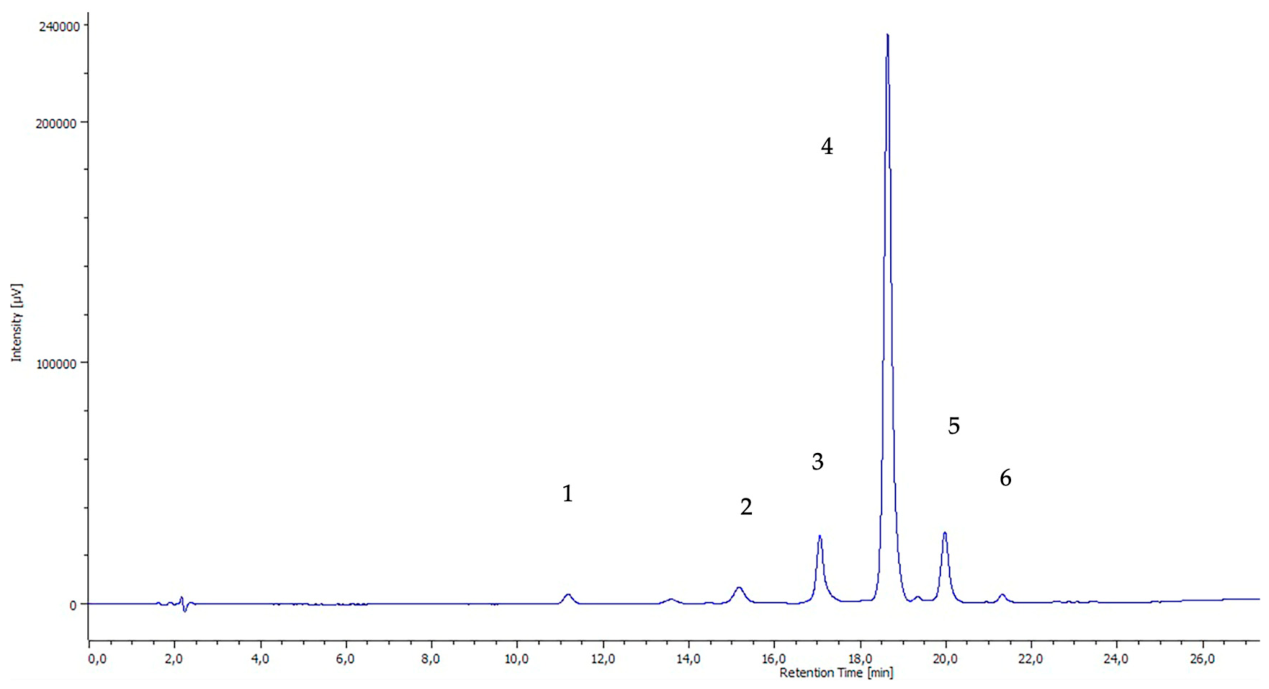
Figure 2.
Graphs obtained by Response Surface Methodology for the EE of AT.
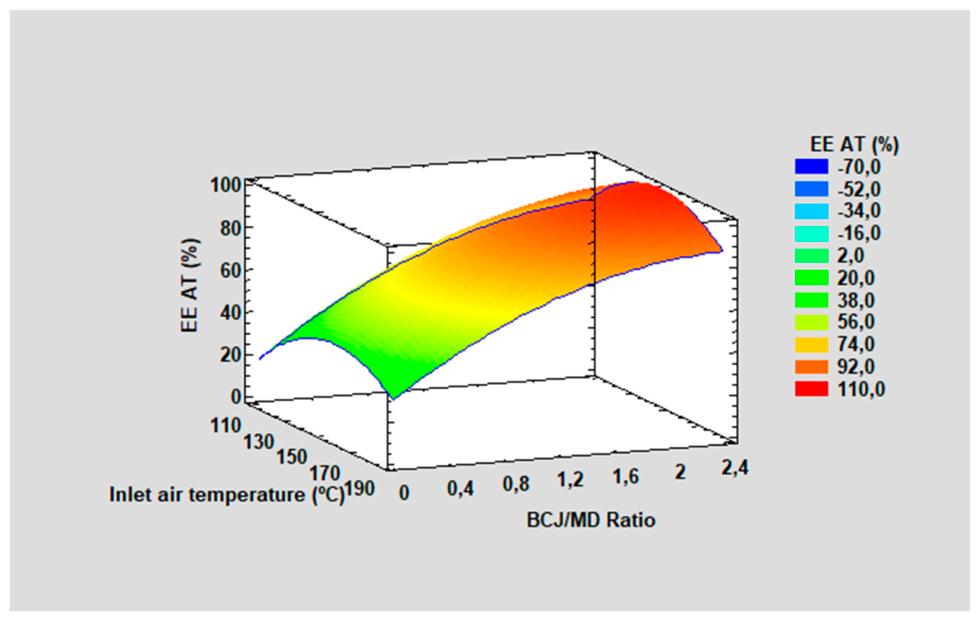
Figure 3.
Scanning electron microscopy (SEM) photographs of (a) BCJ-MD and (b) BCJ-MD-SA .
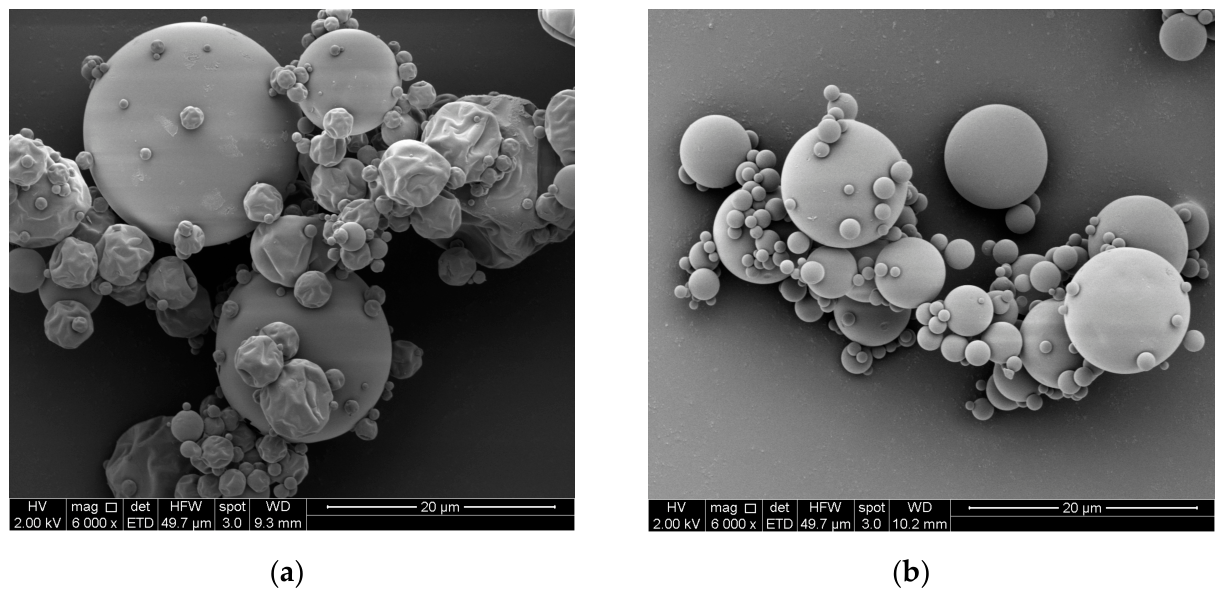
Figure 4.
(a)Graph of the evolution of AT retention over time (hours) and (b) the degradation rate constant of AT at 60 °C.
Figure 4.
(a)Graph of the evolution of AT retention over time (hours) and (b) the degradation rate constant of AT at 60 °C.
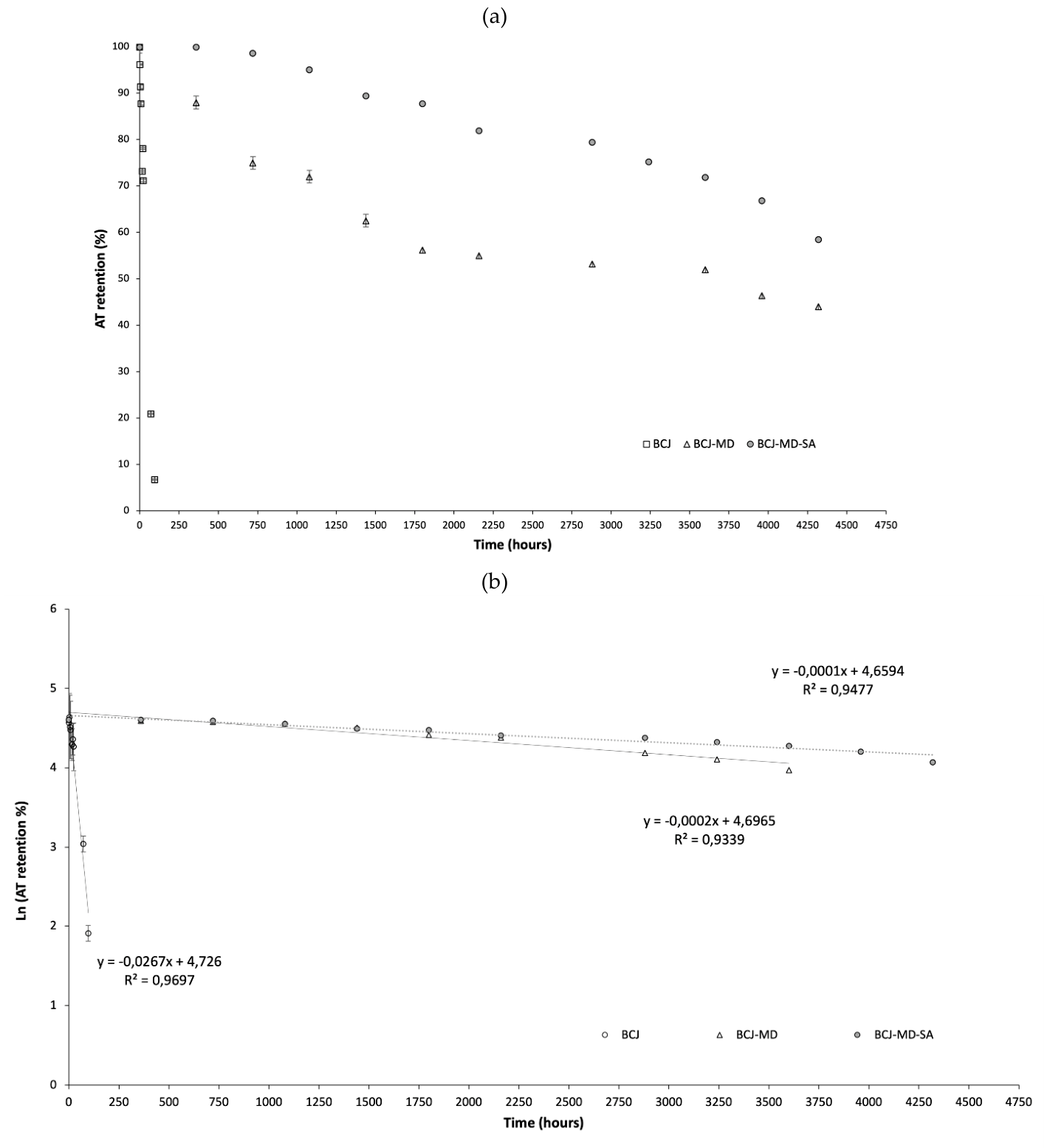

Table 1.
Physical and chemical characterization of black carrot and black carrot juice (BCJ).
| Analyze | Black Carrot | BCJ | |
|---|---|---|---|
| Moisture content (%) | 90 ± 5.1 a | 35.0 ± 0.4 b | |
| Soluble solids (ºBrix at 20 ºC) | 9.2 ± 0.2 b | 65.0 ± 0.5 a | |
| Antioxidant capacity (FRAP) (mg TE/100g) | 762.1 ± 43.9 b | 2123.3 ± 67.5 a | |
| Total anthocyanins (mg cy-3-glu/100g) | 165.9 ± 8.5 b | 213.8 ± 8.7 a | |
| Total anthocyanins HPLC (mg/100g) | Cyanidin-3-xylosyl-glucosyl-galactoside | 1.3 ± 0.1 b | 8.8 ± 0.1 a |
| Cyanidin-3-xylosyl-galactoside | 2.2 ± 0.2 b | 19.6 ± 0.2 a | |
| Cyanidin-3-xylosyl(sinapoylglucosyl)galactoside | 2.0 ± 0.1 b | 56.2 ± 5.2 a | |
| Cyanidin-3-xylosyl(feruloylglucosyl)galactoside | 55.3 ± 3.0 b | 457.2 ± 10.0 a | |
| Cyanidin-3-xylosyl(coumaroylglucosyl)galactoside Peonidin-3-xylosyl-galactoside |
5.7 ± 0.2 b 0.5 ± 0.1 b |
56.8 ± 5.0 a 6.3 ± 1.1 a |
|
BCJ: black carrot juice concentrate; cy-3-glu: cyanidin-3-glucoside; TE: Trolox equivalent. Different letters indicate statistically significant differences between systems for the Tukey multiple range test (p<0.05).
Table 2.
Encapsulation efficiency of anthocyanins (EE) for the BCJ microparticles by spray-drying according to the central composite design.
Table 2.
Encapsulation efficiency of anthocyanins (EE) for the BCJ microparticles by spray-drying according to the central composite design.
| Run | Inlet air temperature(ºC) (X1) | Ratio BCJ:MD (X2) | EE (%) |
|---|---|---|---|
| 1 | 120 | 1:0.5 | 50.0 ± 0.5 |
| 2 | 120 | 1:2.0 | 89.0 ± 0.7 |
| 3 | 180 | 1:0.5 | 57.9 ± 0.2 |
| 4 | 180 | 1:2.0 | 94.6 ± 0.1 |
| 5 | 150 | 1:0.34 | 55.8 ± 0.1 |
| 6 | 150 | 1:2.15 | 98.0 ± 0.2 |
| 7 | 114 | 1:1.25 | 66.2 ± 0.3 |
| 8 | 186 | 1:1.25 | 72.3 ± 0.1 |
| 9 | 150 | 1:1.25 | 88.5 ± 0.6 |
| 10 | 150 | 1:1.25 | 87.2 ± 0.4 |
| 11 | 150 | 1:1.25 | 85.4 ± 0.7 |
| 12 | 150 | 1:1.25 | 87.8 ± 0.2 |
BCJ: black carrot juice concentrate; MD: maltodextrin; EE: encapsulation efficiency.
Table 3.
Physical and chemical characteristics of the BCJ-MD and BCJ-MD-SA system obtained under optimal conditions.
Table 3.
Physical and chemical characteristics of the BCJ-MD and BCJ-MD-SA system obtained under optimal conditions.
| Analyze / Microparticles | BCJ-MD | BCJ-MD-SA | |
| Moisture (%) | 3.8 ± 0.3 b | 5.3± 0.1 a | |
| Water activity | 0.29 ± 0.02 ª | 0.26 ± 0.04 ª | |
| Total AT (mg c-3-G/g) | 1.95 ± 0.04 ª | 1.54 ± 0.19 ª | |
| EE (%)* | total anthocyanins | 90.9 ± 0.4ª | 93.2± 0.1ª |
| EE (%)** | Cyanidin-3-xylosyl-glucosyl-galactoside | 96.1 ± 0.3ª | 94.7± 0.1a |
| Cyanidin-3-xylosyl-galactoside | 95.4 ± 0.05ª | 93.5 ± 0.1ª | |
| Cyanidin-3-xylosyl(sinapoylglucosyl)galactoside | 98.7 ± 0.2ª | 96.1 ± 0.1ª | |
| Cyanidin-3-xylosyl(feruloylglucosyl)galactoside | 96.0 ± 0.04 ª | 94.8 ± 0.01 ª | |
| Cyanidin-3-xylosyl(coumaroylglucosyl)galactoside | 96.3 ± 0.1 ª | 94.9 ± 0.1 ª | |
BJC: black carrot juice concentrate; MD: maltodextrin; SA: sodium alginate; * EE of total anthocyanins determined by pH differential method; ** EE of individual AT determined by HPLC-DAD. Different letters indicate statistically significant differences between systems in the Tukey multiple-range test (p<0.05).
Table 5.
Anthocyanins total and individual content in black carrot juice and microparticle powders, and the bioaccessibility of black carrot anthocyanins after an in vitro digestion model.
Table 5.
Anthocyanins total and individual content in black carrot juice and microparticle powders, and the bioaccessibility of black carrot anthocyanins after an in vitro digestion model.
| Anthocyanins | BCJ | BCJ-MD | BCJ-MD-SA | |||
| mg/g | BA% | mg/g | BA% | mg/g | BA% | |
| Cyanidin-3-xylosyl-glucosyl-galactoside | 0.04 ± 0.00 | 100 ± 0.0 b | 0.04 ± 0.00 | 126.4 ± 2.6 a | 0.03 ± 0.00 | 36.7 ± 0.8 c |
| Cyanidin-3-xylosyl-galactoside | 0.03 ± 0.00 | 32.3 ± 4.3 b | 0.04 ± 0.00 | 102.1 ± 2.7 a | 0.02 ± 0.00 | 24.0 ± 0.7 c |
| Cyanidin-3-xylosyl(sinapoylglucosyl)galactoside | 0.11 ± 0.00 | 46.9 ± 3.9 b | 0.12 ± 0.00 | 89.8 ± 2.8 a | 0.10 ± 0.00 | 48.4 ± 1.8 b |
| Cyanidin-3-xylosyl(feruloylglucosyl)galactoside | 1.09 ± 0.00 | 53.0 ± 2.8 b | 0.88 ± 0.00 | 67.2 ± 0.3 a | 0.81 ± 0.00 | 41.6 ± 0.0 c |
| Cyanidin-3-xylosyl(coumaroylglucosyl)galactoside | 0.13 ± 0.00 | 55.5 ± 3.6 a | 0.11 ± 0.00 | 58.2 ± 1.1 a | 0.10 ± 0.00 | 34.2 ± 0.1b |
| Total AT by HPLC | 1.4 ± 0.33 | 57.2 ± 3.8 b | 1.19 ± 0.02 | 88.43 ± 3.8 a | 1.06 ± 0.001 | 44.1 ± 1.8 c |
BJC: black carrot juice concentrate; MD: maltodextrin; SA: sodium alginate; AT determined by HPLC-DAD. Different letters indicate statistically significant differences between systems in the Tukey multiple-range test (p<0.05).
Disclaimer/Publisher’s Note: The statements, opinions and data contained in all publications are solely those of the individual author(s) and contributor(s) and not of MDPI and/or the editor(s). MDPI and/or the editor(s) disclaim responsibility for any injury to people or property resulting from any ideas, methods, instructions or products referred to in the content. |
© 2026 by the authors. Licensee MDPI, Basel, Switzerland. This article is an open access article distributed under the terms and conditions of the Creative Commons Attribution (CC BY) license (http://creativecommons.org/licenses/by/4.0/).
Copyright: This open access article is published under a Creative Commons CC BY 4.0 license, which permit the free download, distribution, and reuse, provided that the author and preprint are cited in any reuse.