
Submitted:
13 July 2026
Posted:
14 July 2026
You are already at the latest version
Abstract
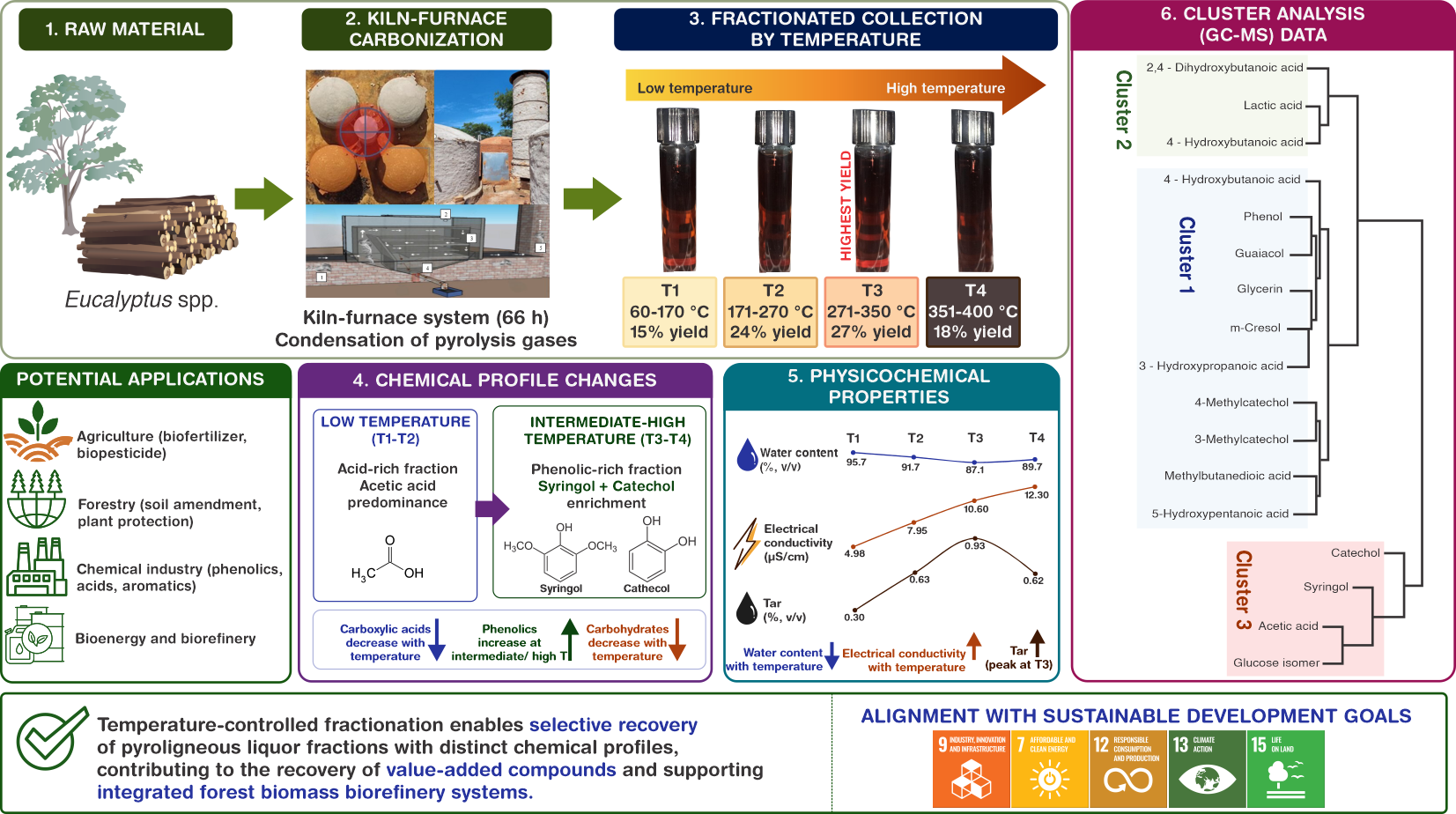
Pyroligneous liquor (PL) is a by-product of charcoal production with potential applications in agriculture, forestry, and industry. This study evaluated the influence of carbonization temperature on the yield, chemical composition, and physicochemical properties of PL obtained from Eucalyptus spp. in a sustainable kiln-furnace system. PL fractions were collected at four temperature intervals: T1 (60–170 °C), T2 (171–270 °C), T3 (271–350 °C), and T4 (351–400 °C). Gas chromatography–mass spectrometry (GC-MS) identified 78 organic compounds, mainly carboxylic acids, phenolic compounds, alcohols, carbohydrates, and aromatics. The highest PL yield was obtained in T3, accounting for 27% of the recovered liquor and showing high phenolic content, including syringol and catechol. In contrast, T1 showed the lowest yield and was dominated by carboxylic acids, particularly acetic acid. Carbonization temperature affected both PL composition and physicochemical properties, resulting in higher electrical conductivity and vegetable tar content at higher temperatures. Hierarchical cluster analysis revealed distinct compound groups according to their concentration patterns across the evaluated temperature intervals. The results demonstrate that temperature-controlled fractionation effectively produces PL fractions with distinct chemical profiles, supporting the selective recovery of value-added compounds for forest biomass biorefineries.
Keywords:
Eucalyptus
; charcoal production
; wood vinegar
; thermochemistry
; phenolics
; biomass
; pyrolysis
1. Introduction
Pyroligneous liquor (PL) is a by-product of wood carbonization obtained from the condensation of gases released during slow pyrolysis. This process, widely employed for the sustainable production of charcoal, involves the thermal decomposition of wood, typically derived from plantation species such as Eucalyptus spp. During carbonization, approximately 33% of the wood is converted into charcoal, whereas nearly 60% is recovered as valuable co-products, including PL, synthesis gas (syngas), and tar [1,2,3].
PL corresponds to the aqueous fraction of bio-oil, a biphasic liquid formed by the condensation of volatile compounds generated during pyrolysis. Following a settling period, the bio-oil separates into two distinct phases: a dense oily fraction, known as vegetable tar, and an aqueous fraction referred to as pyroligneous liquor. PL typically exhibits a yellow to reddish-brown color and consists primarily of water (80–90%) together with a complex mixture of organic compounds, including acetic acid, methanol, phenols, furans, and esters [4,5,6]. Owing to this complex chemical composition, PL has attracted considerable attention for agricultural applications as a natural fertilizer and biopesticide, while also showing promising potential for the production of value-added chemicals and bioenergy [7,8].
The chemical composition of PL is strongly influenced by carbonization conditions, particularly the temperature at which it is collected. At moderate temperatures (80–120 °C), PL generally exhibits characteristics suitable for agricultural applications, including relatively low concentrations of polycyclic aromatic hydrocarbons (PAHs), toxic compounds that tend to form at higher pyrolysis temperatures [9,10]. In addition, biomass characteristics, such as lignin, cellulose, and hemicellulose contents, together with the thermochemical conditions applied during pyrolysis, directly affect both the yield and chemical composition of PL [11,12,13,14].
Although numerous studies have investigated the physicochemical properties and chemical composition of pyroligneous liquor, most have been conducted under controlled laboratory conditions using muffle furnaces or small-scale pyrolysis systems. In contrast, studies evaluating PL produced in industrial or semi-industrial charcoal production systems, such as kiln-furnace technologies, remain limited. Moreover, most published studies treat pyroligneous liquor as a single product, without considering fractionated collection across different carbonization temperature intervals. Consequently, there is still limited understanding of how the progressive thermal degradation of biomass affects the yield, physicochemical properties, and distribution of organic compounds throughout the carbonization process. Addressing these knowledge gaps is essential for improving the selective recovery of high-value compounds and advancing the sustainable utilization of pyroligneous liquor within integrated forest biomass biorefineries.
Despite the growing interest in pyroligneous liquor and recent advances in its chemical characterization, significant knowledge gaps remain regarding the effects of temperature-controlled fractionated collection under operational kiln-furnace conditions. A better understanding of these effects is crucial for improving PL quality, optimizing production strategies, increasing compound recovery efficiency, and expanding its potential applications. Therefore, this study aimed to evaluate the yield, physicochemical properties, and chemical composition of pyroligneous liquor collected at different carbonization temperature intervals during charcoal production in a kiln-furnace system. By elucidating the evolution of PL chemical composition throughout the carbonization process, this study contributes to the selective recovery of value-added compounds and provides insights into the integration of pyroligneous liquor within forest biomass biorefineries.
2. Materials and Methods
2.1. Carbonization in a Kiln-Furnace System
Wood carbonization was carried out at the Sustainable Charcoal Production Unit of the Federal University of Minas Gerais (UFMG), located at the Institute of Agricultural Sciences (ICA), Montes Claros campus, Minas Gerais, Brazil (16°45′42″ S, 43°50′51″ W). According to the Köppen–Geiger climate classification [15], the region has an Aw climate (tropical savanna with a dry winter). Based on historical records from the Brazilian National Institute of Meteorology (INMET, 2003–2024), the site has a mean annual temperature of 23.1 °C, annual precipitation of 877 mm, and an altitude of 655.21 m.
The kiln–furnace system consists of four masonry kilns interconnected by ducts that convey non-condensable gases to a central furnace, where they are combusted. Its construction and operation follow a previously established methodology. Steel cylinders are installed to monitor temperature, while metal plates are used to support the structure and direct heat flow. During operation, butterfly valves regulate gas flow and air intake throughout the carbonization process, ensuring stable, controlled, and safe operation [16].
Condensable gases are recovered using a water-cooled condenser installed beneath the exhaust ducts. In this system, circulating water acts as the cooling medium, promoting heat exchange between the hot gases generated during carbonization and the cooled condenser surfaces. As the gas temperature decreases, condensable vapors liquefy, producing pyroligneous liquor (PL), whereas the remaining non-condensable gases are directed to the central furnace for combustion (Figure 1).
The carbonization cycle lasted 66 h. Throughout the process, temperatures were continuously monitored using a pyrometer, and aliquots of PL were collected at the condenser outlet. The collected liquor was subsequently separated into four fractions corresponding to the different thermal stages of the carbonization process, defined according to the temperature adopted in this study.
2.2. Experimental Sampling
The raw material consisted of Eucalyptus spp. logs with diameters ranging from 7 to 14 cm, carbonized in a kiln–furnace system during a single 66 h carbonization cycle. Throughout the process, the pyroligneous liquor generated in the condenser was continuously collected and fractionated according to the temperatures recorded by pyrometers installed in the system.
Four temperature intervals were established based on the carbonization thermal profile: T1 (60–170 °C), T2 (171–270 °C), T3 (271–350 °C), and T4 (351–400 °C) (Figure 2). All PL produced within each temperature interval was collected and pooled to obtain a representative composite sample for the corresponding thermal stage. Consequently, each thermal stage was represented by a composite PL fraction obtained from a specific phase of the same carbonization cycle.
After collection, the samples were stored under ambient conditions and allowed to decant naturally for approximately one year to promote phase separation and stabilization. Subsequently, the aqueous fraction was separated and subjected to double filtration prior to physicochemical and chromatographic analyses, following the methodology described by [17].
2.3. Evaluation of the Organic Compound Composition of Pyroligneous Liquor
The chemical composition of the PL fractions was determined by gas chromatography–mass spectrometry (GC–MS). Analyses were performed using an Agilent Technologies GC 7890A gas chromatograph coupled to a mass spectrometer and equipped with an SLB-5MS capillary column (Supelco; 30 m × 0.25 mm i.d. × 0.25 μm film thickness). Helium (99.999% purity) was used as the carrier gas at a constant flow rate of 1.0 mL min⁻¹.
2.4. Physicochemical Characterization of Pyroligneous Liquor Fractions
Physicochemical analyses of the PL fractions were performed at the Federal University of Minas Gerais, Montes Claros campus. The pH was measured using a benchtop digital pH meter. Relative density (D) was determined gravimetrically using a glass pycnometer according to ASTM D1217 [18]. Electrical conductivity (EC) was measured with a conductivity meter following APHA Method 2510 [19], and the results were expressed as μS cm⁻¹. Kinematic viscosity (V) was determined according to ASTM D1200 [20] and expressed in cSt (mm² s⁻¹). Water content, soluble solids, and vegetable tar content were determined using a corrected Brix refractometer according to the methodology described by [21].
2.5. Data Processing and Analysis
The relationship between carbonization temperature and the chemical composition of pyroligneous liquor was evaluated using the compounds identified by GC–MS in the four temperature intervals: T1 (60–170 °C), T2 (171–270 °C), T3 (271–350 °C), and T4 (351–400 °C). Data processing and graphical analyses were performed using Microsoft Excel and RStudio v.4.2.2 [22].
Because the PL fractions represented composite samples obtained from a single carbonization cycle, the chemical composition data were interpreted descriptively, emphasizing the relative abundance and distribution of compounds among the evaluated temperature range.
To compare the chemical profiles among temperature intervals, only compounds detected in all four PL fractions were considered. A data matrix containing 17 compounds × 4 temperature range, expressed as relative percentage values, was standardized and subjected to hierarchical cluster analysis using Euclidean distance and the complete linkage method. This analysis enabled the classification of compounds according to similarities in their concentration profiles across the different carbonization temperature.
For the functional chemical group analysis, the identified compounds were classified into five categories: carboxylic acids, phenolics, alcohols, carbohydrates, and aromatic compounds. The relative contribution of each category was calculated as the sum of the relative peak areas of the compounds assigned to that group within each PL fraction. Unidentified compounds were excluded from this classification.
The physicochemical properties, including pH, relative density (D), electrical conductivity (EC), and kinematic viscosity (V), were determined in analytical triplicate. Mean values, standard deviations, and coefficients of variation were calculated. Water content, soluble solids, and vegetable tar content were also determined in analytical triplicate, and the corresponding mean values are presented.
3. Results
3.1. Organic Chemical Compounds Identified by GC-MS Analysis
A total of 78 compounds were identified by GC-MS based on their mass spectra and molecular structures (Table 1). The identified compounds included substances with different molecular complexities and concentrations, highlighting the diversity of organic constituents present in the pyroligneous liquor (PL) obtained from the kiln-furnace carbonization system (Figure 3).
The compounds were classified into five functional chemical groups to facilitate the interpretation of the chemical composition of the PL fractions collected at different temperature intervals. The identified groups accounted for 62.9% of the total chromatographic area in T1 (60–170 °C), 61.2% in T2 (171–270 °C), 58.9% in T3 (271–350 °C), and 51.1% in T4 (351–400 °C). Thus, more than half of the compounds detected in each PL fraction were assigned to known functional chemical groups with defined molecular structures.
GC–MS analysis also detected several compounds that could not be identified by comparison with the NIST spectral library (Table 2).
The analytical method employed is primarily designed for the identification of low-molecular-weight organic compounds. Therefore, the occurrence of unidentified peaks may be associated with compounds not represented in the spectral database, as well as substances derived from the complex chemical matrix of Eucalyptus biomass. These unidentified constituents may include compounds formed during thermochemical conversion that require complementary analytical approaches for structural elucidation.
Differences in PL yield were observed among the evaluated temperature intervals. The highest yield was obtained for the PL fraction collected between 271 and 350 °C (T3), corresponding to 27% of the total recovered liquor, followed by the fraction collected between 171 and 270 °C (T2) with 24%, the fraction collected between 351 and 400 °C (T4) with 18%, and the fraction collected between 60 and 170 °C (T1) with 15%. The highest PL recovery occurred within the intermediate temperatures (271–350 °C), indicating that condensable product formation was maximized during this stage of carbonization.
3.2. Chemical Composition Analysis
The chemical composition of the pyroligneous liquor (PL) fractions varied according to the carbonization temperature interval, indicating that thermal conditions influenced the formation and distribution of organic compounds throughout the process. Differences were observed in the relative abundance of the major functional chemical groups, particularly carboxylic acids, phenolic compounds, carbohydrates, and aromatic compounds.
The fraction collected between 271 and 350 °C (T3) exhibited the highest yield and the greatest abundance of phenolic compounds, were characterized by a greater contribution of carboxylic acids, especially acetic acid, which is associated with the degradation of hemicelluloses during the initial stages of biomass thermoconversion. These fractions also showed lower concentrations of phenolic compounds derived from lignin decomposition.
In contrast, the PL fraction collected between 271 and 350 °C (T3) exhibited the highest yield and a greater abundance of phenolic compounds, particularly syringol and catechol. This pattern is consistent with the progressive degradation of lignin and the formation of secondary oxygenated compounds during intermediate stages of carbonization. The enrichment of phenolic constituents in this temperature interval suggests a greater recovery of lignin-derived compounds, which have been associated with antioxidant and bioactive properties in previous studies.
In contrast, the fraction collected at the highest temperatures T4 (351–400 °C), presented a distinct chemical profile characterized by the persistence of phenolic compounds and a reduction in carbohydrate-derived compounds. This behavior reflects the continuation of lignin decomposition reactions and the increasing thermal transformation of intermediate products generated during earlier carbonization stages.
Overall, these findings demonstrate that the chemical composition of PL is strongly associated with the temperature range in which the condensable gases are recovered. The progressive transition from acid-rich fractions at lower temperatures to phenolic-rich fractions at intermediate and higher temperatures highlights the importance of selective collection strategies for obtaining PL with specific chemical characteristics and potential end uses.
3.3. Hierarchical Clustering of Organic Compounds
Hierarchical cluster analysis grouped the identified compounds according to similarities in their relative abundance across the four PL fractions (Figure 4). Compounds exhibiting similar abundance profiles were clustered together in the hierarchical structure, allowing the identification of groups with related chemical behavior throughout the carbonization process.
Using the complete linkage method and Euclidean distance, three major clusters were identified based on the GC-MS data (Figure 5). Cluster 1 comprised compounds with relatively low concentrations and limited variation among temperature intervals. Cluster 2 included compounds with intermediate concentrations and moderate variation. Cluster 3 was composed of compounds with higher relative abundances and more pronounced changes across the evaluated temperature.
The compounds were grouped as follows: Cluster 1 (Phenol, 2-Hydroxybutanoic acid, m-Cresol, 3-Hydroxypropanoic acid, Glycerin, Methylbutanedioic acid, 5-Hydroxypentanoic acid, 4-Methylcatechol, 3-Methylcatechol, and Guaiacol); Cluster 2 (Lactic acid, 4-Hydroxybutanoic acid, and 2,4-Dihydroxybutanoic acid); and Cluster 3 (Acetic acid, Catechol, Syringol, and Glucose isomers).
Cluster 3 contained the compounds with the greatest contribution to the chemical composition of the PL fractions, particularly acetic acid, catechol, syringol, and glucose isomers. These compounds are associated with the thermal degradation of the major lignocellulosic components of biomass and reflect the progressive transformation of hemicellulose, cellulose, and lignin throughout carbonization.
The clustering pattern reflected the thermal evolution of the carbonization process. At lower temperatures (60–170 °C), the PL fractions were characterized by a greater contribution of compounds associated with the initial degradation of hemicelluloses, especially carboxylic acids such as acetic acid. At intermediate temperatures (171–350 °C), the decomposition of hemicellulose and cellulose intensified, accompanied by the onset of lignin degradation and an increased occurrence of phenolic compounds, including syringol and catechol.
At higher temperatures (351–400 °C), the chemical profile reflected the continued transformation of lignin-derived structures and the formation of secondary phenolic compounds. These compositional changes indicate that the chemical characteristics of PL evolve throughout the carbonization process and are closely associated with the temperature interval at which condensable products are recovered.
Overall, the hierarchical clustering analysis demonstrated that compounds with similar concentration patterns can be grouped according to their behavior during thermochemical conversion. This approach contributes to understanding the distribution of organic compounds among PL fractions and supports the selective collection of pyroligneous liquor according to the desired chemical composition and potential end use.
3.4. Chemical Groups of Pyroligneous Liquor Fractions
The compounds identified by GC–MS were classified into five major functional chemical groups, namely carboxylic acids, phenolic compounds, alcohols, carbohydrates, and aromatic compounds. The percentages presented represent the cumulative relative abundance of the identified compounds assigned to each group. Unidentified compounds and compounds not assigned to these categories were not included in this classification.
Among the identified constituents, acetic acid was the predominant carboxylic acid, whereas syringol and catechol were the main phenolic constituents. The proportion of carboxylic acids decreased from 25.9% in the fraction collected between 60 and 170 °C (T1) to 26.0% in T2 (171–270 °C), 24.1% in T3 (271–350 °C), and 20.1% in T4 (351–400 °C). In contrast, phenolic compounds increased from 22.3% in T1 to 23.5% in T3 and T4, with an intermediate value of 21.7% observed in T2.
Carbohydrates exhibited a progressive decrease with increasing temperature interval, ranging from 14.2% in T1 to 13.1% in T2, 11.0% in T3, and 8.1% in T4. Alcohols accounted for the smallest proportion among the identified functional chemical groups, varying from 0.5% in T1 to 0.3% in the remaining PL fractions.
Aromatic compounds showed relatively small variations among the thermal stage, corresponding to 10.7%, 9.8%, 8.6%, and 9.3% for T1, T2, T3, and T4, respectively. Overall, the relative abundance of the identified functional chemical groups changed throughout the carbonization process, resulting in distinct chemical profiles among the PL fractions collected at different temperatures.
3.5. Physicochemical Properties of Pyroligneous Liquor Fractions
All PL fractions exhibited acidic pH values ranging from 3.4 to 3.8, while relative density showed only minor variation among the evaluated temperature intervals, remaining close to that of water (Table 3). Electrical conductivity increased with increasing collection temperature, reaching its highest value in the PL fraction collected between 351 and 400 °C (T4).
Kinematic viscosity varied only slightly among the PL fractions and remained higher than that of pure water in all temperature range. The low viscosity values were consistent with the high water content of the samples.
The water, soluble solids, and vegetable tar contents are presented in Table 4.

Table 5.
Aspects of pyroligneous liquors verified on the Brix scale and the difference in insoluble vegetable tar.
Table 5.
Aspects of pyroligneous liquors verified on the Brix scale and the difference in insoluble vegetable tar.
|
Temperature interval |
Water | Soluble solids | Tar |
| (%) | |||
| T1 (60 – 170 °C) | 95.7 | 4 | 0.30 |
| T2 (171 – 270 °C) | 91.5 | 8 | 0.53 |
| T3 (271 – 350 °C) | 87.1 | 12 | 0.93 |
| T4 (351 – 400 °C) | 89.1 | 10 | 0.89 |
Water content decreased with increasing temperature interval, whereas vegetable tar content increased from the lower to the intermediate temperatures. The highest vegetable tar content was observed in the PL fraction collected between 271 and 350 °C (T3). Soluble solids showed variations among the PL fractions, reflecting differences in the concentration of dissolved constituents recovered throughout the carbonization process.
Overall, the physicochemical properties varied among the PL fractions, reflecting changes in the composition of the condensable products recovered throughout the carbonization process.
4. Discussion
The present study demonstrates that temperature-controlled fractionation of pyroligneous liquor (PL) under kiln–furnace operating conditions enables the selective recovery of fractions with distinct chemical compositions. This finding is particularly relevant for forest biomass biorefineries, where process integration and coproduct valorization are essential for improving both the sustainability and economic viability of charcoal production.
According to [2], the thermal degradation of wood proceeds through successive stages that occur within specific temperature ranges and residence times, resulting in the formation of solid, liquid, and gaseous products. The recovery of PL is directly associated with the thermochemical decomposition of biomass constituents and the subsequent condensation of volatile compounds generated during carbonization [23,24].
Wood is a complex lignocellulosic material composed primarily of cellulose, hemicellulose, and lignin embedded in a structural matrix rich in carbon, hydrogen, and oxygen [25]. During carbonization, these constituents undergo progressive thermal degradation according to their intrinsic thermal stability. Hemicellulose decomposes at relatively low temperatures, followed by cellulose, whereas lignin degrades over a broader temperature range [26]. This sequential degradation explains the changes observed in the chemical composition of the PL fractions collected at different stages of the carbonization process.
The predominance of carboxylic acids in the fractions collected at lower temperatures is consistent with the degradation of hemicellulose and the formation of oxygenated compounds, particularly acetic acid. As carbonization progressed, the relative abundance of phenolic compounds increased, especially in the fractions collected between 271 and 400 °C. This trend reflects the increasing contribution of lignin-derived compounds to the condensable fraction. Similar changes in the distribution of phenolic and oxygenated compounds as a function of pyrolysis temperature have been reported by [27].
The occurrence of syringol, catechol, guaiacol, and related phenolic derivatives in the intermediate- and high-temperature fractions is particularly relevant because these compounds have been associated with antioxidant activity and other bioactive properties [12,26]. The enrichment of phenolic constituents in the fraction collected between 271 and 350 °C indicates that this temperature interval favors the recovery of higher-value lignin-derived compounds.
Hierarchical cluster analysis further demonstrated that compounds exhibiting similar concentration profiles could be grouped according to their distribution across the evaluated temperature intervals. The clustering of acetic acid, catechol, syringol, and glucose isomers suggests that these compounds are major contributors to the chemical profile of PL and represent key products formed during the thermochemical conversion of lignocellulosic biomass. Similar clustering patterns have been reported in studies investigating the evolution of pyrolysis products from lignocellulosic feedstocks [14].
The distribution of the major functional chemical groups also reflected the sequential degradation of wood constituents. Carboxylic acids predominated at lower temperatures, whereas phenolic compounds became increasingly abundant at intermediate and higher temperatures. This transition is consistent with the progressive decomposition of hemicellulose, cellulose, and lignin and highlights the potential of fractionated collection strategies to obtain PL enriched in specific classes of compounds.
The physicochemical properties of the PL fractions also reflected the influence of carbonization temperature on the composition of the condensable products. The acidic pH observed in all fractions is characteristic of pyroligneous liquor and is mainly attributed to the presence of carboxylic acids and other oxygenated compounds generated during biomass decomposition [14,23]. The persistence of acidic conditions throughout the evaluated temperature range indicates that these compounds remain important constituents of the condensed liquid phase during the entire carbonization process.
Electrical conductivity increased with collection temperature, reaching its highest value in the fraction collected between 351 and 400 °C. According to [28], increasing carbonization temperature affects not only product yield but also physicochemical properties. The increase in conductivity suggests a higher concentration of dissolved ionic species and inorganic constituents in the fractions collected at elevated temperatures. As reported by [29], the physicochemical behavior of acidic solutions is governed by dissociation processes, oxidation reactions, and interactions among dissolved compounds within the aqueous phase.
Relative density remained close to that of water in all PL fractions, confirming that water was the predominant constituent. According to [30], the low viscosity and high mobility of water strongly influence the physical behavior of aqueous pyrolysis products. Likewise, the relatively low kinematic viscosity observed in the PL fractions reflects their high water content, although dissolved organic compounds resulted in viscosity values slightly higher than those of pure water. According to [31], molecular rearrangements occurring during carbonization directly influence the physicochemical properties of pyroligneous liquor through the continuous formation and cleavage of chemical bonds.
The inverse relationship between water content and vegetable tar content is consistent with the progression of carbonization reactions. The highest tar content was observed in the fraction collected between 271 and 350 °C, coinciding with the temperature range in which lignin degradation becomes more pronounced. Similar trends have been reported by APAN [32] and other authors [5,10,23]. According to [17], higher tar contents may also indicate a greater contribution of heavy aromatic compounds, including substances associated with polycyclic aromatic hydrocarbons (PAHs), which require careful monitoring because of their environmental and toxicological relevance. Likewise, [33] emphasized the importance of controlling these aromatic compounds because some may exhibit carcinogenic, mutagenic, and genotoxic properties.
From a biorefinery perspective, the results demonstrate that both the chemical composition and physicochemical properties of pyroligneous liquor are strongly influenced by the temperature at which condensable products are recovered. As proposed by [34], selective condensation strategies can enhance the recovery of specific classes of compounds according to their formation temperatures. Consequently, fractionated collection during carbonization represents a promising approach for maximizing the recovery of value-added compounds and promoting the sustainable utilization of charcoal production coproducts.
Overall, the results confirm that the thermochemical conversion of biomass directly governs both the chemical composition and physicochemical properties of pyroligneous liquor. The transition from carboxylic acid-rich fractions at lower temperatures to phenolic-rich fractions at intermediate and higher temperatures highlights the importance of temperature-controlled collection systems for the development of integrated forest biomass biorefineries.
A limitation of this study is that the PL fractions were obtained from a single carbonization cycle. Consequently, the results should be interpreted as a detailed characterization of temperature-dependent PL fractions under representative kiln–furnace operating conditions. Future studies including multiple carbonization cycles are recommended to evaluate process variability and confirm the reproducibility of the observed chemical and physicochemical trends.
Despite this limitation, the present study provides one of the first detailed characterizations of temperature-fractionated pyroligneous liquor obtained under operational kiln–furnace conditions, providing a valuable basis for future studies aimed at optimizing selective compound recovery and advancing forest biomass biorefinery applications.
5. Conclusions
The results demonstrated that the chemical composition and physicochemical properties of pyroligneous liquor are strongly influenced by the temperature at which condensable products are recovered during charcoal production in a kiln–furnace system. A total of 78 organic compounds were identified, predominantly belonging to the functional chemical groups of carboxylic acids, phenolic compounds, carbohydrates, alcohols, and aromatic compounds.
The PL fractions collected at different temperature intervals exhibited distinct chemical profiles. Fractions collected at lower temperatures were characterized by a greater contribution of carboxylic acids, whereas those collected at intermediate and higher temperatures showed an increased abundance of phenolic compounds, particularly syringol and catechol, reflecting the progressive degradation of lignin. The highest PL yield was obtained in the fraction collected between 271 and 350 °C, which also exhibited the greatest abundance of phenolic compounds.
The physicochemical properties of the PL fractions also varied throughout the carbonization process, reflecting changes in the composition of the condensable products. All fractions exhibited acidic pH values, while electrical conductivity increased with collection temperature. Water and vegetable tar contents also varied among the evaluated temperature intervals, demonstrating the strong influence of thermal conditions on the characteristics of the recovered liquor.
Overall, these findings demonstrate that temperature-controlled fractionation is an effective strategy for producing pyroligneous liquor fractions with distinct chemical compositions and physicochemical properties. This approach supports the transformation of pyroligneous liquor from a conventional by-product of charcoal production into a value-added biorefinery feedstock, thereby promoting the sustainable utilization of forest biomass and expanding the range of products that can be recovered from charcoal production systems.
Future studies should investigate the biological activity, toxicological characteristics, and industrial applicability of the different PL fractions, as well as further characterize unidentified compounds and potential contaminants. Such investigations will contribute to the safe and efficient utilization of pyroligneous liquor in agricultural, industrial, and environmental applications.
Furthermore, this study provides new insights into the temperature-dependent evolution of pyroligneous liquor under operational kiln–furnace conditions, contributing to the optimization of selective compound recovery and supporting the development of integrated forest biomass biomass biorefineries.
Author Contributions
Conceptualization, Joana D’arc Rocha de Oliveira, Talita Baldin and Leandro Silva de Oliveira; Methodology, Joana D’arc Rocha de Oliveira and Talita Baldin; Formal analysis, Joana D’arc Rocha de Oliveira; Writing—original draft preparation, Joana D’arc Rocha de Oliveira and Talita Baldin; Writing—review and editing, Carine Setter, Cristiane Pedrazzi and Daniel Tavares de Farias; Supervision, Fernando Colen, Edy Eime Pereira Baraúna and Marina Donária Chaves Arantes; Funding acquisition, Leandro Silva de Oliveira. All authors have read and agreed to the published version of the manuscript.
Funding
This research was funded by the National Council for Scientific and Technological Development (CNPq), through the MAI/DAI Program (Call No. 68/2022), and by the Minas Gerais State Research Support Foundation (FAPEMIG), grant RED-00225-23. Additional financial support was provided by Vallourec Tubos do Brasil Ltda. through Project 31523 – FUNDEP/UFMG.
Data Availability Statement
The data presented in this study are available on request from the corresponding author. The data are not publicly available because they are part of ongoing research projects.
Acknowledgments
The authors thank group Vallourec Tubos do Brasil Ltda (31523 – FUNDEP/UFMG) for its financial support, which enabled the development of this research, as well as the financial assistance from the Minas Gerais State Research Support Foundation (FAPEMIG), process no. RED-00225-23, the National Council for Scientific and Technological Development (CNPq), and the Research Pro-Rectorate (PRPq) of the Federal University of Minas Gerais (UFMG). We also thank UFMG for providing the necessary infrastructure for carrying out the experiments and analyses.
Conflicts of Interest
The authors declare that they have no conflict of interest in the publication.
References
- Castro, A.F.N.M.; Castro, R.V.O.; Carneiro, A.D.C.O.; Lima, J.E.D.; Santos, R.C.D.; Pereira, B.L.C.; Alves, I.C.N. Análise Multivariada Para Seleção de Clones de Eucalipto Destinados à Produção de Carvão Vegetal. Pesq. Agropec. bras. 2013, 48, 627–635. [Google Scholar] [CrossRef]
- Tripathi, M.; Sahu, J.N.; Ganesan, P. Effect of Process Parameters on Production of Biochar from Biomass Waste through Pyrolysis: A Review. Renew. Sustain. Energy Rev. 2016, 55, 467–481. [Google Scholar] [CrossRef]
- Gonçalves, F.G.; Silva, A.G.; Ferraro, A.C.; Costa, N.N.M.; Souza, R.A.B.; Tosato, A.F. Captação de Líquido Pirolenhoso Da Carbonização Da Madeira de Eucalyptus Cloeziana Em Forno Rabo Quente. Agraria 2010, 5, 232–237. [Google Scholar] [CrossRef]
- Westerhof, R.J.M.; Brilman, D.W.F.; Garcia-Perez, M.; Wang, Z.; Oudenhoven, S.R.G.; Van Swaaij, W.P.M.; Kersten, S.R.A. Fractional Condensation of Biomass Pyrolysis Vapors. Energy Fuels 2011, 25, 1817–1829. [Google Scholar] [CrossRef]
- Theapparat, Y.; Chandumpai, A.; Faroongsarng, D. Physicochemistry and Utilization of Wood Vinegar from Carbonization of Tropical Biomass Waste. In Tropical Forests - New Edition; Sudarshana, P., Nageswara-Rao, M., Soneji, J.R., Eds.; InTech, 2018; ISBN 978-1-78923-562-3. [Google Scholar]
- Ouattara, H.A.A.; Niamke, B.F.; Ahoke, M.E.M.F.; N’Guessan, J.L.L.; Yao, J.; Amusant, N.; Dumarcay, S. Physicochemical Characterization, Chemical Composition and Antioxidant Activities of Pyroligneous Acids from Cocktails of Wood and Agricultural Residues from Ivory Coast. J. Anal. Appl. Pyrolysis 2024, 181, 106629. [Google Scholar] [CrossRef]
- Campos, A.D. Informação Técnica sobre Extrato Pirolenhoso. 2018, 9. [Google Scholar] [PubMed]
- Oramahi, H.A.; Maurisa, T.; Nurhaida, N.; Darwati, H.; Rifanjani, S. Optimization and Characterization of Liquid Smoke Produced by Terminalia Catappa Wood Pyrolysis and Its In Vitro Antifungal Activity. Sci. Technol. Indones. 2024, 9, 207–214. [Google Scholar] [CrossRef]
- Campos, A.D. Processo de coleta e produção do extrato pirolenhoso para uso agrícola; 2018. [Google Scholar]
- Almeida, R.S.R.; Taccini, M.M.; de Moura, L.F.; Ceribelli, U.L.; Brito, J.O. Pyroligneous Liquor Produced at Different Heating Rates in Pyrolysis of Eucalyptus Wood. MCDA 2018, 2, 1–5. [Google Scholar] [CrossRef]
- Pimenta, A.; Fasciotti, M.; Monteiro, T.; Lima, K. Chemical Composition of Pyroligneous Acid Obtained from Eucalyptus GG100 Clone. Molecules 2018, 23, 426. [Google Scholar] [CrossRef] [PubMed]
- Liu, Z.; Niu, W.; Chu, H.; Zhou, T.; Niu, Z. Effect of the Carbonization Temperature on the Properties of Biochar Produced from the Pyrolysis of Crop Residues. BioResources 2018, 13, 3429–3446. [Google Scholar] [CrossRef]
- Mengfan, L.; Chengliang, Z.; Runqin, H.; Zhongguo, Z.; Wenbo, C. Quantitative Analysis of Multi-Components by Single-Marker: An Effective Method for the Chemical Characterization of Wood Vinegar. Ind. Crops Prod. 182 114862. [CrossRef]
- Ornaghi, H.L.; Monticeli, F.M.; Neves, R.M.; Agnol, L.D.; Bianchi, O. Influence of Different Cellulose/Hemicellulose/Lignin Ratios on the Thermal Degradation Behavior: Prediction and Optimization. Biomass Conv. Bioref. 2023, 13, 7775–7782. [Google Scholar] [CrossRef]
- Alvares, C.A.; Stape, J.L.; Sentelhas, P.C.; De Moraes Gonçalves, J.L.; Sparovek, G. Köppen’s Climate Classification Map for Brazil. metz 2013, 22, 711–728. [Google Scholar] [CrossRef] [PubMed]
- Brasil Produção Sustentável de Carvão Vegetal: Manual de Operação de Sistema Fornos-Fornalha 2029.
- Pimenta, A.S.; Gama, G.S.P.; Feijó, F.M.C.; Braga, R.M.; De Azevedo, T.K.B.; De Melo, R.R.; De Oliveira Miranda, N.; De Andrade, G.S. Wood Vinegar from Slow Pyrolysis of Eucalyptus Wood: Assessment of Removing Contaminants by Sequential Vacuum Distillation. Forests 2023, 14, 2414. [Google Scholar] [CrossRef]
- Standard Test Method for Density and Relative Density (Specific Gravity) of Liquids by Bingham Pycnometer. ASTM ASTM D1217-20; ASTM INTERNATIONAL. West Conshohocken, 2020.
- APHA 2510 Standard Methods for the Examination of Water and Wastewater. In AMERICAN PUBLIC HEALTH ASSOCIATION; Método 2510B: Washington, DC, 2017.
- ASTM ASTM D1200-10: Standard; Test Method for Viscosity of Paints, Varnishes, and Lacquers by Ford Viscosity Cup. ASTM INTERNATIONAL: West Conshohocken, 2010.
- Oasmaa, A.; Kuoppala, E. Solvent Fractionation Method with Brix for Rapid Characterization of Wood Fast Pyrolysis Liquids. Energy Fuels 2008, 22, 4245–4248. [Google Scholar] [CrossRef]
- Komelj, J. R Core Team (2023) R A Language and Environment for Statistical Computing. R Foundation for Statistical Computing, Vienna. - References - Scientific Research Publishing. Available online: https://www.scirp.org/reference/referencespapers?referenceid=3582659 (accessed on 17 June 2026).
- Lin, X.; Dong, M.; Nie, W.; Rao, G.; Lu, J. Conversion Mechanism of Organic Components during the Eucalyptus Biomass Pyrolysis Process Based on the Multispectral Association Method. Energy Fuels 2024, 38, 7929–7940. [Google Scholar] [CrossRef]
- Chen, D.; Gao, A.; Cen, K.; Zhang, J.; Cao, X.; Ma, Z. Investigation of Biomass Torrefaction Based on Three Major Components: Hemicellulose, Cellulose, and Lignin. Energy Convers. Manag. 2018, 169, 228–237. [Google Scholar] [CrossRef]
- Evans, R.J.; Milne, T.A. Molecular Characterization of the Pyrolysis of Biomass. Energy Fuels 1987, 1, 123–137. [Google Scholar] [CrossRef]
- Mengfan, L.; Jingjing, Y.; Chengliang, Z.; Runqin, H.; Zhongguo, Z.; Wenbo, C. Quantitative Analysis of Multi-Components by Single-Marker: An Effective Method for the Chemical Characterization of Wood Vinegar. Ind. Crops Prod. 2022, 182, 114862. [Google Scholar] [CrossRef]
- Medeiros, L.C.D.D.; Pimenta, A.S.; Braga, R.M.; Carnaval, T.K.D.A.; Medeiros Neto, P.N.; Melo, D.M.D.A. EFFECT OF PYROLYSIS HEATING RATE ON THE CHEMICAL COMPOSITION OF WOOD VINEGAR FROM EUCALYPTUS UROGRANDIS AND MIMOSA TENUIFLORA. Rev. Árvore 2019, 43, e430408. [Google Scholar] [CrossRef]
- Silva, A.D.P.; Andrade, A.M.D.; Dias Júnior, A.F. Investigando o Uso de Resíduos Do Processamento Da Madeira de Eucalipto Para a Produção de Combustíveis Sólidos Compactados. Matéria (Rio J.) 2020, 25, e-12797. [Google Scholar] [CrossRef]
- Andrade, J.C.D. Química Analítica Básica: Soluções Tampão Ácido-Base - Conceitos, Teoria e Prática. Rev. Chemkeys 2020, 2, e20001. [Google Scholar] [CrossRef]
- Liu, Z.; Zhao, L.; Yao, Z.; Jia, J.; Wang, Z.; Liu, Z. Behaviors and Interactions during Hydrothermal Carbonization of Protein, Cellulose and Lignin. Chem. Eng. J. 2023, 476, 146373. [Google Scholar] [CrossRef]
- Lima, S.G.D.; Santos, L.D.S.; Monteiro, L.P.C. Simulação Da Pirólise de Resíduos Para a Produção de Combustível Limpo / Pyrolysis Simulation of Residues for the Clean Fuel Production. BJDV 2021, 7, 78706–78719. [Google Scholar] [CrossRef]
- APAN ASSOCIAÇÃO DE PRODUTORES DE AGRICULTURA NATURAL. Produção e Padronização de Extratos Pirolenhosos Da APAN 2003. [CrossRef]
- Mogashane, T.M.; Mokoena, L.; Tshilongo, J. A Review on Recent Developments in the Extraction and Identification of Polycyclic Aromatic Hydrocarbons from Environmental Samples. Water 2024, 16, 2520. [Google Scholar] [CrossRef]
- Guo, G.; Wang, Q.; Huang, Q.; Fu, Q.; Liu, Y.; Wang, J.; Hu, S.; Mašek, O.; Wang, L.; Zhang, J. Effect of Pyrolysis Temperature on the Characterisation of Dissolved Organic Matter from Pyroligneous Acid. Molecules 2021, 26, 3416. [Google Scholar] [CrossRef] [PubMed]
Figure 1.
Carbonization plant of the Furnace-Kiln system with four furnaces interconnected in a central furnace. (1) Gas outlet from the furnaces during carbonization; (2) Condenser and cooling of pyrolysis gases; (3) Passage of gases through the condenser; (4) Collection of pyroligneous liquor; (5) Burning of non-condensed gases. Source: Adapted from the Sustainable Steelmaking Project, MMA, ICA - UFMG University, Brazil, 2019.
Figure 1.
Carbonization plant of the Furnace-Kiln system with four furnaces interconnected in a central furnace. (1) Gas outlet from the furnaces during carbonization; (2) Condenser and cooling of pyrolysis gases; (3) Passage of gases through the condenser; (4) Collection of pyroligneous liquor; (5) Burning of non-condensed gases. Source: Adapted from the Sustainable Steelmaking Project, MMA, ICA - UFMG University, Brazil, 2019.
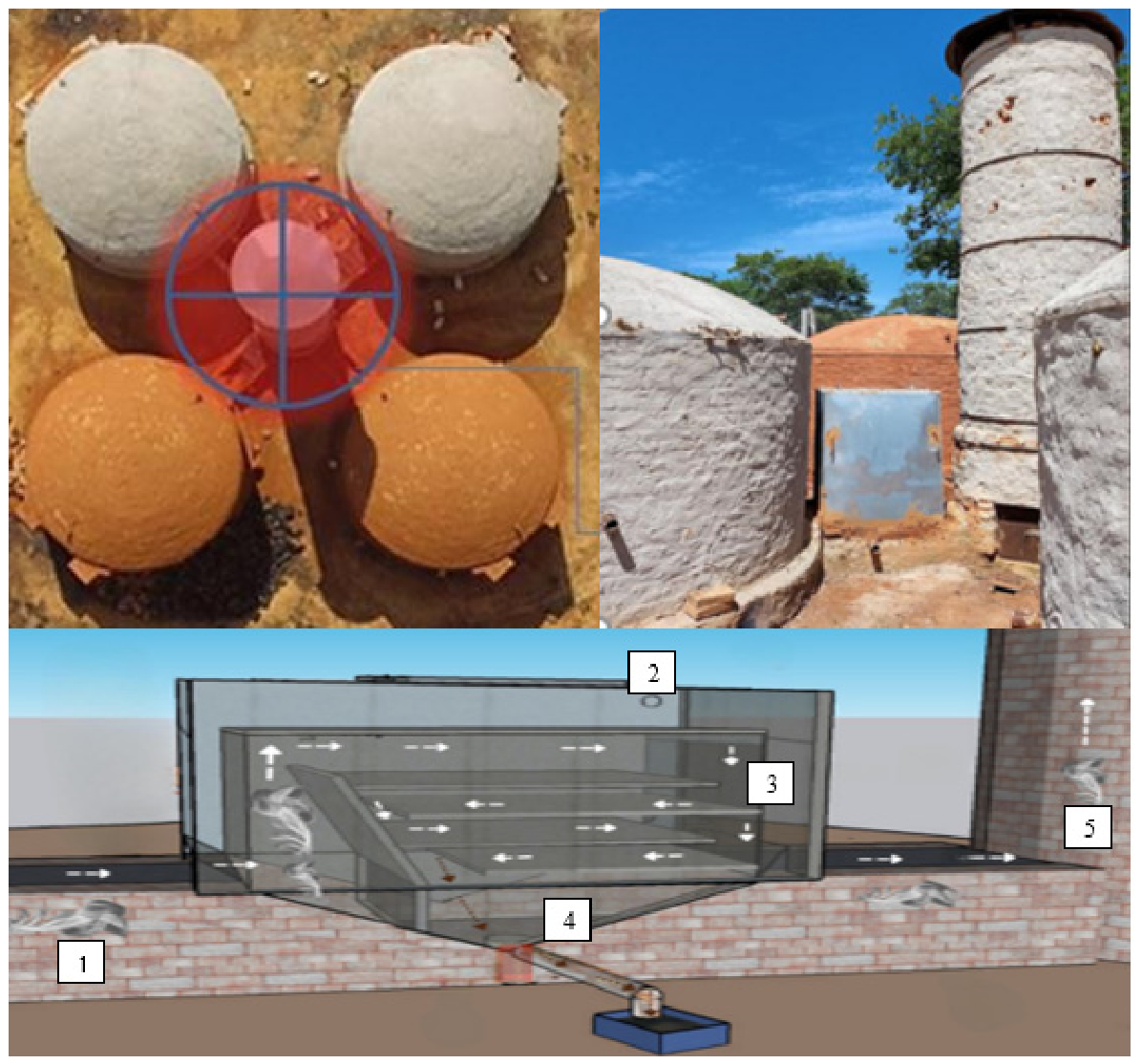
Figure 2.
Obtaining treatments in the temperature ranges of wood carbonization, where: Treatment T1 (60-170 °C) corresponds to the liquor produced at furnace temperatures between 60-170 °C; Treatment T2 (171-270 °C) corresponds to the liquor produced at furnace temperatures between 171-270 °C; Treatment T3 (271-350 °C) corresponds to the liquor produced at furnace temperatures between 271-350°C; and Treatment T4 (351-400 °C) corresponds to the liquor produced at furnace temperatures between 351-400 °C; Rd is the value of the pyroligneous liquor yield from charcoal production in a furnace-kiln system. Source: Prepared by the authors.
Figure 2.
Obtaining treatments in the temperature ranges of wood carbonization, where: Treatment T1 (60-170 °C) corresponds to the liquor produced at furnace temperatures between 60-170 °C; Treatment T2 (171-270 °C) corresponds to the liquor produced at furnace temperatures between 171-270 °C; Treatment T3 (271-350 °C) corresponds to the liquor produced at furnace temperatures between 271-350°C; and Treatment T4 (351-400 °C) corresponds to the liquor produced at furnace temperatures between 351-400 °C; Rd is the value of the pyroligneous liquor yield from charcoal production in a furnace-kiln system. Source: Prepared by the authors.
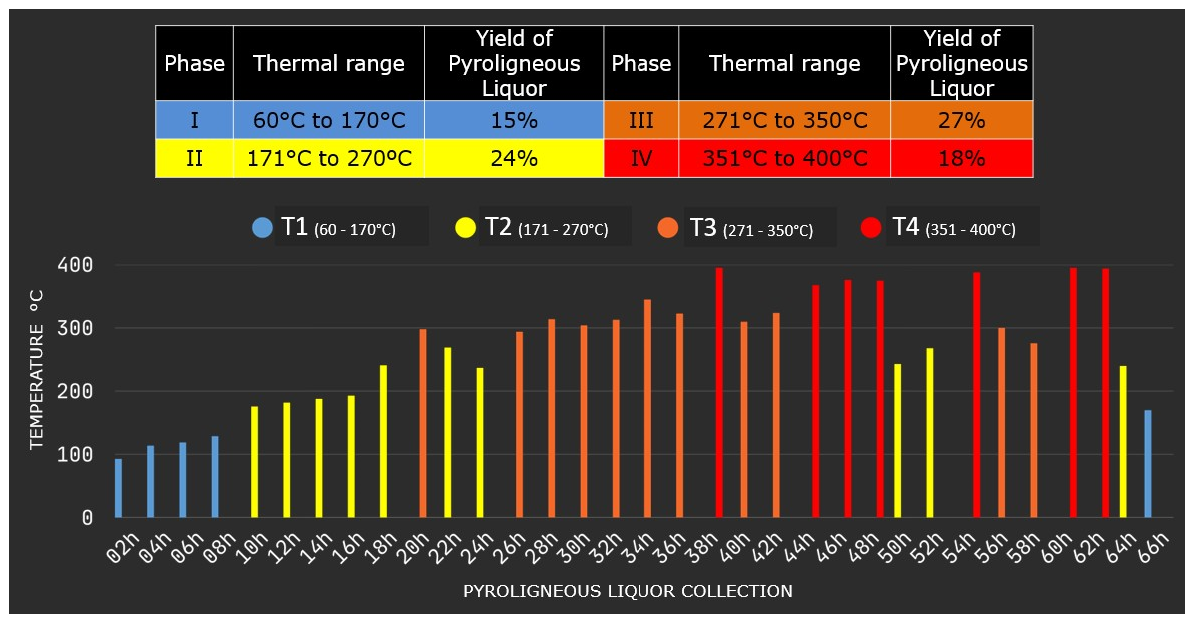
Figure 3.
Structural formulas of organic compounds with the highest percentage in the treatments. Source: Prepared by the authors.
Figure 3.
Structural formulas of organic compounds with the highest percentage in the treatments. Source: Prepared by the authors.
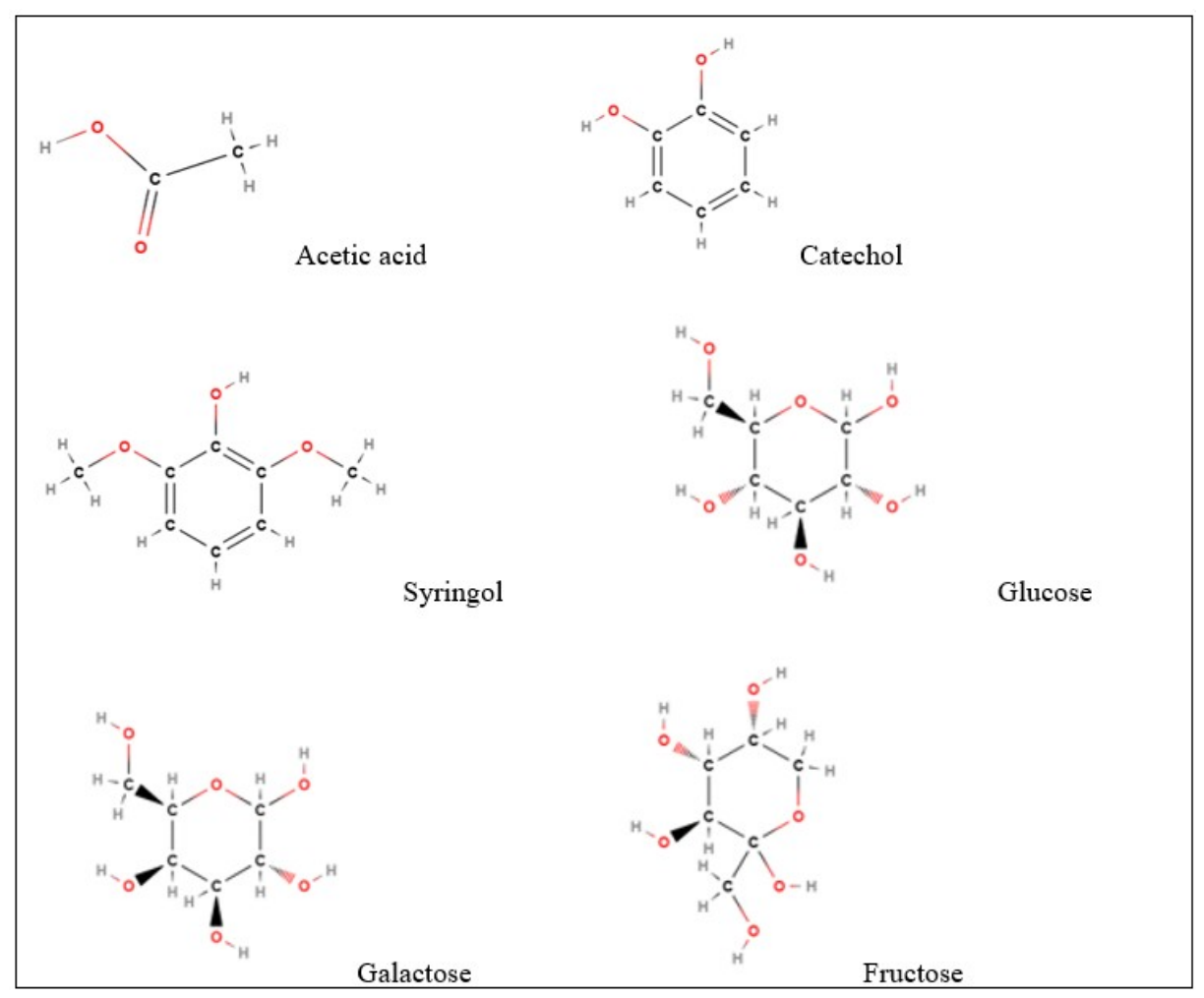
Figure 4.
Dendrogram of organic chemical compounds present in pyroligneous liquors. Source: Prepared by the authors.
Figure 4.
Dendrogram of organic chemical compounds present in pyroligneous liquors. Source: Prepared by the authors.
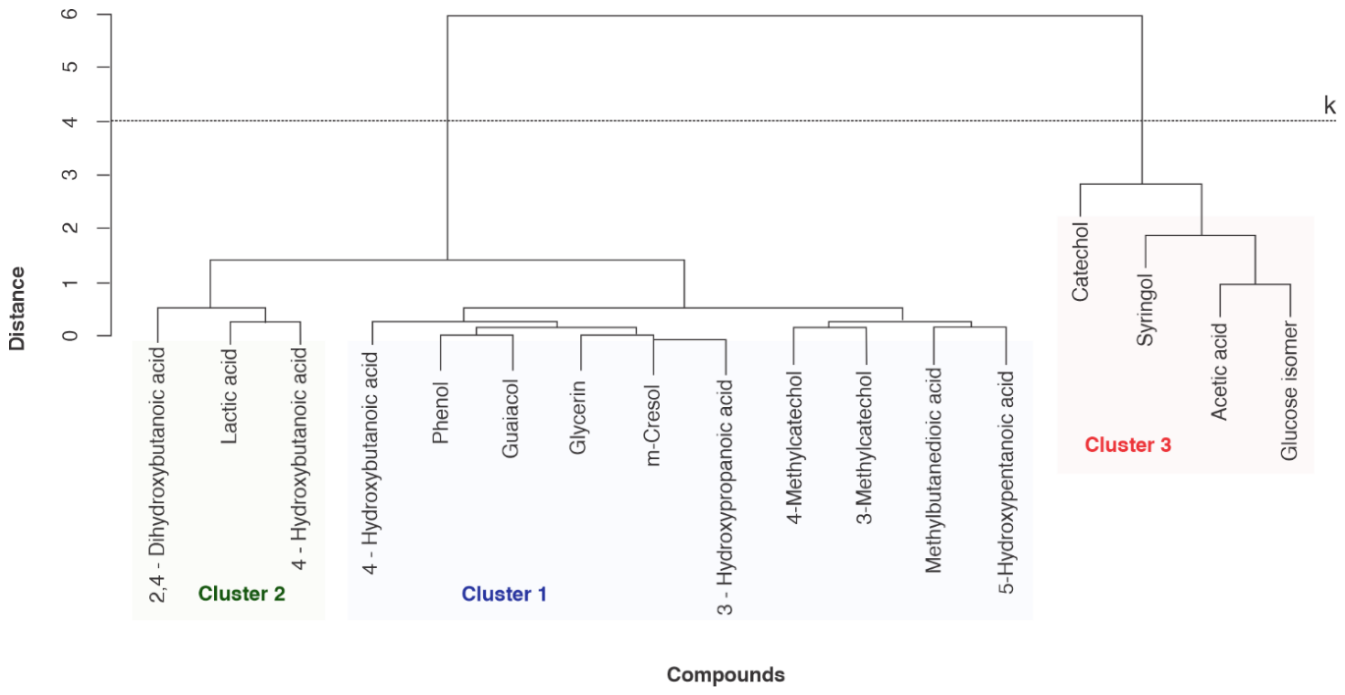
Figure 5.
Distribution of the average concentration of organic chemical compounds by cluster. Source: Prepared by the authors.
Figure 5.
Distribution of the average concentration of organic chemical compounds by cluster. Source: Prepared by the authors.
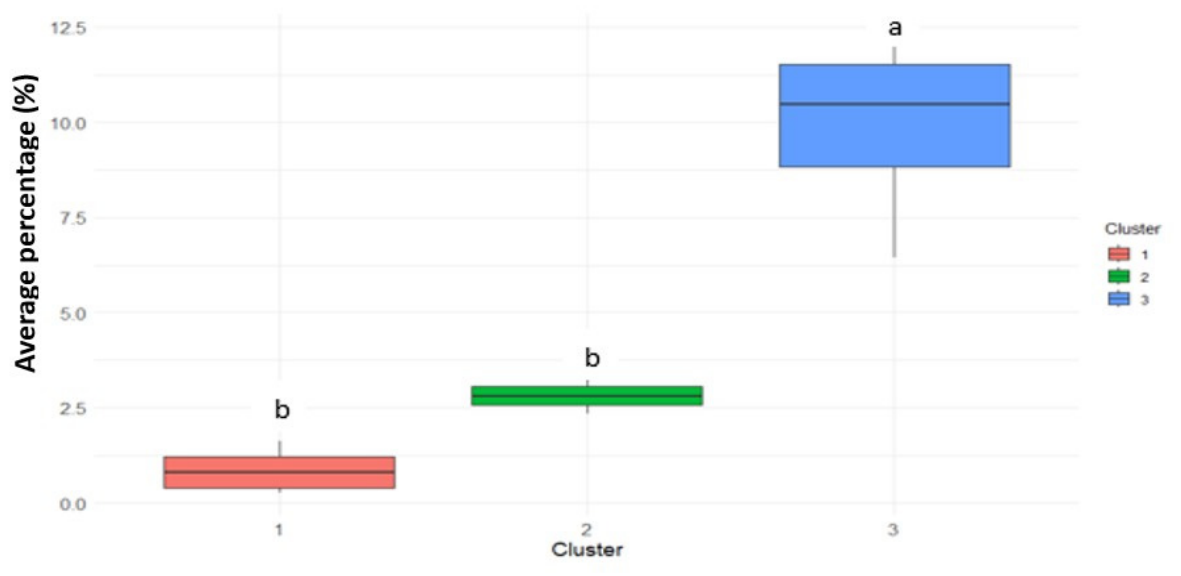
Table 1.
Organic chemical composition and substances identified in the GC-MS analysis in the four treatments evaluated.
Table 1.
Organic chemical composition and substances identified in the GC-MS analysis in the four treatments evaluated.
| PL | RT | ORGANIC COMPOSITION | MOLECULAR FORMULA | % | |
| T1 (60 – 170 °C) | 7.4 | Phenol | (C6H6O) | 0.3 | |
| T1 (60 – 170 °C) | 7.5 | Lactic acid | (C3H6O3) | 3.2 | |
| T1 (60 – 170 °C) | 8.1 | Acetic acid | (C2H4O2) | 12.0 | |
| T1 (60 – 170 °C) | 9.8 | 2-Hydroxybutanoic acid | (C4H8O3) | 1.1 | |
| T1 (60 – 170 °C) | 10.4 | m-Cresol | (C7H8O) | 0.2 | |
| T1 (60 – 170 °C) | 10.5 | 3-Hydroxypropanoic acid | (C3H6O3) | 0.3 | |
| T1 (60 – 170 °C) | 10.8 | p-Cresol | (C8H10O2) | 0.1 | |
| T1 (60 – 170 °C) | 13.8 | 4-Hydroxybutanoic acid | (C4H8O3) | 4.4 | |
| T1 (60 – 170 °C) | 15.2 | Glycerin | (C3H8O3) | 0.5 | |
| T1 (60 – 170 °C) | 16.5 | Catechol | (C6H6O2) | 5.6 | |
| T1 (60 – 170 °C) | 16.9 | Methylbutanedioic acid | (C5H8O4) | 1.0 | |
| T1 (60 – 170 °C) | 17.2 | 5-Hydroxypentanoic acid | (C5H10O3) | 2.0 | |
| T1 (60 – 170 °C) | 19.0 | 4-Methylcatechol | (C7H8O2) | 1.2 | |
| T1 (60 – 170 °C) | 19.3 | 3-Methylcatechol | (C7H8O2) | 1.0 | |
| T1 (60 – 170 °C) | 19.4 | Syringol | (C8H10O3) | 13.4 | |
| T1 (60 – 170 °C) | 19.8 | 2,4-Dihydroxybutanoic acid | (C4H8O4) | 1.9 | |
| T1 (60 – 170 °C) | 21.3 | Guaiacol | (C7H8O2) | 0.5 | |
| T1 (60 – 170 °C) | 28.1 | Glucose isomer | (C6H12O6) | 0.4 | |
| T1 (60 – 170 °C) | 28.4 | Glucose isomer | (C6H12O6) | 12.3 | |
| T2 (171 – 270 °C) | 7.4 | Phenol | (C6H6O) | 0.4 | |
| T2 (171 – 270 °C) | 7.5 | Lactic acid | (C3H6O3) | 3.2 | |
| T2 (171 – 270 °C) | 8.1 | Acetic acid | (C2H4O2) | 12.1 | |
| T2 (171 – 270 °C) | 9.8 | 2-Hydroxybutanoic acid | (C4H8O3) | 1.1 | |
| T2 (171 – 270 °C) | 10.1 | Valeric acid | (C5H10O2) | 1.1 | |
| T2 (171 – 270 °C) | 10.4 | m-Cresol | (C7H8O) | 0.2 | |
| T2 (171 – 270 °C) | 10.5 | 3-Hydroxypropanoic acid | (C3H6O3) | 0.3 | |
| T2 (171 – 270 °C) | 13.8 | 4-Hydroxybutanoic acid | (C4H8O3) | 3.3 | |
| T2 (171 – 270 °C) | 14.2 | Benzoic acid | (C7H6O2) | 0.2 | |
| T2 (171 – 270 °C) | 15.2 | Glycerin | (C3H8O3) | 0.3 | |
| T2 (171 – 270 °C) | 16.5 | Catechol | (C6H6O2) | 6.0 | |
| T2 (171 – 270 °C) | 16.9 | Methylbutanedioic acid | (C5H8O4) | 0.8 | |
| T2 (171 – 270 °C) | 17.2 | 5-Hydroxypentanoic acid | (C5H10O3) | 1.5 | |
| T2 (171 – 270 °C) | 19.0 | 4-Methylcatechol | (C7H8O2) | 1.1 | |
| T2 (171 – 270 °C) | 19.3 | 3-Methylcatechol | (C7H8O2) | 1.1 | |
| T2 (171 – 270 °C) | 19.4 | Syringol | (C8H10O3) | 12.4 | |
| T2 (171 – 270 °C) | 19.6 | Glutaric acid | (C5H8O4) | 0.1 | |
| T2 (171 – 270 °C) | 19.8 | 2,4-Dihydroxybutanoic acid | (C4H8O4) | 2.3 | |
| T2 (171 – 270 °C) | 21.3 | Guaiacol | (C7H8O2) | 0.6 | |
| T2 (171 – 270 °C) | 27.8 | Glucose isomer | (C6H12O6) | 0.3 | |
| T2 (171 – 270 °C) | 28.1 | Glucose isomer | (C6H12O6) | 0.3 | |
| T2 (171 – 270 °C) | 28.4 | Glucose isomer | (C6H12O6) | 10.3 | |
| T3 (271 – 350 °C) | 7.4 | Phenol | (C6H6O) | 0.7 | |
| T3 (271 – 350 °C) | 7.5 | Lactic acid | (C3H6O3) | 2.8 | |
| T3 (271 – 350 °C) | 8.1 | Acetic acid | (C2H4O2) | 13.4 | |
| T3 (271 – 350 °C) | 10.4 | m-Cresol | (C7H8O) | 0.4 | |
| T3 (271 – 350 °C) | 10.5 | 3-Hydroxypropanoic acid | (C3H6O3) | 0.3 | |
| T3 (271 – 350 °C) | 10.8 | p-Cresol | (C8H10O2) | 0.2 | |
| T3 (271 – 350 °C) | 13.8 | 4-Hydroxybutanoic acid | (C4H8O3) | 2.7 | |
| T3 (271 – 350 °C) | 15.2 | Glycerin | (C3H8O3) | 0.3 | |
| T3 (271 – 350 °C) | 16.5 | Catechol | (C6H6O2) | 7.5 | |
| T3 (271 – 350 °C) | 16.9 | Methylbutanedioic acid | (C5H8O4) | 1.3 | |
| T3 (271 – 350 °C) | 17.2 | 5-Hydroxypentanoic acid | (C5H10O3) | 1.1 | |
| T3 (271 – 350 °C) | 19.0 | 4-Methylcatechol | (C7H8O2) | 1.9 | |
| T3 (271 – 350 °C) | 19.3 | 3-Methylcatechol | (C7H8O2) | 1.7 | |
| T3 (271 – 350 °C) | 19.4 | Syringol | (C8H10O3) | 10.4 | |
| T3 (271 – 350 °C) | 19.8 | 2,4-Dihydroxybutanoic acid | (C4H8O4) | 2.5 | |
| T3 (271 – 350 °C) | 21.3 | Guaiacol | (C7H8O2) | 0.7 | |
| T3 (271 – 350 °C) | 28.1 | Glucose isomer | (C6H12O6) | 0.3 | |
| T3 (271 – 350 °C) | 28.4 | Glucose isomer | (C6H12O6) | 9.6 | |
| T4 (351 – 400 °C) | 7.4 | Phenol | (C6H6O) | 0.7 | |
| T4 (351 – 400 °C) | 7.5 | Lactic acid | (C3H6O3) | 2.0 | |
| T4 (351 – 400 °C) | 8.1 | Acetic acid | (C2H4O2) | 7.7 | |
| T4 (351 – 400 °C) | 9.8 | 2-Hydroxybutanoic acid | (C4H8O3) | 0.7 | |
| T4 (351 – 400 °C) | 10.4 | m-Cresol | (C7H8O) | 0.3 | |
| T4 (351 – 400 °C) | 10.5 | 3-Hydroxypropanoic acid | (C3H6O3) | 0.2 | |
| T4 (351 – 400 °C) | 13.8 | 4-Hydroxybutanoic acid | (C4H8O3) | 2.8 | |
| T4 (351 – 400 °C) | 14.2 | Benzoic acid | (C7H6O2) | 0.3 | |
| T4 (351 – 400 °C) | 15.2 | Glycerin | (C3H8O3) | 0.3 | |
| T4 (351 – 400 °C) | 16.5 | Catechol | (C6H6O2) | 6.7 | |
| T4 (351 – 400 °C) | 16.9 | Methylbutanedioic acid | (C5H8O4) | 1.8 | |
| T4 (351 – 400 °C) | 17.2 | 5-Hydroxypentanoic acid | (C5H10O3) | 1.9 | |
| T4 (351 – 400 °C) | 19.0 | 4-Methylcatechol | (C7H8O2) | 1.5 | |
| T4 (351 – 400 °C) | 19.3 | 3-Methylcatechol | (C7H8O2) | 0.9 | |
| T4 (351 – 400 °C) | 19.4 | Syringol | (C8H10O3) | 12.7 | |
| T4 (351 – 400 °C) | 19.8 | 2,4-Dihydroxybutanoic acid | (C4H8O4) | 2.7 | |
| T4 (351 – 400 °C) | 21.3 | Guaiacol | (C7H8O2) | 0.7 | |
| T4 (351 – 400 °C) | 28.1 | Glucose isomer | (C6H12O6) | 0.2 | |
| T4 (351 – 400 °C) | 28.4 | Glucose isomer | (C6H12O6) | 6.3 |
LEGEND: Pyroligneous Liquor (PL), Retention Time (RT) obtained by the Agilent Technologies gas chromatograph method (GC 7890A) equipped with a mass spectrum (MS) detector.
Table 2.
Compounds not identified via GC-MS analysis.
| PL | COUNT | % |
| T1(60 – 170 °C) | 5 | 26.6 |
| T2(171 – 270 °C) | 5 | 28.9 |
| T3(271 – 350 °C) | 7 | 32.4 |
| T4(351 – 400 °C) | 6 | 39.6 |
LEGEND: Pyroligneous Liquor (PL), Number of unidentified compounds (COUNT).
Table 3.
Descriptive statistics of the physicochemical properties of pyroligneous liquors.
| Temperature interval | Physicochemical properties | |||
| pH | EC (µS/cm) | D(g/ml) | V(cSt) | |
| T1 (60 – 170 °C) | 3.4 | 4.980,0 | 1.029 | 6.43 |
| T2 (171 – 270 °C) | 3.5 | 10.650,0 | 1.038 | 7.01 |
| T3 (271 – 350 °C) | 3.8 | 10.110,0 | 1.030 | 7.14 |
| T4 (351 - 400 °C) | 3.6 | 12.300,0 | 1.020 | 7.21 |
| 3.6 | 9.260 | 1.029 | 6.95 | |
| s | 0.171 | 3.174 | 0.007 | 0.36 |
| CV% | 4.78 | 34.27 | 0.720 | 5.11 |
LEGEND: The parameters analyzed include pH, electrical conductivity (EC), relative density (D) and kinematic viscosity (V), mean (x̅), standard deviation (s) and coefficient of variation (CV%).
Disclaimer/Publisher’s Note: The statements, opinions and data contained in all publications are solely those of the individual author(s) and contributor(s) and not of MDPI and/or the editor(s). MDPI and/or the editor(s) disclaim responsibility for any injury to people or property resulting from any ideas, methods, instructions or products referred to in the content. |
© 2026 by the authors. Licensee MDPI, Basel, Switzerland. This article is an open access article distributed under the terms and conditions of the Creative Commons Attribution (CC BY) license (http://creativecommons.org/licenses/by/4.0/).
Copyright: This open access article is published under a Creative Commons CC BY 4.0 license, which permit the free download, distribution, and reuse, provided that the author and preprint are cited in any reuse.


