

Submitted:
10 July 2026
Posted:
13 July 2026
You are already at the latest version
Abstract
Soil salinity is a major abiotic stress that severely limits crop productivity worldwide. This study evaluated the potential of halotolerant plant growth–promoting rhizobacteria (PGPR) isolated from mangrove plants to enhance salinity tolerance in peanut (Arachis hypogaea L. cv. JL24). Among the isolates, EAL318 (Bacillus subtilis), EAR195 (Proteus mirabilis), and ACR52 (Klebsiella quasipneumoniae subsp. similipneumoniae) exhibited strong PGPR traits and were selected for further evaluation. Seed inoculation significantly improved germination (up to 93%) and seedling vigor compared with the control (~72%). In greenhouse experiments under 300 and 500 mMNaCl, inoculated plants showed significantly higher plant height (32–40% increase), shoot dry weight (28–35% increase), and chlorophyll content (20–30% increase) compared with uninoculated controls. Among the strains, ACR52 exhibited the strongest protective effect, enhancing antioxidant enzyme activities including superoxide dismutase (~1.5-fold), catalase (~1.4-fold), and peroxidase (~1.6-fold) under salt stress. Inoculated plants also accumulated higher levels of osmolytes such as proline (up to 42% increase) and soluble sugars (~36% increase), while oxidative stress markers MDA and H₂O₂ decreased by 30–38%. Furthermore, bacterial treatments improved nodulation, flowering, and pod yield under saline conditions. These findings highlight mangrove-derived PGPR, particularly ACR52, as promising bioinoculants for improving peanut tolerance to salinity stress.
Keywords:
peanut
; PGPR
; Bacillus subtilis
; salt stress
1. Introduction
Salinity is a major abiotic stress that restricts plant growth and development by inducing osmotic stress, ionic toxicity, nutrient imbalance, and oxidative damage [1,2,3]. These effects disrupt key physiological processes, resulting in stunted growth, reduced yields, and significant losses in global agricultural productivity [4,5].Salinity affects an estimated 20–33% of the world’s arid and irrigated lands and may increase to nearly 50% by 2050 [6]. Currently, about 1.4 billion hectares (10.7% of global land area) worldwide and 6.73 million hectares (2.1%) in India are salt-affected, posing a significant and growing threat to global food security[7].
Mangrove ecosystems, naturally exposed to high salinity, harbor diverse halotolerant endophytes with strong plant growth, promoting traits [17]. These microbes exhibit high salt tolerance and possess multiple mechanisms, such as phytohormone production, nutrient mobilization, siderophore production, and ACC deaminase activity, that support plant growth in saline environments[18,19]. Harnessing such halotolerant endophytes represents a promising biological approach for developing salt-resilient cropping systems.
Plant growth–promoting endophytic bacteria(PGPB) have emerged as an effective strategy to enhance plant performance under salinity [8,9]. These bacteria colonize internal plant tissues without causing harm and promote growth by producing phytohormones, solubilizing nutrients, fixing nitrogen, and lowering stress-induced ethylene via ACC deaminase activity [10,11]. They also enhance osmotic adjustment and antioxidant defenses, thereby improving plant tolerance to ionic and oxidative stress [12]. Several studies report that endophytic bacteria improve germination, growth, and yield of peanut and other crops under saline conditions through modulation of antioxidant enzymes, osmolytes, and stress-responsive pathways [13,14,15,16].
Peanut (Arachis hypogaea L.), a major oil seed legume, is classified as moderately salt tolerant but is highly sensitive to salinity during germination and early growth [19,20]. Salinity-induced osmotic stress and ion toxicity (150–200 mM NaCl) reduce germination, seedling vigor, photosynthesis, biomass accumulation, reproductive development, and ultimately yield, leading to significant productivity losses [21,22,23]. Given the rising demand for peanut and increasing soil salinization, improving salinity tolerance through sustainable approaches is essential [24,25].
Accordingly, this study aimed to isolate and characterize halotolerant endophytic bacteria from mangrove plants Excoecaria agallocha and Aegiceras corniculatum and evaluate their plant growth promoting traits and efficacy in enhancing salinity tolerance in a non-host crop, peanut (cv. JL-24).
2. Results
2.1. Selection Criteria for Isolated Bacterial Strains for Peanut Saline Stress Experiments
Three halo tolerant plant growth promoting bacteria isolates Bacillus subtilis strain EAL318 (PV656428), Proteus mirabilis strain EAR195 (PV656438), and Klebsiellaquasipneumoniae subsp. similipneumoniae strain ACR52 (PV657114) were selected based on their strong plant growth promoting (PGP) characteristics. These isolates exhibited notable traits, including enhanced phytohormone production, nutrient solubilization ability, and stress tolerance, which may contribute to improved growth of peanut (JL24) under saline conditions. All inoculation treatments were performed in triplicate (Unpublished).
Figure 1.
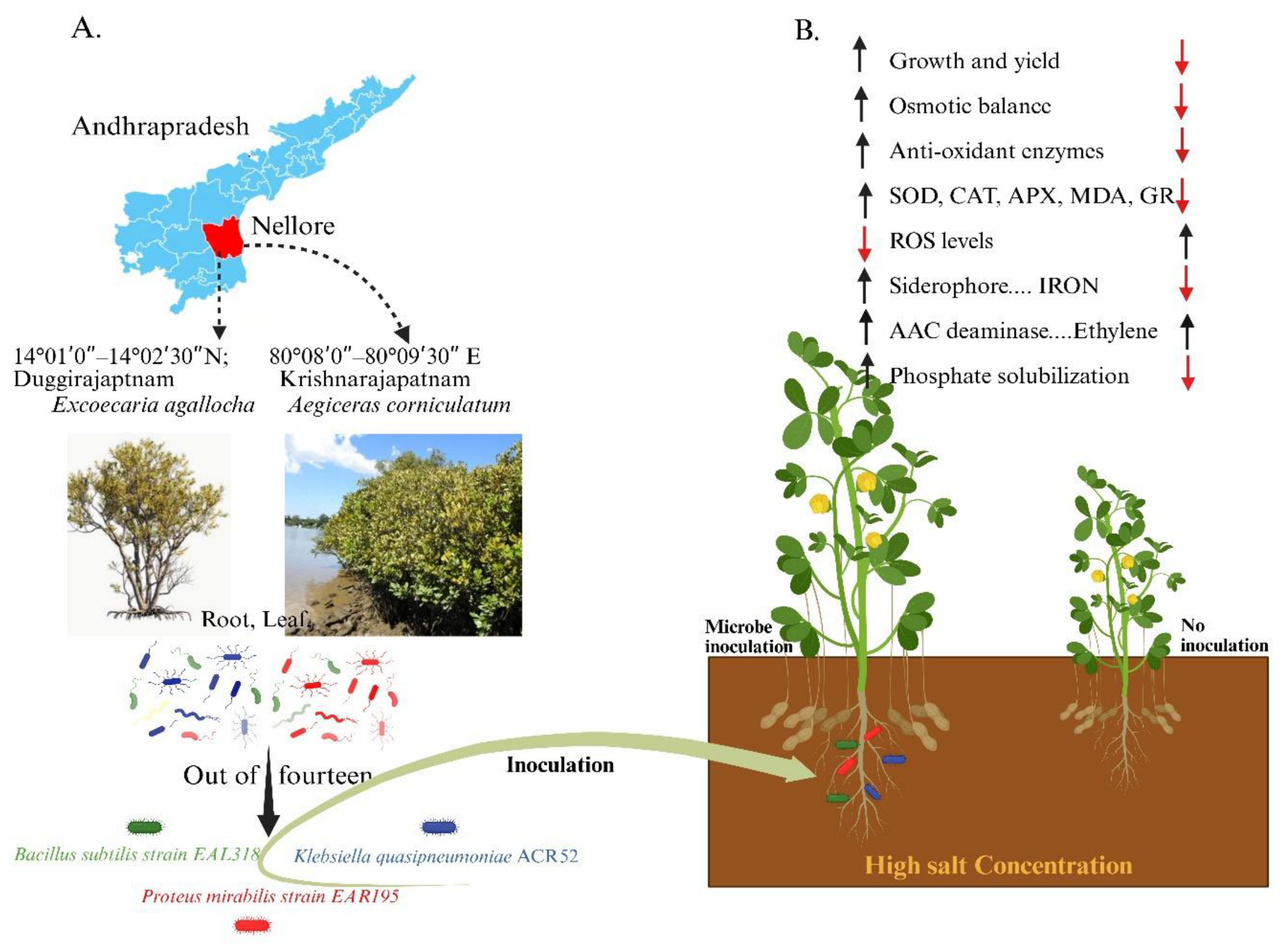
A. Collection and isolation of HTPGPB from Mangrove ecosystem Nellore (Dt.) Andhra Pradesh, India. B. Proposed hypothesis of inoculated bacteria improved peanut saline stress.
Figure 1.
A. Collection and isolation of HTPGPB from Mangrove ecosystem Nellore (Dt.) Andhra Pradesh, India. B. Proposed hypothesis of inoculated bacteria improved peanut saline stress.
2.2. HPGPB Significantly Improved Germination of Peanut Seedlings and Growth in Salinity Stress
The germination test results fiound that all isolates were found to be significantly improved germination percentage at 200mM NaCl all bacterial treatments showed variation in their germination as follows: ACR52 (40%), EAR173(47%), and EAR195(42%) and it is significantly higher than the control (31%). At 250 mM NaCl, the consortium (28%) and ACR52 (25%) provided moderate improvements compared to the uninoculated seeds (20%). However, all endophytes accelerated germination (>70%) by 11th day, these beneficial effects were still prominent and especially pronounced under salt stress of varying severity. ACR52 was the strongest in terms of protection and most effective in promoting not only early but also final germination under moderate-to-severe salinity, providing a germination rate of 56% compared to 40% in the control, followed (in order) by the consortium (51%), EAR173 (50%), and EAR195 (50%)(Supplementary Figure S1).With increasing salinity, the vigor indices (Day 1, Day 4, and Day 11) decreased but bacteria treatment effects was more than control. The consortium-treated seedlings were still >90 even at 250 mM, whereas the control gradually declined to 13.1-68.6(Supplementary Figure S2).
The growth traits(root length, shoot length, seedling height) were better preserved in the halotolerant inoculated seedlings than in control peanut seedlings and all of them followed similar trend, results demonstrating that consortium and single strains inoculated seedlings retained significantly higher root length 1.30 cm at 250 mM (56.5% retention), than control and consortia grew up to 1.3 cm lengthy shoots at 250mM NaCl, longer than any individual bacterial treatments or controls and seedling height demonstrated the same trend of protection: control peanut seedlings height decreased from 3.92 cm to 0.82 cm (20.9% retention), while consortium seedlings kept 1.30 cm at 250 mM(31.7% retention) (Supplementary Figure S3).
The biomass traits (fresh and dry weights of shoots and roots) decreased as salinity increased, but the endophyte-inoculated seedlings had more biomass than the controls. Root fresh weight followed the same pattern. All inoculated plants usually retained more root fresh weight, root dry weight, root biomass, shoot dry mass, shoot fresh weight and shoot biomass than the controls. Consortium retained higher root fresh weight 0.92 g at 250 mM (35.1% retention); EAR173 and EAL318 also maintained higher than the control peanut plants (≈35% and 33%, respectively). EAL318 (0.40 → 0.25 g; 62.5% retention) preserved more RDW, thus showing that some strains are more prone to protecting root structural reserves.EAR191 had the more shoot dry weight than the control and remaining isolates. The total biomass is significantly higher in seedlings treated with consortia was 0.32 g at 250 mM NaCl, than control seedlings (0.14 g)(Supplementary Figure S4). In this study, ACR52 as the most effective strain and bacterial consortium was more resilient to high salinity conditions and thus could provide a backup source. On the other hand, EAR173 and EAR195 would be suitable for playing the role of bellwether strains to maintain germination under moderate stress. These findings point to the potential for specific endophytes to help salt-sensitive peanut varieties become firmly established in saline soils.
2.3. Morphological and Physiological Evidence of Salt Tolerance Induced by HTPGPB
The data indicated a significant decrease in the analyzed morphological and physiological growth parameters with 500 mM NaCl treatment. Interestingly, inoculation of bacterial isolates resulted a significant improvement in all plant growth parameters when compared to the control (Figure 2).
Figure 3.
Effect of different salinity levels on physio and morphological parameters: A. Plant height, B. Total biomass, C. Chlorophyll A, D.Chlorophyll B, E. Total chlorophyll content. Values are means of nine replicates and different letters are differed significantly by two-way ANOVA followed by Tukey’s post hoc test.
Figure 3.
Effect of different salinity levels on physio and morphological parameters: A. Plant height, B. Total biomass, C. Chlorophyll A, D.Chlorophyll B, E. Total chlorophyll content. Values are means of nine replicates and different letters are differed significantly by two-way ANOVA followed by Tukey’s post hoc test.
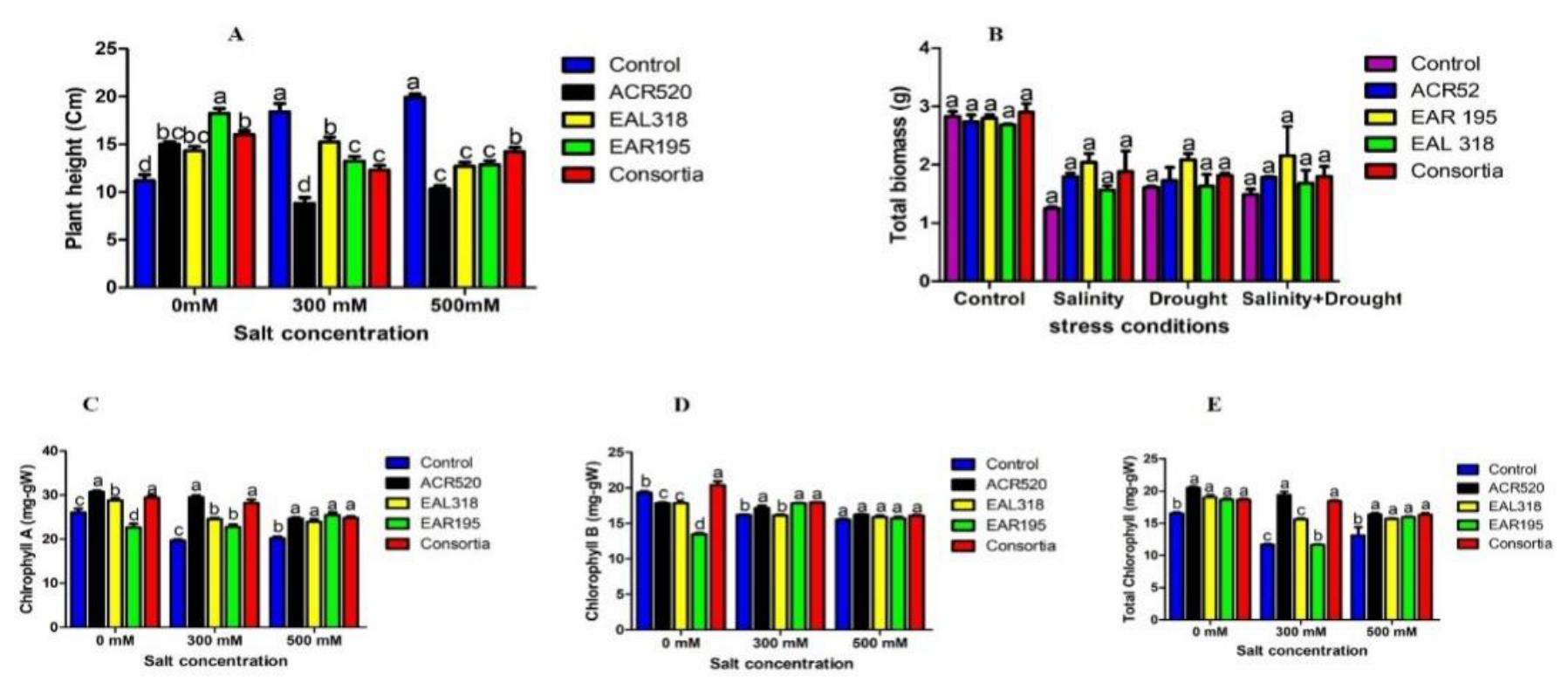
EAL318 and the consortium inoculated peanuts had significantly higher Shoot length (~21.0–22.2 cm,) moderate in (ACR52, EAR195), decreased to ≈21.3 cm in the uninoculated peanut at 500mM (Supplementary Figure S5). At all salt treatments (0, 300, 500 mMNaCl) EAL318 and CONSORTIA were the best in maintaining the root growth (Figure 2). If salinity is high to moderate (300 and 500mM), the roots and shoots were greater in consortium and single endophytes inoculated plants than those of the uninoculated indicating the results show some strain-specific.
EAL318 inoculated peanuts had the most RFW (1.69 g) at 0mM NaCl, followed by ACR52 (1.58 g) , EAL318 (1.51 g) and EAR195 (1.50 g) and control had lower root (1.35 g) (Figure 4.5.13.). Under 500mM, the endophyte EAR195 inoculated peanut (0.610 g) and CONSORTIA (0.600 g) maintained greater RDW than the uninoculated controls (0.551 g), which suggests that endophyte-inoculated plants hold on to tissue better when under higher concentrations of salt stress. Consortia had the greatest shoot fresh and dry weights (11.0 g and 7.93 g DW, respectively) than single strain inoculated and control plants. Total biomass was also highest in EAR195 (1.5 g) and ACR52 (1.3 g) at 500mM, which supports their role in ameliorating salt stress (Supplementary Figure S6).
The leaf number is highest in EAR 195 while the uninoculated controls showed a significant drop (37 leaves). At 300 mM salt treatment EAR195 & at 500mM consortia bacteria inoculated plants showed greater mean value of leaves number 89 and 67 correspondingly. The consortium showed the highest leaf fresh weight at 0mM (≈0.65 g); at 500mM, it was still higher than the leaf fresh weight of the uninoculated control (consortium ≈0.39 g vs control ≈0.30 g). Whereas in ACR 52, EAL318 shown moderate leaf fresh weights (Supplementary Figure S7).
To explore the response of infected and uninfected peanut seedlings to various salt treatments, examined the content of the relative water content (RWC), photosynthetic pigments, results demonstrated that consortia and ACR52 treatments maintained significantly higher RWC (52%) and higher total chlorophyll l( 24.9 mg/g-1 FW), at all salinity levels, while the uninoculated plants had about RWC(50.7%) and total chlorophyll(20.97 mg/g-1FW) (Fig.)at 500mM NaCl. Chlorophyll a and b levels were also higher in consortia and ACR52 when under stress, indicating the endophyte-assisted improvement of photosynthesis to promote plant growth.
Chlorophyll content varied significantly among treatments under different salinity levels. The highest chlorophyll-a content (30.38 mg g⁻¹ FW) was recorded in plants inoculated with ACR52 under non-saline conditions (0 mMNaCl), whereas the lowest value (19.63 mg g⁻¹ FW) was observed in the uninoculated control at 500 mMNaCl. Under 300 mM salinity, ACR52-inoculated plants exhibited a higher chlorophyll-a content (29.22 mg g⁻¹ FW) compared with the control and other bacterial treatments. At 500 mMNaCl, plants inoculated with EAR195 showed relatively higher chlorophyll-a levels (25.44 mg g⁻¹ FW) than the control.
Salinity stress highly impacts the root nodules of peanuts but inoculation gave them advantage. The consortia inoculated peanut plants had the most nodules [50], followed by ACR52 [47] and EAR195 [45], and even at 500 mM NaCl, ACR52 and EAR318maintained a lot of nodules (40 and 35). In contrast, the uninoculated peanut plants lost many(Fig.), indicating the endophyte assisted to make access nitrogen to the plants to improve plant growth with increasing chlorophyll content and promoting flowering, which significantly impact on pod yield. Endophytic bacterial inoculation of the peanut improved flowering and accelerates. At both 0 mM, 500 mM plants inoculated with consortia had the highest number of flowers [9] than control [2] plants(Supplementary Figure S8) suggesting that endophyte-inoculated peanut plants can reproduce better to improve crop yield.
To sum it up, endophyte inoculation was very instrumental in reducing the salt stress effects that 300–500mM NaCl induced on JL24 peanut plants. Compared to uninoculated controls, inoculated plants were phenotypically better shoot and root tissues, and the physiological responses were at higher levels (chlorophyll and RWC), nodulation was enhanced, and the number of flowering plants was greater. Overall, the consortium was usually the most complete and integrated form of protection, while single strains enabled certain specific advantages to be realized (e.g., EAL318 for roots, ACR52 for pigments, EAR195 for shoot growth).
2.4. Anti and Non-Antioxidant Enzyme Responses in Peanut Inoculated with HTEB Under Salt Stress
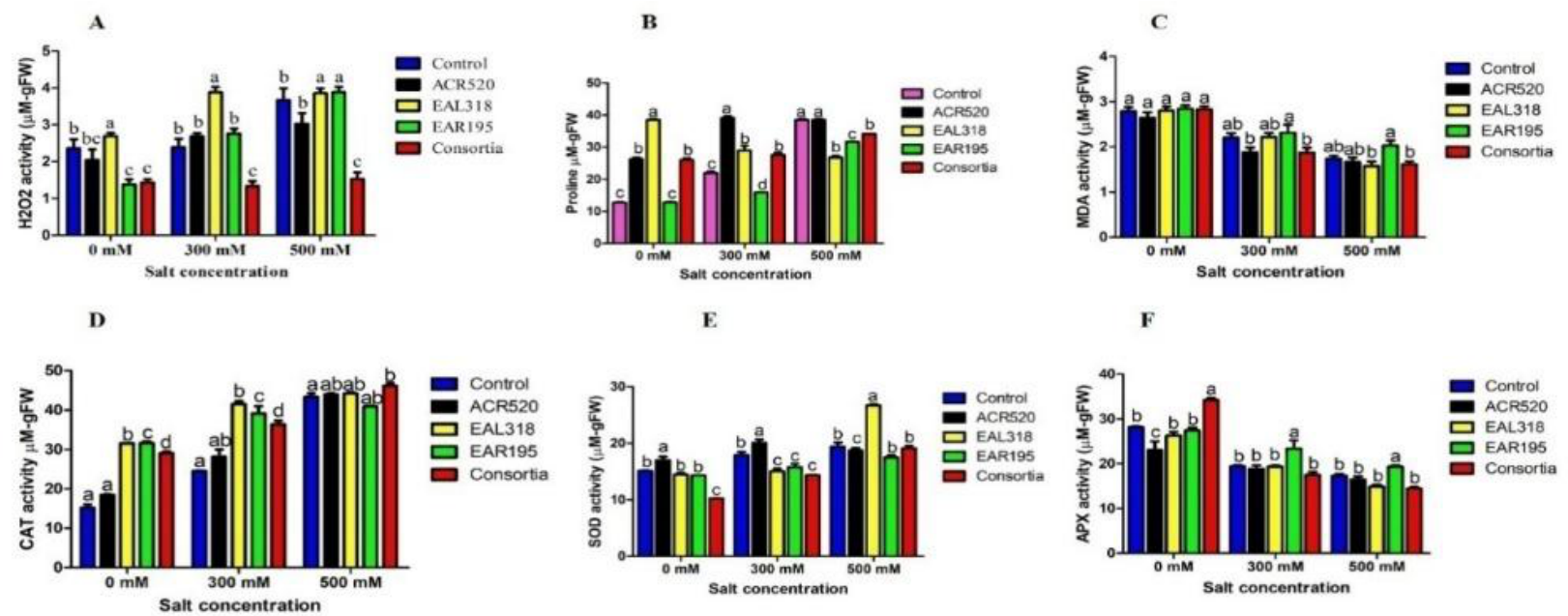
Antioxidant enzyme activities increased progressively with increasing salinity across all treatments. Catalase (CAT) activity was highest in consortia-inoculated plants at 500 mM NaCl (46.75 µg mg⁻¹ protein), compared with the uninoculated control (43.89 µg mg⁻¹ protein). Similarly, glutathione reductase (GR) activity increased under salt stress, with EAL318- and EAR195-inoculated plants showing the highest values at 500 mM NaCl (28.02 and 27.70 µg mg⁻¹ protein, respectively), exceeding that of the control plants. Superoxide dismutase (SOD) activity was also elevated under saline conditions, with EAL318 recording the highest activity (65.7 µg mg⁻¹ protein), while ACR52 and EAR195 maintained activities above 61 µg mg⁻¹ protein, indicating efficient reactive oxygen species (ROS) scavenging under high salinity stress (Fig.).
In contrast, ascorbate peroxidase (APX) activity decreased with increasing salinity. However, at 500 mMNaCl, EAR195-inoculated plants showed the highest APX activity (19.68 µg mg⁻¹ protein), followed by the uninoculated control (17.02 µg mg⁻¹ protein). Peroxidase (POD) activity was consistently higher in consortia-treated plants across all salinity levels, reaching a maximum of 38.84 µg mg⁻¹ protein at 500 mMNaCl (Fig.).
Markers of oxidative damage were reduced in endophyte-inoculated plants compared with the control. Both malondialdehyde (MDA) and hydrogen peroxide (H₂O₂) contents decreased in inoculated treatments under increasing NaCl stress. At 500 mMNaCl, consortia-treated plants exhibited the lowest MDA (0.476 nmol mg⁻¹) and H₂O₂ levels (21.16 µg mg⁻¹), whereas higher levels were observed in uninoculated plants (MDA: 0.634 nmol mg⁻¹; H₂O₂: 23.65 µg mg⁻¹) (Figure 4). These results suggest that endophyte inoculation, particularly the consortia treatment, effectively mitigates oxidative stress by enhancing antioxidant defense and ROS scavenging capacity in peanut plants under saline conditions.
Total soluble sugar content increased under higher salinity in endophyte-inoculated plants. At 500 mM NaCl, EAR195 and consortia treatments recorded elevated total soluble sugar levels (10.76 and 9.59 µmol g⁻¹, respectively), indicating improved carbon metabolism and osmotic adjustment in endophyte-inoculated plants. In contrast, starch reserves declined under severe salt stress. At 500 mM NaCl, consortia-treated plants maintained relatively higher starch content (17.28 µmol g⁻¹), followed by EAR195 (15.52 µmol g⁻¹) and EAL318 (14.20 µmol g⁻¹), compared with the control. However, starch levels in uninoculated plants decreased markedly under stress, reaching 12.89 µmol g⁻¹ at 500 mMNaCl, suggesting differential carbohydrate partitioning in response to salinity stress (Supplementary Figure S9.).
Total phenolic content in peanut leaf tissues increased under salinity stress across all treatments. At 500 mM NaCl, phenolic content was lowest in uninoculated plants (28.86 µmol g⁻¹), whereas higher levels were observed in EAR195- (29.57 µmol g⁻¹) and consortia-inoculated plants (27.68 µmol g⁻¹), indicating stimulation of the polyphenol biosynthetic pathway by endophytic bacteria. Proline accumulation also varied with treatment under salt stress. At 500 mMNaCl, consortia-inoculated plants exhibited the highest proline content (38.14 µg mg⁻¹), followed by EAR195 (31.84 µg mg⁻¹), ACR52 (24.44 µg mg⁻¹), and EAL318 (21.55 µg mg⁻¹), reflecting enhanced osmotic adjustment in inoculated plants.
Free amino acid content declined under salinity stress in all treatments. In control plants, amino acid levels decreased to 18.35 µmol g⁻¹ at 500 mMNaCl, whereas EAR195- and ACR52-inoculated plants maintained levels around 20 µmol g⁻¹. The highest mean amino acid content (24.11 µmol g⁻¹) was observed in ACR52-treated plants under non-saline conditions (0 mMNaCl). Under severe salinity (500 mMNaCl), the lowest value (13.32 µmol g⁻¹) was recorded in EAR195-treated plants. At 0, 300, and 500 mMNaCl, ACR52- and consortia-inoculated plants showed comparatively higher free amino acid contents (24.11, 21.10, and 20.02 µg mg⁻¹ protein, respectively) than the control and other treatments (Fig.).
2.5. Effect of Salt Stress on Reproductive & Yield Parameters
There were significant differences in Reproductive &Yield parameters between bacterial strains inoculated. The results showed in all treatments of peanut seedlings with bacterial strains under normal and saline conditions.
Figure 5.
I. Effect of NaCl-induced salinity on yield parameters of plants inoculated with halotolerant bacteria. (1-Control; 2-ACR52; 3-EAR195; 4-EAL318; & 5- Consortia) & (Control) Peanut (cv JL24) plants under salinity stress conditions (0, 300 & 500 mMNaCl) during reproductive stage. II. (A- Control B- ACR52, C - EAR195, D - EAL318 & E- Consortia) & uninoculated (Control) Peanut (cv JL24) (1- 0 mM; 2-300 mM; & 3-500 mM) during reproductive stage.
Figure 5.
I. Effect of NaCl-induced salinity on yield parameters of plants inoculated with halotolerant bacteria. (1-Control; 2-ACR52; 3-EAR195; 4-EAL318; & 5- Consortia) & (Control) Peanut (cv JL24) plants under salinity stress conditions (0, 300 & 500 mMNaCl) during reproductive stage. II. (A- Control B- ACR52, C - EAR195, D - EAL318 & E- Consortia) & uninoculated (Control) Peanut (cv JL24) (1- 0 mM; 2-300 mM; & 3-500 mM) during reproductive stage.
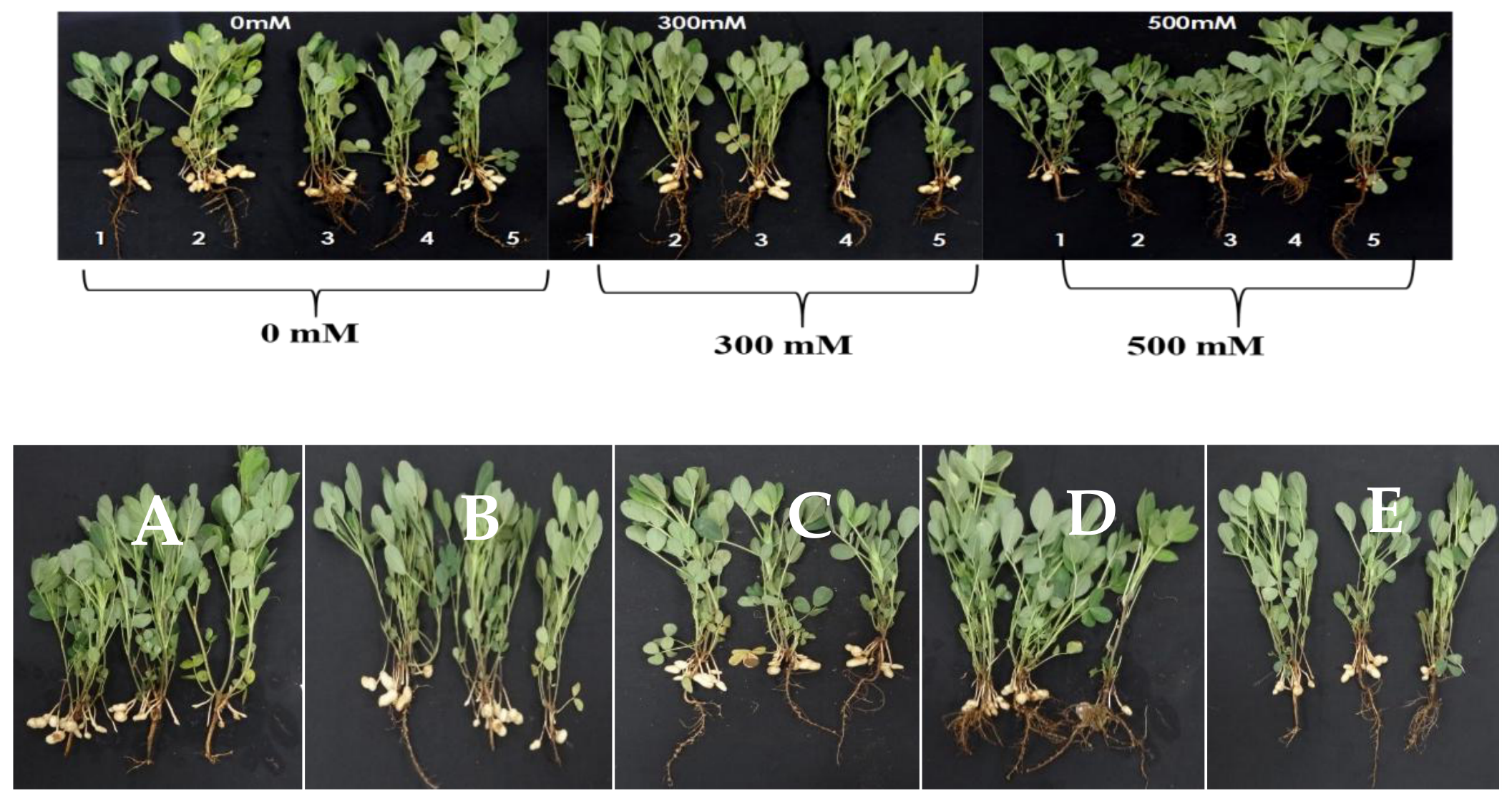
Yield parameters declined with increasing NaCl concentration in uninoculated peanut plants. However, endophyte-inoculated peanut plants significantly countered this trend. Consortia-treated plants produced more pods (12 at 0 mM), seeds [24], and achieved the highest shelling percentage (96.1%) and harvest index (15.46) under optimal conditions. (Fig). Under 500 mMNaCl, ACR52 and EAR195 retained seed dry weight (7.5g and 5.2 g), pod yield (~10.8 g), and harvest indices of 11.42 and 9.31, respectively, outperforming the control. Salinity Tolerance Index (STI) for plant biomass was highest for EAR195(1.35) and ACR52 (1.3) at 500 mM, while consortia excelled at non-stress conditions (STI = 1.84), highlighting genotype–treatment specificity under varying stress intensities. (Fig). Overall, ACR52 exhibited constancy in their tolerance at all salinity levels, while consortia treatment showed extra benefits when the stress was moderate. These results show that some halotolerant endophytes, especially ACR52 and CONSORTIA, can help reduce the toxicity of salt stress and protect the biomass of peanut seedlings.
In conclusion, our findings demonstrated that the interdependence of plant morpho-physiological biochemical traits (antioxidative enzymes), and other growth aspects. This implies that the accumulation of these metabolites can enhance plant growth and salinity tolerance.
2.6. Principal Component Analysis of JL24 Peanut Leaf Morphological, Physiological, Biochemical and Reproductive Traits
Figure 6.
Principal Component Analysis of Physio-Morpho&Antioxidative enzymes activities of halotolerant endophytic bacteria (ACR52, EAR195, EAL318 & Consortia) inoculated and Control (uninoculated) Peanut (cv JL24) under different NaCl concentrations (0mM, 300mM & 500mM).
Figure 6.
Principal Component Analysis of Physio-Morpho&Antioxidative enzymes activities of halotolerant endophytic bacteria (ACR52, EAR195, EAL318 & Consortia) inoculated and Control (uninoculated) Peanut (cv JL24) under different NaCl concentrations (0mM, 300mM & 500mM).
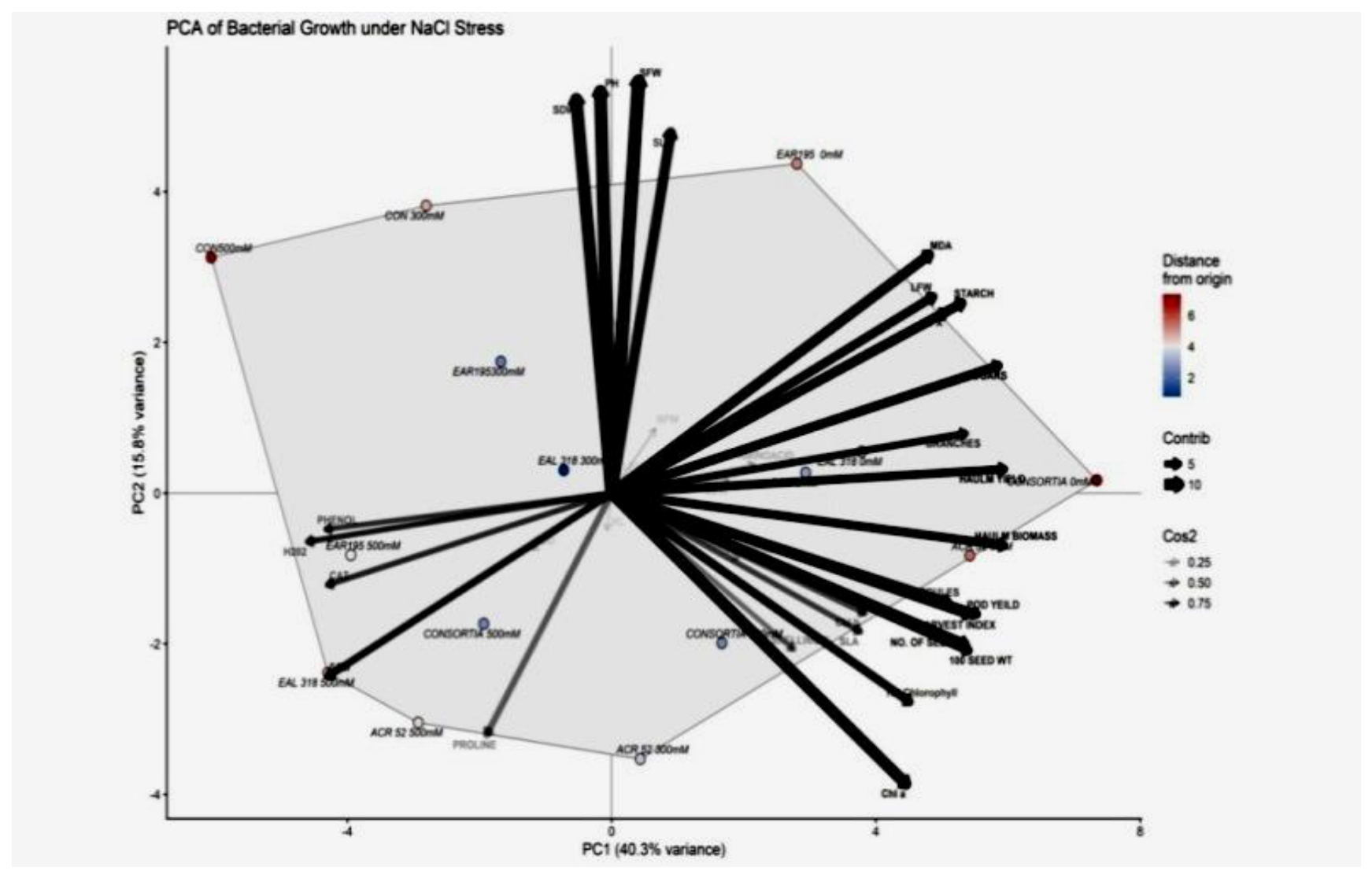
The principal component analysis (PCA) biplot depicting the response of bacterial growth–associated traits under different NaCl stress levels. The first principal component (PC1) explains 40.3% of the total variance, while the second principal component (PC2) accounts for 15.8%, together capturing a substantial proportion of the variability in the dataset. Treatments (control, individual bacterial strains, and consortia at 0, 300, and 500 mMNaCl) are distributed across the PCA space, showing clear separation along PC1, which mainly reflects growth, yield, and biomass-related traits. Variables such as starch content, sugars, leaf fresh weight, haulm biomass, number of seeds, 100-seed weight, harvest index, and chlorophyll (Chl a) load strongly and positively on PC1, indicating their close association with improved plant performance under lower or moderate stress and effective bacterial inoculation. In contrast, stress and oxidative markers including H₂O₂, MDA, phenol, CAT, and proline are oriented toward the negative side of PC1 and PC2, highlighting their stronger association with higher salinity stress conditions (notably 500 mMNaCl). PC2 primarily differentiates treatments based on water-related traits (such as shoot fresh weight, shoot dry weight, and pH-related responses), separating some control and inoculated treatments irrespective of salinity level. The variables that had the highest contribution to PC₂ were antioxidant enzyme activities (APX, POD, CAT, GR-related measures), oxidative damage markers (H₂O₂, MDA), and compatible solute pools (proline, soluble sugars, phenolics, starch). In a nutshell, PC₂ separated those treatments that varied in the amount and direction of biochemical stress responses (high antioxidant/osmolyte induction vs. low induction). Combining the two PCs results in the PC₁–PC₂ space delineating the treatments so that better-performing, higher-yielding plants are found in the high PC₁ (and variable PC₂ depending on stress response) quadrant. In contrast, salt-injured plants with low biomass and depressed yield are in the low PC₁ region. Therefore, the clustering of treatments suggests that bacterial consortia and certain strains mitigate salinity stress by shifting plants toward growth- and yield-favorable trait associations, whereas uninoculated or highly stressed treatments cluster closer to stress-related biochemical responses.
2.7. Pearson Correlation Analysis of Peanut (Cv JL24) Plants Leaf Physio-Morpho&Antioxidative Enzymes Activities
The pairwise correlation matrix explained the relationship among the physiological, growth, and yield-related traits. Positive correlations of high significance were observed among yield components and biomass metrics. Pod yield, seed number, pod number, 100-seed weight, haulm yield, and harvest index were found to be strongly intercorrelated (most r values in the upper 0.70s to >0.90s), which implies that the peanut plants that maintained their vegetative mass secured reproductive success under the experimental conditions. The markers of oxidative stress (H₂O₂, MDA) appeared to have negative associations with biomass and yield variables(negative r values of moderate strength), which is in line with the interpretation that most of the oxidative damage co-occurs with the decline of growth and yield.
Figure 7.
Pearson Correlation analysis of leaf Physio-Morpho&Antioxidative enzymes activities of halotolerant endophytic bacteria inoculated (ACR52, EAR195, EAL318 & Consortia) and Control(uninoculated) Peanut (cv JL24) plants under different NaCl concentrations (0, 300 & 500mM).
Figure 7.
Pearson Correlation analysis of leaf Physio-Morpho&Antioxidative enzymes activities of halotolerant endophytic bacteria inoculated (ACR52, EAR195, EAL318 & Consortia) and Control(uninoculated) Peanut (cv JL24) plants under different NaCl concentrations (0, 300 & 500mM).
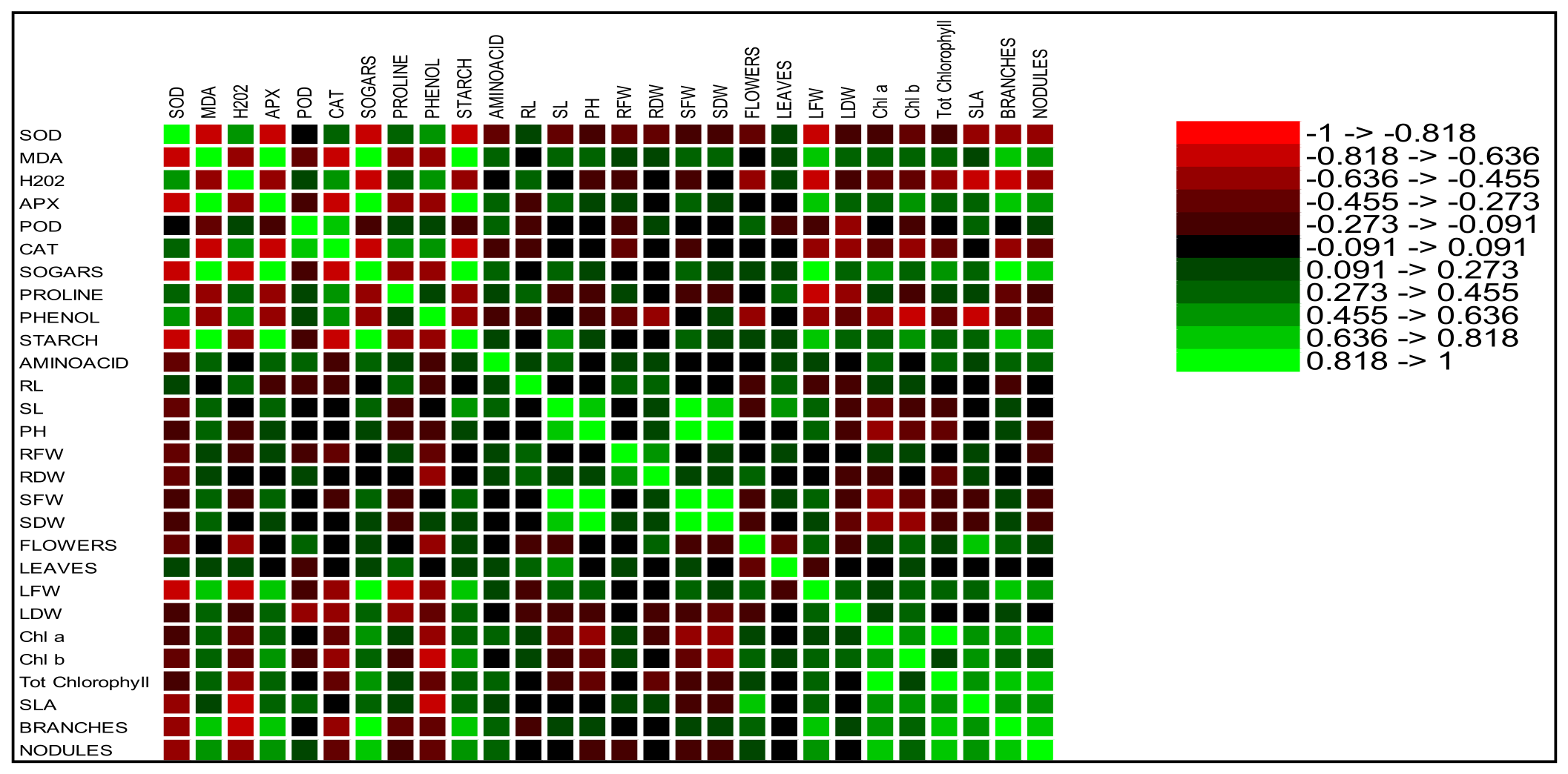
This correlation heatmap provides a detailed visualization of physiological, biochemical, and morphological relationships in plants under salt stress, where a primary cluster of robust positive correlations is evident among yield-contributing traits, specifically Pod Yield, No. of Seeds, 100 Seed Wt, Haulm Yield, and Haulm Biomass, demonstrating that salt stress simultaneously suppresses 0.455> -0.273 these productivity metrics. Furthermore, strong positive links appear between photosynthetic pigments like Chl a and Total Chlorophyll and several growth parameters, while structural traits such as Shoot Length (SL), Plant Height (PH), and Shoot Fresh Weight (SFW) form a distinct, highly correlated group.
In contrast, biochemical stress markers and antioxidant enzymes, including CAT, H2O2, and SOD, exhibit widespread negative correlations with most growth and yield traits, signifying that the accumulation of these compounds or the activation of stress-response mechanisms is strongly associated with a decline in overall plant vigor and productivity. Moderate correlations are noted for osmoregulators like Proline and Amino acids, which show more selective and varied relationships across the dataset, reflecting their specific role in cellular adjustment during osmotic stress.
3. Discussion
The first and most important challenge to be resolved is to raise food production by introducing salt-tolerant crops into marginal lands.Exploring halotolerant plant growth promoting endophytes (HT, PGPE) from extreme environments such as mangroves, is a potential strategy for producing sustainable agricultural solutions for lands affected by salinity [17,51]. Our research evidently shows that peanut (cv. JL, 24) can be very well inoculated with plant growth promoting endophytes (HT, PGPE) that are halotolerant and are isolated from mangrove plants (E. agallocha and A. corniculatum. The discovery of multifunctional, elite isolates such as ACR52, EAR195, EAL318 is a significant result since the simultaneous expression of several PGP mechanisms, are more extensive and synergistic effects of plant growth-promoting, is correlated with other studies [52].
It is well documented that plant growth promoting bacteria mitigate various stressess[53,54]. In the present study, three mangrove-derived halotolerant endophytic bacteria, Bacillus subtilis, Proteus mirabilis, and Klebsiellaquasipneumoniae, were selected due to their well-documented plant growth promoting properties and their ability to alleviate abiotic stresses, particularly salinity [55,56,57]. These endophytes establish beneficial associations with plants by producing various metabolites and interacting with internal plant tissues, thereby forming a stable endophytic partnership that enhances plant growth and stress tolerance. Among the selected isolates, Bacillus subtilis has been widely reported to colonize plant internal tissues and produce phytohormones such as indole-3-acetic acid (IAA), siderophores, and antimicrobial compounds[58,59]. These metabolites contribute to improved plant growth and increased tolerance to salt stress by modulating antioxidant enzyme activities, reducing reactive oxygen species (ROS) accumulation, and activating systemic tolerance mechanisms[60].
The isolated, bacteria produced significant quantities of IAA, with EAR195 showing the highest production (15.10 μg mL⁻¹) (Unpublished). IAA plays a crucial role in regulating plant growth and root development, particularly under saline conditions [61]. These findings are consistent with previous studies demonstrating the role of plant growth–promoting rhizobacteria (PGPR) in enhancing crop growth and stress tolerance [62,63]. Statistical analysis further revealed a strong positive correlation among IAA production, phosphate solubilization, and ACC deaminase activity, suggesting the existence of a synergistic PGP trait cluster. This coordinated activity enhances phytohormone regulation, improves nutrient availability, and reduces stress-induced ethylene levels, thereby enabling plants to grow under adverse environmental conditions[52]. Phosphate solubilization by ACR52 (42.10 μg mL⁻¹ ) was particularly important for improving phosphorus availability in nutrient-poor saline soils, where phosphorus fixation is a major constraint for plant growth. Additionally, strong siderophore production (up to 37.17% for EAR195) indicated efficient iron-chelating ability, which increases iron availability to plants while simultaneously limiting its accessibility to pathogenic microbes. This dual function provides both nutritional and biocontrol benefits to the host plant [61,64].
The widespread production of ACC deaminase among the isolates represents another important mechanism of stress mitigation. This enzyme reduces stress-induced ethylene levels in plants by degrading its precursor, 1-aminocyclopropane-1-carboxylate (ACC), thereby allowing plants to maintain growth under adverse conditions. Bacteria possessing ACC deaminase activity have been shown to significantly enhance plant performance in marginal soils affected by environmental stresses [65]. The net house pot experiment demonstrated that inoculation of Arachishypogaea cv. JL24with halotolerant endophytic bacteria significantly mitigated the detrimental effects of NaCl-induced salinity on plant growth. Inoculated plants showed improved morphological, physiological, biochemical, and reproductive traits compared with uninoculated controls under 300-500 mMNaCl stress. These findings are consistent with previous reports highlighting the effectiveness of HT-PGPB in enhancing plant growth under saline environments [63,66].
In particular, the maintenance of root length and biomass in plants treated with EAL318 and ACR52 aligns with earlier studies demonstrating that Bacillus species enhance root system architecture and water uptake by modulating hormonal signaling pathways under saline conditions [67,68]. Conversely, uninoculated plants exhibited lower chlorophyll content, likely due to excessive Na⁺ accumulation in chloroplasts, which interferes with photosynthetic processes [69].
Salinity stress typically leads to excessive production of reactive oxygen species (ROS), resulting in oxidative damage to cellular components. However, inoculated peanut plants accumulated lower ROS levels, suggesting enhanced antioxidant defense mechanisms. Increased activities of enzymatic antioxidants, including superoxide dismutase (SOD), catalase (CAT), peroxidase (POD), and ascorbate peroxidase (APX), play a crucial role in scavenging ROS and limiting membrane lipid peroxidation (MDA)[70,71,72]. In the present study, consortium-treated plants exhibited higher activities of CAT, SOD, POD and lower levels of MDA and H₂O₂ compared with uninoculated controls under 500 mMNaCl, indicating enhanced oxidative stress tolerance. Furthermore, inoculated plants showed increased accumulation of osmoprotective compounds such as proline, soluble sugars, and amino acids. These compatible solutes contribute to osmotic adjustment, membrane stabilization, and ROS scavenging under salt stress [73]. In particular, proline accumulation was significantly higher in consortium-treated plants at 500 mMNaCl, supporting its role in maintaining cellular water balance and protecting cellular structures under osmotic stress. Higher soluble sugar and starch retention in some inoculated treatments further indicates improved carbon metabolism and energy availability for stress adaptation [63,74].
Salinity also adversely affects nodulation in legumes by interfering with rhizobial colonization, infection thread formation, and nodule development [75]. In the present study, inoculated treatments, particularly the bacterial consortium and ACR52, maintained higher nodule numbers even at 500 mMNaCl and supported improved reproductive performance, including pod and seed formation. However, as salinity increased, the number of pods per plant decreased, which is consistent with previous reports in groundnut where salinity stress reduces reproductive yield [76,77].
Overall, the findings of this study demonstrate that inoculation with halotolerant endophytic bacteria, particularly the three-strain consortium, represents an effective multilevel strategy for mitigating NaCl-induced salinity stress in peanut cv. JL24. These bacteria enhance root and shoot growth, maintain nodulation and reproductive yield, regulate antioxidant enzyme activity, and improve osmolyte and carbohydrate homeostasis. The results highlight the potential of targeted halotolerant endophytes as sustainable bio-inoculants for salinity management in leguminous crops.
4. Material and Methods
4.1. Collection and Isolation of Halotolerant Endophytic Bacteria from Mangrove Plants
Two mangrove species, Aegicerascorniculatum and Excoecariaagallocha, were identified from mangrove ecosystems along the Duggirajapatnam and Krishnapatnam shorelines in Sri PottiSreeramulu Nellore District, Andhra Pradesh, India (14°01ʹ0ʺ–14°02ʹ30ʺ N; 80°08ʹ0ʺ–80°09ʹ30ʺ E) based on previously reported literature [26]. Samples including leaves, stems, roots, rhizospheric soil, and sediments were collected from both species at different locations following the procedure described by [27].
Endophytic bacterial isolates were obtained from root and leaf tissues using modified protocols described by [28]. Briefly, crushed tissues were serially diluted up to 10⁻⁴ and spread on nutrient agar plates prepared according to [29]. Plates were incubated at 28–30 °C for 48 h. Morphologically distinct colonies were selected and purified by repeated streaking on nutrient agar supplemented with Bavistin (10 µg mL⁻¹) to prevent fungal contamination. Purified isolates were preserved as glycerol stocks and maintained at 4 °C for further use.
Prior to plant experimentation, bacterial isolates were subjected to preliminary screening for salinity tolerance and basic morphological and molecular identification. Additional analyses including antibiotic susceptibility, screening for plant growth-promoting traits, GUS labeling, and compatibility tests were conducted to select suitable strains for subsequent experiments (unpublished data).
4.2. Salt Stress Effects on Germination of Endophyte-Inoculated Peanut (Cv. JL24)
For the seed germination test, three salt-tolerant endophytic bacterial isolates (Bacillus subtilis strain EAL318 (PV656428), Proteus mirabilis strain EAR195 (PV656438), and Klebsiellaquasipneumoniae subsp. similipneumoniae strain ACR52 (PV657114), possessing plant growth promoting (PGP) traits were selected. Seeds of peanut (Arachishypogaea, cv. JL24) were surface sterilized by sequential washing in 0.1% HgCl2 for 2 min, followed by five rinses with sterile distilled water and aseptic drying [30].
The sterilized seeds were then treated with bacterial suspensions (10⁸ CFU mL⁻¹) by shaking at 120 rpm for 2 h in darkness, either individually or as a bacterial consortium, and subsequently air-dried under laminar airflow [31,32]. The treated seeds were placed on sterile filter paper in petri dishes and allowed to germinate under different NaCl concentrations: 0 mM L⁻¹ (control), 50 mM L⁻¹, 100 mM L⁻¹, 150 mM L⁻¹, 200 mM L⁻¹, and 250 mM L⁻¹. Germination was conducted under controlled laboratory conditions (25 °C, 16/8 h light/dark photoperiod, and 70% relative humidity).From day 7 onward, the number of germinated and sprouted seeds was recorded. After the final count, the germination percentage was calculated according to the formula described by [33].
The germination percentage (GP) was calculated using the following formula
GP (%)=Total number of germinated seeds ×100
Total No of seed tested
Seedling vigor index (VI) was calculated according to the method described by Abdul-Baki A. A. and Anderson J. D. (1973) using the formula[34]:
VI=(RL+SL)×GP
(Where RL represents root length and SL represents shoot length)
Seedling morphological parameters, including root length and shoot length, were measured on the 10th day after germination. Plant height was also recorded at the same time point. Biomass-related parameters, including fresh weight, dry weight, and total seedling biomass, were determined following procedure [35].
4.3. Halo Tolerant Plant Growth Promoting Bacteria Effect on Growth and Yield of Peanut (Cv. JL24) Under Salinity Stress
For the greenhouse experiment, three halotolerant endophytic bacterial above strains, were selected to evaluate their ability to enhance salinity tolerance in the dicotyledonous non-host crop peanut (Arachishypogaea, cv. JL24).
Surface-sterilized peanut seeds (cv. JL24; salt-sensitive) were inoculated with individual bacterial suspensions (10⁸ CFU mL⁻¹) or with a bacterial consortium (ACR52 + EAL318 + EAR195). The bacterial suspensions were prepared in nutrient broth containing peptone (0.5% w/v), beef extract (0.3% w/v), and NaCl (0.5% w/v) at pH 7.0, supplemented with 1% jaggery and 0.4% Carboxymethyl cellulose (CMC) as an adhesive. The inoculated seeds were incubated and subsequently air-dried under laminar airflow following previously described procedures [31,32].
Both endophyte-inoculated and mock-treated seeds (uniform in size and number) were initially placed on sterile filter paper in Petri dishes in triplicate for pre-germination. Subsequently, the pre-germinated seeds were transplanted into pots containing 6 kg of sterilized soil mixture (black soil:redsoil:sand; 2:1:1). The plants were grown in the greenhouse at Yogi Vemana University, Kadapa, under open greenhouse conditions at approximately 25 °C with a 16/8 h photoperiod and irrigated weekly.Salinity treatments of 0 mM L⁻¹ (control), 300 mM L⁻¹, and 500 mM L⁻¹ NaCl were applied during both the vegetative and reproductive growth stages, at 40 and 60 days after transplantation into pots.
4.4. Measurement of Morphological and Physiological Traits
At 65 days post-transplantation, peanut plants (cv. JL24) from both inoculated and control treatments were evaluated for morphological, biomass, and physiological parameters under different NaCl concentrations. Nine plants were selected from each treatment to measure the root length, shoot length, plant height, number of leaves, leaf fresh and dry weight, specific leaf area, and total biomass. Physiological traits including photosynthetic pigments and relative water content (RWC) were also assessed. RWC was determined by measuring the fresh weight, turgid weight, and dry weight of leaf samples collected from inoculated and inoculated plants. All measurements were conducted following the method[36].
RWC=Fresh weight- Dry weight/ Turgid weight- Dry weight x 100
Chlorophyll content was determined following the method of Lichtenthaler H. K. (1987) using the acetone extraction method. Leaf pigments were extracted with 80% acetone, and absorbance was measured at 645 nm and 663 nm using a UV–Vis spectrophotometer, with 80% acetone as the blank.
Total chlorophyll, chlorophyll a, and chlorophyll b contents were calculated using standard equations and expressed as mg g⁻¹ of fresh tissue.
Total Chlorophyll (mg/g) =20.2 (OD645) + 8.02(OD663) x (V/(1000 x wt)
Chlorophyll A (mg/g) =12.7 (OD663) – 2.69(OD645) x (V/(1000 x wt)
Chlorophyll B (mg/g) =22.9 (OD645) – 4.68(OD663) x (V/(1000 x wt).
4.5. Effect of HTPGPB on Antioxidant Enzymes in Peanut Seedlings Under Salinity
At 65 days post-harvest, leaf samples from both control and inoculated peanut plants, under different NaCl treatments, were collected to assess antioxidative enzyme activities and related biochemical parameters following the methods of [37].
Total proteins for antioxidant enzyme assays were extracted from inoculated and control peanut leaves using phosphate buffer following [37] with minor modifications. Extracts were centrifuged at 12,000 rpm for 20 min at 4 °C, and the supernatant was stored at –20 °C for biochemical analyses. Protein content was quantified using the Biuret method [38] with BSA as the standard. Briefly, 0.2 mL of protein extract was mixed with 5 mL Biuret reagent, incubated at 37 °C for 10 min, and the resulting violet color, due to the reaction of alkaline copper sulfate with peptide bonds, was measured at 540 nm using a double-beam spectrophotometer (Systronics 2203). Protein concentrations were determined from a BSA standard curve. Catalase (CAT) activity was measured as the decomposition of H₂O₂ into water and oxygen, monitored by the decrease in absorbance at 240 nm [39], which is directly proportional to enzyme activity. Glutathione reductase (GR) activity was assayed following[40], where GSSG is reduced to GSH using NADPH. The reduced GSH reacts with DTNB to form a colored product measured at 412 nm, and enzyme activity is expressed as U (nmol NADPH oxidized min⁻¹ mg⁻¹ FW). Decrease in absorbance at 290 nm is proportional to GR activity. Superoxide dismutase (SOD) activity was determined based on the inhibition of NBT reduction, where SOD competes with NBT for superoxide radicals, reducing formazan formation; the decrease in formazan formation reflects SOD activity [41]. Peroxidase measured by the the oxidation of guaiacol by H₂O₂, resulting in the formation of a brown-colored product and POD content was measured by using spectrophotometer taking the absorbance values at 470 nm.Malondialdehyde (MDA) content, an indicator of lipid peroxidation and oxidative damage, was measured using the TBA assay, where elevated MDA forms a red-colored complex. Hydrogen peroxide (H₂O₂) content was estimated using diaminobenzidine (DAB) staining, producing a dark brown precipitate quantified at 390 nm [40].Ascorbate peroxidase (APX) activity was determined by monitoring the oxidation of ascorbate during the reduction of H₂O₂ to water, with the decrease in absorbance at 290 nm reflecting enzyme activity[42].
Sugars were estimated in inoculated and non-inoculated peanut leaf samples by preparing leaf extracts with 80% ethanol. After centrifugation at 12,000 rpm for 15min at 4ºC and supernatant stored at -20oC for further biochemical activities. Final ethanolic extract was utilized for estimation of total soluble sugars[43]. Determination of phenolic content measured as per [44]by using Folin-Ciocalteu reagent(mixture of Phosphomolybdic acid and Phosphotungstic acid), reacts with Phenolic compounds to form a molybdenum-tungsten blue-colored complex, and the content calculated using a standard curve prepared with gallic acid. Proline estimation [45] measured using ninhydrin reagent reacts with proline to form a red-colored complex resulting in the formation of a chromophore and then Proline content calculated using a standard curve prepared with proline. Free amino acid content[46] can calculated with ninhydrin reagent reacts with the free amino acids toform a purple-colored complex, by the reaction involves the oxidative deamination of aminoacids, resulting in the formation of an aldehyde and the release of ammonia, and then free amino acid content can be calculated using a standard curve prepared with glycine.
4.6. Measurement of Reproductive Traits in Peanut (Cv. JL24) at 110 Days After Harvest
After harvesting at 110 days, peanut seedlings of both control and treated plants at seed filling stages in pods of each pot, several reproductive traits, including Pod Number, Pod Yield, Number of Seeds, Seed Fresh Weight, Seed Dry Weight, 100 Seed Weight, Haulm Fresh Weight, Dry Weight, and Biomass were measured.Fresh& Dry Weights and total biomass of the haulm were measured using the method of [47].
Harvest index (HI) was calculated according to [48] and expressed as a percentage. The harvest index of all Peanut(cv JL24) plants was calculated using the formula:
Harvest Index (%) = Grain yield/ total biomass of plant
The Stress tolerance index (STI) was determined at the seedling, vegetative, and seed-filling stages, conditional on plant biomass and grain yield of all Peanut(cv JL24) plants as per the procedure given by [49]. Biomass was taken at the stages of development, and grain yield was assessed at maturity. The first formula used for calculating STI was:
Salinity Tolerance Index = NaCl treated plant parameter/Control treated parameter X 100
4.7. Statistical Analysis
The data from all the experiments done in replicates are shown as mean ± standard error (SE). Germination indices, morphological parameters, and treatment means were statistically examined using GraphPad Prism (version X; GraphPad Software, USA) and Statistix 8.1 (2023). Appropriate post-hoc tests at p < 0.05 were used to compare treatment means. Principal component analysis (PCA) was performed with XLSTAT Version 2010.5.05 [50] as a Microsoft Excel add-in tool, and the findings were depicted using R software packages.
5. Conclusions
In conclusion, these findings imply that the Halotolerant endophytic bacteria examined in this work may be crucial in helping plants develop salt tolerance. Halotolerant endophytic bacteria exploited as an effective biostimulants to improve plant growth and salinity tolerance. The selected bacteria are capable of inducing better pgp traits and germination parameters and also promoting peanut plants growth and development under saline and non-saline conditions by the regulation of morpho-physiological and biochemical parameters, finding interdependence of above all growth aspects. Endophyte-inoculated peanut plants significantly increased the yield parameters in terms of pod number, seed number, shelling percentage and harvest index. Among the three salt tolerant bacteria particularly ACR52 and CONSORTIA involving more efficiently in reducing the toxicity of salt stress by triggering antioxidant enzyme activities to promote plant growth and development of peanut seedlings and were identified as a high salinity tolerant varieties, whereas EAL 318 and EAR 195 are moderate salinity tolerant varieties. Thus, these findings suggest the potential bacterial isolates could be used to develop bioinoculants and enhancing the growth of salt-sensitive plants and that this tactic could be used for sustainable agriculture.
Supplementary Materials
The following supporting information can be downloaded at the website of this paper posted on Preprints.org. Supplementary Figure S1.Effect of Salt stress (0, 50, 100, 150, 200 & 250 mM) on halotolerant endophytic bacteria infected & uninfected Peanut (cv JL24) seedlings Germination% at different days (Day 1, Day 4 &Day11);Supplementary Figure S2. Effect of Salt stress (0, 50, 100, 150, 200 & 250 mM) on halotolerant endophytic bacteria infected & uninfected Peanut (cv JL24) seedlings Vigor Indices at different days (Day 1, Day 4 &Day11).
Author Contributions
Conceptualization, Nagarathnamma Yammanuru, Subramanyam Chinreddy, Chandra Sekhar Akila and Chndraobul Reddy Puli; Methodology, Nagarathnamma Yammanuru, Subramanyam Chinreddy, Preetham KT Naik, Vishnubabu Vallepu and Chndraobul Reddy Puli; Software, Nagarathnamma Yammanuru, Vishnubabu Vallepu, Chandra Sekhar Akila and Chndraobul Reddy Puli; Validation, Nagarathnamma Yammanuru, Subramanyam Chinreddy, Preetham KT Naik, Vishnubabu Vallepu, Chandra Sekhar Akila and Chndraobul Reddy Puli; Formal analysis, Nagarathnamma Yammanuru, Preetham KT Naik, Chandra Sekhar Akila and Chndraobul Reddy Puli; Investigation, Nagarathnamma Yammanuru, Preetham KT Naik, Vishnubabu Vallepu and Chndraobul Reddy Puli; Resources, Chndraobul Reddy Puli; Data curation, Nagarathnamma Yammanuru, Subramanyam Chinreddy, Preetham KT Naik and Chndraobul Reddy Puli; Writing – original draft, Nagarathnamma Yammanuru, Subramanyam Chinreddy, Vishnubabu Vallepu, Chandra Sekhar Akila and Chndraobul Reddy Puli; Writing – review & editing, Nagarathnamma Yammanuru, Chandra Sekhar Akila and Chndraobul Reddy Puli; Visualization, Chandra Sekhar Akila and Chndraobul Reddy Puli; Supervision, Chandra Sekhar Akila and Chndraobul Reddy Puli; Project administration, Chndraobul Reddy Puli.
Data Availability Statement
The original contributions presented in this study are included in the article/supplementary material. Further inquiries can be directed to the corresponding author(s).
References
- Atta, K.; Mondal, S.; Gorai, S.; Singh, A.P.; Kumari, A.; Ghosh, T.; et al. Impacts of salinity stress on crop plants: improving salt tolerance through genetic and molecular dissection. Front. Plant Sci. 2023, 14, 1241736. [Google Scholar] [CrossRef] [PubMed]
- Zhao, S.; Zhang, Q.; Liu, M.; Zhou, H.; Ma, C.; Wang, P. Regulation of plant responses to salt stress. Int. J. Mol. Sci. 2021, 22(9), 4609. [Google Scholar] [CrossRef] [PubMed]
- Mushtaq, Z.; Faizan, S.; Gulzar, B. Salt stress, its impacts on plants and the strategies plants are employing against it: A review. J. Appl. Biol. Biotechnol. 2020, 8(3), 81–91. [Google Scholar] [CrossRef]
- Kumar, A.; Singh, S.; Gaurav, A.K.; Srivastava, S.; Verma, J.P. Plant growth-promoting bacteria: biological tools for the mitigation of salinity stress in plants. Front. Microbiol. 2020, 11, 1216. [Google Scholar] [CrossRef] [PubMed]
- Junaid, M.; Gokce, A. Global agricultural losses and their causes. Bull. Biol. Allied Sci. Res. 2024, 2024(1), 66. [Google Scholar] [CrossRef]
- Khondoker, M.; Mandal, S.; Gurav, R.; Hwang, S. Freshwater shortage, salinity increase, and global food production: A need for sustainable irrigation water desalination—A scoping review. Earth 2023, 4(2), 223–40. [Google Scholar] [CrossRef]
- Shahid, S.A.; Alkandari, A.J.; Alnajdi, F.M. Soil Salinity Dynamics in Arid Lands and Impact on Agriculture for Food Security. In Fostering Arid Lands Agriculture in the Face of Climate Change; Springer: Mitigation and Adaptation Synergy, 2026; pp. 131–54. [Google Scholar]
- Fouad, N.; Amr, D.; El-Zayat, E.; Abd-Elhalim, H.M.; Radwan, K.H.; Hamwieh, A.; et al. Harnessing the plant-associated microbiome: Rhizosphere and endophyte plant growth-promoting bacteria (PGPB) to mitigate salt stress in the Egyptian wheat. Biologia 2026, 81(2), 66. [Google Scholar] [CrossRef]
- Meza, C.; Fernandez-Barbero, A.; Carrasco, B.; Mesquita-Neto, J.; Banerjee, A. Exopolysaccharide-Based Microencapsulation of Plant Growth-Promoting Bacillus Strains Improves Germination, Growth, and Yield of Chilean Common Bean Cultivars. Legume Sci. 2026, 8(1), e70083. [Google Scholar] [CrossRef]
- Liu, C.; Mao, B.; Yuan, D.; Chu, C.; Duan, M. Salt tolerance in rice: Physiological responses and molecular mechanisms. Crop Journal. 2022, 10(1), 13–25. [Google Scholar] [CrossRef]
- Jeeva, M.; Kumar, M.N.; Minchitha, K.; Nagananda, G.; Suryan, S.; Chakravarthy, A.; et al. Harnessing Endophytic Bacteria to Mitigate Environmental Stress in Diverse Abiotic Conditions: A Novel Approach for Sustainable Agriculture; Apple Academic Press: Endophytes, 2026; pp. 81–107. [Google Scholar]
- Rao, M.J.; Duan, M.; Zhou, C.; Jiao, J.; Cheng, P.; Yang, L.; et al. Antioxidant defense system in plants: reactive oxygen species production, signaling, and scavenging during abiotic stress-induced oxidative damage. Horticulturae 2025, 11(5), 477. [Google Scholar] [CrossRef]
- Liang, Q.; Tan, D.; Chen, H.; Guo, X.; Afzal, M.; Wang, X.; et al. Endophyte-mediated enhancement of salt resistance in Arachis hypogaea L. by regulation of osmotic stress and plant defense-related genes. Front. Microbiol. 2024, 15, 1383545. [Google Scholar] [CrossRef] [PubMed]
- Li, Z.; Jiang, J.; Sun, K.; Ye, S. Germination of Peanut Seeds Promoted by an Endophytic Priestia megaterium PH3 via Activating ROS and Hormone Metabolism Pathway Under Salt Stress. Plant Cell Environ. 2025, 48(10), 7426–39. [Google Scholar] [CrossRef] [PubMed]
- Lavanya, J.; Deepika, D.S.; Sridevi, M. Screening and Isolation of Plant Growth Promoting, Halotolerant Endophytic Bacteria from Mangrove Plant Avicennia officinalis L. at Coastal Region of Corangi Andhra Pradesh. Agric. Sci. Dig. 2023, 43(1). [Google Scholar]
- Pallavi; Mishra, R.K.; Sahu, P.K.; Mishra, V.; Jamal, H.; Varma, A.; et al. Isolation and characterization of halotolerant plant growth promoting rhizobacteria from mangrove region of Sundarbans, India for enhanced crop productivity. Front. Plant Sci. 2023, 14, 1122347. [Google Scholar] [CrossRef] [PubMed]
- Yang, X.; Yuan, R.; Yang, S.; Dai, Z.; Di, N.; Yang, H.; et al. A salt-tolerant growth-promoting phyllosphere microbial combination from mangrove plants and its mechanism for promoting salt tolerance in rice. Microbiome 2024, 12(1), 270. [Google Scholar] [CrossRef] [PubMed]
- del Carmen Orozco-Mosqueda, M.; Glick, B.R.; Santoyo, G. ACC deaminase in plant growth-promoting bacteria (PGPB): An efficient mechanism to counter salt stress in crops. Microbiol. Res. 2020, 235, 126439. [Google Scholar] [CrossRef]
- Khan, M.S.; Gao, J.; Chen, X.; Zhang, M.; Yang, F.; Du, Y.; et al. The endophytic bacteria Bacillus velezensis Lle-9, isolated from Lilium leucanthum, harbors antifungal activity and plant growth-promoting effects. J. Microbiol. Biotechnol. 2020, 30(5), 668. [Google Scholar] [CrossRef] [PubMed]
- Abdullaziz, S.; Zhang, C.; Zhuang, Y.; Sharif, Y.; Chen, H.; Wang, X.; et al. Molecular Mechanisms Underlying Peanut Growth, Development, and Stress Tolerance. Peanut Genom. Biotechnol. 2026, 128–40. [Google Scholar]
- Manono, B.O. Effects of Salinity on Seed Germination: Mechanisms, Impacts, and Mitigation Strategies. Seeds 2026, 5(1). [Google Scholar] [CrossRef]
- Fathi, A.; Shiade, S.R.G.; Shohani, F.; Saleem, A.; Zulfiqar, A.; Riaz, A.; et al. Impact of Salt Stress on Plants: Innovative Mitigation Strategies for Stress Alleviatin. Egypt. J. Agron. 2026, 48(1). [Google Scholar]
- El Sabagh, A.; Hossain, A.; Barutçular, C.; Iqbal, M.A.; Islam, M.S.; Fahad, S.; et al. Consequences of salinity stress on the quality of crops and its mitigation strategies for sustainable crop production: an outlook of arid and semi-arid regions; Springer: Environment, climate, plant and vegetation growth, 2020; pp. 503–33. [Google Scholar]
- Maja, M.M.; Ayano, S.F. The impact of population growth on natural resources and farmers’ capacity to adapt to climate change in low-income countries. Earth Syst. Environ. 2021, 5(2), 271–83. [Google Scholar] [CrossRef]
- Mishra, A.K.; Das, R.; George Kerry, R.; Biswal, B.; Sinha, T.; Sharma, S.; et al. Promising management strategies to improve crop sustainability and to amend soil salinity. Front. Environ. Sci. 2023, 10, 962581. [Google Scholar] [CrossRef]
- Basha, S. Mangrove Diversity of Southern East Coast of Andhrapradesh, India. [CrossRef] [PubMed]
- Gramatica, P.; Battaini, F.; Giani, E.; Papa, E.; Jones, R.J.; Preatoni, D.; et al. Analysis of mosses and soils for quantifying heavy metal concentrations in Sicily: A multivariate and spatial analytical approach. Environ. Sci. Pollut. Res. 2006, 13(1), 28–36. [Google Scholar]
- Sunitha, V.; Devi, D.N.; Srinivas, C. Extracellular enzymatic activity of endophytic fungal strains isolated from medicinal plants. World J. Agric. Sci. 2013, 9(1), 01–9. [Google Scholar]
- Sheng, X.-F.; Xia, J.-J.; Jiang, C.-Y.; He, L.-Y.; Qian, M. Characterization of heavy metal-resistant endophytic bacteria from rape (Brassica napus) roots and their potential in promoting the growth and lead accumulation of rape. Environ. Pollut. 2008, 156(3), 1164–70. [Google Scholar] [CrossRef] [PubMed]
- Landa, B.B.; Navas-Cortés, J.A.; Hervás, A.; Jiménez-Díaz, R.M. Influence of temperature and inoculum density of Fusarium oxysporum f. sp. ciceris on suppression of Fusarium wilt of chickpea by rhizosphere bacteria. Phytopathology 2001, 91(8), 807–16. [Google Scholar] [CrossRef] [PubMed]
- Berninger, T.; González López, Ó.; Bejarano, A.; Preininger, C.; Sessitsch, A. Maintenance and assessment of cell viability in formulation of non-sporulating bacterial inoculants. Microb. Biotechnol. 2018, 11(2), 277–301. [Google Scholar] [PubMed]
- Gupta, S.; Pandey, S.; Sharma, S. Decoding the plant growth promotion and antagonistic potential of bacterial endophytes from Ocimum sanctum Linn. against root rot pathogen Fusarium oxysporum in Pisum sativum. Front. Plant Sci. 2022, 13, 813686. [Google Scholar] [CrossRef] [PubMed]
- Vibhuti, C.S.; Bargali, K.; Bargali, S. Seed germination and seedling growth parameters of rice (Oryza sativa L.) varieties as affected by salt and water stress. Indian J. Agric. Sci. 2015, 85(1), 102–8. [Google Scholar] [CrossRef]
- Kishk, A.; Elbatrawy, W.S. The relationship between seed vigor tests and field emergence of wheat lots. Egypt. J. Agric. Res. 2023, 101(4), 1054–61. [Google Scholar] [CrossRef]
- Mukherjee, J.R.; Jones, T.A.; Monaco, T.A.; Adler, P.B. Relationship between seed mass and young-seedling growth and morphology among nine bluebunch wheatgrass populations. Rangel. Ecol. Manag. 2019, 72(2), 283–91. [Google Scholar] [CrossRef]
- Wasaya, A.; Manzoor, S.; Yasir, T.A.; Sarwar, N.; Mubeen, K.; Ismail, I.A.; et al. Evaluation of fourteen bread wheat (Triticum aestivum L.) genotypes by observing gas exchange parameters, relative water and chlorophyll content, and yield attributes under drought stress. Sustainability 2021, 13(9), 4799. [Google Scholar] [CrossRef]
- Elavarthi, S.; Martin, B. Spectrophotometric assays for antioxidant enzymes in plants; Plant stress tolerance: methods and protocols: Springer, 2010; pp. 273–80. [Google Scholar]
- Klimasz, K.; Tomasik, P. Kamienie milowe w chemii klinicznej. In Wiadomości Chemiczne; 2016. [Google Scholar]
- Mishra, M.; Shukla, N.; Fatima, M.; Singh, N.K. Biogenic selenium nanoparticles as nanopriming agents: Promoting germination and strengthening antioxidant defense in rice (Oryza sativa L.). Biocatal. Agric. Biotechnol. 2025, 65, 103568. [Google Scholar] [CrossRef]
- Nahar, K.; Hasanuzzaman, M.; Alam, M.; Fujita, M. Roles of exogenous glutathione in antioxidant defense system and methylglyoxal detoxification during salt stress in mung bean. Biol. Plant. 2015, 59(4), 745–56. [Google Scholar] [CrossRef]
- Grellet Bournonville, C.F.; Díaz-Ricci, J.C. Quantitative determination of superoxide in plant leaves using a modified NBT staining method. Phytochem. Anal. 2011, 22(3), 268–71. [Google Scholar] [CrossRef]
- Esfandiari, E.; Shakiba, M.R.; Mahboob, S.A.; Alyari, H.; Toorchi, M. Water stress, antioxidant enzyme activity and lipid peroxidation in wheat seedling. J. Food Agric. Environ. 2007, 5(1), 149. [Google Scholar]
- DuBois, M.; Gilles, K.A.; Hamilton, J.K.; Rebers, P.A.; Smith, F. Colorimetric method for determination of sugars and related substances. Anal. Chem. 1956, 28(3), 350–6. [Google Scholar] [CrossRef]
- Nisa, K.; Rosyida, V.; Nurhayati, S.; Indrianingsih, A.; Darsih, C.; Apriyana, W. (Eds.) Total phenolic contents and antioxidant activity of rice bran fermented with lactic acid bacteria. In IOP Conference Series: Earth and Environmental Science; IOP Publishing, 2019. [Google Scholar]
- Singh, R.P.; Jha, P.N. A halotolerant bacterium Bacillus licheniformis HSW-16 augments induced systemic tolerance to salt stress in wheat plant (Triticum aestivum). Front. Plant Sci. 2016, 7, 1890. [Google Scholar] [CrossRef] [PubMed]
- Moore, S.; Stein, W. Photometric ninhydrin method for use in the chromatography of amino acids. J. Biol. Chem. Reprinted from J. Biol. Chem.. 2005, vol 176 280(9), pg 367–388, 1948. [Google Scholar]
- Purnomo, J.; Rahmianna, A.; Ginting, E.; SURATMAN4–ELISABETH, D.; Sundari, T. The Pod Performance and Pod Yield of Peanut (Arachis hypogaea L.) Genotypes grown under wet condition and their microbial quality under different curing times. Appl. Ecol. Environ. Res. 2023, 21(2), 1157–83. [Google Scholar] [CrossRef]
- Donald, C.; Hamblin, J. The biological yield and harvest index of cereals as agronomic and plant breeding criteria. Adv. Agron. 1976, 28, 361–405. [Google Scholar] [CrossRef]
- Fischer, R.; Maurer, R. Drought resistance in spring wheat cultivars. I. Grain yield responses. Aust. J. Agric. Res. 1978, 29(5), 897–912. [Google Scholar] [CrossRef]
- Addinsoft, A. XLSTAT statistical and data analysis solution; Long Island, NY, USA, 2019. [Google Scholar]
- Li, H.-P.; Ma, H.-B.; Zhang, J.-L. Halo-tolerant plant growth-promoting bacteria-mediated plant salt resistance and microbiome-based solutions for sustainable agriculture in saline soils. FEMS Microbiol. Ecol. 2025, 101(5), fiaf037. [Google Scholar] [CrossRef] [PubMed]
- Almirón, C.; Petitti, T.D.; Ponso, M.A.; Romero, A.M.; Areco, V.A.; Bianco, M.I.; et al. Functional and genomic analyses of plant growth promoting traits in Priestia aryabhattai and Paenibacillus sp. isolates from tomato rhizosphere. Sci. Rep. 2025, 15(1), 3498. [Google Scholar] [CrossRef] [PubMed]
- Reddy, C.S.; Cho, M.; Kaul, T.; Joeng, J.T.; Kim, K.M. Pseudomonas fluorescens imparts cadmium stress tolerance in Arabidopsis thaliana via induction of AtPCR2 gene expression. J. Genet. Eng. Biotechnol. 2023, 21(1), 8. [Google Scholar] [CrossRef] [PubMed]
- Begum, M.; Paul, R.C.; Paul, P.C.; Islam, K.M.S.; Ghosh, A. Isolation and Characterization of Salt-Tolerant Staphylococcus spp. as Plant-Growth-Promoting Rhizobacteria Enhancing Rice Seedling Growth under Salinity Stress. The Microbe 2026, 100675. [Google Scholar] [CrossRef]
- Shinde, P.; Karnik, P.; Karshinkar, J.; Coutinho, R.; Rodrigues, P.; Chavan, S.; et al. Antimicrobial and plant growth-promoting activity of Bacillus subtilis isolated from mangrove soil. Int. J. Agric. Technol. 2025, 21(5), 1979–2006. [Google Scholar] [CrossRef]
- Sadeer, N.B.; Zengin, G.; Mahomoodally, M.F. Biotechnological applications of mangrove plants and their isolated compounds in medicine-a mechanistic overview. Crit. Rev. Biotechnol. 2023, 43(3), 393–414. [Google Scholar] [PubMed]
- Thatoi, H.; Mishra, R.; Behera, B. Biotechnological potentials of halotolerant and halophilic bacteria from mangrove ecosystems; Elsevier: Biotechnological Utilization of Mangrove Resources, 2020; pp. 413–33. [Google Scholar]
- Poveda, J.; González-Andrés, F. Bacillus as a source of phytohormones for use in agriculture. Appl. Microbiol. Biotechnol. 2021, 105(23), 8629–45. [Google Scholar] [CrossRef] [PubMed]
- Blake, C.; Christensen, M.N.; Kovács, Á.T. Molecular aspects of plant growth promotion and protection by Bacillus subtilis. Mol. Plant-Microbe Interact. 2021, 34(1), 15–25. [Google Scholar] [CrossRef] [PubMed]
- Hasanuzzaman, M.; Raihan, M.R.H.; Masud, A.A.C.; Rahman, K.; Nowroz, F.; Rahman, M.; et al. Regulation of reactive oxygen species and antioxidant defense in plants under salinity. Int. J. Mol. Sci. 2021, 22(17), 9326. [Google Scholar] [CrossRef] [PubMed]
- Cueva-Yesquén, L.G.; Goulart, M.C.; Attili de Angelis, D.; Nopper Alves, M.; Fantinatti-Garboggini, F. Multiple plant growth-promotion traits in endophytic bacteria retrieved in the vegetative stage from passionflower. Front. Plant Sci. 2021, 11, 621740. [Google Scholar] [CrossRef] [PubMed]
- Chieb, M.; Gachomo, E.W. The role of plant growth promoting rhizobacteria in plant drought stress responses. BMC Plant Biol. 2023, 23(1), 407. [Google Scholar] [CrossRef] [PubMed]
- Nawaz, A.; Shahbaz, M.; Asadullah; Imran, A.; Marghoob, M.U.; Imtiaz, M.; et al. Potential of salt tolerant PGPR in growth and yield augmentation of wheat (Triticum aestivum L.) under saline conditions. Front. Microbiol. 2020, 11, 2019. [Google Scholar] [CrossRef] [PubMed]
- Alotaibi, F.; St-Arnaud, M.; Hijri, M. In-depth characterization of plant growth promotion potentials of selected alkanes-degrading plant growth-promoting bacterial isolates. Front. Microbiol. 2022, 13, 863702. [Google Scholar] [CrossRef] [PubMed]
- Kushwaha, P.; Srivastava, R.; Pandiyan, K.; Singh, A.; Chakdar, H.; Kashyap, P.L.; et al. Enhancement in plant growth and zinc biofortification of chickpea (Cicer arietinum L.) by Bacillus altitudinis. J. Soil Sci. Plant Nutr. 2021, 21(2), 922–35. [Google Scholar] [CrossRef]
- Castaldi, S.; Valkov, V.T.; Ricca, E.; Chiurazzi, M.; Isticato, R. Use of halotolerant Bacillus amyloliquefaciens RHF6 as a bio-based strategy for alleviating salinity stress in Lotus japonicus cv Gifu. Microbiol. Res. 2023, 268, 127274. [Google Scholar] [CrossRef] [PubMed]
- Siddika, A.; Rashid, A.A.; Khan, S.N.; Khatun, A.; Karim, M.M.; Prasad, P.V.; et al. Harnessing plant growth-promoting rhizobacteria, Bacillus subtilis and B. aryabhattai to combat salt stress in rice: a study on the regulation of antioxidant defense, ion homeostasis, and photosynthetic parameters. Front. Plant Sci. 2024, 15, 1419764. [Google Scholar] [CrossRef] [PubMed]
- Yue, Z.; Chen, Y.; Wang, Y.; Zheng, L.; Zhang, Q.; Liu, Y.; et al. Halotolerant Bacillus altitudinis WR10 improves salt tolerance in wheat via a multi-level mechanism. Front. Plant Sci. 2022, 13, 941388. [Google Scholar] [CrossRef] [PubMed]
- Ali, A.; Shahzad, R.; Khan, A.L.; Halo, B.A.; Al-Yahyai, R.; Al-Harrasi, A.; et al. Endophytic bacterial diversity of Avicennia marina helps to confer resistance against salinity stress in Solanum lycopersicum. J. Plant Interact. 2017, 12(1), 312–22. [Google Scholar] [CrossRef]
- Ighodaro, O.; Akinloye, O. First line defence antioxidants-superoxide dismutase (SOD), catalase (CAT) and glutathione peroxidase (GPX): Their fundamental role in the entire antioxidant defence grid. Alex. J. Med. 2018, 54(4), 287–93. [Google Scholar] [CrossRef]
- Fujita, M.; Hasanuzzaman, M. Approaches to enhancing antioxidant defense in plants; MDPI, 2022; p. 925. [Google Scholar]
- Zandi, P.; Schnug, E. Reactive oxygen species, antioxidant responses and implications from a microbial modulation perspective. Biology 2022, 11(2), 155. [Google Scholar] [CrossRef] [PubMed]
- Choudhary, S.; Wani, K.I.; Naeem, M.; Khan, M.M.A.; Aftab, T. Cellular responses, osmotic adjustments, and role of osmolytes in providing salt stress resilience in higher plants: polyamines and nitric oxide crosstalk. J. Plant Growth Regul. 2023, 42(2), 539–53. [Google Scholar]
- Gao, Y.; Zou, H.; Wang, B.; Yuan, F. Progress and applications of plant growth-promoting bacteria in salt tolerance of crops. Int. J. Mol. Sci. 2022, 23(13), 7036. [Google Scholar] [CrossRef] [PubMed]
- Swaraj, K.; Bishnoi, N. Effect of salt stress on nodulation and nitrogen fixation in legumes. Indian J. Exp. Biol. 1999, 37(9), 843–8. [Google Scholar] [PubMed]
- Azad, M.A.K.; Shah-E-Alam, M.; Hamid, M.A.; Rafii, M.Y.; Malek, M. Combining ability of pod yield and related traits of groundnut (Arachis hypogaea L.) under salinity stress. Sci. World Journal. 2014, 2014(1), 589586. [Google Scholar] [CrossRef]
- Otitoloju, K. Growth, yield and seed nutritional composition of groundnut (Arachis hypogaea LINN) under elevated level of soil salinity. Mol. Soil Biol. 2014, 5(5). [Google Scholar] [CrossRef]
Figure 2.
Morphological variations in Peanut (cv JL24) plants infected with halotolerant endophytic bacteria (1-Control, 2-ACR52, 3-EAR195, 4-EAL318 &5-Consortia) &uninoculated under salinity stress conditions (0, 300 & 500 mMNaCl) during vegetative stage (A-35 DAS &B-65 DAS).
Figure 2.
Morphological variations in Peanut (cv JL24) plants infected with halotolerant endophytic bacteria (1-Control, 2-ACR52, 3-EAR195, 4-EAL318 &5-Consortia) &uninoculated under salinity stress conditions (0, 300 & 500 mMNaCl) during vegetative stage (A-35 DAS &B-65 DAS).
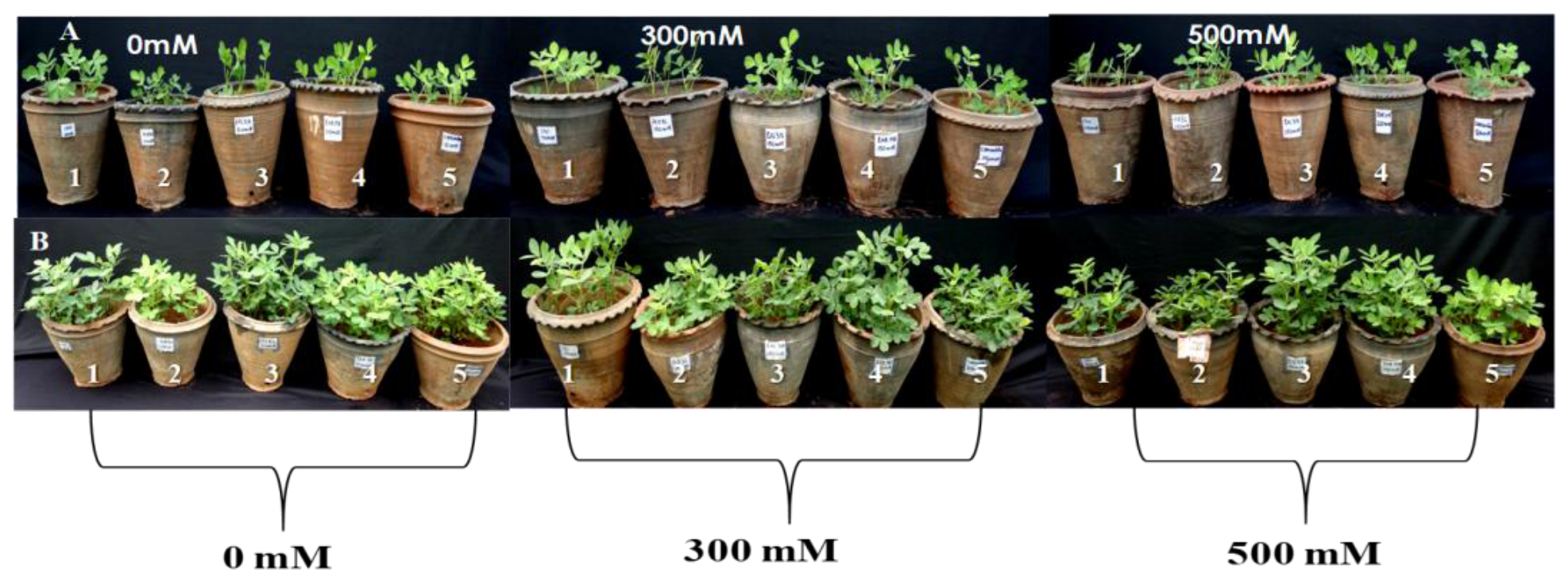
Figure 4.
Effect of NaCl on Antioxidant enzymes(Catalase(CAT), Superoxide Dismutase(SOD) Ascorbate Peroxidase (APX), Glutathione reductase (GR), Peroxidase), Malondialdehyde (MDA) & H2O2 of different halotolerant endophytic bacteria (ACR52, EAR195, EAL318 and Consortia) infected &uninoculated (Control) Peanut (cv JL24) plant samples at different NaCl Concentrations (0, 300 & 500 mM).Values are means of four replicates and different letters are differed significantly by two-wayANOVA followed by Tukey’s post hoc test.
Figure 4.
Effect of NaCl on Antioxidant enzymes(Catalase(CAT), Superoxide Dismutase(SOD) Ascorbate Peroxidase (APX), Glutathione reductase (GR), Peroxidase), Malondialdehyde (MDA) & H2O2 of different halotolerant endophytic bacteria (ACR52, EAR195, EAL318 and Consortia) infected &uninoculated (Control) Peanut (cv JL24) plant samples at different NaCl Concentrations (0, 300 & 500 mM).Values are means of four replicates and different letters are differed significantly by two-wayANOVA followed by Tukey’s post hoc test.
Disclaimer/Publisher’s Note: The statements, opinions and data contained in all publications are solely those of the individual author(s) and contributor(s) and not of MDPI and/or the editor(s). MDPI and/or the editor(s) disclaim responsibility for any injury to people or property resulting from any ideas, methods, instructions or products referred to in the content. |
© 2026 by the authors. Licensee MDPI, Basel, Switzerland. This article is an open access article distributed under the terms and conditions of the Creative Commons Attribution (CC BY) license (http://creativecommons.org/licenses/by/4.0/).
Copyright: This open access article is published under a Creative Commons CC BY 4.0 license, which permit the free download, distribution, and reuse, provided that the author and preprint are cited in any reuse.


