
Submitted:
09 July 2026
Posted:
13 July 2026
You are already at the latest version
Abstract
Sourdough fermentation is a critical technological process in bread production, directly influencing process stability, product quality, and shelf life. However, spontaneous fermentation often results in variability, limiting reproducibility and industrial applicability. This study proposes a process-oriented approach to the design of symbiotic starter cultures aimed at achieving controlled and predictable sourdough fermentation. Selected lactic acid bacteria of the species Lactiplantibacillus plantarum, Lacticaseibacillus rhamnosus, Levilactobacillus brevis, Limosilactobacillus fermentum, Fructilactobacillus sanfranciscensis and Propionibacterium freudenreichii ssp. shermanii and yeasts were combined in order to develop and select symbiotic starter cultures based on defined technological and metabolic criteria, including fermentation activity, adaptability to different flour matrices, microbial compatibility, and stability under controlled process conditions. The fermentation process was evaluated through key process indicators such as acidification dynamics and microbial behavior during sourdough fermentation. The proposed approach highlights the role of starter culture composition as a tool for process control, enabling reproducible fermentation performance and consistent product characteristics. This study provides a conceptual and technological framework for the development of controlled sourdough fermentation processes applicable to functional bread production without the use of chemical preservatives.
Keywords:
sourdough fermentation
; symbiotic starter cultures
; lactic acid bacteria
; fermentation process control
; functional bread production
1. Introduction
1.1. Sourdough Fermentation as a Biotechnological Process. Role of Lactic Acid Bacteria in Sourdough Fermentation
Sourdough fermentation is a complex biotechnological process based on the interaction between microorganisms, endogenous flour enzymes and biochemical transformations occurring within the flour matrix. During fermentation, carbohydrates and proteins are metabolized by microorganisms, leading to the formation of organic acids, carbon dioxide, ethanol and numerous aroma-active compounds. These metabolites influence bread structure, flavor, nutritional value and overall product quality [1,2,3].
The sourdough microbial ecosystem is mainly composed of lactic acid bacteria (LAB) and yeasts, which coexist in stable or semi-stable microbial associations. LAB are primarily responsible for dough acidification through the production of lactic and acetic acids. The decrease in pH creates selective conditions that restrict the growth of many spoilage microorganisms and contributes to the microbiological stability of the product [2,3,4,5]. Yeasts, in turn, contribute mainly to gas formation and dough leavening, supporting the development of loaf volume and crumb structure [1,4].
Traditionally, sourdough fermentation develops spontaneously through the growth of the natural microbiota present in flour and in the bakery environment. Although this approach is closely associated with traditional bread making, spontaneous fermentations may lead to considerable variation in microbial composition and fermentation performance. For this reason, selected starter cultures are increasingly used in modern bakery technology as a practical tool for controlling fermentation and improving the reproducibility of product quality [2,5,6].
Sourdough starter cultures usually include selected LAB strains with high fermentative activity, good adaptation to the flour environment and the ability to produce organic acids, flavor compounds and antimicrobial metabolites. The application of carefully selected starters with optimized composition provides better control over fermentation dynamics, improves technological performance and contributes to the development of the characteristic sensory profile of sourdough bread [2,6,7].
The LAB species most commonly associated with sourdough ecosystems include Lactiplantibacillus plantarum, Lacticaseibacillus rhamnosus, Levilactobacillus brevis, Limosilactobacillus fermentum and Fructilactobacillus sanfranciscensis. These species are technologically important because of their acidifying capacity, metabolic activity and ability to contribute to flavor formation and microbial stability [3,4,5,8].
The metabolic activity of LAB also has a direct effect on dough rheology and bread quality. Through carbohydrate metabolism and proteolytic activity, LAB may influence gluten structure and release peptides and amino acids that serve as precursors of aroma compounds [1,3]. In addition, some LAB strains produce exopolysaccharides, which can improve crumb texture, moisture retention and freshness during storage [1,9].
Another important technological property of LAB is their ability to produce antimicrobial compounds, including organic acids, bacteriocins and other inhibitory metabolites that suppress the growth of spoilage microorganisms. This characteristic is especially relevant for clean-label bakery products, where natural preservation strategies are preferred to chemical preservatives [10,11,12].
Homofermentative and heterofermentative LAB strains contribute differently to sourdough fermentation. Homofermentative LAB mainly produce lactic acid, which decreases dough pH and supports the development of bread safety and taste. Heterofermentative LAB produce lactic acid together with acetic acid, carbon dioxide and other metabolites, thereby contributing to a more complex flavor profile and to textural development in sourdough bread [3,13].
The effectiveness of starter strains is largely determined by their ability to acidify the food matrix rapidly, produce desirable flavor and aroma compounds, and inhibit saprophytic and pathogenic microorganisms [7,8,10]. Balanced microbial associations allow more precise regulation of pH, flavor profile and microbiological stability. These characteristics make LAB an important factor in the optimization of process parameters and final product quality. The interactions among LAB, yeasts and the flour matrix form a dynamic ecosystem whose efficiency depends strongly on the adaptability and compatibility of the individual microorganisms [4,5,14].
From a process point of view, the balance between LAB and yeasts is essential for fermentation kinetics and bread quality. An unsuitable ratio between these microbial groups may lead to excessive acidification, insufficient loaf volume or an unbalanced flavor profile. Therefore, the development of symbiotic starter cultures requires careful selection of strains with proven compatibility and a clear synergistic effect.
1.2. Influence of Flour Matrix on Fermentation
The composition of the flour matrix is one of the main factors determining sourdough fermentation dynamics. Flour provides fermentable carbohydrates, proteins, minerals and enzymes that support microbial growth and metabolic activity. Therefore, differences in flour type, milling process and extraction rate may influence microbial development, acidification kinetics and the formation of flavor compounds during fermentation [2,5,15]. Whole grain and rye flours generally contain higher levels of nutrients, minerals and endogenous enzymes than refined wheat flour. These characteristics may stimulate microbial growth and increase fermentation activity. At the same time, the buffering capacity and carbohydrate composition of the flour matrix can affect the rate of pH decrease and the balance between lactic and acetic acid production [3,5,15].
Understanding the interaction between microbial cultures and the flour environment is therefore essential for optimizing sourdough fermentation and for developing starter cultures adapted to specific raw materials and technological conditions.
1.3. Functional Ingredients and Enrichment with By-Products
In the food industry, cereal and nut-derived by-products can be used to enrich bakery products with dietary fiber, proteins, minerals, vitamins and bioactive compounds, thereby increasing their nutritional value and functional potential [15,16,17]. Malt bran and related brewing by-products are particularly interesting because of their fiber and protein content and their possible contribution to fermentation performance and bread quality [16,17]. Almond flour, on the other hand, provides plant proteins, lipids, minerals and antioxidant compounds and can be used as a functional ingredient in bakery formulations [18]. The fortification of bakery products with fiber-rich materials, plant ingredients and bioactive compounds is also associated with improved nutritional value, potential health-related effects and, in some cases, improved product stability [15,19].
1.4. Microbial Stability and Natural Preservation
Microbial spoilage remains a major challenge in bread production, particularly rope spoilage caused by representatives of the genus Bacillus and fungal spoilage during storage. Sourdough fermentation has long been recognized as a natural biopreservation strategy because LAB produce organic acids and other antimicrobial metabolites with inhibitory effects against spoilage microorganisms [10,11,12]. The antimicrobial activity of LAB can reduce the development of undesirable microorganisms and extend the shelf life of bread products. Several studies have shown that selected LAB strains produce compounds with antifungal activity, supporting mold inhibition and improving the microbiological stability of bakery products [11,12,20]. The selection of LAB strains with both technological and antimicrobial properties is therefore an important strategy for improving sourdough bread quality and safety. This underlines the role of symbiotic starters as an element of sustainable technological solutions in bread production.
1.5. Process Interpretation of Bread Functional Properties
The improvement of bread nutritional value and sensory characteristics through sourdough fermentation can be interpreted as a result of controlled process conditions. The reduction of antinutritional factors, the increased bioavailability of minerals and the formation of bioactive compounds are linked to the metabolic activity of microorganisms during fermentation [1,19,21].
From this perspective, the functional properties of the final product are not an isolated objective, but rather an indicator of effective fermentation management. This interpretation is consistent with the process-oriented approach typical of modern biotechnology research and industrial application. Such an approach makes it possible to integrate microbiology, raw materials and technological parameters into a single system aimed at producing stable, safe and high-quality bakery products.
The present study was aimed at developing and evaluating symbiotic starter cultures for sourdough as a tool for controlling the fermentation process in the production of different bread types. The emphasis was placed on the relationship between starter culture composition, fermentation activity, flour matrix and the resulting technological and microbiological characteristics of the final product. By applying selected strains of lactic acid bacteria and propionic acid bacteria in two-strain and multi-strain combinations, the study aimed to develop a reproducible process ensuring stable bread quality and extended shelf life without the use of chemical preservatives.
The overall process-oriented approach of the study, linking starter culture design to fermentation control and final product quality, is schematically presented in Figure 1.
2. Materials and Methods
2.1. Process Concept and Experimental Design
The experimental design was structured to allow analysis of the relationship between the microbial composition of the sourdough starter, the fermentation dynamics and the technological characteristics of the final product. The main emphasis was placed on the controllability and reproducibility of the process when using different sourdough starter cultures.
2.2. Microorganisms and Preparation of Starter Cultures
For the development of the starter cultures, selected strains of lactic acid bacteria with proven technological properties suitable for sourdough fermentation were used: Lp. plantarum Ph2, L. brevis X4, L. rhamnosus LBRC11, L. fermentum LBRH10, F. sanfranciscensis R and Pr. freudenrechii ssp. shermanii NBIMCC 327 [1,2,8,22,23,24]. The strains were selected based on their ability for controlled acidification, metabolic stability and compatibility in symbiotic associations. Before use, the microorganisms were activated and cultivated under standard laboratory conditions, ensuring high viability and activity.
The two-strain combination and the multi-strain combinations were formulated by combining strains with complementary metabolic profiles, in order to achieve balanced fermentation activity and process stability:
- Two-strain combination: Lp. plantarum Ph2: L. brevis X4 = 2:1.
- Multi-strain combination 1. It includes Lp. plantarum Ph2, L. brevis X4 and L. rhamnosus LBRC11, L. fermentum LBRH10 in a ratio of 2:1:1:1, respectively.
- Multi-strain combination 2. It includes Lp. plantarum Ph2, L. brevis X4, L. rhamnosus LBRC11, L. fermentum LBRH10 and F. sanfranciscensis R, i.e. Multistrain combination 1 and F. sanfranciscensis R in a ratio of 2:1, respectively.
- Multi-strain combination 3. It includes Lp. plantarum Ph2, L. brevis X4, L. rhamnosus LBRC11, L. fermentum LBRH10, F. sanfranciscensis R and Pr. freudenrechii ssp. shermanii NBIMCC 327, Multistrain combination 1 and F. sanfranciscensis R and Pr. freudenrechii ssp. shermanii NBIMCC 327 in a ratio of 2:1:1, respectively.
The following strains of saprophytic microorganisms were used as test microorganisms in the work: bacteria: B. subtilis ATCC 6633, Bacillus mesentericus (B. mesentericus); yeast S. cerevisiae ATCC 9763; fungi: Aspergillus niger ATCC 16604 (A. niger ATCC 16604), Penicillium chrysogenum ATCC 10106 (P. chrysogenum ATCC 10106), Rhizopus oryzae ATCC 11145 (Rh. oryzae ATCC 11145).
The saprophytic microorganisms are part of the collection of the Department of Microbiology and Biotechnology at the University of Food Technologies, Plovdiv and were used as indicator microorganisms for the study of the antimicrobial activity. The strains were cultivated at 30°C on LBG-agar.
2.3. Nutrient Media:
2.3.1. MRS-Broth – for Cultivating Lactic Acid Bacteria2.3.2. MRS-Agar –for Determining the Concentration of Viable Cells of Lactic Acid Bacteria2.3.3. LAPTg10 – Broth
Composition (g/dm3): peptone – 15; yeast extract – 10; tryptone – 10; glucose – 10. pH was adjusted to 6.6 – 6.8 and Tween 80 was added - 1cm3/dm3. Sterilization - 20 minutes at 121ºC. – for cultivation of lactic acid bacteria.
2.3.4. LAPTg10–Agar
Composition (g/dm3): Medium LAPTg10-broth, agar-agar - 20. Sterilization - 20 minutes at 121ºC. - for determining the concentration of viable cells of lactic acid bacteria.
2.3.5. LBG–Agar
Composition (g/dm3): tryptone – 10, yeast extract – 5, NaCl - 10, glucose – 10, agar-agar - 20. pH was adjusted to 7.5. Sterilization - 20 minutes at 121°C. – for determining the concentration of viable cells of pathogenic and saprophytic microorganisms.
2.3.6. Elective Medium for Propionibacterium sp.
Composition (g/dm3): tryptone – 10; yeast extract – 10; Na-lactate (freshly prepared) – 10g Na-lactate – 7.0g lactic acid was neutralized with 3.1g NaOH crystals and the remaining salts were dissolved in distilled water and were added to it; KH2PO4 – 2.5; MnSO4 – 0.005; agar-agar – 20; pH=6.8. Sterilization - 20 minutes at 121°C.
2.4. Raw Materials and Dough Formulation
Bread flours with different compositions, selected to assess the adaptability of starter cultures to different flour matrices were used in the experiments. The dough formulation was carried out under controlled conditions, with the flour-water ratio adjusted depending on the water-absorbing properties of the raw materials used. The starters were added in a predetermined amount, ensuring a reproducible initial microbial concentration.
The following flour types were used in the present work (Table 1): wheat flour type 500 and rye flour from the Dimitar Pilev mill, Konush village; einkorn flour and spelt flour from the company Ecosem Bulgaria OOD; almond flour from the company KING NUTS & RAAPHORST; malt bran supplied by “Jaegerhof” brewery. The physicochemical characteristics of wheat flour type 500, rye flour, einkorn flour, spelt flour include protein, moisture, particle size, ash content, flour water absorption, falling number, wet gluten yield and gluten relaxation. They were determined using the ICC standardized Inframatic 8600 system, which is a fast universal analyzer based on the measurement of infrared light reflectance (NIR analyzer).
2.5. Fermentation Conditions and Process Management
The dough fermentation was carried out under controlled temperature and time regimes, tailored to the optimal activity of the starter cultures used. During the process, key parameters, including pH change and fermentation duration, were monitored in order to assess the fermentation kinetics. The process management was aimed at achieving stable acidification and reproducible conditions between the individual experimental series. Main doughs were prepared with the appropriate percentage of 96-hour sourdough with a two-strain or multi-strain combination, with the amount of sourdough included being determined based on the amount of flour. The following percentage ratios were used in the preparation of the main doughs: 1.5% salt, 2% baker's yeast, the appropriate percentage of sourdough and drinking water (the amount of water was determined by the water absorption of the respective flour). The components were mixed with a dough mixer, first kneading slowly (40 rpm) for 4 min, followed by rapid kneading (90 rpm) for 8 min. The dough was left to rest for about 10 min to improve its elastic properties. Loaves weighing 500 g were formed and placed in trays, they fermented at high humidity (80±5 RH) and a temperature of 35°C for about 40 – 45 min.
2.6. Bread Production
After fermentation, the dough was subjected to standard technological processing and baking under controlled conditions. All samples were produced under identical parameters to minimize the influence of external factors and to ensure comparability of the results. The bread was baked at 225±5 °C for 22 min. The bread with the corresponding percentage of sourdough with a two-strain or multi-strain combination, as well as the control bread (bread without sourdough), was baked under semi-production conditions. The baked bread was cooled at room temperature for 120 min.
2.7. Analysis of Fermentation and Technological Indicators
The evaluation of the fermentation process was performed by analyzing the pH change and the microbiological stability of the dough and the bread. The technological characteristics of the finished products were determined by standard methods, including analysis of the structure, volume and freshness of the bread during storage. All analyses were performed in at least three replicates.
2.7.1. Biochemical Methods
A. Determination of titratable acidity of sourdough/yeast dough – according to Vangelov and Karadjov, 1993 [25].
B. Determination of titratable acidity of bread dough – according to Vangelov and Karadjov, 1993 [25].
2.7.2. Microbiological Methods
A. Determination of the number of viable microorganisms. Suitable tenfold descending dilutions in saline solutions of each sample were prepared. From these, spread-plating or pour-plating on/in the corresponding agar medium was performed. The inoculated Petri dishes and tubes were cultured for 3 days at the optimal temperature for the growth of the corresponding microorganism until the appearance of countable single colonies.
B. Determination of antimicrobial activity – agar-diffusion well method. To determine the antimicrobial activity of the 96-hour sourdoughs with the different combinations against saprophytic microorganisms, dilutions of the 96-hour sourdoughs with water in a ratio of 1:1 were prepared. Spore suspensions of each of the test microorganisms (concentration of 106-107 CFU/cm3) were prepared and they were used for pour-plating in LBG-agar medium. After the agar has solidified, wells (6 mm) were prepared. 0.06 cm3 of the respective sample were introduced into the wells, with each sample being pipetted in triplicate, and the Petri dishes with the test microorganisms were incubated at the optimal growth temperature of the saprophytic microorganisms - 30ºC. The antimicrobial activity was determined after 48 hours of incubation by measuring the diameter of the inhibition zones in mm.
2.7.3. Technological Methods
A. Preparation of sourdough starters and testing in production conditions.
B. Preparation of cell suspensions for inoculation of the flour/water mixture. 10 cm3 of MRS-broth medium were inoculated with the respective lactic acid bacteria strain (1%), followed by incubation for 24 hours at the optimum temperature for the growth of the strain – 30 °C or 37 °C. After incubation, the biomass was collected by centrifugation (6000 x g, 15 minutes, 4 °C) and the pellet was resuspended to the initial volume with sterile saline solution. The resulting cell suspensions were used to inoculate the flour/water mixture to obtain the respective single-strain sourdough. For the preparation of sourdough with multi-strain starter, the 24-hour culture suspensions of the strains included in the starter were mixed and homogenized. They were then centrifuged and the pellet was resuspended to the initial volume of the mixed suspension with sterile saline solution and was used to inoculate the flour/water mixture to obtain multi-strain starter sourdough.
C. Preparation of single-strain sourdough. Single-strain sourdough was prepared using the following technology: First, a flour suspension was prepared (44% flour/56% tap water at a temperature of 35±1 °C). The flour suspension was inoculated with 2% fresh 24 h culture of the respective strain. It was homogenized using a spatula and placed in a thermostat for 24 h at a temperature of 30±1 °C. The single-strain sourdoughs already prepared in this way were subjected to daily back-slopping up to the 96th h using the preparation technology: 25%-sourdough ÷ 75% fresh flour/water mixture (44% flour - 56% water at a temperature of 35 °C). The changes in the concentration of viable cells and the titratable acidity of the sourdough during back-slopping and cultivation at 30±1 °C were monitored.
D. Preparation of multi-strain sourdough. Multi-strain sourdough is prepared using the following technology: a flour suspension was prepared (44% flour/56% tap water at a temperature of 35±1 °C). The flour suspension was inoculated with 2% fresh mixture of 24 h cultures of the respective strains in a predetermined ratio. It was homogenized using a spatula and placed in a thermostat for 24 h at a temperature of 30±1 °C. The multi-strain sourdoughs already prepared in this way were daily back-slopped for up to 96 h using the preparation technology: 25%-sourdough ÷ 75% fresh flour/water suspension (44% flour -56% water at a temperature of 35 °C). The changes in the concentration of viable cells and the titratable acidity of the sourdough during back-slopping and cultivation at 30±1 °C were monitored.
D. Determination of bread dough rise. The method was developed and is applied in the company "DAFA" Ltd., where the laboratory baking tests of the bread were carried out. It is based on the method for determining the lifting force of pressed baker's yeast [25] and aims to show the intensity of the fermentation processes occurring in the dough, associated with an increase in its volume.
A piece of 400 g was separated from the obtained basic bread dough and it was shaped into a baguette and placed in a lightly greased mold with rectangular dimensions (8cmx8cmx18cm), pressing it into a layer of uniform thickness. A transverse plate was placed across the center of the upper surface of the long walls of the mold, the lower end of which was 40 mm from the upper surface of the dough. The mold with the dough was placed in a thermostat at a temperature of 35 °C. The time in minutes from the moment the mold was placed in the thermostat until the moment the dough touched the transverse plate was recorded.
E. Testing of sourdough starters for sourdough bread - in semi-production conditions at the company "DAFA OOD" – Plovdiv.
F. Determining the occurrence of bacterial spoilage in baked bread. The determination of the occurrence of bacterial spoilage of baked bread was carried out by parallel storage of the baked bread with the corresponding percentage of starter sourdough at 37 °C and at room temperature by 10 specialists in the production laboratory. Bacterial spoilage was determined on a scale from I to IV, with each degree corresponding to the following description: I – barely perceptible (pleasant fruity aroma); II – weak (clearly noticeable change in smell - pungent); III – medium (moist, sticky middle, unpleasant smell); IV – strong (foul smell, yellow-brown crumb, stretchiness of the crumb).
G. Determining the occurrence of fungal spoilage in baked bread. The determination of the occurrence of fungal spoilage of baked bread was carried out by parallel storage of the baked bread with the corresponding percentage of starter sourdough at 30 °C and at room temperature by 10 specialists in the production laboratory.
H. Sensory evaluation of dough pieces before and after final fermentation, and of the finished bread. The sensory characteristics of the dough, before and after final fermentation, were determined tactilely, by touch, and visually, by the indicators: feeling of humidity and consistency. The baked and cooled bread, with different amounts (%) of the respective sourdough, was organoleptically characterized, under production conditions, in accordance with a descriptive method [26]. Rules for sampling and testing methods/, based on an internal sensory evaluation protocol, approved and implemented in the company "DAFA OOD - Plovdiv". An internal panel of seven specialists related to the technological and production process rated the finished product on a 10-point scale, ranging from 0 (worst rating) to 10 (best rating), based on the following indicators: bread volume, intensity of overall aroma and taste, softness, elasticity and moisture of the crumb, crumb color, baking (color and taste) of the crust, and crumb aftertaste.
2.8. Statistical Analysis
All analyses were performed in triplicate and the mean and standard deviation were determined using MS Office Excel 2010.
3. Results
3.1. Development of Starter Cultures for Different Types of Sourdough for Bread Production from Different Flour Types
3.1.1. Preparation of Single-Strain Sourdoughs to Determine the Ability of the Newly Isolated Strains of Lactic Acid Bacteria to Grow in Flour/Water Suspension
It is important that the LAB strains from the composition of the starters accumulate a large amount of viable cells in a short time in order to carry out a targeted fermentation process. The reproductive ability and the acid-formation activity of L. brevis X4 and Lp. plantarum Ph2 were studied. For this purpose, 4 single-strain sourdoughs were prepared with each LAB strain with 4 flour types: wheat flour, rye flour, spelt flour, einkorn flour. The changes in the concentration of viable cells and the titratable acidity of the sourdough during daily back-slopping for 96 h and cultivation at 30±1 °C are reflected in Figure 2, Figure 3, Figure 4 and Figure 5. L. brevis X4 and Lp. plantarum Ph2 grew very well in flour/water suspension, reaching 1012-1013 cfu/cm3 viable cell count by 96 h and the acidity of the resulting sourdoughs increased to 22 °N – 24 °N (Figure 2 to Figure 5). By the 24th hour, each of the four sourdoughs for each strain was characterized by a specific aroma, and by the 48th hour, the four single-strain sourdoughs for each strain had a different type and strength of aroma compared to the 24th hour, but by the 72nd hour, the sourdoughs had an identical lactic acid aroma, which persisted until the 96th hour.
Based on the results obtained, a two-strain combination for sourdough bread was created by mixing Lp. plantarum Ph2 : L. brevis X4 in a ratio of 2:1 (The combination hereinafter is referred to as “Ph2 + X4”). The ability of the LAB in the two-strain combination to grow under the conditions of the four types of flour suspensions was studied. The four flour suspensions were flour suspension with wheat flour type 500, flour suspension with rye flour, flour suspension with spelt flour and flour suspension with einkorn flour. In the two-strain combination, the lactic acid bacteria strains grew well together and accumulated a high concentration of living cells (over 1012 - 1013cfu/g) and the titratable acidity reached 21.0°N for rye flour (Figure 6, Figure 7).
3.1.2. Development of Two-Strain Starter Cultures for Different Bread Sourdoughs from Different Flour Types
The aroma of all sourdoughs with the two-strain combination was typical, characteristic, strong, clearly pronounced, lactic acid aroma without any side, unusual, unpleasant aroma. The two-strain combination Ph2+X4 in a flour suspension with spelt and einkorn flour formed a richer, denser and stronger aroma. The weakest aroma was observed in a flour suspension with wheat flour type 500. This was due to the chemical composition of the flour. In white flour type 500, the outer layers of the grain or the so-called shell and germ are separated during the milling process, and they are rich in micro- and macroelements and enzyme systems. The main part of the flour is the endosperm of the grain, which is poor in simple sugars - about 0.5% to 1.0% and micro- and macroelements. The amylolytic enzymes responsible for the accumulation of simple sugars in the dough are mainly contained in the germ of the grain, which is largely removed during the milling process. For this reason, lactic acid fermentation in white type 500 flours was not as pronounced as in wholemeal flours and/or those with a higher ash content [3,27,28]. The obtained results provide grounds for defining the two-strain combination for sourdough bread as a two-strain sourdough starter (2SSS). The antimicrobial activity of the 96-hour sourdoughs with the two-strain starter against saprophytic microorganisms was determined (Table 2). The two-strain starter did not inhibit the growth and development of the baker's yeast Saccharomyces cerevisiae, but exhibited antimicrobial activity against the saprophytes included in the study, with a stronger inhibitory effect being found in sourdoughs with spelt flour and einkorn flour. The reported inhibition was probably due to the metabolic products synthesized by the LAB in the composition of the starters [10,11,29,30].
Testing of the two-strain bread starter in semi-production conditions. Bread variants were baked with the inclusion of the 96-hour sourdoughs with the two-strain starter sourdough (2SSS) in an amount of 7% and 15% relative to the flour, to form the main dough. In technological terms, all sourdoughs were successfully applied in bread making. No undesirable processes that would hinder production were identified. Sourdoughs with the 2SSS provided stability, elasticity and strength to the main dough during the technological process and fermentation. Dough with 2SSS had reduced adhesion properties (dryer surface). No fungal spores or wild yeasts were found in the various sourdoughs, which was probably due to inhibition under the action of the synthesized metabolites from the LAB in the composition of the two-strain starter. Various indicators of the dough, respectively of the bread, were monitored to determine whether these amounts of sourdough input affect negatively affect the physical and organoleptic parameters of the dough and the bread production technologies applied by the manufacturer. The data characterizing the fermentation of the dough, its strength and elasticity, aroma, taste, bread pieces before and after baking, etc. are shown in Table 3 and Table 4.
An acceleration of the fermentation process was established. The doughs obtained with the two-strain strain sourdough had reduced adhesion properties, were more elastic and had good organoleptic properties. The bread loaves had a larger volume and better dimensional stability. The finished bread had a uniform, well-developed softer and lighter crumb, with a pleasant and characteristic lactic acid aroma (Table 3 and Table 4). After the evaluation of the baked bread variants with different percentages of inclusion of 96-hour two-strain starter sourdoughs, the optimal percentage of inclusion of the two-strain starter sourdough in the preparation of the main dough in order to prevent fungal and bacterial spoilage of the baked bread for as long as possible, without negatively affecting its organoleptic indicators, was determined.
The storage period of the baked breads was determined (Figure 8). The baked breads were stored at room temperature (20 – 22 °C) and at 37 °C for 96 h to determine the occurrence of bacterial spoilage (Table 4) and at 30°C and room temperature (20 – 22 °C) for 120 h to determine the occurrence of fungal spoilage (Table 5).
The earliest signs of bacterial spoilage were detected in the control bread loaves – at the 48th hour at 37°C and at 72nd hour at room temperature. The control bread did not meet the requirements of the standard for microbial safety of bakery products. When 7% and 15% sourdough were added, no signs of bacterial spoilage were observed at the 96th hour, both at 37°C and at room temperature (Figure 8).
The earliest signs of fungal spoilage were detected in the control bread – at the 72nd hour at 30°C and at room temperature. When 7% two-strain starter sourdough was added, fungal spoilage was observed at the 96th hour at 30°C, with the lowest degree of spoilage being in the sourdough bread variants from spelt flour and einkorn flour. When the percentage of sourdough inclusion was increased to 15%, fungal spoilage was observed at the 96th hour at 30°C and at the 120th hour at room temperature in the wheat bread. In the breads made from rye-wheat flour, spelt flour and einkorn flour, there was no fungal spoilage even at the 120th hour (Table S2; Figure 8). The optimal percentage of two-strain starter sourdough inclusion without observing a negative impact on the flavor profile and volume of the resulting bread is 7% to prevent bacterial spoilage and 15% to prevent fungal spoilage.
The two-strain starter sourdoughs were added in quantitative percentages of 7% and 15% under non-sterile conditions, and the storage of the baked bread at different temperatures was also carried out in non-sterile conditions, which were as close as possible to home storage conditions, unlike the experiments of Mentes et al., 2007, which were carried out under aseptic conditions [31].
The results obtained are in accordance with the conclusions of other author groups [31,32,33,34]. The addition of 15% or more starter sourdough in the preparation of the main dough inhibited the growth of bacterial and fungal spores, thus ensuring a long shelf life of the baked products [31,33], and although acidification is necessary for optimal bread rise, control of enzyme activities, crumb elasticity and long shelf life, too much acidification has an adverse effect on some rheological parameters [32,34].
3.2. Development of Multi-Strain Starter Cultures with the Participation of the LAB Lp. plantarum Ph2, L. brevis X4 and Propionic Acid Bacteria for Sourdough for the Production of Wheat Bread, Wheat-Rye Bread, Spelt Flour Bread and Einkorn Flour Bread
3.2.2. Influence of the Starter Microbial Composition on the Fermentation Kinetics
With the selected two-strain starter consisting of the LAB strains Lp. plantarum Ph2, isolated from spontaneously fermented sourdough from wheat flour and L. brevis X4, isolated from spontaneously fermented sourdough from Khorasan flour, as well as L. rhamnosus LBRC11, L. fermentum LBRH10, F. sanfranciscensis R, Pr. freudenrechii ssp. shermanii NBIMCC 327 (582 D), sourdough combinations for making bread from different flours have been developed. The following three combinations have been developed:
- ✓ Multi-strain combination 1. It includes Lp. plantarum Ph2, L. brevis X4 and L. rhamnosus LBRC11, L. fermentum LBRH10 in a ratio of 2:1:1:1, respectively.
- ✓ Multi-strain combination 2. It includes Lp. plantarum Ph2, L. brevis X4, L. rhamnosus LBRC11, L. fermentum LBRH10 and F. sanfranciscensis R, i.e. Multistrain combination 1 and F. sanfranciscensis R in a ratio of 2:1, respectively.
- ✓ Multi-strain combination 3. It includes Lp. plantarum Ph2, L. brevis X4, L. rhamnosus LBRC11, L. fermentum LBRH10, F. sanfranciscensis R and Pr. freudenrechii ssp. shermanii NBIMCC 327, Multistrain combination 1 and F. sanfranciscensis R and Pr. freudenrechii ssp. shermanii NBIMCC 327 in a ratio of 2:1:1, respectively.
The ability of the strains from the three multi-strain combinations to grow in flour suspension was determined (Figure 9, Figure 10, Figure 11, Figure 12, Figure 13, Figure 14 and Figure 15).
The strains from the three combinations grew very well in the flour/water suspensions, reaching 1013-1014 cfu/cm3 viable cell count by the 96th hour (Figure 9, Figure 11, Figure 13, Figure 14) and the acidity of the resulting sourdough increased, reaching 25°N (Figure 10, Figure 11 and Figure 15). It is noteworthy that time was needed (between 24-48 h) to stabilize the growth and development of the lactic acid bacteria strains from the combinations, after which intensive growth and development and release of significant amounts of metabolic products began.
The aroma of all sourdoughs was typical, strong, characteristic, with a clearly pronounced lactic acid aroma without any unpleasant side aroma. All strains from the composition of the combinations grew equally well in the flour/water suspensions. In Combination 2, a slightly softer, sweetish, but rich and pleasant lactic acid aroma was established. It is characteristic of whole grain breads, or breads made from flours with a high ash content - over 750. The data obtained on the development of the new combinations in sourdoughs give grounds for the combinations to be defined as sourdough starters.
The results of the study show that the microbial composition of the starters used had a significant impact on the fermentation process kinetics. The different combinations of lactic acid bacteria demonstrated specific acidification profiles that determined the rate of pH decrease and the stabilization of the fermentation medium. The faster reaching of critical pH values in the initial stages of the process created selective conditions that limited the growth of competitive and unwanted microflora.
From a process perspective, the observed differences in fermentation kinetics can be related to the metabolic type of the strains used. Homofermentative lactic acid bacteria contribute to an intense and predictable acidification, while the inclusion of heterofermentative strains leads to a more moderate acidification rate and a more complex metabolic profile. These results confirm that targeted strain selection allows for control of the fermentation time parameters, which is key for the industrial applicability of the process.
3.2.2. Process Dependencies Between Acidification and Microbiological Stability
The antimicrobial activity of the twelve 96-hour multi-strain starter sourdoughs against saprophytic microorganisms was determined (Table 5). All twelve sourdoughs did not inhibit the production strain of baker's yeast, but demonstrated antimicrobial activity towards the saprophytes included in the study, with a stronger inhibitory effect observed in the sourdoughs from rye flour and spelt flour and Sourdough starter 3. It is likely that the observed inhibition is largely a result of the metabolites produced and accumulated in the medium by the lactic acid bacteria and propionic acid bacteria from the composition of the starters.
The analysis of the microbiological parameters showed a clear correlation between the acidification dynamics and the stability of the fermentation system. Sourdoughs characterized by a faster and more uniform decrease in pH demonstrated more effective suppression of saprophytic bacteria and fungi during bread fermentation and storage.
These results can be interpreted as evidence that microbiological safety is not simply a function of the presence of certain strains, but a consequence of a well-managed fermentation process. The combined action of organic acids and other metabolic products creates an unfavorable environment for the development of unwanted microflora, which contributes to extending the shelf life of the final product. In this context, symbiotic sourdoughs function as a biological preservation tool integrated into the fermentation process itself.
3.2.3. Influence of the Fermentation Process on the Rheological Properties of the Dough. Approbation of Sourdough Starters for Bread Dough in Production Conditions
From each of the 96-hour sourdoughs obtained using each multi-strain starter and each flour type, bread was baked with a percentage of inclusion of the respective sourdough of 5%, 7% or 10%. In technological terms, all three starters were successfully applied in the preparation and baking of bread. No undesirable processes that would be an inconvenience for production were observed. Sourdough gave strength, stability and elasticity to the dough during the preparation of the main dough and its fermentation. On the contrary, the addition of sourdough stabilized and facilitated the bread-making processes.
Various indicators of the dough and bread were monitored in order to determine whether these percentages of sourdough inclusion had a negative impact on the physical and organoleptic parameters of the dough and the bread-making technologies established by the manufacturer (Table 6). The results show an acceleration of the fermentation process. The resulting main doughs with the addition of multi-strain starter sourdough were more elastic, stronger, the loaves were larger in volume. The baked bread had softer and lighter-colored crumb, with a characteristic pleasant lactic acid aroma. No fungal spores or wild yeasts have been detected in any sourdough.
Breads were baked with the inclusion of different percentages of 96-hour sourdough with the corresponding starter with all 12 sourdoughs in order to determine the best starter for wheat and wheat-rye bread, spelt flour bread and einkorn flour bread, as well as to select its optimal inclusion percentage when preparing the main dough, in order to prevent the occurance of fungal and bacterial spoilage for the longest time possible, without the addition of sourdough negatively affecting its organoleptic indicators. The rheological characteristics of the dough turned out to be closely related to the fermentation activity of the starter cultures used. Sourdoughs with a more balanced microbial composition led to a more stable dough structure, improved gas retention and better workability. This can be explained by processes such as controlled proteolysis and synthesis of exopolysaccharides, which affect the gluten network and water retention capacity. From a process perspective, these results show that fermentation should not be considered only as a gas generation step, but as a key mechanism for structural modification of the dough. Controlling microbial activity allows achieving desired rheological properties without the need for additional technological additives, which is in line with the trends for “clean label” products.
The summarized results show that the incorporation of 96 h fermented sourdough improved bread volume, shape stability and aroma in all investigated bread types compared with the respective controls. In most cases, the optimal technological effect was achieved at 7% sourdough addition, particularly in wheat, spelt and einkorn breads. In wheat–rye bread, higher sourdough levels, especially 10%, often resulted in the best volume and shape. Increasing the sourdough addition level was generally associated with higher bread acidity and a more pronounced lactic acid aroma. The most pronounced volume improvements compared with the control were observed in wheat–rye bread with Starter 2 and 7% rye sourdough, and in einkorn bread with Starter 3 and 10% einkorn sourdough.
Notes: Starter 1: L. rhamnosus LBRC11 : L. plantarum Ph2 : L. brevis X4 : L. fermentum LBRH10 = 1:2:1:1. Starter 2: Starter 1 : Fructilactobacillus sanfranciscensis R = 2:1. Starter 3: Starter 1 : F. sanfranciscensis R : Propionibacterium shermanii 582D = 2:1:1. All sourdoughs were fermented for 96 h. Final proofing time was 60 min for all variants. “Optimal sourdough addition” was selected primarily by maximum bread volume; when values were similar, sensory quality and acidity were also considered.
3.2.4. Interaction Between the Fermentation Process and the Sensory Profile of Bread and the Shelf Life of Bread
The baked breads were stored at room temperature (20 - 25°C) and at 37°C for 96 hours to determine the occurrence of bacterial spoilage and at room temperature and at 30°C for 168 hours to determine the occurrence of fungal spoilage. The earliest signs of bacterial spoilage were detected in the control breads made from wheat flour and spelt flour - at the 96th hour at 37°C, but it was not observed at the 96th hour in all other variants of the individual multi-strain starters at room temperature. The baked control bread did not meet the requirements of the standard for microbial safety of bakery products (MS 02/2011). When adding 5%, 7% or 10% of multi-strain starter sourdough, no bacterial spoilage was observed at the 96th hour, both at 37°C and at room temperature (Figure 16, Figure 17).
The earliest occurrence of fungal spoilage in the wheat bread variants was detected in the control wheat bread and the breads with the inclusion of 5% or 7% sourdough with multistrain starter 1 or multistrain starter 2 - at the 168th hour at 30°C. When using 10% of sourdough with multistrain starter 1 or multistrain starter 2, signs of fungal spoilage were present at the 168th hour only in some variants. In all wheat breads with the inclusion of 5%, 7% or 10% of sourdough with multi-strain starter 3 no signs of fungal spoilage were established even on the 168th hour. In einkorn bread variants, the earliest occurance of fungal spoilage was in the control variant at the 96th hour at 30°C and at the 168th hour in the control variant at room temperature and in the variants with 5% starter sourdough addition at both temperatures, in the bread variants with 7% or 10% inclusion of sourdough with starter 1 at 30°C as well as in the bread variants with 5% or 7% of sourdough with starter 2 or starter 3 at 30°C. In the bread variants with 7% or 10% inclusion of sourdough with starter 1 at room temperature as well as in the bread variants with 5% or 7% of sourdough with starter 2 or starter 3 at room temperature and 10% of sourdough with starter 3 at both temperatures – no signs of fungal spoilage were determined even at the 168th hour. In the spelt flour bread variants, fungal spoilage was noticeable the earliest at the 168h hour in the control bread and in the breads with 5%, 7% or 19% of sourdough with starter 1 or starter 2 at both temperatures as well as bread with 5% of sourdough with starter 3 at 30°C. In spelt bread variants with 5% sourdough with starter 3 at room temperature and with 7% or 10% of sourdough with starter 3 at both temperatures – no signs of fungal spoilage were noticeable at the 168th hour. In wheat-rye bread variants the earliest occurance of fungal spoilage was in the control variant at the 96th hour at 30°C and at the 168th hour in the control variant at room temperature and in the variants with 5% or 7% starter sourdough addition at both temperatures. In the bread variants with 10% inclusion of sourdough with starter 1, starter 2 or starter 3 at both temperatures – no signs of fungal spoilage were determined even at the 168th hour (Figure 16, Figure 17).
The optimal amount of sourdough inclusion without any negative impact on the volume and flavor profile of the baked bread is 7% to prevent bacterial spoilage and 10% to prevent fungal spoilage.
The sensory characteristics of the resulting bread products show a clear dependence on the fermentation process and the sourdough used. Breads produced with symbiotic starter cultures are distinguished by a more balanced flavor profile and a better pronounced aroma, which can be associated with the formation of organic acids, volatile compounds and other secondary metabolites during fermentation.
These observations confirm that the bread sensory qualities are a direct consequence of the process parameters and microbial dynamics, and not only of the composition of the raw materials. By regulating the fermentation conditions and the microbial composition of the sourdough, the aroma and flavor profile of the final product can be purposefully modeled, which is a significant advantage for the development of new bread products.
The sourdough starters were added in different quantitative percentages under non-sterile conditions, and the storage of the baked bread under different temperature conditions was also carried out under non-sterile conditions, as close as possible to home storage conditions, in contrast to the experiments and conclusions described by Mentes et al., 2007, which were conducted under aseptic conditions [31].
The results obtained are consistent with the conclusions of other research teams. The inclusion of 10-15% or more of sourdough in the preparation of the main dough inhibited the growth of bacterial and fungal spores and ensured a long shelf life of the baked products [31,33], and although acidification is essential for optimal bread rise, control of enzyme activities, crumb elasticity and long shelf life, excessive pH reduction has an adverse effect on some rheological parameters [32,34,35].
The results obtained show that breads produced with selected symbiotic starters demonstrated an extended shelf life compared to control samples. This effect can be explained as a result of the combined effect of the reduced pH, the presence of antimicrobial metabolites and the improved structure of the crumb, which slows down the aging processes. From the point of view of process engineering, the extension of the shelf life is not an isolated result, but a logical consequence of an optimized fermentation strategy. The management of the microbial ecosystem during fermentation leads to the creation of a stable product that retains its quality characteristics for a longer period without the use of chemical preservatives. As a result of the research conducted on the development and application of sourdoughs with multi-strain starters containing lactic acid bacteria and propionic acid bacteria in bread production, three multi-strain starters for sourdoughs have been developed; the optimal concentration of sourdoughs with multi-strain starters in bread production has been determined; the technological and organoleptic indicators of the produced bread have been improved. In addition, it has been found that the LAB and PAB strains from the composition of multi-strain starters suppress "wild" yeast and fungal spores.
3.3. Study of the Possibilities for Application of the Three Multi-Strain Sourdough Starters for the Production of Wheat Bread and Spelt Flour Bread, with the Addition of Almond Flour (AF) and Malt Bran Flour (MBF)
The strains from the composition of the three starters were developed in a flour/water suspension of wheat flour type 500 and a flour/water suspension of spelt flour (Figure 9 to Figure 15. The antimicrobial activity against saprophytes of the 96-hour starter sourdoughs was determined. All three multi-strain starters, developed in two sourdough types (in wheat flour sourdough and spelt flour sourdough), did not inhibit the growth and development of the production strain of baker's yeast, but had antimicrobial activity towards the saprophytic microorganisms included in the study (Table 5). Higher antimicrobial activity was reported for the three starters in spelt flour sourdough. It is likely that the observed inhibition was largely due to the metabolites produced by the lactic acid bacteria or lactic acid bacteria and propionic acid bacteria in the composition of the multi-strain starters during their co-cultivation.
3.3.1. Testing of Sourdough Starters for Sourdough Bread in Semi-Production Conditions
Bread was baked with sourdoughs with the three multi-strain starters with the following percentage of sourdough addition: 15% sourdough was added from sourdough with Starter № 1. 10% of the starter sourdough was added from sourdough with Starter №2 or Starter №3. Technologically, all three multi-strain starters were successfully used in baking bread, both in the form of wheat flour sourdoughs and in the form of spelt flour sourdoughs.
Bread was baked with all sourdoughs with all multi-strain starters with the addition of 5%, 10%, 15%, 20%, 25% (relative to the main flour amount according to the recipe) of malt bran flour (MBF) or almond flour (AF). No undesirable processes that would hinder production were observed. The use of multi-strain starter sourdoughs improved the physical properties of the dough, giving it stability, strength, and elasticity during the technological process and fermentation. This facilitated the bread production process.
Physical and organoleptic indicators of the dough, respectively of the bread, were monitored so that the added amounts of almond flour and malt bran flour do not negatively affect the bread production technologies adopted by the manufacturer (Table S1 and Table S2 for almond flour and wheat bread; Table S3 and Table S4 for malt bran flour and wheat bread; Table S5 and Table S6 for almond flour and spelt flour bread; Table S7 and Table S8 for malt bran flour and spelt flour bread). Experimental data show that with the increase in the percentage of almond flour added, the fermentation process was slightly slowed down. The controls (without the addition of almond flour) with sourdough were more stable, more elastic, the bread had larger volume and good dimensional stability. The finished bread had softer and more even cru. Test breads with multi-strain starter sourdoughs made in spelt flour and the three multi-strain starters with the addition of 5%, 10%, 15%, 20%, 25% malt bran flour (MBF) or almond flour (AF) were prepared (Table S1 and Table S2 for almond flour; Table S5 and Table S6 for malt bran flour).
The optimal percentage of malt bran flour or almond flour addition was 10% and 15%. Depending on the taste preferences of consumers, bread can be prepared with the inclusion of 20% malt bran flour or almond flour, but the resulting bread had a smaller volume and a slightly crumbly and uneven crumb structure. At higher percentages of malt bran flour or almond flour - 20% and 25%, a deterioration of the dough structure and bread, a decrease in bread volume were observed. The bread taste and aroma were clearly influenced by the presence of the almond flour or malt bran flour - there was no starter sourdough aroma. The addition of 5% of malt bran flour or almond flour was considered too small percentage, because the aroma-taste profile characteristic of these raw materials was barely perceptible in the baked breads. A clearly expressed pleasant taste of malt bran or almond was observed when adding 10% and 15% malt bran flour or almond flour. At these percentages of addition, the starter sourdough aroma was also clearly perceptible.
The baked breads were stored at room temperature and at 37 °C to determine the occurrence of bacterial spoilage (Table S9 and Table S10), and at room temperature and at 30 °C to determine the occurrence of fungal spoilage (Table S11 and Table S12).
The results show that in the control variant of wheat flour bread, bacterial spoilage was detected at the 72nd hour at a storage temperature of 37°C, and at room temperature – at the 96th hour. In the wheat bread variants prepared with the inclusion of sourdough with multi-strain starter sourdough and different percentages of replacement of wheat flour with almond flour or malt bran flour, bacterial spoilage was not detected even at the 96th hour. The addition of multi-strain starter sourdough inhibited the occurrence of bacterial spoilage, and the replacement with different percentages of inclusion of almond flour or malt bran flour did not negatively affect the shelf life of the prepared wheat bread variants (Table S9 and Table S10).
Regarding the appearance of fungal spoilage in the control wheat bread, it was established at the 72nd hour at a storage temperature of 30°C, and at room temperature - at the 96th hour. In the wheat bread variants prepared with the inclusion of sourdough with the three multi-strain starters and different percentages of replacement of wheat flour with almond flour or malt bran flour, fungal spoilage was established at the 120th hour. In the wheat bread variants prepared with the inclusion of sourdough with Starter №3 and different percentages of replacement of wheat flour with almond flour or malt bran flour, fungal spoilage was not established even at the 120th hour, neither at 30°C, nor at room temperature. The addition of multi-strain starter sourdough inhibited the occurrence of fungal spoilage, and substitution with different percentages of almond flour or malt bran flour did not negatively affect the shelf life of the prepared wheat bread variants (Table S11 and Table S12).
By introducing lactic acid bacteria and propionic acid bacteria with the starter sourdough into the main dough, a targeted fermentation process is carried out, which guarantees the production of safe bread with an extended shelf life, contributing to the protection of public health.
Summarizing the results obtained, it can be concluded that the developed symbiotic starters function as an effective tool for controlling the fermentation process. The interrelationship between the microbial composition, fermentation kinetics and the quality of the final product shows that the control of microbial dynamics is a key factor for achieving reproducible and stable results.
This process-oriented approach allows the integration of microbiological, technological and sensory aspects into a single system aimed at optimizing bread production. The results confirm that sourdough fermentation can be successfully designed and managed as a biotechnological process that meets the requirements of the modern food industry.
4. Discussion
The results of the present study confirm that the microbial composition of the starter culture is a decisive factor not only for fermentation performance, but also for the quality and storage stability of the final bread. This observation supports recent data showing that sourdough systems based on defined or stabilized starter cultures allow more predictable control of pH development, acidification, dough rise and microbial behavior than uncontrolled or spontaneous systems [36]. In this respect, starter culture design should not be considered only as a microbiological step, but as an important element of process management. To facilitate the interpretation of the obtained results within a process-oriented framework, the main causal relationships between starter culture composition, fermentation kinetics and product quality are summarized in Figure 18.
4.1. Fermentation Kinetics and Microbial Stability
The experimental data indicate that selected combinations of lactic acid bacteria, propionic acid bacteria and yeasts can support more intensive acidification and better stabilization of the fermentation process. This effect is particularly important during the early stages of fermentation, when microbial competition, substrate utilization and pH reduction determine the further development of the sourdough ecosystem.
Similar dependencies have been reported under controlled laboratory conditions, where fermentation time and temperature strongly influenced LAB and yeast dynamics, pH reduction and total titratable acidity [27]. In the study of Dobre et al. (2024), fermentation temperature affected the rate of acidification, while longer fermentation allowed more stable development of LAB populations. These observations are consistent with the present results and confirm that fermentation parameters should be adjusted according to the activity and compatibility of the starter strains used [27].
From an industrial perspective, this relationship is essential. Better control of time, temperature and starter composition reduces process variability and supports the production of breads with more stable technological and sensory characteristics. The results therefore show that symbiotic starter cultures can be used as a practical tool for improving reproducibility in sourdough bread production.
4.2. Biopreservation and Shelf Life
One of the most important outcomes of this study was the improved resistance of bread to bacterial and fungal spoilage when defined starter cultures were applied. The observed extension of shelf life can be explained by the combined effects of acidification, production of organic acids and formation of other antimicrobial metabolites by the starter microorganisms.
This finding is in agreement with Illueca et al. (2023), who demonstrated that the incorporation of Lactiplantibacillus plantarum into sourdough bread contributed to delayed fungal growth and reduced mycotoxin contamination [29]. Similar results were also reported for sourdough systems in which LAB-derived metabolites inhibited spoilage fungi and extended bread shelf life [37,38]. In the present study, the effect cannot be attributed only to a single strain. Rather, it reflects the combined action of the selected starter culture, the flour matrix and the controlled fermentation conditions. This supports the view that biopreservation should be interpreted as a process-dependent result, rather than as an isolated antimicrobial property of one microorganism. The practical significance of this result is clear. The use of selected symbiotic starters provides a natural preservation strategy that may reduce or replace the need for chemical preservatives. This is particularly relevant for clean-label bakery products and for industrial processes where both product safety and consumer acceptance are important.
4.3. Influence of Fermentation on Quality and Functionality
There is increasing evidence that sourdough fermentation affects not only technological quality, but also the nutritional and functional properties of bread. LAB fermentation can contribute to protein degradation, release of peptides and amino acids, reduction of antinutritional compounds such as phytic acid, and improved mineral bioavailability [39,40]. Recent work with mixed cultures of Lactiplantibacillus plantarum and Pediococcus pentosaceus showed a decrease in phytic acid content and an improvement in the amino acid profile of sourdough-based bread [39].
From a process engineering point of view, these effects are important because they show that starter culture composition can be used not only to control acidification and shelf life, but also to influence the nutritional profile of the final product. However, such improvement should not compromise essential technological parameters such as dough handling, loaf volume, crumb structure and sensory acceptability. The development of functional breads therefore requires a balanced approach, in which the microbiological, technological and nutritional effects of fermentation are evaluated together.
4.4. Sensory Characteristics and Metabolic Profiles
The sensory observations in the present study indicate that sourdoughs with balanced microbial activity contribute to a more pronounced aroma and a more harmonious flavor profile. This result is consistent with the established role of LAB and yeasts in the formation of organic acids, alcohols, esters, carbon dioxide and other volatile compounds during sourdough fermentation [1]. These metabolites are responsible for many of the characteristic sensory attributes of sourdough bread.
The sensory profile of sourdough bread should therefore be interpreted as a direct consequence of microbial metabolism and microbial interactions within the flour matrix. Starter composition, fermentation time, temperature and flour type all contribute to the final aroma and taste. For industrial application, this means that the desired sensory profile can be approached through process control, rather than through empirical adjustment of the recipe alone. In this sense, starter culture design becomes a technological tool for directing both fermentation performance and product identity.
4.5. Impact on Health-Related Parameters
The present study did not include clinical or physiological measurements. Nevertheless, the literature suggests that sourdough fermentation conditions may influence health-related properties of bread. A randomized clinical trial with sourdough breads produced using different fermentation times showed that fermentation regime may affect biological responses, including inflammatory markers, satiety-related parameters and gut microbiota composition in subjects with metabolic syndrome [41]. Although such effects cannot be directly concluded from the present work, they provide a useful perspective for future research. Fermentation time, temperature, microbial composition and metabolite formation may influence not only bread quality and shelf life, but also the potential functional value of the product. Future studies should therefore integrate process parameters, metabolite profiles and physiological outcomes into a single experimental framework.
4.6. Limitations and Perspectives for Future Research
Although the results support the proposed process-oriented approach, several limitations should be considered. First, the experiments were performed under controlled laboratory and semi-production conditions. Full industrial-scale application may reveal additional interactions related to equipment, process continuity, environmental microbiota and storage logistics. Second, the starter cultures included a defined but still limited spectrum of microbial strains. The inclusion of additional LAB, propionic acid bacteria or selected yeast strains may broaden the technological applicability of the developed starters. Third, the study did not include direct clinical, physiological or metabolomic assessment of the final products. Despite these limitations, the present work contributes to a better understanding of sourdough fermentation as a controlled biotechnological process. The results show that selected symbiotic starter cultures can be used to manage fermentation kinetics, improve bread quality, increase microbiological stability and support the development of functional bakery products. This confirms the relevance of a process-oriented approach in which microbial composition, raw material properties and technological parameters are integrated into a unified strategy for producing stable, safe and high-quality sourdough bread.
5. Conclusions
Multi-strain starters for sourdough for bread were developed from selected strains of lactic acid bacteria and propionic acid bacteria. The present study demonstrates that the use of symbiotic starters is an effective approach for controlling and optimizing the fermentation process in bread production. The selection and combination of lactic acid bacteria with complementary technological characteristics allow the creation of a stable microbial ecosystem that provides controlled acidification, reproducible process parameters and suppression of unwanted microflora. The results show that purposefully developed starters can be considered not only as a source of fermentative activity, but also as a key tool for process control. By regulating the microbial dynamics and metabolic profile during fermentation, an improvement in the rheological properties of the dough is achieved, the quality of the bread is stabilized and its shelf life is extended without the need for the addition of chemical preservatives. The interaction between the microbial composition of the starter and the flour matrix stands out as a critical factor for the efficiency of the fermentation process. The adaptability of the strains used to different types of flours and additives allows the application of the developed starters in a variety of technological schemes, including in the production of functional and enriched bakery products. This highlights the potential of symbiotic starters as a flexible and scalable tool for industrial bakery production. From a process perspective, the implementation of selected starters contributes to increasing the reproducibility and stability of the fermentation, which is essential for modern production systems. The results obtained confirm that the management of microbial processes through targeted strain selection is an effective strategy for optimizing the quality and safety of the final product. The development and application of symbiotic sourdough starters is a promising direction for integrating biotechnological solutions in bread production. This approach combines process efficiency, microbiological safety and sustainability, creating prerequisites for the development of new products and technologies that meet the requirements of the modern food industry.
Supplementary Materials
The following supporting information can be downloaded at the website of this paper posted on Preprints.org; - Table S1 to Table S12.
Author Contributions
Conceptualization, Z. D. and R. D.-K.; methodology, Z. D. and R. D.-K.; software, G. K.; validation, R. D.-K., B. G., A. K.; formal analysis, I. P., K. I., B. G.; investigation, I. P., K. I., B. G.; resources, R. D.-K., I. P., G. K..; data curation, R. D.-K., G. K.; writing—original draft preparation, A. K., I. P., B. G., K. I.; writing—review and editing, R. D.-K., Z. D.; visualization, R. D.-K., G. K.; supervision, Z. D.; project administration, G. K.; funding acquisition, G. K All authors have read and agreed to the published version of the manuscript.
Funding
This research was funded by project BG16RFPR002-1.014-0012-C01 "Establishment and sustainable development of a Center of competence „Agrifood systems and bioeconomy”, financed by the European Regional Development Fund through the Bulgarian Operational Programme „Program for Research, Innovation and Digitalisation for Smart Transformation“ (PRIDST).
Data Availability Statement
The data presented in this study are available within the article. Additional data supporting the reported results may be provided by the corresponding author upon reasonable request.
Conflicts of Interest
The authors declare no conflicts of interest.
References
- Pérez-Alvarado, O.; Zepeda-Hernández, A.; Garcia-Amezquita, L.E.; Requena, T.; Vinderola, G.; García-Cayuela, T. Role of Lactic Acid Bacteria and Yeasts in Sourdough Fermentation during Breadmaking: Evaluation of Postbiotic-like Components and Health Benefits. Front. Microbiol. 2022, 13, 969460. [Google Scholar] [CrossRef] [PubMed]
- De Vuyst, L.; Comasio, A.; Van Kerrebroeck, S. Sourdough Production: Fermentation Strategies, Microbial Ecology, and Use of Non-Flour Ingredients. Crit. Rev. Food Sci. Nutr. 2023, 63, 2447–2479. [Google Scholar] [CrossRef] [PubMed]
- Lau, S.W.; Chong, A.Q.; Chin, N.L.; Talib, R.A.; Basha, R.K. Sourdough Microbiome Comparison and Benefits. Microorganisms 2021, 9, 1355. [Google Scholar] [CrossRef] [PubMed]
- Landis, E.A.; Oliverio, A.M.; McKenney, E.A.; Nichols, L.M.; Kfoury, N.; Biango-Daniels, M.; Shell, L.K.; Madden, A.A.; Shapiro, L.; Sakunala, S.; et al. The Diversity and Function of Sourdough Starter Microbiomes. eLife 2021, 10, e61644. [Google Scholar] [CrossRef] [PubMed]
- Arora, K.; Ameur, H.; Polo, A.; Di Cagno, R.; Rizzello, C.G.; Gobbetti, M. Thirty Years of Knowledge on Sourdough Fermentation: A Systematic Review. Trends Food Sci. Technol. 2021, 108, 71–83. [Google Scholar] [CrossRef]
- Hernández-Parada, N.; Gutiérrez-Ríos, H.G.; Rayas-Duarte, P.; González-Ríos, O.; Suárez-Quiroz, M.L.; Hernández-Estrada, Z.J.; Figueroa-Espinoza, M.C.; Figueroa-Hernández, C.Y. Screening Sourdough Starter Cultures from Yeast and Lactic Acid Bacteria Isolated from Mexican Cocoa Mucilage and Coffee Pulp for Bread Quality Improvement. Fermentation 2025, 11, 498. [Google Scholar] [CrossRef]
- Van Kerrebroeck, S.; Comasio, A.; Harth, H.; De Vuyst, L. Impact of Starter Culture, Ingredients, and Flour Type on Sourdough Bread Volatiles as Monitored by Selected Ion Flow Tube-Mass Spectrometry. Food Res. Int. 2018, 106, 254–262. [Google Scholar] [CrossRef] [PubMed]
- Comasio, A.; Verce, M.; Van Kerrebroeck, S.; De Vuyst, L. Diverse Microbial Composition of Sourdoughs from Different Origins. Front. Microbiol. 2020, 11, 1212. [Google Scholar] [CrossRef] [PubMed]
- Woo, S.-H.; Park, J.; Sung, J.M.; Choi, E.-J.; Choi, Y.-S.; Park, J.-D. Characterization of Lactic Acid Bacteria and Yeast from Grains as Starter Cultures for Gluten-Free Sourdough. Foods 2023, 12, 4367. [Google Scholar] [CrossRef] [PubMed]
- Bartkiene, E.; Lele, V.; Ruzauskas, M.; Domig, K.J.; Starkute, V.; Zavistanaviciute, P.; Bartkevics, V.; Pugajeva, I.; Klupsaite, D.; Juodeikiene, G.; et al. Lactic Acid Bacteria Isolation from Spontaneous Sourdough and Their Characterization Including Antimicrobial and Antifungal Properties Evaluation. Microorganisms 2020, 8, 64. [Google Scholar] [CrossRef] [PubMed]
- Hernández-Figueroa, R.H.; Mani-López, E.; Palou, E.; López-Malo, A. Sourdoughs as Natural Enhancers of Bread Quality and Shelf Life: A Review. Fermentation 2024, 10, 7. [Google Scholar] [CrossRef]
- Bartkiene, E.; Özogul, F.; Rocha, J.M. Bread Sourdough Lactic Acid Bacteria—Technological, Antimicrobial, Toxin-Degrading, Immune System-, and Faecal Microbiota-Modelling Biological Agents for the Preparation of Food, Nutraceuticals and Feed. Foods 2022, 11, 452. [Google Scholar] [CrossRef] [PubMed]
- Akamine, I.T.; Mansoldo, F.R.P.; Vermelho, A.B. Probiotics in the Sourdough Bread Fermentation: Current Status. Fermentation 2023, 9, 90. [Google Scholar] [CrossRef]
- Sieuwerts, S.; De Bok, F.A.M.; Hugenholtz, J.; Van Hylckama Vlieg, J.E.T. Unraveling Microbial Interactions in Food Fermentations: From Classical to Genomics Approaches. Appl. Environ. Microbiol. 2018, 84, e02465-17. [Google Scholar] [CrossRef]
- Zarzycki, P.; Wirkijowska, A.; Pankiewicz, U. Functional Bakery Products: Technological, Chemical and Nutritional Modification. Appl. Sci. 2024, 14, 12023. [Google Scholar] [CrossRef]
- Czubaszek, A.; Gertchen, M.; Kowal, M.; Gambuś, H. Nutritional Quality of Rye Bread with the Addition of Malted Legume Materials. Foods 2025, 14, 844. [Google Scholar] [CrossRef] [PubMed]
- Solgajová, M.; Mendelová, A.; Dráb, Š.; Kolesárová, A.; Kročko, M. Possibilities of Incorporation of By-Products from Malt Production into Bakery Products. J. Microbiol. Biotechnol. Food Sci. 2025, 14, e11764. [Google Scholar] [CrossRef]
- Burbano, J.J.; Correa, M.J. Almond Flour, a By-Product of Oil Extraction: Nutritional Characterisation and Impact on Rheological Properties of Premixes for Bakery Products. Int. J. Food Sci. Technol. 2024. [Google Scholar] [CrossRef]
- Ranasinghe, M.; Manikas, I.; Maqsood, S.; Stathopoulos, C. Date Components as Promising Plant-Based Materials to Be Incorporated into Baked Goods—A Review. Sustainability 2022, 14, 605. [Google Scholar] [CrossRef]
- Mou, T.; Xu, R.; Li, Q.; Li, J.; Liu, S.; Ao, X.; Chen, S.; Liu, A. Screening of Antifungal Lactic Acid Bacteria and Their Impact on the Quality and Shelf Life of Rye Bran Sourdough Bread. Foods 2025, 14, 1253. [Google Scholar] [CrossRef] [PubMed]
- Reffai, Y.M.; Fechtali, T. A Critical Review on the Role of Lactic Acid Bacteria in Sourdough Nutritional Quality: Mechanisms, Potential, and Challenges. Appl. Microbiol. 2025, 5, 74. [Google Scholar] [CrossRef]
- Prasev, I.; Denkova-Kostova, R.; Goranov, B.; Denkova, Z.; Gaytanska, Y.; Koleva, A.; Kostov, G. Development of Symbiotic Starters of Lactic Acid Bacteria, Propionic Acid Bacteria and Yeast for Sourdough for Bread and Bakery Products and Their Probation in Industrial Conditions. BIO Web Conf. 2024, 102, 02004. [Google Scholar] [CrossRef]
- Zhang, Y.; Momoisea, P.; Lin, Q.; Liang, J.; Burrow, K.; Serventi, L. Evaluation of Sensory and Physicochemical Characteristics of Vitamin B12-Enriched Whole-Meal Sourdough Bread Fermented with Propionibacterium freudenreichii. Sustainability 2023, 15, 8157. [Google Scholar] [CrossRef]
- Xie, C.; Coda, R.; Chamlagain, B.; Varmanen, P.; Piironen, V.; Katina, K. Co-Fermentation of Propionibacterium freudenreichii and Lactobacillus brevis in Wheat Bran for in situ Production of Vitamin B12. Front. Microbiol. 2019, 10, 1541. [Google Scholar] [CrossRef] [PubMed]
- Vangelov, A.; Karadjov, G. Technology of Bread and Bakery Products—Laboratory Manual; UFT Publishing Co.: Plovdiv, Bulgaria, 1993; p. 127. [Google Scholar]
- Bulgarian Institute for Standardization. BDS 3412:1979; Bread and Bread Products. Regulation for Taking Samples and Testing Methods. Bulgarian Institute for Standardization: Sofia, Bulgaria, 1979. Available online: https://bds-bg.org/en/project/show/bds:proj:23125 (accessed on 28 June 2026).
- Dobre, A.A.; Cucu, E.M.; Belc, N. Influence of Technological Parameters on Sourdough Starter Obtained from Different Flours. Appl. Sci. 2024, 14, 4955. [Google Scholar] [CrossRef]
- Taheri, S.; Schwarzkopf, E.; Berman, H.L.; Brandt, N.; McNeill, J.; Sevier, N.; Ruffieux, M.; Dunn, R.R.; Smukowski Heil, C. The Role of Flour Type and Feeding Schedule on the Sourdough Microbiome. Microbiol. Spectr. 2026, 14, e02380-25. [Google Scholar] [CrossRef] [PubMed]
- Illueca, F.; Moreno, A.; Calpe, J.; Nazareth, T.d.M.; Dopazo, V.; Meca, G.; Quiles, J.M.; Luz, C. Bread Biopreservation through the Addition of Lactic Acid Bacteria in Sourdough. Foods 2023, 12, 864. [Google Scholar] [CrossRef] [PubMed]
- Oleinikova, Y.; Ulrikh, E.; Paulina, A.; Peshekhonova, A.; Gerasimova, D.; Churova, M. Sourdough Microbiota for Improving Bread Preservation and Quality. Foods 2025, 14, 2443. [Google Scholar] [CrossRef] [PubMed]
- Menteş, Ö.; Ercan, R.; Akçelik, M. Inhibitor Activities of Two Lactobacillus Strains, Isolated from Sourdough, against Rope-Forming Bacillus Strains. Food Control 2007, 18, 359–363. [Google Scholar] [CrossRef]
- Collar, C.; Benedito de Barber, C.; Martínez-Anaya, M.A. Microbial Sour Doughs Influence Acidification Properties and Breadmaking Potential of Wheat Dough. J. Food Sci. 1994, 59, 629–633. [Google Scholar] [CrossRef]
- Torrieri, E.; Pepe, O.; Ventorino, V.; Masi, P.; Cavella, S. Effect of Sourdough at Different Concentrations on Quality and Shelf Life of Bread. LWT Food Sci. Technol. 2014, 56, 508–516. [Google Scholar] [CrossRef]
- Pepe, O.; Blaiotta, G.; Moschetti, G.; Greco, T.; Villani, F. Rope-Producing Strains of Bacillus spp. from Wheat Bread and Strategy for Their Control by Lactic Acid Bacteria. Appl. Environ. Microbiol. 2003, 69, 2321–2329. [Google Scholar] [CrossRef] [PubMed]
- Clarke, C.I.; Schober, T.J.; Dockery, P.; Arendt, E.K. Wheat Sourdough Fermentation: Effects of Time and Acidification on Fundamental Rheological Properties. Cereal Chem. 2004, 81, 409–417. [Google Scholar] [CrossRef]
- Atfaoui, K.; Lebrazi, S.; Raffak, A.; Chafai, Y.; El Kabous, K.; Fadil, M.; Ouhssine, M. Impact of Selected Starter-Based Sourdough Types on Fermentation Performance and Bio-Preservation of Bread. Fermentation 2025, 11, 449. [Google Scholar] [CrossRef]
- Lafuente, C.; Nazareth, T.d.M.; Dopazo, V.; Meca, G.; Luz, C. Enhancing Bread Quality and Extending Shelf Life Using Dried Sourdough. LWT Food Sci. Technol. 2024, 203, 116379. [Google Scholar] [CrossRef]
- Mou, T.; Xu, R.; Li, Q.; Li, J.; Liu, S.; Ao, X.; Chen, S.; Liu, A. Screening of Antifungal Lactic Acid Bacteria and Their Impact on the Quality and Shelf Life of Rye Bran Sourdough Bread. Foods 2025, 14, 1253. [Google Scholar] [CrossRef] [PubMed]
- Ogaji, A.O.; Coulthard, O.D.; Dashen, M.M.; Amapu, T.Y.; Onyimba, I.A.; Etah, D.K.; Umar, C.M.; Awak, S.D.; Amos, C.N.; Ngene, A.C.; et al. Influence of Lactobacillus plantarum and Pediococcus pentosaceus Addition on the Nutritional Quality of Sourdough-Based Bread. Sustain. Microbiol. 2025, 2, qvaf030. [Google Scholar] [CrossRef]
- Alkay, Z.; Falah, F.; Cankurt, H.; Dertli, E. Exploring the Nutritional Impact of Sourdough Fermentation: Its Mechanisms and Functional Potential. Foods 2024, 13, 1732. [Google Scholar] [CrossRef] [PubMed]
- Pérez-Vega, K.A.; Sanllorente, A.; Zomeño, M.D.; Quindós, A.; Muñoz-Martínez, J.; Malcampo, M.; Aldea-Perona, A.; Hernáez, Á.; Lluansí, A.; Llirós, M.; et al. Sourdough Bread with Different Fermentation Times: A Randomized Clinical Trial in Subjects with Metabolic Syndrome. Nutrients 2024, 16, 2380. [Google Scholar] [CrossRef] [PubMed]
Figure 1.
Design and management of the fermentation process through symbiotic starters.
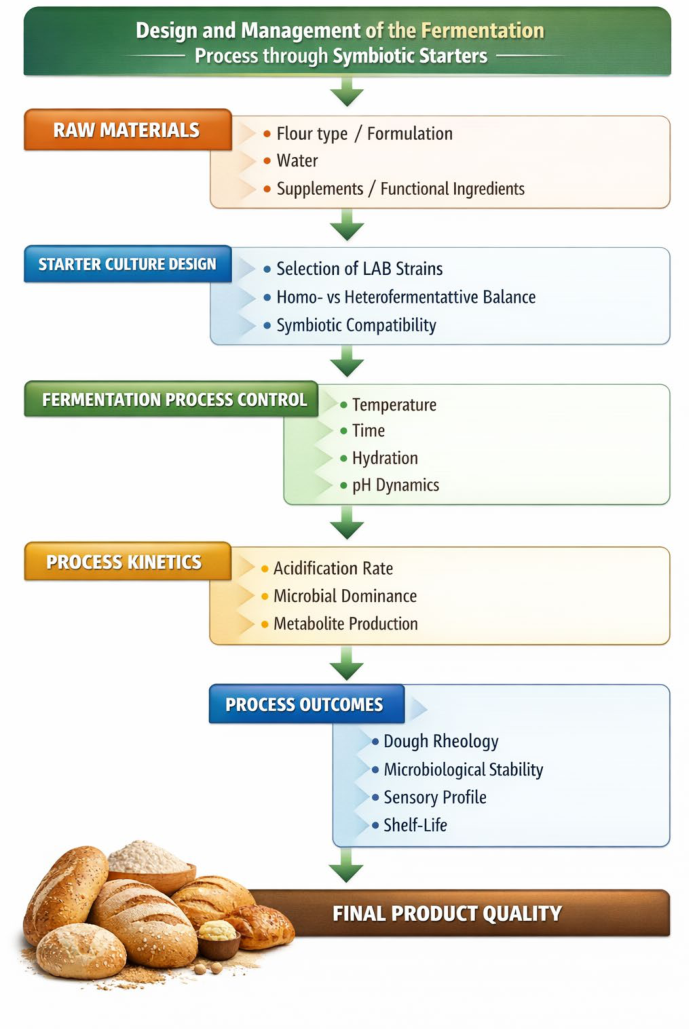
Figure 2.
Changes in the concentration of viable cells of L. brevis X4 in sourdoughs prepared from different flours, during daily back-slopping for 96 hours.
Figure 2.
Changes in the concentration of viable cells of L. brevis X4 in sourdoughs prepared from different flours, during daily back-slopping for 96 hours.
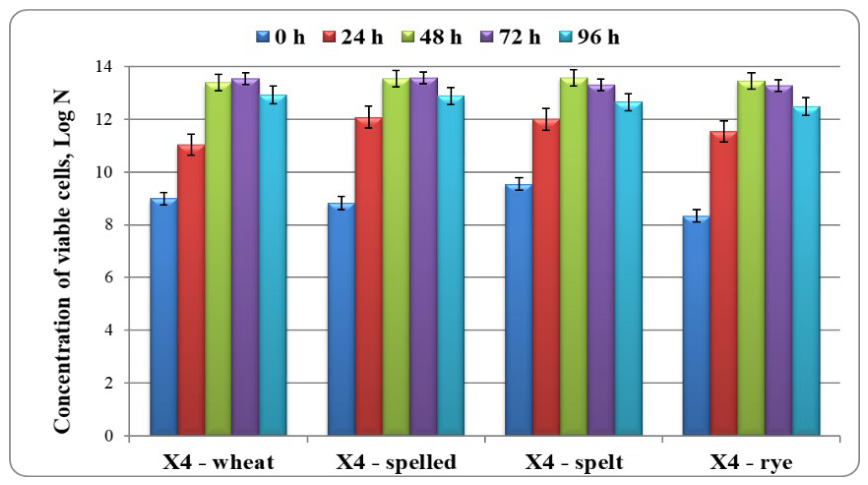
Figure 3.
Changes in the titratable acidity of sourdoughs prepared from different flours and L. brevis X4, during daily back-slopping for 96 hours.
Figure 3.
Changes in the titratable acidity of sourdoughs prepared from different flours and L. brevis X4, during daily back-slopping for 96 hours.
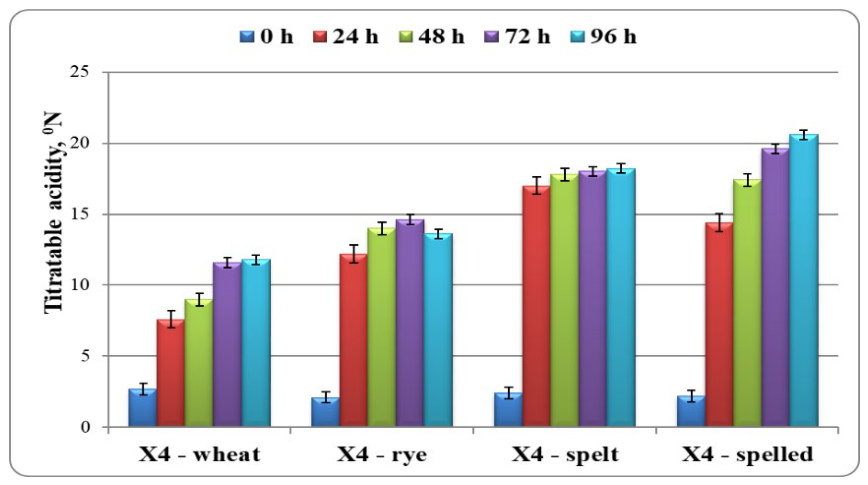
Figure 4.
Changes in the concentration of viable cells of Lp. plantarum Ph2 in sourdoughs prepared from different flours, during daily back-slopping for 96 hours.
Figure 4.
Changes in the concentration of viable cells of Lp. plantarum Ph2 in sourdoughs prepared from different flours, during daily back-slopping for 96 hours.
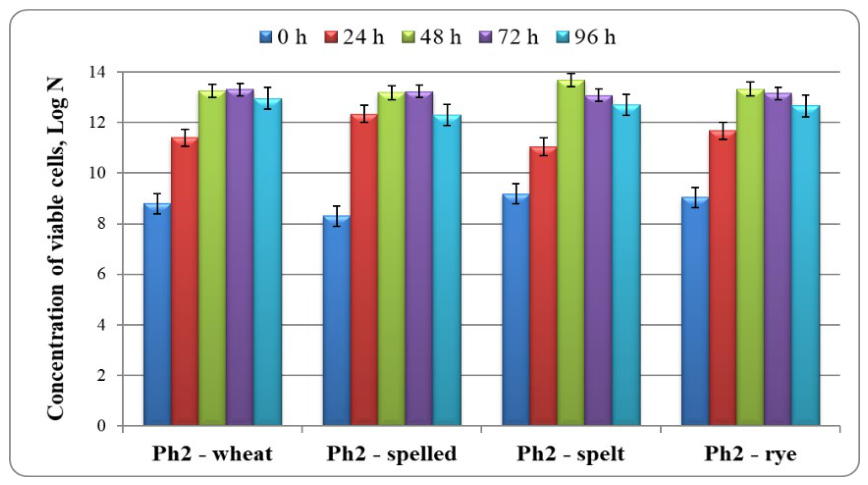
Figure 5.
Changes in the titratable acidity of sourdoughs prepared from different flours and Lp. plantarum Ph2, during daily back-slopping for 96 hours.
Figure 5.
Changes in the titratable acidity of sourdoughs prepared from different flours and Lp. plantarum Ph2, during daily back-slopping for 96 hours.
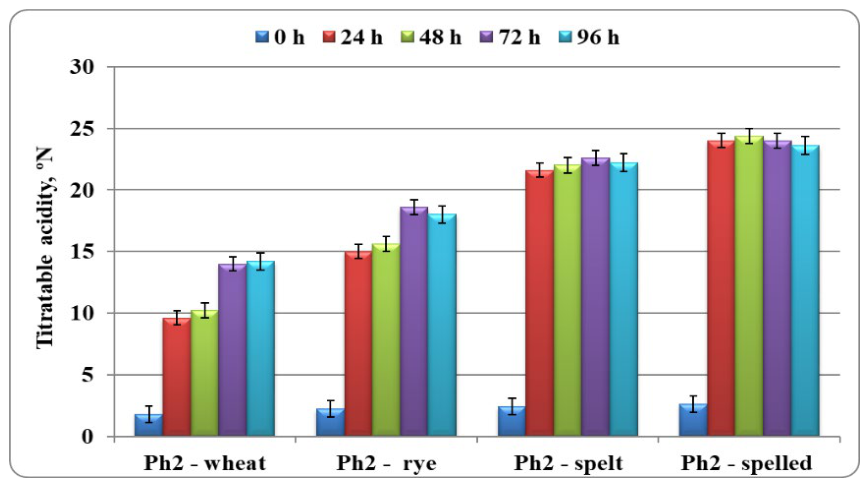
Figure 6.
Changes in the concentration of viable LAB cells in sourdoughs prepared from different flours and the two-strain combination Ph2+X4, during daily back-slopping for 96 hours.
Figure 6.
Changes in the concentration of viable LAB cells in sourdoughs prepared from different flours and the two-strain combination Ph2+X4, during daily back-slopping for 96 hours.
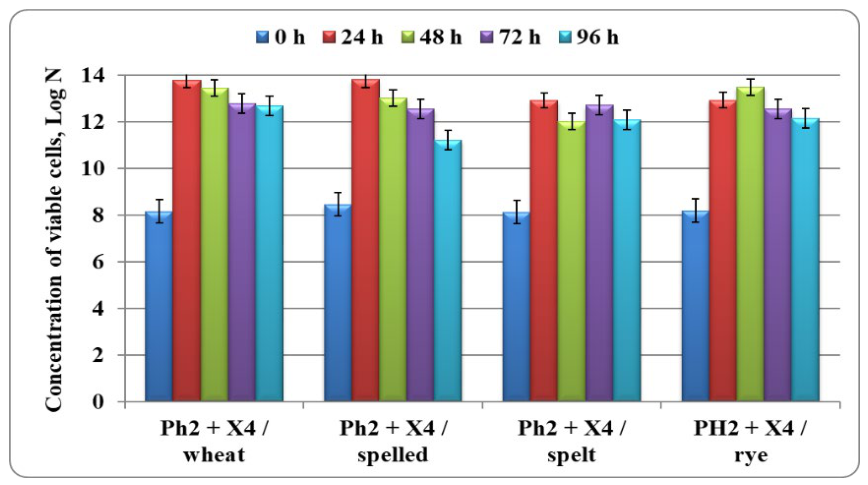
Figure 7.
Changes in the acidity of sourdoughs prepared from different flours and the two-strain combination Ph2+X4, during daily back-slopping for 96 hours.
Figure 7.
Changes in the acidity of sourdoughs prepared from different flours and the two-strain combination Ph2+X4, during daily back-slopping for 96 hours.
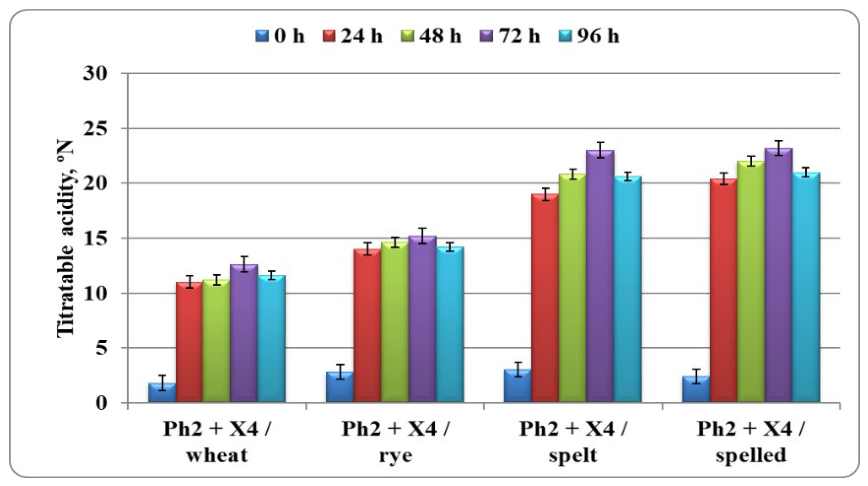
Figure 8.
Occurrence of bacterial and fungal spoilage during storage of baked sourdough bread with two-strain starter sourdough with starter Ph2+X4 when stored at 30°C and at room temperature (RT) for the determination of fungal spoilage and at 37°C and at room temperature (RT) for the determination of bacterial spoilage. 2SS – Two-strain starter.
Figure 8.
Occurrence of bacterial and fungal spoilage during storage of baked sourdough bread with two-strain starter sourdough with starter Ph2+X4 when stored at 30°C and at room temperature (RT) for the determination of fungal spoilage and at 37°C and at room temperature (RT) for the determination of bacterial spoilage. 2SS – Two-strain starter.
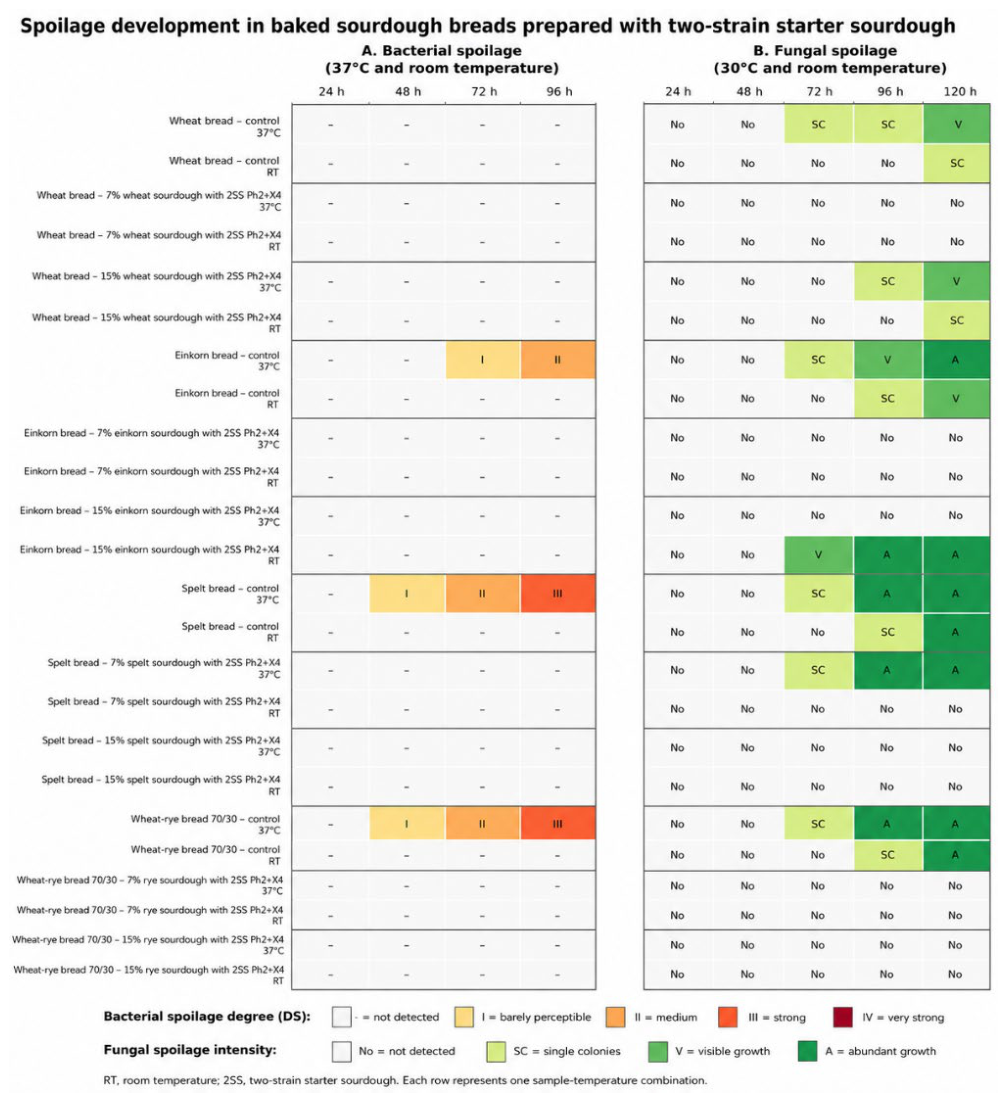
Figure 9.
Changes in the concentration of viable cells of lactic acid bacteria in sourdough with the multi-strain Combination 1 (Lp. plantarum Ph2: L. brevis X4: L. rhamnosus LBRC11: L. fermentum LBRH10 = 2:1:1:1) during daily back-slopping for 96 hours.
Figure 9.
Changes in the concentration of viable cells of lactic acid bacteria in sourdough with the multi-strain Combination 1 (Lp. plantarum Ph2: L. brevis X4: L. rhamnosus LBRC11: L. fermentum LBRH10 = 2:1:1:1) during daily back-slopping for 96 hours.
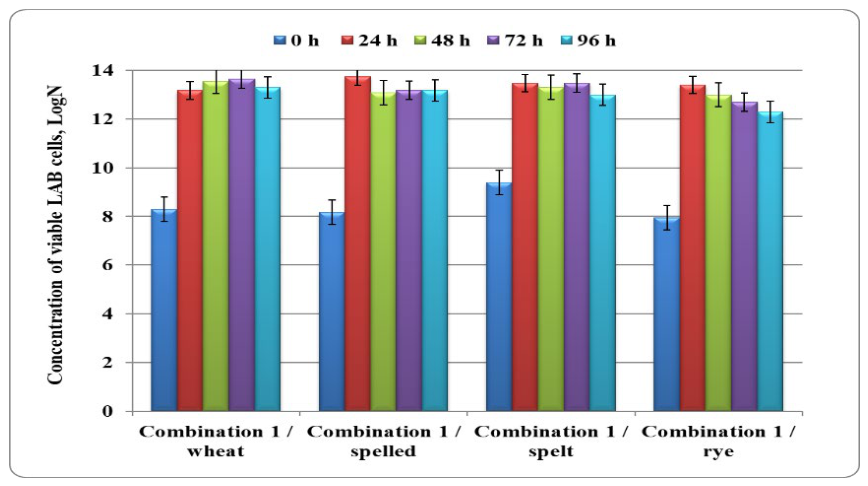
Figure 10.
Changes in the titratable acidity in sourdough with multi-strain Combination 1 (Lp. plantarum Ph2 : L. brevis X4 : L. rhamnosus LBRC11 : L. fermentum LBRH10 = 2:1:1:1) during daily back-slopping for 96 hours.
Figure 10.
Changes in the titratable acidity in sourdough with multi-strain Combination 1 (Lp. plantarum Ph2 : L. brevis X4 : L. rhamnosus LBRC11 : L. fermentum LBRH10 = 2:1:1:1) during daily back-slopping for 96 hours.
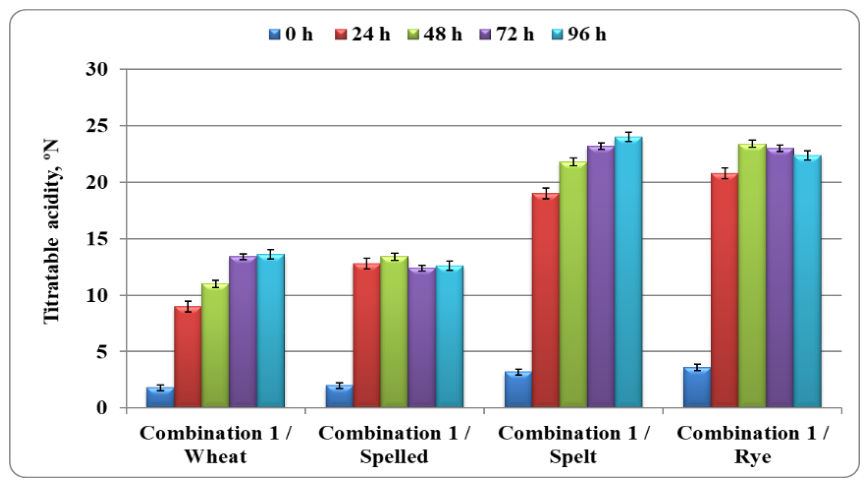
Figure 11.
Changes in the concentration of viable cells of lactic acid bacteria in sourdough with the multi-strain Combination 2 (Combination №1 : F. sanfranciscensis R = 2:1) during daily back-slopping for 96 hours.
Figure 11.
Changes in the concentration of viable cells of lactic acid bacteria in sourdough with the multi-strain Combination 2 (Combination №1 : F. sanfranciscensis R = 2:1) during daily back-slopping for 96 hours.
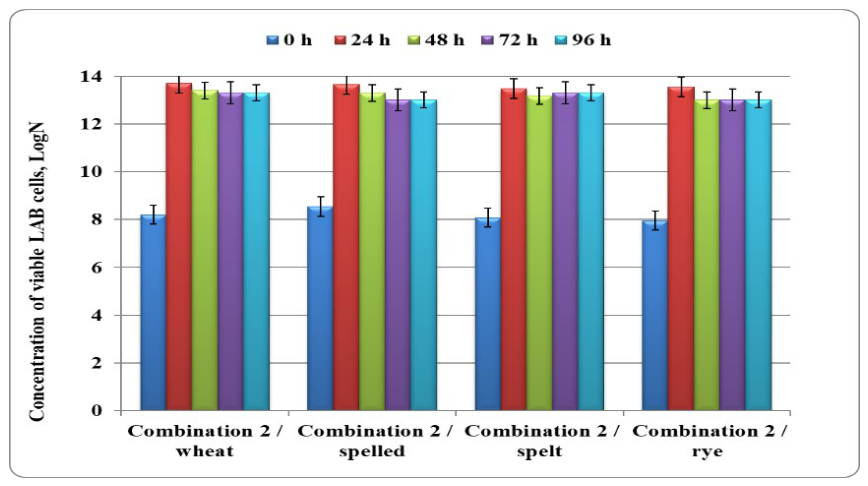
Figure 12.
Changes in the titratable acidity of sourdough with the multi-strain Combination 2 (Combination №1 : F. sanfranciscensis R = 2:1) during daily back-slopping for 96 hours.
Figure 12.
Changes in the titratable acidity of sourdough with the multi-strain Combination 2 (Combination №1 : F. sanfranciscensis R = 2:1) during daily back-slopping for 96 hours.
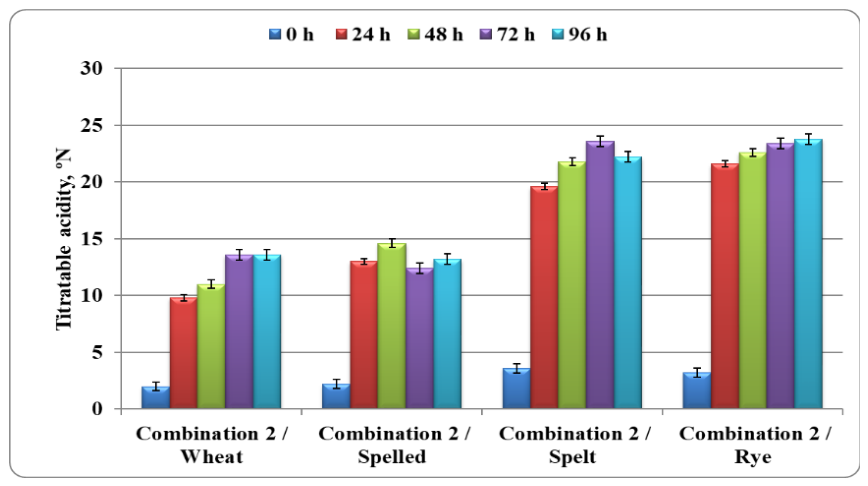
Figure 13.
Changes in the concentration of viable cells of lactic acid bacteria in sourdough with the multi-strain Combination 3 (Combination №1 : F. sanfranciscensis R : Pr. shermanii 582D = 2:1:1) during daily back-slopping for 96 hours.
Figure 13.
Changes in the concentration of viable cells of lactic acid bacteria in sourdough with the multi-strain Combination 3 (Combination №1 : F. sanfranciscensis R : Pr. shermanii 582D = 2:1:1) during daily back-slopping for 96 hours.
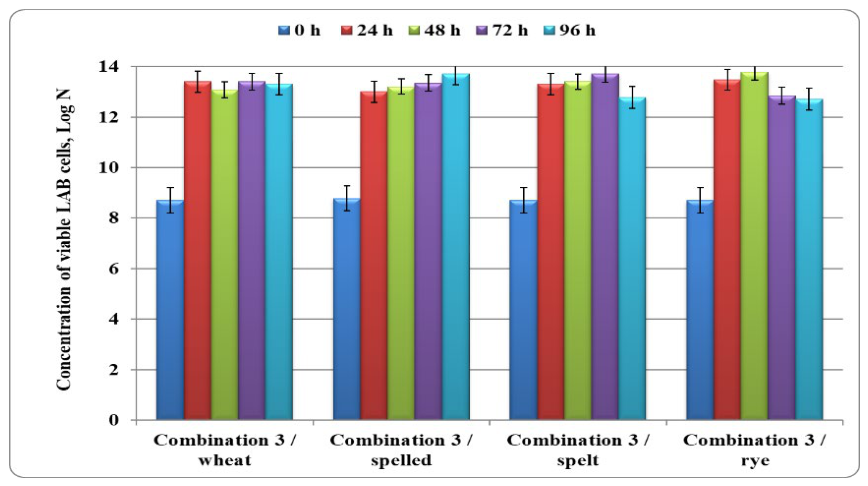
Figure 14.
Changes in the concentration of viable cells of propionic acid bacteria in sourdough with the multi-strain Combination 3 (Combination №1 : F. sanfranciscensis R : Pr. shermanii 582D = 2:1:1) during daily back-slopping for 96 hours.
Figure 14.
Changes in the concentration of viable cells of propionic acid bacteria in sourdough with the multi-strain Combination 3 (Combination №1 : F. sanfranciscensis R : Pr. shermanii 582D = 2:1:1) during daily back-slopping for 96 hours.
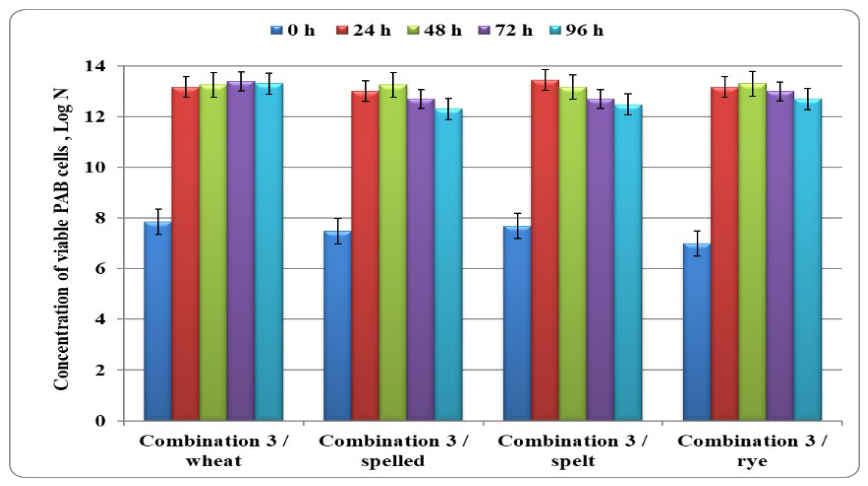
Figure 15.
Changes in the titratable acidity of sourdough with the multi-strain Combination 3 (Combination №1 : F. sanfranciscensis R : Pr. shermanii 582D = 2:1:1) during daily back-slopping for 96 hours.
Figure 15.
Changes in the titratable acidity of sourdough with the multi-strain Combination 3 (Combination №1 : F. sanfranciscensis R : Pr. shermanii 582D = 2:1:1) during daily back-slopping for 96 hours.
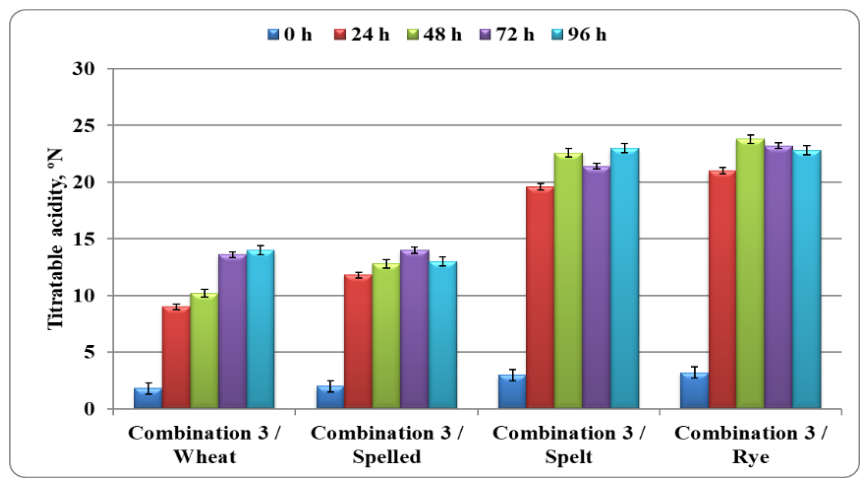
Figure 16.
Occurrence of bacterial spoilage during storage of baked sourdough bread with the multi-strain starter sourdoughs when stored at 37°C and at room temperature (RT).
Figure 16.
Occurrence of bacterial spoilage during storage of baked sourdough bread with the multi-strain starter sourdoughs when stored at 37°C and at room temperature (RT).
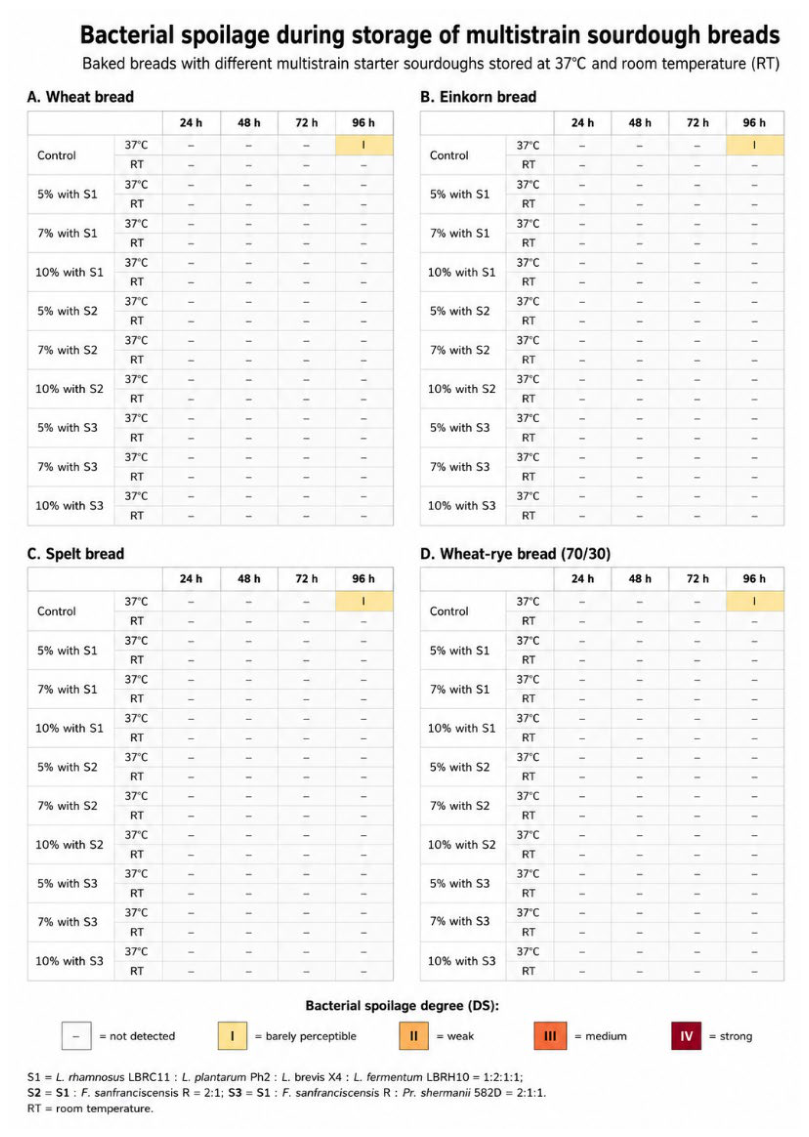
Figure 17.
Occurrence of fungal spoilage during storage of baked sourdough bread with the multi-strain starter sourdoughs when stored at 30°C and at room temperature (RT).
Figure 17.
Occurrence of fungal spoilage during storage of baked sourdough bread with the multi-strain starter sourdoughs when stored at 30°C and at room temperature (RT).
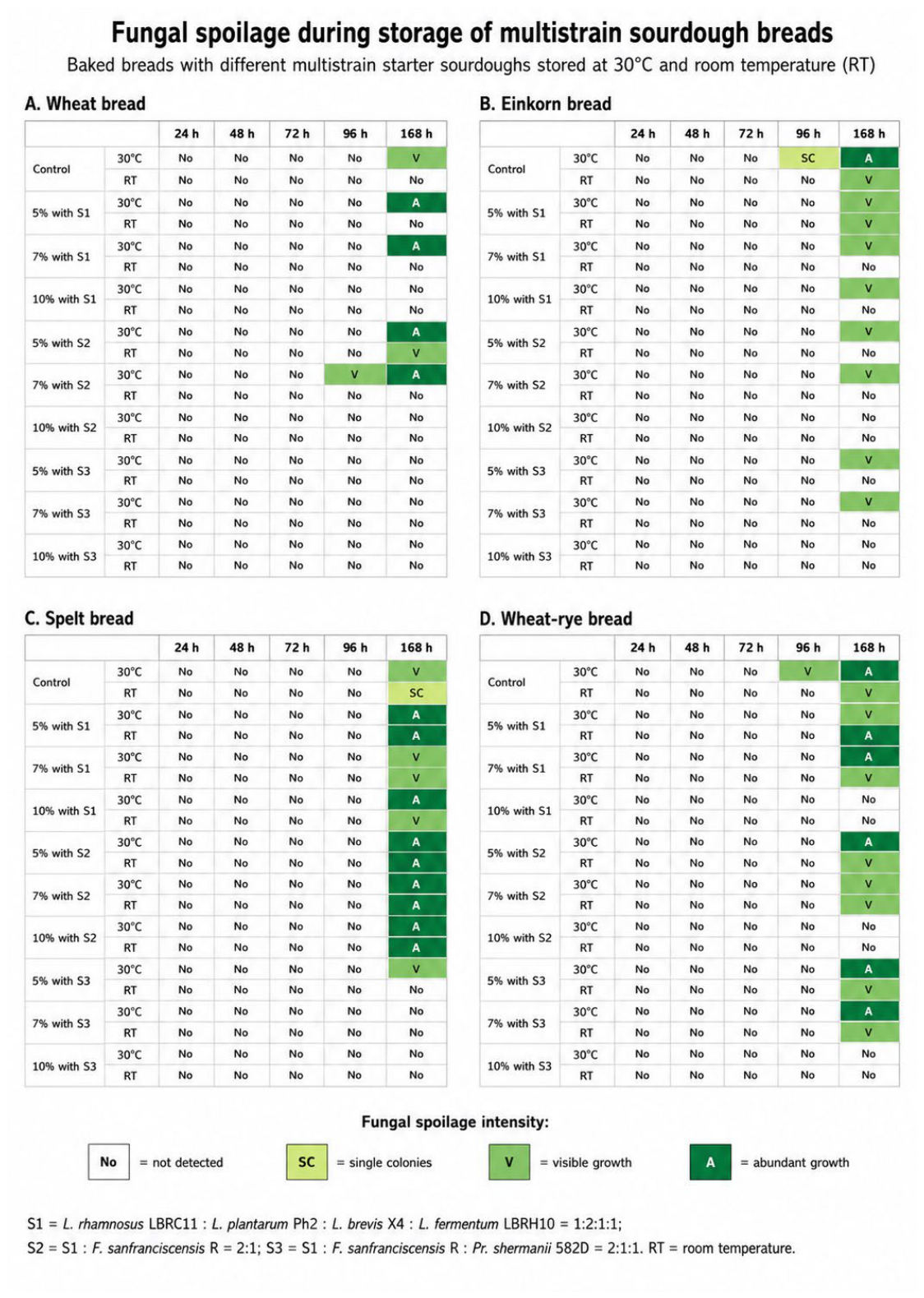
Figure 18.
Causal process relationships from microbial dynamics to shelf-life.
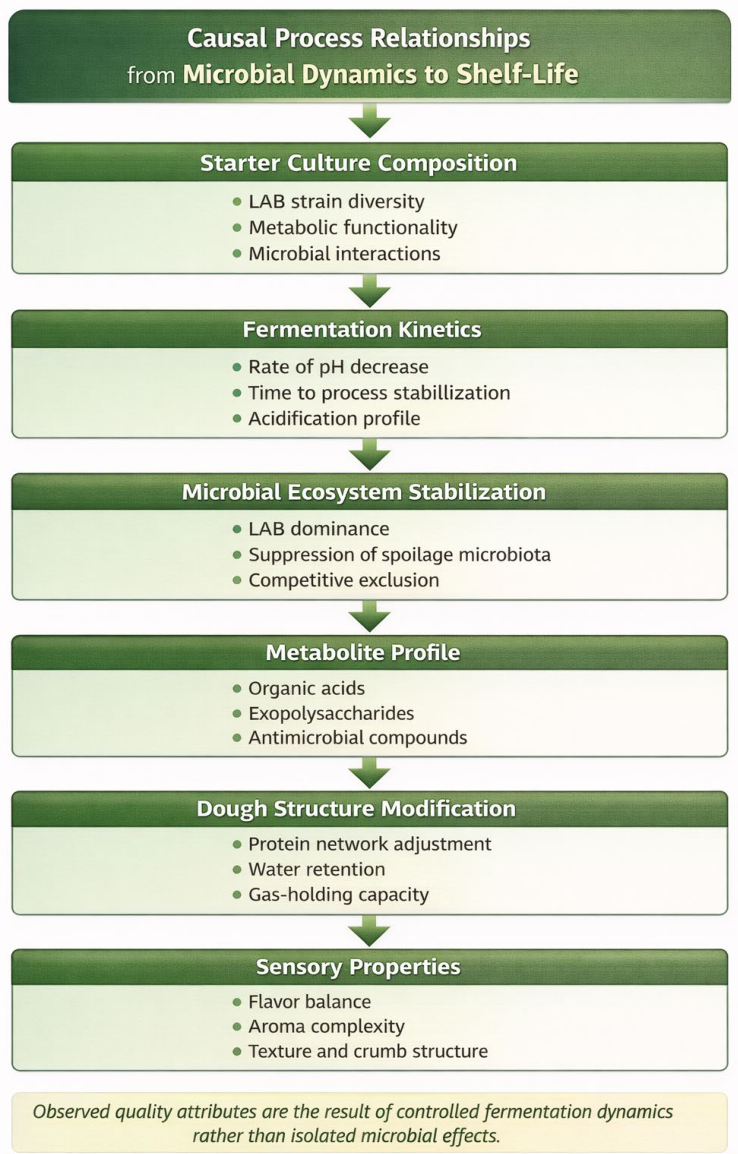

Table 1.
Physicochemical parameters of wheat flour type 500, rye flour, einkorn flour, spelt flour. FN – falling number, WGY – wet gluten yield, GR – gluten relaxation.
Table 1.
Physicochemical parameters of wheat flour type 500, rye flour, einkorn flour, spelt flour. FN – falling number, WGY – wet gluten yield, GR – gluten relaxation.
| Flour type | Protein | Moisture | Particle size | Ash |
Water absorption |
FN | WGY | GR |
| % | % | µm | % | % | S | % | mm | |
| wheat flour type 500 | 12.3 | 12.9 | 150-180 | 0.60 | 56 | 307 | 27.0 | 5.0 |
| rye flour | 8.0 | 12.4 | 120-150 | 1.18 | 58 | 181 | - | - |
| spelt flour | 12.4 | 11.5 | 200-250 | 1.40 | 56 | 287 | 27.6 | 5.0 |
| einkorn flour | 9.6 | 12.5 | 200-250 | 1.12 | 54 | 279 | 16.0 | 6.0 |
Table 2.
Antimicrobial activity of the 96-hour two-strain sourdough d [mm] well = 6 mm.
| Starter/Flour | B. subtilis ATCC 6633 | B.mesentericus | S. cerevisiae ATCC 9763 | A. niger ATCC 16604 | Rh. oryzae ATCC 11145 | P. chrysogenum ATCC 10106 |
| Ph2+X4/ Wheat | 12.33±0.47 | 9.17±0.24 | - | 9.17±0.24 | 9.17±0.24 | 10.17±0.24 |
| Ph2+X4/Spelt | 16.17±0.24 | 12.33±0.47 | - | 8.33±0.47 | 9.33±0.47 | 10.33±0.47 |
| Ph2+X4/Rye | 14.17±0.24 | 10.17±0.24 | - | 9.33±0.47 | 8.33±0.47 | 9.17±0.24 |
| Ph2+X4/Einkorn | 16.33±0.47 | 11.17±0.24 | - | 9.33±0.47 | 8.33±0.47 | 11.33±0.47 |
Table 3.
Organoleptic indicators of dough and bread, and time for final fermentation of dough, obtained with 96-hour sourdough with 2SS. Percentage of sourdough use - 7% and 15% relative to the amount of flour.
Table 3.
Organoleptic indicators of dough and bread, and time for final fermentation of dough, obtained with 96-hour sourdough with 2SS. Percentage of sourdough use - 7% and 15% relative to the amount of flour.
| Variant |
Bread Control |
Bread 7% sourdough |
Bread 15% sourdough |
| Parameter | |||
| Dough characteristics | The dough without 2SSS was wetter | The dough is more elastic, dry with good organoleptic properties | Stronger, more elastic dough with good organoleptic properties |
| Time for final fermentation, min | 60 | 60 | 60 |
| Pieces before baking | Relaxed slightly to the side | Good dimensional stability | More stable, with good dimensional stability |
| Bread loaf appearance | The bread loaf was smaller in volume | Bread with good volume and shape compared to the control | Bread with good volume and shape compared to the control |
| Softness and structure of the crumb | The control has larger, uneven pores | The crumb is softer, wetter and lighter, with more even pores | The crumb was softer, wetter and lighter, with more even pores. More pronounced indicators |
| Bread aroma | Yeast aroma | Pleasant, characteristic lactic acid aroma | Strong, pleasant, characteristic lactic acid aroma |
Table 4.
Acidity of sourdough, rise of the main dough, bread volume and acidity of bread variants prepared with 96-hour two-strain starter sourdoughs. Percentage of sourdough addition - 7% and 15% relative to the amount of flour. 2SSS – two-strain starter sourdough.
Table 4.
Acidity of sourdough, rise of the main dough, bread volume and acidity of bread variants prepared with 96-hour two-strain starter sourdoughs. Percentage of sourdough addition - 7% and 15% relative to the amount of flour. 2SSS – two-strain starter sourdough.
| Acidity of the dough, oN | Dough rise, min | Loaf volume, cm3 | Acidity of the bread, oN | |
| Wheat bread – control | - | 54 | 1720 | 1.2 |
| Wheat bread – 7% wheat sourdough with 2SSS Ph2+X4 |
11.6 | 48 | 1780 | 1.6 |
| Wheat bread – 15% wheat sourdough with 2SSS Ph2+X4 |
11.6 | 47 | 1740 | 2.1 |
| Wheat-rye bread 70/30 - control | - | 61 | 1140 | 1.3 |
| Wheat-rye bread 70/30 – 7% rye sourdough with 2SSS Ph2+X4 |
14.2 | 55 | 1360 | 1.8 |
| Wheat-rye bread 70/30 – 15% rye sourdough with 2SSS Ph2+X4 |
14.2 | 56 | 1260 | 2.5 |
| Spelt bread – control | - | 52 | 1360 | 1.4 |
| Spelt bread – 7% spelt sourdough with 2SSS Ph2+X4 |
20.6 | 50 | 1480 | 2.8 |
| Spelt bread – 15% spelt sourdough with 2SSS Ph2+X4 |
20.6 | 50 | 1460 | 4.6 |
| Einkorn bread – control | - | 60 | 1210 | 1.6 |
| Einkorn bread – 7% einkorn sourdough with 2SSS Ph2+X4 |
21.0 | 53 | 1360 | 3.6 |
| Einkorn bread – 15% einkorn sourdough with 2SSS Ph2+X4 |
21.0 | 52 | 1320 | 4.2 |
Table 5.
Antimicrobial activity of the 96-hour sourdoughs with the three new multi-strain starters d [mm] well = 6 mm (48 h).
Table 5.
Antimicrobial activity of the 96-hour sourdoughs with the three new multi-strain starters d [mm] well = 6 mm (48 h).
| B. subtilis ATCC 6633 | B. mesentericus | S. cerevisiae ATCC 9763 | A. niger ATCC 16604 | Rh. oryzae ATCC 11145 | P.chrysogenum ATCC 10106 | |
| Starter 1/wheat | 10.17±0.24 | 10.33±0.47 | - | 10.33±0.47 | 11.17±0.24 | 10.33±0.47 |
| Starter 1/einkorn | 11.33±0.47 | 11.17±0.24 | - | 10.33±0.47 | 13.33±0.47 | 10.33±0.47 |
| Starter 1/spelt | 12.17±0.24 | 12.33±0.47 | - | 10.17±0.24 | 14.17±0.24 | 12.17±0.24 |
| Starter 1/rye | 11.33±0.47 | 14.67±0.47 | - | 12.17±0.24 | 9.17±0.24 | 9.17±0.24 |
| Starter 2/wheat | 9.17±0.24 | 8.17±0.24 | - | 9.17±0.24 | 13.17±0.24 | 9.33±0.47 |
| Starter 2/einkorn | 10.17±0.24 | 12.17±0.24 | - | 10.33±0.47 | 16.33±0.47 | 11.67±0.47 |
| Starter 2/spelt | 12.67±0.47 | 13.33±0.47 | - | 10.33±0.47 | 16.33±0.47 | 10.17±0.24 |
| Starter 2/rye | 9.17±0.24 | 10.33±0.47 | - | 9.17±0.24 | 11.33±1.47 | 8.17±0.24 |
| Starter 3/wheat | 9.17±0.24 | 9.17±0.24 | - | 9.17±0.24 | 15.17±0.24 | 10.33±0.47 |
| Starter 3/einkorn | 10.17±0.24 | 11.33±0.47 | - | 9.33±0.47 | 15.33±0.47 | 10.33±0.47 |
| Starter 3/spelt | 10.17±0.24 | 13.67±0.47 | - | 10.33±0.47 | 14.17±0.24 | 10.17±0.24 |
| Starter 3/rye | 10.33±0.47 | 10.17±0.24 | - | 10.17±0.24 | 14.33±0.47 | 10.17±0.24 |
Table 6.
Optimal sourdough addition levels for different bread types produced with 96 h fermented sourdough.
Table 6.
Optimal sourdough addition levels for different bread types produced with 96 h fermented sourdough.
| Bread type | Starter culture | Sourdough acidity, °N | Control volume, cm3 | Optimal sourdough addition, % | Selected bread volume, cm3 | Volume increase vs. control, % | Bread acidity, °N | General technological and sensory effect |
| Wheat bread | Starter 1 | 13.6 | 1700 | 7 | 1800 | +5.9 | 2.0 | Best volume and shape; very pleasant lactic acid aroma |
| Wheat bread | Starter 2 | 13.6 | 1720 | 7 | 1880 | +9.3 | 2.2 | Highest volume; well-developed bread with characteristic aroma |
| Wheat bread | Starter 3 | 14.0 | 1680 | 7–10 | 1780 | +6.0 | 2.0–2.6 | Good volume; stronger aroma at 10%, slightly sharper |
| Wheat–rye bread | Starter 1 | 12.6 | 1160 | 10 | 1300 | +12.1 | 3.2 | Best volume and shape; strong pleasant lactic acid aroma |
| Wheat–rye bread | Starter 2 | 13.2 | 1020 | 7 | 1220 | +19.6 | 2.8 | Best balance between volume and sensory quality |
| Wheat–rye bread | Starter 3 | 13.0 | 1180 | 10 | 1300 | +10.2 | 3.6 | Best volume and shape; strong characteristic aroma |
| Spelt bread | Starter 1 | 24.0 | 1380 | 7–10 | 1500 | +8.7 | 3.4–3.8 | Highest volume; very pleasant to strong characteristic aroma |
| Spelt bread | Starter 2 | 22.2 | 1280 | 7 | 1370 | +7.0 | 3.6 | Better developed bread; pleasant characteristic aroma |
| Spelt bread | Starter 3 | 23.0 | 1350 | 7 | 1450 | +7.4 | 3.8 | Best development and good sensory profile |
| Einkorn bread | Starter 1 | 22.4 | 1320 | 7 | 1440 | +9.1 | 4.0 | Best volume; very pleasant characteristic aroma |
| Einkorn bread | Starter 2 | 23.8 | 1300 | 7–10 | 1420 | +9.2 | 3.4–4.2 | Good volume; stronger aroma at 10% |
| Einkorn bread | Starter 3 | 22.8 | 1230 | 10 | 1420 | +15.4 | 4.4 | Highest volume; strong pleasant lactic acid aroma |
Disclaimer/Publisher’s Note: The statements, opinions and data contained in all publications are solely those of the individual author(s) and contributor(s) and not of MDPI and/or the editor(s). MDPI and/or the editor(s) disclaim responsibility for any injury to people or property resulting from any ideas, methods, instructions or products referred to in the content. |
© 2026 by the authors. Licensee MDPI, Basel, Switzerland. This article is an open access article distributed under the terms and conditions of the Creative Commons Attribution (CC BY) license.
Copyright: This open access article is published under a Creative Commons CC BY 4.0 license, which permit the free download, distribution, and reuse, provided that the author and preprint are cited in any reuse.