

Submitted:
10 July 2026
Posted:
13 July 2026
You are already at the latest version
Abstract
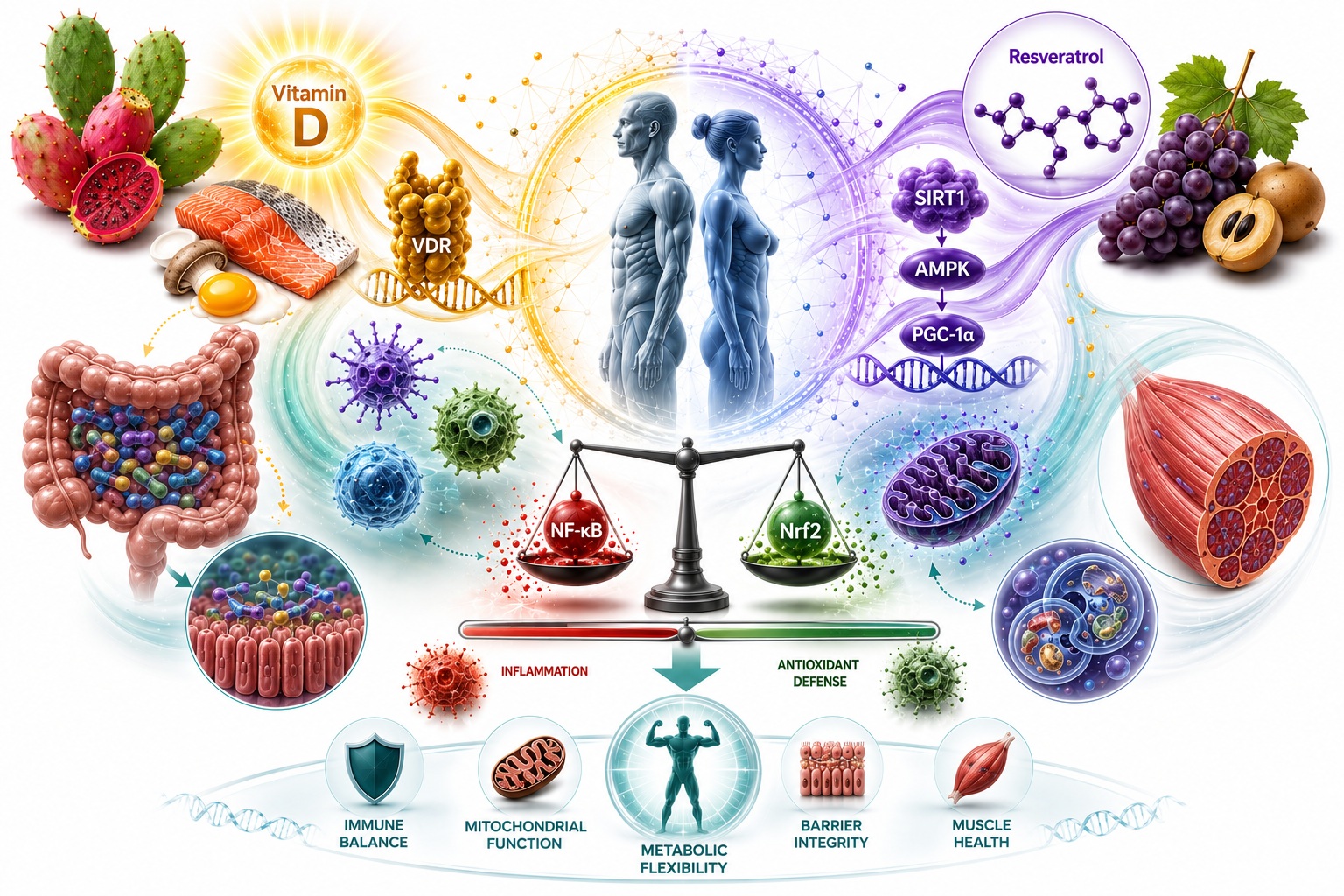
Despite decades of research, immunonutrition continues to generate heterogeneous and often contradictory clinical outcomes, suggesting that nutrients do not exert fixed immunological effects but rather interact with the biological context in which they operate. Sarcopenic obesity (SO) represents one of the clearest clinical models of this complexity, where chronic low-grade inflammation, mitochondrial dysfunction, anabolic resistance, metabolic inflexibility, and microbiota remodeling converge to impair the adaptive capacity of immune and metabolic integrated systems. We propose that this condition should be interpreted as a state of impaired immunometabolic plasticity, providing a conceptual framework to explain the context-dependent variability of nutritional responses. Within this perspective, micronutrients are reconsidered not simply as cofactors supporting immune competence, but as dynamic regulators of interconnected immunometabolic pathways. Particular attention is devoted to vitamin D and resveratrol, presented as complementary regulators of immunometabolic plasticity. Whereas vitamin D supports biological competence, resveratrol acts as a higher-order signaling modulator through the the SIRT1/AMPK–PGC-1α axis to influence mitochondrial function, inflammatory tone, metabolic flexibility, and epigenetic adaptation. Beyond isolated compounds, bioactive-rich food matrices, exemplified by Opuntia ficus-indica, are discussed as systems-level modulators capable of coordinating inflammatory, metabolic, redox, and microbiota-dependent biological circuitry. Rather than focusing on nutrient supplementation alone, this review introduces immunometabolic plasticity as a unifying concept linking nutritional signals to immune adaptation across different biological contexts. Finally, we discuss how biomarker-guided phenotyping, multi-omics integration, and context-aware nutritional interventions may establish the basis for precision immunonutrition, shifting the field from generalized supplementation strategies toward restoration of adaptive immunometabolic resilience.
Keywords:
sarcopenic obesity (SO)
; immunometabolic plasticity
1. Introduction
Despite remarkable advances in nutritional immunology, the clinical efficacy of immunonutrition remains highly variable across chronic metabolic diseases. Nutritional interventions that demonstrate clear biological activity under experimental conditions frequently produce heterogeneous, or even contradictory, clinical outcomes, indicating that nutrients do not exert fixed immunological effects but rather interact with the biological context in which they operate [1]. This variability challenges the traditional view of immunonutrition as a discipline primarily focused on correcting nutrient deficiencies and suggests that biological context is a critical determinant of nutritional efficacy [2].
Among chronic metabolic disorders, sarcopenic obesity (SO) represents an ideal clinical model for understanding why apparently similar nutritional interventions frequently produce markedly different biological and clinical responses [3]. Current nutritional strategies have largely focused on the biological activities of individual micronutrients or isolated bioactive compounds [4]. Although this reductionist approach has substantially improved our understanding of nutrient-specific mechanisms, it does not fully explain the heterogeneity of therapeutic responses observed in biologically complex disorders such as SO. These limitations suggest that current conceptual models are insufficient to fully explain how nutritional interventions interact with complex immunometabolic diseases [1]. In this review, we propose immunometabolic plasticity as a conceptual framework for interpreting the biological complexity of SO and the heterogeneous responses observed following nutritional interventions. We further hypothesize that progressive impairment of immunometabolic plasticity represents a central biological feature of SO and may constitute an important determinant of therapeutic responsiveness. Based on this perspective, we examine the molecular mechanisms underlying impaired immunometabolic plasticity in SO and discuss how micronutrients, signaling bioactive compounds, and whole-food bioactive matrices may contribute to restoring adaptive network function. Finally, we explore how this framework may guide the development of precision immunonutrition strategies aimed at improving long-term metabolic resilience and clinical outcomes in individuals with SO.
2. SO as a Clinical Model of Impaired Immunometabolic Plasticity
SO is increasingly recognized as a distinct clinical phenotype characterized by the convergence of chronic low-grade inflammation, mitochondrial dysfunction, insulin resistance, anabolic resistance, oxidative stress, endocrine dysregulation, immunosenescence, and gut microbiota alterations [5]. Rather than representing isolated pathological abnormalities, these interconnected mechanisms progressively impair the coordinated regulation of immune and metabolic functions, leading to reduced skeletal muscle performance, metabolic inflexibility, increased frailty, disability, and mortality [6]. Rather, SO reflects a systems-level failure of adaptive regulation. [5]. Within this framework, “immunometabolic plasticity” may be defined as the capacity of interconnected immune and metabolic systems to dynamically adapt to nutritional, inflammatory, microbial, endocrine, and environmental stimuli while maintaining tissue homeostasis and functional resilience. Under physiological conditions, this adaptive capacity enables continuous recalibration of immune and metabolic responses according to changing biological demands. In SO, persistent metabolic stress progressively limits this adaptive behavior, favoring chronic inflammation, impaired tissue repair, metabolic inflexibility, and reduced resilience [7]. Viewing SO through the lens of immunometabolic plasticity provides a mechanistic explanation for one of the major unresolved challenges in clinical immunonutrition. Individuals with apparently similar clinical characteristics frequently exhibit markedly different responses to identical nutritional interventions, suggesting that therapeutic efficacy depends not only on nutrient availability or the biological activity of specific compounds, but also on the residual adaptive capacity of the underlying immunometabolic regulatory architecture [1]. Accordingly, SO represents an ideal translational model for investigating how nutritional interventions enhance adaptive biological function rather than simply modulating isolated molecular targets. From this perspective, the objective of precision immunonutrition extends beyond correcting nutritional deficiencies or suppressing inflammation; instead, it seeks to recover the coordinated adaptive behavior of interconnected immune and metabolic systems required to maintain long-term metabolic and musculoskeletal homeostasis (Figure 1).
3. Molecular Pathways Underlying Impaired Immunometabolic Plasticity in SO
The progressive loss of immunometabolic plasticity in SO results from coordinated dysregulation of multiple signaling pathways rather than isolated molecular abnormalities. Among these, the balance between inflammatory signaling, antioxidant defense, nutrient sensing, and mitochondrial quality control plays a central role in determining whether immune and metabolic adaptation is maintained or progressively shifts toward chronic dysfunction [5] (Figure 2).
3.1. NF-κB and Nrf2: The Balance Between Inflammation and Adaptive Resilience
One of the earliest events contributing to impaired immunometabolic plasticity in SO is the progressive disruption of the physiological balance between inflammatory activation and antioxidant defense. Chronic low-grade inflammation associated with excess adiposity promotes persistent activation of nuclear factor kappa B (NF-κB), leading to sustained production of pro-inflammatory cytokines, immune cell activation, and amplification of oxidative stress. Although essential for host defense under physiological conditions, prolonged NF-κB activation progressively compromises muscle homeostasis, insulin sensitivity, and mitochondrial function [5,8].
Counterbalancing these responses, nuclear factor erythroid 2-related factor 2 (Nrf2) coordinates antioxidant defense, mitochondrial protection, detoxification pathways, and cellular adaptation to oxidative stress [9,10]. In healthy tissues, reciprocal regulation between NF-κB and Nrf2 limits excessive inflammatory activation while preserving functional resilience. In SO, however, this balance becomes progressively disrupted, favoring persistent inflammatory signaling at the expense of antioxidant and cytoprotective responses. The resulting redox imbalance contributes to mitochondrial dysfunction, anabolic resistance, and reduced capacity for tissue repair, representing a fundamental mechanism underlying loss of immunometabolic plasticity [11].
3.2. AMPK–mTOR–FOXO–SIRT1: Nutrient Sensing and Metabolic Adaptation
Maintenance of skeletal muscle mass and metabolic flexibility depends on the coordinated activity of nutrient-sensing pathways integrating cellular energy status with immune regulation and protein turnover. Among these, AMP-activated protein kinase (AMPK), mTOR, mechanistic target of rapamycin (mTOR), Forkhead box O transcription factors (FOXO), and sirtuin 1 (SIRT1) constitute the central molecular axis governing immunometabolic adaptation [12].
AMPK functions as the principal cellular energy sensor, promoting oxidative metabolism, mitochondrial biogenesis, autophagy, and metabolic flexibility under conditions of energetic stress [13]. Conversely, mTOR coordinates anabolic metabolism, protein synthesis, muscle maintenance, and immune cell proliferation when nutrients are abundant. FOXO transcription factors regulate stress resistance, autophagy, antioxidant defense, and muscle protein turnover, whereas SIRT1 integrates nutrient availability with mitochondrial quality control, metabolic adaptation, and epigenetic remodeling [14].
In SO, persistent nutrient excess paradoxically coexists with impaired nutrient sensing. Chronic metabolic overload, insulin resistance, mitochondrial dysfunction, and inflammatory signaling progressively uncouple these adaptive pathways, leading to defective anabolic responses, impaired autophagic quality control, reduced mitochondrial efficiency, and accelerated muscle wasting. Consequently, disruption of the AMPK–mTOR–FOXO–SIRT1 axis represents one of the principal molecular determinants of impaired immunometabolic plasticity [3].
3.3. Network Failure: From Adaptive Plasticity to Chronic Dysfunction
The signaling pathways discussed above should not be viewed as independent regulatory modules but as components of a highly coordinated biological architecture. Continuous crosstalk among inflammatory signaling, nutrient sensing, mitochondrial quality control, redox homeostasis, endocrine communication, and microbiota-derived signals determines the overall behavior of immune and metabolic systems.
In SO, progressive dysregulation of these interconnected pathways does not simply alter individual cellular functions; rather, it compromises the integration of biological responses across multiple tissues and organs. The resulting loss of coordination amplifies chronic inflammation, metabolic dysfunction, anabolic resistance, and impaired tissue regeneration, ultimately driving the transition from adaptive regulation to persistent pathological remodeling [15].
This systems-level organization provides the mechanistic basis for understanding why nutritional interventions capable of simultaneously modulating multiple regulatory pathways may exert greater biological efficacy than strategies directed toward single molecular targets.
4. Vitamin D and Resveratrol: Complementary Regulators of Immunometabolic Plasticity
One of the most intriguing aspects of immunometabolic plasticity is that its restoration does not necessarily depend on direct suppression of inflammation but rather on re-establishing the adaptive capacity of interconnected biological circuitry [16]. Within this context, dietary bioactive molecules represent an additional regulatory layer extending beyond the structural functions traditionally attributed to essential micronutrients.
Among signaling bioactive compounds, vitamin D and resveratrol represent complementary examples of systems-level immunometabolic modulators. Although acting through distinct molecular mechanisms, both influence multiple interconnected pathways involved in immune regulation, mitochondrial function, metabolic adaptation, and tissue homeostasis [17,18] (Figure 3).
4.1. Vitamin D: Establishing Immunometabolic Competence
Vitamin D represents one of the most extensively studied micronutrients involved in the regulation of immune and metabolic homeostasis. Beyond its classical role in calcium and bone metabolism, vitamin D exerts pleiotropic effects through activation of the vitamin D receptor (VDR), which is expressed in numerous immune, metabolic, and musculoskeletal tissues. VDR signaling influences innate and adaptive immunity, inflammatory regulation, skeletal muscle function, insulin sensitivity, mitochondrial activity, and epithelial barrier integrity, while also contributing to the maintenance of gut microbiota homeostasis [19].
Within the framework of immunometabolic plasticity, vitamin D may therefore be regarded as a permissive regulator that establishes the biological conditions required for coordinated adaptive responses. Rather than acting on a single molecular pathway, adequate vitamin D status supports the functional competence of multiple interconnected systems, allowing immune and metabolic networks to respond appropriately to nutritional and environmental challenges [20].
Although vitamin D supplementation alone may not fully restore impaired immunometabolic plasticity in biologically complex disorders such as SO, insufficient vitamin D availability may compromise the capacity of these adaptive networks to function efficiently [21]. Consequently, maintaining adequate vitamin D status should be considered a fundamental prerequisite for precision immunonutrition strategies aimed at preserving immunometabolic resilience [18] (Figure 3).
4.2. Resveratrol: Optimizing Adaptive Immunometabolic Responses
Among signaling bioactive compounds, resveratrol represents one of the most compelling examples of a systems-level regulator of immunometabolic plasticity. Unlike classical antioxidants or anti-inflammatory agents, resveratrol does not primarily exert its biological effects through direct inhibition of individual signaling pathways. Instead, it enhances the capacity of interconnected immune and metabolic networks to dynamically adapt to persistent biological stress [22].
This systems-level activity is mediated by coordinated modulation of multiple adaptive pathways involved in mitochondrial quality control, nutrient sensing, oxidative metabolism, inflammatory resolution, and cellular stress responses. Activation of SIRT1, together with regulation of the AMPK-peroxisome proliferator-activated receptor gamma coactivator 1-alpha (PGC-1α), mTOR, and FOXO signaling axis, promotes mitochondrial biogenesis, improves oxidative phosphorylation, stimulates autophagy, maintains anabolic–catabolic balance, and reinforces cellular resilience under conditions of metabolic stress. Simultaneously, resveratrol attenuates chronic inflammatory activation through indirect regulation of NF-κB while facilitating antioxidant responses coordinated by Nrf2, thereby contributing to restoration of redox homeostasis [17,18] (Figure 3).
Within the context of SO, these coordinated actions may partially counteract the progressive loss of adaptive flexibility that characterizes the disease. Rather than correcting isolated molecular abnormalities, resveratrol promotes reorganization of multiple regulatory circuits that collectively determine immunometabolic function. Its biological effects therefore emerge from network optimization rather than pathway-specific inhibition.
From the perspective of precision immunonutrition, resveratrol should therefore be regarded as an adaptive signaling modulator acting at a higher regulatory level than essential micronutrients. Whereas vitamin D establishes the biological competence required for coordinated immune and metabolic function, resveratrol enhances the efficiency, coordination, and adaptability of these interconnected systems during chronic metabolic stress. Together, they illustrate how distinct nutritional components operate at complementary hierarchical levels to support restoration of immunometabolic plasticity.
5. Whole-Food Matrices as Systems-Level Modulators of Immunometabolic Plasticity in SO
Whole-food matrices mirror the intrinsic complexity of human physiology. Unlike isolated micronutrients or purified bioactive compounds, naturally occurring food matrices contain highly organized combinations of vitamins, minerals, polyphenols, dietary fibers, lipids, and numerous phytochemicals that interact dynamically during digestion, microbial metabolism, cellular uptake, and intracellular signaling. Their biological activity therefore emerges not simply from the presence of individual molecules but from the coordinated interactions occurring among their multiple constituents.
Within the context of SO, these coordinated interactions are particularly relevant because they simultaneously target several of the mechanisms responsible for impaired immunometabolic plasticity. Bioactive food matrices influence inflammatory signaling, mitochondrial quality control, oxidative stress, nutrient sensing, gut microbiota composition, endocrine communication, and skeletal muscle metabolism through integrated rather than isolated biological responses. Consequently, they may enhance adaptive capacity more effectively than interventions directed toward individual molecular targets.
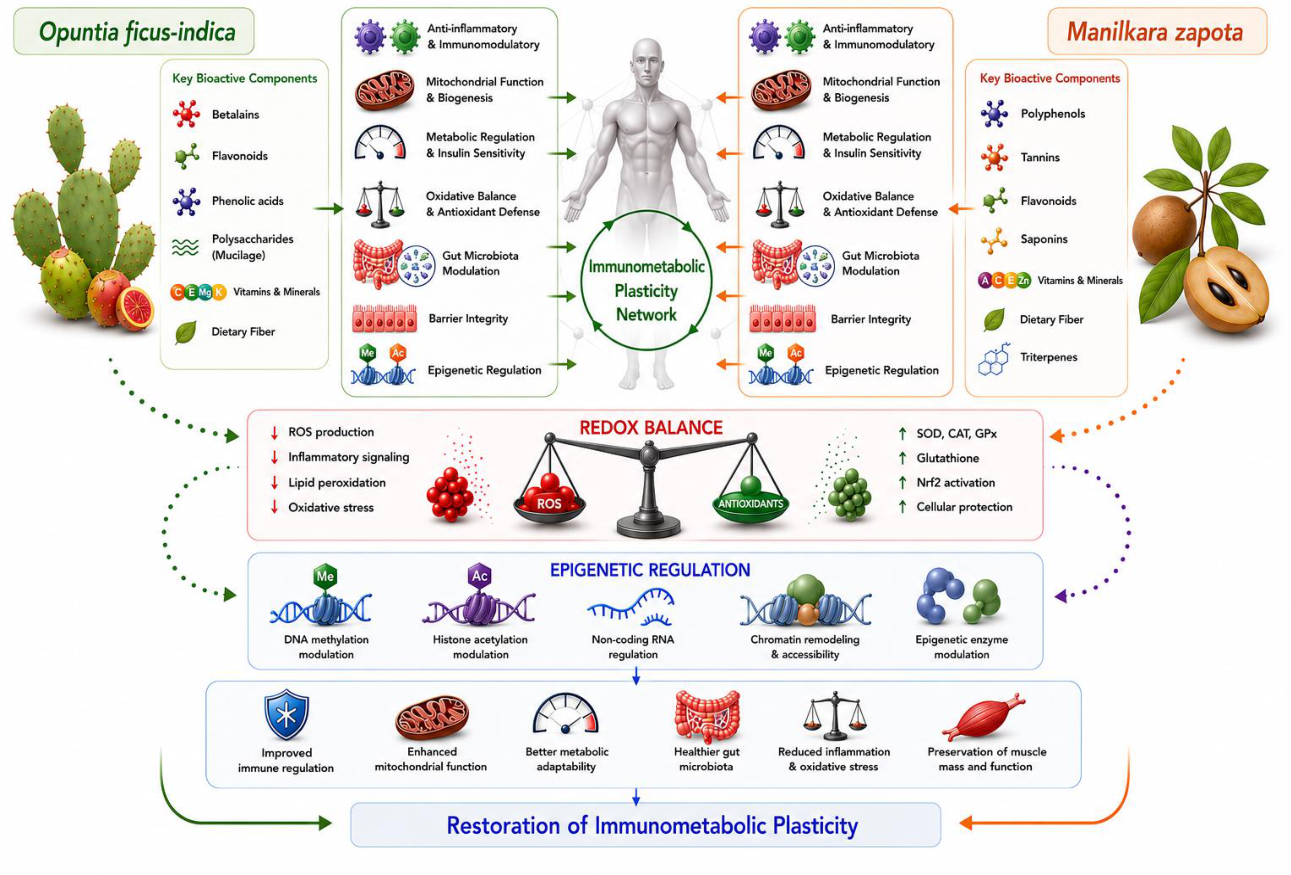
Among naturally occurring food matrices, Opuntia ficus-indica and Manilkara zapota represent valuable translational models illustrating how biologically organized combinations of micronutrients and phytochemicals regulate complex adaptive systems [23,24]. Although these fruits are geographically restricted and are not intended as universal nutritional recommendations, they demonstrate that biological efficacy depends not only on chemical composition but also on the structural organization of their bioactive constituents. Their coordinated effects on inflammation, oxidative stress, mitochondrial function, gut microbiota, and epigenetic regulation exemplify the systems-level behavior that underlies restoration of immunometabolic plasticity (Figure 4).
Importantly, these natural matrices should not be viewed simply as therapeutic foods but as biological prototypes capable of revealing the organizational principles through which nutrition regulates adaptive immune-metabolic responses. Understanding these principles provides opportunities to translate naturally occurring biological complexity into more accessible nutritional interventions.
From a translational perspective, the ultimate objective is therefore not to reproduce specific fruits, but to reproduce the biological organization responsible for their adaptive effects. Deciphering how naturally occurring food matrices coordinate micronutrients, phytochemicals, fibers, and other bioactive constituents may support the development of standardized nutraceutical formulations, bioactive-enriched functional foods, and engineered food matrices capable of reproducing the coordinated biological behavior of natural matrices while ensuring broader accessibility, reproducibility, and clinical applicability [25].
Whole-food matrices should therefore be regarded as systems-level regulators capable of restoring coordinated immunometabolic function rather than merely providing individual bioactive compounds [26].
6. Adaptive Memory as a Determinant of Immunometabolic Plasticity in SO
One of the defining characteristics of biological plasticity is its ability to retain information from previous environmental exposures. Nutritional signals do not simply induce transient metabolic responses but can generate persistent molecular adaptations that influence how immune and metabolic systems respond to future challenges [27]. This phenomenon may be conceptualized as adaptive memory, whereby previous nutritional and environmental experiences shape subsequent biological responsiveness.
Adaptive memory determines how biological adaptations persist over time, allowing previous nutritional and environmental exposures to influence future immune and metabolic responses [28]. While this mechanism normally supports biological resilience, in SO it progressively stabilizes maladaptive programs that perpetuate immune dysfunction and metabolic impairment [29].
The molecular basis of adaptive memory relies on the coordinated interaction of epigenetic regulation, mitochondrial metabolism, and redox signaling. Rather than acting independently, these mechanisms establish interconnected regulatory circuits capable of translating repeated environmental and nutritional stimuli into long-lasting modifications of cellular phenotype and function [30].
Epigenetic regulation represents one of the principal mechanisms through which nutritional information becomes biologically embedded. Micronutrients involved in one-carbon metabolism, including folate, vitamins B12 and B6, and choline, regulate methyl-group availability required for DNA and histone methylation, whereas vitamin C, zinc, selenium, and other redox-active micronutrients influence chromatin remodeling through modulation of oxidative balance and enzyme activity. Consequently, nutritional status continuously shapes gene expression without altering DNA sequence [31].
Among nutritional modulators, both vitamin D and resveratrol may influence adaptive memory through epigenetic mechanisms. While vitamin D supports long-term immune and metabolic competence via VDR-dependent transcriptional regulation [32], resveratrol promotes adaptive remodeling through epigenetic and mitochondrial pathways [22]. Although acting through distinct molecular mechanisms, both contribute to the establishment of persistent biological responses that extend beyond their immediate metabolic and immunological effects (Figure 3).
A further component of adaptive memory derives from redox regulation. Reactive oxygen species are now recognized not only as metabolic by-products but also as signaling mediators controlling transcription factors, mitochondrial adaptation, inflammatory responses, and epigenetic enzymes [33].
These mechanisms converge with the emerging concept of trained immunity, whereby metabolic and epigenetic reprogramming induces durable functional changes in innate immune cells. Together, epigenetic regulation, redox signaling, mitochondrial adaptation, and trained immunity constitute an integrated adaptive memory network capable of shaping long-term immunometabolic responsiveness in SO.
From this perspective, nutritional interventions may influence not only current immune and metabolic function but also the biological processes through which previous nutritional and inflammatory exposures shape future responsiveness. Restoring immunometabolic plasticity may therefore require reprogramming adaptive memory, providing a mechanistic basis for long-term precision immunonutrition strategies in SO.
7. Precision Immunonutrition: Translating Immunometabolic Plasticity into Clinical Practice
Recognition of immunometabolic plasticity as a central feature of SO fundamentally changes the objectives of nutritional intervention. Conventional nutritional approaches have primarily focused on correcting nutrient deficiencies or administering isolated bioactive compounds. However, the marked biological heterogeneity observed among individuals with SO indicates that nutritional efficacy depends not only on nutrient availability but also on the residual adaptive capacity of each patient's immunometabolic system [1].
Within this framework, precision immunonutrition should evolve from generalized supplementation toward phenotype-guided nutritional strategies capable of targeting the predominant mechanisms underlying impaired immunometabolic plasticity in individual patients. Rather than applying identical interventions to clinically heterogeneous populations, nutritional approaches should be tailored according to each patient's immunometabolic phenotype.
Achieving this objective requires integration of multiple biological dimensions. Circulating inflammatory biomarkers, metabolomic and lipidomic profiles, gut microbiota composition, mitochondrial function, epigenetic signatures, body composition analysis, and digital health technologies collectively offer the opportunity to characterize patient-specific immunometabolic phenotypes with increasing precision. Such multidimensional profiling may facilitate identification of those individuals most likely to benefit from specific combinations of micronutrients, signaling bioactive compounds, and whole-food matrix-based interventions.
Future advances in systems biology, artificial intelligence, and multi-omics integration are expected to further refine this personalized approach by enabling predictive models capable of matching nutritional interventions to individual biological profiles. Rather than replacing clinical expertise, these technologies may support more informed nutritional decision-making, improving therapeutic efficacy while reducing unnecessary or ineffective interventions.
Ultimately, precision immunonutrition should move beyond the concept of personalized nutrient supplementation toward restoration of adaptive biological function. The clinical objective is not simply to optimize nutrient intake but to recover the capacity of interconnected immune and metabolic systems to dynamically adapt to changing physiological demands, thereby improving long-term metabolic health, preserving skeletal muscle function, and reducing frailty in individuals with SO.
8. Conclusions and Future Perspectives
This review proposes immunometabolic plasticity as a conceptual framework for interpreting the biological complexity of SO. Rather than considering SO as the simple coexistence of obesity and skeletal muscle loss, this perspective views the disease as the consequence of progressive impairment of the adaptive interactions that normally coordinate immune regulation, metabolism, mitochondrial function, redox homeostasis, endocrine signaling, and host–microbiota communication.
Within this systems-level framework, nutritional interventions should no longer be interpreted solely according to the biological activity of individual nutrients or isolated signaling pathways. Instead, their therapeutic potential lies in their capacity to restore coordinated adaptive behavior across interconnected biological systems. Essential micronutrients, signaling bioactive compounds such as resveratrol, and naturally organized whole-food matrices therefore represent complementary levels of biological regulation that collectively contribute to recovery of immunometabolic plasticity.
Beyond its relevance to SO, the concept of immunometabolic plasticity may provide a broader conceptual framework for understanding the context-dependent efficacy of nutritional interventions across chronic inflammatory and metabolic disorders. By emphasizing adaptive regulation rather than isolated molecular targets, this perspective may help bridge nutritional science, systems biology, immunology, and precision medicine within a unified biological model.
Perhaps the most important implication of this paradigm is a shift in how nutrition itself is viewed. Future progress may depend less on identifying additional bioactive molecules than on understanding how biological systems integrate nutrients, phytochemicals, microbiota-derived metabolites, and environmental signals into coordinated adaptive responses. In this context, naturally occurring food matrices represent valuable biological prototypes whose organizational principles may inspire the development of next-generation nutraceuticals, functional foods, and engineered nutritional platforms designed to reproduce systems-level biological regulation. Ultimately, the future of precision immunonutrition may not depend on discovering a single "optimal" nutrient, but on understanding how nutrition re-establishes coordinated network function of complex immunometabolic systems. If validated in future experimental and clinical studies, immunometabolic plasticity may evolve from a conceptual framework into a practical biological principle for guiding next-generation nutritional strategies in SO and, potentially, other chronic diseases.
References
- Xiao, Y.L.; Gong, Y.; Qi, Y.J.; et al. Effects of dietary intervention on human diseases: Molecular mechanisms and therapeutic potential. Signal Transduct. Target. Ther. 2024, 9, 59. [Google Scholar] [CrossRef] [PubMed]
- Almeida, J.; Sá, H.; Pérez-Cano, F.J.; Viana, S. Editorial: Immunonutrition: Bridging precision nutrition and modern medicine. Front. Nutr. 2025, 12, 1685397. [Google Scholar] [CrossRef] [PubMed]
- Borba, V.Z.C.; Costa, T.M.D.R.L. Sarcopenic obesity: A review. Arch. Endocrinol. Metab. 2025, 68, e240084. [Google Scholar] [CrossRef] [PubMed]
- El-Saadony, M.T.; Saad, A.M.; Mohammed, D.M.; Alkafaas, S.S.; Abd El-Mageed, T.A.; Fahmy, M.A.; Ahmed, A.E.; Algopishi, U.B.; Abu-Elsaoud, A.M.; Mosa, W.F.A.; AbuQamar, S.F.; El-Tarabily, K.A. Plant bioactive compounds: Extraction, biological activities, immunological, nutritional aspects, food application, and human health benefits—A comprehensive review. Front. Nutr. 2025, 12, 1659743. [Google Scholar] [CrossRef] [PubMed]
- Jiang, H.; Zhang, Y.; Luo, Z.; Tang, X.; He, Y.; Hao, G. Immunometabolic mechanisms of osteosarcopenic obesity: Chronic inflammation, trained immunity, and systemic immune dysregulation. Front. Immunol. 2026, 17, 1808488. [Google Scholar] [CrossRef] [PubMed]
- Xu, R.; He, X.; Xu, J.; Yu, G.; Wu, Y. Immunometabolism: Signaling pathways, homeostasis, and therapeutic targets. MedComm 2024, 5, e789. [Google Scholar] [CrossRef] [PubMed]
- Gross, D.C.; Cheever, C.R.; Batsis, J.A. Understanding the development of sarcopenic obesity. Expert Rev. Endocrinol. Metab. 2023, 18, 469–488. [Google Scholar] [CrossRef] [PubMed]
- Crasan, I.-M.; Tanase, M.; Delia, C.E.; Gradisteanu-Pircalabioru, G.; Cimpean, A.; Ionica, E. Metaflammation's role in systemic dysfunction in obesity: A comprehensive review. Int. J. Mol. Sci. 2025, 26, 10445. [Google Scholar] [CrossRef] [PubMed]
- Li, Z.; Liu, B.; Zhou, L.; Chen, N.; Wang, Y.; Yang, S.; Fan, X.; Wang, Y.; Chen, X. Computational-experimental integration reveals PPARγ/Nrf2-GPX4 dual-targeting by combined selenomethionine-magnolol as a novel therapy for sarcopenic obesity. Free Radic. Biol. Med. 2026, 251, 243–255. [Google Scholar] [CrossRef] [PubMed]
- Wang, D.; Zheng, X.; Yang, Z.; Zhang, W.; Liu, S.; Niu, Y. High-fat diet exacerbates skeletal muscle mass loss via Nrf2/Prdx6 pathway in sarcopenic obesity mice. J. Gerontol. A Biol. Sci. Med. Sci. 2026, 81, glaf271. [Google Scholar] [CrossRef] [PubMed]
- Gao, W.; Guo, L.; Yang, Y.; Wang, Y.; Xia, S.; Gong, H.; Zhang, B.-K.; Yan, M. Dissecting the crosstalk between Nrf2 and NF-κB response pathways in drug-induced toxicity. Front. Cell Dev. Biol. 2022, 9, 809952. [Google Scholar] [CrossRef] [PubMed]
- Lin, D.; Zhang, L.; Huang, C.; Shao, W. Skeletal muscle metabolism in health and disease: Mechanisms, interventions, and clinical perspectives. iScience 2026, 29, 115024. [Google Scholar] [CrossRef] [PubMed]
- Ryu, J.Y.; Choi, H.M.; Yang, H.-I.; Kim, K.S. Dysregulated autophagy mediates sarcopenic obesity and its complications via AMPK and PGC1α signaling pathways: Potential involvement of gut dysbiosis as a pathological link. Int. J. Mol. Sci. 2020, 21, 6887. [Google Scholar] [CrossRef] [PubMed]
- Sirago, G.; Picca, A.; Calvani, R.; Coelho-Júnior, H.J.; Marzetti, E. Mammalian target of rapamycin (mTOR) signaling at the crossroad of muscle fiber fate in sarcopenia. Int. J. Mol. Sci. 2022, 23, 13823. [Google Scholar] [CrossRef] [PubMed]
- Sharma, A.R.; Chatterjee, S.; Lee, Y.H.; Lee, S.S. Targeting crosstalk of signaling pathways among muscle–bone–adipose tissue: A promising therapeutic approach for sarcopenia. Aging Dis. 2024, 15, 1619–1645. [Google Scholar] [CrossRef] [PubMed]
- Malaguarnera, L.; Sortino, V.; Surdo, S.; Piro, S. From growth trajectory to functional decline: Age-contextualized nutritional strategies for muscle vulnerability. A narrative review. Nutrients 2026, 18, 1437. [Google Scholar] [CrossRef] [PubMed]
- Russo, C.; Valle, M.S.; D'Angeli, F.; Surdo, S.; Malaguarnera, L. Resveratrol and vitamin D: Eclectic molecules promoting mitochondrial health in sarcopenia. Int. J. Mol. Sci. 2024, 25, 7503. [Google Scholar] [CrossRef] [PubMed]
- Russo, C.; Valle, M.S.; Surdo, S.; Tuttobene, M.; Cambria, M.T.; Malaguarnera, L. Vitamin D and resveratrol in sarcopenic obesity: A systematic review highlighting the gap in phenotype-defined randomized controlled trials. Front. Nutr. 2026, 13, 1818450. [Google Scholar] [CrossRef] [PubMed]
- Malaguarnera, L. Vitamin D and microbiota: Two sides of the same coin in the immunomodulatory aspects. Int. Immunopharmacol. 2020, 79, 106112. [Google Scholar] [CrossRef] [PubMed]
- Qahtan, F.; Abu-Qiyas, S.; Papandreou, D. Genetic and epigenetic determinants of vitamin D metabolism: Nutrigenomic insights for precision nutrition. Front. Nutr. 2026, 13, 1772849. [Google Scholar] [CrossRef] [PubMed]
- Russo, C.; Santangelo, R.; Malaguarnera, L.; Valle, M.S. The "sunshine vitamin" and its antioxidant benefits for enhancing muscle function. Nutrients 2024, 16, 2195. [Google Scholar] [CrossRef] [PubMed]
- Ren, Z.Q.; Zheng, S.Y.; Sun, Z.; Luo, Y.; Wang, Y.T.; Yi, P.; Li, Y.S.; Huang, C.; Xiao, W.F. Resveratrol: Molecular mechanisms, health benefits, and potential adverse effects. MedComm 2025, 6, e70252. [Google Scholar] [CrossRef] [PubMed]
- Russo, C.; Surdo, S.; Valle, M.S.; Malaguarnera, L. The prickly solution to metabolic syndrome: A multitarget view on the Opuntia ficus-indica fruit phytocomplex. Nutrients 2026, 18, 1157. [Google Scholar] [CrossRef] [PubMed]
- Russo, C.; Valle, M.S.; D'Angeli, F.; Surdo, S.; Giunta, S.; Barbera, A.C.; Malaguarnera, L. Beneficial effects of Manilkara zapota-derived bioactive compounds in the epigenetic program of neurodevelopment. Nutrients 2024, 16, 2225. [Google Scholar] [CrossRef] [PubMed]
- Vareltzis, P.; Kyroglou, S.; Pasidi, E.; Oikonomou, G.; Gkogkou, T.; Govari, M.; Kalogiannis, K.; Gortzi, O. Food matrix effects on plant-derived bioactive compounds and micronutrients: Implications for functional food development. Int. J. Mol. Sci. 2026, 27, 5503. [Google Scholar] [CrossRef] [PubMed]
- Debri, R.P.; De Lorenzo, A.; Conte, R.; Peluso, G. Functional foods as vehicles for bioactive compounds: Chemical and nutritional perspectives on health and disease prevention. Int. J. Mol. Sci. 2026, 27, 2293. [Google Scholar] [CrossRef] [PubMed]
- Fan, J.; Xu, Y. Molecular mechanisms underlying the lifespan and healthspan benefits of dietary restriction across species. Front. Genet. 2026, 17, 1771707. [Google Scholar] [CrossRef] [PubMed]
- Hao, D.; McBride, M.A.; Bohannon, J.K.; Hernandez, A.; Klein, B.; Williams, D.L.; Sherwood, E.R. Metabolic adaptations driving innate immune memory: Mechanisms and therapeutic implications. J. Leukoc. Biol. 2025, 117, qiaf037. [Google Scholar] [CrossRef] [PubMed]
- Bulut, O.; Kilic, G.; Domínguez-Andrés, J. Immune memory in aging: A wide perspective covering microbiota, brain, metabolism, and epigenetics. Clin. Rev. Allergy Immunol. 2022, 63, 499–529. [Google Scholar] [CrossRef] [PubMed]
- Mauger, O.; Binder, E.B. Unlocking the epigenetic secrets of memory. Nat. Genet. 2025, 57, 2621–2622. [Google Scholar] [CrossRef] [PubMed]
- Anastasopoulou, M.; Dereki, I.; Sgourou, A.; Lagoumintzis, G. Interactions between nutrition and the epigenome: How can it be harnessed for public health? Future Sci. OA 2026, 12, 1. [Google Scholar] [CrossRef] [PubMed]
- Kowalówka, M.; Górna, I.; Karaźniewicz-Łada, M.; Kusyk, D.; Przysławski, J.; Drzymała-Czyż, S. Nutri-epigenetic regulation of vitamin D—Impact on metabolism and biological functions: Narrative review. Metabolites 2025, 15, 436. [Google Scholar] [CrossRef] [PubMed]
- Forrester, S.J.; Kikuchi, D.S.; Hernandes, M.S.; Xu, Q.; Griendling, K.K. Reactive oxygen species in metabolic and inflammatory signaling. Circ. Res. 2018, 122, 877–902. [Google Scholar] [CrossRef] [PubMed]
Figure 1.
Molecular architecture of impaired immunometabolic plasticity in SO. SO arises from the progressive disruption of interconnected immune, metabolic, mitochondrial, microbial, and epigenetic regulatory architectures. Crosstalk among adipose tissue, skeletal muscle, immune cells, mitochondria, and the gut microbiota promotes chronic low-grade inflammation, oxidative stress, anabolic resistance, and metabolic dysfunction, progressively impairing adaptive immunometabolic plasticity. The disease therefore emerges as a consequence of systems failure rather than dysfunction of individual molecular pathways.
Figure 1.
Molecular architecture of impaired immunometabolic plasticity in SO. SO arises from the progressive disruption of interconnected immune, metabolic, mitochondrial, microbial, and epigenetic regulatory architectures. Crosstalk among adipose tissue, skeletal muscle, immune cells, mitochondria, and the gut microbiota promotes chronic low-grade inflammation, oxidative stress, anabolic resistance, and metabolic dysfunction, progressively impairing adaptive immunometabolic plasticity. The disease therefore emerges as a consequence of systems failure rather than dysfunction of individual molecular pathways.
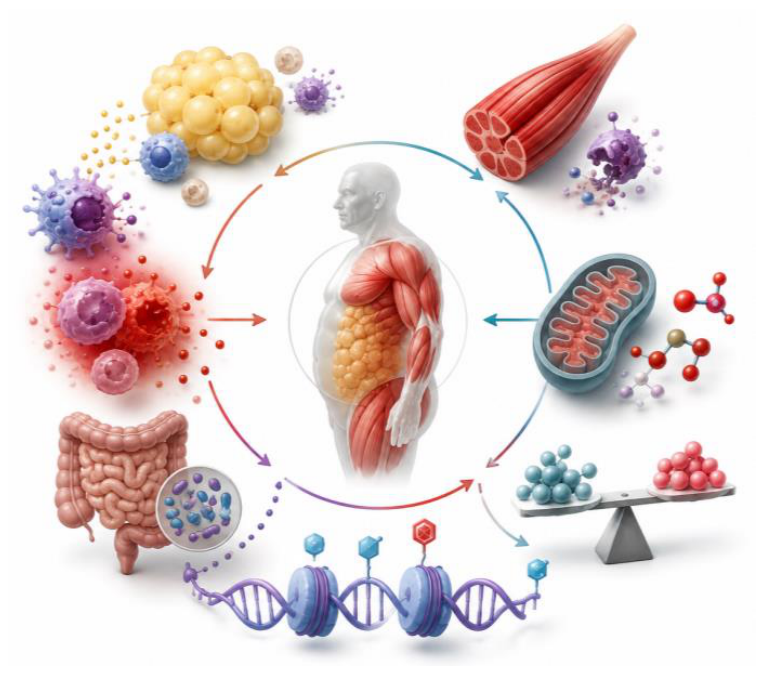
Figure 2.
Coordinated molecular pathways underlying impaired immunometabolic plasticity in SO. Chronic metabolic excess and adipose tissue inflammation activate the TLR–IKK–NF-κB signaling pathway, leading to sustained expression of pro-inflammatory mediators, anabolic resistance, and muscle wasting. In parallel, antioxidant and hormetic signals activate the Keap1–Nrf2 pathway, promoting antioxidant defenses, mitochondrial protection, and redox homeostasis. In SO, the physiological balance between NF-κB and Nrf2 is progressively disrupted, favoring persistent inflammation and oxidative stress. Simultaneously, the coordinated nutrient-sensing network comprising AMPK, mTOR, FOXO, and SIRT1 integrates cellular energy status with protein synthesis, autophagy, mitochondrial biogenesis, and metabolic adaptation. Progressive dysregulation of these interconnected pathways impairs adaptive capacity, contributing to insulin resistance, chronic low-grade inflammation, mitochondrial dysfunction, and skeletal muscle loss. Collectively, these molecular alterations drive the progressive loss of immunometabolic plasticity that characterizes SO. Abbreviations: AMPK, AMP-activated protein kinase; FOXO, Forkhead box O transcription factors; IKK, IκB kinase; Keap1, Kelch-like ECH-associated protein 1; mTOR, mechanistic target of rapamycin; NF-κB, nuclear factor kappa B; Nrf2, nuclear factor erythroid 2-related factor 2; SIRT1, sirtuin 1; TLR, Toll-like receptor.
Figure 2.
Coordinated molecular pathways underlying impaired immunometabolic plasticity in SO. Chronic metabolic excess and adipose tissue inflammation activate the TLR–IKK–NF-κB signaling pathway, leading to sustained expression of pro-inflammatory mediators, anabolic resistance, and muscle wasting. In parallel, antioxidant and hormetic signals activate the Keap1–Nrf2 pathway, promoting antioxidant defenses, mitochondrial protection, and redox homeostasis. In SO, the physiological balance between NF-κB and Nrf2 is progressively disrupted, favoring persistent inflammation and oxidative stress. Simultaneously, the coordinated nutrient-sensing network comprising AMPK, mTOR, FOXO, and SIRT1 integrates cellular energy status with protein synthesis, autophagy, mitochondrial biogenesis, and metabolic adaptation. Progressive dysregulation of these interconnected pathways impairs adaptive capacity, contributing to insulin resistance, chronic low-grade inflammation, mitochondrial dysfunction, and skeletal muscle loss. Collectively, these molecular alterations drive the progressive loss of immunometabolic plasticity that characterizes SO. Abbreviations: AMPK, AMP-activated protein kinase; FOXO, Forkhead box O transcription factors; IKK, IκB kinase; Keap1, Kelch-like ECH-associated protein 1; mTOR, mechanistic target of rapamycin; NF-κB, nuclear factor kappa B; Nrf2, nuclear factor erythroid 2-related factor 2; SIRT1, sirtuin 1; TLR, Toll-like receptor.
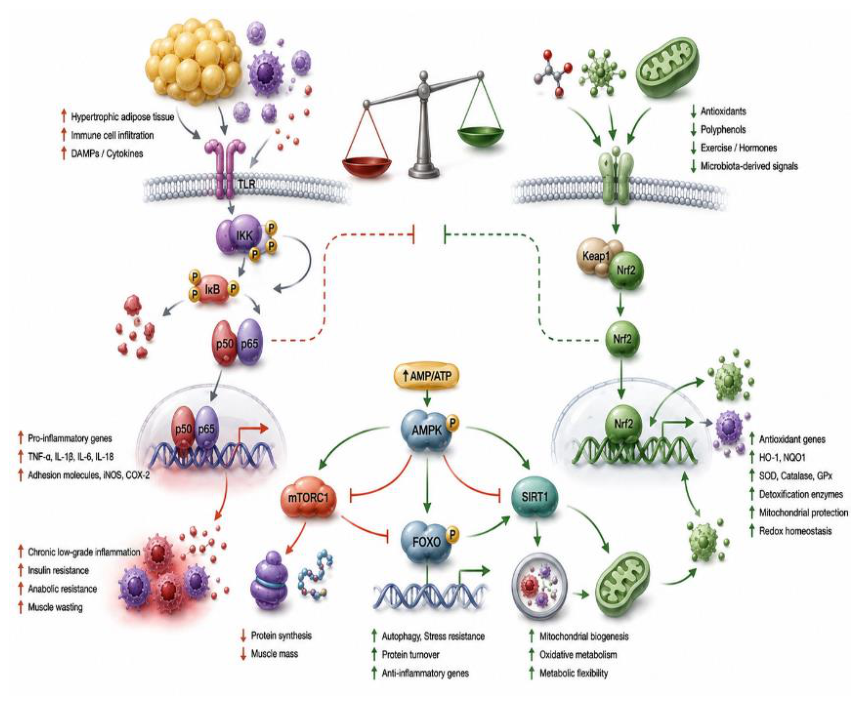
Figure 3.
Complementary regulatory roles of vitamin D and resveratrol in restoring immunometabolic plasticity. Vitamin D establishes the biological competence required for coordinated immune and metabolic function through VDR-mediated regulation of immune homeostasis, mitochondrial activity, barrier integrity, and gene transcription. Resveratrol enhances adaptive responses by activating the SIRT1–AMPK–PGC-1α signaling axis, promoting mitochondrial biogenesis, metabolic flexibility, autophagy, and cellular stress resistance while attenuating NF-κB-dependent inflammation and reinforcing Nrf2-mediated antioxidant defenses. Both compounds further influence redox homeostasis and epigenetic remodeling, collectively supporting restoration of immunometabolic plasticity through complementary and interconnected regulatory mechanisms. Abbreviations: AMPK, AMP-activated protein kinase; NF-κB, nuclear factor kappa B; Nrf2, nuclear factor erythroid 2-related factor 2; PGC-1α, peroxisome proliferator-activated receptor gamma coactivator 1-alpha; SIRT1, sirtuin 1; VDR, vitamin D receptor.
Figure 3.
Complementary regulatory roles of vitamin D and resveratrol in restoring immunometabolic plasticity. Vitamin D establishes the biological competence required for coordinated immune and metabolic function through VDR-mediated regulation of immune homeostasis, mitochondrial activity, barrier integrity, and gene transcription. Resveratrol enhances adaptive responses by activating the SIRT1–AMPK–PGC-1α signaling axis, promoting mitochondrial biogenesis, metabolic flexibility, autophagy, and cellular stress resistance while attenuating NF-κB-dependent inflammation and reinforcing Nrf2-mediated antioxidant defenses. Both compounds further influence redox homeostasis and epigenetic remodeling, collectively supporting restoration of immunometabolic plasticity through complementary and interconnected regulatory mechanisms. Abbreviations: AMPK, AMP-activated protein kinase; NF-κB, nuclear factor kappa B; Nrf2, nuclear factor erythroid 2-related factor 2; PGC-1α, peroxisome proliferator-activated receptor gamma coactivator 1-alpha; SIRT1, sirtuin 1; VDR, vitamin D receptor.
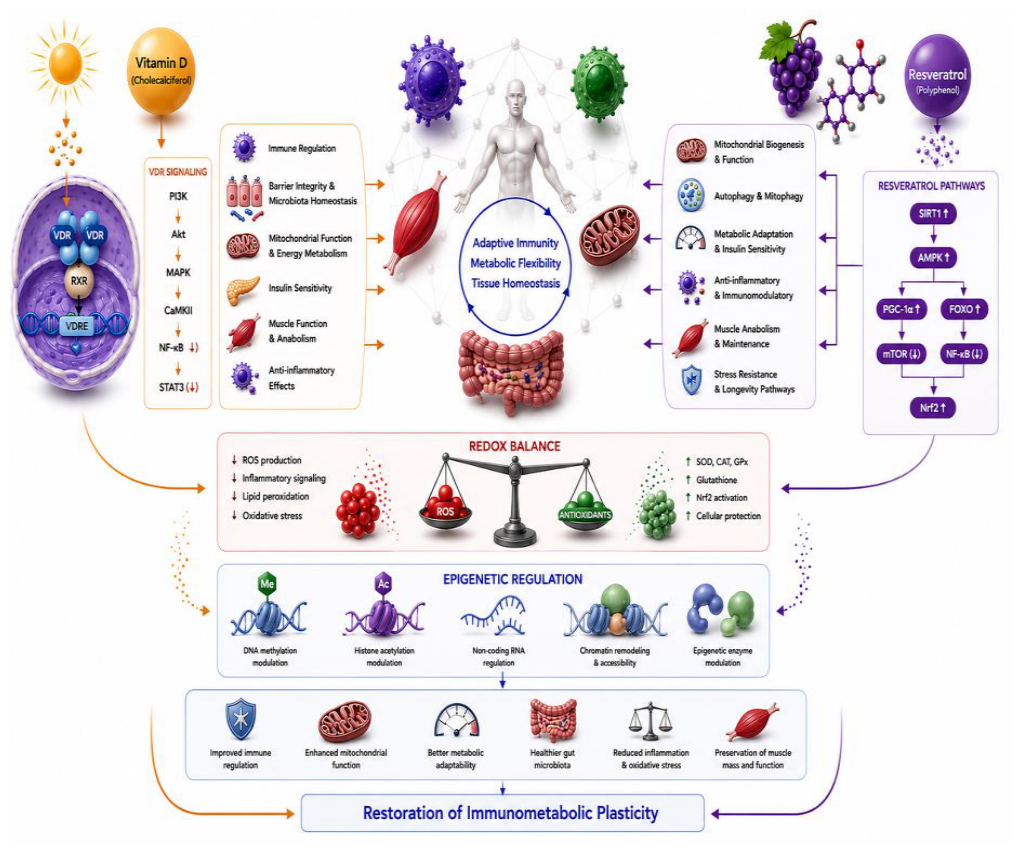
Figure 4.
Whole-food matrices as systems-level regulators of immunometabolic plasticity: complementary actions of Opuntia ficus-indicaand Manilkara zapota. The biological activity of Opuntia ficus-indica and Manilkara zapota arises from the coordinated interaction of multiple naturally occurring bioactive compounds rather than from isolated phytochemicals. By simultaneously influencing inflammatory signaling, mitochondrial function, nutrient sensing, redox homeostasis, gut microbiota composition, and epigenetic regulation, these whole-food matrices illustrate how natural foods can restore immunometabolic plasticity through integrated systems-level regulation. Their complementary mechanisms exemplify the transition from reductionist nutrient supplementation toward network-oriented precision immunonutrition. Abbreviations: CAT, catalase; GPx, glutathione peroxidase; Nrf2, nuclear factor erythroid 2-related factor 2; ROS, reactive oxygen species; SOD, superoxide dismutase.
Figure 4.
Whole-food matrices as systems-level regulators of immunometabolic plasticity: complementary actions of Opuntia ficus-indicaand Manilkara zapota. The biological activity of Opuntia ficus-indica and Manilkara zapota arises from the coordinated interaction of multiple naturally occurring bioactive compounds rather than from isolated phytochemicals. By simultaneously influencing inflammatory signaling, mitochondrial function, nutrient sensing, redox homeostasis, gut microbiota composition, and epigenetic regulation, these whole-food matrices illustrate how natural foods can restore immunometabolic plasticity through integrated systems-level regulation. Their complementary mechanisms exemplify the transition from reductionist nutrient supplementation toward network-oriented precision immunonutrition. Abbreviations: CAT, catalase; GPx, glutathione peroxidase; Nrf2, nuclear factor erythroid 2-related factor 2; ROS, reactive oxygen species; SOD, superoxide dismutase.
Disclaimer/Publisher’s Note: The statements, opinions and data contained in all publications are solely those of the individual author(s) and contributor(s) and not of MDPI and/or the editor(s). MDPI and/or the editor(s) disclaim responsibility for any injury to people or property resulting from any ideas, methods, instructions or products referred to in the content. |
© 2026 by the authors. Licensee MDPI, Basel, Switzerland. This article is an open access article distributed under the terms and conditions of the Creative Commons Attribution (CC BY) license (http://creativecommons.org/licenses/by/4.0/).
Copyright: This open access article is published under a Creative Commons CC BY 4.0 license, which permit the free download, distribution, and reuse, provided that the author and preprint are cited in any reuse.


